Class 2, COM 540
PR Topics: Social Media
Practices and Analysis
Aug. 29, 2013
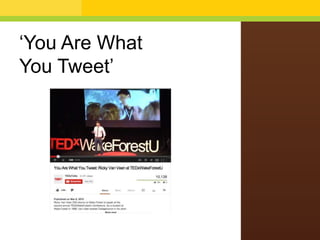
„You Are What
You Tweet‟
Murthy: Chapter 1
• What is Twitter?
• Asynchronous
“conversation” 140
characters at a time.
• One of the largest and
most popular social media
websites.
Details
• Public-facing (usually)
• @ replies and DMs
• Retweets
• #hashtags
• Verified accounts
Why so popular?
• “… ease of use, instant
accessibility … and short
bursts of seemingly
useless chatter.”
• Mobile
• “Connection with very low
expectation”
Shape of
communication
• Hashtags (#occupy) allow
shared conversation
• Broadcast model (popular
“channels”)
Distinct from
Facebook
• Social media (Twitter):
Broadcast-based
• Social networks
(Facebook, LinkedIn)
foster friend connections
through social sharing
Microblogging
platform whereby:
• Users have public profile
• Messages become
publicly aggregated
• Decide which to receive,
but not necessarily who
receives their messages
Qualman:
Chapters 1-3
• “Socialnomics”: The value
created and shared via
social media and its
efficient influence on
outcomes (economic,
political, relational)
Today‟s landscape
• Some core
communication, marketing
and business principles
will still apply; others will
become extinct
Word of Mouth
• From broadcast model to
“The Long Tail”
• Positive brand presence:
JetBlue
Information flow
• Social media and search
engines: social
search/social commerce
• News finds us
• Shift in traditional news
sources
Preventive behavior
• For individuals
• For businesses: Comcast
• Responding to customers
• Engagement, rather than
simply marketing
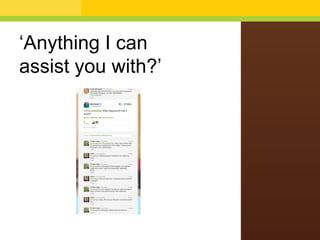
„Anything I can
assist you with?‟
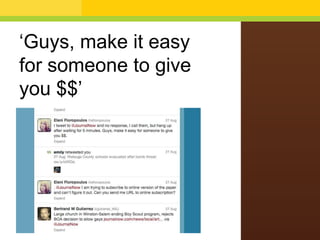
„Guys, make it easy
for someone to give
you $$‟
In conversation
• Brands are part of social
media discussions
• “Honesty, transparency,
listening and reacting” key
for brands
Tutorials
• Tumblr
• Google+
• Hootsuite
• Klout
Assignments
• Step-by-step guide
• Discussion board posts

Class 2