Colours
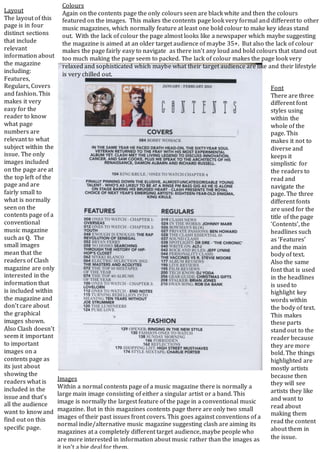
Again on the contents page the only colours seen are black white and then the colours
featured on the images. This makes the contents page look very formal and different to other
music magazines, which normally feature at least one bold colour to make key ideas stand
out. With the lack of colour the page almost looks like a newspaper which maybe suggesting
the magazine is aimed at an older target audience of maybe 35+. But also the lack of colour
makes the page fairly easy to navigate as there isn’t any loud and bold colours that stand out
too much making the page seem to packed. The lack of colour makes the page look very
relaxed and sophisticated which maybe what their target audience are like and their lifestyle
is very chilled out.
Layout
The layout of this
page is in four
distinct sections
that include
relevant
information about
the magazine
including:
Features,
Regulars, Covers
and fashion. This
makes it very
easy for the
reader to know
what page
numbers are
relevant to what
subject within the
issue. The only
images included
on the page are at
the top left of the
page and are
fairly small to
what is normally
seen on the
contents page of a
conventional
music magazine
such as Q. The
small images
mean that the
readers of Clash
magazine are only
interested in the
information that
is included within
the magazine and
don’t care about
the graphical
images shown.
Also Clash doesn’t
seem it important
to important
images on a
contents page as
its just about
showing the
readers what is
included in the
issue and that’s
all the audience
want to know and
find out on this
specific page.
Font
There are three
different font
styles using
within the
whole of the
page. This
makes it not to
diverse and
keeps it
simplistic for
the readers to
read and
navigate the
page. The three
different fonts
are used for the
title of the page
‘Contents’, the
headlines such
as ‘Features’
and the main
body of text.
Also the same
font that is used
in the headlines
is used to
highlight key
words within
the body of text.
This makes
these parts
stand out to the
reader because
they are more
bold. The things
highlighted are
mostly artists
because then
they will see
artists they like
and want to
read about
making them
read the content
about them in
the issue.
Images
Within a normal contents page of a music magazine there is normally a
large main image consisting of either a singular artist or a band. This
image is normally the largest feature of the page in a conventional music
magazine. But in this magazines contents page there are only two small
images of their past issues front covers. This goes against conventions of a
normal indie/alternative music magazine suggesting clash are aiming its
magazines at a completely different target audience, maybe people who
are more interested in information about music rather than the images as
it isn’t a big deal for them.

Clash contents page

  • 1.
    Colours Again on thecontents page the only colours seen are black white and then the colours featured on the images. This makes the contents page look very formal and different to other music magazines, which normally feature at least one bold colour to make key ideas stand out. With the lack of colour the page almost looks like a newspaper which maybe suggesting the magazine is aimed at an older target audience of maybe 35+. But also the lack of colour makes the page fairly easy to navigate as there isn’t any loud and bold colours that stand out too much making the page seem to packed. The lack of colour makes the page look very relaxed and sophisticated which maybe what their target audience are like and their lifestyle is very chilled out. Layout The layout of this page is in four distinct sections that include relevant information about the magazine including: Features, Regulars, Covers and fashion. This makes it very easy for the reader to know what page numbers are relevant to what subject within the issue. The only images included on the page are at the top left of the page and are fairly small to what is normally seen on the contents page of a conventional music magazine such as Q. The small images mean that the readers of Clash magazine are only interested in the information that is included within the magazine and don’t care about the graphical images shown. Also Clash doesn’t seem it important to important images on a contents page as its just about showing the readers what is included in the issue and that’s all the audience want to know and find out on this specific page. Font There are three different font styles using within the whole of the page. This makes it not to diverse and keeps it simplistic for the readers to read and navigate the page. The three different fonts are used for the title of the page ‘Contents’, the headlines such as ‘Features’ and the main body of text. Also the same font that is used in the headlines is used to highlight key words within the body of text. This makes these parts stand out to the reader because they are more bold. The things highlighted are mostly artists because then they will see artists they like and want to read about making them read the content about them in the issue. Images Within a normal contents page of a music magazine there is normally a large main image consisting of either a singular artist or a band. This image is normally the largest feature of the page in a conventional music magazine. But in this magazines contents page there are only two small images of their past issues front covers. This goes against conventions of a normal indie/alternative music magazine suggesting clash are aiming its magazines at a completely different target audience, maybe people who are more interested in information about music rather than the images as it isn’t a big deal for them.