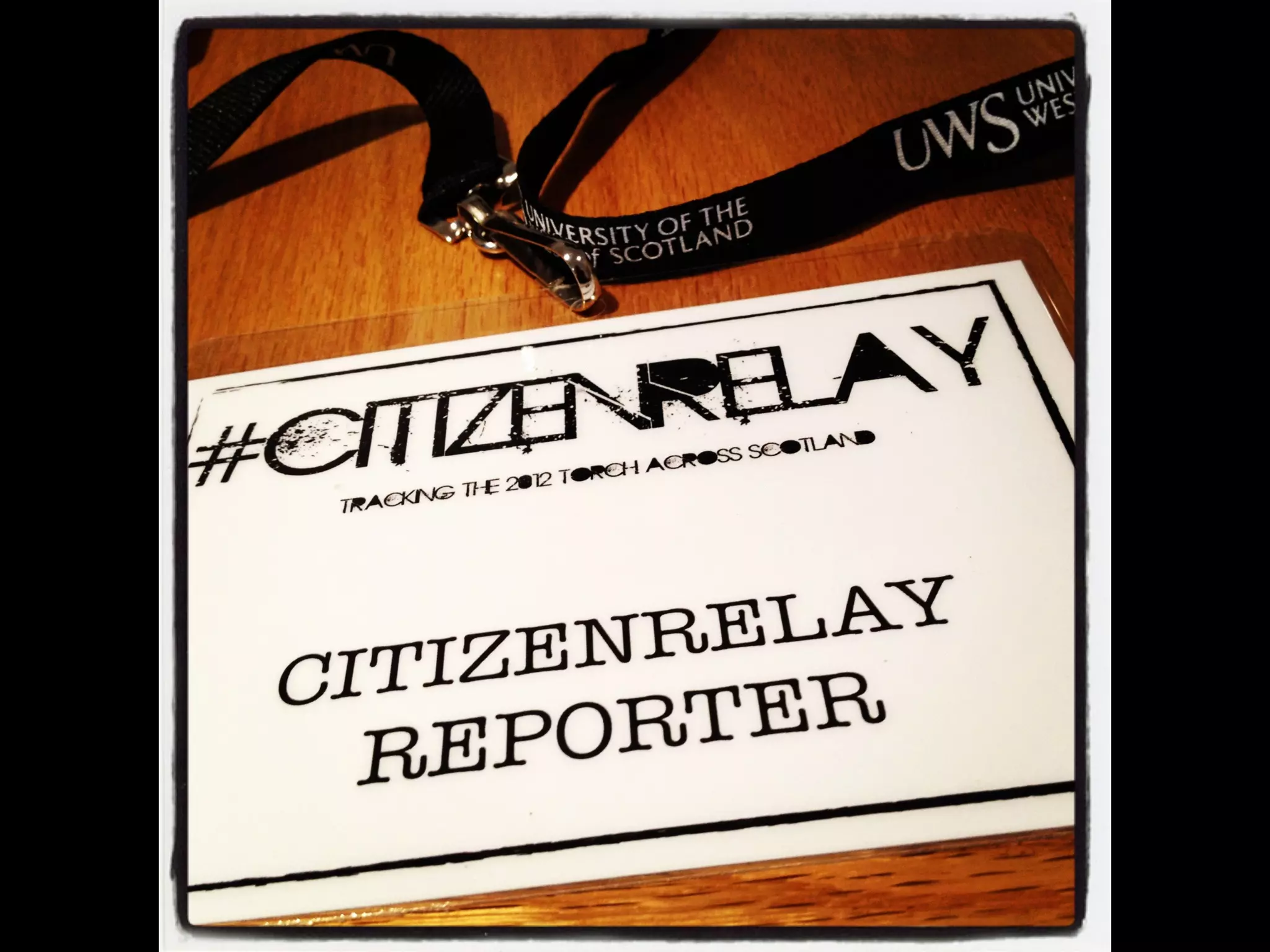
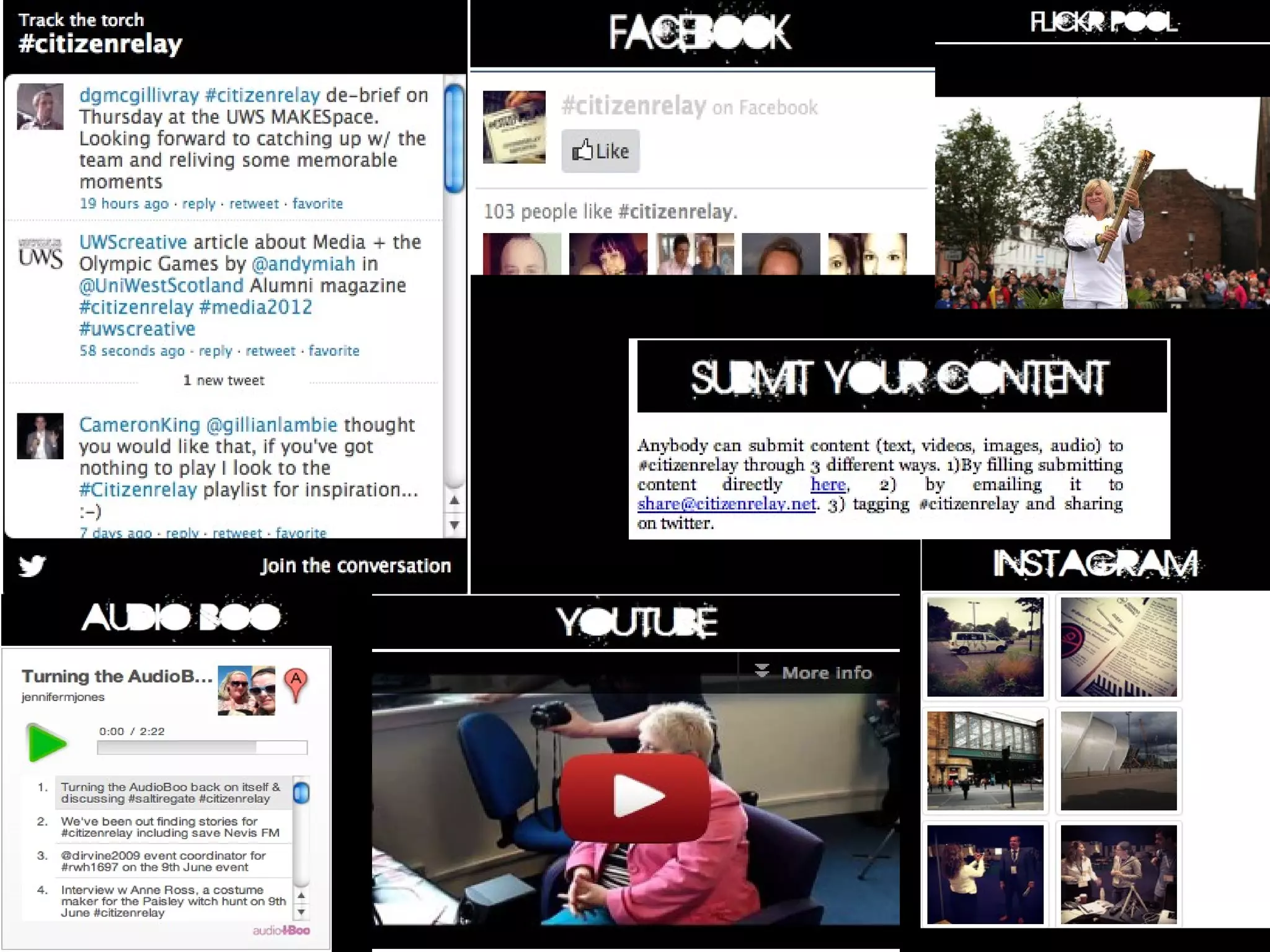


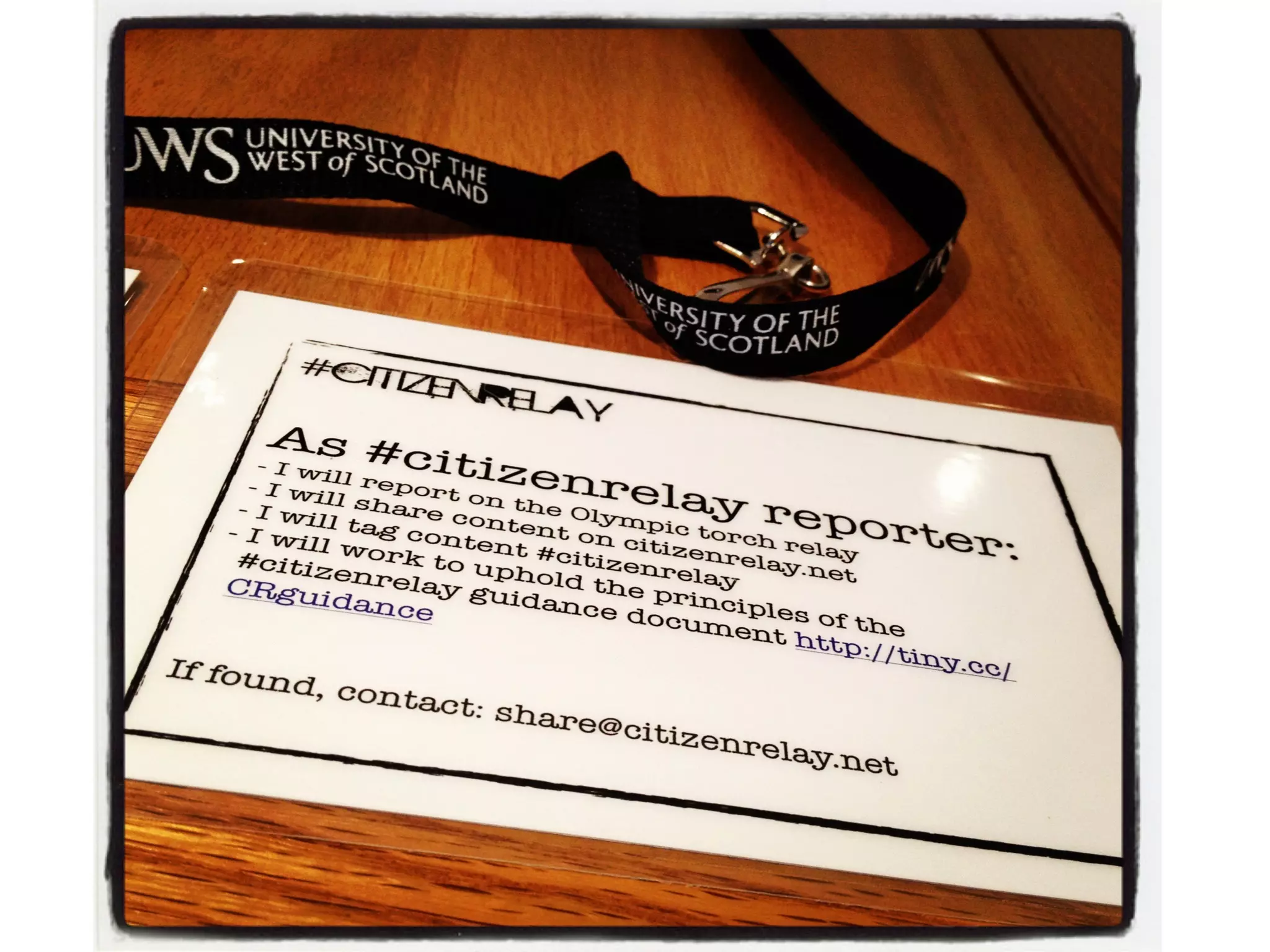


#citizenrelay
Citizen Media: Translating Theory
to Practice
@dgmcgillivray @jennifermjones
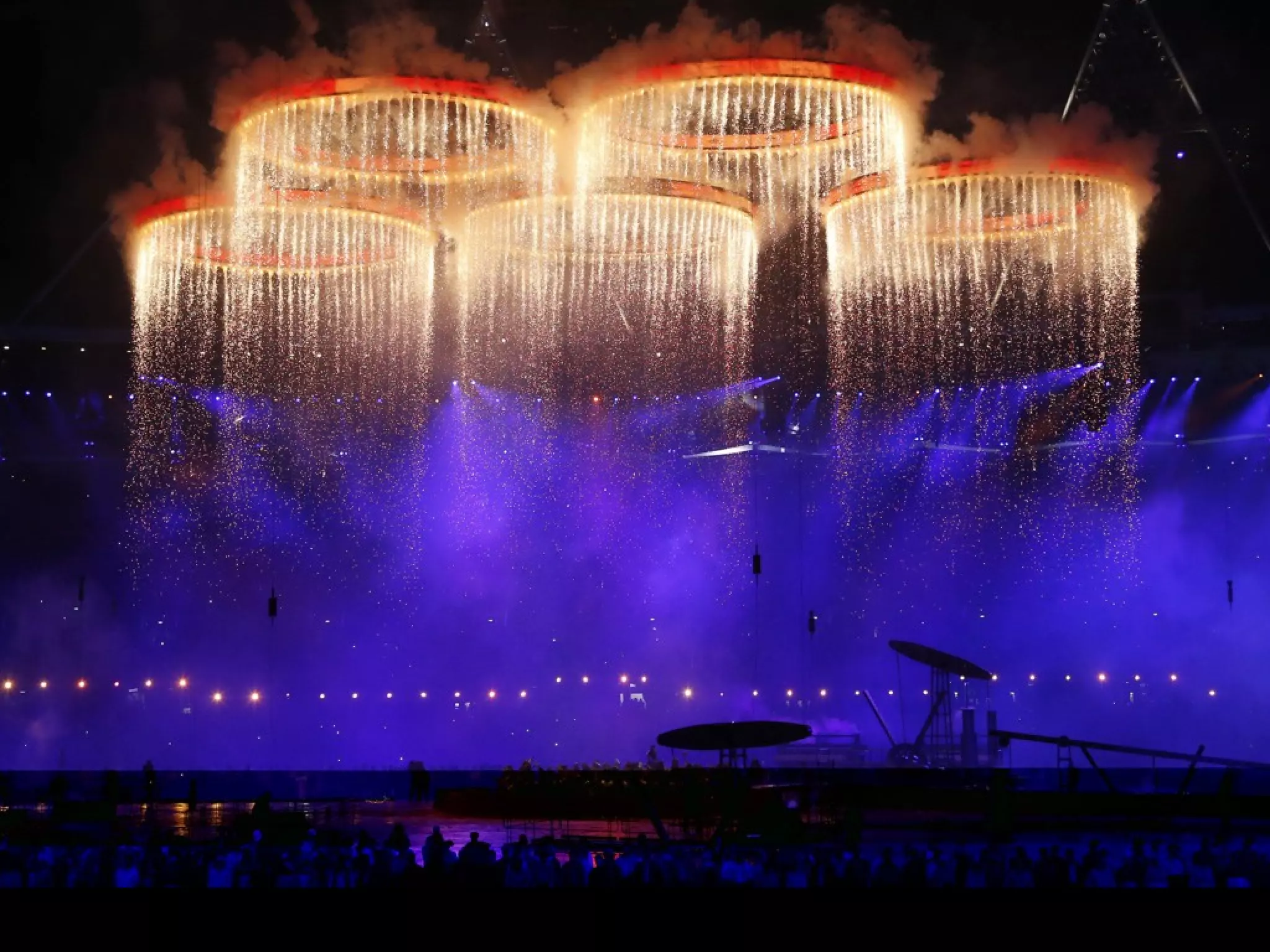
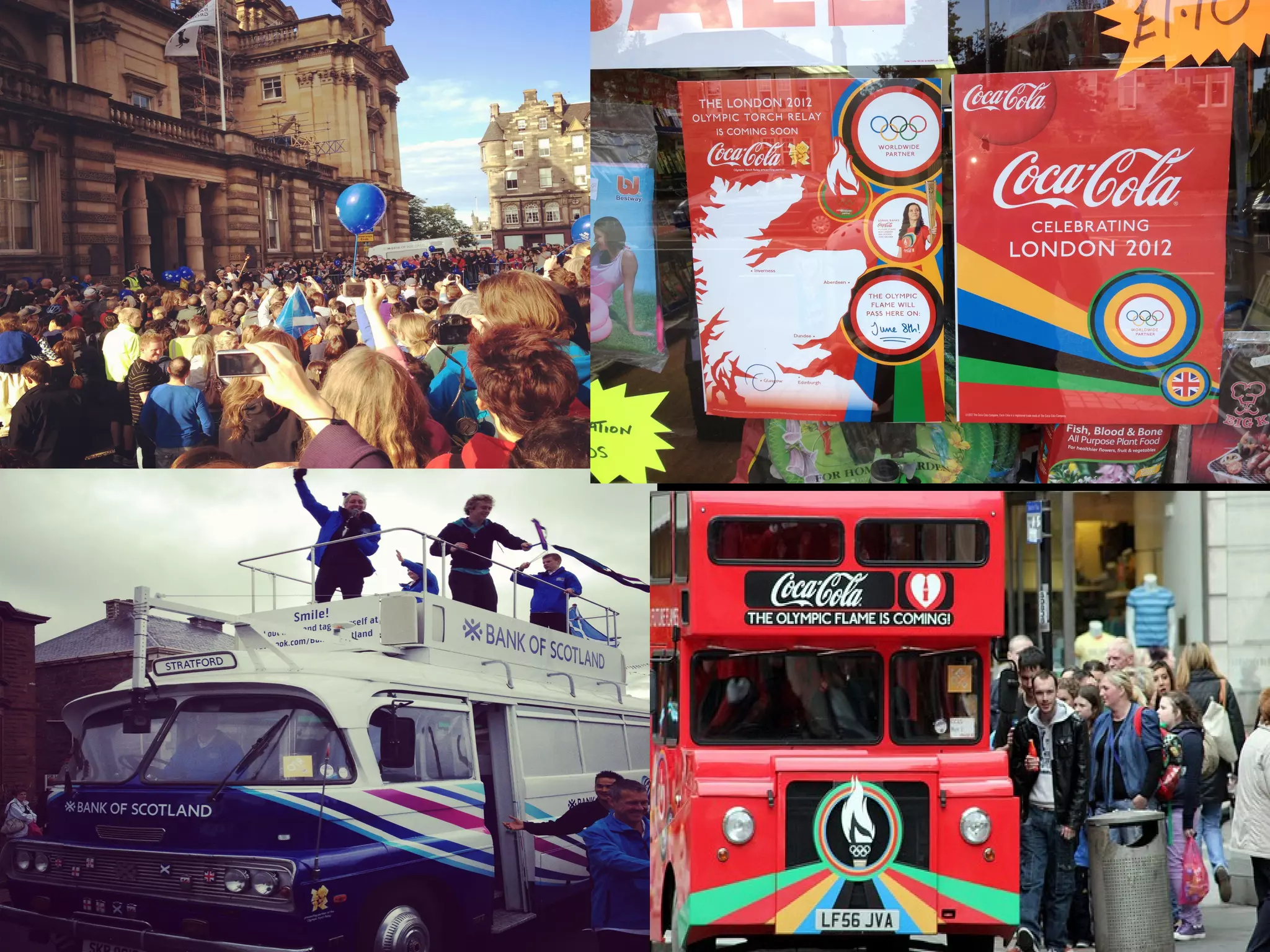
The Olympic Games is a media platform with an assumed
dominant narrative; the IOC, Games organizers, sponsors and
athletic federations attempt to defend the narrative against
counter narratives…a problem for the Olympics is that there is
some ambiguity over the ownership of the Olympic Games
platform and the narrative. Who owns it? Is it the IOC, the
organizing committee, the host city or nation, or the
sponsors?" (Horne & Whannel, 2010, p762)
the likelihood of a spiral of silence emerges, in which fringe
minority voices get less hearing and are gradually brought into
conformity…the hegemony of the privileged over web content
and values will marginalise less powerful groups as it has in
other media (Real, 2007, p182)
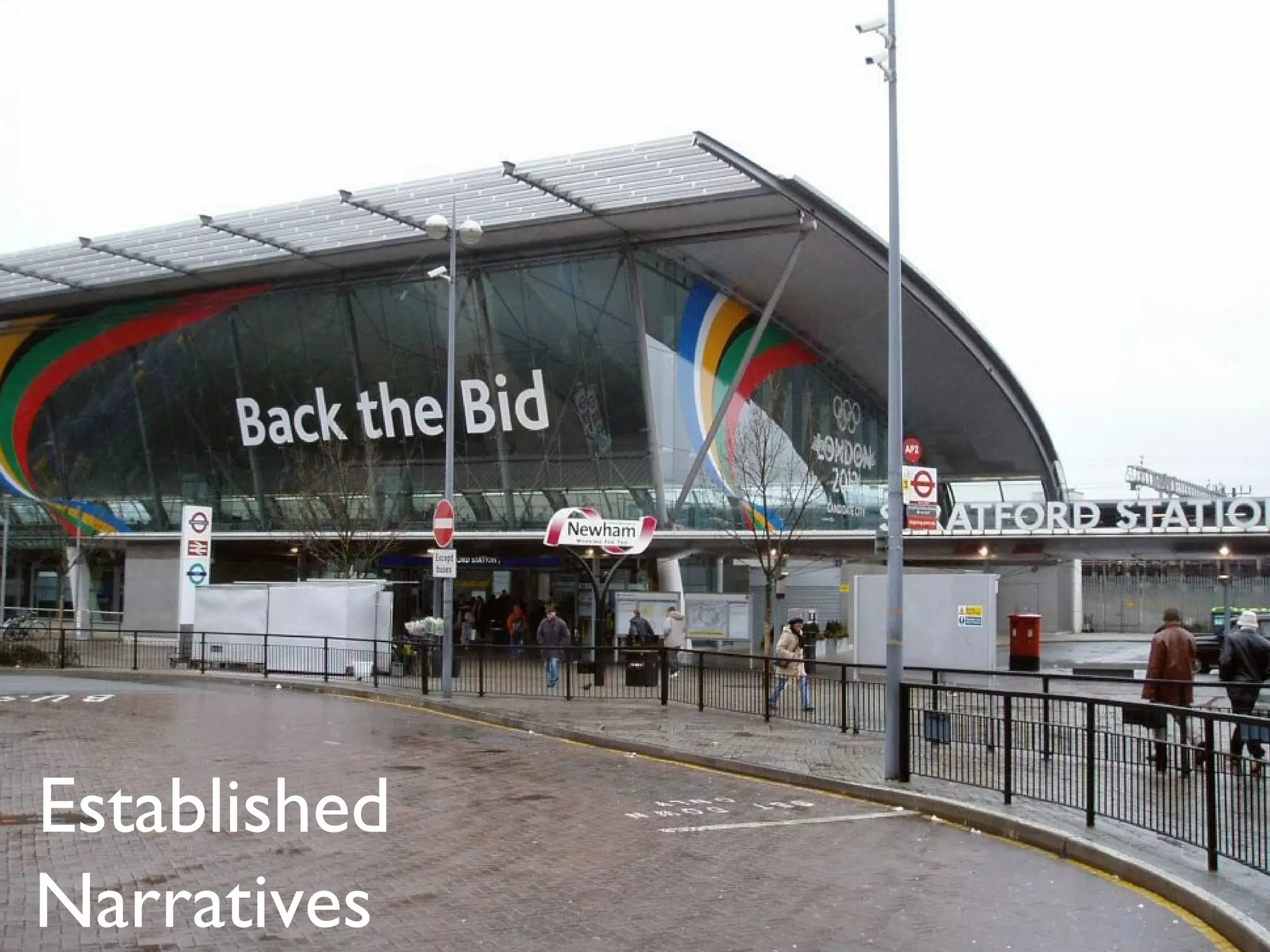
Established
Narratives
Small, alternative or citizen media offers
space for the digitally empowered citizen
to break stories, become media makers
and storytellers of the now, archived as an
historical record
Small media, citizen-
oriented
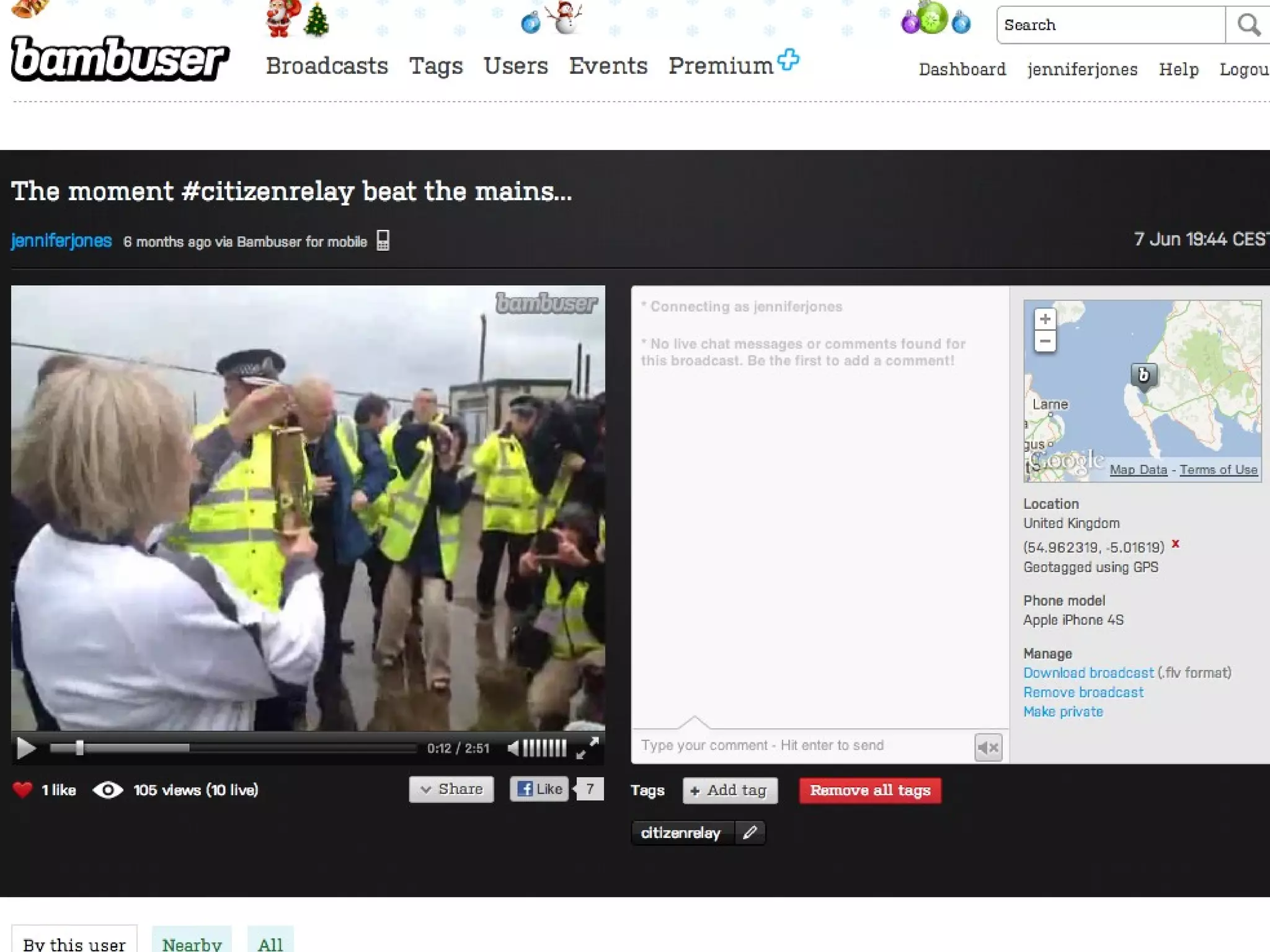
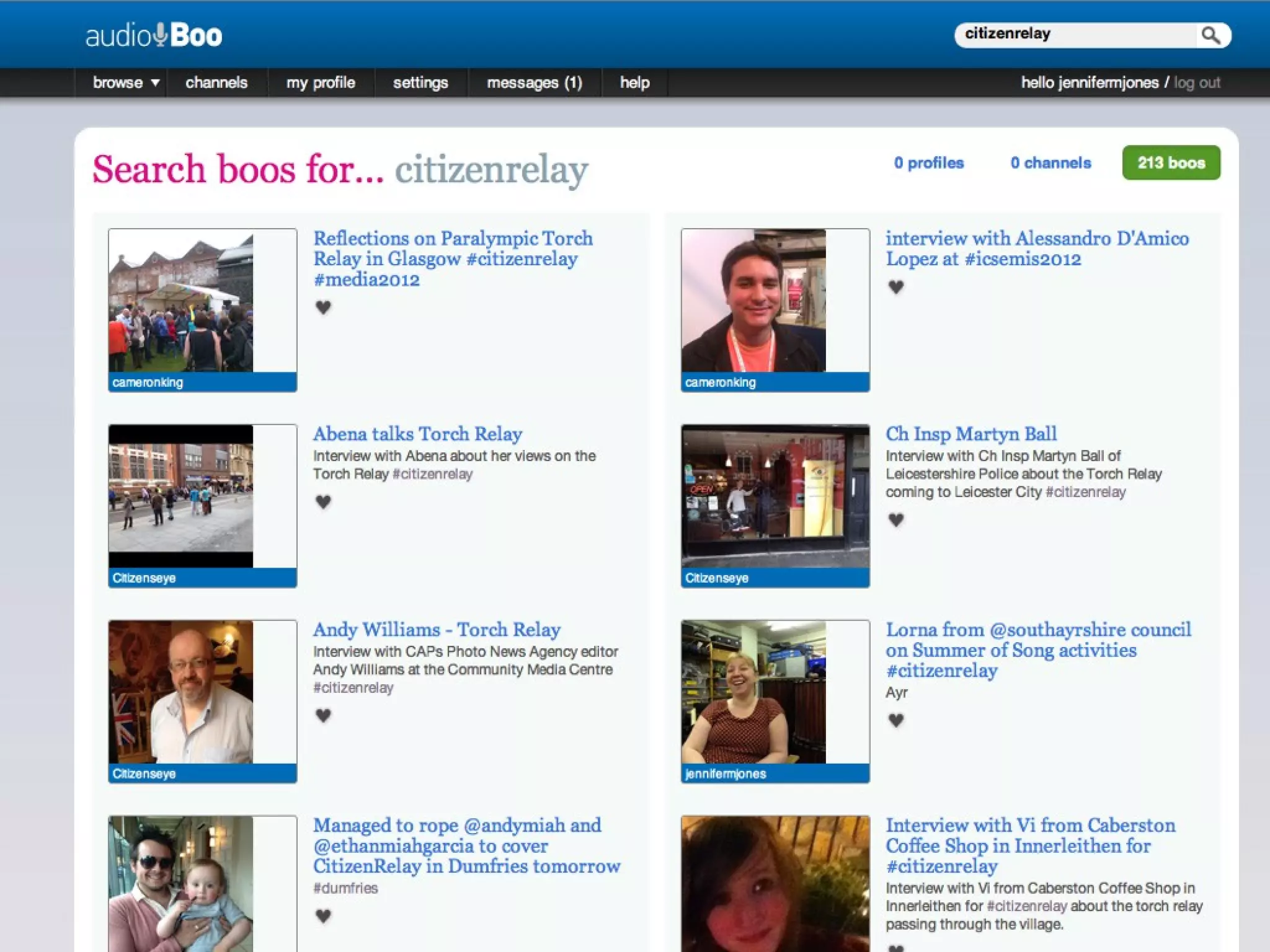
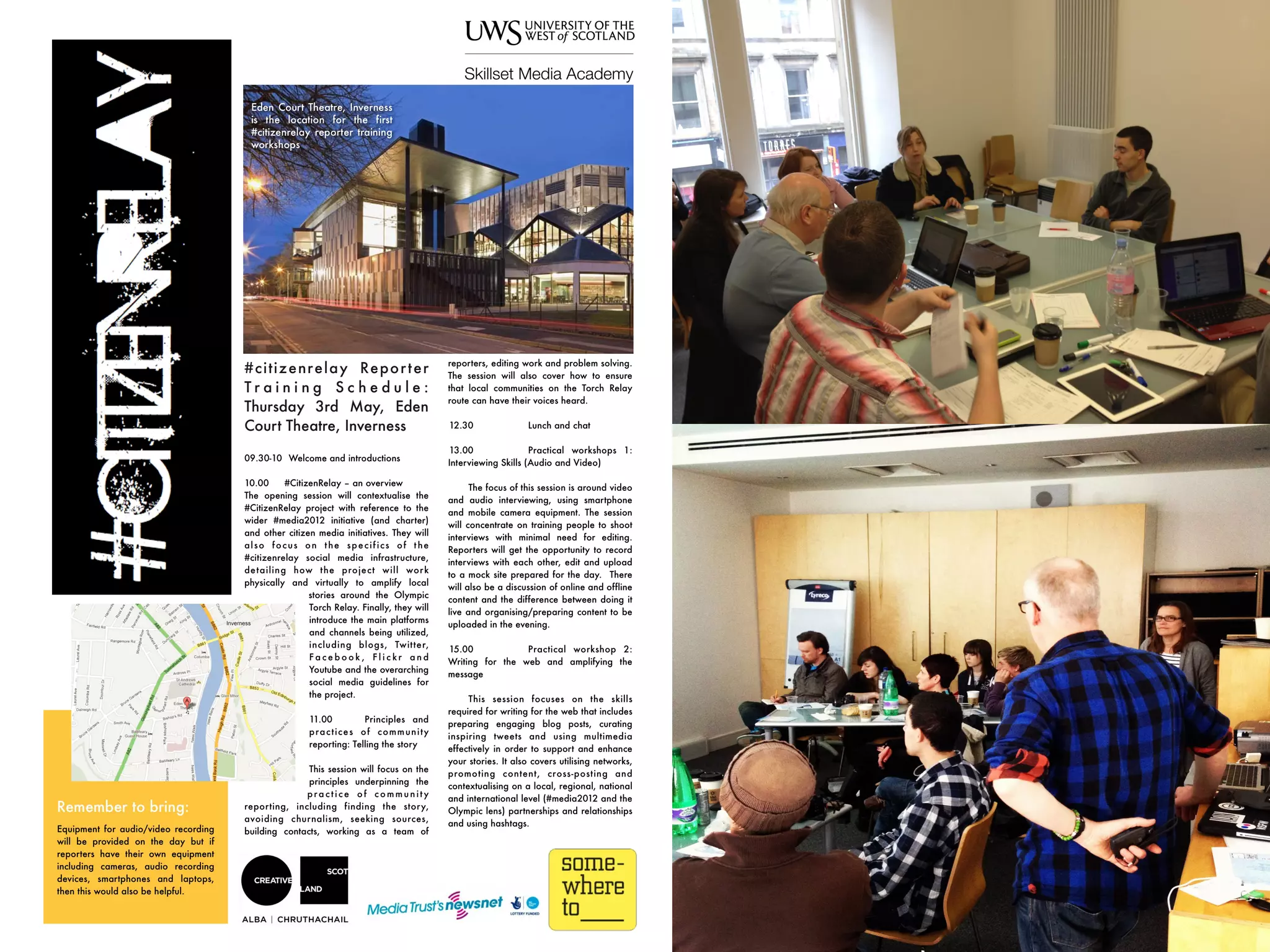
#citizenrelay used a hybrid media
environment, including blogs and social
media, to mobilise, organise and discuss
issues pertaining the Olympic Torch Relay
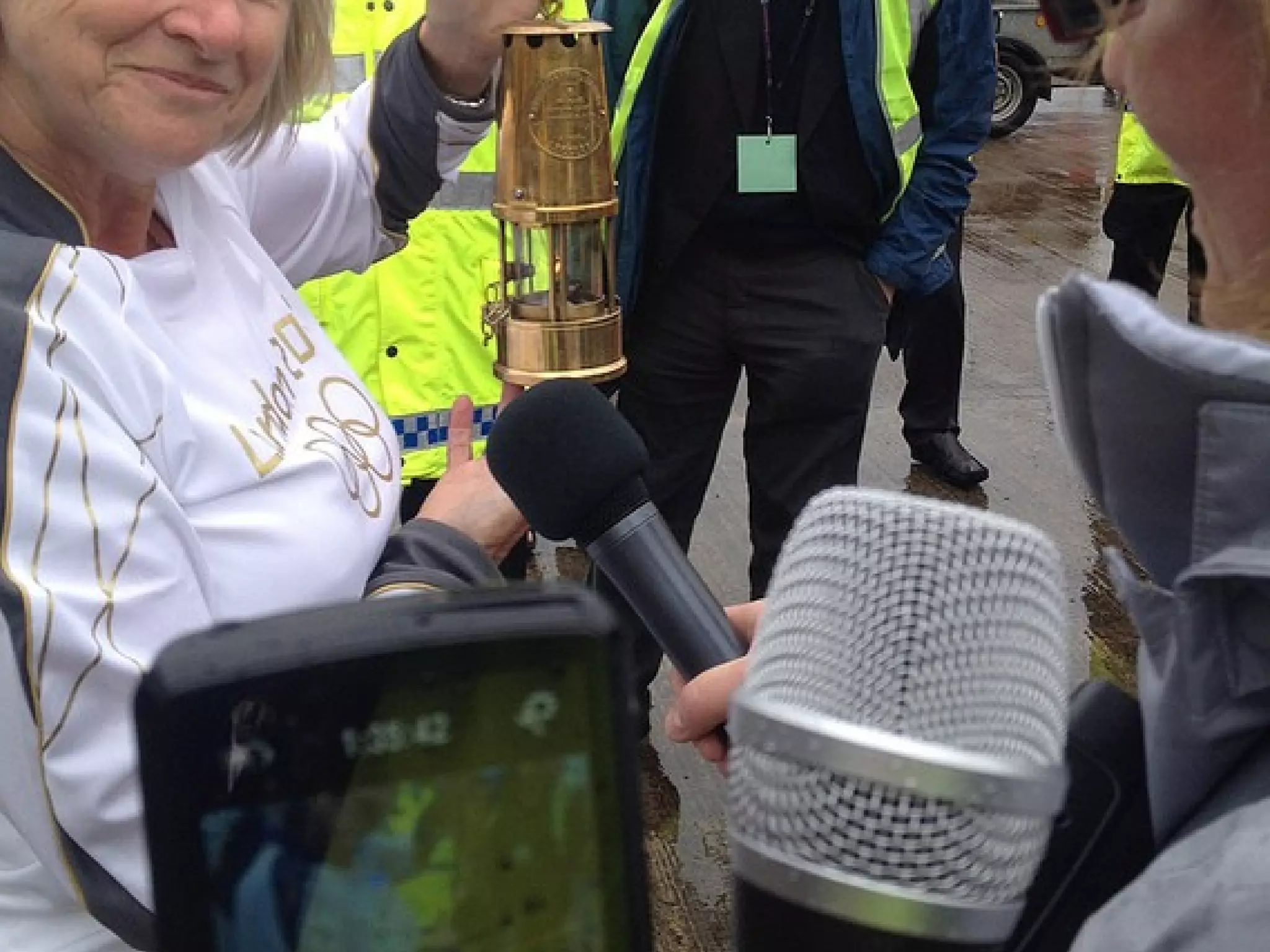
Immediacy
Speed, of communication and
representation, is a prominent feature of
the accelerated mega event spectacle,
creating challenges of narrative control
and management for event owners and
corporate sponsors alike
• WHAT DID WE DO?
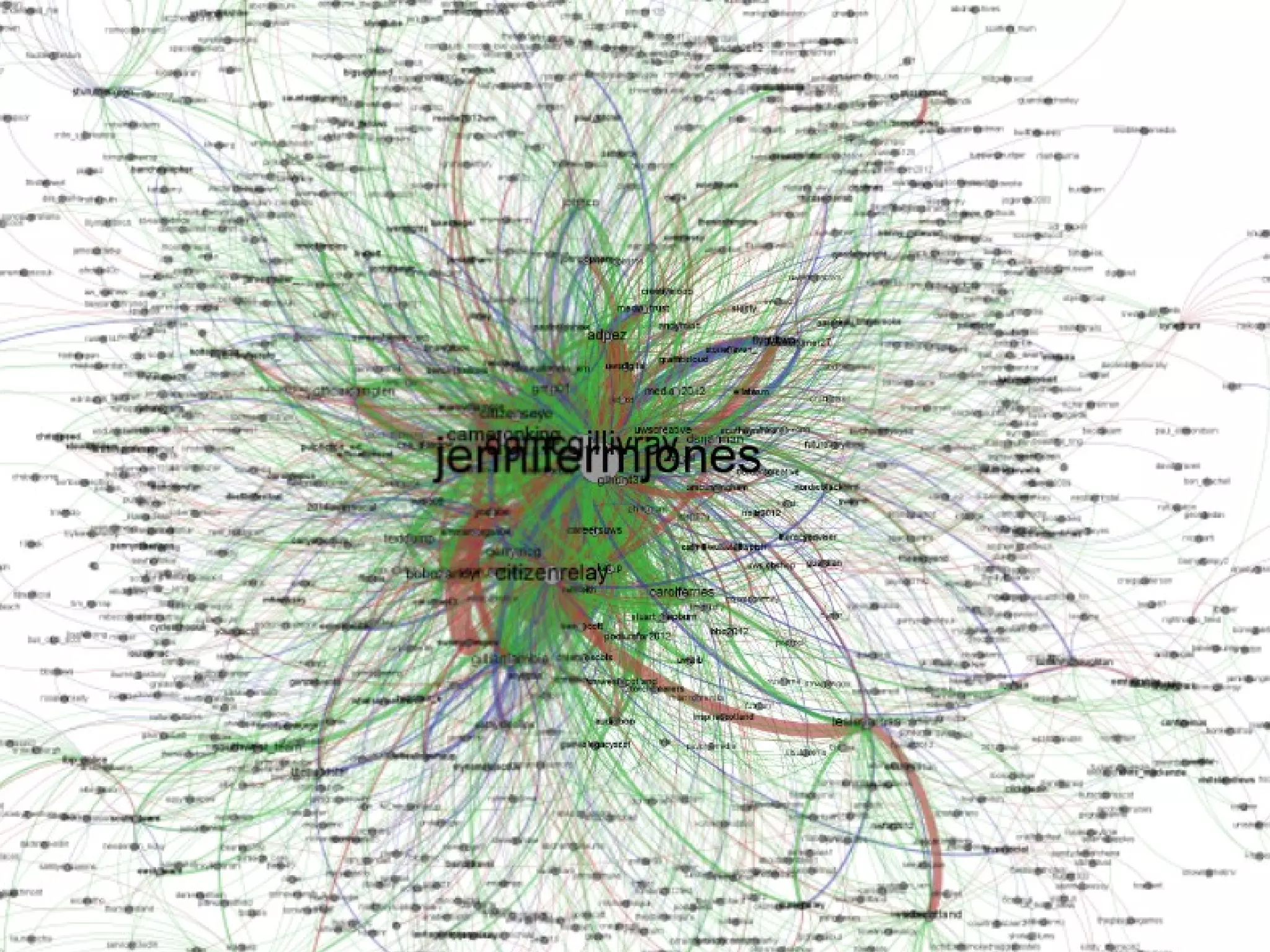
Networks and
connectedness
The project intentionally adopted a
decentralized and distributed structure,
where heterogeneous actors could
network and amplify their messages
through a shared communication
platform
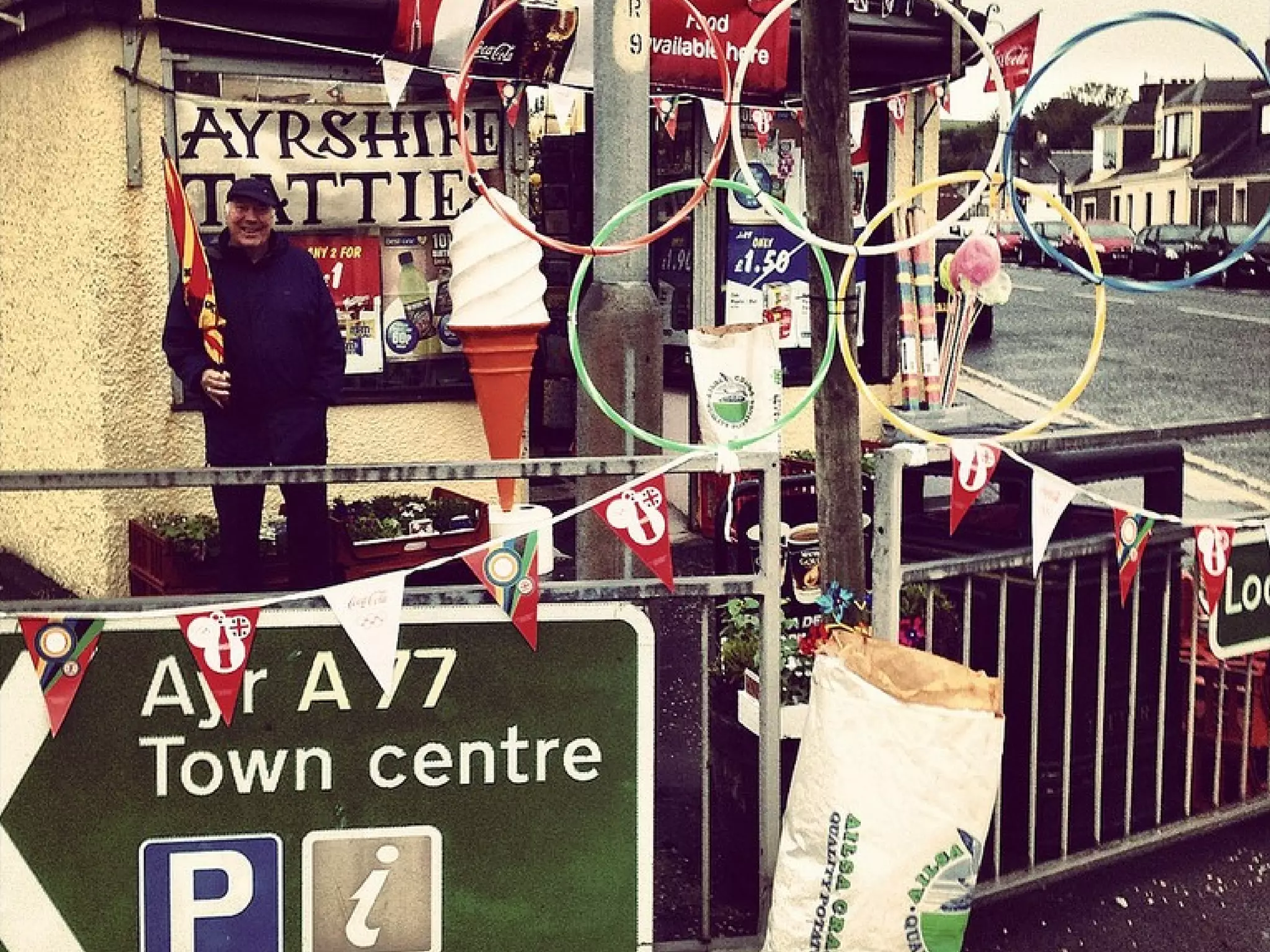
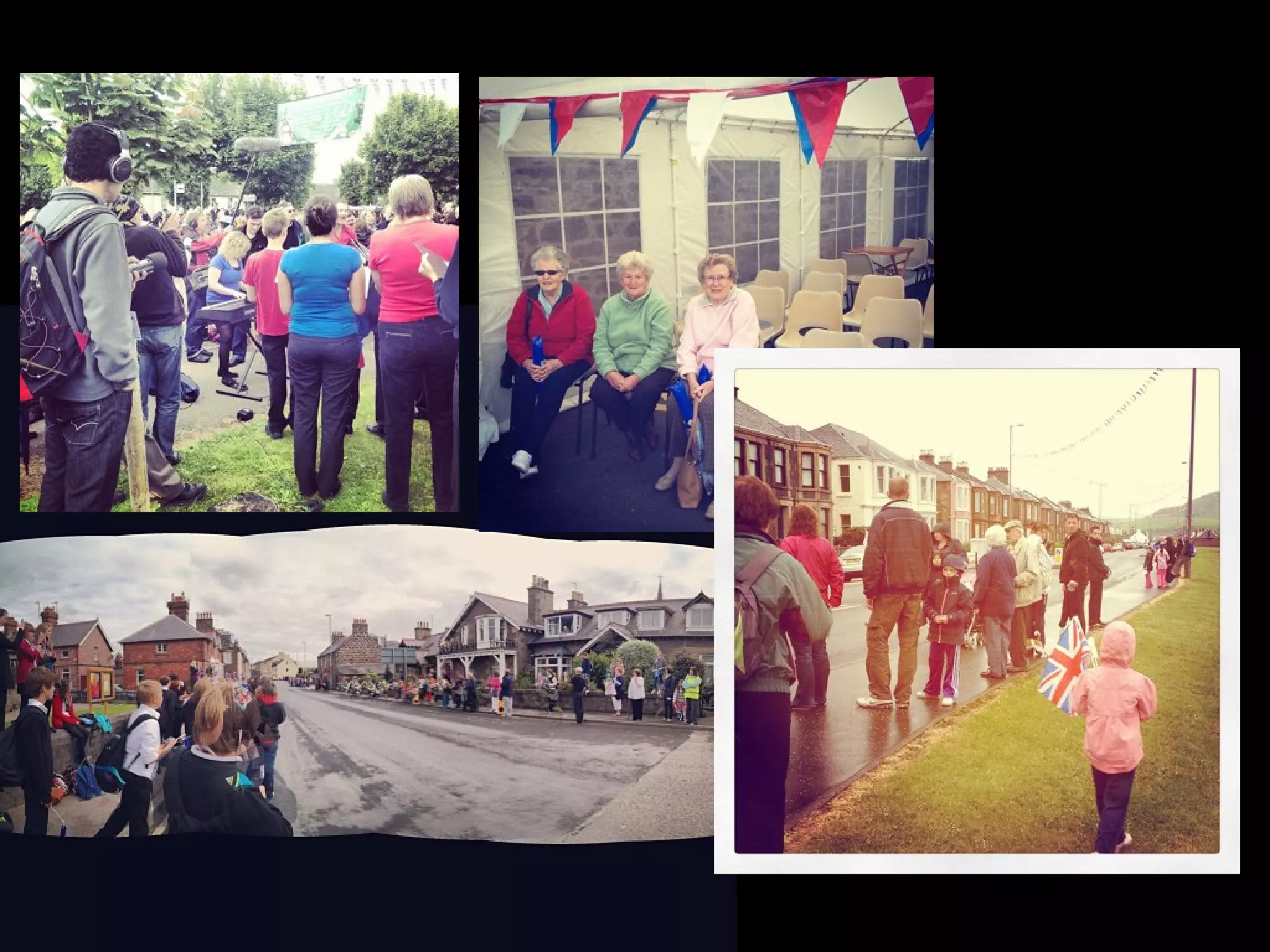
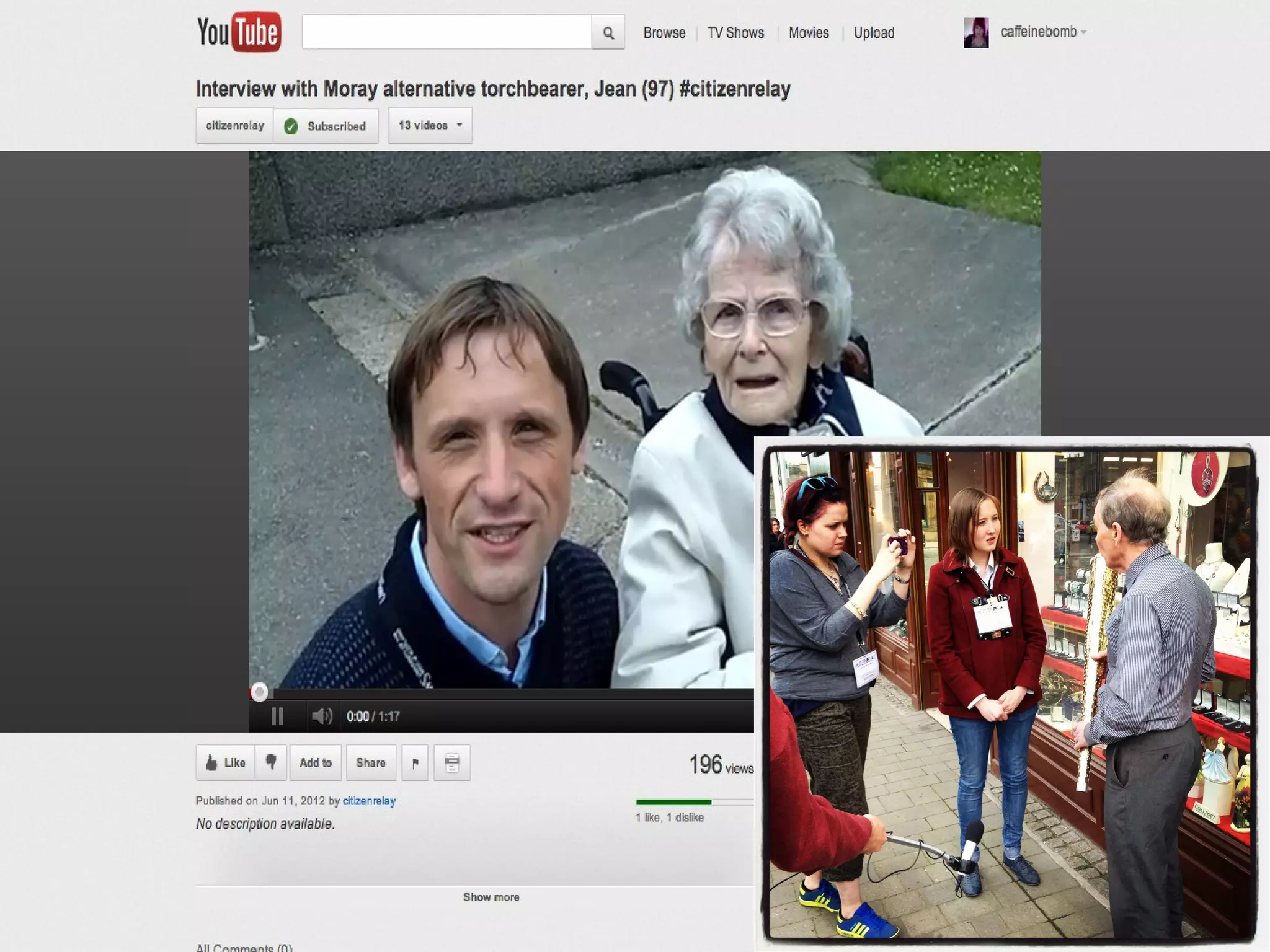
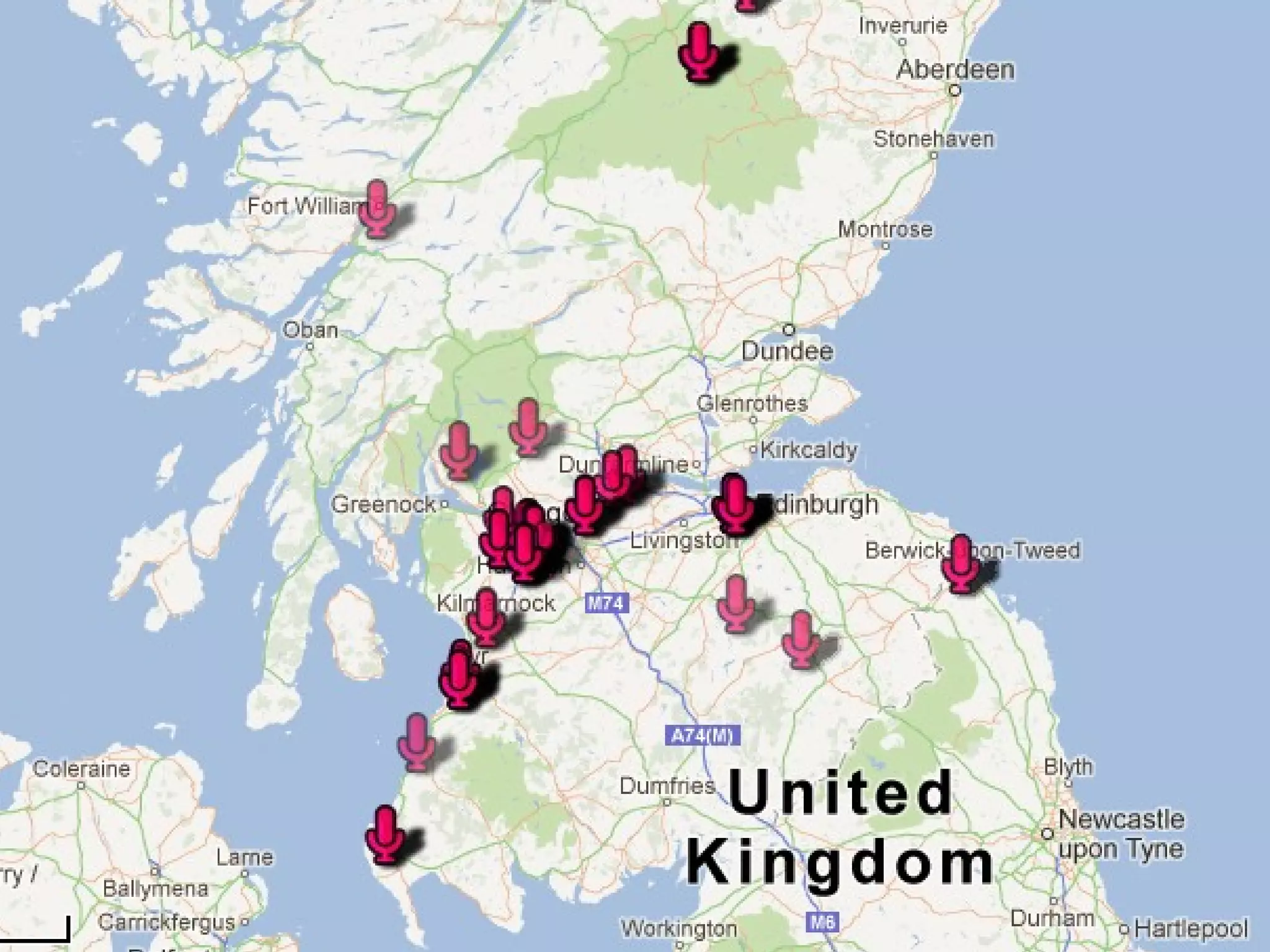
locality
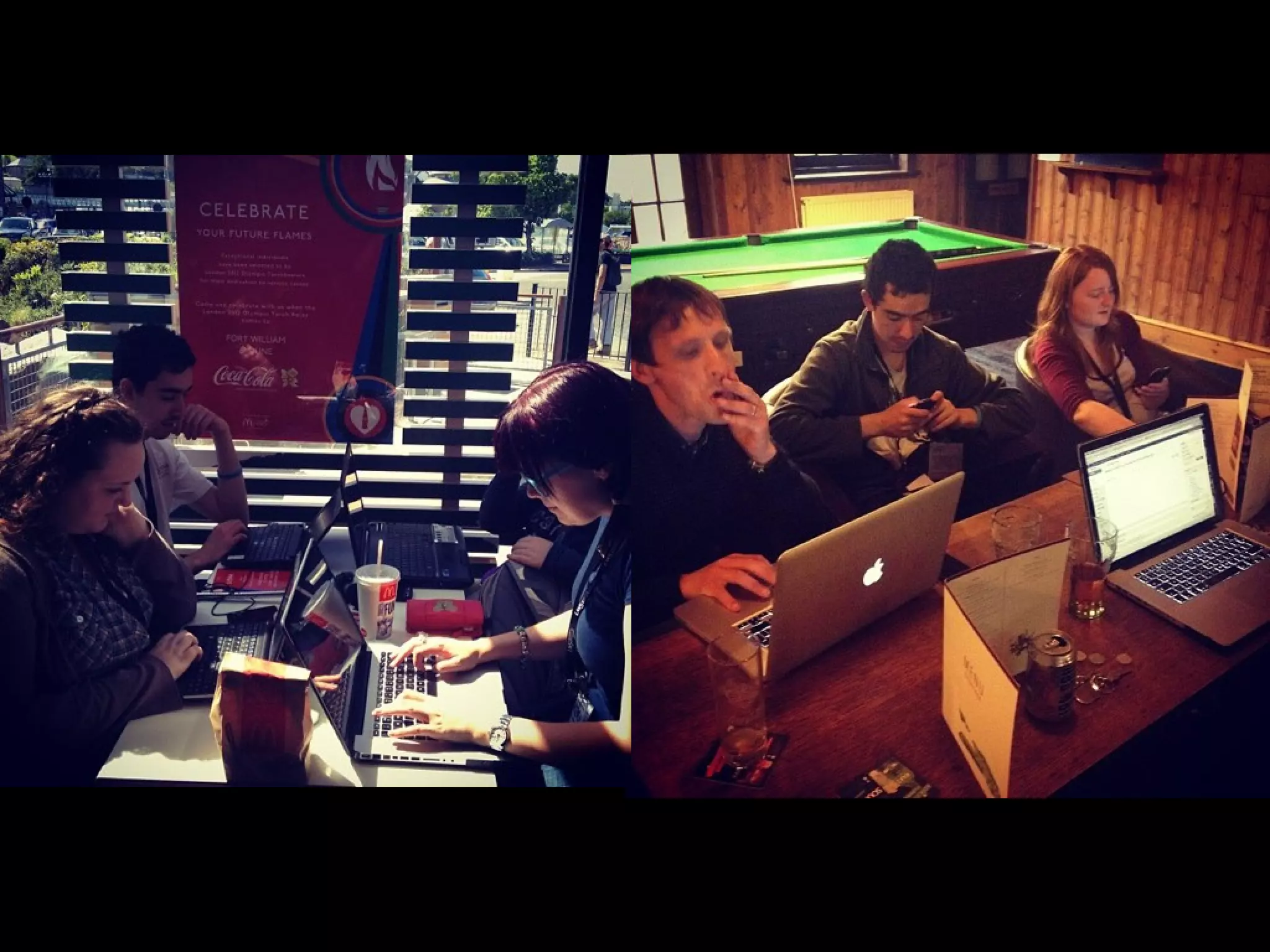
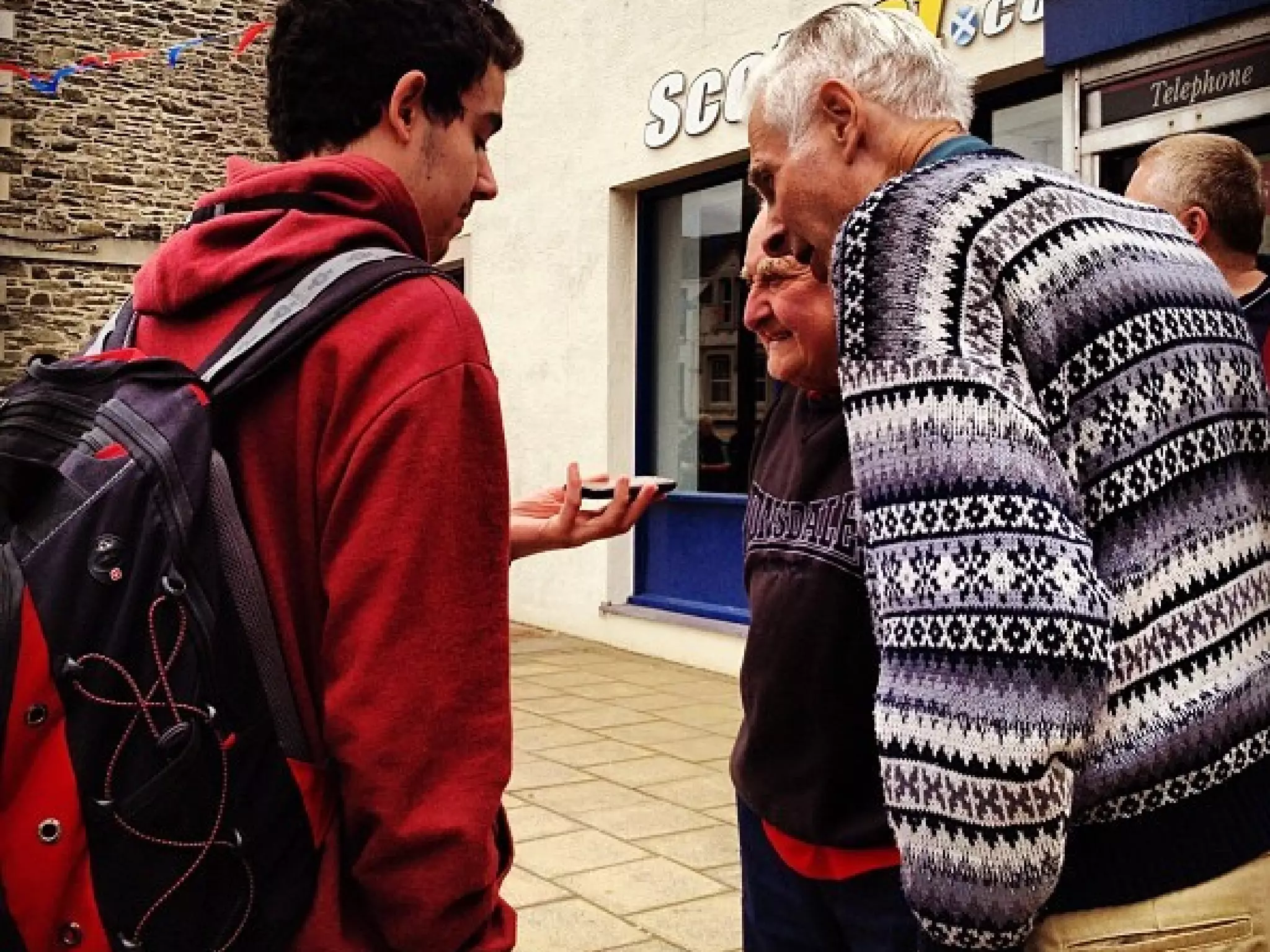
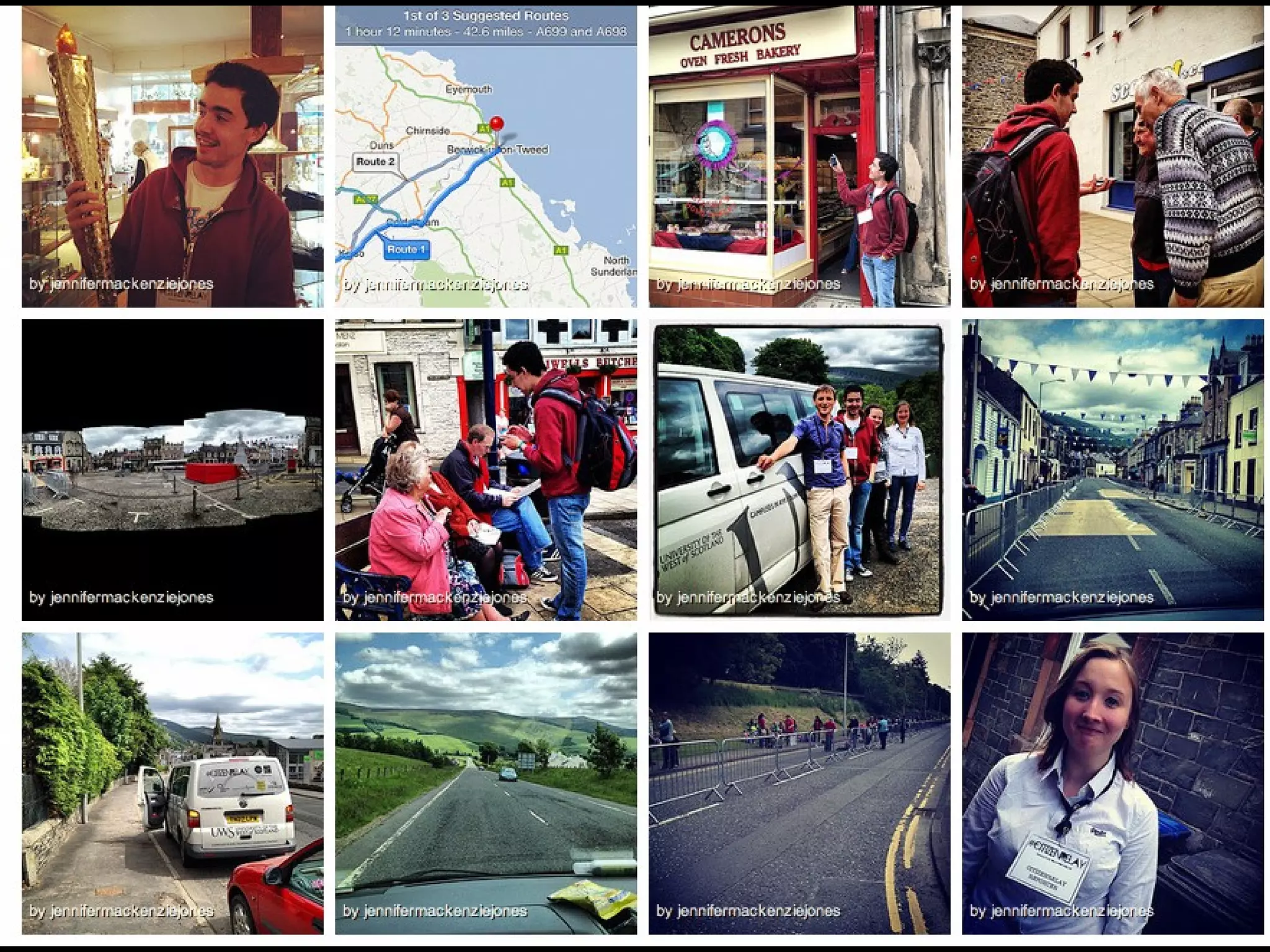
A commitment to a more bottom-up, place-
specific agenda was built into the recruitment of
volunteer reporters from four regions of Scotland
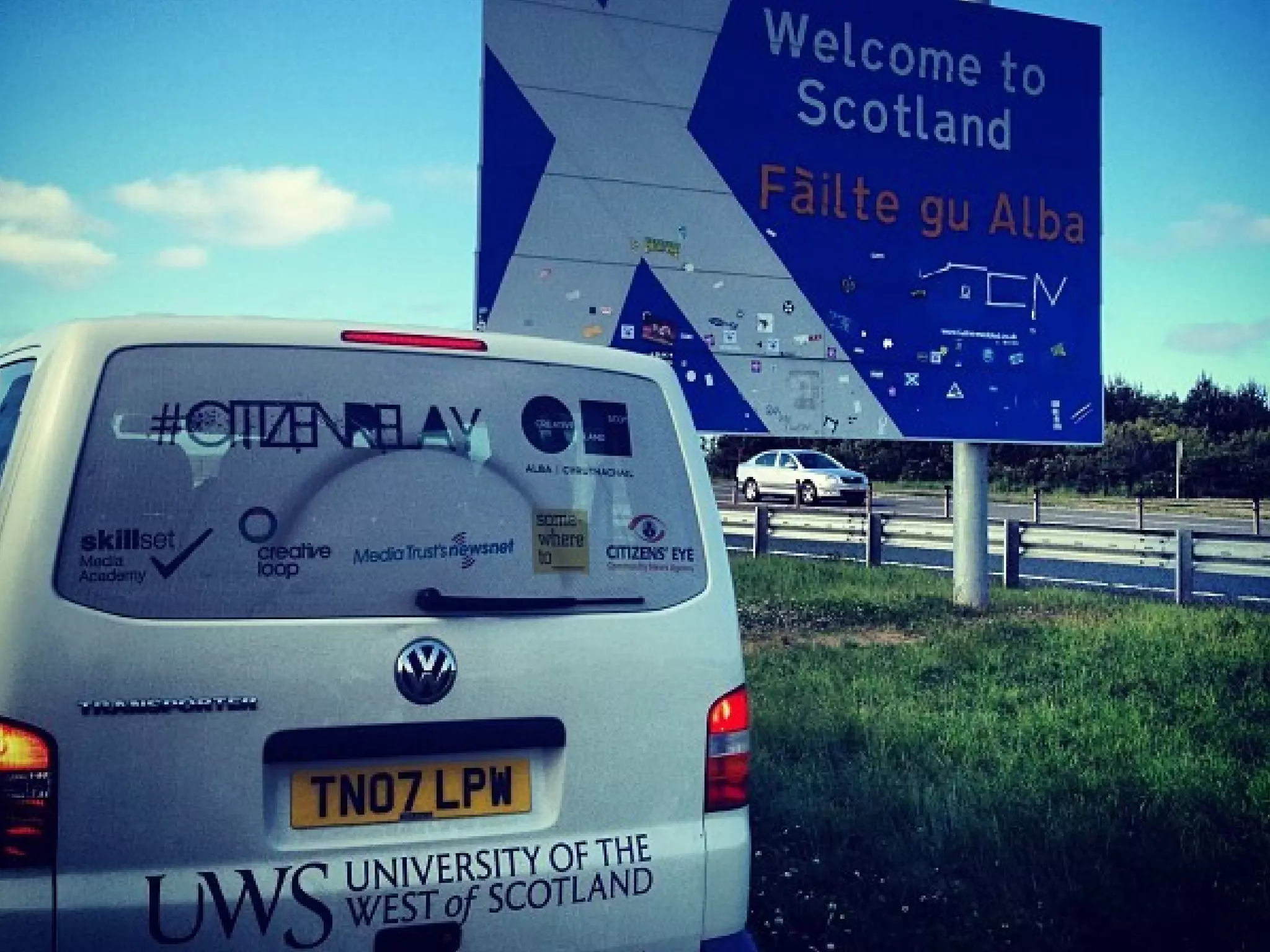
and investment in a mobile community media
centre (a minibus) to help support citizen media
makers in each locality
Empowerment
mass media and institutional gatekeepers are
being circumvented by citizen reporters and
commentators who provide first-hand, real-
time coverage and non-hegemonic
interpretations (Bakardjieva, et al, 2012),
participation
digital infrastructures offer citizens
new channels for speaking and acting
together and thus lower the
threshold for involvement
(Bakardjieva et al, 2012: i)
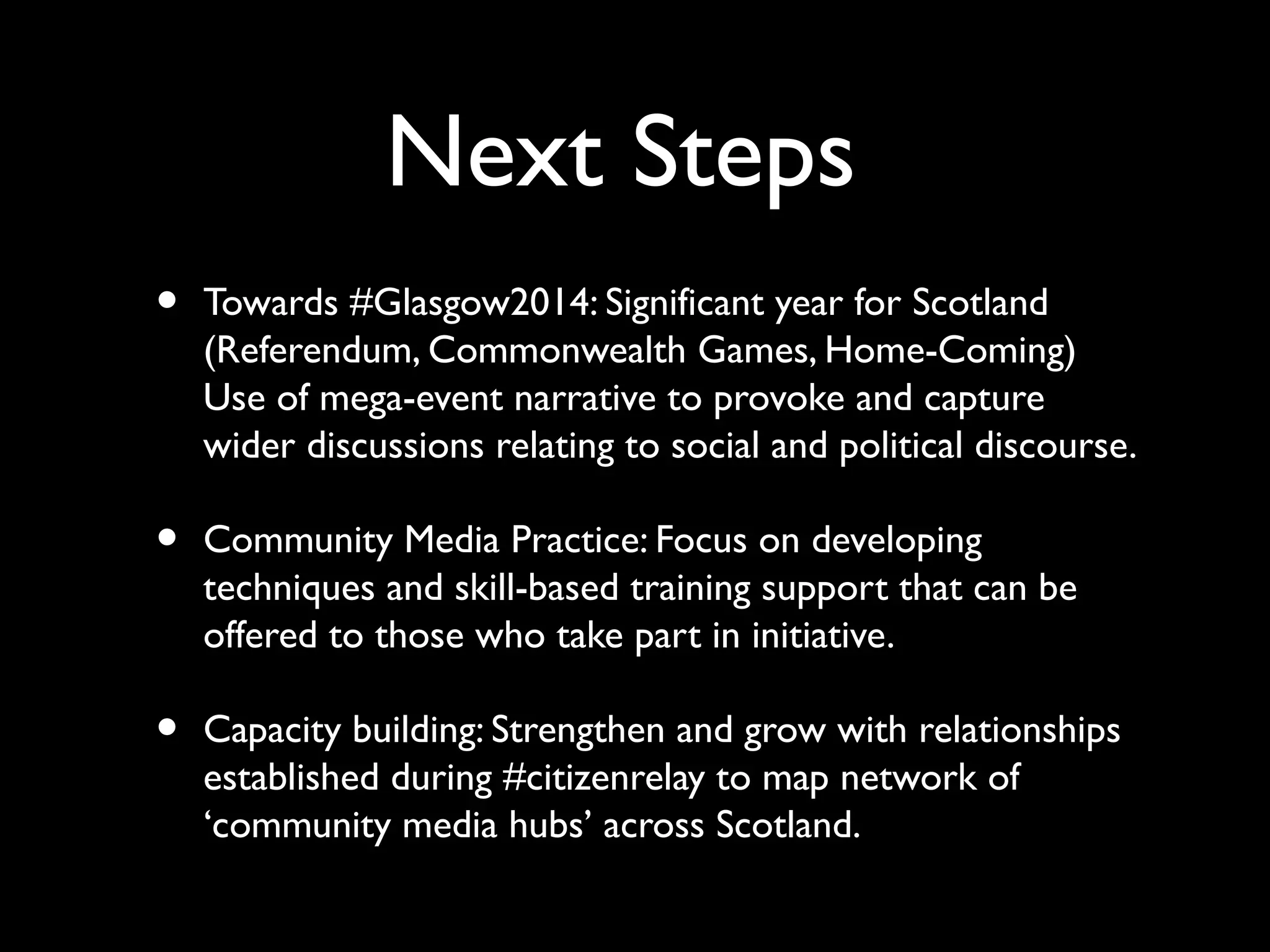
Next Steps
• Towards #Glasgow2014: Significant year for Scotland
(Referendum, Commonwealth Games, Home-Coming)
Use of mega-event narrative to provoke and capture
wider discussions relating to social and political discourse.
• Community Media Practice: Focus on developing
techniques and skill-based training support that can be
offered to those who take part in initiative.
• Capacity building: Strengthen and grow with relationships
established during #citizenrelay to map network of
‘community media hubs’ across Scotland.
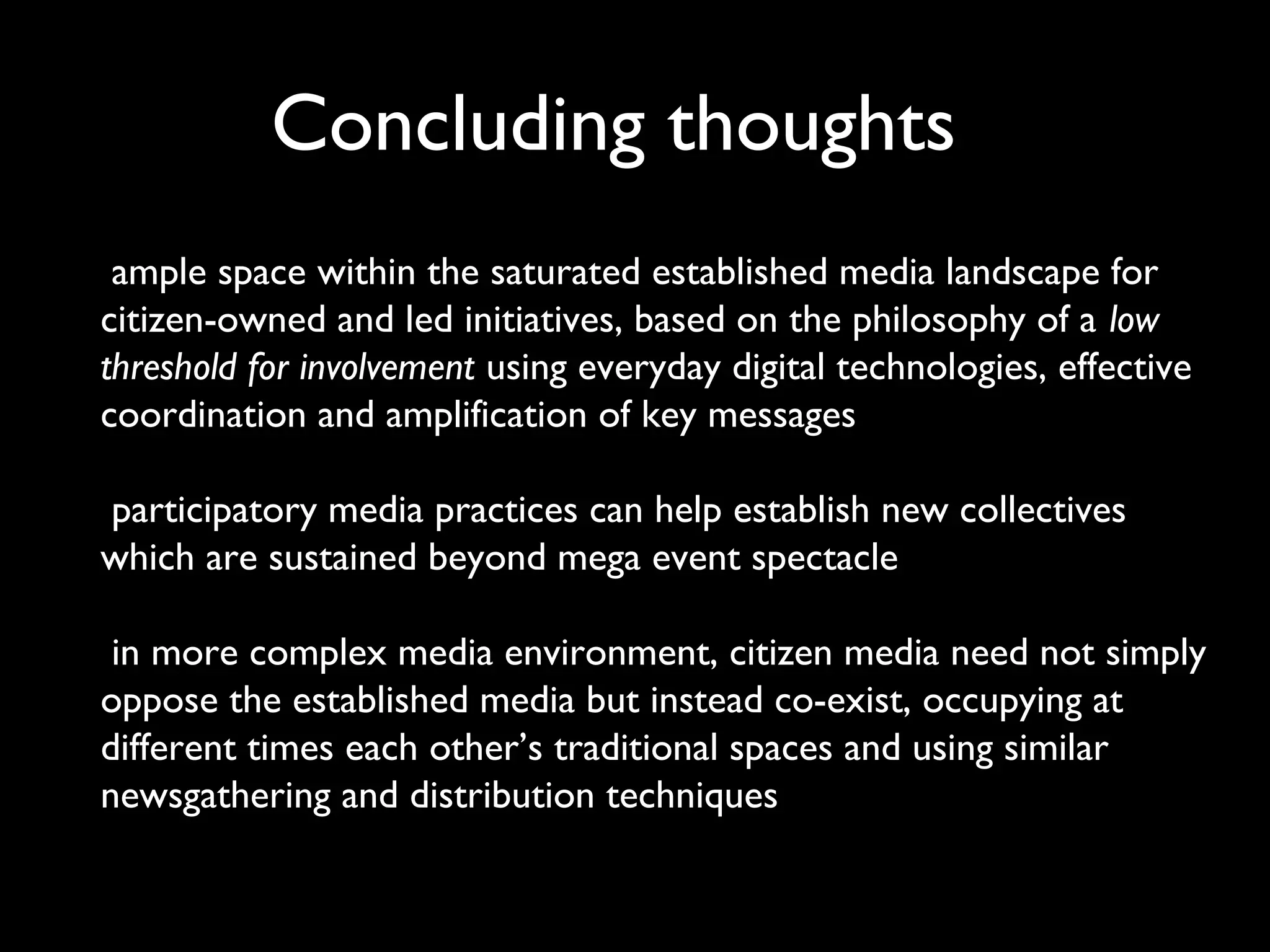
Concluding thoughts
ample space within the saturated established media landscape for
citizen-owned and led initiatives, based on the philosophy of a low
threshold for involvement using everyday digital technologies, effective
coordination and amplification of key messages
participatory media practices can help establish new collectives
which are sustained beyond mega event spectacle
in more complex media environment, citizen media need not simply
oppose the established media but instead co-exist, occupying at
different times each other’s traditional spaces and using similar
newsgathering and distribution techniques
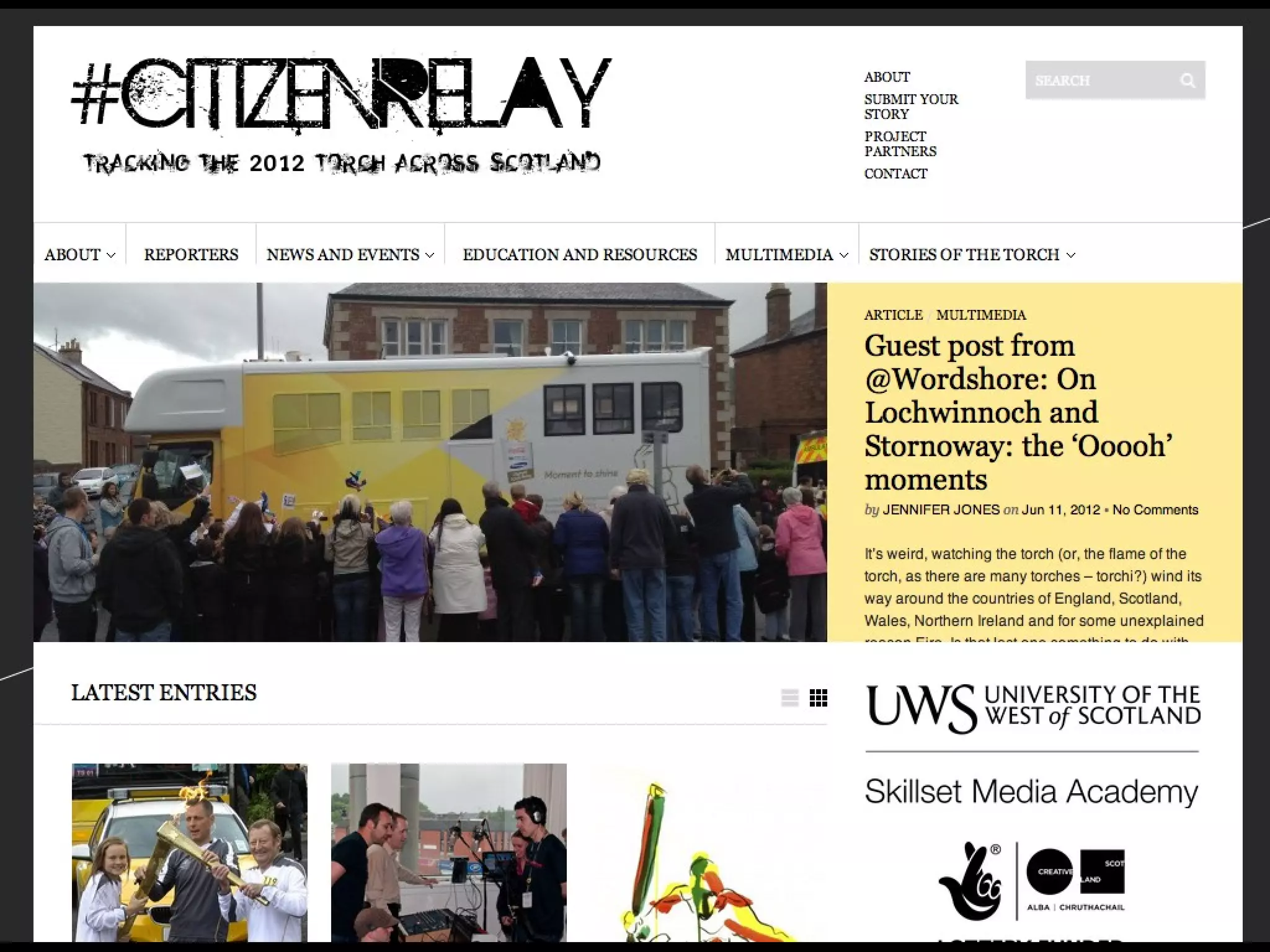
#citizenrelay
http://www.citizenrelay.net

Citizen Media: From Theory to Practice

  • 1.
    #citizenrelay Citizen Media: TranslatingTheory to Practice @dgmcgillivray @jennifermjones
  • 2.
    The Olympic Gamesis a media platform with an assumed dominant narrative; the IOC, Games organizers, sponsors and athletic federations attempt to defend the narrative against counter narratives…a problem for the Olympics is that there is some ambiguity over the ownership of the Olympic Games platform and the narrative. Who owns it? Is it the IOC, the organizing committee, the host city or nation, or the sponsors?" (Horne & Whannel, 2010, p762) the likelihood of a spiral of silence emerges, in which fringe minority voices get less hearing and are gradually brought into conformity…the hegemony of the privileged over web content and values will marginalise less powerful groups as it has in other media (Real, 2007, p182)
  • 4.
  • 10.
    Small, alternative orcitizen media offers space for the digitally empowered citizen to break stories, become media makers and storytellers of the now, archived as an historical record
  • 11.
  • 14.
    #citizenrelay used ahybrid media environment, including blogs and social media, to mobilise, organise and discuss issues pertaining the Olympic Torch Relay
  • 15.
    Immediacy Speed, of communicationand representation, is a prominent feature of the accelerated mega event spectacle, creating challenges of narrative control and management for event owners and corporate sponsors alike
  • 16.
  • 20.
    Networks and connectedness The projectintentionally adopted a decentralized and distributed structure, where heterogeneous actors could network and amplify their messages through a shared communication platform
  • 26.
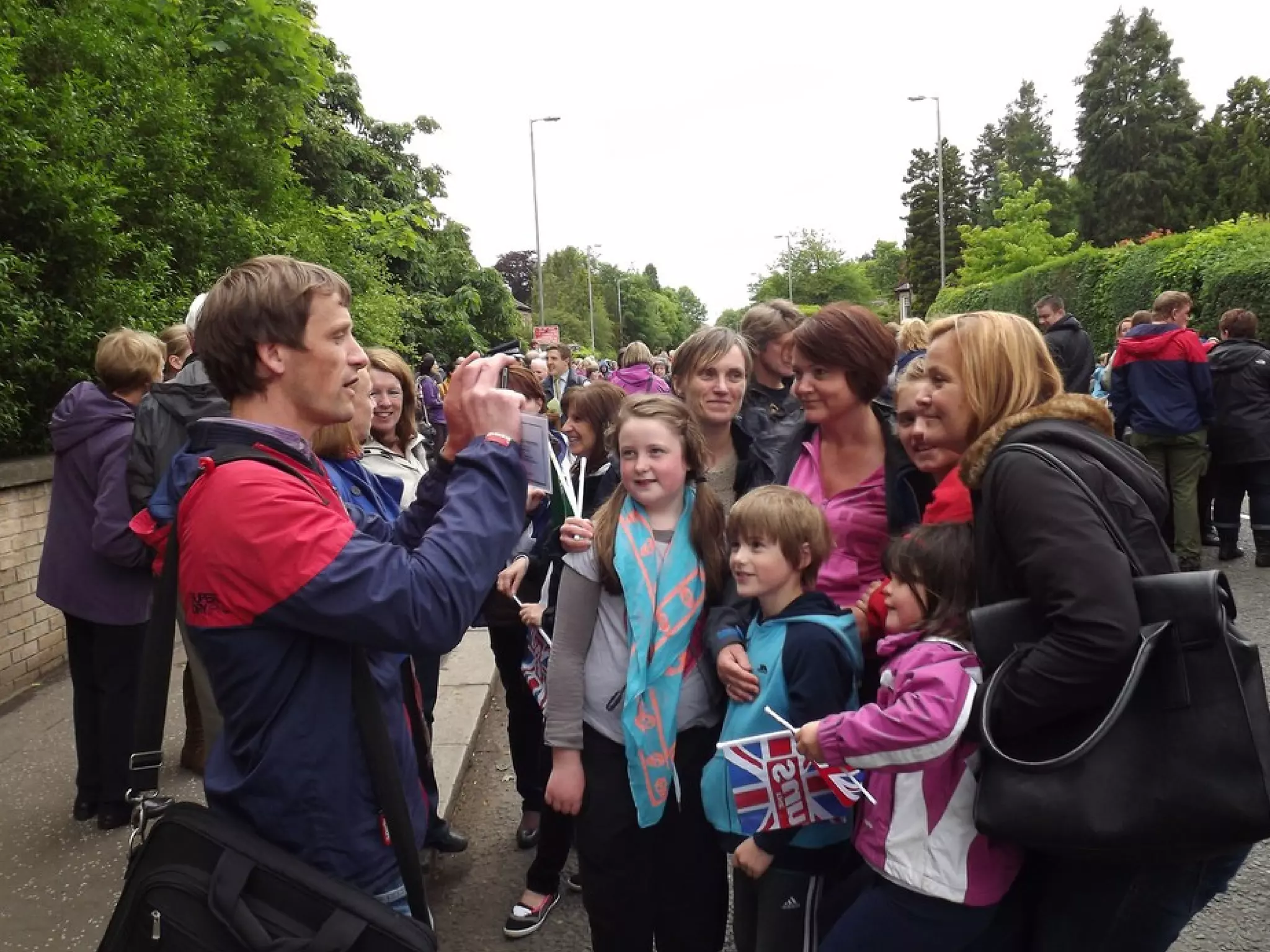
    locality A commitment toa more bottom-up, place- specific agenda was built into the recruitment of volunteer reporters from four regions of Scotland and investment in a mobile community media centre (a minibus) to help support citizen media makers in each locality
  • 33.
    Empowerment mass media andinstitutional gatekeepers are being circumvented by citizen reporters and commentators who provide first-hand, real- time coverage and non-hegemonic interpretations (Bakardjieva, et al, 2012),
  • 37.
    participation digital infrastructures offercitizens new channels for speaking and acting together and thus lower the threshold for involvement (Bakardjieva et al, 2012: i)
  • 43.
    Next Steps • Towards#Glasgow2014: Significant year for Scotland (Referendum, Commonwealth Games, Home-Coming) Use of mega-event narrative to provoke and capture wider discussions relating to social and political discourse. • Community Media Practice: Focus on developing techniques and skill-based training support that can be offered to those who take part in initiative. • Capacity building: Strengthen and grow with relationships established during #citizenrelay to map network of ‘community media hubs’ across Scotland.
  • 44.
    Concluding thoughts ample spacewithin the saturated established media landscape for citizen-owned and led initiatives, based on the philosophy of a low threshold for involvement using everyday digital technologies, effective coordination and amplification of key messages participatory media practices can help establish new collectives which are sustained beyond mega event spectacle in more complex media environment, citizen media need not simply oppose the established media but instead co-exist, occupying at different times each other’s traditional spaces and using similar newsgathering and distribution techniques
  • 45.

Editor's Notes

  • #5 HISTORY WAS DECIDED BEFORE THE GAMES EVEN TOOK PLACE
  • #25 7000 relationships
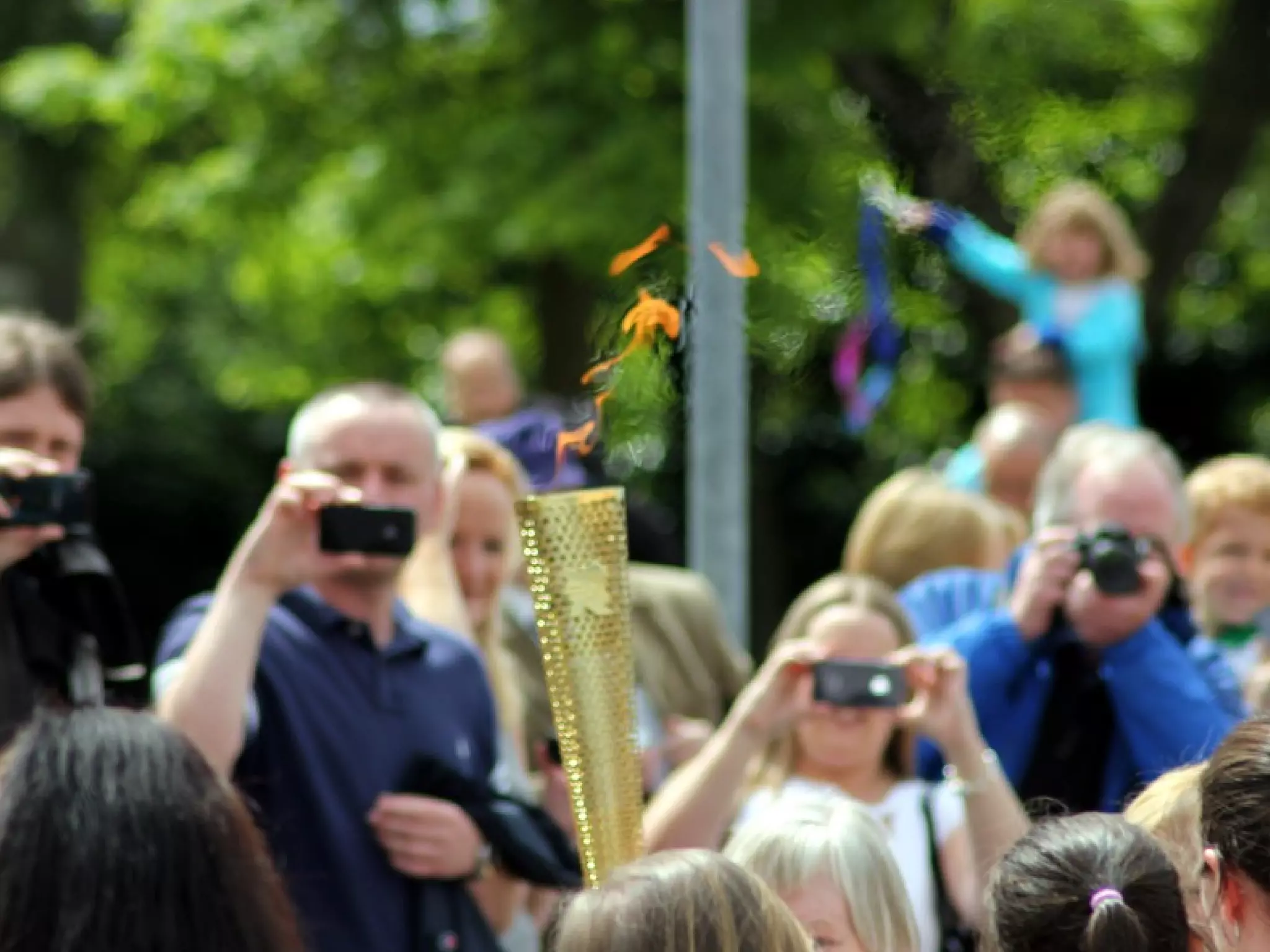
  • #32 SCOTLAND (2014) IDENTITY, DATA, (IMAGE FROM WHEN TORCH ARRIVED)
  • #33 #CITIZENRELAY AS A PROJECT