Title:
"Citation in Research"
Subtitle:
Understanding the Importance and
Techniques
Dr. Vijaykumar Shrikrushna Chowbe
Professor & Head, Department of Law,
Sant Gadge Baba Amravati University, Amravati – 444602
E-mail : vijuchowbe@gmail.com Cell : 9422157157
Pre-requisite of better
and effective citation
 Proper understanding, meaning and purpose
of research.
 Stages/Steps in research.
 Understanding of subject.
 Through ‘review of literature’.
 Better ability of narrating, describing the
things. Comprehensive reading.
 Notes, record keeping.
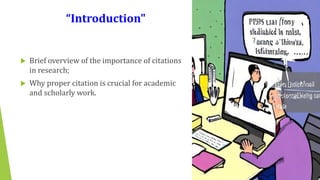
“Introduction"
 Brief overview of the importance of citations
in research;
 Why proper citation is crucial for academic
and scholarly work.
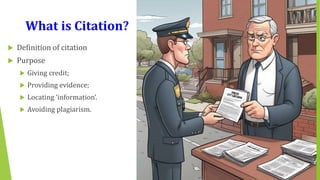
What is Citation?
 Definition of citation
 Purpose
 Giving credit;
 Providing evidence;
 Locating ‘information’.
 Avoiding plagiarism.
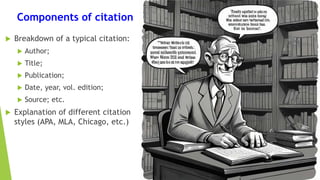
Components of citation
 Breakdown of a typical citation:
 Author;
 Title;
 Publication;
 Date, year, vol. edition;
 Source; etc.
 Explanation of different citation
styles (APA, MLA, Chicago, etc.)
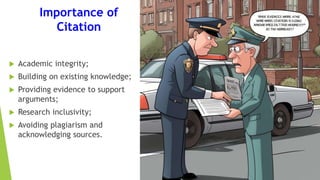
Importance of
Citation
 Academic integrity;
 Building on existing knowledge;
 Providing evidence to support
arguments;
 Research inclusivity;
 Avoiding plagiarism and
acknowledging sources.
Different Citation styles
 Brief overview of major citation styles
 When to use each style (e.g., APA for social sciences, MLA for
humanities)
How to Cite Books, Journals, websites
 Specifics of citing books;
 Author, title, publication date, publisher, page numbers.
 Specifics of citing journal articles
 Author, article title, journal name, volume, page
numbers.
 Specifics of citing websites
 Author (if available), title of the page, website name,
URL, access date
Plagiarism and Consequences
 Definition and types of plagiarism -
 Consequences of plagiarism in academic and professional settings.
 Meaning and definition
 UGC -"Plagiarism" means an act of academic dishonesty and a breach of ethics. It
involves. using someone else's work as one's own.
 UGC (Promotion of Academic Integrity and Prevention of Plagiarism in Higher
Educational Institutions) Regulations, 2018. s. 2(m)
Tips for effective Citation
 Keep track of sources from the beginning
 Use citation management tools (EndNote, Zotero, etc.)
 Understand the specific requirements of the chosen citation style
Examples of In-Text Citations
 Examples for different types of sources (books,
articles, websites)
Conclusion
 What we understand? Recap
 What adherence to the proper citation is essential in
research?
 How examiners looked at citation of the research
paper/thesis/dissertation/article?
 How the quality can be evaluated?
Q & A
 Any doubt? Please
References, if any?
Case Study
 Present a case study illustrating a successful IPR commercialization involving
legal intervention
 Present a case study illustrating challenges faced in commercializing IPR and
the lawyer's role in overcoming them
Future Outlook
 Emerging trends in citation;
 Predictive strategies for Researcher;
 Future challenges and opportunities.
Any Question? Quarries?
Thanks

Citation method in research : Importance and Techniques.pptx

  • 1.
    Title: "Citation in Research" Subtitle: Understandingthe Importance and Techniques Dr. Vijaykumar Shrikrushna Chowbe Professor & Head, Department of Law, Sant Gadge Baba Amravati University, Amravati – 444602 E-mail : vijuchowbe@gmail.com Cell : 9422157157
  • 2.
    Pre-requisite of better andeffective citation  Proper understanding, meaning and purpose of research.  Stages/Steps in research.  Understanding of subject.  Through ‘review of literature’.  Better ability of narrating, describing the things. Comprehensive reading.  Notes, record keeping.
  • 3.
    “Introduction"  Brief overviewof the importance of citations in research;  Why proper citation is crucial for academic and scholarly work.
  • 4.
    What is Citation? Definition of citation  Purpose  Giving credit;  Providing evidence;  Locating ‘information’.  Avoiding plagiarism.
  • 5.
    Components of citation Breakdown of a typical citation:  Author;  Title;  Publication;  Date, year, vol. edition;  Source; etc.  Explanation of different citation styles (APA, MLA, Chicago, etc.)
  • 6.
    Importance of Citation  Academicintegrity;  Building on existing knowledge;  Providing evidence to support arguments;  Research inclusivity;  Avoiding plagiarism and acknowledging sources.
  • 7.
    Different Citation styles Brief overview of major citation styles  When to use each style (e.g., APA for social sciences, MLA for humanities)
  • 8.
    How to CiteBooks, Journals, websites  Specifics of citing books;  Author, title, publication date, publisher, page numbers.  Specifics of citing journal articles  Author, article title, journal name, volume, page numbers.  Specifics of citing websites  Author (if available), title of the page, website name, URL, access date
  • 9.
    Plagiarism and Consequences Definition and types of plagiarism -  Consequences of plagiarism in academic and professional settings.  Meaning and definition  UGC -"Plagiarism" means an act of academic dishonesty and a breach of ethics. It involves. using someone else's work as one's own.  UGC (Promotion of Academic Integrity and Prevention of Plagiarism in Higher Educational Institutions) Regulations, 2018. s. 2(m)
  • 10.
    Tips for effectiveCitation  Keep track of sources from the beginning  Use citation management tools (EndNote, Zotero, etc.)  Understand the specific requirements of the chosen citation style
  • 11.
    Examples of In-TextCitations  Examples for different types of sources (books, articles, websites)
  • 12.
    Conclusion  What weunderstand? Recap  What adherence to the proper citation is essential in research?  How examiners looked at citation of the research paper/thesis/dissertation/article?  How the quality can be evaluated?
  • 13.
    Q & A Any doubt? Please
  • 14.
  • 15.
    Case Study  Presenta case study illustrating a successful IPR commercialization involving legal intervention  Present a case study illustrating challenges faced in commercializing IPR and the lawyer's role in overcoming them
  • 16.
    Future Outlook  Emergingtrends in citation;  Predictive strategies for Researcher;  Future challenges and opportunities.
  • 17.
  • 18.