“ Circuit Riders” A Brief History
The Need The Year 1995 Changing Market Conditions Emerging Internet Access Lagging effectiveness tcn Capacity Survey …
The Research Little formal recognition of technology Few internal training or support resources  Overburdened or conflicted “systems” staff   Little or no management support No lack of technology but a lack of expertise Competing standards and competing (and untrusted) consultants
The Business Model Issue or project focused Cross-organizational Foundation “authorized” & subsidized  Limited scope & focused goals Innovative application of technology around a project or campaign “ Foundations-subsidized, program-focused, short-term, technical assistance – usually as part of a specific campaign or focus.”
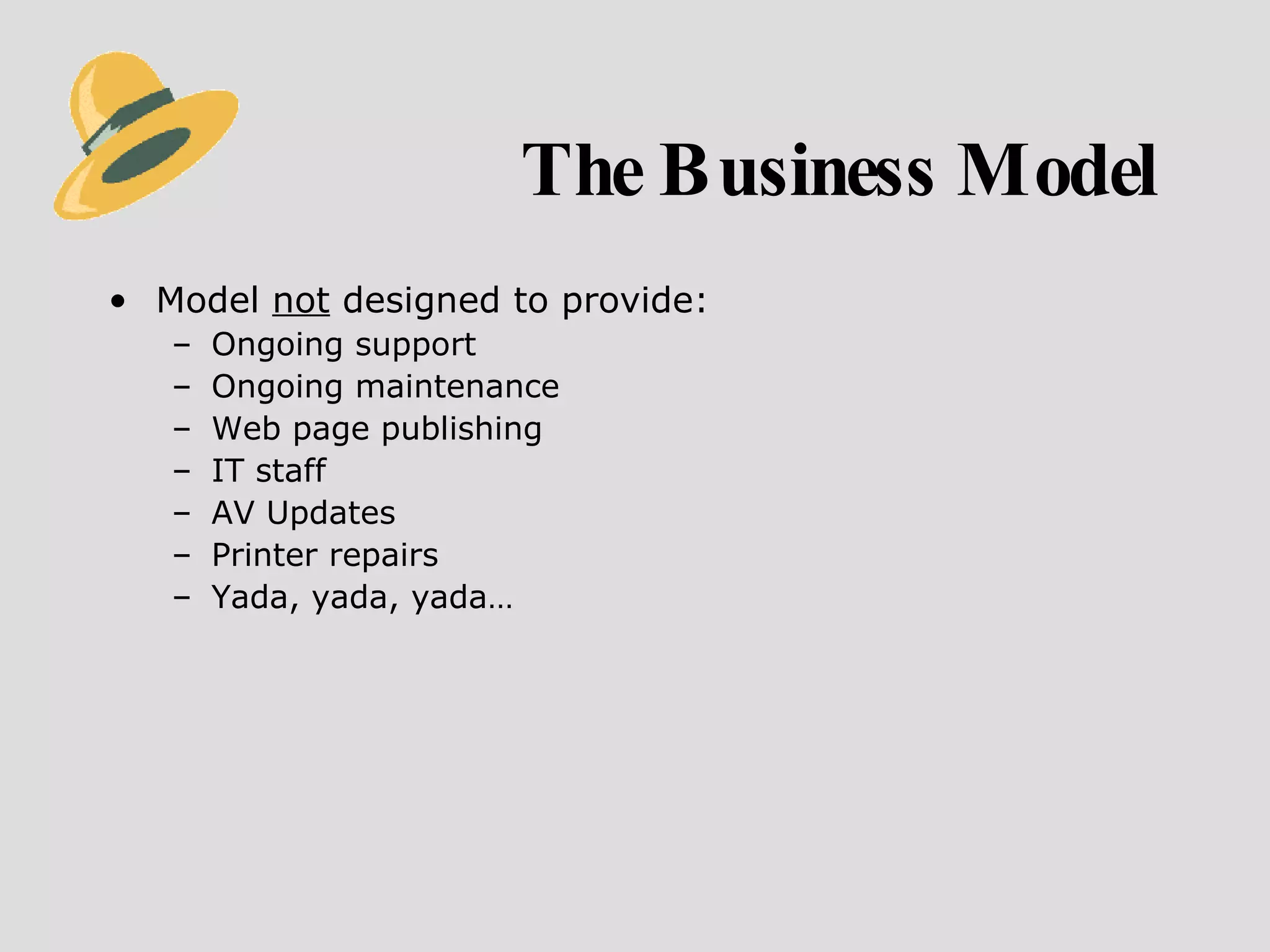
The Business Model Model  not  designed to provide: Ongoing support Ongoing maintenance  Web page publishing IT staff AV Updates Printer repairs Yada, yada, yada…
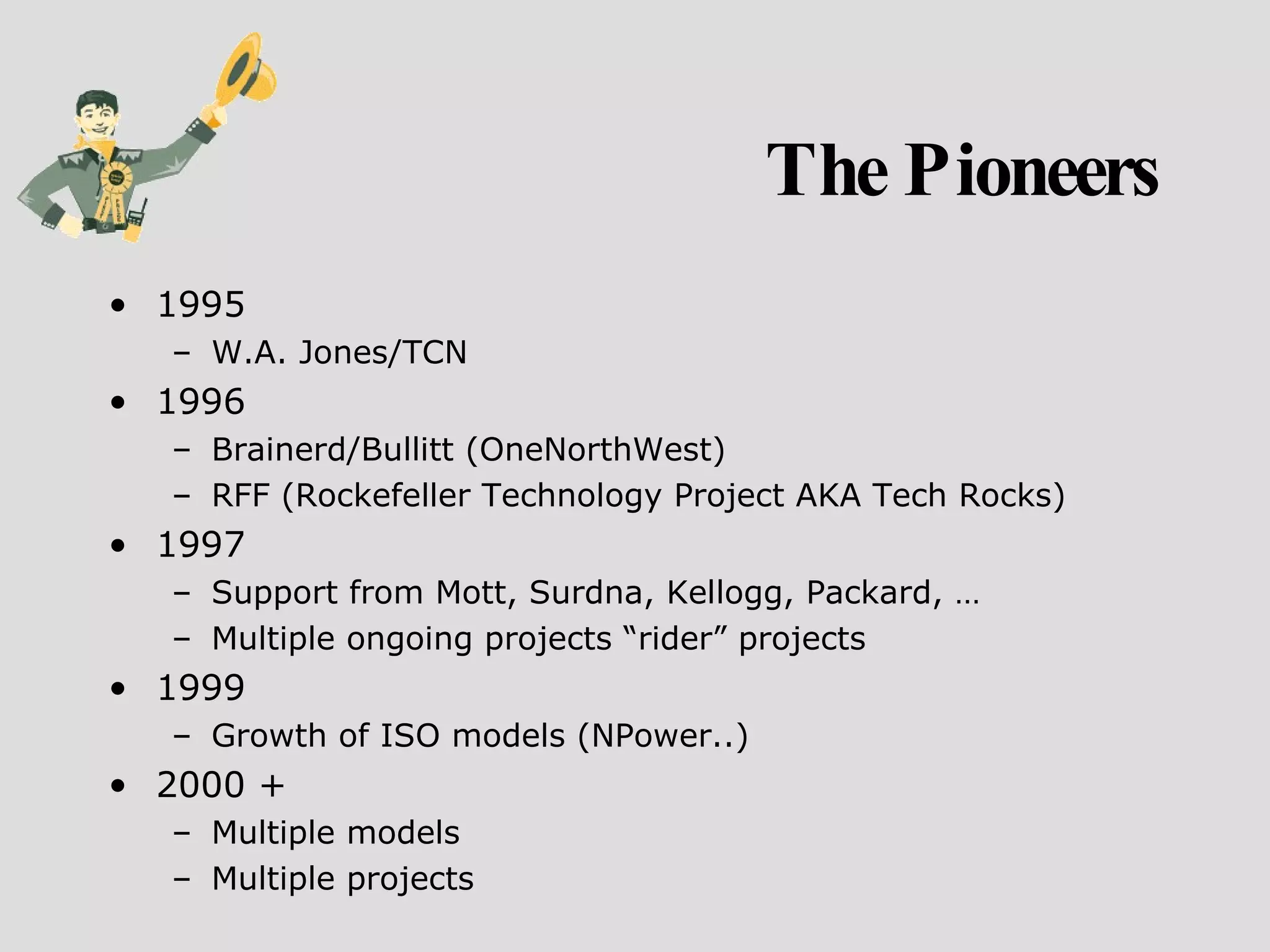
The Pioneers 1995  W.A. Jones/TCN  1996  Brainerd/Bullitt (OneNorthWest) RFF (Rockefeller Technology Project AKA Tech Rocks) 1997 Support from Mott, Surdna, Kellogg, Packard, … Multiple ongoing projects “rider” projects 1999 Growth of ISO models (NPower..) 2000 +  Multiple models  Multiple projects
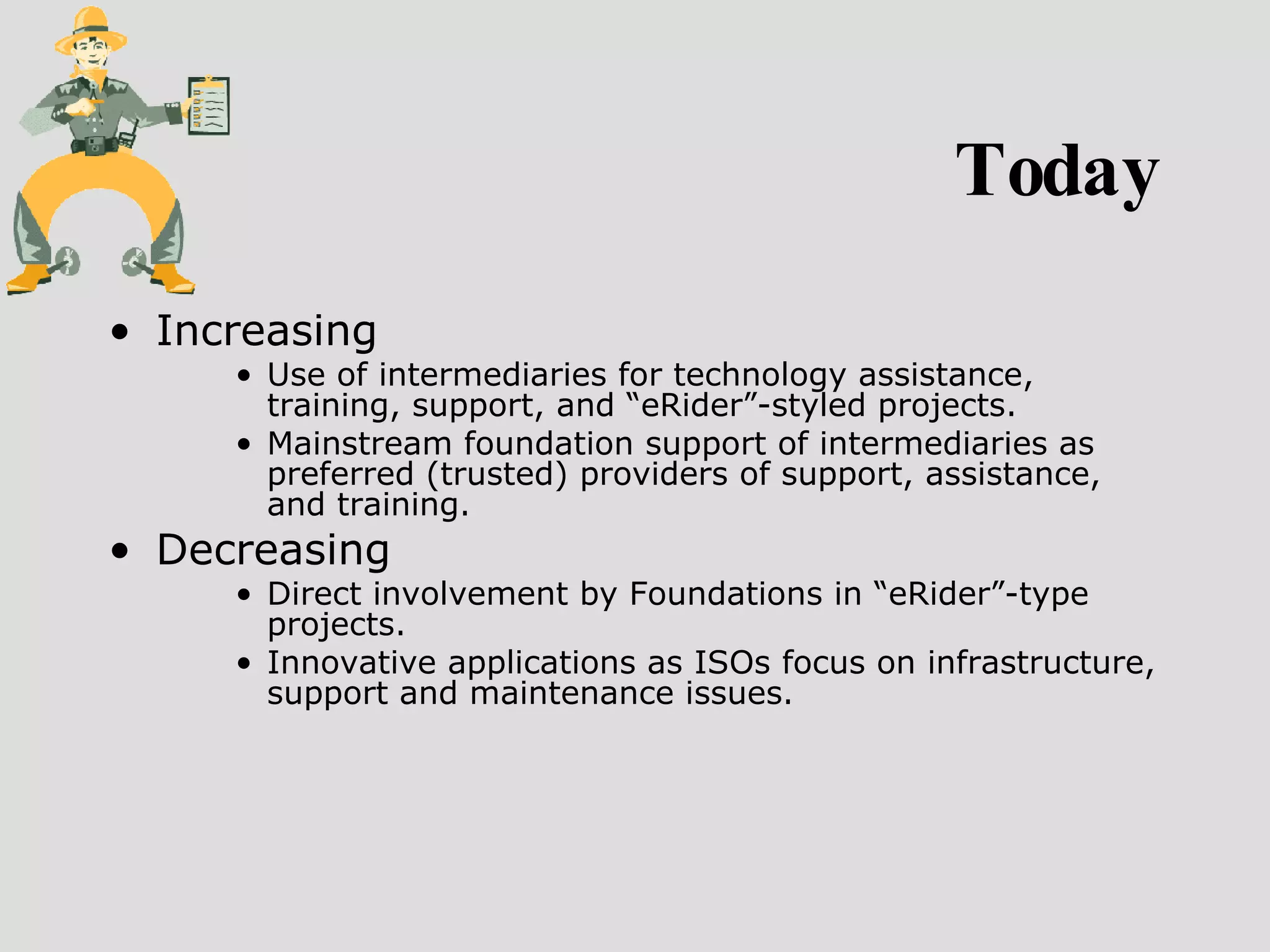
Today Increasing  Use of intermediaries for technology assistance, training, support, and “eRider”-styled projects.  Mainstream foundation support of intermediaries as preferred (trusted) providers of support, assistance, and training. Decreasing  Direct involvement by Foundations in “eRider”-type projects.  Innovative applications as ISOs focus on infrastructure, support and maintenance issues.
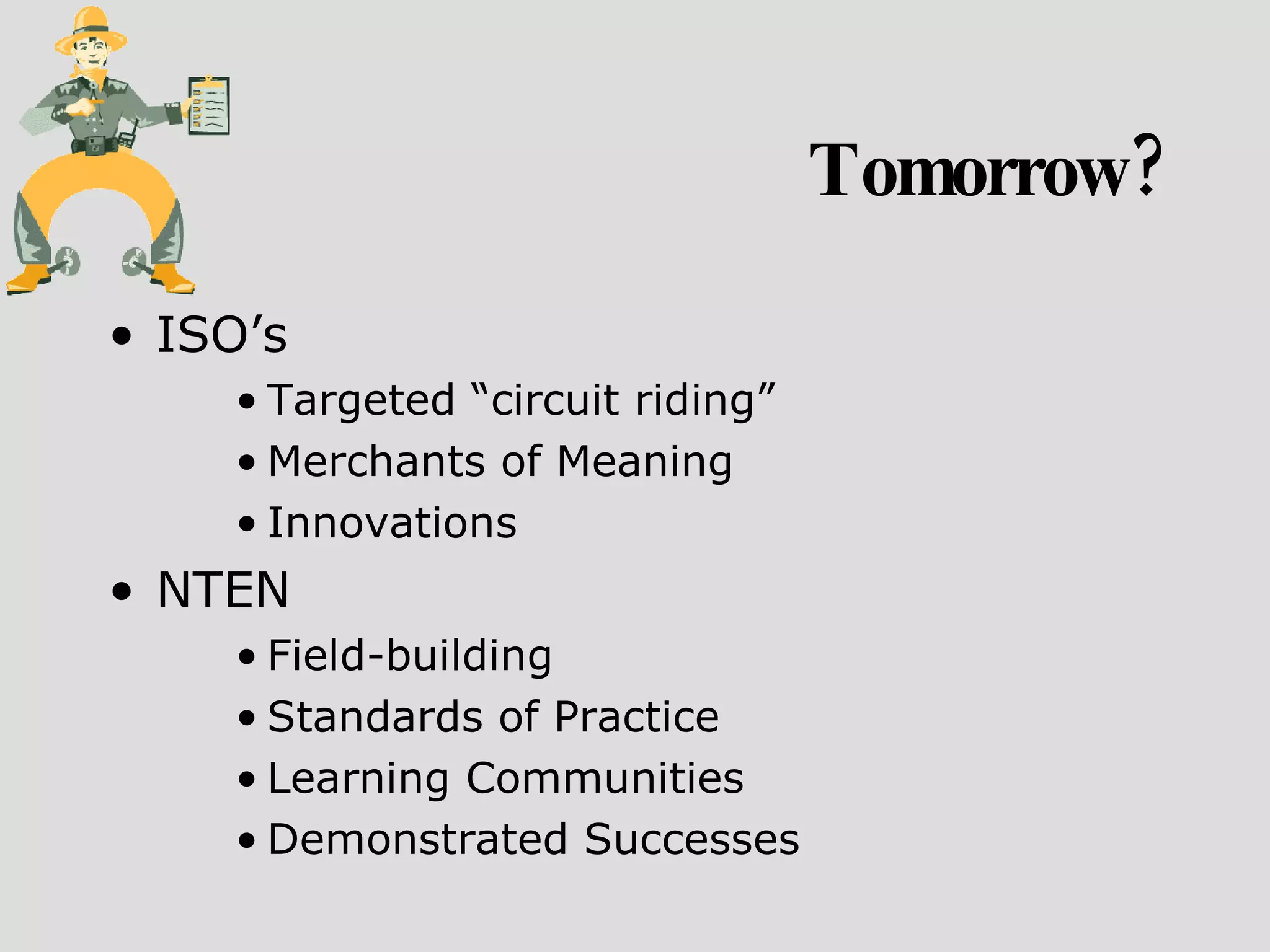
Tomorrow? ISO’s Targeted “circuit riding” Merchants of Meaning Innovations NTEN Field-building  Standards of Practice Learning Communities Demonstrated Successes
© Gavin Clabaugh - 2005

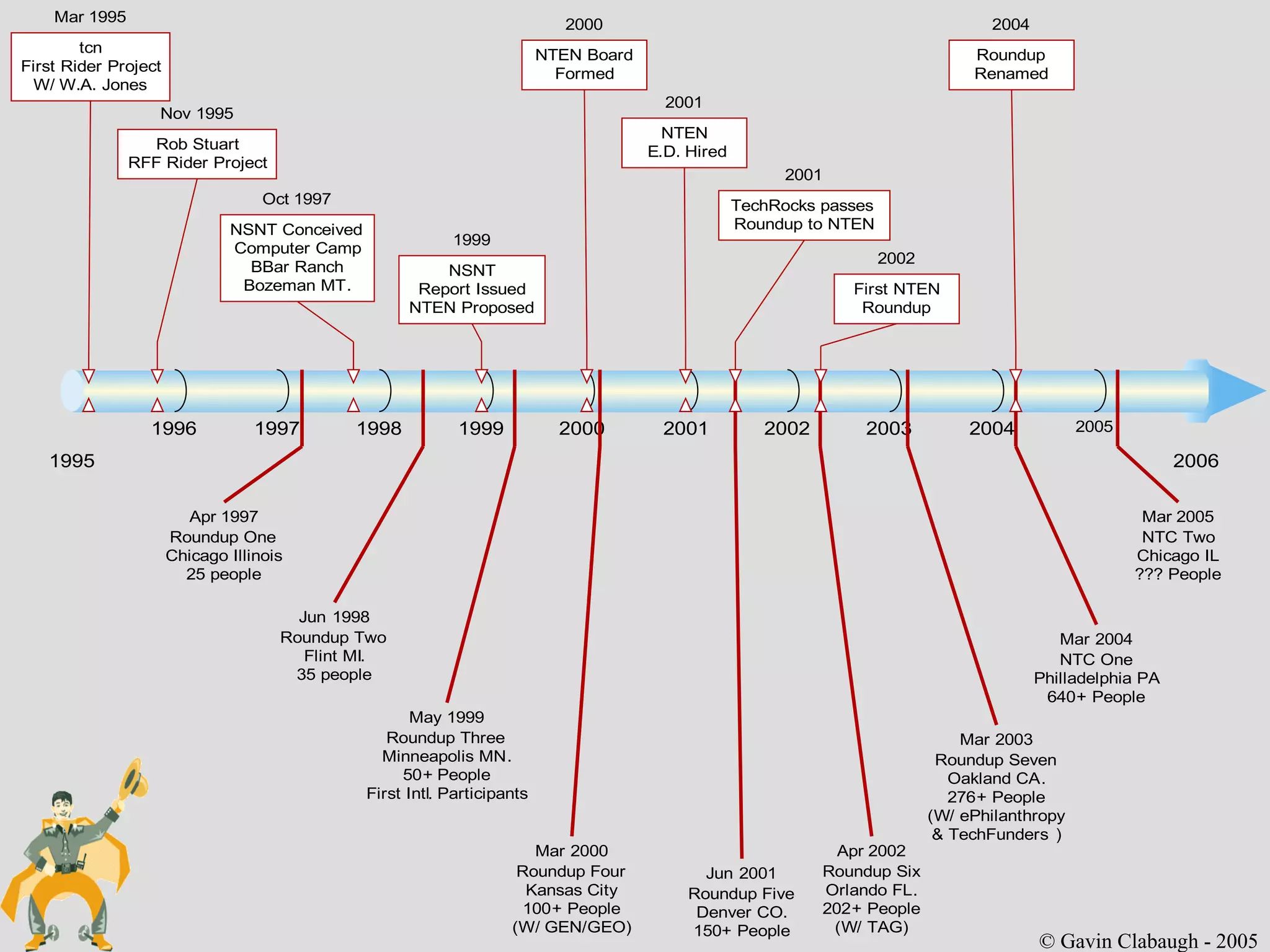
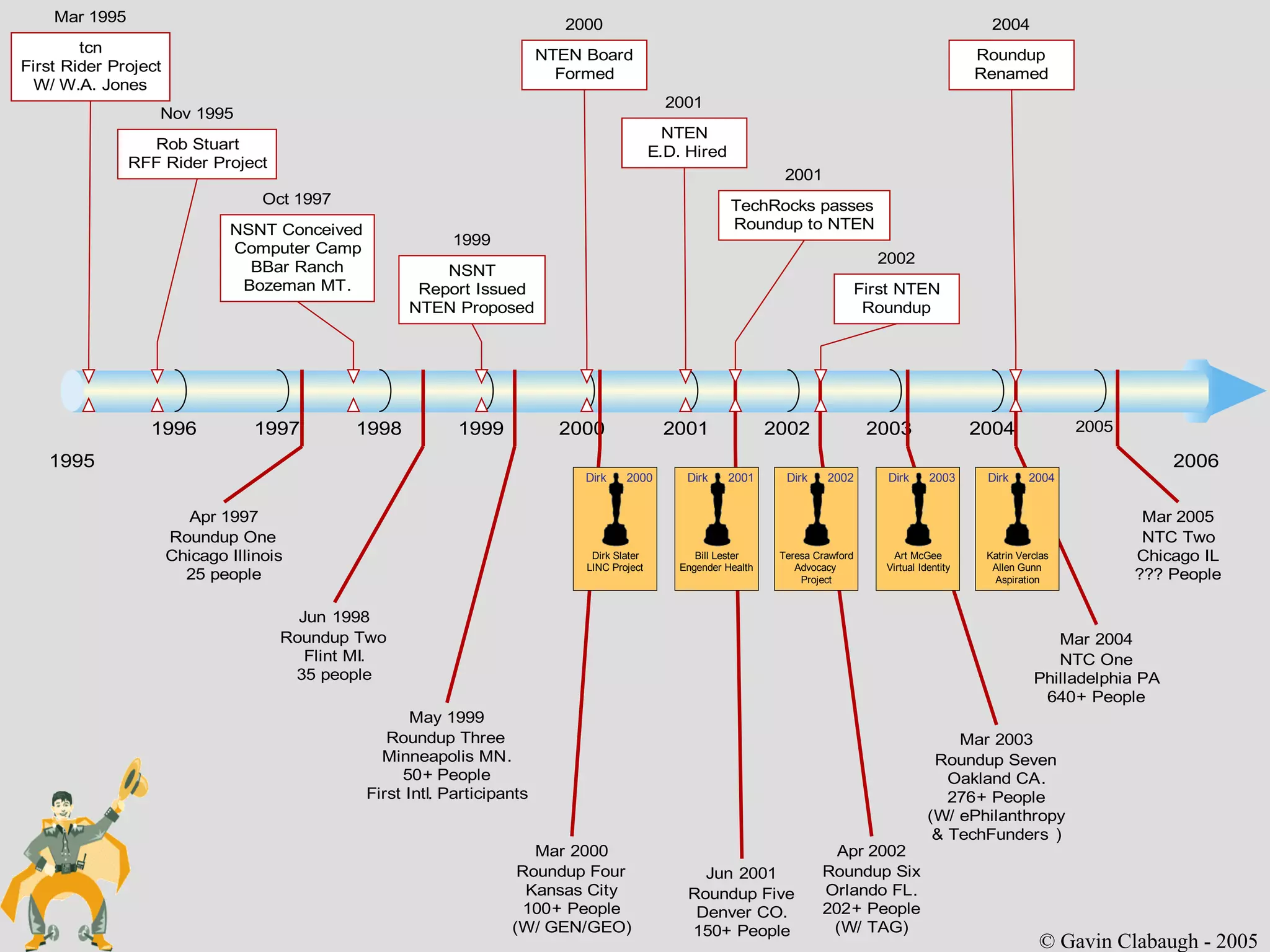
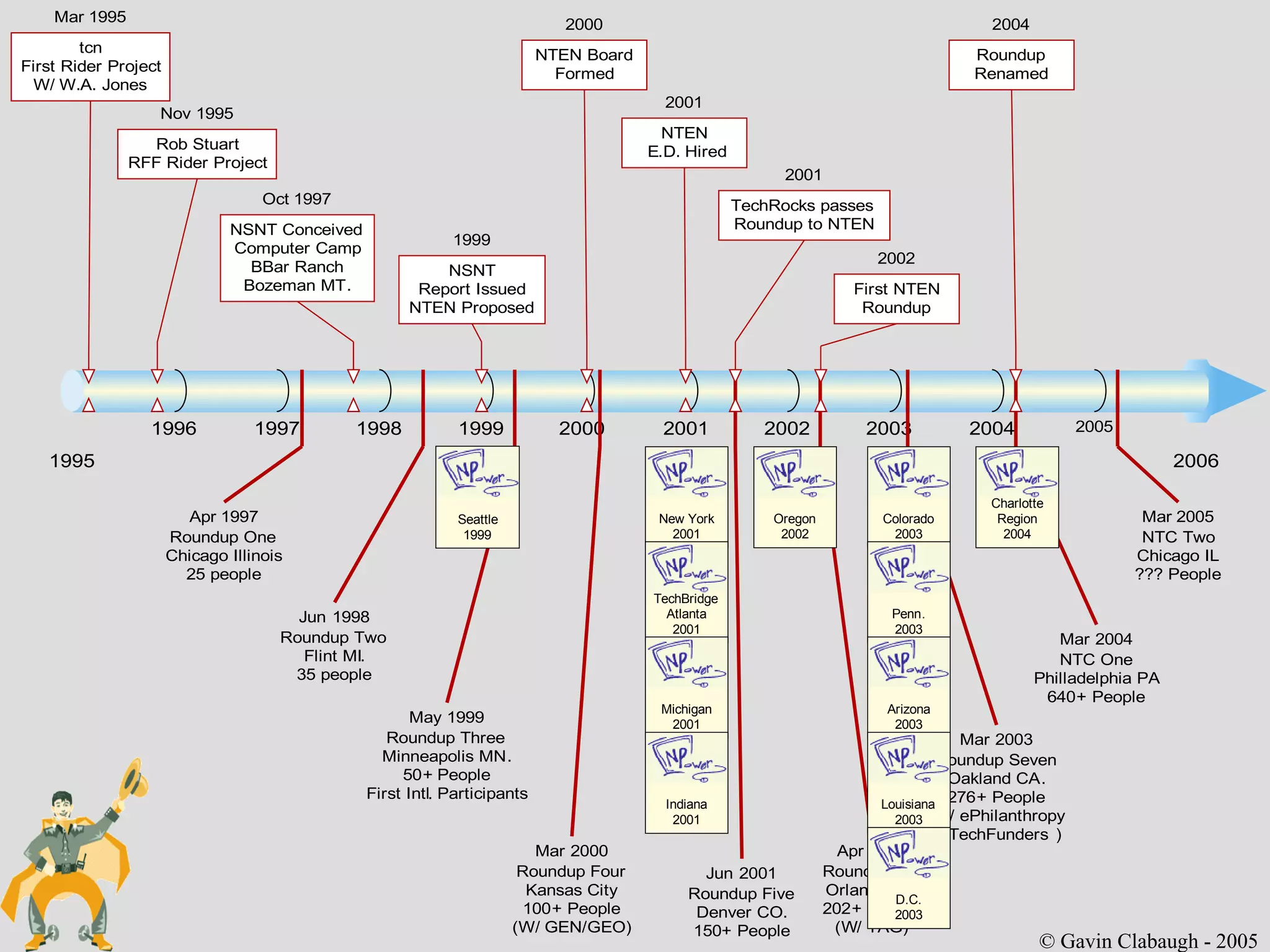
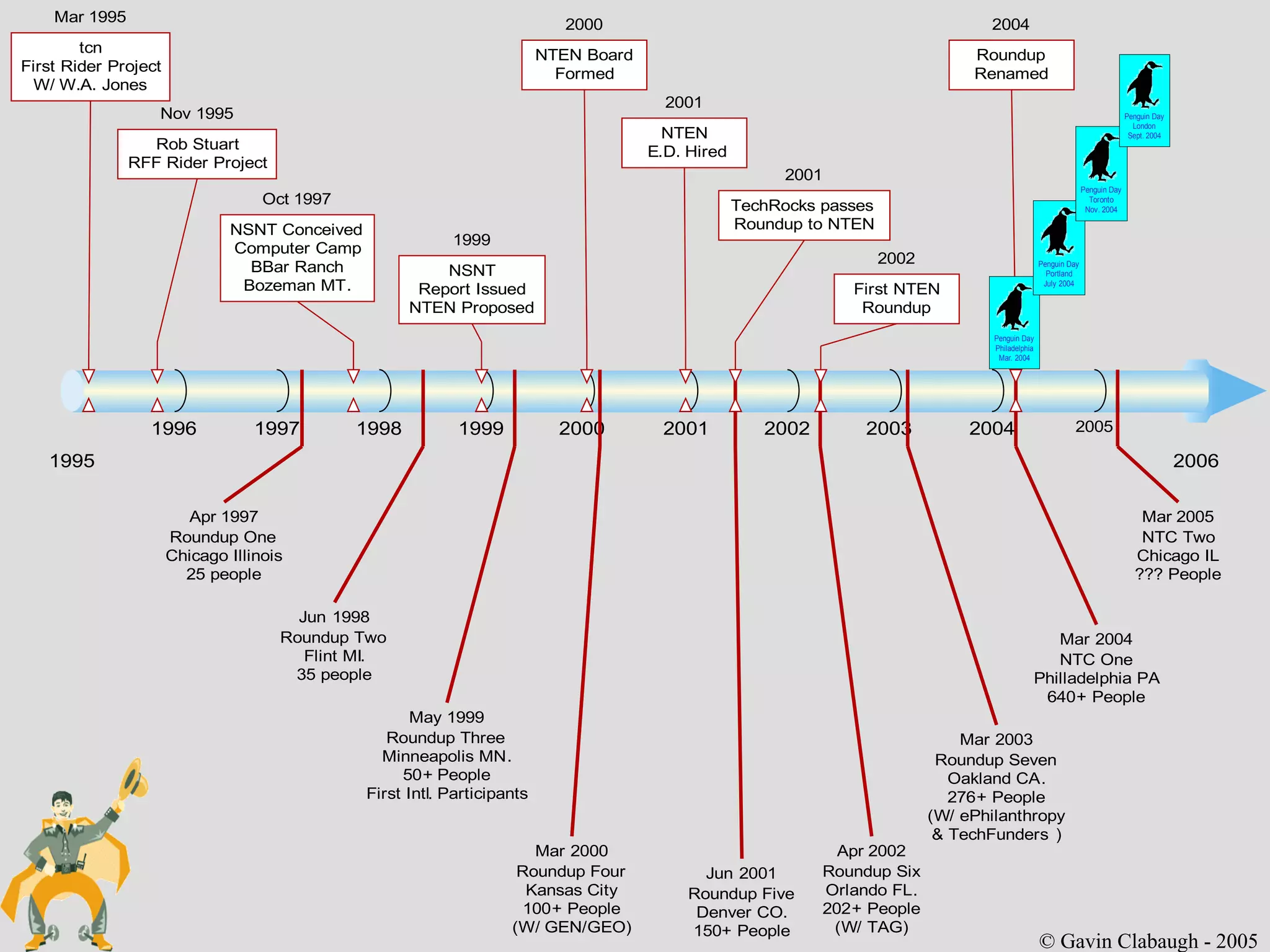
Circuit Riding - History and Timeline

  • 1.
    “ Circuit Riders”A Brief History
  • 2.
    The Need TheYear 1995 Changing Market Conditions Emerging Internet Access Lagging effectiveness tcn Capacity Survey …
  • 3.
    The Research Littleformal recognition of technology Few internal training or support resources Overburdened or conflicted “systems” staff Little or no management support No lack of technology but a lack of expertise Competing standards and competing (and untrusted) consultants
  • 4.
    The Business ModelIssue or project focused Cross-organizational Foundation “authorized” & subsidized Limited scope & focused goals Innovative application of technology around a project or campaign “ Foundations-subsidized, program-focused, short-term, technical assistance – usually as part of a specific campaign or focus.”
  • 5.
    The Business ModelModel not designed to provide: Ongoing support Ongoing maintenance Web page publishing IT staff AV Updates Printer repairs Yada, yada, yada…
  • 6.
    The Pioneers 1995 W.A. Jones/TCN 1996 Brainerd/Bullitt (OneNorthWest) RFF (Rockefeller Technology Project AKA Tech Rocks) 1997 Support from Mott, Surdna, Kellogg, Packard, … Multiple ongoing projects “rider” projects 1999 Growth of ISO models (NPower..) 2000 + Multiple models Multiple projects
  • 7.
    Today Increasing Use of intermediaries for technology assistance, training, support, and “eRider”-styled projects. Mainstream foundation support of intermediaries as preferred (trusted) providers of support, assistance, and training. Decreasing Direct involvement by Foundations in “eRider”-type projects. Innovative applications as ISOs focus on infrastructure, support and maintenance issues.
  • 8.
    Tomorrow? ISO’s Targeted“circuit riding” Merchants of Meaning Innovations NTEN Field-building Standards of Practice Learning Communities Demonstrated Successes
  • 9.
  • 10.
  • 11.
  • 12.