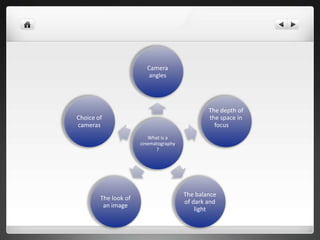
Camera
                        angles


                                               The depth of
Choice of                                      the space in
cameras                                          focus
                         What is a
                      cinematography
                            ?


                                       The balance
        The look of
                                       of dark and
         an image
                                           light
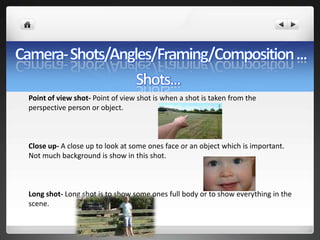
Point of view shot- Point of view shot is when a shot is taken from the
perspective person or object.


Close up- A close up to look at some ones face or an object which is important.
Not much background is show in this shot.


Long shot- Long shot is to show some ones full body or to show everything in the
scene.
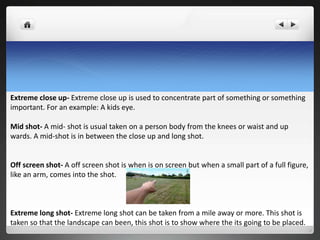
Extreme close up- Extreme close up is used to concentrate part of something or something
important. For an example: A kids eye.

Mid shot- A mid- shot is usual taken on a person body from the knees or waist and up
wards. A mid-shot is in between the close up and long shot.


Off screen shot- A off screen shot is when is on screen but when a small part of a full figure,
like an arm, comes into the shot.


Extreme long shot- Extreme long shot can be taken from a mile away or more. This shot is
taken so that the landscape can been, this shot is to show where the its going to be placed.
Pans- when the camera goes side to side

Tilt- when the camera goes up and down.

Tracking- when the camera follows the important object. E.g.; Main character.
Bird's-Eye view- Bird eyes view is when the angle is shot from above the
scene.

High Angle- high angle shot is used to show were looking down at the person
or something, this could make us feel ere bigger then them or we have more
power them.

Low Angle- Low angles help give a sense of confusion to a viewer, of
powerlessness within the action of a scene.
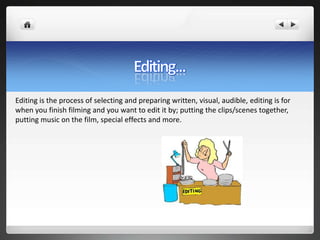
Editing is the process of selecting and preparing written, visual, audible, editing is for
when you finish filming and you want to edit it by; putting the clips/scenes together,
putting music on the film, special effects and more.
Loudness
Sound is noise that you can hear from your ears   - sound volume
Hear like:
• Music                                           Pitch
• Audio/Radio                                     - the perceived "highness "or "lowness" of the sound
• People talking
• Noises                                          Timbre
                                                  - a sounds "colour" or tone quality
                                                   Dimensions of Film Sound:
                                                  Rhythm
                                                  - sound's rhythmic qualities

                                                  Fidelity
                                                  - sound faithful to its source

                                                  Space
                                                  - sound's spatial dimension

                                                  Time
                                                  - simultaneous and non simultaneous sound
Lighting is part of the Mise en scene, lighting is used for us as the audience, for us to
see what’s going on in the act or play. Lighting can you be used differently, one
example is spot light. Spot light is when one light shines on a certain something
(mainly a person) so us as audience, can concentrate what’s going on .
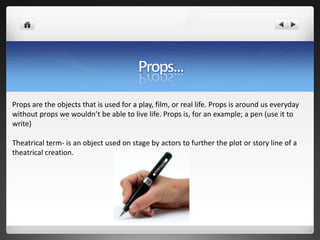
Props are the objects that is used for a play, film, or real life. Props is around us everyday
without props we wouldn’t be able to live life. Props is, for an example; a pen (use it to
write)

Theatrical term- is an object used on stage by actors to further the plot or story line of a
theatrical creation.
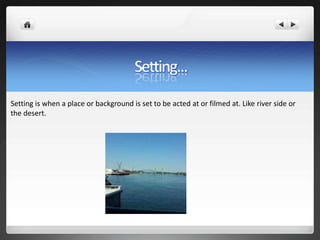
Setting is when a place or background is set to be acted at or filmed at. Like river side or
the desert.
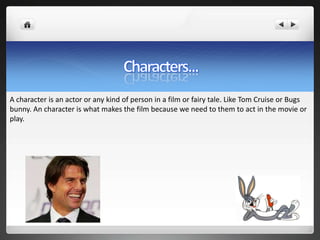
A character is an actor or any kind of person in a film or fairy tale. Like Tom Cruise or Bugs
bunny. An character is what makes the film because we need to them to act in the movie or
play.
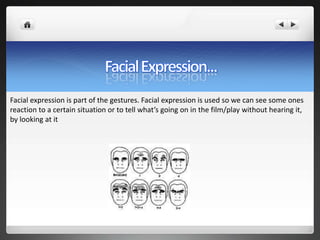
Facial expression is part of the gestures. Facial expression is used so we can see some ones
reaction to a certain situation or to tell what’s going on in the film/play without hearing it,
by looking at it
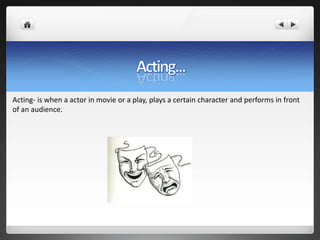
Acting- is when a actor in movie or a play, plays a certain character and performs in front
of an audience.
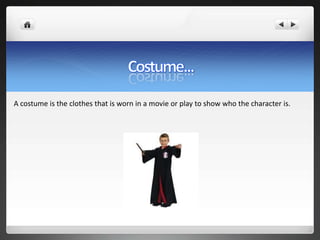
A costume is the clothes that is worn in a movie or play to show who the character is.

Cinematography blog

  • 2.
    Camera angles The depth of Choice of the space in cameras focus What is a cinematography ? The balance The look of of dark and an image light
  • 3.
    Point of viewshot- Point of view shot is when a shot is taken from the perspective person or object. Close up- A close up to look at some ones face or an object which is important. Not much background is show in this shot. Long shot- Long shot is to show some ones full body or to show everything in the scene.
  • 4.
    Extreme close up-Extreme close up is used to concentrate part of something or something important. For an example: A kids eye. Mid shot- A mid- shot is usual taken on a person body from the knees or waist and up wards. A mid-shot is in between the close up and long shot. Off screen shot- A off screen shot is when is on screen but when a small part of a full figure, like an arm, comes into the shot. Extreme long shot- Extreme long shot can be taken from a mile away or more. This shot is taken so that the landscape can been, this shot is to show where the its going to be placed.
  • 5.
    Pans- when thecamera goes side to side Tilt- when the camera goes up and down. Tracking- when the camera follows the important object. E.g.; Main character.
  • 6.
    Bird's-Eye view- Birdeyes view is when the angle is shot from above the scene. High Angle- high angle shot is used to show were looking down at the person or something, this could make us feel ere bigger then them or we have more power them. Low Angle- Low angles help give a sense of confusion to a viewer, of powerlessness within the action of a scene.
  • 7.
    Editing is theprocess of selecting and preparing written, visual, audible, editing is for when you finish filming and you want to edit it by; putting the clips/scenes together, putting music on the film, special effects and more.
  • 8.
    Loudness Sound is noisethat you can hear from your ears - sound volume Hear like: • Music Pitch • Audio/Radio - the perceived "highness "or "lowness" of the sound • People talking • Noises Timbre - a sounds "colour" or tone quality Dimensions of Film Sound: Rhythm - sound's rhythmic qualities Fidelity - sound faithful to its source Space - sound's spatial dimension Time - simultaneous and non simultaneous sound
  • 9.
    Lighting is partof the Mise en scene, lighting is used for us as the audience, for us to see what’s going on in the act or play. Lighting can you be used differently, one example is spot light. Spot light is when one light shines on a certain something (mainly a person) so us as audience, can concentrate what’s going on .
  • 10.
    Props are theobjects that is used for a play, film, or real life. Props is around us everyday without props we wouldn’t be able to live life. Props is, for an example; a pen (use it to write) Theatrical term- is an object used on stage by actors to further the plot or story line of a theatrical creation.
  • 11.
    Setting is whena place or background is set to be acted at or filmed at. Like river side or the desert.
  • 12.
    A character isan actor or any kind of person in a film or fairy tale. Like Tom Cruise or Bugs bunny. An character is what makes the film because we need to them to act in the movie or play.
  • 13.
    Facial expression ispart of the gestures. Facial expression is used so we can see some ones reaction to a certain situation or to tell what’s going on in the film/play without hearing it, by looking at it
  • 14.
    Acting- is whena actor in movie or a play, plays a certain character and performs in front of an audience.
  • 15.
    A costume isthe clothes that is worn in a movie or play to show who the character is.