“COMPUTER INTEGRATED MANUFACTURING (402048)”
Syllabus Implementation Workshop on BE Mechanical Engineering 2019 Course;
Day – 03 (13/01/2023)
On “Unit No. 05”
by
Prof. S. S. Chikshe
Assistant Professor,
Mechanical Engineering Department,
PVG’s COET & GKPIOM, Pune
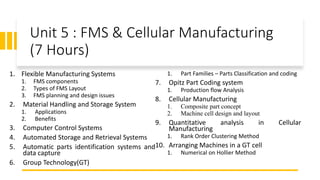
Unit 5 : FMS & Cellular Manufacturing
(7 Hours)
1. Flexible Manufacturing Systems
1. FMS components
2. Types of FMS Layout
3. FMS planning and design issues
2. Material Handling and Storage System
1. Applications
2. Benefits
3. Computer Control Systems
4. Automated Storage and Retrieval Systems
5. Automatic parts identification systems and
data capture
6. Group Technology(GT)
1. Part Families – Parts Classification and coding
7. Opitz Part Coding system
1. Production flow Analysis
8. Cellular Manufacturing
1. Composite part concept
2. Machine cell design and layout
9. Quantitative analysis in Cellular
Manufacturing
1. Rank Order Clustering Method
10. Arranging Machines in a GT cell
1. Numerical on Hollier Method
Course Objectives & Course Outcomes
Color Coding for Importance of Topic
CONTENT
– High
CONTENT
– Medium
CONTENT
- Low
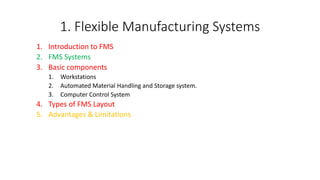
1. Flexible Manufacturing Systems
1. Introduction to FMS
2. FMS Systems
3. Basic components
1. Workstations
2. Automated Material Handling and Storage system.
3. Computer Control System
4. Types of FMS Layout
5. Advantages & Limitations
2. Material Handling and Storage System
1. Introduction
2. Principles & Objectives
3. Material Handling Equipment
4. Applications
5. Benefits
6. Advantages & Limitations
7. Safety Guidelines
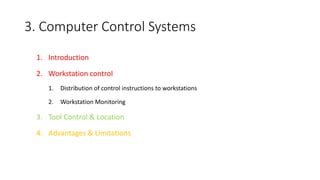
3. Computer Control Systems
1. Introduction
2. Workstation control
1. Distribution of control instructions to workstations
2. Workstation Monitoring
3. Tool Control & Location
4. Advantages & Limitations
4. Automated Storage and Retrieval Systems
1. Introduction
2. Definition & Scope of AS/RS
3. Types of AS/RS
4. Design &Time Travel Models
5. Application
6. Advantages & Limitations
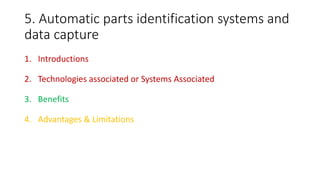
5. Automatic parts identification systems and
data capture
1. Introductions
2. Technologies associated or Systems Associated
3. Benefits
4. Advantages & Limitations
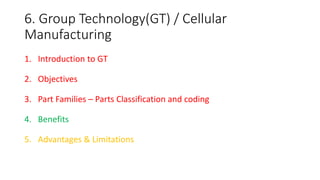
6. Group Technology(GT) / Cellular
Manufacturing
1. Introduction to GT
2. Objectives
3. Part Families – Parts Classification and coding
4. Benefits
5. Advantages & Limitations
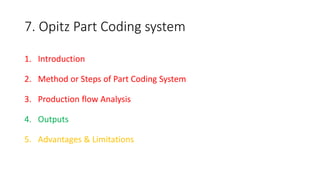
7. Opitz Part Coding system
1. Introduction
2. Method or Steps of Part Coding System
3. Production flow Analysis
4. Outputs
5. Advantages & Limitations
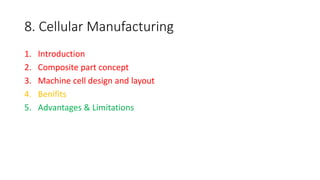
8. Cellular Manufacturing
1. Introduction
2. Composite part concept
3. Machine cell design and layout
4. Benifits
5. Advantages & Limitations
9. Quantitative analysis in Cellular
Manufacturing
1. Introduction
2. Rank Order Clustering Method
1. Steps of Rank Order Clustering Method
3. Simple Numericals on Rank Order Clustering Method
10. Arranging Machines in a GT cell
1. Introduction
2. Objectives of Hollier Method
3. Process of Production Flow Analysis
4. Numerical on Hollier Method
1. Steps in Hollier Method
2. Machine Routine Method
Teaching Plan or Hour Plan
Hour 1
• Flexible
Manufactur
ing Systems
Hour 2
•Types of
FMS Layout
• FMS
planning
and design
issues
Hour 3
• Material
Handling
and Storage
System
• Computer
Control
Systems
Hour 4
• Automated
Storage and
Retrieval
Systems
• Automatic
parts
identificatio
n systems
and data
capture
Hour 5
• Group
Technology(
GT)
• Opitz Part
Coding
system
Hour 6
• Cellular
Manufactur
ing
• Rank Order
Clustering
Method
Hour 7
• Numerical
on Hollier
Method
Practicals on Unit no. 05
CIM UNIT5.pptx
CIM UNIT5.pptx

CIM UNIT5.pptx

  • 1.
    “COMPUTER INTEGRATED MANUFACTURING(402048)” Syllabus Implementation Workshop on BE Mechanical Engineering 2019 Course; Day – 03 (13/01/2023) On “Unit No. 05” by Prof. S. S. Chikshe Assistant Professor, Mechanical Engineering Department, PVG’s COET & GKPIOM, Pune
  • 2.
    Unit 5 :FMS & Cellular Manufacturing (7 Hours) 1. Flexible Manufacturing Systems 1. FMS components 2. Types of FMS Layout 3. FMS planning and design issues 2. Material Handling and Storage System 1. Applications 2. Benefits 3. Computer Control Systems 4. Automated Storage and Retrieval Systems 5. Automatic parts identification systems and data capture 6. Group Technology(GT) 1. Part Families – Parts Classification and coding 7. Opitz Part Coding system 1. Production flow Analysis 8. Cellular Manufacturing 1. Composite part concept 2. Machine cell design and layout 9. Quantitative analysis in Cellular Manufacturing 1. Rank Order Clustering Method 10. Arranging Machines in a GT cell 1. Numerical on Hollier Method
  • 3.
    Course Objectives &Course Outcomes
  • 4.
    Color Coding forImportance of Topic CONTENT – High CONTENT – Medium CONTENT - Low
  • 5.
    1. Flexible ManufacturingSystems 1. Introduction to FMS 2. FMS Systems 3. Basic components 1. Workstations 2. Automated Material Handling and Storage system. 3. Computer Control System 4. Types of FMS Layout 5. Advantages & Limitations
  • 6.
    2. Material Handlingand Storage System 1. Introduction 2. Principles & Objectives 3. Material Handling Equipment 4. Applications 5. Benefits 6. Advantages & Limitations 7. Safety Guidelines
  • 7.
    3. Computer ControlSystems 1. Introduction 2. Workstation control 1. Distribution of control instructions to workstations 2. Workstation Monitoring 3. Tool Control & Location 4. Advantages & Limitations
  • 8.
    4. Automated Storageand Retrieval Systems 1. Introduction 2. Definition & Scope of AS/RS 3. Types of AS/RS 4. Design &Time Travel Models 5. Application 6. Advantages & Limitations
  • 9.
    5. Automatic partsidentification systems and data capture 1. Introductions 2. Technologies associated or Systems Associated 3. Benefits 4. Advantages & Limitations
  • 10.
    6. Group Technology(GT)/ Cellular Manufacturing 1. Introduction to GT 2. Objectives 3. Part Families – Parts Classification and coding 4. Benefits 5. Advantages & Limitations
  • 11.
    7. Opitz PartCoding system 1. Introduction 2. Method or Steps of Part Coding System 3. Production flow Analysis 4. Outputs 5. Advantages & Limitations
  • 12.
    8. Cellular Manufacturing 1.Introduction 2. Composite part concept 3. Machine cell design and layout 4. Benifits 5. Advantages & Limitations
  • 13.
    9. Quantitative analysisin Cellular Manufacturing 1. Introduction 2. Rank Order Clustering Method 1. Steps of Rank Order Clustering Method 3. Simple Numericals on Rank Order Clustering Method
  • 14.
    10. Arranging Machinesin a GT cell 1. Introduction 2. Objectives of Hollier Method 3. Process of Production Flow Analysis 4. Numerical on Hollier Method 1. Steps in Hollier Method 2. Machine Routine Method
  • 15.
    Teaching Plan orHour Plan Hour 1 • Flexible Manufactur ing Systems Hour 2 •Types of FMS Layout • FMS planning and design issues Hour 3 • Material Handling and Storage System • Computer Control Systems Hour 4 • Automated Storage and Retrieval Systems • Automatic parts identificatio n systems and data capture Hour 5 • Group Technology( GT) • Opitz Part Coding system Hour 6 • Cellular Manufactur ing • Rank Order Clustering Method Hour 7 • Numerical on Hollier Method
  • 16.