CIAM , Congrès Internationaux d'Architecture Moderne
This document provides information about key figures and events in the development of modern and contemporary urban planning through a series of linked sources:
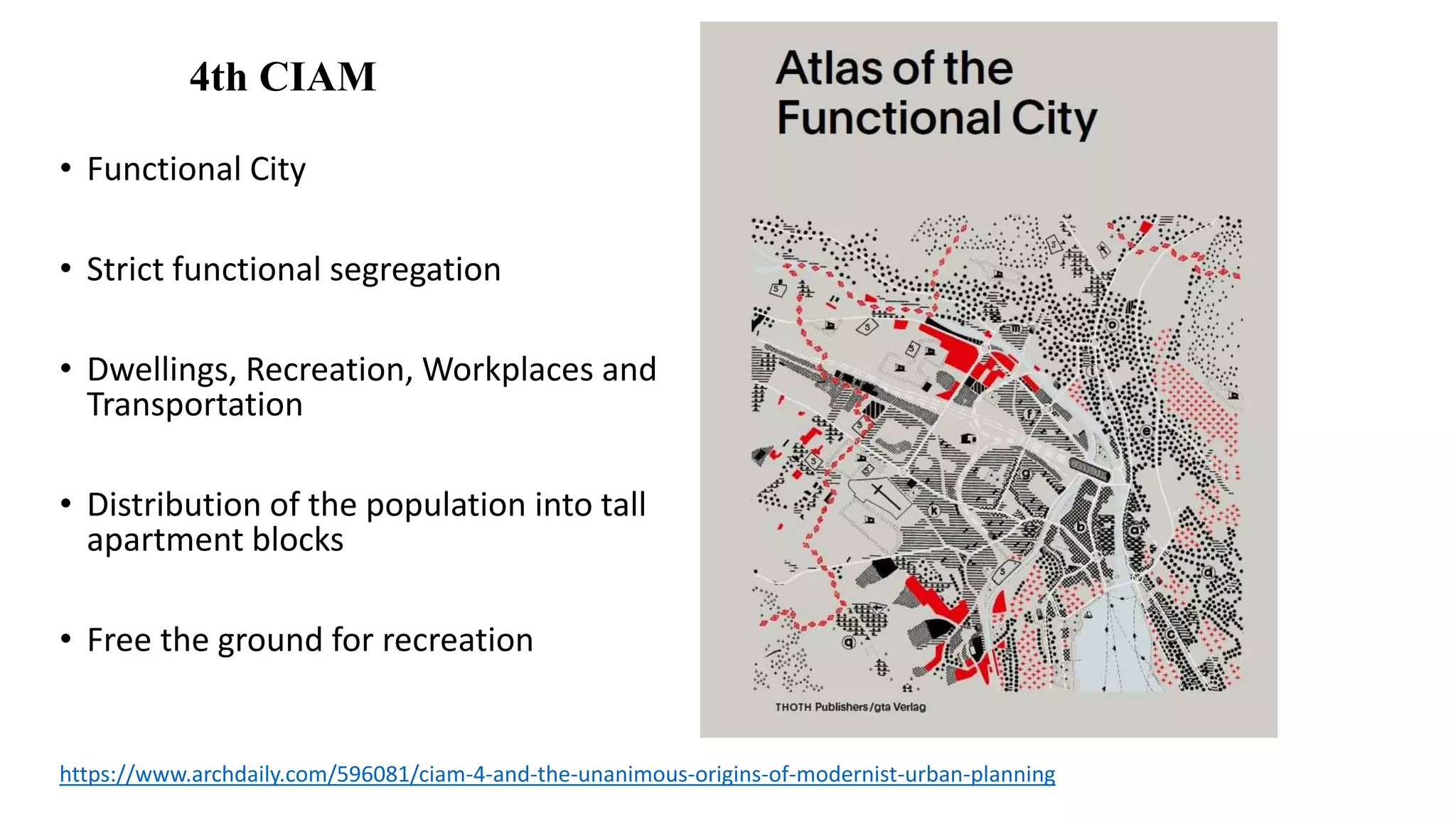
- It discusses the Congrès internationaux d'architecture moderne (CIAM) and their promotion of functional zoning of cities into areas for housing, work, recreation, and transportation through the separation of functions.
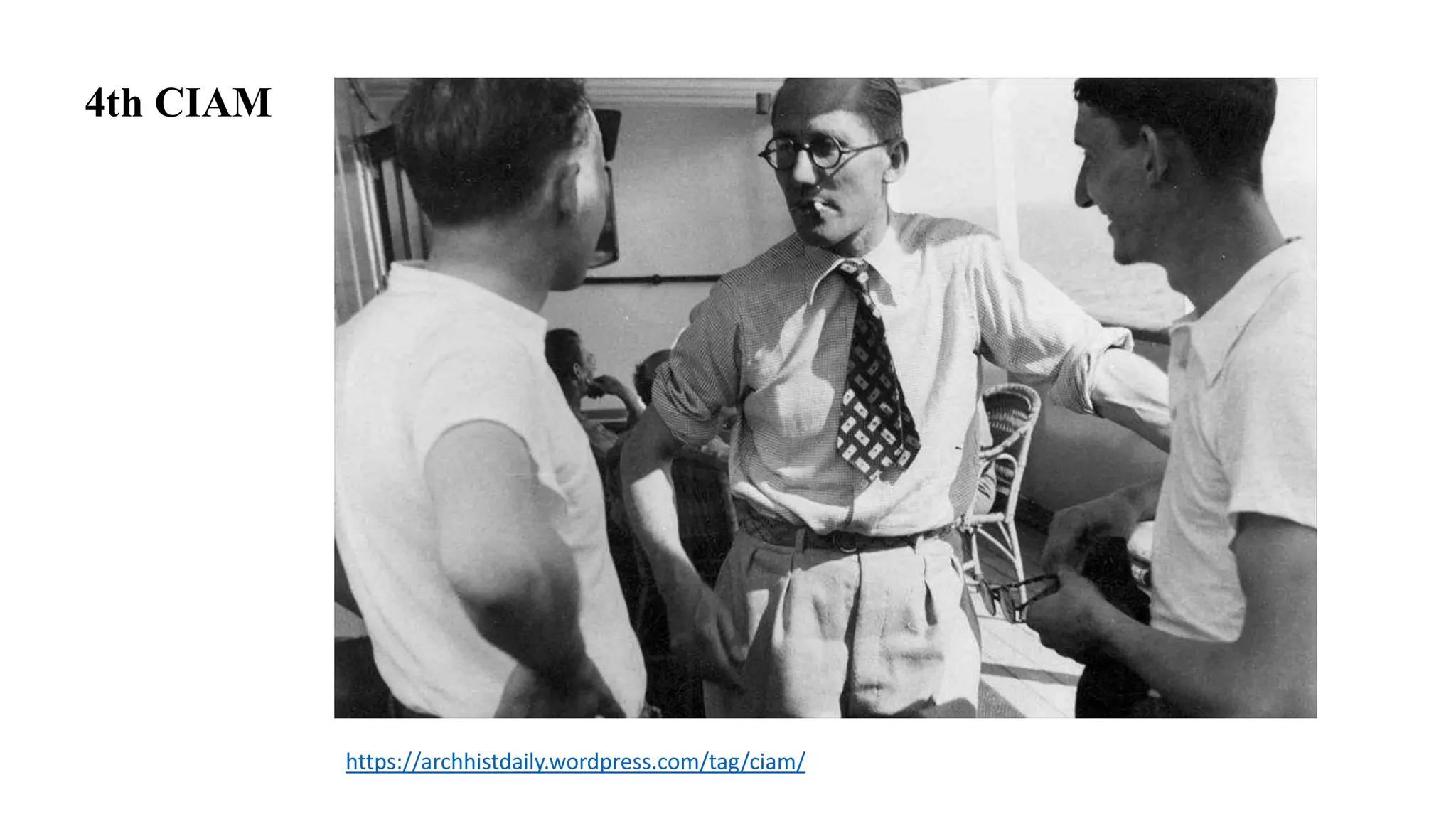
- The 4th CIAM conference in 1933 established the principles of the "Functional City" that strongly influenced modernist urban planning.
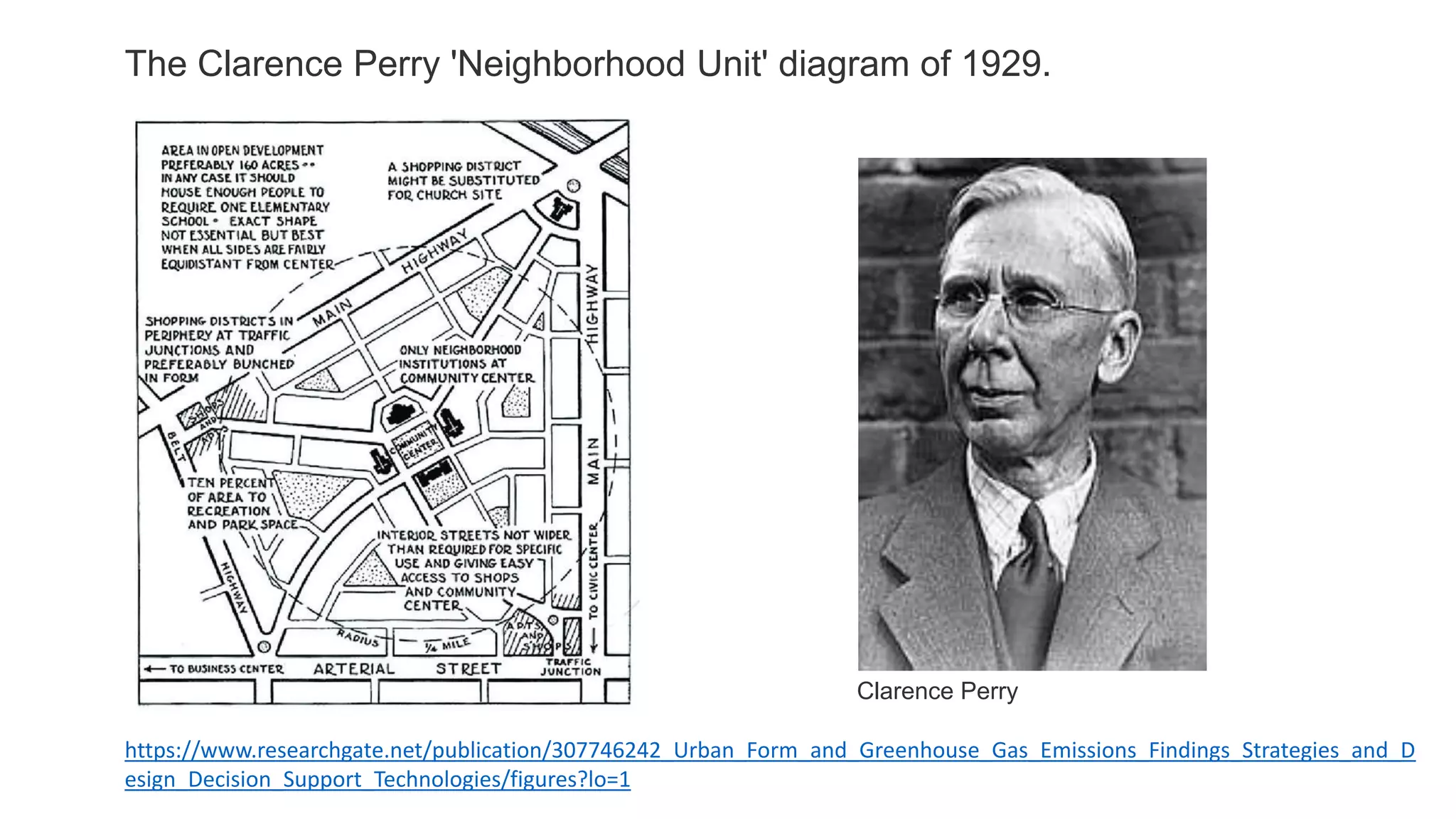
- Other influences discussed include the "Neighborhood Unit" concept of Clarence Perry and housing projects like the Cité de la Muette designed by Beaudoin and Lods that applied CIAM principles.
- Examples of
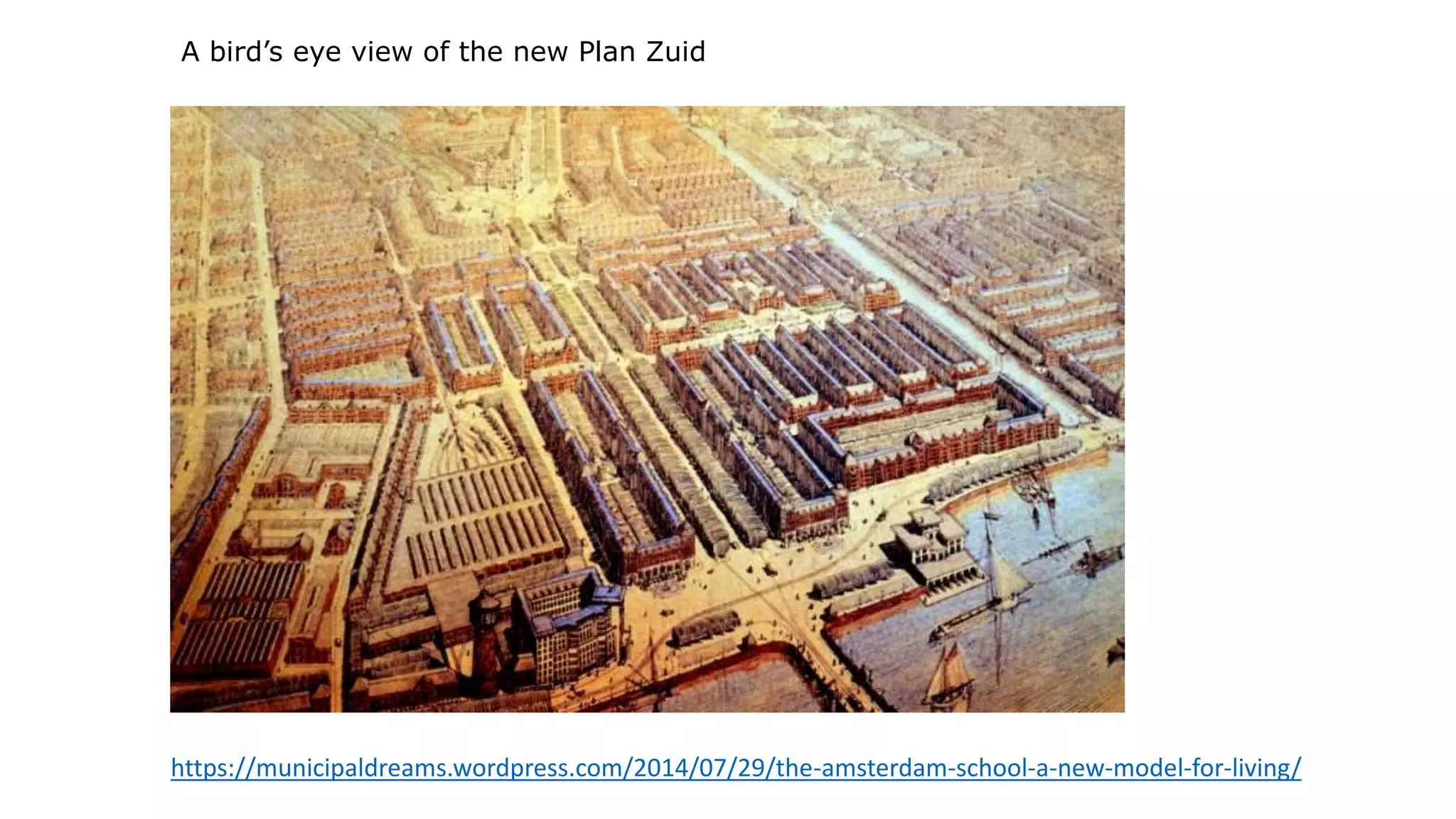
The Plan Zuid("South Plan") is an urban development plan of Amsterdam South designed by
architect Hendrik Petrus Berlage
Jonathan Barnett, The elusive city, Harrper & Row publishers, New York, page 106
• Functional City
•Strict functional segregation
• Dwellings, Recreation, Workplaces and
Transportation
• Distribution of the population into tall
apartment blocks
• Free the ground for recreation
https://www.archdaily.com/596081/ciam-4-and-the-unanimous-origins-of-modernist-urban-planning
4th CIAM
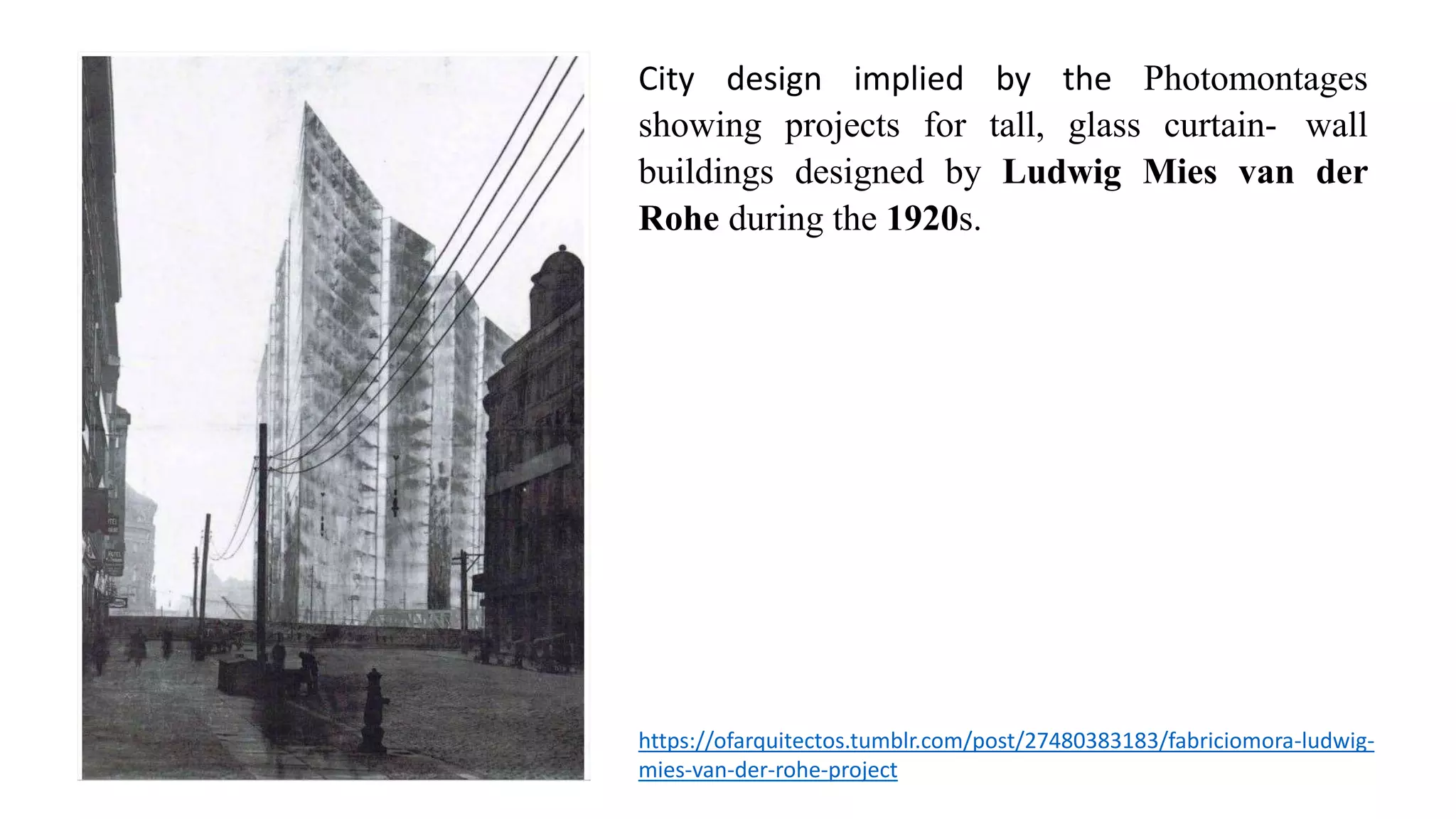
City design impliedby the Photomontages
showing projects for tall, glass curtain- wall
buildings designed by Ludwig Mies van der
Rohe during the 1920s.
https://ofarquitectos.tumblr.com/post/27480383183/fabriciomora-ludwig-
mies-van-der-rohe-project