Diagnostic Approach to Chronic Spontaneous Urticaria1-6
Full abbreviations, accreditation, and disclosure information available at PeerView.com/KXJ40
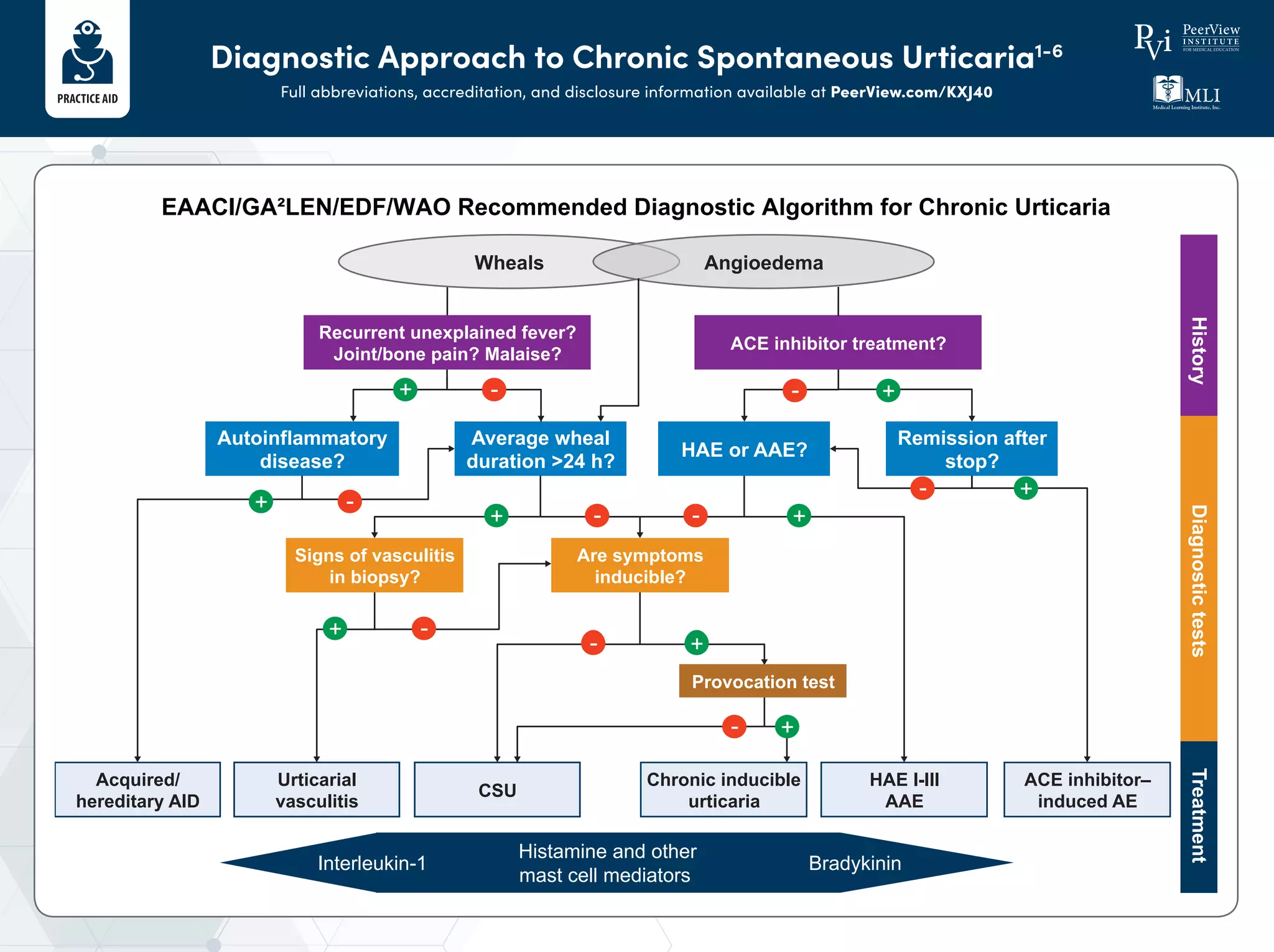
Wheals Angioedema
Recurrent unexplained fever?
Joint/bone pain? Malaise?
ACE inhibitor treatment?
Autoinflammatory
disease?
Average wheal
duration >24 h?
HAE or AAE?
Remission after
stop?
Provocation test
Acquired/
hereditary AID
Urticarial
vasculitis
CSU
Chronic inducible
urticaria
HAE I-III
AAE
ACE inhibitor–
induced AE
History
Histamine and other
mast cell mediators
Interleukin-1 Bradykinin
+-
+-
+-+ -
+ -
+-
+-
+ -
+ -
DiagnostictestsTreatment
EAACI/GA²LEN/EDF/WAO Recommended Diagnostic Algorithm for Chronic Urticaria
Signs of vasculitis
in biopsy?
Are symptoms
inducible?
Diagnostic Approach to Chronic Spontaneous Urticaria1-6
Full abbreviations, accreditation, and disclosure information available at PeerView.com/KXJ40
1. Zuberbier T et al. Allergy. 2018;73:1393-1414. 2. Schaefer P. Am Fam Physician. 2011;83:1078-1084. 3. Bernstein JA et al. J Allergy Clin Immunol. 2014;133:1270-1277. 4. Kahan S, Smith EG. In a Page: Signs and Symptoms. Malden, MA: Blackwell Publishing; 2004.
5. Katelaris C, Peake J. Med J Aust. 2006;185:517-522. 6. Hong-feng C et al. Chinese External Medicine. Beijing, China: People’s Medical Publishing House; 2011.
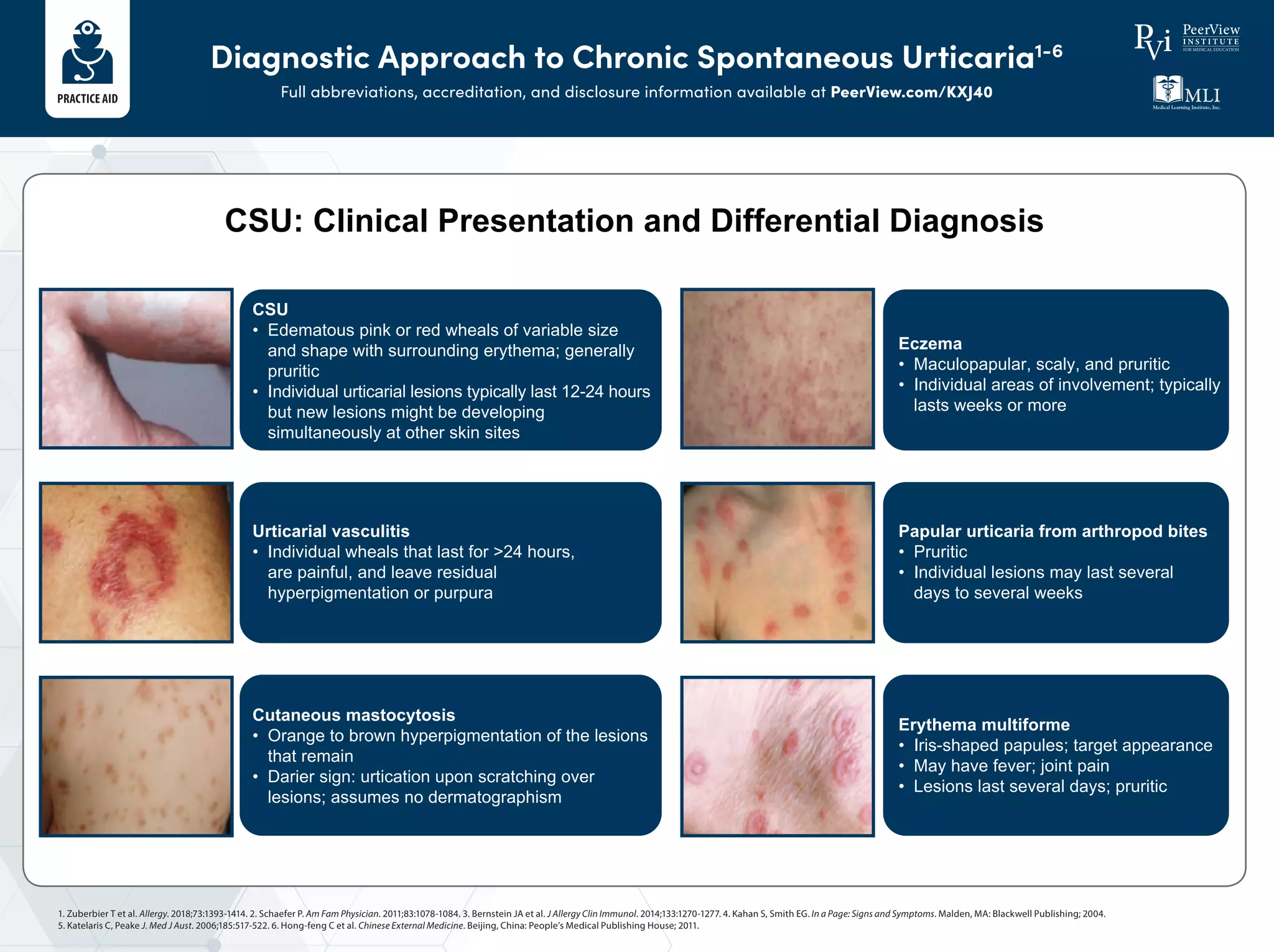
CSU: Clinical Presentation and Differential Diagnosis
Papular urticaria from arthropod bites
• Pruritic
• Individual lesions may last several
days to several weeks
Eczema
• Maculopapular, scaly, and pruritic
• Individual areas of involvement; typically
lasts weeks or more
Erythema multiforme
• Iris-shaped papules; target appearance
• May have fever; joint pain
• Lesions last several days; pruritic
Urticarial vasculitis
• Individual wheals that last for >24 hours,
are painful, and leave residual
hyperpigmentation or purpura
CSU
• Edematous pink or red wheals of variable size
and shape with surrounding erythema; generally
pruritic
• Individual urticarial lesions typically last 12-24 hours
but new lesions might be developing
simultaneously at other skin sites
Cutaneous mastocytosis
• Orange to brown hyperpigmentation of the lesions
that remain
• Darier sign: urtication upon scratching over
lesions; assumes no dermatographism
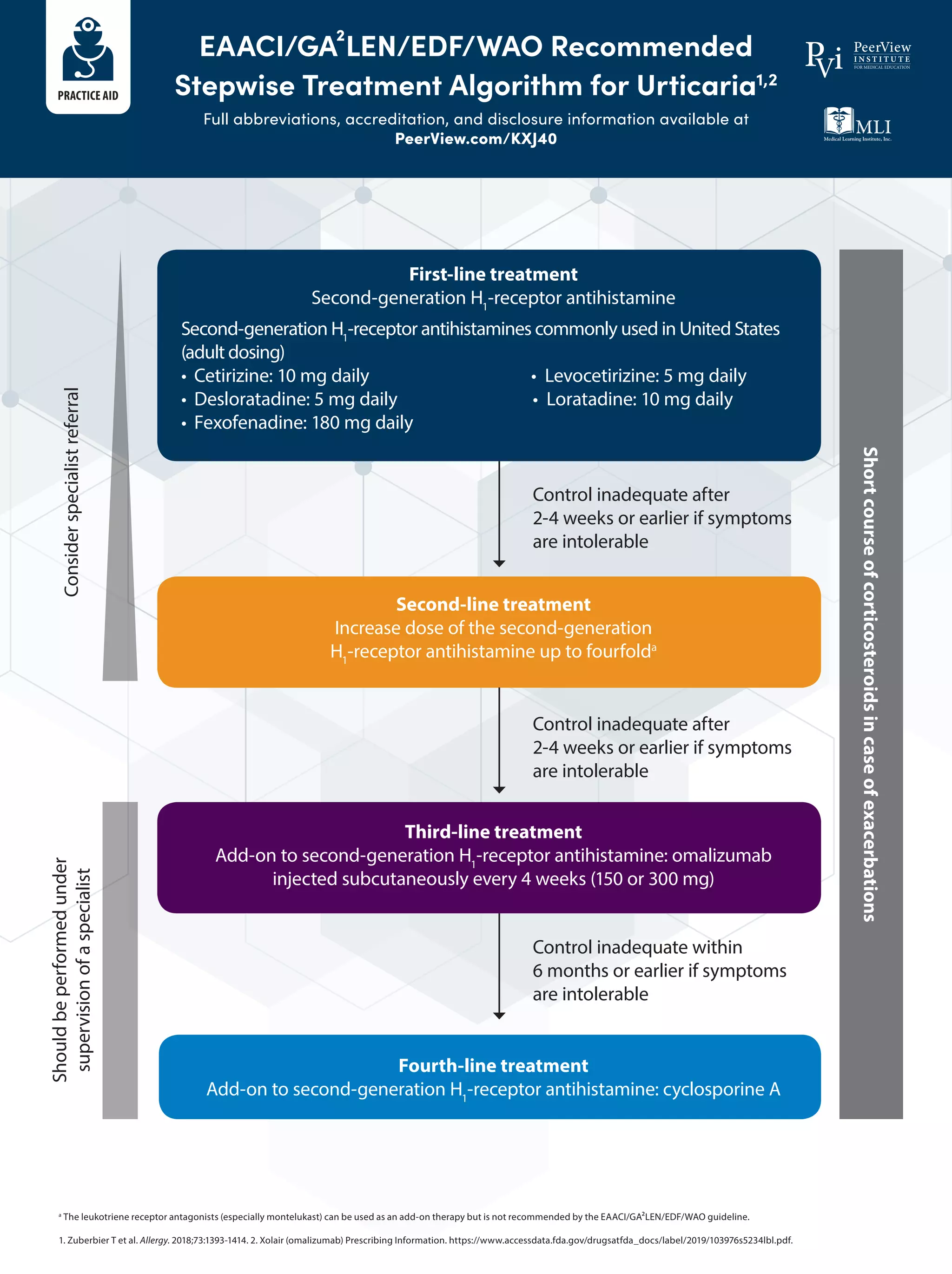
EAACI/GA²LEN/EDF/WAO Recommended
Stepwise Treatment Algorithm for Urticaria1,2
Full abbreviations, accreditation, and disclosure information available at
PeerView.com/KXJ40
a
The leukotriene receptor antagonists (especially montelukast) can be used as an add-on therapy but is not recommended by the EAACI/GA²LEN/EDF/WAO guideline.
1. Zuberbier T et al. Allergy. 2018;73:1393-1414. 2. Xolair (omalizumab) Prescribing Information. https://www.accessdata.fda.gov/drugsatfda_docs/label/2019/103976s5234lbl.pdf.
Considerspecialistreferral
Shortcourseofcorticosteroidsincaseofexacerbations
Shouldbeperformedunder
supervisionofaspecialist
Fourth-line treatment
Add-on to second-generation H1
-receptor antihistamine: cyclosporine A
Control inadequate after
2-4 weeks or earlier if symptoms
are intolerable
Control inadequate after
2-4 weeks or earlier if symptoms
are intolerable
Control inadequate within
6 months or earlier if symptoms
are intolerable
First-line treatment
Second-generation H1
-receptor antihistamine
Second-generation H1
-receptor antihistamines commonly used in United States
(adult dosing)
•	 Cetirizine: 10 mg daily 	 • Levocetirizine: 5 mg daily
•	 Desloratadine: 5 mg daily 		• Loratadine: 10 mg daily
•	 Fexofenadine: 180 mg daily
Second-line treatment
Increase dose of the second-generation
H1
-receptor antihistamine up to fourfolda
Third-line treatment
Add-on to second-generation H1
-receptor antihistamine: omalizumab
injected subcutaneously every 4 weeks (150 or 300 mg)
Chronic Spontaneous Urticaria (CSU) for
Patients: Keeping Track of Symptoms
Full abbreviations, accreditation, and disclosure information available at
PeerView.com/KXJ40
1. Zuberbier T et al. Allergy. 2018;73:1393-1414. 2. Goldstein S et al. Acta Derm Venereol. 2019;99:1091-1098.
Fourth-line treatment
Add-on to second-generation H1
-receptor antihistamine: cyclosporine A
Wheals (number)
0 = none
1 = 0-20 wheals
2 = 20-50 wheals
3 = ≥50 wheals
Daily
UAS (0-6)
Weekly
UAS7
(0-42)
Itch (severity)
0 = none
1 = mild
2 = moderate
3 = severe
Once dailyOnce daily
Sum for 7 days
This tool can be used to track
your changing symptoms over time
Managing Your Symptoms
Keeping track of symptoms can help you and your doctor measure
the severity of your CSU and monitor your response to treatment
The Urticaria Activity Score (UAS7) allows you
to measure the severity of your itch and hives
How much do
your hives itch?
CSU is defined by the presence of
recurrent urticaria (also called hives
or wheals), angioedema, or both,
for a period of 6 weeks or longer1 People with CSU feel
they don’t have control
of their symptoms2
How much of
your body is affected?
How many hives
do you have?
How is your
daily life affected?

Chronic Spontaneous Urticaria From Diagnosis to Treatment: Unique Perspectives on Employing a Multidisciplinary and Patient-Centric Approach to Care

  • 1.
    Diagnostic Approach toChronic Spontaneous Urticaria1-6 Full abbreviations, accreditation, and disclosure information available at PeerView.com/KXJ40 Wheals Angioedema Recurrent unexplained fever? Joint/bone pain? Malaise? ACE inhibitor treatment? Autoinflammatory disease? Average wheal duration >24 h? HAE or AAE? Remission after stop? Provocation test Acquired/ hereditary AID Urticarial vasculitis CSU Chronic inducible urticaria HAE I-III AAE ACE inhibitor– induced AE History Histamine and other mast cell mediators Interleukin-1 Bradykinin +- +- +-+ - + - +- +- + - + - DiagnostictestsTreatment EAACI/GA²LEN/EDF/WAO Recommended Diagnostic Algorithm for Chronic Urticaria Signs of vasculitis in biopsy? Are symptoms inducible?
  • 2.
    Diagnostic Approach toChronic Spontaneous Urticaria1-6 Full abbreviations, accreditation, and disclosure information available at PeerView.com/KXJ40 1. Zuberbier T et al. Allergy. 2018;73:1393-1414. 2. Schaefer P. Am Fam Physician. 2011;83:1078-1084. 3. Bernstein JA et al. J Allergy Clin Immunol. 2014;133:1270-1277. 4. Kahan S, Smith EG. In a Page: Signs and Symptoms. Malden, MA: Blackwell Publishing; 2004. 5. Katelaris C, Peake J. Med J Aust. 2006;185:517-522. 6. Hong-feng C et al. Chinese External Medicine. Beijing, China: People’s Medical Publishing House; 2011. CSU: Clinical Presentation and Differential Diagnosis Papular urticaria from arthropod bites • Pruritic • Individual lesions may last several days to several weeks Eczema • Maculopapular, scaly, and pruritic • Individual areas of involvement; typically lasts weeks or more Erythema multiforme • Iris-shaped papules; target appearance • May have fever; joint pain • Lesions last several days; pruritic Urticarial vasculitis • Individual wheals that last for >24 hours, are painful, and leave residual hyperpigmentation or purpura CSU • Edematous pink or red wheals of variable size and shape with surrounding erythema; generally pruritic • Individual urticarial lesions typically last 12-24 hours but new lesions might be developing simultaneously at other skin sites Cutaneous mastocytosis • Orange to brown hyperpigmentation of the lesions that remain • Darier sign: urtication upon scratching over lesions; assumes no dermatographism
  • 3.
    EAACI/GA²LEN/EDF/WAO Recommended Stepwise TreatmentAlgorithm for Urticaria1,2 Full abbreviations, accreditation, and disclosure information available at PeerView.com/KXJ40 a The leukotriene receptor antagonists (especially montelukast) can be used as an add-on therapy but is not recommended by the EAACI/GA²LEN/EDF/WAO guideline. 1. Zuberbier T et al. Allergy. 2018;73:1393-1414. 2. Xolair (omalizumab) Prescribing Information. https://www.accessdata.fda.gov/drugsatfda_docs/label/2019/103976s5234lbl.pdf. Considerspecialistreferral Shortcourseofcorticosteroidsincaseofexacerbations Shouldbeperformedunder supervisionofaspecialist Fourth-line treatment Add-on to second-generation H1 -receptor antihistamine: cyclosporine A Control inadequate after 2-4 weeks or earlier if symptoms are intolerable Control inadequate after 2-4 weeks or earlier if symptoms are intolerable Control inadequate within 6 months or earlier if symptoms are intolerable First-line treatment Second-generation H1 -receptor antihistamine Second-generation H1 -receptor antihistamines commonly used in United States (adult dosing) • Cetirizine: 10 mg daily • Levocetirizine: 5 mg daily • Desloratadine: 5 mg daily • Loratadine: 10 mg daily • Fexofenadine: 180 mg daily Second-line treatment Increase dose of the second-generation H1 -receptor antihistamine up to fourfolda Third-line treatment Add-on to second-generation H1 -receptor antihistamine: omalizumab injected subcutaneously every 4 weeks (150 or 300 mg)
  • 4.
    Chronic Spontaneous Urticaria(CSU) for Patients: Keeping Track of Symptoms Full abbreviations, accreditation, and disclosure information available at PeerView.com/KXJ40 1. Zuberbier T et al. Allergy. 2018;73:1393-1414. 2. Goldstein S et al. Acta Derm Venereol. 2019;99:1091-1098. Fourth-line treatment Add-on to second-generation H1 -receptor antihistamine: cyclosporine A Wheals (number) 0 = none 1 = 0-20 wheals 2 = 20-50 wheals 3 = ≥50 wheals Daily UAS (0-6) Weekly UAS7 (0-42) Itch (severity) 0 = none 1 = mild 2 = moderate 3 = severe Once dailyOnce daily Sum for 7 days This tool can be used to track your changing symptoms over time Managing Your Symptoms Keeping track of symptoms can help you and your doctor measure the severity of your CSU and monitor your response to treatment The Urticaria Activity Score (UAS7) allows you to measure the severity of your itch and hives How much do your hives itch? CSU is defined by the presence of recurrent urticaria (also called hives or wheals), angioedema, or both, for a period of 6 weeks or longer1 People with CSU feel they don’t have control of their symptoms2 How much of your body is affected? How many hives do you have? How is your daily life affected?