AASLD PRACTICE GUIDELINES
                                 Chronic Hepatitis B: Update 2009
                                                           Anna S. F. Lok1 and Brian J. McMahon2

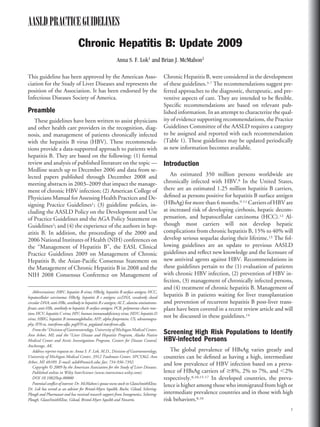
This guideline has been approved by the American Asso-                                   Chronic Hepatitis B, were considered in the development
ciation for the Study of Liver Diseases and represents the                               of these guidelines.3-7 The recommendations suggest pre-
position of the Association. It has been endorsed by the                                 ferred approaches to the diagnostic, therapeutic, and pre-
Infectious Diseases Society of America.                                                  ventive aspects of care. They are intended to be flexible.
                                                                                         Specific recommendations are based on relevant pub-
Preamble                                                                                 lished information. In an attempt to characterize the qual-
   These guidelines have been written to assist physicians                               ity of evidence supporting recommendations, the Practice
and other health care providers in the recognition, diag-                                Guidelines Committee of the AASLD requires a category
nosis, and management of patients chronically infected                                   to be assigned and reported with each recommendation
with the hepatitis B virus (HBV). These recommenda-                                      (Table 1). These guidelines may be updated periodically
tions provide a data-supported approach to patients with                                 as new information becomes available.
hepatitis B. They are based on the following: (1) formal
review and analysis of published literature on the topic —                               Introduction
Medline search up to December 2006 and data from se-
lected papers published through December 2008 and                                           An estimated 350 million persons worldwide are
meeting abstracts in 2003–2009 that impact the manage-                                   chronically infected with HBV.8 In the United States,
ment of chronic HBV infection; (2) American College of                                   there are an estimated 1.25 million hepatitis B carriers,
Physicians Manual for Assessing Health Practices and De-                                 defined as persons positive for hepatitis B surface antigen
signing Practice Guidelines1; (3) guideline policies, in-                                (HBsAg) for more than 6 months.9-11 Carriers of HBV are
cluding the AASLD Policy on the Development and Use                                      at increased risk of developing cirrhosis, hepatic decom-
of Practice Guidelines and the AGA Policy Statement on                                   pensation, and hepatocellular carcinoma (HCC).12 Al-
Guidelines2; and (4) the experience of the authors in hep-                               though most carriers will not develop hepatic
atitis B. In addition, the proceedings of the 2000 and                                   complications from chronic hepatitis B, 15% to 40% will
2006 National Institutes of Health (NIH) conferences on                                  develop serious sequelae during their lifetime.13 The fol-
the “Management of Hepatitis B”, the EASL Clinical                                       lowing guidelines are an update to previous AASLD
Practice Guidelines 2009 on Management of Chronic                                        guidelines and reflect new knowledge and the licensure of
Hepatitis B, the Asian-Pacific Consensus Statement on                                     new antiviral agents against HBV. Recommendations in
the Management of Chronic Hepatitis B in 2008 and the                                    these guidelines pertain to the (1) evaluation of patients
NIH 2008 Consensus Conference on Management of                                           with chronic HBV infection, (2) prevention of HBV in-
                                                                                         fection, (3) management of chronically infected persons,
                                                                                         and (4) treatment of chronic hepatitis B. Management of
   Abbreviations: HBV, hepatitis B virus; HBsAg, hepatitis B surface antigen; HCC,
hepatocellular carcinoma; HBeAg, hepatitis B e antigen; cccDNA, covalently closed
                                                                                         hepatitis B in patients waiting for liver transplantation
circular DNA; anti-HBe, antibody to hepatitis B e antigen; ALT, alanine aminotrans-      and prevention of recurrent hepatitis B post-liver trans-
ferase; anti-HBs, antibody to hepatitis B surface antigen; PCR, polymerase chain reac-   plant have been covered in a recent review article and will
tion; HCV, hepatitis C virus; HIV, human immunodeficiency virus; HDV, hepatitis D
virus; HBIG, hepatitis B immunoglobulin; AFP, alpha fetoprotein; US, ultrasonogra-
                                                                                         not be discussed in these guidelines.14
phy; IFN- , interferon-alfa; pegIFN- , pegylated interferon-alfa.
   From the 1Division of Gastroenterology, University of Michigan Medical Center,
Ann Arbor, MI; and the 2Liver Disease and Hepatitis Program, Alaska Native
                                                                                         Screening High Risk Populations to Identify
Medical Center and Arctic Investigations Program, Centers for Disease Control,           HBV-infected Persons
Anchorage, AK.
   Address reprint requests to: Anna S. F. Lok, M.D., Division of Gastroenterology,         The global prevalence of HBsAg varies greatly and
University of Michigan Medical Center, 3912 Taubman Center, SPC5362, Ann                 countries can be defined as having a high, intermediate
Arbor, MI 48109. E-mail: aslok@umich.edu; fax: 734-936-7392.
   Copyright © 2009 by the American Association for the Study of Liver Diseases.
                                                                                         and low prevalence of HBV infection based on a preva-
   Published online in Wiley InterScience (www.interscience.wiley.com).                  lence of HBsAg carriers of 8%, 2% to 7%, and 2%
   DOI 10.1002/hep.00000                                                                 respectively.8,10,15-17 In developed countries, the preva-
   Potential conflict of interest: Dr. McMahon’s spouse owns stock in GlaxoSmithKline.    lence is higher among those who immigrated from high or
Dr. Lok has served as an advisor for Bristol-Myers Squibb, Roche, Gilead, Schering-
Plough and Pharmasset and has received research support from Innogenetics, Schering-     intermediate prevalence countries and in those with high
Plough, GlaxoSmithKline, Gilead, Bristol-Myers Squibb and Novartis.                      risk behaviors.8,10
                                                                                                                                                   1
2          AASLD PRACTICE GUIDELINES                                                                                        HEPATOLOGY, September 2009


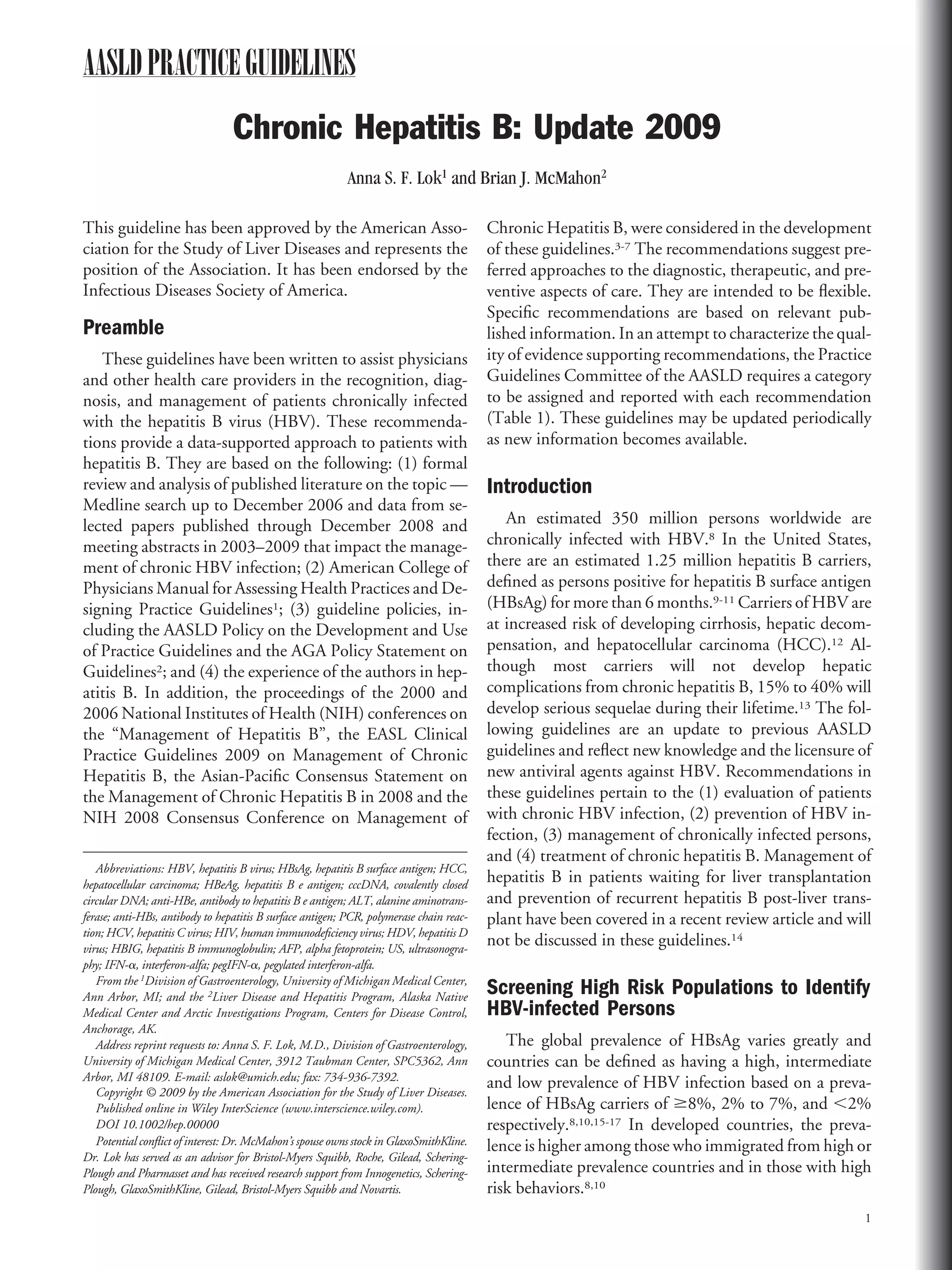
               Table 1. Quality of Evidence on Which a                            may be the only marker of HBV infection during the
                      Recommendation is Based                                     window phase of acute hepatitis B; these persons should
Grade                                       Definition                             test positive for anti-HBc IgM.
    I               Randomized controlled trials                                     Recommendations for Persons Who Should Be
    II-1            Controlled trials without randomization
    II-2            Cohort or case-control analytic studies                       Tested for HBV Infection:
    II-3            Multiple time series, dramatic uncontrolled experiments          1. The following groups should be tested for HBV
    III             Opinions of respected authorities, descriptive epidemiology   infection: persons born in high or intermediate en-
                                                                                  demic areas (Table 2), United States– born persons not
                                                                                  vaccinated as infants whose parents were born in re-
                                                                                  gions with high HBV endemicity, persons with chron-
    HBV is transmitted by perinatal, percutaneous, and sex-
ual exposure, as well as by close person-to-person contact                        ically elevated aminotransferases, persons needing
presumably by open cuts and sores, especially among chil-                         immunosuppressive therapy, men who have sex with
dren in hyperendemic areas.10 HBV can survive outside the                         men, persons with multiple sexual partners or history
body for prolonged periods.18,19 The risk of developing                           of sexually transmitted disease, inmates of correc-
chronic HBV infection after acute exposure ranges from                            tional facilities, persons who have ever used injecting
90% in newborns of HBeAg-positive mothers to 25% to                               drugs, dialysis patients, HIV or HCV-infected individ-
30% in infants and children under 5 and to less than 5% in                        uals, pregnant women, and family members, house-
adults.20-24 In addition, immunosuppressed persons are                            hold members, and sexual contacts of HBV-infected
more likely to develop chronic HBV infection after acute                          persons. Testing for HBsAg and anti-HBs should be
infection.25,26 In countries such as the United States where                      performed, and seronegative persons should be vacci-
most of the infants, children, and adolescents have been vac-                     nated. (I)
cinated against HBV, the risk of transmitting HBV in day-
care centers or schools is extremely low and HBsAg-positive
children should not be isolated or prevented from participat-                     Table 2. Groups at High Risk for HBV Infection Who Should
ing in activities including sports.                                                                     Be Screened17
    Table 2 displays the population and high risk groups                            ● Individuals born in areas of high* or intermediate prevalence rates† for
that should be screened for HBV infection and immu-                                   HBV including immigrants and adopted children‡§
                                                                                     —Asia: All countries
nized if seronegative.17 The tests used to screen persons                            —Africa: All countries
for HBV should include HBsAg and hepatitis B surface                                 —South Pacific Islands: All countries
antibody (anti-HBs). Alternatively, hepatitis B core anti-                           —Middle East (except Cyprus and Israel)
                                                                                     —European Mediterranean: Malta and Spain
body (anti-HBc) can be utilized as long as those who test                            —The Arctic (indigenous populations of Alaska, Canada, and Greenland)
positive are further tested for both HBsAg and anti-HBs                              —South America: Ecuador, Guyana, Suriname, Venezuela, and Amazon
to differentiate infection from immunity.                                              regions of Bolivia, Brazil, Colombia, and Peru
                                                                                     —Eastern Europe: All countries except Hungary
    Some persons may test positive for anti-HBc but not                              —Caribbean: Antigua and Barbuda, Dominica, Granada, Haiti, Jamaica,
HBsAg or anti-HBs. The finding of isolated anti-HBc can                                 St. Kitts and Nevis, St. Lucia, and Turks and Caicos.
occur for a variety of reasons. (1) Anti-HBc may be an                               —Central America: Guatemala and Honduras
                                                                                    ● Other groups recommended for screening
indicator of chronic HBV infection; in these persons,
                                                                                     —U.S. born persons not vaccinated as infants whose parents were born
HBsAg had decreased to undetectable levels but HBV                                     in regions with high HBV endemicity ( 8%)
DNA often remains detectable, more so in the liver than                              —Household and sexual contacts of HBsAg-positive persons§
in serum. This situation is not uncommon among persons                               —Persons who have ever injected drugs§
                                                                                     —Persons with multiple sexual partners or history of sexually transmitted
from areas with high prevalence of HBV infection and in                                disease§
those with human immunodeficiency virus (HIV) or hep-                                 —Men who have sex with men§
atitis C virus (HCV) infection.27 (2) Anti-HBc may be a                              —Inmates of correctional facilities§
                                                                                     —Individuals with chronically elevated ALT or AST§
marker of immunity after recovery from a prior infection.                            —Individuals infected with HCV or HIV§
In these persons, anti-HBs had decreased to undetectable                             —Patients undergoing renal dialysis§
levels but anamnestic response can be observed after one                             —All pregnant women
                                                                                     —Persons needing immunosuppressive therapy
dose of HBV vaccine.28 (3) Anti-HBc may be a false pos-
itive test result particularly in persons from low prevalence                       *HBsAg prevalence 8%.
areas with no risk factors for HBV infection. These indi-                           †HBsAg prevalence 2%-7%.
                                                                                    ‡If HBsAg-positive persons are found in the first generation, subsequent
viduals respond to hepatitis B vaccination similar to per-                        generations should be tested.
sons without any HBV seromarkers.10,28,29 (4) Anti-HBc                              §Those who are seronegative should receive hepatitis B vaccine.
HEPATOLOGY, Vol. 50, No. 3, 2009                                                                             AASLD PRACTICE GUIDELINES       3


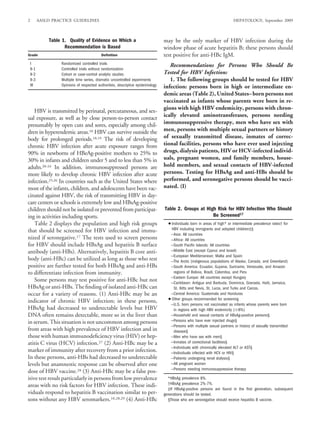
Table 3. Recommendations for Infected Persons Regarding                            CDC does not use serum HBV DNA levels as criteria for
        Prevention of Transmission of HBV to Others                                restriction of clinical procedures, several European coun-
Persons who are HBsAg-positive should:                                             tries use a threshold level varying from 200 to 20,000
 ● Have sexual contacts vaccinated                                                 IU/mL to determine if HBsAg-positive health care work-
 ● Use barrier protection during sexual intercourse if partner not vaccinated or
    naturally immune                                                               ers are allowed to perform exposure prone procedures.37,38
 ● Not share toothbrushes or razors                                                   The risk of infection after blood transfusion and trans-
 ● Cover open cuts and scratches                                                   plantation of nonhepatic solid organs (kidneys, lungs,
 ● Clean blood spills with detergent or bleach
 ● Not donate blood, organs or sperms
                                                                                   heart) from persons with isolated anti-HBc is low: 0% to
Children and adults who are HBsAg-positive:                                        13%.39 The risk of infection after transplantation of liver
 ● Can participate in all activities including contact sports                      from HBsAg-negative, anti-HBc-positive donors has
 ● Should not be excluded from daycare or school participation and should
    not be isolated from other children
                                                                                   been reported to be as high as 75% and is related to the
 ● Can share food, utensils, or kiss others                                        HBV immune status of the recipients.40,41 If anti-HBc-
                                                                                   positive donor organs are used for HBV seronegative re-
                                                                                   cipients, antiviral therapy should be administered to
                                                                                   prevent de novo HBV infection. While the optimal dura-
Counseling and Prevention of Hepatitis B                                           tion of prophylactic therapy has not been determined, a
                                                                                   limited duration such as 6-12 months may be sufficient
    Patients with chronic HBV infection should be coun-
                                                                                   for transplantation of non-hepatic solid organs. For trans-
seled regarding lifestyle modifications and prevention of
                                                                                   plantation of livers, life-long antiviral therapy is recom-
transmission and the importance of life long monitoring.
                                                                                   mended, but whether HBIG is necessary is unclear.42
No specific dietary measures have been shown to have any
effect on the progression of chronic hepatitis B. However,
heavy use of alcohol ( 20 g/d in women and 30 g/d in                               Hepatitis B Vaccination
men) may be a risk factor for the development of cirrho-                              Recommendations for vaccination are outlined in a
sis.30,31                                                                          recent CDC and Advisory Committee on Immunization
    Carriers of HBV should be counseled regarding trans-                           Practices (ACIP) guideline.10,11 Follow-up testing is rec-
mission to others (see Table 3). Household members and                             ommended for those who remain at risk of infection such
steady sexual partners are at increased risk of HBV infec-                         as health care workers, infants of HBsAg-positive mothers
tion and therefore should be vaccinated if they test nega-                         and sexual partners of persons with chronic HBV infec-
tive for HBV serologic markers.10 For casual sex partners                          tion. Furthermore, annual testing of hemodialysis pa-
or steady partners who have not been tested or have not                            tients is recommended since immunity wanes rapidly in
completed the full immunization series, barrier protec-                            these individuals who are at a high risk of continued ex-
tion methods should be employed. HBsAg-positive                                    posure to HBV.
women who are pregnant should be counseled to make                                    Recommendations for Counseling and Prevention
sure they inform their providers so hepatitis B immune                             of Transmission of Hepatitis B from Individuals with
globulin (HBIG) and hepatitis B vaccine can be adminis-                            Chronic HBV Infection:
tered to their newborn immediately after delivery.10                                  2. Carriers should be counseled regarding preven-
HBIG and concurrent hepatitis B vaccine have been                                  tion of transmission of HBV (Table 3). (III)
shown to be 95% efficacious in the prevention of perina-                               3. Sexual and household contacts of carriers who
tal transmission of HBV, the efficacy is lower for maternal                         are negative for HBV seromarkers should receive hep-
carriers with very high serum HBV DNA levels ( 8 log10                             atitis B vaccination. (III)
IU/mL).10,32,33 Transmission of HBV from infected                                     4. Newborns of HBV-infected mothers should re-
health care workers to patients has also been shown to                             ceive HBIG and hepatitis B vaccine at delivery and
occur in rare instances.34,35 For HBV carriers who are                             complete the recommended vaccination series. (I)
health care workers, the Centers for Disease Control and                              5. Persons who remain at risk for HBV infection
Prevention recommends that those who are HBeAg-pos-                                such as infants of HBsAg-positive mothers, health care
itive should not perform exposure prone procedures with-                           workers, dialysis patients, and sexual partners of car-
out prior counseling and advice from an expert review                              riers should be tested for response to vaccination. (III)
panel regarding under what circumstances, if any, they                                ● Postvaccination testing should be performed at 9
should be allowed to perform these procedures.36 These                                   to 15 months of age in infants of carrier mothers
circumstances would include notifying prospective pa-                                    and 1-2 months after the last dose in other per-
tients of their HBV status prior to procedures. While the                                sons. (III)
4   AASLD PRACTICE GUIDELINES                                                                            HEPATOLOGY, September 2009


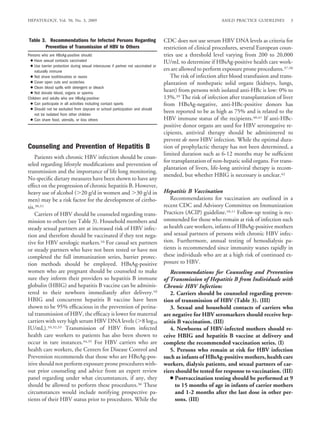
   ● Follow-up testing of vaccine responders is recom-          Table 4. Glossary of Clinical Terms Used in HBV Infection
     mended annually for chronic hemodialysis pa-               Definitions
     tients. (III)                                              Chronic hepatitis B — Chronic necroinflammatory disease of the liver caused
                                                                      by persistent infection with hepatitis B virus. Chronic hepatitis B can
   6. Abstinence or only limited use of alcohol is rec-               be subdivided into HBeAg positive and HBeAg negative chronic
ommended in hepatitis B carriers. (III)                               hepatitis B.
   7. Persons who are positive only for anti-HBc and            Inactive HBsAg carrier state — Persistent HBV infection of the liver without
                                                                      significant, ongoing necroinflammatory disease.
who are from a low endemic area with no risk factors
                                                                Resolved hepatitis B — Previous HBV infection without further virologic,
for HBV should be given the full series of hepatitis B                biochemical or histological evidence of active virus infection or
vaccine. (II-2)                                                       disease.
                                                                Acute exacerbation or flare of hepatitis B — Intermittent elevations of
                                                                      aminotransferase activity to more than 10 times the upper limit of
HBV Genotypes                                                         normal and more than twice the baseline value.
    Eight genotypes of HBV have been identified labeled A        Reactivation of hepatitis B — Reappearance of active necroinflammatory
                                                                      disease of the liver in a person known to have the inactive HBsAg
through H.43,44 The prevalence of HBV genotypes varies                carrier state or resolved hepatitis B.
depending on the geographical location. All known HBV           HBeAg clearance — Loss of HBeAg in a person who was previously HBeAg
genotypes have been found in the United States, with the              positive.
                                                                HBeAg seroconversion — Loss of HBeAg and detection of anti-HBe in a
prevalence of genotypes A, B, C, D and E-G being 35%,                 person who was previously HBeAg positive and anti-HBe negative.
22%, 31%, 10%, and 2%, respectively.45                          HBeAg reversion — Reappearance of HBeAg in a person who was previously
    Recent data suggest that HBV genotypes may play an                HBeAg negative, anti-HBe positive.
                                                                Diagnostic criteria
important role in the progression of HBV-related liver
                                                                Chronic hepatitis B
disease as well as response to interferon therapy.43 Studies      1. HBsAg-positive 6 months
from Asia found that HBV genotype B is associated with            2. Serum HBV DNA 20,000 IU/mL (105copies/mL), lower values 2,000-
HBeAg seroconversion at an earlier age, more sustained                20,000 IU/mL (104-105 copies/mL) are often seen in HBeAg-negative
                                                                      chronic hepatitis B
remission after HBeAg seroconversion, less active hepatic         3. Persistent or intermittent elevation in ALT/AST levels
necroinflammation, a slower rate of progression to cirrho-         4. Liver biopsy showing chronic hepatitis with moderate or severe
sis, and a lower rate of HCC development compared to                  necroinflammation
                                                                Inactive HBsAg carrier state
genotype C.46-51 The relation between other HBV geno-             1. HBsAg-positive 6 months
types and liver disease progression is unclear.                   2. HBeAg–, anti-HBe
    Several studies of standard interferon-alpha (IFN- )          3. Serum HBV DNA 2,000 IU/mL
                                                                  4. Persistently normal ALT/AST levels
and one study of pegylated IFN-alpha (pegIFN- ) ther-             5. Liver biopsy confirms absence of significant hepatitis
apy showed that genotypes A and B were associated with          Resolved hepatitis B
higher rates of HBeAg seroconversion compared to geno-            1. Previous known history of acute or chronic hepatitis B or the presence
types C and D.52-55 Another study of pegIFN- reported                 of anti-HBc anti-HBs
                                                                  2. HBsAg
that genotype A but not genotype B was associated with a          3. Undetectable serum HBV DNA*
higher rate of HBeAg seroconversion.56 Studies of nu-             4. Normal ALT levels
cleos(t)ide analogue (NA) therapies have not shown any           *Very low levels may be detectable using sensitive PCR assays.
relation between HBV genotypes and response. Thus,
additional data on the relation between HBV genotypes
and treatment response are needed before testing for               Among individuals with perinatally acquired HBV in-
HBV genotypes in clinical practice is recommended.             fection, a large percent of HBeAg-positive patients have
                                                               high serum HBV DNA but normal ALT levels.61,62 These
                                                               patients are considered to be in the “immune tolerant”
Terminology and Natural History of Chronic                     phase. Many of these patients develop HBeAg-positive
HBV Infection                                                  chronic hepatitis B with elevated ALT levels in later
   The consensus definition and diagnostic criteria for         life.63,64 In sub-Saharan Africa, Alaska, and Mediterra-
clinical terms relating to HBV infection adopted at the        nean countries, transmission of HBV usually occurs from
National Institutes of Health (NIH) conferences on Man-        person to person during childhood.23,65-67 In these popu-
agement of Hepatitis B in 2000 and 2006 are summarized         lations most children who are HBeAg positive have ele-
in Table 4.3,4                                                 vated ALT levels and seroconversion to anti-HBe is
   During the initial phase of chronic HBV infection,          common near or shortly after the onset of puberty. In
serum HBV DNA levels are high and HBeAg is present.            developed countries, HBV infection is usually acquired
The majority of carriers eventually loses HBeAg and de-        during adulthood through sexual transmission and inject-
velop antibody to HBeAg (anti-HBe).15,57-60                    ing drug use.9,10,68 Very little longitudinal data are avail-
HEPATOLOGY, Vol. 50, No. 3, 2009                                                             AASLD PRACTICE GUIDELINES       5


able, but liver disease is generally present in persons with       after clearance of HBsAg, particularly in those who were
high HBV DNA levels.                                               older or had progressed to cirrhosis before HBsAg clear-
    Among carriers with elevated ALT levels, the rate of           ance.69,91-95
clearance of HBeAg averages between 8% and 12% per
year57-60,69 but is much lower in carriers who are in the          Factors Associated with Progression of HBV-related
immune tolerant phase (mostly Asian children and young             Liver Disease
adults with normal ALT levels)61,62 and in immunocom-                 Host and viral risk factors associated with increased
promised subjects.26,70 HBeAg clearance may follow an              rates of cirrhosis include older age (longer duration of
exacerbation of hepatitis, manifested by an elevation of           infection), HBV genotype C, high levels of HBV DNA,
ALT levels.58,60 Older age, higher ALT, and HBV geno-              habitual alcohol consumption, and concurrent infection
type B (vs. C) are associated with higher rates of sponta-         with hepatitis C virus (HCV), hepatitis D virus (HDV) or
neous HBeAg clearance.                                             human immunodeficiency virus (HIV).96,97 Environ-
    After spontaneous HBeAg seroconversion, 67% to                 mental factors that are associated with an increase risk of
80% of carriers have low or undetectable HBV DNA                   cirrhosis or HCC include heavy alcohol consumption,
and normal ALT levels with minimal or no necroin-                  carcinogens such as aflatoxin, and, more recently smok-
flammation on liver biopsy — the “inactive carrier                  ing.98
state.”15,57,59,60,66,69,71 Approximately 4% to 20% of in-            Host and viral risk factors for HCC include male gen-
active carriers have one or more reversions back to                der, family history of HCC, older age, history of rever-
HBeAg. Among those who remain anti-HBe positive,                   sions from anti-HBe to HBeAg, presence of cirrhosis,
10% to 30% continue to have elevated ALT and high                  HBV genotype C, core promoter mutation, and coinfec-
HBV DNA levels after HBeAg seroconversion, and                     tion with HCV.69,73,96,97 Although cirrhosis is a strong
roughly 10% to 20% of inactive carriers may have reacti-           risk factor for HCC, 30% to 50% of HCC associated with
vation of HBV replication and exacerbations of hepatitis           HBV occur in the absence of cirrhosis.13 Recently, several
after years of quiescence.60,64,69,71,72 Therefore, serial test-   prospective follow-up studies of large cohorts of carriers
ing is necessary to determine if an HBsAg-positive,                from Asia found that the presence of HBeAg and high
HBeAg-negative carrier is truly in the “inactive carrier           levels of HBV DNA were independent risk factors for the
state” and life long follow-up is required to confirm that          subsequent development of cirrhosis and HCC.51,99-102
the inactive state is maintained. Clearance of HBeAg,              Given that most of the carriers in these studies likely ac-
whether spontaneous or after antiviral therapy, reduces            quired HBV infection perinatally and their mean age at
the risk of hepatic decompensation and improves sur-               enrollment was around 40 years, these data indicate that
vival.73-81                                                        high levels of HBV replication persisting for more than 4
    Moderate or high levels of persistent HBV replication          decades are associated with an increased risk of HCC.
or reactivation of HBV replication following a period of           However, due to the fluctuating nature of chronic HBV
quiescence after HBeAg seroconversion leads to HBeAg-              infection, the accuracy of one high HBV DNA level at a
negative chronic hepatitis B, which is characterized by            single time point in predicting the prognosis of individual
HBV DNA levels 2,000 IU/mL and continued necro-                    carriers may be limited and the risk of HCC in a younger
inflammation in the liver.82 Most patients with HBeAg-
                                                                   carrier who is HBeAg-positive with one high HBV DNA
negative chronic hepatitis B harbor HBV variants in the
                                                                   level may be substantially lower.
precore or core promoter region.83-89 Patients with
HBeAg-negative chronic hepatitis B tend to have lower
serum HBV DNA levels than those with HBeAg-positive                Coinfection with HCV, HDV or HIV
chronic hepatitis B (2,000-20 million vs 200,000-2 bil-               HCV. Coexistent HCV infection has been estimated
lion IU/mL) and are more likely to run a fluctuating                to be present in 10% to 15% of patients with chronic
course. These patients are also older and have more ad-            hepatitis B and is more common among injecting drug
vanced liver disease since HBeAg-negative chronic hepa-            users.103 Acute coinfection with HBV and HCV may
titis B represents a later stage in the course of chronic          shorten the duration of HBs antigenemia and lower the
HBV infection.82,87,90                                             peak serum aminotransferase concentrations compared
    Approximately 0.5% of HBsAg carriers will clear HBsAg          with acute HBV infection alone.104,105 However, acute
yearly; most will develop anti-HBs.69,91 However, low levels       coinfection of HCV and HBV, or acute HCV on pre-
of HBV DNA remain detectable in the serum in up to                 existing chronic HBV have also been reported to increase
half of these persons. The prognosis is improved in carri-         the risk of severe hepatitis and fulminant hepatic fail-
ers who cleared HBsAg but HCC has been reported years              ure.106
6   AASLD PRACTICE GUIDELINES                                                                                HEPATOLOGY, September 2009


   Patients with dual HBV and HCV infection have a               Table 5. Evaluation of Patients with Chronic HBV Infection
higher rate of cirrhosis and HCC development compared            Initial evaluation
to patients infected by either virus alone.107,108               1. History and physical examination
                                                                 2. Family History of liver disease, HCC
   HDV. HDV is a satellite virus, which is dependent on          3. Laboratory tests to assess liver disease—complete blood counts with
HBV for the production of envelope proteins.109 HBV/                platelets, hepatic panel, and prothrombin time
HDV coinfection most commonly occurs in the Mediter-             4. Tests for HBV replication—HBeAg/anti-HBe, HBV DNA
                                                                 5. Tests to rule out viral coinfections—anti-HCV, anti-HDV (in persons from
ranean area and parts of South America. The availability            countries where HDV infection is common and in those with history of
of HBV vaccines and public health education on the pre-             injection drug use), and anti-HIV in those at risk
vention of transmission of HBV infection has led to a            6. Tests to screen for HCC–AFP at baseline and, in high risk patients,
                                                                    ultrasound
significant decline in the prevalence of HDV infection in         7. Consider liver biopsy to grade and stage liver disease - for patients who
the past decade.110 HDV infection can occur in two                  meet criteria for chronic hepatitis
forms. The first form is caused by the coinfection of HBV
                                                                 Suggested follow-up for patients not considered for treatment
and HDV; this usually results in a more severe acute hep-        HBeAg , HBV DNA 20,000 IU/mL and normal ALT
atitis with a higher mortality rate than is seen with acute      ● ALT q 3-6 months, more often if ALT becomes elevated
                                                                 ● If ALT levels are between 1-2 ULN, recheck ALT q1-3 months; consider
hepatitis B alone,109,111 but rarely results in chronic infec-
                                                                    liver biopsy if age 40, ALT borderline or mildly elevated on serial tests.
tion. A second form is a result of a superinfection of HDV          Consider treatment if biopsy shows moderate/severe inflammation or
in a HBV carrier and can manifest as a severe “acute”               significant fibrosis
                                                                 ● If ALT 2 ULN for 3-6 months and HBeAg , HBV DNA 20,000 IU/
hepatitis in previously asymptomatic HBV carriers or as
                                                                    mL, consider liver biopsy and treatment
an exacerbation of underlying chronic hepatitis B. Unlike        ● Consider screening for HCC in relevant population
coinfection, HDV superinfection in HBV carriers almost           Inactive HBsAg carrier state
                                                                 ● ALT q 3 months for 1 year, if persistently normal, ALT q 6-12 months
always results in chronic infection with both viruses. A
                                                                 ● If ALT 1-2 ULN, check serum HBV DNA level and exclude other causes
higher proportion of persons with chronic HBV/HDV                   of liver disease. Consider liver biopsy if ALT borderline or mildly elevated on
coinfection develop cirrhosis, hepatic decompensation,              serial tests or if HBV DNA persistently 2,000 IU/mL. Consider treatment if
                                                                    biopsy shows moderate/severe inflammation or significant fibrosis
and HCC compared to those with chronic HBV infection
                                                                 ● Consider screening for HCC in relevant population
alone.112,113
   HIV. Studies have found that between 6% and 13%
of persons infected with HIV are also coinfected with
                                                                 HAART first and HBV vaccine when CD4 counts rise
HBV. Coinfection with HIV is more common in persons
                                                                 above 200/uL.115,116
from regions where both viruses are endemic, such as
sub-Saharan Africa.10 Individuals with HBV and HIV
                                                                 Evaluation and Management of Patients
coinfection tend to have higher levels of HBV DNA,               with Chronic HBV Infection
lower rates of spontaneous HBeAg seroconversion, more
                                                                 Initial Evaluation
severe liver disease, and increased rates of liver related
                                                                    The initial evaluation of patients with chronic HBV
mortality.114-117 In addition, severe flares of hepatitis can
                                                                 infection should include a thorough history and physical
occur in HIV coinfected patients with low CD4 counts
                                                                 examination, with special emphasis on risk factors for
who experience immune reconstitution after initiation of
                                                                 coinfection, alcohol use, and family history of HBV in-
highly active antiretroviral therapy (HAART).115 Ele-            fection and liver cancer. Laboratory tests should include
vated liver enzymes in patients with HBV/HIV coinfec-            assessment of liver disease, markers of HBV replication,
tion can be caused by other factors besides HBV including        and tests for coinfection with HCV, HDV, or HIV in
HAART and certain opportunistic infections such as cy-           those at risk (Table 5). Vaccination for hepatitis A should
tomegalovirus and Mycobacterium avium.                           be administered to persons with chronic hepatitis B as per
   Patients with HIV infection can have high levels of           Centers for Disease Control and Prevention recommen-
HBV DNA and hepatic necroinflammation with anti-                  dations.118
HBc but not HBsAg, so called “occult HBV”.115 There-
fore it is prudent to test all HIV infected persons for both     HBV DNA Assays
HBsAg and anti-HBc and if either is positive, to test for           Most HBV DNA assays used in clinical practice are
HBV DNA. Persons who are negative for all HBV sero-              based on polymerase chain reaction (PCR) amplification
markers should receive hepatitis B vaccine. If feasible,         with lower limits of detection of 50-200 IU/mL (250-
hepatitis B vaccine should be given when CD4 cell counts         1,000 copies/mL),119 and a limited dynamic range, up to
are 200/uL as response to vaccine is poor below this             4-5 log10 IU/mL. Recently, HBV DNA assays that utilize
level. Persons with CD4 counts below 200 should receive          real-time PCR technology with improved sensitivity
HEPATOLOGY, Vol. 50, No. 3, 2009                                                               AASLD PRACTICE GUIDELINES              7


(5-10 IU/mL) and wider dynamic range (up to 8-9 log10
IU/mL) have become available.120 Quantification of se-
rum HBV DNA is a crucial component in the evaluation
of patients with chronic HBV infection and in the assess-
ment of the efficacy of antiviral treatment.
    A major dilemma in the interpretation of serum HBV
DNA levels is the determination of cutoff values used to
define treatment indications and response. Because HBV
DNA persists even in persons who have serological recov-
ery from acute HBV infection,121 low levels of HBV
DNA may not be associated with progressive liver disease
and viral clearance is an unrealistic treatment endpoint.
An arbitrary value of 20,000 IU/mL ( 105 copies/mL)
was chosen as a diagnostic criterion for chronic hepatitis B
at the 2000 NIH conference.3 However, chronic hepati-
tis, cirrhosis and HCC have been found in patients with
lower HBV DNA levels. Also, some patients with chronic
hepatitis B have widely fluctuating HBV DNA levels that
may vary from undetectable to 2,000,000 IU/mL.122
Thus, serial monitoring of HBV DNA levels is more im-
portant than any single arbitrary cutoff value in prognos-
tication and in determining the need for treatment. It is
now recognized that lower HBV DNA levels (3-5 log10
IU/mL) may be associated with progressive liver disease
and may warrant treatment, particularly in those who are
HBeAg-negative or have already developed cirrhosis.

Liver Biopsy
   The purpose of a liver biopsy is to assess the degree of
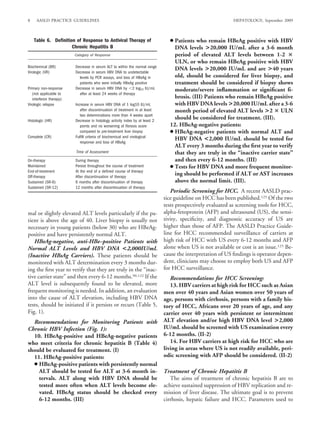
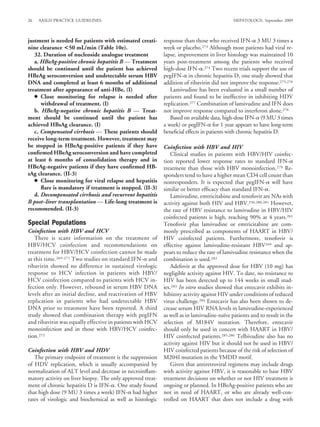
liver damage and to rule out other causes of liver disease.       Fig. 1. Algorithm for follow-up of HBV carriers who are HBeAg-positive
However, it must be recognized that liver histology can        (A) or HBeAg-negative (B). ALT, alanine aminotransferase; ULN, upper
improve significantly in patients who have sustained re-        limit of normal; Rx, treat; HCC, hepatocellular carcinoma.
sponse to antiviral therapy or spontaneous HBeAg sero-
conversion. Liver histology also can worsen rapidly in         physical examination and laboratory testing as out-
patients who have recurrent exacerbations or reactivations     lined in Table 5. (III)
of hepatitis.                                                     9. All persons with chronic hepatitis B not immune
   Liver biopsy is most useful in persons who do not meet      to hepatitis A should receive 2 doses of hepatitis A
clear cut guidelines for treatment listed below. Recent        vaccine 6 to 18 months apart. (II-3)
studies suggest that the upper limits of normal for ALT
and AST should be decreased to 30 U/L for men and 19           Follow-up of Patients Not Initially Considered for
U/L for women.123 HBV infected patients with ALT val-          Treatment
ues close to the upper limit of normal may have abnormal
                                                                  HBeAg-Positive Patients with High Serum HBV
histology and can be at increased risk of mortality from
                                                               DNA But Normal ALT Levels. These patients should
liver disease especially those above age 40. Thus, decisions
                                                               be monitored at 3 to 6 month intervals (Table 5, Fig. 1).
on liver biopsy should take into consideration age, the
                                                               More frequent monitoring should be performed when
new suggested upper limits of normal for ALT, HBeAg
                                                               ALT levels become elevated.58,60,64,124 Patients who re-
status, HBV DNA levels, and other clinical features sug-
                                                               main HBeAg positive with HBV DNA levels greater than
gestive of chronic liver disease or portal hypertension.
                                                               20,000 IU/mL after a 3 to 6 month period of elevated
  Recommendations for Initial Evaluation of Persons            ALT levels greater than two times the upper limit of nor-
with Chronic HBV Infection:                                    mal should be considered for liver biopsy and antiviral
  8. Initial evaluation of persons newly diagnosed             treatment (Fig. 1). Liver biopsy and treatment should also
with chronic HBV infection should include history,             be considered in patients with persistent borderline nor-
8    AASLD PRACTICE GUIDELINES                                                                               HEPATOLOGY, September 2009


    Table 6. Definition of Response to Antiviral Therapy of                      ● Patients who remain HBeAg positive with HBV
                     Chronic Hepatitis B                                          DNA levels >20,000 IU/mL after a 3-6 month
                         Category of Response                                     period of elevated ALT levels between 1-2
                                                                                  ULN, or who remain HBeAg positive with HBV
Biochemical (BR)         Decrease in serum ALT to within the normal range
                                                                                  DNA levels >20,000 IU/mL and are >40 years
Virologic (VR)           Decrease in serum HBV DNA to undetectable
                           levels by PCR assays, and loss of HBeAg in             old, should be considered for liver biopsy, and
                           patients who were initially HBeAg positive             treatment should be considered if biopsy shows
Primary non-response     Decrease in serum HBV DNA by 2 log10 IU/mL               moderate/severe inflammation or significant fi-
   (not applicable to      after at least 24 weeks of therapy
   interferon therapy)                                                            brosis. (III) Patients who remain HBeAg positive
Virologic relapse        Increase in serum HBV DNA of 1 log10 IU/mL               with HBV DNA levels >20,000 IU/mL after a 3-6
                            after discontinuation of treatment in at least        month period of elevated ALT levels >2 ULN
                            two determinations more than 4 weeks apart
Histologic (HR)          Decrease in histology activity index by at least 2
                                                                                  should be considered for treatment. (III).
                            points and no worsening of fibrosis score            12. HBeAg-negative patients:
                            compared to pre-treatment liver biopsy              ● HBeAg-negative patients with normal ALT and
Complete (CR)            Fulfill criteria of biochemical and virological
                                                                                  HBV DNA <2,000 IU/mL should be tested for
                            response and loss of HBsAg
                                                                                  ALT every 3 months during the first year to verify
                         Time of Assessment                                       that they are truly in the “inactive carrier state”
On-therapy               During therapy                                           and then every 6-12 months. (III)
Maintained               Persist throughout the course of treatment             ● Tests for HBV DNA and more frequent monitor-
End-of-treatment         At the end of a defined course of therapy
Off-therapy              After discontinuation of therapy
                                                                                  ing should be performed if ALT or AST increases
Sustained (SR-6)         6 months after discontinuation of therapy                above the normal limit. (III).
Sustained (SR-12)        12 months after discontinuation of therapy
                                                                                 Periodic Screening for HCC. A recent AASLD prac-
                                                                              tice guideline on HCC has been published.125 Of the two
                                                                              tests prospectively evaluated as screening tools for HCC,
mal or slightly elevated ALT levels particularly if the pa-                   alpha-fetoprotein (AFP) and ultrasound (US), the sensi-
tient is above the age of 40. Liver biopsy is usually not                     tivity, specificity, and diagnostic accuracy of US are
necessary in young patients (below 30) who are HBeAg-                         higher than those of AFP. The AASLD Practice Guide-
positive and have persistently normal ALT.                                    line for HCC recommended surveillance of carriers at
   HBeAg-negative, anti-HBe–positive Patients with                            high risk of HCC with US every 6-12 months and AFP
Normal ALT Levels and HBV DNA <2,000IU/mL                                     alone when US is not available or cost is an issue.125 Be-
(Inactive HBsAg Carriers). These patients should be                           cause the interpretation of US findings is operator depen-
monitored with ALT determination every 3 months dur-                          dent, clinicians may choose to employ both US and AFP
ing the first year to verify that they are truly in the “inac-                 for HCC surveillance.
tive carrier state” and then every 6-12 months.90,122 If the                     Recommendations for HCC Screening:
ALT level is subsequently found to be elevated, more                             13. HBV carriers at high risk for HCC such as Asian
frequent monitoring is needed. In addition, an evaluation                     men over 40 years and Asian women over 50 years of
into the cause of ALT elevation, including HBV DNA                            age, persons with cirrhosis, persons with a family his-
tests, should be initiated if it persists or recurs (Table 5,                 tory of HCC, Africans over 20 years of age, and any
Fig. 1).                                                                      carrier over 40 years with persistent or intermittent
  Recommendations for Monitoring Patients with                                ALT elevation and/or high HBV DNA level >2,000
Chronic HBV Infection (Fig. 1):                                               IU/mL should be screened with US examination every
  10. HBeAg-positive and HBeAg-negative patients                              6-12 months. (II-2)
who meet criteria for chronic hepatitis B (Table 4)                              14. For HBV carriers at high risk for HCC who are
should be evaluated for treatment. (I)                                        living in areas where US is not readily available, peri-
  11. HBeAg-positive patients:                                                odic screening with AFP should be considered. (II-2)
  ● HBeAg-positive patients with persistently normal
    ALT should be tested for ALT at 3-6 month in-                             Treatment of Chronic Hepatitis B
    tervals. ALT along with HBV DNA should be                                    The aims of treatment of chronic hepatitis B are to
    tested more often when ALT levels become ele-                             achieve sustained suppression of HBV replication and re-
    vated. HBeAg status should be checked every                               mission of liver disease. The ultimate goal is to prevent
    6-12 months. (III)                                                        cirrhosis, hepatic failure and HCC. Parameters used to
HEPATOLOGY, Vol. 50, No. 3, 2009                                                                                  AASLD PRACTICE GUIDELINES              9


       Table 7. Definition of Terms Relating to Antiviral                            Among the approved NA therapies for hepatitis B, lami-
      Resistance to Nucleoside Analogue (NA) Treatment                           vudine is associated with the highest and entecavir and teno-
    Term                                   Definition                             fovir with the lowest rates of drug resistance in NA-naıve ¨
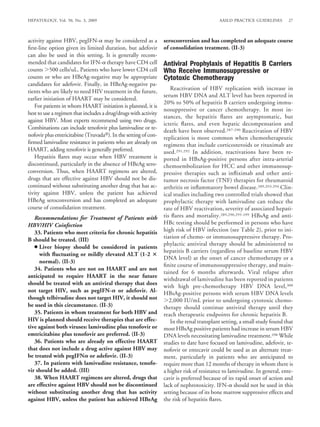
Virologic         Increase in serum HBV DNA by 1 log10 (10-fold) above           patients. The first manifestation of antiviral resistance is vi-
   breakthrough      nadir after achieving virologic response, during            rologic breakthrough which is defined as a 1 log10 (10-
                     continued treatment                                         fold) increase in serum HBV DNA from nadir during
Viral rebound     Increase in serum HBV DNA to 20,000 IU/mL or above
                     pretreatment level after achieving virologic response,      treatment in a patient who had an initial virologic response
                     during continued treatment                                  (Fig. 2). Up to 30% of virologic breakthrough observed in
Biochemical       Increase in ALT above upper limit of normal after              clinical trials is related to medication noncompliance, thus,
   breakthrough      achieving normalization, during continued treatment
Genotypic         Detection of mutations that have been shown in in vitro
                                                                                 compliance should be ascertained before testing for geno-
   resistance        studies to confer resistance to the NA that is being        typic resistance. Serum HBV DNA levels tend to be low
                     administered                                                initially because most antiviral-resistant mutants have de-
Phenotypic        In vitro confirmation that the mutation detected decreases
                                                                                 creased replication fitness compared with wild-type HBV.127
  resistance         susceptibility (as demonstrated by increase in inhibitory
                     concentrations) to the NA administered                      However, compensatory mutations that can restore replica-
                                                                                 tion fitness frequently emerge during continued treatment
                                                                                 leading to a progressive increase in serum HBV DNA that
assess treatment response include normalization of serum                         may exceed pretreatment levels. Virologic breakthrough is
ALT, decrease in serum HBV DNA level, loss of HBeAg                              usually followed by biochemical breakthrough, which is de-
with or without detection of anti-HBe, and improvement                           fined as elevation in ALT during treatment in a patient who
in liver histology. At the 2000 and 2006 NIH conferences                         had achieved initial response. Emergence of antiviral-resis-
on Management of Hepatitis B, it was proposed that                               tant mutations can lead to negation of the initial response,
responses to antiviral therapy of chronic hepatitis B be                         and in some cases hepatitis flares and hepatic decompensa-
categorized as biochemical (BR), virologic (VR), or                              tion. Antiviral-resistant mutations can be detected months
histologic (HR), and as on-therapy or sustained off-                             and sometimes years before biochemical breakthrough.
therapy (Table 6).3,4 Standardized definitions of primary                         Thus, early detection and intervention can prevent hepatitis
nonresponse, breakthrough and relapse were also pro-                             flares and hepatic decompensation, and this is particularly
posed. Currently, seven therapeutic agents have been ap-                         important in patients who are immunosuppressed and those
proved for the treatment of adults with chronic hepatitis                        with underlying cirrhosis. Another potential consequence of
B in the United States.                                                          antiviral-resistant mutations is cross-resistance with other
    While IFNs are administered for predefined durations,
NAs are usually administered until specific endpoints are
achieved. The difference in approach is related to the
additional immune modulatory effects of IFN. For
HBeAg-positive patients, viral suppression with currently
approved treatments can be sustained in 50% to 90%
patients if treatment is stopped after HBeAg seroconver-
sion is achieved. For HBeAg-negative patients, relapse is
frequent even when HBV DNA has been suppressed to
undetectable levels by PCR assays for more than a year;
thus, the endpoint for stopping treatment is unclear.

Antiviral Resistance
   A major concern with long-term NA treatment is the
selection of antiviral-resistant mutations. The rate at
which resistant mutants are selected is related to pretreat-
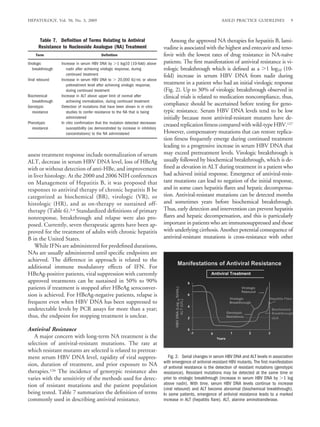
ment serum HBV DNA level, rapidity of viral suppres-                                Fig. 2. Serial changes in serum HBV DNA and ALT levels in association
                                                                                 with emergence of antiviral-resistant HBV mutants. The first manifestation
sion, duration of treatment, and prior exposure to NA                            of antiviral resistance is the detection of resistant mutations (genotypic
therapies.126 The incidence of genotypic resistance also                         resistance). Resistant mutations may be detected at the same time or
varies with the sensitivity of the methods used for detec-                       prior to virologic breakthrough (increase in serum HBV DNA by 1 log
tion of resistant mutations and the patient population                           above nadir). With time, serum HBV DNA levels continue to increase
                                                                                 (viral rebound) and ALT become abnormal (biochemical breakthrough).
being tested. Table 7 summarizes the definition of terms                          In some patients, emergence of antiviral resistance leads to a marked
commonly used in describing antiviral resistance.                                increase in ALT (hepatitis flare). ALT, alanine aminotransferase.
10    AASLD PRACTICE GUIDELINES                                                                                             HEPATOLOGY, September 2009


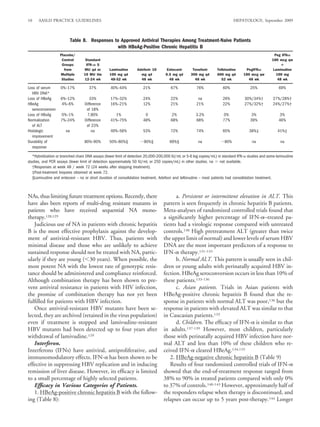
                           Table 8. Responses to Approved Antiviral Therapies Among Treatment-Naive Patients
                                               with HBeAg-Positive Chronic Hepatitis B
                    Placebo/                                                                                                                        Peg IFN
                     Control      Standard                                                                                                         180 mcg qw
                     Groups       IFN- 5
                      from       MU qd or        Lamivudine       Adefovir 10      Entecavir       Tenofovir      Telbivudine      PegIFN          Lamivudine
                    Multiple     10 MU tiw       100 mg qd          mg qd          0.5 mg qd      300 mg qd       600 mg qd       180 mcg qw        100 mg
                     Studies     12-24 wk         48-52 wk          48 wk            48 wk          48 wk           52 wk           48 wk            48 wk

Loss of serum       0%–17%          37%          40%–44%             21%              67%            76%             60%              25%              69%
   HBV DNA*
Loss of HBeAg       6%–12%           33%         17%–32%             24%              22%             na             26%          30%/34%†         27%/28%†
HBeAg               4%–6%         Difference     16%–21%             12%              21%            21%             22%          27%/32%†         24%/27%†
   seroconversion                  of 18%
Loss of HBsAg       0%–1%          7.80%           1%                 0               2%             3.2%            0%               3%               3%
Normalization       7%–24%        Difference     41%–75%             48%              68%            68%             77%              39%              46%
   of ALT                          of 23%
Histologic            na              na         49%–56%             53%              72%            74%             65%             38%‡             41%‡
   improvement
Durability of                     80%–90%        50%–80%§             90%§           69%§             na              80%              na               na
   response

   *Hybridization or branched chain DNA assays (lower limit of detection 20,000-200,000 IU/mL or 5-6 log copies/mL) in standard IFN- studies and some lamivudine
studies, and PCR assays (lower limit of detection approximately 50 IU/mL or 250 copies/mL) in other studies. na not available.
   †Responses at week 48 / week 72 (24 weeks after stopping treatment).
   ‡Post-treatment biopsies obtained at week 72.
   §Lamivudine and entecavir – no or short duration of consolidation treatment, Adefovir and telbivudine – most patients had consolidation treatment.


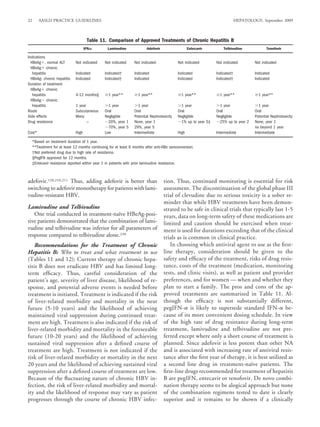
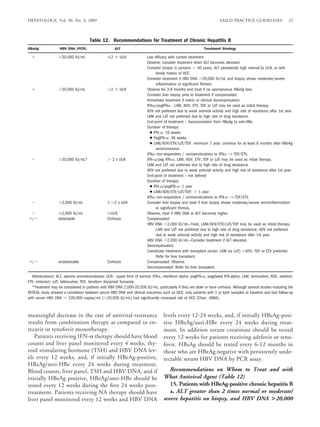
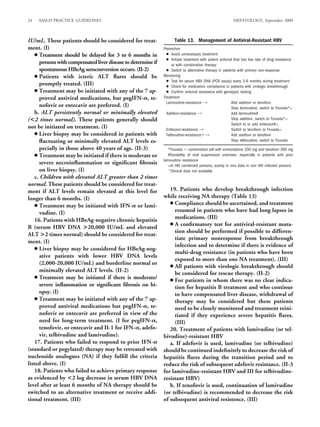
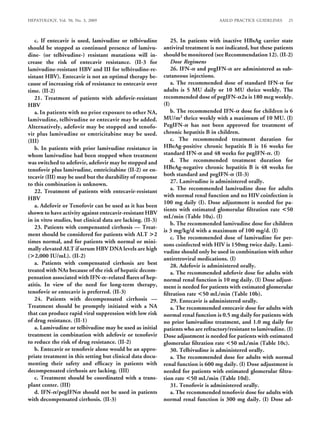
NAs, thus limiting future treatment options. Recently, there                           a. Persistent or intermittent elevation in ALT. This
have also been reports of multi-drug resistant mutants in                        pattern is seen frequently in chronic hepatitis B patients.
patients who have received sequential NA mono-                                   Meta-analyses of randomized controlled trials found that
therapy.128,129                                                                  a significantly higher percentage of IFN- –treated pa-
   Judicious use of NA in patients with chronic hepatitis                        tients had a virologic response compared with untreated
B is the most effective prophylaxis against the develop-                         controls.130 High pretreatment ALT (greater than twice
ment of antiviral-resistant HBV. Thus, patients with                             the upper limit of normal) and lower levels of serum HBV
minimal disease and those who are unlikely to achieve                            DNA are the most important predictors of a response to
sustained response should not be treated with NA, partic-                        IFN- therapy.131-133
ularly if they are young ( 30 years). When possible, the                               b. Normal ALT. This pattern is usually seen in chil-
most potent NA with the lowest rate of genotypic resis-                          dren or young adults with perinatally acquired HBV in-
tance should be administered and compliance reinforced.                          fection. HBeAg seroconversion occurs in less than 10% of
Although combination therapy has been shown to pre-                              these patients.133-136
vent antiviral resistance in patients with HIV infection,                              c. Asian patients. Trials in Asian patients with
the promise of combination therapy has not yet been                              HBeAg-positive chronic hepatitis B found that the re-
fulfilled for patients with HBV infection.                                        sponse in patients with normal ALT was poor,136 but the
   Once antiviral-resistant HBV mutants have been se-                            response in patients with elevated ALT was similar to that
lected, they are archived (retained in the virus population)                     in Caucasian patients.133
even if treatment is stopped and lamivudine-resistant                                  d. Children. The efficacy of IFN- is similar to that
HBV mutants had been detected up to four years after                             in adults.137-139 However, most children, particularly
withdrawal of lamivudine.129                                                     those with perinatally acquired HBV infection have nor-
   Interferon.                                                                   mal ALT and less than 10% of these children who re-
Interferons (IFNs) have antiviral, antiproliferative, and                        ceived IFN- cleared HBeAg.134,135
immunomodulatory effects. IFN- has been shown to be                                 2. HBeAg-negative chronic hepatitis B (Table 9)
effective in suppressing HBV replication and in inducing                            Results of four randomized controlled trials of IFN-
remission of liver disease. However, its efficacy is limited                      showed that the end-of-treatment response ranged from
to a small percentage of highly selected patients.                               38% to 90% in treated patients compared with only 0%
   Efficacy in Various Categories of Patients.                                    to 37% of controls.140-143 However, approximately half of
   1. HBeAg-positive chronic hepatitis B with the follow-                        the responders relapse when therapy is discontinued, and
ing (Table 8):                                                                   relapses can occur up to 5 years post-therapy.144 Longer
HEPATOLOGY, Vol. 50, No. 3, 2009                                                                                   AASLD PRACTICE GUIDELINES                 11


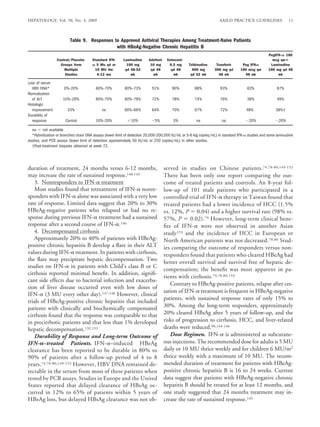
                         Table 9. Responses to Approved Antiviral Therapies Among Treatment-Naive Patients
                                             with HBeAg-Negative Chronic Hepatitis B
                                                                                                                                                 PegIFN- 180
                 Control/Placebo      Standard IFN-      Lamivudine      Adefovir    Entecavir                                                     mcg qw
                   Groups from          5 Mu qd or         100 mg         10 mg       0.5 mg     Telbivudine     Tenofovir       Peg IFN          Lamivudine
                     Multiple          10 MU tiw          qd 48-52        qd 48        qd 48       600 mg       300 mg qd       180 mcg qw       100 mg qd 48
                     Studies            6-12 mo              wk            wk           wk        qd 52 wk        48 wk           48 wk               wk

Loss of serum
   HBV DNA*          0%–20%             60%–70%           60%–73%         51%          90%          88%             93%             63%               87%
Normalization
   of ALT            10%–29%            60%–70%           60%–79%         72%          78%          74%             76%             38%               49%
Histologic
   improvement         33%                  na            60%–66%         64%          70%          67%             72%            48%               38%†
Durability of
   response           Control           10%–20%               10%           5%          3%           na              na              20%               20%

   na not available
   *Hybridization or branched chain DNA assays (lower limit of detection 20,000-200,000 IU/mL or 5-6 log copies/mL) in standard IFN- studies and some lamivudine
studies, and PCR assays (lower limit of detection approximately 50 IU/mL or 250 copies/mL) in other studies.
   †Post-treatment biopsies obtained at week 72.


duration of treatment, 24 months verses 6-12 months,                                served in studies on Chinese patients.74,78-80,149-152
may increase the rate of sustained response.140,145                                 There has been only one report comparing the out-
   3. Nonresponders to IFN- treatment                                               come of treated patients and controls. An 8-year fol-
   Most studies found that retreatment of IFN- nonre-                               low-up of 101 male patients who participated in a
sponders with IFN- alone was associated with a very low                             controlled trial of IFN- therapy in Taiwan found that
rate of response. Limited data suggest that 20% to 30%                              treated patients had a lower incidence of HCC (1.5%
HBeAg-negative patients who relapsed or had no re-                                  vs. 12%, P 0.04) and a higher survival rate (98% vs.
sponse during previous IFN- treatment had a sustained                               57%, P 0.02).79 However, long-term clinical bene-
response after a second course of IFN- .146                                         fits of IFN- were not observed in another Asian
   4. Decompensated cirrhosis                                                       study153 and the incidence of HCC in European or
   Approximately 20% to 40% of patients with HBeAg-                                 North American patients was not decreased.78,80 Stud-
positive chronic hepatitis B develop a flare in their ALT                            ies comparing the outcome of responders versus non-
values during IFN- treatment. In patients with cirrhosis,                           responders found that patients who cleared HBeAg had
the flare may precipitate hepatic decompensation. Two                                better overall survival and survival free of hepatic de-
studies on IFN- in patients with Child’s class B or C
                                                                                    compensation; the benefit was most apparent in pa-
cirrhosis reported minimal benefit. In addition, signifi-
                                                                                    tients with cirrhosis.74,78,80,154
cant side effects due to bacterial infection and exacerba-
                                                                                       Contrary to HBeAg-positive patients, relapse after ces-
tion of liver disease occurred even with low doses of
                                                                                    sation of IFN- treatment is frequent in HBeAg-negative
IFN- (3 MU every other day).147,148 However, clinical
                                                                                    patients, with sustained response rates of only 15% to
trials of HBeAg-positive chronic hepatitis that included
patients with clinically and biochemically compensated                              30%. Among the long-term responders, approximately
cirrhosis found that the response was comparable to that                            20% cleared HBsAg after 5 years of follow-up, and the
in precirrhotic patients and that less than 1% developed                            risks of progression to cirrhosis, HCC, and liver-related
hepatic decompensation.132,133                                                      deaths were reduced.90,144-146
   Durability of Response and Long-term Outcome of                                     Dose Regimen. IFN- is administered as subcutane-
IFN- –treated Patients. IFN- –induced HBeAg                                         ous injections. The recommended dose for adults is 5 MU
clearance has been reported to be durable in 80% to                                 daily or 10 MU thrice weekly and for children 6 MU/m2
90% of patients after a follow-up period of 4 to 8                                  thrice weekly with a maximum of 10 MU. The recom-
years.74,78-80,149-152 However, HBV DNA remained de-                                mended duration of treatment for patients with HBeAg-
tectable in the serum from most of these patients when                              positive chronic hepatitis B is 16 to 24 weeks. Current
tested by PCR assays. Studies in Europe and the United                              data suggest that patients with HBeAg-negative chronic
States reported that delayed clearance of HBsAg oc-                                 hepatitis B should be treated for at least 12 months, and
curred in 12% to 65% of patients within 5 years of                                  one study suggested that 24 months treatment may in-
HBeAg loss, but delayed HBsAg clearance was not ob-                                 crease the rate of sustained response.145
12   AASLD PRACTICE GUIDELINES                                                                 HEPATOLOGY, September 2009


Pegylated Interferon alfa (pegIFN- )                         weekly for 48 weeks. However, given the similarity in
   PegIFN- has the advantages of more convenient ad-         response rates between 90 and 180 mcg doses in the phase
ministration and more sustained viral suppression. Clin-     II trial, and the comparable response rates between 24 and
ical trials suggest that the efficacy of pegIFN- is similar   48 week treatment in the phase II and phase III trials,56,155
to or slightly better than standard IFN- .                   it is possible that lower doses and/or shorter duration of
                                                             treatment may suffice for HBeAg-positive patients.
Efficacy in Various Categories of Patients                    Whether longer duration of treatment ( 48 week) will
   1. HBeAg-positive chronic hepatitis (Table 8) — In        result in higher rates of sustained response in HBeAg-
one phase II trial,155 a higher percent of patients who      negative patients remains to be determined.
received pegIFN- had HBeAg seroconversion compared               Predictors of Response to Standard and pegIFN- .
to those who received standard IFN- . In a subsequent        In HBeAg-positive patients, the strongest predictor of
phase III trial, 814 patients were randomized to receive     HBeAg seroconversion to standard and pegIFN- is the
pegIFN- 2a 180 mcg weekly, pegIFN- 2a 180 mcg                pretreatment ALT level. Other factors include high his-
weekly lamivudine 100 mg daily, or lamivudine 100            tologic activity index, low HBV DNA level, and more
mg daily for 48 weeks.56 At the end of treatment, viral      recently some studies have suggested that persons infected
suppression was most marked in the group that received       with HBV genotypes A and B respond better than those
combination therapy. Despite differences in the degree of    with genotypes C and D.55,132,133 There is no consistent
viral suppression, HBeAg seroconversion was similar in       predictor of sustained response among HBeAg-negative
the three groups at the end of treatment: 27%, 24%, and      patients.
20%, respectively, but significantly higher in the two            Adverse Events. Standard IFN- and pegIFN- have
groups that received pegIFN- when response was as-           similar side effect profiles. The most common side effect is an
sessed 24 weeks after treatment was stopped: 32%, 27%,       initial influenza-like illness: fever, chills, headache, malaise
and 19%, respectively. These data indicate that pegIFN-
                                                             and myalgia. Other common side effects include fatigue,
  2a monotherapy was superior to lamivudine mono-
                                                             anorexia, weight loss and mild increase in hair loss. IFN-
therapy in inducing sustained HBeAg seroconversion,
                                                             has myelosuppressive effects but significant neutropenia
and comparable to combination therapy of pegIFN- 2a
                                                             ( 1000/mm3) or thrombocytopenia ( 50,000/mm3) are
and lamivudine.
                                                             uncommon except in patients who have decreased cell
   Similar results were reported in two trials in which
                                                             counts prior to treatment. IFN- treatment is accompanied
pegIFN- 2b was administered. Twenty-four weeks after
                                                             by a flare in ALT in 30% to 40% of patients. Hepatitis flares
treatment was stopped, one study reported identical rates
                                                             are considered to be an indicator of a favorable response but
(29%) of HBeAg seroconversion in patients who received
                                                             they can lead to hepatic decompensation, especially in pa-
pegIFN- 2b with and without lamivudine,55 while the
other study reported a significantly higher rate of HBeAg     tients with underlying cirrhosis. The most troublesome side
seroconversion in those who received the combination of      effect of IFN- is emotional lability: anxiety, irritability, de-
pegIFN- 2b and lamivudine versus those who received          pression and even suicidal tendency. IFN- has been re-
lamivudine only, 36% versus 14%.156                          ported to induce the development of a variety of
   2. HBeAg-negative chronic hepatitis (Table 9) — In        autoantibodies. In most instances, this is not accompanied
the only published report of peg IFN- in HBeAg-nega-         by clinical illness. However, both hyper- and hypo-thyroid-
tive patients, 552 patients were randomized to receive 48    ism that require treatment have been reported. Rarely, retinal
weeks of pegIFN- 2a 180 mcg weekly, the combination          changes and even impaired vision have been reported.
of pegIFN- 2a 180 mcg weekly lamivudine 100 mg
daily, or lamivudine 100 mg daily.157 Viral suppression      Lamivudine (Epivir-HBV, 3TC)
was most marked in the group that received combination           Lamivudine is the ( ) enantiomer of 2 -3 dideoxy-
therapy. However, sustained response (HBV DNA unde-          3 -thiacytidine. Incorporation of the active triphosphate
tectable by PCR and normalization of ALT at week 72)         (3TC-TP) into growing DNA chains results in premature
was comparable in the groups that received pegIFN- 2a        chain termination thereby inhibiting HBV DNA synthe-
alone or in combination with lamivudine, and superior to     sis.
the group that received lamivudine monotherapy: 15%,             Efficacy in Various Categories of Patients. Lamivu-
16%, and 6%, respectively.                                   dine monotherapy is effective in suppressing HBV repli-
   Dose Regimen. PegIFN- 2a is the only pegylated in-        cation and in ameliorating liver disease. HBeAg
terferon approved for the treatment of chronic hepatitis B   seroconversion after a 1-year course of lamivudine treat-
in the United States. The recommended dose is 180 mcg        ment is similar to that of a 16-week course of standard
HEPATOLOGY, Vol. 50, No. 3, 2009                                                       AASLD PRACTICE GUIDELINES       13


IFN- but lower than that of a 1-year course of pe-            to treatment-naıve patients, and that retreatment with
                                                                               ¨
gIFN- .                                                       combination of IFN- and lamivudine did not confer any
   1. HBeAg-positive chronic hepatitis B with the fol-        added benefit compared with retreatment with lamivu-
lowing (Table 8):                                             dine monotherapy.177
   a. Persistent or intermittent elevation in ALT. Three         4. Bridging Fibrosis and Compensated Cirrhosis
clinical trials involving a total of 731 treatment naıve¨        In a double blind, randomized, placebo-controlled trial
patients who received lamivudine for 1 year reported          of 651 Asian patients who were HBeAg positive or had
that HBeAg seroconversion occurred in 16% to 18% of           HBV DNA 105 IU/mL ( 700,000 genome equiva-
patients compared with 4% to 6% of untreated con-             lents/mL), and bridging fibrosis or cirrhosis on liver bi-
trols.158-160 Histologic improvement defined as a re-          opsy a statistically significant difference was observed
duction in necroinflammatory score by 2 points was             between those who received lamivudine versus placebo
observed in 49% to 56% treated patients and in 23% to         for overall disease progression (increase in Child-Tur-
25% of controls. HBeAg seroconversion rates in-               cotte-Pugh score, hepatic decompensation or HCC)
creased with the duration of treatment to 50% after 5         (7.8% vs 17.7% P 0.001), and for HCC development
years of continued treatment.161-164                          (3.9% vs 7.4% P         0.047).81 Clinical benefit was ob-
   b. Normal ALT levels. In patients with pretreatment        served mainly among the 51% patients who did not have
ALT levels less than 2 times normal, the HBeAg serocon-       breakthrough infection. These data indicate that antiviral
version rate is less than 10% after 1 year and 19% after 3    therapy can improve clinical outcomes in patients with
years of treatment.165,166                                    advanced fibrosis who have maintained viral suppression.
   c. Asian patients. Asians respond similarly to lamivu-        5. Decompensated cirrhosis
dine as Caucasian patients.166                                   Studies of lamivudine in patients with decompensated
   d. Children. In a 52 week randomized control trial in      cirrhosis showed that lamivudine treatment is well toler-
children HBeAg seroconversion was observed in 22% of
                                                              ated and can stabilize or improve liver function in patients
the lamivudine-treated children versus 13% placebo con-
                                                              with decompensated cirrhosis thereby obviating or delay-
trols (P 0.06).167 HBeAg seroconversion increased to
                                                              ing the need for liver transplant.178-181 However, these
34% after 2 years of continuous treatment. Lamivudine-
                                                              studies showed that clinical benefit takes 3-6 months, and
resistant HBV mutation was detected in 19%, 49% and
                                                              that HCC can occur even among patients with clinical
64% of patients after 1, 2 and 3 years of treatment, re-
                                                              improvement. Thus, prompt initiation of treatment and
spectively.168 These data indicate that lamivudine is safe
                                                              continued HCC surveillance are warranted.
and effective in children but the benefit must be carefully
balanced against the risk of selecting drug resistant mu-         Durability of Response. A follow-up study in non-
tants.                                                        Asian countries found that 30 of 39 (77%) patients
   2. HBeAg-negative chronic hepatitis B (Table 9)            with HBeAg seroconversion had durable response after
   Lamivudine has been shown to benefit patients with          a median follow-up of 37 months (range, 5-46 months)
HBeAg-negative chronic hepatitis B.169-173 Several studies    and 8 (20%) patients had HBsAg seroconversion.182
have reported that serum HBV DNA is suppressed to             Studies from Asia reported lower rates of durability
undetectable levels by PCR assays in 60% to 70% patients      (50%-60%), which may in part be related to a shorter
after 1 year of treatment.171,172,174,175 However, the vast   duration of treatment (mean 8-9 months).183,184 Sev-
majority ( 90%) of patients relapsed when treatment           eral factors have been found to be associated with in-
was stopped.170 Extending the duration of treatment re-       creased durability of lamivudine-induced HBeAg
sulted in a progressively lower rate of response due to the   seroconversion including longer duration of consolida-
selection of lamivudine-resistant mutants. In one study of    tion treatment — defined as duration of treatment be-
201 patients, virologic remission (undetectable HBV           yond the time after HBeAg seroconversion, younger
DNA by PCR assay) decreased from 73% at 12 months to          age, lower HBV DNA level at the time treatment was
34% at 48 months while biochemical remission decreased        stopped, and genotype B versus C.183-187 Although
from 84% to 36%.176                                           there are no good direct comparison data, it appears
   3. Nonresponders to IFN- treatment                         that the durability of lamivudine-induced HBeAg se-
   A multicenter trial in IFN- nonresponders found            roconversion is less than that for IFN- .188
that patients had a similar HBeAg seroconversion rate to          Among HBeAg-negative patients, the durability of vi-
lamivudine alone (18%), a combination of lamivudine           ral suppression after 1-year of lamivudine treatment is less
and IFN- (12%) or placebo (13%) indicating that re-           than 10%. One small study reported that the durability of
sponse of IFN- nonresponders to lamivudine is similar         virologic response was improved to 50% in patients who
14   AASLD PRACTICE GUIDELINES                                                                  HEPATOLOGY, September 2009


had completed 2 years of treatment and had persistently         suppression had lower rates of hepatic decompensation
undetectable HBV DNA by PCR assay during year 2.189             as well as liver-related mortality.176,200
    Lamivudine Resistance. Selection of lamivudine-re-             Dose Regimen. The recommended dose of lamivu-
sistant mutations is the main concern with lamivudine           dine for adults with normal renal function (creatinine
treatment. The most common mutation involves substi-            clearance 50 mL/min) and no HIV coinfection is 100
tution of methionine in the tyrosine-methionine-aspar-          mg orally daily. The recommended dose for children is 3
tate-aspartate (YMDD) motif of the HBV DNA                      mg/kg/d with a maximum dose of 100 mg/d. Dose reduc-
polymerase for valine or isoleucine rtM204V/I.190,191           tion is necessary for patients with renal insufficiency (Ta-
This mutation is frequently accompanied by a leucine to         ble 10a).
methionine substitution in an upstream region                      The endpoint of treatment for HBeAg-positive pa-
(rtL180M). Genotypic resistance can be detected in 14%          tients is HBeAg seroconversion.158-160 Liver chemistries
to 32% after 1 year of lamivudine treatment158-160 and          should be monitored every 3 months and HBV DNA
increases with the duration of treatment to 60% to 70%          levels every 3-6 months while on therapy, and HBeAg and
after 5 years of treatment.163,164 Factors associated with an   anti-HBe tested at the end of 1 year of treatment and
increase rate of lamivudine resistance include long dura-       every 3-6 months thereafter. Treatment may be discon-
tion of treatment, high pretreatment serum HBV DNA              tinued in patients who have confirmed HBeAg serocon-
level, and a high level of residual virus after initiation of   version (HBeAg loss and anti-HBe detection on 2
treatment.164,192 One study reported that the rate of lami-     occasions 1-3 months apart) and have completed at least 6
vudine resistance was significantly higher in patients           months of consolidation therapy after the appearance of
whose serum HBV DNA level exceeded 200 IU/mL                    anti-HBe. The durability of response after cessation of
(1,000 copies/mL) after 6 months of treatment compared          treatment is expected to be 70% to 90%. Viral relapse and
to those with lower HBV DNA levels (63% vs 13%).192             exacerbations of hepatitis may occur after discontinuation
The clinical course of patients with lamivudine-resistant       of lamivudine therapy,201 including patients who have
mutants is variable. in vitro studies showed that               developed HBeAg seroconversion, and may be delayed up
rtM204V/I mutation decreases replication fitness of HBV          to 1 year after cessation of treatment. Thus, all patients
but compensatory mutations selected during continued            should be closely monitored after treatment is discontin-
treatment can restore replication fitness.127,193 Virologic      ued (every 1-3 months for the first 6 months, and every
breakthrough is usually followed by biochemical break-          3-6 months thereafter). Reinstitution of lamivudine treat-
through (increase in ALT after initial normalization), and      ment is usually effective in patients who have not devel-
in some patients may be associated with acute exacerba-         oped resistance. Alternatively, treatment with newer
tions of liver disease and rarely hepatic decompensation        therapies with lower risk of drug resistance may be con-
and death.194-196 Exacerbations of hepatitis associated         sidered.
with the emergence of lamivudine resistance had also been          Treatment may be continued in patients who have not
reported to be associated with HBeAg seroconversion,            achieved HBeAg seroconversion and have no evidence of
possibly via immune mediated mechanisms.194 Hepatitis           breakthrough infection as HBeAg seroconversion may oc-
flares may also occur after withdrawal of treatment due to       cur with continued treatment.161-163 However, the bene-
rapid outgrowth of wild-type virus, but two studies in          fits of continued treatment must be balanced against the
Asia found that the occurrence of hepatitis flares and he-       risks of resistant mutants. With the availability of newer
patic decompensation were similar among patients with           therapies with lower risk of drug resistance, a switch to an
lamivudine breakthrough who stopped or continued                alternative treatment may be considered particularly in
lamivudine treatment.197,198                                    patients who have received lamivudine for more than 2
    Long-term Outcome of Lamivudine-treated Pa-                 years.
tients. Follow-up of patients receiving continued lami-            In patients who have breakthrough infection, testing
vudine treatment showed that the rates of maintained            for lamivudine-resistant mutants should be performed
virologic and biochemical response decreased with               when possible. The vast majority of patients with con-
time due to selection of drug-resistant mu-                     firmed lamivudine-resistance should receive rescue ther-
tants.164,175,176 In patients with maintained viral sup-        apy with antiviral agents that are effective against
pression, necroinflammation is reduced and decrease in           lamivudine-resistant HBV mutants. A minority of pa-
fibrosis score as well as regression of cirrhosis was ob-        tients may consider stopping treatment, particularly if
served.199 However, histologic benefit was negated               they had normal ALT, or if the biopsy showed mild in-
among patients with breakthrough infection. Several             flammation and no or minimal fibrosis prior to initiation
studies reported that patients with maintained viral            of treatment.197,198
HEPATOLOGY, Vol. 50, No. 3, 2009                                                                   AASLD PRACTICE GUIDELINES           15


          Table 10. Adjustment of Adult Dosage of Nucleosid(t)e Analogue in Accordance with Creatinine Clearance
                   Creatinine Clearance (mL/min)                                      Recommended Dose

           a. Lamivudine
               50                                     100 mg qd
             30–49                                    100 mg first dose, then 50 mg qd
             15–29                                    35 mg first dose, then 25 mg qd
             5-14                                     35 mg first dose, then 15 mg qd
               5                                      35 mg first dose, then 10 mg qd
           b. Adefovir
               50                                     10   mg   daily
             20–49                                    10   mg   every other day
             10–19                                    10   mg   every third day
             Hemodialysis patients                    10   mg   every week following dialysis

           c. Entecavir                               NA naı
                                                           ¨ve                                       Lamivudine refractory/resistant
               50                                     0.5 mg qd                                      1 mg qd
             30–49                                    0.25 mg qd or 0.5 mg q48 hr                    0.5 mg qd or 1 mg q 48 hr
             10–29                                    0.15 mg qd or 0.5 mg q 72 hr                   0.3 mg qd or 1 mg q 72 hr
               10 or hemodialysis* or continuous      0.05 mg qd or 0.5 mg q7 days                   0.1 mg qd or 1 mg q 7 days
                ambulatory peritoneal dialysis

           d. Telbivudine
               50                                     600   mg   once   daily
             30–49                                    600   mg   once   every 48 hours
               30 (not requiring dialysis)            600   mg   once   every 72 hours
             End-stage renal disease                  600   mg   once   every 96 hours*
           e. Tenofovir
               50                                     300  mg q24 hrs
             30–49                                    300  mg q48 hrs
             10–29                                    300  mg q72-96 hrs
               10 with dialysis                       300  mg once a week or after a total of
                                                           approximately 12 hours of dialysis
               10 without dialysis                    No recommendation

  *Administer after hemodialysis.


   The end point of treatment for HBeAg-negative chronic             phate. It can inhibit both the reverse transcriptase and
hepatitis B is unknown. Post-treatment relapse can occur             DNA polymerase activity and is incorporated into HBV
even in patients with persistently undetectable serum HBV            DNA causing chain termination. In vitro and clinical
DNA by PCR assay. Because of the need for long durations             studies showed that adefovir is effective in suppressing
of treatment, lamivudine is not an optimal first-line treat-          wild-type as well as lamivudine-resistant HBV.
ment for HBeAg-negative chronic hepatitis B.                            Efficacy in Various Categories of Patients.
   Predictors of Response. Pretreatment serum ALT is                    1. HBeAg positive chronic hepatitis B (Table 8) — In
the strongest predictor of response among HBeAg-positive             a Phase III trial, 515 patients were randomized to receive
patients. Pooled data from 4 studies with a total of 406 pa-         10 or 30 mg of adefovir or placebo for 48 weeks. Histo-
tients who received lamivudine for 1 year found that HBeAg           logic response was observed in 25% of those on placebo
seroconversion occurred in 2%, 9%, 21%, and 47% of pa-               versus 53% and 59% of patients who received adefovir 10
tients with ALT levels within normal, 1-2 times normal, 2-5
                                                                     mg and 30 mg, respectively (P 0.001, adefovir 10mg or
times normal, and 5 times normal, respectively; the corre-
                                                                     30mg vs placebo).202 The corresponding figures for
sponding seroconversion rates for 196 patients in the placebo
                                                                     HBeAg seroconversion were 12% and 14% for adefovir
group were 0%, 5%, 11%, and 14%, respectively.166
                                                                     10 mg and 30 mg groups compared to 6% for the placebo
   Adverse Events. In general, lamivudine is very well
tolerated. Various adverse events including a mild (2- to            group (P 0.049 and P 0.011, respectively). Serum
3-fold) increase in ALT level have been reported in pa-              HBV DNA levels decreased by a mean of 0.6, 3.5, and 4.8
tients receiving lamivudine, but these events occurred in            log10 copies/mL, and normalization of ALT levels was
the same frequency among the controls.158-160                        observed in 16%, 48%, and 55% of patients who received
                                                                     placebo, adefovir 10 mg and 30 mg, respectively (P
Adefovir Dipivoxil (bis-POM PMEA, Hepsera)                           0.001 placebo vs either dose of adefovir). The side effect
  Adefovir dipivoxil is an orally bioavailable pro-drug of           profiles in the three groups were similar but 8% of pa-
adefovir, a nucleotide analog of adenosine monophos-                 tients in the adefovir 30 mg dose group had nephrotoxic-
16   AASLD PRACTICE GUIDELINES                                                                HEPATOLOGY, September 2009


ity (defined as an increase in serum creatinine by 0.5          pression and ALT normalization in persons treated with
mg/dL above the baseline value on two consecutive occa-        the combination of lamivudine and adefovir compared to
sions). These data demonstrated that adefovir for 1 year is    those receiving adefovir alone,209 patients who discontin-
beneficial in patients with HBeAg-positive chronic hepa-        ued lamivudine were more likely to develop ALT flares
titis and that the 10-mg dose has a more favorable risk-       during the first 12 weeks of adefovir monotherapy. In
benefit profile. Cumulative HBeAg seroconversion was             addition, recent data showed that switching to adefovir in
estimated to be 48% after 5 years of treatment.203             patients with lamivudine-resistant HBV was associated
    2. HBeAg negative chronic hepatitis (Table 9) — In a       with a higher risk of adefovir-resistance compared to add-
Phase III trial, 184 patients were randomized in a 2:1 ratio   ing adefovir.128,210,211
to receive adefovir 10 mg or placebo. At week 48, the             c. HIV and HBV coinfection — Adefovir when added
treated group had significantly higher rates of response        to existing HIV treatment regimens which included lami-
than the placebo group as follows: histologic response,        vudine 150 mg bid has also been shown to be effective in
64% versus 33% (P          0.001); normalization of ALT,       decreasing serum HBV DNA levels in patients with HIV
72% versus 29% (P 0.001); and undetectable serum               and HBV coinfection and lamivudine-resistant HBV.212
HBV DNA by PCR assay, 51% versus 0% (P                            Durability of Response and Long-term Outcome of
0.001).204 During year 2, patients who received adefovir       Adefovir-treated Patients. The durability of HBeAg se-
in year 1 were randomized to continue adefovir 10 mg or        roconversion was examined in 45 patients who had been
to receive placebo.205 At week 96, the proportion of pa-       followed for a median of 150 (range 13-252) weeks off
tients with undetectable serum HBV DNA increased to            treatment. HBeAg seroconversion was maintained in 41
71% in the group that continued to receive adefovir, and       (91%) patients. The seemingly high rate of durability of
decreased to 8% in the group that stopped therapy. Data        adefovir-related HBeAg seroconversion may be related to
from 70 patients who completed 5 years of continued            a long duration of treatment and more importantly, a
adefovir treatment showed that serum HBV DNA was               long duration of treatment after HBeAg seroconversion.
undetectable in 53% and ALT normalized in 59%.206              The median duration of consolidation treatment was
    3. Children — Clinical trials of adefovir in children      longer in patients with durable HBeAg seroconversion:
are ongoing.                                                   41 versus 22 weeks in those who had HBeAg serorever-
    4. Decompensated cirrhosis — Adefovir has not been         sion (P 0.03).213
evaluated as a primary treatment for patients with decom-         Among HBeAg-negative patients, viral suppression
pensated cirrhosis.                                            was sustained in only 8% of patients who stopped ad-
    5. Lamivudine-resistant hepatitis B                        efovir after 1-year of treatment.205 The vast majority of
    a. Decompensated cirrhosis and liver transplant recipi-    patients who continued treatment up to 5 years main-
ents — In a compassionate use study involving 128 pa-          tained their response but there was minimal incremen-
tients with decompensated cirrhosis and 196 patients           tal response after the first year. HBsAg loss was
with recurrent hepatitis B after liver transplant, addition    observed in 5% of patients after 4-5 years of continued
of adefovir was associated with a 3-4 log10 reduction in       treatment.206 In addition, long-term treatment was as-
serum HBV DNA levels, which was sustained throughout           sociated with a decrease in fibrosis score. Nonetheless,
the course of treatment.207 Among the patients who com-        3% of patients developed HCC indicating that long-
pleted 48 weeks of treatment, 81% of the pre- and 34% of       term antiviral treatment does not completely prevent
the post-transplant patients had undetectable HBV DNA          HCC. A preliminary report of 33 patients who had
by PCR assay, and 76% and 49%, respectively, had nor-          received adefovir for 4-5 years and had been followed
malization of ALT. Child-Turcotte-Pugh score improved          for up to 5 years off treatment showed that all patients
in more than 90% of the pre-transplant patients, and           had virologic relapse (redetection of serum HBV
1-year survival was 84% for the pre- and 93% for the           DNA) initially but 18 (55%) patients subsequently had
post-transplant patients. Follow-up data on 226 pre-           sustained biochemical/virological remission and 9 of
transplant patients showed that viral suppression was          these 18 later lost HBsAg.214
maintained in 65% of patients after 96 weeks of treatment         Adefovir Resistance. Resistance occurs at a slower
with accompanying improvement in Child-Turcotte-               rate during adefovir treatment compared to lamivudine
Pugh scores as well as Model for End-stage Liver Disease       and no adefovir-resistant mutations were found after 1
(MELD) scores.208                                              year of treatment in the patients who participated in the
    b. Compensated liver disease — While a pilot study in      Phase III trials.215 However, novel mutations conferring
patients with compensated chronic hepatitis B and lami-        resistance to adefovir (asparagine to threonine substitu-
vudine resistance found no differences in HBV DNA sup-         tion N236T and alanine to valine or threonine substitu-
HEPATOLOGY, Vol. 50, No. 3, 2009                                                          AASLD PRACTICE GUIDELINES       17


tion A181V/T) have been described.216,217 Aggregate data        children. Adefovir at the 10 mg dose is ineffective in sup-
from 5 studies including 3 studies using the combination        pressing HIV replication.
of lamivudine and adefovir in patients with lamivudine-            For patients with HBeAg-positive chronic hepatitis B,
resistant HBV estimated the cumulative rate of adefovir-        treatment may be discontinued for those who have con-
resistance to be 15% by 192 weeks.218 The phase III trial       firmed HBeAg seroconversion and have completed at
in HBeAg-negative patients found that the cumulative            least 6 months of consolidation treatment. Treatment
probabilities of genotypic resistance to adefovir at 1, 2, 3,   may be continued in patients who have not achieved
4, and 5 years were 0, 3%, 11%, 18%, and 29%, respec-           HBeAg seroconversion but in whom HBV DNA levels
tively.206 Cumulative rate of genotypic resistance to ad-       remain suppressed.
efovir in the phase III trial in HBeAg-positive patients was       For patients with HBeAg-negative chronic hepatitis B,
estimated to be 20% after 5 years of treatment.203 Recent       continued treatment (beyond 1 year) is needed to main-
studies using more sensitive methods have reported detec-       tain the response.205 Further studies are needed to deter-
tion of adefovir-resistant mutations after 1 year of treat-     mine if treatment can be discontinued in patients who
ment and rates of genotypic resistance exceeding 20%            have completed 4-5 years treatment with undetectable
after 2 years of treatment.128,219 In these studies, adefovir   HBV DNA.
resistance was predominantly found in patients with prior          For most patients with lamivudine-resistant mutants,
lamivudine resistance switched to adefovir monotherapy.         particularly those with decompensated cirrhosis or recur-
    In vitro studies showed that adefovir-resistant muta-       rent hepatitis B post-transplant, long-term treatment will
tions decrease susceptibility by 3–15-fold only.216,217         be required. Lamivudine should be continued indefinitely
Nevertheless, clinical studies found that viral rebound,        after the addition of adefovir to reduce the risk of adefovir
hepatitis flares and even hepatic decompensation can oc-         resistance.
cur.220 Risk factors for adefovir resistance that have been        Approximately 30% of patients who have no prior
identified include suboptimal viral suppression and se-          treatment with NAs have primary nonresponse to adefo-
quential monotherapy.128,219 Sequential treatment with          vir, defined as a 2 log drop in HBV DNA after 6 months
lamivudine followed by adefovir had also been reported to       of treatment.223 Alternative treatments should be consid-
select for dual-resistant HBV mutants.220                       ered for these patients.
    In vitro and clinical studies showed that adefovir-resis-      Predictors of Response. Retrospective analyses of
tant HBV mutants are susceptible to lamivudine and en-          data from two phase III clinical trials showed that reduc-
tecavir.217 However, in patients with prior lamivudine          tion in serum HBV DNA was comparable across the 4
resistance, who developed adefovir resistance after being       major HBV genotypes A-D in the groups receiving adefo-
switched to adefovir monotherapy, re-emergence of lami-         vir.224 Limited data suggest that HBeAg-positive patients
vudine-resistant mutations has been reported soon after         with high pretreatment ALT were more likely to undergo
reintroduction of lamivudine.220 There are anecdotal            HBeAg seroconversion.
cases where switching from adefovir to tenofovir resulted          Adverse Events. Adefovir in 10 mg doses is well tol-
in a decrease in serum HBV DNA levels. This may be              erated and has a similar side effect profile as placebo in
related to a higher dose of tenofovir being used 300 mg         Phase III clinical trials. Nephrotoxicity has been reported
versus adefovir 10mg. However, serum HBV DNA re-                in 3% of patients with compensated liver disease after 4-5
mained detectable and adefovir-resistant mutations per-         years of continued adefovir therapy, and in 6% of patients
sist after switching to tenofovir monotherapy indicating        on the transplant waiting list, 47% of patients who un-
that these two drugs are cross-resistant.221 By contrast,       derwent liver transplant during the study and 21% of
rescue therapy with combination of lamivudine or emtric-        post-transplant patients after a median of 39-99 weeks
itabine and tenofovir resulted in suppression of serum          treatment.206,208 Whether the higher rate of nephrotoxic-
HBV DNA to undetectable levels.221,222 One case series          ity in the latter three groups of patients is related to con-
reported that two patients with adefovir-resistant HBV          comitant use of nephrotoxic medications, progression of
responded to entecavir with a decrease in serum HBV             decompensated cirrhosis (hepatorenal syndrome) or a di-
DNA to undetectable levels.128                                  rect effect of adefovir is unclear. Regardless, monitoring of
    Dose Regimen. The recommended dose of adefovir              serum creatinine every 3 months is necessary for patients
for adults with normal renal function (creatinine clear-        with medical conditions that predispose to renal insuffi-
ance 50 mL/min) is 10 mg orally daily. The dosing inter-        ciency and in all patients on adefovir for more than 1 year.
val should be increased in patients with renal insufficiency     More frequent monitoring should be performed in pa-
(Table 10b). Adefovir has not been approved for use in          tients with pre-existing renal insufficiency.
18   AASLD PRACTICE GUIDELINES                                                                   HEPATOLOGY, September 2009


Entecavir (Baraclude)                                            lamivudine 100 mg daily. At week 48, entecavir resulted
   Entecavir, a carbocyclic analogue of 2 -deoxyguanosine,       in significantly higher rates of histologic (55% vs 28%),
inhibits HBV replication at three different steps: the priming   virologic (21% vs 1%) and biochemical (75% vs 23%)
of HBV DNA polymerase, the reverse transcription of the          responses compared to lamivudine.231 Seventy-seven en-
negative strand HBV DNA from the pregenomic RNA, and             tecavir-treated patients who remained HBeAg positive
the synthesis of the positive strand HBV DNA. In vitro stud-     and had serum HBV DNA 0.7 MEq/mL ( 150,000
ies showed that entecavir is more potent than lamivudine         IU/mL) at week 52 continued treatment up to week 96.
and adefovir and is effective against lamivudine-resistant       Between week 48 and end of dosing, the proportion of
HBV mutants although the activity is lower compared to           patients with undetectable serum HBV DNA increased
wild-type HBV.225                                                from 21% to 40% and ALT normalization from 65% to
   Efficacy in Various Categories of Patients.                    81%; HBeAg seroconversion was achieved by 10% of
   1. HBeAg-positive patients (Table 8) — In a phase III         patients.232 Entecavir resistance emerged in 6 (7.8%) pa-
clinical trial, 715 patients with compensated liver disease      tients in year 2. These data indicate that while continued
were randomized to receive entecavir 0.5 mg or lamivu-           treatment resulted in virus suppression in a higher percent
dine 100 mg daily. At week 48, entecavir resulted in sig-        of patients, entecavir is not an optimal treatment for lami-
nificantly higher rates of histologic (72% vs 62%),               vudine-refractory HBV.
virologic [HBV DNA undetectable by PCR] (67% vs                     5. Adefovir-resistant HBV — in vitro studies showed
36%) and biochemical (68% vs 60%) responses com-                 that entecavir is effective in suppressing adefovir-resistant
pared to lamivudine. However, HBeAg seroconversion               HBV mutants.217 There is one case report on the efficacy
rates were similar in the two groups: 21% versus 18%.226         of entecavir in patients with adefovir-resistant HBV.128
Among the patients who had suppressed HBV DNA but                    Durability of Response. Seventy-four HBeAg-posi-
remained HBeAg positive, continuation of treatment in            tive patients who lost HBeAg and had serum HBV DNA
the second year resulted in HBeAg seroconversion in 11%             0.7 MEq/mL ( 150,000 IU/mL) at week 48 discon-
of patients in the entecavir group and in 12% of the             tinued treatment. At 24 weeks off treatment, suppression
lamivudine group. Serum HBV DNA was undetectable                 of serum HBV DNA to undetectable levels, normaliza-
by PCR in 74% versus 37%, and normalization of ALT               tion of ALT, and HBeAg seroconversion were sustained
occurred in 79% versus 68% of patients who continued             in 39%, 79%, and 77%, respectively.227 Consolidation
entecavir and lamivudine treatment, respectively.227 A           therapy was not included in the phase III trial. In 257
small trial of 69 patients randomized to receive entecavir       HBeAg-negative patients who had suppression of serum
0.5 mg or adefovir 10 mg daily showed that entecavir             HBV DNA level to 0.7 MEq/mL ( 150,000 IU/mL)
resulted in earlier and more marked viral suppression.228        by week 48 and who discontinued treatment, only 7 (3%)
Serum HBV DNA decreased by 6.23 versus 4.42 log10                had sustained suppression of serum HBV DNA to unde-
copies/mL at week 12 and 58% versus 19% patients who             tectable level 24 weeks off-treatment.233
received entecavir and adefovir, respectively had unde-              Entecavir Resistance. Virologic breakthrough was
tectable serum HBV DNA at week 48.                               rare in nucleoside-naıve patients, and was observed in
                                                                                          ¨
   2. HBeAg-negative patients (Table 9) — In a phase III         only 3.6% of patients by Week 96 of entecavir treatment
clinical trial 648 patients with compensated liver disease       in the phase III clinical trial of HBeAg-positive pa-
were randomized to receive entecavir 0.5 mg or lamivu-           tients.227 Resistant mutations to lamivudine and entecavir
dine 100 mg daily. At week 48, entecavir resulted in sig-        were detected in only two ( 1%) patients while resistant
nificantly higher rates of histologic (70% vs 61%),               mutations to lamivudine only were found in three pa-
virologic (90% vs 72%) and biochemical (78% vs 71%)              tients.234 Preliminary data suggest that the rate of ente-
responses compared to lamivudine.229                             cavir resistance remained at 1.2% in nucleoside-naıve     ¨
   3. Decompensated cirrhosis / recurrent hepatitis B af-        patients, after up to 5 years of treatment.235 However,
ter liver transplantation — Studies on the safety and effi-       virologic breakthrough was detected in 7% of patients
cacy of entecavir in patients with decompensated cirrhosis       after 48 weeks and in 16% after 96 weeks of treatment in
are ongoing.                                                     the phase III trial of lamivudine refractory patients.231,234
   4. Lamivudine-refractory HBV — In a dose-finding               Preliminary data indicate that entecavir resistance in-
phase II trial, entecavir was shown to be effective in sup-      creased to 51% of patients after 5 years of entecavir treat-
pressing lamivudine-resistant HBV but a higher dose 1.0          ment in lamivudine-refractory patients.235 Resistance to
mg was required.230 In a subsequent study, 286 HBeAg-            entecavir appears to occur through a two-hit mechanism
positive patients with persistent viremia while on lamivu-       with initial selection of M204V/I mutation followed by
dine were randomized to receive entecavir 1.0 mg or              amino acid substitutions at rtT184, rtS202, or
HEPATOLOGY, Vol. 50, No. 3, 2009                                                          AASLD PRACTICE GUIDELINES        19


rtM250.236 In vitro studies showed that the mutations at       of patients with normalization of ALT than lamivudine:
positions 184, 202 or 250 on their own have minimal            77% versus 75% (NS) and 70% versus 62% (P 0.05)
effect on susceptibility to entecavir, but susceptibility to   after 1 and 2 years of treatment, respectively. However,
entecavir is decreased by 10 –250-fold when one of these       there was no difference in the rate of HBeAg loss at the
mutations is present with M204V/I mutation, and by             end of 1 and 2 years of treatment: 26% versus 23%, and
   500-fold when two or more entecavir-resistant muta-         35% versus 29% of patients who received telbivudine and
tions are present with M204V/I mutations. Lamivudine           lamivudine, respectively.
should be discontinued when patients are switched to              2. HBeAg-negative patients (Table 9) — The Phase
entecavir to decrease the risk of entecavir resistance. In     III clinical trial which included 446 HBeAg-negative pa-
vitro studies showed that entecavir-resistant mutations are    tients showed that a significantly higher percent of pa-
susceptible to adefovir and tenofovir, but there are very      tients who received telbivudine had undetectable HBV
little clinical data on the efficacy of adefovir or tenofovir   DNA by PCR assay compared to those who received
in patients with entecavir-resistant HBV.                      lamivudine: 88% versus 71% and 82% versus 57%, after
    Dose Regimen. The approved dose of entecavir for           1 and 2 years of treatment, respectively.239,240 Normaliza-
nucleoside-naıve patients is 0.5 mg daily orally and for
                ¨                                              tion of ALT was observed in: 74% versus 79% and 78%
lamivudine-refractory/resistant patients is 1.0 mg daily       versus 70% after 1 and 2 years of telbivudine and lamivu-
orally Doses should be adjusted for patients with esti-        dine treatment, respectively.
mated creatinine clearance 50 mL/min (Table 10c).                 Telbivudine Resistance. Telbivudine selects for mu-
    Predictors of Response. Entecavir appears to be            tations in the YMDD motif. To date, only M204I (but
equally effective in decreasing serum HBV DNA levels           not M204V) has been observed.238 Although telbivudine
and in inducing histologic improvement in Asians and           is associated with a lower rate of drug resistance than
Caucasians, and across HBV genotypes A-D and a wide            lamivudine, the resistance rate is substantial and increases
range of pretreatment HBV DNA and ALT levels. How-             exponentially after the first year of treatment. In the phase
ever, HBeAg seroconversion rates were lower in patients        III clinical trial, genotypic resistance after 1 and 2 years of
with normal ALT, being 12%, 23%, and 39% among                 treatment was observed in 5.0% and 25.1% of HBeAg-
those with pretreatment ALT 2, 2-5, and 5 times                positive and in 2.3% and 10.8% of HBeAg-negative pa-
normal, respectively.                                          tients who received telbivudine compared to 11.0% and
    Adverse Events. Entecavir had a similar safety profile      39.5% of HBeAg-positive and 10.7% and 25.9% of
as lamivudine in clinical trials.226,229 Studies in rodents    HBeAg-negative patients who received lamivudine.239,240
exposed to doses 3 to 40 times that in humans found an            Dose Regimen. The approved dose of telbivudine is
increased incidence of lung adenomas, brain gliomas and        600 mg daily. Doses should be adjusted for patients with
HCCs.237 To date, no difference in the incidence of HCC        estimated creatinine clearance 50 mL/min (Table 10d).
or other neoplasm has been observed between patients              Predictors of Response. Preliminary data suggest
who received entecavir versus lamivudine.                      that week 24 virologic response was the most impor-
                                                               tant predictor of virologic and biochemical responses as
L-deoxythymidine (Telbivudine/LdT, Tyzeka)                     well as resistance at week 96.242 However, even among
   Telbivudine is an L-nucleoside analogue with potent         patients with undetectable HBV DNA by PCR at week
antiviral activity against HBV. Clinical trials showed that    24, telbivudine resistance was observed in 4% of pa-
telbivudine is more potent than lamivudine in suppress-        tients by week 96.
ing HBV replication.238-241 However, telbivudine is asso-         Adverse Events. Telbivudine is well tolerated when
ciated with a high rate of resistance and telbivudine-         used as monotherapy and has a safety profile comparable
resistant mutations are cross-resistant with lamivudine.       to lamivudine.238 However, cases of myopathy and pe-
Therefore, telbivudine monotherapy has a limited role in       ripheral neuropathy have been reported.239,240 Peripheral
the treatment of hepatitis B.                                  neuropathy appears to be more common when telbivu-
   Efficacy in Various Categories of Patients.                  dine was used in combination with pegIFN leading to
   1. HBeAg-positive patients (Table 8) — A Phase III          termination of that clinical trial.243
clinical trial involving 921 patients showed that a signifi-
cantly higher percent of patients who received telbivudine     Tenofovir (Viread)
had undetectable HBV DNA by PCR assay compared to                 Tenofovir disoproxil fumarate is a nucleotide analogue
those who received lamivudine: 60% versus 40% and              that was first approved for the treatment of HIV infection
56% versus 39%, after 1 and 2 years of treatment, respec-      as Viread (tenofovir only) or Truvada (tenofovir plus
tively.239,240 Telbivudine also resulted in a higher percent   emtricitabine as a single pill) and was approved for the
20   AASLD PRACTICE GUIDELINES                                                                    HEPATOLOGY, September 2009


treatment of chronic hepatitis B in 2008. Tenofovir is          tained in HIV-negative patients with lamivudine-resis-
structurally similar to adefovir. In vitro studies showed       tant HBV.251,252
that tenofovir and adefovir are equipotent. Because teno-          4. Adefovir-resistant HBV — in vitro studies showed
fovir appears to be less nephrotoxic, the approved dose is      that adefovir-resistant HBV mutations: N236T and
much higher than that of adefovir, 300 mg versus 10 mg          A181V/T are associated with 3-4 fold decrease in response to
daily. This may explain why tenofovir has more potent           tenofovir. Clinical data on the efficacy of tenofovir in pa-
antiviral activity in clinical studies.                         tients with adefovir-resistant HBV are limited. Available data
   Efficacy in Various Categories of Patients.                   indicate that tenofovir is effective in suppressing serum HBV
   1. HBeAg-positive patients (Table 8) — In a phase III        DNA but adefovir-resistant mutations persist and serum
clinical trial, 266 patients with compensated liver disease     HBV DNA remains detectable.221,222 These data indicate
were randomized to receive tenofovir 300 mg or adefovir         that adefovir resistance mutations are cross-resistant to teno-
10 mg daily in a 2:1 ratio. At week 48, tenofovir resulted      fovir.
in significantly higher proportion of patients with unde-           Tenofovir Resistance. One study of two patients with
tectable serum HBV DNA by PCR (76% vs 13%), ALT                 HBV and HIV coinfection reported that alanine to thre-
normalization (68% vs 54%) and HBsAg loss (3% vs                onine substitution at position 194 (rtA194T) is associated
0%), and similar rates of histologic response (74% vs           with resistance to tenofovir.253 The association between
68%) and HBeAg seroconversion (21% vs 18%) com-                 rtA194T and resistance to tenofovir was not confirmed in
pared to adefovir.244                                           another study.254 A recent study found that the rtA194T
   At week 48, patients in the adefovir group were              mutation is associated with decreased replication fitness
switched to tenofovir, and patients in both groups who          in in vitro studies but replication can be restored in the
had detectable serum HBV DNA by PCR at week 72                  presence of precore G1896A stop codon mutation sug-
received, in addition, emtricitabine. In the patients who       gesting that rtA194T mutation may be more likely to be
were originally on adefovir, a further decrease in the pro-     selected in HBeAg-negative patients.255 In the two phase
portion with undectable HBV DNA occurred such that              III clinical trials, 7 patients were observed to have viro-
by week 96, a similar proportion of patients in the two         logic breakthrough during 96 weeks of treatment but te-
treatment groups had undetectable serum HBV DNA                 nofovir-resistant HBV mutations were not detected in
(78% vs 78%), HBeAg seroconversion (26% vs 24%) and             any of these patients.256 It should be emphasized that 17
HBsAg loss (4% vs 5%).245                                       patients who had persistent detection of serum HBV
   2. HBeAg-negative patients (Table 9) — In a phase III        DNA at week 72 and were at the greatest risk of tenofovir
clinical trial 375 patients with compensated liver disease      resistance received additional treatment with emtricita-
were randomized to receive tenofovir 300 mg or adefovir         bine. Therefore, data on resistance to tenofovir mono-
10 mg daily in a 2:1 ratio. At week 48, tenofovir resulted      therapy beyond 72 weeks cannot be determined from the
in significantly more patients with undetectable serum           two pivotal trials.
HBV DNA by PCR (93% vs 63%). The proportion of                     Dose Regimen. The approved dose of tenofovir is 300
patients achieving ALT normalization (76% vs 77%) or            mg orally once daily.The dose should be adjusted for pa-
histologic response (72% vs 69%) were similar. None of          tients with estimated creatinine clearance 50 mL/min
the patients lost HBsAg.244                                     (Table 10e).
   At week 48, patients in the adefovir group were                 Adverse Events. Tenofovir has been reported to cause
switched to tenofovir, and patients in both groups who          Fanconi syndrome, renal insufficiency as well as osteoma-
had detectable serum HBV DNA by PCR at week 72 also             lacia and decrease in bone density.257
received emtricitabine. As observed in the HBeAg-posi-
tive cohort, switching to tenofovir resulted in further virus   Other Therapies
suppression in the patients originally treated with adefovir    Emtricitabine (Emtriva, FTC)
such that by week 96, a similar percent of patients in the         Emtricitabine is a potent inhibitor of HIV and HBV
two treatment groups had undetectable serum HBV                 replication. FTC has been approved for HIV treatment as
DNA (91% vs 89%).246 However, none of the patients              Emtriva (FTC only) and as Truvada (in combination
lost HBsAg.                                                     with tenofovir as a single pill). Because of its structural
   3. Lamivudine-refractory HBV — Several studies of            similarity with lamivudine (3TC), treatment with FTC
patients with HIV and HBV coinfection, including one            selects for the same resistant mutants.
prospective randomized study of 52 patients, found that            In one study of 248 patients (63% were HBeAg posi-
tenofovir led to a greater reduction in serum HBV DNA           tive) FTC 200 mg daily resulted in a significantly higher
levels than adefovir.247-251 Similar results have been ob-      rate of histologic (62% vs 25%), virologic [undetectable
HEPATOLOGY, Vol. 50, No. 3, 2009                                                           AASLD PRACTICE GUIDELINES         21


HBV DNA by PCR assay] (54% vs 2%) and biochemical               rate of resistance to antiviral compounds that have a low
(65% vs 25%) responses at week 48 compared to placebo           risk of drug resistance when used alone.
but HBeAg seroconversion rates were identical — 12% in
the two groups.258 FTC-resistant mutations in the               Standard or pegIFN- and Lamivudine
YMDD motif were detected in 13% of patients.
                                                                   Treatment-naıve patients Five large trials (1 using
                                                                                      ¨
                                                                standard IFN- and 4 using pegIFN- , 4 in HBeAg-posi-
Clevudine (LFMAU, 2 -fluoro-5-methyl-beta-L-                     tive patients and 1 in HBeAg-negative patients) have
arabinofuranosyl uracil)                                        been conducted comparing the combination of IFN-
    Clevudine is a pyrimidine nucleoside analogue that is       and lamivudine to lamivudine alone and/or IFN-
effective in inhibiting HBV replication in in vitro and in
                                                                alone.55,56,156,157,160 All studies found that combination ther-
animal models. Clinical trials showed that clevudine in
                                                                apy had greater on-treatment viral suppression and higher
doses of 30 mg daily for up to 24 weeks was well tolerated.
                                                                rates of sustained off-treatment response compared to lami-
Serum HBV DNA levels were undetectable by PCR assay
                                                                vudine alone, but no difference in sustained off-treatment
at the end of treatment in 59% of HBeAg-positive and in
                                                                virologic response compared to IFN- alone. Although
92% of HBeAg-negative patients.259,260 A unique feature
                                                                combination therapy was associated with lower rates of lami-
of clevudine is the durability of viral suppression, persist-
                                                                vudine resistance compared to lamivudine monotherapy, a
ing for up to 24 weeks after withdrawal of treatment in
                                                                low rate of lamivudine resistance was encountered compared
some patients. Nonetheless, clevudine has not been
shown to increase the rate of HBeAg seroconversion com-         to none in patients who received IFN- alone.
pared to placebo controls and in vitro studies suggest that
it can select for mutations in the YMDD motif. Clinical         IFN- Nonresponders
trials found that rtA181T mutation which is associated             Combination therapy of standard IFN- and lamivu-
with resistance to lamivudine and adefovir can be selected      dine is not more effective than lamivudine alone in the
after only 24 weeks of clevudine treatment.259 Clevudine        retreatment of IFN- nonresponders.177
has been reported to be associated with myopathy in pa-
tients who have been treated for longer than 24 weeks, the      Lamivudine and Adefovir
onset of symptoms typically occurred after 8 months and
                                                                   Nucleoside-naıve Patients. One trial included 115
                                                                                  ¨
mitochondrial toxicity has been documented in some pa-
                                                                patients randomized to receive the combination of lami-
tients.261,262 These reports have led to discontinuation of
                                                                vudine and adefovir or lamivudine alone. At week 52,
the global phase III clinical trial on clevudine.
                                                                there was no difference in HBV DNA suppression, ALT
                                                                normalization or HBeAg loss.268 Results at week 104 were
Thymosin                                                        also comparable in the two groups. Serum HBV DNA
   Thymic-derived peptides can stimulate T-cell func-           was undetectable in 26% versus 14%, ALT normalization
tion. Clinical trials have shown that thymosin is well tol-     in 45% versus 34%, and HBeAg seroconversion in 13%
erated but data on efficacy are conflicting.263-267
                                                                versus 20%, in the groups that received combination ther-
                                                                apy and lamivudine monotherapy, respectively. Although
Combination Therapies                                           genotypic resistance was less common in the combination
   Combination therapies have been proven to be more            group, a substantial percent had mutation in the YMDD
effective than monotherapy in the treatment of HIV and          motif (15% vs 43% in the lamivudine monotherapy
HCV infections. The potential advantages of combina-            group). These data indicate that the combination of lami-
tion therapies are additive or synergistic antiviral effects,   vudine and adefovir as de novo therapy does not have
and diminished or delayed resistance. The potential             additive or synergistic antiviral effects and resistance to
disadvantages of combination therapies are added costs,         lamivudine is not completely prevented.
increased toxicity, and drug interactions. Various combi-          Patients with Lamivudine-resistant HBV. One
nation therapies have been evaluated; to date, none of the      small trial in patients with compensated liver disease
combination therapies has been proven to be superior to         showed that the combination of adefovir and lamivudine
monotherapy in inducing a higher rate of sustained re-          was not superior to adefovir alone in decreasing serum
sponse. Although several combination therapies have             HBV DNA levels.209 However, hepatitis flares were less
been shown to reduce the rate of lamivudine resistance          frequent during the transition period in the combination
compared to lamivudine monotherapy, there are as yet no         therapy group. Furthermore, recent data suggest that con-
data to support that combination therapies will reduce the      tinuation of lamivudine reduces the rate of resistance to
22      AASLD PRACTICE GUIDELINES                                                                                            HEPATOLOGY, September 2009


                                     Table 11. Comparison of Approved Treatments of Chronic Hepatitis B
                                    IFN        Lamivudine              Adefovir                   Entecavir         Telbivudine              Tenofovir

Indications
  HBeAg , normal ALT         Not indicated    Not indicated     Not indicated              Not indicated        Not indicated         Not indicated
  HBeAg chronic
   hepatitis                 Indicated        Indicated†        Indicated                  Indicated            Indicated†            Indicated
  HBeAg- chronic hepatitis   Indicated        Indicated†        Indicated                  Indicated            Indicated†            Indicated
Duration of treatment
  HBeAg chronic
   hepatitis                 4-12 months§       1 year**          1 year**                   1 year**             1 year**              1 year**
  HBeAg chronic
   hepatitis                 1 year             1 year             1 year                    1 year               1 year                 1 year
Route                        Subcutaneous     Oral              Oral                       Oral                 Oral                  Oral
Side effects                 Many             Negligible        Potential Nephrotoxicity   Negligible           Negligible            Potential Nephrotoxicity
Drug resistance                     —           20%, year 1     None, year 1                 1% up to year 5‡     25% up to year 2    None, year 1
                                                70%, year 5     29%, year 5                                                           na beyond 1 year
Cost*                        High             Low               Intermediate               High                 Intermediate          Intermediate

  *Based on treatment duration of 1 year.
  **Treatment for at least 12 months continuing for at least 6 months after anti-HBe seroconversion.
  †Not preferred drug due to high rate of resistance.
  §PegIFN approved for 12 months.
  ‡Entecavir resistance reported within year 1 in patients with prior lamivudine resistance.


adefovir.128,210,211 Thus, adding adefovir is better than                         tion. Thus, continued monitoring is essential for risk
switching to adefovir monotherapy for patients with lami-                         assessment. The discontinuation of the global phase III
vudine-resistant HBV.                                                             trial of clevudine due to serious toxicity is a sober re-
                                                                                  minder that while HBV treatments have been demon-
Lamivudine and Telbivudine                                                        strated to be safe in clinical trials that typically last 1-5
   One trial conducted in treatment-naıve HBeAg-posi-
                                        ¨                                         years, data on long-term safety of these medications are
tive patients demonstrated that the combination of lami-                          limited and caution should be exercised when treat-
vudine and telbivudine was inferior for all parameters of                         ment is used for durations exceeding that of the clinical
response compared to telbivudine alone.238                                        trials as is common in clinical practice.
    Recommendations for the Treatment of Chronic                                     In choosing which antiviral agent to use as the first-
Hepatitis B: Who to treat and what treatment to use                               line therapy, consideration should be given to the
(Tables 11 and 12): Current therapy of chronic hepa-                              safety and efficacy of the treatment, risks of drug resis-
titis B does not eradicate HBV and has limited long-                              tance, costs of the treatment (medication, monitoring
term efficacy. Thus, careful consideration of the                                  tests, and clinic visits), as well as patient and provider
patient’s age, severity of liver disease, likelihood of re-                       preferences, and for women — when and whether they
sponse, and potential adverse events is needed before                             plan to start a family. The pros and cons of the ap-
treatment is initiated. Treatment is indicated if the risk                        proved treatments are summarized in Table 11. Al-
of liver-related morbidity and mortality in the near                              though the efficacy is not substantially different,
future (5-10 years) and the likelihood of achieving                               pegIFN- is likely to supersede standard IFN- be-
maintained viral suppression during continued treat-                              cause of its more convenient dosing schedule. In view
ment are high. Treatment is also indicated if the risk of                         of the high rate of drug resistance during long-term
liver-related morbidity and mortality in the foreseeable                          treatment, lamivudine and telbivudine are not pre-
future (10-20 years) and the likelihood of achieving                              ferred except where only a short course of treatment is
sustained viral suppression after a defined course of                              planned. Since adefovir is less potent than other NA
treatment are high. Treatment is not indicated if the                             and is associated with increasing rate of antiviral resis-
risk of liver-related morbidity or mortality in the next                          tance after the first year of therapy, it is best utilized as
20 years and the likelihood of achieving sustained viral                          a second line drug in treatment-naıve patients. The
                                                                                                                           ¨
suppression after a defined course of treatment are low.                           first-line drugs recommended for treatment of hepatitis
Because of the fluctuating nature of chronic HBV in-                               B are pegIFN, entecavir or tenofovir. De novo combi-
fection, the risk of liver-related morbidity and mortal-                          nation therapy seems to be alogical approach but none
ity and the likelihood of response may vary as patient                            of the combination regimens tested to date is clearly
progresses through the course of chronic HBV infec-                               superior and it remains to be shown if a clinically
HEPATOLOGY, Vol. 50, No. 3, 2009                                                                                       AASLD PRACTICE GUIDELINES                   23


                                      Table 12. Recommendations for Treatment of Chronic Hepatitis B
HBeAg              HBV DNA (PCR)                       ALT                                                    Treatment Strategy

                     20,000 IU/mL                  2     ULN              Low efficacy with current treatment.
                                                                          Observe; consider treatment when ALT becomes elevated.
                                                                          Consider biopsy in persons 40 years, ALT persistently high normal-2x ULN, or with
                                                                                family history of HCC.
                                                                          Consider treatment if HBV DNA 20,000 IU/mL and biopsy shows moderate/severe
                                                                                inflammation or significant fibrosis.
                     20,000 IU/mL                  2     ULN              Observe for 3-6 months and treat if no spontaneous HBeAg loss.
                                                                          Consider liver biopsy prior to treatment if compensated.
                                                                          Immediate treatment if icteric or clinical decompensation.
                                                                          IFN /pegIFN , LAM, ADV, ETV, TDF or LdT may be used as initial therapy.
                                                                          ADV not preferred due to weak antiviral activity and high rate of resistance after 1st year.
                                                                          LAM and LdT not preferred due to high rate of drug resistance.
                                                                          End-point of treatment – Seroconversion from HBeAg to anti-HBe.
                                                                          Duration of therapy:
                                                                            ● IFN- : 16 weeks
                                                                            ● PegIFN- : 48 weeks
                                                                            ● LAM/ADV/ETV/LdT/TDF: minimum 1 year, continue for at least 6 months after HBeAg
                                                                                seroconversion
                                                                          IFN non-responders / contraindications to IFN 3 TDF/ETV.
                     20,000 IU/mL*                  2 x ULN               IFN- /peg IFN- , LAM, ADV, ETV, TDF or LdT may be used as initial therapy.
                                                                          LAM and LdT not preferred due to high rate of drug resistance
                                                                          ADV not preferred due to weak antiviral activity and high risk of resistance after 1st year.
                                                                          End-point of treatment – not defined
                                                                          Duration of therapy:
                                                                            ● IFN- /pegIFN- : 1 year
                                                                            ● LAM/ADV/ETV/LdT/TDF: 1 year
                                                                          IFN non-responders / contraindications to IFN- 3 TDF/ETV.
                     2,000 IU/mL                 1- 2 x ULN               Consider liver biopsy and treat if liver biopsy shows moderate/severe necroinflammation
                                                                                or significant fibrosis.
                    2,000 IU/mL                    ULN                    Observe, treat if HBV DNA or ALT becomes higher.
  /               detectable                     Cirrhosis                Compensated:
                                                                          HBV DNA 2,000 IU/mL—Treat, LAM/ADV/ETV/LdT/TDF may be used as initial therapy.
                                                                                LAM and LdT not preferred due to high rate of drug resistance; ADV not preferred
                                                                                due to weak antiviral activity and high risk of resistance after 1st year.
                                                                          HBV DNA 2,000 IU/mL—Consider treatment if ALT elevated.
                                                                          Decompensated:
                                                                          Coordinate treatment with transplant center, LAM (or LdT) ADV, TDF or ETV preferred.
                                                                                Refer for liver transplant.
  /               undetectable                   Cirrhosis                Compensated: Observe.
                                                                          Decompensated: Refer for liver transplant.

   Abbreviations: ALT, alanine aminotransferase; ULN , upper limit of normal; IFN , interferon alpha; pegIFN- , pegylated IFN-alpha; LAM, lamivudine; ADV, adefovir;
ETV, entecavir; LdT, telbivudine; TDF, tenofovir disoproxil fumarate.
   *Treatment may be considered in patients with HBV DNA 2,000-20,000 IU/mL, particularly if they are older or have cirrhosis. Although several studies including the
REVEAL study showed a correlation between serum HBV DNA and clinical outcomes such as HCC, only patients with 1 or both samples at baseline and last follow-up
with serum HBV DNA 100,000 copies/mL ( 20,000 IU/mL) had significantly increased risk of HCC (Chen, JAMA).


meaningful decrease in the rate of antiviral-resistance                             levels every 12-24 weeks, and, if initially HBeAg-posi-
results from combination therapy as compared to en-                                 tive HBeAg/anti-HBe every 24 weeks during treat-
tecavir or tenofovir monotherapy.                                                   ment. In addition serum creatinine should be tested
   Patients receiving IFN- therapy should have blood                                every 12 weeks for patients receiving adefovir or teno-
counts and liver panel monitored every 4 weeks, thy-                                fovir. HBsAg should be tested every 6-12 months in
roid stimulating hormone (TSH) and HBV DNA lev-                                     those who are HBeAg negative with persistently unde-
els every 12 weeks, and, if initially HBeAg-positive,                               tectable serum HBV DNA by PCR assay.
HBeAg/anti-HBe every 24 weeks during treatment.
Blood counts, liver panel, TSH and HBV DNA, and if                                     Recommendations on Whom to Treat and with
initially HBeAg positive, HBeAg/anti-HBe should be                                  What Antiviral Agent (Table 12)
tested every 12 weeks during the first 24 weeks post-                                   15. Patients with HBeAg-positive chronic hepatitis B
treatment. Patients receiving NA therapy should have                                   a. ALT greater than 2 times normal or moderate/
liver panel monitored every 12 weeks and HBV DNA                                    severe hepatitis on biopsy, and HBV DNA >20,000
24   AASLD PRACTICE GUIDELINES                                                                            HEPATOLOGY, September 2009


IU/mL. These patients should be considered for treat-                Table 13. Management of Antiviral-Resistant HBV
ment. (I)                                                      Prevention
    ● Treatment should be delayed for 3 to 6 months in           ● Avoid unnecessary treatment
                                                                 ● Initiate treatment with potent antiviral that has low rate of drug resistance
      persons with compensated liver disease to determine if        or with combination therapy
      spontaneous HBeAg seroconversion occurs. (II-2)            ● Switch to alternative therapy in patients with primary non-response
    ● Patients with icteric ALT flares should be                Monitoring
                                                                 ● Test for serum HBV DNA (PCR assay) every 3-6 months during treatment
      promptly treated. (III)                                    ● Check for medication compliance in patients with virologic breakthrough
    ● Treatment may be initiated with any of the 7 ap-           ● Confirm antiviral resistance with genotypic testing
      proved antiviral medications, but pegIFN- , te-          Treatment
                                                                 Lamivudine-resistance 3                  Add adefovir or tenofovir
      nofovir or entecavir are preferred. (I)                                                             Stop lamivudine, switch to Truvada*∧
    b. ALT persistently normal or minimally elevated             Adefovir-resistance 3                    Add lamivudine#
(<2 times normal). These patients generally should                                                        Stop adefovir, switch to Truvada*∧
                                                                                                          Switch to or add entecavir#∧
not be initiated on treatment. (I)                               Entecavir-resistance 3                   Switch to tenofovir or Truvada∧
    ● Liver biopsy may be considered in patients with            Telbivudine-resistance 3                 Add adefovir or tenofovir
      fluctuating or minimally elevated ALT levels es-                                                     Stop telbivudine, switch to Truvada
      pecially in those above 40 years of age. (II-3)            *Truvada combination pill with emtricitabine 200 mg and tenofovir 300 mg
    ● Treatment may be initiated if there is moderate or         #Durability of viral suppression unknown, especially in patients with prior
                                                               lamivudine resistance
      severe necroinflammation or significant fibrosis              ∧In HIV coinfected persons; scanty in vivo data in non HIV infected persons
      on liver biopsy. (I)                                         Clinical data not available
    c. Children with elevated ALT greater than 2 times
normal. These patients should be considered for treat-
ment if ALT levels remain elevated at this level for              19. Patients who develop breakthrough infection
longer than 6 months. (I)                                      while receiving NA therapy (Table 13)
    ● Treatment may be initiated with IFN- or lami-               ● Compliance should be ascertained, and treatment
      vudine. (I)                                                   resumed in patients who have had long lapses in
    16. Patients with HBeAg-negative chronic hepatitis              medications. (III)
                                                                  ● A confirmatory test for antiviral-resistant muta-
B (serum HBV DNA >20,000 IU/mL and elevated
                                                                    tion should be performed if possible to differen-
ALT >2 times normal) should be considered for treat-
                                                                    tiate primary nonresponse from breakthrough
ment. (I)
                                                                    infection and to determine if there is evidence of
    ● Liver biopsy may be considered for HBeAg-neg-
                                                                    multi-drug resistance (in patients who have been
      ative patients with lower HBV DNA levels
                                                                    exposed to more than one NA treatment). (III)
      (2,000-20,000 IU/mL) and borderline normal or
                                                                  ● All patients with virologic breakthrough should
      minimally elevated ALT levels. (II-2)
                                                                    be considered for rescue therapy. (II-2)
    ● Treatment may be initiated if there is moderate/            ● For patients in whom there was no clear indica-
      severe inflammation or significant fibrosis on bi-               tion for hepatitis B treatment and who continue
      opsy. (I)                                                     to have compensated liver disease, withdrawal of
    ● Treatment may be initiated with any of the 7 ap-              therapy may be considered but these patients
      proved antiviral medications but pegIFN- , te-                need to be closely monitored and treatment reini-
      nofovir or entecavir are preferred in view of the             tiated if they experience severe hepatitis flares.
      need for long-term treatment. (I for pegIFN- ,                (III)
      tenofovir, or entecavir and II-1 for IFN- , adefo-          20. Treatment of patients with lamivudine (or tel-
      vir, telbivudine and lamivudine).                        bivudine)-resistant HBV
    17. Patients who failed to respond to prior IFN-              a. If adefovir is used, lamivudine (or telbivudine)
(standard or pegylated) therapy may be retreated with          should be continued indefinitely to decrease the risk of
nucleoside analogues (NA) if they fulfill the criteria          hepatitis flares during the transition period and to
listed above. (I)                                              reduce the risk of subsequent adefovir resistance. (II-3
    18. Patients who failed to achieve primary response        for lamivudine-resistant HBV and III for telbivudine-
as evidenced by <2 log decrease in serum HBV DNA               resistant HBV)
level after at least 6 months of NA therapy should be             b. If tenofovir is used, continuation of lamivudine
switched to an alternative treatment or receive addi-          (or telbivudine) is recommended to decrease the risk
tional treatment. (III)                                        of subsequent antiviral resistence. (III)
HEPATOLOGY, Vol. 50, No. 3, 2009                                                     AASLD PRACTICE GUIDELINES     25


   c. If entecavir is used, lamivudine or telbivudine            25. In patients with inactive HBsAg carrier state
should be stopped as continued presence of lamivu-           antiviral treatment is not indicated, but these patients
dine- (or telbivudine-) resistant mutations will in-         should be monitored (see Recommendation 12). (II-2)
crease the risk of entecavir resistance. (II-3 for               Dose Regimens
lamivudine-resistant HBV and III for telbivudine-re-             26. IFN- and pegIFN- are administered as sub-
sistant HBV). Entecavir is not an optimal therapy be-        cutaneous injections.
cause of increasing risk of resistance to entecavir over         a. The recommended dose of standard IFN- for
time. (II-2)                                                 adults is 5 MU daily or 10 MU thrice weekly. The
   21. Treatment of patients with adefovir-resistant         recommended dose of pegIFN- 2a is 180 mcg weekly.
HBV                                                          (I)
   a. In patients with no prior exposure to other NA,            b. The recommended IFN- dose for children is 6
lamivudine, telbivudine or entecavir may be added.           MU/m2 thrice weekly with a maximum of 10 MU. (I)
Alternatively, adefovir may be stopped and tenofo-           PegIFN- has not been approved for treatment of
vir plus lamivudine or emtricitabine may be used.            chronic hepatitis B in children.
(III)                                                            c. The recommended treatment duration for
   b. In patients with prior lamivudine resistance in        HBeAg-positive chronic hepatitis B is 16 weeks for
whom lamivudine had been stopped when treatment              standard IFN- and 48 weeks for pegIFN- . (I)
was switched to adefovir, adefovir may be stopped and            d. The recommended treatment duration for
tenofovir plus lamivudine, emtricitabine (II-2) or en-       HBeAg-negative chronic hepatitis B is 48 weeks for
tecavir (III) may be used but the durability of response     both standard and pegIFN- (II-3)
to this combination is unknown.                                  27. Lamivudine is administered orally.
   22. Treatment of patients with entecavir-resistant            a. The recommended lamivudine dose for adults
                                                             with normal renal function and no HIV coinfection is
HBV
                                                             100 mg daily (I). Dose adjustment is needed for pa-
   a. Adefovir or Tenofovir can be used as it has been
                                                             tients with estimated glomerular filtration rate <50
shown to have activity against entecavir-resistant HBV
                                                             mL/min (Table 10a). (I)
in in vitro studies, but clinical data are lacking. (II-3)
                                                                 b. The recommended lamivudine dose for children
   23. Patients with compensated cirrhosis — Treat-
                                                             is 3 mg/kg/d with a maximum of 100 mg/d. (I)
ment should be considered for patients with ALT >2
                                                                 c. The recommended dose of lamivudine for per-
times normal, and for patients with normal or mini-
                                                             sons coinfected with HIV is 150mg twice daily. Lami-
mally elevated ALT if serum HBV DNA levels are high          vudine should only be used in combination with other
(>2,000 IU/mL). (II-2)                                       antiretroviral medications. (I)
   a. Patients with compensated cirrhosis are best               28. Adefovir is administered orally.
treated with NAs because of the risk of hepatic decom-           a. The recommended adefovir dose for adults with
pensation associated with IFN- –related flares of hep-        normal renal function is 10 mg daily. (I) Dose adjust-
atitis. In view of the need for long-term therapy,           ment is needed for patients with estimated glomerular
tenofovir or entecavir is preferred. (II-3)                  filtration rate <50 mL/min (Table 10b).
   24. Patients with decompensated cirrhosis —                   29. Entecavir is administered orally.
Treatment should be promptly initiated with a NA                 a. The recommended entecavir dose for adults with
that can produce rapid viral suppression with low risk       normal renal function is 0.5 mg daily for patients with
of drug resistance. (II-1)                                   no prior lamivudine treatment, and 1.0 mg daily for
   a. Lamivudine or telbivudine may be used as initial       patients who are refractory/resistant to lamivudine. (I)
treatment in combination with adefovir or tenofovir          Dose adjustment is needed for patients with estimated
to reduce the risk of drug resistance. (II-2)                glomerular filtration rate <50 mL/min (Table 10c).
   b. Entecavir or tenofovir alone would be an appro-            30. Telbivudine is administered orally.
priate treatment in this setting but clinical data docu-         a. The recommended dose for adults with normal
menting their safety and efficacy in patients with            renal function is 600 mg daily. (I) Dose adjustment is
decompensated cirrhosis are lacking. (III)                   needed for patients with estimated glomerular filtra-
   c. Treatment should be coordinated with a trans-          tion rate <50 mL/min (Table 10d).
plant center. (III)                                              31. Tenofovir is administered orally.
   d. IFN- /pegIFN should not be used in patients                a. The recommended tenofovir dose for adults with
with decompensated cirrhosis. (II-3)                         normal renal function is 300 mg daily. (I) Dose ad-
26   AASLD PRACTICE GUIDELINES                                                              HEPATOLOGY, September 2009


justment is needed for patients with estimated creati-      response than those who received IFN- 3 MU 3 times a
nine clearance <50 mL/min (Table 10e).                      week or placebo.273 Although most patients had viral re-
   32. Duration of nucleoside analogue treatment            lapse, improvement in liver histology was maintained 10
   a. HBeAg-positive chronic hepatitis B — Treatment        years post-treatment among the patients who received
should be continued until the patient has achieved          high-dose IFN- .274 Two recent trials support the use of
HBeAg seroconversion and undetectable serum HBV             pegIFN- in chronic hepatitis D, one study showed that
DNA and completed at least 6 months of additional           addition of ribavirin did not improve the response.275,276
treatment after appearance of anti-HBe. (I)                    Lamivudine has been evaluated in a small number of
   ● Close monitoring for relapse is needed after           patients and found to be ineffective in inhibiting HDV
      withdrawal of treatment. (I)                          replication.277 Combination of lamivudine and IFN does
   b. HBeAg-negative chronic hepatitis B — Treat-           not improve response compared to interferon alone.278
ment should be continued until the patient has                 Based on available data, high-dose IFN- (9 MU 3 times
achieved HBsAg clearance. (I)                               a week) or pegIFN- for 1 year appears to have long-term
   c. Compensated cirrhosis — These patients should         beneficial effects in patients with chronic hepatitis D.
receive long-term treatment. However, treatment may
be stopped in HBeAg-positive patients if they have          Coinfection with HBV and HIV
confirmed HBeAg seroconversion and have completed               Clinical studies in patients with HBV/HIV coinfec-
at least 6 months of consolidation therapy and in           tion reported lower response rates to standard IFN-
HBeAg-negative patients if they have confirmed HB-           treatment than those with HBV monoinfection.279 Re-
sAg clearance. (II-3)                                       sponders tend to have a higher mean CD4 cell count than
   ● Close monitoring for viral relapse and hepatitis       nonresponders. It is expected that pegIFN- will have
      flare is mandatory if treatment is stopped. (II-3)     similar or better efficacy than standard IFN- .
   d. Decompensated cirrhosis and recurrent hepatitis          Lamivudine, emtricitabine and tenofovir are NAs with
B post–liver transplantation — Life-long treatment is       activity against both HIV and HBV.250,280,281 However,
recommended. (II-3)                                         the rate of HBV resistance to lamivudine in HBV/HIV
                                                            coinfected patients is high, reaching 90% at 4 years.281
Special Populations                                         Tenofovir plus lamivudine or emtricitabine are com-
Coinfection with HBV and HCV                                monly prescribed as components of HAART in HBV/
   There is scant information on the treatment of           HIV coinfected patients. Furthermore, tenofovir is
HBV/HCV coinfection and recommendations on                  effective against lamivudine-resistant HBV249 and ap-
treatment for HBV/HCV coinfection cannot be made            pears to reduce the rate of lamivudine resistance when the
at this time.269-271 Two studies on standard IFN- and       combination is used.282
ribavirin showed no difference in sustained virologic          Adefovir at the approved dose for HBV (10 mg) has
response to HCV infection in patients with HBV/             negligible activity against HIV. To date, no resistance to
HCV coinfection compared to patients with HCV in-           HIV has been detected up to 144 weeks in small stud-
fection only. However, rebound in serum HBV DNA             ies.283 In vitro studies showed that entecavir exhibits in-
levels after an initial decline, and reactivation of HBV    hibitory activity against HIV under conditions of reduced
replication in patients who had undetectable HBV            virus challenge.284 Entecavir has also been shown to de-
DNA prior to treatment have been reported. A third          crease serum HIV RNA levels in lamivudine-experienced
study showed that combination therapy with pegIFN           as well as in lamivudine-naıve patients and to result in the
                                                                                         ¨
and ribavirin was equally effective in patients with HCV    selection of M184V mutation. Therefore, entecavir
monoinfection and in those with HBV/HCV coinfec-            should only be used in concert with HAART in HBV/
tion.272                                                    HIV coinfected patients.285,286 Telbivudine also has no
                                                            activity against HIV but it should not be used in HBV/
Coinfection with HBV and HDV                                HIV coinfected patients because of the risk of selection of
   The primary endpoint of treatment is the suppression     M204I mutation in the YMDD motif.
of HDV replication, which is usually accompanied by            Given that antiretroviral regimens may include drugs
normalization of ALT level and decrease in necroinflam-      with activity against HBV, it is reasonable to base HBV
matory activity on liver biopsy. The only approved treat-   treatment decisions on whether or not HIV treatment is
ment of chronic hepatitis D is IFN- . One study found       ongoing or planned. In HBeAg-positive patients who are
that high dose (9 MU 3 times a week) IFN- had higher        not in need of HAART, or who are already well-con-
rates of virologic and biochemical as well as histologic    trolled on HAART that does not include a drug with
HEPATOLOGY, Vol. 50, No. 3, 2009                                                          AASLD PRACTICE GUIDELINES       27


activity against HBV, pegIFN- may be considered as a             seroconversion and has completed an adequate course
first-line option given its limited duration, but adefovir        of consolidation treatment. (II-3)
can also be used in this setting. It is generally recom-
mended that candidates for IFN- therapy have CD4 cell            Antiviral Prophylaxis of Hepatitis B Carriers
counts 500 cells/uL. Patients who have lower CD4 cell            Who Receive Immunosuppressive or
counts or who are HBeAg-negative may be appropriate              Cytotoxic Chemotherapy
candidates for adefovir. Finally, in HBeAg-negative pa-
                                                                    Reactivation of HBV replication with increase in
tients who are likely to need HIV treatment in the future,
                                                                 serum HBV DNA and ALT level has been reported in
earlier initiation of HAART may be considered.
                                                                 20% to 50% of hepatitis B carriers undergoing immu-
   For patients in whom HAART initiation is planned, it is
                                                                 nosuppressive or cancer chemotherapy. In most in-
best to use a regimen that includes a drug/drugs with activity
                                                                 stances, the hepatitis flares are asymptomatic, but
against HBV. Most experts recommend using two drugs.
                                                                 icteric flares, and even hepatic decompensation and
Combinations can include tenofovir plus lamivudine or te-
                                                                 death have been observed.287-290 Reactivation of HBV
nofovir plus emtricitabine (Truvada ). In the setting of con-    replication is more common when chemotherapeutic
firmed lamivudine resistance in patients who are already on       regimens that include corticosteroids or rituximab are
HAART, adding tenofovir is generally preferred.                  used.291,292 In addition, reactivations have been re-
   Hepatitis flares may occur when HBV treatment is               ported in HBsAg-positive persons after intra-arterial
discontinued, particularly in the absence of HBeAg sero-         chemoembolization for HCC and other immunosup-
conversion. Thus, when HAART regimens are altered,               pressive therapies such as infliximab and other anti-
drugs that are effective against HBV should not be dis-          tumor necrosis factor (TNF) therapies for rheumatoid
continued without substituting another drug that has ac-         arthritis or inflammatory bowel disease.289,293,294 Clin-
tivity against HBV, unless the patient has achieved              ical studies including two controlled trials showed that
HBeAg seroconversion and has completed an adequate               prophylactic therapy with lamivudine can reduce the
course of consolidation treatment.                               rate of HBV reactivation, severity of associated hepati-
   Recommendations for Treatment of Patients with                tis flares and mortality.289,290,295-299 HBsAg and anti-
HBV/HIV Coinfection                                              HBc testing should be performed in persons who have
   33. Patients who meet criteria for chronic hepatitis          high risk of HBV infection (see Table 2), prior to ini-
B should be treated. (III)                                       tiation of chemo- or immunosuppressive therapy. Pro-
                                                                 phylactic antiviral therapy should be administered to
   ● Liver biopsy should be considered in patients
                                                                 hepatitis B carriers (regardless of baseline serum HBV
     with fluctuating or mildly elevated ALT (1-2
                                                                 DNA level) at the onset of cancer chemotherapy or a
     normal). (II-3)
                                                                 finite course of immunosuppressive therapy, and main-
   34. Patients who are not on HAART and are not
                                                                 tained for 6 months afterwards. Viral relapse after
anticipated to require HAART in the near future
                                                                 withdrawal of lamivudine has been reported in patients
should be treated with an antiviral therapy that does
                                                                 with high pre-chemotherapy HBV DNA level,300
not target HIV, such as pegIFN- or adefovir. Al-                 HBsAg-positive persons with serum HBV DNA levels
though telbivudine does not target HIV, it should not               2,000 IU/mL prior to undergoing cytotoxic chemo-
be used in this circumstance. (II-3)                             therapy should continue antiviral therapy until they
   35. Patients in whom treatment for both HBV and               reach therapeutic endpoints for chronic hepatitis B.
HIV is planned should receive therapies that are effec-             In the renal transplant setting, a small study found that
tive against both viruses: lamivudine plus tenofovir or          most HBsAg positive patients had increase in serum HBV
emtricitabine plus tenofovir are preferred. (II-3)               DNA levels necessitating lamivudine treatment.298 While
   36. Patients who are already on effective HAART               studies to date have focused on lamivudine, adefovir, te-
that does not include a drug active against HBV may              nofovir or entecavir could be used as an alternate treat-
be treated with pegIFN or adefovir. (II-3)                       ment, particularly in patients who are anticipated to
   37. In patients with lamivudine resistance, tenofo-           require more than 12 months of therapy in whom there is
vir should be added. (III)                                       a higher risk of resistance to lamivudine. In general, ente-
   38. When HAART regimens are altered, drugs that               cavir is preferred because of its rapid onset of action and
are effective against HBV should not be discontinued             lack of nephrotoxicity. IFN- should not be used in this
without substituting another drug that has activity              setting because of its bone marrow suppressive effects and
against HBV, unless the patient has achieved HBeAg               the risk of hepatitis flares.
28   AASLD PRACTICE GUIDELINES                                                             HEPATOLOGY, September 2009


   While HBV reactivation can occur in persons who         ment. This was true for all patients and the subset of
are HBsAg negative but anti-HBc and anti-HBs posi-         patients with severe hepatitis. Likewise, there was no
tive and in those with isolated anti-HBc, this is infre-   difference in the rate of loss of HBsAg: 93.5% versus
quent, and there is not enough information to              96.7% at month 12 in the lamivudine and placebo
recommend routine prophylaxis for these individu-          groups, respectively.303 Another prospective random-
als.287,289 These patients should be monitored and an-     ized controlled trial of IFN- showed that antiviral
tiviral therapy initiated when serum HBV DNA               therapy did not decrease the rate of progression to
becomes detectable.                                        chronic infection because all the study subjects had
                                                           resolution of infection.304
   Recommendations for Treatment of Hepatitis B
                                                               Despite the lack of benefit from small underpowered
carriers Who Require Immunosuppressive or Cyto-
                                                           controlled trials, an argument can be made for treating all
toxic Therapy:
                                                           patients with fulminant hepatitis B using a NA given its
   39. HBsAg and anti-HBc testing should be per-
                                                           safety and the fact that many of these patients will ulti-
formed in patients who are at high risk of HBV
                                                           mately need liver transplantation and reduction of HBV
infection (see recommendation number 1), prior to
                                                           DNA levels would reduce the risk of recurrent hepatitis B
initiation of chemotherapy or immunosuppressive
                                                           after transplant. At the 2006 NIH HBV Meeting, it was
therapy. (II-3)
                                                           also proposed patients with protracted, severe acute hep-
   40. Prophylactic antiviral therapy is recommended
                                                           atitis B (increase in INR and deep jaundice persisting for
for HBV carriers at the onset of cancer chemotherapy
                                                              4 weeks) be treated. (4) Lamivudine or telbivudine
or of a finite course of immunosuppressive therapy.
                                                           would be a reasonable choice given their safety and rapid-
   a. Patients with baseline HBV DNA <2,000 IU/mL
                                                           ity of action, and the short anticipated duration of therapy
level should continue treatment for 6 months after
                                                           except in patients who proceed to transplant. Entecavir
completion of chemotherapy or immunosuppressive
                                                           can also be used but tenofovir may not be optimal because
therapy. (III)
                                                           of its potential for nephrotoxicity. Adefovir is not pre-
   b. Patients with high baseline HBV DNA (>2,000
                                                           ferred because of its weak antiviral activity and potential
IU/mL) level should continue treatment until they
                                                           for nephrotoxicity. IFN- is contraindicated because of
reach treatment endpoints as in immunocompetent
                                                           the risks of worsening hepatitis and the frequent side ef-
patients. (III)
                                                           fects.
   c. Lamivudine or telbivudine can be used if the
anticipated duration of treatment is short (<12               Recommendations for Treatment of Patients with
months) and baseline serum HBV DNA is not detect-          Acute Symptomatic Hepatitis B:
able. (I for lamivudine and III for telbivudine)              41. Treatment is only indicated for patients with
   d. Tenofovir or entecavir is preferred if longer du-    fulminant hepatitis B and those with protracted, se-
ration of treatment is anticipated. (III)                  vere acute hepatitis B. (III)
   e. IFN- should be avoided in view of the bone              42. Lamivudine or telbivudine may be used when
marrow suppressive effect. (II-3)                          the anticipated duration of treatment is short; other-
                                                           wise, entecavir is preferred. (II-3)
Symptomatic Acute Hepatitis B                                 a. Treatment should be continued until HBsAg
    Antiviral therapy is generally not necessary in pa-    clearance is confirmed or indefinitely in those who
tients with symptomatic acute hepatitis B because          undergo liver transplantation. (II-1)
   95% of immunocompetent adults with acute hepa-             b. IFN- is contraindicated. (III)
titis B recover spontaneously. Small case series with or
without comparisons to historical untreated controls           Acknowledgment: This update of a previously pub-
have reported that lamivudine improves survival in pa-     lished practice guideline was produced in collaboration
tients with severe or fulminant hepatitis B.301,302 One    with the Practice Guidelines Committee of the American
randomized controlled trial of lamivudine versus pla-      Association for the Study of Liver Diseases. This commit-
                                                           tee provided extensive peer review of the manuscript.
cebo was conducted in 71 patients. Over one half of the
                                                           Members of the Practice Guidelines Committee include
patients had severe acute hepatitis B as defined by two     Jayant A. Talwalkar, MD, MPH (Chair), Anna Mae
of the following three criteria: hepatic encephalopathy,   Diehl, MD (Board Liaison), Jeffrey H. Albrecht, MD,
serum bilirubin 10.0 mg/dL or INR 1.6. While the           Amanda DeVoss, MMS, PA-C, Jose Franco, MD, Ste-
                                                                                                ´
group treated with lamivudine had a significantly           phen A. Harrison, MD, Kevin Korenblat, MD, Simon C.
greater reduction of HBV DNA levels at week 4, there       Ling, MBChB, Lawrence U. Liu, MD, Paul Martin, MD,
was no difference in the rate of biochemical improve-      Kim M. Olthoff, MD, Robert S. O’Shea, MD, Nancy
HEPATOLOGY, Vol. 50, No. 3, 2009                                                                                       AASLD PRACTICE GUIDELINES                   29


Reau, MD, Adnan Said, MD, Margaret C. Shuhart, MD,                                         tions with hepatitis B immune globulin and hepatitis B vaccine. Lan-
                                                                                           cet 1983;2(8359):1099-102.
MS, and Kerry N. Whitt, MD.
                                                                                     21.   Beasley RP, Hwang LY, Lin CC, et al. Incidence of hepatitis B virus
                                                                                           infections in preschool children in Taiwan. J Infect Dis 1982;146(2):
References                                                                                 198-204.
                                                                                     22.   Coursaget P, Yvonnet B, Chotard J, et al. Age- and sex-related study of
  1. Eddy DM. A Manual for Assessing Health Practices and Designing Prac-                  hepatitis B virus chronic carrier state in infants from an endemic area
     tice Guidelines. Philadelphia: American College of Physicians 1996:1-                 (Senegal). J Med Virol 1987;22(1):1-5.
     126.                                                                            23.   McMahon BJ, Alward WL, Hall DB, et al. Acute hepatitis B virus infec-
  2. American Gastroenterological Association policy statement on the use of               tion: relation of age to the clinical expression of disease and subsequent
     medical practice guidelines by managed care organizations and insurance               development of the carrier state. J Infect Dis 1985;151(4):599-603.
     carriers. Gastroenterology 1995;108:925-926.                                    24.   Tassopoulos NC, Papaevangelou GJ, Sjogren MH, Roumeliotou-Karay-
  3. Lok AS, Heathcote EJ, Hoofnagle JH. Management of hepatitis B:                        annis A, Gerin JL, Purcell RH. Natural history of acute hepatitis B surface
     2000 —summary of a workshop. Gastroenterology 2001;120(7):1828-                       antigen-positive hepatitis in Greek adults. Gastroenterology 1987;92(6):
     1853.                                                                                 1844-1850.
  4. 4. Hoofnagle JH, Doo E, Liang TJ, Fleischer R, Lok AS. Management of            25.   Horvath J, Raffanti SP. Clinical aspects of the interactions between hu-
     hepatitis B: summary of a clinical research workshop. HEPATOLOGY 2007;                man immunodeficiency virus and the hepatotropic viruses. Clin Infect
     45(4):1056-1075.                                                                      Dis 1994;18(3):339-347.
  5. Sorrell MF, Belongia EA, Costa J, et al. National Institutes of Health          26.   Bodsworth N, Donovan B, Nightingale BN. The effect of concurrent
     Consensus Development Conference Statement: management of hepati-                     human immunodeficiency virus infection on chronic hepatitis B: a study
     tis B. Ann Intern Med 2009;150(2):104-110.                                            of 150 homosexual men. J Infect Dis 1989;160(4):577-582.
  6. European Association for the Study of the Liver. EASL Clinical Practice         27.   Gandhi RT, Wurcel A, Lee H, et al. Isolated antibody to hepatitis B core
     Guidelines: Management of Chronic Hepatitis B. J Hepatol 2009;50(2):                  antigen in human immunodeficiency virus type-1-infected individuals.
     227-242.                                                                              Clin Infect Dis 2003;36(12):1602-1605.
  7. Liaw YF, Leung N, Kao JH, et al. Asian-Pacific Consensus Statement on            28.   Lok AS, Lai CL, Wu PC. Prevalence of isolated antibody to hepatitis B
     the Management of Chronic Hepatitis B: a 2008 Update. Hepatol Int                     core antigen in an area endemic for hepatitis B virus infection: implica-
     2008;2:263-283.                                                                       tions in hepatitis B vaccination programs. HEPATOLOGY 1988;8(4):766-
  8. Lavanchy D. Hepatitis B virus epidemiology, disease burden, treatment,                770.
     and current and emerging prevention and control measures. J Viral Hepat         29.   McMahon BJ, Parkinson AJ. Clinical significance and management
     2004;11(2):97-107.                                                                    when antibody to hepatitis B core antigen is the sole marker for HBV
  9. McQuillan GM, Coleman PJ, Kruszon-Moran D, Moyer LA, Lambert                          infection. Viral Hep Rev 2000;6:229-236.
     SB, Margolis HS. Prevalence of hepatitis B virus infection in the United        30.   Villa ERL, Barchi T, Ferretti I, Grisendi A, De Palma M, Bellentani S, et
     States: the National Health and Nutrition Examination Surveys, 1976                   al. Susceptiblility of chronic symptomless HBsAg carriers to ethanol-
     through 1994. [see comments]. Am J Pub Health 1999;89(1):14-18.                       induced hepatic damage. Lancet 1982(2):1243-1245.
 10. Mast EE, Margolis HS, Fiore AE, et al. A comprehensive immunization             31.   Chevillotte G, Durbec JP, Gerolami A, Berthezene P, Bidart JM, Ca-
     strategy to eliminate transmission of hepatitis B virus infection in the              matte R. Interaction between hepatitis B virus and alcohol consumption
     United States: recommendations of the Advisory Committee on Immu-                     in liver cirrhosis: An epidemiologic study. Gastroenterology 1983(85):
     nization Practices (ACIP) part 1: immunization of infants, children, and              141-145.
     adolescents. MMWR Recomm Rep 2005;54(RR-16):1-31.                               32.   Wong VC, Ip HM, Reesink HW, et al. Prevention of the HBsAg carrier
 11. Mast EE, Weinbaum CM, Fiore AE, et al. A comprehensive immuniza-                      state in newborn infants of mothers who are chronic carriers of HBsAg
     tion strategy to eliminate transmission of hepatitis B virus infection in the         and HBeAg by administration of hepatitis-B vaccine and hepatitis-B im-
     United States: recommendations of the Advisory Committee on Immu-                     munoglobulin. Double-blind randomised placebo-controlled study. Lan-
     nization Practices (ACIP) Part II: immunization of adults. MMWR                       cet 1984;1(8383):921-926.
     Recomm Rep 2006;55(RR-16):1-33.                                                 33.   Wiseman E, Fraser MA, Holden S, et al. Perinatal transmission of hepa-
 12. Beasley RP. Hepatitis B virus. The major etiology of hepatocellular car-              titis B virus: an Australian experience. MJA 2009;190(9):489-492.
     cinoma. Cancer 1988;61(10):1942-1956.                                           34.   Harpaz R, Von Seidlein L, Averhoff FM, et al. Transmission of hepatitis
 13. Bosch FX, Ribes J, Cleries R, Diaz M. Epidemiology of hepatocellular                  B virus to multiple patients from a surgeon without evidence of inade-
     carcinoma. Clin Liver Dis 2005;9(2):191-211, v.                                       quate infection control. [see comments]. New Eng J Med 1996;334(9):
 14. Terrault N, Roche B, Samuel D. Management of the hepatitis B virus in                 549-554.
     the liver transplantation setting: a European and an American perspec-          35.   Gerberding JL. The infected health care provider. [letter; comment]. [see
     tive. Liver Transpl 2005;11(7):716-732.                                               comments]. New Engl J Med. 1996;334(9):594-595.
 15. McMahon BJ. Epidemiology and natural history of hepatitis B. Semin              36.   CDC. Recommendations for preventing transmission of human immu-
     Liver Dis 2005;25(Suppl 1):3-8.                                                       nodeficiency virus and hepatitis B virus to patients during exposure-prone
 16. Mast EE, Alter MJ, Margolis HS. Strategies to prevent and control hep-                invasive procedures. MMWR Morb Mort Wkly Rep 1991;40:1-7.
     atitis B and C virus infections: a global perspective. Vaccine. 1999;17(13-     37.   Gunson RN, Shouval D, Roggendorf M, et al. Hepatitis B virus (HBV)
     14):1730-3.                                                                           and hepatitis C virus (HCV) infections in health care workers (HCWs):
 17. Weinbaum CM, Williams I, Mast EE, et al. Recommendations for iden-                    guidelines for prevention of transmission of HBV and HCV from HCW
     tification and public health management of persons with chronic hepati-                to patients. J Clin Virol 2003;27(3):213-230.
     tis B virus infection. MMWR Recomm Rep 2008;57(RR-8):1-20.                      38.   Buster EH, van der Eijk AA, Schalm SW. Doctor to patient transmission
 18. Bond WW, Favero MS, Petersen NJ, Gravelle CR, Ebert JW, Maynard                       of hepatitis B virus: implications of HBV DNA levels and potential new
     JE. Survival of hepatitis B virus after drying and storage for one week               solutions. Antiviral Res 2003;60(2):79-85.
     [letter]. Lancet 1981(1):550-551.                                               39.   Wachs ME, Amend WJ, Ascher NL, et al. The risk of transmission of
 19. Petersen NJ, Barrett DH, Bond WW, et al. Hepatitis B surface antigen in               hepatitis B from HBsAg( ), HBcAb( ), HBIgM( ) organ donors.
     saliva, impetiginous lesions, and the environment in two remote Alaskan               Transplantation 1995;59(2):230-234.
     villages. Applied Environmental Microbiol 1976;32(4):572-574.                   40.   Dickson RC, Everhart JE, Lake JR, et al. Transmission of hepatitis B by
 20. Beasley RP, Hwang LY, Lee GC, et al. Prevention of perinatally                        transplantation of livers from donors positive for antibody to hepatitis B
     transmitted hepatitis B virus infections with hepatitis B virus infec-                core antigen. The National Institute of Diabetes and Digestive and Kid-
30     AASLD PRACTICE GUIDELINES                                                                                                HEPATOLOGY, September 2009


       ney Diseases Liver Transplantation Database. Gastroenterology 1997;            62. Chang MH, Hsu HY, Hsu HC, Ni YH, Chen JS, Chen DS. The signif-
       113(5):1668-1674.                                                                  icance of spontaneous hepatitis B e antigen seroconversion in childhood:
41.    Prieto M, Gomez MD, Berenguer M, et al. De novo hepatitis B after liver            with special emphasis on the clearance of hepatitis B e antigen before 3
       transplantation from hepatitis B core antibody-positive donors in an area          years of age. HEPATOLOGY 1995;22(5):1387-1392.
       with high prevalence of anti-HBc positivity in the donor population.           63. Lee PI, Chang MH, Lee CY, et al. Changes of serum hepatitis B virus
       Liver Transpl 2001;7(1):51-58.                                                     DNA and aminotransferase levels during the course of chronic hepatitis B
42.    Mutimer D. Review article: hepatitis B and liver transplantation. Aliment          virus infection in children. HEPATOLOGY 1990;12(4 Pt 1):657-660.
       Pharmacol Ther 2006;23(8):1031-1041.                                           64. Lok AS, Lai CL. Acute exacerbations in Chinese patients with chronic
43.    Fung SK, Lok AS. Hepatitis B virus genotypes: do they play a role in the           hepatitis B virus (HBV) infection. Incidence, predisposing factors and
       outcome of HBV infection? HEPATOLOGY 2004;40(4):790-792.                           etiology. J Hepatol 1990;10(1):29-34.
 44.   Norder H, Courouce AM, Coursaget P, et al. Genetic diversity of hepa-          65. Dusheiko GM, Brink BA, Conradie JD, Marimuthu T, Sher R. Regional
       titis B virus strains derived worldwide: genotypes, subgenotypes, and              prevalence of hepatitis B, delta, and human immunodeficiency virus in-
       HBsAg subtypes. Intervirology 2004;47(6):289-309.                                  fection in southern Africa: a large population survey. Am J Epidemiol
 45.   Chu CJ, Keeffe EB, Han SH, et al. Hepatitis B virus genotypes in the               1989;129(1):138-145.
       United States: results of a nationwide study. Gastroenterology 2003;           66. Bortolotti F, Guido M, Bartolacci S, et al. Chronic hepatitis B in children
       125(2):444-451.                                                                    after e antigen seroclearance: final report of a 29-year longitudinal study.
 46.   Chan HL, Hui AY, Wong ML, et al. Genotype C hepatitis B virus                      HEPATOLOGY 2006;43(3):556-562.
       infection is associated with an increased risk of hepatocellular carcinoma.    67. Moreno MR OM, Millan A, Castillo I, Cabrerizo M, Jimenez FJ, Oliva
       Gut 2004;53(10):1494-1498.                                                         H, et al. Clinical and histological outcome after hepatitis B e antigen to
 47.   Chu CJ, Hussain M, Lok AS. Hepatitis B virus genotype B is associated              antibody seroconversion in children with chronic hepatitis B. HEPATOL-
                                                                                          OGY 1999;(29):572-575.
       with earlier HBeAg seroconversion compared with hepatitis B virus ge-
       notype C. Gastroenterology 2002;122(7):1756-1762.                              68. Stroffolini T, Mele A, Tosti ME, et al. The impact of the hepatitis B mass
 48.   Kao JH, Chen PJ, Lai MY, Chen DS. Hepatitis B genotypes correlate                  immunisation campaign on the incidence and risk factors of acute hepa-
       with clinical outcomes in patients with chronic hepatitis B. Gastroenter-          titis B in Italy. J Hepatol 2000;33(6):980-985.
       ology 2000;118:554-559.                                                        69. McMahon BJ, Holck P, Bulkow L, Snowball M. Serologic and clinical
 49.   Chu CM, Liaw YF. Genotype C hepatitis B virus infection is associated              outcomes of 1536 Alaska Natives chronically infected with hepatitis B
                                                                                          virus. Ann Intern Med 2001;135(9):759-768.
       with a higher risk of reactivation of hepatitis B and progression to cirrho-
                                                                                      70. Colin JF, Cazals-Hatem D, Loriot MA, et al. Influence of human immu-
       sis than genotype B: a longitudinal study of hepatitis B e antigen-positive
                                                                                          nodeficiency virus infection on chronic hepatitis B in homosexual men.
       patients with normal aminotransferase levels at baseline. J Hepatol 2005;
                                                                                          HEPATOLOGY 1999(29):1306-1310.
       43(3):411-417.
                                                                                      71. Hsu YS, Chien RN, Yeh CT, et al. Long-term outcome after spontaneous
 50.   Sumi H, Yokosuka O, Seki N, et al. Influence of hepatitis B virus geno-
                                                                                          HBeAg seroconversion in patients with chronic hepatitis B. HEPATOLOGY
       types on the progression of chronic type B liver disease. HEPATOLOGY
                                                                                          2002;35(6):1522-1527.
       2003;37(1):19-26.
                                                                                      72. Davis GL, Hoofnagle JH, Waggoner JG. Spontaneous reactivation of
51.    Yu MW, Yeh SH, Chen PJ, et al. Hepatitis B virus genotype and DNA
                                                                                          chronic hepatitis B virus infection. Gastroenterology 1984;86(2):230-
       level and hepatocellular carcinoma: a prospective study in men. J Natl
                                                                                          235.
       Cancer Inst 2005;97(4):265-272.
                                                                                      73. Fattovich G, Giustina G, Schalm SW, et al. Occurrence of hepatocellular
52.    Kao JH, Wu NH, Chen PJ, Lai MY, Chen DS. Hepatitis B genotypes and
                                                                                          carcinoma and decompensation in western European patients with cir-
       the response to interferon therapy. J Hepatol 2000;33(6):998-1002.
                                                                                          rhosis type B. The EUROHEP Study Group on Hepatitis B Virus and
53.    Wai CT, Chu CJ, Hussain M, Lok AS. HBV genotype B is associated
                                                                                          Cirrhosis. HEPATOLOGY 1995;21(1):77-82.
       with better response to interferon therapy in HBeAg( ) chronic hepatitis
                                                                                      74. Niederau C, Heintges T, Lange S, et al. Long-term follow-up of HBeAg-
       than genotype C. HEPATOLOGY 2002;36(6):1425-1430.                                  positive patients treated with interferon alfa for chronic hepatitis B. New
54.    Erhardt A, Blondin D, Hauck K, et al. Response to interferon alfa is               Eng J Med 1996;334(22):1422-1427.
       hepatitis B virus genotype dependent: genotype A is more sensitive to          75. de Jongh FE, Janssen HL, de Man RA, Hop WC, Schalm SW, van
       interferon than genotype D. Gut 2005;54(7):1009-1013.                              Blankenstein M. Survival and prognostic indicators in hepatitis B surface
55.    Janssen HL, van Zonneveld M, Senturk H, et al. Pegylated interferon                antigen-positive cirrhosis of the liver. [see comments]. Gastroenterology
       alfa-2b alone or in combination with lamivudine for HBeAg-positive                 1992;103(5):1630-1635.
       chronic hepatitis B: a randomised trial. Lancet 2005;365(9454):123-129.        76. Yu MW, Hsu FC, Sheen IS, et al. Prospective study of hepatocellular
56.    Lau GK, Piratvisuth T, Luo KX, et al. Peginterferon Alfa-2a, lamivudine,           carcinoma and liver cirrhosis in asymptomatic chronic hepatitis B virus
       and the combination for HBeAg-positive chronic hepatitis B. N Engl                 carriers. Am J Epidemiol 1997;145(11):1039-1047.
       J Med 2005;352(26):2682-2695.                                                  77. Fattovich G, Brollo L, Giustina G, et al. Natural history and prognostic
57.    Hoofnagle JH, Dusheiko GM, Seeff LB, Jones EA, Waggoner JG, Bales                  factors for chronic hepatitis type B. Gut 1991;32(3):294-298.
       ZB. Seroconversion from hepatitis B e antigen to antibody in chronic           78. Fattovich G, Giustina G, Realdi G, Corrocher R, Schalm SW. Long-term
       type B hepatitis. Ann Intern Med 1981;94(6):744-748.                               outcome of hepatitis B e antigen-positive patients with compensated
58.    Liaw YF, Chu CM, Su IJ, Huang MJ, Lin DY, Chang-Chien CS. Clinical                 cirrhosis treated with interferon alfa. European Concerted Action on
       and histological events preceding hepatitis B e antigen seroconversion in          Viral Hepatitis (EUROHEP). HEPATOLOGY 1997;26(5):1338-1342.
       chronic type B hepatitis. Gastroenterology 1983;84(2):216-219.                 79. Lin SM, Sheen IS, Chien RN, Chu CM, Liaw YF. Long-term beneficial
59.    Fattovich G, Rugge M, Brollo L, et al. Clinical, virologic and histologic          effect of interferon therapy in patients with chronic hepatitis B virus
       outcome following seroconversion from HBeAg to anti-HBe in chronic                 infection. HEPATOLOGY 1999;29(3):971-975.
       hepatitis type B. HEPATOLOGY 1986;6(2):167-172.                                80. Lau DT, Everhart J, Kleiner DE, et al. Long-term follow-up of patients
60.    Lok AS, Lai CL, Wu PC, Leung EK, Lam TS. Spontaneous hepatitis B e                 with chronic hepatitis B treated with interferon alfa. Gastroenterology
       antigen to antibody seroconversion and reversion in Chinese patients               1997;113(5):1660-1667.
       with chronic hepatitis B virus infection. Gastroenterology 1987;92(6):         81. Liaw YF, Sung JJ, Chow WC, et al. Lamivudine for patients with chronic
       1839-1843.                                                                         hepatitis B and advanced liver disease. N Engl J Med 2004;351(15):
61.    Lok AS, Lai CL. A longitudinal follow-up of asymptomatic hepatitis B               1521-1531.
       surface antigen-positive Chinese children. HEPATOLOGY 1988;8(5):               82. Hadziyannis SJ, Vassilopoulos D. Hepatitis B e antigen-negative chronic
       1130-1133.                                                                         hepatitis B. HEPATOLOGY 2001;34(4 Pt 1):617-624.
HEPATOLOGY, Vol. 50, No. 3, 2009                                                                                      AASLD PRACTICE GUIDELINES                   31


 83. Chan HL, Leung NW, Hussain M, Wong ML, Lok AS. Hepatitis B e                   105. Liaw YF, Tsai SL, Chang JJ, et al. Displacement of hepatitis B virus by
     antigen-negative chronic hepatitis B in Hong Kong. HEPATOLOGY 2000;                 hepatitis C virus as the cause of continuing chronic hepatitis. Gastroen-
     31(3):763-768.                                                                      terology 1994;106(4):1048-1053.
 84. Lindh M, Andersson AS, Gusdal A. Genotypes, nt 1858 variants, and              106. Chu CM, Yeh CT, Liaw YF. Fulminant hepatic failure in acute hepatitis
     geographic origin of hepatitis B virus — large-scale analysis using a new           C: increased risk in chronic carriers of hepatitis B virus. Gut 1999;45(4):
     genotyping method. J Infect Dis 1997;175(6):1285-1293.                              613-617.
 85. Naoumov NV, Schneider R, Grotzinger T, al. e. Precore mutant hepatitis         107. Liaw YF, Chen YC, Sheen IS, Chien RN, Yeh CT, Chu CM. Impact of
     B virus infection and liver disease. Gastroenterology 1992;(102):538.               acute hepatitis C virus superinfection in patients with chronic hepatitis B
 86. Grandjacques C, Pradat P, Stuyver L, et al. Rapid detection of genotypes            virus infection. Gastroenterology 2004;126(4):1024-1029.
     and mutations in the pre-core promoter and the pre-core region of hep-         108. Donato F, Boffetta P, Puoti M. A meta-analysis of epidemiological stud-
     atitis B virus genome: correlation with viral persistence and disease sever-        ies on the combined effect of hepatitis B and C virus infections in causing
     ity. J Hepatol 2000;33(3):430-439.                                                  hepatocellular carcinoma. Int J Cancer 1998;75(3):347-354.
 87. Brunetto MR, Giarin MM, Oliveri F, et al. Wild-type and e antigen-             109. Hadziyannis SJ. Hepatitis D. Clin Liver Dis 1999(3):309-325.
     minus hepatitis B viruses and course of chronic hepatitis. Proc Nat Acad       110. Gaeta GB, Stroffolini T, Chiaramonte M, et al. Chronic hepatitis D: a
     Sci U S A 1991;88:4186-4190.                                                        vanishing Disease? An Italian multicenter study. HEPATOLOGY 2000;32(4
 88. Lok AS, Akarca U, Greene S. Mutations in the pre-core region of hepatitis           Pt 1):824-827.
     B virus serve to enhance the stability of the secondary structure of the       111. Caredda F, Rossi E, d’Arminio Monteforte A, et al. Hepatitis B virus-
     pre-genome encapsidation signal. Proc Nat Acad Sci U S A 1994;91(9):                associated coinfection and superinfection with delta agent: Indistinguish-
     4077-4081.                                                                          able disease with different outcome. J Infect Dis 1985(151):925-928.
 89. Okamoto H, Tsuda F, Akahane Y, et al. Hepatitis B virus with mutations         112. Fattovich G, Boscaro S, Noventa F, et al. Influence of hepatitis delta virus
     in the core promoter for an e antigen-negative phenotype in carriers with           infection on progression to cirrhosis in chronic hepatitis type B. J Infec
     antibody to e antigen. J Virol 1994;68(12):8102-8110.                               Dis 1987;155(5):931-935.
 90. Brunetto MR, Oliveri F, Coco B, et al. Outcome of anti-HBe positive            113. Fattovich G, Giustina G, Christensen E, et al. Influence of hepatitis delta
     chronic hepatitis B in alpha-interferon treated and untreated patients: a           virus infection on morbidity and mortality in compensated cirrhosis type
     long term cohort study. J Hepatol 2002;36(2):263-270.                               B. The European Concerted Action on Viral Hepatitis (Eurohep). Gut
 91. Liaw YF, Sheen IS, Chen TJ, Chu CM, Pao CC. Incidence, determinants                 2000;46(3):420-426.
     and significance of delayed clearance of serum HBsAg in chronic hepatitis       114. Housset C, Pol S, Carnot F, et al. Interactions between human immuno-
     B virus infection: a prospective study. HEPATOLOGY 1991;13(4):627-                  deficiency virus-1, hepatitis delta virus and hepatitis B virus infections in
     631.                                                                                260 chronic carriers of hepatitis B virus. HEPATOLOGY 1992;15(4):578-
 92. Ahn SH, Park YN, Park JY, et al. Long-term clinical and histological                583.
     outcomes in patients with spontaneous hepatitis B surface antigen sero-        115. Soriano V, Puoti M, Bonacini M, et al. Care of patients with chronic
     clearance. J Hepatol 2005;42(2):188-194.                                            hepatitis B and HIV co-infection: recommendations from an HIV-HBV
 93. Chen YC, Sheen IS, Chu CM, Liaw YF. Prognosis following spontaneous                 International Panel. AIDS 2005;19(3):221-240.
     HBsAg seroclearance in chronic hepatitis B patients with or without            116. Alberti A, Clumeck N, Collins S, et al. Short statement of the first Euro-
     concurrent infection. Gastroenterology 2002;123(4):1084-1089.                       pean Consensus Conference on the treatment of chronic hepatitis B and
 94. Yuen MF, Wong DK, Fung J, et al. HBsAg Seroclearance in chronic                     C in HIV co-infected patients. J Hepatol 2005;42(5):615-624.
     hepatitis B in Asian patients: replicative level and risk of hepatocellular    117. Thio CL, Seaberg EC, Skolasky R, Jr., et al. HIV-1, hepatitis B virus, and
     carcinoma. Gastroenterology 2008;135(4):1192-1199.                                  risk of liver-related mortality in the Multicenter Cohort Study (MACS).
 95. Huo TI, Wu JC, Lee PC, et al. Sero-clearance of hepatitis B surface                 Lancet 2002;360(9349):1921-1926.
     antigen in chronic carriers does not necessarily imply a good prognosis.       118. Fiore AE, Wasley A, Bell BP. Prevention of hepatitis A through active or
     [see comments]. HEPATOLOGY 1998;28(1):231-236.                                      passive immunization: recommendations of the Advisory Committee on
 96. Yim HJ, Lok AS. Natural history of chronic hepatitis B virus infection:             Immunization Practices (ACIP). MMWR Recomm Rep 2006;55(RR-7):
     what we knew in 1981 and what we know in 2005. HEPATOLOGY 2006;                     1-23.
     43(2 Suppl 1):S173-S181.                                                       119. Pawlotsky JM. Molecular diagnosis of viral hepatitis. Gastroenterology
 97. Fattovich G. Natural history and prognosis of hepatitis B. Semin Liver              2002;122(6):1554-1568.
     Dis 2003;23(1):47-58.                                                          120. Weiss J, Wu H, Farrenkopf B, et al. Real time TaqMan PCR detection
 98. Chen ZM, Liu BQ, Boreham J, Wu YP, Chen JS, Peto R. Smoking and                     and quantitation of HBV genotypes A-G with the use of an internal
     liver cancer in China: case-control comparison of 36,000 liver cancer               quantitation standard. J Clin Virol 2004;30(1):86-93.
     deaths vs 17,000 cirrhosis deaths. Int J Cancer 2003;107(1):106-112.           121. Rehermann B, Ferrari C, Pasquinelli C, Chisari FV. The hepatitis B virus
 99. Yang HI, Lu SN, Liaw YF, et al. Hepatitis B e antigen and the risk of               persists for decades after patients’ recovery from acute viral hepatitis de-
     hepatocellular carcinoma. New Eng J Med 2002;347(3):168-174.                        spite active maintenance of a cytotoxic T-lymphocyte response. Nat Med
100. Harris RA, Chen G, Lin WY, Shen FM, London WT, Evans AA. Spon-                      1996;2(10):1104-1108.
     taneous clearance of high-titer serum HBV DNA and risk of hepatocel-           122. Chu CJ, Hussain M, Lok AS. Quantitative serum HBV DNA levels
     lular carcinoma in a Chinese population. Cancer Causes Control 2003;                during different stages of chronic hepatitis B infection. HEPATOLOGY
     14(10):995-1000.                                                                    2002;36(6):1408-1415.
101. Iloeje U, Yang H, Su J, Jen C, You S, Chen C. Predicting cirrhosis risk        123. Prati D, Taioli E, Zanella A, et al. Updated definitions of healthy ranges
     based on the level of circulating hepatitis B viral load. Gastroenterology          for serum alanine aminotransferase levels. Ann Intern Med 2002;137(1):
     2006;130(3):678-686.                                                                1-10.
102. Chen CJ, Yang HI, Su J, et al. Risk of hepatocellular carcinoma across a       124. Liaw YF, Tai DI, Chu CM, Pao CC, Chen TJ. Acute exacerbation in
     biological gradient of serum hepatitis B virus DNA level. JAMA 2006;                chronic type B hepatitis: comparison between HBeAg and antibody-
     295(1):65-73.                                                                       positive patients. HEPATOLOGY 1987;7(1):20-23.
103. Strader DB. Understudied populations with hepatitis C. HEPATOLOGY              125. Bruix J, Sherman M. Management of hepatocellular carcinoma. HEPA-
     2002;36(5 Suppl 1):S226-S236.                                                       TOLOGY 2005;42(5):1208-1236.
104. Mimms LT, Mosley JW, Hollinger FB, et al. Effect of concurrent acute           126. Lok AS, Zoulim F, Locarnini S, et al. Antiviral drug-resistant HBV:
     infection with hepatitis C virus on acute hepatitis B virus infection. [see         standardization of nomenclature and assays and recommendations for
     comments]. BMJ. 1993;307(6912):1095-1097.                                           management. HEPATOLOGY 2007;46(1):254-265.
32    AASLD PRACTICE GUIDELINES                                                                                              HEPATOLOGY, September 2009


127. Ono-Nita SK, Kato N, Shiratori Y, et al. YMDD motif in hepatitis B            147. Perrillo R, Tamburro C, Regenstein F, et al. Low-dose, titratable inter-
     virus DNA polymerase influences on replication and lamivudine resis-                feron alfa in decompensated liver disease caused by chronic infection with
     tance: A study by in vitro full-length viral DNA transfection. HEPATOL-            hepatitis B virus. Gastroenterology 1995;109(3):908-916.
     OGY 1999;29(3):939-945.                                                       148. Hoofnagle JH, Di Bisceglie AM, Waggoner JG, Park Y. Interferon alfa for
128. Fung SK, Chae HB, Fontana RJ, et al. Virologic response and resistance             patients with clinically apparent cirrhosis due to chronic hepatitis B.
     to adefovir in patients with chronic hepatitis B. J Hepatol 2006;44(2):            Gastroenterology 1993;104(4):1116-1121.
     283-290.                                                                      149. Lok AS, Chung HT, Liu VW, Ma OC. Long-term follow-up of chronic
129. Yim HJ, Hussain M, Liu Y, Wong SN, Fung S, Lok A. Evolution of                     hepatitis B patients treated with interferon alfa. Gastroenterology 1993;
     multi-drug resistant hepatitis B virus during sequential therapy. HEPA-            105(6):1833-1838.
     TOLOGY 2006;44(3):703-712.                                                    150. Korenman J, Baker B, Waggoner J, Everhart JE, Di Bisceglie AM,
130. Wong DK, Cheung AM, O’Rourke K, Naylor CD, Detsky AS, Heath-                       Hoofnagle JH. Long-term remission of chronic hepatitis B after alpha-
     cote J. Effect of alpha-interferon treatment in patients with hepatitis B e        interferon therapy. Ann Intern Med. 1991;114(8):629-634.
     antigen-positive chronic hepatitis B. A meta-analysis. Ann Intern Med         151. Krogsgaard K. The long-term effect of treatment with interferon-alpha 2a
     1993;119(4):312-323.                                                               in chronic hepatitis B. The Long-Term Follow-up Investigator Group.
131. Brook MG, Karayiannis P, Thomas HC. Which patients with chronic                    The European Study Group on Viral Hepatitis (EUROHEP). Executive
     hepatitis B virus infection will respond to alpha-interferon therapy? A            Team on Anti-Viral Treatment. J Viral Hepat 1998;5(6):389-397.
     statistical analysis of predictive factors. [see comments]. HEPATOLOGY        152. Carreno V, Castillo I, Molina J, Porres JC, Bartolome J. Long-term
     1989;10(5):761-763.                                                                follow-up of hepatitis B chronic carriers who responded to interferon
132. Perrillo RP, Schiff ER, Davis GL, et al. A randomized, controlled trial of         therapy. J HEPATOLOGY 1992;15(1-2):102-106.
     interferon alfa-2b alone and after prednisone withdrawal for the treat-       153. Yuen MF, Hui CK, Cheng CC, Wu CH, Lai YP, Lai CL. Long-term
     ment of chronic hepatitis B. The Hepatitis Interventional Therapy                  follow-up of interferon alfa treatment in Chinese patients with chronic
     Group. [see comments]. New Engl J Med 1990;323(5):295-301.                         hepatitis B infection: The effect on hepatitis B e antigen seroconversion
133. Lok AS, Wu PC, Lai CL, et al. A controlled trial of interferon with or             and the development of cirrhosis-related complications. HEPATOLOGY
     without prednisone priming for chronic hepatitis B. Gastroenterology               2001;34(1):139-145.
     1992;102(6):2091-2097.                                                        154. van Zonneveld M, Honkoop P, Hansen BE, et al. Long-term follow-up
134. Lai CL, Lok AS, Lin HJ, Wu PC, Yeoh EK, Yeung CY. Placebo-con-                     of alpha-interferon treatment of patients with chronic hepatitis B. HEPA-
                                                                                        TOLOGY 2004;39(3):804-810.
     trolled trial of recombinant alpha 2-interferon in Chinese HBsAg-carrier
                                                                                   155. Cooksley WG, Piratvisuth T, Lee SD, et al. Peginterferon alpha-2a (40
     children. Lancet 1987;2(8564):877-880.
                                                                                        kDa): an advance in the treatment of hepatitis B e antigen-positive
135. Lai CL, Lin HJ, Lau JN, et al. Effect of recombinant alpha 2 interferon
                                                                                        chronic hepatitis B. J Viral Hepat 2003;10(4):298-305.
     with or without prednisone in Chinese HBsAg carrier children. Q J Med
                                                                                   156. Chan HL, Leung NW, Hui AY, et al. A randomized, controlled trial of
     1991;78(286):155-163.
                                                                                        combination therapy for chronic hepatitis B: comparing pegylated inter-
136. Lok AS, Lai CL, Wu PC, Leung EK. Long-term follow-up in a random-
                                                                                        feron-alpha2b and lamivudine with lamivudine alone. Ann Intern Med
     ised controlled trial of recombinant alpha 2-interferon in Chinese pa-
                                                                                        2005;142(4):240-250.
     tients with chronic hepatitis B infection. Lancet 1988;2(8606):298-302.
                                                                                   157. Marcellin P, Lau GK, Bonino F, et al. Peginterferon alfa-2a alone, lami-
137. Jara P, Bortolotti F. Interferon-alpha treatment of chronic hepatitis B in
                                                                                        vudine alone, and the two in combination in patients with HBeAg-neg-
     childhood: a consensus advice based on experience in European children.
                                                                                        ative chronic hepatitis B. N Engl J Med 2004;351(12):1206-1217.
     J Pediatc Gastroenterol Nutr 1999;29(2):163-170.
                                                                                   158. Dienstag JL, Schiff ER, Wright TL, et al. Lamivudine as initial treatment
138. Gregorio GV, Jara P, Hierro L, et al. Lymphoblastoid interferon alfa with
                                                                                        for chronic hepatitis B in the United States. New Engl J Med 1999;
     or without steroid pretreatment in children with chronic hepatitis B: a
                                                                                        341(17):1256-1263.
     multicenter controlled trial. HEPATOLOGY 1996;23(4):700-707.
                                                                                   159. Lai C, Chien R, Leung N, et al. A one-year trial of lamivudine for chronic
139. Sokal EM, Conjeevaram HS, Roberts EA, et al. Interferon alfa therapy for           hepatitis B. Asia Hepatitis Lamivudine Study Group. N Engl J Med
     chronic hepatitis B in children: a multinational randomized controlled             1998;339(2):61-68.
     trial. Gastroenterology 1998;114(5):988-995.                                  160. Schalm SW, Heathcote J, Cianciara J, et al. Lamivudine and alpha inter-
140. Lampertico P, Del Ninno E, Manzin A, et al. A randomized, controlled               feron combination treatment of patients with chronic hepatitis B infec-
     trial of a 24-month course of interferon alfa 2b in patients with chronic          tion: a randomised trial. [see comments]. Gut 2000;46(4):562-568.
     hepatitis B who had hepatitis B virus DNA without hepatitis B e antigen       161. Liaw YF, Leung NW, Chang TT, et al. Effects of extended lamivudine
     in serum. HEPATOLOGY 1997;26(6):1621-1625.                                         therapy in Asian patients with chronic hepatitis B. Asia Hepatitis Lami-
141. Fattovich G, Farci P, Rugge M, et al. A randomized controlled trial of             vudine Study Group. [see comments]. Gastroenterology 2000;119(1):
     lymphoblastoid interferon-alpha in patients with chronic hepatitis B               172-180.
     lacking HBeAg. HEPATOLOGY 1992;15(4):584-589.                                 162. Leung NW, Lai CL, Chang TT, et al. Extended lamivudine treatment in
142. Hadziyannis S, Bramou T, Makris A, Moussoulis G, Zignego L, Papaio-                patients with chronic hepatitis B enhances hepatitis B e antigen serocon-
     annou C. Interferon alfa-2b treatment of HBeAg negative/serum HBV                  version rates: results after 3 years of therapy. HEPATOLOGY 2001;33(6):
     DNA positive chronic active hepatitis type B. J Hepatol 1990;11(Suppl              1527-1532.
     1):S133-S136.                                                                 163. Chang TT, Lai CL, Chien RN, et al. Four years of lamivudine treatment
143. Pastore G, Santantonio T, Milella M, et al. Anti-HBe-positive chronic              in Chinese patients with chronic hepatitis B. J Gastroenterol Hepatol
     hepatitis B with HBV-DNA in the serum response to a 6-month course of              2004;19(11):1276-1282.
     lymphoblastoid interferon. J Hepatol 1992;14(2-3):221-225.                    164. Lok AS, Lai CL, Leung N, et al. Long-term safety of lamivudine treat-
144. Papatheodoridis GV, Manesis E, Hadziyannis SJ. The long-term out-                  ment in patients with chronic hepatitis B. Gastroenterology 2003;125(6):
     come of interferon-alpha treated and untreated patients with HBeAg-                1714-1722.
     negative chronic hepatitis B. J Hepatol. 2001;34(2):306-313.                  165. Chien RN, Liaw YF, Atkins M. Pretherapy alanine transaminase level as
145. Lampertico P, Del Ninno E, Vigano M, et al. Long-term suppression of               a determinant for hepatitis B e antigen seroconversion during lamivudine
     hepatitis B e antigen-negative chronic hepatitis B by 24-month interferon          therapy in patients with chronic hepatitis B. Asian Hepatitis Lamivudine
     therapy. HEPATOLOGY 2003;37(4):756-763.                                            Trial Group. HEPATOLOGY 1999;30(3):770-774.
146. Manesis EK, Hadziyannis SJ. Interferon alpha treatment and retreatment        166. Perrillo RP, Lai CL, Liaw YF, et al. Predictors of HBeAg loss after lami-
     of hepatitis B e antigen-negative chronic hepatitis B. Gastroenterology            vudine treatment for chronic hepatitis B. HEPATOLOGY 2002;36(1):186-
     2001;121(1):101-109.                                                               194.
HEPATOLOGY, Vol. 50, No. 3, 2009                                                                                    AASLD PRACTICE GUIDELINES                  33


167. Jonas MM, Kelley DA, Mizerski J, et al. Clinical trial of lamivudine in      187. Chien RN, Yeh CT, Tsai SL, Chu CM, Liaw YF. Determinants for
     children with chronic hepatitis B. N Engl J Med 2002;346(22):1706-                sustained HBeAg response to lamivudine therapy. HEPATOLOGY 2003;
     1713.                                                                             38(5):1267-1273.
168. Sokal EM, Kelly DA, Mizerski J, et al. Long-term lamivudine therapy for      188. van Nunen AB, Hansen BE, Suh DJ, et al. Durability of HBeAg sero-
     children with HBeAg-positive chronic hepatitis B. HEPATOLOGY 2006;                conversion following antiviral therapy for chronic hepatitis B: relation to
     43(2):225-232.                                                                    type of therapy and pretreatment serum hepatitis B virus DNA and ala-
169. Tassopoulos NC, Volpes R, Pastore G, et al. Efficacy of lamivudine in              nine aminotransferase. Gut 2003;52(3):420-424.
     patients with hepatitis B e antigen-negative/hepatitis B virus DNA-posi-     189. Fung SK, Wong F, Hussain M, Lok AS. Sustained response after a 2-year
     tive (precore mutant) chronic hepatitis B. Lamivudine Precore Mutant              course of lamivudine treatment of hepatitis B e antigen-negative chronic
     Study Group. HEPATOLOGY 1999;29(3):889-896.                                       hepatitis B. J Viral Hepat 2004;11(5):432-438.
170. Santantonio T, Mazzola M, Iacovazzi T, Miglietta A, Guastadisegni A,         190. Allen MI, Deslauriers M, Andrews CW, et al. Identification and charac-
     Pastore G. Long-term follow-up of patients with anti-HBe/HBV DNA-                 terisation of mutations in hepatitis B virus resistant to lamivudine. Lami-
     positive chronic hepatitis B treated for 12 months with lamivudine.               vudine Clinical Investigation Group. HEPATOLOGY 1998;27(6):1670-
     J Hepatol 2000;32(2):300-306.                                                     1677.
171. Lok AS, Hussain M, Cursano C, et al. Evolution of hepatitis B virus          191. Stuyver LJ, Locarnini SA, Lok A, et al. Nomenclature for antiviral-resis-
     polymerase gene mutations in hepatitis B e antigen-negative patients              tant human hepatitis B virus mutations in the polymerase region. HEPA-
     receiving lamivudine therapy. [see comments]. HEPATOLOGY 2000;32(5):              TOLOGY 2001;33(3):751-757.
     1145-1153.                                                                   192. Yuen MF, Sablon E, Hui CK, Yuan HJ, Decraemer H, Lai CL. Factors
172. Hadziyannis SJ, Papatheodoridis GV, Dimou E, Laras A, Papaioannou                 associated with hepatitis B virus DNA breakthrough in patients receiving
     C. Efficacy of long-term lamivudine monotherapy in patients with hep-              prolonged lamivudine therapy. HEPATOLOGY 2001;34(4 Pt 1):785-791.
     atitis B e antigen-negative chronic hepatitis B. HEPATOLOGY 2000;32(4        193. Melegari M, Scaglioni PP, Wands JR. Hepatitis B virus mutants associ-
     Pt 1):847-851.                                                                    ated with 3TC and famciclovir administration are replication defective.
173. Lau DT, Khokhar MF, Doo E, et al. Long-term therapy of chronic                    HEPATOLOGY 1998;27(2):628-633.
     hepatitis B with lamivudine. HEPATOLOGY 2000;32(4 Pt 1):828-834.             194. Liaw YF, Chien RN, Yeh CT, Tsai SL, Chu CM. Acute exacerbation and
174. Rizzetto M, Volpes R, Smedile A. Response of pre-core mutant chronic              hepatitis B virus clearance after emergence of YMDD motif mutation
     hepatitis B infection to lamivudine. J Med Virol 2000;61(3):398-402.              during lamivudine therapy. [see comments]. HEPATOLOGY 1999;30(2):
175. Papatheodoridis GV, Dimou E, Laras A, Papadimitropoulos V, Hadziy-                567-572.
     annis SJ. Course of virologic breakthroughs under long-term lamivudine       195. Bartholomew MM, Jansen RW, Jeffers LJ, et al. Hepatitis-B-virus resis-
     in HBeAg-negative precore mutant HBV liver disease. HEPATOLOGY                    tance to lamivudine given for recurrent infection after orthotopic liver
     2002;36(1):219-226.                                                               transplantation. [see comments]. Lancet. 1997;349(9044):20-22.
176. Papatheodoridis GV, Dimou E, Dimakopoulos K, et al. Outcome of               196. Tipples GA, Ma MM, Fischer KP, Bain VG, Kneteman NM, Tyrrell DL.
     hepatitis B e antigen-negative chronic hepatitis B on long-term nucleos-          Mutation in HBV RNA-dependent DNA polymerase confers resistance
     (t)ide analog therapy starting with lamivudine. HEPATOLOGY 2005;42(1):            to lamivudine in vivo. HEPATOLOGY 1996;24(3):714-717.
     121-129.                                                                     197. Liaw YF, Chien RN, Yeh CT. No benefit to continue lamivudine therapy
177. Schiff ER, Dienstag JL, Karayalcin S, et al. Lamivudine and 24 weeks of           after emergence of YMDD mutations. Antivir Ther 2004;9(2):257-
     lamivudine/interferon combination therapy for hepatitis B e antigen-              2562.
     positive chronic hepatitis B in interferon nonresponders. J Hepatol 2003;    198. Wong VW, Chan HL, Wong ML, Tam JS, Leung NW. Clinical course
     38(6):818-826.                                                                    after stopping lamivudine in chronic hepatitis B patients with lamivu-
178. Perrillo RP, Wright T, Rakela J, et al. A multicenter United States–              dine-resistant mutants. Aliment Pharmacol Ther 2004;19(3):323-329.
     Canadian trial to assess lamivudine monotherapy before and after liver       199. Dienstag JL, Goldin RD, Heathcote EJ, et al. Histological outcome dur-
     transplantation for chronic hepatitis B. HEPATOLOGY 2001;33(2):424-               ing long-term lamivudine therapy. Gastroenterology 2003;124(1):105-
     432.                                                                              117.
179. Villeneuve JP, Condreay LD, Willems B, et al. Lamivudine treatment for       200. Di Marco V, Marzano A, Lampertico P, et al. Clinical outcome of
     decompensated cirrhosis resulting from chronic hepatitis B. HEPATOL-              HBeAg-negative chronic hepatitis B in relation to virological response to
     OGY 2000;31(1):207-210.                                                           lamivudine. HEPATOLOGY 2004;40(4):883-891.
180. Yao FY, Bass NM. Lamivudine treatment in patients with severely de-          201. Honkoop P, de Man RA, Niesters HG, Zondervan PE, Schalm SW.
     compensated cirrhosis due to replicating hepatitis B infection. [see com-         Acute exacerbation of chronic hepatitis B virus infection after withdrawal
     ments]. J Hepatol 2000;33(2):301-307.                                             of lamivudine therapy. HEPATOLOGY 2000;32(3):635-639.
181. Fontana RJ, Hann HW, Perrillo RP, et al. Determinants of early mortal-       202. Marcellin P, Chang T, Lim SG, et al. Adefovir dipivoxil for the treatment
     ity in patients with decompensated chronic hepatitis B treated with anti-         of hepatitis B e antigen-positive chronic hepatitis B. N Engl J Med 2003;
     viral therapy. Gastroenterology 2002;123(3):719-727.                              348(9):808-816.
182. Dienstag JL, Cianciara J, Karayalcin S, et al. Durability of serologic re-   203. Marcellin P, Chang TT, Lim SG, et al. Long-term efficacy and safety of
     sponse after lamivudine treatment of chronic hepatitis B. HEPATOLOGY              adefovir dipivoxil for the treatment of hepatitis B e antigen-positive
     2003;37(4):748-755.                                                               chronic hepatitis B. HEPATOLOGY 2008;48(3):750-758.
183. Song BC, Suh DJ, Lee HC, Chung YH, Lee YS. Hepatitis B e antigen             204. Hadziyannis SJ, Tassopoulos NC, Heathcote EJ, et al. Adefovir dipivoxil
     seroconversion after lamivudine therapy is not durable in patients with           for the treatment of hepatitis B e antigen-negative chronic hepatitis B.
     chronic hepatitis B in Korea. HEPATOLOGY 2000;32(4 Pt 1):803-806.                 N Engl J Med 2003;348(9):800-807.
184. Lee KM, Cho SW, Kim SW, Kim HJ, Hahm KB, Kim JH. Effect of                   205. Hadziyannis S, Tassopoulos N, Heathcote EJ, et al. Long-term (3-year)
     virological response on post-treatment durability of lamivudine-induced           Therapy with Adefovir Dipivoxil for the Treatment of Hepatitis B e
     HBeAg seroconversion. J Viral Hepat 2002;9(3):208-212.                            Antigen Negative Chronic Hepatitis B. N Eng J Med 2005;352(26):
185. Ryu SH, Chung YH, Choi MH, et al. Long-term additional lamivudine                 2673-2681.
     therapy enhances durability of lamivudine-induced HBeAg loss: a pro-         206. Hadziyannis S, Tassopoulos N, Heathcote E, et al. Long-term Therapy
     spective study. J Hepatol 2003;39(4):614-619.                                     With Adefovir Dipivoxil for HBeAg-Negative Chronic Hepatitis B for up
186. Lee HC, Suh DJ, Ryu SH, et al. Quantitative polymerase chain reaction             to 5 Years. Gastroenterology 2006;131(6):1743-1751.
     assay for serum hepatitis B virus DNA as a predictive factor for post-       207. Schiff ER, Lai CL, Hadziyannis S, et al. Adefovir dipivoxil therapy for
     treatment relapse after lamivudine induced hepatitis B e antigen loss or          lamivudine-resistant hepatitis B in pre- and post-liver transplantation
     seroconversion. Gut. 2003;52(12):1779-1783.                                       patients. HEPATOLOGY 2003;38(6):1419-1427.
34    AASLD PRACTICE GUIDELINES                                                                                                   HEPATOLOGY, September 2009


208. Schiff E, Lai CL, Hadziyannis S, et al. Adefovir dipivoxil for wait-listed       228. Leung N, Peng CY, Hann HW, et al. Early hepatitis B virus DNA
     and post-liver transplantation patients with lamivudine-resistant hepatitis           reduction in hepatitis B e antigen-positive patients with chronic hepatitis
     B: final long-term results. Liver Transpl 2007;13(3):349-360.                          B: A randomized international study of entecavir versus adefovir. HEPA-
209. Peters MG, Hann H, Martin P, et al. Adefovir dipivoxil alone or in                    TOLOGY 2009;49(1):72-79.
     combination with lamivudine in patients with lamivudine-resistant                229. Lai CL, Shouval D, Lok AS, et al. Entecavir versus lamivudine for patients
     chronic hepatitis B. Gastroenterology 2004;126(1):91-101.                             with HBeAg-negative chronic hepatitis B. N Engl J Med 2006;354(10):
210. Lampertico P, Vigano M, Manenti E, Iavarone M, Sablon E, Colombo                      1011-1020.
     M. Low resistance to adefovir combined with lamivudine: a 3-year study           230. Chang TT, Gish RG, Hadziyannis SJ, et al. A dose-ranging study of the
     of 145 lamivudine-resistant hepatitis B patients. Gastroenterology 2007;              efficacy and tolerability of entecavir in Lamivudine-refractory chronic
     133(5):1445-1451.                                                                     hepatitis B patients. Gastroenterology 2005;129(4):1198-1209.
211. Rapti I, Dimou E, Mitsoula P, Hadziyannis SJ. Adding-on versus switch-           231. Sherman M, Martin P, Lee W, et al. Entecavir results in continued
     ing-to adefovir therapy in lamivudine-resistant HBeAg-negative chronic                virologic and biochemical improvement and HBeAg seroconversion
     hepatitis B. HEPATOLOGY 2007;45(2):307-313.                                           through 96 weeks of treatment in lamivudine-refractory, HBeAg( )
212. Benhamou Y, Thibault V, Vig P, et al. Safety and efficacy of adefovir                  chronic hepatitis B patients (ETV-026) [Abstract]. Gastroenterology
     dipivoxil in patients infected with lamivudine-resistant hepatitis B and              2006;130(Suppl 2):A765.
     HIV-1. J Hepatol 2006;44(1):62-67.                                               232. Sherman M, Yurdaydin C, Simsek H, et al. Entecavir therapy for lami-
213. Wu IC, Shiffman ML, Tong MJ, et al. Sustained hepatitis B e antigen                   vudine-refractory chronic hepatitis B: improved virologic, biochemical,
     seroconversion in patients with chronic hepatitis B after adefovir dipivoxil          and serology outcomes through 96 weeks. HEPATOLOGY 2008;48(1):99-
     treatment: analysis of precore and basal core promoter mutants. Clin                  108.
     Infect Dis 2008;47(10):1305-1311.                                                233. Shouval D, Lai CL, Chang TT, et al. Relapse of hepatitis B in HBeAg-
214. Hadziyannis S, Sevastianos V, I. R. Outcome of HBeAg-negative chronic                 negative chronic hepatitis B patients who discontinued successful ente-
     hepatitis B (CHG) 5 Years after Discontinuation of Long Term Adefovir                 cavir treatment: the case for continuous antiviral therapy. J Hepatol 2009;
     Dipivoxil (ADV) Treatment [Abstract 18]. J Hepatol 2009;50(Suppl                      50(2):289-295.
     1):S9.                                                                           234. Colonno R, Rose R, Baldick C, et al. Entecavir resistance is rare in
215. Westland C, Yang H, Delaney IV WE, et al. Week 48 resistance surveil-                 nucleoside naive patients with hepatitis B. HEPATOLOGY 2006;44(6):
     lance in two phase 3 clinical studies of adefovir dipivoxil for chronic               1656-1665.
                                                                                      235. Tenney DJ, Rose RE, Baldick CJ, et al. Long-term monitoring shows
     hepatitis B. HEPATOLOGY 2003;38(1):96-103.
                                                                                           hepatitis B virus resistance to entecavir in nucleoside-naive patients is rare
216. Angus P, Vaughan R, Xiong S, et al. Resistance to adefovir dipivoxil
                                                                                           through 5 years of therapy. HEPATOLOGY 2009;49(5):1503-1514.
     therapy associated with the selection of a novel mutation in the HBV
                                                                                      236. Tenney DJ, Levine SM, Rose RE, et al. Clinical emergence of entecavir-
     polymerase. Gastroenterology 2003;125(2):292-297.
                                                                                           resistant hepatitis B virus requires additional substitutions in virus already
217. Villeneuve JP, Durantel D, Durantel S, et al. Selection of a hepatitis B
                                                                                           resistant to Lamivudine. Antimicrob Agents Chemother 2004;48(9):
     virus strain resistant to adefovir in a liver transplantation patient. J Hepa-
                                                                                           3498-3507.
     tol 2003;39(6):1085-1089.
                                                                                      237. Entecavir Package Insert. www.fda.gov.
218. Locarnini S, Qi X, Arterburn S, et al. Incidence and predictors of emer-
                                                                                      238. Lai CL, Leung N, Teo EK, et al. A 1-year trial of telbivudine, lamivudine,
     gence of Adefovir resistant HBV during four years of Adefovir Dipivoxil
                                                                                           and the combination in patients with hepatitis B e antigen-positive
     (ADV) Therapy for patients with chronic hepatitis B (CHB). J Hepatol
                                                                                           chronic hepatitis B. Gastroenterology 2005;129(2):528-536.
     2005;42(Suppl 2):17.
                                                                                      239. Lai CL, Gane E, Liaw YF, et al. Telbivudine versus lamivudine in patients
219. Lee Y, Suh D, Lim Y, et al. Increased risk of adefovir resistance in patients
                                                                                           with chronic hepatitis B. N Engl J Med 2007;357(25):2576-2588.
     with lamivudine-resistant chronic hepatitis B after 48 weeks of adefovir
                                                                                      240. Liaw YF, Gane E, Leung N, et al. 2-Year GLOBE trial results: telbivudine
     dipivoxil monotherapy. HEPATOLOGY 2006;43(6):1385-1391.
                                                                                           is superior to lamivudine in patients with chronic hepatitis B. Gastroen-
220. Fung SK, Andreone P, Han SH, et al. Adefovir-resistant hepatitis B can                terology 2009;136(2):486-495.
     be associated with viral rebound and hepatic decompensation. J Hepatol           241. Lai CL, Leung NWY, Teo EK, et al. Phase Iib extended-treatment trial of
     2005;43(6):937-943.                                                                   telbivudine (LDT) vs lamivudine vs combination treatment in hepatitis B
221. Tan J, Degertekin B, Wong SN, Husain M, Oberhelman K, Lok AS.                         patients: two year results [Abstract]. Gastroenterology 2005;128:A692.
     Tenofovir monotherapy is effective in hepatitis B patients with antiviral        242. Zeuzem S, Gane E, Liaw YF, et al. Baseline characteristics and early
     treatment failure to adefovir in the absence of adefovir-resistant muta-              on-treatment response predict the outcomes of 2 years of telbivudine
     tions. J Hepatol 2008;48(3):391-398.                                                  treatment of chronic hepatitis B. J Hepatol 2009;51(1):11-20.
222. Choe WH, Kwon SY, Kim BK, et al. Tenofovir plus lamivudine as rescue             243. Goncalves J, Laeufle r, Avila C. Increased Risk with Combination of Telbi-
     therapy for adefovir-resistant chronic hepatitis B in hepatitis B e antigen-          vudine and Pegylated-Interferon Alfa-2A in Study CLDT600A2406, Com-
     positive patients with liver cirrhosis. Liver Int 2008;28(6):814-820.                 pared to Uncommon Rate with Telbivudine Monotherapy from the
223. Carrouee-Durantel S, Durantel D, Werle-Lapostolle B, et al. Suboptimal                Novartis Global Database. J HEPATOLOGY 2009;50(Suppl 1):S329-S330.
     response to adefovir dipivoxil therapy for chronic hepatitis B in nucleo-        244. Marcellin P, Heathcote EJ, Buti M, et al. Tenofovir disoproxil fumarate
     side-naive patients is not due to pre-existing drug-resistant mutants. An-            versus adefovir dipivoxil for chronic hepatitis B. N Engl J Med 2008;
     tivir Ther 2008;13(3):381-388.                                                        359(23):2442-2455.
224. Westland C, Delaney IV WE, Yang H, et al. Hepatitis B virus genotypes            245. Heathcote EJ, Gane EJ, DeMan RA, et al. Two year tenofovir disoproxil
     and virologic response in 694 patients in phase III studies of adefovir               fumarate (TDF) treatment and adefovir dipivoxil (ADV) switch data in
     dipivoxil1. Gastroenterology 2003;125(1):107-116.                                     HBeAg-positive patients with chronic hepatitis B (study 103), prelimi-
225. Ono SK, Kato N, Shiratori Y, et al. The polymerase L528M mutation                     nary analysis [Abstract]. HEPATOLOGY 2008;48(Suppl 1):376A.
     cooperates with nucleotide binding-site mutations, increasing hepatitis B        246. Marcellin P, Buti M, Krastev Z, et al. Two year tenofovir disoproxil
     virus replication and drug resistance. J Clin Invest 2001;107(4):449-455.             fumarate (TDF) treatment and adefovir dipivoxil (ADV) switch data in
226. Chang TT, Gish RG, de Man R, et al. A comparison of entecavir and                     HBeAg-negative patients with chronic hepatitis B (study 102), prelimi-
     lamivudine for HBeAg-positive chronic hepatitis B. N Engl J Med 2006;                 nary analysis [Abstract]. HEPATOLOGY 2008;48(Suppl):370A.
     354(10):1001-1010.                                                               247. Ristig MB, Crippin J, Aberg JA, et al. Tenofovir disoproxil fumarate
227. Gish RG, Lok AS, Chang TT, et al. Entecavir therapy for up to 96 weeks                therapy for chronic hepatitis B in human immunodeficiency virus/hepa-
     in patients with HBeAg-positive chronic hepatitis B. Gastroenterology                 titis B virus-coinfected individuals for whom interferon-alpha and lami-
     2007;133(5):1437-1444.                                                                vudine therapy have failed. J Infect Dis 2002;186(12):1844-1847.
HEPATOLOGY, Vol. 50, No. 3, 2009                                                                                        AASLD PRACTICE GUIDELINES                    35


248. Peters MG, Andersen J, Lynch P, et al. Randomized controlled study of           268. Sung JJ, Lai JY, Zeuzem S, et al. Lamivudine compared with lamivudine
     tenofovir and adefovir in chronic hepatitis B virus and HIV infection:               and adefovir dipivoxil for the treatment of HBeAg-positive chronic hep-
     ACTG A5127. HEPATOLOGY 2006;44(5):1110-1116.                                         atitis B. J Hepatol 2008;48(5):728-735.
249. Benhamou Y, Fleury H, Trimoulet P, et al. Anti-hepatitis B virus efficacy        269. Hung CH, Lee CM, Lu SN, et al. Combination therapy with interferon-
     of tenofovir disoproxil fumarate in HIV-infected patients. HEPATOLOGY                alpha and ribavirin in patients with dual hepatitis B and hepatitis C virus
     2006;43(3):548-555.                                                                  infection. J Gastroenterol Hepatol 2005;20(5):727-732.
250. Dore GJ, Cooper DA, Pozniak AL, et al. Efficacy of tenofovir disoproxil          270. Liu CJ, Chen PJ, Lai MY, Kao JH, Jeng YM, Chen DS. Ribavirin and
     fumarate in antiretroviral therapy-naive and -experienced patients coin-             interferon is effective for hepatitis C virus clearance in hepatitis B and C
     fected with HIV-1 and hepatitis B virus. J Infect Dis 2004;189(7):1185-              dually infected patients. HEPATOLOGY 2003;37(3):568-576.
     1192.                                                                           271. Villa E, Grottola A, Buttafoco P, et al. High doses of alpha-interferon are
251. Kuo A, Dienstag JL, Chung RT. Tenofovir disoproxil fumarate for the                  required in chronic hepatitis due to coinfection with hepatitis B virus and
     treatment of lamivudine-resistant hepatitis B. Clin Gastroenterol Hepa-              hepatitis C virus: long term results of a prospective randomized trial. Am J
     tol 2004;2(3):266-272.                                                               Gastroenterol 2001;96(10):2973-2977.
252. van Bommel F, Wunsche T, Mauss S, et al. Comparison of adefovir and             272. Liu CJ, Chuang WL, Lee CM, et al. Peginterferon alfa-2a plus ribavirin
     tenofovir in the treatment of lamivudine-resistant hepatitis B virus infec-          for the treatment of dual chronic infection with hepatitis B and C viruses.
     tion. HEPATOLOGY 2004;40(6):1421-1425.                                               Gastroenterology 2009;136(2):496-504, e3.
253. Sheldon J, Camino N, Rodes B, et al. Selection of hepatitis B virus             273. Farci P, Mandas A, Coiana A, et al. Treatment of chronic hepatitis D with
     polymerase mutations in HIV-coinfected patients treated with tenofovir.              interferon alfa-2a. N Engl J Med 1994;330(2):88-94.
     Antivir Ther 2005;10(6):727-734.                                                274. Farci P, Roskams T, Chessa L, et al. Long-term benefit of interferon alpha
254. 254. Delaney IV WE, Ray AS, Yang H, et al. Intracellular metabolism                  therapy of chronic hepatitis D: regression of advanced hepatic fibrosis.
     and in vitro activity of tenofovir against hepatitis B virus. Antimicrob             Gastroenterology 2004;126(7):1740-1749.
     Agents Chemother 2006;50(7):2471-2477.                                          275. Niro G, Ciancio A, Gaeta GB, et al. Pegylated interferon alpha-2b as
255. Amini-Bavil-Olyaee S, Herbers U, Sheldon J, Luedde T, Trautwein C,                   monotherapy or in combination with ribavirin in chronic hepatitis delta.
     Tacke F. The rtA194T polymerase mutation impacts viral replication and               HEPATOLOGY 2006;44(3):713-720.
     susceptibility to tenofovir in hepatitis B e antigen-positive and hepatitis B   276. Castelnau C, Le Gal F, Ripault MP, et al. Efficacy of peginterferon
     e antigen-negative hepatitis B virus strains. HEPATOLOGY 2009;49(4):                 alpha-2b in chronic hepatitis delta: relevance of quantitative RT-PCR for
     1158-1165.                                                                           follow-up. HEPATOLOGY 2006;44(3):728-735.
256. Snow-Lampart A, Chappell BJ, Curtis M, et al. Week 96 resistance sur-           277. Lau DT, Doo E, Park Y, et al. Lamivudine for chronic delta hepatitis.
     veillance for HBeAg positive and negative subjects with chronic HBV                  HEPATOLOGY 1999;30(2):546-549.
     infection randomized to receive tenofovir DF 300 mg qd [Abstract].              278. Yurdaydin C, Bozkaya H, Onder FO, et al. Treatment of chronic delta
     HEPATOLOGY 2008;48(Suppl):745A.                                                      hepatitis with lamivudine vs lamivudine            interferon vs interferon. J
257. Verhelst D, Monge M, Meynard JL, et al. Fanconi syndrome and renal                   Viral Hepat 2008;15(4):314-321.
     failure induced by tenofovir: a first case report. Am J Kidney Dis 2002;         279. Di Martino V, Thevenot T, Colin JF, et al. Influence of HIV infection on
     40(6):1331-1333.                                                                     the response to interferon therapy and the long-term outcome of chronic
258. Lim SG, Ng TM, Kung N, et al. A double-blind placebo-controlled study                hepatitis B. Gastroenterology 2002;123(6):1812-1822.
     of emtricitabine in chronic hepatitis B. Arch Intern Med 2006;166(1):           280. Hoff J, Bani-Sadr F, Gassin M, Raffi F. Evaluation of chronic hepatitis B
     49-56.                                                                               virus (HBV) infection in coinfected patients receiving lamivudine as a
259. Yoo BC, Kim JH, Chung YH, et al. Twenty-four-week clevudine therapy                  component of anti-human immunodeficiency virus regimens. Clin Infect
     showed potent and sustained antiviral activity in HBeAg-positive chronic             Dis 2001;32(6):963-969.
     hepatitis B. HEPATOLOGY 2007;45(5):1172-1178.                                   281. Benhamou Y, Bochet M, Thibault V, et al. Long-term incidence of hep-
260. Yoo BC, Kim JH, Kim TH, et al. Clevudine is highly efficacious in                     atitis B virus resistance to lamivudine in human immunodeficiency virus-
     hepatitis B e antigen-negative chronic hepatitis B with durable off-ther-            infected patients. HEPATOLOGY 2000;31:1030-1031.
     apy viral suppression. HEPATOLOGY 2007;46(4):1041-1048.                         282. Bani-Sadr F, Palmer P, Scieux C, Molina JM. Ninety-six-week efficacy of
261. Kwon SY, Kim BK, Oh J, et al. Clevudine Myopathy in Patients with                    combination therapy with lamivudine and tenofovir in patients coin-
     Chronic Hepatitis B. J HEPATOLOGY 2009:In press.                                     fected with HIV-1 and wild-type hepatitis B virus. Clin Infect Dis 2004;
262. Seok JI, Lee DK, Lee CH, et al. Long-term therapy with clevudine for                 39(7):1062-1064.
     chronic hepatitis B can be associated with myopathy characterized by            283. Sheldon JA, Corral A, Rodes B, et al. Risk of selecting K65R in antiret-
     depletion of mitochondrial DNA. HEPATOLOGY. 2009;49(6):2080-                         roviral-naive HIV-infected individuals with chronic hepatitis B treated
     2086.                                                                                with adefovir. AIDS 2005;19(17):2036-2038.
263. Andreone P, Cursaro C, Gramenzi A, et al. A randomized controlled trial         284. Lin PF, Nowicka-Sans B, Terry B, et al. Entecavir exhibits inhibitory
     of thymosin-alpha1 versus interferon alfa treatment in patients with hep-            activity against human immunodeficiency virus under conditions of re-
     atitis B e antigen antibody—and hepatitis B virus DNA—positive                       duced viral challenge. Antimicrob Agents Chemother 2008;52(5):1759-
     chronic hepatitis B. HEPATOLOGY 1996;24(4):774-777.                                  1767.
264. Chien RN, Liaw YF, Chen TC, Yeh CT, Sheen IS. Efficacy of thymosin               285. McMahon MA, Jilek BL, Brennan TP, et al. The HBV drug entecavir —
     alpha1 in patients with chronic hepatitis B: a randomized, controlled                effects on HIV-1 replication and resistance. N Engl J Med 2007;356(25):
     trial. HEPATOLOGY 1998;27(5):1383-1387.                                              2614-2621.
265. Mutchnick MG, Lindsay KL, Schiff ER, et al. Thymosin alpha1 treat-              286. Sasadeusz J, Audsley J, Mijch A, et al. The anti-HIV activity of entecavir:
     ment of chronic hepatitis B: results of a phase III multicentre, random-             a multicentre evaluation of lamivudine-experienced and lamivudine-na-
     ized, double-blind and placebo-controlled study. J Viral Hepat 1999;                 ive patients. AIDS 2008;22(8):947-955.
     6(5):397-403.                                                                   287. Lok AS, Liang RH, Chiu EK, Wong KL, Chan TK, Todd D. Reactiva-
266. Zavaglia C, Severini R, Tinelli C, et al. A randomized, controlled study of          tion of hepatitis B virus replication in patients receiving cytotoxic therapy.
     thymosin-alpha1 therapy in patients with anti-HBe, HBV-DNA-positive                  Report of a prospective study. Gastroenterology 1991;100(1):182-188.
     chronic hepatitis B. Dig Dis Sci 2000;45(4):690-696.                            288. Yeo W, Chan PK, Zhong S, et al. Frequency of hepatitis B virus reacti-
267. Chan HL, Tang JL, Tam W, Sung JJ. The efficacy of thymosin in the                     vation in cancer patients undergoing cytotoxic chemotherapy: a prospec-
     treatment of chronic hepatitis B virus infection: a meta-analysis. Aliment           tive study of 626 patients with identification of risk factors. J Med Virol
     Pharmacol Ther 2001;15(12):1899-1905.                                                2000;62(3):299-307.
36    AASLD PRACTICE GUIDELINES                                                                                            HEPATOLOGY, September 2009


289. Yeo W, Johnson PJ. Diagnosis, prevention and management of hepatitis        297. Rossi G, Pelizzari A, Motta M, Puoti M. Primary prophylaxis with lami-
     B virus reactivation during anticancer therapy. HEPATOLOGY 2006;43(2):           vudine of hepatitis B virus reactivation in chronic HbsAg carriers with
     209-220.                                                                         lymphoid malignancies treated with chemotherapy. Br J Haematol 2001;
290. Loomba R, Rowley A, Wesley R, et al. Systematic review: the effect of            115(1):58-62.
     preventive lamivudine on hepatitis B reactivation during chemotherapy.      298. Chan TM, Fang GX, Tang CS, Cheng IK, Lai KN, Ho SK. Preemptive
     Ann Intern Med 2008;148(7):519-528.                                              lamivudine therapy based on HBV DNA level in HBsAg-positive kidney
291. Cheng AL, Hsiung CA, Su IJ, et al. Steroid-free chemotherapy decreases           allograft recipients. HEPATOLOGY 2002;36(5):1246-1252.
     risk of hepatitis B virus (HBV) reactivation in HBV-carriers with lym-      299. Hsu C, Hsiung CA, Su IJ, et al. A revisit of prophylactic lamivudine for
     phoma. HEPATOLOGY 2003;37(6):1320-1328.                                          chemotherapy-associated hepatitis B reactivation in non-Hodgkin’s lym-
292. Yeo W, Chan TC, Leung NW, et al. Hepatitis B virus reactivation in               phoma: a randomized trial. HEPATOLOGY 2008;47(3):844-853.
     lymphoma patients with prior resolved hepatitis B undergoing anticancer     300. Hui CK, Cheung WW, Au WY, et al. Hepatitis B reactivation after
     therapy with or without rituximab. J Clin Oncol 2009;27(4):605-611.              withdrawal of pre-emptive lamivudine in patients with haematological
293. Ostuni P, Botsios C, Punzi L, Sfriso P, Todesco S. Hepatitis B reactiva-         malignancy on completion of cytotoxic chemotherapy. Gut 2005;54(11):
     tion in a chronic hepatitis B surface antigen carrier with rheumatoid            1597-1603.
     arthritis treated with infliximab and low dose methotrexate. Ann Rheum       301. Kondili LA, Osman H, Mutimer D. The use of lamivudine for patients
     Dis 2003;62(7):686-687.                                                          with acute hepatitis B (a series of cases). J Viral Hepat 2004;11(5):427-
294. Esteve M, Saro C, Gonzalez-Huix F, Suarez F, Forne M, Viver JM.                  431.
     Chronic hepatitis B reactivation following infliximab therapy in Crohn’s     302. Tillmann HL, Hadem J, Leifeld L, et al. Safety and efficacy of lamivudine
     disease patients: need for primary prophylaxis. Gut 2004;53(9):1363-             in patients with severe acute or fulminant hepatitis B, a multicenter ex-
     1365.                                                                            perience. J Viral Hepat 2006;13(4):256-263.
295. Lau GK, He ML, Fong DY, et al. Preemptive use of lamivudine reduces         303. Kumar M, Satapathy S, Monga R, et al. A randomized controlled trial of
     hepatitis B exacerbation after allogeneic hematopoietic cell transplanta-        lamivudine to treat acute hepatitis B. HEPATOLOGY 2007;45(1):97-101.
     tion. HEPATOLOGY 2002;36(3):702-709.                                        304. Tassopoulos NC, Koutelou MG, Polychronaki H, Paraloglou-Ioannides
296. Lau GK, Yiu HH, Fong DY, et al. Early is superior to deferred preemptive         M, Hadziyannis SJ. Recombinant interferon-alpha therapy for acute hep-
     lamivudine therapy for hepatitis B patients undergoing chemotherapy.             atitis B: a randomized double-blind, placebo-controlled trial. J Viral
     Gastroenterology 2003;125(6):1742-1749.                                          Hepat 1997;4(6):387-394.

Chronic Hep B Update 2009%208 24 2009

  • 1.
    AASLD PRACTICE GUIDELINES Chronic Hepatitis B: Update 2009 Anna S. F. Lok1 and Brian J. McMahon2 This guideline has been approved by the American Asso- Chronic Hepatitis B, were considered in the development ciation for the Study of Liver Diseases and represents the of these guidelines.3-7 The recommendations suggest pre- position of the Association. It has been endorsed by the ferred approaches to the diagnostic, therapeutic, and pre- Infectious Diseases Society of America. ventive aspects of care. They are intended to be flexible. Specific recommendations are based on relevant pub- Preamble lished information. In an attempt to characterize the qual- These guidelines have been written to assist physicians ity of evidence supporting recommendations, the Practice and other health care providers in the recognition, diag- Guidelines Committee of the AASLD requires a category nosis, and management of patients chronically infected to be assigned and reported with each recommendation with the hepatitis B virus (HBV). These recommenda- (Table 1). These guidelines may be updated periodically tions provide a data-supported approach to patients with as new information becomes available. hepatitis B. They are based on the following: (1) formal review and analysis of published literature on the topic — Introduction Medline search up to December 2006 and data from se- lected papers published through December 2008 and An estimated 350 million persons worldwide are meeting abstracts in 2003–2009 that impact the manage- chronically infected with HBV.8 In the United States, ment of chronic HBV infection; (2) American College of there are an estimated 1.25 million hepatitis B carriers, Physicians Manual for Assessing Health Practices and De- defined as persons positive for hepatitis B surface antigen signing Practice Guidelines1; (3) guideline policies, in- (HBsAg) for more than 6 months.9-11 Carriers of HBV are cluding the AASLD Policy on the Development and Use at increased risk of developing cirrhosis, hepatic decom- of Practice Guidelines and the AGA Policy Statement on pensation, and hepatocellular carcinoma (HCC).12 Al- Guidelines2; and (4) the experience of the authors in hep- though most carriers will not develop hepatic atitis B. In addition, the proceedings of the 2000 and complications from chronic hepatitis B, 15% to 40% will 2006 National Institutes of Health (NIH) conferences on develop serious sequelae during their lifetime.13 The fol- the “Management of Hepatitis B”, the EASL Clinical lowing guidelines are an update to previous AASLD Practice Guidelines 2009 on Management of Chronic guidelines and reflect new knowledge and the licensure of Hepatitis B, the Asian-Pacific Consensus Statement on new antiviral agents against HBV. Recommendations in the Management of Chronic Hepatitis B in 2008 and the these guidelines pertain to the (1) evaluation of patients NIH 2008 Consensus Conference on Management of with chronic HBV infection, (2) prevention of HBV in- fection, (3) management of chronically infected persons, and (4) treatment of chronic hepatitis B. Management of Abbreviations: HBV, hepatitis B virus; HBsAg, hepatitis B surface antigen; HCC, hepatocellular carcinoma; HBeAg, hepatitis B e antigen; cccDNA, covalently closed hepatitis B in patients waiting for liver transplantation circular DNA; anti-HBe, antibody to hepatitis B e antigen; ALT, alanine aminotrans- and prevention of recurrent hepatitis B post-liver trans- ferase; anti-HBs, antibody to hepatitis B surface antigen; PCR, polymerase chain reac- plant have been covered in a recent review article and will tion; HCV, hepatitis C virus; HIV, human immunodeficiency virus; HDV, hepatitis D virus; HBIG, hepatitis B immunoglobulin; AFP, alpha fetoprotein; US, ultrasonogra- not be discussed in these guidelines.14 phy; IFN- , interferon-alfa; pegIFN- , pegylated interferon-alfa. From the 1Division of Gastroenterology, University of Michigan Medical Center, Ann Arbor, MI; and the 2Liver Disease and Hepatitis Program, Alaska Native Screening High Risk Populations to Identify Medical Center and Arctic Investigations Program, Centers for Disease Control, HBV-infected Persons Anchorage, AK. Address reprint requests to: Anna S. F. Lok, M.D., Division of Gastroenterology, The global prevalence of HBsAg varies greatly and University of Michigan Medical Center, 3912 Taubman Center, SPC5362, Ann countries can be defined as having a high, intermediate Arbor, MI 48109. E-mail: aslok@umich.edu; fax: 734-936-7392. Copyright © 2009 by the American Association for the Study of Liver Diseases. and low prevalence of HBV infection based on a preva- Published online in Wiley InterScience (www.interscience.wiley.com). lence of HBsAg carriers of 8%, 2% to 7%, and 2% DOI 10.1002/hep.00000 respectively.8,10,15-17 In developed countries, the preva- Potential conflict of interest: Dr. McMahon’s spouse owns stock in GlaxoSmithKline. lence is higher among those who immigrated from high or Dr. Lok has served as an advisor for Bristol-Myers Squibb, Roche, Gilead, Schering- Plough and Pharmasset and has received research support from Innogenetics, Schering- intermediate prevalence countries and in those with high Plough, GlaxoSmithKline, Gilead, Bristol-Myers Squibb and Novartis. risk behaviors.8,10 1
  • 2.
    2 AASLD PRACTICE GUIDELINES HEPATOLOGY, September 2009 Table 1. Quality of Evidence on Which a may be the only marker of HBV infection during the Recommendation is Based window phase of acute hepatitis B; these persons should Grade Definition test positive for anti-HBc IgM. I Randomized controlled trials Recommendations for Persons Who Should Be II-1 Controlled trials without randomization II-2 Cohort or case-control analytic studies Tested for HBV Infection: II-3 Multiple time series, dramatic uncontrolled experiments 1. The following groups should be tested for HBV III Opinions of respected authorities, descriptive epidemiology infection: persons born in high or intermediate en- demic areas (Table 2), United States– born persons not vaccinated as infants whose parents were born in re- gions with high HBV endemicity, persons with chron- HBV is transmitted by perinatal, percutaneous, and sex- ual exposure, as well as by close person-to-person contact ically elevated aminotransferases, persons needing presumably by open cuts and sores, especially among chil- immunosuppressive therapy, men who have sex with dren in hyperendemic areas.10 HBV can survive outside the men, persons with multiple sexual partners or history body for prolonged periods.18,19 The risk of developing of sexually transmitted disease, inmates of correc- chronic HBV infection after acute exposure ranges from tional facilities, persons who have ever used injecting 90% in newborns of HBeAg-positive mothers to 25% to drugs, dialysis patients, HIV or HCV-infected individ- 30% in infants and children under 5 and to less than 5% in uals, pregnant women, and family members, house- adults.20-24 In addition, immunosuppressed persons are hold members, and sexual contacts of HBV-infected more likely to develop chronic HBV infection after acute persons. Testing for HBsAg and anti-HBs should be infection.25,26 In countries such as the United States where performed, and seronegative persons should be vacci- most of the infants, children, and adolescents have been vac- nated. (I) cinated against HBV, the risk of transmitting HBV in day- care centers or schools is extremely low and HBsAg-positive children should not be isolated or prevented from participat- Table 2. Groups at High Risk for HBV Infection Who Should ing in activities including sports. Be Screened17 Table 2 displays the population and high risk groups ● Individuals born in areas of high* or intermediate prevalence rates† for that should be screened for HBV infection and immu- HBV including immigrants and adopted children‡§ —Asia: All countries nized if seronegative.17 The tests used to screen persons —Africa: All countries for HBV should include HBsAg and hepatitis B surface —South Pacific Islands: All countries antibody (anti-HBs). Alternatively, hepatitis B core anti- —Middle East (except Cyprus and Israel) —European Mediterranean: Malta and Spain body (anti-HBc) can be utilized as long as those who test —The Arctic (indigenous populations of Alaska, Canada, and Greenland) positive are further tested for both HBsAg and anti-HBs —South America: Ecuador, Guyana, Suriname, Venezuela, and Amazon to differentiate infection from immunity. regions of Bolivia, Brazil, Colombia, and Peru —Eastern Europe: All countries except Hungary Some persons may test positive for anti-HBc but not —Caribbean: Antigua and Barbuda, Dominica, Granada, Haiti, Jamaica, HBsAg or anti-HBs. The finding of isolated anti-HBc can St. Kitts and Nevis, St. Lucia, and Turks and Caicos. occur for a variety of reasons. (1) Anti-HBc may be an —Central America: Guatemala and Honduras ● Other groups recommended for screening indicator of chronic HBV infection; in these persons, —U.S. born persons not vaccinated as infants whose parents were born HBsAg had decreased to undetectable levels but HBV in regions with high HBV endemicity ( 8%) DNA often remains detectable, more so in the liver than —Household and sexual contacts of HBsAg-positive persons§ in serum. This situation is not uncommon among persons —Persons who have ever injected drugs§ —Persons with multiple sexual partners or history of sexually transmitted from areas with high prevalence of HBV infection and in disease§ those with human immunodeficiency virus (HIV) or hep- —Men who have sex with men§ atitis C virus (HCV) infection.27 (2) Anti-HBc may be a —Inmates of correctional facilities§ —Individuals with chronically elevated ALT or AST§ marker of immunity after recovery from a prior infection. —Individuals infected with HCV or HIV§ In these persons, anti-HBs had decreased to undetectable —Patients undergoing renal dialysis§ levels but anamnestic response can be observed after one —All pregnant women —Persons needing immunosuppressive therapy dose of HBV vaccine.28 (3) Anti-HBc may be a false pos- itive test result particularly in persons from low prevalence *HBsAg prevalence 8%. areas with no risk factors for HBV infection. These indi- †HBsAg prevalence 2%-7%. ‡If HBsAg-positive persons are found in the first generation, subsequent viduals respond to hepatitis B vaccination similar to per- generations should be tested. sons without any HBV seromarkers.10,28,29 (4) Anti-HBc §Those who are seronegative should receive hepatitis B vaccine.
  • 3.
    HEPATOLOGY, Vol. 50,No. 3, 2009 AASLD PRACTICE GUIDELINES 3 Table 3. Recommendations for Infected Persons Regarding CDC does not use serum HBV DNA levels as criteria for Prevention of Transmission of HBV to Others restriction of clinical procedures, several European coun- Persons who are HBsAg-positive should: tries use a threshold level varying from 200 to 20,000 ● Have sexual contacts vaccinated IU/mL to determine if HBsAg-positive health care work- ● Use barrier protection during sexual intercourse if partner not vaccinated or naturally immune ers are allowed to perform exposure prone procedures.37,38 ● Not share toothbrushes or razors The risk of infection after blood transfusion and trans- ● Cover open cuts and scratches plantation of nonhepatic solid organs (kidneys, lungs, ● Clean blood spills with detergent or bleach ● Not donate blood, organs or sperms heart) from persons with isolated anti-HBc is low: 0% to Children and adults who are HBsAg-positive: 13%.39 The risk of infection after transplantation of liver ● Can participate in all activities including contact sports from HBsAg-negative, anti-HBc-positive donors has ● Should not be excluded from daycare or school participation and should not be isolated from other children been reported to be as high as 75% and is related to the ● Can share food, utensils, or kiss others HBV immune status of the recipients.40,41 If anti-HBc- positive donor organs are used for HBV seronegative re- cipients, antiviral therapy should be administered to prevent de novo HBV infection. While the optimal dura- Counseling and Prevention of Hepatitis B tion of prophylactic therapy has not been determined, a limited duration such as 6-12 months may be sufficient Patients with chronic HBV infection should be coun- for transplantation of non-hepatic solid organs. For trans- seled regarding lifestyle modifications and prevention of plantation of livers, life-long antiviral therapy is recom- transmission and the importance of life long monitoring. mended, but whether HBIG is necessary is unclear.42 No specific dietary measures have been shown to have any effect on the progression of chronic hepatitis B. However, heavy use of alcohol ( 20 g/d in women and 30 g/d in Hepatitis B Vaccination men) may be a risk factor for the development of cirrho- Recommendations for vaccination are outlined in a sis.30,31 recent CDC and Advisory Committee on Immunization Carriers of HBV should be counseled regarding trans- Practices (ACIP) guideline.10,11 Follow-up testing is rec- mission to others (see Table 3). Household members and ommended for those who remain at risk of infection such steady sexual partners are at increased risk of HBV infec- as health care workers, infants of HBsAg-positive mothers tion and therefore should be vaccinated if they test nega- and sexual partners of persons with chronic HBV infec- tive for HBV serologic markers.10 For casual sex partners tion. Furthermore, annual testing of hemodialysis pa- or steady partners who have not been tested or have not tients is recommended since immunity wanes rapidly in completed the full immunization series, barrier protec- these individuals who are at a high risk of continued ex- tion methods should be employed. HBsAg-positive posure to HBV. women who are pregnant should be counseled to make Recommendations for Counseling and Prevention sure they inform their providers so hepatitis B immune of Transmission of Hepatitis B from Individuals with globulin (HBIG) and hepatitis B vaccine can be adminis- Chronic HBV Infection: tered to their newborn immediately after delivery.10 2. Carriers should be counseled regarding preven- HBIG and concurrent hepatitis B vaccine have been tion of transmission of HBV (Table 3). (III) shown to be 95% efficacious in the prevention of perina- 3. Sexual and household contacts of carriers who tal transmission of HBV, the efficacy is lower for maternal are negative for HBV seromarkers should receive hep- carriers with very high serum HBV DNA levels ( 8 log10 atitis B vaccination. (III) IU/mL).10,32,33 Transmission of HBV from infected 4. Newborns of HBV-infected mothers should re- health care workers to patients has also been shown to ceive HBIG and hepatitis B vaccine at delivery and occur in rare instances.34,35 For HBV carriers who are complete the recommended vaccination series. (I) health care workers, the Centers for Disease Control and 5. Persons who remain at risk for HBV infection Prevention recommends that those who are HBeAg-pos- such as infants of HBsAg-positive mothers, health care itive should not perform exposure prone procedures with- workers, dialysis patients, and sexual partners of car- out prior counseling and advice from an expert review riers should be tested for response to vaccination. (III) panel regarding under what circumstances, if any, they ● Postvaccination testing should be performed at 9 should be allowed to perform these procedures.36 These to 15 months of age in infants of carrier mothers circumstances would include notifying prospective pa- and 1-2 months after the last dose in other per- tients of their HBV status prior to procedures. While the sons. (III)
  • 4.
    4 AASLD PRACTICE GUIDELINES HEPATOLOGY, September 2009 ● Follow-up testing of vaccine responders is recom- Table 4. Glossary of Clinical Terms Used in HBV Infection mended annually for chronic hemodialysis pa- Definitions tients. (III) Chronic hepatitis B — Chronic necroinflammatory disease of the liver caused by persistent infection with hepatitis B virus. Chronic hepatitis B can 6. Abstinence or only limited use of alcohol is rec- be subdivided into HBeAg positive and HBeAg negative chronic ommended in hepatitis B carriers. (III) hepatitis B. 7. Persons who are positive only for anti-HBc and Inactive HBsAg carrier state — Persistent HBV infection of the liver without significant, ongoing necroinflammatory disease. who are from a low endemic area with no risk factors Resolved hepatitis B — Previous HBV infection without further virologic, for HBV should be given the full series of hepatitis B biochemical or histological evidence of active virus infection or vaccine. (II-2) disease. Acute exacerbation or flare of hepatitis B — Intermittent elevations of aminotransferase activity to more than 10 times the upper limit of HBV Genotypes normal and more than twice the baseline value. Eight genotypes of HBV have been identified labeled A Reactivation of hepatitis B — Reappearance of active necroinflammatory disease of the liver in a person known to have the inactive HBsAg through H.43,44 The prevalence of HBV genotypes varies carrier state or resolved hepatitis B. depending on the geographical location. All known HBV HBeAg clearance — Loss of HBeAg in a person who was previously HBeAg genotypes have been found in the United States, with the positive. HBeAg seroconversion — Loss of HBeAg and detection of anti-HBe in a prevalence of genotypes A, B, C, D and E-G being 35%, person who was previously HBeAg positive and anti-HBe negative. 22%, 31%, 10%, and 2%, respectively.45 HBeAg reversion — Reappearance of HBeAg in a person who was previously Recent data suggest that HBV genotypes may play an HBeAg negative, anti-HBe positive. Diagnostic criteria important role in the progression of HBV-related liver Chronic hepatitis B disease as well as response to interferon therapy.43 Studies 1. HBsAg-positive 6 months from Asia found that HBV genotype B is associated with 2. Serum HBV DNA 20,000 IU/mL (105copies/mL), lower values 2,000- HBeAg seroconversion at an earlier age, more sustained 20,000 IU/mL (104-105 copies/mL) are often seen in HBeAg-negative chronic hepatitis B remission after HBeAg seroconversion, less active hepatic 3. Persistent or intermittent elevation in ALT/AST levels necroinflammation, a slower rate of progression to cirrho- 4. Liver biopsy showing chronic hepatitis with moderate or severe sis, and a lower rate of HCC development compared to necroinflammation Inactive HBsAg carrier state genotype C.46-51 The relation between other HBV geno- 1. HBsAg-positive 6 months types and liver disease progression is unclear. 2. HBeAg–, anti-HBe Several studies of standard interferon-alpha (IFN- ) 3. Serum HBV DNA 2,000 IU/mL 4. Persistently normal ALT/AST levels and one study of pegylated IFN-alpha (pegIFN- ) ther- 5. Liver biopsy confirms absence of significant hepatitis apy showed that genotypes A and B were associated with Resolved hepatitis B higher rates of HBeAg seroconversion compared to geno- 1. Previous known history of acute or chronic hepatitis B or the presence types C and D.52-55 Another study of pegIFN- reported of anti-HBc anti-HBs 2. HBsAg that genotype A but not genotype B was associated with a 3. Undetectable serum HBV DNA* higher rate of HBeAg seroconversion.56 Studies of nu- 4. Normal ALT levels cleos(t)ide analogue (NA) therapies have not shown any *Very low levels may be detectable using sensitive PCR assays. relation between HBV genotypes and response. Thus, additional data on the relation between HBV genotypes and treatment response are needed before testing for Among individuals with perinatally acquired HBV in- HBV genotypes in clinical practice is recommended. fection, a large percent of HBeAg-positive patients have high serum HBV DNA but normal ALT levels.61,62 These patients are considered to be in the “immune tolerant” Terminology and Natural History of Chronic phase. Many of these patients develop HBeAg-positive HBV Infection chronic hepatitis B with elevated ALT levels in later The consensus definition and diagnostic criteria for life.63,64 In sub-Saharan Africa, Alaska, and Mediterra- clinical terms relating to HBV infection adopted at the nean countries, transmission of HBV usually occurs from National Institutes of Health (NIH) conferences on Man- person to person during childhood.23,65-67 In these popu- agement of Hepatitis B in 2000 and 2006 are summarized lations most children who are HBeAg positive have ele- in Table 4.3,4 vated ALT levels and seroconversion to anti-HBe is During the initial phase of chronic HBV infection, common near or shortly after the onset of puberty. In serum HBV DNA levels are high and HBeAg is present. developed countries, HBV infection is usually acquired The majority of carriers eventually loses HBeAg and de- during adulthood through sexual transmission and inject- velop antibody to HBeAg (anti-HBe).15,57-60 ing drug use.9,10,68 Very little longitudinal data are avail-
  • 5.
    HEPATOLOGY, Vol. 50,No. 3, 2009 AASLD PRACTICE GUIDELINES 5 able, but liver disease is generally present in persons with after clearance of HBsAg, particularly in those who were high HBV DNA levels. older or had progressed to cirrhosis before HBsAg clear- Among carriers with elevated ALT levels, the rate of ance.69,91-95 clearance of HBeAg averages between 8% and 12% per year57-60,69 but is much lower in carriers who are in the Factors Associated with Progression of HBV-related immune tolerant phase (mostly Asian children and young Liver Disease adults with normal ALT levels)61,62 and in immunocom- Host and viral risk factors associated with increased promised subjects.26,70 HBeAg clearance may follow an rates of cirrhosis include older age (longer duration of exacerbation of hepatitis, manifested by an elevation of infection), HBV genotype C, high levels of HBV DNA, ALT levels.58,60 Older age, higher ALT, and HBV geno- habitual alcohol consumption, and concurrent infection type B (vs. C) are associated with higher rates of sponta- with hepatitis C virus (HCV), hepatitis D virus (HDV) or neous HBeAg clearance. human immunodeficiency virus (HIV).96,97 Environ- After spontaneous HBeAg seroconversion, 67% to mental factors that are associated with an increase risk of 80% of carriers have low or undetectable HBV DNA cirrhosis or HCC include heavy alcohol consumption, and normal ALT levels with minimal or no necroin- carcinogens such as aflatoxin, and, more recently smok- flammation on liver biopsy — the “inactive carrier ing.98 state.”15,57,59,60,66,69,71 Approximately 4% to 20% of in- Host and viral risk factors for HCC include male gen- active carriers have one or more reversions back to der, family history of HCC, older age, history of rever- HBeAg. Among those who remain anti-HBe positive, sions from anti-HBe to HBeAg, presence of cirrhosis, 10% to 30% continue to have elevated ALT and high HBV genotype C, core promoter mutation, and coinfec- HBV DNA levels after HBeAg seroconversion, and tion with HCV.69,73,96,97 Although cirrhosis is a strong roughly 10% to 20% of inactive carriers may have reacti- risk factor for HCC, 30% to 50% of HCC associated with vation of HBV replication and exacerbations of hepatitis HBV occur in the absence of cirrhosis.13 Recently, several after years of quiescence.60,64,69,71,72 Therefore, serial test- prospective follow-up studies of large cohorts of carriers ing is necessary to determine if an HBsAg-positive, from Asia found that the presence of HBeAg and high HBeAg-negative carrier is truly in the “inactive carrier levels of HBV DNA were independent risk factors for the state” and life long follow-up is required to confirm that subsequent development of cirrhosis and HCC.51,99-102 the inactive state is maintained. Clearance of HBeAg, Given that most of the carriers in these studies likely ac- whether spontaneous or after antiviral therapy, reduces quired HBV infection perinatally and their mean age at the risk of hepatic decompensation and improves sur- enrollment was around 40 years, these data indicate that vival.73-81 high levels of HBV replication persisting for more than 4 Moderate or high levels of persistent HBV replication decades are associated with an increased risk of HCC. or reactivation of HBV replication following a period of However, due to the fluctuating nature of chronic HBV quiescence after HBeAg seroconversion leads to HBeAg- infection, the accuracy of one high HBV DNA level at a negative chronic hepatitis B, which is characterized by single time point in predicting the prognosis of individual HBV DNA levels 2,000 IU/mL and continued necro- carriers may be limited and the risk of HCC in a younger inflammation in the liver.82 Most patients with HBeAg- carrier who is HBeAg-positive with one high HBV DNA negative chronic hepatitis B harbor HBV variants in the level may be substantially lower. precore or core promoter region.83-89 Patients with HBeAg-negative chronic hepatitis B tend to have lower serum HBV DNA levels than those with HBeAg-positive Coinfection with HCV, HDV or HIV chronic hepatitis B (2,000-20 million vs 200,000-2 bil- HCV. Coexistent HCV infection has been estimated lion IU/mL) and are more likely to run a fluctuating to be present in 10% to 15% of patients with chronic course. These patients are also older and have more ad- hepatitis B and is more common among injecting drug vanced liver disease since HBeAg-negative chronic hepa- users.103 Acute coinfection with HBV and HCV may titis B represents a later stage in the course of chronic shorten the duration of HBs antigenemia and lower the HBV infection.82,87,90 peak serum aminotransferase concentrations compared Approximately 0.5% of HBsAg carriers will clear HBsAg with acute HBV infection alone.104,105 However, acute yearly; most will develop anti-HBs.69,91 However, low levels coinfection of HCV and HBV, or acute HCV on pre- of HBV DNA remain detectable in the serum in up to existing chronic HBV have also been reported to increase half of these persons. The prognosis is improved in carri- the risk of severe hepatitis and fulminant hepatic fail- ers who cleared HBsAg but HCC has been reported years ure.106
  • 6.
    6 AASLD PRACTICE GUIDELINES HEPATOLOGY, September 2009 Patients with dual HBV and HCV infection have a Table 5. Evaluation of Patients with Chronic HBV Infection higher rate of cirrhosis and HCC development compared Initial evaluation to patients infected by either virus alone.107,108 1. History and physical examination 2. Family History of liver disease, HCC HDV. HDV is a satellite virus, which is dependent on 3. Laboratory tests to assess liver disease—complete blood counts with HBV for the production of envelope proteins.109 HBV/ platelets, hepatic panel, and prothrombin time HDV coinfection most commonly occurs in the Mediter- 4. Tests for HBV replication—HBeAg/anti-HBe, HBV DNA 5. Tests to rule out viral coinfections—anti-HCV, anti-HDV (in persons from ranean area and parts of South America. The availability countries where HDV infection is common and in those with history of of HBV vaccines and public health education on the pre- injection drug use), and anti-HIV in those at risk vention of transmission of HBV infection has led to a 6. Tests to screen for HCC–AFP at baseline and, in high risk patients, ultrasound significant decline in the prevalence of HDV infection in 7. Consider liver biopsy to grade and stage liver disease - for patients who the past decade.110 HDV infection can occur in two meet criteria for chronic hepatitis forms. The first form is caused by the coinfection of HBV Suggested follow-up for patients not considered for treatment and HDV; this usually results in a more severe acute hep- HBeAg , HBV DNA 20,000 IU/mL and normal ALT atitis with a higher mortality rate than is seen with acute ● ALT q 3-6 months, more often if ALT becomes elevated ● If ALT levels are between 1-2 ULN, recheck ALT q1-3 months; consider hepatitis B alone,109,111 but rarely results in chronic infec- liver biopsy if age 40, ALT borderline or mildly elevated on serial tests. tion. A second form is a result of a superinfection of HDV Consider treatment if biopsy shows moderate/severe inflammation or in a HBV carrier and can manifest as a severe “acute” significant fibrosis ● If ALT 2 ULN for 3-6 months and HBeAg , HBV DNA 20,000 IU/ hepatitis in previously asymptomatic HBV carriers or as mL, consider liver biopsy and treatment an exacerbation of underlying chronic hepatitis B. Unlike ● Consider screening for HCC in relevant population coinfection, HDV superinfection in HBV carriers almost Inactive HBsAg carrier state ● ALT q 3 months for 1 year, if persistently normal, ALT q 6-12 months always results in chronic infection with both viruses. A ● If ALT 1-2 ULN, check serum HBV DNA level and exclude other causes higher proportion of persons with chronic HBV/HDV of liver disease. Consider liver biopsy if ALT borderline or mildly elevated on coinfection develop cirrhosis, hepatic decompensation, serial tests or if HBV DNA persistently 2,000 IU/mL. Consider treatment if biopsy shows moderate/severe inflammation or significant fibrosis and HCC compared to those with chronic HBV infection ● Consider screening for HCC in relevant population alone.112,113 HIV. Studies have found that between 6% and 13% of persons infected with HIV are also coinfected with HAART first and HBV vaccine when CD4 counts rise HBV. Coinfection with HIV is more common in persons above 200/uL.115,116 from regions where both viruses are endemic, such as sub-Saharan Africa.10 Individuals with HBV and HIV Evaluation and Management of Patients coinfection tend to have higher levels of HBV DNA, with Chronic HBV Infection lower rates of spontaneous HBeAg seroconversion, more Initial Evaluation severe liver disease, and increased rates of liver related The initial evaluation of patients with chronic HBV mortality.114-117 In addition, severe flares of hepatitis can infection should include a thorough history and physical occur in HIV coinfected patients with low CD4 counts examination, with special emphasis on risk factors for who experience immune reconstitution after initiation of coinfection, alcohol use, and family history of HBV in- highly active antiretroviral therapy (HAART).115 Ele- fection and liver cancer. Laboratory tests should include vated liver enzymes in patients with HBV/HIV coinfec- assessment of liver disease, markers of HBV replication, tion can be caused by other factors besides HBV including and tests for coinfection with HCV, HDV, or HIV in HAART and certain opportunistic infections such as cy- those at risk (Table 5). Vaccination for hepatitis A should tomegalovirus and Mycobacterium avium. be administered to persons with chronic hepatitis B as per Patients with HIV infection can have high levels of Centers for Disease Control and Prevention recommen- HBV DNA and hepatic necroinflammation with anti- dations.118 HBc but not HBsAg, so called “occult HBV”.115 There- fore it is prudent to test all HIV infected persons for both HBV DNA Assays HBsAg and anti-HBc and if either is positive, to test for Most HBV DNA assays used in clinical practice are HBV DNA. Persons who are negative for all HBV sero- based on polymerase chain reaction (PCR) amplification markers should receive hepatitis B vaccine. If feasible, with lower limits of detection of 50-200 IU/mL (250- hepatitis B vaccine should be given when CD4 cell counts 1,000 copies/mL),119 and a limited dynamic range, up to are 200/uL as response to vaccine is poor below this 4-5 log10 IU/mL. Recently, HBV DNA assays that utilize level. Persons with CD4 counts below 200 should receive real-time PCR technology with improved sensitivity
  • 7.
    HEPATOLOGY, Vol. 50,No. 3, 2009 AASLD PRACTICE GUIDELINES 7 (5-10 IU/mL) and wider dynamic range (up to 8-9 log10 IU/mL) have become available.120 Quantification of se- rum HBV DNA is a crucial component in the evaluation of patients with chronic HBV infection and in the assess- ment of the efficacy of antiviral treatment. A major dilemma in the interpretation of serum HBV DNA levels is the determination of cutoff values used to define treatment indications and response. Because HBV DNA persists even in persons who have serological recov- ery from acute HBV infection,121 low levels of HBV DNA may not be associated with progressive liver disease and viral clearance is an unrealistic treatment endpoint. An arbitrary value of 20,000 IU/mL ( 105 copies/mL) was chosen as a diagnostic criterion for chronic hepatitis B at the 2000 NIH conference.3 However, chronic hepati- tis, cirrhosis and HCC have been found in patients with lower HBV DNA levels. Also, some patients with chronic hepatitis B have widely fluctuating HBV DNA levels that may vary from undetectable to 2,000,000 IU/mL.122 Thus, serial monitoring of HBV DNA levels is more im- portant than any single arbitrary cutoff value in prognos- tication and in determining the need for treatment. It is now recognized that lower HBV DNA levels (3-5 log10 IU/mL) may be associated with progressive liver disease and may warrant treatment, particularly in those who are HBeAg-negative or have already developed cirrhosis. Liver Biopsy The purpose of a liver biopsy is to assess the degree of liver damage and to rule out other causes of liver disease. Fig. 1. Algorithm for follow-up of HBV carriers who are HBeAg-positive However, it must be recognized that liver histology can (A) or HBeAg-negative (B). ALT, alanine aminotransferase; ULN, upper improve significantly in patients who have sustained re- limit of normal; Rx, treat; HCC, hepatocellular carcinoma. sponse to antiviral therapy or spontaneous HBeAg sero- conversion. Liver histology also can worsen rapidly in physical examination and laboratory testing as out- patients who have recurrent exacerbations or reactivations lined in Table 5. (III) of hepatitis. 9. All persons with chronic hepatitis B not immune Liver biopsy is most useful in persons who do not meet to hepatitis A should receive 2 doses of hepatitis A clear cut guidelines for treatment listed below. Recent vaccine 6 to 18 months apart. (II-3) studies suggest that the upper limits of normal for ALT and AST should be decreased to 30 U/L for men and 19 Follow-up of Patients Not Initially Considered for U/L for women.123 HBV infected patients with ALT val- Treatment ues close to the upper limit of normal may have abnormal HBeAg-Positive Patients with High Serum HBV histology and can be at increased risk of mortality from DNA But Normal ALT Levels. These patients should liver disease especially those above age 40. Thus, decisions be monitored at 3 to 6 month intervals (Table 5, Fig. 1). on liver biopsy should take into consideration age, the More frequent monitoring should be performed when new suggested upper limits of normal for ALT, HBeAg ALT levels become elevated.58,60,64,124 Patients who re- status, HBV DNA levels, and other clinical features sug- main HBeAg positive with HBV DNA levels greater than gestive of chronic liver disease or portal hypertension. 20,000 IU/mL after a 3 to 6 month period of elevated Recommendations for Initial Evaluation of Persons ALT levels greater than two times the upper limit of nor- with Chronic HBV Infection: mal should be considered for liver biopsy and antiviral 8. Initial evaluation of persons newly diagnosed treatment (Fig. 1). Liver biopsy and treatment should also with chronic HBV infection should include history, be considered in patients with persistent borderline nor-
  • 8.
    8 AASLD PRACTICE GUIDELINES HEPATOLOGY, September 2009 Table 6. Definition of Response to Antiviral Therapy of ● Patients who remain HBeAg positive with HBV Chronic Hepatitis B DNA levels >20,000 IU/mL after a 3-6 month Category of Response period of elevated ALT levels between 1-2 ULN, or who remain HBeAg positive with HBV Biochemical (BR) Decrease in serum ALT to within the normal range DNA levels >20,000 IU/mL and are >40 years Virologic (VR) Decrease in serum HBV DNA to undetectable levels by PCR assays, and loss of HBeAg in old, should be considered for liver biopsy, and patients who were initially HBeAg positive treatment should be considered if biopsy shows Primary non-response Decrease in serum HBV DNA by 2 log10 IU/mL moderate/severe inflammation or significant fi- (not applicable to after at least 24 weeks of therapy interferon therapy) brosis. (III) Patients who remain HBeAg positive Virologic relapse Increase in serum HBV DNA of 1 log10 IU/mL with HBV DNA levels >20,000 IU/mL after a 3-6 after discontinuation of treatment in at least month period of elevated ALT levels >2 ULN two determinations more than 4 weeks apart Histologic (HR) Decrease in histology activity index by at least 2 should be considered for treatment. (III). points and no worsening of fibrosis score 12. HBeAg-negative patients: compared to pre-treatment liver biopsy ● HBeAg-negative patients with normal ALT and Complete (CR) Fulfill criteria of biochemical and virological HBV DNA <2,000 IU/mL should be tested for response and loss of HBsAg ALT every 3 months during the first year to verify Time of Assessment that they are truly in the “inactive carrier state” On-therapy During therapy and then every 6-12 months. (III) Maintained Persist throughout the course of treatment ● Tests for HBV DNA and more frequent monitor- End-of-treatment At the end of a defined course of therapy Off-therapy After discontinuation of therapy ing should be performed if ALT or AST increases Sustained (SR-6) 6 months after discontinuation of therapy above the normal limit. (III). Sustained (SR-12) 12 months after discontinuation of therapy Periodic Screening for HCC. A recent AASLD prac- tice guideline on HCC has been published.125 Of the two tests prospectively evaluated as screening tools for HCC, mal or slightly elevated ALT levels particularly if the pa- alpha-fetoprotein (AFP) and ultrasound (US), the sensi- tient is above the age of 40. Liver biopsy is usually not tivity, specificity, and diagnostic accuracy of US are necessary in young patients (below 30) who are HBeAg- higher than those of AFP. The AASLD Practice Guide- positive and have persistently normal ALT. line for HCC recommended surveillance of carriers at HBeAg-negative, anti-HBe–positive Patients with high risk of HCC with US every 6-12 months and AFP Normal ALT Levels and HBV DNA <2,000IU/mL alone when US is not available or cost is an issue.125 Be- (Inactive HBsAg Carriers). These patients should be cause the interpretation of US findings is operator depen- monitored with ALT determination every 3 months dur- dent, clinicians may choose to employ both US and AFP ing the first year to verify that they are truly in the “inac- for HCC surveillance. tive carrier state” and then every 6-12 months.90,122 If the Recommendations for HCC Screening: ALT level is subsequently found to be elevated, more 13. HBV carriers at high risk for HCC such as Asian frequent monitoring is needed. In addition, an evaluation men over 40 years and Asian women over 50 years of into the cause of ALT elevation, including HBV DNA age, persons with cirrhosis, persons with a family his- tests, should be initiated if it persists or recurs (Table 5, tory of HCC, Africans over 20 years of age, and any Fig. 1). carrier over 40 years with persistent or intermittent Recommendations for Monitoring Patients with ALT elevation and/or high HBV DNA level >2,000 Chronic HBV Infection (Fig. 1): IU/mL should be screened with US examination every 10. HBeAg-positive and HBeAg-negative patients 6-12 months. (II-2) who meet criteria for chronic hepatitis B (Table 4) 14. For HBV carriers at high risk for HCC who are should be evaluated for treatment. (I) living in areas where US is not readily available, peri- 11. HBeAg-positive patients: odic screening with AFP should be considered. (II-2) ● HBeAg-positive patients with persistently normal ALT should be tested for ALT at 3-6 month in- Treatment of Chronic Hepatitis B tervals. ALT along with HBV DNA should be The aims of treatment of chronic hepatitis B are to tested more often when ALT levels become ele- achieve sustained suppression of HBV replication and re- vated. HBeAg status should be checked every mission of liver disease. The ultimate goal is to prevent 6-12 months. (III) cirrhosis, hepatic failure and HCC. Parameters used to
  • 9.
    HEPATOLOGY, Vol. 50,No. 3, 2009 AASLD PRACTICE GUIDELINES 9 Table 7. Definition of Terms Relating to Antiviral Among the approved NA therapies for hepatitis B, lami- Resistance to Nucleoside Analogue (NA) Treatment vudine is associated with the highest and entecavir and teno- Term Definition fovir with the lowest rates of drug resistance in NA-naıve ¨ Virologic Increase in serum HBV DNA by 1 log10 (10-fold) above patients. The first manifestation of antiviral resistance is vi- breakthrough nadir after achieving virologic response, during rologic breakthrough which is defined as a 1 log10 (10- continued treatment fold) increase in serum HBV DNA from nadir during Viral rebound Increase in serum HBV DNA to 20,000 IU/mL or above pretreatment level after achieving virologic response, treatment in a patient who had an initial virologic response during continued treatment (Fig. 2). Up to 30% of virologic breakthrough observed in Biochemical Increase in ALT above upper limit of normal after clinical trials is related to medication noncompliance, thus, breakthrough achieving normalization, during continued treatment Genotypic Detection of mutations that have been shown in in vitro compliance should be ascertained before testing for geno- resistance studies to confer resistance to the NA that is being typic resistance. Serum HBV DNA levels tend to be low administered initially because most antiviral-resistant mutants have de- Phenotypic In vitro confirmation that the mutation detected decreases creased replication fitness compared with wild-type HBV.127 resistance susceptibility (as demonstrated by increase in inhibitory concentrations) to the NA administered However, compensatory mutations that can restore replica- tion fitness frequently emerge during continued treatment leading to a progressive increase in serum HBV DNA that assess treatment response include normalization of serum may exceed pretreatment levels. Virologic breakthrough is ALT, decrease in serum HBV DNA level, loss of HBeAg usually followed by biochemical breakthrough, which is de- with or without detection of anti-HBe, and improvement fined as elevation in ALT during treatment in a patient who in liver histology. At the 2000 and 2006 NIH conferences had achieved initial response. Emergence of antiviral-resis- on Management of Hepatitis B, it was proposed that tant mutations can lead to negation of the initial response, responses to antiviral therapy of chronic hepatitis B be and in some cases hepatitis flares and hepatic decompensa- categorized as biochemical (BR), virologic (VR), or tion. Antiviral-resistant mutations can be detected months histologic (HR), and as on-therapy or sustained off- and sometimes years before biochemical breakthrough. therapy (Table 6).3,4 Standardized definitions of primary Thus, early detection and intervention can prevent hepatitis nonresponse, breakthrough and relapse were also pro- flares and hepatic decompensation, and this is particularly posed. Currently, seven therapeutic agents have been ap- important in patients who are immunosuppressed and those proved for the treatment of adults with chronic hepatitis with underlying cirrhosis. Another potential consequence of B in the United States. antiviral-resistant mutations is cross-resistance with other While IFNs are administered for predefined durations, NAs are usually administered until specific endpoints are achieved. The difference in approach is related to the additional immune modulatory effects of IFN. For HBeAg-positive patients, viral suppression with currently approved treatments can be sustained in 50% to 90% patients if treatment is stopped after HBeAg seroconver- sion is achieved. For HBeAg-negative patients, relapse is frequent even when HBV DNA has been suppressed to undetectable levels by PCR assays for more than a year; thus, the endpoint for stopping treatment is unclear. Antiviral Resistance A major concern with long-term NA treatment is the selection of antiviral-resistant mutations. The rate at which resistant mutants are selected is related to pretreat- ment serum HBV DNA level, rapidity of viral suppres- Fig. 2. Serial changes in serum HBV DNA and ALT levels in association with emergence of antiviral-resistant HBV mutants. The first manifestation sion, duration of treatment, and prior exposure to NA of antiviral resistance is the detection of resistant mutations (genotypic therapies.126 The incidence of genotypic resistance also resistance). Resistant mutations may be detected at the same time or varies with the sensitivity of the methods used for detec- prior to virologic breakthrough (increase in serum HBV DNA by 1 log tion of resistant mutations and the patient population above nadir). With time, serum HBV DNA levels continue to increase (viral rebound) and ALT become abnormal (biochemical breakthrough). being tested. Table 7 summarizes the definition of terms In some patients, emergence of antiviral resistance leads to a marked commonly used in describing antiviral resistance. increase in ALT (hepatitis flare). ALT, alanine aminotransferase.
  • 10.
    10 AASLD PRACTICE GUIDELINES HEPATOLOGY, September 2009 Table 8. Responses to Approved Antiviral Therapies Among Treatment-Naive Patients with HBeAg-Positive Chronic Hepatitis B Placebo/ Peg IFN Control Standard 180 mcg qw Groups IFN- 5 from MU qd or Lamivudine Adefovir 10 Entecavir Tenofovir Telbivudine PegIFN Lamivudine Multiple 10 MU tiw 100 mg qd mg qd 0.5 mg qd 300 mg qd 600 mg qd 180 mcg qw 100 mg Studies 12-24 wk 48-52 wk 48 wk 48 wk 48 wk 52 wk 48 wk 48 wk Loss of serum 0%–17% 37% 40%–44% 21% 67% 76% 60% 25% 69% HBV DNA* Loss of HBeAg 6%–12% 33% 17%–32% 24% 22% na 26% 30%/34%† 27%/28%† HBeAg 4%–6% Difference 16%–21% 12% 21% 21% 22% 27%/32%† 24%/27%† seroconversion of 18% Loss of HBsAg 0%–1% 7.80% 1% 0 2% 3.2% 0% 3% 3% Normalization 7%–24% Difference 41%–75% 48% 68% 68% 77% 39% 46% of ALT of 23% Histologic na na 49%–56% 53% 72% 74% 65% 38%‡ 41%‡ improvement Durability of 80%–90% 50%–80%§ 90%§ 69%§ na 80% na na response *Hybridization or branched chain DNA assays (lower limit of detection 20,000-200,000 IU/mL or 5-6 log copies/mL) in standard IFN- studies and some lamivudine studies, and PCR assays (lower limit of detection approximately 50 IU/mL or 250 copies/mL) in other studies. na not available. †Responses at week 48 / week 72 (24 weeks after stopping treatment). ‡Post-treatment biopsies obtained at week 72. §Lamivudine and entecavir – no or short duration of consolidation treatment, Adefovir and telbivudine – most patients had consolidation treatment. NAs, thus limiting future treatment options. Recently, there a. Persistent or intermittent elevation in ALT. This have also been reports of multi-drug resistant mutants in pattern is seen frequently in chronic hepatitis B patients. patients who have received sequential NA mono- Meta-analyses of randomized controlled trials found that therapy.128,129 a significantly higher percentage of IFN- –treated pa- Judicious use of NA in patients with chronic hepatitis tients had a virologic response compared with untreated B is the most effective prophylaxis against the develop- controls.130 High pretreatment ALT (greater than twice ment of antiviral-resistant HBV. Thus, patients with the upper limit of normal) and lower levels of serum HBV minimal disease and those who are unlikely to achieve DNA are the most important predictors of a response to sustained response should not be treated with NA, partic- IFN- therapy.131-133 ularly if they are young ( 30 years). When possible, the b. Normal ALT. This pattern is usually seen in chil- most potent NA with the lowest rate of genotypic resis- dren or young adults with perinatally acquired HBV in- tance should be administered and compliance reinforced. fection. HBeAg seroconversion occurs in less than 10% of Although combination therapy has been shown to pre- these patients.133-136 vent antiviral resistance in patients with HIV infection, c. Asian patients. Trials in Asian patients with the promise of combination therapy has not yet been HBeAg-positive chronic hepatitis B found that the re- fulfilled for patients with HBV infection. sponse in patients with normal ALT was poor,136 but the Once antiviral-resistant HBV mutants have been se- response in patients with elevated ALT was similar to that lected, they are archived (retained in the virus population) in Caucasian patients.133 even if treatment is stopped and lamivudine-resistant d. Children. The efficacy of IFN- is similar to that HBV mutants had been detected up to four years after in adults.137-139 However, most children, particularly withdrawal of lamivudine.129 those with perinatally acquired HBV infection have nor- Interferon. mal ALT and less than 10% of these children who re- Interferons (IFNs) have antiviral, antiproliferative, and ceived IFN- cleared HBeAg.134,135 immunomodulatory effects. IFN- has been shown to be 2. HBeAg-negative chronic hepatitis B (Table 9) effective in suppressing HBV replication and in inducing Results of four randomized controlled trials of IFN- remission of liver disease. However, its efficacy is limited showed that the end-of-treatment response ranged from to a small percentage of highly selected patients. 38% to 90% in treated patients compared with only 0% Efficacy in Various Categories of Patients. to 37% of controls.140-143 However, approximately half of 1. HBeAg-positive chronic hepatitis B with the follow- the responders relapse when therapy is discontinued, and ing (Table 8): relapses can occur up to 5 years post-therapy.144 Longer
  • 11.
    HEPATOLOGY, Vol. 50,No. 3, 2009 AASLD PRACTICE GUIDELINES 11 Table 9. Responses to Approved Antiviral Therapies Among Treatment-Naive Patients with HBeAg-Negative Chronic Hepatitis B PegIFN- 180 Control/Placebo Standard IFN- Lamivudine Adefovir Entecavir mcg qw Groups from 5 Mu qd or 100 mg 10 mg 0.5 mg Telbivudine Tenofovir Peg IFN Lamivudine Multiple 10 MU tiw qd 48-52 qd 48 qd 48 600 mg 300 mg qd 180 mcg qw 100 mg qd 48 Studies 6-12 mo wk wk wk qd 52 wk 48 wk 48 wk wk Loss of serum HBV DNA* 0%–20% 60%–70% 60%–73% 51% 90% 88% 93% 63% 87% Normalization of ALT 10%–29% 60%–70% 60%–79% 72% 78% 74% 76% 38% 49% Histologic improvement 33% na 60%–66% 64% 70% 67% 72% 48% 38%† Durability of response Control 10%–20% 10% 5% 3% na na 20% 20% na not available *Hybridization or branched chain DNA assays (lower limit of detection 20,000-200,000 IU/mL or 5-6 log copies/mL) in standard IFN- studies and some lamivudine studies, and PCR assays (lower limit of detection approximately 50 IU/mL or 250 copies/mL) in other studies. †Post-treatment biopsies obtained at week 72. duration of treatment, 24 months verses 6-12 months, served in studies on Chinese patients.74,78-80,149-152 may increase the rate of sustained response.140,145 There has been only one report comparing the out- 3. Nonresponders to IFN- treatment come of treated patients and controls. An 8-year fol- Most studies found that retreatment of IFN- nonre- low-up of 101 male patients who participated in a sponders with IFN- alone was associated with a very low controlled trial of IFN- therapy in Taiwan found that rate of response. Limited data suggest that 20% to 30% treated patients had a lower incidence of HCC (1.5% HBeAg-negative patients who relapsed or had no re- vs. 12%, P 0.04) and a higher survival rate (98% vs. sponse during previous IFN- treatment had a sustained 57%, P 0.02).79 However, long-term clinical bene- response after a second course of IFN- .146 fits of IFN- were not observed in another Asian 4. Decompensated cirrhosis study153 and the incidence of HCC in European or Approximately 20% to 40% of patients with HBeAg- North American patients was not decreased.78,80 Stud- positive chronic hepatitis B develop a flare in their ALT ies comparing the outcome of responders versus non- values during IFN- treatment. In patients with cirrhosis, responders found that patients who cleared HBeAg had the flare may precipitate hepatic decompensation. Two better overall survival and survival free of hepatic de- studies on IFN- in patients with Child’s class B or C compensation; the benefit was most apparent in pa- cirrhosis reported minimal benefit. In addition, signifi- tients with cirrhosis.74,78,80,154 cant side effects due to bacterial infection and exacerba- Contrary to HBeAg-positive patients, relapse after ces- tion of liver disease occurred even with low doses of sation of IFN- treatment is frequent in HBeAg-negative IFN- (3 MU every other day).147,148 However, clinical patients, with sustained response rates of only 15% to trials of HBeAg-positive chronic hepatitis that included patients with clinically and biochemically compensated 30%. Among the long-term responders, approximately cirrhosis found that the response was comparable to that 20% cleared HBsAg after 5 years of follow-up, and the in precirrhotic patients and that less than 1% developed risks of progression to cirrhosis, HCC, and liver-related hepatic decompensation.132,133 deaths were reduced.90,144-146 Durability of Response and Long-term Outcome of Dose Regimen. IFN- is administered as subcutane- IFN- –treated Patients. IFN- –induced HBeAg ous injections. The recommended dose for adults is 5 MU clearance has been reported to be durable in 80% to daily or 10 MU thrice weekly and for children 6 MU/m2 90% of patients after a follow-up period of 4 to 8 thrice weekly with a maximum of 10 MU. The recom- years.74,78-80,149-152 However, HBV DNA remained de- mended duration of treatment for patients with HBeAg- tectable in the serum from most of these patients when positive chronic hepatitis B is 16 to 24 weeks. Current tested by PCR assays. Studies in Europe and the United data suggest that patients with HBeAg-negative chronic States reported that delayed clearance of HBsAg oc- hepatitis B should be treated for at least 12 months, and curred in 12% to 65% of patients within 5 years of one study suggested that 24 months treatment may in- HBeAg loss, but delayed HBsAg clearance was not ob- crease the rate of sustained response.145
  • 12.
    12 AASLD PRACTICE GUIDELINES HEPATOLOGY, September 2009 Pegylated Interferon alfa (pegIFN- ) weekly for 48 weeks. However, given the similarity in PegIFN- has the advantages of more convenient ad- response rates between 90 and 180 mcg doses in the phase ministration and more sustained viral suppression. Clin- II trial, and the comparable response rates between 24 and ical trials suggest that the efficacy of pegIFN- is similar 48 week treatment in the phase II and phase III trials,56,155 to or slightly better than standard IFN- . it is possible that lower doses and/or shorter duration of treatment may suffice for HBeAg-positive patients. Efficacy in Various Categories of Patients Whether longer duration of treatment ( 48 week) will 1. HBeAg-positive chronic hepatitis (Table 8) — In result in higher rates of sustained response in HBeAg- one phase II trial,155 a higher percent of patients who negative patients remains to be determined. received pegIFN- had HBeAg seroconversion compared Predictors of Response to Standard and pegIFN- . to those who received standard IFN- . In a subsequent In HBeAg-positive patients, the strongest predictor of phase III trial, 814 patients were randomized to receive HBeAg seroconversion to standard and pegIFN- is the pegIFN- 2a 180 mcg weekly, pegIFN- 2a 180 mcg pretreatment ALT level. Other factors include high his- weekly lamivudine 100 mg daily, or lamivudine 100 tologic activity index, low HBV DNA level, and more mg daily for 48 weeks.56 At the end of treatment, viral recently some studies have suggested that persons infected suppression was most marked in the group that received with HBV genotypes A and B respond better than those combination therapy. Despite differences in the degree of with genotypes C and D.55,132,133 There is no consistent viral suppression, HBeAg seroconversion was similar in predictor of sustained response among HBeAg-negative the three groups at the end of treatment: 27%, 24%, and patients. 20%, respectively, but significantly higher in the two Adverse Events. Standard IFN- and pegIFN- have groups that received pegIFN- when response was as- similar side effect profiles. The most common side effect is an sessed 24 weeks after treatment was stopped: 32%, 27%, initial influenza-like illness: fever, chills, headache, malaise and 19%, respectively. These data indicate that pegIFN- and myalgia. Other common side effects include fatigue, 2a monotherapy was superior to lamivudine mono- anorexia, weight loss and mild increase in hair loss. IFN- therapy in inducing sustained HBeAg seroconversion, has myelosuppressive effects but significant neutropenia and comparable to combination therapy of pegIFN- 2a ( 1000/mm3) or thrombocytopenia ( 50,000/mm3) are and lamivudine. uncommon except in patients who have decreased cell Similar results were reported in two trials in which counts prior to treatment. IFN- treatment is accompanied pegIFN- 2b was administered. Twenty-four weeks after by a flare in ALT in 30% to 40% of patients. Hepatitis flares treatment was stopped, one study reported identical rates are considered to be an indicator of a favorable response but (29%) of HBeAg seroconversion in patients who received they can lead to hepatic decompensation, especially in pa- pegIFN- 2b with and without lamivudine,55 while the other study reported a significantly higher rate of HBeAg tients with underlying cirrhosis. The most troublesome side seroconversion in those who received the combination of effect of IFN- is emotional lability: anxiety, irritability, de- pegIFN- 2b and lamivudine versus those who received pression and even suicidal tendency. IFN- has been re- lamivudine only, 36% versus 14%.156 ported to induce the development of a variety of 2. HBeAg-negative chronic hepatitis (Table 9) — In autoantibodies. In most instances, this is not accompanied the only published report of peg IFN- in HBeAg-nega- by clinical illness. However, both hyper- and hypo-thyroid- tive patients, 552 patients were randomized to receive 48 ism that require treatment have been reported. Rarely, retinal weeks of pegIFN- 2a 180 mcg weekly, the combination changes and even impaired vision have been reported. of pegIFN- 2a 180 mcg weekly lamivudine 100 mg daily, or lamivudine 100 mg daily.157 Viral suppression Lamivudine (Epivir-HBV, 3TC) was most marked in the group that received combination Lamivudine is the ( ) enantiomer of 2 -3 dideoxy- therapy. However, sustained response (HBV DNA unde- 3 -thiacytidine. Incorporation of the active triphosphate tectable by PCR and normalization of ALT at week 72) (3TC-TP) into growing DNA chains results in premature was comparable in the groups that received pegIFN- 2a chain termination thereby inhibiting HBV DNA synthe- alone or in combination with lamivudine, and superior to sis. the group that received lamivudine monotherapy: 15%, Efficacy in Various Categories of Patients. Lamivu- 16%, and 6%, respectively. dine monotherapy is effective in suppressing HBV repli- Dose Regimen. PegIFN- 2a is the only pegylated in- cation and in ameliorating liver disease. HBeAg terferon approved for the treatment of chronic hepatitis B seroconversion after a 1-year course of lamivudine treat- in the United States. The recommended dose is 180 mcg ment is similar to that of a 16-week course of standard
  • 13.
    HEPATOLOGY, Vol. 50,No. 3, 2009 AASLD PRACTICE GUIDELINES 13 IFN- but lower than that of a 1-year course of pe- to treatment-naıve patients, and that retreatment with ¨ gIFN- . combination of IFN- and lamivudine did not confer any 1. HBeAg-positive chronic hepatitis B with the fol- added benefit compared with retreatment with lamivu- lowing (Table 8): dine monotherapy.177 a. Persistent or intermittent elevation in ALT. Three 4. Bridging Fibrosis and Compensated Cirrhosis clinical trials involving a total of 731 treatment naıve¨ In a double blind, randomized, placebo-controlled trial patients who received lamivudine for 1 year reported of 651 Asian patients who were HBeAg positive or had that HBeAg seroconversion occurred in 16% to 18% of HBV DNA 105 IU/mL ( 700,000 genome equiva- patients compared with 4% to 6% of untreated con- lents/mL), and bridging fibrosis or cirrhosis on liver bi- trols.158-160 Histologic improvement defined as a re- opsy a statistically significant difference was observed duction in necroinflammatory score by 2 points was between those who received lamivudine versus placebo observed in 49% to 56% treated patients and in 23% to for overall disease progression (increase in Child-Tur- 25% of controls. HBeAg seroconversion rates in- cotte-Pugh score, hepatic decompensation or HCC) creased with the duration of treatment to 50% after 5 (7.8% vs 17.7% P 0.001), and for HCC development years of continued treatment.161-164 (3.9% vs 7.4% P 0.047).81 Clinical benefit was ob- b. Normal ALT levels. In patients with pretreatment served mainly among the 51% patients who did not have ALT levels less than 2 times normal, the HBeAg serocon- breakthrough infection. These data indicate that antiviral version rate is less than 10% after 1 year and 19% after 3 therapy can improve clinical outcomes in patients with years of treatment.165,166 advanced fibrosis who have maintained viral suppression. c. Asian patients. Asians respond similarly to lamivu- 5. Decompensated cirrhosis dine as Caucasian patients.166 Studies of lamivudine in patients with decompensated d. Children. In a 52 week randomized control trial in cirrhosis showed that lamivudine treatment is well toler- children HBeAg seroconversion was observed in 22% of ated and can stabilize or improve liver function in patients the lamivudine-treated children versus 13% placebo con- with decompensated cirrhosis thereby obviating or delay- trols (P 0.06).167 HBeAg seroconversion increased to ing the need for liver transplant.178-181 However, these 34% after 2 years of continuous treatment. Lamivudine- studies showed that clinical benefit takes 3-6 months, and resistant HBV mutation was detected in 19%, 49% and that HCC can occur even among patients with clinical 64% of patients after 1, 2 and 3 years of treatment, re- improvement. Thus, prompt initiation of treatment and spectively.168 These data indicate that lamivudine is safe continued HCC surveillance are warranted. and effective in children but the benefit must be carefully balanced against the risk of selecting drug resistant mu- Durability of Response. A follow-up study in non- tants. Asian countries found that 30 of 39 (77%) patients 2. HBeAg-negative chronic hepatitis B (Table 9) with HBeAg seroconversion had durable response after Lamivudine has been shown to benefit patients with a median follow-up of 37 months (range, 5-46 months) HBeAg-negative chronic hepatitis B.169-173 Several studies and 8 (20%) patients had HBsAg seroconversion.182 have reported that serum HBV DNA is suppressed to Studies from Asia reported lower rates of durability undetectable levels by PCR assays in 60% to 70% patients (50%-60%), which may in part be related to a shorter after 1 year of treatment.171,172,174,175 However, the vast duration of treatment (mean 8-9 months).183,184 Sev- majority ( 90%) of patients relapsed when treatment eral factors have been found to be associated with in- was stopped.170 Extending the duration of treatment re- creased durability of lamivudine-induced HBeAg sulted in a progressively lower rate of response due to the seroconversion including longer duration of consolida- selection of lamivudine-resistant mutants. In one study of tion treatment — defined as duration of treatment be- 201 patients, virologic remission (undetectable HBV yond the time after HBeAg seroconversion, younger DNA by PCR assay) decreased from 73% at 12 months to age, lower HBV DNA level at the time treatment was 34% at 48 months while biochemical remission decreased stopped, and genotype B versus C.183-187 Although from 84% to 36%.176 there are no good direct comparison data, it appears 3. Nonresponders to IFN- treatment that the durability of lamivudine-induced HBeAg se- A multicenter trial in IFN- nonresponders found roconversion is less than that for IFN- .188 that patients had a similar HBeAg seroconversion rate to Among HBeAg-negative patients, the durability of vi- lamivudine alone (18%), a combination of lamivudine ral suppression after 1-year of lamivudine treatment is less and IFN- (12%) or placebo (13%) indicating that re- than 10%. One small study reported that the durability of sponse of IFN- nonresponders to lamivudine is similar virologic response was improved to 50% in patients who
  • 14.
    14 AASLD PRACTICE GUIDELINES HEPATOLOGY, September 2009 had completed 2 years of treatment and had persistently suppression had lower rates of hepatic decompensation undetectable HBV DNA by PCR assay during year 2.189 as well as liver-related mortality.176,200 Lamivudine Resistance. Selection of lamivudine-re- Dose Regimen. The recommended dose of lamivu- sistant mutations is the main concern with lamivudine dine for adults with normal renal function (creatinine treatment. The most common mutation involves substi- clearance 50 mL/min) and no HIV coinfection is 100 tution of methionine in the tyrosine-methionine-aspar- mg orally daily. The recommended dose for children is 3 tate-aspartate (YMDD) motif of the HBV DNA mg/kg/d with a maximum dose of 100 mg/d. Dose reduc- polymerase for valine or isoleucine rtM204V/I.190,191 tion is necessary for patients with renal insufficiency (Ta- This mutation is frequently accompanied by a leucine to ble 10a). methionine substitution in an upstream region The endpoint of treatment for HBeAg-positive pa- (rtL180M). Genotypic resistance can be detected in 14% tients is HBeAg seroconversion.158-160 Liver chemistries to 32% after 1 year of lamivudine treatment158-160 and should be monitored every 3 months and HBV DNA increases with the duration of treatment to 60% to 70% levels every 3-6 months while on therapy, and HBeAg and after 5 years of treatment.163,164 Factors associated with an anti-HBe tested at the end of 1 year of treatment and increase rate of lamivudine resistance include long dura- every 3-6 months thereafter. Treatment may be discon- tion of treatment, high pretreatment serum HBV DNA tinued in patients who have confirmed HBeAg serocon- level, and a high level of residual virus after initiation of version (HBeAg loss and anti-HBe detection on 2 treatment.164,192 One study reported that the rate of lami- occasions 1-3 months apart) and have completed at least 6 vudine resistance was significantly higher in patients months of consolidation therapy after the appearance of whose serum HBV DNA level exceeded 200 IU/mL anti-HBe. The durability of response after cessation of (1,000 copies/mL) after 6 months of treatment compared treatment is expected to be 70% to 90%. Viral relapse and to those with lower HBV DNA levels (63% vs 13%).192 exacerbations of hepatitis may occur after discontinuation The clinical course of patients with lamivudine-resistant of lamivudine therapy,201 including patients who have mutants is variable. in vitro studies showed that developed HBeAg seroconversion, and may be delayed up rtM204V/I mutation decreases replication fitness of HBV to 1 year after cessation of treatment. Thus, all patients but compensatory mutations selected during continued should be closely monitored after treatment is discontin- treatment can restore replication fitness.127,193 Virologic ued (every 1-3 months for the first 6 months, and every breakthrough is usually followed by biochemical break- 3-6 months thereafter). Reinstitution of lamivudine treat- through (increase in ALT after initial normalization), and ment is usually effective in patients who have not devel- in some patients may be associated with acute exacerba- oped resistance. Alternatively, treatment with newer tions of liver disease and rarely hepatic decompensation therapies with lower risk of drug resistance may be con- and death.194-196 Exacerbations of hepatitis associated sidered. with the emergence of lamivudine resistance had also been Treatment may be continued in patients who have not reported to be associated with HBeAg seroconversion, achieved HBeAg seroconversion and have no evidence of possibly via immune mediated mechanisms.194 Hepatitis breakthrough infection as HBeAg seroconversion may oc- flares may also occur after withdrawal of treatment due to cur with continued treatment.161-163 However, the bene- rapid outgrowth of wild-type virus, but two studies in fits of continued treatment must be balanced against the Asia found that the occurrence of hepatitis flares and he- risks of resistant mutants. With the availability of newer patic decompensation were similar among patients with therapies with lower risk of drug resistance, a switch to an lamivudine breakthrough who stopped or continued alternative treatment may be considered particularly in lamivudine treatment.197,198 patients who have received lamivudine for more than 2 Long-term Outcome of Lamivudine-treated Pa- years. tients. Follow-up of patients receiving continued lami- In patients who have breakthrough infection, testing vudine treatment showed that the rates of maintained for lamivudine-resistant mutants should be performed virologic and biochemical response decreased with when possible. The vast majority of patients with con- time due to selection of drug-resistant mu- firmed lamivudine-resistance should receive rescue ther- tants.164,175,176 In patients with maintained viral sup- apy with antiviral agents that are effective against pression, necroinflammation is reduced and decrease in lamivudine-resistant HBV mutants. A minority of pa- fibrosis score as well as regression of cirrhosis was ob- tients may consider stopping treatment, particularly if served.199 However, histologic benefit was negated they had normal ALT, or if the biopsy showed mild in- among patients with breakthrough infection. Several flammation and no or minimal fibrosis prior to initiation studies reported that patients with maintained viral of treatment.197,198
  • 15.
    HEPATOLOGY, Vol. 50,No. 3, 2009 AASLD PRACTICE GUIDELINES 15 Table 10. Adjustment of Adult Dosage of Nucleosid(t)e Analogue in Accordance with Creatinine Clearance Creatinine Clearance (mL/min) Recommended Dose a. Lamivudine 50 100 mg qd 30–49 100 mg first dose, then 50 mg qd 15–29 35 mg first dose, then 25 mg qd 5-14 35 mg first dose, then 15 mg qd 5 35 mg first dose, then 10 mg qd b. Adefovir 50 10 mg daily 20–49 10 mg every other day 10–19 10 mg every third day Hemodialysis patients 10 mg every week following dialysis c. Entecavir NA naı ¨ve Lamivudine refractory/resistant 50 0.5 mg qd 1 mg qd 30–49 0.25 mg qd or 0.5 mg q48 hr 0.5 mg qd or 1 mg q 48 hr 10–29 0.15 mg qd or 0.5 mg q 72 hr 0.3 mg qd or 1 mg q 72 hr 10 or hemodialysis* or continuous 0.05 mg qd or 0.5 mg q7 days 0.1 mg qd or 1 mg q 7 days ambulatory peritoneal dialysis d. Telbivudine 50 600 mg once daily 30–49 600 mg once every 48 hours 30 (not requiring dialysis) 600 mg once every 72 hours End-stage renal disease 600 mg once every 96 hours* e. Tenofovir 50 300 mg q24 hrs 30–49 300 mg q48 hrs 10–29 300 mg q72-96 hrs 10 with dialysis 300 mg once a week or after a total of approximately 12 hours of dialysis 10 without dialysis No recommendation *Administer after hemodialysis. The end point of treatment for HBeAg-negative chronic phate. It can inhibit both the reverse transcriptase and hepatitis B is unknown. Post-treatment relapse can occur DNA polymerase activity and is incorporated into HBV even in patients with persistently undetectable serum HBV DNA causing chain termination. In vitro and clinical DNA by PCR assay. Because of the need for long durations studies showed that adefovir is effective in suppressing of treatment, lamivudine is not an optimal first-line treat- wild-type as well as lamivudine-resistant HBV. ment for HBeAg-negative chronic hepatitis B. Efficacy in Various Categories of Patients. Predictors of Response. Pretreatment serum ALT is 1. HBeAg positive chronic hepatitis B (Table 8) — In the strongest predictor of response among HBeAg-positive a Phase III trial, 515 patients were randomized to receive patients. Pooled data from 4 studies with a total of 406 pa- 10 or 30 mg of adefovir or placebo for 48 weeks. Histo- tients who received lamivudine for 1 year found that HBeAg logic response was observed in 25% of those on placebo seroconversion occurred in 2%, 9%, 21%, and 47% of pa- versus 53% and 59% of patients who received adefovir 10 tients with ALT levels within normal, 1-2 times normal, 2-5 mg and 30 mg, respectively (P 0.001, adefovir 10mg or times normal, and 5 times normal, respectively; the corre- 30mg vs placebo).202 The corresponding figures for sponding seroconversion rates for 196 patients in the placebo HBeAg seroconversion were 12% and 14% for adefovir group were 0%, 5%, 11%, and 14%, respectively.166 10 mg and 30 mg groups compared to 6% for the placebo Adverse Events. In general, lamivudine is very well tolerated. Various adverse events including a mild (2- to group (P 0.049 and P 0.011, respectively). Serum 3-fold) increase in ALT level have been reported in pa- HBV DNA levels decreased by a mean of 0.6, 3.5, and 4.8 tients receiving lamivudine, but these events occurred in log10 copies/mL, and normalization of ALT levels was the same frequency among the controls.158-160 observed in 16%, 48%, and 55% of patients who received placebo, adefovir 10 mg and 30 mg, respectively (P Adefovir Dipivoxil (bis-POM PMEA, Hepsera) 0.001 placebo vs either dose of adefovir). The side effect Adefovir dipivoxil is an orally bioavailable pro-drug of profiles in the three groups were similar but 8% of pa- adefovir, a nucleotide analog of adenosine monophos- tients in the adefovir 30 mg dose group had nephrotoxic-
  • 16.
    16 AASLD PRACTICE GUIDELINES HEPATOLOGY, September 2009 ity (defined as an increase in serum creatinine by 0.5 pression and ALT normalization in persons treated with mg/dL above the baseline value on two consecutive occa- the combination of lamivudine and adefovir compared to sions). These data demonstrated that adefovir for 1 year is those receiving adefovir alone,209 patients who discontin- beneficial in patients with HBeAg-positive chronic hepa- ued lamivudine were more likely to develop ALT flares titis and that the 10-mg dose has a more favorable risk- during the first 12 weeks of adefovir monotherapy. In benefit profile. Cumulative HBeAg seroconversion was addition, recent data showed that switching to adefovir in estimated to be 48% after 5 years of treatment.203 patients with lamivudine-resistant HBV was associated 2. HBeAg negative chronic hepatitis (Table 9) — In a with a higher risk of adefovir-resistance compared to add- Phase III trial, 184 patients were randomized in a 2:1 ratio ing adefovir.128,210,211 to receive adefovir 10 mg or placebo. At week 48, the c. HIV and HBV coinfection — Adefovir when added treated group had significantly higher rates of response to existing HIV treatment regimens which included lami- than the placebo group as follows: histologic response, vudine 150 mg bid has also been shown to be effective in 64% versus 33% (P 0.001); normalization of ALT, decreasing serum HBV DNA levels in patients with HIV 72% versus 29% (P 0.001); and undetectable serum and HBV coinfection and lamivudine-resistant HBV.212 HBV DNA by PCR assay, 51% versus 0% (P Durability of Response and Long-term Outcome of 0.001).204 During year 2, patients who received adefovir Adefovir-treated Patients. The durability of HBeAg se- in year 1 were randomized to continue adefovir 10 mg or roconversion was examined in 45 patients who had been to receive placebo.205 At week 96, the proportion of pa- followed for a median of 150 (range 13-252) weeks off tients with undetectable serum HBV DNA increased to treatment. HBeAg seroconversion was maintained in 41 71% in the group that continued to receive adefovir, and (91%) patients. The seemingly high rate of durability of decreased to 8% in the group that stopped therapy. Data adefovir-related HBeAg seroconversion may be related to from 70 patients who completed 5 years of continued a long duration of treatment and more importantly, a adefovir treatment showed that serum HBV DNA was long duration of treatment after HBeAg seroconversion. undetectable in 53% and ALT normalized in 59%.206 The median duration of consolidation treatment was 3. Children — Clinical trials of adefovir in children longer in patients with durable HBeAg seroconversion: are ongoing. 41 versus 22 weeks in those who had HBeAg serorever- 4. Decompensated cirrhosis — Adefovir has not been sion (P 0.03).213 evaluated as a primary treatment for patients with decom- Among HBeAg-negative patients, viral suppression pensated cirrhosis. was sustained in only 8% of patients who stopped ad- 5. Lamivudine-resistant hepatitis B efovir after 1-year of treatment.205 The vast majority of a. Decompensated cirrhosis and liver transplant recipi- patients who continued treatment up to 5 years main- ents — In a compassionate use study involving 128 pa- tained their response but there was minimal incremen- tients with decompensated cirrhosis and 196 patients tal response after the first year. HBsAg loss was with recurrent hepatitis B after liver transplant, addition observed in 5% of patients after 4-5 years of continued of adefovir was associated with a 3-4 log10 reduction in treatment.206 In addition, long-term treatment was as- serum HBV DNA levels, which was sustained throughout sociated with a decrease in fibrosis score. Nonetheless, the course of treatment.207 Among the patients who com- 3% of patients developed HCC indicating that long- pleted 48 weeks of treatment, 81% of the pre- and 34% of term antiviral treatment does not completely prevent the post-transplant patients had undetectable HBV DNA HCC. A preliminary report of 33 patients who had by PCR assay, and 76% and 49%, respectively, had nor- received adefovir for 4-5 years and had been followed malization of ALT. Child-Turcotte-Pugh score improved for up to 5 years off treatment showed that all patients in more than 90% of the pre-transplant patients, and had virologic relapse (redetection of serum HBV 1-year survival was 84% for the pre- and 93% for the DNA) initially but 18 (55%) patients subsequently had post-transplant patients. Follow-up data on 226 pre- sustained biochemical/virological remission and 9 of transplant patients showed that viral suppression was these 18 later lost HBsAg.214 maintained in 65% of patients after 96 weeks of treatment Adefovir Resistance. Resistance occurs at a slower with accompanying improvement in Child-Turcotte- rate during adefovir treatment compared to lamivudine Pugh scores as well as Model for End-stage Liver Disease and no adefovir-resistant mutations were found after 1 (MELD) scores.208 year of treatment in the patients who participated in the b. Compensated liver disease — While a pilot study in Phase III trials.215 However, novel mutations conferring patients with compensated chronic hepatitis B and lami- resistance to adefovir (asparagine to threonine substitu- vudine resistance found no differences in HBV DNA sup- tion N236T and alanine to valine or threonine substitu-
  • 17.
    HEPATOLOGY, Vol. 50,No. 3, 2009 AASLD PRACTICE GUIDELINES 17 tion A181V/T) have been described.216,217 Aggregate data children. Adefovir at the 10 mg dose is ineffective in sup- from 5 studies including 3 studies using the combination pressing HIV replication. of lamivudine and adefovir in patients with lamivudine- For patients with HBeAg-positive chronic hepatitis B, resistant HBV estimated the cumulative rate of adefovir- treatment may be discontinued for those who have con- resistance to be 15% by 192 weeks.218 The phase III trial firmed HBeAg seroconversion and have completed at in HBeAg-negative patients found that the cumulative least 6 months of consolidation treatment. Treatment probabilities of genotypic resistance to adefovir at 1, 2, 3, may be continued in patients who have not achieved 4, and 5 years were 0, 3%, 11%, 18%, and 29%, respec- HBeAg seroconversion but in whom HBV DNA levels tively.206 Cumulative rate of genotypic resistance to ad- remain suppressed. efovir in the phase III trial in HBeAg-positive patients was For patients with HBeAg-negative chronic hepatitis B, estimated to be 20% after 5 years of treatment.203 Recent continued treatment (beyond 1 year) is needed to main- studies using more sensitive methods have reported detec- tain the response.205 Further studies are needed to deter- tion of adefovir-resistant mutations after 1 year of treat- mine if treatment can be discontinued in patients who ment and rates of genotypic resistance exceeding 20% have completed 4-5 years treatment with undetectable after 2 years of treatment.128,219 In these studies, adefovir HBV DNA. resistance was predominantly found in patients with prior For most patients with lamivudine-resistant mutants, lamivudine resistance switched to adefovir monotherapy. particularly those with decompensated cirrhosis or recur- In vitro studies showed that adefovir-resistant muta- rent hepatitis B post-transplant, long-term treatment will tions decrease susceptibility by 3–15-fold only.216,217 be required. Lamivudine should be continued indefinitely Nevertheless, clinical studies found that viral rebound, after the addition of adefovir to reduce the risk of adefovir hepatitis flares and even hepatic decompensation can oc- resistance. cur.220 Risk factors for adefovir resistance that have been Approximately 30% of patients who have no prior identified include suboptimal viral suppression and se- treatment with NAs have primary nonresponse to adefo- quential monotherapy.128,219 Sequential treatment with vir, defined as a 2 log drop in HBV DNA after 6 months lamivudine followed by adefovir had also been reported to of treatment.223 Alternative treatments should be consid- select for dual-resistant HBV mutants.220 ered for these patients. In vitro and clinical studies showed that adefovir-resis- Predictors of Response. Retrospective analyses of tant HBV mutants are susceptible to lamivudine and en- data from two phase III clinical trials showed that reduc- tecavir.217 However, in patients with prior lamivudine tion in serum HBV DNA was comparable across the 4 resistance, who developed adefovir resistance after being major HBV genotypes A-D in the groups receiving adefo- switched to adefovir monotherapy, re-emergence of lami- vir.224 Limited data suggest that HBeAg-positive patients vudine-resistant mutations has been reported soon after with high pretreatment ALT were more likely to undergo reintroduction of lamivudine.220 There are anecdotal HBeAg seroconversion. cases where switching from adefovir to tenofovir resulted Adverse Events. Adefovir in 10 mg doses is well tol- in a decrease in serum HBV DNA levels. This may be erated and has a similar side effect profile as placebo in related to a higher dose of tenofovir being used 300 mg Phase III clinical trials. Nephrotoxicity has been reported versus adefovir 10mg. However, serum HBV DNA re- in 3% of patients with compensated liver disease after 4-5 mained detectable and adefovir-resistant mutations per- years of continued adefovir therapy, and in 6% of patients sist after switching to tenofovir monotherapy indicating on the transplant waiting list, 47% of patients who un- that these two drugs are cross-resistant.221 By contrast, derwent liver transplant during the study and 21% of rescue therapy with combination of lamivudine or emtric- post-transplant patients after a median of 39-99 weeks itabine and tenofovir resulted in suppression of serum treatment.206,208 Whether the higher rate of nephrotoxic- HBV DNA to undetectable levels.221,222 One case series ity in the latter three groups of patients is related to con- reported that two patients with adefovir-resistant HBV comitant use of nephrotoxic medications, progression of responded to entecavir with a decrease in serum HBV decompensated cirrhosis (hepatorenal syndrome) or a di- DNA to undetectable levels.128 rect effect of adefovir is unclear. Regardless, monitoring of Dose Regimen. The recommended dose of adefovir serum creatinine every 3 months is necessary for patients for adults with normal renal function (creatinine clear- with medical conditions that predispose to renal insuffi- ance 50 mL/min) is 10 mg orally daily. The dosing inter- ciency and in all patients on adefovir for more than 1 year. val should be increased in patients with renal insufficiency More frequent monitoring should be performed in pa- (Table 10b). Adefovir has not been approved for use in tients with pre-existing renal insufficiency.
  • 18.
    18 AASLD PRACTICE GUIDELINES HEPATOLOGY, September 2009 Entecavir (Baraclude) lamivudine 100 mg daily. At week 48, entecavir resulted Entecavir, a carbocyclic analogue of 2 -deoxyguanosine, in significantly higher rates of histologic (55% vs 28%), inhibits HBV replication at three different steps: the priming virologic (21% vs 1%) and biochemical (75% vs 23%) of HBV DNA polymerase, the reverse transcription of the responses compared to lamivudine.231 Seventy-seven en- negative strand HBV DNA from the pregenomic RNA, and tecavir-treated patients who remained HBeAg positive the synthesis of the positive strand HBV DNA. In vitro stud- and had serum HBV DNA 0.7 MEq/mL ( 150,000 ies showed that entecavir is more potent than lamivudine IU/mL) at week 52 continued treatment up to week 96. and adefovir and is effective against lamivudine-resistant Between week 48 and end of dosing, the proportion of HBV mutants although the activity is lower compared to patients with undetectable serum HBV DNA increased wild-type HBV.225 from 21% to 40% and ALT normalization from 65% to Efficacy in Various Categories of Patients. 81%; HBeAg seroconversion was achieved by 10% of 1. HBeAg-positive patients (Table 8) — In a phase III patients.232 Entecavir resistance emerged in 6 (7.8%) pa- clinical trial, 715 patients with compensated liver disease tients in year 2. These data indicate that while continued were randomized to receive entecavir 0.5 mg or lamivu- treatment resulted in virus suppression in a higher percent dine 100 mg daily. At week 48, entecavir resulted in sig- of patients, entecavir is not an optimal treatment for lami- nificantly higher rates of histologic (72% vs 62%), vudine-refractory HBV. virologic [HBV DNA undetectable by PCR] (67% vs 5. Adefovir-resistant HBV — in vitro studies showed 36%) and biochemical (68% vs 60%) responses com- that entecavir is effective in suppressing adefovir-resistant pared to lamivudine. However, HBeAg seroconversion HBV mutants.217 There is one case report on the efficacy rates were similar in the two groups: 21% versus 18%.226 of entecavir in patients with adefovir-resistant HBV.128 Among the patients who had suppressed HBV DNA but Durability of Response. Seventy-four HBeAg-posi- remained HBeAg positive, continuation of treatment in tive patients who lost HBeAg and had serum HBV DNA the second year resulted in HBeAg seroconversion in 11% 0.7 MEq/mL ( 150,000 IU/mL) at week 48 discon- of patients in the entecavir group and in 12% of the tinued treatment. At 24 weeks off treatment, suppression lamivudine group. Serum HBV DNA was undetectable of serum HBV DNA to undetectable levels, normaliza- by PCR in 74% versus 37%, and normalization of ALT tion of ALT, and HBeAg seroconversion were sustained occurred in 79% versus 68% of patients who continued in 39%, 79%, and 77%, respectively.227 Consolidation entecavir and lamivudine treatment, respectively.227 A therapy was not included in the phase III trial. In 257 small trial of 69 patients randomized to receive entecavir HBeAg-negative patients who had suppression of serum 0.5 mg or adefovir 10 mg daily showed that entecavir HBV DNA level to 0.7 MEq/mL ( 150,000 IU/mL) resulted in earlier and more marked viral suppression.228 by week 48 and who discontinued treatment, only 7 (3%) Serum HBV DNA decreased by 6.23 versus 4.42 log10 had sustained suppression of serum HBV DNA to unde- copies/mL at week 12 and 58% versus 19% patients who tectable level 24 weeks off-treatment.233 received entecavir and adefovir, respectively had unde- Entecavir Resistance. Virologic breakthrough was tectable serum HBV DNA at week 48. rare in nucleoside-naıve patients, and was observed in ¨ 2. HBeAg-negative patients (Table 9) — In a phase III only 3.6% of patients by Week 96 of entecavir treatment clinical trial 648 patients with compensated liver disease in the phase III clinical trial of HBeAg-positive pa- were randomized to receive entecavir 0.5 mg or lamivu- tients.227 Resistant mutations to lamivudine and entecavir dine 100 mg daily. At week 48, entecavir resulted in sig- were detected in only two ( 1%) patients while resistant nificantly higher rates of histologic (70% vs 61%), mutations to lamivudine only were found in three pa- virologic (90% vs 72%) and biochemical (78% vs 71%) tients.234 Preliminary data suggest that the rate of ente- responses compared to lamivudine.229 cavir resistance remained at 1.2% in nucleoside-naıve ¨ 3. Decompensated cirrhosis / recurrent hepatitis B af- patients, after up to 5 years of treatment.235 However, ter liver transplantation — Studies on the safety and effi- virologic breakthrough was detected in 7% of patients cacy of entecavir in patients with decompensated cirrhosis after 48 weeks and in 16% after 96 weeks of treatment in are ongoing. the phase III trial of lamivudine refractory patients.231,234 4. Lamivudine-refractory HBV — In a dose-finding Preliminary data indicate that entecavir resistance in- phase II trial, entecavir was shown to be effective in sup- creased to 51% of patients after 5 years of entecavir treat- pressing lamivudine-resistant HBV but a higher dose 1.0 ment in lamivudine-refractory patients.235 Resistance to mg was required.230 In a subsequent study, 286 HBeAg- entecavir appears to occur through a two-hit mechanism positive patients with persistent viremia while on lamivu- with initial selection of M204V/I mutation followed by dine were randomized to receive entecavir 1.0 mg or amino acid substitutions at rtT184, rtS202, or
  • 19.
    HEPATOLOGY, Vol. 50,No. 3, 2009 AASLD PRACTICE GUIDELINES 19 rtM250.236 In vitro studies showed that the mutations at of patients with normalization of ALT than lamivudine: positions 184, 202 or 250 on their own have minimal 77% versus 75% (NS) and 70% versus 62% (P 0.05) effect on susceptibility to entecavir, but susceptibility to after 1 and 2 years of treatment, respectively. However, entecavir is decreased by 10 –250-fold when one of these there was no difference in the rate of HBeAg loss at the mutations is present with M204V/I mutation, and by end of 1 and 2 years of treatment: 26% versus 23%, and 500-fold when two or more entecavir-resistant muta- 35% versus 29% of patients who received telbivudine and tions are present with M204V/I mutations. Lamivudine lamivudine, respectively. should be discontinued when patients are switched to 2. HBeAg-negative patients (Table 9) — The Phase entecavir to decrease the risk of entecavir resistance. In III clinical trial which included 446 HBeAg-negative pa- vitro studies showed that entecavir-resistant mutations are tients showed that a significantly higher percent of pa- susceptible to adefovir and tenofovir, but there are very tients who received telbivudine had undetectable HBV little clinical data on the efficacy of adefovir or tenofovir DNA by PCR assay compared to those who received in patients with entecavir-resistant HBV. lamivudine: 88% versus 71% and 82% versus 57%, after Dose Regimen. The approved dose of entecavir for 1 and 2 years of treatment, respectively.239,240 Normaliza- nucleoside-naıve patients is 0.5 mg daily orally and for ¨ tion of ALT was observed in: 74% versus 79% and 78% lamivudine-refractory/resistant patients is 1.0 mg daily versus 70% after 1 and 2 years of telbivudine and lamivu- orally Doses should be adjusted for patients with esti- dine treatment, respectively. mated creatinine clearance 50 mL/min (Table 10c). Telbivudine Resistance. Telbivudine selects for mu- Predictors of Response. Entecavir appears to be tations in the YMDD motif. To date, only M204I (but equally effective in decreasing serum HBV DNA levels not M204V) has been observed.238 Although telbivudine and in inducing histologic improvement in Asians and is associated with a lower rate of drug resistance than Caucasians, and across HBV genotypes A-D and a wide lamivudine, the resistance rate is substantial and increases range of pretreatment HBV DNA and ALT levels. How- exponentially after the first year of treatment. In the phase ever, HBeAg seroconversion rates were lower in patients III clinical trial, genotypic resistance after 1 and 2 years of with normal ALT, being 12%, 23%, and 39% among treatment was observed in 5.0% and 25.1% of HBeAg- those with pretreatment ALT 2, 2-5, and 5 times positive and in 2.3% and 10.8% of HBeAg-negative pa- normal, respectively. tients who received telbivudine compared to 11.0% and Adverse Events. Entecavir had a similar safety profile 39.5% of HBeAg-positive and 10.7% and 25.9% of as lamivudine in clinical trials.226,229 Studies in rodents HBeAg-negative patients who received lamivudine.239,240 exposed to doses 3 to 40 times that in humans found an Dose Regimen. The approved dose of telbivudine is increased incidence of lung adenomas, brain gliomas and 600 mg daily. Doses should be adjusted for patients with HCCs.237 To date, no difference in the incidence of HCC estimated creatinine clearance 50 mL/min (Table 10d). or other neoplasm has been observed between patients Predictors of Response. Preliminary data suggest who received entecavir versus lamivudine. that week 24 virologic response was the most impor- tant predictor of virologic and biochemical responses as L-deoxythymidine (Telbivudine/LdT, Tyzeka) well as resistance at week 96.242 However, even among Telbivudine is an L-nucleoside analogue with potent patients with undetectable HBV DNA by PCR at week antiviral activity against HBV. Clinical trials showed that 24, telbivudine resistance was observed in 4% of pa- telbivudine is more potent than lamivudine in suppress- tients by week 96. ing HBV replication.238-241 However, telbivudine is asso- Adverse Events. Telbivudine is well tolerated when ciated with a high rate of resistance and telbivudine- used as monotherapy and has a safety profile comparable resistant mutations are cross-resistant with lamivudine. to lamivudine.238 However, cases of myopathy and pe- Therefore, telbivudine monotherapy has a limited role in ripheral neuropathy have been reported.239,240 Peripheral the treatment of hepatitis B. neuropathy appears to be more common when telbivu- Efficacy in Various Categories of Patients. dine was used in combination with pegIFN leading to 1. HBeAg-positive patients (Table 8) — A Phase III termination of that clinical trial.243 clinical trial involving 921 patients showed that a signifi- cantly higher percent of patients who received telbivudine Tenofovir (Viread) had undetectable HBV DNA by PCR assay compared to Tenofovir disoproxil fumarate is a nucleotide analogue those who received lamivudine: 60% versus 40% and that was first approved for the treatment of HIV infection 56% versus 39%, after 1 and 2 years of treatment, respec- as Viread (tenofovir only) or Truvada (tenofovir plus tively.239,240 Telbivudine also resulted in a higher percent emtricitabine as a single pill) and was approved for the
  • 20.
    20 AASLD PRACTICE GUIDELINES HEPATOLOGY, September 2009 treatment of chronic hepatitis B in 2008. Tenofovir is tained in HIV-negative patients with lamivudine-resis- structurally similar to adefovir. In vitro studies showed tant HBV.251,252 that tenofovir and adefovir are equipotent. Because teno- 4. Adefovir-resistant HBV — in vitro studies showed fovir appears to be less nephrotoxic, the approved dose is that adefovir-resistant HBV mutations: N236T and much higher than that of adefovir, 300 mg versus 10 mg A181V/T are associated with 3-4 fold decrease in response to daily. This may explain why tenofovir has more potent tenofovir. Clinical data on the efficacy of tenofovir in pa- antiviral activity in clinical studies. tients with adefovir-resistant HBV are limited. Available data Efficacy in Various Categories of Patients. indicate that tenofovir is effective in suppressing serum HBV 1. HBeAg-positive patients (Table 8) — In a phase III DNA but adefovir-resistant mutations persist and serum clinical trial, 266 patients with compensated liver disease HBV DNA remains detectable.221,222 These data indicate were randomized to receive tenofovir 300 mg or adefovir that adefovir resistance mutations are cross-resistant to teno- 10 mg daily in a 2:1 ratio. At week 48, tenofovir resulted fovir. in significantly higher proportion of patients with unde- Tenofovir Resistance. One study of two patients with tectable serum HBV DNA by PCR (76% vs 13%), ALT HBV and HIV coinfection reported that alanine to thre- normalization (68% vs 54%) and HBsAg loss (3% vs onine substitution at position 194 (rtA194T) is associated 0%), and similar rates of histologic response (74% vs with resistance to tenofovir.253 The association between 68%) and HBeAg seroconversion (21% vs 18%) com- rtA194T and resistance to tenofovir was not confirmed in pared to adefovir.244 another study.254 A recent study found that the rtA194T At week 48, patients in the adefovir group were mutation is associated with decreased replication fitness switched to tenofovir, and patients in both groups who in in vitro studies but replication can be restored in the had detectable serum HBV DNA by PCR at week 72 presence of precore G1896A stop codon mutation sug- received, in addition, emtricitabine. In the patients who gesting that rtA194T mutation may be more likely to be were originally on adefovir, a further decrease in the pro- selected in HBeAg-negative patients.255 In the two phase portion with undectable HBV DNA occurred such that III clinical trials, 7 patients were observed to have viro- by week 96, a similar proportion of patients in the two logic breakthrough during 96 weeks of treatment but te- treatment groups had undetectable serum HBV DNA nofovir-resistant HBV mutations were not detected in (78% vs 78%), HBeAg seroconversion (26% vs 24%) and any of these patients.256 It should be emphasized that 17 HBsAg loss (4% vs 5%).245 patients who had persistent detection of serum HBV 2. HBeAg-negative patients (Table 9) — In a phase III DNA at week 72 and were at the greatest risk of tenofovir clinical trial 375 patients with compensated liver disease resistance received additional treatment with emtricita- were randomized to receive tenofovir 300 mg or adefovir bine. Therefore, data on resistance to tenofovir mono- 10 mg daily in a 2:1 ratio. At week 48, tenofovir resulted therapy beyond 72 weeks cannot be determined from the in significantly more patients with undetectable serum two pivotal trials. HBV DNA by PCR (93% vs 63%). The proportion of Dose Regimen. The approved dose of tenofovir is 300 patients achieving ALT normalization (76% vs 77%) or mg orally once daily.The dose should be adjusted for pa- histologic response (72% vs 69%) were similar. None of tients with estimated creatinine clearance 50 mL/min the patients lost HBsAg.244 (Table 10e). At week 48, patients in the adefovir group were Adverse Events. Tenofovir has been reported to cause switched to tenofovir, and patients in both groups who Fanconi syndrome, renal insufficiency as well as osteoma- had detectable serum HBV DNA by PCR at week 72 also lacia and decrease in bone density.257 received emtricitabine. As observed in the HBeAg-posi- tive cohort, switching to tenofovir resulted in further virus Other Therapies suppression in the patients originally treated with adefovir Emtricitabine (Emtriva, FTC) such that by week 96, a similar percent of patients in the Emtricitabine is a potent inhibitor of HIV and HBV two treatment groups had undetectable serum HBV replication. FTC has been approved for HIV treatment as DNA (91% vs 89%).246 However, none of the patients Emtriva (FTC only) and as Truvada (in combination lost HBsAg. with tenofovir as a single pill). Because of its structural 3. Lamivudine-refractory HBV — Several studies of similarity with lamivudine (3TC), treatment with FTC patients with HIV and HBV coinfection, including one selects for the same resistant mutants. prospective randomized study of 52 patients, found that In one study of 248 patients (63% were HBeAg posi- tenofovir led to a greater reduction in serum HBV DNA tive) FTC 200 mg daily resulted in a significantly higher levels than adefovir.247-251 Similar results have been ob- rate of histologic (62% vs 25%), virologic [undetectable
  • 21.
    HEPATOLOGY, Vol. 50,No. 3, 2009 AASLD PRACTICE GUIDELINES 21 HBV DNA by PCR assay] (54% vs 2%) and biochemical rate of resistance to antiviral compounds that have a low (65% vs 25%) responses at week 48 compared to placebo risk of drug resistance when used alone. but HBeAg seroconversion rates were identical — 12% in the two groups.258 FTC-resistant mutations in the Standard or pegIFN- and Lamivudine YMDD motif were detected in 13% of patients. Treatment-naıve patients Five large trials (1 using ¨ standard IFN- and 4 using pegIFN- , 4 in HBeAg-posi- Clevudine (LFMAU, 2 -fluoro-5-methyl-beta-L- tive patients and 1 in HBeAg-negative patients) have arabinofuranosyl uracil) been conducted comparing the combination of IFN- Clevudine is a pyrimidine nucleoside analogue that is and lamivudine to lamivudine alone and/or IFN- effective in inhibiting HBV replication in in vitro and in alone.55,56,156,157,160 All studies found that combination ther- animal models. Clinical trials showed that clevudine in apy had greater on-treatment viral suppression and higher doses of 30 mg daily for up to 24 weeks was well tolerated. rates of sustained off-treatment response compared to lami- Serum HBV DNA levels were undetectable by PCR assay vudine alone, but no difference in sustained off-treatment at the end of treatment in 59% of HBeAg-positive and in virologic response compared to IFN- alone. Although 92% of HBeAg-negative patients.259,260 A unique feature combination therapy was associated with lower rates of lami- of clevudine is the durability of viral suppression, persist- vudine resistance compared to lamivudine monotherapy, a ing for up to 24 weeks after withdrawal of treatment in low rate of lamivudine resistance was encountered compared some patients. Nonetheless, clevudine has not been shown to increase the rate of HBeAg seroconversion com- to none in patients who received IFN- alone. pared to placebo controls and in vitro studies suggest that it can select for mutations in the YMDD motif. Clinical IFN- Nonresponders trials found that rtA181T mutation which is associated Combination therapy of standard IFN- and lamivu- with resistance to lamivudine and adefovir can be selected dine is not more effective than lamivudine alone in the after only 24 weeks of clevudine treatment.259 Clevudine retreatment of IFN- nonresponders.177 has been reported to be associated with myopathy in pa- tients who have been treated for longer than 24 weeks, the Lamivudine and Adefovir onset of symptoms typically occurred after 8 months and Nucleoside-naıve Patients. One trial included 115 ¨ mitochondrial toxicity has been documented in some pa- patients randomized to receive the combination of lami- tients.261,262 These reports have led to discontinuation of vudine and adefovir or lamivudine alone. At week 52, the global phase III clinical trial on clevudine. there was no difference in HBV DNA suppression, ALT normalization or HBeAg loss.268 Results at week 104 were Thymosin also comparable in the two groups. Serum HBV DNA Thymic-derived peptides can stimulate T-cell func- was undetectable in 26% versus 14%, ALT normalization tion. Clinical trials have shown that thymosin is well tol- in 45% versus 34%, and HBeAg seroconversion in 13% erated but data on efficacy are conflicting.263-267 versus 20%, in the groups that received combination ther- apy and lamivudine monotherapy, respectively. Although Combination Therapies genotypic resistance was less common in the combination Combination therapies have been proven to be more group, a substantial percent had mutation in the YMDD effective than monotherapy in the treatment of HIV and motif (15% vs 43% in the lamivudine monotherapy HCV infections. The potential advantages of combina- group). These data indicate that the combination of lami- tion therapies are additive or synergistic antiviral effects, vudine and adefovir as de novo therapy does not have and diminished or delayed resistance. The potential additive or synergistic antiviral effects and resistance to disadvantages of combination therapies are added costs, lamivudine is not completely prevented. increased toxicity, and drug interactions. Various combi- Patients with Lamivudine-resistant HBV. One nation therapies have been evaluated; to date, none of the small trial in patients with compensated liver disease combination therapies has been proven to be superior to showed that the combination of adefovir and lamivudine monotherapy in inducing a higher rate of sustained re- was not superior to adefovir alone in decreasing serum sponse. Although several combination therapies have HBV DNA levels.209 However, hepatitis flares were less been shown to reduce the rate of lamivudine resistance frequent during the transition period in the combination compared to lamivudine monotherapy, there are as yet no therapy group. Furthermore, recent data suggest that con- data to support that combination therapies will reduce the tinuation of lamivudine reduces the rate of resistance to
  • 22.
    22 AASLD PRACTICE GUIDELINES HEPATOLOGY, September 2009 Table 11. Comparison of Approved Treatments of Chronic Hepatitis B IFN Lamivudine Adefovir Entecavir Telbivudine Tenofovir Indications HBeAg , normal ALT Not indicated Not indicated Not indicated Not indicated Not indicated Not indicated HBeAg chronic hepatitis Indicated Indicated† Indicated Indicated Indicated† Indicated HBeAg- chronic hepatitis Indicated Indicated† Indicated Indicated Indicated† Indicated Duration of treatment HBeAg chronic hepatitis 4-12 months§ 1 year** 1 year** 1 year** 1 year** 1 year** HBeAg chronic hepatitis 1 year 1 year 1 year 1 year 1 year 1 year Route Subcutaneous Oral Oral Oral Oral Oral Side effects Many Negligible Potential Nephrotoxicity Negligible Negligible Potential Nephrotoxicity Drug resistance — 20%, year 1 None, year 1 1% up to year 5‡ 25% up to year 2 None, year 1 70%, year 5 29%, year 5 na beyond 1 year Cost* High Low Intermediate High Intermediate Intermediate *Based on treatment duration of 1 year. **Treatment for at least 12 months continuing for at least 6 months after anti-HBe seroconversion. †Not preferred drug due to high rate of resistance. §PegIFN approved for 12 months. ‡Entecavir resistance reported within year 1 in patients with prior lamivudine resistance. adefovir.128,210,211 Thus, adding adefovir is better than tion. Thus, continued monitoring is essential for risk switching to adefovir monotherapy for patients with lami- assessment. The discontinuation of the global phase III vudine-resistant HBV. trial of clevudine due to serious toxicity is a sober re- minder that while HBV treatments have been demon- Lamivudine and Telbivudine strated to be safe in clinical trials that typically last 1-5 One trial conducted in treatment-naıve HBeAg-posi- ¨ years, data on long-term safety of these medications are tive patients demonstrated that the combination of lami- limited and caution should be exercised when treat- vudine and telbivudine was inferior for all parameters of ment is used for durations exceeding that of the clinical response compared to telbivudine alone.238 trials as is common in clinical practice. Recommendations for the Treatment of Chronic In choosing which antiviral agent to use as the first- Hepatitis B: Who to treat and what treatment to use line therapy, consideration should be given to the (Tables 11 and 12): Current therapy of chronic hepa- safety and efficacy of the treatment, risks of drug resis- titis B does not eradicate HBV and has limited long- tance, costs of the treatment (medication, monitoring term efficacy. Thus, careful consideration of the tests, and clinic visits), as well as patient and provider patient’s age, severity of liver disease, likelihood of re- preferences, and for women — when and whether they sponse, and potential adverse events is needed before plan to start a family. The pros and cons of the ap- treatment is initiated. Treatment is indicated if the risk proved treatments are summarized in Table 11. Al- of liver-related morbidity and mortality in the near though the efficacy is not substantially different, future (5-10 years) and the likelihood of achieving pegIFN- is likely to supersede standard IFN- be- maintained viral suppression during continued treat- cause of its more convenient dosing schedule. In view ment are high. Treatment is also indicated if the risk of of the high rate of drug resistance during long-term liver-related morbidity and mortality in the foreseeable treatment, lamivudine and telbivudine are not pre- future (10-20 years) and the likelihood of achieving ferred except where only a short course of treatment is sustained viral suppression after a defined course of planned. Since adefovir is less potent than other NA treatment are high. Treatment is not indicated if the and is associated with increasing rate of antiviral resis- risk of liver-related morbidity or mortality in the next tance after the first year of therapy, it is best utilized as 20 years and the likelihood of achieving sustained viral a second line drug in treatment-naıve patients. The ¨ suppression after a defined course of treatment are low. first-line drugs recommended for treatment of hepatitis Because of the fluctuating nature of chronic HBV in- B are pegIFN, entecavir or tenofovir. De novo combi- fection, the risk of liver-related morbidity and mortal- nation therapy seems to be alogical approach but none ity and the likelihood of response may vary as patient of the combination regimens tested to date is clearly progresses through the course of chronic HBV infec- superior and it remains to be shown if a clinically
  • 23.
    HEPATOLOGY, Vol. 50,No. 3, 2009 AASLD PRACTICE GUIDELINES 23 Table 12. Recommendations for Treatment of Chronic Hepatitis B HBeAg HBV DNA (PCR) ALT Treatment Strategy 20,000 IU/mL 2 ULN Low efficacy with current treatment. Observe; consider treatment when ALT becomes elevated. Consider biopsy in persons 40 years, ALT persistently high normal-2x ULN, or with family history of HCC. Consider treatment if HBV DNA 20,000 IU/mL and biopsy shows moderate/severe inflammation or significant fibrosis. 20,000 IU/mL 2 ULN Observe for 3-6 months and treat if no spontaneous HBeAg loss. Consider liver biopsy prior to treatment if compensated. Immediate treatment if icteric or clinical decompensation. IFN /pegIFN , LAM, ADV, ETV, TDF or LdT may be used as initial therapy. ADV not preferred due to weak antiviral activity and high rate of resistance after 1st year. LAM and LdT not preferred due to high rate of drug resistance. End-point of treatment – Seroconversion from HBeAg to anti-HBe. Duration of therapy: ● IFN- : 16 weeks ● PegIFN- : 48 weeks ● LAM/ADV/ETV/LdT/TDF: minimum 1 year, continue for at least 6 months after HBeAg seroconversion IFN non-responders / contraindications to IFN 3 TDF/ETV. 20,000 IU/mL* 2 x ULN IFN- /peg IFN- , LAM, ADV, ETV, TDF or LdT may be used as initial therapy. LAM and LdT not preferred due to high rate of drug resistance ADV not preferred due to weak antiviral activity and high risk of resistance after 1st year. End-point of treatment – not defined Duration of therapy: ● IFN- /pegIFN- : 1 year ● LAM/ADV/ETV/LdT/TDF: 1 year IFN non-responders / contraindications to IFN- 3 TDF/ETV. 2,000 IU/mL 1- 2 x ULN Consider liver biopsy and treat if liver biopsy shows moderate/severe necroinflammation or significant fibrosis. 2,000 IU/mL ULN Observe, treat if HBV DNA or ALT becomes higher. / detectable Cirrhosis Compensated: HBV DNA 2,000 IU/mL—Treat, LAM/ADV/ETV/LdT/TDF may be used as initial therapy. LAM and LdT not preferred due to high rate of drug resistance; ADV not preferred due to weak antiviral activity and high risk of resistance after 1st year. HBV DNA 2,000 IU/mL—Consider treatment if ALT elevated. Decompensated: Coordinate treatment with transplant center, LAM (or LdT) ADV, TDF or ETV preferred. Refer for liver transplant. / undetectable Cirrhosis Compensated: Observe. Decompensated: Refer for liver transplant. Abbreviations: ALT, alanine aminotransferase; ULN , upper limit of normal; IFN , interferon alpha; pegIFN- , pegylated IFN-alpha; LAM, lamivudine; ADV, adefovir; ETV, entecavir; LdT, telbivudine; TDF, tenofovir disoproxil fumarate. *Treatment may be considered in patients with HBV DNA 2,000-20,000 IU/mL, particularly if they are older or have cirrhosis. Although several studies including the REVEAL study showed a correlation between serum HBV DNA and clinical outcomes such as HCC, only patients with 1 or both samples at baseline and last follow-up with serum HBV DNA 100,000 copies/mL ( 20,000 IU/mL) had significantly increased risk of HCC (Chen, JAMA). meaningful decrease in the rate of antiviral-resistance levels every 12-24 weeks, and, if initially HBeAg-posi- results from combination therapy as compared to en- tive HBeAg/anti-HBe every 24 weeks during treat- tecavir or tenofovir monotherapy. ment. In addition serum creatinine should be tested Patients receiving IFN- therapy should have blood every 12 weeks for patients receiving adefovir or teno- counts and liver panel monitored every 4 weeks, thy- fovir. HBsAg should be tested every 6-12 months in roid stimulating hormone (TSH) and HBV DNA lev- those who are HBeAg negative with persistently unde- els every 12 weeks, and, if initially HBeAg-positive, tectable serum HBV DNA by PCR assay. HBeAg/anti-HBe every 24 weeks during treatment. Blood counts, liver panel, TSH and HBV DNA, and if Recommendations on Whom to Treat and with initially HBeAg positive, HBeAg/anti-HBe should be What Antiviral Agent (Table 12) tested every 12 weeks during the first 24 weeks post- 15. Patients with HBeAg-positive chronic hepatitis B treatment. Patients receiving NA therapy should have a. ALT greater than 2 times normal or moderate/ liver panel monitored every 12 weeks and HBV DNA severe hepatitis on biopsy, and HBV DNA >20,000
  • 24.
    24 AASLD PRACTICE GUIDELINES HEPATOLOGY, September 2009 IU/mL. These patients should be considered for treat- Table 13. Management of Antiviral-Resistant HBV ment. (I) Prevention ● Treatment should be delayed for 3 to 6 months in ● Avoid unnecessary treatment ● Initiate treatment with potent antiviral that has low rate of drug resistance persons with compensated liver disease to determine if or with combination therapy spontaneous HBeAg seroconversion occurs. (II-2) ● Switch to alternative therapy in patients with primary non-response ● Patients with icteric ALT flares should be Monitoring ● Test for serum HBV DNA (PCR assay) every 3-6 months during treatment promptly treated. (III) ● Check for medication compliance in patients with virologic breakthrough ● Treatment may be initiated with any of the 7 ap- ● Confirm antiviral resistance with genotypic testing proved antiviral medications, but pegIFN- , te- Treatment Lamivudine-resistance 3 Add adefovir or tenofovir nofovir or entecavir are preferred. (I) Stop lamivudine, switch to Truvada*∧ b. ALT persistently normal or minimally elevated Adefovir-resistance 3 Add lamivudine# (<2 times normal). These patients generally should Stop adefovir, switch to Truvada*∧ Switch to or add entecavir#∧ not be initiated on treatment. (I) Entecavir-resistance 3 Switch to tenofovir or Truvada∧ ● Liver biopsy may be considered in patients with Telbivudine-resistance 3 Add adefovir or tenofovir fluctuating or minimally elevated ALT levels es- Stop telbivudine, switch to Truvada pecially in those above 40 years of age. (II-3) *Truvada combination pill with emtricitabine 200 mg and tenofovir 300 mg ● Treatment may be initiated if there is moderate or #Durability of viral suppression unknown, especially in patients with prior lamivudine resistance severe necroinflammation or significant fibrosis ∧In HIV coinfected persons; scanty in vivo data in non HIV infected persons on liver biopsy. (I) Clinical data not available c. Children with elevated ALT greater than 2 times normal. These patients should be considered for treat- ment if ALT levels remain elevated at this level for 19. Patients who develop breakthrough infection longer than 6 months. (I) while receiving NA therapy (Table 13) ● Treatment may be initiated with IFN- or lami- ● Compliance should be ascertained, and treatment vudine. (I) resumed in patients who have had long lapses in 16. Patients with HBeAg-negative chronic hepatitis medications. (III) ● A confirmatory test for antiviral-resistant muta- B (serum HBV DNA >20,000 IU/mL and elevated tion should be performed if possible to differen- ALT >2 times normal) should be considered for treat- tiate primary nonresponse from breakthrough ment. (I) infection and to determine if there is evidence of ● Liver biopsy may be considered for HBeAg-neg- multi-drug resistance (in patients who have been ative patients with lower HBV DNA levels exposed to more than one NA treatment). (III) (2,000-20,000 IU/mL) and borderline normal or ● All patients with virologic breakthrough should minimally elevated ALT levels. (II-2) be considered for rescue therapy. (II-2) ● Treatment may be initiated if there is moderate/ ● For patients in whom there was no clear indica- severe inflammation or significant fibrosis on bi- tion for hepatitis B treatment and who continue opsy. (I) to have compensated liver disease, withdrawal of ● Treatment may be initiated with any of the 7 ap- therapy may be considered but these patients proved antiviral medications but pegIFN- , te- need to be closely monitored and treatment reini- nofovir or entecavir are preferred in view of the tiated if they experience severe hepatitis flares. need for long-term treatment. (I for pegIFN- , (III) tenofovir, or entecavir and II-1 for IFN- , adefo- 20. Treatment of patients with lamivudine (or tel- vir, telbivudine and lamivudine). bivudine)-resistant HBV 17. Patients who failed to respond to prior IFN- a. If adefovir is used, lamivudine (or telbivudine) (standard or pegylated) therapy may be retreated with should be continued indefinitely to decrease the risk of nucleoside analogues (NA) if they fulfill the criteria hepatitis flares during the transition period and to listed above. (I) reduce the risk of subsequent adefovir resistance. (II-3 18. Patients who failed to achieve primary response for lamivudine-resistant HBV and III for telbivudine- as evidenced by <2 log decrease in serum HBV DNA resistant HBV) level after at least 6 months of NA therapy should be b. If tenofovir is used, continuation of lamivudine switched to an alternative treatment or receive addi- (or telbivudine) is recommended to decrease the risk tional treatment. (III) of subsequent antiviral resistence. (III)
  • 25.
    HEPATOLOGY, Vol. 50,No. 3, 2009 AASLD PRACTICE GUIDELINES 25 c. If entecavir is used, lamivudine or telbivudine 25. In patients with inactive HBsAg carrier state should be stopped as continued presence of lamivu- antiviral treatment is not indicated, but these patients dine- (or telbivudine-) resistant mutations will in- should be monitored (see Recommendation 12). (II-2) crease the risk of entecavir resistance. (II-3 for Dose Regimens lamivudine-resistant HBV and III for telbivudine-re- 26. IFN- and pegIFN- are administered as sub- sistant HBV). Entecavir is not an optimal therapy be- cutaneous injections. cause of increasing risk of resistance to entecavir over a. The recommended dose of standard IFN- for time. (II-2) adults is 5 MU daily or 10 MU thrice weekly. The 21. Treatment of patients with adefovir-resistant recommended dose of pegIFN- 2a is 180 mcg weekly. HBV (I) a. In patients with no prior exposure to other NA, b. The recommended IFN- dose for children is 6 lamivudine, telbivudine or entecavir may be added. MU/m2 thrice weekly with a maximum of 10 MU. (I) Alternatively, adefovir may be stopped and tenofo- PegIFN- has not been approved for treatment of vir plus lamivudine or emtricitabine may be used. chronic hepatitis B in children. (III) c. The recommended treatment duration for b. In patients with prior lamivudine resistance in HBeAg-positive chronic hepatitis B is 16 weeks for whom lamivudine had been stopped when treatment standard IFN- and 48 weeks for pegIFN- . (I) was switched to adefovir, adefovir may be stopped and d. The recommended treatment duration for tenofovir plus lamivudine, emtricitabine (II-2) or en- HBeAg-negative chronic hepatitis B is 48 weeks for tecavir (III) may be used but the durability of response both standard and pegIFN- (II-3) to this combination is unknown. 27. Lamivudine is administered orally. 22. Treatment of patients with entecavir-resistant a. The recommended lamivudine dose for adults with normal renal function and no HIV coinfection is HBV 100 mg daily (I). Dose adjustment is needed for pa- a. Adefovir or Tenofovir can be used as it has been tients with estimated glomerular filtration rate <50 shown to have activity against entecavir-resistant HBV mL/min (Table 10a). (I) in in vitro studies, but clinical data are lacking. (II-3) b. The recommended lamivudine dose for children 23. Patients with compensated cirrhosis — Treat- is 3 mg/kg/d with a maximum of 100 mg/d. (I) ment should be considered for patients with ALT >2 c. The recommended dose of lamivudine for per- times normal, and for patients with normal or mini- sons coinfected with HIV is 150mg twice daily. Lami- mally elevated ALT if serum HBV DNA levels are high vudine should only be used in combination with other (>2,000 IU/mL). (II-2) antiretroviral medications. (I) a. Patients with compensated cirrhosis are best 28. Adefovir is administered orally. treated with NAs because of the risk of hepatic decom- a. The recommended adefovir dose for adults with pensation associated with IFN- –related flares of hep- normal renal function is 10 mg daily. (I) Dose adjust- atitis. In view of the need for long-term therapy, ment is needed for patients with estimated glomerular tenofovir or entecavir is preferred. (II-3) filtration rate <50 mL/min (Table 10b). 24. Patients with decompensated cirrhosis — 29. Entecavir is administered orally. Treatment should be promptly initiated with a NA a. The recommended entecavir dose for adults with that can produce rapid viral suppression with low risk normal renal function is 0.5 mg daily for patients with of drug resistance. (II-1) no prior lamivudine treatment, and 1.0 mg daily for a. Lamivudine or telbivudine may be used as initial patients who are refractory/resistant to lamivudine. (I) treatment in combination with adefovir or tenofovir Dose adjustment is needed for patients with estimated to reduce the risk of drug resistance. (II-2) glomerular filtration rate <50 mL/min (Table 10c). b. Entecavir or tenofovir alone would be an appro- 30. Telbivudine is administered orally. priate treatment in this setting but clinical data docu- a. The recommended dose for adults with normal menting their safety and efficacy in patients with renal function is 600 mg daily. (I) Dose adjustment is decompensated cirrhosis are lacking. (III) needed for patients with estimated glomerular filtra- c. Treatment should be coordinated with a trans- tion rate <50 mL/min (Table 10d). plant center. (III) 31. Tenofovir is administered orally. d. IFN- /pegIFN should not be used in patients a. The recommended tenofovir dose for adults with with decompensated cirrhosis. (II-3) normal renal function is 300 mg daily. (I) Dose ad-
  • 26.
    26 AASLD PRACTICE GUIDELINES HEPATOLOGY, September 2009 justment is needed for patients with estimated creati- response than those who received IFN- 3 MU 3 times a nine clearance <50 mL/min (Table 10e). week or placebo.273 Although most patients had viral re- 32. Duration of nucleoside analogue treatment lapse, improvement in liver histology was maintained 10 a. HBeAg-positive chronic hepatitis B — Treatment years post-treatment among the patients who received should be continued until the patient has achieved high-dose IFN- .274 Two recent trials support the use of HBeAg seroconversion and undetectable serum HBV pegIFN- in chronic hepatitis D, one study showed that DNA and completed at least 6 months of additional addition of ribavirin did not improve the response.275,276 treatment after appearance of anti-HBe. (I) Lamivudine has been evaluated in a small number of ● Close monitoring for relapse is needed after patients and found to be ineffective in inhibiting HDV withdrawal of treatment. (I) replication.277 Combination of lamivudine and IFN does b. HBeAg-negative chronic hepatitis B — Treat- not improve response compared to interferon alone.278 ment should be continued until the patient has Based on available data, high-dose IFN- (9 MU 3 times achieved HBsAg clearance. (I) a week) or pegIFN- for 1 year appears to have long-term c. Compensated cirrhosis — These patients should beneficial effects in patients with chronic hepatitis D. receive long-term treatment. However, treatment may be stopped in HBeAg-positive patients if they have Coinfection with HBV and HIV confirmed HBeAg seroconversion and have completed Clinical studies in patients with HBV/HIV coinfec- at least 6 months of consolidation therapy and in tion reported lower response rates to standard IFN- HBeAg-negative patients if they have confirmed HB- treatment than those with HBV monoinfection.279 Re- sAg clearance. (II-3) sponders tend to have a higher mean CD4 cell count than ● Close monitoring for viral relapse and hepatitis nonresponders. It is expected that pegIFN- will have flare is mandatory if treatment is stopped. (II-3) similar or better efficacy than standard IFN- . d. Decompensated cirrhosis and recurrent hepatitis Lamivudine, emtricitabine and tenofovir are NAs with B post–liver transplantation — Life-long treatment is activity against both HIV and HBV.250,280,281 However, recommended. (II-3) the rate of HBV resistance to lamivudine in HBV/HIV coinfected patients is high, reaching 90% at 4 years.281 Special Populations Tenofovir plus lamivudine or emtricitabine are com- Coinfection with HBV and HCV monly prescribed as components of HAART in HBV/ There is scant information on the treatment of HIV coinfected patients. Furthermore, tenofovir is HBV/HCV coinfection and recommendations on effective against lamivudine-resistant HBV249 and ap- treatment for HBV/HCV coinfection cannot be made pears to reduce the rate of lamivudine resistance when the at this time.269-271 Two studies on standard IFN- and combination is used.282 ribavirin showed no difference in sustained virologic Adefovir at the approved dose for HBV (10 mg) has response to HCV infection in patients with HBV/ negligible activity against HIV. To date, no resistance to HCV coinfection compared to patients with HCV in- HIV has been detected up to 144 weeks in small stud- fection only. However, rebound in serum HBV DNA ies.283 In vitro studies showed that entecavir exhibits in- levels after an initial decline, and reactivation of HBV hibitory activity against HIV under conditions of reduced replication in patients who had undetectable HBV virus challenge.284 Entecavir has also been shown to de- DNA prior to treatment have been reported. A third crease serum HIV RNA levels in lamivudine-experienced study showed that combination therapy with pegIFN as well as in lamivudine-naıve patients and to result in the ¨ and ribavirin was equally effective in patients with HCV selection of M184V mutation. Therefore, entecavir monoinfection and in those with HBV/HCV coinfec- should only be used in concert with HAART in HBV/ tion.272 HIV coinfected patients.285,286 Telbivudine also has no activity against HIV but it should not be used in HBV/ Coinfection with HBV and HDV HIV coinfected patients because of the risk of selection of The primary endpoint of treatment is the suppression M204I mutation in the YMDD motif. of HDV replication, which is usually accompanied by Given that antiretroviral regimens may include drugs normalization of ALT level and decrease in necroinflam- with activity against HBV, it is reasonable to base HBV matory activity on liver biopsy. The only approved treat- treatment decisions on whether or not HIV treatment is ment of chronic hepatitis D is IFN- . One study found ongoing or planned. In HBeAg-positive patients who are that high dose (9 MU 3 times a week) IFN- had higher not in need of HAART, or who are already well-con- rates of virologic and biochemical as well as histologic trolled on HAART that does not include a drug with
  • 27.
    HEPATOLOGY, Vol. 50,No. 3, 2009 AASLD PRACTICE GUIDELINES 27 activity against HBV, pegIFN- may be considered as a seroconversion and has completed an adequate course first-line option given its limited duration, but adefovir of consolidation treatment. (II-3) can also be used in this setting. It is generally recom- mended that candidates for IFN- therapy have CD4 cell Antiviral Prophylaxis of Hepatitis B Carriers counts 500 cells/uL. Patients who have lower CD4 cell Who Receive Immunosuppressive or counts or who are HBeAg-negative may be appropriate Cytotoxic Chemotherapy candidates for adefovir. Finally, in HBeAg-negative pa- Reactivation of HBV replication with increase in tients who are likely to need HIV treatment in the future, serum HBV DNA and ALT level has been reported in earlier initiation of HAART may be considered. 20% to 50% of hepatitis B carriers undergoing immu- For patients in whom HAART initiation is planned, it is nosuppressive or cancer chemotherapy. In most in- best to use a regimen that includes a drug/drugs with activity stances, the hepatitis flares are asymptomatic, but against HBV. Most experts recommend using two drugs. icteric flares, and even hepatic decompensation and Combinations can include tenofovir plus lamivudine or te- death have been observed.287-290 Reactivation of HBV nofovir plus emtricitabine (Truvada ). In the setting of con- replication is more common when chemotherapeutic firmed lamivudine resistance in patients who are already on regimens that include corticosteroids or rituximab are HAART, adding tenofovir is generally preferred. used.291,292 In addition, reactivations have been re- Hepatitis flares may occur when HBV treatment is ported in HBsAg-positive persons after intra-arterial discontinued, particularly in the absence of HBeAg sero- chemoembolization for HCC and other immunosup- conversion. Thus, when HAART regimens are altered, pressive therapies such as infliximab and other anti- drugs that are effective against HBV should not be dis- tumor necrosis factor (TNF) therapies for rheumatoid continued without substituting another drug that has ac- arthritis or inflammatory bowel disease.289,293,294 Clin- tivity against HBV, unless the patient has achieved ical studies including two controlled trials showed that HBeAg seroconversion and has completed an adequate prophylactic therapy with lamivudine can reduce the course of consolidation treatment. rate of HBV reactivation, severity of associated hepati- Recommendations for Treatment of Patients with tis flares and mortality.289,290,295-299 HBsAg and anti- HBV/HIV Coinfection HBc testing should be performed in persons who have 33. Patients who meet criteria for chronic hepatitis high risk of HBV infection (see Table 2), prior to ini- B should be treated. (III) tiation of chemo- or immunosuppressive therapy. Pro- phylactic antiviral therapy should be administered to ● Liver biopsy should be considered in patients hepatitis B carriers (regardless of baseline serum HBV with fluctuating or mildly elevated ALT (1-2 DNA level) at the onset of cancer chemotherapy or a normal). (II-3) finite course of immunosuppressive therapy, and main- 34. Patients who are not on HAART and are not tained for 6 months afterwards. Viral relapse after anticipated to require HAART in the near future withdrawal of lamivudine has been reported in patients should be treated with an antiviral therapy that does with high pre-chemotherapy HBV DNA level,300 not target HIV, such as pegIFN- or adefovir. Al- HBsAg-positive persons with serum HBV DNA levels though telbivudine does not target HIV, it should not 2,000 IU/mL prior to undergoing cytotoxic chemo- be used in this circumstance. (II-3) therapy should continue antiviral therapy until they 35. Patients in whom treatment for both HBV and reach therapeutic endpoints for chronic hepatitis B. HIV is planned should receive therapies that are effec- In the renal transplant setting, a small study found that tive against both viruses: lamivudine plus tenofovir or most HBsAg positive patients had increase in serum HBV emtricitabine plus tenofovir are preferred. (II-3) DNA levels necessitating lamivudine treatment.298 While 36. Patients who are already on effective HAART studies to date have focused on lamivudine, adefovir, te- that does not include a drug active against HBV may nofovir or entecavir could be used as an alternate treat- be treated with pegIFN or adefovir. (II-3) ment, particularly in patients who are anticipated to 37. In patients with lamivudine resistance, tenofo- require more than 12 months of therapy in whom there is vir should be added. (III) a higher risk of resistance to lamivudine. In general, ente- 38. When HAART regimens are altered, drugs that cavir is preferred because of its rapid onset of action and are effective against HBV should not be discontinued lack of nephrotoxicity. IFN- should not be used in this without substituting another drug that has activity setting because of its bone marrow suppressive effects and against HBV, unless the patient has achieved HBeAg the risk of hepatitis flares.
  • 28.
    28 AASLD PRACTICE GUIDELINES HEPATOLOGY, September 2009 While HBV reactivation can occur in persons who ment. This was true for all patients and the subset of are HBsAg negative but anti-HBc and anti-HBs posi- patients with severe hepatitis. Likewise, there was no tive and in those with isolated anti-HBc, this is infre- difference in the rate of loss of HBsAg: 93.5% versus quent, and there is not enough information to 96.7% at month 12 in the lamivudine and placebo recommend routine prophylaxis for these individu- groups, respectively.303 Another prospective random- als.287,289 These patients should be monitored and an- ized controlled trial of IFN- showed that antiviral tiviral therapy initiated when serum HBV DNA therapy did not decrease the rate of progression to becomes detectable. chronic infection because all the study subjects had resolution of infection.304 Recommendations for Treatment of Hepatitis B Despite the lack of benefit from small underpowered carriers Who Require Immunosuppressive or Cyto- controlled trials, an argument can be made for treating all toxic Therapy: patients with fulminant hepatitis B using a NA given its 39. HBsAg and anti-HBc testing should be per- safety and the fact that many of these patients will ulti- formed in patients who are at high risk of HBV mately need liver transplantation and reduction of HBV infection (see recommendation number 1), prior to DNA levels would reduce the risk of recurrent hepatitis B initiation of chemotherapy or immunosuppressive after transplant. At the 2006 NIH HBV Meeting, it was therapy. (II-3) also proposed patients with protracted, severe acute hep- 40. Prophylactic antiviral therapy is recommended atitis B (increase in INR and deep jaundice persisting for for HBV carriers at the onset of cancer chemotherapy 4 weeks) be treated. (4) Lamivudine or telbivudine or of a finite course of immunosuppressive therapy. would be a reasonable choice given their safety and rapid- a. Patients with baseline HBV DNA <2,000 IU/mL ity of action, and the short anticipated duration of therapy level should continue treatment for 6 months after except in patients who proceed to transplant. Entecavir completion of chemotherapy or immunosuppressive can also be used but tenofovir may not be optimal because therapy. (III) of its potential for nephrotoxicity. Adefovir is not pre- b. Patients with high baseline HBV DNA (>2,000 ferred because of its weak antiviral activity and potential IU/mL) level should continue treatment until they for nephrotoxicity. IFN- is contraindicated because of reach treatment endpoints as in immunocompetent the risks of worsening hepatitis and the frequent side ef- patients. (III) fects. c. Lamivudine or telbivudine can be used if the anticipated duration of treatment is short (<12 Recommendations for Treatment of Patients with months) and baseline serum HBV DNA is not detect- Acute Symptomatic Hepatitis B: able. (I for lamivudine and III for telbivudine) 41. Treatment is only indicated for patients with d. Tenofovir or entecavir is preferred if longer du- fulminant hepatitis B and those with protracted, se- ration of treatment is anticipated. (III) vere acute hepatitis B. (III) e. IFN- should be avoided in view of the bone 42. Lamivudine or telbivudine may be used when marrow suppressive effect. (II-3) the anticipated duration of treatment is short; other- wise, entecavir is preferred. (II-3) Symptomatic Acute Hepatitis B a. Treatment should be continued until HBsAg Antiviral therapy is generally not necessary in pa- clearance is confirmed or indefinitely in those who tients with symptomatic acute hepatitis B because undergo liver transplantation. (II-1) 95% of immunocompetent adults with acute hepa- b. IFN- is contraindicated. (III) titis B recover spontaneously. Small case series with or without comparisons to historical untreated controls Acknowledgment: This update of a previously pub- have reported that lamivudine improves survival in pa- lished practice guideline was produced in collaboration tients with severe or fulminant hepatitis B.301,302 One with the Practice Guidelines Committee of the American randomized controlled trial of lamivudine versus pla- Association for the Study of Liver Diseases. This commit- tee provided extensive peer review of the manuscript. cebo was conducted in 71 patients. Over one half of the Members of the Practice Guidelines Committee include patients had severe acute hepatitis B as defined by two Jayant A. Talwalkar, MD, MPH (Chair), Anna Mae of the following three criteria: hepatic encephalopathy, Diehl, MD (Board Liaison), Jeffrey H. Albrecht, MD, serum bilirubin 10.0 mg/dL or INR 1.6. While the Amanda DeVoss, MMS, PA-C, Jose Franco, MD, Ste- ´ group treated with lamivudine had a significantly phen A. Harrison, MD, Kevin Korenblat, MD, Simon C. greater reduction of HBV DNA levels at week 4, there Ling, MBChB, Lawrence U. Liu, MD, Paul Martin, MD, was no difference in the rate of biochemical improve- Kim M. Olthoff, MD, Robert S. O’Shea, MD, Nancy
  • 29.
    HEPATOLOGY, Vol. 50,No. 3, 2009 AASLD PRACTICE GUIDELINES 29 Reau, MD, Adnan Said, MD, Margaret C. Shuhart, MD, tions with hepatitis B immune globulin and hepatitis B vaccine. Lan- cet 1983;2(8359):1099-102. MS, and Kerry N. Whitt, MD. 21. Beasley RP, Hwang LY, Lin CC, et al. Incidence of hepatitis B virus infections in preschool children in Taiwan. J Infect Dis 1982;146(2): References 198-204. 22. Coursaget P, Yvonnet B, Chotard J, et al. Age- and sex-related study of 1. Eddy DM. A Manual for Assessing Health Practices and Designing Prac- hepatitis B virus chronic carrier state in infants from an endemic area tice Guidelines. Philadelphia: American College of Physicians 1996:1- (Senegal). J Med Virol 1987;22(1):1-5. 126. 23. McMahon BJ, Alward WL, Hall DB, et al. Acute hepatitis B virus infec- 2. American Gastroenterological Association policy statement on the use of tion: relation of age to the clinical expression of disease and subsequent medical practice guidelines by managed care organizations and insurance development of the carrier state. J Infect Dis 1985;151(4):599-603. carriers. Gastroenterology 1995;108:925-926. 24. Tassopoulos NC, Papaevangelou GJ, Sjogren MH, Roumeliotou-Karay- 3. Lok AS, Heathcote EJ, Hoofnagle JH. Management of hepatitis B: annis A, Gerin JL, Purcell RH. Natural history of acute hepatitis B surface 2000 —summary of a workshop. Gastroenterology 2001;120(7):1828- antigen-positive hepatitis in Greek adults. Gastroenterology 1987;92(6): 1853. 1844-1850. 4. 4. Hoofnagle JH, Doo E, Liang TJ, Fleischer R, Lok AS. Management of 25. Horvath J, Raffanti SP. Clinical aspects of the interactions between hu- hepatitis B: summary of a clinical research workshop. HEPATOLOGY 2007; man immunodeficiency virus and the hepatotropic viruses. Clin Infect 45(4):1056-1075. Dis 1994;18(3):339-347. 5. Sorrell MF, Belongia EA, Costa J, et al. National Institutes of Health 26. Bodsworth N, Donovan B, Nightingale BN. The effect of concurrent Consensus Development Conference Statement: management of hepati- human immunodeficiency virus infection on chronic hepatitis B: a study tis B. Ann Intern Med 2009;150(2):104-110. of 150 homosexual men. J Infect Dis 1989;160(4):577-582. 6. European Association for the Study of the Liver. EASL Clinical Practice 27. Gandhi RT, Wurcel A, Lee H, et al. Isolated antibody to hepatitis B core Guidelines: Management of Chronic Hepatitis B. J Hepatol 2009;50(2): antigen in human immunodeficiency virus type-1-infected individuals. 227-242. Clin Infect Dis 2003;36(12):1602-1605. 7. Liaw YF, Leung N, Kao JH, et al. Asian-Pacific Consensus Statement on 28. Lok AS, Lai CL, Wu PC. Prevalence of isolated antibody to hepatitis B the Management of Chronic Hepatitis B: a 2008 Update. Hepatol Int core antigen in an area endemic for hepatitis B virus infection: implica- 2008;2:263-283. tions in hepatitis B vaccination programs. HEPATOLOGY 1988;8(4):766- 8. Lavanchy D. Hepatitis B virus epidemiology, disease burden, treatment, 770. and current and emerging prevention and control measures. J Viral Hepat 29. McMahon BJ, Parkinson AJ. Clinical significance and management 2004;11(2):97-107. when antibody to hepatitis B core antigen is the sole marker for HBV 9. McQuillan GM, Coleman PJ, Kruszon-Moran D, Moyer LA, Lambert infection. Viral Hep Rev 2000;6:229-236. SB, Margolis HS. Prevalence of hepatitis B virus infection in the United 30. Villa ERL, Barchi T, Ferretti I, Grisendi A, De Palma M, Bellentani S, et States: the National Health and Nutrition Examination Surveys, 1976 al. Susceptiblility of chronic symptomless HBsAg carriers to ethanol- through 1994. [see comments]. Am J Pub Health 1999;89(1):14-18. induced hepatic damage. Lancet 1982(2):1243-1245. 10. Mast EE, Margolis HS, Fiore AE, et al. A comprehensive immunization 31. Chevillotte G, Durbec JP, Gerolami A, Berthezene P, Bidart JM, Ca- strategy to eliminate transmission of hepatitis B virus infection in the matte R. Interaction between hepatitis B virus and alcohol consumption United States: recommendations of the Advisory Committee on Immu- in liver cirrhosis: An epidemiologic study. Gastroenterology 1983(85): nization Practices (ACIP) part 1: immunization of infants, children, and 141-145. adolescents. MMWR Recomm Rep 2005;54(RR-16):1-31. 32. Wong VC, Ip HM, Reesink HW, et al. Prevention of the HBsAg carrier 11. Mast EE, Weinbaum CM, Fiore AE, et al. A comprehensive immuniza- state in newborn infants of mothers who are chronic carriers of HBsAg tion strategy to eliminate transmission of hepatitis B virus infection in the and HBeAg by administration of hepatitis-B vaccine and hepatitis-B im- United States: recommendations of the Advisory Committee on Immu- munoglobulin. Double-blind randomised placebo-controlled study. Lan- nization Practices (ACIP) Part II: immunization of adults. MMWR cet 1984;1(8383):921-926. Recomm Rep 2006;55(RR-16):1-33. 33. Wiseman E, Fraser MA, Holden S, et al. Perinatal transmission of hepa- 12. Beasley RP. Hepatitis B virus. The major etiology of hepatocellular car- titis B virus: an Australian experience. MJA 2009;190(9):489-492. cinoma. Cancer 1988;61(10):1942-1956. 34. Harpaz R, Von Seidlein L, Averhoff FM, et al. Transmission of hepatitis 13. Bosch FX, Ribes J, Cleries R, Diaz M. Epidemiology of hepatocellular B virus to multiple patients from a surgeon without evidence of inade- carcinoma. Clin Liver Dis 2005;9(2):191-211, v. quate infection control. [see comments]. New Eng J Med 1996;334(9): 14. Terrault N, Roche B, Samuel D. Management of the hepatitis B virus in 549-554. the liver transplantation setting: a European and an American perspec- 35. Gerberding JL. The infected health care provider. [letter; comment]. [see tive. Liver Transpl 2005;11(7):716-732. comments]. New Engl J Med. 1996;334(9):594-595. 15. McMahon BJ. Epidemiology and natural history of hepatitis B. Semin 36. CDC. Recommendations for preventing transmission of human immu- Liver Dis 2005;25(Suppl 1):3-8. nodeficiency virus and hepatitis B virus to patients during exposure-prone 16. Mast EE, Alter MJ, Margolis HS. Strategies to prevent and control hep- invasive procedures. MMWR Morb Mort Wkly Rep 1991;40:1-7. atitis B and C virus infections: a global perspective. Vaccine. 1999;17(13- 37. Gunson RN, Shouval D, Roggendorf M, et al. Hepatitis B virus (HBV) 14):1730-3. and hepatitis C virus (HCV) infections in health care workers (HCWs): 17. Weinbaum CM, Williams I, Mast EE, et al. Recommendations for iden- guidelines for prevention of transmission of HBV and HCV from HCW tification and public health management of persons with chronic hepati- to patients. J Clin Virol 2003;27(3):213-230. tis B virus infection. MMWR Recomm Rep 2008;57(RR-8):1-20. 38. Buster EH, van der Eijk AA, Schalm SW. Doctor to patient transmission 18. Bond WW, Favero MS, Petersen NJ, Gravelle CR, Ebert JW, Maynard of hepatitis B virus: implications of HBV DNA levels and potential new JE. Survival of hepatitis B virus after drying and storage for one week solutions. Antiviral Res 2003;60(2):79-85. [letter]. Lancet 1981(1):550-551. 39. Wachs ME, Amend WJ, Ascher NL, et al. The risk of transmission of 19. Petersen NJ, Barrett DH, Bond WW, et al. Hepatitis B surface antigen in hepatitis B from HBsAg( ), HBcAb( ), HBIgM( ) organ donors. saliva, impetiginous lesions, and the environment in two remote Alaskan Transplantation 1995;59(2):230-234. villages. Applied Environmental Microbiol 1976;32(4):572-574. 40. Dickson RC, Everhart JE, Lake JR, et al. Transmission of hepatitis B by 20. Beasley RP, Hwang LY, Lee GC, et al. Prevention of perinatally transplantation of livers from donors positive for antibody to hepatitis B transmitted hepatitis B virus infections with hepatitis B virus infec- core antigen. The National Institute of Diabetes and Digestive and Kid-
  • 30.
    30 AASLD PRACTICE GUIDELINES HEPATOLOGY, September 2009 ney Diseases Liver Transplantation Database. Gastroenterology 1997; 62. Chang MH, Hsu HY, Hsu HC, Ni YH, Chen JS, Chen DS. The signif- 113(5):1668-1674. icance of spontaneous hepatitis B e antigen seroconversion in childhood: 41. Prieto M, Gomez MD, Berenguer M, et al. De novo hepatitis B after liver with special emphasis on the clearance of hepatitis B e antigen before 3 transplantation from hepatitis B core antibody-positive donors in an area years of age. HEPATOLOGY 1995;22(5):1387-1392. with high prevalence of anti-HBc positivity in the donor population. 63. Lee PI, Chang MH, Lee CY, et al. Changes of serum hepatitis B virus Liver Transpl 2001;7(1):51-58. DNA and aminotransferase levels during the course of chronic hepatitis B 42. Mutimer D. Review article: hepatitis B and liver transplantation. Aliment virus infection in children. HEPATOLOGY 1990;12(4 Pt 1):657-660. Pharmacol Ther 2006;23(8):1031-1041. 64. Lok AS, Lai CL. Acute exacerbations in Chinese patients with chronic 43. Fung SK, Lok AS. Hepatitis B virus genotypes: do they play a role in the hepatitis B virus (HBV) infection. Incidence, predisposing factors and outcome of HBV infection? HEPATOLOGY 2004;40(4):790-792. etiology. J Hepatol 1990;10(1):29-34. 44. Norder H, Courouce AM, Coursaget P, et al. Genetic diversity of hepa- 65. Dusheiko GM, Brink BA, Conradie JD, Marimuthu T, Sher R. Regional titis B virus strains derived worldwide: genotypes, subgenotypes, and prevalence of hepatitis B, delta, and human immunodeficiency virus in- HBsAg subtypes. Intervirology 2004;47(6):289-309. fection in southern Africa: a large population survey. Am J Epidemiol 45. Chu CJ, Keeffe EB, Han SH, et al. Hepatitis B virus genotypes in the 1989;129(1):138-145. United States: results of a nationwide study. Gastroenterology 2003; 66. Bortolotti F, Guido M, Bartolacci S, et al. Chronic hepatitis B in children 125(2):444-451. after e antigen seroclearance: final report of a 29-year longitudinal study. 46. Chan HL, Hui AY, Wong ML, et al. Genotype C hepatitis B virus HEPATOLOGY 2006;43(3):556-562. infection is associated with an increased risk of hepatocellular carcinoma. 67. Moreno MR OM, Millan A, Castillo I, Cabrerizo M, Jimenez FJ, Oliva Gut 2004;53(10):1494-1498. H, et al. Clinical and histological outcome after hepatitis B e antigen to 47. Chu CJ, Hussain M, Lok AS. Hepatitis B virus genotype B is associated antibody seroconversion in children with chronic hepatitis B. HEPATOL- OGY 1999;(29):572-575. with earlier HBeAg seroconversion compared with hepatitis B virus ge- notype C. Gastroenterology 2002;122(7):1756-1762. 68. Stroffolini T, Mele A, Tosti ME, et al. The impact of the hepatitis B mass 48. Kao JH, Chen PJ, Lai MY, Chen DS. Hepatitis B genotypes correlate immunisation campaign on the incidence and risk factors of acute hepa- with clinical outcomes in patients with chronic hepatitis B. Gastroenter- titis B in Italy. J Hepatol 2000;33(6):980-985. ology 2000;118:554-559. 69. McMahon BJ, Holck P, Bulkow L, Snowball M. Serologic and clinical 49. Chu CM, Liaw YF. Genotype C hepatitis B virus infection is associated outcomes of 1536 Alaska Natives chronically infected with hepatitis B virus. Ann Intern Med 2001;135(9):759-768. with a higher risk of reactivation of hepatitis B and progression to cirrho- 70. Colin JF, Cazals-Hatem D, Loriot MA, et al. Influence of human immu- sis than genotype B: a longitudinal study of hepatitis B e antigen-positive nodeficiency virus infection on chronic hepatitis B in homosexual men. patients with normal aminotransferase levels at baseline. J Hepatol 2005; HEPATOLOGY 1999(29):1306-1310. 43(3):411-417. 71. Hsu YS, Chien RN, Yeh CT, et al. Long-term outcome after spontaneous 50. Sumi H, Yokosuka O, Seki N, et al. Influence of hepatitis B virus geno- HBeAg seroconversion in patients with chronic hepatitis B. HEPATOLOGY types on the progression of chronic type B liver disease. HEPATOLOGY 2002;35(6):1522-1527. 2003;37(1):19-26. 72. Davis GL, Hoofnagle JH, Waggoner JG. Spontaneous reactivation of 51. Yu MW, Yeh SH, Chen PJ, et al. Hepatitis B virus genotype and DNA chronic hepatitis B virus infection. Gastroenterology 1984;86(2):230- level and hepatocellular carcinoma: a prospective study in men. J Natl 235. Cancer Inst 2005;97(4):265-272. 73. Fattovich G, Giustina G, Schalm SW, et al. Occurrence of hepatocellular 52. Kao JH, Wu NH, Chen PJ, Lai MY, Chen DS. Hepatitis B genotypes and carcinoma and decompensation in western European patients with cir- the response to interferon therapy. J Hepatol 2000;33(6):998-1002. rhosis type B. The EUROHEP Study Group on Hepatitis B Virus and 53. Wai CT, Chu CJ, Hussain M, Lok AS. HBV genotype B is associated Cirrhosis. HEPATOLOGY 1995;21(1):77-82. with better response to interferon therapy in HBeAg( ) chronic hepatitis 74. Niederau C, Heintges T, Lange S, et al. Long-term follow-up of HBeAg- than genotype C. HEPATOLOGY 2002;36(6):1425-1430. positive patients treated with interferon alfa for chronic hepatitis B. New 54. Erhardt A, Blondin D, Hauck K, et al. Response to interferon alfa is Eng J Med 1996;334(22):1422-1427. hepatitis B virus genotype dependent: genotype A is more sensitive to 75. de Jongh FE, Janssen HL, de Man RA, Hop WC, Schalm SW, van interferon than genotype D. Gut 2005;54(7):1009-1013. Blankenstein M. Survival and prognostic indicators in hepatitis B surface 55. Janssen HL, van Zonneveld M, Senturk H, et al. Pegylated interferon antigen-positive cirrhosis of the liver. [see comments]. Gastroenterology alfa-2b alone or in combination with lamivudine for HBeAg-positive 1992;103(5):1630-1635. chronic hepatitis B: a randomised trial. Lancet 2005;365(9454):123-129. 76. Yu MW, Hsu FC, Sheen IS, et al. Prospective study of hepatocellular 56. Lau GK, Piratvisuth T, Luo KX, et al. Peginterferon Alfa-2a, lamivudine, carcinoma and liver cirrhosis in asymptomatic chronic hepatitis B virus and the combination for HBeAg-positive chronic hepatitis B. N Engl carriers. Am J Epidemiol 1997;145(11):1039-1047. J Med 2005;352(26):2682-2695. 77. Fattovich G, Brollo L, Giustina G, et al. Natural history and prognostic 57. Hoofnagle JH, Dusheiko GM, Seeff LB, Jones EA, Waggoner JG, Bales factors for chronic hepatitis type B. Gut 1991;32(3):294-298. ZB. Seroconversion from hepatitis B e antigen to antibody in chronic 78. Fattovich G, Giustina G, Realdi G, Corrocher R, Schalm SW. Long-term type B hepatitis. Ann Intern Med 1981;94(6):744-748. outcome of hepatitis B e antigen-positive patients with compensated 58. Liaw YF, Chu CM, Su IJ, Huang MJ, Lin DY, Chang-Chien CS. Clinical cirrhosis treated with interferon alfa. European Concerted Action on and histological events preceding hepatitis B e antigen seroconversion in Viral Hepatitis (EUROHEP). HEPATOLOGY 1997;26(5):1338-1342. chronic type B hepatitis. Gastroenterology 1983;84(2):216-219. 79. Lin SM, Sheen IS, Chien RN, Chu CM, Liaw YF. Long-term beneficial 59. Fattovich G, Rugge M, Brollo L, et al. Clinical, virologic and histologic effect of interferon therapy in patients with chronic hepatitis B virus outcome following seroconversion from HBeAg to anti-HBe in chronic infection. HEPATOLOGY 1999;29(3):971-975. hepatitis type B. HEPATOLOGY 1986;6(2):167-172. 80. Lau DT, Everhart J, Kleiner DE, et al. Long-term follow-up of patients 60. Lok AS, Lai CL, Wu PC, Leung EK, Lam TS. Spontaneous hepatitis B e with chronic hepatitis B treated with interferon alfa. Gastroenterology antigen to antibody seroconversion and reversion in Chinese patients 1997;113(5):1660-1667. with chronic hepatitis B virus infection. Gastroenterology 1987;92(6): 81. Liaw YF, Sung JJ, Chow WC, et al. Lamivudine for patients with chronic 1839-1843. hepatitis B and advanced liver disease. N Engl J Med 2004;351(15): 61. Lok AS, Lai CL. A longitudinal follow-up of asymptomatic hepatitis B 1521-1531. surface antigen-positive Chinese children. HEPATOLOGY 1988;8(5): 82. Hadziyannis SJ, Vassilopoulos D. Hepatitis B e antigen-negative chronic 1130-1133. hepatitis B. HEPATOLOGY 2001;34(4 Pt 1):617-624.
  • 31.
    HEPATOLOGY, Vol. 50,No. 3, 2009 AASLD PRACTICE GUIDELINES 31 83. Chan HL, Leung NW, Hussain M, Wong ML, Lok AS. Hepatitis B e 105. Liaw YF, Tsai SL, Chang JJ, et al. Displacement of hepatitis B virus by antigen-negative chronic hepatitis B in Hong Kong. HEPATOLOGY 2000; hepatitis C virus as the cause of continuing chronic hepatitis. Gastroen- 31(3):763-768. terology 1994;106(4):1048-1053. 84. Lindh M, Andersson AS, Gusdal A. Genotypes, nt 1858 variants, and 106. Chu CM, Yeh CT, Liaw YF. Fulminant hepatic failure in acute hepatitis geographic origin of hepatitis B virus — large-scale analysis using a new C: increased risk in chronic carriers of hepatitis B virus. Gut 1999;45(4): genotyping method. J Infect Dis 1997;175(6):1285-1293. 613-617. 85. Naoumov NV, Schneider R, Grotzinger T, al. e. Precore mutant hepatitis 107. Liaw YF, Chen YC, Sheen IS, Chien RN, Yeh CT, Chu CM. Impact of B virus infection and liver disease. Gastroenterology 1992;(102):538. acute hepatitis C virus superinfection in patients with chronic hepatitis B 86. Grandjacques C, Pradat P, Stuyver L, et al. Rapid detection of genotypes virus infection. Gastroenterology 2004;126(4):1024-1029. and mutations in the pre-core promoter and the pre-core region of hep- 108. Donato F, Boffetta P, Puoti M. A meta-analysis of epidemiological stud- atitis B virus genome: correlation with viral persistence and disease sever- ies on the combined effect of hepatitis B and C virus infections in causing ity. J Hepatol 2000;33(3):430-439. hepatocellular carcinoma. Int J Cancer 1998;75(3):347-354. 87. Brunetto MR, Giarin MM, Oliveri F, et al. Wild-type and e antigen- 109. Hadziyannis SJ. Hepatitis D. Clin Liver Dis 1999(3):309-325. minus hepatitis B viruses and course of chronic hepatitis. Proc Nat Acad 110. Gaeta GB, Stroffolini T, Chiaramonte M, et al. Chronic hepatitis D: a Sci U S A 1991;88:4186-4190. vanishing Disease? An Italian multicenter study. HEPATOLOGY 2000;32(4 88. Lok AS, Akarca U, Greene S. Mutations in the pre-core region of hepatitis Pt 1):824-827. B virus serve to enhance the stability of the secondary structure of the 111. Caredda F, Rossi E, d’Arminio Monteforte A, et al. Hepatitis B virus- pre-genome encapsidation signal. Proc Nat Acad Sci U S A 1994;91(9): associated coinfection and superinfection with delta agent: Indistinguish- 4077-4081. able disease with different outcome. J Infect Dis 1985(151):925-928. 89. Okamoto H, Tsuda F, Akahane Y, et al. Hepatitis B virus with mutations 112. Fattovich G, Boscaro S, Noventa F, et al. Influence of hepatitis delta virus in the core promoter for an e antigen-negative phenotype in carriers with infection on progression to cirrhosis in chronic hepatitis type B. J Infec antibody to e antigen. J Virol 1994;68(12):8102-8110. Dis 1987;155(5):931-935. 90. Brunetto MR, Oliveri F, Coco B, et al. Outcome of anti-HBe positive 113. Fattovich G, Giustina G, Christensen E, et al. Influence of hepatitis delta chronic hepatitis B in alpha-interferon treated and untreated patients: a virus infection on morbidity and mortality in compensated cirrhosis type long term cohort study. J Hepatol 2002;36(2):263-270. B. The European Concerted Action on Viral Hepatitis (Eurohep). Gut 91. Liaw YF, Sheen IS, Chen TJ, Chu CM, Pao CC. Incidence, determinants 2000;46(3):420-426. and significance of delayed clearance of serum HBsAg in chronic hepatitis 114. Housset C, Pol S, Carnot F, et al. Interactions between human immuno- B virus infection: a prospective study. HEPATOLOGY 1991;13(4):627- deficiency virus-1, hepatitis delta virus and hepatitis B virus infections in 631. 260 chronic carriers of hepatitis B virus. HEPATOLOGY 1992;15(4):578- 92. Ahn SH, Park YN, Park JY, et al. Long-term clinical and histological 583. outcomes in patients with spontaneous hepatitis B surface antigen sero- 115. Soriano V, Puoti M, Bonacini M, et al. Care of patients with chronic clearance. J Hepatol 2005;42(2):188-194. hepatitis B and HIV co-infection: recommendations from an HIV-HBV 93. Chen YC, Sheen IS, Chu CM, Liaw YF. Prognosis following spontaneous International Panel. AIDS 2005;19(3):221-240. HBsAg seroclearance in chronic hepatitis B patients with or without 116. Alberti A, Clumeck N, Collins S, et al. Short statement of the first Euro- concurrent infection. Gastroenterology 2002;123(4):1084-1089. pean Consensus Conference on the treatment of chronic hepatitis B and 94. Yuen MF, Wong DK, Fung J, et al. HBsAg Seroclearance in chronic C in HIV co-infected patients. J Hepatol 2005;42(5):615-624. hepatitis B in Asian patients: replicative level and risk of hepatocellular 117. Thio CL, Seaberg EC, Skolasky R, Jr., et al. HIV-1, hepatitis B virus, and carcinoma. Gastroenterology 2008;135(4):1192-1199. risk of liver-related mortality in the Multicenter Cohort Study (MACS). 95. Huo TI, Wu JC, Lee PC, et al. Sero-clearance of hepatitis B surface Lancet 2002;360(9349):1921-1926. antigen in chronic carriers does not necessarily imply a good prognosis. 118. Fiore AE, Wasley A, Bell BP. Prevention of hepatitis A through active or [see comments]. HEPATOLOGY 1998;28(1):231-236. passive immunization: recommendations of the Advisory Committee on 96. Yim HJ, Lok AS. Natural history of chronic hepatitis B virus infection: Immunization Practices (ACIP). MMWR Recomm Rep 2006;55(RR-7): what we knew in 1981 and what we know in 2005. HEPATOLOGY 2006; 1-23. 43(2 Suppl 1):S173-S181. 119. Pawlotsky JM. Molecular diagnosis of viral hepatitis. Gastroenterology 97. Fattovich G. Natural history and prognosis of hepatitis B. Semin Liver 2002;122(6):1554-1568. Dis 2003;23(1):47-58. 120. Weiss J, Wu H, Farrenkopf B, et al. Real time TaqMan PCR detection 98. Chen ZM, Liu BQ, Boreham J, Wu YP, Chen JS, Peto R. Smoking and and quantitation of HBV genotypes A-G with the use of an internal liver cancer in China: case-control comparison of 36,000 liver cancer quantitation standard. J Clin Virol 2004;30(1):86-93. deaths vs 17,000 cirrhosis deaths. Int J Cancer 2003;107(1):106-112. 121. Rehermann B, Ferrari C, Pasquinelli C, Chisari FV. The hepatitis B virus 99. Yang HI, Lu SN, Liaw YF, et al. Hepatitis B e antigen and the risk of persists for decades after patients’ recovery from acute viral hepatitis de- hepatocellular carcinoma. New Eng J Med 2002;347(3):168-174. spite active maintenance of a cytotoxic T-lymphocyte response. Nat Med 100. Harris RA, Chen G, Lin WY, Shen FM, London WT, Evans AA. Spon- 1996;2(10):1104-1108. taneous clearance of high-titer serum HBV DNA and risk of hepatocel- 122. Chu CJ, Hussain M, Lok AS. Quantitative serum HBV DNA levels lular carcinoma in a Chinese population. Cancer Causes Control 2003; during different stages of chronic hepatitis B infection. HEPATOLOGY 14(10):995-1000. 2002;36(6):1408-1415. 101. Iloeje U, Yang H, Su J, Jen C, You S, Chen C. Predicting cirrhosis risk 123. Prati D, Taioli E, Zanella A, et al. Updated definitions of healthy ranges based on the level of circulating hepatitis B viral load. Gastroenterology for serum alanine aminotransferase levels. Ann Intern Med 2002;137(1): 2006;130(3):678-686. 1-10. 102. Chen CJ, Yang HI, Su J, et al. Risk of hepatocellular carcinoma across a 124. Liaw YF, Tai DI, Chu CM, Pao CC, Chen TJ. Acute exacerbation in biological gradient of serum hepatitis B virus DNA level. JAMA 2006; chronic type B hepatitis: comparison between HBeAg and antibody- 295(1):65-73. positive patients. HEPATOLOGY 1987;7(1):20-23. 103. Strader DB. Understudied populations with hepatitis C. HEPATOLOGY 125. Bruix J, Sherman M. Management of hepatocellular carcinoma. HEPA- 2002;36(5 Suppl 1):S226-S236. TOLOGY 2005;42(5):1208-1236. 104. Mimms LT, Mosley JW, Hollinger FB, et al. Effect of concurrent acute 126. Lok AS, Zoulim F, Locarnini S, et al. Antiviral drug-resistant HBV: infection with hepatitis C virus on acute hepatitis B virus infection. [see standardization of nomenclature and assays and recommendations for comments]. BMJ. 1993;307(6912):1095-1097. management. HEPATOLOGY 2007;46(1):254-265.
  • 32.
    32 AASLD PRACTICE GUIDELINES HEPATOLOGY, September 2009 127. Ono-Nita SK, Kato N, Shiratori Y, et al. YMDD motif in hepatitis B 147. Perrillo R, Tamburro C, Regenstein F, et al. Low-dose, titratable inter- virus DNA polymerase influences on replication and lamivudine resis- feron alfa in decompensated liver disease caused by chronic infection with tance: A study by in vitro full-length viral DNA transfection. HEPATOL- hepatitis B virus. Gastroenterology 1995;109(3):908-916. OGY 1999;29(3):939-945. 148. Hoofnagle JH, Di Bisceglie AM, Waggoner JG, Park Y. Interferon alfa for 128. Fung SK, Chae HB, Fontana RJ, et al. Virologic response and resistance patients with clinically apparent cirrhosis due to chronic hepatitis B. to adefovir in patients with chronic hepatitis B. J Hepatol 2006;44(2): Gastroenterology 1993;104(4):1116-1121. 283-290. 149. Lok AS, Chung HT, Liu VW, Ma OC. Long-term follow-up of chronic 129. Yim HJ, Hussain M, Liu Y, Wong SN, Fung S, Lok A. Evolution of hepatitis B patients treated with interferon alfa. Gastroenterology 1993; multi-drug resistant hepatitis B virus during sequential therapy. HEPA- 105(6):1833-1838. TOLOGY 2006;44(3):703-712. 150. Korenman J, Baker B, Waggoner J, Everhart JE, Di Bisceglie AM, 130. Wong DK, Cheung AM, O’Rourke K, Naylor CD, Detsky AS, Heath- Hoofnagle JH. Long-term remission of chronic hepatitis B after alpha- cote J. Effect of alpha-interferon treatment in patients with hepatitis B e interferon therapy. Ann Intern Med. 1991;114(8):629-634. antigen-positive chronic hepatitis B. A meta-analysis. Ann Intern Med 151. Krogsgaard K. The long-term effect of treatment with interferon-alpha 2a 1993;119(4):312-323. in chronic hepatitis B. The Long-Term Follow-up Investigator Group. 131. Brook MG, Karayiannis P, Thomas HC. Which patients with chronic The European Study Group on Viral Hepatitis (EUROHEP). Executive hepatitis B virus infection will respond to alpha-interferon therapy? A Team on Anti-Viral Treatment. J Viral Hepat 1998;5(6):389-397. statistical analysis of predictive factors. [see comments]. HEPATOLOGY 152. Carreno V, Castillo I, Molina J, Porres JC, Bartolome J. Long-term 1989;10(5):761-763. follow-up of hepatitis B chronic carriers who responded to interferon 132. Perrillo RP, Schiff ER, Davis GL, et al. A randomized, controlled trial of therapy. J HEPATOLOGY 1992;15(1-2):102-106. interferon alfa-2b alone and after prednisone withdrawal for the treat- 153. Yuen MF, Hui CK, Cheng CC, Wu CH, Lai YP, Lai CL. Long-term ment of chronic hepatitis B. The Hepatitis Interventional Therapy follow-up of interferon alfa treatment in Chinese patients with chronic Group. [see comments]. New Engl J Med 1990;323(5):295-301. hepatitis B infection: The effect on hepatitis B e antigen seroconversion 133. Lok AS, Wu PC, Lai CL, et al. A controlled trial of interferon with or and the development of cirrhosis-related complications. HEPATOLOGY without prednisone priming for chronic hepatitis B. Gastroenterology 2001;34(1):139-145. 1992;102(6):2091-2097. 154. van Zonneveld M, Honkoop P, Hansen BE, et al. Long-term follow-up 134. Lai CL, Lok AS, Lin HJ, Wu PC, Yeoh EK, Yeung CY. Placebo-con- of alpha-interferon treatment of patients with chronic hepatitis B. HEPA- TOLOGY 2004;39(3):804-810. trolled trial of recombinant alpha 2-interferon in Chinese HBsAg-carrier 155. Cooksley WG, Piratvisuth T, Lee SD, et al. Peginterferon alpha-2a (40 children. Lancet 1987;2(8564):877-880. kDa): an advance in the treatment of hepatitis B e antigen-positive 135. Lai CL, Lin HJ, Lau JN, et al. Effect of recombinant alpha 2 interferon chronic hepatitis B. J Viral Hepat 2003;10(4):298-305. with or without prednisone in Chinese HBsAg carrier children. Q J Med 156. Chan HL, Leung NW, Hui AY, et al. A randomized, controlled trial of 1991;78(286):155-163. combination therapy for chronic hepatitis B: comparing pegylated inter- 136. Lok AS, Lai CL, Wu PC, Leung EK. Long-term follow-up in a random- feron-alpha2b and lamivudine with lamivudine alone. Ann Intern Med ised controlled trial of recombinant alpha 2-interferon in Chinese pa- 2005;142(4):240-250. tients with chronic hepatitis B infection. Lancet 1988;2(8606):298-302. 157. Marcellin P, Lau GK, Bonino F, et al. Peginterferon alfa-2a alone, lami- 137. Jara P, Bortolotti F. Interferon-alpha treatment of chronic hepatitis B in vudine alone, and the two in combination in patients with HBeAg-neg- childhood: a consensus advice based on experience in European children. ative chronic hepatitis B. N Engl J Med 2004;351(12):1206-1217. J Pediatc Gastroenterol Nutr 1999;29(2):163-170. 158. Dienstag JL, Schiff ER, Wright TL, et al. Lamivudine as initial treatment 138. Gregorio GV, Jara P, Hierro L, et al. Lymphoblastoid interferon alfa with for chronic hepatitis B in the United States. New Engl J Med 1999; or without steroid pretreatment in children with chronic hepatitis B: a 341(17):1256-1263. multicenter controlled trial. HEPATOLOGY 1996;23(4):700-707. 159. Lai C, Chien R, Leung N, et al. A one-year trial of lamivudine for chronic 139. Sokal EM, Conjeevaram HS, Roberts EA, et al. Interferon alfa therapy for hepatitis B. Asia Hepatitis Lamivudine Study Group. N Engl J Med chronic hepatitis B in children: a multinational randomized controlled 1998;339(2):61-68. trial. Gastroenterology 1998;114(5):988-995. 160. Schalm SW, Heathcote J, Cianciara J, et al. Lamivudine and alpha inter- 140. Lampertico P, Del Ninno E, Manzin A, et al. A randomized, controlled feron combination treatment of patients with chronic hepatitis B infec- trial of a 24-month course of interferon alfa 2b in patients with chronic tion: a randomised trial. [see comments]. Gut 2000;46(4):562-568. hepatitis B who had hepatitis B virus DNA without hepatitis B e antigen 161. Liaw YF, Leung NW, Chang TT, et al. Effects of extended lamivudine in serum. HEPATOLOGY 1997;26(6):1621-1625. therapy in Asian patients with chronic hepatitis B. Asia Hepatitis Lami- 141. Fattovich G, Farci P, Rugge M, et al. A randomized controlled trial of vudine Study Group. [see comments]. Gastroenterology 2000;119(1): lymphoblastoid interferon-alpha in patients with chronic hepatitis B 172-180. lacking HBeAg. HEPATOLOGY 1992;15(4):584-589. 162. Leung NW, Lai CL, Chang TT, et al. Extended lamivudine treatment in 142. Hadziyannis S, Bramou T, Makris A, Moussoulis G, Zignego L, Papaio- patients with chronic hepatitis B enhances hepatitis B e antigen serocon- annou C. Interferon alfa-2b treatment of HBeAg negative/serum HBV version rates: results after 3 years of therapy. HEPATOLOGY 2001;33(6): DNA positive chronic active hepatitis type B. J Hepatol 1990;11(Suppl 1527-1532. 1):S133-S136. 163. Chang TT, Lai CL, Chien RN, et al. Four years of lamivudine treatment 143. Pastore G, Santantonio T, Milella M, et al. Anti-HBe-positive chronic in Chinese patients with chronic hepatitis B. J Gastroenterol Hepatol hepatitis B with HBV-DNA in the serum response to a 6-month course of 2004;19(11):1276-1282. lymphoblastoid interferon. J Hepatol 1992;14(2-3):221-225. 164. Lok AS, Lai CL, Leung N, et al. Long-term safety of lamivudine treat- 144. Papatheodoridis GV, Manesis E, Hadziyannis SJ. The long-term out- ment in patients with chronic hepatitis B. Gastroenterology 2003;125(6): come of interferon-alpha treated and untreated patients with HBeAg- 1714-1722. negative chronic hepatitis B. J Hepatol. 2001;34(2):306-313. 165. Chien RN, Liaw YF, Atkins M. Pretherapy alanine transaminase level as 145. Lampertico P, Del Ninno E, Vigano M, et al. Long-term suppression of a determinant for hepatitis B e antigen seroconversion during lamivudine hepatitis B e antigen-negative chronic hepatitis B by 24-month interferon therapy in patients with chronic hepatitis B. Asian Hepatitis Lamivudine therapy. HEPATOLOGY 2003;37(4):756-763. Trial Group. HEPATOLOGY 1999;30(3):770-774. 146. Manesis EK, Hadziyannis SJ. Interferon alpha treatment and retreatment 166. Perrillo RP, Lai CL, Liaw YF, et al. Predictors of HBeAg loss after lami- of hepatitis B e antigen-negative chronic hepatitis B. Gastroenterology vudine treatment for chronic hepatitis B. HEPATOLOGY 2002;36(1):186- 2001;121(1):101-109. 194.
  • 33.
    HEPATOLOGY, Vol. 50,No. 3, 2009 AASLD PRACTICE GUIDELINES 33 167. Jonas MM, Kelley DA, Mizerski J, et al. Clinical trial of lamivudine in 187. Chien RN, Yeh CT, Tsai SL, Chu CM, Liaw YF. Determinants for children with chronic hepatitis B. N Engl J Med 2002;346(22):1706- sustained HBeAg response to lamivudine therapy. HEPATOLOGY 2003; 1713. 38(5):1267-1273. 168. Sokal EM, Kelly DA, Mizerski J, et al. Long-term lamivudine therapy for 188. van Nunen AB, Hansen BE, Suh DJ, et al. Durability of HBeAg sero- children with HBeAg-positive chronic hepatitis B. HEPATOLOGY 2006; conversion following antiviral therapy for chronic hepatitis B: relation to 43(2):225-232. type of therapy and pretreatment serum hepatitis B virus DNA and ala- 169. Tassopoulos NC, Volpes R, Pastore G, et al. Efficacy of lamivudine in nine aminotransferase. Gut 2003;52(3):420-424. patients with hepatitis B e antigen-negative/hepatitis B virus DNA-posi- 189. Fung SK, Wong F, Hussain M, Lok AS. Sustained response after a 2-year tive (precore mutant) chronic hepatitis B. Lamivudine Precore Mutant course of lamivudine treatment of hepatitis B e antigen-negative chronic Study Group. HEPATOLOGY 1999;29(3):889-896. hepatitis B. J Viral Hepat 2004;11(5):432-438. 170. Santantonio T, Mazzola M, Iacovazzi T, Miglietta A, Guastadisegni A, 190. Allen MI, Deslauriers M, Andrews CW, et al. Identification and charac- Pastore G. Long-term follow-up of patients with anti-HBe/HBV DNA- terisation of mutations in hepatitis B virus resistant to lamivudine. Lami- positive chronic hepatitis B treated for 12 months with lamivudine. vudine Clinical Investigation Group. HEPATOLOGY 1998;27(6):1670- J Hepatol 2000;32(2):300-306. 1677. 171. Lok AS, Hussain M, Cursano C, et al. Evolution of hepatitis B virus 191. Stuyver LJ, Locarnini SA, Lok A, et al. Nomenclature for antiviral-resis- polymerase gene mutations in hepatitis B e antigen-negative patients tant human hepatitis B virus mutations in the polymerase region. HEPA- receiving lamivudine therapy. [see comments]. HEPATOLOGY 2000;32(5): TOLOGY 2001;33(3):751-757. 1145-1153. 192. Yuen MF, Sablon E, Hui CK, Yuan HJ, Decraemer H, Lai CL. Factors 172. Hadziyannis SJ, Papatheodoridis GV, Dimou E, Laras A, Papaioannou associated with hepatitis B virus DNA breakthrough in patients receiving C. Efficacy of long-term lamivudine monotherapy in patients with hep- prolonged lamivudine therapy. HEPATOLOGY 2001;34(4 Pt 1):785-791. atitis B e antigen-negative chronic hepatitis B. HEPATOLOGY 2000;32(4 193. Melegari M, Scaglioni PP, Wands JR. Hepatitis B virus mutants associ- Pt 1):847-851. ated with 3TC and famciclovir administration are replication defective. 173. Lau DT, Khokhar MF, Doo E, et al. Long-term therapy of chronic HEPATOLOGY 1998;27(2):628-633. hepatitis B with lamivudine. HEPATOLOGY 2000;32(4 Pt 1):828-834. 194. Liaw YF, Chien RN, Yeh CT, Tsai SL, Chu CM. Acute exacerbation and 174. Rizzetto M, Volpes R, Smedile A. Response of pre-core mutant chronic hepatitis B virus clearance after emergence of YMDD motif mutation hepatitis B infection to lamivudine. J Med Virol 2000;61(3):398-402. during lamivudine therapy. [see comments]. HEPATOLOGY 1999;30(2): 175. Papatheodoridis GV, Dimou E, Laras A, Papadimitropoulos V, Hadziy- 567-572. annis SJ. Course of virologic breakthroughs under long-term lamivudine 195. Bartholomew MM, Jansen RW, Jeffers LJ, et al. Hepatitis-B-virus resis- in HBeAg-negative precore mutant HBV liver disease. HEPATOLOGY tance to lamivudine given for recurrent infection after orthotopic liver 2002;36(1):219-226. transplantation. [see comments]. Lancet. 1997;349(9044):20-22. 176. Papatheodoridis GV, Dimou E, Dimakopoulos K, et al. Outcome of 196. Tipples GA, Ma MM, Fischer KP, Bain VG, Kneteman NM, Tyrrell DL. hepatitis B e antigen-negative chronic hepatitis B on long-term nucleos- Mutation in HBV RNA-dependent DNA polymerase confers resistance (t)ide analog therapy starting with lamivudine. HEPATOLOGY 2005;42(1): to lamivudine in vivo. HEPATOLOGY 1996;24(3):714-717. 121-129. 197. Liaw YF, Chien RN, Yeh CT. No benefit to continue lamivudine therapy 177. Schiff ER, Dienstag JL, Karayalcin S, et al. Lamivudine and 24 weeks of after emergence of YMDD mutations. Antivir Ther 2004;9(2):257- lamivudine/interferon combination therapy for hepatitis B e antigen- 2562. positive chronic hepatitis B in interferon nonresponders. J Hepatol 2003; 198. Wong VW, Chan HL, Wong ML, Tam JS, Leung NW. Clinical course 38(6):818-826. after stopping lamivudine in chronic hepatitis B patients with lamivu- 178. Perrillo RP, Wright T, Rakela J, et al. A multicenter United States– dine-resistant mutants. Aliment Pharmacol Ther 2004;19(3):323-329. Canadian trial to assess lamivudine monotherapy before and after liver 199. Dienstag JL, Goldin RD, Heathcote EJ, et al. Histological outcome dur- transplantation for chronic hepatitis B. HEPATOLOGY 2001;33(2):424- ing long-term lamivudine therapy. Gastroenterology 2003;124(1):105- 432. 117. 179. Villeneuve JP, Condreay LD, Willems B, et al. Lamivudine treatment for 200. Di Marco V, Marzano A, Lampertico P, et al. Clinical outcome of decompensated cirrhosis resulting from chronic hepatitis B. HEPATOL- HBeAg-negative chronic hepatitis B in relation to virological response to OGY 2000;31(1):207-210. lamivudine. HEPATOLOGY 2004;40(4):883-891. 180. Yao FY, Bass NM. Lamivudine treatment in patients with severely de- 201. Honkoop P, de Man RA, Niesters HG, Zondervan PE, Schalm SW. compensated cirrhosis due to replicating hepatitis B infection. [see com- Acute exacerbation of chronic hepatitis B virus infection after withdrawal ments]. J Hepatol 2000;33(2):301-307. of lamivudine therapy. HEPATOLOGY 2000;32(3):635-639. 181. Fontana RJ, Hann HW, Perrillo RP, et al. Determinants of early mortal- 202. Marcellin P, Chang T, Lim SG, et al. Adefovir dipivoxil for the treatment ity in patients with decompensated chronic hepatitis B treated with anti- of hepatitis B e antigen-positive chronic hepatitis B. N Engl J Med 2003; viral therapy. Gastroenterology 2002;123(3):719-727. 348(9):808-816. 182. Dienstag JL, Cianciara J, Karayalcin S, et al. Durability of serologic re- 203. Marcellin P, Chang TT, Lim SG, et al. Long-term efficacy and safety of sponse after lamivudine treatment of chronic hepatitis B. HEPATOLOGY adefovir dipivoxil for the treatment of hepatitis B e antigen-positive 2003;37(4):748-755. chronic hepatitis B. HEPATOLOGY 2008;48(3):750-758. 183. Song BC, Suh DJ, Lee HC, Chung YH, Lee YS. Hepatitis B e antigen 204. Hadziyannis SJ, Tassopoulos NC, Heathcote EJ, et al. Adefovir dipivoxil seroconversion after lamivudine therapy is not durable in patients with for the treatment of hepatitis B e antigen-negative chronic hepatitis B. chronic hepatitis B in Korea. HEPATOLOGY 2000;32(4 Pt 1):803-806. N Engl J Med 2003;348(9):800-807. 184. Lee KM, Cho SW, Kim SW, Kim HJ, Hahm KB, Kim JH. Effect of 205. Hadziyannis S, Tassopoulos N, Heathcote EJ, et al. Long-term (3-year) virological response on post-treatment durability of lamivudine-induced Therapy with Adefovir Dipivoxil for the Treatment of Hepatitis B e HBeAg seroconversion. J Viral Hepat 2002;9(3):208-212. Antigen Negative Chronic Hepatitis B. N Eng J Med 2005;352(26): 185. Ryu SH, Chung YH, Choi MH, et al. Long-term additional lamivudine 2673-2681. therapy enhances durability of lamivudine-induced HBeAg loss: a pro- 206. Hadziyannis S, Tassopoulos N, Heathcote E, et al. Long-term Therapy spective study. J Hepatol 2003;39(4):614-619. With Adefovir Dipivoxil for HBeAg-Negative Chronic Hepatitis B for up 186. Lee HC, Suh DJ, Ryu SH, et al. Quantitative polymerase chain reaction to 5 Years. Gastroenterology 2006;131(6):1743-1751. assay for serum hepatitis B virus DNA as a predictive factor for post- 207. Schiff ER, Lai CL, Hadziyannis S, et al. Adefovir dipivoxil therapy for treatment relapse after lamivudine induced hepatitis B e antigen loss or lamivudine-resistant hepatitis B in pre- and post-liver transplantation seroconversion. Gut. 2003;52(12):1779-1783. patients. HEPATOLOGY 2003;38(6):1419-1427.
  • 34.
    34 AASLD PRACTICE GUIDELINES HEPATOLOGY, September 2009 208. Schiff E, Lai CL, Hadziyannis S, et al. Adefovir dipivoxil for wait-listed 228. Leung N, Peng CY, Hann HW, et al. Early hepatitis B virus DNA and post-liver transplantation patients with lamivudine-resistant hepatitis reduction in hepatitis B e antigen-positive patients with chronic hepatitis B: final long-term results. Liver Transpl 2007;13(3):349-360. B: A randomized international study of entecavir versus adefovir. HEPA- 209. Peters MG, Hann H, Martin P, et al. Adefovir dipivoxil alone or in TOLOGY 2009;49(1):72-79. combination with lamivudine in patients with lamivudine-resistant 229. Lai CL, Shouval D, Lok AS, et al. Entecavir versus lamivudine for patients chronic hepatitis B. Gastroenterology 2004;126(1):91-101. with HBeAg-negative chronic hepatitis B. N Engl J Med 2006;354(10): 210. Lampertico P, Vigano M, Manenti E, Iavarone M, Sablon E, Colombo 1011-1020. M. Low resistance to adefovir combined with lamivudine: a 3-year study 230. Chang TT, Gish RG, Hadziyannis SJ, et al. A dose-ranging study of the of 145 lamivudine-resistant hepatitis B patients. Gastroenterology 2007; efficacy and tolerability of entecavir in Lamivudine-refractory chronic 133(5):1445-1451. hepatitis B patients. Gastroenterology 2005;129(4):1198-1209. 211. Rapti I, Dimou E, Mitsoula P, Hadziyannis SJ. Adding-on versus switch- 231. Sherman M, Martin P, Lee W, et al. Entecavir results in continued ing-to adefovir therapy in lamivudine-resistant HBeAg-negative chronic virologic and biochemical improvement and HBeAg seroconversion hepatitis B. HEPATOLOGY 2007;45(2):307-313. through 96 weeks of treatment in lamivudine-refractory, HBeAg( ) 212. Benhamou Y, Thibault V, Vig P, et al. Safety and efficacy of adefovir chronic hepatitis B patients (ETV-026) [Abstract]. Gastroenterology dipivoxil in patients infected with lamivudine-resistant hepatitis B and 2006;130(Suppl 2):A765. HIV-1. J Hepatol 2006;44(1):62-67. 232. Sherman M, Yurdaydin C, Simsek H, et al. Entecavir therapy for lami- 213. Wu IC, Shiffman ML, Tong MJ, et al. Sustained hepatitis B e antigen vudine-refractory chronic hepatitis B: improved virologic, biochemical, seroconversion in patients with chronic hepatitis B after adefovir dipivoxil and serology outcomes through 96 weeks. HEPATOLOGY 2008;48(1):99- treatment: analysis of precore and basal core promoter mutants. Clin 108. Infect Dis 2008;47(10):1305-1311. 233. Shouval D, Lai CL, Chang TT, et al. Relapse of hepatitis B in HBeAg- 214. Hadziyannis S, Sevastianos V, I. R. Outcome of HBeAg-negative chronic negative chronic hepatitis B patients who discontinued successful ente- hepatitis B (CHG) 5 Years after Discontinuation of Long Term Adefovir cavir treatment: the case for continuous antiviral therapy. J Hepatol 2009; Dipivoxil (ADV) Treatment [Abstract 18]. J Hepatol 2009;50(Suppl 50(2):289-295. 1):S9. 234. Colonno R, Rose R, Baldick C, et al. Entecavir resistance is rare in 215. Westland C, Yang H, Delaney IV WE, et al. Week 48 resistance surveil- nucleoside naive patients with hepatitis B. HEPATOLOGY 2006;44(6): lance in two phase 3 clinical studies of adefovir dipivoxil for chronic 1656-1665. 235. Tenney DJ, Rose RE, Baldick CJ, et al. Long-term monitoring shows hepatitis B. HEPATOLOGY 2003;38(1):96-103. hepatitis B virus resistance to entecavir in nucleoside-naive patients is rare 216. Angus P, Vaughan R, Xiong S, et al. Resistance to adefovir dipivoxil through 5 years of therapy. HEPATOLOGY 2009;49(5):1503-1514. therapy associated with the selection of a novel mutation in the HBV 236. Tenney DJ, Levine SM, Rose RE, et al. Clinical emergence of entecavir- polymerase. Gastroenterology 2003;125(2):292-297. resistant hepatitis B virus requires additional substitutions in virus already 217. Villeneuve JP, Durantel D, Durantel S, et al. Selection of a hepatitis B resistant to Lamivudine. Antimicrob Agents Chemother 2004;48(9): virus strain resistant to adefovir in a liver transplantation patient. J Hepa- 3498-3507. tol 2003;39(6):1085-1089. 237. Entecavir Package Insert. www.fda.gov. 218. Locarnini S, Qi X, Arterburn S, et al. Incidence and predictors of emer- 238. Lai CL, Leung N, Teo EK, et al. A 1-year trial of telbivudine, lamivudine, gence of Adefovir resistant HBV during four years of Adefovir Dipivoxil and the combination in patients with hepatitis B e antigen-positive (ADV) Therapy for patients with chronic hepatitis B (CHB). J Hepatol chronic hepatitis B. Gastroenterology 2005;129(2):528-536. 2005;42(Suppl 2):17. 239. Lai CL, Gane E, Liaw YF, et al. Telbivudine versus lamivudine in patients 219. Lee Y, Suh D, Lim Y, et al. Increased risk of adefovir resistance in patients with chronic hepatitis B. N Engl J Med 2007;357(25):2576-2588. with lamivudine-resistant chronic hepatitis B after 48 weeks of adefovir 240. Liaw YF, Gane E, Leung N, et al. 2-Year GLOBE trial results: telbivudine dipivoxil monotherapy. HEPATOLOGY 2006;43(6):1385-1391. is superior to lamivudine in patients with chronic hepatitis B. Gastroen- 220. Fung SK, Andreone P, Han SH, et al. Adefovir-resistant hepatitis B can terology 2009;136(2):486-495. be associated with viral rebound and hepatic decompensation. J Hepatol 241. Lai CL, Leung NWY, Teo EK, et al. Phase Iib extended-treatment trial of 2005;43(6):937-943. telbivudine (LDT) vs lamivudine vs combination treatment in hepatitis B 221. Tan J, Degertekin B, Wong SN, Husain M, Oberhelman K, Lok AS. patients: two year results [Abstract]. Gastroenterology 2005;128:A692. Tenofovir monotherapy is effective in hepatitis B patients with antiviral 242. Zeuzem S, Gane E, Liaw YF, et al. Baseline characteristics and early treatment failure to adefovir in the absence of adefovir-resistant muta- on-treatment response predict the outcomes of 2 years of telbivudine tions. J Hepatol 2008;48(3):391-398. treatment of chronic hepatitis B. J Hepatol 2009;51(1):11-20. 222. Choe WH, Kwon SY, Kim BK, et al. Tenofovir plus lamivudine as rescue 243. Goncalves J, Laeufle r, Avila C. Increased Risk with Combination of Telbi- therapy for adefovir-resistant chronic hepatitis B in hepatitis B e antigen- vudine and Pegylated-Interferon Alfa-2A in Study CLDT600A2406, Com- positive patients with liver cirrhosis. Liver Int 2008;28(6):814-820. pared to Uncommon Rate with Telbivudine Monotherapy from the 223. Carrouee-Durantel S, Durantel D, Werle-Lapostolle B, et al. Suboptimal Novartis Global Database. J HEPATOLOGY 2009;50(Suppl 1):S329-S330. response to adefovir dipivoxil therapy for chronic hepatitis B in nucleo- 244. Marcellin P, Heathcote EJ, Buti M, et al. Tenofovir disoproxil fumarate side-naive patients is not due to pre-existing drug-resistant mutants. An- versus adefovir dipivoxil for chronic hepatitis B. N Engl J Med 2008; tivir Ther 2008;13(3):381-388. 359(23):2442-2455. 224. Westland C, Delaney IV WE, Yang H, et al. Hepatitis B virus genotypes 245. Heathcote EJ, Gane EJ, DeMan RA, et al. Two year tenofovir disoproxil and virologic response in 694 patients in phase III studies of adefovir fumarate (TDF) treatment and adefovir dipivoxil (ADV) switch data in dipivoxil1. Gastroenterology 2003;125(1):107-116. HBeAg-positive patients with chronic hepatitis B (study 103), prelimi- 225. Ono SK, Kato N, Shiratori Y, et al. The polymerase L528M mutation nary analysis [Abstract]. HEPATOLOGY 2008;48(Suppl 1):376A. cooperates with nucleotide binding-site mutations, increasing hepatitis B 246. Marcellin P, Buti M, Krastev Z, et al. Two year tenofovir disoproxil virus replication and drug resistance. J Clin Invest 2001;107(4):449-455. fumarate (TDF) treatment and adefovir dipivoxil (ADV) switch data in 226. Chang TT, Gish RG, de Man R, et al. A comparison of entecavir and HBeAg-negative patients with chronic hepatitis B (study 102), prelimi- lamivudine for HBeAg-positive chronic hepatitis B. N Engl J Med 2006; nary analysis [Abstract]. HEPATOLOGY 2008;48(Suppl):370A. 354(10):1001-1010. 247. Ristig MB, Crippin J, Aberg JA, et al. Tenofovir disoproxil fumarate 227. Gish RG, Lok AS, Chang TT, et al. Entecavir therapy for up to 96 weeks therapy for chronic hepatitis B in human immunodeficiency virus/hepa- in patients with HBeAg-positive chronic hepatitis B. Gastroenterology titis B virus-coinfected individuals for whom interferon-alpha and lami- 2007;133(5):1437-1444. vudine therapy have failed. J Infect Dis 2002;186(12):1844-1847.
  • 35.
    HEPATOLOGY, Vol. 50,No. 3, 2009 AASLD PRACTICE GUIDELINES 35 248. Peters MG, Andersen J, Lynch P, et al. Randomized controlled study of 268. Sung JJ, Lai JY, Zeuzem S, et al. Lamivudine compared with lamivudine tenofovir and adefovir in chronic hepatitis B virus and HIV infection: and adefovir dipivoxil for the treatment of HBeAg-positive chronic hep- ACTG A5127. HEPATOLOGY 2006;44(5):1110-1116. atitis B. J Hepatol 2008;48(5):728-735. 249. Benhamou Y, Fleury H, Trimoulet P, et al. Anti-hepatitis B virus efficacy 269. Hung CH, Lee CM, Lu SN, et al. Combination therapy with interferon- of tenofovir disoproxil fumarate in HIV-infected patients. HEPATOLOGY alpha and ribavirin in patients with dual hepatitis B and hepatitis C virus 2006;43(3):548-555. infection. J Gastroenterol Hepatol 2005;20(5):727-732. 250. Dore GJ, Cooper DA, Pozniak AL, et al. Efficacy of tenofovir disoproxil 270. Liu CJ, Chen PJ, Lai MY, Kao JH, Jeng YM, Chen DS. Ribavirin and fumarate in antiretroviral therapy-naive and -experienced patients coin- interferon is effective for hepatitis C virus clearance in hepatitis B and C fected with HIV-1 and hepatitis B virus. J Infect Dis 2004;189(7):1185- dually infected patients. HEPATOLOGY 2003;37(3):568-576. 1192. 271. Villa E, Grottola A, Buttafoco P, et al. High doses of alpha-interferon are 251. Kuo A, Dienstag JL, Chung RT. Tenofovir disoproxil fumarate for the required in chronic hepatitis due to coinfection with hepatitis B virus and treatment of lamivudine-resistant hepatitis B. Clin Gastroenterol Hepa- hepatitis C virus: long term results of a prospective randomized trial. Am J tol 2004;2(3):266-272. Gastroenterol 2001;96(10):2973-2977. 252. van Bommel F, Wunsche T, Mauss S, et al. Comparison of adefovir and 272. Liu CJ, Chuang WL, Lee CM, et al. Peginterferon alfa-2a plus ribavirin tenofovir in the treatment of lamivudine-resistant hepatitis B virus infec- for the treatment of dual chronic infection with hepatitis B and C viruses. tion. HEPATOLOGY 2004;40(6):1421-1425. Gastroenterology 2009;136(2):496-504, e3. 253. Sheldon J, Camino N, Rodes B, et al. Selection of hepatitis B virus 273. Farci P, Mandas A, Coiana A, et al. Treatment of chronic hepatitis D with polymerase mutations in HIV-coinfected patients treated with tenofovir. interferon alfa-2a. N Engl J Med 1994;330(2):88-94. Antivir Ther 2005;10(6):727-734. 274. Farci P, Roskams T, Chessa L, et al. Long-term benefit of interferon alpha 254. 254. Delaney IV WE, Ray AS, Yang H, et al. Intracellular metabolism therapy of chronic hepatitis D: regression of advanced hepatic fibrosis. and in vitro activity of tenofovir against hepatitis B virus. Antimicrob Gastroenterology 2004;126(7):1740-1749. Agents Chemother 2006;50(7):2471-2477. 275. Niro G, Ciancio A, Gaeta GB, et al. Pegylated interferon alpha-2b as 255. Amini-Bavil-Olyaee S, Herbers U, Sheldon J, Luedde T, Trautwein C, monotherapy or in combination with ribavirin in chronic hepatitis delta. Tacke F. The rtA194T polymerase mutation impacts viral replication and HEPATOLOGY 2006;44(3):713-720. susceptibility to tenofovir in hepatitis B e antigen-positive and hepatitis B 276. Castelnau C, Le Gal F, Ripault MP, et al. Efficacy of peginterferon e antigen-negative hepatitis B virus strains. HEPATOLOGY 2009;49(4): alpha-2b in chronic hepatitis delta: relevance of quantitative RT-PCR for 1158-1165. follow-up. HEPATOLOGY 2006;44(3):728-735. 256. Snow-Lampart A, Chappell BJ, Curtis M, et al. Week 96 resistance sur- 277. Lau DT, Doo E, Park Y, et al. Lamivudine for chronic delta hepatitis. veillance for HBeAg positive and negative subjects with chronic HBV HEPATOLOGY 1999;30(2):546-549. infection randomized to receive tenofovir DF 300 mg qd [Abstract]. 278. Yurdaydin C, Bozkaya H, Onder FO, et al. Treatment of chronic delta HEPATOLOGY 2008;48(Suppl):745A. hepatitis with lamivudine vs lamivudine interferon vs interferon. J 257. Verhelst D, Monge M, Meynard JL, et al. Fanconi syndrome and renal Viral Hepat 2008;15(4):314-321. failure induced by tenofovir: a first case report. Am J Kidney Dis 2002; 279. Di Martino V, Thevenot T, Colin JF, et al. Influence of HIV infection on 40(6):1331-1333. the response to interferon therapy and the long-term outcome of chronic 258. Lim SG, Ng TM, Kung N, et al. A double-blind placebo-controlled study hepatitis B. Gastroenterology 2002;123(6):1812-1822. of emtricitabine in chronic hepatitis B. Arch Intern Med 2006;166(1): 280. Hoff J, Bani-Sadr F, Gassin M, Raffi F. Evaluation of chronic hepatitis B 49-56. virus (HBV) infection in coinfected patients receiving lamivudine as a 259. Yoo BC, Kim JH, Chung YH, et al. Twenty-four-week clevudine therapy component of anti-human immunodeficiency virus regimens. Clin Infect showed potent and sustained antiviral activity in HBeAg-positive chronic Dis 2001;32(6):963-969. hepatitis B. HEPATOLOGY 2007;45(5):1172-1178. 281. Benhamou Y, Bochet M, Thibault V, et al. Long-term incidence of hep- 260. Yoo BC, Kim JH, Kim TH, et al. Clevudine is highly efficacious in atitis B virus resistance to lamivudine in human immunodeficiency virus- hepatitis B e antigen-negative chronic hepatitis B with durable off-ther- infected patients. HEPATOLOGY 2000;31:1030-1031. apy viral suppression. HEPATOLOGY 2007;46(4):1041-1048. 282. Bani-Sadr F, Palmer P, Scieux C, Molina JM. Ninety-six-week efficacy of 261. Kwon SY, Kim BK, Oh J, et al. Clevudine Myopathy in Patients with combination therapy with lamivudine and tenofovir in patients coin- Chronic Hepatitis B. J HEPATOLOGY 2009:In press. fected with HIV-1 and wild-type hepatitis B virus. Clin Infect Dis 2004; 262. Seok JI, Lee DK, Lee CH, et al. Long-term therapy with clevudine for 39(7):1062-1064. chronic hepatitis B can be associated with myopathy characterized by 283. Sheldon JA, Corral A, Rodes B, et al. Risk of selecting K65R in antiret- depletion of mitochondrial DNA. HEPATOLOGY. 2009;49(6):2080- roviral-naive HIV-infected individuals with chronic hepatitis B treated 2086. with adefovir. AIDS 2005;19(17):2036-2038. 263. Andreone P, Cursaro C, Gramenzi A, et al. A randomized controlled trial 284. Lin PF, Nowicka-Sans B, Terry B, et al. Entecavir exhibits inhibitory of thymosin-alpha1 versus interferon alfa treatment in patients with hep- activity against human immunodeficiency virus under conditions of re- atitis B e antigen antibody—and hepatitis B virus DNA—positive duced viral challenge. Antimicrob Agents Chemother 2008;52(5):1759- chronic hepatitis B. HEPATOLOGY 1996;24(4):774-777. 1767. 264. Chien RN, Liaw YF, Chen TC, Yeh CT, Sheen IS. Efficacy of thymosin 285. McMahon MA, Jilek BL, Brennan TP, et al. The HBV drug entecavir — alpha1 in patients with chronic hepatitis B: a randomized, controlled effects on HIV-1 replication and resistance. N Engl J Med 2007;356(25): trial. HEPATOLOGY 1998;27(5):1383-1387. 2614-2621. 265. Mutchnick MG, Lindsay KL, Schiff ER, et al. Thymosin alpha1 treat- 286. Sasadeusz J, Audsley J, Mijch A, et al. The anti-HIV activity of entecavir: ment of chronic hepatitis B: results of a phase III multicentre, random- a multicentre evaluation of lamivudine-experienced and lamivudine-na- ized, double-blind and placebo-controlled study. J Viral Hepat 1999; ive patients. AIDS 2008;22(8):947-955. 6(5):397-403. 287. Lok AS, Liang RH, Chiu EK, Wong KL, Chan TK, Todd D. Reactiva- 266. Zavaglia C, Severini R, Tinelli C, et al. A randomized, controlled study of tion of hepatitis B virus replication in patients receiving cytotoxic therapy. thymosin-alpha1 therapy in patients with anti-HBe, HBV-DNA-positive Report of a prospective study. Gastroenterology 1991;100(1):182-188. chronic hepatitis B. Dig Dis Sci 2000;45(4):690-696. 288. Yeo W, Chan PK, Zhong S, et al. Frequency of hepatitis B virus reacti- 267. Chan HL, Tang JL, Tam W, Sung JJ. The efficacy of thymosin in the vation in cancer patients undergoing cytotoxic chemotherapy: a prospec- treatment of chronic hepatitis B virus infection: a meta-analysis. Aliment tive study of 626 patients with identification of risk factors. J Med Virol Pharmacol Ther 2001;15(12):1899-1905. 2000;62(3):299-307.
  • 36.
    36 AASLD PRACTICE GUIDELINES HEPATOLOGY, September 2009 289. Yeo W, Johnson PJ. Diagnosis, prevention and management of hepatitis 297. Rossi G, Pelizzari A, Motta M, Puoti M. Primary prophylaxis with lami- B virus reactivation during anticancer therapy. HEPATOLOGY 2006;43(2): vudine of hepatitis B virus reactivation in chronic HbsAg carriers with 209-220. lymphoid malignancies treated with chemotherapy. Br J Haematol 2001; 290. Loomba R, Rowley A, Wesley R, et al. Systematic review: the effect of 115(1):58-62. preventive lamivudine on hepatitis B reactivation during chemotherapy. 298. Chan TM, Fang GX, Tang CS, Cheng IK, Lai KN, Ho SK. Preemptive Ann Intern Med 2008;148(7):519-528. lamivudine therapy based on HBV DNA level in HBsAg-positive kidney 291. Cheng AL, Hsiung CA, Su IJ, et al. Steroid-free chemotherapy decreases allograft recipients. HEPATOLOGY 2002;36(5):1246-1252. risk of hepatitis B virus (HBV) reactivation in HBV-carriers with lym- 299. Hsu C, Hsiung CA, Su IJ, et al. A revisit of prophylactic lamivudine for phoma. HEPATOLOGY 2003;37(6):1320-1328. chemotherapy-associated hepatitis B reactivation in non-Hodgkin’s lym- 292. Yeo W, Chan TC, Leung NW, et al. Hepatitis B virus reactivation in phoma: a randomized trial. HEPATOLOGY 2008;47(3):844-853. lymphoma patients with prior resolved hepatitis B undergoing anticancer 300. Hui CK, Cheung WW, Au WY, et al. Hepatitis B reactivation after therapy with or without rituximab. J Clin Oncol 2009;27(4):605-611. withdrawal of pre-emptive lamivudine in patients with haematological 293. Ostuni P, Botsios C, Punzi L, Sfriso P, Todesco S. Hepatitis B reactiva- malignancy on completion of cytotoxic chemotherapy. Gut 2005;54(11): tion in a chronic hepatitis B surface antigen carrier with rheumatoid 1597-1603. arthritis treated with infliximab and low dose methotrexate. Ann Rheum 301. Kondili LA, Osman H, Mutimer D. The use of lamivudine for patients Dis 2003;62(7):686-687. with acute hepatitis B (a series of cases). J Viral Hepat 2004;11(5):427- 294. Esteve M, Saro C, Gonzalez-Huix F, Suarez F, Forne M, Viver JM. 431. Chronic hepatitis B reactivation following infliximab therapy in Crohn’s 302. Tillmann HL, Hadem J, Leifeld L, et al. Safety and efficacy of lamivudine disease patients: need for primary prophylaxis. Gut 2004;53(9):1363- in patients with severe acute or fulminant hepatitis B, a multicenter ex- 1365. perience. J Viral Hepat 2006;13(4):256-263. 295. Lau GK, He ML, Fong DY, et al. Preemptive use of lamivudine reduces 303. Kumar M, Satapathy S, Monga R, et al. A randomized controlled trial of hepatitis B exacerbation after allogeneic hematopoietic cell transplanta- lamivudine to treat acute hepatitis B. HEPATOLOGY 2007;45(1):97-101. tion. HEPATOLOGY 2002;36(3):702-709. 304. Tassopoulos NC, Koutelou MG, Polychronaki H, Paraloglou-Ioannides 296. Lau GK, Yiu HH, Fong DY, et al. Early is superior to deferred preemptive M, Hadziyannis SJ. Recombinant interferon-alpha therapy for acute hep- lamivudine therapy for hepatitis B patients undergoing chemotherapy. atitis B: a randomized double-blind, placebo-controlled trial. J Viral Gastroenterology 2003;125(6):1742-1749. Hepat 1997;4(6):387-394.