A comparison of chronic and terminal illness is made with reference to the concept characteristics, quality of life modes of treatment, treatment goals and prognostic outcome
CHRONIC AND TERMINALILLNESSES
Rincymol Mathew,Assistant Professor,School of Behavioural Sciences
Mahatma Gandhi University,Kottayam
2.
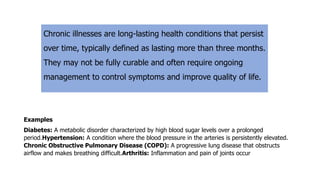
Chronic illnesses arelong-lasting health conditions that persist
over time, typically defined as lasting more than three months.
They may not be fully curable and often require ongoing
management to control symptoms and improve quality of life.
Examples
Diabetes: A metabolic disorder characterized by high blood sugar levels over a prolonged
period.Hypertension: A condition where the blood pressure in the arteries is persistently elevated.
Chronic Obstructive Pulmonary Disease (COPD): A progressive lung disease that obstructs
airflow and makes breathing difficult.Arthritis: Inflammation and pain of joints occur
3.
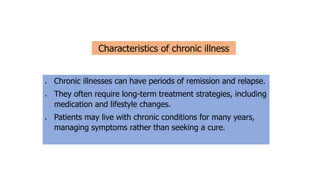
• Chronic illnessescan have periods of remission and relapse.
• They often require long-term treatment strategies, including
medication and lifestyle changes.
• Patients may live with chronic conditions for many years,
managing symptoms rather than seeking a cure.
Characteristics of chronic illness
4.
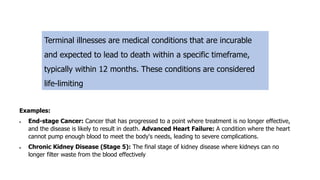
Terminal illnesses aremedical conditions that are incurable
and expected to lead to death within a specific timeframe,
typically within 12 months. These conditions are considered
life-limiting
Examples:
• End-stage Cancer: Cancer that has progressed to a point where treatment is no longer effective,
and the disease is likely to result in death. Advanced Heart Failure: A condition where the heart
cannot pump enough blood to meet the body's needs, leading to severe complications.
• Chronic Kidney Disease (Stage 5): The final stage of kidney disease where kidneys can no
longer filter waste from the blood effectively
5.
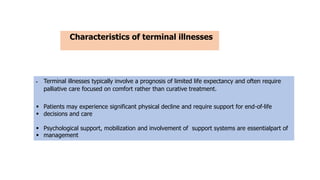
▪ Terminal illnessestypically involve a prognosis of limited life expectancy and often require
palliative care focused on comfort rather than curative treatment.
▪ Patients may experience significant physical decline and require support for end-of-life
▪ decisions and care
▪ Psychological support, mobilization and involvement of support systems are essentialpart of
▪ management
Characteristics of terminal illnesses
6.
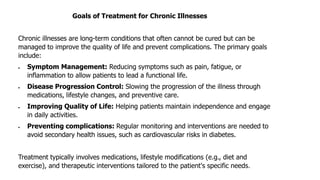
Goals of Treatmentfor Chronic Illnesses
Chronic illnesses are long-term conditions that often cannot be cured but can be
managed to improve the quality of life and prevent complications. The primary goals
include:
• Symptom Management: Reducing symptoms such as pain, fatigue, or
inflammation to allow patients to lead a functional life.
• Disease Progression Control: Slowing the progression of the illness through
medications, lifestyle changes, and preventive care.
• Improving Quality of Life: Helping patients maintain independence and engage
in daily activities.
• Preventing complications: Regular monitoring and interventions are needed to
avoid secondary health issues, such as cardiovascular risks in diabetes.
Treatment typically involves medications, lifestyle modifications (e.g., diet and
exercise), and therapeutic interventions tailored to the patient's specific needs.
7.
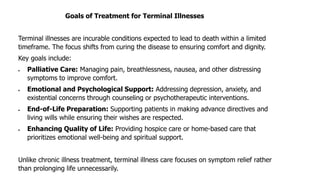
Goals of Treatmentfor Terminal Illnesses
Terminal illnesses are incurable conditions expected to lead to death within a limited
timeframe. The focus shifts from curing the disease to ensuring comfort and dignity.
Key goals include:
• Palliative Care: Managing pain, breathlessness, nausea, and other distressing
symptoms to improve comfort.
• Emotional and Psychological Support: Addressing depression, anxiety, and
existential concerns through counseling or psychotherapeutic interventions.
• End-of-Life Preparation: Supporting patients in making advance directives and
living wills while ensuring their wishes are respected.
• Enhancing Quality of Life: Providing hospice care or home-based care that
prioritizes emotional well-being and spiritual support.
Unlike chronic illness treatment, terminal illness care focuses on symptom relief rather
than prolonging life unnecessarily.
8.
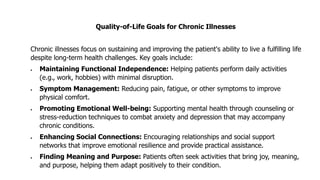
Quality-of-Life Goals forChronic Illnesses
Chronic illnesses focus on sustaining and improving the patient's ability to live a fulfilling life
despite long-term health challenges. Key goals include:
• Maintaining Functional Independence: Helping patients perform daily activities
(e.g., work, hobbies) with minimal disruption.
• Symptom Management: Reducing pain, fatigue, or other symptoms to improve
physical comfort.
• Promoting Emotional Well-being: Supporting mental health through counseling or
stress-reduction techniques to combat anxiety and depression that may accompany
chronic conditions.
• Enhancing Social Connections: Encouraging relationships and social support
networks that improve emotional resilience and provide practical assistance.
• Finding Meaning and Purpose: Patients often seek activities that bring joy, meaning,
and purpose, helping them adapt positively to their condition.
9.
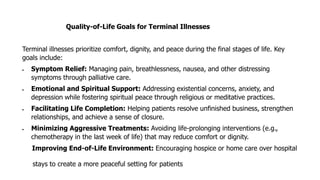
Quality-of-Life Goals forTerminal Illnesses
Terminal illnesses prioritize comfort, dignity, and peace during the final stages of life. Key
goals include:
• Symptom Relief: Managing pain, breathlessness, nausea, and other distressing
symptoms through palliative care.
• Emotional and Spiritual Support: Addressing existential concerns, anxiety, and
depression while fostering spiritual peace through religious or meditative practices.
• Facilitating Life Completion: Helping patients resolve unfinished business, strengthen
relationships, and achieve a sense of closure.
• Minimizing Aggressive Treatments: Avoiding life-prolonging interventions (e.g.,
chemotherapy in the last week of life) that may reduce comfort or dignity.
Improving End-of-Life Environment: Encouraging hospice or home care over hospital
stays to create a more peaceful setting for patients
10.
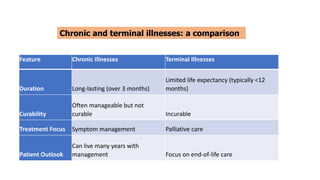
Feature Chronic IllnessesTerminal Illnesses
Duration Long-lasting (over 3 months)
Limited life expectancy (typically <12
months)
Curability
Often manageable but not
curable Incurable
Treatment Focus Symptom management Palliative care
Patient Outlook
Can live many years with
management Focus on end-of-life care
Chronic and terminal illnesses: a comparison
11.
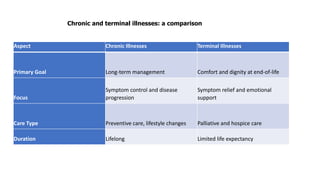
Aspect Chronic IllnessesTerminal Illnesses
Primary Goal Long-term management Comfort and dignity at end-of-life
Focus
Symptom control and disease
progression
Symptom relief and emotional
support
Care Type Preventive care, lifestyle changes Palliative and hospice care
Duration Lifelong Limited life expectancy
Chronic and terminal illnesses: a comparison
12.
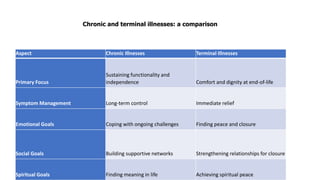
Aspect Chronic IllnessesTerminal Illnesses
Primary Focus
Sustaining functionality and
independence Comfort and dignity at end-of-life
Symptom Management Long-term control Immediate relief
Emotional Goals Coping with ongoing challenges Finding peace and closure
Social Goals Building supportive networks Strengthening relationships for closure
Spiritual Goals Finding meaning in life Achieving spiritual peace
Chronic and terminal illnesses: a comparison
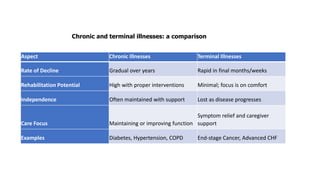
13.
Chronic and terminalillnesses: a comparison
Aspect Chronic Illnesses Terminal Illnesses
Rate of Decline Gradual over years Rapid in final months/weeks
Rehabilitation Potential High with proper interventions Minimal; focus is on comfort
Independence Often maintained with support Lost as disease progresses
Care Focus Maintaining or improving function
Symptom relief and caregiver
support
Examples Diabetes, Hypertension, COPD End-stage Cancer, Advanced CHF
14.
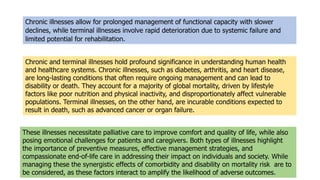
Chronic illnesses allowfor prolonged management of functional capacity with slower
declines, while terminal illnesses involve rapid deterioration due to systemic failure and
limited potential for rehabilitation.
These illnesses necessitate palliative care to improve comfort and quality of life, while also
posing emotional challenges for patients and caregivers. Both types of illnesses highlight
the importance of preventive measures, effective management strategies, and
compassionate end-of-life care in addressing their impact on individuals and society. While
managing these the synergistic effects of comorbidity and disability on mortality risk are to
be considered, as these factors interact to amplify the likelihood of adverse outcomes.
Chronic and terminal illnesses hold profound significance in understanding human health
and healthcare systems. Chronic illnesses, such as diabetes, arthritis, and heart disease,
are long-lasting conditions that often require ongoing management and can lead to
disability or death. They account for a majority of global mortality, driven by lifestyle
factors like poor nutrition and physical inactivity, and disproportionately affect vulnerable
populations. Terminal illnesses, on the other hand, are incurable conditions expected to
result in death, such as advanced cancer or organ failure.