Christianity
 Refers to an individual, it
is a person who has
received Christian baptism
or is a believer in Jesus
Christ and his teachings.
Ethics
 Is the study of good and
evil, right and wrong.
 It is an intentional
motivation that driving
the behaviour of a person.
 is a branch of Christian theology that
defines virtuous behavior and wrong
behaviour from a Christian perspective.
Question is?
 How do Christians decide what is right and
what is wrong?
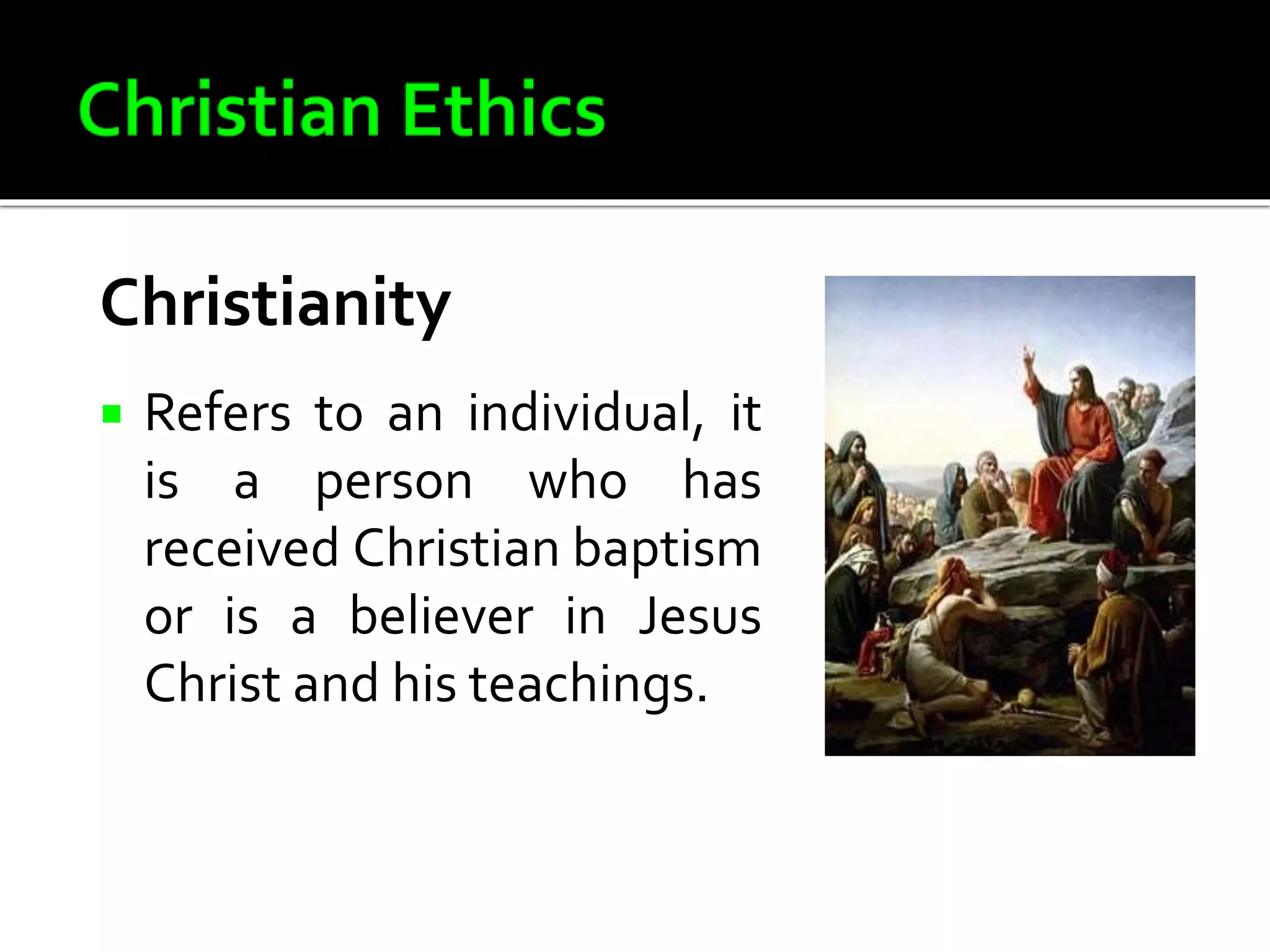
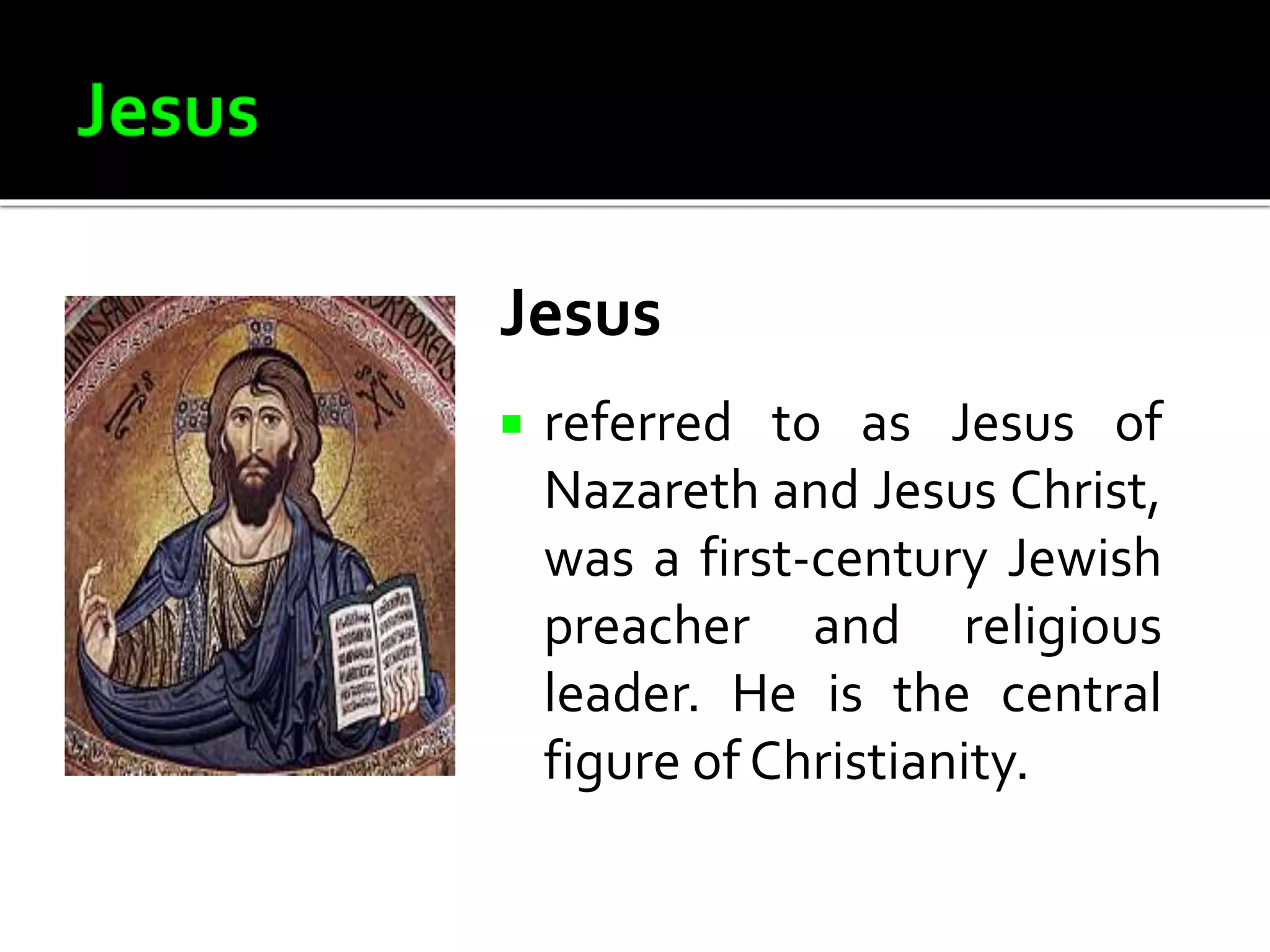
Jesus
 referred to as Jesus of
Nazareth and Jesus Christ,
was a first-century Jewish
preacher and religious
leader. He is the central
figure of Christianity.
Love
Forgive
Serve
Love the Lord your God
with all your heart, with
all your soul and with all
your mind.
Love your neighbour as
yourself.
Good and Evil
 Saint Augustine of Hippo was a
Roman African, early Christian
theologian and philosopher
from Numidia whose writings
influenced the development of
Western Christianity and
Western philosophy.
Freedom from doing:
Good and Evil
Freedom
God’sWill
He says that God is:
The good
The truth
The absolute beauty
 Saint Thomas Aquinas OP was an
Italian Dominican friar, Catholic
priest, and Doctor of the Church.
He was an immensely influential
philosopher, theologian, and
jurist in the tradition of
scholasticism
"Best way to
live one's life"
Principles
Biblical principles are God's way of
conveying to mankind how to live, and to
Christians the path of progressive maturity
in the faith.
 Good should be done and avoid Evil.
Virtues
A virtue is an habitual and firm disposition
to do the good. It allows the person not only
to perform good acts, but to give the best of
himself.
Four MainVirtues according to Aquinas:
-Prudence, Justice, Courage &Temperance
Prudence
 the act of bringing moral reasoning
into all decisions and putting it before
irrational desires and ego-promotion.
Reason, rather than passion, is at the
heart of moral decisions.
Justice
 a disposition to give others what
they are entitled to, or have a right
to.
Courage
a disposition to restrain fears so as to
act rightly.
Temperance
 the moderation of desires, especially
sexual desire, in line with their “proper
role”. This does not require a lack of
passion, but something more like a
golden mean.
Thank you for listening..
Job 10:12

Christian Ethics Report.pptx

  • 2.
    Christianity  Refers toan individual, it is a person who has received Christian baptism or is a believer in Jesus Christ and his teachings.
  • 3.
    Ethics  Is thestudy of good and evil, right and wrong.  It is an intentional motivation that driving the behaviour of a person.
  • 4.
     is abranch of Christian theology that defines virtuous behavior and wrong behaviour from a Christian perspective. Question is?  How do Christians decide what is right and what is wrong?
  • 7.
    Jesus  referred toas Jesus of Nazareth and Jesus Christ, was a first-century Jewish preacher and religious leader. He is the central figure of Christianity.
  • 8.
  • 9.
    Love the Lordyour God with all your heart, with all your soul and with all your mind. Love your neighbour as yourself.
  • 10.
  • 11.
     Saint Augustineof Hippo was a Roman African, early Christian theologian and philosopher from Numidia whose writings influenced the development of Western Christianity and Western philosophy.
  • 12.
    Freedom from doing: Goodand Evil Freedom God’sWill
  • 13.
    He says thatGod is: The good The truth The absolute beauty
  • 14.
     Saint ThomasAquinas OP was an Italian Dominican friar, Catholic priest, and Doctor of the Church. He was an immensely influential philosopher, theologian, and jurist in the tradition of scholasticism
  • 15.
    "Best way to liveone's life"
  • 16.
    Principles Biblical principles areGod's way of conveying to mankind how to live, and to Christians the path of progressive maturity in the faith.  Good should be done and avoid Evil.
  • 17.
    Virtues A virtue isan habitual and firm disposition to do the good. It allows the person not only to perform good acts, but to give the best of himself. Four MainVirtues according to Aquinas: -Prudence, Justice, Courage &Temperance
  • 18.
    Prudence  the actof bringing moral reasoning into all decisions and putting it before irrational desires and ego-promotion. Reason, rather than passion, is at the heart of moral decisions.
  • 19.
    Justice  a dispositionto give others what they are entitled to, or have a right to. Courage a disposition to restrain fears so as to act rightly.
  • 20.
    Temperance  the moderationof desires, especially sexual desire, in line with their “proper role”. This does not require a lack of passion, but something more like a golden mean.
  • 21.
    Thank you forlistening.. Job 10:12

Editor's Notes

  • #3 The one who believes Jesus is the son of God who saves all the humanity from sin. He willingly sacrifices himself as a substitution for the atonement of our sins. The holy bible tells the story how God created the world before, and after Christ's death.