Indigenous Leadership Development
        in the United States


               Christopher Wetzel, Ph.D.
                     September 15, 2012
Introduction
Introduction
Introduction
•   Policy Context

•   Organization of the field

•   Cultures of training

•   Implications
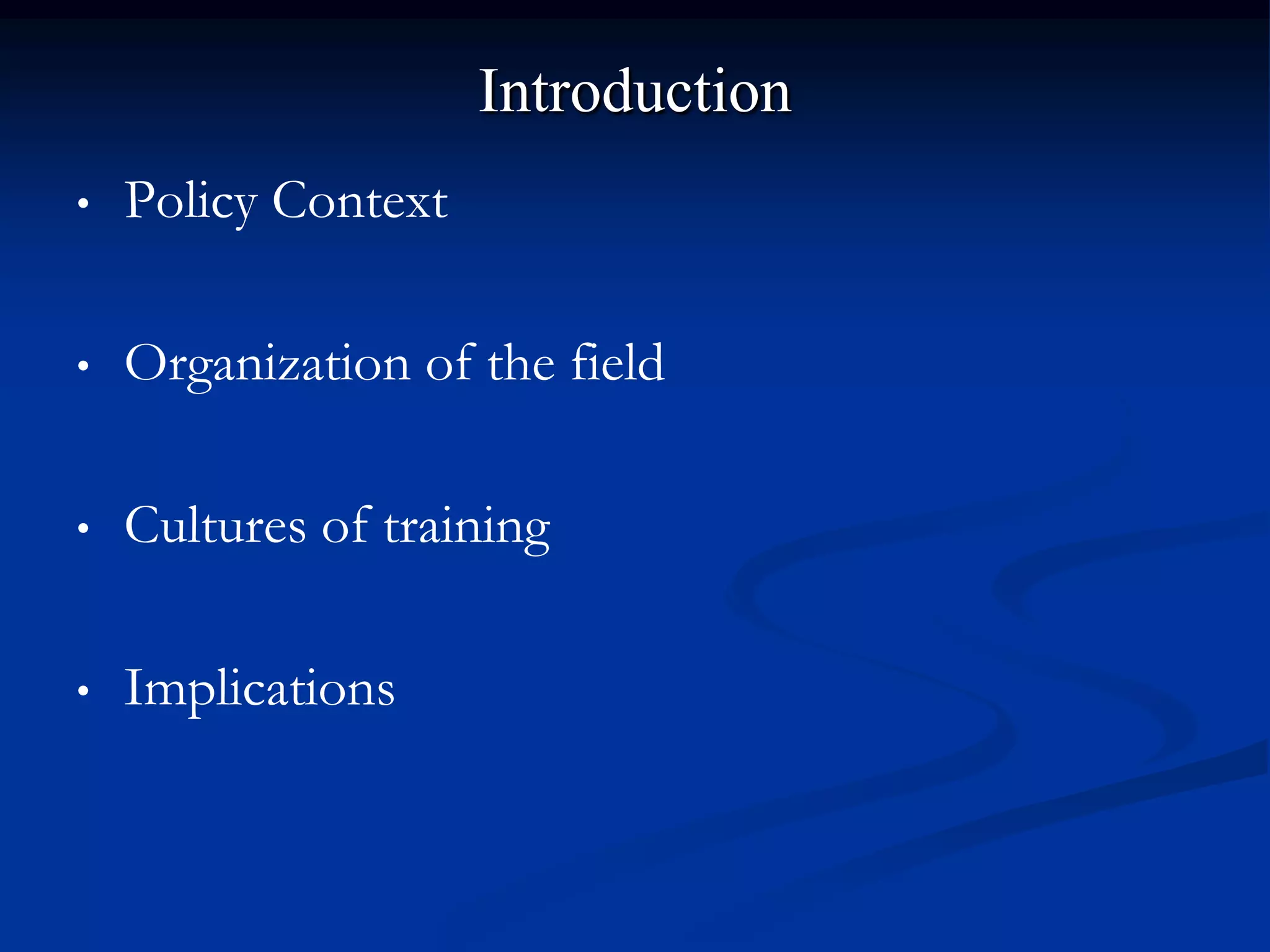
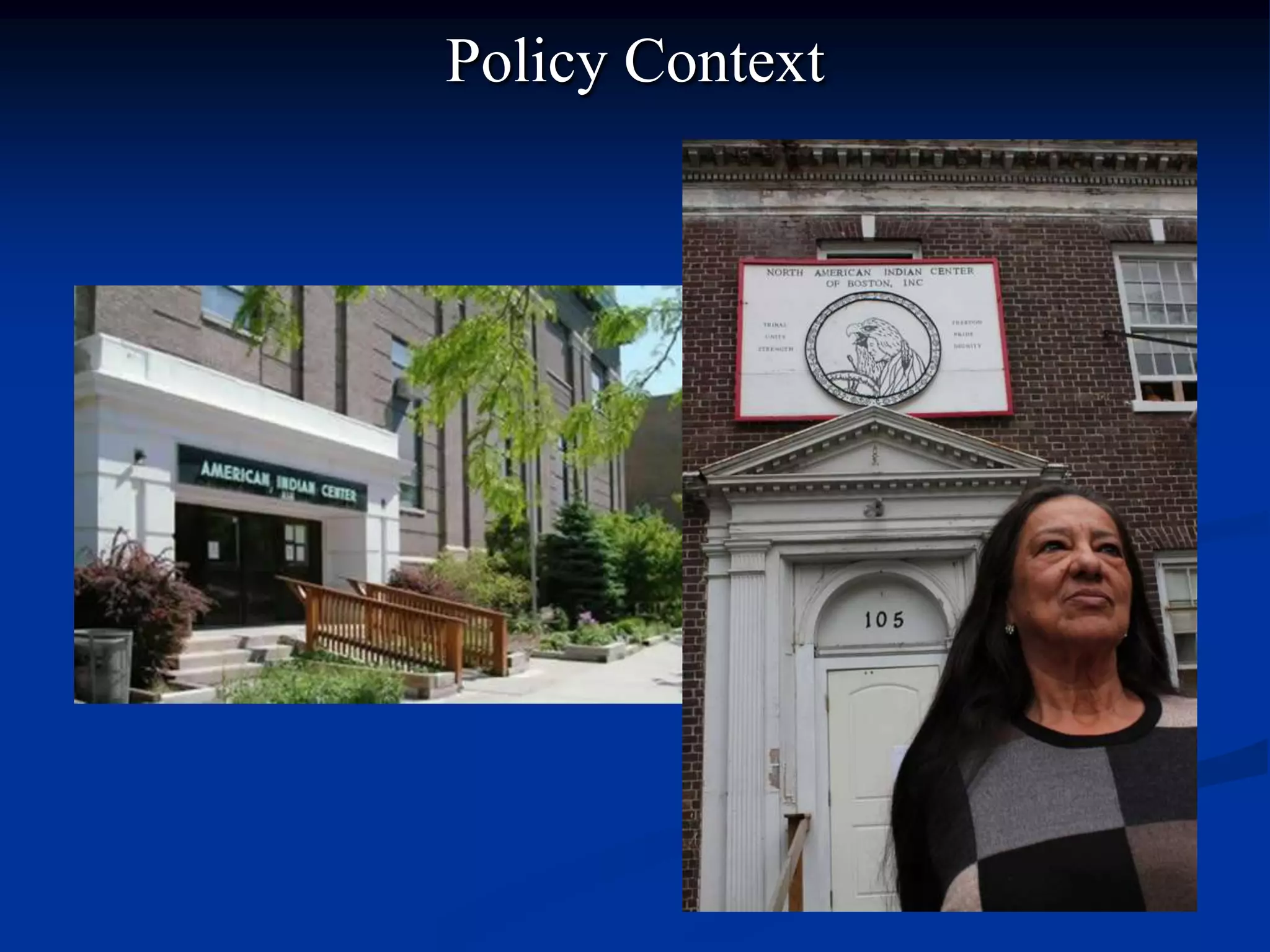
Policy Context
Policy Context
Policy Context

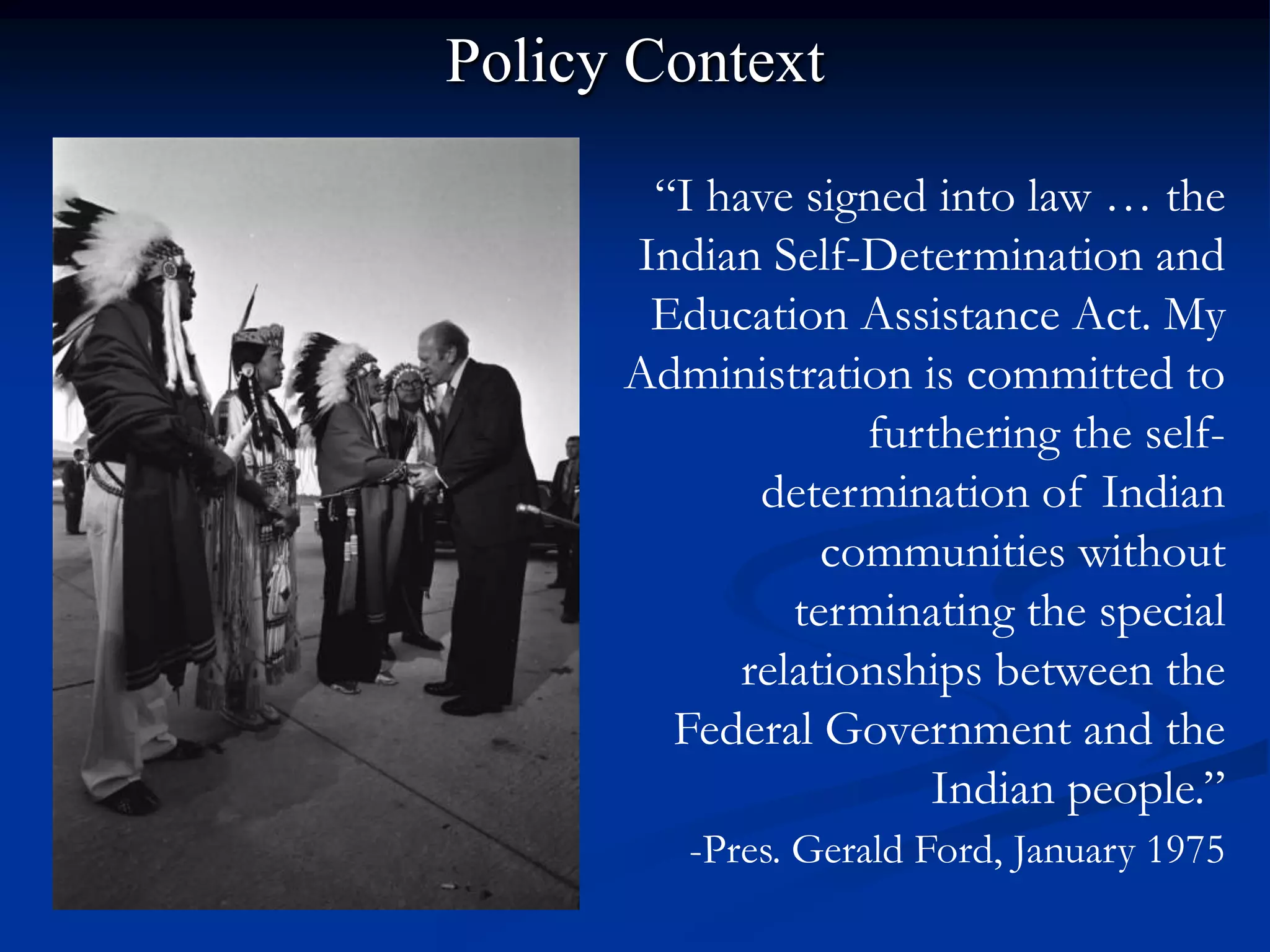
       “I have signed into law … the
      Indian Self-Determination and
       Education Assistance Act. My
      Administration is committed to
                  furthering the self-
            determination of Indian
                communities without
              terminating the special
           relationships between the
        Federal Government and the
                      Indian people.”
         -Pres. Gerald Ford, January 1975
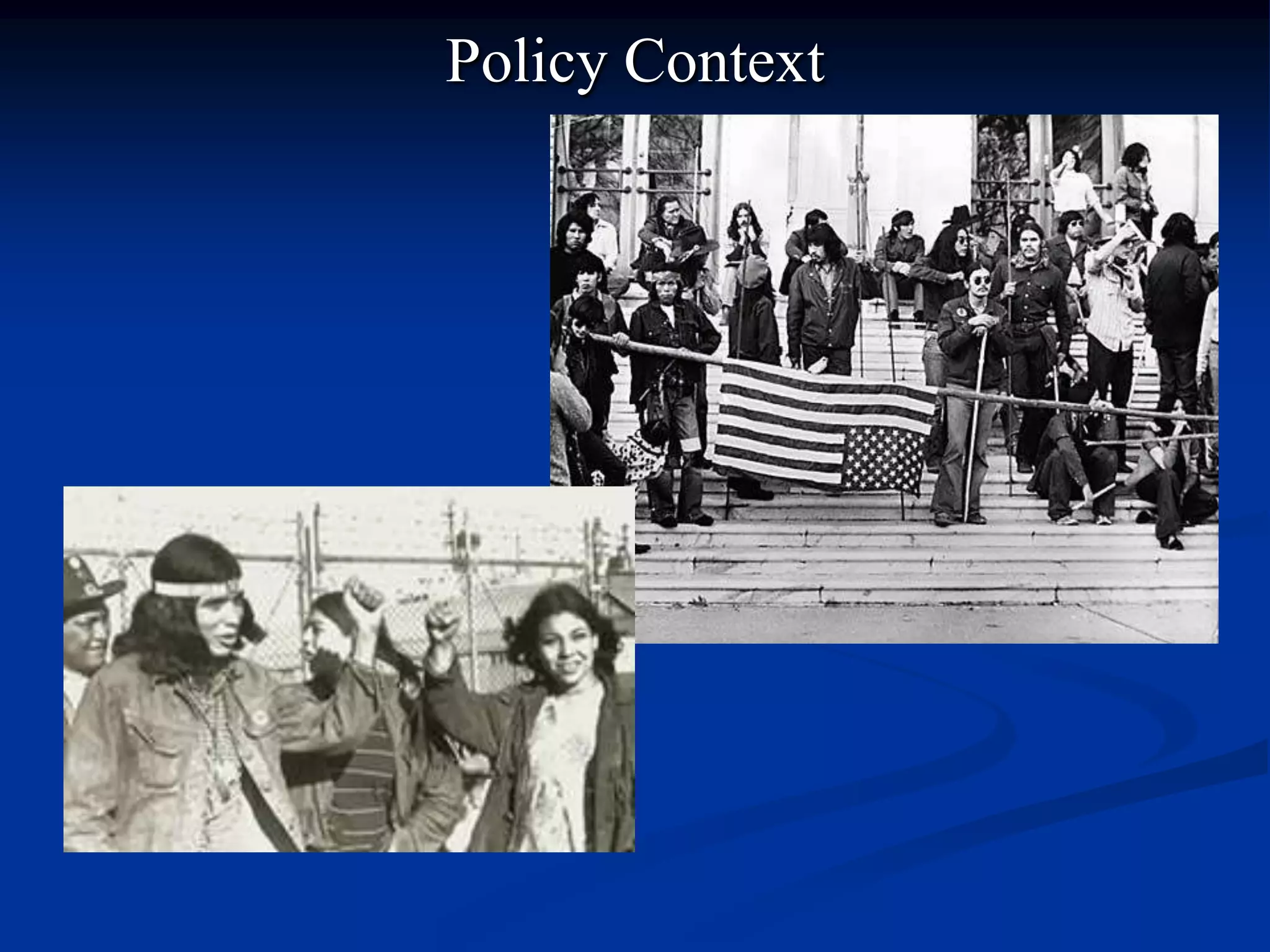
Policy Context
•   1975 Act: allowed for contracting

•   1988 Amendment: allowed for compacting

•   Challenges
       •   Federally recognized tribal nations
       •   Compliance with federal accounting and auditing
       •   Grant-driven
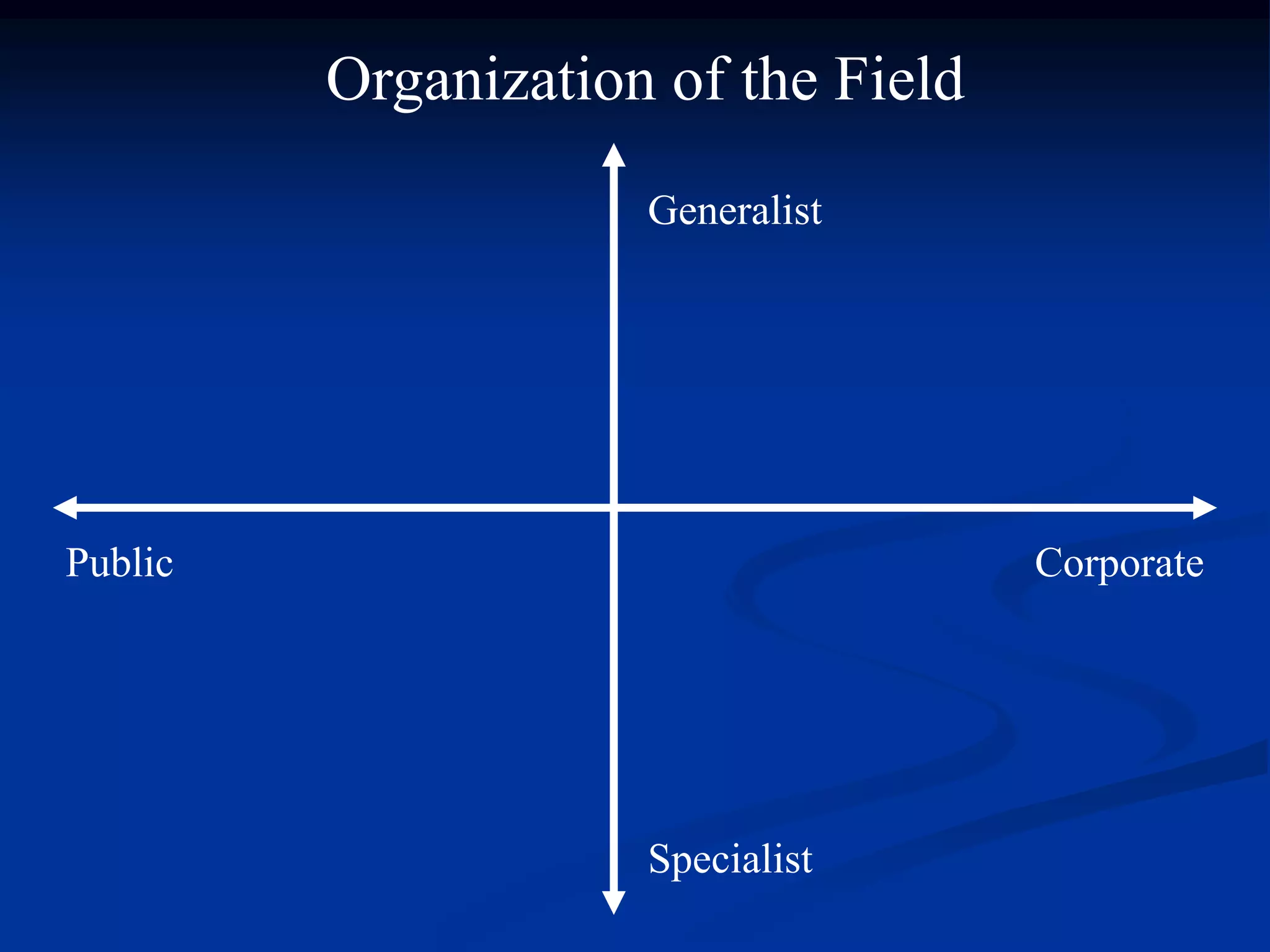
Organization of the Field
                     Generalist


Public                               Corporate


                     Specialist
Organization of the Field


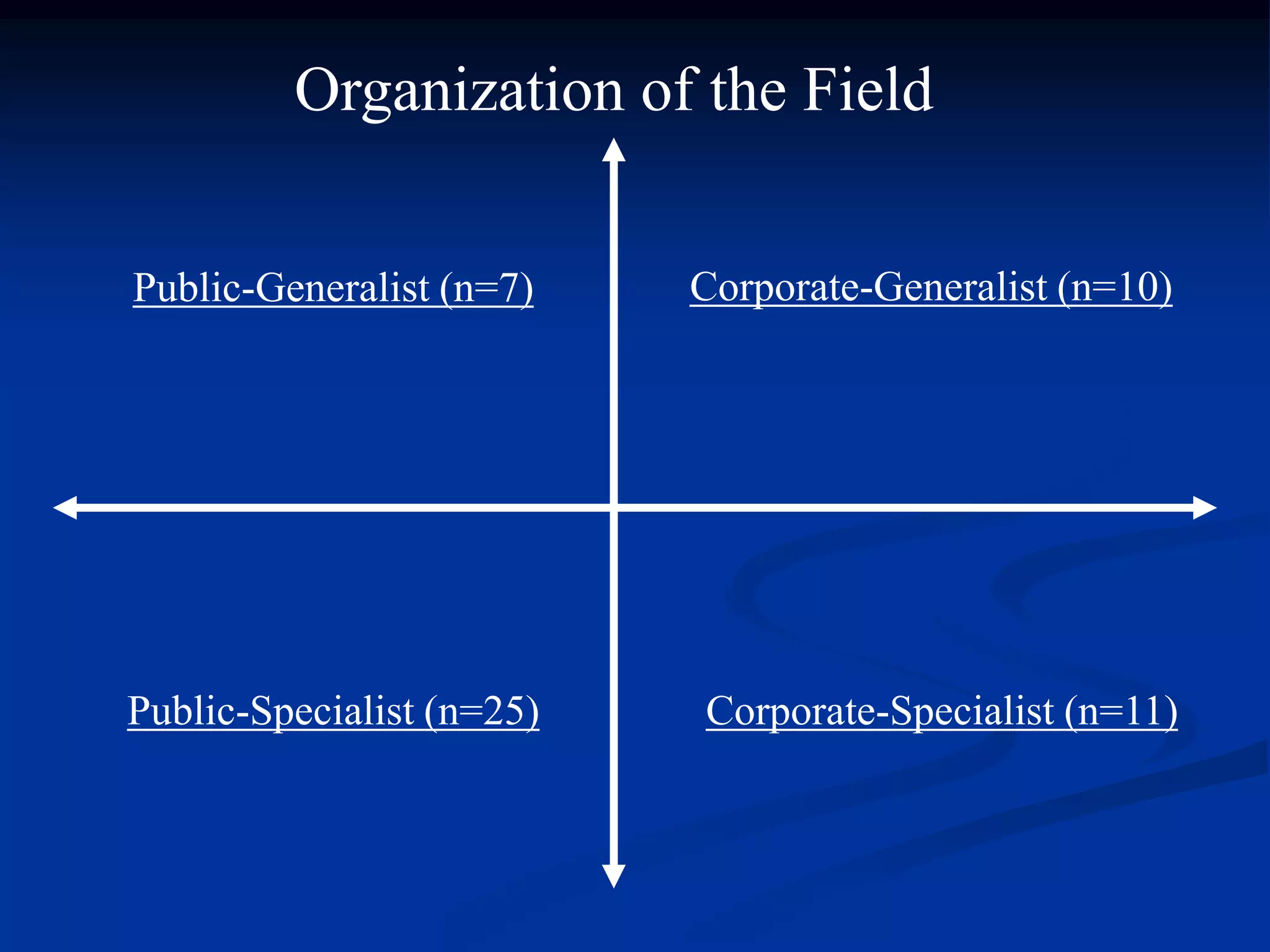
Public-Generalist (n=7)    Corporate-Generalist (n=10)


Public-Specialist (n=25)   Corporate-Specialist (n=11)
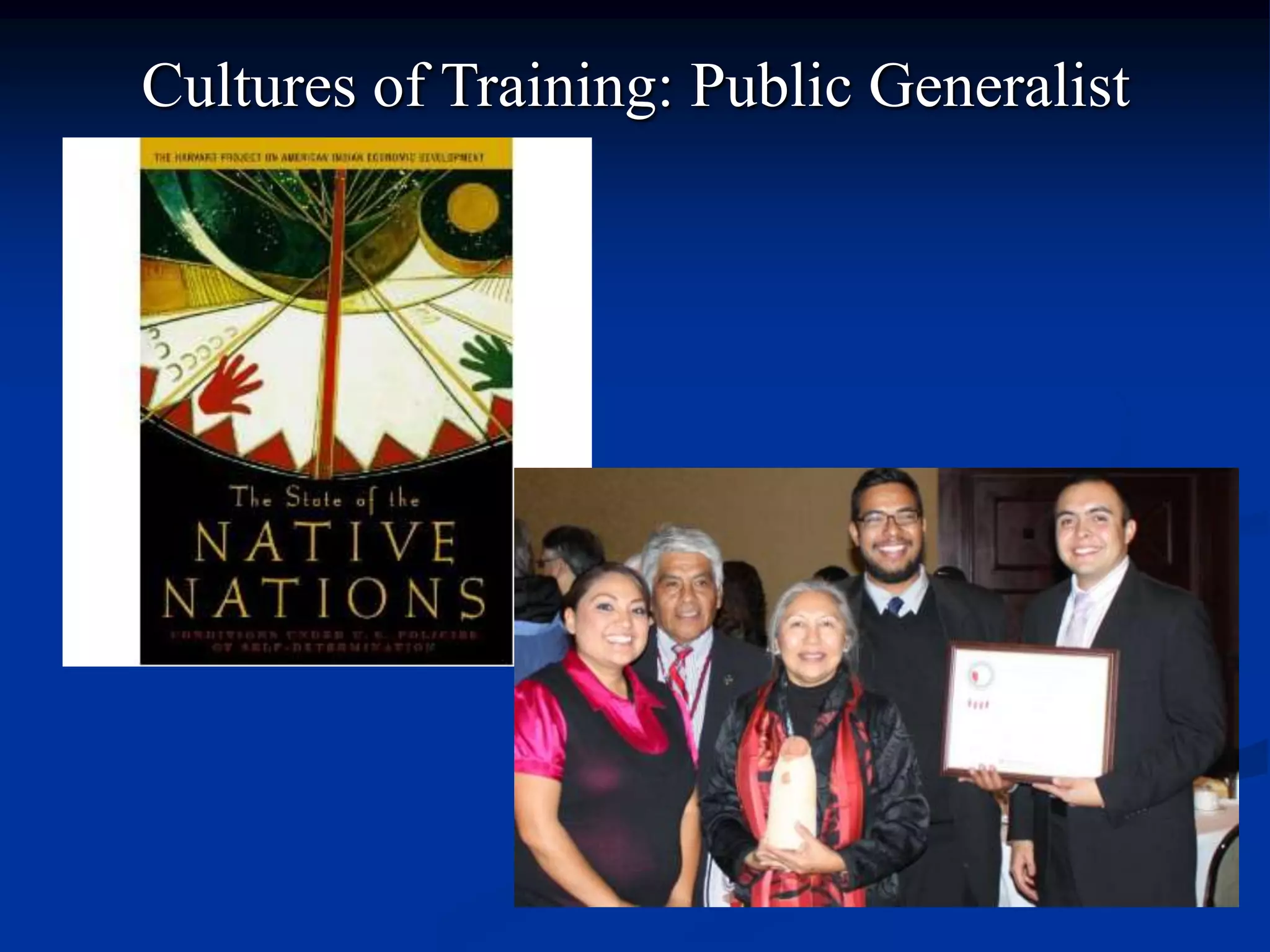
Cultures of Training: Public Generalist
                  • Founded: 1987

                  • Vision: “The Harvard
                    Project aims to understand
                    and foster the conditions
                    under which sustained, self-
                    determined social and
                    economic development is
                    achieved among American
                    Indian nations through
                    applied research and
                    service.”
Cultures of Training: Public Generalist
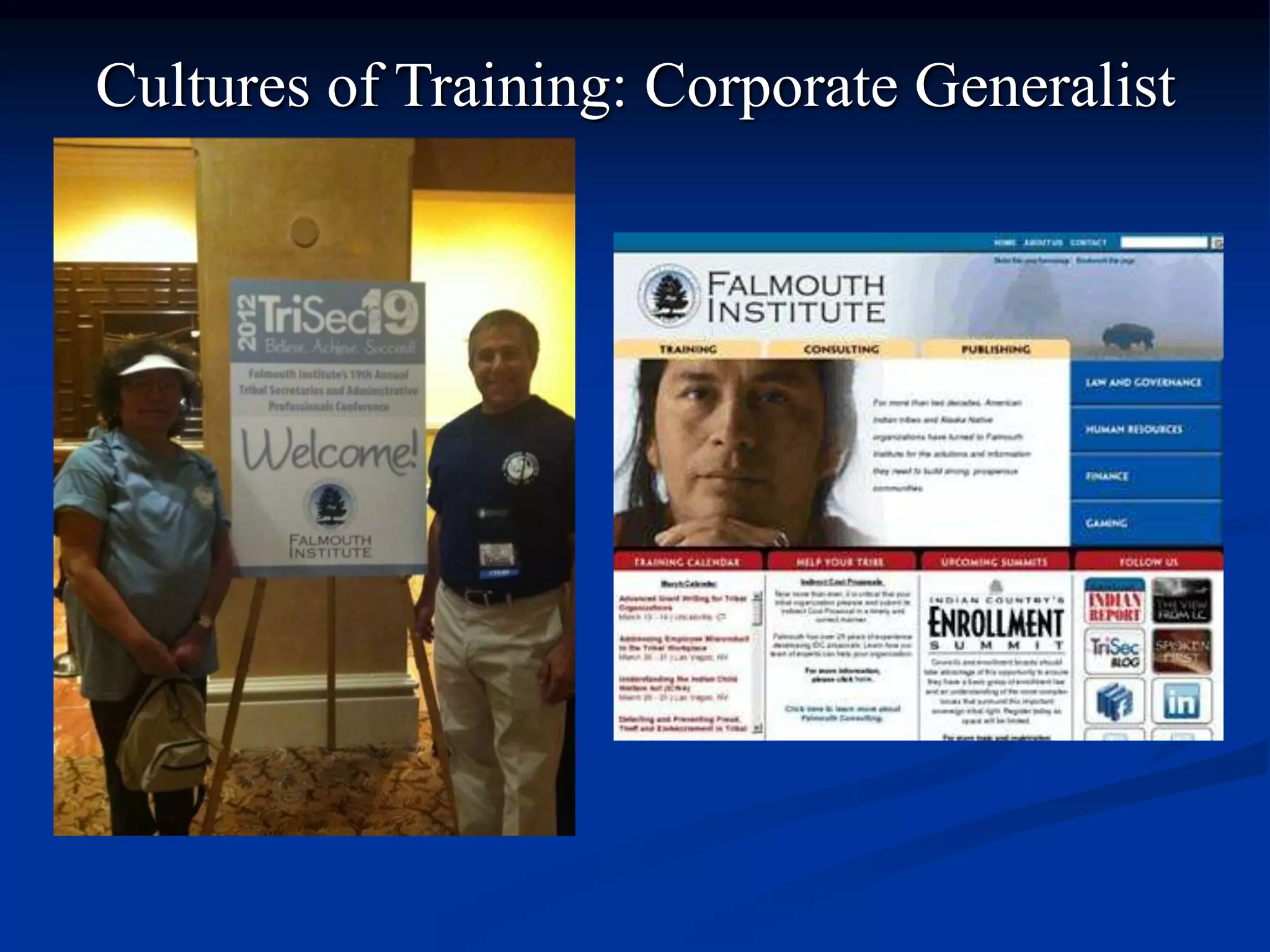
Cultures of Training: Corporate Generalist


                   • Founded: 1985

                   • Vision: “To be the premier
                     provider of culturally
                     relevant education and
                     information services for
                     North American Indian
                     tribes and organizations.”
Cultures of Training: Corporate Generalist
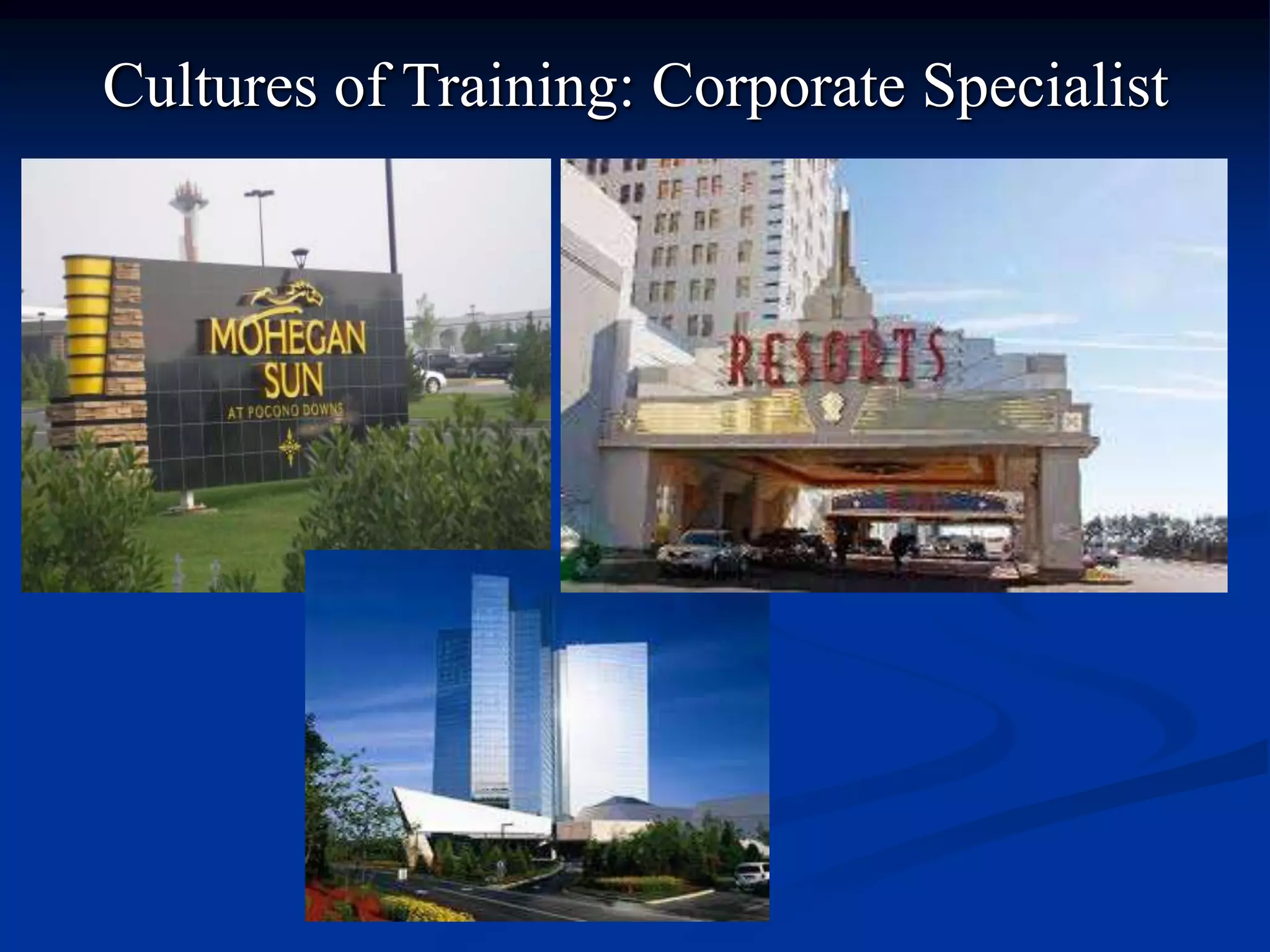
Cultures of Training: Corporate Specialist
                    • Founded: 2011

                    • Vision: “We work with you
                      to develop and implement
                      practical, real-world
                      solutions to the problems
                      you face. … We leverage our
                      insight and experience to
                      help you diagnose, improve
                      and deliver superior results
                      in the key functional areas
                      that impact your bottom
                      line.”
Cultures of Training: Corporate Specialist
Cultures of Training: Public Specialist

                 • Founded: 1995

                 • Vision: “The mission of the
                   Native American Training
                   Institute is to empower
                   individuals, families and the
                   community to create a safe
                   and healthy environment so
                   children and families can
                   achieve their highest
                   potential.”
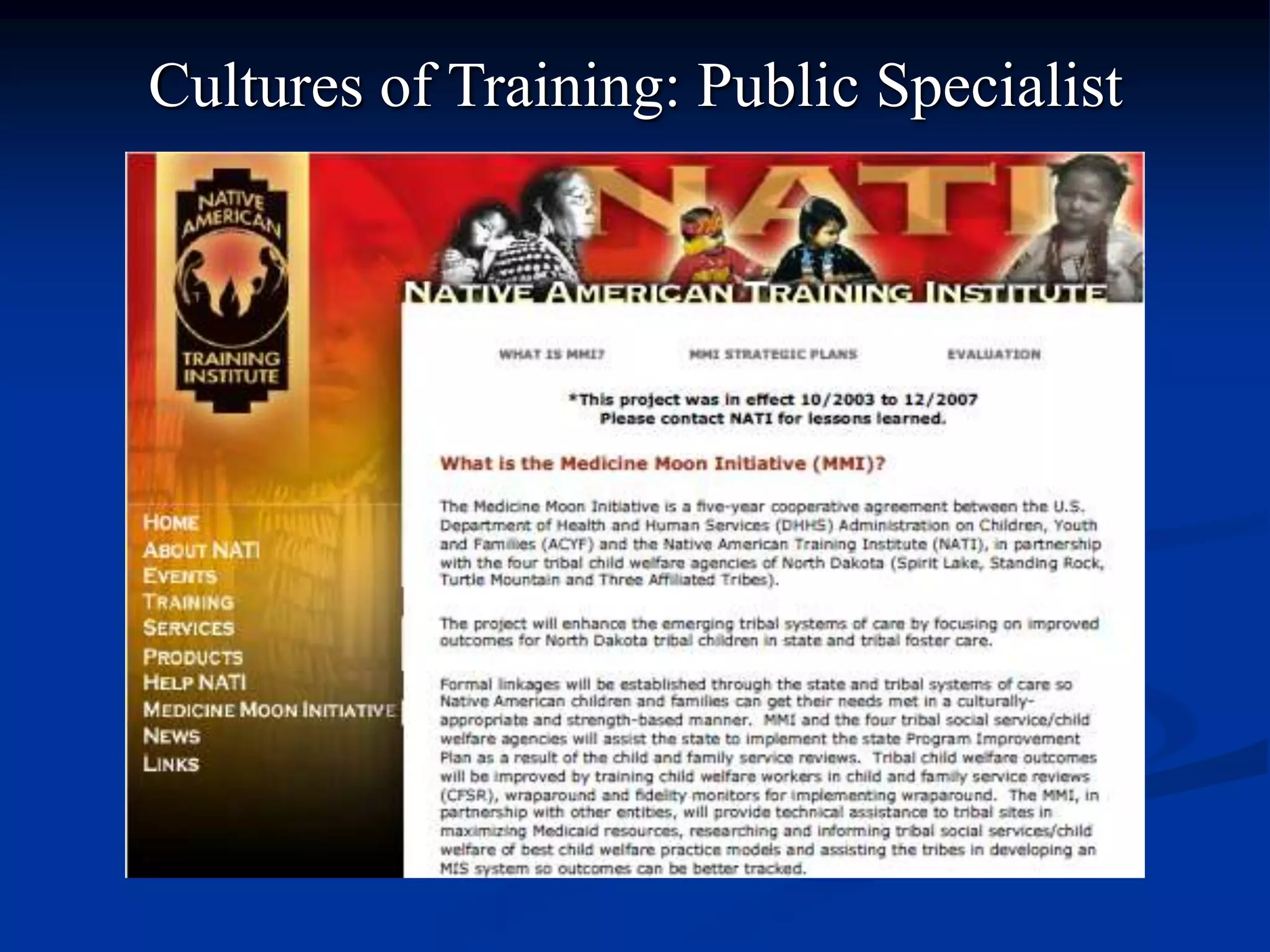
Cultures of Training: Public Specialist
Implications
•   How can First Nations thoughtfully and
    strategically use the services of these
    organizations?

•   What leadership and community development
    trainings are best handled by First Nations?

•   How does the field impact expressions of self-
    determination and sovereignty?

Indigenous Leadership Development in the United States

  • 1.
    Indigenous Leadership Development in the United States Christopher Wetzel, Ph.D. September 15, 2012
  • 2.
  • 3.
  • 5.
    Introduction • Policy Context • Organization of the field • Cultures of training • Implications
  • 6.
  • 7.
  • 8.
    Policy Context “I have signed into law … the Indian Self-Determination and Education Assistance Act. My Administration is committed to furthering the self- determination of Indian communities without terminating the special relationships between the Federal Government and the Indian people.” -Pres. Gerald Ford, January 1975
  • 9.
    Policy Context • 1975 Act: allowed for contracting • 1988 Amendment: allowed for compacting • Challenges • Federally recognized tribal nations • Compliance with federal accounting and auditing • Grant-driven
  • 10.
    Organization of theField Generalist Public Corporate Specialist
  • 11.
    Organization of theField Public-Generalist (n=7) Corporate-Generalist (n=10) Public-Specialist (n=25) Corporate-Specialist (n=11)
  • 12.
    Cultures of Training:Public Generalist • Founded: 1987 • Vision: “The Harvard Project aims to understand and foster the conditions under which sustained, self- determined social and economic development is achieved among American Indian nations through applied research and service.”
  • 13.
    Cultures of Training:Public Generalist
  • 14.
    Cultures of Training:Corporate Generalist • Founded: 1985 • Vision: “To be the premier provider of culturally relevant education and information services for North American Indian tribes and organizations.”
  • 15.
    Cultures of Training:Corporate Generalist
  • 16.
    Cultures of Training:Corporate Specialist • Founded: 2011 • Vision: “We work with you to develop and implement practical, real-world solutions to the problems you face. … We leverage our insight and experience to help you diagnose, improve and deliver superior results in the key functional areas that impact your bottom line.”
  • 17.
    Cultures of Training:Corporate Specialist
  • 18.
    Cultures of Training:Public Specialist • Founded: 1995 • Vision: “The mission of the Native American Training Institute is to empower individuals, families and the community to create a safe and healthy environment so children and families can achieve their highest potential.”
  • 19.
    Cultures of Training:Public Specialist
  • 20.
    Implications • How can First Nations thoughtfully and strategically use the services of these organizations? • What leadership and community development trainings are best handled by First Nations? • How does the field impact expressions of self- determination and sovereignty?