PRESENTED
BY:
International
Centre for
Northern
Governance &
Development


    Overview of the Master of Northern Governance
    and Development (MNGD) program
                                            www.usask.ca/icngd
Introductions


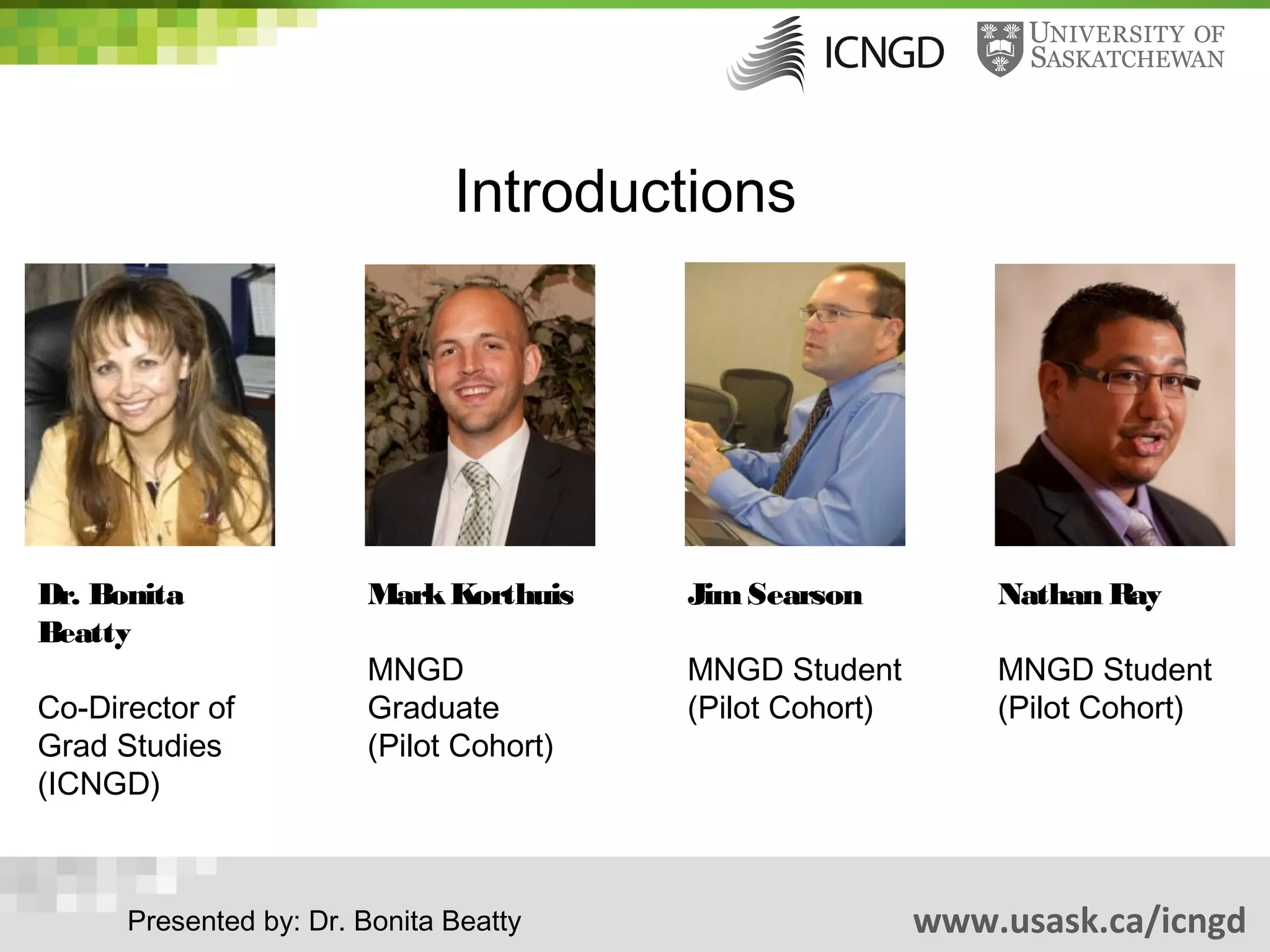
Dr. Bonita              Mark Korthuis    Jim Searson          Nathan Ray
Beatty
                        MNGD             MNGD Student         MNGD Student
Co-Director of          Graduate         (Pilot Cohort)       (Pilot Cohort)
Grad Studies            (Pilot Cohort)
(ICNGD)


      Presented by: Dr. Bonita Beatty                     www.usask.ca/icngd
Presentation Outline


1. Background                          6. Northern Indigenous

2. MNGD Development                       Perspective

3. Program Experience                  7. Internationalization

4. Professionalized Cohort Model 8. Research Internships

5. Distance Education                  9. In Summary

                                       10. Questions
     Presented by: Dr. Bonita Beatty                   www.usask.ca/icngd
Background
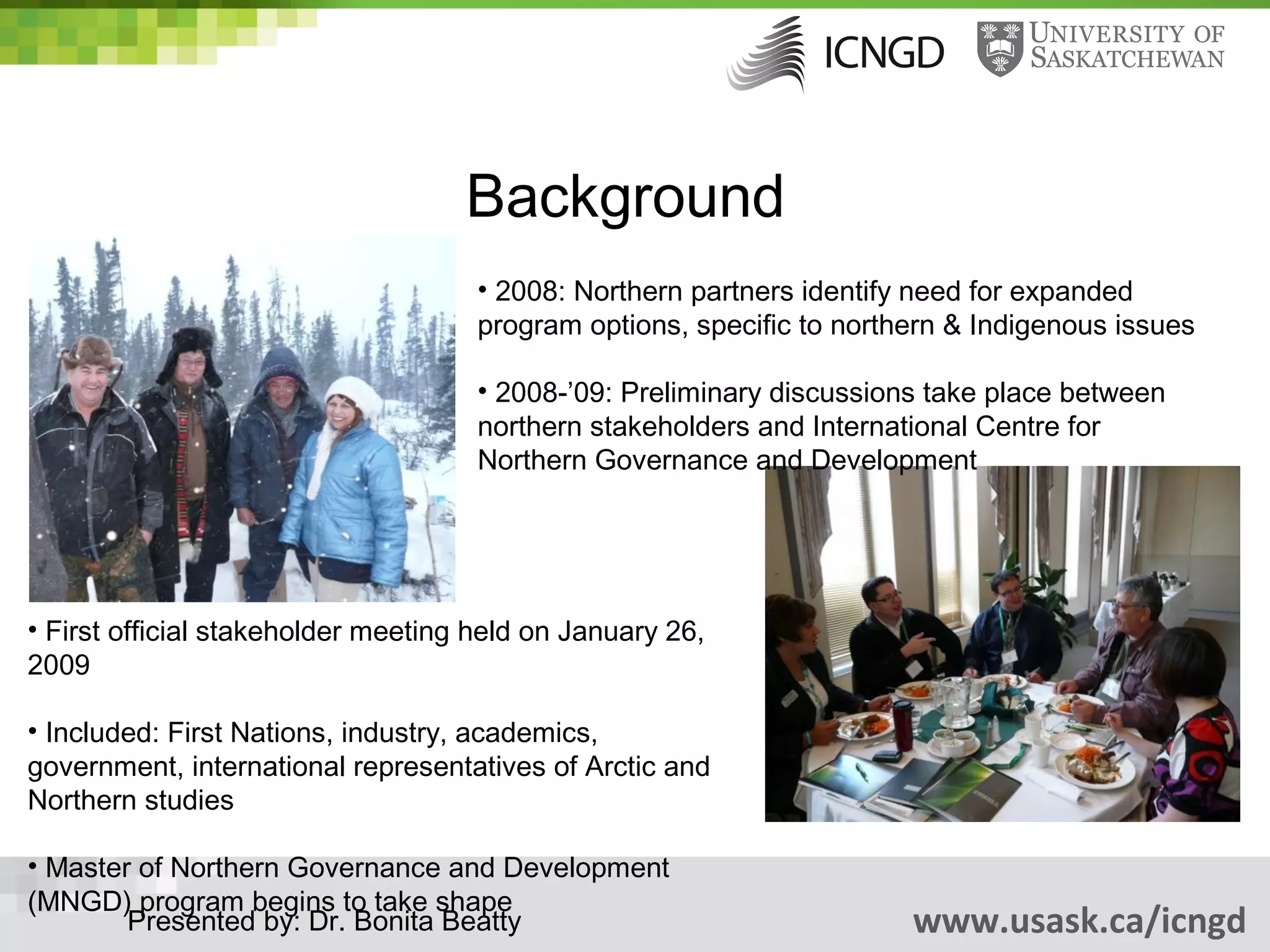
                                     • 2008: Northern partners identify need for expanded
                                     program options, specific to northern & Indigenous issues

                                     • 2008-’09: Preliminary discussions take place between
                                     northern stakeholders and International Centre for
                                     Northern Governance and Development


• First official stakeholder meeting held on January 26,
2009

• Included: First Nations, industry, academics,
government, international representatives of Arctic and
Northern studies

• Master of Northern Governance and Development
(MNGD) program begins to take shape
        Presented by: Dr. Bonita Beatty                                www.usask.ca/icngd
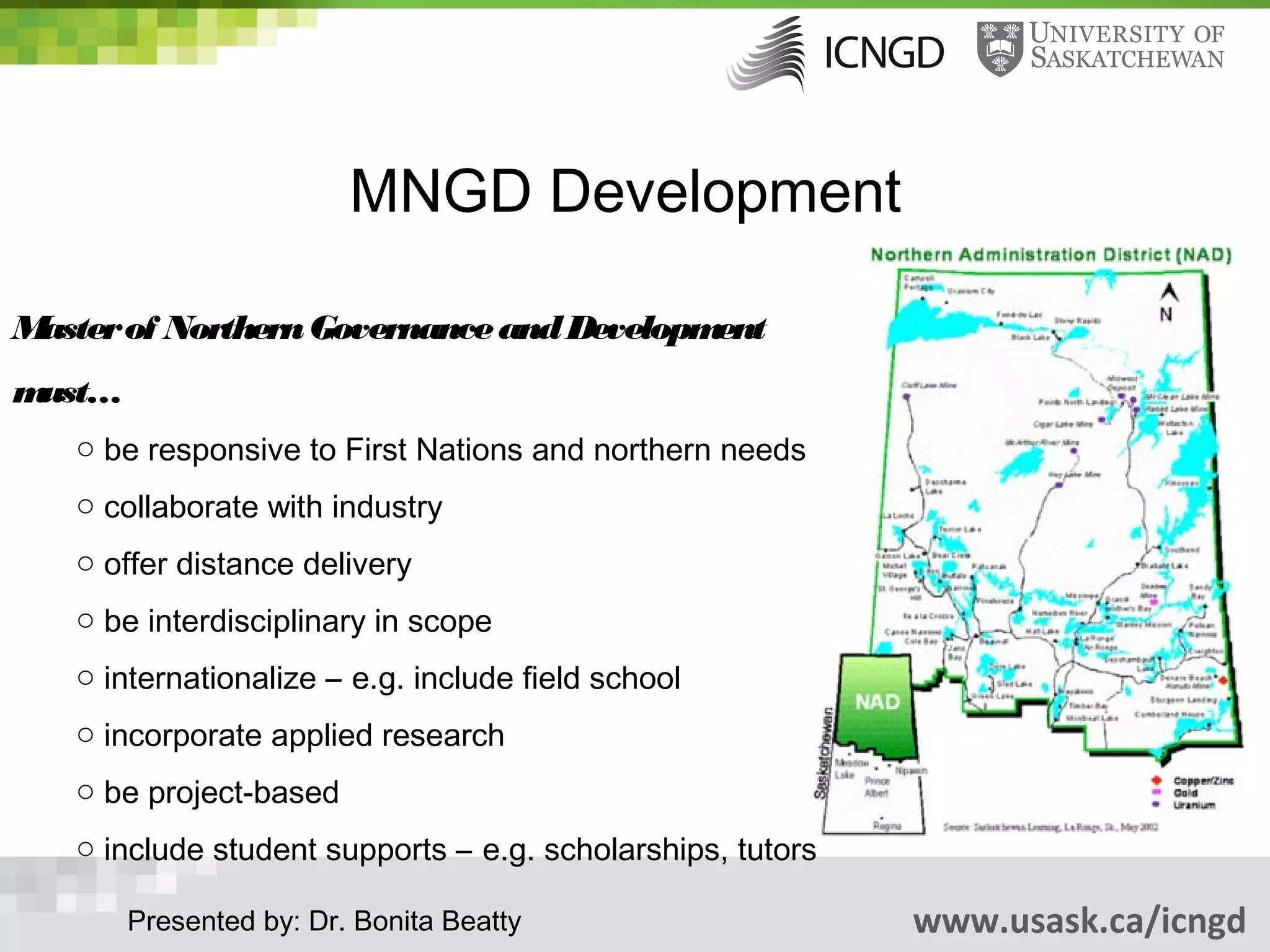
MNGD Development

Master of Northern Governance and Development
must…
   o be responsive to First Nations and northern needs
   o collaborate with industry
   o offer distance delivery
   o be interdisciplinary in scope
   o internationalize – e.g. include field school
   o incorporate applied research
   o be project-based
   o include student supports – e.g. scholarships, tutors

        Presented by: Dr. Bonita Beatty                     www.usask.ca/icngd
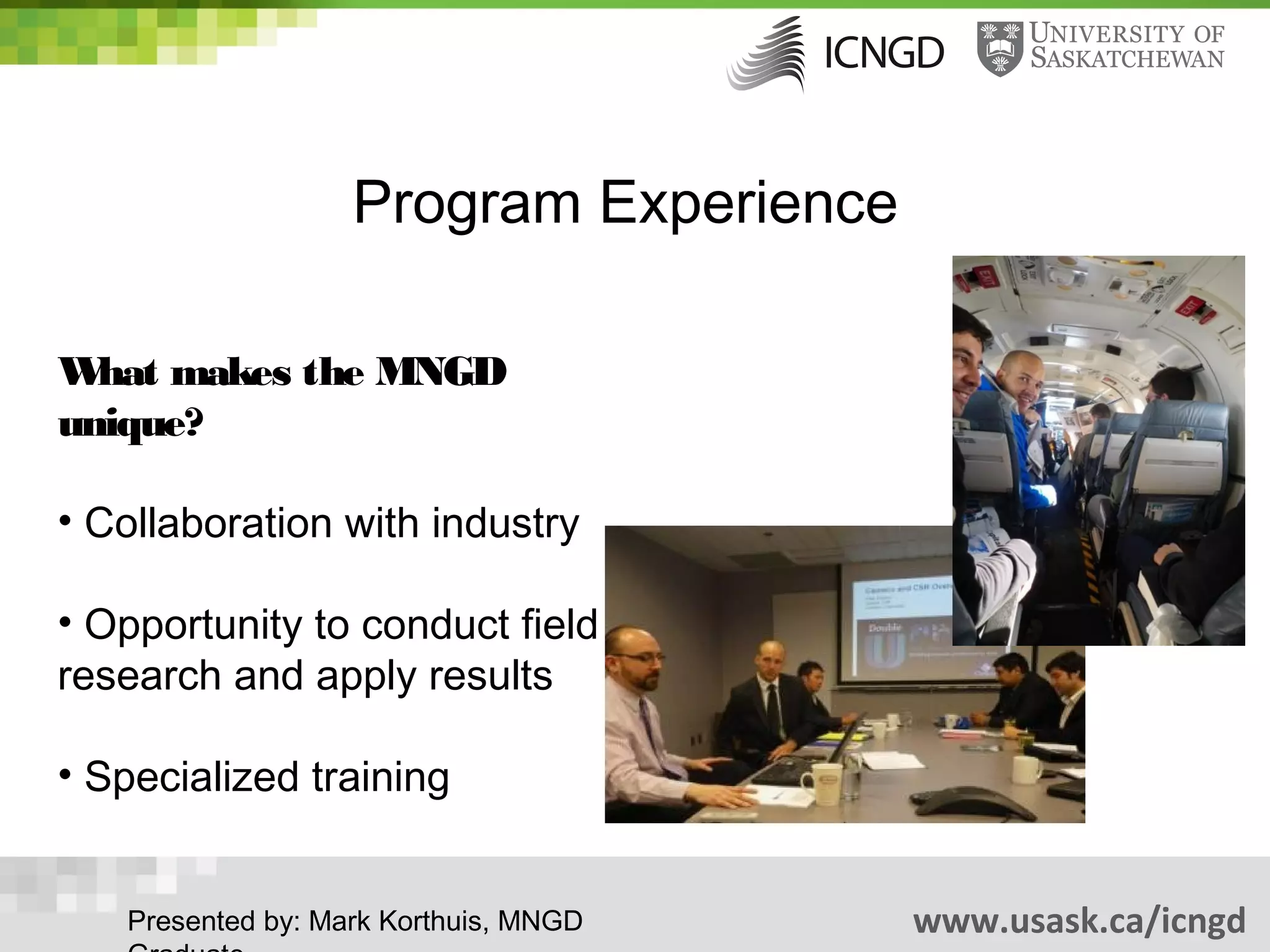
Program Experience

W makes the MNGD
  hat
unique?

• Collaboration with industry

• Opportunity to conduct field
research and apply results

• Specialized training


   Presented by: Mark Korthuis, MNGD    www.usask.ca/icngd
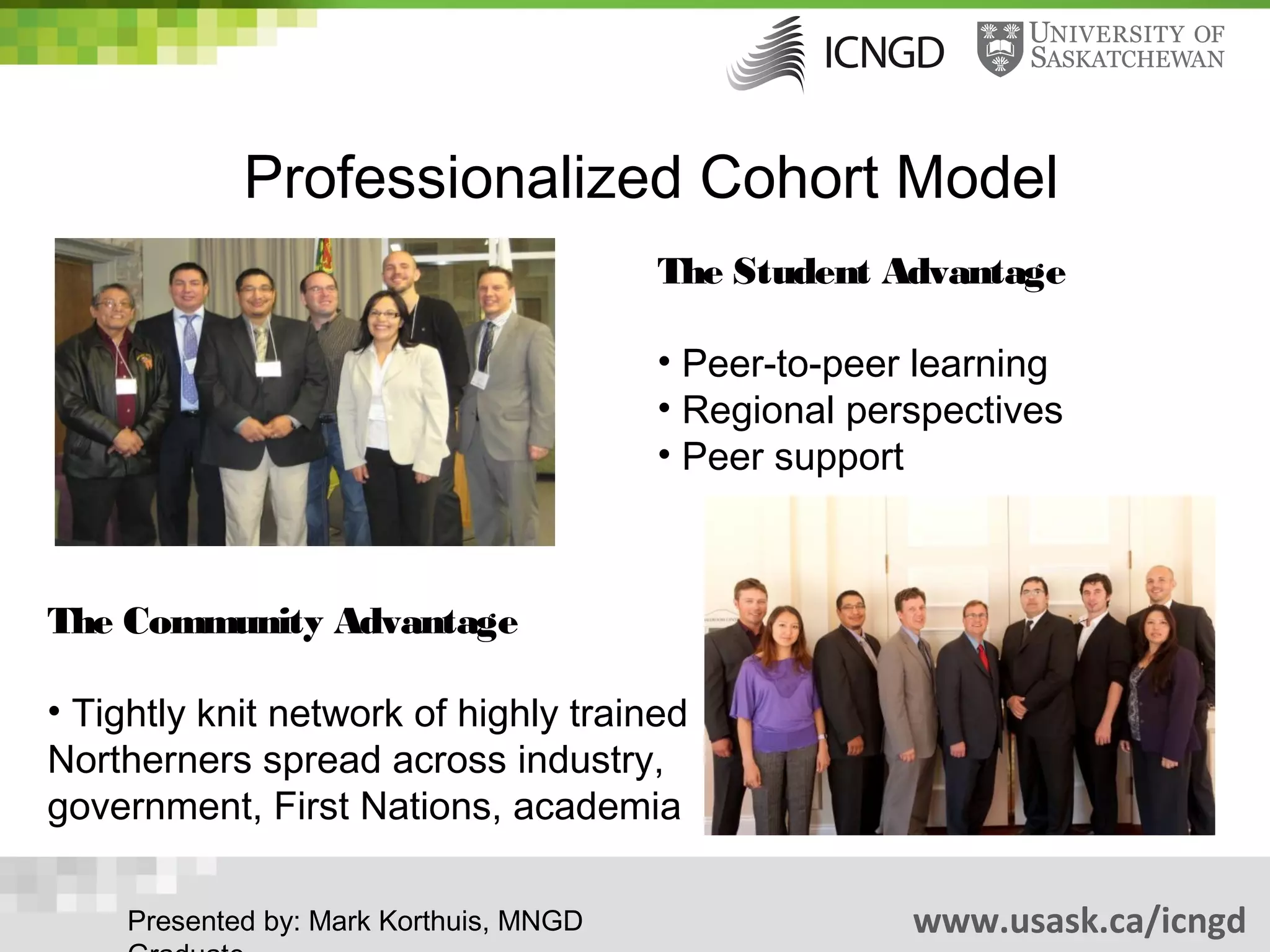
Professionalized Cohort Model
                                        The Student Advantage

                                        • Peer-to-peer learning
                                        • Regional perspectives
                                        • Peer support


The Community Advantage

• Tightly knit network of highly trained
Northerners spread across industry,
government, First Nations, academia

    Presented by: Mark Korthuis, MNGD                 www.usask.ca/icngd
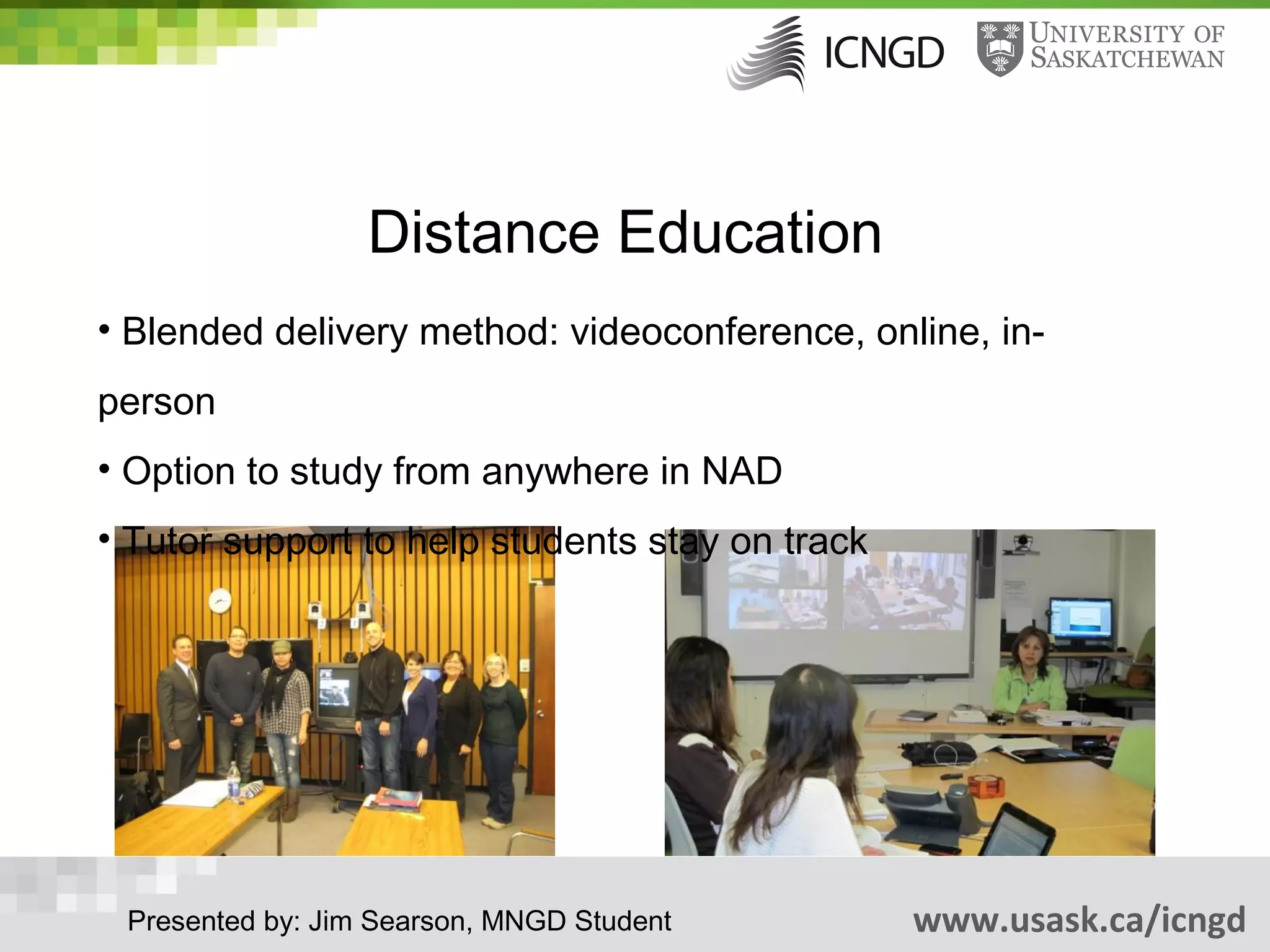
Distance Education
• Blended delivery method: videoconference, online, in-
person
• Option to study from anywhere in NAD
• Tutor support to help students stay on track


 Presented by: Jim Searson, MNGD Student         www.usask.ca/icngd
Northern Indigenous Perspective
                                      Pimachesowin
                                  Building upon northern
                                 knowledge and way of life

                                  Examine professional
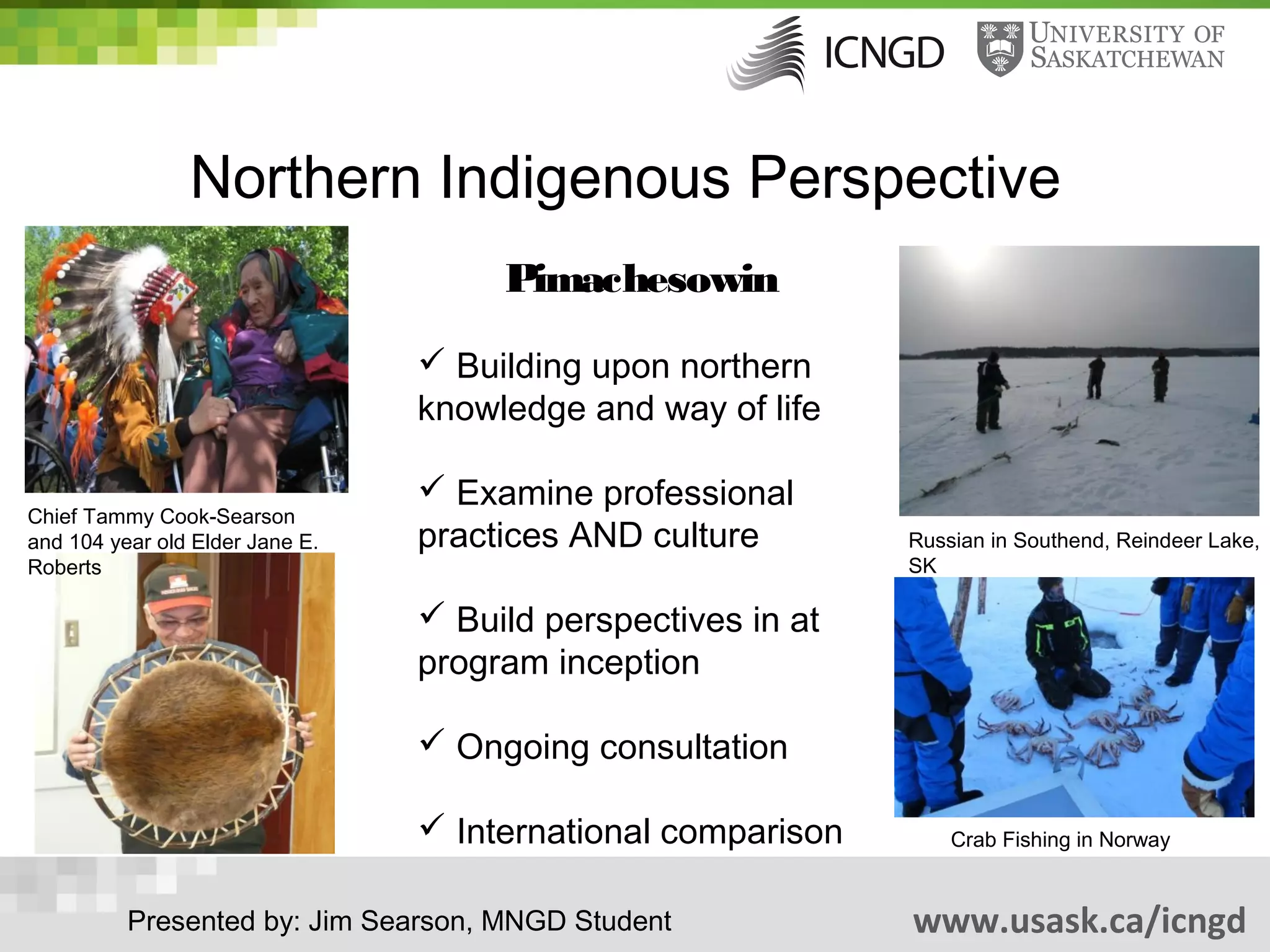
Chief Tammy Cook-Searson
and 104 year old Elder Jane E.   practices AND culture        Russian in Southend, Reindeer Lake,
Roberts                                                       SK

                                  Build perspectives in at
                                 program inception

                                  Ongoing consultation

                                  International comparison       Crab Fishing in Norway


          Presented by: Jim Searson, MNGD Student             www.usask.ca/icngd
Internationalization
           Why is it important? Share wise practices


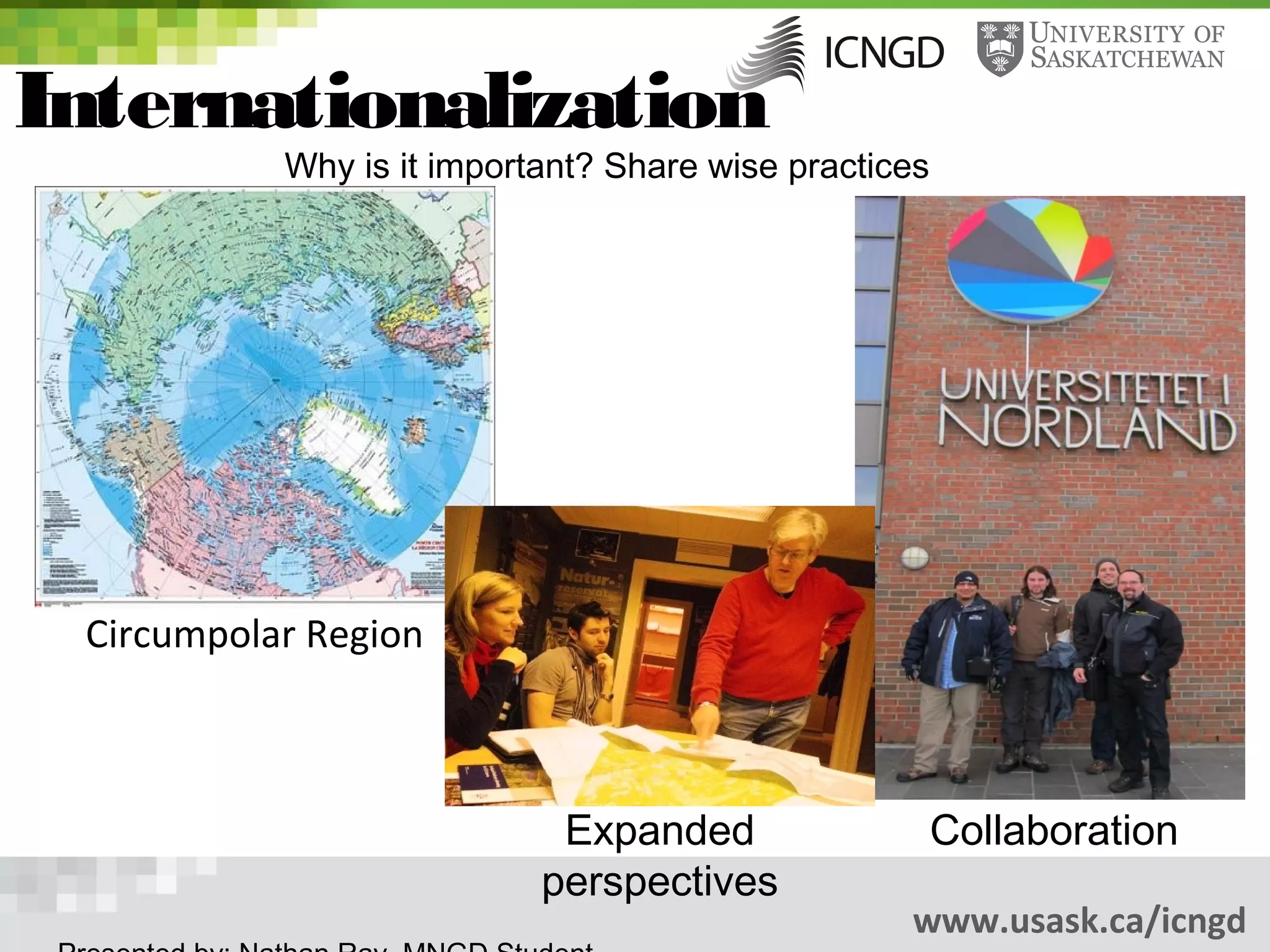
 Circumpolar Region


                            Expanded                   Collaboration
                           perspectives
                                                  www.usask.ca/icngd
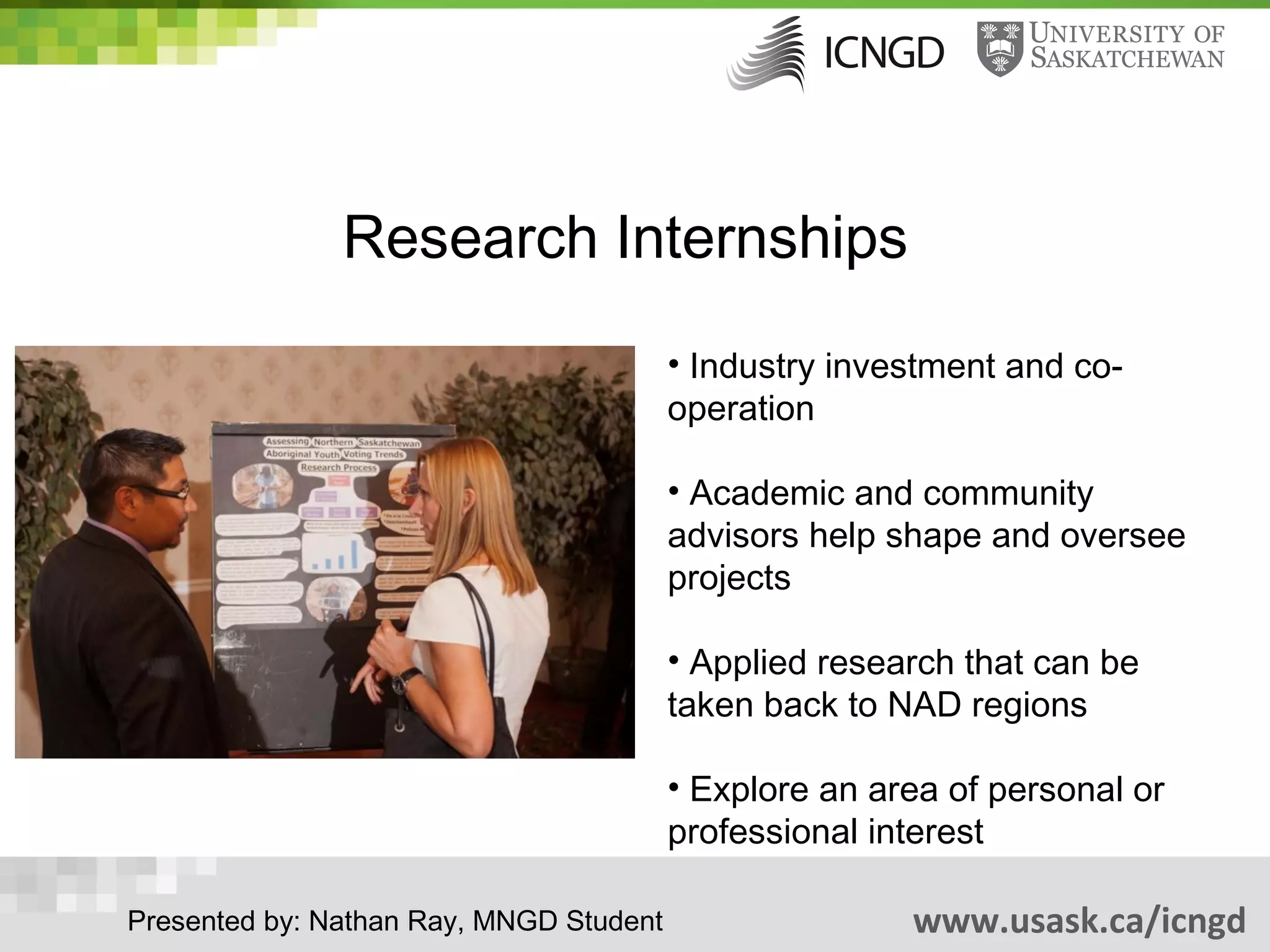
Research Internships
                                         • Industry investment and co-
                                         operation

                                         • Academic and community
                                         advisors help shape and oversee
                                         projects

                                         • Applied research that can be
                                         taken back to NAD regions

                                         • Explore an area of personal or
                                         professional interest

Presented by: Nathan Ray, MNGD Student                  www.usask.ca/icngd
In Summary
K Com
 ey  ponents of the MNGD Program:

 Designed to produce next generation of northern leaders

 Maintaining flexibility in program design and delivery

 Creating a professional network of highly trained Northerners

 Staying responsive: working with First Nations, government, industry and
other northern employers

 Building in student supports to guarantee success


      Presented by: Dr. Bonita Beatty                      www.usask.ca/icngd
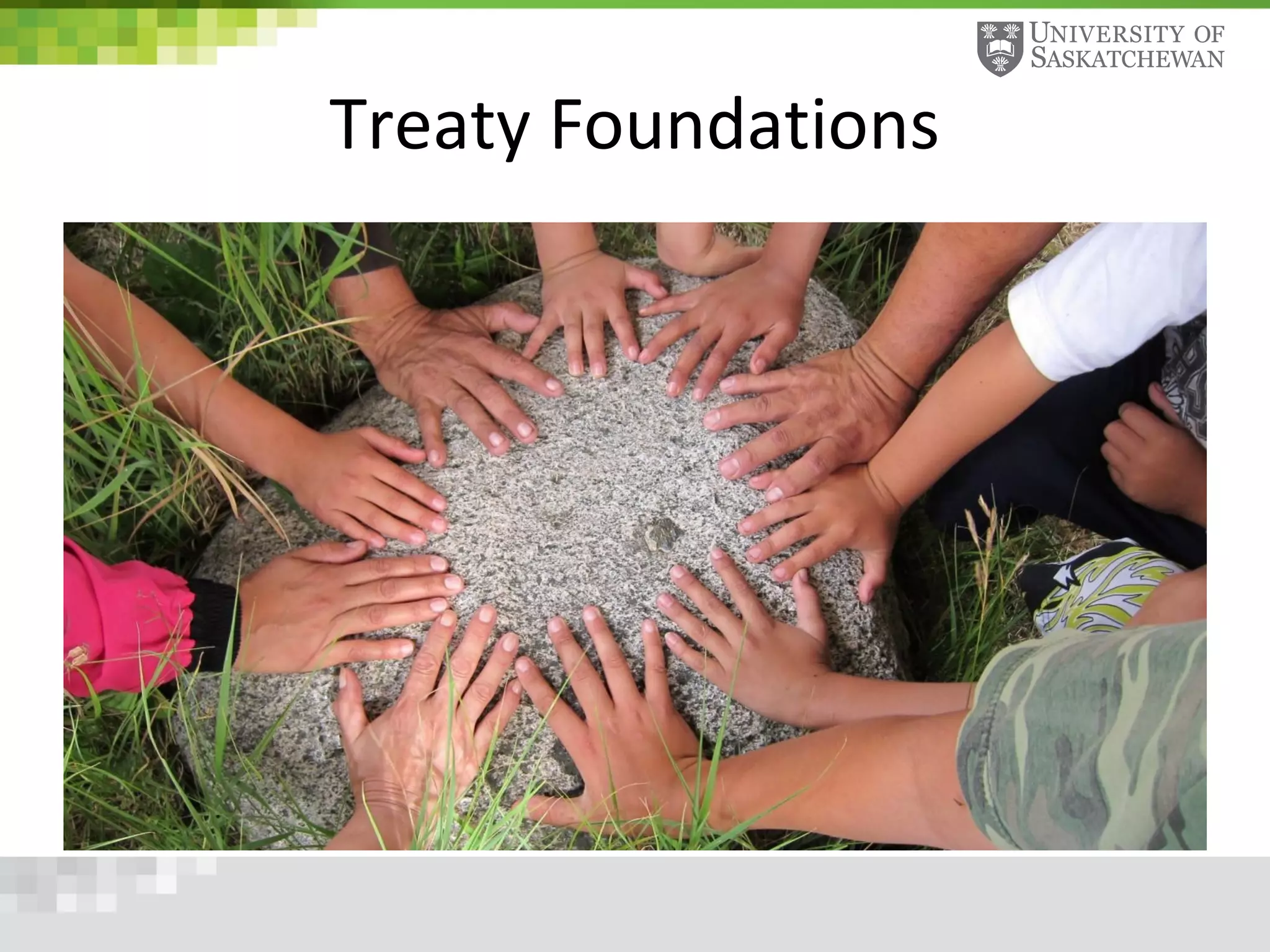
Treaty Foundations
Questions?

 Co nta c t the I rna tio na l Ce ntre fo r N rthe rn G o v e rna nc e a nd
                   nte                         o
De v e lo p m e nt (I G D) to le a rn m o re a bo ut the M G D p ro g ra m :
                     CN                                   N


                               ICNGD
                    University of Saskatchewan
                     URL: www.usask.ca/icngd
                    Email: info.icngd@usask.ca
                       Tel.: (306) 966-1238


                                                           www.usask.ca/icngd

Overview of the Master of Northern Governance and Development (MNGD) program

  • 1.
    PRESENTED BY: International Centre for Northern Governance & Development Overview of the Master of Northern Governance and Development (MNGD) program www.usask.ca/icngd
  • 2.
    Introductions Dr. Bonita Mark Korthuis Jim Searson Nathan Ray Beatty MNGD MNGD Student MNGD Student Co-Director of Graduate (Pilot Cohort) (Pilot Cohort) Grad Studies (Pilot Cohort) (ICNGD) Presented by: Dr. Bonita Beatty www.usask.ca/icngd
  • 3.
    Presentation Outline 1. Background 6. Northern Indigenous 2. MNGD Development Perspective 3. Program Experience 7. Internationalization 4. Professionalized Cohort Model 8. Research Internships 5. Distance Education 9. In Summary 10. Questions Presented by: Dr. Bonita Beatty www.usask.ca/icngd
  • 4.
    Background • 2008: Northern partners identify need for expanded program options, specific to northern & Indigenous issues • 2008-’09: Preliminary discussions take place between northern stakeholders and International Centre for Northern Governance and Development • First official stakeholder meeting held on January 26, 2009 • Included: First Nations, industry, academics, government, international representatives of Arctic and Northern studies • Master of Northern Governance and Development (MNGD) program begins to take shape Presented by: Dr. Bonita Beatty www.usask.ca/icngd
  • 5.
    MNGD Development Master ofNorthern Governance and Development must… o be responsive to First Nations and northern needs o collaborate with industry o offer distance delivery o be interdisciplinary in scope o internationalize – e.g. include field school o incorporate applied research o be project-based o include student supports – e.g. scholarships, tutors Presented by: Dr. Bonita Beatty www.usask.ca/icngd
  • 6.
    Program Experience W makesthe MNGD hat unique? • Collaboration with industry • Opportunity to conduct field research and apply results • Specialized training Presented by: Mark Korthuis, MNGD www.usask.ca/icngd
  • 7.
    Professionalized Cohort Model The Student Advantage • Peer-to-peer learning • Regional perspectives • Peer support The Community Advantage • Tightly knit network of highly trained Northerners spread across industry, government, First Nations, academia Presented by: Mark Korthuis, MNGD www.usask.ca/icngd
  • 8.
    Distance Education • Blendeddelivery method: videoconference, online, in- person • Option to study from anywhere in NAD • Tutor support to help students stay on track Presented by: Jim Searson, MNGD Student www.usask.ca/icngd
  • 9.
    Northern Indigenous Perspective Pimachesowin  Building upon northern knowledge and way of life  Examine professional Chief Tammy Cook-Searson and 104 year old Elder Jane E. practices AND culture Russian in Southend, Reindeer Lake, Roberts SK  Build perspectives in at program inception  Ongoing consultation  International comparison Crab Fishing in Norway Presented by: Jim Searson, MNGD Student www.usask.ca/icngd
  • 10.
    Internationalization Why is it important? Share wise practices Circumpolar Region Expanded Collaboration perspectives www.usask.ca/icngd
  • 11.
    Research Internships • Industry investment and co- operation • Academic and community advisors help shape and oversee projects • Applied research that can be taken back to NAD regions • Explore an area of personal or professional interest Presented by: Nathan Ray, MNGD Student www.usask.ca/icngd
  • 12.
    In Summary K Com ey ponents of the MNGD Program:  Designed to produce next generation of northern leaders  Maintaining flexibility in program design and delivery  Creating a professional network of highly trained Northerners  Staying responsive: working with First Nations, government, industry and other northern employers  Building in student supports to guarantee success Presented by: Dr. Bonita Beatty www.usask.ca/icngd
  • 13.
  • 14.
    Questions? Co ntac t the I rna tio na l Ce ntre fo r N rthe rn G o v e rna nc e a nd nte o De v e lo p m e nt (I G D) to le a rn m o re a bo ut the M G D p ro g ra m : CN N ICNGD University of Saskatchewan URL: www.usask.ca/icngd Email: info.icngd@usask.ca Tel.: (306) 966-1238 www.usask.ca/icngd