CHOLERA
Ms. Sonam Sharma
Asst. Professor
Introduction
Cholera is an acute diarrheal illness caused by infection of the intestine
with the bacterium Vibrio cholerae. The disease is typically transmitted
through the ingestion of contaminated water or food. Cholera remains a
global threat to public health and an indicator of inequity and lack of social
development.
Causes
• Cholera is primarily caused by the bacterium Vibrio cholerae. Several
factors contribute to the transmission and spread of this bacterium,
leading to outbreaks of the disease. Below is an overview of the key
causes and contributing factors.
Transmission Routes
• Contaminated Water: The primary mode of transmission is through drinking water
contaminated with Vibrio cholerae. Contaminated water sources are a major cause,
especially in areas lacking proper sanitation and clean water supplies.
• Contaminated Food: Consumption of food, especially raw or undercooked seafood,
that has been contaminated with cholera bacteria can also cause infection. Food can
become contaminated through water used for washing, cooking, or irrigation.
Continue
• Fecal-Oral Route: The bacterium is excreted in the feces of infected individuals.
Poor hygiene practices and inadequate sanitation facilities can lead to the
contamination of water and food, facilitating the fecal-oral transmission of the
disease.
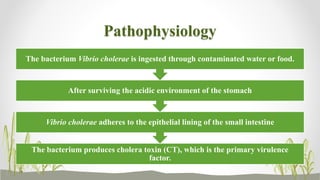
Pathophysiology
The bacterium produces cholera toxin (CT), which is the primary virulence
factor.
Vibrio cholerae adheres to the epithelial lining of the small intestine
After surviving the acidic environment of the stomach
The bacterium Vibrio cholerae is ingested through contaminated water or food.
Increased cAMP levels
Activation of adenylate cyclase
The A subunit enters the cells and activates adenylate cyclase, leading to an
increase in cyclic AMP (cAMP) levels.
The B subunit binds to the GM1 ganglioside receptors on the surface of the
intestinal epithelial cells.
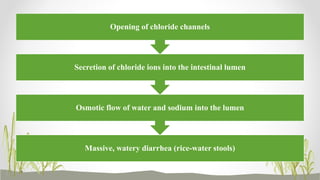
Massive, watery diarrhea (rice-water stools)
Osmotic flow of water and sodium into the lumen
Secretion of chloride ions into the intestinal lumen
Opening of chloride channels
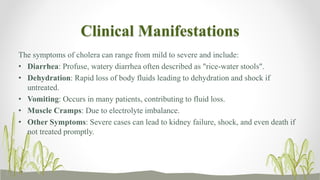
Clinical Manifestations
The symptoms of cholera can range from mild to severe and include:
• Diarrhea: Profuse, watery diarrhea often described as "rice-water stools".
• Dehydration: Rapid loss of body fluids leading to dehydration and shock if
untreated.
• Vomiting: Occurs in many patients, contributing to fluid loss.
• Muscle Cramps: Due to electrolyte imbalance.
• Other Symptoms: Severe cases can lead to kidney failure, shock, and even death if
not treated promptly.
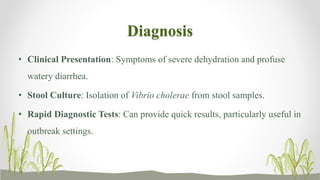
Diagnosis
• Clinical Presentation: Symptoms of severe dehydration and profuse
watery diarrhea.
• Stool Culture: Isolation of Vibrio cholerae from stool samples.
• Rapid Diagnostic Tests: Can provide quick results, particularly useful in
outbreak settings.
Process for diagnosis
Patient presents with symptoms of watery diarrhea and dehydration.
↓
Clinical assessment for signs of cholera.
↓
Collection of stool sample.
↓
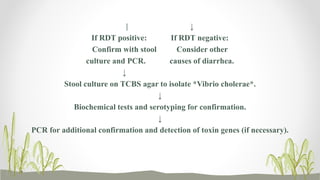
Rapid Diagnostic Test (RDT) for preliminary screening.
↓
| ↓
If RDT positive: If RDT negative:
Confirm with stool Consider other
culture and PCR. causes of diarrhea.
↓
Stool culture on TCBS agar to isolate *Vibrio cholerae*.
↓
Biochemical tests and serotyping for confirmation.
↓
PCR for additional confirmation and detection of toxin genes (if necessary).
Treatment
Rehydration
Antibiotics
Zinc
Supplementation
Rehydration Therapy
The cornerstone of cholera treatment. Oral rehydration salts (ORS) solution is used for mild to
moderate dehydration. Intravenous (IV) fluids are necessary for severe dehydration.
• Oral Rehydration Therapy (ORT):
o Oral Rehydration Salts (ORS): ORS is a simple, cost-effective solution containing a
precise mixture of salts and glucose. It is used to treat mild to moderate dehydration.
o Administration: The ORS solution is given to patients to drink in small, frequent sips.
For mild dehydration, WHO recommends 75 ml/kg of ORS solution over the first 4
hours, and then as much as the patient needs to replace ongoing fluid losses.
• Intravenous (IV) Rehydration:
o Indications: IV fluids are necessary for patients with severe dehydration or those
who cannot take ORS orally due to vomiting or unconsciousness.
o Fluids Used: Ringer's lactate solution is preferred due to its balanced electrolyte
composition. Normal saline can also be used if Ringer's lactate is unavailable.
o Administration: Rapid IV rehydration is critical in severe cases. The initial bolus
of 30 ml/kg should be given within the first 30 minutes, followed by 70 ml/kg
over the next 2.5 hours. Continuous monitoring and adjustment based on the
patient's response are essential.
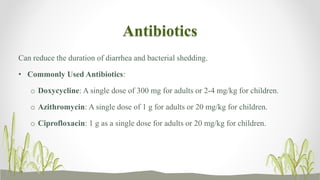
Antibiotics
Can reduce the duration of diarrhea and bacterial shedding.
• Commonly Used Antibiotics:
o Doxycycline: A single dose of 300 mg for adults or 2-4 mg/kg for children.
o Azithromycin: A single dose of 1 g for adults or 20 mg/kg for children.
o Ciprofloxacin: 1 g as a single dose for adults or 20 mg/kg for children.
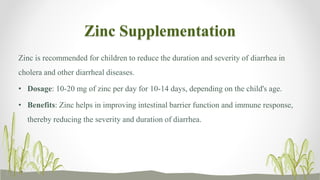
Zinc Supplementation
Zinc is recommended for children to reduce the duration and severity of diarrhea in
cholera and other diarrheal diseases.
• Dosage: 10-20 mg of zinc per day for 10-14 days, depending on the child's age.
• Benefits: Zinc helps in improving intestinal barrier function and immune response,
thereby reducing the severity and duration of diarrhea.
Supportive Care
• Monitoring: Continuous monitoring of vital signs, fluid intake and output, and
electrolyte levels is crucial in managing cholera patients.
• Nutritional Support: Encouraging patients, especially children, to continue eating a
balanced diet helps in faster recovery. Breastfeeding should be continued for infants.
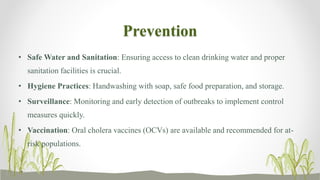
Prevention
• Safe Water and Sanitation: Ensuring access to clean drinking water and proper
sanitation facilities is crucial.
• Hygiene Practices: Handwashing with soap, safe food preparation, and storage.
• Surveillance: Monitoring and early detection of outbreaks to implement control
measures quickly.
• Vaccination: Oral cholera vaccines (OCVs) are available and recommended for at-
risk populations.
Vaccination
• Dukoral
o Adults and Children (6 years and older):
• Dosage: Two doses taken orally, 1-6 weeks apart.
• Booster: A booster dose is recommended every two years if there is ongoing risk of cholera
exposure.
o Children (2-5 years old):
• Dosage: Three doses taken orally, 1-6 weeks apart.
• Booster: A booster dose is recommended every six months if there is ongoing risk of cholera
exposure.
Continue
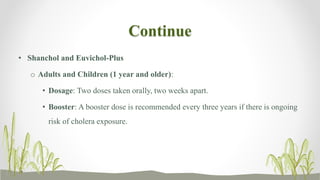
• Shanchol and Euvichol-Plus
o Adults and Children (1 year and older):
• Dosage: Two doses taken orally, two weeks apart.
• Booster: A booster dose is recommended every three years if there is ongoing
risk of cholera exposure.
Continue
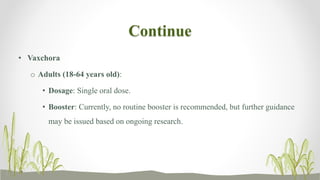
• Vaxchora
o Adults (18-64 years old):
• Dosage: Single oral dose.
• Booster: Currently, no routine booster is recommended, but further guidance
may be issued based on ongoing research.
Cholera.pptx

Cholera.pptx

  • 1.
  • 2.
    Introduction Cholera is anacute diarrheal illness caused by infection of the intestine with the bacterium Vibrio cholerae. The disease is typically transmitted through the ingestion of contaminated water or food. Cholera remains a global threat to public health and an indicator of inequity and lack of social development.
  • 3.
    Causes • Cholera isprimarily caused by the bacterium Vibrio cholerae. Several factors contribute to the transmission and spread of this bacterium, leading to outbreaks of the disease. Below is an overview of the key causes and contributing factors.
  • 4.
    Transmission Routes • ContaminatedWater: The primary mode of transmission is through drinking water contaminated with Vibrio cholerae. Contaminated water sources are a major cause, especially in areas lacking proper sanitation and clean water supplies. • Contaminated Food: Consumption of food, especially raw or undercooked seafood, that has been contaminated with cholera bacteria can also cause infection. Food can become contaminated through water used for washing, cooking, or irrigation.
  • 5.
    Continue • Fecal-Oral Route:The bacterium is excreted in the feces of infected individuals. Poor hygiene practices and inadequate sanitation facilities can lead to the contamination of water and food, facilitating the fecal-oral transmission of the disease.
  • 7.
    Pathophysiology The bacterium producescholera toxin (CT), which is the primary virulence factor. Vibrio cholerae adheres to the epithelial lining of the small intestine After surviving the acidic environment of the stomach The bacterium Vibrio cholerae is ingested through contaminated water or food.
  • 8.
    Increased cAMP levels Activationof adenylate cyclase The A subunit enters the cells and activates adenylate cyclase, leading to an increase in cyclic AMP (cAMP) levels. The B subunit binds to the GM1 ganglioside receptors on the surface of the intestinal epithelial cells.
  • 9.
    Massive, watery diarrhea(rice-water stools) Osmotic flow of water and sodium into the lumen Secretion of chloride ions into the intestinal lumen Opening of chloride channels
  • 10.
    Clinical Manifestations The symptomsof cholera can range from mild to severe and include: • Diarrhea: Profuse, watery diarrhea often described as "rice-water stools". • Dehydration: Rapid loss of body fluids leading to dehydration and shock if untreated. • Vomiting: Occurs in many patients, contributing to fluid loss. • Muscle Cramps: Due to electrolyte imbalance. • Other Symptoms: Severe cases can lead to kidney failure, shock, and even death if not treated promptly.
  • 11.
    Diagnosis • Clinical Presentation:Symptoms of severe dehydration and profuse watery diarrhea. • Stool Culture: Isolation of Vibrio cholerae from stool samples. • Rapid Diagnostic Tests: Can provide quick results, particularly useful in outbreak settings.
  • 12.
    Process for diagnosis Patientpresents with symptoms of watery diarrhea and dehydration. ↓ Clinical assessment for signs of cholera. ↓ Collection of stool sample. ↓ Rapid Diagnostic Test (RDT) for preliminary screening. ↓
  • 13.
    | ↓ If RDTpositive: If RDT negative: Confirm with stool Consider other culture and PCR. causes of diarrhea. ↓ Stool culture on TCBS agar to isolate *Vibrio cholerae*. ↓ Biochemical tests and serotyping for confirmation. ↓ PCR for additional confirmation and detection of toxin genes (if necessary).
  • 14.
  • 15.
    Rehydration Therapy The cornerstoneof cholera treatment. Oral rehydration salts (ORS) solution is used for mild to moderate dehydration. Intravenous (IV) fluids are necessary for severe dehydration. • Oral Rehydration Therapy (ORT): o Oral Rehydration Salts (ORS): ORS is a simple, cost-effective solution containing a precise mixture of salts and glucose. It is used to treat mild to moderate dehydration. o Administration: The ORS solution is given to patients to drink in small, frequent sips. For mild dehydration, WHO recommends 75 ml/kg of ORS solution over the first 4 hours, and then as much as the patient needs to replace ongoing fluid losses.
  • 16.
    • Intravenous (IV)Rehydration: o Indications: IV fluids are necessary for patients with severe dehydration or those who cannot take ORS orally due to vomiting or unconsciousness. o Fluids Used: Ringer's lactate solution is preferred due to its balanced electrolyte composition. Normal saline can also be used if Ringer's lactate is unavailable. o Administration: Rapid IV rehydration is critical in severe cases. The initial bolus of 30 ml/kg should be given within the first 30 minutes, followed by 70 ml/kg over the next 2.5 hours. Continuous monitoring and adjustment based on the patient's response are essential.
  • 17.
    Antibiotics Can reduce theduration of diarrhea and bacterial shedding. • Commonly Used Antibiotics: o Doxycycline: A single dose of 300 mg for adults or 2-4 mg/kg for children. o Azithromycin: A single dose of 1 g for adults or 20 mg/kg for children. o Ciprofloxacin: 1 g as a single dose for adults or 20 mg/kg for children.
  • 18.
    Zinc Supplementation Zinc isrecommended for children to reduce the duration and severity of diarrhea in cholera and other diarrheal diseases. • Dosage: 10-20 mg of zinc per day for 10-14 days, depending on the child's age. • Benefits: Zinc helps in improving intestinal barrier function and immune response, thereby reducing the severity and duration of diarrhea.
  • 19.
    Supportive Care • Monitoring:Continuous monitoring of vital signs, fluid intake and output, and electrolyte levels is crucial in managing cholera patients. • Nutritional Support: Encouraging patients, especially children, to continue eating a balanced diet helps in faster recovery. Breastfeeding should be continued for infants.
  • 20.
    Prevention • Safe Waterand Sanitation: Ensuring access to clean drinking water and proper sanitation facilities is crucial. • Hygiene Practices: Handwashing with soap, safe food preparation, and storage. • Surveillance: Monitoring and early detection of outbreaks to implement control measures quickly. • Vaccination: Oral cholera vaccines (OCVs) are available and recommended for at- risk populations.
  • 21.
    Vaccination • Dukoral o Adultsand Children (6 years and older): • Dosage: Two doses taken orally, 1-6 weeks apart. • Booster: A booster dose is recommended every two years if there is ongoing risk of cholera exposure. o Children (2-5 years old): • Dosage: Three doses taken orally, 1-6 weeks apart. • Booster: A booster dose is recommended every six months if there is ongoing risk of cholera exposure.
  • 22.
    Continue • Shanchol andEuvichol-Plus o Adults and Children (1 year and older): • Dosage: Two doses taken orally, two weeks apart. • Booster: A booster dose is recommended every three years if there is ongoing risk of cholera exposure.
  • 23.
    Continue • Vaxchora o Adults(18-64 years old): • Dosage: Single oral dose. • Booster: Currently, no routine booster is recommended, but further guidance may be issued based on ongoing research.