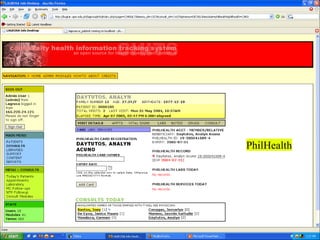
Community Health Information Tracking System  21st Century Health Information System for  Local Governance
“ At its essence, every organization is a product of how its members think and interact.” -- Peter Senge
Welcome to San Pablo….. Eto ang community namin……
UP College of Medicine  Vision Towards excellence and leadership in  community-oriented medical education  directed to the underserved using the  primary health care approach
Overview Introduction to Health Information Systems
Introduction to CHITS
CHITS Free and/or Open Source Software?
Next steps
Health Information Systems What is the problem?
Why does the problem persist?
How can we solve the problem?
How are we solving the problem?
What remains to be solved
CHITS Started out as “CHild Injury Tracking System or CHITS”
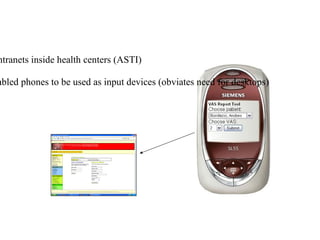
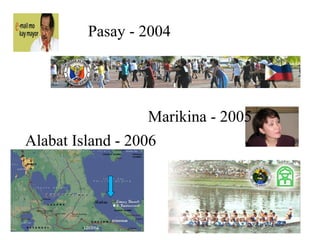
A cellphone-based reporting system for child injury in Pasay City
Obtained small grant from IDRC (Canada)‏
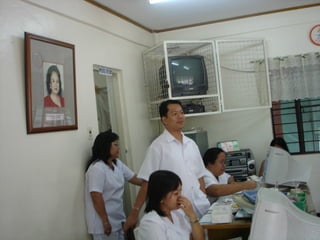
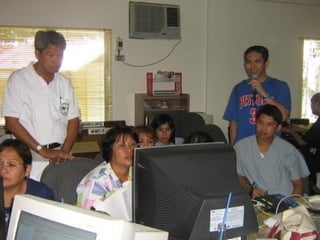
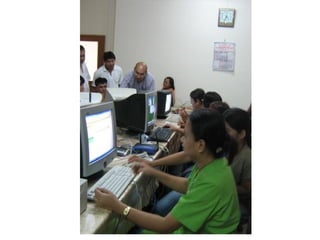
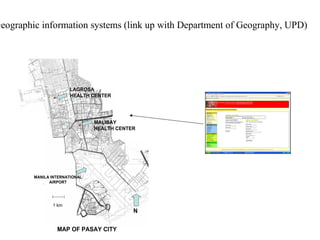
Immersed project team in Pasay local health centers
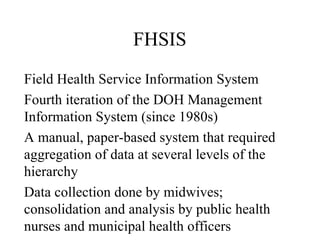
FHSIS Field Health Service Information System
Fourth iteration of the DOH Management Information System (since 1980s)‏
A manual, paper-based system that required aggregation of data at several levels of the hierarchy
Data collection done by midwives; consolidation and analysis by public health nurses and municipal health officers
What are the problems?
Problems  Data quality assessment  Incomplete
Inaccurate (errors in addition, 'guessing')‏
Illegibile
Not useful nor relevant for data collectors
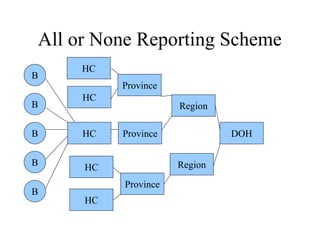
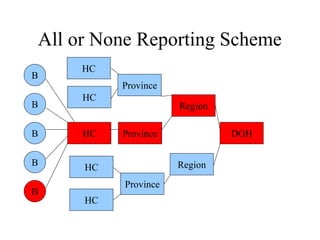
Delayed  Employed an “all-or-none” reporting scheme
All or None Reporting Scheme B B B B B HC Province Region DOH HC HC HC Province Province Region HC
Problems Contained vertical programs that had their own vertical information systems Expanded Program on Immunization
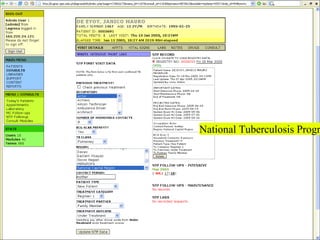
National TB Program
Family Planning
Maternal Care
and others
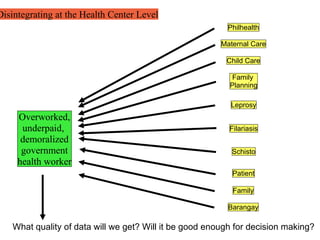
Patient Family Barangay Child Care Maternal Care Philhealth Family  Planning Leprosy Filariasis Schisto Overworked, underpaid,  demoralized government health worker What quality of data will we get? Will it be good enough for decision making? Vertical Programs Disintegrating at the Health Center Level
More Problems Target-based systems or quota-based systems can contribute to data errors given a certain target within a given amount of time, data collectors will attempt to meet targets at the expense of quality
The 3-Legged Stool of HIS 1. collection 2. consolidation 3. analysis/presentation
Target-based Systems Consequence Two stories in GMA7 Saksi sometime in October 2006 Story 1: vaccines worth P40M expired in QC warehouse
Story 2: ten children die of measles in Caloocan
Let's Do the Math 44, 000 barangays nationwide
assuming 1 midwife per barangay
and each midwife adds one extra dose of BCG/month to her data (to meet targets)‏
Result: 44,000 extra doses of BCG/month
44,000 X 12 months = 528,000 (half a million of unnecessary extra doses of BCG)‏
Good Apples, Bad Apples Chronic persistent mixing of good data with bad causes demoralization and the good data/attitude deteriorates into bad.
Summary of Problems manual, paper-based system allowed for errors
target-based systems pressured collectors to manipulate data
poor data quality at the collection level resulted in poor data at the higher levels and in erroneous decisions
Proposed Solution Multi-part solution Systemic problems requires systemic solutions staff training
information systems re-engineering
CHITS Design Philosophy Create computer program side by side with health workers inside the actual environment (c/o Dr. Herman Tolentino)‏
Build up the morale of health workers and allow them to participate in the development
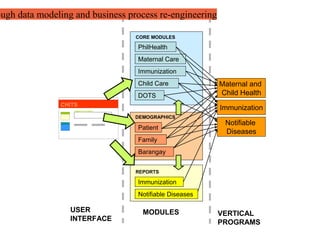
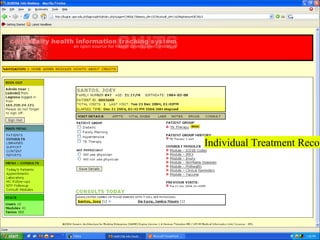
Integrate the disintegrated vertical programs (provide a common interface)‏
Design Philosophy Design data structures like Lego ®  blocks so we can build health information systems that interoperate
Benefits of CHITS faster record retrieval
less record loss
more efficient data entry/storage
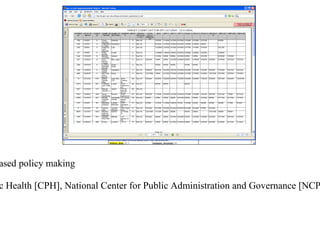
data analysis/mining
helps with completeness
can streamline workflow
resource management
time management (appointment system)‏
Integrating health information through data modeling and business process re-engineering
How It Works Suite of components: Information technology
Capability-building
Policy development
Data for decision making
How It Works Information technology Ordinary computers
Standard computer networking
Open source (free) software Total cost: 15,000 per computer (if brand new)‏
Minimum: one PC
Ideal: three PCs
How It Works Capability building Project team: Developers: knowledge on the health care flow and vocabulary (the language of health)‏
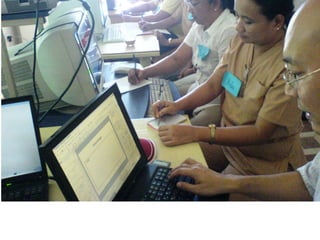
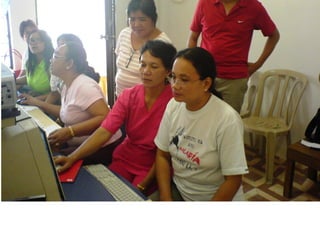
Doctors: data and process modelling (the language of programming)‏ Health center staff (BHW, midwives, RN, MD): Basic computer skills
Introduction to Health Information Systems
(Yes! Midwives can use Linux!)‏

Chits july 27__2010