CHILDREN IN
GLOBALISING INDIA	
Challenging Our Conscience
EDITED BY
Enakshi Ganguly Thukral
© 	 HAQ: Centre for Child Rights 2002
Any part of this volume may be freely reproduced with the appropriate acknowledgement.
Permission to translate all or any part of this volume must be obtained from HAQ: Centre
for Child Rights, New Delhi.
EDITORIAL COMMITTEE
Urvashi Butalia
Meenakshi Ganguly
Paromita Shastri
Bharti Ali
Enakshi Ganguly Thukral
Design				 Indrani De Parker
Photographs 		 Shailan Parker
				 UNICEF
				 HAQ: Centre for Child Rights
				 Save the Children
				 Karnatka Integrated Development Services
(KIDS)
Cover Photographs 		 Shailan Parker
Proof Reader		 Alpana Mukherjee	
Typesetting and 		 Aspire Graphics Solutions. 				
Printing			 New Delhi, India
ISBN 81-901638-0-9
Rs. 400/-
US $20
HAQ:Centre for Child Rights,
208, Shahpur Jat,
New Delhi 110049, India
Tel.: 91-11-26490136
Telefax: 91-11-26492551
Email: haqcrc@vsnl.net
All grown-ups were once children...
although few of them remember it.
Antoine De Saint-Exupéry
in
The Little Prince
FOREWORD
In its short life of only three years, HAQ:Centre for Child Rights, has made considerable progress.
It is not an easy task to attempt to focus attention on a section of society that is so marginalised
as to be almost invisible. This forgotten generation — the children of India — who have, until
recently, not come into any reckoning, are, paradoxically, our future. It is for the sake of that
future, as much as for the children’s own sakes, that we must pay attention to them.
HAQ’s concern for children, however, is not only because of they are our future, but also because
they are our present. As the UNICEF Report on the State of India’s Children (1997) points out, the
new and sweeping economic reforms which are meant to orient countries towards the needs of
the global economy, and its concomitant activities such as promoting export crops, attracting
foreign investment, cutting government expenditure, have resulted in cuts in the areas of health,
education, food services and the social sector generally. The experience of many countries across
the world has shown that these cuts impact most sharply on the vulnerable sectors of society,
among whom children occupy a key place.
Within India recent years have shown some activity geared towards a concern for children. In
1992, India ratified the Convention on the Rights of the Child, and more recently, it has begun to
prepare its country report for review by the Committee on the Rights of the Child. Nonetheless, a
great deal remains to be done. HAQ’s recently published study on the Union Budget (looked at
from a child rights perspective) shows how little is separately allocated in any sector for
children, and how the concept of the rights of the child continues to be the exception rather
than the rule. This is further borne out by the unrelenting reports in the media of atrocities
on children, of the violence they face every day, not only from society at large but also from
their own families and communities, a violence that is made worse for girl children who are
doubly discriminated against.
This volume on the state of India’s children is thus a warning to all of us and a timely reminder to
turn our attention to this most important section of society. A collection of writings that addresses,
from different perspectives, various aspects of rights and life conditions of our children, this
volume, produced by the HAQ team in collaboration with a number of academics and activists,
aims to draw our attention to our children, and demonstrates how they are the emotional, social
and economic bedrock on which our society is founded. We ignore them only at our own cost.
The volume is, in our view, an important first step, and it is our hope that it will lead to further
research and publications on this important issue, as well as generate discussion and debate on
our children, and with our children, for our collective present and future.
Urvashi Butalia
President
HAQ: Centre for Child Rights
WE THANK…
…the children of this country who have inspired us to examine their lives. Their resilience in the
face of all odds and their ability to bring cheer into all our lives is enormous — and we adults
need to thank them for it.
HAQ is a whirlpool. It draws anyone who even murmurs an offer of help. Meenakshi Ganguly and
Paromita Shastri offered, and we are grateful to them for agreeing to be part of the editorial
committee and wading through manuscripts and editing some of them. Meenakshi Ganguly helped
edit the sections on Health and the Young Child. Paromita Shastri helped edit the sections on
Child Labour and Juvenile (in) Justice. We also thank Kishore Thukral for his editorial assistance
on the chapter on the legal regime.
We thank HAQ’s President, Urvashi Butalia for her insightful suggestions and for always being
there for us. Neelam Singh has been with us through the whole process, allowing us to pick her
brainsandsupportingusmorallyaswellwithherideas.S.Murlidharan’ssuggestionsandcomments
on the section on the legal regime was very helpful.
We thank Alpana Mukherjee for walking into our lives as we were floundering with the load of last
minute corrections and proofing. Since then our shoulders felt a lot lighter.
This volume would not have been possible without financial support from the Royal Norwegian
Embassy. We are particularly thankful to Renu Wadehra and Jannicke Bain for their interest and
support.
We thank all our contributors, many of whom we have browbeaten into writing for us against
odds of limited time and workload.
Last but not the very least, we have to thank our families-the ones at home, especially our own
children whose own rights may have been neglected, and the one at HAQ for its patience and
forbearance while this volume was being put together.
Enakshi Ganguly Thukral
Bharti Ali
CONTENTS
INTRODUCTION	
	 Enakshi Ganguly Thukral	 1
Section 1
	 Legal Regime	 11
	 Enakshi Ganguly Thukral
Section 2
	 Health 	 49
	 Mira Shiva
Section 3
	 Education	 91
	 PART I, Bharti Ali
	 PART II, Anil Sadgopal
Section 4
	 The Young Child 	 139
	 Vandana Prasad
	 Devika Singh
Section 5
	 The Disabled Child			
	 Madhumita Puri	 165
	
Section 6
	 Juvenile (In)Justice	 185		
	 Arvind Narrain	
	
Section 7
	 The Girl Child	 217
	 Part I, HAQ Team
	 Part II, Satish B. Agnihotri
Section 8
	 The Trafficked Child	 245
	 HAQ Team	
Section 9
	 The Working Child	 275		
	 Paro Chaujar	
Section 10
	 Adoption	
	 Sujata Krishnamurthi	 305
Section 11
	 Children in Armed Conflict	 323
	 Meenakshi Ganguly	
Section 12	 341
	 Child Participation	
	 Neelam Singh	
	 Ravi Karkara
CONTRIBUTORS	 361
11
12
LEGAL REGIME
13
Law by itself cannot bring about social change or change in social attitudes and
practices. Nevertheless, it remains one of the most important tools for ensuring,
controlling or directing individual and social behaviour. Examination of a
country’s legal regime gives an insight into how the country treats its people or
any section of its citizens. It is also reflected in the international commitments
it makes and how far it translates them into national legal commitments. All
these must be examined and analysed in depth to understand the status of
the Indian children — male or female — who constitute one-fourth of its most
vulnerable and voiceless population.
The Indian constitution accords rights to children as citizens of the country,
and in keeping with their special status the State has even enacted special laws.
Moreover, India has ratified a range of international human rights instruments
that have a bearing on its national legal provisions, programmes and policies.
Principles of international law apply within a country by a process of reception
into ‘municipal law’ or the national or domestic legal system. In some countries
the ratification or adoption of an international treaty becomes automatically
binding on the domestic courts. These are legal systems that recognise the
supremacy of international law over domestic law and subscribe to what is
described in international legal parlance as the ‘theory of monism’. In some
other countries international law and domestic law are two separate systems.
In such cases the domestic or national law is bound only by treaties that have
been transformed into national legislations in conformity with the treaty
obligations. This is the ‘theory of dualism’ and is followed by England and most
other countries, several of them in South Asia, which are influenced by English
law. In such countries domestic law must recognise and reflect the provisions
of the international law for it to be legally binding and justiciable.
Most ratification of international legal instruments by India are harmonious in
spirit with national commitments. Judicial decisions of the Supreme Court of
India support the view that international treaties create legal rights and
obligations in domestic law only if they have been incorporated in it. In other
words an international legal instrument does not automatically become applicable
in India merely because it has been ratified. In fact, by ratifying a Convention or
Treaty, India commits itself to abiding by such commitment as well as to enacting
national law in consonance with it. If the international treaty is in harmony with
the domestic law, in letter or in spirit, it is automatically part of the law. If not,
the national law shall prevail till such time that it is amended or new legislation
is enacted.
However, non-transformation of international commitments into domestic law
must not be viewed dismally and as a major limitation. Activists and persons
concerned with rights of children should and must use litigation in courts to
create a legal environment through getting the courts to expand their judicial
and legal interpretations.
All human rights instruments are applicable to human rights of children and can
be drawn upon whenever relevant. Some Treaties or Conventions have specific
Sections or Articles dedicated to children. However, there is one Convention,
14
namely the Convention on the Rights of the Child that is dedicated solely to
children, thereby making it the most powerful and comprehensive instrument
available for them. It is the single Convention that has been ratified by all the
countries of the world, save one — the United States of America.
The Recognition of Child Rights 1
The international concern for children’s rights was viewed and linked to women’s
rights and can be seen in the instruments on child labour and women’s work
adopted by the International Labour Organisation (ILO), which expressed its
concern over regulating child labour with its Convention on Night Work in 1919.
Since then, the ILO has periodically brought in several other Conventions and early
recommendations that supplemented these Conventions. In recognition of the
exploitation that women and children suffer in the workplace, the ILO attempted to
humanise their situation by setting standards such as those relating to minimum
age limits, health and safety. Based on the legal tradition that viewed them as
‘weak’ and in need of protection from sexual exploitation and slavery the ILO also
promulgated instruments such as the Convention for the Suppression of Traffic
in Women and Children (1921) and the Slavery Convention.
Undoubtedly modern discourse on child rights owes much to the ‘West’ and as
such continues to be viewed by critics as a ‘Western concept’, rather a ‘Euro-
centric concept’. In fact it is often denounced as being ‘against our culture’, as
propagating individualistic values as against ‘family’ values. ‘How can children
have rights, when they have no duties?’ was a comment made by a senior Indian
politician and minister in his conversation with an activist at an informal gathering
during a recent international convention on child rights in New York.
Savitri Gunesekhere argues that cross-cultural influences have taken place across
the world, and there are sometimes common roots to problems that societies face
in a given period of their histories. (1997). This is true of how children, their needs
and their rights have been viewed. Most countries, east or west, have largely viewed
children as an extension of adults. Inevitably fathers were allowed to exercise much
greater authority over minor children born within a marriage. At the same time,
although rare, there are evidences of some rights of children in some religions,
such as Islam’s recognition of the option of puberty which is based on the concept
of personal autonomy and right of a person who has reached the age to reject
decisions made by adults (ibid). She argues that children in Asia today continue to
struggle as a result of a common legacy of authoritarianism and exploitation that
they shared with the rest of the world, which, in Europe, was modified through a
basic process of social, economic and legal changes. The concept of and need for
recognition of the human rights of children is as valid for us in India and the rest
of the developing world as it is for the rest of the countries.
Tracing the history of discourse on child rights reveals that the first expression
of concern that child rights must receive priority on its own merit, irrespective
of ideology of protection, was in a statement by a Polish doctor named Janus
1
This section draws greatly from the work of Dr. Savitri Gunesekhere ­-  Children, Law and Justice: A South Asian
Perspective.
15
Korezak, in which he advocated a strategy of rights in place of adult duties
towards children. Although his concept of child rights instead of adult duties
was not accepted, his thinking has definitely influenced international approach,
and has led to the gradual movement from policy declaration to the articulation
of separate rights for children.
The concept of child rights, as understood and accepted by the world today,
seeks to balance the perspective of child rights with the perceptions of adult
responsibilities and duties that alter the evolving capacities of the child as he/
she grows from childhood to maturity.
The idea of a formal expression of child rights, which could harness political and
public commitment for improving the lives of children, can be traced back to
1923, to the five point Declaration on the Rights of the Child drafted by Eglantyne
Jebb, founder of the Save the Children movement. The League of Nations, the
inter-war predecessor to the UN, adopted it the following year.
UN Convention on
the Rights of the Child
Continued concern for specific expression of rights for children led to the
adoption of a revised version of the original declaration drafted by Eglantyne
Jebb. However, the new Declaration on the Rights of the Child was a statement
of principles rather than a document to which governments could be held
responsible. A new and binding Convention on the Rights of the Child was
called for in 1978, in advance of the following year — the International Year of
the Child. The drafting of the Convention took another ten years during which
the political situation of the world, especially the cold war rivalries, played an
important role in determining the wide-ranging nature of the Convention. It
incorporated the whole spectrum of human rights — civil, political, economic,
social and cultural — and set out the specific ways in which these should
be made available to children. It was adopted by the UN General Assembly on
20 November1989. It became an international law after ratification by 20 states
on 2 September 1990.
The Convention looks upon children not merely as extensions or dependents of
adults, but as human beings and rights-holders who can play an active part in
the enjoyment of their rights. Owing to their particularly vulnerable position in
society, they need protection. But they also have their strengths and, if allowed
and encouraged, are able to participate in decisions that concern them. Every child
has the same rights, irrespective of abilities, origin or gender. The Convention
views parents as the primary carers and protectors of children, who must be
supported in doing the best for their children. However, it also recognises that
there are situations or occasions when parents or guardians are unable or fail to
act in the best interests of their children. Under such circumstances there must
be systems in place to protect the child and provide it with the best standard
of alternative care.
I n d i a r a t i f i e d t h e
C o n v e n t i o n o n t h e
Rights of the Child on
2 December 1992.
‘Those lawgivers confuse
duties with rights. Their
declarations appeal to good
will when they should insist.
They plead for kindness
when they should demand.’
Quoted in ‘Children Law and
Justice: A South Asian
Perspective’
by Savitri Gunesekhere.
16
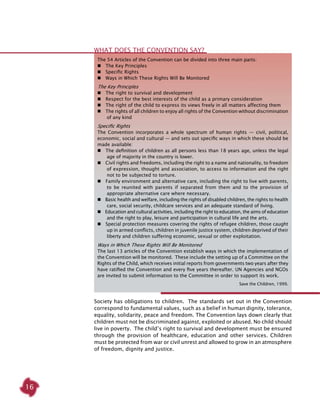
The 54 Articles of the Convention can be divided into three main parts:
  The Key Principles
  Specific Rights
  Ways in Which These Rights Will Be Monitored
The Key Principles
  The right to survival and development
  Respect for the best interests of the child as a primary consideration
  The right of the child to express its views freely in all matters affecting them
  The rights of all children to enjoy all rights of the Convention without discrimination
of any kind
Specific Rights
The Convention incorporates a whole spectrum of human rights — civil, political,
economic, social and cultural — and sets out specific ways in which these should be
made available:
  The definition of children as all persons less than 18 years age, unless the legal
age of majority in the country is lower.
  Civil rights and freedoms, including the right to a name and nationality, to freedom
of expression, thought and association, to access to information and the right
not to be subjected to torture.
  Family environment and alternative care, including the right to live with parents,
to be reunited with parents if separated from them and to the provision of
appropriate alternative care where necessary.
  Basic health and welfare, including the rights of disabled children, the rights to health
care, social security, childcare services and an adequate standard of living.
  Education and cultural activities, including the right to education, the aims of education
and the right to play, leisure and participation in cultural life and the arts.
  Special protection measures covering the rights of refugee children, those caught
up in armed conflicts, children in juvenile justice system, children deprived of their
liberty and children suffering economic, sexual or other exploitation.
Ways in Which These Rights Will Be Monitored
The last 13 articles of the Convention establish ways in which the implementation of
the Convention will be monitored. These include the setting up of a Committee on the
Rights of the Child, which receives initial reports from governments two years after they
have ratified the Convention and every five years thereafter. UN Agencies and NGOs
are invited to submit information to the Committee in order to support its work.
Save the Children, 1999.
What does the Convention Say?
Society has obligations to children. The standards set out in the Convention
correspond to fundamental values, such as a belief in human dignity, tolerance,
equality, solidarity, peace and freedom. The Convention lays down clearly that
children must not be discriminated against, exploited or abused. No child should
live in poverty. The child’s right to survival and development must be ensured
through the provision of healthcare, education and other services. Children
must be protected from war or civil unrest and allowed to grow in an atmosphere
of freedom, dignity and justice.
17
The CRC has not adopted the individual complaints procedure under
international law when domestic legal system does not provide relief. It is
based on the belief that the State rather than the individual is the subject
of international law. The lack of an ‘individual complaints procedure’ has
been viewed by many as one of the weaknesses of the Convention. This
means that children, or those representing children, cannot file complaints.
Relief to them will be available only in domestic courts, if the provisions of
the Convention have been incorporated, or transformed into domestic or
national law. The CRC addresses the problem of inaction or violation at
the national level by monitoring State performances through the reporting
procedures.
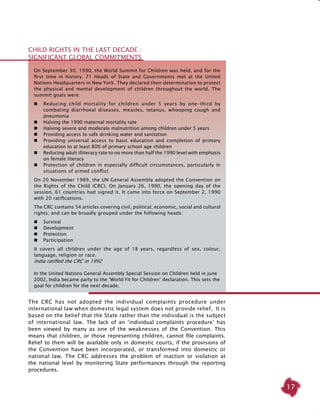
On September 30, 1990, the World Summit for Children was held, and for the
first time in history, 71 Heads of State and Governments met at the United
Nations Headquarters in New York. They declared their determination to protect
the physical and mental development of children throughout the world. The
summit goals were:
	 Reducing child mortality for children under 5 years by one-third by
combating diarrhoeal diseases, measles, tetanus, whooping cough and
pneumonia
	 Halving the 1990 maternal mortality rate
	 Halving severe and moderate malnutrition among children under 5 years
	 Providing access to safe drinking water and sanitation
	 Providing universal access to basic education and completion of primary
education to at least 80% of primary school age children
	 Reducing adult illiteracy rate to no more than half the 1990 level with emphasis
on female literacy
	 Protection of children in especially difficult circumstances, particularly in
situations of armed conflict
On 20 November 1989, the UN General Assembly adopted the Convention on
the Rights of the Child (CRC). On January 26, 1990, the opening day of the
session, 61 countries had signed it. It came into force on September 2, 1990
with 20 ratifications.
The CRC contains 54 articles covering civil, political, economic, social and cultural
rights; and can be broadly grouped under the following heads:
	 Survival
	 Development
	 Protection
	 Participation
It covers all children under the age of 18 years, regardless of sex, colour,
language, religion or race.
India ratified the CRC in 1992
In the United Nations General Assembly Special Session on Children held in June
2002, India became party to the ‘World Fit for Children’ declaration. This sets the
goal for children for the next decade.
CHILD RIGHTS IN THE LAST DECADE :
SIGNIFICANT GLOBAL COMMITMENTS
18
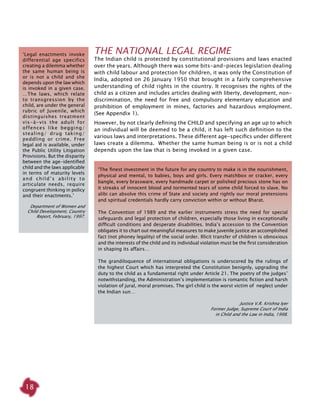
The National Legal Regime
The Indian child is protected by constitutional provisions and laws enacted
over the years. Although there was some bits-and-pieces legislation dealing
with child labour and protection for children, it was only the Constitution of
India, adopted on 26 January 1950 that brought in a fairly comprehensive
understanding of child rights in the country. It recognises the rights of the
child as a citizen and includes articles dealing with liberty, development, non-
discrimination, the need for free and compulsory elementary education and
prohibition of employment in mines, factories and hazardous employment.
(See Appendix 1).
However, by not clearly defining the CHILD and specifying an age up to which
an individual will be deemed to be a child, it has left such definition to the
various laws and interpretations. These different age-specifics under different
laws create a dilemma. Whether the same human being is or is not a child
depends upon the law that is being invoked in a given case.
‘The finest investment in the future for any country to make is in the nourishment,
physical and mental, to babies, boys and girls. Every matchbox or cracker, every
bangle, every brassware, every handmade carpet or polished precious stone has on
it streaks of innocent blood and tormented tears of some child forced to slave. No
alibi can absolve this crime of State and society and rightly our moral pretensions
and spiritual credentials hardly carry conviction within or without Bharat.
The Convention of 1989 and the earlier instruments stress the need for special
safeguards and legal protection of children, especially those living in exceptionally
difficult conditions and desperate disabilities. India’s accession to the Convention
obligates it to chart out meaningful measures to make juvenile justice an accomplished
fact (not phoney legality) of the social order. Illicit transfer of children is obnoxious
and the interests of the child and its individual violation must be the first consideration
in shaping its affairs…
The grandiloquence of international obligations is underscored by the rulings of
the highest Court which has interpreted the Constitution benignly, upgrading the
duty to the child as a fundamental right under Article 21. The poetry of the judges’
notwithstanding, the Administration’s implementation is romantic fiction and harsh
violation of jural, moral promises. The girl child is the worst victim of neglect under
the Indian sun…
Justice V.R. Krishna Iyer
Former Judge, Supreme Court of India
in Child and the Law in India, 1998.
‘Legal enactments invoke
differential age specifics
creating a dilemma whether
the same human being is
or is not a child and she
depends upon the law which
is invoked in a given case.
…The laws, which relate
to transgression by the
child, are under the general
rubric of Juvenile, which
distinguishes treatment
vis-à-vis the adult for
offences like begging/
stealing/ drug taking/
peddling or crime. Free
legal aid is available, under
the Public Utility Litigation
Provisions. But the disparity
between the age-identified
child and the laws applicable
in terms of maturity levels
and child’s ability to
articulate needs, require
congruent thinking in policy
and their enactments.’
Department of Women and
Child Development, Country
Report, February, 1997.
19
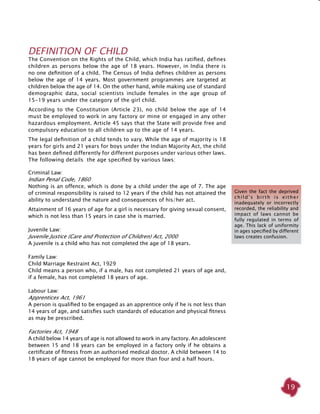
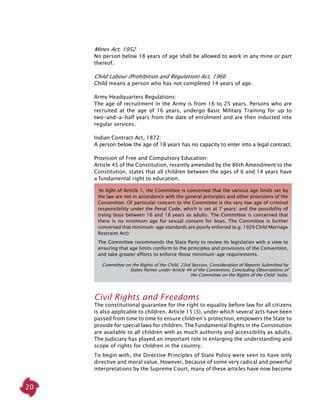
Definition of Child
The Convention on the Rights of the Child, which India has ratified, defines
children as persons below the age of 18 years. However, in India there is
no one definition of a child. The Census of India defines children as persons
below the age of 14 years. Most government programmes are targeted at
children below the age of 14. On the other hand, while making use of standard
demographic data, social scientists include females in the age group of
15-19 years under the category of the girl child.
According to the Constitution (Article 23), no child below the age of 14
must be employed to work in any factory or mine or engaged in any other
hazardous employment. Article 45 says that the State will provide free and
compulsory education to all children up to the age of 14 years.
The legal definition of a child tends to vary. While the age of majority is 18
years for girls and 21 years for boys under the Indian Majority Act, the child
has been defined differently for different purposes under various other laws.
The following details the age specified by various laws:
Criminal Law:
Indian Penal Code, 1860
Nothing is an offence, which is done by a child under the age of 7. The age
of criminal responsibility is raised to 12 years if the child has not attained the
ability to understand the nature and consequences of his/her act.
Attainment of 16 years of age for a girl is necessary for giving sexual consent,
which is not less than 15 years in case she is married.
Juvenile Law:
Juvenile Justice (Care and Protection of Children) Act, 2000
A juvenile is a child who has not completed the age of 18 years.
Family Law:
Child Marriage Restraint Act, 1929
Child means a person who, if a male, has not completed 21 years of age and,
if a female, has not completed 18 years of age.
Labour Law:
Apprentices Act, 1961
A person is qualified to be engaged as an apprentice only if he is not less than
14 years of age, and satisfies such standards of education and physical fitness
as may be prescribed.
Factories Act, 1948
A child below 14 years of age is not allowed to work in any factory. An adolescent
between 15 and 18 years can be employed in a factory only if he obtains a
certificate of fitness from an authorised medical doctor. A child between 14 to
18 years of age cannot be employed for more than four and a half hours.
Given the fact the deprived
child’s birth is either
inadequately or incorrectly
recorded, the reliability and
impact of laws cannot be
fully regulated in terms of
age. This lack of uniformity
in ages specified by different
laws creates confusion.
20
Mines Act, 1952
No person below 18 years of age shall be allowed to work in any mine or part
thereof.
Child Labour (Prohibition and Regulation) Act, 1966
Child means a person who has not completed 14 years of age.
Army Headquarters Regulations:
The age of recruitment in the Army is from 16 to 25 years. Persons who are
recruited at the age of 16 years, undergo Basic Military Training for up to
two-and-a-half years from the date of enrolment and are then inducted into
regular services.
Indian Contract Act, 1872:
A person below the age of 18 years has no capacity to enter into a legal contract.
Provision of Free and Compulsory Education:
Article 45 of the Constitution, recently amended by the 86th Amendment to the
Constitution, states that all children between the ages of 6 and 14 years have
a fundamental right to education.
Civil rights and Freedoms
The constitutional guarantee for the right to equality before law for all citizens
is also applicable to children. Article 15 (3), under which several acts have been
passed from time to time to ensure children’s protection, empowers the State to
provide for special laws for children. The Fundamental Rights in the Constitution
are available to all children with as much authority and accessibility as adults.
The Judiciary has played an important role in enlarging the understanding and
scope of rights for children in the country.
To begin with, the Directive Principles of State Policy were seen to have only
directive and moral value. However, because of some very radical and powerful
interpretations by the Supreme Court, many of these articles have now become
‘In light of Article 1, the Committee is concerned that the various age limits set by
the law are not in accordance with the general principles and other provisions of the
Convention. Of particular concern to the Committee is the very low age of criminal
responsibility under the Penal Code, which is set at 7 years; and the possibility of
trying boys between 16 and 18 years as adults. The Committee is concerned that
there is no minimum age for sexual consent for boys. The Committee is further
concerned that minimum-age standards are poorly enforced (e.g. 1929 Child Marriage
Restraint Act).
The Committee recommends the State Party to review its legislation with a view to
ensuring that age limits conform to the principles and provisions of the Convention,
and take greater efforts to enforce those minimum-age requirements.
Committee on the Rights of the Child, 23rd Session, Consideration of Reports Submitted by
States Parties under Article 44 of the Convention, Concluding Observations of
the Committee on the Rights of the Child: India.
21
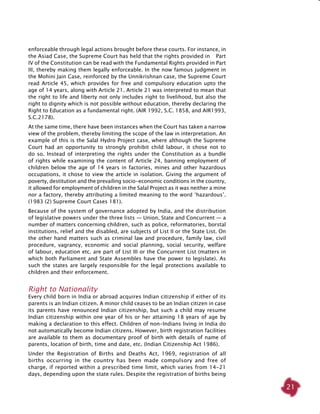
enforceable through legal actions brought before these courts. For instance, in
the Asiad Case, the Supreme Court has held that the rights provided in Part
IV of the Constitution can be read with the Fundamental Rights provided in Part
III, thereby making them legally enforceable. In the now famous judgment in
the Mohini Jain Case, reinforced by the Unnikrishnan case, the Supreme Court
read Article 45, which provides for free and compulsory education upto the
age of 14 years, along with Article 21. Article 21 was interpreted to mean that
the right to life and liberty not only includes right to livelihood, but also the
right to dignity which is not possible without education, thereby declaring the
Right to Education as a fundamental right. (AIR 1992, S.C. 1858, and AIR1993,
S.C.2178).
At the same time, there have been instances when the Court has taken a narrow
view of the problem, thereby limiting the scope of the law in interpretation. An
example of this is the Salal Hydro Project case, where although the Supreme
Court had an opportunity to strongly prohibit child labour, it chose not to
do so. Instead of interpreting the rights under the Constitution as a bundle
of rights while examining the content of Article 24, banning employment of
children below the age of 14 years in factories, mines and other hazardous
occupations, it chose to view the article in isolation. Giving the argument of
poverty, destitution and the prevailing socio-economic conditions in the country,
it allowed for employment of children in the Salal Project as it was neither a mine
nor a factory, thereby attributing a limited meaning to the word ‘hazardous’.
(1983 (2) Supreme Court Cases 181).
Because of the system of governance adopted by India, and the distribution
of legislative powers under the three lists — Union, State and Concurrent — a
number of matters concerning children, such as police, reformatories, borstal
institutions, relief and the disabled, are subjects of List II or the State List. On
the other hand matters such as criminal law and procedure, family law, civil
procedure, vagrancy, economic and social planning, social security, welfare
of labour, education etc. are part of List III or the Concurrent List (matters in
which both Parliament and State Assembles have the power to legislate). As
such the states are largely responsible for the legal protections available to
children and their enforcement.
Right to Nationality
Every child born in India or abroad acquires Indian citizenship if either of its
parents is an Indian citizen. A minor child ceases to be an Indian citizen in case
its parents have renounced Indian citizenship, but such a child may resume
Indian citizenship within one year of his or her attaining 18 years of age by
making a declaration to this effect. Children of non-Indians living in India do
not automatically become Indian citizens. However, birth registration facilities
are available to them as documentary proof of birth with details of name of
parents, location of birth, time and date, etc. (Indian Citizenship Act 1986).
Under the Registration of Births and Deaths Act, 1969, registration of all
births occurring in the country has been made compulsory and free of
charge, if reported within a prescribed time limit, which varies from 14-21
days, depending upon the state rules. Despite the registration of births being
22
compulsory, and production of birth certificates becoming a prerequisite
documentary proof in a number of instances such as school admissions,
obtaining ration cards etc. the rate of birth registration continues to be very
low. Several reasons, including lack of awareness due to illiteracy and high
rate of home-based deliveries have been attributed to this. The absence of a
birth certificate proves to be a major hindrance for many children in exercising
their rights. It denies them their right to identity, nationality and justice.
These include the right to gain admission into school, the right to be treated
as a juvenile and not an adult in case of neglect or of conflict with the law,
determination of the age of consent in the case of a working child or victim
of sexual abuse, and in several other situations where there are age-specific
special provisions for children.
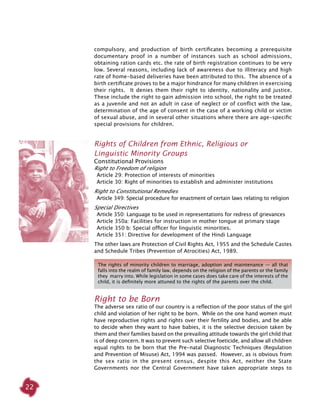
Rights of Children from Ethnic, Religious or
Linguistic Minority Groups
Constitutional Provisions
Right to Freedom of religion
  Article 29: Protection of interests of minorities
  Article 30: Right of minorities to establish and administer institutions
Right to Constitutional Remedies
  Article 349: Special procedure for enactment of certain laws relating to religion
Special Directives
  Article 350: Language to be used in representations for redress of grievances
  Article 350a: Facilities for instruction in mother tongue at primary stage
  Article 350 b: Special officer for linguistic minorities.
  Article 351: Directive for development of the Hindi Language
The other laws are Protection of Civil Rights Act, 1955 and the Schedule Castes
and Schedule Tribes (Prevention of Atrocities) Act, 1989.
The rights of minority children to marriage, adoption and maintenance — all that
falls into the realm of family law, depends on the religion of the parents or the family
they marry into. While legislation in some cases does take care of the interests of the
child, it is definitely more attuned to the rights of the parents over the child.
Right to be Born
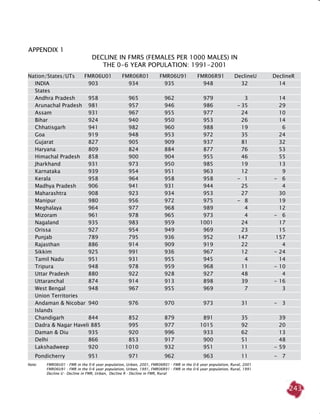
The adverse sex ratio of our country is a reflection of the poor status of the girl
child and violation of her right to be born. While on the one hand women must
have reproductive rights and rights over their fertility and bodies, and be able
to decide when they want to have babies, it is the selective decision taken by
them and their families based on the prevailing attitude towards the girl child that
is of deep concern. It was to prevent such selective foeticide, and allow all children
equal rights to be born that the Pre-natal Diagnostic Techniques (Regulation
and Prevention of Misuse) Act, 1994 was passed. However, as is obvious from
the sex ratio in the present census, despite this Act, neither the State
Governments nor the Central Government have taken appropriate steps to
23
control misuse of the sex selection procedure. This prompted the Centre for
Enquiry into Health and Allied Themes (CEHAT), Mahila Utkarsh Mandal (MASUM)
and Dr. Sabu M George to file a joint petition, following which the court passed
an order on 4 May 2000 (W.P (C) No. 301 of 2000) directing the Central and
State governments to undertake necessary action to implement the Act. The
final decision on the case is awaited.
Right to Family Environment
and Alternative Care
In the area of family law, the rights of the child within the family depend on
the religion to which the parents belong or marry into. Broadly, family laws
cover the rights of parents over custody and guardianship of children and the
rights of children to maintenance and inheritance.
Legal protection has been provided to children under the Indian Penal Code
(IPC), the Criminal Procedure Code (Cr.PC) and various other laws passed time
to time. Clearly, although legislation in some cases does take care of the
interests of the child and protects its rights within the family or with respect
to the family, most of it provides for the rights of parents and guardians
OVER the child rather than the other way round.
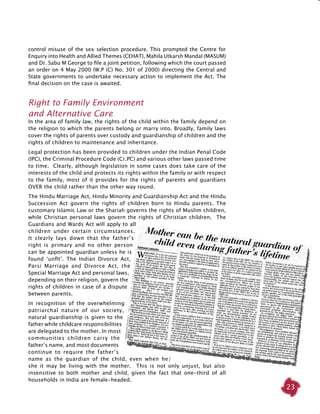
The Hindu Marriage Act, Hindu Minority and Guardianship Act and the Hindu
Succession Act govern the rights of children born to Hindu parents. The
customary Islamic Law or the Shariah governs the rights of Muslim children,
while Christian personal laws govern the rights of Christian children. The
Guardians and Wards Act will apply to all
children under certain circumstances.
It clearly lays down that the father’s
right is primary and no other person
can be appointed guardian unless he is
found ‘unfit’. The Indian Divorce Act,
Parsi Marriage and Divorce Act, the
Special Marriage Act and personal laws,
depending on their religion, govern the
rights of children in case of a dispute
between parents.
In recognition of the overwhelming
patriarchal nature of our society,
natural guardianship is given to the
father while childcare responsibilities
are delegated to the mother. In most
communities children carry the
father’s name, and most documents
continue to require the father’s
name as the guardian of the child, even when he/
she it may be living with the mother. This is not only unjust, but also
insensitive to both mother and child, given the fact that one-third of all
households in India are female-headed.
24
Under Muslim law, the father is the sole guardian of the child, although the
mother has the prime custody of the child up to a certain age. According to
Shia law, the mother’s right to custody of the child terminates when the child
is 2 years (or the child is weaned), while in Hanafi law this right is extended
till the age of seven. However, in both streams of Muslim law, the mother has
the right to the custody of a minor girl till she reaches puberty.
Right of Children Born
of ‘Illegal Marriages’
One of the biggest evidences that family law is much more oriented to adults
than to children is the categorisation of children as ‘legitimate’ and ‘Illegitimate’
depending on the status of the marriage or relationship of the parents. A child
born out of wedlock or of a void or illegal
marriage is considered ‘illegitimate’. All laws
make a distinction between ‘legitimate child’
and ‘illegitimate child’. Parsi, Muslim and
Christian children, if illegitimate, are not
entitled to any inheritance rights from their
father.
In the case of Hindu children, if the child
is born of a bigamous marriage or a void
marriage, he or she has the right to inherit
the father’s property, without, however, any
right over the property of paternal relatives.
In case there has been no ceremony of
marriage whatsoever, the child has no right
even over the father’s property. Thus Hindu
law categorises, and discriminates between,
two kinds of ‘illegitimacy’. While according
to the Hindu Minority and Guardianship,
‘Under all matrimonial statutes, the children are treated as part of ancillary proceed-
ings…The children are not considered independent parties to the proceedings.’
(DWCD, 1997). Any order regarding custody, education, maintenance or any other
matter can be made only when a petition is filed in the court, and if the petition is
dismissed no order can be passed by the court.
.
Children treated as Ancillary…
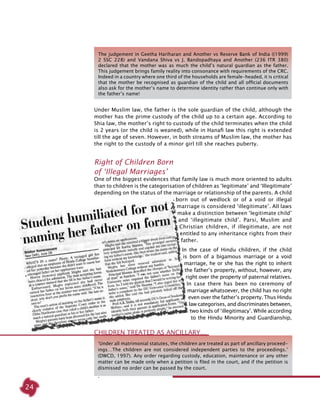
The judgement in Geetha Hariharan and Another vs Reserve Bank of India ((1999)
2 SSC 228) and Vandana Shiva vs J. Bandopadhaya and Another (236 ITR 380)
declared that the mother was as much the child’s natural guardian as the father.
This judgement brings family reality into consonance with requirements of the CRC.
Indeed in a country where one third of the households are female-headed, it is critical
that the mother be recognised as guardian of the child and all official documents
also ask for the mother’s name to determine identity rather than continue only with
the father’s name!
25
Act, 1956, the natural guardian of a boy and an unmarried girl is the father, and
after him the mother, in the case of the ‘illegitimate child’ the mother is the natural
guardian and after her, the father.
Thus whatever the law, children pay for the decisions taken by the parents and are
denied inheritance rights. What is worse is that a child born of rape is stigmatised
and treated as ‘illegitimate’, not only by society, but by law as well.
Right to Alternative Care
The right to alternative care, for children who have no parents or whose parents
are unable to provide the care and protection needed, is governed by the Juvenile
Justice (Care and Protection of Children) Act, 2000 and the adoption law, which
is determined by the religion of the adopting parents.
Though it is widely recognised that non-custodial remedies for alternative care
must be explored and custodial solutions must be the last resort, in practice
that is not the case. In 1997, in its report to the Committee on the Rights of the
Child the government admitted that assistance goes to residential institutions
and that more observation homes are set up each year. Even children of single
or destitute parents, who could otherwise be supported through other methods,
are admitted to these institutions.
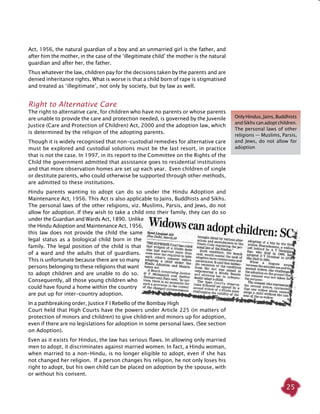
Hindu parents wanting to adopt can do so under the Hindu Adoption and
Maintenance Act, 1956. This Act is also applicable to Jains, Buddhists and Sikhs.
The personal laws of the other religions, viz. Muslims, Parsis, and Jews, do not
allow for adoption. If they wish to take a child into their family, they can do so
under the Guardian and Wards Act, 1890. Unlike
the Hindu Adoption and Maintenance Act, 1956,
this law does not provide the child the same
legal status as a biological child born in the
family. The legal position of the child is that
of a ward and the adults that of guardians.
This is unfortunate because there are so many
persons belonging to these religions that want
to adopt children and are unable to do so.
Consequently, all those young children who
could have found a home within the country
are put up for inter-country adoption.
In a pathbreaking order, Justice F I Rebello of the Bombay High
Court held that High Courts have the powers under Article 225 (in matters of
protection of minors and children) to give children and minors up for adoption,
even if there are no legislations for adoption in some personal laws. (See section
on Adoption).
Even as it exists for Hindus, the law has serious flaws. In allowing only married
men to adopt, it discriminates against married women. In fact, a Hindu woman,
when married to a non-Hindu, is no longer eligible to adopt, even if she has
not changed her religion. If a person changes his religion, he not only loses his
right to adopt, but his own child can be placed on adoption by the spouse, with
or without his consent.
OnlyHindus,Jains,Buddhists
and Sikhs can adopt children.
The personal laws of other
religions — Muslims, Parsis,
and Jews, do not allow for
adoption
26
In other ways too the Hindu Adoption and Maintenance Act is not child-focussed.
For instance it prohibits a person with a son, grandson or great grandson from
adopting a boy. It also prohibits the adoption of a girl if the parents have a
daughter or a granddaughter living with them. Perhaps such a clause was
included to prevent discrimination against a child in case of the presence of a
biological child of the same sex. In the case of siblings, as per a Supreme Court
judgement, they are rendered ineligible for adoption by the same parents due to
the contradiction between the judgement and the law. This clearly goes against
modern theories on adoption, which emphasise that families with biological
children have been found highly suitable for adoption, especially in case of
children with special needs.
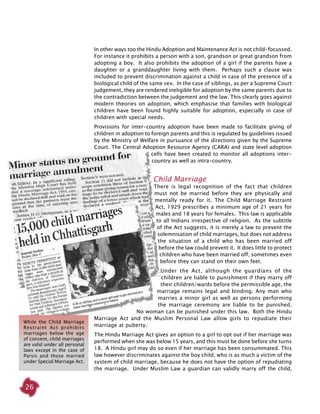
Provisions for inter-country adoption have been made to facilitate giving of
children in adoption to foreign parents and this is regulated by guidelines issued
by the Ministry of Welfare in pursuance of the directions given by the Supreme
Court. The Central Adoption Resource Agency (CARA) and state level adoption
cells have been created to monitor all adoptions inter-
country as well as intra-country.
Child Marriage
There is legal recognition of the fact that children
must not be married before they are physically and
mentally ready for it. The Child Marriage Restraint
Act, 1929 prescribes a minimum age of 21 years for
males and 18 years for females. This law is applicable
to all Indians irrespective of religion. As the subtitle
of the Act suggests, it is merely a law to prevent the
solemnisation of child marriages, but does not address
the situation of a child who has been married off
before the law could prevent it. It does little to protect
children who have been married off, sometimes even
before they can stand on their own feet.
Under the Act, although the guardians of the
children are liable to punishment if they marry off
their children/wards before the permissible age, the
marriage remains legal and binding. Any man who
marries a minor girl as well as persons performing
the marriage ceremony are liable to be punished.
No woman can be punished under this law. Both the Hindu
Marriage Act and the Muslim Personal Law allow girls to repudiate their
marriage at puberty.
The Hindu Marriage Act gives an option to a girl to opt out if her marriage was
performed when she was below 15 years, and this must be done before she turns
18. A Hindu girl may do so even if her marriage has been consummated. This
law however discriminates against the boy child, who is as much a victim of the
system of child marriage, because he does not have the option of repudiating
the marriage. Under Muslim Law a guardian can validly marry off the child,
While the Child Marriage
Restraint Act prohibits
marriages below the age
of consent, child marriages
are valid under all personal
laws except in the case of
Parsis and those married
under Special Marriage Act.
27
although the child has the right to repudiate it on puberty. Needless to say,
given the discriminated status of women in society, in practice it is highly unlikely
that this will happen. Their ability to know the law and exercise this right by
taking a stand against their guardians is highly improbable. As for Christian
law, marriage below the age of consent is valid, provided it is with the consent
of the guardian.
Child Abuse within the Family
Inadequate as they may be, there are still some laws that address sexual offences
against children committed by outsiders or non-family members. But there is
very little protection available against violence by family members. Nor is there
any law against incest.
Right to Development
Education
Article 45 of the Constitution promises, ‘The State shall endeavour to provide,
within a period of 10 years from commencement of the Constitution, free and
compulsory education for all children until they complete the age of fourteen
years.’ After a delay of almost four decades, the government made a half-hearted
attempt to fulfil this commitment by passing the 93rd Constitution Amendment
Bill (86th Amendment to the Constitution) making education a fundamental
right for all children in the age group of 6 to 14 years ‘in such manner as the
State may, by law, determine’. This means that children of the critical 0-6 age
group have been left out. All that the Amendment promises is that ‘The State
shall endeavour to provide early childhood care and education for all children
until they complete the age of six years’.
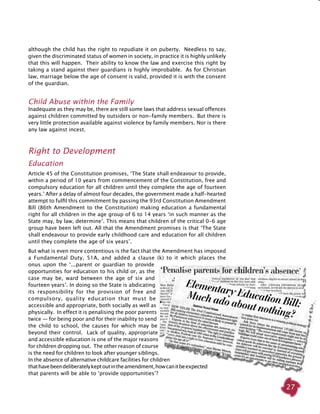
But what is even more contentious is the fact that the Amendment has imposed
a Fundamental Duty, 51A, and added a clause (k) to it which places the
onus upon the ‘...parent or guardian to provide
opportunities for education to his child or, as the
case may be, ward between the age of six and
fourteen years’. In doing so the State is abdicating
its responsibility for the provision of free and
compulsory, quality education that must be
accessible and appropriate, both socially as well as
physically. In effect it is penalising the poor parents
twice — for being poor and for their inability to send
the child to school, the causes for which may be
beyond their control. Lack of quality, appropriate
and accessible education is one of the major reasons
for children dropping out. The other reason of course
is the need for children to look after younger siblings.
In the absence of alternative childcare facilities for children
thathavebeendeliberatelykeptoutintheamendment,howcanitbeexpected
that parents will be able to ‘provide opportunities’?
28
In 1986 the government had announced the National Policy on Education, which
was revised in 1992. In pursuance of its policy, the government has launched a
number of schemes such as Operation Black Board, District Primary Education
Programme, Sarva Shiksha Abhiyan, Education Guarantee Scheme and Alternative
and Innovative Education, Mid-day Meal Scheme, Lok Jumbish, Shiksha Karmi
and Janshala.
To address Early Childhood Care and Education (ECCE), which has been given
priority in the National Policy on Education, the government has launched
several programmes and schemes, the most important being the Integrated
Childhood Development Scheme. The labour laws include provisions for
childcare or crèches for workers, but most of them are applicable to the
organised sector such as factories, mines and plantations. As regards
crèches for the unorganised categories, such a provision can be found only
in some legislations, such as the Contract Labour Act (1970), the Inter-State
Migrant Labour Act (1980), and the Beedi and Cigar Workers Act (1966). This
means that the vast majority of children of workers who belong to the ever
burgeoning unorganised or informal sector have been ignored.
According to the report of the Department of Women and Child Development,
‘...The corporate sector does not recognise the childcare needs of the father.
In fact, this provision discourages employers from employing women. On the
other hand, there is an under-utilisation of the existing crèches because fathers
who need it for their children cannot use it.’ (DWCD, Country Report, 1997).
In the absence of any legal commitment to childcare after the 86th
Amendment to the Constitution, the fear that the State may not feel as
motivated to ensure its provision for all children in the age group of 0 to 6
years seems completely justified.
Beating and abuse, physical as well as mental torture faced by the students
in schools is one of the reasons for the high dropout rate. It goes with the
culture of our country wherein there is a power relationship between the
adult and the child, and the use of force against the child is part of this
relationship. It is well established that corporal punishment is detrimental to
the child’s growth and development and is in violation of its rights. There
are several instances of physical
and mental damage to children as
a result of the punishment given.
Yet there is no comprehensive
national law banning it. Several
states have even enacted laws
dealing with it. Moreover the
National Education Policy, 1992
clearly states that corporal
punishment should be firmly
excluded from the education
system. Despite that, however,
there are several cases that have
been registered against teachers
in schools for use of violence.
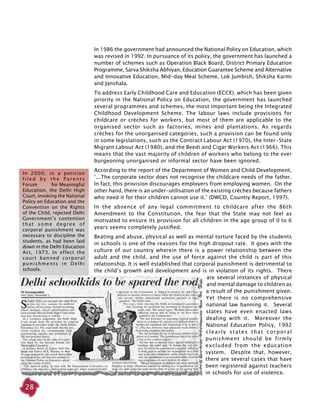
In 2000, in a petition
f i l e d b y t h e P a r e n t s
Forum for Meaningful
Education, the Delhi High
Court, invoking the National
Policy on Education and the
Convention on the Rights
of the Child, rejected Delhi
Government’s contention
that some degree of
corporal punishment was
necessary to discipline the
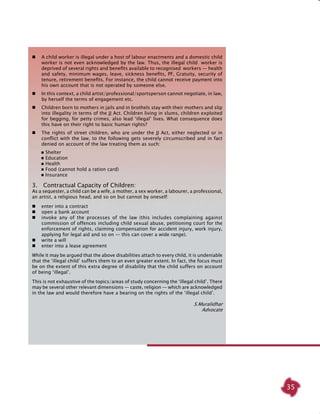
students, as had been laid
down in the Delhi Education
Act, 1973. In effect the
court banned corporal
punishments in Delhi
schools.
29
Health
The Constitution of India, in the Directive Principles of State Policy, lays down
that the State shall regard raising of the level of nutrition and standard of living
of its people and improvement of public health as among its primary duties.
(Article 39 (e) and (f) and Article 47). Although when interpreted in a holistic
manner it is an integral part of the Right to Life (Article 21); the right to health
by itself is not a fundamental right of all citizens.
There is no law addressing the issue of public health in general, although
there is a National Policy on Health (2002). Several committees such as the
Bhore Committee (1946) and the National Development Council Committee
(1993) have recommended strategies for improving the status of health of the
people. At this point it is interesting to note that there is no specific section
in the National Health Policy that deals with children’s health. Their concerns
are part of the generic approach taken by the policy.
The National Policy for Children (1974) spells out the constitutional commitments
of the State in the following manner: ‘It shall be the policy of the State to provide
adequate services to children, both before and after birth and through the period
of growth, to ensure their full physical, mental and social development. The
State shall progressively increase the scope of such services so that, within a
reasonable time, all children in the country enjoy optimum conditions for their
balanced growth.’
The Government of India has announced its National Health Policy 2002.
The policy does not address children’s health needs specifically. Their health
concerns have been addressed as part of the overall guidelines or part of the
section dealing with women’s health — yet another example of the lack of child
focus in our planning and implementation.
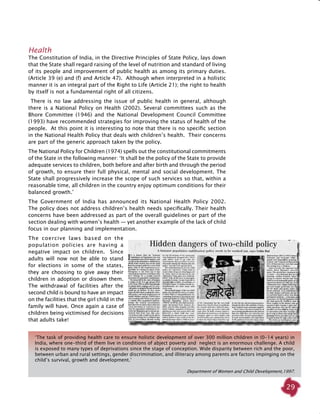
The coercive laws based on the
population policies are having a
negative impact on children. Since
adults will now not be able to stand
for elections in some of the states,
they are choosing to give away their
children in adoption or disown them.
The withdrawal of facilities after the
second child is bound to have an impact
on the facilities that the girl child in the
family will have. Once again a case of
children being victimised for decisions
that adults take!
‘The task of providing health care to ensure holistic development of over 300 million children in (0-14 years) in
India, where one-third of them live in conditions of abject poverty and neglect is an enormous challenge. A child
is exposed to many types of deprivations since the stage of conception. Wide disparity between rich and the poor,
between urban and rural settings, gender discrimination, and illiteracy among parents are factors impinging on the
child’s survival, growth and development.’
Department of Women and Child Development,1997.
30
Children in Need of Protection
Child and the Criminal Law
The Indian Penal Code of 1860 defines various categories of offences and
punishment for children. It also contains a chapter on general exceptions, and
the only section in the Code that mentions children is the clause that states that
an act of offence committed by a child below seven is not an offence (S.82). An
act committed by a child above the age of seven, but below twelve, may constitute
an offence if committed by a child with sufficient maturity to understand and
judge the nature and consequences of its conduct when committing the act. A
child accused of such an offence is dealt with under the recently amended Juvenile
Justice Act, 2000, which has raised the age of the ‘child’ to 18 years. Meanwhile
the Code of Criminal Procedure, 1973 lays down that a child can neither be
summoned to a police station, nor be detained in a police station or prison.
While there are specific provisions dealing with children accused of a criminal act,
there are no specific legal provisions for dealing with children who are victims of
crimes except kidnapping and procurement (Section 359, 361, 363, 366 (A and
B) and rape of women and children in custody (Section 376-C). The Act also
creates a special offence in the case of kidnapping of any child below the age of
10 years for the purpose of taking any movable property from its person (Section
369).
In all other cases, children are treated at par with adults. Hence there are no
special provisions for dealing with child rape or other forms of violence. However,
consent cannot be a defence in the case of children below the age of 16 years.
Marital rape is recognised only if the child is below 15 years. There are no special
provisions for addressing sexual violence against boys except under Section
377, which deals with homosexuality, anal sex, etc. and is termed as ‘unnatural
offences’.
Children may be called in to give evidence under the Indian Evidence Act, 1872
since there is no minimum age stipulated. The courts have held that a child of
tender years cannot take the oath, but this does not preclude the child from giving
evidence. If the child is able to understand the question and make a statement, the
evidence is recorded. Children are generally called as witnesses only in criminal
cases where they may be witnesses or victims, whereas the law exempts them
from civil liability. Where the child is incapable of giving evidence, the courts can
act on testimony of adults, viz. parents, relatives or someone who can speak on
behalf of the child.
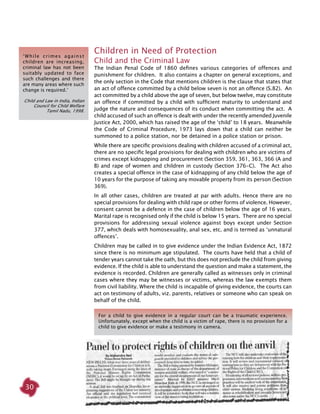
‘While crimes against
children are increasing,
criminal law has not been
suitably updated to face
such challenges and there
are many areas where such
change is required.’
Child and Law in India, Indian
Council for Child Welfare
Tamil Nadu, 1998.
For a child to give evidence in a regular court can be a traumatic experience.
Unfortunately, except when the child is a victim of rape, there is no provision for a
child to give evidence or make a testimony in camera.
31
Working Children in Situations of Exploitation
The Constitution contains provisions for protection of children from work,
which is beyond their capacity and/or involves long hours of work interfering
with their normal growth — education, recreation, rest and overall physical
and mental development. The provisions relating to age of admission to
employment and regulation of working hours form a part of the relevant labour
and industrial laws such as the Mines Act, 1952, the Plantations Act, 1951,
the Beedi and Cigar Workers (Conditions of Employment) Act, 1966 and the
Merchant Shipping Act, 1958.
The Children (Pledging of Labour) Act, 1933 was enacted before independence
and continues to exist in the statute books, as does the problem of pledging
of children for labour. However, no prosecution is known to have been made
using this law. The punishments and penalties under this law are outdated
and toothless. It does not provide for imprisonment, and only imposes a
fine for the heinous act of pledging a child, that too a sum ranging between
a ridiculous Rs.50 and Rs.200. The enactment of the Bonded Labour System
(Abolition) Act in 1976, however, provided some teeth to the legal provisions
dealing with pledging of children for labour. Section 3 of this Act has overriding
effect over other enactments on the subject and the penalties imposed are
more rigorous.
Thereafter, in 1986, the Child Labour Prohibition and Regulation Act was
enacted to specifically address the situation of children in labour. However, as
has been detailed later in the chapter on child labour, this law is inadequate
both in its understanding and the framework that it provides for dealing with
the problem of child labour. By distinguishing between hazardous and non-
hazardous forms of labour, and identifying certain processes and occupations
from which children are prohibited from working, it leaves out a large range
of activities that children are engaged in and are exploited and abused. The
large-scale exploitation and abuse of children employed in domestic work
and hotels are cases in point.
In fact the anomaly exists in the Convention on the Rights of the Child too.
While Article 32(1) of the Convention states that children must be protected
from economic exploitation, clause 2 of the same article requires States Parties
to provide for appropriate regulation of hours and conditions of employment.
Not only that, it also requires States Parties to provide for a minimum age for
admission to employment, ignoring the very objective of the Convention to
recognise, promote and protect the rights of all persons below 18 years of age.
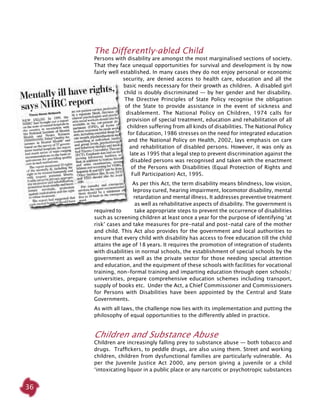
In the context of children who are victims of economic exploitation, it is impor-
tant to reflect on the ILO Convention 182 which seeks to place a ban on children
in ‘worst forms of labour’ to include children in prostitution. This protocol needs
careful examination. Like the child labour Act it is making a distinction between
labour that is hazardous and non-hazardous. Indeed, what is even more worrying
is the inclusion of children trafficked and forced into ‘prostitution’ as they most
often are, as a form of work or labour. In fact, by calling it work there is a degree
of legitimacy and legality being accorded to the criminal act of pushing children
into prostitution!
32
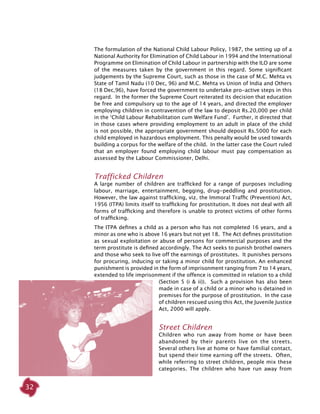
The formulation of the National Child Labour Policy, 1987, the setting up of a
National Authority for Elimination of Child Labour in 1994 and the International
Programme on Elimination of Child Labour in partnership with the ILO are some
of the measures taken by the government in this regard. Some significant
judgements by the Supreme Court, such as those in the case of M.C. Mehta vs
State of Tamil Nadu (10 Dec, 96) and M.C. Mehta vs Union of India and Others
(18 Dec,96), have forced the government to undertake pro-active steps in this
regard. In the former the Supreme Court reiterated its decision that education
be free and compulsory up to the age of 14 years, and directed the employer
employing children in contravention of the law to deposit Rs.20,000 per child
in the ‘Child Labour Rehabilitation cum Welfare Fund’. Further, it directed that
in those cases where providing employment to an adult in place of the child
is not possible, the appropriate government should deposit Rs.5000 for each
child employed in hazardous employment. This penalty would be used towards
building a corpus for the welfare of the child. In the latter case the Court ruled
that an employer found employing child labour must pay compensation as
assessed by the Labour Commissioner, Delhi.
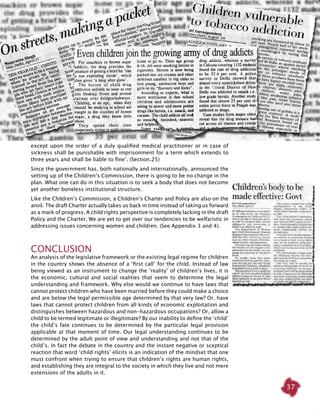
Trafficked Children
A large number of children are trafficked for a range of purposes including
labour, marriage, entertainment, begging, drug-peddling and prostitution.
However, the law against trafficking, viz. the Immoral Traffic (Prevention) Act,
1956 (ITPA) limits itself to trafficking for prostitution. It does not deal with all
forms of trafficking and therefore is unable to protect victims of other forms
of trafficking.
The ITPA defines a child as a person who has not completed 16 years, and a
minor as one who is above 16 years but not yet 18. The Act defines prostitution
as sexual exploitation or abuse of persons for commercial purposes and the
term prostitute is defined accordingly. The Act seeks to punish brothel owners
and those who seek to live off the earnings of prostitutes. It punishes persons
for procuring, inducing or taking a minor child for prostitution. An enhanced
punishment is provided in the form of imprisonment ranging from 7 to 14 years,
extended to life imprisonment if the offence is committed in relation to a child
(Section 5 (i & ii)). Such a provision has also been
made in case of a child or a minor who is detained in
premises for the purpose of prostitution. In the case
of children rescued using this Act, the Juvenile Justice
Act, 2000 will apply.
Street Children
Children who run away from home or have been
abandoned by their parents live on the streets.
Several others live at home or have familial contact,
but spend their time earning off the streets. Often,
while referring to street children, people mix these
categories. The children who have run away from
33
home or have been pushed on to the streets by circumstances see the streets
as their home. They may have some family ties, but these are infrequent and
inadequate. There are some others who have been abandoned or have got
lost on the streets, i.e. are missing children, and have lost all contact with
their families. All these are children OF the streets, and the children who may
be living at home but spend most of the time on the streets, or have familial
contact, are children ON the street. While both categories of children are
vulnerable, the second category has the protection of a family or a home to
go back to. Street children are those who live and earn on the streets. The
provisions of the Juvenile Justice Act, 2000 are applicable to street children
who fall into the category of neglected or socially maladjusted children as
per the law. The government has recognised street children as a category
needing special attention. The National Policy for children 1974 as well as the
National Plan of Action, 1992 addressed the issue of street children through an
Integrated Programme for Street Children launched in 1992. The programme
aims to prevent destitution of children and facilitate their withdrawal from the
streets. However, as it stands, the solutions visualised are mainly custodial in
nature or undertaken in partnership with NGOs.
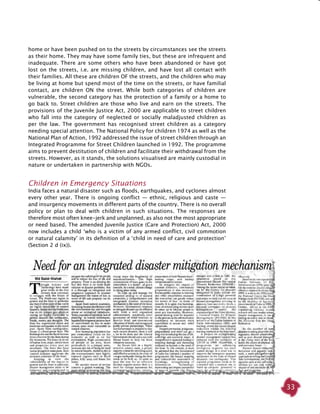
Children in Emergency Situations
India faces a natural disaster such as floods, earthquakes, and cyclones almost
every other year. There is ongoing conflict — ethnic, religious and caste —
and insurgency movements in different parts of the country. There is no overall
policy or plan to deal with children in such situations. The responses are
therefore most often knee-jerk and unplanned, as also not the most appropriate
or need based. The amended Juvenile Justice (Care and Protection) Act, 2000
now includes a child ‘who is a victim of any armed conflict, civil commotion
or natural calamity’ in its definition of a ‘child in need of care and protection’
(Section 2 d (ix)).
34
The ‘illegal’ child!
There are many situations in which children find themselves to be declared non-
persons by the law (as it stands in India) and therefore suffer severe deprivations of
basic human rights.
1.  Children Born ‘outside’ Marriage:
Children born to mothers who have not been ‘married’ legally to their husbands
are not entitled in law to inherit the property of the father. The Hindu Marriage Act
1955 (S.16) only recognises those children who have been born to parents whose
marriage has been performed according to the recognised modes of marriage but
is void only because an earlier valid marriage still subsists. In other words, children
born to a man cohabiting with a mistress are ‘illegal’ and not entitled to maintenance,
inheritance etc. The child therefore gets labelled out of rights for no voluntary act of
the child. Some courts have tried taking a positive approach by declaring that long
cohabitation of a man and a woman leads to a presumption of marriage. However,
these pronouncements are few and far between, inconsistent and leave the law in
a nebulous state since the written law (the statute) does not yet recognise these
concepts. The following questions need to be addressed:
	 How does it comport with the right of human dignity to be born ‘illegal’, having
done nothing to earn the label?
	 What is the position vis-à-vis the children of single mothers, surrogate mothers?
Further interesting questions may arise in the context of artificial insemination
— both where the identity of the donor is known and unknown. How does this
affect the right of the child to know the donor, to be recognised as the child of
that donor, etc?
	 What is the position in relation to the personal laws of Muslims, Christians, Parsis
and Jews? What are the extant customary Tribal laws in this regard?
	 Does the child have an option (particularly in contexts like S.2 (Explanation of
the Hindu Marriage Act, 1955) not to have a religion and what is the law in such
a context? For instance, what would be the position vis-à-vis an orphan child?
2.  Other States of ‘Illegality’
The Child Marriage Restraint Act punishes those who perform child marriages. Under
Section 11 of the Hindu Marriage Act, 1955, the marriage of a groom under the age
of 21 and a bride under 18 is void. The child spouse is therefore in that capacity an
‘illegal’ person although such spouse would be in law bound to discharge obligations,
for instance, in the context of maintenance, and restitution of conjugal rights. In this
context, the anomaly in S.375 (Exception) read with S.376 (1) and 376A may be noticed.
Where the wife is below 12, the punishment for rape by her husband is 7 years, and
between 12 and 15 it gets reduced to 2 years. Where the wife is between 15 and 18,
and therefore still a child, forcible sexual intercourse by her husband is not rape at all.
Thus, the illegal spouse suffers further deprivations under the criminal law.
The child-mother cannot by herself invoke the provisions of the Medical Termination
of Pregnancy Act. Thus, as an ‘illegal’ mother, she is deprived of her right to health
and her right of choice of motherhood. It would be interesting to examine the rights
and obligations of the ‘illegal’ child-husband and child-father.
35
	 A child worker is illegal under a host of labour enactments and a domestic child
worker is not even acknowledged by the law. Thus, the illegal child worker is
deprived of several rights and benefits available to recognised workers — health
and safety, minimum wages, leave, sickness benefits, PF, Gratuity, security of
tenure, retirement benefits. For instance, the child cannot receive payment into
his own account that is not operated by someone else.
	 In this context, a child artist/professional/sportsperson cannot negotiate, in law,
by herself the terms of engagement etc.
	 Children born to mothers in jails and in brothels stay with their mothers and slip
into illegality in terms of the JJ Act. Children living in slums, children exploited
for begging, for petty crimes, also lead ‘illegal’ lives. What consequence does
this have on their right to basic human rights?
	 The rights of street children, who are under the JJ Act, either neglected or in
conflict with the law, to the following gets severely circumscribed and in fact
denied on account of the law treating them as such:
	  Shelter
	  Education
	  Health
	  Food (cannot hold a ration card)
	  Insurance
3.  Contractual Capacity of Children:
As a sequester, a child can be a wife, a mother, a sex worker, a labourer, a professional,
an artist, a religious head, and so on but cannot by oneself:
	 enter into a contract
	 open a bank account
	 invoke any of the processes of the law (this includes complaining against
commission of offences including child sexual abuse, petitioning court for the
enforcement of rights, claiming compensation for accident injury, work injury,
applying for legal aid and so on — this can cover a wide range).
	 write a will
	 enter into a lease agreement
While it may be argued that the above disabilities attach to every child, it is undeniable
that the ‘illegal child’ suffers them to an even greater extent. In fact, the focus must
be on the extent of this extra degree of disability that the child suffers on account
of being ‘illegal’.
This is not exhaustive of the topics/areas of study concerning the ‘illegal child’. There
may be several other relevant dimensions — caste, religion — which are acknowledged
in the law and would therefore have a bearing on the rights of the ‘illegal child’.
S.Muralidhar
Advocate
36
The Differently-abled Child
Persons with disability are amongst the most marginalised sections of society.
That they face unequal opportunities for survival and development is by now
fairly well established. In many cases they do not enjoy personal or economic
security, are denied access to health care, education and all the
basic needs necessary for their growth as children. A disabled girl
child is doubly discriminated — by her gender and her disability.
The Directive Principles of State Policy recognise the obligation
of the State to provide assistance in the event of sickness and
disablement. The National Policy on Children, 1974 calls for
provision of special treatment, education and rehabilitation of all
children suffering from all kinds of disabilities. The National Policy
for Education, 1986 stresses on the need for integrated education
and the National Policy on Health, 2002, lays emphasis on care
and rehabilitation of disabled persons. However, it was only as
late as 1995 that a legal step to prevent discrimination against the
disabled persons was recognised and taken with the enactment
of the Persons with Disabilities (Equal Protection of Rights and
Full Participation) Act, 1995.
As per this Act, the term disability means blindness, low vision,
leprosy cured, hearing impairment, locomotor disability, mental
retardation and mental illness. It addresses preventive treatment
as well as rehabilitative aspects of disability. The government is
required to take appropriate steps to prevent the occurrence of disabilities
such as screening children at least once a year for the purpose of identifying ‘at
risk’ cases and take measures for pre-natal and post-natal care of the mother
and child. This Act also provides for the government and local authorities to
ensure that every child with disability has access to free education till the child
attains the age of 18 years. It requires the promotion of integration of students
with disabilities in normal schools, the establishment of special schools by the
government as well as the private sector for those needing special attention
and education, and the equipment of these schools with facilities for vocational
training, non-formal training and imparting education through open schools/
universities, prepare comprehensive education schemes including transport,
supply of books etc. Under the Act, a Chief Commissioner and Commissioners
for Persons with Disabilities have been appointed by the Central and State
Governments.
As with all laws, the challenge now lies with its implementation and putting the
philosophy of equal opportunities to the differently abled in practice.
Children and Substance Abuse
Children are increasingly falling prey to substance abuse — both tobacco and
drugs. Traffickers, to peddle drugs, are also using them. Street and working
children, children from dysfunctional families are particularly vulnerable. As
per the Juvenile Justice Act 2000, any person giving a juvenile or a child
‘intoxicating liquor in a public place or any narcotic or psychotropic substances
37
except upon the order of a duly qualified medical practitioner or in case of
sickness shall be punishable with imprisonment for a term which extends to
three years and shall be liable to fine’. (Section.25)
Since the government has, both nationally and internationally, announced the
setting up of the Children’s Commission, there is going to be no change in the
plan. What one can do in this situation is to seek a body that does not become
yet another boneless institutional structure.
Like the Children’s Commission, a Children’s Charter and Policy are also on the
anvil. The draft Charter actually takes us back in time instead of taking us forward
as a mark of progress. A child rights perspective is completely lacking in the draft
Policy and the Charter. We are yet to get over our tendencies to be welfaristic in
addressing issues concerning women and children. (See Appendix 3 and 4).
Conclusion
An analysis of the legislative framework or the existing legal regime for children
in the country shows the absence of a ‘first call’ for the child. Instead of law
being viewed as an instrument to change the ‘reality’ of children’s lives, it is
the economic, cultural and social realities that seem to determine the legal
understanding and framework. Why else would we continue to have laws that
cannot protect children who have been married before they could make a choice
and are below the legal permissible age determined by that very law? Or, have
laws that cannot protect children from all kinds of economic exploitation and
distinguishes between hazardous and non-hazardous occupations? Or, allow a
child to be termed legitimate or illegitimate? By our inability to define the ‘child’
the child’s fate continues to be determined by the particular legal provision
applicable at that moment of time. Our legal understanding continues to be
determined by the adult point of view and understanding and not that of the
child’s. In fact the debate in the country and the instant negative or sceptical
reaction that word ‘child rights’ elicits is an indication of the mindset that one
must confront when trying to ensure that children’s rights are human rights,
and establishing they are integral to the society in which they live and not mere
extensions of the adults in it.
38
ApPendix 1
INDIA’S COMMITMENT TO CHILDREN
International Commitments
	  	 Universal Children’s Day, 1957
	 	 UN Declaration on the Rights of the Child, 1959
	 	 International Year of the Child, 1979
	 	 UN Convention on the Rights of the Child, 1989 (Ratified by India in 	
	 1992)
	 	 World Conference on Education for All, 1990
	 	 SAARC Decade of the Girl Child 1991-2000
	 	 The Global Conference on Water and Sanitation, 1990
	 	 World fit for Children, 2002
	 	 SAARC Convention on Preventing and Combating Trafficking in
Women 		 and Children for Prostitution, 2002
National Commitments
Constitutional Provisions
Article 15	 ...not discriminate against any citizen...(3) nothing in this article
shall prevent the state from making special provision for women
and children.
Article 21	 ...no person shall be deprived of his life and liberty...
Article 23	 Traffic in human beings and begging and other similar forms of
forced labour are prohibited...
Article 24	 No child below the age of fourteen years shall be employed to
work...in any hazardous employment.
Article 39(e)	 ... the tender age of children are not abused and that citizens are
not forced by economic necessity to enter avocations unsuited
to their age or strength.
Article 39 (f)	 ... children are given opportunities and facilities to develop in
a healthy manner and in conditions of freedom and dignity and
that childhood and youth are protected against exploitation and
against moral and material abandonment.
Article 42	 ...for securing just and humane conditions of work and maternity
relief.
Article 45	 ... free and compulsory education for all children until they
complete the age of fourteen years.
Article 46	 ...promote ... educational...interests of the weaker sections of
the people ....protect them from social injustice and all forms of
exploitation.
Article 47	 ...raise the level of nutrition and standard of living of its people
and the improvement of public health....
39
Laws
1890	 Guardians and Wards Act
1929	 Child Marriage Restraint Act (amended in 1979)
1948	 Factories Act (amended in 1949, 1950 and 1954)
1956	 Hindu Adoption and Maintenance Act
1957	 Immoral Traffic (Prevention) Act (amended in 1986)
1958	 Probation of Offenders Act
1960	 Orphanages and Other Charitable Homes (Supervision and
Control) Act
1986	 Child Labour (Prohibition and Regulation) Act
1992	 Infant Milk Substitutes, Feeding Bottles and Infant Foods
(Regulation of Production, Supply and Distribution) Act
1994	 Pre-natal Diagnostic Techniques (Regulation and Prevention of 	
Misuse) Act
1996	 Persons with Disabilities (Equal Protection of Rights and Full
Participation) Act
2000	 Juvenile Justice (Care and Protection of Children) Act
Policies
1974	 National Policy for Children
1986	 National Policy on Education
1987	 National Policy on Child Labour
1993	 National Nutrition Policy	
2002	 National Health Policy
Strategic Programmes
* National Plan of Action for the SAARC Decade of the Girl Child (1999-2000),
1992
40
Appendix 2
DRAFT BILL ON NATIONAL COMMISSION FOR
CHILDREN, POLICY AND CHARTER:
SOME CONCERNS
Draft Bill on National Commission for Children
1. 	 The Commission must have its basis in the Constitution of India to ensure
the necessary statutory status and powers to it. The Commission must have
statutory powers to investigate violations, take legal action, issue reports,
be consulted by government and other bodies, contribute an independent
view in development of child impact assessments and be consulted over
reporting to the CRC Committee.
2. 	 The aims and objectives of such a body must necessarily include —
influencing policy-makers and practitioners to take greater account of
human rights of children; promoting respect for the views of children;
raising awareness of child rights among children and adults; and, ensuring
that children have effective means of redress when their rights are
violated.
3. 	 While India is legally bound by the Convention on the Rights of the Child,
there must be a national mandate for children and the proposed Children’s
Commission. What will be the mandate for the proposed Children’s
Commission? There is no uniformity in the national laws relating to children
or for that matter various policy commitments contained in the National
Education Policy, the National Health Policy, the National Nutrition Policy,
the National Child Labour Policy, the National Plan of Action etc.
4. 	 As with the Policy and Charter, the ‘Child/Children’ must be clearly defined.
Any new law must necessarily follow the framework of the CRC wherein
the child has been defined as persons below the age of 18 years.
5. 	 Transparency must be built into the draft bill. Going public, holding
briefings and organising forums for public participation must be a clearly
stated mandate for the Children’s Commission.
6. 	 The Commission needs to be accountable to the children for whom it was
established by publishing reports that they can understand and encouraging
their involvement in monitoring and evaluating their functions, and being
open to public scrutiny. There needs to be mechanisms built in that will
ensure the participation/involvement and accessibility of/for children.
7. 	 How the Commission proposes to address age specific needs of children
should be clearly highlighted.
8. 	 The Commission must be allowed to INVESTIGATE and INTERVENE and
visits for investigation WITHOUT intimation.
41
9. 	 It must have wide powers to perform such other functions as it may
consider necessary for the promotion and PROTECTION of Child rights.
10. 	 The Commission should be able to utilise the services of any
reliable agency without always with the concurrence of the Central
Government or the State Government. The need perhaps is to ensure
that the Commission works in co-ordination and partnership with the
government. The very foundation of the Commission should in fact lay
down the need for collaboration and partnership.
11. 	 What happens if a matter happens to be subjudice in the court must be
made clear. In other words what will be the powers of the Commission
on a matter that is subjudice needs to be specified at the very outset.
12. 	 The Children’s commission must have statutory powers for
prosecution.
13. 	 It must be ensured that the reports of the Commission are treated as
PRIMARY EVIDENCE in matters pending in the courts.
14. 	 Provision for an advisory committee drawn from persons experienced
in dealing with/working on children’s issues would enrich the
Commission.
15. 	 It should be mandatory to ensure a certain percentage of representation
by Women in the Commission.
16. 	 The term of office of chairperson and members of both the proposed
National Children’s Commission and the State Commissions must be
reduced to three years for the purpose of ensuring efficacy.
Draft National Policy for Children and Children’s Charter
The draft document lacks a stated purpose, makes no assessment of the
situation and does not clearly elucidate how this multi-sectoral national
policy is to be implemented.
1. 	 The purpose of the National Policy and Charter needs to be stated at
the outset. In doing so it must state what this charter proposes that is
beyond the Constitution and the Convention of the Rights of the Child
that India has ratified.
2. 	 It must also address in both its purpose and content the gaps that lie
in policy commitment and action.
3. 	 The scope of this policy must be clearly stated. It must state whether this
policy will define all future action/agenda for the children of India.
4. 	 In doing so it cannot reduce the agenda that it has committed to by
ratifying the CRC. Neither can it ignore the progressive discourse that
has taken place on the issue of child rights over the last decade. As it
stands by addressing only some of the rights identified in the CRC, the
policy and charter is reducing the scope of the agenda for children in
the future. For example there is no mention of Right to Participation.
Does it mean that India does not believe in the Right of Participation
for Children?
42
5. 	 The Policy and Charter does not address the entire section on General
Measures of Implementation proposed by the CRC and agreed upon by
the ratifying countries. How will the multi-sectoral nature of the policy be
implemented and what will be the roles and responsibilities of the various
Departments and the proposed National Commission for Children? What
will be the resource input in implementing programmes for children? These
questions need to pointedly addressed.
6. 	 ‘Who is a Child’ must be clearly defined. The Government itself has
acknowledged in its last country report to the CRC Committee that the
multiple definition of the child under different laws has been creating
problems. Having ratified the CRC it is obligatory to ensure that all laws
and policies formulated by the government are in conjunction with the
articles of the Convention. The CRC committee too has recommended that
in its concluding observations.
7. 	 While the Policy/Charter talks of ‘removing the structural causes related
to all issues affecting children’ — it does not identify these causes and/or
mechanisms/measures required to ‘remove’ these ‘structural causes’.
8. 	 The commitment to the child’s right to survival is an age-old commitment,
reiterated in various policy documents and forums. While the Policy/Charter
does talk about this right in terms of the commitment to undertake all
possible measures to ensure and realise it, it forgets that the targeted
PDS policy adopted by India in 1997 has thrown millions of people out of
the food security net, thereby affecting the lives of our children.
9. 	 The draft document makes a commitment to undertake measures to
address the problems of infanticide and foeticide, especially of female
child and all other emerging manifestations that deprive the girl child of
her rights to survival. It also commits to protecting children from neglect,
maltreatment, injury, trafficking, sexual and physical abuse etc. However,
time and again CBOs and NGOs have reiterated that these commitments
cannot be met without ensuring compulsory registration of births,
compulsory registration of marriages and adequate housing to name a
few. The draft Policy/Charter must reflect its commitment to these issues
specifically, which is presently missing in the draft.
10. 	 When we have a large buffer stock of food grains, will the proposed Policy/
Charter really be able to ensure children their ‘right to nutrition’ by making
a mere provision for supplementary nutrition for children from families
below the poverty line? In an inegalitarian society like ours, supplementary
nutrition is merely a welfaristic measure and only widens the gap between
the rich and the poor. The document must actually lay down a commitment
to work towards equal distribution of food stock if it truly wants to follow
a rights-based approach.
11. 	 There is no mention in the draft Policy/Charter document of children
affected by armed conflict, natural disaster and riots, and of refugee
children, while the government, in its very own documents, recognises
these categories of children as children in difficult circumstances and in
need of special protection.
43
12. 	 On the one hand the policy states that the State shall move towards a
total ban on all forms of labour. However, at the same time it also states
that the ‘State shall provide protection from economic exploitation and
from performing tasks that are hazardous to their well-being and ensure
appropriate regulation of conditions of work in occupations and processes
where children perform work of non-hazardous nature…’ There is no
definition of ‘hazardous’ provided by the policy. It has by now been amply
proved that the very basis of dividing occupations into hazardous and
non-hazardous is fallacious by its very construct. These divisions are on
the basis of adult labour and cannot be applicable for children as any work
that deprives children of their childhood rights is inherently hazardous.
Any policy that will determine the agenda for the future must reflect this
vision.
13. 	 The ‘right to education’ contained in the draft Policy/Charter lacks a
holistic approach in as much as it ignores the need for equal opportunity
to education and the corresponding fundamental right to equality and
equal opportunity enshrined in Articles 14 and 15 of the Constitution of
India. It also completely ignores the need for ensuring quality education
for all without discrimination on grounds of ethnicity, religious affiliation,
gender and physical ability. The absence of a child rights approach is once
again visible in the document’s welfaristic approach to education when it
stresses on the usual incentives for the disadvantaged social groups and
non-formal education for the children of the poor.
14. 	 The proposed policy once again reflects a limited approach when instead
of stating that education shall be provided for ‘holistic’ development, it
states that ‘education and skills will be provided to adolescent children
so as to equip them to become economically productive citizens…’
15. 	 Both the policy and the charter do not clearly distinguish between the
needs and interests of children according to their age group. The age-
group distinction amongst children and recognition of the age-specific
needs and interests is crucial in designing any policy aimed at ensuring
child rights. Clearly, what may be specifically required for children in the
0-6 years age group would be different from what would be required for
the 6-14 year olds or for adolescents. Surely, equipping adolescents to
become economically productive citizens is not the present need of this
group of children and may not be their present interest either.
16. 	 It is high time the document clearly laid out its commitment to work in
co-ordination with other Departments and Ministries of the Government of
India and convergence of schemes in both letter and spirit. It is important
to do so if one has to address the rights contained in the document. For
example, only such co-ordination can help ensure that we not have a
targeted PDS policy that will hamper the government’s commitment to
human rights and to children in particular.
44
17. 	 Though the draft Policy/Charter recognises and commits itself to ensuring
the ‘right to protection of the girl child’ in particular, gender-equity is
missing in every other section of the draft Policy/Charter. As the SAARC
Decade of the Girl Child failed to meet its goals, the new Policy/Charter
must lay special emphasis on gender equity and gender justice.
18. 	 Child participation cannot be ensured in true spirit without recognising
and distinguishing between the age-specific rights of children. The policy
and the charter must clearly include children’s right to participation and
should also state that it will ensure effective participation of children in
the different age groups in both policy-making and planning.
19. 	 What is the linkage between the policy, the charter and the 10th Five Year
Plan? Will the policy define the agenda for the plan?
45
Appendix 3
COMMENTS ON THE APPROACH PAPER TO
THE TENTH FIVE-YEAR PLAN DOCUMENT
There are more than 375 million children in India, the largest number for any
country in the world. As a nation we are committed to ensure their development
and well-being. Therefore, any plan or programme that the government plans
must necessarily have a child rights perspective to it in order to address the
needs and concerns of nearly one-fourth of our country’s population.
We have studied the Approach paper to the tenth five-year plan in some detail to
try and understand how child-centred the plan is and how it has dealt with the
needs and concerns of children. This has been done in the light of our national
and international commitments. We understand that this is the approach paper
and can have a limited scope, but is, nonetheless a reflection of the government’s
priorities and concerns. We do hope what is missing in the approach paper will
be dealt with adequately in the Final Plan document.
Children’s concerns have been dealt with Section 3 (Social Infrastructure) of the
approach paper under the following heads:
1. 	 Education (Paras 3.23-3.27):
 	 It is heartening to see that the Government plans to universalise ‘primary
education’ by 2007. However, there are some points of concern. Although
there is an emphasis on achievement of the goal of universalisation, it is
clearly for univeralisation of primary education limited only to the 6-14 age
group. This is in contravention of the constitutional provision for education
for all UPTO the age of 14 years (Para 3.24). The concluding observations
made on India's report by the Committee on the Rights of the Child has
recommended that the ‘age for defining a Child’ be made consistent with
the Convention which defines children as persons below 18 years of age.
 	 The approach paper lays stress on ‘vocationalisation of the curriculum
so that there is no dysfunction between educational system and the
workplace’. Clearly, elimination of child labour is not the priority. In fact
child labour has not found a mention at all. Instead what is being
promoted is non-formal and alternative education for ‘out of school children
in the most backward areas and for unreached segments of the populations
in response to local needs and demands articulated at the grass-roots level’.
(Para 3.24). Once again, in contravention of universalisation of elementary
education and a common school system, a parallel system of education is
being promoted, which will only deepen the social and economic chasm
between the children.
	Access to quality and free education are inadequately dealt with as the
document continues to promote teacher-pupil ratio of 1:40 while Yashpal
Committee clearly recommended 1:30 in 1993. (Para 3.24)
46
 	 On free education it talks of free textbooks only and that too only for SC&ST
children and girls (Para 3.24) while the constitutional amendment being
drafted is for free and compulsory education for all children and that would
have to include textbooks and uniforms and any other educational aids.
 	 It recognises absenteeism amongst teachers. But, instead of correctional
measures ensuring their regular attendance and presence in the classroom,
it talks of their replacement by para-teachers who will be specially trained.
Clearly, a large chunk of the already limited education budgets will go
towards creating parallel teaching systems. (Para 3.26)
 	 It is clearly stated that Universities must supplement resources from the
government to meet costs and that there is a need to encourage private
universities and substantial hike in University fees. In effect, Higher Education
will no longer be state supported as far as possible and also inaccessible to
those who cannot ‘afford it’. (Para 3.27) Even while it is subsidised in the
present, only the most privileged make it to that level. With it becoming
private and more expensive, even fewer children will be able to access higher
education.
2. Health (Paras 3.28-3.32)
 	 Clearly the document has moved away from the government's original
commitments to free and quality health care. Free health care services will
now be available to only those below poverty line, and based on "assessment
of need and not ability to pay". This will leave a large section of the population
without access to adequate health care, giving access to only 26% of the
population.
	 In fact the very concept of below poverty line is fallacious. The identification
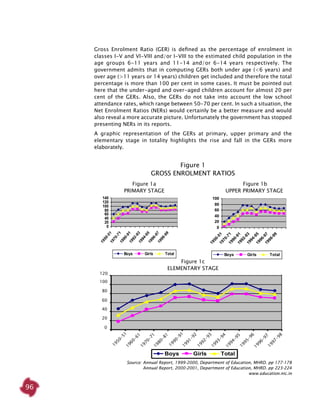
of persons on the basis of a narrow poverty line in a population that is
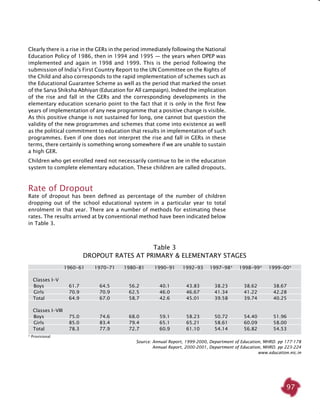
predominantly outside the formal sector is problematic. For instance, where
income fluctuates from day to day, as it does for a vast majority of the Indian
population, a static (one-line) poverty line is an inappropriate indicator of
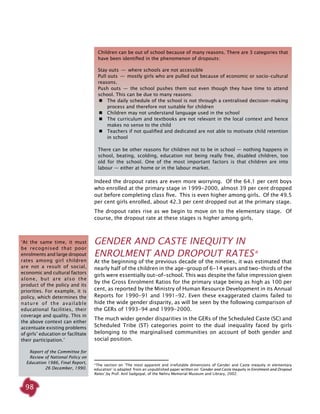
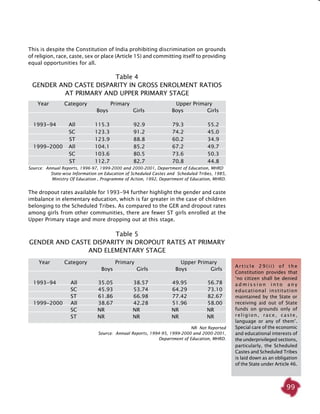
vulnerability. Another important aspect of income targeting in India is that
the official line used as cut off is at an absolutely low level, corresponding
to the expenditure required for purchasing a minimum of calories. It is in
no way an indicator of purchasing power to provide for a minimum decent
standard of living.
 	 The document recognises that health care has become expensive end
therefore encourages private health insurance companies to come in a big
way.
3. Nutrition (Paras 3.33-3.35)
The Plan recognises that inspite of 50 million tonnes of food grains in the FCI
godowns, more than half of the children in the 1-5 years in rural areas are
under-nourished, with girl children suffering even severe malnutrition. Clearly,
the high malnourishment is not due to unavailability of food stocks but due to
its inequitable distribution. Therefore much more emphasis needs to be laid
on equitable distribution of food, and food security measures. This becomes
much more significant in the light of government's decision to introduce the
47
Targeted PDS policy in 1997, wherein households demarcated on the basis of
income criterion into Below Poverty Line (BPL), and Above Poverty Line (APL)
will be treated differently in terms of quantities and prices. This has led to the
exclusion of millions of people from the food security net that they had, placing
them into the risk of under-nourishment.
General Comments
 	 The child rights/child-centred perspective needs to be incorporated into
the planning process from the very beginning, just as mainstreaming of
gender perspective has now come to be accepted in planning.
 	 There is clearly a move towards privatisation and limiting access of a large
number of persons from accessing social services. Placing the responsibility
of planning, supervision and management of programmes under local
bodies, without giving them the necessary statutory and financial powers
is impractical. This is certainly not the kind of decentralisation that can
work.
 	 There is no recognition of the other problems that the children face such
as child labour, trafficking, increasing violence in the wake of liberalisation,
children affected by conflict, natural calamities and other emergencies, street
children etc. and what the government plans to do about it. These need
special attention so that resource allocations are made to address them.
 	 The government has set up a working group on child development. It
has developed a draft paper. That document lacks a rights and focus and
development approach. It is concentrates on ICDS and nutrition and even
while it speaks of convergence between departments and ministries, it fails
to draw the linkages with the groups and categories of children dealt with
by them. For example, it fails to make the linkages between ECCE and child
labour or child development and child protection.
 	 There are a number of laws pertaining to child rights. While policies find a
place in the planning processes, implementation of the laws seldom finds
mention. As a result implementation of the laws remain inadequate.
 	 The government is planning a children's commission and a children's charter.
This however has not found mention in the approach document.
 	 The government had submitted its report to the Committee on Rights of
the Child. The committee in its concluding observations had made several
recommendations. It would be useful to review these suggestions and take
them into account for planning the current 5-year plan.
48
REFERENCES
CEHAT and others vs Union of India and others, W.P. (C) No. 301/2000, Order
dated September 19, 2001.
Department of Women and Child Development. (Convention on the Rights of
the Child ) Country Report, India, Government of India, February 1997.
Gunesekhere, Savitri , 1998, Children, Law and Justice: A South Asian Perspective.
Sage Publications, New Delhi.
Indian Council for Child Welfare, Tamil Nadu, 1996, Child and the Law in India,
Chennai.
Miss. Mohini Jain vs State of Karnataka and others, AIR 1992, S.C. 1858.
National Initiative for Child Protection, June, 2000, To Every Child a Childhood,
CHILD LINE India Foundation, Mumbai.
Salal Hydro Project. vs State of Jammu and Kashmir reported in 1983 (2) Supreme
Court Cases 181.
Save the Children, 1999, ‘Children’s Rights: Reality or Rhetoric?’ The UN
Convention on the Rights of the Child: The First Ten Years, The International
Save the Children Alliance, U.K.
Unnikrishnan, J.P. and others vs State of Andhra Pradesh and others, AIR,1993,
S.C.2178.
49
50
Healthy children represent a healthy nation. The health of children in India as is true of any country in the
world, is closely and integrally linked to several factors from geographical location, climate, the socio-cultural
practices and attitudes, to economic changes that are taking place in the country. All these impact on the
state of health of children and the nature of services available to them. Gender attitudes continues to be an
important determining factor in both access and nature of health care provided to girl children.
Indeed like all social sector policies, the health policies or programmes too are an important reflection of the
political attitude and will of the State, and how it treats its citizens. In analysing the health status of children,
it becomes imperative to examine both the situation that exists and the causal factors for the current
situation.
While in the globalising world, the rich, the upper middle and even to some extent the middle class, are
gaining access to more and more specialised health care, the poor and the marginalised are losing what limited
access they had. With the incomes of the poor falling, and with more and more of the health services getting
privatised, the poor today are caught in the vicious cycle of poverty, deprivation, infection and disease. Just
as they bear the burden of our economic adjustment policies, the poor and their children bear the disease
burden of the country.
Therefore, any analysis of children’s health in India must be undertaken in the backdrop of three very important
issues, which determine both national policy as well as community and family behaviour, availability and
accessibility (economic, physical and social) to health service:
	 Globalisation and liberalisation that has led to increasing privatisation of all social services including
health making it more and more unaffordable for the poor. This influences health policy and determines
availability of health services and their nature. In fact privatisation of health services is being touted
as the solution for quality health care, particularly at the village level. The Prime Minister has called
upon private companies in India, both local and foreign, to adopt, health facilities.
	 Environmental degradation in the wake of urbanisation, industrialisation and ‘development’,
indiscriminate use of natural resources, changing pattern of agriculture which may be water and
chemical intensive, higher levels of water and air pollution.
	 Gender attitudes in society discriminate against the girl child right from birth and survival to access to
health care throughout her life. It has a bearing on the attitude to the pregnant and lactating mother,
affecting the health of the unborn or the newborn child. It has been found that in most paediatric
units of hospitals throughout the country there is an excess number of boys in comparison to girls
seeking medical care. Many parents seek modern health care for their boys earlier than for their girls,
resulting in decreased survival rate of the girl child.
Health
51
The health of the children in India is determined by its economic and social
sector policies. It is dependent on the levels of food security, the extent of
environment degradation, the monsoon  —  it’s timeliness or its delay and
the resultant situation of drought or famine. It is determined by the extent of
national debt, the amount spent on servicing it, the nature of the cuts in fiscal
deficit, the health and the education budget, the levels of privatisation of basic
services. It is also determined by the nature of the parents’ livelihood or the
nature of work that the children themselves do, the hours of work and rest, the
hazardous nature of work and the remuneration received. The availability of
health care services and their cost, the schemes for the ‘deprived’, the sense
of justice and the vision of the policy-makers are all influencing factors. The
nature of health care, access and quality as also the disease burden depends on
the geographical region, whether rural or urban, social status  —  caste, class,
tribal or scheduled caste and gender discrimination. From public distribution
system food entitlements, price of basic food, to international trade regimes
WTO and IMF and World Bank initiated Structural Adjustment Programs — all of
them affect the availability or non-availability of food, presence and absence
of starvation deaths, the health of the parents and health of the little children.
Indeed, the health status of India’s children cannot be examined in exclusion
to any of the above.
Children’s health is usually subsumed in the government’s population control
and family planning efforts. Family Planning and immunisation programme were
amongst the earliest of health programmes initiated in the 1960s. During this
time sterilisation remained the focus of the National Family Planning Programme.
In 1976, the sterilization drive was at its peak. In 1979, the Family Planning
Programme was renamed as Family Welfare Programme and initiatives were
taken to improve health and nutritional status of women and children through
programmes such as Vitamin A Programme to combat nutritional blindness,
Anaemia Prophylaxis Programme to reduce anaemia and related ill health and
food supplementation to pregnant and lactating women and children below 5
years through ICDS. The National Health Policy of 1983 laid stress on maternal
and child health (MCH). The MCH programme of the 80s renamed as the Child
Survival and Safe Motherhood Programme (CSSM) was initiated in 1992, with
a distinct child health care component, aiming at reduction in infant mortality
and child morbidity and mortality through greater focus on child health and
nutrition. As reproductive health care became the focus post ICPD (International
Conference on Population and Development, Cairo, 1994), CSSM was brought
under the umbrella of the present
Reproductive and Child Health (RCH)
programme of the Ministry of Health and
Family Welfare with certain new components
such as Reproductive Tract Infections (RTI),
Sexually Transmitted Infections (STI), HIV/
AIDS, adolescent health and contraception
with target free approach.
	 70 out of every 1,000 children born do not live to see their first
birthday. A decrease of only 1% since 1990
	 Almost 95 out of every 1000 children die before the age of 5.This
is 15 children less than in 1990
	 46.7% of the children in India are underweight, more than 4.8%
less than the figure for 1990
	 About 22.7 % children weigh below 2.5 kg down from 30% ten
years ago
	 265 cases of polio in the year 2000. Substantially lower than the
10,408 cases of 1990.
With inputs from the HAQ Editorial Team
52
lack of information
Mapping of health status requires relevant data on health and demographic
indicators. While data on mortality and other demographic characteristics
are by and large free of conceptual ambiguities and are relatively easy to
access and quantify, data on other indicators related to morbidity, disease
burden and nutritional status are inadequate in coverage and comparability
over time. Even when data is available it is not easy to quantify them. ‘One
has to reckon with the issue of nutrition adaptation and inter-individual
variability, which brings out the complexities involved in measurement
of under-nutrition.’ (Planning Commission, GOI). According to Planning
Commission (2002), the primary source of data on morbidity has to be medical
records maintained by medical institutions and public health agencies, which
are practically non-existent in India. The limited data that is available relates to
small urban pockets or to some specific health initiatives. Since most of the data
collection on morbidity relies on recall of sample households — not the most
reliable source of data in poor, backward, rural and illiterate households — the
absence of reliable morbidity data affects policy planning, programme designing
and allocation of resources for the health sector.
In the absence of adequate data, it is difficult to give a comprehensive picture
of the status of health of the country’s children. But an analysis of the existing
information does enable us to see where the gaps lie. It also indicates that there
is an urgent need to undertake a comprehensive study on the health status of
children.
The Health Care System
The health services for children are provided through a network of sub-centres,
Public Health Centres (PHCs) and Community Health Centres (CHCs). In addition,
facilities for children are provided through Post-partum Centres, District Hospitals
and rural and urban Family Welfare Centres. The government itself admits that
the mere availability of health centres does not always lead to better utilisation.
Poor maintenance and consequent deterioration of building and equipment, staff
vacancies as well as poor supply and logistics have been mentioned as reasons
for the poor functioning of primary health care institutions.
A National Health Policy (NHP) was last formulated in 1983, and since then there
have been marked changes in the determinant factors relating to the health
sector. Some of the policy initiatives outlined in the NHP (1983) have yielded
results, while, in several other areas, the outcome has not been as expected.
It is against this backdrop that the National Health Policy (NHP 2002) was
formulated.
It is interesting to note that there is no separate section addressing children’s
health needs specifically, although, there is one for women. And yet, children
constitute 40 per cent of India’s population.
53
54
States Parties recognise the right of the child to the enjoyment of the highest
attainable standard of health and to facilities for the treatment of illness and
rehabilitation of health. States Parties shall strive to ensure that no child is deprived
of his or her right of access to health care services.
Article 24, UN Convention on Rights of the Child.
According to the NHP (2002), the public health investment in the country over
the years has been comparatively low, and as a percentage of GDP has declined
from 1.3 per cent in 1990 to 0.9 per cent in 1999. The aggregate expenditure
in the Health sector is 5.2 per cent of the GDP. Out of this, about 17 per cent
of the aggregate expenditure is public health spending, the balance being
out-of-pocket expenditure. The central budgetary allocation for health over
this period, as a percentage of the total Central Budget, has been stagnant at
1.3 per cent, while that in the States has declined from 7.0 per cent to 5.5 per
cent. The current annual per capita public health expenditure in the country
is no more than Rs. 200. Given these statistics, it is no surprise that the reach
and quality of public health services has been below the desirable standard.
Under the constitutional structure, public health is the responsibility of the
States. In this framework, it has been the expectation that the principal
contribution for the funding of public health services will be from the resources
of the States, with some supplementary input from Central resources. In this
backdrop, the contribution of Central resources to the overall public health
funding has been limited to about 15 per cent. According to the NHP, the
fiscal resources of the State Governments are known to be very inelastic. This
is reflected in the declining percentage of State resources allocated to the
health sector out of the State Budget. If the decentralised pubic health services
in the country are to improve significantly, there is a need for the injection
of substantial resources into the health sector from the Central Government
Budget. ‘This approach is a necessity — despite the formal Constitutional
provision in regard to public health — if the State public health services, which
are a major component of the initiatives in the social sector, are not to become
entirely moribund’. (NHP, 2002) The NHP (2002) has been formulated taking
into consideration these ground realities in regard to the availability of
resources.
Many of the health programmes are dependent on World Bank loans e.g. TB
(DOTS), Malaria, RCH, Blindness Control, HIV/AIDS etc. The need for
comprehensiveness and integration for optimisation of resources has been
expressed in the National Health Policy earlier and now as well as in the
Planning Commission’s Tenth Five Year Plan document. The National Health
Policy also expresses the same concern about the globalisation process. An
analysis undertaken by HAQ: Centre for Child Rights shows that an average
of 50.7 per cent of the expenditure on health in the Union Budget came from
external aid. In 1998 this had gone up to 79 per cent.(HAQ: Centre for Child
Rights, 2001).
55
In a question raised by a Member of Parliament, Mr. P Prabahakar Reddy, the then
Union Minister for Health and Family Welfare, Dr. C.P. Thakur admitted that private
expenditure in health is 82% which is relatively high compared to other countries.
(NCAS, 2002).
The NFHS-2 survey has revealed that most households in India (65 per cent) go
to private hospitals/clinics or doctors for treatment when a family member is ill.
Only 29 per cent normally use the public medical sector. Even among poor
households, only 34 per cent normally use the public medical sector when
members become ill. (As stated in India’s First Periodic Report on the CRC,
2001).
Although the private health care system in India has expanded, it has not taken
on the responsibility for long-term investment in public health especially of the
preventive kind. It is more interested in expanding in the curative field only as
that yields the quickest and highest profits. This means while the government
complains of being constrained by the lack of funds and has to even withdraw from
vital programmes such as prevention of spread of diseases like TB, malaria, the
private sector too turns away from it as it is non-remunerative. (Pande, September
21, 2002, Dreze and Sen, 2002). The logic of those encouraging the growth
of private sector is that, since such huge percentage of the population goes
in for unsubsidised private health care, they can afford it. Where then is the
need to invest in subsidising and supporting government hospitals that are badly
run, they ask.
Given the conditions of government health care system, the poor under duress
are forced to go to the private health care system. They have no choice but to
incur heavy expenditure even take high interest loans. Indeed, with the
increasing medical care costs, and increase in drug prices, medical care has
emerged as the second commonest cause of rural indebtedness. The alternative
choice is to bear the disease burden and death. Does that mean that they can
‘afford’ private health care? While the health burden is higher on the poor and
so also the mortality rates, in terms of health-seeking behaviour and
hospitalisation, it is the reverse. This leaves the poorer sections of society
extremely vulnerable, more so the women and girls who are attended to last
in the family in the face of scarcity.
The 1990s has been a decade when thousands of Indians have lost their
livelihoods due to the closure of small-scale sector units in the wake of
liberalisation, privatisation and globalisation. Collapse of subsistent agriculture
due to drought, monsoon failure, shift to capital intensive agriculture,
increasing indebtedness for pesticides, fertilisers and seeds, is a reality of
their lives. A large number of farmers have been reported to have committed
suicide in Karnataka, Punjab, Maharashtra. (Shiva, 2000). With the loss of
livelihoods and no purchasing power combined with the higher cost of food,
the number of starvation deaths and underweight babies will undoubtedly
increase.
56
In terms of the available health services for children in the public health sector,
the focus of Maternal and Child Health or Child Survival and Safe Motherhood
Programmes or of those addressing the reproductive health of the mother with
some concerns of children’s health on interventions exclusively for children is
unfortunately very limited. These interventions include:
	 Universal Immunisation (with polio eradication having been undertaken in a
massive way since the mid-90s)
	 Oral Rehydration Therapy (ORT)
	 National Prophylaxis Programme against Nutritional Blindness due to
Vitamin A Deficiency
	 Prophylactic Schemes Against Nutritional Anaemia among pregnant women
and children
	 Diarrhoeal Disease Control Programme
	 Acute Respiratory Infections Prevention and Management Programme
	 Promotion of safe delivery by trained traditional birth attendants (TBAs)
	 Training of traditional birth attendants (TBAs)
	 Promotion of spacing between children through family planning measures
	 Promotion of exclusive breastfeeding for children up to the age of 4-6 months
Health and Poverty
‘There was no food so I dug out roots and survived on them for three or four days
and then I fell ill,’ says a child in Baran, Rajashtan. Eighteen persons including
eleven children have died of starvation in the wake of one of the worst droughts in
Rajasthan with 60 per cent deficit rainfall. Many are reduced to eating rotis made
of grass seeds, which leads to severe malnourishment (NDTV News, 22 October,
2002).
In December 2000, the Union Minister for Consumer Affairs and Public
Distribution wrote to all chief ministers admitting that five crore people are
victims of starvation. A few days later the Chief Minister of Rajasthan complained
to him that he had heard that lakhs of tonnes of food grains were lying in the
godowns of FCI and the that there was a proposal to dump it in the sea, to make
storage for the next crop. (Gonsalves, 2002).
The relationship between health and poverty or health and development is
complex, multifaceted and multidirectional. Poverty in its various dimensions
could be a manifestation, as well as a determinant of an individual’s health.
It has, in its basic form of food deprivation, a direct bearing on the morbidity
and longevity of people. Growing food insecurity is manifested in high
malnutrition rates affecting physical and mental development of children and
even starvation deaths. Data on wasting and stunting as well as other nutritional
deficiencies disorders such as those related to vitamin A deficiency (nutritional
blindness), iron deficiency (anaemia), iodine deficiency (goitre) or other
micronutrient deficiencies capture some of these aspects of poverty-health
linkages. High child mortality on account of supervening infections, particularly
diarrhoea and respiratory infections, are fairly widespread among children
deprived of these basic amenities of life. (Planning Commission, March 2002).
Indian Health Care system
reflects a caste and class
bias. As a result Dalits and
a d i v a s i s d o n o t g e t
adequate public health
care facilities. According to
A. Raja, Minister of State
for Health, there are only
21,429 Sub-Centres, 3540
Primary Health Centres and
588 Community Health
Centres functioning in
tribal areas across the
country.
Source: Un -starred Question
No. 3530 dated 29 April raised
by MM Agarwal (2002).
57
Figure 2
FOOD ACCESS
Extreme Problem
High Problem
Moderate Problem
Low Problem
Very Low Problem
States not Considered
Extreme Problem
High Problem
Moderate Problem
Low Problem
Very Low Problem
States not Considered
Credit: World Food Programme, United Nations
Figure 1
FOOD INSECURITY
Credit: World Food Programme, United Nations
Mizoram
Jammu &
Kashmir
Haryana
Himanchal
Pradesh
Punjab
Rajasthan
Uttaranchal
Jharkhand
Chandigarh
Madhya
Pradesh
Gujarat
Karnataka
Maharashtra
Goa
Andhra
Pradesh
Delhi
Bihar
Tamil
Nadu
Lakshadweep
Assam
Meghalaya
Manipur
Tripura
Kerala
Sikkim
Uttar
Pradesh
Chattisgarh
Orissa
Andaman
& Nicobar
West
Bengal
Daman
& Diu
Dadra Nagar
Haveli
Arunanchal
Pradesh
Nagaland
Nagaland
Jammu &
Kashmir
Haryana
Himanchal
Pradesh
Punjab
Rajasthan
Uttaranchal
Jharkhand
Chandigarh
Madhya
Pradesh
Gujarat
Karnataka
Maharashtra
Goa
Andhra
Pradesh
Delhi
Bihar
Tamil
Nadu
Lakshadweep
Assam
Meghalaya
Manipur
Tripura
Kerala
Sikkim
Chattisgarh
Orissa
Andaman
& Nicobar
West
Bengal
Daman
& Diu
Dadra Nagar
Haveli
Arunanchal
Pradesh
Uttar
Pradesh
Mizoram
58
Hindustan Times dated 16 Apr 2001, reported deaths of 8000 children in Nasik,
Revenue Division, the health department recorded 3429, 3090, 3341 deaths in the
Division in 1995-99, 99-2000, 2000-2001 respectively. The Study undertaken by
The Tribal Research and Training Institute, Pune, on malnutrition related deaths in
Nandurbar Dist., Maharashtra in 0-6 age group in 24 villages of 3 blocks showed
that 158 children had died in 143 families.
Dr. Rani and Dr. Abhay Bang of Society for Action and Research in Community Health
(SEARCH), an NGO in Maharashtra, reported the high neonatal mortality in Gadricholi
district with a large tribal population, and suppression of these facts by local authority
resulting in discrepancies in figures provided by SEARCH and the local health
authorities. Investigation proved the validity of the SEARCH stand.
Cause of death reported by mothers was poor nutrition in 71.5% deaths. Malnutrition
was verified in the siblings of the deceased in 76.5% children of which 41% were
suffering from severe malnutrition, 78% of the families had food deficit of 6 months
or more. Other factors included poverty and unemployment in a highly exploitative
social structure, 50% rent for tilling tenanted land, male illiteracy being 82.5% and
female illiteracy 94.4%. These factors clearly show why the children died and why
this will continue to be repeated unless the multiple determinants of health are
addressed and interventions, that are required, are made.
Bhatia A, Combat Law, Aug-Sept, 2002.
Dead and Dying of Starvation
59
These commonly seen childhood infections often exacerbate malnourishment
and in turn, the prevalence of undernourishment reinforces the consequences of
such infections. At the same time micronutrients cannot replace food. Healthy
children need adequate food with supplements of micronutrients to protect
them against disease.
Attainments on other dimensions of human development and economic well-
being reinforce the transition towards better health. Enhanced purchasing power
through a more equitable distribution of employment opportunities and
resources can help bring about nutritional adequacy and food security for the
poor. This has to be coupled with provision of safe drinking water, sanitation,
and shelter and life-support services.
Recognising the link between health and poverty, the 1995 World Health Report,
Bridging the Gap included a new category in its International Classification of
Diseases Z59.5, which stands for extreme poverty. The report said that there
was an increase in the disparity between rich and poor nations and rich and
poor within the nations. There was an increase in extreme poverty and in the
diseases of extreme poverty. (WHO,1995).
The Human Development Report, 2000 stated that the International Trade
Regimes are unjust and have their worst impact on the poor. These laws also
have increased the technological and economic gaps between the rich and poor
nations. (UNDP, 2002). The health of the children specially the children of the
poor and the marginalised, single mothers, tribals, migrants, slum dwellers is
poor and it is definitely getting worse as basic needs are denied and disease
burden increases. The vicious cycle of disease, deprivation, malnutrition and
infection is well-known. Yet, the negative impact of structural adjustment
programmes has become evident with incomes of the poor falling because the
burden of these policies falls disproportionately on the poor.
In 1988, in the case of Kishan Patnaik, when starvation deaths in Orissa were
brought to the notice of the Apex Court, it accepted the assurances of the
Government of Orissa that the situation will be looked into and hoped that
starvation deaths would cease. Ten years later, another petition was filed detailing
deaths. In 2001, when Kavta Srivastava of People’s Union for Civil Liberties (PUCL),
Rajasthan filed a petition, little had changed. (Ibid 2000). Even as we write this,
various parties are blaming each other for the plight of the children reported
dead due to starvation, with no one claiming responsibility.
The NHRC medical team investigating starvation deaths in Orissa pointed out:
	 continued absence of any kind of health care facilities
	 those that existed did not function properly
	 precipitating deaths due to diseases that are not generally life threatening
The report confirmed the presence of ‘back breaking poverty’ with large number
of families below the poverty line with no purchasing power even to buy food
from the PDS being forced to eat things that cannot be considered as food e.g.
mango kernel.
60
Table 1
WHAT AILS OUR CHILDREN?
Major Indicators of Health
	 Indicator	 1990	 2000	
	 Infant Mortality Rate	 80 	 70
	 Probability of dying between birth and exactly
	 one year of age, per 1,000 live births.	
	 Under-5 Mortality Rate	 109	 94.9
	 Probability of dying between birth and exactly
	 five years of age, per 1,000 live births.		
	
	 Maternal Mortality Ratio	 437 	 540
	 Annual number of deaths of women from
	 pregnancy related causes, when pregnant or
	 within 42 days of termination of pregnancy,
	 per 100,000 live births.	
	 Use of Safe Drinking Water	 68.2%	 77.9%
	 Proportion of population who use any of the
	 following types of water supply for drinking:
	 (1) piped water. (2) public tap. (3)borehole/pump.	
	 (4) well (protected/covered). (5) protected spring.
	 Use of Sanitary Means of Excreta Disposal	 30%	 36%
	 Proportion of population who have, within their
	 dwelling or compound: (1) toilet connected to
	 sewage system (2) any other flush toilet (private
	 or public) (3) improved pit latrine
	 (4) traditional pit latrine.	
	 Antenatal Care 	 62.3%	 65.1%
	 Proportion of women aged 15-49 attended
	 at least once during pregnancy by skilled
	 health personnel.	
	 Childbirth Care	 34.2%	 41.7%
	 Proportion of births attended
	 by skilled health personnel.
61
	 Indicator	 1990	 2000	
	 Children Protected against Neonatal Tetanus	 61.9%	 67.0%
	 Proportion of one-year-old children protected
	 against neonatal tetanus through immunisation
	 of their mother.	
	 ORT Use	 38.8%	 47.7%	
	 Proportion of children 0-59 months of age
	 who had diarrhoea in the last two weeks who
	 were treated with oral re-hydration salts or an
	 appropriate household solution (ORT).	
	 Home Management of Diarrhoea	 Data not 	 35.5%	
	The proportion of children 0-59 months 	 collected
	 of age who had diarrhoea in the last two
	 weeks and received increased fluids and
	 continued feeding during the episode.	
	 Care Sought for Acute Respiratory Infections	 66%	 64.0%	
	 Proportion of children 0-59 months of age,
	 who had ARI in the last two weeks and were
	 taken to an appropriate health provider.	
	 Dracunculiasis Cases	 47.98%	 0%		
	 Annual number of cases of dracunculiasis
	 (guinea worm) in the total population.	
	 Underweight Prevalence	 53.4%	 47.0%	
	 Proportion of under-5s who fall below
	 minus 2 and below minus 3 standard deviations
	 from median weight for age of NCHS/WHO
	 reference population.
	 Stunting Prevalence	 52.0%	 45.5%	
	 Proportion of under-5s who fall below
	 minus 2 and below minus 3 standard deviations
	 from median height for age of NCHS/WHO.
62
	 Indicator	 1990	 2000
	
	 Birthweight below 2.5 kg	 30.0%	 22.7%	
	 Proportion of live births that weigh below 2,500 grams.	
	 Children Receiving Vitamin A Supplements	 Data not 	 32%		
	 Proportion of children 6-59 months of age 	 collected
	 who have received a high dose of vitamin A
	 supplement in the last 6 months.	
	 Exclusive Breastfeeding Rate	 51.0%	 55.2%	
	 Proportion of infants less than 4 months (120 days)
	 of age who are exclusively breastfed.	
	 Polio Cases	 10,408	 265
	 Annual number of cases of polio.	
	 Neonatal Tetanus Cases	 9,357	 2,197
	 Annual number of cases of neonatal tetanus.	
	 Measles Cases	 89,612	 25,259	
	 Annual number of cases of measles in children 		
	 under five years of age.	
	 DPT Immunisation Coverage	 52%	 55.1%	
	 Proportion of one year old children immunised
	 against diptheria, pertussis and tetanus (DPT).	
	 Measles Immunisation Coverage	 42%	 50.7%	
	 Proportion of one-year-old children immunised
	 against measles.	
	 Tuberculosis Immunisation Coverage	 62.2%	 67.5%	
	 Proportion of one-year-old children immunised 	
	 against tuberculosis.
63
	 Indicator	 1990	 2000	
	 Wasting Prevalence	 17.5%	 15.5%
	 Proportion of under-5s who fall below minus 2 and
	 below minus 3 standard deviations from median
	 weight for height of NCHS/WHO reference population.	
	 Total Child Disability Rate	 5%	
	 Proportion of children aged less than 15 years 	
	 with some reported physical or mental disability.	
	 Under-5 Mortality Rate; Female/Male	 122.4	 105.2
	 Probability of dying between birth and exactly
	 five years of age, per 1000 live births —
	 disaggregated by gender.	
	 Underweight Prevalence: Female/Male	 53.4%	 48.9%
	 Proportion of under-5s who fall below
	 minus 2 standard deviations from median
	 weight for age of NCHS/WHO reference
	 population — disaggregated by gender.	
	 Iodised Salt Consumption	 Data not 	 49.3%
	 Proportion of households consuming 	 collected
	 adequately iodised salt.		
	 Goitre in School Children	 28.4%	 21.%
	 Proportion of children aged 6-11 years with
	 any size of goitre (palpable and visible combined).	
	 Timely Complementary Feeding Rate	 31.4%	 33.5%	
	 Proportion of infants 6-9 months 	
	 (180 to 299 days) of age who are receiving
	 breast milk & complementary food.
	 Polio Immunisation Coverage	 53%	 62.8%
	 Proportion of one-year-old children
	 immunised against poliomyelitis.	
Source: Department of Women and Child Development, GOI, 2002.
Information
will be collected
in forthcoming
Census
64
Illness is common among
children
	Nearly one-fifth of
children had symptoms of
acute respiratory infection
(ARI) in the two weeks
before the survey. A
similar proportion had
diarrhoea during this
period. ARI, primarily
pneumonia, is a leading
cause of childhood deaths
throughout the world.
	More than 60 per cent of
children who had ARI and
diarrhoea were taken to a
health facility or provider
for treatment (not shown).
Diabetes, the silent killer,
has become a pandemic
inthe country. Now it is
stalking our children.
Diabetes is on an increase
in India, about 3.7 crore
people suffer from the
disease. Juvenile diabetes is
a more serious problem.
Many of them are not aware
that they are suffering from
the disease, and this is the
worst part of it. Normally
the disease is diagnosed
very late. Children are taken
for tests only when other
complications appear. Lack
of awareness among
parents and teachers makes
the situation worse.
The Times of India,
28 March, 2001
Figure 3
Children under three years who experienced
symptoms of ARI, fever, diarrhoea
Narasimha Murthy
The 14-year-old has been living with
diabetes for the last six years but deal-
ing with the social stigma is proving
more difficult. ‘Classmates taunt me
saying “sugar, sugar” when I am
around and they avoid me.’
Shantala Shamarao
She was diabetes four years ago,
when in class three. Poor control
over sugar levels meant frequent
hospitalisation. ‘ I used to take a
lot of sweets on the sly,’ grins the
girl whose dream is to become a
doctor.
Pushpalatha
‘I don’t want to go to school.’ she says. Her
teacher thrashes her almost daily beacause she
grabs her lunch box soon after reaching class.
Exessive huger and thirst characterise many of
the Type 1 diabetics.
cough
accompanied
by
fast breathing
(ARI)
Fever
Diarrhoea 19
30
19
0 25 50
Source: NFHS-2, 1998-99
In the two weeks before survey
Per cent
The Week,
17 November, 2002
Diabetes the ‘Silent Killer’ stalking our children
65
Mortality
Under-5 mortality among children reflects not merely the death rate among
children, but also the quality of life. It reflects income, education, nutrition,
morbidity, environmental sanitation, availability of primary health care and
the status of women. In 1960, the under-5 mortality in India was 236 per
1000 live births, which declined to 177 in 1980 and to 109 in 1993 and to
94.9 in 2000 with Infant Mortality Rate (IMR) being 67.6.
Regional differences are tremendous not just for infant mortality but also
for under-5 mortality and neonatal mortality. Also whereas in Bihar the
under-5 mortality rate is as high 137.6, it is just 18.8 in Kerala. Orissa’s
neonatal mortality is 64.7 per cent and Kerala’s 15.5 per cent. 40–70 per
cent of the under-5 mortality includes infant mortality. Even though there
has been a decrease in IMR and under-5 mortality, there is better progress
reflected in the decline in neonatal mortality and stillbirths. Neonatal
mortality contributed to 63.71 per cent of all infant deaths in 1993. In
India, out of the 25 million annual birth of children, 2.7 million die
before completing the age of 5. And reflecting the wisdom of unequal
development is the fact that 50 per cent deaths of children are in the four poorest
states: Bihar, Madhya Pradesh, Rajasthan and Uttar Pradesh. These states also
have high birth rates, contributing 47 per cent of the children born every year.
(UNICEF, 1995). The health statistics for SC/ST children are amongst the worst.
It is a frightening 84.2 per thousand among the Scheduled Tribe Children
(Prabhu, 2002).
Figure 4
Infant mortality rates, selected states
Deaths per 1,000 live births by age 1:5 year rates
0 25 50 75 100 125 150
NFHS-2, 1998-99
NFHS-1, 1992-93
Source: NFHS-1, 1992-93, NFHS-2, 1998-99
Orissa
Uttar Pradesh
Bihar
Assam
Madhya Pradesh
INDIA
West Bengal
Andhra Pradesh
Tamil Nadu
Delhi
Himachal Pradesh
maharashtra
Kerala
�
66
Table 2
Infant and child mortality by state
Neonatal, post-neonatal, infant, child, and under-5 mortality
rates for the five-year period preceding the survey by state,
India, 1998-99
	 State	 Neonatal	 Post-neonatal	 Infant	 Child	 Under-5
			 mortality	 mortality1
	 mortality	 mortality	 mortality
			 (NN)	 (PNN)	 (1
q0
)	 (4
q1
)	 (5
q0
)
	 India	 43.4	 24.2	 67.6	 29.3	 94.9
	 North
		 Delhi	 29.5	 17.4	 46.8	 9.0	 55.4
		 Haryana	 34.9	 21.9	 56.8	 21.2	 76.8
		 Himachal Pradesh	 22.1	 12.3	 34.4	 8.3	 42.4
		 Jammu & Kashmir	 40.3	 24.7	 65.0	 16.1	 80.1
		 Punjab	 34.3	 22.8	 57.1	 15.9	 72.1
		 Rajasthan	 49.5	 30.9	 80.4	 37.6	 114.9
	 Central
		 Madhya Pradesh	 54.9	 31.2	 86.1	 56.4	 137.6
		 Uttar Pradesh	 53.6	 33.1	 86.7	 39.2	 122.5
	 East
		 Bihar	 46.5	 26.4	 72.9	 34.7	 105.1
		 Orissa	 48.6	 32.3	 81.0	 25.5	 104.4
		 West Bengal	 31.9	 16.8	 48.7	 19.9	 67.6
	 Northeast
		 Arunachal Pradesh	41.8	 21.3	 63.1	 37.4	 98.1
		 Assam	 44.6	 24.9	 69.5	 21.4	 89.5
		 Manipur	 18.6	 18.4	 37.0	 19.9	 56.1
		 Meghalaya	 50.7	 38.3	 89.0	 36.2	 122.0
		 Mizoram	 18.8	 18.2	 37.0	 18.4	 54.7
		 Nagaland	 20.1	 22.0	 42.1	 22.7	 63.8
		 Sikkim	 26.3	 17.6	 43.9	 28.4	 71.0
	 West
		 Goa	 31.2	 5.5	 36.7	 10.5	 46.8
		 Gujarat	 39.6	 23.0	 62.6	 24.0	 85.1
		 Maharshtra	 32.0	 11.7	 43.7	 15.0	 58.1
	
	 South
		 Andhra Pradesh	 43.8	 22.1	 65.8	 21.0	 85.5
		 Karnataka	 37.1	 14.4	 51.5	 19.3	 69.8
		 Kerala	 13.8	 2.5	 16.3	 2.6	 18.8
		 Tamil Nadu	 34.8	 13.3	 48.2	 15.9	 63.3
1
Computed as the difference between the infant and neonatal mortality rates.
Note: The new States of Uttranchal, Chattisgarh and Jharkhand are not computed separately, they are included
in their erstwhile state.
Source: NFHS-2,1998-99.
67
Major causes of early death are diseases that are particular to infancy such as
premature birth, respiratory infection, malnutrition, diarrhoea, fever and measles.
While there has been an overall decrease in infant mortality rate and under-5
mortality rate over the past decades, this decrease has not been uniform over
different states nor has it been significant. It has either plateaued or in pockets
actually started showing an increase. Indian National Sample Registration scheme
has shown not just stagnation in the decline in infant mortality rates (IMR) in
different states, but a definite increase in them. In some major states of India
such as Kerala, Karnataka, Gujarat, Maharashtra, Andhra Pradesh, Punjab as
well as Madhya Pradesh, Orissa and Assam, the IMR in 1998 had risen above the
levels recorded in 1996 and 1997. (Quadeer et al eds. 2001).
Malnutrition
Many of the Indian states have high child malnutrition. In 1998-99, 47 per cent of
childrenunder-3 were moderately or severely underweight. More than 50 per cent of
such children were malnourished (underweight) in Maharashtra, Rajasthan, Uttar
Pradesh, Bihar, Orissa and Madhya Pradesh. On the other hand less then 25 per cent
of children under three years were malnourished in Arunachal Paradesh, Nagaland
	 Infants are more likely to survive past their first birthday today than in the
early 1990s. Childhood mortality rates are used for monitoring and evaluating
population and health programmes and policies. Also, these rates are an
important element of the quality of life.
	 The mortality declines in urban and rural areas are similar. Efforts to improve
child survival in both urban and rural areas have met with some success.
	 Although mortality is declining, 1 in 15 children still die before age one. Child
survival programs need to be intensified to achieve further reductions in
mortality.
	 While for developed nations, death rate stands at 6-10 per thousand live births,
it is as high as 16 per thousand in Kerala — the most literate state in the
country.
and Sikkim. The Government accepts that progress in terms of reducing child
malnutrition has been extremely slow. Between 1992-93 and 1998-99, child
malnutrition came down by only 6 percentage points. In Orissa and Rajasthan child
malnutrition seems to have worsened between 1992-93 and 1998-99. These are
alsostateswherechildrenhavebeenreported todiebecauseofstarvation leadingto
malnutrition.
A major cause of such high rates of child malnutrition is the birth of low weight
babies. Birth weights of less than 2,500 grams are very closely associated with
poor growth not just in infancy but through childhood. According to estimates,
20-30 per cent of all babies are born low birth weight representing an
intergenerational transfer of malnutrition. One of the major factors affecting
birth of healthy babies is of course the health status of the mother or maternal
health.
68
	 Table 3
Reduction in child malnutrition
1992-93 to 1998-99
	 Percentage who are moderately and severely malnourished
		 State	 1992-93	 1998-99	 Difference in
					 % points		
				
		 Punjab	 46	 29	 17.2	
		 Arunachal Pradesh	 40	 24	 15.4	
		 Assam	 50	 36	 14.4	
		 Kerala	 48	 37	 11.5	
		 Andhra Pradesh	 49	 38	 11.4	
		 Karnataka	 54	 44	 10.4	
		 Bihar	 63	 54	 8.2	
		 West Bengal	 57	 49	 8.1	
		 Meghalaya	 46	 38	 7.6	
		 Uttar Pradesh	 59	 52	 7.3	
		 Delhi	 42	 35	 6.9	
		 Goa	 35	 29	 6.4
		 Gujarat	 50	 45	 5.0	
		 Maharashtra	 54	 50	 4.6	
		 Nagaland	 29	 24	 4.6	
		 Himachal Pradesh	 47	 44	 3.4	
		 Haryana	 38	 35	 3.3	
		 Manipur	 30	 28	 2.6	
		 Madhya Pradesh	 57	 55	 2.3	
		 Tamil Nadu	 29	 27	 1.6	
		 Mizoram	 28	 28	 0.4	
		 Orissa	 53	 54	 -1.1	
		 Rajasthan	 42	 51	 -9.0	
		 INDIA	 53	 47	 6.4	
Source: NFHS-1, 1992-93
NFHS-2, 1998-99
69
The 1974 World Food Conference resolved that by 1984 ‘no child,
woman or man should go to bed hungry and no human being’s
physical or mental potential should be stunted by malnutrition’. The
World Food Summit in Rome in 1998 recognised, ‘the fundamental
right of every human to be free from hunger’. The National
Nutrition Policy formulated by the Department of Women and
Child Development and Human Resource Development is all but
forgotten. It is a pity that the National Health Policy 2002 has
not paid more attention to food security and health security.
The proportion of low birth weight babies varies from 16 per
cent in Kerala to 30 per cent in Rajasthan and Uttar Pradesh.
The National Nutrition Monitoring Board (NNMB 2002) has noted
the inadequacy of food and cereal intake. There is widespread
‘Hidden Hunger’, or inadequate total caloric intake which
dropped from 2311 in 1983 to 2249 in 1999-2000, a decline
of 72 calories per head.
Children require availability of adequate food that is nutritionally
balanced and a conducive environment with protected water supply, sanitation,
hygiene and waste disposal. These will need to be done as public health measures.
If this is not attempted the disease burden and related curative expenditure will
be enormous which is beyond the reach of the poor and middle class population.
Children with growth retardation due to severe under nutrition do not get the
required growth velocity during adolescence, which is usually a period of rapid
growth. They grow up to be adults with Body Mass Index1
of less than 18.5
indicating chronic energy deficiency (CED).
The increased pharmaceuticalisation of nutrition as neutraceuticals and
commercial commodified solutions has led to a failure in addressing the food
and nutrition issue as aggressively as required. This is most evident from the
silence of the medical and health organisations where starvation deaths are
concerned.
47.7% households have caloric inadequacy
19.8% households have protein inadequacy
19.5% have both caloric and protein inadequacy
4.2% of children are stunted based on height for age
53% Underweight based on weight for age
Underweight and stunting are both more in rural children
40% of adult males and 41% of the females have Body Mass Index1 
below the value of 18.5
Based on Body Mass Index calculate for children
52% children are stunted
53% children under-5 are moderate or severe underweight
70% children are anaemic
Current nutrition status REVEALS that
1
Body Mass Index is Kg X square of height. Figure below 18.5N and indicates chronic energy deficit.
70
Source : MICS 2000
Nearly half of our children are undernourished
	 Almost half of children under three years of age are underweight, a
measure of short and long-term under-nutrition. A similar percentage are
undernourished to the extent that their growth has been stunted (46 per
cent, not shown).
	 Under-nutrition is most serious among children ages 12 to 35 months.
AgeofChild
Per cent
0 10 20 30 40  50 60
Total
<6 months
6-11 months
12-23 months
24-35 months
Figure 6
Proportion of low weights
Source: NFHS-2
Jammu &
Kashmir
Himanchal
Pradesh
Rajasthan
Uttaranchal
Jharkhand
Chandigarh
Madhya
Pradesh
Gujarat
Karnataka
Maharashtra
Andhra
Pradesh
Delhi
Bihar
Tamil
NaduLakshadweep
Meghalaya
Manipur
Tripura
Kerala
Sikkim
Chattisgarh
Orissa
Andaman
& Nicobar
West
Bengal
Daman
& Diu
Dadra Nagar
Haveli
Arunanchal
Pradesh
Uttar
Pradesh
Nagaland
Mizoram
Haryana
Figure 5
CHILDREN UNDER THREE YEARS WHO ARE UNDERWEIGHT
Punjab
71
Breastfeeding Practices
It has been well understood by now that under nourishment of children can be
linked to breastfeeding practices. Breastfeeding fortunately has been a norm in
India. Efforts to promote commercial milk substitutes was resisted by consumer
groups and doctors who recognised the nutritive value of mothers’ milk and
also understood the emotional contribution of breastfeeding in promoting the
mother-child bond necessary for healthy growth. They also stressed on the
implications of promoting a milk substitute in the backdrop of poor socio–
economic conditions, the high risk of infection and the long-term costs that
would have to be incurred for preparing infant formula. A higher incidence of
malnutrition and diarrhoea is noted among bottle-fed babies. Babies who lose
their mothers have a more difficult time in surviving as a percentage, to that of
babies who lose their fathers.
The baby food marketing began with warning against diseases, and suggested
that tinned milk was the safer, healthier option. This unethical marketing
practice was banned in 1986, and succeeded because of its rigorous
implementation by paediatricians, consumer and health rights groups.
However, breastfeeding remains a problem for working women. Although
laws for maternity benefits and provision for crèches at the workplace ensuring
‘a mother’s right to work and a worker’s right to motherhood and time to
enable breastfeeding’ was formulated, their implementation remains patchy
and weak. This in turn has an impact on the health of children. The Indian
child also falls victim to the high rates of maternal mortality and morbidity,
which denies them of mother’s milk.
Recommended breastfeeding practices not widely followed
	 To help prevent under-nutrition, infants should be given breast milk
exclusively until six months of age. On an average, fewer than 60 per cent
of infants under six months are exclusively breastfed.
	 The percentage exclusively breastfed varies widely from less than 20 per
cent in Himachal Pradesh, Sikkim, Meghalaya, and Delhi to 75 per cent in
Andhra Pradesh (not shown).
	 Breastfeeding immediately after birth has important benefits for both
mother and child. Few children, however, are put to the breast immediately
after birth. Additionally, only 37 per cent gave the first breast milk
(colostrum) to the child, a recommended practice because it provides the
child with natural immunity.
Poor Maternal health
The abysmal state of the health of India’s children reflects the neglect of their
mothers. It shows the failure to provide them with basic needs of food, security,
shelter, education and health care. Related to women’s position in a patriarchal
society is the whole cycle of lower nutritional status (36 per cent of Indian women
have Body Mass Index of less than 18kg/m indicating high level of nutritional
deficiency) and health and educational status of girls, early marriage, early
motherhood, multiple pregnancies, closer spacing of children. Because of the
heavy workload that women carry and the persistent anti-female biases in society,
States where fewer than
half of children 0-3
months are exclusively
breastfed
55% 	 India
40-49% 	West Bengal, Tamil 	
	 Nadu, Haryana, 		
	 Nagaland, Assam, 	
	 Jammu and 		
	 Kashmir, Mizoram
20-39%	Maharashtra, 		
	 Punjab,
	 Arunachal Pradesh
<20%	 Himachal Pradesh, 	
	 Sikkim, 		
	 Meghalaya, Delhi
NFHS-2. 1998-99
72
80%	 Haryana, Rajasthan, Bihar, Punjab
70-79%	 West Bengal, Sikkim, Maharashtra, Madhya Pradesh, 			
	 Gujarat, Uttar Pradesh, Orissa, Andhra Pradesh, Jammu and 		
	 Kashmir, Karnataka
74% 	 India
60-69% 	 Himachal Pradesh, Delhi,
	 Tamil Nadu, Meghalaya, Assam
50-59%	 Mizoram, Arunachal Pradesh, Goa
40-49% 	 Manipur, Kerala, Nagaland
Causes of Iron deficiency - Anaemia:
	 Inadequate body store of iron to start with
	 Inadequate iron in the food
	 Poor absorption due to diarrhoeal diseases
	 Intestinal helminthiasis specially hookworm
Consequences of Anaemia:
	 Maternal mortality risk
	 Foetal growth retardation
	 Pre-natal and peri-natal mortality
	 Child growth failure
	 Poor physical and mental development
	 Increased morbidity
	 Lowered physical activity
	 Lowered production 24
	 12% of disease burden in 5-14 year old children is due to helminthiasis
NFHS-2, 1998-99.
Anaemia Among Children
pregnant women rarely get the necessary attention, care, diet (75 per cent of
pregnant women are anaemic), or rest, affecting the nutritional and health status
of the children they give birth to. Low birth weight babies (a third of the babies
are low birth weight babies (LBW).), malnutrition among children, anaemia and
even infant mortality are the impacts on children. Unsafe delivery, attended by
untrained birth attendants, puts the lives of both mother and child at risk.
Care for girls and women during pregnancy and lactation, their physical health
and nutritional status, autonomy and respect in the family and considerations
of work load and time, birth spacing and delayed age of birth, equal access to
education are essential for ensuring maternal and child health. These are all
actions that need to be taken within the family and is also dependent on changing
social attitudes and care practices. It requires both State intervention as well
as community participation.
Anaemia
Anaemia is a serious concern for children because it can result in impaired
cognitive performance, behavioural and motor development. It increases
morbidity. It is matter of concern that 74 per cent of the children between
6-35 months are anaemic in India. About 51 per cent in this age group are
73
moderately or severely anaemic, although there are regional variations. The
proportion of anaemic children in this age group varies from less than 25 per
cent in Kerala, Manipur, Mizoram and Nagaland to 80 per cent in Rajasthan. It
is indeed interesting as well as a matter of concern to find that the proportion
of anaemia in the children in economically better off states of Punjab and
Haryana is also a high 80 per cent. A huge 70 per cent of the children under-
5 suffer from iron deficiency anaemia. Programmes for the supply of Iron and
Folic acid to pregnant women and children was initiated in the Fourth Five
Year Plan through MCH programmes and health sub-centres. A greater
emphasis on this has been given in the CSSM and RCH.
Figure 7
Anaemia in Pre-school Children*
Source : Prepared by S. Sehadri, 1995. Based on secondary data
for the Task Force on Micronutrient Malnutritirtion control GOI
*Hb level less than 11g / dl
Micronutrient Deficiency
For growth, body also needs micronutrients Iron, Iodine, Vitamin A being the
most important besides Folic acid, Vitamin. B, Ascorbic Acid, and minerals
example Zinc, Manganese, Calcium, small amounts of these are needed.
Micronutrient malnutrition (silent hunger) is most devastating in pre-school
children and pregnant women.
Deficiency of micronutrients results in learning disability, impairs work capacity
and brings illness due to vulnerability to infection and even death.
48 to 67
67 to 72
72 to 95
No Data
30 to 48
Jammu &
Kashmir
Haryana
Himanchal
PradeshPunjab
Rajasthan
Uttaranchal
Jharkhand
Chandigarh
Madhya
Pradesh
Gujarat
Karnataka
Maharashtra
Goa
Andhra
Pradesh
Delhi
Bihar
Tamil
Nadu
Lakshadweep
Assam
Meghalaya
Manipur
Tripura
Kerala
Sikkim
Uttar
Pradesh
Chattisgarh
Orissa
Andaman
& Nicobar
West
Bengal
Dadra Nagar
Haveli
Arunanchal
Pradesh
Daman
& Diu
74
Vitamin A Deficiency
Till a decade ago 40,000 children were estimated to go blind because of Vitamin
A deficiency. This has decreased significantly. The Prophylaxis against Blindness
due to Vitamin A Deficiency Programme was initiated in the Fourth Five Year
Plan with supply of Vitamin A, (20,000 International Unit (IU)) to pre-school
children once every 6 months. This was extended to children in the age group 9
months to 3 years with one dose of 100,000 IU only at 9 months with measles
vaccination and 200,000 IU annually up to 4 doses. Currently Vitamin A is given
as part of the RCH programme and house-to-house campaigns. Indeed, not
even killer diseases like malaria receive such attention.
Although night blindness, Keratomalacia,
is more rare now, 20-30% pre-school
children still have Vitamin A deficiency,
which may lead to night blindness and
a higher predisposition to infection.
Recently, what made news however
was the effects of Vitamin A overdose.
This causes concern about the
appropriateness and effectiveness of
the intervention.
Iodine Deficiency
Iodine deficiency is the single most important and preventable cause of mental
retardation worldwide. Iodine deficiency can lead to miscarriages, brain disorders,
cretinism, and retarded psychomotor development. Researchers estimate that
about one-fifth of pregnant women in India are at risk of giving birth to children
who will not reach their physical and mental potential because of maternal iodine
deficiency (Vir, 1995). Children in only one-half of households use salt that is
adequately fortified with iodine. About four out of ten households in rural areas
use adequately iodised salt. Only 35 per cent of poor households use adequately
iodised salt. To prevent iodine deficiency, the minimum iodine content of salt
should be 15 parts per million. As with all indicators in India, use of iodised salt
too varies dramatically by state. While fewer than 30 per cent of households in
Tamil Nadu and Andhra Pradesh use adequately iodised salt, by contrast, more
than 90 per cent of households use adequately iodised salt in Mizoram and
Himachal Pradesh and fewer than half of households use adequately iodised
salt in the southern region. The use of adequately iodised salt is uniformly high
throughout the north-eastern region (not shown). In five out of seven north-
eastern states, more than 75 per cent of households use adequately iodised
salt.
It must be remembered that iodine deficiency is a phenomenon peculiar to certain
regions of the country, particularly the hills and the Terai regions like Betia,
Champaran etc. It is not a problem found along the coasts because of the climate
and the food habits. It is in this light that the government’s programme on
universal iodisation must be examined. In fact people in some of the
southern parts of India are known to be hypersensitive to iodine supplement.
In November 2001, in Assam
12 children died during the
Vitamin A drive where it was
being given in a campaign
mode by going house to
house. On investigation a
few facts came up. Firstly,
there was no Vitamin A
deficiency present in the
area, secondly, although
there was enough natural
sources of Vitamin A the
range of vegetables and
fruits were not being
promoted as sources.
Workers and volunteers
trained to use spoons as
a measure were suddenly
given cups and could have
led to this overdosing. Also,
the associated vomiting and
dehydration was probably
not dealt with adequately.
75
80
70
60
50
40
30
Standard of Living Residence
Figure 8
Households Using Adequately Iodised Salt
Figure 9
States where Fewer than Half of Households Use
Adequately Iodized Salt
Source: NFHS-2, 1998-99
India
Uttar Pradesh
Rajasthan
Bihar
Karnatka
Goa
Kerala
Orissa
Andhra
Tamil Nadu
49
49
46
43
42
39
35
27
21
0 25 50 75 25
47
Per cent
Total
Low
Medium
High
RuralAreas
Town
SamllCity
LargeCity
Source: NFHS-2, 1998-99
76
One child dies of
dehydration in India every
minute: who
‘We also have to change
mindsets,’ admitted Gautam
Basu, Joint Secretary Ministry
of Health, while poitning
out that most doctors tended
to prescribe expensive
antibiotics that did more
harm than ORS.
Vishnu Makhijan
Asian News Service
The only people who stand to gain by universal iodisation are the salt manufacturers
who get a subsidy to produce iodised salt, but as with all programmes, those
poor and their children who need it most are unable to access it, because they
have to still buy it at market rates.
Acute Respiratory Infections (ARI)
Acute respiratory infections are the leading cause of child mortality in the country.
It accounts for 30 per cent of all under-5 deaths. With the rise in pollution
levels in the cities, more and more children in them are diagnosed as having
respiratory infections. In Delhi, doctors believe that one in every five children
suffer from respiratory tract infections. Lower respiratory tract infections like
pneumonia require antibiotics. For example, under the ARI Control Programme,
health workers have been imparted training in ARI management and
Cortrimoxazole is distributed through health outlets. The government estimates
that two-thirds of children with symptoms of ARI are taken to a health facility.
Water-Borne Diseases
There is a close link between access to safe drinking water, health and nutritional
status of children. Contaminated water results in diarrhoea, cholera, typhoid,
para-typhoid, helminthiasis, hepatitis A or E, amoebiasis that may result in
hepatic amoebiasis as a complication.
In India, diarrhoea continues to be a major killer. It is the second most important
cause of death, accounting for about 20 per cent of all under-5 deaths. (DWCD,
2002). Some 600,000 Indian children die of dehydration caused by diarrhoea
every year — the largest number of such deaths in the world. Acute gastroenteritis
and diarrhoea, which has cholera-like symptoms, unless quickly and
appropriately managed, can lead to severe dehydration and death. The
government’s Oral Dehydration Therapy Programme through distribution of Oral
Rehydration Salts campaign in the 1970s and 80s did bring down diarrhoea
deaths. Home based ORS and cereal based ORS were actively promoted amongst
the health workers, anganwadis, as part of school health, child to child
programmes (Shiva, 1985). Indeed, ORS has been identified as the greatest
medical revolution of the twentieth century. Traditional drinks of coconut water,
buttermilk, rice kanji, jeera or saunf (aniseed) water provide rehydration,
electrolytes and the last two also provide relief from abdominal colic.
However the incidence of diarrhoea still continues to be unacceptably high. This
is because the supply of cheap ORS packets by UNICEF does not reach all the
children because of inaccessibility, due to lack of roads long distances and adequate
transport in the country. Commercial ORS packets of 1 litre cost between Rs. 8
and Rs. 14 and are unaffordable by the poor. Indeed the growing commercialisation
of ORS has become a matter of grave concern. This is particularly tragic knowing
that public health systems are near collapse, and that 80 per cent of medical
practitioners continue to prescribe irrational, sometimes potentially hazardous,
anti-diarrhoeal medicines rather than ORS. Streptomycin combinations given for
diarrhoea were banned following a legal challenge of its rationality by consumer
health and drug activists in the Supreme Court by filing a Public Interest Litigation;
77
however they continue to be prescribed. Use of
Streptomycin combinations with Chlorumschenitol and
Gut Paralysers such as loperamide and diphenoxylate,
in children, can even be fatal. David Werner seriously
questioned the move towards increasing dependence
on commercial ORS packets and David Sanders in their
extremely well argued experience based ‘Questioning
the Solution’ on politics of ORS.(Werner and Sanders,
1996). What is needed is consistent education of
mothers and the community on the need for ORS
and how to make it.
Environmental Degradation and Child Health
Environmental degradation affects the health of women and children much more than
that of others. At the same time social environment is as important for children as
the physical environment. Increasing deforestation, use of pesticides for agriculture,
commercial conversion of agricultural land, shift in subsistence food production
to cash crop production, changing pattern of irrigation, taking over of lands for
developmental projects — have all had an impact on the health of children.
Deforestation or denial of access to forests has also meant denial of minor
forest products, which were traditional sources of micronutrients. It also means
that women spent many more hours in search of water, fuel and fodder. This
has an impact in a number of ways. It tells on the women’s own health during
and after pregnancy, thereby affecting the health of the unborn child, as well as
the child when born, especially since the time for childcare is reduced. Older
girls are forced to drop out of school for ensuring sibling care, perpetuating the
cycle of lack of education and ill health.
As has been poignantly pointed out by Dréze and Sen (2002), in districts
such as Kalahandi in Orissa, the collapse of the environment base, especially
forests, has undermined people’s traditional livelihood. So when places
like Kalahandi make headlines for extreme cases of starvation (if not famine)
there is a much larger story behind the headlines, in which environmental
degradation plays a major role as a causal antecedent chronic to hunger
and deprivation.
Air and water pollution are major cases of increase in the incidence of disease
and illness. Growing industrialisation and uncontrolled flow of effluents into
water sources have led to an increase in the diseases, as has the increasing use
‘Even a lungful of pesticide would not kill us. Our daily intake of poison through
water is much more than that,’ says Kuthupayayi of Kainakkari Panchayat,
Chambakkulam Block. Kainakkari with over 6000 households and 30,000 people
does not have even one public tap to supply safe water. Although the state
government had commissioned a huge overhead tank in 1989, the tank has not
seen a drop of water since it was built.
M. Suchitra and MP Basheer, Down to Earth, 2002.
78
‘India’s environmental
record has many alarming
features. Even if we leave out
the contribution that India
increasingly makes to global
atmospheric damage (this is
still comparatively small, but
can expand rapidly through
the growing consumption
level of a large population),
the local environment shows
many signs of being under
stress, and in some cases,
thoroughly ravaged. This
applies to the air we breathe
in Indian cities (and often
even in small towns), water
that people are forced to
drink in the absence of any
alternative, the barrenness
of vegetation and the
decimation of plants that
impoverish rural life, and a
variety of other phenomena.
Environmental decline can
be a major shrinkage of
social opportunities, no
m a t t e r h o w t h e s e
opportunities may be
enhanced in other ways…’
Dréze and Sen, 2002.
of pesticides and insecticides in agriculture and farming. More and more children
are falling prey to water-borne diseases, as it becomes a precious resource. As
we have seen, contaminated water results in diarrhoea, cholera, typhoid,
para-typhoid, helminthiasis, hepatitis A or E and amoebiasis. Acute
gastroenteritis and diarrhoea can also cause severe dehydration and eventual
death unless quickly and appropriately managed.
Asthma is a chronic respiratory disease, which affects around 5-10 per cent of
children. This is a chronic inflammatory airway disease that is characterised by
hyper responsiveness of the airways to a variety of stimuli, which is reversible
either spontaneously or with treatment. It may manifest at any age. It knows no
age, gender or socio-economic barriers.
Increasing use of chemical based fertilizers and pesticides, many of which
are hepatotoxic (liver damaging) or hurt the kidneys, are known to cause
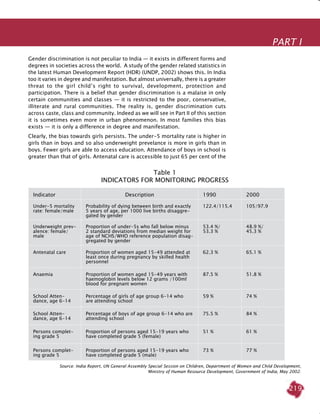
teratogenic effect on the unborn baby. Other pesticides act as hormonal
disruptive chemicals or hormone blockers and interfere with the immune
system. Growing children are very vulnerable to them, and can develop
reproductive disorders, changes in behaviour, immune dysfunctions and
even cancer. When some children in Karnataka developed Handigodu
syndrome, crippling inability to walk, it was blamed on high pesticide
consumption. Higher incidence of congenital malformation and spontaneous
abortion has been observed in areas with higher use of pesticides. Yet,
many hazardous pesticides continue to be marketed or used without caution.
Sprayed food and fruits are eaten. Colouring agents, food preservatives,
others, e.g., Monosodium Glutamate are known to cause food allergies.
Aerial spraying of pesticides on coconut plantations in Kerala has been
related to growing deformation and crippling among children.
Children from areas where radioactive Uranium is mined, like Jadugoda in
Jharkhand, are known to have higher congenital abnormalities. Women are prone
to miscarriage, childlessness and cancer (The Week, Sept. 2, 2001).
The major sources of lead poisoning are automobile fuel, food can soldering,
lead based paint, leaded cooking utensils and drinking water systems. Pre-
school children are considered to be at high risk because they can absorb lead
more easily than adults and it affects their nervous system. The Indian Prime
Minister, in a message at an International Conference on Lead Poisoning
Prevention and Treatment, in Bangalore in 1999, said that lead poisoning was
slowly emerging as a deadly scourge in India and that the government had
initiated steps to eliminate this by making lead free petrol mandatory for use
by automobiles. (DWCD, 2001).
Fluorosis resulting in yellowing teeth, followed by neurological disorders,
paraplegia, even quadriplegia has been seen along the flurotic belt spreading
from Punjab to Rajasthan. This is increasing because of higher fluoride content in
subsoil water as more and more of it is being pumped up for irrigation. Andhra
Pradesh is another state that is seriously affected. It goes without saying it is the
poor and the malnourished who are more vulnerable.
79
Children of 68 blocks in eight districts of West
Bengal are affected by arsenic poisoning
which is affecting their limbs. A few villages
in Rajnandgaon in Chattisgarh have also been
recently affected.
Environmental degradation is closely
connected with global warming, change in
climate, increased and greater evidence of
natural disaster such as cyclones, floods and
drought famine are being seen increasingly. All these have
implications on the health of children. In the wake of changing
climatic and ecological conditions, new diseases are known
to emerge. the last few years have seen cyclone in Orissa,
Saurashtra, earthquakes in Gujarat, Tehri, and seasonal
floods impoverishing the already impoverished people and
increasing their disease burden. The Orissa cyclone left
30,000 dead thousands homeless and sick many of whom
were children.
It is worth remembering that the distributional implications of environmental
destruction have made it receive less attention than it would have if the main
sufferers were the politically and socially powerful. (Dréze and Sen, 2002). But
it is equally true that if this issue is not addressed in policy and action, it will
affect the lives of a present and future generation with irrevocable results.
Communicable Diseases
Malaria
Falciparum Malaria kills many. It is the children who are most vulnerable. With
the shift in the nature of malaria from vivax to falciparum over the last two
decades, and an increase in mosquitogenic and malariogenic conditions, many
human lives have been needlessly lost. Each bout of malaria leaves a person
weaker with drop in haemoglobin i.e. worsened anaemia. Some get complications
like cerebral malaria, liver or kidney collapse, hypoglycemia abortions and
stillbirth or low birth weight babies if pregnant women are affected.
Malaria deaths were very high in the 50s and 60s but they were dramatically
brought down and stayed so till the resurgence of the vector borne communicable
disease in the 1990s. There was an outbreak not just of malaria but also filaria
and Japanese B encephalitis. Malaria outbreak in Rajasthan in 4 districts along the
Indira Gandhi Canal — Jaisalmer, Bikaner, Jodhpur, Barmer — resulted in deaths
of over 2,000 persons according to the estimates of NGOs working there. Many of
them were children. The cause was waterlogging along the canal, increased
mosquitogenic conditions, presence of labour from Bihar (endemic for Falciparum
Malaria) who carried the germs in their blood. In rural areas, in the absence of
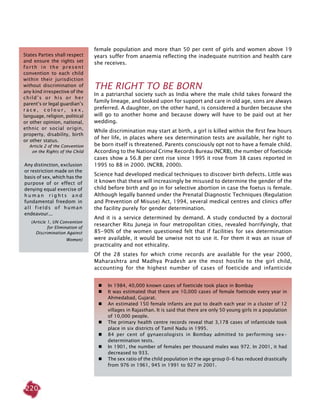
blood tests to identify the malaria parasite, people think they are dying because
of a mysterious fever. Poor health care services surveillance system, lack of
transport facilities especially where the villages were far flung and spread out,
and lack of knowledge about malaria led to delayed treatment. In 1995, there was
80
an outbreak of Falciparum Malaria in Assam. Again many of the victims were women
and children. (Shiva and Sengupta, 1999). It has killed many children in Orissa,
Bihar, Chattisgarh and Jharkhand Betul district saw many malaria deaths as did
Shaheed hospital built by Shankar Guha Niyogi and the Chhatisgarh Mukti Morcha
in Dallirajhara in Chattisgarh. Most of these areas have one thing in common  —
they are poor, backward and remote, many of them tribal. An estimated 1000
deaths took place in the Mewat region of Haryana in 1996 due to Falciparum Malaria
and during the same period when hundreds of hectares of agricultural fields lay
inundated. This was the same period, which saw several deaths sue to dengue
haemorrhagic fever, another mosquito borne disease, in Delhi. Most of the deaths
due to Japanese encephalitis are in children. In an outbreak in Patna most had been
found to be poor children residing in the slums.
Tuberculosis
In India particularly, tuberculosis is a disease of the poorest of the poor, but
even in them it causes only a small proportion of their burden of morbidity. The
great problem is to reach those infected. Of every thousand Indians, seven
children and about twenty adults have active tuberculosis, and five of these
adults are sputum positive. Only about half the 9 million in the community at
any one time are ever diagnosed, and of these only about 13 per cent complete
their treatment, so there is a huge pool of infectious cases, half a million of
whom die each year. Tuberculosis is different in children. It involves lymph
nodes and many organs as in Milliery Tuberculosis, instead of being the
predominantly respiratory disease that it usually is in adults. Fortunately, it
readily responds to treatment — if it is diagnosed early enough and treated for
long enough! This is also the problem. Unfortunately, tuberculosis causes such
non-specific symptoms and signs, and the bacilli are seldom isolated, therefore
diagnosis is difficult. Even if diagnosed, paediatric dosages are really not known
to many doctors (trained and untrained), and children are known to be subjected
to overdose resulting in damage of liver and kidneys. Three lakh children drop
out of school after contracting Tuberculosis (Prabhu, 2002). Fortunately, the
incidence of tuberculosis among children reporting to the hospital is slowly
decreasing, probably largely due to improved coverage with BCG vaccination.
However, in a household where an adult family member may be affected,
preventive measures need to be ensured so that children and others in the
family are not infected.
Fifteen children have died aged between a day and five years, in the last three days
at the Burdhwan Medical College Hospital, West Bengal. They suffered from
encephalitis, respiratory trouble, malnutrition and meningo-encephalitis. Few died
within hours of admission. Authorities claim that all the children were brought in a
very critical state and death was not due to negligence. ‘Children are normally brought
here when they are far gone, and there is not much a doctor can do. We are short of
doctors and space,’ says the principal of the college. The patients’ kin on the other
hand alleged that the hospital superintendent chases them out whenever they
approach him with a complaint.
Hindustan Times, October 22, 2002.
81
HIV/ AIDS
Alvin’s mother, Nisha, got HIV from her husband and passed the virus on to her
son. Doctors say mother-to-child transmissions are increasing as infection rates
rise among Indian women. ‘My little child has seen nothing of this world, but
he has endured pain ever since birth,’ says Nisha. Since her husband’s death,
she has worked at odd jobs at an AIDS clinic to survive. But she worries for
Alvin’s future.
The total HIV-infected Indian population is estimated at just under 4 million.
Although infection rates in India are a fraction of those in Africa, health officials
worry that the disease can still have a grave effect on the nation’s future.
Thousands of children in India have no other choice but to live on the streets.
Some have been abandoned by parents who are too sick or poor to care for
them. Many are victims of beatings or sexual abuse, and have run away from
home. Typically, they end up in the train stations and are soon sucked into local
gangs.  They survive by scavenging for food in trash bins. Some find work in the
dangerous rag-picking trade. It is a constant struggle to find a safe place to
sleep where older boys and men will not prey upon them. Both sexual abuse
and drug use are rampant. In their day-to-day struggle to survive, these street
children are unaware of the dangers of AIDS.
Children of prostitutes are also at high risk group. It is estimated that 60 per
cent of the prostitutes in Mumbai are already infected. Their children grow up in
the middle of the sex trade and are often victims of violence and rape themselves,
leading a stigmatised existence, being barred from ‘society’. Many of them
turn to begging or theft. By the time they reach puberty, social workers say,
these children will also end up in the sex trade — either as prostitutes, pimps,
or drug pushers — unless outside intervention frees them from the cycle of
poverty, violence, and disease. 
There have been instances of HIV transmission in children, especially girls due
to physical abuse. A counsellor working with care homes set up for HIV infected
children said, ‘ Though the infection is very difficult to manage in children, the
risk is even greater with children who have been physically abused.’ (Srivastava,
The Times of India, 4 June, 2001).
The most outrageous dangers are the invisibility of children in HIV/AIDS
pandemic. Whatever information is collected is not disaggregated to show the
disease’s effect on children. This makes it more difficult to identify those whose
rights are most at risk and protect them from further harm.
Facilities for testing and counselling continue to be inadequate and attitudes of
service providers and caregivers negative. The major focus of existing work on
prevention of HIV in children is on school-going children. The responses to
prevent the spread of infection in out-of-school children are isolated
interventions by some NGOs. The existing responses are geared towards
provision of information about infection, modes of spread and how to prevent
the infection. It was clear from the research undertaken by Save The Children -
UK in India that information alone does not always lead to adoption of safer
behaviour. There is a need for existing interventions to understand both
the circumstances and the contexts in which behaviours take place. The
‘I think we are in for a very
bleak future. Maybe quite a
great destruction in the
lives of people in the
government, in all walks of
life — in the existence of
the country itself.’
Dr. Chinkolal Thangsing, who
cares for children with AIDS
Estimated number of HIV
cases in India
Adult	 3,800,000
(5-49 years)
Women	 1,500,000
(15-49 years)
Children 	 170,000
Total 	 3,970,000
Source: UNAIDS Global HIV/
AIDS Report
82
83
HIV is continuing to spread in leaps and bounds across the globe since its first detection in 1981. The initial
sufferers were adults. But, in a few years, the epidemic was felt in children. It is estimated that 34.7 million
children under the age of 15 in 34 countries have lost their mother, father or both parents to HIV/AIDS and other
cause of death.
As with all data on health, there are no official figures available on the number of children infected and affected
by AIDS in India. According to some estimates the number of children in the 0-14 year age group form around
3.68% of all children with AIDS. This with a denominator of 3.97 million infected (NACO, 2002) would mean around
146,000 infected children. This is in addition, to the large number of orphans and street children of non-HIV
causes.
The impact of HIV on children is two-fold. The first category being those who are infected and destined to die and
the second is that of children who have any/both parents infected living or dead. Both the situations are disastrous.
In the case of children who are already infected, there is a sense of hopelessness and people think that there is no
use taking care of a child who is destined to die soon. 50 % of the mother to child infected children die within the
first year of age and most of the rest die by the 5th year. In those cases where the parents are sick, they are unable
to take proper care of their children. In such cases, the uninfected child who has a potential to grow into a healthy
human being is left with an uncertain future. HIV is a chronic disease lasting for several years, many a times 10
years or more. With the earning member getting sick and money spent on his care, the children are neglected.
They do not get proper nutrition and psychological environment to grow healthy. In some case, the child is looked
after by grandparents, who themselves need support for their survival. In many cases, there is nobody to look after
the children. This is the worst scenario especially in a situation where there are no security nets available.
The solutions are not easy. Some agencies have established care homes for these children and are doing excellent
work. It has been found that good care has delayed death beyond the 5th birthday in many children. The children
look as healthy as the uninfected. They are being provided education in schools with other children. The children
are also winning prizes in different competitions that they can now participate in. And who knows, in a few years
there would be some medicine that can kill HIV.
Such homes are effective but expensive to run. They cannot match the enormity of the problem, neither can
institutionalisation be the ideal solution always. Every child, irrespective of HIV infection has a right to grow into
a healthy adult, free from stigmatisation and discrimination. The State and the community must provide support
to all children. Some relative or friend of the affected family should come forward and take care of such a child.
There must be agencies available to guide the caretaker. A population of 1 billion can surely look after 1 million HIV
infected and affected children!
Dr. Ashok Agarwal (MBBS.MSD)
Regional Technical Advisor HIV/ AIDS
South Asia, Catholic Relief Services.
HIV/AIDS and children
programmes on AIDS are targeted and isolated and very few efforts are made
to link work on prevention of HIV/AIDS with developmental programmes on
poverty, gender, education and access to health care (Rajkumar, 2000). There are
several very good initiatives undertaken by NGOs who run homes for children
with HIV/AIDS. Others are involved in education, awareness or community based
interventions.
Orphaned children of HIV infected parents or children who are infected
themselves, have to cope with both negative social responses as well as the
health problems that may go with the disease. However, like all other health
information, the impact of HIV/AIDS on children has not been documented.
This is critical for gaining a better understanding of how to deal with infected
children or orphaned children of infected parents. Awareness and attitudinal
change, along with health and quality care services are critical. Equally essential
is the linkages with other developmental programmes.
84
The image conjured up in the westernised elite urban mind of India when
discussing ‘mental health’ is not that of the stereotypical lunatic being treated
in a gloomy asylum but that of contented individuals having the time to pursue
yoga, meditation and indulge in a week long art of living crash course. Mentally
healthy children therefore are not just children not in asylums but are children
living productive lives to their fullest potential.2
As far back as in 1948, the noted Indian psychiatrist, Govindaswamy said that
the field of mental health in India encompassed three objectives: restoration
of the health of the mentally ill, protection of those susceptible to becoming
mentally ill, promotion of positive mental health.3
Each of these three
objectives is relevant while examining the issue of mental health of the
children in India.
The spectrum of childhood psychiatric disorders encompasses benign bowel
and bladder control problems, eating and sleeping disorders, behavioural and
emotional problems, mental retardation, learning disorders and pervasive
developmental disorders. Giel et al, in a 1980 WHO study reported that 12-
29% of children attending a primary health care facility in India had identifiable
psychiatric disorders of which 80-90% are consistently missed. Other studies
have reported a very wide range of prevalence of childhood psychiatric
disorders, ranging from 3% to as high as 54% (the latter for some neurotic
disorders).4
There is unfortunately no way to accurately study the epidemiology
of most of these disorders in India. The absence of such data itself provides
insight into the problems surrounding the diagnosis and treatment of mental
health disorders of children in India.
Traditionally the treatment of mental health relied heavily on the family
structure. The advent of western medicine, shifted the focus to institutional
care. Institutional care due to its inherent nature was heavily stigmatised and
hence avoided as far as possible. The shift from ‘mental hospitals’ to psychiatric
units in general hospitals in the late 70s is considered a turning point in making
treatment of mental health issues more socially acceptable. The National Mental
Health Programme ‘encouraged application of mental health knowledge in
general health care’ and in ‘social development’. The District Mental Health
Programmethatwasformulated in thelastdecaderequired provision of‘services
for early detection and treatment of mental illness in the community itself with
OPD and indoor treatment’. Yet medical undergraduates, attend totally only
two weeks of psychiatry posting during their training, and postgraduates in
paediatrics, psychiatry, psychology and preventive medicine do not have
mandatory training exclusively in child psychiatry. There is a thus a lack of
skilled personnel.
Where provision of mental health facilities are concerned, the National Human
Rights Commission report 2000, concluded that ‘8% of the hospitals attending
Mental Health of Children in India — A Commentary
2
The 1948 WHO definition clearly states that health is not defined by merely the absence of disease and infirmity.
3
Quoted in R.Srinivasa Murthy, Community Mental Health in India,’Mental Health in India 1950-2000, PAMH -
Bangalore.
4
Data presented by Drs LP Shah and Renu Sheth at NIMHANS: Development of Child and Adolescent Mental Health
in India: The Last 40 Years.
85
the mentally ill retained jail like structures…and that deficiencies indicated
that the rights of the mentally ill are grossly violated in these hospitals.’
Given the lack of infrastructure for attending to the mentally ill, and given the
even greater absence of specialised care for mentally ill children in the country,
it is no surprise that mechanisms to ascertain even the burden of disease are
not in place. This lack of access to mental health care, either due to lack of
skilled personnel or due to social reservation, compounded with lack of adequate
treatment facilities paints a dismal picture.
Children constitute 40% of India’s population. Of the 400 million children,
about one-fourth do not attend school. Working children raise their own set of
mental health issues, independent of psychiatric disorders. It is this vulnerable
group that is susceptible to mental health problems including depression,
anxiety, developmental impediments and behavioural problems. Many of these
children live on the fringes of society, sleeping on the streets of big cities or
toiling in secluded workshops. Separation from family and deprivation from
childhood study and play activities, severely impede the developmental process.
Substance abuse and violence are additional problems in these children. These
circumstances demand special and urgent attention. But while even basic mental
health facilities continue to be inaccessible to the large majority of the Indian
population, the protection of mental health in marginalised children remains
unachievable.
The promotion of positive mental health in the children of India would entail
the tackling of issues that damage it. Saraswathi points out that while in the
West Developmental Psychiatry is synonymous with Human Development
Studies, in India psychiatrists have failed to give due recognition to Human
Development.5
An interdisciplinary understanding encompassing Sociology,
Social Work, Anthropology, Education, Psychology and Psychiatry is the need
of the hour in India, where mental health is married to the social and
developmental changes occurring in the country. Harding finds the need to
demand pro-active measures to combat economic and political forces
incompatible with human rights and antinomic to health.6
While thrust is laid over the coming years in increasing access to mental health
facilities in the country and training more personnel, it is imperative to realise
that the promotion of mental health among the children of India (to enable
them to live their lives productively to their fullest potential), will require more
engagement, greater commitment and concerted action by various professions
to facilitate the better realisation of human rights and to improve the human
development indices in India.
Satchit Balsari MBBS. MPH Research Associate, FXB Center for Health and Human Rights,
Harvard School of Public Health, Harvard University.
5
T.S.Saraswathi, Towards Interdisciplinary Linkages: Some Reflections in Mental Health in India 1995-2000.
 6
Timothy W. Harding Mental Health and Human Rights in Mental health in India.
86
Immunisation
The vaccination of children against six preventable diseases (TB, diphtheria,
pertussis, tetanus, poliomylitis and measles) has been a cornerstone of child
health care system in India. According to NFHS-2, 42 per cent of children aged
12-23 months are fully vaccinated and 14 per cent have not received any
vaccination. The percentage of children who are fully vaccinated ranges from
11 per cent in Bihar to 98 per cent in Tamil Nadu. Among other larger states,
Assam (17 per cent), Rajasthan (17 per cent), Uttar Pradesh (21 per cent) and
Madhya Pradesh (22 per cent) have a much lower percentage than the national
average of 42 per cent. These states account for 40 per cent of the total
population of the country!
The public sector is still the primary provider of childhood vaccination in India.
According to NFHS-2, 82 per cent of all vaccinated children have received it
from a public medial health source and 13 per cent received them from private
medical sources. There is a distinct relationship to be found between vaccination
coverage and mother’s education. Only 28 per cent of the children of illiterate
mothers were fully vaccinated, as compared to 73 per cent in the case of mothers
who have completed at least high school. Children of more educated mothers
with higher standards of living were found to be more likely to receive
vaccinations from private practitioners.
Occupational Health Hazards of Children
India has the highest number of working children in the world. Apart from being
economically exploited and denied their basic rights to childhood and education,
these children develop health problems that are clearly linked to their status as
child labour. Apart from the physical and sexual abuse that they may be facing
in the workplace, the nature of the work they perform too has long-term health
consequences. Working for long hours stunts mental and physical growth,
deforms the body. Poor nutrition, cuts and burns skin infections are common
for children whose work involves fire and heating such as in domestic work,
dhabas, bangle or glass work, brass work etc. Children employed in mechanic
shops deal with oils and chemicals, heavy automobile parts. Meera Deewan’s
film on children in Firozabad —  ‘Who’s Children’, documents children working
in bangle factories who are exposed to a stuffy atmosphere and high temperature
making them susceptible to burns, bronchitis, tuberculosis.
There are thousands of children involved in brick kilns, stone quarries, stone
crushers, coal mines, breaking stones, lifting heavy buckets at construction sites.
They suffer for silicosis, pneumoconiosis, backache, cervical spondylosis, and
crush injuries and tuberculosis. Children as bidi workers inhale tobacco damaging
their lungs. As carpet weavers’ children sit in squatting position straining their
backs and their eyes, developing bony lesions and deformities. These are merely
a few examples. Child labour is child exploitation perpetuated by society, depriving
children their right to childhood, to education, adequate food and health care.
They are overworked, underpaid, perpetuating intergenerational destructive cycle
of repetitive impoverishment and ill-health. (DWCD,1995). Linked to each
occupation or process is an illness that they contract.
87
Conclusion
Children are the heritage of this nation. In the ear of predatory profit
maximisation in a globalising world whether it is in the exploitation of natural
resources, or in providing health care, education or food — children are the
worst sufferers. Not only are the determinants of health eroded or denied to
many underprivileged children, they are now faced with a much more violent,
environmentally and socially degraded world, with shrinking resources and
opportunities.
There is need for holistic and sustainable health interventions, which provide
access to quality and affordable health care, and policies and programmes
address gender concerns so that the girl child is protected and cared for. Clearly
unless there are adequate resources, which are optimally used, health needs of
our children cannot be met and they will continue to be denied a healthy and
happy childhood.
88
REFERENCES
Bhatia Arun, 2002, Lying Statistics and Dying Children, Pg 16-17 in Combat
Law.
Department of Women and Child Development (DWCD), 1995, 4th World
Congress on Women, India Country Report, Government of India.
Department of Women and Child Development (DWCD), 2002, India Report,
UN General Assembly Special Session on Children, Ministry of Human Resource
Development, Government of India.
Ghosh Shanti, 1997, Nutrition and Child Care, A Practical Guide, Jaysee Brothers,
New Delhi.
Gonsalves Colin, 2002, The Spectre of Starving India, In Combat Law, Vol. 1,
Issue 3, August-September, 2002.
Gopalan Sarla and Mira Shiva, 2001, National Nutrition Policy, Women, Health
and Development — National Profile, Voluntary Health Association of India,
New Delhi.
HAQ: Centre for Child Rights, 2001, India’s Children and the Union Budget,
HAQ, New Delhi.
International Institute for Population Services (IIPS), 1995, National Health and
Family Survey (NFHS) 1992-93, Bombay, IIPS.
International Institute for Population Services (IIPS), 2000, National Health and
Family Survey (NFHS-2) 1998-99, Mumbai, IIPS.
Mathai S T, 1992, Education for Better Living of Rural Adolescent Girls — Training
Modules, Health and Nutrition, Special Publication Series 7, Vol. 1, NFI.
National Centre for Advocacy, 2002, Parliament Digest, Highlights: Budget
2002-2003 Economic Survey 2001-2002, NCAS, Pune.
Narayan Ravi and Shiva Sehgal, 1999, National Malaria Eradication Program,
CHC — Voluntary Health Association of India, New Delhi.
Pande Mrinal, 2002, A Life and Death Question, Hindustan Times, New Delhi.
Planning Commission. Government of India, March, 2002, National Human
Development Report, 2002, Government of India.
Public Interest Litigation, Rational Use of Drugs in Diarrhoea, AIDAN, DAFK,
DSF, UNICEF, WHO.
Qadeer Imrana, Kasturi Sen and K R Nayar, 2001, Public Health and the Poverty
of Reforms: The South Asian Predicament.
Swaraj Anna, 2001, National Public Hearing on Starvation Deaths, Navdanya
New Delhi.
Shiva Vandana, 2000, Seeds of Suicide, RFSTE.
Shiva Mira, 1985, ASPI Misery, ‘Taste of Tears’, Voluntary Health Association
of India, New Delhi.
89
Srinivasan K and Michael Vlassoff, 2001, Population-Development Nexus in
India: Challenges for the New Millennium, Tata McGraw Hill Publishing Company
Ltd.
Srivastava Radhika D, 2001, The Times of India, June 4, 2001.
Suchitra M and M P Basheer, 2002, ‘Water Hunt’ in Down to Earth, September,
30, 2002, Centre for Science and Environment, New Delhi.
Shiva Mira and Sanjay Sengupta, 1996, Malaria in NI, VHAI, 1995 and Independent
Commission on Health, Voluntary Health Association of India, New Delhi.
The Week, 2001, Hiroshima in Jharkhand: Uranium Mines Turn Jaduguda
Barren.
UNDP, 2000, Human Development Report, Oxford University Press, New
Delhi.
UNICEF, 1995, The Progress of Indian States, New Delhi.
Unnikrishnan P V and Deepankar Dasgupta, 2001, India Disaster 2001: White
Paper on Orissa Cyclone, Voluntary Health Association of India, New Delhi.
Vir Sheila, 1995, Iodine Deficiency in India, Indian Journal of Public Health
39(4): 132-134.
Werner David and David Sanders, 1996, Questioning the Solution: Politics of
ORS, Health Wrights.
World Health Organisation, 1995, World Health Report, ‘Bridging the Gap’.
91
92
EDUCATION
Scene I: Location — a remote village in the forests in Mirzapur District of Uttar Pradesh, very close to the
Madhya Pradesh border. The government schoolteacher is the local landowner and muscle man. He lives in
the only whitewashed, pucca house in the village. He comes to class or chooses not to as he wills, and no one
dare question. After all most of the villagers work on his land! Yet in this very village, a very poor farmer was
willing to donate a piece of his land for the construction of a school so that the children of his village could
have access to education.
Scene II: A village in Madhya Pradesh. A team of school inspectors are on a sudden visit. A young man with
very long cane is trying to control a rather large class. Who are you? he is asked. ‘Sir, I am a Pay Teacher.’ What
is that, the team asks. ‘Sir there are two teachers in this school. They are both busy. They pay me to take their
classes.’
In the capital city of Delhi, in one of the biggest resettlement colonies of Jahangirpuri, one of the primary
school teachers calculated that since her recruitment about a year ago, taking into account the school holidays
she has been able to teach the children barely for three months, having been conscripted for census data
collection and electoral survey. Officials in personal interviews admit that the Directorate of Education, Delhi
Government, runs 1,190 schools in 639 buildings. 33 of the schools are run in temporary structures and tents
and 100 others are in poor condition. Girl students often leave the school in the middle of the day because
there are no toilets. And this is the situation in the capital city.
Corporal punishment is seen as ‘integral’ to good and effective teaching, the only way to reprimand or discipline
an erring child. So children are beaten till they fall, tufts of hair are pulled out, teeth get broken, all in the
name of discipline. Needless to say children hate to go to school.
Socio-economic status determines the access to schools. Scheduled caste children continue to be discriminated.
Many continue to be denied admission, if admitted — not allowed to sit with the rest of the class, drink water
from the same tap, and are made to mop and clean the school premises. Lower enrolment and higher dropout
rates continue to plague girls. In spite of widespread recognition for special attention to education for the
disabled child and integrated education, wherein disabled children can be mainstreamed into regular schools,
they continue to be discriminated, and at best ignored.
The history of education in India is one of unfulfilled commitment from the time that the Constitution promised
to provide education for all in the following ten years. That target has been extended time and again. Several
expert committees and commissions have been constituted, but the dream of appropriate, accessible and free
education remains a chimera. Now more than even before, education has become enmeshed in controversy
the inadequacy of infrastructure and finance, the new curriculum framework, the stress on non-formal and
parallel systems of education  —  have become subjects of intense debate across the country. Indeed, like all
other social commitments, education too is a reflection of a government’s political commitment and the
nature of education it offers reflects its political ideology.
This section is divided into two parts. Part 1 deals with the statistical details, while Part II is a commentary on
the situation of education in the country in the wake of globalisation.
93
November 28, 2001 was the day that decided the fate of millions of children
of our country. The Lok Sabha passed the 93rd Amendment Bill1
(now the
86th Constitutional Amendment ), making Education a Fundamental Right
for 6 to 14 year-olds. Over 10,000 parents from various corners of the country
and several child rights activists and academics, who had gathered at the
Ramlila Grounds in Delhi that day seeking universalisation of elementary
education, felt completely cheated. The Bill forgot children in the 0-6 year
age group and made it compulsory on the parents to provide educational
opportunities for their children, failing which they can even be penalised.
But the saga of education in the country, along with the saga of
disappointments began long before this. In 1944, the Sergeant Committee
appointed to forecast how long it would take India to achieve universal primary
education, estimated 40 years at that time when the population of the country
was about 350 million. However, when India gained independence, the framers
of the Constitution were more optimistic. In 1950, the Constitution of India
committed itself to achieve the goal of ‘free and compulsory education for
all children until they complete the age of fourteen’ by 1960 (Article 45,
Directive Principles of State Policy). Since then our governments have given
themselves many more of such deadlines. To add to this, every time the
government sets up a committee or commission to look into the situation of
education, the new committee overlooks or negates the recommendations
of the previous one and lays down a new set of recommendations, only to be
put aside by the next one.
India today is the largest democracy in the world.
It is also the largest illiterate democracy in the
world. According to World Education Report
1998 and Demographic Yearbook 1995, United
Nations, New York and as reported by
Directorate of Adult Education in their literacy
facts at a glance, slightly less than one-third
of the world’s non-literates aged 15 years and
above are in India. We have sent satellites into
space; have the best missiles and fighter planes,
produce some of the best professionals in every
field, and yet the bulk of our young children
remain unlettered and disempowered — for
knowledge is power and education definitely
paves the path to empowerment, social,
economic and political.
1
The Constitution (93rd Amendment) Bill, 2001, although passed by both the houses of the
Parliament, awaits the President’s assent. In a statement issued on August 8, 2002, the Human
Resource Development Ministry stated that the Bill, after having been passed by the Rajya Sabha,
had been sent back to the Lok Sabha for the acceptance of amendments of a technical nature. This
has been discussed in detail in Part II.
PART I
94
What do the Statistics Reveal?
The Government of India produces education statistics every year to throw light
on the status of elementary education in the country. However, it is important
to situate these statistics in the context of policy changes and programmatic
developments that take place in the field of education.
As we closely look at the education statistics available, the inadequacy of
statistical information becomes yet another area of concern.
Enrolment into Schools
Enrolment statistics found in the government records are in terms of actual
number of children (boys and girls) enrolled at the different stages of education
and Gross Enrolment Ratios (GER).
Although there has been a steady increase in enrolment over the years, about 40
per cent boys and over 50 per cent girls still remain unenrolled in the primary
stage itself. In the susequent stages, enrolment is even lower. Only 24 per cent
boys and 16 per cent girls get enrolled into the elementary school system leaving
60 per cent of the children in the 11-14 year age group out of the school
system.
The Gross Enrolment Ratios tell yet another tale. GERs for the age group 6-11
years, 11-14 years and 6-14 years are presented in Table 2.
95
Table 1
SEX-WISE ENROLMENT BY STAGES/CLASSES SINCE 1951
(In million)
	 YEAR	 Primary	 Middle / Upper Primary	 Sec./Hr. Sec.
		 Boys	 Girls	 Total	 Boys	 Girls	 Total	 Boys	 Girls	 Total
	 1950-51	 13.8	 5.4	 19.2	 2.6	 0.5	 3.1	 1.3	 0.2	 1.5
	 1955-56	 17.1	 7.5	 24.6	 3.8	 1.0	 4.8	 2.2	 0.4	 2.6
	 1960-61	 23.6	 11.4	 35.0	 5.1	 1.6	 6.7	 2.7	 0.7	 3.4
	 1965-66	 32.2	 18.3	 50.5	 7.7	 2.8	 10.5	 4.4	 1.3	 5.7
	 1970-71	 35.7	 21.3	 57.0	 9.4	 3.9	 13.3	 5.7	 1.9	 7.6
	 1975-76	 40.6	 25.0	 65.6	 11.0	 5.0	 16.0	 6.5	 2.4	 8.9
	 1980-81	 45.3	 28.5	 73.8	 13.9	 6.8	 20.7	 7.6	 3.4	 11.0
	 1985-86	 52.2	 35.2	 87.4	 17.7	 9.6	 27.1	 11.5	 5.0	 16.5
	 1990-91	 57.0	 40.4	 97.4	 21.5	 12.5	 34.0	 12.8	 6.3	 19.1
	 1991-92	 58.6	 42.3	 100.9	 22.0	 13.6	 35.6	 13.5	 6.9	 20.4
	 1992-93	 57.9	 41.7	 99.6	 21.2	 12.9	 34.1	 13.6	 6.9	 20.5
	 1993-94	 55.1	 41.9	 97.0	 20.6	 13.5	 34.1	 13.2	 7.5	 20.7
	 1994-95*	 62.3	 46.8	 109.1	 24.5	 15.8	 40.3	 16.0	 8.4	 24.4
	 1995-96*	 62.4	 47.4	 109.8	 25.0	 16.0	 41.0	 16.1	 8.8	 24.9
	 1996-97*	 62.5	 47.9	 110.4	 24.7	 16.3	 41.0	 17.2	 9.8	 27.0
	 1997-98*	 61.2	 47.5	 108.7	 23.7	 15.8	 39.5	 17.08	 10.5	 27.24
	 1998-99*	 62.7	 48.3	 111.0	 24.0	 16.3	 40.3	 17.3	 10.5	 27.8
	 1999-2000*	 64.1	 49.5	 114.0	 25.1	 17.0	 42.1	 17.2	 11.0	 28.2
* Provisional figures (rounded up to first decimal digit)
Source: Annual Reports, 1999-2000 and 2000-2001, Department of Education,
Ministry of Human Resource Development, Government of India. www.education.nic.in
Table 2
GROSS ENROLMENT RATIOS SINCE 1951
	 Year	 Boys	 Girls	 Total
	 I-V	 VI-VIII	 I-VIII	 I-V	 VI-VIII	 I-VIII	 I-V	 VI-VIII	 I-VIII
	 1950-51	 60.6	 20.6	 46.4	 24.8	 4.6	 17.7	 42.6	 12.7	 32.1
	 1960-61	 82.6	 33.2	 65.2	 41.4	 11.3	 30.9	 62.4	 22.5	 48.7
	 1970-71	 95.5	 46.5	 75.5	 60.5	 20.8	 44.4	 78.6	 33.4	 61.9
	 1980-81	 95.8	 54.3	 82.2	 64.1	 28.6	 52.1	 80.5	 41.9	 67.5
	 1990-91	 114.0	 76.6	 100.0	 85.5	 47.0	 70.8	 100.1	 62.1	 86.0
	 1991-92	 112.8	 75.1	 101.2	 86.9	 49.6	 73.2	 100.2	 61.35	 87.7
	 1992-93	 95.0	 72.5	 87.7	 73.5	 48.9	 65.7	 84.6	 67.5	 77.2
	 1993-94 	 90.0	 62.1	 80.2	 73.1	 45.4	 63.7	 81.9	 54.2	 72.3
	 1994-95 *	 114.8	 79.0	 101.8	 92.6	 55.0	 78.8	 104.0	 67.2	 90.7
	 1995-96 *	 114.5	 79.5	 101.8	 93.3	 55.0	 79.3	 104.3	 67.6	 90.9
	 1996-97 *	 98.7	 70.9	 88.9	 81.9	 52.8	 71.8	 90.6	 62.4	 80.7
	 1997-98 *	 97.7	 66.5	 86.4	 81.2	 49.5	 70.0	 89.7	 58.5	 78.6
	 1998-99*	 100.9	 65.3	 NR	 82.85	 49.1	 NR	 92.1	 57.16	 NR
	 1999-2000*	 104.1	 67.2	 NR	 85.02	 49.07	 NR	 94.1	 58.1	 NR
* Provisional figures (rounded up to first decimal digit), NR - Not Reported
Source: Annual Reports, 1999-2000 and 2000-2001, Department of Education, Ministry of
Human Resource Development, Government of India. www.education.nic.in
96
Gross Enrolment Ratio (GER) is defined as the percentage of enrolment in
classes I-V and VI-VIII and/or I-VIII to the estimated child population in the
age groups 6-11 years and 11-14 and/or 6-14 years respectively. The
government admits that in computing GERs both under age (<6 years) and
over age (>11 years or 14 years) children get included and therefore the total
percentage is more than 100 per cent in some cases. It must be pointed out
here that the under-aged and over-aged children account for almost 20 per
cent of the GERs. Also, the GERs do not take into account the low school
attendance rates, which range between 50-70 per cent. In such a situation, the
Net Enrolment Ratios (NERs) would certainly be a better measure and would
also reveal a more accurate picture. Unfortunately the government has stopped
presenting NERs in its reports.
A graphic representation of the GERs at primary, upper primary and the
elementary stage in totality highlights the rise and fall in the GERs more
elaborately.
GROSS ENROLMENT RATIOS AT
UPPER PRIMARY STAGE
0
20
40
60
80
100
1950-511970-711990-911992-931994-951996-971998-99
Boys Girls Total
GROSS ENROLMENT RATIOS AT
PRIMARYSTAGE
0
20
40
60
80
100
120
140
1950-511970-711990-911992-931994-951996-971998-99
Boys Girls Total
Figure 1a
Primary Stage
Source: Annual Report, 1999-2000, Department of Education, MHRD. pp 177-178
Annual Report, 2000-2001, Department of Education, MHRD. pp 223-224
	 www.education.nic.in
Figure 1c
ELEMENTARY Stage
1950-51
1970-71
1992-93
1994-95
1996-97
1990-91
Boys Girls Total
Figure 1b
Upper primary stage
0
20
40
60
80
100
120
1960-61
1980-81
1991-92
1993-94
1995-96
1997-98
120
100
80
60
40
20
0
Figure 1
GROSS ENROLMENT RATIOS
97
Clearly there is a rise in the GERs in the period immediately following the National
Education Policy of 1986, then in 1994 and 1995 — the years when DPEP was
implemented and again in 1998 and 1999. This is the period following the
submission of India’s First Country Report to the UN Committee on the Rights of
the Child and also corresponds to the rapid implementation of schemes such as
the Educational Guarantee Scheme as well as the period that marked the onset
of the Sarva Shiksha Abhiyan (Education for All campaign). Indeed the implication
of the rise and fall in the GERs and the corresponding developments in the
elementary education scenario point to the fact that it is only in the first few
years of implementation of any new programme that a positive change is visible.
As this positive change is not sustained for long, one cannot but question the
validity of the new programmes and schemes that come into existence as well
as the political commitment to education that results in implementation of such
programmes. Even if one does not interpret the rise and fall in GERs in these
terms, there certainly is something wrong somewhere if we are unable to sustain
a high GER.
Children who get enrolled need not necessarily continue to be in the education
system to complete elementary education. These children are called dropouts.
Rate of Dropout
Rate of dropout has been defined as percentage of the number of children
dropping out of the school educational system in a particular year to total
enrolment in that year. There are a number of methods for estimating these
rates. The results arrived at by conventional method have been indicated below
in Table 3.
Table 3
DROPOUT RATES AT PRIMARY & ELEMENTARY STAGES
	 1960-61	 1970-71	 1980-81	 1990-91	 1992-93	 1997-98*	 1998-99*	 1999-00*
  Classes I-V	
	  Boys	 61.7	 64.5	 56.2	 40.1	 43.83	 38.23	 38.62	 38.67
	  Girls	 70.9	 70.9	 62.5	 46.0	 46.67	 41.34	 41.22	 42.28
	  Total	 64.9	 67.0	 58.7	 42.6	 45.01	 39.58	 39.74	 40.25
  Classes I-VIII	
	  Boys	 75.0	 74.6	 68.0	 59.1	 58.23	 50.72	 54.40	 51.96
	  Girls	 85.0	 83.4	 79.4	 65.1	 65.21	 58.61	 60.09	 58.00
	  Total	 78.3	 77.9	 72.7	 60.9	 61.10	 54.14	 56.82	 54.53
* Provisional
Source: Annual Report, 1999-2000, Department of Education, MHRD. pp 177-178
Annual Report, 2000-2001, Department of Education, MHRD. pp 223-224
www.education.nic.in
98
Indeed the dropout rates are even more worrying. Of the 64.1 per cent boys
who enrolled at the primary stage in 1999-2000, almost 39 per cent dropped
out before completing class five. This is even higher among girls. Of the 49.5
per cent girls enrolled, about 42.3 per cent dropped out at the primary stage.
The dropout rates rise as we begin to move on to the elementary stage. Of
course, the dropout rate at these stages is higher among girls.
GENDER AND CASTE INEQUITY IN
ENROLMENT AND DROPOUT RATES*
At the beginning of the previous decade of the nineties, it was estimated that
nearly half of the children in the age-group of 6-14 years and two-thirds of the
girls were essentially out-of-school. This was despite the false impression given
by the Gross Enrolment Ratios for the primary stage being as high as 100 per
cent, as reported by the Ministry of Human Resource Development in its Annual
Reports for 1990-91 and 1991-92. Even these exaggerated claims failed to
hide the wide gender disparity, as will be seen by the following comparison of
the GERs of 1993-94 and 1999-2000.
The much wider gender disparities in the GERs of the Scheduled Caste (SC) and
Scheduled Tribe (ST) categories point to the dual inequality faced by girls
belonging to the marginalised communities on account of both gender and
social position.
*The section on ‘The most apparent and irrefutable dimensions of Gender and Caste inequity in elementary
education’ is adapted from an unpublished paper written on ‘Gender and Caste Inequity in Enrolment and Dropout
Rates’,by Prof. Anil Sadgopal, of the Nehru Memorial Museum and Library, 2002.
‘At the same time, it must
be recognised that poor
enrolments and large dropout
rates among girl children
are not a result of social,
economic and cultural factors
alone, but are also the
product of the policy and its
priorities. For example, it is
policy, which determines the
nature of the available
educational facilities, their
coverage and quality. This in
the above context can either
accentuate existing problems
of girls’ education or facilitate
their participation.’
Report of the Committee for
Review of National Policy on
Education 1986, Final Report,
26 December, 1990.
Children can be out of school because of many reasons. There are 3 categories that
have been identified in the phenomenon of dropouts:
Stay outs  —  where schools are not accessible
Pull outs  —  mostly girls who are pulled out because of economic or socio-cultural
reasons.
Push outs  —  the school pushes them out even though they have time to attend
school. This can be due to many reasons:
	 The daily schedule of the school is not through a centralised decision-making
process and therefore not suitable for children
	 Children may not understand language used in the school
	 The curriculum and textbooks are not relevant in the local context and hence
makes no sense to the child
	 Teachers if not qualified and dedicated are not able to motivate child retention
in school
There can be other reasons for children not to be in school — nothing happens in
school, beating, scolding, education not being really free, disabled children, too
old for the school. One of the most important factors is that children are into
labour — either at home or in the labour market.
99
This is despite the Constitution of India prohibiting discrimination on grounds
of religion, race, caste, sex or place (Article 15) and committing itself to providing
equal opportunities for all.
Table 4
GENDER AND CASTE DISPARITY IN GROSS ENROLMENT RATIOS
AT PRIMARY AND UPPER PRIMARY STAGE
	 Year	 Category	 Primary	 Upper Primary
		 Boys	 Girls	 Boys	 Girls
	 1993-94		All	 115.3		 92.9		 79.3		 55.2
			SC	 123.3		 91.2		 74.2		 45.0
			ST	 123.9		 88.8		 60.2		 34.9
	 1999-2000		All	 104.1		 85.2		 67.2		 49.7
			SC	 103.6		 80.5		 73.6		 50.3
			ST	 112.7		 82.7		 70.8		 44.8
Source: Annual Reports, 1996-97, 1999-2000 and 2000-2001, Department of Education, MHRD
	 State-wise Information on Education of Scheduled Castes and Scheduled Tribes, 1985,
Ministry Of Education , Programme of Action, 1992, Department of Education, MHRD.
The dropout rates available for 1993-94 further highlight the gender and caste
imbalance in elementary education, which is far greater in the case of children
belonging to the Scheduled Tribes. As compared to the GER and dropout rates
among girls from other communities, there are fewer ST girls enrolled at the
Upper Primary stage and more dropping out at this stage.
Table 5
GENDER AND CASTE DISPARITY IN DROPOUT RATES AT PRIMARY
AND ELEMENTARY STAGE
	 Year	 Category	 Primary	 Upper Primary
		 Boys	 Girls	 Boys	 Girls
	 1993-94		All	 35.05		 38.57		 49.95		 56.78
			SC	 45.93		 53.74		 64.29		 73.10
			ST	 61.86		 66.98		 77.42		 82.67
	 1999-2000		All	 38.67		 42.28		 51.96		 58.00
			SC	 NR		 NR		 NR		 NR
			ST	 NR		 NR		 NR		 NR
NR- Not Reported
Source: Annual Reports, 1994-95, 1999-2000 and 2000-2001,
Department of Education, MHRD.
A r t i c l e 2 9 ( i i ) o f t h e
Constitution provides that
‘no citizen shall be denied
a d m i s s i o n i n t o a n y
educational institution
maintained by the State or
receiving aid out of State
funds on grounds only of
religion, race, caste,
language or any of them’.
Special care of the economic
and educational interests of
theunderprivileged sections,
particularly, the Scheduled
Castes and Scheduled Tribes
is laid down as an obligation
of the State under Article 46.
100
In general, it may be noted that the dropout rates for the SC and ST categories
in 1993-94 were significantly higher than the combined category. During that
year, 73 per cent of the SC girl students discontinued their education before
Class VIII and of the ST girls, 83 per cent dropped out before Class VIII. In fact
the Government of India has now stopped reporting the dropout rates for these
deprived but politically critical categories.
Further evidence of persistence of gender and caste inequity in education is revealed
by the low levels of female participation at various stages of education.
The situation as it exists raises serious questions as to whether the education
system in our country is accessible, adequate, appropriate and affordable for all
children?
Table 6
GIRLS ENROLLED AT VARIOUS STAGES OF EDUCATION AS
PERCENTAGE OF TOTAL NUMBER OF CHILDREN ENROLLED
AT EACH STAGE
	 Year	 Category	 Primary	 Upper Primary	 Sec./Hr. Sec.
	 1999-2000	 All	 43.6	 40.4	 39.0
		 SC	 42.2	 38.4	 36.6
		 ST	 42.4	 37.9	 35.1
Source: Annual Report, 2000-2001, Department of Education, MHRD.
Accessibility, Adequacy and Appropriateness
of our Education System
Lack of access to education remains one of the higher child rights violations
and also an area of gender and caste discrimination.
Access to schools is an issue of both physical as well as social accessibility
often in the far-flung areas of the
country, especially in the forest, hilly or
tribal areas, where there are no schools
for miles, thereby making it impossible
for children to go to school.
In a country with its caste and class
biases, access to school also has social
discriminations.
While dealing with access to schools one
has to address the adequacy aspect of
our education system and also delve into
how appropriate this system is not just
to get more and more children into
school but also to be able to retain them.
To find detailed government data on
101
each of these aspects may not be possible, as only selective statistics are
made available to the public eye or else the information is outdated. However,
whatever is available from both formal and informal sources once again point
to the abysmal state of affairs and shatter the dream of ensuring right to
education for all children.
According to the Census 2001, there are over 350 million children in India up
to the age of 14 years of which about 43 per cent are in the 6-14 year
age-category. In the year 1998-99, for which most statistics are available,
there would not have been much of a difference. In this year the number of
pre-primary schools in the country was a little over 40,000, while there were
about 6.3 lakh primary schools and 1.9 lakh upper primary schools. The
problem of lack of adequate number of schools is acute at both pre-primary
and post-primary stages. For the 3-5 year-olds, it is still a long way to go
before pre-school becomes their fundamental right as the 93rd Amendment
has completely ignored this age category. But for all those passing the primary
stage, getting into a middle school will remain a dream till the government is
able to establish adequate number of upper primary schools. As it is, children
passing out of the non-formal systems of education find it difficult to get
admission into formal schools at the upper primary stage. This is because
most often they belong to the socially and economically underprivileged
sections of the society and are labelled incompetent to cope with the syllabus
in the formal schools or rather incompetent to meet the so-called ‘standard of
education’ in the formal schools (which in itself is questionable). The other
reason is because they are unable to produce official documents required for
completing the admission formalities.
Yet another facet of adequacy is the lack of adequate number of classrooms.
It is quite common to find two classes being held together. While one has
always admired the teachers for managing two different sections simultaneously
The following facts are revealed in the survey:
	 94% of rural population is served within 1.0 km by primary stage.
	 85% of rural population is served within 3.0 km by upper primary stage.
	 Of the total 8,22,486 schools in the country, 5,70,455 and 1,62,805 are primary
and upper primary schools respectively.
	 Of the total 15,39,06,057 pupils enrolled in all the schools, 9,70,29,235 and
3,40,71,058 children are enrolled at primary (grades I-V) and upper primary
(grades VI-VIII) stage respectively.
	 Of the total 6,36,38,488 girls enrolled in all the schools, 4,18,81,186 and
1,34,98,850 girls are enrolled at primary and upper primary stages respectively.
	 Of the total 41,97,555 teachers, 16,23,379 and 11,29,747 teachers are employed
in primary and upper primary schools.
	 84% of the primary and 89 per cent of the upper primary schools have pucca
and partly pucca buildings. 63.08% schools do not have adequate number of
classrooms.
The 6th All India Education Survey, 1993
102
in one place, at the end of the day one wonders what the students really learn.
Nevertheless, whether it is a one-room school or a two- or four- or no-room
school, as long as it is situated on a rented or leased property, as many
government primary schools are, the destiny of children will rest on the
availability of that space.
Availability of teachers to teach is also an area of concern for those who have
been fighting for children’s right to education. The concern here has not been
just one of inadequate number of teachers but also inadequate number of
qualified and trained teachers with high levels of motivation that would reduce
teacher absenteeism and ensure quality education.
In India there are 6,41,695 primary schools and 82,273 secondary schools with
an average of 128 and 349 students respectively. While the above table fails to
provide statistics for middle level or upper primary stage schools, data on
teacher-pupil ratio for 1997-98 shows one teacher for thirty-seven students at
the upper primary stage.
Clearly, the average number of teachers is not as per the stipulated teacher and
student ratio in primary schools. Ideally, there should be one primary school
teacher for 30 students (as recommended by the Yashpal Committee, 1993).
This means that there should be a provision of at least 4 teachers for 128 students
in primary schools. However, the new Sarva Shiksha Abhiyan document (on which
the government is relying heavily for ensuring children in the 6-14 year age
group their newly acquired fundamental right to education) conveniently waters
down the recommended teacher-pupil ratio to 1:40, implying 3 teachers for the
128 students in primary schools. In any case, the 1999-2000 data shows that
there already are on an average 3 teachers for 128 children at the primary stage.
The Sarva Shiksha Abhiyan document then actually takes off a great deal of
responsibility from the government’s shoulders. In fact, the document seems to
have been designed keeping in mind the present financial constraints faced by
the government and relieves it off its national and international obligations towards
its children. Moreover, it also proposes to meet this 1:40 ratio through unqualified
and untrained para-teachers — all in the name of generating teachers from within
the community, even if it is at the cost of children’s education, who have a right to
quality education.
In many states like Andhra Pradesh, Bihar, Gujarat, Haryana, West Bengal, the
teacher-student ratio reaches to more than 1:50. Staff absenteeism further adds
to the problem of imparting quality education to children.
In the absence of a uniform structure of elementary education in the states,
there are a number of states like Maharashtra where primary schools are only
up to Class IV and Class V becomes part of the middle school, which may not
necessarily be within the stipulated 1 km. distance. Then there are a number of
schools that are not recognised but children in these schools do account for
those enrolled. Prof. Anil Sadgopal shares his experience in Maharashtra and
Assam to highlight some critical dimensions of access and adequacy in a piece
written exclusively for this paper.
It is not only lack of teachers and schools but also lack of basic facilities that
renders our education inadequate and incompetent.
103
Table 7
PRIMARY AND SECONDARY SCHOOLS AND AVERAGE
NUMBER OF STUDENT/TEACHERS (1999-2000)
States/UTs	 Primary Schools	 Secondary Schools
		 No. of 	 Average	 Average 	 No. of	 Average	 Average
		 Institutions	 No. of 	 No. of 	 Institutions	 No. of 	 No. of 	
			 Students	 Teachers		 Students	 Teachers
	 Andhra Pradesh	 55398	 115	 2	 9659	 432	 13
	 Arunachal Pradesh	 1289	 87	 3	 108	 380	 15
	 Assam	 33236	 99	 3	 3967	 247	 11
	 Bihar	 53697	 136	 2	 4146	 412	 9
	 Goa	 1046	 54	 3	 355	 458	 18
	 Gujarat	 14789	 120	 2	 4281	 188	 6
	 Haryana	 10560	 197	 5	 2826	 262	 10
	 Himachal Pradesh	 10472	 64	 3	 1040	 243	 9	
	 Jammu & Kashmir	 10483	 63	 2	 1114	 267	 16
	 Karnataka	 23690	 82	 3	 8216	 150	 8
	 Kerala	 6748	 305	 7	 2596	 634	 35
	 Madhya Pradesh	 91733	 114	 3	 4585	 226	 6
	 Maharastra	 42108	 138	 4	 11058	 434	 13
	 Manipur	 2572	 78	 4	 528	 356	 16
	 Meghalaya	 4685	 97	 2	 532	 164	 9
	 Mizoram	 1226	 102	 4	 352	 69	 8
	 Nagaland	 1469	 94	 5	 309	 444	 19
	 Orissa	 42108	 99	 3	 6094	 189	 8
	 Punjab	 12996	 145	 4	 2196	 392	 14
	 Rajasthan	 34948	 146	 3	 4124	 309	 12
	 Sikkim	 501	 124	 7	 77	 431	 20
	 Tamil Nadu	 31052	 140	 4	 4551	 408	 11
	 Tripura	 2068	 191	 7	 392	 435	 25
	 Uttar Pradesh	 96964	 138	 3	 3230	 391	 10
	 West Bengal	 52385	 154	 3	 5312	 633	 15
	 Andaman & Nicobar	 198	 89	 4	 42	 417	 21
	 Chandigarh	 46	 335	 11	 56	 1079	 50
	 Dadar & Nagar Haveli	 138	 76	 2	 14	 97	 4
	 Daman & Diu	 53	 333	 7	 20	 172	 13
	 Delhi	 2676	 487	 13	 364	 819	 29
	 Lakshwadeep 	 19	 378	 13	 9	 755	 29
	 Pondicherry	 346	 173	 6	 120	 539	 18
	 India 	 641695	 128	 3	 82273	 349	 12	
Note: Jharkhand, Chattisgarh and Uttranchal are included in their erstwhile states.
Source: Selected Educational Statistics in India 1999-2000, as cited in Parliament Digest, NCAS, 2002.
104
In October 1997, we were driving along the top of the Valmiki Pathar, a remote mountainous terrain, in Satara District of
Maharashtra. A small boy was lugging his heavy school bag up the steep slope. We stopped by and inquired where he
was going. A Grade V student, he was going to his school. The nearest school with Grade V was 11 kms away from his
village! We were puzzled. As per official policy and norms, a primary school (up to Grade V) must be within a kilometre
from the child’s habitation; a middle or upper primary school (Grades VI-VIII) must be within 3 kms of each habitation.
Although in most parts of rural India, this norm was rarely maintained and there were tens of thousands of habitations
without a primary school within reach. Availability of a middle school was far less. But what about the industrially
advanced Maharashtra? Does it not provide a primary school within a kilometre of each habitation? Can the nearest
primary school be 11 kms away from a village? The leader of the Valmiki Pathar Lokshala Field Lab* provided the
explanation. In rural Maharashtra, all the primary schools under the Zila Parishad system end at Grade IV, instead of
Grade V! Lakhs of rural children in the 11-12 year age group in the state have to walk several kilometres if they want
to attend Grade V. Girls approaching puberty are the worst sufferers as parents do not dare to take the risk of them
walking several kilometres through forested terrain. In contrast to most other parts of the country, these children are
forced to give up their education after Grade IV, instead of Grade V. A few months later we met the State Education
Secretary in Pune in a workshop and questioned her on this gross violation of the education policy. She was clueless.
We were in the Debitola Block of Dhubri District in Assam. The World Bank-sponsored District Primary Education Programme
had been in operation for two years. We were in a single-teacher village school which had only a thatched roof and no
walls. About fifty children huddled together on a kutcha floor in the tight space under the roof. The teacher informed us
that the school was started fifteen years ago. The school had never received even a paisa from the State Government. Nor
was the teacher ever paid any salary. Yet it was a recognised school. It was an unbelievable story. Again, the local leader
of the Lokshala Field Lab* came to our rescue. He told us that this was a Venture School  —  a scheme started under the
British Raj. A Venture School can be started by any person in an Assamese village as a personal initiative. In due course,
the government may recognise its existence but that does not mean that the school will receive any aid or the teachers
will be paid a salary. The teachers need neither have the minimum qualifications nor any training — an uncanny resem-
blance to the modern day para-teachers. Indeed, it is not even necessary that they teach at all! All what is required is that
the attendance records are regularly sent to the government which will dutifully include them in the State educational
statistics and claim swollen Gross Enrolment Ratios. But what is the motivation of the villagers to start these Venture
Schools and run them for sometime as long as 10-15 years with no income? Philanthropy or love for children? Not in
the least. Once on the government records, you can keep trying to obtain government aid, even if it takes years. If you
can pull the right political strings, you might eventually succeed in winning the government aid and an ‘assured’ salary
(though, given the empty state coffers, even the regularly appointed teachers in Assam are often not paid for years!).
You can thus become a regular teacher even without the minimum qualifications or training. The villagers can’t be
blamed if they view Venture Schools as an employment insurance scheme.
OF FOUR-YEAR PRIMARY EDUCATION AND VENTURE SCHOOLS
*The Lokshala Field Lab is part of Bharat Jan Vigyan Jatha’s Lokshala Programme for Universalisation of Elementary
Education.
Table 8
STUDENT-TEACHER RATIO
	 Year	 Primary	 Upper Primary	 High / Hr. Secondary
	 1950-51	 1:24	 1:20	 1:21
	 1960-61	 1:36	 1:31	 1:25
	 1970-71	 1:39	 1:32	 1:25
	 1980-81	 1:38	 1:33	 1:27
	 1990-91	 1:43	 1:37	 1:31
	 1995-96	 1:47	 1:38	 1:33
	 1996-97	 1:45	 1:38	 1:33
	 1997-98	 1:42	 1:37	 1:31
Source: www.education.nic.in
105
As highlighted in the Sixth All India Educational Survey, 60.5 per cent of primary
schools do not have supply of chalks; blackboards are not available in 65 per cent
primary schools, there are no mats in 35.2 per cent primary schools and no
playground in more than 45 per cent schools. If basic facilities like drinking water
and toilets are not available within the school premises how can we expect children
to remain in school for more than 5 hours?
Even where facilities are available, students are denied access to them. Often
things like chalks, especially if they are coloured chalks, dusters and mats are
kept in the store and only see the light of the day when there is some inspection
or when some visitors are expected. Most science kits and musical instruments
given as part of the ‘Operation Blackboard’ scheme lie locked up for no reason
whatsoever.
To add to this, children are not even allowed to use the toilets. Locked toilets are
not an unusual sight in a government school even in cities like Delhi. Neither are
cases of children being denied permission to use the toilet facility unheard of.
Where children belong to a lower caste or class, there is no end to such denial and
violation of rights. ‘India Education Report’, a document released by the National
Institute of Educational Planning and Administration (NIEPA) in February 2002,
highlights the problems faced by the Dalits in the field of education. In the chapter
on education of Dalit children the authors point out that ‘teachers refuse to touch
SC children, these children are also targets of verbal abuse and physical punishment
by teachers’. (The Times of India, 28 February 2002).
The most crucial area of
providing essential facilities
for effective transaction of
the curriculum in all schools/
non-formal centres still
appears to be a mirage. In
brief, the efforts made so
far are not enough for
developing a national system
of education as envisaged by
the policy-makers.
Jain L.C., 2000.
Table 9
FACILITIES AND INCENTIVES AVAILABLE IN
PRIMARY AND UPPER PRIMARY SCHOOLs
	 Facility	 Primary	 Upper Primary
	 Supply of chalk	 60.5%	 75.02%
	 Blackboards	 65%	 83%
	 Availability of dusters	 49.4%	 65.1%
	 No mats	 35.2%	 30.1%
	 No furniture for teachers	 47.0%	 28.5%
	 No storing facility	 27.9%	 11.1%
	 Playground and sports facilities available	 53.9% 	
	 in the country
	 Library facility	 40.5%	 60.0%
	 Drinking water	 44.2%	 63.5%
	 Urinals	 18.9%	 48.4%
	 Incentives		
	 Mid-day meal	 13.9%	 18.76%
	 Free uniform	 29.3%	 29.5%
	 Free textbooks	 54.6%	 52.6%
	 Medical facilities	 43.7%	 54.9%
	 Attendance scholarship for girls	 14.0%	 20.9%
Source: Sixth All India Educational Survey, 1998, pp187-192
106
While discussing the question of accessibility and adequacy, it is important to
note the lack of facilities for the disabled or the differently abled children. There
is not a single government school in the country with facilities that would enable
the differently abled child to join the mainstream formal education system.
Such facilities are lacking even in the most well-known public schools in big
metropilitan cities. ‘Inclusive Education’ is a subject that has received very little
or no attention from the government. Instead, in the name of ‘inclusive education’,
the government promotes special schools for the disabled, virtually treating
them as invalids in the society. Besides, there are millions of migrant children
who cannot dream of going to school. Delinquent children, children of prisoners
and children of prostitutes are equally deprived from the precincts of elementary
education. If education is a fundamental right for all children, it becomes a
right of these disadvantaged children too.
The discussions above bring us to the question of appropriateness of our
education system. This question is most commonly understood in the context
of the curriculum and syllabus taught in schools. However, in a situation where
widespread discrimination prevails within the education system between the
rich and the poor, the upper caste and the lower caste, the abled and the disabled,
a girl and a boy, and where children continue to face corporal punishment in
schools, the appropriateness of the system needs to be measured on the basis
of such violations.
Neither are the schools safe, nor the education system.
Indeed the curriculum and the syllabus add to children’s problems. The new
curriculum framework brought out by the National Council for Educational
Research and Training (NCERT) this year has been a subject of great criticism
on grounds of promoting globalisation and religious fundamentalism.
Highlighting the debate on the National Curriculum Framework (NCF) will not
be possible at this point of time as it requires a lengthy discussion. It must
however be pointed out that the political rift between the ruling party and the
Congress and the left parties with regards to the NCF and the new textbooks
has ruined the future of many students in the states where the ruling State
Government is not the same as the
government at the Centre. These states have
refused to adopt the new curriculum and the
new books. As a result they continue to teach
the old textbooks leaving the children to cope
with the ever stressful examination system
on their own. While at the primary and
elementary levels this may not have a direct
immediate impact unless appearing for a
board exam in class V of class VIII, as it
happens in some states, for those in class X
and XII, politics can certainly be fatal.
Sad but true-parents have to pay to have their
children go through this ordeal.
107
The Affordability Question
Independent India had promised free and compulsory education to its children
since the State took on the primary responsibility of ensuring education for
all. But this did not happen. In fact what has happened is just the reverse.
From 1968 onwards, the goal has been to set apart 6 per cent of the national
income for education. In 1990, the Ramamurti Committee had recommended
the public investment on education to exceed 6 per cent of GNP. In 1997, the
Saikia Committee calculated average expenditure per student in classes I-VIII
to be Rs. 948.00 and recommended an additional investment of Rs. 40,000
crores in the next five years. The Tapas Majumdar Committee, 1999 estimated
an additional requirement of Rs.1,36,000 crores over a period of ten years
ending 2007-2008. A set of recommendations one after the other and yet
what we spend on elementary education today with many more children in the
6-14 years age group than there were in 1968 or in the nineties, is only 3.8
per cent of GDP. In that too our major programmes like the District Primary
Education Programme (DPEP) are externally aided.
Four-year-old school girl beaten up by teacher. Her fault — she was playing outside while the teacher was holding a class
in the building. (Hindustan Times, 14 September 2000).
15-year-old thrashed by vice principal for disobedience…had to be hospitalised… (Hindustan Times, 28 September
2001).
Fear of school has kept 10-year-old Hemant at home….he lost a tooth because of thrashing from his science teacher…..for
not completing his homework. (Hindustan Times, 26 July 2002).
Children in India continue to face physical and mental violence from their teachers. Most teachers feel that children, in
order to be disciplined, need the fear of the stick. ‘Spare the rod spoil the child’ — a statement that stays in the psyche of
most teachers. They are convinced about this as in their times children were routinely caned, made to stand on chairs and
rapped on the knuckles.
Children are generally seen as not so mature and the assumption is that adults know best and thus must make decisions
about children’s lives. Though corporal punishment affects not all children but the fear of teacher and the stick is definitely
a cause of many children leaving the school system.
The revised National Policy on Education (1992) states that ‘corporal punishment should be firmly excluded from the
education system’ but no law or legal provision has been made to ban it. In 1999 the Delhi High Court admitted a petition
for meaningful education challenging the practice of corporal punishment in schools. This followed statements by the
Delhi Government in favour of retaining provisions in the Delhi Education Act, 1973, that provide for certain forms of
punishment to students over 14 years of age. In December 2000, in response to a PIL, the Delhi High Court ruled that
children have the right to education. Despite this ruling, the incidence of corporal punishment in schools continues.
HOW SAFE ARE OUR SCHOOLS?
As the pressure on students to do well mounts, so does the death toll. Statistics on
students who fare badly in exams make for depressing reading. Data compiled by
the National Crime Records Bureau for the year 2000 states that 2279 students
ended their lives across the country because of failure in examinations, accounting
for 2.1% of the total 1,10,587 suicide cases.
Educational strategies and
programmes were evolved
more on the basis of cost
considerations than on
the basis of educational
c o n s i d e r a t i o n s . T h u s
compulsory education was
never seriously implemented
because it was envisaged
more as a cost saving
mechanism than a desirable
objective to be achieved.
Daswani, Varghese, Govinda,
Citizens’ Initiative on Primary
Education, 1997.
Does this reflect on our education system?
108
On free education, the approach paper to the Tenth Five Year Plan talks of free
textbooks only and that too for SC and ST children. It recognises absenteeism
amongst teachers. But, instead of correctional measures ensuring their regular
attendance and presence in the classroom, it talks of their replacement by
para-teachers. Clearly, a large chunk of the already limited education budgets
will go towards creating parallel teaching systems.
Once again it has been proved that promises are made only to be broken.
There is no free education in this country and now, with the passing of the
93rd Amendment, the responsibility of ensuring educational opportunities
for their children rests on the parents.
Conclusion
An illiterate and unenlightened mass is not just sufficient but also a necessary
pre-condition to the existence and survival of the powerful. In the history of
India dating back to the Brahmanical rule, education was a prerogative of the
rich and powerful castes only. Much later, the English system of education
brought in by the British further widened the gap between the haves and the
have-nots. The British left the country leaving behind State funded education
catering to the interests of the upper and middle classes of the Indian society.
While independent India set itself a target of ten years to achieve the goal of
universal elementary education for all children up to the age of 14 years, till
date it has only been able to shift this deadline to ever after and has in fact
created more than one form or system of education, catering to different
economic classes. For instance there is State funded education (government
and government aided schools), private education (private and public schools)
and non-formal education (non-formal education centres).
What these various systems of education have to offer is yet another saga. A
charge for education that is supposed to be ‘free’, a curriculum that the children
fail to relate to, ill-equipped government schools, high rate of absenteeism
amongst the government teachers are some of the facets of government school
education in the country. On the other hand, the competitiveness to strive to be
the best and the heavy school bag in the private schools kills the desire to learn
and the creativity of many a child. The non-formal options have, in fact, failed
to ensure a child’s entry into the formal system of education. The situation of
education system in India is marred by a system that perpetuates gender and
caste bias and promotes only a certain kind of value-based education necessary
to maintain the dominant patriarchal structure of society.
It is sheer lack of political will that has kept more than half of the country’s
children away from their basic right to education. And for those who do go to
school, the education system seems completely indifferent to their needs and
at times even hostile. As a matter of fact, Universalisation of Elementary
Education, ensuring both access to and quality education for all children has
never been a desirable objective to be achieved by the State.
109
REFERENCES
Acharya, J.,(ed), 1997, Primary Education in India — A Status Report (Volume 1),
Core Group of Citizens initiative on Primary Education in India, Bangalore.
Department of Education, Annual Report 1999-2000, Ministry of Human
Resource Development, Government of India.
Department of Education, Annual Report 2000-2001, Ministry of Human
Resource Development, Government of India.
Jain, L.C., ‘Are Our Budget Makers Fruitful To the Constitution? A Tour of the
Budgets 1947-2001’, March, 2000, A Report by People’s Bias.
National Centre for Advocacy Studies, Parliament Digest, 2002, Pune.
Sadgopal, Anil, 2002 Gender Disparity in Education, Unpublished piece.
www.education.nic.in
www.shikshanic.nic.in
110
111
The educational debate I am going to refer to is probably as old as the advent of
formal education in human civilisation. It is powerfully symbolised in the epic
Mahabharata wherein Dronacharya, the great guru of the princes, made Eklavya,
the tribal youth, lose his thumb when the latter mastered skills in archery on his
own to rival the princes. During the second half of the previous century, the
protagonists of the two opposite views had articulated their respective positions
repeatedly from various academic and public fora. The Marxist perspective helped
sharpen the debate as well as focus attention on the fundamental issues. I was
personally made aware of the sharply contradictory, if not irreconcilable, positions
in the debate as I was about to resign from my job in 1971 as a scientist in the
Molecular Biology Unit of the Tata Institute of Fundamental Research, Mumbai.
This was in the context of my projected move to Hoshangabad District, Madhya
Pradesh, with the aim of setting up a rural education institution called Kishore
Bharati. I also became conscious of the reflection of this debate in the political
arena where the Marxists and the non-Marxists had for long strictly adhered to
their ever-hardening and bitterly antagonistic stands.
The introductory brochure of Kishore Bharati (1971) talked about the need to
experiment with the Gandhian ideas of Nai Taleem (Basic Education) i.e.
integration of the ‘world of knowledge’ with the ‘world of work’, the latter
referring to productive work relevant in a child’s environment (Kishore Bharati,
1971). The basic premise of the proposition was that the Gandhian pattern of
education will help catalyse social change, eventually leading to elimination of
poverty, reduction in socio-economic disparities and finally creation of a more
just society. Several people, especially the Marxist friends, questioned the premise
itself. It was argued that, unless social change i.e. transformation of social
structure takes place, education cannot be changed. After all, education, being
controlled by the State, merely reflected the concerns of the ruling social forces
and was inevitably designed to fulfil their vested interests. It was the State that
determined the social and pedagogic character of education and not the other
way around. It was difficult to refute the argument logically. Nor could any
historical experience or evidence be cited in support of the basic premise on
which Kishore Bharati was naively founded. The next two decades witnessed a
whole range of educational interventions in Hoshangabad District, both within
and outside the school system, which brought out the potential as well as the
limitations of educational change.
The experience of the Hoshangabad Science Teaching Programme (HSTP) initially
in sixteen (1972) and later in all of the 250 odd (1978) Government middle (i.e.
upper primary) schools of Hoshangabad District, the productive work-based
non-formal educational experiment with school dropouts in Nai Taleem
framework (1973), the youth camps on developmental and health issues (1978),
the educational initiative for the conscientisation of landless peasants and
marginal farmers in the Paulo Freirian perspective (1980) or the reproductive
health work aimed at women empowerment (1985), revealed the contours of
how education interacts with various social forces. The experience showed that
educational intervention partially and to be sure, only transiently, influences
PART II
* Revised and updated version of the Third Foundation Day Address delivered under the auspices of the Assam
Higher Secondary Education Council, Guwahati, Assam, on June 1, 2000.
Politics of Education in the Age
of Globalisation*
112
In 1985, a Chinese delegation of three educationists led by someone equivalent to
our Director, NCERT, visited India. During its tour of Madhya Pradesh, the
delegation was sent on an official visit to see the Hoshangabad Science Teaching
Programme (HSTP). On its return to Bhopal, the delegation shared its impressions
at a meeting with the officials of the Directorate of Education, Madhya Pradesh.
The Chinese were obviously impressed by what they saw — village children sitting in
groups on katcha classroom floor and conducting scientific experiments with local
inexpensive kit, recording their observations as young scientists in tattered notebooks,
getting engaged in an in-depth discussion for a collective process of inquiry and
finally drawing inferences and gaining a conceptual understanding of a natural
phenomenon. The delegation members, however, had a discomforting doubt. They
observed that rural Hoshangabad was still dominated by feudal land relations and
it was surprising that such a massive scientific exercise could be undertaken in
such backward socio-cultural conditions. In contrast, the Chinese society had
undergone a major social revolution, breaking away from its feudal past, leading
to significant transformation of social structures. Yet, several attempts to introduce
scientific ways of learning science in classrooms had been resisted both by the
teachers and the educational bureaucracy alike. The delegation members were
baffled. In this particular sense, social change in China did not adequately prepare
ground for educational change, whereas in Hoshangabad, educational change had
taken place without any obvious social change! This is a complex issue. One needs
to be cautious in not being tempted to draw any oversimplified inferences. However,
it might suffice to add in this context that the role and the character of subjective
intervention in a given social reality (in this case, Friends Rural Centre Rasulia and
Kishore Bharti, the two voluntary agencies, which pioneered HSTP) in initiating
educational change needs to be holistically analysed and understood.
In 1982, a newly set up voluntary institution, called EKLAVYA, assumed the
leadership of HSTP. By the end of the nineties, more than one lakh children in
almost 1,000 government and private middle schools in 15 districts of Madhya
Pradesh were learning science through experiments. HSTP’s inquiry-oriented,
experiment-based; environment-related and child-friendly pedagogy was not
practised even in the elite metropolitan private schools of India. Ironically, in July
2002, the Congress-ruled State Government suddenly ordered closure of this
30-year old programme!
This happened in a state that had the largest chunk of the World Bank-sponsored
District Primary Education Programme in the second half of the nineties and which
had earned international laurels for having instituted the Education Guarantee
Scheme, an euphemism for a parallel stream (parallel to mainstream of formal
schools) of non-formal education centres meant exclusively for poor children in
rural areas. The decision to close HSTP is indicative of the epistemological* challenge
thrown by globalisation to the character of knowledge in the school system. The
market forces are interested in promoting only literacy skills amongst the masses.
These forces prefer to view even science merely as ‘scientific literacy’, as is already
being done by various Government agencies concerned with the so-called promotion
of science. Why ‘waste’ resources in promoting the method of science and scientific
temper and enable children in less developed countries to learn to generate scientific
knowledge, as was being attempted by HSTP? The more developed countries and
their transnational corporations would rather sell scientific knowledge to poor
countries. Hence it is not surprising that in a State where World Bank’s investment
in education is the largest in India and a parallel stream for poor children was
preferred, a programme like HSTP was closed down or rather had to be closed
down!
Social Change, Education and Knowledge Control
* Epistemology is a branch of philosophy that deals with the source, genesis, character and creation of knowledge.
113
the sensitive balance prevailing in the society. However, in the process, education
is also impacted upon and is either modified or constrained by its interaction
with social forces.
Gradually, a new perception was emerging. Neither of the two politically hardened
positions referred to earlier, were tenable. To hold the view that educational
change can by itself bring about social change amounted to ignoring both the
role of various social forces and the hegemony of the powerful vested interests.
At the same time, the view that social change must necessarily precede
educational change essentially amounted to a self-defeating, if not also a
pessimistic stand, which only justified inaction and, by implication, even
maintenance of the status quo. Nor was the latter view in fact Marxist, though
majority of its protagonists claimed to belong to the Marxist world-view. Indeed,
the protagonists of this view ignored the dialectics, which must be operating
between education and social reality — education impacting on social reality
and vice versa.
One can cite many examples for illustrating the dialectical relationship that
exists between education and social reality. For instance, consider the impact
of the feminist movement and the slowly but steadily rising assertion of women
in society in many parts of the world. This phenomenon persuaded the Indian
policy-makers in 1986 to include a special section called ‘Education for Women’s
Equality’ in the National Policy on Education, though the policy perception on
women’s education suffered from several lacunae and internal contradictions
(Sadgopal, 1988). In spite of this weakness in perception, the relatively enhanced
stress on women’s education in the 1986 Policy gradually built up pressure on
both the society as well as the government during the nineties to at least design
programmes which purportedly attempted to make education accessible to the
girl child, transform the ethos of higher education institutions in favour of women
and subject curriculum and textbooks to scrutiny from the standpoint of gender
equity. Similarly, the rising Dalit assertion, especially in Maharashtra, persuaded
the textbook writers to review their presentation of the role of Dalits in Indian
history, re-construct Dr. Babasaheb Ambedkar’s contribution to the making of
contemporary India and to include selections from the Dalit literature in language
texts. This change in textbooks is bound to have an impact on the distorted
perception the children carry about the Dalits and their contribution to society.
Globalisation and the Old Debate
Normally speaking, one would tend to take a position that, in the face of the
powerful forces of globalisaion, there is no option for the educational system
but to accept the situation as fait accompli. It is with this mindset that the
policy-makers and the educational bureaucracy in India have unquestioningly
accepted the hegemonic role of transnational corporate forces, the global market
system and the powerful international organisations such as the Brettonwood
institutions (World Bank and IMF) in directing the structure as well as the quality
of education (and also health). The World Bank took a decisive step in this
direction by organising the first World Conference on Education for All (popularly
known as the Jomtien Conference) at Jomtien, Thailand, in March 1990. The
114
Jomtien Conference laid the groundwork for intervention by the international
funding agencies in national educational structures and processes. By the time
of the Jomtien Conference, the education policy (or policies) formulated by the
successive Indian Governments since independence had failed in ensuring
Universal Elementary Education as well as in transforming secondary and higher
education to serve the goals of social development of the Indian people.
Ironically, this collapse of the education policy and the continuing evidence of
lack of political will on the part of the ruling Indian elite to rectify the situation
provided the rationale for giving space for global intervention in Indian education.
The Jomtien Conference proved to be a turning point in the history of education
in India. The Government of India gave a hasty concurrence to the Jomtien
Declaration (World Conference For Education For All, 1990), without even
consulting the Parliament on its major Constitutional and policy implications.
The Jomtien Conference marked the beginning of the phase of increasing
abdication by the Indian State of its Constitutional obligation towards education
of nation’s children in favour of the forces of the global market. It also marked
the beginning of the erosion of the role of the Parliament in policy formulation
as well as of the Planning Commission and the Ministry of Human Resource
Development in formulating the agenda of Indian education and its priorities.
Taking an early cue from the Jomtien Declaration and foreseeing the political,
historical and educational significance of this turning point, this author proposed
to view the post-independence history of education in India in two separate
phases for the purpose of analysis viz. Post-Jomtien and Pre-Jomtien phases.
(GOI, 1994).
The New Economic Policy giving primacy to the market forces in national
development and ‘integrating’ India into the global economic order was
enunciated by the Government of India in July 1991. The stage for this declaration
must have been in preparation for quite some time, probably since the mid-
eighties, for it took the newly elected government of Prime Minister Shri
Narasimha Rao less than a week to take this policy initiative. Along with this,
however, another declaration made by the same government in July 1991 itself
did not attract much notice. This was with regard to a decision of not giving
effect to the major education policy changes recommended by the Acharya
Ramamurti Committee (National Committee to Review the National Policy on
Education-1986) for rectifying the elitist orientation of the 1986 policy and
ensuring universal access to education of equitable quality. Obviously, such
policy changes would not have resonated well with the New Economic Policy.
The Parliament was, therefore, told that yet another committee (i.e. the CABE
Committee or what is now also known as the Janardan Reddy Committee) to
purportedly look into the feasibility of the Acharya Ramamurti Committee
recommendations was being constituted. Thus the government managed to
avoid taking steps in fulfilment of the Constitutional directives and to keep
doors open for international intervention in Indian education, especially in the
area of school education. The political and economic framework for subjugation
by the global forces in the educational sector emerged soon after the
announcement of the New Economic Policy when the Indian Government was
‘persuaded’ by the IMF and the World Bank to accept the twin concepts of
Structural Adjustment and Social Safety Net in planning and budgeting for
115
social sectors. There was no choice, the government told the people, justifying
its apparent ‘helplessness’ since these were the pre-conditions set by the
Brettonwood institutions for extending further loans. Plainly speaking, these
twin concepts implied that the government would successively reduce public
spending on social sectors such as health, education and social welfare i.e.
Structural Adjustment. Recognising that such a reduction can lead to severe
socio-political tensions, the IMF and World Bank ‘offered’ to create a Social Safety
Net by extending loans for the social sector on certain terms and conditions. 	
No more shall the Ministry of Human Resource Development and Planning
Commission play any critical role in determining the direction, content or resource
allocations in education. Increasingly, the government will be willing to abdicate
its Constitutional obligations in the area of education and let the market forces
have an unbridled play (also known as ‘free’ play in the language of the globalised
world). The social needs of various segments of society shall no more be the
determining factors in educational decision-making. It can be easily established
that, since the inception of the New Economic Policy in the early nineties, the
National Policy on Education (1986, 1992) has progressively lost its pre-dominant
status in directing education in response to national or social needs. The World
Bank and the market forces have already been given so much of ‘free’ play that
even the Parliament can be ignored while shifting the policy focus and educational
priorities. This is what happened in World Bank’s DPEP which shifted the policy
focus from eight years of elementary education to only five years of primary
education and from ensuring three teachers per primary school under Operation
Blackboard to multi-grade teaching. Increasingly, educational decisions are
being orchestrated either by the World Bank Headquarters in Washington DC or
the corporate capitals of the northern hemisphere.
The East India Company along with its Macaulay is back, this time with a much
more powerful and universal presence, than its early nineteenth century Calcutta-
headquartered presence in the Indian sub-continent! To be sure, the 21st century
‘East India Company’, realising the risk of the still prevailing ‘old-fashioned’
patriotism reacting against its naked physical presence, has acquired highly
subtle ways of intervention in the sub-continental affairs, using the ruling elite,
academics and the teachers.
In this backdrop, let us re-examine the issue referred to in the preamble in the
following terms:
Does globalisation imply that the very direction, structure and the quality of education
will henceforth be determined by the corporate forces and the market system?
If one answers the above question in the affirmative, educationists as well as the
policy-makers will then have no pro-active role in education. They will instead be left
only with the role of docilely accepting and executing the dictates of globalisation.
Our role would then be limited to fulfilling the aims of the global capital order viz.
expanding the horizons of the market economy. The global economic order perceives a
critical role for education in fulfilment of its aim. Accordingly, all aspects of education
would have to be moulded to prepare a market-friendly, consumerist-cum-pro-hi-tech
(esp. Information Technology) and competitive mindset amongst children. Each child
will then have to be viewed as a significant ‘resource’ as well as a tool of the global
capital, rather than as a human being with a fundamental right to education for
116
holistic development of one’s inherent potential. It is a matter of the very philosophy
and aim of education being challenged under globalisation.
Alternatively, we may prefer to assert that education does have a transformative role,
as discussed in the Preamble, especially if it is designed to have a dialectical relationship
with the forces of globalisation. For this, it will be necessary to reiterate that the
primary role of education is to help build ‘an enlightened and humane society’, as
elaborated in the Acharya Ramamurti Committee Report. The entire curriculum and
pedagogy would have to be redesigned such that the children and youth learn to
analyse, question and eventually challenge the apparent universal acceptance of the
hegemony of the forces of globalisation in moulding society. Instead of being made
to subjugate itself to the need (as well as greed) of the corporate forces to control the
global resources, both natural and human, education will have to be consciously
developed into a powerful tool of liberation of the mindset. The transformative role of
education will remain incomplete if it is limited to merely challenging the hegemony
of globalisation forces. It must also include the agenda of reconstruction of society
(which in turn includes reconstruction of knowledge) in order to build up an alternative
framework for greater equity, justice and peace in the post-globalisation world order.
The basic issue at stake in the old debate must be now becoming evident.
Identifying the Post-Jomtien Trends
The Jomtien Conference was followed by the Education For All Conference in
New Delhi (1993) of nine high-population countries of the world under the
sponsorship of the World Bank. The nine countries included Bangladesh, Brazil,
China, Egypt, India, Indonesia, Mexico, Nigeria and Pakistan. This conference
set the framework for designing the internationally funded programmes in
developing countries. Soon afterwards, the World Bank-sponsored District
Primary Education Programme or DPEP (1994-95) was institutionalised in India,
which spread to several states in phases within the next five years. For each new
phase, the Union Government readily signed fresh MOUs, while the State
Governments, irrespective of the ideology of the ruling party, jostled with each
other to have their share in the cake of additional foreign loans or grants. No
effort was made to subject DPEP to any public scrutiny, whether within or outside
the Parliament and State legislatures. The MOUs have been treated as secret
documents, as if they dealt with the military secrets, rather than with education
of our children. Yet, it has been possible to decipher the basic trends that
characterise the post-Jomtien phase of Indian education in the latter half of the
previous decade. The following important trends may be listed:
   Dilution and trivialisation of the aims of education;
   Fragmentation or compartmentalisation of education;
   Alienation of knowledge from social ethos;
   Restriction of access through commercialisation, privatisation and
competitive screening;
   Parallelisation or hierarchical layering of school systems;
   Institutionalisation of a set of evaluation parametres and an examination
system that will ensure restriction of equitable access, pre-designed and
sustained mediocrity and hierarchical layering of educational facilities
for different socio-economic segments for preservation of status quo;
117
   Homogenisation of socio-cultural diversities through increasing
centralisation.*
The most evident indicator of increasing dilution and/or trivialisation in the
post-Jomtien phase is the almost complete absence of any reference to aims in
the educational discourse today. Major changes in programme designs or
curriculum are introduced without as much as even a reference to how these
would affect our pursuit of basic aims of education. For instance, in spite of the
unambiguous commitment implied in Article 45 of the Constitution to at least
eight years of elementary education, it took no time for the DPEP to shift the
focus to merely five years of primary education. This unabashed dilution of
Constitutional obligation has not stopped. In the newly declared Sarva Shiksha
Abhiyan, the Education Guarantee Scheme officially ‘guarantees’ merely three
years of primary education (SIEMAT, Bihar, 2000). In the process, the significance
of an integrated view of the eight-year curriculum carefully built up since the
Wardha Conference (1937)#
was also lost, without even a single eyebrow raised
in the entire Ministry or the Parliament. Similarly, literacy has become synonymous
with education during the past decade in public as well as the academic mind,
though it is but merely one of the several indicators of the level or quality of
educational achievement in a particular community or a population sub-set. It
was this misleading perception that may have persuaded the Union Government
in 1993 to declare that children in the 9-14 age group were permitted to enrol
themselves in the adult literacy classes of the National Literacy Mission. Likewise,
the World Bank trivialised the aim of educating the girl child by attempting to
make it synonymous with fertility control, transaction of the population message
and increase in women’s productive efficiency (World Bank,1997). Even this
tivialisation was accepted by the Indian policy-makers without murmur.
One may recall how the National Policy on Education (1986) made a commitment
to provide at least two teachers per primary school in its much-hyped Operation
Blackboard scheme. This commitment was raised to three teachers per primary
school in 1992 in the revised National Policy on Education(1986). However, the
DPEP could dare to ignore all such commitments made on the floor of the
Parliament within the next 2-3 years by making Multi-grade Teaching one of its
central themes. This meant that, contrary to the commitment made by the
Parliament under the Operation Blackboard scheme, the DPEP would get away
with by training only one teacher to handle five classes simultaneously. The
DPEP strategy also managed to legitimise the unwillingness of the State to shift
adequate resources to education of the poor children. The serious negative
implications of such dilution and iniquitous measures in terms of the quality of
education of the poor children seemed to bother no one at the helm of policy-
making. An adult literacy class, a non-formal centre, the so-called ‘alternative’
school, a multi-grade class and now the Education Guarantee Scheme (wherein a
para-teacher will be appointed), all have been accepted as adequate substitutes
*Instead of the conventional bureaucratic control, centralisation now is increasingly in the form of a more subtle
control by global capital over even seemingly decentralized agencies viz. Block Resource Centres, Cluster Resource
Centres and Gram Shiksha Samitis in DPEP (Prapanna, 1996)!.
#
Organised in 1937 under the leadership of Mahatma Gandhi at Wardha, Maharashtra, as part of the freedom
movement to formulate a vision of education for post-independent India. A committee constituted under the
chairpersonship of Dr. Zakir Hussain drafted a detailed plan of Nai Taleem (Basic Education), later also called
the Wardha Scheme.
118
for school education, as long as it concerns the education of the poor. Needless
to say, no policy-maker will ever be prepared to send her or his child to any of
these parallel low-quality educational ‘alternatives’!
The process of trivialisation in the post-Jomtien phase did not end with the
measures, which amounted to mere dilution of educational aims. The trivialisation
agenda went much further. Let us consider the nationwide centralised programme
of introducing pre-determined competency-based Minimum Levels of Learning
(MLL) framework in the schools (NCERT,1991). This is aimed at equipping the
primary school children with the so-called ‘mastery level’ achievements which
will presumably enable them to functions as ‘socially useful and contributing
adults’. This restricted (i.e. less than holistic) and compartmentalised view of
education has been perceived by the policy-makers and international funding
agencies in the nineties as being critical for the well-oiled operation of the
globalised economy. The MLL framework is also suggestive of an ‘Orwellian’
basis for dividing the adolescent and youth, i.e. the ‘product’ of the educational
system, in terms of their specific competencies, so that the emerging workforce
can be ‘rationally utilised’ by the market-oriented economy. It is in this context
that each child will be assessed as a resource and be assigned a price tag
accordingly!
The second half of the previous decade has been witness to a rising tide in
trivialisation of education, both at the level of school education and higher
education. To be sure, this must be seen as a worldwide phenomenon but, in a
developing country like India, it has the added dimension of being remotely
shaped by alien powerful forces that regulate global economy. The World Bank
and other international funding agencies are already well-entrenched here with
increasing emphasis on programmes such as Education For All (EFA) and DPEP
which are pushing the trivialisation process, structurally as well as pedagogically.
The globalisation agenda of trivialising education may be seen as reshaping of
The para-teacher scheme, already operating in several states, appoints under-
qualified, untrained and underpaid (15 to 16 times less than the regular teacher)
local youth as teachers on a contract basis. In the short period of last four years,
almost 5 lakh para-teachers have been contracted. In contrast, the total number
of regular school teachers appointed during the past 54 years is 40 lakh. Madhya
Pradesh, a state leading in this farce, stopped all appointments of regular teachers a
few years ago not just in primary schools but all the way up to the college level. What
is worse is the likelihood of the government finding even these parallel streams as
being too burdensome for the state and then replacing the para-teacher with a
postman, as evident in the proposal in NCERT’s National Curriculum Framework for
School Education (November 2000) of introducing correspondence education for the
6-14 age group! While comparing the academic standards in the formal school system
with alternative or correspondence education system, the same NCERT document (p.
23) has no qualms in admitting that ‘the instructional materials and transactional
strategies under the two systems have to be different’. Anything under the sun but
a regular functioning school, as far as education of the poor children is concerned.
This policy, initially institutionalised in the DPEP, has now been fully legitimised in
the latest version of government programme called Sarva Shiksha Abhiyan through
approval under the 10th Plan.
OF PARA-TEACHERS AND POSTMEN
119
the colonial agenda. Such an inference is justified since the current focus is on
extending the utilitarian framework of colonial education as a dominant trend
of the future.
In this scenario, as was stated by the Lokshala document (Lokshala, 1995), one
can envisage ‘a girl child engaged in child labour as having been Constitutionally
educated if she can be enrolled in a non-formal stream for three years and then
in National Literacy Mission’s adult literacy programme for the next two years,
without even having stepped into the village school’ ! The policy of promoting
the non-formal stream as an equivalent stream to school education for almost
half of India’s children is part of the globalisation agenda of gradual withdrawal
of the State from its Constitutional obligation of providing education of equitable
quality to all children. It is also an evidence of State’s willingness to co-exist
with child labour in the twenty first century while, at the same time, boasting of
nuclear-cum-rocket capability and presumed global leadership in information
technology!
There is yet another aspect of dilution of education which almost brutalises
childhood. Of the three recognised domains of education — cognitive (concerned
with knowing or perceiving), affective (concerned with emotions and values)
and conative (concerned with psycho-motor skills) — the school’s concern is
restricted almost entirely to the cognitive domain. While, in the cognitive domain,
the mind is engaged with processing of knowledge, the affective domain is
concerned with sensitisation of children and inculcation of values and the
conative domain focuses on development of various psycho-motor skills.
Education is holistic only when the three domains act in unison and in appropriate
combination, in accordance with the characteristics of each child’s personality
and inherent potential in the context of her socio-cultural milieu. The school
curriculum, however, has essentially no space for affective and conative domains,
which are marginalised into co-curricular or extra curricular activities. What is
worse is that, of the entire cognitive domain, only a narrow slice viz. memorised
information, dominates the curricular objectives. Other cognitive attributes such
as comprehension, critical thinking, logic, analysis, concept formation, creativity
or intuition are essentially ignored. Thus knowledge has become synonymous
with mere bits of information, often unrelated with each other. It hardly matters
whether the bits of information heaped on the school child can be put together
to make some sense or not or whether these lead to any meaningful concept
formation. No school can really dare to opt out of this fragmented and restrictive
conception of education because its curriculum is pre-determined by the
evaluation criteria characterising the Board examinations at the end of classes X
and XII (some States have Board examinations even at the end of classes V and
VIII!). This tragic state applies equally to government, private or the so-called
‘public’ schools since the examination system pre-determines essentially
everything which happens inside the classroom, even at the pre-school stage.
The tendency to compartmentalise education into watertight compartments,
instead of perceiving it holistically, is part of the colonial legacy. One begins by
fragmenting knowledge into natural sciences, social sciences and the humanities
and then each of these into a range of disciplines and sub-disciplines. You
continue this process until you are left with only micro-specialities that lose all
120
meaning. The Gandhian philosophy of integrating the ‘world of knowledge’
with the ‘world of work’ may be envisaged as a challenge to the prevailing trend
of dividing education into academic and vocational streams and alienating
knowledge from the social ethos. The resistance to a holistic view of education
was so strong at the time of independence that the new Indian Government
rejected the Gandhian notion of wholesome education for all children. The Kothari
Commission (1964-66) also failed to recommend the holistic view as the basis
for curriculum re-construction at all levels. The compartmentalisation of
knowledge remained essentially unchallenged. The attempt to bring the ‘world
of work’ and social experience into the school curriculum was resisted even
within the Kothari Commission. Out of this reluctance emerged the proposal to
add ‘work experience’ as a separate subject in the schools as an embarrassing
sop to the Gandhian idea. The proposal of ‘work experience’ effectively delinked
knowledge and learning from productive work and social experience at the
pedagogic level. There could have been probably no better way of destroying
the Gandhian concept. In 1978, the Ishwarbhai Patel Committee Report put the
final nail in the coffin of the Gandhian concept by proposing the mouthful of
‘Socially Useful and Productive Work’ (SUPW). To be sure, the students’
assessment in SUPW would be entered in the last column of the mark sheet and
not be considered when assessing the students for entry into higher education
courses!
The afore-mentioned colonial agenda of fragmentation of knowledge in the
education system provided a fertile ground to the similar agenda of globalisation
which views education essentially from the utilitarian standpoint for promoting
the global economic order. As was the case with the Macaulayian approach to
education, globalisation also aims at using education as a tool for building up
various skills and capacities that are useful to the global economy (recall
competency-based approach of MLL). This implies an unambiguous denial of
the holistic approach to building up an enlightened and humane society. In this
paradigm, knowledge in science, social science and humanities would need to
be divested of its philosophical, historical, ethical, socio-cultural and aesthetic
roots. Given the pre-dominance of market forces in the globalised world, it can
be predicted that only those courses, research programmes or training activities
would receive financial support which have a saleable value in the global market.
Any discipline, sub-discipline or even a set of ideas, which are not saleable, will
gradually die, unless supported pro-actively by public funds as part of a
conscious social policy. Interlinkage between knowledge (which is viewed as
being synonymous with information in the globalised world) and its roots may
not carry any price tag in the market economy. It has, however, critical significance
for social re-construction and transformation. In this sense, there is a
fundamental conflict of epistemological nature between globalisation and social
development.
Alienation of knowledge from social ethos is a logical outcome of globalisation.
The increasing preference for internet as source of ‘knowledge’ (read
information) and its screening or filtration by corporate forces on the basis of
marketability will lead to delinking of a large proportion of knowledge from its
social ethos. The geo-cultural diversity will come to be largely ignored and
121
have little role to play in defining or qualifying knowledge. This trend will over
a period of time establish the hegemony of only globally acceptable (i.e.
marketable) parameters of what is worth knowing in the age of globalisation.
Strangely enough, this hegemony provides a meeting ground between the
‘free’ market agenda of globalisation and the well-established centralising
tendency of NCERT, at least in the short-term. This understanding must be at
the basis of the declaration by NCERT in its National Curriculum Framework
for School Education released as a Discussion Document in January 2000 to
the effect that,
a)	 detailed curricular guidelines and model syllabi for all stages of
education would be developed by NCERT;
b) 	 exemplar instructional packages on several new and relatively unknown
areas of knowledge should also be developed as a part of the front-
line curricular materials; and
c) 	 A National Testing Service will be established by NCERT with the twin
objectives of conducting surveys of educational attainment and assisting
professional institutions in conducting entrance examinations and also
assisting employing agencies in recruiting their employees (the Acharya
Ramamurti Committee had earlier rejected the proposal to set up a
National Testing Service on the ground that it will discriminate against
the people living in the backward regions and hinder their social
development).
In making these declarations, the NCERT has publicly admitted that the
hegemony of the forces of globalisation is such that all other considerations
will have to be set aside. For instance, NCERT had earlier stated in the same
document that ‘the plural nature of Indian society needs to be reflected in the
pedagogical approaches’and ‘there is a strong need for looking into the cultural
context in which the child is placed’. The ultimate impact of globalisation on
NCERT’s decisions has turned NCERT’s apparent appreciation of Indian plurality
into a mere rhetoric!
As already emphasised in the earlier paragraphs, the increasing tendency of
the State to abdicate its Constitutional obligation towards education of the
poor, constitutes an important feature of globalisation. The rapid pace of
privatisation in the school education sector, particularly during the nineties,
is a direct consequence of the collapse of the official policy in the past five
decades to maintain the quality of education in government schools. This
collapse is reflected in the following policy dimensions:
i) 	 Highly bureaucratic and centralised management of the government schools
continued as part of the colonial legacy despite policy statements in favour
of decentralisation; the post-Jomtien intervention by World Bank’s DPEP,
has led to a quiet but unmistakable strengthening of the colonial legacy by
gradual shift of control over decision-making from State capitals to Delhi
and from Delhi to Washington DC!
ii)	 Lack of community participation or control in school management; the
rhetoric of community participation in DPEP is more in form (Village Education
Committees and Block Resource Centres) than in content since the directives
122
continue to pour in plenty from higher echelons as before; in any case, even
on paper, what is proposed to be devolved is not any power with regard
to curriculum or pedagogy, but mere participation (in contrast to control or
accountability) with regard to only management and, that too, in a superficial
sense (it does not include any policy matters or financial decision-making).
iii)	 Unwillingness to shift the necessary financial resources from other sectors
to education by either reprioritising the national economy, changing the
direction of development or even modifying education policy; the post-
Jomtien phenomena of Structural Adjustment and Social Safety Net have in
fact implied that there need be no change in national priorities, direction or
policy measures since additional funds will flow comfortably (i.e. comforting
to the ruling elite) into the school sector from external sources !
iv)	 Irrelevant curriculum and unattractive teaching-learning process; this crucial
aspect of education, inherited from the colonial past and continued faithfully
since independence, is likely to become worse since the curriculum and
pedagogy are going to be moulded by the needs of the global market, rather
than the social priorities of the people.	
v) 	 Discrimination on the basis of caste, religion, language, culture and gender
as part of school’s hidden but operative curriculum; the interaction between
discrimination in education and market forces is a complex issue and requires
a detailed treatment separately; to be sure, the present situation will change
in a significant manner with predictable changes in the character of
hegemonic forces (e.g. market-led homogenisation of cultural diversities,
increasing hegemony of English as source of knowledge legitimised through
Information Technology and the women being turned into a marketable
commodity, thereby further strengthening the patriarchal stranglehold).
vi)	 Lack of political commitment to establishing Common School System and
Neighbourhood Schools in order to move towards equitable quality of
education for all children; with rising market pressure for privatisation and
commercialisation, the social objectives of the Common School System and
Neighbourhood Schools will be further marginalised and are likely to become
politically even more irrelevant than during the decades following its
recommendation by the Kothari Commission (1964-66) or its resolution by
the Parliament thrice in the National Policy on Education (1968, 1986 and
1992).
The last issue regarding the lack of Common School System can be identified as
the single most critical factor responsible for the deteriorating quality of
government schools and the consequent rapid pace of privatisation in the school
sector. The problem has been made worse by the official policy of establishing
parallel educational networks. For the better-off sections of society, this policy
has led to the establishment of the Central and Navodaya School systems as well as
several types of Model Schools within the government school network
(e.g. Sarvodaya and Pratibha Vidyalayas of Delhi Administration). For the very
poor, especially child workers, the parallellism is reflected in the form of non-
formal centres, Alternative Schools, inclusion of 9-14 age group in NLM’s adult
literacy classes and Education Guarantee Scheme centres. Either way, this policy
123
The crisis was foreseen by the Kothari Education Commission (1964-66) which unequivocally recommended
the Common School System with neighbourhood schools as the National System of Education for all children of
India. What is a Common School System? The most important feature of a Common School System is equitable
(not uniform) quality of education for all types of schools, be they private, private-aided or government. Six
essential and non-negotiable attributes of equitable quality of education need to be specified: (i) minimum
physical infrastructure, including library, teaching aids, playgrounds and many other features (e.g. early child-
hood care centres and pre-primary schools attached to primary/elementary schools); (ii) professional quality of
teachers and teacher-student ratio; (iii) diversified and flexible curriculum to reflect the geo-cultural plurality
of the country, while emphasising certain core curricular features of nationwide significance; (iv) pedagogy for
holistic, child-friendly and liberative education; (v) apart from gender sensitivity, pedagogic and social empathy
for the Dalits, tribals, cultural and ethnic minorities and the physically or mentally challenged children; and (vi)
decentralised and community-controlled school system.
The Indian Parliament has expressed its unambiguous commitment to the Common School System thrice in its
resolutions on the National Policy on Education respectively in 1968, 1986 and 1992. Yet, the concept could
not be translated into practice because the political leadership and bureaucracy at all levels along with the
intelligentia found an escape route for their own children viz. the private school system. This shift in commit-
ment from the government school system to the private school system implied an increasing loss of political,
bureaucratic and social will to improve the Government schools. The present policy support to privatisation and
commercialisation of education amounted to legitimisation of status quo of disparity, discontent and disem-
powerment of the vast majority of Indian people.
The Central Advisory Board on Education (CABE) appointed a Committee on Common School System in 1988.
The CABE Committee proposed a ten-year phase-wise programme for reconstruction of the present school
system into a Common School System. In 1990, the Acharya Ramamurti Committee, constituted to review the
1986 Policy, extended the CABE Committee proposals further. The chief features of a phase-wise reconstruction
programme may be summarised as follows : (a) Highest political priority to improvement of both the access
and the quality of the government and the private-aided schools; (b) Decentralisation of decision-making and
management of schools through the Panchayati Raj framework and making the school entirely accountable to the
community it serves; (c) Fulfilling the Constitutional obligation of a minimum of eight years of elementary education
(instead of five or three years of primary education) under Article 45 to all children up to 14 years of age (including
the early childhood care and pre-primary 0-6 age group); (d) Allocation of adequate financial resources, getting
out of the 6 per cent of GNP trap; (e) A pedagogically and socially rational language policy for the medium of
education (not instruction) common to all schools, so that language becomes a means of articulation, rather
than imposition; (f) A carefully constructed programme of incentives, disincentives, persuation and eventually
legislation to gradually bring the private schools into the fold of the Common School System; incentives to
private schools may include grants for children from low-income groups, computed at the rate of allocation
per child in government schools, such that all children in the neigbhourhood have access; disincentives may
include gradual withdrawal of all hidden subsidies to private schools, like the cheap land, tax-free income and
exemption from income tax on donations, teachers trained at public cost, etc.
The elite in India have always been dismissive of the concept of Common School System by mocking at it as
being politically too radical and, therefore, infeasible. In contrast, the poor and the lower middle class have for
long internalised the concept as the only means for their empowerment and social justice. It is an irony that such
an equitable public school system has been prevalent in some form or the other in several European countries,
USA and Canada. Indeed, this is the only historical option left for India for building a cohesive, secular and just
society. The diversionary educational agenda including adult literacy, non-formal centres, alternative schools
or Education Guarantee Scheme, will have to be given up. The agenda of ‘Empowerment of Schools’ for creation
of a Common School System must receive topmost priority in national political agenda.
EMPOWERING THE GOVERNMENT SCHOOLS*
*The concept of ‘Empowered School’ for the Government school system was first developed by the Lokshala Programme for Universalisation of Elementary
Education (1995) as conceived by Bharat Jan Vigyan Jatha. Published in Outlook, December 11, 2000.
124
diverts attention from the central political task of improving the quality of
government schools in general on a priority basis (Sadgopal, 2000). It is this
failure that not only encouraged privatisation but also provided the necessary
rationale for intervention by the World Bank and other international funding
agencies.
Commercialisation of higher and technical education has been promoted in the
post-Jomtien phase under the false argument that resources need to be shifted
from this sector to the school sector. It needs to be emphasised that knowledge
is produced and communicated in institutions of higher learning. This holds
true even for knowledge that is essential for improving the curriculum, pedagogy
and the quality of teacher education programmes for the school sector. If public
expenditure on higher education will be reduced, it will lead to the following
anomalies:
a) 	Only those disciplines or sub-disciplines will be allowed to survive that
have a marketable value; the rest of the disciplines, irrespective of their
socio-cultural or epistemological significance, will gradually wither away;
b)	 The lower middle class and the weaker sections of society are likely to
be deprived of this knowledge as well as participation in generating and
reconstructing it; this will lead to further strengthening of elitist control
over knowledge and its social application;
c)	 The entire higher education system will become oriented to only utilitarian
goals, while any knowledge that might lead towards social development
or transformation will be marginalised.
The following futuristic description of higher education (Sadgopal, 2000) may
be cited:
Year 2010. The ultramodern campus of the newly established ‘Bill Clinton
International University’ near Delhi. Two women students meet. One calls
out to the other, ‘Come, let us go somewhere and relax.’ The other student
says, ‘I have a packed day today. In the first period, there is Unilever practical
in the Coca-Cola Physics Lab; in the second period, there is the Proctor &
Gambles session on Western Dance Appreciation in the Pepsi Theatre; this
will be followed by the Suzuki Lecture on Information Technology in the
Microsoft Auditorium. And then the recess. Come, let us meet in the
Kentucky Chicken Canteen in the Union Carbide Square.’	
The above scenario may not be so remote as it might appear to some of you.
The newly opened G.G.S. Indraprastha University in Delhi started five B.Ed.
colleges in one lot last year. A seat in these colleges will cost Rs. 45,000
each. To counter any allegation of elitist orientation, half of the seats are
termed ‘Free Seats’, costing ‘merely’ Rs. 12,000 each! Compare this with
the fee of Rs. 2,500 per seat in the UGC — subsidised Central Institute of
Education (CIE) of the University of Delhi, where a lower middle class or even
a poor student can hope to obtain a B.Ed. degree with dignity and as a matter
of right. But pressure is on for institutions such as CIE as well to change or
else just be wiped out, as the UGC support to higher education is threatened
to be drastically reduced, if not withdrawn all together. Such measures will
clearly be in violation of the spirit of the Indian Constitution which emphasised
125
equity and social justice. This violation is only indicative of the greater dangers
ahead. For instance, the Constitutional Review, already underway, can hardly
be expected to resist the pressure of global market forces when the entire
Indian polity has already begun to make major adjustments and even to
succumb to these forces.
Contrary to the imperatives of the National Policy on Education (1986, 1992),
government schools in crowded urban areas are being closed down on one
pretext or another. The official strategy (or, is it policy?) is to let the quality
of these government schools deteriorate over a period of a few years. The
parents, including the poor parents, get the message and start shifting
their children to nearby private schools or school-shops. When a majority
of the children have ‘dis-enrolled’ and the school may have reached an
unbelievable situation of having, may be, five children and three teachers, the
government uses this as a rationale for closing down the schools. The official
rationale prefers not to take into account the fact that half of the children in
the city might be out-of-school and the private school shops (the so-called
‘convent-style’ schools) have mushroomed all around the government school
wherefrom the children were forced to shift due to government’s refusal
to checkmate the decline in the quality of education. At this stage, a
government report would point out that the situation needs to be rectified by
rationalisation, which invariably meant closure of schools. A policy-maker
committed to the Constitution would have instead interpreted rationalisation
to imply a need to reverse the official strategy of letting the quality of
education deteriorate in government schools. The prime urban property of
these erstwhile government schools is then handed over to private Trusts or
unashamedly even to commercial complexes. This phenomenon was first
reported from Ahmedabad in 1998, followed by the closure of thirty schools
in Indore in 1999 and transfer of several of these to commercial interests.
Such reports are fast becoming a common feature from different parts of the
country. This phenomenon underlines the rapidly developing alliance between
the State and the forces of globalisation.
93rd AMENDMENT: FUNDAMENTAL DENIAL
OF EDUCATION
The Constitution (93rd) Amendment Bill of 2001, claiming to make education
a Fundamental Right, was pushed ‘successfully’ by the Union Government in
the Lok Sabha’s winter session (November 28, 2001) despite serious objections
raised by several MPs, educationists and social activist organisations. The
government, however, had made up its
mind to extend the Structural Adjustment
Programme of IMF and World Bank further
into Indian education.
The Bill will end up withdrawing, rather
than giving, Fundamental Right to
education already provided by the
126
Supreme Court through its Unnikrishnan Judgement (Supreme
Court, 1993) for the benefit of almost 37 crore children of
India (16 crore in the 0-6 age group and 21 crore in 6-14
age group). The Unnikrishnan Judgement had clearly stated
that Article 45 of Part IV (Directive Principles of State Policy)
of the Constitution must be read in conjunction with Article
21 (Right to Life and Personal Liberty) of Part III relating to
Fundamental Rights. By reading Article 45 in the context of
Article 21, the Supreme Court made education a Fundamental
Right for all children ‘until they complete the age of fourteen
years’.
It is in this background that the 93rd Amendment Bill is viewed
as an attempt by the government to rob the Indian children
of what they had already received from the Supreme Court.
The Bill restricts the Fundamental Right of the children in the
6-14 age group and thus 16 crore children in the 0-6 age group (including
the disabled) lose the right given to them by the Supreme Court. The
significance of early childhood care (which includes nutrition) and nursery
and pre-school education for the children up to six years of age cannot be
overemphasised as its criticality for child development (cognitive, emotional
and physical) as well as the child’s readiness for elementary education is fully
recognised by the National Policy on Education 1986 (NPE-1986). By
withdrawing this right, the government is essentially discriminating between
the rich and the poor since the former will be able to afford early childhood
care and education for their children while the poor children will suffer
throughout their education due to this handicap in early childhood. The parents
of almost 8 crore children (half of the 0-6 age group) hardly manage to earn
minimum wages which barely cover, by definition, the need for basic caloric
requirement. Where is the scope in the minimum wages to provide for adequate
security, nutrition and health care or to pay for nursery and pre-school
education? The Bill in this sense legitimises the existing inequity and
discrimination in early childhood for at least half of the children in the 0-6
age group which will debilitate them for the rest of their life.
In its lack of commitment to the children under six years of age, the Bill also
reflects its inherent bias against the education of the girl child in the 6-14 age
group as well. It is well established that a majority of the girls in the families
dependent on daily wages are invariably required to take care of their younger
siblings. The Acharya Ramamurti Committee (1990) had, therefore, vigorously
advocated that a crèche and early childhood care programme must be attached
to every primary school in India if the nation was serious about the education
of the girl child in the 6-14 age group. The government of the former Prime
Minister Shri Narasimha Rao, committed to the New Economic Policy, got cold
feet and the CABE Committee (1992) constituted by it later rejected the
recommendation.
There is yet another issue about the age group from this standpoint. The
three proposals by individual MPs placed in the Lok Sabha (November 2001)
to amend the Bill had in effect demanded that the relevant age group be
127
expanded in scope to include the children in the 14-18 age group. It is being
contended that education up to class VIII, as implied by Article 45, made sense
when the Constitution was drafted. No more. Without a class X or XII certificate
today, a young person stands little chance for either employment or for
admission in professional courses. For the SCs and STs, too, the benefits of
reservation become available only after class X or XII. It is further noted that
India is a signatory to the UN Convention on the Rights of the Child, which
defines a child as a person below 18 years of age. Hence the demand for
making Fundamental Right to education available to all children below 18
years (including the disabled children who may be almost 10% of the total).
This demand was not even referred to by the Minister of Human Resource
Development in his Lok Sabha speech.
Apart from the age group, there are three other important issues raised by the
93rd Amendment Bill viz. equity and quality, parental compulsion and financial
commitment. The Bill in fact makes a regressive reference to the issue of equity
and quality. The new Article 21A promises the right to free and compulsory
education for the 6-14 age group ‘in such manner as the State may, by law,
determine’. The implications of attaching this qualification or conditionalty
(i.e. ‘in such manner as the State may, by law, determine’) to the provision of
Fundamental Right to education can be understood only in the historical
perspective of continuous dilution of policy commitment to the principle of
education of equitable quality as reflected during the 15 years in instituting
parallel layers of educational facilities.
A non-formal centre, an adult literacy class, the so-called ‘alternative’ school,
a multigrade class, the Education Guarantee Scheme centre, replacing the
regular teacher with a para-teacher and now the NCERT’s ‘innovation’ of
replacing even the para-teacher with a postman — all have been accepted as
‘adequate’ substitutes for school education, as long as the substitute concerns
the education of the poor. The twenty-first century has begun in India by
heralding of the multilayered education system that will ensure maintenance
of social hierarchy of class, caste, culture and gender. With this, a new
Macaulayian principle of social designing is being established viz. parallel
educational layers for different socio-cultural segments. By including a
conditionality provision in Article 21A that lays, as shown earlier in this chapter
through historical analysis, the foundation for inequity in education, the 93rd
Amendment Bill has revealed the cynical mindset of the policy-makers towards
the educational needs of the deprived sections of Indian society viz. Dalits,
tribals, linguistic and cultural minorities, the disabled and, above all, the
women.
The other issue relates to the proposal in the Bill to add a sub-clause (k) to
Article 51A, thereby adding a Fundamental Duty for the parents with regard to
education of their children in the 6-14 age group. Strangely enough, the sub-
clause (k) makes it a Fundamental Duty of the parents not just to send their
children to a school provided by the State but to ‘provide opportunities for
education’ to their children. The courts will read this sub-clause as the very
provision of school in itself being a Fundamental Duty of the parents, and not a
compulsion on the State. This must have been the intention of the government
128
since CPI (M) MP Shri Samik Lahiri’s amendment motion in Lok Sabha, rejected
by the government, had proposed that the sub-clause (k) may instead expect
the parents to ‘inspire and encourage every child between the age of six and
fourteen years to receive education’. The people, therefore, suspect that this
sub-clause reflects the ‘hidden agenda’ of the government of preparing the
ground for transferring, in a gradually incremental manner, its Constitutional
obligation towards elementary education, to the parents. This must be in addition
to the well-known agenda of creating a basis for the states to enact penal
legislations for forcing the parents to send their children even to the cheap and
low quality parallel streams of education (see Madhya Pradesh Shiksha Adhiniyam,
2002). What else can be the rationale for this sub-clause since even the poor
parents are known to be keen to send their children to a properly functioning
school in their neighbourhood where children can effectively learn? In such a
favourable ambience for education, if created, neither a provision for
Fundamental Duty nor for penal legislation is required (a penal legislation, on
the contrary, is likely to be counter-productive for most of the parents). This
shows that the government has no intention of providing a favourable ambience
for education. After 54 years of the collapse of the education policy in fulfilling
the Constitutional obligation under Article 45, the government has lost all moral
ground for enacting either penal legislation or shifting even a part of the
obligation to the parents. It is high time that the Constitution is amended to
include the concept of compulsion on the State, rather than Fundamental Duty
of the parents, for the purpose of ensuring Fundamental Right to education of
equitable quality for all children below 18 years of age. Or would the children of
India have to wait for another half a century for gaining this right?
We may now decipher the meaning of the Financial Memorandum attached to
the 93rd Amendment Bill according to which an additional sum of Rs. 9,800
crores per year will be provided for the next ten years in order to implement the
Bill. Since the Union Budget allocation for the current financial year for
Elementary Education (i.e. for the 6-14 year age group) is Rs. 3,800 crores, the
Bill actually provides for an additional allocation of only Rs. 6,000 crores per year
which is merely 0.35 per cent of GDP. This is in contrast to the estimate made
by the Tapas Majumdar Committee, constituted by the Central government,
whose Report in 1999 stated that an additionality of about Rs. 14,000 crore per
year on average will have to be spent for the next ten years in order to provide
school education (not cheap and low quality parallel streams!) to half of the
children in the 6-14 year age group who were then out-of-school. This additional
investment works out to be 0.78 per cent of GDP — merely 78 additional paise
out of every hundred rupees of the GDP. What the new Bill is willing to provide
is less than half of what is required to be spent at the existing level of the
quality of education. In contrast, in the Union Budget of the year 2002-03, an
additional allocation of Rs. 728 crores has been made for elementary education,
which amounts to an additionality of merely 0.04per cent of GDP or just 4 paise
out of every hundred rupees of the GDP! And this pittance is given after the Lok
Sabha passed the Bill and the Rajya Sabha passed it a few weeks after the Union
Budget was approved. Does one require any further evidence of the government’s
intention of pushing its agenda of cheap and low quality parallel streams for the
poor children in the name of ensuring Fundamental Right? The Sarva Shiksha
129
Abhiyan (Government of India, 2000) has been designed to fulfil exactly
this agenda.
The Tapas Majumdar Committee calculations did not take into account
the cost of providing elementary education of equitable quality. Nor
did it compute the cost of providing inclusive or integrated elementary
education to the children with special needs. In this sense, this
Committee’s calculations are to be viewed as underestimates. Even for
this underestimate, the government is dithering, which makes the entire
exercise of Constitutional amendment a farce.
Since independence, the successive governments have refused
to reprioritise the Indian economy to make the necessary
investments in education. Instead of reaching the level of
investment of 6 per cent of GDP by 1986, as advocated by the
Kothari Commission, we were spending only 2.5per cent by
that year. Only half of this investment is in the elementary
education sector, the remaining being for secondary, higher
and technical sectors of education and some other special
schemes. The investment in education rose to about 3.9 per
cent of GDP by mid-nineties but fell down to 3.4 per cent by
the end of the century. This means that an ever-widening
cumulative gap of investment in education has been built up
for more than three decades. It implies less than adequate classrooms, teaching
aids, teachers’ posts, and facilities for teacher training, libraries, laboratories,
sports facilities etc. from 1966 to date. Apparently, what the Tapas Majumdar
Committee recommended as an additional investment in elementary education
sector for the next ten years is to fill up this cumulative gap. This must not be
confused with the investment requirement of 6 per cent of GDP per year as a
recurring expenditure. We must also note that the Kothari Commission did not
make any estimates for two critical areas of education: (a) early childhood care
and nursery or pre-school education and (b) inclusive or integrated education
of children with special needs. These bitter truths mock at the reluctant
additionality of Rs. 6,000 crore per year as provided in the 93rd Amendment Bill
and the actual additional allocation of merely Rs. 728 crores in the Union Budget
of the year 2002-03!
As far as the political parties (and many NGOs) are concerned, there is apparently
an undeclared consensus among them on acceptance of the Structural Adjustment
Programme imposed by IMF and World Bank on the Indian economy as part of the
policy of globalisation. Admittedly, various parties may differ in terms of the
degree of consensus (even the West Bengal Government has accepted World Bank’s
DPEP). This consensus extends to abdication, in an incremental manner, by the
State of its Constitutional obligation for providing free education of equitable
quality to all children. These ideas form the core of the statement given by the
Minister of Human Resource Development while presenting the Bill. While
acknowledging the criticality of early childhood care and pre-school education
for the children upto six years of age, the minister is not willing to place this
burden on the government. Yet he contradicts himself by assuring the Lok Sabha
that this stage of child development shall receive government’s full attention. As
130
if to resolve this contradiction, the Minister invited ‘all voluntary organisations
and corporate houses’ to help the government in this sector. This plea of the
Minister is tailor-made to fit into the globalisation agenda of reducing the role of
the State and increasing the role of the market and the private sector, leading
eventually to commercialisation. This is where the government sees the role of
NGOs. The State shall be happy to open its own coffers as well as to mediate the
funds from UN and other international donor agencies for those NGOs who would
agree to legitimise the government’s pro-globalisation agenda. The 93rd
Amendment Bill has been clearly designed in response to the dictates of the
Structural Adjustment Programme, rather than to fulfil the commitments made in
the Constitution.
Deconstructing Policy Statements
We have already referred to the phenomenon of ignoring geo-cultural diversities
while maintaining the rhetoric of commitment to Indian plurality. The market
economy demands that that multicultural, multilinguistic or multiethnic societies
like India are homogenised so that the marketing of a product is facilitated. The
greater the homogenisation (also read, standardisation), the greater will be the
size of the market for a specific product. Although this immediate economic
motivation is an adequate ground for pushing homogenisation, the long-term
political gains in terms of hegemony of corporate powers over global natural
and human resources also need to be kept in mind. Indeed, globalisation has
the hidden agenda of minimising cultural diversity even across national
boundaries. A document released by the International Bureau of Education this
year declares that globalisation will lead to ‘erosion of the power of nation-
states’, concomitant with the ‘transfer of sovereignty’ from governments to
larger geo-political regional entities (e.g. ASEAN, CIS and European Union). The
same document further recognises that the development of multinational
corporations has contributed to ‘dramatic increase in trans-border exchanges’.
With the increasing dominance of Information and Communication Technology
in the promotion of ‘knowledge industry’, one can easily see how the process of
globalisation is leading towards irreversible homogenisation of plural cultures,
ethnicities and languages with the objective of increasing the size of market
and political hegemony of corporate powers. The inclusion of these concepts
in an educational document (UNESCO and CBSE, 2000) shows that the
international educational bureaucracy has readily accepted the ideological
hegemony of globalisation and, that too, with an undercurrent of admiration !
Let us see how the Indian State is preparing itself to support the impetus given by
globalisation to homogenisation of plurality. A reference was made in the previous
Section to the strong centralising tendencies and the new proposals to this effect,
as declared in the latest policy statement of the new Government in NCERT’s
National Curriculum Framework for School Education, January 2000 (NCERT). These
tendencies are reflected in concrete measures relating to curriculum formation,
textbook writing, preparation of learning packages, organisation of teacher
education programmes and standardisation of evaluative criteria and testing
services. Ironically, these tendencies contradict the rhetoric in the same document
regarding the need for plural pedagogies. It is precisely for this reason that we
131
have to learn to deconstruct the policy statements and not be carried away by the
rising decibel of rhetoric. Apart from centralisation of educational processes, the
NCERT document cited above proposes to build up a value education framework
with a clear Hindutva orientation for the entire country. The NCERT document is
unambiguous in its preference for Hindutva orientation, patriarchal control and
Bramhanical hegemony over Indian plurality with respect to value framework,
cultural history and sources of knowledge. It ignores the historical contributions
made by the Dalits, tribals, cultural minorities and a variety of other sub-altern
groups in building up the sub-continental freedom struggle against British
imperialism and the consequent composite culture of contemporary India. All of
the frequent references in the document to cohesive society, national identity,
national consciousness, Indian cultural heritage, India’s contribution to world
culture or indigenous knowledge have failed to hide the Hindutva, patriarchal
and Bramhanical bias of the document.
While the NCERT document is replete with references to the educational
philosophy and writings of Aurobindo, Rabindranath Tagore and Mahatma
Gandhi, it finds nothing contradictory in regarding the human being as a ‘positive
asset and a precious resource’. This view echoes the conversion of the name
of the Ministry of Education to the Ministry of Human Resource Development in
1985 by the Rajiv Gandhi Government in resonance with then emerging global
economic order. Nor does the NCERT document hesitate to make the society
dominated by Information and Communication Technology as being synonymous
with ‘learning society’ or ‘knowledge society’.
At this juncture, it may not be out of place to raise the question: What is the link
between globalisation and fundamentalism? Fundamentalism would appear in
different forms in different religious or cultural contexts, but the common thread
in all kinds of fundamentalist ideologies has been an uncompromising and blind
revivalist tendency. This tendency is then used to underline and strengthen a false
consciousness of a narrow and exclusivist communal identity. In complex and
plural societies like ours, Hindu fundamentalism (read, Hindutva of the present
Indian polity) can coexist and flourish alongside with fundamentalist tendencies
of other religions. In contrast, some of our neighbouring countries would exhibit
monolithic fundamentalism. Irrespective of the specific religious
or cultural context, fundamentalism and globalisation seem to form
an undeclared alliance in spite of their contradictory frameworks
and roots. While fundamentalism emerges out of an archaic, feudal
and anti-scientific ideology, globalisation claims to represent the
‘liberal and scientific framework’, which underlines the latter’s
ideology of ‘modernity’. Yet the two ideologies support each other
in so far as fundamentalism can be used for stabilising and
enlarging the market. This is reminder of the support
extended by the British Raj to fundamentalist forces (Islamic as
well as Hindu) in order to strengthen its colonial stranglehold.
The alliance between the colonial and fundamentalist forces
eventually led to fragmentation of the sub-continent into three
nation-states. Similarly, while fundamentalism raises its ugly face
in the present times, the forces of globalisation would prefer to
look the other way, as long as the former is kept within bounds to
132
On November 14, 2000 (Children’s Day), the Minister of Human Resource Development presented the revised version
of the National Curriculum Framework for School Education to the nation. Authored by an NCERT group, the document
raises more new and perplexing questions than it answers. It is true that the document is not termed a policy and is
cautiously called a mere curriculum framework in order to obviate the need to seek the sanction of the Parliament
which will be necessarily preceded by an uncomfortable and embarrassing national debate (remember the storm in
October 1998 when the same minister tried to sneak in a new communalised educational agenda at the State Education
Minister’s Conference and was persuaded to backtrack!). This time, the attempt to achieve the same objective is not
just well camouflaged but can be credited for being both tactful and suave. Yet, the new policy perspective reflecting
the socio-cultural and political thinking of the dominant party in the Central Government is too evident to be hidden.
The rhetoric and the smokescreen needs to be deciphered. zFor this, we need to construct a framework which will be
defined by at least the following three major Constitutional concerns :
	 Universally accessible education of equitable quality for all children in order to build up a cohesive society and
ensure Fundamental Rights;
	 An ever-widening democratic space for the articulation and development of each community in the multi-
lingual, multicultural and multiethnic Indian society; and
	 A forward-lookimg educational system that will enable the unfolding of the holistic potential of each child (and
not just those of the elite)
The NCERT document refers to the much debated concept of Minimum Levels of Learning (MLL) which was
introduced by NCERT in 1990 on the basis of a report hastily prepared by a handful of officially chosen
`experts' (out of whom two or three have since disowned its main recommendations). The MLL has been
mechanically imposed on the primary schools of the entire country despite its highly questionable philosophical
and pedagogic basis. This imposition also ignored the rich diversity of the country, which we all continue
to claim, must be the basis of planning curriculum and preparing textbooks.
OVERBAKED, QUARTER-BAKED AND UNBAKED QUOTIENTS
A curriculum framework for inequity, social fragmentation and cultural hegemony
133
The MLL experiment has never been scientifically evaluated. As if this was not enough, the new document
now talks of measuring children in terms of their Intelligent Quotient (IQ), Emotional Quotient (EQ) and
Spiritual Quotient (SQ). IQ is an overbaked concept which was introduced at the beginning of the 20th century
in the West to presumably calibrate the intelligence levels of the children. The concept was part of the
attempt by the western psychologists to provide a tool for categorising children. This was then used to claim
that the low IQ levels are genetically pre-determined and the poor children have low IQ levels not because
of the socio-cultural conditions but because of their genetics. Later, the IQ was also used to racially
denigrate the blacks and all other non-white ethnic groups and further to claim that any public expenditure
on their education would be a waste since nothing can be done to change their IQ levels. Such a distorted
thinking has already been rejected by a majority of the academic community but continues to be used for
racial and fascist politics.
As far as Emotional Quotient (EQ) is concerned, there has been only descriptive records of what can be
termed as desirable emotional attributes. Even here, the cultural framework of EQ is hardly understood
which would make such a concept totally inappropriate for a multicultural country like India. Given such a
fluid basis of understanding, there is no question of having any scientific ground for talking of measuring
the emotional attributes of children. Indeed, this concept can not be called as being even quarter-baked.
The Spiritual Quotient (SQ) has not even a fragment of descriptive research basis. There is no understanding,
not even in a specified cultural milieu, of an acceptable definition of spiritual attributes. Why then the NCERT
scholars have proposed the use of such overbaked, quarter-baked and unbaked concepts for evaluation of
children ? The only plausible answer will come from the understanding of a political agenda combining both
globalisation and religious fundamentalism. It is only in this paradigm that education psychologists will be
required to lend their services to calibrate, categorise, label and eventually marginalise the vast masses of the
poor children so that a stable globalised market can be built up in India for the benefit of 15% of the
nation's population. Fortunately, for the promoters of the joint agenda of globalisation and religious
fundamentalism, 15% of India's population will provide a market as big in size as the entire Europe! Clearly,
the NCERT document is the declaration of a new education policy for strengthening globalisation on the
one hand and religious fundamentalism on the other.
Hindustan Times, November 18, 2000.
134
politically stabilise the market in the long run. As globalisation fails to generate
adequate employment, it is expected that there will be a rapid rise in socio-
economic tensions, eventually leading to even political unrest. This is exactly
what fundamentalism achieves by diverting attention of the masses from socio-
economic issues to the perceived ‘danger’ to their religious identity. This should
explain why the NCERT document attempts to use education to promote both
the globalisation and fundamentalism simultaneously.
The Brettonwood institutions and the other international forces promoting
globalisation have burnt their midnight oil before proposing that the
phenomenon of ‘erosion of the power of the nation-states’ and ‘transfer of
sovereignty’ from countries to multinational corporations will form the cutting
edge of globalisation. However, the phenomenon has to be couched in a language
that would be politically acceptable. The policy-makers, have, therefore,
discovered that ‘interdependence and interrelationships between peoples and
cultures’ is the major consequence of globalisation (UNESCO and CBSE, 2000).
The International Commission on Education’s Report (i.e. Delors Commission’s
Report) to UNESCO states that ‘learning to live together’ must be one of the
pillars of globalised education. We must ask as to what is the real reason behind
this sudden respect for ‘learning to live together’, while the same forces also
recognise that globalisation is widening the gap between ‘those who globalise
and those who are globalised’ (ibid). What is so new in this concept that, all of
a sudden i.e. in the late nineties, an International Commission on Education,
followed by a host of international agencies, has discovered in it guidelines of
critical significance for remoulding the curriculum of all nations, especially the
developing ones? The age-old Indian concept of Vasudhaiv Kutumbkum never
seemed to excite the imagination of either the international or the Indian
educational bureaucracy.
In the paradigm of globalisation, the universities are being perceived as
‘knowledge producers’ and the pupils as ‘knowledge consumers’ (ibid), thereby
making knowledge a mere commodity in the globalised market and, more
importantly, in globalised education. It is already envisaged that the task of
producing and disseminating knowledge in the universities through Information
Technology, the so-called ‘knowledge industry’, will be commercialised and
handed over to the transnational corporations in the near future. In light of
the known outcome of globalisation, the ‘producer-consumer’ paradigm of
knowledge as referred to above will begin to define the hidden agenda of
globalised education.
The Delors Commission’s emphasis on ‘learning to live together’ and the
producer-consumer paradigm of globalised education have provided the
rationale to the International Bureau of Education, a UNESCO institute, to
conclude that global attention must bear upon the curricular concerns of the
member-States and that there is enough room for adaptation of educational
content of various countries to the demands of globalisation. For this,
international platforms will be justifiably built up for facilitating intervention
in national education systems by regional and global corporate forces. And
this challenge of globalisation is knocking right now at the doors of Indian
education!
135
Transformative Education
Given this market-oriented relationship between the teacher and the students,
there is hardly any space left in globalised education for liberative (or, for that
matter, even the liberal) pedagogy. The liberative pedagogy, critical for social
transformation, would provide ample space for the students to be actively
engaged in reconstruction of knowledge and then, to begin with, in questioning
the world around them and eventually in attempting to transform it. The
transformative paradigm would resist all attempts to fragment or restrict the
holistic vision of education dedicated to the creation of an enlightened and
humane society. The resistance to fragmentation of the holistic vision of
education would have to be reflected in various dimensions including the
education system and its structural aspects, epistemological issues and
pedagogic (in its widest meaning) concerns.
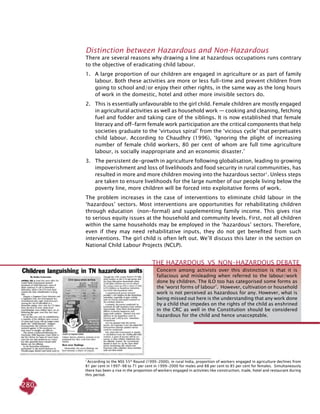
The whole point is to explore how, given the constraints imposed by the market
forces, education can still be transformed to resist the ill-effects of globalisation,
rather than accepting it as the unchallenged destiny of crores of our children.
Let us, therefore, reformulate the central issues of the debate in the framework
of a dialectical relationship between educational transformation and social
change by posing the following questions:
a) 	Depending upon what is feasible in the present national as well as the
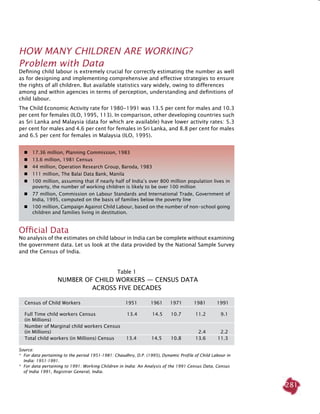
global situation, what role can education play in preparing the society to
deal with the social, cultural and economic impacts of globalisation ?
b) 	What conscious steps would we have to take in transforming the quality
and direction of education for this purpose ?
c) 	 What implications does this view of the transformative role of education
has for the following:		
	 	 aims of education;
	 	 structure of the school (or higher education) system;
	 	 community's relationship with the school/university;
	 	 pedagogic relations between the teacher and the students;
	 	 role of children in reconstruction of knowledge; and
	 	 parameters of evaluation ?	
Each one of the above issues would require a detailed scrutiny of the notion of
knowledge inherent in the present curriculum and an inquiry into the
transformation it would have to undergo in order to acquire the liberative
character. This inquiry cannot be accommodated here and would have to await
an independent treatment.
136
Conclusion
Globalisation : An Epistemological Challenge
These questions need to be explored in-depth in the context of
globalisation. When we do this, it will become evident that basically it is
the notion of knowledge itself that determines the social, structural and
pedagogic character of education as well as its relationships with the
society. It is this epistemological question which today’s educationists and
policy-makers have hesitated to seriously explore as yet. We need to
recognise that the central thematic challenge of globalisation to the quality
and direction of education is indeed epistemological. It is only by learning to
deal with this epistemological challenge that we will also know how to
trasnform the education system in its various critical dimensions in order to
resist the powerful forces of globalisation. This will be our best bet for
rejuvenating the freedom struggle to move towards an enlightened, just and
humane society within India as well as globally.
137
REFERENCES
Globalisation and Living Together, The Challenges for Educational Content in
Asia, 2000, International Bureau of Education (UNESCO) and Central Board of
Secondary Education, India.
Kishore Bharati, 1971, Project Proposal, Mumbai (mimeographed). 		
Lokshala Programme,1995,Universalisation of Elementary Education  —
Demonstrating an Alternative Vision, Bharat Jan Vigyan Jatha, New Delhi.
Minimum Levels of Learning at Primary Stage, 1991, National Council of
Educational Research & Training, New Delhi.
National Consultation on Rights of the Child, 1994, .eport of the Sub-Group
on Education organised jointly by Indian Council of Child Welfare, UNICEF and
Department of Women & Child Development (Ministry of HRD, Government of
India; November 1994).
National Policy on Education — 1986 (as modified in 1992) and Programme of
Action (1992), Ministry of HRD, Government of India.
National Curriculum Framework For School Education, 2002, National Council
of Educational Research, New Delhi.
Prapanna, Raghavendra, 1996, Jila Prathamik Shiksha Karyakram mein
Vikendrikaran evam Janasahabhagita ka Sameekshatmak Adhyayan, M.Phil.
Dissertation, Central Institute of Education, University of Delhi.
Primary Education in India, 1997, The World Bank, Washington DC and Allied
Publishers Limited, pp. 307.
Report of the CABE Committee on Policy (Janardhana Reddy Committee Report),
1992, Ministry of HRD, Government of India.
Report of the Committee for Review of National Policy on Education - 1986
(1990), Towards an Enlightened and Humane Society (Acharya Ramamurti
Committee Report), Ministry of HRD, Government of India.
Sadgopal Anil, 1998, Women Empowerment Through Education: Appraisal of
Existing Policy and Programmes, All India Women’s Education Fund Association’s
Seminar on `Women on the March’ (12--14 October 1998).
Sadgopal, Anil, 2000, Shiksha Mein Badlav Ka Sawal, Granth Shilpi, Delhi, pp.
306.
Sarva Shiksha Abhiyan — Framework For Implementation, December 2000,
Ministry of HRD, Government of India.
SIEMAT, Bihar, 2000, Para Shikshak Bahali Karyapalak Niyamavali.
The Constitution (Ninety-third Amendment) Bill, 2001, introduced in Lok Sabha
on November 2001 as Bill No. 106 of 2001.
The Constitution (Ninety-third Amendment) Bill, 2001 (as introduced in Lok
Sabha): Notices of Amendments  —  List No. 1 : Shri G.M. Banatwalla; List No. 2:
Dr. Murli Manohar Joshi; List No. 3 : Shri Samik Lahiri; List No. 4 : Smt. Renuka
Chowdhury.
138
The Constitution (Ninety-third Amendment) Bill, 2001 (as introduced in Lok
Sabha): Record of Proceedings (Uncorrected) — Minister of Human Resource
Development (Dr. Murli Manohar Joshi), pp. 3852-61; 3924-32.
The Constitution (Ninety-third Amendment) Bill, 2001 (as introduced in Lok
Sabha): Record of Proceedings (Uncorrected), pp. 3933-41.
Unnikrishnan, J.P. & Ors. vs State of Andhra Pradesh & Ors., A.I.R. 1993 S.C.
2178.
World Declaration on Education for All & Framework for Action to Meet Basic
Learning Needs, 1990, World Conference on Education for All, Jomtien, Thailand
(5-9 March 1990).
139
140
THE YOUNG CHILD
Consider a child that has just been conceived. Now imagine that it is the fourth or the fifth pregnancy. The
mother is tired, struggling to feed and educate the older children; the youngest is still partially dependent on
breast milk. She works, and is unlikely to get much sympathy when she demands yet another maternity leave.
She has no rights over her body, cannot demand the use of contraception, cannot choose to abort the foetus,
and is too poor and ill to support another delivery.
The likelihood of a healthy birth is already diminished. Once the child is born, it is another burden on already
stretched resources. The mother has to go back to work as quickly as possible. The baby is left in the care of
older siblings who can barely take care of themselves. Even its parents will not be surprised — or shocked — if
the child falls sick, and without much money for medical care, eventually dies. We already know that if the baby
happens to be a girl, the chances of death are even higher. Certainly, much less would be spent on her if she
were to fall sick.
How a child develops in the first three to six years lays the foundation for her/his capacity to think, learn and
reason. It sets the stage for later success in school and the character of adolescence and adulthood. It is important
to therefore recognise and protect every child’s right to develop his or her full cognitive, emotional, social and
physical potential.
Traditionally, childcare has always been seen as a responsibility of the parents and the family. The most widely
accepted international instrument on child rights, the UN Convention on the Rights of the Child (CRC) also
places this responsibility on the family. But at the same time it emphasises the role of the State in taking
measures to support families that cannot afford to do so.
As of today, the need for comprehensive inputs into the early years of a child’s life is recognised the world over.
Different agencies refer to it differently. The World Bank calls it Early Childhood Development; UNESCO refers to
it as Early Childhood Care and (initial) Education, and OECD as Early Childhood Education and Care. In India, it is
commonly known as Early Childhood Care and Education (ECCE).
As ECCE does not neatly fall into any one sector, in the absence of systems in place, convergence of services may
not be possible and there is always a danger of the responsibility passing from one Ministry to another. While the
importance of ECCE is recognised and the term elaborately defined in the 1986 Education Policy, all ECCE
programmes are planned and implemented by the Department of Women and Child Development and not the
Department of Education. In any case, the Department of Education has clearly absolved itself from the
responsibility of the 0-6 year-olds as the 86th Constitutional Amendment Bill passed in both the houses of the
Parliament makes education a Fundamental Right only for children in the 6-14 years age group. The Health
Ministry has never been involved in any ECCE programme even though it is responsible for all reproductive and
child health schemes. While maternity benefits are integral to ECCE, the Ministry of Labour treats it merely as a
labour welfare issue. Similarly, even though all the ECCE schemes and programmes in India cater to the needs of
the poor children and their mothers, none of the poverty alleviation programmes of the Ministry of Rural
Development see ECCE as an important poverty alleviation measure and therefore the necessity to link up with
it.
In this chapter, an effort is thus made to highlight the grim reality of the young child, who gets to be treated as
a national resource only when she/he becomes an adult.
141
The 0-6 years of a child’s life are critical  —  inputs in this period determine
and shape its entire existence. It is with this understanding that the world
over Early Childhood Care and Education (ECCE) has become an important
concern for all those working with children. The Indian State is publicly
committed to the young child through its Constitution, its national policies
and its acceptance of International Conventions. This was discussed in detail
in the section on the legal framework. In actual fact, the fate of the very
young child in India is precarious for many and complex reasons  —  some
rooted in the social fabric of the country and some emerging from the new
economic and political trends.
Current Status of the
Young Child
Defining ECCE in India is beset by problems; there being no one ‘young Indian
child’ to describe. Factors like class, gender, caste and geography all impact his
or her situation. An examination of the current status of the very young child is
further complicated by the fact that it will be some time before the Census 2001
reveals its findings fully. However the preliminary findings that highlight the
skewed under-6 sex ratio (927), with wide variations ranging from 1,058 in
Kerala to 773 in Chandigarh, in favour of the male child are definitely shocking.
This one fact is immediate and undeniable proof that gender continues to play
an enormous role in child survival. (This had been discussed in detail by Satish
Agnihotri in the Section on the Girl Child in India). NGO experience further
supports these facts and provides the parameters by which this discrimination
can be measured — sex selective abortion, differential duration of breastfeeding
or mother’s time off work for care, less expenditure on health care and medicines,
greater household responsibilities even for very young girls and widespread
discrimination vis-à-vis education.
Care for every child
Children must get the best
possible start in life. Their
survival, protection, growth
and development in good
health and with proper
nutrition are the essential
foundation of human
development. We will make
concerted efforts to fight
infectious diseases, tackle
major causes of malnutrition
and nurture children in a
safe environment that
e n a b l e s t h e m t o b e
physically healthy, mentally
alert, emotionally secure,
socially competent and able
to learn.
‘A World Fit For Children’
UN General Assembly Special
Session Children, May 2002.
‘Early Childhood Development programmes are about ensuring children grow up
healthy, well nourished, protected from harm, with a sense of self-worth and identity,
and enthusiasm and opportunities for learning. They are about children learning to
think for themselves, communicate effectively, get on with others, and play an active
role in their families. Early Childhood Development (ECD) programmes are about
influencing the contexts in which children are growing up so that they are supportive
of children’s overall development. By contexts we mean all the different environments,
which impact on young children — families, communities, health centres, ECD centres,
schools, district bodies, national policy. ECD programmes are about influencing these
contexts and addressing the issues, which slow and damage children’s development.
In other words, they are about children’s rights and the obligations of the state and of
all adults to protect the individual child and create the conditions in which all children
can develop their potential.’
Caroline Arnold, September 2002.
142
To understand the situation of Indian infants and the problems that beset them,
we need to consider:
Maternal and Infant Mortality
On the whole, neonatal and infant mortality rates continue to be high (72 per
1000 live births — all-India average, Census 2001) and far above national targets.
Regional variations continue to be sharp ranging from 98.1 in Orissa to 11.5 in
Kerala. The rural-urban divide is also high: 46 in urban areas as compared to
78 in rural areas in 1997 (Department of Women and Child, Annual Report
2000-2001). The Maternal Mortality Rate too, causes anxiety (437 per thousand
live births ­— higher than Pakistan at 340, and Thailand at 300 ­— UNFPA, 1999).
Immunisation
Data shows that despite a priority immunisation programme, coverage is
inadequate. Only 42 per cent children of the age of 12-23 months have received
all the recommended doses. 14 per cent children have not received any
immunisation at all. Even the high profile campaign for polio eradication has
been slow to show effect — 37 per cent children have not received all 3 doses of
polio vaccine (National Family Health Survey (NFHS-2)).
Child Health
Even for those children that survive, one-third has low birthweight, only about
half receive exclusive breastfeeding and about half are malnourished. Figures
of anaemia are alarmingly high at 74 per cent (NFHS-2). Since one can safely
assume that the statistics would not be evenly distributed over class differentials,
the resulting picture of children of the underprivileged sections is extremely
dismal and shows a very high prevalence of morbidity.
Socio-Economic Factors
Affecting the Young Child
Till recently, issues concerning children seemed to come to the fore only as they
entered school-going ages. Young and very young children were clubbed with
their mothers. This practice (though understandably resented by women
attempting to break out of the image of eternal motherhood) is not entirely
misplaced  —  young children need to be breastfed by mothers and cared for by
close family members (if possible). However, this positioning has become a
convenient excuse for the State to not make requisite effort in facilitating their
survival, growth and development by providing families, and women in particular,
with the essential support as they grapple with multiple responsibilities and
poverty.
The past decade has sharply escalated the number of women joining the
workforce. The problems they face as workers, the circumstances in which they
work affect their ability to care for their children. The breakdown of family
support systems has inevitably accompanied development policies and has lead
to displacement of a large number of people and exposed children to neglect
on a scale not experienced before.
143
Further, the policies of liberalisation, globalisation and privatisation have made
even rural households increasingly dependent on cash and pushed many women
to work for wages away from home. The Female Work Participation Rate,
according to micro studies, varies from 47.5 per cent to 58.2 per cent (Jhabvala,
1995) shattering the myth of women being available for childcare.
It is inevitable then, that the circumstances in which young children are reared
are deteriorating sharply. We cannot but appreciate the fact that the woman’s
role as ‘worker and wage earner’ has an intricate and important relationship
with her role as a childcarer (the same would, of course, apply to men in a
society with a less patriarchal approach to child care).
So, with 15 crore women in the unorganised sector, working without social
security, including maternity entitlements (leave, cash support and childcare
services), breastfeeding and the care of young children is severely
compromised. A poor woman, who is often the only wage earner, especially
a society where in one-third of all households are female-headed, scarcely
has the choice to devote herself to the care of
her children. There is practically no support
available for rearing the young child.
Laws designed to help women workers are scarcely
implemented, all loopholes are exploited by
employers and the rules and norms for crèches
are totally inadequate. The amount of relief offered
to women for maternity is a pittance. As a result,
the period of maternity and early child rearing
remains one of utmost difficulty for women and
children alike.
Trends in policies (1990-2001)
The various socio-economic trends of recent years
have had and continue to have a major impact
upon the situation of young children.
On the one hand, women’s needs as workers and
mothers are being recognised and international
organisations are pushing the Rights approach;
on the other, national policy documents, under
subservience to a market economy, are moving
towards privatisation, state withdrawal from the
social sector and the free play of market forces.
The International Labour Organisation (ILO) is
urging ratification of the Maternity Protection
Convention 2000, which enhances women
workers’ rights to leave, cash support,
breastfeeding breaks. The WHO Resolution of April
2001, strongly recommends the adoption of
exclusive breastfeeding for six months as essential
for the protection and development of children.
Central Laws for Pregnant and Lactating Mothers
Employees State Insurance Act 	 1948
Factory Act**	 1948
Mines Act **	 1950
Plantations Act** 	 1951
Maternity Benefits Act	 1961
Beedi and Cigar Worker’s Act**	 1966
Contract Labour Act**	 1970
Inter State Migrant Worker’s Act**	 1980
Infant Milk Substitutes Act	 1992
** Provide for crèches at the workplace.
Schemes Affecting Lactating Women,
and Children of 0-2 Years
National Level
Scheme of Assistance to Crèches for Working
and Ailing Mothers 	 1974
Integrated Child Development Services 	 1974
Maternity Assistance Scheme 	 1995
State Level
Employment Guarantee Scheme,
Maharashtra	 1974	
Tamil Nadu Integrated Nutrition Project,
Tamil Nadu	 1980
Maternal Protection Scheme, Gujarat	 1986	
Muthulakshmi Reddy Childbirth Scheme,
Tamil Nadu 	 1988
Scheme for Pregnant Agricultural Labourers,
Andhra Pradesh	 1990 	
Laws and schemes
that affect women workers
144
On the other hand, the Draft National Health Policy, the Draft Charter and Policy
for Children 2001, the 10th Plan Approach Paper, and the infamous 93rd
Amendment (2001)* (now passed in Parliament as the 86th Amendment) of the
Constitution sing another tune. Limiting State responsibility for social services,
pleading meagre State resources, using slogans of community partnership, parent
responsibility and privatisation in order to limit State responsibility, these
documents clearly indicate the trend for the coming years where women and
children are to be left to the mercies of the market with minimal state support.
Overall, there has also been a decline in budgets for child development. In a
budget analysis, the authors of India’s Children and the Union Budget point out
‘While budgets may show an increase in quantitative term, these have to be
matched with the status of the child in the country to establish their real “value”.
(HAQ: Centre for Child Rights 2001).The overall spending of the state on children,
the authors continue, is only 1.2 per cent of the total union budget, 1998-99.
‘For every Rs. 100 spent by the Union Government on the average, about Rs.1.20
was spent on children.’
The dangerous policy of obtaining external loans for funding child development
also causes alarm. Commitment of the State to child rights cannot be dependent
on external loans. Health care schemes with selective objectives have been put
in place on the basis of external funding. The campaign approach to specific
diseases, whether it be Polio or AIDS seems to have replaced investment in
proper staffing and equipping of the Primary Health Care structure.
Examination of the existing policies, laws and related schemes and programmes
enables a better understanding of their situation.
Convention on the Rights
of the Child (CRC), 1989
Articles 3,6 and 18 of the
Convention on the Right of
the Child require States
Parties to ensure to the
maximum extent possible
t h e s u r v i v a l a n d
d e v e l o p m e n t o f t h e
child, render appropriate
assistance to parents and
l e g a l g u a r d i a n s i n
performance of their child-
rearing responsibilities and
ensure the development
of institutions, facilities
and services for the care
of children. It also requires
States Parties to take all
appropriate measures
to ensure that children
of working parents have
the right to benefit from
child- rearing services and
facilities for which they are
eligible.
The role of the State in providing ECCE was recognised in India way back in 1950,
in the form of ‘Directive Principles of State Policy’ embedded in the Constitution of
India. Unfortunately, while the Directive Principles are fundamental in the governance
of the country, unlike the Fundamental Rights guaranteed by the Constitution,
they are not justiciable i.e. the State cannot be sued in any court of law for not
providing the health, care and education necessary for a child’s development in
the early years of her/his life.
According to the National Education Policy (1986) ECCE refers to the activities,
which foster and promote the all-round balanced development of the child in the
age group of 0-6 years in all dimensions — physical, mental, social, emotional and
moral. Given this understanding, what is significant to ECCE is the approach to the
activities undertaken to ensure such all-round balanced development.
Clearly, ECCE is of immense significance within the context of child health,
education, women’s rights (as women are generally considered to be the nurturers
and caregivers) and, if one may add, poverty alleviation (as it is the children of the
poor who suffer the most). The efforts towards ECCE must therefore be guided by
a comprehensive and holistic approach that not only takes cognisance of both the
child and the caregiver, but also seeks convergence of services relating to health,
education, water and sanitation, women’s rights, poverty alleviation, etc.
* Now the 86th Amendment Bill
145
Policies
Health and Population
The Health Policy has been notable for its non-existence till a recent draft was
put out by the Health Ministry. It would be enough to say that this policy does
not carry a section on either the health of women or the child. It is as though the
Health Ministry has nothing to do with the health of children at all!
The Population Policy, however, is most concerned about the health of children
since that is seen as a major strategy to stabilise population growth. It is important
to mention that the main measure for implementation that has been derived
from the policy — by inference — is not a child health initiative, but the highly
obnoxious and dangerous ‘two child norm’, measure that is gaining increasing
popularity in State Population Polices. Not only does it violate every international
agreement on ‘population’ that promises to steer clear of disincentives, it clearly
violates the rights of the third and subsequently born child. To make things
worse, in a country where male preference prevails, it has a real and potential
impact upon the already deteriorating and alarming sex ratios. Furthermore,
there is no evidence whatsoever to suggest that it works in any way to stabilise
population while there is much evidence to suggest that general investments in
health and education as made by states like Kerala, Tamil Nadu and Karnataka
do. According to the population projection by the Technical Group on Population
Policies, the total fertility rate in Kerala is 1.8, Tamil Nadu 2 and Karnataka 2.5,
in contrast to Bihar, Madhya Pradesh, Orissa and Rajasthan with the TFR greater
than or equal to 3 and going up to 4.8. Obvious gaps in services contributing to
unmet needs for contraception to the tune of 17 per cent (NFHS-2) need to be
covered as a first step rather than embarking upon such obviously anti-child
and anti-woman measures.
In pursuance of the ‘two child norm’ policy, State laws which bar the holding of
elective office in local self-government and Panchayati Raj institutions by persons
having more than two children are already in place in Andhra Pradesh, Maharashtra,
Punjab, Haryana, Madhya Pradesh and Uttar Pradesh; while Gujarat and Rajasthan
are in the process of implementing this. Central Government Rules restrict
maternity benefits to the first two children and so do Maternity Benefit Schemes
at Central and State levels. Incentives and disincentives, including crucial denial
of ration cards, gas connections and the rest have firmly been put in place by
administrative order in Madhya Pradesh and Maharashtra. Nothing is being done
to restrain the States from such measures that directly affect children, their right
to survival and care, not to mention the implications these laws and directives have
on encouraging sex-selective abortion and the resultant adverse sex ratios.
Education
Though the National Education Policy, 1986, seemed to thoroughly support and
show an understanding of ECCE as a vital period of brain growth, learning and
development, when it came to giving it teeth through the 93rd Amendment
(now the 86th Amendment), the government simply deleted the under-6s during
the conversion of Article 45 (which promised free and compulsory education to
all children up to 14 years) to a fundamental right. It also ignored the fact that
this right had already been conferred on all children up to the age of 14 years by
the Unnikrishnan judgement of 1993.
146
In self-defence, the government has claimed that ECCE needs are being met
through the ICDS; which is blatantly unfair, since the programme has a poor
component of pre-school education and its outreach to the under-3s is
notoriously limited. Day-care does not form a part of the design of the ICDS and
consequently, children of the poor either accompany their mothers to the
workplaces or the older children stay at home to look after the siblings. Moreover,
the ICDS covers only 23.1 million children whereas the number of under-6s on
poverty line amounts to 60 million.
Five-Year Plans
The current policy framework and its negative direction for children, the
abandonment of policies for children, which found space in the 9th Five-Year
Plan, needs to be noted. The 9th Plan made considerable strides in a forward-
looking policy for women and children. Early childhood found important mention
and day-care and crèches were accepted as part of the strategy both for
empowering women and for human resource development. The document also
laid stress on women in the informal sector and the need to examine legislation
pertaining to them.
The 10th Plan Approach Paper however, positions itself completely in the era of
globalisation, and has reversed this. Taking its cue from policies articulated by
the World Bank and the International Monetary Fund (IMF), it places responsibility
for childcare on families and communities. Day-care and crèches find no mention
and the commitment to centrally sponsored schemes for children has given
place to strategies of decentralisation. The planning process is a safeguard
from the vagaries of changing political formations and is meant to reflect
considered long-term strategies for development along with the commitment
of national budgets. The absence of integrated objectives in the 10th Plan
Approach Paper does not augur well for young children.
Other Government Initiatives
These include the setting up of a National Commission for Children and the
Draft Charter and Policy for Children, 2001. There is a great concern amongst
Child Rights activists and specialists that this is a hasty step. The Draft Charter
and Policy lacks a holistic vision and is neither fully based on the Constitution’s
commitment to children nor to the CRC. Much work is still required for developing
a comprehensive Child Rights Code, which can provide the frame of reference
for the proposed National Commission for Children. In the absence of such a
clearly formulated Code, the Commission for Children will become one more
bureaucratic structure using up precious resources and follow the fate of the
several National Commissions that already exist.
147
Laws
As far as forward-looking legislation is concerned, the Disability Act 1995
contains provisions for antenatal, prenatal and postnatal care. This still has to
be translated into programmes and the Health Policy.
Other laws that have some bearing on ECCE services are the Maternity Benefits
Act and labour laws that provide for Maternity Entitlements and Child
Care Services for women workers. However, their coverage is limited and
implementation even more so.
However, as has already been mentioned, the latest Amendment to the
Constitution guaranteeing fundamental right to education leaves out this critical
age group of under-6s, concentrating only on 6-14 years. The Directive Principles
of State Policy, Article 45 now states,’The State shall endeavour (emphasis added)
to provide early childhood care and education for all children until they complete
the age of six years.’
Related Schemes and Programmes
Maternity Benefits Schemes
The statutory maternity entitlements derived from the Maternity Benefits Act
and the ESI Act are largely applicable only to the organised sector. However, a
recent Supreme Court judgement (2000) has attempted to enlarge the scope of
this act to muster role workers (Municipal Corporation of Delhi vs Female Workers,
Muster Roll and Others, AIR 2000, Supreme Court, 1274).
Apart from this, State-level schemes exist in a number of states to provide a
nominal cash relief to women in the status of maternity (like the Mutthulakshmi
Reddy Scheme, Tamil Nadu). The cash amount varies from Rs.500 to Rs.2000.
Often supplementary nutrition is also provided. However, experience shows
that this cash, though welcome, rarely keep women at home longer than
absolutely necessary from the point of view of her health and minimal child-
care. ‘The need to earn drives women back to work as early as ten days after
delivery.’ (R. Geetha, Nirman Mazdoor Panchayat Sangam).
Childcare Services
The statutory requirements of childcare services are derived from the labour
legislations pertaining to factories, mines plantations, construction work and
are rarely implemented. The Crèche Scheme for Working and Ailing Mothers
(CSWB) provides a small safety net for some children. A recent evaluation of this
scheme by the National Institute of Public Co-operation and Child Development
(NIPCCD) concluded that it failed to reach infants and has functioned more as a
balwadi programme for the 3-5 years age group. The National Crèche Fund,
though set up later due to pressure from women’s and child rights groups, is
another on the same pattern and has the same flaws (see Appendix 1 for an
evaluation of the scheme). The total coverage by the two schemes is a mere
15,000 crèches whereas the need is for 8 lakh crèches by the government’s own
admission.
148
ICDS Scheme (HRD Ministry)
The ICDS remains the mainstay of government programmes for ECCE. Launched
in 1975, this scheme has had a modicum of ‘success’ in reaching out to about
23.1 million children and 4.9 million expectant and lactating women. ICDS covers
4383 blocks and is planned to cover 5171 blocks/urban areas by the end of the
9th Plan which would be 90 per cent coverage of blocks (Department of WCD,
Annual Report, 2000-2001). Young children have benefited in that there has
been some increase in prevalence of immunisation and some reduction in
malnutrition and infant mortality. The ICDS is to be universalised during the
10th Five-Year Plan. This scheme also receives the bulk of the budget allocated
for children under six (the allocation for 2000-2001 is Rs.1,050 crores).
The scheme is conveniently cited by the government as a justification to largely
exclude the under-6s from other programmes such as the universalisation of
elementary education. However, significant systemic and infrastructural
inadequacies prevent this scheme from delivering the required results. These
include poor outreach to the under-6s, low priority for pre-school education
and lack of day-care services — thus excluding a large number of children
whose mothers are daily wage earners, artisans and the like. The low status
accorded to the Anganwadi worker, the workload she carries and the expectations
placed on her are problems the State has failed to address. The implementation
problems of ICDS are also well known and have emerged sharply in the CAG
Report, 2000 (Appendix 2).
Though these inadequacies are fairly well understood and accepted, the
government has not made any meaningful changes to the scheme and has been
resting on its laurels for the last 26 years. The recommendations of the Working
Group on Child Development include the suggestion to convert 50 per cent of
Anganwadi Centres (AWCs) to AWCs-cum-crèches. This, if accepted, would be
a major step towards increasing the effectivity of the scheme. However, there is
still some hesitation in granting this programme the commitment it deserves by
denying its administrators the status of ‘workers’ or paying them remuneration
at par with pre-school teachers. The new initiatives taken by the department to
improve ICDS are cosmetic but fail to address basic flaws. As is expected, all
evaluations of the ICDS confirm that all the problems of the scheme are
exaggerated in tribal and ‘remote’ areas.
Other Government Schemes
In response to the criticism that the ICDS intervention for malnutrition is flawed
by the fact that its outreach to the under-3s is marginal (thus missing the critical
stage when malnutrition sets in), the government introduced the Pradhan Mantri
Gramodaya Yojna in 2000. In the absence of willingness to revamp the systemic
flaws of ICDS, such schemes again merely tinker with the problem (Appendix 3).
Pre-School Services
Moving from Maternity Entitlements, breastfeeding protection, childcare services
and the inadequacy of available laws and schemes, the next critical stage of
early childhood, 3-6 years, requires focus. While the National Education Policy
(NEP, 1986) has recognised the importance of early childhood ‘enrolment,
retention and learning outcome’ as a vital period of human development, the
149
Teacher uses either rote repetition
or one way monologue to teach,
and only one kind of development is
addressed.
Adult interacts with children only
during teaching and only for the
purpose of imparting education.
Peer interaction permitted during
mealtimes and recess. No materials
or activities provided that lead to
increased peer interaction.
Interaction present generally
pleasant.
Programme Schedule
Use of Play Material/
Aids
Age-Appropriate Ac-
tivities
Teaching Methods and
Activities
Adult-Child
Interaction
Peer Interaction
teacher sensitivity
TYPICAL CHARACTERISTICS OF
PRE-SCHOOL EDUCATION PROGRAMME OF ICDS
Teacher shows initial interest in
following the schedule but later
does not go according to it.
Plans one activity a day and leaves
children to do what they want, some
activity involving rote repetition
given.
Only standard charts or blackboards
are used.
Same activities are planned for all
age groups.
Planning by the
Teacher
150
State’s response has confined itself to the provision of pre-school education
through the ICDS and minor schemes like Early Childhood Education (ECE —
which is now to be integrated with the ICDS).
The Department of Education takes cognisance of the child only when she reaches
the age of six years and is put into a formal school. Pre-school services of the
Department of Women and Child Development, are far and few. The all-India
data presented by the report of the Ministry of Human Resource Development
(MHRD), 1994 records that pre-primary facilities per lakh population is 1.89,
which means that approximately 2 pre-schools exist per 8,500 children of the
pre-school age. Of these, the government runs 41.87 per cent, 10.4 per cent by
the local bodies and 47.63 per cent are private. The gap between the numbers
of poor children and the available pre-school services of whatever quality is
huge. For instance, the Municipal Corporation of Delhi runs a mere 836 pre-
schools covering about 47,000 children. The number of children under six in
Delhi is 19,23,995 (Census 2001).
In the interests of child development as a basic right, the State Policy needs to
urgently review the situation of pre-school education.
An alternative vision for ECCE
Children, in particular the younger ones, are totally dependent on the adults.
Policies and programmes have tended to ignore this simple truth and keep the
two universes apart, leading to colossal wastage of funds (see CAG Report)
and poor results. To achieve some impact, policies for children have to be
necessarily located within comprehensive policies relating to their parents,
especially women; their access to work, food and health care. This has hardly
been attempted. The need of the hour is to remedy this approach and develop
a comprehensive Child Rights Code, which is expressed through laws,
programmes and allocations, across sectors — Health, Labour, Education and
Women’s Rights*. Anything short of this, will leave children not only where
they are, but in the wake of the new economic policies, also push many more
to the edge of malnutrition, stunting, illiteracy, trafficking and child labour
which engulfs 50 per cent of our children.
It is our task, therefore, to attempt to provide a constructive alternative to existing
policies and trends and spell out the ideal minimum requirement to safeguard
and promote the protection, survival, development and participation of young
children. While spelling out this ideal minimum, we draw attention to three
components that have not received attention as Child Rights issues and need to
be brought into the conceptual framework of a policy for children. These are:
Sibling Care, Maternity Entitlements and recognition of the importance of the
Childcare Worker.
The alternative vision and recommendations that follow have been constructed
by members of FORCES and are based on a view from the people at ground level
and from the analysis of the many holes in the policies and programmes, which
allows millions of children to slip through the net.
*In an analysis of gender budgeting, Lahiri, Chakraborty and Bhattacharya advocate that mainstream expenditure must focus
on elements that will be gender sensitive. At present, targeted expenditure for women is only in schemes and programmes
under the Department of Women and Child Development. The provisions for women in composite need to be segregated.
151
Broad Recommendations
Formulation of a Comprehensive Child Rights Code	
The first step is the formulation of a comprehensive Child Rights Code to replace
the fragmented laws, policies and programmes that exist. As part of that code,
a specific section on Maternity and Early Childhood Development must find its
space as Early Childhood, relegated to the realm of the family and the mother,
has been the least addressed up to now. The development needs of young
children from birth to six years begin from the time the child is in the womb.
They include the right to life, right to health and nutrition, right to a family, to
love, security, protection and appropriate education. Some of these rights are
directly applicable to the young child, while some others include the mother
and family.
The specific recommendations on programmes and laws derive from this
perspective and the gaps that have been identified.
Keeping both parents and children in mind, it is suggested that the
basic components of an ECCE Code must include the following:
For Parents:
 	 Antenatal care including adequate nutrition, safe delivery (not necessarily
institutional) and care of the newborn.
 	 Postnatal care including good quality information and services for family planning.
	 Adequate Maternity Entitlement and wage security.
 	 Paternity leave.
 	 Day-care services for support.
 	 Information on ECCE.
For Children from Birth to Two Years:
 	 Presence of a sensitive and aware adult carer either at home, in informal care
arrangements or through day-care services.
 	 Environment suitable for holistic development. Exclusive breastfeeding for 6
months, appropriate weaning.
 	 Adequate and appropriate (safe, fresh, culturally acceptable) nutrition.
 	 Good quality health services including immunisation.
 	 Understanding and support by extended family and community for role of
parenting.
For Children from Three to Six years:
 	 Presence of a sensitive and aware adult caregiver either at home, in informal
care arrangements or through day-care services.
 	 Adequate and appropriate (safe, fresh, culturally acceptable) nutrition.
 	 Non-formal, age appropriate, child-centred pre-school education in own
language.
 	 Universal access to elementary school.
 	 After school day-care services (if required).
 	 Understanding and support by the extended family and community for role of
parenting.
FORCES, Maternity and Child Care Code: Concept and Content.
152
Inter-Sectoral Planning
The inter-sectoral character of the rights and needs of the young child becomes
abundantly clear from the above and can only be addressed through a systematic
methodology of inter-sectoral planning for children. For example, breastfeeding
rights and needs of the mother and child can only be addressed through
appropriate social security arrangements, wage support, day-care facilities at the
workplace and worker’s rights. Likewise, the need for non-formal, age-appropriate
pre-school education has to be rooted in a legal right to education which casts a
responsibility on the State to provide universal pre-school services and, where
required, after-school facilities like day-care for working mothers. The recent
passage of the 93rd Amendment Bill, which excludes the under-6s from the
Right to Education and limits the concept of education to mere formal schooling,
is a sharp reminder of how segmented concepts persist and State actions fly in
the face of Child Rights.
Programme Design in the Socio-Economic Context
Up to now, schemes have tended to take a myopic view of a stereotypical
child and created fixed patterns which exclude the diversity and range of
special needs and as a result, have failed to address them. It is crucial that
the current socio-economic situation in which women and children exist be
kept in focus to enable appropriate interventions. An overview of the
categories of children and parents with special needs is given in Appendix 4,
to indicate the range of programmes in different sectors that are required
and the flexibility in design and management needed to ensure the realisation
of Child Rights.
Finally, not only is a Maternity and Child Care Code envisaged to exist within
the comprehensive policies relating to women’s rights, labour rights, rights
to health and education; it is also seen to exist within a comprehensive code
laying out the rights of all children.
Closure of Gaps
Furthermore, a comprehensive Child Rights Code will need to close the gaps
between ECCE needs and the existing provisions in law. A brief analysis of
the needs and present provisions are given in Appendix 5.
State Responsibility for Basic Minimum Services
The State, even in the era of globalisation and market economy, must make
a firm commitment to the provision of Basic Minimum Services for children.
Attention is drawn to current attempts in the National documents (Draft
National Policy and Charter for Children, 2001, 10th Plan Approach Paper,
Constitution 93 Amendment Bill) to limit state responsibilities by reference
to the limits of its ‘economic capacity’, the concept of ‘the fundamental duties
of parents’ and Below Poverty Line (BPL) targeting (26 per cent of the
population) for health care and food security. In a country of widespread
poverty, all of the above have adverse implications for the realisation of Child
Rights and especially for the young child, being the weakest and most
vulnerable. It is strongly recommended that in their place, policy documents/
153
laws firmly take on board the provision of Minimum Basic Services of quality,
including Childcsare Services by the State and considerations of economic
criteria and parent responsibility.
Establishment of Non-Negotiables for ECCE
Conceptually, a few fundamental principles need to be accepted as the
foundation for a long-term planning for the survival, protection and
development of the children of this country, particularly, the young child.
These are:
 	 Maternity Entitlements to protect the mother’s health, breastfeeding of
infant (linked to prevention of malnutrition and promoting of well-being
of the infant).
 	 Children Services (including day-care) for essential developmental care
and release of girl child for schooling.
	 Pre-school Education an essential requirement (especially for children
of the poor and girls in particular) for the universalisation of elementary
education.
	 Minimum Basic Services of quality for all children including health care, safe
water and sanitation.
	 Food Security — Widening the scope and quality of the Public Distribution
System.
Recommendations for Labour Laws
Fifteen crore women work in the unorganised sector and very little legislation
are in place to protect their conditions of work, their maternity rights and
other social security needs. There are six national laws covering mines,
plantations, factories, construction workers, inter-state migrant workers and
beedi workers that provide some legal entitlements to women for maternity
or childcare (crèches) or both. Most of these are poorly implemented and do
not cover the multitude of informal and casual occupations which poor women
are engaged in. New laws, policies and programmes have to be made, the
old ones amended and strengthened and state rules ruthlessly implemented
to ensure maternity rights (especially for women in the unorganised sector)
in both natal and post-natal stages, end sex determination tests, protect
reproductive rights, provide day-care facilities for infants, make State
programs for under-6s more effective, treat sibling care as child labour, and
ensure ECCE as a Fundamental Right of every child.
154
Conclusion
Motherhood is considered by many to be the most important role of the Indian
woman, an attitude totally internalised by women themselves leading to a
hesitation in fighting for shared responsibility and support. However, the most
cursory examination of the status of young children in India reveals a grim picture
of mortality, morbidity and debility. Simultaneously, support by the State has been
completely inadequate. The myth of the ‘cared-for’ Indian child maybe offset by
the grim reality of statistics but finds great support in the continuing arguments
used by policy-makers that mothers and families are well-placed to solve all the
problems of young children and care for them in every way required.
Gender, class and caste politics impact the life of the young child as much as
the life of any other individual. Issues such as lack of food security,
unemployment, negative impact of globalisation and privatisation on women,
labour, health and education and the environment are intimately related to the
lives of the children. However, movements for equity in these areas also often
suffer from a blind spot when it comes to the needs and rights of children and
specially the invisible very young child. Parallel service providers such as NGOs
similarly shy away from the expensive, complex and risky business of providing
services to buttress the situation of childcare.
It is surely time to extricate the young child from his/her invisibility and give
the political issues of his/her survival, protection, development and participation
the priority they deserve, else the situation of ECCE, and therefore poverty
prevention on the whole, is not likely to improve with the kind of urgency and
impetus it clamours for.
155
Appendix 1
Crèches For Working and Ailing Mothers
Children — An Evaluation
CRÈCHE SCHEME FAILS TO COVER INFANTS
A central government scheme (Crèches for Working and Ailing Mothers’ Children)
launched in 1975, to provide crèches for the children (0-5 years) of ‘mainly,
casual, migrant, agricultural and construction labour has failed to fulfil its
purpose’. (A review of the scheme was entrusted to NIPCCD by the Dept. of
Women and Child)
 	 Only 52 per cent working women have benefited by the scheme. The scheme
has functioned more as a pre-school than as a crèche.
 	 Age-wise distribution of children according to enrolment figures:
	 0-1 years	 7 per cent
	 3-5 years	 56 per cent
 	 The attendance figures show an even lower proportion of young children:
	 Average daily attendance was 75 per cent; of which, only 45 were 0-1 year
old and 28% were 1-3 years of age.
Activities: The major amount of time in the crèche is spent on pre-school
activities. As many as 39 per cent of the crèche workers spent more than two
hours on pre-school activities; other activities consumed less than one and a
half hours.
Facilities: The average space per child in the crèches sampled was found to be
3-6 sq. ft per child  —  the urban crèches being the worst off; 73 per cent of the
crèches had no toilets; 49 per cent had no minimum sleeping facilities, etc.
The scheme carries no provision of rent and therefore it is not surprising that
minimum facilities and infrastructure are not to be found.
The most glaring lacuna was the low priority given to the remuneration for
crèche workers. The scheme started with a paltry Rs 500/- for two workers,
which was subsequently raised to Rs 800/for two. It does not need experts to
point out that the essential component of a day-care programme is the presence
of full-time, responsible childcare workers with understanding of the needs
of young children. No full-time workers can be found at such a level where a
day’s casual labour would bring in more. It is not surprising therefore, that the
programme slipped to functioning for a few hours a day — more as a
balwadi — and therefore was not able to meet the needs of women who worked
for long hours away from home.
Source: FORCES Gazette Vol. 12 January - April 1999.
156
Appendix 2
CAG Report, 2000 — Performance of Centrally
Sponsored Schemes
Integrated Child Development Services Scheme (ICDS):
 Shocking Data
There is a mass of data on ICDS — all very disturbing — in the CAG Report,
2000. A few issues and facts are given below as indicator of the findings:
 Supplementary Nutrition — failure to procure resources
Many state governments did not provide adequate budget for supplementary
nutrition. Therapeutic/weaning food for severely malnourished children had not
been provided in 9 states. In 4 states cases of sub-standard and adulterated
food were noticed.
 World Bank Funding — unutilised money 	
Review of utilisation of World Bank funded projects showed that under the current
project only 39% was utilised till March 1999 with only one-year left for utilisation
of the remaining 61%.
 Health Check-up and Referral Services — deficient	
The implementation of the component of health check-up and referral services
was found to be particularly deficient due to absence of baseline surveys for
identification, incomplete/non-maintenance of concerned records/registers, lack
of coordination with the State health department. In Delhi and seven other states,
test checks revealed that either necessary records/cards for referral service were
not maintained or information was not furnished or the cases were not referred
to PHC due to non-availability of referral cards.
 Medicine Kits
Failure in purchase and delivery.
 Nutrition and Health Education  —  unutilised money and poor outreach
 Personnel  —  shortfall and diversion	
Despite the shortfall in personnel, ranging from 13 to 38% in the persons-in-
position against sanctioned posts during 1992-99, cases of diversion of ICDS
‘Lofty objectives largely unrealised,’ says CAG.
Voicing a warning for government, the CAG report says:
‘Unless the government wakes up to the ground reality and takes effective
remedial measures the situation of extremely poor quality of expenditure
leading to low value for money, total absence of accountability and non-
existent relationship between the input and the output is likely to continue
in programmes run by the Union Government.
157
staff to non-ICDS works and idle wages amounting to Rs.5.6 crore were noticed
in 10 states.
Adolescent Girl Scheme — didn’t take off	
 Supervisors  —  defaulters		
In Delhi, test check of records revealed that during 1996-98, there were 29 to
196 Anganwadi centers where not a single visit was made by the supervisors
during a month.
 Grants  —  non-reconciliation of figures
 Discrepancy  —  between the records of the Centre and that of the States
 Identification of Beneficiaries  —  not done
No survey for identification of beneficiaries was conducted in Delhi and
Maharashtra.
 Food Testing   —  unsystematic							
 Weaning Food  —  not provided		
No therapeutic food was given either to undernourished children or to babies
needing weaning food in Delhi, Gujarat, Orissa, Rajasthan and other five
states.
 Immunisation  —  manipulation of data				
 Shortfall in Coverage  —  manipulation of data				
 Factually incorrect data
In Maharashtra, the target and achievement in urban areas were not available.
However, test check of two projects of Aurangabad and Poona, for 1997-98,
disclosed that 19,733 beneficiaries were immunised against 11,148 eligible
beneficiaries which suggested that the data of beneficiaries immunised was
not factually correct. The department stated that reasons of mis-reporting
would be investigated.
 Infructuous diversion of ICDS resources
In Delhi, test check of six projects revealed diversion of ICDS project vehicles
to other purposes.
In Rajasthan, the supplementary nutrition was not provided for 61 days in 12
AWCs, for 100-200 days in 222 AWCs and for 201-299 days in 756 AWCs
during 1992-99. Further, the interruption in feeding was noticed to the
extent of 2 to 20 months in 77 AWCs of 18 projects during 1992-99.
 Pre-school education — poor outreach and manipulation of records
Similarly in Maharashtra, test check of two projects revealed that the
attendance of children was more than the population of the beneficiary
children and in another five projects, attendance of children reported was
more than the enrolment. These established that the performance records
were manipulated.
These are only the few of the alarming findings in the CAG Report. Similar
findings on the public distribution system and the National Programme of
Nutritional Support to Primary Education are also reported.
Source: FORCES Gazette Vol. 17, November-March, 2001.
158
Appendix 3
Pradhan Mantri Gramodaya Yojna
The Pradhan Mantri Gramodaya Yojana provides for allocations for specific Basic
Minimum Services. Under this scheme, six areas have been chosen to receive
funds under Basic Minimum Services Allocation. These are: rural roads, primary
health, primary education, shelter, drinking water, and nutrition. The total
allocation is 5,000 crores in the Annual Plan 2000-2001. Of this, 2,500 is for
roads and the other 2,500 is to be split amongst the other five components
which are to compulsorily receive 15% (i.e., 375 crores) and 625 crores is to be
left to the State Government’s discretion. Of the discretionary amount, the State
Governments are advised to spend the maximum amount on nutrition.
Inadequacies of the Scheme
Government’s rationale for focusing on the under-3s to tackle malnutrition
seems to be well understood and the objectives of the programme have been
clearly articulated. But, with its assumption that, ‘the ICDS scheme has been
recognised as the strongest and most viable vehicle for improving nutritional
status’, it puts paid to its chances of success and negates the entire analysis
and evaluation of the ICDS experience over the last 25 years even as a ‘feeding
programme’.
The other misplaced assumption is that the supplementary food should be in
the form of pre-packaged, powdered, and dried food to be transported from a
central source.
Both these assumptions do much to go against the objectives of the scheme
and need to be examined for their worth.
Source: FORCES Gazette, Vol.16, July-Oct 2000.
159
Appendix 4
CATEGORIES WITH SPECIAL NEEDS
1. 	 Parents with Special Needs	 Adoptive/ Foster Parents
			 Single Parents
			 Sex ‘workers’
			 HIV affected
			 Women in prison
			 Labouring in unorganised sector
			 Migrant/Displaced
			Victim of man-made/natural disasters
			 With disability
			Victims of war/terrorism
			 Minorities/Dalits/Adivasis
2.	 Children with Special Needs	 Children of women working in the 		
		 unorganised sector
			 Girl children
			 Child labourers
			 Children of migrant/displaced families
			 Children of itinerant families
			Street children
			 Children of single parents
			 Children with disability
			 Children within minority groups, Dalit 	
			and Adivasi children
			 Children of sexually exploited women
			 Children in prostitution
			 HIV-affected children
			 Children awaiting adoption in 			
		 institutions
			 Adopted children
			 Children in orphanages
			 Children of women prisoners
			 Child victims of man-made/natural 		
		 disasters
			 Child victims of war or terrorism
			 Child victims of abuse
160
Appendix 5
Gaps and Requirements
Period
Ante-natal
Childbirth
0-2 years
Present Status
Not fully available
Pre-natal Diagnostic
Technologies Act, 1994
Cash support through
maternal protection
schemes in some States
and nutritional support in
some States
Access to health care
inadequate. Not available
Not fully achieved
Infant Foods and Breast
Milk Substitutes Act
(1992)
Maternity Benefit Act and
Employees State Insurance
Act (1948) provide for
only three months and are
available only to women
in the organized sector
Limited maternity
entitlement in cash
in some States and
nutritional support in
some states.
Stress on holistic
development by the
ICDS scheme, however,
inadequate
Hindu Adoption and
Maintenance Act (1956)
Guardians and Wards Act
(1890) and Hindu Minority
and Guardianship Act
(1956). No entitlements
for adoptive mothers
Required Interventions
Right to choice (universal
access to FP, including MTP)
Protection of female foetus
(Ban on selective abortion)
Right to nutrition (maternal
nutrition and universal
access to health services)
Education for childcare
Safe childbirth (universal
access to safe facilities)
Right to nutrition (Access to
mother’s milk exclusively for
four months from child birth)
Comprehensive Maternity
Protection Act, Fund or
Scheme for all, especially
to those working in the
unorganized sector.
Employer contribution may
be required in the case of
organized sector
Age-appropriate for
stimulation towards holistic
development
Right to care and protection
(Uniform adoption law and
maternity entitlement for
adoptive mother)
Minimum standards of
childcare in crèche/Day care
center and institutional care
homes
161
3-5 years
Several Acts (6) providing
crèches for children
below six mostly
available only to women
in the organized sector
No provision for women
in Govt. or public sector
service, or for those
working in tertiary sector
or, under the Shops and
Establishment Act
The ICDS and the Acts
mentioned above all
provide for children
upto the age of six. The
lacunae are similar
Right to Education
Bill 93rd Amendment,
restricted to children
aged 6-14
Persons with Disability
Act (1995) to be
implemented
No such comprehensive
laws or rules. Some ad
hoc rules passed in some
States (Maharashtra
and Delhi), some under
consideration. Some
court rulings with
respect to admission
tests
Lack of childcare services
for agricultural workers and
for regulations of foundling
homes, orphanages and
children’s Homes
Comprehensive Child Care
Act Fund and scheme
providing access to day-
care for young children
at location, timings and
of nature and quality
appropriate and convenient
to mothers, especially
for those in unorganized
sector with new and flexible
ways of acquiring financial
contribution from employer/
contractors of women in the
unorganized sector
Right to care and protection
and a comprehensive, age-
appropriate Child Care Act,
Fund or Scheme, as above,
applicable to children upto
the age of six
Supplementary care and
support, Right to education
and holistic development.
A Compulsory Child
Development and Education
Act to provide free and
universal development
education, appropriate to age
Policy related to prevention
and early detection of
disability
Regulating of all early
childhood education which
would ensure minimum
standards in early childhood
education
162
Source: Mina Swaminathan for FORCES National Seminar on Campaign for Maternity,
Childcare and Development, 1999.
Special needs No special entitlement
at present to ensure that
such children are not
deprived of their rights
Rights of homeless,
refugees ethnic groups,
single parents, migrants,
inerrant, nomads, riot-hit,
pavement dwellers and
those in illegal settlements
to all the services and
provisions
Special Facilities in response
to needs of each group
163
REFERENCES
Arnold, Caroline, 2002, Are Younger Children Being Sidelined in the Child Rights
Movement : The Importance of ECD Programmes, Vol. 15. International Children’s
Rights Monitor, Defence for Children International.
Department of Women and Child Development (DWCD), 2001, Government of
India Annual Report 2000-200, Government of India, 2001Forum For Crèche &
Childcare Services, FORCES Concept and Content of a Maternity and Childcare
Code, Forum For Crèche & Childcare Services (FORCES) Secretariat, New Delhi.
FORCES Gazette, Vol.16, July-Oct 2000, Forum For Crèche & Childcare Services
(FORCES) Secretariat, New Delhi.
FORCES Gazette, Vol. 17, November-March, 2001, Forum For Crèche & Childcare
(FORCES) Services Secretariat, New Delhi.
Gopal A.K. and N. Khan, 1999, In FORCES Gazette Vol. 12 January - April 1999
Forum For Crèche & Childcare Services (FORCES) Secretariat, New Delhi.
HAQ: Centre for Child Rights, 2001, India’s Children and the Union Budget,
HAQ, New Delhi.
International Institute for Population Services (IIPS), 2000, National Health and
Family Survey(NFHS-2), 1998-99, Mumbai.
Jhabwala Renana, 1995, ‘Making Women Count’ in Women at Work, Delhi Com-
mission for Women, Delhi.
Swaminathan Mina, 1999, FORCES National Seminar on Campaign for Maternity,
Childcare and Development, Forum For Crèche & Childcare Services (FORCES)
Secretariat, New Delhi.
UNFPA, 1999, State of the World’s Population 1999.
165
166
THE Disabled Child
‘Why does no one call me by my name, like they call all other children? Why am I always referred to as langda
(lame)?’ Debu, a 10-year-old spastic child at a workshop facilitated by HAQ.
It is estimated that one of every 10 children is born with, or acquires some form of disability. Traditionally Indian
society has treated its disabled with disdain, mirth, at best tolerance. Children with disability face discrimination
from birth. Mental retardation and mental illness are of course relegated to the realm of ‘madness’ to be treated
with even greater repugnance. This attitude is reflected even in colloquial adage. It is not uncommon to be
taunted ‘Are you blind?’ if you miss something, or ‘are you lame?’ if one expresses inability to get up at that
moment. There are many more in a similar vein.
Children with disability suffer unequal opportunities for survival and development. Most do not enjoy personal or
economic security, are denied access to health care, education and all the basic needs necessary for their growth.
Mentally retarded children are known to have been imprisoned, chained, and denied all basic rights. So deep-
seated is this prejudice that even the mother of a disabled child faces humiliation and indignity. One of the most
important indications of how our country treats its disabled is their place in the education system.This insensitivity
is also borne out by the lack of adequate facilities and services that would allow disabled persons to live a life of
self-supported independence, with dignity.
In this negative environment lacking in support structures, a disabled person who is poor is faced with a double
disadvantage — poverty as well as disability. In a patriarchal society like India, for a disabled girl child from a poor
family this disadvantage stands trebled — by her poverty, her gender, and her disability. Needless to say when it
comes to services, she gets the lowest priority.
Recognising the special needs of the differently-abled, in the Directive Principles of State Policy as laid down in
the Constitution recognise the obligation of the State to provide assistance in the event of sickness and disablement.
The National Policy on Children, 1974 calls for the provision of special treatment, education and rehabilitation of
all children suffering from all kinds of disabilities, as does the National Policy on Education, 1986. According to
the Convention on the Rights of the Child which India ratified in 1992, disabled children have the right to special
care, education and training to help them enjoy a full and decent life in dignity and achieve the greatest degree of
self-reliance and social integration possible (Article 23). The National Policy on Health, 1993 emphasises the
need for care and rehabilitation of the disabled. The National Plan of Action for Children, 1992 however affords
only a passing mention to disability, including the concerns of disabled children in the larger category of Children
in Especially Difficult Circumstances. Yet it was only in 1995 that a legal step to prevent discrimination against
the disabled was recognised and taken with the enactment of the Persons with Disabilities (Equal Opportunities,
Protection of Rights and Full Participation) Act,1995. And it was only in Census 2001, after a massive campaign,
that disability was included as a category.
What is even more important is that disability is relegated to the realm of ‘welfare’ by large sections of the people.
It has taken a long and hard struggle by all the disability rights activists to have their concerns recognised as
‘rights’. As Javed Abidi, who is the head of the National Centre for Promotion of Employment for Disabled People,
Convenor of Disabled Rights Group and Chairperson of Disabled People’s International South Asia, says, ‘The
biggest mistake our policy-makers and decision-makers have made is to have looked at disability as a welfare
issue, whereas its was, it is and it should rightly be a development issue, a progress issue…’ (The Invisible
Minority, Combat Law, June-July, 2002, The Times of India, 3 Dec. 1998).
To be able to accord the disabled child its rightful place under the sun we need to change more than just laws and
policies — we need to change the way we look, feel, think and deal with disability. What is needed is social
concern and political will. What we must ensure is that Sonu is not confined to an airless room because he is
mentally retarded, or Sajjo chained to a block of wood. And that Debu is recognised and addressed by name, not
his disability.
167
Why are there so many negative statistics about disabled children? Why are
disabled people the poorest of the poor in every country in the world? Why are
97 per cent of disabled children in developing countries without any form of
rehabilitation and 98 per cent without any education? Why is it that disabled
children suffer more violence and abuse than other children and are shut
away in institutions, cupboards and sheds and are often starved to death?
And why is that these — and many other — horrifying but verifiable facts,
are not being given the attention they deserve?
In most parts of India, irrespective of state, region or religion the disgrace of
giving birth to a disabled child is unanimous. Despite modern, human rights
attitudes, the idea that a disabled child is the result of the anger of gods,
or ancestors, the embodiment of sin in the family or of sin itself, is widely
prevalent. Endless research shows that parents of disabled children feel guilt
and sometimes take the blame for the impairment on themselves. Families,
communities and the medical profession often do not help to alleviate this guilt
by their attitude to the baby and to the parents, calling the child a ‘vegetable’,
‘useless’, ‘a burden’. Inevitably this stigma and guilt result in isolation or
segregation of the disabled child. Disabled babies are left at the gates of cities,
abandoned in institutions or left to live helplessly in the corner of the hut or
room. Disabled girls fare still worse. What family resources there are, are not
given to feeding them. Yet, they survive sometimes, despite the efforts of their
families to starve them to death.
168
There is no doubt that in some cases, due to lack of money, families have to
make difficult decisions and often sacrifice the lives or health of some of their
children (mostly the girls) in order to keep the rest of the family active. But
evidence increasingly shows that disabled children are being allowed to starve
even when there is enough food to go around.
There are other situations where the mother of a disabled child is abandoned by
the husband because he cannot tolerate the stigma attached to having a disabled
child or is not prepared to take on the extra responsibility. In developing
countries, this situation often forces the mother into either abandoning the
child herself or becoming a beggar.
Even if the family keeps the child fed and loved, there is only a 2 per cent chance
that they will receive rehabilitation
and a very high chance that they will
die of secondary medical problems.
Almost no research has been done
into the killing of disabled babies
at birth. That no statistics of this
nature is available for India does not
come as a surprise. Having survived
birth, what happens then to disabled
children? It would be expected that
the statistics in this respect would be more forthcoming, but this unfortunately
is not the case.
Estimates
One of the greatest problems faced while estimating anything in relation to disability
in India is the fact that figures are hard to come by and where they do, they vary
depending on the definitions, the source, the methodology and the scientific
instruments used in identifying and measuring the degree of disability.
The current estimate is that 1 child in every 10 is either born with or acquires a
physical, sensory or mental impairment by the first year of life. Based on this
estimate, the world population of disabled children is placed around 140 million,
of which 25 million live in India alone.
A survey of children (age 0-14 years) by the National Sample Survey Organisation
(NSSO) in 1991 revealed that approximately 3 per cent of the children between
0-14 years of age have developmental delays associated with mental retardation.
The prevalence rate for physical disability was observed to be significantly more
amongst boys (22.77/1000) than girls (16.94/1000). This discrepancy in gender
ratio raises the questions of whether there is under reporting of the girl child
with disability for fear of the associated social stigma or of the more ominous
one of infanticide. It is expected that the results of the Census 2001 where
disability has been included as a separate question, will throw some more light
on this matter.
169
According to Child Relief and You (CRY), the figures on disabled are as follows:
 	 3 per cent of India’s children are estimated to be mentally challenged. Of
these 15 million children are below the age of 10 years. 10 million are boys
and 5 million are girls.
	20 per cent of the disabled children are urban, 80 per cent are in the rural
areas.
 	 60 per cent are males and 40 per cent are females
	Twenty of every 1000 children in rural India are disabled, compared to 16
of 1000 urban children.
There are some inter and intra state variations. For example, estimates for
the various types of physical disability (night blindness, impairments related to
visual, auditory, vocal and locomotor systems) are low in Kerala and Gujarat
among children in the 0-4 age group, but high in Bihar and West Bengal. In
West Bengal, in the age group of 5-12 years, the prevalence is as high as
6,779 per 100,000, 4,670 in Himachal Pradesh and 4,519 in Tamil Nadu.
(NCAER, 1999).
Services
While the government plays an important role in making constitutional and
legislation procedures, evolving schemes and national policies and providing
resources it has not been able to deliver services and programmes on its own.
The voluntary sector plays a dominant and important role in this scenario. Many
voluntary organisations not only fill this gap but also act as pressure groups.
Nonetheless, it would require the collective will of the voluntary organisations,
the persons directly and
indirectly affected by the
condition and the political
parties to ensure that the
schemes and policies do
not remain only on paper.
	 Age group 	 Visual	 Hearing	 Speech	 Locomotor	 Mental
						 Retardation
	 (Years)	 Rural	 Urban	 Rural	 Urban	 Rural	 Urban	 Rural	 Urban	 Rural	 Urban
	 0-4	 4	 5	 N.A.	 N.A.	 47	 47	 27	 30	 N.A.	 N.A.
	 5-14	 24	 21	 85	 80	 262	 261	 224	 223	 150	 165
Source: Report No. 393, NSSO A Report on Disabled Persons 47th Round, July-December, 1991.
Table 1
Types of Disability Figures as per 1000
170
To help in this, the government runs an umbrella scheme to promote voluntary
action for persons with disabilities. Under this, the NGOs are assisted in taking
up a wide range of activities for persons with disabilities, covering prevention
of disability, education, training and rehabilitation. In order to coordinate funding
and direct application of technology, the government also runs a scheme called
the Science and Technology Project in Mission Mode.
Effect on Action
The stigmatising societal attitudes have had an impact on policies and legislation
regarding education and employment opportunities. The life of a disabled person
is so obviously one which is a burden to themselves, their families and the State
that it is considered better if further investments on their future lives is not
made.
One of the main arguments extended by governments, local authorities and
other service providers for not ensuring implementation of comprehensive, non-
discriminatory measures for disabled people is the cost factor.
One of the reasons for focussing on abstract notions of cost in relation to disabled
people and for the stigmatising life-threatening attitudes is that disability is
still seen as an individual characteristic and not as the social situation that it
really is.
Legislation
India’s reaction to establishing legislation is second to none and in the
disability sector it did not fail in instituting a comprehensive law — namely,
the Persons with Disabilities (Equal Opportunities, Protection of Rights and
Full Participation) Act 1995 (PWD Act), which was enforced from February 2,
1996. This act was responsible for bringing about changes in the programmes
for persons with disabilities in India. The act has 14 chapters covering seven
disabilities, namely:
1. Blindness
2. Low vision
3. Post-leprosy cure
4. Hearing impairment
5. Locomotor disability
6. Mental retardation and
7. Mental illness
The medical, individual model of disability negates the realisation that it is the social
situation imposed on an individual with an impairment or functional limitation, which
is the disability; and that due to the barriers of environment and attitude, the society
is not constructed to include disabled people and hence is not geared to make
provisions for this diversity.
171
A cost analysis by WHO (1997) indicates that it is more expensive to set up separate
institutions that cater to special segments of the population than it is to invest in
their integration.
Building an institution costs in terms of sustainability and reaches out to a comparative
handful of disabled people, who may remain economically passive recipients
throughout their lives. Traditionally most of the money spent on disability services
either goes into buildings or into paying the salaries of centralised, expensive
professionals and administrators, rather than into local, rights-based initiatives.
The solution to this expenditure should not be to cut costs but to redirect the funding
to initiatives that support disabled people’s rights, lead to their integration in society
and thereby contribute to society  — enabling in the process the activation of positive
attitudes.
Unfortunately, this categorisation leaves out significant groups of children with
debilitating conditions like autism.
It was (and continues to be) envisaged that through this act, the quality of life
of persons with disabilities could be improved as it addresses key issues like
education, literacy levels, employment, social security, assistive devices and
barrier-free environment. But, the implementation leaves a lot to be desired.
In the recent past, however, there has been a concerted action in improving
access, through the latest building bye-laws, which has made it mandatory for
all new buildings including school buildings to follow the accessibility guidelines
(standards for physical and sensory access — for those with mobility challenges,
hearing and visual impairments). (see box on the guidelines). The passage of
the Act has made possible a shift from the earlier concept of welfare of the
persons with disabilities to equal participation and empowerment.
‘In a country of vote bank
politics, this silent minority
has been systematically
ignored… In fact till 1995
there was no law in India
to protect the rights of the
disabled people.’
Javed Abidi, Disabled
Pepole’s International South
Asia, The Times of India,
Dec.3, 1998.
Modifications to the Unified Building Bye-laws, 1983, pertaining to the National
Capital Territory of Delhi was set in motion in April 2002. These bye-laws are
applicable to all new buildings, recreational areas and facilities used by the public. It
does not apply to private domestic residence.
Salient features:
	Identifies disabilities to include physical impairments requiring the use of
wheelchairs and other mobility aids and hearing and visual disabilities.
	Specifies that ‘every building should have at least one access to main entrance/
exit to the disabled which shall be indicated by proper signage. This entrance
shall be approached through a proper ramp together with stepped entry’.
	Provides for parking of vehicles of disabled persons.
	Guiding floor materials with audible signals and Braille signage for the sight
impaired.
	Specifies facilities such as approach to plinth level, corridor connecting the
entrance/exit for the handicapped, stairways, lift, toilet and drinking water.
	Provision of an alternative to immediate evacuation of a building via staircases
and/or lifts is the movement of persons with disability to safety areas within a
building.
Accessibility guidelines
172
The National Trust for Welfare of persons with
Autism, Cerebral Palsy, Mental Retardation and
Multiple Disabilities Act, 1999
It is well-known that some persons with disabilities may need lifelong care of
varying degrees, despite the best of training and rehabilitation efforts. Parents
always have the big question in their mind, ‘what will happen to our child after
us?’
The National Trust Act is an answer to this question. India is a country with
close-knit families and the children (disabled or otherwise) are always with the
families. Institutionalisation is not a common practice in the country. In fact the
resurgence of an emphasis on the family in many western countries is not new
to India. However with the current trend towards a shift from the joint family to
nuclear ones, the fear of parents about the care of their dependent children
after them has become a challenge and a nightmare.
The National Trust Act has made provisions for the appointment of guardians
for those who apply and residential facilities by organisations that would have
to maintain minimum standards prescribed by the trust in terms of space, staff,
furniture, rehabilitation and medical facilities. Since it empowers the caregivers
and also looks after the interests of the disabled child vis-à-vis the system,
work in this area has gained tremendous momentum.
The establishment of the Rehabilitation Council of India (RCI), 1992, has been a
major move by the Government of India for quality assurance in the education,
training and management of persons with disabilities. The Council at its inception
envisaged standardising the training of teachers in the field of special education.
The drawback of this initiative lay in the Council seeking to register all services
directed towards persons with disabilities; a move that has drawn flak from the
sector. The disagreement rests on the knowledge that till date initiatives regarding
education, training and provision of support systems for the disabled are carried
out by the parents. Thus, at this point in time it would be premature to place any
embargo on this work.
National Policy on Education (1986)
After Independence, an important turning point was the National Policy on
Education (1986). This policy, for the first time, included a section on disabilities
(Section 4.9). Briefly it includes:
 Inclusive education possibilities for children with mild disabilities
in regular schools;
 	 Provision for the training and education of children with severe
disabilities in special schools;
 	 Vocational training as being a part of the education for the
disabled; and
 	 Reorientation of teachers training programmes to include
education of disabled children.
173
Following the implementation of the policy by the Department of Education, the
Ministry of Human Resource Development and the Integrated Education of the
Disabled Persons (IEDP) gained momentum for financial support, free aids and
appliances, transport allowance and other such facilities by law (Persons with
Disability Act, 1995) admissible for disabled students integrated schools. However,
most of these facilities are not availed of, due to a lack of awareness of the legal
provisions and an inherent fear of discrimination on the part of the parents in
seeking recourse to the law for the implementation of the policy.
Government schemes
Central level
In order to effectively deal with the multi-dimensional rehabilitation process,
the government has set four national institutions in each major area of
disability. These are: the National Institute for the Visually Handicapped,
Dehradun; the National Institute for the Mentally Handicapped, Secunderabad;
the National Institute for the Orthopaedically Handicapped, Calcutta and the
National Institute for the Hearing Handicapped, Mumbai. Also, there are two
other institutions, namely, the Institute for the Physically Handicapped, New
Delhi and the National Institute of Rehabilitation, Training & Research, Cuttack,
which provide services in different areas of disability. The clinical and
rehabilitation units of these institutes serve as an in-house laboratory for the
trainers as well as the trainees. They also offer a variety of training programmes,
both short-term and long-term.
Rural areas
The government also implements the District Rehabilitation Centre Scheme
(DRCS). The scheme was initiated in 1985 to provide comprehensive services
to the disabled in the rural areas and at present functions in ten states, providing
a wide range of services from the prevention and the early detection of disability
to medical and surgical intervention, training for the acquisition of skills
through vocational training programmes and job placements. Along with these
there are four Regional Rehabilitation Training Centres (RRTCs) at Chennai,
Mumbai, Cuttack and Lucknow. The RRTCs facilitate and provide training and
manpower development in the area of rehabilitation and particularly for human
resource development for the DRCs.
District Centres
Another step towards reaching the villages is the establishment of District
Centres in 107 districts in various states all over the country. These centres
are designed to provide assessment, fitment and maintenance of aids,
appliances and maintenance, and establish linkage with existing schools or
establish new schools for education and training suitable for persons with
disabilities, including mental retardation. Focus is also on the development
of barrier-free environment. The government has also set up a scheme of five
174
Composite Regional Centres for persons with disabilities in the states of Uttar
Pradesh, Madhya Pradesh, Himachal Pradesh, Assam, and Jammu & Kashmir
with a proposed budget of Rs.16.89 crores to provide composite rehabilitation
services in the field. The CRCs at Srinagar and Lucknow have been operational
since 2000.
State Schemes
The National Programme for Rehabilitation of Persons with Disabilities (NPRPD)
Scheme launched in 1999-2000 is being implemented as a State Sector scheme
with funding from the Centre. The basic objective of the scheme is to create a
service delivery system at the State/district/block/gram panchayat level so as
to provide comprehensive community based rehabilitation services. There is a
provision of two community-based rehabilitation workers at each gram panchayat
and two multi-purpose rehabilitation workers at the block level.
Despite these elaborate schemes, the present infrastructure is not able to cater
to the needs of persons with disabilities. Only a small proportion of persons
with disabilities have so far been provided rehabilitation services.
Aids and Appliances
The outreach of the DRCs and the National Institutes is limited. In order to penetrate
and provide rehabilitation services throughout the country, the government also
runs schemes to assist NGOs for taking up programmes of providing services for
persons with disabilities. For providing basic rehabilitation services more than
100 districts have been selected throughout the country to strengthen the present
infrastructure and enhance its spread. More than 20 district centres have already
started in Pilibhit, Koraput, Gwalior, Tuticorin and Visakhapatnam that provide
rehabilitation services to children living in these areas.
The scheme for the Assistance to Disabled Persons for Purchase/Fitting of Aids &
Appliances works to assist economically deprived disabled persons in procuring
durable, sophisticated and scientifically manufactured modern standard aids and
appliances which can promote their physical, social and psychological
rehabilitation. In order to meet the large demand for assistive devices and also
standardise the aids and appliances, the Artificial Limbs Manufacturing Corporation
of India (ALIMCO) was set up at Kanpur to provide quality aids and appliances at
reasonable prices. Its functions include manufacturing orthotic/prosthetic (physical
mobility) rehabilitation aids, training of orthotic and prosthetic technicians and
engineers and research and development in these fields.
Coverage in Reality
While these programmes are very well intentioned, most of them, invariably,
remain notional in character. Their outreach and accessibility in remote and
rural areas remain negligible. As a result, while comprehensive rehabilitation
services are provided in few urban agglomerates, a large part of the country,
especially the rural areas, remain unserviced.
175
Consequently, children with disabilities are amongst the most marginalised
sections of society in our country. While in the last decade and a half, there has
been a growing awareness and several significant achievements, both at the
national and international levels, a large number of physically and mentally
challenged persons live in alienation and isolation. Only about 5 per cent of the
persons with disabilities have been reached out by any kind of services. What is
even more disturbing is that even the scant services available are highly skewed
in favour of a few large urban metropolises. However, most NGO efforts are
restricted to urban agglomerates. The proportion of the urban and rural population
is 25 per cent and 75 per cent respectively. The prevalence of disability is, thus,
naturally, more in the rural areas. Further, most of the persons with disabilities
belong to the economically lower brackets. They are doubly disadvantaged since
they come from the poorer sections of the society while their cost of living is
higher due to the additional cost of aids and appliances, need for modifications
in their dwelling units and manpower support that they may need.
Education: The Key to Development
In a country like India where education levels even among the normal children
are not flattering, it is not entirely unexpected that disabled children stand at
an even greater disadvantage.
Special Schools
The child who cannot cope with the regular curriculam, attends special schools.
There are over 1,100 special schools run by NGOs with governement support.
Many more are run by NGOs and private trusts.
According to the Sixth All India Educational Survey report, of the 6,461 towns
and cities, only 334 or 5.1 per cent towns and cities have the facility of special
schools catering to severe disabilities. In these towns, a total of 630 schools are
actually functioning of which 97 admit only boys and 33 are for girls, and the
rest admit both. Of these, some schools may be dedicated exclusively to a
particular disability, while others cater to needs of children suffering from
different types of disability.
Benefits and concessions for persons with disabilities
The Central and State governments provide various benefits and concessions to
persons with disabilities such as:
	 Scholarship for education;
	 Travel concession by bus and train along with escorts;
	 Maintenance allowance;
	 Free aids and appliances and assistive devices;
	 Income tax deduction for parents of persons with mental retardation;
	 Pension of the parent employed by the government extended to the child with
intellectual disability throughout his life after the parents and;
	 Financial support to non-government organisations providing services for
persons with mental retardation.
The World Declaration on
Education for all specifically
mentioned children with
special needs. But such
children do not always
need special institutions.
The 1994 UNESCO meeting
in Salamanca strongly
recommended inclusive and
flexible schooling as against
the traditional and more
static approach of separate
schools. The meeting did
not preclude special schools
for those with complex
problems. But it did call
for equal educational
opportunities and child-
centred teaching.
176
A breakdown of these schools according to their specialisation shows that 215
are for the visually handicapped, 290 for hearing and speech impaired, 190 for
orthopaedical problems, 173 schools admit those suffering from mental
retardation and 60 from other locomotive disabilities. According to the survey
findings (1999), ‘There is a clear bias against separate special schools for girls
as there are very few which are exclusively for them.’
The situation in the villages is even more dismal. Of the total 586,465 villages
in the country, a mere 241 have facilities for special schools catering to all types
of disabilities. Of these, 83 per cent schools are in the states of Andhra Pradesh,
Bihar, Gujarat, Haryana, Kerala, Madhya Pradesh, Maharashtra, Orissa and the
Union Territory of Andaman and Nicobar Islands. Of the total 272 available
schools, 55 are for boys, 11 for girls and the rest are co-educational. In terms
of their specialisation, 73 schools are for the visually handicapped, 128 for the
speech and hearing impaired, 70 are for the mentally challenged and 25 cater
to various handicaps. 	
Source: Sixth Educational Survey,1999.
	 Area	 Primary	 Upper 	 Secondary and 	 Total
			 Primary	 Higher Secondary	
	 Rural	 6,986	 2,688	 1,738	 11,412
	 Urban	 1,796	 1,521	 1,565	 4,882
	 Total	 8,782	 4,209	 3,303	 16,294
Table 2
Schools with Integrated Programme
	 Location 	 Visual	 Hearing	 Orthopaedic	 Mental	 Others	 Total
	 and level				 Retardation
	 Primary
	 level
	 Rural	 1,930	 1,661	 17,357	 1,254	 2,150	 24,352
	 Urban	 3,808	 4,958	 26,388	 3,748	 5,070	 43,972
	 Secondary
	 level
	 Rural	 1,258	 797	 8,316	 436	 1,067	 11,874
	 Urban	 2,598	 2,282	 14,390	 1,279	 2,783	 23,334
	 Higher
	 Secondary
	 level
	 Rural	 718	 413	 8,056	 202	 1,868	 11,257
	 Urban	 2,227	 1,205	 14,616	 673	 2,981	 21,702
	 Total	 12,539	 11,316	 89,123	 7,592	 15,919	 13,6491
Table 3
Enrolment of disabled students in Schools
Source: Sixth Educational survey , 1999.
177
Integrated Education Programmes for the Disabled
A large number of children, especially those with mild and moderate handicaps
can be educated in regular or mainstream schools, and under the universalisation
of primary education it was envisaged that these children must be covered by
these schools.
The coverage is indeed far from satisfactory and the figures when divided by
gender indicate the tremendous double disadvantage that girls with disabilities
face (Table 4). This scheme (Integrated Educational Program is also not very
beneficial for those with intellectual impairment, as the academic integration
of such children is not possible primarily due to the rigid nature of the system
biased as it is towards academic achievement as a definition of education. It is
believed that elementary school curricular modifications would help alleviate
this skew.
Consider the following facts in the light of what is mentioned above:
1. 	School education is structured around a 10+2 system starting from
Class 1. The student has to appear in all the subjects during these
examinations.
2. 	Written tests and examinations either marked or graded and are based
on a fixed syllabus for each school year.
3. 	The average class size ranges from 50-70 per classroom with
one teacher.
4. 	A compulsory course of subjects including maths, science
and two languages has to be studied till Class 10 after which
there is a choice between the Arts, Science and Commerce
streams. Marks required for entrance into the university are
very high.
5. 	The National Open School, a parallel education system for
disadvantaged groups allows more flexibility but is not
recognised by all universities.
Table 4
Area and Gender-wise Enrolment of
disabled students in schools
	 Area	 School/ 	 Boys 	 Girls 	 Both Boys 	 Total
		 Enrolment	 Only	 Only	 and Girls
	 Rural	 Number of Schools	 55	 11	 206	 272
		 Enrolment*	 2,764	 441	 6,638	 9,843
	 Urban	 Number of Schools	 97			
		 Enrolment*	 4,223	 1,775	 31,421	 37,419
	 Total	 Number of Schools	 152	 44	 706	 902
		 Enrolment*	 6,987	 2,216	 38,059	 47,262
*Includes enrolment of all the disabilities together.
Source: Sixth Educational Survey, 1999.
178
Within this overall structure, there are wide variations with:
 	 different Boards of Education with their own rules and syllabi,
 	 different language of instruction differing from state to state,
 	 different types of institutions — government and private — each with their
own teaching and learning environments.
At present, in most urban and rural areas in India, integration has been a disaster.
It is successful only for that student with disability who is mobile, can
communicate with functional speech and most importantly, able to cope with
the academic syllabus. Integration is expensive; it entails allocation of human
and material resources. Successful integration requires legislation that not only
reflects good intentions but also enforces. Yet, the aim should be to continue
to upgrade quality and demand adequate resources so that special schools can
offer wide-ranging differentiated curricula and have the services of a
multidisciplinary professional team of teachers, therapists and counsellors.
Linking Special and Mainstream Education
There is a need to extend joint participation in leisure and curricular activities
such as dramatics, debates, dance and quiz programmes, clubs and holiday
camps. And to support the educational system by providing assessment and
guidance services for mainstream schools in relation to both non-disabled
children who are underachieving and those who have specific motor,
communication, behaviour or learning difficulties.
Teacher Training
A majority of the training programmes focus on a single disability. But a single
disability teacher training programme is not economically viable since appointing
special educators for small groups of 4 to 5 children with single disabilities
would be very expensive. Hence, it is necessary to have a teacher training
programme which enables the teacher to manage all disabilities. As the current
trend in special education is integrated education and inclusive education, there
is also a need for reorienting the general teacher training courses. The
assumption among most professionals is that general teachers cannot be trained
to meet the educational needs of children with disabilities. However, in order to
provide training effectively to children with disabilities in different service
programmes — single disability teachers, multi-disability teachers and regular
teachers with special education skills would all be required. Consequently,
Educating children with
special needs who may or
may not benefit from
regular school education
c a l l s f o r c h a n g e s
in curricula, classroom
arrangements, provision
of aids and appliances,
additional finances and
a p p r o p r i a t e t e a c h e r
preparation.
(a) To view special schools as specialist centres for children whose disabilities are
multiple and severe and who require additional therapy and counselling support,
and as demonstration centres for professionals and others.
(b) To modify training provision for initial and in-service training for teachers to
include specific inputs on early intervention for learning difficulties and strategies
to deal with pupil diversity, particularly in the context of the large class sizes.
(c) 	To develop educational material that will benefit all children including those who
have physical and/or communication difficulties.
The need of the hour
179
different types of teacher training programmes will need to be planned, with
variations in content, process and duration.
The educational service provisions in India for persons with disabilities (at least
on paper) are more or less similar to the global scenario. However, a majority
of the services, including special schools, are concentrated in urban areas.
There are more special schools for school-going children than vocational
training centres or integrated schools.
As noted earlier, in National Policy for Education, children with mild mental
retardation can be educated in regular schools with curriculum modification,
while those who cannot cope with regular academic activity require special
schools with functional academics. Those children with severe intellectual
disabilities or those who live in such places with no access to schools require
home bound programmes.
The Integrated Education for Disabled Children (IEDC) is a scheme
implemented by the Ministry of Human Resource Development. The trained
resource teachers support the regular class teachers so as to provide
appropriate education to children with disabilities.
The National Open School (NOS) is a programme of open education, which
includes children with intellectual impairment. Those with borderline
intelligence can study at their own pace with a reduced curricular content.
Vocation oriented education is also planned.
The District Primary Education Programme (DPEP) is another major step
towards universalisation of primary education wherein the children
with special needs are also included and a number of districts are
implementing the programme. Inclusive education being the concept
world over, the DPEP aims at including the children at primary level (up
to class V) with suitable teacher preparation, infrastructural facilities and
aids and appliances.
Empowering Parents,
Early Intervention
and Training at Home
Parents play a major role in reaching out to children with special needs especially
when there is no access to schools for them. The intention is to reach the children
at home for their special educational needs, if they cannot reach the schools.
Parent-support groups in the metros and the Community-based rehabilitation
(CBR) do play an important role in this regard.
Appropriate stimulation in childhood ranks as one of the most important factors that influence childhood development.
As a result, if a sensory perception is impaired, enhanced stimulation is required to compensate the handicap.
However, what is frequently offered to the child with a disability is less stimulation rather than more. Hence any
interruption of normal patterns of development in a child arising from disability is often more handicapping than the
direct consequences of disability itself.
180
Obstetricians and paediatricians are now being sensitised to screen infants for
detecting deviations in development. Training professionals and parents on
simple early intervention techniques assists in reducing and/or arresting the
severity of the condition.
Emotional Disturbances
This is one of the most neglected aspects at present; probably because it is not
easily quantifiable. Moreover, it requires much more extra inputs from the caregivers.
Work that is being carried out in this area is by individual NGOs at best. Services are
usually located in special schools. Many NGOs conduct parent-training programmes
to upgrade information on various aspects of child development. Child guidance
clinics are mostly located in major government hospitals in metros and towns. Due
to a large rush of patients, adequate time cannot be devoted to the counselling of
individual problems. Thus parents are left largely to rely on their information base
while rearing their disabled child. In the case of children with mental handicap, the
problem is compounded and many go on to developing severe behavioural and
emotional problems that are more a function of faulty parental discipline and an
uncompromising environment rather than any inherent disorder. The flip side of
this is that the observed maladaptive behaviour merely perpetuates the negative
image that society has of disabled children.
There are a small percentage of children who have serious emotional
disturbances manifested in distorted thinking, excessive anxiety, bizarre motor
acts and abnormal mood swings. These disorders usually respond well to
medication. The number of children with disabilities who suffer from severe
emotional and psychiatric problems is not significantly more than the number
of ‘normal’ children who do so.
Nutrition
There is very little information regarding the nutritional status of children with
disabilities. It is recognised that disabled children living in poverty are among
the most deprived in the world. Feeding difficulties contributing to poor nutrition
have been reported among disabled children living in more affluent
environments. Studies in developing countries are complicated by widespread
malnutrition among the general population and by a lack of appropriate means
of assessing nutritional status. The United Nation guidelines (1986) for
anthropometric assessment of nutritional status do not provide sufficient
information to enable health workers to identify malnutrition among disabled
children in the community.
A study conducted in India has shown that the presence of a disabled child in a
family may further limit the economic activities of the family by preventing
members from working outside the home.
During the past decade, greater attention has been paid to the causes and
management of undernutrition in children with a disability. Undernutrition is a
frequent problem in children with severe cerebral palsy (spastic quadriplegia),
who often have significant impairment of their eating and swallowing
181
mechanisms. Because of their difficulties in eating and drinking, many such
children can achieve an adequate nutritional status only with tube feeding.
The effect of undernutrition on physiologic and brain growth and on development
is well recognised. Undernourished infants and children do not achieve normal
length and weight for their ages. Furthermore, their neurological development
is significantly impaired.
Undernourished children generally feel miserable, whereas well-nourished
children are more alert. Parents comment on how much calmer their child
becomes after proper nourishment is restored. An additional benefit for
caregivers is that the time previously spent feeding can be used for other
important activities, such as stimulation, education and play.
Gender Issues
While acknowledging that disability is not a health issue but a social issue, it
is necessary to focus on the issue of the rights of the disabled and the gender
dimension of disability greater attention in terms of research, action and policy.
Such interventions are few and far between.
	 Disabled children with feeding difficulties are at risk from undernutrition,
especially where malnutrition is widespread.
	 Stunting was significantly higher among disabled than non-disabled children,
but wasting, undernutrition and anaemia were similar.
	 Disability in the family is not associated with poor nutritional status of other
family members.
	 Health policy planners need to ensure programmes addressing the needs of
vulnerable groups (for example disabled children) in the community.
Source: Indian Paediatrics, 2001.
The percentage of girls
receiving education is only
38.34%. Education of the girl
child is a low priority area
for the majority of people in
India. The disabled girl child
thus gets the lowest priority
in terms of any services.
‘It (disability) affects them (boys and girls) in almost identical fashions, but then it is a patriarchal society. The birth of
sons is always celebrated; the birth of a girl is never celebrated. And the birth of a disabled girl — they say, ‘a girl, and
to top it off, disabled!’ A disabled boy is still more acceptable than a disabled girl. If a poor family has a disabled son, they
will do their best to give him a decent living. Whereas when it comes to girls, they say, ‘Why should we do anything?’
There are no institutions as such in India. There are residential schools, mostly for visually impaired girls. [Otherwise]
girls are with their families, but what happens is that they are left in a corner, not given enough food, and left to die. If
the parents can afford only one education, they’d rather send the boy. Children are lineage capital for families. A boy,
even if he’s disabled. ‘If we can find him a cure, or some kind of a job, one day he will be able to look after us.’ That
rule is not there for the girls.
I’m afraid that the disability movement is as patriarchal as any other cultural context, which is what I’m fighting. The
problem is the disability movement is run by very elite middle class men. They’re not sharing leadership with women. As
a result, their concerns are more for things which affect them the most  —  for example, recently they asked for some
concessions in the hotels. It’s not our problem! Our problem is that our children are not getting education. We should
be fighting for education.
In the dominant north Indian culture, we are allowed to interact with our male cousins, but not share a room with
them at night. When I was young, I was never stopped. Later I grew up and I realised that they had desexualized me
because of my disability.’
Excerpts from an interview with Dr. Anita Ghai, one of India’s advocates for Rights of Disabled Women by Laura Hershey in
disability World. (A bimonthly web-zine of international disability news and views, Issue No. 8, May-June 2001)
The Disabled Girl Child
182
The large-scale hysterectomies on mentally disabled women inmates of a state-
run home in Shirur, Maharashtra, has given rise to a major debate about the
right of the state over the bodies of adolescents girls under its custody. A public
audit into the status and health of girls in state-run institutions (such as short-
stay homes and shelters) is a demand that has to receive greater support and
be built into a campaign.
Sports and Recreation
Childrenwithdisabilitiesareexcluded fromparticipationinmostsportsthatrequire
extensive physical coordination. In indoor games like chess (despite the lack of
any data on the issue), there being hardly any citations of persons with disabilities
competing in the global arena in such sports. For example, chess at the tournament
level is also played blind! But how often does one hear of a visually handicapped
person competing?
The Special Olympics, an international organisation is dedicated to empowering
individuals with mental retardation to develop improved physical fitness and motor
skills, greater self-confidence and a more positive self-image. It has about 1 million
children (www.specialolympics.org) with mental handicap competing with each
other in the physical arena. The movement has been active in India since 1985.
What Lies Ahead...
Since independence, India has made considerable progress in bringing quality in
the lives of the children with disabilities, especially those with intellectual
impairments. Families having persons with intellectual impairment are empowered
to take decisions about the future of their wards, self advocacy measures are
taken and independent living skills are imparted for these individuals by providing
them with opportunities and training.
However, considering the size of the country with its geographic, socio-cultural,
linguistic variations, a lot more is yet to be achieved:
 Reaching remote rural, tribal and hilly areas through educational and training
programmes suitable to the respective region and ecology so that children with
disabilities develop competencies to live independently in their environment.
 Translating the policies and training materials in Indian languages in print and
non-print media.
 Updating professionals on current trends and developments by periodic in-
service training programmes.
 Continuous research and development in all dimensions of impairments is of
utmost importance for future development.
	Continuous efforts towards empowering parents and families on the
management of their disabled wards/children would assist them in becoming
informed consumers of services leading to the implementation of most
government policies and programmes.
In short, the future needs to aim at zero reject in provision of suitable services for
children of all age range and severity levels. There is an urgent need to carry out
183
a sustained awareness raising campaign and bring these issues into the collective
consciousness of the people. It is believed that this denial of the right to life — to
be born, to survive, to receive equal opportunities is at the root of society’s neglect
of disabled children.
The Convention on the Rights of the Child upholds the rights to life and
development. The denial of these rights in the case of girls or street children, child
prostitution and children workers is well-known and documented. The issue of
child abuse is now becoming everyday news. These wrongs need the world’s
attention and something has to be done about them. But the world also needs to
pay attention to the denial of life and development of disabled children.
184
References
Abidi Javed, 2002, The Invisible Minority, Combat Law, June-July, 2002.
Child Relief and You, March, 1999, The Indian Child, CRY, Mumbai.
Indian Paediatrics, 2001.
National Council of Educational Research and Training, 1999, Sixth Educational
Survey, Main Report, 1999, New Delhi.
National Sample Survey Organisation 1991, Report No, 393, (NSSO) A Report
on Disabled Persons 47th Round July-December, 1991.
United Nations, How to Weigh and Measure Children: Assessing the Nutritional
Status of Young Children in Household Surveys, UN Department of Technical
Co-operation for Development and Statistical Office, New York, 1986.
185
186
JUVENILE (IN)JUSTICE
In 1996 a young boy was hung from the ceiling by his feet and beaten to death in a Juvenile Home in Delhi. It opened up
a can of worms. It once again revealed the violent and oppressive conditions in which children live in the juvenile homes.
It is not surprising that ever so often children run away from them. It requires not more than one visit to any children’s
hometorealisewhynochildwantstolivethere.Almosteveryinstanceof‘escape’ is followed by ‘stern’ action against
the concerned officials. Little thought is given to analysing why this happens or to building a sensitive, stimulating or
caringenvironment. Theresultisevensternermeasuresof‘lockingup’thechildren. Thesegoodandnobleinstitutions,
eventhoseforthechildrenin‘needofcareandprotection’areknownaschildren’sjails.Inchildren’sperceptionstoo,
they are ‘children’s jail’. It goes without saying the ‘correction’ homes for those in conflict with law are of course
perceivedbyeveryoneas‘jails’.Therecontinuestobealackoftransparencyinrunningthemdespiteprovisionsinlaw
to allow social workers to visit the homes.
The concept ‘Juvenile Justice’ emerged from the need to have an alternative system for dealing with children through
laws. Fairness and justice is the fundamental ideological premise of Juvenile Justice, ensuring that the mental and
physicalneedsofchildrenaretakenintoaccountwhendealingwiththem.Itwasfeltthattheexistingadultlegalsystem
was not equipped and sensitive to these special needs.
It was set up to ensure that children’s liabilities were diminished and they be provided with protective and restorative
measures,enablingtheirreintegrationintosociety. AlthoughoriginatingformtheLatinword‘juvenis’meaningyoung,
theconceptofjuvenilejusticehascometobeassociatedsynonymouslywith‘delinquency’andcriminaloffencesrather
than ‘justice’. And that in a large measure also explains the ills of the system that have come to be associated with its
penal and custodial character, rather than its protective and reformative one.
ThefirstallIndiaenactmentonJuvenileJusticewasin1986—theJuvenileJusticeAct,1986.Indeedtoalargemeasure,
the1986Actcanbeseenasaresultofthetirelesseffortsmadebyamongothers,SheelaBarse,anactivistandlawyer.
ThisActcoveredboysuptotheageof16yearsandgirlsuptotheageof18years.Although,historicalinitsenactment,
it was not without major problems both in concept and in practicality.
It was in recognition of some of these gaps that the Ministry of Social Justice and Empowerment replaced it with the
JuvenileJustice(CareandProtectionofChildren)Act,2000thatcameintoforcefromtheApril1,2001.Atpresentstates
are in the process of formulating rules. However, as with most laws in India, was drafted and enacted with very little
consultation with child rights law practitioners and activists. Not surprising, as it is moving towards implementation,
gaps in the law are becoming visible. Given the magnitude of the children who are affected by the juvenile justice
system, it is imperative that they do not remain unseen and unattended to.
Under Section 82 of the Indian Penal Code the age of criminal responsibility is seven years. Therefore no child under
seven years of age can be treated as a child in conflict with law. In the case of children in the age group of 7-12 years,
it is necessary to determine whether the child is of sufficient maturity to judge the nature of consequences of the
offence. Despite this stipulation, children under-7 are incarcerated as children in conflict with law.
AdoptionisnotrecognisedbythepersonallawsofeitherChristiansorMuslims,whereastheJuvenileJusticeAct2000
makesnosuchexception.ItisinterestingtonotethatBuddhists,JainsandSikhsarecoveredundertheword‘Hindu’for
the purposes of the Act. Muslims, Christians, Parsis and Jews are specifically excluded. Further Section 5 of the Hindu
Adoption and Maintenance Act 1956 says adoptions made in contravention of that Act ‘shall be void.’
EvenforHindus,Sections 11 (i) and (ii) state that only children of the opposite gender of biological children may be
adopted.Somorecomplications vis-à-vistheJJAct2000!!!Thereisnoreferenceineitherenactmenttotheother.The
power of the Central Government under Section 70 ‘To remove difficulties’ is really no help at all. Since this is too
serious an anomaly to be let to the Central Government. Moreover, that power gets extinguished two years after the
Juvenile Justice Act becomes operational.
187
Juvenile justice is the legal system that is meant to protect all young people.
Juvenile comes from the Latin word juvenis meaning young. But over the years,
the word has come to be used together with and often even interchangeably
with ‘delinquency’ — which describes children or young persons who are in
conflict with law — thereby harking to an association with crime and violence.
Therefore even though the word juvenile and child refer to persons in the
same age group, they conjure different images. While the word child relates to
the image of ‘innocence’, ‘vulnerability’ and the need for protection, the word
juvenile, due its association with ‘court’ and ‘delinquency’ replaces the image
of innocence with that of a ‘hardened criminal’. It is precisely why child rights
groups in this country have been strongly arguing for the need to do away
with the term juvenile and use the less judgmental one, child, instead.
However, international and national laws on children tend to approach this
issue in a broader sense to include all children who may have committed
statutory offences (actions considered offences by the law of the land) and
therefore infringed the law, and also children who need to be cared for in
special institutions. They may be street children, children rescued from
trafficking, disabled children, victims of abduction or/and rape and then
abandoned by the family, or those living in special family circumstances such
as refugee camps.
Any analysis of the juvenile system in India is severely constrained by the
poverty of relevant information on the situation of children in conflict with the
law and children in need of care and protection. Here we will look at the state
of vulnerable children and the state’s response, whether legislative, executive
and judicial, on the basis of the existing juvenile justice system in India.1
Context of Vulnerable
Children in INDIA
The juvenile justice system is designed to address two categories of children,
those in conflict with the law, and those in need of care and protection. A review
of the situation reveals that the Indian law actually criminalises not just those in
conflict with law, but even children who are in need of care and protection by
bringing them in contact with the criminal justice system. Before we go deeper,
we need to look at two issues:
a)	 Magnitude and nature of the (in)justice.
b)	 Forms of (in)justice
1
The key sources are the Government of India website, www.nic.in, the GOI Publication, Crimes in India, UNICEF
Studies on the implementation of the Juvenile Justice Act, 1986 in Maharashtra, Delhi, Madhya Pradesh and the
rest.
Any analysis of the juvenile
system in the country
is severely constrained by
the poverty of relevant
information on the situation
of children in conflict with
the law and children in
need of care and protection
in India.
188
Magnitude and nature of (in)justice
Juvenile justice system includes children who are begging, in prostitution,
neglected children, abandoned children, abused children and street children,
all of them with different needs and vulnerabilities. That’s perhaps one of the
widest range of deprived and marginalised children in the world. But the real
magnitude is difficult to estimate in the absence of researched numbers and
there is an urgent need for in-depth sectoral studies on this.
The largest group of marginalised children is that of the street children. A series
of studies carried out in the early nineties in the larger cities show that there
are 25,000 street children in Bangalore, 25,000 in Madras, 10,230 in Bombay
(in just 3 wards out of 23), and 5000 in Kanpur.2
Are these absolute numbers
static or is the Indian state’s interventions resulting in a decrease? Micro studies
show that the number is actually increasing as a result of urbanisation and
increasing rural impoverishment. If we add other categories of marginalised
children, the numbers will balloon.
Are these children protected? According to a National Institute of Social Defence
Survey 1993-94, there were 1,096 children in need of care and protection
admitted to institutions throughout India. Compared to the mammoth numbers
of children within the jurisdiction of the system, these numbers within the
juvenile justice institutions seem to represent a manageable face of the entire
problem. But this is by no means a complete picture as the survey covered only
10 states.(NIPCCD,1996).
As for children in conflict with the law, once again we have no figures to
indicate the actual numbers that could be affected right from the point of
police harassment, extortion and illegal detention. We only have figures for
the number of children against whom complaints are filed. The Government of
India publication, Crimes in India, 1999 edition, reveals that 14,457 cases were
filed against children. In 2002, this figure there has been a very insignificant
decline of 36 cases (from 14,457 in 1999 to 14,421 in 2000).
The publication is revealing in terms of identifying the juvenile who typically falls
within the system. It blandly observes: ‘As expected, low income, education, poor
economic set up is (sic) generally the main attributes for delinquent behaviour
of the juveniles.’ (NCRB,2001) An equally revealing fact is that property-related
crimes is the single largest category of crime juveniles engage in.3
One can
speculate that this is because one, it is the juvenile from the ‘low-income
background’ who commits such crimes, and two, the enforcement mechanism
does not treat crimes committed by the more affluent with the same degree
of seriousness.4
A quick analysis of the socio-economic background of the so-called offender
shows that it is usually the child from a lower-class background who is entrapped
by juvenile justice procedures and institutions.
2
	 These were studies sponsored by the National Labour Institute in the above-named cities.
3	
Property crimes are 39.6 per cent of all offences committed by juveniles and amounts to the single largest
head of crime. ibid.
4	
For example the bail provisions with their surety and personal bond requirements are more likely to be used
by the relatively well off as opposed to the poor. The ability to manipulate the criminal law in favour of the
defendant is more likely in the case of the better off. The BMW case where three youth driving a car ran over
and killed a policeman and have escaped all legal liability indicates the way the criminal justice system can
be manipulated.
189
Forms of (In)justice
Ensuring justice to all juveniles or children through the justice system would
actually mean a lot — assuring a minimum standard of living, health, social
security and their participation in the functioning of the society as full members.
This ability of meaningful participation is stifled in many ways, all of which
perpetuate (in)justice in India. These can briefly be analysed as follows:
Role of police
Police are an existential reality in the lives of a large majority of marginalised
children. In a sense, they are central to the understanding of violation of children’s
basic rights and the juvenile justice system because of the nature of their
interaction with children. The Human Rights Watch Report titled ‘Killing of street
children in India’ documents the pervasive nature of police harassment in the
lives of street children, which includes abuse, illegal detention and extortion.
In the words of Anand, a 13-year old ragpicker who was picked up by the police:
‘When we were inside the station, the police started to beat me with their lathis and
fists, calling me a thief and asking me to tell them where the stolen articles were. I
said I had no idea what they were talking about. The beating continued for some 20
or 30 minutes. Then I was put in the cell in the station reserved for criminals and
left there for about two hours. At around 4.00 pm the police let me go, one of the
constables grabbed me by the shirt, slapped me and told me to get out. No charges
were filed and no cases were registered. It was the second time I’ve been detained
without justification or explanation by the police.’
Human Rights Watch,1997.
Police harassment of street children
Custodial institutions
Though the number of children in custodial institutions is only a small fraction
of those within the juvenile justice system, the violations they suffer are perhaps
the most brutal manifestations of the system itself. The impact of custodial
institutions on children in terms of violation of their very basic rights needs to
be analysed in far greater depth. But what is clear is that the present juvenile justice
law and policy system has a negative impact on the child in the institution.
The UNICEF study in Madhya Pradesh described the situation in homes in the
following manner: ‘Premises of the children were found to be unsuitable for the
inmates. There was a lot of congestion. The environment outside “Homes” was
uncongenial. At one place there a was liquor
shop, where drunkards thronged throughout
the day, which is bound to have an
unwholesome effect on the inmates when
they come out of their home for playing.
There was more emphasis on the custody
of the juveniles so that they do not have
any chance of escape. These good and
noble institutions are known as children’s
jails. In children’s perception too, they are
“children’s jails”.’ (Sahni,1998).
190
RECORDING JUVENILE JUSTICE
Memories of 1999 take us to the case of 14-year-old Chenchu Hansda, booked
for killing an Australian missionary in Orissa. The boy was part of a mob that
attacked the missionary on the grounds that he was spreading Christianity in
the region, leading to conversion of Hindus to Christianity. Such ethnic
violence and rioting have become a common phenomenon today and it is
not just one Chenchu but several Chenchus who fall prey to ethnic
fundamentalism, which is actually perpetuated by adults. Indeed, Dara Singh,
the leader of the group that attacked the missionary then was not arrested
even days after the incident, while Chenchu and another young child were
amongst the first lot of persons apprehended by the police. In fact for three
months Chenchu remained in police custody, as his family was unable to bail
him out with their meagre resources. After a lot of pressure from NGO activists,
Chenchu’s case was disposed off soon on grounds of the best interest of the
child, but the disposal meant detention for fourteen years. On the other hand,
the trial of Dara Singh, the prime accused, is still pending in the court.
It is not surprising then to find 917 children under the age of 18 years booked
for rioting in the year 1999, 324 booked for murder or for that matter 17
boys as young as 7-12 year-olds booked for rape. In fact in 2000, even a girl
in the 7-12 year age category has been booked for rape. A closer look at the
crime records produced by the National Crime Records Bureau (NCRB) on
juveniles apprehended under IPC and SLL (Special and Local Laws) for the
years 1999 and 2000 tell a sordid tale (See Appendix 1).
The crime analysis provided by NCRB is only in terms of the increase or
decrease in crime rate and incidence and areas showing high incidence/rate
of crime. What it fails to provide is the explanation(s) to crime figures such
as those relating to the 7-12-year-olds, especially the increase in involvement
of boys in crimes like rioting, molestation, robbery, burglary, arson, causing
hurt etc. or involvement of 7-12 year old girls in rape cases, rioting, cruelty
to women by their husband or relatives and dowry death.
Secondly, in the 16-18 years age category we only find information about
crimes committed by girls since the Juvenile Justice law as it existed in 1999
and 2000 did not cover boys in this age group. Even though the new law that
came into force in April 2001, lays down a common age definition of a juvenile,
it seems that we shall have to wait at least another two years to be able to get
crime records for the year 2001-2002, as the latest that are available at
government bookstalls are dated three years back i.e. 1999, while the 2000
records are currently in print according to NCRB.
Between 1999 and 2000, the involvement of girls in the 16-18 years age
category in certain crimes has increased, especially SLL crimes such as immoral
trafficking (79 in 1999 and 84 in 2000), indecent representation of women
(0 in 1999 and 25 in 2000) and crimes under Registration and Foreigners Act
(0 in 1999 and 14 in 2000), clearly indicating increase in sexual violence
against women. Amongst the IPC crimes the records show involvement of
134 girls aged 16-18 years in theft in 1999 (the number increasing to 182 in
2000); 459 were involved in causing hurt in 1999 (461 in 2000); and so on.
191
The NCRB recognises that ‘the under-aged or juveniles are characterised by
low level of maturity, both in physical and in mental capabilities which
distinguishes them from adults’ and that ‘they are, therefore, highly vulnerable
groups to fall prey to temptations, inducement and mechanisations by vested
groups to embark on the path of criminality’, and at the same time it produces
data on juveniles ‘apprehended’ or ‘arrested’, as if they were hardened
criminals!
The total number of IPC cases registered against juveniles in 1999 was 8,888,
which has gone up to 9,267. Cases of juvenile delinquency reported under
SLL crimes were 5,569 in 1999 and have gone down to 5,154 in 2000.
Altogether therefore, there were 14,457 cases of IPC and SLL crimes by
juveniles reported to the police in the year 1999 and 14,421 in 2000. In
2000, these cases involved 17,982 children as against 18,460 children in
1999, who were arrested and sent to the Court (we assume it was the juvenile
court). The status of these juveniles, based on NCRB records is as follows:
 	 Children sent home after advice or admonition  —  8.97% (1999) and
14.56% (2000).
	 Children released on probation — 32.86% (1999) and 28.38% (2000). In
the year 1999, 87.34% of children released on probation were placed
under the care of parent/guardian and 12.66% under the care of a fit
institution. In 2000, this percentage was 60.57% and 39.48% respectively,
indicating placement of more children in institutional care in 2000 as
against 1999 and an unfortunate decline in providing children other
forms of alternative care.
 	 Children sent to special homes  —  6.94% (1999) and 10.37% (2000).
 	 Children dealt with fine  —  4.51% (1999) and 3.39% (2000).
 	 Children acquitted or their case has been disposed off (reason not
mentioned)  —  18.19% (1999) and 6.29% (2000).
 	 Children still facing trial  —­  28.53% (1999) and 37.01% (2000).
Indeed there are no government records to tell us that over one lakh children
(minor boys and girls) are languishing in adult jails in India, as reported by
a UN survey, ‘of Rights and Rites’, Hindustan Times, 15 May 2002.
Clearly, only very selected statistics are made available to the public and with
that too one is just left to interpret how and why children get ‘arrested’ for
crimes not likely to be committed by them, how many are able to secure a bail,
how many juvenile courts exist to deal with children in conflict with law, and
most importantly, what happens to the human rights of these children.
									
Bharti Ali
							HAQ:Centre for Child Rights
192
Indeed, although designated as children’s homes, these are like jails and the
caretakers, instead of providing the care and affection, behave like ‘jail
wardens’. Is it any wonder that we frequently come across reports of children
running away from this daily monotony of a jail-like existence punctuated only
by instances of abuse!
Research carried out by the Centre for Child and the Law (CCL) corroborates
these stories. CCL’s interactions with children who have been discharged from
State institutions, as part of their Participatory Action Research, indicate that
children were often made to kneel on salt, roll chapattis the whole day, cut
grass in the sun (even where there is no grass), beaten, kept back from school
and locked in a room (Focus Group Discussion - 15 July, 2000). One of the
girls recalled: ‘My friend and I were put in the lockup because we were asked
not to go to school but work in the superintendent’s house…and we refused.
We were there for a whole week and were locked up with girls/women who
had committed crimes or were mentally ill.’ (Focus Group Discussion 14 July,
2001).
Abuse in ‘children’s jails’
12-year-old Habib, an
unlicensedporteratBangalore
Central Railway Station, says:
‘At the observation home, I
was stripped. There was a
guard with crippled hand. He
told us to call him “Daddy”.
He made us face a pool of
water, and then he told us
to look at all the pictures of
Nehru, Gandhi on the wall.
While we were doing that,
he would walk behind us
and kick us into the pool of
cold water to make us clean.
Later he would just make us
stand while he kicked us and
we could not move. When
“Daddy” was tired of beating
us, he gave the younger boys
to the older boys — they
get the boys of their choice.
The older boys are called
monitors and they beat and
molest the younger boys. I
was in the remand home for
about three months and then
let go.’
Human Rights Watch,1997.
‘There is no administrative machinery to deal with case of physical assaults and
sexual abuse suffered by inmates of these Homes. There are complaints of physical
beating of the children by the caretakers, and sometimes by older boys. It has been
reported that in some Homes complaints have been received in respect of sexual
abuse but there are no guidelines laid down to deal with such cases, and
consequently, these cases remain unattended, or no further action is taken by
authorities. Child abuse within institutions must be immediately investigated. The
severity of the abuse is irrelevant as it is the duty of the institution to safeguard
and protect the child’s welfare at all times. It does not matter whether the abuse
occurred accidentally or that mitigating circumstances were present.’
Krist Pereira vs The State of Maharashtra, Criminal Writ Petition No.110 of 1996.
193
Table 1
STATE-WISE INSTITUTIONS Established during 1999-2000 Under Juvenile Justice Act
		 State/UT	 Juvenile 	 Observation	 Special 	 After	 Total	 Total
			 Homes	 Homes	 Homes	 Care		 Capacity
						 Homes
		 Andhra Pradesh	 5	 10	 2	 1	 18	 615
		 Arunachal Pradesh	 1	 1			 2	 NA
	 	 Assam	 6	 7	 1	 1	 15	 NA
		 Bihar	 8	 10	 5	 2	 25	 NA
		 Goa	 2	 2	 2		 6	 NA
		 Gujarat	 5	 25	 2	 14	 46	 NA
		 Haryana	 2	 3	 1	 1	 7	 375
		 Himachal Pradesh	 1		 1		 2	 50
		 Jammu and Kashmir		Act is not applicable					
		 Karnataka	 24	 20	 1	 5	 50	 2854
		 Kerala	 6	 12	 2		 20	 800
		 Madhya Pradesh	 4	 23	 3	 2	 32	 550
		 Maharashtra	 130	 55	 4	 2	 191	 15061
		 Manipur	 2	 1	 1		 4	 NA
		 Meghalaya		 1			 1	 40
		 Mizoram	 1				 1	 100
		 Nagaland		 1	 1		 2	 29
		 Orissa	 2	 12			 14	 NA
		 Punjab	 2	 7	 2	 2	 13	 405
		 Rajasthan	 4	 2	 1		 7	 375
		 Sikkim	 1				 1	 25
		 Tamil Nadu	 17	 14	 3	 3	 37	 NA
		 Tripura	 2				 2	 25
		 Uttar Pradesh	 10	 59	 1		 70	 NA
		 West Bengal	 19	 7	 4	 6	 36	 NA
		 Andaman and Nicobar 		Information has not been received				
		 Chandigarh	 1	 1	 1		 3	 30
		 Dadra and Nagar Haveli	 	No institution is established
		 Delhi	 10	 3	 1	 2	 16	 1269
		 Daman and Diu	 	No institution is established
		 Lakshadweep		No information received					
		 Pondicherry	 1	 1	 1		 3	 160
		 TOTAL	 266	 277	 40	 41	 624	 22763
Source: National Institute of Social Defence, New Delhi
194
Experts Committee to examine
the conditions in childcare institutions
The Mumbai High Court appointed an Experts Committee to examine the conditions
in childcare institutions in different parts of Maharashtra. The Experts Committee
visited 21 institutions and submitted reports to the court. These reports indicated
the distressing and pathetic conditions prevailing in the institutions visited. The
Mumbai High Court has constituted a permanent State Committee to monitor the
functioning of childcare institutions and the juvenile justice system in Maharashtra.
It stated:
‘After going through the reports, we are satisfied that the working of the Homes in
the state is totally unsatisfactory. We are constrained to observe that the juveniles
are housed in the Homes without any sense of improving their lot. The prevailing
conditions disclose that the Homes only provide some shelter and nothing else.
There is hardly any attempt to educate and rehabilitate juveniles by providing them
proper schooling or modern vocational training. We feel that urgent steps are required
to improve the condition of various Homes in the state. In the past also this Court
has noted with anguish the pathetic conditions in the Homes and has issued directions
from time to time…’
Maharukh Adenwala, 2000.
These stories are not exceptions but rather part of a pattern of violence within
custodial institutions, the existence of which is only now being acknowledged.
Apart from this, there is everyday violation of the basic rights of childhood,
right from the need for rest and leisure to the right to freedom of expression
and participation. Childhood within a custodial institution leaves deep mental
scars as what is ordinarily available to children becomes scarce, right from
human contact with other people to freedom of movement.
STATE’S RESPONSE
The State’s response can be gauged from the legislative, executive and judicial
interventions in the situation of the marginalised child. If these conform to the
international commitments undertaken by India, they would ideally ensure that
the basic rights of the child are honoured by the juvenile justice system. The most
important of these, which is legally binding, is the Convention on the Rights of the
Child (CRC) ratified in 1992.
Legislative interventions
The Union Parliament passed the first central legislation on Juvenile Justice in
1986, thereby providing a uniform law on juvenile justice for the entire country.
Before this, states had their own legislations (called Children’s Acts) that widely
varied in respect of treatment to juveniles. The law on juvenile justice provoked
a lot of concern, in human rights circles, pertaining particularly to the way
juveniles were treated in detention centres designated as special homes and
juvenile homes.
Following closer international attention to the issue of juvenile justice in the
late nineties, the issue moved to the centrestage even in domestic circles and a
195
number of consultations were held both nationally and regionally.5
A growing
focus combined with the pressure on the government to submit a Country Report
to the Committee on the Rights of the Child outlining concrete achievements,
finally inspired the Ministry for Social Justice and Empowerment to go in for a
new law, the Juvenile Justice (Care and Protection of Children) Act, 2000.
The draft report indicates as much. The report notes: ‘The Juvenile Justice (Care
and Protection of Children) Act, 2000 does in fact lay down a uniform legal
framework to deal with the problem of social maladjustment for the country as
a whole… Incorporating into its fold not only some of the major provisions and
clauses of the Indian Constitution and National Policy for Children but also
universally agreed principles and standards for the protection of juveniles such
as the UN Standard Minimum Rules for the administration of juvenile justice and
the CRC as explicitly stated in the Act itself. (DWCD, GOI, 2001). Further the
Preamble to the 2000 enactment also clearly indicates that the legislation is
enacted bearing in mind the CRC, Beijing Rules, and UN Rules for Juveniles
Deprived of their liberty and all other relevant international instruments.’6
Do our laws conform to these international standards? If it were so, then the
pervasive violation documented above would be addressed at least through
these laws. But the reality is that even today there are children aged 16-18
in adult jails, in violation of the 2000 Act, and in Beggars Homes (under state
vagrancy statutes) throughout the country. This area needs to be studied more
extensively to know how this entire group of children is being treated.
5
The National Consultation held by NIPCCD on ‘The Juvenile Justice System and the Rights of the Child’, 1999,
the National Consultation held by CCL on ‘better implementation of the juvenile justice system’, 1999 and the
National Consultation on Juvenile Justice held by CCL in 1999. There were also regional consultations held in
Madras, Hyderabad and Patna. Apart from this UNICEF sponsored a number of studies on the implementation
of the juvenile justice system in various states like Maharashtra, Madhya Pradesh, Delhi and Orissa. What was
important about this developing body of research that it focused on the problems faced by children in the
implementation of the present JJ Act very powerfully. The human rights violations, which occurred within the
system, were put under the spotlight. However the empirical work had not yet stimulated critical thinking on
the very conceptual frameworks of juvenile justice.
6	
Juvenile Justice (Care and Protection of Children) Act, 2000.
196
A critical look at the 2000 Act
An examination of the Act shows that it was not based on any empathetic and
systematic formulation of a policy regarding children in conflict with the law or
children in need of care and protection. The ad hoc nature of a possible policy
framework becomes clear if we look at it systematically with respect to two
groups: a) children in conflict with law, and b) children in need of care and
protection.
Points applicable to both these groups
Age
The earlier law defined juvenile as a child who had not completed the age of 16
in the case of boys, and 18 in the case of girls. The new Act does away with the
gender discrimination, and defines a child as anyone under the age of 18, as
per the CRC standard.
Separation of two groups
The old Act separated the two groups of children, with the Juvenile Welfare
Board and the Juvenile Home meant for the neglected juvenile and the Juvenile
Court and Special Home meant for the delinquent juvenile. But this
was only a partial separation as pending inquiry, both groups were
kept in an Observation Home together. Thus often children who had
committed serious offences were kept in the same institution as
children whose only crime was that they were neglected children.
The new Act ensures a complete separation with the juveniles in
conflict with the law kept in the observation home and the other
children sent directly to the juvenile home. Still, there is no change
in the custodial nature of the entire juvenile justice system as the
law treats both categories by prescribing custodial care as the only
option pending disposal and as one of the options post
adjudication.
Role of the police
A serious attempt at decriminalising the child in need of care and
protection requires intervention at every level starting from the
police. Police in India are trained to deal with criminal offences
and are thus used to treating anybody ‘apprehended’ as one,
irrespective of age or gender. The new Act continues to empower
the police to come in contact with both categories of children,
neglected and delinquent. In fact, the police have more power
over the former as they are now empowered to inquire into the
situation of the child (Sec 33). In effect, there is a deeper level
of re-criminalisation of the apprehended child, rather than
decriminalisation.
In a move to make the law more child-friendly, the Act envisages a shift in
composition of the body to deal with both categories of children through the
creation of a Special Juvenile Police Unit (SJPU). To upgrade the police treatment
of juveniles/children, at least one police officer will be designated as ‘juvenile
or child welfare officer’ in every police station.
197
Points specific to children in conflict with the law
Adjudicating Authority
The adjudicating authority has been re-designated as the Juvenile Justice Board,
instead of the Juvenile Court, to remove the stigma associated with appearing
before a court like adult criminals. The composition of the panel has remained
almost unchanged. Under the old law the adjudicating authority was a Magistrate
with a panel of two social workers to assist. The difference now is that one of
the social workers must be a woman. Also, the magistrate must have special
knowledge or training in child psychology or child welfare, and the social workers
active experience in health, education or children’s welfare activities of at least
seven years. This is one of the more significant changes, as now the space exists
for bringing about a change in the nature of the inquiry from intention to motive.
The primary inquiry of whether the child did commit the offence as mandated
by a magistrate’s training could now be enhanced by a social worker’s inquiry,
which could focus in on why the child committed the offence, and how does
one redress the same. This is an important step towards decriminalising the
administration of juvenile justice, provided the rules work towards it.
Legal Protection
The protections under the old Act continue as follows:
 Whether the juvenile commits a bailable or non-bailable offence, the child
shall be released on bail with or without surety. A juvenile can be detained
only if there is reasonable ground for believing that the release is likely to
bring him/her into association with any known criminal or expose him/her
to moral, physical or psychological danger or that his/her release would
defeat the ends of justice.
	Detention can only be in observation home and not in prison or police station.
The bail provisions for young offenders are far more liberal than those
applicable under the Criminal Procedure Code.
 	 The Board has the discretionary power to send the child home after
admonition or advice, order the juvenile to perform community service,
release the child on probation for good conduct, etc. The only controversial
part is the Board’s power to send the child to a special home for a minimum
period of not less than two years for a child who is over 17 and less than 18
and for any other juvenile till he ceases to be one. There is a proviso under
which the child could reduce the period of stay depending upon the nature
of offence and circumstances. Still, this is a clear contravention of Article
37(b) of the CRC, which notes that no child shall be deprived of his or her
liberty unlawfully or arbitrarily. The arrest, detention or imprisonment of a
child shall be in conformity with the law and shall be used only as a measure
of the last resort and for the shortest appropriate period of time.
 	 The Act clearly prohibits sentencing a child to death or life imprisonment or
committing to prison in default of payment of fine or furnishing of security.
 	 For a juvenile sentenced under the Act, there is a clear mandate that such a
juvenile shall not suffer any disqualification attaching to a conviction of an
offence under the law. Further, after a reasonable period of time the Board
is enjoined to remove the records.
 	 The Act stipulates that there shall be no joint trial of a juvenile with a non-
juvenile.
198
 	 TheActprotectstheprivacyofthechildbymandatingthatnoreportbynewspaper
etc. shall disclose the name, address or school or other particulars leading to
the identification of the juvenile nor shall any picture be published.
Points Specific to Child
in Need of Care and Protection
Expansion of Category
The category of children in need of care and protection has been expanded to
include victims of armed conflict, natural calamity, civil commotion, and one is
found vulnerable and likely to be inducted into drug abuse, etc. This expansion
is questionable as the system still remains custodial in nature and just serves
to bring more children within a criminal justice framework.
Custodial Framework
The framework of the law remains within the criminal justice system as police still
has the power to contact a child and produce him before the Committee. Here
too, their powers have been expanded: they have been empowered to hold an
inquiry regarding the child. Further, if the child is sent to a Juvenile Home, then
this reinforces the custodial nature of the institution. At such homes, the child
is deprived of her or his liberty. In most states, if a child escapes, the official
in charge is suspended forthwith, so the main objective of the personnel in the
Homes is to ensure that the child does not escape, and they are often locked up
and ‘jailed’ to this end. Little effort goes into making these places real ‘homes’
for children.
Restoration as an Option
It is here that the new Act makes an innovation. Restoration has been
conceptualised as restoration to parents, adopted parents or foster parents
(Sec 39). This being the crux, the law then outlines four options for children
in juvenile homes and special homes which include adoption, foster care,
sponsorship and after care. While the aim of minimising the stay of the child at
such homes is laudable, restoration may not be the only solution. For example,
in the case of sexual abuse, the solution will mean a return to the problem. It
will be the same with children on the street or in prostitution. The other concern
is that no safeguards have been built into the procedures regulating adoption
and foster care in the Act, leaving it entirely to the discretion of states that have
the power to decide the issues.
2000 Act in the context of
International Standards
In spite of changes and continuing protections, the law falls short of international
obligations undertaken by the Indian state, both in treaties and declarations. In
its preamble, the Act explicitly invokes three international obligations: the CRC,
the UN Rules for Juveniles Deprived of their Liberty, 1985 and the UN Standard
Minimum Rules for the Administration of Juvenile Justice, 1990. But it neither
incorporates nor complies with these standards.
199
Convention on the Rights of the Child, 1989
This is the most ratified human rights treaty in history.7
It is structured to
encompass civil, political and socio-economic rights. State parties must
undertake all appropriate legislative, administrative and other measures for the
implementation of the rights recognised in the CRC, whereas the social, economic
and cultural rights are subject to the principle of progressive realisation.8
basic principles underlying the Convention
The Committee on the Rights of the Child has identified four general principles
referred to as the ‘soul of the treaty’. These are essential to understanding the
spirit of the convention and are in Article 2 (non-discrimination), Article 3 (best
interest), Article 12 (right to participate) and Article 6 (right to life). The present
law needs to be interpreted in the light of these.
Best Interest Principle
Historically, the best interest principle has always been at the heart of a
protectionist approach. Decision-makers, right from judges to administrative
authorities, have always determined the best interest of the child using their
values and belief system. Therefore it has been controversial, especially when
it comes to practices that enjoy cultural legitimacy such as inflicting corporal
punishment on a child. The content of the best interest principle either depends
on the belief systems of the society in which it is sought to be applied or can
be understood in the light of what the child perceives to be in his or her best
interest.9
One interesting attempt has been to reconcile two seemingly opposite
principles  —  the right to participation and the best interest principle. Can the
child determine her own best interest as opposed to having an adult standard
imposed on her? John Ekeelar (1992-4) essays an imaginative attempt at
interpreting best interest through the lens of participation. Best interest is
determined by the child using the principle of dynamic self-determination. This
would mean that the best interest principle must be read along with Article 12
(Right to Participation). This is particularly important in the case of children who
are institutionalised as the very fact of institutionalisation is often justified by
reference to the fact that institutionalisation is in the child’s best interest.
Right to participation
The child has the right to ‘express those views freely in all matters affecting the
child, the views of the child being given due weight in accordance with the age
and maturity of the child’. This is one of the central provisions in the CRC giving
a new interpretation of children’s rights. Historically, the stress of international
child rights law has been on protection from abuse and neglect, homelessness,
etc. The CRC first introduced the notion of the child as rights holder in her own
right entitled to participate in decisions that affect her.
7	
Apart from the United States and Somalia every other country in the world has ratified it.
8	
Article 4.
9
	 The argument put forward is that to determine what the best interest is one needs to take into account the
belief systems on what constitutes the best interest of the child as well as through allowing the child’s deeper
feelings as to what he or she wants to do with his or her life to play a role as to determining what is in his or
her best interest.
200
This fundamental principle has completely been ignored in the 2000 Act. If an
enactment were to implement Article 12, it would mean a radical overhaul of
existing ways of interacting with children. At every stage in the interface between
the child and the juvenile justice system, space should be created for expression
of the child’s opinion. So right from the point of ‘arrest’, to adjudication before
the competent authority, assessment by the authority, placement to everyday
living within the institutions, the child’s opinion should not only be heard but
also given due weight in accordance with her age and maturity.
Non-discrimination
Article 2 mandates that ‘State parties shall respect and ensure the rights set forth
in the present Convention without discrimination of any kind, irrespective of
the child’s or his or her parent’s or legal guardian’s race, colour, sex, language,
religion, political or other opinion, national, ethnic or social origin, property,
disability, birth or other status.’ This would strengthen the protection given
under the Constitution10
as it includes other categories of prohibited
discrimination such as discrimination on the basis of disability, property, birth,
language, political or other opinion, colour etc. A non-discrimination clause of
this nature is absent in the Act.
Right to life
Article 6 mandates that ‘Every child has the inherent right to life’. This principle
has once again not been explicitly or implicitly invoked by the Act. This is an
important principle for a custodial institution where quality of life both in terms
of food, living conditions and additional services to meet needs of children with
special needs are serious considerations.
Specific protections in the CRC
Apart from these, Articles 37 and 40 are specifically aimed at protecting the
rights of the child who come in conflict with the law. The principle that capital
punishment and imprisonment cannot be imposed for offences committed by
children11
and the principle that every child deprived of liberty shall be separated
from adults12
have been incorporated in the Act.13
But the other principles have
simply been ignored. They are:
	 Article 37(a): ‘No child shall be subject to torture or cruel, inhuman or
degrading treatment.’ This is a striking omission, as some international human
rights groups have pointed out, since there are children subjected to torture,
cruel, inhuman and degrading treatment. (Human Rights Watch.1997).
	 Article 37(b): ‘No child shall be deprived of his or her liberty unlawfully or
arbitrarily. The arrest, detention or imprisonment of a child shall be in conformity
with the law and shall be used only as a measure of the last resort and for the
shortest appropriate period of time.’ The Act (2000) prescribes a minimum period
of detention for those between 17 and 18 and detention till they reach the age
10
Article 14: ‘The state shall not deny to any person equality before the law or the equal protection of the laws
within the territory of India and Article 15 of the Constitution ‘The state shall not discriminate against any citizen
on grounds only of religion, race, caste, sex, place of birth or any of them.’
11
Article 37 (a)
12
Article 37 (c)
13
Sec 16
201
of 18 for all others.14
Even children in need of care and protection are deprived
of liberty and there is no maximum period of detention. Sec 33 provides that
if the ‘said child has no family or ostensible support, it may allow the child to
remain in the children’s home or shelter home till suitable rehabilitation is found
for him or till he attains the age of 18 years’. While there is a shift from the old
Act insofar as it allows the child to remain in the home when there is no family
or ostensible support or when no other suitable rehabilitation is possible, it still
violates the clear mandate that for all children, (regardless of whether other
options have been found for them) detention shall be used only as a measure
of the last resort and for the shortest appropriate period of time. Instead, it
legitimises detention till the age of 18, leaving it entirely in the hands of the
Child Welfare Committee to decide the time of release.
	 Article 37(c): ‘Every child deprived of liberty shall be treated with humanity
and respect for the inherent dignity of the human person and in a manner
which takes into account the needs of a person of his or her age…’ The law
needs to not only incorporate the general principle, but also mandate how the
child should be treated so as to safeguard his or her dignity and how his or her
special needs should be catered to.
	 Article 37(c): ‘The child shall have the right to maintain contact with his or
her family through correspondence and visits save in exceptional circumstances.’
This rule should have been mandatory but has been left to the discretion of the
States leaving scope for enormous violation. For example, look at the Karnataka
Rules (under the 1986 Act).
Rule 23(1): ‘The parents and near relatives of the inmates shall be allowed to
visit an inmate once a month or in special cases more frequently at the discretion
of the Superintendent.’
Rule 23(2): ‘The receipt of letter by the inmates of the institution shall not be
restricted and they shall have freedom to write as many letters as they like at
all reasonable times. However, the institution shall ensure that where parents,
guardians or relatives are known at least one letter is written by the inmate
every week for which postage shall be provided.’
Rule 23(3): ‘The Superintendent may peruse any letter written by or to any
inmate, and may having regard to the inmate's health or well-being, if he
considers it necessary to refuse to deliver or issue the letter, destroy the same
after recording his reasons in a book maintained for the purpose.’
Clearly, not only these rules restrict the family's access to the child but also
violates the child’s right to maintain contact, by even destroying correspondence.
Thus these violates Article 37(c) as well as Article 16 which protects the child's
right to privacy.15
  Article 37(d): ‘Every child deprived of his or her liberty shall have the right to
prompt access to legal and other appropriate assistance as well as the right to
challenge the legality of the deprivation of his or her liberty before a court or
other competent, independent and impartial authority, and to a prompt decision
on any such action.’ The broad-ranging nature of this provision, as well as the
14	
Sec 15(g) of the JJ Act 2000
15
	Article 16 notes ‘No child shall be subjected to arbitrary or unlawful interference with his or her privacy, family,
home, or correspondence, or to unlawful attacks on his or her honour or reputation.’
202
seriousness with which it treats deprivation of liberty and the safeguards built
in should be noted. Though the Act (2000) prescribes a maximum period of
four months for the completion of inquiry,16
this mandate is often violated in
practice.17
  Article 40 obliges the state to incorporate basic safeguards for all those who
come in contact with the criminal justice system.18
None of these safeguards
have been explicitly incorporated into the Act, leaving it in the hands of the
states, despite the fact that these do apply to the child as they form both part of
the Criminal Procedure Code and the Constitution of India.19, 20
The states can
do away with the protections guaranteed by the CrPC while making rules. The
South African system, where the rights of children who come in conflict with the
penal system form a part of both the Constitution as well as the proposed Juvenile
Justice Bill, is a valuable lesson for us.21
  Article 40(3): ‘The establishment of a minimum age below which children
shall be presumed not to have the capacity to violate the penal law.’ This provision
exists in the notion of doli incapax under sec 82 of the Indian Penal Code (IPC):
‘Nothing is an offence, which is done by a child under seven years of age.’ Sec
83 mandates that nothing is an offence, which is done by a child above seven
and below 12 as long as the child has not ‘attained sufficient maturity of
understanding to judge of the nature and consequences of his conduct on that
occasion’. If Article 40 (3) is read along with the principle of best interests of
the child and the principle enunciated in the Beijing Rules,22
then not only should
the minimum age have been fixed but it should have been fixed much higher
than seven years.
  Article 40(3)b: ‘Whenever appropriate and desirable measures for dealing
with such children without resorting to judicial proceedings, providing that
human rights and legal safeguards are fully respected.’ The constitution of a
Juvenile Justice Board with two social workers having co-equal powers doesn't
conform to this provision, as the Board would still inquire into the situation
instead of diverting the child away from the system and completely avoiding
the possibility of the child being stigmatised.
16
	 Sec 14 and Sec 33(2) of the JJ Act 2000.
17
	 Meehan, Abraham, ‘A study of the juvenile justice system in Bangalore’, on file with the CCL.
18
	 Article 40 (2)b Every child alleged as or accused of having infringed the penal law has at least the following
guarantees:
(i)	 To be presumed innocent until proven guilty by law.
(ii)	 To be informed promptly and directly of the charges against him or her, and if appropriate through his
or her parents or legal guardian, and to have legal or other appropriate assistance in the preparation
or presentation of his or her defence.
(iii)	 To have the matter determined without delay by a competent, independent and impartial authority…
(iv)	 Not to be compelled to give testimony or confess guilt
(v)	 If considered to have infringed the penal law, to have this decision ….by a higher competent body.
(vi)	 To have the free assistance of an interpreter, if the child cannot understand or speak the language used.
(vii)	 To have his or her privacy fully respected at all stages of the proceedings
19
	 See Article 20 and Article 22 of the Constitution and Sec 57 (prescribes maximum period of detention as 24
hours), Sec 304 (legal aid), Sec 318 (procedure when accused does not understand proceedings) of the CrPC
20
	 Sec 14 of the JJ Act 2000.
21
	 South African Law Commission, Juvenile Justice, discussion paper 79, www.law.wits.ac.za
22	
Rule 4.1 which notes, ‘In those legal systems recognising the concept of the age of criminal responsibility
for juveniles, the beginning of that age shall not be fixed at too low an age level, bearing in mind the facts
of emotional, mental and intellectual maturity.
203
  Article 40(4): ‘A variety of dispositions such as care, guidance and supervision
orders…and other alternatives to institutional care shall be available to ensure
that children are dealt with in a manner appropriate to their well-being and
proportionate both to the circumstances and to the offence.’ Though Sec 15 of
the Act 2000 does provide a variety of dispositional options, these do not operate
within the CRC framework where detention is regarded as a deprivation of liberty.
Instead, the discretion lies with the authority to decide on any of the dispositional
options.
Clearly, the CRC has not been complied with, in terms of either general principles
or specific protections given to children. It almost seems that the Act 2000 is a
pre-CRC enactment in terms of its grasp (or lack of it) of CRC principles.
Beijing Rules (1985)
The JJ Act 1986 was enacted in pursuance of these Rules but failed to reflect
their spirit. In 2000, the State had a chance to move from rhetoric to reality, but
it was not taken.
The Beijing Rules were prior to the CRC. Therefore when the CRC came into
force, some of the non-binding and recommendatory standard minimum rules
were incorporated into it.23
But some fundamental concepts of Beijing Rules,
which would have served as useful guidelines for laws on juvenile justice, have
still not been incorporated.
The guidelines lay out general principles and specific rules for investigation
and prosecution, adjudication and disposition, non-institutional treatment and
institutional treatment. We will go into two crucial concepts which underpin the
Beijing Rules and which have been ignored in the Act.
concept of diversion
This works through Rule 11.24
The fundamental premise behind ‘diversion’ is that if
childrenareprocessed throughthecriminaljusticesystem, itresultsinthestigma of
criminality and amplifies criminality of the child. Hence any intervention must aim
at minimising the contact with the criminal justice system.25
Rule 11.2 empowers
police, prosecution and other authorities to divert the child away from the
system. But the Act 2000 does not permit formal diversion by police.
23
	 Art37 and Article 40 incorporate many of the protections embodied in the Beijing Rules.
24
	 11.1 Consideration should be given, wherever appropriate, to dealing with juvenile offenders without resorting to
formal trial by the competent authority.
	 11.2Thepolice,theprosecutionorotheragenciesdealingwithjuvenilecasesshallbeempoweredtodisposeofsuch
cases, at their discretion, without recourse to formal hearings …in accordance with the principles laid down in these
rules.
	 11.3 Any diversion involving referral to appropriate community or other services shall require the consent of the
juvenile, or her or his parents or guardian, provided that such decision to refer a case shall be subject to review by a
competent authority upon application.
	 11.4Inordertofacilitatethediscretionarydispositionofjuvenilecases,effortsshallbemadetoprovideforcommunity
programmes such as temporary supervision and guidance restitution and compensation of victims.
25	
Diversion as a concept has been operationalised in other jurisdictions like New Zealand, South Africa, UK
and Australia. The earliest stage of diversion is by the police officer who delivers either a formal caution
(in the police station in the presence of parents or guardians) or and informal caution (at the scene of the
offence by the officer investigating the crime. The guidelines governing caution are either laid down in the
statutory framework (South Africa) or are issued by the police (National Cautioning Guidelines, UK). After
this, the prosecution and the magistrate are also empowered to divert the child.
204
concept of detention as a serious punishment
The philosophy underlying the rules is that detention is a serious punishment
inflicted upon juveniles, and should therefore be imposed only as a measure of
the last resort and for the shortest possible period of time.26
This human rights
philosophy does not find a place in the new Act, which doesn’t structure
authorities so as to ensure that deprivation of liberty is viewed as a serious
infringement instead of necessary for the care of the child.
UN Rules for Juveniles
Deprived of their Liberty (JDL) (1990)
The JDL Rules are applicable to all under-18 persons deprived of their liberty
but are recommendatory in nature. Thus they recognise that the philosophical
notion of best interest cannot be interpreted to mean deprivation of liberty and
in effect provide detailed and elaborate human rights standards both on arrest
and within the institution27
to be made available to juvenile justice personnel in
their national languages.28
They also mandate the State to incorporate the rules
into their legislation or amend it accordingly and provide effective remedies for
their breach, including compensation in case of injuries inflicted on juveniles.29
The JDL Rules are seriously violated both by the present law and the Karnataka
Rules. To take a few examples:
  When individuals enter the Juvenile home as per Rule 11(3) of the Karnataka
Rules, the money, valuables and other articles found with him or on his person
on search and inspection and taken possession shall be entered in the Register.
But the JDL clearly notes, “The possession of personal effects is a basic element
of the right to privacy and essential to the psychological well-being of the
juvenile. The right of every juvenile to possess personal effects and have adequate
storage facilities for them should be fully recognised and totally respected.”
  In one of the most important areas of violation30
— disciplinary proceedings
— neither the Act nor the Karnataka Rules have anything to say. By contrast, JDL
Rule 67 notes, ‘All disciplinary measures constituting cruel, inhuman and
degrading treatment shall be strictly prohibited, including corporal punishment,
placement in a dark cell, closed or solitary confinement or any other punishment
26	
See Rule17.1(b) Restrictions on the personal liberty of the juvenile shall be imposed only after careful
consideration and shall be limited to the possible minimum.
	
Rule17.1(c) Deprivation of personal liberty shall not be imposed unless the juvenile is adjudicated of a serious
act involving violence against another person or of persistence in committing other serious offences unless
there is no other appropriate response.
	 Rule 19.1 The placement of a juvenile in an institution shall always be a disposition of the last resort and
for the minimum unless there is no other appropriate response.
27	
The Rules are divided under the following heads (a) Fundamental perspective (b) Scope and application of
the rules (c) Juveniles under arrest or awaiting trial (d) The management of juvenile facilities (e) Personal
28
	 Rule 6.
29	
Rule 7.
30	
The Centre for Child and the Law’s interactions with children who have been discharged from state institutions,
as part of the Participatory Action Research amply indicate these abuses.
	 Focus Group Discussion - 15/07/2000 with children revealed that they were often made to kneel on salt, roll
chapattis the whole day, cut grass in the sun (even where there is no grass), beating, kept back from school
and locked in a room.
	 Focus Group Discussion - 14/01/01 - In a session of sharing, one of the girls recalled:
	 ‘My friend and I were put in the lock-up because we were asked not to go to school but work in the
superintendent’s house…and we refused. We were there for a whole week and were locked up with girls/
women who had committed crimes or were mentally ill.’
205
31
National Consultation on Justice for Children, 18th and 19th March 2001, New Delhi.
that may compromise the physical or mental health of the juvenile concerned.
The reduction in diet and the restriction or denial of contact with the family
members should also be prohibited. Labour should always be viewed as an
educational tool and a means of promoting the self-respect of the juvenile in
preparing him or her for return to the community and should not be imposed as
a disciplinary sanction. No juvenile should be sanctioned more than once for
the same disciplinary infraction.’ Collective sanctions should be prohibited. Rule
70 notes, ‘No juvenile should be disciplinarily sanctioned except in strict
accordance with the terms of the law and regulations in force. No juvenile shall
be sanctioned unless he or she has been informed of the alleged infraction in a
manner appropriate to the full understanding of the juvenile, and given a proper
opportunity of presenting his or her defence, including the right of appeal to
a competent impartial authority.’
Attempts to remedy some of the
defects in the Act 2000
After the Act was passed, activists working on the issue of juvenile justice were
confronted with a dilemma. On the one hand legislation was thoroughly
unsatisfactory and on the other hand how was one to pursue
a constructive agenda? So the legislation was publicly exposed as being
thoroughly inadequate in a consultation in New Delhi,31
while at the same time,
efforts were made to remedy some of the defects in the statute through the
process of rule-making. The Draft Rules prepared by the Centre for Child and
the Law in collaboration with NGOs and the state governments, attempt to do
away with the custodial rules and introduce human rights standards.
One hopes that the various state governments will at least notify rules, which
are more child-friendly to provide some minimum normative framework for
resolving issues from a child rights perspective.
206
Even though no country in the world can claim to have a perfect system for the administration of juvenile
justice, matching India’s record against other nations’ holds up the mirror to a very inadequate
system.
Legislation
The record on legislation is patchy throughout the world. The most comprehensive exercise undertaken in recent
years is the South Africa Child Justice Bill. In both scope as well as the completeness of procedure this Bill sets a
standard for all other countries to follow.
There are two crucial issues that need to be taken into consideration in assessing the value of a new legislation on
the administration of juvenile justice in a country:
First, the conceptual framework, or how much of the values and of restorative justice, the best interests of the
child and the participation of children are taken into account in the drafting of the document;
Second, the process through which the Bill is actually drafted — who is consulted, what sort of inputs are sought,
how much attention is given to international good practices etc.
If the South Africa experience comes at the top end of the spectrum where both concept and processes are of
the highest standing then India’s experience must be ranked towards the bottom. This may sound a very harsh
assessment of an exercise undertaken to help children but the fact remains that the Indian Act does not take
key issues into account and is unable to help children who come into conflict with the law.
One of the main shortcomings relates to the Age of Criminal Responsibility (ACR). Setting a high age of criminal
responsibility may not be a guarantee of better treatment of children but it does have the effect of forcing the
State to look to alternatives to the formal criminal justice system. The CRC has consistently argued that the reasonable
age of criminal responsibility should not be lower than 10 and preferably as high as possible.
A study by the Florence-based International Child Development Centre (ICDC) shows global variations in the ACR and
points out that countries with a low age of criminal responsibility such as Scotland have highly developed systems
for dealing with children outside of the formal criminal justice system. Another aspect of good practice followed
internationally but absent in India is the abolition of status offences for the best interests of the child and to
ensure that mechanisms other than the formal criminal justice system are used to deal with socio-economic
issues such as homelessness, street living, etc. The South African Bill explicitly abolished status offences but
the Indian Act does not.
Alternatives
The second way to assess how a juvenile justice system is performing is to look at the use of community-based
conflict resolution and rehabilitation mechanisms. International good practice suggests that children should as far
as possible be kept away from the formal criminal justice system. The deemed offences by children should be dealt
with through community-based structures and diversion programmes as also the use of trained personnel in social
work, counselling, mediation, etc.
Community-based rehabilitation involves at least one or a combination of the following:
 	 Use of traditional and informal systems where these exist and conform to human rights standards.
 	 Diversion programmes using social and community structures to help the child come to terms with the
wrong done and provide a chance for healing and reconciliation.
Traditional and Informal Systems
The literature on this is both rich and complex, and the jury is still out on the viability of implementing such systems.
They have many pluses, like ease of access, local languages, community involvement, simple procedures, giving the
victim a voice, helping to reconcile, etc. The minuses are equally clear, including the fact that traditional structures
are patriarchal, oppressive, gender-biased, punitive, dominated by elite groups, etc.
Though it is tough to recommend a single system, Indian traditions provide opportunity for further explorations
of this area as a suitable means of providing good justice to children but only where such justice can conform to
international law. For example, there has been such revival among Maoris in New Zealand and Native Indians in
Canada and the USA. India could play a significant role in this debate but to date has not shown any awareness of
the conceptual and practical issues involved.
J’ACCUSE: INDIA’S JUVENILE JUSTICE LAW
vis-à-vis OTHER COUNTRIES
207
Diversion Programmes
The administration of juvenile justice is weak with regard to the use of diversion programmes. This is a straightforward
area of implementation in terms of accepted good practice and there are many examples. Diversion programmes
are almost always based on restorative principles and often use some form of modified traditional practice. The
New Zealand model of family group conferencing and victim-offender reconciliation programmes takes as its
starting point the need for restoration and reconciliation rather than retribution. Resources have been invested to
put in place structures involving social workers, mediators and counsellors as well as families and to bring victim
and offender together in a programme designed to help the healing process.
The Ugandan Child Statute of 1996 lays great emphasis on diversion and empowers police to do so while providing
the necessary powers for local council courts to listen to cases and deliver sentences ranging from compensation to
admonishments etc. The pre-trial community service programmes in South Africa present another example of
diversion, even while ensuring the offender makes some reparation to the community for the harm done by him/
her.
Mediation programmes set up in the UK involve the police asking offenders if they would be willing to undergo a
programme of mediation and on assent, turning the offender over to mediation clinics for follow-up of the case.
Those involved in such work include trained mediators, social workers and the victim and the offender as well as,
sometimes, a more extended group of people including family and friends.
Such diversion programmes require investments by the State in terms of resources, laws, training, and a change in
approach and must take into account the fact that administration of juvenile justice is better served within the
community and through the involvement of social welfare agencies.
Formal Justice System Reform
Even on this, international guidelines provide clear and comprehensive models. Training for the police, and for
personnel working within the judicial system, establishment of juvenile courts, a range of alternative sentencing
options and the use of custody as a measure of last resort are all important features of a well-functioning system.
India’s record in all these areas is patchy at best:
	 No national programme for training police in child justice issues;
	 Conditions in police cells are a matter of grave concern;
	 Access to legal aid and lawyers is not always forthcoming;
	 Detention on remand is a huge problem;
	 Youth courts do not exist;
	 There are few specially trained judicial personnel for dealing with children's cases;
	 There is no range of non-custodial sentencing options in the law;
	 Conditions in custody can be extremely harsh.
Children in Custody
India’s record in terms of numbers of children actually sent to prison is much better than in many other countries
around the world. It’s much smaller than many, like the US, China, Russia and West European countries such as the
UK etc. Of course the record of treatment in custody varies enormously from state to state and conditions in
detention do not always meet international standards and guidelines.
A recent Supreme Court (SC) judgement has put the spotlight on the plight of children with mothers in prison. The
judgement condemns the conditions in which such children are kept and asks that conditions be considerably
improved and every effort be made to protect the best interests of the child. There is no easy solution to this debate.
Children need to be with their mothers in the formative years, but a prison provides possibly the worst environment
for them to be growing up in. Best practice in this field ranges widely from country to country; but the SC intervention
brings the problem in India into the limelight. The best practice for India would be, as with all matters related to the
administration of juvenile justice, to keep the best interests of the child first and foremost. This can be achieved by
being flexible about the age at which the child can stay with the mother, ensuring proper conditions (including
education) during stay, and allowing the child free access to relatives and friends in the outside world.
Nikhil Roy
Independent Consultant Specialising in Juvenile Justice
208
EXECUTIVE INTERVENTIONS
Budgetary allocations
By and large the child in difficult circumstances has been a neglected category
with respect to budgetary support and allocation. Says a recent study by HAQ:
Centre for Child Rights: ‘Out of every 100 rupees spent in the Union Budget
between 1990-91 to 1998-99, on an average as little as one paisa has been
spent on programmes for children in difficult circumstances.’ (HAQ, 2001).
To add insult to injury, even the limited amount finally available is underutilised.
As the study notes, ‘all the programmes and schemes addressing the needs
of children in difficult circumstances are low-budgeted. Even then, one finds
underutilisation of resources in all schemes in almost all the years. What actually
reaches children with special needs is therefore questionable and a matter of
serious concern.32
Apart from this underbudgeting and underspending, the ‘average Union Budget
expenditure on child labour constitutes 63.9 per cent of the total Union Budget
spent on children in difficult circumstances’33
Within the multiple limitations of
underbudgeting, underspending and privileging of child labour, the State still
has some schemes for other marginalised children.34
CENTRAL GOVERNMENT SCHEMES
Scheme of Prevention and Control of
Juvenile Social Maladjustment
To tackle the problem of social maladjustment among children, central assistance
has been provided on a 50:50 basis since 1986-87 to States/Union territories to
set up observation homes, juvenile homes, upgrading the existing institutions
etc. The budgetary support for this scheme increased since 1998-99.35
According
to the Performance Budget of the Ministry of Social Justice and Empowerment,
allocation under this scheme for 2000-01 was Rs.12.12 crore, against which the
expenditure was Rs.10.50 crore. During 2001-02, this allocation fell to 11.25
crore, against which expenditure up to 31-12-2001 was Rs.7.37 crore. Allocation
under this scheme for the financial year was raised to Rs.14.40 crore.
We do not have clear and comprehensive data even for the government-run
institutions. While setting up of institutions is an important part of any intervention,
since we have no policy statement dealing with children with special needs, debates
on non-institutional vs institutional intervention are not even considered. Even if
the institutions set up by the state end up having a negative impact on the rights
of the child, the state actually sees setting up of institutions as the best way to
deal with this category of children without even considering other options. As a
result both non-institutional and post-institutional care has been neglected.
32
	 Ibid., p 16.
33	
Ibid., p 17
34	
Apart from the schemes described below the Government of India also offers three other schemes, viz
Central Adoption and Resource Agency (CARA) , Scheme for Assistance to Homes and Young Persons for
promoting In-Country Adoption , and Services to children in need of care and protection.
35	
Ibid.
209
Introduction of Child Line Service
Child Line is a 24-hour emergency free phone outreach service committed to
responding to children in need of care and protection. This programme has the
potential of providing some kind of relief for marginalised children. It is a joint
initiative of the Ministry of Social Justice and Empowerment, the National Institute
of Social Defence and the Child Line Foundation. Started by the Child Line
Foundation in Bombay it is being replicated across the country through several
NGOs, with the support of several government departments and corporate groups.
integrated Programme for
Street Children
Started in 1992, the basic aim of the programme is to prevent destitution of
children and facilitate their withdrawal from a life on the streets.
One can well imagine the limited success of such schemes when there is no
real understanding of the specifics affecting marginalised children. There is
no planned programme for the training of juvenile magistrates who still
adjudicate based on a criminal law mindset. Similarly the police also need to
be systematically trained on the law pertaining to treatment of juveniles so
that at least there is some improvement in the treatment of children by the
police. Clearly, there needs to be greater policy clarity before interventions
are planned.
Quality Institutional Care
and Alternatives for Children
There are individuals and institutions working for the welfare and development of
children who firmly believe that an institution should be the last option and all
efforts must be made to help children grow in the natural family environment by
offering adequate support and alternatives. To reiterate this belief, CRY along with
its partner organisations have initiated a process for working towards ensuring better
quality institutional care for children. This process is being supported by the
Department of Women and Child and Development, Maharashtra. Many organisations
working on the issue of Institutional and Alternative Services to children are part of
this group. CRY’s partners include SAATHI and YUVA in Maharashtra, the Indian
Council for Child Welfare in Tamil Nadu and Karnataka.
They hope to sensitise the Juvenile Justice functionaries and institutional personnel
so that they are committed to quality care for children in institutions. They aim to
prevent institutionalisation and move towards de-institutionalisation so that more
and more children are rehabilitated through family-based alternatives. This group is
working towards the development of strategies for promotion of alternatives like
adoption, foster care, sponsorship and community-based programmes, initiating
the process of generating baseline data on the number of children across benefiting
from the institutional care programme through the government and NGO run
institutions.
210
Joint Management of JJ institutions
The on-going economic liberalisation has finally started impacting the juvenile
justice institutions as well. New managerial possibilities are being explored for
running institutions. The Joint Management Model has been implemented in
Andhra Pradesh where the state has introduced Home Committees with both
state and NGO representatives to manage the Homes.36
This model seems to
have achieved the need for getting community participation without
compromising on ultimate state responsibility for running the institution. In
Delhi, Prayas Juvenile Aid Centre manages the Juvenile Observation Home.
Judicial interventions
The judiciary has had a mixed record of protecting the rights of the juvenile. In
the 1980s the Supreme Court intervened strongly to ensure that the Act 1986
was implemented. The SC response was initiated by a Public Interest Petition
filed by Sheela Barse with respect to 1,400 children incarcerated illegally in
various jails in the country. The Supreme Court directed all state governments
and UTs to file responses on the number of children in juvenile homes and
jails.37
The complex court process, which included affidavits filed by various
state governments with often incomplete and sometimes incompetent replies,
forced the petitioner to ask for a withdrawal of the petition. This motion was
however refused by the court. But this case was useful in drawing attention to
the sorry state of juvenile justice. The more serious limitation, however, related
to the inability of the public interest litigation process to ensure executive
compliance with the extensive court orders. As seen in other PILs, notably the
Narmada Bachao Andolan case, it is difficult to verify information on compliance
provided by the government even if it is on oath.
In Arnit Das vs State of Bihar,38
the Supreme Court literally took several steps
backward. Disregarding a well-settled position that in deciding the age of the
offender, the relevant date is not the date on which the juvenile appears before
the court, but the date on which the offence is committed, the court held that
the relevant date to determine whether Arnit Das was a juvenile or not was the
date on which he appeared before the Court. The sheer danger of this approach
lies in the fact that apart from being completely against the fundamental
principles of the criminal law, it also ignores the Indian reality of delay in cases.
Thus the case might appear for trial even years after the date of commission of
offence and for reasons of the state’s incompetence, consign the very concept
of juvenile justice to the flames. (Pande, 2000).
Apart from the Arnit Das decision, there have been some regressive developments
in some states too. In Karnataka a two-judge bench flagrantly disregarded the
very letter and spirit of the Act 1986 by ruling that, ‘though a submission was
canvassed before us that he ought to have been tried by the Juvenile Court, we
have overruled this submission in view of the clear provisions of Sec 27 CrPC
which stipulates that in the case of an offence punishable with death or
imprisonment for life it is the court of sessions which will exercise jurisdiction.’39
36
	 G.O. 2 March, 2001.
37
	 Sheela Barse vs Secretary, Children’s Aid Society, 1986(2) SCALE 1234
38	
(2000)5 SCC 488
39	
Krishna vs State of Karnataka , ILR 2000 Karnataka series 2542.
211
This ignores the fact that the JJ Act has exclusive jurisdiction
over all children who commit offences, which cannot be
ousted by the CrPC, a general legislation.40
In Orissa, in a case of grave public importance involving the
murder of the missionary Graham Staines and his two young
children, one of the accused, a 13-year old was sentenced
to 14 years in the Juvenile Home, Anugul. The judges’
decision was based on a small loophole in the JJ Act, which
does give the judge the power to take measures, which go
beyond the scope of the orders in Sec 21 of the Act. However
sentencing a child to a detention of 14 years violates the
very intention of the JJ Act which is that however serious
the crime, we need to treat children more humanely.
What is shocking here is that the judiciary has not internalised the idea of
detention as a serious punishment. They noted, immersed in rhetoric: ‘If the
Hindu mythology is of any help in this case, this is the land where a dreaded
dacoit, Ratnakara was transformed into a Saint Valmiki and as such , this court
has faith and belief that the Superintendent, Juvenile Home Anugul will nurture
and display to the world outside the gradual transformation of Chenchu Hansda
to a Valmiki.’ (State vs Chanchu alias Sudarshan Hansda).
What unites the last three decisions quoted above is that they might presage a
trend in Indian juvenile justice administration, already a reality in the western
countries, namely recriminalisation. When it comes to violent crime, societies
seem a lot less willing to countenance a separate and less harsh justice system
even if the accused happen to be children.
40
	 Sec 5 of the said Act, ‘Notwithstanding anything contained in the Code of Criminal Procedure Code..one or
more juvenile courts, for exercising the power and discharging the duties conferred or imposed on such
court in relation to delinquent juveniles under the Act.’
212
NON-GOVERNMENTAL INITIATIVES
Several NGOs are running programmes under the Juvenile Justice Act. These
may include juvenile/children’s homes, short-stay homes or even night shelters
for street and working children. Innovative programmes, which provide
educational, skill and vocational training, counselling and medical assistance,
are also being undertaken by NGOs across the country.
According to the date provided by the National Institute of Social Defence, in
the process of collating this information, there are about 2,185 NGO-run
programmes for Juveniles in India, which are supported by the government,
Centre or State. Another 64 programmes are being run without any governmental
support. NGOs are managing about 244 homes under the Juvenile Justice Act.
Under other schemes, they are running 910 Homes.
Conclusion
Juvenile justice has become an issue of concern the world over, but this concern
must translate into deliverables. Especially when we have rhetorical gestures
like the JJ Act 2000. One must be more careful that the integration of child
rights issues into the international human rights system, actually helps bring
about real change as opposed to getting the government of the day accolades
on the international stage.
213
APPENDIX 1
JUVENILES APPREHENDED UNDER IPC AND SLL CRIMES
BY AGE-GROUP AND SEX DURING 1999 and 2000
	 A. IPC CRIMES
CRIME HEAD	 7-12 	 12-16 	 16-18 	 OVERALL AGE GROUPS	 TOTAL
	 YEARS		 YEARS		 YEARS
	 Boys	 Girls	 Boys	 Girls	 Girls only	 Boys	 Girls	 Boys &
																 Girls
		 1999	 2000	 1999	 2000	 1999	 2000	 1999	 2000	 1999	 2000	 1999	 2000	 1999	 2000	 1999	 2000
	 Murder	 47	 23	 6	 3	 200	 212	 19	 32	 52	 47	 247	 235	 77	 82	 324	 317
	 Attempt to commit
	 murder 	 27	 19	 4	 1	 150	 169	 12	 6	 43	 29	 177	 188	 59	 36	 236	 224
	 Culpable Homicide
	 amounting
	 to murder	 8	 2	 0	 0	 11	 22	 1	 1	 4	 2	 19	 24	 5	 3	 24	 27
	 Rape	 17	 17	 0	 1	 144	 193	 5	 3	 13	 6	 161	 210	 18	 10	 179	 220
	 Kidnapping 	
	 and abduction
	 of women 	 2	 2	 1	 0	 38	 69	 4	 6	 43	 17	 40	 71	 48	 23	 88	 94
	 and girls	 1	 2	 1	 0	 22	 43	 3	 4	 42	 12	 23	 45	 46	 16	 69	 61
	 Of others	 1	 0	 0	 0	 16	 26	 1	 2	 1	 5	 17	 26	 2	 7	 19	 33
	 Dacoity	 3	 3	 0	 0	 29	 40	 0	 0	 0	 0	 32	 43	 0	 0	 32	 43
	 Preparation and
	 assembly
	 for Dacoity	 0	 0	 0	 0	 3	 9	 0	 0	 0	 0	 3	 9	 0	 0	 3	 9
	 Robbery	 6	 15	 0	 0	 70	 73	 0	 6	 3	 0	 76	 88	 3	 6	 79	 94
	 Burglary	 325	 337	 10	 9	 1369	 1361	 28	 17	 20	 45	 1694	 1698	 58	 71	 1752	 1769
	 Theft	 404	 350	 51	 42	 2001	 2233	 94	 99	 134	 182	 2405	 2583	 279	 323	 2684	 2906
	 Auto theft	 20	 18	 0	 2	 184	 241	 0	 0	 2	 3	 204	 259	 2	 5	 206	 264
	 Other theft	 380	 332	 50	 40	 1815	 1992	 93	 99	 132	 179	 2195	 2324	 275	 318	 2470	 2642
	 Riots	 43	 44	 2	 7	 474	 480	 40	 21	 358	 279	 517	 524	 400	 307	 917	 831
	 Criminal breach
	 of trust	 2	 0	 0	 0	 8	 20	 0	 1	 4	 4	 10	 20	 4	 5	 14	 25
	 Cheating	 5	 6	 1	 0	 24	 31	 2	 7	 8	 3	 29	 37	 11	 10	 40	 47
	 Counterfeiting	 0	 0	 0	 0	 2	 3	 3	 0	 2	 0	 2	 3	 5	 0	 7	 3
	 Arson	 5	 7	 0	 0	 38	 22	 2	 3	 3	 1	 43	 29	 5	 4	 48	 33
	 Hurt	 135	 182	 30	 25	 1195	 1164	 109	 115	 459	 461	 1330	 1346	 598	 601	 1928	 1947
	 Dowry death	 2	 0	 1	 0	 21	 12	 15	 9	 33	 72	 23	 12	 49	 81	 72	 93
	 Molestation	 9	 19	 0	 0	 115	 145	 0	 1	 3	 6	 124	 164	 3	 7	 127	 171
	 Sexual
	 harassment	 1	 4	 0	 0	 25	 34	 0	 0	 1	 3	 26	 38	 1	 3	 27	 41
	 Cruelty by husband
	 and relatives	 8	 6	 14	 9	 62	 75	 29	 26	 238	 282	 70	 81	 281	 317	 351	 398
	 Importation of
	 girls	 0	 0	 0	 0	 0	 0	 0	 0	 0	 0	 0	 0	 0	 0	 0	 0
	 Other IPC
	 crimes	 247	 258	 26	 24	 1619	 1532	 211	 246	 836	 688	 1866	 1790	 1073	 958	 2939	 2748
	 Total cognisable
	 crime under IPC	 1296	 1294	 146	 121	 7598	 7899	 574	 599	 2257	 2127	 8894	 9193	 2977	 2847	 11871 	12040
214
B. SLL CRIMES
CRIME HEAD	 7-12 	 12-16 	 16-18 	 OVERALL AGE GROUPS	 TOTAL
	 YEARS		 YEARS		 YEARS
	 Boys	 Girls	 Boys	 Girls	 Girls only	 Boys	 Girls	 Boys &
								 Girls
		 1999	 2000	 1999	 2000	 1999	 2000	 1999	 2000	 1999	 2000	 1999	 2000	 1999	 2000	 1999	 2000
	 Arms act 	 1	 3	 0	 0	 37	 32	 0	 0	 6	 1	 38	 35	 6	 1	 44	 36
	 NDPS 	 0	 0	 0	 1	 6	 11	 2	 0	 1	 10	 6	 11	 3	 11	 9	 22
	 Gambling act 	 2	 14	 0	 0	 139	 195	 0	 0	 0	 0	 141	 209	 0	 0	 141	 209
	 Excise act 	 4	 2	 3	 1	 48	 103	 2	 2	 28	 22	 52	 105	 33	 25	 85	 130
	 Prohibition Act 	 16	 20	 1	 1	 228	 181	 24	 23	 6930	 418	 244	 201	 718	 442	 962	 643
	 Explosive and
	 substance Act 	 0	 0	 0	 0	 7	 3	 0	 0	 181	 0	 7	 3	 0	 0	 7	 3
	 ITPA 	 0	 0	 0	 0	 0	 1	 6	 1	 79	 84	 0	 1	 187	 85	 187	 86
	 Indian
	 Railways Act 	 4	 0	 0	 0	 23	 78	 1	 0	 10	 0	 27	 78	 80	 0	 107	 78
	 Registration and
	 foreigners act 	 2	 0	 2	 0	 1	 0	 1	 0	 0	 14	 3	 0	 13	 14	 16	 14
	 Protection of
	 civil rights act	 0	 0	 0	 0	 1	 0	 0	 0	 12	 5	 1	 0	 0	 5	 1	 5
	 Indian passport
	 act	 3	 3	 2	 1	 0	 0	 1	 4	 0	 2	 3	 3	 15	 7	 18	 10
	 Essential
	 commodities act	 1	 0	 0	 0	 1	 4	 0	 0	 0	 0	 2	 4	 0	 0	 2	 4
	 Terrorist and
	 disruptive
	 activities	 0	 0	 0	 0	 0	 0	 0	 0	 0	 0	 0	 0	 0	 0	 0	 0
	 Antiquity and art
	 treasure activity	 0	 0	 0	 0	 0	 0	 0	 0	 0	 0	 0	 0	 0	 0	 0	 0
	 Dowry prohibition
	 act	 0	 0	 0	 0	 3	 0	 0	 0	 1	 3	 3	 0	 1	 3	 4	 3
	 Child marriage
	 restraint act	 0	 0	 0	 0	 0	 0	 0	 0	 1	 5	 0	 0	 1	 5	 1	 5
	 Indecent representation of
	 woman acts	 0	 0	 0	 0	 0	 0	 2	 0	 0	 25	 0	 0	 2	 25	 2	 25
	 Copy rights
	 act	 0	 0	 0	 0	 1	 4	 0	 0	 1	 1	 1	 4	 1	 1	 2	 5
	 Sati prevention
	 act	 0	 0	 0	 0	 0	 0	 0	 0	 0	 0	 0	 0	 0	 0	 0	 0
	 SC/ST prevention
	 of atrocities act	 1	 0	 1	 0	 9	 22	 0	 0	 7	 9	 10	 22	 8	 9	 18	 31
	 Forest act	 0	 0	 0	 0	 36	 2	 37	 0	 44	 0	 36	 2	 81	 0	 117	 2
	 Other SLL
	 crimes	 2332	 1800	 222	 31	 1288	 2183	 235	 42	 789	 575	 3620	 3983	 1246	 648	 4866	 4631
	 Total cognisable
	 crimes under
	 SLL	 2366	 1842	 231	 35	 1828	 2819	 311	 72	 1853	 1174	 4194	 4661	 2395	 1281	 6589	 5942
	 A + B (IPC+SLL
	 Crimes)	 3662	 3136	 377	 156	 9426	 10718	 885	 671	 4110	 3301	 13088	13854	 5372	 4128	 18460	17982
Source: Crime in India, 1999-2000, NCRB
215
REFERENCES
Adenwala, Maharukh, ‘The Juvenile Justice (Care and Protection of Children) Act
2000. Put The New JJA To Test’, In Combat law, The Human Rights Magazine,
Volume1, Issue1, April-May, 2002.
Philip Alston, 1994, The Best Interests Of The Child, Clarendon Press, Oxford.
Department of Women and Child, Government of India, 2001, ‘Convention on
the Rights of the Child, Second Country Report ‘(Draft copy).
Eekelaar, John, 1994, ‘The Interest Of The Child And The Child’s Wishes: The
Role Of Dynamic Self-Determination’ in Philip Alston’s The Best Interests Of
The Child, Clarendon Press, Oxford.
HAQ: Centre for Child Rights2001, India’s children and the Union Budget,
Chapter 5, Child Protection, New Delhi.
Human Rights Watch, Police abuse and killing of street children in India,
1997.
Kohn Rebecca Rios, The Convention on the Rights of the Child Progress and
challenges,5 GEOJFP 139.
National Crime Records Bureau, 2002, ‘Crimes in India, 1999’, Government of
India.
National Institute of Public Cooperation and Child Development, 1996, ‘Statistics
On Children In India’, New Delhi.
Pande B.B 2000, Rethinking Juvenile Justice: Arnit Das Style. 6 SCC (Jour) 1.
V.P., Sahni, 1998, A study of implementation of Juvenile Justice Act, 1986 in
Madhya Pradesh.
216
217
THE GIRL CHILD
SECTION 7
218
THE Girl Child
‘Bringing up a girl child is like watering a neighbour’s garden’ is an old Indian saying. Indeed it captures the
Indian mindset towards the female gender in the country. This has been demonstrated over and over again by
the lower literacy rates, higher malnutrition, morbidity and mortality rates, eschewed sex ratio and the increasing
violence against them. It is against this background that there continues to be a separate section dedicated to
the girl child in India. Indeed, what is presented in this section is not new or novel. It is merely a reiteration
and reinforcement of a situation that continues to prevail in spite of its recognition and acknowledgment by
society and government.
Discrimination against the girl child begins even before she is born, and continues throughout her life.
In recognition of the less than equal status of girls in the country several interventions, governmental and
non-governmental have been launched. Indeed, the SAARC countries declared the last decade as the decade
of the girl child. Efforts have been made to address discrimination against girls from before they are
born — and yet we are a long way off from ensuring that the girl child in India receives her due position in the
family, in the community, in the society and in the country. The levels and nature of discrimination faced by
her may differ — but it is there, all pervasive and deep-rooted.
This Section is divided into two parts. Part I presents a picture of the overall situation of the Indian girl child.
Part II concentrates on the most alarming findings of the Census 2001 provisional results — the decline in
the ratio of female to male children.
219
Gender discrimination is not peculiar to India — it exists in different forms and
degrees in societies across the world. A study of the gender related statistics in
the latest Human Development Report (HDR) (UNDP, 2002) shows this. In India
too it varies in degree and manifestation. But almost universally, there is a greater
threat to the girl child’s right to survival, development, protection and
participation. There is a belief that gender discrimination is a malaise in only
certain communities and classes — it is restricted to the poor, conservative,
illiterate and rural communities. The reality is, gender discrimination cuts
across caste, class and community. Indeed as we will see in Part II of this section
it is sometimes even more in urban phenomenon. In most families this bias
exists — it is only a difference in degree and manifestation.
Clearly, the bias towards girls persists. The under-5 mortality rate is higher in
girls than in boys and so also underweight prevelance is more in girls than in
boys. Fewer girls are able to access education. Attendance of boys in school is
greater than that of girls. Antenatal care is accessible to just 65 per cent of the
Indicator Description 1990 2000
Under-5 mortality
rate: female/male
Probability of dying between birth and exactly
5 years of age, per 1000 live births disaggre-
gated by gender
122.4/115.4 105/97.9
Underweight prev-
alence: female/
male
Proportion of under-5s who fall below minus
2 standard deviations from median weight for
age of NCHS/WHO reference population disag-
gregated by gender
53.4 %/
53.3 %
48.9 %/
45.3 %
Antenatal care Proportion of women aged 15-49 attended at
least once during pregnancy by skilled health
personnel
62.3 % 65.1 %
Anaemia Proportion of women aged 15-49 years with
haemoglobin levels below 12 grams /100ml
blood for pregnant women
87.5 % 51.8 %
School Atten-
dance, age 6-14
Percentage of girls of age group 6-14 who
are attending school
59 % 74 %
School Atten-
dance, age 6-14
Percentage of boys of age group 6-14 who are
attending school
75.5 % 84 %
Persons complet-
ing grade 5
Proportion of persons aged 15-19 years who
have completed grade 5 (female)
51 % 61 %
Persons complet-
ing grade 5
Proportion of persons aged 15-19 years who
have completed grade 5 (male)
73 % 77 %
Source: India Report, UN General Assembly Special Session on Children, Department of Women and Child Development,
Ministry of Human Resource Development, Government of India, May 2002.
Table 1
Indicators for monitoring progress
PART I
220
female population and more than 50 per cent of girls and women above 19
years suffer from anaemia reflecting the inadequate nutrition and health care
she receives.
THE RIGHT TO BE BORN
In a patriarchal society such as India where the male child takes forward the
family lineage, and looked upon for support and care in old age, sons are always
preferred. A daughter, on the other hand, is considered a burden because she
will go to another home and because dowry will have to be paid out at her
wedding.
While discrimination may start at birth, a girl is killed within the first few hours
of her life, in places where sex determination tests are available, her right to
be born itself is threatened. Parents consciously opt not to have a female child.
According to the National Crime Records Bureau (NCRB), the number of foeticide
cases show a 56.8 per cent rise since 1995 it rose from 38 cases reported in
1995 to 88 in 2000. (NCRB, 2000).
Science had developed medical techniques to discover birth defects. Little was
it known that these will increasingly be misused to determine the gender of the
child before birth and go in for selective abortion in case the foetus is female.
Although legally banned under the Prenatal Diagnostic Techniques (Regulation
and Prevention of Misuse) Act, 1994, several medical centres and clinics offer
the facility purely for gender determination.
And it is a service determined by demand. A study conducted by a doctoral
researcher Ritu Juneja in four metropolitan cities, revealed horrifyingly, that
85-90% of the women questioned felt that if facilities for sex determination
were available, it would be unwise not to use it. For them it was an issue of
practicality and not ethicality.
Of the 28 states for which crime records are available for the year 2000,
Maharashtra and Madhya Pradesh are the most hostile to the girl child,
accounting for the highest number of cases of foeticide and infanticide
 	 In 1984, 40,000 known cases of foeticide took place in Bombay
	 It was estimated that there are 10,000 cases of female foeticide every year in
Ahmedabad, Gujarat.
	 An estimated 150 female infants are put to death each year in a cluster of 12
villages in Rajasthan. It is said that there are only 50 young girls in a population
of 10,000 people.
	 The primary health centre records reveal that 3,178 cases of infanticide took
place in six districts of Tamil Nadu in 1995.
	 84 per cent of gynaecologists in Bombay admitted to performing sex-
determination tests.
 	 In 1901, the number of females per thousand males was 972. In 2001, it had
decreased to 933.
	 The sex ratio of the child population in the age group 0-6 has reduced drastically
from 976 in 1961, 945 in 1991 to 927 in 2001.
Any distinction, exclusion
or restriction made on the
basis of sex, which has the
purpose of or effect of
denying equal exercise of
h u m a n r i g h t s a n d
fundamental freedom in
all fields of human
endeavour...
(Article 1, UN Convention
for Elimination of
Discrimination Against
Women)
States Parties shall respect
and ensure the rights set
forth in the present
convention to each child
within their jurisdiction
without discrimination of
any kind irrespective of the
child’s or his or her
parent’s or legal guardian’s
r a c e , c o l o u r , s e x ,
language, religion, political
or other opinion, national,
ethnic or social origin,
property, disability, birth
or other status.
Article 2 of the Convention
on the Rights of the Child
221
respectively. The five most notorious States in terms of number of cases of
female foeticide are — Maharashtra, Madhya Pradesh, Haryana, Rajasthan and
Andhra Pradesh. They account for 93.5 per cent of the total cases of female
foeticide reported in the country in 2000. In the case of infanticides, the five
states are — Madhya Pradesh, Maharashtra, Andhra Pradesh, Tamil Nadu and
Punjab, accounting for 70.2 per cent of the total reported cases of infanticide.
The table below presents a detailed picture.
Beta to chahiye hi, ham uske liye char paanch betiyan kyo karein? (We want a son
then why should we risk 4-5 daughters for that?)
If I had not tried for a son after 2 daughters, people would have said that she has
not tried for a son.
Abhi test ka kharcha parega baad ka kharcha to bachega…(today we spend on the
test and therefore save money later)
I have given an ultimatum to my in-laws that if they desired a grandson, they will
have to allow me to go for a sex determination test.
Reasons they give for choosing foeticide…
222
THE RIGHT TO SURVIVE
Denied the right to be born, there is no guarantee that once born, the girl child
will get an equal chance to survive and live a full life.
Twelve million girls are born every year in India. Despite being biologically stronger
than boys, three million girls do not survive beyond their 15th birthday. About
a third of these deaths are in the first year of their life. It is estimated that every
sixth female death is due to gender discrimination.
The earliest risk to the girl is that she will fall prey to female infanticide  — the
murder of a female infant  soon after her birth. Number of studies have brought
to light the facts about female infanticide practised in some parts of the country.
If the girl child is not strangled, drowned or poisoned as soon as she is born
by the attending midwife or other female family members, mothers admit they
do not feed the infant and leave it to die.
The practice of female infanticide in India was known to have existed in the 18th
and the 19th centuries. Infants were killed for many reasons: to get rid of defective
children, control population, appease gods  — and most importantly
preference for a son. The practice still prevails in Tamil Nadu, Gujarat,
Bihar and Rajasthan. Biologically, female children are more robust
during the first five days. Hence the male mortality rate is usually
higher than the female mortality rate during the immediate neo-natal
period. However, a study in Tamil Nadu reveals that in most of the
districts, the ratio of female to male deaths is much higher in the
first five days of the child’s life.
‘The Piranmalai Kallar a tradition bound community known for
its militancy and extravagance in social functions and religious
Source: NCRB, Crime in India and Monthly Crime Statistics, 2000.
States â / Crime à Female Foeticide
(as percentage of total cases)
Infanticide
(as percentage of total cases)
Andhra Pradesh 8.8 7.7
Haryana 14.3
Madhya Pradesh 15.4 29.8
Maharashtra 45.1 19.2
Punjab 5.8
Rajasthan 9.9
Tamil Nadu 7.7
Table 2
Female Foeticide and Infanticide in India in 2000:
THE ROGUE STATES
As percentage of total cases
223
ceremonies  —  ceremonies associated with women at puberty, marriage,
pregnancy and child marriage — are now seen as the primary burden and female
babies are no longer welcome. Erukkalai milk, arall seeds, pesticides, paddy grain
and hot chicken gravy are used to kill these babies within 10 hours of birth. The
community has its own reasons. They believe that female infanticide acts against
subsequent female births and even ensures the birth of males. Also the fourth
and eight female child is considered inauspicious. But above all they see female
infanticide as an act of mercy, as a means of putting an end to future hardship
and misery. (VHAI, 1992)
THE RIGHT TO EQUAL OPPORTUNITY
Where the girl does survive, she faces discrimination when it comes to nutrition,
health or education. That means that sons of the family will get better food, will
receive more attention during sickness and will certainly get preference when it
comes to schooling.
Almost every year, when results of board exams are declared, we hear that girls
have fared much better than boys and that the pass percentage of girls is higher.
It only goes to show that given the opportunity, girls can succeed as well as, if
not better than their male counterparts. The tragedy is that very few girls are
fortunate enough to reach class X and XII. Most often, daughters are either not
sent to school or their education is discontinued at an early age. The incidence
of dropout amongst girls is much higher than that of boys at the primary and
upper primary stage. It is estimated that for every 10 girls who enter class 1,
only six reach class 5. Nearly a third of the girls who manage to enter class 1
drop out before entering class 2. The dropout rate is higher as one goes up
from primary to middle to secondary and is highest in higher education.
The overall literacy in India increased from 52 per cent in 1991 to 65.38 per
cent in 2001 (Census of India). During this period, male literacy went up from
64 per cent to 75.96 per cent while female literacy rose from 39 per cent to
54.28 per cent. This definitely shows an increase in the literacy rate over the
decade but the fact remains that more than 45 per cent females are still illiterate.
The Census reveals that the proportion of females aged 15-19 years that have
completed grade 5, has over the decade increased by 10 per cent (from 51 per
cent in 1991 to 61 per cent in 2001). However, the remaining 40 per cent of
the girls, who are over 14 years, and are not part of the Constitutional
commitment of education for all up to the age of 14 years, are likely to be
illiterate all their lives.
Girls in the age group of 13-
15 years consume less than
two-third of the recommended
calorie intake.
Recognising the threat to the
girl child, Tamil Nadu
introduced the Cradle Baby
scheme to prevent female
infanticide. This has been
extended to all primary
health centres in the state.
Under the scheme parents
who do not wish to keep
their girl child could drop
them in the cradle kept in
the reception centre.
On September 10, 1999 there was a news item in the Times of India which said that a
village named Devra in Rajasthan had received its first ‘baraat’ in 110 years because
a girl child is killed immediately after birth — either by drowning the girl baby in a tub
of milk or fed opium (afeem) or simply smothered with a pillow. The daughter whose
baraat came after 110 years had survived because she was lucky. Her mother had
delivered the baby in her parental home in another village where they were not averse
to girl babies and therefore did not kill her. So the girl lived to be married.
Similar instances came to be heard from other states also. Salem district of Tamil
Nadu had become infamous for the rising number of female infanticides.
224
Since the perceived role of girls is that of a homemaker and a mother (the
bearer of many sons), little investment is made in meeting her other
developmental needs. They are often kept at home to help with the housework
or to take care of younger siblings. There it is a general belief, even among
the wealthier classes, that if the girl receives high education, she will not get
a husband. The groom, in any case, will be expected to be better qualified
than his bride, and will therefore command a higher dowry.
In the classroom, the curriculum reinforces gender stereotypes. Examples of
this can be found in textbooks. Teachers reinforce them in their own behaviour
and attitudes. Often one finds a picture that projects a girl child helping in
the kitchen whereas the boy child goes to school or the playground, men hold
powerful jobs and are projected as strong, adventurous and intelligent. In
contrast where women are included, they are depicted as weak and helpless,
often as victims of abuse and beatings.
At home, the daughter is groomed by her family and prepared for the only
function in her life: to be a good wife and mother. Socialisation begins with
gender specific toys: dolls, kitchen sets for girls and outdoor games, medical
kits etc for boys. Daughters are allotted many more chores in the house and
do not have as much liberty as their brothers to go out. Even popular
entertainment perpetuates these antiquated notions, with television soaps and
movies promoting biddable, meek girls as the ideal daughter and daughter-
in-law.
Most cultures perpetuate patriarchal notions, where women are accorded an
inferior status. In some societies sons are preferred over daughters due to the
traditional belief that they are necessary for the material and spiritual
advancement of their parents. They are considered ritually essential for lighting
the funeral pyres of the parents among Hindus or consigning the body to the
earth among Muslims and Christians. Moreover, boys continue the lineage.
Girls, on the other hand, are considered an economic liability and a drain on the
family resources because of the dowry that has to be given to her. Even where
the girl child has an equal chance of survival, development and protection, when
it comes to decision-making, she will have no role.
 	 Why can I not go and play outside after 6 pm when my brother can?
	 After school I have to work and help mother in household chores while
my brother plays.
	 I want to continue education but parents say there is a financial constraint
and so only my brother can study further.
 	My brother gets the share of milk if there is less in the family.
	 Birth of a boy is celebrated with pomp and show and sweets distributed,
why are not girls welcomed like this?
	 I am always given tasks at home while my brother goes to do outside
work.
Children’s voices from training programme on Gender and Child Rights conducted by HAQ.
Voices that are heard even today...
225
THE RIGHT TO CHILDHOOD
Burdened with too much work at home where she cooks, fetches water, cleans
and takes care of her younger siblings, she is also made to work in the field or
as a domestic help. As per the Census 1999, out of the 11.28 million child
labourers, 3.42 million girls under 14 years of age were the main workers and
1.68 million were marginal workers. Most of the girls work in the invisible and
unorganised sectors. Nearly 50 per cent of female child workers in urban areas
are engaged in household industry. Where then are their joys of childhood — to
laugh and play, simply be a child?
Child marriage though banned under Indian law, is still prevalent and continues
in states like Rajasthan, Uttar Pradesh, Maharashtra, Gujarat, Haryana,
Chattisgarh, Uttaranchal, Madhya Pradesh, Orissa, West Bengal and even Kerala
— the most literate state. There are enough studies that have revealed the
detrimental effect of early marriage on the life and development of the girl
child, who is physically and psychologically not prepared for the various
obligations and strains that the marriage brings. Though the Crime Record
Bureau records not more than 485 child marriages between 1995-2000 under
the Child Marriage Restraint Act, unofficial reports project that mass marriage
ceremonies continue to take place across the country.
Over 3,000 child marriages are reported to have been performed in 1,021 villages
of the Baiga and Marrar tribe dominated Kawardha district of Chhattisgarh on
the occasion of Ramnavami. The children were in the age group of 4-13 and
most did not even know the name of their spouses or what exactly was meant
by marriage. Child marriage is followed by early motherhood. Malnourishment,
severe anaemia, antenatal complications in such cases lead to a high rate of
maternal mortality.
According to Forum for Fact Finding Documentation and Advocacy (a human
rights organisation that visited 6 villages) child marriages had played havoc
with women’s mortality rate in the villages visited by them. Women hardly
survived till the age of 40. The girls are sent to their in-laws’ house as soon
as they attain puberty, following which they conceive at the age of 12 or 13.
This leads to a high incidence of child mortality and women often die of various
diseases. (The Hindu, 24 April, 2002).
A study presented by the Society for Development Studies, Delhi reveals that
while 18 per cent of the mothers in slum areas of Delhi are just 12 year
old, almost 75 per cent are under 18. 90 per cent of the mothers had three
or more children as against the overall 32.1 per cent women in Delhi having
more than three children. The child mortality rate stood at 111 per 1000 in
the slum areas as against 45 in Delhi
city. Miscarriage figures too were
dismally high at 6 per cent in the
former as against 2.2 per cent in the
latter. (Hindustan Times, 24 June,
2002).
About 13 per cent women
die before the age of 24;
most are due to compli-
cations of pregnancy and
childbirth.
226
THE RIGHT TO PROTECTION
Violence against girls as well as women remains a persistent problem that takes
many forms, including sexual exploitation and abuse, rape, incest, prostitution,
child pornography, trafficking, and harmful traditional practices such as female
genital mutilation. Research studies point out that the victims of any kind of
physical and mental abuse including sexual abuse, suffer from internalised
feeling of shame, disgust, anxiety, guilt, low self esteem,
low self confidence, helplessness, revolt, resentment and
anguish. Any violence has long term physical and
psychological implications. Girls face violence in the homes
and outside, in the community and the workplace. In any
emergency situation  —  conflict or natural disaster, they are
even more vulnerable.
According to the Department of Women and Child
Development, Government of India, there are 4 lakh child
prostitutes in the country. (Country Report, 1997), and this
data is outdated now. The girl child falls prey to the
vicious sex trade, often sold into prostitution by her own
relatives  —  people she trusts to protect her. As per the
National Crime Record Bureau, the incidence of child rape
had increased from 3,986 cases in 1994 to 16,496 in 2000.
Detailed statistics available on victims of rape in the years
1995 to 1999 reveal that the percentage share of child
rape victims is 20.4 per cent of the total rape in the
country. During 1999, there was an increase of 13.2 per
cent in case of child rape for the age group below 10.
Table 3 highlights the vulnerability of the girl child.
These figures are merely indicative as many rape cases
are not reported to avoid social stigma and
harassment.
Table 3
Victims of Child Rape 1995-1999
Below 10 years 	 10-16 years
	 Year	 Age group		 % share of child 	
				 rape victims to 	
				 total rape victims	
	 		
	 1995 	 747	 3320			 29.5
	 1996	 608	 3475			 27.5
	 1997	 770	 3644			 28.5
	 1998	 646	 3507			 27.4
	 1999	 731	 2422*		 20.4
* Age group 11-15 years
Source: Crime in India 1999, National Crime Records Bureau, 2001
227
WHAT WE CAN DO?
India in its Constitution and with various international instruments that it has
ratified, has promised to end gender discrimination and ensure equality in law,
programmes and policy as also in practice. The fact that a decade 1991-2000
was declared the SAARC Decade of the Girl Child reflects that there is awareness
that the girls in India need special provisions and initiatives by the state and
non-government agencies.
Even with the recognition the discriminated and unequal status of the girl child
and recognition of her special needs, schemes fail to specifically provide for
them and therefore often she gets subsumed under the wider canvas of schemes
for women and children. A few such attempts have been made. The focus of
major schemes like the Integrated Child Development Services scheme
concentrates basically on providing day-care to small children, family life and
education to girls who have dropped out of school. Some other schemes like
Balika Sammriddhi Yojana, the scheme of Delhi Government under the Welfare
of Schedule Castes and Schedule Tribes Department for the Dalits in the city
whereby Rs. 5,000/- is given to the girl child of economically weak Scheduled
Caste parents, have been initiated as ‘incentives’ for parents with girl children.
Despite these the situation on the ground reflects very slow change. The schemes
meant to empower the girl child are more palliative in nature than actually
empowering and lack a rights based perspective. This is because of deeply
ingrained social attitudes. Those responsible for implementation of our
programmes are part of this very society, and steeped in patriarchy.
228
CONCLUSION
In India, the patriarchal system is so ingrained in mindset, no matter how many
laws and policies are made, the situation can change only with societal initiatives.
The fact that separate policies and programmes have to be made for the girl
child, itself project that discrimination exists. The State has to intervene in
enforcing the laws be it against female foeticide, child marriage or programmes
for survival of the girl child by giving monetary benefits to the family. If the
survival of a child is only based on monetary returns, can one expect a change
in society? If mothers themselves or under pressure from the family decide that
they want selective abortion, how can we prevent the murder of a foetus or new
born baby girl? How can a traditional mass marriage be stopped if the entire
community desires it? These are some of the questions that haunt all of us
today. Laws alone cannot alter the situation. It needs the support of religious,
political and community elders who will promote the right of a girl child to live
— with equality and justice.
229
REFERENCES
Census of India, 1991.
Census of India, 2001, Provisional Population Totals.
National Plan of Action for the SAARC Decade of the Girl Child, Department of
Women and Child Development, 1992, Ministry of Human Resource Development,
Government of India.
Mahbub ul Haq Human Development Centre, ‘The Gender Question’, Human
Development in South Asia, 2000, Karachi, Pakistan
‘India Report, 2002,’ UN General Assembly Special Session on Children,
Department of Women and Child Development, Ministry of Human Resource
Development.
National Crime Record Bureau, 1999, Crime in India.
National Crime Record Bureau, 2000, Crime in India and Monthly Crime
Statistics.
‘State of India’s Health, 1992’, Voluntary Health Association of India.
Universal Children’s Day, 1998, ‘Empowered Girls  — Empowered Society’,
Department of Women and Child Development, Ministry of Human Resource
Development, Government of India.
230
231
One of the most visible manifestations of patriarchy in India in the last two
decades has been the alarming decline in the ratio of female to male children
(henceforth, FMR1
) in the country. This was once again highlighted by the
Provisional results of Census 2001. The decline in the FMR in the 0-6 years
age group was of 18 points; from 945 girl children per 1000 male children in
1991 to 927 in 2001. A similar decline of 17 points took place between 1981
and 1991.
This imbalance is most visible in the 0-6 age group.
Such a trend and the consequent imbalance in the sex ratios, the Registrar
General of India (RGI) warns us, will ‘continue to haunt the society’ for decades
to come, unless of course corrective steps are taken.2
If corrective steps are to be taken, it is not enough to merely look at the aggregate
data at state or the national level. We must disaggregate the data to identify
segments of population where the girl child is ‘at risk’. This can be done along
different lines; region-wise, by location  —  urban and rural, by social groups  —
scheduled castes or tribes and even by prosperity levels. This will tell us where
the shoe pinches; the aggregated data merely tells us whether it does. There is
clear evidence that the patterns of ‘female deficit’ are not uniform in our society.
There are ‘epicentres’ of such deficit from where the pattern spreads elsewhere.
Some of these epicentres appear at unlikely places, the urban segment of our
population is one such place.
Adverse Sex Ratio -
An Urban Phenomenon
State level data on the changes in sex ratio among children in the 0-6 age
group3
between 1991 and 2001, in the rural and the urban population shows
that the FMR among children in urban India declined by 32 points during this
period compared to a decline by 14 points in the rural region. Moreover, in
most of the states the decline in urban FMRs among children is significantly
larger compared to that in the rural areas.
It is always believed that progressive thinking and attitudinal change, following
much greater access to modern facilities and information, is more a feature of
urbanisation than of the rural populace. Indeed one would have expected that
the retrograde male preference too would be more distinctly visible within rural
areas. However, data belies this notion. Analysis of state level, district level as
well as regional level data indicates a trend towards lower FMR ratio in the
urban areas.
1
The term FMR is used here to differentiate it from SR or Sex Ratio used internationally to denote the number of
male per 1000 females in the population.
2
The RGI deserves credit for highlighting this aspect rather than seeking comfort over a 6-point increase in the
FMR of the overall population; from 927 in 1991 to 933 in 2001.
3
As the 0-6 age group population data are not affected by sex selective migration, the escape hatch of
migration cannot be used in explaining away the low FMRs.
Locating ‘epi-centres’ of female deficit
PART II
The term sex ratio is used
to denote the number of
men per thousand women.
I n d i a , h o w e v e r , h a s
traditionally used this term
other way round, i.e. the
number of women per
thousand men. To avoid
confusion on this score, it
is better to use the term FMR
or female to male ratio.
232
Figure 1
Female to Male Ratio (Urban) among Children
(0-6 years) Census 2001
Jammu & Kashmir
Haryana
Himanchal
Pradesh
Punjab
Rajasthan
Uttaranchal
Jharkhand
Chandigarh
Madhya PradeshGujarat
Karnataka
Maharashtra
Andhra
Pradesh
Delhi
Bihar
Tamil Nadu
Lakshadweep
Assam
Arunachal Pradesh
Nagaland
Manipur
Meghalaya
Tripura
Mizoram
Kerala
Sikkim
Uttar Pradesh
Chattisgarh
Orissa
Andaman & Nicobar
West
Bengal
Daman & Diu
Dadra Nagar Haveli
Source: Census of India
Goa
Below 865
866-910
911 to 960
Above 960
Missing Data
233
The above pattern can be seen more sharply through the district level data. A
district level map of the FMRs among urban children in the 0-6 year age group
in 2001, is a case in point (Figure 1). Even a cursory look at the map, brings out
the disturbingly low proportion of girl children in a large tract. There are as
many as 110 districts where the FMR in the 0-6 age group is below 865 and 141
districts where it is between 865 and 910. Both the ranges are disturbing, the
former more so. It is pertinent to point out that the all-India FMR of 927 itself is
low by international standards.
What stands out is a clear regional pattern. Literature has talked of a north-
south divide in sex ratios4
. Sopher (1980) has elaborated the north-west versus
the south-east divide in sex ratio patterns while Miller (1989) has expressed
concern over its movement ‘down south’. Caldwells (1990) expressed a similar
concern over growing ‘northernisation’ (read ‘masculinisation’) of the sex ratio
patterns. This conventional north-south divide is breached in 2001 and low
FMRs in the 0-6 age group have made ingress into hitherto unaffected regions
of southern and eastern states. However, in many of these districts, the rural
FMRs have not shown a comparable decline. This lowering of FMRs is happening
along certain tracts or ‘routes of cultural circulation’. (For a detailed table of the
rural, the urban and the total FMRs in the 0-6 age group see Appendix 1)
The decline in FMRs in the urban and the rural areas can also be analysed by
comparing the extent of decline in the 593 districts5
between 1991 and 2001.
(Figures 2a and 2b) provide the distribution of the decline. The mean decline
in rural FMRs in the districts is by 16 points, but in the urban segments it is as
high as 28 points. Further, the number of districts where the FMRs have declined
by 60 to 100 points is much higher in the urban areas than in rural areas.
4
This divide can more correctly be described as the north-west versus south-east divide across the river Narmada
or the Bharuch-Chhota Nagpur axis.
5
Population data for 1991 has been recalculated for the newly created districts between 1991 and 2001 to fa-
cilitate inter censal comparison.
Figure 2
DECLINE IN THE FEMALE MALE RATIO IN THE 0-6 AGE GROUP BETWEEN 1991 AND 2001
IN URBAN AND RURAL POPULATION BASED ON DISTRICT-WISE DATA
Figure 2bFigure 2a
0
50
100
150
200
0
50
100
150
200
-120 -80 -40 0 40 80 120 160 200 240 280-120 -80 -40 0 40 80 120 160 200 240 280
Std. Dev = 40.34 Mean = 28 N = 562.00 Std. Dev = 27.22 Mean = 16 N = 568.00
DIF06U DIF06R
234
In most countries of the world,
FMRs are usually above 1000. In
South Asia, China and a few
other countries, the FMRs are
well below this figure . As we
know in India, the FMRs have
steadily declined from 971 in
1901 to 933 in 2001.
Such low FMRs have been
attributed to excess female
over male mortality. This
excess mortality arises, due to
the unequal access a female
has to life-sustaining resources
like food, nutrition, health
and other care in general,
c o m p a r e d t o h e r m a l e
counterpart.
The Rural ‘Resonance’
It is also plausible to expect a similar lowering of FMRs, especially in the urban
areas, among the prosperous segments since their access to the technologies
of sex selective elimination is much better than that of the poorer segments.
Even the prosperous households in the rural areas have good access to these
technologies either through better ‘communication’ facilities or through the
‘mobile clinics’. If this were so, the FMR data by prosperity may provide suitable
evidence. This is what we turn to next and analyse the data from an unlikely
source: the quinquennial surveys of household consumer expenditure from the
NSSO (National Sample Survey Organisation). These surveys provide data on the
family composition by AMPCE (Average Monthly Per Capita Expenditure) — a
good surrogate for prosperity. Analysis of the data from the 43rd (1987-88),
and the 55th (1999-2000) round show a clear trend of more masculine sex
ratios among the prosperous groups in nearly all the states and an intensification
of such trend with time.
While all eyes were fixed on the 2001 population census data for information on
sex ratios, the 55th round of the NSSO survey on household consumer
expenditure has come up with an important and
disturbing observation. The recently released report (No.
475: 17) blandly provides the following information
based on a survey of over 1.20 lakh households in the
country (rural 75 per cent and urban 25 per cent).
This information is significant. It shows how masculine
the sex ratios are among the prosperous groups both
in rural and in urban areas. It also highlights the trend
of more masculine sex ratios in urban households
compared to the rural households. The pattern is the
High school physics books give an interesting
illustration of the process of ‘sympathetic resonance’.
Imagine two parallel cloth-strings in a garden on which
clothes are kept for drying. If one string is continuously
vibrated up and down from one end, the other string
also starts bobbing up and down or ‘resonating’ with
the first one after some time even when the two are
not touching each other. The rural FMRs can similarly
‘resonate’ with the urban FMRs. In some states these
could remain ‘indifferent’, in others these may show
‘weak resonance’ while in some others it may be the
case of ‘strong resonance’.
235
	 PCE CLASS	 AMPCE	 No. of Hhs	Log AMPCE	 FMR(0-14)	 FMR (All)
	 0-225	 191	 2547	 2.28	 946	 1004
	 225-255	 242	 2451	 2.38	 951	 990
	 255-300	 279	 5147	 2.45	 950	 988
	 300-340	 321	 5588	 2.51	 925	 971
	 340-380	 361	 5892	 2.56	 914	 946
	 380-420	 400	 5895	 2.60	 948	 955
	 420-470	 445	 6783	 2.65	 895	 940
	 470-525	 497	 6635	 2.70	 832	 904
	 525-615	 567	 8253	 2.75	 853	 921
	 615-775	 686	 9383	 2.84	 820	 904
	 775-950	 853	 5337	 2.93	 854	 908
	 > 950	 1345	 7474	 3.13	 804	 858
Source: NSSO Survey: Round 55, July 1999-June 2000.
Table 1
Sex Ratio by AMPCE Class: INDIA (Rural)
Note: AMPCE or the Average Monthly Per Capita Expenditure is a good surrogate for prosperity and is free from the effect of the family size.
For further elaboration on this see Krishnajee (1987). The log AMPCE used here and in figures 3a and 3b is the logarithm of the AMPCE
values. Ceteris paribus, a household with higher log AMPCE is more prosperous compared to a household with lower AMPCE.
PCE CLASS	 AMPCE	 No.of Hhs	Log AMPCE	 FMR(0-14)	 FMR (All)
  00 - 300	 256	 1585	 2.41	 903	 949
300 - 350	 326	 1586	 2.51	 977	 988
350 - 425	 389	 3290	 2.59	 948	 961
425 - 500	 464	 3886	 2.67	 894	 941
500 - 575	 537	 3926	 2.73	 915	 958
575 - 665	 619	 4374	 2.79	 885	 913
665 - 775	 719	 4785	 2.86	 875	 896
775 - 915	 841	 5150	 2.92	 840	 871
915 - 1120	 1010	 5677	 3.00	 795	 848
1120 - 1500	 1286	 6651	 3.11	 798	 815
1500 - 1925	 1692	 3901	 3.23	 810	 847
> 1925	 3074	 4113	 3.49	 819	 836
Table 2
Sex Ratio by AMPCE Class: INDIA (Urban)
Source: NSSO Survey: Round 55, July 1999-June 2000.
Table 3
Demographic Dfferences between Lowest and Highest MPCE Classes
  Population Csharacteristic			 Rural					 Urban
	 Bottom 5 	 Top 5 	 All	 Bottom 5	 Top 5 	 All		
  per cent	 per cent		 per cent	 per cent	
  Sex Ratio	 1005	 858	 941	 949		 837		 900
  Sex Ratio (Adults)	 1067	 873	 966	 993		 840		 908
  Sex Ratio (Children)	 946	 804	 900	 903		 819		 883
236
same for adults as well as children in the 0-14 years age group. As stated
earlier, the sex ratio among children does not suffer from sex selective migration.
Further, the difference of 142 points in rural and 84 points in urban households
between the bottom 5 per cent and the top 5 per cent of the households is too
large to be explained away by migration. The observed distortion in the sex
ratios is clearly man-made.
It is also pertinent to look at the sex ratio figures by different AMPCE classes.
There are 12 such expenditure classes. Table 1 gives the details of the AMPCE
classes, number of households surveyed, mean AMPCE in each class and the
sex ratios among these for the total as well as the child (0-14 years) population
in rural areas. Table 2 gives corresponding information among the urban
households.
A consistent decline in the FMRs (females per 1000 male population) as one
moves up the AMPCE range is clearly discernible. This is so for both rural and
the urban households and the 0-14 years population as well as the total
population. Figure 3a and 3b depict the relationship between the sex ratios and
prosperity as measured by the variable log AMPCE6
. The two have strong negative
correlation for the overall FMRs as well as the FMRs for children in the 0-14 age
group. It is pertinent to note that the quality of enumeration in the NSSO surveys
is considered to be quite high. The possibility of female undercount can as such
be ignored.
6
Taking the Log of AMPCE suitably ‘deflates’ the income effect; an accepted method in the economic literature.
Figure 3a Figure 3b
Figure 3
SEX RATIOS BY PROSPERITY
y = 2188 - 728.5x + 96.4x2
R2
= 0.81
y = 2367 - 877.5x + 122.68x2
R2
= 0.73
200 220 240 260 280 300 320
1050
1000
950
900
850
800
750
200 220 240 260 280 300 320 340 360
1050
1000
950
900
850
800
750
Rural India 1999-2000:
NSSO 55th Round
URBAN India 1999-2000:
NSSO 55th Round
sexratio
sexratio
Log of AMPCE
Log of AMPCE
0-14 Year Age Group Total Population
237
Sex Ratios Across and Within a Region
Links between prosperity and sex ratios have been explored by researchers.
Bardhan (1974) had pointed out how the relatively poorer regions in the country
like Kerala appear to treat their daughters better than the relatively more
prosperous districts in the north-western part of the country. Within a given
region too, Miller (1981) has discussed the differences in sex ratios among the
‘propertied classes’ and others. Most recently, Premi (2001) has stressed the
need to examine as to why the largest decline in the child sex ratio (0-6 years
age group) has come about in the economically well-developed states.
However, these analyses compare sex ratios across different regions but not
the sex ratios at different prosperity levels within a given region. This is probably
so because the mainstream population census data do not provide sex ratios by
prosperity level. As a result, this important issue has not been addressed in the
demographic literature (Krishnajee, 1987 and Agnihotri 2000, Ch. 8). Analysis
of the NSSO data fills this gap and throws up an important agenda for research
and advocacy.
This analysis can and ought to be carried out at the state level and if possible at
the level of NSSO regions that are smaller in size and more homogenous
compared to states as units. This will reveal the nature of regressive practices
faced by girl children in different regions of the country.
		
Gender Discrimination and High Female
Mortality
Discrimination against girls is neither new nor unique to South Asia7
.
Even in other parts of the world women are less ‘equal’ than men.
Yet the sex ratios do not always reflect this. Why it is here then,
that the sex ratios are so masculine and the FMRs continue to
decline steadily? Our statistics do give us some insights. Analysis
of data in South Asia, discrimination against girl children leads to
excess female mortality below the age of 5 years itself impinging
on their life chances at such an early age. It is this ‘deduction at
source’ in South Asia that renders sex ratios in subsequent age
groups masculine. This high mortality rate and a gender gap in it
in the first 5 years of life lowers the FMRs much more than the
gender gap in mortality in subsequent age years can do.
Mortality patterns among children are highly skewed towards
younger ages. More than 90 per cent of the deaths in the juvenile
age groups take place by the fifth birthday. Of these again,
deaths during the first year of life, or infancy, account for above
60 per cent of the deaths. Within infancy, deaths in the first
one-month, or the neonatal deaths account for a substantial
portion of about 60 per cent to 70 per cent. The more the
gender-gap at younger ages, the larger is the ‘cascading effect’
on the subsequent population. In some sense, this is similar
7
Nineteenth century US, Meji era Japan or England during Industrial Revolution are some
of the examples (See, Agnihotri, 2000 for further details).
238
to placing an object between a source of light and a screen. Closer the object is
to the source, the larger the shadow cast on the screen.
It has been observed that in most countries of the world, during infancy, male
mortality rates are invariably higher than the female mortality rates. When the
overall infant mortality levels are high, the gap between the two is considerable.
As the IMRs decline, which usually happens as a society develops, the gap narrows
down; and the male IMRs reduce faster than the female IMRs. However, in India
the trend is different. Depending on the severity of discrimination, the gap may
remain marginal or become substantial and distort the sex ratios in the process.
Analysis of the child mortality data in India indicates that the female mortality
rates in the 1-4 year age group could be substantially high in certain regions.
Excess female mortality below 5 years’ age, is not biological in origin but is
rooted in behavioural practices that create inequality of access to life sustaining
resources for girl children. In fact, when all other things are equal, the female
child is biologically hardier than her male counterpart and enjoys better survival
chances. Behavioural discrimination overshadows this biological advantage,
sometimes marginally, sometimes significantly and sometimes substantially.
Debate On Sex Ratio Imbalances
Although this imbalance cannot be traced to biological reasons, this phenomenon
of excess female mortality has made ingress right into infancy, especially in
the post-neonatal period (1 to 11 months age). Yet, the debate on sex ratio
imbalances in India has taken enormously long time to recognise this reality. In
certain circles, there is a strong urge to explain away the problem using three
popular escape hatches — female undercount, migration and high sex ratios at
birth or, in other words, a biological propensity of Indian women to give birth to
more male children! We will examine each one of these.
The Migration Argument
Sex ratios in a population are affected by migrations; sometimes substantially
so. Usually men migrate for economic reasons while women do so mostly for
reasons of marriage. As such the migration patterns in a given area can be sex
selective. However, among children, such sex selective migration hardly happens.
Sex ratio patterns among children, therefore, are free from the effects of
migration. Many researchers have used sex ratios for the juvenile or 0-9 years
age group; some others have used 0-6 years age group.
The migration argument can be taken care of by using sex ratio data for the
younger age group like 0-9 years or 0-6 years since these groups are free from
the effects of sex selective migration. Many scholars have used this approach
while some others have directly used the infant and child mortality estimates
based on the 1981 and the 1991 census data to examine the gender gaps. In
any case, the results of the Census 2001 are so clear that migration is not likely
to be invoked to explain away the decline in the FMR among the children.
239
Female Undercount
The bogey of female undercount continues to be raised even though the quality
of enumeration is improving continuously. There is enough evidence to show
that the relative undercount of the females has reduced over the decades.
Moreover, it is unusual to assert that the undercount will be higher in the urban
areas. As such when the urban segments show very low FMRs, enumeration
errors cannot be used as an excuse.
Sex Ratios at Birth
As regards the sex ratios at birth, these usually vary in a narrow range of 102
to 106 male children per 100 female children born, in the absence of any
interference. This roughly corresponds to 940 to 970 females per 1000 male
babies born. If the sex ratio at birth is high, say, 108, the FMR at birth will be
about 925 and the child sex ratios are likely to be more masculine.
Until recently, district level estimates of sex ratios at birth (SRB) were not readily
available. Based on the data from the Census, Rajan et al (2001) have estimated
these for 1981 and 1991. It can be noted that in 1981, only 26 districts had sex
ratios at birth of 108 and above. The number jumped to 85 in the 1991 Census.
For SRB above 108, the number of districts were 20 and 60 districts respectively.
For 2001, these numbers will go up and so may the upper limit of SRB.
Further, the districts which showed very masculine SRBs in 1991 happen to be
the ones in which the FMR in the 0-6 age group have become alarmingly low in
2001. This has important policy implications; that is, we need not await the
results of the Census 2011 to find out districts where the FMRs may reduce
further, such reduction can be anticipated on the basis of the 2001 data and
preventive steps can be initiated. It is imperative therefore, that district-wise
estimates of sex ratios at birth are made available in the public domain as early
as possible.
The point to be noted however is that such rapid changes in sex ratios at birth
do not happen through natural processes. The increase in SRB noted between
1981 and 1991 has clearly arisen due to human intervention. One such
interference that has gained currency during the 80s, and more so in the 90s, is
the use of sex selective abortions or female foeticide. The sex of the foetus
could be identified through amniocentesis or ultrasonography. Abortions could
be carried out either independently or as an ‘attached’ service. Indeed sex
selection in preference of males seems to have been ‘sanctified by technology’.
Concentration of medical facilities and professionals in the urban areas and
more important, their absence from the rural areas is well-known in our society.
Conventionally, sex ratios at
birth are still expressed as
number of male children
born per hundred female
children. This can create
confusion in the minds of
lay reader. The SRB of 102
to 105 corresponds to FMR
970 to 940 at birth. The
term FMR at birth is yet to
gain currency, however,
even though it will be a
more appropriate term.
Compared to female infanticide, foeticide has become a more acceptable mode of disposing of the ‘unwanted’ girl
child. Infanticide is an overtly ‘barbaric’ practice, carried by non-professional and less powerful persons like the
traditional dais or any old lady in the household. It does not allow parents to distance themselves from the event —
killing of the child and be free of any guilt. ‘Professionals’, superior in the power hierarchy, on the other hand, carry
out sex selective abortion. They use scientific skills, techniques and hardware; sanitise the process of eliminating the
foetus and reduce the burden of guilt on the parents.
240
Naturally, the facilities for sex selective abortions and other sex selection
techniques will be available in the urban areas first even as these foeticide service
providers, who often claim to be rendering ‘national service’ provide the service
free; even for some of their poor clients! As their practice and the profit ‘roar’,
the doctor-entrepreneurs starts attracting clients from the rural ‘catchment’.
Gradually, the number of such ‘service providers’ increases and in many instances,
they start providing mobile service. Large scale use of sex selective abortions or
any sex selection technique would render the sex ratio at birth and consequently
the sex ratios in the child population more and more masculine in the concerned
area.
It is plausible, therefore, to anticipate the effects of this interference in the urban
areas first. In the initial stages, the lowering of urban sex ratios will not show any
significant correlation with rural sex ratios, as the ‘services’ have not penetrated
deep enough. Hence the demographic effect will become discernible only in the
urban areas through child sex ratios. As the scope of the ‘services’ deepen and
widen, the rural FMRs in the 0-6 age group will begin to decrease in tandem or
‘resonate’ with the urban FMRs In the next phase, the lowering of the rural FMRs
will accelerate. What one may not anticipate, but what the data reveal, is that
certain rural areas overtake the urban areas in lowering of the FMR among children.
Some of these districts may have had an earlier history of female infanticide.
Locating The ‘Epi-Centres’ Of Female Deficit
What are the implications of the above results? We clearly see that :
	 The urban and the prosperous segments of the society are emerging as the
‘epi-centres’ of female deficit.
	 These provide the ‘role models’ for the rural and the poorer segments and
the trend for more masculine sex ratios spreads around these ‘nodes’.
	 There is emergence of new epi-centres and of the intensification of the
trend of more masculine sex ratios around the existing ones.
Efforts for countering this trend must therefore, begin from the very centres
they originate from. This is one area where blaming the poor, the rural or
the marginalised groups will not do. The culprits exist among the urban, the
prosperous and among the non-marginalised and that makes it a different ball
game altogether. While it is difficult to suggest any perfect solution right away,
(there never are any perfect solutions) it is possible to suggest some corrective
steps to begin with.
Three factors can be listed straightaway that reinforce the perception and the
argument of ‘girl as liability’. Each of these factors operates more strongly among
the non-poor and it is among them that changes must take place:
	 Viewing girls as a financial burden.
	 Apprehensions about her physical vulnerability — these apprehensions
accentuate when the rule of law gets diluted and the powerful get away
violating it.
	Mobility restrictions imposed on girls by acts of omission and on women by
acts of commission.
241
The girl-as-a-financial-liability issue has different manifestations.
Some of these are contradictory. On dowry and its ‘pernicious
effects’ a lot has been written. Some scholars like Subramaniam
(1996), have clearly shown that the birth of a daughter acts as
a ‘negative income shock’ and is reflected in the household
expenditure. Kapadia (1994) has elaborately described the shift
from close-kin based low dowry marriages to stranger-based
high dowry marriages among the Tamils. It is obvious that
the higher the household prosperity level, higher will be the
dowry demand.
Strangely however, it is the same prosperous households that
also adopt the culture of withdrawing their women from the
work-force for the purpose of what Papanek (1989, 1990)
calls ‘status production’. Ironically, while this withdrawal
enhances the social status of the household, the status of
the woman diminishes within the household. At a macro
level this has an effect on the status of the girl children in
these households. It becomes necessary therefore, to
create avenues for employment for women among the
non-poor. Such avenues have higher chances of success if
these are in newer or non-traditional sectors (Kabeer 1995). Most of our
policy discussion on women’s work-force participation focuses however, on
the poor households.
Higher work-force participation among women also makes it difficult for the
household to practise restrictive seclusion. The role of women’s seclusion and its
links with men’s ‘honour’ has been extensively dealt with in Mendelbaum (1988).
This does chime in with the ‘nearly unanimous’ observation in the received
literature that higher work-force participation is a sufficient condition for better
survival of women, although it is not a ‘necessary’ condition. The analytical
framework in looking at the intra-household resource sharing does show that
work-force participation is not critical to women’s survival if culture takes care
of it. But where culture does not, work-force participation is crucial. If the urban
and the prosperous households in some parts of our country are adopting a
culture that discounts female survival, their higher participation in the work-
force seems to be crucial for survival of the girl children. As such one completely
agrees with Alaka Basu’s (1992) description ‘probably the best placed mother is
one who does not work herself but knows that there are no restrictions on her
finding work...should the need arise.’ (Emphasis added)
It is also necessary, in this context, to create avenues for women’s re-entry into
the formal work-force after their responsibilities of ‘bearing and rearing’ are
over. A society that places a premium on women’s role in biological and social
reproduction, also owes to them the facility to re-engage with formal work-
force. Today, a mother of two, in her late thirties, cannot think of getting into a
formal sector employment even if she is well qualified.
A conducive environment for women’s engagement with the formal labour market
is contingent upon the law and order situation. Regions where crimes against
women with sexual overtones are high, their participation in the work-force will
242
obviously be hindered. Such regions also enhance the perception of girls as
liability with men dominating as ‘protectors’ of the household and as perpetrators
outside it. Whether it is the cases of acid attacks, sex scandals or sexual assault,
high crime rate involving women can result in distorted social perception. This
is one area of research and debate where considerable work is required to be
done. Advocacy efforts in the child rights area should straightaway begin
demanding a better law and order environment.
An additional though somewhat unorthodox area of intervention and advocacy
relates to the issue of mobility. Whether it is moving about in the neighborhood,
going to school or in the workplace; women’s lack of mobility is always cited as
one distinguishing feature. At the same time girl children are not given the
wherewithal for mobility. As a matter of fact, the number of girls on bicycle on
the streets of any town, is a very useful surrogate for the freedom they may
enjoy. But this has not been an explicit focus activity for advocacy or activism.
Mobility through bicycles, in my opinion should be a strong area of advocacy
and intervention.
Finally, there is a need for advocacy in dispelling the myth among the urban and
the prosperous that sons look after their parents in their old age while daughters
do not. There is a growing realisation in urban India, especially the metropolitan
India that daughters do look after their parents, particularly when the NRI sons
do not discharge this responsibility. Even in rural areas such anecdotal refrain
is often heard. There is a strong need to project this fact in the media.
While these efforts may not solve every problem these will create a good
beginning. Any long march begins after all, with some first few steps!
243
Nation/States/UTs	 FMR06U01	 FMR06R01	 FMR06U91	 FMR06R91	 DeclineU	 DeclineR
INDIA	 903	 934	 935	 948		 32		 14
States
Andhra Pradesh	 958	 965	 962	 979		 3		 14
Arunachal Pradesh	 981	 957	 946	 986	 -	35		 29
Assam	 931	 967	 955	 977		 24		 10
Bihar	 924	 940	 950	 953		 26		 14
Chhatisgarh	 941	 982	 960	 988		 19		 6
Goa	 919	 948	 953	 972		 35		 24
Gujarat	 827	 905	 909	 937		 81		 32
Haryana	 809	 824	 884	 877		 76		 53
Himachal Pradesh	 858	 900	 904	 955		 46		 55
Jharkhand	 931	 973	 950	 985		 19		 13
Karnataka	 939	 954	 951	 963		 12		 9
Kerala	 958	 964	 958	 958	 -	 1	 -	 6
Madhya Pradesh	 906	 941	 931	 944		 25		 4
Maharashtra	 908	 923	 934	 953		 27		 30
Manipur	 980	 956	 972	 975	 -	 8		 19
Meghalaya	 964	 977	 968	 989		 4		 12
Mizoram	 961	 978	 965	 973		 4	 -	 6
Nagaland	 935	 983	 959	 1001		 24		 17
Orissa	 927	 954	 949	 969		 23		 15
Punjab	 789	 795	 936	 952		147		157
Rajasthan	 886	 914	 909	 919		 22		 4
Sikkim	 925	 991	 936	 967		 12	 -	24
Tamil Nadu	 951	 931	 955	 945		 4		 14
Tripura	 948	 978	 959	 968		 11	 -	10
Uttar Pradesh	 880	 922	 928	 927		 48		 4
Uttaranchal	 874	 914	 913	 898		 39	 -	16
West Bengal	 948	 967	 955	 969		 7		 3
Union Territories
Andaman & Nicobar 	940	 976	 970	 973		 31	 -	 3
Islands
Chandigarh	 844	 852	 879	 891		 35		 39
Dadra & Nagar Haveli 	885	 995	 977	 1015		 92		 20
Daman & Diu 	 935	 920	 996	 933		 62		 13
Delhi 	 866	 853	 917	 900		 51		 48
Lakshadweep 	 920	 1010	 932	 951		 11	 -	59
Pondicherry 	 951	 971	 962	 963		 11	 -	 7
Appendix 1
Decline in FMRs (Females per 1000 males) in
the 0-6 Year Population: 1991-2001
Note: 	 FMR06U01 - FMR in the 0-6 year population, Urban, 2001, FMR06R01 - FMR in the 0-6 year population, Rural, 2001
	 FMR06U91 - FMR in the 0-6 year population, Urban, 1991, FMR06R91 - FMR in the 0-6 year population, Rural, 1991
	 Decline U - Decline in FMR, Urban, Decline R - Decline in FMR, Rural
244
REFERENCES
Agnihotri, Satish Balram, 2000, Sex Ratio Patterns in the Indian Population: A
Fresh Exploration. Sage Publications, New Delhi.
Basu A. M., 1992, Culture, the Status of Women and Demographic Behaviour,
Claredon Press, Oxford.
Bardhan P. K., 1974, ‘On life and Death Questions’, Economic and Political
Weekly, 9 (32-34) 1293-1304.
Caldwell, J. C. and Caldwell, P. 1990, Gender Implications for Survival in South
Asia, Health Transition Working Paper No. 7, Canberra: NCEPH, Australian
National University.
‘Family Status Production Work: Women’s Contribution to Social Mobility and
Class Differentiation’, 1989, In Krishnaji M and Chanana K, Eds, Gender and
the Household Domain, New Delhi: Sage Publications, 96-116.
Kapadia K., 1994, ‘Bonded by Blood: Matrilateral Kin in Tamil Kinship’, Economic
and Political Weekly, 29(5): 855-61.
Kabeer Naila, 1988, ‘Necessary, Sufficient, or Irrelevant? Women, Wages and
Intra-Household Power Relations in Urban Bangladesh’, IDS Working Paper No.
25, Sussex: IDS.
Krishnaji N., ‘Poverty and Sex Ratio-Some Data and Some Sepculations?’
Economic and Political Weekly, 22(23): 892-897.
Mendelbaum D. G., 1988, Women’s Seclusion and Men’s Honour, Tuscon:
University of Arizona Press.
Miller ‘Changing Patterns of Juvenile Sex Ratios in Rural India, 1989, 1961 to
1971, Economic and Political Weekly, 24(22): 1229-1235.
Miller B D, 1981, The Endangered Sex, Ithaca, N.Y. Cornell University Press,
Cornell University Press,109-25.
Papanek H.,1990, ‘To Each Less Than She Needs, From Each More Than She Can
Do: Allocations, Entitlements and Value’, In Tinker, ed. Title Not Given, Oxford:
Oxford University Press,162-181.
Sopher D E (ed.), 1980, An exploration of India. Longman, London.
The Endangered Sex, 1981, Ithaca: Cornell University Press.
245
246
THE TRAFFICKED CHILD
Sonu got his first beating when he was just one year old. His parents were unable to cope with his ‘demand’
for attention. To the parents this was necessary in order to make the child understand at a very early age that
his ‘demands’ cannot always be fulfilled. A convenient justification washes us off all the guilt and life continues,
screaming at and beating up the child as and when it is thought ‘necessary’. This is not a case of a child from
a poverty-stricken family. Such Sonu(s) could belong to a fairly well-to-do family living in a township around
a megalopolis like Delhi or to wealthy parents residing in a posh locality of Delhi, Mumbai, Kolkata, Chennai,
Bangalore, Chandigarh, Goa or any upmarket city.
Violence against children permeates all societies and cultures, it cuts across all caste and class barriers and
assumes different forms and manifestations. What is visible is indeed the situation of children from poor
families as their life lays bare open or situations that are outside the domestic sphere.
For some children life is even worse as they get physically and sexually abused in their very own home by
people they trust most, more so if the child is a girl. Children are also bartered or sold by their own parents
and relatives, not only because their family is poor and desperately needs money, but primarily because the
child is unwanted and the greed for money allows ‘good riddance to bad rubbish’. In most cases the unwanted
child is the girl. Often, where it is a boy, he is sent away for labour or given away in bondage in exchange for
the never-ending debts of the family. This is not to say that violence against the male child is any lesser. Boys
too are sexually abused both in their homes and outside; both girls and boys are targets of child pornography
and sex-tourism; while girls are sent off to join the circus, undernourished and malnourished boys from
South Asian countries serve as camel jockeys in the middle east. The stories of violence against children are
endless.
Of the many forms of violence against children that remain undocumented or underdocumented is child
trafficking. Of late, trafficking of children has come to receive great attention internationally. With pressure
from the international human rights lobby and child rights activists, nations will soon be compelled to address
child trafficking through systematic documentation, policy change and legal reform.
Combatting child trafficking is not going to be easy as it is not only about lack of information and understanding
but also about mafias and nexus, about ‘demand’ and ‘supply’ market forces and most importantly, about
conflicting morality and value system. How can we allow a child to serve us as a domestic servant and take
care of the needs of our children either younger to her/him or same age or for that matter much older? We
allow laws to be passed that ban contesting for a political office by persons with more than two children
because it is easy to disown and abandon the extra child. While we do not allow unwed mothers, we allow our
girls to either abort the child in secrecy or to deliver the child and then sell it off or abandon it. A man will
perhaps not divorce his wife who cannot conceive if the wife allows him to buy a young girl, sleep with her,
impregnate her so that can she can be a surrogate mother to his child and then abandon her forever. As we
buy a computer and an internet connection for our children to help them access information and knowledge,
we either fail to notice the vulnerability of our children to cyber pornography or do not want to notice it as that
would imply talking to children about children about sex and sexual behaviour, a subject not to be discussed
in the family.
Trafficking of children is not something that happens to the child out there. Any child can be a victim and
therefore it is necessary to stop it in the interest of child rights.
247
Buying and selling of human beings is not a new phenomenon. Humans  —
women, men and children  —  have been captured, bought and sold in
marketplaces for centuries. History is replete with tales of the slaves of
Alexandria, the sugarcane plantations of Trinidad and the niggers of the deep
South. India was not untouched by this phenomenon either. Indians, particularly
from Coromandel, Malabar and Nagapatam were sold as slaves to the Cape,
Trinidad and the Mascarene Islands. Yet those were not ‘modern times’.
Evidence suggests that trafficking has been rearing its ugly head again in recent
times. Unfortunately, data on trafficking and related aspects is variable in quality
and estimates vary significantly. Worldwide, 250 million children are estimated
to be working; 600 million children still live in extreme poverty1
. Many of these
are children as young as 5 or 6 years. The 2001 Census of India puts the number
of children living in the country at 400 million. Approximately 37 per cent of
them are in the 0-14 years age group and if we were to include those below 18
years, then these children would constitute nearly 45 per cent of India’s
population. If government estimates place children in the work force at 11 million;
others quote a figure of a 100 million. Worse, more than half the children born
in India reportedly remain unregistered. Moreover, in the absence of compulsory
registration of marriages it is impossible to keep a check on trafficking of young
girls through marriage.
In the past decade, the volume of trafficking has increased to make it one of the
fastest growing and perhaps the most lucrative international criminal activities.
United Nations estimates suggest that globally trafficking in women and children
is an operation worth $5-7 billion annually. (Saha, 2002). Indeed this is a modern
form of slavery, and although prostitution has come to be recognised as the
most common purpose, children are also trafficked for labour, domestic work,
organ transplants, begging, drug peddling, marriages, adoption, camel jockeys,
circus and other forms of entertainment. According to the Report of South Asian
Workshop on Trafficking in Women and Children, ‘... it is now widely admitted
that global trafficking of women and children today is more profitable than
arms or drug smuggling’. (UBINIG,1996). It is estimated that 25 per cent of the
victims of commercial sexual exploitation in India are below 18 years. Large-
scale movement of refugees and migrants along the Bangladeshi, Indian and
Chinese borders has never been enumerated or documented systematically.
Nor is there any record of the number of children who are displaced during civil
conflicts, earthquakes or riots like the recent ones in Gujarat  —  significant
numbers of these children are trafficked.
This paper is based on documentation available with the Secretariat of the National Campaign Against Child
Trafficking, hosted by HAQ, and the Regional and State Consultations held by the Campaign. The text for this
paper has been compiled by the HAQ team.
1	
www.savethechildren.ca
‘The sale of a person or the trafficking of a person reduces that person to the level of
a commercial commodity and is therefore inherently condemnable, regardless of the
ultimate purpose for which it is carried out.’
Ofelia Calcetas-Santos
Special Rapporteur on Sale of Children, Child Prostitution and Child Pornography.
248
Trafficking of children remains one of the worst forms of human rights abuses
and intolerable forms of contemporary slavery. Children are usually preferred
because they are docile and can be physically controlled more easily than adults.
Because of their young age, they are unlikely to question their plight and are
more easily manipulated by their keepers. They are used as pawns, sometimes
at a very young age. Their guardians pass them on to another person for financial
gain, who gets the control of the children and their labour. These children work
excessively long hours in dangerous or cramped conditions, are vulnerable to
sexual abuse and many other forms of exploitation. They are also subjected to
mental and physical abuse.
The biggest hurdle in assessing its gravity and magnitude is the very nature of
this complex trade. A nexus of professional crime syndicates runs it across the
world and they operate through a chain of middlemen, sometimes including the
victim’s kith and kin. This makes it all the more difficult to identify the crime.
Trafficking is lucrative and what makes it even more attractive to the perpetrators
is the ease with which the money gets laundered through underground systems
such as the hawala to ultimately feed different terrorist and criminal organisations
across the world2
. Moreover, since the users themselves are part of the civil
society, they prefer to turn a blind eye thereby leaving the field open for
traffickers.
2
	 This information is based on conversations with a Kolkata based journalist (who has requested
anonymity), covering terrorism and internal conflict.
249
The consequent absence of reliable quantitative data adds to the difficulty. To a
large extent trafficking continues to be synonymous with commercial sexual
exploitation or prostitution both at the national and international level. As a
result, most studies, data and action in the field of anti-trafficking work in India
are focused on trafficking for sexual exploitation. The buying and selling of
children for labour, organ trade, marriage, adoption, sports and entertainment
and other illegal activities like begging, drug peddling and smuggling thus
remains under documented or not documented at all. While the government is
unable to provide adequate data on ‘trafficking’ per se, crime records for certain
crimes against children recorded under the Indian Penal Code and the Immoral
Traffic (Prevention) Act may be accounted as the official data available on ‘child
trafficking’. (For crime records reflecting on ‘child trafficking’ see Appendix 1).
By and large, for more insight and information, one has to rely on news reports
and stories published or highlighted in the media or those brought out by NGO
initiatives.
WHAT IS CHILD TRAFFICKING?
Children across the globe are bought and sold for a number of reasons. This is
what poses a challenge for all those attempting to find an accurate and a widely
accepted holistic definition of the term ‘trafficking’. In India, the one and only
one national legislation on trafficking, the Immoral Traffic (Prevention) Act, 1956
does not really define the term and treats it synonymous with prostitution. The
absence of a comprehensive and a common understanding has made it difficult
not only to deal with this issue but also in designing appropriate policies and
interventions to tackle the problem.
The Oxford English Dictionary defines traffic as ‘trade, especially illegal (as in
drugs)’. It has also been described as ‘the transportation of goods, the coming
and going of people or goods by road, rail, air, sea, etc’. The word trafficked or
trafficking is described as ‘dealing in something, especially illegally (as in
trafficked in narcotics)’. In other words, a trafficked person is one who has been
transported to any part of the world as an object of trade or commerce, especially
for illegal purpose or illegally. A slave on the other hand ‘is the property of
another or others and is bound to absolute obedience; a human chattel’ and
slave trade ‘is the procuring, transporting and selling of human beings’. Clearly,
Reasons:
 	 There is no comprehensive statistical data available on child trafficking in all its
forms and purposes.
 	 Most cases go unreported.
 	 There is no one law to address the issue.
 	 Compilation of data by government sources is under certain IPC crimes and some
special laws.
 	 Even with legal provisions available to address some forms of child trafficking,
data is not always compiled as such.
 	 Crime statistics may not always be available in terms of cases reported under
each and every section of the IPC.
 	 Whatever little statistical data is available is related to women and children in
prostitution. Most of it is based on micro studies and to a large extent are
projections and estimates.
It is difficult to assess
the magnitude of child trafficking
250
After extensive discussion, the Campaign Against Child Trafficking in India (CACT),
a nationwide campaign, adapted the definition of ‘trafficking’ given by the United
Nations Office of Drugs Control and Crime Prevention (ODCCP), to address ‘child
trafficking’ and arrive at a wider understanding of the term in the Indian context.
CACT is the only campaign in the country addressing ‘child trafficking’ exclusively.
Most other campaign and networks on trafficking such as the Anti-Trafficking
Network, ATSEC, Anti-Trafficking Centre, deal with trafficking in women and children
together and therefore tend to treat trafficking synonymously with prostitution.
Child trafficking however, takes many more forms. Most victims of trafficking are
children and young persons below the age of 18 years and to assume voluntariness
or willingness on their part for being trafficked, as done in the case of adults, will
amount to gross injustice. Keeping this in mind, CACT added three aspects into the
original ODCCP definition:
‘The recruitment, transportation, transfer, harbouring or receipt of persons below
the age of 18 years, within or across borders, legally or illegally, by threat or the
use of force or other forms of coercion, of abduction, of deception, of the abuse of
power or of position of vulnerability or, of the giving or receiving of payments or
benefits to achieve the consent of a person having control over another person, with
the intention or knowledge that it is likely to cause or lead to exploitation.’ (CACT’s
inclusions are in bold italics)
It was strongly felt that the definition of the child must be in consonance with the UN
Convention on the Rights of the Child (CRC), ratified by India in 1992, whereby children
are persons below the age of 18 years. A lot of trafficking in India is found to happen
using perfectly legal means such as marriage (which, once having taken place, remains
legal, unless repudiated by the girl when she reaches puberty or 15 years of age) or
adoption. This kind of trafficking needs to be countered. Thus the words legally or
illegally were added even though the campaign recognises that all child trafficking is
illegal. Moreover, the campaign partners felt that exploitation is inherent in any act
of trafficking. Therefore, to be able to book the culprits it is important to add the
dimension of ‘intention to cause exploitation’ or ‘knowledge of exploitation’ that may
result or may happen in the course of the transfer or movement of the child from one
place to another. The clause ‘with the intention or knowledge that it is likely to cause
or lead to exploitation’ was thus inserted.
	 A majority of the victims are children below 18 years.
	 Both boys and girls are equally vulnerable to trafficking.
	 There is no question of willingness or voluntariness in the case of children as they often do not know or under-
stand 	 the consequences or exploitation that may result.
	 Coercion or actual force, abuse of authority.
	 Involvement of exchange of money or any other form of consideration.
	 Subjection to situations of abuse and exploitation either during the process of being trafficked or as a result of
trafficking.
	 Confiscation of travel documents or debt bondage.
The basic elements of child trafficking
intrinsic to child trafficking is the sale and purchase of children, their movement
from one place to another and the use of force or other forms of coercion that
leads to exploitation. There is also the element of migration especially illegal
migration.
251
Just as it is hard to distinguish between trafficking and slave trade, it is also
difficult to define ‘sale of children’ since children are not, and should not be,
the objects of trade or commerce. The reality of such selling however, proves
the need to gain a clearer perception of the meaning of ‘sale’. The Oxford English
Dictionary defines sale as ‘the transfer by common consent of the ownership of
a thing or an interest in land, or in incorporeal property, from one person to
another in exchange for a price in money’. In other words, the traditional concept
of sale is that it pertains only to ‘property’ and the consideration is always price
in money. In no way does it pertain to the sale of ‘humans’.
Forms and Purposes
As mentioned earlier, trafficking is seen to be synonymous with prostitution or
commercial sexual exploitation. Over the years however, many more forms and
purposes have come to light.
In the year 2001, newspapers carried a story about a girl playing surrogate. This
brought to light yet another form of child trafficking never documented earlier.
In a South Asian workshop on Trafficking in Women and Children organised by
UBINIG (1996) the participants felt that ‘It is important to distinguish between
different forms of trafficking in terms of the final use of the ‘good’, as the
traffickers say. This distinction is necessary to understand that it may not be
always useful to discuss the internal and trans-boundary migration of people
under a single term like “trafficking”. It is obvious that the issue such as organ
trade requires completely different type of attention than other forms of traffic.
The children and women are ending up being sexual slaves, but there are also
cases where they are legally or illegally married to a person. The cruelty of the
situation varies and the nature of the problem is wide in spectrum.’
Child trafficking has different faces:
	 Sexual Exploitation forced prostitution; socially and religiously sanctified forms
of prostitution; sex tourism and pornography
	 Illegal Activities — begging; organ trade; drug peddling and smuggling
	 Labour — bonded labour; domestic work; agricultural labour; construction work;
carpet industry, garment industry, fish/shrimp export as well as other sites of
work in the formal and informal economy
	 Entertainment and sports
	 For and through adoption
	 For and through marriage
‘We cannot fight for justice
with people who are powerful,’
says the unmarried minor
from Bogadi, Mysore, who
was impregnated by a
businessman to be a surrogate
mother for Rs. 5,000.00 given
to her parents in turn.
Indian Express.
April 12, 2001.
Sexual Exploitation
Forced prostitution
Prostitution — always forced in the case of children — is the most documented
and visible form of trafficking. Almost 15 per cent of the prostitutes enter the
profession before the age of 15, and 25 per cent enter between 15 and 18
years. Around 60 per cent of the prostitutes belong to the scheduled castes,
tribes and backward classes (UNICEF,1995). A significant number are children
of prostitutes.
‘Thousands of Nepali and Bangladeshi girls and women, some as young as
9-10 years old, are reportedly sold every year to brothels in Kolkata, Mumbai
252
and Delhi. Amongst those trafficked into India from Nepal
for prostitution, it is said, ‘most females are girls under-16.
Many are also between 12 and 15 years, some as young as
eight. Young girls are lucrative sale.’ (Maiti, Nepal, 1999).
The Government of Nepal estimates that in 1992, at least
200,000 Nepali women and girls were working as prostitutes
in India. The Bangladesh Government estimates that several
thousand women and children have fallen victims to
trafficking for work, including prostitution in South Asia and
the Middle East.
Religious prostitution
Dedication of young girls to temples or to Gods or Goddesses
has been practised in many parts of this subcontinent for
centuries. This system is known by different names such as
Venkatasani, Jogini, Nailis, Muralis, Theradiyan and Devadasi and is practised in
India and Nepal. It is prevalent in temple towns and requires dedication of
young girls to deities such as Yellamma, Meenakshi, Jagannath and Hanuman.
These girls are then trafficked by temple priests and others into prostitution.
(HAQ, 2001). 95 per cent of the Harijan (Scheduled Caste) families send about
5-10 thousand girls every year in this practice. (Sinha,1996). Besides the Devadasi
system in Karnataka and Maharashtra and the Jogini system in Andhra Pradesh,
temple prostitution is reportedly practised in other parts of the country too,
such as Uttar Pradesh and Orissa.
3
Tali is the sacred thread tied around the bride’s neck as part of the wedding ceremony.
Kunti was five when her
mother died. Her father
was killed in an accident.
Her maternal uncle sold her
t o t h e b r o t h e l t h e
day she turned 13. She
recalled the first day she was
brought here: ‘I was made
to strip in front of the “bai”.
It was basically a test I had
to clear to stay here and to
present myself to men who
prefer clean and young girls.
The Pioneer,
March 1, 2002.
Their playground is the brothel, they are the playthings and toys of lust. India
reportedly has the world’s largest concentration of child prostitutes, accounting for
one in every four of the global number. In India, children are no strangers to
exploitation, but none of it is as brutish as the terror to which these particularly
unfortunate kids have been subjected. Raped at 10, tortured and starved to
submission at 11, an abortion at 12 and sexually violated 15 times a day till age and
AIDS throws them on to the streets.
The Times of India, November 15, 1998.
For initiation into becoming a Devadasi, pre-pubertal girls, aged between five
and nine years, from poor, low caste homes go through an initiation rite at the
local temple during full moon where they are married to the presiding deity,
Goddess Yellama by the tali3
rite. She is then branded with a hot iron on both
shoulders and her breast. Sometimes, even before menarche, she is auctioned
for her virginity; the deflowering ceremony known as Udilumbuvadu becomes
the privilege of the highest bidder. The market value of a girl falls after she
attains puberty, when she is said to have no recourse other than prostitution.
The situation is not very different with the girls initiated into other forms of
‘dedication’ to temples or Gods or Goddesses.
Sex Tourism
A burgeoning tourism industry, a direct result of the global economy, has given an
impetus to the sex industry. Any child, irrespective of caste, class or sex is vulnerable
to sexual exploitation by tourists who lure children with small toys, trinkets and
fancy gifts. Besides Goa, there are reports of tourists sexually exploiting children
in Gokarna and Karwar in North Karnataka. The other popular destinations for the
paedophiles are Kovalam, Mamallapuram and Puri. (HAQ, 2001).
Young girls from after being dedicated as devadasis
253
The golden triangle of tourism on the Agra-Delhi-Jaipur belt has spawned a
flourishing trade in child prostitution among Rajasthan’s nomadic tribes of
entertainers, with middlemen coercing the tribal communities to send girls as
young as 10 years to serve in sex shops along the highway. The dalals4
, with an
eye on the booming market among tourists, travelling businessmen and truck
drivers who believe that sex with a young child may keep them safe from diseases,
are forcing the community to send out their girl children, most of whom are between
the age 10-14 years. (The Asian Age, June 20, Jonaki, September 1997).
Pornography
In most such cases, street children or children from poor and middle class families
are the most vulnerable. These children fall prey to foreigners who tempt them
with money and gifts and lure them into such exploitation. In 1991, Freddy
Albert Peats was booked for using children for pornography and selling young
boys to foreign paedophiles in Goa. He had managed to escape being caught
for over 25 years. In December 2000, a Mumbai based NGO, Forum Against
Child Sexual Exploitation (FACSE), helped the police unearth a child pornography
racket being operated by a
Swiss couple from a posh
hotel at Marve Road, Madh
Island, Mumbai.
The latest addition to child
pornography is the expansion
of the World Wide Web and
low cost advertising. This has
led to an explosion of
pornographic advertising on
the Internet, encouraging the
growth of sex tourism and
paedophilia.
Besides Goa, there are reports of tourists sexually exploiting children in Gokarna and Karwar in North Karnataka. The
other popular destinations for the paedophilic are Kovalam, Mamallapuram and Puri.
The golden triangle of tourism on the Agra-Delhi-Jaipur belt has spawned a flourishing trade in child prostitution
among Rajasthan’s nomadic tribes of entertainers, with middlemen coercing the tribal communities to send girls as
young as 10 years to serve in sex shops along the highway.
4
dalals is the term used for middlemen.
Interactions with children on the streets of Mumbai indicate that the use of children
in pornography exists in an alarming magnitude. Incidents of children being picked
up are very common. Girls are picked up more often and receive more expensive
gifts than boys. Often the impoverished parents of such children are in collusion
with the offenders in lieu of the expensive gifts and other remuneration they are
provided with. There have been cases wherein children have gone with such gifts
alluring people more than once.
FACSE, 2000.
‘There is a lot of pornography which one can witness online. In the
west, stringent laws are drafted protecting children from being
exploited as well as children viewing or promoting it. ….recently, a
man in Hyderabad was found uploading paedophilia content in the
guise of the famous cartoon character “Pink Pokeman”. ……Opines
Qamar Ahmed, additional CP Crime, ‘Such a crime is more pronounced
in the West, but with the fear of social stigma looming large, many
cases in India go unreported.’
The Times of India. January 9, 2002
254
Illegal Activities
Begging
Poverty and handicap are an ideal combination for children to be trafficked in
the belief that the handicap will induce sympathy in the giver. This belief puts
the child beggar at serious risk of being deliberately maimed in order to increase
his or her earning potential. Street children and children from poor families are
the most vulnerable.
A child begging on roadside kerbs in metros like Delhi, Mumbai, Calcutta and
Chennai or other big cities is a common sight. Many of these are landless persons
or those who have migrated to the cities in search of a livelihood in the face of
droughts and food scarcity5
. While some of these children are put to beg by
their families, many others are part of organised mafias.
Organ Trading
There is very little information available on this aspect of trafficking. Whatever
little we know is based on newspaper reports and incidents related by persons
working at the grass-root levels. These stories clearly indicate that trafficking of
children for organ replacements is a ‘lucrative business’. In a recent workshop
held in Chennai by the CACT, several participants spoke about cases of children
being taken to Bangalore. While most never return, a child who managed to
escape was in a state of shock. Back home he kept babbling about someone
who had tried to remove his kidney.
Drug Peddling and vSmuggling
Using children for drug peddling is common because it is assumed that they
would be suspected the least. These children are initiated into drugs and then
used as conduits for peddling. Such instances have been reported in the north-
eastern states like Mizoram and even in the big metros like Delhi.
In 1997, a large number of
Bengali children were
deported to India from
Saudi Arabia, where they
had been taken on the
pretence that they would
visit Mecca. Instead they
had remained in the
country, forced to beg
everyday from the many
pilgrims there. On their
return to India, it was
discovered that several of
them had broken limbs.
Ofelia Calcetas-Santos, 1999.
5
The nats of Durdhena village, Jodhpur who have settled in the Yamuna Pushta area of Delhi send their children to
beg. Many of them reportedly rent their 3-month old babies out for Rs. 40 per day to beggar women.
Activists of the Kerala Samskarika Sangham alleged that 31 boys have been reported
missing in Malappuram and 19 in Kozhikode. According to popular belief the boys
were now in the grip of an organised mafia gang, which pushes them into earning a
living as drug peddlers, pimps and touts. Some of them were allegedly forced into
homosexual activities. The mafia targets unsuspecting boys who leave home or
those returning late night. ‘The boys are pampered with money and drugged heav-
ily, inducing them to become addicts,’ says P.A. Pouran, State General Secretary of
the People’s Union for Civil Liberties. Later, the boys are trained to become carriers
of drugs and gold.
Indian Express, May 7, Jonaki, September 1997.
A government-run adoption body in Andhra Pradesh has referred a blind orphan girl,
rescued from a private adoption centre in the outskirts of the city, to an eye hospi-
tal following reports that the home may have removed the cornea of her eyes…The
suspicion of cornea removal from the girl’s eye has prompted police to investigate
whether the private adoption home, accused of selling children, were also involved
in illegal sale of organs.
	 	 India Abroad News Service, May 1, 2001.
255
Labour
According to conservative estimates there are over 20 million child labourers in
India. Because there is a large-scale movement of children for labour, it is very
difficult to identify instances of ‘trafficking’. Children are often sent out by
their families to earn their livelihoods as agricultural labourers, domestic workers,
in hotels and small shops. They work as construction workers or even in
hazardous industries like match and fireworks factories, shrimp cultivation in
the coastal states such as Kerala and Orissa, and carpet weaving in Uttar Pradesh
especially in and around Mirzapur. Several instances of children being trafficked
from Tamil Nadu and Andhra Pradesh to sweetshops in Allahabad and other
cities have been reported. These
children when rescued recounted
horrifying stories of physical abuse
and inhuman working conditions long
working hours, poorly lit rooms and
being confined to unventilated
premises. Many NGOs, in partnership
with the Karnataka Government,
rescued and repatriated children who
had been trafficked for work in the
jewellery sector. These children
belonged to villages in West Bengal
and were rescued from Bangalore.
Indeed every day there is a new sector or industry that children are being
trafficked to work in and this makes it all the more difficult to identify and
rescue them. Some are even sold into bondage in exchange for debt. This is a
highly unorganised sector as well as an invisible one. The demand for children
in these sectors is enormous as these children are paid a pittance considering
the amount of work they are made to do. These children remain at the mercy of
their employers.
Entertainment
Dance and Theatre Troupes
Trafficking children especially young girls as part
of dancing troupes — the nautankis in North India
and the jatras of Bengal and Orissa — is traditional.
Reports suggest that the post cyclone period in
Orissa saw an increase in the number of girls being
trafficked into the operas or the jatras. Similarly,
young Nepali girls are taken into the circus as
acrobats. Often it is the parents themselves who
leave their children with the Indian circus owners
or circus agents because they see no harm. Many
never see their children again. A more modern form
of entertainment are the bar girls of Mumbai. Young
girls dancing in clubs and hotels are a common
sight. This too is a thinly disguised form of
prostitution.
Nepalese boys are being trafficked to Indian cities for cheap labour and
some of them are being sexually abused, says a study…by Women’s
Rehabilitation Centre for the International Program for Elimination Of
Child Labour run by the International Labour Organisation. Some boys
mostly from the Terai districts of Dhanusha and Mahottari bordering
India, are sexually abused …As young as 6-year olds are forced to work
for more than 11 hours and sometimes 18 hours a day in Indian cities…
Many work in carpet factories under exploitative conditions in Mirzapur
in Uttar Pradesh... Most do not get any money for the first three years,
which instead goes to traffickers who get Rs 15,000–20,000 for each
boy.
The Times of India, Lucknow, April 22, 2002.
The incidence of minor girls being trafficked to Dubai
for dancing as nautch girls came to the fore when
the Delhi High Court gave its judgement on a petition
filed by one Ahmed that his wife and two daughters
were forcibly taken to Mumbai by their maternal
uncle, who later sent off his daughters to Dubai on
forged passports. The two girls were made to dance
and sing in Dubai. The Court had ordered the Union
Government to inform what measures were being
taken to protect innocent girls from falling into the
clutches of gangs. The judges enquired whether the
government had any intention of amending the
Passport Act to protect such girls from being sent
abroad.
Hindustan Times, August 28, 2000.
256
Camel Racing
Young boys are trafficked from the subcontinent to the middle east, especially
Saudi Arabia, to serve as camel jockeys. These little boys are in demand because
they are small built in order to be light on the camel’s back. They are forcibly
tied to the back of the camels during a race so that they do not jump off in
fright. The child’s screaming and shouting scares and excites the camels who
run faster in their agitation. Children who fall, risk being trampled to death
by the other camels on the track. A recent ban by the Saudi Government on
the use of children as camel jockeys in the face of international criticism is a
welcome move.
Adoption
Adoption is one of the most important alternative care systems in the absence
of a natural and fit family for children in need of care and protection. In India
too adoption has been in practice for hundreds of years, and is both culturally
and socially accepted. Unfortunately, the selling and buying of children for
adoption has become a thriving racket. Inter-country adoption has been found
to be particularly ‘profitable’. The Government of India has developed and put
in place clear guidelines and rules that are meant to govern any adoption
undertaken through registered agencies. These procedures are meant to check
the antecedents of the adopting couple thereby ensuring the child gets a
protected and loving home. Unfortunately, with the introduction of financial
transaction between the adopting couple and the adoption agency, adoption
has become a good business for some adoption agencies. Desperate and poor
parents are convinced to sell their children with promises of better lives. Children
are bought and sometimes even kidnapped by these agencies and sent for
‘A group of 17 Bangladeshi nationals consisting of 4 gents and 4 ladies accompanied
by 9 small children aged 5-8 years was off-loaded from Emirates Flight EK 3541
on 3 January, 2002 for the adults were taking the children to Dubai for camel racing,
a form of child abuse, in the Gulf countries. Scrutiny of travel documents revealed
that they had reached Kolkata from Dacca between Dec 1 to 5 on a one-month tourist
visa. During questioning they stated that they visited Secunderabad, Ajmer etc. by
train before arriving at Chennai….All are malnourished children with a few tell-tale
marks of torture on their faces and body… All the Bangladeshis intercepted belonged
to the poor and impoverished class of society and there cannot be any grain of truth
in their claim that they were on a sightseeing tour to the Gulf countries…Also worth-
while pointing out is the fact that the air tickets in their possession were booked from
Rasel Khaima, UAE indicating that some agents based in Gulf countries had arranged
the transportation of these children through India…’
Excerpt from Memorandum Prepared by Chief Immigration Officer, Dated 21.1.2002
Collected by the CACT Fact Finding Team from Tamil Nadu.
More skeletons have started spilling out of the child adoption racket from AP’s dark
cupboards. ...a private adoption agency has sold seven children to one US family
and a Danish paedophile sponsored a child in one of the adoption homes in the
state ... adoption agencies ran a pre-natal centre in the heart of Hyderabad to ensure
that the children were given to them immediately after delivery ...investigations had
revaled that placement agencies kidnapped children and employing agents are being
used to bring street children for adoption.
			 Free Press Journal, January 29, 2002.
A doctor-couple running
a n u r s i n g h o m e a n d
three employees were
arrested in Bhopal on
10 November, 2001. The
couple was caught red
handed selling a three
m o n t h o l d g i r l f o r
Rs. 30,000 to a decoy couple.
The baby’s mother was an
unwed mother.
The nursing home was
selling babies at fixed prices:
Rs. 50,000 for a male baby
a n d R s . 3 0 , 0 0 0 f o r
a girl. Police sources
suspect a chain of nursing
homes, especially in old
Bhopal area, to be involved
in the racket.
The Telegraph,
November 11, 2001
257
adoption, especially to foreign couples. The most sensational and high profile
reporting has been the cases of trafficking of children for adoption unearthed in
Andhra Pradesh. But such instances are not confined to Andhra Pradesh alone.
Similar reports have also been received from Bhopal in Madhya Pradesh, Orissa,
Goa and other states.
Marriage
The whole racket of trafficking for marriage came to light in August 1980 when
the Statesman Weekly carried a story titled ‘Marriages Not Made in Heaven’,
about Muslim girls from Hyderabad being married off to Arab nationals.
Gulf countries provide a lucrative business and on an average 200 girls leave
the city every month, according to the regional passport office here. Some of
the Arabs marry as many as three to four girls on a single trip. These Arabs
who come in search of young brides are not the oil-rich sheikhs but small time
businessmen or petty traders. In a number of cases these young brides never
leave the Indian shores. They are taken to Mumbai and when the Arab visitor’s
tourist visa expires, he abandons her. A decade after this story was published;
the newspapers flashed another story of 9-year-old Ameena from Hyderabad
who was married off to a 60-year-old Arab Sheikh Yahyah-al-Sageih for a sum
of Rs. 10,000 by her parents. Ameena was Yahyah’s fourth victim in the last
six-months. (Sinha,1996).
The legal age of marriage for girls is 18 and for boys, 21. But, legal age
notwithstanding, child marriages continue in rural areas of states like Rajasthan,
Uttar Pradesh, Maharashtra, Chattisgarh, and even Kerala — the most literate
state. A recent survey conducted by the Ministry of Health and Family Welfare in
Kerala found that nearly 36 per cent of the girls got married before 18 years of
age.
Trafficking of children for marriage is an inter-country and intra-country
phenomenon. There is a thin line that divides the illegal act of child marriage
and child trafficking. What complicates the situation further is that under the
Child Marriage Restraint Act, 1929, the marriage continues to be legal.
Not all trafficking that happens in the name of ‘marriage’ is for the purpose of
marriage. Marriage may also be a means to get young girls into prostitution or
for labour. Organisations working in the Balasore district of Orissa have reported
an increasing trend of girls belonging to poor families being lured by middlemen
Despite laws, child marriages
have continued in Rajasthan
by the sheer force of tradition
and social pressure. A 1993
survey of 5000 women in
Rajasthan conducted by the
UNICEF found that 56 % had
married before the age of 15
and of these, 17 % before
they were 10 years old.
Deccan Chronicle, Hyderabad,
March 8, 2002.
Hundreds of Bengali women and teenage girls are routinely brought into the Kashmir
Valley every year to be sold to aspiring grooms, who are often poor, old and physically
disabled and thus unable to find a local bride. Some aspirants prefer to marry in such
a fashion because they cannot afford the huge expenditure involved in performing
local customs … Dalals smuggle women into the Kashmir Valley mainly from West
Bengal’s Murshidabad district in large numbers…. Each girl or woman, depending
on her age and physical features, is bought between Rs. 2,000 and Rs.15,000 and
then sold to a customer for double that amount. The racketeers lure the poor parents
of underage girls in West Bengal and Bihar with promises. The parents, stricken by
poverty fall prey to such enticements. In order to avoid penal action under the laws
pertaining to trafficking in women, the sale is given a legal colour by solemnising
the ‘marriage’ through the institution of ‘nikah’.
The Asian Age, 1999.
258
to western Uttar Pradesh with promises of a good dowry-less marriage. Inevitably,
the aspiring grooms are already married or old. These girls are forced to work
as agricultural labourers during the day and cater sexually not only to their
husbands but to others too, at night.
WHY DOES TRAFFICKING TAKE PLACE?
The root causes of trafficking in children are multiple and complex. The reasons
could be as varied as poverty, religio-cultural practices, traditions and gender
discrimination. Globalisation has severed the traditional socio-economic relations
and the growth of tourism has made women and children vulnerable.
Disintegration of the rural communities and the grim reality of the poor and the
marginalised, loss of sources of livelihood, forced migration, lack of employment
opportunities for the adults, low social status of the girl child, a general lack of
education and awareness and growing consumerism make them easy prey for
traffickers. Natural and man-made calamities render many a children vulnerable
to various forms of exploitation, including trafficking. Political uprisings are
now emerging as a factor responsible for trafficking for prostitution, labour
and also as child soldiers to fight for the ‘cause’. Inadequate legislation in the
countries concerned and weak law enforcement machinery only makes it easier
for the traffickers to operate.
It often becomes difficult to distinguish between the cause and purpose of
trafficking as, for instance, in the case of the Devadasi system of Karnataka, a
form of prostitution, which has religious sanction.
The rural-urban divide clearly manifests itself in terms of access to development
resources, which appears highly skewed in favour of the urban areas. More
than 70 per cent of our population lives in the rural areas and a large majority
remains afflicted with poverty, illiteracy and lack of employment opportunities.
Of the 26 per cent of our population below the poverty line, children and women
account for 73 per cent. They are the most vulnerable to trafficking, especially
if they belong to the underprivileged sections.
Migration is a common phenomenon with men, women and
children moving out from villages to small towns, cities and across
borders in search of work. While it may seem that migration and
trafficking are distinct and separate, they are at the same time
integrally connected. The pressing need to migrate in search of
work creates a fertile ground for traffickers and unscrupulous
agents to exploit this need and profit from it. An added concern is
the rising consumerist culture that has made inroads into the
villages through television and cinema. It has become a strong
incentive for parents and family to sell their children especially
daughters or send them out in search of a livelihood. When this is
coupled with a lack of awareness and illiteracy, it enhances the
chances of traffickers luring unsuspecting parents to part with
their children.
Exploitation of trafficked children does not end with their being
sold and bought. It is merely the beginning of a long saga of
exploitation and abuse. Inevitably, because of their already
vulnerable situation in society, girl children are softer targets. The
‘demand’ and ‘supply’ phenomenon applies to ‘human trafficking’
259
as much as it does to any consumer good. Amongst the demand factors, the
demand for children is undoubtedly far greater. Moreover, often the purpose of
trafficking also determines the age-specific demand for children. For example,
for camel jockeying, young boys in the age group of 4-5 years are preferred,
while prostitution demands young girls in the age group of 10-15 years. In such
cases, the younger the child, the more money he/she will fetch.
The Stakeholders in Trafficking
Child trade is never for their well-being, despite assertions to the contrary. All
involved are assured of high returns with a low investment. The trade is highly
attractive for people at both ends of the trafficking chain: the seller and the
buyer. The magnitude of financial benefits for those involved in trafficking must
not be underestimated. These traffickers sell the children for huge profits.
Families stricken by poverty get immediate financial relief and if the girl gets
trafficked into prostitution, instant economic upliftment through monthly returns
from the income of the child. The only non-beneficiary in this entire process is
the trafficked child. As the trafficked victims are children below the age of 18
years, the question of willingness or consent just does not arise, particularly
when a child is trafficked for illegal activities, including prostitution.
More than 9,000 girls are trafficked each year from Nepal and Bangladesh into
bondage in India and Pakistan, often with the acquiescence or cooperation of state
officials
GATW Fact Book, April 22, 1998.
There are 5 child trading rings in and around Murshidabad in West Bengal, who
operate by trafficking children to Mecca, says local police.
Swati Bhattacharjee, Child Newsline, May 1997.
There is considerable degree of internal trafficking and cross border trafficking.
The procurement and sale of these children is undertaken in an organised
manner — by organised syndicates or individuals and sometimes, informal
groups including relatives and parents. The organised syndicates are out of the
reach of law or they operate in connivance with the authorities. They are
particularly active during periods of crisis in any area, which could be due to a
natural calamity or riots and the like. By and large, they do not have a criminal
record in the books of law. Children, when procured, are taken from place to
place and kept captive in alien locations, to avoid being apprehended.
The Trafficker’s Profile
A trafficker is any person who can exercise a degree of power/control/authority
on the child. This may be attributed to the age factor (the age difference between
the trafficker and the child being trafficked), the socio-economic position of
the trafficker, power derived from patriarchy and its structures or it could also
be sheer muscle power. Both men and women are involved in the trafficking
racket. Because the whole process of trafficking is so invasive and involves such
a wide range of actors, it is difficult to identify or apprehend them. What makes
it worse is the involvement of members of the family or the community in some
instances.
260
Besides the traffickers, there are others who act as abettors to trafficking.
The abettors include the police, government officials and politicians. Though
not directly involved in the acts that can be said to constitute trafficking,
nevertheless, support the crime in many ways and hence need to be recognised
as abettors to the crime.
The purpose of trafficking usually determines the specific characteristics of
the traffickers. Where children are dedicated to temples or gods and goddesses,
both the parents and the community are responsible, if thereafter they are sold
into prostitution; there is a chain of people involved, including the temple priest
and others who are the middlemen. Similarly, where a child is trafficked for
adoption, it is usually by people from the medical profession or adoption
agencies. Children put into begging are almost always trafficked by organised
mafias and so on and so forth.
THE GEOGRAPHY OF TRAFFICKING
India is one of the largest transit and destination points within South Asia. It is
both a supplier as well as a ‘consumer’. Thousands of children are trafficked
daily not just across borders but also within the country — from one town to
another, one district to another and one state to another. (see Appendix 2).
	 	 Organised Crime Syndicates
	 	 Local criminal nexus
	 	 Pimps
	 	 Traffickers posing as social workers
	 	 Women already in the flesh trade
	 	 Brothel owners
	 	 Employment agents
	 	 Tourists and travel agencies
	 	 Labour contractors
	 	 Clients of prostitutes
	 	 Paedophiles
	 	 Corrupt officials (local and border police, airport officials,
		 passport officials)
	 	 Government and non-governmental institutions (children's homes, 		
		 crèches)
	 	 Doctors and medical personnel, adoption agencies
	 	 Community
	 	 Friends
	 	 Teachers
	 	 Local politicians
	 	 Villagers and village headmen
	 	 Unemployed adults who act as pimps
	 	 Temple priests
	 	 Family
	 	 Parents
	 	 Relatives
THE TRAFFICKERS
261
MODUS OPERANDI OF TRAFFICKING
It is undertaken in an organised and professional manner, using modern
technology to channel children from supply areas to demand locations. The
traffickers know their job well and rarely fail with their techniques. The techniques
are many but the ones that seem to work the best is luring them through marriage
or for jobs. Children are trafficked for labour mostly from areas where poverty
levels are high and parents are amenable to sending off their children. For the
pimps or the middlemen, enticing girls is easy. There is no need for deception.
Instead they use marriage, friendship and emotional manipulation to traffic
these children into the sex trade.
 	 Seeking the help of a local person or contact to approach the victim’s family
as well-wishers.
	 Making contacts with unsuspecting women and children at bus stands and
railway stations.
	 Making friends with children while at play or in school.
 	 Approaching poverty-stricken families and forcing them to part with or sell
their child to meet their debts.
	 Luring women and children with false promises of well-paid jobs or marriage
with rich men.
 	 Using false documents and passports to traffic people across borders.
 	 Paying bribes to the officials to procure false documents.
	 Kidnapping/abduction.
 	 Rape or other forms of sexual abuse.
TECHNIQUES USED BY TRAFFICKERS
CONSEQUENCES OF TRAFFICKING
For any victim, being trafficked is a nightmare; but for a child, the consequences
are devastating as the child suffers the repercussions for the rest of her/his life.
The physical impact is enormous. These children are snatched from a familiar
environment and thrown into a completely alien environment. Often, they are
taken to their destination through a hazardous journey, confined to small rooms,
transported from one place to the other, over unmarked routes to avoid detection.
In many cases, they are illegal immigrants who are made to travel across borders
in the dead of night. Deprived of food and access to health services, these
children live with a constant fear of the unknown.
The ultimate forms and purposes that the child finds himself/herself trafficked
into also determine the magnitude of the child’s physical and mental damage.
In the worst scenario, it could lead to the death of the trafficked and exploited
child or physically and mentally impair the child for life. As sex workers, they
suffer from violence in the hands of the brothel owners, the pimps and the
clients. They are forced into sex at a premature age, a constant exposure to
STDs, HIV /AIDS and multiple abortion combines to stilt their mental and physical
development permanently. Children trafficked into labour work long hours with
little or no pay and adverse working conditions. They are treated like slaves.
They face beatings, torture and even sexual abuse by their masters. At the
psychological level, this isolation and domination by the exploiters makes them
victims of substance abuse, which is their only escape from reality.
262
Trafficked children are not only deprived of their right to freedom from
exploitation but are denied their basic right to a childhood. For the family who
sends these children to earn a livelihood, the incentive of a financial upliftment
gets belied when the child goes missing. Communities who send their children
out, are targeted as a potential source by the traffickers. At the national level,
depriving these children of education, nutrition and proper health care means a
generation of young adults with little or no productivity and earning power and
loss of a potential human resource in the future.
INTERNATIONAL INTERVENTIONS IN
CURBING TRAFFICKING
Despite increasing evidence (as well as acknowledgment) of the varied purposes
for which trafficking is taking place across the world, international laws confine
themselves largely to trafficking for sexual exploitation. Some of the important
legal instruments in force are:
 	 Convention for the Suppression of the Traffic in Persons and of the
Exploitation of the Prostitution of Others (The Suppression of Traffic
Convention), 1949
	 This is the first international instrument to conceive of trafficking in gender-
neutral terms by referring to ‘traffic in persons’ without restricting the scope
to women or children. It came into force on 25th July 1951. India had signed
the convention on 9th May 1950.
 	 Convention on the Elimination of all forms of Discrimination Against
Women (CEDAW), 1979
	 Article 6 of CEDAW urges all States Parties to take appropriate measures,
including legislation, to suppress all forms of traffic in women and
exploitation of prostitution of women. CEDAW covers trafficking into
domestic labour or forced marriages in addition to incriminating the
exploitation of prostitution of women.
 	 Convention on the Rights of the Child (CRC), 1989
	 Article 34 and Article 35 of the CRC direct States Parties to take all appropriate
national, bilateral and multilateral measures to prevent and to protect the
child from all forms of sexual exploitation, and prevent the abduction, the
sale of or traffic in children for any purpose or in any form.
 	 The Optional Protocol to the CRC on Sale of Children, Child Prostitution and
Child Pornography
	 This was adopted by the UN General Assembly on 25 May 2000. It aims
at reinforcing the Convention on the Rights of the Child and criminalises
violations of children’s rights, such as sale, transfer of organs for profit,
illegal adoption, prostitution and pornography.
 	 International Labour Organisation (ILO) Convention No. 182
	 adopted by the ILO General Conference on 17 June 1999 it relates to
prohibition and immediate action for elimination of worst forms of child
labour. It has identified the use of children for prostitution as one of the
worst forms of forced labour. Consequently, the focus of ILO’s efforts in
the area of forced labour has been on trafficking in children.
Two senior managers of
the Karnataka Finance
Corporation (KFC), who
employed a 10-year old
girl for domestic work, had
a unique way of punishing
her, they bit her. When the
girl was rescued recently,
she had 42 human bites on
her person. And she is yet
to get over the shock.
TheTimes of India,
Bangalore,
April 30, 2002
263
There are many more international instruments and mechanisms available to
address child trafficking. Some attempts have been made to tackle the issue
even at the regional level, though they have been limited to cross-border
trafficking for prostitution. The most recent effort at the South Asia regional
level is the SAARC Convention on Preventing and Combatting Trafficking in
Women and Children for Prostitution, 2002, which calls for co-operation between
member States to deal with prevention and suppression of trafficking across
borders and for rescue and rehabilitation of the victims. In 1999, the ASEAN
(Association of South East Asian States) made a Declaration. This Declaration
addressed child trafficking under the rubric of transnational crime, calling for
creation of an ASEAN Centre on Transnational Crime (ACTC) to co-ordinate
regional efforts to fight such crimes, including trafficking in children and women
in the region. The other regional efforts that may be mentioned include the
SAARC Summit in Male, 1997 and the SAARC Rawalpindi Resolution of 1996.
Amongst the international measures effective at the regional level are the 1997
UN Economic and Social Commission for Asia and the Pacific (ESCAP) Resolution
53/4 on Elimination of Sexual Abuse and Exploitation of Children and Youth in
Asia and Pacific and International Programme for the Elimination of Child Labour
(IPEC), 1992. Unlike other measures concentrating on sexual exploitation, the
ILO-IPEC programme seeks intervention on trafficking of children for labour at
the regional level.
Many international conferences and conclaves too have looked into the problem.
In May 2002, at the UN General Assembly Special Session on Children although
discussions encompassed the entire orbit of trafficking, ultimately the
participating countries restricted themselves to include sexual exploitation,
labour, organ sale and entertainment only. At the 11th SAARC summit at
Kathmandu in January 2002, the member countries signed a convention on
combatting trafficking in women and children for sexual exploitation. At the
2nd World Congress against Commercial Sexual Exploitation of Children
(December 2001) in Yokohama, the participating countries reaffirmed as their
primary considerations, the protection and promotion of the interests and rights
of the child to be protected from all forms of sexual exploitation. The Yokohama
Congress was a follow up to the 1st World Congress against Commercial Sexual
Exploitation of Children held in Stockholm in 1996.
WHAT HAS THE INDIAN GOVERNMENT
DONE?
When the world leaders gathered in New York in May 2002 for the special UN
session for children, India found it hard to explain its poor performance in meeting
the goals it had committed itself to at the 1990 World Summit for Children. The
fact sheet on the state of children in India does not present a very optimistic
picture. Even though Child Rights is a global concern today and as a nation we
boast of committing ourselves to it, there is a continuous and blatant violation of
the rights of our children. We, as a nation, have fallen short. Porous borders,
corrupt border police and an apathetic local administrative authority contribute
to the high number of trafficked children. At the international level, cross-border
trafficking continues to flourish because of a lack of effective and co-ordinated
action among the involved countries. At the national level too, the failure to take
effective measures to address this problem and a general apathy and indifference
among the civil society makes India a fertile ground for the traffickers.
264
How serious is the government in addressing this issue? Is this an indicator of
our nation’s priorities and intent?
Children constitute almost one-fourth of our population. India is a signatory to
several international conventions including the Convention on the Rights of the
Child. This has meant that the country has committed itself to ensure a child
his/her its basic rights by putting through appropriate legislation. Laws have
been enacted and international and national initiatives have been launched.
Where trafficking is concerned they are inadequate and ineffective. Moreover,
even within the overall legal framework, poor implementation puts paid to any
attempt at bringing the traffickers to book, giving India the reputation of being
a ‘soft’ state and a haven for traffickers.
Existing Laws
 	 Article 23 of the Constitution of India prohibits traffic in human beings and
‘begaar’ (bonded labour) and other forms of forced labour. clearly states
that the Right against Exploitation is a fundamental right.
 The Immoral Traffic (Prevention) Act, 1956, was amended in 1986 to widen
the scope of the law to cover both the sexes exploited sexually for commercial
purposes and provided, inter alia, enhanced penalties for offences involving
children and minors. It prohibits prostitution in its commercialised form
without rendering prostitution per se an offence.
 	 The Juvenile Justice Act, 2000, relates to juveniles in conflict with the law
and children in need of care, protection and treatment by catering to their
development needs and providing for their rehabilitation.
 	The Indian Penal Code, 1860, includes offences relating to buying and selling
of girls, procuration of minors, unnatural offences, rape and kidnapping. It
also includes offences related to abduction for begging, for export, for
slavery, forced labour, sexual offences, forced marriage and wrongful
confinement of a person.
Some of the other national legislations directly relating to trafficking include:
 	 Child Labour Prohibition & Regulation Act, 1986
 	 Andhra Pradesh Devadasi’s (Prohibition of Dedication) Act, 1988
	 According to a survey conducted by the ILO, roughly 5 per cent of India's children
constitute a large chunk of the total labour force in the country. In 1991, official
estimates placed child labour at 1,12,85,349. According to the Operational
Research Group (ORG) there are 4.4 crore children engaged in labour in India.
	 According to the Rural Labour Committee's estimates, children work 280 days a
year earning roughly half the adult wages .
	 Of the 15,000 children reported missing every year, only 22 per cent get traced.
	 According to a study by the Centre for Concern for Child Labour, New Delhi, ‘Of
the 9 lakh estimated number of prostitutes in India, 30 per cent are children,
numbering between 2,70,000 to 4,00,000. Number of children below 14 years in
“commercial prostitution” is increasing at the rate of 8-10 per cent per annum.’
	 There are 4 lakh child prostitutes in India. Unofficial estimates say there are 2
million prostitutes of which 20 per cent are below 15 years of age. At a
conservative estimate, about 200 girls and women enter prostitution daily.
India’s abysmal performance is telling
265
 	Karnataka Devadasi (Prohibition of Dedication) Act, 1982
 	 The Bombay Prevention of Begging Act, 1959
 	The Prevention of Illicit Traffic in Narcotic Drugs and Psychotropic Substances
Act, 1988
 	The Bonded Labour System (Abolition) Act, 1976
 	The Child Marriage Restraint Act, 1929
 	The Transplantation of Human Organ Act, 1994
 	The Information Technology Act, 2000
Gaps in the existing legal framework
Most attempts made by the government to address trafficking have been at
best sporadic or limited to trafficking for sexual purposes. Even the trafficking
bill that has been in the offing for a while is restricted to trafficking for sexual
purposes only. Besides the fact that the laws are not child-friendly, more often
than not it is the victim who gets punished while the offender goes scot-free.
For any NGO to be effective in its interventions, it requires support from the
government. This means a change in mindsets of our policy-makers and a more
sensitive legislative and judicial system.
 	Our laws are more punitive in nature than being preventive or protective.
 	Legal enactment invokes different age specifics for the child. e.g. Child Labour
Act defines a child to be below 14 years whereas the CRC defines a child as
a person below 18.
 	The Immoral Traffic (Prevention) Act (ITPA) tends to further victimise the
victim.
 	There is no comprehensive legal framework to cover all forms of child
trafficking.
 	The Indian Penal Code (IPC) has no specific provision on trafficking. Abetment
to trafficking or attempt to traffic in any form whatsoever are obviously not
addressed.
There is a need for a comprehensive legislation on child trafficking, which goes
beyond child prostitution and addresses other grave forms and purposes of
trafficking of children. There is no comprehensive policy on child trafficking
either. We do have an old National Policy for Children of 1974, which has been
lying dormant. It contains nothing on child victims of trafficking though it does
talk about protection of children against neglect, cruelty and exploitation. One
reason for the low level of prosecutions in cases of cross-border trafficking is
that the women and children who could testify against the perpetrators are
deported because of their irregular residential status.
INTERVENTIONS BY NGOs IN INDIA
More than 80 NGOs in 10 states of India work actively among sex workers, and
play a major role in advocacy to influence policy reforms (UNIFEM, 1999).
NGOs working in the area of child trafficking are also restricted to sexual
exploitation and labour. They are mainly involved in investigative research,
documentation, advocacy, health and education programmes and rescue and
rehabilitation efforts. Whatever documentation does exist in the country is
focussed on trafficking into the sex industry.
There are several networks, campaigns and intervention programmes to curb
trafficking in India initiated by local and international agencies. But, there are a
266
very few who work on the issue of child trafficking in its entirety. This can be
attributed to the manifold nature of the problem.
Besides advocacy, NGOs also play a significant role in rehabilitation of the victims
of trafficking. Their biggest challenge, however, has been in terms of
reintegrating the victims into their families, who do not accept them due to the
social stigma. As a result, the victims often fall back into the trap of getting
further victimised. For NGOs to be effective, it is essential that they have adequate
‘backup’ systems provided by the government. Simply rescuing the victims
through ‘raids’ by the police drives the victims further into bondage. This is
true of child labour, but even more so for children in prostitution.
CONCLUSION
There is a need to recognise the fact that trafficking violates a child’s basic right
to life, dignity, freedom and happiness. The guiding principle for dealing with
children must be ‘the best interest of the child’. Interventions are required at
various levels and all of them need to be undertaken simultaneously.
Internationally, despite the various mechanisms set in place to curb trafficking
and meet the commitments to children, countries have been slow in
implementation. In the light of the fact that the years 2001 to 2010 had been
declared as the SAARC decade of the Rights of the Child, India’s abysmal
performance is all the more telling. At the political level, little has been done in
India even 50 years after independence. Political factors too are related to
trafficking as they contribute considerably to the rampant spread of the trade,
especially where vested interests play a major role. At one level are the rich
employers, from the carpet-making or shrimp cultivation industries, who make
a powerful lobby at the centre. They argue that they need the “nimble fingers”
of children. On the other level is the government, who in its bid to promote
industry in the face of extreme competition, would rather turn a blind eye to
children working with extremely low wages and in hazardous circumstances.
267
Table1
INCIDENCEOFCHILDTRAFFICKING
KidnappingandAbductionbypurpose,ageandgender(1999and2000)
	PURPOSE	Totalno.of	Upto10years	11-15years	16-18years
	Cases	Male	Female	Male	Female	Male	Female
		
		1999	2000	1999	2000	1999	2000	1999	2000	1999	2000	1999	2000	1999	2000
	Adoption	100	37	11	3	10	6	9	3	10	6	17	12	43	7
	
	Begging	34	15	13	5	6	2	10	8	3	0	0	0	2	0
	
	Camelracing	6	4	0	0	0	0	0	0	0	1	0	0	6	3
	
	Illicit	
	intercourse	1240	1092	1	6	33	11	1	16	456	381	4	14	745	664
	Marriage	4891	4871	0	3	13	4	5	8	1180	915	71	193	3622	3748
	Prostitution	182	190	2	0	0	6	2	2	25	35	2	4	151	143
	
	Sale	65	16	7	1	2	0	0	1	30	8	0	0	26	6
	Sellingbody	1	1	0	0	0	0	0	1	0	0	0	0	1	0
	parts
	Slavery	60	63	1	1	1	1	21	7	1	7	35	14	1	33
	Unlawful
	activity	303	273	22	20	12	9	42	41	32	67	89	69	106	67
	Total	6882	6562	57	39	77	39	90	87	1737	1420	218	306	4703	4671
Source:CrimeinIndiaandMonthlyCrimeStastics,2000.
Appendix 1
268
Table 2
Procuration, Selling AND Buying of Girls
Incidence and Percentage of Cases (2000)
Note: I - Incidence P - Percentage
Source : Crime in India and Monthly Crime Stastics. 2000.
	 State/UT 	 Pocuration	 Selling	 Buying
		 of Minor Girls	 Girls for 	 Girls for
			 Prostitution	 Prostitution
	 States	 I	 P	 I	 P	 I	 P
	 Andhra Pradesh	 2	 1.4	 3	 20.0	 0	 0.0
	 Arunachal Pradesh	 1	 0.7	 0	 0.0	 0	 0.0
	 Assam	 21	 14.3	 1	 6.7	 1	 1.9
	 Bihar	 27	 18.4	 1	 6.7	 0	 0.0
	 Goa	 1	 0.7	 0	 0.0	 0	 0.0
	 Gujrat	 19	 12.9	 0	 0.0	 43	 81.1
	 Haryana	 1	 0.7	 0	 0.0	 0	 0.0
	 Himachal Pradesh	 0	 0.0	 0	 0.0	 0	 0.0
	 Jammu & Kashmir	 0	 0.0	 0	 0.0	 0	 0.0
	 Karnataka	 7	 4.8	 0	 0.0	 0	 0.0
	 Kerala	 9	 6.1	 0	 0.0	 3	 5.7
	 Madhya Pradesh	 24	 16.3	 1	 6.7	 0	 0.0
	 Maharashtra	 24	 16.3	 5	 33.3	 1	 1.9
	 Manipur	 0	 0.0	 0	 0.0	 0	 0.0
	 Meghalaya	 0	 0.0	 0	 0.0	 0	 0.0
	 Mizoram	 0	 0.0	 0	 0.0	 0	 0.0
	 Nagaland	 0	 0.0	 0	 0.0	 0	 0.0
	 Orissa	 4	 2.7	 0	 0.0	 0	 0.0
	 Punjab	 0	 0.0	 0	 0.0	 0	 0.0
	 Rajasthan	 0	 0.0	 0	 0.0	 0	 0.0
	 Sikkim	 1	 0.7	 0	 0.0	 0	 0.0
	 Tamil Nadu	 0	 0.0	 0	 0.0	 0	 0.0
	 Tripura	 0	 0.0	 0	 0.0	 0	 0.0
	 Uttar Pradesh	 0	 0.0	 0	 0.0	 0	 0.0	
	 West Bengal	 4	 2.7	 4	 26.7	 5	 9.4
	 Total (States)	 145	 98.6	 15	 100.0	 53	 100.0
	 Union Territories						
	 Andaman & Nicobar	 0	 0.0	 0	 0.0	 0	 0.0
	 Chandigarh	 1	 0.7	 0	 0.0	 0	 0.0
	 Dadra & Nagar Haveli	 0	 0.0	 0	 0.0	 0	 0.0
	 Daman & Diu	 0	 0.0	 0	 0.0	 0	 0.0
	 Delhi	 1	 0.7	 0	 0.0	 0	 0.0
	 Lakshadweep	 0	 0.0	 0	 0.0	 0	 0.0
	 Pondicherry	 0	 0.0	 0	 0.0	 0	 0.0	
	 Total (UTs)	 2	 1.4	 0	 0.0	 0	 0.0
	 Total (All India)	 147	 100.0	 15	 100.0	 53	 100.0
269
	 States and UTS/ 	 Exposure & 	
	 Crime	 Abandoment	
	 States	 I	 P	
	 Andhra Pradesh	 22	 3.3
	 Arunachal Pradesh	 0	 0.0
	 Asam	 0	 0.0
	 Bihar	 3	 0.5
	 Goa	 2	 0.3
	 Gujarat	 88	 13.3
	 Haryana	 16	 2.4
	 Himachal Pradesh	 10	 1.5
	 Jammu & Kashmir	 3	 0.5
	 Karnataka	 9	 1.4
	 Kerala	 5	 0.8
	 Madhya Pradesh	 132	 20.0
	 Maharashtra	 265	 40.2
	 Manipur	 0	 0.0
	 Meghalaya	 0	 0.0
	 Mizoram	 0	 0.0
	 Nagaland	 0	 0.0
	 Orissa	 0	 0.0
	 Punjab	 4	 0.6
	 Rajasthan	 57	 8.6
	 Sikkim	 0	 0.0
	 Tamil Nadu	 0	 0.0
	 Tripura	 0	 0.0
	 Uttar Pradesh	 0	 0.0
	 West Bengal	 0	 0.0
	 Total (States)	 616	 93.3
	 Union Territories		
	 Andaman & Nicobar	 0	 0.0
	 Chandigarh	 7	 1.1
	 Dadra & Nagar Haveli	 0	 0.0
	 Daman & Diu	 0	 0.0
	 Delhi	 37	 5.6
	 Lashdweep	 0	 0.0
	 Pondicherry	 0	 0.0
	 Total (UTs)	 44	 6.7
	 Total (All India)	 660	 100.0
Table 3
exposure and abandonment of children
Incidence and percentage of cases (2000)
Note: I - Incidence P - Percentage
Source : Crime in India and Monthly Crime Stastics. 2000.
270
	 Crime Head	 Years	 Percentage Variation	
		 1999	 2000	 2000 over 1999	
	 Kidnapping and Abduction 	 791	 711	 -10.1	
	 Selling of girls for prostitution	 13	 15	 15.3	
	 Buying of girls for prostitution	 5	 53	 960	
	 Exposure and Abandonment 	 593	 660	 11.2	
	 Child Marriage Restraint Act	 58	 92	 58.6	
	 Total 	 1460	 1531	 4.86	
Source: Crime in India, 2000
Table 4
Percentage change in certain crimes against children between
1999 and 2000
  LAW	 Total no of 	 7 to 12 years	 12-16 years	 16-18 years	
	 children
	 apprehended	 Male	 Female 	 Male	 Female	 Male	 Female	
		 1999	 2000	 1999	 2000	 1999	 2000	 1999	 2000	 1999	 2000	 1999	 2000	 1999	 2000	
	 NDPS Act	 9	 22	 0	 0	 0	 1	 6	 11	 2	 0	 NA	 NA	 1	 10
	 ITPA 	 187	 86	 0	 0	 0	 0	 0	 1	 6	 1	 NA	 NA	 181	 84	
Note: NDPS – Narcotics and Drug & Psychotropic Substances Act
ITPA- Immoral Traffic (Prevention) Act
NA – Not Available∗ 
Table 5
Children apprehended under
the narcotics law and the law on immoral trafficking
1999 and 2000
 
* Under the Juvenile Justice Act as it existed in 1999, a juvenile boy was a person up to 16 years of age and a
juvenile girl, a person up to 18 years of age. As a result, statistics for the 16-18 year olds include only those
related to girls. While the new Juvenile law of 2000 treats all juveniles (both boys and girls) as persons up to 18
years, statistics on juvenile delinquency for the year 2000 continue to be presented in the same format as the
one existing in 1999.
271
APPENDIX 2
TRAFFICKING ROUTES
This list is just indicative of the source areas and consumer zones. Activists engaged
in rescue and rehabilitation of trafficked victims report that traffickers tend to change
the old routes and discover newer routes for operation every now and then.
 	Major cities like Delhi, Mumbai Kolkata, Bangalore, Hyderabad and Chennai
act as consuming areas as well as transit points.
	 	Children are sent to the Arab countries. Delhi and Mumbai are the main
transit grounds for international trafficking.
 	 Major cities like Mumbai (Kamathipura), Delhi (G.B. Road), Calcutta
(Sonargachi, Bahubazar, Tollyganj, Kalighat), Bangalore, Hyderabad and
Chennai have the largest concentration of prostitutes.
 Bangladeshi women and children are trafficked to India
 	Through the bordering districts of Satkhira, Jessore, Jhenidah, Meherpur,
Rajshahi, Nawabganj, Joypurhat in Bangladesh.
 	Indo-Bangla international border at Khojadanga in the North 24
Paraganas in West Bengal is the receiving area in India.
 	In North Bengal, Siliguri is a major transit and destination point.
 	 There are reports from NGOs in Bangladesh of young girls and women
being trafficked to Lucknow and Firozabad districts in Uttar Pradesh (UP).
 	Trafficking from Nepal largely takes place thorough the adjoining border
districts of Bihar and West Bengal, from where they make an entry into other
places in India. The Nepal-UP border is also another easy entry point.
 	Five pockets in India are said to be primary recruiting grounds:
 	 Andhra Pradesh: Adilabad, Kurmul, Enadi
 	 Bihar: Dhanbad, Dumka, Sahebganj, Ranchi, Purnea
 	West Bengal: Murshidabad, Nadia, Jalpaiguri
 	 Karnataka: Belgaum, Raichur
 	 Tamil Nadu: Madurai, Coimbatore
The sourcing areas are also reason specific
 Trafficking for religious purposes
 	In Karnataka Belgaum, Raichur, Bijapur are some of the districts where the
Devadasi tradition is practised. These Devadasis later turn to commercial
sex-work in the cities.
 	 Some districts of Andhra Pradesh and Maharashtra are also known for
religious prostitution (Joginis).
 	For sex-tourism and pornography major source and destination points are
 	Goa
	 	 Orissa: Puri beach
 	North Karnataka: Gokarna and Karwar
 	Kerala: Kovallam and Mammallapuram
 	The pink triangle — Delhi-Agra-Jaipur
	 	 Goods transport routes like Calcutta-Siliguri-Guwahati-Shillong and
Kandla-Rajkot-Udaipur-Jaipur-Delhi.
 	Children are sold in the name of adoption to prospective parents from both
outside and within the country.
 	Andhra Pradesh (especially among some nomadic tribes such as the
Lambadas)
 	Goa
272
REFERENCES
Bhatterjee Swati, 1997, New Measures Needed to Tackle Child Trafficking, Child
Newsline.
Black Henry L. et al., 1980, Black’s Law Dictionary: Definitions of the Terms and
Phrases of American and English Jurisprudence, Ancient and Modern (6th ed.),
pp 9, Santa Clara (California), West Publishing Co.
Calcetas-Santos, 1999, Ofelia, Report of the Special Reporter on the Sale of
Children, Child Prostitution and Child Pornography, Commission on Human
Rights, Fifty-fifth session.
Centre for Concern for Child Labour, ‘Child Prostitution in India’, 10 November
1998,The Times of India.
Department of Women and Child Development, 1997, Country Report India,
Government of India.
Equations, 26th December 2000 to 1 January 2001, ‘Tourism and commercial
sexual exploitation of children—towards developing a better legal perspective’,
paper for The National Conference on Human Rights, Social Movements,
Globalisation and Law, Panchgani.
First Report of the Special Reporter on Human Rights of Migrant Workers, April
2000.
29th January 2002, Andhra child adoption racket takes new twist
GATW, 1998, Fact Book citing Amnesty International Press Release.
Gilada Ishwarprasad, 17-19th December 1993, ‘Child Prostitution: A Blot on
Humanity’, Paper presented at the First Asian Conference on Child Exploitation
and Abuse, Institute of Psychological and Educational Research, Calcutta.
7th May 1997, Child lifter gang spreads terror in Kerala disricts: Missing
boys lured by money, forced into drugs, allege parents, Jonaki, Vol. 1, No. 2
September 1997.
12th April 2001, Girl plays surrogate for pittance
1st September 1996, Tripura: a safe passage for child traffickers. Jonaki, Vol.1,
No.2, September 1997.
1996, Vol.1, No.1, Child Prostitution: Sanlaap’s Experience.
Maiti, Nepal, January-March 2001, Cops unearth another child trafficking racket,
Vol.2, No.1,
Maiti, Nepal, 1999, Trafficking in Girls and Women: Solution to the Problem,
Political Commitment and Role of Parliamentarians, Workshop Report.
National Crime Records Bureau, 1999, Crime in India.
National Crime Records Bureau, 2000, Crime in India.
Newstime, 15th February 2002.
Saha Suman, 7th July 2002, ‘Trading in Misery’.
Sanghera Jyoti, Trafficking of Women and Children in South Asia: Taking Stock
and Moving Ahead, 2000, A Review of Anti-Trafficking Initiatives in Nepal,
Bangladesh and India, UNICEF-Rosa and Save the Children Alliance South and
Central Asia.
273
Save the Children Alliance, July 2000, News Flash.
Shankar T S, 5th January 2002, ‘Smuggling Children to Saudi Arabia.’
Sinha Indrani, 1996, ‘Child Prostitution: A Discussion’, Jonaki, Vol.1, No.1.
20th June 1997, ‘10-yearold Tribals Forced Into Sex Trade in Rajasthan’, Jonaki,
Vol 1, No. 2, September 1997.
UBINIG, Report of South Asian Workshop on Trafficking in Women and
Children, Formulating Strategies of Resistance, 9-10th October 1996, Tangail,
Bangladesh.
UNICEF, Child Prostitution, The Ultimate Abuse, Report on the National
Consultation on Child Prostitution, 18-20th November 1995, Organised by
YMCA, ECPAT and UNICEF, New Delhi.
UNIFEM—South Asia Regional Office, Trade in Human Misery: Trafficking in
Women and Children, 2000, Asia Region, India.
UNIFEM and United Nations Development Fund, A Life Free of Violence: It’s our
Right for Women South Asian Region, 1998.
275
276
India has the highest number of working children in the world. More and more children are joining the legions in
the wake of globalisation and liberalisation. Children in India have been forced to work for as long as we can
remember. But it is only in 1985 that it became an issue for national debate, which was triggered off by an NGO
drafting a Bill who for the first time introduced the concept of regulation of working condition rather than
prohibition of such work. Groups working with children and child labour were all drawn into a nationwide debate.
They were divided in their stand. One group felt that, although it may not be possible to eliminate child labour
immediately, any move  — legal or programmatic must be towards elimination. The second group felt that since
child labour was a ‘harsh reality’ steps must be taken to ensure that they are not further exploited and therefore,
legal measures were required to ensure this.
The general approach of this Bill and the ideology of the second group was endorsed by the government and it
came up with a position paper on the proposed comprehensive legislation which would regulate the child labour
in certain processes and prohibit them in the hazardous ones. The government’s stand led to several meetings,
seminars, lobbying and campaigning. The paper was ambivalent about the minimum age for employment; it took
the view that since child labour was a harsh reality and children of the poor were forced to work, law must provide
protection to them. It would, therefore, be better to have a law that was realistic to permit children to work under
regulated conditions.
Arguments about Indian culture in which all children work to assist the family were also thrown about. The then,
Law Minister, in a meeting with activists said, ‘I was a child labourer... look how far I have reached’. Arguments
whether he would wish the same for his own children of course fell on deaf ears.
In December 1986, the Child Labour (Prohibition & Regulation) Act came into force. It is interesting to note that
the provisions of the 1986 Act were almost identical to those in the Employment of Children Act 1938, with
certain processes in certain industries being banned for children below the age of 14 years, with a proviso that
such a ban would not apply to children working as part of family or to those working in any state funded or state
supported institution.
The only significant difference between the laws of 1938 and 1986 was that the latter envisaged the constitution of
a Child Labour Technical Advisory Committee which was to investigate on a continuing basis processes in different
industries in order to determine whether they were hazardous or not. Interestingly, after a decade and a half of the
law being in place, the situation of child labour has shown little change. Indeed, there are more children in work
than ever before and many more new processes or occupations have come up that demand cheap and unorganised
labour  —  and, who better than children? In spite of several reported incidents of torture, mistreatment and even
death of domestic child workers, government has not taken notice nor has it been declared hazardous  —  one
more example of the myopic nature of the present legislation! The debate that started in 1985 still continues.
Varying definitions of Child Labour, lack of concensus on the number of working children, distinction between
hazardous  and  non-hazardous occupations, and the myth of poverty — so little has changed in 15 years.
While the debate on the legislation was still on, the government announced the National Child Labour Policy in
which some industries were identified for priority action and soon after the National Child Labour Project was
also announced. Both these have been examined in this section.
The issue of child labour is simple but not simplistic, complex but not complicated. Political will of communities,
families and the State, access to free, good and equitable schooling, livelihood entitlements — all form the
cornerstone of a complete initiative to combat child labour. Any one by itself will simply not do. Initiatives that
tend to isolate issues, such as focussing on access to schooling without generating political and social will of
communities etc. will continue to fail. But most important it requires political will of the State — but are we
expecting too much?
THE WORKING CHILD
277
India has the highest number of child labourers in the world (GOI-UNICEF,1999). In the
past, economic arguments were used to justify child labour, but people are now
increasingly accepting the reality: that child labour depresses adult wage levels,
perpetuates survival modes of production, outdates technology and offsets long-term
social, human and economic development. Despite changes in societal attitudes and
government’s efforts to develop policies and implement measures to eliminate child
labour, only a small fraction of children have benefited. A majority continue to work
instead of attending school.
The strong correlation between basic education — formal, quality schooling — livelihood
insecurity and the persistence of child labour have been researched and established
strongly over the last decade. The approach to work on this issue too is diverse, based
on different philosophies, which may even contradict each other. Yet, understanding
of the issue and interventions continue to fall far short of the need. The State, UN or
international/local NGOs have addressed the issue at the micro level. Their interventions
and programmes have been short-sighted and based on priorities that suit either the
international mood on child labour (which furthers protectionist interests of nations
that gain from trade sanctions on India or those interested only in child labour in
hazardous sectors) or their own geographic and sector priorities. Of course there are
exceptions and one must not undermine the efforts of some good agencies, but such
initiatives are very few. The ultimate responsibility of public well-being rests with the
State and non-governmental initiatives, however praiseworthy, are only a drop in the
ocean. Not surprisingly, the problem is only growing, especially in the wake of
globalisation.
To analyse the status of child labour in India, we have to look at factors that contribute
to the confusion:
 	 Definitions of child labour or working child are varied.
 	 Data on child labour vary due to differences in definitions and problems with
methodology.
 	 Official trends of decline in child labour are contrary to macroeconomic evidence
and field surveys.
In fact, child labourers today may be in the worst ever situation. Macroeconomic
processes that have led to increasing impoverishment at the household levels, combined
with the failure of the public school system to provide free and quality education to
all children and the state’s failure to address the root causes of child labour, have all
contributed to this. There is an urgent need for reviewing the state’s understanding,
definition and policy of child labour if it really wants to protect the ‘best interests of
the child’, as enshrined in the Convention on the Rights of the Child (CRC), which India
ratified in 1992.
‘The fact remains that we
have failed to reach the
goal (of total elimination
of child labour) and
should honestly and
candidly acknowledge
this.’
L.D. Mishra,
ex-Secretary Labour, GOI
278
What Is Child Labour?
An Unending Debate
Varying Definitions
The ILO definition (1983) on child labour is by far the most widely accepted definition.
It states:
‘Child labour includes children prematurely leading adult lives, working long hours
for low wages under conditions damaging to their health and to their physical and
mental development, sometimes separated from their families, frequently deprived of
meaningful education and training opportunities that could open up for them a better
future.’(ILO, 1983).
The Campaign Against Child Labour (CACL), a network of over 1000 organisations,
defines child labour as:
‘Child labour includes children (under 18) prematurely leading adult lives, working
with or without wages, under conditions damaging to their physical, mental, social,
emotional and spiritual development, denying them their basic rights to education,
health and development.’
The CACL is against all manifestations of child labour in any occupation or process in
all sectors of work including formal and non-formal, organised and unorganised, within
or outside the family. It believes that any child out of school is a potential labour and
that the enforcement of free, quality, elementary education for all children below 18
years is a pre-requisite for the eradication of child labour.
279
Varying Perceptions
To understand the complexity of the situation, we have to start with the debate. Mishra
(2000) has summarised the three schools of thought on child labour,
 	 The first group feels education is a fundamental right of every child from 5-14 and
any child out of school should be treated as a working child. All forms of work,
whether hazardous or not, fall outside the concept of childhood. The situation
where millions (100 million in India) are out of school spending their days at
home or doing some work, at home without wages or outside home for wages, is
unacceptable.
 	 The second school perceives that the problem (of child labour) is too big for the
state to allow it to create the environment and provide the infrastructure, logistical
support and resources to send the additional 100 million children to school, formal
or non-formal. The total amount of resources required to put all these children in
school is an unattainable Rs 40,000 crore. This view thus contends that elimination
of child labour should be viewed as a long-term goal, where the emphasis should be
on a ban on children working in hazardous occupations and regulate their working
in the non-hazardous ones.
 	 The third school, in total contrast to the first two, advocates that it should be left
to the children to decide whether or not they want to go to school. If they want
to go to school, the state must provide for necessary infrastructure, logistical
support and environment for it. But if the children find the educational system
dull, demotivating and irrelevant, and would prefer to work instead, the State
should create opportunities for forms of work matching their physical and mental
capacities.
The first group is mostly national and international NGOs. The second, in line with the
spirit of the Child Labour (Prohibition and Regulation) Act 1986 (CLPRA), is what the
government circles think. However, even these groups have also defined child labour
differently.
Perception of the Indian State
Many consider the Government of India’s perspective on child labour the primary
reason for the persistence of the problem. Specifically, they blame the complete lack
of political will in the state to deliver a labour-free childhood to our children. With over
80 per cent of child labour in agriculture and allied activities, the Indian problem is
predominantly an agrarian phenomenon, even though many children are also employed
in the domestic, hotel and some other industries. Yet, the National Policies and the
CLPRA (Appendix 1) only recognise and prohibit certain select ‘hazardous’ occupations
and processes which are only six per cent (Chaudhry,1996) of the total child labour
force. As a result, a very large number of working children in the ‘non-hazardous
occupations’ are without legal protection or social programming that ensures the
realisation of their rights.
280
Distinction between Hazardous and Non-Hazardous
There are several reasons why drawing a line at hazardous occupations runs contrary
to the objective of eradicating child labour.
1.	 A large proportion of our children are engaged in agriculture or as part of family
labour. Both these activities are more or less full-time and prevent children from
going to school and/or enjoy their other rights, in the same way as the long hours
of work in the domestic, hotel and other more invisible sectors do.
2.	 This is essentially unfavourable to the girl child. Female children are mostly engaged
in agricultural activities as well as household work — cooking and cleaning, fetching
fuel and fodder and taking care of the siblings. It is now established that female
literacy and off-farm female work participation are the critical components that help
societies graduate to the ‘virtuous spiral’ from the ‘vicious cycle’ that perpetuates
child labour. According to Chaudhry (1996), ‘Ignoring the plight of increasing
number of female child workers, 80 per cent of whom are full time agriculture
labour, is socially inappropriate and an economic disaster.’
3. 	 The persistent de-growth in agriculture following globalisation, leading to growing
impoverishment and loss of livelihoods and food security in rural communities, has
resulted in more and more children moving into the hazardous sector1
. Unless steps
are taken to ensure livelihoods for the large number of our people living below the
poverty line, more children will be forced into exploitative forms of work.
The problem increases in the case of interventions to eliminate child labour in the
‘hazardous’ sectors. Most interventions are opportunities for rehabilitating children
through education (non-formal) and supplementing family income. This gives rise
to serious equity issues at the household and community levels. First, not all children
within the same households may be employed in the ‘hazardous’ sectors. Therefore,
even if they may need rehabilitative inputs, they do not get benefited from such
interventions. The girl child is often left out. We’ll discuss this later in the section on
National Child Labour Projects (NCLP).
1
According to the NSS 55th
Round (1999-2000), in rural India, proportion of workers engaged in agriculture declines from
81 per cent in 1997-98 to 71 per cent in 1999-2000 for males and 88 per cent to 85 per cent for females. Simultaneously
there has been a rise in the proportion of workers engaged in activities like construction, trade, hotel and restaurant during
this period.
Concern among activists over this distinction is that it is
fallacious and misleading when referred to the labour/work
done by children. The ILO too has categorised some forms as
the ‘worst forms of labour’. However, cultivation or household
work is not perceived as hazardous for any. However, what is
being missed out here is the understanding that any work done
by a child that impedes on the rights of the child as enshrined
in the CRC as well in the Constitution should be considered
hazardous for the child and hence unacceptable.
The Hazardous  VS  Non-Hazardous Debate
281
How many children are working?
Problem with Data
Defining child labour is extremely crucial for correctly estimating the number as well
as for designing and implementing comprehensive and effective strategies to ensure
the rights of all children. But available statistics vary widely, owing to differences
among and within agencies in terms of perception, understanding and definitions of
child labour.
The Child Economic Activity rate for 1980-1991 was 13.5 per cent for males and 10.3
per cent for females (ILO, 1995, 113). In comparison, other developing countries such
as Sri Lanka and Malaysia (data for which are available) have lower activity rates: 5.3
per cent for males and 4.6 per cent for females in Sri Lanka, and 8.8 per cent for males
and 6.5 per cent for females in Malaysia (ILO, 1995).
	17.36 million, Planning Commission, 1983
	13.6 million, 1981 Census
	44 million, Operation Research Group, Baroda, 1983
	111 million, The Balai Data Bank, Manila
	100 million, assuming that if nearly half of India’s over 800 million population lives in
poverty, the number of working children is likely to be over 100 million
	77 million, Commission on Labour Standards and International Trade, Government of
India, 1995, computed on the basis of families below the poverty line
	100 million, Campaign Against Child Labour, based on the number of non-school going
children and families living in destitution. 
Official Data
No analysis of the estimates on child labour in India can be complete without examining
the government data. Let us look at the data provided by the National Sample Survey
and the Census of India.
Table 1
Number of Child Workers — Census Data
across Five Decades
Source:
* 	For data pertaining to the period 1951-1981: Chaudhry, D.P. (1995), Dynamic Profile of Child Labour in
India: 1951-1991.
* 	For data pertaining to 1991: Working Children in India: An Analysis of the 1991 Census Data, Census
of India 1991, Registrar General, India.
	 Census of Child Workers	 1951	 1961	 1971	 1981	 1991
	 Full Time child workers Census	 13.4	 14.5	 10.7	 11.2	 9.1
	 (in Millions)
	 Number of Marginal child workers Census
	 (in Millions) 				 2.4	 2.2
	 Total child workers (in Millions) Census	 13.4	 14.5	 10.8	 13.6	 11.3
282
Clearly, there are major discrepancies in the reported full-time child workers and
the associated child labour participation rates between the two data sources. These
are due to the differences in definition and the reference periods. These reflect the
lack of a common understanding and agreement within governments about what
constitutes child labour and is a comment on the lack of commitment towards
dealing with the problem. Another important reason for lower estimates is the lack of
information on the vast unorganised sector that employs children and non-inclusion
of children working in own households or in other people’s homes.
Methods for establishing the working status of a child are often skewed. Data
collectors are poorly informed about the nature of work of the children and are
unable to secure such information from the families. Also, they are mentally not
oriented to accepting the status of children helping families as working. Parents,
on the other hand, fear prosecution if their child is ‘working’, especially where
children are engaged in occupations prohibited by law and hence do not report
them.
To sum up, the lack of recognition by parents, data collectors and framers of the
census and the NSS, of some activities by children as ‘work’ (such as assistance
in agriculture work, cattle rearing, household chores, care of younger siblings)
contribute to the disparities and underestimation in government figures. According
to Chaudhry (1996), there is a scope for standardising the information base
disaggregated by gender, five-year age groups, and rural and urban areas and it is
an absolute minimum informational need for child-focussed policy formulation and
debate.
Non-Governmental Data:
Miles Away from Official Data
Non-governmental estimates on child labour range between 60 million and 115 million,
the highest number in the world ‘ranging from 75 to 90 million child labourers under the
age of 14’ (Human Rights Watch, 1996). The CACL considers all children out of school
as child labour, which amounts to about 100 million. The India Human Development
Report, 1999, estimated that about 10 million children are engaged in earning an
income. This obviously doesn’t include those as unpaid family workers.
The lack of recognition by
parents, data collectors and
framers of the census and
the NSS, of certain kinds
of activities by children
as ‘work’, and a common
definition of child labour
b e t w e e n g o v e r n m e n t
agencies contribute to the
gross disparities and the
underestimation in data.
Table 2
NSS Data — Number of Child Workers across Two Rounds
Source: State of India’s Labour Report, CEC, New Delhi (unpublished).
		 1987-8 	 1993-4
		 (43rd round)	 (50th round)
	 Total child workers
	 (in Millions) 	 11.8	 10.1
283
Decline in Child Labour:
Contradicting Evidence
The recently convened Social Audit of Child Labour
interventions2
agreed that not only is the number
of children working relentlessly increasing but the
complexities in addressing the issues are intensifying
as well. Jayati Ghosh, in her keynote address
during the Audit, cautioned against revelling in the
results of the latest NSS (55th round) that reflect a
huge decline in the number. She urged that these
official estimates be analysed in the context of the
macroeconomic processes and indicators. The same
round has also reflected the lowest growth rate of
employment in post-independent India. In both rural
and urban areas, employment growth rate lags behind labour force growth.
About 4.4 per cent male and 3.5 per cent female children aged 6-14 are reported working
on a regular basis. Most of these children work as wage earners and earn cash incomes.
Although the extent of child labour could be many times higher, the number of children
engaged in earning cash either through wage or other forms of employment is 10 million
for rural India. The other category of child workers excluded from this estimate is those who
work as unpaid family workers.
Source: India Human Development Report 1999: Estimates on Cash Earning from Child Labour.
Apart from the macroeconomic evidence, there is micro evidence too on the continuation
of child labour in sectors employing child labour and sectors where targeted
interventions have been made to reduce/eliminate child labour. Beedi, carpets, bangles
and knitwear sectors are far from being child labour free. Mishra (2000) admits that
nearly 2 million children still work in sectors where child labour was officially prohibited
over 10 years ago. More alarmingly, newer sectors are emerging where bonded child
labour is being used to exact higher profit margins by the employing MNC, as in hybrid
cottonseed production in Andhra Pradesh.
2
Fifteen Years of Intervention against Child Labour, A collaborative Social Audit, National Consultation, November 27-29,
2001, IHC, New Delhi. Particulars included representatives of a number of premier UN organisations, GOI departments,
Trade Union and NGOs working on the issue of child labour.
Official data, on the one hand, suggest a decline in the number of children working. But on
the other, they also suggest that the economic and social conditions that generate child
labour and the desperation for survival have worsened in the last decade. The condition of
sheer lack of productive income and jobs is in complete contradiction with the condition
‘necessary’ to ensure decline in child labour. It is possible therefore, that the broad decline
in child labour as reflected in the NSS figures is concealing an intensification of economic
exploitation of children, which is not reflected in the official data.
Economic Indicators Contradict Decline in Child Labour
284
Studies have indicated an increasing number of girl children employed in these sectors
(Venkateshwarlu and Da Corta, 2001). Studies by the Centre for Education and
Communication, New Delhi, to assess the current trends in child labour in beedi-making
in Madhya Pradesh (Pratap, 2001) and as domestic help in New Delhi (Gaikwad, 2001),
corroborate this. The fact that official data continue to suggest decline in the number
indicates a lack of understanding as well as political will to tackle the issue. Hence, the
number games.
The Current Situation
Even to assess the current situation, we have to look at the 1991 Census as the data on
child workers for Census 2001 are not yet available. Over 80 per cent of child workers
at the all-India level were employed in agriculture. In rural areas this share was a 90 per
cent, followed by livestock (animal rearing), forestry, fishing and so on. These account
for 5.67 per cent of all child workers in the country. Table 3 once again reinforces that
more and more children are being pushed into the informal sector.
Estimates of the number
of child workers vary in
India because of: (a)
the difference in the
methodology used to
estimate child labour
and (b) the conceptual
differences on definition
of ‘child’, ‘child labour’
and ‘work’ itself.
It is estimated that in India nearly 400,000 female children, in the age group 7-14 years,
are employed in the cottonseed fields. Of these 250,000 are employed in Andhra Pradesh
alone. This figure surpasses the total number of children employed in industries such as
carpet, bangle, diamond, gem polishing and limestone put together. Moreover, as against
these sectors where child labour does not account for more than 25 per cent of the total
labour force, a majority of them being boys, in the cotton seed production, female child
labour constitutes about 90 per cent of the total labour force.
Bonded Girl Child Labour in Hybrid Cottonseed Production
285
Table 3
Sector-wise Percentage Distribution of
Child Labourers  —  1981 vs 1991
	 Sector	 Percentage 	 Percentage
		 Distribution 	 Distribution
		 (Total) 1981*	 (Total) 1991**
	 Agriculture (cultivated and 	 78.71	 80.2
	 agricultural labourers)
	 Livestock (animal rearing), 	 6.30	 5.67
	 Fishing, etc.
	 Mining and Quarrying	 0.23	 0.1
	 Manufacturing at Household Industry	 8.63	 4.2
	 Manufacturing other than 	 -	 6.3
	 Household Industry
	 Construction	 0.72	 0.5
	 Trade and Commerce	 2.20	 2.9
	 Transport, Storage and 	 0.29	 0.4
	 Communication
	 Other Workers***	 2.92	 4.4
Source:
* 	 Census of India, 1981, Office of the Registrar General, India, New Delhi.
** 	 Working Children In India- An Analysis of the 1991 Census Data, Census of India (1991), Office of
the Registrar General, India, New Delhi.
*** 	 Other workers include those outside cultivation, agricultural labour or household industries.
Almost 90 per cent of the child workers (main) are in the rural areas, even though
the 1991 Census says the rural areas are home to three-quarters of the population.
The child labour population is concentrated in 11 states. Andhra Pradesh, which had
1.66 million working children, has the highest number of child labourers and the
maximum number of school dropouts. Other states where child labourers are more
than one million are Madhya Pradesh, Uttar Pradesh and Maharashtra.
The 1991 Census gives the 5-14 age group specific work participation rate (WPR) of
There is enough evidence to suggest that
a) 	 In the last 50 years, the situation of working children has hardly changed, despite
legislation, policies and programmes.
b) 	 Four-fifths of child workers continue in the agriculture sector, and their participation
still goes under-recorded due to the lack of conceptual clarity and political will.
c) 	 Girl workers continue to be under-reported due to the invisibility and non-recognition of
their work at home/s.
d) 	 Disputes, lack of consensus and insufficient survey methodologies mar accurate
estimation of the number of child workers.
e) 	 Many NGOs have undertaken highly innovative, cost-effective and result oriented
initiatives and received striking results, but in terms of coverage or spread, this is
negligible and uneven.
f) 	 Unless definitions of child labour and focus of interventions zero in on children working
fulltime outside factories, mines and ‘hazardous occupations’, we won’t be able to help
a majority of the labour force, and definitely the girl child.
286
4.33 per cent in the case of main workers and 1.05 per cent in the case of marginal
workers giving a total WPR of 5.37. In the case of 10-14 age group, the WPR is 8.48
per cent for main workers and 1.93 per cent for marginal, which means far more
older children are engaged in economic activity than younger ones.
A small percentage of our children are also employed exclusively, instead of adults in
in industries which make carpets, matchsticks, hosiery, beedi, bangles, and so on.
When media and legal attention was drawn to these sectors, they moved their bases
to a more invisible locale: homes of these children. Simultaneously, newer sectors
such as jewellery — making, sweets (mithai) production are emerging which employs
only children, like hybrid cottonseed production etc.
WHY CHILDREN WORK?
Myths continue to aid the persistence of child labour and we discuss them one by one.
Cheap Labour and the Myth of Nimble Fingers
In some sectors, especially carpets and even zari, employers cite the ‘nimble
finger theory’ as their rationale for employing children. That is, children are more
deft in these ‘specialised’ activities than adults. The employers/contractors also
market their profiteering under the guise of providing poor families with
opportunities for developing a skill while earning.
The real reasons are that children are submissive, cheap and malleable. They are
not only unable to unionise and engage in collective bargaining, most of them
also work in bondage. Employers and contractors take advantage of low adult
wages, poor employment opportunities and absence of effective political and
legal apparatus for employing children. What is more alarming, many girls
attending school were made to leave school and taken to work by their parents.
In hybrid cottonseeds production, for instance, employment was exclusively for
girl children and its propagation was done door to door by the contractors. Adult
males in the region stopped working. (Venkateshwarlu and Da Corta, 2001)
Poverty: Demystifying the Link
Poverty is another oft-used cause, cited even by the government. But rather than being
the cause, it’s really the outcome of persisting child labour. Children, deprived of
education and thereby unfit to be effectively employed, burn out faster and end up
sending their children to work, resulting in a vicious circle.
In the Beedi industry, in the Tikamgarh district of Madhya Pradesh, there is a significant rise in the number of chil-
dren engaged in this work, especially girl children who constituted 23.3 per cent of the total workers in the sample.
Females represent 96.2 per cent of the total. Gender discrimination is vivid, as female children were worse off than
the male in terms of education. Child labourers are mostly 10-14 years old. In domestic help, it was found that over
92 per cent of child domestic workers were girls who worked for an average of 8-9 hours of work every day without
any leave/holiday and a meagre income.
increasing number in beedi and domestic work
287
However, this doesn’t undermine the impact of economic constraints faced by a large
number of very poor Indians, on the education and work status of their children, or the
need for poverty alleviation. But we need to transform our understanding of poverty as
an intangible and nebulous issue into more tangible and ‘addressable’ constituents.
Lack of entitlement such as land, water, and access to fodder and fuel, violation of the
Minimum Wages Act and the lack of adequate employment opportunities contribute to
poverty. Some NGOs have proved that once the root cause of child labour is identified
— such as bondage of families in stone quarries of Shankargarh in Uttar Pradesh  — 
and addressed effectively through political, legal and social action, initiatives for getting
children out of work and into school are a success. Bondage, illiteracy, lack of minimum
wage are all tangible constituents of poverty, and can be eradicated.
Children’s employment and adult unemployment are directly related. Cheap jobs for
children mean fewer job opportunities for adults. Societal attitudes, especially towards
the girl child, contribute to this vicious cycle. In hybrid cottonseeds, many fathers were
found living off the earnings of their small daughters. This is true of most sectors
including domestic work. Interventions made to address the issues of bondage and
gender, through grass-roots initiatives, saw parents willing to withdraw their daughters
from work and put them in schools. Hence the importance of land reforms, equitable
distribution of water, fodder and fuel, enough job creation, and collective will. These
moves need to combine with accessible, inviting and accountable schooling.
Education: Part of the Problem and Solution
Failure of the education system to provide free and quality schooling is another cause.
The Public Report on Basic Education (PROBE, 1999) says child labour is not the main
obstacle against children being in school. That’s because a majority of Indian children
are working at home or in the fields, but not as wage labourers. This distinction is
important because the scope for adjustment of working hours (to allow for schooling),
is usually greater in family labour than in wage labour. Yet children remain out of
school because of the ‘discouragement (of parents and children) effect’, which
is largely due to the failure to create conditions favourable to quality education.
Failures in the school environment, according to PROBE, have happened in physical
infrastructure, teacher resources, activity patterns and social discrimination. Not only
PROBE, several studies including one from Western Uttar Pradesh (Chaujar, 2000)
find that the persistence of child labour has more to do with the failure of the public
schools to reach out to the rural poor families than with economic conditions of these
families. Even Dreze and Sen (1995) say: ‘The opportunity cost of children’s time is
certainly an important consideration for some parents, but school hours are short,
and schooling can be combined with a substantial contribution to the household
economy at other times’. Further, the parents’ willingness to bear these costs and
The Myth of Poverty
To project poverty as the reason for persistence of child labour and their being out of
school is really a move to hide the real reasons why these problems exist. Poverty is an all-
encompassing and complex problem, which does not belong to any government department
or agency. Thus, it is easier to ignore child labour and high illiteracy among the school going
age group and wait for poverty to be eliminated before dealing with the problem. This has
been the general attitude towards child labour in official circles.
288
coax their children into going to school may depend crucially on the ‘quality’ of
schooling services they get in return. Child labour, they argue, can be tackled to a
large extent by expansion of schooling3
. Parental excuses for not sending children
to school, according to Dreze and Sen, are: (1) the high opportunity cost of time
(what is sacrificed in terms of wage labour earning, household activities and help
with minding younger siblings) and (2) the lack of interest in education, which is a
function of the (poor) quality of schooling.
In ‘The Child and The State in India’, Weiner (1991) examines the practices in countries
like Germany, Austria, Japan, England and the US as well as China, Taiwan, South
Korea and Sri Lanka, where compulsory education has been instrumental in eliminating
child labour. He contends that since education in India is not compulsory, children
begin to work very early. However, while formal schooling is a critical tool for realising
children’s right to education and ensuring that they are protected from work for a big
part of the day, it is not a panacea. There is a tendency now in the government to use
the focus on education for working children, to the exclusion of other important
interventions such as implementing the Minimum Wages Act and employment
opportunities for all. Initiatives for eliminating child labour must be a combination of
all those at the levels of education, livelihoods and collective conscience.
Collective Will: Gender and Caste
Traditional beliefs have contributed significantly to girls and Dalits remaining out of
schools and into work. The main notion that educated women won’t get married nor
have children nor will be able to do household chores like collecting firewood, fodder,
cleaning and maintaining cattle, preparing dung-cakes, etc. The traditional role of
women in society also prompts older women to look upon daughters or
granddaughters as helping hands and their own replacement, sometimes releasing
them for paid labour.
Just as the acceptance of gender stereotypes perpetuates child labour, so do class
distinctions (ibid,1999). The lower castes are expected to perform manual labour
and are more likely to skip school. If they try to break away from the stereotype, they
are ridiculed and discriminated against by the communities and even in the schools,
forcing them to drop out. Such sterotypical behaviour affects girl children from
scheduled castes and tribes the most.
Collective conscience among communities and their will to ensure that children do
not work by foregoing their rights to education and protection is very crucial to
elimination of child labour. This has to be accompanied by building political will
among the communities, especially to help break away from the old norms and set
newer ones such as encouraging education of girls and Dalits. Unless there is a
commitment at the level of the community and support for that, individual families,
especially those economically and socially backward, may not be able to remove their
children from work and put in school.
3 Dreze and Sen (1995): The authors discuss five ways in which education and health can be valuable to the freedom of a
person (p 14  -  15).
Child labour elimination
through social
mobilisation
MV Foundation in Andhra
P r a d e s h a n d C e n t r e
f o r R u r a l E d u c a t i o n
and Development Action
(CREDA) in Uttar Pradesh
consider social mobilisation
as one of the most critical
factors. Many of the villages
they work in now are free
of child labour due to their
community mobilisation
initiatives.
289
Worsening Ecological Crisis:
Increased Burden on Children
The Citizens Fifth Report on State of India’s Environment (1999) comments that while
cultural and economic factors play a key role in keeping girls away from schools, little
is known about the constraint of ecological degradation. The implication is of being
‘thrice cursed’ for women  —female, illiterate and living in tired degraded lands  —  is
an extraordinary work burden. Overworked mothers need help for their daily chores
and therefore the education of the girl child is the first to be sacrificed. The report
seeks more commitment and attention to ecological constraints.
The report cites an interesting case study of a village in Chamoli district of Uttaranchal
where the total work hours were computed. The result: women put in 59 per cent, children
26 per cent and men 15 per cent of work hours. So, women worked nearly four times
more than men and children almost double. Even excluding household activity such as
cooking, fetching water and cleaning utensils, children were putting in 1.4 times more
work than men. This only proves that a subsistence economy built on an interactive,
land-vegetation-livestock system is greatly dependent on the heavy work performed by
women and children, with the latter getting involved also to free women to take up more
productive or heavier work.
The village is close to the forests and communities do not have to go far to collect stuff
they need, but the ecological crisis is triggered by the fact that its agriculture suffers
from poor fertility and production. Agriculture work is backbreaking, especially for
women who have to spend long hours collecting biomass resources to maintain fertility
of their small plots. Since the heavy work burden falls on women, much of the domestic
work is delegated to children, especially girls. In the case of this village, the ecological
constraint argument is strengthened by the fact that there was no problem of access to
school. A primary school of the eighth standard was located right in the midst of the
village and communities were keen to send their children there, especially boys in the
hope of jobs with the army. Not with the girl children though.
The report tries to infer that easier availability of biomass resulting in low work burden
for women had possibly provided the appropriate precondition for literacy programmes
to succeed in Kerala, compared to the poor performance in UP, Bihar and Rajasthan.
Women in Kerala rarely spend more than an hour collecting fuel, fodder and water,
whereas in the states where forests are vanishing and agriculture remains poor, women
continue to spend 6-10 hours daily collecting basic survival needs. Not surprisingly,
more girls in Kerala are able to go to school.
In many respects child labour is an outcome of extreme poverty and lack of reasonable levels of adult earnings. Thus,
one can see that the extent of child labour falls considerably as income increases. An important point however is that the
participation rate for female children increases as income falls. Indeed, a larger proportion of female children work among
the landless wage earner category and the STs. Female child labour is the lowest among the rich, large landowners, the
salaried and professionals, Muslims and households with literate males and females.
Conversely, participation of children, especially females, in gainful work falls as prosperity rises in terms of income,
landholding and also adult literacy.
India Human Development Report, 1999:
Socio-Economic and Gender Correlates of Child Labour
290
The experience is not unique among India’s villages, especially arid regions like
Maharashtra, where children work for almost 10 hours daily in search of fodder for
cattle and firewood for fuel. Similarly the amount of work hours required to treat soil
for better fertility is far more than a generation ago. The impact of a degenerating
ecosystem on working children is clear: more work pressure and extra working hours.
Since natural resource crisis will only get worse, it doesn’t seem possible that children
will be able to combine work with schooling, an alternative suggested by many. It is
also not surprising that NFE centres that run at night are failing to achieve their goals
of making education compatible with the child’s working conditions. For, quality
education requires a rested body and mind.
Given the strong positive correlation between livelihood security and the education
of children (and decreased fulltime child labour in turn), the following is a must.
Regeneration of natural resources with a view to secure livelihoods is a non-negotiable
imperative for the elimination of the drudgery of labour that inflicts our children. So,
efforts to universalise quality education must go hand in hand with those towards
regeneration of natural resources.
291
Convention on the Rights of the Child (CRC)
Article 32 of) recognises the right of the child to be protected from economic
exploitation and from performing any work that is likely to be hazardous or to
interfere with the child’s education, or to be harmful to the child’s health or physical,
mental, spiritual, moral or social development.
The article requires State Parties to take legislative, administrative, social and
educational measures to ensure its implementation and in particular to provide:
(a) a minimum age or minimum ages for admissions to employment;
(b) appropriate regulation of the hours and condition of employment;
(c) appropriate penalties or other sanctions to ensure the effective enforcement of
the article.
The Government of India, while acceding to the Convention on the Rights
of the Child, made the following Declaration:
“While fully subscribing to the objective and purpose of the convention, realising that
certain of the rights of the child, namely those pertaining to the economic, social and
cultural can only be progressively implemented in the developing countries, subject to
the extent of available resources and within the framework of international cooperation:
recognising that the child has to be protected from exploitation of all forms including
economic exploitation: noting that for several reasons children of different ages do work
in India: having prescribed minimum age for employment in hazardous occupation and
in certain other areas : having made regulatory provisions regarding hours and conditions
of employment : and being aware that it is not practical immediately to prescribe minimum
ages for admission to each and every area of employment in India - Government of
India undertakes to take measures to progressively implement the provision of article
32, particularly paragraph 2(a), in accordance with its national legislation and relevant
international instruments to which it is a State Party.”
(DWCD.1997.72,73)
India has Ratified Six ILO Conventions on Child labour.
These are:
ILO Convention No. 6, 1919 - Night work of young persons (Industry) Convention
	 It prohibits the night work of young persons in any public or private industrial
undertaking and was ratified by India in 1921.
ILO Convention No.15, 1921 - Minimum age of Trimmers and Stokers, Convention
	 It prohibits the employment of young persons as trimmers and stokers in vessels
and ports and was ratified by India in the year 1992.
ILO Convention No.16, 1921 - Medical Examination of young persons Convention
	 It provides for compulsory medical examination of children and young persons
employed at sea and was ratified by India in the year 1922.
ILO Convention No. 90, 1948 - Night work of young persons (Industry) Convention
Revised
	 It abolishes night work by children and young persons and was ratified by India
in 1950.
ILO Convention No. 5, 1919 - Minimum Age Convention
	 It prohibits the employment of children under the age of 14 years of age in any
public or private industrial undertaking and was ratified by India in 1955.
ILO Convention No. 123, 1965 - Minimum Age (under ground water) Convention
	 It prohibits employment of persons below 16 years of age for work underground
in mines and was ratified by India in 1975.
292
What Has the State Done
As a corollary, interventions that aim to provide additional goats/cattle to select families
in select villages in select project areas is just a means to address the livelihoods crisis,
nothing else. And by doing this, we may be adding to the pressure on working children.
We would do far better to address the basic causes of ecological crisis and adopt a
community and regional approach rather than a narrow sector- and target-based
approach.
TheIndianState’s lack of political will in addressing this issue becomes clear as we examine
the state policy programme and legislation on child labour.
The Constitution
Independent India’s state interventions can be traced to these provisions in its
Constitution  —  Articles 24, 39 e & f and Article 45, now the 86th Amendment. Analysing
these provisions in the light of child labour situation, one finds that:
a) 	 The State is concerned with working children only when the child’s work is recognised
as being hazardous or unsuited to its age. What constitutes hazardous or unsuited
is unclear and open to extreme interpretations.
b) 	 There is an inherent contradiction among these provisions, signifying a complete
lack of understanding on child labour. By qualifying the sectors in which children’s
employment is prohibited, the Constitution has actually allowed for children’s
employment in other sectors such as agriculture where about 80% of the children are
employed. Yet, the same Constitution provides for free and compulsory education
for all children until they complete the age of 14. Are we then promoting a society
wherein children are expected to work and compulsorily attend school at the same
time? This contradiction is even more ironical as the work hours of children in
agriculture and allied activities are increasing everyday.
Constitutional Provisions
Article 24
Prohibition of employment of children in factories etc. No child below the age of 14 years
shall be employed in work in any factory or mine or engaged in any other hazardous
employment.
Article 39
The State shall, in particular, direct its policy towards securing
(e) 	 That the health and strength of workers, men and women, and the tender age of
children are not abused and that citizens are not forced by economic necessity to enter
avocations unsuited to their age or strength
(f) 	 That children are given opportunity and facilities to develop in a healthy manner and in
conditions of freedom and dignity and that childhood and youth are protected against
exploitation and against moral material abandonment.
Article 45/ 86th Amendment Provision
The State shall endeavour to provide, within a period of 10 years from the commencement
of this constitution, for free and compulsory education for all children until they complete
the age of 14 years.
293
‘...provided that nothing in this section shall apply to any workshop wherein the process is
carried on by the occupier with the aid of the family or to any school established by or
receiving assistance or recognition from government.’
Child Labour (Prohibition & Regulation) Act, 1986
The Child Labour (Prohibition and Regulation) Act, 1986, followed a very long, wide-
ranging and heated debate. There were two main schools of thought, similar to what
has been analysed by L.D. Mishra and discussed earlier. One group supported the
Government’s position of regulation and the other argued for prohibition. Those
criticising the Bill felt that it was ‘a one-sided and half-hearted approach of banning
child labour in a few establishments and regulating it in a few others without adopting
a holistic or integrated approach, without solving the problem of poverty and economic
deprivation, without enforcing the Minimum Wages Act, without resolving the problem
of universal enrolment and retention of children of school-going age in the formal
school system will serve little purpose.’ (Mishra.2000)
The 1986 Act seeks to prohibit employment of children in certain types of jobs and
regulating the conditions of employment of children in certain others. It began with a
provision for prohibiting employment of children in 6 occupations and 14 processes,
which went up to 11 occupations and 14 processes (GOI, 29 March, 1994) and finally to 13
occupations and 51 processes respectively (27 January, 1999). The working conditions
for children that are not prohibited under the Act were regulated in all employment only
in 1993.
What the critics feared has come true in the last 15 years and the Act is far from successful
in achieving its aim of prohibiting employment of children in hazardous sectors. The
Ministry of Labour itself estimates two million children still engaged in the hazardous
sectors. Besides, the Act has a limited impact as it focuses only on certain sectors targeting
only 6 per cent of the total child labour force. There are several other flaws in its design.
One of the most crucial flaw is the proviso in clause 3, part 2 of the Bill (Part II, Section
3 of the Act) which says:
It appears from this that hazardous work becomes safe if it is undertaken within the
premises of the house. Hence, children rolling beedis,
making firecrackers, matchsticks, bangle and carpets
within their homes can continue doing so since these
activities are performed at home. With the current trend
of de-industrialisation and contractual work (part of
which is done by employers just to evade the law) more
children are getting out of the purview of this Act. Is
this a case of abdication of State responsibility, by
putting it on to the family?
Another major loophole puts the onus of proof of age
of the child worker on the State, instead of the employer,
stipulating that, in the event of a dispute between the
employer and the Government Inspector as to the age
of the working child, “the question shall... be referred
by the Inspector for decision to the prescribed medical
authority.” This means that on the rare occasions when
294
Labour Inspectors do pay a visit to production sites, they must pay a doctor to accompany
them and evaluate the age of the children, which rarely happens. Even then the age is not
accurately verified, as manufacturers are known to bribe the doctors — not to mention
the inspectors themselves — in their favour.
A report by the US Human Rights Watch (HRW) contends that the government’s failure
to enforce this and the Bonded Labour System (Abolition) Acts, as well as several other
legislations protecting child workers are manifestations of the same phenomenon:
apathy, caste and class bias, obstruction of enforcement efforts, corruption, low priority
and disregard for the deep and widespread suffering of bonded child labourers. It adds
that the glaring sign of neglect of duties by enforcing officials is the failure to collect,
maintain and disseminate accurate statistics regarding their own efforts. HRW met
with a top official of the Ministry of Labour, even he was unable to provide any such
data. So it gleaned the enforcement from a variety of sources, including public
government documents, news reports, and interviews with government officials.
Even the fines under the convictions are small. The vast majority of adjudicated offenders
receive fines of just a few hundred rupees, as opposed to the Rs 10,000 — 20,000
stipulated by the Act. HRW didn’t find a single case of imprisonment till date, though
the Act allows for sentences of three months to a year for first-time offenders and six
months to two years for repeat offenders.
Some information on enforcement is also available from states. In Tamil Nadu, the Act
was not enforced until 1994, eight years after its passage. In two years since then,
according to a senior state official, there were 15—16 convictions and another 50
cases were pending. Even here, no one has been imprisoned for the violation of
this Act or the Bonded Labour System (Abolition) Act. According to activists, on
the rare occasions when the state decided
to initiate prosecution of offenders, some
judicial magistrates were quick to dismiss the
charges for supposed lack of evidence, but
probably due to sympathy for the employers or
corruption.
In the Firozabad district of Uttar Pradesh, more
than 50,000 children are working in glass factories in
violationoftheFactoriesActandtheChildLabourAct.Still,in1995,
From 1990 to 1993,
537 inspections were
carried out which turned
up 1,203 violations.
I n e x p l i c a b l y , o n l y
seven prosecutions
were launched. At the
state level, over 1990
to 1993, there were
60,717 inspections in
which 5,060 violations
were detected and 772
of these resulted in
convictions. At the state
level during 1993-94,
the latest period of data,
1,596 cases were filed
against employers. The
number of convictions
is unknown: many of
these cases may still be
pending.
Human Rights Watch,
September, 1996.
Other Important Legal Provisions
The issue of child labour is dealt with in many legislations
like the
 Factories Act (1948);
 the Plantation Act (1951);
 the Mines Act (1952);
 the Merchant Shipping Act (1958);
 The Motor Transport Worker Act; and,
 the Beedi and Cigar Workers (Conditions of Employment)
Act;
In all these laws, employment of children under 14 years
of age is prohibited.
295
there were only two convictions in Firozabad, and the Assistant Labour Commissioner,
B. K. Singh, told a journalist that ‘[t]here is no child labour in the district now’. According
to the Secretary General of the National Human Rights Commission, the enforcement
problem is ‘just a matter of people not doing their work.’ Post-1996, since the HRW
report, barring a few instances, the same situation prevails.
The 1996 Supreme Court Judgement
The State’s failure of enforcement was brought to light by a Public Interest Litigation
filed by M.C. Mehta (Civil Writ Application No. 465) in 1986, which led the Supreme
Court to pass a remarkable judgement in 1996, urging for immediate and effective
implementation of the Act. Follow-up action, however, has been disillusioning. For
starters, the unnecessary publicity of the case cautioned the employers who began
disengaging and withdrawing children from work. Over time, most children went
underground. Some employers (in Sivakasi) closed shop, making inspection and survey
impossible and children worked in another location. So, the results of the survey carried
under the Judgement put the total number of children employed in both hazardous
and non-hazardous sectors at half a million or, less than 5 per cent of the actual child
labour force number of 11.28 million in the 1991 Census.
The State machinery’s callousness was not restricted to this survey. There is still no
confirmed data on the total number of children released from work and put into formal
schools. Nor is there anything on the number of families assisted with employment for
the adult or with a compensatory amount being deposited in the fund. Second, there
has been hardly any prosecution since most states and Union territories reported that
employers were contesting the show cause notices.
1. 	Under the CLPRA, 1986, every offending employer must be asked to pay compensation
amounting to Rs.20,000 for every child employed in contravention of the Act.
2. 	This Compensation should be deposited in the ‘Child Labour Rehabilitation-cum-Welfare
Fund’. The fund so generated shall form a corpus whose income shall be used only for
the concerned child.
3. 	One adult member of the family whose child is employed in a factory, mine or in any
other hazardous work should get a job anywhere in lieu of that child. Where it is not
possible to provide a job to an adult member of the family, the government concerned
should deposit Rs. 5000 per child in the Child Labour Rehabilitation-cum-Welfare
Fund.
4. 	A survey should be conducted of the type of child labour under issue, which should
be completed within six months from the day of this judgement. The survey could be
taken up in relation to Article 24, which might be regarded as the basis for determining
which hazardous aspect of employment should be treated as the criterion, the most
hazardous form of employment.
5. 	On discontinuation of the employment of the child, free education should be assured in
a suitable institution to make him a better citizen. It would be the duty of the inspectors
to ensure that this direction of the Constitution is complied with.
Supreme Court Judgement 1996: Salient features
296
National Policy on Child Labour
The Constitutional provisions are subject to interpretations. It is possible to prohibit all
forms of child labour, by combining the Articles 24, 45 with 39 (e and f). Yet the State
chose to translate these provisions to suit economic interests rather than children’s
well-being. This choice is translated into the National Policy on Child Labour, which
justifies continuation of child labour in rural agriculture and allied sectors. Consider
the following statement in the Policy document:
‘Both in enacting the legislation and thereafter in proceeding to lay down the policy
and the outline of the programme of action, Government have had to keep in mind the
economic and social aspects of child labour in the country, for example, with substantial
portions of the Gross Domestic Product (GDP) coming from the agricultural sector,
from rural industries or artisans workshops, or from small-scale services, often children
work as an essential part of a farm household, or as part of the working family assisting
parents in ancillary tasks. In such working activities by children in farm and the field...
children most often acquire the skills which enables them to become fully-fledged
workers in the farming households, family establishments or trades. While work of
such kinds has its problems, it is more essential at the present stage of our national
development to concentrate in those sectors or establishments where children are
deployed on wage or quasi-wage employment, outside the family, where the possibility
of children being subjected to exploitation is greater’.(GOI, 1987)
The NPCL and the CLPRA are in complete disregard to the commitment of the
Constitution as well as to the Convention on the Rights of the Child (CRC), 1989.
The CRC seeks to protect a wide range of children’s rights, including their right to
protection from economic exploitation and from performing any work that is likely
to be hazardous, right to interfere with the education of children, or the right to be
harmful to their physical, mental, spiritual, moral and social development (Article
32, CRC).
In its Country Report on the CRC in 1997, the Government merely repeated
its lack of political will for complete elimination of child labour. The
Report says that while it realises the objectives and purposes of the
Convention, it also realises that rights can only be progressively
implemented in the developing countries subject to the extent of
The farm sector, steadily shrinking, supplies children to the hazardous
sectors. Limited opportunities within the sector have historically pushed
communities, men, women and children into non-agricultural sectors,
many of which are recognised as ‘hazardous’.
There is an urgent need to support the agriculture sector not only for its
growth and viability but also to help the children working there. Unless
interventions aim at supporting growth of agriculture and agro based
occupations for adults, while simultaneously taking care to re-route
children to schools, we won’t be able to achieve sustained elimination
of child labour. We must distinguish between short-term steps to make
children stop working and long-term efforts to strike at the roots of the
processes by which children join the labour force. Hence the focus of any
strategy should be to address children in agriculture.
The Need to Address Child Labour in Agriculture
297
available resources and within the framework of international co-operation. It also
mentioned that for several reasons, children of different ages do work in India and
that it is not practical immediately to prescribe minimum ages for admission to
each and every area of employment. It ends by saying that the government will take
measures to progressively implement the provisions of Article 32, in accordance
with its national legislation (CLPRA) and relevant international instruments to which
it is a party.
The policy faces criticisms for its assumptions about what is acceptable and not
acceptable about children’s work. Judged even against its own parameters, the policy
has several shortfalls. The action plan under the NPCL 1987 comprises:
 	 A legislative action plan. Incidentally, the CLPRA was enacted before.
 	 General development programmes for benefiting children wherever possible, and
 	 Project-based action plans in areas of high concentration of child labour engaged
in wage/quasi-wage employment
National Child Labour Projects (NCLP)
The Ministry of Labour has been implementing these projects since 1988 for
rehabilitation of child labour. A major part of this is the establishment of special schools
to provide non-formal education, vocational training, supplementary nutrition, stipend
and health care to children withdrawn from employment. Seven such projects came up
in 1988. By mid-1994, there were 12 of them.
After a new programme (child labour in hazardous occupation) was announced on 15
August 1994, the ambit of these projects was enlarged from industry-specific projects
to area-specific (areas with high concentration of child labour) projects. Some 64 more
projects were sanctioned bringing the total to 100. To date, there are 93 projects in
11 child labour endemic states for rehabilitation of about 1.9 lakh working children.
(GOI-UNICEF,1999).
Table 4
State-wise position on the number of projects sanctioned
and coverage
	 No.	 States	 No. of Districts 	 Schools	 Children
			 Covered
	 1. 	 Andhra Pradesh 	 22	 936	 61,131
	 2. 	 Bihar	 08	 187	 11,213
	 3. 	Karnataka 	 03	 39 	 600
	 4. 	 Madhya Pradesh 	 07	 81 	 4,358
	 5. 	 Maharashtra 	 02	 61 	 3,170
	 6. 	 Orissa 	 18	 511 	 31,456
	 7.	 Rajasthan 	 05	 078 	 3,900
	 8. 	 Tamil Nadu 	 09	 353 	 17,190
	 9. 	 Uttar Pradesh 	 11	 170 	 11,730
	10. 	 West Bengal 	 07	 234 	 11,750
	11. 	 Punjab	 01	 -	 -
	12. 	 TOTAL	 93	 2,650	 157,848
298
Where NCLP Fails
The primary criticism of course stems from the policy, where the focus is limited to
the hazardous sectors. The only state where such an agreement has been made and
administrative adjustments made to fulfil this objective is Andhra Pradesh.
A review by Vidhayak Sansad, an NGO based in Thane, Maharashtra, through its Centre
for Budget Studies, in 2001, sums up the inadequacies in formulating and implementing
the projects.
1. 	 Against a total number of child labour 11.2 million, the sanctioned coverage of
NCLP for 2000-01 is only 2,05,800. Which means the labour ministry intends 	
to cover a mere 1.82 per cent of the total. Even actual coverage has always been
much lower than what was sanctioned.
2.	 The per-child investment is extremely inadequate. The Centre estimates that
while the allocations over 1996-2000 was Rs 850 per child (Rs 8,500 million for 2
million children), the actual cost of schooling for children in the age group 6-10
in Maharashtra is Rs 2,293.78.
3. 	 There is unequal distribution of allocations under the NCLP among the child labour
endemic states. Even though Maharashtra ranks 3rd
among states in number of
child labourers, with 11.4 per cent of the total, the sanctioned coverage is just 1.79
per cent (and actual coverage is 1.76 per cent), according to the Annual Report of
Labour Ministry 2000-01. Instead of in 17 districts where the problem is acute,
the projects are in only two districts.
4.	 Even as the manual for implementation says that ‘the main thrust of NCLP is
to reduce the incidence of child labour, thereby encouraging the elimination of
child labour progressively’, it is restricted to merely running special schools.
What NCLP should Become: Suggestions of The CACL
	 NCLP should be reviewed and revamped to include all children out of school up to 16
years of age.
	 It has to be community-based and community-driven.
	 Local bodies should be endowed and empowered with the responsibility of mainstreaming
all the children out of school by utilising NCLP along with other government programmes.
	 It should be time-bound.
	 A structurally defined monitoring and evaluation system has to be in place.
	 Project planning should be taluk and district-based involving the community, NGOs/
CBOs and taking into account the total number of children out of school in that defined
area.
	 One single government department should be accountable to the community on the
impact of NCLP.
	 Stipend given under NCLP is a disincentive to normal schooling process and this provi-
sion should be channeled into the fulfillment of the visions of the NCLP.
	 Before implementation, intensive orientation and capacity building at all levels should
be undertaken to ensure quality.
	 Clearer guidelines are required at the policy and programme levels.
	 In the light of mainstreaming there has to be a specific pattern and standardisation of
curriculum.
	 Support of families is crucial for poverty alleviation.
	 Admit the children in mainstream schools without any age proof certificates.
	 Government to be fully engaged in enforcement of child labour laws.
Funds Crunch Hits Child
Labour Project
Chennai’s Child Labour
Elimination Programme
(CLEP), which rehabilitated
6050 children, has been
forced to wind up owing
to paucity of funds. The
programme has died a
premature death, leaving
beneficiaries in a lurch.
Operational for the last
five years and activated by
a one time grant of Rs.10
million, Tamil Nadu Slum
Clearance Board’(TNSCB)
project was until recently
the strongest hope for the
city’s child labourers. This
year, however, paucity has
downed the shutters of
transit schools and sent
the children out on to the
streets once again.
Child Labour News
Service,
9 September , 2002.
299
The Centre review contends that special schools should just be a part of a broad
programme and the NCLP should address the main causes in collaboration with
the ministries of Rural Development and Human Resource Development.
Perhaps the most flawed component is the absence of a convergent mechanism with
the Department of Education. If education is the focus and if mainstreaming working
children from special schools to formal schools is an objective, then how can this plan
be carried out without a basic agreement with the Department of Education? Attempts
to bring the NCLP schools under the education department are worth studying and
perhaps emulating.
Conclusion: Needed Political Will
The reality of child labour in India is grim and will continue to be so unless some strong
and bold corrections are made with a definite political will. We have examined only a
few aspects of this grim reality, which are summarised below:
 	There is no composite or agreed definition of child labour.
 	The state continues to be selective in what it wants to address and is not in favour
of eliminating all forms of child labour. So, we only address 6 per cent of the total
child labour force .
 	 Inadequate and disjointed interventions, coupled with ever decreasing security of
livelihoods at the household level, depleting natural resources and inaccessible,
unappealing and unaccountable school system help perpetuate child labour.
	Even in the selected sectors, the coverage under NCLP and prosecutions under the
CLPRA are abysmally low.
 	 There is a complete absence of convergence of different initiatives. This perhaps
stems from the basic inadequacies in the policy.
 	 Finally, no amount of disjointed interventions, legislation and Supreme Court
Directions will help eliminate child labour unless the Indian state commits itself to
completely and sincerely addressing all forms of child labour.
300
Appendix 1
EVOLUTION OF
INDIA’S CHILD
LABOUR POLICY
	 July 	 Ratification of ILO 	 Night work of young persons
	 1921 	 Convention No. 6 (1919) 	in any public or private industrial
			 undertaking prohibited
	 November 	 Ratification of ILO 	 Employment of young persons as
	 1922 	 Convention No. 15 	 trimmers and stokers in vessels or
		 1921 	 ports prohibited
	 November 	 Ratification of ILO 	 Compulsory medical examination
	 1922 	 Convention No. 16 	 of children and young persons
		 (1921) 	 employed at sea provided for.
	 February 	 Enactment of Children 	 Pledging of Labour of Children
	 1933 	 (Pledging of Labour) Act, 	prohibited and penalty for pledging
		 1933	 child labour prescribed.
	 1938 	 Enactment of 	 Employment of children below
		 Employment Children 	 14 years prohibited in certain
		 Act, 1938	 occupations.
	 1949 	 Adoption and 	 Prohibition of employment of children
		 Enactment of 	 below 14 years of age in factories,
		 Constitution of India 	 mines and hazardous employments in
		 Act by the Constituent 	 terms of a fundamental right: and
		 Assembly	 Directive Principles laid down against
			 the abuse of the tender age of the
			 children until 14 years of age
	 February 	 Ratification of ILO. 	 Night Work of Young Persons
	 1950 	 Convention No. 90 	 (in Industry) abolished.
		 (Revised) 1948 of 	
	 September 	 Ratification of ILO 	 Employment of children under
	 1955 	 Convention No. 5 1919	 14 years of age in any public or
			 private industrial undertaking
			 prohibited
	 1969 	 Report of the National 	 Recommended combination of work
		 Labour Commission	 with education and flexible
			 employment hours, which would not
			 inhibit education.
	 March 	 Ratification of ILO 	 Employment of persons below 16 years
	 1975 	 Convention No. 123, 	 of age for work under ground in mines
		 1965.	 prohibited
			
	 1979 	 Report of 	 Recommended setting up of Child
		 Gurupadaswamy 	 Labour Advisory Boards; fixation of
		 Committee, 1979	 minimum age of entry to any
			 establishment; strengthening of
301
			 enforcement machinery, formulation
			 of effective educational policy with
			 emphasis on integration of education
			 requirements with local crafts.
	 March 	 Establishment of the 	 To review implementation of existing
	 1981 	 Central Child Advisory 	 laws; to suggest legislative and
		 Board with Labour 	 welfare measures for working children;
		 Minister as Chairman	 to review progress of welfare measures;
			 and to recommend industries where
			 child labour should be eliminated.
	 December 	 Enactment of Child 	 Employment of children below 14 years
	 1986 	 Labour (Prohibition & 	 of age prohibited in specified
		 Regulation) Act, 1986	 occupations and processes; procedure
			 of modification of schedule of banned
			 occupations of processes laid down;
			 regulation of working conditions of
			 children in non-prohibited employments 	
			 provided for; penalties for violation of
			 the law provided; and uniformity in
			 definition of ‘child’ in related laws
			 provided for.
	 August 	 Adoption of the 	 Provided for a legislative action plan
	 1987 	 National Child Labour 	 focusing of general
		 Policy, 1987	 development programmes for the
			 benefit of working children as well; and
			 formulation of project based action plan
			 in areas of high concentration of
			 child labour.
	 1988	 Launch of National 	 Projects for rehabilitation of children
		 Child Labour Projects	 released from selected 9 ‘hazardous’
			 sectors. Components included non
			 formal education, mid day meals,
			 Income generation for family and
			 stepping up of enforcement of CLPRA.
			 By 1996, 76 projects were sanctioned..
	 December 	 Report of the task 	 Recommended amendments to child
	 1989 	 force on child labour 	 labour laws and national policy on
		 set up by the Child 	 Child Labour
		 Labour Advisory Board
		 under the chairmanship
		 of Dr L M Singhvi
302
Sources: Mishra 2000; www.ilo-ipec.org; www.ficci.org
	 July 	 Report of the National 	 Recommended enactment of
	 1991 	 Commission on Rural 	 compulsory primary education Act by
		 Labour	 State; creation of non-formal
			 education centres, enhancement of
			 outlays for elementary education:
			 guarantee wage employment for parents
			 of working children; universal
			 prohibition of child labour; media
			 publicity against child labour.
	 December 	 Ratification of UN 	 Enjoins upon state parties to
	 1992	 Convention on the 	 implement Article 32 of the Convention
		 Rights of the Child, 	 that seeks to protect children from
		 1989	 performing any work that is likely
			 to be hazardous or to interfere
			 with the education of children or
			 to be harmful to their physical,
			 mental, spiritual, moral and social
			 development.
	 October 	 National Authority For 	 Labour Minister PA Sangma calls for
	 1994	 Elimination Of Child 	 weaning away 2 million children in
		 Labour launched	 hazardous industries within
			 the specified time frame.
	 December 	 Landmark Supreme 	 The Supreme Court of India, ruled in
	 1996	 Court Judgement	 a 36-page judgement heavy fines for
			 employers of children in hazardous
			 industries, violating the provisions of
			 the CLPRA.
	 1997	 Government of India’s 	 States that for several reasons children
		 Country Report on the 	 of different ages do work in India and
		 CRC	 that it is not practical immediately to
			 prescribe minimum ages for admission
			 to each and every area of
			 employment in India.
	 July 	 Inter-ministerial 	 The Conventions enjoins upon
	 2001	 meeting of GOI 	 ratifying parties to take immediate
		 recommends ratification 	 and effective measures to secure
		 of ILO Convention 	 prohibition and elimination of the
		 No. 182	 worst forms of labour.
303
References
	 Campaign Against Child Labour Advocacy Unit, Resource Kit: Fifteen Years of
Interventions Against Child Labour- A Collaborative Social Audit, 2001 India Habitat
Centre, New Delhi.
	 Census of India, 1981, Office of the Registrar General, India, New Delhi.
	 Census of India, Working Children In India- An Analysis of the 1991 Census Data,
Office of the Registrar General,1991, New Delhi, India.
	 Centre for Science and Environment.1999: State of India’s Environment: The Citizens
Fifth Report. New Delhi.
	 Chaudhry, D P, A Dynamic Profile of Child Labour in India - 1951-2001, 1996, ILO,
New Delhi.
	 Chaujar, P., The Relevance of Education for child Labour — A Case Study of the
Agra Region, UP. Centre for Education and Communication, 2000, New Delhi.
	 Dreze, J and A. Sen India: Economic Development and Social Opportunity, 1995,
OUP, New Delhi.
	 Gaikwad, Seema, Current Trends in Domestic Child Labour — Case Studies from
Delhi. Centre for Education and Communication, 2001, New Delhi.
	 GOI -UNICEF, A Programme for Children and Women in India- Master Plan of
Operations 1999-2002, 1999, New Delhi.
	 Human Rights Watch, The Small Hands of Slavery: Bonded Child Labour in India,
September 1996.
	 International Labour Organisation (ILO), Child Labour-Extract from the report of
the Director-General to the International Labour Conference, 69th Session, 1983,
ILO, Geneva.
	 International Labour Organisation (ILO), World Labour Report, 1995, ILO, Geneva.
	 Ministry of Labour, National Child Labour Policy, Government of India, 1987, New
Delhi.
	 Mishra L D., Child Labour in India, 2000, OUP, New Delhi
	 Pratap, Surendra, Current Trends in Child Labour — Beedi Industry in Tikamgarh.
Centre for Education and Communication, 2001, New Delhi.
	 Rehman MM, K Rehman and S.M Begum, Child Labour And Child Rights — A
Compendium, 2002, Manak Publications, New Delhi.
	 The Probe Team, Public Report on Basic Education in India, 1999, OUP, New
Delhi.
	 Venkateshwarlu, Davuluru and Lucia Da Corta, Female Child Bonded Labour in
Hybrid Cottonseed Production in Andhra Pradesh, Paper Presented at the Social
Audit on Child Labour, 2001, New Delhi.
	 Weiner, Myron, The Child and State in India, 1991, OUP, New Delhi.
305
306
ADOPTION
Adoption of children is not new. In India and across the world, parents craving for children or looking for heirs
as in the case of royalty have adopted them informally or through a legal process. No one talked about it or
noticed it unless one was directly involved in either adopting the child as potential parents or as those facilitating
the adoption process. However with news of adoptions being made illegally and children being bought and
sold for adoption making the headlines, it suddenly became a topic of discussion and controversy across the
country. There was a sudden need felt to monitor the adoption agencies and the process more closely. But
adoption of children is more than about buying and selling of children from impoverished parents. More
importantly it is about providing children in need of care and protection, orphaned or destitute an alternative
family care where they feel physically and emotionally protected and secure, while providing the adults the
children they crave for. It has been acknowledged by the Convention of the Rights of the Child as a critical
aspect of child rights. Indeed, while adoption processes have to be closely monitored so that they do not
become yet another method of violating child rights, they have also to be streamlined and encouraged to
ensure that children in need can find the love, care and protection in a family that can take them in.
Unfortunately, in the absence of a comprehensive law, at present only the Hindus, including Jains, Buddhists
and Sikhs can legally adopt children. The personal laws of other religions do not allow for legal adoption.
Parents belonging to other faiths keen to adopt can only take children as their wards, making them their
guardians under the Guardianship and Wards Act, 1890. The other matter of concern is ‘son preference’ in
adoption, thereby discriminating against the girls. Disabled children almost never find a home within the
country. Even though it is well established that the first choice for homes for children must be within the
country in a social milieu that they can identify with as they grow up, over the years there has been an increase
in inter-country adoptions, which has also come to be linked with the growing trafficking racket. It is in this
context that it has become important that we examine the adoption laws and the process. At the same time we
have to ensure that children who need homes and parents who want children are able to find one another.
307
Adoptions have been documented in civilisations as old as the Greeks, Romans,
Egyptians and Babylonians. The adoption of Moses, a Jew, by an Egyptian princess
is one of the first known documented trans-racial adoptions. In India too, the
Hindus have had religious sanction to practice it for centuries. Sons have always
enjoyed a special status among them. From Karna in the Mahabharata to erstwhile
rulers like the Rani of Jhansi who adopted to ensure succession, Indian history
is replete with such examples.
Adoption is a process whereby childless couples take orphaned, destitute and
unwanted children into their care and give them the same privileges as a biological
child. Although sanctioned by
customary law and religion in
India, adoption was not for
protecting destitute children
or giving them a home and
a family. Indeed, the focus
under the old Hindu law was
to enable the parents to
perpetuate the family and
ensure that there was
someone to perform the
death rites. Only a boy of a
near relative or of the same
caste, whose parents were
alive, could be adopted.
Orphans, illegitimate children,
handicapped or female
children were never adopted. Where the child belonged to a poor family or was
of an unknown parentage, he was either taken on by the local elite as an
indentured servant, like the Poskem tradition of Goa, or simply cast away.
In recent times child placement in India has taken several dimensions, and not all
of them result in legal adoptions due to various constraints in law and practice.
In recognition of its existence in practice in India, adoption received its first
formal nod on 21 March 1890 with the Guardian and Wards Act (GAWA). However
this law, as its very name suggests was more for providing foster care within the
ambit of the personal laws than for legalising adoptions.   As a result, just as
before children continued to be transferred informally and confidentially to
adoptive parents within the family or the community. It was easy because, there
were no formal procedures of birth registrations.
Adoption got legal sanction in 1956 when the Government of India enacted the
Hindu Adoption and Maintenance Act (HAMA). By this time the concept of the
Welfare State had also started evolving, and there was recognition of the need
for the State and society to take responsibility of the orphaned, abandoned and
the destitute children. Orphanages and homes started being set up. The State
gradually took over the responsibility of housing them in institutions and
Poskem
Labelled after the Konkani word for adopted,
children who were abandoned in Goa used, till a
few decades ago, to be taken in by well-to-do
families, who often had children of their own.
The practice that was discontinued a few decades
ago was common among Christian families of
the landowner class. The child, usually a female,
would spend the rest of her life serving the
adopted family as an unpaid household help. In
return, with no rights or inheritance privileges
or a future of her own, she would be assured
three square meals and a roof. If the foster family
were so inclined, they would bestow a monetary
settlement on her when she came of age or got
married.
Femina, January 23, 1996.
‘Adoption is a social and
legal process whereby a
parent-child relationship
is established between
persons not so related by
birth…the child…assumes
the same rights and duties
as those that obtain
between children and their
biological parents.’
Costin, 1972.
With inputs from the HAQ Editorial Team
308
309
rehabilitating them through adoption and foster care. Thus the modern day
version of the practice of adoption gradually gained acceptability in India, as it
did across the globe. Today there are a large number of parents who adopt
children irrespective of their caste or parentage.
Adoption serves two purposes. It provides the child with an identity and security
in a loving and nurturing family environment. At the same time the parents get
the child they crave for. It is particularly preferred by parents unable to have
children of their own due to medical reasons or those not wanting to go through
the process of pregnancy and childbirth. For the altruistic, a rehabilitation process
for the destitute and the orphaned. The child gets the chance to be loved and
nurtured within a familial environment.
Unfortunately the HAMA the only codified law available for adoption in India is
restricted to Hindus, which includes, Jains, Buddhists and Sikhs. Persons
belonging to other faiths cannot legally adopt a child because their personal
laws do not allow it. The consequent result is that this lack of laws acts as a
major deterrent to non-Hindus from adopting, thereby opening the gates for
inter-country adoption. The only option open to non-Hindus who want to ‘adopt’
children is to take them as ‘wards’ under the GAWA. There have been four
unsuccessful attempts to introduce a uniform code bill but as of date adoptions
continue to be governed by the person’s religion in India.
‘Inter-country adoption began at the end of the Second World War when many
Americans decided to adopt European war orphans. This humanitarian response
was further developed after the Korean War when both war orphans and children
fathered by Americans in Korea were adopted in significant numbers. Interest in
overseas adoption was boosted in 1975 with Operation Baby Lift, the emergency
airlift of 215 Vietnamese children from a burning Saigon.’*
The number of inter-country adoptions has grown steadily in the past few
decades. There are many reasons why an increasing number of couples abroad
are opting for adoption. Some do it as a philanthropic gesture. For others, the
modern lifestyle has taken its toll, leading to a higher infertility rate. Moreover,
with dual career couples becoming a norm, an increasing number of upwardly
mobile women have neither the time nor the inclination for a pregnancy. The
result, a growing number of childless couples are queuing up for adoptions. In
the absence of adequate children within their own countries, hopeful parents
look to poor and developing countries devastated by natural and man-made
disasters to acquire babies to fill their emotional void.
Viewed as a child-centred method of providing the child in need of care and
protection, an alternative family, adoption has been recognised in the Convention
on the Rights of the Child (Article 20 and 21).
It is sad that over the last couple of years, the legal process of adoption has
come to be used as a means of buying and selling babies. It has indeed come to
become an example of how a perfectly legitimate activity designed in the best
interests of the child, can be criminalised. But we have to be careful. We must
ensure that the baby is not thrown away with the bath water. The need is to
*
Vivien Altman, Reproduced for Signposts to Asia & the Pacific.
310
ensure that adoption continues simultaneously putting in place checks and
balances to ensure that it does not become yet another avenue for the traffickers
to profit.
Even though the agencies are meant to keep copious records of all adoptions
taking place, it has been found that analysis of the adoption system is severely
constrained by the lack of adequate information. This is further aggravated by
the lack of birth registrations in the country, which allows for children to be
taken away without any records available to trace them.
Inadequate Legal Provisions
Adoption has come to be accepted in India as a child-centred welfare activity
and the best possible way to rehabilitate abandoned, orphaned or destitute
children, who have no family or whose families are unable or unwilling to take
care of them.
Article 20: A child temporarily or permanently deprived of his or her family
environment, or in whose own best interests cannot be allowed to remain in that
environment, shall be entitled to special protection and assistance by the State.
Article 20 (2): States Parties shall in accordance with their national laws ensure
alternative care for such a child.
Article 20 (3): Such care could include, inter alia, foster placement, kafala of Islamic
law, adoption or if necessary placement in suitable institutions for care and
protection….
Article 21: States that recognise and/or permit the system of adoption shall ensure
that the best interests of the child shall be the paramount consideration and they
shall:
(a) 	 Ensure adoption of child is authorised only by competent authorities who
determine, in accordance with applicable law and procedures and on the basis
of all pertinent and reliable information, that the adoption is permissible in
view of the child’s status concerning parents, relatives and legal guardians and
that, if required, the persons concerned have given their informed consent to
the adoption on the basis of such counselling as may be necessary;
(b) 	Recognise that inter-country adoption may be considered as an alternative
means of child care, if the child cannot be placed in a foster or an adoptive
family or cannot in any suitable manner be cared for in the child’s country of
origin;
(c) 	 Ensure that the child concerned by inter-country adoption enjoys safeguards
and standards equivalent to those existing in the case of national adoption;
(d) 	Take all appropriate measures to ensure that, in inter-country adoption, the
placement does not result in improper financial gain for those involved in it;
(e) 	Promote, where appropriate, the objectives of the present article by concluding
bilateral or multilateral arrangements or agreements, and endeavour, within
the framework, to ensure that the placement of the child in another country is
carried out by competent authorities or organs.
Convention on the Rights of the Child (CRC)
311
The lack of a comprehensive law on adoption makes
it difficult for all interested parents, irrespective of
their religion, to be adopted. The same is true of
children of non-Hindu children who need homes,
but are constrained by their religion. As mentioned
earlier the HAMA applies to Indian citizens who
are Hindus (including Jains, Buddhists and Sikhs)
living within India, or abroad.
Although it brought in some radical changes
into the existing law, HAMA continues to have
serious flaws and antiquated provisions. A
single woman (unmarried, widowed or
divorced) can adopt a child but a married
woman is not allowed to do so. She can only be
the consenting partner and not the petitioner. The husband
has to be the petitioner thereby discriminating against married women. The
Act also imposes serious disabilities on a spouse. The moment a Hindu converts
to another religion, he/she not only loses the right to adopt, but will have no
legal recourse if the spouse decides to place the child for further adoption. It
prohibits the person with a son, grandson or great-grandson, from adopting
a boy, and adopting a girl if he/she has a daughter or son’s daughter living
with them (Section 11(1)). Such a clause may have been included to prevent
discrimination of the child of the same sex in case of the presence of biological
child. What complicates the situation further is the Supreme Court judgement
(Lakshmikant Pandy vs Union of India, No. 1171/1980) that directs that
‘Brothers and Sisters and other children who have been cared for as siblings
should not be separated by adoption placement except for special reasons’.
Here lies the dichotomy. Since an Indian parent as per HAMA cannot adopt
siblings of the same sex, siblings of the same sex are necessarily put up for
inter-country adoption. Though the Juvenile Justice (Care and Protection of
Children) Act 2000 (JJ Act) does attempt to clear certain anomalies like allowing
parents to adopt more than one child of a particular sex, the act itself does not
supersede the existing legislation including the HAMA. In fact, as the
situation stands, the enactment of the JJ Act may lead to more confusion and
contradiction.
The JJ Act defines a child in need of care and protection as one ‘who is found
without any home or settled place or abode or without any ostensible means
of subsistence’. These children are under the jurisdiction of Child Welfare
Committee (CWC) previously known as the Juvenile Welfare Board (JWB). The
JJA provides for the rehabilitation and reintegration of these children to be
carried out alternatively by adoption, foster care, and sponsorship or by sending
them to children’s homes recognised by the State as adoption agencies. It
clearly states that the primary responsibility for the children will be with the
family. Adoption shall be resorted to for rehabilitation of orphaned, destitute
and abandoned children. It provides for two children of the same gender to
be adopted by one family.
The Juvenile Welfare Board has been empowered to give these children for
adoption after the required investigations. The board gives custody to adoptive
312
 	 An Adoption Cell in the Ministry of Welfare (now named Social Justice and
Empowerment) at the Centre.
 	 A Central Adoption Resource Agency (CARA) as an apex body to monitor and
regulate the working of Voluntary Co-ordinating Agencies and recognised
agencies (i.e., one which obtains a licence from CARA).
 	 Scrutinising Agencies to assist the court in ‘adjudicating’ inter-country adoption
cases.
 	 Voluntary Co-ordinating Agency at regional levels to promote in-country
adoptions.
 	 Formulating and circulating guidelines to regulate procedures for adoption.
Key Elements of the Supreme Court Judgement
parents for 2 years during which period there are regular follow-ups. At the
end of the 2-year period, it grants final custody to the parents who then have
to move the court for legal custody.
In the absence of laws, Muslims, Christians, Jews, Parsis can ‘adopt’ children
using the Guardians and Wards Act (GAWA) of 1890. This Act confers only a
guardianship status on the parent, which ceases once the child completes 21
years of age. Since the child has the status of a ward, she finds no legal
protection in terms of enjoying legal rights over her parents’ property. It is
left to the parent/guardian to will his property to the child, or as is the case
with Muslims, gift their ward a section of their property during their lifetime as
Muslim personal law does not allow a person to will away his property.
Indian law has no provision for foreigners to adopt Indian children. However,
under GAWA, they may petition an Indian District Court for legal custody of a
child to be taken abroad for adoption. Once the child is in another country,
he or she will be adopted there as per the law of that country. This process is
governed by the guidelines to Regulate Matters Relating to Adoption of Indian
Children (1994).
All children, biological or adopted require the same amount of care, nurturing
and attention in the initial months of its life. The only difference is in its not
being breastfed by the adoptive mother. Indeed that makes the child even
more vulnerable to disease and sickness requiring even more care. However,
while the Maternity Benefits Act (MBA) of 1961 has a provision for paid maternity
leave, there is no provision for maternity or paternity leave for adoptive parents.
In other words, a woman who adopts a child will have to give up her job in
order to be able to give the child the initial quality time and care, which is a
must.
As is apparent the existing legal framework, obsolete laws and the dichotomies
within the existing framework have not only made adoption a painful process
for prospective parents but have also indirectly given a boost to inter-country
adoptions. Till the mid-eighties foreign adoptions, which were slowly gaining
momentum, were unregulated and prone to malpractices by adoption agencies.
In the absence of a uniform law, the series of judgements passed by Justice
Bhagwati from 1984 to 1991, based on a writ petition filed by Lakshmikant
Pandey, have acted as a landmark in the annals of Indian adoption and served
to form a case law corpus for future reference.
313
In a pathbreaking order, Justice F I Rebello of the Bombay High Court held that High Courts do indeed have the powers
under Article 225 (in matters of protection of minors and children) to give children and minors up for adoption, even
if there are no legislations for adoption in some personal laws. In fact, a child’s right to be adopted, flows from
Article 21 of the Constitution that guarantees life and liberty to every individual. ‘The fundamental right to life of an
orphaned child includes a right to be adopted by parents, to have a home, name and nationality and it is an enforce-
able right, justiciable in civil courts.’
The High Court also held that couples who have been made guardians under the Guardianship and Wards Act, 1890
can move for adoption of their wards after a two year period. Following which, a court would have the powers to allow
them to adopt the children, provided certain provisions were met.
Rebello admitted that there were many potholes in the road ahead, but hoped that the judgement ‘will awaken the
sensitivity of our lawmakers, so all children in the new millennium will have an opportunity to enjoy the joys of
childhood’…. following the powers conferred on the High Courts under Article 225… district courts and High Courts
pending further legislation will have powers to give children for adoption… binding directions to all state governments
under the jurisdiction of the Bombay High Court including Goa.
‘The right of a child to be adopted, is independent, and is not pursuant to any Common Civil Code,’ the judgment
says…apart from Article 21, the court has drawn powers from the fact that India is a signatory to a large number of
international conventions including the Convention on Child Rights… Supreme Court has upheld the right of the
executive to enforce such international conventions... ‘Parents cannot be discriminated from adopting a child without
the state being accused of arbitrariness and infracting Article 14 (guaranteeing equality to all citizens). Once a
Guardianship petition is allowed, the consequences must follow that the legal guardian can move for adoption,’ the
order states unambiguously.
Express, News Service,28 October, 1999.
Christian Parents can now Adopt
These judgements laid down comprehensive guidelines to be followed to protect
the interests of the child with special emphasis on the promotion of in-country
adoptions. It also brought in government intervention by establishing CARA,
the Voluntary Co-ordinating Agencies (VCA) and the Scrutinising Agencies while
simultaneously defining the role of adoption agencies. In 1994, the Government
of India issued Revised Guidelines on Adoption of Children based on the
norms and principles laid down in the judgements of the Supreme Court. The
objective of these guidelines was to regulate matters relating to adoption of
Indian children and to provide a sound basis for adoption in the absence of
a regular law.
The Courts stepped in again when two Christians, Manuel Theodore D’Souza
and Gordon Maurice filed separate petitions in the Mumbai High Court seeking
legal adoption of a child given to each of them for guardianship under the
Guardianship and Wards Act.
The Adoption Process
Adoptions can be best facilitated through registered adoption agencies,
responsible for providing abandoned, orphaned or destitute children with good
institutional care while looking for the best possible alternative permanent
family for them.
The three key links in an adoption chain involves the biological parent, the
adopting family and the child. Adoption is the culmination of a sequence of
decisions by these entities.
314
Biological Parents
This is the most vulnerable element in the adoption process. A mother may
voluntarily relinquish her child. It is the agency’s responsibility to provide
adequate counselling to the parents, especially the mother, keeping the best
interests of the child in mind. The onus of checking the mother’s social and
medical history also lies with the adoption agency. She is given two months to
reconsider her decision, as once taken, it is final. Once the decision is taken, the
parents or mother have to execute a ‘Document of Surrender’ thereby voluntarily
giving away the child.
The Foster Parents
The parents who come for adoption should be emotionally	and psychologically
ready for it. Besides providing counselling, the agency is supposed to provide
potential parents with information about adoption procedures, origin and medical
background of the baby and the expenditures (including medical) they will have
to bear. The key principle of adoption is confidentiality. Potential parents are
given three choices based on the initial assessment and matching by the agency.
This is done to spare the parents the trauma of choosing, and the child from
rejection. Only after exploring all possibilities of finding Indian parents have
been exhausted, can a child be placed for inter-country adoption. The placement
agencies are required to adhere to the following order of priority while
considering the adoption of Indian children:
 	 Indian families in India
 	 Indian families abroad
 	 One parent of Indian origin abroad
 	 Totally foreign.
Before doing so, the agency must get a ‘No Objection Certificate’ from CARA.
The Child
Children who are put up for adoption have either been relinquished by their
parents or are mostly lost and found cases. They could be left at the institutions,
referred by medical practitioners and hospitals or brought by the police.
These cases are referred to the Child Welfare Committee within the stipulated
period. The Committee hands over the child to an institution it deems fit. The
agency may then place the child for adoption after going through a full medical
examination and counselling in case of an older child.
Agencies Facilitating Adoption
Till the eighties, there was hardly any government mechanism to regulate
adoptions in India. Till then, adoption agencies were free to decide on adoptions
and sometimes even indulged in malpractices. It was to check such acts that
the government mechanisms were put in place, thereby regulating the adoption
process. As mentioned earlier, the Supreme Court guidelines have laid emphasis
on in-country adoption. According to Justice Bhagwati a child develops best
in his or her own cultural and social milieu. As has been emphasised in the
Convention on the Rights of the Child too, the child’s placement through
adoption in an indigenous setting would be ideal for its growth and
315
development. Inter-country adoption must be resorted to, only if all efforts to
place the child with adoptive parents residing in India prove unsuccessful.
Generally, in all matters concerning adoption whether within the country or
abroad, the welfare and interest of the child shall be paramount.
Regulatory Agencies
The Directorate of Social Welfare (DSW)
The DSW in each state is expected to conduct regular inspections and provide
licenses to only those agencies that pass muster, i.e. provide shelter, protection
and rehabilitation facilities to abandoned or relinquished children as per certain
minimum standards. This licence is renewable annually. It is on the
recommendation of the State Government that CARA sanctions or renews the
recognition of agencies for inter-country adoption.
Central Adoption Resource Agency (CARA)
Established in 1990 under the aegis of the Ministry of Welfare, CARA deals
with matters concerning adoption. It facilitates implementation of norms,
principles and procedures relating to adoption of children as laid down by the
Supreme Court. It frames rules, guidelines and issues instructions to State run
and private voluntary agencies, (VCAs) and scrutinising agencies to facilitate
Indian adoption and regulate inter-country adoptions. Every adoption agency
is required to send a quarterly update to CARA on the number of children and
adoptive families registered by them to enable CARA to assess the number of
children available for inter-country and in-country adoption. The adoption
agency applies to CARA for a No Objection Certificate (NOC) after receiving the
appropriate documents of the family and the child with a copy to the scrutinising
agency. The NOC makes it possible for the adoption agency to file the case in
the court.
Juvenile Welfare Board (JWB)
Children who are lost or found, abandoned in hospitals or streets
are registered under the category of medico-legal cases. An
adoption agency applies to the JWB for certifying the child as an
orphan, available for adoption. The Board conducts inquiries. If the
child’s family remains untraceable even after a month, the agency
is given an abandonment certificate declaring the child an orphan,
available for adoption. Only after receiving this certificate can the
agency place a child for adoption within the country or abroad.
Voluntary Co-ordinating Agency (VCA)
The VCA (known as the CVARA in Delhi) was formed on the
recommendation of the Supreme Court, to identify Indian parents
for all the children who are referred to them by the adoption agencies
for clearance certificate. Based on a quarterly update on the number
of children and families registered, the VCA monitors the process
to ensure all procedures are being followed by adoption agencies. It
also pays surprise visits to adoptive homes as follow-ups.
316
Operational Institutions
The Adoption Agency
Children referred to these agencies are abandoned and destitute. The agency
houses these children and provides for their health, hygiene and education. It
registers suitable adoptive parents, conducts comprehensive home studies and
provides counselling and guidance to prospective parents while simultaneously
preparing the children for adoption.
Some of the other responsibilities that fall within its ambit are:
Court Proceedings
When a child is declared medically and legally free for adoption, the agency has
to complete all legal formalities completed for each child. A social worker is
personally present at the court from filing of the case, to procuring of the court
order and birth-affidavit.
The Handing-over Process
It usually takes between 4-6 weeks to complete all the formalities and legal
paperwork. It is mandatory for the agency to give the adopting parents the latest
comprehensive reports, a photo-album, court order, birth-affidavit, passport and
visa. In case of Indian Hindu parents however, they are given photographs and a
medical chart after signing a foster-care note, which entitles them to keep an
unrelated minor in their custody till the completion of legal action.
Follow-up
Once the child is given for adoption, the agency is supposed to maintain follow-
up reports for five years in respect to inter-country adoptions. Where Indian
adoptions are concerned, a follow-up link is maintained till the child is legally
adopted. The follow-up reports of children adopted abroad are shared with
CARA. The agency also needs to maintain proper records as the child may come
back later to find out his/her origins.
Foreign Referring Agency
Indian agencies can only deal with those referring agencies that have been
authorised by their respective governments, recommended by the Indian
Embassies and enlisted by CARA. The adoption of Indian children is undertaken
in partnership with these agencies. They are responsible for ensuring the
adoption of the child according to the law of the land, for providing follow-up
reports for five years, intervening if a placement breaks down by rehabilitating
the child with another family or repatriating the child.
Scrutinising Agencies
These are agencies responsible for the home study and the child study report,
as also all the documents attached with the application. In addition the agency
ensures that the proposed child has received clearances from the JWB, VCA and
CARA by checking the copies of respective clearance certificates. Members of
the scrutinising agency visit the child at the centre to verify the details given to
the adoptive parents in the medical and child study reports. They ensure that
there is a suitable match between the needs of the child and the ability of the
adoptive parents to fulfil them.
317
Indian Embassies and Consulates’ Certificate
CARA maintains contact with Indian Embassies and Consulates stationed in
all those receiving countries where Indian children are adopted by foreign
parents. The Embassies/ Consulates identify and verify the foreign agencies’
objectives and work ethics in adoption procedures. The foreign agencies are
enlisted by CARA only after a complete inquiry and recommendation of the
concerned Embassies. The Embassies authenticate the home study report and
all the other required documents of the adoptive family and the child approval
before it is sent to CARA. After the placement of the child with the family abroad,
the Consulates maintain a discreet watch over the post-placement situation.
The Adoption Mechanism
The diagram shows the systematic route that an adoption agency is supposed
to follow before a child is actually placed.
	 1.	DIRECTORATE OF SOCIAL WELFARE	 a) 	 Receive renewable annual licences for the home 		
		 		 and also for conducting Indian adoptions.
			 b) 	 Recommendation to CARA for recognition of 		
					 Inter-country adoptions.
	
	 2.	 JUVENILE WELFARE BOARD		 Clearance of a child’s legal status through 			
				 abandonment certificate.
	
	 3.	 VCA		 Certificate of clearance if Indian parents cannot 		
				 be identified.
	
	 4.	 FOREIGN AGENCY		 Required to send a complete set of documents 		
				 of a registered family for a CVARA cleared child. 		
				 These have to be duly signed, stamped, attested 		
				 and authenticated by the Indian Embassy.
	 5.	 CARA		 An agency that issues a No Objection Certificate 		
				 (NOC) to foreign PAPs.
	 	
	 6.	 SCRUTINY AGENCY		 A complete set of documents for scrutiny and 		
				 comments to be forwarded to the court.
	
	 7.	 COURT		 Completion of legal formalities on the basis of 		
				 documents and respective clearances.
	 	
	 8.	 PASSPORT OFFICE		 A completed set of application forms with all the 		
				 legal documents and relevant affidavits.
	
	 9.	 EMBASSY		 For issuance of Visa.
Source: www. Indian mother.com
V
V
V
V
V
V
V
V
318
Table 1
Number of Adoptions through Agencies Recognised
by CARA (1995 to 2001)
	Year	 In-Country 	 Inter-Country 	 Total
		 Adoptions	 Adoptions
	
	 1996	 1,623	 990	 2,613
	 1997	 1,330	 1,026	 2,356
	 1998	 1,746	 1,406	 3,152
	 1999	 1,558	 1,293	 2,851
	 2000	 1,870	 1,364	 3,234
	 2001	 1,899*	 7,377	 17,403
Source: CARA Annual Report. 2001-2002
	 Country	 1997 	 1998 	 1999 	 2000
	 Belgium	 19 	 84 	 26 	 22
	Denmark	 96 	 76 	 116 	 160
	 Norway	 21 	 74 	 35 	 35
	 Sweden	 25 	 150 	 29	 41
	 Netherlands	 50	 81	 61 	 62
	 France	 33 	 102 	 42 	 31
	 Austria	 31 	 19 	 22 	 25
	 Italy	 87	 176 	 76 	 85
	 USA	 287 	 295 	 155 	 420
	 Mauritius	 0 	 0 	 2 	 2
Source: India Today, May 2001.
Table 2
Distribution of inter-country adoptions
Adoption Statistics
As mentioned before, all adoptions that are undertaken legally in the country
have to be registered with CARA. But these records do include the confidential
adoptions that circumvent the legal framework, including those arranged by
fly-by-night operators, dubious agencies and those that take place as a private
understanding between two parties.
CARA recognises 70 Indian adoption agencies in India who deal with in-country
adoptions while for inter-country adoptions it interfaces with 247 agencies in
27 countries. While the demand for children both within and outside the country
burgeons, there has been a distinct shift noticed from the seventies, towards
inter-country adoptions.
Table 1indicates that the number of inter-country adoption grew six-fold
from 1996 to 2001. Between 1995 and 2000, of the 16,886 adoptions handled
by CARA, 7,315 were for inter-country. Because it is well-known that there
is a distinct ‘son preference’ for adoption within the country, with nearly two-
thirds of the total adoptions being that of the girl child, the trend in inter-country
seems to be tilted towards adoption of girls. While this could be seen as a mark
of greater gender sensitivity, it may also be a cause for worry.
This can also happen
‘On a trip to the US, I
happened to meet a farmer
couple who had adopted
siblings, a boy and a girl.
The children were not
allowed to speak to me in
Telugu. On the pretext of
seeing the boy’s room, I took
the boy upstairs and asked
him how were they both
keeping. The boy told me
that while he was going to
school, his sister was doing
domestic work in the house.’
JusticeTHB Chalapathi in
UNICEF,2001
‘Lambadas: A Community
Besieged’
319
Using Adoption for Trafficking
Children have being sent for inter-country adoptions over the years. The fact
that there was malpractice involved and that children were not always protected
and secure within the country of adoption, was also known. This led to
Lakshmikant Pandy filing a writ petition in the Supreme Court of India, and the
subsequent modifications in the adoption procedure discussed earlier. That
they were being trafficked came into light once again after the trafficking racket
in Andhra Pradesh whereby children from poor Lambada tribal families were
being bought and sold for adoption, was busted. Since then several more
incidences have been reported from various parts of the country. One of the
most well-known cases is that of the Hindustan Times reporter who did an
exposè by buying children in Orissa.
As we have seen, demand for children in other countries, combined with the
anomalies in the domestic law that act as deterrents for adoption within the
country creates a situation that encourages inter-country adoptions. At the
same time, there is a growing demand in the West for children for adoption. It
puts a very strong pressure on institutions in ‘Third World countries’, obliging
them to respond quickly to this demand. In this context, abuses have burgeoned
with foreigners seeking to obtain a child corresponding to their wishes without
having to wait too long. Prospective parents are ready to pay large amounts in
the name of a processing fee making it attractive for business agencies. The
money, which varies from child to child, is allegedly used to pay for legal
processes, medical expenses and other documentation. And taking advantage
of the situation, are a number agencies and groups that have mushroomed
across the country. When all other sources dry out some agencies even resort to
using force, deceit and even kidnapping the children from their biological parents
in order to sell them to the highest bidder in the name of adoption. This has led
to a situation where inter-country adoption is being increasingly identified with
baby trafficking (BBC, 31 July 2000). UNICEF estimates that currently, the trade
is worth $ 25m a year.
With the profitability taking precedence over principles, the ethics behind inter-
country adoption is widely debated. Supporters of inter-country adoptions believe
that these adoptions are wholly justified by the quality of life that children are
likely to get in developed countries — a life which is far better than what would
have been their due in an institution or may be a family in India. According to
the Special Rapporteur on Sale of Children, Child Prostituion and Child
Pornography, Ofelia Calcetas Santos,‘Those who argue that inter-country
adoption is exploitative complain that it encourages the purchase of children,
which in turn thwarts the development of children’s services in the developing
world and is destructive of a child’s heritage.’ In July this year, the newspapers
splashed the story of 21-year-old Dhani Bachmann, who became the first non-
white Swiss Guard in the militia’s 500-year history. An Indian by birth, he was
adopted by a family from Lucerne when he was five years old. Founded in 1506
by Pope Julius II, The 100-strong Swiss Guard is the world’s smallest army and
stands guard at the Vatican. A swan song perhaps for those who argue in favour
of inter-country adoption.
320
Supporters of inter-country adoptions argue that though a large number of
Indian families are going in for adoptions, they invariably choose babies who
are healthy and fair. They are reluctant to adopt children who fall into the special
needs category and those with severe medical problems. They note that in
general, older children, siblings, handicapped children and those with severe
medical problems or very dark children are given clearance for foreign adoption
by CARA. Moreover, since Indian law forbids an Indian to adopt two children of
the same gender, siblings of the same sex have to be placed for adoption abroad.
The other argument that is often heard is that if the parents are too poor to look
after the child, she will be better off abroad. Finally, they argue that trafficking
is as much a reality for in-country adoptions as for inter-country.
Critics, on the other hand, point out that it is certainly not in the best interest of
the children to be sold, trafficked or brought into another country late at night
in the back of a car-boot. They argue, it is the fundamental right of every child
to be reared by her biological parents within her natural environment and in the
absence of her family, within her own natural environment. It is also questionable
whether removing children from their natural environment offers any lasting
positive solutions for their overall development.
Conclusion
Every child has the right to grow up feeling loved, protected and secure. It has
a right to a name and a nationality. The ideal place for the child to grow up in
such a way is the family. But in cases where the biological parents are unable to
look after the child, or the child is abandoned or apprehended, the best alternative
is of adoption into a family that can provide the child the necessary environment.
Laws on adoption need immediate review and change to encourage in-country
adoptions. This is possible through a common adoption law or through changes
in personal laws. The menace of using adoption as a way to traffic children for
adoption or using adoption as a means of trafficking children for some other
purpose, has to be stopped. Arguing against trafficking for and through adoption
does not imply putting an end to adoption or discouraging people from adopting
by making the adoption procedures difficult for the common man. It is only to
say that adoption procedures need to be streamlined further, with more emphasis
on regular monitoring of the process. The only way to curtail trafficking in
adoption is to have community-based surveillance mechanisms along with
government monitoring. Like all other measures for children, adoption has to
be in the best interests of the child.
Kidnapped Girl Escapes Being Adopted By American
In 1989, before CARA came into existence, a 9-year-old Telugu Christian girl was
kidnapped from Andhra Pradesh. She was kept at a home for 4 years at the end of
which a single American woman wanted to adopt her. However, after scrutinising
the case, the child was restored to her family as the child could recall them. At no
stage was the child questioned about her family by the adoption agency.
Mangala Deshkar, Indian Council for Social Welfare (ICSW),
Campaign Against Child Trafficking (CACT) Workshop, Mumbai 2001.
321
REFERENCES
Central Adoption Resource Agency (CARA), 2002, Annual Report 2001-2002,
Government of India.
Costin, Child Adoption and Thereafter, Indian Council For Child Welfare, 1972
Tamil Nadu.
Indian Council For Child Welfare, Child and Law in India, Indian Council For
Child Welfare, 1998, Tamil Nadu.
Ramaswamy Gita and Bhangya Bhuka, Lambadas: A Community Besieged — A
study on the relinquishment of Lambada girl babies in South Telangana, UNICEF
and Women Development & Child Welfare, 2001, Government of Andhra Pradesh,
Hyderabad.
323
324
CHILDREN IN ARMED CONFLICT
Generations of children in the north-eastern states, Kashmir and Punjab have grown in situations of violence
and conflict. There are others who have been intermittently affected by conflict — caste, religious or ethnic in
different parts of the country. The riots in Gujarat are still fresh in our memory. Bombay riots are still to be
forgotten and wounds heal completely. Every other day, we hear of caste violence in Bihar or Uttar Pradesh or
some other state. It appears that the Indian society today is fragmented as it was never before, with each
group feeling the need to assert its identity and using violence to do so. Indeed, India, today, is among the
most violent places in the world. Torn by secessionist wars, caste conflicts, religious slaughter, there are
hundreds of thousands of children who will never lead a safe life. The greatest affliction of the nation today is
its ‘million mutinies’. Guns and violence have invaded regular life. Children inadvertently become the victims
of these conflicts  —  they are killed, maimed, physically or sexually abused, orphaned and used to perpetrate
violence. They are victims because they are faced with violence. They are also victims because inadvertently,
by force or because of their socialisation, they become perpetrators of violence. Although there is very little
documented information available, we felt that the inclusion of this section was critical to this volume because
so many children are being forced to grow up in the backdrop of armed conflict.
Growing up in these circumstances affects children in a number of ways. In any conflict situation, the first to
be hit are the basic services. Therefore access to education and health services suffers, affecting the children’s
growth and development. As livelihood of the adults gets disrupted, entire families are forced into poverty.
Constant killings, bloodshed and insecurity, which is sometimes accompanied by loss of parents and family,
leads to long term psychological impacts. In this atmosphere of hatred, children are forced to grow up watching
and living through experiences that no normal child should be forced to. Even as adults continue to battle
over their ethnic, linguistic, religious identities and over territories, children grow up believing that this situation
is ‘normal’. Would it be surprising if they grow up to be perpetrators of violence and hatred in the future?
In the absence of systematic documentation, this section relies primarily on the personal experiences,
observations of the author who has been writing on this topic for a long time. Therefore although not
comprehensive, the contents reflect the extreme gravity of the condition of these children and the need for
an immediate and concerted focus.
325
‘My children,’ said Mehraj Bibi, ‘have forgotten how to laugh. They have seen
ugliness no child should ever see. Neighbours killing neighbours. Men with
swords slashing women and children. Their homes burning. And three days of
acute fear as we hid in the jungles, begging for food from nervous friends who
wanted to help but were too scared. Do you know, my children had to drink
urine because we had no water?’
February and March in Gujarat was a scene from hell. It began in Godhra
where some Hindu pilgrims travelling on the Sabarmati Express got into a
fracas with local Muslims. The train was stoned by an angry mob and
eventually firebombed, killing 58 passengers including 15 children. The dead
were Hindus who had gone to Ayodhya to participate in rituals to build a
Ram temple — and, more importantly, to shout ‘Jai Shri Ram’ whenever they
were asked to. We will never know if these children really cared about any
temples — they did not get a chance to grow up and form their own views.
They died, not for a cause that was their own. They had not even taken part
in that quarrel on the train or the platform. They died because they simply
happened to be there.
Were there children in that murderous mob that attacked the train? No one
knows, but it is perfectly likely that they had joined the adults who felt that
Hindus on that train had to be punished. Will they grow up hating Hindus,
justifying in their minds, the violence they witnessed?
The deaths on Sabarmati Express were immediately avenged and this time, we
know that some children took part. Among them was a 12-year-old Hindu boy
who joined his elders when they poured out into the streets of Ahmedabad. It
UNICEF had conducted a
training programme for
Medical Officers deputed to
provide medical care at the
camps. Using a structured
protocol, they screened
723 children for signs of
mental trauma and found
that 239 children required
counselling (according to
the protocol). This need
was rephrased as ‘parental
support’ in the interim
report data. In addition, 12
children required referral to
a psychiatric specialist.
These findings seem to
underestimate the extent
of trauma. There was no
information about whether
the symptoms recorded in
the protocol were probed
or only recorded if reported
spontaneously. Also there
were no details about which
children were screened.
Medico Friend Circle, 2002.
326
The letters and paintings addressed common emotions of love, sacrifice,
friendship and need for harmony defined in a child’s language. Many
children addressed the terrorists as brothers or respectfully as ‘Sir’, praying
for sanity and love. A girl drew the paralell of Angulimala reformed by
Buddha. ‘Come to me with love. Burn your guns. I want to tie a friendship
band on you,’ another appealed.
‘Dear friend, my name is Hema. I have seen the
bodies of people you killed in Kashmir. I saw
an aunty crying and my father told that you
killed her son with a gun. What will happen if
your sister or mother is killed? Take out the
handkerchief from your face and stop killing.’
Chief Postmaster-General V.M.Kelkar told The Times
of India that his department was ‘helpless in the
absence a specific address’ where the works are to
be delivered.
Hello Veerapan Uncle, I am Nithin. Please come
to our school and teach. Instead of guns and
bombs come with books and charts. Will you
take us to the jungle and show us a big elephant?
I will give you chocolates.
The letters plead for peace, most are backed by paintings
startling in their freshness and epousal of basic human
values — promising roses for guns, wishing to wipe out
blood with goodness of chocolates.
Mr. Srinivas, school principal says, ‘The children were
scared after the recent violence in Bangalore and killings
in Kashmir. A wonderful way to lessen thier anguish was
to provide them an with outlet.’
‘City Kids write to ‘Militant’ Friends and Veerappan Uncle’
By Anantha Krishnan The Times of India, 24 Aug 2000
Asian Age, New Delhi
327
was not every day that there was sanction to loot and destroy. The child, along
with his mates, joined the crowd as they ripped open shops owned by Muslims
and walked off with goods.
Then the mob decided to do a little more. They began stoning Muslim homes.
The boy too participated in target-shooting windowpanes and tin shacks. The
boy knew the neighbours under attack  —  he probably called them Uncle and
Aunty as India’s urban kids do — but still, he says it was amusing to throw those
stones. And it was all right to do so. Grown-ups had started it.
When the mood changed, the boy fled. That was when bottles of petrol were
collected; knives and rods were brought out. As the crowd charged into Muslim
homes, he hung back. And watched. Men, women and children were dragged
out. They were stripped, beaten and then set alight. ‘They were all crying and
begging to be set free,’ remembers the child.
But a self-righteous anger drove the crowd to commit cruelties that would appal
them in regular life. There was little difference really, between the group that
attacked the train and the ones that were looting and killing now. Only, the
revenge was on a much greater scale: according to conservative estimates 2000
people died to make up for the 58 killed before. Many more children were killed,
hundreds injured, thousands left without homes. Substantial numbers are said
to be missing.
When the boy walked through the blackened neighbourhood the next morning, he
looked a little shaken. ‘There was one old man, the Imam, hiding under these
stairs,’ he said. ‘They found him and dragged him down the stairs by his beard.’ He
hesitated before he said it. ‘I saw him die.’
He then went to the charred pyre of furniture and rubber tyres where the old
man had been burnt alive. A blackened bit of bone, the remains of a hand, lay
on one side. The old man’s? ‘No. This was a kid, a small boy,’ he said. He kicked
it away.
What will this boy grow up to be? A bigoted killer? A psychologically scarred
youth that cannot shake away images of his neighbours being burnt? A
peacemaker because he has seen violence at its ugliest. Those are not choices
any child should face.
Shamshad, however, will not have any choices at all. He was 5 years old in 2002,
clinging to his sister’s hand as they ran from the shouting throng. The mob
caught up with him, pulled him away from his sister, and set him on fire. He
died screaming.
States Parties shall take all appropriate measures to promote physical and
psychological recovery and social reintegration of a child victim of: any form of
neglect, exploitation, or abuse; torture or any other form of cruel, inhuman or
degrading treatment; or armed conflicts. Such recovery and reintegration shall take
place in an environment, which fosters the health, self-respect and dignity of the
child.
Article 39, The Convention on the Rights of the Child.
Protect Children from War
Children must be protected
from the horrors of armed
conflict. Children under
foreign occupation must
also be protected from
discrimination, as well as
all forms of terrorism and
hostage taking.
‘A World Fit For Children’
UN General Assembly Special
Session Children, May, 2002.
328
What we witnessed in Gujarat is most vivid
because it is recent. But India has seen several
such clashes based on caste, ethnic or religious
difference. Like in Gujarat, the children who lived
through those riots cannot remain unaffected
by what they saw, suffered or participated in.
Thousands of children in India are being raised
in regions that are designated as ‘conflict areas’.
Conflict can be any form of disharmony, and in
that case children witness ugly quarrels in their
homes, in their neighbourhood and in their
communities. In this section, however, we will
not be discussing abuse inside the house or even
the scuffles over water rights at the community
tap. This section is devoted to children who grow
up witnessing or falling victim to armed violence
in the name of religion, caste or ethnicity. Often
enough they find themselves unconsciously
becoming perpetrators of violence for causes
they little understand.
Every conflict, as terrorists, freedom fighters,
ethnic cleansers, religious extremists or
politicians love to explain, is a cycle of ‘action
and reaction’. At some point, however, it all gets
blurred. History, after all, is subject to people’s
interpretation and quite often victims choose to
forget what may have initiated the wrongs that they suffer. Each group recalls
only their own saga of victimisation. It takes just a little over a decade for a
new generation of warriors to emerge. And then, no one can remember how or
why the fight began and the primary question —  who started it?  — can draw
an easy answer: a finger pointed to the ‘enemy’, the ‘other’. An underlying
simmering distrust and hatred remains, which when stoked flares into full-
fledged ‘action’.
Two years ago in a mindless act of violence Mr. Staines along with his two little
sons were inhumanly set on fire in Orissa. Their only fault — they were Christian
missionaries. Among those arrested for the murders was another little boy named
Chenchu Hasda. After having spent a year in an adult prison, the 14-year-old was he
was tried and found guilty, ‘convicted’ and sentenced last year. There are questions
about whether Chenchu had really actively participated in the killing or just happened
to be there, on the spot and therefore an abettor. But even if one were to assume,
he did participate, today as Chenchu languishes in jail, we have to ask ourselves is
Chenchu just a violator or also a victim of the intolerant and violent world that he
sees around him and he understands so little?
THE VIOLATED, THE VIOLATOR AND THE VICTIM
329
In these conflicts, children are inevitably involved. Some, of course, become
perpetrators. In a region where there is violence, guns tend to become the symbol
of power. Young children are drafted, either voluntarily, because they want to
be like their elders, or involuntarily because there is a need for new soldiers.
Children are often targets as well. In any violent quarrel, there is some sort of
craze for annihilation of the enemy, which includes, their children. And lastly,
children become victims because they are caught in the middle of a battle,
where they end up falling prey to stray gunshots, step into landmines or are
blown away in bomb attacks. Indeed, thousands become homeless because of
a war that they are not concerned with. Education, mental and physical health
are all affected leaving long-term consequences.
THE ANATOMY OF ARMED CONFLICT
Like all post-colonial nations, India’s birth was determined by a great protest
against the rule of foreigners. It was easy to blame the country’s misfortunes
on the injustice of colonial occupation. Of course, the colonial masters were
self-serving, their interest in native welfare determined either by their own
moral codes or merely as a means of ensuring profit. A mass protest was
therefore easy to sustain.
In 1947, India was poor, ill, over-populated, underdeveloped, and had very
little means to improve the life of its people. And yet, after participating in
the independence movement, bearing up against the oppression of the rulers
who tried so hard to contain the protests, Indians hoped for instant relief.
Once the colonial masters were gone, there was a belief that their troubles
would be over.
It was soon apparent that nothing like that was going to happen. There were
too few resources, and too many people clamouring for their share. Soon,
ethnic groups, tribal groups, caste groups or religious groups emerged to
lobby for their own rights. There were demands for independent states and
even outright secession. Indians either set about gathering individual wealth,
leading to corruption and an enormous class divide. Or they joined the
protestors, the have-nots, who soon took up various violent forms of protest
to demand their share of national wealth.
UNICEF observes that
children are always affected
in wars. ‘Even if they have
never seen a gun, millions
of children suffer from
wars, as resources that
could have been invested
in development are diverted
into armaments. Indeed,
one of the most distressing
realities of our time is that
most wars have been fought
in precisely those countries
that could least afford
them.’
United Nations Children’s
Fund (UNICEF), 1996.
	 In the last decade, approximately two million children have died as a result of war, while a further 12 million have
been left homeless and six million have been injured or physically disabled.
	 In violation of their human rights thousands were forced into armed conflicts as soldiers, sex slaves or porters.
	 Children are the first to suffer the poverty, malnutrition and ill health that result from the disruptions and
dislocations caused by war.
	 At least half the world's estimated 40 million displaced are children, of whom a third have been displaced within
their own countries borders.
	 More than one million children have been orphaned or separated from their families
UNICEF, Plight of Children in Armed Conflict,
Actions on Behalf of Children Affected by Armed Conflict (2000).
330
Ethnicity
India’s pluralism is often celebrated as the confluence of many smaller nations.
In reality, this is no amicable nationhood, but one where there is constant
upheaval, a giant writhing as various groups attempt to establish their power,
rights, and although they would not admit it, supremacy. It started soon after
independence as various provinces splintered on ethnic lines. Some achieved it
without violence. Others drew blood. And it continues even today. Even in July
2002, six people were killed in police firing in Jharkhand, a newly carved out
state of India, where ethnic groups fight over rights of domicile.
Caste
As the poorer lower castes used democracy to demand their own rights, there
was resistance from the upper castes who were upset by the decimation of their
feudal rule. The lower castes were punished with sticks, and then with guns.
Soon they mobilised too, into people’s armies. Now India’s countryside is ridden
with caste conflict, where families from both upper and lower castes are ritually
massacred by the other. Caste groups like the Ranvir Sena may or may not have
formal ‘conscriptions’. But socialisation ensures that there will be children and
youth who feel a sense of identity through them.
Religion
Despite the partition, religion was never effectively resolved. India, with a majority
Hindu population, declared itself a secular nation, welcoming millions of citizens
who followed Islam, Buddhism, Sikhism, Christianity or the Jain faith. But Hindus,
angry that the Muslims had asked for an independent homeland, felt that since
there was already a separate country for Muslims in Pakistan, those that stayed
behind had to submit to the majority Hindu culture. It has led to numerous riots. In
recent times, an upsurge in Hindu nationalism has led to the clashes with minorities,
both Christian and Muslim. In areas where other religions are predominant, for
instance, in Kashmir with its Muslim majority or some north-eastern states that
follow the Christian faith, it is Hindus who are similarly targeted.
Tribal Rights
Two new states were created in the 21st century in India, to accommodate the
long marginalised tribes in central and east India: Jharkhand and Chattisgarh.
In the North-East, one province eventually splintered into seven to preserve the
identity of the different tribes. Unfortunately, new boundaries could not quite
resolve the basic problems of discontent with the lack of opportunity, the blatant
inequities within India. Power hungry leaders can still instigate fury by pointing
at discrimination and gradually build up the hate. There are several ongoing
wars against the State. Tribal groups have been known to slaughter each other
in hundreds to assert their rights of domicile and ownership. And in the plains,
it has led to the birth of a violent Naxalite movement that stretches from Bihar
to Andhra Pradesh.
‘How do we count those of
our children who are affected
by armed conflict? Are they
only those who carry guns
and throw bombs? Or those
who have bombs and bullets
directed at them? Are they
only those who have lost
their parents, their families,
their homes? Or does the
count include those who
have lost their communities,
their way of life, their past
and their hope and faith in
the future? Does the count
include those who have
never lost because they have
never known, peace? If that
is so, then we have millions
of children in the country
today, in this country, who
are affected by war, by armed
conflict.’
Anna Pinto, Convener,
National Coaltion on Children
in Armed Conflict, 2002.
331
HOW CHILDREN GET AFFECTED
Children are creatures of their socialisation. They believe what they are brought
up to believe, or are taught by their surroundings. In a culture where hate is a
way of being, a child will only want to excel in his own expressions of hate. No
child is born racist. They learn distinctions of wealth, of caste, of ethnic identities
or religion as they grow up. When there is conflict, children become victims,
either indirectly because they have to abandon schools and homes to escape to
safety, or because they are caught in the crossfire. At the same time, many of
them are coerced or tempted to join the fighters.
UNICEF notes that in the decade since the adoption of the Convention on the
Rights of the Child, approximately two million children have died as a result of
war, while a further 12 million have been left homeless and six million have been
injured or physically disabled. Tens of thousands were victims of landmines.
(UNICEF, 2000). It is almost as if the global market for small and light weapons
has been created to facilitate the induction of children into violence. Children
have been psychologically scarred by the violence they have witnessed, and
many have died due to lack of food and health services. They suffer the long
lasting psychological effects of war’s brutality. While these are global estimates,
much of this trend is mirrored on a smaller scale in India. The losses they face
are hard to imagine, let alone capture statistically. Children have suffered
malnutrition and disease because of conflict; many have been orphaned or
displaced from their homes. Girls suffer the additional trauma of rape and other
forms of gender violence. Indeed, like the ravages of poverty, the festering
conflicts, many masked as political instability, undermine and even negate all
efforts by governments, international agencies or NGOs and Community groups
towards provision of health and education, and elimination of poverty.
‘Children are regularly caught up in conflict because of conscious and deliberate
decisions made by adults,’ noted Graca Machel in the path breaking 1996 report
to the UN General Assembly called The Impact of Armed Conflict on Children.
The solution, Machel said in the report, was to ‘claim children as “zones of
peace”. In this way, humankind will finally declare that childhood is inviolate
and that all children must be spared the pernicious effects of armed conflict’.
Nothing like that has happened yet in India. Millions of children remain mired in
violence.
Warriors
There was a boy, let us call him Yusuf, who was a 15-year-old student when
Kashmir exploded into bloody rebellion. Hundreds of young men trekked
through the passes into Pakistan, where they were welcomed by extremists
who took them to training camps, gave them weapons, and sent them back to
fight for Kashmir rights.
Yusuf says he was not quite sure why people were so angry. ‘Political talk was
a little boring,’ he says, ‘but I knew that there had been terrible wrong.’ All his
friends were talking about jihad, which seemed much more exciting than the
12th Standard Board Exam and entrance tests to engineering or medical schools.
Childhood is especially
perishable in war. In the
last 10 years, in much of the
developing world, children
have endured losses far out
of proportion to their years
and strength, of family and
community members, of
time to grow and learn, of
a sense of hope.
  Unicef, 2000.
332
When he heard that his friends were planning to leave for the border, he decided
to join them. Luckily, Yusuf’s parents discovered his plans and he was brought
back before he became a gun-wielding killer. Not all of them escape. Many
other youngsters have been co-opted into battle. They start out as messengers,
hanging on the fringes as the elder boys plan strategy. And then, they disappear
into the hills as full-fledged fighters. Their weapons of choice, light and easy to
use small arms, semi automatic rifles and grenades, makes it simpler for children
to become warriors. And this happens not just in Kashmir, but in all those
places where adults have opted for violence to voice their concerns and assert
themselves.
According to the Coalition to Stop the Use of Child Soldiers (2001) there are
more than 300,000 children aged under 18 that are fighting as soldiers with
the government or with armed opposition groups in more than 30 countries.
‘While many children fight in the frontline, others are used as spies, messengers,
sentries, porters, servants and sexual slaves; children are often used to lay and
clear landmines or conditioned to commit atrocities even against their own
families.’ (ibid). In India, the Coalition notes in its report, ‘There are indications
of under-18s recruited in government armed forces as voluntary recruitment is
possible from 16. There is widespread use of child soldiers, some as young as
11, by armed groups in various regions’. (ibid.)
333
Since the Optional Protocol to the Convention on the Rights of the Child on the
Involvement of Children in Armed Conflict (CRC-OP-CAC) came into force on
12 February 2002, there have been increased signatures and ratifications to the
treaty. The Protocol raises the minimum age for direct participation in hostilities
and for compulsory recruitment by government forces from 15 years to 18
years. It prohibits all recruitment of under 18s (voluntary and forced) by non-
governmental armed groups.
India has not signed it and claims it does not hire children for its armed forces.
However, students can sign up with the National Cadet Corps and ‘Persons who
are recruited at the age of 16 years undergo basic military training for up to
two-and-half years from the date of enrolment and are then inducted into regular
service.’ (DWCD, GOI, 1997).
Various armed groups around the country blatantly use child warriors as do
groups that have caste-based armies. Since non-State actors involved in combat
and insurgencies are not obliged to sign, ratify or agree to any human rights
standards, there is no way to coerce them in committing to the protocol. the
coalition to Stop the Use of Child Soldiers has noted in its 2001 Global Report
that armed groups in Jammu and Kashmir, Assam, Nagaland and Manipur use
child soldiers. So do the Naxalite movements, and Hindu and Muslim ‘extremist
paramilitary self-defence groups’. (2001).
Violent protest movements need children because no one suspects kids, and
because they are easy to convince — whether it is battles of secession in the
North-East, or in the tribal areas where communists are waging their armed
struggle, or in Kashmir, where teenagers sign up because they are expected to.
Anxious adolescents, desperate to prove their brave ‘adultness’ are brought in to
join the war by irresponsible leaders, who need foot soldiers for their causes.
In the North-East, child rights activists say that children are routinely used as runners,
messengers or cooks. By the time they are 14 or 15, they have already received
arms training. Then they join the guerrilla groups, planting landmines and striking
against the enemy. Often, splinter groups with the insurgency attack each other
— children become easy targets. ‘One local survey estimated that up to half of
all combatants in most groups are children.’ (Coalition to Stop the use of Child
Soldiers, 2001). Children have also been victims of armed opposition groups
themselves.
Afaq Ahmed, a schoolboy in Srinagar, was a model son, his mother still remembers.
‘He was quiet, obedient and studious. He wanted to be a doctor.’ When he started
visiting the mosque regularly, his mother was a little surprised —  they had never
been a particularly religious family —  but not worried. ‘Boys of his age can get into
all sorts of trouble,’ she says. ‘I was only too happy that he was going to a mosque.’
It turned out to be a dangerous preoccupation. At the mosque, Afaq was indoctri-
nated into a culture of vengeful murder. Eventually, he drove a car full of explosives
and rammed it into the gates of Srinagar’s army headquarters. Afaq died instantly,
a willing martyr to a religious cause. He never got the chance to grow up, perhaps
consider other options for protest. His mother still weeps when she talks about her
son. And she warns other parents. ‘Watch your children carefully, insist on meeting
their friends. You never know who will use your child for their war.’
‘Children, both boys and
girls, are used by both
government and guerrilla
armies for a variety of
purposes such as cooks,
messengers, sex slaves,
spies, and front-line
combatants. Over 50
countries currently recruit
child soldiers into the
armed forces. Children
participated in over 30
armed conflicts during
1996 and 1997.’
Centre for Defence
Information,1998.
334
Driven by vague motivations of fighting
for their people or religion, the kids are
gradually brainwashed into fearlessly
supporting the war. And it is the
eagerness of childhood that makes
them the most fearsome of warriors,
who commit sadistic violence simply
because they can. In Bihar, children are
enthusiastic students when it comes to
lessons in the use of guns. They proudly
bring out their father’s weapons and
show off their skills.
There are no real estimates of how
many such child soldiers are battling in India today, but the number could safely
be in thousands. Even if they are not directly at war, they are ‘involved’ and in
time will grow up in the same mould as the adults before them. In view of the
large number of children who are drafted in as ‘soldiers’ across the world, some
international organisations got together and set up a Coalition to Stop the Use
of Child Soldiers. Many groups in India too are members of this coalition.
Targets
Children have been deliberately murdered in conflicts. In the caste wars of
Uttar Pradesh and Bihar, armed men have slaughtered entire families. Armies
claiming to be Communists and Marxist extremists have attacked upper-castes
neighbourhoods, shooting, stabbing and killing sleeping families. Even babies
are not spared. Similarly, upper caste armies like the Ranvir Sena routinely attack
lower caste villages to shoot and murder their enemy.
In a secessionist war like the one in Kashmir too, children have been targeted.
In Gandherbal, a settlement of Hindus was attacked by Muslim terrorists in the
mid-90s. Only one boy, hiding in a stack of cattle fodder, survived to give an
eyewitness account of the murder of his parents, relatives, brothers and sisters.
He is said to be suffering acute trauma, and is
under medication. He represents the children
of Kashmir living in the shadow of terror and
violence, by terrorist groups.
In the North-East, ethnic quarrels between
tribal groups have resulted in mass slaughter,
leaving behind a trail of corpses, many of them
children. Hundreds died in ethnic clashes
between the Kukis and the Nagas. Among the
dead and the wounded, were scores of children.
During the recent Gujarat riots, children were
not spared. One mother saw her three-year-
old smashed to death against a rock. A
grandfather saw his grandson killed and thrown
into a well. The argument worked in two ways.
335
Since Hindu children had been killed by Muslims, the mob deliberately targeted
Muslim children. Also to kill children is to prevent the enemy from perpetuating
its race, shouted the rioters.
At the Kaulchak army camp near Jammu, kids were getting ready for school
early one May morning in 2002. As mothers nagged them, they packed their
bags, hurried through breakfast, hunted for a missing pencil. Suddenly doors
were pushed open and men in army fatigues, carrying assault rifles, burst in and
opened fire. This was supposed to be a safe place, their fathers were soldiers,
but no one could protect those children. The men, ostensibly fighting for their
religion or perhaps to win Kashmir the right to choose if it wanted to be Indian,
had no compunction in killing little kids for their war. By the time the terrorists
were stopped, eleven children had been murdered in Kaluchak army camp. The
youngest was a two-month-old baby.
On the other side, the State too can be brutal in its retaliation against insurgency.
In early 2002, it was reported that soldiers from the Border Security Force had
raped a 17-year-old in Kashmir. Senior officials promised an enquiry, and
soon, the child’s trauma was forgotten. That is only one of several such cases
of rape and abuse by soldiers.
Children also have to cope with the trauma of having their brothers or fathers
picked up for questioning by security troops, never to return. This is common
in all areas where armed groups are in conflict with the state. What is more,
families of known terrorists suffer constant interrogation. The children
eventually even end up joining the secessionists because they cannot cope
with constant suspicion from the authorities.
Even schoolboys have been known to disappear once they have been picked
up for interrogation. It is assumed that the torture for information was
bad enough to have resulted in their death. ‘The presence of children in
armed groups has led to the targeting of children’ notes the Coalition to
Stop the Use of Child Soldiers.
Victims
In situations of conflict, children are the most unprotected. They are
victims because they are growing up in a violence-ridden world with
hatred and fear as the emotions that they recognise most. Health,
education, recreation —  all services are disrupted. They are victims
because they are forced to grow up without the most basic services
and infrastructure essential for their growth and development.
They are victims when there is an attack  —  violence, assault, rape,
homelessness —  anything may happen. And they are victims because
they bear the brunt of the abuse and assault from those who are meant
to protect them within their homes from adults who vent anger and
frustration on hapless children, or from army or police personnel
who vent their own frustrations on them.
Tens of thousands of children have become refugees because they
happened to live in conflict zones. In Kashmir, for instance, there
was an exodus of Hindu families in the early 90s after Muslim
The targetting of children
continues in situations where
armed conflict, in its various
guises of ‘law and order
problems,’ is endemic. Even
where the state forces are not
directly involved, such as in
caste wars or inter tribal wars,
the state role was seen as
i n a d e q u a t e a n d e v e n
partisan.
National Coalition of Children
in Armed Conflict, 2002.
336
terrorists targeted them. They lived in makeshift camps, lost years of education,
and still depend on state grants or favours from relatives. Now Muslim families
have begun sending their children away as well. Classes are often stopped
because of strikes; a three-year graduate programme can take five to six years
to complete. Then there is the risk of kids falling in with the terrorists, or
becoming victims of random bomb blasts, landmines or shoot-outs.
State repression has become a way of life. Army officials admit that their
soldiers sometimes go berserk. During cordon and search operations to hunt for
terrorists, civilians are marched out of their homes and lined up, while soldiers
rip through personal property looking for weapons. Men in uniforms hunting
for their enemy wake frightened children up in the middle of the night. They
are roughly questioned, and often, out of habit, pushed around. This is a story
repeated all around India.
Two months ago, kids playing cricket were rounded up in a playground in
the suburbs of Srinagar. The police had heard reports of a terrorist in the
neighbourhood and the teenagers were being frisked, checked for identification.
The kids had all stopped their game and were waiting, resigned, to be sent back
home. ‘This happens often,’ they shrugged. The officials, too, said they had
no choice. ‘We are only trying to do our jobs,’ they said. ‘We have to try and
catch the terrorists.’ The kids and the cops, both used to the routine, joked and
laughed with each other. This is the way of life in a conflict zone.
Whether they are people peaceful protests or violent ones, the state can be
heavy-handed in curbing such movements. In situations of insurgency or
terrorism, innocent people are caught in the middle: if they don’t support the
extremists, they die. And if they do back the terrorists, the State punishes them
as well. Whether in Manipur, Bihar or Kashmir, people say they have no choice
because they are caught between two sets of guns.
This constant state of war has its own effect on children. In the North-East, no
one goes out after dusk. Children come back from school and have no choice
but to spend their evenings at home, either watching television, reading, or
just hanging about. There is no entertainment, no sports, no gyms, and no
movies. It leads to boredom, and eventually, they start hanging out where it
is safe: with the insurgents. Or they take up an even more dangerous pursuit:
the injection of heroin, which has led to an explosion of AIDS in Manipur and
Mizoram.
‘The victims who were in a festive and holiday mood were suddenly and unexpectedly
caught up in a terrifying and horrifying sequence of events lasting for a period of
four hours. The victims not only survived the merciless brutality of the army but were
also witnesses to the gunning down of persons, looting, destruction and burning
down of buildings, hearing the shrieking voices in agony of those persons who were
being roasted alive. The women were invariably stripped off their garments which
were rolled into balls then soaked in petrol and thrown into the burning building.
Some of the soldiers taking advantage of the terror-stricken people dragged some
of the women folks into shops and raped them at gunpoint,’ said Dr. P. Ngully, Naga
Peoples Movement for Human Rights on the 27th Dec 1994 incident at Mokokchung.
Report on Seminar on Mental Health Concerns of People Affected by Terrorism, 2002.
‘I am protected. I have
armed guards who escort
me to school…’ said a
young girl attending a
HAQ workshop in Jammu.
It is shocking that children
feel protected by the very
instruments that are used
for violence.
337
In Bihar, the upper and lower castes have been fighting for years. The upper
castes have been fighting for years. The upper castes punishing the ‘upstarts’
who dare demand equality, the lower castes avenging generations of oppression.
Families are choosing to leave their village homes, migrate to the cities where
they end up in slums, because they can no longer cope with the constant hate
and violence.
Then there are ethnic wars — between tribal groups, between the state and its
people, between rival factions of protestors. Villages have emptied as people
flee with their children to other places where there is the safety of majority,
their own protectors with guns.
In Jammu and Kashmir, the people are almost constantly facing war. Exchange of
fire is common across the border, and civilian casualties inevitable. Along the
northern border of the troubled state, in Kargil, Rajauri and Poonch, it is artillery
shelling that can destroy homes and families. Several villages along the border
come under fire. Some have shifted away, living in tents until the administration
can find them alternative shelter. Once again, children become the desperate
victims, plucked from their homes, their schooling disrupted. They suffer severe
psychological damage. The burst of a balloon or firecracker can make them cringe,
bringing back memories of a shell whistling through their roof, injuring relatives
and killing pets.
Again, there are no figures estimate the number of children who may have been
affected by violence. India is now witnessing a high rate of urbanisation. A lot of
that can be explained by the violence in the countryside, where jobs and education
are no longer available. Instead, there is a constant fear of death.
‘Specific laws that had adverse implications and impact on children were cited, such
as the Armed Forces (Special Powers) Act, the TADA, the Punjab Security of State
Act and the Public Safety Act. Participants stated that there were inumerable cases
of abuse of powers under these Acts and that child victims were lodged in jail and
kept under trial for extended periods in inhuman conditions and even tortured under
protection afforded to security
Report on the First National Workshop on Children in Armed Conflict, 2002.
Psychologist and psychotherapist Lars Loof at a conference on children in conflict
zones organised by International Save the Children Alliance in Sweden in March
2001 noted that:
Children are increasingly the direct target of hostilities leading to:
(a)	 More children suffering from physical and psychological effects of modern warfare;
(b) 	More children having experiences of war differing from the experience of adults;
(c) 	Effects of war and of direct hostilities targeting children are more severe.
338
WHAT IS BEING DONE?
The Indian Government has ratified and accepted the UN Convention on the Rights
of the Child, which is monitored by the Committee on the Rights of the Child. It
has also signed the Optional Protocol to the Convention on the Rights of the Child
(CRC-OP-AC) on the involvement of children in armed conflict. But just signing
treaties is not enough. ‘A general concern was that India’s international
commitments under various treaties and conventions that have been ratified are
not being met by the existing legal framework.’(NCAC, 2002).
Yet, the care of children in conflict zones is not a priority. If they take up arms,
they become terrorists, subject to the same harsh laws that are employed upon
adults. Security becomes the biggest motivation. The State is so busy
concentrating on implementing law and order; there is no attention on
prevention. And living in these violent areas, children therefore end up, either
falling prey to violence or taking part in it themselves.
While the Indian army does not recruit children, the armed groups follow no
such rules. The only option is for the government and voluntary groups to work
together to ensure the future of children. Voluntary groups, trusted because
they are not involved in the local issues of conflict, have been urging armed
groups not to recruit children. At the same time, the state is becoming more
diligent about punishing human rights abuse by its security groups.
In the North-East, the constant state of violence had led to an explosion of drug
and alcohol abuse. Now, even the rebels have become conscious of such risks
and are participating in the prevention of such dangerous addiction. In Manipur,
for instance, heroin dependency has led to a high rate of HIV-AIDS, both among
civilians and the insurgents. Now, the State and the rebels are both fighting
against the spread of the deadly virus.
In war zones like the border districts of Kashmir, makeshift schools are springing
up to ensure continuity of education. State officials are scared of working in
regions afflicted with conflict because they fear assault or extortion. Voluntary
and religious groups who have taken charge of healthcare and education often
fulfil the State’s role.
‘The involvement of children
in armed conflict is a massive
problem — and it one of the
worlds greatest scandals.’
In the Firing Line —  War and
Children’s Rights,
Amnesty International, 1999.
339
However, to ensure our future, it will take the state, voluntary groups, community
leaders and religious leaders to prevent children from taking part or becoming
victims of conflict. Amnesty International points out that intervention is needed
in three key areas: preventing children from participation in armed conflicts,
shielding them from tactics that target civilian children in armed conflicts and
protecting them when they flee conflicts and seek refuge and asylum.
India has already committed to protecting its children. But in the long term,
there is an urgent need for social reform. Children have to be taught tolerance,
given lessons in equality and secularism. Only then can these million mutinies
end. Otherwise, a new generation of warriors and enemies will be born. And
the relentless cycle of action and reaction will continue. More importantly,
there is an urgent need to realise the importance of focussing on children in
conflict —  plan policy and programme interventions to ensure a sense of stability
during conflict and rehabilitation and reintegration into normalcy after conflict
is over. Unless health, education other immediate needs are addressed, the
children will find it impossible to live their lives after the conflict situation is
over. Special and integrated programmes on trauma recovery are essential to
ensure healing of the mind and spirit.
The children of Manipur born since the last 1980s are in armed conflict. The security
forces and CRPF including the Civil Authority is functioning arbitrarily since 1980.
Many innocent victims including boys, girls and women were killed. They (security
forces) have committed rape and sodomy many times. Many students have been
killed in their custody. The Indian Government had made a bill named POTA and
passed it. We children of Manipur think that this is like putting salt on a wound. We
children of Manipur request to remove such laws. We want that the Disturbed Area
Act is removed from our State or removed from the civilian area, confining it to only
the insurgents area. Hope that you will do your best to meet our demand.
Santosh Kumar (12 years) and Jeena Wanghem (12 years)
					 Children’s Welfare Society of Manipur
at a workshop to plan the National Plan of Action for Children, organised by India Alliance
for Child Rights, 17-18 July, 2002.
THE CHILDREN OF MANIPUR REQUEST…
340
REFERENCES
Amnesty International, 1999, ­­London.
Coalition to Stop the Use of Child Soldiers, 2001, Child Soldiers Global Report,
2001.
Department of Women and Child Development, Ministry of Human Resources
Development, Government of India, 1997, Convention on the Rights of the Child;
Country Report, February, 1997
Machel, Graca, 1996, The Impact of Armed Conflict on Children, United Nations.
Medico Friend Circle, 2002, Carnage in Gujarat — A Public Health Crisis.
National Coalition for Children in Armed Conflict, 2002, ‘Broken Promises’,
Report on the First National Workshop on Children in Armed Conflict, keynote
address, Shillong.
UNICEF, 2000, Plight of Children in Armed Conflict, Actions on Behalf of Children
Affected by Armed Conflict.
UNICEF, 1999, State of the World’s Children.
UNICEF, 2000, State of the World’s Children.
The Rajiv Gandhi Foundation, Report on Seminar on Mental Health Concerns of
People Affected by Terrorism, 2002, New Delhi.
341
342
Child Participation
What is child participation? And why must there be any such recognised right? Most people will dismiss it as
yet another tamasha by child rights activists ‘influenced by the West’. In effect, child participation is nothing
more than the recognition of a child’s personhood and her or his ability to take part in decisions that affect
her or his life — whether in the family, or community, or the country. The catch is that there is no one
universally accepted definition of child participation.
Traditionally, the family and community have sought their participation in earning for the family, participating
in agricultural activities, family trade and vocation but hardly ever in decision-making. But there have also
been some formal mechanisms for building their leadership skills and enlisting their participation, through
their involvement in Scouts and Guides, appointment as class monitors or representatives to students’ councils
in schools and later to students’ unions in colleges and universities. Several NGOs had initiated processes that
included the children and adolescents.
Children in India are generally seen as the property of parents, who should only respect and do what their
elders tell them. Sociologists and anthropologists assert that there is no universal model of childhood; different
cultures present different development tasks for children and in the process create a concept of childhood.
The social construct of childhood in India emphasises discipline and obedience. In this milieu, participation of
children is viewed as a socially and culturally alien concept — imposed by the Western liberal institutions, viz.
Human rights, UN system and the international non-governmental organisations.
Culturally, children in India are not encouraged to express thmeselves or participate equally in decision-
making in the family, in schools, community or State institutions. Therefore, while their participation may
have been voluntary or enlisted, invariably it was directed by adults and undertaken as per an adult worldview
that sought order and discipline in their lives. It is only with the ratifying of the Convention on the Rights of
the Child that children’s right to participation began gaining formal recognition. That each and every child
should receive unconditional concern is the qualitative shift brought about by the human rights orientation in
the last few decades. Therefore, in the present context, the notions of childhood and children’s participation
have to be viewed and respected as an outcome of the social and historical thinking processes that are
enriched by external influences and acquire meaning by finding value within the local context. The germs of
the idea have been there even though they have not received widespread recognition. The value of loving and
nurturing of children in order to enable them realise their potential has always been promoted in India. It is
now moving towards institutionalising it. However, there is still a fairly long journey before this ‘inclusion’ of
children’s participation into rhetoric is internalised and accepted widely.
343
What is Children’s Participation?
There is no one universal definition of children’s participation. Joachim Theis
(2001) looked into various writings on children’s participation and concluded
that child participation is an ‘amoeba term’ that is being used in relation to a
wide range of situations, including children singing at adult conferences, children
answering the questions of adult researchers, children educating other children
or children forming their own organisations. Possibly because the concept of
children’s participation draws upon different sources and has taken different
routes, there is no unanimity about its meaning among child rights activists
and researchers. The term is increasingly being used in the context of ‘political
participation’ (to distinguish itself from ‘participation’ in the broader and blurred
sense), and a number of other terms — ‘citizenship’ and ‘protagonism’ are being
used to overcome the overuse and misuse of ‘participation’. (Theis, 2001).
The UN Convention on the Rights of the Child (CRC) could be considered a
milestone in the emerging discourse on child rights in general and child
participation in particular, as it provides a comprehensive framework for
children’s rights. It does not mention the term ‘child participation’ explicitly
but the tone and tenor of its articles advocate a proactive role for children in
matters concerning them, upholding an independent personality of the child.
Article 12 is very radical in its formulation and has far-reaching implications. It
recognises children and young people to be holders of rights as well as beings
with developmental vulnerability, need and potential. It demands reconsideration
of the status of children and young people in most societies and the nature of
adult-child relationships. It requires that we recognise the value of children and
young people’s own experience, views and concerns and listen and respond
with respect to what they say. As the CRC is viewed not merely as an international
law but a comprehensive framework for action,
for the advocates of children’s rights the
participatory involvement of children in the
processes to improve their collective situation
and those within their community exemplifies
their role as citizens.
The CRC could be considered the document,
the framework and the event that brought the
concept of children’s participation at the
centrestage of development discourse. But
many of the related ideas and practices precede
the CRC. They emanate from the contemporary
praxis of pedagogy, child psychology and
sociology and are contributing to the efforts at
creating a distinctive conceptual entity that is
further defined and legitimised with reference
to human rights and law.
Children’s Participation takes
forward the process of giving
children an identity that is
independent of others.
344
Recognition of children as subjects of rights is expressed, explicitly or implicitly, in
a number of Articles in the Convention:
	 Article 5: parental provision of direction and guidance in accordance with respect
for children’s evolving capacity
	 Article 9: non-separation of children from families without the right to make their
views known
	 Article 13: the right to freedom of expression
	 Article 14: the right to freedom of conscience, thought and religion
	 Article 15: the right to freedom of association
	 Article 16: the right to privacy
	 Article 17: the right to information
	 Article 29: the right to education that promotes respect for human rights and
democracy
However, Article 12 — one of the general principles of the CRC — articulates the
real essence of the idea of children’s participation. It states the right of children
and young people to express their views freely in matters affecting them and that
their views should be given due weight in accordance with their age and maturity,
for which they should be provided the opportunity to be heard in any judicial and
administrative proceeding affecting the child, either directly, or through
representative or an appropriate body in a manner consistent with the procedural
rules of national law.
Tracing the Roots of
Children’s Participation
Despite the silence of the Indian social and cultural traditions about children’s
claims to rights as individuals, children’s participation has existed in fairly
institutionalised forms within the extra-curricular stream of the education
system, supporting to some extent the elements of the notion as it is currently
practised. The Scouts and Guides movement has sought to inculcate social
responsibility and leadership among school children and mock parliaments have
been a regular feature of a sizeable number of well-to-do schools. The newer
developments in formal education have further enriched such efforts by
promoting teaching-learning processes based on the complementing roles of
the teacher, student and the subject matter.
Through their profound influence on the alternative development and education
discourse in India, Paulo Freire’s ideas have also influenced the theoretical
construct of children’s participation. He advocated humanising of education
that would provide the ‘oppressed’ with the rights tools for a dialogical encounter
with others for dealing critically with the perception of their personal and social
realities as well as the contradictions in it. Along with dominated cultures and
social institutions, Freire also identified children as being among the ‘oppressed’.
Their oppression was attributed to parental and teacher authoritarianism through
the institutions of child rearing and education.(Freire, 1993). While Freire’s ideas
the UN Convention on
the Rights of the Child
345
have generally been considered too radical for the formal education system, he
has influenced a great deal of the developmental and social transformation
work undertaken in India in the last three decades.
Community participation has for long enjoyed primacy in the Indian development
discourse. As its basic principles have been gradually refined in the last few
decades to incorporate the nuances of economic and political power and gender,
caste and other differentials, the role and agency of children could no longer be
ignored. The issue of child labour gained urgency in the 1980s amidst the
debate on the impact of emerging world economic order as a consequence of
globalisation and commercial interests of the western nations. It also helped
highlight the contribution of children to household, community and national
economy. The failure of the State to ensure basic necessities of life and provide
alternatives added grist to the efforts of the NGOs working with children,
particularly street and working children. As a result, many models of child
participation in India are based around the ideal of empowerment of children.
Another stream of influence has been the child-to-child approach that was first
introduced in India in the late 1980s. Developed by the Institute of Education
and the Institute of Child Health of the University of London following the
International Year of the Child in 1979, this approach recognised that children
can assume many of the responsibilities normally associated with adults and
emphasised holistic set of activities that were not just useful but more importantly
were enjoyable and creative from the perspective of children. It was initially
conceived to promote community health and not practised widely beyond the
projects in the health sector but its basic ideas influenced other spheres in
which children were visible or sought to be involved.
The child-to-child approach has found much greater acceptance than the models
of children’s empowerment largely because it is perceived as being more feasible.
It adds value to and fits in more neatly within the framework of action of the
NGOs who have pursued a conventional welfarist approach to work. The
government projects that target or involve children define ‘child participation’
more in terms of the child-to-child approach that arguably does not challenge
the established power structures the way the models of empowerment do. The
empowerment models of children’s participation are made more complex
because of their ideological underpinnings. On the other hand, much of the
practical aspects of children’s participation are derived from this approach.
The value of children’s participation in a traditional adult-centric milieu because
of its obvious linkages with concepts such as citizenship has been recognised
by some NGOs. Albeit adopted at the practical level in India, the idea has not
been explored and extended sufficiently. For the Indian society, which is quite
proud of its traditional social values and modern democratic institutions,
citizenship finds greater acceptance as it goes beyond kinship without
undermining it. Citizenship in its broader sense is about engaging, including
and being empowered to assert ones best interests, realising and appreciating
that an individual’s best interest is complementary and not contradictory to
another’s best interest. It refers to interactions and relationships within the
community, society and the state and has the potential for operating at the
global level.
346
Child Participation -
as we see it today
Upholding the role of children as a positive force, development practitioners in
India are trying to innovate and scale up interventions that would make children’s
participation a reality. Much of the action is taking place in the realm of a civil
society and is being led by non-governmental organisations (NGOs) working
with children.
The Indian State and Children’s Participation
According to various accounts, the Indian government’s acknowledgement of
children’s right has at best been ambivalent and taciturn. The general perception
is that it would be quite a while before the Indian State begins to subscribe to
the underlying values of children’s participation as the understanding and
support for children’s active involvement is confined among few officials. For
the majority, children’s participation is still a ‘tamasha’, a stage-managed show
by adults.
In response to the emerging discourse on children’s participation and compelled
by the international and national organisations working for children’s rights,
the Government of India held consultations with children while formulating
India’s periodic report on the implementation of the CRC and the End-of-the-
Decade review of the implementation of the action plan formulated after the
World Summit for Children (1990) in 2001 and enabled their participation at
regional consultations prior to the UN Special Session on Children in 2002.
347
As of now there is no legislation that specifically mentions the right of the child
to express his/her views freely. The Constitution of India does, however, confer
freedom of expression as a fundamental right on every person in India and
nowhere is it mentioned that children are to be excluded. But the exclusion
does take place because the patriarchal norms governing societal attitudes also
define the general attitude of the government functionaries. Neither the proposed
National Commission for Children, nor the proposed policy and charter make
an unequivocal statement on children’s participation.
While the notion of ‘best interest of the child’ is implicit in the constitutional
provisions, the welfare-orientation prevails in the national policies, programmes
and legislation. The welfare-orientation represents the tendency of balancing
the identified needs of children in proportion to the available resources while
the rights-orientation seeks to confer upon each and every child the basic
conditions that enable him or her to experience their rights. Given the culture
and ethos of the government, the opportunity to participate — one of the
conditions for the realisation of children’s rights — is mostly not provided for.
The Government of India has been focusing on the training of personnel dealing
with children as one of the ways towards the realisation of children’s rights but
sensitising and compelling them to encourage and respond sensitively to
children’s views is a difficult task.
Some State governments (e.g. Andhra Pradesh, Rajasthan, Uttar Pradesh), with
motivation and support from UNICEF, are beginning to encourage efforts to
organise and mobilise children. Although the critics in the NGOs recognise the
good intentions and contribution of a number of key government functionaries
who have encouraged and enabled children’s participation in government
programmes and policy development initiatives, they are cynical about the way
children’s rights and children’s participation are interpreted and practised. They
view children as channels for achieving project goals rather than as participating
agents in the children’s participation being practised in the government
projects.
International Organisations
Catalysing Children’s Participation
Although the movement towards children’s participation in India is home-grown,
international organisations have helped strengthen and upscale it. In the 1990s,
international organisations acted as catalysts in developing the idea conceptually
and through practice. The Aga Khan Foundation (AKF) had helped introduce the
child-to-child approach in India in the late 1980s among its partners and in its
work in the health and education sector. By the mid-1990s, it had taken a step
forward through its initiative called ‘Children-in-Charge for Change’ in association
with CHETANA, the Ahmedabad based resource NGO. The effort was to facilitate
learning from the experiences of NGOs working with children at the grass-roots
levels and to advocate for greater children’s participation in development. Although
AKF’s direct engagement with children’s participation more or less ceased with
the culmination of this project, the participating NGOs have continued to take
forward the agenda.
348
Save the Children — UK (SC UK) continues to be a strong, indeed the leading,
protagonist of children’s participation among the international NGOs. In the
mid-1990s, as part of a wider project it had sought to introduce child-centred
participatory research in India. This capacity building project was based on the
recognition of children as a key resource in research and sought to develop the
tools, skills and ethical norms that must govern participatory research involving
them. With the organisational mandate to promote CRC, it has provided financial
and technical assistance for children’s participation initiatives and helped bring
practitioners together in developing the ideals of citizenship and tools and
techniques such as theatre for development (TFD). SC UK is also furthering
opportunities for actively involving children and young people in reviewing their
programmes and programme planning.
UNICEF has been a relatively late entrant among the international agencies
promoting children’s participation. By virtue of its clout as a UN organisation
and closer working relationship with the relevant government ministries and
departments, it has tried to convince government officials about the importance
of providing spaces for children’s participation. As a consequence, a consultative
process was designed to incorporate children’s perspectives in the Government
of India’s periodic report on the implementation of the CRC and the End-of-the
Decade report for the UN General Assembly Special Session on Children. With
support from UNICEF, SC UK and some Indian NGOs working with children in
different parts of the country, the Department for Women and Child Development
organised four consultations with children.
UNICEF also helped Indian organisations promote the cause of children by
lobbying for children’s participation at the regional and international level.
Selected children from India were invited to the regional consultations prior to
the Second World Congress against Commercial Sexual Exploitation at Yokohoma
in December 2001 and the Special Session in New York in May 2002. Plan
International is trying to build in child centredness in its programme planning,
implementation processes through ‘child-centred community development
approach’, which also seeks to strengthen children’s organisations. International
Planned Parenthood Federation (IPPF) through its Family Planning Association in
SC UK’s recent experiment with a child on the interview panels for recruitment of
staff required to work with and for children meant a step forward in recruiting
sensitive personnel who would work on promoting child rights through its various
programmes in India. Most of the adult interviewees although taken by surprise
found it to be a creative exercise. Instead of letting it be a one-time experiment,
the organisation has followed the practice in its recruitment processes in South
India. It is too early to say, especially without studying its implications, if this can
be a feasible practice across different organisations. However, it does give the
NGOs, UN and government bodies that work directly on child rights issues to
ponder over the values and practices they must adopt for ensuring that the people
they select to work with — children — have the right attitude, sensitivity and
abilities.
Fostering Right TO Child Participation
within Organisations
349
India has been supporting adolescents in their reproductive and sexual health
rights programmes. Centre for Development in Population Activities (CEDPA)
and its partners have been working extensively with adolescent girls and boys
for developing their life skills. terre des hommes (Germany) India programme,
involved children in the planning process of the next 10 years during the
commemoration of their 25 years of TDH partnership in India. Since then
participation of children has become an integral part of all their planning
processes in projects supported by them across the country.
Indian NGOs:
Facilitating Children’s Participation
During the 1980s, many Indian NGOs, such as the Concerned for Working
Children and Butterflies, began working with rather than for
children. They formed collectives or informal organisations of
children at particular risk and found them to be an effective vehicle
of children’s empowerment and protection. Their experience and
advocacy has contributed significantly to the current thinking and
practice of children’s participation nationally and internationally.
The working group organised by Butterflies for writing the
‘alternative’ report to the Government of India’s State Party Report
for submission to the UN Committee on the CRC also invited
children’s views and expressions.
In recent years, more Indian non-governmental organisations have
joined them in experimenting with innovative approaches where
children have been given an ample opportunity to express their
right to participation in the decision-making process. The most
recent experience of children’s participation was in the UN
Summit on Climate Change held in Delhi in October 2002.
The term ‘model’ is often employed to help in the
understanding of the practice of children’s participation.
Although there has not been a proper study of how the social,
cultural and political context of the area in which NGOs have
been working has determined the practice and outcome of children’s
participation, the contextual factors seem critical to choice of ‘models’ being
innovated, practised and promoted. NGOs have tended to project and promote
their own interpretations of children’s participation. If there is no single definition
of children’s participation, there is not any single approach or model either.
Organising Children
Most NGOs, currently identified with children’s participation, began working
with working children and street children and mobilised and encouraged
formation of their organisations for collective empowerment and effective
bargaining. The Concerned for Working Children (CWC) in Karnataka has
organised children into Bhima Sangha, a forum for interaction, discussion and
action through a conscientisation process.
350
In recent years CWC have also broadbased their work, bringing village girls and
boys (school going, as well as working children) together to form Makkala
Panchayats (Children’s Governments). Their ‘Toofan Programme’ was launched
in 1995 to consolidate as well as intensify CWC’s strategy with the objective of
evolving a child-centred development process for rural areas through a broad-
based local consensus on strategies to revive the rural economy, introduction
of appropriate education programmes, and the empowerment of working
children, families, and communities. Toofan was launched in eight panchayats
(a few villages usually make up one panchayat) across four districts of Karnataka.
The objectives were to create new support structures where necessary and
reinforce the existing structures (like panchayats, formal schools) to enable the
creation of child labour free and child friendly panchayats.
The Makkala Panchayat (Children’s Government) has been introduced as a new
support structure. Children elect their own representatives (including reservations
for girls, working children, school children, disabled children) to form their
Makkala Panchayat. The Makkala Panchayat is positioned to interface between
the children and local self-government structures — with the elected members
participating in highly structured meetings at the adult panchayat level.
Recognising that child labour was a very real phenomenon that could be
attributed to lack of society’s concern and state action, New Delhi — based
NGO Butterflies supported working children to form their own Bal Mazdoor
Union — a working children’s trade union and tried to obtain formal recognition
for it. While the efforts to obtain a trade union status for working children’s
organisations have not borne fruits as yet, children’s participation in the decision-
making process is being promoted through the Bal Sabha (Children’s Forum).
Butterflies is now trying to strengthen the movement for children’s rights by
assisting grass-roots level NGOs in different states initiate child rights clubs
and enabling networking amongst them.
Bal Mazdoor Union (Child Workers Union)
Every time a crisis occurred involving the children at their work, especially with
children at the INA market, Butterflies used the opportunity to discuss the importance
of forming a Union in its Bal Sabha (Children’s Council). It took four years for the
children to finally accept the importance of unionising. When it happened it was a
spontaneous reaction to a case of physical assault of one of its members.
The application to register the Child Workers Union with the Registrar of Trade Unions
was rejected on the grounds that no person below the age of 15 could be a member
of union, or form a union according to the Trade Union Act of 1925. So they filed a
petition in the Delhi High Court but this too dismissed because under the Law of
Contracts, children cannot enter into a contract with an adult. An appeal was filed in
the Supreme Court. The petition was accepted based on Article 15 of UN Convention
on the Rights of the Child, which states that children have the right to form
associations. The Supreme Court directed the Government of India to reply to the
petition clarifying why the Bal Mazdoor Union could not be registers legally. This
was the first time that a children’s union had gone to court. Although, Butterflies
subsequently withdrew this petition, the option of going back to court is still open.
351
Butterflies and CWC approaches to empowering street and working children
were influenced by wider global movements of organising working children in
Latin America and West Africa while Social Work Research Centre, Tilonia’s
approach was home-grown, an innovation that flowered into an interesting and
rich experience in children’s participation. A growing number of NGOs are
following in the footsteps of CWC, Butterflies and SWRC, who might be considered
the pioneers in the promotion of children’s participation. Although the name
and structure of the children’s organisations are changed in their area of
operation, the core principle remains the same. In Kargil, Jammu and Kashmir,
the young members of the Children’s Committees for Village Development
(CCVDs) organise themselves, identify local problems (such as teacher
absenteeism, irregular school attendance by children and poor sanitation
practices) and initiate necessary action by collaborating with the local authorities
and community. Calcutta Samaritans organises working and non-working children
into ‘Pavement Clubs’ in order to create and strengthen peer group support for
children who are at risk of trafficking. There are a number of working children’s
unions in different parts of the country, viz. Andhra Pradesh, Tamil Nadu and
Orissa. These working children’s unions are trying to consolidate themselves
towards ensuring their rights as children and as child workers. Furthermore,
there are also village level children’s sanghas and clubs for school going as
well as working children supported by NGOs in Andhra Pradesh and Orissa.
Many of these children’s groups are also seeking to establish firm linkages
with the local government structures, such as the Panchayati Raj System, so
that the concerned adults may address their issues.
Some children’s group are formally structured as ‘children’s organisations’ and
an effort is made to carve out their distinct identity by projecting the name of
the organisation through symbols, collective initiatives and exercises. Some
NGOs believe that formal organisation is very important if children’s participation
is to be made more effective and meaningful. However, there are many instances
of children coming together into a loosely organised group and networking
with similar groups for a common purpose or on the pattern of legislative bodies
at the block, district, state and national levels. Thus, one could make a subtle
distinction between creating children’s organisations and organising children.
Nonetheless, whether it is through formal organisation or informal group
formation, the attempt is to enable children to become active participants.
Young members of these children’s organisations meet periodically at contact
points or pre-determined venues to discuss important issues, to critique ongoing
activities and to plan the future course of action. Facilitators or field workers
associated with the NGOs very often assist them and ensure that mobilisation
does not slacken. The value of formal communication has been recognised and
working children in different states across India are producing their own regular
wall newspapers. Some child journalists, such as those from Bal Mazdoor ki
Awaz (BMKA) (promoted by Butterflies), have acquired enough confidence and
skills for training other children. Groups of child workers from NGOs across the
northern states of India have been trained by the BMKA child journalists in skills
to bring out their own wall newspapers.
352
Most NGOs working for children’s rights have recognised the worth of advocacy.
Some of them have tried to raise children’s rights issues through children.
Children have raised issues concerning them in the public fora, addressed
press conferences and held discussions with government officials and local
panchayats regarding steps that could be taken to solve their concerns.
When children belong to an organisation, ‘their’ own organisation, the potential
and impact is different. The repute and recognition of their organisations opens
many doors them. They have been many occasions in the recent years for
children to participate in national, regional and international consultations
and meetings. It is now much easier to invite representatives of active and/or
well-known children’s organisations to such meetings while in the past
organisers were known to select children (articulate, presentable and often
well-connected) to voice concerns. The chances of tutoring is reduced, if not
done away with entirely, when the process is consultative. However, one needs
to be careful about the tendency of selecting same children, representing same
organisations, and in all probability, saying the same thing at all fora. How
can children from different walks of life and representing different viewpoints
be enabled to voice their concerns and be taken seriously is an issue that has
still not been considered sufficiently in depth. After all, there are few NGOs
working for children’s rights, fewer children’s organisations and even less of
those who are able to send their representatives at important events or
occasions.
It has been observed that some contexts and situations are more conducive
for organising children and the outcomes of the process of group formation
are largely determined by the social structures and norms. The nature and
level of adult involvement in children’s lives is critical to the autonomy in
decision-making they enjoy or are likely to enjoy. For children who are not
living with their parents it may be in a sense easier to form groups than for
children who live in families or in institutions. Children living in difficult
circumstances (e.g. street children and children in labour situations) are likely
to bond better as they have common experiences. Children living and working
on the streets acquire independent traits by coping and battling with adversities
on their own. They have their own mutual support mechanisms and once they
begin trusting the facilitators from the NGO, they are more open to the idea of
developing a common cause and identity.
This also points to the ability (or the perception of) of children to operate
independently. As children’s lives are governed by the adults — in the family,
at school and at work, the subjective perceptions of adults regarding their age
and readiness determine whether they would be allowed to take part in group
activities. The consent and cooperation of adults concerned with the safety
and security of their wards (especially girls) is important if children are to
participate.
The urban areas with their characteristics of impersonality and long distances
for commuting are not generally child-friendly. Indeed, one does not find any
instances of organising children in urban areas who do not belong to vulnerable
and at-risk categories, and who cut across classes. It could be attributed to
353
dissimilar concerns and interests, other pressures on their time and the practical
difficulties in coming together. Obviously, being ‘children’ alone is not enough.
On the other hand, the sense of community is stronger and the children do
not have to travel distances to get together with their peers in the rural areas.
Besides CWC, the Social Work Research Centre, Tilonia in Rajasthan, SMTA at
Chakrata in Uttaranchal and local NGOs in Ladakh region of Jammu and Kashmir
have been able to foster children’s organisations that are organically linked
with the social and political contexts of their rural environments. Despite caste,
community and gender differentials, most rural areas still have a communitarian
social environment and not all members of children’s groups are poor and
vulnerable. It would, however, be interesting to explore in depth the social
and economic profile of children who are members of active children’s
organisations.
Giving Opportunities and Responsibilities
In the past, the well-meaning adults and NGOs roped in children to reinforce
their points of view in public fora for engaging public attention through the
media. While children’s images at demonstrations and functions were
engaging, often they contributed to public scepticism about the worth and
meaning of such participation. With the growing concern about making
children’s participation more meaningful and less tokenistic, there has been
a perceptible shift over the years in the way
children are being involved. The elements of
manipulation, decoration and indulgence can still
be observed, but the events increasingly
combined with consultative processes are
providing children with some opportunities to
display their abilities and potential.
Growing acceptance of the worth of
consultation and decision-making with
children among different agencies and
institutions holds promise. It helps enable
children assume responsibilities as a matter
of right, and in pursuit of their collective
rights. There are three areas in which
organised efforts are being made to foster
and promote children’s participation:
(i) 	 the media,
(ii) 	 national, regional and international policy
processes, and
(iii)	 community-level planning and development.
The media had always carried information and entertainment-based
programmes for young children. However, the programmes developed and
presented by children on the State-owned Doordarshan and Akashvani and
the private channels such as the STAR television and Channel V have increased
in quantity and quality over the years. On the International Children’s Day of
354
Broadcasting (ICDB) on the second Sunday in December every year, children
voice their concerns and opinions as broadcasters and producers. Albeit the
outreach and the audience profile of these programmes and channels is still
fairly limited to a certain section of Indian society, this trend helps
demonstrate the practicability of children’s participation.
A variety of participatory processes with children at local, district, sub-
national and national levels are currently being promoted and supported by
many local, national and international NGOs across India with fruitful results.
The idea of children’s participation in national and international policy
processes has gained currency with their visible and active profile at the
international events, the Johannesburg Earth Summit being the most recent.
The convention and the UN CRC Committee encourage participation of civil
society with active facilitation of the State. UNICEF advocated with the
Government of India the need for children’s inputs in the drafting of the
State Party Report on the CRC because children’s contribution — as the
concerned section of the society — is particularly solicited. Although formal
mechanisms for consultation with children were created for the CRC reporting
process and the UN Special Session for Children, there were no mechanisms
for it in the Government of India’s official processes for the drafting of the
National Plans of Action, the Children’s Charter or the Children’s
Commission’s Bill. As mentioned earlier, the government institutions are
yet to be convinced about the value of children’s involvement in policy
discussions and planning and implementation of programmes.
Children’s participation in community-level planning and development
processes has not been explored sufficiently except by some NGOs. The CWC
has encouraged the Makkala Panchayat following the pattern of the Panchayati
Raj institutions for promoting children’s contribution to micro-level planning
in the five panchayats in South Kanara district.
The Social Work Research Centre (SWRC) Tilonia in Rajasthan and the Society
for Motivational Training and Action (SMTA) at Chakrata in Dehradun District
have envisaged a proactive role for children in the local community. From
monitoring the running of their schools, children are now encouraged to
355
involve themselves with various local and regional development initiatives
(such as provision of safe drinking water, toilets and cleaning of the
environment). To begin with, children were allowed the space and opportunity
to understand and contribute to the functioning of the NGO itself. Thereafter,
engaging with the village panchayat was not difficult for the children.
The CCVDs in the Ladakh region of Jammu and Kashmir have been developed
on the same pattern as the local decentralised administrative structure and
enables children to contribute to the development process of the area and
sensitise adults on children’s issues. They usually address the issues of clean
surroundings, personal hygiene, provision of dustbins, protection of drinking
water sources from contamination, white-washing school buildings and
functioning of schools and ICDS centres.
Thus, over time children have been able to win the trust and support of
adults. Through positive action organised by children’s organisations (e.g.
clubs, committees, unions) the status of children, their voices and their
organisations are slowly, but gradually changing. Children’s new role as actors
in increasingly being encouraged and new types of partnerships between
children and adults are being forged.
Building Capacities and Abilities
Children’s participation should be in keeping with their capacity and ability
(milestones of development), contribute positively to their growth and
development and enhance their personhood. (Reddy and Ratna, 2002).
Furthermore, children must have the capacities and abilities that enable them
to participate in a meaningful manner. It has been recognised that children and
young people and their communities do not develop by being passive, by simply
observing or being told the key truths of development. They develop skills,
build competencies, form aspirations, gain confidence and attain valuable
resources through participation. Modern day educationists advocate the cause
of active learning and the feedback from people who work with children or have
witnessed some of the children’s organisations corroborate that children’s
participation itself becomes an enabling or capacity building process.
A large and ever-growing number of Indian NGOs working for children have
evinced keen interest in familiarising children with their rights through trainings
and orientation workshops. Efforts being made to build the capacities and abilities
of children recognise that conventional lessons conveying legalistic formulations
about their rights are not very effective. There is general consensus that the
learning process has to be interesting for children and help them articulate
‘There was a tendency to neglect children, but now we have started this process of
involving them, children have motivated their parents and villagers; they have made
lots of positive changes.... Children’s committees for village development can enable
children to participate with adults in making the education system function.’
Executive Education Councillor, Local Government Official, Ladakh, Jammu and Kashmir.
356
their views and engage with others. Drawing upon the participatory learning
methodologies, life-skills trainings and theatre for development (TFD) have
gained currency. Some organisations such as UNICEF, Save the Children Alliance
and the HAQ — Centre for Child Rights have also seriously considered bringing
out child-friendly learning materials on national and international laws that
would inform and empower children, that in turn would enhance their participatory
potential.
Children’s organisations provide a ready and easy structure for participation
and the learning that accrues from it. Schools and classrooms are also structures
that could enable children to acquire the attitudes and skills for participating in
matters concerning themselves and their social and physical environment. Several
public schools emphasise the personhood of children but they can reach out to
a miniscule number (and proportion) of children who come from a certain strata
of society. This strata is in any case better able and resourced for providing its
children more exposure and opportunities. For the majority of schools in India,
a learning environment conducive to children’s expressions and mutual learning
is by all accounts still a dream and for the vast majority of school children,
learning by rote is still the reality. Although the National Policy of Education
(1992) provides a framework, education reforms in their widest sense are required
if children’s participatory potential has to be enhanced systematically.
In the interim, inspired teachers and educationists in different schools in different
parts of the country are making efforts to go beyond learning by rote and
encourage interactions among children and with adults that enhance their
confidence and self-esteem, the qualities considered essential for meaningful
participation. The out-of-school children have not been left far behind in the
ongoing experiments. Indeed some of the most interesting and exciting
innovations by the NGOs have revolved around them.
Some NGOs have focused on developing ‘protagonism’ among children by
exposing them to real life situations and enabling them to take decisions and
to act upon them. Butterflies and CWC on one hand, have been supporting and
building children and young peoples’ capacities to assert, negotiate, demand
and advocate for their rights through participating in localised decision-making
bodies and structures like Panchayats/Zilla Parishad/Municipal Blocks and on
the other hand, they are working with for creating spaces for children’s voices
to be heard and valued (in decisions that affect them) in adult structures and
spaces. They have enabled children and young people to organise themselves
into ‘Bal Panchayats’ or ‘Bal Sabha’. In Tilonia, children are members of the Bal
Sansad (Children’s Parliament) and its constituencies, following the Indian
parliamentary system. Business is conducted through similar procedures, of
course with some modifications. The process of elections, questions and replies
inculcates a sense of accountability and responsibility among the children
and the community. The model serves as training in responsible citizenship
for both children and adults. SWRC has been active in the Right to Information
campaign. As local community is aware, active and mobilised, children’s
protagonism is not an anathema for the adults. Indeed, it complements adult
participation.
357
Learnings from experiences point towards the critical role of individual facilitators
and facilitating NGOs in organising children or enabling their participation. They
inform children of their rights by imparting them necessary life skills, encouraging
their expressions and inputs in matters concerning them and increasingly in
development planning, implementation and monitoring. They ‘facilitate’ a process
on how to ‘think’ and how to make and take decisions through interactions with
and among children. Thinking is not completely a natural process; reaction and
response must also be differentiated. The child thinker has to be introduced to
the idea of weighing the pros and cons of any decision.
Institutionalising Children’s
Participation
Children’s participation in India is still going through the stages of
experimentation, innovation, learning and promotion. Action in various spheres
and at different levels by diverse organisations and activists is helping build
momentum towards greater acknowledgement of the role and worth of children
but the jury is still out about what really is meant by meaningful children’s
participation and how it could be developed into a social norm. But it is important
to note that the number of success stories and valuable lessons from experience
are adding to the corpus of knowledge.
Whether child participation is an issue or an approach or an ongoing process, it
is a matter of concern in a country like India. Children’s participation is an
anomaly in a culture that allows restriction and regulation of information to
children by parents, teachers and other elders who decide what is best or
appropriate for them. They are expected to obey without asking too many
questions because fostering social cohesiveness is the primary concern in the
society. In such a scenario, child participation becomes conditional. This does
not however imply that the Indian societal values are opposed to the well-being
of children. But rights-based thinking presupposes children as individuals, as
human beings and as independent entities and any conditionality or patronising
attitudes are considered unacceptable.
The value of children’s views in judicial proceedings, in families and school
situations and their recommendations in the governmental fora is determined
to a large extent by the adults in key positions. For meaningful children’s
participation, spaces for children (including a conducive environment) to
participate have to be created and the mindsets of the adults have to be shorn
of the patriarchal values. While the government seems more comfortable with
the idea of well-being rather than rights with its political overtones, children’s
rights organisations are now faced with the challenge of projecting and
promoting it as a positive societal value. It is being recognised that more needs
to be done to address children’s participation issues within the families, local
communities and society. Making the educational system child-centric rather
than teacher-centric could be one of the strategies for creating an environment
conducive for children’s participation.
358
Children and young people’s participation is not only organised mobilisation of
children for an event or into a forum, club, union or organisation for collective
bargaining but also in areas that go beyond collectivism to individual right — to be
consulted and participate in decisions regarding one’s welfare and
development. Participation takes place in an environment where there is
democracy. Belief in democratic principles is important for ensuring participation.
In fact a process that encourages participation will also educate children and
young people about democratic functioning.
The past experience and fresh thinking have helped refine the content and processes
of formal and informal interactions with children at different levels. The experiences
in the formulation of the End-of-the-Decade progress report for the UN Special
Session for Children and India’s second State Party Report (SPR) to the UN Committee
on the CRC highlighted the importance of scaling-up of efforts to promote children’s
participation and contributed to the realisation that more nuanced and sustained
work is needed with adults and established institutions as they determine the
degree and extent to which children can participate.
359
Up-scaling and institutionalising children’s participation would require the
adoption of key principles for good practice. Indeed, there can never be a model
or blue print for child participation. To be successful and sustainable it necessarily
has to be contextualised in its formulation. A commitment to process, a belief
in children’s personhood and democracy, willingness of adults to work in
partnership with children and young people, recognition of the value for diversity
are essential parameters. Girls, boys and young people must be empowered to
develop their own participatory (and partnership) initiatives, to suit their own
cultural, socio-economic, political and geographical contexts. Most important,
adults must be prepared and enabled to support children and young people’s
participation and develop mechanisms that recognise and involve girls and boys
as key partners in the development process.
360
References
Freire, Paulo, 1970, Pedagogy of the Oppressed, New revised edition,
Penguin, London.
Karkara, Ravi and Claire O’Kane , 2002, Children and Young People’s Participation
in South and Central Asia, CRIN Mail.
Lansdown, Gerison 2001, Promoting Children’s Participation in Democratic
Decision-Making, UNICEF.
Save the Children, Office of South and Central Asia, 2000, Save the Children
Report on Save the Children Alliance Regional Workshop on Children, Citizenship
and Governance, 17th to 21st July 2000, Kathmandu, Nepal.
Rajani, R. Rakesh, 2001, Participation Rights of Adolescent: A Strategic Approach,
Discussion paper for UNICEF.
Reddy, Nandana and Ratna, Kavita, 2002, A Journey in Children’s Participation,
Bangalore: the Concerned for Working Children.
Singh, Neelam, 2001, Children’s Rights in South Asia: Main Issues and Key
Actors, Dhaka, Save the Children, Sweden.
Theis, Joachim, Children’s Right to Participation – some points for discussion
(unpublished), Bangkok: Save the Children Alliance, Sweden.
Panicker, R. and Claire O’Kane, 2001, What Accounts for Success in Developing
Children’s Organisations in Save the Children OSCAR Strategy Workshop Report
on Children, Citizenship and Governance, 2000, Nepal.
361
CONTRIBUTORS
Anil Sadgopal
Ph.D. in Molecular Biology and Biochemistry from the California Institute of
Technology. Worked as a scientist at the Tata Institute of Fundamental Research,
Mumbai. Resigned the job to start a rural development and education programme
in Hoshangabad District in Madhya Pradesh. Initiated the Hoshangabad Science
TeachingProgrammein1972inGovernmentupperprimaryschoolstoteachscience
through an inquiry-oriented, experiment-based and environment-related
pedagogy. Moved to Delhi in 1992 after 22 years of work in Hoshangabad District
and joined the Department of Education, University of Delhi, in 1994 as Professor
of Education. Served as Dean, Faculty of Education for three years. Currently
Senior Fellow, Nehru Memorial Museum and Library. Served as member of the
National Commission on Teachers (1983-84) and National Policy on Education
Review Committee (1990).
Arvind Narrain
Graduated from the National Law School and did his LLM from Warwick University
in Law and Development. On returning worked for three years with the Centre for
Child and the Law at the National Law School on child rights issues in general and
juvenile justice issues in particular. Also taught a seminar course on child rights
at the National Law School for the fifth-year students. Worked as a part of a team
to draft the rules under the Juvenile Justice Act, 2000 to see if it was possible to
push for a more child-centred approach within the existing regressive framework.
Presently working with the Alternative Law Forum, which is a collective of lawyers
working on the rights of groups marginalised on the basis of caste, class, gender,
sexuality and disability.
Devika Singh
Works on the needs and rights of children in the unorganised sector. She is the
founder member of Mobile Crèches (founded in 1969), and subsequently
coordinator of the all India network — Forum for Crèche and Child Care Services
(FORCES). She is currently working with several organisations concentrating on
the rights of the young child.
Madhumita Puri
Madhumita Puri, PhD in Psychology, is the director of Prabhat Special School for
Children with learning difficulties and the Raghudev Vocational Rehabilitation
Centre, managed by the Society for Child Development, New Delhi of which she is
the secretary.
Meenakshi Ganguly
South Asia Correspondent for Times Magazine. Has been writing on regional
conflict for over a decade. She holds a masters degree in Sociology from Delhi
School of Economics.
362
Mira Shiva
A post-graduate in clinical medicine with special interest in social justice and
health care, especially prevention of exploitation through use of medicine. Is the
first recipient of the Dr. Olle Hansson Award for moral courage shown and
contribution to drug use at national and global level. Has been working with the
Voluntary Health Association of India (VHAI) since 1979 and is presently the
Director of Women Health and Development and National Drug Policy in VHAI.
Has been associated with several national campaigns and networks such as those
against amniocentesis, use of drugs causing foetal malformation, the campaign
on health for all (Jan Swasthya Abhiyan) and the People’s Health Assembly. Is
currently the co-ordinator of the All India Drug Network and also the South Asian
co-ordinator of International People’s Health Council.
Neelam Singh
An independent researcher and consultant who has been working with international
and national organisations working for children’s rights in South Asia on policy
research, strategic programme planning and advocacy supporting children’s rights.
An alumni of the University of Delhi, the Indian Institute of Mass Communications
and the Institute of Development Studies, Sussex, and having been associated
with children’s rights for over 10 years, she has keenly followed the development
of the discourse and practice of children’s participation.
Paro Chaujar
A freelance consultant and researcher working extensively on child labour. Holds
a masters degree in Social Work from the Tata Institute of Social Work, Mumbai.
Has worked with terre de hommes (Germany) and CARE in India. She is an active
member of the Campaign against Child Labour.
Ravi Karkara
A professional social worker from Jamia School of Social Work has been working
on gender and girl’s and boy’s rights issues in South Asia. His specialised areas
include: child participation, gender mainstreaming and facilitation. He has been
closely associated with the UN Special Session in Children and was the chief
facilitator for the Children’s forum prior to the Special Session. He has been
consulting with UNICEF, Save the Children and other international and national
organisations on above issues.
Satish B. Agnihotri
Is an IAS officer from the Orissa cadre. Currently working as consultant with
UNICEF, Kolkata. He worked as Secretary, Women and Child Development
Department in Orissa soon after completing his doctoral thesis on Sex Ratio
Imbalances in India from University of East Anglia, Norwich, UK. He continues to
do research on sex ratio imbalances in survival and access to nutrition and health
care among children using macro and ‘miso’ level data. His other interests include
use of GIS for social sector planning.
363
Vandana Prasad
A paediatrician, trained in the UK, with special interest in community and
developmental paediatrics, Early Childhood Development (ECCD) and Education.
She has combined practising paediatrics with social action in slums of Delhi for
over 7 years. As co-convenor of the Forum for Crèche and Child Care (FORCES —
a national level network) for five years, she has also worked on policy and advocacy
related to ECCD. She is currently engaged in campaigns on health for all and child
rights. She is a mother of two children aged 12 years and five years.

Children in Globalising India Challenging Our Conscience

  • 2.
    CHILDREN IN GLOBALISING INDIA ChallengingOur Conscience EDITED BY Enakshi Ganguly Thukral
  • 3.
    © HAQ:Centre for Child Rights 2002 Any part of this volume may be freely reproduced with the appropriate acknowledgement. Permission to translate all or any part of this volume must be obtained from HAQ: Centre for Child Rights, New Delhi. EDITORIAL COMMITTEE Urvashi Butalia Meenakshi Ganguly Paromita Shastri Bharti Ali Enakshi Ganguly Thukral Design Indrani De Parker Photographs Shailan Parker UNICEF HAQ: Centre for Child Rights Save the Children Karnatka Integrated Development Services (KIDS) Cover Photographs Shailan Parker Proof Reader Alpana Mukherjee Typesetting and Aspire Graphics Solutions. Printing New Delhi, India ISBN 81-901638-0-9 Rs. 400/- US $20 HAQ:Centre for Child Rights, 208, Shahpur Jat, New Delhi 110049, India Tel.: 91-11-26490136 Telefax: 91-11-26492551 Email: haqcrc@vsnl.net
  • 4.
    All grown-ups wereonce children... although few of them remember it. Antoine De Saint-Exupéry in The Little Prince
  • 6.
    FOREWORD In its shortlife of only three years, HAQ:Centre for Child Rights, has made considerable progress. It is not an easy task to attempt to focus attention on a section of society that is so marginalised as to be almost invisible. This forgotten generation — the children of India — who have, until recently, not come into any reckoning, are, paradoxically, our future. It is for the sake of that future, as much as for the children’s own sakes, that we must pay attention to them. HAQ’s concern for children, however, is not only because of they are our future, but also because they are our present. As the UNICEF Report on the State of India’s Children (1997) points out, the new and sweeping economic reforms which are meant to orient countries towards the needs of the global economy, and its concomitant activities such as promoting export crops, attracting foreign investment, cutting government expenditure, have resulted in cuts in the areas of health, education, food services and the social sector generally. The experience of many countries across the world has shown that these cuts impact most sharply on the vulnerable sectors of society, among whom children occupy a key place. Within India recent years have shown some activity geared towards a concern for children. In 1992, India ratified the Convention on the Rights of the Child, and more recently, it has begun to prepare its country report for review by the Committee on the Rights of the Child. Nonetheless, a great deal remains to be done. HAQ’s recently published study on the Union Budget (looked at from a child rights perspective) shows how little is separately allocated in any sector for children, and how the concept of the rights of the child continues to be the exception rather than the rule. This is further borne out by the unrelenting reports in the media of atrocities on children, of the violence they face every day, not only from society at large but also from their own families and communities, a violence that is made worse for girl children who are doubly discriminated against. This volume on the state of India’s children is thus a warning to all of us and a timely reminder to turn our attention to this most important section of society. A collection of writings that addresses, from different perspectives, various aspects of rights and life conditions of our children, this volume, produced by the HAQ team in collaboration with a number of academics and activists, aims to draw our attention to our children, and demonstrates how they are the emotional, social and economic bedrock on which our society is founded. We ignore them only at our own cost. The volume is, in our view, an important first step, and it is our hope that it will lead to further research and publications on this important issue, as well as generate discussion and debate on our children, and with our children, for our collective present and future. Urvashi Butalia President HAQ: Centre for Child Rights
  • 8.
    WE THANK… …the childrenof this country who have inspired us to examine their lives. Their resilience in the face of all odds and their ability to bring cheer into all our lives is enormous — and we adults need to thank them for it. HAQ is a whirlpool. It draws anyone who even murmurs an offer of help. Meenakshi Ganguly and Paromita Shastri offered, and we are grateful to them for agreeing to be part of the editorial committee and wading through manuscripts and editing some of them. Meenakshi Ganguly helped edit the sections on Health and the Young Child. Paromita Shastri helped edit the sections on Child Labour and Juvenile (in) Justice. We also thank Kishore Thukral for his editorial assistance on the chapter on the legal regime. We thank HAQ’s President, Urvashi Butalia for her insightful suggestions and for always being there for us. Neelam Singh has been with us through the whole process, allowing us to pick her brainsandsupportingusmorallyaswellwithherideas.S.Murlidharan’ssuggestionsandcomments on the section on the legal regime was very helpful. We thank Alpana Mukherjee for walking into our lives as we were floundering with the load of last minute corrections and proofing. Since then our shoulders felt a lot lighter. This volume would not have been possible without financial support from the Royal Norwegian Embassy. We are particularly thankful to Renu Wadehra and Jannicke Bain for their interest and support. We thank all our contributors, many of whom we have browbeaten into writing for us against odds of limited time and workload. Last but not the very least, we have to thank our families-the ones at home, especially our own children whose own rights may have been neglected, and the one at HAQ for its patience and forbearance while this volume was being put together. Enakshi Ganguly Thukral Bharti Ali
  • 10.
    CONTENTS INTRODUCTION Enakshi GangulyThukral 1 Section 1 Legal Regime 11 Enakshi Ganguly Thukral Section 2 Health 49 Mira Shiva Section 3 Education 91 PART I, Bharti Ali PART II, Anil Sadgopal Section 4 The Young Child 139 Vandana Prasad Devika Singh Section 5 The Disabled Child Madhumita Puri 165 Section 6 Juvenile (In)Justice 185 Arvind Narrain Section 7 The Girl Child 217 Part I, HAQ Team Part II, Satish B. Agnihotri Section 8 The Trafficked Child 245 HAQ Team Section 9 The Working Child 275 Paro Chaujar Section 10 Adoption Sujata Krishnamurthi 305 Section 11 Children in Armed Conflict 323 Meenakshi Ganguly Section 12 341 Child Participation Neelam Singh Ravi Karkara CONTRIBUTORS 361
  • 11.
  • 12.
  • 13.
    13 Law by itselfcannot bring about social change or change in social attitudes and practices. Nevertheless, it remains one of the most important tools for ensuring, controlling or directing individual and social behaviour. Examination of a country’s legal regime gives an insight into how the country treats its people or any section of its citizens. It is also reflected in the international commitments it makes and how far it translates them into national legal commitments. All these must be examined and analysed in depth to understand the status of the Indian children — male or female — who constitute one-fourth of its most vulnerable and voiceless population. The Indian constitution accords rights to children as citizens of the country, and in keeping with their special status the State has even enacted special laws. Moreover, India has ratified a range of international human rights instruments that have a bearing on its national legal provisions, programmes and policies. Principles of international law apply within a country by a process of reception into ‘municipal law’ or the national or domestic legal system. In some countries the ratification or adoption of an international treaty becomes automatically binding on the domestic courts. These are legal systems that recognise the supremacy of international law over domestic law and subscribe to what is described in international legal parlance as the ‘theory of monism’. In some other countries international law and domestic law are two separate systems. In such cases the domestic or national law is bound only by treaties that have been transformed into national legislations in conformity with the treaty obligations. This is the ‘theory of dualism’ and is followed by England and most other countries, several of them in South Asia, which are influenced by English law. In such countries domestic law must recognise and reflect the provisions of the international law for it to be legally binding and justiciable. Most ratification of international legal instruments by India are harmonious in spirit with national commitments. Judicial decisions of the Supreme Court of India support the view that international treaties create legal rights and obligations in domestic law only if they have been incorporated in it. In other words an international legal instrument does not automatically become applicable in India merely because it has been ratified. In fact, by ratifying a Convention or Treaty, India commits itself to abiding by such commitment as well as to enacting national law in consonance with it. If the international treaty is in harmony with the domestic law, in letter or in spirit, it is automatically part of the law. If not, the national law shall prevail till such time that it is amended or new legislation is enacted. However, non-transformation of international commitments into domestic law must not be viewed dismally and as a major limitation. Activists and persons concerned with rights of children should and must use litigation in courts to create a legal environment through getting the courts to expand their judicial and legal interpretations. All human rights instruments are applicable to human rights of children and can be drawn upon whenever relevant. Some Treaties or Conventions have specific Sections or Articles dedicated to children. However, there is one Convention,
  • 14.
    14 namely the Conventionon the Rights of the Child that is dedicated solely to children, thereby making it the most powerful and comprehensive instrument available for them. It is the single Convention that has been ratified by all the countries of the world, save one — the United States of America. The Recognition of Child Rights 1 The international concern for children’s rights was viewed and linked to women’s rights and can be seen in the instruments on child labour and women’s work adopted by the International Labour Organisation (ILO), which expressed its concern over regulating child labour with its Convention on Night Work in 1919. Since then, the ILO has periodically brought in several other Conventions and early recommendations that supplemented these Conventions. In recognition of the exploitation that women and children suffer in the workplace, the ILO attempted to humanise their situation by setting standards such as those relating to minimum age limits, health and safety. Based on the legal tradition that viewed them as ‘weak’ and in need of protection from sexual exploitation and slavery the ILO also promulgated instruments such as the Convention for the Suppression of Traffic in Women and Children (1921) and the Slavery Convention. Undoubtedly modern discourse on child rights owes much to the ‘West’ and as such continues to be viewed by critics as a ‘Western concept’, rather a ‘Euro- centric concept’. In fact it is often denounced as being ‘against our culture’, as propagating individualistic values as against ‘family’ values. ‘How can children have rights, when they have no duties?’ was a comment made by a senior Indian politician and minister in his conversation with an activist at an informal gathering during a recent international convention on child rights in New York. Savitri Gunesekhere argues that cross-cultural influences have taken place across the world, and there are sometimes common roots to problems that societies face in a given period of their histories. (1997). This is true of how children, their needs and their rights have been viewed. Most countries, east or west, have largely viewed children as an extension of adults. Inevitably fathers were allowed to exercise much greater authority over minor children born within a marriage. At the same time, although rare, there are evidences of some rights of children in some religions, such as Islam’s recognition of the option of puberty which is based on the concept of personal autonomy and right of a person who has reached the age to reject decisions made by adults (ibid). She argues that children in Asia today continue to struggle as a result of a common legacy of authoritarianism and exploitation that they shared with the rest of the world, which, in Europe, was modified through a basic process of social, economic and legal changes. The concept of and need for recognition of the human rights of children is as valid for us in India and the rest of the developing world as it is for the rest of the countries. Tracing the history of discourse on child rights reveals that the first expression of concern that child rights must receive priority on its own merit, irrespective of ideology of protection, was in a statement by a Polish doctor named Janus 1 This section draws greatly from the work of Dr. Savitri Gunesekhere ­-  Children, Law and Justice: A South Asian Perspective.
  • 15.
    15 Korezak, in whichhe advocated a strategy of rights in place of adult duties towards children. Although his concept of child rights instead of adult duties was not accepted, his thinking has definitely influenced international approach, and has led to the gradual movement from policy declaration to the articulation of separate rights for children. The concept of child rights, as understood and accepted by the world today, seeks to balance the perspective of child rights with the perceptions of adult responsibilities and duties that alter the evolving capacities of the child as he/ she grows from childhood to maturity. The idea of a formal expression of child rights, which could harness political and public commitment for improving the lives of children, can be traced back to 1923, to the five point Declaration on the Rights of the Child drafted by Eglantyne Jebb, founder of the Save the Children movement. The League of Nations, the inter-war predecessor to the UN, adopted it the following year. UN Convention on the Rights of the Child Continued concern for specific expression of rights for children led to the adoption of a revised version of the original declaration drafted by Eglantyne Jebb. However, the new Declaration on the Rights of the Child was a statement of principles rather than a document to which governments could be held responsible. A new and binding Convention on the Rights of the Child was called for in 1978, in advance of the following year — the International Year of the Child. The drafting of the Convention took another ten years during which the political situation of the world, especially the cold war rivalries, played an important role in determining the wide-ranging nature of the Convention. It incorporated the whole spectrum of human rights — civil, political, economic, social and cultural — and set out the specific ways in which these should be made available to children. It was adopted by the UN General Assembly on 20 November1989. It became an international law after ratification by 20 states on 2 September 1990. The Convention looks upon children not merely as extensions or dependents of adults, but as human beings and rights-holders who can play an active part in the enjoyment of their rights. Owing to their particularly vulnerable position in society, they need protection. But they also have their strengths and, if allowed and encouraged, are able to participate in decisions that concern them. Every child has the same rights, irrespective of abilities, origin or gender. The Convention views parents as the primary carers and protectors of children, who must be supported in doing the best for their children. However, it also recognises that there are situations or occasions when parents or guardians are unable or fail to act in the best interests of their children. Under such circumstances there must be systems in place to protect the child and provide it with the best standard of alternative care. I n d i a r a t i f i e d t h e C o n v e n t i o n o n t h e Rights of the Child on 2 December 1992. ‘Those lawgivers confuse duties with rights. Their declarations appeal to good will when they should insist. They plead for kindness when they should demand.’ Quoted in ‘Children Law and Justice: A South Asian Perspective’ by Savitri Gunesekhere.
  • 16.
    16 The 54 Articlesof the Convention can be divided into three main parts:   The Key Principles   Specific Rights   Ways in Which These Rights Will Be Monitored The Key Principles   The right to survival and development   Respect for the best interests of the child as a primary consideration   The right of the child to express its views freely in all matters affecting them   The rights of all children to enjoy all rights of the Convention without discrimination of any kind Specific Rights The Convention incorporates a whole spectrum of human rights — civil, political, economic, social and cultural — and sets out specific ways in which these should be made available:   The definition of children as all persons less than 18 years age, unless the legal age of majority in the country is lower.   Civil rights and freedoms, including the right to a name and nationality, to freedom of expression, thought and association, to access to information and the right not to be subjected to torture.   Family environment and alternative care, including the right to live with parents, to be reunited with parents if separated from them and to the provision of appropriate alternative care where necessary.   Basic health and welfare, including the rights of disabled children, the rights to health care, social security, childcare services and an adequate standard of living.   Education and cultural activities, including the right to education, the aims of education and the right to play, leisure and participation in cultural life and the arts.   Special protection measures covering the rights of refugee children, those caught up in armed conflicts, children in juvenile justice system, children deprived of their liberty and children suffering economic, sexual or other exploitation. Ways in Which These Rights Will Be Monitored The last 13 articles of the Convention establish ways in which the implementation of the Convention will be monitored. These include the setting up of a Committee on the Rights of the Child, which receives initial reports from governments two years after they have ratified the Convention and every five years thereafter. UN Agencies and NGOs are invited to submit information to the Committee in order to support its work. Save the Children, 1999. What does the Convention Say? Society has obligations to children. The standards set out in the Convention correspond to fundamental values, such as a belief in human dignity, tolerance, equality, solidarity, peace and freedom. The Convention lays down clearly that children must not be discriminated against, exploited or abused. No child should live in poverty. The child’s right to survival and development must be ensured through the provision of healthcare, education and other services. Children must be protected from war or civil unrest and allowed to grow in an atmosphere of freedom, dignity and justice.
  • 17.
    17 The CRC hasnot adopted the individual complaints procedure under international law when domestic legal system does not provide relief. It is based on the belief that the State rather than the individual is the subject of international law. The lack of an ‘individual complaints procedure’ has been viewed by many as one of the weaknesses of the Convention. This means that children, or those representing children, cannot file complaints. Relief to them will be available only in domestic courts, if the provisions of the Convention have been incorporated, or transformed into domestic or national law. The CRC addresses the problem of inaction or violation at the national level by monitoring State performances through the reporting procedures. On September 30, 1990, the World Summit for Children was held, and for the first time in history, 71 Heads of State and Governments met at the United Nations Headquarters in New York. They declared their determination to protect the physical and mental development of children throughout the world. The summit goals were:  Reducing child mortality for children under 5 years by one-third by combating diarrhoeal diseases, measles, tetanus, whooping cough and pneumonia  Halving the 1990 maternal mortality rate  Halving severe and moderate malnutrition among children under 5 years  Providing access to safe drinking water and sanitation  Providing universal access to basic education and completion of primary education to at least 80% of primary school age children  Reducing adult illiteracy rate to no more than half the 1990 level with emphasis on female literacy  Protection of children in especially difficult circumstances, particularly in situations of armed conflict On 20 November 1989, the UN General Assembly adopted the Convention on the Rights of the Child (CRC). On January 26, 1990, the opening day of the session, 61 countries had signed it. It came into force on September 2, 1990 with 20 ratifications. The CRC contains 54 articles covering civil, political, economic, social and cultural rights; and can be broadly grouped under the following heads:  Survival  Development  Protection  Participation It covers all children under the age of 18 years, regardless of sex, colour, language, religion or race. India ratified the CRC in 1992 In the United Nations General Assembly Special Session on Children held in June 2002, India became party to the ‘World Fit for Children’ declaration. This sets the goal for children for the next decade. CHILD RIGHTS IN THE LAST DECADE : SIGNIFICANT GLOBAL COMMITMENTS
  • 18.
    18 The National LegalRegime The Indian child is protected by constitutional provisions and laws enacted over the years. Although there was some bits-and-pieces legislation dealing with child labour and protection for children, it was only the Constitution of India, adopted on 26 January 1950 that brought in a fairly comprehensive understanding of child rights in the country. It recognises the rights of the child as a citizen and includes articles dealing with liberty, development, non- discrimination, the need for free and compulsory elementary education and prohibition of employment in mines, factories and hazardous employment. (See Appendix 1). However, by not clearly defining the CHILD and specifying an age up to which an individual will be deemed to be a child, it has left such definition to the various laws and interpretations. These different age-specifics under different laws create a dilemma. Whether the same human being is or is not a child depends upon the law that is being invoked in a given case. ‘The finest investment in the future for any country to make is in the nourishment, physical and mental, to babies, boys and girls. Every matchbox or cracker, every bangle, every brassware, every handmade carpet or polished precious stone has on it streaks of innocent blood and tormented tears of some child forced to slave. No alibi can absolve this crime of State and society and rightly our moral pretensions and spiritual credentials hardly carry conviction within or without Bharat. The Convention of 1989 and the earlier instruments stress the need for special safeguards and legal protection of children, especially those living in exceptionally difficult conditions and desperate disabilities. India’s accession to the Convention obligates it to chart out meaningful measures to make juvenile justice an accomplished fact (not phoney legality) of the social order. Illicit transfer of children is obnoxious and the interests of the child and its individual violation must be the first consideration in shaping its affairs… The grandiloquence of international obligations is underscored by the rulings of the highest Court which has interpreted the Constitution benignly, upgrading the duty to the child as a fundamental right under Article 21. The poetry of the judges’ notwithstanding, the Administration’s implementation is romantic fiction and harsh violation of jural, moral promises. The girl child is the worst victim of neglect under the Indian sun… Justice V.R. Krishna Iyer Former Judge, Supreme Court of India in Child and the Law in India, 1998. ‘Legal enactments invoke differential age specifics creating a dilemma whether the same human being is or is not a child and she depends upon the law which is invoked in a given case. …The laws, which relate to transgression by the child, are under the general rubric of Juvenile, which distinguishes treatment vis-à-vis the adult for offences like begging/ stealing/ drug taking/ peddling or crime. Free legal aid is available, under the Public Utility Litigation Provisions. But the disparity between the age-identified child and the laws applicable in terms of maturity levels and child’s ability to articulate needs, require congruent thinking in policy and their enactments.’ Department of Women and Child Development, Country Report, February, 1997.
  • 19.
    19 Definition of Child TheConvention on the Rights of the Child, which India has ratified, defines children as persons below the age of 18 years. However, in India there is no one definition of a child. The Census of India defines children as persons below the age of 14 years. Most government programmes are targeted at children below the age of 14. On the other hand, while making use of standard demographic data, social scientists include females in the age group of 15-19 years under the category of the girl child. According to the Constitution (Article 23), no child below the age of 14 must be employed to work in any factory or mine or engaged in any other hazardous employment. Article 45 says that the State will provide free and compulsory education to all children up to the age of 14 years. The legal definition of a child tends to vary. While the age of majority is 18 years for girls and 21 years for boys under the Indian Majority Act, the child has been defined differently for different purposes under various other laws. The following details the age specified by various laws: Criminal Law: Indian Penal Code, 1860 Nothing is an offence, which is done by a child under the age of 7. The age of criminal responsibility is raised to 12 years if the child has not attained the ability to understand the nature and consequences of his/her act. Attainment of 16 years of age for a girl is necessary for giving sexual consent, which is not less than 15 years in case she is married. Juvenile Law: Juvenile Justice (Care and Protection of Children) Act, 2000 A juvenile is a child who has not completed the age of 18 years. Family Law: Child Marriage Restraint Act, 1929 Child means a person who, if a male, has not completed 21 years of age and, if a female, has not completed 18 years of age. Labour Law: Apprentices Act, 1961 A person is qualified to be engaged as an apprentice only if he is not less than 14 years of age, and satisfies such standards of education and physical fitness as may be prescribed. Factories Act, 1948 A child below 14 years of age is not allowed to work in any factory. An adolescent between 15 and 18 years can be employed in a factory only if he obtains a certificate of fitness from an authorised medical doctor. A child between 14 to 18 years of age cannot be employed for more than four and a half hours. Given the fact the deprived child’s birth is either inadequately or incorrectly recorded, the reliability and impact of laws cannot be fully regulated in terms of age. This lack of uniformity in ages specified by different laws creates confusion.
  • 20.
    20 Mines Act, 1952 Noperson below 18 years of age shall be allowed to work in any mine or part thereof. Child Labour (Prohibition and Regulation) Act, 1966 Child means a person who has not completed 14 years of age. Army Headquarters Regulations: The age of recruitment in the Army is from 16 to 25 years. Persons who are recruited at the age of 16 years, undergo Basic Military Training for up to two-and-a-half years from the date of enrolment and are then inducted into regular services. Indian Contract Act, 1872: A person below the age of 18 years has no capacity to enter into a legal contract. Provision of Free and Compulsory Education: Article 45 of the Constitution, recently amended by the 86th Amendment to the Constitution, states that all children between the ages of 6 and 14 years have a fundamental right to education. Civil rights and Freedoms The constitutional guarantee for the right to equality before law for all citizens is also applicable to children. Article 15 (3), under which several acts have been passed from time to time to ensure children’s protection, empowers the State to provide for special laws for children. The Fundamental Rights in the Constitution are available to all children with as much authority and accessibility as adults. The Judiciary has played an important role in enlarging the understanding and scope of rights for children in the country. To begin with, the Directive Principles of State Policy were seen to have only directive and moral value. However, because of some very radical and powerful interpretations by the Supreme Court, many of these articles have now become ‘In light of Article 1, the Committee is concerned that the various age limits set by the law are not in accordance with the general principles and other provisions of the Convention. Of particular concern to the Committee is the very low age of criminal responsibility under the Penal Code, which is set at 7 years; and the possibility of trying boys between 16 and 18 years as adults. The Committee is concerned that there is no minimum age for sexual consent for boys. The Committee is further concerned that minimum-age standards are poorly enforced (e.g. 1929 Child Marriage Restraint Act). The Committee recommends the State Party to review its legislation with a view to ensuring that age limits conform to the principles and provisions of the Convention, and take greater efforts to enforce those minimum-age requirements. Committee on the Rights of the Child, 23rd Session, Consideration of Reports Submitted by States Parties under Article 44 of the Convention, Concluding Observations of the Committee on the Rights of the Child: India.
  • 21.
    21 enforceable through legalactions brought before these courts. For instance, in the Asiad Case, the Supreme Court has held that the rights provided in Part IV of the Constitution can be read with the Fundamental Rights provided in Part III, thereby making them legally enforceable. In the now famous judgment in the Mohini Jain Case, reinforced by the Unnikrishnan case, the Supreme Court read Article 45, which provides for free and compulsory education upto the age of 14 years, along with Article 21. Article 21 was interpreted to mean that the right to life and liberty not only includes right to livelihood, but also the right to dignity which is not possible without education, thereby declaring the Right to Education as a fundamental right. (AIR 1992, S.C. 1858, and AIR1993, S.C.2178). At the same time, there have been instances when the Court has taken a narrow view of the problem, thereby limiting the scope of the law in interpretation. An example of this is the Salal Hydro Project case, where although the Supreme Court had an opportunity to strongly prohibit child labour, it chose not to do so. Instead of interpreting the rights under the Constitution as a bundle of rights while examining the content of Article 24, banning employment of children below the age of 14 years in factories, mines and other hazardous occupations, it chose to view the article in isolation. Giving the argument of poverty, destitution and the prevailing socio-economic conditions in the country, it allowed for employment of children in the Salal Project as it was neither a mine nor a factory, thereby attributing a limited meaning to the word ‘hazardous’. (1983 (2) Supreme Court Cases 181). Because of the system of governance adopted by India, and the distribution of legislative powers under the three lists — Union, State and Concurrent — a number of matters concerning children, such as police, reformatories, borstal institutions, relief and the disabled, are subjects of List II or the State List. On the other hand matters such as criminal law and procedure, family law, civil procedure, vagrancy, economic and social planning, social security, welfare of labour, education etc. are part of List III or the Concurrent List (matters in which both Parliament and State Assembles have the power to legislate). As such the states are largely responsible for the legal protections available to children and their enforcement. Right to Nationality Every child born in India or abroad acquires Indian citizenship if either of its parents is an Indian citizen. A minor child ceases to be an Indian citizen in case its parents have renounced Indian citizenship, but such a child may resume Indian citizenship within one year of his or her attaining 18 years of age by making a declaration to this effect. Children of non-Indians living in India do not automatically become Indian citizens. However, birth registration facilities are available to them as documentary proof of birth with details of name of parents, location of birth, time and date, etc. (Indian Citizenship Act 1986). Under the Registration of Births and Deaths Act, 1969, registration of all births occurring in the country has been made compulsory and free of charge, if reported within a prescribed time limit, which varies from 14-21 days, depending upon the state rules. Despite the registration of births being
  • 22.
    22 compulsory, and productionof birth certificates becoming a prerequisite documentary proof in a number of instances such as school admissions, obtaining ration cards etc. the rate of birth registration continues to be very low. Several reasons, including lack of awareness due to illiteracy and high rate of home-based deliveries have been attributed to this. The absence of a birth certificate proves to be a major hindrance for many children in exercising their rights. It denies them their right to identity, nationality and justice. These include the right to gain admission into school, the right to be treated as a juvenile and not an adult in case of neglect or of conflict with the law, determination of the age of consent in the case of a working child or victim of sexual abuse, and in several other situations where there are age-specific special provisions for children. Rights of Children from Ethnic, Religious or Linguistic Minority Groups Constitutional Provisions Right to Freedom of religion   Article 29: Protection of interests of minorities   Article 30: Right of minorities to establish and administer institutions Right to Constitutional Remedies   Article 349: Special procedure for enactment of certain laws relating to religion Special Directives   Article 350: Language to be used in representations for redress of grievances   Article 350a: Facilities for instruction in mother tongue at primary stage   Article 350 b: Special officer for linguistic minorities.   Article 351: Directive for development of the Hindi Language The other laws are Protection of Civil Rights Act, 1955 and the Schedule Castes and Schedule Tribes (Prevention of Atrocities) Act, 1989. The rights of minority children to marriage, adoption and maintenance — all that falls into the realm of family law, depends on the religion of the parents or the family they marry into. While legislation in some cases does take care of the interests of the child, it is definitely more attuned to the rights of the parents over the child. Right to be Born The adverse sex ratio of our country is a reflection of the poor status of the girl child and violation of her right to be born. While on the one hand women must have reproductive rights and rights over their fertility and bodies, and be able to decide when they want to have babies, it is the selective decision taken by them and their families based on the prevailing attitude towards the girl child that is of deep concern. It was to prevent such selective foeticide, and allow all children equal rights to be born that the Pre-natal Diagnostic Techniques (Regulation and Prevention of Misuse) Act, 1994 was passed. However, as is obvious from the sex ratio in the present census, despite this Act, neither the State Governments nor the Central Government have taken appropriate steps to
  • 23.
    23 control misuse ofthe sex selection procedure. This prompted the Centre for Enquiry into Health and Allied Themes (CEHAT), Mahila Utkarsh Mandal (MASUM) and Dr. Sabu M George to file a joint petition, following which the court passed an order on 4 May 2000 (W.P (C) No. 301 of 2000) directing the Central and State governments to undertake necessary action to implement the Act. The final decision on the case is awaited. Right to Family Environment and Alternative Care In the area of family law, the rights of the child within the family depend on the religion to which the parents belong or marry into. Broadly, family laws cover the rights of parents over custody and guardianship of children and the rights of children to maintenance and inheritance. Legal protection has been provided to children under the Indian Penal Code (IPC), the Criminal Procedure Code (Cr.PC) and various other laws passed time to time. Clearly, although legislation in some cases does take care of the interests of the child and protects its rights within the family or with respect to the family, most of it provides for the rights of parents and guardians OVER the child rather than the other way round. The Hindu Marriage Act, Hindu Minority and Guardianship Act and the Hindu Succession Act govern the rights of children born to Hindu parents. The customary Islamic Law or the Shariah governs the rights of Muslim children, while Christian personal laws govern the rights of Christian children. The Guardians and Wards Act will apply to all children under certain circumstances. It clearly lays down that the father’s right is primary and no other person can be appointed guardian unless he is found ‘unfit’. The Indian Divorce Act, Parsi Marriage and Divorce Act, the Special Marriage Act and personal laws, depending on their religion, govern the rights of children in case of a dispute between parents. In recognition of the overwhelming patriarchal nature of our society, natural guardianship is given to the father while childcare responsibilities are delegated to the mother. In most communities children carry the father’s name, and most documents continue to require the father’s name as the guardian of the child, even when he/ she it may be living with the mother. This is not only unjust, but also insensitive to both mother and child, given the fact that one-third of all households in India are female-headed.
  • 24.
    24 Under Muslim law,the father is the sole guardian of the child, although the mother has the prime custody of the child up to a certain age. According to Shia law, the mother’s right to custody of the child terminates when the child is 2 years (or the child is weaned), while in Hanafi law this right is extended till the age of seven. However, in both streams of Muslim law, the mother has the right to the custody of a minor girl till she reaches puberty. Right of Children Born of ‘Illegal Marriages’ One of the biggest evidences that family law is much more oriented to adults than to children is the categorisation of children as ‘legitimate’ and ‘Illegitimate’ depending on the status of the marriage or relationship of the parents. A child born out of wedlock or of a void or illegal marriage is considered ‘illegitimate’. All laws make a distinction between ‘legitimate child’ and ‘illegitimate child’. Parsi, Muslim and Christian children, if illegitimate, are not entitled to any inheritance rights from their father. In the case of Hindu children, if the child is born of a bigamous marriage or a void marriage, he or she has the right to inherit the father’s property, without, however, any right over the property of paternal relatives. In case there has been no ceremony of marriage whatsoever, the child has no right even over the father’s property. Thus Hindu law categorises, and discriminates between, two kinds of ‘illegitimacy’. While according to the Hindu Minority and Guardianship, ‘Under all matrimonial statutes, the children are treated as part of ancillary proceed- ings…The children are not considered independent parties to the proceedings.’ (DWCD, 1997). Any order regarding custody, education, maintenance or any other matter can be made only when a petition is filed in the court, and if the petition is dismissed no order can be passed by the court. . Children treated as Ancillary… The judgement in Geetha Hariharan and Another vs Reserve Bank of India ((1999) 2 SSC 228) and Vandana Shiva vs J. Bandopadhaya and Another (236 ITR 380) declared that the mother was as much the child’s natural guardian as the father. This judgement brings family reality into consonance with requirements of the CRC. Indeed in a country where one third of the households are female-headed, it is critical that the mother be recognised as guardian of the child and all official documents also ask for the mother’s name to determine identity rather than continue only with the father’s name!
  • 25.
    25 Act, 1956, thenatural guardian of a boy and an unmarried girl is the father, and after him the mother, in the case of the ‘illegitimate child’ the mother is the natural guardian and after her, the father. Thus whatever the law, children pay for the decisions taken by the parents and are denied inheritance rights. What is worse is that a child born of rape is stigmatised and treated as ‘illegitimate’, not only by society, but by law as well. Right to Alternative Care The right to alternative care, for children who have no parents or whose parents are unable to provide the care and protection needed, is governed by the Juvenile Justice (Care and Protection of Children) Act, 2000 and the adoption law, which is determined by the religion of the adopting parents. Though it is widely recognised that non-custodial remedies for alternative care must be explored and custodial solutions must be the last resort, in practice that is not the case. In 1997, in its report to the Committee on the Rights of the Child the government admitted that assistance goes to residential institutions and that more observation homes are set up each year. Even children of single or destitute parents, who could otherwise be supported through other methods, are admitted to these institutions. Hindu parents wanting to adopt can do so under the Hindu Adoption and Maintenance Act, 1956. This Act is also applicable to Jains, Buddhists and Sikhs. The personal laws of the other religions, viz. Muslims, Parsis, and Jews, do not allow for adoption. If they wish to take a child into their family, they can do so under the Guardian and Wards Act, 1890. Unlike the Hindu Adoption and Maintenance Act, 1956, this law does not provide the child the same legal status as a biological child born in the family. The legal position of the child is that of a ward and the adults that of guardians. This is unfortunate because there are so many persons belonging to these religions that want to adopt children and are unable to do so. Consequently, all those young children who could have found a home within the country are put up for inter-country adoption. In a pathbreaking order, Justice F I Rebello of the Bombay High Court held that High Courts have the powers under Article 225 (in matters of protection of minors and children) to give children and minors up for adoption, even if there are no legislations for adoption in some personal laws. (See section on Adoption). Even as it exists for Hindus, the law has serious flaws. In allowing only married men to adopt, it discriminates against married women. In fact, a Hindu woman, when married to a non-Hindu, is no longer eligible to adopt, even if she has not changed her religion. If a person changes his religion, he not only loses his right to adopt, but his own child can be placed on adoption by the spouse, with or without his consent. OnlyHindus,Jains,Buddhists and Sikhs can adopt children. The personal laws of other religions — Muslims, Parsis, and Jews, do not allow for adoption
  • 26.
    26 In other waystoo the Hindu Adoption and Maintenance Act is not child-focussed. For instance it prohibits a person with a son, grandson or great grandson from adopting a boy. It also prohibits the adoption of a girl if the parents have a daughter or a granddaughter living with them. Perhaps such a clause was included to prevent discrimination against a child in case of the presence of a biological child of the same sex. In the case of siblings, as per a Supreme Court judgement, they are rendered ineligible for adoption by the same parents due to the contradiction between the judgement and the law. This clearly goes against modern theories on adoption, which emphasise that families with biological children have been found highly suitable for adoption, especially in case of children with special needs. Provisions for inter-country adoption have been made to facilitate giving of children in adoption to foreign parents and this is regulated by guidelines issued by the Ministry of Welfare in pursuance of the directions given by the Supreme Court. The Central Adoption Resource Agency (CARA) and state level adoption cells have been created to monitor all adoptions inter- country as well as intra-country. Child Marriage There is legal recognition of the fact that children must not be married before they are physically and mentally ready for it. The Child Marriage Restraint Act, 1929 prescribes a minimum age of 21 years for males and 18 years for females. This law is applicable to all Indians irrespective of religion. As the subtitle of the Act suggests, it is merely a law to prevent the solemnisation of child marriages, but does not address the situation of a child who has been married off before the law could prevent it. It does little to protect children who have been married off, sometimes even before they can stand on their own feet. Under the Act, although the guardians of the children are liable to punishment if they marry off their children/wards before the permissible age, the marriage remains legal and binding. Any man who marries a minor girl as well as persons performing the marriage ceremony are liable to be punished. No woman can be punished under this law. Both the Hindu Marriage Act and the Muslim Personal Law allow girls to repudiate their marriage at puberty. The Hindu Marriage Act gives an option to a girl to opt out if her marriage was performed when she was below 15 years, and this must be done before she turns 18. A Hindu girl may do so even if her marriage has been consummated. This law however discriminates against the boy child, who is as much a victim of the system of child marriage, because he does not have the option of repudiating the marriage. Under Muslim Law a guardian can validly marry off the child, While the Child Marriage Restraint Act prohibits marriages below the age of consent, child marriages are valid under all personal laws except in the case of Parsis and those married under Special Marriage Act.
  • 27.
    27 although the childhas the right to repudiate it on puberty. Needless to say, given the discriminated status of women in society, in practice it is highly unlikely that this will happen. Their ability to know the law and exercise this right by taking a stand against their guardians is highly improbable. As for Christian law, marriage below the age of consent is valid, provided it is with the consent of the guardian. Child Abuse within the Family Inadequate as they may be, there are still some laws that address sexual offences against children committed by outsiders or non-family members. But there is very little protection available against violence by family members. Nor is there any law against incest. Right to Development Education Article 45 of the Constitution promises, ‘The State shall endeavour to provide, within a period of 10 years from commencement of the Constitution, free and compulsory education for all children until they complete the age of fourteen years.’ After a delay of almost four decades, the government made a half-hearted attempt to fulfil this commitment by passing the 93rd Constitution Amendment Bill (86th Amendment to the Constitution) making education a fundamental right for all children in the age group of 6 to 14 years ‘in such manner as the State may, by law, determine’. This means that children of the critical 0-6 age group have been left out. All that the Amendment promises is that ‘The State shall endeavour to provide early childhood care and education for all children until they complete the age of six years’. But what is even more contentious is the fact that the Amendment has imposed a Fundamental Duty, 51A, and added a clause (k) to it which places the onus upon the ‘...parent or guardian to provide opportunities for education to his child or, as the case may be, ward between the age of six and fourteen years’. In doing so the State is abdicating its responsibility for the provision of free and compulsory, quality education that must be accessible and appropriate, both socially as well as physically. In effect it is penalising the poor parents twice — for being poor and for their inability to send the child to school, the causes for which may be beyond their control. Lack of quality, appropriate and accessible education is one of the major reasons for children dropping out. The other reason of course is the need for children to look after younger siblings. In the absence of alternative childcare facilities for children thathavebeendeliberatelykeptoutintheamendment,howcanitbeexpected that parents will be able to ‘provide opportunities’?
  • 28.
    28 In 1986 thegovernment had announced the National Policy on Education, which was revised in 1992. In pursuance of its policy, the government has launched a number of schemes such as Operation Black Board, District Primary Education Programme, Sarva Shiksha Abhiyan, Education Guarantee Scheme and Alternative and Innovative Education, Mid-day Meal Scheme, Lok Jumbish, Shiksha Karmi and Janshala. To address Early Childhood Care and Education (ECCE), which has been given priority in the National Policy on Education, the government has launched several programmes and schemes, the most important being the Integrated Childhood Development Scheme. The labour laws include provisions for childcare or crèches for workers, but most of them are applicable to the organised sector such as factories, mines and plantations. As regards crèches for the unorganised categories, such a provision can be found only in some legislations, such as the Contract Labour Act (1970), the Inter-State Migrant Labour Act (1980), and the Beedi and Cigar Workers Act (1966). This means that the vast majority of children of workers who belong to the ever burgeoning unorganised or informal sector have been ignored. According to the report of the Department of Women and Child Development, ‘...The corporate sector does not recognise the childcare needs of the father. In fact, this provision discourages employers from employing women. On the other hand, there is an under-utilisation of the existing crèches because fathers who need it for their children cannot use it.’ (DWCD, Country Report, 1997). In the absence of any legal commitment to childcare after the 86th Amendment to the Constitution, the fear that the State may not feel as motivated to ensure its provision for all children in the age group of 0 to 6 years seems completely justified. Beating and abuse, physical as well as mental torture faced by the students in schools is one of the reasons for the high dropout rate. It goes with the culture of our country wherein there is a power relationship between the adult and the child, and the use of force against the child is part of this relationship. It is well established that corporal punishment is detrimental to the child’s growth and development and is in violation of its rights. There are several instances of physical and mental damage to children as a result of the punishment given. Yet there is no comprehensive national law banning it. Several states have even enacted laws dealing with it. Moreover the National Education Policy, 1992 clearly states that corporal punishment should be firmly excluded from the education system. Despite that, however, there are several cases that have been registered against teachers in schools for use of violence. In 2000, in a petition f i l e d b y t h e P a r e n t s Forum for Meaningful Education, the Delhi High Court, invoking the National Policy on Education and the Convention on the Rights of the Child, rejected Delhi Government’s contention that some degree of corporal punishment was necessary to discipline the students, as had been laid down in the Delhi Education Act, 1973. In effect the court banned corporal punishments in Delhi schools.
  • 29.
    29 Health The Constitution ofIndia, in the Directive Principles of State Policy, lays down that the State shall regard raising of the level of nutrition and standard of living of its people and improvement of public health as among its primary duties. (Article 39 (e) and (f) and Article 47). Although when interpreted in a holistic manner it is an integral part of the Right to Life (Article 21); the right to health by itself is not a fundamental right of all citizens. There is no law addressing the issue of public health in general, although there is a National Policy on Health (2002). Several committees such as the Bhore Committee (1946) and the National Development Council Committee (1993) have recommended strategies for improving the status of health of the people. At this point it is interesting to note that there is no specific section in the National Health Policy that deals with children’s health. Their concerns are part of the generic approach taken by the policy. The National Policy for Children (1974) spells out the constitutional commitments of the State in the following manner: ‘It shall be the policy of the State to provide adequate services to children, both before and after birth and through the period of growth, to ensure their full physical, mental and social development. The State shall progressively increase the scope of such services so that, within a reasonable time, all children in the country enjoy optimum conditions for their balanced growth.’ The Government of India has announced its National Health Policy 2002. The policy does not address children’s health needs specifically. Their health concerns have been addressed as part of the overall guidelines or part of the section dealing with women’s health — yet another example of the lack of child focus in our planning and implementation. The coercive laws based on the population policies are having a negative impact on children. Since adults will now not be able to stand for elections in some of the states, they are choosing to give away their children in adoption or disown them. The withdrawal of facilities after the second child is bound to have an impact on the facilities that the girl child in the family will have. Once again a case of children being victimised for decisions that adults take! ‘The task of providing health care to ensure holistic development of over 300 million children in (0-14 years) in India, where one-third of them live in conditions of abject poverty and neglect is an enormous challenge. A child is exposed to many types of deprivations since the stage of conception. Wide disparity between rich and the poor, between urban and rural settings, gender discrimination, and illiteracy among parents are factors impinging on the child’s survival, growth and development.’ Department of Women and Child Development,1997.
  • 30.
    30 Children in Needof Protection Child and the Criminal Law The Indian Penal Code of 1860 defines various categories of offences and punishment for children. It also contains a chapter on general exceptions, and the only section in the Code that mentions children is the clause that states that an act of offence committed by a child below seven is not an offence (S.82). An act committed by a child above the age of seven, but below twelve, may constitute an offence if committed by a child with sufficient maturity to understand and judge the nature and consequences of its conduct when committing the act. A child accused of such an offence is dealt with under the recently amended Juvenile Justice Act, 2000, which has raised the age of the ‘child’ to 18 years. Meanwhile the Code of Criminal Procedure, 1973 lays down that a child can neither be summoned to a police station, nor be detained in a police station or prison. While there are specific provisions dealing with children accused of a criminal act, there are no specific legal provisions for dealing with children who are victims of crimes except kidnapping and procurement (Section 359, 361, 363, 366 (A and B) and rape of women and children in custody (Section 376-C). The Act also creates a special offence in the case of kidnapping of any child below the age of 10 years for the purpose of taking any movable property from its person (Section 369). In all other cases, children are treated at par with adults. Hence there are no special provisions for dealing with child rape or other forms of violence. However, consent cannot be a defence in the case of children below the age of 16 years. Marital rape is recognised only if the child is below 15 years. There are no special provisions for addressing sexual violence against boys except under Section 377, which deals with homosexuality, anal sex, etc. and is termed as ‘unnatural offences’. Children may be called in to give evidence under the Indian Evidence Act, 1872 since there is no minimum age stipulated. The courts have held that a child of tender years cannot take the oath, but this does not preclude the child from giving evidence. If the child is able to understand the question and make a statement, the evidence is recorded. Children are generally called as witnesses only in criminal cases where they may be witnesses or victims, whereas the law exempts them from civil liability. Where the child is incapable of giving evidence, the courts can act on testimony of adults, viz. parents, relatives or someone who can speak on behalf of the child. ‘While crimes against children are increasing, criminal law has not been suitably updated to face such challenges and there are many areas where such change is required.’ Child and Law in India, Indian Council for Child Welfare Tamil Nadu, 1998. For a child to give evidence in a regular court can be a traumatic experience. Unfortunately, except when the child is a victim of rape, there is no provision for a child to give evidence or make a testimony in camera.
  • 31.
    31 Working Children inSituations of Exploitation The Constitution contains provisions for protection of children from work, which is beyond their capacity and/or involves long hours of work interfering with their normal growth — education, recreation, rest and overall physical and mental development. The provisions relating to age of admission to employment and regulation of working hours form a part of the relevant labour and industrial laws such as the Mines Act, 1952, the Plantations Act, 1951, the Beedi and Cigar Workers (Conditions of Employment) Act, 1966 and the Merchant Shipping Act, 1958. The Children (Pledging of Labour) Act, 1933 was enacted before independence and continues to exist in the statute books, as does the problem of pledging of children for labour. However, no prosecution is known to have been made using this law. The punishments and penalties under this law are outdated and toothless. It does not provide for imprisonment, and only imposes a fine for the heinous act of pledging a child, that too a sum ranging between a ridiculous Rs.50 and Rs.200. The enactment of the Bonded Labour System (Abolition) Act in 1976, however, provided some teeth to the legal provisions dealing with pledging of children for labour. Section 3 of this Act has overriding effect over other enactments on the subject and the penalties imposed are more rigorous. Thereafter, in 1986, the Child Labour Prohibition and Regulation Act was enacted to specifically address the situation of children in labour. However, as has been detailed later in the chapter on child labour, this law is inadequate both in its understanding and the framework that it provides for dealing with the problem of child labour. By distinguishing between hazardous and non- hazardous forms of labour, and identifying certain processes and occupations from which children are prohibited from working, it leaves out a large range of activities that children are engaged in and are exploited and abused. The large-scale exploitation and abuse of children employed in domestic work and hotels are cases in point. In fact the anomaly exists in the Convention on the Rights of the Child too. While Article 32(1) of the Convention states that children must be protected from economic exploitation, clause 2 of the same article requires States Parties to provide for appropriate regulation of hours and conditions of employment. Not only that, it also requires States Parties to provide for a minimum age for admission to employment, ignoring the very objective of the Convention to recognise, promote and protect the rights of all persons below 18 years of age. In the context of children who are victims of economic exploitation, it is impor- tant to reflect on the ILO Convention 182 which seeks to place a ban on children in ‘worst forms of labour’ to include children in prostitution. This protocol needs careful examination. Like the child labour Act it is making a distinction between labour that is hazardous and non-hazardous. Indeed, what is even more worrying is the inclusion of children trafficked and forced into ‘prostitution’ as they most often are, as a form of work or labour. In fact, by calling it work there is a degree of legitimacy and legality being accorded to the criminal act of pushing children into prostitution!
  • 32.
    32 The formulation ofthe National Child Labour Policy, 1987, the setting up of a National Authority for Elimination of Child Labour in 1994 and the International Programme on Elimination of Child Labour in partnership with the ILO are some of the measures taken by the government in this regard. Some significant judgements by the Supreme Court, such as those in the case of M.C. Mehta vs State of Tamil Nadu (10 Dec, 96) and M.C. Mehta vs Union of India and Others (18 Dec,96), have forced the government to undertake pro-active steps in this regard. In the former the Supreme Court reiterated its decision that education be free and compulsory up to the age of 14 years, and directed the employer employing children in contravention of the law to deposit Rs.20,000 per child in the ‘Child Labour Rehabilitation cum Welfare Fund’. Further, it directed that in those cases where providing employment to an adult in place of the child is not possible, the appropriate government should deposit Rs.5000 for each child employed in hazardous employment. This penalty would be used towards building a corpus for the welfare of the child. In the latter case the Court ruled that an employer found employing child labour must pay compensation as assessed by the Labour Commissioner, Delhi. Trafficked Children A large number of children are trafficked for a range of purposes including labour, marriage, entertainment, begging, drug-peddling and prostitution. However, the law against trafficking, viz. the Immoral Traffic (Prevention) Act, 1956 (ITPA) limits itself to trafficking for prostitution. It does not deal with all forms of trafficking and therefore is unable to protect victims of other forms of trafficking. The ITPA defines a child as a person who has not completed 16 years, and a minor as one who is above 16 years but not yet 18. The Act defines prostitution as sexual exploitation or abuse of persons for commercial purposes and the term prostitute is defined accordingly. The Act seeks to punish brothel owners and those who seek to live off the earnings of prostitutes. It punishes persons for procuring, inducing or taking a minor child for prostitution. An enhanced punishment is provided in the form of imprisonment ranging from 7 to 14 years, extended to life imprisonment if the offence is committed in relation to a child (Section 5 (i & ii)). Such a provision has also been made in case of a child or a minor who is detained in premises for the purpose of prostitution. In the case of children rescued using this Act, the Juvenile Justice Act, 2000 will apply. Street Children Children who run away from home or have been abandoned by their parents live on the streets. Several others live at home or have familial contact, but spend their time earning off the streets. Often, while referring to street children, people mix these categories. The children who have run away from
  • 33.
    33 home or havebeen pushed on to the streets by circumstances see the streets as their home. They may have some family ties, but these are infrequent and inadequate. There are some others who have been abandoned or have got lost on the streets, i.e. are missing children, and have lost all contact with their families. All these are children OF the streets, and the children who may be living at home but spend most of the time on the streets, or have familial contact, are children ON the street. While both categories of children are vulnerable, the second category has the protection of a family or a home to go back to. Street children are those who live and earn on the streets. The provisions of the Juvenile Justice Act, 2000 are applicable to street children who fall into the category of neglected or socially maladjusted children as per the law. The government has recognised street children as a category needing special attention. The National Policy for children 1974 as well as the National Plan of Action, 1992 addressed the issue of street children through an Integrated Programme for Street Children launched in 1992. The programme aims to prevent destitution of children and facilitate their withdrawal from the streets. However, as it stands, the solutions visualised are mainly custodial in nature or undertaken in partnership with NGOs. Children in Emergency Situations India faces a natural disaster such as floods, earthquakes, and cyclones almost every other year. There is ongoing conflict — ethnic, religious and caste — and insurgency movements in different parts of the country. There is no overall policy or plan to deal with children in such situations. The responses are therefore most often knee-jerk and unplanned, as also not the most appropriate or need based. The amended Juvenile Justice (Care and Protection) Act, 2000 now includes a child ‘who is a victim of any armed conflict, civil commotion or natural calamity’ in its definition of a ‘child in need of care and protection’ (Section 2 d (ix)).
  • 34.
    34 The ‘illegal’ child! Thereare many situations in which children find themselves to be declared non- persons by the law (as it stands in India) and therefore suffer severe deprivations of basic human rights. 1.  Children Born ‘outside’ Marriage: Children born to mothers who have not been ‘married’ legally to their husbands are not entitled in law to inherit the property of the father. The Hindu Marriage Act 1955 (S.16) only recognises those children who have been born to parents whose marriage has been performed according to the recognised modes of marriage but is void only because an earlier valid marriage still subsists. In other words, children born to a man cohabiting with a mistress are ‘illegal’ and not entitled to maintenance, inheritance etc. The child therefore gets labelled out of rights for no voluntary act of the child. Some courts have tried taking a positive approach by declaring that long cohabitation of a man and a woman leads to a presumption of marriage. However, these pronouncements are few and far between, inconsistent and leave the law in a nebulous state since the written law (the statute) does not yet recognise these concepts. The following questions need to be addressed:  How does it comport with the right of human dignity to be born ‘illegal’, having done nothing to earn the label?  What is the position vis-à-vis the children of single mothers, surrogate mothers? Further interesting questions may arise in the context of artificial insemination — both where the identity of the donor is known and unknown. How does this affect the right of the child to know the donor, to be recognised as the child of that donor, etc?  What is the position in relation to the personal laws of Muslims, Christians, Parsis and Jews? What are the extant customary Tribal laws in this regard?  Does the child have an option (particularly in contexts like S.2 (Explanation of the Hindu Marriage Act, 1955) not to have a religion and what is the law in such a context? For instance, what would be the position vis-à-vis an orphan child? 2.  Other States of ‘Illegality’ The Child Marriage Restraint Act punishes those who perform child marriages. Under Section 11 of the Hindu Marriage Act, 1955, the marriage of a groom under the age of 21 and a bride under 18 is void. The child spouse is therefore in that capacity an ‘illegal’ person although such spouse would be in law bound to discharge obligations, for instance, in the context of maintenance, and restitution of conjugal rights. In this context, the anomaly in S.375 (Exception) read with S.376 (1) and 376A may be noticed. Where the wife is below 12, the punishment for rape by her husband is 7 years, and between 12 and 15 it gets reduced to 2 years. Where the wife is between 15 and 18, and therefore still a child, forcible sexual intercourse by her husband is not rape at all. Thus, the illegal spouse suffers further deprivations under the criminal law. The child-mother cannot by herself invoke the provisions of the Medical Termination of Pregnancy Act. Thus, as an ‘illegal’ mother, she is deprived of her right to health and her right of choice of motherhood. It would be interesting to examine the rights and obligations of the ‘illegal’ child-husband and child-father.
  • 35.
    35  A childworker is illegal under a host of labour enactments and a domestic child worker is not even acknowledged by the law. Thus, the illegal child worker is deprived of several rights and benefits available to recognised workers — health and safety, minimum wages, leave, sickness benefits, PF, Gratuity, security of tenure, retirement benefits. For instance, the child cannot receive payment into his own account that is not operated by someone else.  In this context, a child artist/professional/sportsperson cannot negotiate, in law, by herself the terms of engagement etc.  Children born to mothers in jails and in brothels stay with their mothers and slip into illegality in terms of the JJ Act. Children living in slums, children exploited for begging, for petty crimes, also lead ‘illegal’ lives. What consequence does this have on their right to basic human rights?  The rights of street children, who are under the JJ Act, either neglected or in conflict with the law, to the following gets severely circumscribed and in fact denied on account of the law treating them as such:  Shelter  Education  Health  Food (cannot hold a ration card)  Insurance 3.  Contractual Capacity of Children: As a sequester, a child can be a wife, a mother, a sex worker, a labourer, a professional, an artist, a religious head, and so on but cannot by oneself:  enter into a contract  open a bank account  invoke any of the processes of the law (this includes complaining against commission of offences including child sexual abuse, petitioning court for the enforcement of rights, claiming compensation for accident injury, work injury, applying for legal aid and so on — this can cover a wide range).  write a will  enter into a lease agreement While it may be argued that the above disabilities attach to every child, it is undeniable that the ‘illegal child’ suffers them to an even greater extent. In fact, the focus must be on the extent of this extra degree of disability that the child suffers on account of being ‘illegal’. This is not exhaustive of the topics/areas of study concerning the ‘illegal child’. There may be several other relevant dimensions — caste, religion — which are acknowledged in the law and would therefore have a bearing on the rights of the ‘illegal child’. S.Muralidhar Advocate
  • 36.
    36 The Differently-abled Child Personswith disability are amongst the most marginalised sections of society. That they face unequal opportunities for survival and development is by now fairly well established. In many cases they do not enjoy personal or economic security, are denied access to health care, education and all the basic needs necessary for their growth as children. A disabled girl child is doubly discriminated — by her gender and her disability. The Directive Principles of State Policy recognise the obligation of the State to provide assistance in the event of sickness and disablement. The National Policy on Children, 1974 calls for provision of special treatment, education and rehabilitation of all children suffering from all kinds of disabilities. The National Policy for Education, 1986 stresses on the need for integrated education and the National Policy on Health, 2002, lays emphasis on care and rehabilitation of disabled persons. However, it was only as late as 1995 that a legal step to prevent discrimination against the disabled persons was recognised and taken with the enactment of the Persons with Disabilities (Equal Protection of Rights and Full Participation) Act, 1995. As per this Act, the term disability means blindness, low vision, leprosy cured, hearing impairment, locomotor disability, mental retardation and mental illness. It addresses preventive treatment as well as rehabilitative aspects of disability. The government is required to take appropriate steps to prevent the occurrence of disabilities such as screening children at least once a year for the purpose of identifying ‘at risk’ cases and take measures for pre-natal and post-natal care of the mother and child. This Act also provides for the government and local authorities to ensure that every child with disability has access to free education till the child attains the age of 18 years. It requires the promotion of integration of students with disabilities in normal schools, the establishment of special schools by the government as well as the private sector for those needing special attention and education, and the equipment of these schools with facilities for vocational training, non-formal training and imparting education through open schools/ universities, prepare comprehensive education schemes including transport, supply of books etc. Under the Act, a Chief Commissioner and Commissioners for Persons with Disabilities have been appointed by the Central and State Governments. As with all laws, the challenge now lies with its implementation and putting the philosophy of equal opportunities to the differently abled in practice. Children and Substance Abuse Children are increasingly falling prey to substance abuse — both tobacco and drugs. Traffickers, to peddle drugs, are also using them. Street and working children, children from dysfunctional families are particularly vulnerable. As per the Juvenile Justice Act 2000, any person giving a juvenile or a child ‘intoxicating liquor in a public place or any narcotic or psychotropic substances
  • 37.
    37 except upon theorder of a duly qualified medical practitioner or in case of sickness shall be punishable with imprisonment for a term which extends to three years and shall be liable to fine’. (Section.25) Since the government has, both nationally and internationally, announced the setting up of the Children’s Commission, there is going to be no change in the plan. What one can do in this situation is to seek a body that does not become yet another boneless institutional structure. Like the Children’s Commission, a Children’s Charter and Policy are also on the anvil. The draft Charter actually takes us back in time instead of taking us forward as a mark of progress. A child rights perspective is completely lacking in the draft Policy and the Charter. We are yet to get over our tendencies to be welfaristic in addressing issues concerning women and children. (See Appendix 3 and 4). Conclusion An analysis of the legislative framework or the existing legal regime for children in the country shows the absence of a ‘first call’ for the child. Instead of law being viewed as an instrument to change the ‘reality’ of children’s lives, it is the economic, cultural and social realities that seem to determine the legal understanding and framework. Why else would we continue to have laws that cannot protect children who have been married before they could make a choice and are below the legal permissible age determined by that very law? Or, have laws that cannot protect children from all kinds of economic exploitation and distinguishes between hazardous and non-hazardous occupations? Or, allow a child to be termed legitimate or illegitimate? By our inability to define the ‘child’ the child’s fate continues to be determined by the particular legal provision applicable at that moment of time. Our legal understanding continues to be determined by the adult point of view and understanding and not that of the child’s. In fact the debate in the country and the instant negative or sceptical reaction that word ‘child rights’ elicits is an indication of the mindset that one must confront when trying to ensure that children’s rights are human rights, and establishing they are integral to the society in which they live and not mere extensions of the adults in it.
  • 38.
    38 ApPendix 1 INDIA’S COMMITMENTTO CHILDREN International Commitments  Universal Children’s Day, 1957  UN Declaration on the Rights of the Child, 1959  International Year of the Child, 1979  UN Convention on the Rights of the Child, 1989 (Ratified by India in 1992)  World Conference on Education for All, 1990  SAARC Decade of the Girl Child 1991-2000  The Global Conference on Water and Sanitation, 1990  World fit for Children, 2002  SAARC Convention on Preventing and Combating Trafficking in Women and Children for Prostitution, 2002 National Commitments Constitutional Provisions Article 15 ...not discriminate against any citizen...(3) nothing in this article shall prevent the state from making special provision for women and children. Article 21 ...no person shall be deprived of his life and liberty... Article 23 Traffic in human beings and begging and other similar forms of forced labour are prohibited... Article 24 No child below the age of fourteen years shall be employed to work...in any hazardous employment. Article 39(e) ... the tender age of children are not abused and that citizens are not forced by economic necessity to enter avocations unsuited to their age or strength. Article 39 (f) ... children are given opportunities and facilities to develop in a healthy manner and in conditions of freedom and dignity and that childhood and youth are protected against exploitation and against moral and material abandonment. Article 42 ...for securing just and humane conditions of work and maternity relief. Article 45 ... free and compulsory education for all children until they complete the age of fourteen years. Article 46 ...promote ... educational...interests of the weaker sections of the people ....protect them from social injustice and all forms of exploitation. Article 47 ...raise the level of nutrition and standard of living of its people and the improvement of public health....
  • 39.
    39 Laws 1890 Guardians andWards Act 1929 Child Marriage Restraint Act (amended in 1979) 1948 Factories Act (amended in 1949, 1950 and 1954) 1956 Hindu Adoption and Maintenance Act 1957 Immoral Traffic (Prevention) Act (amended in 1986) 1958 Probation of Offenders Act 1960 Orphanages and Other Charitable Homes (Supervision and Control) Act 1986 Child Labour (Prohibition and Regulation) Act 1992 Infant Milk Substitutes, Feeding Bottles and Infant Foods (Regulation of Production, Supply and Distribution) Act 1994 Pre-natal Diagnostic Techniques (Regulation and Prevention of Misuse) Act 1996 Persons with Disabilities (Equal Protection of Rights and Full Participation) Act 2000 Juvenile Justice (Care and Protection of Children) Act Policies 1974 National Policy for Children 1986 National Policy on Education 1987 National Policy on Child Labour 1993 National Nutrition Policy 2002 National Health Policy Strategic Programmes * National Plan of Action for the SAARC Decade of the Girl Child (1999-2000), 1992
  • 40.
    40 Appendix 2 DRAFT BILLON NATIONAL COMMISSION FOR CHILDREN, POLICY AND CHARTER: SOME CONCERNS Draft Bill on National Commission for Children 1. The Commission must have its basis in the Constitution of India to ensure the necessary statutory status and powers to it. The Commission must have statutory powers to investigate violations, take legal action, issue reports, be consulted by government and other bodies, contribute an independent view in development of child impact assessments and be consulted over reporting to the CRC Committee. 2. The aims and objectives of such a body must necessarily include — influencing policy-makers and practitioners to take greater account of human rights of children; promoting respect for the views of children; raising awareness of child rights among children and adults; and, ensuring that children have effective means of redress when their rights are violated. 3. While India is legally bound by the Convention on the Rights of the Child, there must be a national mandate for children and the proposed Children’s Commission. What will be the mandate for the proposed Children’s Commission? There is no uniformity in the national laws relating to children or for that matter various policy commitments contained in the National Education Policy, the National Health Policy, the National Nutrition Policy, the National Child Labour Policy, the National Plan of Action etc. 4. As with the Policy and Charter, the ‘Child/Children’ must be clearly defined. Any new law must necessarily follow the framework of the CRC wherein the child has been defined as persons below the age of 18 years. 5. Transparency must be built into the draft bill. Going public, holding briefings and organising forums for public participation must be a clearly stated mandate for the Children’s Commission. 6. The Commission needs to be accountable to the children for whom it was established by publishing reports that they can understand and encouraging their involvement in monitoring and evaluating their functions, and being open to public scrutiny. There needs to be mechanisms built in that will ensure the participation/involvement and accessibility of/for children. 7. How the Commission proposes to address age specific needs of children should be clearly highlighted. 8. The Commission must be allowed to INVESTIGATE and INTERVENE and visits for investigation WITHOUT intimation.
  • 41.
    41 9. Itmust have wide powers to perform such other functions as it may consider necessary for the promotion and PROTECTION of Child rights. 10. The Commission should be able to utilise the services of any reliable agency without always with the concurrence of the Central Government or the State Government. The need perhaps is to ensure that the Commission works in co-ordination and partnership with the government. The very foundation of the Commission should in fact lay down the need for collaboration and partnership. 11. What happens if a matter happens to be subjudice in the court must be made clear. In other words what will be the powers of the Commission on a matter that is subjudice needs to be specified at the very outset. 12. The Children’s commission must have statutory powers for prosecution. 13. It must be ensured that the reports of the Commission are treated as PRIMARY EVIDENCE in matters pending in the courts. 14. Provision for an advisory committee drawn from persons experienced in dealing with/working on children’s issues would enrich the Commission. 15. It should be mandatory to ensure a certain percentage of representation by Women in the Commission. 16. The term of office of chairperson and members of both the proposed National Children’s Commission and the State Commissions must be reduced to three years for the purpose of ensuring efficacy. Draft National Policy for Children and Children’s Charter The draft document lacks a stated purpose, makes no assessment of the situation and does not clearly elucidate how this multi-sectoral national policy is to be implemented. 1. The purpose of the National Policy and Charter needs to be stated at the outset. In doing so it must state what this charter proposes that is beyond the Constitution and the Convention of the Rights of the Child that India has ratified. 2. It must also address in both its purpose and content the gaps that lie in policy commitment and action. 3. The scope of this policy must be clearly stated. It must state whether this policy will define all future action/agenda for the children of India. 4. In doing so it cannot reduce the agenda that it has committed to by ratifying the CRC. Neither can it ignore the progressive discourse that has taken place on the issue of child rights over the last decade. As it stands by addressing only some of the rights identified in the CRC, the policy and charter is reducing the scope of the agenda for children in the future. For example there is no mention of Right to Participation. Does it mean that India does not believe in the Right of Participation for Children?
  • 42.
    42 5. ThePolicy and Charter does not address the entire section on General Measures of Implementation proposed by the CRC and agreed upon by the ratifying countries. How will the multi-sectoral nature of the policy be implemented and what will be the roles and responsibilities of the various Departments and the proposed National Commission for Children? What will be the resource input in implementing programmes for children? These questions need to pointedly addressed. 6. ‘Who is a Child’ must be clearly defined. The Government itself has acknowledged in its last country report to the CRC Committee that the multiple definition of the child under different laws has been creating problems. Having ratified the CRC it is obligatory to ensure that all laws and policies formulated by the government are in conjunction with the articles of the Convention. The CRC committee too has recommended that in its concluding observations. 7. While the Policy/Charter talks of ‘removing the structural causes related to all issues affecting children’ — it does not identify these causes and/or mechanisms/measures required to ‘remove’ these ‘structural causes’. 8. The commitment to the child’s right to survival is an age-old commitment, reiterated in various policy documents and forums. While the Policy/Charter does talk about this right in terms of the commitment to undertake all possible measures to ensure and realise it, it forgets that the targeted PDS policy adopted by India in 1997 has thrown millions of people out of the food security net, thereby affecting the lives of our children. 9. The draft document makes a commitment to undertake measures to address the problems of infanticide and foeticide, especially of female child and all other emerging manifestations that deprive the girl child of her rights to survival. It also commits to protecting children from neglect, maltreatment, injury, trafficking, sexual and physical abuse etc. However, time and again CBOs and NGOs have reiterated that these commitments cannot be met without ensuring compulsory registration of births, compulsory registration of marriages and adequate housing to name a few. The draft Policy/Charter must reflect its commitment to these issues specifically, which is presently missing in the draft. 10. When we have a large buffer stock of food grains, will the proposed Policy/ Charter really be able to ensure children their ‘right to nutrition’ by making a mere provision for supplementary nutrition for children from families below the poverty line? In an inegalitarian society like ours, supplementary nutrition is merely a welfaristic measure and only widens the gap between the rich and the poor. The document must actually lay down a commitment to work towards equal distribution of food stock if it truly wants to follow a rights-based approach. 11. There is no mention in the draft Policy/Charter document of children affected by armed conflict, natural disaster and riots, and of refugee children, while the government, in its very own documents, recognises these categories of children as children in difficult circumstances and in need of special protection.
  • 43.
    43 12. Onthe one hand the policy states that the State shall move towards a total ban on all forms of labour. However, at the same time it also states that the ‘State shall provide protection from economic exploitation and from performing tasks that are hazardous to their well-being and ensure appropriate regulation of conditions of work in occupations and processes where children perform work of non-hazardous nature…’ There is no definition of ‘hazardous’ provided by the policy. It has by now been amply proved that the very basis of dividing occupations into hazardous and non-hazardous is fallacious by its very construct. These divisions are on the basis of adult labour and cannot be applicable for children as any work that deprives children of their childhood rights is inherently hazardous. Any policy that will determine the agenda for the future must reflect this vision. 13. The ‘right to education’ contained in the draft Policy/Charter lacks a holistic approach in as much as it ignores the need for equal opportunity to education and the corresponding fundamental right to equality and equal opportunity enshrined in Articles 14 and 15 of the Constitution of India. It also completely ignores the need for ensuring quality education for all without discrimination on grounds of ethnicity, religious affiliation, gender and physical ability. The absence of a child rights approach is once again visible in the document’s welfaristic approach to education when it stresses on the usual incentives for the disadvantaged social groups and non-formal education for the children of the poor. 14. The proposed policy once again reflects a limited approach when instead of stating that education shall be provided for ‘holistic’ development, it states that ‘education and skills will be provided to adolescent children so as to equip them to become economically productive citizens…’ 15. Both the policy and the charter do not clearly distinguish between the needs and interests of children according to their age group. The age- group distinction amongst children and recognition of the age-specific needs and interests is crucial in designing any policy aimed at ensuring child rights. Clearly, what may be specifically required for children in the 0-6 years age group would be different from what would be required for the 6-14 year olds or for adolescents. Surely, equipping adolescents to become economically productive citizens is not the present need of this group of children and may not be their present interest either. 16. It is high time the document clearly laid out its commitment to work in co-ordination with other Departments and Ministries of the Government of India and convergence of schemes in both letter and spirit. It is important to do so if one has to address the rights contained in the document. For example, only such co-ordination can help ensure that we not have a targeted PDS policy that will hamper the government’s commitment to human rights and to children in particular.
  • 44.
    44 17. Thoughthe draft Policy/Charter recognises and commits itself to ensuring the ‘right to protection of the girl child’ in particular, gender-equity is missing in every other section of the draft Policy/Charter. As the SAARC Decade of the Girl Child failed to meet its goals, the new Policy/Charter must lay special emphasis on gender equity and gender justice. 18. Child participation cannot be ensured in true spirit without recognising and distinguishing between the age-specific rights of children. The policy and the charter must clearly include children’s right to participation and should also state that it will ensure effective participation of children in the different age groups in both policy-making and planning. 19. What is the linkage between the policy, the charter and the 10th Five Year Plan? Will the policy define the agenda for the plan?
  • 45.
    45 Appendix 3 COMMENTS ONTHE APPROACH PAPER TO THE TENTH FIVE-YEAR PLAN DOCUMENT There are more than 375 million children in India, the largest number for any country in the world. As a nation we are committed to ensure their development and well-being. Therefore, any plan or programme that the government plans must necessarily have a child rights perspective to it in order to address the needs and concerns of nearly one-fourth of our country’s population. We have studied the Approach paper to the tenth five-year plan in some detail to try and understand how child-centred the plan is and how it has dealt with the needs and concerns of children. This has been done in the light of our national and international commitments. We understand that this is the approach paper and can have a limited scope, but is, nonetheless a reflection of the government’s priorities and concerns. We do hope what is missing in the approach paper will be dealt with adequately in the Final Plan document. Children’s concerns have been dealt with Section 3 (Social Infrastructure) of the approach paper under the following heads: 1. Education (Paras 3.23-3.27):  It is heartening to see that the Government plans to universalise ‘primary education’ by 2007. However, there are some points of concern. Although there is an emphasis on achievement of the goal of universalisation, it is clearly for univeralisation of primary education limited only to the 6-14 age group. This is in contravention of the constitutional provision for education for all UPTO the age of 14 years (Para 3.24). The concluding observations made on India's report by the Committee on the Rights of the Child has recommended that the ‘age for defining a Child’ be made consistent with the Convention which defines children as persons below 18 years of age.  The approach paper lays stress on ‘vocationalisation of the curriculum so that there is no dysfunction between educational system and the workplace’. Clearly, elimination of child labour is not the priority. In fact child labour has not found a mention at all. Instead what is being promoted is non-formal and alternative education for ‘out of school children in the most backward areas and for unreached segments of the populations in response to local needs and demands articulated at the grass-roots level’. (Para 3.24). Once again, in contravention of universalisation of elementary education and a common school system, a parallel system of education is being promoted, which will only deepen the social and economic chasm between the children.  Access to quality and free education are inadequately dealt with as the document continues to promote teacher-pupil ratio of 1:40 while Yashpal Committee clearly recommended 1:30 in 1993. (Para 3.24)
  • 46.
    46  Onfree education it talks of free textbooks only and that too only for SC&ST children and girls (Para 3.24) while the constitutional amendment being drafted is for free and compulsory education for all children and that would have to include textbooks and uniforms and any other educational aids.  It recognises absenteeism amongst teachers. But, instead of correctional measures ensuring their regular attendance and presence in the classroom, it talks of their replacement by para-teachers who will be specially trained. Clearly, a large chunk of the already limited education budgets will go towards creating parallel teaching systems. (Para 3.26)  It is clearly stated that Universities must supplement resources from the government to meet costs and that there is a need to encourage private universities and substantial hike in University fees. In effect, Higher Education will no longer be state supported as far as possible and also inaccessible to those who cannot ‘afford it’. (Para 3.27) Even while it is subsidised in the present, only the most privileged make it to that level. With it becoming private and more expensive, even fewer children will be able to access higher education. 2. Health (Paras 3.28-3.32)  Clearly the document has moved away from the government's original commitments to free and quality health care. Free health care services will now be available to only those below poverty line, and based on "assessment of need and not ability to pay". This will leave a large section of the population without access to adequate health care, giving access to only 26% of the population. In fact the very concept of below poverty line is fallacious. The identification of persons on the basis of a narrow poverty line in a population that is predominantly outside the formal sector is problematic. For instance, where income fluctuates from day to day, as it does for a vast majority of the Indian population, a static (one-line) poverty line is an inappropriate indicator of vulnerability. Another important aspect of income targeting in India is that the official line used as cut off is at an absolutely low level, corresponding to the expenditure required for purchasing a minimum of calories. It is in no way an indicator of purchasing power to provide for a minimum decent standard of living.  The document recognises that health care has become expensive end therefore encourages private health insurance companies to come in a big way. 3. Nutrition (Paras 3.33-3.35) The Plan recognises that inspite of 50 million tonnes of food grains in the FCI godowns, more than half of the children in the 1-5 years in rural areas are under-nourished, with girl children suffering even severe malnutrition. Clearly, the high malnourishment is not due to unavailability of food stocks but due to its inequitable distribution. Therefore much more emphasis needs to be laid on equitable distribution of food, and food security measures. This becomes much more significant in the light of government's decision to introduce the
  • 47.
    47 Targeted PDS policyin 1997, wherein households demarcated on the basis of income criterion into Below Poverty Line (BPL), and Above Poverty Line (APL) will be treated differently in terms of quantities and prices. This has led to the exclusion of millions of people from the food security net that they had, placing them into the risk of under-nourishment. General Comments  The child rights/child-centred perspective needs to be incorporated into the planning process from the very beginning, just as mainstreaming of gender perspective has now come to be accepted in planning.  There is clearly a move towards privatisation and limiting access of a large number of persons from accessing social services. Placing the responsibility of planning, supervision and management of programmes under local bodies, without giving them the necessary statutory and financial powers is impractical. This is certainly not the kind of decentralisation that can work.  There is no recognition of the other problems that the children face such as child labour, trafficking, increasing violence in the wake of liberalisation, children affected by conflict, natural calamities and other emergencies, street children etc. and what the government plans to do about it. These need special attention so that resource allocations are made to address them.  The government has set up a working group on child development. It has developed a draft paper. That document lacks a rights and focus and development approach. It is concentrates on ICDS and nutrition and even while it speaks of convergence between departments and ministries, it fails to draw the linkages with the groups and categories of children dealt with by them. For example, it fails to make the linkages between ECCE and child labour or child development and child protection.  There are a number of laws pertaining to child rights. While policies find a place in the planning processes, implementation of the laws seldom finds mention. As a result implementation of the laws remain inadequate.  The government is planning a children's commission and a children's charter. This however has not found mention in the approach document.  The government had submitted its report to the Committee on Rights of the Child. The committee in its concluding observations had made several recommendations. It would be useful to review these suggestions and take them into account for planning the current 5-year plan.
  • 48.
    48 REFERENCES CEHAT and othersvs Union of India and others, W.P. (C) No. 301/2000, Order dated September 19, 2001. Department of Women and Child Development. (Convention on the Rights of the Child ) Country Report, India, Government of India, February 1997. Gunesekhere, Savitri , 1998, Children, Law and Justice: A South Asian Perspective. Sage Publications, New Delhi. Indian Council for Child Welfare, Tamil Nadu, 1996, Child and the Law in India, Chennai. Miss. Mohini Jain vs State of Karnataka and others, AIR 1992, S.C. 1858. National Initiative for Child Protection, June, 2000, To Every Child a Childhood, CHILD LINE India Foundation, Mumbai. Salal Hydro Project. vs State of Jammu and Kashmir reported in 1983 (2) Supreme Court Cases 181. Save the Children, 1999, ‘Children’s Rights: Reality or Rhetoric?’ The UN Convention on the Rights of the Child: The First Ten Years, The International Save the Children Alliance, U.K. Unnikrishnan, J.P. and others vs State of Andhra Pradesh and others, AIR,1993, S.C.2178.
  • 49.
  • 50.
    50 Healthy children representa healthy nation. The health of children in India as is true of any country in the world, is closely and integrally linked to several factors from geographical location, climate, the socio-cultural practices and attitudes, to economic changes that are taking place in the country. All these impact on the state of health of children and the nature of services available to them. Gender attitudes continues to be an important determining factor in both access and nature of health care provided to girl children. Indeed like all social sector policies, the health policies or programmes too are an important reflection of the political attitude and will of the State, and how it treats its citizens. In analysing the health status of children, it becomes imperative to examine both the situation that exists and the causal factors for the current situation. While in the globalising world, the rich, the upper middle and even to some extent the middle class, are gaining access to more and more specialised health care, the poor and the marginalised are losing what limited access they had. With the incomes of the poor falling, and with more and more of the health services getting privatised, the poor today are caught in the vicious cycle of poverty, deprivation, infection and disease. Just as they bear the burden of our economic adjustment policies, the poor and their children bear the disease burden of the country. Therefore, any analysis of children’s health in India must be undertaken in the backdrop of three very important issues, which determine both national policy as well as community and family behaviour, availability and accessibility (economic, physical and social) to health service:  Globalisation and liberalisation that has led to increasing privatisation of all social services including health making it more and more unaffordable for the poor. This influences health policy and determines availability of health services and their nature. In fact privatisation of health services is being touted as the solution for quality health care, particularly at the village level. The Prime Minister has called upon private companies in India, both local and foreign, to adopt, health facilities.  Environmental degradation in the wake of urbanisation, industrialisation and ‘development’, indiscriminate use of natural resources, changing pattern of agriculture which may be water and chemical intensive, higher levels of water and air pollution.  Gender attitudes in society discriminate against the girl child right from birth and survival to access to health care throughout her life. It has a bearing on the attitude to the pregnant and lactating mother, affecting the health of the unborn or the newborn child. It has been found that in most paediatric units of hospitals throughout the country there is an excess number of boys in comparison to girls seeking medical care. Many parents seek modern health care for their boys earlier than for their girls, resulting in decreased survival rate of the girl child. Health
  • 51.
    51 The health ofthe children in India is determined by its economic and social sector policies. It is dependent on the levels of food security, the extent of environment degradation, the monsoon  —  it’s timeliness or its delay and the resultant situation of drought or famine. It is determined by the extent of national debt, the amount spent on servicing it, the nature of the cuts in fiscal deficit, the health and the education budget, the levels of privatisation of basic services. It is also determined by the nature of the parents’ livelihood or the nature of work that the children themselves do, the hours of work and rest, the hazardous nature of work and the remuneration received. The availability of health care services and their cost, the schemes for the ‘deprived’, the sense of justice and the vision of the policy-makers are all influencing factors. The nature of health care, access and quality as also the disease burden depends on the geographical region, whether rural or urban, social status  —  caste, class, tribal or scheduled caste and gender discrimination. From public distribution system food entitlements, price of basic food, to international trade regimes WTO and IMF and World Bank initiated Structural Adjustment Programs — all of them affect the availability or non-availability of food, presence and absence of starvation deaths, the health of the parents and health of the little children. Indeed, the health status of India’s children cannot be examined in exclusion to any of the above. Children’s health is usually subsumed in the government’s population control and family planning efforts. Family Planning and immunisation programme were amongst the earliest of health programmes initiated in the 1960s. During this time sterilisation remained the focus of the National Family Planning Programme. In 1976, the sterilization drive was at its peak. In 1979, the Family Planning Programme was renamed as Family Welfare Programme and initiatives were taken to improve health and nutritional status of women and children through programmes such as Vitamin A Programme to combat nutritional blindness, Anaemia Prophylaxis Programme to reduce anaemia and related ill health and food supplementation to pregnant and lactating women and children below 5 years through ICDS. The National Health Policy of 1983 laid stress on maternal and child health (MCH). The MCH programme of the 80s renamed as the Child Survival and Safe Motherhood Programme (CSSM) was initiated in 1992, with a distinct child health care component, aiming at reduction in infant mortality and child morbidity and mortality through greater focus on child health and nutrition. As reproductive health care became the focus post ICPD (International Conference on Population and Development, Cairo, 1994), CSSM was brought under the umbrella of the present Reproductive and Child Health (RCH) programme of the Ministry of Health and Family Welfare with certain new components such as Reproductive Tract Infections (RTI), Sexually Transmitted Infections (STI), HIV/ AIDS, adolescent health and contraception with target free approach.  70 out of every 1,000 children born do not live to see their first birthday. A decrease of only 1% since 1990  Almost 95 out of every 1000 children die before the age of 5.This is 15 children less than in 1990  46.7% of the children in India are underweight, more than 4.8% less than the figure for 1990  About 22.7 % children weigh below 2.5 kg down from 30% ten years ago  265 cases of polio in the year 2000. Substantially lower than the 10,408 cases of 1990. With inputs from the HAQ Editorial Team
  • 52.
    52 lack of information Mappingof health status requires relevant data on health and demographic indicators. While data on mortality and other demographic characteristics are by and large free of conceptual ambiguities and are relatively easy to access and quantify, data on other indicators related to morbidity, disease burden and nutritional status are inadequate in coverage and comparability over time. Even when data is available it is not easy to quantify them. ‘One has to reckon with the issue of nutrition adaptation and inter-individual variability, which brings out the complexities involved in measurement of under-nutrition.’ (Planning Commission, GOI). According to Planning Commission (2002), the primary source of data on morbidity has to be medical records maintained by medical institutions and public health agencies, which are practically non-existent in India. The limited data that is available relates to small urban pockets or to some specific health initiatives. Since most of the data collection on morbidity relies on recall of sample households — not the most reliable source of data in poor, backward, rural and illiterate households — the absence of reliable morbidity data affects policy planning, programme designing and allocation of resources for the health sector. In the absence of adequate data, it is difficult to give a comprehensive picture of the status of health of the country’s children. But an analysis of the existing information does enable us to see where the gaps lie. It also indicates that there is an urgent need to undertake a comprehensive study on the health status of children. The Health Care System The health services for children are provided through a network of sub-centres, Public Health Centres (PHCs) and Community Health Centres (CHCs). In addition, facilities for children are provided through Post-partum Centres, District Hospitals and rural and urban Family Welfare Centres. The government itself admits that the mere availability of health centres does not always lead to better utilisation. Poor maintenance and consequent deterioration of building and equipment, staff vacancies as well as poor supply and logistics have been mentioned as reasons for the poor functioning of primary health care institutions. A National Health Policy (NHP) was last formulated in 1983, and since then there have been marked changes in the determinant factors relating to the health sector. Some of the policy initiatives outlined in the NHP (1983) have yielded results, while, in several other areas, the outcome has not been as expected. It is against this backdrop that the National Health Policy (NHP 2002) was formulated. It is interesting to note that there is no separate section addressing children’s health needs specifically, although, there is one for women. And yet, children constitute 40 per cent of India’s population.
  • 53.
  • 54.
    54 States Parties recognisethe right of the child to the enjoyment of the highest attainable standard of health and to facilities for the treatment of illness and rehabilitation of health. States Parties shall strive to ensure that no child is deprived of his or her right of access to health care services. Article 24, UN Convention on Rights of the Child. According to the NHP (2002), the public health investment in the country over the years has been comparatively low, and as a percentage of GDP has declined from 1.3 per cent in 1990 to 0.9 per cent in 1999. The aggregate expenditure in the Health sector is 5.2 per cent of the GDP. Out of this, about 17 per cent of the aggregate expenditure is public health spending, the balance being out-of-pocket expenditure. The central budgetary allocation for health over this period, as a percentage of the total Central Budget, has been stagnant at 1.3 per cent, while that in the States has declined from 7.0 per cent to 5.5 per cent. The current annual per capita public health expenditure in the country is no more than Rs. 200. Given these statistics, it is no surprise that the reach and quality of public health services has been below the desirable standard. Under the constitutional structure, public health is the responsibility of the States. In this framework, it has been the expectation that the principal contribution for the funding of public health services will be from the resources of the States, with some supplementary input from Central resources. In this backdrop, the contribution of Central resources to the overall public health funding has been limited to about 15 per cent. According to the NHP, the fiscal resources of the State Governments are known to be very inelastic. This is reflected in the declining percentage of State resources allocated to the health sector out of the State Budget. If the decentralised pubic health services in the country are to improve significantly, there is a need for the injection of substantial resources into the health sector from the Central Government Budget. ‘This approach is a necessity — despite the formal Constitutional provision in regard to public health — if the State public health services, which are a major component of the initiatives in the social sector, are not to become entirely moribund’. (NHP, 2002) The NHP (2002) has been formulated taking into consideration these ground realities in regard to the availability of resources. Many of the health programmes are dependent on World Bank loans e.g. TB (DOTS), Malaria, RCH, Blindness Control, HIV/AIDS etc. The need for comprehensiveness and integration for optimisation of resources has been expressed in the National Health Policy earlier and now as well as in the Planning Commission’s Tenth Five Year Plan document. The National Health Policy also expresses the same concern about the globalisation process. An analysis undertaken by HAQ: Centre for Child Rights shows that an average of 50.7 per cent of the expenditure on health in the Union Budget came from external aid. In 1998 this had gone up to 79 per cent.(HAQ: Centre for Child Rights, 2001).
  • 55.
    55 In a questionraised by a Member of Parliament, Mr. P Prabahakar Reddy, the then Union Minister for Health and Family Welfare, Dr. C.P. Thakur admitted that private expenditure in health is 82% which is relatively high compared to other countries. (NCAS, 2002). The NFHS-2 survey has revealed that most households in India (65 per cent) go to private hospitals/clinics or doctors for treatment when a family member is ill. Only 29 per cent normally use the public medical sector. Even among poor households, only 34 per cent normally use the public medical sector when members become ill. (As stated in India’s First Periodic Report on the CRC, 2001). Although the private health care system in India has expanded, it has not taken on the responsibility for long-term investment in public health especially of the preventive kind. It is more interested in expanding in the curative field only as that yields the quickest and highest profits. This means while the government complains of being constrained by the lack of funds and has to even withdraw from vital programmes such as prevention of spread of diseases like TB, malaria, the private sector too turns away from it as it is non-remunerative. (Pande, September 21, 2002, Dreze and Sen, 2002). The logic of those encouraging the growth of private sector is that, since such huge percentage of the population goes in for unsubsidised private health care, they can afford it. Where then is the need to invest in subsidising and supporting government hospitals that are badly run, they ask. Given the conditions of government health care system, the poor under duress are forced to go to the private health care system. They have no choice but to incur heavy expenditure even take high interest loans. Indeed, with the increasing medical care costs, and increase in drug prices, medical care has emerged as the second commonest cause of rural indebtedness. The alternative choice is to bear the disease burden and death. Does that mean that they can ‘afford’ private health care? While the health burden is higher on the poor and so also the mortality rates, in terms of health-seeking behaviour and hospitalisation, it is the reverse. This leaves the poorer sections of society extremely vulnerable, more so the women and girls who are attended to last in the family in the face of scarcity. The 1990s has been a decade when thousands of Indians have lost their livelihoods due to the closure of small-scale sector units in the wake of liberalisation, privatisation and globalisation. Collapse of subsistent agriculture due to drought, monsoon failure, shift to capital intensive agriculture, increasing indebtedness for pesticides, fertilisers and seeds, is a reality of their lives. A large number of farmers have been reported to have committed suicide in Karnataka, Punjab, Maharashtra. (Shiva, 2000). With the loss of livelihoods and no purchasing power combined with the higher cost of food, the number of starvation deaths and underweight babies will undoubtedly increase.
  • 56.
    56 In terms ofthe available health services for children in the public health sector, the focus of Maternal and Child Health or Child Survival and Safe Motherhood Programmes or of those addressing the reproductive health of the mother with some concerns of children’s health on interventions exclusively for children is unfortunately very limited. These interventions include:  Universal Immunisation (with polio eradication having been undertaken in a massive way since the mid-90s)  Oral Rehydration Therapy (ORT)  National Prophylaxis Programme against Nutritional Blindness due to Vitamin A Deficiency  Prophylactic Schemes Against Nutritional Anaemia among pregnant women and children  Diarrhoeal Disease Control Programme  Acute Respiratory Infections Prevention and Management Programme  Promotion of safe delivery by trained traditional birth attendants (TBAs)  Training of traditional birth attendants (TBAs)  Promotion of spacing between children through family planning measures  Promotion of exclusive breastfeeding for children up to the age of 4-6 months Health and Poverty ‘There was no food so I dug out roots and survived on them for three or four days and then I fell ill,’ says a child in Baran, Rajashtan. Eighteen persons including eleven children have died of starvation in the wake of one of the worst droughts in Rajasthan with 60 per cent deficit rainfall. Many are reduced to eating rotis made of grass seeds, which leads to severe malnourishment (NDTV News, 22 October, 2002). In December 2000, the Union Minister for Consumer Affairs and Public Distribution wrote to all chief ministers admitting that five crore people are victims of starvation. A few days later the Chief Minister of Rajasthan complained to him that he had heard that lakhs of tonnes of food grains were lying in the godowns of FCI and the that there was a proposal to dump it in the sea, to make storage for the next crop. (Gonsalves, 2002). The relationship between health and poverty or health and development is complex, multifaceted and multidirectional. Poverty in its various dimensions could be a manifestation, as well as a determinant of an individual’s health. It has, in its basic form of food deprivation, a direct bearing on the morbidity and longevity of people. Growing food insecurity is manifested in high malnutrition rates affecting physical and mental development of children and even starvation deaths. Data on wasting and stunting as well as other nutritional deficiencies disorders such as those related to vitamin A deficiency (nutritional blindness), iron deficiency (anaemia), iodine deficiency (goitre) or other micronutrient deficiencies capture some of these aspects of poverty-health linkages. High child mortality on account of supervening infections, particularly diarrhoea and respiratory infections, are fairly widespread among children deprived of these basic amenities of life. (Planning Commission, March 2002). Indian Health Care system reflects a caste and class bias. As a result Dalits and a d i v a s i s d o n o t g e t adequate public health care facilities. According to A. Raja, Minister of State for Health, there are only 21,429 Sub-Centres, 3540 Primary Health Centres and 588 Community Health Centres functioning in tribal areas across the country. Source: Un -starred Question No. 3530 dated 29 April raised by MM Agarwal (2002).
  • 57.
    57 Figure 2 FOOD ACCESS ExtremeProblem High Problem Moderate Problem Low Problem Very Low Problem States not Considered Extreme Problem High Problem Moderate Problem Low Problem Very Low Problem States not Considered Credit: World Food Programme, United Nations Figure 1 FOOD INSECURITY Credit: World Food Programme, United Nations Mizoram Jammu & Kashmir Haryana Himanchal Pradesh Punjab Rajasthan Uttaranchal Jharkhand Chandigarh Madhya Pradesh Gujarat Karnataka Maharashtra Goa Andhra Pradesh Delhi Bihar Tamil Nadu Lakshadweep Assam Meghalaya Manipur Tripura Kerala Sikkim Uttar Pradesh Chattisgarh Orissa Andaman & Nicobar West Bengal Daman & Diu Dadra Nagar Haveli Arunanchal Pradesh Nagaland Nagaland Jammu & Kashmir Haryana Himanchal Pradesh Punjab Rajasthan Uttaranchal Jharkhand Chandigarh Madhya Pradesh Gujarat Karnataka Maharashtra Goa Andhra Pradesh Delhi Bihar Tamil Nadu Lakshadweep Assam Meghalaya Manipur Tripura Kerala Sikkim Chattisgarh Orissa Andaman & Nicobar West Bengal Daman & Diu Dadra Nagar Haveli Arunanchal Pradesh Uttar Pradesh Mizoram
  • 58.
    58 Hindustan Times dated16 Apr 2001, reported deaths of 8000 children in Nasik, Revenue Division, the health department recorded 3429, 3090, 3341 deaths in the Division in 1995-99, 99-2000, 2000-2001 respectively. The Study undertaken by The Tribal Research and Training Institute, Pune, on malnutrition related deaths in Nandurbar Dist., Maharashtra in 0-6 age group in 24 villages of 3 blocks showed that 158 children had died in 143 families. Dr. Rani and Dr. Abhay Bang of Society for Action and Research in Community Health (SEARCH), an NGO in Maharashtra, reported the high neonatal mortality in Gadricholi district with a large tribal population, and suppression of these facts by local authority resulting in discrepancies in figures provided by SEARCH and the local health authorities. Investigation proved the validity of the SEARCH stand. Cause of death reported by mothers was poor nutrition in 71.5% deaths. Malnutrition was verified in the siblings of the deceased in 76.5% children of which 41% were suffering from severe malnutrition, 78% of the families had food deficit of 6 months or more. Other factors included poverty and unemployment in a highly exploitative social structure, 50% rent for tilling tenanted land, male illiteracy being 82.5% and female illiteracy 94.4%. These factors clearly show why the children died and why this will continue to be repeated unless the multiple determinants of health are addressed and interventions, that are required, are made. Bhatia A, Combat Law, Aug-Sept, 2002. Dead and Dying of Starvation
  • 59.
    59 These commonly seenchildhood infections often exacerbate malnourishment and in turn, the prevalence of undernourishment reinforces the consequences of such infections. At the same time micronutrients cannot replace food. Healthy children need adequate food with supplements of micronutrients to protect them against disease. Attainments on other dimensions of human development and economic well- being reinforce the transition towards better health. Enhanced purchasing power through a more equitable distribution of employment opportunities and resources can help bring about nutritional adequacy and food security for the poor. This has to be coupled with provision of safe drinking water, sanitation, and shelter and life-support services. Recognising the link between health and poverty, the 1995 World Health Report, Bridging the Gap included a new category in its International Classification of Diseases Z59.5, which stands for extreme poverty. The report said that there was an increase in the disparity between rich and poor nations and rich and poor within the nations. There was an increase in extreme poverty and in the diseases of extreme poverty. (WHO,1995). The Human Development Report, 2000 stated that the International Trade Regimes are unjust and have their worst impact on the poor. These laws also have increased the technological and economic gaps between the rich and poor nations. (UNDP, 2002). The health of the children specially the children of the poor and the marginalised, single mothers, tribals, migrants, slum dwellers is poor and it is definitely getting worse as basic needs are denied and disease burden increases. The vicious cycle of disease, deprivation, malnutrition and infection is well-known. Yet, the negative impact of structural adjustment programmes has become evident with incomes of the poor falling because the burden of these policies falls disproportionately on the poor. In 1988, in the case of Kishan Patnaik, when starvation deaths in Orissa were brought to the notice of the Apex Court, it accepted the assurances of the Government of Orissa that the situation will be looked into and hoped that starvation deaths would cease. Ten years later, another petition was filed detailing deaths. In 2001, when Kavta Srivastava of People’s Union for Civil Liberties (PUCL), Rajasthan filed a petition, little had changed. (Ibid 2000). Even as we write this, various parties are blaming each other for the plight of the children reported dead due to starvation, with no one claiming responsibility. The NHRC medical team investigating starvation deaths in Orissa pointed out:  continued absence of any kind of health care facilities  those that existed did not function properly  precipitating deaths due to diseases that are not generally life threatening The report confirmed the presence of ‘back breaking poverty’ with large number of families below the poverty line with no purchasing power even to buy food from the PDS being forced to eat things that cannot be considered as food e.g. mango kernel.
  • 60.
    60 Table 1 WHAT AILSOUR CHILDREN? Major Indicators of Health Indicator 1990 2000 Infant Mortality Rate 80 70 Probability of dying between birth and exactly one year of age, per 1,000 live births. Under-5 Mortality Rate 109 94.9 Probability of dying between birth and exactly five years of age, per 1,000 live births. Maternal Mortality Ratio 437 540 Annual number of deaths of women from pregnancy related causes, when pregnant or within 42 days of termination of pregnancy, per 100,000 live births. Use of Safe Drinking Water 68.2% 77.9% Proportion of population who use any of the following types of water supply for drinking: (1) piped water. (2) public tap. (3)borehole/pump. (4) well (protected/covered). (5) protected spring. Use of Sanitary Means of Excreta Disposal 30% 36% Proportion of population who have, within their dwelling or compound: (1) toilet connected to sewage system (2) any other flush toilet (private or public) (3) improved pit latrine (4) traditional pit latrine. Antenatal Care 62.3% 65.1% Proportion of women aged 15-49 attended at least once during pregnancy by skilled health personnel. Childbirth Care 34.2% 41.7% Proportion of births attended by skilled health personnel.
  • 61.
    61 Indicator 1990 2000 Children Protected against Neonatal Tetanus 61.9% 67.0% Proportion of one-year-old children protected against neonatal tetanus through immunisation of their mother. ORT Use 38.8% 47.7% Proportion of children 0-59 months of age who had diarrhoea in the last two weeks who were treated with oral re-hydration salts or an appropriate household solution (ORT). Home Management of Diarrhoea Data not 35.5% The proportion of children 0-59 months collected of age who had diarrhoea in the last two weeks and received increased fluids and continued feeding during the episode. Care Sought for Acute Respiratory Infections 66% 64.0% Proportion of children 0-59 months of age, who had ARI in the last two weeks and were taken to an appropriate health provider. Dracunculiasis Cases 47.98% 0% Annual number of cases of dracunculiasis (guinea worm) in the total population. Underweight Prevalence 53.4% 47.0% Proportion of under-5s who fall below minus 2 and below minus 3 standard deviations from median weight for age of NCHS/WHO reference population. Stunting Prevalence 52.0% 45.5% Proportion of under-5s who fall below minus 2 and below minus 3 standard deviations from median height for age of NCHS/WHO.
  • 62.
    62 Indicator 1990 2000 Birthweight below 2.5 kg 30.0% 22.7% Proportion of live births that weigh below 2,500 grams. Children Receiving Vitamin A Supplements Data not 32% Proportion of children 6-59 months of age collected who have received a high dose of vitamin A supplement in the last 6 months. Exclusive Breastfeeding Rate 51.0% 55.2% Proportion of infants less than 4 months (120 days) of age who are exclusively breastfed. Polio Cases 10,408 265 Annual number of cases of polio. Neonatal Tetanus Cases 9,357 2,197 Annual number of cases of neonatal tetanus. Measles Cases 89,612 25,259 Annual number of cases of measles in children under five years of age. DPT Immunisation Coverage 52% 55.1% Proportion of one year old children immunised against diptheria, pertussis and tetanus (DPT). Measles Immunisation Coverage 42% 50.7% Proportion of one-year-old children immunised against measles. Tuberculosis Immunisation Coverage 62.2% 67.5% Proportion of one-year-old children immunised against tuberculosis.
  • 63.
    63 Indicator 1990 2000 Wasting Prevalence 17.5% 15.5% Proportion of under-5s who fall below minus 2 and below minus 3 standard deviations from median weight for height of NCHS/WHO reference population. Total Child Disability Rate 5% Proportion of children aged less than 15 years with some reported physical or mental disability. Under-5 Mortality Rate; Female/Male 122.4 105.2 Probability of dying between birth and exactly five years of age, per 1000 live births — disaggregated by gender. Underweight Prevalence: Female/Male 53.4% 48.9% Proportion of under-5s who fall below minus 2 standard deviations from median weight for age of NCHS/WHO reference population — disaggregated by gender. Iodised Salt Consumption Data not 49.3% Proportion of households consuming collected adequately iodised salt. Goitre in School Children 28.4% 21.% Proportion of children aged 6-11 years with any size of goitre (palpable and visible combined). Timely Complementary Feeding Rate 31.4% 33.5% Proportion of infants 6-9 months (180 to 299 days) of age who are receiving breast milk & complementary food. Polio Immunisation Coverage 53% 62.8% Proportion of one-year-old children immunised against poliomyelitis. Source: Department of Women and Child Development, GOI, 2002. Information will be collected in forthcoming Census
  • 64.
    64 Illness is commonamong children  Nearly one-fifth of children had symptoms of acute respiratory infection (ARI) in the two weeks before the survey. A similar proportion had diarrhoea during this period. ARI, primarily pneumonia, is a leading cause of childhood deaths throughout the world.  More than 60 per cent of children who had ARI and diarrhoea were taken to a health facility or provider for treatment (not shown). Diabetes, the silent killer, has become a pandemic inthe country. Now it is stalking our children. Diabetes is on an increase in India, about 3.7 crore people suffer from the disease. Juvenile diabetes is a more serious problem. Many of them are not aware that they are suffering from the disease, and this is the worst part of it. Normally the disease is diagnosed very late. Children are taken for tests only when other complications appear. Lack of awareness among parents and teachers makes the situation worse. The Times of India, 28 March, 2001 Figure 3 Children under three years who experienced symptoms of ARI, fever, diarrhoea Narasimha Murthy The 14-year-old has been living with diabetes for the last six years but deal- ing with the social stigma is proving more difficult. ‘Classmates taunt me saying “sugar, sugar” when I am around and they avoid me.’ Shantala Shamarao She was diabetes four years ago, when in class three. Poor control over sugar levels meant frequent hospitalisation. ‘ I used to take a lot of sweets on the sly,’ grins the girl whose dream is to become a doctor. Pushpalatha ‘I don’t want to go to school.’ she says. Her teacher thrashes her almost daily beacause she grabs her lunch box soon after reaching class. Exessive huger and thirst characterise many of the Type 1 diabetics. cough accompanied by fast breathing (ARI) Fever Diarrhoea 19 30 19 0 25 50 Source: NFHS-2, 1998-99 In the two weeks before survey Per cent The Week, 17 November, 2002 Diabetes the ‘Silent Killer’ stalking our children
  • 65.
    65 Mortality Under-5 mortality amongchildren reflects not merely the death rate among children, but also the quality of life. It reflects income, education, nutrition, morbidity, environmental sanitation, availability of primary health care and the status of women. In 1960, the under-5 mortality in India was 236 per 1000 live births, which declined to 177 in 1980 and to 109 in 1993 and to 94.9 in 2000 with Infant Mortality Rate (IMR) being 67.6. Regional differences are tremendous not just for infant mortality but also for under-5 mortality and neonatal mortality. Also whereas in Bihar the under-5 mortality rate is as high 137.6, it is just 18.8 in Kerala. Orissa’s neonatal mortality is 64.7 per cent and Kerala’s 15.5 per cent. 40–70 per cent of the under-5 mortality includes infant mortality. Even though there has been a decrease in IMR and under-5 mortality, there is better progress reflected in the decline in neonatal mortality and stillbirths. Neonatal mortality contributed to 63.71 per cent of all infant deaths in 1993. In India, out of the 25 million annual birth of children, 2.7 million die before completing the age of 5. And reflecting the wisdom of unequal development is the fact that 50 per cent deaths of children are in the four poorest states: Bihar, Madhya Pradesh, Rajasthan and Uttar Pradesh. These states also have high birth rates, contributing 47 per cent of the children born every year. (UNICEF, 1995). The health statistics for SC/ST children are amongst the worst. It is a frightening 84.2 per thousand among the Scheduled Tribe Children (Prabhu, 2002). Figure 4 Infant mortality rates, selected states Deaths per 1,000 live births by age 1:5 year rates 0 25 50 75 100 125 150 NFHS-2, 1998-99 NFHS-1, 1992-93 Source: NFHS-1, 1992-93, NFHS-2, 1998-99 Orissa Uttar Pradesh Bihar Assam Madhya Pradesh INDIA West Bengal Andhra Pradesh Tamil Nadu Delhi Himachal Pradesh maharashtra Kerala �
  • 66.
    66 Table 2 Infant andchild mortality by state Neonatal, post-neonatal, infant, child, and under-5 mortality rates for the five-year period preceding the survey by state, India, 1998-99 State Neonatal Post-neonatal Infant Child Under-5 mortality mortality1 mortality mortality mortality (NN) (PNN) (1 q0 ) (4 q1 ) (5 q0 ) India 43.4 24.2 67.6 29.3 94.9 North Delhi 29.5 17.4 46.8 9.0 55.4 Haryana 34.9 21.9 56.8 21.2 76.8 Himachal Pradesh 22.1 12.3 34.4 8.3 42.4 Jammu & Kashmir 40.3 24.7 65.0 16.1 80.1 Punjab 34.3 22.8 57.1 15.9 72.1 Rajasthan 49.5 30.9 80.4 37.6 114.9 Central Madhya Pradesh 54.9 31.2 86.1 56.4 137.6 Uttar Pradesh 53.6 33.1 86.7 39.2 122.5 East Bihar 46.5 26.4 72.9 34.7 105.1 Orissa 48.6 32.3 81.0 25.5 104.4 West Bengal 31.9 16.8 48.7 19.9 67.6 Northeast Arunachal Pradesh 41.8 21.3 63.1 37.4 98.1 Assam 44.6 24.9 69.5 21.4 89.5 Manipur 18.6 18.4 37.0 19.9 56.1 Meghalaya 50.7 38.3 89.0 36.2 122.0 Mizoram 18.8 18.2 37.0 18.4 54.7 Nagaland 20.1 22.0 42.1 22.7 63.8 Sikkim 26.3 17.6 43.9 28.4 71.0 West Goa 31.2 5.5 36.7 10.5 46.8 Gujarat 39.6 23.0 62.6 24.0 85.1 Maharshtra 32.0 11.7 43.7 15.0 58.1 South Andhra Pradesh 43.8 22.1 65.8 21.0 85.5 Karnataka 37.1 14.4 51.5 19.3 69.8 Kerala 13.8 2.5 16.3 2.6 18.8 Tamil Nadu 34.8 13.3 48.2 15.9 63.3 1 Computed as the difference between the infant and neonatal mortality rates. Note: The new States of Uttranchal, Chattisgarh and Jharkhand are not computed separately, they are included in their erstwhile state. Source: NFHS-2,1998-99.
  • 67.
    67 Major causes ofearly death are diseases that are particular to infancy such as premature birth, respiratory infection, malnutrition, diarrhoea, fever and measles. While there has been an overall decrease in infant mortality rate and under-5 mortality rate over the past decades, this decrease has not been uniform over different states nor has it been significant. It has either plateaued or in pockets actually started showing an increase. Indian National Sample Registration scheme has shown not just stagnation in the decline in infant mortality rates (IMR) in different states, but a definite increase in them. In some major states of India such as Kerala, Karnataka, Gujarat, Maharashtra, Andhra Pradesh, Punjab as well as Madhya Pradesh, Orissa and Assam, the IMR in 1998 had risen above the levels recorded in 1996 and 1997. (Quadeer et al eds. 2001). Malnutrition Many of the Indian states have high child malnutrition. In 1998-99, 47 per cent of childrenunder-3 were moderately or severely underweight. More than 50 per cent of such children were malnourished (underweight) in Maharashtra, Rajasthan, Uttar Pradesh, Bihar, Orissa and Madhya Pradesh. On the other hand less then 25 per cent of children under three years were malnourished in Arunachal Paradesh, Nagaland  Infants are more likely to survive past their first birthday today than in the early 1990s. Childhood mortality rates are used for monitoring and evaluating population and health programmes and policies. Also, these rates are an important element of the quality of life.  The mortality declines in urban and rural areas are similar. Efforts to improve child survival in both urban and rural areas have met with some success.  Although mortality is declining, 1 in 15 children still die before age one. Child survival programs need to be intensified to achieve further reductions in mortality.  While for developed nations, death rate stands at 6-10 per thousand live births, it is as high as 16 per thousand in Kerala — the most literate state in the country. and Sikkim. The Government accepts that progress in terms of reducing child malnutrition has been extremely slow. Between 1992-93 and 1998-99, child malnutrition came down by only 6 percentage points. In Orissa and Rajasthan child malnutrition seems to have worsened between 1992-93 and 1998-99. These are alsostateswherechildrenhavebeenreported todiebecauseofstarvation leadingto malnutrition. A major cause of such high rates of child malnutrition is the birth of low weight babies. Birth weights of less than 2,500 grams are very closely associated with poor growth not just in infancy but through childhood. According to estimates, 20-30 per cent of all babies are born low birth weight representing an intergenerational transfer of malnutrition. One of the major factors affecting birth of healthy babies is of course the health status of the mother or maternal health.
  • 68.
    68 Table 3 Reductionin child malnutrition 1992-93 to 1998-99 Percentage who are moderately and severely malnourished State 1992-93 1998-99 Difference in % points Punjab 46 29 17.2 Arunachal Pradesh 40 24 15.4 Assam 50 36 14.4 Kerala 48 37 11.5 Andhra Pradesh 49 38 11.4 Karnataka 54 44 10.4 Bihar 63 54 8.2 West Bengal 57 49 8.1 Meghalaya 46 38 7.6 Uttar Pradesh 59 52 7.3 Delhi 42 35 6.9 Goa 35 29 6.4 Gujarat 50 45 5.0 Maharashtra 54 50 4.6 Nagaland 29 24 4.6 Himachal Pradesh 47 44 3.4 Haryana 38 35 3.3 Manipur 30 28 2.6 Madhya Pradesh 57 55 2.3 Tamil Nadu 29 27 1.6 Mizoram 28 28 0.4 Orissa 53 54 -1.1 Rajasthan 42 51 -9.0 INDIA 53 47 6.4 Source: NFHS-1, 1992-93 NFHS-2, 1998-99
  • 69.
    69 The 1974 WorldFood Conference resolved that by 1984 ‘no child, woman or man should go to bed hungry and no human being’s physical or mental potential should be stunted by malnutrition’. The World Food Summit in Rome in 1998 recognised, ‘the fundamental right of every human to be free from hunger’. The National Nutrition Policy formulated by the Department of Women and Child Development and Human Resource Development is all but forgotten. It is a pity that the National Health Policy 2002 has not paid more attention to food security and health security. The proportion of low birth weight babies varies from 16 per cent in Kerala to 30 per cent in Rajasthan and Uttar Pradesh. The National Nutrition Monitoring Board (NNMB 2002) has noted the inadequacy of food and cereal intake. There is widespread ‘Hidden Hunger’, or inadequate total caloric intake which dropped from 2311 in 1983 to 2249 in 1999-2000, a decline of 72 calories per head. Children require availability of adequate food that is nutritionally balanced and a conducive environment with protected water supply, sanitation, hygiene and waste disposal. These will need to be done as public health measures. If this is not attempted the disease burden and related curative expenditure will be enormous which is beyond the reach of the poor and middle class population. Children with growth retardation due to severe under nutrition do not get the required growth velocity during adolescence, which is usually a period of rapid growth. They grow up to be adults with Body Mass Index1 of less than 18.5 indicating chronic energy deficiency (CED). The increased pharmaceuticalisation of nutrition as neutraceuticals and commercial commodified solutions has led to a failure in addressing the food and nutrition issue as aggressively as required. This is most evident from the silence of the medical and health organisations where starvation deaths are concerned. 47.7% households have caloric inadequacy 19.8% households have protein inadequacy 19.5% have both caloric and protein inadequacy 4.2% of children are stunted based on height for age 53% Underweight based on weight for age Underweight and stunting are both more in rural children 40% of adult males and 41% of the females have Body Mass Index1  below the value of 18.5 Based on Body Mass Index calculate for children 52% children are stunted 53% children under-5 are moderate or severe underweight 70% children are anaemic Current nutrition status REVEALS that 1 Body Mass Index is Kg X square of height. Figure below 18.5N and indicates chronic energy deficit.
  • 70.
    70 Source : MICS2000 Nearly half of our children are undernourished  Almost half of children under three years of age are underweight, a measure of short and long-term under-nutrition. A similar percentage are undernourished to the extent that their growth has been stunted (46 per cent, not shown).  Under-nutrition is most serious among children ages 12 to 35 months. AgeofChild Per cent 0 10 20 30 40  50 60 Total <6 months 6-11 months 12-23 months 24-35 months Figure 6 Proportion of low weights Source: NFHS-2 Jammu & Kashmir Himanchal Pradesh Rajasthan Uttaranchal Jharkhand Chandigarh Madhya Pradesh Gujarat Karnataka Maharashtra Andhra Pradesh Delhi Bihar Tamil NaduLakshadweep Meghalaya Manipur Tripura Kerala Sikkim Chattisgarh Orissa Andaman & Nicobar West Bengal Daman & Diu Dadra Nagar Haveli Arunanchal Pradesh Uttar Pradesh Nagaland Mizoram Haryana Figure 5 CHILDREN UNDER THREE YEARS WHO ARE UNDERWEIGHT Punjab
  • 71.
    71 Breastfeeding Practices It hasbeen well understood by now that under nourishment of children can be linked to breastfeeding practices. Breastfeeding fortunately has been a norm in India. Efforts to promote commercial milk substitutes was resisted by consumer groups and doctors who recognised the nutritive value of mothers’ milk and also understood the emotional contribution of breastfeeding in promoting the mother-child bond necessary for healthy growth. They also stressed on the implications of promoting a milk substitute in the backdrop of poor socio– economic conditions, the high risk of infection and the long-term costs that would have to be incurred for preparing infant formula. A higher incidence of malnutrition and diarrhoea is noted among bottle-fed babies. Babies who lose their mothers have a more difficult time in surviving as a percentage, to that of babies who lose their fathers. The baby food marketing began with warning against diseases, and suggested that tinned milk was the safer, healthier option. This unethical marketing practice was banned in 1986, and succeeded because of its rigorous implementation by paediatricians, consumer and health rights groups. However, breastfeeding remains a problem for working women. Although laws for maternity benefits and provision for crèches at the workplace ensuring ‘a mother’s right to work and a worker’s right to motherhood and time to enable breastfeeding’ was formulated, their implementation remains patchy and weak. This in turn has an impact on the health of children. The Indian child also falls victim to the high rates of maternal mortality and morbidity, which denies them of mother’s milk. Recommended breastfeeding practices not widely followed  To help prevent under-nutrition, infants should be given breast milk exclusively until six months of age. On an average, fewer than 60 per cent of infants under six months are exclusively breastfed.  The percentage exclusively breastfed varies widely from less than 20 per cent in Himachal Pradesh, Sikkim, Meghalaya, and Delhi to 75 per cent in Andhra Pradesh (not shown).  Breastfeeding immediately after birth has important benefits for both mother and child. Few children, however, are put to the breast immediately after birth. Additionally, only 37 per cent gave the first breast milk (colostrum) to the child, a recommended practice because it provides the child with natural immunity. Poor Maternal health The abysmal state of the health of India’s children reflects the neglect of their mothers. It shows the failure to provide them with basic needs of food, security, shelter, education and health care. Related to women’s position in a patriarchal society is the whole cycle of lower nutritional status (36 per cent of Indian women have Body Mass Index of less than 18kg/m indicating high level of nutritional deficiency) and health and educational status of girls, early marriage, early motherhood, multiple pregnancies, closer spacing of children. Because of the heavy workload that women carry and the persistent anti-female biases in society, States where fewer than half of children 0-3 months are exclusively breastfed 55% India 40-49% West Bengal, Tamil Nadu, Haryana, Nagaland, Assam, Jammu and Kashmir, Mizoram 20-39% Maharashtra, Punjab, Arunachal Pradesh <20% Himachal Pradesh, Sikkim, Meghalaya, Delhi NFHS-2. 1998-99
  • 72.
    72 80% Haryana, Rajasthan,Bihar, Punjab 70-79% West Bengal, Sikkim, Maharashtra, Madhya Pradesh, Gujarat, Uttar Pradesh, Orissa, Andhra Pradesh, Jammu and Kashmir, Karnataka 74% India 60-69% Himachal Pradesh, Delhi, Tamil Nadu, Meghalaya, Assam 50-59% Mizoram, Arunachal Pradesh, Goa 40-49% Manipur, Kerala, Nagaland Causes of Iron deficiency - Anaemia:  Inadequate body store of iron to start with  Inadequate iron in the food  Poor absorption due to diarrhoeal diseases  Intestinal helminthiasis specially hookworm Consequences of Anaemia:  Maternal mortality risk  Foetal growth retardation  Pre-natal and peri-natal mortality  Child growth failure  Poor physical and mental development  Increased morbidity  Lowered physical activity  Lowered production 24  12% of disease burden in 5-14 year old children is due to helminthiasis NFHS-2, 1998-99. Anaemia Among Children pregnant women rarely get the necessary attention, care, diet (75 per cent of pregnant women are anaemic), or rest, affecting the nutritional and health status of the children they give birth to. Low birth weight babies (a third of the babies are low birth weight babies (LBW).), malnutrition among children, anaemia and even infant mortality are the impacts on children. Unsafe delivery, attended by untrained birth attendants, puts the lives of both mother and child at risk. Care for girls and women during pregnancy and lactation, their physical health and nutritional status, autonomy and respect in the family and considerations of work load and time, birth spacing and delayed age of birth, equal access to education are essential for ensuring maternal and child health. These are all actions that need to be taken within the family and is also dependent on changing social attitudes and care practices. It requires both State intervention as well as community participation. Anaemia Anaemia is a serious concern for children because it can result in impaired cognitive performance, behavioural and motor development. It increases morbidity. It is matter of concern that 74 per cent of the children between 6-35 months are anaemic in India. About 51 per cent in this age group are
  • 73.
    73 moderately or severelyanaemic, although there are regional variations. The proportion of anaemic children in this age group varies from less than 25 per cent in Kerala, Manipur, Mizoram and Nagaland to 80 per cent in Rajasthan. It is indeed interesting as well as a matter of concern to find that the proportion of anaemia in the children in economically better off states of Punjab and Haryana is also a high 80 per cent. A huge 70 per cent of the children under- 5 suffer from iron deficiency anaemia. Programmes for the supply of Iron and Folic acid to pregnant women and children was initiated in the Fourth Five Year Plan through MCH programmes and health sub-centres. A greater emphasis on this has been given in the CSSM and RCH. Figure 7 Anaemia in Pre-school Children* Source : Prepared by S. Sehadri, 1995. Based on secondary data for the Task Force on Micronutrient Malnutritirtion control GOI *Hb level less than 11g / dl Micronutrient Deficiency For growth, body also needs micronutrients Iron, Iodine, Vitamin A being the most important besides Folic acid, Vitamin. B, Ascorbic Acid, and minerals example Zinc, Manganese, Calcium, small amounts of these are needed. Micronutrient malnutrition (silent hunger) is most devastating in pre-school children and pregnant women. Deficiency of micronutrients results in learning disability, impairs work capacity and brings illness due to vulnerability to infection and even death. 48 to 67 67 to 72 72 to 95 No Data 30 to 48 Jammu & Kashmir Haryana Himanchal PradeshPunjab Rajasthan Uttaranchal Jharkhand Chandigarh Madhya Pradesh Gujarat Karnataka Maharashtra Goa Andhra Pradesh Delhi Bihar Tamil Nadu Lakshadweep Assam Meghalaya Manipur Tripura Kerala Sikkim Uttar Pradesh Chattisgarh Orissa Andaman & Nicobar West Bengal Dadra Nagar Haveli Arunanchal Pradesh Daman & Diu
  • 74.
    74 Vitamin A Deficiency Tilla decade ago 40,000 children were estimated to go blind because of Vitamin A deficiency. This has decreased significantly. The Prophylaxis against Blindness due to Vitamin A Deficiency Programme was initiated in the Fourth Five Year Plan with supply of Vitamin A, (20,000 International Unit (IU)) to pre-school children once every 6 months. This was extended to children in the age group 9 months to 3 years with one dose of 100,000 IU only at 9 months with measles vaccination and 200,000 IU annually up to 4 doses. Currently Vitamin A is given as part of the RCH programme and house-to-house campaigns. Indeed, not even killer diseases like malaria receive such attention. Although night blindness, Keratomalacia, is more rare now, 20-30% pre-school children still have Vitamin A deficiency, which may lead to night blindness and a higher predisposition to infection. Recently, what made news however was the effects of Vitamin A overdose. This causes concern about the appropriateness and effectiveness of the intervention. Iodine Deficiency Iodine deficiency is the single most important and preventable cause of mental retardation worldwide. Iodine deficiency can lead to miscarriages, brain disorders, cretinism, and retarded psychomotor development. Researchers estimate that about one-fifth of pregnant women in India are at risk of giving birth to children who will not reach their physical and mental potential because of maternal iodine deficiency (Vir, 1995). Children in only one-half of households use salt that is adequately fortified with iodine. About four out of ten households in rural areas use adequately iodised salt. Only 35 per cent of poor households use adequately iodised salt. To prevent iodine deficiency, the minimum iodine content of salt should be 15 parts per million. As with all indicators in India, use of iodised salt too varies dramatically by state. While fewer than 30 per cent of households in Tamil Nadu and Andhra Pradesh use adequately iodised salt, by contrast, more than 90 per cent of households use adequately iodised salt in Mizoram and Himachal Pradesh and fewer than half of households use adequately iodised salt in the southern region. The use of adequately iodised salt is uniformly high throughout the north-eastern region (not shown). In five out of seven north- eastern states, more than 75 per cent of households use adequately iodised salt. It must be remembered that iodine deficiency is a phenomenon peculiar to certain regions of the country, particularly the hills and the Terai regions like Betia, Champaran etc. It is not a problem found along the coasts because of the climate and the food habits. It is in this light that the government’s programme on universal iodisation must be examined. In fact people in some of the southern parts of India are known to be hypersensitive to iodine supplement. In November 2001, in Assam 12 children died during the Vitamin A drive where it was being given in a campaign mode by going house to house. On investigation a few facts came up. Firstly, there was no Vitamin A deficiency present in the area, secondly, although there was enough natural sources of Vitamin A the range of vegetables and fruits were not being promoted as sources. Workers and volunteers trained to use spoons as a measure were suddenly given cups and could have led to this overdosing. Also, the associated vomiting and dehydration was probably not dealt with adequately.
  • 75.
    75 80 70 60 50 40 30 Standard of LivingResidence Figure 8 Households Using Adequately Iodised Salt Figure 9 States where Fewer than Half of Households Use Adequately Iodized Salt Source: NFHS-2, 1998-99 India Uttar Pradesh Rajasthan Bihar Karnatka Goa Kerala Orissa Andhra Tamil Nadu 49 49 46 43 42 39 35 27 21 0 25 50 75 25 47 Per cent Total Low Medium High RuralAreas Town SamllCity LargeCity Source: NFHS-2, 1998-99
  • 76.
    76 One child diesof dehydration in India every minute: who ‘We also have to change mindsets,’ admitted Gautam Basu, Joint Secretary Ministry of Health, while poitning out that most doctors tended to prescribe expensive antibiotics that did more harm than ORS. Vishnu Makhijan Asian News Service The only people who stand to gain by universal iodisation are the salt manufacturers who get a subsidy to produce iodised salt, but as with all programmes, those poor and their children who need it most are unable to access it, because they have to still buy it at market rates. Acute Respiratory Infections (ARI) Acute respiratory infections are the leading cause of child mortality in the country. It accounts for 30 per cent of all under-5 deaths. With the rise in pollution levels in the cities, more and more children in them are diagnosed as having respiratory infections. In Delhi, doctors believe that one in every five children suffer from respiratory tract infections. Lower respiratory tract infections like pneumonia require antibiotics. For example, under the ARI Control Programme, health workers have been imparted training in ARI management and Cortrimoxazole is distributed through health outlets. The government estimates that two-thirds of children with symptoms of ARI are taken to a health facility. Water-Borne Diseases There is a close link between access to safe drinking water, health and nutritional status of children. Contaminated water results in diarrhoea, cholera, typhoid, para-typhoid, helminthiasis, hepatitis A or E, amoebiasis that may result in hepatic amoebiasis as a complication. In India, diarrhoea continues to be a major killer. It is the second most important cause of death, accounting for about 20 per cent of all under-5 deaths. (DWCD, 2002). Some 600,000 Indian children die of dehydration caused by diarrhoea every year — the largest number of such deaths in the world. Acute gastroenteritis and diarrhoea, which has cholera-like symptoms, unless quickly and appropriately managed, can lead to severe dehydration and death. The government’s Oral Dehydration Therapy Programme through distribution of Oral Rehydration Salts campaign in the 1970s and 80s did bring down diarrhoea deaths. Home based ORS and cereal based ORS were actively promoted amongst the health workers, anganwadis, as part of school health, child to child programmes (Shiva, 1985). Indeed, ORS has been identified as the greatest medical revolution of the twentieth century. Traditional drinks of coconut water, buttermilk, rice kanji, jeera or saunf (aniseed) water provide rehydration, electrolytes and the last two also provide relief from abdominal colic. However the incidence of diarrhoea still continues to be unacceptably high. This is because the supply of cheap ORS packets by UNICEF does not reach all the children because of inaccessibility, due to lack of roads long distances and adequate transport in the country. Commercial ORS packets of 1 litre cost between Rs. 8 and Rs. 14 and are unaffordable by the poor. Indeed the growing commercialisation of ORS has become a matter of grave concern. This is particularly tragic knowing that public health systems are near collapse, and that 80 per cent of medical practitioners continue to prescribe irrational, sometimes potentially hazardous, anti-diarrhoeal medicines rather than ORS. Streptomycin combinations given for diarrhoea were banned following a legal challenge of its rationality by consumer health and drug activists in the Supreme Court by filing a Public Interest Litigation;
  • 77.
    77 however they continueto be prescribed. Use of Streptomycin combinations with Chlorumschenitol and Gut Paralysers such as loperamide and diphenoxylate, in children, can even be fatal. David Werner seriously questioned the move towards increasing dependence on commercial ORS packets and David Sanders in their extremely well argued experience based ‘Questioning the Solution’ on politics of ORS.(Werner and Sanders, 1996). What is needed is consistent education of mothers and the community on the need for ORS and how to make it. Environmental Degradation and Child Health Environmental degradation affects the health of women and children much more than that of others. At the same time social environment is as important for children as the physical environment. Increasing deforestation, use of pesticides for agriculture, commercial conversion of agricultural land, shift in subsistence food production to cash crop production, changing pattern of irrigation, taking over of lands for developmental projects — have all had an impact on the health of children. Deforestation or denial of access to forests has also meant denial of minor forest products, which were traditional sources of micronutrients. It also means that women spent many more hours in search of water, fuel and fodder. This has an impact in a number of ways. It tells on the women’s own health during and after pregnancy, thereby affecting the health of the unborn child, as well as the child when born, especially since the time for childcare is reduced. Older girls are forced to drop out of school for ensuring sibling care, perpetuating the cycle of lack of education and ill health. As has been poignantly pointed out by Dréze and Sen (2002), in districts such as Kalahandi in Orissa, the collapse of the environment base, especially forests, has undermined people’s traditional livelihood. So when places like Kalahandi make headlines for extreme cases of starvation (if not famine) there is a much larger story behind the headlines, in which environmental degradation plays a major role as a causal antecedent chronic to hunger and deprivation. Air and water pollution are major cases of increase in the incidence of disease and illness. Growing industrialisation and uncontrolled flow of effluents into water sources have led to an increase in the diseases, as has the increasing use ‘Even a lungful of pesticide would not kill us. Our daily intake of poison through water is much more than that,’ says Kuthupayayi of Kainakkari Panchayat, Chambakkulam Block. Kainakkari with over 6000 households and 30,000 people does not have even one public tap to supply safe water. Although the state government had commissioned a huge overhead tank in 1989, the tank has not seen a drop of water since it was built. M. Suchitra and MP Basheer, Down to Earth, 2002.
  • 78.
    78 ‘India’s environmental record hasmany alarming features. Even if we leave out the contribution that India increasingly makes to global atmospheric damage (this is still comparatively small, but can expand rapidly through the growing consumption level of a large population), the local environment shows many signs of being under stress, and in some cases, thoroughly ravaged. This applies to the air we breathe in Indian cities (and often even in small towns), water that people are forced to drink in the absence of any alternative, the barrenness of vegetation and the decimation of plants that impoverish rural life, and a variety of other phenomena. Environmental decline can be a major shrinkage of social opportunities, no m a t t e r h o w t h e s e opportunities may be enhanced in other ways…’ Dréze and Sen, 2002. of pesticides and insecticides in agriculture and farming. More and more children are falling prey to water-borne diseases, as it becomes a precious resource. As we have seen, contaminated water results in diarrhoea, cholera, typhoid, para-typhoid, helminthiasis, hepatitis A or E and amoebiasis. Acute gastroenteritis and diarrhoea can also cause severe dehydration and eventual death unless quickly and appropriately managed. Asthma is a chronic respiratory disease, which affects around 5-10 per cent of children. This is a chronic inflammatory airway disease that is characterised by hyper responsiveness of the airways to a variety of stimuli, which is reversible either spontaneously or with treatment. It may manifest at any age. It knows no age, gender or socio-economic barriers. Increasing use of chemical based fertilizers and pesticides, many of which are hepatotoxic (liver damaging) or hurt the kidneys, are known to cause teratogenic effect on the unborn baby. Other pesticides act as hormonal disruptive chemicals or hormone blockers and interfere with the immune system. Growing children are very vulnerable to them, and can develop reproductive disorders, changes in behaviour, immune dysfunctions and even cancer. When some children in Karnataka developed Handigodu syndrome, crippling inability to walk, it was blamed on high pesticide consumption. Higher incidence of congenital malformation and spontaneous abortion has been observed in areas with higher use of pesticides. Yet, many hazardous pesticides continue to be marketed or used without caution. Sprayed food and fruits are eaten. Colouring agents, food preservatives, others, e.g., Monosodium Glutamate are known to cause food allergies. Aerial spraying of pesticides on coconut plantations in Kerala has been related to growing deformation and crippling among children. Children from areas where radioactive Uranium is mined, like Jadugoda in Jharkhand, are known to have higher congenital abnormalities. Women are prone to miscarriage, childlessness and cancer (The Week, Sept. 2, 2001). The major sources of lead poisoning are automobile fuel, food can soldering, lead based paint, leaded cooking utensils and drinking water systems. Pre- school children are considered to be at high risk because they can absorb lead more easily than adults and it affects their nervous system. The Indian Prime Minister, in a message at an International Conference on Lead Poisoning Prevention and Treatment, in Bangalore in 1999, said that lead poisoning was slowly emerging as a deadly scourge in India and that the government had initiated steps to eliminate this by making lead free petrol mandatory for use by automobiles. (DWCD, 2001). Fluorosis resulting in yellowing teeth, followed by neurological disorders, paraplegia, even quadriplegia has been seen along the flurotic belt spreading from Punjab to Rajasthan. This is increasing because of higher fluoride content in subsoil water as more and more of it is being pumped up for irrigation. Andhra Pradesh is another state that is seriously affected. It goes without saying it is the poor and the malnourished who are more vulnerable.
  • 79.
    79 Children of 68blocks in eight districts of West Bengal are affected by arsenic poisoning which is affecting their limbs. A few villages in Rajnandgaon in Chattisgarh have also been recently affected. Environmental degradation is closely connected with global warming, change in climate, increased and greater evidence of natural disaster such as cyclones, floods and drought famine are being seen increasingly. All these have implications on the health of children. In the wake of changing climatic and ecological conditions, new diseases are known to emerge. the last few years have seen cyclone in Orissa, Saurashtra, earthquakes in Gujarat, Tehri, and seasonal floods impoverishing the already impoverished people and increasing their disease burden. The Orissa cyclone left 30,000 dead thousands homeless and sick many of whom were children. It is worth remembering that the distributional implications of environmental destruction have made it receive less attention than it would have if the main sufferers were the politically and socially powerful. (Dréze and Sen, 2002). But it is equally true that if this issue is not addressed in policy and action, it will affect the lives of a present and future generation with irrevocable results. Communicable Diseases Malaria Falciparum Malaria kills many. It is the children who are most vulnerable. With the shift in the nature of malaria from vivax to falciparum over the last two decades, and an increase in mosquitogenic and malariogenic conditions, many human lives have been needlessly lost. Each bout of malaria leaves a person weaker with drop in haemoglobin i.e. worsened anaemia. Some get complications like cerebral malaria, liver or kidney collapse, hypoglycemia abortions and stillbirth or low birth weight babies if pregnant women are affected. Malaria deaths were very high in the 50s and 60s but they were dramatically brought down and stayed so till the resurgence of the vector borne communicable disease in the 1990s. There was an outbreak not just of malaria but also filaria and Japanese B encephalitis. Malaria outbreak in Rajasthan in 4 districts along the Indira Gandhi Canal — Jaisalmer, Bikaner, Jodhpur, Barmer — resulted in deaths of over 2,000 persons according to the estimates of NGOs working there. Many of them were children. The cause was waterlogging along the canal, increased mosquitogenic conditions, presence of labour from Bihar (endemic for Falciparum Malaria) who carried the germs in their blood. In rural areas, in the absence of blood tests to identify the malaria parasite, people think they are dying because of a mysterious fever. Poor health care services surveillance system, lack of transport facilities especially where the villages were far flung and spread out, and lack of knowledge about malaria led to delayed treatment. In 1995, there was
  • 80.
    80 an outbreak ofFalciparum Malaria in Assam. Again many of the victims were women and children. (Shiva and Sengupta, 1999). It has killed many children in Orissa, Bihar, Chattisgarh and Jharkhand Betul district saw many malaria deaths as did Shaheed hospital built by Shankar Guha Niyogi and the Chhatisgarh Mukti Morcha in Dallirajhara in Chattisgarh. Most of these areas have one thing in common  — they are poor, backward and remote, many of them tribal. An estimated 1000 deaths took place in the Mewat region of Haryana in 1996 due to Falciparum Malaria and during the same period when hundreds of hectares of agricultural fields lay inundated. This was the same period, which saw several deaths sue to dengue haemorrhagic fever, another mosquito borne disease, in Delhi. Most of the deaths due to Japanese encephalitis are in children. In an outbreak in Patna most had been found to be poor children residing in the slums. Tuberculosis In India particularly, tuberculosis is a disease of the poorest of the poor, but even in them it causes only a small proportion of their burden of morbidity. The great problem is to reach those infected. Of every thousand Indians, seven children and about twenty adults have active tuberculosis, and five of these adults are sputum positive. Only about half the 9 million in the community at any one time are ever diagnosed, and of these only about 13 per cent complete their treatment, so there is a huge pool of infectious cases, half a million of whom die each year. Tuberculosis is different in children. It involves lymph nodes and many organs as in Milliery Tuberculosis, instead of being the predominantly respiratory disease that it usually is in adults. Fortunately, it readily responds to treatment — if it is diagnosed early enough and treated for long enough! This is also the problem. Unfortunately, tuberculosis causes such non-specific symptoms and signs, and the bacilli are seldom isolated, therefore diagnosis is difficult. Even if diagnosed, paediatric dosages are really not known to many doctors (trained and untrained), and children are known to be subjected to overdose resulting in damage of liver and kidneys. Three lakh children drop out of school after contracting Tuberculosis (Prabhu, 2002). Fortunately, the incidence of tuberculosis among children reporting to the hospital is slowly decreasing, probably largely due to improved coverage with BCG vaccination. However, in a household where an adult family member may be affected, preventive measures need to be ensured so that children and others in the family are not infected. Fifteen children have died aged between a day and five years, in the last three days at the Burdhwan Medical College Hospital, West Bengal. They suffered from encephalitis, respiratory trouble, malnutrition and meningo-encephalitis. Few died within hours of admission. Authorities claim that all the children were brought in a very critical state and death was not due to negligence. ‘Children are normally brought here when they are far gone, and there is not much a doctor can do. We are short of doctors and space,’ says the principal of the college. The patients’ kin on the other hand alleged that the hospital superintendent chases them out whenever they approach him with a complaint. Hindustan Times, October 22, 2002.
  • 81.
    81 HIV/ AIDS Alvin’s mother,Nisha, got HIV from her husband and passed the virus on to her son. Doctors say mother-to-child transmissions are increasing as infection rates rise among Indian women. ‘My little child has seen nothing of this world, but he has endured pain ever since birth,’ says Nisha. Since her husband’s death, she has worked at odd jobs at an AIDS clinic to survive. But she worries for Alvin’s future. The total HIV-infected Indian population is estimated at just under 4 million. Although infection rates in India are a fraction of those in Africa, health officials worry that the disease can still have a grave effect on the nation’s future. Thousands of children in India have no other choice but to live on the streets. Some have been abandoned by parents who are too sick or poor to care for them. Many are victims of beatings or sexual abuse, and have run away from home. Typically, they end up in the train stations and are soon sucked into local gangs.  They survive by scavenging for food in trash bins. Some find work in the dangerous rag-picking trade. It is a constant struggle to find a safe place to sleep where older boys and men will not prey upon them. Both sexual abuse and drug use are rampant. In their day-to-day struggle to survive, these street children are unaware of the dangers of AIDS. Children of prostitutes are also at high risk group. It is estimated that 60 per cent of the prostitutes in Mumbai are already infected. Their children grow up in the middle of the sex trade and are often victims of violence and rape themselves, leading a stigmatised existence, being barred from ‘society’. Many of them turn to begging or theft. By the time they reach puberty, social workers say, these children will also end up in the sex trade — either as prostitutes, pimps, or drug pushers — unless outside intervention frees them from the cycle of poverty, violence, and disease.  There have been instances of HIV transmission in children, especially girls due to physical abuse. A counsellor working with care homes set up for HIV infected children said, ‘ Though the infection is very difficult to manage in children, the risk is even greater with children who have been physically abused.’ (Srivastava, The Times of India, 4 June, 2001). The most outrageous dangers are the invisibility of children in HIV/AIDS pandemic. Whatever information is collected is not disaggregated to show the disease’s effect on children. This makes it more difficult to identify those whose rights are most at risk and protect them from further harm. Facilities for testing and counselling continue to be inadequate and attitudes of service providers and caregivers negative. The major focus of existing work on prevention of HIV in children is on school-going children. The responses to prevent the spread of infection in out-of-school children are isolated interventions by some NGOs. The existing responses are geared towards provision of information about infection, modes of spread and how to prevent the infection. It was clear from the research undertaken by Save The Children - UK in India that information alone does not always lead to adoption of safer behaviour. There is a need for existing interventions to understand both the circumstances and the contexts in which behaviours take place. The ‘I think we are in for a very bleak future. Maybe quite a great destruction in the lives of people in the government, in all walks of life — in the existence of the country itself.’ Dr. Chinkolal Thangsing, who cares for children with AIDS Estimated number of HIV cases in India Adult 3,800,000 (5-49 years) Women 1,500,000 (15-49 years) Children 170,000 Total 3,970,000 Source: UNAIDS Global HIV/ AIDS Report
  • 82.
  • 83.
    83 HIV is continuingto spread in leaps and bounds across the globe since its first detection in 1981. The initial sufferers were adults. But, in a few years, the epidemic was felt in children. It is estimated that 34.7 million children under the age of 15 in 34 countries have lost their mother, father or both parents to HIV/AIDS and other cause of death. As with all data on health, there are no official figures available on the number of children infected and affected by AIDS in India. According to some estimates the number of children in the 0-14 year age group form around 3.68% of all children with AIDS. This with a denominator of 3.97 million infected (NACO, 2002) would mean around 146,000 infected children. This is in addition, to the large number of orphans and street children of non-HIV causes. The impact of HIV on children is two-fold. The first category being those who are infected and destined to die and the second is that of children who have any/both parents infected living or dead. Both the situations are disastrous. In the case of children who are already infected, there is a sense of hopelessness and people think that there is no use taking care of a child who is destined to die soon. 50 % of the mother to child infected children die within the first year of age and most of the rest die by the 5th year. In those cases where the parents are sick, they are unable to take proper care of their children. In such cases, the uninfected child who has a potential to grow into a healthy human being is left with an uncertain future. HIV is a chronic disease lasting for several years, many a times 10 years or more. With the earning member getting sick and money spent on his care, the children are neglected. They do not get proper nutrition and psychological environment to grow healthy. In some case, the child is looked after by grandparents, who themselves need support for their survival. In many cases, there is nobody to look after the children. This is the worst scenario especially in a situation where there are no security nets available. The solutions are not easy. Some agencies have established care homes for these children and are doing excellent work. It has been found that good care has delayed death beyond the 5th birthday in many children. The children look as healthy as the uninfected. They are being provided education in schools with other children. The children are also winning prizes in different competitions that they can now participate in. And who knows, in a few years there would be some medicine that can kill HIV. Such homes are effective but expensive to run. They cannot match the enormity of the problem, neither can institutionalisation be the ideal solution always. Every child, irrespective of HIV infection has a right to grow into a healthy adult, free from stigmatisation and discrimination. The State and the community must provide support to all children. Some relative or friend of the affected family should come forward and take care of such a child. There must be agencies available to guide the caretaker. A population of 1 billion can surely look after 1 million HIV infected and affected children! Dr. Ashok Agarwal (MBBS.MSD) Regional Technical Advisor HIV/ AIDS South Asia, Catholic Relief Services. HIV/AIDS and children programmes on AIDS are targeted and isolated and very few efforts are made to link work on prevention of HIV/AIDS with developmental programmes on poverty, gender, education and access to health care (Rajkumar, 2000). There are several very good initiatives undertaken by NGOs who run homes for children with HIV/AIDS. Others are involved in education, awareness or community based interventions. Orphaned children of HIV infected parents or children who are infected themselves, have to cope with both negative social responses as well as the health problems that may go with the disease. However, like all other health information, the impact of HIV/AIDS on children has not been documented. This is critical for gaining a better understanding of how to deal with infected children or orphaned children of infected parents. Awareness and attitudinal change, along with health and quality care services are critical. Equally essential is the linkages with other developmental programmes.
  • 84.
    84 The image conjuredup in the westernised elite urban mind of India when discussing ‘mental health’ is not that of the stereotypical lunatic being treated in a gloomy asylum but that of contented individuals having the time to pursue yoga, meditation and indulge in a week long art of living crash course. Mentally healthy children therefore are not just children not in asylums but are children living productive lives to their fullest potential.2 As far back as in 1948, the noted Indian psychiatrist, Govindaswamy said that the field of mental health in India encompassed three objectives: restoration of the health of the mentally ill, protection of those susceptible to becoming mentally ill, promotion of positive mental health.3 Each of these three objectives is relevant while examining the issue of mental health of the children in India. The spectrum of childhood psychiatric disorders encompasses benign bowel and bladder control problems, eating and sleeping disorders, behavioural and emotional problems, mental retardation, learning disorders and pervasive developmental disorders. Giel et al, in a 1980 WHO study reported that 12- 29% of children attending a primary health care facility in India had identifiable psychiatric disorders of which 80-90% are consistently missed. Other studies have reported a very wide range of prevalence of childhood psychiatric disorders, ranging from 3% to as high as 54% (the latter for some neurotic disorders).4 There is unfortunately no way to accurately study the epidemiology of most of these disorders in India. The absence of such data itself provides insight into the problems surrounding the diagnosis and treatment of mental health disorders of children in India. Traditionally the treatment of mental health relied heavily on the family structure. The advent of western medicine, shifted the focus to institutional care. Institutional care due to its inherent nature was heavily stigmatised and hence avoided as far as possible. The shift from ‘mental hospitals’ to psychiatric units in general hospitals in the late 70s is considered a turning point in making treatment of mental health issues more socially acceptable. The National Mental Health Programme ‘encouraged application of mental health knowledge in general health care’ and in ‘social development’. The District Mental Health Programmethatwasformulated in thelastdecaderequired provision of‘services for early detection and treatment of mental illness in the community itself with OPD and indoor treatment’. Yet medical undergraduates, attend totally only two weeks of psychiatry posting during their training, and postgraduates in paediatrics, psychiatry, psychology and preventive medicine do not have mandatory training exclusively in child psychiatry. There is a thus a lack of skilled personnel. Where provision of mental health facilities are concerned, the National Human Rights Commission report 2000, concluded that ‘8% of the hospitals attending Mental Health of Children in India — A Commentary 2 The 1948 WHO definition clearly states that health is not defined by merely the absence of disease and infirmity. 3 Quoted in R.Srinivasa Murthy, Community Mental Health in India,’Mental Health in India 1950-2000, PAMH - Bangalore. 4 Data presented by Drs LP Shah and Renu Sheth at NIMHANS: Development of Child and Adolescent Mental Health in India: The Last 40 Years.
  • 85.
    85 the mentally illretained jail like structures…and that deficiencies indicated that the rights of the mentally ill are grossly violated in these hospitals.’ Given the lack of infrastructure for attending to the mentally ill, and given the even greater absence of specialised care for mentally ill children in the country, it is no surprise that mechanisms to ascertain even the burden of disease are not in place. This lack of access to mental health care, either due to lack of skilled personnel or due to social reservation, compounded with lack of adequate treatment facilities paints a dismal picture. Children constitute 40% of India’s population. Of the 400 million children, about one-fourth do not attend school. Working children raise their own set of mental health issues, independent of psychiatric disorders. It is this vulnerable group that is susceptible to mental health problems including depression, anxiety, developmental impediments and behavioural problems. Many of these children live on the fringes of society, sleeping on the streets of big cities or toiling in secluded workshops. Separation from family and deprivation from childhood study and play activities, severely impede the developmental process. Substance abuse and violence are additional problems in these children. These circumstances demand special and urgent attention. But while even basic mental health facilities continue to be inaccessible to the large majority of the Indian population, the protection of mental health in marginalised children remains unachievable. The promotion of positive mental health in the children of India would entail the tackling of issues that damage it. Saraswathi points out that while in the West Developmental Psychiatry is synonymous with Human Development Studies, in India psychiatrists have failed to give due recognition to Human Development.5 An interdisciplinary understanding encompassing Sociology, Social Work, Anthropology, Education, Psychology and Psychiatry is the need of the hour in India, where mental health is married to the social and developmental changes occurring in the country. Harding finds the need to demand pro-active measures to combat economic and political forces incompatible with human rights and antinomic to health.6 While thrust is laid over the coming years in increasing access to mental health facilities in the country and training more personnel, it is imperative to realise that the promotion of mental health among the children of India (to enable them to live their lives productively to their fullest potential), will require more engagement, greater commitment and concerted action by various professions to facilitate the better realisation of human rights and to improve the human development indices in India. Satchit Balsari MBBS. MPH Research Associate, FXB Center for Health and Human Rights, Harvard School of Public Health, Harvard University. 5 T.S.Saraswathi, Towards Interdisciplinary Linkages: Some Reflections in Mental Health in India 1995-2000.  6 Timothy W. Harding Mental Health and Human Rights in Mental health in India.
  • 86.
    86 Immunisation The vaccination ofchildren against six preventable diseases (TB, diphtheria, pertussis, tetanus, poliomylitis and measles) has been a cornerstone of child health care system in India. According to NFHS-2, 42 per cent of children aged 12-23 months are fully vaccinated and 14 per cent have not received any vaccination. The percentage of children who are fully vaccinated ranges from 11 per cent in Bihar to 98 per cent in Tamil Nadu. Among other larger states, Assam (17 per cent), Rajasthan (17 per cent), Uttar Pradesh (21 per cent) and Madhya Pradesh (22 per cent) have a much lower percentage than the national average of 42 per cent. These states account for 40 per cent of the total population of the country! The public sector is still the primary provider of childhood vaccination in India. According to NFHS-2, 82 per cent of all vaccinated children have received it from a public medial health source and 13 per cent received them from private medical sources. There is a distinct relationship to be found between vaccination coverage and mother’s education. Only 28 per cent of the children of illiterate mothers were fully vaccinated, as compared to 73 per cent in the case of mothers who have completed at least high school. Children of more educated mothers with higher standards of living were found to be more likely to receive vaccinations from private practitioners. Occupational Health Hazards of Children India has the highest number of working children in the world. Apart from being economically exploited and denied their basic rights to childhood and education, these children develop health problems that are clearly linked to their status as child labour. Apart from the physical and sexual abuse that they may be facing in the workplace, the nature of the work they perform too has long-term health consequences. Working for long hours stunts mental and physical growth, deforms the body. Poor nutrition, cuts and burns skin infections are common for children whose work involves fire and heating such as in domestic work, dhabas, bangle or glass work, brass work etc. Children employed in mechanic shops deal with oils and chemicals, heavy automobile parts. Meera Deewan’s film on children in Firozabad —  ‘Who’s Children’, documents children working in bangle factories who are exposed to a stuffy atmosphere and high temperature making them susceptible to burns, bronchitis, tuberculosis. There are thousands of children involved in brick kilns, stone quarries, stone crushers, coal mines, breaking stones, lifting heavy buckets at construction sites. They suffer for silicosis, pneumoconiosis, backache, cervical spondylosis, and crush injuries and tuberculosis. Children as bidi workers inhale tobacco damaging their lungs. As carpet weavers’ children sit in squatting position straining their backs and their eyes, developing bony lesions and deformities. These are merely a few examples. Child labour is child exploitation perpetuated by society, depriving children their right to childhood, to education, adequate food and health care. They are overworked, underpaid, perpetuating intergenerational destructive cycle of repetitive impoverishment and ill-health. (DWCD,1995). Linked to each occupation or process is an illness that they contract.
  • 87.
    87 Conclusion Children are theheritage of this nation. In the ear of predatory profit maximisation in a globalising world whether it is in the exploitation of natural resources, or in providing health care, education or food — children are the worst sufferers. Not only are the determinants of health eroded or denied to many underprivileged children, they are now faced with a much more violent, environmentally and socially degraded world, with shrinking resources and opportunities. There is need for holistic and sustainable health interventions, which provide access to quality and affordable health care, and policies and programmes address gender concerns so that the girl child is protected and cared for. Clearly unless there are adequate resources, which are optimally used, health needs of our children cannot be met and they will continue to be denied a healthy and happy childhood.
  • 88.
    88 REFERENCES Bhatia Arun, 2002,Lying Statistics and Dying Children, Pg 16-17 in Combat Law. Department of Women and Child Development (DWCD), 1995, 4th World Congress on Women, India Country Report, Government of India. Department of Women and Child Development (DWCD), 2002, India Report, UN General Assembly Special Session on Children, Ministry of Human Resource Development, Government of India. Ghosh Shanti, 1997, Nutrition and Child Care, A Practical Guide, Jaysee Brothers, New Delhi. Gonsalves Colin, 2002, The Spectre of Starving India, In Combat Law, Vol. 1, Issue 3, August-September, 2002. Gopalan Sarla and Mira Shiva, 2001, National Nutrition Policy, Women, Health and Development — National Profile, Voluntary Health Association of India, New Delhi. HAQ: Centre for Child Rights, 2001, India’s Children and the Union Budget, HAQ, New Delhi. International Institute for Population Services (IIPS), 1995, National Health and Family Survey (NFHS) 1992-93, Bombay, IIPS. International Institute for Population Services (IIPS), 2000, National Health and Family Survey (NFHS-2) 1998-99, Mumbai, IIPS. Mathai S T, 1992, Education for Better Living of Rural Adolescent Girls — Training Modules, Health and Nutrition, Special Publication Series 7, Vol. 1, NFI. National Centre for Advocacy, 2002, Parliament Digest, Highlights: Budget 2002-2003 Economic Survey 2001-2002, NCAS, Pune. Narayan Ravi and Shiva Sehgal, 1999, National Malaria Eradication Program, CHC — Voluntary Health Association of India, New Delhi. Pande Mrinal, 2002, A Life and Death Question, Hindustan Times, New Delhi. Planning Commission. Government of India, March, 2002, National Human Development Report, 2002, Government of India. Public Interest Litigation, Rational Use of Drugs in Diarrhoea, AIDAN, DAFK, DSF, UNICEF, WHO. Qadeer Imrana, Kasturi Sen and K R Nayar, 2001, Public Health and the Poverty of Reforms: The South Asian Predicament. Swaraj Anna, 2001, National Public Hearing on Starvation Deaths, Navdanya New Delhi. Shiva Vandana, 2000, Seeds of Suicide, RFSTE. Shiva Mira, 1985, ASPI Misery, ‘Taste of Tears’, Voluntary Health Association of India, New Delhi.
  • 89.
    89 Srinivasan K andMichael Vlassoff, 2001, Population-Development Nexus in India: Challenges for the New Millennium, Tata McGraw Hill Publishing Company Ltd. Srivastava Radhika D, 2001, The Times of India, June 4, 2001. Suchitra M and M P Basheer, 2002, ‘Water Hunt’ in Down to Earth, September, 30, 2002, Centre for Science and Environment, New Delhi. Shiva Mira and Sanjay Sengupta, 1996, Malaria in NI, VHAI, 1995 and Independent Commission on Health, Voluntary Health Association of India, New Delhi. The Week, 2001, Hiroshima in Jharkhand: Uranium Mines Turn Jaduguda Barren. UNDP, 2000, Human Development Report, Oxford University Press, New Delhi. UNICEF, 1995, The Progress of Indian States, New Delhi. Unnikrishnan P V and Deepankar Dasgupta, 2001, India Disaster 2001: White Paper on Orissa Cyclone, Voluntary Health Association of India, New Delhi. Vir Sheila, 1995, Iodine Deficiency in India, Indian Journal of Public Health 39(4): 132-134. Werner David and David Sanders, 1996, Questioning the Solution: Politics of ORS, Health Wrights. World Health Organisation, 1995, World Health Report, ‘Bridging the Gap’.
  • 90.
  • 91.
    92 EDUCATION Scene I: Location— a remote village in the forests in Mirzapur District of Uttar Pradesh, very close to the Madhya Pradesh border. The government schoolteacher is the local landowner and muscle man. He lives in the only whitewashed, pucca house in the village. He comes to class or chooses not to as he wills, and no one dare question. After all most of the villagers work on his land! Yet in this very village, a very poor farmer was willing to donate a piece of his land for the construction of a school so that the children of his village could have access to education. Scene II: A village in Madhya Pradesh. A team of school inspectors are on a sudden visit. A young man with very long cane is trying to control a rather large class. Who are you? he is asked. ‘Sir, I am a Pay Teacher.’ What is that, the team asks. ‘Sir there are two teachers in this school. They are both busy. They pay me to take their classes.’ In the capital city of Delhi, in one of the biggest resettlement colonies of Jahangirpuri, one of the primary school teachers calculated that since her recruitment about a year ago, taking into account the school holidays she has been able to teach the children barely for three months, having been conscripted for census data collection and electoral survey. Officials in personal interviews admit that the Directorate of Education, Delhi Government, runs 1,190 schools in 639 buildings. 33 of the schools are run in temporary structures and tents and 100 others are in poor condition. Girl students often leave the school in the middle of the day because there are no toilets. And this is the situation in the capital city. Corporal punishment is seen as ‘integral’ to good and effective teaching, the only way to reprimand or discipline an erring child. So children are beaten till they fall, tufts of hair are pulled out, teeth get broken, all in the name of discipline. Needless to say children hate to go to school. Socio-economic status determines the access to schools. Scheduled caste children continue to be discriminated. Many continue to be denied admission, if admitted — not allowed to sit with the rest of the class, drink water from the same tap, and are made to mop and clean the school premises. Lower enrolment and higher dropout rates continue to plague girls. In spite of widespread recognition for special attention to education for the disabled child and integrated education, wherein disabled children can be mainstreamed into regular schools, they continue to be discriminated, and at best ignored. The history of education in India is one of unfulfilled commitment from the time that the Constitution promised to provide education for all in the following ten years. That target has been extended time and again. Several expert committees and commissions have been constituted, but the dream of appropriate, accessible and free education remains a chimera. Now more than even before, education has become enmeshed in controversy the inadequacy of infrastructure and finance, the new curriculum framework, the stress on non-formal and parallel systems of education  —  have become subjects of intense debate across the country. Indeed, like all other social commitments, education too is a reflection of a government’s political commitment and the nature of education it offers reflects its political ideology. This section is divided into two parts. Part 1 deals with the statistical details, while Part II is a commentary on the situation of education in the country in the wake of globalisation.
  • 92.
    93 November 28, 2001was the day that decided the fate of millions of children of our country. The Lok Sabha passed the 93rd Amendment Bill1 (now the 86th Constitutional Amendment ), making Education a Fundamental Right for 6 to 14 year-olds. Over 10,000 parents from various corners of the country and several child rights activists and academics, who had gathered at the Ramlila Grounds in Delhi that day seeking universalisation of elementary education, felt completely cheated. The Bill forgot children in the 0-6 year age group and made it compulsory on the parents to provide educational opportunities for their children, failing which they can even be penalised. But the saga of education in the country, along with the saga of disappointments began long before this. In 1944, the Sergeant Committee appointed to forecast how long it would take India to achieve universal primary education, estimated 40 years at that time when the population of the country was about 350 million. However, when India gained independence, the framers of the Constitution were more optimistic. In 1950, the Constitution of India committed itself to achieve the goal of ‘free and compulsory education for all children until they complete the age of fourteen’ by 1960 (Article 45, Directive Principles of State Policy). Since then our governments have given themselves many more of such deadlines. To add to this, every time the government sets up a committee or commission to look into the situation of education, the new committee overlooks or negates the recommendations of the previous one and lays down a new set of recommendations, only to be put aside by the next one. India today is the largest democracy in the world. It is also the largest illiterate democracy in the world. According to World Education Report 1998 and Demographic Yearbook 1995, United Nations, New York and as reported by Directorate of Adult Education in their literacy facts at a glance, slightly less than one-third of the world’s non-literates aged 15 years and above are in India. We have sent satellites into space; have the best missiles and fighter planes, produce some of the best professionals in every field, and yet the bulk of our young children remain unlettered and disempowered — for knowledge is power and education definitely paves the path to empowerment, social, economic and political. 1 The Constitution (93rd Amendment) Bill, 2001, although passed by both the houses of the Parliament, awaits the President’s assent. In a statement issued on August 8, 2002, the Human Resource Development Ministry stated that the Bill, after having been passed by the Rajya Sabha, had been sent back to the Lok Sabha for the acceptance of amendments of a technical nature. This has been discussed in detail in Part II. PART I
  • 93.
    94 What do theStatistics Reveal? The Government of India produces education statistics every year to throw light on the status of elementary education in the country. However, it is important to situate these statistics in the context of policy changes and programmatic developments that take place in the field of education. As we closely look at the education statistics available, the inadequacy of statistical information becomes yet another area of concern. Enrolment into Schools Enrolment statistics found in the government records are in terms of actual number of children (boys and girls) enrolled at the different stages of education and Gross Enrolment Ratios (GER). Although there has been a steady increase in enrolment over the years, about 40 per cent boys and over 50 per cent girls still remain unenrolled in the primary stage itself. In the susequent stages, enrolment is even lower. Only 24 per cent boys and 16 per cent girls get enrolled into the elementary school system leaving 60 per cent of the children in the 11-14 year age group out of the school system. The Gross Enrolment Ratios tell yet another tale. GERs for the age group 6-11 years, 11-14 years and 6-14 years are presented in Table 2.
  • 94.
    95 Table 1 SEX-WISE ENROLMENTBY STAGES/CLASSES SINCE 1951 (In million) YEAR Primary Middle / Upper Primary Sec./Hr. Sec. Boys Girls Total Boys Girls Total Boys Girls Total 1950-51 13.8 5.4 19.2 2.6 0.5 3.1 1.3 0.2 1.5 1955-56 17.1 7.5 24.6 3.8 1.0 4.8 2.2 0.4 2.6 1960-61 23.6 11.4 35.0 5.1 1.6 6.7 2.7 0.7 3.4 1965-66 32.2 18.3 50.5 7.7 2.8 10.5 4.4 1.3 5.7 1970-71 35.7 21.3 57.0 9.4 3.9 13.3 5.7 1.9 7.6 1975-76 40.6 25.0 65.6 11.0 5.0 16.0 6.5 2.4 8.9 1980-81 45.3 28.5 73.8 13.9 6.8 20.7 7.6 3.4 11.0 1985-86 52.2 35.2 87.4 17.7 9.6 27.1 11.5 5.0 16.5 1990-91 57.0 40.4 97.4 21.5 12.5 34.0 12.8 6.3 19.1 1991-92 58.6 42.3 100.9 22.0 13.6 35.6 13.5 6.9 20.4 1992-93 57.9 41.7 99.6 21.2 12.9 34.1 13.6 6.9 20.5 1993-94 55.1 41.9 97.0 20.6 13.5 34.1 13.2 7.5 20.7 1994-95* 62.3 46.8 109.1 24.5 15.8 40.3 16.0 8.4 24.4 1995-96* 62.4 47.4 109.8 25.0 16.0 41.0 16.1 8.8 24.9 1996-97* 62.5 47.9 110.4 24.7 16.3 41.0 17.2 9.8 27.0 1997-98* 61.2 47.5 108.7 23.7 15.8 39.5 17.08 10.5 27.24 1998-99* 62.7 48.3 111.0 24.0 16.3 40.3 17.3 10.5 27.8 1999-2000* 64.1 49.5 114.0 25.1 17.0 42.1 17.2 11.0 28.2 * Provisional figures (rounded up to first decimal digit) Source: Annual Reports, 1999-2000 and 2000-2001, Department of Education, Ministry of Human Resource Development, Government of India. www.education.nic.in Table 2 GROSS ENROLMENT RATIOS SINCE 1951 Year Boys Girls Total I-V VI-VIII I-VIII I-V VI-VIII I-VIII I-V VI-VIII I-VIII 1950-51 60.6 20.6 46.4 24.8 4.6 17.7 42.6 12.7 32.1 1960-61 82.6 33.2 65.2 41.4 11.3 30.9 62.4 22.5 48.7 1970-71 95.5 46.5 75.5 60.5 20.8 44.4 78.6 33.4 61.9 1980-81 95.8 54.3 82.2 64.1 28.6 52.1 80.5 41.9 67.5 1990-91 114.0 76.6 100.0 85.5 47.0 70.8 100.1 62.1 86.0 1991-92 112.8 75.1 101.2 86.9 49.6 73.2 100.2 61.35 87.7 1992-93 95.0 72.5 87.7 73.5 48.9 65.7 84.6 67.5 77.2 1993-94 90.0 62.1 80.2 73.1 45.4 63.7 81.9 54.2 72.3 1994-95 * 114.8 79.0 101.8 92.6 55.0 78.8 104.0 67.2 90.7 1995-96 * 114.5 79.5 101.8 93.3 55.0 79.3 104.3 67.6 90.9 1996-97 * 98.7 70.9 88.9 81.9 52.8 71.8 90.6 62.4 80.7 1997-98 * 97.7 66.5 86.4 81.2 49.5 70.0 89.7 58.5 78.6 1998-99* 100.9 65.3 NR 82.85 49.1 NR 92.1 57.16 NR 1999-2000* 104.1 67.2 NR 85.02 49.07 NR 94.1 58.1 NR * Provisional figures (rounded up to first decimal digit), NR - Not Reported Source: Annual Reports, 1999-2000 and 2000-2001, Department of Education, Ministry of Human Resource Development, Government of India. www.education.nic.in
  • 95.
    96 Gross Enrolment Ratio(GER) is defined as the percentage of enrolment in classes I-V and VI-VIII and/or I-VIII to the estimated child population in the age groups 6-11 years and 11-14 and/or 6-14 years respectively. The government admits that in computing GERs both under age (<6 years) and over age (>11 years or 14 years) children get included and therefore the total percentage is more than 100 per cent in some cases. It must be pointed out here that the under-aged and over-aged children account for almost 20 per cent of the GERs. Also, the GERs do not take into account the low school attendance rates, which range between 50-70 per cent. In such a situation, the Net Enrolment Ratios (NERs) would certainly be a better measure and would also reveal a more accurate picture. Unfortunately the government has stopped presenting NERs in its reports. A graphic representation of the GERs at primary, upper primary and the elementary stage in totality highlights the rise and fall in the GERs more elaborately. GROSS ENROLMENT RATIOS AT UPPER PRIMARY STAGE 0 20 40 60 80 100 1950-511970-711990-911992-931994-951996-971998-99 Boys Girls Total GROSS ENROLMENT RATIOS AT PRIMARYSTAGE 0 20 40 60 80 100 120 140 1950-511970-711990-911992-931994-951996-971998-99 Boys Girls Total Figure 1a Primary Stage Source: Annual Report, 1999-2000, Department of Education, MHRD. pp 177-178 Annual Report, 2000-2001, Department of Education, MHRD. pp 223-224 www.education.nic.in Figure 1c ELEMENTARY Stage 1950-51 1970-71 1992-93 1994-95 1996-97 1990-91 Boys Girls Total Figure 1b Upper primary stage 0 20 40 60 80 100 120 1960-61 1980-81 1991-92 1993-94 1995-96 1997-98 120 100 80 60 40 20 0 Figure 1 GROSS ENROLMENT RATIOS
  • 96.
    97 Clearly there isa rise in the GERs in the period immediately following the National Education Policy of 1986, then in 1994 and 1995 — the years when DPEP was implemented and again in 1998 and 1999. This is the period following the submission of India’s First Country Report to the UN Committee on the Rights of the Child and also corresponds to the rapid implementation of schemes such as the Educational Guarantee Scheme as well as the period that marked the onset of the Sarva Shiksha Abhiyan (Education for All campaign). Indeed the implication of the rise and fall in the GERs and the corresponding developments in the elementary education scenario point to the fact that it is only in the first few years of implementation of any new programme that a positive change is visible. As this positive change is not sustained for long, one cannot but question the validity of the new programmes and schemes that come into existence as well as the political commitment to education that results in implementation of such programmes. Even if one does not interpret the rise and fall in GERs in these terms, there certainly is something wrong somewhere if we are unable to sustain a high GER. Children who get enrolled need not necessarily continue to be in the education system to complete elementary education. These children are called dropouts. Rate of Dropout Rate of dropout has been defined as percentage of the number of children dropping out of the school educational system in a particular year to total enrolment in that year. There are a number of methods for estimating these rates. The results arrived at by conventional method have been indicated below in Table 3. Table 3 DROPOUT RATES AT PRIMARY & ELEMENTARY STAGES 1960-61 1970-71 1980-81 1990-91 1992-93 1997-98* 1998-99* 1999-00*   Classes I-V   Boys 61.7 64.5 56.2 40.1 43.83 38.23 38.62 38.67   Girls 70.9 70.9 62.5 46.0 46.67 41.34 41.22 42.28   Total 64.9 67.0 58.7 42.6 45.01 39.58 39.74 40.25   Classes I-VIII   Boys 75.0 74.6 68.0 59.1 58.23 50.72 54.40 51.96   Girls 85.0 83.4 79.4 65.1 65.21 58.61 60.09 58.00   Total 78.3 77.9 72.7 60.9 61.10 54.14 56.82 54.53 * Provisional Source: Annual Report, 1999-2000, Department of Education, MHRD. pp 177-178 Annual Report, 2000-2001, Department of Education, MHRD. pp 223-224 www.education.nic.in
  • 97.
    98 Indeed the dropoutrates are even more worrying. Of the 64.1 per cent boys who enrolled at the primary stage in 1999-2000, almost 39 per cent dropped out before completing class five. This is even higher among girls. Of the 49.5 per cent girls enrolled, about 42.3 per cent dropped out at the primary stage. The dropout rates rise as we begin to move on to the elementary stage. Of course, the dropout rate at these stages is higher among girls. GENDER AND CASTE INEQUITY IN ENROLMENT AND DROPOUT RATES* At the beginning of the previous decade of the nineties, it was estimated that nearly half of the children in the age-group of 6-14 years and two-thirds of the girls were essentially out-of-school. This was despite the false impression given by the Gross Enrolment Ratios for the primary stage being as high as 100 per cent, as reported by the Ministry of Human Resource Development in its Annual Reports for 1990-91 and 1991-92. Even these exaggerated claims failed to hide the wide gender disparity, as will be seen by the following comparison of the GERs of 1993-94 and 1999-2000. The much wider gender disparities in the GERs of the Scheduled Caste (SC) and Scheduled Tribe (ST) categories point to the dual inequality faced by girls belonging to the marginalised communities on account of both gender and social position. *The section on ‘The most apparent and irrefutable dimensions of Gender and Caste inequity in elementary education’ is adapted from an unpublished paper written on ‘Gender and Caste Inequity in Enrolment and Dropout Rates’,by Prof. Anil Sadgopal, of the Nehru Memorial Museum and Library, 2002. ‘At the same time, it must be recognised that poor enrolments and large dropout rates among girl children are not a result of social, economic and cultural factors alone, but are also the product of the policy and its priorities. For example, it is policy, which determines the nature of the available educational facilities, their coverage and quality. This in the above context can either accentuate existing problems of girls’ education or facilitate their participation.’ Report of the Committee for Review of National Policy on Education 1986, Final Report, 26 December, 1990. Children can be out of school because of many reasons. There are 3 categories that have been identified in the phenomenon of dropouts: Stay outs  —  where schools are not accessible Pull outs  —  mostly girls who are pulled out because of economic or socio-cultural reasons. Push outs  —  the school pushes them out even though they have time to attend school. This can be due to many reasons:  The daily schedule of the school is not through a centralised decision-making process and therefore not suitable for children  Children may not understand language used in the school  The curriculum and textbooks are not relevant in the local context and hence makes no sense to the child  Teachers if not qualified and dedicated are not able to motivate child retention in school There can be other reasons for children not to be in school — nothing happens in school, beating, scolding, education not being really free, disabled children, too old for the school. One of the most important factors is that children are into labour — either at home or in the labour market.
  • 98.
    99 This is despitethe Constitution of India prohibiting discrimination on grounds of religion, race, caste, sex or place (Article 15) and committing itself to providing equal opportunities for all. Table 4 GENDER AND CASTE DISPARITY IN GROSS ENROLMENT RATIOS AT PRIMARY AND UPPER PRIMARY STAGE Year Category Primary Upper Primary Boys Girls Boys Girls 1993-94 All 115.3 92.9 79.3 55.2 SC 123.3 91.2 74.2 45.0 ST 123.9 88.8 60.2 34.9 1999-2000 All 104.1 85.2 67.2 49.7 SC 103.6 80.5 73.6 50.3 ST 112.7 82.7 70.8 44.8 Source: Annual Reports, 1996-97, 1999-2000 and 2000-2001, Department of Education, MHRD State-wise Information on Education of Scheduled Castes and Scheduled Tribes, 1985, Ministry Of Education , Programme of Action, 1992, Department of Education, MHRD. The dropout rates available for 1993-94 further highlight the gender and caste imbalance in elementary education, which is far greater in the case of children belonging to the Scheduled Tribes. As compared to the GER and dropout rates among girls from other communities, there are fewer ST girls enrolled at the Upper Primary stage and more dropping out at this stage. Table 5 GENDER AND CASTE DISPARITY IN DROPOUT RATES AT PRIMARY AND ELEMENTARY STAGE Year Category Primary Upper Primary Boys Girls Boys Girls 1993-94 All 35.05 38.57 49.95 56.78 SC 45.93 53.74 64.29 73.10 ST 61.86 66.98 77.42 82.67 1999-2000 All 38.67 42.28 51.96 58.00 SC NR NR NR NR ST NR NR NR NR NR- Not Reported Source: Annual Reports, 1994-95, 1999-2000 and 2000-2001, Department of Education, MHRD. A r t i c l e 2 9 ( i i ) o f t h e Constitution provides that ‘no citizen shall be denied a d m i s s i o n i n t o a n y educational institution maintained by the State or receiving aid out of State funds on grounds only of religion, race, caste, language or any of them’. Special care of the economic and educational interests of theunderprivileged sections, particularly, the Scheduled Castes and Scheduled Tribes is laid down as an obligation of the State under Article 46.
  • 99.
    100 In general, itmay be noted that the dropout rates for the SC and ST categories in 1993-94 were significantly higher than the combined category. During that year, 73 per cent of the SC girl students discontinued their education before Class VIII and of the ST girls, 83 per cent dropped out before Class VIII. In fact the Government of India has now stopped reporting the dropout rates for these deprived but politically critical categories. Further evidence of persistence of gender and caste inequity in education is revealed by the low levels of female participation at various stages of education. The situation as it exists raises serious questions as to whether the education system in our country is accessible, adequate, appropriate and affordable for all children? Table 6 GIRLS ENROLLED AT VARIOUS STAGES OF EDUCATION AS PERCENTAGE OF TOTAL NUMBER OF CHILDREN ENROLLED AT EACH STAGE Year Category Primary Upper Primary Sec./Hr. Sec. 1999-2000 All 43.6 40.4 39.0 SC 42.2 38.4 36.6 ST 42.4 37.9 35.1 Source: Annual Report, 2000-2001, Department of Education, MHRD. Accessibility, Adequacy and Appropriateness of our Education System Lack of access to education remains one of the higher child rights violations and also an area of gender and caste discrimination. Access to schools is an issue of both physical as well as social accessibility often in the far-flung areas of the country, especially in the forest, hilly or tribal areas, where there are no schools for miles, thereby making it impossible for children to go to school. In a country with its caste and class biases, access to school also has social discriminations. While dealing with access to schools one has to address the adequacy aspect of our education system and also delve into how appropriate this system is not just to get more and more children into school but also to be able to retain them. To find detailed government data on
  • 100.
    101 each of theseaspects may not be possible, as only selective statistics are made available to the public eye or else the information is outdated. However, whatever is available from both formal and informal sources once again point to the abysmal state of affairs and shatter the dream of ensuring right to education for all children. According to the Census 2001, there are over 350 million children in India up to the age of 14 years of which about 43 per cent are in the 6-14 year age-category. In the year 1998-99, for which most statistics are available, there would not have been much of a difference. In this year the number of pre-primary schools in the country was a little over 40,000, while there were about 6.3 lakh primary schools and 1.9 lakh upper primary schools. The problem of lack of adequate number of schools is acute at both pre-primary and post-primary stages. For the 3-5 year-olds, it is still a long way to go before pre-school becomes their fundamental right as the 93rd Amendment has completely ignored this age category. But for all those passing the primary stage, getting into a middle school will remain a dream till the government is able to establish adequate number of upper primary schools. As it is, children passing out of the non-formal systems of education find it difficult to get admission into formal schools at the upper primary stage. This is because most often they belong to the socially and economically underprivileged sections of the society and are labelled incompetent to cope with the syllabus in the formal schools or rather incompetent to meet the so-called ‘standard of education’ in the formal schools (which in itself is questionable). The other reason is because they are unable to produce official documents required for completing the admission formalities. Yet another facet of adequacy is the lack of adequate number of classrooms. It is quite common to find two classes being held together. While one has always admired the teachers for managing two different sections simultaneously The following facts are revealed in the survey:  94% of rural population is served within 1.0 km by primary stage.  85% of rural population is served within 3.0 km by upper primary stage.  Of the total 8,22,486 schools in the country, 5,70,455 and 1,62,805 are primary and upper primary schools respectively.  Of the total 15,39,06,057 pupils enrolled in all the schools, 9,70,29,235 and 3,40,71,058 children are enrolled at primary (grades I-V) and upper primary (grades VI-VIII) stage respectively.  Of the total 6,36,38,488 girls enrolled in all the schools, 4,18,81,186 and 1,34,98,850 girls are enrolled at primary and upper primary stages respectively.  Of the total 41,97,555 teachers, 16,23,379 and 11,29,747 teachers are employed in primary and upper primary schools.  84% of the primary and 89 per cent of the upper primary schools have pucca and partly pucca buildings. 63.08% schools do not have adequate number of classrooms. The 6th All India Education Survey, 1993
  • 101.
    102 in one place,at the end of the day one wonders what the students really learn. Nevertheless, whether it is a one-room school or a two- or four- or no-room school, as long as it is situated on a rented or leased property, as many government primary schools are, the destiny of children will rest on the availability of that space. Availability of teachers to teach is also an area of concern for those who have been fighting for children’s right to education. The concern here has not been just one of inadequate number of teachers but also inadequate number of qualified and trained teachers with high levels of motivation that would reduce teacher absenteeism and ensure quality education. In India there are 6,41,695 primary schools and 82,273 secondary schools with an average of 128 and 349 students respectively. While the above table fails to provide statistics for middle level or upper primary stage schools, data on teacher-pupil ratio for 1997-98 shows one teacher for thirty-seven students at the upper primary stage. Clearly, the average number of teachers is not as per the stipulated teacher and student ratio in primary schools. Ideally, there should be one primary school teacher for 30 students (as recommended by the Yashpal Committee, 1993). This means that there should be a provision of at least 4 teachers for 128 students in primary schools. However, the new Sarva Shiksha Abhiyan document (on which the government is relying heavily for ensuring children in the 6-14 year age group their newly acquired fundamental right to education) conveniently waters down the recommended teacher-pupil ratio to 1:40, implying 3 teachers for the 128 students in primary schools. In any case, the 1999-2000 data shows that there already are on an average 3 teachers for 128 children at the primary stage. The Sarva Shiksha Abhiyan document then actually takes off a great deal of responsibility from the government’s shoulders. In fact, the document seems to have been designed keeping in mind the present financial constraints faced by the government and relieves it off its national and international obligations towards its children. Moreover, it also proposes to meet this 1:40 ratio through unqualified and untrained para-teachers — all in the name of generating teachers from within the community, even if it is at the cost of children’s education, who have a right to quality education. In many states like Andhra Pradesh, Bihar, Gujarat, Haryana, West Bengal, the teacher-student ratio reaches to more than 1:50. Staff absenteeism further adds to the problem of imparting quality education to children. In the absence of a uniform structure of elementary education in the states, there are a number of states like Maharashtra where primary schools are only up to Class IV and Class V becomes part of the middle school, which may not necessarily be within the stipulated 1 km. distance. Then there are a number of schools that are not recognised but children in these schools do account for those enrolled. Prof. Anil Sadgopal shares his experience in Maharashtra and Assam to highlight some critical dimensions of access and adequacy in a piece written exclusively for this paper. It is not only lack of teachers and schools but also lack of basic facilities that renders our education inadequate and incompetent.
  • 102.
    103 Table 7 PRIMARY ANDSECONDARY SCHOOLS AND AVERAGE NUMBER OF STUDENT/TEACHERS (1999-2000) States/UTs Primary Schools Secondary Schools No. of Average Average No. of Average Average Institutions No. of No. of Institutions No. of No. of Students Teachers Students Teachers Andhra Pradesh 55398 115 2 9659 432 13 Arunachal Pradesh 1289 87 3 108 380 15 Assam 33236 99 3 3967 247 11 Bihar 53697 136 2 4146 412 9 Goa 1046 54 3 355 458 18 Gujarat 14789 120 2 4281 188 6 Haryana 10560 197 5 2826 262 10 Himachal Pradesh 10472 64 3 1040 243 9 Jammu & Kashmir 10483 63 2 1114 267 16 Karnataka 23690 82 3 8216 150 8 Kerala 6748 305 7 2596 634 35 Madhya Pradesh 91733 114 3 4585 226 6 Maharastra 42108 138 4 11058 434 13 Manipur 2572 78 4 528 356 16 Meghalaya 4685 97 2 532 164 9 Mizoram 1226 102 4 352 69 8 Nagaland 1469 94 5 309 444 19 Orissa 42108 99 3 6094 189 8 Punjab 12996 145 4 2196 392 14 Rajasthan 34948 146 3 4124 309 12 Sikkim 501 124 7 77 431 20 Tamil Nadu 31052 140 4 4551 408 11 Tripura 2068 191 7 392 435 25 Uttar Pradesh 96964 138 3 3230 391 10 West Bengal 52385 154 3 5312 633 15 Andaman & Nicobar 198 89 4 42 417 21 Chandigarh 46 335 11 56 1079 50 Dadar & Nagar Haveli 138 76 2 14 97 4 Daman & Diu 53 333 7 20 172 13 Delhi 2676 487 13 364 819 29 Lakshwadeep 19 378 13 9 755 29 Pondicherry 346 173 6 120 539 18 India 641695 128 3 82273 349 12 Note: Jharkhand, Chattisgarh and Uttranchal are included in their erstwhile states. Source: Selected Educational Statistics in India 1999-2000, as cited in Parliament Digest, NCAS, 2002.
  • 103.
    104 In October 1997,we were driving along the top of the Valmiki Pathar, a remote mountainous terrain, in Satara District of Maharashtra. A small boy was lugging his heavy school bag up the steep slope. We stopped by and inquired where he was going. A Grade V student, he was going to his school. The nearest school with Grade V was 11 kms away from his village! We were puzzled. As per official policy and norms, a primary school (up to Grade V) must be within a kilometre from the child’s habitation; a middle or upper primary school (Grades VI-VIII) must be within 3 kms of each habitation. Although in most parts of rural India, this norm was rarely maintained and there were tens of thousands of habitations without a primary school within reach. Availability of a middle school was far less. But what about the industrially advanced Maharashtra? Does it not provide a primary school within a kilometre of each habitation? Can the nearest primary school be 11 kms away from a village? The leader of the Valmiki Pathar Lokshala Field Lab* provided the explanation. In rural Maharashtra, all the primary schools under the Zila Parishad system end at Grade IV, instead of Grade V! Lakhs of rural children in the 11-12 year age group in the state have to walk several kilometres if they want to attend Grade V. Girls approaching puberty are the worst sufferers as parents do not dare to take the risk of them walking several kilometres through forested terrain. In contrast to most other parts of the country, these children are forced to give up their education after Grade IV, instead of Grade V. A few months later we met the State Education Secretary in Pune in a workshop and questioned her on this gross violation of the education policy. She was clueless. We were in the Debitola Block of Dhubri District in Assam. The World Bank-sponsored District Primary Education Programme had been in operation for two years. We were in a single-teacher village school which had only a thatched roof and no walls. About fifty children huddled together on a kutcha floor in the tight space under the roof. The teacher informed us that the school was started fifteen years ago. The school had never received even a paisa from the State Government. Nor was the teacher ever paid any salary. Yet it was a recognised school. It was an unbelievable story. Again, the local leader of the Lokshala Field Lab* came to our rescue. He told us that this was a Venture School  —  a scheme started under the British Raj. A Venture School can be started by any person in an Assamese village as a personal initiative. In due course, the government may recognise its existence but that does not mean that the school will receive any aid or the teachers will be paid a salary. The teachers need neither have the minimum qualifications nor any training — an uncanny resem- blance to the modern day para-teachers. Indeed, it is not even necessary that they teach at all! All what is required is that the attendance records are regularly sent to the government which will dutifully include them in the State educational statistics and claim swollen Gross Enrolment Ratios. But what is the motivation of the villagers to start these Venture Schools and run them for sometime as long as 10-15 years with no income? Philanthropy or love for children? Not in the least. Once on the government records, you can keep trying to obtain government aid, even if it takes years. If you can pull the right political strings, you might eventually succeed in winning the government aid and an ‘assured’ salary (though, given the empty state coffers, even the regularly appointed teachers in Assam are often not paid for years!). You can thus become a regular teacher even without the minimum qualifications or training. The villagers can’t be blamed if they view Venture Schools as an employment insurance scheme. OF FOUR-YEAR PRIMARY EDUCATION AND VENTURE SCHOOLS *The Lokshala Field Lab is part of Bharat Jan Vigyan Jatha’s Lokshala Programme for Universalisation of Elementary Education. Table 8 STUDENT-TEACHER RATIO Year Primary Upper Primary High / Hr. Secondary 1950-51 1:24 1:20 1:21 1960-61 1:36 1:31 1:25 1970-71 1:39 1:32 1:25 1980-81 1:38 1:33 1:27 1990-91 1:43 1:37 1:31 1995-96 1:47 1:38 1:33 1996-97 1:45 1:38 1:33 1997-98 1:42 1:37 1:31 Source: www.education.nic.in
  • 104.
    105 As highlighted inthe Sixth All India Educational Survey, 60.5 per cent of primary schools do not have supply of chalks; blackboards are not available in 65 per cent primary schools, there are no mats in 35.2 per cent primary schools and no playground in more than 45 per cent schools. If basic facilities like drinking water and toilets are not available within the school premises how can we expect children to remain in school for more than 5 hours? Even where facilities are available, students are denied access to them. Often things like chalks, especially if they are coloured chalks, dusters and mats are kept in the store and only see the light of the day when there is some inspection or when some visitors are expected. Most science kits and musical instruments given as part of the ‘Operation Blackboard’ scheme lie locked up for no reason whatsoever. To add to this, children are not even allowed to use the toilets. Locked toilets are not an unusual sight in a government school even in cities like Delhi. Neither are cases of children being denied permission to use the toilet facility unheard of. Where children belong to a lower caste or class, there is no end to such denial and violation of rights. ‘India Education Report’, a document released by the National Institute of Educational Planning and Administration (NIEPA) in February 2002, highlights the problems faced by the Dalits in the field of education. In the chapter on education of Dalit children the authors point out that ‘teachers refuse to touch SC children, these children are also targets of verbal abuse and physical punishment by teachers’. (The Times of India, 28 February 2002). The most crucial area of providing essential facilities for effective transaction of the curriculum in all schools/ non-formal centres still appears to be a mirage. In brief, the efforts made so far are not enough for developing a national system of education as envisaged by the policy-makers. Jain L.C., 2000. Table 9 FACILITIES AND INCENTIVES AVAILABLE IN PRIMARY AND UPPER PRIMARY SCHOOLs Facility Primary Upper Primary Supply of chalk 60.5% 75.02% Blackboards 65% 83% Availability of dusters 49.4% 65.1% No mats 35.2% 30.1% No furniture for teachers 47.0% 28.5% No storing facility 27.9% 11.1% Playground and sports facilities available 53.9% in the country Library facility 40.5% 60.0% Drinking water 44.2% 63.5% Urinals 18.9% 48.4% Incentives Mid-day meal 13.9% 18.76% Free uniform 29.3% 29.5% Free textbooks 54.6% 52.6% Medical facilities 43.7% 54.9% Attendance scholarship for girls 14.0% 20.9% Source: Sixth All India Educational Survey, 1998, pp187-192
  • 105.
    106 While discussing thequestion of accessibility and adequacy, it is important to note the lack of facilities for the disabled or the differently abled children. There is not a single government school in the country with facilities that would enable the differently abled child to join the mainstream formal education system. Such facilities are lacking even in the most well-known public schools in big metropilitan cities. ‘Inclusive Education’ is a subject that has received very little or no attention from the government. Instead, in the name of ‘inclusive education’, the government promotes special schools for the disabled, virtually treating them as invalids in the society. Besides, there are millions of migrant children who cannot dream of going to school. Delinquent children, children of prisoners and children of prostitutes are equally deprived from the precincts of elementary education. If education is a fundamental right for all children, it becomes a right of these disadvantaged children too. The discussions above bring us to the question of appropriateness of our education system. This question is most commonly understood in the context of the curriculum and syllabus taught in schools. However, in a situation where widespread discrimination prevails within the education system between the rich and the poor, the upper caste and the lower caste, the abled and the disabled, a girl and a boy, and where children continue to face corporal punishment in schools, the appropriateness of the system needs to be measured on the basis of such violations. Neither are the schools safe, nor the education system. Indeed the curriculum and the syllabus add to children’s problems. The new curriculum framework brought out by the National Council for Educational Research and Training (NCERT) this year has been a subject of great criticism on grounds of promoting globalisation and religious fundamentalism. Highlighting the debate on the National Curriculum Framework (NCF) will not be possible at this point of time as it requires a lengthy discussion. It must however be pointed out that the political rift between the ruling party and the Congress and the left parties with regards to the NCF and the new textbooks has ruined the future of many students in the states where the ruling State Government is not the same as the government at the Centre. These states have refused to adopt the new curriculum and the new books. As a result they continue to teach the old textbooks leaving the children to cope with the ever stressful examination system on their own. While at the primary and elementary levels this may not have a direct immediate impact unless appearing for a board exam in class V of class VIII, as it happens in some states, for those in class X and XII, politics can certainly be fatal. Sad but true-parents have to pay to have their children go through this ordeal.
  • 106.
    107 The Affordability Question IndependentIndia had promised free and compulsory education to its children since the State took on the primary responsibility of ensuring education for all. But this did not happen. In fact what has happened is just the reverse. From 1968 onwards, the goal has been to set apart 6 per cent of the national income for education. In 1990, the Ramamurti Committee had recommended the public investment on education to exceed 6 per cent of GNP. In 1997, the Saikia Committee calculated average expenditure per student in classes I-VIII to be Rs. 948.00 and recommended an additional investment of Rs. 40,000 crores in the next five years. The Tapas Majumdar Committee, 1999 estimated an additional requirement of Rs.1,36,000 crores over a period of ten years ending 2007-2008. A set of recommendations one after the other and yet what we spend on elementary education today with many more children in the 6-14 years age group than there were in 1968 or in the nineties, is only 3.8 per cent of GDP. In that too our major programmes like the District Primary Education Programme (DPEP) are externally aided. Four-year-old school girl beaten up by teacher. Her fault — she was playing outside while the teacher was holding a class in the building. (Hindustan Times, 14 September 2000). 15-year-old thrashed by vice principal for disobedience…had to be hospitalised… (Hindustan Times, 28 September 2001). Fear of school has kept 10-year-old Hemant at home….he lost a tooth because of thrashing from his science teacher…..for not completing his homework. (Hindustan Times, 26 July 2002). Children in India continue to face physical and mental violence from their teachers. Most teachers feel that children, in order to be disciplined, need the fear of the stick. ‘Spare the rod spoil the child’ — a statement that stays in the psyche of most teachers. They are convinced about this as in their times children were routinely caned, made to stand on chairs and rapped on the knuckles. Children are generally seen as not so mature and the assumption is that adults know best and thus must make decisions about children’s lives. Though corporal punishment affects not all children but the fear of teacher and the stick is definitely a cause of many children leaving the school system. The revised National Policy on Education (1992) states that ‘corporal punishment should be firmly excluded from the education system’ but no law or legal provision has been made to ban it. In 1999 the Delhi High Court admitted a petition for meaningful education challenging the practice of corporal punishment in schools. This followed statements by the Delhi Government in favour of retaining provisions in the Delhi Education Act, 1973, that provide for certain forms of punishment to students over 14 years of age. In December 2000, in response to a PIL, the Delhi High Court ruled that children have the right to education. Despite this ruling, the incidence of corporal punishment in schools continues. HOW SAFE ARE OUR SCHOOLS? As the pressure on students to do well mounts, so does the death toll. Statistics on students who fare badly in exams make for depressing reading. Data compiled by the National Crime Records Bureau for the year 2000 states that 2279 students ended their lives across the country because of failure in examinations, accounting for 2.1% of the total 1,10,587 suicide cases. Educational strategies and programmes were evolved more on the basis of cost considerations than on the basis of educational c o n s i d e r a t i o n s . T h u s compulsory education was never seriously implemented because it was envisaged more as a cost saving mechanism than a desirable objective to be achieved. Daswani, Varghese, Govinda, Citizens’ Initiative on Primary Education, 1997. Does this reflect on our education system?
  • 107.
    108 On free education,the approach paper to the Tenth Five Year Plan talks of free textbooks only and that too for SC and ST children. It recognises absenteeism amongst teachers. But, instead of correctional measures ensuring their regular attendance and presence in the classroom, it talks of their replacement by para-teachers. Clearly, a large chunk of the already limited education budgets will go towards creating parallel teaching systems. Once again it has been proved that promises are made only to be broken. There is no free education in this country and now, with the passing of the 93rd Amendment, the responsibility of ensuring educational opportunities for their children rests on the parents. Conclusion An illiterate and unenlightened mass is not just sufficient but also a necessary pre-condition to the existence and survival of the powerful. In the history of India dating back to the Brahmanical rule, education was a prerogative of the rich and powerful castes only. Much later, the English system of education brought in by the British further widened the gap between the haves and the have-nots. The British left the country leaving behind State funded education catering to the interests of the upper and middle classes of the Indian society. While independent India set itself a target of ten years to achieve the goal of universal elementary education for all children up to the age of 14 years, till date it has only been able to shift this deadline to ever after and has in fact created more than one form or system of education, catering to different economic classes. For instance there is State funded education (government and government aided schools), private education (private and public schools) and non-formal education (non-formal education centres). What these various systems of education have to offer is yet another saga. A charge for education that is supposed to be ‘free’, a curriculum that the children fail to relate to, ill-equipped government schools, high rate of absenteeism amongst the government teachers are some of the facets of government school education in the country. On the other hand, the competitiveness to strive to be the best and the heavy school bag in the private schools kills the desire to learn and the creativity of many a child. The non-formal options have, in fact, failed to ensure a child’s entry into the formal system of education. The situation of education system in India is marred by a system that perpetuates gender and caste bias and promotes only a certain kind of value-based education necessary to maintain the dominant patriarchal structure of society. It is sheer lack of political will that has kept more than half of the country’s children away from their basic right to education. And for those who do go to school, the education system seems completely indifferent to their needs and at times even hostile. As a matter of fact, Universalisation of Elementary Education, ensuring both access to and quality education for all children has never been a desirable objective to be achieved by the State.
  • 108.
    109 REFERENCES Acharya, J.,(ed), 1997,Primary Education in India — A Status Report (Volume 1), Core Group of Citizens initiative on Primary Education in India, Bangalore. Department of Education, Annual Report 1999-2000, Ministry of Human Resource Development, Government of India. Department of Education, Annual Report 2000-2001, Ministry of Human Resource Development, Government of India. Jain, L.C., ‘Are Our Budget Makers Fruitful To the Constitution? A Tour of the Budgets 1947-2001’, March, 2000, A Report by People’s Bias. National Centre for Advocacy Studies, Parliament Digest, 2002, Pune. Sadgopal, Anil, 2002 Gender Disparity in Education, Unpublished piece. www.education.nic.in www.shikshanic.nic.in
  • 109.
  • 110.
    111 The educational debateI am going to refer to is probably as old as the advent of formal education in human civilisation. It is powerfully symbolised in the epic Mahabharata wherein Dronacharya, the great guru of the princes, made Eklavya, the tribal youth, lose his thumb when the latter mastered skills in archery on his own to rival the princes. During the second half of the previous century, the protagonists of the two opposite views had articulated their respective positions repeatedly from various academic and public fora. The Marxist perspective helped sharpen the debate as well as focus attention on the fundamental issues. I was personally made aware of the sharply contradictory, if not irreconcilable, positions in the debate as I was about to resign from my job in 1971 as a scientist in the Molecular Biology Unit of the Tata Institute of Fundamental Research, Mumbai. This was in the context of my projected move to Hoshangabad District, Madhya Pradesh, with the aim of setting up a rural education institution called Kishore Bharati. I also became conscious of the reflection of this debate in the political arena where the Marxists and the non-Marxists had for long strictly adhered to their ever-hardening and bitterly antagonistic stands. The introductory brochure of Kishore Bharati (1971) talked about the need to experiment with the Gandhian ideas of Nai Taleem (Basic Education) i.e. integration of the ‘world of knowledge’ with the ‘world of work’, the latter referring to productive work relevant in a child’s environment (Kishore Bharati, 1971). The basic premise of the proposition was that the Gandhian pattern of education will help catalyse social change, eventually leading to elimination of poverty, reduction in socio-economic disparities and finally creation of a more just society. Several people, especially the Marxist friends, questioned the premise itself. It was argued that, unless social change i.e. transformation of social structure takes place, education cannot be changed. After all, education, being controlled by the State, merely reflected the concerns of the ruling social forces and was inevitably designed to fulfil their vested interests. It was the State that determined the social and pedagogic character of education and not the other way around. It was difficult to refute the argument logically. Nor could any historical experience or evidence be cited in support of the basic premise on which Kishore Bharati was naively founded. The next two decades witnessed a whole range of educational interventions in Hoshangabad District, both within and outside the school system, which brought out the potential as well as the limitations of educational change. The experience of the Hoshangabad Science Teaching Programme (HSTP) initially in sixteen (1972) and later in all of the 250 odd (1978) Government middle (i.e. upper primary) schools of Hoshangabad District, the productive work-based non-formal educational experiment with school dropouts in Nai Taleem framework (1973), the youth camps on developmental and health issues (1978), the educational initiative for the conscientisation of landless peasants and marginal farmers in the Paulo Freirian perspective (1980) or the reproductive health work aimed at women empowerment (1985), revealed the contours of how education interacts with various social forces. The experience showed that educational intervention partially and to be sure, only transiently, influences PART II * Revised and updated version of the Third Foundation Day Address delivered under the auspices of the Assam Higher Secondary Education Council, Guwahati, Assam, on June 1, 2000. Politics of Education in the Age of Globalisation*
  • 111.
    112 In 1985, aChinese delegation of three educationists led by someone equivalent to our Director, NCERT, visited India. During its tour of Madhya Pradesh, the delegation was sent on an official visit to see the Hoshangabad Science Teaching Programme (HSTP). On its return to Bhopal, the delegation shared its impressions at a meeting with the officials of the Directorate of Education, Madhya Pradesh. The Chinese were obviously impressed by what they saw — village children sitting in groups on katcha classroom floor and conducting scientific experiments with local inexpensive kit, recording their observations as young scientists in tattered notebooks, getting engaged in an in-depth discussion for a collective process of inquiry and finally drawing inferences and gaining a conceptual understanding of a natural phenomenon. The delegation members, however, had a discomforting doubt. They observed that rural Hoshangabad was still dominated by feudal land relations and it was surprising that such a massive scientific exercise could be undertaken in such backward socio-cultural conditions. In contrast, the Chinese society had undergone a major social revolution, breaking away from its feudal past, leading to significant transformation of social structures. Yet, several attempts to introduce scientific ways of learning science in classrooms had been resisted both by the teachers and the educational bureaucracy alike. The delegation members were baffled. In this particular sense, social change in China did not adequately prepare ground for educational change, whereas in Hoshangabad, educational change had taken place without any obvious social change! This is a complex issue. One needs to be cautious in not being tempted to draw any oversimplified inferences. However, it might suffice to add in this context that the role and the character of subjective intervention in a given social reality (in this case, Friends Rural Centre Rasulia and Kishore Bharti, the two voluntary agencies, which pioneered HSTP) in initiating educational change needs to be holistically analysed and understood. In 1982, a newly set up voluntary institution, called EKLAVYA, assumed the leadership of HSTP. By the end of the nineties, more than one lakh children in almost 1,000 government and private middle schools in 15 districts of Madhya Pradesh were learning science through experiments. HSTP’s inquiry-oriented, experiment-based; environment-related and child-friendly pedagogy was not practised even in the elite metropolitan private schools of India. Ironically, in July 2002, the Congress-ruled State Government suddenly ordered closure of this 30-year old programme! This happened in a state that had the largest chunk of the World Bank-sponsored District Primary Education Programme in the second half of the nineties and which had earned international laurels for having instituted the Education Guarantee Scheme, an euphemism for a parallel stream (parallel to mainstream of formal schools) of non-formal education centres meant exclusively for poor children in rural areas. The decision to close HSTP is indicative of the epistemological* challenge thrown by globalisation to the character of knowledge in the school system. The market forces are interested in promoting only literacy skills amongst the masses. These forces prefer to view even science merely as ‘scientific literacy’, as is already being done by various Government agencies concerned with the so-called promotion of science. Why ‘waste’ resources in promoting the method of science and scientific temper and enable children in less developed countries to learn to generate scientific knowledge, as was being attempted by HSTP? The more developed countries and their transnational corporations would rather sell scientific knowledge to poor countries. Hence it is not surprising that in a State where World Bank’s investment in education is the largest in India and a parallel stream for poor children was preferred, a programme like HSTP was closed down or rather had to be closed down! Social Change, Education and Knowledge Control * Epistemology is a branch of philosophy that deals with the source, genesis, character and creation of knowledge.
  • 112.
    113 the sensitive balanceprevailing in the society. However, in the process, education is also impacted upon and is either modified or constrained by its interaction with social forces. Gradually, a new perception was emerging. Neither of the two politically hardened positions referred to earlier, were tenable. To hold the view that educational change can by itself bring about social change amounted to ignoring both the role of various social forces and the hegemony of the powerful vested interests. At the same time, the view that social change must necessarily precede educational change essentially amounted to a self-defeating, if not also a pessimistic stand, which only justified inaction and, by implication, even maintenance of the status quo. Nor was the latter view in fact Marxist, though majority of its protagonists claimed to belong to the Marxist world-view. Indeed, the protagonists of this view ignored the dialectics, which must be operating between education and social reality — education impacting on social reality and vice versa. One can cite many examples for illustrating the dialectical relationship that exists between education and social reality. For instance, consider the impact of the feminist movement and the slowly but steadily rising assertion of women in society in many parts of the world. This phenomenon persuaded the Indian policy-makers in 1986 to include a special section called ‘Education for Women’s Equality’ in the National Policy on Education, though the policy perception on women’s education suffered from several lacunae and internal contradictions (Sadgopal, 1988). In spite of this weakness in perception, the relatively enhanced stress on women’s education in the 1986 Policy gradually built up pressure on both the society as well as the government during the nineties to at least design programmes which purportedly attempted to make education accessible to the girl child, transform the ethos of higher education institutions in favour of women and subject curriculum and textbooks to scrutiny from the standpoint of gender equity. Similarly, the rising Dalit assertion, especially in Maharashtra, persuaded the textbook writers to review their presentation of the role of Dalits in Indian history, re-construct Dr. Babasaheb Ambedkar’s contribution to the making of contemporary India and to include selections from the Dalit literature in language texts. This change in textbooks is bound to have an impact on the distorted perception the children carry about the Dalits and their contribution to society. Globalisation and the Old Debate Normally speaking, one would tend to take a position that, in the face of the powerful forces of globalisaion, there is no option for the educational system but to accept the situation as fait accompli. It is with this mindset that the policy-makers and the educational bureaucracy in India have unquestioningly accepted the hegemonic role of transnational corporate forces, the global market system and the powerful international organisations such as the Brettonwood institutions (World Bank and IMF) in directing the structure as well as the quality of education (and also health). The World Bank took a decisive step in this direction by organising the first World Conference on Education for All (popularly known as the Jomtien Conference) at Jomtien, Thailand, in March 1990. The
  • 113.
    114 Jomtien Conference laidthe groundwork for intervention by the international funding agencies in national educational structures and processes. By the time of the Jomtien Conference, the education policy (or policies) formulated by the successive Indian Governments since independence had failed in ensuring Universal Elementary Education as well as in transforming secondary and higher education to serve the goals of social development of the Indian people. Ironically, this collapse of the education policy and the continuing evidence of lack of political will on the part of the ruling Indian elite to rectify the situation provided the rationale for giving space for global intervention in Indian education. The Jomtien Conference proved to be a turning point in the history of education in India. The Government of India gave a hasty concurrence to the Jomtien Declaration (World Conference For Education For All, 1990), without even consulting the Parliament on its major Constitutional and policy implications. The Jomtien Conference marked the beginning of the phase of increasing abdication by the Indian State of its Constitutional obligation towards education of nation’s children in favour of the forces of the global market. It also marked the beginning of the erosion of the role of the Parliament in policy formulation as well as of the Planning Commission and the Ministry of Human Resource Development in formulating the agenda of Indian education and its priorities. Taking an early cue from the Jomtien Declaration and foreseeing the political, historical and educational significance of this turning point, this author proposed to view the post-independence history of education in India in two separate phases for the purpose of analysis viz. Post-Jomtien and Pre-Jomtien phases. (GOI, 1994). The New Economic Policy giving primacy to the market forces in national development and ‘integrating’ India into the global economic order was enunciated by the Government of India in July 1991. The stage for this declaration must have been in preparation for quite some time, probably since the mid- eighties, for it took the newly elected government of Prime Minister Shri Narasimha Rao less than a week to take this policy initiative. Along with this, however, another declaration made by the same government in July 1991 itself did not attract much notice. This was with regard to a decision of not giving effect to the major education policy changes recommended by the Acharya Ramamurti Committee (National Committee to Review the National Policy on Education-1986) for rectifying the elitist orientation of the 1986 policy and ensuring universal access to education of equitable quality. Obviously, such policy changes would not have resonated well with the New Economic Policy. The Parliament was, therefore, told that yet another committee (i.e. the CABE Committee or what is now also known as the Janardan Reddy Committee) to purportedly look into the feasibility of the Acharya Ramamurti Committee recommendations was being constituted. Thus the government managed to avoid taking steps in fulfilment of the Constitutional directives and to keep doors open for international intervention in Indian education, especially in the area of school education. The political and economic framework for subjugation by the global forces in the educational sector emerged soon after the announcement of the New Economic Policy when the Indian Government was ‘persuaded’ by the IMF and the World Bank to accept the twin concepts of Structural Adjustment and Social Safety Net in planning and budgeting for
  • 114.
    115 social sectors. Therewas no choice, the government told the people, justifying its apparent ‘helplessness’ since these were the pre-conditions set by the Brettonwood institutions for extending further loans. Plainly speaking, these twin concepts implied that the government would successively reduce public spending on social sectors such as health, education and social welfare i.e. Structural Adjustment. Recognising that such a reduction can lead to severe socio-political tensions, the IMF and World Bank ‘offered’ to create a Social Safety Net by extending loans for the social sector on certain terms and conditions. No more shall the Ministry of Human Resource Development and Planning Commission play any critical role in determining the direction, content or resource allocations in education. Increasingly, the government will be willing to abdicate its Constitutional obligations in the area of education and let the market forces have an unbridled play (also known as ‘free’ play in the language of the globalised world). The social needs of various segments of society shall no more be the determining factors in educational decision-making. It can be easily established that, since the inception of the New Economic Policy in the early nineties, the National Policy on Education (1986, 1992) has progressively lost its pre-dominant status in directing education in response to national or social needs. The World Bank and the market forces have already been given so much of ‘free’ play that even the Parliament can be ignored while shifting the policy focus and educational priorities. This is what happened in World Bank’s DPEP which shifted the policy focus from eight years of elementary education to only five years of primary education and from ensuring three teachers per primary school under Operation Blackboard to multi-grade teaching. Increasingly, educational decisions are being orchestrated either by the World Bank Headquarters in Washington DC or the corporate capitals of the northern hemisphere. The East India Company along with its Macaulay is back, this time with a much more powerful and universal presence, than its early nineteenth century Calcutta- headquartered presence in the Indian sub-continent! To be sure, the 21st century ‘East India Company’, realising the risk of the still prevailing ‘old-fashioned’ patriotism reacting against its naked physical presence, has acquired highly subtle ways of intervention in the sub-continental affairs, using the ruling elite, academics and the teachers. In this backdrop, let us re-examine the issue referred to in the preamble in the following terms: Does globalisation imply that the very direction, structure and the quality of education will henceforth be determined by the corporate forces and the market system? If one answers the above question in the affirmative, educationists as well as the policy-makers will then have no pro-active role in education. They will instead be left only with the role of docilely accepting and executing the dictates of globalisation. Our role would then be limited to fulfilling the aims of the global capital order viz. expanding the horizons of the market economy. The global economic order perceives a critical role for education in fulfilment of its aim. Accordingly, all aspects of education would have to be moulded to prepare a market-friendly, consumerist-cum-pro-hi-tech (esp. Information Technology) and competitive mindset amongst children. Each child will then have to be viewed as a significant ‘resource’ as well as a tool of the global capital, rather than as a human being with a fundamental right to education for
  • 115.
    116 holistic development ofone’s inherent potential. It is a matter of the very philosophy and aim of education being challenged under globalisation. Alternatively, we may prefer to assert that education does have a transformative role, as discussed in the Preamble, especially if it is designed to have a dialectical relationship with the forces of globalisation. For this, it will be necessary to reiterate that the primary role of education is to help build ‘an enlightened and humane society’, as elaborated in the Acharya Ramamurti Committee Report. The entire curriculum and pedagogy would have to be redesigned such that the children and youth learn to analyse, question and eventually challenge the apparent universal acceptance of the hegemony of the forces of globalisation in moulding society. Instead of being made to subjugate itself to the need (as well as greed) of the corporate forces to control the global resources, both natural and human, education will have to be consciously developed into a powerful tool of liberation of the mindset. The transformative role of education will remain incomplete if it is limited to merely challenging the hegemony of globalisation forces. It must also include the agenda of reconstruction of society (which in turn includes reconstruction of knowledge) in order to build up an alternative framework for greater equity, justice and peace in the post-globalisation world order. The basic issue at stake in the old debate must be now becoming evident. Identifying the Post-Jomtien Trends The Jomtien Conference was followed by the Education For All Conference in New Delhi (1993) of nine high-population countries of the world under the sponsorship of the World Bank. The nine countries included Bangladesh, Brazil, China, Egypt, India, Indonesia, Mexico, Nigeria and Pakistan. This conference set the framework for designing the internationally funded programmes in developing countries. Soon afterwards, the World Bank-sponsored District Primary Education Programme or DPEP (1994-95) was institutionalised in India, which spread to several states in phases within the next five years. For each new phase, the Union Government readily signed fresh MOUs, while the State Governments, irrespective of the ideology of the ruling party, jostled with each other to have their share in the cake of additional foreign loans or grants. No effort was made to subject DPEP to any public scrutiny, whether within or outside the Parliament and State legislatures. The MOUs have been treated as secret documents, as if they dealt with the military secrets, rather than with education of our children. Yet, it has been possible to decipher the basic trends that characterise the post-Jomtien phase of Indian education in the latter half of the previous decade. The following important trends may be listed:    Dilution and trivialisation of the aims of education;    Fragmentation or compartmentalisation of education;    Alienation of knowledge from social ethos;    Restriction of access through commercialisation, privatisation and competitive screening;    Parallelisation or hierarchical layering of school systems;    Institutionalisation of a set of evaluation parametres and an examination system that will ensure restriction of equitable access, pre-designed and sustained mediocrity and hierarchical layering of educational facilities for different socio-economic segments for preservation of status quo;
  • 116.
    117    Homogenisation ofsocio-cultural diversities through increasing centralisation.* The most evident indicator of increasing dilution and/or trivialisation in the post-Jomtien phase is the almost complete absence of any reference to aims in the educational discourse today. Major changes in programme designs or curriculum are introduced without as much as even a reference to how these would affect our pursuit of basic aims of education. For instance, in spite of the unambiguous commitment implied in Article 45 of the Constitution to at least eight years of elementary education, it took no time for the DPEP to shift the focus to merely five years of primary education. This unabashed dilution of Constitutional obligation has not stopped. In the newly declared Sarva Shiksha Abhiyan, the Education Guarantee Scheme officially ‘guarantees’ merely three years of primary education (SIEMAT, Bihar, 2000). In the process, the significance of an integrated view of the eight-year curriculum carefully built up since the Wardha Conference (1937)# was also lost, without even a single eyebrow raised in the entire Ministry or the Parliament. Similarly, literacy has become synonymous with education during the past decade in public as well as the academic mind, though it is but merely one of the several indicators of the level or quality of educational achievement in a particular community or a population sub-set. It was this misleading perception that may have persuaded the Union Government in 1993 to declare that children in the 9-14 age group were permitted to enrol themselves in the adult literacy classes of the National Literacy Mission. Likewise, the World Bank trivialised the aim of educating the girl child by attempting to make it synonymous with fertility control, transaction of the population message and increase in women’s productive efficiency (World Bank,1997). Even this tivialisation was accepted by the Indian policy-makers without murmur. One may recall how the National Policy on Education (1986) made a commitment to provide at least two teachers per primary school in its much-hyped Operation Blackboard scheme. This commitment was raised to three teachers per primary school in 1992 in the revised National Policy on Education(1986). However, the DPEP could dare to ignore all such commitments made on the floor of the Parliament within the next 2-3 years by making Multi-grade Teaching one of its central themes. This meant that, contrary to the commitment made by the Parliament under the Operation Blackboard scheme, the DPEP would get away with by training only one teacher to handle five classes simultaneously. The DPEP strategy also managed to legitimise the unwillingness of the State to shift adequate resources to education of the poor children. The serious negative implications of such dilution and iniquitous measures in terms of the quality of education of the poor children seemed to bother no one at the helm of policy- making. An adult literacy class, a non-formal centre, the so-called ‘alternative’ school, a multi-grade class and now the Education Guarantee Scheme (wherein a para-teacher will be appointed), all have been accepted as adequate substitutes *Instead of the conventional bureaucratic control, centralisation now is increasingly in the form of a more subtle control by global capital over even seemingly decentralized agencies viz. Block Resource Centres, Cluster Resource Centres and Gram Shiksha Samitis in DPEP (Prapanna, 1996)!. # Organised in 1937 under the leadership of Mahatma Gandhi at Wardha, Maharashtra, as part of the freedom movement to formulate a vision of education for post-independent India. A committee constituted under the chairpersonship of Dr. Zakir Hussain drafted a detailed plan of Nai Taleem (Basic Education), later also called the Wardha Scheme.
  • 117.
    118 for school education,as long as it concerns the education of the poor. Needless to say, no policy-maker will ever be prepared to send her or his child to any of these parallel low-quality educational ‘alternatives’! The process of trivialisation in the post-Jomtien phase did not end with the measures, which amounted to mere dilution of educational aims. The trivialisation agenda went much further. Let us consider the nationwide centralised programme of introducing pre-determined competency-based Minimum Levels of Learning (MLL) framework in the schools (NCERT,1991). This is aimed at equipping the primary school children with the so-called ‘mastery level’ achievements which will presumably enable them to functions as ‘socially useful and contributing adults’. This restricted (i.e. less than holistic) and compartmentalised view of education has been perceived by the policy-makers and international funding agencies in the nineties as being critical for the well-oiled operation of the globalised economy. The MLL framework is also suggestive of an ‘Orwellian’ basis for dividing the adolescent and youth, i.e. the ‘product’ of the educational system, in terms of their specific competencies, so that the emerging workforce can be ‘rationally utilised’ by the market-oriented economy. It is in this context that each child will be assessed as a resource and be assigned a price tag accordingly! The second half of the previous decade has been witness to a rising tide in trivialisation of education, both at the level of school education and higher education. To be sure, this must be seen as a worldwide phenomenon but, in a developing country like India, it has the added dimension of being remotely shaped by alien powerful forces that regulate global economy. The World Bank and other international funding agencies are already well-entrenched here with increasing emphasis on programmes such as Education For All (EFA) and DPEP which are pushing the trivialisation process, structurally as well as pedagogically. The globalisation agenda of trivialising education may be seen as reshaping of The para-teacher scheme, already operating in several states, appoints under- qualified, untrained and underpaid (15 to 16 times less than the regular teacher) local youth as teachers on a contract basis. In the short period of last four years, almost 5 lakh para-teachers have been contracted. In contrast, the total number of regular school teachers appointed during the past 54 years is 40 lakh. Madhya Pradesh, a state leading in this farce, stopped all appointments of regular teachers a few years ago not just in primary schools but all the way up to the college level. What is worse is the likelihood of the government finding even these parallel streams as being too burdensome for the state and then replacing the para-teacher with a postman, as evident in the proposal in NCERT’s National Curriculum Framework for School Education (November 2000) of introducing correspondence education for the 6-14 age group! While comparing the academic standards in the formal school system with alternative or correspondence education system, the same NCERT document (p. 23) has no qualms in admitting that ‘the instructional materials and transactional strategies under the two systems have to be different’. Anything under the sun but a regular functioning school, as far as education of the poor children is concerned. This policy, initially institutionalised in the DPEP, has now been fully legitimised in the latest version of government programme called Sarva Shiksha Abhiyan through approval under the 10th Plan. OF PARA-TEACHERS AND POSTMEN
  • 118.
    119 the colonial agenda.Such an inference is justified since the current focus is on extending the utilitarian framework of colonial education as a dominant trend of the future. In this scenario, as was stated by the Lokshala document (Lokshala, 1995), one can envisage ‘a girl child engaged in child labour as having been Constitutionally educated if she can be enrolled in a non-formal stream for three years and then in National Literacy Mission’s adult literacy programme for the next two years, without even having stepped into the village school’ ! The policy of promoting the non-formal stream as an equivalent stream to school education for almost half of India’s children is part of the globalisation agenda of gradual withdrawal of the State from its Constitutional obligation of providing education of equitable quality to all children. It is also an evidence of State’s willingness to co-exist with child labour in the twenty first century while, at the same time, boasting of nuclear-cum-rocket capability and presumed global leadership in information technology! There is yet another aspect of dilution of education which almost brutalises childhood. Of the three recognised domains of education — cognitive (concerned with knowing or perceiving), affective (concerned with emotions and values) and conative (concerned with psycho-motor skills) — the school’s concern is restricted almost entirely to the cognitive domain. While, in the cognitive domain, the mind is engaged with processing of knowledge, the affective domain is concerned with sensitisation of children and inculcation of values and the conative domain focuses on development of various psycho-motor skills. Education is holistic only when the three domains act in unison and in appropriate combination, in accordance with the characteristics of each child’s personality and inherent potential in the context of her socio-cultural milieu. The school curriculum, however, has essentially no space for affective and conative domains, which are marginalised into co-curricular or extra curricular activities. What is worse is that, of the entire cognitive domain, only a narrow slice viz. memorised information, dominates the curricular objectives. Other cognitive attributes such as comprehension, critical thinking, logic, analysis, concept formation, creativity or intuition are essentially ignored. Thus knowledge has become synonymous with mere bits of information, often unrelated with each other. It hardly matters whether the bits of information heaped on the school child can be put together to make some sense or not or whether these lead to any meaningful concept formation. No school can really dare to opt out of this fragmented and restrictive conception of education because its curriculum is pre-determined by the evaluation criteria characterising the Board examinations at the end of classes X and XII (some States have Board examinations even at the end of classes V and VIII!). This tragic state applies equally to government, private or the so-called ‘public’ schools since the examination system pre-determines essentially everything which happens inside the classroom, even at the pre-school stage. The tendency to compartmentalise education into watertight compartments, instead of perceiving it holistically, is part of the colonial legacy. One begins by fragmenting knowledge into natural sciences, social sciences and the humanities and then each of these into a range of disciplines and sub-disciplines. You continue this process until you are left with only micro-specialities that lose all
  • 119.
    120 meaning. The Gandhianphilosophy of integrating the ‘world of knowledge’ with the ‘world of work’ may be envisaged as a challenge to the prevailing trend of dividing education into academic and vocational streams and alienating knowledge from the social ethos. The resistance to a holistic view of education was so strong at the time of independence that the new Indian Government rejected the Gandhian notion of wholesome education for all children. The Kothari Commission (1964-66) also failed to recommend the holistic view as the basis for curriculum re-construction at all levels. The compartmentalisation of knowledge remained essentially unchallenged. The attempt to bring the ‘world of work’ and social experience into the school curriculum was resisted even within the Kothari Commission. Out of this reluctance emerged the proposal to add ‘work experience’ as a separate subject in the schools as an embarrassing sop to the Gandhian idea. The proposal of ‘work experience’ effectively delinked knowledge and learning from productive work and social experience at the pedagogic level. There could have been probably no better way of destroying the Gandhian concept. In 1978, the Ishwarbhai Patel Committee Report put the final nail in the coffin of the Gandhian concept by proposing the mouthful of ‘Socially Useful and Productive Work’ (SUPW). To be sure, the students’ assessment in SUPW would be entered in the last column of the mark sheet and not be considered when assessing the students for entry into higher education courses! The afore-mentioned colonial agenda of fragmentation of knowledge in the education system provided a fertile ground to the similar agenda of globalisation which views education essentially from the utilitarian standpoint for promoting the global economic order. As was the case with the Macaulayian approach to education, globalisation also aims at using education as a tool for building up various skills and capacities that are useful to the global economy (recall competency-based approach of MLL). This implies an unambiguous denial of the holistic approach to building up an enlightened and humane society. In this paradigm, knowledge in science, social science and humanities would need to be divested of its philosophical, historical, ethical, socio-cultural and aesthetic roots. Given the pre-dominance of market forces in the globalised world, it can be predicted that only those courses, research programmes or training activities would receive financial support which have a saleable value in the global market. Any discipline, sub-discipline or even a set of ideas, which are not saleable, will gradually die, unless supported pro-actively by public funds as part of a conscious social policy. Interlinkage between knowledge (which is viewed as being synonymous with information in the globalised world) and its roots may not carry any price tag in the market economy. It has, however, critical significance for social re-construction and transformation. In this sense, there is a fundamental conflict of epistemological nature between globalisation and social development. Alienation of knowledge from social ethos is a logical outcome of globalisation. The increasing preference for internet as source of ‘knowledge’ (read information) and its screening or filtration by corporate forces on the basis of marketability will lead to delinking of a large proportion of knowledge from its social ethos. The geo-cultural diversity will come to be largely ignored and
  • 120.
    121 have little roleto play in defining or qualifying knowledge. This trend will over a period of time establish the hegemony of only globally acceptable (i.e. marketable) parameters of what is worth knowing in the age of globalisation. Strangely enough, this hegemony provides a meeting ground between the ‘free’ market agenda of globalisation and the well-established centralising tendency of NCERT, at least in the short-term. This understanding must be at the basis of the declaration by NCERT in its National Curriculum Framework for School Education released as a Discussion Document in January 2000 to the effect that, a) detailed curricular guidelines and model syllabi for all stages of education would be developed by NCERT; b) exemplar instructional packages on several new and relatively unknown areas of knowledge should also be developed as a part of the front- line curricular materials; and c) A National Testing Service will be established by NCERT with the twin objectives of conducting surveys of educational attainment and assisting professional institutions in conducting entrance examinations and also assisting employing agencies in recruiting their employees (the Acharya Ramamurti Committee had earlier rejected the proposal to set up a National Testing Service on the ground that it will discriminate against the people living in the backward regions and hinder their social development). In making these declarations, the NCERT has publicly admitted that the hegemony of the forces of globalisation is such that all other considerations will have to be set aside. For instance, NCERT had earlier stated in the same document that ‘the plural nature of Indian society needs to be reflected in the pedagogical approaches’and ‘there is a strong need for looking into the cultural context in which the child is placed’. The ultimate impact of globalisation on NCERT’s decisions has turned NCERT’s apparent appreciation of Indian plurality into a mere rhetoric! As already emphasised in the earlier paragraphs, the increasing tendency of the State to abdicate its Constitutional obligation towards education of the poor, constitutes an important feature of globalisation. The rapid pace of privatisation in the school education sector, particularly during the nineties, is a direct consequence of the collapse of the official policy in the past five decades to maintain the quality of education in government schools. This collapse is reflected in the following policy dimensions: i) Highly bureaucratic and centralised management of the government schools continued as part of the colonial legacy despite policy statements in favour of decentralisation; the post-Jomtien intervention by World Bank’s DPEP, has led to a quiet but unmistakable strengthening of the colonial legacy by gradual shift of control over decision-making from State capitals to Delhi and from Delhi to Washington DC! ii) Lack of community participation or control in school management; the rhetoric of community participation in DPEP is more in form (Village Education Committees and Block Resource Centres) than in content since the directives
  • 121.
    122 continue to pourin plenty from higher echelons as before; in any case, even on paper, what is proposed to be devolved is not any power with regard to curriculum or pedagogy, but mere participation (in contrast to control or accountability) with regard to only management and, that too, in a superficial sense (it does not include any policy matters or financial decision-making). iii) Unwillingness to shift the necessary financial resources from other sectors to education by either reprioritising the national economy, changing the direction of development or even modifying education policy; the post- Jomtien phenomena of Structural Adjustment and Social Safety Net have in fact implied that there need be no change in national priorities, direction or policy measures since additional funds will flow comfortably (i.e. comforting to the ruling elite) into the school sector from external sources ! iv) Irrelevant curriculum and unattractive teaching-learning process; this crucial aspect of education, inherited from the colonial past and continued faithfully since independence, is likely to become worse since the curriculum and pedagogy are going to be moulded by the needs of the global market, rather than the social priorities of the people. v) Discrimination on the basis of caste, religion, language, culture and gender as part of school’s hidden but operative curriculum; the interaction between discrimination in education and market forces is a complex issue and requires a detailed treatment separately; to be sure, the present situation will change in a significant manner with predictable changes in the character of hegemonic forces (e.g. market-led homogenisation of cultural diversities, increasing hegemony of English as source of knowledge legitimised through Information Technology and the women being turned into a marketable commodity, thereby further strengthening the patriarchal stranglehold). vi) Lack of political commitment to establishing Common School System and Neighbourhood Schools in order to move towards equitable quality of education for all children; with rising market pressure for privatisation and commercialisation, the social objectives of the Common School System and Neighbourhood Schools will be further marginalised and are likely to become politically even more irrelevant than during the decades following its recommendation by the Kothari Commission (1964-66) or its resolution by the Parliament thrice in the National Policy on Education (1968, 1986 and 1992). The last issue regarding the lack of Common School System can be identified as the single most critical factor responsible for the deteriorating quality of government schools and the consequent rapid pace of privatisation in the school sector. The problem has been made worse by the official policy of establishing parallel educational networks. For the better-off sections of society, this policy has led to the establishment of the Central and Navodaya School systems as well as several types of Model Schools within the government school network (e.g. Sarvodaya and Pratibha Vidyalayas of Delhi Administration). For the very poor, especially child workers, the parallellism is reflected in the form of non- formal centres, Alternative Schools, inclusion of 9-14 age group in NLM’s adult literacy classes and Education Guarantee Scheme centres. Either way, this policy
  • 122.
    123 The crisis wasforeseen by the Kothari Education Commission (1964-66) which unequivocally recommended the Common School System with neighbourhood schools as the National System of Education for all children of India. What is a Common School System? The most important feature of a Common School System is equitable (not uniform) quality of education for all types of schools, be they private, private-aided or government. Six essential and non-negotiable attributes of equitable quality of education need to be specified: (i) minimum physical infrastructure, including library, teaching aids, playgrounds and many other features (e.g. early child- hood care centres and pre-primary schools attached to primary/elementary schools); (ii) professional quality of teachers and teacher-student ratio; (iii) diversified and flexible curriculum to reflect the geo-cultural plurality of the country, while emphasising certain core curricular features of nationwide significance; (iv) pedagogy for holistic, child-friendly and liberative education; (v) apart from gender sensitivity, pedagogic and social empathy for the Dalits, tribals, cultural and ethnic minorities and the physically or mentally challenged children; and (vi) decentralised and community-controlled school system. The Indian Parliament has expressed its unambiguous commitment to the Common School System thrice in its resolutions on the National Policy on Education respectively in 1968, 1986 and 1992. Yet, the concept could not be translated into practice because the political leadership and bureaucracy at all levels along with the intelligentia found an escape route for their own children viz. the private school system. This shift in commit- ment from the government school system to the private school system implied an increasing loss of political, bureaucratic and social will to improve the Government schools. The present policy support to privatisation and commercialisation of education amounted to legitimisation of status quo of disparity, discontent and disem- powerment of the vast majority of Indian people. The Central Advisory Board on Education (CABE) appointed a Committee on Common School System in 1988. The CABE Committee proposed a ten-year phase-wise programme for reconstruction of the present school system into a Common School System. In 1990, the Acharya Ramamurti Committee, constituted to review the 1986 Policy, extended the CABE Committee proposals further. The chief features of a phase-wise reconstruction programme may be summarised as follows : (a) Highest political priority to improvement of both the access and the quality of the government and the private-aided schools; (b) Decentralisation of decision-making and management of schools through the Panchayati Raj framework and making the school entirely accountable to the community it serves; (c) Fulfilling the Constitutional obligation of a minimum of eight years of elementary education (instead of five or three years of primary education) under Article 45 to all children up to 14 years of age (including the early childhood care and pre-primary 0-6 age group); (d) Allocation of adequate financial resources, getting out of the 6 per cent of GNP trap; (e) A pedagogically and socially rational language policy for the medium of education (not instruction) common to all schools, so that language becomes a means of articulation, rather than imposition; (f) A carefully constructed programme of incentives, disincentives, persuation and eventually legislation to gradually bring the private schools into the fold of the Common School System; incentives to private schools may include grants for children from low-income groups, computed at the rate of allocation per child in government schools, such that all children in the neigbhourhood have access; disincentives may include gradual withdrawal of all hidden subsidies to private schools, like the cheap land, tax-free income and exemption from income tax on donations, teachers trained at public cost, etc. The elite in India have always been dismissive of the concept of Common School System by mocking at it as being politically too radical and, therefore, infeasible. In contrast, the poor and the lower middle class have for long internalised the concept as the only means for their empowerment and social justice. It is an irony that such an equitable public school system has been prevalent in some form or the other in several European countries, USA and Canada. Indeed, this is the only historical option left for India for building a cohesive, secular and just society. The diversionary educational agenda including adult literacy, non-formal centres, alternative schools or Education Guarantee Scheme, will have to be given up. The agenda of ‘Empowerment of Schools’ for creation of a Common School System must receive topmost priority in national political agenda. EMPOWERING THE GOVERNMENT SCHOOLS* *The concept of ‘Empowered School’ for the Government school system was first developed by the Lokshala Programme for Universalisation of Elementary Education (1995) as conceived by Bharat Jan Vigyan Jatha. Published in Outlook, December 11, 2000.
  • 123.
    124 diverts attention fromthe central political task of improving the quality of government schools in general on a priority basis (Sadgopal, 2000). It is this failure that not only encouraged privatisation but also provided the necessary rationale for intervention by the World Bank and other international funding agencies. Commercialisation of higher and technical education has been promoted in the post-Jomtien phase under the false argument that resources need to be shifted from this sector to the school sector. It needs to be emphasised that knowledge is produced and communicated in institutions of higher learning. This holds true even for knowledge that is essential for improving the curriculum, pedagogy and the quality of teacher education programmes for the school sector. If public expenditure on higher education will be reduced, it will lead to the following anomalies: a) Only those disciplines or sub-disciplines will be allowed to survive that have a marketable value; the rest of the disciplines, irrespective of their socio-cultural or epistemological significance, will gradually wither away; b) The lower middle class and the weaker sections of society are likely to be deprived of this knowledge as well as participation in generating and reconstructing it; this will lead to further strengthening of elitist control over knowledge and its social application; c) The entire higher education system will become oriented to only utilitarian goals, while any knowledge that might lead towards social development or transformation will be marginalised. The following futuristic description of higher education (Sadgopal, 2000) may be cited: Year 2010. The ultramodern campus of the newly established ‘Bill Clinton International University’ near Delhi. Two women students meet. One calls out to the other, ‘Come, let us go somewhere and relax.’ The other student says, ‘I have a packed day today. In the first period, there is Unilever practical in the Coca-Cola Physics Lab; in the second period, there is the Proctor & Gambles session on Western Dance Appreciation in the Pepsi Theatre; this will be followed by the Suzuki Lecture on Information Technology in the Microsoft Auditorium. And then the recess. Come, let us meet in the Kentucky Chicken Canteen in the Union Carbide Square.’ The above scenario may not be so remote as it might appear to some of you. The newly opened G.G.S. Indraprastha University in Delhi started five B.Ed. colleges in one lot last year. A seat in these colleges will cost Rs. 45,000 each. To counter any allegation of elitist orientation, half of the seats are termed ‘Free Seats’, costing ‘merely’ Rs. 12,000 each! Compare this with the fee of Rs. 2,500 per seat in the UGC — subsidised Central Institute of Education (CIE) of the University of Delhi, where a lower middle class or even a poor student can hope to obtain a B.Ed. degree with dignity and as a matter of right. But pressure is on for institutions such as CIE as well to change or else just be wiped out, as the UGC support to higher education is threatened to be drastically reduced, if not withdrawn all together. Such measures will clearly be in violation of the spirit of the Indian Constitution which emphasised
  • 124.
    125 equity and socialjustice. This violation is only indicative of the greater dangers ahead. For instance, the Constitutional Review, already underway, can hardly be expected to resist the pressure of global market forces when the entire Indian polity has already begun to make major adjustments and even to succumb to these forces. Contrary to the imperatives of the National Policy on Education (1986, 1992), government schools in crowded urban areas are being closed down on one pretext or another. The official strategy (or, is it policy?) is to let the quality of these government schools deteriorate over a period of a few years. The parents, including the poor parents, get the message and start shifting their children to nearby private schools or school-shops. When a majority of the children have ‘dis-enrolled’ and the school may have reached an unbelievable situation of having, may be, five children and three teachers, the government uses this as a rationale for closing down the schools. The official rationale prefers not to take into account the fact that half of the children in the city might be out-of-school and the private school shops (the so-called ‘convent-style’ schools) have mushroomed all around the government school wherefrom the children were forced to shift due to government’s refusal to checkmate the decline in the quality of education. At this stage, a government report would point out that the situation needs to be rectified by rationalisation, which invariably meant closure of schools. A policy-maker committed to the Constitution would have instead interpreted rationalisation to imply a need to reverse the official strategy of letting the quality of education deteriorate in government schools. The prime urban property of these erstwhile government schools is then handed over to private Trusts or unashamedly even to commercial complexes. This phenomenon was first reported from Ahmedabad in 1998, followed by the closure of thirty schools in Indore in 1999 and transfer of several of these to commercial interests. Such reports are fast becoming a common feature from different parts of the country. This phenomenon underlines the rapidly developing alliance between the State and the forces of globalisation. 93rd AMENDMENT: FUNDAMENTAL DENIAL OF EDUCATION The Constitution (93rd) Amendment Bill of 2001, claiming to make education a Fundamental Right, was pushed ‘successfully’ by the Union Government in the Lok Sabha’s winter session (November 28, 2001) despite serious objections raised by several MPs, educationists and social activist organisations. The government, however, had made up its mind to extend the Structural Adjustment Programme of IMF and World Bank further into Indian education. The Bill will end up withdrawing, rather than giving, Fundamental Right to education already provided by the
  • 125.
    126 Supreme Court throughits Unnikrishnan Judgement (Supreme Court, 1993) for the benefit of almost 37 crore children of India (16 crore in the 0-6 age group and 21 crore in 6-14 age group). The Unnikrishnan Judgement had clearly stated that Article 45 of Part IV (Directive Principles of State Policy) of the Constitution must be read in conjunction with Article 21 (Right to Life and Personal Liberty) of Part III relating to Fundamental Rights. By reading Article 45 in the context of Article 21, the Supreme Court made education a Fundamental Right for all children ‘until they complete the age of fourteen years’. It is in this background that the 93rd Amendment Bill is viewed as an attempt by the government to rob the Indian children of what they had already received from the Supreme Court. The Bill restricts the Fundamental Right of the children in the 6-14 age group and thus 16 crore children in the 0-6 age group (including the disabled) lose the right given to them by the Supreme Court. The significance of early childhood care (which includes nutrition) and nursery and pre-school education for the children up to six years of age cannot be overemphasised as its criticality for child development (cognitive, emotional and physical) as well as the child’s readiness for elementary education is fully recognised by the National Policy on Education 1986 (NPE-1986). By withdrawing this right, the government is essentially discriminating between the rich and the poor since the former will be able to afford early childhood care and education for their children while the poor children will suffer throughout their education due to this handicap in early childhood. The parents of almost 8 crore children (half of the 0-6 age group) hardly manage to earn minimum wages which barely cover, by definition, the need for basic caloric requirement. Where is the scope in the minimum wages to provide for adequate security, nutrition and health care or to pay for nursery and pre-school education? The Bill in this sense legitimises the existing inequity and discrimination in early childhood for at least half of the children in the 0-6 age group which will debilitate them for the rest of their life. In its lack of commitment to the children under six years of age, the Bill also reflects its inherent bias against the education of the girl child in the 6-14 age group as well. It is well established that a majority of the girls in the families dependent on daily wages are invariably required to take care of their younger siblings. The Acharya Ramamurti Committee (1990) had, therefore, vigorously advocated that a crèche and early childhood care programme must be attached to every primary school in India if the nation was serious about the education of the girl child in the 6-14 age group. The government of the former Prime Minister Shri Narasimha Rao, committed to the New Economic Policy, got cold feet and the CABE Committee (1992) constituted by it later rejected the recommendation. There is yet another issue about the age group from this standpoint. The three proposals by individual MPs placed in the Lok Sabha (November 2001) to amend the Bill had in effect demanded that the relevant age group be
  • 126.
    127 expanded in scopeto include the children in the 14-18 age group. It is being contended that education up to class VIII, as implied by Article 45, made sense when the Constitution was drafted. No more. Without a class X or XII certificate today, a young person stands little chance for either employment or for admission in professional courses. For the SCs and STs, too, the benefits of reservation become available only after class X or XII. It is further noted that India is a signatory to the UN Convention on the Rights of the Child, which defines a child as a person below 18 years of age. Hence the demand for making Fundamental Right to education available to all children below 18 years (including the disabled children who may be almost 10% of the total). This demand was not even referred to by the Minister of Human Resource Development in his Lok Sabha speech. Apart from the age group, there are three other important issues raised by the 93rd Amendment Bill viz. equity and quality, parental compulsion and financial commitment. The Bill in fact makes a regressive reference to the issue of equity and quality. The new Article 21A promises the right to free and compulsory education for the 6-14 age group ‘in such manner as the State may, by law, determine’. The implications of attaching this qualification or conditionalty (i.e. ‘in such manner as the State may, by law, determine’) to the provision of Fundamental Right to education can be understood only in the historical perspective of continuous dilution of policy commitment to the principle of education of equitable quality as reflected during the 15 years in instituting parallel layers of educational facilities. A non-formal centre, an adult literacy class, the so-called ‘alternative’ school, a multigrade class, the Education Guarantee Scheme centre, replacing the regular teacher with a para-teacher and now the NCERT’s ‘innovation’ of replacing even the para-teacher with a postman — all have been accepted as ‘adequate’ substitutes for school education, as long as the substitute concerns the education of the poor. The twenty-first century has begun in India by heralding of the multilayered education system that will ensure maintenance of social hierarchy of class, caste, culture and gender. With this, a new Macaulayian principle of social designing is being established viz. parallel educational layers for different socio-cultural segments. By including a conditionality provision in Article 21A that lays, as shown earlier in this chapter through historical analysis, the foundation for inequity in education, the 93rd Amendment Bill has revealed the cynical mindset of the policy-makers towards the educational needs of the deprived sections of Indian society viz. Dalits, tribals, linguistic and cultural minorities, the disabled and, above all, the women. The other issue relates to the proposal in the Bill to add a sub-clause (k) to Article 51A, thereby adding a Fundamental Duty for the parents with regard to education of their children in the 6-14 age group. Strangely enough, the sub- clause (k) makes it a Fundamental Duty of the parents not just to send their children to a school provided by the State but to ‘provide opportunities for education’ to their children. The courts will read this sub-clause as the very provision of school in itself being a Fundamental Duty of the parents, and not a compulsion on the State. This must have been the intention of the government
  • 127.
    128 since CPI (M)MP Shri Samik Lahiri’s amendment motion in Lok Sabha, rejected by the government, had proposed that the sub-clause (k) may instead expect the parents to ‘inspire and encourage every child between the age of six and fourteen years to receive education’. The people, therefore, suspect that this sub-clause reflects the ‘hidden agenda’ of the government of preparing the ground for transferring, in a gradually incremental manner, its Constitutional obligation towards elementary education, to the parents. This must be in addition to the well-known agenda of creating a basis for the states to enact penal legislations for forcing the parents to send their children even to the cheap and low quality parallel streams of education (see Madhya Pradesh Shiksha Adhiniyam, 2002). What else can be the rationale for this sub-clause since even the poor parents are known to be keen to send their children to a properly functioning school in their neighbourhood where children can effectively learn? In such a favourable ambience for education, if created, neither a provision for Fundamental Duty nor for penal legislation is required (a penal legislation, on the contrary, is likely to be counter-productive for most of the parents). This shows that the government has no intention of providing a favourable ambience for education. After 54 years of the collapse of the education policy in fulfilling the Constitutional obligation under Article 45, the government has lost all moral ground for enacting either penal legislation or shifting even a part of the obligation to the parents. It is high time that the Constitution is amended to include the concept of compulsion on the State, rather than Fundamental Duty of the parents, for the purpose of ensuring Fundamental Right to education of equitable quality for all children below 18 years of age. Or would the children of India have to wait for another half a century for gaining this right? We may now decipher the meaning of the Financial Memorandum attached to the 93rd Amendment Bill according to which an additional sum of Rs. 9,800 crores per year will be provided for the next ten years in order to implement the Bill. Since the Union Budget allocation for the current financial year for Elementary Education (i.e. for the 6-14 year age group) is Rs. 3,800 crores, the Bill actually provides for an additional allocation of only Rs. 6,000 crores per year which is merely 0.35 per cent of GDP. This is in contrast to the estimate made by the Tapas Majumdar Committee, constituted by the Central government, whose Report in 1999 stated that an additionality of about Rs. 14,000 crore per year on average will have to be spent for the next ten years in order to provide school education (not cheap and low quality parallel streams!) to half of the children in the 6-14 year age group who were then out-of-school. This additional investment works out to be 0.78 per cent of GDP — merely 78 additional paise out of every hundred rupees of the GDP. What the new Bill is willing to provide is less than half of what is required to be spent at the existing level of the quality of education. In contrast, in the Union Budget of the year 2002-03, an additional allocation of Rs. 728 crores has been made for elementary education, which amounts to an additionality of merely 0.04per cent of GDP or just 4 paise out of every hundred rupees of the GDP! And this pittance is given after the Lok Sabha passed the Bill and the Rajya Sabha passed it a few weeks after the Union Budget was approved. Does one require any further evidence of the government’s intention of pushing its agenda of cheap and low quality parallel streams for the poor children in the name of ensuring Fundamental Right? The Sarva Shiksha
  • 128.
    129 Abhiyan (Government ofIndia, 2000) has been designed to fulfil exactly this agenda. The Tapas Majumdar Committee calculations did not take into account the cost of providing elementary education of equitable quality. Nor did it compute the cost of providing inclusive or integrated elementary education to the children with special needs. In this sense, this Committee’s calculations are to be viewed as underestimates. Even for this underestimate, the government is dithering, which makes the entire exercise of Constitutional amendment a farce. Since independence, the successive governments have refused to reprioritise the Indian economy to make the necessary investments in education. Instead of reaching the level of investment of 6 per cent of GDP by 1986, as advocated by the Kothari Commission, we were spending only 2.5per cent by that year. Only half of this investment is in the elementary education sector, the remaining being for secondary, higher and technical sectors of education and some other special schemes. The investment in education rose to about 3.9 per cent of GDP by mid-nineties but fell down to 3.4 per cent by the end of the century. This means that an ever-widening cumulative gap of investment in education has been built up for more than three decades. It implies less than adequate classrooms, teaching aids, teachers’ posts, and facilities for teacher training, libraries, laboratories, sports facilities etc. from 1966 to date. Apparently, what the Tapas Majumdar Committee recommended as an additional investment in elementary education sector for the next ten years is to fill up this cumulative gap. This must not be confused with the investment requirement of 6 per cent of GDP per year as a recurring expenditure. We must also note that the Kothari Commission did not make any estimates for two critical areas of education: (a) early childhood care and nursery or pre-school education and (b) inclusive or integrated education of children with special needs. These bitter truths mock at the reluctant additionality of Rs. 6,000 crore per year as provided in the 93rd Amendment Bill and the actual additional allocation of merely Rs. 728 crores in the Union Budget of the year 2002-03! As far as the political parties (and many NGOs) are concerned, there is apparently an undeclared consensus among them on acceptance of the Structural Adjustment Programme imposed by IMF and World Bank on the Indian economy as part of the policy of globalisation. Admittedly, various parties may differ in terms of the degree of consensus (even the West Bengal Government has accepted World Bank’s DPEP). This consensus extends to abdication, in an incremental manner, by the State of its Constitutional obligation for providing free education of equitable quality to all children. These ideas form the core of the statement given by the Minister of Human Resource Development while presenting the Bill. While acknowledging the criticality of early childhood care and pre-school education for the children upto six years of age, the minister is not willing to place this burden on the government. Yet he contradicts himself by assuring the Lok Sabha that this stage of child development shall receive government’s full attention. As
  • 129.
    130 if to resolvethis contradiction, the Minister invited ‘all voluntary organisations and corporate houses’ to help the government in this sector. This plea of the Minister is tailor-made to fit into the globalisation agenda of reducing the role of the State and increasing the role of the market and the private sector, leading eventually to commercialisation. This is where the government sees the role of NGOs. The State shall be happy to open its own coffers as well as to mediate the funds from UN and other international donor agencies for those NGOs who would agree to legitimise the government’s pro-globalisation agenda. The 93rd Amendment Bill has been clearly designed in response to the dictates of the Structural Adjustment Programme, rather than to fulfil the commitments made in the Constitution. Deconstructing Policy Statements We have already referred to the phenomenon of ignoring geo-cultural diversities while maintaining the rhetoric of commitment to Indian plurality. The market economy demands that that multicultural, multilinguistic or multiethnic societies like India are homogenised so that the marketing of a product is facilitated. The greater the homogenisation (also read, standardisation), the greater will be the size of the market for a specific product. Although this immediate economic motivation is an adequate ground for pushing homogenisation, the long-term political gains in terms of hegemony of corporate powers over global natural and human resources also need to be kept in mind. Indeed, globalisation has the hidden agenda of minimising cultural diversity even across national boundaries. A document released by the International Bureau of Education this year declares that globalisation will lead to ‘erosion of the power of nation- states’, concomitant with the ‘transfer of sovereignty’ from governments to larger geo-political regional entities (e.g. ASEAN, CIS and European Union). The same document further recognises that the development of multinational corporations has contributed to ‘dramatic increase in trans-border exchanges’. With the increasing dominance of Information and Communication Technology in the promotion of ‘knowledge industry’, one can easily see how the process of globalisation is leading towards irreversible homogenisation of plural cultures, ethnicities and languages with the objective of increasing the size of market and political hegemony of corporate powers. The inclusion of these concepts in an educational document (UNESCO and CBSE, 2000) shows that the international educational bureaucracy has readily accepted the ideological hegemony of globalisation and, that too, with an undercurrent of admiration ! Let us see how the Indian State is preparing itself to support the impetus given by globalisation to homogenisation of plurality. A reference was made in the previous Section to the strong centralising tendencies and the new proposals to this effect, as declared in the latest policy statement of the new Government in NCERT’s National Curriculum Framework for School Education, January 2000 (NCERT). These tendencies are reflected in concrete measures relating to curriculum formation, textbook writing, preparation of learning packages, organisation of teacher education programmes and standardisation of evaluative criteria and testing services. Ironically, these tendencies contradict the rhetoric in the same document regarding the need for plural pedagogies. It is precisely for this reason that we
  • 130.
    131 have to learnto deconstruct the policy statements and not be carried away by the rising decibel of rhetoric. Apart from centralisation of educational processes, the NCERT document cited above proposes to build up a value education framework with a clear Hindutva orientation for the entire country. The NCERT document is unambiguous in its preference for Hindutva orientation, patriarchal control and Bramhanical hegemony over Indian plurality with respect to value framework, cultural history and sources of knowledge. It ignores the historical contributions made by the Dalits, tribals, cultural minorities and a variety of other sub-altern groups in building up the sub-continental freedom struggle against British imperialism and the consequent composite culture of contemporary India. All of the frequent references in the document to cohesive society, national identity, national consciousness, Indian cultural heritage, India’s contribution to world culture or indigenous knowledge have failed to hide the Hindutva, patriarchal and Bramhanical bias of the document. While the NCERT document is replete with references to the educational philosophy and writings of Aurobindo, Rabindranath Tagore and Mahatma Gandhi, it finds nothing contradictory in regarding the human being as a ‘positive asset and a precious resource’. This view echoes the conversion of the name of the Ministry of Education to the Ministry of Human Resource Development in 1985 by the Rajiv Gandhi Government in resonance with then emerging global economic order. Nor does the NCERT document hesitate to make the society dominated by Information and Communication Technology as being synonymous with ‘learning society’ or ‘knowledge society’. At this juncture, it may not be out of place to raise the question: What is the link between globalisation and fundamentalism? Fundamentalism would appear in different forms in different religious or cultural contexts, but the common thread in all kinds of fundamentalist ideologies has been an uncompromising and blind revivalist tendency. This tendency is then used to underline and strengthen a false consciousness of a narrow and exclusivist communal identity. In complex and plural societies like ours, Hindu fundamentalism (read, Hindutva of the present Indian polity) can coexist and flourish alongside with fundamentalist tendencies of other religions. In contrast, some of our neighbouring countries would exhibit monolithic fundamentalism. Irrespective of the specific religious or cultural context, fundamentalism and globalisation seem to form an undeclared alliance in spite of their contradictory frameworks and roots. While fundamentalism emerges out of an archaic, feudal and anti-scientific ideology, globalisation claims to represent the ‘liberal and scientific framework’, which underlines the latter’s ideology of ‘modernity’. Yet the two ideologies support each other in so far as fundamentalism can be used for stabilising and enlarging the market. This is reminder of the support extended by the British Raj to fundamentalist forces (Islamic as well as Hindu) in order to strengthen its colonial stranglehold. The alliance between the colonial and fundamentalist forces eventually led to fragmentation of the sub-continent into three nation-states. Similarly, while fundamentalism raises its ugly face in the present times, the forces of globalisation would prefer to look the other way, as long as the former is kept within bounds to
  • 131.
    132 On November 14,2000 (Children’s Day), the Minister of Human Resource Development presented the revised version of the National Curriculum Framework for School Education to the nation. Authored by an NCERT group, the document raises more new and perplexing questions than it answers. It is true that the document is not termed a policy and is cautiously called a mere curriculum framework in order to obviate the need to seek the sanction of the Parliament which will be necessarily preceded by an uncomfortable and embarrassing national debate (remember the storm in October 1998 when the same minister tried to sneak in a new communalised educational agenda at the State Education Minister’s Conference and was persuaded to backtrack!). This time, the attempt to achieve the same objective is not just well camouflaged but can be credited for being both tactful and suave. Yet, the new policy perspective reflecting the socio-cultural and political thinking of the dominant party in the Central Government is too evident to be hidden. The rhetoric and the smokescreen needs to be deciphered. zFor this, we need to construct a framework which will be defined by at least the following three major Constitutional concerns :  Universally accessible education of equitable quality for all children in order to build up a cohesive society and ensure Fundamental Rights;  An ever-widening democratic space for the articulation and development of each community in the multi- lingual, multicultural and multiethnic Indian society; and  A forward-lookimg educational system that will enable the unfolding of the holistic potential of each child (and not just those of the elite) The NCERT document refers to the much debated concept of Minimum Levels of Learning (MLL) which was introduced by NCERT in 1990 on the basis of a report hastily prepared by a handful of officially chosen `experts' (out of whom two or three have since disowned its main recommendations). The MLL has been mechanically imposed on the primary schools of the entire country despite its highly questionable philosophical and pedagogic basis. This imposition also ignored the rich diversity of the country, which we all continue to claim, must be the basis of planning curriculum and preparing textbooks. OVERBAKED, QUARTER-BAKED AND UNBAKED QUOTIENTS A curriculum framework for inequity, social fragmentation and cultural hegemony
  • 132.
    133 The MLL experimenthas never been scientifically evaluated. As if this was not enough, the new document now talks of measuring children in terms of their Intelligent Quotient (IQ), Emotional Quotient (EQ) and Spiritual Quotient (SQ). IQ is an overbaked concept which was introduced at the beginning of the 20th century in the West to presumably calibrate the intelligence levels of the children. The concept was part of the attempt by the western psychologists to provide a tool for categorising children. This was then used to claim that the low IQ levels are genetically pre-determined and the poor children have low IQ levels not because of the socio-cultural conditions but because of their genetics. Later, the IQ was also used to racially denigrate the blacks and all other non-white ethnic groups and further to claim that any public expenditure on their education would be a waste since nothing can be done to change their IQ levels. Such a distorted thinking has already been rejected by a majority of the academic community but continues to be used for racial and fascist politics. As far as Emotional Quotient (EQ) is concerned, there has been only descriptive records of what can be termed as desirable emotional attributes. Even here, the cultural framework of EQ is hardly understood which would make such a concept totally inappropriate for a multicultural country like India. Given such a fluid basis of understanding, there is no question of having any scientific ground for talking of measuring the emotional attributes of children. Indeed, this concept can not be called as being even quarter-baked. The Spiritual Quotient (SQ) has not even a fragment of descriptive research basis. There is no understanding, not even in a specified cultural milieu, of an acceptable definition of spiritual attributes. Why then the NCERT scholars have proposed the use of such overbaked, quarter-baked and unbaked concepts for evaluation of children ? The only plausible answer will come from the understanding of a political agenda combining both globalisation and religious fundamentalism. It is only in this paradigm that education psychologists will be required to lend their services to calibrate, categorise, label and eventually marginalise the vast masses of the poor children so that a stable globalised market can be built up in India for the benefit of 15% of the nation's population. Fortunately, for the promoters of the joint agenda of globalisation and religious fundamentalism, 15% of India's population will provide a market as big in size as the entire Europe! Clearly, the NCERT document is the declaration of a new education policy for strengthening globalisation on the one hand and religious fundamentalism on the other. Hindustan Times, November 18, 2000.
  • 133.
    134 politically stabilise themarket in the long run. As globalisation fails to generate adequate employment, it is expected that there will be a rapid rise in socio- economic tensions, eventually leading to even political unrest. This is exactly what fundamentalism achieves by diverting attention of the masses from socio- economic issues to the perceived ‘danger’ to their religious identity. This should explain why the NCERT document attempts to use education to promote both the globalisation and fundamentalism simultaneously. The Brettonwood institutions and the other international forces promoting globalisation have burnt their midnight oil before proposing that the phenomenon of ‘erosion of the power of the nation-states’ and ‘transfer of sovereignty’ from countries to multinational corporations will form the cutting edge of globalisation. However, the phenomenon has to be couched in a language that would be politically acceptable. The policy-makers, have, therefore, discovered that ‘interdependence and interrelationships between peoples and cultures’ is the major consequence of globalisation (UNESCO and CBSE, 2000). The International Commission on Education’s Report (i.e. Delors Commission’s Report) to UNESCO states that ‘learning to live together’ must be one of the pillars of globalised education. We must ask as to what is the real reason behind this sudden respect for ‘learning to live together’, while the same forces also recognise that globalisation is widening the gap between ‘those who globalise and those who are globalised’ (ibid). What is so new in this concept that, all of a sudden i.e. in the late nineties, an International Commission on Education, followed by a host of international agencies, has discovered in it guidelines of critical significance for remoulding the curriculum of all nations, especially the developing ones? The age-old Indian concept of Vasudhaiv Kutumbkum never seemed to excite the imagination of either the international or the Indian educational bureaucracy. In the paradigm of globalisation, the universities are being perceived as ‘knowledge producers’ and the pupils as ‘knowledge consumers’ (ibid), thereby making knowledge a mere commodity in the globalised market and, more importantly, in globalised education. It is already envisaged that the task of producing and disseminating knowledge in the universities through Information Technology, the so-called ‘knowledge industry’, will be commercialised and handed over to the transnational corporations in the near future. In light of the known outcome of globalisation, the ‘producer-consumer’ paradigm of knowledge as referred to above will begin to define the hidden agenda of globalised education. The Delors Commission’s emphasis on ‘learning to live together’ and the producer-consumer paradigm of globalised education have provided the rationale to the International Bureau of Education, a UNESCO institute, to conclude that global attention must bear upon the curricular concerns of the member-States and that there is enough room for adaptation of educational content of various countries to the demands of globalisation. For this, international platforms will be justifiably built up for facilitating intervention in national education systems by regional and global corporate forces. And this challenge of globalisation is knocking right now at the doors of Indian education!
  • 134.
    135 Transformative Education Given thismarket-oriented relationship between the teacher and the students, there is hardly any space left in globalised education for liberative (or, for that matter, even the liberal) pedagogy. The liberative pedagogy, critical for social transformation, would provide ample space for the students to be actively engaged in reconstruction of knowledge and then, to begin with, in questioning the world around them and eventually in attempting to transform it. The transformative paradigm would resist all attempts to fragment or restrict the holistic vision of education dedicated to the creation of an enlightened and humane society. The resistance to fragmentation of the holistic vision of education would have to be reflected in various dimensions including the education system and its structural aspects, epistemological issues and pedagogic (in its widest meaning) concerns. The whole point is to explore how, given the constraints imposed by the market forces, education can still be transformed to resist the ill-effects of globalisation, rather than accepting it as the unchallenged destiny of crores of our children. Let us, therefore, reformulate the central issues of the debate in the framework of a dialectical relationship between educational transformation and social change by posing the following questions: a) Depending upon what is feasible in the present national as well as the global situation, what role can education play in preparing the society to deal with the social, cultural and economic impacts of globalisation ? b) What conscious steps would we have to take in transforming the quality and direction of education for this purpose ? c) What implications does this view of the transformative role of education has for the following:  aims of education;  structure of the school (or higher education) system;  community's relationship with the school/university;  pedagogic relations between the teacher and the students;  role of children in reconstruction of knowledge; and  parameters of evaluation ? Each one of the above issues would require a detailed scrutiny of the notion of knowledge inherent in the present curriculum and an inquiry into the transformation it would have to undergo in order to acquire the liberative character. This inquiry cannot be accommodated here and would have to await an independent treatment.
  • 135.
    136 Conclusion Globalisation : AnEpistemological Challenge These questions need to be explored in-depth in the context of globalisation. When we do this, it will become evident that basically it is the notion of knowledge itself that determines the social, structural and pedagogic character of education as well as its relationships with the society. It is this epistemological question which today’s educationists and policy-makers have hesitated to seriously explore as yet. We need to recognise that the central thematic challenge of globalisation to the quality and direction of education is indeed epistemological. It is only by learning to deal with this epistemological challenge that we will also know how to trasnform the education system in its various critical dimensions in order to resist the powerful forces of globalisation. This will be our best bet for rejuvenating the freedom struggle to move towards an enlightened, just and humane society within India as well as globally.
  • 136.
    137 REFERENCES Globalisation and LivingTogether, The Challenges for Educational Content in Asia, 2000, International Bureau of Education (UNESCO) and Central Board of Secondary Education, India. Kishore Bharati, 1971, Project Proposal, Mumbai (mimeographed). Lokshala Programme,1995,Universalisation of Elementary Education  — Demonstrating an Alternative Vision, Bharat Jan Vigyan Jatha, New Delhi. Minimum Levels of Learning at Primary Stage, 1991, National Council of Educational Research & Training, New Delhi. National Consultation on Rights of the Child, 1994, .eport of the Sub-Group on Education organised jointly by Indian Council of Child Welfare, UNICEF and Department of Women & Child Development (Ministry of HRD, Government of India; November 1994). National Policy on Education — 1986 (as modified in 1992) and Programme of Action (1992), Ministry of HRD, Government of India. National Curriculum Framework For School Education, 2002, National Council of Educational Research, New Delhi. Prapanna, Raghavendra, 1996, Jila Prathamik Shiksha Karyakram mein Vikendrikaran evam Janasahabhagita ka Sameekshatmak Adhyayan, M.Phil. Dissertation, Central Institute of Education, University of Delhi. Primary Education in India, 1997, The World Bank, Washington DC and Allied Publishers Limited, pp. 307. Report of the CABE Committee on Policy (Janardhana Reddy Committee Report), 1992, Ministry of HRD, Government of India. Report of the Committee for Review of National Policy on Education - 1986 (1990), Towards an Enlightened and Humane Society (Acharya Ramamurti Committee Report), Ministry of HRD, Government of India. Sadgopal Anil, 1998, Women Empowerment Through Education: Appraisal of Existing Policy and Programmes, All India Women’s Education Fund Association’s Seminar on `Women on the March’ (12--14 October 1998). Sadgopal, Anil, 2000, Shiksha Mein Badlav Ka Sawal, Granth Shilpi, Delhi, pp. 306. Sarva Shiksha Abhiyan — Framework For Implementation, December 2000, Ministry of HRD, Government of India. SIEMAT, Bihar, 2000, Para Shikshak Bahali Karyapalak Niyamavali. The Constitution (Ninety-third Amendment) Bill, 2001, introduced in Lok Sabha on November 2001 as Bill No. 106 of 2001. The Constitution (Ninety-third Amendment) Bill, 2001 (as introduced in Lok Sabha): Notices of Amendments  —  List No. 1 : Shri G.M. Banatwalla; List No. 2: Dr. Murli Manohar Joshi; List No. 3 : Shri Samik Lahiri; List No. 4 : Smt. Renuka Chowdhury.
  • 137.
    138 The Constitution (Ninety-thirdAmendment) Bill, 2001 (as introduced in Lok Sabha): Record of Proceedings (Uncorrected) — Minister of Human Resource Development (Dr. Murli Manohar Joshi), pp. 3852-61; 3924-32. The Constitution (Ninety-third Amendment) Bill, 2001 (as introduced in Lok Sabha): Record of Proceedings (Uncorrected), pp. 3933-41. Unnikrishnan, J.P. & Ors. vs State of Andhra Pradesh & Ors., A.I.R. 1993 S.C. 2178. World Declaration on Education for All & Framework for Action to Meet Basic Learning Needs, 1990, World Conference on Education for All, Jomtien, Thailand (5-9 March 1990).
  • 138.
  • 139.
    140 THE YOUNG CHILD Considera child that has just been conceived. Now imagine that it is the fourth or the fifth pregnancy. The mother is tired, struggling to feed and educate the older children; the youngest is still partially dependent on breast milk. She works, and is unlikely to get much sympathy when she demands yet another maternity leave. She has no rights over her body, cannot demand the use of contraception, cannot choose to abort the foetus, and is too poor and ill to support another delivery. The likelihood of a healthy birth is already diminished. Once the child is born, it is another burden on already stretched resources. The mother has to go back to work as quickly as possible. The baby is left in the care of older siblings who can barely take care of themselves. Even its parents will not be surprised — or shocked — if the child falls sick, and without much money for medical care, eventually dies. We already know that if the baby happens to be a girl, the chances of death are even higher. Certainly, much less would be spent on her if she were to fall sick. How a child develops in the first three to six years lays the foundation for her/his capacity to think, learn and reason. It sets the stage for later success in school and the character of adolescence and adulthood. It is important to therefore recognise and protect every child’s right to develop his or her full cognitive, emotional, social and physical potential. Traditionally, childcare has always been seen as a responsibility of the parents and the family. The most widely accepted international instrument on child rights, the UN Convention on the Rights of the Child (CRC) also places this responsibility on the family. But at the same time it emphasises the role of the State in taking measures to support families that cannot afford to do so. As of today, the need for comprehensive inputs into the early years of a child’s life is recognised the world over. Different agencies refer to it differently. The World Bank calls it Early Childhood Development; UNESCO refers to it as Early Childhood Care and (initial) Education, and OECD as Early Childhood Education and Care. In India, it is commonly known as Early Childhood Care and Education (ECCE). As ECCE does not neatly fall into any one sector, in the absence of systems in place, convergence of services may not be possible and there is always a danger of the responsibility passing from one Ministry to another. While the importance of ECCE is recognised and the term elaborately defined in the 1986 Education Policy, all ECCE programmes are planned and implemented by the Department of Women and Child Development and not the Department of Education. In any case, the Department of Education has clearly absolved itself from the responsibility of the 0-6 year-olds as the 86th Constitutional Amendment Bill passed in both the houses of the Parliament makes education a Fundamental Right only for children in the 6-14 years age group. The Health Ministry has never been involved in any ECCE programme even though it is responsible for all reproductive and child health schemes. While maternity benefits are integral to ECCE, the Ministry of Labour treats it merely as a labour welfare issue. Similarly, even though all the ECCE schemes and programmes in India cater to the needs of the poor children and their mothers, none of the poverty alleviation programmes of the Ministry of Rural Development see ECCE as an important poverty alleviation measure and therefore the necessity to link up with it. In this chapter, an effort is thus made to highlight the grim reality of the young child, who gets to be treated as a national resource only when she/he becomes an adult.
  • 140.
    141 The 0-6 yearsof a child’s life are critical  —  inputs in this period determine and shape its entire existence. It is with this understanding that the world over Early Childhood Care and Education (ECCE) has become an important concern for all those working with children. The Indian State is publicly committed to the young child through its Constitution, its national policies and its acceptance of International Conventions. This was discussed in detail in the section on the legal framework. In actual fact, the fate of the very young child in India is precarious for many and complex reasons  —  some rooted in the social fabric of the country and some emerging from the new economic and political trends. Current Status of the Young Child Defining ECCE in India is beset by problems; there being no one ‘young Indian child’ to describe. Factors like class, gender, caste and geography all impact his or her situation. An examination of the current status of the very young child is further complicated by the fact that it will be some time before the Census 2001 reveals its findings fully. However the preliminary findings that highlight the skewed under-6 sex ratio (927), with wide variations ranging from 1,058 in Kerala to 773 in Chandigarh, in favour of the male child are definitely shocking. This one fact is immediate and undeniable proof that gender continues to play an enormous role in child survival. (This had been discussed in detail by Satish Agnihotri in the Section on the Girl Child in India). NGO experience further supports these facts and provides the parameters by which this discrimination can be measured — sex selective abortion, differential duration of breastfeeding or mother’s time off work for care, less expenditure on health care and medicines, greater household responsibilities even for very young girls and widespread discrimination vis-à-vis education. Care for every child Children must get the best possible start in life. Their survival, protection, growth and development in good health and with proper nutrition are the essential foundation of human development. We will make concerted efforts to fight infectious diseases, tackle major causes of malnutrition and nurture children in a safe environment that e n a b l e s t h e m t o b e physically healthy, mentally alert, emotionally secure, socially competent and able to learn. ‘A World Fit For Children’ UN General Assembly Special Session Children, May 2002. ‘Early Childhood Development programmes are about ensuring children grow up healthy, well nourished, protected from harm, with a sense of self-worth and identity, and enthusiasm and opportunities for learning. They are about children learning to think for themselves, communicate effectively, get on with others, and play an active role in their families. Early Childhood Development (ECD) programmes are about influencing the contexts in which children are growing up so that they are supportive of children’s overall development. By contexts we mean all the different environments, which impact on young children — families, communities, health centres, ECD centres, schools, district bodies, national policy. ECD programmes are about influencing these contexts and addressing the issues, which slow and damage children’s development. In other words, they are about children’s rights and the obligations of the state and of all adults to protect the individual child and create the conditions in which all children can develop their potential.’ Caroline Arnold, September 2002.
  • 141.
    142 To understand thesituation of Indian infants and the problems that beset them, we need to consider: Maternal and Infant Mortality On the whole, neonatal and infant mortality rates continue to be high (72 per 1000 live births — all-India average, Census 2001) and far above national targets. Regional variations continue to be sharp ranging from 98.1 in Orissa to 11.5 in Kerala. The rural-urban divide is also high: 46 in urban areas as compared to 78 in rural areas in 1997 (Department of Women and Child, Annual Report 2000-2001). The Maternal Mortality Rate too, causes anxiety (437 per thousand live births ­— higher than Pakistan at 340, and Thailand at 300 ­— UNFPA, 1999). Immunisation Data shows that despite a priority immunisation programme, coverage is inadequate. Only 42 per cent children of the age of 12-23 months have received all the recommended doses. 14 per cent children have not received any immunisation at all. Even the high profile campaign for polio eradication has been slow to show effect — 37 per cent children have not received all 3 doses of polio vaccine (National Family Health Survey (NFHS-2)). Child Health Even for those children that survive, one-third has low birthweight, only about half receive exclusive breastfeeding and about half are malnourished. Figures of anaemia are alarmingly high at 74 per cent (NFHS-2). Since one can safely assume that the statistics would not be evenly distributed over class differentials, the resulting picture of children of the underprivileged sections is extremely dismal and shows a very high prevalence of morbidity. Socio-Economic Factors Affecting the Young Child Till recently, issues concerning children seemed to come to the fore only as they entered school-going ages. Young and very young children were clubbed with their mothers. This practice (though understandably resented by women attempting to break out of the image of eternal motherhood) is not entirely misplaced  —  young children need to be breastfed by mothers and cared for by close family members (if possible). However, this positioning has become a convenient excuse for the State to not make requisite effort in facilitating their survival, growth and development by providing families, and women in particular, with the essential support as they grapple with multiple responsibilities and poverty. The past decade has sharply escalated the number of women joining the workforce. The problems they face as workers, the circumstances in which they work affect their ability to care for their children. The breakdown of family support systems has inevitably accompanied development policies and has lead to displacement of a large number of people and exposed children to neglect on a scale not experienced before.
  • 142.
    143 Further, the policiesof liberalisation, globalisation and privatisation have made even rural households increasingly dependent on cash and pushed many women to work for wages away from home. The Female Work Participation Rate, according to micro studies, varies from 47.5 per cent to 58.2 per cent (Jhabvala, 1995) shattering the myth of women being available for childcare. It is inevitable then, that the circumstances in which young children are reared are deteriorating sharply. We cannot but appreciate the fact that the woman’s role as ‘worker and wage earner’ has an intricate and important relationship with her role as a childcarer (the same would, of course, apply to men in a society with a less patriarchal approach to child care). So, with 15 crore women in the unorganised sector, working without social security, including maternity entitlements (leave, cash support and childcare services), breastfeeding and the care of young children is severely compromised. A poor woman, who is often the only wage earner, especially a society where in one-third of all households are female-headed, scarcely has the choice to devote herself to the care of her children. There is practically no support available for rearing the young child. Laws designed to help women workers are scarcely implemented, all loopholes are exploited by employers and the rules and norms for crèches are totally inadequate. The amount of relief offered to women for maternity is a pittance. As a result, the period of maternity and early child rearing remains one of utmost difficulty for women and children alike. Trends in policies (1990-2001) The various socio-economic trends of recent years have had and continue to have a major impact upon the situation of young children. On the one hand, women’s needs as workers and mothers are being recognised and international organisations are pushing the Rights approach; on the other, national policy documents, under subservience to a market economy, are moving towards privatisation, state withdrawal from the social sector and the free play of market forces. The International Labour Organisation (ILO) is urging ratification of the Maternity Protection Convention 2000, which enhances women workers’ rights to leave, cash support, breastfeeding breaks. The WHO Resolution of April 2001, strongly recommends the adoption of exclusive breastfeeding for six months as essential for the protection and development of children. Central Laws for Pregnant and Lactating Mothers Employees State Insurance Act 1948 Factory Act** 1948 Mines Act ** 1950 Plantations Act** 1951 Maternity Benefits Act 1961 Beedi and Cigar Worker’s Act** 1966 Contract Labour Act** 1970 Inter State Migrant Worker’s Act** 1980 Infant Milk Substitutes Act 1992 ** Provide for crèches at the workplace. Schemes Affecting Lactating Women, and Children of 0-2 Years National Level Scheme of Assistance to Crèches for Working and Ailing Mothers 1974 Integrated Child Development Services 1974 Maternity Assistance Scheme 1995 State Level Employment Guarantee Scheme, Maharashtra 1974 Tamil Nadu Integrated Nutrition Project, Tamil Nadu 1980 Maternal Protection Scheme, Gujarat 1986 Muthulakshmi Reddy Childbirth Scheme, Tamil Nadu 1988 Scheme for Pregnant Agricultural Labourers, Andhra Pradesh 1990 Laws and schemes that affect women workers
  • 143.
    144 On the otherhand, the Draft National Health Policy, the Draft Charter and Policy for Children 2001, the 10th Plan Approach Paper, and the infamous 93rd Amendment (2001)* (now passed in Parliament as the 86th Amendment) of the Constitution sing another tune. Limiting State responsibility for social services, pleading meagre State resources, using slogans of community partnership, parent responsibility and privatisation in order to limit State responsibility, these documents clearly indicate the trend for the coming years where women and children are to be left to the mercies of the market with minimal state support. Overall, there has also been a decline in budgets for child development. In a budget analysis, the authors of India’s Children and the Union Budget point out ‘While budgets may show an increase in quantitative term, these have to be matched with the status of the child in the country to establish their real “value”. (HAQ: Centre for Child Rights 2001).The overall spending of the state on children, the authors continue, is only 1.2 per cent of the total union budget, 1998-99. ‘For every Rs. 100 spent by the Union Government on the average, about Rs.1.20 was spent on children.’ The dangerous policy of obtaining external loans for funding child development also causes alarm. Commitment of the State to child rights cannot be dependent on external loans. Health care schemes with selective objectives have been put in place on the basis of external funding. The campaign approach to specific diseases, whether it be Polio or AIDS seems to have replaced investment in proper staffing and equipping of the Primary Health Care structure. Examination of the existing policies, laws and related schemes and programmes enables a better understanding of their situation. Convention on the Rights of the Child (CRC), 1989 Articles 3,6 and 18 of the Convention on the Right of the Child require States Parties to ensure to the maximum extent possible t h e s u r v i v a l a n d d e v e l o p m e n t o f t h e child, render appropriate assistance to parents and l e g a l g u a r d i a n s i n performance of their child- rearing responsibilities and ensure the development of institutions, facilities and services for the care of children. It also requires States Parties to take all appropriate measures to ensure that children of working parents have the right to benefit from child- rearing services and facilities for which they are eligible. The role of the State in providing ECCE was recognised in India way back in 1950, in the form of ‘Directive Principles of State Policy’ embedded in the Constitution of India. Unfortunately, while the Directive Principles are fundamental in the governance of the country, unlike the Fundamental Rights guaranteed by the Constitution, they are not justiciable i.e. the State cannot be sued in any court of law for not providing the health, care and education necessary for a child’s development in the early years of her/his life. According to the National Education Policy (1986) ECCE refers to the activities, which foster and promote the all-round balanced development of the child in the age group of 0-6 years in all dimensions — physical, mental, social, emotional and moral. Given this understanding, what is significant to ECCE is the approach to the activities undertaken to ensure such all-round balanced development. Clearly, ECCE is of immense significance within the context of child health, education, women’s rights (as women are generally considered to be the nurturers and caregivers) and, if one may add, poverty alleviation (as it is the children of the poor who suffer the most). The efforts towards ECCE must therefore be guided by a comprehensive and holistic approach that not only takes cognisance of both the child and the caregiver, but also seeks convergence of services relating to health, education, water and sanitation, women’s rights, poverty alleviation, etc. * Now the 86th Amendment Bill
  • 144.
    145 Policies Health and Population TheHealth Policy has been notable for its non-existence till a recent draft was put out by the Health Ministry. It would be enough to say that this policy does not carry a section on either the health of women or the child. It is as though the Health Ministry has nothing to do with the health of children at all! The Population Policy, however, is most concerned about the health of children since that is seen as a major strategy to stabilise population growth. It is important to mention that the main measure for implementation that has been derived from the policy — by inference — is not a child health initiative, but the highly obnoxious and dangerous ‘two child norm’, measure that is gaining increasing popularity in State Population Polices. Not only does it violate every international agreement on ‘population’ that promises to steer clear of disincentives, it clearly violates the rights of the third and subsequently born child. To make things worse, in a country where male preference prevails, it has a real and potential impact upon the already deteriorating and alarming sex ratios. Furthermore, there is no evidence whatsoever to suggest that it works in any way to stabilise population while there is much evidence to suggest that general investments in health and education as made by states like Kerala, Tamil Nadu and Karnataka do. According to the population projection by the Technical Group on Population Policies, the total fertility rate in Kerala is 1.8, Tamil Nadu 2 and Karnataka 2.5, in contrast to Bihar, Madhya Pradesh, Orissa and Rajasthan with the TFR greater than or equal to 3 and going up to 4.8. Obvious gaps in services contributing to unmet needs for contraception to the tune of 17 per cent (NFHS-2) need to be covered as a first step rather than embarking upon such obviously anti-child and anti-woman measures. In pursuance of the ‘two child norm’ policy, State laws which bar the holding of elective office in local self-government and Panchayati Raj institutions by persons having more than two children are already in place in Andhra Pradesh, Maharashtra, Punjab, Haryana, Madhya Pradesh and Uttar Pradesh; while Gujarat and Rajasthan are in the process of implementing this. Central Government Rules restrict maternity benefits to the first two children and so do Maternity Benefit Schemes at Central and State levels. Incentives and disincentives, including crucial denial of ration cards, gas connections and the rest have firmly been put in place by administrative order in Madhya Pradesh and Maharashtra. Nothing is being done to restrain the States from such measures that directly affect children, their right to survival and care, not to mention the implications these laws and directives have on encouraging sex-selective abortion and the resultant adverse sex ratios. Education Though the National Education Policy, 1986, seemed to thoroughly support and show an understanding of ECCE as a vital period of brain growth, learning and development, when it came to giving it teeth through the 93rd Amendment (now the 86th Amendment), the government simply deleted the under-6s during the conversion of Article 45 (which promised free and compulsory education to all children up to 14 years) to a fundamental right. It also ignored the fact that this right had already been conferred on all children up to the age of 14 years by the Unnikrishnan judgement of 1993.
  • 145.
    146 In self-defence, thegovernment has claimed that ECCE needs are being met through the ICDS; which is blatantly unfair, since the programme has a poor component of pre-school education and its outreach to the under-3s is notoriously limited. Day-care does not form a part of the design of the ICDS and consequently, children of the poor either accompany their mothers to the workplaces or the older children stay at home to look after the siblings. Moreover, the ICDS covers only 23.1 million children whereas the number of under-6s on poverty line amounts to 60 million. Five-Year Plans The current policy framework and its negative direction for children, the abandonment of policies for children, which found space in the 9th Five-Year Plan, needs to be noted. The 9th Plan made considerable strides in a forward- looking policy for women and children. Early childhood found important mention and day-care and crèches were accepted as part of the strategy both for empowering women and for human resource development. The document also laid stress on women in the informal sector and the need to examine legislation pertaining to them. The 10th Plan Approach Paper however, positions itself completely in the era of globalisation, and has reversed this. Taking its cue from policies articulated by the World Bank and the International Monetary Fund (IMF), it places responsibility for childcare on families and communities. Day-care and crèches find no mention and the commitment to centrally sponsored schemes for children has given place to strategies of decentralisation. The planning process is a safeguard from the vagaries of changing political formations and is meant to reflect considered long-term strategies for development along with the commitment of national budgets. The absence of integrated objectives in the 10th Plan Approach Paper does not augur well for young children. Other Government Initiatives These include the setting up of a National Commission for Children and the Draft Charter and Policy for Children, 2001. There is a great concern amongst Child Rights activists and specialists that this is a hasty step. The Draft Charter and Policy lacks a holistic vision and is neither fully based on the Constitution’s commitment to children nor to the CRC. Much work is still required for developing a comprehensive Child Rights Code, which can provide the frame of reference for the proposed National Commission for Children. In the absence of such a clearly formulated Code, the Commission for Children will become one more bureaucratic structure using up precious resources and follow the fate of the several National Commissions that already exist.
  • 146.
    147 Laws As far asforward-looking legislation is concerned, the Disability Act 1995 contains provisions for antenatal, prenatal and postnatal care. This still has to be translated into programmes and the Health Policy. Other laws that have some bearing on ECCE services are the Maternity Benefits Act and labour laws that provide for Maternity Entitlements and Child Care Services for women workers. However, their coverage is limited and implementation even more so. However, as has already been mentioned, the latest Amendment to the Constitution guaranteeing fundamental right to education leaves out this critical age group of under-6s, concentrating only on 6-14 years. The Directive Principles of State Policy, Article 45 now states,’The State shall endeavour (emphasis added) to provide early childhood care and education for all children until they complete the age of six years.’ Related Schemes and Programmes Maternity Benefits Schemes The statutory maternity entitlements derived from the Maternity Benefits Act and the ESI Act are largely applicable only to the organised sector. However, a recent Supreme Court judgement (2000) has attempted to enlarge the scope of this act to muster role workers (Municipal Corporation of Delhi vs Female Workers, Muster Roll and Others, AIR 2000, Supreme Court, 1274). Apart from this, State-level schemes exist in a number of states to provide a nominal cash relief to women in the status of maternity (like the Mutthulakshmi Reddy Scheme, Tamil Nadu). The cash amount varies from Rs.500 to Rs.2000. Often supplementary nutrition is also provided. However, experience shows that this cash, though welcome, rarely keep women at home longer than absolutely necessary from the point of view of her health and minimal child- care. ‘The need to earn drives women back to work as early as ten days after delivery.’ (R. Geetha, Nirman Mazdoor Panchayat Sangam). Childcare Services The statutory requirements of childcare services are derived from the labour legislations pertaining to factories, mines plantations, construction work and are rarely implemented. The Crèche Scheme for Working and Ailing Mothers (CSWB) provides a small safety net for some children. A recent evaluation of this scheme by the National Institute of Public Co-operation and Child Development (NIPCCD) concluded that it failed to reach infants and has functioned more as a balwadi programme for the 3-5 years age group. The National Crèche Fund, though set up later due to pressure from women’s and child rights groups, is another on the same pattern and has the same flaws (see Appendix 1 for an evaluation of the scheme). The total coverage by the two schemes is a mere 15,000 crèches whereas the need is for 8 lakh crèches by the government’s own admission.
  • 147.
    148 ICDS Scheme (HRDMinistry) The ICDS remains the mainstay of government programmes for ECCE. Launched in 1975, this scheme has had a modicum of ‘success’ in reaching out to about 23.1 million children and 4.9 million expectant and lactating women. ICDS covers 4383 blocks and is planned to cover 5171 blocks/urban areas by the end of the 9th Plan which would be 90 per cent coverage of blocks (Department of WCD, Annual Report, 2000-2001). Young children have benefited in that there has been some increase in prevalence of immunisation and some reduction in malnutrition and infant mortality. The ICDS is to be universalised during the 10th Five-Year Plan. This scheme also receives the bulk of the budget allocated for children under six (the allocation for 2000-2001 is Rs.1,050 crores). The scheme is conveniently cited by the government as a justification to largely exclude the under-6s from other programmes such as the universalisation of elementary education. However, significant systemic and infrastructural inadequacies prevent this scheme from delivering the required results. These include poor outreach to the under-6s, low priority for pre-school education and lack of day-care services — thus excluding a large number of children whose mothers are daily wage earners, artisans and the like. The low status accorded to the Anganwadi worker, the workload she carries and the expectations placed on her are problems the State has failed to address. The implementation problems of ICDS are also well known and have emerged sharply in the CAG Report, 2000 (Appendix 2). Though these inadequacies are fairly well understood and accepted, the government has not made any meaningful changes to the scheme and has been resting on its laurels for the last 26 years. The recommendations of the Working Group on Child Development include the suggestion to convert 50 per cent of Anganwadi Centres (AWCs) to AWCs-cum-crèches. This, if accepted, would be a major step towards increasing the effectivity of the scheme. However, there is still some hesitation in granting this programme the commitment it deserves by denying its administrators the status of ‘workers’ or paying them remuneration at par with pre-school teachers. The new initiatives taken by the department to improve ICDS are cosmetic but fail to address basic flaws. As is expected, all evaluations of the ICDS confirm that all the problems of the scheme are exaggerated in tribal and ‘remote’ areas. Other Government Schemes In response to the criticism that the ICDS intervention for malnutrition is flawed by the fact that its outreach to the under-3s is marginal (thus missing the critical stage when malnutrition sets in), the government introduced the Pradhan Mantri Gramodaya Yojna in 2000. In the absence of willingness to revamp the systemic flaws of ICDS, such schemes again merely tinker with the problem (Appendix 3). Pre-School Services Moving from Maternity Entitlements, breastfeeding protection, childcare services and the inadequacy of available laws and schemes, the next critical stage of early childhood, 3-6 years, requires focus. While the National Education Policy (NEP, 1986) has recognised the importance of early childhood ‘enrolment, retention and learning outcome’ as a vital period of human development, the
  • 148.
    149 Teacher uses eitherrote repetition or one way monologue to teach, and only one kind of development is addressed. Adult interacts with children only during teaching and only for the purpose of imparting education. Peer interaction permitted during mealtimes and recess. No materials or activities provided that lead to increased peer interaction. Interaction present generally pleasant. Programme Schedule Use of Play Material/ Aids Age-Appropriate Ac- tivities Teaching Methods and Activities Adult-Child Interaction Peer Interaction teacher sensitivity TYPICAL CHARACTERISTICS OF PRE-SCHOOL EDUCATION PROGRAMME OF ICDS Teacher shows initial interest in following the schedule but later does not go according to it. Plans one activity a day and leaves children to do what they want, some activity involving rote repetition given. Only standard charts or blackboards are used. Same activities are planned for all age groups. Planning by the Teacher
  • 149.
    150 State’s response hasconfined itself to the provision of pre-school education through the ICDS and minor schemes like Early Childhood Education (ECE — which is now to be integrated with the ICDS). The Department of Education takes cognisance of the child only when she reaches the age of six years and is put into a formal school. Pre-school services of the Department of Women and Child Development, are far and few. The all-India data presented by the report of the Ministry of Human Resource Development (MHRD), 1994 records that pre-primary facilities per lakh population is 1.89, which means that approximately 2 pre-schools exist per 8,500 children of the pre-school age. Of these, the government runs 41.87 per cent, 10.4 per cent by the local bodies and 47.63 per cent are private. The gap between the numbers of poor children and the available pre-school services of whatever quality is huge. For instance, the Municipal Corporation of Delhi runs a mere 836 pre- schools covering about 47,000 children. The number of children under six in Delhi is 19,23,995 (Census 2001). In the interests of child development as a basic right, the State Policy needs to urgently review the situation of pre-school education. An alternative vision for ECCE Children, in particular the younger ones, are totally dependent on the adults. Policies and programmes have tended to ignore this simple truth and keep the two universes apart, leading to colossal wastage of funds (see CAG Report) and poor results. To achieve some impact, policies for children have to be necessarily located within comprehensive policies relating to their parents, especially women; their access to work, food and health care. This has hardly been attempted. The need of the hour is to remedy this approach and develop a comprehensive Child Rights Code, which is expressed through laws, programmes and allocations, across sectors — Health, Labour, Education and Women’s Rights*. Anything short of this, will leave children not only where they are, but in the wake of the new economic policies, also push many more to the edge of malnutrition, stunting, illiteracy, trafficking and child labour which engulfs 50 per cent of our children. It is our task, therefore, to attempt to provide a constructive alternative to existing policies and trends and spell out the ideal minimum requirement to safeguard and promote the protection, survival, development and participation of young children. While spelling out this ideal minimum, we draw attention to three components that have not received attention as Child Rights issues and need to be brought into the conceptual framework of a policy for children. These are: Sibling Care, Maternity Entitlements and recognition of the importance of the Childcare Worker. The alternative vision and recommendations that follow have been constructed by members of FORCES and are based on a view from the people at ground level and from the analysis of the many holes in the policies and programmes, which allows millions of children to slip through the net. *In an analysis of gender budgeting, Lahiri, Chakraborty and Bhattacharya advocate that mainstream expenditure must focus on elements that will be gender sensitive. At present, targeted expenditure for women is only in schemes and programmes under the Department of Women and Child Development. The provisions for women in composite need to be segregated.
  • 150.
    151 Broad Recommendations Formulation ofa Comprehensive Child Rights Code The first step is the formulation of a comprehensive Child Rights Code to replace the fragmented laws, policies and programmes that exist. As part of that code, a specific section on Maternity and Early Childhood Development must find its space as Early Childhood, relegated to the realm of the family and the mother, has been the least addressed up to now. The development needs of young children from birth to six years begin from the time the child is in the womb. They include the right to life, right to health and nutrition, right to a family, to love, security, protection and appropriate education. Some of these rights are directly applicable to the young child, while some others include the mother and family. The specific recommendations on programmes and laws derive from this perspective and the gaps that have been identified. Keeping both parents and children in mind, it is suggested that the basic components of an ECCE Code must include the following: For Parents:  Antenatal care including adequate nutrition, safe delivery (not necessarily institutional) and care of the newborn.  Postnatal care including good quality information and services for family planning.  Adequate Maternity Entitlement and wage security.  Paternity leave.  Day-care services for support.  Information on ECCE. For Children from Birth to Two Years:  Presence of a sensitive and aware adult carer either at home, in informal care arrangements or through day-care services.  Environment suitable for holistic development. Exclusive breastfeeding for 6 months, appropriate weaning.  Adequate and appropriate (safe, fresh, culturally acceptable) nutrition.  Good quality health services including immunisation.  Understanding and support by extended family and community for role of parenting. For Children from Three to Six years:  Presence of a sensitive and aware adult caregiver either at home, in informal care arrangements or through day-care services.  Adequate and appropriate (safe, fresh, culturally acceptable) nutrition.  Non-formal, age appropriate, child-centred pre-school education in own language.  Universal access to elementary school.  After school day-care services (if required).  Understanding and support by the extended family and community for role of parenting. FORCES, Maternity and Child Care Code: Concept and Content.
  • 151.
    152 Inter-Sectoral Planning The inter-sectoralcharacter of the rights and needs of the young child becomes abundantly clear from the above and can only be addressed through a systematic methodology of inter-sectoral planning for children. For example, breastfeeding rights and needs of the mother and child can only be addressed through appropriate social security arrangements, wage support, day-care facilities at the workplace and worker’s rights. Likewise, the need for non-formal, age-appropriate pre-school education has to be rooted in a legal right to education which casts a responsibility on the State to provide universal pre-school services and, where required, after-school facilities like day-care for working mothers. The recent passage of the 93rd Amendment Bill, which excludes the under-6s from the Right to Education and limits the concept of education to mere formal schooling, is a sharp reminder of how segmented concepts persist and State actions fly in the face of Child Rights. Programme Design in the Socio-Economic Context Up to now, schemes have tended to take a myopic view of a stereotypical child and created fixed patterns which exclude the diversity and range of special needs and as a result, have failed to address them. It is crucial that the current socio-economic situation in which women and children exist be kept in focus to enable appropriate interventions. An overview of the categories of children and parents with special needs is given in Appendix 4, to indicate the range of programmes in different sectors that are required and the flexibility in design and management needed to ensure the realisation of Child Rights. Finally, not only is a Maternity and Child Care Code envisaged to exist within the comprehensive policies relating to women’s rights, labour rights, rights to health and education; it is also seen to exist within a comprehensive code laying out the rights of all children. Closure of Gaps Furthermore, a comprehensive Child Rights Code will need to close the gaps between ECCE needs and the existing provisions in law. A brief analysis of the needs and present provisions are given in Appendix 5. State Responsibility for Basic Minimum Services The State, even in the era of globalisation and market economy, must make a firm commitment to the provision of Basic Minimum Services for children. Attention is drawn to current attempts in the National documents (Draft National Policy and Charter for Children, 2001, 10th Plan Approach Paper, Constitution 93 Amendment Bill) to limit state responsibilities by reference to the limits of its ‘economic capacity’, the concept of ‘the fundamental duties of parents’ and Below Poverty Line (BPL) targeting (26 per cent of the population) for health care and food security. In a country of widespread poverty, all of the above have adverse implications for the realisation of Child Rights and especially for the young child, being the weakest and most vulnerable. It is strongly recommended that in their place, policy documents/
  • 152.
    153 laws firmly takeon board the provision of Minimum Basic Services of quality, including Childcsare Services by the State and considerations of economic criteria and parent responsibility. Establishment of Non-Negotiables for ECCE Conceptually, a few fundamental principles need to be accepted as the foundation for a long-term planning for the survival, protection and development of the children of this country, particularly, the young child. These are:  Maternity Entitlements to protect the mother’s health, breastfeeding of infant (linked to prevention of malnutrition and promoting of well-being of the infant).  Children Services (including day-care) for essential developmental care and release of girl child for schooling.  Pre-school Education an essential requirement (especially for children of the poor and girls in particular) for the universalisation of elementary education.  Minimum Basic Services of quality for all children including health care, safe water and sanitation.  Food Security — Widening the scope and quality of the Public Distribution System. Recommendations for Labour Laws Fifteen crore women work in the unorganised sector and very little legislation are in place to protect their conditions of work, their maternity rights and other social security needs. There are six national laws covering mines, plantations, factories, construction workers, inter-state migrant workers and beedi workers that provide some legal entitlements to women for maternity or childcare (crèches) or both. Most of these are poorly implemented and do not cover the multitude of informal and casual occupations which poor women are engaged in. New laws, policies and programmes have to be made, the old ones amended and strengthened and state rules ruthlessly implemented to ensure maternity rights (especially for women in the unorganised sector) in both natal and post-natal stages, end sex determination tests, protect reproductive rights, provide day-care facilities for infants, make State programs for under-6s more effective, treat sibling care as child labour, and ensure ECCE as a Fundamental Right of every child.
  • 153.
    154 Conclusion Motherhood is consideredby many to be the most important role of the Indian woman, an attitude totally internalised by women themselves leading to a hesitation in fighting for shared responsibility and support. However, the most cursory examination of the status of young children in India reveals a grim picture of mortality, morbidity and debility. Simultaneously, support by the State has been completely inadequate. The myth of the ‘cared-for’ Indian child maybe offset by the grim reality of statistics but finds great support in the continuing arguments used by policy-makers that mothers and families are well-placed to solve all the problems of young children and care for them in every way required. Gender, class and caste politics impact the life of the young child as much as the life of any other individual. Issues such as lack of food security, unemployment, negative impact of globalisation and privatisation on women, labour, health and education and the environment are intimately related to the lives of the children. However, movements for equity in these areas also often suffer from a blind spot when it comes to the needs and rights of children and specially the invisible very young child. Parallel service providers such as NGOs similarly shy away from the expensive, complex and risky business of providing services to buttress the situation of childcare. It is surely time to extricate the young child from his/her invisibility and give the political issues of his/her survival, protection, development and participation the priority they deserve, else the situation of ECCE, and therefore poverty prevention on the whole, is not likely to improve with the kind of urgency and impetus it clamours for.
  • 154.
    155 Appendix 1 Crèches ForWorking and Ailing Mothers Children — An Evaluation CRÈCHE SCHEME FAILS TO COVER INFANTS A central government scheme (Crèches for Working and Ailing Mothers’ Children) launched in 1975, to provide crèches for the children (0-5 years) of ‘mainly, casual, migrant, agricultural and construction labour has failed to fulfil its purpose’. (A review of the scheme was entrusted to NIPCCD by the Dept. of Women and Child)  Only 52 per cent working women have benefited by the scheme. The scheme has functioned more as a pre-school than as a crèche.  Age-wise distribution of children according to enrolment figures: 0-1 years 7 per cent 3-5 years 56 per cent  The attendance figures show an even lower proportion of young children: Average daily attendance was 75 per cent; of which, only 45 were 0-1 year old and 28% were 1-3 years of age. Activities: The major amount of time in the crèche is spent on pre-school activities. As many as 39 per cent of the crèche workers spent more than two hours on pre-school activities; other activities consumed less than one and a half hours. Facilities: The average space per child in the crèches sampled was found to be 3-6 sq. ft per child  —  the urban crèches being the worst off; 73 per cent of the crèches had no toilets; 49 per cent had no minimum sleeping facilities, etc. The scheme carries no provision of rent and therefore it is not surprising that minimum facilities and infrastructure are not to be found. The most glaring lacuna was the low priority given to the remuneration for crèche workers. The scheme started with a paltry Rs 500/- for two workers, which was subsequently raised to Rs 800/for two. It does not need experts to point out that the essential component of a day-care programme is the presence of full-time, responsible childcare workers with understanding of the needs of young children. No full-time workers can be found at such a level where a day’s casual labour would bring in more. It is not surprising therefore, that the programme slipped to functioning for a few hours a day — more as a balwadi — and therefore was not able to meet the needs of women who worked for long hours away from home. Source: FORCES Gazette Vol. 12 January - April 1999.
  • 155.
    156 Appendix 2 CAG Report,2000 — Performance of Centrally Sponsored Schemes Integrated Child Development Services Scheme (ICDS):  Shocking Data There is a mass of data on ICDS — all very disturbing — in the CAG Report, 2000. A few issues and facts are given below as indicator of the findings:  Supplementary Nutrition — failure to procure resources Many state governments did not provide adequate budget for supplementary nutrition. Therapeutic/weaning food for severely malnourished children had not been provided in 9 states. In 4 states cases of sub-standard and adulterated food were noticed.  World Bank Funding — unutilised money Review of utilisation of World Bank funded projects showed that under the current project only 39% was utilised till March 1999 with only one-year left for utilisation of the remaining 61%.  Health Check-up and Referral Services — deficient The implementation of the component of health check-up and referral services was found to be particularly deficient due to absence of baseline surveys for identification, incomplete/non-maintenance of concerned records/registers, lack of coordination with the State health department. In Delhi and seven other states, test checks revealed that either necessary records/cards for referral service were not maintained or information was not furnished or the cases were not referred to PHC due to non-availability of referral cards.  Medicine Kits Failure in purchase and delivery.  Nutrition and Health Education  —  unutilised money and poor outreach  Personnel  —  shortfall and diversion Despite the shortfall in personnel, ranging from 13 to 38% in the persons-in- position against sanctioned posts during 1992-99, cases of diversion of ICDS ‘Lofty objectives largely unrealised,’ says CAG. Voicing a warning for government, the CAG report says: ‘Unless the government wakes up to the ground reality and takes effective remedial measures the situation of extremely poor quality of expenditure leading to low value for money, total absence of accountability and non- existent relationship between the input and the output is likely to continue in programmes run by the Union Government.
  • 156.
    157 staff to non-ICDSworks and idle wages amounting to Rs.5.6 crore were noticed in 10 states. Adolescent Girl Scheme — didn’t take off  Supervisors  —  defaulters In Delhi, test check of records revealed that during 1996-98, there were 29 to 196 Anganwadi centers where not a single visit was made by the supervisors during a month.  Grants  —  non-reconciliation of figures  Discrepancy  —  between the records of the Centre and that of the States  Identification of Beneficiaries  —  not done No survey for identification of beneficiaries was conducted in Delhi and Maharashtra.  Food Testing   —  unsystematic  Weaning Food  —  not provided No therapeutic food was given either to undernourished children or to babies needing weaning food in Delhi, Gujarat, Orissa, Rajasthan and other five states.  Immunisation  —  manipulation of data  Shortfall in Coverage  —  manipulation of data  Factually incorrect data In Maharashtra, the target and achievement in urban areas were not available. However, test check of two projects of Aurangabad and Poona, for 1997-98, disclosed that 19,733 beneficiaries were immunised against 11,148 eligible beneficiaries which suggested that the data of beneficiaries immunised was not factually correct. The department stated that reasons of mis-reporting would be investigated.  Infructuous diversion of ICDS resources In Delhi, test check of six projects revealed diversion of ICDS project vehicles to other purposes. In Rajasthan, the supplementary nutrition was not provided for 61 days in 12 AWCs, for 100-200 days in 222 AWCs and for 201-299 days in 756 AWCs during 1992-99. Further, the interruption in feeding was noticed to the extent of 2 to 20 months in 77 AWCs of 18 projects during 1992-99.  Pre-school education — poor outreach and manipulation of records Similarly in Maharashtra, test check of two projects revealed that the attendance of children was more than the population of the beneficiary children and in another five projects, attendance of children reported was more than the enrolment. These established that the performance records were manipulated. These are only the few of the alarming findings in the CAG Report. Similar findings on the public distribution system and the National Programme of Nutritional Support to Primary Education are also reported. Source: FORCES Gazette Vol. 17, November-March, 2001.
  • 157.
    158 Appendix 3 Pradhan MantriGramodaya Yojna The Pradhan Mantri Gramodaya Yojana provides for allocations for specific Basic Minimum Services. Under this scheme, six areas have been chosen to receive funds under Basic Minimum Services Allocation. These are: rural roads, primary health, primary education, shelter, drinking water, and nutrition. The total allocation is 5,000 crores in the Annual Plan 2000-2001. Of this, 2,500 is for roads and the other 2,500 is to be split amongst the other five components which are to compulsorily receive 15% (i.e., 375 crores) and 625 crores is to be left to the State Government’s discretion. Of the discretionary amount, the State Governments are advised to spend the maximum amount on nutrition. Inadequacies of the Scheme Government’s rationale for focusing on the under-3s to tackle malnutrition seems to be well understood and the objectives of the programme have been clearly articulated. But, with its assumption that, ‘the ICDS scheme has been recognised as the strongest and most viable vehicle for improving nutritional status’, it puts paid to its chances of success and negates the entire analysis and evaluation of the ICDS experience over the last 25 years even as a ‘feeding programme’. The other misplaced assumption is that the supplementary food should be in the form of pre-packaged, powdered, and dried food to be transported from a central source. Both these assumptions do much to go against the objectives of the scheme and need to be examined for their worth. Source: FORCES Gazette, Vol.16, July-Oct 2000.
  • 158.
    159 Appendix 4 CATEGORIES WITHSPECIAL NEEDS 1. Parents with Special Needs Adoptive/ Foster Parents Single Parents Sex ‘workers’ HIV affected Women in prison Labouring in unorganised sector Migrant/Displaced Victim of man-made/natural disasters With disability Victims of war/terrorism Minorities/Dalits/Adivasis 2. Children with Special Needs Children of women working in the unorganised sector Girl children Child labourers Children of migrant/displaced families Children of itinerant families Street children Children of single parents Children with disability Children within minority groups, Dalit and Adivasi children Children of sexually exploited women Children in prostitution HIV-affected children Children awaiting adoption in institutions Adopted children Children in orphanages Children of women prisoners Child victims of man-made/natural disasters Child victims of war or terrorism Child victims of abuse
  • 159.
    160 Appendix 5 Gaps andRequirements Period Ante-natal Childbirth 0-2 years Present Status Not fully available Pre-natal Diagnostic Technologies Act, 1994 Cash support through maternal protection schemes in some States and nutritional support in some States Access to health care inadequate. Not available Not fully achieved Infant Foods and Breast Milk Substitutes Act (1992) Maternity Benefit Act and Employees State Insurance Act (1948) provide for only three months and are available only to women in the organized sector Limited maternity entitlement in cash in some States and nutritional support in some states. Stress on holistic development by the ICDS scheme, however, inadequate Hindu Adoption and Maintenance Act (1956) Guardians and Wards Act (1890) and Hindu Minority and Guardianship Act (1956). No entitlements for adoptive mothers Required Interventions Right to choice (universal access to FP, including MTP) Protection of female foetus (Ban on selective abortion) Right to nutrition (maternal nutrition and universal access to health services) Education for childcare Safe childbirth (universal access to safe facilities) Right to nutrition (Access to mother’s milk exclusively for four months from child birth) Comprehensive Maternity Protection Act, Fund or Scheme for all, especially to those working in the unorganized sector. Employer contribution may be required in the case of organized sector Age-appropriate for stimulation towards holistic development Right to care and protection (Uniform adoption law and maternity entitlement for adoptive mother) Minimum standards of childcare in crèche/Day care center and institutional care homes
  • 160.
    161 3-5 years Several Acts(6) providing crèches for children below six mostly available only to women in the organized sector No provision for women in Govt. or public sector service, or for those working in tertiary sector or, under the Shops and Establishment Act The ICDS and the Acts mentioned above all provide for children upto the age of six. The lacunae are similar Right to Education Bill 93rd Amendment, restricted to children aged 6-14 Persons with Disability Act (1995) to be implemented No such comprehensive laws or rules. Some ad hoc rules passed in some States (Maharashtra and Delhi), some under consideration. Some court rulings with respect to admission tests Lack of childcare services for agricultural workers and for regulations of foundling homes, orphanages and children’s Homes Comprehensive Child Care Act Fund and scheme providing access to day- care for young children at location, timings and of nature and quality appropriate and convenient to mothers, especially for those in unorganized sector with new and flexible ways of acquiring financial contribution from employer/ contractors of women in the unorganized sector Right to care and protection and a comprehensive, age- appropriate Child Care Act, Fund or Scheme, as above, applicable to children upto the age of six Supplementary care and support, Right to education and holistic development. A Compulsory Child Development and Education Act to provide free and universal development education, appropriate to age Policy related to prevention and early detection of disability Regulating of all early childhood education which would ensure minimum standards in early childhood education
  • 161.
    162 Source: Mina Swaminathanfor FORCES National Seminar on Campaign for Maternity, Childcare and Development, 1999. Special needs No special entitlement at present to ensure that such children are not deprived of their rights Rights of homeless, refugees ethnic groups, single parents, migrants, inerrant, nomads, riot-hit, pavement dwellers and those in illegal settlements to all the services and provisions Special Facilities in response to needs of each group
  • 162.
    163 REFERENCES Arnold, Caroline, 2002,Are Younger Children Being Sidelined in the Child Rights Movement : The Importance of ECD Programmes, Vol. 15. International Children’s Rights Monitor, Defence for Children International. Department of Women and Child Development (DWCD), 2001, Government of India Annual Report 2000-200, Government of India, 2001Forum For Crèche & Childcare Services, FORCES Concept and Content of a Maternity and Childcare Code, Forum For Crèche & Childcare Services (FORCES) Secretariat, New Delhi. FORCES Gazette, Vol.16, July-Oct 2000, Forum For Crèche & Childcare Services (FORCES) Secretariat, New Delhi. FORCES Gazette, Vol. 17, November-March, 2001, Forum For Crèche & Childcare (FORCES) Services Secretariat, New Delhi. Gopal A.K. and N. Khan, 1999, In FORCES Gazette Vol. 12 January - April 1999 Forum For Crèche & Childcare Services (FORCES) Secretariat, New Delhi. HAQ: Centre for Child Rights, 2001, India’s Children and the Union Budget, HAQ, New Delhi. International Institute for Population Services (IIPS), 2000, National Health and Family Survey(NFHS-2), 1998-99, Mumbai. Jhabwala Renana, 1995, ‘Making Women Count’ in Women at Work, Delhi Com- mission for Women, Delhi. Swaminathan Mina, 1999, FORCES National Seminar on Campaign for Maternity, Childcare and Development, Forum For Crèche & Childcare Services (FORCES) Secretariat, New Delhi. UNFPA, 1999, State of the World’s Population 1999.
  • 163.
  • 164.
    166 THE Disabled Child ‘Whydoes no one call me by my name, like they call all other children? Why am I always referred to as langda (lame)?’ Debu, a 10-year-old spastic child at a workshop facilitated by HAQ. It is estimated that one of every 10 children is born with, or acquires some form of disability. Traditionally Indian society has treated its disabled with disdain, mirth, at best tolerance. Children with disability face discrimination from birth. Mental retardation and mental illness are of course relegated to the realm of ‘madness’ to be treated with even greater repugnance. This attitude is reflected even in colloquial adage. It is not uncommon to be taunted ‘Are you blind?’ if you miss something, or ‘are you lame?’ if one expresses inability to get up at that moment. There are many more in a similar vein. Children with disability suffer unequal opportunities for survival and development. Most do not enjoy personal or economic security, are denied access to health care, education and all the basic needs necessary for their growth. Mentally retarded children are known to have been imprisoned, chained, and denied all basic rights. So deep- seated is this prejudice that even the mother of a disabled child faces humiliation and indignity. One of the most important indications of how our country treats its disabled is their place in the education system.This insensitivity is also borne out by the lack of adequate facilities and services that would allow disabled persons to live a life of self-supported independence, with dignity. In this negative environment lacking in support structures, a disabled person who is poor is faced with a double disadvantage — poverty as well as disability. In a patriarchal society like India, for a disabled girl child from a poor family this disadvantage stands trebled — by her poverty, her gender, and her disability. Needless to say when it comes to services, she gets the lowest priority. Recognising the special needs of the differently-abled, in the Directive Principles of State Policy as laid down in the Constitution recognise the obligation of the State to provide assistance in the event of sickness and disablement. The National Policy on Children, 1974 calls for the provision of special treatment, education and rehabilitation of all children suffering from all kinds of disabilities, as does the National Policy on Education, 1986. According to the Convention on the Rights of the Child which India ratified in 1992, disabled children have the right to special care, education and training to help them enjoy a full and decent life in dignity and achieve the greatest degree of self-reliance and social integration possible (Article 23). The National Policy on Health, 1993 emphasises the need for care and rehabilitation of the disabled. The National Plan of Action for Children, 1992 however affords only a passing mention to disability, including the concerns of disabled children in the larger category of Children in Especially Difficult Circumstances. Yet it was only in 1995 that a legal step to prevent discrimination against the disabled was recognised and taken with the enactment of the Persons with Disabilities (Equal Opportunities, Protection of Rights and Full Participation) Act,1995. And it was only in Census 2001, after a massive campaign, that disability was included as a category. What is even more important is that disability is relegated to the realm of ‘welfare’ by large sections of the people. It has taken a long and hard struggle by all the disability rights activists to have their concerns recognised as ‘rights’. As Javed Abidi, who is the head of the National Centre for Promotion of Employment for Disabled People, Convenor of Disabled Rights Group and Chairperson of Disabled People’s International South Asia, says, ‘The biggest mistake our policy-makers and decision-makers have made is to have looked at disability as a welfare issue, whereas its was, it is and it should rightly be a development issue, a progress issue…’ (The Invisible Minority, Combat Law, June-July, 2002, The Times of India, 3 Dec. 1998). To be able to accord the disabled child its rightful place under the sun we need to change more than just laws and policies — we need to change the way we look, feel, think and deal with disability. What is needed is social concern and political will. What we must ensure is that Sonu is not confined to an airless room because he is mentally retarded, or Sajjo chained to a block of wood. And that Debu is recognised and addressed by name, not his disability.
  • 165.
    167 Why are thereso many negative statistics about disabled children? Why are disabled people the poorest of the poor in every country in the world? Why are 97 per cent of disabled children in developing countries without any form of rehabilitation and 98 per cent without any education? Why is it that disabled children suffer more violence and abuse than other children and are shut away in institutions, cupboards and sheds and are often starved to death? And why is that these — and many other — horrifying but verifiable facts, are not being given the attention they deserve? In most parts of India, irrespective of state, region or religion the disgrace of giving birth to a disabled child is unanimous. Despite modern, human rights attitudes, the idea that a disabled child is the result of the anger of gods, or ancestors, the embodiment of sin in the family or of sin itself, is widely prevalent. Endless research shows that parents of disabled children feel guilt and sometimes take the blame for the impairment on themselves. Families, communities and the medical profession often do not help to alleviate this guilt by their attitude to the baby and to the parents, calling the child a ‘vegetable’, ‘useless’, ‘a burden’. Inevitably this stigma and guilt result in isolation or segregation of the disabled child. Disabled babies are left at the gates of cities, abandoned in institutions or left to live helplessly in the corner of the hut or room. Disabled girls fare still worse. What family resources there are, are not given to feeding them. Yet, they survive sometimes, despite the efforts of their families to starve them to death.
  • 166.
    168 There is nodoubt that in some cases, due to lack of money, families have to make difficult decisions and often sacrifice the lives or health of some of their children (mostly the girls) in order to keep the rest of the family active. But evidence increasingly shows that disabled children are being allowed to starve even when there is enough food to go around. There are other situations where the mother of a disabled child is abandoned by the husband because he cannot tolerate the stigma attached to having a disabled child or is not prepared to take on the extra responsibility. In developing countries, this situation often forces the mother into either abandoning the child herself or becoming a beggar. Even if the family keeps the child fed and loved, there is only a 2 per cent chance that they will receive rehabilitation and a very high chance that they will die of secondary medical problems. Almost no research has been done into the killing of disabled babies at birth. That no statistics of this nature is available for India does not come as a surprise. Having survived birth, what happens then to disabled children? It would be expected that the statistics in this respect would be more forthcoming, but this unfortunately is not the case. Estimates One of the greatest problems faced while estimating anything in relation to disability in India is the fact that figures are hard to come by and where they do, they vary depending on the definitions, the source, the methodology and the scientific instruments used in identifying and measuring the degree of disability. The current estimate is that 1 child in every 10 is either born with or acquires a physical, sensory or mental impairment by the first year of life. Based on this estimate, the world population of disabled children is placed around 140 million, of which 25 million live in India alone. A survey of children (age 0-14 years) by the National Sample Survey Organisation (NSSO) in 1991 revealed that approximately 3 per cent of the children between 0-14 years of age have developmental delays associated with mental retardation. The prevalence rate for physical disability was observed to be significantly more amongst boys (22.77/1000) than girls (16.94/1000). This discrepancy in gender ratio raises the questions of whether there is under reporting of the girl child with disability for fear of the associated social stigma or of the more ominous one of infanticide. It is expected that the results of the Census 2001 where disability has been included as a separate question, will throw some more light on this matter.
  • 167.
    169 According to ChildRelief and You (CRY), the figures on disabled are as follows:  3 per cent of India’s children are estimated to be mentally challenged. Of these 15 million children are below the age of 10 years. 10 million are boys and 5 million are girls.  20 per cent of the disabled children are urban, 80 per cent are in the rural areas.  60 per cent are males and 40 per cent are females  Twenty of every 1000 children in rural India are disabled, compared to 16 of 1000 urban children. There are some inter and intra state variations. For example, estimates for the various types of physical disability (night blindness, impairments related to visual, auditory, vocal and locomotor systems) are low in Kerala and Gujarat among children in the 0-4 age group, but high in Bihar and West Bengal. In West Bengal, in the age group of 5-12 years, the prevalence is as high as 6,779 per 100,000, 4,670 in Himachal Pradesh and 4,519 in Tamil Nadu. (NCAER, 1999). Services While the government plays an important role in making constitutional and legislation procedures, evolving schemes and national policies and providing resources it has not been able to deliver services and programmes on its own. The voluntary sector plays a dominant and important role in this scenario. Many voluntary organisations not only fill this gap but also act as pressure groups. Nonetheless, it would require the collective will of the voluntary organisations, the persons directly and indirectly affected by the condition and the political parties to ensure that the schemes and policies do not remain only on paper. Age group Visual Hearing Speech Locomotor Mental Retardation (Years) Rural Urban Rural Urban Rural Urban Rural Urban Rural Urban 0-4 4 5 N.A. N.A. 47 47 27 30 N.A. N.A. 5-14 24 21 85 80 262 261 224 223 150 165 Source: Report No. 393, NSSO A Report on Disabled Persons 47th Round, July-December, 1991. Table 1 Types of Disability Figures as per 1000
  • 168.
    170 To help inthis, the government runs an umbrella scheme to promote voluntary action for persons with disabilities. Under this, the NGOs are assisted in taking up a wide range of activities for persons with disabilities, covering prevention of disability, education, training and rehabilitation. In order to coordinate funding and direct application of technology, the government also runs a scheme called the Science and Technology Project in Mission Mode. Effect on Action The stigmatising societal attitudes have had an impact on policies and legislation regarding education and employment opportunities. The life of a disabled person is so obviously one which is a burden to themselves, their families and the State that it is considered better if further investments on their future lives is not made. One of the main arguments extended by governments, local authorities and other service providers for not ensuring implementation of comprehensive, non- discriminatory measures for disabled people is the cost factor. One of the reasons for focussing on abstract notions of cost in relation to disabled people and for the stigmatising life-threatening attitudes is that disability is still seen as an individual characteristic and not as the social situation that it really is. Legislation India’s reaction to establishing legislation is second to none and in the disability sector it did not fail in instituting a comprehensive law — namely, the Persons with Disabilities (Equal Opportunities, Protection of Rights and Full Participation) Act 1995 (PWD Act), which was enforced from February 2, 1996. This act was responsible for bringing about changes in the programmes for persons with disabilities in India. The act has 14 chapters covering seven disabilities, namely: 1. Blindness 2. Low vision 3. Post-leprosy cure 4. Hearing impairment 5. Locomotor disability 6. Mental retardation and 7. Mental illness The medical, individual model of disability negates the realisation that it is the social situation imposed on an individual with an impairment or functional limitation, which is the disability; and that due to the barriers of environment and attitude, the society is not constructed to include disabled people and hence is not geared to make provisions for this diversity.
  • 169.
    171 A cost analysisby WHO (1997) indicates that it is more expensive to set up separate institutions that cater to special segments of the population than it is to invest in their integration. Building an institution costs in terms of sustainability and reaches out to a comparative handful of disabled people, who may remain economically passive recipients throughout their lives. Traditionally most of the money spent on disability services either goes into buildings or into paying the salaries of centralised, expensive professionals and administrators, rather than into local, rights-based initiatives. The solution to this expenditure should not be to cut costs but to redirect the funding to initiatives that support disabled people’s rights, lead to their integration in society and thereby contribute to society  — enabling in the process the activation of positive attitudes. Unfortunately, this categorisation leaves out significant groups of children with debilitating conditions like autism. It was (and continues to be) envisaged that through this act, the quality of life of persons with disabilities could be improved as it addresses key issues like education, literacy levels, employment, social security, assistive devices and barrier-free environment. But, the implementation leaves a lot to be desired. In the recent past, however, there has been a concerted action in improving access, through the latest building bye-laws, which has made it mandatory for all new buildings including school buildings to follow the accessibility guidelines (standards for physical and sensory access — for those with mobility challenges, hearing and visual impairments). (see box on the guidelines). The passage of the Act has made possible a shift from the earlier concept of welfare of the persons with disabilities to equal participation and empowerment. ‘In a country of vote bank politics, this silent minority has been systematically ignored… In fact till 1995 there was no law in India to protect the rights of the disabled people.’ Javed Abidi, Disabled Pepole’s International South Asia, The Times of India, Dec.3, 1998. Modifications to the Unified Building Bye-laws, 1983, pertaining to the National Capital Territory of Delhi was set in motion in April 2002. These bye-laws are applicable to all new buildings, recreational areas and facilities used by the public. It does not apply to private domestic residence. Salient features:  Identifies disabilities to include physical impairments requiring the use of wheelchairs and other mobility aids and hearing and visual disabilities.  Specifies that ‘every building should have at least one access to main entrance/ exit to the disabled which shall be indicated by proper signage. This entrance shall be approached through a proper ramp together with stepped entry’.  Provides for parking of vehicles of disabled persons.  Guiding floor materials with audible signals and Braille signage for the sight impaired.  Specifies facilities such as approach to plinth level, corridor connecting the entrance/exit for the handicapped, stairways, lift, toilet and drinking water.  Provision of an alternative to immediate evacuation of a building via staircases and/or lifts is the movement of persons with disability to safety areas within a building. Accessibility guidelines
  • 170.
    172 The National Trustfor Welfare of persons with Autism, Cerebral Palsy, Mental Retardation and Multiple Disabilities Act, 1999 It is well-known that some persons with disabilities may need lifelong care of varying degrees, despite the best of training and rehabilitation efforts. Parents always have the big question in their mind, ‘what will happen to our child after us?’ The National Trust Act is an answer to this question. India is a country with close-knit families and the children (disabled or otherwise) are always with the families. Institutionalisation is not a common practice in the country. In fact the resurgence of an emphasis on the family in many western countries is not new to India. However with the current trend towards a shift from the joint family to nuclear ones, the fear of parents about the care of their dependent children after them has become a challenge and a nightmare. The National Trust Act has made provisions for the appointment of guardians for those who apply and residential facilities by organisations that would have to maintain minimum standards prescribed by the trust in terms of space, staff, furniture, rehabilitation and medical facilities. Since it empowers the caregivers and also looks after the interests of the disabled child vis-à-vis the system, work in this area has gained tremendous momentum. The establishment of the Rehabilitation Council of India (RCI), 1992, has been a major move by the Government of India for quality assurance in the education, training and management of persons with disabilities. The Council at its inception envisaged standardising the training of teachers in the field of special education. The drawback of this initiative lay in the Council seeking to register all services directed towards persons with disabilities; a move that has drawn flak from the sector. The disagreement rests on the knowledge that till date initiatives regarding education, training and provision of support systems for the disabled are carried out by the parents. Thus, at this point in time it would be premature to place any embargo on this work. National Policy on Education (1986) After Independence, an important turning point was the National Policy on Education (1986). This policy, for the first time, included a section on disabilities (Section 4.9). Briefly it includes:  Inclusive education possibilities for children with mild disabilities in regular schools;  Provision for the training and education of children with severe disabilities in special schools;  Vocational training as being a part of the education for the disabled; and  Reorientation of teachers training programmes to include education of disabled children.
  • 171.
    173 Following the implementationof the policy by the Department of Education, the Ministry of Human Resource Development and the Integrated Education of the Disabled Persons (IEDP) gained momentum for financial support, free aids and appliances, transport allowance and other such facilities by law (Persons with Disability Act, 1995) admissible for disabled students integrated schools. However, most of these facilities are not availed of, due to a lack of awareness of the legal provisions and an inherent fear of discrimination on the part of the parents in seeking recourse to the law for the implementation of the policy. Government schemes Central level In order to effectively deal with the multi-dimensional rehabilitation process, the government has set four national institutions in each major area of disability. These are: the National Institute for the Visually Handicapped, Dehradun; the National Institute for the Mentally Handicapped, Secunderabad; the National Institute for the Orthopaedically Handicapped, Calcutta and the National Institute for the Hearing Handicapped, Mumbai. Also, there are two other institutions, namely, the Institute for the Physically Handicapped, New Delhi and the National Institute of Rehabilitation, Training & Research, Cuttack, which provide services in different areas of disability. The clinical and rehabilitation units of these institutes serve as an in-house laboratory for the trainers as well as the trainees. They also offer a variety of training programmes, both short-term and long-term. Rural areas The government also implements the District Rehabilitation Centre Scheme (DRCS). The scheme was initiated in 1985 to provide comprehensive services to the disabled in the rural areas and at present functions in ten states, providing a wide range of services from the prevention and the early detection of disability to medical and surgical intervention, training for the acquisition of skills through vocational training programmes and job placements. Along with these there are four Regional Rehabilitation Training Centres (RRTCs) at Chennai, Mumbai, Cuttack and Lucknow. The RRTCs facilitate and provide training and manpower development in the area of rehabilitation and particularly for human resource development for the DRCs. District Centres Another step towards reaching the villages is the establishment of District Centres in 107 districts in various states all over the country. These centres are designed to provide assessment, fitment and maintenance of aids, appliances and maintenance, and establish linkage with existing schools or establish new schools for education and training suitable for persons with disabilities, including mental retardation. Focus is also on the development of barrier-free environment. The government has also set up a scheme of five
  • 172.
    174 Composite Regional Centresfor persons with disabilities in the states of Uttar Pradesh, Madhya Pradesh, Himachal Pradesh, Assam, and Jammu & Kashmir with a proposed budget of Rs.16.89 crores to provide composite rehabilitation services in the field. The CRCs at Srinagar and Lucknow have been operational since 2000. State Schemes The National Programme for Rehabilitation of Persons with Disabilities (NPRPD) Scheme launched in 1999-2000 is being implemented as a State Sector scheme with funding from the Centre. The basic objective of the scheme is to create a service delivery system at the State/district/block/gram panchayat level so as to provide comprehensive community based rehabilitation services. There is a provision of two community-based rehabilitation workers at each gram panchayat and two multi-purpose rehabilitation workers at the block level. Despite these elaborate schemes, the present infrastructure is not able to cater to the needs of persons with disabilities. Only a small proportion of persons with disabilities have so far been provided rehabilitation services. Aids and Appliances The outreach of the DRCs and the National Institutes is limited. In order to penetrate and provide rehabilitation services throughout the country, the government also runs schemes to assist NGOs for taking up programmes of providing services for persons with disabilities. For providing basic rehabilitation services more than 100 districts have been selected throughout the country to strengthen the present infrastructure and enhance its spread. More than 20 district centres have already started in Pilibhit, Koraput, Gwalior, Tuticorin and Visakhapatnam that provide rehabilitation services to children living in these areas. The scheme for the Assistance to Disabled Persons for Purchase/Fitting of Aids & Appliances works to assist economically deprived disabled persons in procuring durable, sophisticated and scientifically manufactured modern standard aids and appliances which can promote their physical, social and psychological rehabilitation. In order to meet the large demand for assistive devices and also standardise the aids and appliances, the Artificial Limbs Manufacturing Corporation of India (ALIMCO) was set up at Kanpur to provide quality aids and appliances at reasonable prices. Its functions include manufacturing orthotic/prosthetic (physical mobility) rehabilitation aids, training of orthotic and prosthetic technicians and engineers and research and development in these fields. Coverage in Reality While these programmes are very well intentioned, most of them, invariably, remain notional in character. Their outreach and accessibility in remote and rural areas remain negligible. As a result, while comprehensive rehabilitation services are provided in few urban agglomerates, a large part of the country, especially the rural areas, remain unserviced.
  • 173.
    175 Consequently, children withdisabilities are amongst the most marginalised sections of society in our country. While in the last decade and a half, there has been a growing awareness and several significant achievements, both at the national and international levels, a large number of physically and mentally challenged persons live in alienation and isolation. Only about 5 per cent of the persons with disabilities have been reached out by any kind of services. What is even more disturbing is that even the scant services available are highly skewed in favour of a few large urban metropolises. However, most NGO efforts are restricted to urban agglomerates. The proportion of the urban and rural population is 25 per cent and 75 per cent respectively. The prevalence of disability is, thus, naturally, more in the rural areas. Further, most of the persons with disabilities belong to the economically lower brackets. They are doubly disadvantaged since they come from the poorer sections of the society while their cost of living is higher due to the additional cost of aids and appliances, need for modifications in their dwelling units and manpower support that they may need. Education: The Key to Development In a country like India where education levels even among the normal children are not flattering, it is not entirely unexpected that disabled children stand at an even greater disadvantage. Special Schools The child who cannot cope with the regular curriculam, attends special schools. There are over 1,100 special schools run by NGOs with governement support. Many more are run by NGOs and private trusts. According to the Sixth All India Educational Survey report, of the 6,461 towns and cities, only 334 or 5.1 per cent towns and cities have the facility of special schools catering to severe disabilities. In these towns, a total of 630 schools are actually functioning of which 97 admit only boys and 33 are for girls, and the rest admit both. Of these, some schools may be dedicated exclusively to a particular disability, while others cater to needs of children suffering from different types of disability. Benefits and concessions for persons with disabilities The Central and State governments provide various benefits and concessions to persons with disabilities such as:  Scholarship for education;  Travel concession by bus and train along with escorts;  Maintenance allowance;  Free aids and appliances and assistive devices;  Income tax deduction for parents of persons with mental retardation;  Pension of the parent employed by the government extended to the child with intellectual disability throughout his life after the parents and;  Financial support to non-government organisations providing services for persons with mental retardation. The World Declaration on Education for all specifically mentioned children with special needs. But such children do not always need special institutions. The 1994 UNESCO meeting in Salamanca strongly recommended inclusive and flexible schooling as against the traditional and more static approach of separate schools. The meeting did not preclude special schools for those with complex problems. But it did call for equal educational opportunities and child- centred teaching.
  • 174.
    176 A breakdown ofthese schools according to their specialisation shows that 215 are for the visually handicapped, 290 for hearing and speech impaired, 190 for orthopaedical problems, 173 schools admit those suffering from mental retardation and 60 from other locomotive disabilities. According to the survey findings (1999), ‘There is a clear bias against separate special schools for girls as there are very few which are exclusively for them.’ The situation in the villages is even more dismal. Of the total 586,465 villages in the country, a mere 241 have facilities for special schools catering to all types of disabilities. Of these, 83 per cent schools are in the states of Andhra Pradesh, Bihar, Gujarat, Haryana, Kerala, Madhya Pradesh, Maharashtra, Orissa and the Union Territory of Andaman and Nicobar Islands. Of the total 272 available schools, 55 are for boys, 11 for girls and the rest are co-educational. In terms of their specialisation, 73 schools are for the visually handicapped, 128 for the speech and hearing impaired, 70 are for the mentally challenged and 25 cater to various handicaps. Source: Sixth Educational Survey,1999. Area Primary Upper Secondary and Total Primary Higher Secondary Rural 6,986 2,688 1,738 11,412 Urban 1,796 1,521 1,565 4,882 Total 8,782 4,209 3,303 16,294 Table 2 Schools with Integrated Programme Location Visual Hearing Orthopaedic Mental Others Total and level Retardation Primary level Rural 1,930 1,661 17,357 1,254 2,150 24,352 Urban 3,808 4,958 26,388 3,748 5,070 43,972 Secondary level Rural 1,258 797 8,316 436 1,067 11,874 Urban 2,598 2,282 14,390 1,279 2,783 23,334 Higher Secondary level Rural 718 413 8,056 202 1,868 11,257 Urban 2,227 1,205 14,616 673 2,981 21,702 Total 12,539 11,316 89,123 7,592 15,919 13,6491 Table 3 Enrolment of disabled students in Schools Source: Sixth Educational survey , 1999.
  • 175.
    177 Integrated Education Programmesfor the Disabled A large number of children, especially those with mild and moderate handicaps can be educated in regular or mainstream schools, and under the universalisation of primary education it was envisaged that these children must be covered by these schools. The coverage is indeed far from satisfactory and the figures when divided by gender indicate the tremendous double disadvantage that girls with disabilities face (Table 4). This scheme (Integrated Educational Program is also not very beneficial for those with intellectual impairment, as the academic integration of such children is not possible primarily due to the rigid nature of the system biased as it is towards academic achievement as a definition of education. It is believed that elementary school curricular modifications would help alleviate this skew. Consider the following facts in the light of what is mentioned above: 1. School education is structured around a 10+2 system starting from Class 1. The student has to appear in all the subjects during these examinations. 2. Written tests and examinations either marked or graded and are based on a fixed syllabus for each school year. 3. The average class size ranges from 50-70 per classroom with one teacher. 4. A compulsory course of subjects including maths, science and two languages has to be studied till Class 10 after which there is a choice between the Arts, Science and Commerce streams. Marks required for entrance into the university are very high. 5. The National Open School, a parallel education system for disadvantaged groups allows more flexibility but is not recognised by all universities. Table 4 Area and Gender-wise Enrolment of disabled students in schools Area School/ Boys Girls Both Boys Total Enrolment Only Only and Girls Rural Number of Schools 55 11 206 272 Enrolment* 2,764 441 6,638 9,843 Urban Number of Schools 97 Enrolment* 4,223 1,775 31,421 37,419 Total Number of Schools 152 44 706 902 Enrolment* 6,987 2,216 38,059 47,262 *Includes enrolment of all the disabilities together. Source: Sixth Educational Survey, 1999.
  • 176.
    178 Within this overallstructure, there are wide variations with:  different Boards of Education with their own rules and syllabi,  different language of instruction differing from state to state,  different types of institutions — government and private — each with their own teaching and learning environments. At present, in most urban and rural areas in India, integration has been a disaster. It is successful only for that student with disability who is mobile, can communicate with functional speech and most importantly, able to cope with the academic syllabus. Integration is expensive; it entails allocation of human and material resources. Successful integration requires legislation that not only reflects good intentions but also enforces. Yet, the aim should be to continue to upgrade quality and demand adequate resources so that special schools can offer wide-ranging differentiated curricula and have the services of a multidisciplinary professional team of teachers, therapists and counsellors. Linking Special and Mainstream Education There is a need to extend joint participation in leisure and curricular activities such as dramatics, debates, dance and quiz programmes, clubs and holiday camps. And to support the educational system by providing assessment and guidance services for mainstream schools in relation to both non-disabled children who are underachieving and those who have specific motor, communication, behaviour or learning difficulties. Teacher Training A majority of the training programmes focus on a single disability. But a single disability teacher training programme is not economically viable since appointing special educators for small groups of 4 to 5 children with single disabilities would be very expensive. Hence, it is necessary to have a teacher training programme which enables the teacher to manage all disabilities. As the current trend in special education is integrated education and inclusive education, there is also a need for reorienting the general teacher training courses. The assumption among most professionals is that general teachers cannot be trained to meet the educational needs of children with disabilities. However, in order to provide training effectively to children with disabilities in different service programmes — single disability teachers, multi-disability teachers and regular teachers with special education skills would all be required. Consequently, Educating children with special needs who may or may not benefit from regular school education c a l l s f o r c h a n g e s in curricula, classroom arrangements, provision of aids and appliances, additional finances and a p p r o p r i a t e t e a c h e r preparation. (a) To view special schools as specialist centres for children whose disabilities are multiple and severe and who require additional therapy and counselling support, and as demonstration centres for professionals and others. (b) To modify training provision for initial and in-service training for teachers to include specific inputs on early intervention for learning difficulties and strategies to deal with pupil diversity, particularly in the context of the large class sizes. (c) To develop educational material that will benefit all children including those who have physical and/or communication difficulties. The need of the hour
  • 177.
    179 different types ofteacher training programmes will need to be planned, with variations in content, process and duration. The educational service provisions in India for persons with disabilities (at least on paper) are more or less similar to the global scenario. However, a majority of the services, including special schools, are concentrated in urban areas. There are more special schools for school-going children than vocational training centres or integrated schools. As noted earlier, in National Policy for Education, children with mild mental retardation can be educated in regular schools with curriculum modification, while those who cannot cope with regular academic activity require special schools with functional academics. Those children with severe intellectual disabilities or those who live in such places with no access to schools require home bound programmes. The Integrated Education for Disabled Children (IEDC) is a scheme implemented by the Ministry of Human Resource Development. The trained resource teachers support the regular class teachers so as to provide appropriate education to children with disabilities. The National Open School (NOS) is a programme of open education, which includes children with intellectual impairment. Those with borderline intelligence can study at their own pace with a reduced curricular content. Vocation oriented education is also planned. The District Primary Education Programme (DPEP) is another major step towards universalisation of primary education wherein the children with special needs are also included and a number of districts are implementing the programme. Inclusive education being the concept world over, the DPEP aims at including the children at primary level (up to class V) with suitable teacher preparation, infrastructural facilities and aids and appliances. Empowering Parents, Early Intervention and Training at Home Parents play a major role in reaching out to children with special needs especially when there is no access to schools for them. The intention is to reach the children at home for their special educational needs, if they cannot reach the schools. Parent-support groups in the metros and the Community-based rehabilitation (CBR) do play an important role in this regard. Appropriate stimulation in childhood ranks as one of the most important factors that influence childhood development. As a result, if a sensory perception is impaired, enhanced stimulation is required to compensate the handicap. However, what is frequently offered to the child with a disability is less stimulation rather than more. Hence any interruption of normal patterns of development in a child arising from disability is often more handicapping than the direct consequences of disability itself.
  • 178.
    180 Obstetricians and paediatriciansare now being sensitised to screen infants for detecting deviations in development. Training professionals and parents on simple early intervention techniques assists in reducing and/or arresting the severity of the condition. Emotional Disturbances This is one of the most neglected aspects at present; probably because it is not easily quantifiable. Moreover, it requires much more extra inputs from the caregivers. Work that is being carried out in this area is by individual NGOs at best. Services are usually located in special schools. Many NGOs conduct parent-training programmes to upgrade information on various aspects of child development. Child guidance clinics are mostly located in major government hospitals in metros and towns. Due to a large rush of patients, adequate time cannot be devoted to the counselling of individual problems. Thus parents are left largely to rely on their information base while rearing their disabled child. In the case of children with mental handicap, the problem is compounded and many go on to developing severe behavioural and emotional problems that are more a function of faulty parental discipline and an uncompromising environment rather than any inherent disorder. The flip side of this is that the observed maladaptive behaviour merely perpetuates the negative image that society has of disabled children. There are a small percentage of children who have serious emotional disturbances manifested in distorted thinking, excessive anxiety, bizarre motor acts and abnormal mood swings. These disorders usually respond well to medication. The number of children with disabilities who suffer from severe emotional and psychiatric problems is not significantly more than the number of ‘normal’ children who do so. Nutrition There is very little information regarding the nutritional status of children with disabilities. It is recognised that disabled children living in poverty are among the most deprived in the world. Feeding difficulties contributing to poor nutrition have been reported among disabled children living in more affluent environments. Studies in developing countries are complicated by widespread malnutrition among the general population and by a lack of appropriate means of assessing nutritional status. The United Nation guidelines (1986) for anthropometric assessment of nutritional status do not provide sufficient information to enable health workers to identify malnutrition among disabled children in the community. A study conducted in India has shown that the presence of a disabled child in a family may further limit the economic activities of the family by preventing members from working outside the home. During the past decade, greater attention has been paid to the causes and management of undernutrition in children with a disability. Undernutrition is a frequent problem in children with severe cerebral palsy (spastic quadriplegia), who often have significant impairment of their eating and swallowing
  • 179.
    181 mechanisms. Because oftheir difficulties in eating and drinking, many such children can achieve an adequate nutritional status only with tube feeding. The effect of undernutrition on physiologic and brain growth and on development is well recognised. Undernourished infants and children do not achieve normal length and weight for their ages. Furthermore, their neurological development is significantly impaired. Undernourished children generally feel miserable, whereas well-nourished children are more alert. Parents comment on how much calmer their child becomes after proper nourishment is restored. An additional benefit for caregivers is that the time previously spent feeding can be used for other important activities, such as stimulation, education and play. Gender Issues While acknowledging that disability is not a health issue but a social issue, it is necessary to focus on the issue of the rights of the disabled and the gender dimension of disability greater attention in terms of research, action and policy. Such interventions are few and far between.  Disabled children with feeding difficulties are at risk from undernutrition, especially where malnutrition is widespread.  Stunting was significantly higher among disabled than non-disabled children, but wasting, undernutrition and anaemia were similar.  Disability in the family is not associated with poor nutritional status of other family members.  Health policy planners need to ensure programmes addressing the needs of vulnerable groups (for example disabled children) in the community. Source: Indian Paediatrics, 2001. The percentage of girls receiving education is only 38.34%. Education of the girl child is a low priority area for the majority of people in India. The disabled girl child thus gets the lowest priority in terms of any services. ‘It (disability) affects them (boys and girls) in almost identical fashions, but then it is a patriarchal society. The birth of sons is always celebrated; the birth of a girl is never celebrated. And the birth of a disabled girl — they say, ‘a girl, and to top it off, disabled!’ A disabled boy is still more acceptable than a disabled girl. If a poor family has a disabled son, they will do their best to give him a decent living. Whereas when it comes to girls, they say, ‘Why should we do anything?’ There are no institutions as such in India. There are residential schools, mostly for visually impaired girls. [Otherwise] girls are with their families, but what happens is that they are left in a corner, not given enough food, and left to die. If the parents can afford only one education, they’d rather send the boy. Children are lineage capital for families. A boy, even if he’s disabled. ‘If we can find him a cure, or some kind of a job, one day he will be able to look after us.’ That rule is not there for the girls. I’m afraid that the disability movement is as patriarchal as any other cultural context, which is what I’m fighting. The problem is the disability movement is run by very elite middle class men. They’re not sharing leadership with women. As a result, their concerns are more for things which affect them the most  —  for example, recently they asked for some concessions in the hotels. It’s not our problem! Our problem is that our children are not getting education. We should be fighting for education. In the dominant north Indian culture, we are allowed to interact with our male cousins, but not share a room with them at night. When I was young, I was never stopped. Later I grew up and I realised that they had desexualized me because of my disability.’ Excerpts from an interview with Dr. Anita Ghai, one of India’s advocates for Rights of Disabled Women by Laura Hershey in disability World. (A bimonthly web-zine of international disability news and views, Issue No. 8, May-June 2001) The Disabled Girl Child
  • 180.
    182 The large-scale hysterectomieson mentally disabled women inmates of a state- run home in Shirur, Maharashtra, has given rise to a major debate about the right of the state over the bodies of adolescents girls under its custody. A public audit into the status and health of girls in state-run institutions (such as short- stay homes and shelters) is a demand that has to receive greater support and be built into a campaign. Sports and Recreation Childrenwithdisabilitiesareexcluded fromparticipationinmostsportsthatrequire extensive physical coordination. In indoor games like chess (despite the lack of any data on the issue), there being hardly any citations of persons with disabilities competing in the global arena in such sports. For example, chess at the tournament level is also played blind! But how often does one hear of a visually handicapped person competing? The Special Olympics, an international organisation is dedicated to empowering individuals with mental retardation to develop improved physical fitness and motor skills, greater self-confidence and a more positive self-image. It has about 1 million children (www.specialolympics.org) with mental handicap competing with each other in the physical arena. The movement has been active in India since 1985. What Lies Ahead... Since independence, India has made considerable progress in bringing quality in the lives of the children with disabilities, especially those with intellectual impairments. Families having persons with intellectual impairment are empowered to take decisions about the future of their wards, self advocacy measures are taken and independent living skills are imparted for these individuals by providing them with opportunities and training. However, considering the size of the country with its geographic, socio-cultural, linguistic variations, a lot more is yet to be achieved:  Reaching remote rural, tribal and hilly areas through educational and training programmes suitable to the respective region and ecology so that children with disabilities develop competencies to live independently in their environment.  Translating the policies and training materials in Indian languages in print and non-print media.  Updating professionals on current trends and developments by periodic in- service training programmes.  Continuous research and development in all dimensions of impairments is of utmost importance for future development.  Continuous efforts towards empowering parents and families on the management of their disabled wards/children would assist them in becoming informed consumers of services leading to the implementation of most government policies and programmes. In short, the future needs to aim at zero reject in provision of suitable services for children of all age range and severity levels. There is an urgent need to carry out
  • 181.
    183 a sustained awarenessraising campaign and bring these issues into the collective consciousness of the people. It is believed that this denial of the right to life — to be born, to survive, to receive equal opportunities is at the root of society’s neglect of disabled children. The Convention on the Rights of the Child upholds the rights to life and development. The denial of these rights in the case of girls or street children, child prostitution and children workers is well-known and documented. The issue of child abuse is now becoming everyday news. These wrongs need the world’s attention and something has to be done about them. But the world also needs to pay attention to the denial of life and development of disabled children.
  • 182.
    184 References Abidi Javed, 2002,The Invisible Minority, Combat Law, June-July, 2002. Child Relief and You, March, 1999, The Indian Child, CRY, Mumbai. Indian Paediatrics, 2001. National Council of Educational Research and Training, 1999, Sixth Educational Survey, Main Report, 1999, New Delhi. National Sample Survey Organisation 1991, Report No, 393, (NSSO) A Report on Disabled Persons 47th Round July-December, 1991. United Nations, How to Weigh and Measure Children: Assessing the Nutritional Status of Young Children in Household Surveys, UN Department of Technical Co-operation for Development and Statistical Office, New York, 1986.
  • 183.
  • 184.
    186 JUVENILE (IN)JUSTICE In 1996a young boy was hung from the ceiling by his feet and beaten to death in a Juvenile Home in Delhi. It opened up a can of worms. It once again revealed the violent and oppressive conditions in which children live in the juvenile homes. It is not surprising that ever so often children run away from them. It requires not more than one visit to any children’s hometorealisewhynochildwantstolivethere.Almosteveryinstanceof‘escape’ is followed by ‘stern’ action against the concerned officials. Little thought is given to analysing why this happens or to building a sensitive, stimulating or caringenvironment. Theresultisevensternermeasuresof‘lockingup’thechildren. Thesegoodandnobleinstitutions, eventhoseforthechildrenin‘needofcareandprotection’areknownaschildren’sjails.Inchildren’sperceptionstoo, they are ‘children’s jail’. It goes without saying the ‘correction’ homes for those in conflict with law are of course perceivedbyeveryoneas‘jails’.Therecontinuestobealackoftransparencyinrunningthemdespiteprovisionsinlaw to allow social workers to visit the homes. The concept ‘Juvenile Justice’ emerged from the need to have an alternative system for dealing with children through laws. Fairness and justice is the fundamental ideological premise of Juvenile Justice, ensuring that the mental and physicalneedsofchildrenaretakenintoaccountwhendealingwiththem.Itwasfeltthattheexistingadultlegalsystem was not equipped and sensitive to these special needs. It was set up to ensure that children’s liabilities were diminished and they be provided with protective and restorative measures,enablingtheirreintegrationintosociety. AlthoughoriginatingformtheLatinword‘juvenis’meaningyoung, theconceptofjuvenilejusticehascometobeassociatedsynonymouslywith‘delinquency’andcriminaloffencesrather than ‘justice’. And that in a large measure also explains the ills of the system that have come to be associated with its penal and custodial character, rather than its protective and reformative one. ThefirstallIndiaenactmentonJuvenileJusticewasin1986—theJuvenileJusticeAct,1986.Indeedtoalargemeasure, the1986Actcanbeseenasaresultofthetirelesseffortsmadebyamongothers,SheelaBarse,anactivistandlawyer. ThisActcoveredboysuptotheageof16yearsandgirlsuptotheageof18years.Although,historicalinitsenactment, it was not without major problems both in concept and in practicality. It was in recognition of some of these gaps that the Ministry of Social Justice and Empowerment replaced it with the JuvenileJustice(CareandProtectionofChildren)Act,2000thatcameintoforcefromtheApril1,2001.Atpresentstates are in the process of formulating rules. However, as with most laws in India, was drafted and enacted with very little consultation with child rights law practitioners and activists. Not surprising, as it is moving towards implementation, gaps in the law are becoming visible. Given the magnitude of the children who are affected by the juvenile justice system, it is imperative that they do not remain unseen and unattended to. Under Section 82 of the Indian Penal Code the age of criminal responsibility is seven years. Therefore no child under seven years of age can be treated as a child in conflict with law. In the case of children in the age group of 7-12 years, it is necessary to determine whether the child is of sufficient maturity to judge the nature of consequences of the offence. Despite this stipulation, children under-7 are incarcerated as children in conflict with law. AdoptionisnotrecognisedbythepersonallawsofeitherChristiansorMuslims,whereastheJuvenileJusticeAct2000 makesnosuchexception.ItisinterestingtonotethatBuddhists,JainsandSikhsarecoveredundertheword‘Hindu’for the purposes of the Act. Muslims, Christians, Parsis and Jews are specifically excluded. Further Section 5 of the Hindu Adoption and Maintenance Act 1956 says adoptions made in contravention of that Act ‘shall be void.’ EvenforHindus,Sections 11 (i) and (ii) state that only children of the opposite gender of biological children may be adopted.Somorecomplications vis-à-vistheJJAct2000!!!Thereisnoreferenceineitherenactmenttotheother.The power of the Central Government under Section 70 ‘To remove difficulties’ is really no help at all. Since this is too serious an anomaly to be let to the Central Government. Moreover, that power gets extinguished two years after the Juvenile Justice Act becomes operational.
  • 185.
    187 Juvenile justice isthe legal system that is meant to protect all young people. Juvenile comes from the Latin word juvenis meaning young. But over the years, the word has come to be used together with and often even interchangeably with ‘delinquency’ — which describes children or young persons who are in conflict with law — thereby harking to an association with crime and violence. Therefore even though the word juvenile and child refer to persons in the same age group, they conjure different images. While the word child relates to the image of ‘innocence’, ‘vulnerability’ and the need for protection, the word juvenile, due its association with ‘court’ and ‘delinquency’ replaces the image of innocence with that of a ‘hardened criminal’. It is precisely why child rights groups in this country have been strongly arguing for the need to do away with the term juvenile and use the less judgmental one, child, instead. However, international and national laws on children tend to approach this issue in a broader sense to include all children who may have committed statutory offences (actions considered offences by the law of the land) and therefore infringed the law, and also children who need to be cared for in special institutions. They may be street children, children rescued from trafficking, disabled children, victims of abduction or/and rape and then abandoned by the family, or those living in special family circumstances such as refugee camps. Any analysis of the juvenile system in India is severely constrained by the poverty of relevant information on the situation of children in conflict with the law and children in need of care and protection. Here we will look at the state of vulnerable children and the state’s response, whether legislative, executive and judicial, on the basis of the existing juvenile justice system in India.1 Context of Vulnerable Children in INDIA The juvenile justice system is designed to address two categories of children, those in conflict with the law, and those in need of care and protection. A review of the situation reveals that the Indian law actually criminalises not just those in conflict with law, but even children who are in need of care and protection by bringing them in contact with the criminal justice system. Before we go deeper, we need to look at two issues: a) Magnitude and nature of the (in)justice. b) Forms of (in)justice 1 The key sources are the Government of India website, www.nic.in, the GOI Publication, Crimes in India, UNICEF Studies on the implementation of the Juvenile Justice Act, 1986 in Maharashtra, Delhi, Madhya Pradesh and the rest. Any analysis of the juvenile system in the country is severely constrained by the poverty of relevant information on the situation of children in conflict with the law and children in need of care and protection in India.
  • 186.
    188 Magnitude and natureof (in)justice Juvenile justice system includes children who are begging, in prostitution, neglected children, abandoned children, abused children and street children, all of them with different needs and vulnerabilities. That’s perhaps one of the widest range of deprived and marginalised children in the world. But the real magnitude is difficult to estimate in the absence of researched numbers and there is an urgent need for in-depth sectoral studies on this. The largest group of marginalised children is that of the street children. A series of studies carried out in the early nineties in the larger cities show that there are 25,000 street children in Bangalore, 25,000 in Madras, 10,230 in Bombay (in just 3 wards out of 23), and 5000 in Kanpur.2 Are these absolute numbers static or is the Indian state’s interventions resulting in a decrease? Micro studies show that the number is actually increasing as a result of urbanisation and increasing rural impoverishment. If we add other categories of marginalised children, the numbers will balloon. Are these children protected? According to a National Institute of Social Defence Survey 1993-94, there were 1,096 children in need of care and protection admitted to institutions throughout India. Compared to the mammoth numbers of children within the jurisdiction of the system, these numbers within the juvenile justice institutions seem to represent a manageable face of the entire problem. But this is by no means a complete picture as the survey covered only 10 states.(NIPCCD,1996). As for children in conflict with the law, once again we have no figures to indicate the actual numbers that could be affected right from the point of police harassment, extortion and illegal detention. We only have figures for the number of children against whom complaints are filed. The Government of India publication, Crimes in India, 1999 edition, reveals that 14,457 cases were filed against children. In 2002, this figure there has been a very insignificant decline of 36 cases (from 14,457 in 1999 to 14,421 in 2000). The publication is revealing in terms of identifying the juvenile who typically falls within the system. It blandly observes: ‘As expected, low income, education, poor economic set up is (sic) generally the main attributes for delinquent behaviour of the juveniles.’ (NCRB,2001) An equally revealing fact is that property-related crimes is the single largest category of crime juveniles engage in.3 One can speculate that this is because one, it is the juvenile from the ‘low-income background’ who commits such crimes, and two, the enforcement mechanism does not treat crimes committed by the more affluent with the same degree of seriousness.4 A quick analysis of the socio-economic background of the so-called offender shows that it is usually the child from a lower-class background who is entrapped by juvenile justice procedures and institutions. 2 These were studies sponsored by the National Labour Institute in the above-named cities. 3 Property crimes are 39.6 per cent of all offences committed by juveniles and amounts to the single largest head of crime. ibid. 4 For example the bail provisions with their surety and personal bond requirements are more likely to be used by the relatively well off as opposed to the poor. The ability to manipulate the criminal law in favour of the defendant is more likely in the case of the better off. The BMW case where three youth driving a car ran over and killed a policeman and have escaped all legal liability indicates the way the criminal justice system can be manipulated.
  • 187.
    189 Forms of (In)justice Ensuringjustice to all juveniles or children through the justice system would actually mean a lot — assuring a minimum standard of living, health, social security and their participation in the functioning of the society as full members. This ability of meaningful participation is stifled in many ways, all of which perpetuate (in)justice in India. These can briefly be analysed as follows: Role of police Police are an existential reality in the lives of a large majority of marginalised children. In a sense, they are central to the understanding of violation of children’s basic rights and the juvenile justice system because of the nature of their interaction with children. The Human Rights Watch Report titled ‘Killing of street children in India’ documents the pervasive nature of police harassment in the lives of street children, which includes abuse, illegal detention and extortion. In the words of Anand, a 13-year old ragpicker who was picked up by the police: ‘When we were inside the station, the police started to beat me with their lathis and fists, calling me a thief and asking me to tell them where the stolen articles were. I said I had no idea what they were talking about. The beating continued for some 20 or 30 minutes. Then I was put in the cell in the station reserved for criminals and left there for about two hours. At around 4.00 pm the police let me go, one of the constables grabbed me by the shirt, slapped me and told me to get out. No charges were filed and no cases were registered. It was the second time I’ve been detained without justification or explanation by the police.’ Human Rights Watch,1997. Police harassment of street children Custodial institutions Though the number of children in custodial institutions is only a small fraction of those within the juvenile justice system, the violations they suffer are perhaps the most brutal manifestations of the system itself. The impact of custodial institutions on children in terms of violation of their very basic rights needs to be analysed in far greater depth. But what is clear is that the present juvenile justice law and policy system has a negative impact on the child in the institution. The UNICEF study in Madhya Pradesh described the situation in homes in the following manner: ‘Premises of the children were found to be unsuitable for the inmates. There was a lot of congestion. The environment outside “Homes” was uncongenial. At one place there a was liquor shop, where drunkards thronged throughout the day, which is bound to have an unwholesome effect on the inmates when they come out of their home for playing. There was more emphasis on the custody of the juveniles so that they do not have any chance of escape. These good and noble institutions are known as children’s jails. In children’s perception too, they are “children’s jails”.’ (Sahni,1998).
  • 188.
    190 RECORDING JUVENILE JUSTICE Memoriesof 1999 take us to the case of 14-year-old Chenchu Hansda, booked for killing an Australian missionary in Orissa. The boy was part of a mob that attacked the missionary on the grounds that he was spreading Christianity in the region, leading to conversion of Hindus to Christianity. Such ethnic violence and rioting have become a common phenomenon today and it is not just one Chenchu but several Chenchus who fall prey to ethnic fundamentalism, which is actually perpetuated by adults. Indeed, Dara Singh, the leader of the group that attacked the missionary then was not arrested even days after the incident, while Chenchu and another young child were amongst the first lot of persons apprehended by the police. In fact for three months Chenchu remained in police custody, as his family was unable to bail him out with their meagre resources. After a lot of pressure from NGO activists, Chenchu’s case was disposed off soon on grounds of the best interest of the child, but the disposal meant detention for fourteen years. On the other hand, the trial of Dara Singh, the prime accused, is still pending in the court. It is not surprising then to find 917 children under the age of 18 years booked for rioting in the year 1999, 324 booked for murder or for that matter 17 boys as young as 7-12 year-olds booked for rape. In fact in 2000, even a girl in the 7-12 year age category has been booked for rape. A closer look at the crime records produced by the National Crime Records Bureau (NCRB) on juveniles apprehended under IPC and SLL (Special and Local Laws) for the years 1999 and 2000 tell a sordid tale (See Appendix 1). The crime analysis provided by NCRB is only in terms of the increase or decrease in crime rate and incidence and areas showing high incidence/rate of crime. What it fails to provide is the explanation(s) to crime figures such as those relating to the 7-12-year-olds, especially the increase in involvement of boys in crimes like rioting, molestation, robbery, burglary, arson, causing hurt etc. or involvement of 7-12 year old girls in rape cases, rioting, cruelty to women by their husband or relatives and dowry death. Secondly, in the 16-18 years age category we only find information about crimes committed by girls since the Juvenile Justice law as it existed in 1999 and 2000 did not cover boys in this age group. Even though the new law that came into force in April 2001, lays down a common age definition of a juvenile, it seems that we shall have to wait at least another two years to be able to get crime records for the year 2001-2002, as the latest that are available at government bookstalls are dated three years back i.e. 1999, while the 2000 records are currently in print according to NCRB. Between 1999 and 2000, the involvement of girls in the 16-18 years age category in certain crimes has increased, especially SLL crimes such as immoral trafficking (79 in 1999 and 84 in 2000), indecent representation of women (0 in 1999 and 25 in 2000) and crimes under Registration and Foreigners Act (0 in 1999 and 14 in 2000), clearly indicating increase in sexual violence against women. Amongst the IPC crimes the records show involvement of 134 girls aged 16-18 years in theft in 1999 (the number increasing to 182 in 2000); 459 were involved in causing hurt in 1999 (461 in 2000); and so on.
  • 189.
    191 The NCRB recognisesthat ‘the under-aged or juveniles are characterised by low level of maturity, both in physical and in mental capabilities which distinguishes them from adults’ and that ‘they are, therefore, highly vulnerable groups to fall prey to temptations, inducement and mechanisations by vested groups to embark on the path of criminality’, and at the same time it produces data on juveniles ‘apprehended’ or ‘arrested’, as if they were hardened criminals! The total number of IPC cases registered against juveniles in 1999 was 8,888, which has gone up to 9,267. Cases of juvenile delinquency reported under SLL crimes were 5,569 in 1999 and have gone down to 5,154 in 2000. Altogether therefore, there were 14,457 cases of IPC and SLL crimes by juveniles reported to the police in the year 1999 and 14,421 in 2000. In 2000, these cases involved 17,982 children as against 18,460 children in 1999, who were arrested and sent to the Court (we assume it was the juvenile court). The status of these juveniles, based on NCRB records is as follows:  Children sent home after advice or admonition  —  8.97% (1999) and 14.56% (2000).  Children released on probation — 32.86% (1999) and 28.38% (2000). In the year 1999, 87.34% of children released on probation were placed under the care of parent/guardian and 12.66% under the care of a fit institution. In 2000, this percentage was 60.57% and 39.48% respectively, indicating placement of more children in institutional care in 2000 as against 1999 and an unfortunate decline in providing children other forms of alternative care.  Children sent to special homes  —  6.94% (1999) and 10.37% (2000).  Children dealt with fine  —  4.51% (1999) and 3.39% (2000).  Children acquitted or their case has been disposed off (reason not mentioned)  —  18.19% (1999) and 6.29% (2000).  Children still facing trial  —­  28.53% (1999) and 37.01% (2000). Indeed there are no government records to tell us that over one lakh children (minor boys and girls) are languishing in adult jails in India, as reported by a UN survey, ‘of Rights and Rites’, Hindustan Times, 15 May 2002. Clearly, only very selected statistics are made available to the public and with that too one is just left to interpret how and why children get ‘arrested’ for crimes not likely to be committed by them, how many are able to secure a bail, how many juvenile courts exist to deal with children in conflict with law, and most importantly, what happens to the human rights of these children. Bharti Ali HAQ:Centre for Child Rights
  • 190.
    192 Indeed, although designatedas children’s homes, these are like jails and the caretakers, instead of providing the care and affection, behave like ‘jail wardens’. Is it any wonder that we frequently come across reports of children running away from this daily monotony of a jail-like existence punctuated only by instances of abuse! Research carried out by the Centre for Child and the Law (CCL) corroborates these stories. CCL’s interactions with children who have been discharged from State institutions, as part of their Participatory Action Research, indicate that children were often made to kneel on salt, roll chapattis the whole day, cut grass in the sun (even where there is no grass), beaten, kept back from school and locked in a room (Focus Group Discussion - 15 July, 2000). One of the girls recalled: ‘My friend and I were put in the lockup because we were asked not to go to school but work in the superintendent’s house…and we refused. We were there for a whole week and were locked up with girls/women who had committed crimes or were mentally ill.’ (Focus Group Discussion 14 July, 2001). Abuse in ‘children’s jails’ 12-year-old Habib, an unlicensedporteratBangalore Central Railway Station, says: ‘At the observation home, I was stripped. There was a guard with crippled hand. He told us to call him “Daddy”. He made us face a pool of water, and then he told us to look at all the pictures of Nehru, Gandhi on the wall. While we were doing that, he would walk behind us and kick us into the pool of cold water to make us clean. Later he would just make us stand while he kicked us and we could not move. When “Daddy” was tired of beating us, he gave the younger boys to the older boys — they get the boys of their choice. The older boys are called monitors and they beat and molest the younger boys. I was in the remand home for about three months and then let go.’ Human Rights Watch,1997. ‘There is no administrative machinery to deal with case of physical assaults and sexual abuse suffered by inmates of these Homes. There are complaints of physical beating of the children by the caretakers, and sometimes by older boys. It has been reported that in some Homes complaints have been received in respect of sexual abuse but there are no guidelines laid down to deal with such cases, and consequently, these cases remain unattended, or no further action is taken by authorities. Child abuse within institutions must be immediately investigated. The severity of the abuse is irrelevant as it is the duty of the institution to safeguard and protect the child’s welfare at all times. It does not matter whether the abuse occurred accidentally or that mitigating circumstances were present.’ Krist Pereira vs The State of Maharashtra, Criminal Writ Petition No.110 of 1996.
  • 191.
    193 Table 1 STATE-WISE INSTITUTIONSEstablished during 1999-2000 Under Juvenile Justice Act State/UT Juvenile Observation Special After Total Total Homes Homes Homes Care Capacity Homes Andhra Pradesh 5 10 2 1 18 615 Arunachal Pradesh 1 1 2 NA Assam 6 7 1 1 15 NA Bihar 8 10 5 2 25 NA Goa 2 2 2 6 NA Gujarat 5 25 2 14 46 NA Haryana 2 3 1 1 7 375 Himachal Pradesh 1 1 2 50 Jammu and Kashmir Act is not applicable Karnataka 24 20 1 5 50 2854 Kerala 6 12 2 20 800 Madhya Pradesh 4 23 3 2 32 550 Maharashtra 130 55 4 2 191 15061 Manipur 2 1 1 4 NA Meghalaya 1 1 40 Mizoram 1 1 100 Nagaland 1 1 2 29 Orissa 2 12 14 NA Punjab 2 7 2 2 13 405 Rajasthan 4 2 1 7 375 Sikkim 1 1 25 Tamil Nadu 17 14 3 3 37 NA Tripura 2 2 25 Uttar Pradesh 10 59 1 70 NA West Bengal 19 7 4 6 36 NA Andaman and Nicobar Information has not been received Chandigarh 1 1 1 3 30 Dadra and Nagar Haveli No institution is established Delhi 10 3 1 2 16 1269 Daman and Diu No institution is established Lakshadweep No information received Pondicherry 1 1 1 3 160 TOTAL 266 277 40 41 624 22763 Source: National Institute of Social Defence, New Delhi
  • 192.
    194 Experts Committee toexamine the conditions in childcare institutions The Mumbai High Court appointed an Experts Committee to examine the conditions in childcare institutions in different parts of Maharashtra. The Experts Committee visited 21 institutions and submitted reports to the court. These reports indicated the distressing and pathetic conditions prevailing in the institutions visited. The Mumbai High Court has constituted a permanent State Committee to monitor the functioning of childcare institutions and the juvenile justice system in Maharashtra. It stated: ‘After going through the reports, we are satisfied that the working of the Homes in the state is totally unsatisfactory. We are constrained to observe that the juveniles are housed in the Homes without any sense of improving their lot. The prevailing conditions disclose that the Homes only provide some shelter and nothing else. There is hardly any attempt to educate and rehabilitate juveniles by providing them proper schooling or modern vocational training. We feel that urgent steps are required to improve the condition of various Homes in the state. In the past also this Court has noted with anguish the pathetic conditions in the Homes and has issued directions from time to time…’ Maharukh Adenwala, 2000. These stories are not exceptions but rather part of a pattern of violence within custodial institutions, the existence of which is only now being acknowledged. Apart from this, there is everyday violation of the basic rights of childhood, right from the need for rest and leisure to the right to freedom of expression and participation. Childhood within a custodial institution leaves deep mental scars as what is ordinarily available to children becomes scarce, right from human contact with other people to freedom of movement. STATE’S RESPONSE The State’s response can be gauged from the legislative, executive and judicial interventions in the situation of the marginalised child. If these conform to the international commitments undertaken by India, they would ideally ensure that the basic rights of the child are honoured by the juvenile justice system. The most important of these, which is legally binding, is the Convention on the Rights of the Child (CRC) ratified in 1992. Legislative interventions The Union Parliament passed the first central legislation on Juvenile Justice in 1986, thereby providing a uniform law on juvenile justice for the entire country. Before this, states had their own legislations (called Children’s Acts) that widely varied in respect of treatment to juveniles. The law on juvenile justice provoked a lot of concern, in human rights circles, pertaining particularly to the way juveniles were treated in detention centres designated as special homes and juvenile homes. Following closer international attention to the issue of juvenile justice in the late nineties, the issue moved to the centrestage even in domestic circles and a
  • 193.
    195 number of consultationswere held both nationally and regionally.5 A growing focus combined with the pressure on the government to submit a Country Report to the Committee on the Rights of the Child outlining concrete achievements, finally inspired the Ministry for Social Justice and Empowerment to go in for a new law, the Juvenile Justice (Care and Protection of Children) Act, 2000. The draft report indicates as much. The report notes: ‘The Juvenile Justice (Care and Protection of Children) Act, 2000 does in fact lay down a uniform legal framework to deal with the problem of social maladjustment for the country as a whole… Incorporating into its fold not only some of the major provisions and clauses of the Indian Constitution and National Policy for Children but also universally agreed principles and standards for the protection of juveniles such as the UN Standard Minimum Rules for the administration of juvenile justice and the CRC as explicitly stated in the Act itself. (DWCD, GOI, 2001). Further the Preamble to the 2000 enactment also clearly indicates that the legislation is enacted bearing in mind the CRC, Beijing Rules, and UN Rules for Juveniles Deprived of their liberty and all other relevant international instruments.’6 Do our laws conform to these international standards? If it were so, then the pervasive violation documented above would be addressed at least through these laws. But the reality is that even today there are children aged 16-18 in adult jails, in violation of the 2000 Act, and in Beggars Homes (under state vagrancy statutes) throughout the country. This area needs to be studied more extensively to know how this entire group of children is being treated. 5 The National Consultation held by NIPCCD on ‘The Juvenile Justice System and the Rights of the Child’, 1999, the National Consultation held by CCL on ‘better implementation of the juvenile justice system’, 1999 and the National Consultation on Juvenile Justice held by CCL in 1999. There were also regional consultations held in Madras, Hyderabad and Patna. Apart from this UNICEF sponsored a number of studies on the implementation of the juvenile justice system in various states like Maharashtra, Madhya Pradesh, Delhi and Orissa. What was important about this developing body of research that it focused on the problems faced by children in the implementation of the present JJ Act very powerfully. The human rights violations, which occurred within the system, were put under the spotlight. However the empirical work had not yet stimulated critical thinking on the very conceptual frameworks of juvenile justice. 6 Juvenile Justice (Care and Protection of Children) Act, 2000.
  • 194.
    196 A critical lookat the 2000 Act An examination of the Act shows that it was not based on any empathetic and systematic formulation of a policy regarding children in conflict with the law or children in need of care and protection. The ad hoc nature of a possible policy framework becomes clear if we look at it systematically with respect to two groups: a) children in conflict with law, and b) children in need of care and protection. Points applicable to both these groups Age The earlier law defined juvenile as a child who had not completed the age of 16 in the case of boys, and 18 in the case of girls. The new Act does away with the gender discrimination, and defines a child as anyone under the age of 18, as per the CRC standard. Separation of two groups The old Act separated the two groups of children, with the Juvenile Welfare Board and the Juvenile Home meant for the neglected juvenile and the Juvenile Court and Special Home meant for the delinquent juvenile. But this was only a partial separation as pending inquiry, both groups were kept in an Observation Home together. Thus often children who had committed serious offences were kept in the same institution as children whose only crime was that they were neglected children. The new Act ensures a complete separation with the juveniles in conflict with the law kept in the observation home and the other children sent directly to the juvenile home. Still, there is no change in the custodial nature of the entire juvenile justice system as the law treats both categories by prescribing custodial care as the only option pending disposal and as one of the options post adjudication. Role of the police A serious attempt at decriminalising the child in need of care and protection requires intervention at every level starting from the police. Police in India are trained to deal with criminal offences and are thus used to treating anybody ‘apprehended’ as one, irrespective of age or gender. The new Act continues to empower the police to come in contact with both categories of children, neglected and delinquent. In fact, the police have more power over the former as they are now empowered to inquire into the situation of the child (Sec 33). In effect, there is a deeper level of re-criminalisation of the apprehended child, rather than decriminalisation. In a move to make the law more child-friendly, the Act envisages a shift in composition of the body to deal with both categories of children through the creation of a Special Juvenile Police Unit (SJPU). To upgrade the police treatment of juveniles/children, at least one police officer will be designated as ‘juvenile or child welfare officer’ in every police station.
  • 195.
    197 Points specific tochildren in conflict with the law Adjudicating Authority The adjudicating authority has been re-designated as the Juvenile Justice Board, instead of the Juvenile Court, to remove the stigma associated with appearing before a court like adult criminals. The composition of the panel has remained almost unchanged. Under the old law the adjudicating authority was a Magistrate with a panel of two social workers to assist. The difference now is that one of the social workers must be a woman. Also, the magistrate must have special knowledge or training in child psychology or child welfare, and the social workers active experience in health, education or children’s welfare activities of at least seven years. This is one of the more significant changes, as now the space exists for bringing about a change in the nature of the inquiry from intention to motive. The primary inquiry of whether the child did commit the offence as mandated by a magistrate’s training could now be enhanced by a social worker’s inquiry, which could focus in on why the child committed the offence, and how does one redress the same. This is an important step towards decriminalising the administration of juvenile justice, provided the rules work towards it. Legal Protection The protections under the old Act continue as follows:  Whether the juvenile commits a bailable or non-bailable offence, the child shall be released on bail with or without surety. A juvenile can be detained only if there is reasonable ground for believing that the release is likely to bring him/her into association with any known criminal or expose him/her to moral, physical or psychological danger or that his/her release would defeat the ends of justice.  Detention can only be in observation home and not in prison or police station. The bail provisions for young offenders are far more liberal than those applicable under the Criminal Procedure Code.  The Board has the discretionary power to send the child home after admonition or advice, order the juvenile to perform community service, release the child on probation for good conduct, etc. The only controversial part is the Board’s power to send the child to a special home for a minimum period of not less than two years for a child who is over 17 and less than 18 and for any other juvenile till he ceases to be one. There is a proviso under which the child could reduce the period of stay depending upon the nature of offence and circumstances. Still, this is a clear contravention of Article 37(b) of the CRC, which notes that no child shall be deprived of his or her liberty unlawfully or arbitrarily. The arrest, detention or imprisonment of a child shall be in conformity with the law and shall be used only as a measure of the last resort and for the shortest appropriate period of time.  The Act clearly prohibits sentencing a child to death or life imprisonment or committing to prison in default of payment of fine or furnishing of security.  For a juvenile sentenced under the Act, there is a clear mandate that such a juvenile shall not suffer any disqualification attaching to a conviction of an offence under the law. Further, after a reasonable period of time the Board is enjoined to remove the records.  The Act stipulates that there shall be no joint trial of a juvenile with a non- juvenile.
  • 196.
    198  TheActprotectstheprivacyofthechildbymandatingthatnoreportbynewspaper etc.shall disclose the name, address or school or other particulars leading to the identification of the juvenile nor shall any picture be published. Points Specific to Child in Need of Care and Protection Expansion of Category The category of children in need of care and protection has been expanded to include victims of armed conflict, natural calamity, civil commotion, and one is found vulnerable and likely to be inducted into drug abuse, etc. This expansion is questionable as the system still remains custodial in nature and just serves to bring more children within a criminal justice framework. Custodial Framework The framework of the law remains within the criminal justice system as police still has the power to contact a child and produce him before the Committee. Here too, their powers have been expanded: they have been empowered to hold an inquiry regarding the child. Further, if the child is sent to a Juvenile Home, then this reinforces the custodial nature of the institution. At such homes, the child is deprived of her or his liberty. In most states, if a child escapes, the official in charge is suspended forthwith, so the main objective of the personnel in the Homes is to ensure that the child does not escape, and they are often locked up and ‘jailed’ to this end. Little effort goes into making these places real ‘homes’ for children. Restoration as an Option It is here that the new Act makes an innovation. Restoration has been conceptualised as restoration to parents, adopted parents or foster parents (Sec 39). This being the crux, the law then outlines four options for children in juvenile homes and special homes which include adoption, foster care, sponsorship and after care. While the aim of minimising the stay of the child at such homes is laudable, restoration may not be the only solution. For example, in the case of sexual abuse, the solution will mean a return to the problem. It will be the same with children on the street or in prostitution. The other concern is that no safeguards have been built into the procedures regulating adoption and foster care in the Act, leaving it entirely to the discretion of states that have the power to decide the issues. 2000 Act in the context of International Standards In spite of changes and continuing protections, the law falls short of international obligations undertaken by the Indian state, both in treaties and declarations. In its preamble, the Act explicitly invokes three international obligations: the CRC, the UN Rules for Juveniles Deprived of their Liberty, 1985 and the UN Standard Minimum Rules for the Administration of Juvenile Justice, 1990. But it neither incorporates nor complies with these standards.
  • 197.
    199 Convention on theRights of the Child, 1989 This is the most ratified human rights treaty in history.7 It is structured to encompass civil, political and socio-economic rights. State parties must undertake all appropriate legislative, administrative and other measures for the implementation of the rights recognised in the CRC, whereas the social, economic and cultural rights are subject to the principle of progressive realisation.8 basic principles underlying the Convention The Committee on the Rights of the Child has identified four general principles referred to as the ‘soul of the treaty’. These are essential to understanding the spirit of the convention and are in Article 2 (non-discrimination), Article 3 (best interest), Article 12 (right to participate) and Article 6 (right to life). The present law needs to be interpreted in the light of these. Best Interest Principle Historically, the best interest principle has always been at the heart of a protectionist approach. Decision-makers, right from judges to administrative authorities, have always determined the best interest of the child using their values and belief system. Therefore it has been controversial, especially when it comes to practices that enjoy cultural legitimacy such as inflicting corporal punishment on a child. The content of the best interest principle either depends on the belief systems of the society in which it is sought to be applied or can be understood in the light of what the child perceives to be in his or her best interest.9 One interesting attempt has been to reconcile two seemingly opposite principles  —  the right to participation and the best interest principle. Can the child determine her own best interest as opposed to having an adult standard imposed on her? John Ekeelar (1992-4) essays an imaginative attempt at interpreting best interest through the lens of participation. Best interest is determined by the child using the principle of dynamic self-determination. This would mean that the best interest principle must be read along with Article 12 (Right to Participation). This is particularly important in the case of children who are institutionalised as the very fact of institutionalisation is often justified by reference to the fact that institutionalisation is in the child’s best interest. Right to participation The child has the right to ‘express those views freely in all matters affecting the child, the views of the child being given due weight in accordance with the age and maturity of the child’. This is one of the central provisions in the CRC giving a new interpretation of children’s rights. Historically, the stress of international child rights law has been on protection from abuse and neglect, homelessness, etc. The CRC first introduced the notion of the child as rights holder in her own right entitled to participate in decisions that affect her. 7 Apart from the United States and Somalia every other country in the world has ratified it. 8 Article 4. 9 The argument put forward is that to determine what the best interest is one needs to take into account the belief systems on what constitutes the best interest of the child as well as through allowing the child’s deeper feelings as to what he or she wants to do with his or her life to play a role as to determining what is in his or her best interest.
  • 198.
    200 This fundamental principlehas completely been ignored in the 2000 Act. If an enactment were to implement Article 12, it would mean a radical overhaul of existing ways of interacting with children. At every stage in the interface between the child and the juvenile justice system, space should be created for expression of the child’s opinion. So right from the point of ‘arrest’, to adjudication before the competent authority, assessment by the authority, placement to everyday living within the institutions, the child’s opinion should not only be heard but also given due weight in accordance with her age and maturity. Non-discrimination Article 2 mandates that ‘State parties shall respect and ensure the rights set forth in the present Convention without discrimination of any kind, irrespective of the child’s or his or her parent’s or legal guardian’s race, colour, sex, language, religion, political or other opinion, national, ethnic or social origin, property, disability, birth or other status.’ This would strengthen the protection given under the Constitution10 as it includes other categories of prohibited discrimination such as discrimination on the basis of disability, property, birth, language, political or other opinion, colour etc. A non-discrimination clause of this nature is absent in the Act. Right to life Article 6 mandates that ‘Every child has the inherent right to life’. This principle has once again not been explicitly or implicitly invoked by the Act. This is an important principle for a custodial institution where quality of life both in terms of food, living conditions and additional services to meet needs of children with special needs are serious considerations. Specific protections in the CRC Apart from these, Articles 37 and 40 are specifically aimed at protecting the rights of the child who come in conflict with the law. The principle that capital punishment and imprisonment cannot be imposed for offences committed by children11 and the principle that every child deprived of liberty shall be separated from adults12 have been incorporated in the Act.13 But the other principles have simply been ignored. They are:  Article 37(a): ‘No child shall be subject to torture or cruel, inhuman or degrading treatment.’ This is a striking omission, as some international human rights groups have pointed out, since there are children subjected to torture, cruel, inhuman and degrading treatment. (Human Rights Watch.1997).  Article 37(b): ‘No child shall be deprived of his or her liberty unlawfully or arbitrarily. The arrest, detention or imprisonment of a child shall be in conformity with the law and shall be used only as a measure of the last resort and for the shortest appropriate period of time.’ The Act (2000) prescribes a minimum period of detention for those between 17 and 18 and detention till they reach the age 10 Article 14: ‘The state shall not deny to any person equality before the law or the equal protection of the laws within the territory of India and Article 15 of the Constitution ‘The state shall not discriminate against any citizen on grounds only of religion, race, caste, sex, place of birth or any of them.’ 11 Article 37 (a) 12 Article 37 (c) 13 Sec 16
  • 199.
    201 of 18 forall others.14 Even children in need of care and protection are deprived of liberty and there is no maximum period of detention. Sec 33 provides that if the ‘said child has no family or ostensible support, it may allow the child to remain in the children’s home or shelter home till suitable rehabilitation is found for him or till he attains the age of 18 years’. While there is a shift from the old Act insofar as it allows the child to remain in the home when there is no family or ostensible support or when no other suitable rehabilitation is possible, it still violates the clear mandate that for all children, (regardless of whether other options have been found for them) detention shall be used only as a measure of the last resort and for the shortest appropriate period of time. Instead, it legitimises detention till the age of 18, leaving it entirely in the hands of the Child Welfare Committee to decide the time of release.  Article 37(c): ‘Every child deprived of liberty shall be treated with humanity and respect for the inherent dignity of the human person and in a manner which takes into account the needs of a person of his or her age…’ The law needs to not only incorporate the general principle, but also mandate how the child should be treated so as to safeguard his or her dignity and how his or her special needs should be catered to.  Article 37(c): ‘The child shall have the right to maintain contact with his or her family through correspondence and visits save in exceptional circumstances.’ This rule should have been mandatory but has been left to the discretion of the States leaving scope for enormous violation. For example, look at the Karnataka Rules (under the 1986 Act). Rule 23(1): ‘The parents and near relatives of the inmates shall be allowed to visit an inmate once a month or in special cases more frequently at the discretion of the Superintendent.’ Rule 23(2): ‘The receipt of letter by the inmates of the institution shall not be restricted and they shall have freedom to write as many letters as they like at all reasonable times. However, the institution shall ensure that where parents, guardians or relatives are known at least one letter is written by the inmate every week for which postage shall be provided.’ Rule 23(3): ‘The Superintendent may peruse any letter written by or to any inmate, and may having regard to the inmate's health or well-being, if he considers it necessary to refuse to deliver or issue the letter, destroy the same after recording his reasons in a book maintained for the purpose.’ Clearly, not only these rules restrict the family's access to the child but also violates the child’s right to maintain contact, by even destroying correspondence. Thus these violates Article 37(c) as well as Article 16 which protects the child's right to privacy.15   Article 37(d): ‘Every child deprived of his or her liberty shall have the right to prompt access to legal and other appropriate assistance as well as the right to challenge the legality of the deprivation of his or her liberty before a court or other competent, independent and impartial authority, and to a prompt decision on any such action.’ The broad-ranging nature of this provision, as well as the 14 Sec 15(g) of the JJ Act 2000 15 Article 16 notes ‘No child shall be subjected to arbitrary or unlawful interference with his or her privacy, family, home, or correspondence, or to unlawful attacks on his or her honour or reputation.’
  • 200.
    202 seriousness with whichit treats deprivation of liberty and the safeguards built in should be noted. Though the Act (2000) prescribes a maximum period of four months for the completion of inquiry,16 this mandate is often violated in practice.17   Article 40 obliges the state to incorporate basic safeguards for all those who come in contact with the criminal justice system.18 None of these safeguards have been explicitly incorporated into the Act, leaving it in the hands of the states, despite the fact that these do apply to the child as they form both part of the Criminal Procedure Code and the Constitution of India.19, 20 The states can do away with the protections guaranteed by the CrPC while making rules. The South African system, where the rights of children who come in conflict with the penal system form a part of both the Constitution as well as the proposed Juvenile Justice Bill, is a valuable lesson for us.21   Article 40(3): ‘The establishment of a minimum age below which children shall be presumed not to have the capacity to violate the penal law.’ This provision exists in the notion of doli incapax under sec 82 of the Indian Penal Code (IPC): ‘Nothing is an offence, which is done by a child under seven years of age.’ Sec 83 mandates that nothing is an offence, which is done by a child above seven and below 12 as long as the child has not ‘attained sufficient maturity of understanding to judge of the nature and consequences of his conduct on that occasion’. If Article 40 (3) is read along with the principle of best interests of the child and the principle enunciated in the Beijing Rules,22 then not only should the minimum age have been fixed but it should have been fixed much higher than seven years.   Article 40(3)b: ‘Whenever appropriate and desirable measures for dealing with such children without resorting to judicial proceedings, providing that human rights and legal safeguards are fully respected.’ The constitution of a Juvenile Justice Board with two social workers having co-equal powers doesn't conform to this provision, as the Board would still inquire into the situation instead of diverting the child away from the system and completely avoiding the possibility of the child being stigmatised. 16 Sec 14 and Sec 33(2) of the JJ Act 2000. 17 Meehan, Abraham, ‘A study of the juvenile justice system in Bangalore’, on file with the CCL. 18 Article 40 (2)b Every child alleged as or accused of having infringed the penal law has at least the following guarantees: (i) To be presumed innocent until proven guilty by law. (ii) To be informed promptly and directly of the charges against him or her, and if appropriate through his or her parents or legal guardian, and to have legal or other appropriate assistance in the preparation or presentation of his or her defence. (iii) To have the matter determined without delay by a competent, independent and impartial authority… (iv) Not to be compelled to give testimony or confess guilt (v) If considered to have infringed the penal law, to have this decision ….by a higher competent body. (vi) To have the free assistance of an interpreter, if the child cannot understand or speak the language used. (vii) To have his or her privacy fully respected at all stages of the proceedings 19 See Article 20 and Article 22 of the Constitution and Sec 57 (prescribes maximum period of detention as 24 hours), Sec 304 (legal aid), Sec 318 (procedure when accused does not understand proceedings) of the CrPC 20 Sec 14 of the JJ Act 2000. 21 South African Law Commission, Juvenile Justice, discussion paper 79, www.law.wits.ac.za 22 Rule 4.1 which notes, ‘In those legal systems recognising the concept of the age of criminal responsibility for juveniles, the beginning of that age shall not be fixed at too low an age level, bearing in mind the facts of emotional, mental and intellectual maturity.
  • 201.
    203   Article 40(4):‘A variety of dispositions such as care, guidance and supervision orders…and other alternatives to institutional care shall be available to ensure that children are dealt with in a manner appropriate to their well-being and proportionate both to the circumstances and to the offence.’ Though Sec 15 of the Act 2000 does provide a variety of dispositional options, these do not operate within the CRC framework where detention is regarded as a deprivation of liberty. Instead, the discretion lies with the authority to decide on any of the dispositional options. Clearly, the CRC has not been complied with, in terms of either general principles or specific protections given to children. It almost seems that the Act 2000 is a pre-CRC enactment in terms of its grasp (or lack of it) of CRC principles. Beijing Rules (1985) The JJ Act 1986 was enacted in pursuance of these Rules but failed to reflect their spirit. In 2000, the State had a chance to move from rhetoric to reality, but it was not taken. The Beijing Rules were prior to the CRC. Therefore when the CRC came into force, some of the non-binding and recommendatory standard minimum rules were incorporated into it.23 But some fundamental concepts of Beijing Rules, which would have served as useful guidelines for laws on juvenile justice, have still not been incorporated. The guidelines lay out general principles and specific rules for investigation and prosecution, adjudication and disposition, non-institutional treatment and institutional treatment. We will go into two crucial concepts which underpin the Beijing Rules and which have been ignored in the Act. concept of diversion This works through Rule 11.24 The fundamental premise behind ‘diversion’ is that if childrenareprocessed throughthecriminaljusticesystem, itresultsinthestigma of criminality and amplifies criminality of the child. Hence any intervention must aim at minimising the contact with the criminal justice system.25 Rule 11.2 empowers police, prosecution and other authorities to divert the child away from the system. But the Act 2000 does not permit formal diversion by police. 23 Art37 and Article 40 incorporate many of the protections embodied in the Beijing Rules. 24 11.1 Consideration should be given, wherever appropriate, to dealing with juvenile offenders without resorting to formal trial by the competent authority. 11.2Thepolice,theprosecutionorotheragenciesdealingwithjuvenilecasesshallbeempoweredtodisposeofsuch cases, at their discretion, without recourse to formal hearings …in accordance with the principles laid down in these rules. 11.3 Any diversion involving referral to appropriate community or other services shall require the consent of the juvenile, or her or his parents or guardian, provided that such decision to refer a case shall be subject to review by a competent authority upon application. 11.4Inordertofacilitatethediscretionarydispositionofjuvenilecases,effortsshallbemadetoprovideforcommunity programmes such as temporary supervision and guidance restitution and compensation of victims. 25 Diversion as a concept has been operationalised in other jurisdictions like New Zealand, South Africa, UK and Australia. The earliest stage of diversion is by the police officer who delivers either a formal caution (in the police station in the presence of parents or guardians) or and informal caution (at the scene of the offence by the officer investigating the crime. The guidelines governing caution are either laid down in the statutory framework (South Africa) or are issued by the police (National Cautioning Guidelines, UK). After this, the prosecution and the magistrate are also empowered to divert the child.
  • 202.
    204 concept of detentionas a serious punishment The philosophy underlying the rules is that detention is a serious punishment inflicted upon juveniles, and should therefore be imposed only as a measure of the last resort and for the shortest possible period of time.26 This human rights philosophy does not find a place in the new Act, which doesn’t structure authorities so as to ensure that deprivation of liberty is viewed as a serious infringement instead of necessary for the care of the child. UN Rules for Juveniles Deprived of their Liberty (JDL) (1990) The JDL Rules are applicable to all under-18 persons deprived of their liberty but are recommendatory in nature. Thus they recognise that the philosophical notion of best interest cannot be interpreted to mean deprivation of liberty and in effect provide detailed and elaborate human rights standards both on arrest and within the institution27 to be made available to juvenile justice personnel in their national languages.28 They also mandate the State to incorporate the rules into their legislation or amend it accordingly and provide effective remedies for their breach, including compensation in case of injuries inflicted on juveniles.29 The JDL Rules are seriously violated both by the present law and the Karnataka Rules. To take a few examples:   When individuals enter the Juvenile home as per Rule 11(3) of the Karnataka Rules, the money, valuables and other articles found with him or on his person on search and inspection and taken possession shall be entered in the Register. But the JDL clearly notes, “The possession of personal effects is a basic element of the right to privacy and essential to the psychological well-being of the juvenile. The right of every juvenile to possess personal effects and have adequate storage facilities for them should be fully recognised and totally respected.”   In one of the most important areas of violation30 — disciplinary proceedings — neither the Act nor the Karnataka Rules have anything to say. By contrast, JDL Rule 67 notes, ‘All disciplinary measures constituting cruel, inhuman and degrading treatment shall be strictly prohibited, including corporal punishment, placement in a dark cell, closed or solitary confinement or any other punishment 26 See Rule17.1(b) Restrictions on the personal liberty of the juvenile shall be imposed only after careful consideration and shall be limited to the possible minimum. Rule17.1(c) Deprivation of personal liberty shall not be imposed unless the juvenile is adjudicated of a serious act involving violence against another person or of persistence in committing other serious offences unless there is no other appropriate response. Rule 19.1 The placement of a juvenile in an institution shall always be a disposition of the last resort and for the minimum unless there is no other appropriate response. 27 The Rules are divided under the following heads (a) Fundamental perspective (b) Scope and application of the rules (c) Juveniles under arrest or awaiting trial (d) The management of juvenile facilities (e) Personal 28 Rule 6. 29 Rule 7. 30 The Centre for Child and the Law’s interactions with children who have been discharged from state institutions, as part of the Participatory Action Research amply indicate these abuses. Focus Group Discussion - 15/07/2000 with children revealed that they were often made to kneel on salt, roll chapattis the whole day, cut grass in the sun (even where there is no grass), beating, kept back from school and locked in a room. Focus Group Discussion - 14/01/01 - In a session of sharing, one of the girls recalled: ‘My friend and I were put in the lock-up because we were asked not to go to school but work in the superintendent’s house…and we refused. We were there for a whole week and were locked up with girls/ women who had committed crimes or were mentally ill.’
  • 203.
    205 31 National Consultation onJustice for Children, 18th and 19th March 2001, New Delhi. that may compromise the physical or mental health of the juvenile concerned. The reduction in diet and the restriction or denial of contact with the family members should also be prohibited. Labour should always be viewed as an educational tool and a means of promoting the self-respect of the juvenile in preparing him or her for return to the community and should not be imposed as a disciplinary sanction. No juvenile should be sanctioned more than once for the same disciplinary infraction.’ Collective sanctions should be prohibited. Rule 70 notes, ‘No juvenile should be disciplinarily sanctioned except in strict accordance with the terms of the law and regulations in force. No juvenile shall be sanctioned unless he or she has been informed of the alleged infraction in a manner appropriate to the full understanding of the juvenile, and given a proper opportunity of presenting his or her defence, including the right of appeal to a competent impartial authority.’ Attempts to remedy some of the defects in the Act 2000 After the Act was passed, activists working on the issue of juvenile justice were confronted with a dilemma. On the one hand legislation was thoroughly unsatisfactory and on the other hand how was one to pursue a constructive agenda? So the legislation was publicly exposed as being thoroughly inadequate in a consultation in New Delhi,31 while at the same time, efforts were made to remedy some of the defects in the statute through the process of rule-making. The Draft Rules prepared by the Centre for Child and the Law in collaboration with NGOs and the state governments, attempt to do away with the custodial rules and introduce human rights standards. One hopes that the various state governments will at least notify rules, which are more child-friendly to provide some minimum normative framework for resolving issues from a child rights perspective.
  • 204.
    206 Even though nocountry in the world can claim to have a perfect system for the administration of juvenile justice, matching India’s record against other nations’ holds up the mirror to a very inadequate system. Legislation The record on legislation is patchy throughout the world. The most comprehensive exercise undertaken in recent years is the South Africa Child Justice Bill. In both scope as well as the completeness of procedure this Bill sets a standard for all other countries to follow. There are two crucial issues that need to be taken into consideration in assessing the value of a new legislation on the administration of juvenile justice in a country: First, the conceptual framework, or how much of the values and of restorative justice, the best interests of the child and the participation of children are taken into account in the drafting of the document; Second, the process through which the Bill is actually drafted — who is consulted, what sort of inputs are sought, how much attention is given to international good practices etc. If the South Africa experience comes at the top end of the spectrum where both concept and processes are of the highest standing then India’s experience must be ranked towards the bottom. This may sound a very harsh assessment of an exercise undertaken to help children but the fact remains that the Indian Act does not take key issues into account and is unable to help children who come into conflict with the law. One of the main shortcomings relates to the Age of Criminal Responsibility (ACR). Setting a high age of criminal responsibility may not be a guarantee of better treatment of children but it does have the effect of forcing the State to look to alternatives to the formal criminal justice system. The CRC has consistently argued that the reasonable age of criminal responsibility should not be lower than 10 and preferably as high as possible. A study by the Florence-based International Child Development Centre (ICDC) shows global variations in the ACR and points out that countries with a low age of criminal responsibility such as Scotland have highly developed systems for dealing with children outside of the formal criminal justice system. Another aspect of good practice followed internationally but absent in India is the abolition of status offences for the best interests of the child and to ensure that mechanisms other than the formal criminal justice system are used to deal with socio-economic issues such as homelessness, street living, etc. The South African Bill explicitly abolished status offences but the Indian Act does not. Alternatives The second way to assess how a juvenile justice system is performing is to look at the use of community-based conflict resolution and rehabilitation mechanisms. International good practice suggests that children should as far as possible be kept away from the formal criminal justice system. The deemed offences by children should be dealt with through community-based structures and diversion programmes as also the use of trained personnel in social work, counselling, mediation, etc. Community-based rehabilitation involves at least one or a combination of the following:  Use of traditional and informal systems where these exist and conform to human rights standards.  Diversion programmes using social and community structures to help the child come to terms with the wrong done and provide a chance for healing and reconciliation. Traditional and Informal Systems The literature on this is both rich and complex, and the jury is still out on the viability of implementing such systems. They have many pluses, like ease of access, local languages, community involvement, simple procedures, giving the victim a voice, helping to reconcile, etc. The minuses are equally clear, including the fact that traditional structures are patriarchal, oppressive, gender-biased, punitive, dominated by elite groups, etc. Though it is tough to recommend a single system, Indian traditions provide opportunity for further explorations of this area as a suitable means of providing good justice to children but only where such justice can conform to international law. For example, there has been such revival among Maoris in New Zealand and Native Indians in Canada and the USA. India could play a significant role in this debate but to date has not shown any awareness of the conceptual and practical issues involved. J’ACCUSE: INDIA’S JUVENILE JUSTICE LAW vis-à-vis OTHER COUNTRIES
  • 205.
    207 Diversion Programmes The administrationof juvenile justice is weak with regard to the use of diversion programmes. This is a straightforward area of implementation in terms of accepted good practice and there are many examples. Diversion programmes are almost always based on restorative principles and often use some form of modified traditional practice. The New Zealand model of family group conferencing and victim-offender reconciliation programmes takes as its starting point the need for restoration and reconciliation rather than retribution. Resources have been invested to put in place structures involving social workers, mediators and counsellors as well as families and to bring victim and offender together in a programme designed to help the healing process. The Ugandan Child Statute of 1996 lays great emphasis on diversion and empowers police to do so while providing the necessary powers for local council courts to listen to cases and deliver sentences ranging from compensation to admonishments etc. The pre-trial community service programmes in South Africa present another example of diversion, even while ensuring the offender makes some reparation to the community for the harm done by him/ her. Mediation programmes set up in the UK involve the police asking offenders if they would be willing to undergo a programme of mediation and on assent, turning the offender over to mediation clinics for follow-up of the case. Those involved in such work include trained mediators, social workers and the victim and the offender as well as, sometimes, a more extended group of people including family and friends. Such diversion programmes require investments by the State in terms of resources, laws, training, and a change in approach and must take into account the fact that administration of juvenile justice is better served within the community and through the involvement of social welfare agencies. Formal Justice System Reform Even on this, international guidelines provide clear and comprehensive models. Training for the police, and for personnel working within the judicial system, establishment of juvenile courts, a range of alternative sentencing options and the use of custody as a measure of last resort are all important features of a well-functioning system. India’s record in all these areas is patchy at best:  No national programme for training police in child justice issues;  Conditions in police cells are a matter of grave concern;  Access to legal aid and lawyers is not always forthcoming;  Detention on remand is a huge problem;  Youth courts do not exist;  There are few specially trained judicial personnel for dealing with children's cases;  There is no range of non-custodial sentencing options in the law;  Conditions in custody can be extremely harsh. Children in Custody India’s record in terms of numbers of children actually sent to prison is much better than in many other countries around the world. It’s much smaller than many, like the US, China, Russia and West European countries such as the UK etc. Of course the record of treatment in custody varies enormously from state to state and conditions in detention do not always meet international standards and guidelines. A recent Supreme Court (SC) judgement has put the spotlight on the plight of children with mothers in prison. The judgement condemns the conditions in which such children are kept and asks that conditions be considerably improved and every effort be made to protect the best interests of the child. There is no easy solution to this debate. Children need to be with their mothers in the formative years, but a prison provides possibly the worst environment for them to be growing up in. Best practice in this field ranges widely from country to country; but the SC intervention brings the problem in India into the limelight. The best practice for India would be, as with all matters related to the administration of juvenile justice, to keep the best interests of the child first and foremost. This can be achieved by being flexible about the age at which the child can stay with the mother, ensuring proper conditions (including education) during stay, and allowing the child free access to relatives and friends in the outside world. Nikhil Roy Independent Consultant Specialising in Juvenile Justice
  • 206.
    208 EXECUTIVE INTERVENTIONS Budgetary allocations Byand large the child in difficult circumstances has been a neglected category with respect to budgetary support and allocation. Says a recent study by HAQ: Centre for Child Rights: ‘Out of every 100 rupees spent in the Union Budget between 1990-91 to 1998-99, on an average as little as one paisa has been spent on programmes for children in difficult circumstances.’ (HAQ, 2001). To add insult to injury, even the limited amount finally available is underutilised. As the study notes, ‘all the programmes and schemes addressing the needs of children in difficult circumstances are low-budgeted. Even then, one finds underutilisation of resources in all schemes in almost all the years. What actually reaches children with special needs is therefore questionable and a matter of serious concern.32 Apart from this underbudgeting and underspending, the ‘average Union Budget expenditure on child labour constitutes 63.9 per cent of the total Union Budget spent on children in difficult circumstances’33 Within the multiple limitations of underbudgeting, underspending and privileging of child labour, the State still has some schemes for other marginalised children.34 CENTRAL GOVERNMENT SCHEMES Scheme of Prevention and Control of Juvenile Social Maladjustment To tackle the problem of social maladjustment among children, central assistance has been provided on a 50:50 basis since 1986-87 to States/Union territories to set up observation homes, juvenile homes, upgrading the existing institutions etc. The budgetary support for this scheme increased since 1998-99.35 According to the Performance Budget of the Ministry of Social Justice and Empowerment, allocation under this scheme for 2000-01 was Rs.12.12 crore, against which the expenditure was Rs.10.50 crore. During 2001-02, this allocation fell to 11.25 crore, against which expenditure up to 31-12-2001 was Rs.7.37 crore. Allocation under this scheme for the financial year was raised to Rs.14.40 crore. We do not have clear and comprehensive data even for the government-run institutions. While setting up of institutions is an important part of any intervention, since we have no policy statement dealing with children with special needs, debates on non-institutional vs institutional intervention are not even considered. Even if the institutions set up by the state end up having a negative impact on the rights of the child, the state actually sees setting up of institutions as the best way to deal with this category of children without even considering other options. As a result both non-institutional and post-institutional care has been neglected. 32 Ibid., p 16. 33 Ibid., p 17 34 Apart from the schemes described below the Government of India also offers three other schemes, viz Central Adoption and Resource Agency (CARA) , Scheme for Assistance to Homes and Young Persons for promoting In-Country Adoption , and Services to children in need of care and protection. 35 Ibid.
  • 207.
    209 Introduction of ChildLine Service Child Line is a 24-hour emergency free phone outreach service committed to responding to children in need of care and protection. This programme has the potential of providing some kind of relief for marginalised children. It is a joint initiative of the Ministry of Social Justice and Empowerment, the National Institute of Social Defence and the Child Line Foundation. Started by the Child Line Foundation in Bombay it is being replicated across the country through several NGOs, with the support of several government departments and corporate groups. integrated Programme for Street Children Started in 1992, the basic aim of the programme is to prevent destitution of children and facilitate their withdrawal from a life on the streets. One can well imagine the limited success of such schemes when there is no real understanding of the specifics affecting marginalised children. There is no planned programme for the training of juvenile magistrates who still adjudicate based on a criminal law mindset. Similarly the police also need to be systematically trained on the law pertaining to treatment of juveniles so that at least there is some improvement in the treatment of children by the police. Clearly, there needs to be greater policy clarity before interventions are planned. Quality Institutional Care and Alternatives for Children There are individuals and institutions working for the welfare and development of children who firmly believe that an institution should be the last option and all efforts must be made to help children grow in the natural family environment by offering adequate support and alternatives. To reiterate this belief, CRY along with its partner organisations have initiated a process for working towards ensuring better quality institutional care for children. This process is being supported by the Department of Women and Child and Development, Maharashtra. Many organisations working on the issue of Institutional and Alternative Services to children are part of this group. CRY’s partners include SAATHI and YUVA in Maharashtra, the Indian Council for Child Welfare in Tamil Nadu and Karnataka. They hope to sensitise the Juvenile Justice functionaries and institutional personnel so that they are committed to quality care for children in institutions. They aim to prevent institutionalisation and move towards de-institutionalisation so that more and more children are rehabilitated through family-based alternatives. This group is working towards the development of strategies for promotion of alternatives like adoption, foster care, sponsorship and community-based programmes, initiating the process of generating baseline data on the number of children across benefiting from the institutional care programme through the government and NGO run institutions.
  • 208.
    210 Joint Management ofJJ institutions The on-going economic liberalisation has finally started impacting the juvenile justice institutions as well. New managerial possibilities are being explored for running institutions. The Joint Management Model has been implemented in Andhra Pradesh where the state has introduced Home Committees with both state and NGO representatives to manage the Homes.36 This model seems to have achieved the need for getting community participation without compromising on ultimate state responsibility for running the institution. In Delhi, Prayas Juvenile Aid Centre manages the Juvenile Observation Home. Judicial interventions The judiciary has had a mixed record of protecting the rights of the juvenile. In the 1980s the Supreme Court intervened strongly to ensure that the Act 1986 was implemented. The SC response was initiated by a Public Interest Petition filed by Sheela Barse with respect to 1,400 children incarcerated illegally in various jails in the country. The Supreme Court directed all state governments and UTs to file responses on the number of children in juvenile homes and jails.37 The complex court process, which included affidavits filed by various state governments with often incomplete and sometimes incompetent replies, forced the petitioner to ask for a withdrawal of the petition. This motion was however refused by the court. But this case was useful in drawing attention to the sorry state of juvenile justice. The more serious limitation, however, related to the inability of the public interest litigation process to ensure executive compliance with the extensive court orders. As seen in other PILs, notably the Narmada Bachao Andolan case, it is difficult to verify information on compliance provided by the government even if it is on oath. In Arnit Das vs State of Bihar,38 the Supreme Court literally took several steps backward. Disregarding a well-settled position that in deciding the age of the offender, the relevant date is not the date on which the juvenile appears before the court, but the date on which the offence is committed, the court held that the relevant date to determine whether Arnit Das was a juvenile or not was the date on which he appeared before the Court. The sheer danger of this approach lies in the fact that apart from being completely against the fundamental principles of the criminal law, it also ignores the Indian reality of delay in cases. Thus the case might appear for trial even years after the date of commission of offence and for reasons of the state’s incompetence, consign the very concept of juvenile justice to the flames. (Pande, 2000). Apart from the Arnit Das decision, there have been some regressive developments in some states too. In Karnataka a two-judge bench flagrantly disregarded the very letter and spirit of the Act 1986 by ruling that, ‘though a submission was canvassed before us that he ought to have been tried by the Juvenile Court, we have overruled this submission in view of the clear provisions of Sec 27 CrPC which stipulates that in the case of an offence punishable with death or imprisonment for life it is the court of sessions which will exercise jurisdiction.’39 36 G.O. 2 March, 2001. 37 Sheela Barse vs Secretary, Children’s Aid Society, 1986(2) SCALE 1234 38 (2000)5 SCC 488 39 Krishna vs State of Karnataka , ILR 2000 Karnataka series 2542.
  • 209.
    211 This ignores thefact that the JJ Act has exclusive jurisdiction over all children who commit offences, which cannot be ousted by the CrPC, a general legislation.40 In Orissa, in a case of grave public importance involving the murder of the missionary Graham Staines and his two young children, one of the accused, a 13-year old was sentenced to 14 years in the Juvenile Home, Anugul. The judges’ decision was based on a small loophole in the JJ Act, which does give the judge the power to take measures, which go beyond the scope of the orders in Sec 21 of the Act. However sentencing a child to a detention of 14 years violates the very intention of the JJ Act which is that however serious the crime, we need to treat children more humanely. What is shocking here is that the judiciary has not internalised the idea of detention as a serious punishment. They noted, immersed in rhetoric: ‘If the Hindu mythology is of any help in this case, this is the land where a dreaded dacoit, Ratnakara was transformed into a Saint Valmiki and as such , this court has faith and belief that the Superintendent, Juvenile Home Anugul will nurture and display to the world outside the gradual transformation of Chenchu Hansda to a Valmiki.’ (State vs Chanchu alias Sudarshan Hansda). What unites the last three decisions quoted above is that they might presage a trend in Indian juvenile justice administration, already a reality in the western countries, namely recriminalisation. When it comes to violent crime, societies seem a lot less willing to countenance a separate and less harsh justice system even if the accused happen to be children. 40 Sec 5 of the said Act, ‘Notwithstanding anything contained in the Code of Criminal Procedure Code..one or more juvenile courts, for exercising the power and discharging the duties conferred or imposed on such court in relation to delinquent juveniles under the Act.’
  • 210.
    212 NON-GOVERNMENTAL INITIATIVES Several NGOsare running programmes under the Juvenile Justice Act. These may include juvenile/children’s homes, short-stay homes or even night shelters for street and working children. Innovative programmes, which provide educational, skill and vocational training, counselling and medical assistance, are also being undertaken by NGOs across the country. According to the date provided by the National Institute of Social Defence, in the process of collating this information, there are about 2,185 NGO-run programmes for Juveniles in India, which are supported by the government, Centre or State. Another 64 programmes are being run without any governmental support. NGOs are managing about 244 homes under the Juvenile Justice Act. Under other schemes, they are running 910 Homes. Conclusion Juvenile justice has become an issue of concern the world over, but this concern must translate into deliverables. Especially when we have rhetorical gestures like the JJ Act 2000. One must be more careful that the integration of child rights issues into the international human rights system, actually helps bring about real change as opposed to getting the government of the day accolades on the international stage.
  • 211.
    213 APPENDIX 1 JUVENILES APPREHENDEDUNDER IPC AND SLL CRIMES BY AGE-GROUP AND SEX DURING 1999 and 2000 A. IPC CRIMES CRIME HEAD 7-12 12-16 16-18 OVERALL AGE GROUPS TOTAL YEARS YEARS YEARS Boys Girls Boys Girls Girls only Boys Girls Boys & Girls 1999 2000 1999 2000 1999 2000 1999 2000 1999 2000 1999 2000 1999 2000 1999 2000 Murder 47 23 6 3 200 212 19 32 52 47 247 235 77 82 324 317 Attempt to commit murder 27 19 4 1 150 169 12 6 43 29 177 188 59 36 236 224 Culpable Homicide amounting to murder 8 2 0 0 11 22 1 1 4 2 19 24 5 3 24 27 Rape 17 17 0 1 144 193 5 3 13 6 161 210 18 10 179 220 Kidnapping and abduction of women 2 2 1 0 38 69 4 6 43 17 40 71 48 23 88 94 and girls 1 2 1 0 22 43 3 4 42 12 23 45 46 16 69 61 Of others 1 0 0 0 16 26 1 2 1 5 17 26 2 7 19 33 Dacoity 3 3 0 0 29 40 0 0 0 0 32 43 0 0 32 43 Preparation and assembly for Dacoity 0 0 0 0 3 9 0 0 0 0 3 9 0 0 3 9 Robbery 6 15 0 0 70 73 0 6 3 0 76 88 3 6 79 94 Burglary 325 337 10 9 1369 1361 28 17 20 45 1694 1698 58 71 1752 1769 Theft 404 350 51 42 2001 2233 94 99 134 182 2405 2583 279 323 2684 2906 Auto theft 20 18 0 2 184 241 0 0 2 3 204 259 2 5 206 264 Other theft 380 332 50 40 1815 1992 93 99 132 179 2195 2324 275 318 2470 2642 Riots 43 44 2 7 474 480 40 21 358 279 517 524 400 307 917 831 Criminal breach of trust 2 0 0 0 8 20 0 1 4 4 10 20 4 5 14 25 Cheating 5 6 1 0 24 31 2 7 8 3 29 37 11 10 40 47 Counterfeiting 0 0 0 0 2 3 3 0 2 0 2 3 5 0 7 3 Arson 5 7 0 0 38 22 2 3 3 1 43 29 5 4 48 33 Hurt 135 182 30 25 1195 1164 109 115 459 461 1330 1346 598 601 1928 1947 Dowry death 2 0 1 0 21 12 15 9 33 72 23 12 49 81 72 93 Molestation 9 19 0 0 115 145 0 1 3 6 124 164 3 7 127 171 Sexual harassment 1 4 0 0 25 34 0 0 1 3 26 38 1 3 27 41 Cruelty by husband and relatives 8 6 14 9 62 75 29 26 238 282 70 81 281 317 351 398 Importation of girls 0 0 0 0 0 0 0 0 0 0 0 0 0 0 0 0 Other IPC crimes 247 258 26 24 1619 1532 211 246 836 688 1866 1790 1073 958 2939 2748 Total cognisable crime under IPC 1296 1294 146 121 7598 7899 574 599 2257 2127 8894 9193 2977 2847 11871 12040
  • 212.
    214 B. SLL CRIMES CRIMEHEAD 7-12 12-16 16-18 OVERALL AGE GROUPS TOTAL YEARS YEARS YEARS Boys Girls Boys Girls Girls only Boys Girls Boys & Girls 1999 2000 1999 2000 1999 2000 1999 2000 1999 2000 1999 2000 1999 2000 1999 2000 Arms act 1 3 0 0 37 32 0 0 6 1 38 35 6 1 44 36 NDPS 0 0 0 1 6 11 2 0 1 10 6 11 3 11 9 22 Gambling act 2 14 0 0 139 195 0 0 0 0 141 209 0 0 141 209 Excise act 4 2 3 1 48 103 2 2 28 22 52 105 33 25 85 130 Prohibition Act 16 20 1 1 228 181 24 23 6930 418 244 201 718 442 962 643 Explosive and substance Act 0 0 0 0 7 3 0 0 181 0 7 3 0 0 7 3 ITPA 0 0 0 0 0 1 6 1 79 84 0 1 187 85 187 86 Indian Railways Act 4 0 0 0 23 78 1 0 10 0 27 78 80 0 107 78 Registration and foreigners act 2 0 2 0 1 0 1 0 0 14 3 0 13 14 16 14 Protection of civil rights act 0 0 0 0 1 0 0 0 12 5 1 0 0 5 1 5 Indian passport act 3 3 2 1 0 0 1 4 0 2 3 3 15 7 18 10 Essential commodities act 1 0 0 0 1 4 0 0 0 0 2 4 0 0 2 4 Terrorist and disruptive activities 0 0 0 0 0 0 0 0 0 0 0 0 0 0 0 0 Antiquity and art treasure activity 0 0 0 0 0 0 0 0 0 0 0 0 0 0 0 0 Dowry prohibition act 0 0 0 0 3 0 0 0 1 3 3 0 1 3 4 3 Child marriage restraint act 0 0 0 0 0 0 0 0 1 5 0 0 1 5 1 5 Indecent representation of woman acts 0 0 0 0 0 0 2 0 0 25 0 0 2 25 2 25 Copy rights act 0 0 0 0 1 4 0 0 1 1 1 4 1 1 2 5 Sati prevention act 0 0 0 0 0 0 0 0 0 0 0 0 0 0 0 0 SC/ST prevention of atrocities act 1 0 1 0 9 22 0 0 7 9 10 22 8 9 18 31 Forest act 0 0 0 0 36 2 37 0 44 0 36 2 81 0 117 2 Other SLL crimes 2332 1800 222 31 1288 2183 235 42 789 575 3620 3983 1246 648 4866 4631 Total cognisable crimes under SLL 2366 1842 231 35 1828 2819 311 72 1853 1174 4194 4661 2395 1281 6589 5942 A + B (IPC+SLL Crimes) 3662 3136 377 156 9426 10718 885 671 4110 3301 13088 13854 5372 4128 18460 17982 Source: Crime in India, 1999-2000, NCRB
  • 213.
    215 REFERENCES Adenwala, Maharukh, ‘TheJuvenile Justice (Care and Protection of Children) Act 2000. Put The New JJA To Test’, In Combat law, The Human Rights Magazine, Volume1, Issue1, April-May, 2002. Philip Alston, 1994, The Best Interests Of The Child, Clarendon Press, Oxford. Department of Women and Child, Government of India, 2001, ‘Convention on the Rights of the Child, Second Country Report ‘(Draft copy). Eekelaar, John, 1994, ‘The Interest Of The Child And The Child’s Wishes: The Role Of Dynamic Self-Determination’ in Philip Alston’s The Best Interests Of The Child, Clarendon Press, Oxford. HAQ: Centre for Child Rights2001, India’s children and the Union Budget, Chapter 5, Child Protection, New Delhi. Human Rights Watch, Police abuse and killing of street children in India, 1997. Kohn Rebecca Rios, The Convention on the Rights of the Child Progress and challenges,5 GEOJFP 139. National Crime Records Bureau, 2002, ‘Crimes in India, 1999’, Government of India. National Institute of Public Cooperation and Child Development, 1996, ‘Statistics On Children In India’, New Delhi. Pande B.B 2000, Rethinking Juvenile Justice: Arnit Das Style. 6 SCC (Jour) 1. V.P., Sahni, 1998, A study of implementation of Juvenile Justice Act, 1986 in Madhya Pradesh.
  • 214.
  • 215.
  • 216.
    218 THE Girl Child ‘Bringingup a girl child is like watering a neighbour’s garden’ is an old Indian saying. Indeed it captures the Indian mindset towards the female gender in the country. This has been demonstrated over and over again by the lower literacy rates, higher malnutrition, morbidity and mortality rates, eschewed sex ratio and the increasing violence against them. It is against this background that there continues to be a separate section dedicated to the girl child in India. Indeed, what is presented in this section is not new or novel. It is merely a reiteration and reinforcement of a situation that continues to prevail in spite of its recognition and acknowledgment by society and government. Discrimination against the girl child begins even before she is born, and continues throughout her life. In recognition of the less than equal status of girls in the country several interventions, governmental and non-governmental have been launched. Indeed, the SAARC countries declared the last decade as the decade of the girl child. Efforts have been made to address discrimination against girls from before they are born — and yet we are a long way off from ensuring that the girl child in India receives her due position in the family, in the community, in the society and in the country. The levels and nature of discrimination faced by her may differ — but it is there, all pervasive and deep-rooted. This Section is divided into two parts. Part I presents a picture of the overall situation of the Indian girl child. Part II concentrates on the most alarming findings of the Census 2001 provisional results — the decline in the ratio of female to male children.
  • 217.
    219 Gender discrimination isnot peculiar to India — it exists in different forms and degrees in societies across the world. A study of the gender related statistics in the latest Human Development Report (HDR) (UNDP, 2002) shows this. In India too it varies in degree and manifestation. But almost universally, there is a greater threat to the girl child’s right to survival, development, protection and participation. There is a belief that gender discrimination is a malaise in only certain communities and classes — it is restricted to the poor, conservative, illiterate and rural communities. The reality is, gender discrimination cuts across caste, class and community. Indeed as we will see in Part II of this section it is sometimes even more in urban phenomenon. In most families this bias exists — it is only a difference in degree and manifestation. Clearly, the bias towards girls persists. The under-5 mortality rate is higher in girls than in boys and so also underweight prevelance is more in girls than in boys. Fewer girls are able to access education. Attendance of boys in school is greater than that of girls. Antenatal care is accessible to just 65 per cent of the Indicator Description 1990 2000 Under-5 mortality rate: female/male Probability of dying between birth and exactly 5 years of age, per 1000 live births disaggre- gated by gender 122.4/115.4 105/97.9 Underweight prev- alence: female/ male Proportion of under-5s who fall below minus 2 standard deviations from median weight for age of NCHS/WHO reference population disag- gregated by gender 53.4 %/ 53.3 % 48.9 %/ 45.3 % Antenatal care Proportion of women aged 15-49 attended at least once during pregnancy by skilled health personnel 62.3 % 65.1 % Anaemia Proportion of women aged 15-49 years with haemoglobin levels below 12 grams /100ml blood for pregnant women 87.5 % 51.8 % School Atten- dance, age 6-14 Percentage of girls of age group 6-14 who are attending school 59 % 74 % School Atten- dance, age 6-14 Percentage of boys of age group 6-14 who are attending school 75.5 % 84 % Persons complet- ing grade 5 Proportion of persons aged 15-19 years who have completed grade 5 (female) 51 % 61 % Persons complet- ing grade 5 Proportion of persons aged 15-19 years who have completed grade 5 (male) 73 % 77 % Source: India Report, UN General Assembly Special Session on Children, Department of Women and Child Development, Ministry of Human Resource Development, Government of India, May 2002. Table 1 Indicators for monitoring progress PART I
  • 218.
    220 female population andmore than 50 per cent of girls and women above 19 years suffer from anaemia reflecting the inadequate nutrition and health care she receives. THE RIGHT TO BE BORN In a patriarchal society such as India where the male child takes forward the family lineage, and looked upon for support and care in old age, sons are always preferred. A daughter, on the other hand, is considered a burden because she will go to another home and because dowry will have to be paid out at her wedding. While discrimination may start at birth, a girl is killed within the first few hours of her life, in places where sex determination tests are available, her right to be born itself is threatened. Parents consciously opt not to have a female child. According to the National Crime Records Bureau (NCRB), the number of foeticide cases show a 56.8 per cent rise since 1995 it rose from 38 cases reported in 1995 to 88 in 2000. (NCRB, 2000). Science had developed medical techniques to discover birth defects. Little was it known that these will increasingly be misused to determine the gender of the child before birth and go in for selective abortion in case the foetus is female. Although legally banned under the Prenatal Diagnostic Techniques (Regulation and Prevention of Misuse) Act, 1994, several medical centres and clinics offer the facility purely for gender determination. And it is a service determined by demand. A study conducted by a doctoral researcher Ritu Juneja in four metropolitan cities, revealed horrifyingly, that 85-90% of the women questioned felt that if facilities for sex determination were available, it would be unwise not to use it. For them it was an issue of practicality and not ethicality. Of the 28 states for which crime records are available for the year 2000, Maharashtra and Madhya Pradesh are the most hostile to the girl child, accounting for the highest number of cases of foeticide and infanticide  In 1984, 40,000 known cases of foeticide took place in Bombay  It was estimated that there are 10,000 cases of female foeticide every year in Ahmedabad, Gujarat.  An estimated 150 female infants are put to death each year in a cluster of 12 villages in Rajasthan. It is said that there are only 50 young girls in a population of 10,000 people.  The primary health centre records reveal that 3,178 cases of infanticide took place in six districts of Tamil Nadu in 1995.  84 per cent of gynaecologists in Bombay admitted to performing sex- determination tests.  In 1901, the number of females per thousand males was 972. In 2001, it had decreased to 933.  The sex ratio of the child population in the age group 0-6 has reduced drastically from 976 in 1961, 945 in 1991 to 927 in 2001. Any distinction, exclusion or restriction made on the basis of sex, which has the purpose of or effect of denying equal exercise of h u m a n r i g h t s a n d fundamental freedom in all fields of human endeavour... (Article 1, UN Convention for Elimination of Discrimination Against Women) States Parties shall respect and ensure the rights set forth in the present convention to each child within their jurisdiction without discrimination of any kind irrespective of the child’s or his or her parent’s or legal guardian’s r a c e , c o l o u r , s e x , language, religion, political or other opinion, national, ethnic or social origin, property, disability, birth or other status. Article 2 of the Convention on the Rights of the Child
  • 219.
    221 respectively. The fivemost notorious States in terms of number of cases of female foeticide are — Maharashtra, Madhya Pradesh, Haryana, Rajasthan and Andhra Pradesh. They account for 93.5 per cent of the total cases of female foeticide reported in the country in 2000. In the case of infanticides, the five states are — Madhya Pradesh, Maharashtra, Andhra Pradesh, Tamil Nadu and Punjab, accounting for 70.2 per cent of the total reported cases of infanticide. The table below presents a detailed picture. Beta to chahiye hi, ham uske liye char paanch betiyan kyo karein? (We want a son then why should we risk 4-5 daughters for that?) If I had not tried for a son after 2 daughters, people would have said that she has not tried for a son. Abhi test ka kharcha parega baad ka kharcha to bachega…(today we spend on the test and therefore save money later) I have given an ultimatum to my in-laws that if they desired a grandson, they will have to allow me to go for a sex determination test. Reasons they give for choosing foeticide…
  • 220.
    222 THE RIGHT TOSURVIVE Denied the right to be born, there is no guarantee that once born, the girl child will get an equal chance to survive and live a full life. Twelve million girls are born every year in India. Despite being biologically stronger than boys, three million girls do not survive beyond their 15th birthday. About a third of these deaths are in the first year of their life. It is estimated that every sixth female death is due to gender discrimination. The earliest risk to the girl is that she will fall prey to female infanticide  — the murder of a female infant  soon after her birth. Number of studies have brought to light the facts about female infanticide practised in some parts of the country. If the girl child is not strangled, drowned or poisoned as soon as she is born by the attending midwife or other female family members, mothers admit they do not feed the infant and leave it to die. The practice of female infanticide in India was known to have existed in the 18th and the 19th centuries. Infants were killed for many reasons: to get rid of defective children, control population, appease gods  — and most importantly preference for a son. The practice still prevails in Tamil Nadu, Gujarat, Bihar and Rajasthan. Biologically, female children are more robust during the first five days. Hence the male mortality rate is usually higher than the female mortality rate during the immediate neo-natal period. However, a study in Tamil Nadu reveals that in most of the districts, the ratio of female to male deaths is much higher in the first five days of the child’s life. ‘The Piranmalai Kallar a tradition bound community known for its militancy and extravagance in social functions and religious Source: NCRB, Crime in India and Monthly Crime Statistics, 2000. States â / Crime à Female Foeticide (as percentage of total cases) Infanticide (as percentage of total cases) Andhra Pradesh 8.8 7.7 Haryana 14.3 Madhya Pradesh 15.4 29.8 Maharashtra 45.1 19.2 Punjab 5.8 Rajasthan 9.9 Tamil Nadu 7.7 Table 2 Female Foeticide and Infanticide in India in 2000: THE ROGUE STATES As percentage of total cases
  • 221.
    223 ceremonies  —  ceremoniesassociated with women at puberty, marriage, pregnancy and child marriage — are now seen as the primary burden and female babies are no longer welcome. Erukkalai milk, arall seeds, pesticides, paddy grain and hot chicken gravy are used to kill these babies within 10 hours of birth. The community has its own reasons. They believe that female infanticide acts against subsequent female births and even ensures the birth of males. Also the fourth and eight female child is considered inauspicious. But above all they see female infanticide as an act of mercy, as a means of putting an end to future hardship and misery. (VHAI, 1992) THE RIGHT TO EQUAL OPPORTUNITY Where the girl does survive, she faces discrimination when it comes to nutrition, health or education. That means that sons of the family will get better food, will receive more attention during sickness and will certainly get preference when it comes to schooling. Almost every year, when results of board exams are declared, we hear that girls have fared much better than boys and that the pass percentage of girls is higher. It only goes to show that given the opportunity, girls can succeed as well as, if not better than their male counterparts. The tragedy is that very few girls are fortunate enough to reach class X and XII. Most often, daughters are either not sent to school or their education is discontinued at an early age. The incidence of dropout amongst girls is much higher than that of boys at the primary and upper primary stage. It is estimated that for every 10 girls who enter class 1, only six reach class 5. Nearly a third of the girls who manage to enter class 1 drop out before entering class 2. The dropout rate is higher as one goes up from primary to middle to secondary and is highest in higher education. The overall literacy in India increased from 52 per cent in 1991 to 65.38 per cent in 2001 (Census of India). During this period, male literacy went up from 64 per cent to 75.96 per cent while female literacy rose from 39 per cent to 54.28 per cent. This definitely shows an increase in the literacy rate over the decade but the fact remains that more than 45 per cent females are still illiterate. The Census reveals that the proportion of females aged 15-19 years that have completed grade 5, has over the decade increased by 10 per cent (from 51 per cent in 1991 to 61 per cent in 2001). However, the remaining 40 per cent of the girls, who are over 14 years, and are not part of the Constitutional commitment of education for all up to the age of 14 years, are likely to be illiterate all their lives. Girls in the age group of 13- 15 years consume less than two-third of the recommended calorie intake. Recognising the threat to the girl child, Tamil Nadu introduced the Cradle Baby scheme to prevent female infanticide. This has been extended to all primary health centres in the state. Under the scheme parents who do not wish to keep their girl child could drop them in the cradle kept in the reception centre. On September 10, 1999 there was a news item in the Times of India which said that a village named Devra in Rajasthan had received its first ‘baraat’ in 110 years because a girl child is killed immediately after birth — either by drowning the girl baby in a tub of milk or fed opium (afeem) or simply smothered with a pillow. The daughter whose baraat came after 110 years had survived because she was lucky. Her mother had delivered the baby in her parental home in another village where they were not averse to girl babies and therefore did not kill her. So the girl lived to be married. Similar instances came to be heard from other states also. Salem district of Tamil Nadu had become infamous for the rising number of female infanticides.
  • 222.
    224 Since the perceivedrole of girls is that of a homemaker and a mother (the bearer of many sons), little investment is made in meeting her other developmental needs. They are often kept at home to help with the housework or to take care of younger siblings. There it is a general belief, even among the wealthier classes, that if the girl receives high education, she will not get a husband. The groom, in any case, will be expected to be better qualified than his bride, and will therefore command a higher dowry. In the classroom, the curriculum reinforces gender stereotypes. Examples of this can be found in textbooks. Teachers reinforce them in their own behaviour and attitudes. Often one finds a picture that projects a girl child helping in the kitchen whereas the boy child goes to school or the playground, men hold powerful jobs and are projected as strong, adventurous and intelligent. In contrast where women are included, they are depicted as weak and helpless, often as victims of abuse and beatings. At home, the daughter is groomed by her family and prepared for the only function in her life: to be a good wife and mother. Socialisation begins with gender specific toys: dolls, kitchen sets for girls and outdoor games, medical kits etc for boys. Daughters are allotted many more chores in the house and do not have as much liberty as their brothers to go out. Even popular entertainment perpetuates these antiquated notions, with television soaps and movies promoting biddable, meek girls as the ideal daughter and daughter- in-law. Most cultures perpetuate patriarchal notions, where women are accorded an inferior status. In some societies sons are preferred over daughters due to the traditional belief that they are necessary for the material and spiritual advancement of their parents. They are considered ritually essential for lighting the funeral pyres of the parents among Hindus or consigning the body to the earth among Muslims and Christians. Moreover, boys continue the lineage. Girls, on the other hand, are considered an economic liability and a drain on the family resources because of the dowry that has to be given to her. Even where the girl child has an equal chance of survival, development and protection, when it comes to decision-making, she will have no role.  Why can I not go and play outside after 6 pm when my brother can?  After school I have to work and help mother in household chores while my brother plays.  I want to continue education but parents say there is a financial constraint and so only my brother can study further.  My brother gets the share of milk if there is less in the family.  Birth of a boy is celebrated with pomp and show and sweets distributed, why are not girls welcomed like this?  I am always given tasks at home while my brother goes to do outside work. Children’s voices from training programme on Gender and Child Rights conducted by HAQ. Voices that are heard even today...
  • 223.
    225 THE RIGHT TOCHILDHOOD Burdened with too much work at home where she cooks, fetches water, cleans and takes care of her younger siblings, she is also made to work in the field or as a domestic help. As per the Census 1999, out of the 11.28 million child labourers, 3.42 million girls under 14 years of age were the main workers and 1.68 million were marginal workers. Most of the girls work in the invisible and unorganised sectors. Nearly 50 per cent of female child workers in urban areas are engaged in household industry. Where then are their joys of childhood — to laugh and play, simply be a child? Child marriage though banned under Indian law, is still prevalent and continues in states like Rajasthan, Uttar Pradesh, Maharashtra, Gujarat, Haryana, Chattisgarh, Uttaranchal, Madhya Pradesh, Orissa, West Bengal and even Kerala — the most literate state. There are enough studies that have revealed the detrimental effect of early marriage on the life and development of the girl child, who is physically and psychologically not prepared for the various obligations and strains that the marriage brings. Though the Crime Record Bureau records not more than 485 child marriages between 1995-2000 under the Child Marriage Restraint Act, unofficial reports project that mass marriage ceremonies continue to take place across the country. Over 3,000 child marriages are reported to have been performed in 1,021 villages of the Baiga and Marrar tribe dominated Kawardha district of Chhattisgarh on the occasion of Ramnavami. The children were in the age group of 4-13 and most did not even know the name of their spouses or what exactly was meant by marriage. Child marriage is followed by early motherhood. Malnourishment, severe anaemia, antenatal complications in such cases lead to a high rate of maternal mortality. According to Forum for Fact Finding Documentation and Advocacy (a human rights organisation that visited 6 villages) child marriages had played havoc with women’s mortality rate in the villages visited by them. Women hardly survived till the age of 40. The girls are sent to their in-laws’ house as soon as they attain puberty, following which they conceive at the age of 12 or 13. This leads to a high incidence of child mortality and women often die of various diseases. (The Hindu, 24 April, 2002). A study presented by the Society for Development Studies, Delhi reveals that while 18 per cent of the mothers in slum areas of Delhi are just 12 year old, almost 75 per cent are under 18. 90 per cent of the mothers had three or more children as against the overall 32.1 per cent women in Delhi having more than three children. The child mortality rate stood at 111 per 1000 in the slum areas as against 45 in Delhi city. Miscarriage figures too were dismally high at 6 per cent in the former as against 2.2 per cent in the latter. (Hindustan Times, 24 June, 2002). About 13 per cent women die before the age of 24; most are due to compli- cations of pregnancy and childbirth.
  • 224.
    226 THE RIGHT TOPROTECTION Violence against girls as well as women remains a persistent problem that takes many forms, including sexual exploitation and abuse, rape, incest, prostitution, child pornography, trafficking, and harmful traditional practices such as female genital mutilation. Research studies point out that the victims of any kind of physical and mental abuse including sexual abuse, suffer from internalised feeling of shame, disgust, anxiety, guilt, low self esteem, low self confidence, helplessness, revolt, resentment and anguish. Any violence has long term physical and psychological implications. Girls face violence in the homes and outside, in the community and the workplace. In any emergency situation  —  conflict or natural disaster, they are even more vulnerable. According to the Department of Women and Child Development, Government of India, there are 4 lakh child prostitutes in the country. (Country Report, 1997), and this data is outdated now. The girl child falls prey to the vicious sex trade, often sold into prostitution by her own relatives  —  people she trusts to protect her. As per the National Crime Record Bureau, the incidence of child rape had increased from 3,986 cases in 1994 to 16,496 in 2000. Detailed statistics available on victims of rape in the years 1995 to 1999 reveal that the percentage share of child rape victims is 20.4 per cent of the total rape in the country. During 1999, there was an increase of 13.2 per cent in case of child rape for the age group below 10. Table 3 highlights the vulnerability of the girl child. These figures are merely indicative as many rape cases are not reported to avoid social stigma and harassment. Table 3 Victims of Child Rape 1995-1999 Below 10 years 10-16 years Year Age group % share of child rape victims to total rape victims 1995 747 3320 29.5 1996 608 3475 27.5 1997 770 3644 28.5 1998 646 3507 27.4 1999 731 2422* 20.4 * Age group 11-15 years Source: Crime in India 1999, National Crime Records Bureau, 2001
  • 225.
    227 WHAT WE CANDO? India in its Constitution and with various international instruments that it has ratified, has promised to end gender discrimination and ensure equality in law, programmes and policy as also in practice. The fact that a decade 1991-2000 was declared the SAARC Decade of the Girl Child reflects that there is awareness that the girls in India need special provisions and initiatives by the state and non-government agencies. Even with the recognition the discriminated and unequal status of the girl child and recognition of her special needs, schemes fail to specifically provide for them and therefore often she gets subsumed under the wider canvas of schemes for women and children. A few such attempts have been made. The focus of major schemes like the Integrated Child Development Services scheme concentrates basically on providing day-care to small children, family life and education to girls who have dropped out of school. Some other schemes like Balika Sammriddhi Yojana, the scheme of Delhi Government under the Welfare of Schedule Castes and Schedule Tribes Department for the Dalits in the city whereby Rs. 5,000/- is given to the girl child of economically weak Scheduled Caste parents, have been initiated as ‘incentives’ for parents with girl children. Despite these the situation on the ground reflects very slow change. The schemes meant to empower the girl child are more palliative in nature than actually empowering and lack a rights based perspective. This is because of deeply ingrained social attitudes. Those responsible for implementation of our programmes are part of this very society, and steeped in patriarchy.
  • 226.
    228 CONCLUSION In India, thepatriarchal system is so ingrained in mindset, no matter how many laws and policies are made, the situation can change only with societal initiatives. The fact that separate policies and programmes have to be made for the girl child, itself project that discrimination exists. The State has to intervene in enforcing the laws be it against female foeticide, child marriage or programmes for survival of the girl child by giving monetary benefits to the family. If the survival of a child is only based on monetary returns, can one expect a change in society? If mothers themselves or under pressure from the family decide that they want selective abortion, how can we prevent the murder of a foetus or new born baby girl? How can a traditional mass marriage be stopped if the entire community desires it? These are some of the questions that haunt all of us today. Laws alone cannot alter the situation. It needs the support of religious, political and community elders who will promote the right of a girl child to live — with equality and justice.
  • 227.
    229 REFERENCES Census of India,1991. Census of India, 2001, Provisional Population Totals. National Plan of Action for the SAARC Decade of the Girl Child, Department of Women and Child Development, 1992, Ministry of Human Resource Development, Government of India. Mahbub ul Haq Human Development Centre, ‘The Gender Question’, Human Development in South Asia, 2000, Karachi, Pakistan ‘India Report, 2002,’ UN General Assembly Special Session on Children, Department of Women and Child Development, Ministry of Human Resource Development. National Crime Record Bureau, 1999, Crime in India. National Crime Record Bureau, 2000, Crime in India and Monthly Crime Statistics. ‘State of India’s Health, 1992’, Voluntary Health Association of India. Universal Children’s Day, 1998, ‘Empowered Girls  — Empowered Society’, Department of Women and Child Development, Ministry of Human Resource Development, Government of India.
  • 228.
  • 229.
    231 One of themost visible manifestations of patriarchy in India in the last two decades has been the alarming decline in the ratio of female to male children (henceforth, FMR1 ) in the country. This was once again highlighted by the Provisional results of Census 2001. The decline in the FMR in the 0-6 years age group was of 18 points; from 945 girl children per 1000 male children in 1991 to 927 in 2001. A similar decline of 17 points took place between 1981 and 1991. This imbalance is most visible in the 0-6 age group. Such a trend and the consequent imbalance in the sex ratios, the Registrar General of India (RGI) warns us, will ‘continue to haunt the society’ for decades to come, unless of course corrective steps are taken.2 If corrective steps are to be taken, it is not enough to merely look at the aggregate data at state or the national level. We must disaggregate the data to identify segments of population where the girl child is ‘at risk’. This can be done along different lines; region-wise, by location  —  urban and rural, by social groups  — scheduled castes or tribes and even by prosperity levels. This will tell us where the shoe pinches; the aggregated data merely tells us whether it does. There is clear evidence that the patterns of ‘female deficit’ are not uniform in our society. There are ‘epicentres’ of such deficit from where the pattern spreads elsewhere. Some of these epicentres appear at unlikely places, the urban segment of our population is one such place. Adverse Sex Ratio - An Urban Phenomenon State level data on the changes in sex ratio among children in the 0-6 age group3 between 1991 and 2001, in the rural and the urban population shows that the FMR among children in urban India declined by 32 points during this period compared to a decline by 14 points in the rural region. Moreover, in most of the states the decline in urban FMRs among children is significantly larger compared to that in the rural areas. It is always believed that progressive thinking and attitudinal change, following much greater access to modern facilities and information, is more a feature of urbanisation than of the rural populace. Indeed one would have expected that the retrograde male preference too would be more distinctly visible within rural areas. However, data belies this notion. Analysis of state level, district level as well as regional level data indicates a trend towards lower FMR ratio in the urban areas. 1 The term FMR is used here to differentiate it from SR or Sex Ratio used internationally to denote the number of male per 1000 females in the population. 2 The RGI deserves credit for highlighting this aspect rather than seeking comfort over a 6-point increase in the FMR of the overall population; from 927 in 1991 to 933 in 2001. 3 As the 0-6 age group population data are not affected by sex selective migration, the escape hatch of migration cannot be used in explaining away the low FMRs. Locating ‘epi-centres’ of female deficit PART II The term sex ratio is used to denote the number of men per thousand women. I n d i a , h o w e v e r , h a s traditionally used this term other way round, i.e. the number of women per thousand men. To avoid confusion on this score, it is better to use the term FMR or female to male ratio.
  • 230.
    232 Figure 1 Female toMale Ratio (Urban) among Children (0-6 years) Census 2001 Jammu & Kashmir Haryana Himanchal Pradesh Punjab Rajasthan Uttaranchal Jharkhand Chandigarh Madhya PradeshGujarat Karnataka Maharashtra Andhra Pradesh Delhi Bihar Tamil Nadu Lakshadweep Assam Arunachal Pradesh Nagaland Manipur Meghalaya Tripura Mizoram Kerala Sikkim Uttar Pradesh Chattisgarh Orissa Andaman & Nicobar West Bengal Daman & Diu Dadra Nagar Haveli Source: Census of India Goa Below 865 866-910 911 to 960 Above 960 Missing Data
  • 231.
    233 The above patterncan be seen more sharply through the district level data. A district level map of the FMRs among urban children in the 0-6 year age group in 2001, is a case in point (Figure 1). Even a cursory look at the map, brings out the disturbingly low proportion of girl children in a large tract. There are as many as 110 districts where the FMR in the 0-6 age group is below 865 and 141 districts where it is between 865 and 910. Both the ranges are disturbing, the former more so. It is pertinent to point out that the all-India FMR of 927 itself is low by international standards. What stands out is a clear regional pattern. Literature has talked of a north- south divide in sex ratios4 . Sopher (1980) has elaborated the north-west versus the south-east divide in sex ratio patterns while Miller (1989) has expressed concern over its movement ‘down south’. Caldwells (1990) expressed a similar concern over growing ‘northernisation’ (read ‘masculinisation’) of the sex ratio patterns. This conventional north-south divide is breached in 2001 and low FMRs in the 0-6 age group have made ingress into hitherto unaffected regions of southern and eastern states. However, in many of these districts, the rural FMRs have not shown a comparable decline. This lowering of FMRs is happening along certain tracts or ‘routes of cultural circulation’. (For a detailed table of the rural, the urban and the total FMRs in the 0-6 age group see Appendix 1) The decline in FMRs in the urban and the rural areas can also be analysed by comparing the extent of decline in the 593 districts5 between 1991 and 2001. (Figures 2a and 2b) provide the distribution of the decline. The mean decline in rural FMRs in the districts is by 16 points, but in the urban segments it is as high as 28 points. Further, the number of districts where the FMRs have declined by 60 to 100 points is much higher in the urban areas than in rural areas. 4 This divide can more correctly be described as the north-west versus south-east divide across the river Narmada or the Bharuch-Chhota Nagpur axis. 5 Population data for 1991 has been recalculated for the newly created districts between 1991 and 2001 to fa- cilitate inter censal comparison. Figure 2 DECLINE IN THE FEMALE MALE RATIO IN THE 0-6 AGE GROUP BETWEEN 1991 AND 2001 IN URBAN AND RURAL POPULATION BASED ON DISTRICT-WISE DATA Figure 2bFigure 2a 0 50 100 150 200 0 50 100 150 200 -120 -80 -40 0 40 80 120 160 200 240 280-120 -80 -40 0 40 80 120 160 200 240 280 Std. Dev = 40.34 Mean = 28 N = 562.00 Std. Dev = 27.22 Mean = 16 N = 568.00 DIF06U DIF06R
  • 232.
    234 In most countriesof the world, FMRs are usually above 1000. In South Asia, China and a few other countries, the FMRs are well below this figure . As we know in India, the FMRs have steadily declined from 971 in 1901 to 933 in 2001. Such low FMRs have been attributed to excess female over male mortality. This excess mortality arises, due to the unequal access a female has to life-sustaining resources like food, nutrition, health and other care in general, c o m p a r e d t o h e r m a l e counterpart. The Rural ‘Resonance’ It is also plausible to expect a similar lowering of FMRs, especially in the urban areas, among the prosperous segments since their access to the technologies of sex selective elimination is much better than that of the poorer segments. Even the prosperous households in the rural areas have good access to these technologies either through better ‘communication’ facilities or through the ‘mobile clinics’. If this were so, the FMR data by prosperity may provide suitable evidence. This is what we turn to next and analyse the data from an unlikely source: the quinquennial surveys of household consumer expenditure from the NSSO (National Sample Survey Organisation). These surveys provide data on the family composition by AMPCE (Average Monthly Per Capita Expenditure) — a good surrogate for prosperity. Analysis of the data from the 43rd (1987-88), and the 55th (1999-2000) round show a clear trend of more masculine sex ratios among the prosperous groups in nearly all the states and an intensification of such trend with time. While all eyes were fixed on the 2001 population census data for information on sex ratios, the 55th round of the NSSO survey on household consumer expenditure has come up with an important and disturbing observation. The recently released report (No. 475: 17) blandly provides the following information based on a survey of over 1.20 lakh households in the country (rural 75 per cent and urban 25 per cent). This information is significant. It shows how masculine the sex ratios are among the prosperous groups both in rural and in urban areas. It also highlights the trend of more masculine sex ratios in urban households compared to the rural households. The pattern is the High school physics books give an interesting illustration of the process of ‘sympathetic resonance’. Imagine two parallel cloth-strings in a garden on which clothes are kept for drying. If one string is continuously vibrated up and down from one end, the other string also starts bobbing up and down or ‘resonating’ with the first one after some time even when the two are not touching each other. The rural FMRs can similarly ‘resonate’ with the urban FMRs. In some states these could remain ‘indifferent’, in others these may show ‘weak resonance’ while in some others it may be the case of ‘strong resonance’.
  • 233.
    235 PCE CLASS AMPCE No. of Hhs Log AMPCE FMR(0-14) FMR (All) 0-225 191 2547 2.28 946 1004 225-255 242 2451 2.38 951 990 255-300 279 5147 2.45 950 988 300-340 321 5588 2.51 925 971 340-380 361 5892 2.56 914 946 380-420 400 5895 2.60 948 955 420-470 445 6783 2.65 895 940 470-525 497 6635 2.70 832 904 525-615 567 8253 2.75 853 921 615-775 686 9383 2.84 820 904 775-950 853 5337 2.93 854 908 > 950 1345 7474 3.13 804 858 Source: NSSO Survey: Round 55, July 1999-June 2000. Table 1 Sex Ratio by AMPCE Class: INDIA (Rural) Note: AMPCE or the Average Monthly Per Capita Expenditure is a good surrogate for prosperity and is free from the effect of the family size. For further elaboration on this see Krishnajee (1987). The log AMPCE used here and in figures 3a and 3b is the logarithm of the AMPCE values. Ceteris paribus, a household with higher log AMPCE is more prosperous compared to a household with lower AMPCE. PCE CLASS AMPCE No.of Hhs Log AMPCE FMR(0-14) FMR (All)   00 - 300 256 1585 2.41 903 949 300 - 350 326 1586 2.51 977 988 350 - 425 389 3290 2.59 948 961 425 - 500 464 3886 2.67 894 941 500 - 575 537 3926 2.73 915 958 575 - 665 619 4374 2.79 885 913 665 - 775 719 4785 2.86 875 896 775 - 915 841 5150 2.92 840 871 915 - 1120 1010 5677 3.00 795 848 1120 - 1500 1286 6651 3.11 798 815 1500 - 1925 1692 3901 3.23 810 847 > 1925 3074 4113 3.49 819 836 Table 2 Sex Ratio by AMPCE Class: INDIA (Urban) Source: NSSO Survey: Round 55, July 1999-June 2000. Table 3 Demographic Dfferences between Lowest and Highest MPCE Classes   Population Csharacteristic Rural Urban Bottom 5 Top 5 All Bottom 5 Top 5 All   per cent per cent per cent per cent   Sex Ratio 1005 858 941 949 837 900   Sex Ratio (Adults) 1067 873 966 993 840 908   Sex Ratio (Children) 946 804 900 903 819 883
  • 234.
    236 same for adultsas well as children in the 0-14 years age group. As stated earlier, the sex ratio among children does not suffer from sex selective migration. Further, the difference of 142 points in rural and 84 points in urban households between the bottom 5 per cent and the top 5 per cent of the households is too large to be explained away by migration. The observed distortion in the sex ratios is clearly man-made. It is also pertinent to look at the sex ratio figures by different AMPCE classes. There are 12 such expenditure classes. Table 1 gives the details of the AMPCE classes, number of households surveyed, mean AMPCE in each class and the sex ratios among these for the total as well as the child (0-14 years) population in rural areas. Table 2 gives corresponding information among the urban households. A consistent decline in the FMRs (females per 1000 male population) as one moves up the AMPCE range is clearly discernible. This is so for both rural and the urban households and the 0-14 years population as well as the total population. Figure 3a and 3b depict the relationship between the sex ratios and prosperity as measured by the variable log AMPCE6 . The two have strong negative correlation for the overall FMRs as well as the FMRs for children in the 0-14 age group. It is pertinent to note that the quality of enumeration in the NSSO surveys is considered to be quite high. The possibility of female undercount can as such be ignored. 6 Taking the Log of AMPCE suitably ‘deflates’ the income effect; an accepted method in the economic literature. Figure 3a Figure 3b Figure 3 SEX RATIOS BY PROSPERITY y = 2188 - 728.5x + 96.4x2 R2 = 0.81 y = 2367 - 877.5x + 122.68x2 R2 = 0.73 200 220 240 260 280 300 320 1050 1000 950 900 850 800 750 200 220 240 260 280 300 320 340 360 1050 1000 950 900 850 800 750 Rural India 1999-2000: NSSO 55th Round URBAN India 1999-2000: NSSO 55th Round sexratio sexratio Log of AMPCE Log of AMPCE 0-14 Year Age Group Total Population 0-14 Year Age Group Total Population
  • 235.
    237 Sex Ratios Acrossand Within a Region Links between prosperity and sex ratios have been explored by researchers. Bardhan (1974) had pointed out how the relatively poorer regions in the country like Kerala appear to treat their daughters better than the relatively more prosperous districts in the north-western part of the country. Within a given region too, Miller (1981) has discussed the differences in sex ratios among the ‘propertied classes’ and others. Most recently, Premi (2001) has stressed the need to examine as to why the largest decline in the child sex ratio (0-6 years age group) has come about in the economically well-developed states. However, these analyses compare sex ratios across different regions but not the sex ratios at different prosperity levels within a given region. This is probably so because the mainstream population census data do not provide sex ratios by prosperity level. As a result, this important issue has not been addressed in the demographic literature (Krishnajee, 1987 and Agnihotri 2000, Ch. 8). Analysis of the NSSO data fills this gap and throws up an important agenda for research and advocacy. This analysis can and ought to be carried out at the state level and if possible at the level of NSSO regions that are smaller in size and more homogenous compared to states as units. This will reveal the nature of regressive practices faced by girl children in different regions of the country. Gender Discrimination and High Female Mortality Discrimination against girls is neither new nor unique to South Asia7 . Even in other parts of the world women are less ‘equal’ than men. Yet the sex ratios do not always reflect this. Why it is here then, that the sex ratios are so masculine and the FMRs continue to decline steadily? Our statistics do give us some insights. Analysis of data in South Asia, discrimination against girl children leads to excess female mortality below the age of 5 years itself impinging on their life chances at such an early age. It is this ‘deduction at source’ in South Asia that renders sex ratios in subsequent age groups masculine. This high mortality rate and a gender gap in it in the first 5 years of life lowers the FMRs much more than the gender gap in mortality in subsequent age years can do. Mortality patterns among children are highly skewed towards younger ages. More than 90 per cent of the deaths in the juvenile age groups take place by the fifth birthday. Of these again, deaths during the first year of life, or infancy, account for above 60 per cent of the deaths. Within infancy, deaths in the first one-month, or the neonatal deaths account for a substantial portion of about 60 per cent to 70 per cent. The more the gender-gap at younger ages, the larger is the ‘cascading effect’ on the subsequent population. In some sense, this is similar 7 Nineteenth century US, Meji era Japan or England during Industrial Revolution are some of the examples (See, Agnihotri, 2000 for further details).
  • 236.
    238 to placing anobject between a source of light and a screen. Closer the object is to the source, the larger the shadow cast on the screen. It has been observed that in most countries of the world, during infancy, male mortality rates are invariably higher than the female mortality rates. When the overall infant mortality levels are high, the gap between the two is considerable. As the IMRs decline, which usually happens as a society develops, the gap narrows down; and the male IMRs reduce faster than the female IMRs. However, in India the trend is different. Depending on the severity of discrimination, the gap may remain marginal or become substantial and distort the sex ratios in the process. Analysis of the child mortality data in India indicates that the female mortality rates in the 1-4 year age group could be substantially high in certain regions. Excess female mortality below 5 years’ age, is not biological in origin but is rooted in behavioural practices that create inequality of access to life sustaining resources for girl children. In fact, when all other things are equal, the female child is biologically hardier than her male counterpart and enjoys better survival chances. Behavioural discrimination overshadows this biological advantage, sometimes marginally, sometimes significantly and sometimes substantially. Debate On Sex Ratio Imbalances Although this imbalance cannot be traced to biological reasons, this phenomenon of excess female mortality has made ingress right into infancy, especially in the post-neonatal period (1 to 11 months age). Yet, the debate on sex ratio imbalances in India has taken enormously long time to recognise this reality. In certain circles, there is a strong urge to explain away the problem using three popular escape hatches — female undercount, migration and high sex ratios at birth or, in other words, a biological propensity of Indian women to give birth to more male children! We will examine each one of these. The Migration Argument Sex ratios in a population are affected by migrations; sometimes substantially so. Usually men migrate for economic reasons while women do so mostly for reasons of marriage. As such the migration patterns in a given area can be sex selective. However, among children, such sex selective migration hardly happens. Sex ratio patterns among children, therefore, are free from the effects of migration. Many researchers have used sex ratios for the juvenile or 0-9 years age group; some others have used 0-6 years age group. The migration argument can be taken care of by using sex ratio data for the younger age group like 0-9 years or 0-6 years since these groups are free from the effects of sex selective migration. Many scholars have used this approach while some others have directly used the infant and child mortality estimates based on the 1981 and the 1991 census data to examine the gender gaps. In any case, the results of the Census 2001 are so clear that migration is not likely to be invoked to explain away the decline in the FMR among the children.
  • 237.
    239 Female Undercount The bogeyof female undercount continues to be raised even though the quality of enumeration is improving continuously. There is enough evidence to show that the relative undercount of the females has reduced over the decades. Moreover, it is unusual to assert that the undercount will be higher in the urban areas. As such when the urban segments show very low FMRs, enumeration errors cannot be used as an excuse. Sex Ratios at Birth As regards the sex ratios at birth, these usually vary in a narrow range of 102 to 106 male children per 100 female children born, in the absence of any interference. This roughly corresponds to 940 to 970 females per 1000 male babies born. If the sex ratio at birth is high, say, 108, the FMR at birth will be about 925 and the child sex ratios are likely to be more masculine. Until recently, district level estimates of sex ratios at birth (SRB) were not readily available. Based on the data from the Census, Rajan et al (2001) have estimated these for 1981 and 1991. It can be noted that in 1981, only 26 districts had sex ratios at birth of 108 and above. The number jumped to 85 in the 1991 Census. For SRB above 108, the number of districts were 20 and 60 districts respectively. For 2001, these numbers will go up and so may the upper limit of SRB. Further, the districts which showed very masculine SRBs in 1991 happen to be the ones in which the FMR in the 0-6 age group have become alarmingly low in 2001. This has important policy implications; that is, we need not await the results of the Census 2011 to find out districts where the FMRs may reduce further, such reduction can be anticipated on the basis of the 2001 data and preventive steps can be initiated. It is imperative therefore, that district-wise estimates of sex ratios at birth are made available in the public domain as early as possible. The point to be noted however is that such rapid changes in sex ratios at birth do not happen through natural processes. The increase in SRB noted between 1981 and 1991 has clearly arisen due to human intervention. One such interference that has gained currency during the 80s, and more so in the 90s, is the use of sex selective abortions or female foeticide. The sex of the foetus could be identified through amniocentesis or ultrasonography. Abortions could be carried out either independently or as an ‘attached’ service. Indeed sex selection in preference of males seems to have been ‘sanctified by technology’. Concentration of medical facilities and professionals in the urban areas and more important, their absence from the rural areas is well-known in our society. Conventionally, sex ratios at birth are still expressed as number of male children born per hundred female children. This can create confusion in the minds of lay reader. The SRB of 102 to 105 corresponds to FMR 970 to 940 at birth. The term FMR at birth is yet to gain currency, however, even though it will be a more appropriate term. Compared to female infanticide, foeticide has become a more acceptable mode of disposing of the ‘unwanted’ girl child. Infanticide is an overtly ‘barbaric’ practice, carried by non-professional and less powerful persons like the traditional dais or any old lady in the household. It does not allow parents to distance themselves from the event — killing of the child and be free of any guilt. ‘Professionals’, superior in the power hierarchy, on the other hand, carry out sex selective abortion. They use scientific skills, techniques and hardware; sanitise the process of eliminating the foetus and reduce the burden of guilt on the parents.
  • 238.
    240 Naturally, the facilitiesfor sex selective abortions and other sex selection techniques will be available in the urban areas first even as these foeticide service providers, who often claim to be rendering ‘national service’ provide the service free; even for some of their poor clients! As their practice and the profit ‘roar’, the doctor-entrepreneurs starts attracting clients from the rural ‘catchment’. Gradually, the number of such ‘service providers’ increases and in many instances, they start providing mobile service. Large scale use of sex selective abortions or any sex selection technique would render the sex ratio at birth and consequently the sex ratios in the child population more and more masculine in the concerned area. It is plausible, therefore, to anticipate the effects of this interference in the urban areas first. In the initial stages, the lowering of urban sex ratios will not show any significant correlation with rural sex ratios, as the ‘services’ have not penetrated deep enough. Hence the demographic effect will become discernible only in the urban areas through child sex ratios. As the scope of the ‘services’ deepen and widen, the rural FMRs in the 0-6 age group will begin to decrease in tandem or ‘resonate’ with the urban FMRs In the next phase, the lowering of the rural FMRs will accelerate. What one may not anticipate, but what the data reveal, is that certain rural areas overtake the urban areas in lowering of the FMR among children. Some of these districts may have had an earlier history of female infanticide. Locating The ‘Epi-Centres’ Of Female Deficit What are the implications of the above results? We clearly see that :  The urban and the prosperous segments of the society are emerging as the ‘epi-centres’ of female deficit.  These provide the ‘role models’ for the rural and the poorer segments and the trend for more masculine sex ratios spreads around these ‘nodes’.  There is emergence of new epi-centres and of the intensification of the trend of more masculine sex ratios around the existing ones. Efforts for countering this trend must therefore, begin from the very centres they originate from. This is one area where blaming the poor, the rural or the marginalised groups will not do. The culprits exist among the urban, the prosperous and among the non-marginalised and that makes it a different ball game altogether. While it is difficult to suggest any perfect solution right away, (there never are any perfect solutions) it is possible to suggest some corrective steps to begin with. Three factors can be listed straightaway that reinforce the perception and the argument of ‘girl as liability’. Each of these factors operates more strongly among the non-poor and it is among them that changes must take place:  Viewing girls as a financial burden.  Apprehensions about her physical vulnerability — these apprehensions accentuate when the rule of law gets diluted and the powerful get away violating it.  Mobility restrictions imposed on girls by acts of omission and on women by acts of commission.
  • 239.
    241 The girl-as-a-financial-liability issuehas different manifestations. Some of these are contradictory. On dowry and its ‘pernicious effects’ a lot has been written. Some scholars like Subramaniam (1996), have clearly shown that the birth of a daughter acts as a ‘negative income shock’ and is reflected in the household expenditure. Kapadia (1994) has elaborately described the shift from close-kin based low dowry marriages to stranger-based high dowry marriages among the Tamils. It is obvious that the higher the household prosperity level, higher will be the dowry demand. Strangely however, it is the same prosperous households that also adopt the culture of withdrawing their women from the work-force for the purpose of what Papanek (1989, 1990) calls ‘status production’. Ironically, while this withdrawal enhances the social status of the household, the status of the woman diminishes within the household. At a macro level this has an effect on the status of the girl children in these households. It becomes necessary therefore, to create avenues for employment for women among the non-poor. Such avenues have higher chances of success if these are in newer or non-traditional sectors (Kabeer 1995). Most of our policy discussion on women’s work-force participation focuses however, on the poor households. Higher work-force participation among women also makes it difficult for the household to practise restrictive seclusion. The role of women’s seclusion and its links with men’s ‘honour’ has been extensively dealt with in Mendelbaum (1988). This does chime in with the ‘nearly unanimous’ observation in the received literature that higher work-force participation is a sufficient condition for better survival of women, although it is not a ‘necessary’ condition. The analytical framework in looking at the intra-household resource sharing does show that work-force participation is not critical to women’s survival if culture takes care of it. But where culture does not, work-force participation is crucial. If the urban and the prosperous households in some parts of our country are adopting a culture that discounts female survival, their higher participation in the work- force seems to be crucial for survival of the girl children. As such one completely agrees with Alaka Basu’s (1992) description ‘probably the best placed mother is one who does not work herself but knows that there are no restrictions on her finding work...should the need arise.’ (Emphasis added) It is also necessary, in this context, to create avenues for women’s re-entry into the formal work-force after their responsibilities of ‘bearing and rearing’ are over. A society that places a premium on women’s role in biological and social reproduction, also owes to them the facility to re-engage with formal work- force. Today, a mother of two, in her late thirties, cannot think of getting into a formal sector employment even if she is well qualified. A conducive environment for women’s engagement with the formal labour market is contingent upon the law and order situation. Regions where crimes against women with sexual overtones are high, their participation in the work-force will
  • 240.
    242 obviously be hindered.Such regions also enhance the perception of girls as liability with men dominating as ‘protectors’ of the household and as perpetrators outside it. Whether it is the cases of acid attacks, sex scandals or sexual assault, high crime rate involving women can result in distorted social perception. This is one area of research and debate where considerable work is required to be done. Advocacy efforts in the child rights area should straightaway begin demanding a better law and order environment. An additional though somewhat unorthodox area of intervention and advocacy relates to the issue of mobility. Whether it is moving about in the neighborhood, going to school or in the workplace; women’s lack of mobility is always cited as one distinguishing feature. At the same time girl children are not given the wherewithal for mobility. As a matter of fact, the number of girls on bicycle on the streets of any town, is a very useful surrogate for the freedom they may enjoy. But this has not been an explicit focus activity for advocacy or activism. Mobility through bicycles, in my opinion should be a strong area of advocacy and intervention. Finally, there is a need for advocacy in dispelling the myth among the urban and the prosperous that sons look after their parents in their old age while daughters do not. There is a growing realisation in urban India, especially the metropolitan India that daughters do look after their parents, particularly when the NRI sons do not discharge this responsibility. Even in rural areas such anecdotal refrain is often heard. There is a strong need to project this fact in the media. While these efforts may not solve every problem these will create a good beginning. Any long march begins after all, with some first few steps!
  • 241.
    243 Nation/States/UTs FMR06U01 FMR06R01 FMR06U91 FMR06R91 DeclineU DeclineR INDIA 903 934 935 948 32 14 States Andhra Pradesh 958 965 962 979 3 14 Arunachal Pradesh 981 957 946 986 - 35 29 Assam 931 967 955 977 24 10 Bihar 924 940 950 953 26 14 Chhatisgarh 941 982 960 988 19 6 Goa 919 948 953 972 35 24 Gujarat 827 905 909 937 81 32 Haryana 809 824 884 877 76 53 Himachal Pradesh 858 900 904 955 46 55 Jharkhand 931 973 950 985 19 13 Karnataka 939 954 951 963 12 9 Kerala 958 964 958 958 - 1 - 6 Madhya Pradesh 906 941 931 944 25 4 Maharashtra 908 923 934 953 27 30 Manipur 980 956 972 975 - 8 19 Meghalaya 964 977 968 989 4 12 Mizoram 961 978 965 973 4 - 6 Nagaland 935 983 959 1001 24 17 Orissa 927 954 949 969 23 15 Punjab 789 795 936 952 147 157 Rajasthan 886 914 909 919 22 4 Sikkim 925 991 936 967 12 - 24 Tamil Nadu 951 931 955 945 4 14 Tripura 948 978 959 968 11 - 10 Uttar Pradesh 880 922 928 927 48 4 Uttaranchal 874 914 913 898 39 - 16 West Bengal 948 967 955 969 7 3 Union Territories Andaman & Nicobar 940 976 970 973 31 - 3 Islands Chandigarh 844 852 879 891 35 39 Dadra & Nagar Haveli 885 995 977 1015 92 20 Daman & Diu 935 920 996 933 62 13 Delhi 866 853 917 900 51 48 Lakshadweep 920 1010 932 951 11 - 59 Pondicherry 951 971 962 963 11 - 7 Appendix 1 Decline in FMRs (Females per 1000 males) in the 0-6 Year Population: 1991-2001 Note: FMR06U01 - FMR in the 0-6 year population, Urban, 2001, FMR06R01 - FMR in the 0-6 year population, Rural, 2001 FMR06U91 - FMR in the 0-6 year population, Urban, 1991, FMR06R91 - FMR in the 0-6 year population, Rural, 1991 Decline U - Decline in FMR, Urban, Decline R - Decline in FMR, Rural
  • 242.
    244 REFERENCES Agnihotri, Satish Balram,2000, Sex Ratio Patterns in the Indian Population: A Fresh Exploration. Sage Publications, New Delhi. Basu A. M., 1992, Culture, the Status of Women and Demographic Behaviour, Claredon Press, Oxford. Bardhan P. K., 1974, ‘On life and Death Questions’, Economic and Political Weekly, 9 (32-34) 1293-1304. Caldwell, J. C. and Caldwell, P. 1990, Gender Implications for Survival in South Asia, Health Transition Working Paper No. 7, Canberra: NCEPH, Australian National University. ‘Family Status Production Work: Women’s Contribution to Social Mobility and Class Differentiation’, 1989, In Krishnaji M and Chanana K, Eds, Gender and the Household Domain, New Delhi: Sage Publications, 96-116. Kapadia K., 1994, ‘Bonded by Blood: Matrilateral Kin in Tamil Kinship’, Economic and Political Weekly, 29(5): 855-61. Kabeer Naila, 1988, ‘Necessary, Sufficient, or Irrelevant? Women, Wages and Intra-Household Power Relations in Urban Bangladesh’, IDS Working Paper No. 25, Sussex: IDS. Krishnaji N., ‘Poverty and Sex Ratio-Some Data and Some Sepculations?’ Economic and Political Weekly, 22(23): 892-897. Mendelbaum D. G., 1988, Women’s Seclusion and Men’s Honour, Tuscon: University of Arizona Press. Miller ‘Changing Patterns of Juvenile Sex Ratios in Rural India, 1989, 1961 to 1971, Economic and Political Weekly, 24(22): 1229-1235. Miller B D, 1981, The Endangered Sex, Ithaca, N.Y. Cornell University Press, Cornell University Press,109-25. Papanek H.,1990, ‘To Each Less Than She Needs, From Each More Than She Can Do: Allocations, Entitlements and Value’, In Tinker, ed. Title Not Given, Oxford: Oxford University Press,162-181. Sopher D E (ed.), 1980, An exploration of India. Longman, London. The Endangered Sex, 1981, Ithaca: Cornell University Press.
  • 243.
  • 244.
    246 THE TRAFFICKED CHILD Sonugot his first beating when he was just one year old. His parents were unable to cope with his ‘demand’ for attention. To the parents this was necessary in order to make the child understand at a very early age that his ‘demands’ cannot always be fulfilled. A convenient justification washes us off all the guilt and life continues, screaming at and beating up the child as and when it is thought ‘necessary’. This is not a case of a child from a poverty-stricken family. Such Sonu(s) could belong to a fairly well-to-do family living in a township around a megalopolis like Delhi or to wealthy parents residing in a posh locality of Delhi, Mumbai, Kolkata, Chennai, Bangalore, Chandigarh, Goa or any upmarket city. Violence against children permeates all societies and cultures, it cuts across all caste and class barriers and assumes different forms and manifestations. What is visible is indeed the situation of children from poor families as their life lays bare open or situations that are outside the domestic sphere. For some children life is even worse as they get physically and sexually abused in their very own home by people they trust most, more so if the child is a girl. Children are also bartered or sold by their own parents and relatives, not only because their family is poor and desperately needs money, but primarily because the child is unwanted and the greed for money allows ‘good riddance to bad rubbish’. In most cases the unwanted child is the girl. Often, where it is a boy, he is sent away for labour or given away in bondage in exchange for the never-ending debts of the family. This is not to say that violence against the male child is any lesser. Boys too are sexually abused both in their homes and outside; both girls and boys are targets of child pornography and sex-tourism; while girls are sent off to join the circus, undernourished and malnourished boys from South Asian countries serve as camel jockeys in the middle east. The stories of violence against children are endless. Of the many forms of violence against children that remain undocumented or underdocumented is child trafficking. Of late, trafficking of children has come to receive great attention internationally. With pressure from the international human rights lobby and child rights activists, nations will soon be compelled to address child trafficking through systematic documentation, policy change and legal reform. Combatting child trafficking is not going to be easy as it is not only about lack of information and understanding but also about mafias and nexus, about ‘demand’ and ‘supply’ market forces and most importantly, about conflicting morality and value system. How can we allow a child to serve us as a domestic servant and take care of the needs of our children either younger to her/him or same age or for that matter much older? We allow laws to be passed that ban contesting for a political office by persons with more than two children because it is easy to disown and abandon the extra child. While we do not allow unwed mothers, we allow our girls to either abort the child in secrecy or to deliver the child and then sell it off or abandon it. A man will perhaps not divorce his wife who cannot conceive if the wife allows him to buy a young girl, sleep with her, impregnate her so that can she can be a surrogate mother to his child and then abandon her forever. As we buy a computer and an internet connection for our children to help them access information and knowledge, we either fail to notice the vulnerability of our children to cyber pornography or do not want to notice it as that would imply talking to children about children about sex and sexual behaviour, a subject not to be discussed in the family. Trafficking of children is not something that happens to the child out there. Any child can be a victim and therefore it is necessary to stop it in the interest of child rights.
  • 245.
    247 Buying and sellingof human beings is not a new phenomenon. Humans  — women, men and children  —  have been captured, bought and sold in marketplaces for centuries. History is replete with tales of the slaves of Alexandria, the sugarcane plantations of Trinidad and the niggers of the deep South. India was not untouched by this phenomenon either. Indians, particularly from Coromandel, Malabar and Nagapatam were sold as slaves to the Cape, Trinidad and the Mascarene Islands. Yet those were not ‘modern times’. Evidence suggests that trafficking has been rearing its ugly head again in recent times. Unfortunately, data on trafficking and related aspects is variable in quality and estimates vary significantly. Worldwide, 250 million children are estimated to be working; 600 million children still live in extreme poverty1 . Many of these are children as young as 5 or 6 years. The 2001 Census of India puts the number of children living in the country at 400 million. Approximately 37 per cent of them are in the 0-14 years age group and if we were to include those below 18 years, then these children would constitute nearly 45 per cent of India’s population. If government estimates place children in the work force at 11 million; others quote a figure of a 100 million. Worse, more than half the children born in India reportedly remain unregistered. Moreover, in the absence of compulsory registration of marriages it is impossible to keep a check on trafficking of young girls through marriage. In the past decade, the volume of trafficking has increased to make it one of the fastest growing and perhaps the most lucrative international criminal activities. United Nations estimates suggest that globally trafficking in women and children is an operation worth $5-7 billion annually. (Saha, 2002). Indeed this is a modern form of slavery, and although prostitution has come to be recognised as the most common purpose, children are also trafficked for labour, domestic work, organ transplants, begging, drug peddling, marriages, adoption, camel jockeys, circus and other forms of entertainment. According to the Report of South Asian Workshop on Trafficking in Women and Children, ‘... it is now widely admitted that global trafficking of women and children today is more profitable than arms or drug smuggling’. (UBINIG,1996). It is estimated that 25 per cent of the victims of commercial sexual exploitation in India are below 18 years. Large- scale movement of refugees and migrants along the Bangladeshi, Indian and Chinese borders has never been enumerated or documented systematically. Nor is there any record of the number of children who are displaced during civil conflicts, earthquakes or riots like the recent ones in Gujarat  —  significant numbers of these children are trafficked. This paper is based on documentation available with the Secretariat of the National Campaign Against Child Trafficking, hosted by HAQ, and the Regional and State Consultations held by the Campaign. The text for this paper has been compiled by the HAQ team. 1 www.savethechildren.ca ‘The sale of a person or the trafficking of a person reduces that person to the level of a commercial commodity and is therefore inherently condemnable, regardless of the ultimate purpose for which it is carried out.’ Ofelia Calcetas-Santos Special Rapporteur on Sale of Children, Child Prostitution and Child Pornography.
  • 246.
    248 Trafficking of childrenremains one of the worst forms of human rights abuses and intolerable forms of contemporary slavery. Children are usually preferred because they are docile and can be physically controlled more easily than adults. Because of their young age, they are unlikely to question their plight and are more easily manipulated by their keepers. They are used as pawns, sometimes at a very young age. Their guardians pass them on to another person for financial gain, who gets the control of the children and their labour. These children work excessively long hours in dangerous or cramped conditions, are vulnerable to sexual abuse and many other forms of exploitation. They are also subjected to mental and physical abuse. The biggest hurdle in assessing its gravity and magnitude is the very nature of this complex trade. A nexus of professional crime syndicates runs it across the world and they operate through a chain of middlemen, sometimes including the victim’s kith and kin. This makes it all the more difficult to identify the crime. Trafficking is lucrative and what makes it even more attractive to the perpetrators is the ease with which the money gets laundered through underground systems such as the hawala to ultimately feed different terrorist and criminal organisations across the world2 . Moreover, since the users themselves are part of the civil society, they prefer to turn a blind eye thereby leaving the field open for traffickers. 2 This information is based on conversations with a Kolkata based journalist (who has requested anonymity), covering terrorism and internal conflict.
  • 247.
    249 The consequent absenceof reliable quantitative data adds to the difficulty. To a large extent trafficking continues to be synonymous with commercial sexual exploitation or prostitution both at the national and international level. As a result, most studies, data and action in the field of anti-trafficking work in India are focused on trafficking for sexual exploitation. The buying and selling of children for labour, organ trade, marriage, adoption, sports and entertainment and other illegal activities like begging, drug peddling and smuggling thus remains under documented or not documented at all. While the government is unable to provide adequate data on ‘trafficking’ per se, crime records for certain crimes against children recorded under the Indian Penal Code and the Immoral Traffic (Prevention) Act may be accounted as the official data available on ‘child trafficking’. (For crime records reflecting on ‘child trafficking’ see Appendix 1). By and large, for more insight and information, one has to rely on news reports and stories published or highlighted in the media or those brought out by NGO initiatives. WHAT IS CHILD TRAFFICKING? Children across the globe are bought and sold for a number of reasons. This is what poses a challenge for all those attempting to find an accurate and a widely accepted holistic definition of the term ‘trafficking’. In India, the one and only one national legislation on trafficking, the Immoral Traffic (Prevention) Act, 1956 does not really define the term and treats it synonymous with prostitution. The absence of a comprehensive and a common understanding has made it difficult not only to deal with this issue but also in designing appropriate policies and interventions to tackle the problem. The Oxford English Dictionary defines traffic as ‘trade, especially illegal (as in drugs)’. It has also been described as ‘the transportation of goods, the coming and going of people or goods by road, rail, air, sea, etc’. The word trafficked or trafficking is described as ‘dealing in something, especially illegally (as in trafficked in narcotics)’. In other words, a trafficked person is one who has been transported to any part of the world as an object of trade or commerce, especially for illegal purpose or illegally. A slave on the other hand ‘is the property of another or others and is bound to absolute obedience; a human chattel’ and slave trade ‘is the procuring, transporting and selling of human beings’. Clearly, Reasons:   There is no comprehensive statistical data available on child trafficking in all its forms and purposes.   Most cases go unreported.   There is no one law to address the issue.   Compilation of data by government sources is under certain IPC crimes and some special laws.   Even with legal provisions available to address some forms of child trafficking, data is not always compiled as such.   Crime statistics may not always be available in terms of cases reported under each and every section of the IPC.   Whatever little statistical data is available is related to women and children in prostitution. Most of it is based on micro studies and to a large extent are projections and estimates. It is difficult to assess the magnitude of child trafficking
  • 248.
    250 After extensive discussion,the Campaign Against Child Trafficking in India (CACT), a nationwide campaign, adapted the definition of ‘trafficking’ given by the United Nations Office of Drugs Control and Crime Prevention (ODCCP), to address ‘child trafficking’ and arrive at a wider understanding of the term in the Indian context. CACT is the only campaign in the country addressing ‘child trafficking’ exclusively. Most other campaign and networks on trafficking such as the Anti-Trafficking Network, ATSEC, Anti-Trafficking Centre, deal with trafficking in women and children together and therefore tend to treat trafficking synonymously with prostitution. Child trafficking however, takes many more forms. Most victims of trafficking are children and young persons below the age of 18 years and to assume voluntariness or willingness on their part for being trafficked, as done in the case of adults, will amount to gross injustice. Keeping this in mind, CACT added three aspects into the original ODCCP definition: ‘The recruitment, transportation, transfer, harbouring or receipt of persons below the age of 18 years, within or across borders, legally or illegally, by threat or the use of force or other forms of coercion, of abduction, of deception, of the abuse of power or of position of vulnerability or, of the giving or receiving of payments or benefits to achieve the consent of a person having control over another person, with the intention or knowledge that it is likely to cause or lead to exploitation.’ (CACT’s inclusions are in bold italics) It was strongly felt that the definition of the child must be in consonance with the UN Convention on the Rights of the Child (CRC), ratified by India in 1992, whereby children are persons below the age of 18 years. A lot of trafficking in India is found to happen using perfectly legal means such as marriage (which, once having taken place, remains legal, unless repudiated by the girl when she reaches puberty or 15 years of age) or adoption. This kind of trafficking needs to be countered. Thus the words legally or illegally were added even though the campaign recognises that all child trafficking is illegal. Moreover, the campaign partners felt that exploitation is inherent in any act of trafficking. Therefore, to be able to book the culprits it is important to add the dimension of ‘intention to cause exploitation’ or ‘knowledge of exploitation’ that may result or may happen in the course of the transfer or movement of the child from one place to another. The clause ‘with the intention or knowledge that it is likely to cause or lead to exploitation’ was thus inserted.  A majority of the victims are children below 18 years.  Both boys and girls are equally vulnerable to trafficking.  There is no question of willingness or voluntariness in the case of children as they often do not know or under- stand the consequences or exploitation that may result.  Coercion or actual force, abuse of authority.  Involvement of exchange of money or any other form of consideration.  Subjection to situations of abuse and exploitation either during the process of being trafficked or as a result of trafficking.  Confiscation of travel documents or debt bondage. The basic elements of child trafficking intrinsic to child trafficking is the sale and purchase of children, their movement from one place to another and the use of force or other forms of coercion that leads to exploitation. There is also the element of migration especially illegal migration.
  • 249.
    251 Just as itis hard to distinguish between trafficking and slave trade, it is also difficult to define ‘sale of children’ since children are not, and should not be, the objects of trade or commerce. The reality of such selling however, proves the need to gain a clearer perception of the meaning of ‘sale’. The Oxford English Dictionary defines sale as ‘the transfer by common consent of the ownership of a thing or an interest in land, or in incorporeal property, from one person to another in exchange for a price in money’. In other words, the traditional concept of sale is that it pertains only to ‘property’ and the consideration is always price in money. In no way does it pertain to the sale of ‘humans’. Forms and Purposes As mentioned earlier, trafficking is seen to be synonymous with prostitution or commercial sexual exploitation. Over the years however, many more forms and purposes have come to light. In the year 2001, newspapers carried a story about a girl playing surrogate. This brought to light yet another form of child trafficking never documented earlier. In a South Asian workshop on Trafficking in Women and Children organised by UBINIG (1996) the participants felt that ‘It is important to distinguish between different forms of trafficking in terms of the final use of the ‘good’, as the traffickers say. This distinction is necessary to understand that it may not be always useful to discuss the internal and trans-boundary migration of people under a single term like “trafficking”. It is obvious that the issue such as organ trade requires completely different type of attention than other forms of traffic. The children and women are ending up being sexual slaves, but there are also cases where they are legally or illegally married to a person. The cruelty of the situation varies and the nature of the problem is wide in spectrum.’ Child trafficking has different faces:  Sexual Exploitation forced prostitution; socially and religiously sanctified forms of prostitution; sex tourism and pornography  Illegal Activities — begging; organ trade; drug peddling and smuggling  Labour — bonded labour; domestic work; agricultural labour; construction work; carpet industry, garment industry, fish/shrimp export as well as other sites of work in the formal and informal economy  Entertainment and sports  For and through adoption  For and through marriage ‘We cannot fight for justice with people who are powerful,’ says the unmarried minor from Bogadi, Mysore, who was impregnated by a businessman to be a surrogate mother for Rs. 5,000.00 given to her parents in turn. Indian Express. April 12, 2001. Sexual Exploitation Forced prostitution Prostitution — always forced in the case of children — is the most documented and visible form of trafficking. Almost 15 per cent of the prostitutes enter the profession before the age of 15, and 25 per cent enter between 15 and 18 years. Around 60 per cent of the prostitutes belong to the scheduled castes, tribes and backward classes (UNICEF,1995). A significant number are children of prostitutes. ‘Thousands of Nepali and Bangladeshi girls and women, some as young as 9-10 years old, are reportedly sold every year to brothels in Kolkata, Mumbai
  • 250.
    252 and Delhi. Amongstthose trafficked into India from Nepal for prostitution, it is said, ‘most females are girls under-16. Many are also between 12 and 15 years, some as young as eight. Young girls are lucrative sale.’ (Maiti, Nepal, 1999). The Government of Nepal estimates that in 1992, at least 200,000 Nepali women and girls were working as prostitutes in India. The Bangladesh Government estimates that several thousand women and children have fallen victims to trafficking for work, including prostitution in South Asia and the Middle East. Religious prostitution Dedication of young girls to temples or to Gods or Goddesses has been practised in many parts of this subcontinent for centuries. This system is known by different names such as Venkatasani, Jogini, Nailis, Muralis, Theradiyan and Devadasi and is practised in India and Nepal. It is prevalent in temple towns and requires dedication of young girls to deities such as Yellamma, Meenakshi, Jagannath and Hanuman. These girls are then trafficked by temple priests and others into prostitution. (HAQ, 2001). 95 per cent of the Harijan (Scheduled Caste) families send about 5-10 thousand girls every year in this practice. (Sinha,1996). Besides the Devadasi system in Karnataka and Maharashtra and the Jogini system in Andhra Pradesh, temple prostitution is reportedly practised in other parts of the country too, such as Uttar Pradesh and Orissa. 3 Tali is the sacred thread tied around the bride’s neck as part of the wedding ceremony. Kunti was five when her mother died. Her father was killed in an accident. Her maternal uncle sold her t o t h e b r o t h e l t h e day she turned 13. She recalled the first day she was brought here: ‘I was made to strip in front of the “bai”. It was basically a test I had to clear to stay here and to present myself to men who prefer clean and young girls. The Pioneer, March 1, 2002. Their playground is the brothel, they are the playthings and toys of lust. India reportedly has the world’s largest concentration of child prostitutes, accounting for one in every four of the global number. In India, children are no strangers to exploitation, but none of it is as brutish as the terror to which these particularly unfortunate kids have been subjected. Raped at 10, tortured and starved to submission at 11, an abortion at 12 and sexually violated 15 times a day till age and AIDS throws them on to the streets. The Times of India, November 15, 1998. For initiation into becoming a Devadasi, pre-pubertal girls, aged between five and nine years, from poor, low caste homes go through an initiation rite at the local temple during full moon where they are married to the presiding deity, Goddess Yellama by the tali3 rite. She is then branded with a hot iron on both shoulders and her breast. Sometimes, even before menarche, she is auctioned for her virginity; the deflowering ceremony known as Udilumbuvadu becomes the privilege of the highest bidder. The market value of a girl falls after she attains puberty, when she is said to have no recourse other than prostitution. The situation is not very different with the girls initiated into other forms of ‘dedication’ to temples or Gods or Goddesses. Sex Tourism A burgeoning tourism industry, a direct result of the global economy, has given an impetus to the sex industry. Any child, irrespective of caste, class or sex is vulnerable to sexual exploitation by tourists who lure children with small toys, trinkets and fancy gifts. Besides Goa, there are reports of tourists sexually exploiting children in Gokarna and Karwar in North Karnataka. The other popular destinations for the paedophiles are Kovalam, Mamallapuram and Puri. (HAQ, 2001). Young girls from after being dedicated as devadasis
  • 251.
    253 The golden triangleof tourism on the Agra-Delhi-Jaipur belt has spawned a flourishing trade in child prostitution among Rajasthan’s nomadic tribes of entertainers, with middlemen coercing the tribal communities to send girls as young as 10 years to serve in sex shops along the highway. The dalals4 , with an eye on the booming market among tourists, travelling businessmen and truck drivers who believe that sex with a young child may keep them safe from diseases, are forcing the community to send out their girl children, most of whom are between the age 10-14 years. (The Asian Age, June 20, Jonaki, September 1997). Pornography In most such cases, street children or children from poor and middle class families are the most vulnerable. These children fall prey to foreigners who tempt them with money and gifts and lure them into such exploitation. In 1991, Freddy Albert Peats was booked for using children for pornography and selling young boys to foreign paedophiles in Goa. He had managed to escape being caught for over 25 years. In December 2000, a Mumbai based NGO, Forum Against Child Sexual Exploitation (FACSE), helped the police unearth a child pornography racket being operated by a Swiss couple from a posh hotel at Marve Road, Madh Island, Mumbai. The latest addition to child pornography is the expansion of the World Wide Web and low cost advertising. This has led to an explosion of pornographic advertising on the Internet, encouraging the growth of sex tourism and paedophilia. Besides Goa, there are reports of tourists sexually exploiting children in Gokarna and Karwar in North Karnataka. The other popular destinations for the paedophilic are Kovalam, Mamallapuram and Puri. The golden triangle of tourism on the Agra-Delhi-Jaipur belt has spawned a flourishing trade in child prostitution among Rajasthan’s nomadic tribes of entertainers, with middlemen coercing the tribal communities to send girls as young as 10 years to serve in sex shops along the highway. 4 dalals is the term used for middlemen. Interactions with children on the streets of Mumbai indicate that the use of children in pornography exists in an alarming magnitude. Incidents of children being picked up are very common. Girls are picked up more often and receive more expensive gifts than boys. Often the impoverished parents of such children are in collusion with the offenders in lieu of the expensive gifts and other remuneration they are provided with. There have been cases wherein children have gone with such gifts alluring people more than once. FACSE, 2000. ‘There is a lot of pornography which one can witness online. In the west, stringent laws are drafted protecting children from being exploited as well as children viewing or promoting it. ….recently, a man in Hyderabad was found uploading paedophilia content in the guise of the famous cartoon character “Pink Pokeman”. ……Opines Qamar Ahmed, additional CP Crime, ‘Such a crime is more pronounced in the West, but with the fear of social stigma looming large, many cases in India go unreported.’ The Times of India. January 9, 2002
  • 252.
    254 Illegal Activities Begging Poverty andhandicap are an ideal combination for children to be trafficked in the belief that the handicap will induce sympathy in the giver. This belief puts the child beggar at serious risk of being deliberately maimed in order to increase his or her earning potential. Street children and children from poor families are the most vulnerable. A child begging on roadside kerbs in metros like Delhi, Mumbai, Calcutta and Chennai or other big cities is a common sight. Many of these are landless persons or those who have migrated to the cities in search of a livelihood in the face of droughts and food scarcity5 . While some of these children are put to beg by their families, many others are part of organised mafias. Organ Trading There is very little information available on this aspect of trafficking. Whatever little we know is based on newspaper reports and incidents related by persons working at the grass-root levels. These stories clearly indicate that trafficking of children for organ replacements is a ‘lucrative business’. In a recent workshop held in Chennai by the CACT, several participants spoke about cases of children being taken to Bangalore. While most never return, a child who managed to escape was in a state of shock. Back home he kept babbling about someone who had tried to remove his kidney. Drug Peddling and vSmuggling Using children for drug peddling is common because it is assumed that they would be suspected the least. These children are initiated into drugs and then used as conduits for peddling. Such instances have been reported in the north- eastern states like Mizoram and even in the big metros like Delhi. In 1997, a large number of Bengali children were deported to India from Saudi Arabia, where they had been taken on the pretence that they would visit Mecca. Instead they had remained in the country, forced to beg everyday from the many pilgrims there. On their return to India, it was discovered that several of them had broken limbs. Ofelia Calcetas-Santos, 1999. 5 The nats of Durdhena village, Jodhpur who have settled in the Yamuna Pushta area of Delhi send their children to beg. Many of them reportedly rent their 3-month old babies out for Rs. 40 per day to beggar women. Activists of the Kerala Samskarika Sangham alleged that 31 boys have been reported missing in Malappuram and 19 in Kozhikode. According to popular belief the boys were now in the grip of an organised mafia gang, which pushes them into earning a living as drug peddlers, pimps and touts. Some of them were allegedly forced into homosexual activities. The mafia targets unsuspecting boys who leave home or those returning late night. ‘The boys are pampered with money and drugged heav- ily, inducing them to become addicts,’ says P.A. Pouran, State General Secretary of the People’s Union for Civil Liberties. Later, the boys are trained to become carriers of drugs and gold. Indian Express, May 7, Jonaki, September 1997. A government-run adoption body in Andhra Pradesh has referred a blind orphan girl, rescued from a private adoption centre in the outskirts of the city, to an eye hospi- tal following reports that the home may have removed the cornea of her eyes…The suspicion of cornea removal from the girl’s eye has prompted police to investigate whether the private adoption home, accused of selling children, were also involved in illegal sale of organs. India Abroad News Service, May 1, 2001.
  • 253.
    255 Labour According to conservativeestimates there are over 20 million child labourers in India. Because there is a large-scale movement of children for labour, it is very difficult to identify instances of ‘trafficking’. Children are often sent out by their families to earn their livelihoods as agricultural labourers, domestic workers, in hotels and small shops. They work as construction workers or even in hazardous industries like match and fireworks factories, shrimp cultivation in the coastal states such as Kerala and Orissa, and carpet weaving in Uttar Pradesh especially in and around Mirzapur. Several instances of children being trafficked from Tamil Nadu and Andhra Pradesh to sweetshops in Allahabad and other cities have been reported. These children when rescued recounted horrifying stories of physical abuse and inhuman working conditions long working hours, poorly lit rooms and being confined to unventilated premises. Many NGOs, in partnership with the Karnataka Government, rescued and repatriated children who had been trafficked for work in the jewellery sector. These children belonged to villages in West Bengal and were rescued from Bangalore. Indeed every day there is a new sector or industry that children are being trafficked to work in and this makes it all the more difficult to identify and rescue them. Some are even sold into bondage in exchange for debt. This is a highly unorganised sector as well as an invisible one. The demand for children in these sectors is enormous as these children are paid a pittance considering the amount of work they are made to do. These children remain at the mercy of their employers. Entertainment Dance and Theatre Troupes Trafficking children especially young girls as part of dancing troupes — the nautankis in North India and the jatras of Bengal and Orissa — is traditional. Reports suggest that the post cyclone period in Orissa saw an increase in the number of girls being trafficked into the operas or the jatras. Similarly, young Nepali girls are taken into the circus as acrobats. Often it is the parents themselves who leave their children with the Indian circus owners or circus agents because they see no harm. Many never see their children again. A more modern form of entertainment are the bar girls of Mumbai. Young girls dancing in clubs and hotels are a common sight. This too is a thinly disguised form of prostitution. Nepalese boys are being trafficked to Indian cities for cheap labour and some of them are being sexually abused, says a study…by Women’s Rehabilitation Centre for the International Program for Elimination Of Child Labour run by the International Labour Organisation. Some boys mostly from the Terai districts of Dhanusha and Mahottari bordering India, are sexually abused …As young as 6-year olds are forced to work for more than 11 hours and sometimes 18 hours a day in Indian cities… Many work in carpet factories under exploitative conditions in Mirzapur in Uttar Pradesh... Most do not get any money for the first three years, which instead goes to traffickers who get Rs 15,000–20,000 for each boy. The Times of India, Lucknow, April 22, 2002. The incidence of minor girls being trafficked to Dubai for dancing as nautch girls came to the fore when the Delhi High Court gave its judgement on a petition filed by one Ahmed that his wife and two daughters were forcibly taken to Mumbai by their maternal uncle, who later sent off his daughters to Dubai on forged passports. The two girls were made to dance and sing in Dubai. The Court had ordered the Union Government to inform what measures were being taken to protect innocent girls from falling into the clutches of gangs. The judges enquired whether the government had any intention of amending the Passport Act to protect such girls from being sent abroad. Hindustan Times, August 28, 2000.
  • 254.
    256 Camel Racing Young boysare trafficked from the subcontinent to the middle east, especially Saudi Arabia, to serve as camel jockeys. These little boys are in demand because they are small built in order to be light on the camel’s back. They are forcibly tied to the back of the camels during a race so that they do not jump off in fright. The child’s screaming and shouting scares and excites the camels who run faster in their agitation. Children who fall, risk being trampled to death by the other camels on the track. A recent ban by the Saudi Government on the use of children as camel jockeys in the face of international criticism is a welcome move. Adoption Adoption is one of the most important alternative care systems in the absence of a natural and fit family for children in need of care and protection. In India too adoption has been in practice for hundreds of years, and is both culturally and socially accepted. Unfortunately, the selling and buying of children for adoption has become a thriving racket. Inter-country adoption has been found to be particularly ‘profitable’. The Government of India has developed and put in place clear guidelines and rules that are meant to govern any adoption undertaken through registered agencies. These procedures are meant to check the antecedents of the adopting couple thereby ensuring the child gets a protected and loving home. Unfortunately, with the introduction of financial transaction between the adopting couple and the adoption agency, adoption has become a good business for some adoption agencies. Desperate and poor parents are convinced to sell their children with promises of better lives. Children are bought and sometimes even kidnapped by these agencies and sent for ‘A group of 17 Bangladeshi nationals consisting of 4 gents and 4 ladies accompanied by 9 small children aged 5-8 years was off-loaded from Emirates Flight EK 3541 on 3 January, 2002 for the adults were taking the children to Dubai for camel racing, a form of child abuse, in the Gulf countries. Scrutiny of travel documents revealed that they had reached Kolkata from Dacca between Dec 1 to 5 on a one-month tourist visa. During questioning they stated that they visited Secunderabad, Ajmer etc. by train before arriving at Chennai….All are malnourished children with a few tell-tale marks of torture on their faces and body… All the Bangladeshis intercepted belonged to the poor and impoverished class of society and there cannot be any grain of truth in their claim that they were on a sightseeing tour to the Gulf countries…Also worth- while pointing out is the fact that the air tickets in their possession were booked from Rasel Khaima, UAE indicating that some agents based in Gulf countries had arranged the transportation of these children through India…’ Excerpt from Memorandum Prepared by Chief Immigration Officer, Dated 21.1.2002 Collected by the CACT Fact Finding Team from Tamil Nadu. More skeletons have started spilling out of the child adoption racket from AP’s dark cupboards. ...a private adoption agency has sold seven children to one US family and a Danish paedophile sponsored a child in one of the adoption homes in the state ... adoption agencies ran a pre-natal centre in the heart of Hyderabad to ensure that the children were given to them immediately after delivery ...investigations had revaled that placement agencies kidnapped children and employing agents are being used to bring street children for adoption. Free Press Journal, January 29, 2002. A doctor-couple running a n u r s i n g h o m e a n d three employees were arrested in Bhopal on 10 November, 2001. The couple was caught red handed selling a three m o n t h o l d g i r l f o r Rs. 30,000 to a decoy couple. The baby’s mother was an unwed mother. The nursing home was selling babies at fixed prices: Rs. 50,000 for a male baby a n d R s . 3 0 , 0 0 0 f o r a girl. Police sources suspect a chain of nursing homes, especially in old Bhopal area, to be involved in the racket. The Telegraph, November 11, 2001
  • 255.
    257 adoption, especially toforeign couples. The most sensational and high profile reporting has been the cases of trafficking of children for adoption unearthed in Andhra Pradesh. But such instances are not confined to Andhra Pradesh alone. Similar reports have also been received from Bhopal in Madhya Pradesh, Orissa, Goa and other states. Marriage The whole racket of trafficking for marriage came to light in August 1980 when the Statesman Weekly carried a story titled ‘Marriages Not Made in Heaven’, about Muslim girls from Hyderabad being married off to Arab nationals. Gulf countries provide a lucrative business and on an average 200 girls leave the city every month, according to the regional passport office here. Some of the Arabs marry as many as three to four girls on a single trip. These Arabs who come in search of young brides are not the oil-rich sheikhs but small time businessmen or petty traders. In a number of cases these young brides never leave the Indian shores. They are taken to Mumbai and when the Arab visitor’s tourist visa expires, he abandons her. A decade after this story was published; the newspapers flashed another story of 9-year-old Ameena from Hyderabad who was married off to a 60-year-old Arab Sheikh Yahyah-al-Sageih for a sum of Rs. 10,000 by her parents. Ameena was Yahyah’s fourth victim in the last six-months. (Sinha,1996). The legal age of marriage for girls is 18 and for boys, 21. But, legal age notwithstanding, child marriages continue in rural areas of states like Rajasthan, Uttar Pradesh, Maharashtra, Chattisgarh, and even Kerala — the most literate state. A recent survey conducted by the Ministry of Health and Family Welfare in Kerala found that nearly 36 per cent of the girls got married before 18 years of age. Trafficking of children for marriage is an inter-country and intra-country phenomenon. There is a thin line that divides the illegal act of child marriage and child trafficking. What complicates the situation further is that under the Child Marriage Restraint Act, 1929, the marriage continues to be legal. Not all trafficking that happens in the name of ‘marriage’ is for the purpose of marriage. Marriage may also be a means to get young girls into prostitution or for labour. Organisations working in the Balasore district of Orissa have reported an increasing trend of girls belonging to poor families being lured by middlemen Despite laws, child marriages have continued in Rajasthan by the sheer force of tradition and social pressure. A 1993 survey of 5000 women in Rajasthan conducted by the UNICEF found that 56 % had married before the age of 15 and of these, 17 % before they were 10 years old. Deccan Chronicle, Hyderabad, March 8, 2002. Hundreds of Bengali women and teenage girls are routinely brought into the Kashmir Valley every year to be sold to aspiring grooms, who are often poor, old and physically disabled and thus unable to find a local bride. Some aspirants prefer to marry in such a fashion because they cannot afford the huge expenditure involved in performing local customs … Dalals smuggle women into the Kashmir Valley mainly from West Bengal’s Murshidabad district in large numbers…. Each girl or woman, depending on her age and physical features, is bought between Rs. 2,000 and Rs.15,000 and then sold to a customer for double that amount. The racketeers lure the poor parents of underage girls in West Bengal and Bihar with promises. The parents, stricken by poverty fall prey to such enticements. In order to avoid penal action under the laws pertaining to trafficking in women, the sale is given a legal colour by solemnising the ‘marriage’ through the institution of ‘nikah’. The Asian Age, 1999.
  • 256.
    258 to western UttarPradesh with promises of a good dowry-less marriage. Inevitably, the aspiring grooms are already married or old. These girls are forced to work as agricultural labourers during the day and cater sexually not only to their husbands but to others too, at night. WHY DOES TRAFFICKING TAKE PLACE? The root causes of trafficking in children are multiple and complex. The reasons could be as varied as poverty, religio-cultural practices, traditions and gender discrimination. Globalisation has severed the traditional socio-economic relations and the growth of tourism has made women and children vulnerable. Disintegration of the rural communities and the grim reality of the poor and the marginalised, loss of sources of livelihood, forced migration, lack of employment opportunities for the adults, low social status of the girl child, a general lack of education and awareness and growing consumerism make them easy prey for traffickers. Natural and man-made calamities render many a children vulnerable to various forms of exploitation, including trafficking. Political uprisings are now emerging as a factor responsible for trafficking for prostitution, labour and also as child soldiers to fight for the ‘cause’. Inadequate legislation in the countries concerned and weak law enforcement machinery only makes it easier for the traffickers to operate. It often becomes difficult to distinguish between the cause and purpose of trafficking as, for instance, in the case of the Devadasi system of Karnataka, a form of prostitution, which has religious sanction. The rural-urban divide clearly manifests itself in terms of access to development resources, which appears highly skewed in favour of the urban areas. More than 70 per cent of our population lives in the rural areas and a large majority remains afflicted with poverty, illiteracy and lack of employment opportunities. Of the 26 per cent of our population below the poverty line, children and women account for 73 per cent. They are the most vulnerable to trafficking, especially if they belong to the underprivileged sections. Migration is a common phenomenon with men, women and children moving out from villages to small towns, cities and across borders in search of work. While it may seem that migration and trafficking are distinct and separate, they are at the same time integrally connected. The pressing need to migrate in search of work creates a fertile ground for traffickers and unscrupulous agents to exploit this need and profit from it. An added concern is the rising consumerist culture that has made inroads into the villages through television and cinema. It has become a strong incentive for parents and family to sell their children especially daughters or send them out in search of a livelihood. When this is coupled with a lack of awareness and illiteracy, it enhances the chances of traffickers luring unsuspecting parents to part with their children. Exploitation of trafficked children does not end with their being sold and bought. It is merely the beginning of a long saga of exploitation and abuse. Inevitably, because of their already vulnerable situation in society, girl children are softer targets. The ‘demand’ and ‘supply’ phenomenon applies to ‘human trafficking’
  • 257.
    259 as much asit does to any consumer good. Amongst the demand factors, the demand for children is undoubtedly far greater. Moreover, often the purpose of trafficking also determines the age-specific demand for children. For example, for camel jockeying, young boys in the age group of 4-5 years are preferred, while prostitution demands young girls in the age group of 10-15 years. In such cases, the younger the child, the more money he/she will fetch. The Stakeholders in Trafficking Child trade is never for their well-being, despite assertions to the contrary. All involved are assured of high returns with a low investment. The trade is highly attractive for people at both ends of the trafficking chain: the seller and the buyer. The magnitude of financial benefits for those involved in trafficking must not be underestimated. These traffickers sell the children for huge profits. Families stricken by poverty get immediate financial relief and if the girl gets trafficked into prostitution, instant economic upliftment through monthly returns from the income of the child. The only non-beneficiary in this entire process is the trafficked child. As the trafficked victims are children below the age of 18 years, the question of willingness or consent just does not arise, particularly when a child is trafficked for illegal activities, including prostitution. More than 9,000 girls are trafficked each year from Nepal and Bangladesh into bondage in India and Pakistan, often with the acquiescence or cooperation of state officials GATW Fact Book, April 22, 1998. There are 5 child trading rings in and around Murshidabad in West Bengal, who operate by trafficking children to Mecca, says local police. Swati Bhattacharjee, Child Newsline, May 1997. There is considerable degree of internal trafficking and cross border trafficking. The procurement and sale of these children is undertaken in an organised manner — by organised syndicates or individuals and sometimes, informal groups including relatives and parents. The organised syndicates are out of the reach of law or they operate in connivance with the authorities. They are particularly active during periods of crisis in any area, which could be due to a natural calamity or riots and the like. By and large, they do not have a criminal record in the books of law. Children, when procured, are taken from place to place and kept captive in alien locations, to avoid being apprehended. The Trafficker’s Profile A trafficker is any person who can exercise a degree of power/control/authority on the child. This may be attributed to the age factor (the age difference between the trafficker and the child being trafficked), the socio-economic position of the trafficker, power derived from patriarchy and its structures or it could also be sheer muscle power. Both men and women are involved in the trafficking racket. Because the whole process of trafficking is so invasive and involves such a wide range of actors, it is difficult to identify or apprehend them. What makes it worse is the involvement of members of the family or the community in some instances.
  • 258.
    260 Besides the traffickers,there are others who act as abettors to trafficking. The abettors include the police, government officials and politicians. Though not directly involved in the acts that can be said to constitute trafficking, nevertheless, support the crime in many ways and hence need to be recognised as abettors to the crime. The purpose of trafficking usually determines the specific characteristics of the traffickers. Where children are dedicated to temples or gods and goddesses, both the parents and the community are responsible, if thereafter they are sold into prostitution; there is a chain of people involved, including the temple priest and others who are the middlemen. Similarly, where a child is trafficked for adoption, it is usually by people from the medical profession or adoption agencies. Children put into begging are almost always trafficked by organised mafias and so on and so forth. THE GEOGRAPHY OF TRAFFICKING India is one of the largest transit and destination points within South Asia. It is both a supplier as well as a ‘consumer’. Thousands of children are trafficked daily not just across borders but also within the country — from one town to another, one district to another and one state to another. (see Appendix 2).  Organised Crime Syndicates  Local criminal nexus  Pimps  Traffickers posing as social workers  Women already in the flesh trade  Brothel owners  Employment agents  Tourists and travel agencies  Labour contractors  Clients of prostitutes  Paedophiles  Corrupt officials (local and border police, airport officials, passport officials)  Government and non-governmental institutions (children's homes, crèches)  Doctors and medical personnel, adoption agencies  Community  Friends  Teachers  Local politicians  Villagers and village headmen  Unemployed adults who act as pimps  Temple priests  Family  Parents  Relatives THE TRAFFICKERS
  • 259.
    261 MODUS OPERANDI OFTRAFFICKING It is undertaken in an organised and professional manner, using modern technology to channel children from supply areas to demand locations. The traffickers know their job well and rarely fail with their techniques. The techniques are many but the ones that seem to work the best is luring them through marriage or for jobs. Children are trafficked for labour mostly from areas where poverty levels are high and parents are amenable to sending off their children. For the pimps or the middlemen, enticing girls is easy. There is no need for deception. Instead they use marriage, friendship and emotional manipulation to traffic these children into the sex trade.  Seeking the help of a local person or contact to approach the victim’s family as well-wishers.  Making contacts with unsuspecting women and children at bus stands and railway stations.  Making friends with children while at play or in school.  Approaching poverty-stricken families and forcing them to part with or sell their child to meet their debts.  Luring women and children with false promises of well-paid jobs or marriage with rich men.  Using false documents and passports to traffic people across borders.  Paying bribes to the officials to procure false documents.  Kidnapping/abduction.  Rape or other forms of sexual abuse. TECHNIQUES USED BY TRAFFICKERS CONSEQUENCES OF TRAFFICKING For any victim, being trafficked is a nightmare; but for a child, the consequences are devastating as the child suffers the repercussions for the rest of her/his life. The physical impact is enormous. These children are snatched from a familiar environment and thrown into a completely alien environment. Often, they are taken to their destination through a hazardous journey, confined to small rooms, transported from one place to the other, over unmarked routes to avoid detection. In many cases, they are illegal immigrants who are made to travel across borders in the dead of night. Deprived of food and access to health services, these children live with a constant fear of the unknown. The ultimate forms and purposes that the child finds himself/herself trafficked into also determine the magnitude of the child’s physical and mental damage. In the worst scenario, it could lead to the death of the trafficked and exploited child or physically and mentally impair the child for life. As sex workers, they suffer from violence in the hands of the brothel owners, the pimps and the clients. They are forced into sex at a premature age, a constant exposure to STDs, HIV /AIDS and multiple abortion combines to stilt their mental and physical development permanently. Children trafficked into labour work long hours with little or no pay and adverse working conditions. They are treated like slaves. They face beatings, torture and even sexual abuse by their masters. At the psychological level, this isolation and domination by the exploiters makes them victims of substance abuse, which is their only escape from reality.
  • 260.
    262 Trafficked children arenot only deprived of their right to freedom from exploitation but are denied their basic right to a childhood. For the family who sends these children to earn a livelihood, the incentive of a financial upliftment gets belied when the child goes missing. Communities who send their children out, are targeted as a potential source by the traffickers. At the national level, depriving these children of education, nutrition and proper health care means a generation of young adults with little or no productivity and earning power and loss of a potential human resource in the future. INTERNATIONAL INTERVENTIONS IN CURBING TRAFFICKING Despite increasing evidence (as well as acknowledgment) of the varied purposes for which trafficking is taking place across the world, international laws confine themselves largely to trafficking for sexual exploitation. Some of the important legal instruments in force are:  Convention for the Suppression of the Traffic in Persons and of the Exploitation of the Prostitution of Others (The Suppression of Traffic Convention), 1949 This is the first international instrument to conceive of trafficking in gender- neutral terms by referring to ‘traffic in persons’ without restricting the scope to women or children. It came into force on 25th July 1951. India had signed the convention on 9th May 1950.  Convention on the Elimination of all forms of Discrimination Against Women (CEDAW), 1979 Article 6 of CEDAW urges all States Parties to take appropriate measures, including legislation, to suppress all forms of traffic in women and exploitation of prostitution of women. CEDAW covers trafficking into domestic labour or forced marriages in addition to incriminating the exploitation of prostitution of women.  Convention on the Rights of the Child (CRC), 1989 Article 34 and Article 35 of the CRC direct States Parties to take all appropriate national, bilateral and multilateral measures to prevent and to protect the child from all forms of sexual exploitation, and prevent the abduction, the sale of or traffic in children for any purpose or in any form.  The Optional Protocol to the CRC on Sale of Children, Child Prostitution and Child Pornography This was adopted by the UN General Assembly on 25 May 2000. It aims at reinforcing the Convention on the Rights of the Child and criminalises violations of children’s rights, such as sale, transfer of organs for profit, illegal adoption, prostitution and pornography.  International Labour Organisation (ILO) Convention No. 182 adopted by the ILO General Conference on 17 June 1999 it relates to prohibition and immediate action for elimination of worst forms of child labour. It has identified the use of children for prostitution as one of the worst forms of forced labour. Consequently, the focus of ILO’s efforts in the area of forced labour has been on trafficking in children. Two senior managers of the Karnataka Finance Corporation (KFC), who employed a 10-year old girl for domestic work, had a unique way of punishing her, they bit her. When the girl was rescued recently, she had 42 human bites on her person. And she is yet to get over the shock. TheTimes of India, Bangalore, April 30, 2002
  • 261.
    263 There are manymore international instruments and mechanisms available to address child trafficking. Some attempts have been made to tackle the issue even at the regional level, though they have been limited to cross-border trafficking for prostitution. The most recent effort at the South Asia regional level is the SAARC Convention on Preventing and Combatting Trafficking in Women and Children for Prostitution, 2002, which calls for co-operation between member States to deal with prevention and suppression of trafficking across borders and for rescue and rehabilitation of the victims. In 1999, the ASEAN (Association of South East Asian States) made a Declaration. This Declaration addressed child trafficking under the rubric of transnational crime, calling for creation of an ASEAN Centre on Transnational Crime (ACTC) to co-ordinate regional efforts to fight such crimes, including trafficking in children and women in the region. The other regional efforts that may be mentioned include the SAARC Summit in Male, 1997 and the SAARC Rawalpindi Resolution of 1996. Amongst the international measures effective at the regional level are the 1997 UN Economic and Social Commission for Asia and the Pacific (ESCAP) Resolution 53/4 on Elimination of Sexual Abuse and Exploitation of Children and Youth in Asia and Pacific and International Programme for the Elimination of Child Labour (IPEC), 1992. Unlike other measures concentrating on sexual exploitation, the ILO-IPEC programme seeks intervention on trafficking of children for labour at the regional level. Many international conferences and conclaves too have looked into the problem. In May 2002, at the UN General Assembly Special Session on Children although discussions encompassed the entire orbit of trafficking, ultimately the participating countries restricted themselves to include sexual exploitation, labour, organ sale and entertainment only. At the 11th SAARC summit at Kathmandu in January 2002, the member countries signed a convention on combatting trafficking in women and children for sexual exploitation. At the 2nd World Congress against Commercial Sexual Exploitation of Children (December 2001) in Yokohama, the participating countries reaffirmed as their primary considerations, the protection and promotion of the interests and rights of the child to be protected from all forms of sexual exploitation. The Yokohama Congress was a follow up to the 1st World Congress against Commercial Sexual Exploitation of Children held in Stockholm in 1996. WHAT HAS THE INDIAN GOVERNMENT DONE? When the world leaders gathered in New York in May 2002 for the special UN session for children, India found it hard to explain its poor performance in meeting the goals it had committed itself to at the 1990 World Summit for Children. The fact sheet on the state of children in India does not present a very optimistic picture. Even though Child Rights is a global concern today and as a nation we boast of committing ourselves to it, there is a continuous and blatant violation of the rights of our children. We, as a nation, have fallen short. Porous borders, corrupt border police and an apathetic local administrative authority contribute to the high number of trafficked children. At the international level, cross-border trafficking continues to flourish because of a lack of effective and co-ordinated action among the involved countries. At the national level too, the failure to take effective measures to address this problem and a general apathy and indifference among the civil society makes India a fertile ground for the traffickers.
  • 262.
    264 How serious isthe government in addressing this issue? Is this an indicator of our nation’s priorities and intent? Children constitute almost one-fourth of our population. India is a signatory to several international conventions including the Convention on the Rights of the Child. This has meant that the country has committed itself to ensure a child his/her its basic rights by putting through appropriate legislation. Laws have been enacted and international and national initiatives have been launched. Where trafficking is concerned they are inadequate and ineffective. Moreover, even within the overall legal framework, poor implementation puts paid to any attempt at bringing the traffickers to book, giving India the reputation of being a ‘soft’ state and a haven for traffickers. Existing Laws  Article 23 of the Constitution of India prohibits traffic in human beings and ‘begaar’ (bonded labour) and other forms of forced labour. clearly states that the Right against Exploitation is a fundamental right.  The Immoral Traffic (Prevention) Act, 1956, was amended in 1986 to widen the scope of the law to cover both the sexes exploited sexually for commercial purposes and provided, inter alia, enhanced penalties for offences involving children and minors. It prohibits prostitution in its commercialised form without rendering prostitution per se an offence.  The Juvenile Justice Act, 2000, relates to juveniles in conflict with the law and children in need of care, protection and treatment by catering to their development needs and providing for their rehabilitation.  The Indian Penal Code, 1860, includes offences relating to buying and selling of girls, procuration of minors, unnatural offences, rape and kidnapping. It also includes offences related to abduction for begging, for export, for slavery, forced labour, sexual offences, forced marriage and wrongful confinement of a person. Some of the other national legislations directly relating to trafficking include:  Child Labour Prohibition & Regulation Act, 1986  Andhra Pradesh Devadasi’s (Prohibition of Dedication) Act, 1988  According to a survey conducted by the ILO, roughly 5 per cent of India's children constitute a large chunk of the total labour force in the country. In 1991, official estimates placed child labour at 1,12,85,349. According to the Operational Research Group (ORG) there are 4.4 crore children engaged in labour in India.  According to the Rural Labour Committee's estimates, children work 280 days a year earning roughly half the adult wages .  Of the 15,000 children reported missing every year, only 22 per cent get traced.  According to a study by the Centre for Concern for Child Labour, New Delhi, ‘Of the 9 lakh estimated number of prostitutes in India, 30 per cent are children, numbering between 2,70,000 to 4,00,000. Number of children below 14 years in “commercial prostitution” is increasing at the rate of 8-10 per cent per annum.’  There are 4 lakh child prostitutes in India. Unofficial estimates say there are 2 million prostitutes of which 20 per cent are below 15 years of age. At a conservative estimate, about 200 girls and women enter prostitution daily. India’s abysmal performance is telling
  • 263.
    265  Karnataka Devadasi(Prohibition of Dedication) Act, 1982  The Bombay Prevention of Begging Act, 1959  The Prevention of Illicit Traffic in Narcotic Drugs and Psychotropic Substances Act, 1988  The Bonded Labour System (Abolition) Act, 1976  The Child Marriage Restraint Act, 1929  The Transplantation of Human Organ Act, 1994  The Information Technology Act, 2000 Gaps in the existing legal framework Most attempts made by the government to address trafficking have been at best sporadic or limited to trafficking for sexual purposes. Even the trafficking bill that has been in the offing for a while is restricted to trafficking for sexual purposes only. Besides the fact that the laws are not child-friendly, more often than not it is the victim who gets punished while the offender goes scot-free. For any NGO to be effective in its interventions, it requires support from the government. This means a change in mindsets of our policy-makers and a more sensitive legislative and judicial system.  Our laws are more punitive in nature than being preventive or protective.  Legal enactment invokes different age specifics for the child. e.g. Child Labour Act defines a child to be below 14 years whereas the CRC defines a child as a person below 18.  The Immoral Traffic (Prevention) Act (ITPA) tends to further victimise the victim.  There is no comprehensive legal framework to cover all forms of child trafficking.  The Indian Penal Code (IPC) has no specific provision on trafficking. Abetment to trafficking or attempt to traffic in any form whatsoever are obviously not addressed. There is a need for a comprehensive legislation on child trafficking, which goes beyond child prostitution and addresses other grave forms and purposes of trafficking of children. There is no comprehensive policy on child trafficking either. We do have an old National Policy for Children of 1974, which has been lying dormant. It contains nothing on child victims of trafficking though it does talk about protection of children against neglect, cruelty and exploitation. One reason for the low level of prosecutions in cases of cross-border trafficking is that the women and children who could testify against the perpetrators are deported because of their irregular residential status. INTERVENTIONS BY NGOs IN INDIA More than 80 NGOs in 10 states of India work actively among sex workers, and play a major role in advocacy to influence policy reforms (UNIFEM, 1999). NGOs working in the area of child trafficking are also restricted to sexual exploitation and labour. They are mainly involved in investigative research, documentation, advocacy, health and education programmes and rescue and rehabilitation efforts. Whatever documentation does exist in the country is focussed on trafficking into the sex industry. There are several networks, campaigns and intervention programmes to curb trafficking in India initiated by local and international agencies. But, there are a
  • 264.
    266 very few whowork on the issue of child trafficking in its entirety. This can be attributed to the manifold nature of the problem. Besides advocacy, NGOs also play a significant role in rehabilitation of the victims of trafficking. Their biggest challenge, however, has been in terms of reintegrating the victims into their families, who do not accept them due to the social stigma. As a result, the victims often fall back into the trap of getting further victimised. For NGOs to be effective, it is essential that they have adequate ‘backup’ systems provided by the government. Simply rescuing the victims through ‘raids’ by the police drives the victims further into bondage. This is true of child labour, but even more so for children in prostitution. CONCLUSION There is a need to recognise the fact that trafficking violates a child’s basic right to life, dignity, freedom and happiness. The guiding principle for dealing with children must be ‘the best interest of the child’. Interventions are required at various levels and all of them need to be undertaken simultaneously. Internationally, despite the various mechanisms set in place to curb trafficking and meet the commitments to children, countries have been slow in implementation. In the light of the fact that the years 2001 to 2010 had been declared as the SAARC decade of the Rights of the Child, India’s abysmal performance is all the more telling. At the political level, little has been done in India even 50 years after independence. Political factors too are related to trafficking as they contribute considerably to the rampant spread of the trade, especially where vested interests play a major role. At one level are the rich employers, from the carpet-making or shrimp cultivation industries, who make a powerful lobby at the centre. They argue that they need the “nimble fingers” of children. On the other level is the government, who in its bid to promote industry in the face of extreme competition, would rather turn a blind eye to children working with extremely low wages and in hazardous circumstances.
  • 265.
    267 Table1 INCIDENCEOFCHILDTRAFFICKING KidnappingandAbductionbypurpose,ageandgender(1999and2000) PURPOSE Totalno.of Upto10years 11-15years 16-18years Cases Male Female Male Female Male Female 1999 2000 1999 2000 1999 2000 1999 2000 1999 2000 1999 2000 1999 2000 Adoption 100 37 11 3 10 6 9 3 10 6 17 12 43 7 Begging 34 15 13 5 6 2 10 8 3 0 0 0 2 0 Camelracing 6 4 0 0 0 0 0 0 0 1 0 0 6 3 Illicit intercourse 1240 1092 1 6 33 11 1 16 456 381 4 14 745 664 Marriage 4891 4871 0 3 13 4 5 8 1180 915 71 193 3622 3748 Prostitution 182 190 2 0 0 6 2 2 25 35 2 4 151 143 Sale 65 16 7 1 2 0 0 1 30 8 0 0 26 6 Sellingbody 1 1 0 0 0 0 0 1 0 0 0 0 1 0 parts Slavery 60 63 1 1 1 1 21 7 1 7 35 14 1 33 Unlawful activity 303 273 22 20 12 9 42 41 32 67 89 69 106 67 Total 6882 6562 57 39 77 39 90 87 1737 1420 218 306 4703 4671 Source:CrimeinIndiaandMonthlyCrimeStastics,2000. Appendix 1
  • 266.
    268 Table 2 Procuration, SellingAND Buying of Girls Incidence and Percentage of Cases (2000) Note: I - Incidence P - Percentage Source : Crime in India and Monthly Crime Stastics. 2000. State/UT Pocuration Selling Buying of Minor Girls Girls for Girls for Prostitution Prostitution States I P I P I P Andhra Pradesh 2 1.4 3 20.0 0 0.0 Arunachal Pradesh 1 0.7 0 0.0 0 0.0 Assam 21 14.3 1 6.7 1 1.9 Bihar 27 18.4 1 6.7 0 0.0 Goa 1 0.7 0 0.0 0 0.0 Gujrat 19 12.9 0 0.0 43 81.1 Haryana 1 0.7 0 0.0 0 0.0 Himachal Pradesh 0 0.0 0 0.0 0 0.0 Jammu & Kashmir 0 0.0 0 0.0 0 0.0 Karnataka 7 4.8 0 0.0 0 0.0 Kerala 9 6.1 0 0.0 3 5.7 Madhya Pradesh 24 16.3 1 6.7 0 0.0 Maharashtra 24 16.3 5 33.3 1 1.9 Manipur 0 0.0 0 0.0 0 0.0 Meghalaya 0 0.0 0 0.0 0 0.0 Mizoram 0 0.0 0 0.0 0 0.0 Nagaland 0 0.0 0 0.0 0 0.0 Orissa 4 2.7 0 0.0 0 0.0 Punjab 0 0.0 0 0.0 0 0.0 Rajasthan 0 0.0 0 0.0 0 0.0 Sikkim 1 0.7 0 0.0 0 0.0 Tamil Nadu 0 0.0 0 0.0 0 0.0 Tripura 0 0.0 0 0.0 0 0.0 Uttar Pradesh 0 0.0 0 0.0 0 0.0 West Bengal 4 2.7 4 26.7 5 9.4 Total (States) 145 98.6 15 100.0 53 100.0 Union Territories Andaman & Nicobar 0 0.0 0 0.0 0 0.0 Chandigarh 1 0.7 0 0.0 0 0.0 Dadra & Nagar Haveli 0 0.0 0 0.0 0 0.0 Daman & Diu 0 0.0 0 0.0 0 0.0 Delhi 1 0.7 0 0.0 0 0.0 Lakshadweep 0 0.0 0 0.0 0 0.0 Pondicherry 0 0.0 0 0.0 0 0.0 Total (UTs) 2 1.4 0 0.0 0 0.0 Total (All India) 147 100.0 15 100.0 53 100.0
  • 267.
    269 States andUTS/ Exposure & Crime Abandoment States I P Andhra Pradesh 22 3.3 Arunachal Pradesh 0 0.0 Asam 0 0.0 Bihar 3 0.5 Goa 2 0.3 Gujarat 88 13.3 Haryana 16 2.4 Himachal Pradesh 10 1.5 Jammu & Kashmir 3 0.5 Karnataka 9 1.4 Kerala 5 0.8 Madhya Pradesh 132 20.0 Maharashtra 265 40.2 Manipur 0 0.0 Meghalaya 0 0.0 Mizoram 0 0.0 Nagaland 0 0.0 Orissa 0 0.0 Punjab 4 0.6 Rajasthan 57 8.6 Sikkim 0 0.0 Tamil Nadu 0 0.0 Tripura 0 0.0 Uttar Pradesh 0 0.0 West Bengal 0 0.0 Total (States) 616 93.3 Union Territories Andaman & Nicobar 0 0.0 Chandigarh 7 1.1 Dadra & Nagar Haveli 0 0.0 Daman & Diu 0 0.0 Delhi 37 5.6 Lashdweep 0 0.0 Pondicherry 0 0.0 Total (UTs) 44 6.7 Total (All India) 660 100.0 Table 3 exposure and abandonment of children Incidence and percentage of cases (2000) Note: I - Incidence P - Percentage Source : Crime in India and Monthly Crime Stastics. 2000.
  • 268.
    270 Crime Head Years Percentage Variation 1999 2000 2000 over 1999 Kidnapping and Abduction 791 711 -10.1 Selling of girls for prostitution 13 15 15.3 Buying of girls for prostitution 5 53 960 Exposure and Abandonment 593 660 11.2 Child Marriage Restraint Act 58 92 58.6 Total 1460 1531 4.86 Source: Crime in India, 2000 Table 4 Percentage change in certain crimes against children between 1999 and 2000   LAW Total no of 7 to 12 years 12-16 years 16-18 years children apprehended Male Female Male Female Male Female 1999 2000 1999 2000 1999 2000 1999 2000 1999 2000 1999 2000 1999 2000 NDPS Act 9 22 0 0 0 1 6 11 2 0 NA NA 1 10 ITPA 187 86 0 0 0 0 0 1 6 1 NA NA 181 84 Note: NDPS – Narcotics and Drug & Psychotropic Substances Act ITPA- Immoral Traffic (Prevention) Act NA – Not Available∗  Table 5 Children apprehended under the narcotics law and the law on immoral trafficking 1999 and 2000   * Under the Juvenile Justice Act as it existed in 1999, a juvenile boy was a person up to 16 years of age and a juvenile girl, a person up to 18 years of age. As a result, statistics for the 16-18 year olds include only those related to girls. While the new Juvenile law of 2000 treats all juveniles (both boys and girls) as persons up to 18 years, statistics on juvenile delinquency for the year 2000 continue to be presented in the same format as the one existing in 1999.
  • 269.
    271 APPENDIX 2 TRAFFICKING ROUTES Thislist is just indicative of the source areas and consumer zones. Activists engaged in rescue and rehabilitation of trafficked victims report that traffickers tend to change the old routes and discover newer routes for operation every now and then.  Major cities like Delhi, Mumbai Kolkata, Bangalore, Hyderabad and Chennai act as consuming areas as well as transit points.  Children are sent to the Arab countries. Delhi and Mumbai are the main transit grounds for international trafficking.  Major cities like Mumbai (Kamathipura), Delhi (G.B. Road), Calcutta (Sonargachi, Bahubazar, Tollyganj, Kalighat), Bangalore, Hyderabad and Chennai have the largest concentration of prostitutes.  Bangladeshi women and children are trafficked to India  Through the bordering districts of Satkhira, Jessore, Jhenidah, Meherpur, Rajshahi, Nawabganj, Joypurhat in Bangladesh.  Indo-Bangla international border at Khojadanga in the North 24 Paraganas in West Bengal is the receiving area in India.  In North Bengal, Siliguri is a major transit and destination point.  There are reports from NGOs in Bangladesh of young girls and women being trafficked to Lucknow and Firozabad districts in Uttar Pradesh (UP).  Trafficking from Nepal largely takes place thorough the adjoining border districts of Bihar and West Bengal, from where they make an entry into other places in India. The Nepal-UP border is also another easy entry point.  Five pockets in India are said to be primary recruiting grounds:  Andhra Pradesh: Adilabad, Kurmul, Enadi  Bihar: Dhanbad, Dumka, Sahebganj, Ranchi, Purnea  West Bengal: Murshidabad, Nadia, Jalpaiguri  Karnataka: Belgaum, Raichur  Tamil Nadu: Madurai, Coimbatore The sourcing areas are also reason specific  Trafficking for religious purposes  In Karnataka Belgaum, Raichur, Bijapur are some of the districts where the Devadasi tradition is practised. These Devadasis later turn to commercial sex-work in the cities.  Some districts of Andhra Pradesh and Maharashtra are also known for religious prostitution (Joginis).  For sex-tourism and pornography major source and destination points are  Goa  Orissa: Puri beach  North Karnataka: Gokarna and Karwar  Kerala: Kovallam and Mammallapuram  The pink triangle — Delhi-Agra-Jaipur  Goods transport routes like Calcutta-Siliguri-Guwahati-Shillong and Kandla-Rajkot-Udaipur-Jaipur-Delhi.  Children are sold in the name of adoption to prospective parents from both outside and within the country.  Andhra Pradesh (especially among some nomadic tribes such as the Lambadas)  Goa
  • 270.
    272 REFERENCES Bhatterjee Swati, 1997,New Measures Needed to Tackle Child Trafficking, Child Newsline. Black Henry L. et al., 1980, Black’s Law Dictionary: Definitions of the Terms and Phrases of American and English Jurisprudence, Ancient and Modern (6th ed.), pp 9, Santa Clara (California), West Publishing Co. Calcetas-Santos, 1999, Ofelia, Report of the Special Reporter on the Sale of Children, Child Prostitution and Child Pornography, Commission on Human Rights, Fifty-fifth session. Centre for Concern for Child Labour, ‘Child Prostitution in India’, 10 November 1998,The Times of India. Department of Women and Child Development, 1997, Country Report India, Government of India. Equations, 26th December 2000 to 1 January 2001, ‘Tourism and commercial sexual exploitation of children—towards developing a better legal perspective’, paper for The National Conference on Human Rights, Social Movements, Globalisation and Law, Panchgani. First Report of the Special Reporter on Human Rights of Migrant Workers, April 2000. 29th January 2002, Andhra child adoption racket takes new twist GATW, 1998, Fact Book citing Amnesty International Press Release. Gilada Ishwarprasad, 17-19th December 1993, ‘Child Prostitution: A Blot on Humanity’, Paper presented at the First Asian Conference on Child Exploitation and Abuse, Institute of Psychological and Educational Research, Calcutta. 7th May 1997, Child lifter gang spreads terror in Kerala disricts: Missing boys lured by money, forced into drugs, allege parents, Jonaki, Vol. 1, No. 2 September 1997. 12th April 2001, Girl plays surrogate for pittance 1st September 1996, Tripura: a safe passage for child traffickers. Jonaki, Vol.1, No.2, September 1997. 1996, Vol.1, No.1, Child Prostitution: Sanlaap’s Experience. Maiti, Nepal, January-March 2001, Cops unearth another child trafficking racket, Vol.2, No.1, Maiti, Nepal, 1999, Trafficking in Girls and Women: Solution to the Problem, Political Commitment and Role of Parliamentarians, Workshop Report. National Crime Records Bureau, 1999, Crime in India. National Crime Records Bureau, 2000, Crime in India. Newstime, 15th February 2002. Saha Suman, 7th July 2002, ‘Trading in Misery’. Sanghera Jyoti, Trafficking of Women and Children in South Asia: Taking Stock and Moving Ahead, 2000, A Review of Anti-Trafficking Initiatives in Nepal, Bangladesh and India, UNICEF-Rosa and Save the Children Alliance South and Central Asia.
  • 271.
    273 Save the ChildrenAlliance, July 2000, News Flash. Shankar T S, 5th January 2002, ‘Smuggling Children to Saudi Arabia.’ Sinha Indrani, 1996, ‘Child Prostitution: A Discussion’, Jonaki, Vol.1, No.1. 20th June 1997, ‘10-yearold Tribals Forced Into Sex Trade in Rajasthan’, Jonaki, Vol 1, No. 2, September 1997. UBINIG, Report of South Asian Workshop on Trafficking in Women and Children, Formulating Strategies of Resistance, 9-10th October 1996, Tangail, Bangladesh. UNICEF, Child Prostitution, The Ultimate Abuse, Report on the National Consultation on Child Prostitution, 18-20th November 1995, Organised by YMCA, ECPAT and UNICEF, New Delhi. UNIFEM—South Asia Regional Office, Trade in Human Misery: Trafficking in Women and Children, 2000, Asia Region, India. UNIFEM and United Nations Development Fund, A Life Free of Violence: It’s our Right for Women South Asian Region, 1998.
  • 272.
  • 273.
    276 India has thehighest number of working children in the world. More and more children are joining the legions in the wake of globalisation and liberalisation. Children in India have been forced to work for as long as we can remember. But it is only in 1985 that it became an issue for national debate, which was triggered off by an NGO drafting a Bill who for the first time introduced the concept of regulation of working condition rather than prohibition of such work. Groups working with children and child labour were all drawn into a nationwide debate. They were divided in their stand. One group felt that, although it may not be possible to eliminate child labour immediately, any move  — legal or programmatic must be towards elimination. The second group felt that since child labour was a ‘harsh reality’ steps must be taken to ensure that they are not further exploited and therefore, legal measures were required to ensure this. The general approach of this Bill and the ideology of the second group was endorsed by the government and it came up with a position paper on the proposed comprehensive legislation which would regulate the child labour in certain processes and prohibit them in the hazardous ones. The government’s stand led to several meetings, seminars, lobbying and campaigning. The paper was ambivalent about the minimum age for employment; it took the view that since child labour was a harsh reality and children of the poor were forced to work, law must provide protection to them. It would, therefore, be better to have a law that was realistic to permit children to work under regulated conditions. Arguments about Indian culture in which all children work to assist the family were also thrown about. The then, Law Minister, in a meeting with activists said, ‘I was a child labourer... look how far I have reached’. Arguments whether he would wish the same for his own children of course fell on deaf ears. In December 1986, the Child Labour (Prohibition & Regulation) Act came into force. It is interesting to note that the provisions of the 1986 Act were almost identical to those in the Employment of Children Act 1938, with certain processes in certain industries being banned for children below the age of 14 years, with a proviso that such a ban would not apply to children working as part of family or to those working in any state funded or state supported institution. The only significant difference between the laws of 1938 and 1986 was that the latter envisaged the constitution of a Child Labour Technical Advisory Committee which was to investigate on a continuing basis processes in different industries in order to determine whether they were hazardous or not. Interestingly, after a decade and a half of the law being in place, the situation of child labour has shown little change. Indeed, there are more children in work than ever before and many more new processes or occupations have come up that demand cheap and unorganised labour  —  and, who better than children? In spite of several reported incidents of torture, mistreatment and even death of domestic child workers, government has not taken notice nor has it been declared hazardous  —  one more example of the myopic nature of the present legislation! The debate that started in 1985 still continues. Varying definitions of Child Labour, lack of concensus on the number of working children, distinction between hazardous  and  non-hazardous occupations, and the myth of poverty — so little has changed in 15 years. While the debate on the legislation was still on, the government announced the National Child Labour Policy in which some industries were identified for priority action and soon after the National Child Labour Project was also announced. Both these have been examined in this section. The issue of child labour is simple but not simplistic, complex but not complicated. Political will of communities, families and the State, access to free, good and equitable schooling, livelihood entitlements — all form the cornerstone of a complete initiative to combat child labour. Any one by itself will simply not do. Initiatives that tend to isolate issues, such as focussing on access to schooling without generating political and social will of communities etc. will continue to fail. But most important it requires political will of the State — but are we expecting too much? THE WORKING CHILD
  • 274.
    277 India has thehighest number of child labourers in the world (GOI-UNICEF,1999). In the past, economic arguments were used to justify child labour, but people are now increasingly accepting the reality: that child labour depresses adult wage levels, perpetuates survival modes of production, outdates technology and offsets long-term social, human and economic development. Despite changes in societal attitudes and government’s efforts to develop policies and implement measures to eliminate child labour, only a small fraction of children have benefited. A majority continue to work instead of attending school. The strong correlation between basic education — formal, quality schooling — livelihood insecurity and the persistence of child labour have been researched and established strongly over the last decade. The approach to work on this issue too is diverse, based on different philosophies, which may even contradict each other. Yet, understanding of the issue and interventions continue to fall far short of the need. The State, UN or international/local NGOs have addressed the issue at the micro level. Their interventions and programmes have been short-sighted and based on priorities that suit either the international mood on child labour (which furthers protectionist interests of nations that gain from trade sanctions on India or those interested only in child labour in hazardous sectors) or their own geographic and sector priorities. Of course there are exceptions and one must not undermine the efforts of some good agencies, but such initiatives are very few. The ultimate responsibility of public well-being rests with the State and non-governmental initiatives, however praiseworthy, are only a drop in the ocean. Not surprisingly, the problem is only growing, especially in the wake of globalisation. To analyse the status of child labour in India, we have to look at factors that contribute to the confusion:  Definitions of child labour or working child are varied.  Data on child labour vary due to differences in definitions and problems with methodology.  Official trends of decline in child labour are contrary to macroeconomic evidence and field surveys. In fact, child labourers today may be in the worst ever situation. Macroeconomic processes that have led to increasing impoverishment at the household levels, combined with the failure of the public school system to provide free and quality education to all children and the state’s failure to address the root causes of child labour, have all contributed to this. There is an urgent need for reviewing the state’s understanding, definition and policy of child labour if it really wants to protect the ‘best interests of the child’, as enshrined in the Convention on the Rights of the Child (CRC), which India ratified in 1992. ‘The fact remains that we have failed to reach the goal (of total elimination of child labour) and should honestly and candidly acknowledge this.’ L.D. Mishra, ex-Secretary Labour, GOI
  • 275.
    278 What Is ChildLabour? An Unending Debate Varying Definitions The ILO definition (1983) on child labour is by far the most widely accepted definition. It states: ‘Child labour includes children prematurely leading adult lives, working long hours for low wages under conditions damaging to their health and to their physical and mental development, sometimes separated from their families, frequently deprived of meaningful education and training opportunities that could open up for them a better future.’(ILO, 1983). The Campaign Against Child Labour (CACL), a network of over 1000 organisations, defines child labour as: ‘Child labour includes children (under 18) prematurely leading adult lives, working with or without wages, under conditions damaging to their physical, mental, social, emotional and spiritual development, denying them their basic rights to education, health and development.’ The CACL is against all manifestations of child labour in any occupation or process in all sectors of work including formal and non-formal, organised and unorganised, within or outside the family. It believes that any child out of school is a potential labour and that the enforcement of free, quality, elementary education for all children below 18 years is a pre-requisite for the eradication of child labour.
  • 276.
    279 Varying Perceptions To understandthe complexity of the situation, we have to start with the debate. Mishra (2000) has summarised the three schools of thought on child labour,  The first group feels education is a fundamental right of every child from 5-14 and any child out of school should be treated as a working child. All forms of work, whether hazardous or not, fall outside the concept of childhood. The situation where millions (100 million in India) are out of school spending their days at home or doing some work, at home without wages or outside home for wages, is unacceptable.  The second school perceives that the problem (of child labour) is too big for the state to allow it to create the environment and provide the infrastructure, logistical support and resources to send the additional 100 million children to school, formal or non-formal. The total amount of resources required to put all these children in school is an unattainable Rs 40,000 crore. This view thus contends that elimination of child labour should be viewed as a long-term goal, where the emphasis should be on a ban on children working in hazardous occupations and regulate their working in the non-hazardous ones.  The third school, in total contrast to the first two, advocates that it should be left to the children to decide whether or not they want to go to school. If they want to go to school, the state must provide for necessary infrastructure, logistical support and environment for it. But if the children find the educational system dull, demotivating and irrelevant, and would prefer to work instead, the State should create opportunities for forms of work matching their physical and mental capacities. The first group is mostly national and international NGOs. The second, in line with the spirit of the Child Labour (Prohibition and Regulation) Act 1986 (CLPRA), is what the government circles think. However, even these groups have also defined child labour differently. Perception of the Indian State Many consider the Government of India’s perspective on child labour the primary reason for the persistence of the problem. Specifically, they blame the complete lack of political will in the state to deliver a labour-free childhood to our children. With over 80 per cent of child labour in agriculture and allied activities, the Indian problem is predominantly an agrarian phenomenon, even though many children are also employed in the domestic, hotel and some other industries. Yet, the National Policies and the CLPRA (Appendix 1) only recognise and prohibit certain select ‘hazardous’ occupations and processes which are only six per cent (Chaudhry,1996) of the total child labour force. As a result, a very large number of working children in the ‘non-hazardous occupations’ are without legal protection or social programming that ensures the realisation of their rights.
  • 277.
    280 Distinction between Hazardousand Non-Hazardous There are several reasons why drawing a line at hazardous occupations runs contrary to the objective of eradicating child labour. 1. A large proportion of our children are engaged in agriculture or as part of family labour. Both these activities are more or less full-time and prevent children from going to school and/or enjoy their other rights, in the same way as the long hours of work in the domestic, hotel and other more invisible sectors do. 2. This is essentially unfavourable to the girl child. Female children are mostly engaged in agricultural activities as well as household work — cooking and cleaning, fetching fuel and fodder and taking care of the siblings. It is now established that female literacy and off-farm female work participation are the critical components that help societies graduate to the ‘virtuous spiral’ from the ‘vicious cycle’ that perpetuates child labour. According to Chaudhry (1996), ‘Ignoring the plight of increasing number of female child workers, 80 per cent of whom are full time agriculture labour, is socially inappropriate and an economic disaster.’ 3. The persistent de-growth in agriculture following globalisation, leading to growing impoverishment and loss of livelihoods and food security in rural communities, has resulted in more and more children moving into the hazardous sector1 . Unless steps are taken to ensure livelihoods for the large number of our people living below the poverty line, more children will be forced into exploitative forms of work. The problem increases in the case of interventions to eliminate child labour in the ‘hazardous’ sectors. Most interventions are opportunities for rehabilitating children through education (non-formal) and supplementing family income. This gives rise to serious equity issues at the household and community levels. First, not all children within the same households may be employed in the ‘hazardous’ sectors. Therefore, even if they may need rehabilitative inputs, they do not get benefited from such interventions. The girl child is often left out. We’ll discuss this later in the section on National Child Labour Projects (NCLP). 1 According to the NSS 55th Round (1999-2000), in rural India, proportion of workers engaged in agriculture declines from 81 per cent in 1997-98 to 71 per cent in 1999-2000 for males and 88 per cent to 85 per cent for females. Simultaneously there has been a rise in the proportion of workers engaged in activities like construction, trade, hotel and restaurant during this period. Concern among activists over this distinction is that it is fallacious and misleading when referred to the labour/work done by children. The ILO too has categorised some forms as the ‘worst forms of labour’. However, cultivation or household work is not perceived as hazardous for any. However, what is being missed out here is the understanding that any work done by a child that impedes on the rights of the child as enshrined in the CRC as well in the Constitution should be considered hazardous for the child and hence unacceptable. The Hazardous  VS  Non-Hazardous Debate
  • 278.
    281 How many childrenare working? Problem with Data Defining child labour is extremely crucial for correctly estimating the number as well as for designing and implementing comprehensive and effective strategies to ensure the rights of all children. But available statistics vary widely, owing to differences among and within agencies in terms of perception, understanding and definitions of child labour. The Child Economic Activity rate for 1980-1991 was 13.5 per cent for males and 10.3 per cent for females (ILO, 1995, 113). In comparison, other developing countries such as Sri Lanka and Malaysia (data for which are available) have lower activity rates: 5.3 per cent for males and 4.6 per cent for females in Sri Lanka, and 8.8 per cent for males and 6.5 per cent for females in Malaysia (ILO, 1995).  17.36 million, Planning Commission, 1983  13.6 million, 1981 Census  44 million, Operation Research Group, Baroda, 1983  111 million, The Balai Data Bank, Manila  100 million, assuming that if nearly half of India’s over 800 million population lives in poverty, the number of working children is likely to be over 100 million  77 million, Commission on Labour Standards and International Trade, Government of India, 1995, computed on the basis of families below the poverty line  100 million, Campaign Against Child Labour, based on the number of non-school going children and families living in destitution.  Official Data No analysis of the estimates on child labour in India can be complete without examining the government data. Let us look at the data provided by the National Sample Survey and the Census of India. Table 1 Number of Child Workers — Census Data across Five Decades Source: * For data pertaining to the period 1951-1981: Chaudhry, D.P. (1995), Dynamic Profile of Child Labour in India: 1951-1991. * For data pertaining to 1991: Working Children in India: An Analysis of the 1991 Census Data, Census of India 1991, Registrar General, India. Census of Child Workers 1951 1961 1971 1981 1991 Full Time child workers Census 13.4 14.5 10.7 11.2 9.1 (in Millions) Number of Marginal child workers Census (in Millions) 2.4 2.2 Total child workers (in Millions) Census 13.4 14.5 10.8 13.6 11.3
  • 279.
    282 Clearly, there aremajor discrepancies in the reported full-time child workers and the associated child labour participation rates between the two data sources. These are due to the differences in definition and the reference periods. These reflect the lack of a common understanding and agreement within governments about what constitutes child labour and is a comment on the lack of commitment towards dealing with the problem. Another important reason for lower estimates is the lack of information on the vast unorganised sector that employs children and non-inclusion of children working in own households or in other people’s homes. Methods for establishing the working status of a child are often skewed. Data collectors are poorly informed about the nature of work of the children and are unable to secure such information from the families. Also, they are mentally not oriented to accepting the status of children helping families as working. Parents, on the other hand, fear prosecution if their child is ‘working’, especially where children are engaged in occupations prohibited by law and hence do not report them. To sum up, the lack of recognition by parents, data collectors and framers of the census and the NSS, of some activities by children as ‘work’ (such as assistance in agriculture work, cattle rearing, household chores, care of younger siblings) contribute to the disparities and underestimation in government figures. According to Chaudhry (1996), there is a scope for standardising the information base disaggregated by gender, five-year age groups, and rural and urban areas and it is an absolute minimum informational need for child-focussed policy formulation and debate. Non-Governmental Data: Miles Away from Official Data Non-governmental estimates on child labour range between 60 million and 115 million, the highest number in the world ‘ranging from 75 to 90 million child labourers under the age of 14’ (Human Rights Watch, 1996). The CACL considers all children out of school as child labour, which amounts to about 100 million. The India Human Development Report, 1999, estimated that about 10 million children are engaged in earning an income. This obviously doesn’t include those as unpaid family workers. The lack of recognition by parents, data collectors and framers of the census and the NSS, of certain kinds of activities by children as ‘work’, and a common definition of child labour b e t w e e n g o v e r n m e n t agencies contribute to the gross disparities and the underestimation in data. Table 2 NSS Data — Number of Child Workers across Two Rounds Source: State of India’s Labour Report, CEC, New Delhi (unpublished). 1987-8 1993-4 (43rd round) (50th round) Total child workers (in Millions) 11.8 10.1
  • 280.
    283 Decline in ChildLabour: Contradicting Evidence The recently convened Social Audit of Child Labour interventions2 agreed that not only is the number of children working relentlessly increasing but the complexities in addressing the issues are intensifying as well. Jayati Ghosh, in her keynote address during the Audit, cautioned against revelling in the results of the latest NSS (55th round) that reflect a huge decline in the number. She urged that these official estimates be analysed in the context of the macroeconomic processes and indicators. The same round has also reflected the lowest growth rate of employment in post-independent India. In both rural and urban areas, employment growth rate lags behind labour force growth. About 4.4 per cent male and 3.5 per cent female children aged 6-14 are reported working on a regular basis. Most of these children work as wage earners and earn cash incomes. Although the extent of child labour could be many times higher, the number of children engaged in earning cash either through wage or other forms of employment is 10 million for rural India. The other category of child workers excluded from this estimate is those who work as unpaid family workers. Source: India Human Development Report 1999: Estimates on Cash Earning from Child Labour. Apart from the macroeconomic evidence, there is micro evidence too on the continuation of child labour in sectors employing child labour and sectors where targeted interventions have been made to reduce/eliminate child labour. Beedi, carpets, bangles and knitwear sectors are far from being child labour free. Mishra (2000) admits that nearly 2 million children still work in sectors where child labour was officially prohibited over 10 years ago. More alarmingly, newer sectors are emerging where bonded child labour is being used to exact higher profit margins by the employing MNC, as in hybrid cottonseed production in Andhra Pradesh. 2 Fifteen Years of Intervention against Child Labour, A collaborative Social Audit, National Consultation, November 27-29, 2001, IHC, New Delhi. Particulars included representatives of a number of premier UN organisations, GOI departments, Trade Union and NGOs working on the issue of child labour. Official data, on the one hand, suggest a decline in the number of children working. But on the other, they also suggest that the economic and social conditions that generate child labour and the desperation for survival have worsened in the last decade. The condition of sheer lack of productive income and jobs is in complete contradiction with the condition ‘necessary’ to ensure decline in child labour. It is possible therefore, that the broad decline in child labour as reflected in the NSS figures is concealing an intensification of economic exploitation of children, which is not reflected in the official data. Economic Indicators Contradict Decline in Child Labour
  • 281.
    284 Studies have indicatedan increasing number of girl children employed in these sectors (Venkateshwarlu and Da Corta, 2001). Studies by the Centre for Education and Communication, New Delhi, to assess the current trends in child labour in beedi-making in Madhya Pradesh (Pratap, 2001) and as domestic help in New Delhi (Gaikwad, 2001), corroborate this. The fact that official data continue to suggest decline in the number indicates a lack of understanding as well as political will to tackle the issue. Hence, the number games. The Current Situation Even to assess the current situation, we have to look at the 1991 Census as the data on child workers for Census 2001 are not yet available. Over 80 per cent of child workers at the all-India level were employed in agriculture. In rural areas this share was a 90 per cent, followed by livestock (animal rearing), forestry, fishing and so on. These account for 5.67 per cent of all child workers in the country. Table 3 once again reinforces that more and more children are being pushed into the informal sector. Estimates of the number of child workers vary in India because of: (a) the difference in the methodology used to estimate child labour and (b) the conceptual differences on definition of ‘child’, ‘child labour’ and ‘work’ itself. It is estimated that in India nearly 400,000 female children, in the age group 7-14 years, are employed in the cottonseed fields. Of these 250,000 are employed in Andhra Pradesh alone. This figure surpasses the total number of children employed in industries such as carpet, bangle, diamond, gem polishing and limestone put together. Moreover, as against these sectors where child labour does not account for more than 25 per cent of the total labour force, a majority of them being boys, in the cotton seed production, female child labour constitutes about 90 per cent of the total labour force. Bonded Girl Child Labour in Hybrid Cottonseed Production
  • 282.
    285 Table 3 Sector-wise PercentageDistribution of Child Labourers  —  1981 vs 1991 Sector Percentage Percentage Distribution Distribution (Total) 1981* (Total) 1991** Agriculture (cultivated and 78.71 80.2 agricultural labourers) Livestock (animal rearing), 6.30 5.67 Fishing, etc. Mining and Quarrying 0.23 0.1 Manufacturing at Household Industry 8.63 4.2 Manufacturing other than - 6.3 Household Industry Construction 0.72 0.5 Trade and Commerce 2.20 2.9 Transport, Storage and 0.29 0.4 Communication Other Workers*** 2.92 4.4 Source: * Census of India, 1981, Office of the Registrar General, India, New Delhi. ** Working Children In India- An Analysis of the 1991 Census Data, Census of India (1991), Office of the Registrar General, India, New Delhi. *** Other workers include those outside cultivation, agricultural labour or household industries. Almost 90 per cent of the child workers (main) are in the rural areas, even though the 1991 Census says the rural areas are home to three-quarters of the population. The child labour population is concentrated in 11 states. Andhra Pradesh, which had 1.66 million working children, has the highest number of child labourers and the maximum number of school dropouts. Other states where child labourers are more than one million are Madhya Pradesh, Uttar Pradesh and Maharashtra. The 1991 Census gives the 5-14 age group specific work participation rate (WPR) of There is enough evidence to suggest that a) In the last 50 years, the situation of working children has hardly changed, despite legislation, policies and programmes. b) Four-fifths of child workers continue in the agriculture sector, and their participation still goes under-recorded due to the lack of conceptual clarity and political will. c) Girl workers continue to be under-reported due to the invisibility and non-recognition of their work at home/s. d) Disputes, lack of consensus and insufficient survey methodologies mar accurate estimation of the number of child workers. e) Many NGOs have undertaken highly innovative, cost-effective and result oriented initiatives and received striking results, but in terms of coverage or spread, this is negligible and uneven. f) Unless definitions of child labour and focus of interventions zero in on children working fulltime outside factories, mines and ‘hazardous occupations’, we won’t be able to help a majority of the labour force, and definitely the girl child.
  • 283.
    286 4.33 per centin the case of main workers and 1.05 per cent in the case of marginal workers giving a total WPR of 5.37. In the case of 10-14 age group, the WPR is 8.48 per cent for main workers and 1.93 per cent for marginal, which means far more older children are engaged in economic activity than younger ones. A small percentage of our children are also employed exclusively, instead of adults in in industries which make carpets, matchsticks, hosiery, beedi, bangles, and so on. When media and legal attention was drawn to these sectors, they moved their bases to a more invisible locale: homes of these children. Simultaneously, newer sectors such as jewellery — making, sweets (mithai) production are emerging which employs only children, like hybrid cottonseed production etc. WHY CHILDREN WORK? Myths continue to aid the persistence of child labour and we discuss them one by one. Cheap Labour and the Myth of Nimble Fingers In some sectors, especially carpets and even zari, employers cite the ‘nimble finger theory’ as their rationale for employing children. That is, children are more deft in these ‘specialised’ activities than adults. The employers/contractors also market their profiteering under the guise of providing poor families with opportunities for developing a skill while earning. The real reasons are that children are submissive, cheap and malleable. They are not only unable to unionise and engage in collective bargaining, most of them also work in bondage. Employers and contractors take advantage of low adult wages, poor employment opportunities and absence of effective political and legal apparatus for employing children. What is more alarming, many girls attending school were made to leave school and taken to work by their parents. In hybrid cottonseeds production, for instance, employment was exclusively for girl children and its propagation was done door to door by the contractors. Adult males in the region stopped working. (Venkateshwarlu and Da Corta, 2001) Poverty: Demystifying the Link Poverty is another oft-used cause, cited even by the government. But rather than being the cause, it’s really the outcome of persisting child labour. Children, deprived of education and thereby unfit to be effectively employed, burn out faster and end up sending their children to work, resulting in a vicious circle. In the Beedi industry, in the Tikamgarh district of Madhya Pradesh, there is a significant rise in the number of chil- dren engaged in this work, especially girl children who constituted 23.3 per cent of the total workers in the sample. Females represent 96.2 per cent of the total. Gender discrimination is vivid, as female children were worse off than the male in terms of education. Child labourers are mostly 10-14 years old. In domestic help, it was found that over 92 per cent of child domestic workers were girls who worked for an average of 8-9 hours of work every day without any leave/holiday and a meagre income. increasing number in beedi and domestic work
  • 284.
    287 However, this doesn’tundermine the impact of economic constraints faced by a large number of very poor Indians, on the education and work status of their children, or the need for poverty alleviation. But we need to transform our understanding of poverty as an intangible and nebulous issue into more tangible and ‘addressable’ constituents. Lack of entitlement such as land, water, and access to fodder and fuel, violation of the Minimum Wages Act and the lack of adequate employment opportunities contribute to poverty. Some NGOs have proved that once the root cause of child labour is identified — such as bondage of families in stone quarries of Shankargarh in Uttar Pradesh  —  and addressed effectively through political, legal and social action, initiatives for getting children out of work and into school are a success. Bondage, illiteracy, lack of minimum wage are all tangible constituents of poverty, and can be eradicated. Children’s employment and adult unemployment are directly related. Cheap jobs for children mean fewer job opportunities for adults. Societal attitudes, especially towards the girl child, contribute to this vicious cycle. In hybrid cottonseeds, many fathers were found living off the earnings of their small daughters. This is true of most sectors including domestic work. Interventions made to address the issues of bondage and gender, through grass-roots initiatives, saw parents willing to withdraw their daughters from work and put them in schools. Hence the importance of land reforms, equitable distribution of water, fodder and fuel, enough job creation, and collective will. These moves need to combine with accessible, inviting and accountable schooling. Education: Part of the Problem and Solution Failure of the education system to provide free and quality schooling is another cause. The Public Report on Basic Education (PROBE, 1999) says child labour is not the main obstacle against children being in school. That’s because a majority of Indian children are working at home or in the fields, but not as wage labourers. This distinction is important because the scope for adjustment of working hours (to allow for schooling), is usually greater in family labour than in wage labour. Yet children remain out of school because of the ‘discouragement (of parents and children) effect’, which is largely due to the failure to create conditions favourable to quality education. Failures in the school environment, according to PROBE, have happened in physical infrastructure, teacher resources, activity patterns and social discrimination. Not only PROBE, several studies including one from Western Uttar Pradesh (Chaujar, 2000) find that the persistence of child labour has more to do with the failure of the public schools to reach out to the rural poor families than with economic conditions of these families. Even Dreze and Sen (1995) say: ‘The opportunity cost of children’s time is certainly an important consideration for some parents, but school hours are short, and schooling can be combined with a substantial contribution to the household economy at other times’. Further, the parents’ willingness to bear these costs and The Myth of Poverty To project poverty as the reason for persistence of child labour and their being out of school is really a move to hide the real reasons why these problems exist. Poverty is an all- encompassing and complex problem, which does not belong to any government department or agency. Thus, it is easier to ignore child labour and high illiteracy among the school going age group and wait for poverty to be eliminated before dealing with the problem. This has been the general attitude towards child labour in official circles.
  • 285.
    288 coax their childreninto going to school may depend crucially on the ‘quality’ of schooling services they get in return. Child labour, they argue, can be tackled to a large extent by expansion of schooling3 . Parental excuses for not sending children to school, according to Dreze and Sen, are: (1) the high opportunity cost of time (what is sacrificed in terms of wage labour earning, household activities and help with minding younger siblings) and (2) the lack of interest in education, which is a function of the (poor) quality of schooling. In ‘The Child and The State in India’, Weiner (1991) examines the practices in countries like Germany, Austria, Japan, England and the US as well as China, Taiwan, South Korea and Sri Lanka, where compulsory education has been instrumental in eliminating child labour. He contends that since education in India is not compulsory, children begin to work very early. However, while formal schooling is a critical tool for realising children’s right to education and ensuring that they are protected from work for a big part of the day, it is not a panacea. There is a tendency now in the government to use the focus on education for working children, to the exclusion of other important interventions such as implementing the Minimum Wages Act and employment opportunities for all. Initiatives for eliminating child labour must be a combination of all those at the levels of education, livelihoods and collective conscience. Collective Will: Gender and Caste Traditional beliefs have contributed significantly to girls and Dalits remaining out of schools and into work. The main notion that educated women won’t get married nor have children nor will be able to do household chores like collecting firewood, fodder, cleaning and maintaining cattle, preparing dung-cakes, etc. The traditional role of women in society also prompts older women to look upon daughters or granddaughters as helping hands and their own replacement, sometimes releasing them for paid labour. Just as the acceptance of gender stereotypes perpetuates child labour, so do class distinctions (ibid,1999). The lower castes are expected to perform manual labour and are more likely to skip school. If they try to break away from the stereotype, they are ridiculed and discriminated against by the communities and even in the schools, forcing them to drop out. Such sterotypical behaviour affects girl children from scheduled castes and tribes the most. Collective conscience among communities and their will to ensure that children do not work by foregoing their rights to education and protection is very crucial to elimination of child labour. This has to be accompanied by building political will among the communities, especially to help break away from the old norms and set newer ones such as encouraging education of girls and Dalits. Unless there is a commitment at the level of the community and support for that, individual families, especially those economically and socially backward, may not be able to remove their children from work and put in school. 3 Dreze and Sen (1995): The authors discuss five ways in which education and health can be valuable to the freedom of a person (p 14  -  15). Child labour elimination through social mobilisation MV Foundation in Andhra P r a d e s h a n d C e n t r e f o r R u r a l E d u c a t i o n and Development Action (CREDA) in Uttar Pradesh consider social mobilisation as one of the most critical factors. Many of the villages they work in now are free of child labour due to their community mobilisation initiatives.
  • 286.
    289 Worsening Ecological Crisis: IncreasedBurden on Children The Citizens Fifth Report on State of India’s Environment (1999) comments that while cultural and economic factors play a key role in keeping girls away from schools, little is known about the constraint of ecological degradation. The implication is of being ‘thrice cursed’ for women  —female, illiterate and living in tired degraded lands  —  is an extraordinary work burden. Overworked mothers need help for their daily chores and therefore the education of the girl child is the first to be sacrificed. The report seeks more commitment and attention to ecological constraints. The report cites an interesting case study of a village in Chamoli district of Uttaranchal where the total work hours were computed. The result: women put in 59 per cent, children 26 per cent and men 15 per cent of work hours. So, women worked nearly four times more than men and children almost double. Even excluding household activity such as cooking, fetching water and cleaning utensils, children were putting in 1.4 times more work than men. This only proves that a subsistence economy built on an interactive, land-vegetation-livestock system is greatly dependent on the heavy work performed by women and children, with the latter getting involved also to free women to take up more productive or heavier work. The village is close to the forests and communities do not have to go far to collect stuff they need, but the ecological crisis is triggered by the fact that its agriculture suffers from poor fertility and production. Agriculture work is backbreaking, especially for women who have to spend long hours collecting biomass resources to maintain fertility of their small plots. Since the heavy work burden falls on women, much of the domestic work is delegated to children, especially girls. In the case of this village, the ecological constraint argument is strengthened by the fact that there was no problem of access to school. A primary school of the eighth standard was located right in the midst of the village and communities were keen to send their children there, especially boys in the hope of jobs with the army. Not with the girl children though. The report tries to infer that easier availability of biomass resulting in low work burden for women had possibly provided the appropriate precondition for literacy programmes to succeed in Kerala, compared to the poor performance in UP, Bihar and Rajasthan. Women in Kerala rarely spend more than an hour collecting fuel, fodder and water, whereas in the states where forests are vanishing and agriculture remains poor, women continue to spend 6-10 hours daily collecting basic survival needs. Not surprisingly, more girls in Kerala are able to go to school. In many respects child labour is an outcome of extreme poverty and lack of reasonable levels of adult earnings. Thus, one can see that the extent of child labour falls considerably as income increases. An important point however is that the participation rate for female children increases as income falls. Indeed, a larger proportion of female children work among the landless wage earner category and the STs. Female child labour is the lowest among the rich, large landowners, the salaried and professionals, Muslims and households with literate males and females. Conversely, participation of children, especially females, in gainful work falls as prosperity rises in terms of income, landholding and also adult literacy. India Human Development Report, 1999: Socio-Economic and Gender Correlates of Child Labour
  • 287.
    290 The experience isnot unique among India’s villages, especially arid regions like Maharashtra, where children work for almost 10 hours daily in search of fodder for cattle and firewood for fuel. Similarly the amount of work hours required to treat soil for better fertility is far more than a generation ago. The impact of a degenerating ecosystem on working children is clear: more work pressure and extra working hours. Since natural resource crisis will only get worse, it doesn’t seem possible that children will be able to combine work with schooling, an alternative suggested by many. It is also not surprising that NFE centres that run at night are failing to achieve their goals of making education compatible with the child’s working conditions. For, quality education requires a rested body and mind. Given the strong positive correlation between livelihood security and the education of children (and decreased fulltime child labour in turn), the following is a must. Regeneration of natural resources with a view to secure livelihoods is a non-negotiable imperative for the elimination of the drudgery of labour that inflicts our children. So, efforts to universalise quality education must go hand in hand with those towards regeneration of natural resources.
  • 288.
    291 Convention on theRights of the Child (CRC) Article 32 of) recognises the right of the child to be protected from economic exploitation and from performing any work that is likely to be hazardous or to interfere with the child’s education, or to be harmful to the child’s health or physical, mental, spiritual, moral or social development. The article requires State Parties to take legislative, administrative, social and educational measures to ensure its implementation and in particular to provide: (a) a minimum age or minimum ages for admissions to employment; (b) appropriate regulation of the hours and condition of employment; (c) appropriate penalties or other sanctions to ensure the effective enforcement of the article. The Government of India, while acceding to the Convention on the Rights of the Child, made the following Declaration: “While fully subscribing to the objective and purpose of the convention, realising that certain of the rights of the child, namely those pertaining to the economic, social and cultural can only be progressively implemented in the developing countries, subject to the extent of available resources and within the framework of international cooperation: recognising that the child has to be protected from exploitation of all forms including economic exploitation: noting that for several reasons children of different ages do work in India: having prescribed minimum age for employment in hazardous occupation and in certain other areas : having made regulatory provisions regarding hours and conditions of employment : and being aware that it is not practical immediately to prescribe minimum ages for admission to each and every area of employment in India - Government of India undertakes to take measures to progressively implement the provision of article 32, particularly paragraph 2(a), in accordance with its national legislation and relevant international instruments to which it is a State Party.” (DWCD.1997.72,73) India has Ratified Six ILO Conventions on Child labour. These are: ILO Convention No. 6, 1919 - Night work of young persons (Industry) Convention It prohibits the night work of young persons in any public or private industrial undertaking and was ratified by India in 1921. ILO Convention No.15, 1921 - Minimum age of Trimmers and Stokers, Convention It prohibits the employment of young persons as trimmers and stokers in vessels and ports and was ratified by India in the year 1992. ILO Convention No.16, 1921 - Medical Examination of young persons Convention It provides for compulsory medical examination of children and young persons employed at sea and was ratified by India in the year 1922. ILO Convention No. 90, 1948 - Night work of young persons (Industry) Convention Revised It abolishes night work by children and young persons and was ratified by India in 1950. ILO Convention No. 5, 1919 - Minimum Age Convention It prohibits the employment of children under the age of 14 years of age in any public or private industrial undertaking and was ratified by India in 1955. ILO Convention No. 123, 1965 - Minimum Age (under ground water) Convention It prohibits employment of persons below 16 years of age for work underground in mines and was ratified by India in 1975.
  • 289.
    292 What Has theState Done As a corollary, interventions that aim to provide additional goats/cattle to select families in select villages in select project areas is just a means to address the livelihoods crisis, nothing else. And by doing this, we may be adding to the pressure on working children. We would do far better to address the basic causes of ecological crisis and adopt a community and regional approach rather than a narrow sector- and target-based approach. TheIndianState’s lack of political will in addressing this issue becomes clear as we examine the state policy programme and legislation on child labour. The Constitution Independent India’s state interventions can be traced to these provisions in its Constitution  —  Articles 24, 39 e & f and Article 45, now the 86th Amendment. Analysing these provisions in the light of child labour situation, one finds that: a) The State is concerned with working children only when the child’s work is recognised as being hazardous or unsuited to its age. What constitutes hazardous or unsuited is unclear and open to extreme interpretations. b) There is an inherent contradiction among these provisions, signifying a complete lack of understanding on child labour. By qualifying the sectors in which children’s employment is prohibited, the Constitution has actually allowed for children’s employment in other sectors such as agriculture where about 80% of the children are employed. Yet, the same Constitution provides for free and compulsory education for all children until they complete the age of 14. Are we then promoting a society wherein children are expected to work and compulsorily attend school at the same time? This contradiction is even more ironical as the work hours of children in agriculture and allied activities are increasing everyday. Constitutional Provisions Article 24 Prohibition of employment of children in factories etc. No child below the age of 14 years shall be employed in work in any factory or mine or engaged in any other hazardous employment. Article 39 The State shall, in particular, direct its policy towards securing (e) That the health and strength of workers, men and women, and the tender age of children are not abused and that citizens are not forced by economic necessity to enter avocations unsuited to their age or strength (f) That children are given opportunity and facilities to develop in a healthy manner and in conditions of freedom and dignity and that childhood and youth are protected against exploitation and against moral material abandonment. Article 45/ 86th Amendment Provision The State shall endeavour to provide, within a period of 10 years from the commencement of this constitution, for free and compulsory education for all children until they complete the age of 14 years.
  • 290.
    293 ‘...provided that nothingin this section shall apply to any workshop wherein the process is carried on by the occupier with the aid of the family or to any school established by or receiving assistance or recognition from government.’ Child Labour (Prohibition & Regulation) Act, 1986 The Child Labour (Prohibition and Regulation) Act, 1986, followed a very long, wide- ranging and heated debate. There were two main schools of thought, similar to what has been analysed by L.D. Mishra and discussed earlier. One group supported the Government’s position of regulation and the other argued for prohibition. Those criticising the Bill felt that it was ‘a one-sided and half-hearted approach of banning child labour in a few establishments and regulating it in a few others without adopting a holistic or integrated approach, without solving the problem of poverty and economic deprivation, without enforcing the Minimum Wages Act, without resolving the problem of universal enrolment and retention of children of school-going age in the formal school system will serve little purpose.’ (Mishra.2000) The 1986 Act seeks to prohibit employment of children in certain types of jobs and regulating the conditions of employment of children in certain others. It began with a provision for prohibiting employment of children in 6 occupations and 14 processes, which went up to 11 occupations and 14 processes (GOI, 29 March, 1994) and finally to 13 occupations and 51 processes respectively (27 January, 1999). The working conditions for children that are not prohibited under the Act were regulated in all employment only in 1993. What the critics feared has come true in the last 15 years and the Act is far from successful in achieving its aim of prohibiting employment of children in hazardous sectors. The Ministry of Labour itself estimates two million children still engaged in the hazardous sectors. Besides, the Act has a limited impact as it focuses only on certain sectors targeting only 6 per cent of the total child labour force. There are several other flaws in its design. One of the most crucial flaw is the proviso in clause 3, part 2 of the Bill (Part II, Section 3 of the Act) which says: It appears from this that hazardous work becomes safe if it is undertaken within the premises of the house. Hence, children rolling beedis, making firecrackers, matchsticks, bangle and carpets within their homes can continue doing so since these activities are performed at home. With the current trend of de-industrialisation and contractual work (part of which is done by employers just to evade the law) more children are getting out of the purview of this Act. Is this a case of abdication of State responsibility, by putting it on to the family? Another major loophole puts the onus of proof of age of the child worker on the State, instead of the employer, stipulating that, in the event of a dispute between the employer and the Government Inspector as to the age of the working child, “the question shall... be referred by the Inspector for decision to the prescribed medical authority.” This means that on the rare occasions when
  • 291.
    294 Labour Inspectors dopay a visit to production sites, they must pay a doctor to accompany them and evaluate the age of the children, which rarely happens. Even then the age is not accurately verified, as manufacturers are known to bribe the doctors — not to mention the inspectors themselves — in their favour. A report by the US Human Rights Watch (HRW) contends that the government’s failure to enforce this and the Bonded Labour System (Abolition) Acts, as well as several other legislations protecting child workers are manifestations of the same phenomenon: apathy, caste and class bias, obstruction of enforcement efforts, corruption, low priority and disregard for the deep and widespread suffering of bonded child labourers. It adds that the glaring sign of neglect of duties by enforcing officials is the failure to collect, maintain and disseminate accurate statistics regarding their own efforts. HRW met with a top official of the Ministry of Labour, even he was unable to provide any such data. So it gleaned the enforcement from a variety of sources, including public government documents, news reports, and interviews with government officials. Even the fines under the convictions are small. The vast majority of adjudicated offenders receive fines of just a few hundred rupees, as opposed to the Rs 10,000 — 20,000 stipulated by the Act. HRW didn’t find a single case of imprisonment till date, though the Act allows for sentences of three months to a year for first-time offenders and six months to two years for repeat offenders. Some information on enforcement is also available from states. In Tamil Nadu, the Act was not enforced until 1994, eight years after its passage. In two years since then, according to a senior state official, there were 15—16 convictions and another 50 cases were pending. Even here, no one has been imprisoned for the violation of this Act or the Bonded Labour System (Abolition) Act. According to activists, on the rare occasions when the state decided to initiate prosecution of offenders, some judicial magistrates were quick to dismiss the charges for supposed lack of evidence, but probably due to sympathy for the employers or corruption. In the Firozabad district of Uttar Pradesh, more than 50,000 children are working in glass factories in violationoftheFactoriesActandtheChildLabourAct.Still,in1995, From 1990 to 1993, 537 inspections were carried out which turned up 1,203 violations. I n e x p l i c a b l y , o n l y seven prosecutions were launched. At the state level, over 1990 to 1993, there were 60,717 inspections in which 5,060 violations were detected and 772 of these resulted in convictions. At the state level during 1993-94, the latest period of data, 1,596 cases were filed against employers. The number of convictions is unknown: many of these cases may still be pending. Human Rights Watch, September, 1996. Other Important Legal Provisions The issue of child labour is dealt with in many legislations like the  Factories Act (1948);  the Plantation Act (1951);  the Mines Act (1952);  the Merchant Shipping Act (1958);  The Motor Transport Worker Act; and,  the Beedi and Cigar Workers (Conditions of Employment) Act; In all these laws, employment of children under 14 years of age is prohibited.
  • 292.
    295 there were onlytwo convictions in Firozabad, and the Assistant Labour Commissioner, B. K. Singh, told a journalist that ‘[t]here is no child labour in the district now’. According to the Secretary General of the National Human Rights Commission, the enforcement problem is ‘just a matter of people not doing their work.’ Post-1996, since the HRW report, barring a few instances, the same situation prevails. The 1996 Supreme Court Judgement The State’s failure of enforcement was brought to light by a Public Interest Litigation filed by M.C. Mehta (Civil Writ Application No. 465) in 1986, which led the Supreme Court to pass a remarkable judgement in 1996, urging for immediate and effective implementation of the Act. Follow-up action, however, has been disillusioning. For starters, the unnecessary publicity of the case cautioned the employers who began disengaging and withdrawing children from work. Over time, most children went underground. Some employers (in Sivakasi) closed shop, making inspection and survey impossible and children worked in another location. So, the results of the survey carried under the Judgement put the total number of children employed in both hazardous and non-hazardous sectors at half a million or, less than 5 per cent of the actual child labour force number of 11.28 million in the 1991 Census. The State machinery’s callousness was not restricted to this survey. There is still no confirmed data on the total number of children released from work and put into formal schools. Nor is there anything on the number of families assisted with employment for the adult or with a compensatory amount being deposited in the fund. Second, there has been hardly any prosecution since most states and Union territories reported that employers were contesting the show cause notices. 1. Under the CLPRA, 1986, every offending employer must be asked to pay compensation amounting to Rs.20,000 for every child employed in contravention of the Act. 2. This Compensation should be deposited in the ‘Child Labour Rehabilitation-cum-Welfare Fund’. The fund so generated shall form a corpus whose income shall be used only for the concerned child. 3. One adult member of the family whose child is employed in a factory, mine or in any other hazardous work should get a job anywhere in lieu of that child. Where it is not possible to provide a job to an adult member of the family, the government concerned should deposit Rs. 5000 per child in the Child Labour Rehabilitation-cum-Welfare Fund. 4. A survey should be conducted of the type of child labour under issue, which should be completed within six months from the day of this judgement. The survey could be taken up in relation to Article 24, which might be regarded as the basis for determining which hazardous aspect of employment should be treated as the criterion, the most hazardous form of employment. 5. On discontinuation of the employment of the child, free education should be assured in a suitable institution to make him a better citizen. It would be the duty of the inspectors to ensure that this direction of the Constitution is complied with. Supreme Court Judgement 1996: Salient features
  • 293.
    296 National Policy onChild Labour The Constitutional provisions are subject to interpretations. It is possible to prohibit all forms of child labour, by combining the Articles 24, 45 with 39 (e and f). Yet the State chose to translate these provisions to suit economic interests rather than children’s well-being. This choice is translated into the National Policy on Child Labour, which justifies continuation of child labour in rural agriculture and allied sectors. Consider the following statement in the Policy document: ‘Both in enacting the legislation and thereafter in proceeding to lay down the policy and the outline of the programme of action, Government have had to keep in mind the economic and social aspects of child labour in the country, for example, with substantial portions of the Gross Domestic Product (GDP) coming from the agricultural sector, from rural industries or artisans workshops, or from small-scale services, often children work as an essential part of a farm household, or as part of the working family assisting parents in ancillary tasks. In such working activities by children in farm and the field... children most often acquire the skills which enables them to become fully-fledged workers in the farming households, family establishments or trades. While work of such kinds has its problems, it is more essential at the present stage of our national development to concentrate in those sectors or establishments where children are deployed on wage or quasi-wage employment, outside the family, where the possibility of children being subjected to exploitation is greater’.(GOI, 1987) The NPCL and the CLPRA are in complete disregard to the commitment of the Constitution as well as to the Convention on the Rights of the Child (CRC), 1989. The CRC seeks to protect a wide range of children’s rights, including their right to protection from economic exploitation and from performing any work that is likely to be hazardous, right to interfere with the education of children, or the right to be harmful to their physical, mental, spiritual, moral and social development (Article 32, CRC). In its Country Report on the CRC in 1997, the Government merely repeated its lack of political will for complete elimination of child labour. The Report says that while it realises the objectives and purposes of the Convention, it also realises that rights can only be progressively implemented in the developing countries subject to the extent of The farm sector, steadily shrinking, supplies children to the hazardous sectors. Limited opportunities within the sector have historically pushed communities, men, women and children into non-agricultural sectors, many of which are recognised as ‘hazardous’. There is an urgent need to support the agriculture sector not only for its growth and viability but also to help the children working there. Unless interventions aim at supporting growth of agriculture and agro based occupations for adults, while simultaneously taking care to re-route children to schools, we won’t be able to achieve sustained elimination of child labour. We must distinguish between short-term steps to make children stop working and long-term efforts to strike at the roots of the processes by which children join the labour force. Hence the focus of any strategy should be to address children in agriculture. The Need to Address Child Labour in Agriculture
  • 294.
    297 available resources andwithin the framework of international co-operation. It also mentioned that for several reasons, children of different ages do work in India and that it is not practical immediately to prescribe minimum ages for admission to each and every area of employment. It ends by saying that the government will take measures to progressively implement the provisions of Article 32, in accordance with its national legislation (CLPRA) and relevant international instruments to which it is a party. The policy faces criticisms for its assumptions about what is acceptable and not acceptable about children’s work. Judged even against its own parameters, the policy has several shortfalls. The action plan under the NPCL 1987 comprises:  A legislative action plan. Incidentally, the CLPRA was enacted before.  General development programmes for benefiting children wherever possible, and  Project-based action plans in areas of high concentration of child labour engaged in wage/quasi-wage employment National Child Labour Projects (NCLP) The Ministry of Labour has been implementing these projects since 1988 for rehabilitation of child labour. A major part of this is the establishment of special schools to provide non-formal education, vocational training, supplementary nutrition, stipend and health care to children withdrawn from employment. Seven such projects came up in 1988. By mid-1994, there were 12 of them. After a new programme (child labour in hazardous occupation) was announced on 15 August 1994, the ambit of these projects was enlarged from industry-specific projects to area-specific (areas with high concentration of child labour) projects. Some 64 more projects were sanctioned bringing the total to 100. To date, there are 93 projects in 11 child labour endemic states for rehabilitation of about 1.9 lakh working children. (GOI-UNICEF,1999). Table 4 State-wise position on the number of projects sanctioned and coverage No. States No. of Districts Schools Children Covered 1. Andhra Pradesh 22 936 61,131 2. Bihar 08 187 11,213 3. Karnataka 03 39 600 4. Madhya Pradesh 07 81 4,358 5. Maharashtra 02 61 3,170 6. Orissa 18 511 31,456 7. Rajasthan 05 078 3,900 8. Tamil Nadu 09 353 17,190 9. Uttar Pradesh 11 170 11,730 10. West Bengal 07 234 11,750 11. Punjab 01 - - 12. TOTAL 93 2,650 157,848
  • 295.
    298 Where NCLP Fails Theprimary criticism of course stems from the policy, where the focus is limited to the hazardous sectors. The only state where such an agreement has been made and administrative adjustments made to fulfil this objective is Andhra Pradesh. A review by Vidhayak Sansad, an NGO based in Thane, Maharashtra, through its Centre for Budget Studies, in 2001, sums up the inadequacies in formulating and implementing the projects. 1. Against a total number of child labour 11.2 million, the sanctioned coverage of NCLP for 2000-01 is only 2,05,800. Which means the labour ministry intends to cover a mere 1.82 per cent of the total. Even actual coverage has always been much lower than what was sanctioned. 2. The per-child investment is extremely inadequate. The Centre estimates that while the allocations over 1996-2000 was Rs 850 per child (Rs 8,500 million for 2 million children), the actual cost of schooling for children in the age group 6-10 in Maharashtra is Rs 2,293.78. 3. There is unequal distribution of allocations under the NCLP among the child labour endemic states. Even though Maharashtra ranks 3rd among states in number of child labourers, with 11.4 per cent of the total, the sanctioned coverage is just 1.79 per cent (and actual coverage is 1.76 per cent), according to the Annual Report of Labour Ministry 2000-01. Instead of in 17 districts where the problem is acute, the projects are in only two districts. 4. Even as the manual for implementation says that ‘the main thrust of NCLP is to reduce the incidence of child labour, thereby encouraging the elimination of child labour progressively’, it is restricted to merely running special schools. What NCLP should Become: Suggestions of The CACL  NCLP should be reviewed and revamped to include all children out of school up to 16 years of age.  It has to be community-based and community-driven.  Local bodies should be endowed and empowered with the responsibility of mainstreaming all the children out of school by utilising NCLP along with other government programmes.  It should be time-bound.  A structurally defined monitoring and evaluation system has to be in place.  Project planning should be taluk and district-based involving the community, NGOs/ CBOs and taking into account the total number of children out of school in that defined area.  One single government department should be accountable to the community on the impact of NCLP.  Stipend given under NCLP is a disincentive to normal schooling process and this provi- sion should be channeled into the fulfillment of the visions of the NCLP.  Before implementation, intensive orientation and capacity building at all levels should be undertaken to ensure quality.  Clearer guidelines are required at the policy and programme levels.  In the light of mainstreaming there has to be a specific pattern and standardisation of curriculum.  Support of families is crucial for poverty alleviation.  Admit the children in mainstream schools without any age proof certificates.  Government to be fully engaged in enforcement of child labour laws. Funds Crunch Hits Child Labour Project Chennai’s Child Labour Elimination Programme (CLEP), which rehabilitated 6050 children, has been forced to wind up owing to paucity of funds. The programme has died a premature death, leaving beneficiaries in a lurch. Operational for the last five years and activated by a one time grant of Rs.10 million, Tamil Nadu Slum Clearance Board’(TNSCB) project was until recently the strongest hope for the city’s child labourers. This year, however, paucity has downed the shutters of transit schools and sent the children out on to the streets once again. Child Labour News Service, 9 September , 2002.
  • 296.
    299 The Centre reviewcontends that special schools should just be a part of a broad programme and the NCLP should address the main causes in collaboration with the ministries of Rural Development and Human Resource Development. Perhaps the most flawed component is the absence of a convergent mechanism with the Department of Education. If education is the focus and if mainstreaming working children from special schools to formal schools is an objective, then how can this plan be carried out without a basic agreement with the Department of Education? Attempts to bring the NCLP schools under the education department are worth studying and perhaps emulating. Conclusion: Needed Political Will The reality of child labour in India is grim and will continue to be so unless some strong and bold corrections are made with a definite political will. We have examined only a few aspects of this grim reality, which are summarised below:  There is no composite or agreed definition of child labour.  The state continues to be selective in what it wants to address and is not in favour of eliminating all forms of child labour. So, we only address 6 per cent of the total child labour force .  Inadequate and disjointed interventions, coupled with ever decreasing security of livelihoods at the household level, depleting natural resources and inaccessible, unappealing and unaccountable school system help perpetuate child labour.  Even in the selected sectors, the coverage under NCLP and prosecutions under the CLPRA are abysmally low.  There is a complete absence of convergence of different initiatives. This perhaps stems from the basic inadequacies in the policy.  Finally, no amount of disjointed interventions, legislation and Supreme Court Directions will help eliminate child labour unless the Indian state commits itself to completely and sincerely addressing all forms of child labour.
  • 297.
    300 Appendix 1 EVOLUTION OF INDIA’SCHILD LABOUR POLICY July Ratification of ILO Night work of young persons 1921 Convention No. 6 (1919) in any public or private industrial undertaking prohibited November Ratification of ILO Employment of young persons as 1922 Convention No. 15 trimmers and stokers in vessels or 1921 ports prohibited November Ratification of ILO Compulsory medical examination 1922 Convention No. 16 of children and young persons (1921) employed at sea provided for. February Enactment of Children Pledging of Labour of Children 1933 (Pledging of Labour) Act, prohibited and penalty for pledging 1933 child labour prescribed. 1938 Enactment of Employment of children below Employment Children 14 years prohibited in certain Act, 1938 occupations. 1949 Adoption and Prohibition of employment of children Enactment of below 14 years of age in factories, Constitution of India mines and hazardous employments in Act by the Constituent terms of a fundamental right: and Assembly Directive Principles laid down against the abuse of the tender age of the children until 14 years of age February Ratification of ILO. Night Work of Young Persons 1950 Convention No. 90 (in Industry) abolished. (Revised) 1948 of September Ratification of ILO Employment of children under 1955 Convention No. 5 1919 14 years of age in any public or private industrial undertaking prohibited 1969 Report of the National Recommended combination of work Labour Commission with education and flexible employment hours, which would not inhibit education. March Ratification of ILO Employment of persons below 16 years 1975 Convention No. 123, of age for work under ground in mines 1965. prohibited 1979 Report of Recommended setting up of Child Gurupadaswamy Labour Advisory Boards; fixation of Committee, 1979 minimum age of entry to any establishment; strengthening of
  • 298.
    301 enforcement machinery,formulation of effective educational policy with emphasis on integration of education requirements with local crafts. March Establishment of the To review implementation of existing 1981 Central Child Advisory laws; to suggest legislative and Board with Labour welfare measures for working children; Minister as Chairman to review progress of welfare measures; and to recommend industries where child labour should be eliminated. December Enactment of Child Employment of children below 14 years 1986 Labour (Prohibition & of age prohibited in specified Regulation) Act, 1986 occupations and processes; procedure of modification of schedule of banned occupations of processes laid down; regulation of working conditions of children in non-prohibited employments provided for; penalties for violation of the law provided; and uniformity in definition of ‘child’ in related laws provided for. August Adoption of the Provided for a legislative action plan 1987 National Child Labour focusing of general Policy, 1987 development programmes for the benefit of working children as well; and formulation of project based action plan in areas of high concentration of child labour. 1988 Launch of National Projects for rehabilitation of children Child Labour Projects released from selected 9 ‘hazardous’ sectors. Components included non formal education, mid day meals, Income generation for family and stepping up of enforcement of CLPRA. By 1996, 76 projects were sanctioned.. December Report of the task Recommended amendments to child 1989 force on child labour labour laws and national policy on set up by the Child Child Labour Labour Advisory Board under the chairmanship of Dr L M Singhvi
  • 299.
    302 Sources: Mishra 2000;www.ilo-ipec.org; www.ficci.org July Report of the National Recommended enactment of 1991 Commission on Rural compulsory primary education Act by Labour State; creation of non-formal education centres, enhancement of outlays for elementary education: guarantee wage employment for parents of working children; universal prohibition of child labour; media publicity against child labour. December Ratification of UN Enjoins upon state parties to 1992 Convention on the implement Article 32 of the Convention Rights of the Child, that seeks to protect children from 1989 performing any work that is likely to be hazardous or to interfere with the education of children or to be harmful to their physical, mental, spiritual, moral and social development. October National Authority For Labour Minister PA Sangma calls for 1994 Elimination Of Child weaning away 2 million children in Labour launched hazardous industries within the specified time frame. December Landmark Supreme The Supreme Court of India, ruled in 1996 Court Judgement a 36-page judgement heavy fines for employers of children in hazardous industries, violating the provisions of the CLPRA. 1997 Government of India’s States that for several reasons children Country Report on the of different ages do work in India and CRC that it is not practical immediately to prescribe minimum ages for admission to each and every area of employment in India. July Inter-ministerial The Conventions enjoins upon 2001 meeting of GOI ratifying parties to take immediate recommends ratification and effective measures to secure of ILO Convention prohibition and elimination of the No. 182 worst forms of labour.
  • 300.
    303 References  Campaign AgainstChild Labour Advocacy Unit, Resource Kit: Fifteen Years of Interventions Against Child Labour- A Collaborative Social Audit, 2001 India Habitat Centre, New Delhi.  Census of India, 1981, Office of the Registrar General, India, New Delhi.  Census of India, Working Children In India- An Analysis of the 1991 Census Data, Office of the Registrar General,1991, New Delhi, India.  Centre for Science and Environment.1999: State of India’s Environment: The Citizens Fifth Report. New Delhi.  Chaudhry, D P, A Dynamic Profile of Child Labour in India - 1951-2001, 1996, ILO, New Delhi.  Chaujar, P., The Relevance of Education for child Labour — A Case Study of the Agra Region, UP. Centre for Education and Communication, 2000, New Delhi.  Dreze, J and A. Sen India: Economic Development and Social Opportunity, 1995, OUP, New Delhi.  Gaikwad, Seema, Current Trends in Domestic Child Labour — Case Studies from Delhi. Centre for Education and Communication, 2001, New Delhi.  GOI -UNICEF, A Programme for Children and Women in India- Master Plan of Operations 1999-2002, 1999, New Delhi.  Human Rights Watch, The Small Hands of Slavery: Bonded Child Labour in India, September 1996.  International Labour Organisation (ILO), Child Labour-Extract from the report of the Director-General to the International Labour Conference, 69th Session, 1983, ILO, Geneva.  International Labour Organisation (ILO), World Labour Report, 1995, ILO, Geneva.  Ministry of Labour, National Child Labour Policy, Government of India, 1987, New Delhi.  Mishra L D., Child Labour in India, 2000, OUP, New Delhi  Pratap, Surendra, Current Trends in Child Labour — Beedi Industry in Tikamgarh. Centre for Education and Communication, 2001, New Delhi.  Rehman MM, K Rehman and S.M Begum, Child Labour And Child Rights — A Compendium, 2002, Manak Publications, New Delhi.  The Probe Team, Public Report on Basic Education in India, 1999, OUP, New Delhi.  Venkateshwarlu, Davuluru and Lucia Da Corta, Female Child Bonded Labour in Hybrid Cottonseed Production in Andhra Pradesh, Paper Presented at the Social Audit on Child Labour, 2001, New Delhi.  Weiner, Myron, The Child and State in India, 1991, OUP, New Delhi.
  • 301.
  • 302.
    306 ADOPTION Adoption of childrenis not new. In India and across the world, parents craving for children or looking for heirs as in the case of royalty have adopted them informally or through a legal process. No one talked about it or noticed it unless one was directly involved in either adopting the child as potential parents or as those facilitating the adoption process. However with news of adoptions being made illegally and children being bought and sold for adoption making the headlines, it suddenly became a topic of discussion and controversy across the country. There was a sudden need felt to monitor the adoption agencies and the process more closely. But adoption of children is more than about buying and selling of children from impoverished parents. More importantly it is about providing children in need of care and protection, orphaned or destitute an alternative family care where they feel physically and emotionally protected and secure, while providing the adults the children they crave for. It has been acknowledged by the Convention of the Rights of the Child as a critical aspect of child rights. Indeed, while adoption processes have to be closely monitored so that they do not become yet another method of violating child rights, they have also to be streamlined and encouraged to ensure that children in need can find the love, care and protection in a family that can take them in. Unfortunately, in the absence of a comprehensive law, at present only the Hindus, including Jains, Buddhists and Sikhs can legally adopt children. The personal laws of other religions do not allow for legal adoption. Parents belonging to other faiths keen to adopt can only take children as their wards, making them their guardians under the Guardianship and Wards Act, 1890. The other matter of concern is ‘son preference’ in adoption, thereby discriminating against the girls. Disabled children almost never find a home within the country. Even though it is well established that the first choice for homes for children must be within the country in a social milieu that they can identify with as they grow up, over the years there has been an increase in inter-country adoptions, which has also come to be linked with the growing trafficking racket. It is in this context that it has become important that we examine the adoption laws and the process. At the same time we have to ensure that children who need homes and parents who want children are able to find one another.
  • 303.
    307 Adoptions have beendocumented in civilisations as old as the Greeks, Romans, Egyptians and Babylonians. The adoption of Moses, a Jew, by an Egyptian princess is one of the first known documented trans-racial adoptions. In India too, the Hindus have had religious sanction to practice it for centuries. Sons have always enjoyed a special status among them. From Karna in the Mahabharata to erstwhile rulers like the Rani of Jhansi who adopted to ensure succession, Indian history is replete with such examples. Adoption is a process whereby childless couples take orphaned, destitute and unwanted children into their care and give them the same privileges as a biological child. Although sanctioned by customary law and religion in India, adoption was not for protecting destitute children or giving them a home and a family. Indeed, the focus under the old Hindu law was to enable the parents to perpetuate the family and ensure that there was someone to perform the death rites. Only a boy of a near relative or of the same caste, whose parents were alive, could be adopted. Orphans, illegitimate children, handicapped or female children were never adopted. Where the child belonged to a poor family or was of an unknown parentage, he was either taken on by the local elite as an indentured servant, like the Poskem tradition of Goa, or simply cast away. In recent times child placement in India has taken several dimensions, and not all of them result in legal adoptions due to various constraints in law and practice. In recognition of its existence in practice in India, adoption received its first formal nod on 21 March 1890 with the Guardian and Wards Act (GAWA). However this law, as its very name suggests was more for providing foster care within the ambit of the personal laws than for legalising adoptions.   As a result, just as before children continued to be transferred informally and confidentially to adoptive parents within the family or the community. It was easy because, there were no formal procedures of birth registrations. Adoption got legal sanction in 1956 when the Government of India enacted the Hindu Adoption and Maintenance Act (HAMA). By this time the concept of the Welfare State had also started evolving, and there was recognition of the need for the State and society to take responsibility of the orphaned, abandoned and the destitute children. Orphanages and homes started being set up. The State gradually took over the responsibility of housing them in institutions and Poskem Labelled after the Konkani word for adopted, children who were abandoned in Goa used, till a few decades ago, to be taken in by well-to-do families, who often had children of their own. The practice that was discontinued a few decades ago was common among Christian families of the landowner class. The child, usually a female, would spend the rest of her life serving the adopted family as an unpaid household help. In return, with no rights or inheritance privileges or a future of her own, she would be assured three square meals and a roof. If the foster family were so inclined, they would bestow a monetary settlement on her when she came of age or got married. Femina, January 23, 1996. ‘Adoption is a social and legal process whereby a parent-child relationship is established between persons not so related by birth…the child…assumes the same rights and duties as those that obtain between children and their biological parents.’ Costin, 1972. With inputs from the HAQ Editorial Team
  • 304.
  • 305.
    309 rehabilitating them throughadoption and foster care. Thus the modern day version of the practice of adoption gradually gained acceptability in India, as it did across the globe. Today there are a large number of parents who adopt children irrespective of their caste or parentage. Adoption serves two purposes. It provides the child with an identity and security in a loving and nurturing family environment. At the same time the parents get the child they crave for. It is particularly preferred by parents unable to have children of their own due to medical reasons or those not wanting to go through the process of pregnancy and childbirth. For the altruistic, a rehabilitation process for the destitute and the orphaned. The child gets the chance to be loved and nurtured within a familial environment. Unfortunately the HAMA the only codified law available for adoption in India is restricted to Hindus, which includes, Jains, Buddhists and Sikhs. Persons belonging to other faiths cannot legally adopt a child because their personal laws do not allow it. The consequent result is that this lack of laws acts as a major deterrent to non-Hindus from adopting, thereby opening the gates for inter-country adoption. The only option open to non-Hindus who want to ‘adopt’ children is to take them as ‘wards’ under the GAWA. There have been four unsuccessful attempts to introduce a uniform code bill but as of date adoptions continue to be governed by the person’s religion in India. ‘Inter-country adoption began at the end of the Second World War when many Americans decided to adopt European war orphans. This humanitarian response was further developed after the Korean War when both war orphans and children fathered by Americans in Korea were adopted in significant numbers. Interest in overseas adoption was boosted in 1975 with Operation Baby Lift, the emergency airlift of 215 Vietnamese children from a burning Saigon.’* The number of inter-country adoptions has grown steadily in the past few decades. There are many reasons why an increasing number of couples abroad are opting for adoption. Some do it as a philanthropic gesture. For others, the modern lifestyle has taken its toll, leading to a higher infertility rate. Moreover, with dual career couples becoming a norm, an increasing number of upwardly mobile women have neither the time nor the inclination for a pregnancy. The result, a growing number of childless couples are queuing up for adoptions. In the absence of adequate children within their own countries, hopeful parents look to poor and developing countries devastated by natural and man-made disasters to acquire babies to fill their emotional void. Viewed as a child-centred method of providing the child in need of care and protection, an alternative family, adoption has been recognised in the Convention on the Rights of the Child (Article 20 and 21). It is sad that over the last couple of years, the legal process of adoption has come to be used as a means of buying and selling babies. It has indeed come to become an example of how a perfectly legitimate activity designed in the best interests of the child, can be criminalised. But we have to be careful. We must ensure that the baby is not thrown away with the bath water. The need is to * Vivien Altman, Reproduced for Signposts to Asia & the Pacific.
  • 306.
    310 ensure that adoptioncontinues simultaneously putting in place checks and balances to ensure that it does not become yet another avenue for the traffickers to profit. Even though the agencies are meant to keep copious records of all adoptions taking place, it has been found that analysis of the adoption system is severely constrained by the lack of adequate information. This is further aggravated by the lack of birth registrations in the country, which allows for children to be taken away without any records available to trace them. Inadequate Legal Provisions Adoption has come to be accepted in India as a child-centred welfare activity and the best possible way to rehabilitate abandoned, orphaned or destitute children, who have no family or whose families are unable or unwilling to take care of them. Article 20: A child temporarily or permanently deprived of his or her family environment, or in whose own best interests cannot be allowed to remain in that environment, shall be entitled to special protection and assistance by the State. Article 20 (2): States Parties shall in accordance with their national laws ensure alternative care for such a child. Article 20 (3): Such care could include, inter alia, foster placement, kafala of Islamic law, adoption or if necessary placement in suitable institutions for care and protection…. Article 21: States that recognise and/or permit the system of adoption shall ensure that the best interests of the child shall be the paramount consideration and they shall: (a) Ensure adoption of child is authorised only by competent authorities who determine, in accordance with applicable law and procedures and on the basis of all pertinent and reliable information, that the adoption is permissible in view of the child’s status concerning parents, relatives and legal guardians and that, if required, the persons concerned have given their informed consent to the adoption on the basis of such counselling as may be necessary; (b) Recognise that inter-country adoption may be considered as an alternative means of child care, if the child cannot be placed in a foster or an adoptive family or cannot in any suitable manner be cared for in the child’s country of origin; (c) Ensure that the child concerned by inter-country adoption enjoys safeguards and standards equivalent to those existing in the case of national adoption; (d) Take all appropriate measures to ensure that, in inter-country adoption, the placement does not result in improper financial gain for those involved in it; (e) Promote, where appropriate, the objectives of the present article by concluding bilateral or multilateral arrangements or agreements, and endeavour, within the framework, to ensure that the placement of the child in another country is carried out by competent authorities or organs. Convention on the Rights of the Child (CRC)
  • 307.
    311 The lack ofa comprehensive law on adoption makes it difficult for all interested parents, irrespective of their religion, to be adopted. The same is true of children of non-Hindu children who need homes, but are constrained by their religion. As mentioned earlier the HAMA applies to Indian citizens who are Hindus (including Jains, Buddhists and Sikhs) living within India, or abroad. Although it brought in some radical changes into the existing law, HAMA continues to have serious flaws and antiquated provisions. A single woman (unmarried, widowed or divorced) can adopt a child but a married woman is not allowed to do so. She can only be the consenting partner and not the petitioner. The husband has to be the petitioner thereby discriminating against married women. The Act also imposes serious disabilities on a spouse. The moment a Hindu converts to another religion, he/she not only loses the right to adopt, but will have no legal recourse if the spouse decides to place the child for further adoption. It prohibits the person with a son, grandson or great-grandson, from adopting a boy, and adopting a girl if he/she has a daughter or son’s daughter living with them (Section 11(1)). Such a clause may have been included to prevent discrimination of the child of the same sex in case of the presence of biological child. What complicates the situation further is the Supreme Court judgement (Lakshmikant Pandy vs Union of India, No. 1171/1980) that directs that ‘Brothers and Sisters and other children who have been cared for as siblings should not be separated by adoption placement except for special reasons’. Here lies the dichotomy. Since an Indian parent as per HAMA cannot adopt siblings of the same sex, siblings of the same sex are necessarily put up for inter-country adoption. Though the Juvenile Justice (Care and Protection of Children) Act 2000 (JJ Act) does attempt to clear certain anomalies like allowing parents to adopt more than one child of a particular sex, the act itself does not supersede the existing legislation including the HAMA. In fact, as the situation stands, the enactment of the JJ Act may lead to more confusion and contradiction. The JJ Act defines a child in need of care and protection as one ‘who is found without any home or settled place or abode or without any ostensible means of subsistence’. These children are under the jurisdiction of Child Welfare Committee (CWC) previously known as the Juvenile Welfare Board (JWB). The JJA provides for the rehabilitation and reintegration of these children to be carried out alternatively by adoption, foster care, and sponsorship or by sending them to children’s homes recognised by the State as adoption agencies. It clearly states that the primary responsibility for the children will be with the family. Adoption shall be resorted to for rehabilitation of orphaned, destitute and abandoned children. It provides for two children of the same gender to be adopted by one family. The Juvenile Welfare Board has been empowered to give these children for adoption after the required investigations. The board gives custody to adoptive
  • 308.
    312   An AdoptionCell in the Ministry of Welfare (now named Social Justice and Empowerment) at the Centre.   A Central Adoption Resource Agency (CARA) as an apex body to monitor and regulate the working of Voluntary Co-ordinating Agencies and recognised agencies (i.e., one which obtains a licence from CARA).   Scrutinising Agencies to assist the court in ‘adjudicating’ inter-country adoption cases.   Voluntary Co-ordinating Agency at regional levels to promote in-country adoptions.   Formulating and circulating guidelines to regulate procedures for adoption. Key Elements of the Supreme Court Judgement parents for 2 years during which period there are regular follow-ups. At the end of the 2-year period, it grants final custody to the parents who then have to move the court for legal custody. In the absence of laws, Muslims, Christians, Jews, Parsis can ‘adopt’ children using the Guardians and Wards Act (GAWA) of 1890. This Act confers only a guardianship status on the parent, which ceases once the child completes 21 years of age. Since the child has the status of a ward, she finds no legal protection in terms of enjoying legal rights over her parents’ property. It is left to the parent/guardian to will his property to the child, or as is the case with Muslims, gift their ward a section of their property during their lifetime as Muslim personal law does not allow a person to will away his property. Indian law has no provision for foreigners to adopt Indian children. However, under GAWA, they may petition an Indian District Court for legal custody of a child to be taken abroad for adoption. Once the child is in another country, he or she will be adopted there as per the law of that country. This process is governed by the guidelines to Regulate Matters Relating to Adoption of Indian Children (1994). All children, biological or adopted require the same amount of care, nurturing and attention in the initial months of its life. The only difference is in its not being breastfed by the adoptive mother. Indeed that makes the child even more vulnerable to disease and sickness requiring even more care. However, while the Maternity Benefits Act (MBA) of 1961 has a provision for paid maternity leave, there is no provision for maternity or paternity leave for adoptive parents. In other words, a woman who adopts a child will have to give up her job in order to be able to give the child the initial quality time and care, which is a must. As is apparent the existing legal framework, obsolete laws and the dichotomies within the existing framework have not only made adoption a painful process for prospective parents but have also indirectly given a boost to inter-country adoptions. Till the mid-eighties foreign adoptions, which were slowly gaining momentum, were unregulated and prone to malpractices by adoption agencies. In the absence of a uniform law, the series of judgements passed by Justice Bhagwati from 1984 to 1991, based on a writ petition filed by Lakshmikant Pandey, have acted as a landmark in the annals of Indian adoption and served to form a case law corpus for future reference.
  • 309.
    313 In a pathbreakingorder, Justice F I Rebello of the Bombay High Court held that High Courts do indeed have the powers under Article 225 (in matters of protection of minors and children) to give children and minors up for adoption, even if there are no legislations for adoption in some personal laws. In fact, a child’s right to be adopted, flows from Article 21 of the Constitution that guarantees life and liberty to every individual. ‘The fundamental right to life of an orphaned child includes a right to be adopted by parents, to have a home, name and nationality and it is an enforce- able right, justiciable in civil courts.’ The High Court also held that couples who have been made guardians under the Guardianship and Wards Act, 1890 can move for adoption of their wards after a two year period. Following which, a court would have the powers to allow them to adopt the children, provided certain provisions were met. Rebello admitted that there were many potholes in the road ahead, but hoped that the judgement ‘will awaken the sensitivity of our lawmakers, so all children in the new millennium will have an opportunity to enjoy the joys of childhood’…. following the powers conferred on the High Courts under Article 225… district courts and High Courts pending further legislation will have powers to give children for adoption… binding directions to all state governments under the jurisdiction of the Bombay High Court including Goa. ‘The right of a child to be adopted, is independent, and is not pursuant to any Common Civil Code,’ the judgment says…apart from Article 21, the court has drawn powers from the fact that India is a signatory to a large number of international conventions including the Convention on Child Rights… Supreme Court has upheld the right of the executive to enforce such international conventions... ‘Parents cannot be discriminated from adopting a child without the state being accused of arbitrariness and infracting Article 14 (guaranteeing equality to all citizens). Once a Guardianship petition is allowed, the consequences must follow that the legal guardian can move for adoption,’ the order states unambiguously. Express, News Service,28 October, 1999. Christian Parents can now Adopt These judgements laid down comprehensive guidelines to be followed to protect the interests of the child with special emphasis on the promotion of in-country adoptions. It also brought in government intervention by establishing CARA, the Voluntary Co-ordinating Agencies (VCA) and the Scrutinising Agencies while simultaneously defining the role of adoption agencies. In 1994, the Government of India issued Revised Guidelines on Adoption of Children based on the norms and principles laid down in the judgements of the Supreme Court. The objective of these guidelines was to regulate matters relating to adoption of Indian children and to provide a sound basis for adoption in the absence of a regular law. The Courts stepped in again when two Christians, Manuel Theodore D’Souza and Gordon Maurice filed separate petitions in the Mumbai High Court seeking legal adoption of a child given to each of them for guardianship under the Guardianship and Wards Act. The Adoption Process Adoptions can be best facilitated through registered adoption agencies, responsible for providing abandoned, orphaned or destitute children with good institutional care while looking for the best possible alternative permanent family for them. The three key links in an adoption chain involves the biological parent, the adopting family and the child. Adoption is the culmination of a sequence of decisions by these entities.
  • 310.
    314 Biological Parents This isthe most vulnerable element in the adoption process. A mother may voluntarily relinquish her child. It is the agency’s responsibility to provide adequate counselling to the parents, especially the mother, keeping the best interests of the child in mind. The onus of checking the mother’s social and medical history also lies with the adoption agency. She is given two months to reconsider her decision, as once taken, it is final. Once the decision is taken, the parents or mother have to execute a ‘Document of Surrender’ thereby voluntarily giving away the child. The Foster Parents The parents who come for adoption should be emotionally and psychologically ready for it. Besides providing counselling, the agency is supposed to provide potential parents with information about adoption procedures, origin and medical background of the baby and the expenditures (including medical) they will have to bear. The key principle of adoption is confidentiality. Potential parents are given three choices based on the initial assessment and matching by the agency. This is done to spare the parents the trauma of choosing, and the child from rejection. Only after exploring all possibilities of finding Indian parents have been exhausted, can a child be placed for inter-country adoption. The placement agencies are required to adhere to the following order of priority while considering the adoption of Indian children:   Indian families in India   Indian families abroad   One parent of Indian origin abroad   Totally foreign. Before doing so, the agency must get a ‘No Objection Certificate’ from CARA. The Child Children who are put up for adoption have either been relinquished by their parents or are mostly lost and found cases. They could be left at the institutions, referred by medical practitioners and hospitals or brought by the police. These cases are referred to the Child Welfare Committee within the stipulated period. The Committee hands over the child to an institution it deems fit. The agency may then place the child for adoption after going through a full medical examination and counselling in case of an older child. Agencies Facilitating Adoption Till the eighties, there was hardly any government mechanism to regulate adoptions in India. Till then, adoption agencies were free to decide on adoptions and sometimes even indulged in malpractices. It was to check such acts that the government mechanisms were put in place, thereby regulating the adoption process. As mentioned earlier, the Supreme Court guidelines have laid emphasis on in-country adoption. According to Justice Bhagwati a child develops best in his or her own cultural and social milieu. As has been emphasised in the Convention on the Rights of the Child too, the child’s placement through adoption in an indigenous setting would be ideal for its growth and
  • 311.
    315 development. Inter-country adoptionmust be resorted to, only if all efforts to place the child with adoptive parents residing in India prove unsuccessful. Generally, in all matters concerning adoption whether within the country or abroad, the welfare and interest of the child shall be paramount. Regulatory Agencies The Directorate of Social Welfare (DSW) The DSW in each state is expected to conduct regular inspections and provide licenses to only those agencies that pass muster, i.e. provide shelter, protection and rehabilitation facilities to abandoned or relinquished children as per certain minimum standards. This licence is renewable annually. It is on the recommendation of the State Government that CARA sanctions or renews the recognition of agencies for inter-country adoption. Central Adoption Resource Agency (CARA) Established in 1990 under the aegis of the Ministry of Welfare, CARA deals with matters concerning adoption. It facilitates implementation of norms, principles and procedures relating to adoption of children as laid down by the Supreme Court. It frames rules, guidelines and issues instructions to State run and private voluntary agencies, (VCAs) and scrutinising agencies to facilitate Indian adoption and regulate inter-country adoptions. Every adoption agency is required to send a quarterly update to CARA on the number of children and adoptive families registered by them to enable CARA to assess the number of children available for inter-country and in-country adoption. The adoption agency applies to CARA for a No Objection Certificate (NOC) after receiving the appropriate documents of the family and the child with a copy to the scrutinising agency. The NOC makes it possible for the adoption agency to file the case in the court. Juvenile Welfare Board (JWB) Children who are lost or found, abandoned in hospitals or streets are registered under the category of medico-legal cases. An adoption agency applies to the JWB for certifying the child as an orphan, available for adoption. The Board conducts inquiries. If the child’s family remains untraceable even after a month, the agency is given an abandonment certificate declaring the child an orphan, available for adoption. Only after receiving this certificate can the agency place a child for adoption within the country or abroad. Voluntary Co-ordinating Agency (VCA) The VCA (known as the CVARA in Delhi) was formed on the recommendation of the Supreme Court, to identify Indian parents for all the children who are referred to them by the adoption agencies for clearance certificate. Based on a quarterly update on the number of children and families registered, the VCA monitors the process to ensure all procedures are being followed by adoption agencies. It also pays surprise visits to adoptive homes as follow-ups.
  • 312.
    316 Operational Institutions The AdoptionAgency Children referred to these agencies are abandoned and destitute. The agency houses these children and provides for their health, hygiene and education. It registers suitable adoptive parents, conducts comprehensive home studies and provides counselling and guidance to prospective parents while simultaneously preparing the children for adoption. Some of the other responsibilities that fall within its ambit are: Court Proceedings When a child is declared medically and legally free for adoption, the agency has to complete all legal formalities completed for each child. A social worker is personally present at the court from filing of the case, to procuring of the court order and birth-affidavit. The Handing-over Process It usually takes between 4-6 weeks to complete all the formalities and legal paperwork. It is mandatory for the agency to give the adopting parents the latest comprehensive reports, a photo-album, court order, birth-affidavit, passport and visa. In case of Indian Hindu parents however, they are given photographs and a medical chart after signing a foster-care note, which entitles them to keep an unrelated minor in their custody till the completion of legal action. Follow-up Once the child is given for adoption, the agency is supposed to maintain follow- up reports for five years in respect to inter-country adoptions. Where Indian adoptions are concerned, a follow-up link is maintained till the child is legally adopted. The follow-up reports of children adopted abroad are shared with CARA. The agency also needs to maintain proper records as the child may come back later to find out his/her origins. Foreign Referring Agency Indian agencies can only deal with those referring agencies that have been authorised by their respective governments, recommended by the Indian Embassies and enlisted by CARA. The adoption of Indian children is undertaken in partnership with these agencies. They are responsible for ensuring the adoption of the child according to the law of the land, for providing follow-up reports for five years, intervening if a placement breaks down by rehabilitating the child with another family or repatriating the child. Scrutinising Agencies These are agencies responsible for the home study and the child study report, as also all the documents attached with the application. In addition the agency ensures that the proposed child has received clearances from the JWB, VCA and CARA by checking the copies of respective clearance certificates. Members of the scrutinising agency visit the child at the centre to verify the details given to the adoptive parents in the medical and child study reports. They ensure that there is a suitable match between the needs of the child and the ability of the adoptive parents to fulfil them.
  • 313.
    317 Indian Embassies andConsulates’ Certificate CARA maintains contact with Indian Embassies and Consulates stationed in all those receiving countries where Indian children are adopted by foreign parents. The Embassies/ Consulates identify and verify the foreign agencies’ objectives and work ethics in adoption procedures. The foreign agencies are enlisted by CARA only after a complete inquiry and recommendation of the concerned Embassies. The Embassies authenticate the home study report and all the other required documents of the adoptive family and the child approval before it is sent to CARA. After the placement of the child with the family abroad, the Consulates maintain a discreet watch over the post-placement situation. The Adoption Mechanism The diagram shows the systematic route that an adoption agency is supposed to follow before a child is actually placed. 1. DIRECTORATE OF SOCIAL WELFARE a) Receive renewable annual licences for the home and also for conducting Indian adoptions. b) Recommendation to CARA for recognition of Inter-country adoptions. 2. JUVENILE WELFARE BOARD Clearance of a child’s legal status through abandonment certificate. 3. VCA Certificate of clearance if Indian parents cannot be identified. 4. FOREIGN AGENCY Required to send a complete set of documents of a registered family for a CVARA cleared child. These have to be duly signed, stamped, attested and authenticated by the Indian Embassy. 5. CARA An agency that issues a No Objection Certificate (NOC) to foreign PAPs. 6. SCRUTINY AGENCY A complete set of documents for scrutiny and comments to be forwarded to the court. 7. COURT Completion of legal formalities on the basis of documents and respective clearances. 8. PASSPORT OFFICE A completed set of application forms with all the legal documents and relevant affidavits. 9. EMBASSY For issuance of Visa. Source: www. Indian mother.com V V V V V V V V
  • 314.
    318 Table 1 Number ofAdoptions through Agencies Recognised by CARA (1995 to 2001) Year In-Country Inter-Country Total Adoptions Adoptions 1996 1,623 990 2,613 1997 1,330 1,026 2,356 1998 1,746 1,406 3,152 1999 1,558 1,293 2,851 2000 1,870 1,364 3,234 2001 1,899* 7,377 17,403 Source: CARA Annual Report. 2001-2002 Country 1997 1998 1999 2000 Belgium 19 84 26 22 Denmark 96 76 116 160 Norway 21 74 35 35 Sweden 25 150 29 41 Netherlands 50 81 61 62 France 33 102 42 31 Austria 31 19 22 25 Italy 87 176 76 85 USA 287 295 155 420 Mauritius 0 0 2 2 Source: India Today, May 2001. Table 2 Distribution of inter-country adoptions Adoption Statistics As mentioned before, all adoptions that are undertaken legally in the country have to be registered with CARA. But these records do include the confidential adoptions that circumvent the legal framework, including those arranged by fly-by-night operators, dubious agencies and those that take place as a private understanding between two parties. CARA recognises 70 Indian adoption agencies in India who deal with in-country adoptions while for inter-country adoptions it interfaces with 247 agencies in 27 countries. While the demand for children both within and outside the country burgeons, there has been a distinct shift noticed from the seventies, towards inter-country adoptions. Table 1indicates that the number of inter-country adoption grew six-fold from 1996 to 2001. Between 1995 and 2000, of the 16,886 adoptions handled by CARA, 7,315 were for inter-country. Because it is well-known that there is a distinct ‘son preference’ for adoption within the country, with nearly two- thirds of the total adoptions being that of the girl child, the trend in inter-country seems to be tilted towards adoption of girls. While this could be seen as a mark of greater gender sensitivity, it may also be a cause for worry. This can also happen ‘On a trip to the US, I happened to meet a farmer couple who had adopted siblings, a boy and a girl. The children were not allowed to speak to me in Telugu. On the pretext of seeing the boy’s room, I took the boy upstairs and asked him how were they both keeping. The boy told me that while he was going to school, his sister was doing domestic work in the house.’ JusticeTHB Chalapathi in UNICEF,2001 ‘Lambadas: A Community Besieged’
  • 315.
    319 Using Adoption forTrafficking Children have being sent for inter-country adoptions over the years. The fact that there was malpractice involved and that children were not always protected and secure within the country of adoption, was also known. This led to Lakshmikant Pandy filing a writ petition in the Supreme Court of India, and the subsequent modifications in the adoption procedure discussed earlier. That they were being trafficked came into light once again after the trafficking racket in Andhra Pradesh whereby children from poor Lambada tribal families were being bought and sold for adoption, was busted. Since then several more incidences have been reported from various parts of the country. One of the most well-known cases is that of the Hindustan Times reporter who did an exposè by buying children in Orissa. As we have seen, demand for children in other countries, combined with the anomalies in the domestic law that act as deterrents for adoption within the country creates a situation that encourages inter-country adoptions. At the same time, there is a growing demand in the West for children for adoption. It puts a very strong pressure on institutions in ‘Third World countries’, obliging them to respond quickly to this demand. In this context, abuses have burgeoned with foreigners seeking to obtain a child corresponding to their wishes without having to wait too long. Prospective parents are ready to pay large amounts in the name of a processing fee making it attractive for business agencies. The money, which varies from child to child, is allegedly used to pay for legal processes, medical expenses and other documentation. And taking advantage of the situation, are a number agencies and groups that have mushroomed across the country. When all other sources dry out some agencies even resort to using force, deceit and even kidnapping the children from their biological parents in order to sell them to the highest bidder in the name of adoption. This has led to a situation where inter-country adoption is being increasingly identified with baby trafficking (BBC, 31 July 2000). UNICEF estimates that currently, the trade is worth $ 25m a year. With the profitability taking precedence over principles, the ethics behind inter- country adoption is widely debated. Supporters of inter-country adoptions believe that these adoptions are wholly justified by the quality of life that children are likely to get in developed countries — a life which is far better than what would have been their due in an institution or may be a family in India. According to the Special Rapporteur on Sale of Children, Child Prostituion and Child Pornography, Ofelia Calcetas Santos,‘Those who argue that inter-country adoption is exploitative complain that it encourages the purchase of children, which in turn thwarts the development of children’s services in the developing world and is destructive of a child’s heritage.’ In July this year, the newspapers splashed the story of 21-year-old Dhani Bachmann, who became the first non- white Swiss Guard in the militia’s 500-year history. An Indian by birth, he was adopted by a family from Lucerne when he was five years old. Founded in 1506 by Pope Julius II, The 100-strong Swiss Guard is the world’s smallest army and stands guard at the Vatican. A swan song perhaps for those who argue in favour of inter-country adoption.
  • 316.
    320 Supporters of inter-countryadoptions argue that though a large number of Indian families are going in for adoptions, they invariably choose babies who are healthy and fair. They are reluctant to adopt children who fall into the special needs category and those with severe medical problems. They note that in general, older children, siblings, handicapped children and those with severe medical problems or very dark children are given clearance for foreign adoption by CARA. Moreover, since Indian law forbids an Indian to adopt two children of the same gender, siblings of the same sex have to be placed for adoption abroad. The other argument that is often heard is that if the parents are too poor to look after the child, she will be better off abroad. Finally, they argue that trafficking is as much a reality for in-country adoptions as for inter-country. Critics, on the other hand, point out that it is certainly not in the best interest of the children to be sold, trafficked or brought into another country late at night in the back of a car-boot. They argue, it is the fundamental right of every child to be reared by her biological parents within her natural environment and in the absence of her family, within her own natural environment. It is also questionable whether removing children from their natural environment offers any lasting positive solutions for their overall development. Conclusion Every child has the right to grow up feeling loved, protected and secure. It has a right to a name and a nationality. The ideal place for the child to grow up in such a way is the family. But in cases where the biological parents are unable to look after the child, or the child is abandoned or apprehended, the best alternative is of adoption into a family that can provide the child the necessary environment. Laws on adoption need immediate review and change to encourage in-country adoptions. This is possible through a common adoption law or through changes in personal laws. The menace of using adoption as a way to traffic children for adoption or using adoption as a means of trafficking children for some other purpose, has to be stopped. Arguing against trafficking for and through adoption does not imply putting an end to adoption or discouraging people from adopting by making the adoption procedures difficult for the common man. It is only to say that adoption procedures need to be streamlined further, with more emphasis on regular monitoring of the process. The only way to curtail trafficking in adoption is to have community-based surveillance mechanisms along with government monitoring. Like all other measures for children, adoption has to be in the best interests of the child. Kidnapped Girl Escapes Being Adopted By American In 1989, before CARA came into existence, a 9-year-old Telugu Christian girl was kidnapped from Andhra Pradesh. She was kept at a home for 4 years at the end of which a single American woman wanted to adopt her. However, after scrutinising the case, the child was restored to her family as the child could recall them. At no stage was the child questioned about her family by the adoption agency. Mangala Deshkar, Indian Council for Social Welfare (ICSW), Campaign Against Child Trafficking (CACT) Workshop, Mumbai 2001.
  • 317.
    321 REFERENCES Central Adoption ResourceAgency (CARA), 2002, Annual Report 2001-2002, Government of India. Costin, Child Adoption and Thereafter, Indian Council For Child Welfare, 1972 Tamil Nadu. Indian Council For Child Welfare, Child and Law in India, Indian Council For Child Welfare, 1998, Tamil Nadu. Ramaswamy Gita and Bhangya Bhuka, Lambadas: A Community Besieged — A study on the relinquishment of Lambada girl babies in South Telangana, UNICEF and Women Development & Child Welfare, 2001, Government of Andhra Pradesh, Hyderabad.
  • 318.
  • 319.
    324 CHILDREN IN ARMEDCONFLICT Generations of children in the north-eastern states, Kashmir and Punjab have grown in situations of violence and conflict. There are others who have been intermittently affected by conflict — caste, religious or ethnic in different parts of the country. The riots in Gujarat are still fresh in our memory. Bombay riots are still to be forgotten and wounds heal completely. Every other day, we hear of caste violence in Bihar or Uttar Pradesh or some other state. It appears that the Indian society today is fragmented as it was never before, with each group feeling the need to assert its identity and using violence to do so. Indeed, India, today, is among the most violent places in the world. Torn by secessionist wars, caste conflicts, religious slaughter, there are hundreds of thousands of children who will never lead a safe life. The greatest affliction of the nation today is its ‘million mutinies’. Guns and violence have invaded regular life. Children inadvertently become the victims of these conflicts  —  they are killed, maimed, physically or sexually abused, orphaned and used to perpetrate violence. They are victims because they are faced with violence. They are also victims because inadvertently, by force or because of their socialisation, they become perpetrators of violence. Although there is very little documented information available, we felt that the inclusion of this section was critical to this volume because so many children are being forced to grow up in the backdrop of armed conflict. Growing up in these circumstances affects children in a number of ways. In any conflict situation, the first to be hit are the basic services. Therefore access to education and health services suffers, affecting the children’s growth and development. As livelihood of the adults gets disrupted, entire families are forced into poverty. Constant killings, bloodshed and insecurity, which is sometimes accompanied by loss of parents and family, leads to long term psychological impacts. In this atmosphere of hatred, children are forced to grow up watching and living through experiences that no normal child should be forced to. Even as adults continue to battle over their ethnic, linguistic, religious identities and over territories, children grow up believing that this situation is ‘normal’. Would it be surprising if they grow up to be perpetrators of violence and hatred in the future? In the absence of systematic documentation, this section relies primarily on the personal experiences, observations of the author who has been writing on this topic for a long time. Therefore although not comprehensive, the contents reflect the extreme gravity of the condition of these children and the need for an immediate and concerted focus.
  • 320.
    325 ‘My children,’ saidMehraj Bibi, ‘have forgotten how to laugh. They have seen ugliness no child should ever see. Neighbours killing neighbours. Men with swords slashing women and children. Their homes burning. And three days of acute fear as we hid in the jungles, begging for food from nervous friends who wanted to help but were too scared. Do you know, my children had to drink urine because we had no water?’ February and March in Gujarat was a scene from hell. It began in Godhra where some Hindu pilgrims travelling on the Sabarmati Express got into a fracas with local Muslims. The train was stoned by an angry mob and eventually firebombed, killing 58 passengers including 15 children. The dead were Hindus who had gone to Ayodhya to participate in rituals to build a Ram temple — and, more importantly, to shout ‘Jai Shri Ram’ whenever they were asked to. We will never know if these children really cared about any temples — they did not get a chance to grow up and form their own views. They died, not for a cause that was their own. They had not even taken part in that quarrel on the train or the platform. They died because they simply happened to be there. Were there children in that murderous mob that attacked the train? No one knows, but it is perfectly likely that they had joined the adults who felt that Hindus on that train had to be punished. Will they grow up hating Hindus, justifying in their minds, the violence they witnessed? The deaths on Sabarmati Express were immediately avenged and this time, we know that some children took part. Among them was a 12-year-old Hindu boy who joined his elders when they poured out into the streets of Ahmedabad. It UNICEF had conducted a training programme for Medical Officers deputed to provide medical care at the camps. Using a structured protocol, they screened 723 children for signs of mental trauma and found that 239 children required counselling (according to the protocol). This need was rephrased as ‘parental support’ in the interim report data. In addition, 12 children required referral to a psychiatric specialist. These findings seem to underestimate the extent of trauma. There was no information about whether the symptoms recorded in the protocol were probed or only recorded if reported spontaneously. Also there were no details about which children were screened. Medico Friend Circle, 2002.
  • 321.
    326 The letters andpaintings addressed common emotions of love, sacrifice, friendship and need for harmony defined in a child’s language. Many children addressed the terrorists as brothers or respectfully as ‘Sir’, praying for sanity and love. A girl drew the paralell of Angulimala reformed by Buddha. ‘Come to me with love. Burn your guns. I want to tie a friendship band on you,’ another appealed. ‘Dear friend, my name is Hema. I have seen the bodies of people you killed in Kashmir. I saw an aunty crying and my father told that you killed her son with a gun. What will happen if your sister or mother is killed? Take out the handkerchief from your face and stop killing.’ Chief Postmaster-General V.M.Kelkar told The Times of India that his department was ‘helpless in the absence a specific address’ where the works are to be delivered. Hello Veerapan Uncle, I am Nithin. Please come to our school and teach. Instead of guns and bombs come with books and charts. Will you take us to the jungle and show us a big elephant? I will give you chocolates. The letters plead for peace, most are backed by paintings startling in their freshness and epousal of basic human values — promising roses for guns, wishing to wipe out blood with goodness of chocolates. Mr. Srinivas, school principal says, ‘The children were scared after the recent violence in Bangalore and killings in Kashmir. A wonderful way to lessen thier anguish was to provide them an with outlet.’ ‘City Kids write to ‘Militant’ Friends and Veerappan Uncle’ By Anantha Krishnan The Times of India, 24 Aug 2000 Asian Age, New Delhi
  • 322.
    327 was not everyday that there was sanction to loot and destroy. The child, along with his mates, joined the crowd as they ripped open shops owned by Muslims and walked off with goods. Then the mob decided to do a little more. They began stoning Muslim homes. The boy too participated in target-shooting windowpanes and tin shacks. The boy knew the neighbours under attack  —  he probably called them Uncle and Aunty as India’s urban kids do — but still, he says it was amusing to throw those stones. And it was all right to do so. Grown-ups had started it. When the mood changed, the boy fled. That was when bottles of petrol were collected; knives and rods were brought out. As the crowd charged into Muslim homes, he hung back. And watched. Men, women and children were dragged out. They were stripped, beaten and then set alight. ‘They were all crying and begging to be set free,’ remembers the child. But a self-righteous anger drove the crowd to commit cruelties that would appal them in regular life. There was little difference really, between the group that attacked the train and the ones that were looting and killing now. Only, the revenge was on a much greater scale: according to conservative estimates 2000 people died to make up for the 58 killed before. Many more children were killed, hundreds injured, thousands left without homes. Substantial numbers are said to be missing. When the boy walked through the blackened neighbourhood the next morning, he looked a little shaken. ‘There was one old man, the Imam, hiding under these stairs,’ he said. ‘They found him and dragged him down the stairs by his beard.’ He hesitated before he said it. ‘I saw him die.’ He then went to the charred pyre of furniture and rubber tyres where the old man had been burnt alive. A blackened bit of bone, the remains of a hand, lay on one side. The old man’s? ‘No. This was a kid, a small boy,’ he said. He kicked it away. What will this boy grow up to be? A bigoted killer? A psychologically scarred youth that cannot shake away images of his neighbours being burnt? A peacemaker because he has seen violence at its ugliest. Those are not choices any child should face. Shamshad, however, will not have any choices at all. He was 5 years old in 2002, clinging to his sister’s hand as they ran from the shouting throng. The mob caught up with him, pulled him away from his sister, and set him on fire. He died screaming. States Parties shall take all appropriate measures to promote physical and psychological recovery and social reintegration of a child victim of: any form of neglect, exploitation, or abuse; torture or any other form of cruel, inhuman or degrading treatment; or armed conflicts. Such recovery and reintegration shall take place in an environment, which fosters the health, self-respect and dignity of the child. Article 39, The Convention on the Rights of the Child. Protect Children from War Children must be protected from the horrors of armed conflict. Children under foreign occupation must also be protected from discrimination, as well as all forms of terrorism and hostage taking. ‘A World Fit For Children’ UN General Assembly Special Session Children, May, 2002.
  • 323.
    328 What we witnessedin Gujarat is most vivid because it is recent. But India has seen several such clashes based on caste, ethnic or religious difference. Like in Gujarat, the children who lived through those riots cannot remain unaffected by what they saw, suffered or participated in. Thousands of children in India are being raised in regions that are designated as ‘conflict areas’. Conflict can be any form of disharmony, and in that case children witness ugly quarrels in their homes, in their neighbourhood and in their communities. In this section, however, we will not be discussing abuse inside the house or even the scuffles over water rights at the community tap. This section is devoted to children who grow up witnessing or falling victim to armed violence in the name of religion, caste or ethnicity. Often enough they find themselves unconsciously becoming perpetrators of violence for causes they little understand. Every conflict, as terrorists, freedom fighters, ethnic cleansers, religious extremists or politicians love to explain, is a cycle of ‘action and reaction’. At some point, however, it all gets blurred. History, after all, is subject to people’s interpretation and quite often victims choose to forget what may have initiated the wrongs that they suffer. Each group recalls only their own saga of victimisation. It takes just a little over a decade for a new generation of warriors to emerge. And then, no one can remember how or why the fight began and the primary question —  who started it?  — can draw an easy answer: a finger pointed to the ‘enemy’, the ‘other’. An underlying simmering distrust and hatred remains, which when stoked flares into full- fledged ‘action’. Two years ago in a mindless act of violence Mr. Staines along with his two little sons were inhumanly set on fire in Orissa. Their only fault — they were Christian missionaries. Among those arrested for the murders was another little boy named Chenchu Hasda. After having spent a year in an adult prison, the 14-year-old was he was tried and found guilty, ‘convicted’ and sentenced last year. There are questions about whether Chenchu had really actively participated in the killing or just happened to be there, on the spot and therefore an abettor. But even if one were to assume, he did participate, today as Chenchu languishes in jail, we have to ask ourselves is Chenchu just a violator or also a victim of the intolerant and violent world that he sees around him and he understands so little? THE VIOLATED, THE VIOLATOR AND THE VICTIM
  • 324.
    329 In these conflicts,children are inevitably involved. Some, of course, become perpetrators. In a region where there is violence, guns tend to become the symbol of power. Young children are drafted, either voluntarily, because they want to be like their elders, or involuntarily because there is a need for new soldiers. Children are often targets as well. In any violent quarrel, there is some sort of craze for annihilation of the enemy, which includes, their children. And lastly, children become victims because they are caught in the middle of a battle, where they end up falling prey to stray gunshots, step into landmines or are blown away in bomb attacks. Indeed, thousands become homeless because of a war that they are not concerned with. Education, mental and physical health are all affected leaving long-term consequences. THE ANATOMY OF ARMED CONFLICT Like all post-colonial nations, India’s birth was determined by a great protest against the rule of foreigners. It was easy to blame the country’s misfortunes on the injustice of colonial occupation. Of course, the colonial masters were self-serving, their interest in native welfare determined either by their own moral codes or merely as a means of ensuring profit. A mass protest was therefore easy to sustain. In 1947, India was poor, ill, over-populated, underdeveloped, and had very little means to improve the life of its people. And yet, after participating in the independence movement, bearing up against the oppression of the rulers who tried so hard to contain the protests, Indians hoped for instant relief. Once the colonial masters were gone, there was a belief that their troubles would be over. It was soon apparent that nothing like that was going to happen. There were too few resources, and too many people clamouring for their share. Soon, ethnic groups, tribal groups, caste groups or religious groups emerged to lobby for their own rights. There were demands for independent states and even outright secession. Indians either set about gathering individual wealth, leading to corruption and an enormous class divide. Or they joined the protestors, the have-nots, who soon took up various violent forms of protest to demand their share of national wealth. UNICEF observes that children are always affected in wars. ‘Even if they have never seen a gun, millions of children suffer from wars, as resources that could have been invested in development are diverted into armaments. Indeed, one of the most distressing realities of our time is that most wars have been fought in precisely those countries that could least afford them.’ United Nations Children’s Fund (UNICEF), 1996.  In the last decade, approximately two million children have died as a result of war, while a further 12 million have been left homeless and six million have been injured or physically disabled.  In violation of their human rights thousands were forced into armed conflicts as soldiers, sex slaves or porters.  Children are the first to suffer the poverty, malnutrition and ill health that result from the disruptions and dislocations caused by war.  At least half the world's estimated 40 million displaced are children, of whom a third have been displaced within their own countries borders.  More than one million children have been orphaned or separated from their families UNICEF, Plight of Children in Armed Conflict, Actions on Behalf of Children Affected by Armed Conflict (2000).
  • 325.
    330 Ethnicity India’s pluralism isoften celebrated as the confluence of many smaller nations. In reality, this is no amicable nationhood, but one where there is constant upheaval, a giant writhing as various groups attempt to establish their power, rights, and although they would not admit it, supremacy. It started soon after independence as various provinces splintered on ethnic lines. Some achieved it without violence. Others drew blood. And it continues even today. Even in July 2002, six people were killed in police firing in Jharkhand, a newly carved out state of India, where ethnic groups fight over rights of domicile. Caste As the poorer lower castes used democracy to demand their own rights, there was resistance from the upper castes who were upset by the decimation of their feudal rule. The lower castes were punished with sticks, and then with guns. Soon they mobilised too, into people’s armies. Now India’s countryside is ridden with caste conflict, where families from both upper and lower castes are ritually massacred by the other. Caste groups like the Ranvir Sena may or may not have formal ‘conscriptions’. But socialisation ensures that there will be children and youth who feel a sense of identity through them. Religion Despite the partition, religion was never effectively resolved. India, with a majority Hindu population, declared itself a secular nation, welcoming millions of citizens who followed Islam, Buddhism, Sikhism, Christianity or the Jain faith. But Hindus, angry that the Muslims had asked for an independent homeland, felt that since there was already a separate country for Muslims in Pakistan, those that stayed behind had to submit to the majority Hindu culture. It has led to numerous riots. In recent times, an upsurge in Hindu nationalism has led to the clashes with minorities, both Christian and Muslim. In areas where other religions are predominant, for instance, in Kashmir with its Muslim majority or some north-eastern states that follow the Christian faith, it is Hindus who are similarly targeted. Tribal Rights Two new states were created in the 21st century in India, to accommodate the long marginalised tribes in central and east India: Jharkhand and Chattisgarh. In the North-East, one province eventually splintered into seven to preserve the identity of the different tribes. Unfortunately, new boundaries could not quite resolve the basic problems of discontent with the lack of opportunity, the blatant inequities within India. Power hungry leaders can still instigate fury by pointing at discrimination and gradually build up the hate. There are several ongoing wars against the State. Tribal groups have been known to slaughter each other in hundreds to assert their rights of domicile and ownership. And in the plains, it has led to the birth of a violent Naxalite movement that stretches from Bihar to Andhra Pradesh. ‘How do we count those of our children who are affected by armed conflict? Are they only those who carry guns and throw bombs? Or those who have bombs and bullets directed at them? Are they only those who have lost their parents, their families, their homes? Or does the count include those who have lost their communities, their way of life, their past and their hope and faith in the future? Does the count include those who have never lost because they have never known, peace? If that is so, then we have millions of children in the country today, in this country, who are affected by war, by armed conflict.’ Anna Pinto, Convener, National Coaltion on Children in Armed Conflict, 2002.
  • 326.
    331 HOW CHILDREN GETAFFECTED Children are creatures of their socialisation. They believe what they are brought up to believe, or are taught by their surroundings. In a culture where hate is a way of being, a child will only want to excel in his own expressions of hate. No child is born racist. They learn distinctions of wealth, of caste, of ethnic identities or religion as they grow up. When there is conflict, children become victims, either indirectly because they have to abandon schools and homes to escape to safety, or because they are caught in the crossfire. At the same time, many of them are coerced or tempted to join the fighters. UNICEF notes that in the decade since the adoption of the Convention on the Rights of the Child, approximately two million children have died as a result of war, while a further 12 million have been left homeless and six million have been injured or physically disabled. Tens of thousands were victims of landmines. (UNICEF, 2000). It is almost as if the global market for small and light weapons has been created to facilitate the induction of children into violence. Children have been psychologically scarred by the violence they have witnessed, and many have died due to lack of food and health services. They suffer the long lasting psychological effects of war’s brutality. While these are global estimates, much of this trend is mirrored on a smaller scale in India. The losses they face are hard to imagine, let alone capture statistically. Children have suffered malnutrition and disease because of conflict; many have been orphaned or displaced from their homes. Girls suffer the additional trauma of rape and other forms of gender violence. Indeed, like the ravages of poverty, the festering conflicts, many masked as political instability, undermine and even negate all efforts by governments, international agencies or NGOs and Community groups towards provision of health and education, and elimination of poverty. ‘Children are regularly caught up in conflict because of conscious and deliberate decisions made by adults,’ noted Graca Machel in the path breaking 1996 report to the UN General Assembly called The Impact of Armed Conflict on Children. The solution, Machel said in the report, was to ‘claim children as “zones of peace”. In this way, humankind will finally declare that childhood is inviolate and that all children must be spared the pernicious effects of armed conflict’. Nothing like that has happened yet in India. Millions of children remain mired in violence. Warriors There was a boy, let us call him Yusuf, who was a 15-year-old student when Kashmir exploded into bloody rebellion. Hundreds of young men trekked through the passes into Pakistan, where they were welcomed by extremists who took them to training camps, gave them weapons, and sent them back to fight for Kashmir rights. Yusuf says he was not quite sure why people were so angry. ‘Political talk was a little boring,’ he says, ‘but I knew that there had been terrible wrong.’ All his friends were talking about jihad, which seemed much more exciting than the 12th Standard Board Exam and entrance tests to engineering or medical schools. Childhood is especially perishable in war. In the last 10 years, in much of the developing world, children have endured losses far out of proportion to their years and strength, of family and community members, of time to grow and learn, of a sense of hope.   Unicef, 2000.
  • 327.
    332 When he heardthat his friends were planning to leave for the border, he decided to join them. Luckily, Yusuf’s parents discovered his plans and he was brought back before he became a gun-wielding killer. Not all of them escape. Many other youngsters have been co-opted into battle. They start out as messengers, hanging on the fringes as the elder boys plan strategy. And then, they disappear into the hills as full-fledged fighters. Their weapons of choice, light and easy to use small arms, semi automatic rifles and grenades, makes it simpler for children to become warriors. And this happens not just in Kashmir, but in all those places where adults have opted for violence to voice their concerns and assert themselves. According to the Coalition to Stop the Use of Child Soldiers (2001) there are more than 300,000 children aged under 18 that are fighting as soldiers with the government or with armed opposition groups in more than 30 countries. ‘While many children fight in the frontline, others are used as spies, messengers, sentries, porters, servants and sexual slaves; children are often used to lay and clear landmines or conditioned to commit atrocities even against their own families.’ (ibid). In India, the Coalition notes in its report, ‘There are indications of under-18s recruited in government armed forces as voluntary recruitment is possible from 16. There is widespread use of child soldiers, some as young as 11, by armed groups in various regions’. (ibid.)
  • 328.
    333 Since the OptionalProtocol to the Convention on the Rights of the Child on the Involvement of Children in Armed Conflict (CRC-OP-CAC) came into force on 12 February 2002, there have been increased signatures and ratifications to the treaty. The Protocol raises the minimum age for direct participation in hostilities and for compulsory recruitment by government forces from 15 years to 18 years. It prohibits all recruitment of under 18s (voluntary and forced) by non- governmental armed groups. India has not signed it and claims it does not hire children for its armed forces. However, students can sign up with the National Cadet Corps and ‘Persons who are recruited at the age of 16 years undergo basic military training for up to two-and-half years from the date of enrolment and are then inducted into regular service.’ (DWCD, GOI, 1997). Various armed groups around the country blatantly use child warriors as do groups that have caste-based armies. Since non-State actors involved in combat and insurgencies are not obliged to sign, ratify or agree to any human rights standards, there is no way to coerce them in committing to the protocol. the coalition to Stop the Use of Child Soldiers has noted in its 2001 Global Report that armed groups in Jammu and Kashmir, Assam, Nagaland and Manipur use child soldiers. So do the Naxalite movements, and Hindu and Muslim ‘extremist paramilitary self-defence groups’. (2001). Violent protest movements need children because no one suspects kids, and because they are easy to convince — whether it is battles of secession in the North-East, or in the tribal areas where communists are waging their armed struggle, or in Kashmir, where teenagers sign up because they are expected to. Anxious adolescents, desperate to prove their brave ‘adultness’ are brought in to join the war by irresponsible leaders, who need foot soldiers for their causes. In the North-East, child rights activists say that children are routinely used as runners, messengers or cooks. By the time they are 14 or 15, they have already received arms training. Then they join the guerrilla groups, planting landmines and striking against the enemy. Often, splinter groups with the insurgency attack each other — children become easy targets. ‘One local survey estimated that up to half of all combatants in most groups are children.’ (Coalition to Stop the use of Child Soldiers, 2001). Children have also been victims of armed opposition groups themselves. Afaq Ahmed, a schoolboy in Srinagar, was a model son, his mother still remembers. ‘He was quiet, obedient and studious. He wanted to be a doctor.’ When he started visiting the mosque regularly, his mother was a little surprised —  they had never been a particularly religious family —  but not worried. ‘Boys of his age can get into all sorts of trouble,’ she says. ‘I was only too happy that he was going to a mosque.’ It turned out to be a dangerous preoccupation. At the mosque, Afaq was indoctri- nated into a culture of vengeful murder. Eventually, he drove a car full of explosives and rammed it into the gates of Srinagar’s army headquarters. Afaq died instantly, a willing martyr to a religious cause. He never got the chance to grow up, perhaps consider other options for protest. His mother still weeps when she talks about her son. And she warns other parents. ‘Watch your children carefully, insist on meeting their friends. You never know who will use your child for their war.’ ‘Children, both boys and girls, are used by both government and guerrilla armies for a variety of purposes such as cooks, messengers, sex slaves, spies, and front-line combatants. Over 50 countries currently recruit child soldiers into the armed forces. Children participated in over 30 armed conflicts during 1996 and 1997.’ Centre for Defence Information,1998.
  • 329.
    334 Driven by vaguemotivations of fighting for their people or religion, the kids are gradually brainwashed into fearlessly supporting the war. And it is the eagerness of childhood that makes them the most fearsome of warriors, who commit sadistic violence simply because they can. In Bihar, children are enthusiastic students when it comes to lessons in the use of guns. They proudly bring out their father’s weapons and show off their skills. There are no real estimates of how many such child soldiers are battling in India today, but the number could safely be in thousands. Even if they are not directly at war, they are ‘involved’ and in time will grow up in the same mould as the adults before them. In view of the large number of children who are drafted in as ‘soldiers’ across the world, some international organisations got together and set up a Coalition to Stop the Use of Child Soldiers. Many groups in India too are members of this coalition. Targets Children have been deliberately murdered in conflicts. In the caste wars of Uttar Pradesh and Bihar, armed men have slaughtered entire families. Armies claiming to be Communists and Marxist extremists have attacked upper-castes neighbourhoods, shooting, stabbing and killing sleeping families. Even babies are not spared. Similarly, upper caste armies like the Ranvir Sena routinely attack lower caste villages to shoot and murder their enemy. In a secessionist war like the one in Kashmir too, children have been targeted. In Gandherbal, a settlement of Hindus was attacked by Muslim terrorists in the mid-90s. Only one boy, hiding in a stack of cattle fodder, survived to give an eyewitness account of the murder of his parents, relatives, brothers and sisters. He is said to be suffering acute trauma, and is under medication. He represents the children of Kashmir living in the shadow of terror and violence, by terrorist groups. In the North-East, ethnic quarrels between tribal groups have resulted in mass slaughter, leaving behind a trail of corpses, many of them children. Hundreds died in ethnic clashes between the Kukis and the Nagas. Among the dead and the wounded, were scores of children. During the recent Gujarat riots, children were not spared. One mother saw her three-year- old smashed to death against a rock. A grandfather saw his grandson killed and thrown into a well. The argument worked in two ways.
  • 330.
    335 Since Hindu childrenhad been killed by Muslims, the mob deliberately targeted Muslim children. Also to kill children is to prevent the enemy from perpetuating its race, shouted the rioters. At the Kaulchak army camp near Jammu, kids were getting ready for school early one May morning in 2002. As mothers nagged them, they packed their bags, hurried through breakfast, hunted for a missing pencil. Suddenly doors were pushed open and men in army fatigues, carrying assault rifles, burst in and opened fire. This was supposed to be a safe place, their fathers were soldiers, but no one could protect those children. The men, ostensibly fighting for their religion or perhaps to win Kashmir the right to choose if it wanted to be Indian, had no compunction in killing little kids for their war. By the time the terrorists were stopped, eleven children had been murdered in Kaluchak army camp. The youngest was a two-month-old baby. On the other side, the State too can be brutal in its retaliation against insurgency. In early 2002, it was reported that soldiers from the Border Security Force had raped a 17-year-old in Kashmir. Senior officials promised an enquiry, and soon, the child’s trauma was forgotten. That is only one of several such cases of rape and abuse by soldiers. Children also have to cope with the trauma of having their brothers or fathers picked up for questioning by security troops, never to return. This is common in all areas where armed groups are in conflict with the state. What is more, families of known terrorists suffer constant interrogation. The children eventually even end up joining the secessionists because they cannot cope with constant suspicion from the authorities. Even schoolboys have been known to disappear once they have been picked up for interrogation. It is assumed that the torture for information was bad enough to have resulted in their death. ‘The presence of children in armed groups has led to the targeting of children’ notes the Coalition to Stop the Use of Child Soldiers. Victims In situations of conflict, children are the most unprotected. They are victims because they are growing up in a violence-ridden world with hatred and fear as the emotions that they recognise most. Health, education, recreation —  all services are disrupted. They are victims because they are forced to grow up without the most basic services and infrastructure essential for their growth and development. They are victims when there is an attack  —  violence, assault, rape, homelessness —  anything may happen. And they are victims because they bear the brunt of the abuse and assault from those who are meant to protect them within their homes from adults who vent anger and frustration on hapless children, or from army or police personnel who vent their own frustrations on them. Tens of thousands of children have become refugees because they happened to live in conflict zones. In Kashmir, for instance, there was an exodus of Hindu families in the early 90s after Muslim The targetting of children continues in situations where armed conflict, in its various guises of ‘law and order problems,’ is endemic. Even where the state forces are not directly involved, such as in caste wars or inter tribal wars, the state role was seen as i n a d e q u a t e a n d e v e n partisan. National Coalition of Children in Armed Conflict, 2002.
  • 331.
    336 terrorists targeted them.They lived in makeshift camps, lost years of education, and still depend on state grants or favours from relatives. Now Muslim families have begun sending their children away as well. Classes are often stopped because of strikes; a three-year graduate programme can take five to six years to complete. Then there is the risk of kids falling in with the terrorists, or becoming victims of random bomb blasts, landmines or shoot-outs. State repression has become a way of life. Army officials admit that their soldiers sometimes go berserk. During cordon and search operations to hunt for terrorists, civilians are marched out of their homes and lined up, while soldiers rip through personal property looking for weapons. Men in uniforms hunting for their enemy wake frightened children up in the middle of the night. They are roughly questioned, and often, out of habit, pushed around. This is a story repeated all around India. Two months ago, kids playing cricket were rounded up in a playground in the suburbs of Srinagar. The police had heard reports of a terrorist in the neighbourhood and the teenagers were being frisked, checked for identification. The kids had all stopped their game and were waiting, resigned, to be sent back home. ‘This happens often,’ they shrugged. The officials, too, said they had no choice. ‘We are only trying to do our jobs,’ they said. ‘We have to try and catch the terrorists.’ The kids and the cops, both used to the routine, joked and laughed with each other. This is the way of life in a conflict zone. Whether they are people peaceful protests or violent ones, the state can be heavy-handed in curbing such movements. In situations of insurgency or terrorism, innocent people are caught in the middle: if they don’t support the extremists, they die. And if they do back the terrorists, the State punishes them as well. Whether in Manipur, Bihar or Kashmir, people say they have no choice because they are caught between two sets of guns. This constant state of war has its own effect on children. In the North-East, no one goes out after dusk. Children come back from school and have no choice but to spend their evenings at home, either watching television, reading, or just hanging about. There is no entertainment, no sports, no gyms, and no movies. It leads to boredom, and eventually, they start hanging out where it is safe: with the insurgents. Or they take up an even more dangerous pursuit: the injection of heroin, which has led to an explosion of AIDS in Manipur and Mizoram. ‘The victims who were in a festive and holiday mood were suddenly and unexpectedly caught up in a terrifying and horrifying sequence of events lasting for a period of four hours. The victims not only survived the merciless brutality of the army but were also witnesses to the gunning down of persons, looting, destruction and burning down of buildings, hearing the shrieking voices in agony of those persons who were being roasted alive. The women were invariably stripped off their garments which were rolled into balls then soaked in petrol and thrown into the burning building. Some of the soldiers taking advantage of the terror-stricken people dragged some of the women folks into shops and raped them at gunpoint,’ said Dr. P. Ngully, Naga Peoples Movement for Human Rights on the 27th Dec 1994 incident at Mokokchung. Report on Seminar on Mental Health Concerns of People Affected by Terrorism, 2002. ‘I am protected. I have armed guards who escort me to school…’ said a young girl attending a HAQ workshop in Jammu. It is shocking that children feel protected by the very instruments that are used for violence.
  • 332.
    337 In Bihar, theupper and lower castes have been fighting for years. The upper castes have been fighting for years. The upper castes punishing the ‘upstarts’ who dare demand equality, the lower castes avenging generations of oppression. Families are choosing to leave their village homes, migrate to the cities where they end up in slums, because they can no longer cope with the constant hate and violence. Then there are ethnic wars — between tribal groups, between the state and its people, between rival factions of protestors. Villages have emptied as people flee with their children to other places where there is the safety of majority, their own protectors with guns. In Jammu and Kashmir, the people are almost constantly facing war. Exchange of fire is common across the border, and civilian casualties inevitable. Along the northern border of the troubled state, in Kargil, Rajauri and Poonch, it is artillery shelling that can destroy homes and families. Several villages along the border come under fire. Some have shifted away, living in tents until the administration can find them alternative shelter. Once again, children become the desperate victims, plucked from their homes, their schooling disrupted. They suffer severe psychological damage. The burst of a balloon or firecracker can make them cringe, bringing back memories of a shell whistling through their roof, injuring relatives and killing pets. Again, there are no figures estimate the number of children who may have been affected by violence. India is now witnessing a high rate of urbanisation. A lot of that can be explained by the violence in the countryside, where jobs and education are no longer available. Instead, there is a constant fear of death. ‘Specific laws that had adverse implications and impact on children were cited, such as the Armed Forces (Special Powers) Act, the TADA, the Punjab Security of State Act and the Public Safety Act. Participants stated that there were inumerable cases of abuse of powers under these Acts and that child victims were lodged in jail and kept under trial for extended periods in inhuman conditions and even tortured under protection afforded to security Report on the First National Workshop on Children in Armed Conflict, 2002. Psychologist and psychotherapist Lars Loof at a conference on children in conflict zones organised by International Save the Children Alliance in Sweden in March 2001 noted that: Children are increasingly the direct target of hostilities leading to: (a) More children suffering from physical and psychological effects of modern warfare; (b) More children having experiences of war differing from the experience of adults; (c) Effects of war and of direct hostilities targeting children are more severe.
  • 333.
    338 WHAT IS BEINGDONE? The Indian Government has ratified and accepted the UN Convention on the Rights of the Child, which is monitored by the Committee on the Rights of the Child. It has also signed the Optional Protocol to the Convention on the Rights of the Child (CRC-OP-AC) on the involvement of children in armed conflict. But just signing treaties is not enough. ‘A general concern was that India’s international commitments under various treaties and conventions that have been ratified are not being met by the existing legal framework.’(NCAC, 2002). Yet, the care of children in conflict zones is not a priority. If they take up arms, they become terrorists, subject to the same harsh laws that are employed upon adults. Security becomes the biggest motivation. The State is so busy concentrating on implementing law and order; there is no attention on prevention. And living in these violent areas, children therefore end up, either falling prey to violence or taking part in it themselves. While the Indian army does not recruit children, the armed groups follow no such rules. The only option is for the government and voluntary groups to work together to ensure the future of children. Voluntary groups, trusted because they are not involved in the local issues of conflict, have been urging armed groups not to recruit children. At the same time, the state is becoming more diligent about punishing human rights abuse by its security groups. In the North-East, the constant state of violence had led to an explosion of drug and alcohol abuse. Now, even the rebels have become conscious of such risks and are participating in the prevention of such dangerous addiction. In Manipur, for instance, heroin dependency has led to a high rate of HIV-AIDS, both among civilians and the insurgents. Now, the State and the rebels are both fighting against the spread of the deadly virus. In war zones like the border districts of Kashmir, makeshift schools are springing up to ensure continuity of education. State officials are scared of working in regions afflicted with conflict because they fear assault or extortion. Voluntary and religious groups who have taken charge of healthcare and education often fulfil the State’s role. ‘The involvement of children in armed conflict is a massive problem — and it one of the worlds greatest scandals.’ In the Firing Line —  War and Children’s Rights, Amnesty International, 1999.
  • 334.
    339 However, to ensureour future, it will take the state, voluntary groups, community leaders and religious leaders to prevent children from taking part or becoming victims of conflict. Amnesty International points out that intervention is needed in three key areas: preventing children from participation in armed conflicts, shielding them from tactics that target civilian children in armed conflicts and protecting them when they flee conflicts and seek refuge and asylum. India has already committed to protecting its children. But in the long term, there is an urgent need for social reform. Children have to be taught tolerance, given lessons in equality and secularism. Only then can these million mutinies end. Otherwise, a new generation of warriors and enemies will be born. And the relentless cycle of action and reaction will continue. More importantly, there is an urgent need to realise the importance of focussing on children in conflict —  plan policy and programme interventions to ensure a sense of stability during conflict and rehabilitation and reintegration into normalcy after conflict is over. Unless health, education other immediate needs are addressed, the children will find it impossible to live their lives after the conflict situation is over. Special and integrated programmes on trauma recovery are essential to ensure healing of the mind and spirit. The children of Manipur born since the last 1980s are in armed conflict. The security forces and CRPF including the Civil Authority is functioning arbitrarily since 1980. Many innocent victims including boys, girls and women were killed. They (security forces) have committed rape and sodomy many times. Many students have been killed in their custody. The Indian Government had made a bill named POTA and passed it. We children of Manipur think that this is like putting salt on a wound. We children of Manipur request to remove such laws. We want that the Disturbed Area Act is removed from our State or removed from the civilian area, confining it to only the insurgents area. Hope that you will do your best to meet our demand. Santosh Kumar (12 years) and Jeena Wanghem (12 years) Children’s Welfare Society of Manipur at a workshop to plan the National Plan of Action for Children, organised by India Alliance for Child Rights, 17-18 July, 2002. THE CHILDREN OF MANIPUR REQUEST…
  • 335.
    340 REFERENCES Amnesty International, 1999,­­London. Coalition to Stop the Use of Child Soldiers, 2001, Child Soldiers Global Report, 2001. Department of Women and Child Development, Ministry of Human Resources Development, Government of India, 1997, Convention on the Rights of the Child; Country Report, February, 1997 Machel, Graca, 1996, The Impact of Armed Conflict on Children, United Nations. Medico Friend Circle, 2002, Carnage in Gujarat — A Public Health Crisis. National Coalition for Children in Armed Conflict, 2002, ‘Broken Promises’, Report on the First National Workshop on Children in Armed Conflict, keynote address, Shillong. UNICEF, 2000, Plight of Children in Armed Conflict, Actions on Behalf of Children Affected by Armed Conflict. UNICEF, 1999, State of the World’s Children. UNICEF, 2000, State of the World’s Children. The Rajiv Gandhi Foundation, Report on Seminar on Mental Health Concerns of People Affected by Terrorism, 2002, New Delhi.
  • 336.
  • 337.
    342 Child Participation What ischild participation? And why must there be any such recognised right? Most people will dismiss it as yet another tamasha by child rights activists ‘influenced by the West’. In effect, child participation is nothing more than the recognition of a child’s personhood and her or his ability to take part in decisions that affect her or his life — whether in the family, or community, or the country. The catch is that there is no one universally accepted definition of child participation. Traditionally, the family and community have sought their participation in earning for the family, participating in agricultural activities, family trade and vocation but hardly ever in decision-making. But there have also been some formal mechanisms for building their leadership skills and enlisting their participation, through their involvement in Scouts and Guides, appointment as class monitors or representatives to students’ councils in schools and later to students’ unions in colleges and universities. Several NGOs had initiated processes that included the children and adolescents. Children in India are generally seen as the property of parents, who should only respect and do what their elders tell them. Sociologists and anthropologists assert that there is no universal model of childhood; different cultures present different development tasks for children and in the process create a concept of childhood. The social construct of childhood in India emphasises discipline and obedience. In this milieu, participation of children is viewed as a socially and culturally alien concept — imposed by the Western liberal institutions, viz. Human rights, UN system and the international non-governmental organisations. Culturally, children in India are not encouraged to express thmeselves or participate equally in decision- making in the family, in schools, community or State institutions. Therefore, while their participation may have been voluntary or enlisted, invariably it was directed by adults and undertaken as per an adult worldview that sought order and discipline in their lives. It is only with the ratifying of the Convention on the Rights of the Child that children’s right to participation began gaining formal recognition. That each and every child should receive unconditional concern is the qualitative shift brought about by the human rights orientation in the last few decades. Therefore, in the present context, the notions of childhood and children’s participation have to be viewed and respected as an outcome of the social and historical thinking processes that are enriched by external influences and acquire meaning by finding value within the local context. The germs of the idea have been there even though they have not received widespread recognition. The value of loving and nurturing of children in order to enable them realise their potential has always been promoted in India. It is now moving towards institutionalising it. However, there is still a fairly long journey before this ‘inclusion’ of children’s participation into rhetoric is internalised and accepted widely.
  • 338.
    343 What is Children’sParticipation? There is no one universal definition of children’s participation. Joachim Theis (2001) looked into various writings on children’s participation and concluded that child participation is an ‘amoeba term’ that is being used in relation to a wide range of situations, including children singing at adult conferences, children answering the questions of adult researchers, children educating other children or children forming their own organisations. Possibly because the concept of children’s participation draws upon different sources and has taken different routes, there is no unanimity about its meaning among child rights activists and researchers. The term is increasingly being used in the context of ‘political participation’ (to distinguish itself from ‘participation’ in the broader and blurred sense), and a number of other terms — ‘citizenship’ and ‘protagonism’ are being used to overcome the overuse and misuse of ‘participation’. (Theis, 2001). The UN Convention on the Rights of the Child (CRC) could be considered a milestone in the emerging discourse on child rights in general and child participation in particular, as it provides a comprehensive framework for children’s rights. It does not mention the term ‘child participation’ explicitly but the tone and tenor of its articles advocate a proactive role for children in matters concerning them, upholding an independent personality of the child. Article 12 is very radical in its formulation and has far-reaching implications. It recognises children and young people to be holders of rights as well as beings with developmental vulnerability, need and potential. It demands reconsideration of the status of children and young people in most societies and the nature of adult-child relationships. It requires that we recognise the value of children and young people’s own experience, views and concerns and listen and respond with respect to what they say. As the CRC is viewed not merely as an international law but a comprehensive framework for action, for the advocates of children’s rights the participatory involvement of children in the processes to improve their collective situation and those within their community exemplifies their role as citizens. The CRC could be considered the document, the framework and the event that brought the concept of children’s participation at the centrestage of development discourse. But many of the related ideas and practices precede the CRC. They emanate from the contemporary praxis of pedagogy, child psychology and sociology and are contributing to the efforts at creating a distinctive conceptual entity that is further defined and legitimised with reference to human rights and law. Children’s Participation takes forward the process of giving children an identity that is independent of others.
  • 339.
    344 Recognition of childrenas subjects of rights is expressed, explicitly or implicitly, in a number of Articles in the Convention:  Article 5: parental provision of direction and guidance in accordance with respect for children’s evolving capacity  Article 9: non-separation of children from families without the right to make their views known  Article 13: the right to freedom of expression  Article 14: the right to freedom of conscience, thought and religion  Article 15: the right to freedom of association  Article 16: the right to privacy  Article 17: the right to information  Article 29: the right to education that promotes respect for human rights and democracy However, Article 12 — one of the general principles of the CRC — articulates the real essence of the idea of children’s participation. It states the right of children and young people to express their views freely in matters affecting them and that their views should be given due weight in accordance with their age and maturity, for which they should be provided the opportunity to be heard in any judicial and administrative proceeding affecting the child, either directly, or through representative or an appropriate body in a manner consistent with the procedural rules of national law. Tracing the Roots of Children’s Participation Despite the silence of the Indian social and cultural traditions about children’s claims to rights as individuals, children’s participation has existed in fairly institutionalised forms within the extra-curricular stream of the education system, supporting to some extent the elements of the notion as it is currently practised. The Scouts and Guides movement has sought to inculcate social responsibility and leadership among school children and mock parliaments have been a regular feature of a sizeable number of well-to-do schools. The newer developments in formal education have further enriched such efforts by promoting teaching-learning processes based on the complementing roles of the teacher, student and the subject matter. Through their profound influence on the alternative development and education discourse in India, Paulo Freire’s ideas have also influenced the theoretical construct of children’s participation. He advocated humanising of education that would provide the ‘oppressed’ with the rights tools for a dialogical encounter with others for dealing critically with the perception of their personal and social realities as well as the contradictions in it. Along with dominated cultures and social institutions, Freire also identified children as being among the ‘oppressed’. Their oppression was attributed to parental and teacher authoritarianism through the institutions of child rearing and education.(Freire, 1993). While Freire’s ideas the UN Convention on the Rights of the Child
  • 340.
    345 have generally beenconsidered too radical for the formal education system, he has influenced a great deal of the developmental and social transformation work undertaken in India in the last three decades. Community participation has for long enjoyed primacy in the Indian development discourse. As its basic principles have been gradually refined in the last few decades to incorporate the nuances of economic and political power and gender, caste and other differentials, the role and agency of children could no longer be ignored. The issue of child labour gained urgency in the 1980s amidst the debate on the impact of emerging world economic order as a consequence of globalisation and commercial interests of the western nations. It also helped highlight the contribution of children to household, community and national economy. The failure of the State to ensure basic necessities of life and provide alternatives added grist to the efforts of the NGOs working with children, particularly street and working children. As a result, many models of child participation in India are based around the ideal of empowerment of children. Another stream of influence has been the child-to-child approach that was first introduced in India in the late 1980s. Developed by the Institute of Education and the Institute of Child Health of the University of London following the International Year of the Child in 1979, this approach recognised that children can assume many of the responsibilities normally associated with adults and emphasised holistic set of activities that were not just useful but more importantly were enjoyable and creative from the perspective of children. It was initially conceived to promote community health and not practised widely beyond the projects in the health sector but its basic ideas influenced other spheres in which children were visible or sought to be involved. The child-to-child approach has found much greater acceptance than the models of children’s empowerment largely because it is perceived as being more feasible. It adds value to and fits in more neatly within the framework of action of the NGOs who have pursued a conventional welfarist approach to work. The government projects that target or involve children define ‘child participation’ more in terms of the child-to-child approach that arguably does not challenge the established power structures the way the models of empowerment do. The empowerment models of children’s participation are made more complex because of their ideological underpinnings. On the other hand, much of the practical aspects of children’s participation are derived from this approach. The value of children’s participation in a traditional adult-centric milieu because of its obvious linkages with concepts such as citizenship has been recognised by some NGOs. Albeit adopted at the practical level in India, the idea has not been explored and extended sufficiently. For the Indian society, which is quite proud of its traditional social values and modern democratic institutions, citizenship finds greater acceptance as it goes beyond kinship without undermining it. Citizenship in its broader sense is about engaging, including and being empowered to assert ones best interests, realising and appreciating that an individual’s best interest is complementary and not contradictory to another’s best interest. It refers to interactions and relationships within the community, society and the state and has the potential for operating at the global level.
  • 341.
    346 Child Participation - aswe see it today Upholding the role of children as a positive force, development practitioners in India are trying to innovate and scale up interventions that would make children’s participation a reality. Much of the action is taking place in the realm of a civil society and is being led by non-governmental organisations (NGOs) working with children. The Indian State and Children’s Participation According to various accounts, the Indian government’s acknowledgement of children’s right has at best been ambivalent and taciturn. The general perception is that it would be quite a while before the Indian State begins to subscribe to the underlying values of children’s participation as the understanding and support for children’s active involvement is confined among few officials. For the majority, children’s participation is still a ‘tamasha’, a stage-managed show by adults. In response to the emerging discourse on children’s participation and compelled by the international and national organisations working for children’s rights, the Government of India held consultations with children while formulating India’s periodic report on the implementation of the CRC and the End-of-the- Decade review of the implementation of the action plan formulated after the World Summit for Children (1990) in 2001 and enabled their participation at regional consultations prior to the UN Special Session on Children in 2002.
  • 342.
    347 As of nowthere is no legislation that specifically mentions the right of the child to express his/her views freely. The Constitution of India does, however, confer freedom of expression as a fundamental right on every person in India and nowhere is it mentioned that children are to be excluded. But the exclusion does take place because the patriarchal norms governing societal attitudes also define the general attitude of the government functionaries. Neither the proposed National Commission for Children, nor the proposed policy and charter make an unequivocal statement on children’s participation. While the notion of ‘best interest of the child’ is implicit in the constitutional provisions, the welfare-orientation prevails in the national policies, programmes and legislation. The welfare-orientation represents the tendency of balancing the identified needs of children in proportion to the available resources while the rights-orientation seeks to confer upon each and every child the basic conditions that enable him or her to experience their rights. Given the culture and ethos of the government, the opportunity to participate — one of the conditions for the realisation of children’s rights — is mostly not provided for. The Government of India has been focusing on the training of personnel dealing with children as one of the ways towards the realisation of children’s rights but sensitising and compelling them to encourage and respond sensitively to children’s views is a difficult task. Some State governments (e.g. Andhra Pradesh, Rajasthan, Uttar Pradesh), with motivation and support from UNICEF, are beginning to encourage efforts to organise and mobilise children. Although the critics in the NGOs recognise the good intentions and contribution of a number of key government functionaries who have encouraged and enabled children’s participation in government programmes and policy development initiatives, they are cynical about the way children’s rights and children’s participation are interpreted and practised. They view children as channels for achieving project goals rather than as participating agents in the children’s participation being practised in the government projects. International Organisations Catalysing Children’s Participation Although the movement towards children’s participation in India is home-grown, international organisations have helped strengthen and upscale it. In the 1990s, international organisations acted as catalysts in developing the idea conceptually and through practice. The Aga Khan Foundation (AKF) had helped introduce the child-to-child approach in India in the late 1980s among its partners and in its work in the health and education sector. By the mid-1990s, it had taken a step forward through its initiative called ‘Children-in-Charge for Change’ in association with CHETANA, the Ahmedabad based resource NGO. The effort was to facilitate learning from the experiences of NGOs working with children at the grass-roots levels and to advocate for greater children’s participation in development. Although AKF’s direct engagement with children’s participation more or less ceased with the culmination of this project, the participating NGOs have continued to take forward the agenda.
  • 343.
    348 Save the Children— UK (SC UK) continues to be a strong, indeed the leading, protagonist of children’s participation among the international NGOs. In the mid-1990s, as part of a wider project it had sought to introduce child-centred participatory research in India. This capacity building project was based on the recognition of children as a key resource in research and sought to develop the tools, skills and ethical norms that must govern participatory research involving them. With the organisational mandate to promote CRC, it has provided financial and technical assistance for children’s participation initiatives and helped bring practitioners together in developing the ideals of citizenship and tools and techniques such as theatre for development (TFD). SC UK is also furthering opportunities for actively involving children and young people in reviewing their programmes and programme planning. UNICEF has been a relatively late entrant among the international agencies promoting children’s participation. By virtue of its clout as a UN organisation and closer working relationship with the relevant government ministries and departments, it has tried to convince government officials about the importance of providing spaces for children’s participation. As a consequence, a consultative process was designed to incorporate children’s perspectives in the Government of India’s periodic report on the implementation of the CRC and the End-of-the Decade report for the UN General Assembly Special Session on Children. With support from UNICEF, SC UK and some Indian NGOs working with children in different parts of the country, the Department for Women and Child Development organised four consultations with children. UNICEF also helped Indian organisations promote the cause of children by lobbying for children’s participation at the regional and international level. Selected children from India were invited to the regional consultations prior to the Second World Congress against Commercial Sexual Exploitation at Yokohoma in December 2001 and the Special Session in New York in May 2002. Plan International is trying to build in child centredness in its programme planning, implementation processes through ‘child-centred community development approach’, which also seeks to strengthen children’s organisations. International Planned Parenthood Federation (IPPF) through its Family Planning Association in SC UK’s recent experiment with a child on the interview panels for recruitment of staff required to work with and for children meant a step forward in recruiting sensitive personnel who would work on promoting child rights through its various programmes in India. Most of the adult interviewees although taken by surprise found it to be a creative exercise. Instead of letting it be a one-time experiment, the organisation has followed the practice in its recruitment processes in South India. It is too early to say, especially without studying its implications, if this can be a feasible practice across different organisations. However, it does give the NGOs, UN and government bodies that work directly on child rights issues to ponder over the values and practices they must adopt for ensuring that the people they select to work with — children — have the right attitude, sensitivity and abilities. Fostering Right TO Child Participation within Organisations
  • 344.
    349 India has beensupporting adolescents in their reproductive and sexual health rights programmes. Centre for Development in Population Activities (CEDPA) and its partners have been working extensively with adolescent girls and boys for developing their life skills. terre des hommes (Germany) India programme, involved children in the planning process of the next 10 years during the commemoration of their 25 years of TDH partnership in India. Since then participation of children has become an integral part of all their planning processes in projects supported by them across the country. Indian NGOs: Facilitating Children’s Participation During the 1980s, many Indian NGOs, such as the Concerned for Working Children and Butterflies, began working with rather than for children. They formed collectives or informal organisations of children at particular risk and found them to be an effective vehicle of children’s empowerment and protection. Their experience and advocacy has contributed significantly to the current thinking and practice of children’s participation nationally and internationally. The working group organised by Butterflies for writing the ‘alternative’ report to the Government of India’s State Party Report for submission to the UN Committee on the CRC also invited children’s views and expressions. In recent years, more Indian non-governmental organisations have joined them in experimenting with innovative approaches where children have been given an ample opportunity to express their right to participation in the decision-making process. The most recent experience of children’s participation was in the UN Summit on Climate Change held in Delhi in October 2002. The term ‘model’ is often employed to help in the understanding of the practice of children’s participation. Although there has not been a proper study of how the social, cultural and political context of the area in which NGOs have been working has determined the practice and outcome of children’s participation, the contextual factors seem critical to choice of ‘models’ being innovated, practised and promoted. NGOs have tended to project and promote their own interpretations of children’s participation. If there is no single definition of children’s participation, there is not any single approach or model either. Organising Children Most NGOs, currently identified with children’s participation, began working with working children and street children and mobilised and encouraged formation of their organisations for collective empowerment and effective bargaining. The Concerned for Working Children (CWC) in Karnataka has organised children into Bhima Sangha, a forum for interaction, discussion and action through a conscientisation process.
  • 345.
    350 In recent yearsCWC have also broadbased their work, bringing village girls and boys (school going, as well as working children) together to form Makkala Panchayats (Children’s Governments). Their ‘Toofan Programme’ was launched in 1995 to consolidate as well as intensify CWC’s strategy with the objective of evolving a child-centred development process for rural areas through a broad- based local consensus on strategies to revive the rural economy, introduction of appropriate education programmes, and the empowerment of working children, families, and communities. Toofan was launched in eight panchayats (a few villages usually make up one panchayat) across four districts of Karnataka. The objectives were to create new support structures where necessary and reinforce the existing structures (like panchayats, formal schools) to enable the creation of child labour free and child friendly panchayats. The Makkala Panchayat (Children’s Government) has been introduced as a new support structure. Children elect their own representatives (including reservations for girls, working children, school children, disabled children) to form their Makkala Panchayat. The Makkala Panchayat is positioned to interface between the children and local self-government structures — with the elected members participating in highly structured meetings at the adult panchayat level. Recognising that child labour was a very real phenomenon that could be attributed to lack of society’s concern and state action, New Delhi — based NGO Butterflies supported working children to form their own Bal Mazdoor Union — a working children’s trade union and tried to obtain formal recognition for it. While the efforts to obtain a trade union status for working children’s organisations have not borne fruits as yet, children’s participation in the decision- making process is being promoted through the Bal Sabha (Children’s Forum). Butterflies is now trying to strengthen the movement for children’s rights by assisting grass-roots level NGOs in different states initiate child rights clubs and enabling networking amongst them. Bal Mazdoor Union (Child Workers Union) Every time a crisis occurred involving the children at their work, especially with children at the INA market, Butterflies used the opportunity to discuss the importance of forming a Union in its Bal Sabha (Children’s Council). It took four years for the children to finally accept the importance of unionising. When it happened it was a spontaneous reaction to a case of physical assault of one of its members. The application to register the Child Workers Union with the Registrar of Trade Unions was rejected on the grounds that no person below the age of 15 could be a member of union, or form a union according to the Trade Union Act of 1925. So they filed a petition in the Delhi High Court but this too dismissed because under the Law of Contracts, children cannot enter into a contract with an adult. An appeal was filed in the Supreme Court. The petition was accepted based on Article 15 of UN Convention on the Rights of the Child, which states that children have the right to form associations. The Supreme Court directed the Government of India to reply to the petition clarifying why the Bal Mazdoor Union could not be registers legally. This was the first time that a children’s union had gone to court. Although, Butterflies subsequently withdrew this petition, the option of going back to court is still open.
  • 346.
    351 Butterflies and CWCapproaches to empowering street and working children were influenced by wider global movements of organising working children in Latin America and West Africa while Social Work Research Centre, Tilonia’s approach was home-grown, an innovation that flowered into an interesting and rich experience in children’s participation. A growing number of NGOs are following in the footsteps of CWC, Butterflies and SWRC, who might be considered the pioneers in the promotion of children’s participation. Although the name and structure of the children’s organisations are changed in their area of operation, the core principle remains the same. In Kargil, Jammu and Kashmir, the young members of the Children’s Committees for Village Development (CCVDs) organise themselves, identify local problems (such as teacher absenteeism, irregular school attendance by children and poor sanitation practices) and initiate necessary action by collaborating with the local authorities and community. Calcutta Samaritans organises working and non-working children into ‘Pavement Clubs’ in order to create and strengthen peer group support for children who are at risk of trafficking. There are a number of working children’s unions in different parts of the country, viz. Andhra Pradesh, Tamil Nadu and Orissa. These working children’s unions are trying to consolidate themselves towards ensuring their rights as children and as child workers. Furthermore, there are also village level children’s sanghas and clubs for school going as well as working children supported by NGOs in Andhra Pradesh and Orissa. Many of these children’s groups are also seeking to establish firm linkages with the local government structures, such as the Panchayati Raj System, so that the concerned adults may address their issues. Some children’s group are formally structured as ‘children’s organisations’ and an effort is made to carve out their distinct identity by projecting the name of the organisation through symbols, collective initiatives and exercises. Some NGOs believe that formal organisation is very important if children’s participation is to be made more effective and meaningful. However, there are many instances of children coming together into a loosely organised group and networking with similar groups for a common purpose or on the pattern of legislative bodies at the block, district, state and national levels. Thus, one could make a subtle distinction between creating children’s organisations and organising children. Nonetheless, whether it is through formal organisation or informal group formation, the attempt is to enable children to become active participants. Young members of these children’s organisations meet periodically at contact points or pre-determined venues to discuss important issues, to critique ongoing activities and to plan the future course of action. Facilitators or field workers associated with the NGOs very often assist them and ensure that mobilisation does not slacken. The value of formal communication has been recognised and working children in different states across India are producing their own regular wall newspapers. Some child journalists, such as those from Bal Mazdoor ki Awaz (BMKA) (promoted by Butterflies), have acquired enough confidence and skills for training other children. Groups of child workers from NGOs across the northern states of India have been trained by the BMKA child journalists in skills to bring out their own wall newspapers.
  • 347.
    352 Most NGOs workingfor children’s rights have recognised the worth of advocacy. Some of them have tried to raise children’s rights issues through children. Children have raised issues concerning them in the public fora, addressed press conferences and held discussions with government officials and local panchayats regarding steps that could be taken to solve their concerns. When children belong to an organisation, ‘their’ own organisation, the potential and impact is different. The repute and recognition of their organisations opens many doors them. They have been many occasions in the recent years for children to participate in national, regional and international consultations and meetings. It is now much easier to invite representatives of active and/or well-known children’s organisations to such meetings while in the past organisers were known to select children (articulate, presentable and often well-connected) to voice concerns. The chances of tutoring is reduced, if not done away with entirely, when the process is consultative. However, one needs to be careful about the tendency of selecting same children, representing same organisations, and in all probability, saying the same thing at all fora. How can children from different walks of life and representing different viewpoints be enabled to voice their concerns and be taken seriously is an issue that has still not been considered sufficiently in depth. After all, there are few NGOs working for children’s rights, fewer children’s organisations and even less of those who are able to send their representatives at important events or occasions. It has been observed that some contexts and situations are more conducive for organising children and the outcomes of the process of group formation are largely determined by the social structures and norms. The nature and level of adult involvement in children’s lives is critical to the autonomy in decision-making they enjoy or are likely to enjoy. For children who are not living with their parents it may be in a sense easier to form groups than for children who live in families or in institutions. Children living in difficult circumstances (e.g. street children and children in labour situations) are likely to bond better as they have common experiences. Children living and working on the streets acquire independent traits by coping and battling with adversities on their own. They have their own mutual support mechanisms and once they begin trusting the facilitators from the NGO, they are more open to the idea of developing a common cause and identity. This also points to the ability (or the perception of) of children to operate independently. As children’s lives are governed by the adults — in the family, at school and at work, the subjective perceptions of adults regarding their age and readiness determine whether they would be allowed to take part in group activities. The consent and cooperation of adults concerned with the safety and security of their wards (especially girls) is important if children are to participate. The urban areas with their characteristics of impersonality and long distances for commuting are not generally child-friendly. Indeed, one does not find any instances of organising children in urban areas who do not belong to vulnerable and at-risk categories, and who cut across classes. It could be attributed to
  • 348.
    353 dissimilar concerns andinterests, other pressures on their time and the practical difficulties in coming together. Obviously, being ‘children’ alone is not enough. On the other hand, the sense of community is stronger and the children do not have to travel distances to get together with their peers in the rural areas. Besides CWC, the Social Work Research Centre, Tilonia in Rajasthan, SMTA at Chakrata in Uttaranchal and local NGOs in Ladakh region of Jammu and Kashmir have been able to foster children’s organisations that are organically linked with the social and political contexts of their rural environments. Despite caste, community and gender differentials, most rural areas still have a communitarian social environment and not all members of children’s groups are poor and vulnerable. It would, however, be interesting to explore in depth the social and economic profile of children who are members of active children’s organisations. Giving Opportunities and Responsibilities In the past, the well-meaning adults and NGOs roped in children to reinforce their points of view in public fora for engaging public attention through the media. While children’s images at demonstrations and functions were engaging, often they contributed to public scepticism about the worth and meaning of such participation. With the growing concern about making children’s participation more meaningful and less tokenistic, there has been a perceptible shift over the years in the way children are being involved. The elements of manipulation, decoration and indulgence can still be observed, but the events increasingly combined with consultative processes are providing children with some opportunities to display their abilities and potential. Growing acceptance of the worth of consultation and decision-making with children among different agencies and institutions holds promise. It helps enable children assume responsibilities as a matter of right, and in pursuit of their collective rights. There are three areas in which organised efforts are being made to foster and promote children’s participation: (i) the media, (ii) national, regional and international policy processes, and (iii) community-level planning and development. The media had always carried information and entertainment-based programmes for young children. However, the programmes developed and presented by children on the State-owned Doordarshan and Akashvani and the private channels such as the STAR television and Channel V have increased in quantity and quality over the years. On the International Children’s Day of
  • 349.
    354 Broadcasting (ICDB) onthe second Sunday in December every year, children voice their concerns and opinions as broadcasters and producers. Albeit the outreach and the audience profile of these programmes and channels is still fairly limited to a certain section of Indian society, this trend helps demonstrate the practicability of children’s participation. A variety of participatory processes with children at local, district, sub- national and national levels are currently being promoted and supported by many local, national and international NGOs across India with fruitful results. The idea of children’s participation in national and international policy processes has gained currency with their visible and active profile at the international events, the Johannesburg Earth Summit being the most recent. The convention and the UN CRC Committee encourage participation of civil society with active facilitation of the State. UNICEF advocated with the Government of India the need for children’s inputs in the drafting of the State Party Report on the CRC because children’s contribution — as the concerned section of the society — is particularly solicited. Although formal mechanisms for consultation with children were created for the CRC reporting process and the UN Special Session for Children, there were no mechanisms for it in the Government of India’s official processes for the drafting of the National Plans of Action, the Children’s Charter or the Children’s Commission’s Bill. As mentioned earlier, the government institutions are yet to be convinced about the value of children’s involvement in policy discussions and planning and implementation of programmes. Children’s participation in community-level planning and development processes has not been explored sufficiently except by some NGOs. The CWC has encouraged the Makkala Panchayat following the pattern of the Panchayati Raj institutions for promoting children’s contribution to micro-level planning in the five panchayats in South Kanara district. The Social Work Research Centre (SWRC) Tilonia in Rajasthan and the Society for Motivational Training and Action (SMTA) at Chakrata in Dehradun District have envisaged a proactive role for children in the local community. From monitoring the running of their schools, children are now encouraged to
  • 350.
    355 involve themselves withvarious local and regional development initiatives (such as provision of safe drinking water, toilets and cleaning of the environment). To begin with, children were allowed the space and opportunity to understand and contribute to the functioning of the NGO itself. Thereafter, engaging with the village panchayat was not difficult for the children. The CCVDs in the Ladakh region of Jammu and Kashmir have been developed on the same pattern as the local decentralised administrative structure and enables children to contribute to the development process of the area and sensitise adults on children’s issues. They usually address the issues of clean surroundings, personal hygiene, provision of dustbins, protection of drinking water sources from contamination, white-washing school buildings and functioning of schools and ICDS centres. Thus, over time children have been able to win the trust and support of adults. Through positive action organised by children’s organisations (e.g. clubs, committees, unions) the status of children, their voices and their organisations are slowly, but gradually changing. Children’s new role as actors in increasingly being encouraged and new types of partnerships between children and adults are being forged. Building Capacities and Abilities Children’s participation should be in keeping with their capacity and ability (milestones of development), contribute positively to their growth and development and enhance their personhood. (Reddy and Ratna, 2002). Furthermore, children must have the capacities and abilities that enable them to participate in a meaningful manner. It has been recognised that children and young people and their communities do not develop by being passive, by simply observing or being told the key truths of development. They develop skills, build competencies, form aspirations, gain confidence and attain valuable resources through participation. Modern day educationists advocate the cause of active learning and the feedback from people who work with children or have witnessed some of the children’s organisations corroborate that children’s participation itself becomes an enabling or capacity building process. A large and ever-growing number of Indian NGOs working for children have evinced keen interest in familiarising children with their rights through trainings and orientation workshops. Efforts being made to build the capacities and abilities of children recognise that conventional lessons conveying legalistic formulations about their rights are not very effective. There is general consensus that the learning process has to be interesting for children and help them articulate ‘There was a tendency to neglect children, but now we have started this process of involving them, children have motivated their parents and villagers; they have made lots of positive changes.... Children’s committees for village development can enable children to participate with adults in making the education system function.’ Executive Education Councillor, Local Government Official, Ladakh, Jammu and Kashmir.
  • 351.
    356 their views andengage with others. Drawing upon the participatory learning methodologies, life-skills trainings and theatre for development (TFD) have gained currency. Some organisations such as UNICEF, Save the Children Alliance and the HAQ — Centre for Child Rights have also seriously considered bringing out child-friendly learning materials on national and international laws that would inform and empower children, that in turn would enhance their participatory potential. Children’s organisations provide a ready and easy structure for participation and the learning that accrues from it. Schools and classrooms are also structures that could enable children to acquire the attitudes and skills for participating in matters concerning themselves and their social and physical environment. Several public schools emphasise the personhood of children but they can reach out to a miniscule number (and proportion) of children who come from a certain strata of society. This strata is in any case better able and resourced for providing its children more exposure and opportunities. For the majority of schools in India, a learning environment conducive to children’s expressions and mutual learning is by all accounts still a dream and for the vast majority of school children, learning by rote is still the reality. Although the National Policy of Education (1992) provides a framework, education reforms in their widest sense are required if children’s participatory potential has to be enhanced systematically. In the interim, inspired teachers and educationists in different schools in different parts of the country are making efforts to go beyond learning by rote and encourage interactions among children and with adults that enhance their confidence and self-esteem, the qualities considered essential for meaningful participation. The out-of-school children have not been left far behind in the ongoing experiments. Indeed some of the most interesting and exciting innovations by the NGOs have revolved around them. Some NGOs have focused on developing ‘protagonism’ among children by exposing them to real life situations and enabling them to take decisions and to act upon them. Butterflies and CWC on one hand, have been supporting and building children and young peoples’ capacities to assert, negotiate, demand and advocate for their rights through participating in localised decision-making bodies and structures like Panchayats/Zilla Parishad/Municipal Blocks and on the other hand, they are working with for creating spaces for children’s voices to be heard and valued (in decisions that affect them) in adult structures and spaces. They have enabled children and young people to organise themselves into ‘Bal Panchayats’ or ‘Bal Sabha’. In Tilonia, children are members of the Bal Sansad (Children’s Parliament) and its constituencies, following the Indian parliamentary system. Business is conducted through similar procedures, of course with some modifications. The process of elections, questions and replies inculcates a sense of accountability and responsibility among the children and the community. The model serves as training in responsible citizenship for both children and adults. SWRC has been active in the Right to Information campaign. As local community is aware, active and mobilised, children’s protagonism is not an anathema for the adults. Indeed, it complements adult participation.
  • 352.
    357 Learnings from experiencespoint towards the critical role of individual facilitators and facilitating NGOs in organising children or enabling their participation. They inform children of their rights by imparting them necessary life skills, encouraging their expressions and inputs in matters concerning them and increasingly in development planning, implementation and monitoring. They ‘facilitate’ a process on how to ‘think’ and how to make and take decisions through interactions with and among children. Thinking is not completely a natural process; reaction and response must also be differentiated. The child thinker has to be introduced to the idea of weighing the pros and cons of any decision. Institutionalising Children’s Participation Children’s participation in India is still going through the stages of experimentation, innovation, learning and promotion. Action in various spheres and at different levels by diverse organisations and activists is helping build momentum towards greater acknowledgement of the role and worth of children but the jury is still out about what really is meant by meaningful children’s participation and how it could be developed into a social norm. But it is important to note that the number of success stories and valuable lessons from experience are adding to the corpus of knowledge. Whether child participation is an issue or an approach or an ongoing process, it is a matter of concern in a country like India. Children’s participation is an anomaly in a culture that allows restriction and regulation of information to children by parents, teachers and other elders who decide what is best or appropriate for them. They are expected to obey without asking too many questions because fostering social cohesiveness is the primary concern in the society. In such a scenario, child participation becomes conditional. This does not however imply that the Indian societal values are opposed to the well-being of children. But rights-based thinking presupposes children as individuals, as human beings and as independent entities and any conditionality or patronising attitudes are considered unacceptable. The value of children’s views in judicial proceedings, in families and school situations and their recommendations in the governmental fora is determined to a large extent by the adults in key positions. For meaningful children’s participation, spaces for children (including a conducive environment) to participate have to be created and the mindsets of the adults have to be shorn of the patriarchal values. While the government seems more comfortable with the idea of well-being rather than rights with its political overtones, children’s rights organisations are now faced with the challenge of projecting and promoting it as a positive societal value. It is being recognised that more needs to be done to address children’s participation issues within the families, local communities and society. Making the educational system child-centric rather than teacher-centric could be one of the strategies for creating an environment conducive for children’s participation.
  • 353.
    358 Children and youngpeople’s participation is not only organised mobilisation of children for an event or into a forum, club, union or organisation for collective bargaining but also in areas that go beyond collectivism to individual right — to be consulted and participate in decisions regarding one’s welfare and development. Participation takes place in an environment where there is democracy. Belief in democratic principles is important for ensuring participation. In fact a process that encourages participation will also educate children and young people about democratic functioning. The past experience and fresh thinking have helped refine the content and processes of formal and informal interactions with children at different levels. The experiences in the formulation of the End-of-the-Decade progress report for the UN Special Session for Children and India’s second State Party Report (SPR) to the UN Committee on the CRC highlighted the importance of scaling-up of efforts to promote children’s participation and contributed to the realisation that more nuanced and sustained work is needed with adults and established institutions as they determine the degree and extent to which children can participate.
  • 354.
    359 Up-scaling and institutionalisingchildren’s participation would require the adoption of key principles for good practice. Indeed, there can never be a model or blue print for child participation. To be successful and sustainable it necessarily has to be contextualised in its formulation. A commitment to process, a belief in children’s personhood and democracy, willingness of adults to work in partnership with children and young people, recognition of the value for diversity are essential parameters. Girls, boys and young people must be empowered to develop their own participatory (and partnership) initiatives, to suit their own cultural, socio-economic, political and geographical contexts. Most important, adults must be prepared and enabled to support children and young people’s participation and develop mechanisms that recognise and involve girls and boys as key partners in the development process.
  • 355.
    360 References Freire, Paulo, 1970,Pedagogy of the Oppressed, New revised edition, Penguin, London. Karkara, Ravi and Claire O’Kane , 2002, Children and Young People’s Participation in South and Central Asia, CRIN Mail. Lansdown, Gerison 2001, Promoting Children’s Participation in Democratic Decision-Making, UNICEF. Save the Children, Office of South and Central Asia, 2000, Save the Children Report on Save the Children Alliance Regional Workshop on Children, Citizenship and Governance, 17th to 21st July 2000, Kathmandu, Nepal. Rajani, R. Rakesh, 2001, Participation Rights of Adolescent: A Strategic Approach, Discussion paper for UNICEF. Reddy, Nandana and Ratna, Kavita, 2002, A Journey in Children’s Participation, Bangalore: the Concerned for Working Children. Singh, Neelam, 2001, Children’s Rights in South Asia: Main Issues and Key Actors, Dhaka, Save the Children, Sweden. Theis, Joachim, Children’s Right to Participation – some points for discussion (unpublished), Bangkok: Save the Children Alliance, Sweden. Panicker, R. and Claire O’Kane, 2001, What Accounts for Success in Developing Children’s Organisations in Save the Children OSCAR Strategy Workshop Report on Children, Citizenship and Governance, 2000, Nepal.
  • 356.
    361 CONTRIBUTORS Anil Sadgopal Ph.D. inMolecular Biology and Biochemistry from the California Institute of Technology. Worked as a scientist at the Tata Institute of Fundamental Research, Mumbai. Resigned the job to start a rural development and education programme in Hoshangabad District in Madhya Pradesh. Initiated the Hoshangabad Science TeachingProgrammein1972inGovernmentupperprimaryschoolstoteachscience through an inquiry-oriented, experiment-based and environment-related pedagogy. Moved to Delhi in 1992 after 22 years of work in Hoshangabad District and joined the Department of Education, University of Delhi, in 1994 as Professor of Education. Served as Dean, Faculty of Education for three years. Currently Senior Fellow, Nehru Memorial Museum and Library. Served as member of the National Commission on Teachers (1983-84) and National Policy on Education Review Committee (1990). Arvind Narrain Graduated from the National Law School and did his LLM from Warwick University in Law and Development. On returning worked for three years with the Centre for Child and the Law at the National Law School on child rights issues in general and juvenile justice issues in particular. Also taught a seminar course on child rights at the National Law School for the fifth-year students. Worked as a part of a team to draft the rules under the Juvenile Justice Act, 2000 to see if it was possible to push for a more child-centred approach within the existing regressive framework. Presently working with the Alternative Law Forum, which is a collective of lawyers working on the rights of groups marginalised on the basis of caste, class, gender, sexuality and disability. Devika Singh Works on the needs and rights of children in the unorganised sector. She is the founder member of Mobile Crèches (founded in 1969), and subsequently coordinator of the all India network — Forum for Crèche and Child Care Services (FORCES). She is currently working with several organisations concentrating on the rights of the young child. Madhumita Puri Madhumita Puri, PhD in Psychology, is the director of Prabhat Special School for Children with learning difficulties and the Raghudev Vocational Rehabilitation Centre, managed by the Society for Child Development, New Delhi of which she is the secretary. Meenakshi Ganguly South Asia Correspondent for Times Magazine. Has been writing on regional conflict for over a decade. She holds a masters degree in Sociology from Delhi School of Economics.
  • 357.
    362 Mira Shiva A post-graduatein clinical medicine with special interest in social justice and health care, especially prevention of exploitation through use of medicine. Is the first recipient of the Dr. Olle Hansson Award for moral courage shown and contribution to drug use at national and global level. Has been working with the Voluntary Health Association of India (VHAI) since 1979 and is presently the Director of Women Health and Development and National Drug Policy in VHAI. Has been associated with several national campaigns and networks such as those against amniocentesis, use of drugs causing foetal malformation, the campaign on health for all (Jan Swasthya Abhiyan) and the People’s Health Assembly. Is currently the co-ordinator of the All India Drug Network and also the South Asian co-ordinator of International People’s Health Council. Neelam Singh An independent researcher and consultant who has been working with international and national organisations working for children’s rights in South Asia on policy research, strategic programme planning and advocacy supporting children’s rights. An alumni of the University of Delhi, the Indian Institute of Mass Communications and the Institute of Development Studies, Sussex, and having been associated with children’s rights for over 10 years, she has keenly followed the development of the discourse and practice of children’s participation. Paro Chaujar A freelance consultant and researcher working extensively on child labour. Holds a masters degree in Social Work from the Tata Institute of Social Work, Mumbai. Has worked with terre de hommes (Germany) and CARE in India. She is an active member of the Campaign against Child Labour. Ravi Karkara A professional social worker from Jamia School of Social Work has been working on gender and girl’s and boy’s rights issues in South Asia. His specialised areas include: child participation, gender mainstreaming and facilitation. He has been closely associated with the UN Special Session in Children and was the chief facilitator for the Children’s forum prior to the Special Session. He has been consulting with UNICEF, Save the Children and other international and national organisations on above issues. Satish B. Agnihotri Is an IAS officer from the Orissa cadre. Currently working as consultant with UNICEF, Kolkata. He worked as Secretary, Women and Child Development Department in Orissa soon after completing his doctoral thesis on Sex Ratio Imbalances in India from University of East Anglia, Norwich, UK. He continues to do research on sex ratio imbalances in survival and access to nutrition and health care among children using macro and ‘miso’ level data. His other interests include use of GIS for social sector planning.
  • 358.
    363 Vandana Prasad A paediatrician,trained in the UK, with special interest in community and developmental paediatrics, Early Childhood Development (ECCD) and Education. She has combined practising paediatrics with social action in slums of Delhi for over 7 years. As co-convenor of the Forum for Crèche and Child Care (FORCES — a national level network) for five years, she has also worked on policy and advocacy related to ECCD. She is currently engaged in campaigns on health for all and child rights. She is a mother of two children aged 12 years and five years.