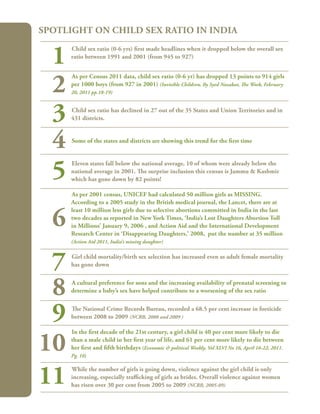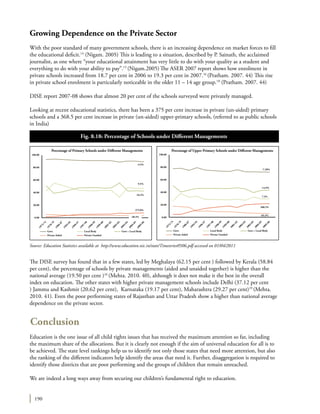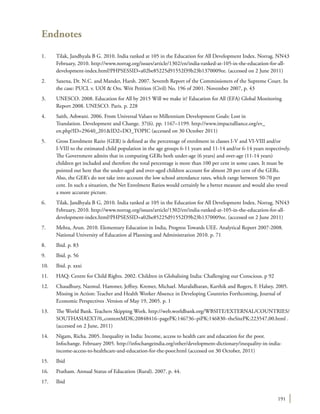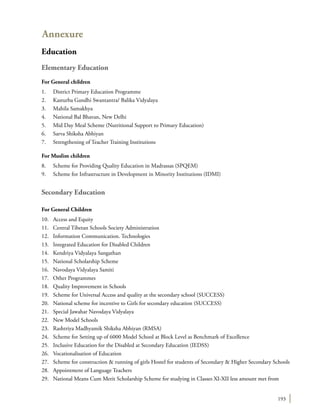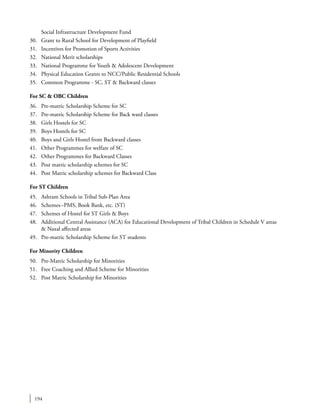








1 2 3 4 Index
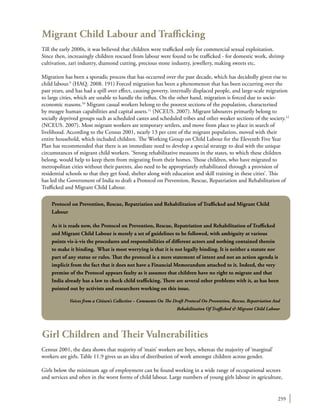
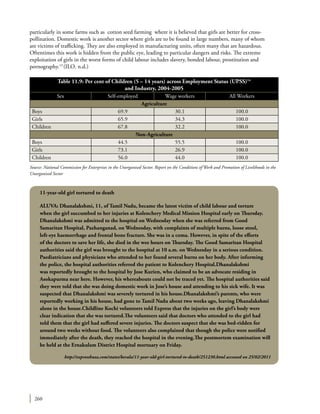
India
Child Rights Index
HAQ: Centre for Child Rights
ii
© HAQ: Centre for Child Rights 2011
ISBN 978-81-906548-6-9
Published by:
HAQ: Centre for Child Rights
B 1/2, Ground Floor, Malviya Nagar
New Delhi 110017
T 91-11-26677412
F 91-11-26674688
E info@haqcrc.org	
www.haqcrc.org
Supported by: Ford Foundation
Design and Printing: Aspire Design
Suggested Contribution: Rs. 500
iii
India Child Rights Index
Enakshi Ganguly Thukral
Parul Thukral
iv
v
We thank...
... Assefa Buquele of the African Child Policy Forum (ACPF), Ethiopia for insisting we work
on an index. Yehulashet Mekonan of ACPF for patiently sharing the methodology with us and
being there for any clarifications that we needed.
...Ford Foundation, in particular Bishnu Mohapatra, for believing in us and our capacity to
deliver on this index, and Steve Solnick for continuing to back his faith. Ford Foundation’s
support over the years has enabled HAQ to develop its programme on children and
governance, which was one of the first of its kind in the world when we started. More and more
organisations and individuals are now beginning to work on this now.
...Nishant Singh for his patience with our inability to arrive at a decision on the visual
representation of so many numbers, graphs and tables, and Sukhvinder Singh (Bitoo) for always
assuring us that it will be done. The Aspire Design team, particularly Nishant and Bitoo, are an
integral part of HAQ’s journey in publishing, and we often wonder what we would do without
them being there for us.
...The HAQ team as it is always bears the brunt of the agony and the ecstasy of any activity
happening in the office. This was no different. Being the first effort of its kind for HAQ, it was
an even bigger challenge---there were several highs and lows, tears and stress to contend with. To
its credit the team withstood all of this, in particular Parul Thukral for all she has put in into the
making of this index, Madhumita Purkayastha, who took the plunge and took over the making
of the maps and Indarilin Kharbubon, who was a last minute proof reading support.
Our families who are as much a part of all our agonies and ecstasies, but also bear the brunt of
our overwork, impatience and lack of time and energy, that is so often their lot.
But most of all we thank the children who are our constant inspiration to innovate and create,
and whose rights we hope to realise.
Enakshi Ganguly Thukral	 Bharti Ali
vi
vii
Contents
Introduction	1	
Methodology	11
General Measures of Implementation	 21	
Birth Registration	 53
Child Sex Ratio	 65
Early Childhood Care	 93
Health	111
Education	149
Crime and Justice	 195
Child Marriage	 225
Child Labour	 245
viii
1
Introduction
2
3
Indices for ranking performance are not new. For several decades now,
every year, we have eagerly looked forward to the United Nations’
Human Development Index (HDI) to see how our country has been
ranked – whether it has gone up or down. Education index, hunger
index, health index – there are many to be found.
Ranking on the basis of performance is a good way to point out where a
country or a state stands and how much it needs to improve. It shows us
where the gaps lie and the areas that need attention.
In 2008, the African Child Policy Forum (ACPF) published a report – The African Report on Child Well-
being: How Friendly are African Governments? This report for the first time assessed the extent to which
African governments met their obligations in ensuring the wellbeing of children through the development of
a Child-friendliness Index. The aim of the report was to monitor the wellbeing of children in Africa and the
efforts made by 52 African governments to realise children’s rights and ensure their wellbeing.
The countries were ranked on their performance based on indicators identified; inputs they have channelled for
the benefit of children and the outcomes that they have succeeded in providing to them. The indicators that
ACPF used related to laws, policies and practices put in place to protect children from abuse and exploitation;
budgetary commitments to provide basic needs and achievement of outcomes for children.
They opted to identify three major dimensions for their assessment: protection, measured in terms of legal
policy framework put in place, including ratification of international law and creating national law; provision
of basic needs, measured through budgetary expenditure on sectors likely to benefit children and child-related
outcomes. For each of these dimensions, several indicators were identified.
It showed some amazing results, one of the most significant being that it was not the richest or most ‘developed’
countries that were most child- friendly. In fact Malawi, Kenya, Rwanda, and Burkina Faso ranked among the
top 12 countries, despite relatively low GDPs.1
(ACPF. 2008. 92)
“There can be no keener
revelation of a society’s soul
than the way in which it
treats its children…”
Nelson Mandela
ACPF defined child wellbeing as:
Child wellbeing means a lot of things. It is about children being safe, well, healthy and happy.
It is about children’s opportunities to grow and to learn. It is about positive personal and social
relationships, and about being and feeling secure and respected. It is also about being given a voice
and being heard. In short, it is about the full and harmonious development of each child’s personality,
skills and talents. All of these have a better chance of being achieved in societies and states that
uphold, both in law and in practice, the principle of the “best interests of the child”. This means
respecting, protecting and realising the rights of children and nurturing a social ecology that provides
opportunities for all children – boys and girls, disabled or disadvantaged – to become all that their
abilities and their potential allow them to be.
4
Child Rights Index in India
India has indices related to children, like the Education Development Index (EDI) or the hunger index that
includes children. However, we could not find a composite index that looked into all aspects of child wellbeing,
in all sectors and indicators for the realisation of child rights as a whole.
Therefore, in 2009, inspired by ACPF’s Child Friendly Index, HAQ decided to explore the possibility of
developing a similar index, ranking the states and union territories in India and creating a Child Rights Index
(CRI or ‘the index’). It was timed to coincide with the 12th Five Year Planning process. We hoped that it would
help to identify the states that still lag behind, and highlight the specific areas, geographical and sectoral, that
pull them down so that they can be paid attention to. Only then can we dream of ‘Inclusive Development’
rather than the government and the Planning Commission’s stated objective of ‘Inclusive Growth’.2
(Planning
Commission. 2011. 1)
We began by attempting to draw upon ACPF’s methodology. However, we soon realised that it was not possible
to adopt it in its entirety. This was because ACPF’s child friendly index was ranking independent countries and
we were attempting to rank states within a country. Naturally while some indicator overlapped, many others
differed. Hence slowly, bit by bit, we began to construct our own methodology. Instead of dividing the ranks
on three major dimensions, we decided to take a few major indicators such as birth registration, sex ratio, early
childhood care, health, education, child marriage, child labour, crimes by and against children. To examine
each of these, a number of ‘components’ were used in creating ‘mini-indices’. This approach was adopted as
against the use of 3 broad dimensions like ACPF, because these are not only the categories for which data is
available but also the basis of planning processes developed in India. We have, however, largely followed ACPF’s
methodology in standardisation and scaling of values of components and weighting, with a few modifications
(explained in detail in Chapter 2).
Indicators for the Child Rights Index
Choosing indicators is the most critical part of such an exercise. It is not just about those that quantify the
plight of the children but is also about the presence of the government, and the ability of the government to
provide basic services to its children.
It is critical that the indicators, and their relative components that are chosen, as also the data sources used
for the development of the CRI, are credible and acceptable to all, particularly the government, as it is their
performance that is being ranked. Therefore, availability of data and their acceptability and credibility as a
measure of child rights has been the determining factors for the choice of indicators for the CRI.
It is as a result of this very challenge that, despite realising the importance of focussing on special categories of
children such as disabled, scheduled castes (SC) and scheduled tribes (ST), in the absence of comprehensive
data on these categories of children, it was not possible to have separate indices on them. However, wherever
possible these categories of marginalised children have been focussed upon in the analysis of the indicators. For
example, availability of ramps is a component of ‘inclusion’, and enrolment and retention of SC/ ST children
and girl children are components of the index on education. It would be worthwhile to read this Child Rights
Index along with HAQ’s status report on children Still Out of Focus – Status of Children in India, 2008, which
focussed on exclusion of children.
5
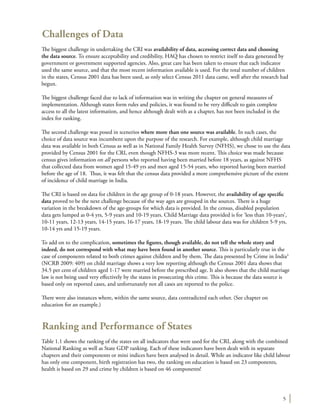
Challenges of Data
The biggest challenge in undertaking the CRI was availability of data, accessing correct data and choosing
the data source. To ensure acceptability and credibility, HAQ has chosen to restrict itself to data generated by
government or government supported agencies. Also, great care has been taken to ensure that each indicator
used the same source, and that the most recent information available is used. For the total number of children
in the states, Census 2001 data has been used, as only select Census 2011 data came, well after the research had
begun.
The biggest challenge faced due to lack of information was in writing the chapter on general measures of
implementation. Although states form rules and policies, it was found to be very difficult to gain complete
access to all the latest information, and hence although dealt with as a chapter, has not been included in the
index for ranking.
The second challenge was posed in scenerios where more than one source was available. In such cases, the
choice of data source was incumbent upon the purpose of the research. For example, although child marriage
data was available in both Census as well as in National Family Health Survey (NFHS), we chose to use the data
provided by Census 2001 for the CRI, even though NFHS-3 was more recent. This choice was made because
census gives information on all persons who reported having been married before 18 years, as against NFHS
that collected data from women aged 15-49 yrs and men aged 15-54 years, who reported having been married
before the age of 18. Thus, it was felt that the census data provided a more comprehensive picture of the extent
of incidence of child marriage in India.
The CRI is based on data for children in the age group of 0-18 years. However, the availability of age specific
data proved to be the next challenge because of the way ages are grouped in the sources. There is a huge
variation in the breakdown of the age-groups for which data is provided. In the census, disabled population
data gets lumped as 0-4 yrs, 5-9 years and 10-19 years. Child Marriage data provided is for ‘less than 10-years’,
10-11 years, 12-13 years, 14-15 years, 16-17 years, 18-19 years. The child labour data was for children 5-9 yrs,
10-14 yrs and 15-19 years.
To add on to the complication, sometimes the figures, though available, do not tell the whole story and
indeed, do not correspond with what may have been found in another source. This is particularly true in the
case of components related to both crimes against children and by them. The data presented by Crime in India3
(NCRB 2009: 409) on child marriage shows a very low reporting although the Census 2001 data shows that
34.5 per cent of children aged 1-17 were married before the prescribed age. It also shows that the child marriage
law is not being used very effectively by the states in prosecuting this crime. This is because the data source is
based only on reported cases, and unfortunately not all cases are reported to the police.
There were also instances where, within the same source, data contradicted each other. (See chapter on
education for an example.)
Ranking and Performance of States
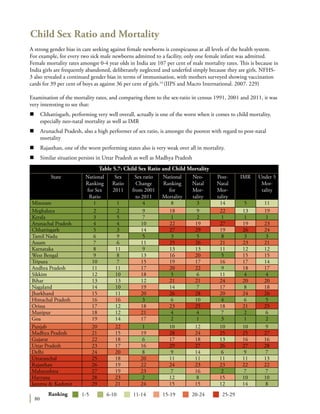
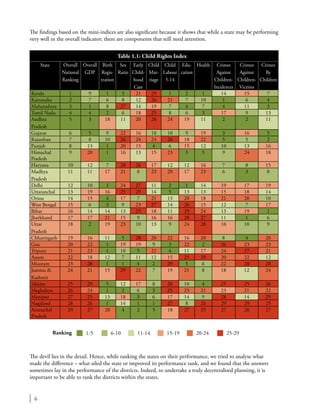
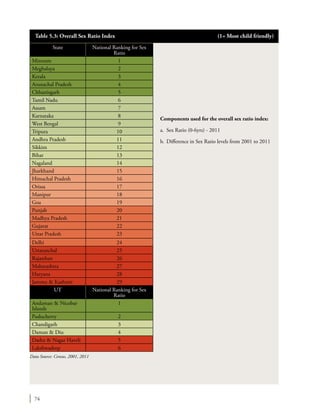
Table 1.1 shows the ranking of the states on all indicators that were used for the CRI, along with the combined
National Ranking as well as State GDP ranking. Each of these indicators have been dealt with in separate
chapters and their components or mini indices have been analysed in detail. While an indicator like child labour
has only one component, birth registration has two, the ranking on education is based on 23 components,
health is based on 29 and crime by children is based on 46 components!
6
The findings based on the mini-indices are also significant because it shows that while a state may be performing
very well in the overall indicator; there are components that still need attention.
The devil lies in the detail. Hence, while ranking the states on their performance, we tried to analyse what
made the difference – what ailed the state or improved its performance rank, and we found that the answers
sometimes lay in the performance of the districts. Indeed, to undertake a truly decentralised planning, it is
important to be able to rank the districts within the states.
State Overall
National
Ranking
Overall
GDP
Birth
Regis-
tration
Sex
Ratio
Early
Child-
hood
Care
Child
Mar-
riage
Child
Labour
5-14
Edu-
cation
Health Crimes
Against
Children-
Incidences
Crimes
Against
Children-
Victims
Crimes
By
Children
Kerala 1 9 1 3 21 29 1 2 1 14 15 7
Karnataka 2 7 6 8 12 26 21 7 10 1 6 4
Maharashtra 3 1 8 27 14 19 7 4 7 4 11 3
Tamil Nadu 4 4 2 6 18 25 8 6 3 17 9 13
Andhra
Pradesh
5 3 18 11 20 28 24 19 11 2 2 11
Gujarat 6 5 9 22 16 10 10 9 19 3 16 5
Rajasthan 7 8 10 26 24 24 26 18 22 5 5 2
Punjab 8 13 1 20 15 4 6 15 12 10 13 16
Himachal
Pradesh
9 20 1 16 13 15 23 3 5 9 24 18
Haryana 10 12 7 28 26 17 12 12 16 7 8 15
Madhya
Pradesh
11 11 17 21 8 23 20 17 23 6 3 8
Delhi 12 10 1 24 27 11 2 1 14 19 17 19
Uttaranchal 13 19 16 25 29 14 5 13 13 15 18 14
Orissa 14 15 4 17 7 21 13 20 18 21 20 10
West Bengal 15 6 3 9 23 27 14 26 15 12 7 17
Bihar 16 14 14 13 25 18 11 29 24 13 19 1
Jharkhand 17 17 21 15 9 16 16 28 27 11 1 6
Uttar
Pradesh
18 2 19 23 10 13 9 24 28 16 10 9
Chhattisgarh 19 16 11 5 28 20 22 16 20 8 4 20
Goa 20 22 1 19 19 9 3 22 2 26 23 23
Tripura 21 23 1 10 5 22 4 11 17 24 27 21
Assam 22 18 12 7 11 12 15 25 29 20 22 12
Mizoram 23 28 1 1 4 2 29 5 6 22 28 28
Jammu &
Kashmir
24 21 15 29 22 7 19 21 8 18 12 24
Sikkim 25 29 5 12 17 8 28 10 4 25 25 26
Meghalaya 26 24 1 2 6 3 25 23 21 23 21 22
Manipur 27 25 13 18 3 6 17 14 9 28 14 29
Nagaland 28 26 1 14 1 1 27 8 26 29 29 25
Arunachal
Pradesh
29 27 20 4 2 5 18 27 25 27 26 27
Table 1.1: Child Rights Index
Ranking 1-5 6-10 11-14 15-19 20-24 25-29
7
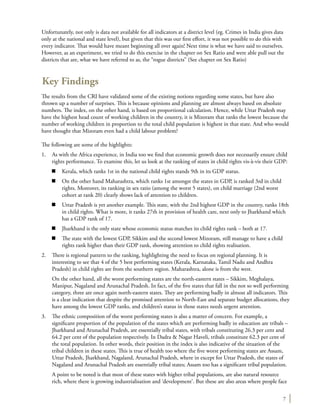
Unfortunately, not only is data not available for all indicators at a district level (eg. Crimes in India gives data
only at the national and state level), but given that this was our first effort, it was not possible to do this with
every indicator. That would have meant beginning all over again! Next time is what we have said to ourselves.
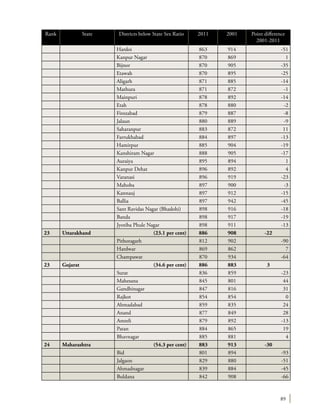
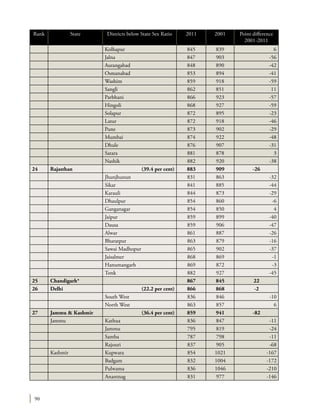
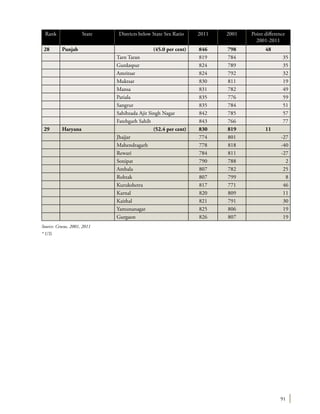
However, as an experiment, we tried to do this exercise in the chapter on Sex Ratio and were able pull out the
districts that are, what we have referred to as, the “rogue districts” (See chapter on Sex Ratio)
Key Findings
The results from the CRI have validated some of the existing notions regarding some states, but have also
thrown up a number of surprises. This is because opinions and planning are almost always based on absolute
numbers. The index, on the other hand, is based on proportional calculation. Hence, while Uttar Pradesh may
have the highest head count of working children in the country, it is Mizoram that ranks the lowest because the
number of working children in proportion to the total child population is highest in that state. And who would
have thought that Mizoram even had a child labour problem?
The following are some of the highlights:
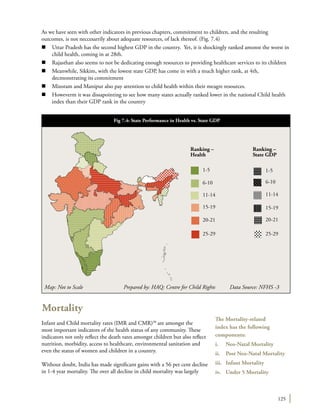
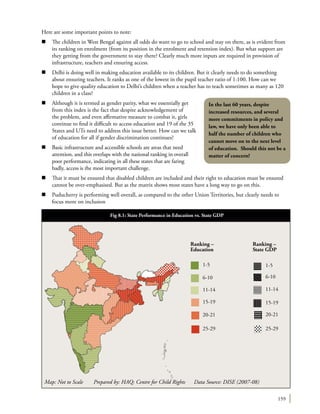
1.	 As with the Africa experience, in India too we find that economic growth does not necessarily ensure child
rights performance. To examine this, let us look at the ranking of states in child rights vis-à-vis their GDP:
n	 Kerala, which ranks 1st in the national child rights stands 9th in its GDP status.
n	 On the other hand Maharashtra, which ranks 1st amongst the states in GDP, is ranked 3rd in child
rights. Moreover, its ranking in sex ratio (among the worst 5 states), on child marriage (2nd worst
cohort at rank 20) clearly shows lack of attention to children.
n	 Uttar Pradesh is yet another example. This state, with the 2nd highest GDP in the country, ranks 18th
in child rights. What is more, it ranks 27th in provision of health care, next only to Jharkhand which
has a GDP rank of 17.
n	 Jharkhand is the only state whose economic status matches its child rights rank – both at 17.
n	 The state with the lowest GDP, Sikkim and the second lowest Mizoram, still manage to have a child
rights rank higher than their GDP rank, showing attention to child rights realisation.
2.	 There is regional pattern to the ranking, highlighting the need to focus on regional planning. It is
interesting to see that 4 of the 5 best performing states (Kerala, Karnataka, Tamil Nadu and Andhra
Pradesh) in child rights are from the southern region. Maharashtra, alone is from the west.
	 On the other hand, all the worst performing states are the north-eastern states – Sikkim, Meghalaya,
Manipur, Nagaland and Arunachal Pradesh. In fact, of the five states that fall in the not so well performing
category, three are once again north-eastern states. They are performing badly in almost all indicators. This
is a clear indication that despite the promised attention to North-East and separate budget allocations, they
have among the lowest GDP ranks, and children’s status in those states needs urgent attention.
3.	 The ethnic composition of the worst performing states is also a matter of concern. For example, a
significant proportion of the population of the states which are performing badly in education are tribals –
Jharkhand and Arunachal Pradesh, are essentially tribal states, with tribals constituting 26.3 per cent and
64.2 per cent of the population respectively. In Dadra & Nagar Haveli, tribals constitute 62.3 per cent of
the total population. In other words, their position in the index is also indicative of the situation of the
tribal children in these states. This is true of health too where the five worst performing states are Assam,
Uttar Pradesh, Jharkhand, Nagaland, Arunachal Pradesh, where in except for Uttar Pradesh, the states of
Nagaland and Arunachal Pradesh are essentially tribal states; Assam too has a significant tribal population.
	 A point to be noted is that most of these states with higher tribal populations, are also natural resource
rich, where there is growing industrialisation and ‘development’. But these are also areas where people face
8
significant dislocation from their habitats. Is there a connection between poor health and displacement?
There is enough evidence to suggest there is.4
(Thukral 2011: 190-194)
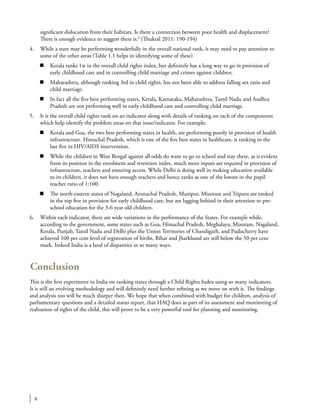
4.	 While a state may be performing wonderfully in the overall national rank, it may need to pay attention to
some of the other areas (Table 1.1 helps in identifying some of these)
n	 Kerala ranks 1st in the overall child rights index, but definitely has a long way to go in provision of
early childhood care and in controlling child marriage and crimes against children.
n	 Maharashtra, although ranking 3rd in child rights, has not been able to address falling sex ratio and
child marriage.
n	 In fact all the five best performing states, Kerala, Karnataka, Maharashtra, Tamil Nadu and Andhra
Pradesh are not performing well in early childhood care and controlling child marriage.
5.	 It is the overall child rights rank on an indicator along with details of ranking on each of the components
which help identify the problem areas on that issue/indicator. For example:
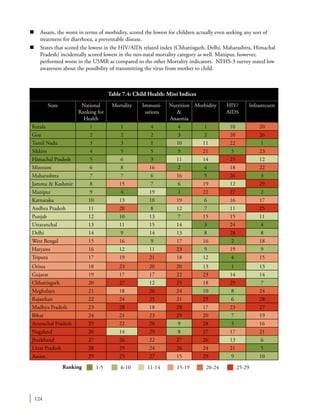
n	 Kerala and Goa, the two best performing states in health, are performing poorly in provision of health
infrastructure. Himachal Pradesh, which is one of the five best states in healthcare, is ranking in the
last five in HIV/AIDS intervention.
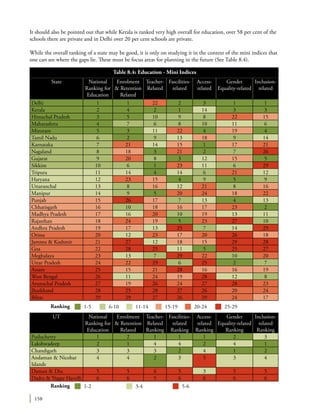
n	 While the children in West Bengal against all odds do want to go to school and stay there, as is evident
from its position in the enrolment and retention index, much more inputs are required in provision of
infrastructure, teachers and ensuring access. While Delhi is doing well in making education available
to its children, it does not have enough teachers and hence ranks as one of the lowest in the pupil
teacher ratio of 1:100.
n	 The north-eastern states of Nagaland, Arunachal Pradesh, Manipur, Mizoram and Tripura are ranked
in the top five in provision for early childhood care, but are lagging behind in their attention to pre-
school education for the 3-6 year old children.
6.	 Within each indicator, there are wide variations in the performance of the States. For example while,
according to the government, some states such as Goa, Himachal Pradesh, Meghalaya, Mizoram, Nagaland,
Kerala, Punjab, Tamil Nadu and Delhi plus the Union Territories of Chandigarh, and Puducherry have
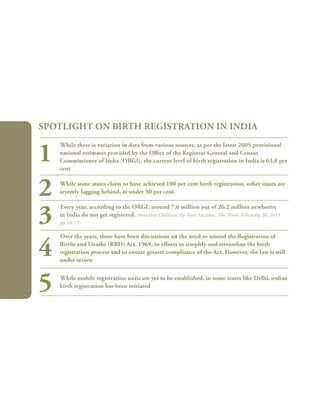
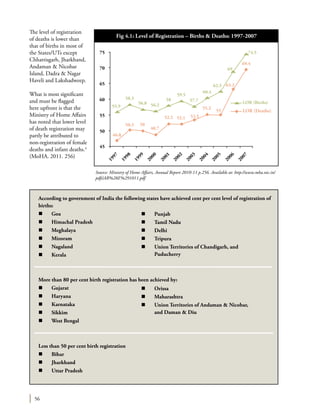
achieved 100 per cent level of registration of births, Bihar and Jharkhand are still below the 50 per cent
mark. Indeed India is a land of disparities in so many ways.
Conclusion
This is the first experiment in India on ranking states through a Child Rights Index using so many indicators.
It is still an evolving methodology and will definitely need further refining as we move on with it. The findings
and analysis too will be much sharper then. We hope that when combined with budget for children, analysis of
parliamentary questions and a detailed status report, that HAQ does as part of its assessment and monitoring of
realisation of rights of the child, this will prove to be a very powerful tool for planning and monitoring.
9
Endnotes
1.	 ACPF. (African Child Policy Forum). 2008. The African Report on Child Well-Being: How Friendly are
African Governments? Adis Ababa. Ethiopia. p. 92
2.	 Planning Commission. August 2011. Faster, Sustainable and More Inclusive Growth. An Approach to
the Twelfth Five Year Plan. Government of India. New Delhi. p. 1
10
11
Methodology
12
13
The African Report on Child Well-Being: How Friendly are African Governments? was published in 2008
by the African Child Policy Forum (ACPF). This report for the first time made and assessment of the extent
to which African governments meet their obligations in ensuring the wellbeing of children through the
development of a Child-friendliness Index.
HAQ: Centre for Child Rights decided to adopt this concept. We have, however, adapted and modified the
methodology for undertaking a similar analysis in India, in creating a Child Rights Index (CRI or ‘the index’).
This is because it was found that the indicators that can be used to undertake an inter-country analysis may not
be suitable for an inter-state analysis. The development of indicators is also incumbent on the availability and
quality of data.
Hence, depending on availability of data as well as acceptability of each indicator as a parameter for measuring
child rights (as discussed in detail in the Introduction), HAQ identified its own indicators, in an attempt to
measure how the states are performing in providing for the needs of children such as education status, health
status, crimes against and by children, the status of existing infrastructure to realise a right (number of schools,
health facilities, anganwadis etc), and even efforts to reach the most vulnerable (disabled, SC/ST, girl child etc.).
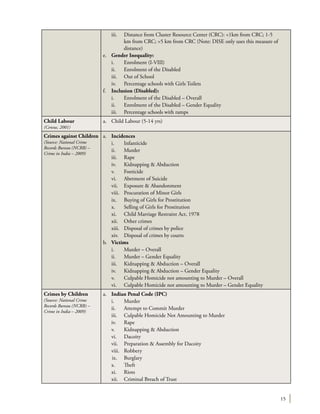
Each indicator had the following components:
Indicator Component
Birth Registration
(Source: Office of the Registrar
General, India)
a.	 Birth Registration in India, 2005
b.	 Percentage change in birth registration levels from 2004 to 2005
Sex Ratio
(Source: Census Data, 2001,
2011)
a.	 Child Sex Ratio (0-6yrs), 2011
b.	 Difference in Child Sex Ratio from 2001 to 2011
Early Childhood
(Source: http://wcd.nic.in/)
a.	 Beneficiaries of Pre-school Education (3-6yr) – Overall
b.	 Beneficiaries of Pre-school Education (3-6yr) – Gender Equality
c.	 Beneficiaries of Supplementary Nutrition Programme (6m-6yr)
d.	 Number of ICDS projects sanctioned vs. operational
e.	 Number of Anganwadi centres sanctioned vs. operational
Child Marriage
(Source: Census, 2001)
a.	 Ever Married and Currently married (0-17 yrs)
b.	 Child Marriage – Gender Equality
Health
(Source: National Family
Health Survey (NFHS-3),
National AIDS Control
Organisation (NACO),
National Health Profile (NHP)
of India – 2010)
a.	 Mortality:
	 i.	 Neo Natal Mortality
	 ii.	 Post Neo Natal Mortality
	 iii.	 Infant Mortality
	 iv.	 Under 5 Mortality
b.	 Immunisation:
	 i.	 BCG Vaccine
	 ii.	 3 doses of Diphtheria, Whooping Cough and Tetanus (DPT)
	 iii.	 4 doses of Polio
	iv.	Measles
	 v.	 No vaccinations
c.	 Nutrition and Anaemia:
	 i.	 Percentage children with low birth weight
	 ii.	 Percentage children <3 yrs who are under-weight
	 iii.	 Percentage children <3 yrs who are stunted
14
	 iv.	 Percentage children <3 yrs who are wasted
	 v.	 Percentage children age 6-59 months who are Anaemic
d.	 Morbidity
	 i.	 For children <5 yrs with Acute Respiratory Infection
		 n	 Percentage who had symptoms
		 n	 Percentage for whom treatment was sought
		 n	 Percentage who received antibiotics
	 ii.	 For children <5 yrs with Diarrhoea
		 n	 Percentage taken to a health provider
		 n	 Any ORT or increased fluids
		 n	 No treatment sought
e.	 HIV/AIDS:
	 i.	 HIV-infected Children <15yr infected as a percentage of all HIV-infected
	 ii.	 Percentage children on Antiretroviral therapy (ART)
f.	 Infrastructure (Including CHCs):
	 i.	 Average population served per government hospital
	 ii.	 Average population served per government hospital bed
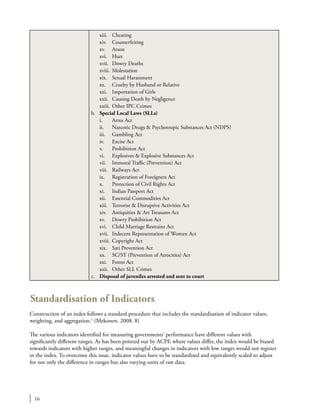
Education
(Source: District Information
System for Education (DISE)
07-08)
a.	 Enrolment and Retention-related:
	 i.	 Net Enrolment Ratio – Primary Level
	 ii.	 Net Enrolment Ratio – Upper Primary Level
	 iii.	 Enrolment (I-VIII) – Overall
	 iv.	 Enrolment (I-VIII) – Gender Equality
	 v.	 Enrolment of the Disabled – Overall
	 vi.	 Enrolment of the Disabled – Gender Equality
	 vii.	 Out of School – Overall
	 viii.	 Out of School – Gender Equality
		 n	 Note: Out of School data was taken from the Census 2001 data. It was
calculated as percentage of total population 6-14 yrs of age, per Census
2001
		 n	 Note: The Disabled populated age-group used was 10-19 yrs (the
grouping provided in the census data).
		 n	 Note: We could not include SC/ST enrolment as a separate indicator as
it was difficult to get 6-14 yr census data per state on SC/ST children
b. Teacher-related:
	 i.	 Percentage of Single-Teacher schools
	 ii.	 Pupil-Teacher ratio
	 iii.	 Schools with Pupil-Teacher ratio>100
	 iv.	 Percentage of Para Teachers
c.	 Facilities:
	 i.	 Percentage schools with no buildings
	 ii.	 Percentage distribution of Single-Classroom schools
	 iii.	 Percentage schools with common toilets
	 iv.	 Percentage schools with girls toilets
	 v.	 Percentage schools with drinking water facilities
	 vi.	 Percentage schools with ramps
d.	 Access:
	 i.	 Student-Classroom Ratio
	 ii.	 Ratio of Primary/Upper-Primary Schools
15
	 iii.	 Distance from Cluster Resource Center (CRC): <1km from CRC; 1-5
km from CRC; >5 km from CRC (Note: DISE only uses this measure of
distance)
e.	 Gender Inequality:
	 i.	 Enrolment (I-VIII)
	 ii.	 Enrolment of the Disabled
	 iii.	 Out of School
	 iv.	 Percentage schools with Girls Toilets
f.	 Inclusion (Disabled):
	 i.	 Enrolment of the Disabled – Overall
	 ii.	 Enrolment of the Disabled – Gender Equality
	 iii.	 Percentage schools with ramps
Child Labour
(Census, 2001)
a.	 Child Labour (5-14 yrs)
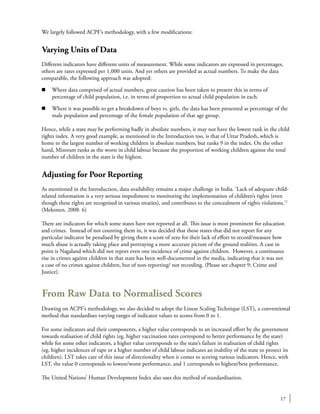
Crimes against Children
(Source: National Crime
Records Bureau (NCRB) –
Crime in India – 2009)
a.	Incidences
	i.	 Infanticide
	ii.	Murder
	 iii.	Rape
	 iv.	 Kidnapping & Abduction
	v.	 Foeticide
	 vi.	 Abetment of Suicide
	 vii.	 Exposure & Abandonment
	 viii.	 Procuration of Minor Girls
	 ix.	 Buying of Girls for Prostitution
	 x.	 Selling of Girls for Prostitution
	 xi.	 Child Marriage Restraint Act, 1978
	 xii.	 Other crimes
	 xiii.	 Disposal of crimes by police
	 xiv.	 Disposal of crimes by courts
b.	Victims
	 i.	 Murder – Overall
	 ii.	 Murder – Gender Equality
	 iii.	 Kidnapping & Abduction – Overall
	 iv.	 Kidnapping & Abduction – Gender Equality
	 v.	 Culpable Homicide not amounting to Murder – Overall
	 vi.	 Culpable Homicide not amounting to Murder – Gender Equality
Crimes by Children
(Source: National Crime
Records Bureau (NCRB) –
Crime in India – 2009)
a.	 Indian Penal Code (IPC)
	i.	 Murder
	 ii.	 Attempt to Commit Murder
	 iii.	 Culpable Homicide Not Amounting to Murder
	iv.	Rape
	 v.	 Kidnapping & Abduction
	 vi.	Dacoity
	 vii.	 Preparation & Assembly for Dacoity
	 viii.	Robbery
		ix.	 Burglary
	x.	Theft
	 xi.	Riots
	 xii.	 Criminal Breach of Trust
16
	 xiii.	Cheating
	 xiv.	Counterfeiting
	 xv.	Arson
	 xvi.	Hurt
	 xvii.	 Dowry Deaths
	 xviii.	Molestation
	 xix.	 Sexual Harassment
	 xx.	 Cruelty by Husband or Relative
	 xxi.	 Importation of Girls
	 xxii.	 Causing Death by Negligence
	 xxiii.	 Other IPC Crimes
b.	 Special Local Laws (SLLs)
	 i.	 Arms Act
	 ii.	 Narcotic Drugs & Psychotropic Substances Act (NDPS)
	 iii.	 Gambling Act
	 iv.	 Excise Act
	 v.	 Prohibition Act
	 vi.	 Explosives & Explosive Substances Act
	 vii.	 Immoral Traffic (Prevention) Act
	 viii.	 Railways Act
	 ix.	 Registration of Foreigners Act
	 x.	 Protection of Civil Rights Act
	 xi.	 Indian Passport Act
	 xii.	 Essential Commodities Act
	 xiii.	 Terrorist & Disruptive Activities Act
	 xiv.	 Antiquities & Art Treasures Act
	 xv.	 Dowry Prohibition Act
	 xvi.	 Child Marriage Restraint Act
	 xvii.	 Indecent Representation of Women Act
	 xviii.	 Copyright Act
	 xix.	 Sati Prevention Act
	 xx.	 SC/ST (Prevention of Atrocities) Act
	 xxi.	 Forest Act
	 xxii.	 Other SLL Crimes
c.	 Disposal of juveniles arrested and sent to court
Standardisation of Indicators
Construction of an index follows a standard procedure that includes the standardisation of indicator values,
weighting, and aggregation.1
(Mekonen. 2008. 8)
The various indicators identified for measuring governments’ performance have different values with
significantly different ranges. As has been pointed out by ACPF, where values differ, the index would be biased
towards indicators with higher ranges, and meaningful changes in indicators with low ranges would not register
in the index. To overcome this issue, indicator values have to be standardised and equivalently scaled to adjust
for not only the difference in ranges but also varying units of raw data.
17
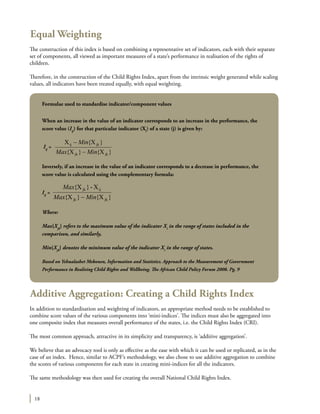
We largely followed ACPF’s methodology, with a few modifications:
Varying Units of Data
Different indicators have different units of measurement. While some indicators are expressed in percentages,
others are rates expressed per 1,000 units. And yet others are provided as actual numbers. To make the data
comparable, the following approach was adopted:
n	 Where data comprised of actual numbers, great caution has been taken to present this in terms of
percentage of child population, i.e. in terms of proportion to actual child population in each.
n	 Where it was possible to get a breakdown of boys vs. girls, the data has been presented as percentage of the
male population and percentage of the female population of that age group.
Hence, while a state may be performing badly in absolute numbers, it may not have the lowest rank in the child
rights index. A very good example, as mentioned in the Introduction too, is that of Uttar Pradesh, which is
home to the largest number of working children in absolute numbers, but ranks 9 in the index. On the other
hand, Mizoram ranks as the worst in child labour because the proportion of working children against the total
number of children in the state is the highest.
Adjusting for Poor Reporting
As mentioned in the Introduction, data availability remains a major challenge in India. ‘Lack of adequate child-
related information is a very serious impediment to monitoring the implementation of children’s rights (even
though these rights are recognised in various treaties), and contributes to the concealment of rights violations.’2
(Mekonen. 2008. 6)
There are indicators for which some states have not reported at all. This issue is most prominent for education
and crimes. Instead of not counting them in, it was decided that those states that did not report for any
particular indicator be penalised by giving them a score of zero for their lack of effort to record/measure how
much abuse is actually taking place and portraying a more accurate picture of the ground realities. A case in
point is Nagaland which did not report even one incidence of crime against children. However, a continuous
rise in crimes against children in that state has been well-documented in the media, indicating that it was not
a case of no crimes against children, but of non-reporting/ not recording. (Please see chapter 9: Crime and
Justice).
From Raw Data to Normalised Scores
Drawing on ACPF’s methodology, we also decided to adopt the Linear Scaling Technique (LST), a conventional
method that standardises varying ranges of indicator values to scores from 0 to 1.
For some indicators and their components, a higher value corresponds to an increased effort by the government
towards realisation of child rights (eg. higher vaccination rates correspond to better performance by the state)
while for some other indicators, a higher value corresponds to the state’s failure in realisation of child rights
(eg. higher incidences of rape or a higher number of child labour indicates an inability of the state to protect its
children). LST takes care of this issue of directionality when it comes to scoring various indicators. Hence, with
LST, the value 0 corresponds to lowest/worst performance, and 1 corresponds to highest/best performance.
The United Nations’ Human Development Index also uses this method of standardisation.
18
Equal Weighting
The construction of this index is based on combining a representative set of indicators, each with their separate
set of components, all viewed as important measures of a state’s performance in realisation of the rights of
children.
Therefore, in the construction of the Child Rights Index, apart from the intrinsic weight generated while scaling
values, all indicators have been treated equally, with equal weighting.
Additive Aggregation: Creating a Child Rights Index
In addition to standardisation and weighting of indicators, an appropriate method needs to be established to
combine score values of the various components into ‘mini-indices’. The indices must also be aggregated into
one composite index that measures overall performance of the states, i.e. the Child Rights Index (CRI).
The most common approach, attractive in its simplicity and transparency, is ‘additive aggregation’.
We believe that an advocacy tool is only as effective as the ease with which it can be used or replicated, as in the
case of an index. Hence, similar to ACPF’s methodology, we also chose to use additive aggregation to combine
the scores of various components for each state in creating mini-indices for all the indicators.
The same methodology was then used for creating the overall National Child Rights Index.
Formulae used to standardise indicator/component values
When an increase in the value of an indicator corresponds to an increase in the performance, the
score value (Iij
) for that particular indicator (Xi
) of a state (j) is given by:
Iij
=
}X{}X{
}X{X
jkjk
jkij
MinMax
Min
−
−
Inversely, if an increase in the value of an indicator corresponds to a decrease in performance, the
score value is calculated using the complementary formula:
Iij
=
}X{}X{
X-}X{
jkjk
ijjk
MinMax
Max
−
Where:
Max{Xjk
} refers to the maximum value of the indicator Xi
in the range of states included in the
comparison, and similarly,
Min{Xjk
} denotes the minimum value of the indicator Xi
in the range of states.
Based on Yehualashet Mekonen, Information and Statistics. Approach to the Measurement of Government
Performance in Realising Child Rights and Wellbeing. The African Child Policy Forum 2008. Pg. 9
19
Measuring Gender Equality
Gender inequality remains a bitter truth in India. One cannot therefore meaningfully measure governments’
performance without giving due consideration to the efforts made to narrow gender inequality among children.
To address this disparity in the preparation of the Child Rights Index, where possible, gender disaggregated
information has been collected and used in the composition of the index. The female and male scores have been
combined in a way that penalised states for their bias against the girl child.
Calculating Gender Equality involved two steps:
Step 1: The ‘gender parity’ has been first calculated by dividing the data-value for the girl child by that of the
boy-child.
Step 2: This measure of gender difference has been standardised, adjusting for directional differences similar
to the other scores. (In this case, a score of 0 would reflect a greater bias against the girl child and a score of
1 would reflect no gender bias). These scores have been aggregated with the rest of the indicators to form the
composite index for Gender Equality.
20
Endnotes
1.	 Mekonen, Yehualashet. 2008. Information and Statistics. Approach to the Measurement of Government
Performance in Realising Child Rights and Wellbeing. The African Child Policy Forum. Adis Ababa.
Ethiopia. p. 8
2.	 Ibid, p. 6
21
General
Measures of
Implementation
22
23
Introduction
The Indian constitution accords rights to children as citizens of the country,
and in keeping with their special status the State has even enacted special
laws. Declaring itself a Republic on 26 January 1950, India gave itself a
strong Constitution that mandated fulfillment of basic human rights of all
people of the country. The Indian Constitution encompasses most rights
included in the United Nations Convention on the Rights of the Child
(CRC) as Fundamental Rights and Directive Principles of State Policy.
Both the Central Government and the State Governments can legislate to
ensure these constitutional guarantees. While some matters are subjects of both the centre and the states, some
others are exclusively state subjects or subjects of the central government as per the Union List, the State List
and the Concurrent List respectively, contained in the Seventh Schedule to the Constitution of India.
In meeting its constitutional obligations, several new laws were created in independent India and some of the
old ones were inherited from the pre–independence period. Post ratification of the CRC, important child
related legislations were amended. For example, the juvenile justice law was amended to bring it in consonance
with international instruments, the law prohibiting use of ultrasound technology for sex selective abortions was
amended to make it more stringent, amendment was introduced in the law to prohibit advertisements of infant
and milk substitutes and encourage breast feeding up to 2 years, the information technology act was amended
to cover child pornography, children between the ages of 6–14 years got the right to free and compulsory
education, list of hazardous occupations prohibiting employment of children below 14 years was increased to
cover domestic sector, restaurants, eateries and recreational centres, etc. Many rules too were amended as time
went by. The Indian child is thus protected by a range of the constitutional provisions and the laws enacted over
the years.
Moreover, India has ratified a range of international human rights instruments that have a bearing on its
national legal provisions, programmes and policies. Principles of international law apply within a country by
a process of reception into ‘municipal law’ or the national or domestic legal system. In some countries the
ratification or adoption of an international treaty becomes automatically binding on the domestic courts.
Ratification of the CRC in 1992 was a reiteration of India’s commitment to its children as enshrined in its
Constitution.
As mentioned above, states in India are also committed to enacting legal measures and formulating policies and
programmes for children. Most central acts for children are enacted in the states through state rules, the need
for which is specified in the Acts.
Ideally to develop an index ranking of states, we would need to have access to information of such actions taken
by the states. However, despite all efforts, it was not possible to get a comprehensive list of rules and enactments
from the states and the status of their implementation.
Hence, although we are adding in a chapter on status of general measures of implementation that reflects the
commitments of the states, it has not been added to the main index and ranked.
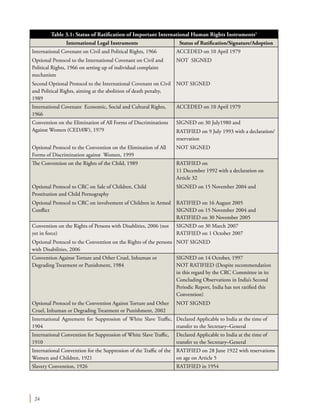
International Human Rights Instruments
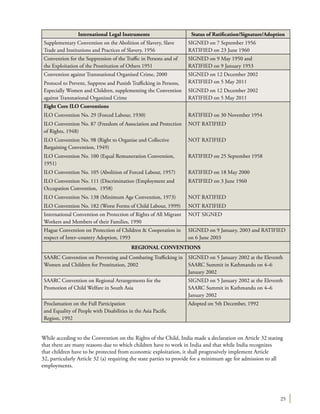
All international instruments ratified by the government of India become applicable to the states. Table 1 gives
the status of compliance with international human rights instruments by India. All of them have provisions in
them that also apply to children.
“In the little world in
which children have their
existence, there is nothing
so finely perceived and
finely felt, as injustice”
Charles Dickens
24
Table 3.1: Status of Ratification of Important International Human Rights Instruments1
International Legal Instruments Status of Ratification/Signature/Adoption
International Covenant on Civil and Political Rights, 1966
Optional Protocol to the International Covenant on Civil and
Political Rights, 1966 on setting up of individual complaint
mechanism
Second Optional Protocol to the International Covenant on Civil
and Political Rights, aiming at the abolition of death penalty,
1989
ACCEDED on 10 April 1979
NOT SIGNED
NOT SIGNED
International Covenant Economic, Social and Cultural Rights,
1966
ACCEDED on 10 April 1979
Convention on the Elimination of All Forms of Discriminations
Against Women (CEDAW), 1979
Optional Protocol to the Convention on the Elimination of All
Forms of Discrimination against Women, 1999
SIGNED on 30 July1980 and
RATIFIED on 9 July 1993 with a declaration/
reservation
NOT SIGNED
The Convention on the Rights of the Child, 1989
Optional Protocol to CRC on Sale of Children, Child
Prostitution and Child Pornography
Optional Protocol to CRC on involvement of Children in Armed
Conflict
RATIFIED on
11 December 1992 with a declaration on
Article 32
SIGNED on 15 November 2004 and
RATIFIED on 16 August 2005
SIGNED on 15 November 2004 and
RATIFIED on 30 November 2005
Convention on the Rights of Persons with Disablities, 2006 (not
yet in force)
Optional Protocol to the Convention on the Rights of the persons
with Disabilities, 2006
SIGNED on 30 March 2007
RATIFIED on 1 October 2007
NOT SIGNED
Convention Against Torture and Other Cruel, Inhuman or
Degrading Treatment or Punishment, 1984
Optional Protocol to the Convention Against Torture and Other
Cruel, Inhuman or Degrading Treatment or Punishment, 2002
SIGNED on 14 October, 1997
NOT RATIFIED (Despite recommendation
in this regard by the CRC Committee in its
Concluding Observations in India’s Second
Periodic Report, India has not ratified this
Convention)
NOT SIGNED
International Agreement for Suppression of White Slave Traffic,
1904
Declared Applicable to India at the time of
transfer to the Secretary–General
International Convention for Suppression of White Slave Traffic,
1910
Declared Applicable to India at the time of
transfer to the Secretary–General
International Convention for the Suppression of the Traffic of the
Women and Children, 1921
RATIFIED on 28 June 1922 with reservations
on age on Article 5
Slavery Convention, 1926 RATIFIED in 1954
25
International Legal Instruments Status of Ratification/Signature/Adoption
Supplementary Convention on the Abolition of Slavery, Slave
Trade and Institutions and Practices of Slavery, 1956
SIGNED on 7 September 1956
RATIFIED on 23 June 1960
Convention for the Suppression of the Traffic in Persons and of
the Exploitation of the Prostitution of Others 1951
SIGNED on 9 May 1950 and
RATIFIED on 9 January 1953
Convention against Transnational Organised Crime, 2000
Protocol to Prevent, Suppress and Punish Trafficking in Persons,
Especially Women and Children, supplementing the Convention
against Transnational Organized Crime
SIGNED on 12 December 2002
RATIFIED on 5 May 2011
SIGNED on 12 December 2002
RATIFIED on 5 May 2011
Eight Core ILO Conventions
ILO Convention No. 29 (Forced Labour, 1930)
ILO Convention No. 87 (Freedom of Association and Protection
of Rights, 1948)
ILO Convention No. 98 (Right to Organise and Collective
Bargaining Convention, 1949)
ILO Convention No. 100 (Equal Remuneration Convention,
1951)
ILO Convention No. 105 (Abolition of Forced Labour, 1957)
ILO Convention No. 111 (Discrimination (Employment and
Occupation Convention, 1958)
ILO Convention No. 138 (Minimum Age Convention, 1973)
ILO Convention No. 182 (Worst Forms of Child Labour, 1999)
RATIFIED on 30 November 1954
NOT RATIFIED
NOT RATIFIED
RATIFIED on 25 September 1958
RATIFIED on 18 May 2000
RATIFIED on 3 June 1960
NOT RATIFIED
NOT RATIFIED
International Convention on Protection of Rights of All Migrant
Workers and Members of their Families, 1990
NOT SIGNED
Hague Convention on Protection of Children & Cooperation in
respect of Inter–country Adoption, 1993
SIGNED on 9 January, 2003 and RATIFIED
on 6 June 2003
REGIONAL CONVENTIONS
SAARC Convention on Preventing and Combating Trafficking in
Women and Children for Prostitution, 2002
SIGNED on 5 January 2002 at the Eleventh
SAARC Summit in Kathmandu on 4–6
January 2002
SAARC Convention on Regional Arrangements for the
Promotion of Child Welfare in South Asia
SIGNED on 5 January 2002 at the Eleventh
SAARC Summit in Kathmandu on 4–6
January 2002
Proclamation on the Full Participation
and Equality of People with Disabilities in the Asia Pacific
Region, 1992
Adopted on 5th December, 1992
While acceding to the Convention on the Rights of the Child, India made a declaration on Article 32 stating
that there are many reasons due to which children have to work in India and that while India recognizes
that children have to be protected from economic exploitation, it shall progressively implement Article
32, particularly Article 32 (a) requiring the state parties to provide for a minimum age for admission to all
employments.
26
The National Legal
Regime
Constitutional
Guarantees
The essence of the Indian Constitution
is reflected in its Preamble. The
Preamble embodies the essential goals
of justice, liberty, equality and fraternity
for each citizen. Every child born in
this country is by birth a citizen, so no
efforts can be spared to establish these.
Though the Preamble is not a legal
statute, it is an inviolable component of
the constitution. It serves the purpose
of being a guiding light for the overall
interpretation and understanding of the
Constitution; it is a powerful guiding
force and no law can be made that
vitiates the essence of the Preamble.
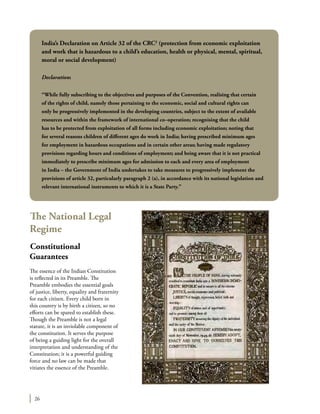
India’s Declaration on Article 32 of the CRC2
(protection from economic exploitation
and work that is hazardous to a child’s education, health or physical, mental, spiritual,
moral or social development)
Declaration:
“While fully subscribing to the objectives and purposes of the Convention, realising that certain
of the rights of child, namely those pertaining to the economic, social and cultural rights can
only be progressively implemented in the developing countries, subject to the extent of available
resources and within the framework of international co–operation; recognising that the child
has to be protected from exploitation of all forms including economic exploitation; noting that
for several reasons children of different ages do work in India; having prescribed minimum ages
for employment in hazardous occupations and in certain other areas; having made regulatory
provisions regarding hours and conditions of employment; and being aware that it is not practical
immediately to prescribe minimum ages for admission to each and every area of employment
in India – the Government of India undertakes to take measures to progressively implement the
provisions of article 32, particularly paragraph 2 (a), in accordance with its national legislation and
relevant international instruments to which it is a State Party.”
27
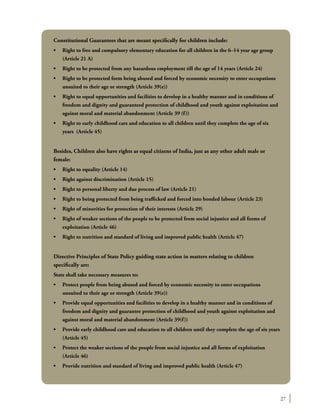
Constitutional Guarantees that are meant specifically for children include:
•	 Right to free and compulsory elementary education for all children in the 6–14 year age group  
(Article 21 A)
•	 Right to be protected from any hazardous employment till the age of 14 years (Article 24)
•	 Right to be protected form being abused and forced by economic necessity to enter occupations
unsuited to their age or strength (Article 39(e))
•	 Right to equal opportunities and facilities to develop in a healthy manner and in conditions of
freedom and dignity and guaranteed protection of childhood and youth against exploitation and
against moral and material abandonment (Article 39 (f))
•	 Right to early childhood care and education to all children until they complete the age of six
years (Article 45)
Besides, Children also have rights as equal citizens of India, just as any other adult male or
female:
•	 Right to equality (Article 14)             
•	 Right against discrimination (Article 15)
•	 Right to personal liberty and due process of law (Article 21)             
•	 Right to being protected from being trafficked and forced into bonded labour (Article 23)	
•	 Right of minorities for protection of their interests (Article 29)
•	 Right of weaker sections of the people to be protected from social injustice and all forms of
exploitation (Article 46)
•	 Right to nutrition and standard of living and improved public health (Article 47)        
Directive Principles of State Policy guiding state action in matters relating to children
specifically are:
State shall take necessary measures to:
•	 Protect people from being abused and forced by economic necessity to enter occupations
unsuited to their age or strength (Article 39(e))
•	 Provide equal opportunities and facilities to develop in a healthy manner and in conditions of
freedom and dignity and guarantee protection of childhood and youth against exploitation and
against moral and material abandonment (Article 39(f))
•	 Provide early childhood care and education to all children until they complete the age of six years
(Article 45)
•	 Protect the weaker sections of the people from social injustice and all forms of exploitation
(Article 46)
•	 Provide nutrition and standard of living and improved public health (Article 47)
28
Legislations
The Constitutional guarantees listed above are implemented through several state and national legislations. The
key legislations and legal provisions that have a bearing on children’s rights include 48 special and local laws and
about 60 provisions dealing with various crimes, punishments and procedures as contained in the Indian Penal
Code, the Criminal Procedure Code and the Indian Evidence Act. While all the major legislations have been
listed out herein below, the list is not exhaustive as there are many more state specific legislations and rules as
well as judicial precedence set through case law.
Laws and Legal Provisions Specifically for Children
Special Laws
1.	 1890	 Guardians and Wards Act (Amended in 2010)
2.	 1933	 Children (Pledging of Labour) Act
3.	 1956	 Women’s and Children’s Institutions (Licensing) Act
4.	 1956	 Young Persons (Harmful Publications) Act
5.	 1960	 Orphanages and Other Charitable Homes (Supervision and Control) Act
6.	 1986	 Child Labour (Prohibition and Regulation) Act
7.	 1992	 Infant Milk Substitutes, Feeding Bottles and Infant Foods (Regulation of Production, Supply
and Distribution) Act (amended in 2003)
8.	 1994	 Pre–natal Diagnostic Techniques (Regulation and Prevention of Misuse) Act (amended in
2003 to become Pre–conception and Pre–natal Diagnostic Techniques (Prohibition of Sex
Selection) Act)
9.	 2000	 Juvenile Justice (Care and Protection of Children) Act, 2000 as amended in 2006 and in
20113
10.	 2005	 Commission for the Protection of Child Rights Act, as amended in 2006
11.	 2006	 Prohibition of Child Marriages Act, 2006 (A law replacing the Child Marriage Restraint Act
of 1929)
12.	 2009	 Right of Children to Free and Compulsory Education Act, 2009
Local Laws
13.	 2003	 Goa Children’s Act
Criminal Laws
There are several provisions that relate to children in the Indian Penal Code, 1860 and the Criminal Procedure
Code, 1973 and the Evidence Act, 1872
Special Laws
14.	 1875	 Indian Majority Act
15.	 1925	 Indian Succession Act
16.	 1937	 Muslim Personal Law (Shariat) Application Act
17.	 1948	 Factories Act (Amended in 1949, 1950 and 1954)
18.	 1951	 Plantations Labour Act (Amended in 1953, 1960, 1961, 1981, 1986 and 2010)
19.	 1952	 Mines Act
20.	 1954	 Special Marriage Act
21.	 1955	 Hindu Marriage Act
29
22.	 1956	 Hindu Adoptions and Maintenance Act (Amended in 2010)
23.	 1956	 Hindu Succession Act (Amended in 2005)
24.	 1956	 Immoral Traffic (Prevention) Act (Amended in 1978 and 1986)
25.	 1958	 Probation of Offenders Act
26.	 1958	 Merchant Shipping Act
27.	 1961	 Maternity Benefits Act 1961 (amended in 2008)
28.	 1961	 Apprentices Act
29.	 1961	 Motor Transport Workers Act
30.	 1966	 Beedi and Cigar Workers (Conditions of Employment) Act
31.	 1969	 Registration of Births and Deaths Act
32.	 1970 	 Contract Labour (Regulation and Abolition) Act
33.	 1971	 Medical Termination of Pregnancy Act, 1971 (amended in 2002 through the Medical
Termination of Pregnancy (Amendment) Act, 2002)
34.	 1976	 Bonded Labour System (Abolition) Act
35.	 1978 	 Inter State Migrant Workmen (Regulation of Employment and Conditions of Service) Act
(came into force w.e.f 25 June 1987)
36.	 1986	 Indecent Representation of Women (Prohibition) Act
37.	 1987	 Mental Health Act
38.	 1987	 Prevention of Illicit Traffic in Narcotic Drugs and Psychotropic Substances Act
39.	 1989	 Schedule Caste and Schedule Tribes (Prevention of Atrocities) Act
40.	 1992	 Rehabilitation Council of India Act
41.	 1994	 Transplantation of Human Organ Act
42.	 1995	 Persons with Disabilities (Equal Opportunities, Protection of Rights and Full Participation)
Act
43.	 1999	 National Trust for Welfare of Persons with Autism, Cerebral Palsy, Mental Retardation and
Multiple Disabilities Act
44.	 2000	 Information Technology Act, (amended in 2008 to include child pornography)
45.	 2005	 Protection of Women from Domestic Violence Act
Local Laws
46.	 1959 	 Bombay Prevention of Begging Act (Applicable in Delhi also)
47.	 1982 	 Karnataka Devadasi (Prohibition of Dedication) Act
48.	 1986	 Andhra Pradesh Devadasi’s (Prohibition of Dedication) Act
Prohibition of Child Marriages Act, 2006
Despite repealing the old law and enacting a new one, child marriages continue unabated. Stringent provisions
and punishments in the law are not a deterrent as implementation remains poor. The Child Marriage
Prohibition Officers have several other tasks at hand and are unable to check child marriages, which often
receive political patronage. To be implemented in the states, there is the need for formulation of state rules but
full and complete information on the status of formulation of state rules could not be accessed. However the
rate of child marriages in the state has been used to develop an index.
30
Pre–Natal Diagnostic Techniques (Regulation and Prevention of Misuses) Act (The
PNDT Act)
On 20 September 1994, the Parliament enacted the Pre–Natal Diagnostic Techniques (Regulation and
Prevention of Misuse) Act (the PNDT Act), which came into force in 1996 with the framing of the rules. This
is an example of a central law that is applicable to all states as a central legislation.
This law failed as new techniques for sex determination were coming into use, pre–conception sex–selection
remained unaddressed, monitoring of clinics and doctors was poor and penal provisions were ambiguous and
very weak, the law penalized women for sex determination without addressing the patriarchal social mileu.
There are 30,000 registered ultrasound clinics spread all over the nation. Almost a million sex selective abortions
take place in India annually, which points to the fact that at least 10,000–20,000 or more of the 30,000 clinics
are either openly or covertly carrying out sex determination tests. Only 300 prosecutions (mainly for non–
registration) and only one conviction so far.4
(Deshpande. n.d.)
In the 11 years of existence of the PNDT Act, the first conviction of a doctor came about only in March 2006.
When these issues were brought to the notice of the Supreme Court in CEHAT & Others vs. Union of India
and Others, the court ordered for a change in the law, which was amended in 2003 to be called the ‘The Pre–
conception and Pre–natal Diagnostic Techniques (Prohibition of Sex Selection) Act (PC & PNDT Act). At the
same time certain amendments were also brought about in the Rules of 1996, which came into effect from 14
February 2003, to ensure effective implementation of the Act and in view of the observations of the Supreme
Court. The main purpose of this law is to ban the use of sex–selection techniques before or after conception as
well as the misuse of pre–natal diagnostic techniques for sex selective abortions and to regulate such techniques.
Most ultrasound clinics are now registered, but this has not prevented them from continuing with sex
determination tests. The fact that private clinics are allowed to function is a reflection of government’s inability
to cater to the health needs through the public health system. Increased privatisation of health will make it even
more difficult to hold private providers accountable.
Despite amendments, the All India Conference of State Secretaries of Health and Women and Child
Development Departments, DGPs and NGOs held at Vigyan Bhawan in New Delhi on 11 August 2005
concluded that ‘no significant impact of the Act has been felt at the grassroots level because of the difficulties
associated with the implementation of the Act.’
It was also noted at the Conference that there is an urgent need to increase the staff strength of the PNDT cell
to 1000, of which 600 officers are deputed to each district and 300 monitor various districts from the centre.
The budget for the PNDT cell needs to be increased to Rs. 200 crore to ensure effective implementation of
PNDT Act.5
(Deshpande. n.d.)
Medical Termination of Pregnancy Act, 1971 (MTP)
In 2002 the Medical Termination of Pregnancy Act, 1971 was amended and new rules framed in 2003 to
prevent the continued use of abortion as a means for eliminating the child. These amendments were based
on the recommendations of the ‘expert group committee’ formed in 1997, and suggestions of the National
Women’s Rights Commission (as a measure to prevent cases of ‘female foeticide’) along with the experience
gained in the implementation of the MTP Act.6
(Yadav. 2005) While it was established as illegal in 1971 to
abort a healthy foetus, particularly that of a girl child, the Amendment of 2002 established strict guidelines as to
where and by whom medical terminations of pregnancies may be carried out, and imposed severe punishments,
including rigorous imprisonment of 2 to 7 years, on those who violate the Act.7
(MWCD. 2006. 32)
31
There is little information available by way of documentation of evaluation of the implementation of this Act
post the amendment. The ground reality is that female fetuses continue to be aborted and in fact at a much
higher rate given the fall in sex–ratio at birth.
Registration of Births and Deaths Act, 1969
The national legal framework for registration is the Registration of Births and Deaths Act 1969 (RBD Act) and
registration services are decentralised spreading across 28 States and 7 union territories with more than 200,000
registration centres. The RBD Act made reporting and registration of births and deaths compulsory.
However, the value of birth registration is often neglected in Indian communities in the face of problems that
are more immediate and tangible. It is often seen as nothing more than a legal formality, with little relevance for
the development of the child, including access to healthcare and education services. As a result there is a lack
of support for birth registration from national and local authorities, and little demand from the general public,
who remain unaware of its importance. The Government needs to overcome this challenge through awareness
programmes and by making birth registration not just compulsory but also simple. The states have been ranked
on the basis of their implementation of this act in a separate chapter.
Another problem in India is that birth registration does not necessarily ensure a birth certificate. In the present
system, the birth certificate is issued only when the record of birth is shown to the issuing authority and an
application is made. Issuing birth certificates at the time of registration would help especially in rural areas
where people find it difficult to make a second journey to the municipality/panchayat where their child was
born. Currently, people have to make several visits, spend several hundred rupees, and lose work days and hence
wages to get a birth certificate.
Guardianship Laws
In recognition of the overwhelming patriarchal nature of our society, natural guardianship is given to the father
while childcare responsibilities are delegated to the mother. In most communities, children carry the father’s
name, and most documents continue to require the father’s name as the guardian of the child, even when he/
she may be living with the mother. This is not only unjust, but also insensitive to both mother and child, given
the fact that one–third of all households in India are female–headed.
The custody laws too favour the father and grant the mother the status of a caretaker. Mothers can only be
custodians if for any reason fathers are unable to be guardians.8
Various Supreme Court judgements have declared that the mother is as much a child’s natural guardian as the
father, boosting the principle that the parent who can provide better care of the child and love should have
custody. Yet, the situation on ground is different.
Although birth registration is decentralised, the Committee on the Rights of the Child had
recommended to India in its Concluding Observations dated February 2004 that steps such as the
establishment of mobile registration offices and registration units in schools and health facilities be
taken. It further recommended that the State party seek technical assistance from, among others,
UNICEF and UNFPA. Currently, in India there are no systems established for setting up of mobile
registration offices. Such a move will help mothers who go to their natal family for delivery as the
birth of their new born can be registered by a mobile unit.
32
Personal laws govern matters of maintenance, custody, adoption and other matters regarding the family
environment. The government has been wary of amending personal laws, and many provisions remain that do
not serve best interests of the child.
Although legislation in some cases does take care of the interests of the child and protects its rights within the
family or with respect to the family, most of it provides for the rights of parents and guardians OVER the child
rather than the other way round.
Adoption
But for the Hindu Maintenance and Adoption Act, governing Hindu children, and the Juvenile Justice law
which provides for adoption as a form of alternate care for children in need of care and protection, there is no
law on adoption in the country that clearly lays down the adoption procedures. The Supreme Court judgement
in Lakshmikant Pandey vs. Union of India led to establishment of the Central Adoption Resource Agency,
which has failed to check illegal adoptions. In fact it has even failed to provide data on children awaiting
adoption and adoptive parents in the waitlist. CARA guidelines have been weak and have had no force in
checking illegal adoptions and sale of babies in the name of adoption.
While number of children being given in foreign adoptions has reduced, the number of domestic adoptions is
not very encouraging. A fair assessment however is only possible if CARA would provide statistics on number of
parents and children in waiting.
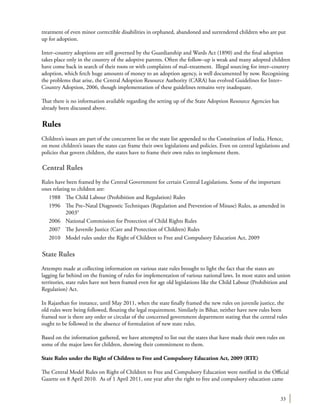
It is important to note that babies are sold
everyday in the name of adoption. While
one of the reasons could be a cumbersome
process, the most important reason is that
there are no checks on illegal sourcing of
children. Hospitals are out of the purview
of CARA and so are many orphanages that
are not registered as an adoption agency or
a child care institution under the juvenile
justice law.
A check on adoption agencies has only been possible through civil society action and with intervention of
courts. Yet, a lot needs to be done as babies disappear from hospitals and adoption agencies.
CARA has meanwhile drafted a new set of guidelines, notified on 24 June 2011. The drafting of these guidelines
took more than three years. Given that these are only guidelines and do not have a binding force, the likelihood
of their violation remains. Moreover, the new guidelines are not sensitive to the needs of the disabled children,
as the primary thrust seems to be on getting rid of children with special needs at the earliest possible. In the
name of finding such children a permanent family, the government has abdicated its responsibility towards
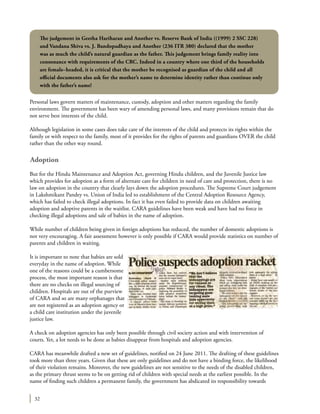
The judgement in Geetha Hariharan and Another vs. Reserve Bank of India ((1999) 2 SSC 228)
and Vandana Shiva vs. J. Bandopadhaya and Another (236 ITR 380) declared that the mother
was as much the child’s natural guardian as the father. This judgement brings family reality into
consonance with requirements of the CRC. Indeed in a country where one third of the households
are female–headed, it is critical that the mother be recognised as guardian of the child and all
official documents also ask for the mother’s name to determine identity rather than continue only
with the father’s name!
33
treatment of even minor correctible disabilities in orphaned, abandoned and surrendered children who are put
up for adoption.
Inter–country adoptions are still governed by the Guardianship and Wards Act (1890) and the final adoption
takes place only in the country of the adoptive parents. Often the follow–up is weak and many adopted children
have come back in search of their roots or with complaints of mal–treatment. Illegal sourcing for inter–country
adoption, which fetch huge amounts of money to an adoption agency, is well documented by now. Recognising
the problems that arise, the Central Adoption Resource Authority (CARA) has evolved Guidelines for Inter–
Country Adoption, 2006, though implementation of these guidelines remains very inadequate.
That there is no information available regarding the setting up of the State Adoption Resource Agencies has
already been discussed above.
Rules
Children’s issues are part of the concurrent list or the state list appended to the Constitution of India. Hence,
on most children’s issues the states can frame their own legislations and policies. Even on central legislations and
policies that govern children, the states have to frame their own rules to implement them.
Central Rules
Rules have been framed by the Central Government for certain Central Legislations. Some of the important
ones relating to children are:
1988	 The Child Labour (Prohibition and Regulation) Rules
1996	 The Pre–Natal Diagnostic Techniques (Regulation and Prevention of Misuse) Rules, as amended in
20039
2006	 National Commission for Protection of Child Rights Rules
2007	 The Juvenile Justice (Care and Protection of Children) Rules
2010	 Model rules under the Right of Children to Free and Compulsory Education Act, 2009
State Rules
Attempts made at collecting information on various state rules brought to light the fact that the states are
lagging far behind on the framing of rules for implementation of various national laws. In most states and union
territories, state rules have not been framed even for age old legislations like the Child Labour (Prohibition and
Regulation) Act.
In Rajasthan for instance, until May 2011, when the state finally framed the new rules on juvenile justice, the
old rules were being followed, flouting the legal requirement. Similarly in Bihar, neither have new rules been
framed nor is there any order or circular of the concerned government department stating that the central rules
ought to be followed in the absence of formulation of new state rules.
Based on the information gathered, we have attempted to list out the states that have made their own rules on
some of the major laws for children, showing their commitment to them.
State Rules under the Right of Children to Free and Compulsory Education Act, 2009 (RTE)
The Central Model Rules on Right of Children to Free and Compulsory Education were notified in the Official
Gazette on 8 April 2010. As of 1 April 2011, one year after the right to free and compulsory education came
34
into effect, the status of rules framed by the states and union territories for implementation of this right is as
follows10
(MoHRD. 2011. 1 April) :
State Rules framed under the Child Labour (Prohibition and Regulation) Act, 1986
Here again, status of rules framed by the states for implementation of the Child Labour (Prohibition and
Regulation) Act is not known for all the states. The information available from various central and state
government websites is as follows:
While the child labour law is yet to be amended, there have been additions from time to time to the list of
hazardous occupations and processes where employment of children below 14 years of age is prohibited. After
years of campaign by groups and activist, the government banned employment of children as domestic workers
in the dhabas (road–side eateries), restaurants, hotels, motels, tea–shops, resorts, spas or other recreational
centres w.e.f 10th of October 2006 (Gazette Notification of 3 June 2008 No.S–27019/1/93–CL). Similarly,
in May 2008, the government added ‘diving’ to the list of prohibited occupations/ processes. At present,
employment of children in 65 occupations and 15 processes is prohibited. While a total ban eliminating
distinction between hazardous and non–hazardous employment in the case of children is still a dream, the
present efforts are insufficient to ensure prosecution of offenders.
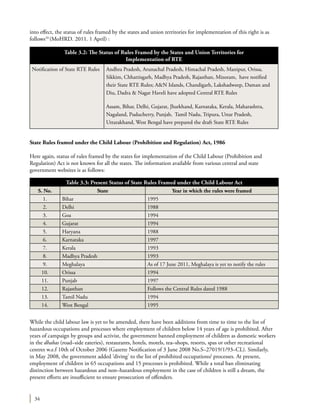
Table 3.2: The Status of Rules Framed by the States and Union Territories for
Implementation of Rte
Notification of State RTE Rules Andhra Pradesh, Arunachal Pradesh, Himachal Pradesh, Manipur, Orissa,
Sikkim, Chhattisgarh, Madhya Pradesh, Rajasthan, Mizoram, have notified
their State RTE Rules; A&N Islands, Chandigarh, Lakshadweep, Daman and
Diu, Dadra & Nagar Haveli have adopted Central RTE Rules
Assam, Bihar, Delhi, Gujarat, Jharkhand, Karnataka, Kerala, Maharashtra,
Nagaland, Puducherry, Punjab, Tamil Nadu, Tripura, Uttar Pradesh,
Uttarakhand, West Bengal have prepared the draft State RTE Rules
Table 3.3: Present Status of State Rules Framed under the Child Labour Act
S. No. State Year in which the rules were framed
1. Bihar 1995
2. Delhi 1988
3. Goa 1994
4. Gujarat 1994
5. Haryana 1988
6. Karnataka 1997
7. Kerala 1993
8. Madhya Pradesh 1993
9. Meghalaya As of 17 June 2011, Meghalaya is yet to notify the rules
10. Orissa 1994
11. Punjab 1997
12. Rajasthan Follows the Central Rules dated 1988
13. Tamil Nadu 1994
14. West Bengal 1995
35
What is even more disconcerting is that because the laws dealing with child
labour are weak – a bailable offence with a minimum of three months
and a maximum of a year’s imprisonment OR/AND a fine of Rs. 10,000
extending to Rs. 20,000 – the implementation of the law remains tardy.
Taking recourse to the choice given, in almost all cases the employers are let
off with a fine.
The Government is yet to implement the CRC Committee’s
recommendation that the 1986 Child Labour Act be amended so that
government schools and training centres are no longer exempt from
prohibitions on employing children; and coverage is expanded to
include agriculture and other informal sectors or that the Factories Act
be amended to cover all factories or workshops employing child labour
and the Beedi Act be amended so that exemptions for household–based
production are eliminated.
CRC Committee’s recommendation to India to withdraw its declaration on Article 32
of the Convention seems to be falling on deaf ears. In fact, in the light of enactment of the law guaranteeing
free and compulsory education to all children aged 6–14 years, the child labour law, policy and schemes are left
with no meaning and should not be required at all. As the current child labour law allows regulation of child
labour in some sectors, it is violative of the fundamental right to education guaranteed under Article 21A of the
Constitution of India.
State Rules under Juvenile Justice (Care and Protection of Children) Act
In 2007 the Ministry of Women and Child Development notified the Juvenile Justice (Care and Protection
of Children) Rules, 2007 as the central model rules on juvenile justice. Under Rule 96 of these central model
rules, the states are required to frame their own rules conforming to the 2007 central model rules or else the
central model rules apply mutatis mutandis. The exact status of formulation of juvenile justice rules in the states
Committee recommends withdrawal of declaration on Article 32
The Committee encourages the State party to withdraw its declaration with respect to article 32 of the
Convention, as it is unnecessary in light of the efforts the State party is making to address child labour.
28 January 2000
CRC/C/15/Add.115
In light of the State party’s numerous measures to implement progressively article 32 of the
Convention, the Committee has serious doubt at the necessity of this declaration....In line with
its previous recommendations [Ibid., para. 66], and in light of the 1993 Vienna Declaration and
Programme of Action, the Committee urges the State party to withdraw the declaration made to article
32 of the Convention.
CRC/C/15/Add.228
30 January 2004
36
as per the 2007 central model rules is not available. The little information that could be gathered from various
sources in this regard is as follows:
Policy Framework
National Charter for Children 2003
This Charter was published in the Extraordinary Gazette of India, by the Ministry of Human Resource
Development through its Department of Women and Child Development dated the 9 February 2004.
The Charter reiterates the commitment of the Government of India to the cause of the children in order to
see that no child remains hungry, illiterate or sick. Underlying this Charter is the intent to secure for every
Table 3.4: Present Status of State Rules Framed under the Juvenile Justice Act
State Status
Andhra Pradesh The Andhra Pradesh Juvenile Justice (Care and Protection of Children)
Draft Rules, 2009 have been framed but are not yet finalized
Assam New Rules were notified recently on 22 September 2011.
Bihar Status is not clear as new rules have not been formulated and there is nothing in writing to
suggest that the central model rules ought to be followed.
Delhi New rules were formulated in 2009 to be called the Delhi Juvenile Justice (Care and Protection
of Children) Rules, 2009.
Gujarat The Gujarat Juvenile Justice (Care and Protection of Children) Rules, 2011 are dated 14
February 2011. They were issued by the Gujarat Social Justice and Empowerment Department.
Haryana Haryana Juvenile Justice (Care and Protection of Children) Rules, 2009 have been approved
according to a newspaper report dated 22 August 2009.11
However, the official website of the
Haryana Government continues to suggest that the rules are dated 2002.
Jharkhand The state has adopted the central model rules of 2007.
Karnataka The Juvenile Justice (Care and Protection of Children) Karnataka Rules, 2010 are in place.
Kerala The state rules have not been revised, neither central model rules of 2007 adopted. In 2009, a
Kerala High Court judgement, while dealing with a question of whether a woman was required
to surrender her child before the CWC as per the central model rules of 2007, ruled that the
state was not bound by the central law.12
Madhya Pradesh New state rules were notified on 3 October 2008.
Rajasthan New rules were notified on 13 May 2011.
Tamil Nadu The central rules are being relied upon in Tamil Nadu in the absence of revised state rules.
In 2008, Madras High Court directed the state government to revise the draft rules.13
In the
absence of revised rules, in January 2011, while dealing with a serial blasts case, when the
petitioner pleaded that he was a juvenile as per the records required to be relied upon under the
2007 juvenile justice central model rules, the Madras High Court followed the central model
rules in its decision.14
Uttar Pradesh According to a report by Justice Vineet Saran, Chairman, Committee dealing with Juvenile
Homes on inspection of homes in the state, undertaken by virtue of a resolution of the
committee dated 10 February 2011, the state is following the central model rules in the absence
of formulation of the new state rules. However, there is no official circular in this regard.15
West Bengal New state rules are dated 2009.
37
child its inherent right to be a child and enjoy a healthy and
happy childhood, to address the root causes that negate the
healthy growth and development of children, and to awaken the
conscience of the community in the wider societal context to
protect children from all forms of abuse, while strengthening the
family, society and the Nation.
The 2003 Charter has come under criticism from child rights
activists for a number of reasons. Primary among them is the fact
that its legal status is not clear. It does not over-ride or ‘is in
place of’ the National Policy for Children, 1974 that had been
brought in before the Convention on the Rights of the Child. That it does not mention at all or draw upon
the Convention is also being commented upon. When questioned on this at the presentation of India’s Second
periodic report at the CRC Committee the head of the Indian delegation said that it had the ‘basic essence’ of
the Convention.
National Policy for Children
The National Policy for Children in India is dated 1974. Since then the government has adopted two National
Plans of Action for Children, dated 1992 and 2005 as also a National Charter for Children, 2003, but has
not come up with a new policy. The Ministry of Women and Child Development has initiated the process of
drafting a new policy for children, which is currently in abeyance.
None of the states have a policy for children.
Issue Specific Policies
There are 8 critical policy documents that relate to or have a bearing on children’s rights, some of which have
been translated into action plans and programmes and schemes. These are listed below.
Policy documents specifically for children are:
1974	National Policy for Children (under revision)
1986	National Policy on Education
1986	National Policy on Child Labour
2003	National Children’s Charter
2003 National Youth Policy
Other policy documents having a bearing on children’s rights include:
1988	 National Policy for the Mentally Handicapped
1993	 National Nutrition Policy
2002	 National Health Policy
2006	 National Policy for Persons with Disabilities
Plans of Action for Children
Plans of Action for children have come to receive importance fairly recently. These are formulated both at the
national and the state level.
The Committee is nevertheless
concerned that the National Charter for
Children does not adopt a child rights
based approach and does not explicitly
include all rights and principles of the
Convention.
CRC/C/15/Add.228
30 January 2004
38
National Plans of Action
The various national plans of action for children16
(MWCD. 2011a) that India has formulated in the last two
decades are:
1992	 National Plan of Action for children
1992	 National Plan of Action for the SAARC Decade of the Girl Child (1991–2000)
1998	 National Plan of Action to Combat Trafficking and Commercial Sexual Exploitation of Women and
Children17
(MWCD. 2011b. 233)
2005	 National Plan of Action for Children
2005	 National Plan of Action for Children (NPAC) Affected by Human Immunodeficiency Virus (HIV)/
Acquired Immuno Deficiency Syndrome (AIDS)18
(MWCD. 2011b. 283)
A National Plan of Action for Children (NPA) was released in August 199219
(DWCD. 1992) following
which India acceded to the UN Convention on the Rights of the Child in December, 1992. While the NPA
for Children set out quantifiable goals to be achieved by 2000 AD in the priority areas of health, nutrition,
education, water, sanitation and environment, the NPA for the Girl Child (1991–2000) aimed at removal of
gender bias and enhancing the status of girl child in the society, so as to provide them the equal opportunities
for their survival, protection and development. Both the Plans of Action adopted an inter–sectoral approach in
achieving sectoral goals laid down in the Action Plans in close uniformity with the major goals of ‘Health for
All’, ‘Education for All’ etc.
The National Plan of Action of 1992 comprised of goals and objectives not just for children but women as
well.20
(DWCD. 1992) In fact it also contained a section on “Children and Environment’ (Section VIII). In
2005, the Government of India came up with a new National Plan of Action for Children.
The 1992 Plan of Action did not provide for specific actions on the issues of child participation, children
affected by HIV/AIDS, child trafficking, sexual exploitation and child pornography, children in conflict with
law, and early childhood care and development. However it did contain a section on Children and environment,
but which is not to be found in the subsequent Plan dated 2005.
As regards the National Plan of Action for the girl Child, clearly, the states did not feel the need to have the state
plan for the girl child and finally the National Plan of Action for Girl Children was merged with the National
Plan of Action for Children in 2005. The falling sex ratio in various age groups only calls for a focused approach
and specific plan of action aimed at empowering the girl children.
States were expected to draft their own plans of action based on this.
State Plans of Action for Children
The States are required to form their own State Plan of Action for Children. Most states and union territories
are yet to formulate their State Plan of Action for Children based on the National Plan of Action for
Children, 2005. There is no readily available updated information in this regard, the 2007 National Report
of Government of India on World Fit for Children reported that about 13 States have already prepared their
Action Plans.21
(MWCD. 2007. 3) Research carried out for preparing this report reveals that 17 states have had
some plan of action for children in place. These include Assam, Arunachal Pradesh, Bihar, Delhi, Haryana,
Himachal Pradesh, Karnataka, Kerala, Maharashtra, Manipur, Meghalaya, Mizoram, Orissa, Punjab, Rajasthan,
Tamil Nadu and West Bengal. States with Plan of Action for Children post formulation of the National Plan
of Action, 2005 are only Orissa, Gujarat and Bihar. Karnataka and Kerala formulated their plans in 2004 and
2003 respectively with goals set to be achieved by 2010. Since their plans were formulated a year or two prior to
the 2005 National Plan of Action, they did not reformulate their plans of action.
39
Further, as per a 1995 report of the Government of India, governments of Karnataka, Madhya Pradesh, Tamil
Nadu and Goa have formulated the State Plan of Action for Girl Children.22
(DWCD. 1995. 19-29)
In 2008, the Government of Bihar formulated ‘Astitva’, the Bihar Action Plan for preventing and combating
trafficking of human beings, and rehabilitating victims and survivors of trafficking.23
(MWCD. 2011a. 22) Even
more recent is the Bihar government’s State Plan of Action for Elimination, Release and Rehabilitation of Child
Labour.24
(Govt. of Bihar. 2006) Karnataka too has a plan of action to deal with Devadasi tradition (the practice
of dedicating girls to Gods and Goddesses).25
(MWCD. 2011a. 22)
Programmes and Schemes
A decadal analysis of the government’s budget from a child rights’ perspective undertaken by HAQ: Centre for
Child Rights in the year 2000 found 120 central government programmes and schemes for children operational
through 13 Ministries. Now this number is 73, largely because many schemes have been merged, while a few
have been completely closed down or replaced by some other new scheme.
Many of the states have their own specific programmes and schemes, for which a comprehensive list was not
available at this stage.
Mechanisms for Realization of Rights of Children
Ministries
There are 9 Ministries catering to the needs of children in a substantial way, though there are others too that
have taken a few initiatives e.g. Ministries of Home Affairs and Departments of Atomic Energy, Nuclear Power,
Industrial Policy Promotion, Telecommunications and Posts have taken small steps in the field of education by
giving scholarships or setting up institutions or instituting rewards for children of their staff or other groups of
workers in some of their areas of operation. The nine main Ministries however, are:
1.	 Ministry of Women and Child Development
2.	 Ministry of Health and Family Welfare
3.	 Ministry of Human Resource Development, Department of Education
4.	 Ministry of Labour & Employment
5.	 Ministry of Social Justice & Empowerment
6.	 Ministry of Youth Affairs and Sports
7.	 Ministry of Tribal Affairs
8.	 Ministry of Minority Affairs
9.	 Ministry of Home Affairs
Separate Ministry for Women and Children
The Department of Women and Child Development was set up in the year 1985 as a part of the Ministry of
Human Resource Development to give the much needed impetus to the holistic development of women and
children. With effect from 30 January 2006, the Department was upgraded to a Union level Ministry under the
independent charge of the Minister of State for Women and Child Development.26
This brought consolidation
of two major child rights issues under one Ministry to a large extent viz. early childhood care and child
40
protection. Specific programmes on elimination of child labour, programmes and schemes for disabled children,
children affected by HIV/AIDS, schemes for protection of children belonging to the Scheduled Tribes and
Scheduled Castes and other minority communities however, continue to remain with different Ministries.
In most states children’s programmes are spread across different departments. Not all states have departments of
Women and Children. In such cases the nodal department is the Department of Social Welfare.
Other Institutions/Institutional Mechanisms set up for Implementation
of Programmes and Schemes or Monitoring of Programmes and Schemes
n	 National Institute of Public Cooperation & Child Development (NIPCCD)
n	 National Institute for Social Defence (NISD)
n	 Central Adoption Resource Agency (CARA)
n	 National Council of Teacher Education (NCTE)
n	 National and State Councils for Educational research and Training (NCERT and SCERTs)
n	 National Institute of Open Schooling (NIOS)
n	 National and State Commissions for Protection of Child Rights (NCPCR and SCPCRs)
n	 Juvenile Justice Boards (JJBs) and Child Welfare Committees (CWCs)
n	 National Rehabilitation Council
n	 Family Courts
n	 Children’s Courts (designated only in Delhi so far)
n	 Child care institutions and protective homes, including adoption agencies
The National and State Commissions for Protection of Child Rights
The Commissions for Protection of Child Rights Act, 2005 (Act No. 4 of 2006) and the amendment to it in
2006 (Act No. 4 of 2007) deals with the establishment of Commissions (both at the Centre and State), and the
creation of children’s courts to look into matters affecting rights of children.
The first National Commission for Protection of Child Rights was constituted in 2007 with a chairperson and
only two of the six members. Unfortunately the selection of the members was not accorded the seriousness that
it deserved, which led to the filing of a Public Interest Litigation challenging the appointment of two NCPCR
members who did not fulfil the eligibility criteria.
The second Commission was constituted in May 2010, with only a Chairperson in place until November 2010,
when the members were selected and appointed on 22 November 2010 despite great criticism regarding the
selection process and lack of transparency as also a Public Interest Litigation in the Delhi High Court.
State Commissions for Children
According to the National Commissions for Protection of Children Act, all states have to set up state
commissions. Unfortunately, the trend has been one of going ahead with the setting up the commissions,
without formulation of the state rules.
Of the 12 states that have set up the commission for protection of child rights, only 3 viz. Chhattisgarh, Delhi
and Orissa, framed the requisite rules prior to setting up these bodies. Since Gujarat has merged children’s issues
into the state commission for women, no rules were framed for the children’s commission. Even in progressive
41
Table 3.5: Establishing State Commissions for Protection of Child Rights without Rules
S.
No.
State Year in which the
Commission was set up
Year in which the rules were framed
1. Assam 04 Mar 2010 Rules are yet to be framed
2. Bihar 23 Dec 2008 Bihar Commission for Protection of Child Rights Rules, 2010,
notified on 19 Aug 2010
3. Chhattisgarh 17 Jun 2010 Commission for Protection of Child Rights Rules, 2009
4. Delhi 08 Sep 2008 Delhi Commission for Protection of Child Rights Rules, 2008
5. Goa 15 Apr 2008 Goa Commission for Protection of Child Rights Rules, 2010
6. Gujarat The Commission is merged
with the Gujarat State
Commission for Women
––––––––––––––
7. Karnataka 3 July 2009 Karnataka State Commission for Protection of Child Rights
Rules, 2010
8. Kerala Not yet constituted In July 2011, the rules of the Kerala State Commission for
Protection of Child Rights Rules, drafted by the Centre for
Child and the Law, National Law School of India University,
Bangalore, were discussed and given a final shape by experts28
,
but they are yet to be notified.
9. Madhya
Pradesh
Information not available Madhya Pradesh Commission for Protection of Child Rights
Rules, 2007
10. Maharashtra 24 Jul 2007 Maharashtra State Commission for Protection of Child Rights
Rules, 2010
11. Orissa 30 Sept 2010 Orissa State Commission for Protection of Child Rights Rules,
2009
12. Punjab 15 Apr 2011
The Commission has
been set up on paper. The
Chairperson and Members
are yet to be appointed.
Information not available
13. Rajasthan 23 Feb 2010 Rajasthan State Commission for Protection of Child Rights
Rules, 2010
14. Sikkim 10 Jan 2008 Sikkim Commission for Protection of Child Rights Rules,
2007
Source: http://www.ncpcr.gov.in/scpcr.htm
states like Karnataka, the Commission came into being on 3 July 2009, while the rules were framed only in
2010. Absence of rules before setting up the commissions can affect the functioning of the such bodies. For
instance, in Karnataka, the Chairperson and the Members of the Commission do not enjoy the same position
as that enjoyed by their counterparts in the National Commission, whereas the role and the tasks assigned to
the state and the national commissions are the same. The absence of rules also makes it difficult for the state
government to assign requisite number of staff and infrastructure to the commission, thus affecting the efficacy
of the state commission.
While the Delhi State Commission was set up in September 2008 with a Chairperson and four members,
Madhya Pradesh and Rajasthan have only notified the Commissions but the members have not been appointed.
Goa has also adopted the Goa State Commission for Children Rules, 2004.27
42
However, the selection of the members in the states too has been questioned. For example, in Rajasthan all
the members of the state commission also hold other government offices. In Maharashtra, one of the members
of the state commission was also on the selection panel for the commission, amounting to a clear violation of
ethical, transparent and accountable governance. In October 2010, the Chairperson of the Madhya Pradesh
State Commission for Protection of Child Rights was in news for having shown utter disregard for the poor
children. According to her, horoscopes of children in the Nutrition Centres should be verified by a Brahmin
priest and if the priest opines that the child will grow into a good citizen, it must be provided treatment, while
the rest can be left to their fate as the government cannot spend on them. There has been no action against her
till date.
Moreover, these Commissions are budgeted as a programme or scheme of the Ministry of Women and Child
Development or its corresponding department in the states. This affects their autonomy and hampers effective
monitoring of the state on implementation of child rights, which is a critical role of these commissions.
The payment made to the chairpersons and members of the commissions too differ from state to state. In
Karnataka for example pays members per day of sitting fees, while Delhi pays Rs. 25,000 per month for the
Chairperson and Rs.20,000 per month for the other members. They are entitled to no other facilities and are to
be full time with the Commission, not being allowed to take on any other employment. The only exception is
for Retired Government Employees, whose last salary would be matched. Given the poor remuneration being
offered, there is very little hope of getting a professionally qualified young person, who needs to earn a living, to
be on the Commission. Only retired government employees would find it worth their while.
Child panel head says priest to decide if child needs
nutrition, kicks up row
Himanshi Dhawan, TNN, Feb 9, 2011, 03.45am IST
NEW DELHI: “My suggestion is to appoint a Brahmin priest in each of these centres and require the
priest to verify the horoscope of every child brought to the centre. After studying a child’s horoscope
if the priest is of the opinion that the child will grow into a good citizen of this country, it must be
provided treatment at the centre. For the rest, I would say, let us leave them to their fate...”
This statement allegedly made by Madhya Pradesh’s child rights panel chief Justice Sheela Khanna
to tackle malnutrition has raised the hackles of activists. They have demanded that the National
Commission for Protection of Child Rights (NCPCR) take action against Khanna. NCPCR
chairperson Shanta Sinha has written to the state commission asking for a response adding that if true
the remarks were “obnoxious” and flouts child rights.
Source: http://articles.timesofindia.indiatimes.com/2011–02–09/india/28545095_1_child–rights–
shanta–sinha–priest, accessed on 1 March 2011
43
National Institute of Public Cooperation & Child Development
(NIPCCD)
In order to cater to the regional requirements of research and training in the field of Women and Child
Development in the country, the institute has setup four Regional Centres at Bangalore, Guwahati, Lucknow
and Indore.
Regional Centre, Bangalore covers the States of Andhra Pradesh, Karnataka, Kerala, Tamil Nadu and Union
Territories of Puducherry and Lakshadweep.
Regional Centre, Guwahati covers the States of Arunachal Pradesh, Assam, Manipur, Meghalaya, Mizoram,
Nagaland, Orissa, Sikkim Tripura and West Bengal.
Regional Centre, Indore covers the States of Chhattisgarh, Goa, Gujarat, Madhya Pradesh, Maharashtra,
Rajasthan and Union Territories of Dadra and Nagar Haveli and Daman and Diu.
Central Adoption Resource Agency (CARA)
The Central Adoption Resource Authority (CARA) is an Autonomous Body under the Ministry of Women &
Child Development, Government of India. Its mandate is to find a loving and caring family for every orphan/
destitute/surrendered child in the country. Adoptions in the states are to be co–ordinated through the State
Adoption Resource Agency (SARA). There is no list of such agencies available as yet.
Juvenile Justice Boards (JJBs) and Child Welfare Committees (CWCs)
As per the Juvenile Justice (Care and Protection) Act, 2000, every distict must have a JJB and a CWC. However,
according to the Government of India, there are 548 Child Welfare Committees and 561 Juvenile Justice.
Boards spread over the states and Union Territories, leaving many districts without these mechanisms.
Online edition of India’s National Newspaper
Thursday, Mar 10, 2011
In a significant observation, the committee has said that the manner in which the rules for the
State commission have been conceived is not in consonance with the guiding Central legislation,
Commissions for Protection of Child Rights Act, 2005.
It has noted that the National commission’s chairperson has the powers and salary on a par with the
Cabinet Secretary, while its counterpart in Karnataka draws a salary of Rs. 3,500 a month despite it
being a full–time post. None of the members is a full–timer, and members draw a sitting fee of Rs.
500 per meeting.
Source: Bageshree S, Government has made child rights panel sick: report, Legislature committee
blames Government for apathy.
Available at: http://www.hindu.com/2011/03/10/stories/2011031063010600.htm
44
National Co–ordination Group on the Rights of the Child
The National Co–ordination Group on the Rights of the Child (NCG) meant to coordinate and monitor
implementation of CRC and other national and international instruments related to child rights was formed in
2004. The NCG was first reconstituted in April 2005 and then again in October 2007.
Resources
Budget for Children
The Ministry of Women and Child Development
has been undertaking analysis of budget for
children since 2003. This was a time when budget
analysis had been established as a monitoring
tool by civil society groups that analysed national
budget in the context of specific issues such as
education, or special groups of people such as the
dalits and children.28
Drawing upon the existing
civil society initiative on child budget analysis,
in October 2005, at a national meeting, the
MWCD (then the Department of Women and
Child Development), announced that it would be
undertake child budget analysis in Centre as well
as the states called for this purpose. Since then it
has been a regular feature of the MWCD.
As a policy commitment, child budgeting thus
found space in both the National Plan of Action
2005 and the Eleventh Five Year Plan documents.
Moreover, in 2008–09, as an outcome of
advocacy by civil society organisation, the Finance
Bill included a separate expenditure statement on
children (statement no. 22), which has since
become a regular feature in the Finance Bill
presented and passed by the Parliament every
fiscal year.
However, the state government’s are yet to
undertake budget analysis for children.
HAQ has been analysing allocations
and spending on children since 2000.
Our analysis shows that actual spending
on children in the total union budget
expenditure increased by 1 percentage point
between 1990 and 1998 (from 0.6 per
cent in 1990 to 1.6 per cent in 1998). The
decadal average of spending on children
Recognising that children under 18 constitute a
significant percentage of the Indian population,
the Government is committed to their welfare and
development. This statement reflects budget provisions
of schemes that are meant substantially for the welfare
of children. These provisions indicate educational
outlays, provisions for the girl child, health, provisions
for Child protection, etc.
— Ministry of Finance, Government of India,
Expenditure Budget. Volume–I, 2008–09
“We will score another ‘first’ this year. A statement
on child related schemes is included in the budget
documents and Honourable Members will be happy to
note that the total expenditure on these schemes is of
the order of Rs. 33,434 crore.”
— Finance Minister, Budget Speech,
Budget 2008–2009
Union Budget
96.25
3.75
BfC
Fig 3.1: BfC as percentage of Union Budget, average al-
location 2000–01 to 2008–09
45
went up from about 2 per cent of the total union budget during 1990–2000, to a little over 4 per cent during
2001–2010. Average share of budget allocation for children in the union budget between 2000–2001 and
2008–09 was 3.75 per cent.
Budgetary allocations and expenditure for children in the union budget in the last decade are as shown in the
graph below:
Table 3.6 shows the sectoral allocations in the Union Budget over the last decade.
HAQ has also been analysing budgets in a few states and table below shows the sectoral allocation by these
states for children.
Table 3.6: Share of Budget Allocation for (BE) Children in Different
Sectors in the Union Budget
(In per cent)
Year Development Health Education Protection
2000–01 0.36 0.54 1.45 0.02
2001–02 0.41 0.47 1.41 0.03
2002–03 0.45 0.51 1.45 0.04
2003–04 0.50 1.45 1.47 0.03
2004–05 0.42 0.66 1.64 0.03
2005–06 0.66 0.76 2.63 0.03
2006–07 0.83 0.84 3.52 0.04
2007–08 0.80 0.71 3.51 0.05
2008–09 0.86 0.82 2.88 0.07
Average 0.63 0.67 2.41 0.04
Source: Detailed Demands for Grants, Ministry of HRD, Ministry of SJ&E, Ministry of Labour, Ministry of Health and Family Welfare and
Ministry of Women and Child Development (2000–01 to 2008–09)
Fig 3.2: BE, RE and AE in Budget for Children 2000–01 to 2008–09
BE RE AE
35000
30000
25000
20000
15000
10000
5000
0
RsCrore
2000–01 2001–02 2002–03 2003–04 2004–05 2005–06 2006–07 2007–08 2008–09
Year
46
Within the budget for children, of all sectors, education has the highest budget, while child protection has
always received the least attention. This despite introduction of a comprehensive scheme on child protection in
the Eleventh Five Year Plan.
In the education budget, a significant proportion of the resources are being raised through a cess imposed on all
services. As far as health is concerned, the budget is largely in the form of external aid.
Child protection has been the least attended sector and continues to be so. The average expenditure on child
protection was 0.01 percent of the total union budget expenditure in 1990–91, going up marginally to 0.03
percent in 2006–07. Spending has always been less than the allocated budget. And this is true of the states too.
Data Collection and Management
Accurate data is vital to providing a more realistic foundation for truly assessing the scale of the problem and
following it with better prescribed policies and appropriately funding schemes and programmes. However, even
after 20 years of the CRC and repeated recommendations of the CRC Committee to India, getting accurate and
reliable data on children remains a challenge in India.
One of the major goals of the 2005 National Plan of Action for Children was to build a comprehensive system
for data collection and analysis. The goal is yet to be achieved.
Table 3.7: Budget for Children as Percentage of the State Budget and Sectoral Allocation within BfC as
Percentage of the State Budget (2004–05 to 2008–09)
State BfC in
State
budget
In per
cent
Sectoral allocation within BfC and State Budget
In per cent
Education Health Development Protection
State
Budget
BfC State
Budget
BfC State
Budget
BfC State
Budget
BfC
Assam 7.7 6.8 88.30 0.08 1.80 0.81 10.49 0.01 0.11
Andhra Pradesh 14.07 11.80 88.20 2.15 1.25 2.15 14.48 0.13 0.99
Himachal Pradesh 14.14 13.50 85.44 0.003 0.43 0.58 9.43 0.06 0.19
Odisha 13.51 11.54 85.25 0.54 4.00 1.38 10.34 0.05 0.40
Uttar Pradesh 13.63 11.64 85.44 0.19 4.90 1.29 9.43 0.03 0.19
West Bengal 13.48 12.04 89.35 0.34 2.50 1.07 7.91 0.03 0.24
Source: Detail Demands for Grants of various concerned Departments, for the years mentioned in the table, Government of Assam, AP, HP,
Odisha, UP and West Bengal.
This Plan will be regularly monitored at the national, state and district levels, to assess progress
towards the goals and targets. A comprehensive system would be developed and operated to collect
and analyse disaggregated data on children, based on age, gender, cultural and socio–economic
grouping, and special needs and circumstances. Disaggregated data and analysis would be used
to assess progress in achievement of child rights goals. A range of child–focused research will also
be supported to gather data and understanding in areas where information on the situation is
inadequate.
— National Plan of Action for Children, 2005
47
Problems with the existing data includes non–availability of disaggregated data for all child rights indicators,
e.g. child participation and all forms of disability amongst children; non–availability of district level data;
duplication of data; and lack of updated information. The Census data being a household survey is most
reliable. However, since it takes place once in ten years, often the data becomes redundant. The sample
surveys indeed cannot be fully relied upon and can only be treated as projections. Moreover, use of differing
methodologies by different sources on the same issue or indicator, results in conflicting information. Thus we
continue to see not only inadequate data but also conflicting data from various government sources:
1.	 Birth Registration: The Government’s apathy in the importance of birth registration gets reflected in the
availability of data on birth registration. Different sources suggest different levels of both birth as well as
death registration. For example,
a.	 The most recent available data from the Ministry of Home Affairs indicates that India’s overall birth
registration rate in 2007 is 74 per cent, a 5 per cent increase on the previous year.
b.	 In 2007, the National Family Health Survey (NFHS-3) sponsored by the Ministry of Health and Family
Welfare found that 41.5 per cent of Indian children aged 0–4 are registered,
c.	 For the same period a survey carried out by the Office of the Registrar General of India (ORGI)
indicated that 62.5 per cent of children were registered, a difference of approximately 20 per cent.
d.	 Moreover, much of the available data is not disaggregated by gender, which makes it difficult to highlight
the specific situation of girls in relation to birth registration. This data needs to be available at the
district level as well, for more efficient micro–planning.
2.	 Child Labour: While India is known to have the highest number of child labourers in the world, getting an
exact number of those labourers is nearly impossible. There are varying estimates of the number of working
children in the country due to differing definitions and methods of estimation. Two main sources of official
information, the National Sample Survey Organization (NSSO) and the Census of India provide different
estimates. Neither has a specific definition of child labour.
3.	 Health: The National Family Health Survey (NFHS) and the District Level Household and Facility Survey
(DLHS) remain the most comprehensive source of information on various health–related issues. In addition,
there is the Sample registration System that also covers certain health indicators, although the data obtained
is either for some sample areas in the different states or confined to a few sample states only, as in the case
of maternal mortality. There are problems in the data produced by both NFHS and DLHS. Some of these
include:
a.	 Both are based on sample surveys
Table 3.8: Estimates of Working Children in India
Source Number of Working Children
2001 National Census 12.6 million (5.2%)
Ministry of Labour and Employment 2 million in hazardous industries *
National Sample Survey 2000 16.4 million (6.5%)
2006 UNICEF report** 35 million (14%)
Various NGOs*** 60–115 million
Sources: 2001 Census, NSSO 2000, UNICEF, Ministry of Labour
*. Figure provided by the Ministry of Labour and Employment, Government of India.
** “Excluded and invisible: The State of the World’s Children,” UNICEF, 2006.
*** “The Small Hands of Slavery: Bonded Child Labour in India,” Human Rights Watch, 1996.
48
b.	 NFHS does not compute data for the Union Territories.
c.	 While some information is available on mortality rates, immunisation, some of the diseases like
respiratory diseases, anaemia, diarrhoea, polio etc, there is no data available on the broad range of
diseases that children suffer from across the country. For example, we do not know how many children
in the India suffer from cancer, diabetes or even thallesemia, or any other preventable or non–preventable
or even life threatening diseases. How many died of polio?
d.	 Children with HIV/AIDS are particularly discriminated against and yet NFHS does not provide
information on HIV/AIDs infected children of 0–14 years of age.
4.	 Education:
a.	 Out of School Children: Various sources have differing figures when it comes to out–of–school children.
While the Census does have data on this, District Information System for Education (DISE) does not.
b.	 Access to girls toilets is known to be a factor in the retention rates of the girl child. Looking at the raw
data provided by DISE, it seems that there is a significant amount of double–counting in those two
categories, which is perhaps hindering a true assessment of how inclusive the schools are for the girl–
child.
5.	 Protection: Violence against children has been increasing over the years, with more reports of violent crimes
being reported every day. The main source of data on crimes in India is the Crime in India brought out by
the National Crime Records Bureau (NCRB), Ministry of Home Affairs. However, several shortfalls remain:
a.	 This data is available only at the national and state level and only reflects incidences of crimes that have
actually been reported.
b.	 While the NCRB does give a break up of child marriage, it does not give a data break–up for child
labour and trafficking under the ITPA Act. In fact offences under the CLPRA and PC&PNDT Act have
never been enumerated.
c.	 Many states maintain their own data on offences related to children that just get lumped under “other
crimes”. Disaggregated data remains a challenge.
6.	 Child Marriage: Similar to child labour, different sources of data, with varying methodologies, paint
very different pictures as to the actual prevalence of child marriage in India. While the District Level
Household and Facility Survey (DLHS) gives data for 2007–08, this is based on information collected from
people who were between 15–49 at the time of the survey who were married below the age of 18 years.
NFHS-3 also uses the same method. Both are based on sample surveys. Census of India gives data for ever–
married children.
7.	 India has yet to have one uniform definition of a child. Labour laws claim 14 years of age, the Juvenile
Justice Act claims 18 years and the marriage laws prohibit marriage of girls under 18 years of age and boys
under 21 years of age. Such confusion is also reflected in the few sources of data that are available. There
is wide inconsistency in the way data is ‘lumped’ for the various age groups of the child population
in India.
a.	 NFHS HIV/AIDS related data for adolescents and the DLHS health data are aggregated into the 15–19
year age group.
b.	 The Census remains a good source for much data, especially broken down to the district level. However,
there is a huge variation in the breakdown of the age–groups for which data is provided.
i.	 Disabled population data gets lumped as 0–4 yrs, 5–9 years and 10–19 years
ii.	 Child Marriage: Data provided is for ‘less than 10–years’, 10–11 years, 12–13 years, 14–15 years,
16–17 years, 18–19 years.
49
Government’s responses to some of the inadequacies:
When it comes to education, even the government has itself acknowledged that fact. The inconsistency in
enrolment data forced the Comptroller and Auditor General to make the following comment:
In the health sector, the Health Minister admits lack of data on children infected and affected by HIV/AIDS.
Similarly, although it is by now fairly well established that about 10 per cent of the population across the world
is disabled, data on children with disabilities and care facilities that they can have access to, has been the most
difficult to find.
Conclusion
Although states could not be ranked according to their compliance with the general measures of
“The Ministry, however, did not establish a system of reliable and consistent data capture from the
states. Neither was there any system of cross verification of the correctness of enrolment figures
reported by the state governments. The data of enrolment collected from the states were inconsistent
with the data maintained by the Ministry, which indicates unreliable data capture.”
— Comptroller and Auditor General of India. Report No. PA 13 of 2008. Performance Audit on
National programme for Nutritional support to primary education (midday meal scheme)
Health Minister admits lack of data on children infected and affected by HIV/AIDS
“While it is estimated that India has 2.5 million persons living with HIV/AIDS, there is no data
available regarding the number of infected and affected orphans and vulnerable children. In the
absence of such data, there is no defined strategy and interventions under National AIDS Control
Programme – Phase II (NACP II, 1999–2006).”
Source: LSSQ 343, 16 April 2008. Response of Dr. Anbumani Ramadoss, the Minister of Health and
Family Welfare Question to a Question asked by Adv. Suresh Kurup (CPI (M) and Shri Suravaram
Sudhakar Reddy (CPI)
In 2004, the CAG report noted, “the Ministry did not possess any reliable data on the numbers and
categories of disabled in the country, which was essential to estimate the resource requirements and
facilitate the preparation of a well–considered action plan”. It also said that adequate measures
had not been taken for prevention of disabilities through early detection, awareness campaigns and
training of staff of Primary Health Centres.
50
Endnotes
1.	 International Labour Organisation (ILO). http://www.ilo.org/ilolex/english/newratframeE.htm (accessed
on 28 October 2011); South Asian Association for regional Cooperation (SAARC) http://www.saarc-sec.
org/SAARC-Conventions/63/ (accessed on 28 October 2011);
	 United Nations Treaty Collection (UNTC). http://treaties.un.org/pages/Treaties.
aspx?id=4&subid=A&lang=en. (accessed on 28 October 2011).
2.	 United Nations Treaty Collection (UNTC). http://treaties.un.org/Pages/ViewDetails.
aspx?src=TREATY&mtdsg_no=IV-11&chapter=4&lang=en (accessed on 28 October 2011)
3.	 Recently, on 19 August 2011, the Juvenile Justice (Care and Protection of Children) Act 2000, as
amended in 2006, was amended further to bring it in conformity with the Mental Health Act of 1987.
The amendment thus ensures that children with mental illness or addicted to drugs or with diseases such
as leprosy will not be segregated from other children, unless absolutely necessary in accordance with
the laws in force in this regard and on recommendation of a specialist only for a specified time for the
purpose of treatment.
4.	 Deshpande, Prabhakar. n.d. Finishing Female Foeticide. http://www.karmayog.org/articlesbyexperts/
articlesbyexperts_5950.htm (accessed on 29 October, 2011)
5.	Ibid.
6.	 Yadav, Dr. Mukesh. 2005. Associate Professor Dept. of Forensic Medicine and Toxicology, M.M.
Institute of Medical Sciences & Research, Mullana, Ambala, and Dr. Alok Kumar, Lecturer, ASCOMS
& Hospital, Sidhra, Jammu-180017, Medical Termination of Pregnancy (Amendment) Act, 2002: An
answer to mother’s health & ‘female foeticide’, JIAFM, 2005: vol. 27. no. 1. ISSN 0971-0973.
7.	 Ministry of Women and Child Development (MWCD). 2006. India: Building a Protective Environment
for Children. Government of India. 22 July 2006, p. 32
8.	 Father is the natural guardian of the child under the Hindu Minority and Guardianship Act (1956);
the mother has priority as a guardian only if the child is less than five years old. However, the mother
is considered the natural guardian for a child born out of wedlock. Under Muslim Law the father is the
sole guardian of the child though the mother has custodial rights. Shia Muslims give the mother custody
over the male child up to the age of two years and the Hanafi school extends the upper age limit to seven
years. However, all Muslim sects and schools of thought maintain that the custody of the girl child
should be with the mother till puberty.
9.	 There are no state rules for implementing the Pre-conception and Pre-natal Diagnostic Techniques
(Prohibition of Sex Selection) Act. Pre-Natal Diagnostic Techniques (Regulation and Prevention of
Misuse) Rules, 1994, as amended in 2003, apply across the country and neither the main law nor these
rules require the state governments to frame their own rules.
10.	 Ministry of Human Resource Development (MoHRD). 2011. The Right of Children to free and
Compulsory Education Act, 2009: Progress as on 1st April, 2011. 1 April 2011 18:47 IST. Press
Information Bureau (PIB). Government of India.. http://pib.nic.in/newsite/erelease.aspx?relid=0
(accessed on 28 October 2011)
11.	 The Tribune. 2009. Panchayats allowed to lease out shamlat land. 22 August, 2009. Online Edition.
Haryana Edition. Chandigarh. http://www.tribuneindia.com/2009/20090822/haryana.htm#1. (accessed
on 28 October 2011)
12.	 The Hindu 2009. Order on Juvenile Justice Rules. 30 October, 2009. Kerala. http://www.hindu.
com/2009/10/30/stories/2009103052560400.htm (accessed on 29 October 2011)
51
13.	 Press Trust of India. 2008. Revise draft rules under juvenile justice act: HC. 17 June 2008. Business
Standard. Chennai. http://www.business-standard.com/india/news/revise-draft-rules-under-juvenile-
justice-act-hc/40103/on. (accessed on 29 October 2011)
14.	 Palaniappan, V. S. 2011. Serial blasts case accused referred to Juvenile Justice Board. The Hindu. 5
January 2011. Coimbatore. http://www.thehindu.com/news/states/tamil-nadu/article1033140.ece
(accessed on 27 October 2011)
15.	 Copy of the report is available with HAQ: Centre for Child Rights
16.	 MWCD (Ministry of Women and Child Development). 2011a. India: Third and Fourth Combined
Periodic Report on the Convention on the Rights of the Child, 2011 and Report on the Optional
Protocol to the Convention on the Rights of the Child on the Sale of Children, Child Prostitution and
Child Pornography, 2011. Government of India.
17.	 MWCD (Ministry of Women and Child Development). 2011b. India: Third and FourthCombined
Periodic Report on the Convention on the Rights of the Child, 2011. “The National Commission for
Women (NCW) is in the process of developing an Integrated Plan of Action to Prevent and Combat
Human Trafficking, with Special Focus on Children and Women”. Government of India. p 233.
18.	 Ibid. p 283
19.	 DWCD (Department of Women and Child Development). 1992 (Reprint 1996). National Plan of
Action - Commitment to the Child. Ministry of Human Resource Development. Government of India.
Available at: http://wcd.nic.in/npac.htm
20.	 Ibid. Part IX, Women
21.	 MWCD (Ministry of Women and Child Development). 2007. National Report on “A World Fit for
Children”. 2007. Government of India. p 3. http://www.unicef.org/worldfitforchildren/files/India_
WFFC5_Report.pdf (accessed on 29 October 2011)
22.	 DWCD (Department of Women and Child Development). 1995. Demographic profile and future
strategies for development of the girl child in India. Social Change. Ministry of Human Resource
Development, Government of India. June-Sept 1995. vol. 25. no 2 & 3. pp.19-29. http://www.cwds.
ac.in/library/collection/elib/adolescent_health/ah_demographic_profile.pdf (accessed on 29 October
2011)
23.	 MWCD (Ministry of Women and Child Development). 2011a. India, Report on the Optional Protocol
to the Convention on the Rights of the Child on the Sale of Children, Child Prostitution and Child
Pornography, 2011. Government of India. p 22
24.	 Government of Bihar. 2006. State Plan of Action for Elimination, Release and Rehabilitation of Child
Labour, Department of Labour Resources. Notification No. 1/CL-1011/2006 (Part II) S No. 2081.
http://www.childlineindia.org.in/CP-CR-Downloads/Bihar%20POA.pdf (accessed on 29 October 2011)
25.	 MWCD (Ministry of Women and Child Development). 2011a. India, Report on the Optional Protocol
to the Convention on the Rights of the Child on the Sale of Children, Child Prostitution and Child
Pornography, 2011. Government of India. p 22
26.	 MWCD (Ministry of Women and Child Development). Government of India. About Us. Available at:
http://wcd.nic.in/
27.	 Department of Women and Children, Notification 2-61(1)-97/Icds/637(A)
28.	 Some of the organisations that have undertaken national level budget analysis in different contexts
include DISHA (in Ahmedabad, Gujarat), Centre for Budget and Policy Studies (in Bangalore,
Karnataka), Centre for Budget Studies (in Mumbai, Maharashtra), Tamil Nadu People’s Forum for Social
Development (in Chennai, Tamil Nadu), Centre for Budget and Governance Accountability, (in Delhi)
and HAQ: Centre for Child Rights (in Delhi).
52
53
Birth
Registration
54
While there is variation in data from various sources, as per the latest 2005 provisional
national estimates provided by the Office of the Registrar General and Census
Commissioner of India (ORGI), the current level of birth registration in India is 63.8 per
cent
While some states claim to have achieved 100 per cent birth registration, other states are
severely lagging behind, at under 50 per cent
Every year, according to the ORGI, around 7.6 million out of 26.2 million newborns
in India do not get registered. (Invisible Children, By Syed Nazakat, The Week, February 20, 2011
pp.18-19)
Over the years, there have been discussions on the need to amend the Registration of
Births and Deaths (RBD) Act, 1969, in efforts to simplify and streamline the birth
registration process and to ensure greater compliance of the Act. However, the law is still
under review
While mobile registration units are yet to be established, in some states like Delhi, online
birth registration has been initiated
Spotlight on birth registration in India
1
2
3
4
5
55
Introduction
Birth registration is not just the official recording of a child’s
birth or a mere administrative task. It is considered a first step in
providing an identity to the child, both as an individual and as
a member of the society, as the birth certificate is the first legal
document in which the name of the child gets entered along with
the parentage.1
(Serrao and B.R. 2004. 1)
A registered birth actually helps secure a child’s right to an official
identity, a nationality, and helps safeguard his other human
rights. Unregistered children not only have higher chances to fall prey to rights violations and exploitations,
but are often denied the enjoyment of collective privileges like the opportunity to access education, welfare
and social security benefits from various government schemes, delay in the age of marriage, access to property
as grownups, access to various economic opportunities when children become adults, opening bank accounts,
access to political privileges such as the right to vote when they turn 18 years of age and so forth. Unfortunately,
such a key event in a child’s life remains a low priority in India, with state disparities in registration coverage
varying from 100 per cent to as low as 30 per cent (as per Office of the Registrar General of India).
Birth registration goes beyond the individual; it is also
about good governance. While ‘it is a passport to citizenship
for the registered child…it incorporates vital data for
national statistics to guide governments’ formulation of
their development policies’.2
(Mouravieff-Apostol. nd. 3)
As it provides vital statistics on the demographic base, it
becomes an invaluable element in national planning as well
as implementation.
Births and deaths are registered in India under the
Implementation of the Registration of Births and Deaths
(RBD) Act, 1969 and are done by the functionaries
appointed by the State/ UT Governments under the RBD
Act, 1969. The Registrar General, India coordinates and
unifies the registration activities across the country while the Chief Registrars of Births and Deaths are the chief
executive authorities in the respective States. RBD Act, 1969 has been in existence for nearly four decades and
has not been amended since then. A need has been felt for making amendments which have been necessitated
inter-alia to fill the existing loopholes by including sections of the population hitherto not covered under the
ambit of the Act; to make it people-friendly by simplifying different sections of the Act and also to keep pace
with the technological innovations taking place, specially, in the field of Information Technology. A consultation
with the State Governments as well as concerned Central Ministries/ Departments, the concurrence of the
Department of Legal Affairs, Ministry of Law, on the proposed amendments has been obtained and the Cabinet
Note is being finalised.
According to the Ministry of Home Affairs, Annual Report 2010-11 the proportion of registered births and
deaths has witnessed a steady increase over the years. The registration level of births and deaths for the Country
in 2007 has gone up to 74 per cent and 69 per cent respectively, registering an increase of about five per cent for
births and six per cent for deaths over the previous year.3
(MoHA. 2011. 255)
However, the government admits that there continues to be wide variations across the States.
“...it’s a small paper but it actually
establishes who you are and
gives access to the rights and the
privileges, and the obligations, of
citizenship”
Archbishop Desmond Tutu
‘The lack of a birth certificate puts
children at even greater risk of
discrimination, violence, abuse and
exploitation.’
Deputy Registrar General of India Mr. Bhaskar
Mishra. IANS, ‘Birth registration prevents
exploitation of children’. Published: Wed, 10 Jun
2009 at 20:47 IST’.
56
The level of registration
of deaths is lower than
that of births in most of
the States/UTs except
Chhattisgarh, Jharkhand,
Andaman & Nicobar
Island, Dadra & Nagar
Haveli and Lakshadweep.
What is most significant
and must be flagged
here upfront is that the
Ministry of Home Affairs
has noted that lower level
of death registration may
partly be attributed to
non-registration of female
deaths and infant deaths.4
(MoHA. 2011. 256)
According to government of India the following states have achieved cent per cent level of registration of
births:
n	 Goa
n	 Himachal Pradesh
n	Meghalaya
n	Mizoram
n	Nagaland
n	Kerala
More than 80 per cent birth registration has been achieved by:
n	Gujarat
n	Haryana
n	Karnataka
n	Sikkim
n	 West Bengal
Less than 50 per cent birth registration
n	Bihar
n	Jharkhand
n	 Uttar Pradesh
75
70
65
60
55.9
58.3
56.8 56.2
58
59.5
57.7
60.4
62.5
69
74.5
69.4
63.2
55
55.2
52.1 53.552.2
48.7
5050.3
46.8
LOR (Births)
LOR (Deaths)
55
50
45
1997
1998
1999
2000
2001
2002
2003
2004
2005
2006
2007
Source: Ministry of Home Affairs, Annual Report 2010-11 p.256. Available at: http://www.mha.nic.in/
pdfs/AR%28E%291011.pdf
Fig 4.1: Level of Registration – Births & Deaths: 1997-2007
n	Punjab
n	 Tamil Nadu
n	Delhi
n	Tripura
n	 Union Territories of Chandigarh, and
Puducherry
n	Orissa
n	Maharashtra
n	 Union Territories of Andaman & Nicobar,
and Daman & Diu
57
Source: Ministry of Home Affairs, Annual Report 2010-11 p.299. Available at: http://www.mha.nic.in/pdfs/AR%28E%291011.pdf
Table 4.1: Estimated Birth Rate, Death Rate, Natural Growth Rate and Infant Mortaility Rate, 2009
India/States/Union Territories Birth Rate Death Rate Natural growth rate Infant mortality rate
Total Rural Urban Total Rural Urban Total Rural Urban Total Rural Urban
India 22.5 24.1 18.3 7.3 7.8 5.8 15.2 16.3 12.5 50 55 34
Bigger States
1. Andhra Pradesh 18.3 18.8 17.0 7.6 8.5 5.5 10.6 10.3 11.5 49 54 35
2. Assam 23.6 24.9 15.9 8.4 8.8 5.9 15.2 16.1 10.1 61 64 37
3. Bihar 28.5 29.3 22.2 7.0 7.2 5.8 21.5 22.1 16.5 52 53 40
4. Chattisgarh 25.7 27.2 19 8.1 8.5 6.4 17.6 18.8 12.6 54 55 47
5. Delhi 18.1 19.9 17.8 4.4 4.8 4.3 13.8 15.0 13.5 33 40 31
6. Gujarat 22.3 23.8 19.9 6.9 7.7 5.6 15.4 16.1 14.3 48 55 33
7. Haryana 22.7 23.8 20.1 6.6 7.1 5.7 16.0 16.7 14.5 51 54 41
8. Jammu & Kashmir 18.6 19.9 13.7 5.7 6.0 4.7 12.8 13.9 9.0 45 48 34
9. Jharkhand 25.6 27.1 19.2 7.0 7.4 5.3 18.6 19.7 13.9 44 46 30
10. Karnataka 19.5 20.6 17.6 7.2 8.3 5.3 12.3 12.3 12.3 41 47 31
11. Kerala 14.7 14.6 14.9 6.8 6.8 6.5 7.9 7.8 8.3 12 12 11
12. Madhya Prddesh 27.7 29.7 20.8 8.5 9.2 6.1 19.2 20.5 14.8 67 72 45
13.Maharashtra 17.6 18.1 16.9 6.7 7.6 5.5 10.9 10.6 11.4 31 37 22
14. Orissa 21.0 21.9 15.7 8.8 9.2 6.8 12.2 12.7 8.9 65 68 46
15. Punjab 17.0 17.7 15.8 7.0 7.8 5.8 9.9 9.9 10.1 38 42 37
16. Rajasthan 27.2 28.4 23.2 6.6 6.7 6.1 20.6 21.7 17.1 59 65 35
17. Tamil Nadu 16.3 16.5 16.0 7.6 6.7 6.1 20.6 21.7 17.1 59 65 35
18. Uttar Pradesh 28.7 29.7 24.7 8.2 8.6 6.5 20.5 21.1 18.3 63 66 47
19. West Bengal 17.2 19.1 12.1 6.2 6.1 6.4 11.0 13.0 5.7 33 34 27
Smaller States
1. Arunachal Pradesh 21.1 22.6 14.9 6.1 7.0 2.5 15.0 15.6 12.4 32 35 14
2. Goa 13.5 12 13.9 6.7 8.2 5.8 6.8 4.8 8.1 11 11 10
3. Himachal Pradesh 17.2 17.8 11.7 7.2 7.4 4.9 10.0 10.4 6.8 45 46 28
4. Manipur 15.4 15.4 15.5 4.7 4.6 5.0 10.7 10.8 10.5 16 18 11
5. Meghalaya 24.4 26.4 15.0 8.1 8.6 5.7 16.3 17.9 9.4 59 61 40
6. Mizoram 17.6 21.7 13.2 4.5 5.0 4.1 13.0 16.7 9.2 36 45 19
7. Nagaland 17.2 17.4 16.3 3.6 3.7 3.1 13.6 13.7 13.2 26 27 23
8. Meghalaya 24.3 26.4 15.0 8.1 8.6 5.7 16.3 17.9 9.4 59 61 40
9. Mizoram 17.6 21.7 13.2 4.5 5.0 4.1 13.0 16.7 9.2 36 45 19
7. Nagaland 17.2 17.4 16.3 3.6 3.7 3.1 13.6 13.7 13.2 26 27 23
8. Sikkim 18.1 18.4 16.0 5.7 6.0 3.9 12.3 12.4 12.1 34 36 21
9. Tripura 14.8 15.5 11.6 5.1 5.0 5.5 9.7 10.5 6.1 31 33 20
10. Uttarakhand 19.7 20.6 16.3 6.5 6.9 5.2 13.2 13.7 11.0 41 44 27
Union Territories
1. Andaman & Nicobar Islands 16.3 16.5 16.1 4.1 4.4 3.6 12.2 12.0 12.5 27 31 20
2. Chandigarh 15.9 22.1 15.3 3.9 3.9 3.9 12.0 18.2 11.4 25 25 25
3. Dadra & Nagar Haveli 27.0 26.5 28.8 4.8 5.2 3.7 22.1 21.3 25.5 37 41 24
4. Daman & Diu 19.2 19.6 18.6 5.1 5.5 4.4 14.2 14.1 14.2 24 21 30
5. Laskhsadweep 15.0 15.5 14.6 5.8 5.4 6.3 9.2 10.1 8.3 25 22 28
6. Puducherry 16.5 17.1 16.2 7.0 7.4 6.8 9.5 9.7 9.4 22 28 19
Note : Infant mortality rates for smaller States and Union Territories are based on three-years period 2007-09
58
Commitments on Birth Registration
The National Population Policy 2000 had laid down the objective of achieving 100 per cent registration of
births, deaths, marriage and pregnancy by 2010. No statistics or information is available on whether this
objective has been achieved. The current system is ridden with loopholes. Birth certificates are issued only when
record of birth is shown and a subsequent application is made. Since most births happen at home, rural folks
from far-flung areas do not register the birth as they simply cannot afford the cost of travel.
Which is the correct data?
The Government’s apathy in the importance of birth registration gets reflected in the availability of data.
Different sources suggest different levels of both birth as well as death registration. For example,
n	 The most recent available data from the Ministry of Home Affairs indicates that India’s overall birth
registration rate in 2007 is 74 per cent, a 5 per cent increase on the previous year.5
(MoHA. 2011. 256)
n	 In 2007, the National Family Health Survey (NFHS-3) sponsored by the Ministry of Health and Family
Welfare found that only 41.5 per cent of Indian children aged 0-4 are registered.6
(IIPS and Macro
International. 2007. 46)
n	 For the same period a survey carried out by the Office of the Registrar General of India (ORGI) indicated
that 62.5 per cent of children were registered, a difference of approximately 20 per cent.7
(ORGI)
Moreover, much of the available data, at state level, is not disaggregated by gender, which makes it difficult to
highlight the specific situation of girls in relation to birth registration. This data needs to be available at the
district level as well, for more efficient micro-planning.
For the CRI, this chapter on Birth Registration follows the ORGI data for 2005, which is readily available for
public consumption, which is also what is used by the Ministry of Home Affairs, Government of India.
Table 4.2: Goals
National Population Policy, 2000
Achieve 100 per cent registration of births, deaths, marriage and preg-
nancy by 2010
National Plan of Action for Children
2005
Achieving 100 per cent civil registration (by 2010) of births is one of the
twelve key areas the Plan has identified that require utmost and sustained
attention in terms of outreach, programme interventions and resource
allocation, so as to achieve the necessary targets and ensure the rights and
entitlements
Eleventh Five Year Plan (2007-12)
Birth registration as monitoring targets find mention both in chapters on
health as well as in Towards Women’s Agency and Child Rights
59
National Index for Birth Registration
Components used for the birth registration index:
a.	 Birth Registration levels in 2005
b.	 Change in the level of Birth Registration from
2004 to 2005
State National Ranking for Birth
Registration
Delhi 1
Goa 1
Himachal Pradesh 1
Kerala 1
Meghalaya 1
Mizoram 1
Nagaland 1
Punjab 1
Tripura 1
Tamil Nadu 2
West Bengal 3
Orissa 4
Sikkim 5
Karnataka 6
Haryana 7
Maharashtra 8
Gujarat 9
Rajasthan 10
Chhattisgarh 11
Assam 12
Manipur 13
Bihar 14
Jammu & Kashmir 15
Uttaranchal 16
Madhya Pradesh 17
Andhra Pradesh 18
Uttar Pradesh 19
Arunachal Pradesh 20
Jharkhand 21
UT National Ranking for Birth
Registration
Chandigarh 1
Puducherry 1
Daman & Diu 2
Lakshwadeep 3
D & N Haveli 4
A & N Islands 5
Table 4.3: Overall Birth Registration Index 	 (1= Most child friendly)
Data Source: Office of the Registrar General, India
The five worst performing states are: Madhya Pradesh, Andhra Pradesh, Uttar Pradesh, Arunachal Pradesh,
and Jharkhand. Arunachal Pradesh, essentially a tribal state, with tribals constituting 64.2 per cent of the
population, actually also had a 21.6 per cent decline in the level of birth registrations from 2004 to 2005, by far
the largest decline compared to other states. Andhra Pradesh also saw a decline of 3.5 per cent.
60
Table 4.4: Birth Registration Components
State National Ranking for Birth
Registration
Birth Registration - 2005 Change from 2004 - 2005
Delhi 1 1 1
Goa 1 1 1
Himachal Pradesh 1 1 1
Kerala 1 1 1
Meghalaya 1 1 1
Mizoram 1 1 1
Nagaland 1 1 1
Punjab 1 1 1
Tripura 1 1 1
Tamil Nadu 2 1 14
West Bengal 3 2 16
Orissa 4 7 7
Sikkim 5 3 18
Karnataka 6 5 10
Haryana 7 8 12
Maharashtra 8 6 15
Gujarat 9 4 20
Rajasthan 10 12 4
Chhattisgarh 11 14 5
Assam 12 11 8
Manipur 13 10 19
Bihar 14 20 2
Jammu & Kashmir 15 13 13
Uttaranchal 16 15 11
Madhya Pradesh 17 17 9
Andhra Pradesh 18 16 17
Uttar Pradesh 19 18 3
Arunachal Pradesh 20 9 21
Jharkhand 21 19 6
UT National Ranking for Birth
Registration
Birth Registration - 2005 Change from 2004 - 2005
Chandigarh 1 1 1
Puducherry 1 1 1
Daman & Diu 2 2 3
Lakshwadeep 3 5 1
Dadra & Nagar Haveli 4 4 2
Andaman & Nicobar
Islands
5 3 4
Ranking 1-2 3-4 5
Ranking 1-5 6-10 11-14 15-19 20-21
Amongst the worst performing are also the Union Territories of Dadra and Nagar Haveli (D&N Haveli) and
Andaman & Nicobar Islands (A&N Islands). In D&N Haveli, tribals constitute 62.3 per cent of the total
population. Also, A&N Islands is not only ranked the lowest but also saw a 8.1 per cent decline in the levels of
birth registration from the previous year. In other words, their position in this index, as in other indices, is also
61
indicative of the situation of the tribal children in these states. In this case not having a birth certificate leads to
tribal children becoming more vulnerable and marginalised.
When the main index and the ranking is read in the context of the separate components, we find that:
n	 While West Bengal is ranked high in overall birth registration levels of 2005, there actually was a 3.0 per
cent decline in registration levels from the year before.
n	 Other states that have seen a decline in the levels of birth registration from 2004 to 2005 are Gujarat (5.7
per cent), Manipur (4.6 per cent), Sikkim (4.2 per cent), and Maharashtra (0.8 per cent)
n	 While Lakshwadeep has the lowest birth registration level in 2005 as compared to other UTs, it actually
saw the highest increase in birth registration from the previous year, at 15.2 per cent.
n	 Daman & Diu also saw a 1.7 per cent decline in levels of birth registration from 2004 to 2005.
Higher economic status does not translate into better performance in birth registration as map in Fig. 4.2
indicates clearly. There is no direct relation between a states resources and its efforts to register births.
n	 Andhra Pradesh and Uttar Pradesh have very high GDPs and yet are ranked poorly for birth registration
n	 Mizoram, Sikkim, Meghalaya, Nagaland are clearly making a good effort despite less resources and low
GDPs.
Map: Not to Scale Prepared by: HAQ: Centre for Child Rights Data Source: Office of the Registrar General
Fig 4.2: State Performance in Birth Registration vs. State GDP
1-5 1-5
Ranking –
Birth Registration
Ranking –
State GDP
6-10 6-10
11-14 11-14
15-19
20-21
15-19
20-21
25-29 25-29
62
Gender Gaps in Birth Registration
As is the case with most interventions on rights, there has been a gender
disparity in birth registration too, with gender-wise break-up of this
data (as far as absolute numbers are concerned) showing that the level of
male birth registration was higher than that of females both in urban and
rural settings.
Not only has the overall level of birth registration in 2005 gone down
from the year before, according to data produced by the ORGI, there is
clearly a fall in the registration levels of both girls and boys between 2002
and 2005.
Conclusion
Although a number of initiatives have been taken by the government, civil society and international
development agencies to increase birth registration rates, significant barriers remain.8
Clearly, the issue of
registration is not merely one of adequate resources. The truth is that barriers to achieving 100 per cent birth
registration include: views amongst some sections of the community and government that birth registration is
not a pressing development priority; registration procedures that can be time consuming (including travel time
to the point of registration), and a lack of government capacity at the local level to effectively implement birth
registration policies. The result is a long lasting one - loss of identity and citizenship for children, violating their
right to name and nationality.
The level of registration in the
case of girls was 41.2 per cent as
against 46.8 per cent for boys. In
2002, the corresponding figures
were 46.7 per cent in case of
girls and 53.3 per cent in case of
boys.
Children that go unregistered and are hence excluded…
n	 A vast majority of such children are found in the rural areas
n	 Children of families living in marginalised sectors of urban centers
n	 Children from indigenous and ethnic groups
n	Orphans
n	 Children of unmarried mothers are often not registered out of shame or ignorance
n	 Children of illegal migrants or refugees
n	 Children who’s records were destroyed as a result of conflict or natural disaster
Ellen Mouravieff-Apostol, The Significance of Birth Registration in Today’s World, International Federation of Social Workers, Geneva.
http://www.ifsw.org/cm_data/Ellen.5.pdf (accessed on July 26, 2011)
63
Endnotes
1.	 Serrao, A. and B.R. Sujatha. 2004. Birth Registration – A Background Note. Published on the internet.
Community Development Foundation. Bangalore. http://www.ilpnet.org/news/BRWorkshop/
BirthRegistration_Background.pdf (accessed on 19 August 2011)
2.	 Mouravieff-Apostol, Ellen. n.d. The Significance of Birth Registration in Today’s World. International
Federation of Social Workers. Geneva. http://www.ifsw.org/cm_data/Ellen.5.pdf (accessed on 26 July
2011)
3.	 MoHA (Ministry of Home Affairs). 2011. Annual Report 2010-2011. Government of India. New Delhi.
p. 255 http://www.mha.nic.in/pdfs/AR%28E%291011.pdf (accessed on 27 July 2011)
4.	 Ibid. p. 256
5.	Ibid.
6.	 International Institute for Population Sciences (IIPS) and macro International, National Family Health
Survey (NFHS-III) 2005-2006: India, Vol. 1 (2007) 46. The National Family Health Survey is a large
scale multi-round survey conducted in a representative sample of households across India. See http://
www.nfhsindia.org/about.shtml and http://www.nfhsindia.org/NFHS-3%20Data/VOL-1/India_
volume_I_corrected_17oct08.pdf.
7.	 Statistics published and issued by the Office of the Registrar General, India, Ministry of Home Affairs,
Government of India, 2-A Man Singh Road, New Delhi 110011, India. See Also http://www.idlo.int/
DOCCalendar/IndiaReport_Final.pdf
8.	 UNICEF India, Why is Birth Registration Important? http://www.unicef.org/india/child_
protection_1629.htm. See also, Plan, India, Universal Birth Registration http://plan-international.org/
birthregistration/resources/country-case-studies/india and Birth Registration, a Background Note By
Arun Serrao and Sujatha B. R., Community Development Foundation, Bangalore http://www.ilpnet.org/
news/BRWorkshop/BirthRegistration_Background.pdf, p. 15-16
64
65
Child
Sex Ratio
66
Child sex ratio (0-6 yrs) first made headlines when it dropped below the overall sex
ratio between 1991 and 2001 (from 945 to 927)
As per Census 2011 data, child sex ratio (0-6 yr) has dropped 13 points to 914 girls
per 1000 boys (from 927 in 2001) (Invisible Children, By Syed Nazakat, The Week, February
20, 2011 pp.18-19)
Child sex ratio has declined in 27 out of the 35 States and Union Territories and in
431 districts.
Some of the states and districts are showing this trend for the first time
Eleven states fall below the national average, 10 of whom were already below the
national average in 2001. The surprise inclusion this census is Jammu & Kashmir
which has gone down by 82 points!
As per 2001 census, UNICEF had calculated 50 million girls as MISSING.
According to a 2005 study in the British medical journal, the Lancet, there are at
least 10 million less girls due to selective abortions committed in India in the last
two decades as reported in New York Times, ‘India’s Lost Daughters Abortion Toll
in Millions’ January 9, 2006 , and Action Aid and the International Development
Research Center in ‘Disappearing Daughters,’ 2008, put the number at 35 million
(Action Aid 2011, India’s missing daughter)
Girl child mortality/birth sex selection has increased even as adult female mortality
has gone down
A cultural preference for sons and the increasing availability of prenatal screening to
determine a baby’s sex have helped contribute to a worsening of the sex ratio
The National Crime Records Bureau, recorded a 68.5 per cent increase in foeticide
between 2008 to 2009 (NCRB, 2008 and 2009 )
In the first decade of the 21st century, a girl child is 40 per cent more likely to die
than a male child in her first year of life, and 61 per cent more likely to die between
her first and fifth birthdays (Economic & political Weekly, Vol XLVI No 16, April 16-22, 2011.
Pg. 16)
While the number of girls is going down, violence against the girl child is only
increasing, especially trafficking of girls as brides. Overall violence against women
has risen over 30 per cent from 2005 to 2009 (NCRB, 2005-09)
Spotlight on Child Sex Ratio in India
1
2
3
4
5
6
7
8
9
10
11
67
What is becoming clear is that even while the overall sex ratio of women to men across age-groups is steadily
increasing, indicating decreasing female mortality, this is not true for the 0-6 year age group where the ratio of
girls to boys is falling.
Be it predominantly patriarchal,
socio – economic, cultural or religious
factors, women undeniably have
a subordinate status, and hence,
there is a very strong preference for
sons over daughters in India. In a
2008 report from India’s National
Institute of Public Cooperation and
Child Development, it is stated that
‘declining sex ratio is an issue of
grave concern in India. Family and
social pressures to produce a son are
immense. In most regions, sons are
desired for reasons related to kinship,
Sex ratio at birth is slightly favourable to boys…this is a natural
phenomenon. Unfortunately, India’s skewed sex ratio (0-6yrs)
clearly indicates a ‘man-made interference in the natural survival
pattern targeted against the girl child. The tell tale signs of this
interference will be reflected in i) an increasingly masculine sex
ratio at birth, ii) Sharpening of excess female mortality in the
post-neo-natal stage, and iii) increased sex selective abortions or
female foeticide.
Mazumdar, Vina and Krishnaji (ed), N. 2001. Enduring Conundrum:
India’s Sex Ratio - “Rising Sons and Setting Daughters: Provisional Results
of the 2001 Census”. Centre for Women’s Development Studies. Rainbow
Publishers, Ltd. Delhi. pp 199-200
1000.0
990.0
980.0
970.0
960.0
950.0
940.0
930.0
920.0
910.0
900.0
976
964
962
945
933 940
914
927927930
Child Sex Ratio (0-6yr) Overall Sex Ratio
934
941
1961
1971
1981
1991
2001
2011
Source: Census of India, 2011
Fig 5.1: Declining Child Sex-Ratio
Introduction
India has blood on its hands – it has the blood of the unborn girl child, whose numbers have been
systematically reducing over the decades. Being an essentially patriarchal society, many have believed, and
continue to believe, that ‘investing in girls is like watering the neighbour’s garden…’. Besides, except in
matrilineal communities in the country, the rest believe that boys carry forward the lineage and the family.
Hence, while in the world before technology that brought in sophisticated sex determination equipment, it
was infanticide that killed the girls – putting a rice seed in the child’s little nose so that she stopped breathing,
or feeding her poisoned berries or simply drowning her in a pot of milk, now it is the machines that help sex
determination and then selective foeticide.
68
inheritance, marriage, identity, status, economic security and lineage. A preference for boys cuts across caste
and class lines and results in discrimination against girls even before they are born. In a gross misuse of the
technology that facilitates pre-natal diagnosis of any potential birth defects and associated conditions, female
fetuses are selectively aborted after such pre-natal sex determination. This is happening across the country
in spite of a massive influx of legal regulations banning the same.1
(Society for the Protection of the Girl
Child. 2001. 2) The added complications of a still prevailing dowry system only prove the girl-child to be an
economic burden for many. This coupled with the neglect of the girl child, reflected by a higher under-five
mortality rate among girls, results in a much-skewed sex ratio at birth and an even more skewed under-five
sex ratio.2
(Unicef. 2011. 37)
In the long-run, a declining sex ratio also impacts boys and men, as it would impact their ability to fulfill social
expectations and pressures of marriage and so forth. An increase in gender based violence is also a consequence
of an imbalanced sex ratio. Incidences of rape, kidnappings & abductions and trafficking are all on the rise, as
per the National Crime Records Bureau, (NCRB)
The Preconception and Prenatal Diagnostic Techniques (Regulation and
Prevention of Misuse) Act, 2003 (PC & PNDT Act)
Sex determination techniques have been in use in India since 1975 primarily for the determination of genetic
abnormalities. However, as the Ministry of Health and Family Welfare (MoHFW) acknowledges in their 2010-
11 Annual Report, ‘these techniques were widely misused to determine the sex of the foetus and subsequent
abortions if the foetus was found to be female’.3
(DoHFW. 2011. 38) In order to check female foeticide, on
September 20, 1994, Parliament enacted the Pre-Natal Diagnostic Techniques (Regulation and Prevention of
Misuse) Act. The Act, which didn’t come into operation till January, 1996, provided for the regulation of the use
of pre-natal diagnostic techniques for the purpose of detecting genetic or metabolic disorders or chromosomal
Families in India increasingly aborting girl babies, study shows up to 6 million females aborted over past
decade, often when child was family’s second and they already had a daughter
Scientists estimate that up to 6 million girls
have been aborted in India over the past
decade by couples who do not want a large
family and are determined to have a son.
The practice is more widespread among
wealthier and better educated Indian
families, who are better able to afford the
prenatal tests and medical intervention they
want.
While it has been known that there has been a tendency to abort girls in India since the first census in 1871, the
latest evidence suggests that the practice is common throughout the country.
The research, published in the Lancet, suggests that the Indian government’s attempt to tackle the issue by
outlawing ultrasound scans that identify the sex of a foetus has not worked.
The authors estimate that between 3 million and 6 million girls were aborted from 2000 to 2010. Over the 30 years
from 1980 to 2010, there could have been as many as 12 million abortions of girls
http://www.guardian.co.uk/world/2011/may/24/india-families-aborting-girl-babies
69
abnormalities or certain congenital mal-formations or sex-linked disorders; and for the prevention of the misuse
of such techniques for the purpose of pre-natal sex determination leading to female foeticide.
In February 2003, the Act was amended in an attempt to make it more comprehensive, and renamed the Pre-
Conception and Pre-Natal Diagnostic Techniques (Prohibition of Sex Selection) Act, 1994 (PC & PNDT).
The Act brought within its ambit the techniques of pre-conception sex selection in a bid to pre-empt the misuse
of such technologies. It has explicit provisions for the use, regulation and monitoring of ultrasound machines
to curb their misuse for detection of the sex of the foetus. The Act prohibits the determination and disclosure
of the sex of the foetus as well as the advertising, in any form, of the facilities for pre-natal determination of
sex; and prescribes punishments of imprisonment up to 3 years and fine up to Rs. 10,000. For any subsequent
offences, imprisonment is up to 5 years and fine up to Rs. 50,000 / Rs.1,00,000.
However, the government itself has acknowledged, in its Annual Report 2006 on the implementation of PC
& PNDT Act, amongst the many difficulties in properly implementing the law are the facts that not only are
a vast number of sex-selective abortions conducted illegally by unqualified persons, but also that. ‘Appropriate
Authorities (Chief Medical Officers / Civil Surgeons) are unable to devote adequate attention to the work
relating to PNDT Act and feel they are not fully equipped for carrying out its mandate…(also) do not have the
necessary expertise and experience in legal matters’.4
(MoHFW. 2007. 23) Getting accurate information from
the States and UTs has also been an area of concern.
Falling Sex Ratio in 0-6 years
Child sex ratio has been consistently falling. The 2011 Census has some startling findings:
n	 While the overall population of India has consistently increased and it will soon overtake China, its child
sex ratio has been declining since 1961, with lesser and lesser girls. India’s 2011 Census has calculated 914
females (0-6yrs) per 1000 males (0-6yrs).
n	 Child sex ratio has declined in 27 out of the 35 States and Union Territories (See Tables 5.1 and Annexure).
The decreasing girls to boys sex ratio is no longer confined to the northern states and now even includes all
the north eastern states except Mizoram. But even the best state, Mizoram, has 2 districts Serchhip (-48)
and Saiha (-13) showing a dip
•	 The decreasing sex ratio of girls in some states such Nagaland (-20), Sikkim (-19), Manipur (-23) and
Tripura (-13) ought to be a major source for concern. Some districts in these states have shown huge
falls in the number of girls to boys (See Annexure).
n	 Even Meghalaya and Kerala, known for their matriarchal family systems have shown a fall in the number of
girls to boys.
n	 What is more, the Sachar Committee report had reported that ‘Muslims have the highest child sex ratio
of any social group in the country.’ It added, ‘surprisingly, even though Muslims already had the highest child
sex ratio of any group in 1992-93, they were the only social group to experience a further increase in the ratio
between 1992-93 and 1998-99….’5
(PM’s high level Committee. 2006. 34-35). The 2011 census results
in the states of Jammu & Kashmir and the UTs of Daman & Diu and Lakshadweep, that have a relatively
high proportion of muslim population indicate a reverse trend and therefore need attention.
n	 Although, still lower than average, the ‘rogue’ states of 1991 - Punjab and Haryana, along with
Chandigarh, seemed to have made some efforts to address this problem. Delhi the capital city continues to
kill its girls before they are born.
70
Table 5.1: Child Sex Ratio (0-6 yrs)
In ascending order of difference in sex ratio, from 2001 – 2011; Source: Census 2001, 2011
State/UT Ranking 2011 Ranking 2001 Sex Ratio 2011 Sex Ratio
2001
Point
difference
2001-2011
Jammu & Kashmir 27 16 859 941 -82
Dadra & Nagar Haveli 16 1 924 979 -55
Lakshadweep 20 11 908 959 -51
Maharashtra 24 21 883 913 -30
Rajasthan 24 22 883 909 -26
Manipur 14 12 934 957 -23
Jharkhand 13 6 943 965 -22
Uttarakhand 23 23 886 908 -22
Nagaland 12 7 944 964 -20
Madhya Pradesh 18 18 912 932 -20
Sikkim 12 8 944 963 -19
Orissa 14 13 934 953 -19
Andhra Pradesh 13 9 943 961 -18
Goa 17 17 920 938 -18
Daman & Diu 19 19 909 926 -17
Uttar Pradesh 22 20 899 916 -17
Tripura 9 5 953 966 -13
Chhattisgarh 5 2 964 975 -11
West Bengal 10 10 950 960 -10
Bihar 15 15 933 942 -9
Assam 8 6 957 965 -8
Arunachal Pradesh 6 7 960 964 -4
Meghalaya 2 3 970 973 -3
Karnataka 13 14 943 946 -3
Puducherry 4 4 965 967 -2
Delhi 26 26 866 868 -2
Kerala 7 10 959 960 -1
Gujarat 23 25 886 883 3
Tamil Nadu 11 15 946 942 4
Mizoram 1 7 971 964 7
Andaman & Nicobar
Islands
3 12 966 957 9
Himachal Pradesh 21 24 906 896 10
Haryana 29 28 830 819 11
Chandigarh 25 27 867 845 22
Punjab 28 29 846 798 48
INDIA 914 927 13
Source: Census 2001, 2011
71
Table 5.2: Goals and Commitments
National Plan of
Action 1992 for
Children
n Despite a low sex ration in the Census 1991, NPAC did not lay down any goals or targets.
All it said was ‘Most social indicators, including the sex ratio (929 females per 1000 males)
and literacy (39 for females and 64 for males for all ages), point to the depressed situation
of women’
National Plan
of Action for
Children 2005
n To stop Sex selection, female foeticide and infanticide.
n To eliminate all forms of discrimination against the girl child which results in harmful and
unethical practices like pre-natal sex selection, female foeticide and infanticide…
Ninth Five Year
Plan (1997-
2002)
n To arrest the declining sex ratio and curb its related problems of female foeticide and female
infanticide and thus ensure `Survival, Protection and Development of Children’ and curb
its related problems of female foeticide
n These problems will be attacked through a two-pronged strategy of both direct and indirect
measures. While the direct measures include effective implementation of the existing
legislation, the indirect measures will be to change the mindset of the people in favour of
the girl child, besides empowering women to exercise their reproductive rights and choices.
n Concerted efforts will be put into action to eliminate all forms of discrimination and
violation of the rights of the girl child by undertaking strong measures including punitive
ones. These relate to strict enforcement of laws against pre-natal sex selection and the
practice of harmful practices of female foeticide/female infanticide….
n Long-term measures will also be initiated to put an end to all forms of discrimination
against the girl child through providing special incentives to the mother and the girl child
so that the birth of a girl child is welcomed and the family is assured of State’s support for
the future of the girl child. To this effect, a special package for the girl children belonging to
the families living below the poverty line….
Tenth Five Year
Plan (2002-07)
n To ensure ‘survival’ of children through arresting the declining sex ratio and curbing its
related problems of female foeticide and female infanticide
n Take special measures to look into the reasons responsible for this state of affairs and initi-
ate necessary action to set right the existing demographic imbalances between women and
men, as it does not augur well for the future of the country
n Try and ensure easy accessibility for women and the girl child to the basic minimum servic-
es of primary health care, drinking water supply, nutrition, primary education etc. through
effective inter-sectoral co-ordination and convergence
Commitments on Reducing the Sex Ratio Gaps
That the sex ratio was falling has been flagged by the government time and again. The first ever plan of action
for children in 1992 said – ‘The state of children hinges on the condition of women. Most social indicators,
including the sex ratio (929 females per 1000 males) and literacy (39 for females and 64 for males for all ages),
point to the depressed situation of women’. It has also been flagged as an area of concern from the Eighth Five
Year Plan onwards, yet all that we see is a consistent fall in sex ratio, indicating that although identified as an
area of concern, and interventions made, they have not been successful. On 2 Ocober 2007, on the occasion
of the Birth Anniversary of the Father of the Nation, Mahatma Gandhi, the Government of India launched a
signature campaign ‘Save the Girl Child Campaign’ to generate awareness regarding the evils of female foeticide,
with a view to lessen son preference by highlighting achievements of young girls.
72
Methodology
The ranking for sex ratio has been developed based on the data put out by the Office of the Registrar General of
Census, the nodal body responsible for conducting the census in India.
For the purpose of our ranking, data from both Census 2001 and the provisional data Census 2011 have been
used. The states have been ranked both on their current performance, as well as by the effort they have shown
to improve the sex ratio scenario from the previous census.
n Initiate action to enforce effectively both the Indian Penal Code, 1860 and the Pre-natal
Diagnostic Technique (Regulation and Prevention of Misuse) Act, 1994 to control/eradi-
cate female foeticide and female infanticide, respectively with a very close vigil and surveil-
lance along with severe punishment for the guilty
n Long-term developmental measures launched during the Ninth Plan in the name of Balika
Samriddhi Yojana will be expanded widely to extend incentives not only to the girl child
but also to the mother of the girl child so that the birth of the girl child is welcomed and
the family is assured of state support for the future of the girl child
Eleventh Five
Year Plan
(2007-12)
n Raising the sex ratio for age group 0–6 to 935 by 2011–12 and 950 by 2016–17
n Sex selection/female foeticide will be treated as a crime and not just a social evil.
n Preventive, corrective/ regulatory, and punitive actions to address foeticide and sex selection
will be strengthened by ensuring coordination with the MoHFW
n Develop clear targets of natural sex ratio at birth (SRB) which is 105 males per 100 females
and give financial benefits to States that have improved SRB. From 2007 onwards, the An-
nual Health Survey will include estimates of SRB at the district level.
n Planning Commission will obtain independent estimates of the SRB at the district level
each year. The States will be asked to monitor the SRB of the institutional deliveries, by
parity, for each facility as well as for the districts
n Improvement in SRB will be considered one of the indicators for arriving at decisions on
plan assistance to States.
n Apart from ensuring effective implementation of the PC & PNDT Act, relentless public
awareness measures will be undertaken.
n It will also review the current Appropriate Authorities under the PC & PNDT Act for
granting, suspending or cancelling registration of Genetic Counselling Centres and investi-
gating complaints.
n Introduce a pilot scheme (Dhanalakshmi) in selected backward districts of the country
wherein conditional cash will be provided to the family of the girl child (preferably the
mother) on fulfilling certain conditionalities for the girl child, such as birth registration;
immunisation; enrolment retention in school; and delaying the marriage age beyond 18
years. The scheme will also include a sub-component for providing insurance cover to the
girl child.
73
States where the sex ratio has decreased
States where the sex ratio has increased
Jammu & Kashmir
Rajasthan
Uttar Pradesh
Madhya PradeshGujarat
Orissa
Bihar
Assam
Jharkhand
Uttarakhand
Delhi
Sikkim
Arunachal
Pradesh
Meghalaya
Nagaland
Manipur
Mizoram
Tripura
Maharashtra
Andhra
Pradesh
Tamil
Nadu
Karnataka
Himachal Pradesh
Punjab
Haryana
Kerala
Goa Chhattisgarh
AndamansandNicobarIslands
West
Bengal
Fig 5.2: Increase and Decrease in Child Sex Ratio in States Census 2011
Source: An Overview of Gendercide and Daughter Abuse in India, Society for the Protection of the Girl Child
National Index for Child Sex Ratio
In 1991, the ‘rogue’ states were Punjab (875), Haryana (879), Himachal Pradesh (951) and Uttar Pradesh
(899). In 2001, Punjab (798), Haryana (819) and Himachal Pradesh (896) showed an even further decrease,
along with other states such as Delhi (915 to 868), Gujarat (928 to 883), Rajasthan (916 to 909), Maharashtra
(from 946 to 913) and Tamil Nadu (948 to 942).
74
State National Ranking for Sex
Ratio
Mizoram 1
Meghalaya 2
Kerala 3
Arunachal Pradesh 4
Chhattisgarh 5
Tamil Nadu 6
Assam 7
Karnataka 8
West Bengal 9
Tripura 10
Andhra Pradesh 11
Sikkim 12
Bihar 13
Nagaland 14
Jharkhand 15
Himachal Pradesh 16
Orissa 17
Manipur 18
Goa 19
Punjab 20
Madhya Pradesh 21
Gujarat 22
Uttar Pradesh 23
Delhi 24
Uttaranchal 25
Rajasthan 26
Maharashtra 27
Haryana 28
Jammu & Kashmir 29
UT National Ranking for Sex
Ratio
Andaman & Nicobar
Islands
1
Puducherry 2
Chandigarh 3
Daman & Diu 4
Dadra & Nagar Haveli 5
Lakshwadeep 6
Table 5.3: Overall Sex Ratio Index	 (1= Most child friendly)
Components used for the overall sex ratio index:
a.	 Sex Ratio (0-6yrs) - 2011
b.	 Difference in Sex Ratio levels from 2001 to 2011
Data Source: Census, 2001, 2011
75
State National Ranking for Sex
Ratio
Sex Ratio 2011 Change from 2001 - 2011
Mizoram 1 1 4
Meghalaya 2 2 9
Kerala 3 5 7
Arunachal Pradesh 4 4 10
Chhattisgarh 5 3 14
Tamil Nadu 6 9 5
Assam 7 6 11
Karnataka 8 11 9
West Bengal 9 8 13
Tripura 10 7 15
Andhra Pradesh 11 11 17
Sikkim 12 10 18
Bihar 13 13 12
Nagaland 14 10 19
Jharkhand 15 11 20
Himachal Pradesh 16 16 3
Orissa 17 12 18
Manipur 18 12 21
Goa 19 14 17
Punjab 20 22 1
Madhya Pradesh 21 15 19
Gujarat 22 18 6
Uttar Pradesh 23 17 16
Delhi 24 20 8
Uttaranchal 25 18 20
Rajasthan 26 19 22
Maharashtra 27 19 23
Haryana 28 23 2
Jammu & Kashmir 29 21 24
Ranking 1-2 3-4 5-6
Ranking 1-5 6-10 11-14 15-19 20-24 25-29
UT National Ranking for Sex
Ratio
Sex Ratio 2011 Change from 2001 - 2011
Andaman & Nicobar
Islands
1 1 2
Puducherry 2 2 3
Chandigarh 3 6 1
Daman & Diu 4 4 4
Dadra & Nagar Haveli 5 3 6
Lakshwadeep 6 5 5
Table 5.4: Child Sex Ratio Components
76
Between 2001 and 2011, Himachal Pradesh, Haryana, Punjab and Chandigarh, though still having very low sex
ratios have improved their score over the last census, showing that they are making some improvements in that
direction. Uttar Pradesh too has improved its count.
On the other hand, Jammu & Kashmir has dropped by a massive 82 points from the last census and hence has
ranked the lowest in our index. Indeed it is perhaps time to ask what is happening there, before it is too late and
we have a Punjab or Haryana like situation to confront there. It is even more baffling because it is the only state
in the country to have registered a positive increase in its fertility during this period. As Mary John has pointed
out, ‘Whatever the form that the ongoing conflict is taking, such figures are hard to make sense of and require
further investigation’.6
(John. 2011. XLVI (16))
Table 5.3 enables us to see how states have been ranked in 2011, on the basis of both their current rank and
their efforts to reduce the sex ratio gap. Given these two parameters, the five worst performing states are
Uttaranchal, Rajasthan, Maharashtra, Haryana and Jammu & Kashmir. Amongst the worst performing are also
the Union Territories of Dadra Nagar Haveli (D&N Haveli) and Lakshwadeep.
When the main index and the ranking is read in the context of the rankings on individual components, (Table
5.4) we find that:
n	 Jammu & Kashmir most definitely must be flagged as it is not only the lowest ranking state but also saw
the largest drop in sex ratio from 2001 to 2011 (82 points, from 941 in 2001 to 859 in 2011)
n	 While Haryana is ranked very low in overall sex ratio, it actually had the second highest increase in sex
ratio, from 819 in 2001 to 830 in 2011. Unfortunately the three districts in India with the lowest sex ratio
are all in Haryana. (Jhajjar – 774, Mahendragarh – 778, Rewari – 784)
Map: Not to Scale Prepared by: HAQ: Centre for Child Rights 	 Data Source: Census 2011
Fig 5.3: State Performance in Sex Ratio vs. State GDP
1-5 1-5
Ranking –
Sex Ratio
Ranking –
State GDP
6-10 6-10
11-14 11-14
15-19
20-21
15-19
20-21
25-29 25-29
77
n	 Punjab, at 846 in 2011 is much lower than the National average. Yet it saw the highest increase in sex
ratio, from 798 in 2001 to 846 in 2011
n Poverty is clearly not a reason for falling sex ratio. In fact, some of the poorest states have a sex-ratio well
above the national average (Map in Fig. 5.3)
l	 Mizoram, which has the second lowest State GDP is actually the best performing state in overall sex
ratio index. A similar situation prevails in Arunachal Pradesh as well.
l	 Maharashtra, which has the highest State GDP, is also the third worst performing state when it comes to
sex ratio
The States and their Districts
The overall child sex ratio is 914, but the levels are definitely not uniform all over India. While the performance
of some of the states is indeed alarming, it is the districts that give us insight into the discrepancy across the
country as well as tell us the horrifying details of where the problems lie. Figure 5.4 clearly shows how the
number of girls under six over the decades as more districts fell into the red category.
Falling Sex Ratio in Districts
Looking at the performance of the districts across the
country (Table 5.5 and 5.6 and Annexure), we can see
that while it is as low as 774 in Jhajjar district of Haryana,
it is a record high of 1013 in Lahul & Spiti district of
Himachal Pradesh, the same state that ranks 21 in the its
performance in 2011 and sixteenth in the index above.
While the north-west was understood to have a lower
sex ratio than other parts of the country, the provisional
census data of 2011 ‘demonstrate a widening of the circle
– even if the numbers are not dramatic – well beyond the
Fig. 5.4: Child Sex Ratio in India at District Level 1981-2001
	
Source: Christophe Z. Guilmoto, “Characteristics of Sex-Ratio Imbalance
in India, and Future Scenerios”. 4th Asia Pacific Conference on
Reproductive and Sexual Health and Rights. Hyderabad India. United
Nations Population Fund (UNFPA). October 2007. Pg 4
78
so-called prosperity belt of north-west India to the poorer states. The strange aspect of the movement in the
child sex ratio is that the deterioration has not taken place just in the north-west, but that the path of decline
has been established in other states as well – Andhra Pradesh, Maharashtra, Madhya Pradesh and Orissa.’7
(Economic & Political Weekly. 2011. 8)
The devil lies in the detail. Hence it is even more important to examine in which districts of these ‘rogue’
states is the girl child faring the worst. Table 5.6 enables us to get this picture. It also forces us to ask – What is
happening? Why are more and more people no longer allowing girls to live?
More importantly, it enables us to identify where the interventions need to be directed and therefore actually
undertake micro-planning as has always been spoken about, but never quite attempted whole-heartedly.
Falling Sex Ratio Linked to Foeticide
Discrimination against girls begins even before birth. The role of sex selective abortion in the deterioration of
the child sex ratio is a hotly debated and intensively researched area in India8
. (Economic and Political Weekly.
2011. 16) The NFHS-3 discovered that women who had ultrasounds whilst pregnant were more likely to give
birth to boys, indicating that ultrasound testing was carried out for sex selection in many cases.9
(IIPS and
Macro International. 2007. 207)
Table 5.5: Best Performing Districts
District State Sex Ratio –
2011
Sex ratio –
2001
Change from
2001 to 2011
Lahul & Spiti Himachal Pradesh 1013 961 52
Tawang Arunachal Pradesh 1005 948 57
Dakshin Bastar Dantewada Chhattisgarh 1005 1023 -18
Kamrup Metropolitan Assam 994 943 51
Bastar Chhattisgarh 991 1009 -18
Table 5.6: Worst Performing Districts
District State Sex Ratio –
2011
Sex ratio –
2001
Change from
2001 to 2011
Jhajjar Haryana 774 801 -27
Mahendragarh Haryana 778 818 -40
Rewari Haryana 784 811 -27
Samba Jammu & Kashmir 787 798 -11
Sonipat Haryana 790 788 2
Source: Census, 2001, 2011
Seven lakh (700,000) girls are killed by parents every year in India even before they are born,” says
NHRC (India’s National Human Rights Committee) member and former envoy Satyabrata Pal.“When
a woman finds she is pregnant, anxieties set in about the sex of the unborn child. Ruthless feticide often
follows if tests that are illegal, but easy to get, show it is a girl... While 1.72 million children die in India
each year before the age of one, because of our gender bias, the mortality rate is even higher for girls
than boys,” he added
One World Asia: “India: 700,000 unborn girls killed each year,” 24 January, 2011 http://southasia.oneworld.net/
todaysheadlines/india-700-000-female-foeticides-taking-place-each-year. Visited on August 3, 2011
79
Wealthier, highly educated women and pregnant
women with no living sons are much more likely to
have an ultrasound test than other women.10
(IIPS
and Macrointernational. 2007. 207) How else does one
explain the fact that Mumbai, India’s commercial capital,
has a ratio of 874 girls, one of the lowest in the country11
(The Guardian. 2011) or Delhi, especially South West
Delhi which has 836 girls to every 1000 boys!
As the PNDT Annual Report 2006 also reports,
‘paradoxically, with the spread of education, the strong
preference for sons and the consequent elimination
of the girl child has continued to increase rather than
decline. This trend has been aided by the progress
in science and technology, as the techniques for the
elimination of the girl child have become more scientific.
In most places female infanticide has now been replaced
by female foeticide.’12
(MoHFW. 2011. 6)
According to the annual report of the Ministry of Health
and Family Welfare (2010-11)13
: (DoHFW. 2011. 40)
n	 As per the reports received from the states and UTs,
39,854 bodies using ultrasound, image scanners etc. have been registered under the Act.
n	 462 ultrasound machines have been sealed and seized for violation of the law.
n	 As of 30 June 2010, there were 706 ongoing cases in the Courts for various violations of the law. Though
most of the cases (223) are for non-registration of the centre/clinic, 216 cases relate to non-maintenance
of records, 155 cases relate to communication of sex of foetus, 36 cases relate to advertisement about pre-
natal/conception diagnostic facilities and 76 cases relate to other violations of the Act/Rules.
Has Foeticide Replaced Female Infanticide?
This is a difficult question to answer. Clearly the rich use medical technology to get rid of the girl child, but the
poor still depend on murder of the newborn girl which is euphemistically called “infanticide”. Crime data shows
that, although very poorly reported, there are still instances of infanticide recorded. Although NCRB records
show a fall in the number of cases, what is important is that because of son preference infanticide is still resorted
to and hence needs attention.
Hospital mass grave found as India cracks
down on female infanticide
Police in central India have found 390 body
parts from foetuses and newborn babies —
thought to be unwanted girls — buried in the
backyard of a Christian missionary hospital.
Separately, the Government said that it was
setting up a network of girls’ homes — dubbed
the “cradle scheme” — in an effort to stop
poor Indians from killing their daughters.
Both announcements threw a spotlight on
female infanticide and foeticide in India, where
an estimated ten million baby have been killed
by their parents in the past twenty years.
Jeremy Page, The Times, February 19, 2007,
www.timesonline.co.uk
80
Child Sex Ratio and Mortality
A strong gender bias in care seeking against female newborns is conspicuous at all levels of the health system.
For example, for every two sick male newborns admitted to a facility, only one female infant was admitted.
Female mortality rates amongst 0-4 year olds in India are 107 per cent of male mortality rates. This is because in
India girls are frequently abandoned, deliberately neglected and underfed simply because they are girls. NFHS-
3 also revealed a continued gender bias in terms of immunisation, with mothers surveyed showing vaccination
cards for 39 per cent of boys as against 36 per cent of girls.14
(IIPS and Macro International. 2007. 229)
Examination of the mortality rates, and comparing them to the sex-ratio in census 1991, 2001 and 2011, it was
very interesting to see that:
n	 Chhattisgarh, performing very well overall, actually is one of the worst when it comes to child mortality,
especially neo-natal mortality as well as IMR
n	 Arunachal Pradesh, also a high performer of sex ratio, is amongst the poorest with regard to post-natal
mortality
n	 Rajasthan, one of the worst performing states also is very weak over all in mortality.
n	 Similar situation persists in Uttar Pradesh as well as Madhya Pradesh
Table 5.7: Child Sex Ratio and Child Mortality
State National
Ranking
for Sex
Ratio
Sex
Ratio
2011
Sex ratio
Change
from 2001
to 2011
National
Ranking
for
Mortality
Neo-
Natal
Mor-
tality
Post-
Natal
Mor-
tality
IMR Under 5
Mor-
tality
Mizoram 1 1 4 8 3 14 5 11
Meghalaya 2 2 9 18 9 22 13 19
Kerala 3 5 7 1 2 1 1 1
Arunachal Pradesh 4 4 10 22 19 27 19 23
Chhattisgarh 5 3 14 27 29 19 26 24
Tamil Nadu 6 9 5 3 5 8 3 3
Assam 7 6 11 25 26 21 23 21
Karnataka 8 11 9 13 13 11 12 12
West Bengal 9 8 13 16 20 5 15 15
Tripura 10 7 15 19 17 16 17 14
Andhra Pradesh 11 11 17 20 22 9 18 17
Sikkim 12 10 18 5 6 11 4 4
Bihar 13 13 12 21 21 24 20 20
Nagaland 14 10 19 14 7 17 8 18
Jharkhand 15 11 20 26 28 20 24 26
Himachal Pradesh 16 16 3 6 10 4 6 5
Orissa 17 12 18 23 25 18 21 25
Manipur 18 12 21 4 4 7 2 6
Goa 19 14 17 2 1 3 1 2
Punjab 20 22 1 10 12 10 10 9
Madhya Pradesh 21 15 19 28 24 25 25 27
Gujarat 22 18 6 17 18 13 16 16
Uttar Pradesh 23 17 16 29 27 26 27 28
Delhi 24 20 8 9 14 6 9 7
Uttaranchal 25 18 20 11 11 11 11 13
Rajasthan 26 19 22 24 23 23 22 22
Maharashtra 27 19 23 7 16 2 7 7
Haryana 28 23 2 12 8 15 10 10
Jammu & Kashmir 29 21 24 15 15 12 14 8
Ranking 1-5 6-10 11-14 15-19 20-24 25-29
81
Declining Sex Ratio & Gender-based Violence
A disastrous fall-out of the declining sex-ratio and the underlying subjugated position of women is their
vulnerability to all forms of violence: domestic violence, rape, sexual abuse, dowry harassment, trafficking, etc.,
with little or no mechanisms for combating these either by way of effective laws and implementation, or civil
society action.
According to NCRB Crime against Women in India
has continually increased to a staggering 31 per cent
from 2005 to 2009.15
(NCRB. 2006-2010) While it
may not be possible to establish a direct co-relation
between all kinds of crimes against women and falling
sex ratio, over the years, increased trafficking of girls
and women for marriage and fall in sex ratio has been
clearly established. In some villages, the elimination
of the girl child has created such a shortage of girls
that families purchase brides from other villages for
paltry sums. Poor women from the east of India –
West Bengal, Assam16
(Kant. nd.) and Bangladesh17
(Srinivasan. 2006) are trafficked to Punjab and
Haryana18
(Jagori, 2009) to provide girls for marriage.
A study of Bangladeshi girls showed that – ‘Girls were
not purchased to be resold, but to be incorporated into
rural households as wives. Most men were widowers;
others had a poor caste pedigree or some handicap. In
any case, they ranked low on the local marriage market
of a society where girls are missing. They could not
find a wife locally’.19
(Blanchet et al. 2003)
Conclusion
The census 2011 is yet another eye-opener, if only India wakes up to what is happening. What is more,
this sex ratio imbalance is now seen not only in the traditionally rogue states of north India, but also in the
most unexpected regions, states and districts. What could the reason for this be? Are all those societies that
traditionally did not discriminate against girls now beginning to do so? Nagaland, Manipur, in fact all the
north eastern states, including two districts of Mizoram are showing a fall in sex ratio of girls as compared to
boys. Jammu & Kashmir too has joined in. There need to be in-depth studies to analyse the causes for this, and
corrective measures implemented.
India is fast losing its girls and heading for an imbalance in population and unless we look sharp and act quick,
it will be too late. We will have sacrificed our girls yet once again to patriarchy and son preference, and indeed
lose out on the benefits of the demographic dividend we are so proud of. After all what good is an imbalanced
demographic dividend? At the same time, a balanced demographic dividend where half the population is
disempowered is no good. Therefore, simply increasing the number of girls will never be positive unless
interventions to check sex imbalance are also accompanied by measures that ensure the improvement of status
for girls and women in the family and the society. After all, the sex ratio imbalance that we witness today is a
result of years of women’s disempowerment…only now there is technology for support.
82
Endnotes
1.	 Society for the Prevention of the Girl Child. 2011. An Overview of Gendercide and Daughter Abuse in
India. p. 2. See also: National Institute of Public Cooperation and Child Development:. 2008. “A Socio-
cultural Study of the Declining Sex Ratio in Delhi and Haryana”
2.	 UNICEF. 2011. The Situation of Children in India – A Profile. May 2011. p. 37
3.	 DoHFW. (Department of Health and Family Welfare). 2011. Annual Report 2010-2011. Ministry of
Health and Family Welfare. Government of India. New Delhi. p. 35
4.	 MoHFW. (Ministry of Health and Family Welfare). 2007. Annual Report 2006: Implementation of the
Pre-conception and Pre-natal Diagnostic Techniques (Prohibition of Sex Selection Act). PNDT Division.
Ministry of Health and Family Welfare. Government of India. New Delhi. p. 23
5.	 Prime Minister’s High Level Committee. 2006. Social, Economic and Educational Status of the Muslim
Community of India. A Report. Cabinet Secretariat. Government of India. November 2006. pp 34-35
6.	 John, Mary E. 2011. Census 2011:Governing Populations and the Girl Child. Economic and Political
Weekly. vol. XLVI. n. 16. 16 April 2011.
7.	 Economic & Political Weekly. 2011. The People of India. vol XLVI. no 16. 16-22 April 2011. p. 8
8.	 Economic & Political Weekly. 2011. Demography & Development: Preliminary Interpretations of the
2011 Census. vol. XLVI. no. 16. 16-22 April 2011. p. 16
9.	 International Institute for Population Sciences and Macro International. 2007. National Family Health
Survey 3 (NFHS-3), 2005-06: India. Mumbai IIPS. p. 207.
10.	 Ibid. p. 207
11.	 The Guardian. 2011. India’s census reveals a glaring gap: girls. 25 May 2011. http://www.guardian.co.uk/
global-development/poverty-matters/2011/may/25/india-census-alarming-sex-ratio-female-foeticide
(accessed on 16 August 2011)
12.	 MoHFW. (Ministry of Health and Family Welfare). 2007. Annual Report 2006: Implementation of the
Pre-conception and Pre-natal Diagnostic Techniques (Prohibition of Sex Selection Act). PNDT Division.
Ministry of Health and Family Welfare. Government of India. New Delhi. p. 6
13.	 DoHFW. (Department of Health and Family Welfare). 2011. Annual Report 2010-2011. Ministry of
Health and Family Welfare. Government of India. New Delhi. p. 40
14.	 International Institute for Population Sciences and Macro International. 2007. National Family Health
Survey 3 (NFHS-3), 2005-06 : India. Mumbai IIPS. p. 229. Available at http://www.nfhsindia.org/
nfhs3.html.
15.	 NCRB (National Crime Records Bureau) 2006-2010. Crime in India 2005-2009. Ministry of Home
Affairs. Government of India.
16.	 Kant, Ravi. n.d. Trafficking of Assamese girls in Punjab and Haryana. Shakti Vahini. http://www.
shaktivahini.org/?page_id=232 (accessed on 11 August 2011)
17.	 Srinivasan, Sandhya. 2006. Challenges in implementing the ban on sex selection. Infochange. March
2006 Available at : http://infochangeindia.org/women/analysis/challenges-in-implementing-the-ban-on-
sex-selection.html (accessed on 11 August 2011)
18.	 Jagori. 2000. PARO – Mewat Mein Kharidi Hui Ek Aurat .http://jagori.org/wpcontent/
uploads/2009/07/paro.pdf (accessed on 11 August 2011)
83
19.	 Blanchet, Thérèse. 2003. With the collaboration of Anisa Zaman, Hannan Biswas, Monzur Hasan
Dabu and Masuda Aktar Lucky. Bangladeshi girls sold as wives in north India. Drishti Research Centre,
Dhaka, Study Submitted to the Academy for Educational Development (AED) Dhaka, October 2003.
http://www.aed-ccsg.org/resources/reports/UPMarriage.pdf. (accessed. 11 August 2011)
84
Annexure: Table 8: Child Sex Ratio (0-6 yrs)
In order of rank per Census 2011
Rank State Districts below State Sex Ratio 2011 2001 Point difference
2001-2011
1 Mizoram (50.0 per cent) 971 964 7
Serchhip 926 974 -48
Saiha 937 950 -13
Lunglei 965 962 3
Lawngtlai 965 947 18
2 Meghalaya (42.9 per cent) 970 973 -3
Ribhoi 956 972 -16
East Khasi Hills 961 972 -11
Jaintia Hills 969 995 -26
3 Andaman & Nicobar
Islands
(66.7 per cent) 966 957 9
Nicobars 961 937 24
South Andaman 961 949 12
4 Puducherry (75.0 per cent) 965 967 -2
Yanam 917 964 -47
Mahe 959 910 49
Karaikal 963 979 -16
5 Chhattisgarh (33.3 per cent) 964 975 -11
Raigarh 943 964 -21
Janjgir - Champa 945 966 -21
Surguja 955 977 -22
Bilaspur 957 965 -8
Durg 958 966 -8
Mahasamund 960 979 -19
6 Arunachal Pradesh (43.8 per cent) 960 964 -4
Dibang Valley 831 874 -43
West Siang 928 950 -22
Lower Dibang Valley 945 955 -10
Tirap 950 941 9
Changlang 954 954 0
Lohit 954 933 21
Anjaw 954 932 22
7 Kerala (35.7 per cent) 959 960 -1
Alappuzha 947 956 -9
Thrissur 948 958 -10
Ernakulam 954 954 0
Kottayam 957 962 -5
Idukki 958 969 -11
8 Assam (37.0 per cent) 957 965 -8
Karbi Anglong 916 974 -58
85
Rank State Districts below State Sex Ratio 2011 2001 Point difference
2001-2011
Darrang 941 977 -36
Dhemaji 945 970 -25
Hailakandi 948 927 21
Morigaon 950 966 -16
Kokrajhar 951 955 -4
Goalpara 954 974 -20
Barpeta 955 961 -6
Cachar 955 961 -6
Dima Hasao 956 955 1
9 Tripura (50.0 per cent) 953 966 -13
West Tripura 942 967 -25
South Tripura 947 961 -14
10 West Bengal (68.4 per cent) 950 960 -10
Kolkata 930 927 3
Purba Medinipur 938 942 -4
Darjiling 943 962 -19
Bankura 943 953 -10
Maldah 945 964 -19
Uttar Dinajpur 946 965 -19
Hugli 946 951 -5
Puruliya 947 964 -17
Barddhaman 947 956 -9
North Twenty Four Parganas 947 958 -11
Dakshin Dinajpur 948 966 -18
Koch Bihar 948 964 -16
Jalpaiguri 949 969 -20
11 Tamil Nadu (40.6 per cent) 946 942 4
Ariyalur 892 949 -57
Cuddalore 895 957 -62
Dharmapuri 911 826 85
Namakkal 913 889 24
Perambalur 913 937 -24
Salem 917 851 66
Krishnagiri 924 905 19
Tiruvannamalai 932 948 -16
Theni 937 891 46
Viluppuram 938 961 -23
Madurai 939 926 13
Dindigul 942 930 12
Vellore 944 943 1
12 Nagaland (45.5 per cent) 944 964 -20
Longleng 882 964 -82
86
Rank State Districts below State Sex Ratio 2011 2001 Point difference
2001-2011
Mon 900 973 -73
Phek 915 926 -11
Tuensang 935 972 -37
Peren 940 968 -28
12 Sikkim (25.0 per cent) 944 963 -19
North District 897 995 -98
13 Jharkhand (37.5 per cent) 943 965 -22
Bokaro 912 950 -38
Dhanbad 917 951 -34
Purbi Singhbhum 922 941 -19
Hazaribagh 924 972 -48
Ramgarh 926 953 -27
Giridih 934 978 -44
Ranchi 937 960 -23
Saraikela-Kharsawan 937 954 -17
Deoghar 939 973 -34
13 Andhra Pradesh (47.8 per cent) 943 961 -18
Warangal 912 955 -43
Y.S.R. 919 951 -32
Nalgonda 921 952 -31
Anantapur 927 959 -32
Chittoor 931 955 -24
Mahbubnagar 932 952 -20
Prakasam 932 955 -23
Karimnagar 937 962 -25
Kurnool 937 958 -21
Hyderabad 938 943 -5
Adilabad 942 962 -20
13 Karnataka (40.0 per cent) 943 946 -3
Bagalkot 929 940 -11
Bijapur 930 928 2
Davanagere 931 946 -15
Belgaum 931 921 10
Chitradurga 933 946 -13
Mandya 934 934 0
Bidar 935 941 -6
Gulbarga 935 931 4
Bangalore 941 943 -2
Chamarajanagar 942 964 -22
Dharwad 942 943 -1
Yadgir 942 952 -10
87
Rank State Districts below State Sex Ratio 2011 2001 Point difference
2001-2011
14 Manipur (55.6 per cent) 934 957 -23
Senapati 912 962 -50
Chandel 919 962 -43
Bishnupur 919 952 -33
Ukhrul 921 946 -25
Imphal East 932 963 -31
14 Orissa (43.3 per cent) 934 953 -19
Nayagarh 851 904 -53
Dhenkanal 870 925 -55
Anugul 884 937 -53
Ganjam 899 939 -40
Khordha 910 926 -16
Cuttack 913 939 -26
Debagarh 917 956 -39
Jajapur 921 937 -16
Kendrapara 921 940 -19
Puri 924 931 -7
Jagatsinghapur 929 926 3
Sambalpur 931 959 -28
Bhadrak 931 943 -12
15 Bihar (60.6 per cent) 933 942 -9
Vaishali 894 937 -43
Patna 899 923 -24
Begusarai 911 946 -35
Khagaria 912 932 -20
Bhojpur 915 940 -25
Lakhisarai 915 951 -36
Muzaffarpur 917 928 -11
Jehanabad 918 915 3
Saran 922 949 -27
Purba Champaran 923 937 -14
Madhepura 923 927 -4
Munger 925 914 11
Buxar 925 925 0
Sheohar 925 916 9
Rohtas 925 951 -26
Saharsa 928 912 16
Darbhanga 928 915 13
Nalanda 929 942 -13
Madhubani 931 939 -8
Sitamarhi 932 924 8
88
Rank State Districts below State Sex Ratio 2011 2001 Point difference
2001-2011
16 Dadar & Nagar
Haveli*
924 979 -55
17 Goa (50.0 per cent) 920 938 -18
North Goa 911 938 -27
18 Madhya Pradesh (36.0 per cent) 912 932 -20
Morena 825 837 -12
Gwalior 832 853 -21
Bhind 835 832 3
Datia 852 874 -22
Rewa 883 926 -43
Tikamgarh 886 916 -30
Sheopur 888 929 -41
Shivpuri 889 907 -18
Indore 892 908 -16
Chhatarpur 894 917 -23
Narsimhapur 900 917 -17
Guna 901 930 -29
Sehore 906 927 -21
Satna 907 931 -24
Dewas 907 930 -23
Sidhi 910 952 -42
Panna 910 932 -22
Hoshangabad 911 927 -16
19 Daman & Diu (50.0 per cent) 909 926 -17
Daman 905 907 -2
20 Lakshadweep* 908 959 -51
21 Himachal Pradesh (41.7 per cent) 906 896 10
870 837 33
873 836 37
Hamirpur 881 850 31
Bilaspur 893 882 11
Solan 899 900 -1
22 Uttar Pradesh (45.1 per cent) 899 916 -17
Agra 835 866 -31
Baghpat 837 850 -13
Bulandshahr 844 867 -23
Gautam Buddha Nagar 845 854 -9
Ghaziabad 850 854 -4
Meerut 850 857 -7
Muzaffarnagar 858 859 -1
Jhansi 859 886 -27
Mahamaya Nagar 862 886 -24
89
Rank State Districts below State Sex Ratio 2011 2001 Point difference
2001-2011
Hardoi 863 914 -51
Kanpur Nagar 870 869 1
Bijnor 870 905 -35
Etawah 870 895 -25
Aligarh 871 885 -14
Mathura 871 872 -1
Mainpuri 878 892 -14
Etah 878 880 -2
Firozabad 879 887 -8
Jalaun 880 889 -9
Saharanpur 883 872 11
Farrukhabad 884 897 -13
Hamirpur 885 904 -19
Kanshiram Nagar 888 905 -17
Auraiya 895 894 1
Kanpur Dehat 896 892 4
Varanasi 896 919 -23
Mahoba 897 900 -3
Kannauj 897 912 -15
Ballia 897 942 -45
Sant Ravidas Nagar (Bhadohi) 898 916 -18
Banda 898 917 -19
Jyotiba Phule Nagar 898 911 -13
23 Uttarakhand (23.1 per cent) 886 908 -22
Pithoragarh 812 902 -90
Hardwar 869 862 7
Champawat 870 934 -64
23 Gujarat (34.6 per cent) 886 883 3
Surat 836 859 -23
Mahesana 845 801 44
Gandhinagar 847 816 31
Rajkot 854 854 0
Ahmadabad 859 835 24
Anand 877 849 28
Amreli 879 892 -13
Patan 884 865 19
Bhavnagar 885 881 4
24 Maharashtra (54.3 per cent) 883 913 -30
Bid 801 894 -93
Jalgaon 829 880 -51
Ahmadnagar 839 884 -45
Buldana 842 908 -66
90
Rank State Districts below State Sex Ratio 2011 2001 Point difference
2001-2011
Kolhapur 845 839 6
Jalna 847 903 -56
Aurangabad 848 890 -42
Osmanabad 853 894 -41
Washim 859 918 -59
Sangli 862 851 11
Parbhani 866 923 -57
Hingoli 868 927 -59
Solapur 872 895 -23
Latur 872 918 -46
Pune 873 902 -29
Mumbai 874 922 -48
Dhule 876 907 -31
Satara 881 878 3
Nashik 882 920 -38
24 Rajasthan (39.4 per cent) 883 909 -26
Jhunjhunun 831 863 -32
Sikar 841 885 -44
Karauli 844 873 -29
Dhaulpur 854 860 -6
Ganganagar 854 850 4
Jaipur 859 899 -40
Dausa 859 906 -47
Alwar 861 887 -26
Bharatpur 863 879 -16
Sawai Madhopur 865 902 -37
Jaisalmer 868 869 -1
Hanumangarh 869 872 -3
Tonk 882 927 -45
25 Chandigarh* 867 845 22
26 Delhi (22.2 per cent) 866 868 -2
South West 836 846 -10
North West 863 857 6
27 Jammu & Kashmir (36.4 per cent) 859 941 -82
Jammu Kathua 836 847 -11
Jammu 795 819 -24
Samba 787 798 -11
Rajouri 837 905 -68
Kashmir Kupwara 854 1021 -167
Badgam 832 1004 -172
Pulwama 836 1046 -210
Anantnag 831 977 -146
91
Rank State Districts below State Sex Ratio 2011 2001 Point difference
2001-2011
28 Punjab (45.0 per cent) 846 798 48
Tarn Taran 819 784 35
Gurdaspur 824 789 35
Amritsar 824 792 32
Muktsar 830 811 19
Mansa 831 782 49
Patiala 835 776 59
Sangrur 835 784 51
Sahibzada Ajit Singh Nagar 842 785 57
Fatehgarh Sahib 843 766 77
29 Haryana (52.4 per cent) 830 819 11
Jhajjar 774 801 -27
Mahendragarh 778 818 -40
Rewari 784 811 -27
Sonipat 790 788 2
Ambala 807 782 25
Rohtak 807 799 8
Kurukshetra 817 771 46
Karnal 820 809 11
Kaithal 821 791 30
Yamunanagar 825 806 19
Gurgaon 826 807 19
Source: Census, 2001, 2011
* UTs
92
93
Early
Childhood
Care
94
Child population in the age group of 0-6 yrs has seen a decline from 163.8 million in 2001
to 159.8 million in 2011. The decline has disproportionately been in the female population
than the male. (Census of India, 2001, 2011)
India contributes to more than 20 per cent of child deaths in the world (Unicef. The Situation
of Children in India – A Profile. May 2011. Pg. 4)
In India, more than 1.83 million children die annually before completing their fifth birthday
– most of them due to preventable causes (Unicef. The Situation of Children in India – A profile. May
2011. Pg. 4)
Only four diseases – respiratory infections, diarrhoeal diseases, other infectious and parasitic
diseases and malaria – account for half of under-five deaths in India (Unicef. The Situation of
Children in India – A profile. May 2011. Pg. 5)
Almost half of children under five years of age (48 per cent) are stunted and 43 per cent
are underweight. The proportion of children who are severely undernourished is also
notable—24 percent (NFHS – 3. 2005-060. Pg 269)
Spotlight on Early Childhood Care in India
1
2
3
4
5
95
Introduction
It is now well acknowledged that the first six to eight years of a child’s life are critical for her or his overall
physical and cognitive growth and development as the pace of development in this early childhood stage is the
most rapid. It has been said that the ‘experience-based brain development in the early years sets neurological and
biological pathways that affect the health, learning and behaviour throughout life’.1
(Fraser. 2007)
The total number of children in India, as per Census 2011, in the age group of 0-6 years is 159.8 million, about
five million less than the 2001 census figures and marks a negative growth of 3.08 per cent. The Office of the
Registrar General seems to be of the view that ‘a significant fall in proportion of children in the age-group 0-6
years is broadly indicative of fall in fertility during the period’.2
(ORGI. 2011. 62) The government has for
many years now tried to address the needs of the young children or children in the early child stage through
programmes and schemes designed for early childhood care and education, primary among which is the nation-
wide Integrated Child Development Scheme (ICDS). The Eleventh Five Year Plan document acknowledges the
importance of early childhood care and education as critical investment, given its intergenerational benefits for
social inclusion and equity.
Despite the recognition of the importance of the need for intervention in the early years of a child’s life, and
demands made by experts and activists, it was kept out of the 86th Amendment to the Constitution in 2002,
which makes right to education a fundamental right for all children between the ages of 6-14 years. It merely
says, ‘The State shall endeavour to provide early childhood care and education for all children until they
complete the age of six years.’3
It is in this context that it becomes critical to measure the efforts made by the State towards realisation of rights
of young children. This requires development of programmatic interventions, investment of resources – human
and financial, and ensuring implementation and reach.
Figure 6.1. Proportion of Child Population 0-6 yrs to Total Population
Source: Census 2011
2001 2011
96
However, the indicators for the country on child health and access to pre-school education clearly show us that
the situation of children in the early stage is still a matter of great concern. The report titled Focus on Children
Under Six4
brings the condition of the young children and their issues into the public debate. As has been so
poignantly stated in the report, the repercussions of years of neglect of the young child are staring us in the face
today. It is the result of this that we have half the population of India’s children undernourished, anaemic and
un-immunised against preventable diseases. (CIRCUS. 2006)
Commitments to the 0-6 yr Population
n	 Integrated Child Development Services (ICDS): World’s largest early child development programme,
ICDS was launched by GoI in 1975 with the aim of improving the health and well-being of new mothers
and children under six by providing health and nutrition education, health services, supplementary food,
and pre-school education.5
Studies have found that despite some unevenness in the quality of services,
the ICDS programmes has had a positive impact on the survival, growth and development of young
children.6
However, its reach has been called into question on numerous occasions and the third National
Family Health Survey (NFHS-3), indicates that only 28 per cent of children received any services from an
Anganwadi centre (the network of centres through which the scheme is implemented).
n	 Rajiv Gandhi National Creche Scheme for Children of working mothers: Launched with effect in
2006, this scheme was set up to provide services for children of the age group 0-6 yrs which includes
supplementary nutrition and emergency medicines. The need for crèches is not merely for ensuring child
development, empowerment of the girl child and retention of girls in schools, but is also a child protection
issue. This is well recognised in the Eleventh Fiver Year Plan documents of the Ministry of Women and
Child Development as well as the Planning Commission.
	 The Mid-Term appraisal of the Eleventh Five Year Plan recommends an evaluation and review of the Rajiv
Gandhi National Creche Scheme in terms of its relevance and the goal of universalisation of ICDS. In
addition, it calls for upgrading Anganwadi Centres (AWCs) to AWCs cum crèches and revision of the user
charges and cost norms to bring them at par with ICDS if the scheme is to continue. Clearly, the need for a
merger of the two schemes needs to be considered in order to meet the goals of universalisation of ICDS as
well as India’s commitment to building a protective environment for its children.
Often there is a gap between sanctioned projects and actually operational projects, both in the case of Rajiv
Gandhi National Creche Scheme and ICDS. In fact, as far as crèches are concerned, there is no information
on how many of the sanctioned crèches are actually operational. As of 31 December, 2010, as per the Ministry
of Woman and Child Development, there remained a shortfall of around 300 ICDS projects out of the 7015
A report by FORCES submitted to the CRC Committee for the General Day of Discussion on
“Implementing Child Rights in Early Childhood”, dated 17 September 2004, projects a requirement of
“800,000 creches to cater to approx. 220 million women working in the informal sector and in dire need
of child care services”.  According to the Mid-Term Appraisal of the XIth Plan “so far, 31,737 crèches
benefiting 7.92 Lakhs children have been sanctioned to the implementing agencies”. Clearly, there is still
a shortfall of 7,68,263 creches going by the requirement of 8 lakh crèches, which is well recognised by the
Ministry of Women and Child Development in its Working group Report for the XIth Five Year.
- FORCES, The Status of the young Indian child, Submission by FORCES, India, to the CRC Day of Discussion
on “Implementing Child Rights in Early Childhood”, available on http://www.crin.org/docs/resources/treaties/crc.37/
Discussion.asp
97
sanctioned; similarly, the number of operational Anganwadi centres fell short by 1.25 lakh! In order to improve
the implementation of both these schemes as also enhance the outreach, such gaps need to be addressed without
delay and without compromising on quality of services, including provision of hot cooked food.
Table 6.1: Commitments and Shifting Goals for Early Childhood Care in India
Policy/Law/
Constitution
Goals
Constitution The State shall regard the raising of the level of nutrition and standard of living of its people and the
improvement of public health as among its primary
duties.
National
Health Policy
1983
“India is committed to attaining the goal of ‘Health for All by the Year 2000 A.D.’ through the
universal provision of comprehensive primary health care
services”.
National Plan
of Action for
Children 1992
n Reduce the infant mortality rate to below 60 and the child mortality rate to below 10 per thousand
n	 Maintenance of 100 per cent immunisation coverage, eradication of polio by 2000 A.D.
n	 Elimination of neonatal tetanus by 1995
n	 Prevention of 95 per cent of deaths from, and 90 per cent of cases of, measles by 1995
n	 Prevention of 70 per cent of death from, and 25 per cent of cases of, diarrhoea
n	 Prevention of 40 per cent of deaths due to acute respiratory infections by 2000 A.D.
n	 Reduction of the maternal mortality rate by half between 1990 and 2000
National
Health Policy
2002
n To achieve an acceptable standard of good health among the population by increasing access to de-
centralised public health system and by establishing or upgrading the infrastructure in the existing
institutions
n	 Reduce IMR to 30/1000 and MMR to 100/lakh by 2010
n	 Eradicate polio and yaws and eliminate leprosy by 2005
n	 Improve nutrition and reduce proportion of LBW babies from 30 per cent to 10 per cent by 2010
n	 Reduce mortality by 50 per cent on account of TB, malaria and other vector and water borne dis-
eases by 2010
n	 Reduce prevalence of blindness to 0.5 per cent by 2010
n	 Achieve zero level growth of HIV/AIDS by 2007
National Plan
of Action for
Children 2005
n To reduce IMR to below 30 per 1000 live Births by 2010
n	 To reduce CMR to below 31 per 1000 live births by 2010
n	 To reduce Neonatal Mortality Rate to below 18 per 1000 live births by 2010
n	 To explore possibilities of covering all children with plan for health insurance
n	 To eliminate child malnutrition as a national priority
n	 To reduce under five malnutrition and low birth weight by half by 2010
n	 To ensure adequate neo-natal and infant nutrition
n	 To reduce moderate and severe malnutrition among pre-school children by half
n	 To reduce chronic under nutrition and stunted growth in children
n	 To effectively implement the Infant Milk Substitutes, Feeding Bottles and Infant Foods (Regulation
of Production, Supply and Distribution) Act, 1992 as amended in 2003
98
Ninth Five
Year Plan
(1997-02)
n Reduce IMR to less than 60 by 2002
n	 Reduce CMR to below 10 by 2002
n	 100 per cent coverage of immunisation in respect of all vaccine preventable diseases
n	 Universalising nutrition
n	 Supplementary Feeding programmes with special focus on girl child and adolescent girls
Tenth Five
Year Plan
(2002-07)
n Reduction of Maternal Mortality Ratio (MMR) to 2 per 1000 live births by 2007 and 1 per 1000
live births by 2012 and
n	 Reduction of infant mortality rates to 45 per thousand live births by 2007 and to 28 by 2012
Eleventh Five
Year Plan
(2007-12)
n Reducing MMR to 1 per 1000 live births
n	 Reducing IMR to 28 per 1000 live births
n	 Reducing Total Fertility Rate (TFR) to 2.1
n	 Reducing malnutrition among children of age group 0–3 to half its present level
n	 Reducing anaemia among women and girls by 50 per cent
n	 Raising the sex ratio for age group 0–6 to 935 by 2011–12 and 950 by 2016–17
National
Rural Health
Mission
n Improve the availability of and access to quality health care by people, especially for those residing
in rural areas, the poor, women and children
International
Conference
on Population
and
Development
(ICPD), Cairo
1994
n Efforts should be made by all the states to reduce the infant mortality rate by one-third by the year
2000
Millennium
Development
Goals (MDG)
n Reduce by two-thirds, between 1990 and 2015, the under-five mortality rate (goal 4)
n	 Reduce by three-quarters, between 1990 and 2015, the MMR
n	 Combat HIV/AIDS, malaria and other diseases
Methodology
The ranking on early childhood is based on a very narrow set of data related to access to ICDS and related
services. For this, we chose to use the Ministry of Woman and Child Development, the only source at our
disposal.
It is a fact that often there is a gap between sanctioned projects and actual operational projects. While scoring
states with regards to ICDS centres and Anganwadi centres, we decided to not look at actual functioning centres
but rather to look at what percentage of the sanctioned projects were actually converted to operations centres.
This becomes a measure of their commitment to their youngest citizens, children 0-6 years of age.
99
National Ranking for Early Childhood Care
Table 6.2 enables us to see how states are ranked in their efforts regarding early childhood development of
children. The five worst performing states are Uttaranchal, Chhattisgarh, Delhi, Haryana, and Bihar.
Data Source: www.nic.in (as of 31December 2010)
State National Ranking for Early
Childhood Care
Nagaland 1
Arunachal Pradesh 2
Manipur 3
Mizoram 4
Tripura 5
Meghalaya 6
Orissa 7
Madhya Pradesh 8
Jharkhand 9
Uttar Pradesh 10
Assam 11
Karnataka 12
Himachal Pradesh 13
Maharashtra 14
Punjab 15
Gujarat 16
Sikkim 17
Tamil Nadu 18
Goa 19
Andhra Pradesh 20
Kerala 21
Jammu & Kashmir 22
West Bengal 23
Rajasthan 24
Bihar 25
Haryana 26
Delhi 27
Chhattisgarh 28
Uttaranchal 29
UT National Ranking for Early
Childhood
Dadra & Nagar Havelli 1
Lakshwadeep 2
Daman & Diu 3
Chandigarh 4
Andaman & Nicobar
Islands
5
Puducherry 6
Table 6.2: Overall Early Childhood Care Index	 (1= Most child friendly)
Components used for the overall index:
a.	 Beneficiaries of Pre-school education (3-6yrs):
Overall (boys and girls)
b.	 Beneficiaries of Pre-school education (3-6yrs):
Gender Equality
c.	 Beneficiaries of Supplementary Nutrition
Programme (6 months - 6 yrs)
d.	 No of ICDS projects – score based on percentage
of operational projects versus the sanctioned
amount
e.	 Number of Anganwadi Centres – score based on
percentage of operational anganwadis versus the
sanctioned amount
100
Amongst the worst performing are also the Union Territories of Puducherry and A&N Islands.
The matrix in Table 6.3 read along with Table 6.2 enables us to see exactly where the problem lies and where the
interventions are required.
State National
Ranking
for Early
Childhood
(Overall)
Beneficieries
of Pre-school
Education (3-6yr)
(GE)
Beneficieries
of Pre-school
Education (3-6yr)
Beneficiaries
of SNP
(6months-
6yrs)
ICDS
Projects
Anganwadi
Centres
Nagaland 1 1 14 2 1 2
Arunachal Pradesh 2 2 15 1 4 8
Manipur 3 3 20 3 1 20
Mizoram 4 4 25 4 1 2
Tripura 5 5 27 7 1 2
Meghalaya 6 7 19 6 1 3
Orissa 7 9 22 5 3 11
Madhya Pradesh 8 11 18 9 1 2
Jharkhand 9 12 2 13 1 1
Uttar Pradesh 10 8 21 8 1 15
Assam 11 6 26 12 1 17
Karnataka 12 14 7 15 1 4
Himachal Pradesh 13 16 8 14 1 7
Maharashtra 14 15 24 19 1 10
Punjab 15 19 3 20 1 2
Gujarat 16 18 6 18 1 9
Sikkim 17 17 9 16 1 13
Tamil Nadu 18 21 12 22 1 2
Goa 19 23 11 21 1 5
Andhra Pradesh 20 20 13 17 1 18
Kerala 21 25 29 27 1 6
Jammu & Kashmir 22 22 28 24 1 16
West Bengal 23 13 23 10 7 12
Rajasthan 24 27 10 26 1 14
Bihar 25 24 17 28 2 19
Haryana 26 28 5 25 5 21
Delhi 27 29 1 23 8 22
Chhattisgarh 28 10 16 11 6 23
Uttaranchal 29 26 4 29 1 24
Ranking 1-2 3-4 5-6
Table 6.3: Early Childhood Care Components
Ranking 1-5 6-10 11-14 15-19 20-24 25-29
UT National
Ranking
for Early
Childhood
(Overall)
Beneficieries
of Pre-school
Education (3-6yr)
(GE)
Beneficieries
of Pre-school
Education (3-6yr)
Beneficiaries
of SNP
(6months-
6yrs)
ICDS
Projects
Anganwadi
Centres
Dadra & Nagar
Havelli
1 1 4 2 1 1
Lakshwadeep 2 2 3 1 2 1
Daman & Diu 3 3 2 4 1 3
Chandigarh 4 4 1 5 1 5
Andaman & Nico-
bar Islands
5 5 6 3 1 2
Puducherry 6 6 5 6 1 4
*GE = Gender Equality
101
n	 Access: Clearly, the shortfall of implementation of ICDS stems from the fact that there continue to be
children who are un-reached and uncovered. States that performed poorly in the number of operational
Anganwadi centres also performed poorly in the number of beneficiaries in the pre-schooling as well as
SNP and therefore performed poorly overall.
n	 Manipur: While Manipur seems to be an exception, a closer look at the overall picture shows some
discouraging facts. It is performing well in the overall ranking. However the girls seem to be more
disadvantaged for pre-school education than the boys. Interestingly, during the past 10 years, the child sex
ratio in that state has been dropping as well (from 957 in 2001 to 934 in 2001, per census data). Despite
11,510 anganwadis being sanctioned, only 9883 are operational
n	 Delhi: Our nation’s capital has scored very poorly when it comes to looking after its youngest population.
With only 6.4 per cent beneficiaries of pre-school education, only 30 per cent of SNP beneficiaries, only
58 percent of sanctioned ICDS projects and 59 percent of sanctioned anganwadi centres operational as of
December 2010, Delhi has ranked 27th (See Table 6.7 for detailed data)
The functioning of the Anganwadis is plagued with a
number of challenges. Space in urban areas is a major
problem given the small rent sanctioned for it. As a
result it remains a mere feeding centre than a pre-
school. Irregular supply of food, especially where the
grains are provided and the helper cooks, is a huge
problem. The supplies are irregular and delayed.
The pre-school component of ICDS programme
is very weak. The Anganwadi workers devote just
one hour of the three hours to engage children
in some meaningful activity, if at all, given their
other constraints mentioned above. The pre-school
education component fails to make any significant
impact on children due to the lack of learning
materials.7
(Dutta. 2009. v8(3))
In a village in Orissa, the Anganwadi worker is
expected walk to the Block office to collect her
supply, which she either carries on her head herself
or has to request someone to carry it for.
In the rains, the stream that she has to cross to get
to her village fills up. Most times she cannot make
it across in this season. When she does manage she
has to request someone to carry her supply across
the river for which she has to give the man 3 kilos
of rice and one kilo of dal. This is her cost that she
cannot recover. It is without saying that this comes
out of the supplies for the children!
A nutrition crisis
amid prosperity
Pramit Bhattacharya , Hindustan Times
Mumbai, October 12, 2011
As a national debate rages over the Indian pov-
erty line, in the heart of Bandra, one of Mum-
bai’s richest suburbs, in a shanty with barely
enough standing space for two adults, three-
year-old Priya Doiphode, clad in a red tee shirt,
lies listless on a string bed. Priya is one of the
around
80,000 children in Mumbai who are malnour-
ished, according to government data, a statistic
that makes Mumbai the most malnourished city
in India.
Priya weighs less than 10 kg, perilously close to
being severely underweight. According to clas-
sification used by the World Health Organiza-
tion that India also uses, Priya is malnourished
or more specifically under-nourished.
Here in this illegal wood-brick-and-sackcloth
settlement of Indira Nagar, or “Pipeline”, as the
locals call it, a well-nourished child is as hard
to find as a toilet. Like many Mumbai slums,
“Pipeline” is a breeding ground for infectious
diseases, which strike children more than adults.
Houses in “Pipeline” are built on wooden planks
placed on a giant pipeline ferrying water to the
city. Close by, an open gutter flows. Many chil-
dren are born at home, and the squalor strikes
them hard, says resident and railway coach at-
tendant Dilip Shantaram Satpal, (33), whose
nephew Ritesh (8) has not grown in height over
the past three years.
Bandra is where the brightest and richest of
Mumbaikars live, where expatriates live and
party, where many of India’s largest corpora-
tions have their head offices and where India’s
main stock exchange, the National Stock Ex-
change is based. The heaving, bustling suburb
represents to Mumbai what Mumbai represents
to India and India to the world: a striking con-
trast between rising economic prosperity and
stagnating rates of malnutrition.
A third of Mumbai’s children are under-nour-
ished. Not only is it the third highest in Maha-
rashtra, it is higher than the neighbouring tribal
lands of Thane and Nashik, infamous for grind-
ing poverty and malnutrition deaths.
The bad news is that malnourishment in Mum-
bai could actually be worse than India believes
it is.
Official statistics likely underestimate malnutri-
tion, based as they are on data provided by In-
tegrated Child Development Services (ICDS), a
government child-care programme that reaches
only a quarter of children in the city’s slums.
Despite three decades of economic growth av-
eraging around 6%, India still has the highest
number of malnourished children in the world.
Nearly half of the world’s underweight children
are Indians.
102
n	 Performance in the Early Childhood Care index seems to be more about commitment to the child rather
than availability of resources.
l	 Quite alarmingly, the top 5 performing states are actually amongst the poorest in terms of state GDP
(Manipur, Nagaland, Andhra Pradesh, Mizoram and Tripura).
l	 And unfortunately, the States with the highest GDPs in the country are amongst the poorer
performing states when it comes to commitments to the 0-6yr population (Maharashtra, Andhra
Pradesh, West Bengal. Rajasthan, Kerala, amongst a few)
l	 Jammu & Kashmir, a low GDP state is also a low performer in this index
Map: Not to Scale Prepared by: HAQ: Centre for Child Rights Data Source: www.nic.in (as of 31December 2010)
Fig 6.2: State Performance in Early Childhood Care vs. State GDP
1-5
Ranking –
Early Childhood
Care
6-10
11-14
15-19
20-21
25-29
1-5
Ranking –
State GDP
6-10
11-14
15-19
20-21
25-29
103
State National
Ranking
for Early
Childhood
Care
National
Ranking for Sex
Ratio
Nagaland 1 14
Arunachal Pradesh 2 4
Manipur 3 18
Mizoram 4 1
Tripura 5 10
Meghalaya 6 2
Orissa 7 17
Madhya Pradesh 8 21
Jharkhand 9 15
Uttar Pradesh 10 23
Assam 11 7
Karnataka 12 8
Himachal Pradesh 13 16
Maharashtra 14 27
Punjab 15 20
Gujarat 16 22
Sikkim 17 12
Tamil Nadu 18 6
Goa 19 19
Andhra Pradesh 20 11
Kerala 21 3
Jammu & Kashmir 22 29
West Bengal 23 9
Rajasthan 24 26
Bihar 25 13
Haryana 26 28
Delhi 27 24
Chhattisgarh 28 5
Uttaranchal 29 25
Table 6.4: Early Childhood Care & Sex Ratio	 (1= Most child friendly)
UT National
Ranking
for Early
Childhood
Care
National
Ranking for Sex
Ratio
D & N Havelli 1 5
Lakshwadeep 2 6
Daman & Diu 3 4
Chandigarh 4 3
A & N Islands 5 1
Puducherry 6 2
Ranking 1-5 6-10 11-14 15-19 20-24 25-29
Ranking 1-2 3-4 5-6
Early Childhood Care and Sex Ratio
The states performing poorly in this index seem to also not be performing well at all in the sex ratio index.
Neglect of children in this age group has perhaps been a reason for a declining sex ratio in the most recent
census.
104
Early Childhood Care and Child Mortality
The overall decline in child mortality has been hindered by the subdued progress in the area of neonatal deaths,
especially within the first week of birth. This certainly raises concerns on issues around reproductive health of
mothers and early childhood care in terms of access, use and quality of the service delivery systems.8
(UNICEF.
2011. 4)
State National
Ranking for
Early Childhood
National Ranking
for Mortality
Neo-Natal
Mortality
Post-Natal
Mortality
IMR Under 5
Mortality
Nagaland 1 14 7 17 8 18
Arunachal Pradesh 2 22 19 27 19 23
Manipur 3 4 4 7 2 6
Mizoram 4 8 3 14 5 11
Tripura 5 19 17 16 17 14
Meghalaya 6 18 9 22 13 19
Orissa 7 23 25 18 21 25
Madhya Pradesh 8 28 24 25 25 27
Jharkhand 9 26 28 20 24 26
Uttar Pradesh 10 29 27 26 27 28
Assam 11 25 26 21 23 21
Karnataka 12 13 13 11 12 12
Himachal Pradesh 13 6 10 4 6 5
Maharashtra 14 7 16 2 7 7
Punjab 15 10 12 10 10 9
Gujarat 16 17 18 13 16 16
Sikkim 17 5 6 11 4 4
Tamil Nadu 18 3 5 8 3 3
Goa 19 2 1 3 1 2
Andhra Pradesh 20 20 22 9 18 17
Kerala 21 1 2 1 1 1
Jammu & Kashmir 22 15 15 12 14 8
West Bengal 23 16 20 5 15 15
Rajasthan 24 24 23 23 22 22
Bihar 25 21 21 24 20 20
Haryana 26 12 8 15 10 10
Delhi 27 9 14 6 9 7
Chhattisgarh 28 27 29 19 26 24
Uttaranchal 29 11 11 11 11 13
Table 6.5: Early Childhood Care and Child Mortality
Ranking 1-5 6-10 11-14 15-19 20-24 25-29
105
Early Childhood Care and Child Morbidity
Only four diseases – respiratory infections, diarrhoeal diseases, other infectious and parasitic diseases and
malaria – account for half of under-five deaths in India.9
(UNICEF. 2011. 5) The connection between investing
in early childhood and reducing morbidity can be seen in some of the states in the matrix in Table 6.6.
State National
Ranking for
Early Childhood
Low Birth
Weight
Malnutrition Anaemia Diarrhoea ARI
Mizoram 4 1 5 3 10 3
Sikkim 17 2 6 9 20 24
Nagaland 1 3 8 28 26 22
Manipur 3 4 1 2 22 23
Arunachal Pradesh 2 5 15 6 28 14
Kerala 21 6 5 4 2 1
Tamil Nadu 18 7 9 14 8 12
Chhattisgarh 28 8 25 24 17 20
Meghalaya 6 9 26 15 1 27
Karnataka 12 10 21 22 11 5
Jharkhand 9 11 29 21 27 13
Andhra Pradesh 20 12 11 23 13 6
Assam 11 12 14 19 29 29
Jammu & Kashmir 22 12 7 8 18 21
Orissa 7 13 22 16 15 9
Gujarat 16 14 23 18 23 19
Maharashtra 14 15 17 13 7 10
Goa 19 16 2 1 4 4
West Bengal 23 17 19 10 6 28
Madhya Pradesh 8 18 29 27 16 17
Uttaranchal 29 19 15 11 9 2
Himachal Pradesh 13 20 10 5 3 26
Uttar Pradesh 10 21 24 26 24 18
Delhi 27 22 12 7 12 8
Tripura 5 23 16 12 5 25
Rajasthan 24 24 20 20 25 16
Bihar 25 25 27 28 21 15
Punjab 15 26 4 17 19 11
Haryana 26 27 18 25 14 7
Table 6.6: Early Childhood Care and Child Morbidity
Ranking 1-5 6-10 11-14 15-19 20-24 25-29
106
Conclusion
The young child is in desparate need of special attention in the country - both in terms of health care as well
as interventions for cognitive growth. The ranking of the states clearly highlight those that need to pay more
attention. Delhi for example, despite being the capital of the country, and one the forerunners in most other
rankings, is lagging behind in its interventions on early childhood care and education. The north-eastern states,
despite their lower economic status are doing better in addressing the needs of the young child. Hence, it is not
simply about availability of resources. It is about prioritisation.
107
Endnotes
1.	 Mustard, J.Fraser .2007.Experience Based Brain Development:Scientific Underpinnings of Importnace
in Early Child Development in a Global World in Young, Mary Eming (ed) 2007. Early Child
Development from Measurement to Action: A Priority for Growth and Equity. World Bank. Washington
D.C.
2.	 ORGI (Office of the Registrar of India). 2011. Census of India 2011: Chapter 4: Seize, Growth Rate and
Distribution of Child Population. p. 62. http://www.censusindia.gov.in/2011-prov-results/prov_results_
paper1_india.html (accessed on 17 August 2011)
3.	 http://www.ashanet.org/campaigns/rte/docs/relevant_articles_of_constitution.pdf. (accessed on 19
August 2011)
4.	 CIRCUS (Citizens Initiative for Rights of Children Under Six). 2006. Focus on Children Under Six
– Abridged report. New Delhi. http://www.righttofoodindia.org/data/rtf06focusreportabridged.pdf
(accessed on 30 October 2011)
5.	 http://wcd.nic.in/icds.htm (accessed on 30 October 2011)
6.	 http://www.unicef.org/spanish/earlychildhood/files/india_icds.pdf (accessed on 30 October 2011)
7.	 Dutta, Vrinda. 2009. Emphasis on Pre-School Education. Combat Law. vol 8/Issue 3. 4.May- August
2009. New Delhi
8.	 UNICEF. 2011. The Situation of Children in India – A profile. May 2011. UNICEF. p.4
9.	 Ibid. p. 5
108
Annexure:Table6.7:Statewisenumberofsanctioned,operationalICDSProjectsandanganwadicentres(AWCs)andnumberofbeneficiaries
(children6months6yearsandpregnant&lactatingmothers(P&LM)underICDSSchemeason31.12.2010(uptadedon02.02.2011)
	
SINo.State/UTNo.ofICDSProjectsNo.ofAnganwadi
Centres
BeneficiariesforSupplementaryNutritionBeneficiariesforPre-schoolEducation
Sanc-
tioned
Opera-
tional
SanctionedOperationalChildren
(6months-
3years)
Children
(3-6years)
Total
Children
(6months-
6years)
Pregnant
&lactating
Mothers
(P&IM)
TotalBene-
ficiaries
(Children
6mo-6
yearsplus
P&LM)
Boys
(3-6years)
Girls
(3-6years)
Total
(3-6years)
1Andhra
Pradesh
3873879130780709228598417714664057450115216052096108487028535591702261
2Arunachal
Pradesh
989362256028114966109825224791292902540815418854463108651
3Assam231231621535564211756701232548240821849096728991958268347567941583628
4Bihar545544919688021117860991721778350787771037842182559814759559231937398
5Chhattisgarh22016364390346461083933827143191107645926523703415028565121731015029
6Goa11111262125830402185254992713099620269168914818316
7Gujarat336336502264861716010441288810288985468251435723686562256325851288810
8Haryana14813725699174455665703479049144742721041186578182948164956347904
9Himachal
Pradesh
78781892518352254414161332415746997935455397791375760153673
10J&Kashmir141141285772579323111617992141103798911509948116548101805218353
11Jharkhand204204382963831013371961271426260862273455333431756478017047301352531
12Karnataka185185633776330618923931615869350826286143043696928228498412261664075
13Kerala2582583315329285267174139629406791926921133641230276202528432804
14Madhya
Pradesh
453453909999099935110063106816661782214855818103403155624314990333055276
15Maharashtra5535531104861062312358679287882152375008982446135744152752714112082938735
109
16Manipur4242115109883158777156752315529548103703397950177251156752
17Meghalaya414151155110161667185517347184575714047557339372788146181
18Mizoram272719801980719785737512935333760163113295572816357720
19Nagaland595934553455150561155152305713537703594837701177018154029
20Orissa338326728736957220930402181887427492782344150983687876317574771545108
21Punjab154154266562665659528153910811343893136251448014283344255764539108
22Rajasthan304304611195726816264381113385273982379064035304635822315664411148672
23Sikkim1313123311571952813582331106483395936692692413616
24TamilNadu434434544395443912831091136778241988752349129433785721465656321136778
25Tripura565699069906131811151363283174798403630148330375615158918
26UttarPradesh89789718751717023010860815922569020086505455337325639878481614444227799238923
27Uttrakhand1051052315911677013870113870101387017299573852146847
28WestBengal57641411717011105432648663210500647536611498677625233156675015111773077927
31Delhi955511150660636955223840560795711378472174112252115853128105
29Andaman
&Nicobar
Islands
557206979564617615740353419274315830186176
30Chandigarh335004202167916395380748082461568097829816395
32Dadra&N
Haveli
222672678453667715130294118071331433636677
33Daman&Diu2210710238543091694514688413150415873091
34Lakshadweep911071076468194484121873102856818921373
35Puducherry5578868822277244724724879833522115611412297
AllIndia70156719136677612417493961590735487071751029781676240291865380181014131740072435502137
*BasedonStatelevelconsolidatedreportsentbyStateGovernmentandINformationsentintemplatesbyStateGovernmentUTAdministration.
SINo.State/UTNo.ofICDSProjectsNo.ofAnganwadi
Centres
BeneficiariesforSupplementaryNutritionBeneficiariesforPre-schoolEducation
Sanc-
tioned
Opera-
tional
SanctionedOperationalChildren
(6months-
3years)
Children
(3-6years)
Total
Children
(6months-
6years)
Pregnant
&lactating
Mothers
(P&IM)
TotalBene-
ficiaries
(Children
6mo-6
yearsplus
P&LM)
Boys
(3-6years)
Girls
(3-6years)
Total
(3-6years)
110
111
Health
112
Levels of malnutrition and rates of infant and maternal deaths stagnated during the
1990s.
Life expectancy at birth, infant and under-five mortality levels are worse than those of
Bangladesh and Sri Lanka.
Pakistan eradicated smallpox, guineaworm disease and polio much before India could.
Although we account for 16.5 per cent of the global population, we contribute to a fifth
of the world’s share of diseases: a third of the diarrhoeal diseases, TB, respiratory and
other infections and parasitic infestations, and perinatal conditions; a quarter of maternal
conditions, a fifth of nutritional deficiencies, diabetes, CVDs, and the second largest
number of HIV/AIDS cases after South Africa.
Every second Indian child is underweight.
Every third malnourished child in the world lives in India and 150 million children are at
risk of becoming malnourished.
According to the Sachar Committee Report, Muslims suffer from the highest rates of
stunting and the second-highest rates of underweight children among all social groups.
Infant and child mortality rates remain much higher in rural than urban areas, among
landless, scheduled castes and tribes, and females.
Children dying before completing five years of age are lower for Muslims than Hindus
and also lower than the national average. Of all religious groups, Hindus have the highest
infant and child mortality.
Most victims of starvation are women and children of the Scheduled Castes and
Scheduled Tribes, with their deaths mainly due to discrimination in the food based
schemes.
Disabled from birth, disabled children and disabled women are the least likely to seek or
receive health care.
Children suffering from mental health disorders face the worst stigma and social
exclusion.
Children affected by HIV/AIDS face discrimination. The latest estimate of HIV
prevalence is as high as 0.28 per cent (NFHS-3)
Spotlight on Child Health in India
1
2
3
4
5
6
7
8
9
10
11
12
13
113
Introduction
Survival of children, across the world, and their healthy growth is dependent on their ability to access and realise
their right to health. The health of children in India, as is true of anywhere else, is closely and integrally linked
to several factors from geographical location, climate, the socio-cultural practices and attitudes, to economic
changes that are taking place in the country.
Unfortunately, despite some improvements, the provisions of health care in India have always been uneven
and erratic and have received minimal attention from the government.1
(HAQ. 2008. 87) Despite the
horrifying mortality and morbidity statistics commitments, directed children’s health initiatives continue to be
largely subsumed in the government’s population control and family planning efforts, and be an extension of
reproductive and child health care programmes under the large mother and child health interventions. For most
part, children too have to depend upon the general health care provided by the state.
So, the tragedy is, while India boasts of its economic growth and development, and foreign tourists flock to
receive top medical attention, its own children continue to die from malnutrition and other preventable diseases
due to lack of proper healthcare.
Unequal Access
While in the globalising world, the rich, the upper middle and even to some extent the middle class, are
gaining access to more and more specialised health care, the poor and the marginalised are losing what limited
access they had. With the incomes of the poor falling, and with more and more of the health services getting
privatised, the poor today are caught in the vicious cycle of poverty, deprivation, infection and disease. Just as
they bear the burden of our economic adjustment policies, the poor and their children bear the disease burden
of the country.
According to the Report of the Task Force on Medical Education, Ministry of Health and Family Welfare over
the years, the private health sector in India has grown markedly. Today the private sector provides 58 per cent of
the hospitals, 29 per cent of the beds in the hospitals and 81 per cent of the doctors.2
(Planning Commission.
nd). According to the 60th round of the National Sample Survey Organisation (NSSO) Report, the private
Source: Person M, Impact and Expenditure Review, Part II Policy issues. DFID, 2002
Fig 7.1: Increasing privatisation takes health out of reach of the poor
8,000
7,000
6,000
5,000
4,000
3,000
2,000
1,000
Hospitalisationper100,000population
Utilisation of Hospital Services
AndhraPradesh
BiharG
ujaratH
aryana
H
im
achalPradeshK
arnatakaKerala
M
adhyaPradesh
M
aharashtra
N
orth
EastO
rissa
PunjabRajasthan
Tam
ilN
adu
UttarPradesh
W
estBengal
-
Private
Public
114
providers in treatment of illness are 78
per cent in the rural areas and 1 per cent
in the urban areas. The use of public
health care is lowest in the states of Bihar
and Uttar Pradesh. The reliance on the
private sector is highest in Bihar. 77 per
cent of OPD cases in rural areas and 80
per cent in urban areas are being serviced
by the private sector in the country.3
(Planning Commission. nd)
At the same time, the private health
sector seems to be the most unregulated
sector in India. The quantum of health
services the private sector provides is large
but is of poor and uneven quality. The services, have shown
a trend towards high cost, high tech procedures and regimens. Another relevant aspect borne out by several field
studies is that private health services are significantly more expensive than public health services – in a series
of studies, outpatient services have been found to be 20-54 per cent higher and inpatient services 107-740 per
cent higher.4
(Planning Commission. nd)
77 and 88 per cent of the total expenditure for treatment of rural and urban population respectively
was financed by households’ own ‘income and savings’. This was 17 and 7 per cent in the case of
financing by ‘borrowing’ by the rural and urban households, respectively. As expected, the dependency
on own ‘income/savings’ for financing of expenditure on treatment was more in the case of households
with higher levels of living as measured by monthly consumption expenditure. In rural India, 19% of
the non hospitalised treatments were financed by “borrowing or sale of assets”. This ranges from 14 to
29 percent for different expenditure classes. This is financial burden for medical treatment.
Select Health Parameters : A Comparative Analysis across the National Sample Survey Organization (NSSO) 42,
52 and 60 Rounds Ministry of Health and Family Welfare Government of India In Collaboration with WHO
Country Office for India, 2007.pp 20
The government of India admits that there has been decline in public investment in health and the
absence of any form of social insurance have heightened insecurities. The unpredictability of illness
requiring substantial amounts of money at short notice are impoverishing an estimated 3.3 per cent
of India’s population every year. According to government, the poorest 10 per cent of the population
rely on sales of their assets or on borrowings, entailing inter-generational consequences on the family’s
ability to access basic goods and affecting their long-term economic prospects.5
However, according to a World Health Organization survey, 16 per cent of Indian families have been
pushed down below the poverty line by high health costs.6
These families have been made more prone
to ill-health by their inability to access or afford clean water, sanitation and nutritious food. More than
40 per cent of the low-income families in India had to borrow money from outside the family in order
to meet their health care costs and 12 per cent of families had to sell their assets to cover the medical
expenses of family members.7
115
Even while the marginalised and poor sections of society continue to suffer the major burden of disease and
death, discrimination and exclusion continue – on the basis of geography, class, caste, gender. Some are
undoubtedly more marginalised than others: The prevalence of anti-female biases on Indian society and the
systematic discrimination against girls is striking in terms of their access to healthcare as well as treatment
provided. The National Family Health Survey-3 (NFHS-3) found that even in 2005-06, girls were less likely
than boys to be immunised and families were found to seek treatment from a health care provider more often
for boys than for girls.8
(IIPS and Macro International. 2007. 230-237)
Health Care for the Urban Poor Suffers Neglect
Rapid urbanisation is almost always coupled with
rapid migration and hence rapid proliferation of urban
settlements to accommodate the growing population.
Studies suggest that the number of urban poor has
increased four-fold between 1961 and 2001.9
(Agarwal
and Sangar. 2005) The current estimate of 300 million
urban population is expected to double by 2025.
Over one fourth of this population lives in slums and
unauthorised settlements that are unplanned and in
inhumane condition, susceptible to disease and ill-
health.10
(UHRC. 2007. vii) Constant displacement
and relocation, and privatisation of health services
only worsen the situation.
India’s developmental efforts in the past have almost always been rural focussed, while data shows that the urban
poor, though living in proximity of health facilities, are often unable to access them. The urban poor suffer from
adverse outcomes that are not reflected in the commonly available health statistics. Indeed their situation is often
hidden and remains un addressed in the often better performance seen in urban areas when compared to rural
areas because of the large proportion of the affluent and the middle class who also inhabit these towns and cities.
Studies have recorded that children in slums and settlements in the urban areas suffer from poor health and
within the slums too there is differential access to health care.11
(Agarwal and Taneja. 2005. 233-244)
Recognising the need for addressing the health of the urban poor, Government of India had designed
the National Urban Health Mission (NUHM) on the lines of its flagship National Rural Health Mission
programme. The NUHM was to be launched in the Eleventh Five Year Plan to provide accessible, affordable
and reliable primary healthcare facilities to the 28 crore people living in urban slums in 429 cities and towns.
The project had also received approval in-principle
from the Planning Commission and was cleared by
the Ministry’s Expenditure Finance Committee. Yet
for some reasons it was shelved.12
(Sinha. 2010. 12
February)
Right to Food
Right to adequate food is the most basic of all
rights: the right to survival of all children. This
is particularly more important in the context of
India’s children, a large proportion of whom go
to bed hungry. According to the 2010 Global
Hunger Index (GHI) report, India is among
116
Table 7.1: India State Hunger Index
State Prevalence of
calorie under-
nourishment (%)
Proportion of
underweight among
children <5 years (%)
Under-five mortality
rate (deaths per
hundered)
India State
Hunger Index
Score
India State
Hunger
Index rank
Punjab 11.1 24.6 5.2 13.63 1
Kerala 28.6 22.7 1.6 17.63 2
Andhra Pradesh 19.6 32.7 6.3 19.53 3
Assam 14.6 36.4 8.5 19.83 4
Haryanna 15.1 39.7 5.2 20.00 5
Tamil Nadu 29.1 30.0 3.5 20.87 6
Rajasthan 14.0 40.4 8.5 20.97 7
West Bengal 18.5 38.5 5.9 20.97 8
Uttar Pradesh 14.5 42.3 9.6 22.13 9
Maharashtra 27.0 36.7 4.7 22.80 10
Karnataka 28.1 37.6 5.5 23.73 11
Orissa 21.4 40.9 9.1 23.80 12
Gujarat 23.3 44.7 6.1 24.70 13
Chhattishgarh 23.3 47.6 9.0 26.63 14
Bihar 17.3 56.1 8.5 27.30 15
Jharkhand 19.6 57.1 9.3 28.67 16
Madhya Pradesh 23.4 59.8 9.4 30.87 17
India 20.0 42.5 7.4 22.30
Note: The India State Hunger Index represents the index calculated using a calorie undernourishment cutoff of 1,632 kcals per person
per day to allow for comparison of the India State Hunger Index with the Global Hunger Index 2008. The ISHI score for India using
this cutoff is 23.3 and corresponds more closely with the GHI 2008 score for India of 23.7 than any other calorie cutoff.
Sources: Calorie undernourishment: IIPS 2007; child underweight: IIPS 2007 and authors’ calculations; under-five mortality rate: NSSO 2007
and authors’ calculations.
35.0
30.0
25.0
20.0
15.0
10.0
5.0
0.0
IndiaStateHungerInxesscore
States in India
India
Punjab
K
erala
AndhraPradesh
AssamH
aryana
Tam
ilN
aduRajasthan
W
estBengal
U
ttarPradesh
M
aharashtraK
arnataka
O
rissaG
ujarat
Chhattishgarh
BiharJharkhand
M
adhyaPradeshFig 7.2: India State Hunger Index Scores
29 countries with the highest levels of hunger, stunted children, and poorly fed women. Despite the strong
economy, it was placed at position 67 among 84 countries; it fairs worse than Sri Lanka (at 39) and Pakistan (at
52) and way behind China. Even Sudan, Zimbabwe and North Korea do better than India on this index!
117
High food and fuel prices are the most
immediate threats to children’s well-
being, particularly the poorest and the
most vulnerable. This is because it is by
now well known that the poor families
spend the bulk of their income, almost
80 per cent, on food, and that increases
or spikes have a strong negative effect
on their effective purchasing power.13
(UNICEF. 2011. 3–6)
Adequate nutrition is critical for
the proper cognitive and physical
development of children, which indeed
determines how the child will be in the
future. Negative shocks could have long
term implications. ‘Poor nutritional
status among pre-school aged children
is associated with a loss of stature,
schooling and cognitive function, and
has been found to result in a potential loss of between 7-12 per cent of life term earnings.’14
(UNICEF. 2011. 3)
While the national rate of under-five mortality has dropped since 1990 from 118 to 66 per thousand
children in 2009, the remaining burden of the under-five deaths of more than 1.7 million children in 2009,
is disproportionately concentrated in the poorest economic groups, the more isolated regions, and the most
marginalised and excluded economic groups. While Bihar, one of the poorest states, houses two thirds of the
children under-five who are stunted, Himachal has only 14 per cent.15
(UNICEF. 2011. 9)
IndiaStateHungerInxesscore
35.0
30.0
25.0
20.0
15.0
10.0
5.0
0.0
India
Punjab
K
erala
AndhraPradesh
Assam
H
aryana
Tam
ilN
aduRajasthanW
estBengal
U
ttarPradesh
M
aharashtraK
arnataka
O
rissaG
ujarat
Chhattishgarh
BiharJharkhand
M
adhyaPradesh
Calorie undernourishment Child underweight Under-five mortality rate
Fig 7.3: Contribution of Underlying Components of the India State
Hunger Index to Overall Scores
118
Commitments on Healthcare
Health is yet to become a fundamental right in India. It is in the Directive Principles of State Policy which
states, ‘Duty of the State to raise the level of nutrition and the standard of living and to improve public health’
(Article 47).
The Government is also bound by the provisions of the UN Convention on the Rights of the Child (Articles
23, 24, 25, 27) that deal with right to health of all children, abled, disabled, all ages, ethnicities, religion etc.16
Provision of health care is a State Subject (Public health and sanitation; hospitals and dispensaries is in the State
List in the Constitution), meaning while there may be some support available through centrally sponsored
schemes such as the ones listed below, most other initiatives regarding health of children are that of the state.
The first Health Policy was formulated in 1983. It laid stress on maternal and child health (MCH). The
MCH programme of the 80s, renamed as the Child Survival and Safe Motherhood Programme (CSSM), was
initiated in 1992, with a distinct child healthcare component, aiming at reduction in infant mortality and
child morbidity and mortality through greater focus on child health and nutrition. Since then, there have been
marked changes in the determinant factors relating to the health sector.
The second and next National Health Policy (NHP) was formulated in 2002. Although formulated after
the ratification of the Convention on the Rights of the Child (CRC), it is interesting to note that there is no
separate section addressing children’s health. Also, while the 2002 Health Policy found its basis in the need for
adequately investing in health infrastructure, it is biased towards an urban centric specialist based health care
and ignores the pressing need of primary health care services.
Following are some of the National Programmes launched by the Government of India:
n	 National Rural Health Mission (NRHM)
Launched by the Prime Minister on 12 April 2005, the NRHM aims at undertaking architectural
correction of the health system to enable it to effectively handle the increase in health spending from
0.9 per cent of GDP to the two per cent of GDP promised under the National Common Minimum
Programme.17
(HAQ. 2008. 87) It proposes to restructure the delivery mechanism for health towards
providing universal access to equitable, quality and affordable health care that is accountable and responsive
to people’s needs.18
(Satpathy and Venkatesh. 2006) This programme promised a major upgrading of health
centres and introduced a new line of health workers known as Accredited Social Health Activists (ASHA).19
(Satpathy and Venkatesh. 2006) However, the National Rural Health Mission has been criticised for being
just a label for selected activities from existing programmes, with the only real ‘new’ component being the
ASHA scheme.20
(Duggal. 2005) There is also a significant issue of weak update of NRHM funds by the
states as well as inadequate allocation from the central government. The overall NRHM strategy needs to
be reoriented into a universal access framework for which financial resources need to be determined on the
basis of the needs and demands of people.21
(HAQ. 2008. 87)
n	 Reproductive and Child Health Programme (RCH)
The majority of child health services continue to be covered under the RCH programme that was
launched in 1997 by the Ministry of Health and Family Welfare. The RCH programme incorporates
the components covered under the Child Survival and Safe Motherhood Programme and includes
an additional component relating to reproductive tract infections and sexually transmitted diseases.22
(MoHFW. nd) The programme aims to comprehensively integrate interventions to improve child health
and was initiated originally to address each of the major factors contributing to high infant mortality rate
and under-five mortality.
119
Evaluations have indicated an improvement as far as infrastructure and access to health care is concerned
since the launch of the NHRM.23
(Duggal. 2005) Reports from several states show an increase in the
number of patients visiting Primary Health Centres and Community Health Centres (CHC).24
(Dhar.
2007. 19 March) However, other reports have suggested that there is still a serious need to improve the
rural health infrastructure, with only 63 per cent of the CHCs having adequate infrastructure and just 14
per cent having adequate staff.25
(Dhar. 2007. 19 March)
n	 Integrated Child Development Services (ICDS)
The ICDS was launched by the government in 1975 with the aim of improving the health and well-being
of new mothers and children under six by providing health and nutrition education, health services,
supplementary food, and pre-school education.26
The studies have found that despite some unevenness
in the quality of services, the ICDS programmes has had a positive impact on the survival, growth and
development of young children.27
However, its reach has been called into question on numerous occasions
and the third National Family Health Survey (NFHS-3), indicates that only 28 per cent of children
received any services from an Anganwadi centre (the network of centres through which the scheme is
implemented).
All outcomes here to be seen in the context of commitments made. Over the years India has try to provide
access to healthcare services to its children. Unfortunately time and again it seems that the government has
fallen short of its commitments and, as Table 7.2 demonstrates, the goal posts seem to keep shifting...
Table 7.2: Commitments  and Shifting Goals for Child Health in India
Policy/Law/Constitution Goals
Constitution The State shall regard the raising of the level of nutrition and standard of living of its
people and the improvement of public health as among its primary duties
National Health Policy
1983
“India is committed to attaining the goal of ‘Health for All by the Year 2000 A.D.’
through the universal provision of comprehensive primary health care services”
National Plan of Action
for Children 1992
n Reduce the infant mortality rate to below 60 and the child mortality rate to below 10
per thousand
n	 Maintenance of 100 per cent immunization coverage, eradication of polio by 2000
A.D.
n	 Elimination of neo-natal tetanus by 1995, prevention of 95 per cent of deaths from
and 90 per cent of cases of measles by 1995
n	 Prevention of 70 per cent of death from and 25 per cent of cases of diarrhoea
n	 Prevention of 40 per cent of deaths due to acute respiratory infections by 2000 A.D.
n	 Reduction of the maternal mortality rate by half between 1990 and 2000
National Health Policy
2002
n To achieve an acceptable standard of good health among the population by increas-
ing access to decentralised public health system and by establishing or upgrading the
infrastructure in the existing institutions
n	 Reduce IMR to 30/1000 and MMR to 100/lakh by 2010
n	 Eradicate polio and yaws and eliminate leprosy by 2005
n	 Improve nutrition and reduce proportion of LBW babies from 30 per cent to 10 per
cent by 2010
n	 Reduce mortality by 50 per cent on account of TB, malaria and other vector and
water borne diseases by 2010
n	 Reduce prevalence of blindness to 0.5 per cent by 2010
n	 Achieve zero level growth of HIV/AIDS by 2007
120
National Plan of Action
for Children 2005
n To reduce IMR to below 30 per 1000 live Births by 2010
n	 To reduce CMR to below 31 per 1000 live births by 2010
n	 To reduce Neo-natal Mortality Rate to below 18 per 1000 live births by 2010
n	 To explore possibilities of covering all children with plan for health insurance
n	 To eliminate child malnutrition as a national priority
n	 To reduce under five malnutrition and low birth weight by half by 2010
n	 To ensure adequate neo-natal and infant nutrition
n	 To reduce moderate and severe malnutrition among pre-school children by half
n	 To reduce chronic under nutrition and stunted growth in children
n	 To effectively implement the Infant Milk Substitutes, Feeding Bottles and Infant
Foods (Regulation of Production, Supply and Distribution) Act, 1992 as amended in
2003
Ninth Five Year Plan
(1997-2002)
n Reduce IMR to less than 60 by 2002
n	 Reduce CMR to below 10 2002
n	 100 per cent coverage of immunisation in respect of all vaccine preventable diseases
n	 Universalising Nutrition
n	 Supplementary Feeding programmes with special focus on girls child and adolescent
girls
n	 Expanding the scheme of adolescent girls in preparation for their productive and
reproductive roles
Tenth Five Year Plan
(2002-07)
n Reduction of decadal rate of population growth between 2001 and 2011 to 16.2 per
cent
n	 Reduction of MMR to 2 per 1000 live births by 2007 and 1 per 1000 live births by
2012 and
n	 Reduction of infant mortality rates to 45 per thousand live births by 2007 and to 28
by 2012
Eleventh Five Year Plan
(2007-12)
n Reducing MMR to 1 per 1000 live births.
n	 Reducing IMR to 28 per 1000 live births
n	 Reducing TFR to 2.1
n	 Providing clean drinking water for all by 2009 and ensuring no slip-backs.
n	 Reducing malnutrition among children of age group 0–3 to half its present level.
n	 Reducing anaemia among women and girls by 50%
n	 Raising the sex ratio for age group 0–6 to 935 by 2011–12 and 950 by 2016–17.
National Rural Health
Mission
n Improve the availability of and access to quality health care by people, especially for
those residing in rural areas, the poor, women and children
International Conference
on Population and
Development (ICPD),
Cairo 1994
n Efforts should be made by all the states to reduce the infant mortality rate by one-
third by the year 2000
Millennium Development
Goals (MDG)
n Reduce by two-thirds, between 1990 and 2015, the under-five mortality rate (goal 4
n	 Reduce by three-quarters, between 1990 and 2015, the maternal mortality rate
n	 Combat HIV/AIDS, malaria and other diseases
121
Other Health Schemes
n	 Kalawati Saran Children’s Hospital, New Delhi
n	 Manufacture of Sera & Vaccine (BCG Vaccine Laboratory, Guindy, Chennai and grant to Pasteur institute
of India, Coonoor)
n	 Strengthening of Immunisation Prog. & Eradication of Polio (includes routine immunisation and pulse
polio)
n	 Maternity Benefit Scheme
n	 Conditional Maternity Benefit Scheme
Reliable Data Remains a Significant
Challenge
Obtaining accurate, reliable data has remained the biggest challenge during
this whole exercise of developing a child rights index, and healthcare
was no different. While some information is available on mortality rates,
immunisation, some of the diseases like respiratory diseases, anaemia,
diarrhoea, polio etc, there is no data available on the broad range of
diseases that children suffer from across the country. For example, we do
not know how many children in the India suffer from cancer, diabetes or
even thallesemia, or any other preventable or non-preventable or even life
threatening diseases. The government has admitted this, especially when it
comes to children infected with HIV/AIDs.
Similarly, although it is by now fairly well established that about 10 per
cent of the population across the world is disabled, data on children with
disabilities and care facilities that they can have access to, has been the most
difficult to find.
Health Minister admits lack of data on children infected and affected by HIV/AIDS
“While it is estimated that India has 2.5 million persons living with HIV/AIDS, there is no data
available regarding the number of infected and affected orphans and vulnerable children. In the
absence of such data, there is no defined strategy and interventions under National AIDS Control
Programme - Phase II (NACP II, 1999-2006).”
Source: LSSQ 343, 16 April 2008. Response of Dr. Anbumani Ramadoss, the Minister of Health and Family
Welfare Question to a Question asked by Adv. Suresh Kurup (CPI (M) and Shri Suravaram Sudhakar Reddy
(CPI)
“No nationwide survey has been conducted to estimate the number of children/orphans infected with
HIV.”
Source: LSSQ 73, 22 Oct. 2008. Response of Dr. Anbumani Ramadoss, the Minister of Health and Family Welfare
Question to a Question asked by Shri Gowdar Mallikarjunappa Siddeswara (BJP) and Dalpat Singh Paraste
(BJP)
In 2004, the CAG report
noted, ‘the Ministry did not
possess any reliable data on
the numbers and categories of
disabled in the country, which
was essential to estimate the
resource requirements and
facilitate the preparation of a
well-considered action plan’.
It also said that adequate
measures had not been taken
for prevention of disabilities
through early detection,
awareness campaigns and
training of staff of Primary
Health Centres.
122
This chapter must be read in the context of these challenges. Although, there are multiple data sources, we
have chosen to largely rely on NFHS-3 as we found it to be the most comprehensive in terms of coverage
of indicators. Unfortunately, NFHS does not provide data for the Union Territories and they could not be
included in this index.
Since data on children affected or infected by HIV/Aids is not available in the NFHS data, we have relied on
National AIDS Control Organization (NACO) to generate the index for HIV/AIDs.
Similarly, we had to use data from Government of India’s National Health Profile (NHP) of India – 201028
(to
account for health service infrastructure currently available in the states. (CBHI. 2010).
Methodology
As has already been mentioned, the index has been developed using largely NFHS-3 data. Hence the
information on the Union Territories is absent from this chapter, as NFHS does not provide this information.
National Aids Control Organisation’s data on HIV/AIDs was used, although the information provided was
extremely inadequate, even as far as providing data on number of infected children per state. Hence, although it
could well have been part of morbidity, it has been dealt with and treated as a separate indicator.
Based on the available data, five broad mini-indices were developed: Mortality, Immunisation, Nutrition and
Anaemia, Morbidity and HIV/AIDs related. Each one of them is made up of several components which are
separately ranked.
When studying the health index for the states and the ranking for the states, it is important to study the over-
all health index in the context of the ranking of the states vis-a-vis the mini-indices.
National Index for Child Health
n	 Looking at the national ranking for child held (Table 7.3), the five worst performing states are Assam, Uttar
Pradesh, Jharkhand, Nagaland, Arunachal Pradesh. It may be important to point out that all of them have
a significant proportion of the population who are tribals or, like Nagaland and Arunachal are essentially
tribal states, with tribals constituting 89.2 percent and 64.2 per cent of the population respectively.
n	 Close behind are the states of Bihar, Madhya Pradesh, Rajasthan, Meghalaya and Chhattisgarh, which have
high infant and child mortality rates and are home to children who are malnutritioned and hungry, suffer
from Anaemia and other diseases.
n	 A point to be noted is that most of these states with higher tribal populations, are also natural resource
rich, where there is growing industrialisation and ‘development’. But these are also areas which people face
significant dislocation from their habitats. Is there a connection between poor health and displacement?
There is enough evidence to suggest there is.29
(Thukral. 2009. 190-194)
n	 Nagaland and Arunachal are poor performers in the over-all health index, but doing rather well in
controlling malnutrition and anaemia., on the other hand Goa and Kerala , who are performing well in the
overall health index need to look sharp on HIV/Aids interventions.
n	 While examining the mortality rates, and comparing to the sex-ratio per census 1991, 2001 and 2011,
it was very interesting to see that the States that have the largest decline overall in their sex ratio (i.e.
Maharashtra, Uttaranchal, Haryana, Delhi and Nagaland) either scored the lowest in the Neo-natal
category (Maharashtra, Delhi) or the post-neo-natal category (Haryana, Nagaland). Uttaranchal scored the
lowest in the U5MR.
123
State National Ranking for Health
Kerala 1
Goa 2
Tamil Nadu 3
Sikkim 4
Himachal Pradesh 5
Mizoram 6
Maharashtra 7
Jammu & Kashmir 8
Manipur 9
Karnataka 10
Andhra Pradesh 11
Punjab 12
Uttaranchal 13
Delhi 14
West Bengal 15
Haryana 16
Tripura 17
Orissa 18
Gujarat 19
Chhattisgarh 20
Meghalaya 21
Rajasthan 22
Madhya Pradesh 23
Bihar 24
Arunachal Pradesh 25
Nagaland 26
Jharkhand 27
Uttar Pradesh 28
Assam 29
Table 7.3: National Health Index	 (1 = Most child friendly)
Components used for the overall index:
a.	Mortality
	 i.	 Neo Natal Mortality
	 ii.	 Post Neo Natal Mortality
	 iii.	Infant Mortality
	 iv.	Under 5 Mortality
b.	Immunisation
	 i.	 BCG Vaccine
	 ii.	 3 doses of Diphtheria, whooping cough and Tetanus
(DPT)
	 iii.	4 does of Polio
	 iv.	Measles
	 v.	 No vaccinations
c.	 Nutrition and Anaemia:
	 i.	 Percentage children with low birth weight
	 ii.	 Percentage children <3 yrs who are under-weight
	 iii.	Percentage children <3 yrs who are stunted
	 iv.	Percentage children <3 yrs who are wasted
	 v.	 Percentage children age 6-59 months who are
Anaemic
d.	Morbidity
	 i.	 For children <5 yrs with Acute Respiratory
		 -	 Percentage who had symptoms
		 -	 Percentage for whom treatment was sought
		 -	 Percentage who received antibiotics
	 ii.	 For children <5 yrs with Diarrhoea
		 -	 Percentage taken to a health provider
		 -	 Any ORT or increased fluids
		 -	 No treatment sought
e.	HIV/AIDS
	 i.	 HIV-infected Children <15yr infected as a
percentage of all HIV-infected
	 ii.	 Percentage children on Antiretroviral therapy (ART)
f.	 Infrastructure Including CHCs
	 i.	 Average population served per government hospital
	 ii.	 Average population served per government hospital
bed
Data Source: National Family Health Survey (NFHS-3), National AIDS Control Organisation (NACO), National Health Profile (NHP) of
India - 2010
n	 States like Uttar Pradesh, Madhya Pradesh, Chhattisgarh, Jharkhand, Assam, Rajasthan, that ranked very
low in the Mortality-related index also have high incidences of teenage pregnancy as per NFHS-3.
The ranking in the main index (Table 7.4) can be examined in the context of the ranks the states have on the
smaller mini indices (available in the matrix below). While some states are performing very well overall in their
provision for right to health, this matrix helps identify areas that continue to need attention and must be the
focus areas for planning in the future.
There are some important pointers to note:
n	 States that performed poorly in the mortality-related index generally performed poorly in the vaccination as
well as morbidity indices as well.
124
n	 Assam, the worst in terms of morbidity, scored the lowest for children actually even seeking any sort of
treatment for diarrhoea, a preventable disease.
n	 States that scored the lowest in the HIV/AIDs related index (Chhattisgarh, Delhi, Maharashtra, Himachal
Pradesh) incidentally scored lowest in the neo-natal mortality category as well. Manipur, however,
performed worst in the U5MR as compared to the other Mortality indicators. NFHS-3 survey stated low
awareness about the possibility of transmitting the virus from mother to child.
State National
Ranking for
Health
Mortality Immuni-
sations
Nutrition
&
Anaemia
Morbidity HIV/
AIDS
Infrastrcutre
Kerala 1 1 4 4 1 10 20
Goa 2 2 2 3 2 20 26
Tamil Nadu 3 3 1 10 11 22 1
Sikkim 4 5 5 5 21 5 23
Himachal Pradesh 5 6 3 11 14 25 12
Mizoram 6 8 16 2 4 18 22
Maharashtra 7 7 6 16 5 26 3
Jammu & Kashmir 8 15 7 6 19 12 29
Manipur 9 4 19 1 22 27 2
Karnataka 10 13 10 19 6 16 17
Andhra Pradesh 11 20 8 12 7 11 25
Punjab 12 10 13 7 15 15 11
Uttaranchal 13 11 15 14 3 24 4
Delhi 14 9 14 13 8 28 8
West Bengal 15 16 9 17 16 2 18
Haryana 16 12 11 23 9 19 9
Tripura 17 19 21 18 12 4 15
Orissa 18 23 20 20 13 1 13
Gujarat 19 17 17 22 23 14 14
Chhattisgarh 20 27 12 25 18 29 7
Meghalaya 21 18 26 24 10 8 24
Rajasthan 22 24 25 21 25 6 28
Madhya Pradesh 23 28 18 28 17 23 27
Bihar 24 21 23 29 20 7 19
Arunachal Pradesh 25 22 28 9 28 3 16
Nagaland 26 14 29 8 27 17 21
Jharkhand 27 26 22 27 26 13 6
Uttar Pradesh 28 29 24 26 24 21 5
Assam 29 25 27 15 29 9 10
Ranking 1-5 6-10 11-14 15-19 20-24 25-29
Table 7.4: Child Health: Mini Indices
125
As we have seen with other indicators in previous chapters, commitment to children, and the resulting
outcomes, is not neccesarrily about adequate resources, of lack thereof. (Fig. 7.4)
n	 Uttar Pradesh has the second highest GDP in the country. Yet, it is shockingly ranked amonst the worst in
child health, coming in at 28th.
n	 Rajasthan also seems to not be dedicating enough resources to providing healthcare services to its children
n	 Meanwhile, Sikkim, with the lowest state GDP, has come in with a much higher rank, at 4th,
decmonstrating its commitment
n	 Mizoram and Manipur also pay attention to child health within their meagre resources.
n	 Howeverm it was dissapointing to see how many states actually ranked lower in the national Child health
index than their GDP rank in the country
Mortality
Infant and Child mortality rates (IMR and CMR)30
are amongst the
most important indicators of the health status of any community. These
indicators not only reflect the death rates amongst children but also reflect
nutrition, morbidity, access to healthcare, environmental sanitation and
even the status of women and children in a country.
Without doubt, India has made significant gains with a 56 per cent decline
in 1-4 year mortality. The over all decline in child mortality was largely
The Mortality-related
index has the following
components:
i.	 Neo-Natal Mortality
ii.	 Post Neo-Natal Mortality
iii.	 Infant Mortality
iv.	 Under 5 Mortality
Map: Not to Scale 	 Prepared by: HAQ: Centre for Child Rights Data Source: NFHS -3
Fig 7.4: State Performance in Health vs. State GDP
1-5 1-5
Ranking –
Health
Ranking –
State GDP
6-10 6-10
11-14 11-14
15-19
20-21
15-19
20-21
25-29 25-29
126
hindered by the lack of progress in neo-natal mortality, especially within the first week of birth. Neo-natal
mortality accounts for more than two-thirds of IMR in India.
Over the last decade, post-neo-natal mortality has declined much faster than neo-natal mortality. This is mainly
due to increased programme interventions focussed on post neo-natal such as immunisation, management
of diarrhoea. Policies and programmes should emphasise, interventions to pre-natal and neo-natal mortality.
Antenatal care, safe delivery and quality of new born care are key requirements for reduction of all types of
mortality.
Overall performance in health is very closely linked to the state’s performance in mortality. (Fig 7.5). Some of
the states with highest child mortality are Madhya Pradesh (24.3 per 1000 live births), Uttar Pradesh (23.9 per
1000 live births), Rajasthan (22.4 per 1000 live births), Orissa (22.0 per 1000 live births), and Assam (19.7 per
1000 live births).
•	 Each year, 26 million children are born in India.
•	 IMR has seen a significant decline in India from 129 deaths per 1000 live births to 68 deaths per 1000
live births in the year 2000. It is declining at a rate of 2.11%, and at the current rate, India can expect to
see an IMR of 47 deaths per 1000 live births by 2015, but it would still be higher than the target set for
this MDG of 28 per 1000 live births.
•	 They constitute 20 percent of the world’s infants. Of them, 1.2 million die within four weeks of being
born. This figure comprises a huge 30 per cent of the 3.9 million global neo-natal deaths. According
to the report State of India’s Newborns,1
The leading causes for neo-natal mortality are asphyxia 23 %,
sepsis 26 % preterm 28%. Since more than 50 % (NFHS-3) and deliveries taking place at home (Ref.
RSUSQ 70, 17 Oct. 2008)
•	 India couldn’t meet its target of Tenth Five Year Plan (2002 – 2007) to reduce the infant mortality rate to
45/1,000 – and will seriously struggle to meet its plans to reduce the rate to 28/1,000 by 2012.
Fig 7.5: Overall Child Health Ranking vs. Mortality
Overall Health Mortality
ArunachalPradesh
M
anipur
M
eghalayaM
izoramN
agaland
Punjab
K
erala
AndhraPradesh
H
im
achalPradesh
Jam
m
u
&
K
ashm
ir
Assam
H
aryana
Tam
ilN
adu
RajasthanSikkim
Tripura
U
ttaranchal
W
estBengal
U
ttarPradesh
M
aharashtra
K
arnataka
O
rissa
G
ujarat
Chhattishgarh
Bihar
D
elhi
G
oa
Jharkhand
M
adhyaPradesh
40
20
0
127
State National Ranking
for Health
National Ranking
for Mortality
Neo-Natal
Mortality
Post-Natal
Mortality
IMR Under 5
Mortality
Kerala 1 1 2 1 1 1
Goa 2 2 1 3 1 2
Tamil Nadu 3 3 5 8 3 3
Manipur 9 4 4 7 2 6
Sikkim 4 5 6 11 4 4
Himachal Pradesh 5 6 10 4 6 5
Maharashtra 7 7 16 2 7 7
Mizoram 6 8 3 14 5 11
Delhi 14 9 14 6 9 7
Punjab 12 10 12 10 10 9
Uttaranchal 13 11 11 11 11 13
Haryana 16 12 8 15 10 10
Karnataka 10 13 13 11 12 12
Nagaland 26 14 7 17 8 18
Jammu & Kashmir 8 15 15 12 14 8
West Bengal 15 16 20 5 15 15
Gujarat 19 17 18 13 16 16
Meghalaya 21 18 9 22 13 19
Tripura 17 19 17 16 17 14
Andhra Pradesh 11 20 22 9 18 17
Bihar 24 21 21 24 20 20
Arunachal Pradesh 25 22 19 27 19 23
Orissa 18 23 25 18 21 25
Rajasthan 22 24 23 23 22 22
Assam 29 25 26 21 23 21
Jharkhand 27 26 28 20 24 26
Chhattishgarh 20 27 29 19 26 24
Madhya Pradesh 23 28 24 25 25 27
Uttar Pradesh 28 29 27 26 27 28
Ranking 1-5 6-10 11-14 15-19 20-24 25-29
Table 7.5: Components for the Mortality related mini-index
128
State National Ranking for
Mortality
Kerala 1
Goa 2
Tamil Nadu 3
Manipur 4
Sikkim 5
Himachal Pradesh 6
Maharashtra 7
Mizoram 8
Delhi 9
Punjab 10
Uttaranchal 11
Haryana 12
Karnataka 13
Nagaland 14
Jammu & Kashmir 15
West Bengal 16
Gujarat 17
Meghalaya 18
Tripura 19
Andhra Pradesh 20
Bihar 21
Arunachal Pradesh 22
Orissa 23
Rajasthan 24
Assam 25
Jharkhand 26
Chhattisgarh 27
Madhya Pradesh 28
Uttar Pradesh 29
Table 7.6: Mortaility Rates and Sex Ratio
Haryana
Punjab
Jammu & Kashmir
Delhi
Chandigarh
Maharashtra
Rajasthan
Gujarat
Uttaranchal
Uttar Pradesh
Himachal Pradesh
Lakshdweep
Daman & Diu
Madhya Pradesh
Goa
D & N Haveli
Bihar
Orissa
Manipur
Karnataka
Andhra Pradesh
Jharkhand
Nagaland
Sikkim
Tamil Nadu
West Bengal
Tripura
Assam
Kerala
Arunachal Pradesh
Chhattishgarh
Puducherry
A & N Islands
Meghalaya
Mizoram
India
Sex-Ratio
800.0 850.0
2011 2001 1991
950.0900.0 1000.0
Ranking 1-5 6-10
11-14 15-19
20-24 25-29
129
Infant and Child Mortality is closely linked:
n	 Declining Sex Ratio:
	 •	 Statistics reveal that 80 per cent of India’s districts have recorded a decline in sex ratios of children
since 1991.31
(Himanshi. 2006. 10 December)
	 •	 New data from the Census 2011 shows that
there are now 914 girls aged 0-6 years old for
every 1,000 boys of the same age, from 927
in Census 2001.32
(Census 2011. Statement
13)
	 •	 Examination of  the mortality rates, and
comparing them to the sex-ratio in Census
1991, 2001 and 2011, it was very interesting
to see that the States that have the largest
decline overall in their sex ratio (i.e.
Maharashtra, Uttaranchal, Haryana, Delhi
and Nagaland) either scored the lowest in
the neo-natal category (Maharashtra, Delhi)
or the post-neo-natal category (Haryana,
Nagaland). Uttaranchal scored the lowest in
the U5MR.
n	 Selective Births: The NFHS-3 discovered that
women who had ultrasounds whilst pregnant were
more likely to give birth to boys, indicating that
ultrasound testing was carried out for sex selection
in many cases. Wealthier, highly educated women
and pregnant women with no living sons are much
more likely to have an ultrasound test than other
women.33
(IIPS and Macro International. 2007.
207)
n	 Early Marriage and Pregnancy are also
contributing factors to high mortality rates in
many of the states. States like Uttar Pradesh,
Madhya Pradesh, Chhattisgarh, Jharkhand, Assam,
Rajasthan, that ranked very low in the Mortality-
related index also have high incidences of teenage
pregnancy (per NFHS-3).
n	 A strong gender bias in care seeking against
female newborns is conspicuous at all levels of
the health system. For example, for every two sick
male newborns admitted to a facility, only one
female infant was admitted. Female mortality rates
amongst 0-4 year olds in India are 107 per cent of
male mortality rates. This is because in India girls
are frequently abandoned, deliberately neglected
and underfed simply because they are girls.
n	 Discrimination on the basis of class and caste
is also evident. NFHS-3, reveals how ST and
SC have a higher than average infant and child
Percentage of women age 15-19 who have had a live
birth or who are pregnant with their first child and
percentage who have begun childbearing, by state,
India 2005-06
Percentage who:
State Have
had
a live
birth
Are
pregnant
with first
child
Have begun
childbearing
India 12.1 3.9 16.0
North
Delhi 3.8 1.2 5.0
Haryana 7.5 4.6 12.1
Himachal
Pradesh
2.1 0.9 3.1
Jammu &
Kashmir
3.4 0.8 4.2
Punjab 3.6 1.9 5.5
Rajasthan 12.6 3.4 16.0
Uttaranchal 3.6 2.6 6.2
Central
Chhattisgarh 11.2 3.4 14.6
Madhya
Pradesh
10.6 3.0 13.6
Uttar Pradesh 11.2 3.1 14.3
East
Bihar 19.3 5.7 25.0
Jharkhand 20.8 6.8 27.5
Orissa 10.4 4.1 14.4
West Bengal 19.3 6.0 25.3
Northeast
Arunachal
Pradesh
12.4 3.0 15.4
Assam 13.1 3.2 16.4
Manipur 5.2 2.1 7.3
Meghalaya 6.7 1.5 8.3
Mizoram 7.7 2.5 10.1
Nagaland 5.5 1.9 7.5
Sikkim 8.7 3.2 12.0
Tripura 14.0 4.5 18.5
West
Goa 2.6 1.1 3.6
Gujarat 8.9 3.7 12.7
Maharashtra 11.0 2.9 13.8
South
Andhra Pradesh 12.7 5.4 18.1
Karnataka 12.8 4.3 17.0
Kerala 2.9 2.9 5.8
Tamil Nadu 4.8 2.9 7.7
Table 7.7: Teenage pregnancy and motherhood
by state
130
mortality rates. The USMR is 88.1 for SC children and 95.7 for ST children, as compared to 59.2 for
other children, revealing how continued caste and tribal-based discrimination still plays a key role in terms
of child survival.
Immunisation
Children in Indian continue to lose their lives to vaccine-preventable disease likes measles, which remains the
biggest killer. Also, not all children who actually begin the DPT and polio vaccination series go on to complete
them. Moreover, news of children dying due to unsafe vaccines continues to make news as well.
NFHS-3 revealed that only 44 per cent of children aged 12-23 months
are fully vaccinated in India. This is only a two per cent increase from
the 42 per cent of children that had been fully immunised during
data collection for the NFHS-2 in 1998 - 1999 suggesting that urgent
efforts must be made to address this issue and promote universal
immunisation. NFHS-3 also revealed a continued gender bias in terms
of immunisation, with mothers surveyed showing vaccination cards for
39 per cent of boys as against 36 per cent of girls.34
(IIPS and Macro
International. 2007. xxxix)
The Immunisation-related index
has the following components:
i.	 BCG Vaccine
ii.	 3 doses of Diphtheria,
whooping cough and Tetanus
(DPT)
iii.	 4 does of Polio
iv.	Measles
v.	 No vaccinations
State National Ranking
for Health
National Ranking
for Immunisations
BCG DPT Polio Measles No Immuni-
sation
Tamil Nadu 3 1 1 1 1 1 1
Goa 2 2 3 2 2 2 1
Himachal Pradesh 5 3 2 3 3 3 3
Kerala 1 4 4 5 4 6 2
Sikkim 4 5 5 4 6 5 7
Maharashtra 7 6 6 7 7 4 6
Jammu & Kashmir 8 7 8 6 8 7 10
Andhra Pradesh 11 8 7 14 5 15 8
West Bengal 15 9 9 8 13 11 13
Karnataka 10 10 11 9 12 12 16
Haryana 16 11 14 11 11 10 18
Chhattisgarh 20 12 15 16 9 18 4
Punjab 12 13 10 12 15 9 15
Delhi 14 14 12 13 14 8 19
Uttaranchal 13 15 17 17 17 13 19
Mizoram 6 16 13 10 22 14 17
Gujarat 19 17 13 18 21 17 10
Madhya Pradesh 23 18 19 21 16 19 11
Manipur 9 19 20 20 19 21 14
Orissa 18 20 16 15 25 16 20
Tripura 17 21 18 19 24 20 21
Jharkhand 27 22 21 25 20 22 9
Bihar 24 23 24 23 18 25 17
Uttar Pradesh 28 24 26 28 10 27 5
Rajasthan 22 25 22 26 23 24 12
Meghalaya 21 26 23 24 26 23 23
Assam 29 27 25 22 27 28 22
Arunachal Pradesh 25 28 27 27 28 26 25
Nagaland 26 29 28 29 29 29 24
Table 7.8: Components of the Immunisation related Index
Ranking 1-5 6-10 11-14 15-19 20-24 25-29
131
Although it looked like India was winning the war against polio and the disease might be wiped out by 2007,
polio programmes are now in reverse in some parts of the country and the target date for the eradication of the
disease has been pushed back to 2010.35
(Economic Times. 2007. 17 October)
There has been an 18 per cent decline in the Union Budget 2011-12 in allocations for immunisation and 93.5
per cent decrease in allocation for Pulse Polio. However, the PIB data on Pulse Polio reported that in 2009, 721
cases were reported. What accounts for this decrease when clearly all children are not covered by immunisation
and Polio has not been eradicated?
During 2008, 472 polio cases have been reported out of which 53 are Wild Polio virus type 1 and 419 are wild
polio virus type 3. The number of cases reported statewise are as under:-
Fig 7.6: Mortality vs. Vaccinations Vs. Nutrition and Anaemia
Mortality Vaccinations
ArunachalPradesh
M
anipur
M
eghalayaM
izoramN
agaland
Punjab
K
erala
AndhraPradesh
H
im
achalPradesh
Jam
m
u
&
K
ashm
ir
Assam
H
aryana
Tam
ilN
adu
RajasthanSikkim
Tripura
U
ttaranchal
W
estBengal
U
ttarPradesh
M
aharashtra
K
arnataka
O
rissa
G
ujarat
Chhattishgarh
Bihar
D
elhi
G
oa
Jharkhand
M
adhyaPradesh
40
20
0
Nutrition & Anaemia
Table 7.9: Number of Polio cases reported statewise
State P1 P3 Total
Bihar 2 221 223
Uttar Pradesh 45 187 232
Delhi 2 1 3
Maharashtra 0 3 3
Haryana 0 2 2
Orissa 1 1 2
Andhra Pradesh 0 1 1
Madhya Pradesh 0 1 1
Rajasthan 0 1 1
Assam 1 0 1
Punjab 1 0 1
West Bengal 1 1 2
Total 53 419 472
Source: RSSQ 12, 17 October 2008
132
Source: International Institute for Population Sciences (IIPS), 2010. District Level Household and Facility Survey (DLHS-3),
2007-08: India: Key Indicators: States and Districts, Mumbai: IIPS
Full Immunisation Coverage of Children (aged 12-23 months) by Districts (DLHS 3)
Fig 7.7: Full Vaccination of Children (Age 12-23 months)
State-wise details of deaths after vaccination during 2009 are as under:
In year 2009, total 14 deaths have been reported as AEFI (Adverse Event Following Immunisation) out of
which 10 PIR (Preliminary Investigation Reports) were received. 6 cases were classified as coincidental death
and other 4 cases were classified as unknown.36
(Lok Sabha. 2009. 25 February)
Table 7.10: State-wise details of deaths after vaccination during 2009
State Number of Reported Polio Deaths
Andhra Pradesh 1
Bihar 2
Gujarat 1
Madhya Pradesh 6
Maharashtra 2
Punjab 1
West Bengal 1
Total 14
Delhi
DLHS - 3 DLHS - 2
Delhi
Data not available
30 and less
30.1 - 40.0
40.1 - 50.0
50.1 - 60.0
more than 60.0
Per cent
Map: Not to Scale
133
Fig 7.8: Full Immunisation Coverage of Children (aged 12-23 months) by Districts (DLHS 3)
Map: Not to Scale
Data not available
20 and less
20.1 - 40.0
40.1 - 60.0
60.1 - 80.0
More than 80
Delhi
134
Nutrition and Anaemia
Child malnutrition continues to be a serious problem
in India, despite India’s booming economy, it is home
to one in three malnourished children in the world
and it increased by an average of 8.5 per cent over
the past four years. Kevin Watkins, who edited the
UN’s Human Development Report, said that despite
growing prosperity brought on by a sustained boom,
child malnourishment in India is higher than in
Ethiopia and well above the African average of 28 per
cent.37
The most recent National Family Health Survey reveals how the incidence of underweight children has declined
only one percentage point, to 46 per cent, in seven years. While poverty and food insecurity contributes to
malnutrition in India, some important causes, most of which are preventable, include improper and unsafe infant
feedings and child care practices, gender disparity in distribution of food and general neglect of the girl child.38
(News Dawn. 2009. 18 July)
The Nutrition and Anaemia-related index has the
following components:
i.	 Percentage children with low birth weight
ii.	 Percentage children <3 yrs who are under-
weight
iii.	 Percentage children <3 yrs who are stunted
iv.	 Percentage children <3 yrs who are wasted
v.	 Percentage children age 6-59 months who are
Anaemic
“The commonest diseases occurring among school children are measles, diarrhoea, acute respiratory
infections, tuberculosis, chickenpox, worm infestations and sepsis. The steps taken by the government to
prevent diseases among school children is to provide support for School Health Programmes in each and
every district of the country based on the specific proposals prepared as part of the District Health Action
Plans. Currently 21 states have initiated the School Health Programme.”
Smt. Panabaka Lakshmi, the Minister of State in the Ministry of Health and Family Welfare, Ref. LSUSQ 1763, 12 March 2008
http://www.guardian.co.uk/world/2008/jul/28/india.internationalaidanddevelopment, accessed on 5th April 2011.
Source: UNICEF, 2006. State of the World’s Children. Complied from table 2 and 6
Table 7.11: Ranking by prevalence of underweight children
Country Prevalence of underweight
children in country (%)
Share of total underweight
children in the world (%)
Bangladesh 48 5.7
Nepal 48 1.2
Ethiopia 47 4.2
India 47 39.0
Timor-Leste 46 0.1
Yemen 46 1.1
Burundi 45 0.4
Cambodia 45 0.6
Madagascar 42 0.9
Eritrea 40 0.2
Lao People’s Democratic Republic 40 0.2
Niger 40 0.8
Afghanistan 39 1.4
135
Table 7.12: Nutrition & Anaemia Mini Index
State Nutrition & Anaemia
Manipur 1
Mizoram 2
Goa 3
Kerala 4
Sikkim 5
Jammu & Kashmir 6
Punjab 7
Nagaland 8
Arunachal Pradesh 9
Tamil Nadu 10
Himachal Pradesh 11
Andhra Pradesh 12
Delhi 13
Uttaranchal 14
Assam 15
Maharashtra 16
West Bengal 17
Tripura 18
Karnataka 19
Orissa 20
Rajasthan 21
Gujarat 22
Haryana 23
Meghalaya 24
Chhattisgarh 25
Uttar Pradesh 26
Jharkhand 27
Madhya Pradesh 28
Bihar 29
Table 7.13: Statewise prevalence of Anaemia in
children (6.59 months)
State Percentage
Goa 38.2
Manipur 41.1
Mizoram 44.2
Kerala 44.5
Himachal Pradesh 54.7
Arunachal Pradesh 56.9
Delhi 57.0
Jammu & Kashmir 58.6
Sikkim 59.2
West Bengal 61.0
Uttrakhand 61.4
Tripura 62.9
Maharashtra 63.4
Tamil Nadu 64.2
Meghalaya 64.4
Orissa 65.0
Punjab 66.4
Assam 69.6
Rajasthan 69.7
Gujarat 69.7
Jharkhand 70.3
Karnataka 70.4
Andhra Pradesh 70.8
Chhattisgarh 71.2
Haryana 72.3
Uttar Pradesh 73.9
Madhya Pradesh 74.1
Bihar 78.0
India 69.5
*Indicators include: Percentage children with low birth weight, Percentage children <3 yrs who are under-weight, Percentage children <3 yrs
who are stunted, Percentage children <3 yrs who are wasted, Percentage children age 6-59 months who are Anaemic
136
Morbidity
Morbidity is the presence of illness or disease. Poverty,
hunger and continuous environmental degradation
is making India’s children more and more vulnerable
to diseases. Lack of access to health services and
governmental apathy also contributes to their situation.
However, developing an index on morbidity is a very
big challenge as it is almost impossible to find data on
children affected by all kinds of diseases. What is available
is diarrhoea, acute, low birth weight/underweight,
respiratory infection and malnutrition. And that is what
has been used to develop the index and rank the states.
The Morbidity-related index has the following
components:
i.	 For children <5 yrs with Acute Respiratory
	 -	 Percentage who had symptoms
	 -	 Percentage for whom treatment was
sought
	 -	 Percentage who received antibiotics
ii.	 For children <5 yrs with Diarrhoea
	 -	 Percentage taken to a health provider
	 -	 Any ORT or increased fluids
	 -	 No treatment sought
Table 7.14: Morbidity Mini Index
State National Ranking for
Morbidity
Kerala 1
Goa 2
Uttaranchal 3
Mizoram 4
Maharashtra 5
Karnataka 6
Andhra Pradesh 7
Delhi 8
Haryana 9
Meghalaya 10
Tamil Nadu 11
Tripura 12
Orissa 13
Himachal Pradesh 14
Punjab 15
West Bengal 16
Madhya Pradesh 17
Chhattisgarh 18
Jammu & Kashmir 19
Bihar 20
Sikkim 21
Manipur 22
Gujarat 23
Uttar Pradesh 24
Rajasthan 25
Jharkhand 26
Nagaland 27
Arunachal Pradesh 28
Assam 29
•	 Assam, the worst in terms of morbidity, scored
the lowest in terms of children actually even
seeking any sort of treatment for diarrhoea as
well as respiratory diseases.
•	 Indeed, of the five worst states Assam, Jharkhand,
Arunachal Pradesh, Nagaland also rank lowest in
diarrhoea control.
•	 Economic status of the states does not guarantee
child health. The economically high performing
state of Haryana ranks 24th in terms of high
anaemia amongst children while the other rich
state of Punjab is unable to control low birth
weight and ranks second.
•	 Kerala, which has the best rank in terms of over
all child health needs to look sharp at what is
happening to children with HIV/ AIDS, as do
Goa and Tamil Nadu. Maharashtra, which is
ranked high in terms of over all health status, is
ranked in the lowest five with respect to HIV/
AIDS.
•	 While Himachal Pradesh has been able to control
diarrhoea, it is not doing so well as far as the
other indicators are concerned. In fact it is in the
red zone for HIV/Aids and respiratory diseases.
•	 Malnutrition remains an area of concern  for
Madhya Pradesh, Jharkhand, Bihar, Meghalaya
and Chhattisgarh- all of whom have a huge
proportion of tribals, large natural resources and
also face large scale displacement
137
The matrix gives us a very interesting picture of distribution of diseases across the states. What is important is
that some of the states which rank within the best five with respect to the over all health status is ranked much
lower with respect to some of the individual diseases
n	 Uttaranchal which ranks as the 13th state in terms of overall health status, is generally doing well in terms
of morbidity management and is ranked as the second best for Acute Respiratory Infections (ARI).
n	 Not surprising that Madhya Pradesh ranks the lowest in being able to control hunger and malnutrition.
Over the years it has topped the headlines on this. Severe malnutrition has claimed the lives of around
125 children under six years of age in four districts of Madhya Pradesh since May 2008. According to a
petition filed recently in the Supreme Court by Right to Food Campaign, 64 Bhil tribal children have died
of malnutrition in Satna district within the past four months. Similarly, Spandan, which works among
the Korku tribe in Khalwa block of Khandwa district, has reported the deaths of 39 children in the past
45 days. The Saharia Mukti Morcha, which works with the impoverished Saharia tribe in Shivpuri and
Sheopur districts, said 16 children had succumbed to malaria in Shivpuri and five in Sheopur over a few
days in September 2010, because their immunity was destroyed by severe malnutrition. Most children
belong to abysmally poor tribal families whose daily earnings—when they are able to find work as
labourers—rarely cross Rs 50-70.29 This is not the first time that children have been starving and dying in
Madhya Pradesh. In 2006, UNICEF officials have claimed that the biggest reason for malnutrition is not a
lack of food, but instead social aspects such as the low social status of women, early marriage and little gap
between the birth of children.39
(Thukral. 2011. 189)
n	 One out of every five children who die of
diarrhoea worldwide is Indian.40
(Med
India 2007. 19 September) The NFHS–3
asked mothers of children born during the
five years preceding the survey, a series of
questions regarding episodes of diarrhoea
suffered by their children in the two weeks
prior to being interviewed. The survey
found that advice or treatment was sought
from a health care provider for six in 10
children who had diarrhoea.Despite the
Oral Rehydration Therapy Programme, the
use of oral rehydration salts did not increase
in urban or rural areas in the seven years
between NFHS-2 and NFHS-3. Worryingly,
more than half of children (57 per cent)
received neither oral rehydration salts nor
increased fluids when sick with diarrhoea.41
(IIPS and Macro International. 2007. 240-243).
n	 Acute Respiratory Infection (ARI), including pneumonia, is one of the leading causes of child mortality
throughout the world.42
(IIPS and Macro International. 2007. 234). This is caused by the high prevalence
of malnutrition, low birth weight, and indoor air pollution in developing countries. UNICEF’s 2006
report on pneumonia documents how of the 133 million childhood pneumonia cases around the world,
India accounted for 44 million and China accounted for 18 million.43
(UNICEF. 2006. 10).
n	 With only 21 per cent stunted children, Kerala has the best record in this regard. The worst is Uttar
Pradesh, where 46 per cent children are underdeveloped, both physically and mentally. Children,
particularly girls, born in poor rural families are likely to have the least access to good, affordable health
care. Scheduled caste/tribe communities report consistently lower levels of health indicators than the rest
of the country, while tribal areas remain the greatest challenge for public health care delivery. The quality of
services offered remains very poor, aimed as they are at peripheral care rather than qualitative care. Public
health centres are inadequate. Mental illness accounts for nearly one sixth of all health-related disorders,
but India spends less than one per cent of its total health budget on mental health.44
(Samata. 2007. 9).
“According to a report of Indira Gandhi Institute
for Development Research, it is estimated that 4.1
lakh to 5.7 lakh women and young children die
prematurely every year due to indoor air pollution
caused by burning of bio-fuels in poorly ventilated
homes. However, no conclusive data is available to
establish the correlation between the mortality and
indoor air pollution.”
Smt. Panabaka Lakshmi, the Minister of State in the
Ministry of Health and Family Welfare, LSUSQ 3389, 16
April 2008
138
State National
Ranking for
Health
Low Birth
Weight
Malnutrition Anaemia HIV/
AIDS
Diarrhoea ARI
Kerala 1 6 5 4 10 2 1
Goa 2 16 2 1 20 4 4
Tamil Nadu 3 7 9 14 22 8 12
Sikkim 4 2 6 9 5 20 24
Himachal Pradesh 5 20 10 5 25 3 26
Mizoram 6 1 3 3 18 10 3
Maharashtra 7 15 17 13 26 7 10
Jammu & Kashmir 8 12 7 8 12 18 21
Manipur 9 4 1 2 27 22 23
Karnataka 10 10 21 22 16 11 5
Andhra Pradesh 11 12 11 23 11 13 6
Punjab 12 26 4 17 15 19 11
Uttaranchal 13 19 13 11 24 9 2
Delhi 14 22 12 7 28 12 8
West Bengal 15 17 19 10 2 6 28
Haryana 16 27 18 25 19 14 7
Tripura 17 23 16 12 4 5 25
Orissa 18 13 22 16 1 15 9
Gujarat 19 14 23 18 14 23 19
Chhattisgarh 20 8 25 24 29 17 20
Meghalaya 21 9 26 15 8 1 27
Rajasthan 22 24 20 20 6 25 16
Madhya Pradesh 23 18 29 27 23 16 17
Bihar 24 25 27 28 7 21 15
Arunachal Pradesh 25 5 15 6 3 28 14
Nagaland 26 3 8 28 17 26 22
Jharkhand 27 11 28 21 13 27 13
Uttar Pradesh 28 21 24 26 21 24 18
Assam 29 12 14 19 9 29 29
Table 7.15: Components of the Morbidity Index
Ranking 1-5 6-10 11-14 15-19 20-24 25-29
139
n	 According to the study, children in the North are at a higher risk than in the rest of the country, with an
infection prevalence percentage of 10.3 and about 1.9 per cent children at a risk of contracting the disease
annually. Kerala has the lowest prevalence of infection at 6.1 to 5.9 per cent and about 1 percent children
at risk. About 1.8 per cent children in the West zone and 1.3 per cent children in the East zone are at a risk
annually.45
(Rashid. 2004. 27 February)
n	 Malaria continues to ravage nations and rob children of their lives. Annually, malaria affects half a billion
people across the world and kills two - three million people. A child is killed by the illness every 30 seconds.
In India, 1.8 million people were affected by malaria in 2006 and on average 1,000 die from malaria each
year.46
(Sinha. 2007. 19 October). Children of one to four years constitute the most vulnerable age group.
The NFHS-3 found that of the respondents, only eight per cent of children with fever were given an anti-
malarial drug and 13 per cent were given antibiotics.Use of antibiotics and anti-malarial drugs amongst
children increased with increasing education of the mother and increasing wealth status of the household.47
(IIPS and Macro International. 2007. 238). This reveals how poor rural children continue to be left at the
bottom of the pile in terms of access to simple life-saving treatment for malaria.
n	 Based on the data collected by Population Based Cancer Registry functioning under Indian Council of
Medical Research (ICMR) during the year 2007 an estimated 13,600 children below the age of 14 years
developed blood cancer. (Smt. Panabaka Lakshmi, Minister of State in the Ministry of Health Ref. RSUSQ
3461, 25 April 2008)
n	 It is estimated that pheumonia and meningitis caused by Haemophilus Influenzae -B (Hib) kill about
73,826 children under the age of five years in India every year. (Ref. LSUSQ 685, 22 Oct. 2008)
n	 Nearly 8.5 million people are suffering from TB in India, every year 1.8 million new cases are found and
almost 0.37 million die from TB (MoHRW Annual Report 2006-07)
n	 According to Juvenile Diabetes Research Foundation of India, there are about 1 million (10 lakh) juvenile
diabetics in India. Every year 27 thousand diabetic children (2 to 14 years of age) around the world die of
the disease. 45 per cent of them , more than 12 thousand in figure, die in India itself. There is no count of
how many die undiagnosed. Among those who are diagnosed with juvenile diabetes, 70 percent come from
poor families.
HIV/AIDs infected children continue to be neglected
Discrimination, stigmatisation and exclusion are very prominent
in India, faced by all persons living with HIV/AIDs. In fact, per
NFHS-3, they were not even able to collect blood for HIV testing
in Nagaland because of local opposition.48
(IIPS and Macro
International. 2007. xliv).
While data in all sectors in India is a challenge, with respect to
children with HIV/Aids it is almost impossible, something that
the Union Minister for Health and Family Welfare has himself
acknowledged in Parliament :
The HIV/AIDS-related index has the
following components:
•	 HIV-infected Children <15yr
infected as a percentage of all
HIV-infected
•	 Percentage children on
Antiretroviral therapy (ART)
“While it is estimated that India has 2.5 million persons living with HIV/AIDS, there is no data
available regarding the number of infected and affected orphans and vulnerable children. In the absence
of such data, there is no defined strategy and interventions...”
Dr. Anbumani Ramadoss, the Minister of Health and Family Welfare, Ref LSSQ 343, 16 April 2008
140
Data Source: National Aids Control Organisation (NACO)
In light of increased sexual abuse, sex tourism, it is very tragic that children continue to be neglected in analysis
of the AIDs epidemic. The Policy Framework for Children and AIDS seeks to broaden the focus to address the
needs of overwhelming majority of children affected by HIV and AIDS in recognition of the fact that the virus is
seen to have a profound and permanent effect on their lives. However, while the policy is for children up to the
age of 18 years, the available age group data is only divided between 15 years of age, 15-49 and above 50 years.49
(IIPS and Macro International. 2007. xliv)
Given the above, there was little choice but to use the two available indicators with the NACO as data for our
indicators. According to the government, till 2006-07, there was an estimated 1800 children on ART taking
adult drugs. With the launch of the paediatric fixed dose combination of ARV drugs, 32,803 children have so far
been registered, of whom 9,478 are on ART in the 147 ART Centres in the country.50
(Ramadoss. 2008. 16 April)
State National Ranking for Health HIV/AIDS
Kerala 1 10
Goa 2 20
Tamil Nadu 3 22
Sikkim 4 5
Himachal Pradesh 5 25
Mizoram 6 18
Maharashtra 7 26
Jammu & Kashmir 8 12
Manipur 9 27
Karnataka 10 16
Andhra Pradesh 11 11
Punjab 12 15
Uttaranchal 13 24
Delhi 14 28
West Bengal 15 2
Haryana 16 19
Tripura 17 4
Orissa 18 1
Gujarat 19 14
Chhattisgarh 20 29
Meghalaya 21 8
Rajasthan 22 6
Madhya Pradesh 23 23
Bihar 24 7
Arunachal Pradesh 25 3
Nagaland 26 17
Jharkhand 27 13
Uttar Pradesh 28 21
Assam 29 9
Ranking 1-5 6-10 11-14 15-19 20-24 25-29
Table 7.16: HIV/Aids Mini Index
141
•	 States that scored the lowest in the HIV/AIDs related index (Chhattisgarh, Delhi, Maharashtra, Himachal
Pradesh) incidentally scored lowest in the neo-natal mortality category as well. Manipur, however, performed
worst in the U5MR as compared to the other Mortality indicators
•	 It is estimated that 55,000 to 60,000 children are born every year to mothers who are HIV positive. Without
treatment, these newborns stand an estimated 30 per cent chance of becoming infected during the mother’s
pregnancy, labour or through breastfeeding after six months.
•	 Delhi actually has the highest number of HIV-infected children below 15 yrs as percentage of total
population infected with HIV
•	 Of children on ART as percentage of all persons on ART, Himachal Pradesh had the highest percentage
Disabled children continue to be excluded from the
healthcare system
Disabled children face discrimination at many levels in India including health care facilities. Those suffering
from mental health disorder face the worst stigma and social exclusion. It accounts for nearly one sixth of all
health-related disorders but India spends less than one per cent of its total health budget on mental health.51
(54th World Health Assembly. 2001)
The Integrated Child Development Services is expected to train Anganwadi workers about disability and the
Anganwadi centres are supposed to provide referral services where necessary.52
(54th World Health Assembly.
2001). However, a recent audit carried out in UP revealed that only 25 per cent of Anganwadi workers had
received training about disability and majority of the children enrolled at the centres with special needs had not
received any medical care.53
(Hindustan Times. 2007. 12 February)
Service Infrastructure and Access
Inadequate Infrastructure
•	 There is a shortage of 21,983 Sub-Centres, 4.436 PHCs, 3,332
CHCs as per 2001 population norm
•	 Ratio of hospital beds to population in rural areas is fifteen times
lower than that for urban areas
•	 According to World Bank, there is 40 per cent absenteeism
amongst health personnel
Children complain about lack of health infrastructure
Primary health centers in urban areas are between 1-5 kms and in rural areas between 5-45 km. They are also
open only during fixed hours and almost never in the late evenings when laborer-parents come home. This
makes it very difficult for pregnant mothers, infants and children to get health facilities easily and urgently.
So childhood vaccinations are also a problem. Poor children fall easy prey to diseases like measles, chicken-
pox, boils, malaria, jaundice, typhoid, ear infections, loose motions and vomiting, anaemia, fits due to various
reasons. This leads to most poor people having no option but to go to private clinics that they can ill-afford.
Source: State Consultation of Children in Alternative Report for CRC Gujarat, Organised by Shaishav, 2008
The Infrastructure-related index has
the following components:
•	 Average population served per
government hospital
•	 Average population served per
government hospital bed
142
•	 Jammu & Kashmir, Rajasthan, Madhya Pradesh, Goa and Andhra Pradesh were the worst in providing adequate
infrastructure; Rajasthan and Madhya Pradesh are also ranked low overall in health
•	 How is it that Assam and Uttar Pradesh, performing well in infrastructure, are so poor when it comes to the rest
of the health components?
•	 Punjab’s poor performance in most health indicators is clearly an outcome of such poor infrastructure being
provided in the State
•	 While Tamil Nadu might have the best infrastructure relative to the other states, it certainly needs to improve its
ranking in morbidity, HIV/AIDs
State National Ranking for Health Infrastrcutre
Kerala 1 20
Goa 2 26
Tamil Nadu 3 1
Sikkim 4 23
Himachal Pradesh 5 12
Mizoram 6 22
Maharashtra 7 3
Jammu & Kashmir 8 29
Manipur 9 2
Karnataka 10 17
Andhra Pradesh 11 25
Punjab 12 11
Uttaranchal 13 4
Delhi 14 8
West Bengal 15 18
Haryana 16 9
Tripura 17 15
Orissa 18 13
Gujarat 19 14
Chhattisgarh 20 7
Meghalaya 21 24
Rajasthan 22 28
Madhya Pradesh 23 27
Bihar 24 19
Arunachal Pradesh 25 16
Nagaland 26 21
Jharkhand 27 6
Uttar Pradesh 28 5
Assam 29 10
Ranking 1-5 6-10 11-14 15-19 20-24 25-29
Table 7.17: Infrastructure Mini Indices
Data Source: National Health Profile of India – 2010
143
Absenteeism of Health Workers
One of the findings of the World Bank’s
Global Monitoring Report 2008 is that
the rate of absenteeism among primary
healthcare workers in India is the highest
in the world, at 40 per cent.54
(World
Bank. 2008. 69). The report cautions
that it is possible that these figures
underestimate the severity of the problem
because healthcare personnel can be
present without actually providing medical
care.
The report says such a high rate of
absenteeism has an adverse impact on the
quality of healthcare services: ‘The quality
of healthcare services matters because it
reflects the extent to which investments
in national healthcare systems are able to
raise both human capital and individual
welfare.’
Increasing Displacement, Forced Evictions and Right to
Health
In light of increasing displacement of communities
across the country in the name of development and
progress leading to their own marginalisation makes
it important to examine their health status separately.
Experiences of dislocation, urban and rural, have shown
that little effort is made to ensure that the rights of
the displaced are protected. The financial crisis caused
by relocation, further aggravated by overall increase
in cost of commodities, forced a large number of
women to seek employment or work as wage earners.
Thus both adult males in most households and adult
women in several households are unable to tend to the
needs of their children. The added implication of this
is likely that in the absence of alternative child care
facilities, older siblings, especially girls, will have to take
on domestic responsibilities as well as look after the
younger ones. It has been found that children are more
vulnerable to acute illness, malnutrition, stunting and wasting because they lack the endurance of adults and
also because the negative impact of illness is more pronounced among children.55
(Thukral. 2009. 356)
Children in the North East who had gathered together as part of the twenty year review of the UN Convention
on the Rights of the Child spoke about forced displacement due to ethnic and armed conflicts and how they
affect their health and well being and that of their families.
Fig 7.9: Absenteeism among primary health care
workers, 2002-03
Source: Adapted from Chaudhury and others 2006.
Note: Absenteeism was defined as not being found in the facility for any reason at the
time of the unannounced random visit.
Average
Uganda
Peru
Indonesia
India
Bangladesh
Absence rate, %
0 5 10 15 20 25 30 35 40 45
144
Poor Financing and Implementation
The status of health of children reveals the ocean-wide gap between the needs on the ground and the average
allocation every year. Although it is very difficult to disaggregate the allocations since a large part of the needs
are met by the universal government health facilities, a detailed analysis shows that children received an average
of only 0.76 per cent of the total Union budget and 17.14 per cent within Budget for Children. What is more,
the allocated is not even spent. HAQ’s analysis56
of the Union Budget shows an average under-spending of up
to 10.59 per cent during the period of 2004-05 to 2008-09, second highest under spending within the BfC.
(HAQ. 2000-08)
However, inadequate allocations and spending are not the only hurdles when it comes to providing adequate
healthcare. Proper implementation of the various schemes remains a huge challenge.
Growing Dependence on the Private Sector
Increased privatization is making it harder for the poorest and most marginalized sections of society from
accessing affordable healthcare. Health service is the primary responsibility of the state. However, the state, the
duly bearer, is completely abdicating its responsibility leaving it in the hands of private sector. This began with
National Health Policy 2002 which proposed privatisation of secondary and tertiary level care, ignoring the
fact that 45 per cent of the poorest of the country continue to depend on the public sector hospitals for critical
Source: HAQ: Centre for Child Rights
Table 7.18: Allocation for Health Sector in BfC as Percentage of BfC and Union Budget
Year Allocation for Health
(BE) in Rs. in crore
Allocation for Health
as percentage of BfC
Allocation for Health
as Percentage of total
union budget
2004-05 3139.12 23.83 0.66
2005-06 3930.88 18.69 0.76
2006-07 4734.13 16.04 0.84
2007-08 4851.41 14.03 0.71
2008-09 6150.55 18.60 0.82
Average percentage allocation from
2004-05 to 2008-09
17.14 0.76
“It is now clearly established reality that even after gaining high growth rate and increasing per
capita income, we have failed to protect our children from hunger and diseases. I feel the question of
resources is not the biggest one, a lot of money is being spent but the situation is not improving in
accordance with the expenditure because our system delivery systems are worst, un-accountable and
non-responsive towards the most marginalised, like children”
Professor Amartya Sen
At the Bal Adhikar Samvad convention on 19th December 2006,
Indian Express, Maternal audit project taken up in several districts, Sachin Jain, 18 February 2007.
145
indoor care.57
(Alpana and Qadeer. 2001). This means that there is also an increase in out-of-pocket costs
for all those who find themselves unable to access government health care. Also, when costs are so high and
availability is scarce, discriminatory practices set in. The already marginalised find themselves pushed back even
further.
Conclusion
India is yet to declare health a fundamental right and hence there is no law that guarantees every child and adult
right to access quality health care in the country. Health is also a state subject and to a large extent it is about
both will and availability of resources that is responsible for the ranking of the states that we see in the index.
At the same time, health planning cannot be centralised hence top down in its approach. The ranking of the
states in the mini indices are as important, if not more than the national ranking of the states, and tell us exactly
where the ‘ailment’ of the health system is, which is where intervention is required.
Of course, the reality also is, as we have seen above, the state’s role in providing health care is shrinking, making
way for the private sector providers, and this is leading to a large proportion of the population losing access to
health care. Therefore, while a mapping of the disease burden is important, the problem cannot be addressed
only with preventive health care, which is where the government is still active. When sick, the child must have
an accessible and affordable facility. Clearly the government needs to re-examine its role and make a come back
into provision for both preventive as well as curative health care if the children of this country are to be healthy
and well.
Expenditure on Health Care Rural Urban Total
Out-Patient Care 396,715,569 218,058,969 514,774,538
In-Patient Care 123,057,693 95,275,339 218,333,032
Delivery Care 18,020,851 13,904,678 31,925,528
Post-natal Services 3,735,449 1,073,266 5,808,715
Anti-natal Care Services 7,259,680 5,293,854 12,543,534
Abortion and Still births1
11,965 28,255 40,220
Immunization 1,746,360 3,104,958 4,851,318
Family Planning Services2
18,239,724 8,039,650 26,279,373
Medical Attention at Death3
10,211,560 5,235,358 15,446,918
Total Expenditure on Health 578,988,851 351,014,325 930,003,177
Notes: Details on Methodology in chapter II
1. Estimates based on the total number of pregnant women and number of deliveries
2. Data available from NFHS-3 on family planning and their average expenditure
3. Health expenditure incurred by households on the members who died during the previous year
Source: Health Care and the Condition of the Aged, NSSO 60th Round, (2006), Ministry of Statistic and Programme Implementation,
Government of India
Table 7.19 : Out of Pocket Expenditure by Rural and Urban Health Care Services 2004–05
Rs. thousands
146
Endnotes
1.	 HAQ (HAQ: Centre for Child Rights). 2008. Still out of Focus - Status of India’s Children. New Delhi. p. 87
2.	 Planning Commission. n.d. Draft report on Recommendation of Task Force on Public Private Partnership for
the 11th Plan http://planningcommission.nic.in/aboutus/committee/wrkgrp11/wg11_heasys.pdf (accessed on
25 June 2011)
3.	Ibid.
4.	Ibid.
5.	 MoHFW (Ministry of Health & Family Welfare). 2005. Report of the National Commission on
Macroeconomics and Health. Government of India. September 2005
6.	 Hindustan Times. 2007. 16 per cent of Indians Pushed into Poverty By Rising Health Costs. 5 February 2007.
Also available at http://infochangeindia.org/health/news/16-of-indians-pushed-into-poverty-by-rising-health-
costs.html
7.	 Saikia, Nandita, Ram, Abhishek and Faujdar. 2010. Has Child Mortality in India Really Increased in the Last
Two Decades? Economic and Political Weekly. December 18, 2010.vol. XIV no 51, pp. 62-68
8.	 IIPS (International Institute for Population Sciences) and Macro International. 2007. National Family Health
Survey 3 (NFHS-3), 2005-06. India. Mumbai IIPS. pp. 230-237. Available at http://www.nfhsindia.org/nfhs3.
html.
9.	 Agarwal, S. and Sangar, K. Need for Dedicated Focus on Urban Health within National Rural Health Mission.
Indian Journal of Public Health. vol. XXXXIX no. 3. July-September, 2005. Available at: http://www.hss.iitm.
ac.in/rt-ppp/Urban%20Health/Journal%20Articles/need%20for%20dedicated%20focus%20on%20urban%20
health%20within%20NRHM.pdf. (accessed on 27 June 2011)
10.	 UHRC (Urban Health Resource Centre ). 2007. Health of Urban Poor in India-Issues, Challenges and the way
forward. Report of the Panel Discussion and Poster Session. Organised by the Urban Health Resource Centre.
New Delhi. 29 March 2007. pg vii
11.	 Agarwal, Siddharth and Taneja, Shivani. 2005. All Slums are not Equal: Child Health Conditions among the
Urban Poor. Indian Pediatrics. vol 42, 17 March, 2005, pp 233-244. www.indianpediatrics.net/mar2005/233.
pdf. (accessed on 27 June 2011)
12.	 Sinha, Kounteya. 2010. Urban health mission shelved for now. Times News Network. 12 February 2010.
02.49am IST. http://articles.timesofindia.indiatimes.com/2010-02-12/india/28121433_1_69-crore-slum-
population-nuhm-pressure-on-urban-hospitals. (accessed on 27 June 2011)
13.	 UNICEF. 2011. Child Outlook. A Policy Briefing on Global Trends and Their Implications for Children. 29
July 2011. pp.3-6 http://www.unicef.org/socialpolicy/files/Child_Outlook_29_July_2011_1.pdf
14.	 Ibid p. 3
15.	 Ibid p. 9
16.	 For more details go to- http://www2.ohchr.org/english/law/crc.htm
17.	 HAQ (HAQ: Centre for Child Rights). 2008. Still out of Focus - Status of India’s Children. New Delhi. p. 87
18.	 Satpathy, S K and Venkatesh, S. 2006. Human Resources for Health in India’s National rural Health Mission;
Dimension and Challenges. Regional Health Forum, Volume 10 No. 1, 2006. Available at: http://www.searo.
who.int/LinkFiles/Regional_Health_Forum_Volume_10_No_1_03-Human_Resources_for_Health_in_Indias_
National.pdf
147
19.	Ibid
20.	 Duggal, Ravi. 2005. Financing the NRHM, Paper presented at the national JSA consultation on NRHM.
May 2005. Available at: http://www.phm-india.org/index.php?option=com_docman&amp;task=cat_
view&amp;gid=57&amp;Itemid=15
21.	 HAQ (HAQ: Centre for Child Rights). 2008. Still out of Focus - Status of India’s Children. New Delhi. p. 87
22.	 MoHFW (Ministry of Health and Family Welfare). n.d. Child Health Programme in India, http://www.
mohfw.nic.in/dofw%20website/child%20healthrti.pdf
23.	 Duggal, Ravi. 2005. Financing the NRHM, Paper presented at the national JSA consultation on NRHM.
May 2005. Available at: http://www.phm-india.org/index.php?option=com_docman&amp;task=cat_
view&amp;gid=57&amp;Itemid=15
24.	 Dhar, Arti. 2007. Ministry Draws Up Plan to Promote Rural Health Mission. The Hindu. 19 March 2007
25.	Ibid.
26.	http://wcd.nic.in/icds.htm
27.	http://www.unicef.org/spanish/earlychildhood/files/india_icds.pdf
28.	 CBHI (Central Bureau of Health Intelligence). 2010. National Health Profile, 2010. Directorate General of
Health Services. Ministry of Health and Family Affairs). Government of India. http://cbhidghs.nic.in/index2.
asp?slid=1125&sublinkid=929. (accessed on 27 June, 2011)
29.	 Thukral, Enakshi Ganguly 2009. Children and Right to Commons in Vocabulary of Commons. Initiative on
Commons. India. pp. 190-194 and.Mehta, Lyla (ed). ‘Displacement and Protecting the Rights of Children’.
Displaced by Development: Confronting Marginalisation and Gender Injustice, Sage Publications India Pvt.
Ltd., New Delhi, January 2009.
30.	 While infant mortality rate quantifies the number of infant deaths, Child mortality rate takes into account the
number of deaths occurring among children under the age of five.
31.	 Himanshi, Dhawan. 2006. Sex ratio just keeps getting worse. The Times of India. 10 December 2006. http://
timesofindia.indiatimes.com/articleshow/756369.cms
32.	 Census 2011. Statement 13, Sex ratio of total population and child population in the age group of 0-6 and 7+
years: 2001 and 2011, Available at http://www.censusindia.gov.in/2011-prov-results/data_files/india/s13_sex_
ratio.pdf
33.	 IIPS (International Institute for Population Sciences) and Macro International. 2007. National Family Health
Survey 3 (NFHS-3), 2005-06. India. Mumbai IIPS. p. 207. Available at http://www.nfhsindia.org/nfhs3.html.
34.	 Ibid. p. xxxix
35.	 The Economic Times. 2007. Polio outbreak jolts eradication campaign. 29 December 2007
36.	 Lok Sabha. 2009. Unstarred Question 798 Answered on 25 February 2009
37.	 Human Development: Child Mortality stays high despite India’s boom Available at: http://www.guardian.
co.uk/world/2008/jul/28/india.internationalaidanddevelopment, (accessed on 5 April 2011)
38.	 NewsDawn. 2009. Malnutrition in India: Causes and Remedies. 18 July 2009 http://newsdawn.blogspot.
com/2009/07/malnutrition-in-india-causes-and.html, (accessed on 5 April, 2011)
39.	 Thukral, Enakshi Ganguly. 2011. Children and Right to Commons in Vocabulary of Commons. Initiative on
Commons. India.p.189
40.	 MedIndia. 2007. Diarrhoea Claims Nearly 1000 Children In India Every Day. Indian Health News. 19
148
September 2007. Available at http://www.medindia.net/news/Diarrhoea-Claims-Nearly-1000-Children-in-
India-Every-Day-Report-26603-1.htm
41.	 IIPS (International Institute for Population Sciences) and Macro International. 2007. National Family Health
Survey 3 (NFHS-3). 2005-06. pp. 240-243 India. Mumbai IIPS. Available at http://www.nfhsindia.org/nfhs3.
html.
42.	 IIPS (International Institute for Population Sciences) and Macro International. 2007. National Family Health
Survey 3 (NFHS-3). 2005-06. pp. 234 India. Mumbai IIPS. Available at http://www.nfhsindia.org/nfhs3.
html.
43.	 UNICEF/WHO. 2006. Pneumonia – The Forgotten Killer of Children. 2006. p.10
44.	 Samata. 2007. A Study on the Status and Problems of Tribal Children in Andhra Pradesh. p. 9
45.	 Rashid, Toufiq. 2004. Kids in North India more susceptible to TB: Study. The Indian Express. 27 February
2004
46.	 Sinha, Kounteya.2007. Malaria Vaccine Kindles Hope The Times of India. 19 October 2007
47.	 IIPS (International Institute for Population Sciences) and Macro International. 2007. National Family Health
Survey 3 (NFHS-3). 2005-06. p. 238 India. Mumbai IIPS. Available at http://www.nfhsindia.org/nfhs3.html.
48.	 Ibid. p. xliv
49.	Ibid.
50.	 Ramadoss, Dr. Anbumani. 2008. The Minister of Health and Family Welfare, Ref LSSQ 343, 16 April 2008
51.	 54th World Health Assembly. 2001. Ministerial Round Tables. Geneva. http://www.who.int/mental_health/
media/en/249.pdf
52.	Ibid.
53.	 Hindustan Times. 2007. Funds crunch cripples ICDS, Lucknow edition, 12 February 2007
54.	 World Bank. 2008. Global Monitoring Report 2008, MDGs and the Environment: Agenda for Inclusive and
Sustainable Development, Washington, DC p. 69
55.	 Thukral, Enakshi Ganguly 2009. Children and Right to Commons in Vocabulary of Commons. Initiative on
Commons. India. pp. 190-194 and.Mehta, Lyla (ed). ‘Displacement and Protecting the Rights of Children’.
Displaced by Development: Confronting Marginalisation and Gender Injustice, Sage Publications India Pvt.
Ltd., New Delhi, January 2009. P. 356
56.	 HAQ (HAQ: Centre for Child Rights). 2000 to 2008. Budget for Children. In various reports available at:
http://www.haqcrc.org/research-publications (accessed on 5 April 2011)
57.	 Alpana, Sagar and Qadeer, Imarana. 2001. ‘Health’, Alternative Economic Survey 2000-2001- Second
Generation Reforms: Delusion of Development. Delhi: Rainbow Publishers Ltd.
149
Education
150
Over half of India’s children are either not attending school or dropping out before class
eight
Fewer girls are enrolled into schools, both at the primary stage as well as the upper
primary
The proportion of out-of-school children is reported to be highest in the Muslim
community, followed by the Scheduled tribes and Scheduled castes
One in ten Muslim children is not attending school. In rural areas, the proportion of
children out of school is twice that of urban
Scheduled castes and tribes not only have a low enrolment ratio but also a high dropout
rate
Some 55 per cent of the disabled population is reported by DISE (2005-06) as illiterate
and only nine per cent is reported to have completed secondary education
Children affected by HIV/AIDS face significant barriers to receiving education, including
in some cases being denied admission to schools
The great divide in education is also vis-a-vis violence in the education system itself
Education of many children continues to be interrupted by emergencies affecting their
communities.
Spotlight on Education in India
1
2
3
4
5
6
7
8
9
151
Introduction
India had made a commitment to ensuring right to education when it adopted its constitution, but had to wait
for 55 years for it to become a fundamental right.
Even though progress has been made, discrimination
remains and this chapter focuses on that. Right to
education must mean rights for all…but data shows
otherwise. In fact it appears that the system is designed
to keep some children out. As Tilak (2010) says, ‘It is,
(thus), crucial to concentrate in India on the problem of
low survival rate in primary education. After all, a 90-95
per cent net enrolment ratio will have no meaning, if
it is contrasted with 34 per cent dropout rate. Rapid
progress in net enrolment ratio is possible, but a more
important challenge is to ensure that the children
enrolled in schools progress through the system to
complete the given cycle of schooling and even beyond’.1
It is therefore not just enrolment and retention, but also availability of teachers and infrastructure that accounts
for overall performance and all of these are therefore components for the development of an education index.
Commitments on Education
Right to education is a
fundamental right since 2006
after the 86th Amendment
to the Constitution. Till then
it was part of the Directive
Principles of State policy.
In 2009, the government
finally formulated a law
to implement the right
conferred on the children.
Unfortunately, although India
now has a law on free and
compulsory education, several
questions remain around it.
All outcomes have to be
seen in the context of the
commitments made. India has
made several commitments
but unfortunately, the goal
posts have constantly shifted.
The history of education in India is one of
unfulfilled commitment. When India became
free, she hoped to be able to achieve free and
compulsory education for all children up to
14 years by 1960. This indeed still remains
a distant dream. In 2009, India finally got
a law on right to education, the Right to
Free and Compulsory Education Act 2009,
seven years after the 86th Constitutional
Amendment which made education
a Fundamental Right, (55 years after
independence.)
Source: The Hindu, 26 July, 2010
152
Table 1: Shifting Goals
Constitution n Article 45: Free compulsory education for all children up to 14 years by 1960
National Policy for
Education (NPE) 1986
n All children having attained 11 years age by 1990 will complete 5 years of schooling
n	 By 1995 all children up to 14 years will be provided free and compulsory education
National Policy for
Education (modified
in 1992) and the
Programme of Action
n Universal Primary Education by 1995, which was subsequently shifted to 2000
National Plan of Action
1992
n Universal education ‘by the end of the current century’
National Plan of Action
2005
n To achieve universal elementary education through school system for all children,
through provision of free and compulsory services
n	 Progressively provide compulsory secondary education to all children
n	 All children to be in school by 2005
n	 Universal retention by 2010
n	 Bridging gender and social gaps in primary education by 2007 and elementary education
by 2010
Sarva Shiksha Abhiyan
(current http://www.
education.nic.in/ssa/
ssa_1.asp#1.0)
n All children in school, Education Guarantee Centre, Alternate School, ‘Back-to-School’
camp by 2003
n	 All children complete five years of primary schooling by 2007
n	 All children complete eight years of elementary schooling by 2010
n	 Focus on elementary education of satisfactory quality with emphasis on education for life
n	 Bridge all gender and social category gaps at primary stage by 2007 and at elementary
education level by 2010
n	 Universal retention by 2010
Ninth Five Year Plan
(1997-2002)
n To fulfill the objectives of Article 45 of the Constitution by charting out a clear course of
action to make primary education free and compulsory up to Vth standard, though the
ultimate object is to universalise up to VIIIth Standard. This phasing is necessary because
of the resource constraint on the one side and enormous complexity of the problem on
the other.
n	 Since the task of Universalisation of Elementary Education will remain unfulfilled in
States like Andhra Pradesh, Assam, Bihar, J&K, Madhya Pradesh, Orissa, Rajasthan,
Uttar Pradesh and West Bengal, particularly at upper primary stage, it is obvious that
there is need for a longer time horizon. The Tenth Plan will continue to lay emphasis on
a higher allocation for primary education so as to complete
Tenth Five Year Plan
(2002-07)
n All children in school by 2003
n	 All children to complete 5 years of schooling by 2007
Eleventh Five Year Plan
(2007-12)
n Drop out at primary level to be eliminated and the dropout rate at the elementary level to
be reduced from over 50 per cent to 20 per cent by 2011-12
n	 Universalised MDMS at elementary level by 2008–09
n	 Universal coverage of ICT at UPS by 2011–12
n	 All gender, social, and regional gaps in enrolment to be eliminated by 2011–12
n	 All EGS centres to be converted into regular primary schools
Right to Free and
Compulsory Education
Act, 2009
n The Right to Education Act, which was enforced from April 1, began to be implemented
from the academic session beginning March 2011
n	 The Act makes it the responsibility of the states to ensure that every child in the 6-14 age
bracket is provided free and compulsory education
153
Critical Issues Related to the Right of Children to Free and Compulsory Education Act,
2009 (RTE)
•	 Why is the right to education fundamental only for those children 6-14 years of age when
Article 45 of our constitution calls for free education to all children till the age of 14 years?
•	 The fact that both the 86th Amendment and the RTE addressed children in the age group
of 0-6 years has been an issue that educationists and activists have been critical about. The
fact that the bill when passed was not accompanied by a Financial Memorandum was yet
another cause for skepticism.
•	 The RTE calls for free and compulsory education for all children 6-14 years of age but
remains silent on child labour.
•	 How does the RTE address inadequate infrastructure, lack of access to education and quality
deficit?
•	 Is the RTE Act truly justiciable if it may not be possible for any person to approach the
courts directly but instead resort to local authority and, at best, the State Commissions for
Protection of Child Rights?
•	 How can the National Commission for the Protection of Child Rights (NCPCR) possibly
keep a vigilant eye on millions of classrooms across India and protect children from
corporal punishment, discrimination, lack of quality education, lack of teachers and so
forth with the meagre infrastructure at its disposal?
•	 Will the Act even be able to address corporal punishment (physical punishment or mental
harassment) if it almost prohibits all legal proceedings against anyone in this case when
it states, ‘No suit or other legal proceedings shall lie against the central government, the
state government, the National Commission for Protection of Child Rights, the State
Commission for Protection of Child Rights, the local authority or the school management
committee, or any person, in respect of anything which is in good faith done or intended to
be done, in pursuance of this Act, or any rules or order made there under.’
•	 Public-Private Partnership: RTE has been criticised for being a law that empowers the
government (a) to abdicate its Constitutional obligation to provide mass education of
equitable quality; (b) to demolish the vast government school system except the elite
schools like Kendriya or Navodaya Vidyalayas, the proposed 6,000 model schools or similar
categories in the states; and (c) to expedite the pace of privatisation and commercialisation
through public-private partnership.
	 (Anil Sadgopal. A Bill That Denies Right To Education. 27 July 2007. http://xa.yimg.com/kq/
groups/8723444/2082882315/name/Telegraph_RTE_Bill_Anil+Sadgopal_28July09_Final.pdf
(accessed 1 April 2010)
154
Over the years, India has tried to provide access to education to children through a bouquet of programmes
– both central and state, as education is a subject of the state list (For central programmes currently being
implemented, see Annexure). The most important among the central schemes are the flagship Sarva Shiksha
Abhiyaan (SSA) and the Mid-day Meal (MDM) scheme.
The SSA programme, the government’s flagship programme had aimed to achieve universal primary education
(five years of schooling) by 2007 and universal elementary education (eight years of schooling) by 2010. But
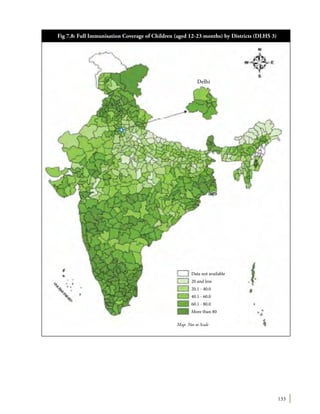
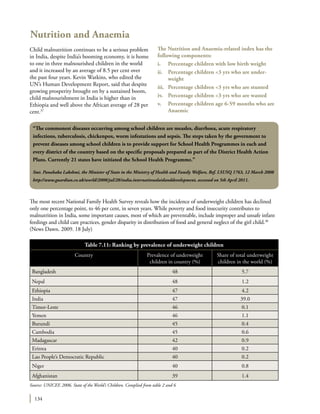
now it needs to be extended by another five years, to the end of the Eleventh Five Year Plan (2011 - 12).
Although promoting education for all, the programme is not designed to provide equal education for all.
Much-advertised programmes, such as the Education Guarantee Scheme, promote parallel systems of education
in which less qualified, under paid, local para teachers are replacing trained professional teachers. Also the
concept of multi-grade teaching, in which one teacher is responsible for teaching many classes, each of them
overcrowded, continues.
The Mid-day Meal scheme (MDM), or the National Programme of Nutritional Support to Primary Education,
was launched as a Centrally Sponsored Scheme on 15th August 1995, initially in 2408 blocks in the country,
with a view of enhancing enrolment, retention and attendance and simultaneously improving nutritional
levels among children. As well as tackling the serious issue of malnutrition in children, this also serves as an
incentive to attract and retain students from the poorest families. In June 2006, the scheme was revised and the
calories provided from the meal were increased from 300 to 450.2
(Saxena and Mander. 2007. 43) In October
2007, the scheme was further revised to cover children in upper primary (classes VI to VIII) initially in 3479
Educationally Backwards Blocks (EBBs). Around 1.7 crore upper primary children are expected to be included
by this expansion of the scheme. It was proposed that the programme be extended to all areas across the country
from 2008-09. The calorific value of a mid-day meal at upper primary stage has been fixed at a minimum of
700 calories and 20 grams of protein by providing 150 grams of food grains (rice/wheat) per child/school day.
However, despite its good intentions, reports indicate absence of proper management structure in many
states implementing the MDM scheme. The reported average number of school days on which meals are
provided varied widely as does the reporting on it. For example, National University of Educational Planning
and Administration (NUEPA) reports 209 days per annum of meals provided, while Ministry of Human
Resource Development (MHRD) reports 230 days at the national level. This is not surprising because Steering
Committees at State/district levels for effective monitoring are yet to be set up in some States. Additionally,
there are reports of ‘caste bias’ in the implementation of the MDM scheme as well as serious concerns regarding
the quality of food served to the children.
According to the UNESCO report, there are three main challenges for India if it is to achieve the goal of
universal primary education by the 2015 UN Millennium Goal (MDG) target:
1.	 Providing primary education to socially marginalised minority groups
2.	 Reducing the dropout rate in primary education
3.	 Improving the quality of learning.3
(UNESCO. 2008. 228)
MDG commits governments to ensure that all boys and girls complete a full course of primary schooling by
2015. Despite skepticism surrounding the MDG4
(Saith. 2006), they seem to have been accepted as targets by
countries of the world, including ours. In India, this means that all children must be enrolled in school by 2010
in order to meet this target. It is unlikely that India will be able achieve universal primary completion by the
2015 target given its current numbers who continue to be out of school.
155
Which is the Correct Data?
It is extremely difficult to obtain accurate, reliable data in India which has proven to be the greatest challenge.
Even the government itself recognises this. The inconsistency in enrolment data forced the Comptroller and
Auditor General to make the following comment:
Source: Report No. PA 13- Performance Audit of National Programme for Nutritional Support to Primary Education
(Midday Meal Scheme)
Table 8.2: Inconsistencies Between the Figures Reported by the Ministry and
Those Collected in States
Sl. No. Name of State Years Enrolement Difference (+) (-)
Provided by
Ministry
Figures collected
in states
12. Chandigarh 2002-03 41720 42520 -800
2003-04 42520 44699 -2179
2004-05 42366 52604 -10238
2005-06 56500 55818 682
2006-07 59993 61014 -1021
13. Rajasthan 2002-03 7177718 7178000 -282
2003-04 7678153 7678000 153
2004-05 7662192 7661000 1192
2005-06 10215570 7335000 2880570
2006-07 7696898 6960000 736898
14. Tamil Nadu 2002-03 5401644 5390000 11644
2003-04 5529945 4306000 1223945
2004-05 4305932 3992000 313932
2005-06 4152167 3817000 335167
2006-07 4875103 3651000 1224103
15. Tripura 2002-03 459981 459981 0
2005-06 525645 520610 5035
16. Uttar Pradesh 2002-03 14855697 16032000 -1176303
2003-04 16374892 16995000 -620108
2004-05 16996916 18143000 -1146084
2005-06 18644467 18654000 -9533
2006-07 18719628 18619000 100628
17. Uttarakhand 2002-03 821507 810722 10785
2003-04 787193 784911 2282
2004-05 811204 1136493 -325289
2005-06 779596 1144478 -364882
2006-07 779826 1163178 -383352
18. West Bengal 2002-03 9764181 10262726 -498545
2003-04 10268683 10876525 -607842
2004-05 10326600 10722722 -396122
2005-06 10886311 10569154 317157
2006-07 9247449 10443354 -1195905
19. Andaman & Nicobar
Islands
2005-06 34517 34107 410
2006-07 31704 31059 645
156
Accurate data is vital to providing a more realistic foundation for truly assessing the scale of the problem and
following it with better prescribed policies and appropriately funded schemes and programmes.
We have chosen to use the data generated by NEUPA as a part of its Elementary Education in India series
popularly referred to as the DISE data. Along with the unreliability of data, and perhaps as a cause of the
problem itself, there are several sources of data available on education. Hence, the choice of the data source has
been a critical part of the methodology.
Methodology
Using the DISE data, NEUPA also develops an Index – the Educational Development Index (EDI). Although
we have also used the DISE data for our index, our methodology has been a little different. While both indices
have used components to cover the different aspects of access, infrastructure, teachers and outcome indicators,
in our index, apart from the implicit weight generated while scaling values, all indicators within a dimension,
as well as within an index, are treated equally (as opposed to the EDI’s Principal Component Analysis method).
Also, we differed in some of the chosen components for the index on education. For example, we chose to
include Net Enrolment Ratio (NER) in our index as it is only the NER that accounts for age-specific enrolment
of population and hence is a better indicator for assessing the true level of children’s participation in education.
We also included the number of para-teachers as a negative component in our index as the scarcity of qualified
teachers in schools is an unfortunate but undeniable fact. (For more information on methodology, please refer
to Chapter 2)
National Index for Education
Delhi ranks first in the education index in the country, followed by Kerala. The five worst performing states are
Bihar, Jharkhand, Arunachal Pradesh, West Bengal and Assam. Amongst the worst performing is also the Union
Territory of Dadra & Nagar Haveli (D&N Haveli).
It may be important note here that all of them have a significant proportion of the population who are tribals
or, like Jharkhand and Arunachal, are essentially tribal states, with tribals constituting 26.3 per cent and 64.2
per cent of the population respectively. In D&N Haveli, tribals constitute 62.3 per cent of the total population.
In other words, their position in the index is also indicative of the situation of the tribal children in these states.
‘The Ministry, however, did not establish a system of reliable and consistent data capture from the
states. Neither was there any system of cross verification of the correctness of enrolment figures
reported by the state governments. The data of enrolment collected from the states were inconsistent
with the data maintained by the Ministry, which indicates unreliable data capture.’
- Comptroller and Auditor General of India. Report No. PA 13 of 2008. Performance Audit on National
programme for Nutritional support to primary education (midday meal scheme)
157
State National Ranking for
Education
Delhi 1
Kerala 2
Himachal Pradesh 3
Maharashtra 4
Mizoram 5
Tamil Nadu 6
Karnataka 7
Nagaland 8
Gujarat 9
Sikkim 10
Tripura 11
Haryana 12
Uttaranchal 13
Manipur 14
Punjab 15
Chhatisgarh 16
Madhya Pradesh 17
Rajasthan 18
Andhra Pradesh 19
Orissa 20
Jammu & Kashmir 21
Goa 22
Meghalaya 23
Uttar Pradesh 24
Assam 25
West Bengal 26
Arunachal Pradesh 27
Jharkhand 28
Bihar 29
UT National Ranking for
Education
Puducherry 1
Lakshwadeep 2
Chandigarh 3
A & N Islands 4
Daman & Diu 5
D & N Havelli 6
Components used for the overall index:
a.	 Enrolment and Retention-related:
	 i.	 Net Enrolment Ratio – Primary Level
	 ii.	 Net Enrolment Ratio – Upper Primary Level
	 iii.	 Enrolment (I-VIII) – Overall
	 iv.	 Enrolment (I-VIII) – Gender Equality
	 v.	 Enrolment of the Disabled – Overall
	 vi.	 Enrolment of the Disabled – Gender Equality
	 vii.	 Out of School – Overall
	 viii.	Out of School – Gender Equality
		 -	 This was calculated from the Census data (as
opposed to DISE). Again, its calculated as
percentage of total population 6-14 yrs of age
per census 2001
	 ix.	 Note: The Disabled populated age-group used
was 10-19 yrs. Also, we could not include SC/ST
enrolment as it was difficult to get 6-14 yr census
data on SC/ST children
b.	 Teacher-related:
	 i.	 Percentage of Single-Teacher schools
	 ii.	 Pupil-Teacher ratio
	 iii.	 Schools with Pupil-Teacher ratio>100
	 iv.	 Percentage of Para Teachers
c.	 Facilities:
	 i.	 Percentage schools with no building
	 ii.	 Percentage distribution of Single-Classroom schools
	 iii.	 Percentage schools with common toilets
	 iv.	 Percentage schools with girls toilets
	 v.	 Percentage schools with drinking water facilities
	 vi.	 Percentage schools with ramps
d.	 Access:
	 i.	 Student-Classroom Ratio
	 ii.	 Ratio of Primary/Upper-Primary Schools
	 iii.	 Distance from Cluster Resource Center (CRC):
<1km from CRC; 1-5 km from CRC; >5 km
from CRC (Note: DISE only uses this measure of
distance)
e.	 Gender Equality:
	 i.	 Enrolment (I-VIII)
	 ii.	 Enrolment of the Disabled
	 iii.	 Out of School
	 iv.	 Percentage schools with Girls Toilets
f.	 Inclusion (Disabled):
	 i.	 Enrolment of the Disabled – Overall
	 ii.	 Enrolment of the Disabled – Gender Equality
	 iii.	 Percentage schools with ramps
Table 8.3: Overall Education Index	 1= Most child friendly
Data Source: District Information System for Education (DISE) 07-08
158
It should also be pointed out that while Kerala is ranked very high overall for education, over 58 per cent of the
schools there are private and in Delhi over 20 per cent schools are private.
While the overall ranking of a state may be good, it is only on studying it in the context of the mini indices that
one can see where the gaps lie. These must be focus areas for planning in the future (See Table 8.4).
State National
Ranking for
Education
Enrolment
& Retention
Related
Teacher-
Related
Fascilities-
related
Access-
related
Gender
Equality-related
Inclusion-
related
Delhi 1 1 22 2 3 1 1
Kerala 2 4 2 1 14 3 3
Himachal Pradesh 3 5 10 9 8 22 15
Maharashtra 4 7 6 8 10 11 6
Mizoram 5 3 11 22 4 19 4
Tamil Nadu 6 2 9 13 18 9 14
Karnataka 7 21 14 15 1 17 21
Nagaland 8 18 3 21 2 7 26
Gujarat 9 20 8 3 12 15 5
Sikkim 10 6 1 23 11 6 29
Tripura 11 14 4 14 6 21 12
Haryana 12 23 15 4 9 5 9
Uttaranchal 13 8 16 12 21 8 16
Manipur 14 9 5 20 24 18 22
Punjab 15 26 17 7 13 4 13
Chhatisgarh 16 10 18 16 17 23 2
Madhya Pradesh 17 16 20 10 19 13 11
Rajasthan 18 24 19 5 23 27 10
Andhra Pradesh 19 17 13 25 7 14 25
Orissa 20 12 23 17 20 26 18
Jammu & Kashmir 21 27 12 18 15 29 28
Goa 22 28 25 11 5 25 27
Meghalaya 23 13 7 29 22 10 20
Uttar Pradesh 24 22 29 6 25 2 7
Assam 25 15 21 28 16 16 19
West Bengal 26 11 24 19 28 12 8
Arunachal Pradesh 27 19 26 24 27 28 23
Jharkhand 28 25 28 27 26 20 24
Bihar 29 29 27 26 29 24 17
Table 8.4: Education - Mini Indices
Ranking 1-5 6-10 11-14 15-19 20-24 25-29
Ranking 1-2 3-4 5-6
UT National
Ranking for
Education
Enrolment
& Retention
Related
Teacher-
Related
Ranking
Fascilities-
related
Ranking
Access-
related
Ranking
Gender
Equality-related
Ranking
Inclusion-
related
Ranking
Puducherry 1 2 1 1 1 2 3
Lakshwadeep 2 1 4 4 2 4 1
Chandigarh 3 3 3 2 4 1 2
Andaman & Nicobar
Islands
4 4 2 3 5 3 4
Daman & Diu 5 5 6 5 3 5 5
Dadra & Nagar Havelli 6 6 5 6 6 6 6
159
Here are some important points to note:
n	 The children in West Bengal against all odds do want to go to school and stay on there, as is evident from
its ranking on enrolment (from its position in the enrolment and retention index). But what support are
they getting from the government to stay there? Clearly much more inputs are required in provision of
infrastructure, teachers and ensuring access.
n	 Delhi is doing well in making education available to its children. But it clearly needs to do something
about ensuring teachers. It ranks as one of the lowest in the pupil teacher ratio of 1:100. How can we
hope to give quality education to Delhi’s children when a teacher has to teach sometimes as many as 120
children in a class?
n	 Although it is termed as gender parity, what we essentially get
from this index is the fact that despite acknowledgement of
the problem, and even affirmative measure to combat it, girls
continue to find it difficult to access education and 19 of the 35
States and UTs need to address this issue better. How can we talk
of education for all if gender discrimination continues?
n	 Basic infrastructure and accessible schools are areas that need
attention, and this overlaps with the national ranking in overall
poor performance, indicating in all these states that are faring
badly, access is the most important challenge.
n	 That it must be ensured that disabled children are included and their right to education must be ensured
cannot be over-emphasised. But as the matrix shows most states have a long way to go on this.
n	 Puducherry is performing well overall, as compared to the other Union Territories, but clearly needs to
focus more on inclusion
In the last 60 years, despite
increased resources, and several
more commitments in policy and
law, we have only been able to
half the number of children who
cannot move on to the next level
of education. Should this not be a
matter of concern?
Map: Not to Scale Prepared by: HAQ: Centre for Child Rights Data Source: DISE (2007-08)
Fig 8.1: State Performance in Education vs. State GDP
1-5 1-5
Ranking –
Education
Ranking –
State GDP
6-10 6-10
11-14 11-14
15-19
20-21
15-19
20-21
25-29 25-29
160
n	 It is interesting to note that there is no clear connection between a state’s rank on Education and resources
available to that state in terms of GDP.
	 •	 Mizoram, with the second lowest GDP in the country is still in the top 5 when it comes to provisions
for education for its children.
	 •	 Similar dedication to efforts targeting education seem to be prevalent in Sikkim and Nagaland.
n	 But what happens when you clearly have the resources but still rank low in Education
	 •	 Uttar Pradesh, with its second-highest GDP, comes in at a dissappointing 24th rank!
	 •	 West Bengal follows suit as well
	 •	 If Himachal Pradesh, ranked 20th in terms of GDP, can come in at 3rd, then where are Uttar Pradesh
and West Bengal going wrong?
Enrolment and Retention
Success of any education system depends
on both enrolment and retention: how
many children are enrolled and how many
continue to stay on is what gives us a
picture of how many children are actually
in schools and exercising their right to
education. This is what this section
attempts to do.
Most of government’s documents give
Gross Enrolment Ratio (GER). However
while GER gives an idea of children
currently enrolled in school, it is only the
Net Enrolment Ratio (NER) that accounts
for age-specific enrolment of population
and hence is a better indicator for assessing
the true level of children’s participation in
education. We are using both GER and
NER in developing the index.
It is interesting to see (Table 8.5) that
Maharashtra which is one of the high
performing states in the overall education
index is actually performing rather poorly
in its enrolment index. Arunachal has the
lowest performance in ensuring enrolment
and retention of children, followed by
Bihar. Among the poorly performing states, it is only West Bengal that is ensuring enrolment and retention.
The lower levels enrolment of girls as against boys and SC and ST and Muslims as against the overall
population, shows that some children continue to face discrimination on the basis of gender and social status.
The Enrolment and Retention-related index has the
following components:
i.	 Net Enrolment Ratio – Primary Level
ii.	 Net Enrolment Ratio – Upper Primary Level
iii.	 Enrolment (I-VIII) – Overall
iv.	 Enrolment (I-VIII) – Gender Equality
v.	 Enrolment of the Disabled – Overall
vi.	 Enrolment of the Disabled – Gender Equality
vii.	 Out of School – Overall
viii.	Out of School – Gender Equality
-	 This was calculated from the Census data (as
opposed to DISE). Again, its calculated as
percentage of total population 6-14 yrs of age
per census 2001
ix.	 Note: The Disabled populated age-group used
was 10-19 yrs. Also, we could not include SC/ST
enrolment as it was difficult to get 6-14 yr census
data on SC/ST children
161
State National
Ranking
for Edu-
cation
Enrol-
ment &
Reten-
tion
Related
NER -
Primary
NER -
Upper
Primary
(Overall)
Enrol-
ment
(Class I
- VIII)
(GE)
Enrol-
ment
(Class I
- VIII)
(Overall)
Enrol-
ment
with
Disability
(GE)
Enrol-
ment
with
Disability
(Overall)
Out of
School
(GE)
Out of
School
Delhi 1 1 12 8 14 15 23 1 6 4
Tamil Nadu 6 2 1 1 10 18 21 27 4 10
Mizoram 5 3 16 4 1 17 1 22 8 6
Kerala 2 4 13 6 25 11 3 12 1 2
Himachal
Pradesh
3 5 4 2 12 25 10 21 2 18
Sikkim 10 6 2 29 6 2 28 23 9 3
Maharashtra 4 7 8 9 17 23 11 6 5 14
Uttaranchal 13 8 5 15 18 6 25 10 7 19
Manipur 14 9 16 5 4 7 8 18 11 11
Chhattisgarh 16 10 16 18 9 21 2 2 17 26
West Bengal 26 11 9 19 20 8 17 15 20 8
Orissa 20 12 3 17 16 19 7 17 22 22
Meghalaya 23 13 16 21 7 3 6 13 27 1
Tripura 11 14 16 3 8 16 16 25 14 12
Assam 25 15 16 10 11 5 9 20 24 7
Madhya Pradesh 17 16 16 13 3 9 14 3 19 27
Andhra Pradesh 19 17 11 16 26 12 19 16 13 25
Nagaland 8 18 16 12 19 4 22 19 18 5
Arunachal
Pradesh
27 19 16 7 2 26 4 26 26 15
Gujarat 9 20 6 25 22 22 13 14 16 28
Karnataka 7 21 16 11 24 20 18 24 15 16
Uttar Pradesh 24 22 16 27 21 1 27 4 25 20
Haryana 12 23 14 22 28 14 26 9 12 23
Rajasthan 18 24 7 20 13 28 5 5 21 29
Jharkhand 28 25 16 23 5 10 12 11 28 21
Punjab 15 26 15 24 29 13 29 8 10 9
Jammu &
Kashmir
21 27 10 14 27 29 20 28 23 24
Goa 22 28 16 26 23 27 24 29 3 13
Bihar 29 29 16 28 15 24 15 7 29 17
Table 8.5: Components of Enrolment and Retention	 GE = Gender Equality
Ranking 1-5 6-10 11-14 15-19 20-24 25-29
Ranking 1-2 3-4 5-6
UT National
Ranking
for Edu-
cation
Enrol-
ment &
Reten-
tion
Related
NER -
Primary
NER -
Upper
Primary
(Overall)
Enrol-
ment
(Class I
- VIII)
(GE)
Enrol-
ment
(Class I
- VIII)
(Overall)
Enrol-
ment
with
Disability
(GE)
Enrol-
ment
with
Disability
(Overall)
Out of
School
(GE)
Out of
School
Lakshwadeep 2 1 1 2 4 2 1 3 1 5
Puducherry 1 2 2 1 2 1 3 4 2 2
Chandigarh 3 3 4 4 5 4 2 1 5 3
Andaman &
Nicobar Islands
4 4 3 3 3 3 5 2 3 1
Daman & Diu 5 5 5 6 6 6 6 5 4 4
Dadra & Nagar
Haveli
6 6 5 5 1 5 4 6 6 6
162
Discrimination in schools persists effecting not only enrolment but retention rates as well. Children,
find themselves squeezed out of the education system, or drop out of school, because of the situation
of the schools, as well as because of their own socio-economic status.
Analysis of available data clearly indicates that it is some groups of children who find themselves
excluded or pushed-out more than others. Many others are unable to make in-roads into schools
because they are poor.
•	 Though Karnataka is ranked high in the overall education index, it also has the lowest
performance when it comes to net enrolment at a primary level
•	 Despite some efforts made to reduce discrimination by introducing pre-metric and post metric
scholarships for children from Scheduled Castes, Scheduled Tribes and Minorities, as well as for
girl children, disparities in enrolment and retention remain.
•	 Children with disabilities and children with HIV/AIDS are thrown out, as are others with
communicable diseases such as leprosy.
Tackling child labour is closely related with progress on basic education. There are many children who
are not in school and also many who are enrolled but do not attend on a regular basis.
Fig 8.2: Ranking in Education vs. Enrolment & Retention
National Ranking for Education Enrolment & Retention Related
AndhraPradesh
ArunachalPradesh
Assam
Bihar
Chhattisgarh
Delhi
Goa
Gujarat
Haryana
HimachalPradesh
Jammu&Kashmir
Jharkhand
Karnataka
Kerala
MadhyaPradesh
Maharashtra
Manipur
Meghalaya
Mizoram
Nagaland
Orissa
Punjab
Rajasthan
Sikkim
TamilNadu
Tripura
UttarPradesh
Uttaranchal
WestBengal
A&NIslands
Chandigarh
D&NHaveli
Daman&Diu
Lakshwadeep
Puducherry
40
20
0
Figure 8.2 shows the ranking on enrolment and retention against the overall ranking on education. What is
interesting to note is that 12 states and 1 of the union territories have a lower rank for enrolment in the index as
compared to the overall education index.
What is amply clear is that states have to pay far more attention to enrolment of children into schools and even
more attention to ensuring that they are able to keep them there and that the children are able to move from
one level to the next.
163
As mentioned earlier too, enrolment of children is measured in two ways: Gross Enrolment Ratio (GER) and
Net Enrolment Ratio (NER)5
. The difference between GER and NER can be seen in Figure 8.3. The fact that
the NER differs and is lower than the GER goes to show that while children may be enrolled, as in their names
registered in schools, we are not able to ensure that they actually attend school and continue. Unfortunately,
while most states report GER which is easier to monitor, as many as 11 states and 2 UTs have not made NER
data available for the primary level.
Andaman & Nicobar Islands
Andhra Pradesh
Arunachal Pradesh
Assam
Bihar
Chandigarh
Chhattishgarh
Dadra & Nagar Haveli
Daman & Diu
Delhi
Goa
Gujarat
Haryana
Himachal Pradesh
Jammu & Kashmir
Jharkhand
Karnataka
Kerala
Lakshdweep
Madhya Pradesh
Maharashtra
Manipur
Meghalaya
Mizoram
Nagaland
Orissa
Puducherry
Punjab
Rajasthan
Sikkim
Tamil Nadu
Tripura
Uttar Pradesh
Uttaranchal
West Bengal
0.0 50.0 150.0100.0 200.0 250.0
GER - Primary Level
GER - Upper Primary Level
NER - Primary Level
NER - Upper Primary Level
Fig. 8.3: Gross Enrolment vs. Net Enrolment
Source: Education Statistics available at http://www.education.nic.in/stats/Timeseries0506.pdf accessed on 01/04/2011
164
There is no doubt that over the years (1950-51 to 2005-06), there has been an improvement in the levels of
enrolment and retention, although as Fig 8.4 shows there have been times when there have been dips. The
reasons for these dips need to be investigated and understood so that they can be avoided in future.
But even as there has been an overall increase, there are discrepancies between different categories (i.e. with SC/
ST children) that need to be corrected.
Retention remains a Huge Challenge.
For retention we are looking at dropout rates from one stage to the other. So while there may be a huge increase
in enrolment as we have seen above, children do not always make it to the next stage.
When India first committed to ensuring education for all children, very few actually went on to the upper-
primary level (with 70 per cent dropping out between the primary and upper-primary levels). There seemed to
be a gradual improvement over the years, till only 20 per cent didn’t make it to upper-primary levels in 1990-
1991, following which, there again was an increase in the children dropping out from one level to the next.
Incidentally, that was also the year India moved into its phase of globalisation and liberalisation. Could this have
perhaps had an impact on our children’s education?
In the last 60 years, despite increased resources, several more commitments in policy and law, we have only been
able to half the number of children who cannot move on to the next level of education. Should this not be a
matter of concern?
Despite a decline, the drop-out rates are still too high to “attain the status of universalisation at
the primary level of education”. Although the transition rate from primary to upper primary levels
shows improvement, about 18 per cent children are still found to drop-out during this transition.
While almost every child is found to transit from primary to upper-primary levels in the urban areas,
that is not so in the rural areas. Needless to say more boys than girls made this transition.
- Arun Mehta, Elementary Education in India. Progress Towards UEE. Analytical Report 2005-06. Published in
2007
Fig. 8.4: Enrolment - all categories of children
120.00
100.00
80.00
60.00
40.00
20.00
0.00
1950-511960-611970-711980-811990-911991-921992-931993-941994-951995-961996-971997-981998-991999-20002000-012001-02
2002-032003-042004-052005-06
All Categories of Children
Source: Education Statistics available at http://www.education.nic.in/stats/Timeseries0506.pdf accessed on 01/04/2011
165
What is more, just as in enrolment, the drop outs rates of girls, SCs and STs is higher than in the case of others,
which shows that they are being pushed out of the system by their circumstances - a situation that needs to be
corrected.
This is further validated by the government’s own data on drop-out rates, where the dropout rates had
substantially gone down at all levels till 1990-91 (Fig.8.5 shows 42.6 percent for primary, 60.9 per cent for
elementary, 71.3 per cent ) but thereafter, continued to decrease at a much slower rate.
Less Girls Enroll, More Drop Out - Less Stay in School
While overall rates of enrolment, both GER and
NER have gone up, drop-outs have reduced and
retention in schools have increased, the number
of girls who are not enrolled or retained remains
higher than that of boys. Table 6 gives the ranking
based on gender inequality in education. While
Delhi ranks first in ensuring gender equality, seeing
Goa (taken as a progressive state) ranked amongst
the worst in ensuring gender equality comes as a
surprise.
While the Gross enrolment rate has increased gradually over the years, there is a clear discrepancy between the rates of
enrolment between primary vs. upper primary levels of education for boys vs. girls
Fig. 8.5: Dropout rates of All Categories of Children
100
80
60
40
20
0
1960-61
1970-71
1980-81
1990-91
1992-93
1995-96
1996-97
1997-98
1998-99
1999-00
2000-01
2001-02
2002-03
2003-04
2004-05
2005-06
SecondaryElementaryPrimary
The Gender-Equality-related index has the
following components
•	 Enrolment (I-VIII)
•	 Enrolment of the Disabled
•	 Out of School
•	 Percentage schools with Girls Toilets
Source: Education Statistics available at http://www.education.nic.in/stats/Timeseries0506.pdf accessed on 01/04/2011
166
State Gender
Equality-related
Ranking
Delhi 1
Uttar Pradesh 2
Kerala 3
Punjab 4
Haryana 5
Sikkim 6
Nagaland 7
Uttaranchal 8
Tamil Nadu 9
Meghalaya 10
Maharashtra 11
West Bengal 12
Madhya Pradesh 13
Andhra Pradesh 14
Gujarat 15
Assam 16
Karnataka 17
Manipur 18
Mizoram 19
Jharkhand 20
Tripura 21
Himachal
Pradesh
22
Chhatisgarh 23
Bihar 24
Goa 25
Orissa 26
Rajasthan 27
Arunachal
Pradesh
28
Jammu &
Kashmir
29
UT Gender
Equality-related
Ranking
Chandigarh 1
Puducherry 2
Andamans &
Nicobar Islands
3
Lakshwadeep 4
Daman & Diu 5
Dadra & Nagar
Havelli
6
Table 8.6: Gender Equality
1950-51
1960-61
1970-71
1980-81
1990-91
1991-92
1992-93
1993-94
1994-95
1995-96
1996-97
1997-98
1998-99
1999-2000
2000-01
2001-02
2002-03
2003-04
2004-05
2005-06
0.0 20.0 60.0 80.040.0 100.0 120.0
Primary Girls
Upper Primary Girls
Primary Boys
Upper Primary Boys
Fig. 8.6: GER: Boys vs. Girls
167
Ranking 1-2 3-4 5-6
State National
Ranking for
Education
Gender Equality-
related Ranking
Enrolment
(Class I - VIII)
Enrolment
with
Disability
Children
Out of
School
% Schools
with Girl
Toilets
Delhi 1 1 15 1 4 15
Uttar Pradesh 24 2 1 4 20 28
Kerala 2 3 11 12 2 9
Punjab 15 4 13 8 9 7
Haryana 12 5 14 9 23 19
Sikkim 10 6 2 23 3 6
Nagaland 8 7 4 19 5 16
Uttaranchal 13 8 6 10 19 27
Tamil Nadu 6 9 18 27 10 25
Meghalaya 23 10 3 13 1 24
Maharashtra 4 11 23 6 14 5
West Bengal 26 12 8 15 8 13
Madhya Pradesh 17 13 9 3 27 12
Andhra Pradesh 19 14 12 16 25 18
Gujarat 9 15 22 14 28 2
Assam 25 16 5 20 7 3
Karnataka 7 17 20 24 16 26
Manipur 14 18 7 18 11 11
Mizoram 5 19 17 22 6 22
Jharkhand 28 20 10 11 21 29
Tripura 11 21 16 25 12 23
Himachal Pradesh 3 22 25 21 18 17
Chhattisgarh 16 23 21 2 26 8
Bihar 29 24 24 7 17 21
Goa 22 25 27 29 13 4
Orissa 20 26 19 17 22 1
Rajasthan 18 27 28 5 29 14
Arunachal Pradesh 27 28 26 26 15 10
Jammu & Kashmir 21 29 29 28 24 20
UT National
Ranking for
Education
Gender Equality-
related Ranking
Enrolment
(Class I - VIII)
Enrolment
with
Disability
Children
Out of
School
% Schools
with Girl
Toilets
Chandigarh 3 1 4 1 3 1
Puducherry 1 2 1 4 2 2
Andaman & Nico-
bar Islands
4 3 3 2 1 3
Lakshwadeep 2 4 2 3 5 4
Daman & Diu 5 5 6 5 4 5
Dadra & Nagar
Haveli
6 6 5 6 6 6
Table 7: Components of the Gender Equality Index
Ranking 1-5 6-10 11-14 15-19 20-24 25-29
168
Discrimination based on Social Status
There is exclusion and discrimination faced by children based on gender and socio-economic status both in
enrolment as well as in retention in schools. We have already seen that more boys than girls enrol in schools as
well as stay in school (Fig.8.7 shows the retention of all categories of children acrosss the shooling level). Clearly,
like enrolment, retention rates favour boys to girls. What is more, along with gender, it is the socio-economic
status that also determines who enrols and who stays in. Children from some social groups like scheduled castes
and tribes are disadvantaged.
Lower Enrolment Rate among SC and ST
Even as the enrolment rate is witnessing an increase, enrolment among marginalised groups such as
the Scheduled Castes and Tribes continue to increase at a much lower than average Indian rate. Clearly
discrimination continues despite several affirmative measures.
This disparity in enrolment is visible even within the marginalised groups where girls continue to be more
marginalised.
Fig. 8.8: GER of All Categories of Children at Upper Primary Level
80.00
60.00
40.00
20.00
0.00
1950-511960-611970-711980-811990-911991-921992-931993-941994-951995-961996-971997-981998-991999-20002000-012001-022002-032003-042004-052005-06
All Categories of Children SC ST
Fig. 8.7: Retention of All Categories of Children between Primary and Upper Primary Levels
0.00
-20.00
-40.00
-60.00
-80.00
-100.00
1950-511960-611970-711980-811990-911991-921992-931993-941994-951995-961996-971997-981998-991999-20002000-012001-022002-032003-042004-052005-06
Boys Girls Total
Source: Education Statistics available at http://www.education.nic.in/stats/Timeseries0506.pdf accessed on 01/04/2011
169
1986-87
1987-88
1988-89
1989-90
1990-91
1991-92
1992-93
1993-94
1994-95
1995-96
1996-97
1997-98
1998-99
1999-2000
2000-01
2001-02
2002-03
2003-04
2004-05
2005-06
0.0 20.0 60.0 80.040.0 100.0 120.0 140.0
ST - Primary
SC - Primary
ST - Upper Primary
SC - Upper Primary
Figure 8.9 : GER: SC and ST
Source: Education Statistics available at http://www.education.nic.in/stats/Timeseries0506.pdf accessed on 01/04/2011
170
Figure 8.10-A: GER for Girls at Primary Level
140
120
100
80
60
40
20
1950-511960-611970-711980-811990-911991-921992-931993-941994-951995-961996-971997-981998-991999-20002000-012001-022002-032003-042004-052005-06
Overall SC ST
Figure 8.10-B: GER of Girls at Upper-Primary Level
80.00
60.00
40.00
20.00
0.00
1950-511960-611970-711980-811990-911991-921992-931993-941994-951995-961996-971997-981998-991999-20002000-012001-022002-032003-042004-052005-06
Overall SC ST
Yet again, be it by gender or socio-economic status, the marginalized continue to suffer even more.
Source: Education Statistics available at http://www.education.nic.in/stats/Timeseries0506.pdf accessed on 01/04/2011
All Categories of
Children
Schedule Caste Schedule Tribe
Primary Level 23.5% 22.1% 29.8%
Upper Primary Level 19.7% 25.6% 53.8%
Table 8.8: Percentage change in Gross Enrolment from 1995-96 to 2005-06
Source: Education Statistics available at http://www.education.nic.in/stats/Timeseries0506.pdf accessed on 01/04/2011
171
Disabled Children Continue to be Outside School
Inclusion of disabled children in education has
always been a challenge. The Right to Free and
Compulsory Education Act, 2009 Section 3
lays special emphasis on this, clearly stating that
‘provided that a child suffering from disability…
shall have the right to pursue free and compulsory
education in accordance with the provisions of…
the Act.’ While some data on inclusion of disabled
children is available, this pertains largely to children
with physical disabilities. According to the elventh
five-year plan, at any given time, 7–15 per cent or
65 million Indian children suffer from significant mental disorder. Yet very little data is available on resources
allocated to mentally disabled, in terms of facilities, special education teachers and so forth.
However, what is interesting to see is that many
of the states which are performing badly on the
general education index are relatively inclusive
when it comes to disability, while some others
such as Punjab, who are performing well in their
overall index, are not paying as much attention
to inclusion. Therefore even while looking at
the overall index of inclusion in Table 8.9, it is
important to match it with the overall performance
of the state.
The Times of India
Midday meals cooked by dalits go waste
Akshaya Mukul, TNN Jun 7, 2011, 04.24am IST
NEW DELHI: dalit chief minister Mayawati has not changed the deep-seated caste bias in schools of
Uttar Pradesh. In 40% schools of Shahjehanpur, Badaun and Pilibhit districts, teachers do not taste
the mid-day meal food and students refuse to eat it since the cooks belong to lower caste.
The rot in MDM in these three districts is not confined to caste bias alone. It has also been found
that in schools of urban areas of these three districts, roti and green vegetables are never given, in
80% schools there is difference between the number of actual students present in the class and the
number of students who are shown to be availing of MDM. Also, in most of the schools in urban
areas there are no utensils.
In rural areas of these districts, MDM supplies of 95% of the schools are kept at the pradhan’s house
from where they are brought to the school every day for cooking.
The Inclusion-related index has the following
components:
•	 Enrolment of children with disabilities –
Overall
•	 Enrolment of Children with disabilities –
Gender Equality
•	 Percentage schools with ramps
To ensure inclusion of all children with disabilities
in regular schools with special facilities for those
with severe disabilities; to establish and recognise
existing special schools and admission, testing
and examination systems; to recognise learning
disabilities and ensure alternative and flexible
testing procedures.
National Plan of Action for Children 2005
172
Ranking 1-2 3-4 5-6
State National Ranking
for Education
In-clusion-related
Ranking
(Overall) Enrol-ment
with Disability
(GE) Enrol-ment with
Disability
% Schools with
Ramps
Delhi 1 1 23 1 2
Chhattisgarh 16 2 2 2 12
Kerala 2 3 3 12 4
Mizoram 5 4 1 22 15
Gujarat 9 5 13 14 1
Maharashtra 4 6 11 6 3
Uttar Pradesh 24 7 27 4 7
West Bengal 26 8 17 15 6
Haryana 12 9 26 9 5
Rajasthan 18 10 5 5 16
Madhya Pradesh 17 11 14 3 11
Tripura 11 12 16 25 8
Punjab 15 13 29 8 10
Tamil Nadu 6 14 21 27 9
Himachal Pradesh 3 15 10 21 14
Uttaranchal 13 16 25 10 13
Bihar 29 17 15 7 18
Orissa 20 18 7 17 20
Assam 25 19 9 20 21
Meghalaya 23 20 6 13 28
Karnataka 7 21 18 24 17
Manipur 14 22 8 18 24
Arunachal Pradesh 27 23 4 26 29
Jharkhand 28 24 12 11 27
Andhra Pradesh 19 25 19 16 23
Nagaland 8 26 22 19 25
Goa 22 27 24 29 19
Jammu & Kashmir 21 28 20 28 22
Sikkim 10 29 28 23 26
Table 8.9: Components of the Inclusion-related Index
Ranking 1-5 6-10 11-14 15-19 20-24 25-29
UT National Ranking
for Education
In-clusion-related
Ranking
(Overall) Enrol-ment
with Disability
(GE) Enrol-ment with
Disability
% Schools with
Ramps
Lakshwadeep 2 1 1 3 1
Chandigarh 3 2 2 1 3
Puducherry 1 3 3 4 2
Andaman & Nico-
bar Islands
4 4 5 2 5
Daman & Diu 5 5 6 5 4
Dadra & Nagar
Haveli
6 6 4 6 6
173
n	 The performance of states vis-à-vis their ranking ensuring inclusion of disabled children does not in all
cases match their overall ranking. Table 8.9 clearly demonstrates that in fact it cannot at all be said that
states that are performing well overall are also performing well in ensuring that right to education is also
disabled friendly.
n	 Indeed West Bengal which is one of the 5 worst performing states in the overall education index, is actually
among the better performing in its index on inclusion, while the Union Territory (UT) of Puducherry that
performs best overall amongst all the Union Territories, loses its rank when it comes to inclusion.
n	 What is more, the worst performing state of Bihar in education comes up to 17th when it comes to
inclusion. However, it needs to definitely provide better facilities to those enrolled with disabilities. The
same can be said for states like Meghalaya and Jharkhand which have higher enrolment of the disabled but
are lacking in infrastructure to support these children
Inclusive education has still a long way to go.
Why Children do not Stay in School
The National Plan of Action for Children 2005 had targeted that all children would be in school in the year
of its adoption and achieve universal retention by 2010. Clearly we are very far from these targets still. Tilak
(2010)6
attributes three reasons for this high drop-out rate in the country:
(a) 	 Schools are not attractive;
(b) 	 Economic constraints (poverty, direct costs of schooling and child labour) do not allow continuation in
schools and
(c) 	 Other reasons including lack of tradition in going to or continuing in schools.
In this section an attempt has been made to rank the states on the basis of “access” which includes distance,
infrastructure and facilities, availability of teachers in the class etc.
Fig. 8.12: Ranking in Education Overall vs Inclusion of the Disabled
National Ranking for Education Inclusion-related Ranking
AndhraPradesh
ArunachalPradesh
Assam
Bihar
Chhattisgarh
Delhi
Goa
Gujarat
Haryana
HimachalPradesh
Jammu&Kashmir
Jharkhand
Karnataka
Kerala
MadhyaPradesh
Maharashtra
Manipur
Meghalaya
Mizoram
Nagaland
Orissa
Punjab
Rajasthan
Sikkim
TamilNadu
Tripura
UttarPradesh
Uttaranchal
WestBengal
A&NIslands
Chandigarh
D&NHaveli
Daman&Diu
Lakshwadeep
Puducherry
40
20
0
174
Access to Schools
It is by now well established that access to facilities
is not just social, it is also physical. The preceding
sections have addressed discrimination in education
on the basis of gender, physical ability and social
status. Therefore this section will concentrate
only on the aspect of physical access in terms of
availability of schools within a certain distance
thereby ensuring children can reach it.
Access-related index has the following
components:
•	 Student-Classroom Ratio
•	 Ratio of Primary/Upper-Primary Schools
•	 Distance from Cluster Resource Center
(CRC): <1km from CRC; 1-5 km from CRC;
>5 km from CRC (Note: DISE only uses this
measure of distance)
Figure 8.13: Ranking for Education (Overall) vs. Access
National Ranking for Education Access-related Ranking
AndhraPradesh
ArunachalPradesh
Assam
Bihar
Chhattisgarh
Delhi
Goa
Gujarat
Haryana
HimachalPradesh
Jammu&Kashmir
Jharkhand
Karnataka
Kerala
MadhyaPradesh
Maharashtra
Manipur
Meghalaya
Mizoram
Nagaland
Orissa
Punjab
Rajasthan
Sikkim
TamilNadu
Tripura
UttarPradesh
Uttaranchal
WestBengal
A&NIslands
Chandigarh
D&NHaveli
Daman&Diu
Lakshwadeep
Puducherry40
20
0
From the very beginning, one of the challenges to providing elementary education in India has
been the lack of adequate infrastructure and teachers. Single room and single teacher schools
have been relied upon to ensure enrolment, education and retention. Schools under the trees still
remain a reality.
Apart from lack of teachers, other serious problems remain on the supply side of education in
India. Even the minimal infrastructure, such as proper classrooms, desks, toilets and drinking
water is missing in a large number of schools. Because some schools have no toilets at all, and
others have toilets that are so unpleasant, children either prefer to go outside rather than use them
or not come to school at all. This indeed remains a reason for preventing girls from attending
school. Safety in schools is also a serious issue across the country, with reports of many children
struggling to learn in crowded, unsafe classrooms.
- (Right to Education Taskforce, Hundreds of primary students studying in dangerous classrooms,
September 2006)
175
State National
Ranking for
Education
Access-
related
Ranking
Student-
Classroom
Ratio
Ratio of
Primary/Upper
Primary Schools
<1km
from
CRC
1-5km
from
CRC
>5km
from
CRC
Karnataka 7 1 11 7 1 1 1
Nagaland 8 2 7 12 2 2 5
Delhi 1 3 10 5 3 3 2
Mizoram 5 4 4 2 4 4 24
Goa 22 5 7 15 5 13 3
Tripura 11 6 11 9 6 8 14
Andhra Pradesh 19 7 9 13 8 10 11
Himachal Pradesh 3 8 2 11 10 22 13
Haryana 12 9 12 4 11 15 15
Maharashtra 4 10 13 3 12 9 22
Sikkim 10 11 1 21 9 24 7
Gujarat 9 12 15 1 15 12 20
Punjab 15 13 9 9 14 25 9
Kerala 2 14 8 6 20 23 17
Jammu & Kashmir 21 15 3 11 24 28 8
Assam 25 16 16 20 7 16 6
Chhattisgarh 16 17 12 10 21 21 21
Tamil Nadu 6 18 11 15 19 20 18
Madhya Pradesh 17 19 14 15 16 18 19
Orissa 20 20 12 14 22 26 12
Uttaranchal 13 21 5 17 27 11 26
Meghalaya 23 22 4 19 23 17 23
Rajasthan 18 23 9 8 28 7 27
Manipur 14 24 6 16 29 19 25
Uttar Pradesh 24 25 17 15 25 27 10
Jharkhand 28 26 19 18 13 14 16
Arunachal Pradesh 27 27 6 23 18 5 29
West Bengal 26 28 18 24 17 6 28
Bihar 29 29 20 22 26 29 4
Table 9: Components of the Access-related Index
Ranking 1-5 6-10 11-14 15-19 20-24 25-29
UT National
Ranking for
Education
Access-
related
Ranking
Student-
Classroom
Ratio
Ratio of
Primary/Upper
Primary Schools
<1km
from
CRC
1-5km
from
CRC
>5km
from
CRC
Puducherry 1 1 2 3 1 1 2
Lakshwadeep 2 2 3 2 2 5 1
Daman & Diu 5 3 5 4 3 4 3
Chandigarh 3 4 4 1 4 6 4
Andaman & Nico-
bar Islands
4 5 1 5 5 2 5
Dadra & Nagar
Haveli
6 6 6 6 6 3 6
Ranking 1-2 3-4 5-6
176
The distance of the school is usually measured from the habitation/locality or village. However, since we have
used DISE data for this chapter, and it only provides data on distance from the Cluster Resource Centre (CRC),
we have also used the same data for our analysis.
The distance and population norms for opening primary and upper primary schools vary from state to state.
Despite the government’s effort to increase the number of children attending school, proper access to schools for
all children remains a challenge. Children drop out of school, or find themselves squeezed out of the education
system because of the situation of the schools, as well as because of their own socio-economic status. Analysis
of available data clearly indicates that it is some groups of children who find themselves excluded or pushed-
out more than others. Many others are unable to make in-roads into schools because they are poor. Figure 8.13
provides the ranking of the states on access against the overall ranking in education enabling a comparison of
the two. It is interesting to see while some states such as Andhra Pradesh and Assam perform badly in the over-
all education index despite higher scores in access, Rajasthan, Uttaranchal and Tamil Nadu are the opposite.
•	 Several mountainous regions and tribal areas lack access to primary schools even within the
distance of 2 to 3 kms . Personal observation of Researcher while conducting field surveys in Uttar
Pradesh, Jharkhand, Bihar, Himachal Pradesh.
•	 While 95 per cent of the population in rural areas have gained access to schooling, nearly 10–15
per cent of the Scheduled Tribe (STs) and Scheduled Caste (SCs) groups in rural areas are still
deprived of schools (given that in many states they continue to live in segregated hamlets).
•	 More than 50 per cent of population from backward caste groups are not served within the
habitation in States such as Madhya Pradesh and Uttar Pradesh (Status of Elementary Education in
India (Draft), EDWATCH Survey 2010. National Coalition for Education.)
•	 One fourth to one half of the ST habitations lack upper primary schools. (Govinda, R. 2005,
Elementary Education in India Promise, Performance and Critical Issues, Securing Rights, Citizen’s
Report on MDG, Wada Na Todo Abhiyan).
•	 Overcrowding in existing schools: While the student-classroom ratio has seen a decline over the
years, many states like Bihar and Jharkhand continue to see overcrowding
The National Plan of Action 1992 had envisaged:
an upper primary school/ section for every two primary schools.
The National Plan of Action for Children, 2005, states:
“All children in the 6-14 age group to have access to primary schools, upper primary schools or their
alternatives within a distance of 1 km. and 3 kms respectively and all schools to have buildings, toilets,
drinking water, electricity, playgrounds, blackboards and other basic facilities, with special attention to
disadvantaged children.”
177
Improper Facilities – Ramps, Drinking Water, Toilets
As far back as 1987, India had initiated the Operation
Blackboard Scheme under which each school was to be
provided with two classrooms and a verandah. Over
the years other programmes, such as District Primary
Education Programme (DPEP) and SSA, were also meant
to provide additional classrooms.
It has already been mentioned that children either do not
come to the schools or drop out because of lack of facilities,
even the most basic infrastructure such as all weather
building, toilets or drinking water. Classrooms are over-
crowded and many are single classroom schools in which
children from different classes sit together as the teacher
attempts ‘multi-grade teaching’.
As with the other mini-indices, the ranking for provision of facilities does not necessarily match the overall
ranking.
n	 Kerala performs best when it comes to providing facilities followed by Delhi.
n	 Meghalaya is by far the worst, ranking low in almost all the components.
n	 While further analyzing the scores, it was interesting to see the clear discrepancy in the ranking for schools
with common toilets and those with girls’ toilets. Looking at the raw data provided by DISE, it seems that
there is a significant amount of double-counting in those two categories, which is perhaps hindering a true
assessment of how inclusive the schools are for the girl-child. We are however, limited by the data that is
being made available to us.
DISE data clearly shows that drinking water facility is not available in cent percent in any category of school and
13.25 per cent schools are yet to provide drinking water to their students.7
(Mehta. 2010. 71) Barring Chandigarh
and Tamil Nadu, not a single state has provided drinking water to all its schools. In fact, in states like Arunachal
Pradesh, Assam, and Meghalaya, less than 70 percent schools have drinking water. What is more, the data on
type of drinking water reveals that majority of schools do not have tap water, and there is an urban – rural divide.
Majority (49.90) schools provide children with hand-pump water.
While 63 per cent of all schools across 624 districts had common toilets, only a little over 50 per cent schools
had separate toilet for girls, and this is even lower in primary schools (42 per cent). There are more schools
with common toilets in urban areas than in rural areas. Some states are particularly bad in ensuring girls toilets:
Arunachal Pradesh, Assam, Meghalaya, Jammu Kashmir than 10 per cent schools have girls toilets.
The provision of ramps is still a low 34.19 per cent in primary schools and 40 in independent elementary
schools (primary and upper primary).8
(Mehta. 2010. 83) In all categories of schools only 34.43 per cent have
schools. Jharkhand, Dadra Nagar Haveli, Andhra Pradesh and Jammu & Kashmir have less than 10 per cent
schools with ramps, with Dadra & Nagar Haveli with as low as 1.69 per cent schools with ramps.
The Facilities-related index has the following
components:
•	 Percentage schools with no building
•	 Percentage distribution of Single-
Classroom schools
•	 Percentage schools with common toilets
•	 Percentage schools with girls toilets
•	 Percentage schools with drinking water
facilities
•	 Percentage schools with ramps
178
State National
Ranking for
Education
Fascilities-
related
Ranking
%
Schools
with No
Buildings
% Schools
with Single
Classroom
Schools
% Schools
with
Common
Toilets
% Schools
with Girls
Toilets
% Schools
with
Drinking
Fascilities
%
Schools
with
Ramps
Kerala 2 1 7 3 23 5 5 4
Delhi 1 2 13 1 27 6 2 2
Gujarat 9 3 10 12 18 7 13 1
Haryana 12 4 6 9 29 1 6 5
Rajasthan 18 5 20 15 5 4 11 16
Uttar Pradesh 24 6 14 4 28 3 3 7
Punjab 15 7 15 13 25 2 4 10
Maharashtra 4 8 9 18 20 9 12 3
Himachal Pradesh 3 9 4 20 8 16 8 14
Madhya Pradesh 17 10 17 14 19 12 9 11
Goa 22 11 11 24 12 14 7 19
Uttaranchal 13 12 16 10 24 10 14 13
Tamil Nadu 6 13 2 28 14 8 1 9
Tripura 11 14 3 5 16 21 22 8
Karnataka 7 15 5 22 17 11 19 17
Chhattisgarh 16 16 25 16 6 25 15 12
Orissa 20 17 21 17 10 19 16 20
Jammu & Kashmir 21 18 19 23 7 22 24 22
West Bengal 26 19 27 21 15 18 21 6
Manipur 14 20 18 7 11 26 23 24
Nagaland 8 21 8 2 21 17 25 25
Mizoram 5 22 23 6 22 20 20 15
Sikkim 10 23 22 8 26 15 18 26
Arunachal Pradesh 27 24 1 27 1 27 27 29
Andhra Pradesh 19 25 26 26 13 13 10 23
Bihar 29 26 28 19 9 23 17 18
Jharkhand 28 27 29 11 4 24 26 27
Assam 25 28 12 28 2 28 28 21
Meghalaya 23 29 24 25 3 29 29 28
Table 8.11: Components of the Fascilities-related Index
Ranking 1-5 6-10 11-14 15-19 20-24 25-29
Ranking 1-2 3-4 5-6
UT National
Ranking for
Education
Fascilities-
related
Ranking
%
Schools
with No
Buildings
% Schools
with Single
Classroom
Schools
% Schools
with
Common
Toilets
% Schools
with Girls
Toilets
% Schools
with
Drinking
Fascilities
%
Schools
with
Ramps
Puducherry 1 1 2 3 1 1 2 2
Lakshwadeep 2 2 3 2 2 5 1 1
Daman & Diu 5 3 5 4 3 4 3 3
Chandigarh 3 4 4 1 4 6 4 4
Andaman & Nico-
bar Islands
4 5 1 5 5 2 5 5
Dadra & Nagar
Haveli
6 6 6 6 6 3 6 6
179
State National
Ranking for
Education
Teacher-
Related
Ranking
% Schools
with Single
Teachers
% Schools
with Para
Teachers
Pupil-
Teacher
Ratio
Pupil-
Teacher
Ratio >100
Sikkim 10 1 2 2 1 4
Kerala 2 2 1 12 7 2
Nagaland 8 3 5 4 4 13
Tripura 11 4 3 13 7 10
Manipur 14 5 20 9 4 11
Maharashtra 4 6 10 6 10 7
Meghalaya 23 7 21 14 3 6
Gujarat 9 8 4 5 16 7
Tamil Nadu 6 9 7 3 14 12
Himachal Pradesh 3 10 14 23 3 3
Mizoram 5 11 6 26 1 7
Jammu & Kashmir 21 12 11 25 2 1
Andhra Pradesh 19 13 15 22 6 5
Karnataka 7 14 18 1 13 17
Haryana 12 15 9 20 11 14
Uttaranchal 13 16 22 15 9 16
Punjab 15 17 16 10 15 21
Chhattisgarh 16 18 23 19 11 18
Rajasthan 18 19 25 17 12 19
Madhya Pradesh 17 20 24 8 17 23
Assam 25 21 27 18 8 22
Delhi 1 22 28 11 8 8
Orissa 20 23 19 28 12 15
West Bengal 26 24 8 21 19 20
Goa 22 25 26 7 4 25
Arunachal Pradesh 27 26 28 24 5 9
Bihar 29 27 13 16 21 25
Jharkhand 28 28 17 29 18 24
Uttar Pradesh 24 29 12 27 20 25
Table 11: Components of the Teacher-related Index
Ranking 1-2 3-4 5-6
Ranking 1-5 6-10 11-14 15-19 20-24 25-29
UT National
Ranking for
Education
Teacher-
Related
Ranking
% Schools
with Single
Teachers
% Schools
with Para
Teachers
Pupil-
Teacher
Ratio
Pupil-
Teacher
Ratio >100
Puducherry 1 1 2 5 2 1
A & N Islands 4 2 1 3 1 3
Chandigarh 3 3 3 4 4 2
Lakshwadeep 2 4 3 2 3 3
D & N Haveli 6 5 3 1 6 3
Daman & Diu 5 6 3 6 5 3
180
Teachers - No Teachers, Para-teachers or Absent Teachers
One cannot deny that there clearly is a scarcity of qualified
teachers in schools. Delhi is currently performing very
well overall in most of the indicators; however the issue of
teachers is an area of concern.
The DISE report has found that although there has been
improvement in the pupil teacher ratio, there continue
to be 151 districts in the country that have a teacher-
pupil ratio of over 40:1. Match this with a high student
classroom ratio of 40:1 in in 133 districts with some states
having those high ratios in all category of schools. In Bihar it as high as 92 children and has Jharkhand, 70
children in a classroom in primary schools.9
(Mehta. 2010. 54)
There are other problems as well. For example, according to DISE, the number of para-teachers in schools is an
area of concern that needs to be accorded top priority. About 68,186 schools are left to para-teachers to manage
them.10
(Mehta. 2010. xxxi) This is very high in the case of Rajasthan, Jharkhand, Assam. Puducherry, though
performing well overall, loses rank when it comes to providing adequate teachers.
What is more, HAQ’s status report on children 2002, (Children in Globalising India) referred to ‘pay teachers’
– persons paid to teach by regular teachers who do not report for duty and send in their substitute11
(HAQ.
2002. 92). How are such schools functioning and what is the qulaity of education we are offering our children?
As part of a World Bank Survey, the results showed that in India, one quarter of government primary school
teachers were absent from school, but only about half of the teachers were actually teaching when enumerators
arrived at the schools.12
(Chaudhary et al. 2005. 1)
A World Bank survey found that 25 per cent of government primary school teachers in India are absent from
work. Only 50 per cent of teachers are actually engaged in the act of teaching while at work, according to
researchers. These statistics
represent average numbers
taken across many states. The
numbers are not so harsh across
all of India and several Indian
states fare much better.13
It is
often argued that teachers are
badly paid and hence unwilling
to work. Breaking this myth,
the research found that better
pay lowers absenteeism. Older
teachers, more educated teachers,
and head teachers have better
salaries but are also absent more
frequently, according to a related
research paper on absence among
Indian teachers. Also contract
teachers are paid much less than
regular teachers but have similar
absence rates.
The Teacher-related index has the following
components:
•	 Percentage of Single-Teacher schools
•	 Pupil-Teacher ratio
•	 Schools with Pupil-Teacher ratio>100
•	 Percentage of Para Teachers
181
District Level Differences in Right to Education
The aim of the Child Rights Index was to concentrate on states; district level data was not analysed for all
indicators. However, while analysing the performance of the states, and ranking them, some very stark district
level differences emerged that validate and intensify the need to undertake much better district level planning.
In not doing so, the country will fail to reach out to ALL CHILDREN in realising their right to education. Let
us look at some of the components:
Net Enrolment Ration (NER)
There are some states that are ranked low in overall index and are not doing well in NER either. But it is
important to identify the districts within these state that need special attention. Here are some examples:
n	Both Arunachal Pradesh and Uttar Pradesh are ranked low in the overall education index, both are
ranked 16 in NER. However, here are some districts that are crying out for help and need urgent attention:
	 l	 Dibang Valley district of Arunachal Pradesh has the lowest NER at both the primary level (only 15)
and at the upper primary Level (8.35).
	 l	 Looking at the greatest drop of NER at primary level to Upper primary level, the TEN worst districts
in India are all from Uttar Pradesh. For example, Chitrakoot district of Uttar Pradesh, claims to have
a 100 NER at Primary level but only 13.6 at upper primary level, (a drop of 86.4 points.). Ghazipur
shows a drop of 74.2 points, from a claimed 100 NER at primary level to 25.6 in upper primary level
n	 Goa has the lowest NER at the primary level, at 47.9. But one of its two districts, South Goa, has an even
lower NER of 42.5
n	 Sikkim is the worst performing state for NER at the upper Primary level (with an NER of only 35.7.)
However, what is even more discouraging is that 3 out of its four districts actually have an even lower NER:
25.1 in South Sikkim, 25.3 in West Sikkim, 25.6 in North Sikkim
n	 Jammu & Kashmir is performing not only low in the overall education index (ranking 21) and in
Enrolment & Retention, Gender Equality and Inclusion indicators, it is ranked in the top ten states in
terms of its NER, with a NER of 79.9 at the primary level. However, further analysis shows:
	 l	 Of the 22 districts, 8 did not even report data
		n	 Jammu: Kishtwar, Ramban, Reasi, Samba
		n	 Kashmir: Shopian, Bandipora, Ganderbal, Kulgam
	 l	 Of the 14 districts that did report, 50 had a NER of below 50 at the upper primary level (3 had an
NER of below 50 at the primary level).
	 l	 NER at the primary level is as low as 39.7 in Srinagar (Jammu), 42.6 in Doda (Jammu), 50.2 in
Anantnag (Kashmir)
	 l	 NER at the upper primary level for the state is low (58.7). However, it is even lower in some of its
districts:
		n	 NER at the upper primary level is as low as 30 in Doda (Jammu), 31.3 in Srinagar (Jammu), 38.5
in Anantnag (Kashmir), 39.3 in Udhampur (Jammu), 40.2 in Pulwama (Kashmir)
		n	 Kargil reported 100 NER and is the best performing distrct at the primary level, but this which
drops to 71.5 in the upper primary level.
Many states and UTs that ranked high overall, have districts that are not performing well on many counts
n	 Tamil Nadu is ranked 6 in the overall education index and is ranked 1 overall in NER, both on the
182
primary (97.8) as well as upper primary level (88.1). However a breakdown by district level shows
	 l	 14 of the 30 districts had an NER at the primary level below that of the state level; 12 reported at
upper primary NER below the overall state level
	 l	 many of its districts have NERs as low as 46.8 for primary enrolment (Dharmapuri) as well as upper
primary rations as low as 45.4 in Karur, 47.3 in Cuddalore, 48.9 in Kanniyakumari and 53.6 in
Dharmapuri
n	 Kerala is one of the best performing in education and ranked 4 in Enrolment and Retention. However,
some of its districts are performing very poorly in terms of NER at the primary level:
	 l	 The NER at the primary level is 45.6 in Pathanamthitta, 52.9 in Alappuzha.
	 l	 In the upper primary NER, there are districts with ratios as low as 50.3 in Thiruvananthapuram, 50.6
in Pathanamthitta, 56.9 in Allappuzha.
n	 Puducherry, with 68.4 as the state NER in the upper primary level is the best performing state in this
indicator. Yanam, is the highest performing in this category of all UT districts, with an upper primary level
NER of 96.1 per cent
	 l	 However, its district Mahe has an NER of only 57.1 at the upper primary level
n	 Andman & Nicobar Islands claim a state primary level NER of 69.8 and an upper primary NER of 55.7.
However, looking at the district level data, one of its three districts did not report. The other two districts
are both below the state level
	 l	 South Andamans – 47.5 primary NER and 38.6 upper primary
	 l	 Nicobar – 47.8 primary NER and 39.6 upper primary NER
No building schools
n	 Arunachal Pradesh - at the state level claims that only 0.02 per cent of its schools have no buildings. A
look at the district level data shows that only 1 district actually seems to have reported at all!
n	 Andhra Pradesh is one of the worst states in terms of school facilities.
	 l	 Also, 92 per cent of schools in District Krishna do not have a school building, which is the highest
percentage of any district in India.
n	 West Bengal is one of the poorest performing when it comes specifically to provison of school buildings
with 16.2 per cent of schools with no buildings.
	 l	 But some of its districts are worse performing than the state level: Silgiri district with over 50 per cent
schools with no buildings is the worst. Other badly performing districts are Maldah (33.2 per cent),
Howrah (32.8 per cent) and North twenty four Pargana (31.5 per cent)
n	 Karnataka, a high-performing state over all in education as well as schools with buildings, has only 0.66
per cent of schools with no buildings overall.
	 l	 However, that percentage goes up to 4.9 per cent in Gadag and 4.1 per cent in Dharwad
n	 Delhi – While overall Delhi claims to have 1.5 per cent schools with no buildings, Northwest district is
performing especially poorly, with 5.5 per cent schools with no building
n	 Puducherry, with 1.9 per cent schools with no buildings only, is ranked 2 in this category.
	 l	 However, district Yanam which has the distinction of being the best performing district among all UTs
for NER, performs lower than the state average 9.4 percent schools without toilets for girsl.
	 l	 Mahe is also much higher at 6.7 per cent schools with no buildings
183
National Ranking for Education National Ranking for Crimes against Children
40
20
0
AndhraPradesh
ArunachalPradesh
Assam
Bihar
Chhattisgarh
Delhi
Goa
Gujarat
Haryana
HimachalPradesh
Jammu&Kashmir
Jharkhand
Karnataka
Kerala
MadhyaPradesh
Maharashtra
Manipur
Meghalaya
Mizoram
Nagaland
Orissa
Punjab
Rajasthan
Sikkim
TamilNadu
Tripura
UttarPradesh
Uttaranchal
WestBengal
A&NIslands
Chandigarh
D&NHaveli
Daman&Diu
Lakshwadeep
Puducherry
Fig.8.14: Ranking for Education vs. Crimes against Children
Percentage of Schools with Girls Toilets
n	 Arunachal Pradesh has the worst performing of all districts when it comes to percentage of schools with
girls toilets: 1.53 percent in Kurung Kumey.
		l	 Other worst performing districts are
		 -	 Dhemaji in Assam (2.7 percent)
		 -	 Ukhrul in Manipur (3.0 per cent)
		 -	 South Garo Hills in Meghalaya (3.4 per cent)
		 -	 Giridih in Jharkhand (3.96 per cent)
n	 Haryana, one of the best performing in overall education, as well as the best performing in this category, with
87.3 per cent of the state’s schools having girl’s toilets has one district that is drastically low: Mewat (58.8 per
cent)
n	 82.4 per cent of Uttar Pradesh’s schools have separate girls toilets, making it also one of the top five
performers in that category. However, many of its districts are below 50 per cent!
	 l	 Hamirpur (46.8 per cent), Azamgarh (48.1 per cent), Jalaun (49 per cent), Suntanpur (49.1 per cent)
n	 Punjab, another high performer in this category (86.1 per cent), has one particular district with a much
lower percentage of schools with girl’s toilets than the rest: Kapurthala (69.6 per cent)
n	 Rajasthan, with 79.3 per cent of its schools having separate girl’s toilets, is one of the top 5 in this
indicator. However, some of its districts are not performing as well: 60.8 per cent in Barmer, 63.9 per cent
in Jodhpur65.5 per cent in Udaipur
n	 Puducherry is ranked very high, with 86.2 per cent of its schools having separate girls toilets. However,
District Yanam is performing very badly, at 59.4 per cent
n	 A&N islands claim 73.8 per cent of its schools have girls toilets. However, Nicobar has only 51 per cent
What Happens When Children are Denied Education?
184
Ensuring that every child is in school and is provided a quality education in a safe environment is a solution
for a lot of vulnerabilities children in India are subjected to. It also ensures that they are not in a vicious cycle
of poverty and deprivation. This section attempts to show how and why this premise is true by making the
connection between the education index and the ranking in protection related indicators. Figure 14 enables us
to see how when children are out of school they are susceptible to crimes against them.
A similar connection can be seen with respect to crimes by children themselves. 23 per cent of the total
juveniles arrested during the year 2009 are illiterate and only 34.6 per cent have primary level education.
These two categories have accounted for over 57 per cent of the total juveniles arrested in 2009
Child Labour and the Right to Education – A Contradiction
The strong correlation between lack of access to basic formal and quality education and the prevalence of
child labour has been well established. Children who are out of school are at greater risk of being employed
than children who are enrolled in school. As our index reveals as well, states that are better at enrolment and
retention also rank higher in curtailing child labour.
India continues to have the highest number of child labourers in the world. The RTE unfortunately remains
silent on child labour: While the RTE guarantees the right to free and compulsory elementary education to
every child 6-14 years of age, the Child Labour (Prohibition and Regulation) Act 1986 (Child Labour Act)
regulates child labour, making a distinction between hazardous and non-hazardous categories of work for
children who haven’t completed 14 years of age. The very nature of the Child Labour Act, which allows children
to work in non-hazardous occupations and processes, becomes a vehicle for excluding children from realising
their right to education. It stands as a direct contradiction to the fundamental right to free and compulsory
education, as mandated by our Constitution as well as the RTE. Which only means that any attempt to give
them access to education will be second rate, parallel non-formal education. More disappointing is the apathy
with which these contradictions are accepted by the society at large.
Fig 8.15: Ranking for Education vs. Crimes by Children
National Ranking for Education National Ranking for Crimes by Children
40
20
0
AndhraPradesh
ArunachalPradesh
Assam
Bihar
Chhattisgarh
Delhi
Goa
Gujarat
Haryana
HimachalPradesh
Jammu&Kashmir
Jharkhand
Karnataka
Kerala
MadhyaPradesh
Maharashtra
Manipur
Meghalaya
Mizoram
Nagaland
Orissa
Punjab
Rajasthan
Sikkim
TamilNadu
Tripura
UttarPradesh
Uttaranchal
WestBengal
A&NIslands
Chandigarh
D&NHaveli
Daman&Diu
Lakshwadeep
Puducherry
185
High level child labourism in Arunachal Pradesh
Thursday, August 11, 2011
Itanagar, Aug 11: There are over 100 child labourers in
different establishments in Lower Dibang Valley district in
Arunachal Pradesh, but parents and employers managed to
foil efforts to identify them as such.
“There are more than 100 children working as labourers
in the district who couldn’t be established as child
labourers,” according to a report prepared by the district
administration after an inspection under the Child Labour
(Prohibition).
Inspection under the Minimum Wages Act 1948 and
Payment of Wages Act 1936 was also taken up by the
inspection team to pinpoint irregularities.
According to the survey conducted under CL(P&R) Act
1986, six were identified as child labourers while 45 others
were suspected to be child labourers in 21 establishments
during the inspection.
Show cause notices were issued to six employers, who
were directed to send the identified child labourers to
government schools.
But the inspection programme has been halted after it was
revealed that temporary children’s shelters, rehabilitation
centres and special schools for identified children did not
exist in the district.
According to the survey conducted under MW Act, 1948
and PW Act, 1936, out of 21 establishments inspected, 14
were making payments below that prescribed by the state
government and did not maintain records or registers of
payments. Show cause notices were issued to them as well.
The report said that as per the CL (P&R) Act 1986, no child
below 14 years of age shall be employed or permitted to
work in any factory or mine or engaged in other hazardous
work.
It has also to be seen that all children were given education
till the age of 14 years and that they did not enter avocations
unsuited to their age because of economic necessity, it
added.
- PTI
Enrolment & Retention Child Labour
40
20
0
AndhraPradesh
ArunachalPradesh
Assam
Bihar
Chhattisgarh
Delhi
Goa
Gujarat
Haryana
HimachalPradesh
Jammu&Kashmir
Jharkhand
Karnataka
Kerala
MadhyaPradesh
Maharashtra
Manipur
Meghalaya
Mizoram
Nagaland
Orissa
Punjab
Rajasthan
Sikkim
TamilNadu
Tripura
UttarPradesh
Uttaranchal
WestBengal
A&NIslands
Chandigarh
D&NHaveli
Daman&Diu
Lakshwadeep
Puducherry
Fig. 8.16: Index for Enrolment & Retention Vs. Child Labour
186
Financing and Implementation of Education
In the Union Budget 2011-2012, the allocation for education (elementary and secondary) has seen an almost
30 per cent increase. However, the different between the allocation and expenditure has been fluctuating in the
period of 2000-07, as per the graph below. Despite contributing to creating the resources for education, large
number of children still remains out of school. Since the last two subsequent annual Union budget (2009-10
and 2010-11) have failed to live up to the expectations of the promised Eleventh Five Year Plan allocations,
this raises serious questions regarding the that government’s seriousness to implement the Right to Elementary
Education.
Schools Cost
Facility % Shortfall # Total $ Shortfall Per Unit* (in
Rs)
Total (in Rs
lakhs)
Boundary Wall 48 817841 391092 NA 341102
Drinking Water 17 817841 137724 NA 50051
HM Office / Store Room 26 817841 208958 NA 519288
Kitchen Shed 19 817841 152854 NA 87621
Library in Primary School 44 659051 289851 NA 7058
Library in UPS 27 158790 42286 NA 4637
Separate Boys’ / Common Toilet 9 817841 74832 NA 32515
Separate Girls’ Toilet 29 817841 240002 NA 104262
Teachers for Classes 1-5 25769 4 NA 298486
Teachers for Classes 6-8 22824 NA 70813
Total 1515833
* Per Unit Costs vary by state. Total Shortfall for each item is aggregated from state level estimates.
Source: Paisa Report 2010, Do Schools Get Their Money?, Accountability Initiative, at p.37 available at: http://www.accountabilityindia.in/
article/state-report-cards/899-do-schools-get-their-money-paisa-report-2010
Table 8.13: Cost Implication for Shortfall in RTE
4.00
3.50
3.00
2.50
2.00
1.50
1.00
0.50
0.00
AE
BE
Year
InPercent
2000-01
2001-02
2002-03
2003-04
2004-05
2005-06
2006-07
2007-08
2008-09
2009-10
2010-11
2011-12
Source: Budget 2000 to 2007, Ministry of Finance, Government of India
Fig. 8.17: Share of Allocation and Expenditure on Education in Union Budget
2000-01 to 2011-12
187
188
Table 8.14: Estimated Costs for Implementation of RTE
Number
of Out of
School
Children
Number
of
Teachers
Number
of
Schools
Teacher
Cost
(Rs. Crore)
Classroom
cost
(Rs. Crore)
Other
Infrastructure
Cost
(Rs. Crore)
Total Cost
(Rs. Crore)
States
Bihar 4,422,846 139,144 21,777 1,754.5 4,290.9 1,196.6 7,242.0
Uttar Pradesh 5,485,061 167,741 50,004 654.1 2,930.8 2,479.2 6,064.0
Andhra 1,117,126 32,615 26,430 75.5 1,210.9 1,440.7 2,727.0
Rajasthan 1,713,849 51,894 26,535 335.5 786.3 1,566.0 2,687.7
West Bengal 1,732,930 51,069 13,219 361.9 1,221.7 658.4 2,241.9
Gujrat 1,000,726 29,205 10,569 146.7 1,241.2 617.7 2,005.5
Orissa 951,038 28,204 14,543 120.4 929.9 863.0 1,913.3
Maharastra 886,362 26,264 8,855 135.6 744.4 667.0 1,547.0
Karnataka 610,969 18,019 9,285 297.2 615.0 549.4 1,461.6
Madhya Pradesh 1,190,250 35,871 10,521 267.0 777.9 NA 1,044.9
Jharkhand 759,452 23,596 6,419 54.0 559.8 336.5 950.3
Chhattisgarh 434,780 12,924 4,574 117.1 362.5 269.0 748.6
Assam 400,978 11,983 6,131 162.8 249.6 294.4 706.8
Punjab 335,495 9,890 4,386 176.6 255.6 234.5 666.7
Haryana 303,588 9,227 2,576 217.0 239.1 111.3 567.4
Tamil Nadu 150,655 4,358 1,729 81.6 121.4 114.9 317.9
Uttranchal 118,361 3,590 1,828 70.3 35.1 81.9 187.2
Tripura 62,447 1,874 786 14.5 35.9 99.8 150.2
Arunachal 28,834 915 464 10.1 18.8 42.3 71.3
Meghalaya 28,775 862 658 5.6 15.9 28.7 50.2
Himachal Pradesh 20.197 580 309 7.0 14.5 17.4 38.8
Kerala 24,121 778 93 13.1 19.3 4.8 37.2
Manipur 19,404 579 311 8.2 NA 12.9 21.1
Nagaland 4,850 142 77 2.3 5.2 3.0 10.5
Sikkim 3,272 96 51 2.7 1.7 1.7 6.1
Goa 5,578 186 93 1.4 NA 4.5 5.9
Jammu & Kashmir 82,143 2,527 566 5.3 NA - 5.3
Mizoram 2,629 78 35 0.9 2.2 1.8 4.8
Union Territory
Dadra & Nagar Haveli 4.558 139 22 NA NA 1.3 1.3
Daman & Diu 632 19 15 NA NA 0.9 0.9
Puducherry 2,395 71 3 NA NA 0.2 0.2
Chandigarh 2,307 65 37 NA NA NA -
Delhi 8,054 243 122 NA NA NA -
Andaman & Nicobar
Islands
1,398 41 22 NA NA NA -
Total 21,916,059 664,288 211,776 5,099 16,685 11,700 33,484
The PAISA report has calculated the cost implication of implementing RTE Act:
Number of teachers calculated using PTR 30 for standard I-V
Sample was not available for shaded cells, Enrolment of 30 for Primary and 40 for Upper primary has been applied to calculate
number of schools.
189
Table 8.15: Percentage of Private Schools
State Percentage of Private Schools
A & N Islands 11.70
Andhra Pradesh 21.03
Arunachal Pradesh 4.75
Assam 19.15
Bihar 1.82
Chandigarh 37.50
Chhatisgarh 7.95
D & N Havelli 6.25
Daman & Diu 10.20
Delhi 37.12
Goa 27.21
Gujarat 15.18
Haryana 16.95
Himachal Pradesh 12.93
Jammu & Kashmir 20.62
Jharkhand 5.06
Karnataka 19.17
Kerala 58.84
Lakshwadeep 0.00
Madhya Pradesh 17.51
Maharashtra 29.27
Manipur 34.68
Meghalaya 62.15
Mizoram 17.28
Nagaland 26.48
Orissa 9.70
Puducherry 36.98
Punjab 7.58
Rajasthan 22.00
Sikkim 24.17
Tamil Nadu 33.71
Tripura 4.15
Uttar Pradesh 24.71
Uttaranchal 17.66
West Bengal 17.89
All States 19.50
Mehta, Arun. 2010. Elementary Education in India, Progress Towards UEE. Analytical Report 2007-2008. National University of
Education al Planning and Administration 2010.
190
Growing Dependence on the Private Sector
With the poor standard of many government schools, there is an increasing dependence on market forces to fill
the educational deficit.14
(Nigam. 2005) This is leading to a situation, described by P. Sainath, the acclaimed
journalist, as one where “your educational attainment has very little to do with your quality as a student and
everything to do with your ability to pay”.15
(Nigam.2005)The ASER 2007 report shows how enrolment in
private schools increased from 18.7 per cent in 2006 to 19.3 per cent in 2007.16
(Pratham. 2007. 44) This rise
in private school enrolment is particularly noticeable in the older 11 – 14 age group.18
(Pratham. 2007. 44)
DISE report 2007-08 shows that almost 20 per cent of the schools surveyed were privately managed.
Looking at recent educational statistics, there has been a 375 per cent increase in private (un-aided) primary
schools and a 368.5 per cent increase in private (un-aided) upper-primary schools, (referred to as public schools
in India)
	
The DISE survey has found that in a few states, led by Meghalaya (62.15 per cent ) followed by Kerala (58.84
per cent), the percentage of schools by private managements (aided and unaided together) is higher than the
national average (19.50 per cent )16
(Mehta. 2010. 40), although it does not make it the best in the overall
index on education. The other states with higher private management schools include Delhi (37.12 per cent
) Jammu and Kashmir (20.62 per cent), Karnataka (19.17 per cent), Maharashtra (29.27 per cent)19
(Mehta.
2010. 41). Even the poor performing states of Rajasthan and Uttar Pradesh show a higher than national average
dependence on the private sector.
Conclusion
Education is the one issue of all child rights issues that has received the maximum attention so far, including
the maximum share of the allocations. But it is clearly not enough if the aim of universal education for all is to
be achieved. The state level rankings help us to identify not only those states that need more attention, but also
the ranking of the different indicators help identify the areas that need it. Further, disaggregation is required to
identify those districts that are poor performing and the groups of children that remain unreached.
We are indeed a long ways away from securing our children’s fundamental right to education.
100.00
80.00
60.00
40.00
20.00
0.00
Private Aided Private Unaided
Govt. Local Body Govt + Local Body
-7.29%
7.2%
-14.9%
368.5%
-65.4%
Percentage of Upper Primary Schools under Different Managements
1973-74
1978-79
1986-87
1993-94
1996-97
1997-98
1998-99
1999-00
2001-02
2002-03
2003-04
2004-05
2005-06
100.00
80.00
60.00
40.00
20.00
0.00
Private Aided Private Unaided
Govt. Local Body Govt + Local Body
-4.5%
-16.3%
9.5%
375.0%
Percentage of Primary Schools under Different Managements
1973-74
1978-79
1986-87
1993-94
1996-97
1997-98
1998-99
1999-00
2001-02
2002-03
2003-04
2004-05
2005-06
-38.3%
Fig. 8.18: Percentage of Schools under Different Managements
Source: Education Statistics available at http://www.education.nic.in/stats/Timeseries0506.pdf accessed on 01/04/2011
191
Endnotes
1.	 Tilak, Jandhyala B G. 2010. India ranked at 105 in the Education for All Development Index. Norrag. NN43
February, 2010. http://www.norrag.org/issues/article/1302/en/india-ranked-at-105-in-the-education-for-all-
development-index.html?PHPSESSID=a02be85225d91552f39b23b1370009ee. (accessed on 2 June 2011)
2.	 Saxena, Dr. N.C. and Mander, Harsh. 2007. Seventh Report of the Commissioners of the Supreme Court. In
the case: PUCL v. UOI & Ors. Writ Petition (Civil) No. 196 of 2001. November 2007, p. 43
3.	 UNESCO. 2008. Education for All by 2015 Will we make it? Education for All (EFA) Global Monitoring
Report 2008. UNESCO. Paris. p. 228
4.	 Saith, Ashwani. 2006. From Universal Values to Millennium Development Goals: Lost in
Translation. Development and Change. 37(6). pp. 1167–1199. http://www.impactalliance.org/ev_
en.php?ID=29640_201&ID2=DO_TOPIC (accessed on 30 October 2011)
5.	 Gross Enrolment Ratio (GER) is defined as the percentage of enrolment in classes I-V and VI-VIII and/or
I-VIII to the estimated child population in the age groups 6-11 years and 11-14 and/or 6-14 years respectively.
The Government admits that in computing GERs both under-age (6 years) and over-age (11-14 years)
children get included and therefore the total percentage is more than 100 per cent in some cases. It must be
pointed out here that the under-aged and over-aged children account for almost 20 per cent of the GERs.
Also, the GER’s do not take into account the low school attendance rates, which range between 50-70 per
cent. In such a situation, the Net Enrolment Ratios would certainly be a better measure and would also reveal
a more accurate picture.
6.	 Tilak, Jandhyala B G. 2010. India ranked at 105 in the Education for All Development Index. Norrag. NN43
February, 2010. http://www.norrag.org/issues/article/1302/en/india-ranked-at-105-in-the-education-for-all-
development-index.html?PHPSESSID=a02be85225d91552f39b23b1370009ee. (accessed on 2 June 2011)
7.	 Mehta, Arun. 2010. Elementary Education in India, Progress Towards UEE. Analytical Report 2007-2008.
National University of Education al Planning and Administration 2010. p. 71
8.	 Ibid. p. 83
9.	 Ibid. p. 56
10.	 Ibid. p. xxxi
11.	 HAQ: Centre for Child Rights. 2002. Children in Globalising India: Challenging our Conscious. p 92
12.	 Chaudhury, Nazmul. Hammer, Jeffrey. Kremer, Michael. Muralidharan, Karthik and Rogers, F. Halsey. 2005.
Missing in Action: Teacher and Health Worker Absence in Developing Countries Forthcoming, Journal of
Economic Perspectives .Version of May 19, 2005. p. 1
13.	 The World Bank. Teachers Skipping Work. http://web.worldbank.org/WBSITE/EXTERNAL/COUNTRIES/
SOUTHASIAEXT/0,,contentMDK:20848416~pagePK:146736~piPK:146830~theSitePK:223547,00.html .
(accessed on 2 June, 2011)
14.	 Nigam, Richa. 2005. Inequality in India: Income, access to health care and education for the poor.
Infochange. February 2005. http://infochangeindia.org/other/development-dictionary/inequality-in-india-
income-access-to-healthcare-and-education-for-the-poor.html (accessed on 30 October, 2011)
15.	Ibid
16.	 Pratham. Annual Status of Education (Rural). 2007. p. 44.
17.	Ibid
192
18.	 Mehta, Arun. 2010. Elementary Education in India, Progress Towards UEE. Analytical Report 2007-2008.
National University of Education al Planning and Administration 2010. p.40
19.	 Ibid. p 41
193
Annexure
Education
Elementary Education
For General children
1.	 District Primary Education Programme
2.	 Kasturba Gandhi Swantantra/ Balika Vidyalaya
3.	 Mahila Samakhya
4.	 National Bal Bhavan, New Delhi
5.	 Mid Day Meal Scheme (Nutritional Support to Primary Education)
6.	 Sarva Shiksha Abhiyan
7.	 Strengthening of Teacher Training Institutions
For Muslim children
8.	 Scheme for Providing Quality Education in Madrassas (SPQEM)
9.	 Scheme for Infrastructure in Development in Minority Institutions (IDMI)
Secondary Education
For General Children
10.	 Access and Equity
11.	 Central Tibetan Schools Society Administration
12.	 Information Communication. Technologies
13.	 Integrated Education for Disabled Children
14.	 Kendriya Vidyalaya Sangathan
15.	 National Scholarship Scheme
16.	 Navodaya Vidyalaya Samiti
17.	 Other Programmes
18.	 Quality Improvement in Schools
19.	 Scheme for Universal Access and quality at the secondary school (SUCCESS)
20.	 National scheme for incentive to Girls for secondary education (SUCCESS)
21.	 Special Jawahar Navodaya Vidyalaya
22.	 New Model Schools
23.	 Rashtriya Madhyamik Shiksha Abhiyan (RMSA)
24.	 Scheme for Setting up of 6000 Model School at Block Level as Benchmark of Excellence
25.	 Inclusive Education for the Disabled at Secondary Education (IEDSS)
26.	 Vocationalisation of Education
27.	 Scheme for construction & running of girls Hostel for students of Secondary & Higher Secondary Schools
28.	 Appointment of Language Teachers
29.	 National Means Cum Merit Scholarship Scheme for studying in Classes XI-XII less amount met from
194
Social Infrastructure Development Fund
30.	 Grant to Rural School for Development of Playfield
31.	 Incentives for Promotion of Sports Activities
32.	 National Merit scholarships
33.	 National Programme for Youth & Adolescent Development
34.	 Physical Education Grants to NCC/Public Residential Schools
35.	 Common Programme - SC, ST & Backward classes
For SC & OBC Children
36.	 Pre-matric Scholarship Scheme for SC
37.	 Pre-matric Scholarship Scheme for Back ward classes
38.	 Girls Hostels for SC
39.	 Boys Hostels for SC
40.	 Boys and Girls Hostel from Backward classes
41.	 Other Programmes for welfare of SC
42.	 Other Programmes for Backward Classes
43.	 Post matric scholarship schemes for SC
44.	 Post Matric scholarship schemes for Backward Class
For ST Children
45.	 Ashram Schools in Tribal Sub-Plan Area
46.	 Schemes--PMS, Book Bank, etc. (ST)
47.	 Schemes of Hostel for ST Girls & Boys
48.	 Additional Central Assistance (ACA) for Educational Development of Tribal Children in Schedule V areas
& Naxal affected areas
49.	 Pre-matric Scholarship Scheme for ST students
For Minority Children
50.	 Pre-Matric Scholarship for Minorities
51.	 Free Coaching and Allied Scheme for Minorities
52.	 Post Matric Scholarship for Minorities
195
Crime and
Justice
196
There has been a 120 per cent increase in crimes against children between 1999 and 2009;
60.5 per cent in the last five years alone. This when there is no data available for some of the
crimes in 1999 and 2009. (National Crime Records Bureau. 1999-2009)
India has the highest incidence of child sexual abuse in the world. Child rape has increased
by 70.25 per cent between 1999 and 2009.
The crimes related to trafficking of girls has seen a 31 per cent increase. (National Crime Records
Bureau. 1999-2009)
Although infanticide is on the decrease, it still occurs.
India is the main destination of “alarming flows” of cross border trafficking in South Asia,
says the study by global child rights group ECPAT International (http://www.d-sector.org/article-
det.asp?id=428)
Spotlight on CRIME AGAINST CHILDREN
1
2
3
4
5
197
Introduction
Violence against children occurs across all social groups and classes, and
is indeed seeing an increase over the years. This could be both because
of increase in incidence and also increase in reporting of crimes. Factors
such as growing industrialisation, liberalisation, urban bias, interstate
and rural-urban migration, economic poverty, breakdown of family and
community values and support systems etc., have resulted in children
being the most marginalised and vulnerable victims.1
(MWCD. 2007a)
However, the fact remains that many more cases still go unreported and
hence unrecorded because of fear of stigmatisation. Twenty years after
the Convention on the Rights of the Child, some crimes against children
are still not covered under existing legislations in India.
The main source of data on crimes in India is “Crime in India”, an annual publication, brought out by the
National Crime Records Bureau (NCRB), Ministry of Home Affairs. However, the data reflected in this report
is cases that have actually been reported and hence do not represent a true picture of the number of crimes
occurring in India. Yet, despite all the under-reporting, there has been a 60.5 per cent increase in crimes against
children in the last five years!2
(NCRB. 2006-10)
“No violence against
children is justifiable; all
violence against children is
preventable.”
—Paulo Sérgio Pinheiro, U.N.
Secretary-General Kofi Annan,
Report on the Global Study on
Violence Against Children in 2003.
Fig 9.1: Incidence of Crime Against Children
1999
11,024 10,874
13,558
10,469
11,633
14,423
15,083
19,093
20,506
22,604
24,204
2000 2001 2002 2003 2004 2005 2006 2007 2008 2009
30,000
25,000
20,000
15,000
10,000
5,000
0
Source: NCRB
Fig 9.2: Percentage Increase in Type of Crimes Against Children from 2001 to 2009
Kidnapping&Abduction
Exposure&Abandonment
ChildMarriageRestraintAct
AbetmentofSuicide
ChildRape
Procurationofminorgirls
Infanticide
Buyingofgirlsforprostitution
Foeticide
OtherCrimes
Sellingofgirlsforprostitution
Murder
TOTAL
700.0%
600.0%
500.0%
400.0%
300.0%
200.0%
100.0%
0.0%
-100.0%
Sources:	NCRB
198
While most crimes against children have increased since 2001, buying and selling of girls for prostitution have
by far seen the largest increase: there has been an almost 615 per cent increase in the incidences of selling of girls
for prostitution and an over 430 per cent increase in the incidence of buying of girls for prostitution. Of the
two that have actually seen a fall in incidences of crimes, a decrease in incidences of child marriage does come
as a surprise. The data presented by Crime in India3
(NCRB. 2010. 409) on child marriage shows a very low
reporting (only three cases of child marriage were reported in 2009 in the state of Karnataka). The Census 2001
data shows that 34.5 per cent of children aged 1-17 were married before the prescribed age. Perhaps the child
marriage law is not being used very effectively by the states in prosecuting this crime. Also, as mentioned earlier
the data source is based only on reported cases, so perhaps not all cases are reported to the police.
The Eleventh Five year Plan brought about a paradigm shift in India for addressing protection issues
related to children. Efforts by the government till then used to be limited to interventions designed to address
children who had already fallen through the security net – such as interventions/schemes for children in
hazardous occupations, street children, juvenile maladjustment etc. Abuse so far had always been defined as
active acts of violence and exploitation. However denial of basic services leading to children falling out of the
protective security net making them vulnerable to violence, is also abuse. Following close interactions with
the Ministry of Women and Child Development4
(MWCD. 2006)and the Planning Commission,5
(Planning
Commission. 2008. 212-214) the Eleventh Five year plan focused on the creation of a protective environment
for children so that they do not fall through that proverbial security net in the first place. This was done through
the designing of the Integrated Child Protection Scheme (ICPS). Unfortunately the implementation of this
scheme is yet to take off despite the fact that we are at the end of the Eleventh Five Year Plan. (This scheme is
discussed in detail later in this chapter).
Source: NCRB, Crime in India, 2009. Page 90.
Fig 9.3: Incidence of Crime against Children in India - 2009
upto 100
Incidence
(No. of Cases)
100-300
300-500
500-1,000
Above
1,000
199
Juvenile Justice (Care and Protection of Children) Act, 2000 (JJAct)
Amended in 2006, the JJAct is designed to address two categories of children:
1.	 Children in Conflict with Law, and
2.	 Children in Need of Care and Protection:
	 n	 Children in situations of Emergency
	 	 •	 Unaccompanied, Asylum-Seeking and Refugee Children
	 	 •	 Children affected by Natural Disasters
	 	 •	 Children in Armed Conflict
	 n	 Children in situations of abuse and/or exploitation
	 	 •	 Economic Exploitation (Child Labour)
	 	 •	 Sexual Exploitation and Sexual Abuse
	 n	 Sale, trafficking and abduction
	 	 •	 Child Marriage
	 	 •	 Street Children
	 	 •	 Children and Substance Abuse
	 n	 Children belonging to a Minority or Indigenous Group
	 n	 Children with disabilities, physical and/or mental
	 n	 Other marginalized children including those infected with HIV/AIDs
	 n	 Children of prisoners
Commitments on Child Protection
Table 9.1: Commitments and Goals for Protection of Children
Policy/Law/
Constitution
Goals
Constitution n Article 15: …Not discriminate against any citizen…(3) Nothing in this article shall prevent the state
from making any special provision for women and children
n	 Article 23: Traffic in human beings and beggar and other similar forms of forced labour are prohibited
n	 Article 24: No child below the age of fourteen years shall be employed to work in any factory or mine or
engaged in any other hazardous employment
n	 Article 39: …that children are given opportunities and facilities to develop in a healthy manner and in
conditions of freedom and dignity and that childhood and youth are protected against exploitation and
against moral and material abandonment
Ministry
of Labour
Citizen’s
Charter
n Commitment to the concerns of children and elimination of child labour from hazardous sectors
n	 All-out efforts for mainstreaming children from National Child Labour Project (NCLP) schools to the
formal schools
n	 Children in the age group 5-8 years to be directly linked to the formal education and vocational train-
ing for children in the age group of 9-14 years
National Plan
of Action for
Children 1992
n Improve protection of children in especially difficult circumstances
n	 To assist children affected by one or more disabilities, having no access to proper rehabilitative
services…to lift up the status of those more marginalised
200
National Plan
of Action for
the SAARC
decade of the
Girl Child
1991-2000
n	 To extend special protection for girls in difficult situations/circumstances arising out of natural
calamities and manmade disasters and to those economically and socially deprived like SC/ST and
physically and mentally disabled
National Plan
of Action for
Children 2005
n Has a whole chapter dedicated to child protection: Children in difficult circumstances with the goals to
	 •	 Ensure that best interest of the child is upheld in all policies, plans, programmes, interventions and
in strategies for children in difficult circumstances
	 •	 To create and uphold a safe, supportive and protective environment for all children within and
outside the home.
n	 ‘Children in difficult circumstances’: such as, orphans, street children, beggar children, migrant
children, children affected by manmade and natural disasters, drug addicts, children of nomads,
refugee children, slum and migrant children, children of commercial sex workers, children of prisoners,
children affected by/in armed conflict, displaced children, evicted children, young children in charge of
siblings, children born as eunuchs or brought up by eunuchs and all other children in need of care and
protection.
n	 A wide range of objectives to explicitly deal with all areas of child protection
	 •	 To eliminate child labour from hazardous occupations by 2007, and progressively move towards
complete eradication of all forms of child labour.
	 •	 Link the child labour elimination efforts with education measures with an attempt to ensure that
all children in the age group of 5-8 years get directly linked to school and the older children are
mainstreamed to the formal education system through the rehabilitation centers by 2012
	 •	 Adolescents Goals: “to eliminate child marriage by 2010”
	 •	 To eliminate all forms of discrimination against the girl child which results in harmful and unethical
practices like pre-natal sex selection, female foeticide and infanticide
	 •	 To prevent children from getting into conflict with law.
	 •	 To recognize, promote and protect the rights of children in conflict with law through preventive,
protective, reformative and rehabilitative policies, laws, plans, strategies, programmes and
interventions
	 •	 To protect all children, both girls and boys, from all forms of sexual abuse and exploitation.
	 •	 To prevent use of children for all forms of sexual exploitation, including child pornography.
	 •	 To develop new and strengthen existing legal instruments to prevent sexual abuse and exploitation
of children.
	 •	 To stop sale of children and all forms of child trafficking, including for sexual purposes, marriage,
labour, adoption, sports and entertainment and illegal activities, like organ trade, begging and drug
peddling.
Ninth Five Year
Plan (1997-
2002)
n Describes children in ‘difficult circumstances’ as working children, child sex workers street children; Spe-
cial efforts will be made to ensure that no street/destitute/orphaned child or any other child in difficult
situations will be left uncovered for
n	 Action will be initiated to make the Immoral Traffic (Prevention) Act, 1956 (as amended in 1986) more
specific, through amendments, to the problem of child prostitution and also make the punishment
more stringent.
n	 Commits to enforce the on-going legal as well remedial/ rehabilitative measures to eliminate child
labour not only by strengthening various instruments that prevent/combat the problem of child labour
but also by ensuring their effective implementation
n	 Keeping in view the increasing problems of social mal- adjustment viz. juvenile delinquency/vagrancy,
abuse, crime, and exploitation, the scope of the Juvenile Justice Act (JJ Act), 1986 will be widened with
requisite infrastructural support of various statutory institutions in rehabilitating children, who come in
conflict with law
n	 Every effort will be made to protect children from all forms of exploitation through strict enforcement
of the existing legislations
201
Tenth Five Year
Plan (2002-07)
n To ensure ‘protection’ for all children and in particular those with special needs and problems and those
in difficult circumstances through effective implementation of the existing child-related legislations
n	 Describes Children in Difficult Circumstances’ as street children, working children, child sex workers,
child drug-addicts; children in conflict with law; children with disabilities; children with HIV/AIDS;
children whose parents are in custody and suffering from HIV/AIDS, Tuberculosis, Leprosy; children
affected by various disasters (natural and man-made); children affected by national and international
conflicts, viz. political refugees, war victims, internally displaced and children whose families are in
crisis, including those belonging to broken families
n	 A National Policy and Charter for Children as well as a National Commission for Children will be set
up to protect and safeguard the rights of children
Eleventh Five
Year Plan
(2007-12)
n This plan was a huge step forward in the realm of child protection and saw a paradigm shift in the
approach to child protection, moving toward creation of a protective environment for children so that
children do not fall through the security net in the first place
n	 Ensuring survival of the girl child and her right to be born
n	 The Eleventh Plan to ensure that Commissions for protection of child rights are constituted in all States
and UTs at the earliest.
n	 Ministry of WCD will launch an Integrated Child Protection Scheme.(ICPS)
n	 Ensuring a balanced sex ratio…review of the PC & PNDT Act with law enforcement authorities to
ensure its implementation.
n	 Creating child-friendly protective services.
n	 Childline-1098, will be extended to rural areas and to all districts of the country
n	 Focus on Prevention of Girl Child Abuse, Exploitation and Violence, Prohibition of Child Marriage,
reaching out to the marginalized and most vulnerable (Child workers, Eliminating Child Trafficking,
Commercial Sexual Exploitation of Children, Child Pornography, Child Sex Tourism, HIV/AIDS-
Infected/Affected Children, social integration of Children in Conflict with Law, Special provisions for
children in distress/difficult circumstances (including children of prisoners), the need to see disability as
a child protection issue, and simplifying adoption issues and preventing unscrupulous practices
n	 Integrated Child Protection
Scheme (ICPS): An outcome
of the unprecedented shift
in the Eleventh Five year
plan in the approach toward
addressing child protection,
ICPS aims at creating a
protective environment for
children so that they do not
fall out of the protective
net and become ‘children in
difficult circumstances’. Up
until now, all government’s
initiatives had been directed
to children who were already
in distress. Unfortunately
this scheme had lofty goals
with very limited budget. The
scheme has yet to kick off (33
MOU’s were signed only this
year).
202
	 To be an effective scheme, action was envisioned on the following:
	 •	 Establishment of a District Child Protection Society in every district with adequate and trained personnel.
	 •	 Reconciliation of the roles and responsibilities of the three nodal protection officers viz. the District Child
Protection Officer, the Child Marriage Prohibition Officer, the Protection Officer under the Protection
of Women from Domestic Violence Act, 2005.
	 •	 Establishment of CWCs and JJBs in all districts with qualified and trained personnel, required equipment
and infrastructure and resources.
	 •	 Setting up of a functional Juvenile Justice Fund in all districts and using it for rehabilitation of children as
required by law.
	 •	 Review and evaluation of the current functioning of Childline, its role, ability to reach the child and provide
quality service
	 •	 Prevention, protection and rehabilitation of children by creating a network of services at community level.
	 •	 Initiating a National Sponsorship Programme through pilot projects (Experiments in Karnataka have
shown that sponsorship can help children continue to stay in their families and be looked after)
	 •	 Initiating a National Foster Care Programme through pilot projects in the XIIth Plan
	 •	 Building a cadre of competent counsellors and social workers for successful implementation of ICPS and a
comprehensive child protection mechanism.
ICPS scheme has been a great initiative of the GoI. However,
much effort and commitment on the part of the government
is still required to ensure the success of this scheme. There
is a definite need to include steps to monitor violations,
identify children and families at risk, children needing rescue
and rehabilitation, and also address their needs. The states
will require necessary training and handholding in the initial
years to ensure proper implementation and monitoring of the
scheme.
Some other Schemes by the GoI (that are now under ICPS)
include:
n	 Integrated Scheme for Street Children
n	 Scheme for welfare of working children in need of care and
protection
n	 Prevention and control of Juvenile maladjustments
Several states have also taken up initiatives on various aspects of
child protection at the state level.
Which is the correct data?
To reiterate, what is available by way of data on violence against
children in India is largely estimates that cannot be relied upon
completely and these too leave out many categories of affected
children. This is largely due to the fact that crimes against
children continue to go unreported.
203
The National Study on Child Abuse: 2007,6
(Kacker et al. 2007. 3) the only study of this kind conducted and
produced by the Ministry of Women and Child Development in partnership with UNICEF, Save the Children
and Prayas, declared that in India, as in many other countries, there has been no understanding of the extent,
magnitude and trends of the problem of child abuse.5
The ground realities that have come out to the surface as a
result of this study regarding the widespread incidence of child abuse in India are truly sobering.
Although the above study gives us an insight into the magnitude of the problem, it is a sample study restricted
to 13 states undertaken one time and is also fraught with methodological problems. This data is not completely
reliable because of the criticism it has received on methodology and the process of data collection.
Major findings from the Study on Child Abuse: India 2007
Physical Abuse
n	 Two out of three children were physically abused.
n	 Over 50 per cent of children in all 13 sample states were being subjected to one or the other form
of physical abuse.
n	 Out of those children physically abused in family situations, 88.6 per cent were physically abused
by parents.
n	 65 per cent of school going children reported facing corporal punishment.
n	 62 per cent of the corporal punishment was in government and municipal schools.
n	 Andhra Pradesh, Assam, Bihar and Delhi consistently reported higher rates of abuse in all forms
as compared to other states.
n	 Most children did not report the abuse to anyone.
Sexual Abuse
n	 53.22 per cent children reported having faced one or more forms of sexual abuse.
n	 Andhra Pradesh, Assam, Bihar and Delhi reported the highest percentage of sexual abuse among
both boys and girls.
n	 21.90 per cent child respondents reported facing severe forms of sexual abuse and 50.76 per cent
other forms of sexual abuse.
n	 Out of the child respondents, 5.69 per cent reported being sexually assaulted.
n	 Children on the street, children at work and children in institutional care reported the highest
incidence of sexual assault.
n	 50 per cent abuses are by persons known to the child or in a position of trust and responsibility.
n	 Most children did not report the matter to anyone.
Emotional abuse and girl child neglect
n	 Every second child reported facing emotional abuse.
n	 Equal percentage of both boys and girls reported facing emotional abuse.
n	 In 83 per cent of cases parents were the abusers.
n	 48.4 per cent of girls wished they were boys.
Source: Kacker et al. 2007. Study on Child Abuse: India 2007. Ministry of Women and Child Development. Govt. of India, New Delhi.
204
The National Crime Records Bureau (NCRB), in its yearly publication Crimes in India, dedicates a chapter to
crimes against children as well as one to ‘juvenile delinquency’.
However, NCRB remains inadequate for several reasons. Some of the weaknesses of NCRB data include:
1.	 According to the NCRB, there is no separate classification of offences against children. Generally, the
offences committed against children or the crimes in which children are victims are considered as crime
against children. The Indian Penal Code (IPC) and the various protective and preventive `Special and Local
Laws’ (SLL) specifically mention the offences wherein children are victims.
2.	 This data is, however, limited to the crimes reported to the police. So given the fact that very often
crimes against children are not even reported, nor cognisance taken, India does not really have an exact
enumeration of children in need of care and protection.
3.	 Age: Despite Juvenile Justice Act, 2000 defining a child as a person up to 18 years of age, the age of the
child victim recorded in crime reports varies as per the definition given in the concerned Acts and Sections.6
4.	 Not all crimes against children are covered by NCRB:
a.	 While the NCRB does give a break up of child marriage, it does not give a data break-up for child
labour and trafficking under the Immoral Traffic Prevention Act and the Indecent Representation
of Women (Prohibition) Act (ITPA). In fact offences under the Child Labour (Prohibition and
Regualtion) Act, 2006 (CLPRA) and Pre-Conception and Pre-Natal Diagnostic Techniques
(Prohibition of Sex Selection) Act, 1994 amended in 2003 (PC&PNDT Act) have never been
enumerated. Registration of crimes under these laws is also poor. Since 2001, the crime data for
children has been including murder and a category called “other crimes”.
b.	 Data on importation of girls (Sec. 366-B IPC), molestation (Sec. 354 IPC), dowry deaths (Sec. 304 B),
eve teasing or sexual harassment (Sec. 509 IPC), torture and cruelty (Sec. 498-A IPC), crimes registered
under the ITPA is only available in the chapter on crimes against women and that too without age
segregation.
5.	 No disaggregated data: Many States maintain their own local laws and some of them simply get reflected as
“other crimes” in the NCRB data. For instance, the Karnataka and Andhra Pradesh data on victims of the
Devadasi tradition. To get a true picture of crimes against children, NCRB needs to present disaggregated
data on all offences enumerated by it in terms of gender, caste and age
6.	 All data is at the national or state level only. The Ministry of Women and Child Development did inform us
that NCRB was going to start collecting data at district levels as well, but that remains to be seen.
Methodology
For more of a consistent database, we have to rely on the
National Crime Record Bureau’s reports. While we chose
to use NCRB data, we were well aware of its limitations,
especially the fact that many crimes go unreported. We have
strongly held throughout that accurate data is vital to the
process of good governance. While scoring each state, those
that reported a zero incidence of crime or zero victims of
crime were actually penalised for their lack of efforts to get a better idea of the ground realities and to measure
how much crime/abuse is taking place. Hence they were given a score of zero. For example, Nagaland actually
did not report even one incidence of crimes against children. However, crimes against children in the State have
been rising and Additional Director of Social Welfare Department Khevito Shohe has even admitted that not
much importance was being given to issues relating to children.
Lack of data adversely affects planning of
appropriate access and nature of services
required for children.
Ministry of Women and Child Development,
Study on Child Abuse: India 2007.
205
Crimes against children rising in Nagaland
Correspondent
DIMAPUR, Oct 24 – Despite the rise of crimes against children very little has been done to ensure
child protection in Nagaland. Lack of services and non-availability of statistics on children has further
intensified the gaps in this area.
While loopholes have been identified in the implementing process, affected children are at the receiving
end with no adequate facilities to give them the required protection. This has also highlighted the absence
of full time NGOs dedicated to the cause of children’s welfare in the State.
Speaking on child abuse, Director of Community Education Centre, Sobu pointed out that these children
should be kept in a government recognised institution for protection. He expressed concern that there is
no strong NGOs in Kohima dealing with child welfare or no full time NGO in the whole of Nagaland
apart from NCRC which was only recently formed. He specifically expressed concern over the lack
of rescue homes as these children need care and protection and cannot be kept in a juvenile home or
orphanages since they are not criminals but victims. He lamented that no one has been speaking on child
abuse. He stressed that the Department of Social Welfare should take initiative in advocating awareness
and look into the welfare of children.
Meanwhile, Additional Director of Social Welfare department Khevito Shohe while admitting that not
much importance was given to issues on children said that the recent case of child abuse wherein a 10 year
old was physically abused by his employer in Bayavü Colony, Kohima has served as an eye-opener. He said
that concerns were perhaps lacking in this connection because cases of abuse was not known in the State
earlier owing to the social stratum of Naga culture and tradition. However, admitting negligence also on
the part of the department, he said that efforts are lately being made to give adequate protection to the
victimised children.
He informed that a society under the Child Protection Act has newly been established in the department
which would be mainly focussing on child counselling. The government is working in collaboration
with some orphan homes and schools and pointed out that the children in need of protection would be
sheltered in the orphanages for the time being.
206
Crimes Against Children
National Index for Incidences of Crimes against Children
State National Ranking
Karnataka 1
Andhra Pradesh 2
Gujarat 3
Maharashtra 4
Rajasthan 5
Madhya Pradesh 6
Haryana 7
Chhatisgarh 8
Himachal Pradesh 9
Punjab 10
Jharkhand 11
West Bengal 12
Bihar 13
Kerala 14
Uttaranchal 15
Uttar Pradesh 16
Tamil Nadu 17
Jammu & Kashmir 18
Delhi 19
Assam 20
Orissa 21
Mizoram 22
Meghalaya 23
Tripura 24
Sikkim 25
Goa 26
Arunachal Pradesh 27
Manipur 28
Nagaland 29
UT National Ranking
Puducherry 1
Chandigarh 2
Daman & Diu 3
Andaman & Nicobar
Islands
4
Dadra & Nagar
Havelli
5
Lakshwadeep 6
Table 9.2: Overall Index – Incidences of Crimes against Children	 1 = Most child friendly
Components used for the overall index:
INCIDENCES:
a.	 Incidences
	 i.	Infanticide
	 ii.	Murder
	 iii.	Rape
	 iv.	Kidnapping & Abduction
	 v.	Foeticide
	 vi.	Abetment of Suicide
	 vii.	Exposure & Abandonment
	 viii.	Procuration of Minor Girls
	 ix.	Buying of Girls for Prostitution
	 x.	Selling of Girls for Prostitution
	 xi.	Child Marriage Restraint Act, 1978
	 xii.	Other Crimes
	 xiii.	Disposal of cases by Police in 2009
	 xiv.	Disposal of cases by Courts in 2009
Data Source: National Crime Records Bureau (NCRB) – Crime in India 2009
207
The five worst performing states are: Sikkim, Goa, Arunachal Pradesh, Manipur and Nagaland. Most of these
are essentially tribal states. In other words, their position in this index, as in other indices, is also indicative of
the situation of the tribal children in these states. To be noted here is that Nagaland did not report even one
incidence of crime in its State, despite data suggesting otherwise.
Amongst the worst performing are also the Union Territories of Dadra & Nagar Haveli (D&N Haveli) and
Lakshwadeep. In D&N Haveli, tribals constitute 62.3 per cent of the total population.
State National
Ranking
Infanti-
cide
Murder Rape Kid-
napping &
Abduction
Pro-
curation of
Minor Girls
Other
Crimes
Disposal
of Cases
by Police
Disposal
of Cases
by Courts
Karnataka 1 7 9 8 7 5 4 10 16
Andhra Pradesh 2 8 8 14 19 8 17 15 6
Gujarat 3 2 11 7 20 3 16 7 24
Maharashtra 4 1 18 16 13 9 21 13 26
Rajasthan 5 3 13 15 22 2 2 4 21
Madhya Pradesh 6 11 15 22 15 1 26 2 10
Haryana 7 15 7 12 16 15 13 8 5
Chhattisgarh 8 9 19 23 12 7 25 1 14
Himachal Pradesh 9 15 14 21 23 13 18 9 17
Punjab 10 13 22 17 25 6 11 17 9
Jharkhand 11 4 5 1 2 15 8 12 4
West Bengal 12 15 4 6 8 10 5 26 19
Bihar 13 15 10 4 17 12 3 22 25
Kerala 14 15 16 18 10 11 19 20 20
Uttaranchal 15 15 6 5 6 15 9 3 13
Uttar Pradesh 16 5 17 10 18 15 15 5 15
Tamil Nadu 17 10 12 11 14 15 10 16 11
Jammu & Kashmir 18 12 1 3 4 15 1 21 27
Delhi 19 6 26 25 28 4 22 18 18
Assam 20 15 2 2 1 15 6 25 8
Orissa 21 15 3 9 3 15 12 14 23
Mizoram 22 15 26 19 5 15 14 6 1
Meghalaya 23 15 20 24 9 14 7 27 22
Tripura 24 14 24 27 11 15 20 19 12
Sikkim 25 15 25 26 21 15 23 24 2
Goa 26 15 21 28 26 15 24 23 7
Arunachal Pradesh 27 15 26 20 24 15 26 11 28
Manipur 28 15 23 13 27 15 26 29 28
Nagaland 29 15 26 28 28 15 26 28 3
Table 9.3: Components for Incidences of Crimes against Children
(Crimes where at least half the states reported)
Ranking 1-5 6-10 11-14 15-19 20-24 25-29
Ranking 1-2 3-4 5-6
UT National
Ranking
Infanti-
cide
Murder Rape Kid-
napping &
Abduction
Pro-
curation of
Minor Girls
Other
Crimes
Disposal
of Cases
by Police
Disposal
of Cases
by Courts
Puducherry 1 6 1 1 1 6 1 1 3
Chandigarh 2 6 2 4 3 6 3 3 1
Daman & Diu 3 6 4 2 4 6 2 5 5
A & N Islands 4 6 3 5 2 6 4 2 2
D & N Haveli 5 6 4 3 4 6 4 4 4
Lakshwadeep 6 6 4 5 4 6 4 5 5
Note: For UTS: NO UT reported for Infanticide or Procuration of Minor girls and hence, per our methodology, we gave them the lowest score
208
n	 While many of the states are performing well overall, clearly a lot more attention needs to be paid to certain
crimes
	 •	 Andhra Pradesh performing well overall, but poorly on sexual crimes like rape, also performs poorly
when it comes to gender biases related to child marriage
	 •	 Both Gujarat and Rajasthan have very high incidences of kidnappings and abductions. They also are
poor performers when it comes to disposal of cases by the courts
	 •	 Clearly Madhya Pradesh is not as bad as it is thought to be. In fact its overall performance is good
compared to other states. However, when it comes to infanticide it is performing relatively poorly.
		 To be noted here is the fact that because states that did not report cases of infanticide were penalised,
our index shows them to be performing worse than Madhya Pradesh.
n	 It comes as no surprise that the states that are performing relatively well overall but very poorly in an
indicator such as infanticide are all states struggling with low/declining sex ratio. i.e. Haryana, Punjab,
Madhya Pradesh, Himachal Pradesh
n	 Goa’s low ranking when it comes to crimes against children has been a surprise. Clearly, the Goa Children’s
Act has yet to protect its children. It has performed consistently bad in all the indicators, except for disposal
of cases.
n	 Manipur is performing especially poorly when it comes to justice for the victim, with low ranks in disposal
of cases by both the police as well as the state.
n	However, commitment to protetcting its children is not necessarily about resources. (See map in Fig.9.4).
	 •	 Himachal Pradesh, ranked 20th in state GDP ranks in the top 10 when it comes to indcidences of
prevention of crimes against children.
	 •	 Even Chattisgarh is ranked higher in prevention of incidences than its GDP.
	 •	 Similar is the case for Punjab and Haryana.
n	 Maharashtra, a high performer overall, on the other hand, is amongst the worst in terms of disposal of cases
by the courts. Also performing poorly are Jammu & Kashmir (clearly the unrest in that state is taking a toll
on its children) and Bihar.
	 •	 With Maharashtra’s rich GDP, clearly it has the resources needed to invest in its children.. Then why
the poor performance of the courts?
n	 Amongst the five worst performing states, Sikkim, Arunachal Pradesh, Mizoram and Nagaland also have the
lowest State GDPs in the country. Goa too has a low GDP.
209
Children’s courts: 450
cases filed since July
New Delhi: Over 450 cases have been
registered in capital’s 11 children’s
courts since July when they became
functional. Delhi is the first state to
open such facilities for speedy trials in
cases of crime against children.
The initiative to open children’s
courts was taken by the Delhi Com-
mission for Protection of Child
Rights (DCPCR), which approached
the Delhi high court citing law that
guarantees the setting up of children’s
courts.
“The main objective of having such
courts is to provide speedy justice,
relief and care to the children who
are victims of criminal offence and
expeditious disposal of such cases,”
DCPCR secretary X K Mahto said
(PTI)
Map: Not to Scale Prepared by: HAQ: Centre for Child Rights Data Source: NCRB (2009)
Fig 9.4: State Performance in Crime against Children vs. State GDP
1-5 1-5
Ranking –
Crime against
Children
Ranking –
State GDP
6-10 6-10
11-14 11-14
15-19
20-21
15-19
20-21
25-29 25-29
210
National Index for Victims of Crimes against Children
Although in aboslute numbers, most child victims ofselect crimes are in Delhi, Uttar Pradesh and Maharashtra,
the largest proportion of child victims to overall child population are in the states of Nagaland, Mizoram,
Tripura, Arunachal Pradesh and Sikkim. A very high proportion of victims of crimes are in the UTs of Daman
and Diu and Lakshwadeep.
State (Overall) Victims of
Violent Crimes
Jharkhand 1
Andhra Pradesh 2
Madhya Pradesh 3
Chhattisgarh 4
Rajasthan 5
Karnataka 6
West Bengal 7
Haryana 8
Tamil Nadu 9
Uttar Pradesh 10
Maharashtra 11
Jammu & Kashmir 12
Punjab 13
Manipur 14
Kerala 15
Gujarat 16
Delhi 17
Uttaranchal 18
Bihar 19
Orissa 20
Meghalaya 21
Assam 22
Goa 23
Himachal Pradesh 24
Sikkim 25
Arunachal Pradesh 26
Tripura 27
Mizoram 28
Nagaland 29
UT (Overall) Victims of
Violent Crimes
Puducherry 1
Dadra & Nagar Havelli 2
Chandigarh 3
Andaman & Nicobar
Islands
4
Daman & Diu 5
Lakshwadeep 5
Table 9.4: National Ranking for Victims of Violent Crimes	 1= Most child friendly
Components used for the overall index: VICTIMS:
	 i.	Murder – Overall
	 ii.	Murder – Gender Equality
	 iii.	Kidnapping & Abduction – Overall
	 iv.	Kidnapping & Abduction – Gender Equality
	 v.	Culpable Homicide not amounting to murder
– overall
	 vi.	Culpable Homicide not amounting to murder
– Gender Equality
Data Source: National Crime Records Bureau (NCRB) – Crime in India 2009
211
n	 Incidentally Nagaland, Sikkim and Mizoram are also ranked the worst when it comes to prevalence of child
labour in their respective states. Child labourers are out of school, vulnerable children in need of care and
protection.
n	 Similar case applies for the union territories of Daman & Diu and Lakshwadeep
n	 Also, as we see below, of the poorest performing states, there seems to be a larger number of female victims
to males.
	 •	 Jammu & Kashmir and Gujarat are doing relatively better when it comes to number of victims of
crime. However, a gender bias is definitely prevalent in the crimes
State National Ranking – Victims of Violent
Crimes
(GI) Victims of Violent Crimes
Jharkhand 1 5
Andhra Pradesh 2 7
Madhya Pradesh 3 3
Chhattisgarh 4 2
Rajasthan 5 6
Karnataka 6 9
West Bengal 7 8
Haryana 8 14
Tamil Nadu 9 13
Uttar Pradesh 10 11
Maharashtra 11 12
Jammu & Kashmir 12 16
Punjab 13 10
Manipur 14 4
Kerala 15 15
Gujarat 16 22
Delhi 17 1
Uttaranchal 18 19
Bihar 19 17
Orissa 20 21
Meghalaya 21 20
Assam 22 23
Goa 23 18
Himachal Pradesh 24 26
Sikkim 25 25
Arunachal Pradesh 26 24
Tripura 27 27
Mizoram 28 28
Nagaland 29 28
Table 9.5: Components of the Index on Victims of Crimes against Children
Ranking 1-5 6-10 11-14 15-19 20-24 25-29
Ranking 1-2 3-4 5-6
UT National Ranking Infanti-cide
Puducherry 1 1
Dadra & Nagar Havelli 2 2
Chandigarh 3 3
Andaman & Nicobar Islands 4 4
Daman & Diu 5 5
Lakshwadeep 5 5
212
When Protectors Turn Abusers
Our experience at HAQ: Centre for Child Rights
shows us every day that protectors have turned abusers
themselves. Children face violence in families, in schools
and in the institutions set up to give refuge to street
children. Children with disabilities, girl children and
orphans are often exposed as perpetrating violence against
their wards.
Besides incest, some of the most unfortunate
manifestations of
child abuse that one
finds in the country
today are the ones
where children suffer
at the hands their
own protectors. This
includes:
•	 Female foeticide
and infanticide
•	 Child marriage
•	 Domestic
violence
•	 Custodial rape
•	 Institutional
Violence
As we know, many of these do not get recorded and enumerated as the perpetrators are invariably those meant
to protect children. Traditionally, the Indian society is a fairly conservative society, where children continue
to be treated as extensions of their parents. Thus, what the parents or caregivers do for them or to them is
often perceived as beyond any questioning. Only in recent times, studies have thrown light on the need
to protect children from abuse even at home, breaking the myth of home as the safest haven. As professor
Savitri Goonesekere states, “the child’s right to family privacy and the focus on parental responsibility in
the Convention [UNCRC] means that in some senses the family is beyond scrutiny. The child’s right to
survival, development, protection and participation are identified with the family’s interest in the child on the
assumption that the family will fulfill its responsibilities to the children. Nevertheless, the Convention’s concept
of ‘protection’ permits state intervention to safeguard a child in circumstances where the family is dysfunctional
or is not fulfilling its responsibilities…This concept of state intervention is the very source of the child’s
protection rights.”8
(Goonesekere. 1998. 252)
Child Sexual Abuse
Sexual abuse in the NCRB can be found under rape and
incest, but it is only in the context of girls. The NCRB
unfortunately does not provide data on sexual abuse of
boys. It is frequently assumed that sexual abuse occurs
While all forms of child abuse cut across
caste and class barriers, discrimination on
grounds of gender and caste undoubtedly
rule the crime and abuse roster.
213
predominantly amongst girls and this is a huge gap in data that needs to be corrected in view of the number
of cases of sexual abuse of boys that one gets to hear of or deal with in practice by those dealing with violence
against children. It is not just street boys who are victims of sexual abuse. With several newspaper reports of
incidences of boys being abused in children’s homes over the past few years, clearly even those under state care
are not safe. In May 2007, five minor boys were allegedly sodomised in a children’s home in Delhi.All of the
boys were under 10 years of age.9
(Delhi Crime Watch. 2007. 4 May) News reports of sexual abuse of boys in
some of the orphanages in Goa run by foreigners or frequented by foreign tourists are also available for public
scrutiny.
A Trial Court judgement in December 2006 branded sodomy and rape equal under the law, with Delhi’s
Chief Metropolitan Magistrate stating: ‘There is no reason why sexual assault on a male child should be treated
differently from a similar act committed on a female child.’10
(Mahapatra. 2008. 25 December) However, sexual
abuse of boys is perhaps an even greater social taboo than abuses against girls, so frequently goes unreported.
Child Marriage
Reports of child marriage continue to flood all media outlets. NFHS, DLHS, Census of India – all report
high instances of child marriage. Yet according to NCRB, there were only 3 incidents of child marriage in the
country in 2009. How is that possible? With the widely accepted fact that Rajasthan conducts group child
marriages, especially around Akha Teej, social norms continue to turn a blind eye to this blatant rights violation
that even the chief minister and other influential leaders are reportedly involved in. Social biases have similarly
plagued reporting of incidences of foeticide, infanticide, and so forth.
Introduction of the Protection of Children against Sexual Offences Bill, 2011
The much anticipated Protection of Children against Sexual Offences Bill was tabled in Rajya Sabha
on 23 March 2011 and is presently with the concerned Parliamentary Standing Committee. Ideally,
instead of a separate law, special chapters on offences against children should have become part of
the main criminal legislations of the country viz. the Indian Penal Code, the Criminal Procedure
Code and the Indian Evidence Act, in order to ensure children due attention from law enforcement
agencies, medical practioners examining victims of sexual abuse, counselors, lawyers and the judiciary.
However, given that amendments to the criminal legislations take longer, absence of such protection
to child victims of sexual offences must not wait.
The Asian Age, Bill on abuse against kids tabled in RS, 24 March 2011, Available at: http://www.asianage.com/
india/bill-abuse-against-kids-tabled-rs-869, accessed on 30 March 2011
All children have a right to care and protection; to develop and grow into a complete and full individual,
regardless of their social and economic situation. Child marriage is a blatant violation of all these rights.
Child marriage denies children their basic rights to good health,nutrition, education, and freedom from
violence, abuse and exploitation.
Handbook on The Prohibition of Child Marriage Act, 2006. Developed by HAQ: Centre for Child Rights for the
Ministry of Women and Child Development Government of India.
214
Child marriage is a violation of the rights of the child and connection between child marriage, maternal
mortality, infant mortality, low-birth weight babies, withdrawal of girls from school and denial of any life skills
education, domestic violence and abuse etc. is well documented. That all this is bound to impact the progress of
a nation is undisputable. (Child Marriage is covered in detail in Chapter 10)
Child Labour
Simply put, child labour is a child protection
issue and not a labour welfare concern and
all children in the workforce are children
in need of care and protection under the
Juvenile Justice (Care and Protection of
Children) Act, 2000. Besides, the current
child labour law implemented by the
Ministry of Labour and Employment (MoLE)
is rendered constitutionally invalid in the
wake of the Right to Free and Compulsory
Education guaranteed to all children in the
6-14 year age group.
While newspapers continue to cover stories
about ‘successful’ rescue operations of children
trapped in labour, there still is no concrete
mapping and identification of child labourers,
very poor rates of rehabilitation and even poorer
rates of prosecution of the accused employers. The fact that child labour
isn’t even a cognizable crime under the child labour act makes it difficult to
prosecute the offenders. The absence of a law to deal with trafficking and ensure
prosecution and conviction of traffickers further adds to the woes.
Poorly functioning CWCs, bad coordination between Departments, poor implementation of welfare schemes
related to child labour and even the exploitative nature of families themselves sometimes brings many of the
rescued children back into labour.
The failure to see and take into account the link between political, economic, social and cultural factors that
combine to create phenomena such as child labour points to the non-seriousness of both government and civil
society toward tackling the problem in a sustainable manner. (Child Labour is covered in detail in Chapter 11)
Need for an Amendment to the Prohibition of Child Marriages Act, 2006
Even though the Prohibition of Child Marriages Act, 2006 (PCMA) bans child marriages by talking
about complete prohibition than mere restraint, it fails to declare all child marriages illegal. Most
child marriages are in fact voidable at the option of either party. This anomaly must be removed in
keeping with India’s commitments to all rights for all children.
215
Child Trafficking
As there is no law defining human trafficking
or child trafficking, most cases of trafficking get
registered under different provisions contained in
the IPC or special laws, as the case may be. It is
expected that the police will be creative in using the
law to book the traffickers, which seldom happens.
At HAQ, we have been analysing the different
purposes for which children are kidnapped to arrive
at some assessment on child trafficking as a crime.
Unfortunately, only national level data is made
available by the NCRB on the various purposes of
kidnapping.
A new law on elimination of child labour in harmony with the Right of Children to Free and
Compulsory Education Act, 2009
With education becoming a fundamental right for all children aged 6-14 years, the present Child
Labour (Prohibition and Regulation) Act, 1986 (CLPRA), holds no meaning. There is a contradiction
in the Right of Children to Free and Compulsory Education Act, 2009 (RCFCE) and the CLPRA
as children cannot be expected to work if they are meant to be in school, neither can the working
conditions for children be regulated. Moreover, a rights based approach cannot allow some children
to be deprived of their childhood and right to education, while some others continue to be allowed to
work. Clearly there is an urgent need for new law banning child labour to bring it in harmony with the
Right of Children to Free and Compulsory Education Act, 2009. Moreover, it is high time for India to
decide on whether child labour ought to be treated as a crime against humanity or not?
A law on child trafficking
India has expressed its commitment to deal with trafficking in women and children with seriousness
through the ratification of the Optional Protocols to the CRC as well as the Convention on
Transnational Organised Crime. Undeniably, children are more vulnerable to various forms of
trafficking. In fact in most cases, the first encounter with trafficking takes place when a person is
a minor and therefore vulnerable and easy to manipulate. There must be a separate legislation on
trafficking of children or a law that contains a separate chapter on child trafficking in the definition of
offences, in laying down the punishment and penalties, in procedural and evidentiary aspects, and in
rescue and rehabilitation measures that may be part of the law.
216
Trafficking and Adoption
There is no comprehensive secular law for
Adoption in India today. Despite the Juvenile
Justice Act providing for adoption as a form of
alternative care, India still struggles with the
existence of other adoption and guardianship
legislations, leaving many adoptions made under
the Juvenile Justice Act questionable. Moreover,
the Juvenile Justice Act fails to lay down the
adoption process and rests on the CARA
guidelines, which are not binding, leaving scope
for malpractices that cannot be sanctioned under
any adoption law or any other civil/criminal law.
Adoption is not merely a form of rehabilitation
of children in need of care and protection, but
addresses the larger issue of finding a child a
family and a protective environment, giving a
child an identity, a cultural mileu conducive for
their overall development, and protecting the
rights of both children and adoptive parents as
guaranteed to every citizen of the country by the
Constitution of India. Yet, children continue to
be trafficked in the name of adoption and illegal
adoptions plague the system today.
Corporal Punishment
The RTE claims that ‘No child shall be subject to physical punishment or mental harassment’. Yet,
incidents of corporal punishment are making headlines in the media every day. This is because corporal
punishment remains deeply ingrained in the Indian school system, more so in the rural areas, as a means of
discipline and its allegiance to the adage of ‘spare the rod and spoil the child’. Though India is a signatory to the
UNCRC, it still has not passed or drafted a law to address corporal punishment and violence against children
in schools, a task that needs to be immediately taken up. The new law mentions that whoever contravenes the
provision laid out in the Act ‘shall be liable to disciplinary action under the services rule applicable to such
person’. However, the NCPCR is of the view that Sections 88 and 89 of the Indian Penal Code (IPC) give a
cover to teachers and elders to resort to corporal punishment against children ‘in good faith.’ The two IPC
sections say that nothing should be considered as an offence if it is ‘done in good faith for benefit of a person
under 12 years of age.’ Though NCPCR did issue guidelines in 2007, a strong effort needs to be made by the
State to examine ways to take penal action against such schools, award compensation to affected students, and
draft a legislation that also takes care of all the ambiguities.
217
Children in Conflict Areas
No one can deny that the Naxalite
militants (fighting against the
state of India), the Salwa Judum
(state sponsored militia used in
anti-insurgency operations) and
the government security forces are
all recruiting children (both boys
and girls) to training camps where
they are taught to use weapons
and explosives.11
(Human Rights
Watch. 2008) According to a
recent report by Human Rights
Watch, there are no clear estimates
of the number of children used
by these different parties, nor the
number of children who have been
killed while participating in the
conflict in Chhattisgarh.12
(Human
Rights Watch. 2008) Children,
some as young as 14, are sent as
frontline combatants by Naxalites
and allegedly used as shields
during operations against security
personnel.13
(ACHR. 2006. 17
March) Reports of children solders
have come out from Chhattisgarh, Orissa, Kashmir.
Other Critical Areas of Concern
Lack of a definition and comprehensive legal protection
Let alone the fact that there is no one single
comprehensive definition of a ‘child’ in this country
(various laws refer to various ages), there is also
no legal definition for ‘child abuse’ in any of the
national legislations, which makes it difficult to gather
information on the subject and also to book the
perpetrators. Goa is the only state that has dared to
define child abuse in the Goa Children’s Act, 2003, but
that is a state law and does not apply across the country.
In 2005, the government did attempt to draft a national
law on offences against children, which was later dropped
to focus on a law dealing with sexual offences against
children. The latter was tabled in the Parliament in 2011
and is being discussed by the concerned Parliamentary
Standing Committee.
218
Still no tracking system in place
One of the Expected Outcomes spelt out by the Ministry in the 2005 National Plan of Action for Children and
subsequently in its Working Group Report submitted to the Planning Commission of India for the Eleventh
Five Year Plan (2007-2012) was to put in place a comprehensive system of disaggregated data collection and
analysis and a child tracking system by the mid-term of the Eleventh Plan for missing children, child labour,
children in institutions and alternate care systems. This has yet to happen. Meanwhile children continue to slip
through the cracks.
Where are the Commissions?
The Tenth Five Year Plan called for a national commission for the protection for children and while the
National Commission for the Protection of Child Rights (NCPCR) has been established, only 12 State
Commissions have come into being. Also some of the state commissions that have actually been set up are not
functional yet. This is largely due to lack of infrastructure, human and financial resources.
Poor implementation of existing laws – Disposal and Pendency
of Cases
Poor law enforcement frequently makes a mockery of existing laws aimed at protecting children from abuse.
Case in point: In spite of the amended Pre-conception and Pre-Natal Diagnostic Techniques (Prohibition of
Sex Selection) Act (PCPNDT Act) 2003, recent studies show that medical practitioners continue to disclose
the sex of the foetus to parents, thereby facilitating the elimination of unwanted children through abortions.
The number of ultrasound clinics is also found to have multiplied over the years, and the higher the number of
clinics in the districts, the higher the decline in child sex ratio.14
(Charndran. 2006) Yet how many violations
have taken place under this act are not even reported as a crime with NCRB!
Per NCRB 2009, the charge-sheeting rate for all crimes against children (IPC and SLL) marginally decreased
to 83.9 per cent in 2009 from 84.4 per cent in 2008. The highest charge-sheeting rate was observed in cases
under ‘Rape’ (96.3 per cent) followed by ‘Buying of Girls for Prostitution’ (94.4 per cent) in comparison to
the prevailing national level charge-sheeting rate of 78.4 per cent for IPC crimes and 94.6 per cent for SLL.
Also, the conviction rate at the national level for these crimes stood at 33 per cent. The conviction rate of 33.6
per cent of persons arrested, is marginally lower than conviction rate (case-wise) for crimes committed against
children (33.9 per cent). The fact that many cases fail to result in a conviction – and that high numbers of cases
are reported as ‘pending’ – continues to act as a deterrent for children and their families to report cases of crimes
and undermines their faith in the Indian justice system.
Crimes by Children
National Index – Crimes by Children
The five worst performing states are: Nagaland, Sikkim, Arunachal Pradesh, Mizoram and Manipur and. Most
of these are again essentially tribal states. Amongst the worst performing are also the Union Territories of
Daman & Diu and Lakshwadeep.
n	 Chhattisgarh might be performing relatively better when it comes to crimes against children but clearly a lot
of its children are committing crimes. Like Jammu and Kashmir, Chhattisgarh too is a conflict area state. It
has performed poorly in most child rights indicators.
219
n	 Looking at performance, when it comes to disposal of cases, Manipur is not only inefficient in delivering
justice to the victims (i.e crimes against children), the courts/Juvenile Justice Boards seem to fail children
who are in conflict with law as well.
	 •	 Similar situation prevails in Bihar and Jammu & Kashmir.
State National Ranking for
Crimes by Children
Bihar 1
Rajasthan 2
Maharashtra 3
Karnataka 4
Gujarat 5
Jharkhand 6
Kerala 7
Madhya Pradesh 8
Uttar Pradesh 9
Orissa 10
Andhra Pradesh 11
Assam 12
Tamil Nadu 13
Uttaranchal 14
Haryana 15
Punjab 16
West Bengal 17
Himachal Pradesh 18
Delhi 19
Chhatisgarh 20
Tripura 21
Meghalaya 22
Goa 23
Jammu & Kashmir 24
Nagaland 25
Sikkim 26
Arunachal Pradesh 27
Mizoram 28
Manipur 29
UT National Ranking for
Crimes by Children
Puducherry 1
A & N Islands 2
Chandigarh 3
D & N Havelli 4
Daman & Diu 5
Lakshwadeep 6
Table 5: Overall Index Crimes by Children	 1= Most child friendly
a.	 Indian Penal Code (IPC)
	 i.	Murder
	 ii.	Attempt to Commit
Murder
	 iii.	Culpable Homicide Not
Amounting to Murder
	 iv.	Rape
	 v.	Kidnapping &
Abduction
	 vi.	Dacoity
	 vii.	Preparation & Assembly
for Dacoity
	 viii.	Robbery
	 ix.	Burglary
	 x.	Theft
	 xi.	Riots
	 xii.	Criminal Breach of Trust
	 xiii.	Cheating
	 xiv.	Counterfeiting
	 xv.	Arson
	 xvi.	Hurt
	 xvii.	Dowry Deaths
	 xviii.	Molestation
	 xix.	Sexual Harassment
	 xx.	Cruelty by Husband of
Relative
	 xxi.	Importation of Girls
	 xxii.	Causing Death by
Negligence
	 xxiii.	Other IPC Crimes
b.	 Special Local Laws (SLLs)
	 i.	Arms Act
	 ii.	Narcotic Drugs and
Psychotropic Substances
Act (NDPS)
Data Source: National Crime Records Bureau (NCRB) – Crime in India 2009
	 iii.	Gambling Act
	 iv.	Excise Act
	 v.	Prohibition Act
	 vi.	Explosives and
Explosive Substances
Act
	 vii.	 Immoral Traffic
(Prevention) Act
	 viii.	Railways Act
	 ix.	Registration of
Foreigners Act
	 x.	Protection of Civil
Rights Act
	 xi.	Indian Passport Act
	 xii.	Essential
Commodities Act
	 xiii.	 Terrorist & Disruptive
Activities Act
	 xiv.	Antiquities & Art
Treasures Act
	 xv.	Dowry Prohibition
Act
	 xvi.	Child Marriage
Restraint Act
	 xvii.	Indecent
representation of
Women Act
	 xviii.	Copyright Act
	 xix.	Sati Prevention Act
	 xx.	SC/ST (Prevention of
Atrocities) Act
	 xxi.	Forest Act
	 xxii.	Other SLL Crimes
c.	 Disposal of juveniles
arrested and sent to court
Components used for the overall index:
220
n	 Incidentally, Sikkim is a state that performs very poorly when it comes to ratio of primary to upper primary
schools. With not enough avenues to pursue education and stay in school, perhaps children fall into the
cycle of crime.
n	 Similarly, Arunachal Pradesh is one of the three worst performing states for education, and specifically access
to education
n	 States that have higher incidences of crimes being committed by children also are amongst the worst
performing when it comes to child labour. ((Mizoram, Sikkim, Meghalaya , Nagaland – all have very high
percentages of the child population in labour)
n	 The five worst performing states - Nagaland, Sikkim, Arunachal Pradesh, Mizoram, and Manipur (All in the
north east) also have the lowest state GDPs in the country.
	 •	 They are also, incidentally amongst the worst performing overall in the child rights index
Map: Not to Scale Prepared by: HAQ: Centre for Child Rights Data Source: NCRB (2009)
Fig. 9.5: State Performance in Crimes by Children vs. Overall State GDP
1-5 1-5
Ranking –
Crimes by Children
Ranking –
State GDP
6-10 6-10
11-14 11-14
15-19
20-21
15-19
20-21
25-29 25-29
221
Critical Areas of Concern
Juvenile Justice
Being the only law in the world based on a preventive approach to juvenile justice, the JJ Act is indeed a
legislation that India needs to be proud of. While making a move towards restorative justice and providing for
diversionary measures to deal with children in conflict with law, it also provides safeguards and care for children
in need of care and protection, thereby making an attempt to reduce possibilities of children coming in conflict
with the law.
However, the law needs to be strengthened in order to realise the principles and goals of restorative justice. This
requires spelling out clear procedures for dealing with children and reducing the areas of ambiguity, establishing
standards of care and protection and measures for implementing them, laying down other measures that can
strengthen the child protection system in the country.
For example, amending the law to ensure that every child care institution in the country is registered under
the juvenile justice law will make it mandatory on such institutions to adhere to the standards of care and
protection set out in the law and will also provide a data-base on children in need of care and protection, which
is lacking even after almost 25 years of implementation of a juvenile justice law in India.
Alternate Care
The fact remains that today in India, alternate care is not thought of when it comes to children in conflict
with the law. The juvenile justice law provides for foster care, sponsorship and after care along with adoption.
However, the emphasis has been on adoption on grounds of ensuring permanency in the life of a child. While
this may work for the very young children, for the older ones other forms of alternate care must be relied upon
as the spirit of the juvenile justice law is to use institutionalisation as the last resort. The after-care programme
is also very weak. Delhi has one after care home, which is again reduced to a form of institutional care, whereas
the idea is to set up group after care organisations and not another institution where children are housed
after they complete the age of 18 and until they turn 21. India still does not have a national foster care or
sponsorship programme. In fact lack of investment in sponsorship programmes is both a cause and result of
allowing people to surrender their children for adoption.
Financial Commitments
Budged for Children (BfC) in the Protection sector for children in the Union Budget 2011-12 has increased
from 0.05 per cent in 2010-11 to 0.06 per cent in the current budget The Eleventh Five Year Plan document
spoke of hefty allocations for protection but the budget allocations of Rs. 243 crores (down from Rs. 270
crores in 2010-2011) for the financial year leaves children wanting. The analysis has shown that: The Finance
222
Minister has allocated only Rs. 240 crores for the
entire financial year. How does he justify a fall
in allocation of ICPS in the face of a 19 per cent
increase in violence against children since 2007
n	 Considering that all protection schemes
were subsumed under this umbrella, it is
leaving children unprotected and diluting the
commitment set by the 11th Five year plan.
n	 A day’s cost to run one JJB and one CWC,
as required by the Juvenile Justice Care and
Protection Act, 2000 for the 602 districts in the
country amounts to almost Rs. 21,00,000/day.
And this is only one small component of the
ICPS.
n	 How can one expect outcomes when 33 MOUs
have just been signed. Surely they would need
resources to start implementing the programme
now.
Conclusion: Children still Crying for More Protection
Children in any society constitute the most vulnerable group that needs ‘protection’ and is a responsibility of the
state as well as the members of the society. Despite some commendable efforts and achievements of the Indian
state, it is an explicit fact that the majority of children in India are suffering, deprived of basic resources and
needs for an average human existence. Due to their own incapacity to fight for their rights, the ‘unprotected
child’ in India is a collective failure of the Indian. Unfortunately, shortcomings remain, including poor
implementation of the JJAct, inadequate infrastructure, inadequate human response training. Timely disposal
of cases remains a challenge, leading to pendency, which means delay in justice. Monitoring progress remains
the greatest challenge. State Commissions have either been set up but are not functioning or have yet to be set
up in most states. There is a need for greater impetus and investment of requisite human and financial resources
and necessary infrastructure by the Government. Better inter-departmental linkages would benefit children as
well, especially those being rescued from child labour. Otherwise, its children will continue to fall prey to brutal
violations of their rights.
ICPS is falling short of expectations and several components of ICPS remain untouched. Strengthening of
families and communities to ensure prevention of children falling out of the protective net has received no
attention. Similarly alternative care provisions such as sponsorship and foster care have not been explored
adequately. The focus has remained limited to strengthening the juvenile justice system and on putting JJ
structures in place. While this is important, it cannot be the only focus and must integrate with other services
required for protecting children’s rights.
Fig. 9.6: Budget for Child Protection
Protection
2011-12
2010-11
2009-10
2008-09
2007-08
0.00
RE
BE
500.00
Rs. Crore
1000.00
223
Endnotes
1	 MWCD (Ministry of Women and Child Development). 2007. Report of the Committee Investigating
into allegations of large Scale sexual abuse, rape and murder of children in Nithari village of NOIDA
(UP). Government of India, New Delhi. 17 January 2007
2.	 NCRB (National Crime Records Bureau) 2006, 2007, 2008, 2009, 2010. Crime in India 2005, 2006,
2007, 2008, 2009. Ministry of Home Affairs. Government of India.
3.	 NCRB (National Crime Records Bureau). 2010. Crime in India 2009. Ministry of Home Affairs.
Government of India. p. 409
4.	 MWCD (Ministry of Women and Child Development). 2006. India Building a Protective Environment
for Children.22 July 2006. and Sub Group Report . Child Protection in the Eleventh Five Year Plan
(2007-12). Government of India. New Delhi.
5.	 Planning Commission. 2008. Eleventh Five Year Plan 2007-12. Volume II. Social Sector. Government of
India. New Delhi. pp 212-214
6.	 Kacker, Dr. Loveleen. Varadan, Srinivas. Kumar, Pravesh. 2007. Study on Child Abuse: India 2007.
Ministry of Women and Child Development. Government of India. New Delhi. p. 3
7.	 NCRB (National Crime Records Bureau). 2010. Crime in India 2009. Ministry of Home Affairs.
Government of India. p. 89
8.	 Goonesekere, Savitri. 1998. Children, Law and Justice – A South Asian Perspective. UNICEF. Sage
Publications. New Delhi. India. Pg. 252
9.	 Delhi Crime Watch. 2007. Five minor boys sodomised in children’s home. 4 May 2007.
10.	 Mahapatra, Dhananjay. 2008. Rape, sodomy equal before law? The Times of India. 25 December 2006.
11.	 Human Rights Watch. 2008. Dangerous Duty – Children and the Chhattisgarh Conflic. July 2008
12.	Ibid.
13.	 ACHR (Asian Centre for Human Rights). 2006. The Adivasis of Chhattisgarh: Victims of the Naxalite
Movement and Salwa Judum Campaign, 17 March 2006.
14.	 Chandran, Durga. 2006. The richer district, the poorer the sex ratio. InfoChange. January 2006.
http://infochangeindia.org/children/books-reports/the-richer-the-district-the-poorer-the-sex-ratio.html
(accessed on 30 October, 2011)
224
225
Child
Marriage
226
More than half of all the world’s women 20–24 years old who were married or in union
by age 18 live in South Asia, and more than one in three women in the world who were
married as children are from India (UNICEF, Progress for Children, A Report Card on Child
Protection, Number 8, September 2009, New York)
More than half the women in India were married before the legal age of 18 years. In
contrast, only 16 per cent of the men were married by the age of 18 years and 23 per cent
by the age of 20. (NFHS 3 – 05-06, Pg. xxxi)
Teenage pregnancies and childbirth complications are among the leading causes of death
on females between 15 and 19 years of age (http://www.wikigender.org/index.php/Too_young_to_be_
mother)
Spotlight on Child Marriage in India
1
2
3
227
Introduction
Child marriage is one of the worst
forms of violence, a social evil still
very prevalent in India. Despite a law
that dates back to 1929, The Child
Marriage Restraint Act (CMRA),
popularly known as the Sharda Act,
child marriage has continued. Both
underage girls and boys are married
off, but the case of little girls being
married is many more.
In 2007, the Government of India
passed the Prohibition of Child
Marriage Act- 2006 (PCMA),
enacted by the Parliament on 10
January 2007, prohibiting marriage
of girls below the age of 18 and boys
below the age of 21 years. As the
title itself suggests, the amended law
makes a clear commitment towards
ending the practice of child marriage
by moving away from mere restraint
of a practice to complete prohibition.
However, the PCMA is its self a
problem. Even though the PMCA
bans child marriages by talking about complete prohibition instead of mere restraint, it fails to declare all child
marriages illegal. Most child marriages are in fact voidable at the option of either party on reaching majority (18
for girls and 21 for boys). Till then the marriage is legal and continues.
Wide variations remain amongst the states as well as rural vs.
urban areas. National Family Health Survey of 2005-2006
(NFHS-3) carried out in twenty-nine states confirmed that 45.6
per cent of women currently aged 18-29 years were married
before the age of 18 years, with 53.4 per cent in rural areas and
29.7 per cent in urban areas and exceeded 50 per cent in eight
states.1
(IIPS and Macro International. 2007. 167)
Only five states of Himachal Pradesh, Manipur, Kerala, Goa and Jammu and Kashmir report less than 20 per
cent of women married before 18.
Early marriage marks the beginning of a long journey of violation of rights, the most basic being the right to
childhood, and is closely connected to the realisation of all their other rights. It has serious health impact and
is closely related to the high maternal mortality rate, premature delivery and high mother/infant mortality and
morbidity rates, high susceptibility to gender based violence and sexual abuse and trafficking, increased number
of miscarriages and low birth weight babies. Indeed, there is little doubt that child marriage results in inter-
generational health implications. To complicate matters further, ‘if and when young women suffer from illness
or die as a result of pregnancy and childbirth, this is rarely attributed to young age.’2
(ICRW. 2011. 3)
The right to childhood, survival, healthy
development, education, protection and
participation of all children must be
protected and the child marriage law be
amended accordingly.
Fig 10.1: Half the World’s Child Brides Live in South Asia;
One-third Live in India
Note: Estimates are based on 96 countries representing 61% of the world popula-
tion. The estimates were calculated using 2007 figures for the number of women
20-24 years old and 2000-2007 figures on the prevalence of child marriage. They do
not include China and its population because data on child marriage for China are
not available in UNICEF databases.
India
24.5 million
Remaining
countries
31.9 million
Other countries in
South Asia
8.1 million
Number of women 20-24 years old who were married or
in union before age 18 (2007)
Sources: MICS, DHS and other national surveys, 2000-2007.
228
Child Marriage is both a symptom of and a contributor to gender inequality.3
(ICRW. 2011) Girls are
vulnerable to early marriages because of patriarchy and the perceived lack of alternatives and constructive
opportunities for them by a society which believes that girls are meant for marriage and hence “paraya dhan” or
someone else’s property.
Early marriage has long term social as well as economic impacts. ‘Educational opportunities, which could
support daughters’ autonomy or employment skills, are frequently denied to girls. In addition, (inadequate)
access to schools (especially) in rural areas, (makes parents) fearful of their daughters’ commute and the
potential for sexual assault or involvement with men’.4
(ICRW. 2011. 3) Also, ‘there are marked pressures toward
marriage at an early age among girls to minimize the risk of, and dishonour associated with improper female
sexual conduct…In most communities of India, a girl’s parents are required to provide dowry to the bridegroom
and his family, a practice that lends an economic dimension to marriage. The dowry amount may increase as the
girl gets older and she requires an older bridegroom, who is likely to be more educated…’5
(ICRW. 2011. 3)
With early marriage and additional family responsibilities, even those children who had been attending it, drop
out of education. By taking away their right of choice and imposing family responsibilities beyond their age
and capacity they are deprived of any scope for skill development.
“Studies demonstrate the clear link between incidence of child marriage and poor health
indicators, often due to high levels of maternal mortality and morbidity (ICRW 2008b) In
addition, girls who marry at a young age often do so with limited experience and information, no
autonomy, and negligible power in negotiating sexual relations. Child marriage is also directly
associated with lower educational attainment for girls, limiting their employment opportunities,
economic security and productive capacity to society.”
- International Center for Research on Women (ICRW) Report to Unicef. Delaying Marriage for Girls in
India – A Formative Research to Design Interventions for Changing Norms. Unicef. March 2011. Pg. 2
Fig 10.2: Changes in the Proportion of Women, 20-24, Marrying below 18 – by Rural or
Urban Residence, in India 1992/93 – 2005/06
63
59
56
33
28 29
54
50
47
70
60
50
40
30
20
10
NFHS-1 (1992-1993) NFHS-2 (1998-1999) NFHS-3 (2005-2006)
Rural Urban Total
Percentage
229
Early marriage of boys is as much a violation of their rights as it is for girls, although girls are more vulnerable
because of the additional role as young mothers. The health of boys too is impacted. Becoming engaged in early
sexual activity also means early responsibility of fatherhood and having to take on economic responsibilities at
an early age. Indeed, they are left with a life of very little choice for the future.
Commitments on Elimination of Child Marriage
Over the last decade, the Government of India has made several attempts to either directly address child
marriage or deal with it indirectly, through commitments related to maternal mortality, infant mortality,
education, trafficking, and so forth. However, “strong national policies that limit child marriage as well as
strong laws to prevent it, are undermined by lack of awareness, weak implementation and lax enforcement…In
addition, gaps and loopholes in policies, administrative challenges, and lack of awareness of these policies and
programs among both implementers and intended beneficiaries are limiting their effectiveness”6
(Das Gupta et
al. 2008. ii)
Some programmes the government put into place to not only delay age at marriage but also to generate
awareness and protect the girl child:
n	 Balika Samridhi Yojana (BSY): Initiated on 2 October 1997, BSY was a centrally sponsored investment
scheme with national coverage, the objective of which was raising the overall status of the girl child i.e.
addressing the problem of declining sex-ratio and gender discrimination, and ensuring that girl children are
able to complete their education and their marriage is delayed
	 •	 Shortcomings included constraints in the processes and implementation, one of them being the time
lag between the deposit of funds in the name of the girl at birth and the receipt of the same by the
beneficiary after a period of 18 years. Multiplicity of agencies implementing the scheme also proved to
be a bottleneck. Many states already had similar schemes operational and successful, hence this created
confusion and duplication of efforts.
	 •	 There is no budget allocation under the Balika Samridhi Yojana since 2007-08. In other words the
Central Scheme has closed down, but the States are implementing a similar scheme in different names.
n	 Dhanalakshmi: Launched in March, 2008, this is a conditional cash transfer scheme for the girl
child when certain obligations by the family are met, such as registration of the birth of the girl child,
immunisations, enrolment and retention in school, remaining unmarried at age 18. Also included is an
insurance cover of Rs. 1 lakh (to cover parents) for every girl born after 19 November 2008.
	 •	 This scheme has been affected by several operational issues, including problems in identifying eligible
beneficieries and delays in opening bank accounts7
(UNICEF. 2011.15)
n	 Kishori Shakti Yojana (KSY): Launched in 2000-01 as part of the ICDS scheme, KSY is an intervention
for adolescent girls (11-18 years). Its aim is to break the intergenerational life-cycle of nutritional and
gender disadvantage and provide a supportive environment to adolescent girls for self-development. It thus
seeks to empower adolescent girls, so as to enable them to take charge of their lives. It is viewed as a holistic
initiative for the development of adolescent girls. The basic services being provided under the scheme
therefore are:
	 •	 Supplementary Nutrition at Rs. 2.50 per girl per day.
	 •	 To train and equip the adolescent girls to improve/upgrade home based and vocational skills and
creating awareness on different subjects like health, hygiene, nutrition, female foeticide, family welfare,
home management and child care etc.
A key factor is that most of the schemes intend development of the girl child and address the problem of child
marriage only as an indirect benefit.
230
Table 10.1: Goals and Commitments to Eliminating Child Marriage
National Policy for Empowerment of
Women, 2001
n Interventions such as spread of marriage and special programmes
like BSY should impact on delaying the age of marriage so that
by 2010 child marriage is eliminated
National Youth Policy, 2002 n Indirectly addressed: action should be persued to eliminate all
forms of discrimination in respect to the girl child, negative
cultural attitudes and practices against women, discrimination
against women in education, skill development and training,
and the socio-economic exploitation of women, particularly
young women
n	 Also provides for the sensitisation of youth on the ‘correct age at
marriage’
National Plan of Action, 1992 n to promote awareness of health, hygiene, nutrition and fam-
ily welfare, home management and child care, to take all other
measures as would facilitate their marrying only after attaining
the age of 18 and, if possible, even later
National Plan of Action, 2005 n Amongst the 12 key areas, the plan calls for complete abolition
of female foeticide, female infanticide and child marriage and
ensuring the survival, development and protection of the girl
child
n	 To prevent and progressively eliminate child marriage and under
age child bearing by enforcing Child Marriage (Restraint) Act
n	 Rights of the Girl Child Goals: to eliminate child marriages
n	 Adolescents Goals: to eliminate child marriage by 2010
Tenth Five Year Plan (2002-07) n Concentrate efforts to eliminate all forms of discrimination
and violation of the rights of the adolescent/girl child by
undertaking strong legal measures, including punitive ones.
These include strict enforcement of relevant legislations along
with eradication of the harmful practices of female foeticide/
female infanticide, child marriage, child abuse, child labour,
child prostitution etc.
Eleventh Five Year Plan (2007-12) n Recognising children as ‘everyone below the age of 18, the Plan
calls for compulsory registration of marriages and verification of
age at the time of marriage
n	 Also, enforcement mechanisms for implementation of the
Prohibition of Child Marriage Act, 2006 are to be strengthened
n	 Introduce a pilot scheme (Dhanalakshmi) in selected backward
districts of the country
231
Other schemes indirectly targeting child marriage include:
n	 Integrated Child Protection scheme (ICPS): Launched in 2009-10, its focused on comprehensively
addressing the needs to children in need of care and protection (i.e. a victim of child marriage) as well as
children in conflict with law. Currently MOUs have been signed in 33 states. So it is yet to be seen how
ICPS can directly support the implementation of PCMA as well as the rehabilitation of victims of child
marriage
n	 Ujjawala: “Comprehensive scheme for the prevention of trafficking and rescue, rehabilitation and re-
integration of victims of commercial sexual exploitation” (currently in 10 states)
n	 Swadhar: Targeted at women in difficult circumstances (including victims of trafficking)
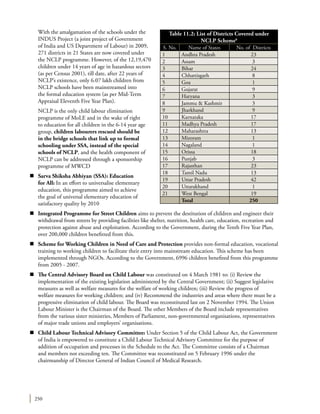
Reliable Data Remains a Significant Challenge
As with all data, child marriage is also a challenge as the methodology for data collection varies between the
different data sources available – District Level Household and Facility Survey (DLHS), the National Family
Health Survey (NFHS) and the Census.
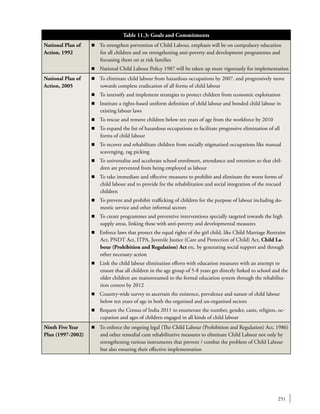
While the DLHS gives data for 2007-08, this is based on information collected from people who were between
15-49 years at the time of the survey who were married below the age of 18 years (NFHS - 3) also uses the same
method. Both are based on sample surveys.
On the other hand the census data is based on information from all persons currently or ever married at the
time of census, painting a much bigger picture. Unfortunately the Census 2011 data is not yet computed for
child marriage. Hence for the purpose of our index, we have chosen to use Census 2001 as our source. However,
for purposes of information and to show the variation between the various data sources available we have given
the ranking as per DLHS as well as Census 2001 (Table 10.2 and 10.3).
Officials crack
the whip on child
marriages
Roli Srivastava, TNN Jun 19, 2011, 10.16pm IST
HYDERABAD: Kiran Kumar Reddy may have made
for a pretty picture helping a girl child write at a
government school in Ameerpet, but it is in the distant
revenue division of Adoni in Kurnool district that
a real revolution is actually unfolding. Revenue
officials here have stopped a whopping
400 child marriages in less than two
months.
In a crackdown unseen earlier, officials spearheaded an
anti-child marriage campaign along with other govern-
ment departments and Unicef across the 17 mandals of
Adoni. The result: this wedding season at Adoni saw
fewer child marriages than the previous years.
Local officials have even managed to put a system in
placepeople performing marriages of their children in
Adoni now mandatorily need to carry the bride and the
grooms age certificates. It has also been made manda-
tory for presses printing wedding cards to ask for age
proofs of brides and grooms.
The age group of the bride and groom at the marriages
we stopped was 12 to 18, says N Prabhakara Reddy,
the revenue divisional officer, who played a key role in
the drive, visiting wedding venues, plonking himself at
the kalyana mandapam next to the priest or the groom
and preventing marriages. Awareness drives over the
last many years have not exactly yielded results, he
says and so the tool he used was fear. Two years
in jail and Rs 2 lakh fine is what was
announced at each of these weddings.
We had to raise our voices when we asked them to
stop the marriage. And it had the desired effect, given
that most of these people are poor, Reddy says, who
even introduced a cash prize of Rs 100
for tip offs on child marriages. At each
of the marriages stopped, an undertaking on a white
bond paper was taken from the parents saying that
they would not perform the childs marriage before the
legally permissible age of 18 for girls and 21 for boys.
Adoni, which is on Karnataka border is known for
its textile units and high girl child drop out
rate, almost 50 per cent. Around 80
per cent of these drop out girls get
married soon after they leave school.
As per official estimate, their age at
marriage hovered between 12 and 14.
Officials here say that child marriages in Adoni had
ensured that very few or no girls made it to colleges,
with a chunk of them dropping out at school level. The
maternal and infant mortality rates are also high here.
We are working with Unicef on all these issues, said
Kurnool district collector Ram Shankar Naik.
The crackdown team admits that there were a few
failures too with parents managing to procure age
certificates showing that their child was not a minor.
But even in these cases, we ensured that the marriage
was allowed only after the age proof was shown, says
Prabhakara Reddy.
The drive has had a ripple effect. If the local police
was initially hesitant in pitching in with its help, it is
stopping marriages on its own. We have stopped three
marriages in the month of May, says circle inspector
Somanna, adding that he is aware of the revenue
departments successful drive.
Ending child marriage
in India
The Guardian
Despite new provisions having been made under
the Prohibition of Child Marriage Act 2006, under
which a child marriage prohibition officer must
be in place at the local level, implementation is
weak. The officer must ensure no child marriages
takes place in their jurisdiction by approaching
the courts for an injunction, collecting evidence
against people, creating awareness about the
negative effects of child marriage, and collecting
data concerning child marriages, among other
functions.
However, the elected village head in Sugan-
dha’s village said: “I have heard that child
marriage is an offence but I have not read the
law yet. Even now child marriage is taking
place, because people say that a girl is someone
else’s property, therefore she should be married
as soon as possible so she goes to her “own”
home. I’m faced with a situation where if I take
any action against them, the villagers will be up
against me. So even if I know, I think it’s best
that I keep quiet.”
232
Table 10.2: Percentage of Women Age 20-
24 getting Married before Age 18 years
State Ranking Percentage
Nagaland NA NA
Himachal Pradesh 1 9.1
Kerala 2 15.5
Punjab 3 15.5
Goa 4 19.1
Uttaranchal 5 19.7
Mizoram 6 23.7
Tamil Nadu 7 24.0
Delhi 8 24.2
Jammu & Kashmir 9 24.6
Manipur 10 24.7
Arunachal Pradesh 11 26.2
Haryana 12 28.0
Sikkim 13 30.6
Meghalaya 14 34.3
Gujarat 15 35.4
Orissa 16 37.5
Assam 17 40.0
Maharashtra 18 40.4
Tripura 19 43.6
Chhattisgarh 20 45.2
Karnataka 21 50.2
Andhra Pradesh 22 51.9
Madhya Pradesh 23 53.8
West Bengal 24 54.7
Uttar Pradesh 25 54.9
Jharkhand 26 55.7
Rajasthan 27 57.6
Bihar 28 68.2
Table 10.3: Child Marriage (0-17 yrs) as Percentage of
Child Population in Respective State
State Ranking
(Per Girl
Child Early
marriage)
Gird Child Overall
(Boys +
Girls)
Nagaland 1 11.35 6.54
Mizoram 2 11.66 6.69
Meghalaya 3 16.47 9.64
Manipur 4 21.47 12.08
Punjab 5 25.38 14.23
Jammu & Kashmir 6 26.17 15.27
Arunachal Pradesh 7 26.27 15.66
Goa 8 28.44 15.38
Sikkim 9 31.37 19.38
Assam 10 33.66 17.73
Gujarat 11 39.69 23.52
Kerala 12 47.04 23.92
Tripura 13 48.85 25.45
Delhi 14 48.90 28.37
Tamil Nadu 15 50.65 26.15
Uttaranchal 16 52.06 28.43
Himachal Pradesh 17 52.58 28.49
Orissa 18 53.53 28.53
Uttar Pradesh 19 53.94 35.35
Karnataka 20 55.28 28.52
Maharashtra 21 59.29 31.34
Jharkhand 22 60.62 35.33
Haryana 23 63.49 37.23
Bihar 24 65.04 39.51
Chhattisgarh 25 66.00 41.71
West Bengal 26 71.89 37.53
Rajasthan 27 72.25 47.79
Madhya Pradesh 28 72.42 46.24
Andhra Pradesh 29 85.55 46.61
Source: District Level Household & Facility Survey
(DLHS) III. 2007-2008 Source: Census 2001 (C-6: Ever Married and Currently Married)
233
Methodology
As mentioned above, Census 2001 gives child marriage information from all persons in the census and hence
computes data of all persons married before the age of 17 years at the time of census, while DLHS and NFHS
are both sample surveys based on information collected from persons in a certain age group.
For the purpose of creating a child marriage index, we chose to use Census 2001 data as it gives a more
comprehensive picture of the ground reality when it comes to early marriage in India.
National Ranking for Child Marriage
Table 10.4 enables us to see how states are ranked in child marriage. While Nagaland ranks first with the
least number of children who are married, it is interesting to find Kerala, which ranks well in almost all other
indicators to be placed the lowest which relates to its lowest ranking in gender equality with more girls being
married before the age of 18 years than boys. Indeed, despite popular belief to the contrary, this raises serious
questions about the status of girls in the state.
The five worst performing states are Tamil Nadu, Karnataka, West Bengal, Andhra Pradesh and Kerala.
Amongst the worst performing are also the Union Territories of Daman & Diu and Puducherry.
Fig 10.3: Age at Marriage
Age at Marriage
250,000,000
200,000,000
150,000,000
50,000,000
0
100,000,000
All ages Less than 10 10-11
Male Female
12-13 14-15 16-17
Source: Census 2001
234
Table 10.4: Overall Child Marriage Index	 (1= Most child friendly)
Components used for the overall index:
a.	 Child Marriage: Overall (boys and girls)
b.	 Child Marriage: Gender Inequality
Note: Age: 0-17 years
State National Ranking for Sex
Ratio
Nagaland 1
Mizoram 2
Meghalaya 3
Punjab 4
Arunachal Pradesh 5
Manipur 6
Jammu & Kashmir 7
Sikkim 8
Goa 9
Gujarat 10
Delhi 11
Assam 12
Uttar Pradesh 13
Uttaranchal 14
Himachal Pradesh 15
Jharkhand 16
Haryana 17
Bihar 18
Maharashtra 19
Chhattisgarh 20
Orissa 21
Tripura 22
Madhya Pradesh 23
Rajasthan 24
Tamil Nadu 25
Karnataka 26
West Bengal 27
Andhra Pradesh 28
Kerala 29
UT National Ranking for Sex
Ratio
D & N Haveli 1
Chandigarh 2
Lakshwadeep 3
A & N Islands 4
Daman & Diu 5
Puducherry 6
Data Source: Census 2001
235
State National Ranking for
Child Marriage
Overall (Boys + Girls) Gender Equality
Nagaland 1 1 15
Mizoram 2 2 16
Meghalaya 3 3 14
Punjab 4 5 11
Arunachal Pradesh 5 8 10
Manipur 6 4 17
Jammu & Kashmir 7 6 13
Sikkim 8 10 6
Goa 9 7 21
Gujarat 10 11 8
Delhi 11 15 9
Assam 12 9 24
Uttar Pradesh 13 22 2
Uttaranchal 14 16 18
Himachal Pradesh 15 17 19
Jharkhand 16 21 12
Haryana 17 23 7
Bihar 18 25 5
Maharashtra 19 20 22
Chhattisgarh 20 26 4
Orissa 21 19 23
Tripura 22 13 26
Madhya Pradesh 23 27 3
Rajasthan 24 29 1
Tamil Nadu 25 14 28
Karnataka 26 18 27
West Bengal 27 24 25
Andhra Pradesh 28 28 20
Kerala 29 12 29
Table 10.5: Child Marriage Components
Ranking 1-2 3-4 5-6
UT National Ranking for
Child Marriage
Overall (Boys + Girls) Gender Equality
Andaman & Nicobar Islands 4 6 4
Chandigarh 2 1 1
Dadra & Nagar Haveli 1 5 2
Daman & Diu 5 3 3
Lakshwadeep 3 4 5
Puducherry 6 2 6
Ranking 1-5 6-10 11-14 15-19 20-24 25-29
236
Child marriages high in Kerala
R Gopakumar, THIRUVANANTHAPURAM, June 19, Deccan Herald:
Over 45,000 child marriages, bulk of them from the Muslim community, have occurred in Kerala since 2001.
The data made available to an RTI applicant has
raised serious questions about the status of women in
‘God’s own country’. According to the data, 18,033
marriages were performed during 2001-2002, out
of which 352 involved girls aged 13 and 14 years
while 918 were those aged 14 to 15 years. In all,
2,450 marriages involved girls aged 15-16 years and
7,450 were in the age group of 16-17. The bulk of
the marriages happened in 17-18 year age group that
year – 15,282.
Similar figures have been recorded for 2002-2003
also when 18,033 child marriages took place. The
information was given to Punarjani Charitable Trust,
a forum of women lawyers based in Kozhikode.
Advocate Sapna, representing the trust, said:
“Despite the strong provisions of the Child Marriage
Restraint Act, this social evil is quite common in our
state. We are to file a writ petition,’’ she said.
However, in recent years there has been a downslide.
During 2007-2009, Malappuram district recorded
5,829 child marriages.
Interestingly, while bulk of the marriages involved
Muslim girls, others have also not eschewed the
social evil. For instance, in 2008, while 4,249 of the
4,955 brides in the child marriages were Muslims,
339 were Scheduled Castes, 55 were Scheduled Tribe
girls and 312 from other communities.
Filmmaker Aryadan Shoukath whose film Paadam
Onnu Oru Vilaapam on the topic had received
national acclaim, said: “Over 80 per cent of
marriages happening in the Nilambur panchayat are
child marriages.” The reasons were not complex to
seek. “Boys marry early and use the dowry to either
to fly to the Gulf for a job or start a business,’’ he
pointed out.
Progressive Muslim thinker Prof M N Karassery
told Deccan Herald that the figures were stunning.
“Right from the beginning, a section of Muslim were
against fixing an age limit for marriage of girls saying
that the religion did not permit such a condition.
However, the Muslim community in the State was
believed to have been on the path of self-realisation
that early marriage for girls would affect their
employment, social life and future ,’’ he said.
According to the latest results from 2007-08 District Level Household & Facility Survey (DLHS-3) survey,
the mean age of marriage for women varies across states from a low of 17.6 and 17.7 years in Bihar and
Rajasthan, respectively, to the highest of 25.1 years in Goa. In the case of men, the mean age is lowest in
Bihar and Uttar Pradesh at 21.6 years. Across India, 43 per cent of women in the age group 20-24 had been
married before the age of 18.
The practice is the worst in eight states, where this percentage exceeds 50 — these are Bihar, Rajasthan,
Jharkhand, Uttar Pradesh, West Bengal, Madhya Pradesh, Andhra Pradesh and Karnataka.
Though Himachal Pradesh is ranked the best, the practice is prevalent here too, with less than 10 per cent of
the women in the age group 20-24 reporting being married by 18.
Other states where this share is less than 20 per cent are Uttarakhand, Goa, Puducherry, Kerala, Punjab and
Lakshadweep.
The matrix in Table 10.5 enables us to see exactly where the problem lies and interventions are required. Child
Marriage is both a symptom of and a contributor to gender inequality.8
(ICIRW. 2011. 1) The ranking of
gender inequality in child marriage in the matrix highlights the states that need to be targeted for programming.
n	 While Bihar, Chhattisgarh, Madhya Pradesh, Rajasthan and Andhra Pradesh marry off both girls and boys,
other states rank badly because it is the girls who are being married off early.
n	 Rajasthan, known for conducting group child marriages, especially around Akha Teej, is clearly performing
very poorly, with almost 48 per cent of its children, of whom 72 per cent are girls being married before the
legal age. Yet, in terms of gender equality, it is ranking 1 as the number of girls and boys that are married is
less than in other states.
237
Causes Attributed for Existence of Child Marriage
n	 It has always been believed that lack of education/literacy is one of the factors that contribute to existence
to child marriage in a society. When the main index is read in the context of the mini indices, we find that
sometimes the performance of states defies this. In fact what is true of one state is not true of another:
	 •	 Despite its high literacy rate, Kerala is ranked last in gender equality in prevention of child marriages
and is 12 in its overall rank, as well as ranks high in the percentage of girls that are married (47.04 per
cent).
	 •	 On the other hand, West Bengal, which is one of the worst performing states in education, is also
performing badly in gender equality (ranked 25). It is also ranked badly in actual performance when it
comes to prevention of girl child marriages (ranks 26 with almost 72 per cent of girl child marriages)
n	 Most states that may not be ranking very badly in the overall, rank badly when comes to gender equality in
preventing child marriage, and this seems to cut across religion. And this has nothing to do with religion.
	 •	 Goa and Assam are cases in point, as is Jammu and Kashmir, which is predominantly muslim.
	 •	 Dadra & Nagar Haveli (predominantly Hindu), amongst the worst UTs overall and holds the lowest
rank on gender equality.
n Poverty is one of the other reasons cited for the continuance of child marriage. However, as the map in
Figure 4 shows, this is not entirely true
	 The top five states with the highest GDPs – all rank low on child marriage.
	 •	 Andhra Pradesh and Tamil Nadu are in fact amongst the worst ranked for child marriage.
	 •	 Maharashtra, one of the highest in economic growth and yet so poorly ranked in prevention of child
marriage also contradicts the assumption of poverty as a cause.
FACTORS COMMONLY BELIEVED TO BE RESPONSIBLE FOR CHILD MARRIAGE
•	 Illiteracy and lack of education
•	 Patriarchy
•	 Gender discrimination and unequal status of women
•	 Traditions and customs, eg. the season of Akha Teej is considered auspicious for marriages
•	 Economic reasons, eg., Higher dowry needs to be given to daughters when they are married at later
age
•	 Lacunae and shortcomings in the existing Child Marriage Restraint Act: for example the law does not
declare the child marriage null and void
•	 Lack of protective environment for a young girl. Marriage is defended as a security strategy in a
situation where there are very few options open for the development of women and children
•	 Lack of administrative will and action
•	 Gender imbalance in some states has led to trafficking of girls in the name of marriage
Source: Ministry of Women and Child Development, 2006. India: Building A Protective Environment for Children. Government of India. p. 38.
238
n	 In fact, some of the poorest states are actually ranked high on the child marriage index.
	 •	 The best performing states in child marriage: Nagaland, Arunachal Pradesh and Manipur, are amongst
the lowest GDP states of India.
n	 Punjab, ranked 13 in the state GDPs, is actually amongst the top performers in eleminating child marriage.
	 •	 It is worth pointing of that as per Census 2011, Punjab has improved its sex ratio from the previous
census as well.
Early Marriage and Sex Ratios
Is there a link between falling sex ratio and early girl marriage? After all both are significant indicators of the
status of the girl child in society. However, there seems to be no clear pattern.
n	 Puducherry, though ranked 4th highest in terms of sex ratio in census 2001, has seen a slight decline from
the previous census and is the worst performing among the UTs in terms of preference to have the girl
children married early.
n	 Haryana, one of the worst performing sex ratio states, ranked 29 in census 2001, is ranked 17 in child
marriage and is 7 in gender equality in child marriage.
n	 Punjab which has one of the lowest sex ratios is among the top five states in prevention of child marriage.
And as mentioned earlier, it has seen an improvement in Census 2011 sex ratio.
n	 Jammu & Kashmir, ranked seventh in prevention of child marriage overall, is doing worse when it comes
to girls being married off, and had a sex ratio of 941 which has gone down by 82 points in Census 2011
(with only 859 girls per 1000 boys).
Map: Not to Scale Prepared by: HAQ: Centre for Child Rights 	 Data Source: Census 2001
Fig 10.4: Overall Child Marriage Index vs State GDP
1-5 1-5
Ranking –
Child Marriage
Ranking –
State GDP
6-10 6-10
11-14 11-14
15-19
20-21
15-19
20-21
25-29 25-29
239
n	 West Bengal, which has a very low rank in child marriage, has also gone down 10 points in child sex ratio
from 960 in 2001 to 950 in 2011.
Long Term Impacts of Child Marriage
What are the risks of early marriages? First, the opportunity to educate girls is aborted, as they get either
pulled out of school or never sent to it. Second, early pregnancy endangers their health and that of the unborn
child. Anaemic and underdeveloped girl/mothers tend to produce underweight, malnourished children with
poor chances of survival and growth. Infants born to 15 - 19-year-olds are nearly 80 per cent more likely to
die during the first year of life than infants born to mothers who are older. Delaying a woman’s first birth can
reduce infant mortality of first born children by up to 30 per cent. It has a devastating effects in terms of their
reproductive health and more often than not leaves them vulnerable to domestic violence.9
(UNICEF. 2011. 64)
Early Pregnancy
Teenage pregnancies and childbirth complications are among the leading causes of death in females between
15 and 19 years of age.10
The social context of child marriage reduces women’s control of their reproduction
in adulthood, possibly because of less contraception knowledge, poor access to family-planning services,
reduced control of family-planning decisions in marriages to older men, and heightened control by in-laws.11
(Raj. 2009. 9)
India Teenage Pregnancies
Teenage pregnancies and childbirth complications are among the leading causes of death on females
between 15 and 19 years of age. The same age group also contributes 19 percent of the total rural fertility
in India. This phenomenon is at its peak in Jharkhand (28 per cent), West Bengal (25 per cent) and Bihar
(25 per cent), all in the eastern region. The level of teenage mothering is lowest (less than five per cent) in
Himachal Pradesh, Goa and Jammu & Kashmir.
In several States like Bihar, Rajasthan, West Bengal, Jharkhand and Madhya Pradesh, almost half the girls
are married before 18, foregoing educational and employment opportunities. A high percentage of teenage
mothers begin child bearing immediately after marriage and contribute to higher fertility levels long
thereafter. Young mothers being physically immature, often experience obstructed labour, pre-eclampsia
(hypertension), eclampsia, leading to death or disability. They are also prone to deliver premature or low
birth weight babies. The conclusion that women aged 15 to 19 years have higher maternal death rates
compared to those aged between 20 and 24 is stating the obvious.
No wonder children born to minus 20 mothers have a 50 per cent higher risk of dying by the first
birthday than those born to older mothers. Child mortality is as high as 25 per cent in Uttar Pradesh and
Madhya Pradesh. In the worst league stand three States – Madhya Pradesh, Jharkhand and Bihar – which
jointly account for producing more than 58 per cent of India’s scrawny offspring, contributing to India’s
shameful record of supplying 40 per cent of the world’s underweight children. That 38 per cent of the less
than three-year-old children are stunted, is just another sad statistic (Too much to take in and hence best
disregarded).
http://www.wikigender.org/index.php/Too_young_to_be_mother
240
Our analysis clearly shows states with higher
percentage of child marriage also have high
incidences of teenage pregnancy (per NFHS-3).
‘Young brides face pressure to prove their fertility
and produce children soon after marriage and also
have little ability to negotiate sexual activity.’12
(ICRW. 2011. 3)
Increased prevalence of sterilisation in young
women married as children could be attributable
to these women having their desired number of
children at an earlier age, as indicated by their
high fertility. However, our findings suggest that
sterilisation might also be the consequence of
inadequate fertility control, which is evident from
the increased risk of unwanted pregnancies in
women married as children.13
(Raj. 2009. 9)
High Maternal Mortality
Maternal Mortality (MMR) measures the number of women aged 15-49 years dying due to maternal causes per
1,00,000 live births.
States performing poorly in maternal mortality are also poor performers in either one or both indicators of the
child marriage index
…marriage at a very young age has grave health
consequences for both the young women and their
children. These women are more likely than those
who are married as adults to report early, frequent,
and unplanned pregnancies, typically from lack
of contraceptive use. Such pregnancies have been
consistently linked to increased risk of maternal and
infant morbidity and mortality… Adolescent mothers
are also more likely to experience fistula, pregnancy
complications, and death during childbirth than are
older mothers.
- Dr. Raj Anita et al. Prevalence of child marriage and its effect
on fertility and fertility-control outcomes of young women
in India: a cross-sectional, observational study. The Lancet,
Volume 373, Issue 9678, Pages 1883 - 1889, 30 May 2009
Table 10.6: Maternal Mortality in Select States 2007-2009
State Ranking Percentage
Kerala 1 81
Tamil Nadu 2 97
Maharashtra 3 104
Andhra Pradesh 4 134
West Bengal 5 145
Gujarat 6 148
Haryana 7 153
Punjab 8 172
Karnataka 9 178
Orissa 10 258
Rajasthan 11 318
Assam 12 390
Andhra Pradesh 29 85.55
Source: ORGI, Sample Registration System (SRS) July 2011
241
Percentage of women age 15-19 who have had a live birth or who are pregnant with their first child and percentage
who have begun childbearing by state, India 2005-06
State Percentage who
Have had a livebirth Are pregnant with first
child
Precentage who have begun
childbearing
India 12.1 3.9 16.0
North
Delhi 3.8 1.2 5.0
Haryana 7.5 4.6 12.1
Himanchal Pradesh 2.1 0.9 3.1
Jammu & Kashmir 3.4 0.8 4.2
Punjab 3.6 1.9 5.5
Rajasthan 12.6 3.4 16.0
Uttaranchal 3.6 2.6 6.2
Central
Chhatisgarh 11.2 3.4 14.6
Madhya Pradesh 10.6 3.0 13.6
Uttar Pradesh 11.2 3.1 14.3
East
Bihar 19.3 5.7 25.0
Jharkhand 20.8 6.8 27.5
Orissa 10.4 4.1 14.4
West Bengal 19.3 6.0 25.3
Northeast
Arunahcal Pradesh 12.4 3.0 15.4
Assam 13.1 3.2 16.4
Manipur 5.2 2.1 7.3
Meghalaya 6.7 1.5 8.3
Mizoram 7.7 2.5 10.1
Nagaland 5.5 1.9 7.5
Sikkim 8.7 3.2 12.0
Tripura 14.0 4.5 18.5
West
Goa 2.6 1.1 3.6
Gujarat 8.9 3.7 12.7
Maharashtra 11.0 2.9 13.8
South
Andhra Pradesh 12.7 5.4 18.1
Karnataka 12.8 4.3 17.0
Kerala 2.9 2.9 5.8
Tamil Nadu 4.8 2.9 7.7
Table 10.7: Teenage Pregnancy and Motherhood by State
Source: NFHS-3
242
Loss of Education
There is an undeniable connection between education, awareness and decline in child marriages. If girls are
encouraged to continue their education, child marriage would decrease.
Incidentally, Jammu and Kashmir, a poor performer in gender equality for child marriage is also the worst state
when it comes to gender equality in education as well.
Increase in Crimes against Children
Early marriages, along with all opportunities for further development, leave young girls vulnerable to domestic
violence, sexual violence especially marital rape, desertion and other forms of violence. Falling sex ratio in many
Fig 10.5: Age of Marriage and Marital Status of young women 20-24 by education in
India 2005-2006
Married before age 18 Married at age 18 or later Unmarried
80
90
70
60
50
40
30
20
10
No Education Secondary or
Higher
Primary Total
Percentage
77
18
5
62
13
25 27
38
35
29
24
47
Source: Das Gupta, Sreela et al. Knot Ready – Lessons from India on Delaying Marriage for Girls. International Center for Research on Women
(ICRW). Washington, DC. 2008. Pg 8
Child Marriges, Trafficking on the Rise in West Bengal
A survey conducted across several districts in West Bengal has indicated that a rising awareness against
dowry is fuelling the incidence of child marriage and trafficking. The survey was conducted by Women’s
Studies Research Centre (WSRC); the Department of Sociology, Burdwan University; and Centre for
Women’s Studies, University of North Bengal, supported by the West Bengal Government’s Department of
Women and Child Development and Social Welfare and United Nations Children’s Fund (UNICEF).
It was found that traffickers approach villagers in the guise of grooms without any dowry demand and lure
them into marrying off minor girls. The girls are then sold and sent to other places like Mumbai, Dubai
or Kashmir. Villagers mentioned that child marriages were not so prevalent earlier. However, the data
quoted in the report (sourced from the 2001 Census and the National Family Health Survey) shows a high
incidence of child marriage in the State – 39.16 per cent compared to the national average of 32.10 per
cent.
Antara Das, The Hindu, http://www.hindu.com/2007/07/19/stories/2007071956291300.htm
243
states such as Haryana and Punjab, some districts of Uttar Pradesh, Gujarat and even Jammu & Kashmir has
resulted in the trafficking of young girls from West Bengal, Orissa, Assam and Bihar into marriages.
In spite of frequent reports in the media of incidences of child marriage all over the country, reporting of child
marriages remains poor. For crimes against children, under the Child Marriage Restraint Act, the National Crime
Records Bureau reported 96 cases in 2007, 104 cases in 2008 and only 3 cases in 2009.14
(NCRB. 2010. 409)
Conclusion
That child marriage is a social evil and a violation of all rights of children has been recognised for decades now.
This very recognition led to the formation of a law as far back as 1929, but India has not been able to tackle this
problem. Protesting child marriage has led to Bhanwari Bai in Rajasthan being raped and Shakuntala Verma, an
anganwadi worker’s arms being chopped off in Madhya Pradesh for resisting rape. Child marriages continue to
be attended and blessed by political leaders who do not wish to challenge the system.
Even the law that is passed in ‘modern’ India –
The Prohibition of Child Marriage Act, 2006 is
not daring enough to deal with the problem head
on. Despite several schemes to encourage girls to
continue with education, and it being a fundamental
right, patriarchy prevails in a number of states.
Even in progressive states there are pockets of child
marriage that defy the overall rank of the state.
The child marriage index should enable us to focus
on the states that need more intervention and the
district profiles enable the taking of this planning
down to district levels.
Delaying marriage for girls can contribute
towards reducing maternal mortality, preventing
HIV infection, improving women’s educational
and economic status, and ensuring women’s rights
and gender equality.
- International Center for Research on Women (ICRW)
Report to Unicef. Delaying Marriage for Girls in India – A
Formative Research to Design Interventions for Changing
Norms. Unicef. March 2011. Pg. 1
244
Endnotes
1.	 International Institute for Population Sciences and Macro International. 2007. National Family Health
Survey 3 (NFHS-3), 2005-06. India. Mumbai IIPS. p. 167. Available at http://www.nfhsindia.org/nfhs3.
html.
2.	 ICRW (International Center for Research on Women). 2011. Delaying Marriage for Girls in India: A
formative Research to Design Interventions for Changing Norms. UNICEF. p. 3
	 See also: Pendse, V. Maternal. 1999. Deaths in an Indian Hospital: A decade of No Change. In safe
Motherhood Initiatives: Critical Issues, ed. M. Berer and TKS Ravindran. Special Ediction: Reproductive
Health Matters. pp. 119-126.
3.	 ICRW (International Center for Research on women). 2011. Delaying Marriage for Girls in India: A
formative Research to Design Interventions for Changing Norms. UNICEF. p. 1
4.	 Ibid. p. 3
	 See also: Somerset, C. 2000. Early Marriage: Whose Right to Chose? London: Forum on Marriage and
the Rights of Women and Children.
	 See also, Khan, Shahrukh. 1993. South Asia. In Women’s Education in Developing Countries: Barriers,
Benefits, and Policy, ed. EM King and MA Hill. Baltimore, MD: Johns Hopkins University Press.
5.	 ICRW (International Center for Research on women). 2011. Delaying Marriage for Girls in India: A
formative Research to Design Interventions for Changing Norms. UNICEF. p. 3
6.	 Das Gupta, Sreela et al. 2008. Knot Ready – Lessons from India on Delaying Marriage for Girls.
International Center for Research on Women (ICRW). Washington, DC. p. ii
7.	 UNICEF. 2011. Desk Review of Child marriage. March 2011. p. 15
8.	 ICRW (International Center for Research on women). 2011. Delaying Marriage for Girls in India: A
formative Research to Design Interventions for Changing Norms. UNICEF. p. 1
9.	 UNICEF. 2011. Desk Review of Child Marriage. p. 64
10.	http://www.wikigender.org/index.php/Too_young_to_be_mother
11.	 Raj, Dr. Anita et al. 2009. Prevalence of child marriage and its effect on fertility and fertility-control
outcomes of young women in India: a cross-sectional, observational study. The Lancet. vol 373. Issue
9678. pp. 1883 – 1889. 30 May 2009. p 9
12.	 ICRW (International Center for Research on women). 2011. Delaying Marriage for Girls in India: A
formative Research to Design Interventions for Changing Norms. UNICEF. p. 3
13.	 Raj, Dr. Anita et al. 2009. Prevalence of child marriage and its effect on fertility and fertility-control
outcomes of young women in India: a cross-sectional, observational study. The Lancet. vol 373. Issue
9678. pp. 1883 – 1889. 30 May 2009. p 9
14.	 NCRB (National Crime Records Bureau. 2010. Crime in India 2009. Ministry of Home Affairs. India.
p. 409
245
Child
Labour
246
India has the largest number of child labourers under the age of 14 in the world
(http://www.unicef.org/infobycountry/india_background.html)
The Census reports clearly point to the increase in the number of child labourers in the
country from 11.28 million in 1991 to 12.59 million in 2001 (Census of India 1991 and 2001)
Per census 2001, the data shows that majority of ‘main’ workers are boys, whereas the
majority of ‘marginal’ workers are girls.
The Ministry of Labour reports that between the years 1996 to 2006 there have been
nearly 2.86 lakh bonded labourers across various states (National Commission for Enterprises in
the Unorganised Sector, Report on the Conditions of Work and Promotion of Livelihoods in the Unorganised
Sector, August 2007, pg 105)
A large number of child workers remain unaccounted for
Migration has been a sporadic process that has occurred over the past decade, which has
decidedly given rise to child labour (Still out of Focus, HAQ: Centre for Child Rights, New Delhi, 2008
pg. 191)
Spotlight on child labour in India
1
2
3
4
5
6
247
Introduction
The Indian economy is booming. Unfortunately, this economic
boom is also on the backs of thousands of children who work,
at the cost of their childhood. India is the country with the
largest number of child labourers in the world. ‘Child labour
is a concrete manifestation of violations of a range of rights of
children and is recognised as a serious and enormously complex
social problem in India. Working children are denied their
right to survival and development, education, leisure and play,
and adequate standard of living, opportunity for developing
personality, talents, mental and physical abilities, and protection from abuse and neglect.’1
(NCPCR. n.d.
1). According to the Ministry of Women and Child Development (MWCD), the factors that generate child
labour, and hazardous child labour in particular, include parental poverty and illiteracy; social and economic
circumstances; lack of awareness; lack of access to basic and meaningful quality education and skills; high rates of
adult unemployment and underemployment, and cultural values of the family and society.2
(MWCD. n.d. v(ii))
While poverty is the most identified cause for child labour, it must be remembered that child labour and
poverty are a viscous cycle, because the existence of child labour is as much a cause for poverty as it is a result.
It is a shame that after 65 years of independence, when we stand today as the 10th highest GDP nation in the
world, aspiring to become a super-power, we continue to justify the existence of child labour with the excuse
of poverty.
The reality is that child labour exists as there is no political will to eliminate it. The law, The Child Labour
(Regulation and Prohibition) Act that was passed in 1986, continues to distinguish between hazardous and non-
hazardous child labour, thus prohibiting some occupations while regulating others. (Presently the law in India
prohibits employment of children in 18 occupations and 65 processes.)3
(Ministry of Labour. n.d).
How Many Child Labourers does India Have?
While India remains a nation with the highest number of child labourers in the world, getting accurate figures
on the actual number of child labourers in the country still remains a challenge. There are varying estimates of
the number of working children in the country due to differing definitions and methods of estimation. Two
main sources of official information, the
National Sample Survey Organisation (NSSO)
and the Census of India provide different
estimates. Neither has a specific definition of
child labour. Indeed the biggest tragedy is
that many child labourers still remain
unaccounted for.
The National Commission for Enterprises in
the Unorganised Sector (NCEUS) in its Report
on the Conditions of Work and Promotion
of Livelihoods in the Unorganised Sector has
expanded the definition when examining
the issue of child labour. According to their
report ‘The Commission does not consider it
appropriate to view child labour purely from
a definitional point of view of who is a worker
Source Number of Working Children
2001 National Census 12.6 million (5.2%)
Ministry of Labour and
Employment
2 million in hazardous
industries *
National Sample Survey 2000 16.4 million (6.5%)
2006 UNICEF report** 35 million (14%)
Various NGOs*** 60-115 million
Table 11.1: Estimates of Working Children in India
Sources:	 2001 Census, NSSO 2000, UNICEF, Ministry of Labour
*	 Figure provided by the Ministry of Labour and Employment,
Government of India.
** 	 “Excluded and invisible: The State of the World’s Children,”
UNICEF, 2006.
*** 	 “The Small Hands of Slavery: Bonded Child Labour in India,”
Human Rights Watch, 1996.
It is a shame that after 65 years of
independence, when we stand today
as the 10 highest GDP nation in the
world, aspiring to become a super-
power, we continue to justify the
existence of child labour with the
excuse of poverty.
248
and who is not. This is because there is a significant proportion of children who are out of school and are not
reported as child labour…’4
(NCEUS. 2007. 101). The report recognises that even if they are not reported as
workers, chances are that they are engaged in some activity by way of helping their parents or in activities that
are not perceived as income-earning by the reporting parents.
In the years since the Census, the number of listed hazardous processes in the schedule to the child labour law
has gone up from 18 to 65, and occupations have gone up from 7 to 18, and the figures fail to take into account
all these changes. A large number of child workers therefore remain unaccounted for.
Also, in the wake of globalisation and growing consumerism, children find their way into newer and newer
occupations everyday.5
(HAQ. 2008. 191) There are so many new home-based occupations that are emerging
that it is often difficult to keep track.
Commitments on Elimination of Child Labour
Legal Commitments
The main law for child labour is the Child Labour (Prohibition and Regulation) Act 1986 herein and after
also called the Child Labour Act. This law itself makes the fallacious distinction between hazardous and non-
hazardous child labour with different set of rights for the two categories.
Figure 11.1. Per cent of Children (5 – 14 years) in Labour Force and
Labour Pool by Age, 2004-2005
40.0
35.0
30.0
25.0
20.0
15.0
10.0
5.0
0.0
PercentageofChildren
4 Labour Force 5-14 Labour Pool
J&K
Punjab
Haryana
Rajasthan
Bihar
WestBengal
Orissa
MadhyaPradesh
Maharashtra
Karnataka
Kerala
North-eastern
India
Source: National Commission for Enterprises in the Unorganised Sector. Report on the Conditions of Work and Promotion of Livelihoods in
the Unorganised Sector
Note: Labour Force includes all those already employed and Labour Pool includes child labourers and non-workers
249
The principle of every right for every child calls for elimination of all forms of child labour, so that no child is
discriminated against and deprived of childhood and corresponding rights. While more and more sectors are
being added to the list of hazardous occupations and processes where employment of children under 14 years of
age is banned, children continue to work in non-hazardous sectors and are thus denied their basic human rights,
which other children enjoy.
Further, by its very nature the Child Labour Act, which allows children to work in non-hazardous occupations
and processes, becomes a vehicle for excluding children from realising their right to education. It thus stands
as a direct contradiction to the fundamental right to free and compulsory education, as mandated by our
Constitution as well as the Right of Children to Free and Compulsory Education Act, 2009 (RTE). Any
fundamental right has to be based on right to equal opportunity and hence must be based on the principle of
access to the same education for all children. Concomitantly, how can a child be in school and at work at the
same time?
There are other problems as well. By not making the employment of children a cognizable offence and imposing
a small fine on the employers, it is a law that has no teeth. As a result, the rate of prosecution itself is very low.
Clearly, child labour is not perceived as a crime against children and humanity.
That this law is not accorded any seriousness can be seen from the fact that the National Crime Records
Bureau (NCRB), while providing data on crimes against children under special and local laws, leaves out any
information pertaining to cases registered under the Child Labour Act and the Bonded Labour Act. The other
major drawback is that this law fails to address trafficking of children for labour. Thus many of the middlemen/
traffickers involved in the process of procuring children for labour are beyond the reach of the child labour
legislation
The other laws that deal with child labour are:
n	 1933	 Children (Pledging of Labour) Act
n 	1948	 Factories Act (Amended in 1949, 1950 and 1954)
n 	1951	 The Plantation Labour Act
n 	1952	 The Mines Act
n 	1970 	 The Contract Labour Act
n 	1976	 Bonded Labour System (Abolition) Act
n 	1961	 The Apprentices Act
n 	1961	 The Motor Transport Workers Act
n 	1966	 The Beedi and Cigar Workers (Conditions of Employment) Act
n 	1958	 The Merchant Shipping Act
n 	2000	 Juvenile Justice (Care and Protection of Children) Act
Government’s Programmes on Child Labour
n	 National Child Labour Project (NCLP): The NCLP scheme of the Ministry of Labour and Employment
(MoLE) dates back to 1988 and aims to withdraw the children engaged in hazardous occupations and
processes by rehabilitating them in special schools so as to finally mainstream them into the formal
schooling system. In order to provide rehabilitation to larger number of working children, Government
decided to expand the coverage of the Scheme from 100 to 250 districts in the Tenth Five Year Plan.
250
With the amalgamation of the schools under the
INDUS Project (a joint project of Government
of India and US Department of Labour) in 2009,
271 districts in 21 States are now covered under
the NCLP programme. However, of the 12,19,470
children under 14 years of age in hazardous sectors
(as per Census 2001), till date, after 22 years of
NCLP’s existence, only 6.07 lakh children from
NCLP schools have been mainstreamed into
the formal education system (as per Mid-Term
Appraisal Eleventh Five Year Plan).
	 NCLP is the only child labour elimination
programme of MoLE and in the wake of right
to education for all children in the 6-14 year age
group, children labourers rescued should be
in the bridge schools that link up to formal
schooling under SSA, instead of the special
schools of NCLP, and the health component of
NCLP can be addressed through a sponsorship
programme of MWCD
n	 Sarva Shiksha Abhiyan (SSA): Education
for All: In an effort to universalise elementary
education, this programme aimed to achieve
the goal of universal elementary education of
satisfactory quality by 2010
n	 Integrated Programme for Street Children aims to prevent the destitution of children and engineer their
withdrawal from streets by providing facilities like shelter, nutrition, health care, education, recreation and
protection against abuse and exploitation. According to the Government, during the Tenth Five Year Plan,
over 200,000 children benefitted from this.
n	 Scheme for Working Children in Need of Care and Protection provides non-formal education, vocational
training to working children to facilitate their entry into mainstream education. This scheme has been
implemented through NGOs. According to the Government, 6996 children benefited from this programme
from 2005 - 2007.
n	 The Central Advisory Board on Child Labour was constituted on 4 March 1981 to: (i) Review the
implementation of the existing legislation administered by the Central Government; (ii) Suggest legislative
measures as well as welfare measures for the welfare of working children; (iii) Review the progress of
welfare measures for working children; and (iv) Recommend the industries and areas where there must be a
progressive elimination of child labour. The Board was reconstituted last on 2 November 1994. The Union
Labour Minister is the Chairman of the Board. The other Members of the Board include representatives
from the various sister ministries, Members of Parliament, non-governmental organisations, representatives
of major trade unions and employers’ organisations.
n	 Child Labour Technical Advisory Committee: Under Section 5 of the Child Labour Act, the Government
of India is empowered to constitute a Child Labour Technical Advisory Committee for the purpose of
addition of occupation and processes in the Schedule to the Act. The Committee consists of a Chairman
and members not exceeding ten. The Committee was reconstituted on 5 February 1996 under the
chairmanship of Director General of Indian Council of Medical Research.
Table 11.2: List of Districts Covered under
Nclp Scheme6
S. No. Name of States No. of Districts
1 Andhra Pradesh 23
2 Assam 3
3 Bihar 24
4 Chhattisgarh 8
5 Goa 1
6 Gujarat 9
7 Haryana 3
8 Jammu & Kashmir 3
9 Jharkhand 9
10 Karnataka 17
11 Madhya Pradesh 17
12 Maharashtra 13
13 Mizoram 1
14 Nagaland 1
15 Orissa 18
16 Punjab 3
17 Rajasthan 23
18 Tamil Nadu 13
19 Uttar Pradesh 42
20 Uttarakhand 1
21 West Bengal 19
Total 250
251
Table 11.3: Goals and Commitments
National Plan of
Action, 1992
n To strengthen prevention of Child Labour, emphasis will be on compulsory education
for all children and on strengthening anti-poverty and development programmes and
focussing them on at risk families
n	 National Child Labour Policy 1987 will be taken up more vigorously for implementation
National Plan of
Action, 2005
n To eliminate child labour from hazardous occupations by 2007, and progressively move
towards complete eradication of all forms of child labour
n	 To intensify and implement strategies to protect children from economic exploitation
n	 Institute a rights-based uniform definition of child labour and bonded child labour in
existing labour laws
n	 To rescue and remove children below ten years of age from the workforce by 2010
n	 To expand the list of hazardous occupations to facilitate progressive elimination of all
forms of child labour
n	 To recover and rehabilitate children from socially stigmatised occupations like manual
scavenging, rag picking
n	 To universalise and accelerate school enrolment, attendance and retention so that chil-
dren are prevented from being employed as labour
n	 To take immediate and effective measures to prohibit and eliminate the worst forms of
child labour and to provide for the rehabilitation and social integration of the rescued
children
n	 To prevent and prohibit trafficking of children for the purpose of labour including do-
mestic service and other informal sectors
n	 To create programmes and preventive interventions specially targeted towards the high
supply areas, linking these with anti-poverty and developmental measures
n	 Enforce laws that protect the equal rights of the girl child, like Child Marriage Restraint
Act, PNDT Act, ITPA, Juvenile Justice (Care and Protection of Child) Act, Child La-
bour (Prohibition and Regulation) Act etc. by generating social support and through
other necessary action
n	 Link the child labour elimination efforts with education measures with an attempt to
ensure that all children in the age group of 5-8 years get directly linked to school and the
older children are mainstreamed to the formal education system through the rehabilita-
tion centers by 2012
n	 Country-wide survey to ascertain the existence, prevalence and nature of child labour
below ten years of age in both the organised and un-organised sectors
n	 Request the Census of India 2011 to enumerate the number, gender, caste, religion, oc-
cupation and ages of children engaged in all kinds of child labour
Ninth Five Year
Plan (1997-2002)
n To enforce the ongoing legal (The Child Labour (Prohibition and Regulation) Act, 1986)
and other remedial cum rehabilitative measures to eliminate Child Labour not only by
strengthening various instruments that prevent / combat the problem of Child Labour
but also ensuring their effective implementation
252
Methodology
In creating a ranking for states based on what percentage of its child population is part of the work force, we
decided to use Census 2001 data (as Census 2011 data still remains unavailable for this category). Adhering to
the current Child Labour Act of our country, we defined a child labourer as one between the ages of 5-14 years.
We decided to include ‘main’ workers, ‘marginal’ workers, as well as those defined as ‘seeking/available to work’.
Clearly these are children who are not in school, are available for work and therefore part of the larger child
labour pool.
Since child labour is also largely a protection issue and while the category of children ‘seeking/available to work’
might not have had a job at the time, they were seeking one, hence were out of school, unprotected and being
denied their right to education, amongst other rights.
n	 To this effect, strong regulatory and administrative measures to prevent exploitation
of child labour will also be taken up. In the areas where child labour exists on a large
scale, special preventive-cum- developmental measures will be put into action with the
strength and support of legal/punitive measures
n	 The enforcement of the National Policy on Child Labour (1987) will be given a fresh
look to make it more effective. To organize suitable functional literacy/vocational train-
ing programmes and recreational facilities after working hours for the overall develop-
ment of the working children
n	 Public opinion against the social evil like child labour will also be mobilised through the
print and electronic media and the support of the pressure/activist groups
Tenth Five Year
Plan (2002-07)
n To protect children from all types of exploitation through strict enforcement of the
Immoral Traffic (Prevention) Act, 1956; the Juvenile Justice (Care and Protection) Act,
2000; the Child Labour (Prohibition and Regulation) Act, 1986; the Hindu Succession
Act, 1956; Indian Penal Code, 1860 and the Pre-Natal Diagnostic Techniques
(Regulation and Prevention of Misuse) Act, 1994
n	 Concentrate efforts to eliminate all forms of discrimination and violation of the rights
of the Adolescent/Girl Child by undertaking strong legal measures, including punitive
ones. These include strict enforcement of relevant legislations along with eradication of
the harmful practices of female foeticide/female infanticide, child marriage, child abuse,
child labour, child prostitution etc.
Eleventh Five Year
Plan (2007-12)
n	 Start bridge schools with quality education packages for girl children and street children,
child labourers, seasonal migrants and all those who are out of the formal education
system
n	 necessary to take adequate measures for the protection, rehabilitation, and education of
(child labourers)
n	 Efforts must also be made towards rehabilitation and reintegration of trafficked children
n	 A suitable form of penalization should be imposed in such local and State Governments
that seem to be paying only ‘lip service’ to curb the problem of the use of ‘cheap cost
child labour’
253
National Index for Child Labour
State National Ranking for Child
Labour
Kerala 1
Delhi 2
Goa 3
Tripura 4
Uttaranchal 5
Punjab 6
Maharashtra 7
Tamil Nadu 8
Uttar Pradesh 9
Gujarat 10
Bihar 11
Haryana 12
Orissa 13
West Bengal 14
Assam 15
Jharkhand 16
Manipur 17
Arunachal Pradesh 18
Jammu & Kashmir 19
Madhya Pradesh 20
Karnataka 21
Chhattisgarh 22
Himachal Pradesh 23
Andhra Pradesh 24
Meghalaya 25
Rajasthan 26
Nagaland 27
Sikkim 28
Misoram 29
UT National Ranking for Child
Labour
Lakshwadeep 1
Puducherry 2
Chandigarh 3
Daman & Diu 4
Andaman & Nicobar
Islands
5
Dadra & Nagar Haveli 6
Table 11.4: Overall Child Labour Index	 (1= Most child friendly)
Component used for the overall index:
a.	 Number of child labourers, in the following
categories:
	 -	 Main Workers
	 -	 Marginal Workers
	 -	 Seeking/Available to work
Note: This data is for children 5-14 years of age
Data Source: Census 2001
254
Since the ranking of the states in the Child Rights Index in Table 11.4 is based on proportionate calculations,
i.e proportion of child labour to the total number of children in the state, rather than absolute figures, it throws
up some surprises and does not match the national ranking on child labour as in Table 11.5 which is based on
absolute figures.
n	 As per this method, Mizoram, which is doing so well as per the actual figures (ranked 6 in Table 11.5) is
ranked lowest because in proportionate terms it has the highest incidence of child labour of all states and it
needs to worry about what it should do.
Table 11.5: State wise Distribution of Working Children (5-14 years)
Rank based on 2001
Census, total numbers
Name of the state 1971 1981 1991 2001
1 Goa 4656 4138
2 Sikkim 15661 8561 5598 16457
3 Arunanchal Pradesh 17925 17950 12395 18482
4 Tripura 17490 24204 16478 21756
5 Kerala 111801 92854 34800 26156
6 Mizoram *** 6314 16411 26265
7 Manipur 16380 20217 16493 28836
8 Delhi 17120 25717 27351 41899
9 Nagaland 13726 16235 16467 45874
10 Meghalaya 30440 44916 34633 53940
11 Uttaranchal 70183
12 Himachal Pradesh 71384 99624 56438 107774
13 Jammu & Kashmir 70489 258437 175630
14 Punjab 232774 216939 142868 177268
15 Haryana 137826 194189 109691 253491
16 Assam 239349 327598 351416
17 Orissa 492477 702293 452394 377594
18 Jharkhand 407200
19 Tamil Nadu 713305 975055 578889 418801
20 Gujarat 518061 616913 523585 485530
21 Maharashtra 988357 1557756 1068427 764075
22 Karnataka 808719 1131530 976247 822615
23 West Bengal 511443 605263 711691 857087
24 Madhya Pradesh 1112319 1698597 1352563 1065259
25 Bihar 1059359 1101764 942245 1117500
26 Rajasthan 587389 819605 774199 1262570
27 Andhra Pradesh 1627492 1951312 1661940 1363339
28 Uttar Pradesh 1326726 1434675 1410086 1927997
Total 10738012 13620920 11274143 12653704
Union Territory
1 Lakshadweep 97 56 34 27
2 Daman and Diu 7391 9378 941 729
3 Pondicherry 3725 3606 2680 1904
4 Andaman & Nicobar
Island
572 1309 1265 1960
5 Chandigarh 1086 1986 1870 3779
6 Dadra & Nagar Haveli 3102 3615 4416 4274
Total 15973 19950 11206 12673
Source: Census 1971, 1981, 1991, 2001
255
n	 Similarly, Sikkim, Nagaland, Rajasthan and Meghalaya too find themselves in the last five in rank because
they have a high proportion of working children as per the total population of children in the state,
although they may not have a huge number in actual terms.
n	 Amongst the worst performing are also the UTs of Dadra & Nagar Haveli and Andaman & Nicobar Islands
Table 11.5 also shows how the child labour has increased in the states over the years. The state with the highest
incidence of child labour is Uttar Pradesh, followed by Andhra Pradesh. Other states with more than one
million child labour include Rajasthan, Madhya Pradesh and West Bengal. While some states have witnessed a
fall in incidence of child labour, Bihar, Haryana, Rajasthan, Uttar Pradesh and West Bengal has seen an increase
since 1991.
n Poverty is usually the most commonly cited reason for child labour. However, what we find here (Fig 11.2)
is that while that case may hold true for some states, overall, there seems to be no clearly defined pattern
linking the two. Some of the poorer states, for different reasons, have a lower child labour count, and some
of the richer states have a higher count.
l	 Nagaland, Sikkim and Mizoram have the most child labourers (as percentage of child population) in
their states. They also are amongst the 5 poorest states in terms of GDP as well
l	 Similar case holds true for Meghalaya and Himachal Pradesh
l	 Maharashtra, Uttar Pradesh, Tamil Nadu, Gujarat – all states with high GDPs – are also ranked top 10
in the labour index (as they have low percentages of their children in the work force)
Map: Not to Scale 	 Prepared by: HAQ: Centre for Child Rights 	 Data Source: Census 2001
Fig 11.2: State Performance in Child Labour vs. State GDP
1-5 1-5
Ranking –
Child Labour
Ranking –
State GDP
6-10 6-10
11-14 11-14
15-19
20-21
15-19
20-21
25-29 25-29
256
l	 On the other hand, Andhra Pradesh, with the 3rd highest GDP in the country is performing very
poorly in terms of percentage of its children in the workforce
l	 Karnataka also is a rich state and yet so many of its children are labourers
l	 Both Goa and Tripura are relatively very poor states. However, they are ranked in the top 5 in the
Child labour Index.
Child Labour in the Districts
Table 11.6 gives us the 11 worst districts as per the actual number of child labour in Census 2001. These
districts are spread across Andhra Pradesh (3), Rajasthan (2), West Bengal (3), and one each in Madhya Pradesh,
Karnataka and Uttar Pradesh.
n	 While West Bengal has about 5.1 per cent of its child population in the workforce, almost 28 per cent of its
main and marginal workers alone come from just 3 of its districts
Table 11.6: Magnitude of Child Labour (Main and Marginal) in India
2001 – Top 11 Districts having more than 75,000 Child Labourers
State District No. of CL
Rajasthan Alwar 140318
Andhra Pradesh Mahbubnagar 138475
Andhra Pradesh Kurnool 138326
Karnataka Gulbarga 99914
Rajasthan Jalor 99109
Madhya Pradesh Jhabua 96643
West Bengal Medinapur 95739
Andhra Pradesh Guntur 92075
West Bengal Maldah 88556
West Bengal Murshidabad 87968
Uttar Pradesh Bulandshahr 85296
Source: Compiled from 2001 Census data
Nine-year-old Sona Gupta wakes up before the rest of the
household at 6-30 in the morning to prepare tea. She
then scrubs the floors; washes clothes and utensils; and
tends to the needs of the elderly couple who have been
entrusted to her care. Sona does not remember when
her parents, migrants from Nawada district of Bihar,
left her in the plush home in the southern parts of the
city as a domestic help.
Five years after the Centre issued a notification in Oc-
tober 2006 to list domestic help as a hazardous occupa-
tion under the Child Labour (Prohibition and Regula-
tion) Act, the Government is unaware of the number of
children in West Bengal employed in domestic service,
but estimates suggest that there are thousands.
“There is no separate survey. According to the 2001
Census, over 8.5 million children aged between 5 and
14 years are employed in the hazardous occupations
and process covered under the Act. This number is
expected to sharply rise since children employed in
domestic service and tea stalls have now been included
in the list,” says Sumita Mukherjee, Director of the
National Child Labour Project (NCLP) in the State.
The only government intervention in child labour is
the NCLP schools which have been able to provide
education for fewer than 50,000 children as against the
estimated 8.5 million. At present 46,807 children are
enrolled in the special schools run by the NCLP.
The problem of child labour is endemic and rooted in
poverty. But preventing it is also a social responsibility.
Children are employed as domestic help for economic
benefit. They work hard for less money and do not
raise their voices in protest, says Chittapriyo Sadhu, an
activist of Save the Children, an NGO that provides
children like Sona informal education and vocational
training in the afternoon hours, when they are usually
free.
Lakshmi Sarkar, who was orphaned and forced into do-
mestic service, was trained by them to become a beauti-
cian. Once she began earning an additional income,
her employers refused to let her out of the house. Often
abused and tortured, she got in touch with activists to
secure her release. Nineteen-year-old Lakshmi was even-
tually rescued from her forced confinement, but she is
among the lucky few who got away.
Mr. Sadhu rues the lack of prosecution in cases of child
labour as the main reason that children continue to
be employed in hazardous occupations. Since 2007,
only 15 cases of child labour have been initiated (with
about 51 cases pending in the courts) by the Labour
Directorate, the main agency of the State Government
for the implementation of Labour laws including the
Child Labour Act.
The State’s Labour Minister, Purnendu Bose, assures
that the issues concerning child labour will be taken up
with a renewed vigour and cited a personal connection
to the subject.
“When I was young, I lived in the house of a person
who employed children to create zardosi fabrics. I have
seen their hands growing coarser and their eyesight
dwindling in the abysmal working conditions,” Mr.
Bose says.
However, he claims paucity of funds as a constraint. A
grant of Rs.750 per child per month (a State Govern-
ment scheme for upgrading one NCLP school in each
district to a residential facility) is hardly enough to look
after the needs of a child, he adds.
257
Table 11.7: Growth of Child Labour across Districts in India
States Districts where the magnitude has
increased
Districts where the magnitude has
declined
Total
number of
districtsNumber of
districts
% to total districts
in the state
Number of
districts
% to total districts
in the state
Uttarakhand 8 61.5 5 38.5 13
Uttar Pradesh 61 88.4 8 11.6 69
West Bengal 17 94.4 1 5.6 18
Orissa 20 66.7 10 33.3 30
Madhya Pradesh 37 82.2 8 17.8 45
Chhattisgarh 10 62.5 6 37.5 16
Gujarat 17 68.0 8 32.0 25
Maharashtra 18 51.4 17 48.6 35
Andhra Pradesh 4 17.4 19 82.6 23
Karnataka 12 44.4 15 55.6 27
Kerala 7 50.0 7 50.0 14
Tamil Nadu 11 36.7 19 63.3 30
Jharkhand 18 100.0 0 0.0 18
Assam 17 73.9 6 26.1 23
Haryana 18 94.7 1 5.3 19
Himachal Pradesh 12 100.0 0 0.0 12
Punjab 15 88.2 2 11.8 17
Rajasthan 30 93.8 2 6.3 32
Bihar 35 94.6 2 5.4 37
India 367 72.96 136 27.04 503
Table 11.7 below shows us that while child labour might have declined over all from 1991 to 2001, ‘the
magnitude of child labour has been increasing in over 70 per cent of the districts in India.’7
(NCPCR. n.d. 24)
Child Labour and Out of School Children
There is a strong correlation between lack of access to basic formal and quality education and the prevalence
of child labour, and this has been well established. Children who are out of school are at greater risk of being
employed than children who are enrolled in school. Hence, many find it sensible to define child labour as any
child who is out of school.
However, according to NCEUS,
the states with higher incidence of child labour are not necessarily the ones
with high incidence of out- of-school children, although there are some states that find a place in both such as
Uttar Pradesh, Rajasthan, Bihar, Chhattisgarh and Orissa.8
(NCEUS. 2007.101)
What becomes clear is that while education is the key to ensuring all children are in school and not at work,
and even the poor states can have low incidence of child labour; education and economic empowerment are not
enough to ensure children are not forced to work. It also requires something more - and that would be change
in attitude brought about by the recognition that putting children to work at an early age is a violation of their
rights and results in great opportunity cost for their future.
258
Figure 11.3 Ranking for Child Labour vs. Out of School Children
40
20
0
AndhraPradesh
ArunachalPradesh
Assam
Bihar
Chhattisgarh
Delhi
Goa
Gujarat
Haryana
HimachalPradesh
Jammu&Kashmir
Jharkhand
Karnataka
Kerala
MadhyaPradesh
Maharashtra
Manipur
Meghalaya
Mizoram
Nagaland
Orissa
Punjab
Rajasthan
Sikkim
TamilNadu
Tripura
UttarPradesh
Uttaranchal
WestBengal
A&NIslands
Chandigarh
D&NHaveli
Daman&Diu
Lakshwadeep
Puducherry
Table 11.8: Incidence of Child Labour and Out-of School Children (Labour Pool)
(5-14 years) across the States (Percentage) 2004-05
State Out of school
children
Child
labour
Out of school
children
Child
labour
Out of school
children
Child
labour
Males Females Total
Bihar 29.9 2.2 40.1 0.6 34.4 1.5
Jharkhand 20.0 2.4 27.4 2.7 23.4 2.5
Uttar Pradesh 20.3 4.7 25.7 3.4 22.8 4.1
Rajasthan 15.6 3.8 29.2 5.9 22.2 4.8
Madhya Pradesh 17.3 2.4 26.4 3.3 21.5 2.8
Orissa 17.3 5.3 23.7 4.6 20.4 5.0
Chhattisgarh 14.0 3.6 23.0 5.5 18.6 4.5
All India 15.4 3.5 20.8 3.3 17.9 3.4
West Bengal 16.7 4.3 18.1 3.2 17.4 3.7
Gujarat 12.0 2.7 18.1 2.3 14.8 2.5
Haryana 9.7 1.4 17.7 2.1 13.3 1.7
Assam 11.9 2.6 13.5 1.1 12.6 1.9
Andhra Pradesh 9.6 6.1 15.1 7.1 12.2 6.6
Uttaranchal 10.4 3.3 14.0 1.8 12.1 2.6
Jammu & Kashmir 7.6 1.6 16.8 4.1 12.1 2.8
Karnataka 10.4 4.3 13.7 4.8 12.0 4.6
Maharashtra 10.7 3.7 11.5 3.7 11.1 3.5
Punjab 9.4 2.8 11.3 1.3 10.2 2.1
Himachal Pradesh 5.2 2.0 8.2 3.5 6.6 2.7
Tamil Nadu 2.3 1.3 5.3 1.9 3.7 1.6
Kerala 2.9 0.4 2.0 0.1 2.5 0.3
Note: State arranged in descending order of total ‘out of school’ children. This table is based on NSS 61st rounds 2004-2005, Employment-
Underemployment Survey. Computed.
Source: Report on Conditions of Work and Promotion of Livelihoods in the Unorganised Sector. National Commission for enterprises in the
unorganised sector. August 2007 Appendix table A6-1 pg 269
National Ranking for Labour Ranking for children out of School
259
Migrant Child Labour and Trafficking
Till the early 2000s, it was believed that children were trafficked only for commercial sexual exploitation.
Since then, increasingly children rescued from labour were found to be trafficked - for domestic work, shrimp
cultivation, zari industry, diamond cutting, precious stone industry, jewellery, making sweets etc.
Migration has been a sporadic process that has occurred over the past decade, which has decidedly given rise to
child labour.9
(HAQ. 2008. 191) Forced migration has been a phenomenon that has been occurring over the
past years, and has had a spill over effect, causing poverty, internally displaced people, and large-scale migration
to large cities, which are unable to handle the influx. On the other hand, migration is forced due to socio-
economic reasons.10
Migrant casual workers belong to the poorest sections of the population, characterised
by meagre human capabilities and capital assets.11
(NCEUS. 2007). Migrant labourers primarily belong to
socially deprived groups such as scheduled castes and scheduled tribes and other weaker sections of the society.12
(NCEUS. 2007). Most migrant workers are temporary settlers, and move from place to place in search of
livelihood. According to the Census 2001, nearly 13 per cent of the migrant population, moved with their
entire household, which included children. The Working Group on Child Labour for the Eleventh Five Year
Plan has recommended that there is an immediate need to develop a special strategy to deal with the unique
circumstances of migrant child workers. ‘Strong rehabilitative measures in the states, to which these children
belong, would help to keep them from migrating from their homes. Those children, who have migrated to
metropolitan cities without their parents, also need to be appropriately rehabilitated through a provision of
residential schools so that they get food, shelter along with education and skill training in these cities’. This
has led the Government of India to draft a Protocol on Prevention, Rescue, Repatriation and Rehabilitation of
Trafficked and Migrant Child Labour.
Girl Children and Their Vulnerabilities
Census 2001, the data shows that majority of ‘main’ workers are boys, whereas the majority of ‘marginal’
workers are girls. Table 11.9 gives us an idea of distribution of work amongst children across gender.
Girls below the minimum age of employment can be found working in a wide range of occupational sectors
and services and often in the worst forms of child labour. Large numbers of young girls labour in agriculture,
Protocol on Prevention, Rescue, Repatriation and Rehabilitation of Trafficked and Migrant Child
Labour
As it is reads now, the Protocol on Prevention, Rescue, Repatriation and Rehabilitation of Trafficked
and Migrant Child Labour is merely a set of guidelines to be followed, with ambiguity at various
points vis-à-vis the procedures and responsibilities of different actors and nothing contained therein
to make it binding. What is most worrying is that it is not legally binding. It is neither a statute nor
part of any statue or rules. That the protocol is a mere statement of intent and not an action agenda is
implicit from the fact that it does not have a Financial Memorandum attached to it. Indeed, the very
premise of the Protocol appears faulty as it assumes that children have no right to migrate and that
India already has a law to check child trafficking. There are several other problems with it, as has been
pointed out by activists and researchers working on this issue.
Voices from a Citizen’s Collective – Comments On The Draft Protocol On Prevention, Rescue, Repatriation And
Rehabilitation Of Trafficked & Migrant Child Labour
260
particularly in some farms such as cotton seed farming where it is believed that girls are better for cross-
pollination. Domestic work is another sector where girls are to be found in large numbers, many of whom
are victims of trafficking. They are also employed in manufacturing units, often many that are hazardous.
Oftentimes this work is hidden from the public eye, leading to particular dangers and risks. The extreme
exploitation of girls in the worst forms of child labour includes slavery, bonded labour, prostitution and
pornography.13
(ILO. n.d.)
11-year-old girl tortured to death
ALUVA: Dhanalakshmi, 11, of Tamil Nadu, became the latest victim of child labour and torture
when the girl succumbed to her injuries at Kolenchery Medical Mission Hospital early on Thursday.
Dhanalakshmi was admitted to the hospital on Wednesday when she was referred from Good
Samaritan Hospital, Pazhanganad, on Wednesday, with complaints of multiple burns, loose stool,
left-eye haemorrhage and frontal bone fracture. She was in a coma. However, in spite of the efforts
of the doctors to save her life, she died in the wee hours on Thursday. The Good Samaritan Hospital
authorities said the girl was brought to the hospital at 10 a.m. on Wednesday in a serious condition.
Paediatricians and physicians who attended to her found several burns on her body. After informing
the police, the hospital authorities referred the patient to Kolenchery Hospital.Dhanalakshmi
was reportedly brought to the hospital by Jose Kurien, who claimed to be an advocate residing in
Asokapurma near here. However, his whereabouts could not be traced yet. The hospital authorities said
they were told that she was doing domestic work in Jose’s house and attending to his sick wife. It was
suspected that Dhanalakshmi was severely tortured in his house.Dhanalakshmi’s parents, who were
reportedly working in his house, had gone to Tamil Nadu about two weeks ago, leaving Dhanalakshmi
alone in the house.Childline Kochi volunteers told Express that the injuries on the girl’s body were
clear indication that she was tortured.The volunteers said that doctors who attended to the girl had
told them that the girl had suffered severe injuries. The doctors suspect that she was bed-ridden for
around two weeks without food. The volunteers also complained that though the police were notified
immediately after the death, they reached the hospital in the evening.The postmortem examination will
be held at the Ernakulam District Hospital mortuary on Friday.
http://expressbuzz.com/states/kerala/11-year-old-girl-tortured-to-death/251230.html accessed on 25/02/2011
Table 11.9: Per cent of Children (5 – 14 years) across Employment Status (UPSS)14
and Industry, 2004-2005
Sex Self-employed Wage workers All Workers
Agriculture
Boys 69.9 30.1 100.0
Girls 65.9 34.3 100.0
Children 67.8 32.2 100.0
Non-Agriculture
Boys 44.5 55.5 100.0
Girls 73.1 26.9 100.0
Children 56.0 44.0 100.0
Source: National Commission for Enterprises in the Unorganised Sector. Report on the Conditions of Work and Promotion of Livelihoods in the
Unorganised Sector
261
Conclusion
The existence of child labour is a clear violation of child rights. But it is not just a child rights problem. It is
a manifestation of faulty development planning and implementation, as well as continuing socio-economic
exclusion and discrimination.
Though policies are in place that could potentially reduce the incidence of child labour, enforcement is a
problem. If child labour is to be eradicated in India, the government and those responsible for enforcement
need to develop a strong mechanism for effective implementation of the law. A strong political will and a change
in attitude is what will ensure the elimination of child labour.
262
Endnotes
1.	 NCPCR (National Commission for Protection of children). n.d. Magnitude of Child Labour in India – An
Analysis of Official Sources of Data (draft). p. 1. http://ncpcr.gov.in/Reports/Magnitude_of_Child_Labour_
in_India_An_Analysis_of_Official_Sources_of_Data_Draft.pdf. (accessed on 16 August, 2011)
2.	 MWCD (Ministry of Women and Child Development). Child Labour, Situation Assessment, Working Group
on Development of Children for the Eleventh Five Year Plan (2007-2012) – Vol. II – Sub Group Report.
Government of India. New Delhi.
3.	 Ministry of Labour. n.d. Initiatives towards Elimination of Child Labour – Action Plan and Present Strategy.
Government of India. http://labour.nic.in/cwl/ChildLabour.htm (accessed on 29 October 2011)
4.	 NCEUS (The National Commission for Enterprises in the Unorganised Sector). 2007. Report on the
Conditions of Work and Promotion of Livelihoods in the Unorganised Sector. Academic Foundation
5.	 HAQ (HAQ: Centre for Child Rights). 2008. Still out of Focus. New Delhi. p. 195
6.	 State-wise list of NCLP Districts, Ministry of Labour & Employment, http://labour.nic.in/cwl/NclpDistricts.
htm (accessed on 14 August, 2011)
7.	 NCPCR (National Commission for Protection of children). n.d. Magnitude of Child Labour in India – An
Analysis of Official Sources of Data (draft).p. 24 http://ncpcr.gov.in/Reports/Magnitude_of_Child_Labour_
in_India_An_Analysis_of_Official_Sources_of_Data_Draft.pdf. (accessed on 16 August, 2011)
8.	 NCEUS (The National Commission for Enterprises in the Unorganised Sector). 2007. Report on the
Conditions of Work and Promotion of Livelihoods in the Unorganised Sector. Academic Foundation. p. 101
9.	 HAQ (HAQ: Centre for Child Rights). 2008. Still out of Focus. New Delhi. p. 191
10.	 In Asia, ILO research shows this close link between the pressure to migrate from rural areas and vulnerability
to trafficking. While some victims – male and female – are actually sold to traffickers by relatives or “friends”,
most human trafficking occurs during the course of voluntary but ill-prepared and uninformed migration.
Often naive and under-educated, many children and young women are tempted to leave their rural villages in
search of work. While some are simply searching for adventure in the big city and a new start in life, many are
seeking to escape poverty. www.ilo.org/public/english/standards/relm/ilc/ilc95/pdf/rep-i-b.pdf (accessed on 16
August 2011)
11.	 NCEUS (The National Commission for Enterprises in the Unorganised Sector). 2007. Report on the
Conditions of Work and Promotion of Livelihoods in the Unorganised Sector. Academic Foundation.
12.	Ibid.
13.	 ILO (International labour Organisation). n.d. World Day 2009: Give girls a chance: End child labour. http://
www.ilo.org/ipec/Campaignandadvocacy/WDACL/WorldDay2009/lang--en/index.htm (accessed on 17
August 2011)
14.	 UPSS: Usual Principal and Subsidiary Status (Subsidiary only for non-workers in principal status)
HAQ: Centre for Child Rights, formed in 1998, works towards the recognition, promotion
and protection of rights of all children. It aims at contributing to the building of an
environment where every child’s rights are recognised and promoted without discrimination
and in an integrated manner. HAQ believes that child rights and children’s concerns have to
be mainstreamed into all developmental planning and action and must also become a core
development indicator.
To carry forward this mandate, HAQ undertakes research and documentation and is actively
engaged in public education and advocacy. In India, HAQ pioneered the Budget for Children
analysis in 2001. Over the years, it has developed skills for quick and incisive scanning of
law and policy documents and commenting on them. It works with existing networks,
builds alliances and partnerships with other actors/stakeholders such as the bureaucrats,
parliamentarians, judges and lawyers, police and media.
HAQ seeks to serve as a resource and support base for individuals and groups dealing
with children at every level. It not only provides information and referral services but also
undertakes training and capacity building for all those working with children or on issues
concerning them, and for the children themselves.
HAQ works on children and governance, violence and abuse of children, child trafficking
and juvenile justice. It provides legal support to children in need, particularly those who are
victims of abuse and exploitation or are in conflict with the law.
HAQ: Centre for Child Rights
B 1/2, Malviya Nagar, New Delhi 110017
www.haqcrc.org

India Child Rights Index

  • 1.
    1 2 34 Index India Child Rights Index HAQ: Centre for Child Rights
  • 2.
    ii © HAQ: Centrefor Child Rights 2011 ISBN 978-81-906548-6-9 Published by: HAQ: Centre for Child Rights B 1/2, Ground Floor, Malviya Nagar New Delhi 110017 T 91-11-26677412 F 91-11-26674688 E info@haqcrc.org www.haqcrc.org Supported by: Ford Foundation Design and Printing: Aspire Design Suggested Contribution: Rs. 500
  • 3.
    iii India Child RightsIndex Enakshi Ganguly Thukral Parul Thukral
  • 4.
  • 5.
    v We thank... ... AssefaBuquele of the African Child Policy Forum (ACPF), Ethiopia for insisting we work on an index. Yehulashet Mekonan of ACPF for patiently sharing the methodology with us and being there for any clarifications that we needed. ...Ford Foundation, in particular Bishnu Mohapatra, for believing in us and our capacity to deliver on this index, and Steve Solnick for continuing to back his faith. Ford Foundation’s support over the years has enabled HAQ to develop its programme on children and governance, which was one of the first of its kind in the world when we started. More and more organisations and individuals are now beginning to work on this now. ...Nishant Singh for his patience with our inability to arrive at a decision on the visual representation of so many numbers, graphs and tables, and Sukhvinder Singh (Bitoo) for always assuring us that it will be done. The Aspire Design team, particularly Nishant and Bitoo, are an integral part of HAQ’s journey in publishing, and we often wonder what we would do without them being there for us. ...The HAQ team as it is always bears the brunt of the agony and the ecstasy of any activity happening in the office. This was no different. Being the first effort of its kind for HAQ, it was an even bigger challenge---there were several highs and lows, tears and stress to contend with. To its credit the team withstood all of this, in particular Parul Thukral for all she has put in into the making of this index, Madhumita Purkayastha, who took the plunge and took over the making of the maps and Indarilin Kharbubon, who was a last minute proof reading support. Our families who are as much a part of all our agonies and ecstasies, but also bear the brunt of our overwork, impatience and lack of time and energy, that is so often their lot. But most of all we thank the children who are our constant inspiration to innovate and create, and whose rights we hope to realise. Enakshi Ganguly Thukral Bharti Ali
  • 6.
  • 7.
    vii Contents Introduction 1 Methodology 11 General Measures ofImplementation 21 Birth Registration 53 Child Sex Ratio 65 Early Childhood Care 93 Health 111 Education 149 Crime and Justice 195 Child Marriage 225 Child Labour 245
  • 8.
  • 9.
  • 10.
  • 11.
    3 Indices for rankingperformance are not new. For several decades now, every year, we have eagerly looked forward to the United Nations’ Human Development Index (HDI) to see how our country has been ranked – whether it has gone up or down. Education index, hunger index, health index – there are many to be found. Ranking on the basis of performance is a good way to point out where a country or a state stands and how much it needs to improve. It shows us where the gaps lie and the areas that need attention. In 2008, the African Child Policy Forum (ACPF) published a report – The African Report on Child Well- being: How Friendly are African Governments? This report for the first time assessed the extent to which African governments met their obligations in ensuring the wellbeing of children through the development of a Child-friendliness Index. The aim of the report was to monitor the wellbeing of children in Africa and the efforts made by 52 African governments to realise children’s rights and ensure their wellbeing. The countries were ranked on their performance based on indicators identified; inputs they have channelled for the benefit of children and the outcomes that they have succeeded in providing to them. The indicators that ACPF used related to laws, policies and practices put in place to protect children from abuse and exploitation; budgetary commitments to provide basic needs and achievement of outcomes for children. They opted to identify three major dimensions for their assessment: protection, measured in terms of legal policy framework put in place, including ratification of international law and creating national law; provision of basic needs, measured through budgetary expenditure on sectors likely to benefit children and child-related outcomes. For each of these dimensions, several indicators were identified. It showed some amazing results, one of the most significant being that it was not the richest or most ‘developed’ countries that were most child- friendly. In fact Malawi, Kenya, Rwanda, and Burkina Faso ranked among the top 12 countries, despite relatively low GDPs.1 (ACPF. 2008. 92) “There can be no keener revelation of a society’s soul than the way in which it treats its children…” Nelson Mandela ACPF defined child wellbeing as: Child wellbeing means a lot of things. It is about children being safe, well, healthy and happy. It is about children’s opportunities to grow and to learn. It is about positive personal and social relationships, and about being and feeling secure and respected. It is also about being given a voice and being heard. In short, it is about the full and harmonious development of each child’s personality, skills and talents. All of these have a better chance of being achieved in societies and states that uphold, both in law and in practice, the principle of the “best interests of the child”. This means respecting, protecting and realising the rights of children and nurturing a social ecology that provides opportunities for all children – boys and girls, disabled or disadvantaged – to become all that their abilities and their potential allow them to be.
  • 12.
    4 Child Rights Indexin India India has indices related to children, like the Education Development Index (EDI) or the hunger index that includes children. However, we could not find a composite index that looked into all aspects of child wellbeing, in all sectors and indicators for the realisation of child rights as a whole. Therefore, in 2009, inspired by ACPF’s Child Friendly Index, HAQ decided to explore the possibility of developing a similar index, ranking the states and union territories in India and creating a Child Rights Index (CRI or ‘the index’). It was timed to coincide with the 12th Five Year Planning process. We hoped that it would help to identify the states that still lag behind, and highlight the specific areas, geographical and sectoral, that pull them down so that they can be paid attention to. Only then can we dream of ‘Inclusive Development’ rather than the government and the Planning Commission’s stated objective of ‘Inclusive Growth’.2 (Planning Commission. 2011. 1) We began by attempting to draw upon ACPF’s methodology. However, we soon realised that it was not possible to adopt it in its entirety. This was because ACPF’s child friendly index was ranking independent countries and we were attempting to rank states within a country. Naturally while some indicator overlapped, many others differed. Hence slowly, bit by bit, we began to construct our own methodology. Instead of dividing the ranks on three major dimensions, we decided to take a few major indicators such as birth registration, sex ratio, early childhood care, health, education, child marriage, child labour, crimes by and against children. To examine each of these, a number of ‘components’ were used in creating ‘mini-indices’. This approach was adopted as against the use of 3 broad dimensions like ACPF, because these are not only the categories for which data is available but also the basis of planning processes developed in India. We have, however, largely followed ACPF’s methodology in standardisation and scaling of values of components and weighting, with a few modifications (explained in detail in Chapter 2). Indicators for the Child Rights Index Choosing indicators is the most critical part of such an exercise. It is not just about those that quantify the plight of the children but is also about the presence of the government, and the ability of the government to provide basic services to its children. It is critical that the indicators, and their relative components that are chosen, as also the data sources used for the development of the CRI, are credible and acceptable to all, particularly the government, as it is their performance that is being ranked. Therefore, availability of data and their acceptability and credibility as a measure of child rights has been the determining factors for the choice of indicators for the CRI. It is as a result of this very challenge that, despite realising the importance of focussing on special categories of children such as disabled, scheduled castes (SC) and scheduled tribes (ST), in the absence of comprehensive data on these categories of children, it was not possible to have separate indices on them. However, wherever possible these categories of marginalised children have been focussed upon in the analysis of the indicators. For example, availability of ramps is a component of ‘inclusion’, and enrolment and retention of SC/ ST children and girl children are components of the index on education. It would be worthwhile to read this Child Rights Index along with HAQ’s status report on children Still Out of Focus – Status of Children in India, 2008, which focussed on exclusion of children.
  • 13.
    5 Challenges of Data Thebiggest challenge in undertaking the CRI was availability of data, accessing correct data and choosing the data source. To ensure acceptability and credibility, HAQ has chosen to restrict itself to data generated by government or government supported agencies. Also, great care has been taken to ensure that each indicator used the same source, and that the most recent information available is used. For the total number of children in the states, Census 2001 data has been used, as only select Census 2011 data came, well after the research had begun. The biggest challenge faced due to lack of information was in writing the chapter on general measures of implementation. Although states form rules and policies, it was found to be very difficult to gain complete access to all the latest information, and hence although dealt with as a chapter, has not been included in the index for ranking. The second challenge was posed in scenerios where more than one source was available. In such cases, the choice of data source was incumbent upon the purpose of the research. For example, although child marriage data was available in both Census as well as in National Family Health Survey (NFHS), we chose to use the data provided by Census 2001 for the CRI, even though NFHS-3 was more recent. This choice was made because census gives information on all persons who reported having been married before 18 years, as against NFHS that collected data from women aged 15-49 yrs and men aged 15-54 years, who reported having been married before the age of 18. Thus, it was felt that the census data provided a more comprehensive picture of the extent of incidence of child marriage in India. The CRI is based on data for children in the age group of 0-18 years. However, the availability of age specific data proved to be the next challenge because of the way ages are grouped in the sources. There is a huge variation in the breakdown of the age-groups for which data is provided. In the census, disabled population data gets lumped as 0-4 yrs, 5-9 years and 10-19 years. Child Marriage data provided is for ‘less than 10-years’, 10-11 years, 12-13 years, 14-15 years, 16-17 years, 18-19 years. The child labour data was for children 5-9 yrs, 10-14 yrs and 15-19 years. To add on to the complication, sometimes the figures, though available, do not tell the whole story and indeed, do not correspond with what may have been found in another source. This is particularly true in the case of components related to both crimes against children and by them. The data presented by Crime in India3 (NCRB 2009: 409) on child marriage shows a very low reporting although the Census 2001 data shows that 34.5 per cent of children aged 1-17 were married before the prescribed age. It also shows that the child marriage law is not being used very effectively by the states in prosecuting this crime. This is because the data source is based only on reported cases, and unfortunately not all cases are reported to the police. There were also instances where, within the same source, data contradicted each other. (See chapter on education for an example.) Ranking and Performance of States Table 1.1 shows the ranking of the states on all indicators that were used for the CRI, along with the combined National Ranking as well as State GDP ranking. Each of these indicators have been dealt with in separate chapters and their components or mini indices have been analysed in detail. While an indicator like child labour has only one component, birth registration has two, the ranking on education is based on 23 components, health is based on 29 and crime by children is based on 46 components!
  • 14.
    6 The findings basedon the mini-indices are also significant because it shows that while a state may be performing very well in the overall indicator; there are components that still need attention. The devil lies in the detail. Hence, while ranking the states on their performance, we tried to analyse what made the difference – what ailed the state or improved its performance rank, and we found that the answers sometimes lay in the performance of the districts. Indeed, to undertake a truly decentralised planning, it is important to be able to rank the districts within the states. State Overall National Ranking Overall GDP Birth Regis- tration Sex Ratio Early Child- hood Care Child Mar- riage Child Labour 5-14 Edu- cation Health Crimes Against Children- Incidences Crimes Against Children- Victims Crimes By Children Kerala 1 9 1 3 21 29 1 2 1 14 15 7 Karnataka 2 7 6 8 12 26 21 7 10 1 6 4 Maharashtra 3 1 8 27 14 19 7 4 7 4 11 3 Tamil Nadu 4 4 2 6 18 25 8 6 3 17 9 13 Andhra Pradesh 5 3 18 11 20 28 24 19 11 2 2 11 Gujarat 6 5 9 22 16 10 10 9 19 3 16 5 Rajasthan 7 8 10 26 24 24 26 18 22 5 5 2 Punjab 8 13 1 20 15 4 6 15 12 10 13 16 Himachal Pradesh 9 20 1 16 13 15 23 3 5 9 24 18 Haryana 10 12 7 28 26 17 12 12 16 7 8 15 Madhya Pradesh 11 11 17 21 8 23 20 17 23 6 3 8 Delhi 12 10 1 24 27 11 2 1 14 19 17 19 Uttaranchal 13 19 16 25 29 14 5 13 13 15 18 14 Orissa 14 15 4 17 7 21 13 20 18 21 20 10 West Bengal 15 6 3 9 23 27 14 26 15 12 7 17 Bihar 16 14 14 13 25 18 11 29 24 13 19 1 Jharkhand 17 17 21 15 9 16 16 28 27 11 1 6 Uttar Pradesh 18 2 19 23 10 13 9 24 28 16 10 9 Chhattisgarh 19 16 11 5 28 20 22 16 20 8 4 20 Goa 20 22 1 19 19 9 3 22 2 26 23 23 Tripura 21 23 1 10 5 22 4 11 17 24 27 21 Assam 22 18 12 7 11 12 15 25 29 20 22 12 Mizoram 23 28 1 1 4 2 29 5 6 22 28 28 Jammu & Kashmir 24 21 15 29 22 7 19 21 8 18 12 24 Sikkim 25 29 5 12 17 8 28 10 4 25 25 26 Meghalaya 26 24 1 2 6 3 25 23 21 23 21 22 Manipur 27 25 13 18 3 6 17 14 9 28 14 29 Nagaland 28 26 1 14 1 1 27 8 26 29 29 25 Arunachal Pradesh 29 27 20 4 2 5 18 27 25 27 26 27 Table 1.1: Child Rights Index Ranking 1-5 6-10 11-14 15-19 20-24 25-29
  • 15.
    7 Unfortunately, not onlyis data not available for all indicators at a district level (eg. Crimes in India gives data only at the national and state level), but given that this was our first effort, it was not possible to do this with every indicator. That would have meant beginning all over again! Next time is what we have said to ourselves. However, as an experiment, we tried to do this exercise in the chapter on Sex Ratio and were able pull out the districts that are, what we have referred to as, the “rogue districts” (See chapter on Sex Ratio) Key Findings The results from the CRI have validated some of the existing notions regarding some states, but have also thrown up a number of surprises. This is because opinions and planning are almost always based on absolute numbers. The index, on the other hand, is based on proportional calculation. Hence, while Uttar Pradesh may have the highest head count of working children in the country, it is Mizoram that ranks the lowest because the number of working children in proportion to the total child population is highest in that state. And who would have thought that Mizoram even had a child labour problem? The following are some of the highlights: 1. As with the Africa experience, in India too we find that economic growth does not necessarily ensure child rights performance. To examine this, let us look at the ranking of states in child rights vis-à-vis their GDP: n Kerala, which ranks 1st in the national child rights stands 9th in its GDP status. n On the other hand Maharashtra, which ranks 1st amongst the states in GDP, is ranked 3rd in child rights. Moreover, its ranking in sex ratio (among the worst 5 states), on child marriage (2nd worst cohort at rank 20) clearly shows lack of attention to children. n Uttar Pradesh is yet another example. This state, with the 2nd highest GDP in the country, ranks 18th in child rights. What is more, it ranks 27th in provision of health care, next only to Jharkhand which has a GDP rank of 17. n Jharkhand is the only state whose economic status matches its child rights rank – both at 17. n The state with the lowest GDP, Sikkim and the second lowest Mizoram, still manage to have a child rights rank higher than their GDP rank, showing attention to child rights realisation. 2. There is regional pattern to the ranking, highlighting the need to focus on regional planning. It is interesting to see that 4 of the 5 best performing states (Kerala, Karnataka, Tamil Nadu and Andhra Pradesh) in child rights are from the southern region. Maharashtra, alone is from the west. On the other hand, all the worst performing states are the north-eastern states – Sikkim, Meghalaya, Manipur, Nagaland and Arunachal Pradesh. In fact, of the five states that fall in the not so well performing category, three are once again north-eastern states. They are performing badly in almost all indicators. This is a clear indication that despite the promised attention to North-East and separate budget allocations, they have among the lowest GDP ranks, and children’s status in those states needs urgent attention. 3. The ethnic composition of the worst performing states is also a matter of concern. For example, a significant proportion of the population of the states which are performing badly in education are tribals – Jharkhand and Arunachal Pradesh, are essentially tribal states, with tribals constituting 26.3 per cent and 64.2 per cent of the population respectively. In Dadra & Nagar Haveli, tribals constitute 62.3 per cent of the total population. In other words, their position in the index is also indicative of the situation of the tribal children in these states. This is true of health too where the five worst performing states are Assam, Uttar Pradesh, Jharkhand, Nagaland, Arunachal Pradesh, where in except for Uttar Pradesh, the states of Nagaland and Arunachal Pradesh are essentially tribal states; Assam too has a significant tribal population. A point to be noted is that most of these states with higher tribal populations, are also natural resource rich, where there is growing industrialisation and ‘development’. But these are also areas where people face
  • 16.
    8 significant dislocation fromtheir habitats. Is there a connection between poor health and displacement? There is enough evidence to suggest there is.4 (Thukral 2011: 190-194) 4. While a state may be performing wonderfully in the overall national rank, it may need to pay attention to some of the other areas (Table 1.1 helps in identifying some of these) n Kerala ranks 1st in the overall child rights index, but definitely has a long way to go in provision of early childhood care and in controlling child marriage and crimes against children. n Maharashtra, although ranking 3rd in child rights, has not been able to address falling sex ratio and child marriage. n In fact all the five best performing states, Kerala, Karnataka, Maharashtra, Tamil Nadu and Andhra Pradesh are not performing well in early childhood care and controlling child marriage. 5. It is the overall child rights rank on an indicator along with details of ranking on each of the components which help identify the problem areas on that issue/indicator. For example: n Kerala and Goa, the two best performing states in health, are performing poorly in provision of health infrastructure. Himachal Pradesh, which is one of the five best states in healthcare, is ranking in the last five in HIV/AIDS intervention. n While the children in West Bengal against all odds do want to go to school and stay there, as is evident from its position in the enrolment and retention index, much more inputs are required in provision of infrastructure, teachers and ensuring access. While Delhi is doing well in making education available to its children, it does not have enough teachers and hence ranks as one of the lowest in the pupil teacher ratio of 1:100. n The north-eastern states of Nagaland, Arunachal Pradesh, Manipur, Mizoram and Tripura are ranked in the top five in provision for early childhood care, but are lagging behind in their attention to pre- school education for the 3-6 year old children. 6. Within each indicator, there are wide variations in the performance of the States. For example while, according to the government, some states such as Goa, Himachal Pradesh, Meghalaya, Mizoram, Nagaland, Kerala, Punjab, Tamil Nadu and Delhi plus the Union Territories of Chandigarh, and Puducherry have achieved 100 per cent level of registration of births, Bihar and Jharkhand are still below the 50 per cent mark. Indeed India is a land of disparities in so many ways. Conclusion This is the first experiment in India on ranking states through a Child Rights Index using so many indicators. It is still an evolving methodology and will definitely need further refining as we move on with it. The findings and analysis too will be much sharper then. We hope that when combined with budget for children, analysis of parliamentary questions and a detailed status report, that HAQ does as part of its assessment and monitoring of realisation of rights of the child, this will prove to be a very powerful tool for planning and monitoring.
  • 17.
    9 Endnotes 1. ACPF. (AfricanChild Policy Forum). 2008. The African Report on Child Well-Being: How Friendly are African Governments? Adis Ababa. Ethiopia. p. 92 2. Planning Commission. August 2011. Faster, Sustainable and More Inclusive Growth. An Approach to the Twelfth Five Year Plan. Government of India. New Delhi. p. 1
  • 18.
  • 19.
  • 20.
  • 21.
    13 The African Reporton Child Well-Being: How Friendly are African Governments? was published in 2008 by the African Child Policy Forum (ACPF). This report for the first time made and assessment of the extent to which African governments meet their obligations in ensuring the wellbeing of children through the development of a Child-friendliness Index. HAQ: Centre for Child Rights decided to adopt this concept. We have, however, adapted and modified the methodology for undertaking a similar analysis in India, in creating a Child Rights Index (CRI or ‘the index’). This is because it was found that the indicators that can be used to undertake an inter-country analysis may not be suitable for an inter-state analysis. The development of indicators is also incumbent on the availability and quality of data. Hence, depending on availability of data as well as acceptability of each indicator as a parameter for measuring child rights (as discussed in detail in the Introduction), HAQ identified its own indicators, in an attempt to measure how the states are performing in providing for the needs of children such as education status, health status, crimes against and by children, the status of existing infrastructure to realise a right (number of schools, health facilities, anganwadis etc), and even efforts to reach the most vulnerable (disabled, SC/ST, girl child etc.). Each indicator had the following components: Indicator Component Birth Registration (Source: Office of the Registrar General, India) a. Birth Registration in India, 2005 b. Percentage change in birth registration levels from 2004 to 2005 Sex Ratio (Source: Census Data, 2001, 2011) a. Child Sex Ratio (0-6yrs), 2011 b. Difference in Child Sex Ratio from 2001 to 2011 Early Childhood (Source: http://wcd.nic.in/) a. Beneficiaries of Pre-school Education (3-6yr) – Overall b. Beneficiaries of Pre-school Education (3-6yr) – Gender Equality c. Beneficiaries of Supplementary Nutrition Programme (6m-6yr) d. Number of ICDS projects sanctioned vs. operational e. Number of Anganwadi centres sanctioned vs. operational Child Marriage (Source: Census, 2001) a. Ever Married and Currently married (0-17 yrs) b. Child Marriage – Gender Equality Health (Source: National Family Health Survey (NFHS-3), National AIDS Control Organisation (NACO), National Health Profile (NHP) of India – 2010) a. Mortality: i. Neo Natal Mortality ii. Post Neo Natal Mortality iii. Infant Mortality iv. Under 5 Mortality b. Immunisation: i. BCG Vaccine ii. 3 doses of Diphtheria, Whooping Cough and Tetanus (DPT) iii. 4 doses of Polio iv. Measles v. No vaccinations c. Nutrition and Anaemia: i. Percentage children with low birth weight ii. Percentage children <3 yrs who are under-weight iii. Percentage children <3 yrs who are stunted
  • 22.
    14 iv. Percentagechildren <3 yrs who are wasted v. Percentage children age 6-59 months who are Anaemic d. Morbidity i. For children <5 yrs with Acute Respiratory Infection n Percentage who had symptoms n Percentage for whom treatment was sought n Percentage who received antibiotics ii. For children <5 yrs with Diarrhoea n Percentage taken to a health provider n Any ORT or increased fluids n No treatment sought e. HIV/AIDS: i. HIV-infected Children <15yr infected as a percentage of all HIV-infected ii. Percentage children on Antiretroviral therapy (ART) f. Infrastructure (Including CHCs): i. Average population served per government hospital ii. Average population served per government hospital bed Education (Source: District Information System for Education (DISE) 07-08) a. Enrolment and Retention-related: i. Net Enrolment Ratio – Primary Level ii. Net Enrolment Ratio – Upper Primary Level iii. Enrolment (I-VIII) – Overall iv. Enrolment (I-VIII) – Gender Equality v. Enrolment of the Disabled – Overall vi. Enrolment of the Disabled – Gender Equality vii. Out of School – Overall viii. Out of School – Gender Equality n Note: Out of School data was taken from the Census 2001 data. It was calculated as percentage of total population 6-14 yrs of age, per Census 2001 n Note: The Disabled populated age-group used was 10-19 yrs (the grouping provided in the census data). n Note: We could not include SC/ST enrolment as a separate indicator as it was difficult to get 6-14 yr census data per state on SC/ST children b. Teacher-related: i. Percentage of Single-Teacher schools ii. Pupil-Teacher ratio iii. Schools with Pupil-Teacher ratio>100 iv. Percentage of Para Teachers c. Facilities: i. Percentage schools with no buildings ii. Percentage distribution of Single-Classroom schools iii. Percentage schools with common toilets iv. Percentage schools with girls toilets v. Percentage schools with drinking water facilities vi. Percentage schools with ramps d. Access: i. Student-Classroom Ratio ii. Ratio of Primary/Upper-Primary Schools
  • 23.
    15 iii. Distancefrom Cluster Resource Center (CRC): <1km from CRC; 1-5 km from CRC; >5 km from CRC (Note: DISE only uses this measure of distance) e. Gender Inequality: i. Enrolment (I-VIII) ii. Enrolment of the Disabled iii. Out of School iv. Percentage schools with Girls Toilets f. Inclusion (Disabled): i. Enrolment of the Disabled – Overall ii. Enrolment of the Disabled – Gender Equality iii. Percentage schools with ramps Child Labour (Census, 2001) a. Child Labour (5-14 yrs) Crimes against Children (Source: National Crime Records Bureau (NCRB) – Crime in India – 2009) a. Incidences i. Infanticide ii. Murder iii. Rape iv. Kidnapping & Abduction v. Foeticide vi. Abetment of Suicide vii. Exposure & Abandonment viii. Procuration of Minor Girls ix. Buying of Girls for Prostitution x. Selling of Girls for Prostitution xi. Child Marriage Restraint Act, 1978 xii. Other crimes xiii. Disposal of crimes by police xiv. Disposal of crimes by courts b. Victims i. Murder – Overall ii. Murder – Gender Equality iii. Kidnapping & Abduction – Overall iv. Kidnapping & Abduction – Gender Equality v. Culpable Homicide not amounting to Murder – Overall vi. Culpable Homicide not amounting to Murder – Gender Equality Crimes by Children (Source: National Crime Records Bureau (NCRB) – Crime in India – 2009) a. Indian Penal Code (IPC) i. Murder ii. Attempt to Commit Murder iii. Culpable Homicide Not Amounting to Murder iv. Rape v. Kidnapping & Abduction vi. Dacoity vii. Preparation & Assembly for Dacoity viii. Robbery ix. Burglary x. Theft xi. Riots xii. Criminal Breach of Trust
  • 24.
    16 xiii. Cheating xiv. Counterfeiting xv. Arson xvi. Hurt xvii. Dowry Deaths xviii. Molestation xix. Sexual Harassment xx. Cruelty by Husband or Relative xxi. Importation of Girls xxii. Causing Death by Negligence xxiii. Other IPC Crimes b. Special Local Laws (SLLs) i. Arms Act ii. Narcotic Drugs & Psychotropic Substances Act (NDPS) iii. Gambling Act iv. Excise Act v. Prohibition Act vi. Explosives & Explosive Substances Act vii. Immoral Traffic (Prevention) Act viii. Railways Act ix. Registration of Foreigners Act x. Protection of Civil Rights Act xi. Indian Passport Act xii. Essential Commodities Act xiii. Terrorist & Disruptive Activities Act xiv. Antiquities & Art Treasures Act xv. Dowry Prohibition Act xvi. Child Marriage Restraint Act xvii. Indecent Representation of Women Act xviii. Copyright Act xix. Sati Prevention Act xx. SC/ST (Prevention of Atrocities) Act xxi. Forest Act xxii. Other SLL Crimes c. Disposal of juveniles arrested and sent to court Standardisation of Indicators Construction of an index follows a standard procedure that includes the standardisation of indicator values, weighting, and aggregation.1 (Mekonen. 2008. 8) The various indicators identified for measuring governments’ performance have different values with significantly different ranges. As has been pointed out by ACPF, where values differ, the index would be biased towards indicators with higher ranges, and meaningful changes in indicators with low ranges would not register in the index. To overcome this issue, indicator values have to be standardised and equivalently scaled to adjust for not only the difference in ranges but also varying units of raw data.
  • 25.
    17 We largely followedACPF’s methodology, with a few modifications: Varying Units of Data Different indicators have different units of measurement. While some indicators are expressed in percentages, others are rates expressed per 1,000 units. And yet others are provided as actual numbers. To make the data comparable, the following approach was adopted: n Where data comprised of actual numbers, great caution has been taken to present this in terms of percentage of child population, i.e. in terms of proportion to actual child population in each. n Where it was possible to get a breakdown of boys vs. girls, the data has been presented as percentage of the male population and percentage of the female population of that age group. Hence, while a state may be performing badly in absolute numbers, it may not have the lowest rank in the child rights index. A very good example, as mentioned in the Introduction too, is that of Uttar Pradesh, which is home to the largest number of working children in absolute numbers, but ranks 9 in the index. On the other hand, Mizoram ranks as the worst in child labour because the proportion of working children against the total number of children in the state is the highest. Adjusting for Poor Reporting As mentioned in the Introduction, data availability remains a major challenge in India. ‘Lack of adequate child- related information is a very serious impediment to monitoring the implementation of children’s rights (even though these rights are recognised in various treaties), and contributes to the concealment of rights violations.’2 (Mekonen. 2008. 6) There are indicators for which some states have not reported at all. This issue is most prominent for education and crimes. Instead of not counting them in, it was decided that those states that did not report for any particular indicator be penalised by giving them a score of zero for their lack of effort to record/measure how much abuse is actually taking place and portraying a more accurate picture of the ground realities. A case in point is Nagaland which did not report even one incidence of crime against children. However, a continuous rise in crimes against children in that state has been well-documented in the media, indicating that it was not a case of no crimes against children, but of non-reporting/ not recording. (Please see chapter 9: Crime and Justice). From Raw Data to Normalised Scores Drawing on ACPF’s methodology, we also decided to adopt the Linear Scaling Technique (LST), a conventional method that standardises varying ranges of indicator values to scores from 0 to 1. For some indicators and their components, a higher value corresponds to an increased effort by the government towards realisation of child rights (eg. higher vaccination rates correspond to better performance by the state) while for some other indicators, a higher value corresponds to the state’s failure in realisation of child rights (eg. higher incidences of rape or a higher number of child labour indicates an inability of the state to protect its children). LST takes care of this issue of directionality when it comes to scoring various indicators. Hence, with LST, the value 0 corresponds to lowest/worst performance, and 1 corresponds to highest/best performance. The United Nations’ Human Development Index also uses this method of standardisation.
  • 26.
    18 Equal Weighting The constructionof this index is based on combining a representative set of indicators, each with their separate set of components, all viewed as important measures of a state’s performance in realisation of the rights of children. Therefore, in the construction of the Child Rights Index, apart from the intrinsic weight generated while scaling values, all indicators have been treated equally, with equal weighting. Additive Aggregation: Creating a Child Rights Index In addition to standardisation and weighting of indicators, an appropriate method needs to be established to combine score values of the various components into ‘mini-indices’. The indices must also be aggregated into one composite index that measures overall performance of the states, i.e. the Child Rights Index (CRI). The most common approach, attractive in its simplicity and transparency, is ‘additive aggregation’. We believe that an advocacy tool is only as effective as the ease with which it can be used or replicated, as in the case of an index. Hence, similar to ACPF’s methodology, we also chose to use additive aggregation to combine the scores of various components for each state in creating mini-indices for all the indicators. The same methodology was then used for creating the overall National Child Rights Index. Formulae used to standardise indicator/component values When an increase in the value of an indicator corresponds to an increase in the performance, the score value (Iij ) for that particular indicator (Xi ) of a state (j) is given by: Iij = }X{}X{ }X{X jkjk jkij MinMax Min − − Inversely, if an increase in the value of an indicator corresponds to a decrease in performance, the score value is calculated using the complementary formula: Iij = }X{}X{ X-}X{ jkjk ijjk MinMax Max − Where: Max{Xjk } refers to the maximum value of the indicator Xi in the range of states included in the comparison, and similarly, Min{Xjk } denotes the minimum value of the indicator Xi in the range of states. Based on Yehualashet Mekonen, Information and Statistics. Approach to the Measurement of Government Performance in Realising Child Rights and Wellbeing. The African Child Policy Forum 2008. Pg. 9
  • 27.
    19 Measuring Gender Equality Genderinequality remains a bitter truth in India. One cannot therefore meaningfully measure governments’ performance without giving due consideration to the efforts made to narrow gender inequality among children. To address this disparity in the preparation of the Child Rights Index, where possible, gender disaggregated information has been collected and used in the composition of the index. The female and male scores have been combined in a way that penalised states for their bias against the girl child. Calculating Gender Equality involved two steps: Step 1: The ‘gender parity’ has been first calculated by dividing the data-value for the girl child by that of the boy-child. Step 2: This measure of gender difference has been standardised, adjusting for directional differences similar to the other scores. (In this case, a score of 0 would reflect a greater bias against the girl child and a score of 1 would reflect no gender bias). These scores have been aggregated with the rest of the indicators to form the composite index for Gender Equality.
  • 28.
    20 Endnotes 1. Mekonen, Yehualashet.2008. Information and Statistics. Approach to the Measurement of Government Performance in Realising Child Rights and Wellbeing. The African Child Policy Forum. Adis Ababa. Ethiopia. p. 8 2. Ibid, p. 6
  • 29.
  • 30.
  • 31.
    23 Introduction The Indian constitutionaccords rights to children as citizens of the country, and in keeping with their special status the State has even enacted special laws. Declaring itself a Republic on 26 January 1950, India gave itself a strong Constitution that mandated fulfillment of basic human rights of all people of the country. The Indian Constitution encompasses most rights included in the United Nations Convention on the Rights of the Child (CRC) as Fundamental Rights and Directive Principles of State Policy. Both the Central Government and the State Governments can legislate to ensure these constitutional guarantees. While some matters are subjects of both the centre and the states, some others are exclusively state subjects or subjects of the central government as per the Union List, the State List and the Concurrent List respectively, contained in the Seventh Schedule to the Constitution of India. In meeting its constitutional obligations, several new laws were created in independent India and some of the old ones were inherited from the pre–independence period. Post ratification of the CRC, important child related legislations were amended. For example, the juvenile justice law was amended to bring it in consonance with international instruments, the law prohibiting use of ultrasound technology for sex selective abortions was amended to make it more stringent, amendment was introduced in the law to prohibit advertisements of infant and milk substitutes and encourage breast feeding up to 2 years, the information technology act was amended to cover child pornography, children between the ages of 6–14 years got the right to free and compulsory education, list of hazardous occupations prohibiting employment of children below 14 years was increased to cover domestic sector, restaurants, eateries and recreational centres, etc. Many rules too were amended as time went by. The Indian child is thus protected by a range of the constitutional provisions and the laws enacted over the years. Moreover, India has ratified a range of international human rights instruments that have a bearing on its national legal provisions, programmes and policies. Principles of international law apply within a country by a process of reception into ‘municipal law’ or the national or domestic legal system. In some countries the ratification or adoption of an international treaty becomes automatically binding on the domestic courts. Ratification of the CRC in 1992 was a reiteration of India’s commitment to its children as enshrined in its Constitution. As mentioned above, states in India are also committed to enacting legal measures and formulating policies and programmes for children. Most central acts for children are enacted in the states through state rules, the need for which is specified in the Acts. Ideally to develop an index ranking of states, we would need to have access to information of such actions taken by the states. However, despite all efforts, it was not possible to get a comprehensive list of rules and enactments from the states and the status of their implementation. Hence, although we are adding in a chapter on status of general measures of implementation that reflects the commitments of the states, it has not been added to the main index and ranked. International Human Rights Instruments All international instruments ratified by the government of India become applicable to the states. Table 1 gives the status of compliance with international human rights instruments by India. All of them have provisions in them that also apply to children. “In the little world in which children have their existence, there is nothing so finely perceived and finely felt, as injustice” Charles Dickens
  • 32.
    24 Table 3.1: Statusof Ratification of Important International Human Rights Instruments1 International Legal Instruments Status of Ratification/Signature/Adoption International Covenant on Civil and Political Rights, 1966 Optional Protocol to the International Covenant on Civil and Political Rights, 1966 on setting up of individual complaint mechanism Second Optional Protocol to the International Covenant on Civil and Political Rights, aiming at the abolition of death penalty, 1989 ACCEDED on 10 April 1979 NOT SIGNED NOT SIGNED International Covenant Economic, Social and Cultural Rights, 1966 ACCEDED on 10 April 1979 Convention on the Elimination of All Forms of Discriminations Against Women (CEDAW), 1979 Optional Protocol to the Convention on the Elimination of All Forms of Discrimination against Women, 1999 SIGNED on 30 July1980 and RATIFIED on 9 July 1993 with a declaration/ reservation NOT SIGNED The Convention on the Rights of the Child, 1989 Optional Protocol to CRC on Sale of Children, Child Prostitution and Child Pornography Optional Protocol to CRC on involvement of Children in Armed Conflict RATIFIED on 11 December 1992 with a declaration on Article 32 SIGNED on 15 November 2004 and RATIFIED on 16 August 2005 SIGNED on 15 November 2004 and RATIFIED on 30 November 2005 Convention on the Rights of Persons with Disablities, 2006 (not yet in force) Optional Protocol to the Convention on the Rights of the persons with Disabilities, 2006 SIGNED on 30 March 2007 RATIFIED on 1 October 2007 NOT SIGNED Convention Against Torture and Other Cruel, Inhuman or Degrading Treatment or Punishment, 1984 Optional Protocol to the Convention Against Torture and Other Cruel, Inhuman or Degrading Treatment or Punishment, 2002 SIGNED on 14 October, 1997 NOT RATIFIED (Despite recommendation in this regard by the CRC Committee in its Concluding Observations in India’s Second Periodic Report, India has not ratified this Convention) NOT SIGNED International Agreement for Suppression of White Slave Traffic, 1904 Declared Applicable to India at the time of transfer to the Secretary–General International Convention for Suppression of White Slave Traffic, 1910 Declared Applicable to India at the time of transfer to the Secretary–General International Convention for the Suppression of the Traffic of the Women and Children, 1921 RATIFIED on 28 June 1922 with reservations on age on Article 5 Slavery Convention, 1926 RATIFIED in 1954
  • 33.
    25 International Legal InstrumentsStatus of Ratification/Signature/Adoption Supplementary Convention on the Abolition of Slavery, Slave Trade and Institutions and Practices of Slavery, 1956 SIGNED on 7 September 1956 RATIFIED on 23 June 1960 Convention for the Suppression of the Traffic in Persons and of the Exploitation of the Prostitution of Others 1951 SIGNED on 9 May 1950 and RATIFIED on 9 January 1953 Convention against Transnational Organised Crime, 2000 Protocol to Prevent, Suppress and Punish Trafficking in Persons, Especially Women and Children, supplementing the Convention against Transnational Organized Crime SIGNED on 12 December 2002 RATIFIED on 5 May 2011 SIGNED on 12 December 2002 RATIFIED on 5 May 2011 Eight Core ILO Conventions ILO Convention No. 29 (Forced Labour, 1930) ILO Convention No. 87 (Freedom of Association and Protection of Rights, 1948) ILO Convention No. 98 (Right to Organise and Collective Bargaining Convention, 1949) ILO Convention No. 100 (Equal Remuneration Convention, 1951) ILO Convention No. 105 (Abolition of Forced Labour, 1957) ILO Convention No. 111 (Discrimination (Employment and Occupation Convention, 1958) ILO Convention No. 138 (Minimum Age Convention, 1973) ILO Convention No. 182 (Worst Forms of Child Labour, 1999) RATIFIED on 30 November 1954 NOT RATIFIED NOT RATIFIED RATIFIED on 25 September 1958 RATIFIED on 18 May 2000 RATIFIED on 3 June 1960 NOT RATIFIED NOT RATIFIED International Convention on Protection of Rights of All Migrant Workers and Members of their Families, 1990 NOT SIGNED Hague Convention on Protection of Children & Cooperation in respect of Inter–country Adoption, 1993 SIGNED on 9 January, 2003 and RATIFIED on 6 June 2003 REGIONAL CONVENTIONS SAARC Convention on Preventing and Combating Trafficking in Women and Children for Prostitution, 2002 SIGNED on 5 January 2002 at the Eleventh SAARC Summit in Kathmandu on 4–6 January 2002 SAARC Convention on Regional Arrangements for the Promotion of Child Welfare in South Asia SIGNED on 5 January 2002 at the Eleventh SAARC Summit in Kathmandu on 4–6 January 2002 Proclamation on the Full Participation and Equality of People with Disabilities in the Asia Pacific Region, 1992 Adopted on 5th December, 1992 While acceding to the Convention on the Rights of the Child, India made a declaration on Article 32 stating that there are many reasons due to which children have to work in India and that while India recognizes that children have to be protected from economic exploitation, it shall progressively implement Article 32, particularly Article 32 (a) requiring the state parties to provide for a minimum age for admission to all employments.
  • 34.
    26 The National Legal Regime Constitutional Guarantees Theessence of the Indian Constitution is reflected in its Preamble. The Preamble embodies the essential goals of justice, liberty, equality and fraternity for each citizen. Every child born in this country is by birth a citizen, so no efforts can be spared to establish these. Though the Preamble is not a legal statute, it is an inviolable component of the constitution. It serves the purpose of being a guiding light for the overall interpretation and understanding of the Constitution; it is a powerful guiding force and no law can be made that vitiates the essence of the Preamble. India’s Declaration on Article 32 of the CRC2 (protection from economic exploitation and work that is hazardous to a child’s education, health or physical, mental, spiritual, moral or social development) Declaration: “While fully subscribing to the objectives and purposes of the Convention, realising that certain of the rights of child, namely those pertaining to the economic, social and cultural rights can only be progressively implemented in the developing countries, subject to the extent of available resources and within the framework of international co–operation; recognising that the child has to be protected from exploitation of all forms including economic exploitation; noting that for several reasons children of different ages do work in India; having prescribed minimum ages for employment in hazardous occupations and in certain other areas; having made regulatory provisions regarding hours and conditions of employment; and being aware that it is not practical immediately to prescribe minimum ages for admission to each and every area of employment in India – the Government of India undertakes to take measures to progressively implement the provisions of article 32, particularly paragraph 2 (a), in accordance with its national legislation and relevant international instruments to which it is a State Party.”
  • 35.
    27 Constitutional Guarantees thatare meant specifically for children include: • Right to free and compulsory elementary education for all children in the 6–14 year age group (Article 21 A) • Right to be protected from any hazardous employment till the age of 14 years (Article 24) • Right to be protected form being abused and forced by economic necessity to enter occupations unsuited to their age or strength (Article 39(e)) • Right to equal opportunities and facilities to develop in a healthy manner and in conditions of freedom and dignity and guaranteed protection of childhood and youth against exploitation and against moral and material abandonment (Article 39 (f)) • Right to early childhood care and education to all children until they complete the age of six years (Article 45) Besides, Children also have rights as equal citizens of India, just as any other adult male or female: • Right to equality (Article 14) • Right against discrimination (Article 15) • Right to personal liberty and due process of law (Article 21) • Right to being protected from being trafficked and forced into bonded labour (Article 23) • Right of minorities for protection of their interests (Article 29) • Right of weaker sections of the people to be protected from social injustice and all forms of exploitation (Article 46) • Right to nutrition and standard of living and improved public health (Article 47) Directive Principles of State Policy guiding state action in matters relating to children specifically are: State shall take necessary measures to: • Protect people from being abused and forced by economic necessity to enter occupations unsuited to their age or strength (Article 39(e)) • Provide equal opportunities and facilities to develop in a healthy manner and in conditions of freedom and dignity and guarantee protection of childhood and youth against exploitation and against moral and material abandonment (Article 39(f)) • Provide early childhood care and education to all children until they complete the age of six years (Article 45) • Protect the weaker sections of the people from social injustice and all forms of exploitation (Article 46) • Provide nutrition and standard of living and improved public health (Article 47)
  • 36.
    28 Legislations The Constitutional guaranteeslisted above are implemented through several state and national legislations. The key legislations and legal provisions that have a bearing on children’s rights include 48 special and local laws and about 60 provisions dealing with various crimes, punishments and procedures as contained in the Indian Penal Code, the Criminal Procedure Code and the Indian Evidence Act. While all the major legislations have been listed out herein below, the list is not exhaustive as there are many more state specific legislations and rules as well as judicial precedence set through case law. Laws and Legal Provisions Specifically for Children Special Laws 1. 1890 Guardians and Wards Act (Amended in 2010) 2. 1933 Children (Pledging of Labour) Act 3. 1956 Women’s and Children’s Institutions (Licensing) Act 4. 1956 Young Persons (Harmful Publications) Act 5. 1960 Orphanages and Other Charitable Homes (Supervision and Control) Act 6. 1986 Child Labour (Prohibition and Regulation) Act 7. 1992 Infant Milk Substitutes, Feeding Bottles and Infant Foods (Regulation of Production, Supply and Distribution) Act (amended in 2003) 8. 1994 Pre–natal Diagnostic Techniques (Regulation and Prevention of Misuse) Act (amended in 2003 to become Pre–conception and Pre–natal Diagnostic Techniques (Prohibition of Sex Selection) Act) 9. 2000 Juvenile Justice (Care and Protection of Children) Act, 2000 as amended in 2006 and in 20113 10. 2005 Commission for the Protection of Child Rights Act, as amended in 2006 11. 2006 Prohibition of Child Marriages Act, 2006 (A law replacing the Child Marriage Restraint Act of 1929) 12. 2009 Right of Children to Free and Compulsory Education Act, 2009 Local Laws 13. 2003 Goa Children’s Act Criminal Laws There are several provisions that relate to children in the Indian Penal Code, 1860 and the Criminal Procedure Code, 1973 and the Evidence Act, 1872 Special Laws 14. 1875 Indian Majority Act 15. 1925 Indian Succession Act 16. 1937 Muslim Personal Law (Shariat) Application Act 17. 1948 Factories Act (Amended in 1949, 1950 and 1954) 18. 1951 Plantations Labour Act (Amended in 1953, 1960, 1961, 1981, 1986 and 2010) 19. 1952 Mines Act 20. 1954 Special Marriage Act 21. 1955 Hindu Marriage Act
  • 37.
    29 22. 1956 HinduAdoptions and Maintenance Act (Amended in 2010) 23. 1956 Hindu Succession Act (Amended in 2005) 24. 1956 Immoral Traffic (Prevention) Act (Amended in 1978 and 1986) 25. 1958 Probation of Offenders Act 26. 1958 Merchant Shipping Act 27. 1961 Maternity Benefits Act 1961 (amended in 2008) 28. 1961 Apprentices Act 29. 1961 Motor Transport Workers Act 30. 1966 Beedi and Cigar Workers (Conditions of Employment) Act 31. 1969 Registration of Births and Deaths Act 32. 1970 Contract Labour (Regulation and Abolition) Act 33. 1971 Medical Termination of Pregnancy Act, 1971 (amended in 2002 through the Medical Termination of Pregnancy (Amendment) Act, 2002) 34. 1976 Bonded Labour System (Abolition) Act 35. 1978 Inter State Migrant Workmen (Regulation of Employment and Conditions of Service) Act (came into force w.e.f 25 June 1987) 36. 1986 Indecent Representation of Women (Prohibition) Act 37. 1987 Mental Health Act 38. 1987 Prevention of Illicit Traffic in Narcotic Drugs and Psychotropic Substances Act 39. 1989 Schedule Caste and Schedule Tribes (Prevention of Atrocities) Act 40. 1992 Rehabilitation Council of India Act 41. 1994 Transplantation of Human Organ Act 42. 1995 Persons with Disabilities (Equal Opportunities, Protection of Rights and Full Participation) Act 43. 1999 National Trust for Welfare of Persons with Autism, Cerebral Palsy, Mental Retardation and Multiple Disabilities Act 44. 2000 Information Technology Act, (amended in 2008 to include child pornography) 45. 2005 Protection of Women from Domestic Violence Act Local Laws 46. 1959 Bombay Prevention of Begging Act (Applicable in Delhi also) 47. 1982 Karnataka Devadasi (Prohibition of Dedication) Act 48. 1986 Andhra Pradesh Devadasi’s (Prohibition of Dedication) Act Prohibition of Child Marriages Act, 2006 Despite repealing the old law and enacting a new one, child marriages continue unabated. Stringent provisions and punishments in the law are not a deterrent as implementation remains poor. The Child Marriage Prohibition Officers have several other tasks at hand and are unable to check child marriages, which often receive political patronage. To be implemented in the states, there is the need for formulation of state rules but full and complete information on the status of formulation of state rules could not be accessed. However the rate of child marriages in the state has been used to develop an index.
  • 38.
    30 Pre–Natal Diagnostic Techniques(Regulation and Prevention of Misuses) Act (The PNDT Act) On 20 September 1994, the Parliament enacted the Pre–Natal Diagnostic Techniques (Regulation and Prevention of Misuse) Act (the PNDT Act), which came into force in 1996 with the framing of the rules. This is an example of a central law that is applicable to all states as a central legislation. This law failed as new techniques for sex determination were coming into use, pre–conception sex–selection remained unaddressed, monitoring of clinics and doctors was poor and penal provisions were ambiguous and very weak, the law penalized women for sex determination without addressing the patriarchal social mileu. There are 30,000 registered ultrasound clinics spread all over the nation. Almost a million sex selective abortions take place in India annually, which points to the fact that at least 10,000–20,000 or more of the 30,000 clinics are either openly or covertly carrying out sex determination tests. Only 300 prosecutions (mainly for non– registration) and only one conviction so far.4 (Deshpande. n.d.) In the 11 years of existence of the PNDT Act, the first conviction of a doctor came about only in March 2006. When these issues were brought to the notice of the Supreme Court in CEHAT & Others vs. Union of India and Others, the court ordered for a change in the law, which was amended in 2003 to be called the ‘The Pre– conception and Pre–natal Diagnostic Techniques (Prohibition of Sex Selection) Act (PC & PNDT Act). At the same time certain amendments were also brought about in the Rules of 1996, which came into effect from 14 February 2003, to ensure effective implementation of the Act and in view of the observations of the Supreme Court. The main purpose of this law is to ban the use of sex–selection techniques before or after conception as well as the misuse of pre–natal diagnostic techniques for sex selective abortions and to regulate such techniques. Most ultrasound clinics are now registered, but this has not prevented them from continuing with sex determination tests. The fact that private clinics are allowed to function is a reflection of government’s inability to cater to the health needs through the public health system. Increased privatisation of health will make it even more difficult to hold private providers accountable. Despite amendments, the All India Conference of State Secretaries of Health and Women and Child Development Departments, DGPs and NGOs held at Vigyan Bhawan in New Delhi on 11 August 2005 concluded that ‘no significant impact of the Act has been felt at the grassroots level because of the difficulties associated with the implementation of the Act.’ It was also noted at the Conference that there is an urgent need to increase the staff strength of the PNDT cell to 1000, of which 600 officers are deputed to each district and 300 monitor various districts from the centre. The budget for the PNDT cell needs to be increased to Rs. 200 crore to ensure effective implementation of PNDT Act.5 (Deshpande. n.d.) Medical Termination of Pregnancy Act, 1971 (MTP) In 2002 the Medical Termination of Pregnancy Act, 1971 was amended and new rules framed in 2003 to prevent the continued use of abortion as a means for eliminating the child. These amendments were based on the recommendations of the ‘expert group committee’ formed in 1997, and suggestions of the National Women’s Rights Commission (as a measure to prevent cases of ‘female foeticide’) along with the experience gained in the implementation of the MTP Act.6 (Yadav. 2005) While it was established as illegal in 1971 to abort a healthy foetus, particularly that of a girl child, the Amendment of 2002 established strict guidelines as to where and by whom medical terminations of pregnancies may be carried out, and imposed severe punishments, including rigorous imprisonment of 2 to 7 years, on those who violate the Act.7 (MWCD. 2006. 32)
  • 39.
    31 There is littleinformation available by way of documentation of evaluation of the implementation of this Act post the amendment. The ground reality is that female fetuses continue to be aborted and in fact at a much higher rate given the fall in sex–ratio at birth. Registration of Births and Deaths Act, 1969 The national legal framework for registration is the Registration of Births and Deaths Act 1969 (RBD Act) and registration services are decentralised spreading across 28 States and 7 union territories with more than 200,000 registration centres. The RBD Act made reporting and registration of births and deaths compulsory. However, the value of birth registration is often neglected in Indian communities in the face of problems that are more immediate and tangible. It is often seen as nothing more than a legal formality, with little relevance for the development of the child, including access to healthcare and education services. As a result there is a lack of support for birth registration from national and local authorities, and little demand from the general public, who remain unaware of its importance. The Government needs to overcome this challenge through awareness programmes and by making birth registration not just compulsory but also simple. The states have been ranked on the basis of their implementation of this act in a separate chapter. Another problem in India is that birth registration does not necessarily ensure a birth certificate. In the present system, the birth certificate is issued only when the record of birth is shown to the issuing authority and an application is made. Issuing birth certificates at the time of registration would help especially in rural areas where people find it difficult to make a second journey to the municipality/panchayat where their child was born. Currently, people have to make several visits, spend several hundred rupees, and lose work days and hence wages to get a birth certificate. Guardianship Laws In recognition of the overwhelming patriarchal nature of our society, natural guardianship is given to the father while childcare responsibilities are delegated to the mother. In most communities, children carry the father’s name, and most documents continue to require the father’s name as the guardian of the child, even when he/ she may be living with the mother. This is not only unjust, but also insensitive to both mother and child, given the fact that one–third of all households in India are female–headed. The custody laws too favour the father and grant the mother the status of a caretaker. Mothers can only be custodians if for any reason fathers are unable to be guardians.8 Various Supreme Court judgements have declared that the mother is as much a child’s natural guardian as the father, boosting the principle that the parent who can provide better care of the child and love should have custody. Yet, the situation on ground is different. Although birth registration is decentralised, the Committee on the Rights of the Child had recommended to India in its Concluding Observations dated February 2004 that steps such as the establishment of mobile registration offices and registration units in schools and health facilities be taken. It further recommended that the State party seek technical assistance from, among others, UNICEF and UNFPA. Currently, in India there are no systems established for setting up of mobile registration offices. Such a move will help mothers who go to their natal family for delivery as the birth of their new born can be registered by a mobile unit.
  • 40.
    32 Personal laws governmatters of maintenance, custody, adoption and other matters regarding the family environment. The government has been wary of amending personal laws, and many provisions remain that do not serve best interests of the child. Although legislation in some cases does take care of the interests of the child and protects its rights within the family or with respect to the family, most of it provides for the rights of parents and guardians OVER the child rather than the other way round. Adoption But for the Hindu Maintenance and Adoption Act, governing Hindu children, and the Juvenile Justice law which provides for adoption as a form of alternate care for children in need of care and protection, there is no law on adoption in the country that clearly lays down the adoption procedures. The Supreme Court judgement in Lakshmikant Pandey vs. Union of India led to establishment of the Central Adoption Resource Agency, which has failed to check illegal adoptions. In fact it has even failed to provide data on children awaiting adoption and adoptive parents in the waitlist. CARA guidelines have been weak and have had no force in checking illegal adoptions and sale of babies in the name of adoption. While number of children being given in foreign adoptions has reduced, the number of domestic adoptions is not very encouraging. A fair assessment however is only possible if CARA would provide statistics on number of parents and children in waiting. It is important to note that babies are sold everyday in the name of adoption. While one of the reasons could be a cumbersome process, the most important reason is that there are no checks on illegal sourcing of children. Hospitals are out of the purview of CARA and so are many orphanages that are not registered as an adoption agency or a child care institution under the juvenile justice law. A check on adoption agencies has only been possible through civil society action and with intervention of courts. Yet, a lot needs to be done as babies disappear from hospitals and adoption agencies. CARA has meanwhile drafted a new set of guidelines, notified on 24 June 2011. The drafting of these guidelines took more than three years. Given that these are only guidelines and do not have a binding force, the likelihood of their violation remains. Moreover, the new guidelines are not sensitive to the needs of the disabled children, as the primary thrust seems to be on getting rid of children with special needs at the earliest possible. In the name of finding such children a permanent family, the government has abdicated its responsibility towards The judgement in Geetha Hariharan and Another vs. Reserve Bank of India ((1999) 2 SSC 228) and Vandana Shiva vs. J. Bandopadhaya and Another (236 ITR 380) declared that the mother was as much the child’s natural guardian as the father. This judgement brings family reality into consonance with requirements of the CRC. Indeed in a country where one third of the households are female–headed, it is critical that the mother be recognised as guardian of the child and all official documents also ask for the mother’s name to determine identity rather than continue only with the father’s name!
  • 41.
    33 treatment of evenminor correctible disabilities in orphaned, abandoned and surrendered children who are put up for adoption. Inter–country adoptions are still governed by the Guardianship and Wards Act (1890) and the final adoption takes place only in the country of the adoptive parents. Often the follow–up is weak and many adopted children have come back in search of their roots or with complaints of mal–treatment. Illegal sourcing for inter–country adoption, which fetch huge amounts of money to an adoption agency, is well documented by now. Recognising the problems that arise, the Central Adoption Resource Authority (CARA) has evolved Guidelines for Inter– Country Adoption, 2006, though implementation of these guidelines remains very inadequate. That there is no information available regarding the setting up of the State Adoption Resource Agencies has already been discussed above. Rules Children’s issues are part of the concurrent list or the state list appended to the Constitution of India. Hence, on most children’s issues the states can frame their own legislations and policies. Even on central legislations and policies that govern children, the states have to frame their own rules to implement them. Central Rules Rules have been framed by the Central Government for certain Central Legislations. Some of the important ones relating to children are: 1988 The Child Labour (Prohibition and Regulation) Rules 1996 The Pre–Natal Diagnostic Techniques (Regulation and Prevention of Misuse) Rules, as amended in 20039 2006 National Commission for Protection of Child Rights Rules 2007 The Juvenile Justice (Care and Protection of Children) Rules 2010 Model rules under the Right of Children to Free and Compulsory Education Act, 2009 State Rules Attempts made at collecting information on various state rules brought to light the fact that the states are lagging far behind on the framing of rules for implementation of various national laws. In most states and union territories, state rules have not been framed even for age old legislations like the Child Labour (Prohibition and Regulation) Act. In Rajasthan for instance, until May 2011, when the state finally framed the new rules on juvenile justice, the old rules were being followed, flouting the legal requirement. Similarly in Bihar, neither have new rules been framed nor is there any order or circular of the concerned government department stating that the central rules ought to be followed in the absence of formulation of new state rules. Based on the information gathered, we have attempted to list out the states that have made their own rules on some of the major laws for children, showing their commitment to them. State Rules under the Right of Children to Free and Compulsory Education Act, 2009 (RTE) The Central Model Rules on Right of Children to Free and Compulsory Education were notified in the Official Gazette on 8 April 2010. As of 1 April 2011, one year after the right to free and compulsory education came
  • 42.
    34 into effect, thestatus of rules framed by the states and union territories for implementation of this right is as follows10 (MoHRD. 2011. 1 April) : State Rules framed under the Child Labour (Prohibition and Regulation) Act, 1986 Here again, status of rules framed by the states for implementation of the Child Labour (Prohibition and Regulation) Act is not known for all the states. The information available from various central and state government websites is as follows: While the child labour law is yet to be amended, there have been additions from time to time to the list of hazardous occupations and processes where employment of children below 14 years of age is prohibited. After years of campaign by groups and activist, the government banned employment of children as domestic workers in the dhabas (road–side eateries), restaurants, hotels, motels, tea–shops, resorts, spas or other recreational centres w.e.f 10th of October 2006 (Gazette Notification of 3 June 2008 No.S–27019/1/93–CL). Similarly, in May 2008, the government added ‘diving’ to the list of prohibited occupations/ processes. At present, employment of children in 65 occupations and 15 processes is prohibited. While a total ban eliminating distinction between hazardous and non–hazardous employment in the case of children is still a dream, the present efforts are insufficient to ensure prosecution of offenders. Table 3.2: The Status of Rules Framed by the States and Union Territories for Implementation of Rte Notification of State RTE Rules Andhra Pradesh, Arunachal Pradesh, Himachal Pradesh, Manipur, Orissa, Sikkim, Chhattisgarh, Madhya Pradesh, Rajasthan, Mizoram, have notified their State RTE Rules; A&N Islands, Chandigarh, Lakshadweep, Daman and Diu, Dadra & Nagar Haveli have adopted Central RTE Rules Assam, Bihar, Delhi, Gujarat, Jharkhand, Karnataka, Kerala, Maharashtra, Nagaland, Puducherry, Punjab, Tamil Nadu, Tripura, Uttar Pradesh, Uttarakhand, West Bengal have prepared the draft State RTE Rules Table 3.3: Present Status of State Rules Framed under the Child Labour Act S. No. State Year in which the rules were framed 1. Bihar 1995 2. Delhi 1988 3. Goa 1994 4. Gujarat 1994 5. Haryana 1988 6. Karnataka 1997 7. Kerala 1993 8. Madhya Pradesh 1993 9. Meghalaya As of 17 June 2011, Meghalaya is yet to notify the rules 10. Orissa 1994 11. Punjab 1997 12. Rajasthan Follows the Central Rules dated 1988 13. Tamil Nadu 1994 14. West Bengal 1995
  • 43.
    35 What is evenmore disconcerting is that because the laws dealing with child labour are weak – a bailable offence with a minimum of three months and a maximum of a year’s imprisonment OR/AND a fine of Rs. 10,000 extending to Rs. 20,000 – the implementation of the law remains tardy. Taking recourse to the choice given, in almost all cases the employers are let off with a fine. The Government is yet to implement the CRC Committee’s recommendation that the 1986 Child Labour Act be amended so that government schools and training centres are no longer exempt from prohibitions on employing children; and coverage is expanded to include agriculture and other informal sectors or that the Factories Act be amended to cover all factories or workshops employing child labour and the Beedi Act be amended so that exemptions for household–based production are eliminated. CRC Committee’s recommendation to India to withdraw its declaration on Article 32 of the Convention seems to be falling on deaf ears. In fact, in the light of enactment of the law guaranteeing free and compulsory education to all children aged 6–14 years, the child labour law, policy and schemes are left with no meaning and should not be required at all. As the current child labour law allows regulation of child labour in some sectors, it is violative of the fundamental right to education guaranteed under Article 21A of the Constitution of India. State Rules under Juvenile Justice (Care and Protection of Children) Act In 2007 the Ministry of Women and Child Development notified the Juvenile Justice (Care and Protection of Children) Rules, 2007 as the central model rules on juvenile justice. Under Rule 96 of these central model rules, the states are required to frame their own rules conforming to the 2007 central model rules or else the central model rules apply mutatis mutandis. The exact status of formulation of juvenile justice rules in the states Committee recommends withdrawal of declaration on Article 32 The Committee encourages the State party to withdraw its declaration with respect to article 32 of the Convention, as it is unnecessary in light of the efforts the State party is making to address child labour. 28 January 2000 CRC/C/15/Add.115 In light of the State party’s numerous measures to implement progressively article 32 of the Convention, the Committee has serious doubt at the necessity of this declaration....In line with its previous recommendations [Ibid., para. 66], and in light of the 1993 Vienna Declaration and Programme of Action, the Committee urges the State party to withdraw the declaration made to article 32 of the Convention. CRC/C/15/Add.228 30 January 2004
  • 44.
    36 as per the2007 central model rules is not available. The little information that could be gathered from various sources in this regard is as follows: Policy Framework National Charter for Children 2003 This Charter was published in the Extraordinary Gazette of India, by the Ministry of Human Resource Development through its Department of Women and Child Development dated the 9 February 2004. The Charter reiterates the commitment of the Government of India to the cause of the children in order to see that no child remains hungry, illiterate or sick. Underlying this Charter is the intent to secure for every Table 3.4: Present Status of State Rules Framed under the Juvenile Justice Act State Status Andhra Pradesh The Andhra Pradesh Juvenile Justice (Care and Protection of Children) Draft Rules, 2009 have been framed but are not yet finalized Assam New Rules were notified recently on 22 September 2011. Bihar Status is not clear as new rules have not been formulated and there is nothing in writing to suggest that the central model rules ought to be followed. Delhi New rules were formulated in 2009 to be called the Delhi Juvenile Justice (Care and Protection of Children) Rules, 2009. Gujarat The Gujarat Juvenile Justice (Care and Protection of Children) Rules, 2011 are dated 14 February 2011. They were issued by the Gujarat Social Justice and Empowerment Department. Haryana Haryana Juvenile Justice (Care and Protection of Children) Rules, 2009 have been approved according to a newspaper report dated 22 August 2009.11 However, the official website of the Haryana Government continues to suggest that the rules are dated 2002. Jharkhand The state has adopted the central model rules of 2007. Karnataka The Juvenile Justice (Care and Protection of Children) Karnataka Rules, 2010 are in place. Kerala The state rules have not been revised, neither central model rules of 2007 adopted. In 2009, a Kerala High Court judgement, while dealing with a question of whether a woman was required to surrender her child before the CWC as per the central model rules of 2007, ruled that the state was not bound by the central law.12 Madhya Pradesh New state rules were notified on 3 October 2008. Rajasthan New rules were notified on 13 May 2011. Tamil Nadu The central rules are being relied upon in Tamil Nadu in the absence of revised state rules. In 2008, Madras High Court directed the state government to revise the draft rules.13 In the absence of revised rules, in January 2011, while dealing with a serial blasts case, when the petitioner pleaded that he was a juvenile as per the records required to be relied upon under the 2007 juvenile justice central model rules, the Madras High Court followed the central model rules in its decision.14 Uttar Pradesh According to a report by Justice Vineet Saran, Chairman, Committee dealing with Juvenile Homes on inspection of homes in the state, undertaken by virtue of a resolution of the committee dated 10 February 2011, the state is following the central model rules in the absence of formulation of the new state rules. However, there is no official circular in this regard.15 West Bengal New state rules are dated 2009.
  • 45.
    37 child its inherentright to be a child and enjoy a healthy and happy childhood, to address the root causes that negate the healthy growth and development of children, and to awaken the conscience of the community in the wider societal context to protect children from all forms of abuse, while strengthening the family, society and the Nation. The 2003 Charter has come under criticism from child rights activists for a number of reasons. Primary among them is the fact that its legal status is not clear. It does not over-ride or ‘is in place of’ the National Policy for Children, 1974 that had been brought in before the Convention on the Rights of the Child. That it does not mention at all or draw upon the Convention is also being commented upon. When questioned on this at the presentation of India’s Second periodic report at the CRC Committee the head of the Indian delegation said that it had the ‘basic essence’ of the Convention. National Policy for Children The National Policy for Children in India is dated 1974. Since then the government has adopted two National Plans of Action for Children, dated 1992 and 2005 as also a National Charter for Children, 2003, but has not come up with a new policy. The Ministry of Women and Child Development has initiated the process of drafting a new policy for children, which is currently in abeyance. None of the states have a policy for children. Issue Specific Policies There are 8 critical policy documents that relate to or have a bearing on children’s rights, some of which have been translated into action plans and programmes and schemes. These are listed below. Policy documents specifically for children are: 1974 National Policy for Children (under revision) 1986 National Policy on Education 1986 National Policy on Child Labour 2003 National Children’s Charter 2003 National Youth Policy Other policy documents having a bearing on children’s rights include: 1988 National Policy for the Mentally Handicapped 1993 National Nutrition Policy 2002 National Health Policy 2006 National Policy for Persons with Disabilities Plans of Action for Children Plans of Action for children have come to receive importance fairly recently. These are formulated both at the national and the state level. The Committee is nevertheless concerned that the National Charter for Children does not adopt a child rights based approach and does not explicitly include all rights and principles of the Convention. CRC/C/15/Add.228 30 January 2004
  • 46.
    38 National Plans ofAction The various national plans of action for children16 (MWCD. 2011a) that India has formulated in the last two decades are: 1992 National Plan of Action for children 1992 National Plan of Action for the SAARC Decade of the Girl Child (1991–2000) 1998 National Plan of Action to Combat Trafficking and Commercial Sexual Exploitation of Women and Children17 (MWCD. 2011b. 233) 2005 National Plan of Action for Children 2005 National Plan of Action for Children (NPAC) Affected by Human Immunodeficiency Virus (HIV)/ Acquired Immuno Deficiency Syndrome (AIDS)18 (MWCD. 2011b. 283) A National Plan of Action for Children (NPA) was released in August 199219 (DWCD. 1992) following which India acceded to the UN Convention on the Rights of the Child in December, 1992. While the NPA for Children set out quantifiable goals to be achieved by 2000 AD in the priority areas of health, nutrition, education, water, sanitation and environment, the NPA for the Girl Child (1991–2000) aimed at removal of gender bias and enhancing the status of girl child in the society, so as to provide them the equal opportunities for their survival, protection and development. Both the Plans of Action adopted an inter–sectoral approach in achieving sectoral goals laid down in the Action Plans in close uniformity with the major goals of ‘Health for All’, ‘Education for All’ etc. The National Plan of Action of 1992 comprised of goals and objectives not just for children but women as well.20 (DWCD. 1992) In fact it also contained a section on “Children and Environment’ (Section VIII). In 2005, the Government of India came up with a new National Plan of Action for Children. The 1992 Plan of Action did not provide for specific actions on the issues of child participation, children affected by HIV/AIDS, child trafficking, sexual exploitation and child pornography, children in conflict with law, and early childhood care and development. However it did contain a section on Children and environment, but which is not to be found in the subsequent Plan dated 2005. As regards the National Plan of Action for the girl Child, clearly, the states did not feel the need to have the state plan for the girl child and finally the National Plan of Action for Girl Children was merged with the National Plan of Action for Children in 2005. The falling sex ratio in various age groups only calls for a focused approach and specific plan of action aimed at empowering the girl children. States were expected to draft their own plans of action based on this. State Plans of Action for Children The States are required to form their own State Plan of Action for Children. Most states and union territories are yet to formulate their State Plan of Action for Children based on the National Plan of Action for Children, 2005. There is no readily available updated information in this regard, the 2007 National Report of Government of India on World Fit for Children reported that about 13 States have already prepared their Action Plans.21 (MWCD. 2007. 3) Research carried out for preparing this report reveals that 17 states have had some plan of action for children in place. These include Assam, Arunachal Pradesh, Bihar, Delhi, Haryana, Himachal Pradesh, Karnataka, Kerala, Maharashtra, Manipur, Meghalaya, Mizoram, Orissa, Punjab, Rajasthan, Tamil Nadu and West Bengal. States with Plan of Action for Children post formulation of the National Plan of Action, 2005 are only Orissa, Gujarat and Bihar. Karnataka and Kerala formulated their plans in 2004 and 2003 respectively with goals set to be achieved by 2010. Since their plans were formulated a year or two prior to the 2005 National Plan of Action, they did not reformulate their plans of action.
  • 47.
    39 Further, as pera 1995 report of the Government of India, governments of Karnataka, Madhya Pradesh, Tamil Nadu and Goa have formulated the State Plan of Action for Girl Children.22 (DWCD. 1995. 19-29) In 2008, the Government of Bihar formulated ‘Astitva’, the Bihar Action Plan for preventing and combating trafficking of human beings, and rehabilitating victims and survivors of trafficking.23 (MWCD. 2011a. 22) Even more recent is the Bihar government’s State Plan of Action for Elimination, Release and Rehabilitation of Child Labour.24 (Govt. of Bihar. 2006) Karnataka too has a plan of action to deal with Devadasi tradition (the practice of dedicating girls to Gods and Goddesses).25 (MWCD. 2011a. 22) Programmes and Schemes A decadal analysis of the government’s budget from a child rights’ perspective undertaken by HAQ: Centre for Child Rights in the year 2000 found 120 central government programmes and schemes for children operational through 13 Ministries. Now this number is 73, largely because many schemes have been merged, while a few have been completely closed down or replaced by some other new scheme. Many of the states have their own specific programmes and schemes, for which a comprehensive list was not available at this stage. Mechanisms for Realization of Rights of Children Ministries There are 9 Ministries catering to the needs of children in a substantial way, though there are others too that have taken a few initiatives e.g. Ministries of Home Affairs and Departments of Atomic Energy, Nuclear Power, Industrial Policy Promotion, Telecommunications and Posts have taken small steps in the field of education by giving scholarships or setting up institutions or instituting rewards for children of their staff or other groups of workers in some of their areas of operation. The nine main Ministries however, are: 1. Ministry of Women and Child Development 2. Ministry of Health and Family Welfare 3. Ministry of Human Resource Development, Department of Education 4. Ministry of Labour & Employment 5. Ministry of Social Justice & Empowerment 6. Ministry of Youth Affairs and Sports 7. Ministry of Tribal Affairs 8. Ministry of Minority Affairs 9. Ministry of Home Affairs Separate Ministry for Women and Children The Department of Women and Child Development was set up in the year 1985 as a part of the Ministry of Human Resource Development to give the much needed impetus to the holistic development of women and children. With effect from 30 January 2006, the Department was upgraded to a Union level Ministry under the independent charge of the Minister of State for Women and Child Development.26 This brought consolidation of two major child rights issues under one Ministry to a large extent viz. early childhood care and child
  • 48.
    40 protection. Specific programmeson elimination of child labour, programmes and schemes for disabled children, children affected by HIV/AIDS, schemes for protection of children belonging to the Scheduled Tribes and Scheduled Castes and other minority communities however, continue to remain with different Ministries. In most states children’s programmes are spread across different departments. Not all states have departments of Women and Children. In such cases the nodal department is the Department of Social Welfare. Other Institutions/Institutional Mechanisms set up for Implementation of Programmes and Schemes or Monitoring of Programmes and Schemes n National Institute of Public Cooperation & Child Development (NIPCCD) n National Institute for Social Defence (NISD) n Central Adoption Resource Agency (CARA) n National Council of Teacher Education (NCTE) n National and State Councils for Educational research and Training (NCERT and SCERTs) n National Institute of Open Schooling (NIOS) n National and State Commissions for Protection of Child Rights (NCPCR and SCPCRs) n Juvenile Justice Boards (JJBs) and Child Welfare Committees (CWCs) n National Rehabilitation Council n Family Courts n Children’s Courts (designated only in Delhi so far) n Child care institutions and protective homes, including adoption agencies The National and State Commissions for Protection of Child Rights The Commissions for Protection of Child Rights Act, 2005 (Act No. 4 of 2006) and the amendment to it in 2006 (Act No. 4 of 2007) deals with the establishment of Commissions (both at the Centre and State), and the creation of children’s courts to look into matters affecting rights of children. The first National Commission for Protection of Child Rights was constituted in 2007 with a chairperson and only two of the six members. Unfortunately the selection of the members was not accorded the seriousness that it deserved, which led to the filing of a Public Interest Litigation challenging the appointment of two NCPCR members who did not fulfil the eligibility criteria. The second Commission was constituted in May 2010, with only a Chairperson in place until November 2010, when the members were selected and appointed on 22 November 2010 despite great criticism regarding the selection process and lack of transparency as also a Public Interest Litigation in the Delhi High Court. State Commissions for Children According to the National Commissions for Protection of Children Act, all states have to set up state commissions. Unfortunately, the trend has been one of going ahead with the setting up the commissions, without formulation of the state rules. Of the 12 states that have set up the commission for protection of child rights, only 3 viz. Chhattisgarh, Delhi and Orissa, framed the requisite rules prior to setting up these bodies. Since Gujarat has merged children’s issues into the state commission for women, no rules were framed for the children’s commission. Even in progressive
  • 49.
    41 Table 3.5: EstablishingState Commissions for Protection of Child Rights without Rules S. No. State Year in which the Commission was set up Year in which the rules were framed 1. Assam 04 Mar 2010 Rules are yet to be framed 2. Bihar 23 Dec 2008 Bihar Commission for Protection of Child Rights Rules, 2010, notified on 19 Aug 2010 3. Chhattisgarh 17 Jun 2010 Commission for Protection of Child Rights Rules, 2009 4. Delhi 08 Sep 2008 Delhi Commission for Protection of Child Rights Rules, 2008 5. Goa 15 Apr 2008 Goa Commission for Protection of Child Rights Rules, 2010 6. Gujarat The Commission is merged with the Gujarat State Commission for Women –––––––––––––– 7. Karnataka 3 July 2009 Karnataka State Commission for Protection of Child Rights Rules, 2010 8. Kerala Not yet constituted In July 2011, the rules of the Kerala State Commission for Protection of Child Rights Rules, drafted by the Centre for Child and the Law, National Law School of India University, Bangalore, were discussed and given a final shape by experts28 , but they are yet to be notified. 9. Madhya Pradesh Information not available Madhya Pradesh Commission for Protection of Child Rights Rules, 2007 10. Maharashtra 24 Jul 2007 Maharashtra State Commission for Protection of Child Rights Rules, 2010 11. Orissa 30 Sept 2010 Orissa State Commission for Protection of Child Rights Rules, 2009 12. Punjab 15 Apr 2011 The Commission has been set up on paper. The Chairperson and Members are yet to be appointed. Information not available 13. Rajasthan 23 Feb 2010 Rajasthan State Commission for Protection of Child Rights Rules, 2010 14. Sikkim 10 Jan 2008 Sikkim Commission for Protection of Child Rights Rules, 2007 Source: http://www.ncpcr.gov.in/scpcr.htm states like Karnataka, the Commission came into being on 3 July 2009, while the rules were framed only in 2010. Absence of rules before setting up the commissions can affect the functioning of the such bodies. For instance, in Karnataka, the Chairperson and the Members of the Commission do not enjoy the same position as that enjoyed by their counterparts in the National Commission, whereas the role and the tasks assigned to the state and the national commissions are the same. The absence of rules also makes it difficult for the state government to assign requisite number of staff and infrastructure to the commission, thus affecting the efficacy of the state commission. While the Delhi State Commission was set up in September 2008 with a Chairperson and four members, Madhya Pradesh and Rajasthan have only notified the Commissions but the members have not been appointed. Goa has also adopted the Goa State Commission for Children Rules, 2004.27
  • 50.
    42 However, the selectionof the members in the states too has been questioned. For example, in Rajasthan all the members of the state commission also hold other government offices. In Maharashtra, one of the members of the state commission was also on the selection panel for the commission, amounting to a clear violation of ethical, transparent and accountable governance. In October 2010, the Chairperson of the Madhya Pradesh State Commission for Protection of Child Rights was in news for having shown utter disregard for the poor children. According to her, horoscopes of children in the Nutrition Centres should be verified by a Brahmin priest and if the priest opines that the child will grow into a good citizen, it must be provided treatment, while the rest can be left to their fate as the government cannot spend on them. There has been no action against her till date. Moreover, these Commissions are budgeted as a programme or scheme of the Ministry of Women and Child Development or its corresponding department in the states. This affects their autonomy and hampers effective monitoring of the state on implementation of child rights, which is a critical role of these commissions. The payment made to the chairpersons and members of the commissions too differ from state to state. In Karnataka for example pays members per day of sitting fees, while Delhi pays Rs. 25,000 per month for the Chairperson and Rs.20,000 per month for the other members. They are entitled to no other facilities and are to be full time with the Commission, not being allowed to take on any other employment. The only exception is for Retired Government Employees, whose last salary would be matched. Given the poor remuneration being offered, there is very little hope of getting a professionally qualified young person, who needs to earn a living, to be on the Commission. Only retired government employees would find it worth their while. Child panel head says priest to decide if child needs nutrition, kicks up row Himanshi Dhawan, TNN, Feb 9, 2011, 03.45am IST NEW DELHI: “My suggestion is to appoint a Brahmin priest in each of these centres and require the priest to verify the horoscope of every child brought to the centre. After studying a child’s horoscope if the priest is of the opinion that the child will grow into a good citizen of this country, it must be provided treatment at the centre. For the rest, I would say, let us leave them to their fate...” This statement allegedly made by Madhya Pradesh’s child rights panel chief Justice Sheela Khanna to tackle malnutrition has raised the hackles of activists. They have demanded that the National Commission for Protection of Child Rights (NCPCR) take action against Khanna. NCPCR chairperson Shanta Sinha has written to the state commission asking for a response adding that if true the remarks were “obnoxious” and flouts child rights. Source: http://articles.timesofindia.indiatimes.com/2011–02–09/india/28545095_1_child–rights– shanta–sinha–priest, accessed on 1 March 2011
  • 51.
    43 National Institute ofPublic Cooperation & Child Development (NIPCCD) In order to cater to the regional requirements of research and training in the field of Women and Child Development in the country, the institute has setup four Regional Centres at Bangalore, Guwahati, Lucknow and Indore. Regional Centre, Bangalore covers the States of Andhra Pradesh, Karnataka, Kerala, Tamil Nadu and Union Territories of Puducherry and Lakshadweep. Regional Centre, Guwahati covers the States of Arunachal Pradesh, Assam, Manipur, Meghalaya, Mizoram, Nagaland, Orissa, Sikkim Tripura and West Bengal. Regional Centre, Indore covers the States of Chhattisgarh, Goa, Gujarat, Madhya Pradesh, Maharashtra, Rajasthan and Union Territories of Dadra and Nagar Haveli and Daman and Diu. Central Adoption Resource Agency (CARA) The Central Adoption Resource Authority (CARA) is an Autonomous Body under the Ministry of Women & Child Development, Government of India. Its mandate is to find a loving and caring family for every orphan/ destitute/surrendered child in the country. Adoptions in the states are to be co–ordinated through the State Adoption Resource Agency (SARA). There is no list of such agencies available as yet. Juvenile Justice Boards (JJBs) and Child Welfare Committees (CWCs) As per the Juvenile Justice (Care and Protection) Act, 2000, every distict must have a JJB and a CWC. However, according to the Government of India, there are 548 Child Welfare Committees and 561 Juvenile Justice. Boards spread over the states and Union Territories, leaving many districts without these mechanisms. Online edition of India’s National Newspaper Thursday, Mar 10, 2011 In a significant observation, the committee has said that the manner in which the rules for the State commission have been conceived is not in consonance with the guiding Central legislation, Commissions for Protection of Child Rights Act, 2005. It has noted that the National commission’s chairperson has the powers and salary on a par with the Cabinet Secretary, while its counterpart in Karnataka draws a salary of Rs. 3,500 a month despite it being a full–time post. None of the members is a full–timer, and members draw a sitting fee of Rs. 500 per meeting. Source: Bageshree S, Government has made child rights panel sick: report, Legislature committee blames Government for apathy. Available at: http://www.hindu.com/2011/03/10/stories/2011031063010600.htm
  • 52.
    44 National Co–ordination Groupon the Rights of the Child The National Co–ordination Group on the Rights of the Child (NCG) meant to coordinate and monitor implementation of CRC and other national and international instruments related to child rights was formed in 2004. The NCG was first reconstituted in April 2005 and then again in October 2007. Resources Budget for Children The Ministry of Women and Child Development has been undertaking analysis of budget for children since 2003. This was a time when budget analysis had been established as a monitoring tool by civil society groups that analysed national budget in the context of specific issues such as education, or special groups of people such as the dalits and children.28 Drawing upon the existing civil society initiative on child budget analysis, in October 2005, at a national meeting, the MWCD (then the Department of Women and Child Development), announced that it would be undertake child budget analysis in Centre as well as the states called for this purpose. Since then it has been a regular feature of the MWCD. As a policy commitment, child budgeting thus found space in both the National Plan of Action 2005 and the Eleventh Five Year Plan documents. Moreover, in 2008–09, as an outcome of advocacy by civil society organisation, the Finance Bill included a separate expenditure statement on children (statement no. 22), which has since become a regular feature in the Finance Bill presented and passed by the Parliament every fiscal year. However, the state government’s are yet to undertake budget analysis for children. HAQ has been analysing allocations and spending on children since 2000. Our analysis shows that actual spending on children in the total union budget expenditure increased by 1 percentage point between 1990 and 1998 (from 0.6 per cent in 1990 to 1.6 per cent in 1998). The decadal average of spending on children Recognising that children under 18 constitute a significant percentage of the Indian population, the Government is committed to their welfare and development. This statement reflects budget provisions of schemes that are meant substantially for the welfare of children. These provisions indicate educational outlays, provisions for the girl child, health, provisions for Child protection, etc. — Ministry of Finance, Government of India, Expenditure Budget. Volume–I, 2008–09 “We will score another ‘first’ this year. A statement on child related schemes is included in the budget documents and Honourable Members will be happy to note that the total expenditure on these schemes is of the order of Rs. 33,434 crore.” — Finance Minister, Budget Speech, Budget 2008–2009 Union Budget 96.25 3.75 BfC Fig 3.1: BfC as percentage of Union Budget, average al- location 2000–01 to 2008–09
  • 53.
    45 went up fromabout 2 per cent of the total union budget during 1990–2000, to a little over 4 per cent during 2001–2010. Average share of budget allocation for children in the union budget between 2000–2001 and 2008–09 was 3.75 per cent. Budgetary allocations and expenditure for children in the union budget in the last decade are as shown in the graph below: Table 3.6 shows the sectoral allocations in the Union Budget over the last decade. HAQ has also been analysing budgets in a few states and table below shows the sectoral allocation by these states for children. Table 3.6: Share of Budget Allocation for (BE) Children in Different Sectors in the Union Budget (In per cent) Year Development Health Education Protection 2000–01 0.36 0.54 1.45 0.02 2001–02 0.41 0.47 1.41 0.03 2002–03 0.45 0.51 1.45 0.04 2003–04 0.50 1.45 1.47 0.03 2004–05 0.42 0.66 1.64 0.03 2005–06 0.66 0.76 2.63 0.03 2006–07 0.83 0.84 3.52 0.04 2007–08 0.80 0.71 3.51 0.05 2008–09 0.86 0.82 2.88 0.07 Average 0.63 0.67 2.41 0.04 Source: Detailed Demands for Grants, Ministry of HRD, Ministry of SJ&E, Ministry of Labour, Ministry of Health and Family Welfare and Ministry of Women and Child Development (2000–01 to 2008–09) Fig 3.2: BE, RE and AE in Budget for Children 2000–01 to 2008–09 BE RE AE 35000 30000 25000 20000 15000 10000 5000 0 RsCrore 2000–01 2001–02 2002–03 2003–04 2004–05 2005–06 2006–07 2007–08 2008–09 Year
  • 54.
    46 Within the budgetfor children, of all sectors, education has the highest budget, while child protection has always received the least attention. This despite introduction of a comprehensive scheme on child protection in the Eleventh Five Year Plan. In the education budget, a significant proportion of the resources are being raised through a cess imposed on all services. As far as health is concerned, the budget is largely in the form of external aid. Child protection has been the least attended sector and continues to be so. The average expenditure on child protection was 0.01 percent of the total union budget expenditure in 1990–91, going up marginally to 0.03 percent in 2006–07. Spending has always been less than the allocated budget. And this is true of the states too. Data Collection and Management Accurate data is vital to providing a more realistic foundation for truly assessing the scale of the problem and following it with better prescribed policies and appropriately funding schemes and programmes. However, even after 20 years of the CRC and repeated recommendations of the CRC Committee to India, getting accurate and reliable data on children remains a challenge in India. One of the major goals of the 2005 National Plan of Action for Children was to build a comprehensive system for data collection and analysis. The goal is yet to be achieved. Table 3.7: Budget for Children as Percentage of the State Budget and Sectoral Allocation within BfC as Percentage of the State Budget (2004–05 to 2008–09) State BfC in State budget In per cent Sectoral allocation within BfC and State Budget In per cent Education Health Development Protection State Budget BfC State Budget BfC State Budget BfC State Budget BfC Assam 7.7 6.8 88.30 0.08 1.80 0.81 10.49 0.01 0.11 Andhra Pradesh 14.07 11.80 88.20 2.15 1.25 2.15 14.48 0.13 0.99 Himachal Pradesh 14.14 13.50 85.44 0.003 0.43 0.58 9.43 0.06 0.19 Odisha 13.51 11.54 85.25 0.54 4.00 1.38 10.34 0.05 0.40 Uttar Pradesh 13.63 11.64 85.44 0.19 4.90 1.29 9.43 0.03 0.19 West Bengal 13.48 12.04 89.35 0.34 2.50 1.07 7.91 0.03 0.24 Source: Detail Demands for Grants of various concerned Departments, for the years mentioned in the table, Government of Assam, AP, HP, Odisha, UP and West Bengal. This Plan will be regularly monitored at the national, state and district levels, to assess progress towards the goals and targets. A comprehensive system would be developed and operated to collect and analyse disaggregated data on children, based on age, gender, cultural and socio–economic grouping, and special needs and circumstances. Disaggregated data and analysis would be used to assess progress in achievement of child rights goals. A range of child–focused research will also be supported to gather data and understanding in areas where information on the situation is inadequate. — National Plan of Action for Children, 2005
  • 55.
    47 Problems with theexisting data includes non–availability of disaggregated data for all child rights indicators, e.g. child participation and all forms of disability amongst children; non–availability of district level data; duplication of data; and lack of updated information. The Census data being a household survey is most reliable. However, since it takes place once in ten years, often the data becomes redundant. The sample surveys indeed cannot be fully relied upon and can only be treated as projections. Moreover, use of differing methodologies by different sources on the same issue or indicator, results in conflicting information. Thus we continue to see not only inadequate data but also conflicting data from various government sources: 1. Birth Registration: The Government’s apathy in the importance of birth registration gets reflected in the availability of data on birth registration. Different sources suggest different levels of both birth as well as death registration. For example, a. The most recent available data from the Ministry of Home Affairs indicates that India’s overall birth registration rate in 2007 is 74 per cent, a 5 per cent increase on the previous year. b. In 2007, the National Family Health Survey (NFHS-3) sponsored by the Ministry of Health and Family Welfare found that 41.5 per cent of Indian children aged 0–4 are registered, c. For the same period a survey carried out by the Office of the Registrar General of India (ORGI) indicated that 62.5 per cent of children were registered, a difference of approximately 20 per cent. d. Moreover, much of the available data is not disaggregated by gender, which makes it difficult to highlight the specific situation of girls in relation to birth registration. This data needs to be available at the district level as well, for more efficient micro–planning. 2. Child Labour: While India is known to have the highest number of child labourers in the world, getting an exact number of those labourers is nearly impossible. There are varying estimates of the number of working children in the country due to differing definitions and methods of estimation. Two main sources of official information, the National Sample Survey Organization (NSSO) and the Census of India provide different estimates. Neither has a specific definition of child labour. 3. Health: The National Family Health Survey (NFHS) and the District Level Household and Facility Survey (DLHS) remain the most comprehensive source of information on various health–related issues. In addition, there is the Sample registration System that also covers certain health indicators, although the data obtained is either for some sample areas in the different states or confined to a few sample states only, as in the case of maternal mortality. There are problems in the data produced by both NFHS and DLHS. Some of these include: a. Both are based on sample surveys Table 3.8: Estimates of Working Children in India Source Number of Working Children 2001 National Census 12.6 million (5.2%) Ministry of Labour and Employment 2 million in hazardous industries * National Sample Survey 2000 16.4 million (6.5%) 2006 UNICEF report** 35 million (14%) Various NGOs*** 60–115 million Sources: 2001 Census, NSSO 2000, UNICEF, Ministry of Labour *. Figure provided by the Ministry of Labour and Employment, Government of India. ** “Excluded and invisible: The State of the World’s Children,” UNICEF, 2006. *** “The Small Hands of Slavery: Bonded Child Labour in India,” Human Rights Watch, 1996.
  • 56.
    48 b. NFHS doesnot compute data for the Union Territories. c. While some information is available on mortality rates, immunisation, some of the diseases like respiratory diseases, anaemia, diarrhoea, polio etc, there is no data available on the broad range of diseases that children suffer from across the country. For example, we do not know how many children in the India suffer from cancer, diabetes or even thallesemia, or any other preventable or non–preventable or even life threatening diseases. How many died of polio? d. Children with HIV/AIDS are particularly discriminated against and yet NFHS does not provide information on HIV/AIDs infected children of 0–14 years of age. 4. Education: a. Out of School Children: Various sources have differing figures when it comes to out–of–school children. While the Census does have data on this, District Information System for Education (DISE) does not. b. Access to girls toilets is known to be a factor in the retention rates of the girl child. Looking at the raw data provided by DISE, it seems that there is a significant amount of double–counting in those two categories, which is perhaps hindering a true assessment of how inclusive the schools are for the girl– child. 5. Protection: Violence against children has been increasing over the years, with more reports of violent crimes being reported every day. The main source of data on crimes in India is the Crime in India brought out by the National Crime Records Bureau (NCRB), Ministry of Home Affairs. However, several shortfalls remain: a. This data is available only at the national and state level and only reflects incidences of crimes that have actually been reported. b. While the NCRB does give a break up of child marriage, it does not give a data break–up for child labour and trafficking under the ITPA Act. In fact offences under the CLPRA and PC&PNDT Act have never been enumerated. c. Many states maintain their own data on offences related to children that just get lumped under “other crimes”. Disaggregated data remains a challenge. 6. Child Marriage: Similar to child labour, different sources of data, with varying methodologies, paint very different pictures as to the actual prevalence of child marriage in India. While the District Level Household and Facility Survey (DLHS) gives data for 2007–08, this is based on information collected from people who were between 15–49 at the time of the survey who were married below the age of 18 years. NFHS-3 also uses the same method. Both are based on sample surveys. Census of India gives data for ever– married children. 7. India has yet to have one uniform definition of a child. Labour laws claim 14 years of age, the Juvenile Justice Act claims 18 years and the marriage laws prohibit marriage of girls under 18 years of age and boys under 21 years of age. Such confusion is also reflected in the few sources of data that are available. There is wide inconsistency in the way data is ‘lumped’ for the various age groups of the child population in India. a. NFHS HIV/AIDS related data for adolescents and the DLHS health data are aggregated into the 15–19 year age group. b. The Census remains a good source for much data, especially broken down to the district level. However, there is a huge variation in the breakdown of the age–groups for which data is provided. i. Disabled population data gets lumped as 0–4 yrs, 5–9 years and 10–19 years ii. Child Marriage: Data provided is for ‘less than 10–years’, 10–11 years, 12–13 years, 14–15 years, 16–17 years, 18–19 years.
  • 57.
    49 Government’s responses tosome of the inadequacies: When it comes to education, even the government has itself acknowledged that fact. The inconsistency in enrolment data forced the Comptroller and Auditor General to make the following comment: In the health sector, the Health Minister admits lack of data on children infected and affected by HIV/AIDS. Similarly, although it is by now fairly well established that about 10 per cent of the population across the world is disabled, data on children with disabilities and care facilities that they can have access to, has been the most difficult to find. Conclusion Although states could not be ranked according to their compliance with the general measures of “The Ministry, however, did not establish a system of reliable and consistent data capture from the states. Neither was there any system of cross verification of the correctness of enrolment figures reported by the state governments. The data of enrolment collected from the states were inconsistent with the data maintained by the Ministry, which indicates unreliable data capture.” — Comptroller and Auditor General of India. Report No. PA 13 of 2008. Performance Audit on National programme for Nutritional support to primary education (midday meal scheme) Health Minister admits lack of data on children infected and affected by HIV/AIDS “While it is estimated that India has 2.5 million persons living with HIV/AIDS, there is no data available regarding the number of infected and affected orphans and vulnerable children. In the absence of such data, there is no defined strategy and interventions under National AIDS Control Programme – Phase II (NACP II, 1999–2006).” Source: LSSQ 343, 16 April 2008. Response of Dr. Anbumani Ramadoss, the Minister of Health and Family Welfare Question to a Question asked by Adv. Suresh Kurup (CPI (M) and Shri Suravaram Sudhakar Reddy (CPI) In 2004, the CAG report noted, “the Ministry did not possess any reliable data on the numbers and categories of disabled in the country, which was essential to estimate the resource requirements and facilitate the preparation of a well–considered action plan”. It also said that adequate measures had not been taken for prevention of disabilities through early detection, awareness campaigns and training of staff of Primary Health Centres.
  • 58.
    50 Endnotes 1. International LabourOrganisation (ILO). http://www.ilo.org/ilolex/english/newratframeE.htm (accessed on 28 October 2011); South Asian Association for regional Cooperation (SAARC) http://www.saarc-sec. org/SAARC-Conventions/63/ (accessed on 28 October 2011); United Nations Treaty Collection (UNTC). http://treaties.un.org/pages/Treaties. aspx?id=4&subid=A&lang=en. (accessed on 28 October 2011). 2. United Nations Treaty Collection (UNTC). http://treaties.un.org/Pages/ViewDetails. aspx?src=TREATY&mtdsg_no=IV-11&chapter=4&lang=en (accessed on 28 October 2011) 3. Recently, on 19 August 2011, the Juvenile Justice (Care and Protection of Children) Act 2000, as amended in 2006, was amended further to bring it in conformity with the Mental Health Act of 1987. The amendment thus ensures that children with mental illness or addicted to drugs or with diseases such as leprosy will not be segregated from other children, unless absolutely necessary in accordance with the laws in force in this regard and on recommendation of a specialist only for a specified time for the purpose of treatment. 4. Deshpande, Prabhakar. n.d. Finishing Female Foeticide. http://www.karmayog.org/articlesbyexperts/ articlesbyexperts_5950.htm (accessed on 29 October, 2011) 5. Ibid. 6. Yadav, Dr. Mukesh. 2005. Associate Professor Dept. of Forensic Medicine and Toxicology, M.M. Institute of Medical Sciences & Research, Mullana, Ambala, and Dr. Alok Kumar, Lecturer, ASCOMS & Hospital, Sidhra, Jammu-180017, Medical Termination of Pregnancy (Amendment) Act, 2002: An answer to mother’s health & ‘female foeticide’, JIAFM, 2005: vol. 27. no. 1. ISSN 0971-0973. 7. Ministry of Women and Child Development (MWCD). 2006. India: Building a Protective Environment for Children. Government of India. 22 July 2006, p. 32 8. Father is the natural guardian of the child under the Hindu Minority and Guardianship Act (1956); the mother has priority as a guardian only if the child is less than five years old. However, the mother is considered the natural guardian for a child born out of wedlock. Under Muslim Law the father is the sole guardian of the child though the mother has custodial rights. Shia Muslims give the mother custody over the male child up to the age of two years and the Hanafi school extends the upper age limit to seven years. However, all Muslim sects and schools of thought maintain that the custody of the girl child should be with the mother till puberty. 9. There are no state rules for implementing the Pre-conception and Pre-natal Diagnostic Techniques (Prohibition of Sex Selection) Act. Pre-Natal Diagnostic Techniques (Regulation and Prevention of Misuse) Rules, 1994, as amended in 2003, apply across the country and neither the main law nor these rules require the state governments to frame their own rules. 10. Ministry of Human Resource Development (MoHRD). 2011. The Right of Children to free and Compulsory Education Act, 2009: Progress as on 1st April, 2011. 1 April 2011 18:47 IST. Press Information Bureau (PIB). Government of India.. http://pib.nic.in/newsite/erelease.aspx?relid=0 (accessed on 28 October 2011) 11. The Tribune. 2009. Panchayats allowed to lease out shamlat land. 22 August, 2009. Online Edition. Haryana Edition. Chandigarh. http://www.tribuneindia.com/2009/20090822/haryana.htm#1. (accessed on 28 October 2011) 12. The Hindu 2009. Order on Juvenile Justice Rules. 30 October, 2009. Kerala. http://www.hindu. com/2009/10/30/stories/2009103052560400.htm (accessed on 29 October 2011)
  • 59.
    51 13. Press Trustof India. 2008. Revise draft rules under juvenile justice act: HC. 17 June 2008. Business Standard. Chennai. http://www.business-standard.com/india/news/revise-draft-rules-under-juvenile- justice-act-hc/40103/on. (accessed on 29 October 2011) 14. Palaniappan, V. S. 2011. Serial blasts case accused referred to Juvenile Justice Board. The Hindu. 5 January 2011. Coimbatore. http://www.thehindu.com/news/states/tamil-nadu/article1033140.ece (accessed on 27 October 2011) 15. Copy of the report is available with HAQ: Centre for Child Rights 16. MWCD (Ministry of Women and Child Development). 2011a. India: Third and Fourth Combined Periodic Report on the Convention on the Rights of the Child, 2011 and Report on the Optional Protocol to the Convention on the Rights of the Child on the Sale of Children, Child Prostitution and Child Pornography, 2011. Government of India. 17. MWCD (Ministry of Women and Child Development). 2011b. India: Third and FourthCombined Periodic Report on the Convention on the Rights of the Child, 2011. “The National Commission for Women (NCW) is in the process of developing an Integrated Plan of Action to Prevent and Combat Human Trafficking, with Special Focus on Children and Women”. Government of India. p 233. 18. Ibid. p 283 19. DWCD (Department of Women and Child Development). 1992 (Reprint 1996). National Plan of Action - Commitment to the Child. Ministry of Human Resource Development. Government of India. Available at: http://wcd.nic.in/npac.htm 20. Ibid. Part IX, Women 21. MWCD (Ministry of Women and Child Development). 2007. National Report on “A World Fit for Children”. 2007. Government of India. p 3. http://www.unicef.org/worldfitforchildren/files/India_ WFFC5_Report.pdf (accessed on 29 October 2011) 22. DWCD (Department of Women and Child Development). 1995. Demographic profile and future strategies for development of the girl child in India. Social Change. Ministry of Human Resource Development, Government of India. June-Sept 1995. vol. 25. no 2 & 3. pp.19-29. http://www.cwds. ac.in/library/collection/elib/adolescent_health/ah_demographic_profile.pdf (accessed on 29 October 2011) 23. MWCD (Ministry of Women and Child Development). 2011a. India, Report on the Optional Protocol to the Convention on the Rights of the Child on the Sale of Children, Child Prostitution and Child Pornography, 2011. Government of India. p 22 24. Government of Bihar. 2006. State Plan of Action for Elimination, Release and Rehabilitation of Child Labour, Department of Labour Resources. Notification No. 1/CL-1011/2006 (Part II) S No. 2081. http://www.childlineindia.org.in/CP-CR-Downloads/Bihar%20POA.pdf (accessed on 29 October 2011) 25. MWCD (Ministry of Women and Child Development). 2011a. India, Report on the Optional Protocol to the Convention on the Rights of the Child on the Sale of Children, Child Prostitution and Child Pornography, 2011. Government of India. p 22 26. MWCD (Ministry of Women and Child Development). Government of India. About Us. Available at: http://wcd.nic.in/ 27. Department of Women and Children, Notification 2-61(1)-97/Icds/637(A) 28. Some of the organisations that have undertaken national level budget analysis in different contexts include DISHA (in Ahmedabad, Gujarat), Centre for Budget and Policy Studies (in Bangalore, Karnataka), Centre for Budget Studies (in Mumbai, Maharashtra), Tamil Nadu People’s Forum for Social Development (in Chennai, Tamil Nadu), Centre for Budget and Governance Accountability, (in Delhi) and HAQ: Centre for Child Rights (in Delhi).
  • 60.
  • 61.
  • 62.
    54 While there isvariation in data from various sources, as per the latest 2005 provisional national estimates provided by the Office of the Registrar General and Census Commissioner of India (ORGI), the current level of birth registration in India is 63.8 per cent While some states claim to have achieved 100 per cent birth registration, other states are severely lagging behind, at under 50 per cent Every year, according to the ORGI, around 7.6 million out of 26.2 million newborns in India do not get registered. (Invisible Children, By Syed Nazakat, The Week, February 20, 2011 pp.18-19) Over the years, there have been discussions on the need to amend the Registration of Births and Deaths (RBD) Act, 1969, in efforts to simplify and streamline the birth registration process and to ensure greater compliance of the Act. However, the law is still under review While mobile registration units are yet to be established, in some states like Delhi, online birth registration has been initiated Spotlight on birth registration in India 1 2 3 4 5
  • 63.
    55 Introduction Birth registration isnot just the official recording of a child’s birth or a mere administrative task. It is considered a first step in providing an identity to the child, both as an individual and as a member of the society, as the birth certificate is the first legal document in which the name of the child gets entered along with the parentage.1 (Serrao and B.R. 2004. 1) A registered birth actually helps secure a child’s right to an official identity, a nationality, and helps safeguard his other human rights. Unregistered children not only have higher chances to fall prey to rights violations and exploitations, but are often denied the enjoyment of collective privileges like the opportunity to access education, welfare and social security benefits from various government schemes, delay in the age of marriage, access to property as grownups, access to various economic opportunities when children become adults, opening bank accounts, access to political privileges such as the right to vote when they turn 18 years of age and so forth. Unfortunately, such a key event in a child’s life remains a low priority in India, with state disparities in registration coverage varying from 100 per cent to as low as 30 per cent (as per Office of the Registrar General of India). Birth registration goes beyond the individual; it is also about good governance. While ‘it is a passport to citizenship for the registered child…it incorporates vital data for national statistics to guide governments’ formulation of their development policies’.2 (Mouravieff-Apostol. nd. 3) As it provides vital statistics on the demographic base, it becomes an invaluable element in national planning as well as implementation. Births and deaths are registered in India under the Implementation of the Registration of Births and Deaths (RBD) Act, 1969 and are done by the functionaries appointed by the State/ UT Governments under the RBD Act, 1969. The Registrar General, India coordinates and unifies the registration activities across the country while the Chief Registrars of Births and Deaths are the chief executive authorities in the respective States. RBD Act, 1969 has been in existence for nearly four decades and has not been amended since then. A need has been felt for making amendments which have been necessitated inter-alia to fill the existing loopholes by including sections of the population hitherto not covered under the ambit of the Act; to make it people-friendly by simplifying different sections of the Act and also to keep pace with the technological innovations taking place, specially, in the field of Information Technology. A consultation with the State Governments as well as concerned Central Ministries/ Departments, the concurrence of the Department of Legal Affairs, Ministry of Law, on the proposed amendments has been obtained and the Cabinet Note is being finalised. According to the Ministry of Home Affairs, Annual Report 2010-11 the proportion of registered births and deaths has witnessed a steady increase over the years. The registration level of births and deaths for the Country in 2007 has gone up to 74 per cent and 69 per cent respectively, registering an increase of about five per cent for births and six per cent for deaths over the previous year.3 (MoHA. 2011. 255) However, the government admits that there continues to be wide variations across the States. “...it’s a small paper but it actually establishes who you are and gives access to the rights and the privileges, and the obligations, of citizenship” Archbishop Desmond Tutu ‘The lack of a birth certificate puts children at even greater risk of discrimination, violence, abuse and exploitation.’ Deputy Registrar General of India Mr. Bhaskar Mishra. IANS, ‘Birth registration prevents exploitation of children’. Published: Wed, 10 Jun 2009 at 20:47 IST’.
  • 64.
    56 The level ofregistration of deaths is lower than that of births in most of the States/UTs except Chhattisgarh, Jharkhand, Andaman & Nicobar Island, Dadra & Nagar Haveli and Lakshadweep. What is most significant and must be flagged here upfront is that the Ministry of Home Affairs has noted that lower level of death registration may partly be attributed to non-registration of female deaths and infant deaths.4 (MoHA. 2011. 256) According to government of India the following states have achieved cent per cent level of registration of births: n Goa n Himachal Pradesh n Meghalaya n Mizoram n Nagaland n Kerala More than 80 per cent birth registration has been achieved by: n Gujarat n Haryana n Karnataka n Sikkim n West Bengal Less than 50 per cent birth registration n Bihar n Jharkhand n Uttar Pradesh 75 70 65 60 55.9 58.3 56.8 56.2 58 59.5 57.7 60.4 62.5 69 74.5 69.4 63.2 55 55.2 52.1 53.552.2 48.7 5050.3 46.8 LOR (Births) LOR (Deaths) 55 50 45 1997 1998 1999 2000 2001 2002 2003 2004 2005 2006 2007 Source: Ministry of Home Affairs, Annual Report 2010-11 p.256. Available at: http://www.mha.nic.in/ pdfs/AR%28E%291011.pdf Fig 4.1: Level of Registration – Births & Deaths: 1997-2007 n Punjab n Tamil Nadu n Delhi n Tripura n Union Territories of Chandigarh, and Puducherry n Orissa n Maharashtra n Union Territories of Andaman & Nicobar, and Daman & Diu
  • 65.
    57 Source: Ministry ofHome Affairs, Annual Report 2010-11 p.299. Available at: http://www.mha.nic.in/pdfs/AR%28E%291011.pdf Table 4.1: Estimated Birth Rate, Death Rate, Natural Growth Rate and Infant Mortaility Rate, 2009 India/States/Union Territories Birth Rate Death Rate Natural growth rate Infant mortality rate Total Rural Urban Total Rural Urban Total Rural Urban Total Rural Urban India 22.5 24.1 18.3 7.3 7.8 5.8 15.2 16.3 12.5 50 55 34 Bigger States 1. Andhra Pradesh 18.3 18.8 17.0 7.6 8.5 5.5 10.6 10.3 11.5 49 54 35 2. Assam 23.6 24.9 15.9 8.4 8.8 5.9 15.2 16.1 10.1 61 64 37 3. Bihar 28.5 29.3 22.2 7.0 7.2 5.8 21.5 22.1 16.5 52 53 40 4. Chattisgarh 25.7 27.2 19 8.1 8.5 6.4 17.6 18.8 12.6 54 55 47 5. Delhi 18.1 19.9 17.8 4.4 4.8 4.3 13.8 15.0 13.5 33 40 31 6. Gujarat 22.3 23.8 19.9 6.9 7.7 5.6 15.4 16.1 14.3 48 55 33 7. Haryana 22.7 23.8 20.1 6.6 7.1 5.7 16.0 16.7 14.5 51 54 41 8. Jammu & Kashmir 18.6 19.9 13.7 5.7 6.0 4.7 12.8 13.9 9.0 45 48 34 9. Jharkhand 25.6 27.1 19.2 7.0 7.4 5.3 18.6 19.7 13.9 44 46 30 10. Karnataka 19.5 20.6 17.6 7.2 8.3 5.3 12.3 12.3 12.3 41 47 31 11. Kerala 14.7 14.6 14.9 6.8 6.8 6.5 7.9 7.8 8.3 12 12 11 12. Madhya Prddesh 27.7 29.7 20.8 8.5 9.2 6.1 19.2 20.5 14.8 67 72 45 13.Maharashtra 17.6 18.1 16.9 6.7 7.6 5.5 10.9 10.6 11.4 31 37 22 14. Orissa 21.0 21.9 15.7 8.8 9.2 6.8 12.2 12.7 8.9 65 68 46 15. Punjab 17.0 17.7 15.8 7.0 7.8 5.8 9.9 9.9 10.1 38 42 37 16. Rajasthan 27.2 28.4 23.2 6.6 6.7 6.1 20.6 21.7 17.1 59 65 35 17. Tamil Nadu 16.3 16.5 16.0 7.6 6.7 6.1 20.6 21.7 17.1 59 65 35 18. Uttar Pradesh 28.7 29.7 24.7 8.2 8.6 6.5 20.5 21.1 18.3 63 66 47 19. West Bengal 17.2 19.1 12.1 6.2 6.1 6.4 11.0 13.0 5.7 33 34 27 Smaller States 1. Arunachal Pradesh 21.1 22.6 14.9 6.1 7.0 2.5 15.0 15.6 12.4 32 35 14 2. Goa 13.5 12 13.9 6.7 8.2 5.8 6.8 4.8 8.1 11 11 10 3. Himachal Pradesh 17.2 17.8 11.7 7.2 7.4 4.9 10.0 10.4 6.8 45 46 28 4. Manipur 15.4 15.4 15.5 4.7 4.6 5.0 10.7 10.8 10.5 16 18 11 5. Meghalaya 24.4 26.4 15.0 8.1 8.6 5.7 16.3 17.9 9.4 59 61 40 6. Mizoram 17.6 21.7 13.2 4.5 5.0 4.1 13.0 16.7 9.2 36 45 19 7. Nagaland 17.2 17.4 16.3 3.6 3.7 3.1 13.6 13.7 13.2 26 27 23 8. Meghalaya 24.3 26.4 15.0 8.1 8.6 5.7 16.3 17.9 9.4 59 61 40 9. Mizoram 17.6 21.7 13.2 4.5 5.0 4.1 13.0 16.7 9.2 36 45 19 7. Nagaland 17.2 17.4 16.3 3.6 3.7 3.1 13.6 13.7 13.2 26 27 23 8. Sikkim 18.1 18.4 16.0 5.7 6.0 3.9 12.3 12.4 12.1 34 36 21 9. Tripura 14.8 15.5 11.6 5.1 5.0 5.5 9.7 10.5 6.1 31 33 20 10. Uttarakhand 19.7 20.6 16.3 6.5 6.9 5.2 13.2 13.7 11.0 41 44 27 Union Territories 1. Andaman & Nicobar Islands 16.3 16.5 16.1 4.1 4.4 3.6 12.2 12.0 12.5 27 31 20 2. Chandigarh 15.9 22.1 15.3 3.9 3.9 3.9 12.0 18.2 11.4 25 25 25 3. Dadra & Nagar Haveli 27.0 26.5 28.8 4.8 5.2 3.7 22.1 21.3 25.5 37 41 24 4. Daman & Diu 19.2 19.6 18.6 5.1 5.5 4.4 14.2 14.1 14.2 24 21 30 5. Laskhsadweep 15.0 15.5 14.6 5.8 5.4 6.3 9.2 10.1 8.3 25 22 28 6. Puducherry 16.5 17.1 16.2 7.0 7.4 6.8 9.5 9.7 9.4 22 28 19 Note : Infant mortality rates for smaller States and Union Territories are based on three-years period 2007-09
  • 66.
    58 Commitments on BirthRegistration The National Population Policy 2000 had laid down the objective of achieving 100 per cent registration of births, deaths, marriage and pregnancy by 2010. No statistics or information is available on whether this objective has been achieved. The current system is ridden with loopholes. Birth certificates are issued only when record of birth is shown and a subsequent application is made. Since most births happen at home, rural folks from far-flung areas do not register the birth as they simply cannot afford the cost of travel. Which is the correct data? The Government’s apathy in the importance of birth registration gets reflected in the availability of data. Different sources suggest different levels of both birth as well as death registration. For example, n The most recent available data from the Ministry of Home Affairs indicates that India’s overall birth registration rate in 2007 is 74 per cent, a 5 per cent increase on the previous year.5 (MoHA. 2011. 256) n In 2007, the National Family Health Survey (NFHS-3) sponsored by the Ministry of Health and Family Welfare found that only 41.5 per cent of Indian children aged 0-4 are registered.6 (IIPS and Macro International. 2007. 46) n For the same period a survey carried out by the Office of the Registrar General of India (ORGI) indicated that 62.5 per cent of children were registered, a difference of approximately 20 per cent.7 (ORGI) Moreover, much of the available data, at state level, is not disaggregated by gender, which makes it difficult to highlight the specific situation of girls in relation to birth registration. This data needs to be available at the district level as well, for more efficient micro-planning. For the CRI, this chapter on Birth Registration follows the ORGI data for 2005, which is readily available for public consumption, which is also what is used by the Ministry of Home Affairs, Government of India. Table 4.2: Goals National Population Policy, 2000 Achieve 100 per cent registration of births, deaths, marriage and preg- nancy by 2010 National Plan of Action for Children 2005 Achieving 100 per cent civil registration (by 2010) of births is one of the twelve key areas the Plan has identified that require utmost and sustained attention in terms of outreach, programme interventions and resource allocation, so as to achieve the necessary targets and ensure the rights and entitlements Eleventh Five Year Plan (2007-12) Birth registration as monitoring targets find mention both in chapters on health as well as in Towards Women’s Agency and Child Rights
  • 67.
    59 National Index forBirth Registration Components used for the birth registration index: a. Birth Registration levels in 2005 b. Change in the level of Birth Registration from 2004 to 2005 State National Ranking for Birth Registration Delhi 1 Goa 1 Himachal Pradesh 1 Kerala 1 Meghalaya 1 Mizoram 1 Nagaland 1 Punjab 1 Tripura 1 Tamil Nadu 2 West Bengal 3 Orissa 4 Sikkim 5 Karnataka 6 Haryana 7 Maharashtra 8 Gujarat 9 Rajasthan 10 Chhattisgarh 11 Assam 12 Manipur 13 Bihar 14 Jammu & Kashmir 15 Uttaranchal 16 Madhya Pradesh 17 Andhra Pradesh 18 Uttar Pradesh 19 Arunachal Pradesh 20 Jharkhand 21 UT National Ranking for Birth Registration Chandigarh 1 Puducherry 1 Daman & Diu 2 Lakshwadeep 3 D & N Haveli 4 A & N Islands 5 Table 4.3: Overall Birth Registration Index (1= Most child friendly) Data Source: Office of the Registrar General, India The five worst performing states are: Madhya Pradesh, Andhra Pradesh, Uttar Pradesh, Arunachal Pradesh, and Jharkhand. Arunachal Pradesh, essentially a tribal state, with tribals constituting 64.2 per cent of the population, actually also had a 21.6 per cent decline in the level of birth registrations from 2004 to 2005, by far the largest decline compared to other states. Andhra Pradesh also saw a decline of 3.5 per cent.
  • 68.
    60 Table 4.4: BirthRegistration Components State National Ranking for Birth Registration Birth Registration - 2005 Change from 2004 - 2005 Delhi 1 1 1 Goa 1 1 1 Himachal Pradesh 1 1 1 Kerala 1 1 1 Meghalaya 1 1 1 Mizoram 1 1 1 Nagaland 1 1 1 Punjab 1 1 1 Tripura 1 1 1 Tamil Nadu 2 1 14 West Bengal 3 2 16 Orissa 4 7 7 Sikkim 5 3 18 Karnataka 6 5 10 Haryana 7 8 12 Maharashtra 8 6 15 Gujarat 9 4 20 Rajasthan 10 12 4 Chhattisgarh 11 14 5 Assam 12 11 8 Manipur 13 10 19 Bihar 14 20 2 Jammu & Kashmir 15 13 13 Uttaranchal 16 15 11 Madhya Pradesh 17 17 9 Andhra Pradesh 18 16 17 Uttar Pradesh 19 18 3 Arunachal Pradesh 20 9 21 Jharkhand 21 19 6 UT National Ranking for Birth Registration Birth Registration - 2005 Change from 2004 - 2005 Chandigarh 1 1 1 Puducherry 1 1 1 Daman & Diu 2 2 3 Lakshwadeep 3 5 1 Dadra & Nagar Haveli 4 4 2 Andaman & Nicobar Islands 5 3 4 Ranking 1-2 3-4 5 Ranking 1-5 6-10 11-14 15-19 20-21 Amongst the worst performing are also the Union Territories of Dadra and Nagar Haveli (D&N Haveli) and Andaman & Nicobar Islands (A&N Islands). In D&N Haveli, tribals constitute 62.3 per cent of the total population. Also, A&N Islands is not only ranked the lowest but also saw a 8.1 per cent decline in the levels of birth registration from the previous year. In other words, their position in this index, as in other indices, is also
  • 69.
    61 indicative of thesituation of the tribal children in these states. In this case not having a birth certificate leads to tribal children becoming more vulnerable and marginalised. When the main index and the ranking is read in the context of the separate components, we find that: n While West Bengal is ranked high in overall birth registration levels of 2005, there actually was a 3.0 per cent decline in registration levels from the year before. n Other states that have seen a decline in the levels of birth registration from 2004 to 2005 are Gujarat (5.7 per cent), Manipur (4.6 per cent), Sikkim (4.2 per cent), and Maharashtra (0.8 per cent) n While Lakshwadeep has the lowest birth registration level in 2005 as compared to other UTs, it actually saw the highest increase in birth registration from the previous year, at 15.2 per cent. n Daman & Diu also saw a 1.7 per cent decline in levels of birth registration from 2004 to 2005. Higher economic status does not translate into better performance in birth registration as map in Fig. 4.2 indicates clearly. There is no direct relation between a states resources and its efforts to register births. n Andhra Pradesh and Uttar Pradesh have very high GDPs and yet are ranked poorly for birth registration n Mizoram, Sikkim, Meghalaya, Nagaland are clearly making a good effort despite less resources and low GDPs. Map: Not to Scale Prepared by: HAQ: Centre for Child Rights Data Source: Office of the Registrar General Fig 4.2: State Performance in Birth Registration vs. State GDP 1-5 1-5 Ranking – Birth Registration Ranking – State GDP 6-10 6-10 11-14 11-14 15-19 20-21 15-19 20-21 25-29 25-29
  • 70.
    62 Gender Gaps inBirth Registration As is the case with most interventions on rights, there has been a gender disparity in birth registration too, with gender-wise break-up of this data (as far as absolute numbers are concerned) showing that the level of male birth registration was higher than that of females both in urban and rural settings. Not only has the overall level of birth registration in 2005 gone down from the year before, according to data produced by the ORGI, there is clearly a fall in the registration levels of both girls and boys between 2002 and 2005. Conclusion Although a number of initiatives have been taken by the government, civil society and international development agencies to increase birth registration rates, significant barriers remain.8 Clearly, the issue of registration is not merely one of adequate resources. The truth is that barriers to achieving 100 per cent birth registration include: views amongst some sections of the community and government that birth registration is not a pressing development priority; registration procedures that can be time consuming (including travel time to the point of registration), and a lack of government capacity at the local level to effectively implement birth registration policies. The result is a long lasting one - loss of identity and citizenship for children, violating their right to name and nationality. The level of registration in the case of girls was 41.2 per cent as against 46.8 per cent for boys. In 2002, the corresponding figures were 46.7 per cent in case of girls and 53.3 per cent in case of boys. Children that go unregistered and are hence excluded… n A vast majority of such children are found in the rural areas n Children of families living in marginalised sectors of urban centers n Children from indigenous and ethnic groups n Orphans n Children of unmarried mothers are often not registered out of shame or ignorance n Children of illegal migrants or refugees n Children who’s records were destroyed as a result of conflict or natural disaster Ellen Mouravieff-Apostol, The Significance of Birth Registration in Today’s World, International Federation of Social Workers, Geneva. http://www.ifsw.org/cm_data/Ellen.5.pdf (accessed on July 26, 2011)
  • 71.
    63 Endnotes 1. Serrao, A.and B.R. Sujatha. 2004. Birth Registration – A Background Note. Published on the internet. Community Development Foundation. Bangalore. http://www.ilpnet.org/news/BRWorkshop/ BirthRegistration_Background.pdf (accessed on 19 August 2011) 2. Mouravieff-Apostol, Ellen. n.d. The Significance of Birth Registration in Today’s World. International Federation of Social Workers. Geneva. http://www.ifsw.org/cm_data/Ellen.5.pdf (accessed on 26 July 2011) 3. MoHA (Ministry of Home Affairs). 2011. Annual Report 2010-2011. Government of India. New Delhi. p. 255 http://www.mha.nic.in/pdfs/AR%28E%291011.pdf (accessed on 27 July 2011) 4. Ibid. p. 256 5. Ibid. 6. International Institute for Population Sciences (IIPS) and macro International, National Family Health Survey (NFHS-III) 2005-2006: India, Vol. 1 (2007) 46. The National Family Health Survey is a large scale multi-round survey conducted in a representative sample of households across India. See http:// www.nfhsindia.org/about.shtml and http://www.nfhsindia.org/NFHS-3%20Data/VOL-1/India_ volume_I_corrected_17oct08.pdf. 7. Statistics published and issued by the Office of the Registrar General, India, Ministry of Home Affairs, Government of India, 2-A Man Singh Road, New Delhi 110011, India. See Also http://www.idlo.int/ DOCCalendar/IndiaReport_Final.pdf 8. UNICEF India, Why is Birth Registration Important? http://www.unicef.org/india/child_ protection_1629.htm. See also, Plan, India, Universal Birth Registration http://plan-international.org/ birthregistration/resources/country-case-studies/india and Birth Registration, a Background Note By Arun Serrao and Sujatha B. R., Community Development Foundation, Bangalore http://www.ilpnet.org/ news/BRWorkshop/BirthRegistration_Background.pdf, p. 15-16
  • 72.
  • 73.
  • 74.
    66 Child sex ratio(0-6 yrs) first made headlines when it dropped below the overall sex ratio between 1991 and 2001 (from 945 to 927) As per Census 2011 data, child sex ratio (0-6 yr) has dropped 13 points to 914 girls per 1000 boys (from 927 in 2001) (Invisible Children, By Syed Nazakat, The Week, February 20, 2011 pp.18-19) Child sex ratio has declined in 27 out of the 35 States and Union Territories and in 431 districts. Some of the states and districts are showing this trend for the first time Eleven states fall below the national average, 10 of whom were already below the national average in 2001. The surprise inclusion this census is Jammu & Kashmir which has gone down by 82 points! As per 2001 census, UNICEF had calculated 50 million girls as MISSING. According to a 2005 study in the British medical journal, the Lancet, there are at least 10 million less girls due to selective abortions committed in India in the last two decades as reported in New York Times, ‘India’s Lost Daughters Abortion Toll in Millions’ January 9, 2006 , and Action Aid and the International Development Research Center in ‘Disappearing Daughters,’ 2008, put the number at 35 million (Action Aid 2011, India’s missing daughter) Girl child mortality/birth sex selection has increased even as adult female mortality has gone down A cultural preference for sons and the increasing availability of prenatal screening to determine a baby’s sex have helped contribute to a worsening of the sex ratio The National Crime Records Bureau, recorded a 68.5 per cent increase in foeticide between 2008 to 2009 (NCRB, 2008 and 2009 ) In the first decade of the 21st century, a girl child is 40 per cent more likely to die than a male child in her first year of life, and 61 per cent more likely to die between her first and fifth birthdays (Economic & political Weekly, Vol XLVI No 16, April 16-22, 2011. Pg. 16) While the number of girls is going down, violence against the girl child is only increasing, especially trafficking of girls as brides. Overall violence against women has risen over 30 per cent from 2005 to 2009 (NCRB, 2005-09) Spotlight on Child Sex Ratio in India 1 2 3 4 5 6 7 8 9 10 11
  • 75.
    67 What is becomingclear is that even while the overall sex ratio of women to men across age-groups is steadily increasing, indicating decreasing female mortality, this is not true for the 0-6 year age group where the ratio of girls to boys is falling. Be it predominantly patriarchal, socio – economic, cultural or religious factors, women undeniably have a subordinate status, and hence, there is a very strong preference for sons over daughters in India. In a 2008 report from India’s National Institute of Public Cooperation and Child Development, it is stated that ‘declining sex ratio is an issue of grave concern in India. Family and social pressures to produce a son are immense. In most regions, sons are desired for reasons related to kinship, Sex ratio at birth is slightly favourable to boys…this is a natural phenomenon. Unfortunately, India’s skewed sex ratio (0-6yrs) clearly indicates a ‘man-made interference in the natural survival pattern targeted against the girl child. The tell tale signs of this interference will be reflected in i) an increasingly masculine sex ratio at birth, ii) Sharpening of excess female mortality in the post-neo-natal stage, and iii) increased sex selective abortions or female foeticide. Mazumdar, Vina and Krishnaji (ed), N. 2001. Enduring Conundrum: India’s Sex Ratio - “Rising Sons and Setting Daughters: Provisional Results of the 2001 Census”. Centre for Women’s Development Studies. Rainbow Publishers, Ltd. Delhi. pp 199-200 1000.0 990.0 980.0 970.0 960.0 950.0 940.0 930.0 920.0 910.0 900.0 976 964 962 945 933 940 914 927927930 Child Sex Ratio (0-6yr) Overall Sex Ratio 934 941 1961 1971 1981 1991 2001 2011 Source: Census of India, 2011 Fig 5.1: Declining Child Sex-Ratio Introduction India has blood on its hands – it has the blood of the unborn girl child, whose numbers have been systematically reducing over the decades. Being an essentially patriarchal society, many have believed, and continue to believe, that ‘investing in girls is like watering the neighbour’s garden…’. Besides, except in matrilineal communities in the country, the rest believe that boys carry forward the lineage and the family. Hence, while in the world before technology that brought in sophisticated sex determination equipment, it was infanticide that killed the girls – putting a rice seed in the child’s little nose so that she stopped breathing, or feeding her poisoned berries or simply drowning her in a pot of milk, now it is the machines that help sex determination and then selective foeticide.
  • 76.
    68 inheritance, marriage, identity,status, economic security and lineage. A preference for boys cuts across caste and class lines and results in discrimination against girls even before they are born. In a gross misuse of the technology that facilitates pre-natal diagnosis of any potential birth defects and associated conditions, female fetuses are selectively aborted after such pre-natal sex determination. This is happening across the country in spite of a massive influx of legal regulations banning the same.1 (Society for the Protection of the Girl Child. 2001. 2) The added complications of a still prevailing dowry system only prove the girl-child to be an economic burden for many. This coupled with the neglect of the girl child, reflected by a higher under-five mortality rate among girls, results in a much-skewed sex ratio at birth and an even more skewed under-five sex ratio.2 (Unicef. 2011. 37) In the long-run, a declining sex ratio also impacts boys and men, as it would impact their ability to fulfill social expectations and pressures of marriage and so forth. An increase in gender based violence is also a consequence of an imbalanced sex ratio. Incidences of rape, kidnappings & abductions and trafficking are all on the rise, as per the National Crime Records Bureau, (NCRB) The Preconception and Prenatal Diagnostic Techniques (Regulation and Prevention of Misuse) Act, 2003 (PC & PNDT Act) Sex determination techniques have been in use in India since 1975 primarily for the determination of genetic abnormalities. However, as the Ministry of Health and Family Welfare (MoHFW) acknowledges in their 2010- 11 Annual Report, ‘these techniques were widely misused to determine the sex of the foetus and subsequent abortions if the foetus was found to be female’.3 (DoHFW. 2011. 38) In order to check female foeticide, on September 20, 1994, Parliament enacted the Pre-Natal Diagnostic Techniques (Regulation and Prevention of Misuse) Act. The Act, which didn’t come into operation till January, 1996, provided for the regulation of the use of pre-natal diagnostic techniques for the purpose of detecting genetic or metabolic disorders or chromosomal Families in India increasingly aborting girl babies, study shows up to 6 million females aborted over past decade, often when child was family’s second and they already had a daughter Scientists estimate that up to 6 million girls have been aborted in India over the past decade by couples who do not want a large family and are determined to have a son. The practice is more widespread among wealthier and better educated Indian families, who are better able to afford the prenatal tests and medical intervention they want. While it has been known that there has been a tendency to abort girls in India since the first census in 1871, the latest evidence suggests that the practice is common throughout the country. The research, published in the Lancet, suggests that the Indian government’s attempt to tackle the issue by outlawing ultrasound scans that identify the sex of a foetus has not worked. The authors estimate that between 3 million and 6 million girls were aborted from 2000 to 2010. Over the 30 years from 1980 to 2010, there could have been as many as 12 million abortions of girls http://www.guardian.co.uk/world/2011/may/24/india-families-aborting-girl-babies
  • 77.
    69 abnormalities or certaincongenital mal-formations or sex-linked disorders; and for the prevention of the misuse of such techniques for the purpose of pre-natal sex determination leading to female foeticide. In February 2003, the Act was amended in an attempt to make it more comprehensive, and renamed the Pre- Conception and Pre-Natal Diagnostic Techniques (Prohibition of Sex Selection) Act, 1994 (PC & PNDT). The Act brought within its ambit the techniques of pre-conception sex selection in a bid to pre-empt the misuse of such technologies. It has explicit provisions for the use, regulation and monitoring of ultrasound machines to curb their misuse for detection of the sex of the foetus. The Act prohibits the determination and disclosure of the sex of the foetus as well as the advertising, in any form, of the facilities for pre-natal determination of sex; and prescribes punishments of imprisonment up to 3 years and fine up to Rs. 10,000. For any subsequent offences, imprisonment is up to 5 years and fine up to Rs. 50,000 / Rs.1,00,000. However, the government itself has acknowledged, in its Annual Report 2006 on the implementation of PC & PNDT Act, amongst the many difficulties in properly implementing the law are the facts that not only are a vast number of sex-selective abortions conducted illegally by unqualified persons, but also that. ‘Appropriate Authorities (Chief Medical Officers / Civil Surgeons) are unable to devote adequate attention to the work relating to PNDT Act and feel they are not fully equipped for carrying out its mandate…(also) do not have the necessary expertise and experience in legal matters’.4 (MoHFW. 2007. 23) Getting accurate information from the States and UTs has also been an area of concern. Falling Sex Ratio in 0-6 years Child sex ratio has been consistently falling. The 2011 Census has some startling findings: n While the overall population of India has consistently increased and it will soon overtake China, its child sex ratio has been declining since 1961, with lesser and lesser girls. India’s 2011 Census has calculated 914 females (0-6yrs) per 1000 males (0-6yrs). n Child sex ratio has declined in 27 out of the 35 States and Union Territories (See Tables 5.1 and Annexure). The decreasing girls to boys sex ratio is no longer confined to the northern states and now even includes all the north eastern states except Mizoram. But even the best state, Mizoram, has 2 districts Serchhip (-48) and Saiha (-13) showing a dip • The decreasing sex ratio of girls in some states such Nagaland (-20), Sikkim (-19), Manipur (-23) and Tripura (-13) ought to be a major source for concern. Some districts in these states have shown huge falls in the number of girls to boys (See Annexure). n Even Meghalaya and Kerala, known for their matriarchal family systems have shown a fall in the number of girls to boys. n What is more, the Sachar Committee report had reported that ‘Muslims have the highest child sex ratio of any social group in the country.’ It added, ‘surprisingly, even though Muslims already had the highest child sex ratio of any group in 1992-93, they were the only social group to experience a further increase in the ratio between 1992-93 and 1998-99….’5 (PM’s high level Committee. 2006. 34-35). The 2011 census results in the states of Jammu & Kashmir and the UTs of Daman & Diu and Lakshadweep, that have a relatively high proportion of muslim population indicate a reverse trend and therefore need attention. n Although, still lower than average, the ‘rogue’ states of 1991 - Punjab and Haryana, along with Chandigarh, seemed to have made some efforts to address this problem. Delhi the capital city continues to kill its girls before they are born.
  • 78.
    70 Table 5.1: ChildSex Ratio (0-6 yrs) In ascending order of difference in sex ratio, from 2001 – 2011; Source: Census 2001, 2011 State/UT Ranking 2011 Ranking 2001 Sex Ratio 2011 Sex Ratio 2001 Point difference 2001-2011 Jammu & Kashmir 27 16 859 941 -82 Dadra & Nagar Haveli 16 1 924 979 -55 Lakshadweep 20 11 908 959 -51 Maharashtra 24 21 883 913 -30 Rajasthan 24 22 883 909 -26 Manipur 14 12 934 957 -23 Jharkhand 13 6 943 965 -22 Uttarakhand 23 23 886 908 -22 Nagaland 12 7 944 964 -20 Madhya Pradesh 18 18 912 932 -20 Sikkim 12 8 944 963 -19 Orissa 14 13 934 953 -19 Andhra Pradesh 13 9 943 961 -18 Goa 17 17 920 938 -18 Daman & Diu 19 19 909 926 -17 Uttar Pradesh 22 20 899 916 -17 Tripura 9 5 953 966 -13 Chhattisgarh 5 2 964 975 -11 West Bengal 10 10 950 960 -10 Bihar 15 15 933 942 -9 Assam 8 6 957 965 -8 Arunachal Pradesh 6 7 960 964 -4 Meghalaya 2 3 970 973 -3 Karnataka 13 14 943 946 -3 Puducherry 4 4 965 967 -2 Delhi 26 26 866 868 -2 Kerala 7 10 959 960 -1 Gujarat 23 25 886 883 3 Tamil Nadu 11 15 946 942 4 Mizoram 1 7 971 964 7 Andaman & Nicobar Islands 3 12 966 957 9 Himachal Pradesh 21 24 906 896 10 Haryana 29 28 830 819 11 Chandigarh 25 27 867 845 22 Punjab 28 29 846 798 48 INDIA 914 927 13 Source: Census 2001, 2011
  • 79.
    71 Table 5.2: Goalsand Commitments National Plan of Action 1992 for Children n Despite a low sex ration in the Census 1991, NPAC did not lay down any goals or targets. All it said was ‘Most social indicators, including the sex ratio (929 females per 1000 males) and literacy (39 for females and 64 for males for all ages), point to the depressed situation of women’ National Plan of Action for Children 2005 n To stop Sex selection, female foeticide and infanticide. n To eliminate all forms of discrimination against the girl child which results in harmful and unethical practices like pre-natal sex selection, female foeticide and infanticide… Ninth Five Year Plan (1997- 2002) n To arrest the declining sex ratio and curb its related problems of female foeticide and female infanticide and thus ensure `Survival, Protection and Development of Children’ and curb its related problems of female foeticide n These problems will be attacked through a two-pronged strategy of both direct and indirect measures. While the direct measures include effective implementation of the existing legislation, the indirect measures will be to change the mindset of the people in favour of the girl child, besides empowering women to exercise their reproductive rights and choices. n Concerted efforts will be put into action to eliminate all forms of discrimination and violation of the rights of the girl child by undertaking strong measures including punitive ones. These relate to strict enforcement of laws against pre-natal sex selection and the practice of harmful practices of female foeticide/female infanticide…. n Long-term measures will also be initiated to put an end to all forms of discrimination against the girl child through providing special incentives to the mother and the girl child so that the birth of a girl child is welcomed and the family is assured of State’s support for the future of the girl child. To this effect, a special package for the girl children belonging to the families living below the poverty line…. Tenth Five Year Plan (2002-07) n To ensure ‘survival’ of children through arresting the declining sex ratio and curbing its related problems of female foeticide and female infanticide n Take special measures to look into the reasons responsible for this state of affairs and initi- ate necessary action to set right the existing demographic imbalances between women and men, as it does not augur well for the future of the country n Try and ensure easy accessibility for women and the girl child to the basic minimum servic- es of primary health care, drinking water supply, nutrition, primary education etc. through effective inter-sectoral co-ordination and convergence Commitments on Reducing the Sex Ratio Gaps That the sex ratio was falling has been flagged by the government time and again. The first ever plan of action for children in 1992 said – ‘The state of children hinges on the condition of women. Most social indicators, including the sex ratio (929 females per 1000 males) and literacy (39 for females and 64 for males for all ages), point to the depressed situation of women’. It has also been flagged as an area of concern from the Eighth Five Year Plan onwards, yet all that we see is a consistent fall in sex ratio, indicating that although identified as an area of concern, and interventions made, they have not been successful. On 2 Ocober 2007, on the occasion of the Birth Anniversary of the Father of the Nation, Mahatma Gandhi, the Government of India launched a signature campaign ‘Save the Girl Child Campaign’ to generate awareness regarding the evils of female foeticide, with a view to lessen son preference by highlighting achievements of young girls.
  • 80.
    72 Methodology The ranking forsex ratio has been developed based on the data put out by the Office of the Registrar General of Census, the nodal body responsible for conducting the census in India. For the purpose of our ranking, data from both Census 2001 and the provisional data Census 2011 have been used. The states have been ranked both on their current performance, as well as by the effort they have shown to improve the sex ratio scenario from the previous census. n Initiate action to enforce effectively both the Indian Penal Code, 1860 and the Pre-natal Diagnostic Technique (Regulation and Prevention of Misuse) Act, 1994 to control/eradi- cate female foeticide and female infanticide, respectively with a very close vigil and surveil- lance along with severe punishment for the guilty n Long-term developmental measures launched during the Ninth Plan in the name of Balika Samriddhi Yojana will be expanded widely to extend incentives not only to the girl child but also to the mother of the girl child so that the birth of the girl child is welcomed and the family is assured of state support for the future of the girl child Eleventh Five Year Plan (2007-12) n Raising the sex ratio for age group 0–6 to 935 by 2011–12 and 950 by 2016–17 n Sex selection/female foeticide will be treated as a crime and not just a social evil. n Preventive, corrective/ regulatory, and punitive actions to address foeticide and sex selection will be strengthened by ensuring coordination with the MoHFW n Develop clear targets of natural sex ratio at birth (SRB) which is 105 males per 100 females and give financial benefits to States that have improved SRB. From 2007 onwards, the An- nual Health Survey will include estimates of SRB at the district level. n Planning Commission will obtain independent estimates of the SRB at the district level each year. The States will be asked to monitor the SRB of the institutional deliveries, by parity, for each facility as well as for the districts n Improvement in SRB will be considered one of the indicators for arriving at decisions on plan assistance to States. n Apart from ensuring effective implementation of the PC & PNDT Act, relentless public awareness measures will be undertaken. n It will also review the current Appropriate Authorities under the PC & PNDT Act for granting, suspending or cancelling registration of Genetic Counselling Centres and investi- gating complaints. n Introduce a pilot scheme (Dhanalakshmi) in selected backward districts of the country wherein conditional cash will be provided to the family of the girl child (preferably the mother) on fulfilling certain conditionalities for the girl child, such as birth registration; immunisation; enrolment retention in school; and delaying the marriage age beyond 18 years. The scheme will also include a sub-component for providing insurance cover to the girl child.
  • 81.
    73 States where thesex ratio has decreased States where the sex ratio has increased Jammu & Kashmir Rajasthan Uttar Pradesh Madhya PradeshGujarat Orissa Bihar Assam Jharkhand Uttarakhand Delhi Sikkim Arunachal Pradesh Meghalaya Nagaland Manipur Mizoram Tripura Maharashtra Andhra Pradesh Tamil Nadu Karnataka Himachal Pradesh Punjab Haryana Kerala Goa Chhattisgarh AndamansandNicobarIslands West Bengal Fig 5.2: Increase and Decrease in Child Sex Ratio in States Census 2011 Source: An Overview of Gendercide and Daughter Abuse in India, Society for the Protection of the Girl Child National Index for Child Sex Ratio In 1991, the ‘rogue’ states were Punjab (875), Haryana (879), Himachal Pradesh (951) and Uttar Pradesh (899). In 2001, Punjab (798), Haryana (819) and Himachal Pradesh (896) showed an even further decrease, along with other states such as Delhi (915 to 868), Gujarat (928 to 883), Rajasthan (916 to 909), Maharashtra (from 946 to 913) and Tamil Nadu (948 to 942).
  • 82.
    74 State National Rankingfor Sex Ratio Mizoram 1 Meghalaya 2 Kerala 3 Arunachal Pradesh 4 Chhattisgarh 5 Tamil Nadu 6 Assam 7 Karnataka 8 West Bengal 9 Tripura 10 Andhra Pradesh 11 Sikkim 12 Bihar 13 Nagaland 14 Jharkhand 15 Himachal Pradesh 16 Orissa 17 Manipur 18 Goa 19 Punjab 20 Madhya Pradesh 21 Gujarat 22 Uttar Pradesh 23 Delhi 24 Uttaranchal 25 Rajasthan 26 Maharashtra 27 Haryana 28 Jammu & Kashmir 29 UT National Ranking for Sex Ratio Andaman & Nicobar Islands 1 Puducherry 2 Chandigarh 3 Daman & Diu 4 Dadra & Nagar Haveli 5 Lakshwadeep 6 Table 5.3: Overall Sex Ratio Index (1= Most child friendly) Components used for the overall sex ratio index: a. Sex Ratio (0-6yrs) - 2011 b. Difference in Sex Ratio levels from 2001 to 2011 Data Source: Census, 2001, 2011
  • 83.
    75 State National Rankingfor Sex Ratio Sex Ratio 2011 Change from 2001 - 2011 Mizoram 1 1 4 Meghalaya 2 2 9 Kerala 3 5 7 Arunachal Pradesh 4 4 10 Chhattisgarh 5 3 14 Tamil Nadu 6 9 5 Assam 7 6 11 Karnataka 8 11 9 West Bengal 9 8 13 Tripura 10 7 15 Andhra Pradesh 11 11 17 Sikkim 12 10 18 Bihar 13 13 12 Nagaland 14 10 19 Jharkhand 15 11 20 Himachal Pradesh 16 16 3 Orissa 17 12 18 Manipur 18 12 21 Goa 19 14 17 Punjab 20 22 1 Madhya Pradesh 21 15 19 Gujarat 22 18 6 Uttar Pradesh 23 17 16 Delhi 24 20 8 Uttaranchal 25 18 20 Rajasthan 26 19 22 Maharashtra 27 19 23 Haryana 28 23 2 Jammu & Kashmir 29 21 24 Ranking 1-2 3-4 5-6 Ranking 1-5 6-10 11-14 15-19 20-24 25-29 UT National Ranking for Sex Ratio Sex Ratio 2011 Change from 2001 - 2011 Andaman & Nicobar Islands 1 1 2 Puducherry 2 2 3 Chandigarh 3 6 1 Daman & Diu 4 4 4 Dadra & Nagar Haveli 5 3 6 Lakshwadeep 6 5 5 Table 5.4: Child Sex Ratio Components
  • 84.
    76 Between 2001 and2011, Himachal Pradesh, Haryana, Punjab and Chandigarh, though still having very low sex ratios have improved their score over the last census, showing that they are making some improvements in that direction. Uttar Pradesh too has improved its count. On the other hand, Jammu & Kashmir has dropped by a massive 82 points from the last census and hence has ranked the lowest in our index. Indeed it is perhaps time to ask what is happening there, before it is too late and we have a Punjab or Haryana like situation to confront there. It is even more baffling because it is the only state in the country to have registered a positive increase in its fertility during this period. As Mary John has pointed out, ‘Whatever the form that the ongoing conflict is taking, such figures are hard to make sense of and require further investigation’.6 (John. 2011. XLVI (16)) Table 5.3 enables us to see how states have been ranked in 2011, on the basis of both their current rank and their efforts to reduce the sex ratio gap. Given these two parameters, the five worst performing states are Uttaranchal, Rajasthan, Maharashtra, Haryana and Jammu & Kashmir. Amongst the worst performing are also the Union Territories of Dadra Nagar Haveli (D&N Haveli) and Lakshwadeep. When the main index and the ranking is read in the context of the rankings on individual components, (Table 5.4) we find that: n Jammu & Kashmir most definitely must be flagged as it is not only the lowest ranking state but also saw the largest drop in sex ratio from 2001 to 2011 (82 points, from 941 in 2001 to 859 in 2011) n While Haryana is ranked very low in overall sex ratio, it actually had the second highest increase in sex ratio, from 819 in 2001 to 830 in 2011. Unfortunately the three districts in India with the lowest sex ratio are all in Haryana. (Jhajjar – 774, Mahendragarh – 778, Rewari – 784) Map: Not to Scale Prepared by: HAQ: Centre for Child Rights Data Source: Census 2011 Fig 5.3: State Performance in Sex Ratio vs. State GDP 1-5 1-5 Ranking – Sex Ratio Ranking – State GDP 6-10 6-10 11-14 11-14 15-19 20-21 15-19 20-21 25-29 25-29
  • 85.
    77 n Punjab, at846 in 2011 is much lower than the National average. Yet it saw the highest increase in sex ratio, from 798 in 2001 to 846 in 2011 n Poverty is clearly not a reason for falling sex ratio. In fact, some of the poorest states have a sex-ratio well above the national average (Map in Fig. 5.3) l Mizoram, which has the second lowest State GDP is actually the best performing state in overall sex ratio index. A similar situation prevails in Arunachal Pradesh as well. l Maharashtra, which has the highest State GDP, is also the third worst performing state when it comes to sex ratio The States and their Districts The overall child sex ratio is 914, but the levels are definitely not uniform all over India. While the performance of some of the states is indeed alarming, it is the districts that give us insight into the discrepancy across the country as well as tell us the horrifying details of where the problems lie. Figure 5.4 clearly shows how the number of girls under six over the decades as more districts fell into the red category. Falling Sex Ratio in Districts Looking at the performance of the districts across the country (Table 5.5 and 5.6 and Annexure), we can see that while it is as low as 774 in Jhajjar district of Haryana, it is a record high of 1013 in Lahul & Spiti district of Himachal Pradesh, the same state that ranks 21 in the its performance in 2011 and sixteenth in the index above. While the north-west was understood to have a lower sex ratio than other parts of the country, the provisional census data of 2011 ‘demonstrate a widening of the circle – even if the numbers are not dramatic – well beyond the Fig. 5.4: Child Sex Ratio in India at District Level 1981-2001 Source: Christophe Z. Guilmoto, “Characteristics of Sex-Ratio Imbalance in India, and Future Scenerios”. 4th Asia Pacific Conference on Reproductive and Sexual Health and Rights. Hyderabad India. United Nations Population Fund (UNFPA). October 2007. Pg 4
  • 86.
    78 so-called prosperity beltof north-west India to the poorer states. The strange aspect of the movement in the child sex ratio is that the deterioration has not taken place just in the north-west, but that the path of decline has been established in other states as well – Andhra Pradesh, Maharashtra, Madhya Pradesh and Orissa.’7 (Economic & Political Weekly. 2011. 8) The devil lies in the detail. Hence it is even more important to examine in which districts of these ‘rogue’ states is the girl child faring the worst. Table 5.6 enables us to get this picture. It also forces us to ask – What is happening? Why are more and more people no longer allowing girls to live? More importantly, it enables us to identify where the interventions need to be directed and therefore actually undertake micro-planning as has always been spoken about, but never quite attempted whole-heartedly. Falling Sex Ratio Linked to Foeticide Discrimination against girls begins even before birth. The role of sex selective abortion in the deterioration of the child sex ratio is a hotly debated and intensively researched area in India8 . (Economic and Political Weekly. 2011. 16) The NFHS-3 discovered that women who had ultrasounds whilst pregnant were more likely to give birth to boys, indicating that ultrasound testing was carried out for sex selection in many cases.9 (IIPS and Macro International. 2007. 207) Table 5.5: Best Performing Districts District State Sex Ratio – 2011 Sex ratio – 2001 Change from 2001 to 2011 Lahul & Spiti Himachal Pradesh 1013 961 52 Tawang Arunachal Pradesh 1005 948 57 Dakshin Bastar Dantewada Chhattisgarh 1005 1023 -18 Kamrup Metropolitan Assam 994 943 51 Bastar Chhattisgarh 991 1009 -18 Table 5.6: Worst Performing Districts District State Sex Ratio – 2011 Sex ratio – 2001 Change from 2001 to 2011 Jhajjar Haryana 774 801 -27 Mahendragarh Haryana 778 818 -40 Rewari Haryana 784 811 -27 Samba Jammu & Kashmir 787 798 -11 Sonipat Haryana 790 788 2 Source: Census, 2001, 2011 Seven lakh (700,000) girls are killed by parents every year in India even before they are born,” says NHRC (India’s National Human Rights Committee) member and former envoy Satyabrata Pal.“When a woman finds she is pregnant, anxieties set in about the sex of the unborn child. Ruthless feticide often follows if tests that are illegal, but easy to get, show it is a girl... While 1.72 million children die in India each year before the age of one, because of our gender bias, the mortality rate is even higher for girls than boys,” he added One World Asia: “India: 700,000 unborn girls killed each year,” 24 January, 2011 http://southasia.oneworld.net/ todaysheadlines/india-700-000-female-foeticides-taking-place-each-year. Visited on August 3, 2011
  • 87.
    79 Wealthier, highly educatedwomen and pregnant women with no living sons are much more likely to have an ultrasound test than other women.10 (IIPS and Macrointernational. 2007. 207) How else does one explain the fact that Mumbai, India’s commercial capital, has a ratio of 874 girls, one of the lowest in the country11 (The Guardian. 2011) or Delhi, especially South West Delhi which has 836 girls to every 1000 boys! As the PNDT Annual Report 2006 also reports, ‘paradoxically, with the spread of education, the strong preference for sons and the consequent elimination of the girl child has continued to increase rather than decline. This trend has been aided by the progress in science and technology, as the techniques for the elimination of the girl child have become more scientific. In most places female infanticide has now been replaced by female foeticide.’12 (MoHFW. 2011. 6) According to the annual report of the Ministry of Health and Family Welfare (2010-11)13 : (DoHFW. 2011. 40) n As per the reports received from the states and UTs, 39,854 bodies using ultrasound, image scanners etc. have been registered under the Act. n 462 ultrasound machines have been sealed and seized for violation of the law. n As of 30 June 2010, there were 706 ongoing cases in the Courts for various violations of the law. Though most of the cases (223) are for non-registration of the centre/clinic, 216 cases relate to non-maintenance of records, 155 cases relate to communication of sex of foetus, 36 cases relate to advertisement about pre- natal/conception diagnostic facilities and 76 cases relate to other violations of the Act/Rules. Has Foeticide Replaced Female Infanticide? This is a difficult question to answer. Clearly the rich use medical technology to get rid of the girl child, but the poor still depend on murder of the newborn girl which is euphemistically called “infanticide”. Crime data shows that, although very poorly reported, there are still instances of infanticide recorded. Although NCRB records show a fall in the number of cases, what is important is that because of son preference infanticide is still resorted to and hence needs attention. Hospital mass grave found as India cracks down on female infanticide Police in central India have found 390 body parts from foetuses and newborn babies — thought to be unwanted girls — buried in the backyard of a Christian missionary hospital. Separately, the Government said that it was setting up a network of girls’ homes — dubbed the “cradle scheme” — in an effort to stop poor Indians from killing their daughters. Both announcements threw a spotlight on female infanticide and foeticide in India, where an estimated ten million baby have been killed by their parents in the past twenty years. Jeremy Page, The Times, February 19, 2007, www.timesonline.co.uk
  • 88.
    80 Child Sex Ratioand Mortality A strong gender bias in care seeking against female newborns is conspicuous at all levels of the health system. For example, for every two sick male newborns admitted to a facility, only one female infant was admitted. Female mortality rates amongst 0-4 year olds in India are 107 per cent of male mortality rates. This is because in India girls are frequently abandoned, deliberately neglected and underfed simply because they are girls. NFHS- 3 also revealed a continued gender bias in terms of immunisation, with mothers surveyed showing vaccination cards for 39 per cent of boys as against 36 per cent of girls.14 (IIPS and Macro International. 2007. 229) Examination of the mortality rates, and comparing them to the sex-ratio in census 1991, 2001 and 2011, it was very interesting to see that: n Chhattisgarh, performing very well overall, actually is one of the worst when it comes to child mortality, especially neo-natal mortality as well as IMR n Arunachal Pradesh, also a high performer of sex ratio, is amongst the poorest with regard to post-natal mortality n Rajasthan, one of the worst performing states also is very weak over all in mortality. n Similar situation persists in Uttar Pradesh as well as Madhya Pradesh Table 5.7: Child Sex Ratio and Child Mortality State National Ranking for Sex Ratio Sex Ratio 2011 Sex ratio Change from 2001 to 2011 National Ranking for Mortality Neo- Natal Mor- tality Post- Natal Mor- tality IMR Under 5 Mor- tality Mizoram 1 1 4 8 3 14 5 11 Meghalaya 2 2 9 18 9 22 13 19 Kerala 3 5 7 1 2 1 1 1 Arunachal Pradesh 4 4 10 22 19 27 19 23 Chhattisgarh 5 3 14 27 29 19 26 24 Tamil Nadu 6 9 5 3 5 8 3 3 Assam 7 6 11 25 26 21 23 21 Karnataka 8 11 9 13 13 11 12 12 West Bengal 9 8 13 16 20 5 15 15 Tripura 10 7 15 19 17 16 17 14 Andhra Pradesh 11 11 17 20 22 9 18 17 Sikkim 12 10 18 5 6 11 4 4 Bihar 13 13 12 21 21 24 20 20 Nagaland 14 10 19 14 7 17 8 18 Jharkhand 15 11 20 26 28 20 24 26 Himachal Pradesh 16 16 3 6 10 4 6 5 Orissa 17 12 18 23 25 18 21 25 Manipur 18 12 21 4 4 7 2 6 Goa 19 14 17 2 1 3 1 2 Punjab 20 22 1 10 12 10 10 9 Madhya Pradesh 21 15 19 28 24 25 25 27 Gujarat 22 18 6 17 18 13 16 16 Uttar Pradesh 23 17 16 29 27 26 27 28 Delhi 24 20 8 9 14 6 9 7 Uttaranchal 25 18 20 11 11 11 11 13 Rajasthan 26 19 22 24 23 23 22 22 Maharashtra 27 19 23 7 16 2 7 7 Haryana 28 23 2 12 8 15 10 10 Jammu & Kashmir 29 21 24 15 15 12 14 8 Ranking 1-5 6-10 11-14 15-19 20-24 25-29
  • 89.
    81 Declining Sex Ratio& Gender-based Violence A disastrous fall-out of the declining sex-ratio and the underlying subjugated position of women is their vulnerability to all forms of violence: domestic violence, rape, sexual abuse, dowry harassment, trafficking, etc., with little or no mechanisms for combating these either by way of effective laws and implementation, or civil society action. According to NCRB Crime against Women in India has continually increased to a staggering 31 per cent from 2005 to 2009.15 (NCRB. 2006-2010) While it may not be possible to establish a direct co-relation between all kinds of crimes against women and falling sex ratio, over the years, increased trafficking of girls and women for marriage and fall in sex ratio has been clearly established. In some villages, the elimination of the girl child has created such a shortage of girls that families purchase brides from other villages for paltry sums. Poor women from the east of India – West Bengal, Assam16 (Kant. nd.) and Bangladesh17 (Srinivasan. 2006) are trafficked to Punjab and Haryana18 (Jagori, 2009) to provide girls for marriage. A study of Bangladeshi girls showed that – ‘Girls were not purchased to be resold, but to be incorporated into rural households as wives. Most men were widowers; others had a poor caste pedigree or some handicap. In any case, they ranked low on the local marriage market of a society where girls are missing. They could not find a wife locally’.19 (Blanchet et al. 2003) Conclusion The census 2011 is yet another eye-opener, if only India wakes up to what is happening. What is more, this sex ratio imbalance is now seen not only in the traditionally rogue states of north India, but also in the most unexpected regions, states and districts. What could the reason for this be? Are all those societies that traditionally did not discriminate against girls now beginning to do so? Nagaland, Manipur, in fact all the north eastern states, including two districts of Mizoram are showing a fall in sex ratio of girls as compared to boys. Jammu & Kashmir too has joined in. There need to be in-depth studies to analyse the causes for this, and corrective measures implemented. India is fast losing its girls and heading for an imbalance in population and unless we look sharp and act quick, it will be too late. We will have sacrificed our girls yet once again to patriarchy and son preference, and indeed lose out on the benefits of the demographic dividend we are so proud of. After all what good is an imbalanced demographic dividend? At the same time, a balanced demographic dividend where half the population is disempowered is no good. Therefore, simply increasing the number of girls will never be positive unless interventions to check sex imbalance are also accompanied by measures that ensure the improvement of status for girls and women in the family and the society. After all, the sex ratio imbalance that we witness today is a result of years of women’s disempowerment…only now there is technology for support.
  • 90.
    82 Endnotes 1. Society forthe Prevention of the Girl Child. 2011. An Overview of Gendercide and Daughter Abuse in India. p. 2. See also: National Institute of Public Cooperation and Child Development:. 2008. “A Socio- cultural Study of the Declining Sex Ratio in Delhi and Haryana” 2. UNICEF. 2011. The Situation of Children in India – A Profile. May 2011. p. 37 3. DoHFW. (Department of Health and Family Welfare). 2011. Annual Report 2010-2011. Ministry of Health and Family Welfare. Government of India. New Delhi. p. 35 4. MoHFW. (Ministry of Health and Family Welfare). 2007. Annual Report 2006: Implementation of the Pre-conception and Pre-natal Diagnostic Techniques (Prohibition of Sex Selection Act). PNDT Division. Ministry of Health and Family Welfare. Government of India. New Delhi. p. 23 5. Prime Minister’s High Level Committee. 2006. Social, Economic and Educational Status of the Muslim Community of India. A Report. Cabinet Secretariat. Government of India. November 2006. pp 34-35 6. John, Mary E. 2011. Census 2011:Governing Populations and the Girl Child. Economic and Political Weekly. vol. XLVI. n. 16. 16 April 2011. 7. Economic & Political Weekly. 2011. The People of India. vol XLVI. no 16. 16-22 April 2011. p. 8 8. Economic & Political Weekly. 2011. Demography & Development: Preliminary Interpretations of the 2011 Census. vol. XLVI. no. 16. 16-22 April 2011. p. 16 9. International Institute for Population Sciences and Macro International. 2007. National Family Health Survey 3 (NFHS-3), 2005-06: India. Mumbai IIPS. p. 207. 10. Ibid. p. 207 11. The Guardian. 2011. India’s census reveals a glaring gap: girls. 25 May 2011. http://www.guardian.co.uk/ global-development/poverty-matters/2011/may/25/india-census-alarming-sex-ratio-female-foeticide (accessed on 16 August 2011) 12. MoHFW. (Ministry of Health and Family Welfare). 2007. Annual Report 2006: Implementation of the Pre-conception and Pre-natal Diagnostic Techniques (Prohibition of Sex Selection Act). PNDT Division. Ministry of Health and Family Welfare. Government of India. New Delhi. p. 6 13. DoHFW. (Department of Health and Family Welfare). 2011. Annual Report 2010-2011. Ministry of Health and Family Welfare. Government of India. New Delhi. p. 40 14. International Institute for Population Sciences and Macro International. 2007. National Family Health Survey 3 (NFHS-3), 2005-06 : India. Mumbai IIPS. p. 229. Available at http://www.nfhsindia.org/ nfhs3.html. 15. NCRB (National Crime Records Bureau) 2006-2010. Crime in India 2005-2009. Ministry of Home Affairs. Government of India. 16. Kant, Ravi. n.d. Trafficking of Assamese girls in Punjab and Haryana. Shakti Vahini. http://www. shaktivahini.org/?page_id=232 (accessed on 11 August 2011) 17. Srinivasan, Sandhya. 2006. Challenges in implementing the ban on sex selection. Infochange. March 2006 Available at : http://infochangeindia.org/women/analysis/challenges-in-implementing-the-ban-on- sex-selection.html (accessed on 11 August 2011) 18. Jagori. 2000. PARO – Mewat Mein Kharidi Hui Ek Aurat .http://jagori.org/wpcontent/ uploads/2009/07/paro.pdf (accessed on 11 August 2011)
  • 91.
    83 19. Blanchet, Thérèse.2003. With the collaboration of Anisa Zaman, Hannan Biswas, Monzur Hasan Dabu and Masuda Aktar Lucky. Bangladeshi girls sold as wives in north India. Drishti Research Centre, Dhaka, Study Submitted to the Academy for Educational Development (AED) Dhaka, October 2003. http://www.aed-ccsg.org/resources/reports/UPMarriage.pdf. (accessed. 11 August 2011)
  • 92.
    84 Annexure: Table 8:Child Sex Ratio (0-6 yrs) In order of rank per Census 2011 Rank State Districts below State Sex Ratio 2011 2001 Point difference 2001-2011 1 Mizoram (50.0 per cent) 971 964 7 Serchhip 926 974 -48 Saiha 937 950 -13 Lunglei 965 962 3 Lawngtlai 965 947 18 2 Meghalaya (42.9 per cent) 970 973 -3 Ribhoi 956 972 -16 East Khasi Hills 961 972 -11 Jaintia Hills 969 995 -26 3 Andaman & Nicobar Islands (66.7 per cent) 966 957 9 Nicobars 961 937 24 South Andaman 961 949 12 4 Puducherry (75.0 per cent) 965 967 -2 Yanam 917 964 -47 Mahe 959 910 49 Karaikal 963 979 -16 5 Chhattisgarh (33.3 per cent) 964 975 -11 Raigarh 943 964 -21 Janjgir - Champa 945 966 -21 Surguja 955 977 -22 Bilaspur 957 965 -8 Durg 958 966 -8 Mahasamund 960 979 -19 6 Arunachal Pradesh (43.8 per cent) 960 964 -4 Dibang Valley 831 874 -43 West Siang 928 950 -22 Lower Dibang Valley 945 955 -10 Tirap 950 941 9 Changlang 954 954 0 Lohit 954 933 21 Anjaw 954 932 22 7 Kerala (35.7 per cent) 959 960 -1 Alappuzha 947 956 -9 Thrissur 948 958 -10 Ernakulam 954 954 0 Kottayam 957 962 -5 Idukki 958 969 -11 8 Assam (37.0 per cent) 957 965 -8 Karbi Anglong 916 974 -58
  • 93.
    85 Rank State Districtsbelow State Sex Ratio 2011 2001 Point difference 2001-2011 Darrang 941 977 -36 Dhemaji 945 970 -25 Hailakandi 948 927 21 Morigaon 950 966 -16 Kokrajhar 951 955 -4 Goalpara 954 974 -20 Barpeta 955 961 -6 Cachar 955 961 -6 Dima Hasao 956 955 1 9 Tripura (50.0 per cent) 953 966 -13 West Tripura 942 967 -25 South Tripura 947 961 -14 10 West Bengal (68.4 per cent) 950 960 -10 Kolkata 930 927 3 Purba Medinipur 938 942 -4 Darjiling 943 962 -19 Bankura 943 953 -10 Maldah 945 964 -19 Uttar Dinajpur 946 965 -19 Hugli 946 951 -5 Puruliya 947 964 -17 Barddhaman 947 956 -9 North Twenty Four Parganas 947 958 -11 Dakshin Dinajpur 948 966 -18 Koch Bihar 948 964 -16 Jalpaiguri 949 969 -20 11 Tamil Nadu (40.6 per cent) 946 942 4 Ariyalur 892 949 -57 Cuddalore 895 957 -62 Dharmapuri 911 826 85 Namakkal 913 889 24 Perambalur 913 937 -24 Salem 917 851 66 Krishnagiri 924 905 19 Tiruvannamalai 932 948 -16 Theni 937 891 46 Viluppuram 938 961 -23 Madurai 939 926 13 Dindigul 942 930 12 Vellore 944 943 1 12 Nagaland (45.5 per cent) 944 964 -20 Longleng 882 964 -82
  • 94.
    86 Rank State Districtsbelow State Sex Ratio 2011 2001 Point difference 2001-2011 Mon 900 973 -73 Phek 915 926 -11 Tuensang 935 972 -37 Peren 940 968 -28 12 Sikkim (25.0 per cent) 944 963 -19 North District 897 995 -98 13 Jharkhand (37.5 per cent) 943 965 -22 Bokaro 912 950 -38 Dhanbad 917 951 -34 Purbi Singhbhum 922 941 -19 Hazaribagh 924 972 -48 Ramgarh 926 953 -27 Giridih 934 978 -44 Ranchi 937 960 -23 Saraikela-Kharsawan 937 954 -17 Deoghar 939 973 -34 13 Andhra Pradesh (47.8 per cent) 943 961 -18 Warangal 912 955 -43 Y.S.R. 919 951 -32 Nalgonda 921 952 -31 Anantapur 927 959 -32 Chittoor 931 955 -24 Mahbubnagar 932 952 -20 Prakasam 932 955 -23 Karimnagar 937 962 -25 Kurnool 937 958 -21 Hyderabad 938 943 -5 Adilabad 942 962 -20 13 Karnataka (40.0 per cent) 943 946 -3 Bagalkot 929 940 -11 Bijapur 930 928 2 Davanagere 931 946 -15 Belgaum 931 921 10 Chitradurga 933 946 -13 Mandya 934 934 0 Bidar 935 941 -6 Gulbarga 935 931 4 Bangalore 941 943 -2 Chamarajanagar 942 964 -22 Dharwad 942 943 -1 Yadgir 942 952 -10
  • 95.
    87 Rank State Districtsbelow State Sex Ratio 2011 2001 Point difference 2001-2011 14 Manipur (55.6 per cent) 934 957 -23 Senapati 912 962 -50 Chandel 919 962 -43 Bishnupur 919 952 -33 Ukhrul 921 946 -25 Imphal East 932 963 -31 14 Orissa (43.3 per cent) 934 953 -19 Nayagarh 851 904 -53 Dhenkanal 870 925 -55 Anugul 884 937 -53 Ganjam 899 939 -40 Khordha 910 926 -16 Cuttack 913 939 -26 Debagarh 917 956 -39 Jajapur 921 937 -16 Kendrapara 921 940 -19 Puri 924 931 -7 Jagatsinghapur 929 926 3 Sambalpur 931 959 -28 Bhadrak 931 943 -12 15 Bihar (60.6 per cent) 933 942 -9 Vaishali 894 937 -43 Patna 899 923 -24 Begusarai 911 946 -35 Khagaria 912 932 -20 Bhojpur 915 940 -25 Lakhisarai 915 951 -36 Muzaffarpur 917 928 -11 Jehanabad 918 915 3 Saran 922 949 -27 Purba Champaran 923 937 -14 Madhepura 923 927 -4 Munger 925 914 11 Buxar 925 925 0 Sheohar 925 916 9 Rohtas 925 951 -26 Saharsa 928 912 16 Darbhanga 928 915 13 Nalanda 929 942 -13 Madhubani 931 939 -8 Sitamarhi 932 924 8
  • 96.
    88 Rank State Districtsbelow State Sex Ratio 2011 2001 Point difference 2001-2011 16 Dadar & Nagar Haveli* 924 979 -55 17 Goa (50.0 per cent) 920 938 -18 North Goa 911 938 -27 18 Madhya Pradesh (36.0 per cent) 912 932 -20 Morena 825 837 -12 Gwalior 832 853 -21 Bhind 835 832 3 Datia 852 874 -22 Rewa 883 926 -43 Tikamgarh 886 916 -30 Sheopur 888 929 -41 Shivpuri 889 907 -18 Indore 892 908 -16 Chhatarpur 894 917 -23 Narsimhapur 900 917 -17 Guna 901 930 -29 Sehore 906 927 -21 Satna 907 931 -24 Dewas 907 930 -23 Sidhi 910 952 -42 Panna 910 932 -22 Hoshangabad 911 927 -16 19 Daman & Diu (50.0 per cent) 909 926 -17 Daman 905 907 -2 20 Lakshadweep* 908 959 -51 21 Himachal Pradesh (41.7 per cent) 906 896 10 870 837 33 873 836 37 Hamirpur 881 850 31 Bilaspur 893 882 11 Solan 899 900 -1 22 Uttar Pradesh (45.1 per cent) 899 916 -17 Agra 835 866 -31 Baghpat 837 850 -13 Bulandshahr 844 867 -23 Gautam Buddha Nagar 845 854 -9 Ghaziabad 850 854 -4 Meerut 850 857 -7 Muzaffarnagar 858 859 -1 Jhansi 859 886 -27 Mahamaya Nagar 862 886 -24
  • 97.
    89 Rank State Districtsbelow State Sex Ratio 2011 2001 Point difference 2001-2011 Hardoi 863 914 -51 Kanpur Nagar 870 869 1 Bijnor 870 905 -35 Etawah 870 895 -25 Aligarh 871 885 -14 Mathura 871 872 -1 Mainpuri 878 892 -14 Etah 878 880 -2 Firozabad 879 887 -8 Jalaun 880 889 -9 Saharanpur 883 872 11 Farrukhabad 884 897 -13 Hamirpur 885 904 -19 Kanshiram Nagar 888 905 -17 Auraiya 895 894 1 Kanpur Dehat 896 892 4 Varanasi 896 919 -23 Mahoba 897 900 -3 Kannauj 897 912 -15 Ballia 897 942 -45 Sant Ravidas Nagar (Bhadohi) 898 916 -18 Banda 898 917 -19 Jyotiba Phule Nagar 898 911 -13 23 Uttarakhand (23.1 per cent) 886 908 -22 Pithoragarh 812 902 -90 Hardwar 869 862 7 Champawat 870 934 -64 23 Gujarat (34.6 per cent) 886 883 3 Surat 836 859 -23 Mahesana 845 801 44 Gandhinagar 847 816 31 Rajkot 854 854 0 Ahmadabad 859 835 24 Anand 877 849 28 Amreli 879 892 -13 Patan 884 865 19 Bhavnagar 885 881 4 24 Maharashtra (54.3 per cent) 883 913 -30 Bid 801 894 -93 Jalgaon 829 880 -51 Ahmadnagar 839 884 -45 Buldana 842 908 -66
  • 98.
    90 Rank State Districtsbelow State Sex Ratio 2011 2001 Point difference 2001-2011 Kolhapur 845 839 6 Jalna 847 903 -56 Aurangabad 848 890 -42 Osmanabad 853 894 -41 Washim 859 918 -59 Sangli 862 851 11 Parbhani 866 923 -57 Hingoli 868 927 -59 Solapur 872 895 -23 Latur 872 918 -46 Pune 873 902 -29 Mumbai 874 922 -48 Dhule 876 907 -31 Satara 881 878 3 Nashik 882 920 -38 24 Rajasthan (39.4 per cent) 883 909 -26 Jhunjhunun 831 863 -32 Sikar 841 885 -44 Karauli 844 873 -29 Dhaulpur 854 860 -6 Ganganagar 854 850 4 Jaipur 859 899 -40 Dausa 859 906 -47 Alwar 861 887 -26 Bharatpur 863 879 -16 Sawai Madhopur 865 902 -37 Jaisalmer 868 869 -1 Hanumangarh 869 872 -3 Tonk 882 927 -45 25 Chandigarh* 867 845 22 26 Delhi (22.2 per cent) 866 868 -2 South West 836 846 -10 North West 863 857 6 27 Jammu & Kashmir (36.4 per cent) 859 941 -82 Jammu Kathua 836 847 -11 Jammu 795 819 -24 Samba 787 798 -11 Rajouri 837 905 -68 Kashmir Kupwara 854 1021 -167 Badgam 832 1004 -172 Pulwama 836 1046 -210 Anantnag 831 977 -146
  • 99.
    91 Rank State Districtsbelow State Sex Ratio 2011 2001 Point difference 2001-2011 28 Punjab (45.0 per cent) 846 798 48 Tarn Taran 819 784 35 Gurdaspur 824 789 35 Amritsar 824 792 32 Muktsar 830 811 19 Mansa 831 782 49 Patiala 835 776 59 Sangrur 835 784 51 Sahibzada Ajit Singh Nagar 842 785 57 Fatehgarh Sahib 843 766 77 29 Haryana (52.4 per cent) 830 819 11 Jhajjar 774 801 -27 Mahendragarh 778 818 -40 Rewari 784 811 -27 Sonipat 790 788 2 Ambala 807 782 25 Rohtak 807 799 8 Kurukshetra 817 771 46 Karnal 820 809 11 Kaithal 821 791 30 Yamunanagar 825 806 19 Gurgaon 826 807 19 Source: Census, 2001, 2011 * UTs
  • 100.
  • 101.
  • 102.
    94 Child population inthe age group of 0-6 yrs has seen a decline from 163.8 million in 2001 to 159.8 million in 2011. The decline has disproportionately been in the female population than the male. (Census of India, 2001, 2011) India contributes to more than 20 per cent of child deaths in the world (Unicef. The Situation of Children in India – A Profile. May 2011. Pg. 4) In India, more than 1.83 million children die annually before completing their fifth birthday – most of them due to preventable causes (Unicef. The Situation of Children in India – A profile. May 2011. Pg. 4) Only four diseases – respiratory infections, diarrhoeal diseases, other infectious and parasitic diseases and malaria – account for half of under-five deaths in India (Unicef. The Situation of Children in India – A profile. May 2011. Pg. 5) Almost half of children under five years of age (48 per cent) are stunted and 43 per cent are underweight. The proportion of children who are severely undernourished is also notable—24 percent (NFHS – 3. 2005-060. Pg 269) Spotlight on Early Childhood Care in India 1 2 3 4 5
  • 103.
    95 Introduction It is nowwell acknowledged that the first six to eight years of a child’s life are critical for her or his overall physical and cognitive growth and development as the pace of development in this early childhood stage is the most rapid. It has been said that the ‘experience-based brain development in the early years sets neurological and biological pathways that affect the health, learning and behaviour throughout life’.1 (Fraser. 2007) The total number of children in India, as per Census 2011, in the age group of 0-6 years is 159.8 million, about five million less than the 2001 census figures and marks a negative growth of 3.08 per cent. The Office of the Registrar General seems to be of the view that ‘a significant fall in proportion of children in the age-group 0-6 years is broadly indicative of fall in fertility during the period’.2 (ORGI. 2011. 62) The government has for many years now tried to address the needs of the young children or children in the early child stage through programmes and schemes designed for early childhood care and education, primary among which is the nation- wide Integrated Child Development Scheme (ICDS). The Eleventh Five Year Plan document acknowledges the importance of early childhood care and education as critical investment, given its intergenerational benefits for social inclusion and equity. Despite the recognition of the importance of the need for intervention in the early years of a child’s life, and demands made by experts and activists, it was kept out of the 86th Amendment to the Constitution in 2002, which makes right to education a fundamental right for all children between the ages of 6-14 years. It merely says, ‘The State shall endeavour to provide early childhood care and education for all children until they complete the age of six years.’3 It is in this context that it becomes critical to measure the efforts made by the State towards realisation of rights of young children. This requires development of programmatic interventions, investment of resources – human and financial, and ensuring implementation and reach. Figure 6.1. Proportion of Child Population 0-6 yrs to Total Population Source: Census 2011 2001 2011
  • 104.
    96 However, the indicatorsfor the country on child health and access to pre-school education clearly show us that the situation of children in the early stage is still a matter of great concern. The report titled Focus on Children Under Six4 brings the condition of the young children and their issues into the public debate. As has been so poignantly stated in the report, the repercussions of years of neglect of the young child are staring us in the face today. It is the result of this that we have half the population of India’s children undernourished, anaemic and un-immunised against preventable diseases. (CIRCUS. 2006) Commitments to the 0-6 yr Population n Integrated Child Development Services (ICDS): World’s largest early child development programme, ICDS was launched by GoI in 1975 with the aim of improving the health and well-being of new mothers and children under six by providing health and nutrition education, health services, supplementary food, and pre-school education.5 Studies have found that despite some unevenness in the quality of services, the ICDS programmes has had a positive impact on the survival, growth and development of young children.6 However, its reach has been called into question on numerous occasions and the third National Family Health Survey (NFHS-3), indicates that only 28 per cent of children received any services from an Anganwadi centre (the network of centres through which the scheme is implemented). n Rajiv Gandhi National Creche Scheme for Children of working mothers: Launched with effect in 2006, this scheme was set up to provide services for children of the age group 0-6 yrs which includes supplementary nutrition and emergency medicines. The need for crèches is not merely for ensuring child development, empowerment of the girl child and retention of girls in schools, but is also a child protection issue. This is well recognised in the Eleventh Fiver Year Plan documents of the Ministry of Women and Child Development as well as the Planning Commission. The Mid-Term appraisal of the Eleventh Five Year Plan recommends an evaluation and review of the Rajiv Gandhi National Creche Scheme in terms of its relevance and the goal of universalisation of ICDS. In addition, it calls for upgrading Anganwadi Centres (AWCs) to AWCs cum crèches and revision of the user charges and cost norms to bring them at par with ICDS if the scheme is to continue. Clearly, the need for a merger of the two schemes needs to be considered in order to meet the goals of universalisation of ICDS as well as India’s commitment to building a protective environment for its children. Often there is a gap between sanctioned projects and actually operational projects, both in the case of Rajiv Gandhi National Creche Scheme and ICDS. In fact, as far as crèches are concerned, there is no information on how many of the sanctioned crèches are actually operational. As of 31 December, 2010, as per the Ministry of Woman and Child Development, there remained a shortfall of around 300 ICDS projects out of the 7015 A report by FORCES submitted to the CRC Committee for the General Day of Discussion on “Implementing Child Rights in Early Childhood”, dated 17 September 2004, projects a requirement of “800,000 creches to cater to approx. 220 million women working in the informal sector and in dire need of child care services”. According to the Mid-Term Appraisal of the XIth Plan “so far, 31,737 crèches benefiting 7.92 Lakhs children have been sanctioned to the implementing agencies”. Clearly, there is still a shortfall of 7,68,263 creches going by the requirement of 8 lakh crèches, which is well recognised by the Ministry of Women and Child Development in its Working group Report for the XIth Five Year. - FORCES, The Status of the young Indian child, Submission by FORCES, India, to the CRC Day of Discussion on “Implementing Child Rights in Early Childhood”, available on http://www.crin.org/docs/resources/treaties/crc.37/ Discussion.asp
  • 105.
    97 sanctioned; similarly, thenumber of operational Anganwadi centres fell short by 1.25 lakh! In order to improve the implementation of both these schemes as also enhance the outreach, such gaps need to be addressed without delay and without compromising on quality of services, including provision of hot cooked food. Table 6.1: Commitments and Shifting Goals for Early Childhood Care in India Policy/Law/ Constitution Goals Constitution The State shall regard the raising of the level of nutrition and standard of living of its people and the improvement of public health as among its primary duties. National Health Policy 1983 “India is committed to attaining the goal of ‘Health for All by the Year 2000 A.D.’ through the universal provision of comprehensive primary health care services”. National Plan of Action for Children 1992 n Reduce the infant mortality rate to below 60 and the child mortality rate to below 10 per thousand n Maintenance of 100 per cent immunisation coverage, eradication of polio by 2000 A.D. n Elimination of neonatal tetanus by 1995 n Prevention of 95 per cent of deaths from, and 90 per cent of cases of, measles by 1995 n Prevention of 70 per cent of death from, and 25 per cent of cases of, diarrhoea n Prevention of 40 per cent of deaths due to acute respiratory infections by 2000 A.D. n Reduction of the maternal mortality rate by half between 1990 and 2000 National Health Policy 2002 n To achieve an acceptable standard of good health among the population by increasing access to de- centralised public health system and by establishing or upgrading the infrastructure in the existing institutions n Reduce IMR to 30/1000 and MMR to 100/lakh by 2010 n Eradicate polio and yaws and eliminate leprosy by 2005 n Improve nutrition and reduce proportion of LBW babies from 30 per cent to 10 per cent by 2010 n Reduce mortality by 50 per cent on account of TB, malaria and other vector and water borne dis- eases by 2010 n Reduce prevalence of blindness to 0.5 per cent by 2010 n Achieve zero level growth of HIV/AIDS by 2007 National Plan of Action for Children 2005 n To reduce IMR to below 30 per 1000 live Births by 2010 n To reduce CMR to below 31 per 1000 live births by 2010 n To reduce Neonatal Mortality Rate to below 18 per 1000 live births by 2010 n To explore possibilities of covering all children with plan for health insurance n To eliminate child malnutrition as a national priority n To reduce under five malnutrition and low birth weight by half by 2010 n To ensure adequate neo-natal and infant nutrition n To reduce moderate and severe malnutrition among pre-school children by half n To reduce chronic under nutrition and stunted growth in children n To effectively implement the Infant Milk Substitutes, Feeding Bottles and Infant Foods (Regulation of Production, Supply and Distribution) Act, 1992 as amended in 2003
  • 106.
    98 Ninth Five Year Plan (1997-02) nReduce IMR to less than 60 by 2002 n Reduce CMR to below 10 by 2002 n 100 per cent coverage of immunisation in respect of all vaccine preventable diseases n Universalising nutrition n Supplementary Feeding programmes with special focus on girl child and adolescent girls Tenth Five Year Plan (2002-07) n Reduction of Maternal Mortality Ratio (MMR) to 2 per 1000 live births by 2007 and 1 per 1000 live births by 2012 and n Reduction of infant mortality rates to 45 per thousand live births by 2007 and to 28 by 2012 Eleventh Five Year Plan (2007-12) n Reducing MMR to 1 per 1000 live births n Reducing IMR to 28 per 1000 live births n Reducing Total Fertility Rate (TFR) to 2.1 n Reducing malnutrition among children of age group 0–3 to half its present level n Reducing anaemia among women and girls by 50 per cent n Raising the sex ratio for age group 0–6 to 935 by 2011–12 and 950 by 2016–17 National Rural Health Mission n Improve the availability of and access to quality health care by people, especially for those residing in rural areas, the poor, women and children International Conference on Population and Development (ICPD), Cairo 1994 n Efforts should be made by all the states to reduce the infant mortality rate by one-third by the year 2000 Millennium Development Goals (MDG) n Reduce by two-thirds, between 1990 and 2015, the under-five mortality rate (goal 4) n Reduce by three-quarters, between 1990 and 2015, the MMR n Combat HIV/AIDS, malaria and other diseases Methodology The ranking on early childhood is based on a very narrow set of data related to access to ICDS and related services. For this, we chose to use the Ministry of Woman and Child Development, the only source at our disposal. It is a fact that often there is a gap between sanctioned projects and actual operational projects. While scoring states with regards to ICDS centres and Anganwadi centres, we decided to not look at actual functioning centres but rather to look at what percentage of the sanctioned projects were actually converted to operations centres. This becomes a measure of their commitment to their youngest citizens, children 0-6 years of age.
  • 107.
    99 National Ranking forEarly Childhood Care Table 6.2 enables us to see how states are ranked in their efforts regarding early childhood development of children. The five worst performing states are Uttaranchal, Chhattisgarh, Delhi, Haryana, and Bihar. Data Source: www.nic.in (as of 31December 2010) State National Ranking for Early Childhood Care Nagaland 1 Arunachal Pradesh 2 Manipur 3 Mizoram 4 Tripura 5 Meghalaya 6 Orissa 7 Madhya Pradesh 8 Jharkhand 9 Uttar Pradesh 10 Assam 11 Karnataka 12 Himachal Pradesh 13 Maharashtra 14 Punjab 15 Gujarat 16 Sikkim 17 Tamil Nadu 18 Goa 19 Andhra Pradesh 20 Kerala 21 Jammu & Kashmir 22 West Bengal 23 Rajasthan 24 Bihar 25 Haryana 26 Delhi 27 Chhattisgarh 28 Uttaranchal 29 UT National Ranking for Early Childhood Dadra & Nagar Havelli 1 Lakshwadeep 2 Daman & Diu 3 Chandigarh 4 Andaman & Nicobar Islands 5 Puducherry 6 Table 6.2: Overall Early Childhood Care Index (1= Most child friendly) Components used for the overall index: a. Beneficiaries of Pre-school education (3-6yrs): Overall (boys and girls) b. Beneficiaries of Pre-school education (3-6yrs): Gender Equality c. Beneficiaries of Supplementary Nutrition Programme (6 months - 6 yrs) d. No of ICDS projects – score based on percentage of operational projects versus the sanctioned amount e. Number of Anganwadi Centres – score based on percentage of operational anganwadis versus the sanctioned amount
  • 108.
    100 Amongst the worstperforming are also the Union Territories of Puducherry and A&N Islands. The matrix in Table 6.3 read along with Table 6.2 enables us to see exactly where the problem lies and where the interventions are required. State National Ranking for Early Childhood (Overall) Beneficieries of Pre-school Education (3-6yr) (GE) Beneficieries of Pre-school Education (3-6yr) Beneficiaries of SNP (6months- 6yrs) ICDS Projects Anganwadi Centres Nagaland 1 1 14 2 1 2 Arunachal Pradesh 2 2 15 1 4 8 Manipur 3 3 20 3 1 20 Mizoram 4 4 25 4 1 2 Tripura 5 5 27 7 1 2 Meghalaya 6 7 19 6 1 3 Orissa 7 9 22 5 3 11 Madhya Pradesh 8 11 18 9 1 2 Jharkhand 9 12 2 13 1 1 Uttar Pradesh 10 8 21 8 1 15 Assam 11 6 26 12 1 17 Karnataka 12 14 7 15 1 4 Himachal Pradesh 13 16 8 14 1 7 Maharashtra 14 15 24 19 1 10 Punjab 15 19 3 20 1 2 Gujarat 16 18 6 18 1 9 Sikkim 17 17 9 16 1 13 Tamil Nadu 18 21 12 22 1 2 Goa 19 23 11 21 1 5 Andhra Pradesh 20 20 13 17 1 18 Kerala 21 25 29 27 1 6 Jammu & Kashmir 22 22 28 24 1 16 West Bengal 23 13 23 10 7 12 Rajasthan 24 27 10 26 1 14 Bihar 25 24 17 28 2 19 Haryana 26 28 5 25 5 21 Delhi 27 29 1 23 8 22 Chhattisgarh 28 10 16 11 6 23 Uttaranchal 29 26 4 29 1 24 Ranking 1-2 3-4 5-6 Table 6.3: Early Childhood Care Components Ranking 1-5 6-10 11-14 15-19 20-24 25-29 UT National Ranking for Early Childhood (Overall) Beneficieries of Pre-school Education (3-6yr) (GE) Beneficieries of Pre-school Education (3-6yr) Beneficiaries of SNP (6months- 6yrs) ICDS Projects Anganwadi Centres Dadra & Nagar Havelli 1 1 4 2 1 1 Lakshwadeep 2 2 3 1 2 1 Daman & Diu 3 3 2 4 1 3 Chandigarh 4 4 1 5 1 5 Andaman & Nico- bar Islands 5 5 6 3 1 2 Puducherry 6 6 5 6 1 4 *GE = Gender Equality
  • 109.
    101 n Access: Clearly,the shortfall of implementation of ICDS stems from the fact that there continue to be children who are un-reached and uncovered. States that performed poorly in the number of operational Anganwadi centres also performed poorly in the number of beneficiaries in the pre-schooling as well as SNP and therefore performed poorly overall. n Manipur: While Manipur seems to be an exception, a closer look at the overall picture shows some discouraging facts. It is performing well in the overall ranking. However the girls seem to be more disadvantaged for pre-school education than the boys. Interestingly, during the past 10 years, the child sex ratio in that state has been dropping as well (from 957 in 2001 to 934 in 2001, per census data). Despite 11,510 anganwadis being sanctioned, only 9883 are operational n Delhi: Our nation’s capital has scored very poorly when it comes to looking after its youngest population. With only 6.4 per cent beneficiaries of pre-school education, only 30 per cent of SNP beneficiaries, only 58 percent of sanctioned ICDS projects and 59 percent of sanctioned anganwadi centres operational as of December 2010, Delhi has ranked 27th (See Table 6.7 for detailed data) The functioning of the Anganwadis is plagued with a number of challenges. Space in urban areas is a major problem given the small rent sanctioned for it. As a result it remains a mere feeding centre than a pre- school. Irregular supply of food, especially where the grains are provided and the helper cooks, is a huge problem. The supplies are irregular and delayed. The pre-school component of ICDS programme is very weak. The Anganwadi workers devote just one hour of the three hours to engage children in some meaningful activity, if at all, given their other constraints mentioned above. The pre-school education component fails to make any significant impact on children due to the lack of learning materials.7 (Dutta. 2009. v8(3)) In a village in Orissa, the Anganwadi worker is expected walk to the Block office to collect her supply, which she either carries on her head herself or has to request someone to carry it for. In the rains, the stream that she has to cross to get to her village fills up. Most times she cannot make it across in this season. When she does manage she has to request someone to carry her supply across the river for which she has to give the man 3 kilos of rice and one kilo of dal. This is her cost that she cannot recover. It is without saying that this comes out of the supplies for the children! A nutrition crisis amid prosperity Pramit Bhattacharya , Hindustan Times Mumbai, October 12, 2011 As a national debate rages over the Indian pov- erty line, in the heart of Bandra, one of Mum- bai’s richest suburbs, in a shanty with barely enough standing space for two adults, three- year-old Priya Doiphode, clad in a red tee shirt, lies listless on a string bed. Priya is one of the around 80,000 children in Mumbai who are malnour- ished, according to government data, a statistic that makes Mumbai the most malnourished city in India. Priya weighs less than 10 kg, perilously close to being severely underweight. According to clas- sification used by the World Health Organiza- tion that India also uses, Priya is malnourished or more specifically under-nourished. Here in this illegal wood-brick-and-sackcloth settlement of Indira Nagar, or “Pipeline”, as the locals call it, a well-nourished child is as hard to find as a toilet. Like many Mumbai slums, “Pipeline” is a breeding ground for infectious diseases, which strike children more than adults. Houses in “Pipeline” are built on wooden planks placed on a giant pipeline ferrying water to the city. Close by, an open gutter flows. Many chil- dren are born at home, and the squalor strikes them hard, says resident and railway coach at- tendant Dilip Shantaram Satpal, (33), whose nephew Ritesh (8) has not grown in height over the past three years. Bandra is where the brightest and richest of Mumbaikars live, where expatriates live and party, where many of India’s largest corpora- tions have their head offices and where India’s main stock exchange, the National Stock Ex- change is based. The heaving, bustling suburb represents to Mumbai what Mumbai represents to India and India to the world: a striking con- trast between rising economic prosperity and stagnating rates of malnutrition. A third of Mumbai’s children are under-nour- ished. Not only is it the third highest in Maha- rashtra, it is higher than the neighbouring tribal lands of Thane and Nashik, infamous for grind- ing poverty and malnutrition deaths. The bad news is that malnourishment in Mum- bai could actually be worse than India believes it is. Official statistics likely underestimate malnutri- tion, based as they are on data provided by In- tegrated Child Development Services (ICDS), a government child-care programme that reaches only a quarter of children in the city’s slums. Despite three decades of economic growth av- eraging around 6%, India still has the highest number of malnourished children in the world. Nearly half of the world’s underweight children are Indians.
  • 110.
    102 n Performance inthe Early Childhood Care index seems to be more about commitment to the child rather than availability of resources. l Quite alarmingly, the top 5 performing states are actually amongst the poorest in terms of state GDP (Manipur, Nagaland, Andhra Pradesh, Mizoram and Tripura). l And unfortunately, the States with the highest GDPs in the country are amongst the poorer performing states when it comes to commitments to the 0-6yr population (Maharashtra, Andhra Pradesh, West Bengal. Rajasthan, Kerala, amongst a few) l Jammu & Kashmir, a low GDP state is also a low performer in this index Map: Not to Scale Prepared by: HAQ: Centre for Child Rights Data Source: www.nic.in (as of 31December 2010) Fig 6.2: State Performance in Early Childhood Care vs. State GDP 1-5 Ranking – Early Childhood Care 6-10 11-14 15-19 20-21 25-29 1-5 Ranking – State GDP 6-10 11-14 15-19 20-21 25-29
  • 111.
    103 State National Ranking for Early Childhood Care National Rankingfor Sex Ratio Nagaland 1 14 Arunachal Pradesh 2 4 Manipur 3 18 Mizoram 4 1 Tripura 5 10 Meghalaya 6 2 Orissa 7 17 Madhya Pradesh 8 21 Jharkhand 9 15 Uttar Pradesh 10 23 Assam 11 7 Karnataka 12 8 Himachal Pradesh 13 16 Maharashtra 14 27 Punjab 15 20 Gujarat 16 22 Sikkim 17 12 Tamil Nadu 18 6 Goa 19 19 Andhra Pradesh 20 11 Kerala 21 3 Jammu & Kashmir 22 29 West Bengal 23 9 Rajasthan 24 26 Bihar 25 13 Haryana 26 28 Delhi 27 24 Chhattisgarh 28 5 Uttaranchal 29 25 Table 6.4: Early Childhood Care & Sex Ratio (1= Most child friendly) UT National Ranking for Early Childhood Care National Ranking for Sex Ratio D & N Havelli 1 5 Lakshwadeep 2 6 Daman & Diu 3 4 Chandigarh 4 3 A & N Islands 5 1 Puducherry 6 2 Ranking 1-5 6-10 11-14 15-19 20-24 25-29 Ranking 1-2 3-4 5-6 Early Childhood Care and Sex Ratio The states performing poorly in this index seem to also not be performing well at all in the sex ratio index. Neglect of children in this age group has perhaps been a reason for a declining sex ratio in the most recent census.
  • 112.
    104 Early Childhood Careand Child Mortality The overall decline in child mortality has been hindered by the subdued progress in the area of neonatal deaths, especially within the first week of birth. This certainly raises concerns on issues around reproductive health of mothers and early childhood care in terms of access, use and quality of the service delivery systems.8 (UNICEF. 2011. 4) State National Ranking for Early Childhood National Ranking for Mortality Neo-Natal Mortality Post-Natal Mortality IMR Under 5 Mortality Nagaland 1 14 7 17 8 18 Arunachal Pradesh 2 22 19 27 19 23 Manipur 3 4 4 7 2 6 Mizoram 4 8 3 14 5 11 Tripura 5 19 17 16 17 14 Meghalaya 6 18 9 22 13 19 Orissa 7 23 25 18 21 25 Madhya Pradesh 8 28 24 25 25 27 Jharkhand 9 26 28 20 24 26 Uttar Pradesh 10 29 27 26 27 28 Assam 11 25 26 21 23 21 Karnataka 12 13 13 11 12 12 Himachal Pradesh 13 6 10 4 6 5 Maharashtra 14 7 16 2 7 7 Punjab 15 10 12 10 10 9 Gujarat 16 17 18 13 16 16 Sikkim 17 5 6 11 4 4 Tamil Nadu 18 3 5 8 3 3 Goa 19 2 1 3 1 2 Andhra Pradesh 20 20 22 9 18 17 Kerala 21 1 2 1 1 1 Jammu & Kashmir 22 15 15 12 14 8 West Bengal 23 16 20 5 15 15 Rajasthan 24 24 23 23 22 22 Bihar 25 21 21 24 20 20 Haryana 26 12 8 15 10 10 Delhi 27 9 14 6 9 7 Chhattisgarh 28 27 29 19 26 24 Uttaranchal 29 11 11 11 11 13 Table 6.5: Early Childhood Care and Child Mortality Ranking 1-5 6-10 11-14 15-19 20-24 25-29
  • 113.
    105 Early Childhood Careand Child Morbidity Only four diseases – respiratory infections, diarrhoeal diseases, other infectious and parasitic diseases and malaria – account for half of under-five deaths in India.9 (UNICEF. 2011. 5) The connection between investing in early childhood and reducing morbidity can be seen in some of the states in the matrix in Table 6.6. State National Ranking for Early Childhood Low Birth Weight Malnutrition Anaemia Diarrhoea ARI Mizoram 4 1 5 3 10 3 Sikkim 17 2 6 9 20 24 Nagaland 1 3 8 28 26 22 Manipur 3 4 1 2 22 23 Arunachal Pradesh 2 5 15 6 28 14 Kerala 21 6 5 4 2 1 Tamil Nadu 18 7 9 14 8 12 Chhattisgarh 28 8 25 24 17 20 Meghalaya 6 9 26 15 1 27 Karnataka 12 10 21 22 11 5 Jharkhand 9 11 29 21 27 13 Andhra Pradesh 20 12 11 23 13 6 Assam 11 12 14 19 29 29 Jammu & Kashmir 22 12 7 8 18 21 Orissa 7 13 22 16 15 9 Gujarat 16 14 23 18 23 19 Maharashtra 14 15 17 13 7 10 Goa 19 16 2 1 4 4 West Bengal 23 17 19 10 6 28 Madhya Pradesh 8 18 29 27 16 17 Uttaranchal 29 19 15 11 9 2 Himachal Pradesh 13 20 10 5 3 26 Uttar Pradesh 10 21 24 26 24 18 Delhi 27 22 12 7 12 8 Tripura 5 23 16 12 5 25 Rajasthan 24 24 20 20 25 16 Bihar 25 25 27 28 21 15 Punjab 15 26 4 17 19 11 Haryana 26 27 18 25 14 7 Table 6.6: Early Childhood Care and Child Morbidity Ranking 1-5 6-10 11-14 15-19 20-24 25-29
  • 114.
    106 Conclusion The young childis in desparate need of special attention in the country - both in terms of health care as well as interventions for cognitive growth. The ranking of the states clearly highlight those that need to pay more attention. Delhi for example, despite being the capital of the country, and one the forerunners in most other rankings, is lagging behind in its interventions on early childhood care and education. The north-eastern states, despite their lower economic status are doing better in addressing the needs of the young child. Hence, it is not simply about availability of resources. It is about prioritisation.
  • 115.
    107 Endnotes 1. Mustard, J.Fraser.2007.Experience Based Brain Development:Scientific Underpinnings of Importnace in Early Child Development in a Global World in Young, Mary Eming (ed) 2007. Early Child Development from Measurement to Action: A Priority for Growth and Equity. World Bank. Washington D.C. 2. ORGI (Office of the Registrar of India). 2011. Census of India 2011: Chapter 4: Seize, Growth Rate and Distribution of Child Population. p. 62. http://www.censusindia.gov.in/2011-prov-results/prov_results_ paper1_india.html (accessed on 17 August 2011) 3. http://www.ashanet.org/campaigns/rte/docs/relevant_articles_of_constitution.pdf. (accessed on 19 August 2011) 4. CIRCUS (Citizens Initiative for Rights of Children Under Six). 2006. Focus on Children Under Six – Abridged report. New Delhi. http://www.righttofoodindia.org/data/rtf06focusreportabridged.pdf (accessed on 30 October 2011) 5. http://wcd.nic.in/icds.htm (accessed on 30 October 2011) 6. http://www.unicef.org/spanish/earlychildhood/files/india_icds.pdf (accessed on 30 October 2011) 7. Dutta, Vrinda. 2009. Emphasis on Pre-School Education. Combat Law. vol 8/Issue 3. 4.May- August 2009. New Delhi 8. UNICEF. 2011. The Situation of Children in India – A profile. May 2011. UNICEF. p.4 9. Ibid. p. 5
  • 116.
    108 Annexure:Table6.7:Statewisenumberofsanctioned,operationalICDSProjectsandanganwadicentres(AWCs)andnumberofbeneficiaries (children6months6yearsandpregnant&lactatingmothers(P&LM)underICDSSchemeason31.12.2010(uptadedon02.02.2011) SINo.State/UTNo.ofICDSProjectsNo.ofAnganwadi Centres BeneficiariesforSupplementaryNutritionBeneficiariesforPre-schoolEducation Sanc- tioned Opera- tional SanctionedOperationalChildren (6months- 3years) Children (3-6years) Total Children (6months- 6years) Pregnant &lactating Mothers (P&IM) TotalBene- ficiaries (Children 6mo-6 yearsplus P&LM) Boys (3-6years) Girls (3-6years) Total (3-6years) 1Andhra Pradesh 3873879130780709228598417714664057450115216052096108487028535591702261 2Arunachal Pradesh 989362256028114966109825224791292902540815418854463108651 3Assam231231621535564211756701232548240821849096728991958268347567941583628 4Bihar545544919688021117860991721778350787771037842182559814759559231937398 5Chhattisgarh22016364390346461083933827143191107645926523703415028565121731015029 6Goa11111262125830402185254992713099620269168914818316 7Gujarat336336502264861716010441288810288985468251435723686562256325851288810 8Haryana14813725699174455665703479049144742721041186578182948164956347904 9Himachal Pradesh 78781892518352254414161332415746997935455397791375760153673 10J&Kashmir141141285772579323111617992141103798911509948116548101805218353 11Jharkhand204204382963831013371961271426260862273455333431756478017047301352531 12Karnataka185185633776330618923931615869350826286143043696928228498412261664075 13Kerala2582583315329285267174139629406791926921133641230276202528432804 14Madhya Pradesh 453453909999099935110063106816661782214855818103403155624314990333055276 15Maharashtra5535531104861062312358679287882152375008982446135744152752714112082938735
  • 117.
    109 16Manipur4242115109883158777156752315529548103703397950177251156752 17Meghalaya414151155110161667185517347184575714047557339372788146181 18Mizoram272719801980719785737512935333760163113295572816357720 19Nagaland595934553455150561155152305713537703594837701177018154029 20Orissa338326728736957220930402181887427492782344150983687876317574771545108 21Punjab154154266562665659528153910811343893136251448014283344255764539108 22Rajasthan304304611195726816264381113385273982379064035304635822315664411148672 23Sikkim1313123311571952813582331106483395936692692413616 24TamilNadu434434544395443912831091136778241988752349129433785721465656321136778 25Tripura565699069906131811151363283174798403630148330375615158918 26UttarPradesh89789718751717023010860815922569020086505455337325639878481614444227799238923 27Uttrakhand1051052315911677013870113870101387017299573852146847 28WestBengal57641411717011105432648663210500647536611498677625233156675015111773077927 31Delhi955511150660636955223840560795711378472174112252115853128105 29Andaman &Nicobar Islands 557206979564617615740353419274315830186176 30Chandigarh335004202167916395380748082461568097829816395 32Dadra&N Haveli 222672678453667715130294118071331433636677 33Daman&Diu2210710238543091694514688413150415873091 34Lakshadweep911071076468194484121873102856818921373 35Puducherry5578868822277244724724879833522115611412297 AllIndia70156719136677612417493961590735487071751029781676240291865380181014131740072435502137 *BasedonStatelevelconsolidatedreportsentbyStateGovernmentandINformationsentintemplatesbyStateGovernmentUTAdministration. SINo.State/UTNo.ofICDSProjectsNo.ofAnganwadi Centres BeneficiariesforSupplementaryNutritionBeneficiariesforPre-schoolEducation Sanc- tioned Opera- tional SanctionedOperationalChildren (6months- 3years) Children (3-6years) Total Children (6months- 6years) Pregnant &lactating Mothers (P&IM) TotalBene- ficiaries (Children 6mo-6 yearsplus P&LM) Boys (3-6years) Girls (3-6years) Total (3-6years)
  • 118.
  • 119.
  • 120.
    112 Levels of malnutritionand rates of infant and maternal deaths stagnated during the 1990s. Life expectancy at birth, infant and under-five mortality levels are worse than those of Bangladesh and Sri Lanka. Pakistan eradicated smallpox, guineaworm disease and polio much before India could. Although we account for 16.5 per cent of the global population, we contribute to a fifth of the world’s share of diseases: a third of the diarrhoeal diseases, TB, respiratory and other infections and parasitic infestations, and perinatal conditions; a quarter of maternal conditions, a fifth of nutritional deficiencies, diabetes, CVDs, and the second largest number of HIV/AIDS cases after South Africa. Every second Indian child is underweight. Every third malnourished child in the world lives in India and 150 million children are at risk of becoming malnourished. According to the Sachar Committee Report, Muslims suffer from the highest rates of stunting and the second-highest rates of underweight children among all social groups. Infant and child mortality rates remain much higher in rural than urban areas, among landless, scheduled castes and tribes, and females. Children dying before completing five years of age are lower for Muslims than Hindus and also lower than the national average. Of all religious groups, Hindus have the highest infant and child mortality. Most victims of starvation are women and children of the Scheduled Castes and Scheduled Tribes, with their deaths mainly due to discrimination in the food based schemes. Disabled from birth, disabled children and disabled women are the least likely to seek or receive health care. Children suffering from mental health disorders face the worst stigma and social exclusion. Children affected by HIV/AIDS face discrimination. The latest estimate of HIV prevalence is as high as 0.28 per cent (NFHS-3) Spotlight on Child Health in India 1 2 3 4 5 6 7 8 9 10 11 12 13
  • 121.
    113 Introduction Survival of children,across the world, and their healthy growth is dependent on their ability to access and realise their right to health. The health of children in India, as is true of anywhere else, is closely and integrally linked to several factors from geographical location, climate, the socio-cultural practices and attitudes, to economic changes that are taking place in the country. Unfortunately, despite some improvements, the provisions of health care in India have always been uneven and erratic and have received minimal attention from the government.1 (HAQ. 2008. 87) Despite the horrifying mortality and morbidity statistics commitments, directed children’s health initiatives continue to be largely subsumed in the government’s population control and family planning efforts, and be an extension of reproductive and child health care programmes under the large mother and child health interventions. For most part, children too have to depend upon the general health care provided by the state. So, the tragedy is, while India boasts of its economic growth and development, and foreign tourists flock to receive top medical attention, its own children continue to die from malnutrition and other preventable diseases due to lack of proper healthcare. Unequal Access While in the globalising world, the rich, the upper middle and even to some extent the middle class, are gaining access to more and more specialised health care, the poor and the marginalised are losing what limited access they had. With the incomes of the poor falling, and with more and more of the health services getting privatised, the poor today are caught in the vicious cycle of poverty, deprivation, infection and disease. Just as they bear the burden of our economic adjustment policies, the poor and their children bear the disease burden of the country. According to the Report of the Task Force on Medical Education, Ministry of Health and Family Welfare over the years, the private health sector in India has grown markedly. Today the private sector provides 58 per cent of the hospitals, 29 per cent of the beds in the hospitals and 81 per cent of the doctors.2 (Planning Commission. nd). According to the 60th round of the National Sample Survey Organisation (NSSO) Report, the private Source: Person M, Impact and Expenditure Review, Part II Policy issues. DFID, 2002 Fig 7.1: Increasing privatisation takes health out of reach of the poor 8,000 7,000 6,000 5,000 4,000 3,000 2,000 1,000 Hospitalisationper100,000population Utilisation of Hospital Services AndhraPradesh BiharG ujaratH aryana H im achalPradeshK arnatakaKerala M adhyaPradesh M aharashtra N orth EastO rissa PunjabRajasthan Tam ilN adu UttarPradesh W estBengal - Private Public
  • 122.
    114 providers in treatmentof illness are 78 per cent in the rural areas and 1 per cent in the urban areas. The use of public health care is lowest in the states of Bihar and Uttar Pradesh. The reliance on the private sector is highest in Bihar. 77 per cent of OPD cases in rural areas and 80 per cent in urban areas are being serviced by the private sector in the country.3 (Planning Commission. nd) At the same time, the private health sector seems to be the most unregulated sector in India. The quantum of health services the private sector provides is large but is of poor and uneven quality. The services, have shown a trend towards high cost, high tech procedures and regimens. Another relevant aspect borne out by several field studies is that private health services are significantly more expensive than public health services – in a series of studies, outpatient services have been found to be 20-54 per cent higher and inpatient services 107-740 per cent higher.4 (Planning Commission. nd) 77 and 88 per cent of the total expenditure for treatment of rural and urban population respectively was financed by households’ own ‘income and savings’. This was 17 and 7 per cent in the case of financing by ‘borrowing’ by the rural and urban households, respectively. As expected, the dependency on own ‘income/savings’ for financing of expenditure on treatment was more in the case of households with higher levels of living as measured by monthly consumption expenditure. In rural India, 19% of the non hospitalised treatments were financed by “borrowing or sale of assets”. This ranges from 14 to 29 percent for different expenditure classes. This is financial burden for medical treatment. Select Health Parameters : A Comparative Analysis across the National Sample Survey Organization (NSSO) 42, 52 and 60 Rounds Ministry of Health and Family Welfare Government of India In Collaboration with WHO Country Office for India, 2007.pp 20 The government of India admits that there has been decline in public investment in health and the absence of any form of social insurance have heightened insecurities. The unpredictability of illness requiring substantial amounts of money at short notice are impoverishing an estimated 3.3 per cent of India’s population every year. According to government, the poorest 10 per cent of the population rely on sales of their assets or on borrowings, entailing inter-generational consequences on the family’s ability to access basic goods and affecting their long-term economic prospects.5 However, according to a World Health Organization survey, 16 per cent of Indian families have been pushed down below the poverty line by high health costs.6 These families have been made more prone to ill-health by their inability to access or afford clean water, sanitation and nutritious food. More than 40 per cent of the low-income families in India had to borrow money from outside the family in order to meet their health care costs and 12 per cent of families had to sell their assets to cover the medical expenses of family members.7
  • 123.
    115 Even while themarginalised and poor sections of society continue to suffer the major burden of disease and death, discrimination and exclusion continue – on the basis of geography, class, caste, gender. Some are undoubtedly more marginalised than others: The prevalence of anti-female biases on Indian society and the systematic discrimination against girls is striking in terms of their access to healthcare as well as treatment provided. The National Family Health Survey-3 (NFHS-3) found that even in 2005-06, girls were less likely than boys to be immunised and families were found to seek treatment from a health care provider more often for boys than for girls.8 (IIPS and Macro International. 2007. 230-237) Health Care for the Urban Poor Suffers Neglect Rapid urbanisation is almost always coupled with rapid migration and hence rapid proliferation of urban settlements to accommodate the growing population. Studies suggest that the number of urban poor has increased four-fold between 1961 and 2001.9 (Agarwal and Sangar. 2005) The current estimate of 300 million urban population is expected to double by 2025. Over one fourth of this population lives in slums and unauthorised settlements that are unplanned and in inhumane condition, susceptible to disease and ill- health.10 (UHRC. 2007. vii) Constant displacement and relocation, and privatisation of health services only worsen the situation. India’s developmental efforts in the past have almost always been rural focussed, while data shows that the urban poor, though living in proximity of health facilities, are often unable to access them. The urban poor suffer from adverse outcomes that are not reflected in the commonly available health statistics. Indeed their situation is often hidden and remains un addressed in the often better performance seen in urban areas when compared to rural areas because of the large proportion of the affluent and the middle class who also inhabit these towns and cities. Studies have recorded that children in slums and settlements in the urban areas suffer from poor health and within the slums too there is differential access to health care.11 (Agarwal and Taneja. 2005. 233-244) Recognising the need for addressing the health of the urban poor, Government of India had designed the National Urban Health Mission (NUHM) on the lines of its flagship National Rural Health Mission programme. The NUHM was to be launched in the Eleventh Five Year Plan to provide accessible, affordable and reliable primary healthcare facilities to the 28 crore people living in urban slums in 429 cities and towns. The project had also received approval in-principle from the Planning Commission and was cleared by the Ministry’s Expenditure Finance Committee. Yet for some reasons it was shelved.12 (Sinha. 2010. 12 February) Right to Food Right to adequate food is the most basic of all rights: the right to survival of all children. This is particularly more important in the context of India’s children, a large proportion of whom go to bed hungry. According to the 2010 Global Hunger Index (GHI) report, India is among
  • 124.
    116 Table 7.1: IndiaState Hunger Index State Prevalence of calorie under- nourishment (%) Proportion of underweight among children <5 years (%) Under-five mortality rate (deaths per hundered) India State Hunger Index Score India State Hunger Index rank Punjab 11.1 24.6 5.2 13.63 1 Kerala 28.6 22.7 1.6 17.63 2 Andhra Pradesh 19.6 32.7 6.3 19.53 3 Assam 14.6 36.4 8.5 19.83 4 Haryanna 15.1 39.7 5.2 20.00 5 Tamil Nadu 29.1 30.0 3.5 20.87 6 Rajasthan 14.0 40.4 8.5 20.97 7 West Bengal 18.5 38.5 5.9 20.97 8 Uttar Pradesh 14.5 42.3 9.6 22.13 9 Maharashtra 27.0 36.7 4.7 22.80 10 Karnataka 28.1 37.6 5.5 23.73 11 Orissa 21.4 40.9 9.1 23.80 12 Gujarat 23.3 44.7 6.1 24.70 13 Chhattishgarh 23.3 47.6 9.0 26.63 14 Bihar 17.3 56.1 8.5 27.30 15 Jharkhand 19.6 57.1 9.3 28.67 16 Madhya Pradesh 23.4 59.8 9.4 30.87 17 India 20.0 42.5 7.4 22.30 Note: The India State Hunger Index represents the index calculated using a calorie undernourishment cutoff of 1,632 kcals per person per day to allow for comparison of the India State Hunger Index with the Global Hunger Index 2008. The ISHI score for India using this cutoff is 23.3 and corresponds more closely with the GHI 2008 score for India of 23.7 than any other calorie cutoff. Sources: Calorie undernourishment: IIPS 2007; child underweight: IIPS 2007 and authors’ calculations; under-five mortality rate: NSSO 2007 and authors’ calculations. 35.0 30.0 25.0 20.0 15.0 10.0 5.0 0.0 IndiaStateHungerInxesscore States in India India Punjab K erala AndhraPradesh AssamH aryana Tam ilN aduRajasthan W estBengal U ttarPradesh M aharashtraK arnataka O rissaG ujarat Chhattishgarh BiharJharkhand M adhyaPradeshFig 7.2: India State Hunger Index Scores 29 countries with the highest levels of hunger, stunted children, and poorly fed women. Despite the strong economy, it was placed at position 67 among 84 countries; it fairs worse than Sri Lanka (at 39) and Pakistan (at 52) and way behind China. Even Sudan, Zimbabwe and North Korea do better than India on this index!
  • 125.
    117 High food andfuel prices are the most immediate threats to children’s well- being, particularly the poorest and the most vulnerable. This is because it is by now well known that the poor families spend the bulk of their income, almost 80 per cent, on food, and that increases or spikes have a strong negative effect on their effective purchasing power.13 (UNICEF. 2011. 3–6) Adequate nutrition is critical for the proper cognitive and physical development of children, which indeed determines how the child will be in the future. Negative shocks could have long term implications. ‘Poor nutritional status among pre-school aged children is associated with a loss of stature, schooling and cognitive function, and has been found to result in a potential loss of between 7-12 per cent of life term earnings.’14 (UNICEF. 2011. 3) While the national rate of under-five mortality has dropped since 1990 from 118 to 66 per thousand children in 2009, the remaining burden of the under-five deaths of more than 1.7 million children in 2009, is disproportionately concentrated in the poorest economic groups, the more isolated regions, and the most marginalised and excluded economic groups. While Bihar, one of the poorest states, houses two thirds of the children under-five who are stunted, Himachal has only 14 per cent.15 (UNICEF. 2011. 9) IndiaStateHungerInxesscore 35.0 30.0 25.0 20.0 15.0 10.0 5.0 0.0 India Punjab K erala AndhraPradesh Assam H aryana Tam ilN aduRajasthanW estBengal U ttarPradesh M aharashtraK arnataka O rissaG ujarat Chhattishgarh BiharJharkhand M adhyaPradesh Calorie undernourishment Child underweight Under-five mortality rate Fig 7.3: Contribution of Underlying Components of the India State Hunger Index to Overall Scores
  • 126.
    118 Commitments on Healthcare Healthis yet to become a fundamental right in India. It is in the Directive Principles of State Policy which states, ‘Duty of the State to raise the level of nutrition and the standard of living and to improve public health’ (Article 47). The Government is also bound by the provisions of the UN Convention on the Rights of the Child (Articles 23, 24, 25, 27) that deal with right to health of all children, abled, disabled, all ages, ethnicities, religion etc.16 Provision of health care is a State Subject (Public health and sanitation; hospitals and dispensaries is in the State List in the Constitution), meaning while there may be some support available through centrally sponsored schemes such as the ones listed below, most other initiatives regarding health of children are that of the state. The first Health Policy was formulated in 1983. It laid stress on maternal and child health (MCH). The MCH programme of the 80s, renamed as the Child Survival and Safe Motherhood Programme (CSSM), was initiated in 1992, with a distinct child healthcare component, aiming at reduction in infant mortality and child morbidity and mortality through greater focus on child health and nutrition. Since then, there have been marked changes in the determinant factors relating to the health sector. The second and next National Health Policy (NHP) was formulated in 2002. Although formulated after the ratification of the Convention on the Rights of the Child (CRC), it is interesting to note that there is no separate section addressing children’s health. Also, while the 2002 Health Policy found its basis in the need for adequately investing in health infrastructure, it is biased towards an urban centric specialist based health care and ignores the pressing need of primary health care services. Following are some of the National Programmes launched by the Government of India: n National Rural Health Mission (NRHM) Launched by the Prime Minister on 12 April 2005, the NRHM aims at undertaking architectural correction of the health system to enable it to effectively handle the increase in health spending from 0.9 per cent of GDP to the two per cent of GDP promised under the National Common Minimum Programme.17 (HAQ. 2008. 87) It proposes to restructure the delivery mechanism for health towards providing universal access to equitable, quality and affordable health care that is accountable and responsive to people’s needs.18 (Satpathy and Venkatesh. 2006) This programme promised a major upgrading of health centres and introduced a new line of health workers known as Accredited Social Health Activists (ASHA).19 (Satpathy and Venkatesh. 2006) However, the National Rural Health Mission has been criticised for being just a label for selected activities from existing programmes, with the only real ‘new’ component being the ASHA scheme.20 (Duggal. 2005) There is also a significant issue of weak update of NRHM funds by the states as well as inadequate allocation from the central government. The overall NRHM strategy needs to be reoriented into a universal access framework for which financial resources need to be determined on the basis of the needs and demands of people.21 (HAQ. 2008. 87) n Reproductive and Child Health Programme (RCH) The majority of child health services continue to be covered under the RCH programme that was launched in 1997 by the Ministry of Health and Family Welfare. The RCH programme incorporates the components covered under the Child Survival and Safe Motherhood Programme and includes an additional component relating to reproductive tract infections and sexually transmitted diseases.22 (MoHFW. nd) The programme aims to comprehensively integrate interventions to improve child health and was initiated originally to address each of the major factors contributing to high infant mortality rate and under-five mortality.
  • 127.
    119 Evaluations have indicatedan improvement as far as infrastructure and access to health care is concerned since the launch of the NHRM.23 (Duggal. 2005) Reports from several states show an increase in the number of patients visiting Primary Health Centres and Community Health Centres (CHC).24 (Dhar. 2007. 19 March) However, other reports have suggested that there is still a serious need to improve the rural health infrastructure, with only 63 per cent of the CHCs having adequate infrastructure and just 14 per cent having adequate staff.25 (Dhar. 2007. 19 March) n Integrated Child Development Services (ICDS) The ICDS was launched by the government in 1975 with the aim of improving the health and well-being of new mothers and children under six by providing health and nutrition education, health services, supplementary food, and pre-school education.26 The studies have found that despite some unevenness in the quality of services, the ICDS programmes has had a positive impact on the survival, growth and development of young children.27 However, its reach has been called into question on numerous occasions and the third National Family Health Survey (NFHS-3), indicates that only 28 per cent of children received any services from an Anganwadi centre (the network of centres through which the scheme is implemented). All outcomes here to be seen in the context of commitments made. Over the years India has try to provide access to healthcare services to its children. Unfortunately time and again it seems that the government has fallen short of its commitments and, as Table 7.2 demonstrates, the goal posts seem to keep shifting... Table 7.2: Commitments and Shifting Goals for Child Health in India Policy/Law/Constitution Goals Constitution The State shall regard the raising of the level of nutrition and standard of living of its people and the improvement of public health as among its primary duties National Health Policy 1983 “India is committed to attaining the goal of ‘Health for All by the Year 2000 A.D.’ through the universal provision of comprehensive primary health care services” National Plan of Action for Children 1992 n Reduce the infant mortality rate to below 60 and the child mortality rate to below 10 per thousand n Maintenance of 100 per cent immunization coverage, eradication of polio by 2000 A.D. n Elimination of neo-natal tetanus by 1995, prevention of 95 per cent of deaths from and 90 per cent of cases of measles by 1995 n Prevention of 70 per cent of death from and 25 per cent of cases of diarrhoea n Prevention of 40 per cent of deaths due to acute respiratory infections by 2000 A.D. n Reduction of the maternal mortality rate by half between 1990 and 2000 National Health Policy 2002 n To achieve an acceptable standard of good health among the population by increas- ing access to decentralised public health system and by establishing or upgrading the infrastructure in the existing institutions n Reduce IMR to 30/1000 and MMR to 100/lakh by 2010 n Eradicate polio and yaws and eliminate leprosy by 2005 n Improve nutrition and reduce proportion of LBW babies from 30 per cent to 10 per cent by 2010 n Reduce mortality by 50 per cent on account of TB, malaria and other vector and water borne diseases by 2010 n Reduce prevalence of blindness to 0.5 per cent by 2010 n Achieve zero level growth of HIV/AIDS by 2007
  • 128.
    120 National Plan ofAction for Children 2005 n To reduce IMR to below 30 per 1000 live Births by 2010 n To reduce CMR to below 31 per 1000 live births by 2010 n To reduce Neo-natal Mortality Rate to below 18 per 1000 live births by 2010 n To explore possibilities of covering all children with plan for health insurance n To eliminate child malnutrition as a national priority n To reduce under five malnutrition and low birth weight by half by 2010 n To ensure adequate neo-natal and infant nutrition n To reduce moderate and severe malnutrition among pre-school children by half n To reduce chronic under nutrition and stunted growth in children n To effectively implement the Infant Milk Substitutes, Feeding Bottles and Infant Foods (Regulation of Production, Supply and Distribution) Act, 1992 as amended in 2003 Ninth Five Year Plan (1997-2002) n Reduce IMR to less than 60 by 2002 n Reduce CMR to below 10 2002 n 100 per cent coverage of immunisation in respect of all vaccine preventable diseases n Universalising Nutrition n Supplementary Feeding programmes with special focus on girls child and adolescent girls n Expanding the scheme of adolescent girls in preparation for their productive and reproductive roles Tenth Five Year Plan (2002-07) n Reduction of decadal rate of population growth between 2001 and 2011 to 16.2 per cent n Reduction of MMR to 2 per 1000 live births by 2007 and 1 per 1000 live births by 2012 and n Reduction of infant mortality rates to 45 per thousand live births by 2007 and to 28 by 2012 Eleventh Five Year Plan (2007-12) n Reducing MMR to 1 per 1000 live births. n Reducing IMR to 28 per 1000 live births n Reducing TFR to 2.1 n Providing clean drinking water for all by 2009 and ensuring no slip-backs. n Reducing malnutrition among children of age group 0–3 to half its present level. n Reducing anaemia among women and girls by 50% n Raising the sex ratio for age group 0–6 to 935 by 2011–12 and 950 by 2016–17. National Rural Health Mission n Improve the availability of and access to quality health care by people, especially for those residing in rural areas, the poor, women and children International Conference on Population and Development (ICPD), Cairo 1994 n Efforts should be made by all the states to reduce the infant mortality rate by one- third by the year 2000 Millennium Development Goals (MDG) n Reduce by two-thirds, between 1990 and 2015, the under-five mortality rate (goal 4 n Reduce by three-quarters, between 1990 and 2015, the maternal mortality rate n Combat HIV/AIDS, malaria and other diseases
  • 129.
    121 Other Health Schemes n Kalawati Saran Children’s Hospital, New Delhi n Manufacture of Sera & Vaccine (BCG Vaccine Laboratory, Guindy, Chennai and grant to Pasteur institute of India, Coonoor) n Strengthening of Immunisation Prog. & Eradication of Polio (includes routine immunisation and pulse polio) n Maternity Benefit Scheme n Conditional Maternity Benefit Scheme Reliable Data Remains a Significant Challenge Obtaining accurate, reliable data has remained the biggest challenge during this whole exercise of developing a child rights index, and healthcare was no different. While some information is available on mortality rates, immunisation, some of the diseases like respiratory diseases, anaemia, diarrhoea, polio etc, there is no data available on the broad range of diseases that children suffer from across the country. For example, we do not know how many children in the India suffer from cancer, diabetes or even thallesemia, or any other preventable or non-preventable or even life threatening diseases. The government has admitted this, especially when it comes to children infected with HIV/AIDs. Similarly, although it is by now fairly well established that about 10 per cent of the population across the world is disabled, data on children with disabilities and care facilities that they can have access to, has been the most difficult to find. Health Minister admits lack of data on children infected and affected by HIV/AIDS “While it is estimated that India has 2.5 million persons living with HIV/AIDS, there is no data available regarding the number of infected and affected orphans and vulnerable children. In the absence of such data, there is no defined strategy and interventions under National AIDS Control Programme - Phase II (NACP II, 1999-2006).” Source: LSSQ 343, 16 April 2008. Response of Dr. Anbumani Ramadoss, the Minister of Health and Family Welfare Question to a Question asked by Adv. Suresh Kurup (CPI (M) and Shri Suravaram Sudhakar Reddy (CPI) “No nationwide survey has been conducted to estimate the number of children/orphans infected with HIV.” Source: LSSQ 73, 22 Oct. 2008. Response of Dr. Anbumani Ramadoss, the Minister of Health and Family Welfare Question to a Question asked by Shri Gowdar Mallikarjunappa Siddeswara (BJP) and Dalpat Singh Paraste (BJP) In 2004, the CAG report noted, ‘the Ministry did not possess any reliable data on the numbers and categories of disabled in the country, which was essential to estimate the resource requirements and facilitate the preparation of a well-considered action plan’. It also said that adequate measures had not been taken for prevention of disabilities through early detection, awareness campaigns and training of staff of Primary Health Centres.
  • 130.
    122 This chapter mustbe read in the context of these challenges. Although, there are multiple data sources, we have chosen to largely rely on NFHS-3 as we found it to be the most comprehensive in terms of coverage of indicators. Unfortunately, NFHS does not provide data for the Union Territories and they could not be included in this index. Since data on children affected or infected by HIV/Aids is not available in the NFHS data, we have relied on National AIDS Control Organization (NACO) to generate the index for HIV/AIDs. Similarly, we had to use data from Government of India’s National Health Profile (NHP) of India – 201028 (to account for health service infrastructure currently available in the states. (CBHI. 2010). Methodology As has already been mentioned, the index has been developed using largely NFHS-3 data. Hence the information on the Union Territories is absent from this chapter, as NFHS does not provide this information. National Aids Control Organisation’s data on HIV/AIDs was used, although the information provided was extremely inadequate, even as far as providing data on number of infected children per state. Hence, although it could well have been part of morbidity, it has been dealt with and treated as a separate indicator. Based on the available data, five broad mini-indices were developed: Mortality, Immunisation, Nutrition and Anaemia, Morbidity and HIV/AIDs related. Each one of them is made up of several components which are separately ranked. When studying the health index for the states and the ranking for the states, it is important to study the over- all health index in the context of the ranking of the states vis-a-vis the mini-indices. National Index for Child Health n Looking at the national ranking for child held (Table 7.3), the five worst performing states are Assam, Uttar Pradesh, Jharkhand, Nagaland, Arunachal Pradesh. It may be important to point out that all of them have a significant proportion of the population who are tribals or, like Nagaland and Arunachal are essentially tribal states, with tribals constituting 89.2 percent and 64.2 per cent of the population respectively. n Close behind are the states of Bihar, Madhya Pradesh, Rajasthan, Meghalaya and Chhattisgarh, which have high infant and child mortality rates and are home to children who are malnutritioned and hungry, suffer from Anaemia and other diseases. n A point to be noted is that most of these states with higher tribal populations, are also natural resource rich, where there is growing industrialisation and ‘development’. But these are also areas which people face significant dislocation from their habitats. Is there a connection between poor health and displacement? There is enough evidence to suggest there is.29 (Thukral. 2009. 190-194) n Nagaland and Arunachal are poor performers in the over-all health index, but doing rather well in controlling malnutrition and anaemia., on the other hand Goa and Kerala , who are performing well in the overall health index need to look sharp on HIV/Aids interventions. n While examining the mortality rates, and comparing to the sex-ratio per census 1991, 2001 and 2011, it was very interesting to see that the States that have the largest decline overall in their sex ratio (i.e. Maharashtra, Uttaranchal, Haryana, Delhi and Nagaland) either scored the lowest in the Neo-natal category (Maharashtra, Delhi) or the post-neo-natal category (Haryana, Nagaland). Uttaranchal scored the lowest in the U5MR.
  • 131.
    123 State National Rankingfor Health Kerala 1 Goa 2 Tamil Nadu 3 Sikkim 4 Himachal Pradesh 5 Mizoram 6 Maharashtra 7 Jammu & Kashmir 8 Manipur 9 Karnataka 10 Andhra Pradesh 11 Punjab 12 Uttaranchal 13 Delhi 14 West Bengal 15 Haryana 16 Tripura 17 Orissa 18 Gujarat 19 Chhattisgarh 20 Meghalaya 21 Rajasthan 22 Madhya Pradesh 23 Bihar 24 Arunachal Pradesh 25 Nagaland 26 Jharkhand 27 Uttar Pradesh 28 Assam 29 Table 7.3: National Health Index (1 = Most child friendly) Components used for the overall index: a. Mortality i. Neo Natal Mortality ii. Post Neo Natal Mortality iii. Infant Mortality iv. Under 5 Mortality b. Immunisation i. BCG Vaccine ii. 3 doses of Diphtheria, whooping cough and Tetanus (DPT) iii. 4 does of Polio iv. Measles v. No vaccinations c. Nutrition and Anaemia: i. Percentage children with low birth weight ii. Percentage children <3 yrs who are under-weight iii. Percentage children <3 yrs who are stunted iv. Percentage children <3 yrs who are wasted v. Percentage children age 6-59 months who are Anaemic d. Morbidity i. For children <5 yrs with Acute Respiratory - Percentage who had symptoms - Percentage for whom treatment was sought - Percentage who received antibiotics ii. For children <5 yrs with Diarrhoea - Percentage taken to a health provider - Any ORT or increased fluids - No treatment sought e. HIV/AIDS i. HIV-infected Children <15yr infected as a percentage of all HIV-infected ii. Percentage children on Antiretroviral therapy (ART) f. Infrastructure Including CHCs i. Average population served per government hospital ii. Average population served per government hospital bed Data Source: National Family Health Survey (NFHS-3), National AIDS Control Organisation (NACO), National Health Profile (NHP) of India - 2010 n States like Uttar Pradesh, Madhya Pradesh, Chhattisgarh, Jharkhand, Assam, Rajasthan, that ranked very low in the Mortality-related index also have high incidences of teenage pregnancy as per NFHS-3. The ranking in the main index (Table 7.4) can be examined in the context of the ranks the states have on the smaller mini indices (available in the matrix below). While some states are performing very well overall in their provision for right to health, this matrix helps identify areas that continue to need attention and must be the focus areas for planning in the future. There are some important pointers to note: n States that performed poorly in the mortality-related index generally performed poorly in the vaccination as well as morbidity indices as well.
  • 132.
    124 n Assam, theworst in terms of morbidity, scored the lowest for children actually even seeking any sort of treatment for diarrhoea, a preventable disease. n States that scored the lowest in the HIV/AIDs related index (Chhattisgarh, Delhi, Maharashtra, Himachal Pradesh) incidentally scored lowest in the neo-natal mortality category as well. Manipur, however, performed worst in the U5MR as compared to the other Mortality indicators. NFHS-3 survey stated low awareness about the possibility of transmitting the virus from mother to child. State National Ranking for Health Mortality Immuni- sations Nutrition & Anaemia Morbidity HIV/ AIDS Infrastrcutre Kerala 1 1 4 4 1 10 20 Goa 2 2 2 3 2 20 26 Tamil Nadu 3 3 1 10 11 22 1 Sikkim 4 5 5 5 21 5 23 Himachal Pradesh 5 6 3 11 14 25 12 Mizoram 6 8 16 2 4 18 22 Maharashtra 7 7 6 16 5 26 3 Jammu & Kashmir 8 15 7 6 19 12 29 Manipur 9 4 19 1 22 27 2 Karnataka 10 13 10 19 6 16 17 Andhra Pradesh 11 20 8 12 7 11 25 Punjab 12 10 13 7 15 15 11 Uttaranchal 13 11 15 14 3 24 4 Delhi 14 9 14 13 8 28 8 West Bengal 15 16 9 17 16 2 18 Haryana 16 12 11 23 9 19 9 Tripura 17 19 21 18 12 4 15 Orissa 18 23 20 20 13 1 13 Gujarat 19 17 17 22 23 14 14 Chhattisgarh 20 27 12 25 18 29 7 Meghalaya 21 18 26 24 10 8 24 Rajasthan 22 24 25 21 25 6 28 Madhya Pradesh 23 28 18 28 17 23 27 Bihar 24 21 23 29 20 7 19 Arunachal Pradesh 25 22 28 9 28 3 16 Nagaland 26 14 29 8 27 17 21 Jharkhand 27 26 22 27 26 13 6 Uttar Pradesh 28 29 24 26 24 21 5 Assam 29 25 27 15 29 9 10 Ranking 1-5 6-10 11-14 15-19 20-24 25-29 Table 7.4: Child Health: Mini Indices
  • 133.
    125 As we haveseen with other indicators in previous chapters, commitment to children, and the resulting outcomes, is not neccesarrily about adequate resources, of lack thereof. (Fig. 7.4) n Uttar Pradesh has the second highest GDP in the country. Yet, it is shockingly ranked amonst the worst in child health, coming in at 28th. n Rajasthan also seems to not be dedicating enough resources to providing healthcare services to its children n Meanwhile, Sikkim, with the lowest state GDP, has come in with a much higher rank, at 4th, decmonstrating its commitment n Mizoram and Manipur also pay attention to child health within their meagre resources. n Howeverm it was dissapointing to see how many states actually ranked lower in the national Child health index than their GDP rank in the country Mortality Infant and Child mortality rates (IMR and CMR)30 are amongst the most important indicators of the health status of any community. These indicators not only reflect the death rates amongst children but also reflect nutrition, morbidity, access to healthcare, environmental sanitation and even the status of women and children in a country. Without doubt, India has made significant gains with a 56 per cent decline in 1-4 year mortality. The over all decline in child mortality was largely The Mortality-related index has the following components: i. Neo-Natal Mortality ii. Post Neo-Natal Mortality iii. Infant Mortality iv. Under 5 Mortality Map: Not to Scale Prepared by: HAQ: Centre for Child Rights Data Source: NFHS -3 Fig 7.4: State Performance in Health vs. State GDP 1-5 1-5 Ranking – Health Ranking – State GDP 6-10 6-10 11-14 11-14 15-19 20-21 15-19 20-21 25-29 25-29
  • 134.
    126 hindered by thelack of progress in neo-natal mortality, especially within the first week of birth. Neo-natal mortality accounts for more than two-thirds of IMR in India. Over the last decade, post-neo-natal mortality has declined much faster than neo-natal mortality. This is mainly due to increased programme interventions focussed on post neo-natal such as immunisation, management of diarrhoea. Policies and programmes should emphasise, interventions to pre-natal and neo-natal mortality. Antenatal care, safe delivery and quality of new born care are key requirements for reduction of all types of mortality. Overall performance in health is very closely linked to the state’s performance in mortality. (Fig 7.5). Some of the states with highest child mortality are Madhya Pradesh (24.3 per 1000 live births), Uttar Pradesh (23.9 per 1000 live births), Rajasthan (22.4 per 1000 live births), Orissa (22.0 per 1000 live births), and Assam (19.7 per 1000 live births). • Each year, 26 million children are born in India. • IMR has seen a significant decline in India from 129 deaths per 1000 live births to 68 deaths per 1000 live births in the year 2000. It is declining at a rate of 2.11%, and at the current rate, India can expect to see an IMR of 47 deaths per 1000 live births by 2015, but it would still be higher than the target set for this MDG of 28 per 1000 live births. • They constitute 20 percent of the world’s infants. Of them, 1.2 million die within four weeks of being born. This figure comprises a huge 30 per cent of the 3.9 million global neo-natal deaths. According to the report State of India’s Newborns,1 The leading causes for neo-natal mortality are asphyxia 23 %, sepsis 26 % preterm 28%. Since more than 50 % (NFHS-3) and deliveries taking place at home (Ref. RSUSQ 70, 17 Oct. 2008) • India couldn’t meet its target of Tenth Five Year Plan (2002 – 2007) to reduce the infant mortality rate to 45/1,000 – and will seriously struggle to meet its plans to reduce the rate to 28/1,000 by 2012. Fig 7.5: Overall Child Health Ranking vs. Mortality Overall Health Mortality ArunachalPradesh M anipur M eghalayaM izoramN agaland Punjab K erala AndhraPradesh H im achalPradesh Jam m u & K ashm ir Assam H aryana Tam ilN adu RajasthanSikkim Tripura U ttaranchal W estBengal U ttarPradesh M aharashtra K arnataka O rissa G ujarat Chhattishgarh Bihar D elhi G oa Jharkhand M adhyaPradesh 40 20 0
  • 135.
    127 State National Ranking forHealth National Ranking for Mortality Neo-Natal Mortality Post-Natal Mortality IMR Under 5 Mortality Kerala 1 1 2 1 1 1 Goa 2 2 1 3 1 2 Tamil Nadu 3 3 5 8 3 3 Manipur 9 4 4 7 2 6 Sikkim 4 5 6 11 4 4 Himachal Pradesh 5 6 10 4 6 5 Maharashtra 7 7 16 2 7 7 Mizoram 6 8 3 14 5 11 Delhi 14 9 14 6 9 7 Punjab 12 10 12 10 10 9 Uttaranchal 13 11 11 11 11 13 Haryana 16 12 8 15 10 10 Karnataka 10 13 13 11 12 12 Nagaland 26 14 7 17 8 18 Jammu & Kashmir 8 15 15 12 14 8 West Bengal 15 16 20 5 15 15 Gujarat 19 17 18 13 16 16 Meghalaya 21 18 9 22 13 19 Tripura 17 19 17 16 17 14 Andhra Pradesh 11 20 22 9 18 17 Bihar 24 21 21 24 20 20 Arunachal Pradesh 25 22 19 27 19 23 Orissa 18 23 25 18 21 25 Rajasthan 22 24 23 23 22 22 Assam 29 25 26 21 23 21 Jharkhand 27 26 28 20 24 26 Chhattishgarh 20 27 29 19 26 24 Madhya Pradesh 23 28 24 25 25 27 Uttar Pradesh 28 29 27 26 27 28 Ranking 1-5 6-10 11-14 15-19 20-24 25-29 Table 7.5: Components for the Mortality related mini-index
  • 136.
    128 State National Rankingfor Mortality Kerala 1 Goa 2 Tamil Nadu 3 Manipur 4 Sikkim 5 Himachal Pradesh 6 Maharashtra 7 Mizoram 8 Delhi 9 Punjab 10 Uttaranchal 11 Haryana 12 Karnataka 13 Nagaland 14 Jammu & Kashmir 15 West Bengal 16 Gujarat 17 Meghalaya 18 Tripura 19 Andhra Pradesh 20 Bihar 21 Arunachal Pradesh 22 Orissa 23 Rajasthan 24 Assam 25 Jharkhand 26 Chhattisgarh 27 Madhya Pradesh 28 Uttar Pradesh 29 Table 7.6: Mortaility Rates and Sex Ratio Haryana Punjab Jammu & Kashmir Delhi Chandigarh Maharashtra Rajasthan Gujarat Uttaranchal Uttar Pradesh Himachal Pradesh Lakshdweep Daman & Diu Madhya Pradesh Goa D & N Haveli Bihar Orissa Manipur Karnataka Andhra Pradesh Jharkhand Nagaland Sikkim Tamil Nadu West Bengal Tripura Assam Kerala Arunachal Pradesh Chhattishgarh Puducherry A & N Islands Meghalaya Mizoram India Sex-Ratio 800.0 850.0 2011 2001 1991 950.0900.0 1000.0 Ranking 1-5 6-10 11-14 15-19 20-24 25-29
  • 137.
    129 Infant and ChildMortality is closely linked: n Declining Sex Ratio: • Statistics reveal that 80 per cent of India’s districts have recorded a decline in sex ratios of children since 1991.31 (Himanshi. 2006. 10 December) • New data from the Census 2011 shows that there are now 914 girls aged 0-6 years old for every 1,000 boys of the same age, from 927 in Census 2001.32 (Census 2011. Statement 13) • Examination of the mortality rates, and comparing them to the sex-ratio in Census 1991, 2001 and 2011, it was very interesting to see that the States that have the largest decline overall in their sex ratio (i.e. Maharashtra, Uttaranchal, Haryana, Delhi and Nagaland) either scored the lowest in the neo-natal category (Maharashtra, Delhi) or the post-neo-natal category (Haryana, Nagaland). Uttaranchal scored the lowest in the U5MR. n Selective Births: The NFHS-3 discovered that women who had ultrasounds whilst pregnant were more likely to give birth to boys, indicating that ultrasound testing was carried out for sex selection in many cases. Wealthier, highly educated women and pregnant women with no living sons are much more likely to have an ultrasound test than other women.33 (IIPS and Macro International. 2007. 207) n Early Marriage and Pregnancy are also contributing factors to high mortality rates in many of the states. States like Uttar Pradesh, Madhya Pradesh, Chhattisgarh, Jharkhand, Assam, Rajasthan, that ranked very low in the Mortality- related index also have high incidences of teenage pregnancy (per NFHS-3). n A strong gender bias in care seeking against female newborns is conspicuous at all levels of the health system. For example, for every two sick male newborns admitted to a facility, only one female infant was admitted. Female mortality rates amongst 0-4 year olds in India are 107 per cent of male mortality rates. This is because in India girls are frequently abandoned, deliberately neglected and underfed simply because they are girls. n Discrimination on the basis of class and caste is also evident. NFHS-3, reveals how ST and SC have a higher than average infant and child Percentage of women age 15-19 who have had a live birth or who are pregnant with their first child and percentage who have begun childbearing, by state, India 2005-06 Percentage who: State Have had a live birth Are pregnant with first child Have begun childbearing India 12.1 3.9 16.0 North Delhi 3.8 1.2 5.0 Haryana 7.5 4.6 12.1 Himachal Pradesh 2.1 0.9 3.1 Jammu & Kashmir 3.4 0.8 4.2 Punjab 3.6 1.9 5.5 Rajasthan 12.6 3.4 16.0 Uttaranchal 3.6 2.6 6.2 Central Chhattisgarh 11.2 3.4 14.6 Madhya Pradesh 10.6 3.0 13.6 Uttar Pradesh 11.2 3.1 14.3 East Bihar 19.3 5.7 25.0 Jharkhand 20.8 6.8 27.5 Orissa 10.4 4.1 14.4 West Bengal 19.3 6.0 25.3 Northeast Arunachal Pradesh 12.4 3.0 15.4 Assam 13.1 3.2 16.4 Manipur 5.2 2.1 7.3 Meghalaya 6.7 1.5 8.3 Mizoram 7.7 2.5 10.1 Nagaland 5.5 1.9 7.5 Sikkim 8.7 3.2 12.0 Tripura 14.0 4.5 18.5 West Goa 2.6 1.1 3.6 Gujarat 8.9 3.7 12.7 Maharashtra 11.0 2.9 13.8 South Andhra Pradesh 12.7 5.4 18.1 Karnataka 12.8 4.3 17.0 Kerala 2.9 2.9 5.8 Tamil Nadu 4.8 2.9 7.7 Table 7.7: Teenage pregnancy and motherhood by state
  • 138.
    130 mortality rates. TheUSMR is 88.1 for SC children and 95.7 for ST children, as compared to 59.2 for other children, revealing how continued caste and tribal-based discrimination still plays a key role in terms of child survival. Immunisation Children in Indian continue to lose their lives to vaccine-preventable disease likes measles, which remains the biggest killer. Also, not all children who actually begin the DPT and polio vaccination series go on to complete them. Moreover, news of children dying due to unsafe vaccines continues to make news as well. NFHS-3 revealed that only 44 per cent of children aged 12-23 months are fully vaccinated in India. This is only a two per cent increase from the 42 per cent of children that had been fully immunised during data collection for the NFHS-2 in 1998 - 1999 suggesting that urgent efforts must be made to address this issue and promote universal immunisation. NFHS-3 also revealed a continued gender bias in terms of immunisation, with mothers surveyed showing vaccination cards for 39 per cent of boys as against 36 per cent of girls.34 (IIPS and Macro International. 2007. xxxix) The Immunisation-related index has the following components: i. BCG Vaccine ii. 3 doses of Diphtheria, whooping cough and Tetanus (DPT) iii. 4 does of Polio iv. Measles v. No vaccinations State National Ranking for Health National Ranking for Immunisations BCG DPT Polio Measles No Immuni- sation Tamil Nadu 3 1 1 1 1 1 1 Goa 2 2 3 2 2 2 1 Himachal Pradesh 5 3 2 3 3 3 3 Kerala 1 4 4 5 4 6 2 Sikkim 4 5 5 4 6 5 7 Maharashtra 7 6 6 7 7 4 6 Jammu & Kashmir 8 7 8 6 8 7 10 Andhra Pradesh 11 8 7 14 5 15 8 West Bengal 15 9 9 8 13 11 13 Karnataka 10 10 11 9 12 12 16 Haryana 16 11 14 11 11 10 18 Chhattisgarh 20 12 15 16 9 18 4 Punjab 12 13 10 12 15 9 15 Delhi 14 14 12 13 14 8 19 Uttaranchal 13 15 17 17 17 13 19 Mizoram 6 16 13 10 22 14 17 Gujarat 19 17 13 18 21 17 10 Madhya Pradesh 23 18 19 21 16 19 11 Manipur 9 19 20 20 19 21 14 Orissa 18 20 16 15 25 16 20 Tripura 17 21 18 19 24 20 21 Jharkhand 27 22 21 25 20 22 9 Bihar 24 23 24 23 18 25 17 Uttar Pradesh 28 24 26 28 10 27 5 Rajasthan 22 25 22 26 23 24 12 Meghalaya 21 26 23 24 26 23 23 Assam 29 27 25 22 27 28 22 Arunachal Pradesh 25 28 27 27 28 26 25 Nagaland 26 29 28 29 29 29 24 Table 7.8: Components of the Immunisation related Index Ranking 1-5 6-10 11-14 15-19 20-24 25-29
  • 139.
    131 Although it lookedlike India was winning the war against polio and the disease might be wiped out by 2007, polio programmes are now in reverse in some parts of the country and the target date for the eradication of the disease has been pushed back to 2010.35 (Economic Times. 2007. 17 October) There has been an 18 per cent decline in the Union Budget 2011-12 in allocations for immunisation and 93.5 per cent decrease in allocation for Pulse Polio. However, the PIB data on Pulse Polio reported that in 2009, 721 cases were reported. What accounts for this decrease when clearly all children are not covered by immunisation and Polio has not been eradicated? During 2008, 472 polio cases have been reported out of which 53 are Wild Polio virus type 1 and 419 are wild polio virus type 3. The number of cases reported statewise are as under:- Fig 7.6: Mortality vs. Vaccinations Vs. Nutrition and Anaemia Mortality Vaccinations ArunachalPradesh M anipur M eghalayaM izoramN agaland Punjab K erala AndhraPradesh H im achalPradesh Jam m u & K ashm ir Assam H aryana Tam ilN adu RajasthanSikkim Tripura U ttaranchal W estBengal U ttarPradesh M aharashtra K arnataka O rissa G ujarat Chhattishgarh Bihar D elhi G oa Jharkhand M adhyaPradesh 40 20 0 Nutrition & Anaemia Table 7.9: Number of Polio cases reported statewise State P1 P3 Total Bihar 2 221 223 Uttar Pradesh 45 187 232 Delhi 2 1 3 Maharashtra 0 3 3 Haryana 0 2 2 Orissa 1 1 2 Andhra Pradesh 0 1 1 Madhya Pradesh 0 1 1 Rajasthan 0 1 1 Assam 1 0 1 Punjab 1 0 1 West Bengal 1 1 2 Total 53 419 472 Source: RSSQ 12, 17 October 2008
  • 140.
    132 Source: International Institutefor Population Sciences (IIPS), 2010. District Level Household and Facility Survey (DLHS-3), 2007-08: India: Key Indicators: States and Districts, Mumbai: IIPS Full Immunisation Coverage of Children (aged 12-23 months) by Districts (DLHS 3) Fig 7.7: Full Vaccination of Children (Age 12-23 months) State-wise details of deaths after vaccination during 2009 are as under: In year 2009, total 14 deaths have been reported as AEFI (Adverse Event Following Immunisation) out of which 10 PIR (Preliminary Investigation Reports) were received. 6 cases were classified as coincidental death and other 4 cases were classified as unknown.36 (Lok Sabha. 2009. 25 February) Table 7.10: State-wise details of deaths after vaccination during 2009 State Number of Reported Polio Deaths Andhra Pradesh 1 Bihar 2 Gujarat 1 Madhya Pradesh 6 Maharashtra 2 Punjab 1 West Bengal 1 Total 14 Delhi DLHS - 3 DLHS - 2 Delhi Data not available 30 and less 30.1 - 40.0 40.1 - 50.0 50.1 - 60.0 more than 60.0 Per cent Map: Not to Scale
  • 141.
    133 Fig 7.8: FullImmunisation Coverage of Children (aged 12-23 months) by Districts (DLHS 3) Map: Not to Scale Data not available 20 and less 20.1 - 40.0 40.1 - 60.0 60.1 - 80.0 More than 80 Delhi
  • 142.
    134 Nutrition and Anaemia Childmalnutrition continues to be a serious problem in India, despite India’s booming economy, it is home to one in three malnourished children in the world and it increased by an average of 8.5 per cent over the past four years. Kevin Watkins, who edited the UN’s Human Development Report, said that despite growing prosperity brought on by a sustained boom, child malnourishment in India is higher than in Ethiopia and well above the African average of 28 per cent.37 The most recent National Family Health Survey reveals how the incidence of underweight children has declined only one percentage point, to 46 per cent, in seven years. While poverty and food insecurity contributes to malnutrition in India, some important causes, most of which are preventable, include improper and unsafe infant feedings and child care practices, gender disparity in distribution of food and general neglect of the girl child.38 (News Dawn. 2009. 18 July) The Nutrition and Anaemia-related index has the following components: i. Percentage children with low birth weight ii. Percentage children <3 yrs who are under- weight iii. Percentage children <3 yrs who are stunted iv. Percentage children <3 yrs who are wasted v. Percentage children age 6-59 months who are Anaemic “The commonest diseases occurring among school children are measles, diarrhoea, acute respiratory infections, tuberculosis, chickenpox, worm infestations and sepsis. The steps taken by the government to prevent diseases among school children is to provide support for School Health Programmes in each and every district of the country based on the specific proposals prepared as part of the District Health Action Plans. Currently 21 states have initiated the School Health Programme.” Smt. Panabaka Lakshmi, the Minister of State in the Ministry of Health and Family Welfare, Ref. LSUSQ 1763, 12 March 2008 http://www.guardian.co.uk/world/2008/jul/28/india.internationalaidanddevelopment, accessed on 5th April 2011. Source: UNICEF, 2006. State of the World’s Children. Complied from table 2 and 6 Table 7.11: Ranking by prevalence of underweight children Country Prevalence of underweight children in country (%) Share of total underweight children in the world (%) Bangladesh 48 5.7 Nepal 48 1.2 Ethiopia 47 4.2 India 47 39.0 Timor-Leste 46 0.1 Yemen 46 1.1 Burundi 45 0.4 Cambodia 45 0.6 Madagascar 42 0.9 Eritrea 40 0.2 Lao People’s Democratic Republic 40 0.2 Niger 40 0.8 Afghanistan 39 1.4
  • 143.
    135 Table 7.12: Nutrition& Anaemia Mini Index State Nutrition & Anaemia Manipur 1 Mizoram 2 Goa 3 Kerala 4 Sikkim 5 Jammu & Kashmir 6 Punjab 7 Nagaland 8 Arunachal Pradesh 9 Tamil Nadu 10 Himachal Pradesh 11 Andhra Pradesh 12 Delhi 13 Uttaranchal 14 Assam 15 Maharashtra 16 West Bengal 17 Tripura 18 Karnataka 19 Orissa 20 Rajasthan 21 Gujarat 22 Haryana 23 Meghalaya 24 Chhattisgarh 25 Uttar Pradesh 26 Jharkhand 27 Madhya Pradesh 28 Bihar 29 Table 7.13: Statewise prevalence of Anaemia in children (6.59 months) State Percentage Goa 38.2 Manipur 41.1 Mizoram 44.2 Kerala 44.5 Himachal Pradesh 54.7 Arunachal Pradesh 56.9 Delhi 57.0 Jammu & Kashmir 58.6 Sikkim 59.2 West Bengal 61.0 Uttrakhand 61.4 Tripura 62.9 Maharashtra 63.4 Tamil Nadu 64.2 Meghalaya 64.4 Orissa 65.0 Punjab 66.4 Assam 69.6 Rajasthan 69.7 Gujarat 69.7 Jharkhand 70.3 Karnataka 70.4 Andhra Pradesh 70.8 Chhattisgarh 71.2 Haryana 72.3 Uttar Pradesh 73.9 Madhya Pradesh 74.1 Bihar 78.0 India 69.5 *Indicators include: Percentage children with low birth weight, Percentage children <3 yrs who are under-weight, Percentage children <3 yrs who are stunted, Percentage children <3 yrs who are wasted, Percentage children age 6-59 months who are Anaemic
  • 144.
    136 Morbidity Morbidity is thepresence of illness or disease. Poverty, hunger and continuous environmental degradation is making India’s children more and more vulnerable to diseases. Lack of access to health services and governmental apathy also contributes to their situation. However, developing an index on morbidity is a very big challenge as it is almost impossible to find data on children affected by all kinds of diseases. What is available is diarrhoea, acute, low birth weight/underweight, respiratory infection and malnutrition. And that is what has been used to develop the index and rank the states. The Morbidity-related index has the following components: i. For children <5 yrs with Acute Respiratory - Percentage who had symptoms - Percentage for whom treatment was sought - Percentage who received antibiotics ii. For children <5 yrs with Diarrhoea - Percentage taken to a health provider - Any ORT or increased fluids - No treatment sought Table 7.14: Morbidity Mini Index State National Ranking for Morbidity Kerala 1 Goa 2 Uttaranchal 3 Mizoram 4 Maharashtra 5 Karnataka 6 Andhra Pradesh 7 Delhi 8 Haryana 9 Meghalaya 10 Tamil Nadu 11 Tripura 12 Orissa 13 Himachal Pradesh 14 Punjab 15 West Bengal 16 Madhya Pradesh 17 Chhattisgarh 18 Jammu & Kashmir 19 Bihar 20 Sikkim 21 Manipur 22 Gujarat 23 Uttar Pradesh 24 Rajasthan 25 Jharkhand 26 Nagaland 27 Arunachal Pradesh 28 Assam 29 • Assam, the worst in terms of morbidity, scored the lowest in terms of children actually even seeking any sort of treatment for diarrhoea as well as respiratory diseases. • Indeed, of the five worst states Assam, Jharkhand, Arunachal Pradesh, Nagaland also rank lowest in diarrhoea control. • Economic status of the states does not guarantee child health. The economically high performing state of Haryana ranks 24th in terms of high anaemia amongst children while the other rich state of Punjab is unable to control low birth weight and ranks second. • Kerala, which has the best rank in terms of over all child health needs to look sharp at what is happening to children with HIV/ AIDS, as do Goa and Tamil Nadu. Maharashtra, which is ranked high in terms of over all health status, is ranked in the lowest five with respect to HIV/ AIDS. • While Himachal Pradesh has been able to control diarrhoea, it is not doing so well as far as the other indicators are concerned. In fact it is in the red zone for HIV/Aids and respiratory diseases. • Malnutrition remains an area of concern for Madhya Pradesh, Jharkhand, Bihar, Meghalaya and Chhattisgarh- all of whom have a huge proportion of tribals, large natural resources and also face large scale displacement
  • 145.
    137 The matrix givesus a very interesting picture of distribution of diseases across the states. What is important is that some of the states which rank within the best five with respect to the over all health status is ranked much lower with respect to some of the individual diseases n Uttaranchal which ranks as the 13th state in terms of overall health status, is generally doing well in terms of morbidity management and is ranked as the second best for Acute Respiratory Infections (ARI). n Not surprising that Madhya Pradesh ranks the lowest in being able to control hunger and malnutrition. Over the years it has topped the headlines on this. Severe malnutrition has claimed the lives of around 125 children under six years of age in four districts of Madhya Pradesh since May 2008. According to a petition filed recently in the Supreme Court by Right to Food Campaign, 64 Bhil tribal children have died of malnutrition in Satna district within the past four months. Similarly, Spandan, which works among the Korku tribe in Khalwa block of Khandwa district, has reported the deaths of 39 children in the past 45 days. The Saharia Mukti Morcha, which works with the impoverished Saharia tribe in Shivpuri and Sheopur districts, said 16 children had succumbed to malaria in Shivpuri and five in Sheopur over a few days in September 2010, because their immunity was destroyed by severe malnutrition. Most children belong to abysmally poor tribal families whose daily earnings—when they are able to find work as labourers—rarely cross Rs 50-70.29 This is not the first time that children have been starving and dying in Madhya Pradesh. In 2006, UNICEF officials have claimed that the biggest reason for malnutrition is not a lack of food, but instead social aspects such as the low social status of women, early marriage and little gap between the birth of children.39 (Thukral. 2011. 189) n One out of every five children who die of diarrhoea worldwide is Indian.40 (Med India 2007. 19 September) The NFHS–3 asked mothers of children born during the five years preceding the survey, a series of questions regarding episodes of diarrhoea suffered by their children in the two weeks prior to being interviewed. The survey found that advice or treatment was sought from a health care provider for six in 10 children who had diarrhoea.Despite the Oral Rehydration Therapy Programme, the use of oral rehydration salts did not increase in urban or rural areas in the seven years between NFHS-2 and NFHS-3. Worryingly, more than half of children (57 per cent) received neither oral rehydration salts nor increased fluids when sick with diarrhoea.41 (IIPS and Macro International. 2007. 240-243). n Acute Respiratory Infection (ARI), including pneumonia, is one of the leading causes of child mortality throughout the world.42 (IIPS and Macro International. 2007. 234). This is caused by the high prevalence of malnutrition, low birth weight, and indoor air pollution in developing countries. UNICEF’s 2006 report on pneumonia documents how of the 133 million childhood pneumonia cases around the world, India accounted for 44 million and China accounted for 18 million.43 (UNICEF. 2006. 10). n With only 21 per cent stunted children, Kerala has the best record in this regard. The worst is Uttar Pradesh, where 46 per cent children are underdeveloped, both physically and mentally. Children, particularly girls, born in poor rural families are likely to have the least access to good, affordable health care. Scheduled caste/tribe communities report consistently lower levels of health indicators than the rest of the country, while tribal areas remain the greatest challenge for public health care delivery. The quality of services offered remains very poor, aimed as they are at peripheral care rather than qualitative care. Public health centres are inadequate. Mental illness accounts for nearly one sixth of all health-related disorders, but India spends less than one per cent of its total health budget on mental health.44 (Samata. 2007. 9). “According to a report of Indira Gandhi Institute for Development Research, it is estimated that 4.1 lakh to 5.7 lakh women and young children die prematurely every year due to indoor air pollution caused by burning of bio-fuels in poorly ventilated homes. However, no conclusive data is available to establish the correlation between the mortality and indoor air pollution.” Smt. Panabaka Lakshmi, the Minister of State in the Ministry of Health and Family Welfare, LSUSQ 3389, 16 April 2008
  • 146.
    138 State National Ranking for Health LowBirth Weight Malnutrition Anaemia HIV/ AIDS Diarrhoea ARI Kerala 1 6 5 4 10 2 1 Goa 2 16 2 1 20 4 4 Tamil Nadu 3 7 9 14 22 8 12 Sikkim 4 2 6 9 5 20 24 Himachal Pradesh 5 20 10 5 25 3 26 Mizoram 6 1 3 3 18 10 3 Maharashtra 7 15 17 13 26 7 10 Jammu & Kashmir 8 12 7 8 12 18 21 Manipur 9 4 1 2 27 22 23 Karnataka 10 10 21 22 16 11 5 Andhra Pradesh 11 12 11 23 11 13 6 Punjab 12 26 4 17 15 19 11 Uttaranchal 13 19 13 11 24 9 2 Delhi 14 22 12 7 28 12 8 West Bengal 15 17 19 10 2 6 28 Haryana 16 27 18 25 19 14 7 Tripura 17 23 16 12 4 5 25 Orissa 18 13 22 16 1 15 9 Gujarat 19 14 23 18 14 23 19 Chhattisgarh 20 8 25 24 29 17 20 Meghalaya 21 9 26 15 8 1 27 Rajasthan 22 24 20 20 6 25 16 Madhya Pradesh 23 18 29 27 23 16 17 Bihar 24 25 27 28 7 21 15 Arunachal Pradesh 25 5 15 6 3 28 14 Nagaland 26 3 8 28 17 26 22 Jharkhand 27 11 28 21 13 27 13 Uttar Pradesh 28 21 24 26 21 24 18 Assam 29 12 14 19 9 29 29 Table 7.15: Components of the Morbidity Index Ranking 1-5 6-10 11-14 15-19 20-24 25-29
  • 147.
    139 n According tothe study, children in the North are at a higher risk than in the rest of the country, with an infection prevalence percentage of 10.3 and about 1.9 per cent children at a risk of contracting the disease annually. Kerala has the lowest prevalence of infection at 6.1 to 5.9 per cent and about 1 percent children at risk. About 1.8 per cent children in the West zone and 1.3 per cent children in the East zone are at a risk annually.45 (Rashid. 2004. 27 February) n Malaria continues to ravage nations and rob children of their lives. Annually, malaria affects half a billion people across the world and kills two - three million people. A child is killed by the illness every 30 seconds. In India, 1.8 million people were affected by malaria in 2006 and on average 1,000 die from malaria each year.46 (Sinha. 2007. 19 October). Children of one to four years constitute the most vulnerable age group. The NFHS-3 found that of the respondents, only eight per cent of children with fever were given an anti- malarial drug and 13 per cent were given antibiotics.Use of antibiotics and anti-malarial drugs amongst children increased with increasing education of the mother and increasing wealth status of the household.47 (IIPS and Macro International. 2007. 238). This reveals how poor rural children continue to be left at the bottom of the pile in terms of access to simple life-saving treatment for malaria. n Based on the data collected by Population Based Cancer Registry functioning under Indian Council of Medical Research (ICMR) during the year 2007 an estimated 13,600 children below the age of 14 years developed blood cancer. (Smt. Panabaka Lakshmi, Minister of State in the Ministry of Health Ref. RSUSQ 3461, 25 April 2008) n It is estimated that pheumonia and meningitis caused by Haemophilus Influenzae -B (Hib) kill about 73,826 children under the age of five years in India every year. (Ref. LSUSQ 685, 22 Oct. 2008) n Nearly 8.5 million people are suffering from TB in India, every year 1.8 million new cases are found and almost 0.37 million die from TB (MoHRW Annual Report 2006-07) n According to Juvenile Diabetes Research Foundation of India, there are about 1 million (10 lakh) juvenile diabetics in India. Every year 27 thousand diabetic children (2 to 14 years of age) around the world die of the disease. 45 per cent of them , more than 12 thousand in figure, die in India itself. There is no count of how many die undiagnosed. Among those who are diagnosed with juvenile diabetes, 70 percent come from poor families. HIV/AIDs infected children continue to be neglected Discrimination, stigmatisation and exclusion are very prominent in India, faced by all persons living with HIV/AIDs. In fact, per NFHS-3, they were not even able to collect blood for HIV testing in Nagaland because of local opposition.48 (IIPS and Macro International. 2007. xliv). While data in all sectors in India is a challenge, with respect to children with HIV/Aids it is almost impossible, something that the Union Minister for Health and Family Welfare has himself acknowledged in Parliament : The HIV/AIDS-related index has the following components: • HIV-infected Children <15yr infected as a percentage of all HIV-infected • Percentage children on Antiretroviral therapy (ART) “While it is estimated that India has 2.5 million persons living with HIV/AIDS, there is no data available regarding the number of infected and affected orphans and vulnerable children. In the absence of such data, there is no defined strategy and interventions...” Dr. Anbumani Ramadoss, the Minister of Health and Family Welfare, Ref LSSQ 343, 16 April 2008
  • 148.
    140 Data Source: NationalAids Control Organisation (NACO) In light of increased sexual abuse, sex tourism, it is very tragic that children continue to be neglected in analysis of the AIDs epidemic. The Policy Framework for Children and AIDS seeks to broaden the focus to address the needs of overwhelming majority of children affected by HIV and AIDS in recognition of the fact that the virus is seen to have a profound and permanent effect on their lives. However, while the policy is for children up to the age of 18 years, the available age group data is only divided between 15 years of age, 15-49 and above 50 years.49 (IIPS and Macro International. 2007. xliv) Given the above, there was little choice but to use the two available indicators with the NACO as data for our indicators. According to the government, till 2006-07, there was an estimated 1800 children on ART taking adult drugs. With the launch of the paediatric fixed dose combination of ARV drugs, 32,803 children have so far been registered, of whom 9,478 are on ART in the 147 ART Centres in the country.50 (Ramadoss. 2008. 16 April) State National Ranking for Health HIV/AIDS Kerala 1 10 Goa 2 20 Tamil Nadu 3 22 Sikkim 4 5 Himachal Pradesh 5 25 Mizoram 6 18 Maharashtra 7 26 Jammu & Kashmir 8 12 Manipur 9 27 Karnataka 10 16 Andhra Pradesh 11 11 Punjab 12 15 Uttaranchal 13 24 Delhi 14 28 West Bengal 15 2 Haryana 16 19 Tripura 17 4 Orissa 18 1 Gujarat 19 14 Chhattisgarh 20 29 Meghalaya 21 8 Rajasthan 22 6 Madhya Pradesh 23 23 Bihar 24 7 Arunachal Pradesh 25 3 Nagaland 26 17 Jharkhand 27 13 Uttar Pradesh 28 21 Assam 29 9 Ranking 1-5 6-10 11-14 15-19 20-24 25-29 Table 7.16: HIV/Aids Mini Index
  • 149.
    141 • States thatscored the lowest in the HIV/AIDs related index (Chhattisgarh, Delhi, Maharashtra, Himachal Pradesh) incidentally scored lowest in the neo-natal mortality category as well. Manipur, however, performed worst in the U5MR as compared to the other Mortality indicators • It is estimated that 55,000 to 60,000 children are born every year to mothers who are HIV positive. Without treatment, these newborns stand an estimated 30 per cent chance of becoming infected during the mother’s pregnancy, labour or through breastfeeding after six months. • Delhi actually has the highest number of HIV-infected children below 15 yrs as percentage of total population infected with HIV • Of children on ART as percentage of all persons on ART, Himachal Pradesh had the highest percentage Disabled children continue to be excluded from the healthcare system Disabled children face discrimination at many levels in India including health care facilities. Those suffering from mental health disorder face the worst stigma and social exclusion. It accounts for nearly one sixth of all health-related disorders but India spends less than one per cent of its total health budget on mental health.51 (54th World Health Assembly. 2001) The Integrated Child Development Services is expected to train Anganwadi workers about disability and the Anganwadi centres are supposed to provide referral services where necessary.52 (54th World Health Assembly. 2001). However, a recent audit carried out in UP revealed that only 25 per cent of Anganwadi workers had received training about disability and majority of the children enrolled at the centres with special needs had not received any medical care.53 (Hindustan Times. 2007. 12 February) Service Infrastructure and Access Inadequate Infrastructure • There is a shortage of 21,983 Sub-Centres, 4.436 PHCs, 3,332 CHCs as per 2001 population norm • Ratio of hospital beds to population in rural areas is fifteen times lower than that for urban areas • According to World Bank, there is 40 per cent absenteeism amongst health personnel Children complain about lack of health infrastructure Primary health centers in urban areas are between 1-5 kms and in rural areas between 5-45 km. They are also open only during fixed hours and almost never in the late evenings when laborer-parents come home. This makes it very difficult for pregnant mothers, infants and children to get health facilities easily and urgently. So childhood vaccinations are also a problem. Poor children fall easy prey to diseases like measles, chicken- pox, boils, malaria, jaundice, typhoid, ear infections, loose motions and vomiting, anaemia, fits due to various reasons. This leads to most poor people having no option but to go to private clinics that they can ill-afford. Source: State Consultation of Children in Alternative Report for CRC Gujarat, Organised by Shaishav, 2008 The Infrastructure-related index has the following components: • Average population served per government hospital • Average population served per government hospital bed
  • 150.
    142 • Jammu &Kashmir, Rajasthan, Madhya Pradesh, Goa and Andhra Pradesh were the worst in providing adequate infrastructure; Rajasthan and Madhya Pradesh are also ranked low overall in health • How is it that Assam and Uttar Pradesh, performing well in infrastructure, are so poor when it comes to the rest of the health components? • Punjab’s poor performance in most health indicators is clearly an outcome of such poor infrastructure being provided in the State • While Tamil Nadu might have the best infrastructure relative to the other states, it certainly needs to improve its ranking in morbidity, HIV/AIDs State National Ranking for Health Infrastrcutre Kerala 1 20 Goa 2 26 Tamil Nadu 3 1 Sikkim 4 23 Himachal Pradesh 5 12 Mizoram 6 22 Maharashtra 7 3 Jammu & Kashmir 8 29 Manipur 9 2 Karnataka 10 17 Andhra Pradesh 11 25 Punjab 12 11 Uttaranchal 13 4 Delhi 14 8 West Bengal 15 18 Haryana 16 9 Tripura 17 15 Orissa 18 13 Gujarat 19 14 Chhattisgarh 20 7 Meghalaya 21 24 Rajasthan 22 28 Madhya Pradesh 23 27 Bihar 24 19 Arunachal Pradesh 25 16 Nagaland 26 21 Jharkhand 27 6 Uttar Pradesh 28 5 Assam 29 10 Ranking 1-5 6-10 11-14 15-19 20-24 25-29 Table 7.17: Infrastructure Mini Indices Data Source: National Health Profile of India – 2010
  • 151.
    143 Absenteeism of HealthWorkers One of the findings of the World Bank’s Global Monitoring Report 2008 is that the rate of absenteeism among primary healthcare workers in India is the highest in the world, at 40 per cent.54 (World Bank. 2008. 69). The report cautions that it is possible that these figures underestimate the severity of the problem because healthcare personnel can be present without actually providing medical care. The report says such a high rate of absenteeism has an adverse impact on the quality of healthcare services: ‘The quality of healthcare services matters because it reflects the extent to which investments in national healthcare systems are able to raise both human capital and individual welfare.’ Increasing Displacement, Forced Evictions and Right to Health In light of increasing displacement of communities across the country in the name of development and progress leading to their own marginalisation makes it important to examine their health status separately. Experiences of dislocation, urban and rural, have shown that little effort is made to ensure that the rights of the displaced are protected. The financial crisis caused by relocation, further aggravated by overall increase in cost of commodities, forced a large number of women to seek employment or work as wage earners. Thus both adult males in most households and adult women in several households are unable to tend to the needs of their children. The added implication of this is likely that in the absence of alternative child care facilities, older siblings, especially girls, will have to take on domestic responsibilities as well as look after the younger ones. It has been found that children are more vulnerable to acute illness, malnutrition, stunting and wasting because they lack the endurance of adults and also because the negative impact of illness is more pronounced among children.55 (Thukral. 2009. 356) Children in the North East who had gathered together as part of the twenty year review of the UN Convention on the Rights of the Child spoke about forced displacement due to ethnic and armed conflicts and how they affect their health and well being and that of their families. Fig 7.9: Absenteeism among primary health care workers, 2002-03 Source: Adapted from Chaudhury and others 2006. Note: Absenteeism was defined as not being found in the facility for any reason at the time of the unannounced random visit. Average Uganda Peru Indonesia India Bangladesh Absence rate, % 0 5 10 15 20 25 30 35 40 45
  • 152.
    144 Poor Financing andImplementation The status of health of children reveals the ocean-wide gap between the needs on the ground and the average allocation every year. Although it is very difficult to disaggregate the allocations since a large part of the needs are met by the universal government health facilities, a detailed analysis shows that children received an average of only 0.76 per cent of the total Union budget and 17.14 per cent within Budget for Children. What is more, the allocated is not even spent. HAQ’s analysis56 of the Union Budget shows an average under-spending of up to 10.59 per cent during the period of 2004-05 to 2008-09, second highest under spending within the BfC. (HAQ. 2000-08) However, inadequate allocations and spending are not the only hurdles when it comes to providing adequate healthcare. Proper implementation of the various schemes remains a huge challenge. Growing Dependence on the Private Sector Increased privatization is making it harder for the poorest and most marginalized sections of society from accessing affordable healthcare. Health service is the primary responsibility of the state. However, the state, the duly bearer, is completely abdicating its responsibility leaving it in the hands of private sector. This began with National Health Policy 2002 which proposed privatisation of secondary and tertiary level care, ignoring the fact that 45 per cent of the poorest of the country continue to depend on the public sector hospitals for critical Source: HAQ: Centre for Child Rights Table 7.18: Allocation for Health Sector in BfC as Percentage of BfC and Union Budget Year Allocation for Health (BE) in Rs. in crore Allocation for Health as percentage of BfC Allocation for Health as Percentage of total union budget 2004-05 3139.12 23.83 0.66 2005-06 3930.88 18.69 0.76 2006-07 4734.13 16.04 0.84 2007-08 4851.41 14.03 0.71 2008-09 6150.55 18.60 0.82 Average percentage allocation from 2004-05 to 2008-09 17.14 0.76 “It is now clearly established reality that even after gaining high growth rate and increasing per capita income, we have failed to protect our children from hunger and diseases. I feel the question of resources is not the biggest one, a lot of money is being spent but the situation is not improving in accordance with the expenditure because our system delivery systems are worst, un-accountable and non-responsive towards the most marginalised, like children” Professor Amartya Sen At the Bal Adhikar Samvad convention on 19th December 2006, Indian Express, Maternal audit project taken up in several districts, Sachin Jain, 18 February 2007.
  • 153.
    145 indoor care.57 (Alpana andQadeer. 2001). This means that there is also an increase in out-of-pocket costs for all those who find themselves unable to access government health care. Also, when costs are so high and availability is scarce, discriminatory practices set in. The already marginalised find themselves pushed back even further. Conclusion India is yet to declare health a fundamental right and hence there is no law that guarantees every child and adult right to access quality health care in the country. Health is also a state subject and to a large extent it is about both will and availability of resources that is responsible for the ranking of the states that we see in the index. At the same time, health planning cannot be centralised hence top down in its approach. The ranking of the states in the mini indices are as important, if not more than the national ranking of the states, and tell us exactly where the ‘ailment’ of the health system is, which is where intervention is required. Of course, the reality also is, as we have seen above, the state’s role in providing health care is shrinking, making way for the private sector providers, and this is leading to a large proportion of the population losing access to health care. Therefore, while a mapping of the disease burden is important, the problem cannot be addressed only with preventive health care, which is where the government is still active. When sick, the child must have an accessible and affordable facility. Clearly the government needs to re-examine its role and make a come back into provision for both preventive as well as curative health care if the children of this country are to be healthy and well. Expenditure on Health Care Rural Urban Total Out-Patient Care 396,715,569 218,058,969 514,774,538 In-Patient Care 123,057,693 95,275,339 218,333,032 Delivery Care 18,020,851 13,904,678 31,925,528 Post-natal Services 3,735,449 1,073,266 5,808,715 Anti-natal Care Services 7,259,680 5,293,854 12,543,534 Abortion and Still births1 11,965 28,255 40,220 Immunization 1,746,360 3,104,958 4,851,318 Family Planning Services2 18,239,724 8,039,650 26,279,373 Medical Attention at Death3 10,211,560 5,235,358 15,446,918 Total Expenditure on Health 578,988,851 351,014,325 930,003,177 Notes: Details on Methodology in chapter II 1. Estimates based on the total number of pregnant women and number of deliveries 2. Data available from NFHS-3 on family planning and their average expenditure 3. Health expenditure incurred by households on the members who died during the previous year Source: Health Care and the Condition of the Aged, NSSO 60th Round, (2006), Ministry of Statistic and Programme Implementation, Government of India Table 7.19 : Out of Pocket Expenditure by Rural and Urban Health Care Services 2004–05 Rs. thousands
  • 154.
    146 Endnotes 1. HAQ (HAQ:Centre for Child Rights). 2008. Still out of Focus - Status of India’s Children. New Delhi. p. 87 2. Planning Commission. n.d. Draft report on Recommendation of Task Force on Public Private Partnership for the 11th Plan http://planningcommission.nic.in/aboutus/committee/wrkgrp11/wg11_heasys.pdf (accessed on 25 June 2011) 3. Ibid. 4. Ibid. 5. MoHFW (Ministry of Health & Family Welfare). 2005. Report of the National Commission on Macroeconomics and Health. Government of India. September 2005 6. Hindustan Times. 2007. 16 per cent of Indians Pushed into Poverty By Rising Health Costs. 5 February 2007. Also available at http://infochangeindia.org/health/news/16-of-indians-pushed-into-poverty-by-rising-health- costs.html 7. Saikia, Nandita, Ram, Abhishek and Faujdar. 2010. Has Child Mortality in India Really Increased in the Last Two Decades? Economic and Political Weekly. December 18, 2010.vol. XIV no 51, pp. 62-68 8. IIPS (International Institute for Population Sciences) and Macro International. 2007. National Family Health Survey 3 (NFHS-3), 2005-06. India. Mumbai IIPS. pp. 230-237. Available at http://www.nfhsindia.org/nfhs3. html. 9. Agarwal, S. and Sangar, K. Need for Dedicated Focus on Urban Health within National Rural Health Mission. Indian Journal of Public Health. vol. XXXXIX no. 3. July-September, 2005. Available at: http://www.hss.iitm. ac.in/rt-ppp/Urban%20Health/Journal%20Articles/need%20for%20dedicated%20focus%20on%20urban%20 health%20within%20NRHM.pdf. (accessed on 27 June 2011) 10. UHRC (Urban Health Resource Centre ). 2007. Health of Urban Poor in India-Issues, Challenges and the way forward. Report of the Panel Discussion and Poster Session. Organised by the Urban Health Resource Centre. New Delhi. 29 March 2007. pg vii 11. Agarwal, Siddharth and Taneja, Shivani. 2005. All Slums are not Equal: Child Health Conditions among the Urban Poor. Indian Pediatrics. vol 42, 17 March, 2005, pp 233-244. www.indianpediatrics.net/mar2005/233. pdf. (accessed on 27 June 2011) 12. Sinha, Kounteya. 2010. Urban health mission shelved for now. Times News Network. 12 February 2010. 02.49am IST. http://articles.timesofindia.indiatimes.com/2010-02-12/india/28121433_1_69-crore-slum- population-nuhm-pressure-on-urban-hospitals. (accessed on 27 June 2011) 13. UNICEF. 2011. Child Outlook. A Policy Briefing on Global Trends and Their Implications for Children. 29 July 2011. pp.3-6 http://www.unicef.org/socialpolicy/files/Child_Outlook_29_July_2011_1.pdf 14. Ibid p. 3 15. Ibid p. 9 16. For more details go to- http://www2.ohchr.org/english/law/crc.htm 17. HAQ (HAQ: Centre for Child Rights). 2008. Still out of Focus - Status of India’s Children. New Delhi. p. 87 18. Satpathy, S K and Venkatesh, S. 2006. Human Resources for Health in India’s National rural Health Mission; Dimension and Challenges. Regional Health Forum, Volume 10 No. 1, 2006. Available at: http://www.searo. who.int/LinkFiles/Regional_Health_Forum_Volume_10_No_1_03-Human_Resources_for_Health_in_Indias_ National.pdf
  • 155.
    147 19. Ibid 20. Duggal, Ravi.2005. Financing the NRHM, Paper presented at the national JSA consultation on NRHM. May 2005. Available at: http://www.phm-india.org/index.php?option=com_docman&amp;task=cat_ view&amp;gid=57&amp;Itemid=15 21. HAQ (HAQ: Centre for Child Rights). 2008. Still out of Focus - Status of India’s Children. New Delhi. p. 87 22. MoHFW (Ministry of Health and Family Welfare). n.d. Child Health Programme in India, http://www. mohfw.nic.in/dofw%20website/child%20healthrti.pdf 23. Duggal, Ravi. 2005. Financing the NRHM, Paper presented at the national JSA consultation on NRHM. May 2005. Available at: http://www.phm-india.org/index.php?option=com_docman&amp;task=cat_ view&amp;gid=57&amp;Itemid=15 24. Dhar, Arti. 2007. Ministry Draws Up Plan to Promote Rural Health Mission. The Hindu. 19 March 2007 25. Ibid. 26. http://wcd.nic.in/icds.htm 27. http://www.unicef.org/spanish/earlychildhood/files/india_icds.pdf 28. CBHI (Central Bureau of Health Intelligence). 2010. National Health Profile, 2010. Directorate General of Health Services. Ministry of Health and Family Affairs). Government of India. http://cbhidghs.nic.in/index2. asp?slid=1125&sublinkid=929. (accessed on 27 June, 2011) 29. Thukral, Enakshi Ganguly 2009. Children and Right to Commons in Vocabulary of Commons. Initiative on Commons. India. pp. 190-194 and.Mehta, Lyla (ed). ‘Displacement and Protecting the Rights of Children’. Displaced by Development: Confronting Marginalisation and Gender Injustice, Sage Publications India Pvt. Ltd., New Delhi, January 2009. 30. While infant mortality rate quantifies the number of infant deaths, Child mortality rate takes into account the number of deaths occurring among children under the age of five. 31. Himanshi, Dhawan. 2006. Sex ratio just keeps getting worse. The Times of India. 10 December 2006. http:// timesofindia.indiatimes.com/articleshow/756369.cms 32. Census 2011. Statement 13, Sex ratio of total population and child population in the age group of 0-6 and 7+ years: 2001 and 2011, Available at http://www.censusindia.gov.in/2011-prov-results/data_files/india/s13_sex_ ratio.pdf 33. IIPS (International Institute for Population Sciences) and Macro International. 2007. National Family Health Survey 3 (NFHS-3), 2005-06. India. Mumbai IIPS. p. 207. Available at http://www.nfhsindia.org/nfhs3.html. 34. Ibid. p. xxxix 35. The Economic Times. 2007. Polio outbreak jolts eradication campaign. 29 December 2007 36. Lok Sabha. 2009. Unstarred Question 798 Answered on 25 February 2009 37. Human Development: Child Mortality stays high despite India’s boom Available at: http://www.guardian. co.uk/world/2008/jul/28/india.internationalaidanddevelopment, (accessed on 5 April 2011) 38. NewsDawn. 2009. Malnutrition in India: Causes and Remedies. 18 July 2009 http://newsdawn.blogspot. com/2009/07/malnutrition-in-india-causes-and.html, (accessed on 5 April, 2011) 39. Thukral, Enakshi Ganguly. 2011. Children and Right to Commons in Vocabulary of Commons. Initiative on Commons. India.p.189 40. MedIndia. 2007. Diarrhoea Claims Nearly 1000 Children In India Every Day. Indian Health News. 19
  • 156.
    148 September 2007. Availableat http://www.medindia.net/news/Diarrhoea-Claims-Nearly-1000-Children-in- India-Every-Day-Report-26603-1.htm 41. IIPS (International Institute for Population Sciences) and Macro International. 2007. National Family Health Survey 3 (NFHS-3). 2005-06. pp. 240-243 India. Mumbai IIPS. Available at http://www.nfhsindia.org/nfhs3. html. 42. IIPS (International Institute for Population Sciences) and Macro International. 2007. National Family Health Survey 3 (NFHS-3). 2005-06. pp. 234 India. Mumbai IIPS. Available at http://www.nfhsindia.org/nfhs3. html. 43. UNICEF/WHO. 2006. Pneumonia – The Forgotten Killer of Children. 2006. p.10 44. Samata. 2007. A Study on the Status and Problems of Tribal Children in Andhra Pradesh. p. 9 45. Rashid, Toufiq. 2004. Kids in North India more susceptible to TB: Study. The Indian Express. 27 February 2004 46. Sinha, Kounteya.2007. Malaria Vaccine Kindles Hope The Times of India. 19 October 2007 47. IIPS (International Institute for Population Sciences) and Macro International. 2007. National Family Health Survey 3 (NFHS-3). 2005-06. p. 238 India. Mumbai IIPS. Available at http://www.nfhsindia.org/nfhs3.html. 48. Ibid. p. xliv 49. Ibid. 50. Ramadoss, Dr. Anbumani. 2008. The Minister of Health and Family Welfare, Ref LSSQ 343, 16 April 2008 51. 54th World Health Assembly. 2001. Ministerial Round Tables. Geneva. http://www.who.int/mental_health/ media/en/249.pdf 52. Ibid. 53. Hindustan Times. 2007. Funds crunch cripples ICDS, Lucknow edition, 12 February 2007 54. World Bank. 2008. Global Monitoring Report 2008, MDGs and the Environment: Agenda for Inclusive and Sustainable Development, Washington, DC p. 69 55. Thukral, Enakshi Ganguly 2009. Children and Right to Commons in Vocabulary of Commons. Initiative on Commons. India. pp. 190-194 and.Mehta, Lyla (ed). ‘Displacement and Protecting the Rights of Children’. Displaced by Development: Confronting Marginalisation and Gender Injustice, Sage Publications India Pvt. Ltd., New Delhi, January 2009. P. 356 56. HAQ (HAQ: Centre for Child Rights). 2000 to 2008. Budget for Children. In various reports available at: http://www.haqcrc.org/research-publications (accessed on 5 April 2011) 57. Alpana, Sagar and Qadeer, Imarana. 2001. ‘Health’, Alternative Economic Survey 2000-2001- Second Generation Reforms: Delusion of Development. Delhi: Rainbow Publishers Ltd.
  • 157.
  • 158.
    150 Over half ofIndia’s children are either not attending school or dropping out before class eight Fewer girls are enrolled into schools, both at the primary stage as well as the upper primary The proportion of out-of-school children is reported to be highest in the Muslim community, followed by the Scheduled tribes and Scheduled castes One in ten Muslim children is not attending school. In rural areas, the proportion of children out of school is twice that of urban Scheduled castes and tribes not only have a low enrolment ratio but also a high dropout rate Some 55 per cent of the disabled population is reported by DISE (2005-06) as illiterate and only nine per cent is reported to have completed secondary education Children affected by HIV/AIDS face significant barriers to receiving education, including in some cases being denied admission to schools The great divide in education is also vis-a-vis violence in the education system itself Education of many children continues to be interrupted by emergencies affecting their communities. Spotlight on Education in India 1 2 3 4 5 6 7 8 9
  • 159.
    151 Introduction India had madea commitment to ensuring right to education when it adopted its constitution, but had to wait for 55 years for it to become a fundamental right. Even though progress has been made, discrimination remains and this chapter focuses on that. Right to education must mean rights for all…but data shows otherwise. In fact it appears that the system is designed to keep some children out. As Tilak (2010) says, ‘It is, (thus), crucial to concentrate in India on the problem of low survival rate in primary education. After all, a 90-95 per cent net enrolment ratio will have no meaning, if it is contrasted with 34 per cent dropout rate. Rapid progress in net enrolment ratio is possible, but a more important challenge is to ensure that the children enrolled in schools progress through the system to complete the given cycle of schooling and even beyond’.1 It is therefore not just enrolment and retention, but also availability of teachers and infrastructure that accounts for overall performance and all of these are therefore components for the development of an education index. Commitments on Education Right to education is a fundamental right since 2006 after the 86th Amendment to the Constitution. Till then it was part of the Directive Principles of State policy. In 2009, the government finally formulated a law to implement the right conferred on the children. Unfortunately, although India now has a law on free and compulsory education, several questions remain around it. All outcomes have to be seen in the context of the commitments made. India has made several commitments but unfortunately, the goal posts have constantly shifted. The history of education in India is one of unfulfilled commitment. When India became free, she hoped to be able to achieve free and compulsory education for all children up to 14 years by 1960. This indeed still remains a distant dream. In 2009, India finally got a law on right to education, the Right to Free and Compulsory Education Act 2009, seven years after the 86th Constitutional Amendment which made education a Fundamental Right, (55 years after independence.) Source: The Hindu, 26 July, 2010
  • 160.
    152 Table 1: ShiftingGoals Constitution n Article 45: Free compulsory education for all children up to 14 years by 1960 National Policy for Education (NPE) 1986 n All children having attained 11 years age by 1990 will complete 5 years of schooling n By 1995 all children up to 14 years will be provided free and compulsory education National Policy for Education (modified in 1992) and the Programme of Action n Universal Primary Education by 1995, which was subsequently shifted to 2000 National Plan of Action 1992 n Universal education ‘by the end of the current century’ National Plan of Action 2005 n To achieve universal elementary education through school system for all children, through provision of free and compulsory services n Progressively provide compulsory secondary education to all children n All children to be in school by 2005 n Universal retention by 2010 n Bridging gender and social gaps in primary education by 2007 and elementary education by 2010 Sarva Shiksha Abhiyan (current http://www. education.nic.in/ssa/ ssa_1.asp#1.0) n All children in school, Education Guarantee Centre, Alternate School, ‘Back-to-School’ camp by 2003 n All children complete five years of primary schooling by 2007 n All children complete eight years of elementary schooling by 2010 n Focus on elementary education of satisfactory quality with emphasis on education for life n Bridge all gender and social category gaps at primary stage by 2007 and at elementary education level by 2010 n Universal retention by 2010 Ninth Five Year Plan (1997-2002) n To fulfill the objectives of Article 45 of the Constitution by charting out a clear course of action to make primary education free and compulsory up to Vth standard, though the ultimate object is to universalise up to VIIIth Standard. This phasing is necessary because of the resource constraint on the one side and enormous complexity of the problem on the other. n Since the task of Universalisation of Elementary Education will remain unfulfilled in States like Andhra Pradesh, Assam, Bihar, J&K, Madhya Pradesh, Orissa, Rajasthan, Uttar Pradesh and West Bengal, particularly at upper primary stage, it is obvious that there is need for a longer time horizon. The Tenth Plan will continue to lay emphasis on a higher allocation for primary education so as to complete Tenth Five Year Plan (2002-07) n All children in school by 2003 n All children to complete 5 years of schooling by 2007 Eleventh Five Year Plan (2007-12) n Drop out at primary level to be eliminated and the dropout rate at the elementary level to be reduced from over 50 per cent to 20 per cent by 2011-12 n Universalised MDMS at elementary level by 2008–09 n Universal coverage of ICT at UPS by 2011–12 n All gender, social, and regional gaps in enrolment to be eliminated by 2011–12 n All EGS centres to be converted into regular primary schools Right to Free and Compulsory Education Act, 2009 n The Right to Education Act, which was enforced from April 1, began to be implemented from the academic session beginning March 2011 n The Act makes it the responsibility of the states to ensure that every child in the 6-14 age bracket is provided free and compulsory education
  • 161.
    153 Critical Issues Relatedto the Right of Children to Free and Compulsory Education Act, 2009 (RTE) • Why is the right to education fundamental only for those children 6-14 years of age when Article 45 of our constitution calls for free education to all children till the age of 14 years? • The fact that both the 86th Amendment and the RTE addressed children in the age group of 0-6 years has been an issue that educationists and activists have been critical about. The fact that the bill when passed was not accompanied by a Financial Memorandum was yet another cause for skepticism. • The RTE calls for free and compulsory education for all children 6-14 years of age but remains silent on child labour. • How does the RTE address inadequate infrastructure, lack of access to education and quality deficit? • Is the RTE Act truly justiciable if it may not be possible for any person to approach the courts directly but instead resort to local authority and, at best, the State Commissions for Protection of Child Rights? • How can the National Commission for the Protection of Child Rights (NCPCR) possibly keep a vigilant eye on millions of classrooms across India and protect children from corporal punishment, discrimination, lack of quality education, lack of teachers and so forth with the meagre infrastructure at its disposal? • Will the Act even be able to address corporal punishment (physical punishment or mental harassment) if it almost prohibits all legal proceedings against anyone in this case when it states, ‘No suit or other legal proceedings shall lie against the central government, the state government, the National Commission for Protection of Child Rights, the State Commission for Protection of Child Rights, the local authority or the school management committee, or any person, in respect of anything which is in good faith done or intended to be done, in pursuance of this Act, or any rules or order made there under.’ • Public-Private Partnership: RTE has been criticised for being a law that empowers the government (a) to abdicate its Constitutional obligation to provide mass education of equitable quality; (b) to demolish the vast government school system except the elite schools like Kendriya or Navodaya Vidyalayas, the proposed 6,000 model schools or similar categories in the states; and (c) to expedite the pace of privatisation and commercialisation through public-private partnership. (Anil Sadgopal. A Bill That Denies Right To Education. 27 July 2007. http://xa.yimg.com/kq/ groups/8723444/2082882315/name/Telegraph_RTE_Bill_Anil+Sadgopal_28July09_Final.pdf (accessed 1 April 2010)
  • 162.
    154 Over the years,India has tried to provide access to education to children through a bouquet of programmes – both central and state, as education is a subject of the state list (For central programmes currently being implemented, see Annexure). The most important among the central schemes are the flagship Sarva Shiksha Abhiyaan (SSA) and the Mid-day Meal (MDM) scheme. The SSA programme, the government’s flagship programme had aimed to achieve universal primary education (five years of schooling) by 2007 and universal elementary education (eight years of schooling) by 2010. But now it needs to be extended by another five years, to the end of the Eleventh Five Year Plan (2011 - 12). Although promoting education for all, the programme is not designed to provide equal education for all. Much-advertised programmes, such as the Education Guarantee Scheme, promote parallel systems of education in which less qualified, under paid, local para teachers are replacing trained professional teachers. Also the concept of multi-grade teaching, in which one teacher is responsible for teaching many classes, each of them overcrowded, continues. The Mid-day Meal scheme (MDM), or the National Programme of Nutritional Support to Primary Education, was launched as a Centrally Sponsored Scheme on 15th August 1995, initially in 2408 blocks in the country, with a view of enhancing enrolment, retention and attendance and simultaneously improving nutritional levels among children. As well as tackling the serious issue of malnutrition in children, this also serves as an incentive to attract and retain students from the poorest families. In June 2006, the scheme was revised and the calories provided from the meal were increased from 300 to 450.2 (Saxena and Mander. 2007. 43) In October 2007, the scheme was further revised to cover children in upper primary (classes VI to VIII) initially in 3479 Educationally Backwards Blocks (EBBs). Around 1.7 crore upper primary children are expected to be included by this expansion of the scheme. It was proposed that the programme be extended to all areas across the country from 2008-09. The calorific value of a mid-day meal at upper primary stage has been fixed at a minimum of 700 calories and 20 grams of protein by providing 150 grams of food grains (rice/wheat) per child/school day. However, despite its good intentions, reports indicate absence of proper management structure in many states implementing the MDM scheme. The reported average number of school days on which meals are provided varied widely as does the reporting on it. For example, National University of Educational Planning and Administration (NUEPA) reports 209 days per annum of meals provided, while Ministry of Human Resource Development (MHRD) reports 230 days at the national level. This is not surprising because Steering Committees at State/district levels for effective monitoring are yet to be set up in some States. Additionally, there are reports of ‘caste bias’ in the implementation of the MDM scheme as well as serious concerns regarding the quality of food served to the children. According to the UNESCO report, there are three main challenges for India if it is to achieve the goal of universal primary education by the 2015 UN Millennium Goal (MDG) target: 1. Providing primary education to socially marginalised minority groups 2. Reducing the dropout rate in primary education 3. Improving the quality of learning.3 (UNESCO. 2008. 228) MDG commits governments to ensure that all boys and girls complete a full course of primary schooling by 2015. Despite skepticism surrounding the MDG4 (Saith. 2006), they seem to have been accepted as targets by countries of the world, including ours. In India, this means that all children must be enrolled in school by 2010 in order to meet this target. It is unlikely that India will be able achieve universal primary completion by the 2015 target given its current numbers who continue to be out of school.
  • 163.
    155 Which is theCorrect Data? It is extremely difficult to obtain accurate, reliable data in India which has proven to be the greatest challenge. Even the government itself recognises this. The inconsistency in enrolment data forced the Comptroller and Auditor General to make the following comment: Source: Report No. PA 13- Performance Audit of National Programme for Nutritional Support to Primary Education (Midday Meal Scheme) Table 8.2: Inconsistencies Between the Figures Reported by the Ministry and Those Collected in States Sl. No. Name of State Years Enrolement Difference (+) (-) Provided by Ministry Figures collected in states 12. Chandigarh 2002-03 41720 42520 -800 2003-04 42520 44699 -2179 2004-05 42366 52604 -10238 2005-06 56500 55818 682 2006-07 59993 61014 -1021 13. Rajasthan 2002-03 7177718 7178000 -282 2003-04 7678153 7678000 153 2004-05 7662192 7661000 1192 2005-06 10215570 7335000 2880570 2006-07 7696898 6960000 736898 14. Tamil Nadu 2002-03 5401644 5390000 11644 2003-04 5529945 4306000 1223945 2004-05 4305932 3992000 313932 2005-06 4152167 3817000 335167 2006-07 4875103 3651000 1224103 15. Tripura 2002-03 459981 459981 0 2005-06 525645 520610 5035 16. Uttar Pradesh 2002-03 14855697 16032000 -1176303 2003-04 16374892 16995000 -620108 2004-05 16996916 18143000 -1146084 2005-06 18644467 18654000 -9533 2006-07 18719628 18619000 100628 17. Uttarakhand 2002-03 821507 810722 10785 2003-04 787193 784911 2282 2004-05 811204 1136493 -325289 2005-06 779596 1144478 -364882 2006-07 779826 1163178 -383352 18. West Bengal 2002-03 9764181 10262726 -498545 2003-04 10268683 10876525 -607842 2004-05 10326600 10722722 -396122 2005-06 10886311 10569154 317157 2006-07 9247449 10443354 -1195905 19. Andaman & Nicobar Islands 2005-06 34517 34107 410 2006-07 31704 31059 645
  • 164.
    156 Accurate data isvital to providing a more realistic foundation for truly assessing the scale of the problem and following it with better prescribed policies and appropriately funded schemes and programmes. We have chosen to use the data generated by NEUPA as a part of its Elementary Education in India series popularly referred to as the DISE data. Along with the unreliability of data, and perhaps as a cause of the problem itself, there are several sources of data available on education. Hence, the choice of the data source has been a critical part of the methodology. Methodology Using the DISE data, NEUPA also develops an Index – the Educational Development Index (EDI). Although we have also used the DISE data for our index, our methodology has been a little different. While both indices have used components to cover the different aspects of access, infrastructure, teachers and outcome indicators, in our index, apart from the implicit weight generated while scaling values, all indicators within a dimension, as well as within an index, are treated equally (as opposed to the EDI’s Principal Component Analysis method). Also, we differed in some of the chosen components for the index on education. For example, we chose to include Net Enrolment Ratio (NER) in our index as it is only the NER that accounts for age-specific enrolment of population and hence is a better indicator for assessing the true level of children’s participation in education. We also included the number of para-teachers as a negative component in our index as the scarcity of qualified teachers in schools is an unfortunate but undeniable fact. (For more information on methodology, please refer to Chapter 2) National Index for Education Delhi ranks first in the education index in the country, followed by Kerala. The five worst performing states are Bihar, Jharkhand, Arunachal Pradesh, West Bengal and Assam. Amongst the worst performing is also the Union Territory of Dadra & Nagar Haveli (D&N Haveli). It may be important note here that all of them have a significant proportion of the population who are tribals or, like Jharkhand and Arunachal, are essentially tribal states, with tribals constituting 26.3 per cent and 64.2 per cent of the population respectively. In D&N Haveli, tribals constitute 62.3 per cent of the total population. In other words, their position in the index is also indicative of the situation of the tribal children in these states. ‘The Ministry, however, did not establish a system of reliable and consistent data capture from the states. Neither was there any system of cross verification of the correctness of enrolment figures reported by the state governments. The data of enrolment collected from the states were inconsistent with the data maintained by the Ministry, which indicates unreliable data capture.’ - Comptroller and Auditor General of India. Report No. PA 13 of 2008. Performance Audit on National programme for Nutritional support to primary education (midday meal scheme)
  • 165.
    157 State National Rankingfor Education Delhi 1 Kerala 2 Himachal Pradesh 3 Maharashtra 4 Mizoram 5 Tamil Nadu 6 Karnataka 7 Nagaland 8 Gujarat 9 Sikkim 10 Tripura 11 Haryana 12 Uttaranchal 13 Manipur 14 Punjab 15 Chhatisgarh 16 Madhya Pradesh 17 Rajasthan 18 Andhra Pradesh 19 Orissa 20 Jammu & Kashmir 21 Goa 22 Meghalaya 23 Uttar Pradesh 24 Assam 25 West Bengal 26 Arunachal Pradesh 27 Jharkhand 28 Bihar 29 UT National Ranking for Education Puducherry 1 Lakshwadeep 2 Chandigarh 3 A & N Islands 4 Daman & Diu 5 D & N Havelli 6 Components used for the overall index: a. Enrolment and Retention-related: i. Net Enrolment Ratio – Primary Level ii. Net Enrolment Ratio – Upper Primary Level iii. Enrolment (I-VIII) – Overall iv. Enrolment (I-VIII) – Gender Equality v. Enrolment of the Disabled – Overall vi. Enrolment of the Disabled – Gender Equality vii. Out of School – Overall viii. Out of School – Gender Equality - This was calculated from the Census data (as opposed to DISE). Again, its calculated as percentage of total population 6-14 yrs of age per census 2001 ix. Note: The Disabled populated age-group used was 10-19 yrs. Also, we could not include SC/ST enrolment as it was difficult to get 6-14 yr census data on SC/ST children b. Teacher-related: i. Percentage of Single-Teacher schools ii. Pupil-Teacher ratio iii. Schools with Pupil-Teacher ratio>100 iv. Percentage of Para Teachers c. Facilities: i. Percentage schools with no building ii. Percentage distribution of Single-Classroom schools iii. Percentage schools with common toilets iv. Percentage schools with girls toilets v. Percentage schools with drinking water facilities vi. Percentage schools with ramps d. Access: i. Student-Classroom Ratio ii. Ratio of Primary/Upper-Primary Schools iii. Distance from Cluster Resource Center (CRC): <1km from CRC; 1-5 km from CRC; >5 km from CRC (Note: DISE only uses this measure of distance) e. Gender Equality: i. Enrolment (I-VIII) ii. Enrolment of the Disabled iii. Out of School iv. Percentage schools with Girls Toilets f. Inclusion (Disabled): i. Enrolment of the Disabled – Overall ii. Enrolment of the Disabled – Gender Equality iii. Percentage schools with ramps Table 8.3: Overall Education Index 1= Most child friendly Data Source: District Information System for Education (DISE) 07-08
  • 166.
    158 It should alsobe pointed out that while Kerala is ranked very high overall for education, over 58 per cent of the schools there are private and in Delhi over 20 per cent schools are private. While the overall ranking of a state may be good, it is only on studying it in the context of the mini indices that one can see where the gaps lie. These must be focus areas for planning in the future (See Table 8.4). State National Ranking for Education Enrolment & Retention Related Teacher- Related Fascilities- related Access- related Gender Equality-related Inclusion- related Delhi 1 1 22 2 3 1 1 Kerala 2 4 2 1 14 3 3 Himachal Pradesh 3 5 10 9 8 22 15 Maharashtra 4 7 6 8 10 11 6 Mizoram 5 3 11 22 4 19 4 Tamil Nadu 6 2 9 13 18 9 14 Karnataka 7 21 14 15 1 17 21 Nagaland 8 18 3 21 2 7 26 Gujarat 9 20 8 3 12 15 5 Sikkim 10 6 1 23 11 6 29 Tripura 11 14 4 14 6 21 12 Haryana 12 23 15 4 9 5 9 Uttaranchal 13 8 16 12 21 8 16 Manipur 14 9 5 20 24 18 22 Punjab 15 26 17 7 13 4 13 Chhatisgarh 16 10 18 16 17 23 2 Madhya Pradesh 17 16 20 10 19 13 11 Rajasthan 18 24 19 5 23 27 10 Andhra Pradesh 19 17 13 25 7 14 25 Orissa 20 12 23 17 20 26 18 Jammu & Kashmir 21 27 12 18 15 29 28 Goa 22 28 25 11 5 25 27 Meghalaya 23 13 7 29 22 10 20 Uttar Pradesh 24 22 29 6 25 2 7 Assam 25 15 21 28 16 16 19 West Bengal 26 11 24 19 28 12 8 Arunachal Pradesh 27 19 26 24 27 28 23 Jharkhand 28 25 28 27 26 20 24 Bihar 29 29 27 26 29 24 17 Table 8.4: Education - Mini Indices Ranking 1-5 6-10 11-14 15-19 20-24 25-29 Ranking 1-2 3-4 5-6 UT National Ranking for Education Enrolment & Retention Related Teacher- Related Ranking Fascilities- related Ranking Access- related Ranking Gender Equality-related Ranking Inclusion- related Ranking Puducherry 1 2 1 1 1 2 3 Lakshwadeep 2 1 4 4 2 4 1 Chandigarh 3 3 3 2 4 1 2 Andaman & Nicobar Islands 4 4 2 3 5 3 4 Daman & Diu 5 5 6 5 3 5 5 Dadra & Nagar Havelli 6 6 5 6 6 6 6
  • 167.
    159 Here are someimportant points to note: n The children in West Bengal against all odds do want to go to school and stay on there, as is evident from its ranking on enrolment (from its position in the enrolment and retention index). But what support are they getting from the government to stay there? Clearly much more inputs are required in provision of infrastructure, teachers and ensuring access. n Delhi is doing well in making education available to its children. But it clearly needs to do something about ensuring teachers. It ranks as one of the lowest in the pupil teacher ratio of 1:100. How can we hope to give quality education to Delhi’s children when a teacher has to teach sometimes as many as 120 children in a class? n Although it is termed as gender parity, what we essentially get from this index is the fact that despite acknowledgement of the problem, and even affirmative measure to combat it, girls continue to find it difficult to access education and 19 of the 35 States and UTs need to address this issue better. How can we talk of education for all if gender discrimination continues? n Basic infrastructure and accessible schools are areas that need attention, and this overlaps with the national ranking in overall poor performance, indicating in all these states that are faring badly, access is the most important challenge. n That it must be ensured that disabled children are included and their right to education must be ensured cannot be over-emphasised. But as the matrix shows most states have a long way to go on this. n Puducherry is performing well overall, as compared to the other Union Territories, but clearly needs to focus more on inclusion In the last 60 years, despite increased resources, and several more commitments in policy and law, we have only been able to half the number of children who cannot move on to the next level of education. Should this not be a matter of concern? Map: Not to Scale Prepared by: HAQ: Centre for Child Rights Data Source: DISE (2007-08) Fig 8.1: State Performance in Education vs. State GDP 1-5 1-5 Ranking – Education Ranking – State GDP 6-10 6-10 11-14 11-14 15-19 20-21 15-19 20-21 25-29 25-29
  • 168.
    160 n It isinteresting to note that there is no clear connection between a state’s rank on Education and resources available to that state in terms of GDP. • Mizoram, with the second lowest GDP in the country is still in the top 5 when it comes to provisions for education for its children. • Similar dedication to efforts targeting education seem to be prevalent in Sikkim and Nagaland. n But what happens when you clearly have the resources but still rank low in Education • Uttar Pradesh, with its second-highest GDP, comes in at a dissappointing 24th rank! • West Bengal follows suit as well • If Himachal Pradesh, ranked 20th in terms of GDP, can come in at 3rd, then where are Uttar Pradesh and West Bengal going wrong? Enrolment and Retention Success of any education system depends on both enrolment and retention: how many children are enrolled and how many continue to stay on is what gives us a picture of how many children are actually in schools and exercising their right to education. This is what this section attempts to do. Most of government’s documents give Gross Enrolment Ratio (GER). However while GER gives an idea of children currently enrolled in school, it is only the Net Enrolment Ratio (NER) that accounts for age-specific enrolment of population and hence is a better indicator for assessing the true level of children’s participation in education. We are using both GER and NER in developing the index. It is interesting to see (Table 8.5) that Maharashtra which is one of the high performing states in the overall education index is actually performing rather poorly in its enrolment index. Arunachal has the lowest performance in ensuring enrolment and retention of children, followed by Bihar. Among the poorly performing states, it is only West Bengal that is ensuring enrolment and retention. The lower levels enrolment of girls as against boys and SC and ST and Muslims as against the overall population, shows that some children continue to face discrimination on the basis of gender and social status. The Enrolment and Retention-related index has the following components: i. Net Enrolment Ratio – Primary Level ii. Net Enrolment Ratio – Upper Primary Level iii. Enrolment (I-VIII) – Overall iv. Enrolment (I-VIII) – Gender Equality v. Enrolment of the Disabled – Overall vi. Enrolment of the Disabled – Gender Equality vii. Out of School – Overall viii. Out of School – Gender Equality - This was calculated from the Census data (as opposed to DISE). Again, its calculated as percentage of total population 6-14 yrs of age per census 2001 ix. Note: The Disabled populated age-group used was 10-19 yrs. Also, we could not include SC/ST enrolment as it was difficult to get 6-14 yr census data on SC/ST children
  • 169.
    161 State National Ranking for Edu- cation Enrol- ment& Reten- tion Related NER - Primary NER - Upper Primary (Overall) Enrol- ment (Class I - VIII) (GE) Enrol- ment (Class I - VIII) (Overall) Enrol- ment with Disability (GE) Enrol- ment with Disability (Overall) Out of School (GE) Out of School Delhi 1 1 12 8 14 15 23 1 6 4 Tamil Nadu 6 2 1 1 10 18 21 27 4 10 Mizoram 5 3 16 4 1 17 1 22 8 6 Kerala 2 4 13 6 25 11 3 12 1 2 Himachal Pradesh 3 5 4 2 12 25 10 21 2 18 Sikkim 10 6 2 29 6 2 28 23 9 3 Maharashtra 4 7 8 9 17 23 11 6 5 14 Uttaranchal 13 8 5 15 18 6 25 10 7 19 Manipur 14 9 16 5 4 7 8 18 11 11 Chhattisgarh 16 10 16 18 9 21 2 2 17 26 West Bengal 26 11 9 19 20 8 17 15 20 8 Orissa 20 12 3 17 16 19 7 17 22 22 Meghalaya 23 13 16 21 7 3 6 13 27 1 Tripura 11 14 16 3 8 16 16 25 14 12 Assam 25 15 16 10 11 5 9 20 24 7 Madhya Pradesh 17 16 16 13 3 9 14 3 19 27 Andhra Pradesh 19 17 11 16 26 12 19 16 13 25 Nagaland 8 18 16 12 19 4 22 19 18 5 Arunachal Pradesh 27 19 16 7 2 26 4 26 26 15 Gujarat 9 20 6 25 22 22 13 14 16 28 Karnataka 7 21 16 11 24 20 18 24 15 16 Uttar Pradesh 24 22 16 27 21 1 27 4 25 20 Haryana 12 23 14 22 28 14 26 9 12 23 Rajasthan 18 24 7 20 13 28 5 5 21 29 Jharkhand 28 25 16 23 5 10 12 11 28 21 Punjab 15 26 15 24 29 13 29 8 10 9 Jammu & Kashmir 21 27 10 14 27 29 20 28 23 24 Goa 22 28 16 26 23 27 24 29 3 13 Bihar 29 29 16 28 15 24 15 7 29 17 Table 8.5: Components of Enrolment and Retention GE = Gender Equality Ranking 1-5 6-10 11-14 15-19 20-24 25-29 Ranking 1-2 3-4 5-6 UT National Ranking for Edu- cation Enrol- ment & Reten- tion Related NER - Primary NER - Upper Primary (Overall) Enrol- ment (Class I - VIII) (GE) Enrol- ment (Class I - VIII) (Overall) Enrol- ment with Disability (GE) Enrol- ment with Disability (Overall) Out of School (GE) Out of School Lakshwadeep 2 1 1 2 4 2 1 3 1 5 Puducherry 1 2 2 1 2 1 3 4 2 2 Chandigarh 3 3 4 4 5 4 2 1 5 3 Andaman & Nicobar Islands 4 4 3 3 3 3 5 2 3 1 Daman & Diu 5 5 5 6 6 6 6 5 4 4 Dadra & Nagar Haveli 6 6 5 5 1 5 4 6 6 6
  • 170.
    162 Discrimination in schoolspersists effecting not only enrolment but retention rates as well. Children, find themselves squeezed out of the education system, or drop out of school, because of the situation of the schools, as well as because of their own socio-economic status. Analysis of available data clearly indicates that it is some groups of children who find themselves excluded or pushed-out more than others. Many others are unable to make in-roads into schools because they are poor. • Though Karnataka is ranked high in the overall education index, it also has the lowest performance when it comes to net enrolment at a primary level • Despite some efforts made to reduce discrimination by introducing pre-metric and post metric scholarships for children from Scheduled Castes, Scheduled Tribes and Minorities, as well as for girl children, disparities in enrolment and retention remain. • Children with disabilities and children with HIV/AIDS are thrown out, as are others with communicable diseases such as leprosy. Tackling child labour is closely related with progress on basic education. There are many children who are not in school and also many who are enrolled but do not attend on a regular basis. Fig 8.2: Ranking in Education vs. Enrolment & Retention National Ranking for Education Enrolment & Retention Related AndhraPradesh ArunachalPradesh Assam Bihar Chhattisgarh Delhi Goa Gujarat Haryana HimachalPradesh Jammu&Kashmir Jharkhand Karnataka Kerala MadhyaPradesh Maharashtra Manipur Meghalaya Mizoram Nagaland Orissa Punjab Rajasthan Sikkim TamilNadu Tripura UttarPradesh Uttaranchal WestBengal A&NIslands Chandigarh D&NHaveli Daman&Diu Lakshwadeep Puducherry 40 20 0 Figure 8.2 shows the ranking on enrolment and retention against the overall ranking on education. What is interesting to note is that 12 states and 1 of the union territories have a lower rank for enrolment in the index as compared to the overall education index. What is amply clear is that states have to pay far more attention to enrolment of children into schools and even more attention to ensuring that they are able to keep them there and that the children are able to move from one level to the next.
  • 171.
    163 As mentioned earliertoo, enrolment of children is measured in two ways: Gross Enrolment Ratio (GER) and Net Enrolment Ratio (NER)5 . The difference between GER and NER can be seen in Figure 8.3. The fact that the NER differs and is lower than the GER goes to show that while children may be enrolled, as in their names registered in schools, we are not able to ensure that they actually attend school and continue. Unfortunately, while most states report GER which is easier to monitor, as many as 11 states and 2 UTs have not made NER data available for the primary level. Andaman & Nicobar Islands Andhra Pradesh Arunachal Pradesh Assam Bihar Chandigarh Chhattishgarh Dadra & Nagar Haveli Daman & Diu Delhi Goa Gujarat Haryana Himachal Pradesh Jammu & Kashmir Jharkhand Karnataka Kerala Lakshdweep Madhya Pradesh Maharashtra Manipur Meghalaya Mizoram Nagaland Orissa Puducherry Punjab Rajasthan Sikkim Tamil Nadu Tripura Uttar Pradesh Uttaranchal West Bengal 0.0 50.0 150.0100.0 200.0 250.0 GER - Primary Level GER - Upper Primary Level NER - Primary Level NER - Upper Primary Level Fig. 8.3: Gross Enrolment vs. Net Enrolment Source: Education Statistics available at http://www.education.nic.in/stats/Timeseries0506.pdf accessed on 01/04/2011
  • 172.
    164 There is nodoubt that over the years (1950-51 to 2005-06), there has been an improvement in the levels of enrolment and retention, although as Fig 8.4 shows there have been times when there have been dips. The reasons for these dips need to be investigated and understood so that they can be avoided in future. But even as there has been an overall increase, there are discrepancies between different categories (i.e. with SC/ ST children) that need to be corrected. Retention remains a Huge Challenge. For retention we are looking at dropout rates from one stage to the other. So while there may be a huge increase in enrolment as we have seen above, children do not always make it to the next stage. When India first committed to ensuring education for all children, very few actually went on to the upper- primary level (with 70 per cent dropping out between the primary and upper-primary levels). There seemed to be a gradual improvement over the years, till only 20 per cent didn’t make it to upper-primary levels in 1990- 1991, following which, there again was an increase in the children dropping out from one level to the next. Incidentally, that was also the year India moved into its phase of globalisation and liberalisation. Could this have perhaps had an impact on our children’s education? In the last 60 years, despite increased resources, several more commitments in policy and law, we have only been able to half the number of children who cannot move on to the next level of education. Should this not be a matter of concern? Despite a decline, the drop-out rates are still too high to “attain the status of universalisation at the primary level of education”. Although the transition rate from primary to upper primary levels shows improvement, about 18 per cent children are still found to drop-out during this transition. While almost every child is found to transit from primary to upper-primary levels in the urban areas, that is not so in the rural areas. Needless to say more boys than girls made this transition. - Arun Mehta, Elementary Education in India. Progress Towards UEE. Analytical Report 2005-06. Published in 2007 Fig. 8.4: Enrolment - all categories of children 120.00 100.00 80.00 60.00 40.00 20.00 0.00 1950-511960-611970-711980-811990-911991-921992-931993-941994-951995-961996-971997-981998-991999-20002000-012001-02 2002-032003-042004-052005-06 All Categories of Children Source: Education Statistics available at http://www.education.nic.in/stats/Timeseries0506.pdf accessed on 01/04/2011
  • 173.
    165 What is more,just as in enrolment, the drop outs rates of girls, SCs and STs is higher than in the case of others, which shows that they are being pushed out of the system by their circumstances - a situation that needs to be corrected. This is further validated by the government’s own data on drop-out rates, where the dropout rates had substantially gone down at all levels till 1990-91 (Fig.8.5 shows 42.6 percent for primary, 60.9 per cent for elementary, 71.3 per cent ) but thereafter, continued to decrease at a much slower rate. Less Girls Enroll, More Drop Out - Less Stay in School While overall rates of enrolment, both GER and NER have gone up, drop-outs have reduced and retention in schools have increased, the number of girls who are not enrolled or retained remains higher than that of boys. Table 6 gives the ranking based on gender inequality in education. While Delhi ranks first in ensuring gender equality, seeing Goa (taken as a progressive state) ranked amongst the worst in ensuring gender equality comes as a surprise. While the Gross enrolment rate has increased gradually over the years, there is a clear discrepancy between the rates of enrolment between primary vs. upper primary levels of education for boys vs. girls Fig. 8.5: Dropout rates of All Categories of Children 100 80 60 40 20 0 1960-61 1970-71 1980-81 1990-91 1992-93 1995-96 1996-97 1997-98 1998-99 1999-00 2000-01 2001-02 2002-03 2003-04 2004-05 2005-06 SecondaryElementaryPrimary The Gender-Equality-related index has the following components • Enrolment (I-VIII) • Enrolment of the Disabled • Out of School • Percentage schools with Girls Toilets Source: Education Statistics available at http://www.education.nic.in/stats/Timeseries0506.pdf accessed on 01/04/2011
  • 174.
    166 State Gender Equality-related Ranking Delhi 1 UttarPradesh 2 Kerala 3 Punjab 4 Haryana 5 Sikkim 6 Nagaland 7 Uttaranchal 8 Tamil Nadu 9 Meghalaya 10 Maharashtra 11 West Bengal 12 Madhya Pradesh 13 Andhra Pradesh 14 Gujarat 15 Assam 16 Karnataka 17 Manipur 18 Mizoram 19 Jharkhand 20 Tripura 21 Himachal Pradesh 22 Chhatisgarh 23 Bihar 24 Goa 25 Orissa 26 Rajasthan 27 Arunachal Pradesh 28 Jammu & Kashmir 29 UT Gender Equality-related Ranking Chandigarh 1 Puducherry 2 Andamans & Nicobar Islands 3 Lakshwadeep 4 Daman & Diu 5 Dadra & Nagar Havelli 6 Table 8.6: Gender Equality 1950-51 1960-61 1970-71 1980-81 1990-91 1991-92 1992-93 1993-94 1994-95 1995-96 1996-97 1997-98 1998-99 1999-2000 2000-01 2001-02 2002-03 2003-04 2004-05 2005-06 0.0 20.0 60.0 80.040.0 100.0 120.0 Primary Girls Upper Primary Girls Primary Boys Upper Primary Boys Fig. 8.6: GER: Boys vs. Girls
  • 175.
    167 Ranking 1-2 3-45-6 State National Ranking for Education Gender Equality- related Ranking Enrolment (Class I - VIII) Enrolment with Disability Children Out of School % Schools with Girl Toilets Delhi 1 1 15 1 4 15 Uttar Pradesh 24 2 1 4 20 28 Kerala 2 3 11 12 2 9 Punjab 15 4 13 8 9 7 Haryana 12 5 14 9 23 19 Sikkim 10 6 2 23 3 6 Nagaland 8 7 4 19 5 16 Uttaranchal 13 8 6 10 19 27 Tamil Nadu 6 9 18 27 10 25 Meghalaya 23 10 3 13 1 24 Maharashtra 4 11 23 6 14 5 West Bengal 26 12 8 15 8 13 Madhya Pradesh 17 13 9 3 27 12 Andhra Pradesh 19 14 12 16 25 18 Gujarat 9 15 22 14 28 2 Assam 25 16 5 20 7 3 Karnataka 7 17 20 24 16 26 Manipur 14 18 7 18 11 11 Mizoram 5 19 17 22 6 22 Jharkhand 28 20 10 11 21 29 Tripura 11 21 16 25 12 23 Himachal Pradesh 3 22 25 21 18 17 Chhattisgarh 16 23 21 2 26 8 Bihar 29 24 24 7 17 21 Goa 22 25 27 29 13 4 Orissa 20 26 19 17 22 1 Rajasthan 18 27 28 5 29 14 Arunachal Pradesh 27 28 26 26 15 10 Jammu & Kashmir 21 29 29 28 24 20 UT National Ranking for Education Gender Equality- related Ranking Enrolment (Class I - VIII) Enrolment with Disability Children Out of School % Schools with Girl Toilets Chandigarh 3 1 4 1 3 1 Puducherry 1 2 1 4 2 2 Andaman & Nico- bar Islands 4 3 3 2 1 3 Lakshwadeep 2 4 2 3 5 4 Daman & Diu 5 5 6 5 4 5 Dadra & Nagar Haveli 6 6 5 6 6 6 Table 7: Components of the Gender Equality Index Ranking 1-5 6-10 11-14 15-19 20-24 25-29
  • 176.
    168 Discrimination based onSocial Status There is exclusion and discrimination faced by children based on gender and socio-economic status both in enrolment as well as in retention in schools. We have already seen that more boys than girls enrol in schools as well as stay in school (Fig.8.7 shows the retention of all categories of children acrosss the shooling level). Clearly, like enrolment, retention rates favour boys to girls. What is more, along with gender, it is the socio-economic status that also determines who enrols and who stays in. Children from some social groups like scheduled castes and tribes are disadvantaged. Lower Enrolment Rate among SC and ST Even as the enrolment rate is witnessing an increase, enrolment among marginalised groups such as the Scheduled Castes and Tribes continue to increase at a much lower than average Indian rate. Clearly discrimination continues despite several affirmative measures. This disparity in enrolment is visible even within the marginalised groups where girls continue to be more marginalised. Fig. 8.8: GER of All Categories of Children at Upper Primary Level 80.00 60.00 40.00 20.00 0.00 1950-511960-611970-711980-811990-911991-921992-931993-941994-951995-961996-971997-981998-991999-20002000-012001-022002-032003-042004-052005-06 All Categories of Children SC ST Fig. 8.7: Retention of All Categories of Children between Primary and Upper Primary Levels 0.00 -20.00 -40.00 -60.00 -80.00 -100.00 1950-511960-611970-711980-811990-911991-921992-931993-941994-951995-961996-971997-981998-991999-20002000-012001-022002-032003-042004-052005-06 Boys Girls Total Source: Education Statistics available at http://www.education.nic.in/stats/Timeseries0506.pdf accessed on 01/04/2011 Source: Education Statistics available at http://www.education.nic.in/stats/Timeseries0506.pdf accessed on 01/04/2011
  • 177.
    169 1986-87 1987-88 1988-89 1989-90 1990-91 1991-92 1992-93 1993-94 1994-95 1995-96 1996-97 1997-98 1998-99 1999-2000 2000-01 2001-02 2002-03 2003-04 2004-05 2005-06 0.0 20.0 60.080.040.0 100.0 120.0 140.0 ST - Primary SC - Primary ST - Upper Primary SC - Upper Primary Figure 8.9 : GER: SC and ST Source: Education Statistics available at http://www.education.nic.in/stats/Timeseries0506.pdf accessed on 01/04/2011
  • 178.
    170 Figure 8.10-A: GERfor Girls at Primary Level 140 120 100 80 60 40 20 1950-511960-611970-711980-811990-911991-921992-931993-941994-951995-961996-971997-981998-991999-20002000-012001-022002-032003-042004-052005-06 Overall SC ST Figure 8.10-B: GER of Girls at Upper-Primary Level 80.00 60.00 40.00 20.00 0.00 1950-511960-611970-711980-811990-911991-921992-931993-941994-951995-961996-971997-981998-991999-20002000-012001-022002-032003-042004-052005-06 Overall SC ST Yet again, be it by gender or socio-economic status, the marginalized continue to suffer even more. Source: Education Statistics available at http://www.education.nic.in/stats/Timeseries0506.pdf accessed on 01/04/2011 Source: Education Statistics available at http://www.education.nic.in/stats/Timeseries0506.pdf accessed on 01/04/2011 All Categories of Children Schedule Caste Schedule Tribe Primary Level 23.5% 22.1% 29.8% Upper Primary Level 19.7% 25.6% 53.8% Table 8.8: Percentage change in Gross Enrolment from 1995-96 to 2005-06 Source: Education Statistics available at http://www.education.nic.in/stats/Timeseries0506.pdf accessed on 01/04/2011
  • 179.
    171 Disabled Children Continueto be Outside School Inclusion of disabled children in education has always been a challenge. The Right to Free and Compulsory Education Act, 2009 Section 3 lays special emphasis on this, clearly stating that ‘provided that a child suffering from disability… shall have the right to pursue free and compulsory education in accordance with the provisions of… the Act.’ While some data on inclusion of disabled children is available, this pertains largely to children with physical disabilities. According to the elventh five-year plan, at any given time, 7–15 per cent or 65 million Indian children suffer from significant mental disorder. Yet very little data is available on resources allocated to mentally disabled, in terms of facilities, special education teachers and so forth. However, what is interesting to see is that many of the states which are performing badly on the general education index are relatively inclusive when it comes to disability, while some others such as Punjab, who are performing well in their overall index, are not paying as much attention to inclusion. Therefore even while looking at the overall index of inclusion in Table 8.9, it is important to match it with the overall performance of the state. The Times of India Midday meals cooked by dalits go waste Akshaya Mukul, TNN Jun 7, 2011, 04.24am IST NEW DELHI: dalit chief minister Mayawati has not changed the deep-seated caste bias in schools of Uttar Pradesh. In 40% schools of Shahjehanpur, Badaun and Pilibhit districts, teachers do not taste the mid-day meal food and students refuse to eat it since the cooks belong to lower caste. The rot in MDM in these three districts is not confined to caste bias alone. It has also been found that in schools of urban areas of these three districts, roti and green vegetables are never given, in 80% schools there is difference between the number of actual students present in the class and the number of students who are shown to be availing of MDM. Also, in most of the schools in urban areas there are no utensils. In rural areas of these districts, MDM supplies of 95% of the schools are kept at the pradhan’s house from where they are brought to the school every day for cooking. The Inclusion-related index has the following components: • Enrolment of children with disabilities – Overall • Enrolment of Children with disabilities – Gender Equality • Percentage schools with ramps To ensure inclusion of all children with disabilities in regular schools with special facilities for those with severe disabilities; to establish and recognise existing special schools and admission, testing and examination systems; to recognise learning disabilities and ensure alternative and flexible testing procedures. National Plan of Action for Children 2005
  • 180.
    172 Ranking 1-2 3-45-6 State National Ranking for Education In-clusion-related Ranking (Overall) Enrol-ment with Disability (GE) Enrol-ment with Disability % Schools with Ramps Delhi 1 1 23 1 2 Chhattisgarh 16 2 2 2 12 Kerala 2 3 3 12 4 Mizoram 5 4 1 22 15 Gujarat 9 5 13 14 1 Maharashtra 4 6 11 6 3 Uttar Pradesh 24 7 27 4 7 West Bengal 26 8 17 15 6 Haryana 12 9 26 9 5 Rajasthan 18 10 5 5 16 Madhya Pradesh 17 11 14 3 11 Tripura 11 12 16 25 8 Punjab 15 13 29 8 10 Tamil Nadu 6 14 21 27 9 Himachal Pradesh 3 15 10 21 14 Uttaranchal 13 16 25 10 13 Bihar 29 17 15 7 18 Orissa 20 18 7 17 20 Assam 25 19 9 20 21 Meghalaya 23 20 6 13 28 Karnataka 7 21 18 24 17 Manipur 14 22 8 18 24 Arunachal Pradesh 27 23 4 26 29 Jharkhand 28 24 12 11 27 Andhra Pradesh 19 25 19 16 23 Nagaland 8 26 22 19 25 Goa 22 27 24 29 19 Jammu & Kashmir 21 28 20 28 22 Sikkim 10 29 28 23 26 Table 8.9: Components of the Inclusion-related Index Ranking 1-5 6-10 11-14 15-19 20-24 25-29 UT National Ranking for Education In-clusion-related Ranking (Overall) Enrol-ment with Disability (GE) Enrol-ment with Disability % Schools with Ramps Lakshwadeep 2 1 1 3 1 Chandigarh 3 2 2 1 3 Puducherry 1 3 3 4 2 Andaman & Nico- bar Islands 4 4 5 2 5 Daman & Diu 5 5 6 5 4 Dadra & Nagar Haveli 6 6 4 6 6
  • 181.
    173 n The performanceof states vis-à-vis their ranking ensuring inclusion of disabled children does not in all cases match their overall ranking. Table 8.9 clearly demonstrates that in fact it cannot at all be said that states that are performing well overall are also performing well in ensuring that right to education is also disabled friendly. n Indeed West Bengal which is one of the 5 worst performing states in the overall education index, is actually among the better performing in its index on inclusion, while the Union Territory (UT) of Puducherry that performs best overall amongst all the Union Territories, loses its rank when it comes to inclusion. n What is more, the worst performing state of Bihar in education comes up to 17th when it comes to inclusion. However, it needs to definitely provide better facilities to those enrolled with disabilities. The same can be said for states like Meghalaya and Jharkhand which have higher enrolment of the disabled but are lacking in infrastructure to support these children Inclusive education has still a long way to go. Why Children do not Stay in School The National Plan of Action for Children 2005 had targeted that all children would be in school in the year of its adoption and achieve universal retention by 2010. Clearly we are very far from these targets still. Tilak (2010)6 attributes three reasons for this high drop-out rate in the country: (a) Schools are not attractive; (b) Economic constraints (poverty, direct costs of schooling and child labour) do not allow continuation in schools and (c) Other reasons including lack of tradition in going to or continuing in schools. In this section an attempt has been made to rank the states on the basis of “access” which includes distance, infrastructure and facilities, availability of teachers in the class etc. Fig. 8.12: Ranking in Education Overall vs Inclusion of the Disabled National Ranking for Education Inclusion-related Ranking AndhraPradesh ArunachalPradesh Assam Bihar Chhattisgarh Delhi Goa Gujarat Haryana HimachalPradesh Jammu&Kashmir Jharkhand Karnataka Kerala MadhyaPradesh Maharashtra Manipur Meghalaya Mizoram Nagaland Orissa Punjab Rajasthan Sikkim TamilNadu Tripura UttarPradesh Uttaranchal WestBengal A&NIslands Chandigarh D&NHaveli Daman&Diu Lakshwadeep Puducherry 40 20 0
  • 182.
    174 Access to Schools Itis by now well established that access to facilities is not just social, it is also physical. The preceding sections have addressed discrimination in education on the basis of gender, physical ability and social status. Therefore this section will concentrate only on the aspect of physical access in terms of availability of schools within a certain distance thereby ensuring children can reach it. Access-related index has the following components: • Student-Classroom Ratio • Ratio of Primary/Upper-Primary Schools • Distance from Cluster Resource Center (CRC): <1km from CRC; 1-5 km from CRC; >5 km from CRC (Note: DISE only uses this measure of distance) Figure 8.13: Ranking for Education (Overall) vs. Access National Ranking for Education Access-related Ranking AndhraPradesh ArunachalPradesh Assam Bihar Chhattisgarh Delhi Goa Gujarat Haryana HimachalPradesh Jammu&Kashmir Jharkhand Karnataka Kerala MadhyaPradesh Maharashtra Manipur Meghalaya Mizoram Nagaland Orissa Punjab Rajasthan Sikkim TamilNadu Tripura UttarPradesh Uttaranchal WestBengal A&NIslands Chandigarh D&NHaveli Daman&Diu Lakshwadeep Puducherry40 20 0 From the very beginning, one of the challenges to providing elementary education in India has been the lack of adequate infrastructure and teachers. Single room and single teacher schools have been relied upon to ensure enrolment, education and retention. Schools under the trees still remain a reality. Apart from lack of teachers, other serious problems remain on the supply side of education in India. Even the minimal infrastructure, such as proper classrooms, desks, toilets and drinking water is missing in a large number of schools. Because some schools have no toilets at all, and others have toilets that are so unpleasant, children either prefer to go outside rather than use them or not come to school at all. This indeed remains a reason for preventing girls from attending school. Safety in schools is also a serious issue across the country, with reports of many children struggling to learn in crowded, unsafe classrooms. - (Right to Education Taskforce, Hundreds of primary students studying in dangerous classrooms, September 2006)
  • 183.
    175 State National Ranking for Education Access- related Ranking Student- Classroom Ratio Ratioof Primary/Upper Primary Schools <1km from CRC 1-5km from CRC >5km from CRC Karnataka 7 1 11 7 1 1 1 Nagaland 8 2 7 12 2 2 5 Delhi 1 3 10 5 3 3 2 Mizoram 5 4 4 2 4 4 24 Goa 22 5 7 15 5 13 3 Tripura 11 6 11 9 6 8 14 Andhra Pradesh 19 7 9 13 8 10 11 Himachal Pradesh 3 8 2 11 10 22 13 Haryana 12 9 12 4 11 15 15 Maharashtra 4 10 13 3 12 9 22 Sikkim 10 11 1 21 9 24 7 Gujarat 9 12 15 1 15 12 20 Punjab 15 13 9 9 14 25 9 Kerala 2 14 8 6 20 23 17 Jammu & Kashmir 21 15 3 11 24 28 8 Assam 25 16 16 20 7 16 6 Chhattisgarh 16 17 12 10 21 21 21 Tamil Nadu 6 18 11 15 19 20 18 Madhya Pradesh 17 19 14 15 16 18 19 Orissa 20 20 12 14 22 26 12 Uttaranchal 13 21 5 17 27 11 26 Meghalaya 23 22 4 19 23 17 23 Rajasthan 18 23 9 8 28 7 27 Manipur 14 24 6 16 29 19 25 Uttar Pradesh 24 25 17 15 25 27 10 Jharkhand 28 26 19 18 13 14 16 Arunachal Pradesh 27 27 6 23 18 5 29 West Bengal 26 28 18 24 17 6 28 Bihar 29 29 20 22 26 29 4 Table 9: Components of the Access-related Index Ranking 1-5 6-10 11-14 15-19 20-24 25-29 UT National Ranking for Education Access- related Ranking Student- Classroom Ratio Ratio of Primary/Upper Primary Schools <1km from CRC 1-5km from CRC >5km from CRC Puducherry 1 1 2 3 1 1 2 Lakshwadeep 2 2 3 2 2 5 1 Daman & Diu 5 3 5 4 3 4 3 Chandigarh 3 4 4 1 4 6 4 Andaman & Nico- bar Islands 4 5 1 5 5 2 5 Dadra & Nagar Haveli 6 6 6 6 6 3 6 Ranking 1-2 3-4 5-6
  • 184.
    176 The distance ofthe school is usually measured from the habitation/locality or village. However, since we have used DISE data for this chapter, and it only provides data on distance from the Cluster Resource Centre (CRC), we have also used the same data for our analysis. The distance and population norms for opening primary and upper primary schools vary from state to state. Despite the government’s effort to increase the number of children attending school, proper access to schools for all children remains a challenge. Children drop out of school, or find themselves squeezed out of the education system because of the situation of the schools, as well as because of their own socio-economic status. Analysis of available data clearly indicates that it is some groups of children who find themselves excluded or pushed- out more than others. Many others are unable to make in-roads into schools because they are poor. Figure 8.13 provides the ranking of the states on access against the overall ranking in education enabling a comparison of the two. It is interesting to see while some states such as Andhra Pradesh and Assam perform badly in the over- all education index despite higher scores in access, Rajasthan, Uttaranchal and Tamil Nadu are the opposite. • Several mountainous regions and tribal areas lack access to primary schools even within the distance of 2 to 3 kms . Personal observation of Researcher while conducting field surveys in Uttar Pradesh, Jharkhand, Bihar, Himachal Pradesh. • While 95 per cent of the population in rural areas have gained access to schooling, nearly 10–15 per cent of the Scheduled Tribe (STs) and Scheduled Caste (SCs) groups in rural areas are still deprived of schools (given that in many states they continue to live in segregated hamlets). • More than 50 per cent of population from backward caste groups are not served within the habitation in States such as Madhya Pradesh and Uttar Pradesh (Status of Elementary Education in India (Draft), EDWATCH Survey 2010. National Coalition for Education.) • One fourth to one half of the ST habitations lack upper primary schools. (Govinda, R. 2005, Elementary Education in India Promise, Performance and Critical Issues, Securing Rights, Citizen’s Report on MDG, Wada Na Todo Abhiyan). • Overcrowding in existing schools: While the student-classroom ratio has seen a decline over the years, many states like Bihar and Jharkhand continue to see overcrowding The National Plan of Action 1992 had envisaged: an upper primary school/ section for every two primary schools. The National Plan of Action for Children, 2005, states: “All children in the 6-14 age group to have access to primary schools, upper primary schools or their alternatives within a distance of 1 km. and 3 kms respectively and all schools to have buildings, toilets, drinking water, electricity, playgrounds, blackboards and other basic facilities, with special attention to disadvantaged children.”
  • 185.
    177 Improper Facilities –Ramps, Drinking Water, Toilets As far back as 1987, India had initiated the Operation Blackboard Scheme under which each school was to be provided with two classrooms and a verandah. Over the years other programmes, such as District Primary Education Programme (DPEP) and SSA, were also meant to provide additional classrooms. It has already been mentioned that children either do not come to the schools or drop out because of lack of facilities, even the most basic infrastructure such as all weather building, toilets or drinking water. Classrooms are over- crowded and many are single classroom schools in which children from different classes sit together as the teacher attempts ‘multi-grade teaching’. As with the other mini-indices, the ranking for provision of facilities does not necessarily match the overall ranking. n Kerala performs best when it comes to providing facilities followed by Delhi. n Meghalaya is by far the worst, ranking low in almost all the components. n While further analyzing the scores, it was interesting to see the clear discrepancy in the ranking for schools with common toilets and those with girls’ toilets. Looking at the raw data provided by DISE, it seems that there is a significant amount of double-counting in those two categories, which is perhaps hindering a true assessment of how inclusive the schools are for the girl-child. We are however, limited by the data that is being made available to us. DISE data clearly shows that drinking water facility is not available in cent percent in any category of school and 13.25 per cent schools are yet to provide drinking water to their students.7 (Mehta. 2010. 71) Barring Chandigarh and Tamil Nadu, not a single state has provided drinking water to all its schools. In fact, in states like Arunachal Pradesh, Assam, and Meghalaya, less than 70 percent schools have drinking water. What is more, the data on type of drinking water reveals that majority of schools do not have tap water, and there is an urban – rural divide. Majority (49.90) schools provide children with hand-pump water. While 63 per cent of all schools across 624 districts had common toilets, only a little over 50 per cent schools had separate toilet for girls, and this is even lower in primary schools (42 per cent). There are more schools with common toilets in urban areas than in rural areas. Some states are particularly bad in ensuring girls toilets: Arunachal Pradesh, Assam, Meghalaya, Jammu Kashmir than 10 per cent schools have girls toilets. The provision of ramps is still a low 34.19 per cent in primary schools and 40 in independent elementary schools (primary and upper primary).8 (Mehta. 2010. 83) In all categories of schools only 34.43 per cent have schools. Jharkhand, Dadra Nagar Haveli, Andhra Pradesh and Jammu & Kashmir have less than 10 per cent schools with ramps, with Dadra & Nagar Haveli with as low as 1.69 per cent schools with ramps. The Facilities-related index has the following components: • Percentage schools with no building • Percentage distribution of Single- Classroom schools • Percentage schools with common toilets • Percentage schools with girls toilets • Percentage schools with drinking water facilities • Percentage schools with ramps
  • 186.
    178 State National Ranking for Education Fascilities- related Ranking % Schools withNo Buildings % Schools with Single Classroom Schools % Schools with Common Toilets % Schools with Girls Toilets % Schools with Drinking Fascilities % Schools with Ramps Kerala 2 1 7 3 23 5 5 4 Delhi 1 2 13 1 27 6 2 2 Gujarat 9 3 10 12 18 7 13 1 Haryana 12 4 6 9 29 1 6 5 Rajasthan 18 5 20 15 5 4 11 16 Uttar Pradesh 24 6 14 4 28 3 3 7 Punjab 15 7 15 13 25 2 4 10 Maharashtra 4 8 9 18 20 9 12 3 Himachal Pradesh 3 9 4 20 8 16 8 14 Madhya Pradesh 17 10 17 14 19 12 9 11 Goa 22 11 11 24 12 14 7 19 Uttaranchal 13 12 16 10 24 10 14 13 Tamil Nadu 6 13 2 28 14 8 1 9 Tripura 11 14 3 5 16 21 22 8 Karnataka 7 15 5 22 17 11 19 17 Chhattisgarh 16 16 25 16 6 25 15 12 Orissa 20 17 21 17 10 19 16 20 Jammu & Kashmir 21 18 19 23 7 22 24 22 West Bengal 26 19 27 21 15 18 21 6 Manipur 14 20 18 7 11 26 23 24 Nagaland 8 21 8 2 21 17 25 25 Mizoram 5 22 23 6 22 20 20 15 Sikkim 10 23 22 8 26 15 18 26 Arunachal Pradesh 27 24 1 27 1 27 27 29 Andhra Pradesh 19 25 26 26 13 13 10 23 Bihar 29 26 28 19 9 23 17 18 Jharkhand 28 27 29 11 4 24 26 27 Assam 25 28 12 28 2 28 28 21 Meghalaya 23 29 24 25 3 29 29 28 Table 8.11: Components of the Fascilities-related Index Ranking 1-5 6-10 11-14 15-19 20-24 25-29 Ranking 1-2 3-4 5-6 UT National Ranking for Education Fascilities- related Ranking % Schools with No Buildings % Schools with Single Classroom Schools % Schools with Common Toilets % Schools with Girls Toilets % Schools with Drinking Fascilities % Schools with Ramps Puducherry 1 1 2 3 1 1 2 2 Lakshwadeep 2 2 3 2 2 5 1 1 Daman & Diu 5 3 5 4 3 4 3 3 Chandigarh 3 4 4 1 4 6 4 4 Andaman & Nico- bar Islands 4 5 1 5 5 2 5 5 Dadra & Nagar Haveli 6 6 6 6 6 3 6 6
  • 187.
    179 State National Ranking for Education Teacher- Related Ranking %Schools with Single Teachers % Schools with Para Teachers Pupil- Teacher Ratio Pupil- Teacher Ratio >100 Sikkim 10 1 2 2 1 4 Kerala 2 2 1 12 7 2 Nagaland 8 3 5 4 4 13 Tripura 11 4 3 13 7 10 Manipur 14 5 20 9 4 11 Maharashtra 4 6 10 6 10 7 Meghalaya 23 7 21 14 3 6 Gujarat 9 8 4 5 16 7 Tamil Nadu 6 9 7 3 14 12 Himachal Pradesh 3 10 14 23 3 3 Mizoram 5 11 6 26 1 7 Jammu & Kashmir 21 12 11 25 2 1 Andhra Pradesh 19 13 15 22 6 5 Karnataka 7 14 18 1 13 17 Haryana 12 15 9 20 11 14 Uttaranchal 13 16 22 15 9 16 Punjab 15 17 16 10 15 21 Chhattisgarh 16 18 23 19 11 18 Rajasthan 18 19 25 17 12 19 Madhya Pradesh 17 20 24 8 17 23 Assam 25 21 27 18 8 22 Delhi 1 22 28 11 8 8 Orissa 20 23 19 28 12 15 West Bengal 26 24 8 21 19 20 Goa 22 25 26 7 4 25 Arunachal Pradesh 27 26 28 24 5 9 Bihar 29 27 13 16 21 25 Jharkhand 28 28 17 29 18 24 Uttar Pradesh 24 29 12 27 20 25 Table 11: Components of the Teacher-related Index Ranking 1-2 3-4 5-6 Ranking 1-5 6-10 11-14 15-19 20-24 25-29 UT National Ranking for Education Teacher- Related Ranking % Schools with Single Teachers % Schools with Para Teachers Pupil- Teacher Ratio Pupil- Teacher Ratio >100 Puducherry 1 1 2 5 2 1 A & N Islands 4 2 1 3 1 3 Chandigarh 3 3 3 4 4 2 Lakshwadeep 2 4 3 2 3 3 D & N Haveli 6 5 3 1 6 3 Daman & Diu 5 6 3 6 5 3
  • 188.
    180 Teachers - NoTeachers, Para-teachers or Absent Teachers One cannot deny that there clearly is a scarcity of qualified teachers in schools. Delhi is currently performing very well overall in most of the indicators; however the issue of teachers is an area of concern. The DISE report has found that although there has been improvement in the pupil teacher ratio, there continue to be 151 districts in the country that have a teacher- pupil ratio of over 40:1. Match this with a high student classroom ratio of 40:1 in in 133 districts with some states having those high ratios in all category of schools. In Bihar it as high as 92 children and has Jharkhand, 70 children in a classroom in primary schools.9 (Mehta. 2010. 54) There are other problems as well. For example, according to DISE, the number of para-teachers in schools is an area of concern that needs to be accorded top priority. About 68,186 schools are left to para-teachers to manage them.10 (Mehta. 2010. xxxi) This is very high in the case of Rajasthan, Jharkhand, Assam. Puducherry, though performing well overall, loses rank when it comes to providing adequate teachers. What is more, HAQ’s status report on children 2002, (Children in Globalising India) referred to ‘pay teachers’ – persons paid to teach by regular teachers who do not report for duty and send in their substitute11 (HAQ. 2002. 92). How are such schools functioning and what is the qulaity of education we are offering our children? As part of a World Bank Survey, the results showed that in India, one quarter of government primary school teachers were absent from school, but only about half of the teachers were actually teaching when enumerators arrived at the schools.12 (Chaudhary et al. 2005. 1) A World Bank survey found that 25 per cent of government primary school teachers in India are absent from work. Only 50 per cent of teachers are actually engaged in the act of teaching while at work, according to researchers. These statistics represent average numbers taken across many states. The numbers are not so harsh across all of India and several Indian states fare much better.13 It is often argued that teachers are badly paid and hence unwilling to work. Breaking this myth, the research found that better pay lowers absenteeism. Older teachers, more educated teachers, and head teachers have better salaries but are also absent more frequently, according to a related research paper on absence among Indian teachers. Also contract teachers are paid much less than regular teachers but have similar absence rates. The Teacher-related index has the following components: • Percentage of Single-Teacher schools • Pupil-Teacher ratio • Schools with Pupil-Teacher ratio>100 • Percentage of Para Teachers
  • 189.
    181 District Level Differencesin Right to Education The aim of the Child Rights Index was to concentrate on states; district level data was not analysed for all indicators. However, while analysing the performance of the states, and ranking them, some very stark district level differences emerged that validate and intensify the need to undertake much better district level planning. In not doing so, the country will fail to reach out to ALL CHILDREN in realising their right to education. Let us look at some of the components: Net Enrolment Ration (NER) There are some states that are ranked low in overall index and are not doing well in NER either. But it is important to identify the districts within these state that need special attention. Here are some examples: n Both Arunachal Pradesh and Uttar Pradesh are ranked low in the overall education index, both are ranked 16 in NER. However, here are some districts that are crying out for help and need urgent attention: l Dibang Valley district of Arunachal Pradesh has the lowest NER at both the primary level (only 15) and at the upper primary Level (8.35). l Looking at the greatest drop of NER at primary level to Upper primary level, the TEN worst districts in India are all from Uttar Pradesh. For example, Chitrakoot district of Uttar Pradesh, claims to have a 100 NER at Primary level but only 13.6 at upper primary level, (a drop of 86.4 points.). Ghazipur shows a drop of 74.2 points, from a claimed 100 NER at primary level to 25.6 in upper primary level n Goa has the lowest NER at the primary level, at 47.9. But one of its two districts, South Goa, has an even lower NER of 42.5 n Sikkim is the worst performing state for NER at the upper Primary level (with an NER of only 35.7.) However, what is even more discouraging is that 3 out of its four districts actually have an even lower NER: 25.1 in South Sikkim, 25.3 in West Sikkim, 25.6 in North Sikkim n Jammu & Kashmir is performing not only low in the overall education index (ranking 21) and in Enrolment & Retention, Gender Equality and Inclusion indicators, it is ranked in the top ten states in terms of its NER, with a NER of 79.9 at the primary level. However, further analysis shows: l Of the 22 districts, 8 did not even report data n Jammu: Kishtwar, Ramban, Reasi, Samba n Kashmir: Shopian, Bandipora, Ganderbal, Kulgam l Of the 14 districts that did report, 50 had a NER of below 50 at the upper primary level (3 had an NER of below 50 at the primary level). l NER at the primary level is as low as 39.7 in Srinagar (Jammu), 42.6 in Doda (Jammu), 50.2 in Anantnag (Kashmir) l NER at the upper primary level for the state is low (58.7). However, it is even lower in some of its districts: n NER at the upper primary level is as low as 30 in Doda (Jammu), 31.3 in Srinagar (Jammu), 38.5 in Anantnag (Kashmir), 39.3 in Udhampur (Jammu), 40.2 in Pulwama (Kashmir) n Kargil reported 100 NER and is the best performing distrct at the primary level, but this which drops to 71.5 in the upper primary level. Many states and UTs that ranked high overall, have districts that are not performing well on many counts n Tamil Nadu is ranked 6 in the overall education index and is ranked 1 overall in NER, both on the
  • 190.
    182 primary (97.8) aswell as upper primary level (88.1). However a breakdown by district level shows l 14 of the 30 districts had an NER at the primary level below that of the state level; 12 reported at upper primary NER below the overall state level l many of its districts have NERs as low as 46.8 for primary enrolment (Dharmapuri) as well as upper primary rations as low as 45.4 in Karur, 47.3 in Cuddalore, 48.9 in Kanniyakumari and 53.6 in Dharmapuri n Kerala is one of the best performing in education and ranked 4 in Enrolment and Retention. However, some of its districts are performing very poorly in terms of NER at the primary level: l The NER at the primary level is 45.6 in Pathanamthitta, 52.9 in Alappuzha. l In the upper primary NER, there are districts with ratios as low as 50.3 in Thiruvananthapuram, 50.6 in Pathanamthitta, 56.9 in Allappuzha. n Puducherry, with 68.4 as the state NER in the upper primary level is the best performing state in this indicator. Yanam, is the highest performing in this category of all UT districts, with an upper primary level NER of 96.1 per cent l However, its district Mahe has an NER of only 57.1 at the upper primary level n Andman & Nicobar Islands claim a state primary level NER of 69.8 and an upper primary NER of 55.7. However, looking at the district level data, one of its three districts did not report. The other two districts are both below the state level l South Andamans – 47.5 primary NER and 38.6 upper primary l Nicobar – 47.8 primary NER and 39.6 upper primary NER No building schools n Arunachal Pradesh - at the state level claims that only 0.02 per cent of its schools have no buildings. A look at the district level data shows that only 1 district actually seems to have reported at all! n Andhra Pradesh is one of the worst states in terms of school facilities. l Also, 92 per cent of schools in District Krishna do not have a school building, which is the highest percentage of any district in India. n West Bengal is one of the poorest performing when it comes specifically to provison of school buildings with 16.2 per cent of schools with no buildings. l But some of its districts are worse performing than the state level: Silgiri district with over 50 per cent schools with no buildings is the worst. Other badly performing districts are Maldah (33.2 per cent), Howrah (32.8 per cent) and North twenty four Pargana (31.5 per cent) n Karnataka, a high-performing state over all in education as well as schools with buildings, has only 0.66 per cent of schools with no buildings overall. l However, that percentage goes up to 4.9 per cent in Gadag and 4.1 per cent in Dharwad n Delhi – While overall Delhi claims to have 1.5 per cent schools with no buildings, Northwest district is performing especially poorly, with 5.5 per cent schools with no building n Puducherry, with 1.9 per cent schools with no buildings only, is ranked 2 in this category. l However, district Yanam which has the distinction of being the best performing district among all UTs for NER, performs lower than the state average 9.4 percent schools without toilets for girsl. l Mahe is also much higher at 6.7 per cent schools with no buildings
  • 191.
    183 National Ranking forEducation National Ranking for Crimes against Children 40 20 0 AndhraPradesh ArunachalPradesh Assam Bihar Chhattisgarh Delhi Goa Gujarat Haryana HimachalPradesh Jammu&Kashmir Jharkhand Karnataka Kerala MadhyaPradesh Maharashtra Manipur Meghalaya Mizoram Nagaland Orissa Punjab Rajasthan Sikkim TamilNadu Tripura UttarPradesh Uttaranchal WestBengal A&NIslands Chandigarh D&NHaveli Daman&Diu Lakshwadeep Puducherry Fig.8.14: Ranking for Education vs. Crimes against Children Percentage of Schools with Girls Toilets n Arunachal Pradesh has the worst performing of all districts when it comes to percentage of schools with girls toilets: 1.53 percent in Kurung Kumey. l Other worst performing districts are - Dhemaji in Assam (2.7 percent) - Ukhrul in Manipur (3.0 per cent) - South Garo Hills in Meghalaya (3.4 per cent) - Giridih in Jharkhand (3.96 per cent) n Haryana, one of the best performing in overall education, as well as the best performing in this category, with 87.3 per cent of the state’s schools having girl’s toilets has one district that is drastically low: Mewat (58.8 per cent) n 82.4 per cent of Uttar Pradesh’s schools have separate girls toilets, making it also one of the top five performers in that category. However, many of its districts are below 50 per cent! l Hamirpur (46.8 per cent), Azamgarh (48.1 per cent), Jalaun (49 per cent), Suntanpur (49.1 per cent) n Punjab, another high performer in this category (86.1 per cent), has one particular district with a much lower percentage of schools with girl’s toilets than the rest: Kapurthala (69.6 per cent) n Rajasthan, with 79.3 per cent of its schools having separate girl’s toilets, is one of the top 5 in this indicator. However, some of its districts are not performing as well: 60.8 per cent in Barmer, 63.9 per cent in Jodhpur65.5 per cent in Udaipur n Puducherry is ranked very high, with 86.2 per cent of its schools having separate girls toilets. However, District Yanam is performing very badly, at 59.4 per cent n A&N islands claim 73.8 per cent of its schools have girls toilets. However, Nicobar has only 51 per cent What Happens When Children are Denied Education?
  • 192.
    184 Ensuring that everychild is in school and is provided a quality education in a safe environment is a solution for a lot of vulnerabilities children in India are subjected to. It also ensures that they are not in a vicious cycle of poverty and deprivation. This section attempts to show how and why this premise is true by making the connection between the education index and the ranking in protection related indicators. Figure 14 enables us to see how when children are out of school they are susceptible to crimes against them. A similar connection can be seen with respect to crimes by children themselves. 23 per cent of the total juveniles arrested during the year 2009 are illiterate and only 34.6 per cent have primary level education. These two categories have accounted for over 57 per cent of the total juveniles arrested in 2009 Child Labour and the Right to Education – A Contradiction The strong correlation between lack of access to basic formal and quality education and the prevalence of child labour has been well established. Children who are out of school are at greater risk of being employed than children who are enrolled in school. As our index reveals as well, states that are better at enrolment and retention also rank higher in curtailing child labour. India continues to have the highest number of child labourers in the world. The RTE unfortunately remains silent on child labour: While the RTE guarantees the right to free and compulsory elementary education to every child 6-14 years of age, the Child Labour (Prohibition and Regulation) Act 1986 (Child Labour Act) regulates child labour, making a distinction between hazardous and non-hazardous categories of work for children who haven’t completed 14 years of age. The very nature of the Child Labour Act, which allows children to work in non-hazardous occupations and processes, becomes a vehicle for excluding children from realising their right to education. It stands as a direct contradiction to the fundamental right to free and compulsory education, as mandated by our Constitution as well as the RTE. Which only means that any attempt to give them access to education will be second rate, parallel non-formal education. More disappointing is the apathy with which these contradictions are accepted by the society at large. Fig 8.15: Ranking for Education vs. Crimes by Children National Ranking for Education National Ranking for Crimes by Children 40 20 0 AndhraPradesh ArunachalPradesh Assam Bihar Chhattisgarh Delhi Goa Gujarat Haryana HimachalPradesh Jammu&Kashmir Jharkhand Karnataka Kerala MadhyaPradesh Maharashtra Manipur Meghalaya Mizoram Nagaland Orissa Punjab Rajasthan Sikkim TamilNadu Tripura UttarPradesh Uttaranchal WestBengal A&NIslands Chandigarh D&NHaveli Daman&Diu Lakshwadeep Puducherry
  • 193.
    185 High level childlabourism in Arunachal Pradesh Thursday, August 11, 2011 Itanagar, Aug 11: There are over 100 child labourers in different establishments in Lower Dibang Valley district in Arunachal Pradesh, but parents and employers managed to foil efforts to identify them as such. “There are more than 100 children working as labourers in the district who couldn’t be established as child labourers,” according to a report prepared by the district administration after an inspection under the Child Labour (Prohibition). Inspection under the Minimum Wages Act 1948 and Payment of Wages Act 1936 was also taken up by the inspection team to pinpoint irregularities. According to the survey conducted under CL(P&R) Act 1986, six were identified as child labourers while 45 others were suspected to be child labourers in 21 establishments during the inspection. Show cause notices were issued to six employers, who were directed to send the identified child labourers to government schools. But the inspection programme has been halted after it was revealed that temporary children’s shelters, rehabilitation centres and special schools for identified children did not exist in the district. According to the survey conducted under MW Act, 1948 and PW Act, 1936, out of 21 establishments inspected, 14 were making payments below that prescribed by the state government and did not maintain records or registers of payments. Show cause notices were issued to them as well. The report said that as per the CL (P&R) Act 1986, no child below 14 years of age shall be employed or permitted to work in any factory or mine or engaged in other hazardous work. It has also to be seen that all children were given education till the age of 14 years and that they did not enter avocations unsuited to their age because of economic necessity, it added. - PTI Enrolment & Retention Child Labour 40 20 0 AndhraPradesh ArunachalPradesh Assam Bihar Chhattisgarh Delhi Goa Gujarat Haryana HimachalPradesh Jammu&Kashmir Jharkhand Karnataka Kerala MadhyaPradesh Maharashtra Manipur Meghalaya Mizoram Nagaland Orissa Punjab Rajasthan Sikkim TamilNadu Tripura UttarPradesh Uttaranchal WestBengal A&NIslands Chandigarh D&NHaveli Daman&Diu Lakshwadeep Puducherry Fig. 8.16: Index for Enrolment & Retention Vs. Child Labour
  • 194.
    186 Financing and Implementationof Education In the Union Budget 2011-2012, the allocation for education (elementary and secondary) has seen an almost 30 per cent increase. However, the different between the allocation and expenditure has been fluctuating in the period of 2000-07, as per the graph below. Despite contributing to creating the resources for education, large number of children still remains out of school. Since the last two subsequent annual Union budget (2009-10 and 2010-11) have failed to live up to the expectations of the promised Eleventh Five Year Plan allocations, this raises serious questions regarding the that government’s seriousness to implement the Right to Elementary Education. Schools Cost Facility % Shortfall # Total $ Shortfall Per Unit* (in Rs) Total (in Rs lakhs) Boundary Wall 48 817841 391092 NA 341102 Drinking Water 17 817841 137724 NA 50051 HM Office / Store Room 26 817841 208958 NA 519288 Kitchen Shed 19 817841 152854 NA 87621 Library in Primary School 44 659051 289851 NA 7058 Library in UPS 27 158790 42286 NA 4637 Separate Boys’ / Common Toilet 9 817841 74832 NA 32515 Separate Girls’ Toilet 29 817841 240002 NA 104262 Teachers for Classes 1-5 25769 4 NA 298486 Teachers for Classes 6-8 22824 NA 70813 Total 1515833 * Per Unit Costs vary by state. Total Shortfall for each item is aggregated from state level estimates. Source: Paisa Report 2010, Do Schools Get Their Money?, Accountability Initiative, at p.37 available at: http://www.accountabilityindia.in/ article/state-report-cards/899-do-schools-get-their-money-paisa-report-2010 Table 8.13: Cost Implication for Shortfall in RTE 4.00 3.50 3.00 2.50 2.00 1.50 1.00 0.50 0.00 AE BE Year InPercent 2000-01 2001-02 2002-03 2003-04 2004-05 2005-06 2006-07 2007-08 2008-09 2009-10 2010-11 2011-12 Source: Budget 2000 to 2007, Ministry of Finance, Government of India Fig. 8.17: Share of Allocation and Expenditure on Education in Union Budget 2000-01 to 2011-12
  • 195.
  • 196.
    188 Table 8.14: EstimatedCosts for Implementation of RTE Number of Out of School Children Number of Teachers Number of Schools Teacher Cost (Rs. Crore) Classroom cost (Rs. Crore) Other Infrastructure Cost (Rs. Crore) Total Cost (Rs. Crore) States Bihar 4,422,846 139,144 21,777 1,754.5 4,290.9 1,196.6 7,242.0 Uttar Pradesh 5,485,061 167,741 50,004 654.1 2,930.8 2,479.2 6,064.0 Andhra 1,117,126 32,615 26,430 75.5 1,210.9 1,440.7 2,727.0 Rajasthan 1,713,849 51,894 26,535 335.5 786.3 1,566.0 2,687.7 West Bengal 1,732,930 51,069 13,219 361.9 1,221.7 658.4 2,241.9 Gujrat 1,000,726 29,205 10,569 146.7 1,241.2 617.7 2,005.5 Orissa 951,038 28,204 14,543 120.4 929.9 863.0 1,913.3 Maharastra 886,362 26,264 8,855 135.6 744.4 667.0 1,547.0 Karnataka 610,969 18,019 9,285 297.2 615.0 549.4 1,461.6 Madhya Pradesh 1,190,250 35,871 10,521 267.0 777.9 NA 1,044.9 Jharkhand 759,452 23,596 6,419 54.0 559.8 336.5 950.3 Chhattisgarh 434,780 12,924 4,574 117.1 362.5 269.0 748.6 Assam 400,978 11,983 6,131 162.8 249.6 294.4 706.8 Punjab 335,495 9,890 4,386 176.6 255.6 234.5 666.7 Haryana 303,588 9,227 2,576 217.0 239.1 111.3 567.4 Tamil Nadu 150,655 4,358 1,729 81.6 121.4 114.9 317.9 Uttranchal 118,361 3,590 1,828 70.3 35.1 81.9 187.2 Tripura 62,447 1,874 786 14.5 35.9 99.8 150.2 Arunachal 28,834 915 464 10.1 18.8 42.3 71.3 Meghalaya 28,775 862 658 5.6 15.9 28.7 50.2 Himachal Pradesh 20.197 580 309 7.0 14.5 17.4 38.8 Kerala 24,121 778 93 13.1 19.3 4.8 37.2 Manipur 19,404 579 311 8.2 NA 12.9 21.1 Nagaland 4,850 142 77 2.3 5.2 3.0 10.5 Sikkim 3,272 96 51 2.7 1.7 1.7 6.1 Goa 5,578 186 93 1.4 NA 4.5 5.9 Jammu & Kashmir 82,143 2,527 566 5.3 NA - 5.3 Mizoram 2,629 78 35 0.9 2.2 1.8 4.8 Union Territory Dadra & Nagar Haveli 4.558 139 22 NA NA 1.3 1.3 Daman & Diu 632 19 15 NA NA 0.9 0.9 Puducherry 2,395 71 3 NA NA 0.2 0.2 Chandigarh 2,307 65 37 NA NA NA - Delhi 8,054 243 122 NA NA NA - Andaman & Nicobar Islands 1,398 41 22 NA NA NA - Total 21,916,059 664,288 211,776 5,099 16,685 11,700 33,484 The PAISA report has calculated the cost implication of implementing RTE Act: Number of teachers calculated using PTR 30 for standard I-V Sample was not available for shaded cells, Enrolment of 30 for Primary and 40 for Upper primary has been applied to calculate number of schools.
  • 197.
    189 Table 8.15: Percentageof Private Schools State Percentage of Private Schools A & N Islands 11.70 Andhra Pradesh 21.03 Arunachal Pradesh 4.75 Assam 19.15 Bihar 1.82 Chandigarh 37.50 Chhatisgarh 7.95 D & N Havelli 6.25 Daman & Diu 10.20 Delhi 37.12 Goa 27.21 Gujarat 15.18 Haryana 16.95 Himachal Pradesh 12.93 Jammu & Kashmir 20.62 Jharkhand 5.06 Karnataka 19.17 Kerala 58.84 Lakshwadeep 0.00 Madhya Pradesh 17.51 Maharashtra 29.27 Manipur 34.68 Meghalaya 62.15 Mizoram 17.28 Nagaland 26.48 Orissa 9.70 Puducherry 36.98 Punjab 7.58 Rajasthan 22.00 Sikkim 24.17 Tamil Nadu 33.71 Tripura 4.15 Uttar Pradesh 24.71 Uttaranchal 17.66 West Bengal 17.89 All States 19.50 Mehta, Arun. 2010. Elementary Education in India, Progress Towards UEE. Analytical Report 2007-2008. National University of Education al Planning and Administration 2010.
  • 198.
    190 Growing Dependence onthe Private Sector With the poor standard of many government schools, there is an increasing dependence on market forces to fill the educational deficit.14 (Nigam. 2005) This is leading to a situation, described by P. Sainath, the acclaimed journalist, as one where “your educational attainment has very little to do with your quality as a student and everything to do with your ability to pay”.15 (Nigam.2005)The ASER 2007 report shows how enrolment in private schools increased from 18.7 per cent in 2006 to 19.3 per cent in 2007.16 (Pratham. 2007. 44) This rise in private school enrolment is particularly noticeable in the older 11 – 14 age group.18 (Pratham. 2007. 44) DISE report 2007-08 shows that almost 20 per cent of the schools surveyed were privately managed. Looking at recent educational statistics, there has been a 375 per cent increase in private (un-aided) primary schools and a 368.5 per cent increase in private (un-aided) upper-primary schools, (referred to as public schools in India) The DISE survey has found that in a few states, led by Meghalaya (62.15 per cent ) followed by Kerala (58.84 per cent), the percentage of schools by private managements (aided and unaided together) is higher than the national average (19.50 per cent )16 (Mehta. 2010. 40), although it does not make it the best in the overall index on education. The other states with higher private management schools include Delhi (37.12 per cent ) Jammu and Kashmir (20.62 per cent), Karnataka (19.17 per cent), Maharashtra (29.27 per cent)19 (Mehta. 2010. 41). Even the poor performing states of Rajasthan and Uttar Pradesh show a higher than national average dependence on the private sector. Conclusion Education is the one issue of all child rights issues that has received the maximum attention so far, including the maximum share of the allocations. But it is clearly not enough if the aim of universal education for all is to be achieved. The state level rankings help us to identify not only those states that need more attention, but also the ranking of the different indicators help identify the areas that need it. Further, disaggregation is required to identify those districts that are poor performing and the groups of children that remain unreached. We are indeed a long ways away from securing our children’s fundamental right to education. 100.00 80.00 60.00 40.00 20.00 0.00 Private Aided Private Unaided Govt. Local Body Govt + Local Body -7.29% 7.2% -14.9% 368.5% -65.4% Percentage of Upper Primary Schools under Different Managements 1973-74 1978-79 1986-87 1993-94 1996-97 1997-98 1998-99 1999-00 2001-02 2002-03 2003-04 2004-05 2005-06 100.00 80.00 60.00 40.00 20.00 0.00 Private Aided Private Unaided Govt. Local Body Govt + Local Body -4.5% -16.3% 9.5% 375.0% Percentage of Primary Schools under Different Managements 1973-74 1978-79 1986-87 1993-94 1996-97 1997-98 1998-99 1999-00 2001-02 2002-03 2003-04 2004-05 2005-06 -38.3% Fig. 8.18: Percentage of Schools under Different Managements Source: Education Statistics available at http://www.education.nic.in/stats/Timeseries0506.pdf accessed on 01/04/2011
  • 199.
    191 Endnotes 1. Tilak, JandhyalaB G. 2010. India ranked at 105 in the Education for All Development Index. Norrag. NN43 February, 2010. http://www.norrag.org/issues/article/1302/en/india-ranked-at-105-in-the-education-for-all- development-index.html?PHPSESSID=a02be85225d91552f39b23b1370009ee. (accessed on 2 June 2011) 2. Saxena, Dr. N.C. and Mander, Harsh. 2007. Seventh Report of the Commissioners of the Supreme Court. In the case: PUCL v. UOI & Ors. Writ Petition (Civil) No. 196 of 2001. November 2007, p. 43 3. UNESCO. 2008. Education for All by 2015 Will we make it? Education for All (EFA) Global Monitoring Report 2008. UNESCO. Paris. p. 228 4. Saith, Ashwani. 2006. From Universal Values to Millennium Development Goals: Lost in Translation. Development and Change. 37(6). pp. 1167–1199. http://www.impactalliance.org/ev_ en.php?ID=29640_201&ID2=DO_TOPIC (accessed on 30 October 2011) 5. Gross Enrolment Ratio (GER) is defined as the percentage of enrolment in classes I-V and VI-VIII and/or I-VIII to the estimated child population in the age groups 6-11 years and 11-14 and/or 6-14 years respectively. The Government admits that in computing GERs both under-age (6 years) and over-age (11-14 years) children get included and therefore the total percentage is more than 100 per cent in some cases. It must be pointed out here that the under-aged and over-aged children account for almost 20 per cent of the GERs. Also, the GER’s do not take into account the low school attendance rates, which range between 50-70 per cent. In such a situation, the Net Enrolment Ratios would certainly be a better measure and would also reveal a more accurate picture. 6. Tilak, Jandhyala B G. 2010. India ranked at 105 in the Education for All Development Index. Norrag. NN43 February, 2010. http://www.norrag.org/issues/article/1302/en/india-ranked-at-105-in-the-education-for-all- development-index.html?PHPSESSID=a02be85225d91552f39b23b1370009ee. (accessed on 2 June 2011) 7. Mehta, Arun. 2010. Elementary Education in India, Progress Towards UEE. Analytical Report 2007-2008. National University of Education al Planning and Administration 2010. p. 71 8. Ibid. p. 83 9. Ibid. p. 56 10. Ibid. p. xxxi 11. HAQ: Centre for Child Rights. 2002. Children in Globalising India: Challenging our Conscious. p 92 12. Chaudhury, Nazmul. Hammer, Jeffrey. Kremer, Michael. Muralidharan, Karthik and Rogers, F. Halsey. 2005. Missing in Action: Teacher and Health Worker Absence in Developing Countries Forthcoming, Journal of Economic Perspectives .Version of May 19, 2005. p. 1 13. The World Bank. Teachers Skipping Work. http://web.worldbank.org/WBSITE/EXTERNAL/COUNTRIES/ SOUTHASIAEXT/0,,contentMDK:20848416~pagePK:146736~piPK:146830~theSitePK:223547,00.html . (accessed on 2 June, 2011) 14. Nigam, Richa. 2005. Inequality in India: Income, access to health care and education for the poor. Infochange. February 2005. http://infochangeindia.org/other/development-dictionary/inequality-in-india- income-access-to-healthcare-and-education-for-the-poor.html (accessed on 30 October, 2011) 15. Ibid 16. Pratham. Annual Status of Education (Rural). 2007. p. 44. 17. Ibid
  • 200.
    192 18. Mehta, Arun.2010. Elementary Education in India, Progress Towards UEE. Analytical Report 2007-2008. National University of Education al Planning and Administration 2010. p.40 19. Ibid. p 41
  • 201.
    193 Annexure Education Elementary Education For Generalchildren 1. District Primary Education Programme 2. Kasturba Gandhi Swantantra/ Balika Vidyalaya 3. Mahila Samakhya 4. National Bal Bhavan, New Delhi 5. Mid Day Meal Scheme (Nutritional Support to Primary Education) 6. Sarva Shiksha Abhiyan 7. Strengthening of Teacher Training Institutions For Muslim children 8. Scheme for Providing Quality Education in Madrassas (SPQEM) 9. Scheme for Infrastructure in Development in Minority Institutions (IDMI) Secondary Education For General Children 10. Access and Equity 11. Central Tibetan Schools Society Administration 12. Information Communication. Technologies 13. Integrated Education for Disabled Children 14. Kendriya Vidyalaya Sangathan 15. National Scholarship Scheme 16. Navodaya Vidyalaya Samiti 17. Other Programmes 18. Quality Improvement in Schools 19. Scheme for Universal Access and quality at the secondary school (SUCCESS) 20. National scheme for incentive to Girls for secondary education (SUCCESS) 21. Special Jawahar Navodaya Vidyalaya 22. New Model Schools 23. Rashtriya Madhyamik Shiksha Abhiyan (RMSA) 24. Scheme for Setting up of 6000 Model School at Block Level as Benchmark of Excellence 25. Inclusive Education for the Disabled at Secondary Education (IEDSS) 26. Vocationalisation of Education 27. Scheme for construction & running of girls Hostel for students of Secondary & Higher Secondary Schools 28. Appointment of Language Teachers 29. National Means Cum Merit Scholarship Scheme for studying in Classes XI-XII less amount met from
  • 202.
    194 Social Infrastructure DevelopmentFund 30. Grant to Rural School for Development of Playfield 31. Incentives for Promotion of Sports Activities 32. National Merit scholarships 33. National Programme for Youth & Adolescent Development 34. Physical Education Grants to NCC/Public Residential Schools 35. Common Programme - SC, ST & Backward classes For SC & OBC Children 36. Pre-matric Scholarship Scheme for SC 37. Pre-matric Scholarship Scheme for Back ward classes 38. Girls Hostels for SC 39. Boys Hostels for SC 40. Boys and Girls Hostel from Backward classes 41. Other Programmes for welfare of SC 42. Other Programmes for Backward Classes 43. Post matric scholarship schemes for SC 44. Post Matric scholarship schemes for Backward Class For ST Children 45. Ashram Schools in Tribal Sub-Plan Area 46. Schemes--PMS, Book Bank, etc. (ST) 47. Schemes of Hostel for ST Girls & Boys 48. Additional Central Assistance (ACA) for Educational Development of Tribal Children in Schedule V areas & Naxal affected areas 49. Pre-matric Scholarship Scheme for ST students For Minority Children 50. Pre-Matric Scholarship for Minorities 51. Free Coaching and Allied Scheme for Minorities 52. Post Matric Scholarship for Minorities
  • 203.
  • 204.
    196 There has beena 120 per cent increase in crimes against children between 1999 and 2009; 60.5 per cent in the last five years alone. This when there is no data available for some of the crimes in 1999 and 2009. (National Crime Records Bureau. 1999-2009) India has the highest incidence of child sexual abuse in the world. Child rape has increased by 70.25 per cent between 1999 and 2009. The crimes related to trafficking of girls has seen a 31 per cent increase. (National Crime Records Bureau. 1999-2009) Although infanticide is on the decrease, it still occurs. India is the main destination of “alarming flows” of cross border trafficking in South Asia, says the study by global child rights group ECPAT International (http://www.d-sector.org/article- det.asp?id=428) Spotlight on CRIME AGAINST CHILDREN 1 2 3 4 5
  • 205.
    197 Introduction Violence against childrenoccurs across all social groups and classes, and is indeed seeing an increase over the years. This could be both because of increase in incidence and also increase in reporting of crimes. Factors such as growing industrialisation, liberalisation, urban bias, interstate and rural-urban migration, economic poverty, breakdown of family and community values and support systems etc., have resulted in children being the most marginalised and vulnerable victims.1 (MWCD. 2007a) However, the fact remains that many more cases still go unreported and hence unrecorded because of fear of stigmatisation. Twenty years after the Convention on the Rights of the Child, some crimes against children are still not covered under existing legislations in India. The main source of data on crimes in India is “Crime in India”, an annual publication, brought out by the National Crime Records Bureau (NCRB), Ministry of Home Affairs. However, the data reflected in this report is cases that have actually been reported and hence do not represent a true picture of the number of crimes occurring in India. Yet, despite all the under-reporting, there has been a 60.5 per cent increase in crimes against children in the last five years!2 (NCRB. 2006-10) “No violence against children is justifiable; all violence against children is preventable.” —Paulo Sérgio Pinheiro, U.N. Secretary-General Kofi Annan, Report on the Global Study on Violence Against Children in 2003. Fig 9.1: Incidence of Crime Against Children 1999 11,024 10,874 13,558 10,469 11,633 14,423 15,083 19,093 20,506 22,604 24,204 2000 2001 2002 2003 2004 2005 2006 2007 2008 2009 30,000 25,000 20,000 15,000 10,000 5,000 0 Source: NCRB Fig 9.2: Percentage Increase in Type of Crimes Against Children from 2001 to 2009 Kidnapping&Abduction Exposure&Abandonment ChildMarriageRestraintAct AbetmentofSuicide ChildRape Procurationofminorgirls Infanticide Buyingofgirlsforprostitution Foeticide OtherCrimes Sellingofgirlsforprostitution Murder TOTAL 700.0% 600.0% 500.0% 400.0% 300.0% 200.0% 100.0% 0.0% -100.0% Sources: NCRB
  • 206.
    198 While most crimesagainst children have increased since 2001, buying and selling of girls for prostitution have by far seen the largest increase: there has been an almost 615 per cent increase in the incidences of selling of girls for prostitution and an over 430 per cent increase in the incidence of buying of girls for prostitution. Of the two that have actually seen a fall in incidences of crimes, a decrease in incidences of child marriage does come as a surprise. The data presented by Crime in India3 (NCRB. 2010. 409) on child marriage shows a very low reporting (only three cases of child marriage were reported in 2009 in the state of Karnataka). The Census 2001 data shows that 34.5 per cent of children aged 1-17 were married before the prescribed age. Perhaps the child marriage law is not being used very effectively by the states in prosecuting this crime. Also, as mentioned earlier the data source is based only on reported cases, so perhaps not all cases are reported to the police. The Eleventh Five year Plan brought about a paradigm shift in India for addressing protection issues related to children. Efforts by the government till then used to be limited to interventions designed to address children who had already fallen through the security net – such as interventions/schemes for children in hazardous occupations, street children, juvenile maladjustment etc. Abuse so far had always been defined as active acts of violence and exploitation. However denial of basic services leading to children falling out of the protective security net making them vulnerable to violence, is also abuse. Following close interactions with the Ministry of Women and Child Development4 (MWCD. 2006)and the Planning Commission,5 (Planning Commission. 2008. 212-214) the Eleventh Five year plan focused on the creation of a protective environment for children so that they do not fall through that proverbial security net in the first place. This was done through the designing of the Integrated Child Protection Scheme (ICPS). Unfortunately the implementation of this scheme is yet to take off despite the fact that we are at the end of the Eleventh Five Year Plan. (This scheme is discussed in detail later in this chapter). Source: NCRB, Crime in India, 2009. Page 90. Fig 9.3: Incidence of Crime against Children in India - 2009 upto 100 Incidence (No. of Cases) 100-300 300-500 500-1,000 Above 1,000
  • 207.
    199 Juvenile Justice (Careand Protection of Children) Act, 2000 (JJAct) Amended in 2006, the JJAct is designed to address two categories of children: 1. Children in Conflict with Law, and 2. Children in Need of Care and Protection: n Children in situations of Emergency • Unaccompanied, Asylum-Seeking and Refugee Children • Children affected by Natural Disasters • Children in Armed Conflict n Children in situations of abuse and/or exploitation • Economic Exploitation (Child Labour) • Sexual Exploitation and Sexual Abuse n Sale, trafficking and abduction • Child Marriage • Street Children • Children and Substance Abuse n Children belonging to a Minority or Indigenous Group n Children with disabilities, physical and/or mental n Other marginalized children including those infected with HIV/AIDs n Children of prisoners Commitments on Child Protection Table 9.1: Commitments and Goals for Protection of Children Policy/Law/ Constitution Goals Constitution n Article 15: …Not discriminate against any citizen…(3) Nothing in this article shall prevent the state from making any special provision for women and children n Article 23: Traffic in human beings and beggar and other similar forms of forced labour are prohibited n Article 24: No child below the age of fourteen years shall be employed to work in any factory or mine or engaged in any other hazardous employment n Article 39: …that children are given opportunities and facilities to develop in a healthy manner and in conditions of freedom and dignity and that childhood and youth are protected against exploitation and against moral and material abandonment Ministry of Labour Citizen’s Charter n Commitment to the concerns of children and elimination of child labour from hazardous sectors n All-out efforts for mainstreaming children from National Child Labour Project (NCLP) schools to the formal schools n Children in the age group 5-8 years to be directly linked to the formal education and vocational train- ing for children in the age group of 9-14 years National Plan of Action for Children 1992 n Improve protection of children in especially difficult circumstances n To assist children affected by one or more disabilities, having no access to proper rehabilitative services…to lift up the status of those more marginalised
  • 208.
    200 National Plan of Actionfor the SAARC decade of the Girl Child 1991-2000 n To extend special protection for girls in difficult situations/circumstances arising out of natural calamities and manmade disasters and to those economically and socially deprived like SC/ST and physically and mentally disabled National Plan of Action for Children 2005 n Has a whole chapter dedicated to child protection: Children in difficult circumstances with the goals to • Ensure that best interest of the child is upheld in all policies, plans, programmes, interventions and in strategies for children in difficult circumstances • To create and uphold a safe, supportive and protective environment for all children within and outside the home. n ‘Children in difficult circumstances’: such as, orphans, street children, beggar children, migrant children, children affected by manmade and natural disasters, drug addicts, children of nomads, refugee children, slum and migrant children, children of commercial sex workers, children of prisoners, children affected by/in armed conflict, displaced children, evicted children, young children in charge of siblings, children born as eunuchs or brought up by eunuchs and all other children in need of care and protection. n A wide range of objectives to explicitly deal with all areas of child protection • To eliminate child labour from hazardous occupations by 2007, and progressively move towards complete eradication of all forms of child labour. • Link the child labour elimination efforts with education measures with an attempt to ensure that all children in the age group of 5-8 years get directly linked to school and the older children are mainstreamed to the formal education system through the rehabilitation centers by 2012 • Adolescents Goals: “to eliminate child marriage by 2010” • To eliminate all forms of discrimination against the girl child which results in harmful and unethical practices like pre-natal sex selection, female foeticide and infanticide • To prevent children from getting into conflict with law. • To recognize, promote and protect the rights of children in conflict with law through preventive, protective, reformative and rehabilitative policies, laws, plans, strategies, programmes and interventions • To protect all children, both girls and boys, from all forms of sexual abuse and exploitation. • To prevent use of children for all forms of sexual exploitation, including child pornography. • To develop new and strengthen existing legal instruments to prevent sexual abuse and exploitation of children. • To stop sale of children and all forms of child trafficking, including for sexual purposes, marriage, labour, adoption, sports and entertainment and illegal activities, like organ trade, begging and drug peddling. Ninth Five Year Plan (1997- 2002) n Describes children in ‘difficult circumstances’ as working children, child sex workers street children; Spe- cial efforts will be made to ensure that no street/destitute/orphaned child or any other child in difficult situations will be left uncovered for n Action will be initiated to make the Immoral Traffic (Prevention) Act, 1956 (as amended in 1986) more specific, through amendments, to the problem of child prostitution and also make the punishment more stringent. n Commits to enforce the on-going legal as well remedial/ rehabilitative measures to eliminate child labour not only by strengthening various instruments that prevent/combat the problem of child labour but also by ensuring their effective implementation n Keeping in view the increasing problems of social mal- adjustment viz. juvenile delinquency/vagrancy, abuse, crime, and exploitation, the scope of the Juvenile Justice Act (JJ Act), 1986 will be widened with requisite infrastructural support of various statutory institutions in rehabilitating children, who come in conflict with law n Every effort will be made to protect children from all forms of exploitation through strict enforcement of the existing legislations
  • 209.
    201 Tenth Five Year Plan(2002-07) n To ensure ‘protection’ for all children and in particular those with special needs and problems and those in difficult circumstances through effective implementation of the existing child-related legislations n Describes Children in Difficult Circumstances’ as street children, working children, child sex workers, child drug-addicts; children in conflict with law; children with disabilities; children with HIV/AIDS; children whose parents are in custody and suffering from HIV/AIDS, Tuberculosis, Leprosy; children affected by various disasters (natural and man-made); children affected by national and international conflicts, viz. political refugees, war victims, internally displaced and children whose families are in crisis, including those belonging to broken families n A National Policy and Charter for Children as well as a National Commission for Children will be set up to protect and safeguard the rights of children Eleventh Five Year Plan (2007-12) n This plan was a huge step forward in the realm of child protection and saw a paradigm shift in the approach to child protection, moving toward creation of a protective environment for children so that children do not fall through the security net in the first place n Ensuring survival of the girl child and her right to be born n The Eleventh Plan to ensure that Commissions for protection of child rights are constituted in all States and UTs at the earliest. n Ministry of WCD will launch an Integrated Child Protection Scheme.(ICPS) n Ensuring a balanced sex ratio…review of the PC & PNDT Act with law enforcement authorities to ensure its implementation. n Creating child-friendly protective services. n Childline-1098, will be extended to rural areas and to all districts of the country n Focus on Prevention of Girl Child Abuse, Exploitation and Violence, Prohibition of Child Marriage, reaching out to the marginalized and most vulnerable (Child workers, Eliminating Child Trafficking, Commercial Sexual Exploitation of Children, Child Pornography, Child Sex Tourism, HIV/AIDS- Infected/Affected Children, social integration of Children in Conflict with Law, Special provisions for children in distress/difficult circumstances (including children of prisoners), the need to see disability as a child protection issue, and simplifying adoption issues and preventing unscrupulous practices n Integrated Child Protection Scheme (ICPS): An outcome of the unprecedented shift in the Eleventh Five year plan in the approach toward addressing child protection, ICPS aims at creating a protective environment for children so that they do not fall out of the protective net and become ‘children in difficult circumstances’. Up until now, all government’s initiatives had been directed to children who were already in distress. Unfortunately this scheme had lofty goals with very limited budget. The scheme has yet to kick off (33 MOU’s were signed only this year).
  • 210.
    202 To bean effective scheme, action was envisioned on the following: • Establishment of a District Child Protection Society in every district with adequate and trained personnel. • Reconciliation of the roles and responsibilities of the three nodal protection officers viz. the District Child Protection Officer, the Child Marriage Prohibition Officer, the Protection Officer under the Protection of Women from Domestic Violence Act, 2005. • Establishment of CWCs and JJBs in all districts with qualified and trained personnel, required equipment and infrastructure and resources. • Setting up of a functional Juvenile Justice Fund in all districts and using it for rehabilitation of children as required by law. • Review and evaluation of the current functioning of Childline, its role, ability to reach the child and provide quality service • Prevention, protection and rehabilitation of children by creating a network of services at community level. • Initiating a National Sponsorship Programme through pilot projects (Experiments in Karnataka have shown that sponsorship can help children continue to stay in their families and be looked after) • Initiating a National Foster Care Programme through pilot projects in the XIIth Plan • Building a cadre of competent counsellors and social workers for successful implementation of ICPS and a comprehensive child protection mechanism. ICPS scheme has been a great initiative of the GoI. However, much effort and commitment on the part of the government is still required to ensure the success of this scheme. There is a definite need to include steps to monitor violations, identify children and families at risk, children needing rescue and rehabilitation, and also address their needs. The states will require necessary training and handholding in the initial years to ensure proper implementation and monitoring of the scheme. Some other Schemes by the GoI (that are now under ICPS) include: n Integrated Scheme for Street Children n Scheme for welfare of working children in need of care and protection n Prevention and control of Juvenile maladjustments Several states have also taken up initiatives on various aspects of child protection at the state level. Which is the correct data? To reiterate, what is available by way of data on violence against children in India is largely estimates that cannot be relied upon completely and these too leave out many categories of affected children. This is largely due to the fact that crimes against children continue to go unreported.
  • 211.
    203 The National Studyon Child Abuse: 2007,6 (Kacker et al. 2007. 3) the only study of this kind conducted and produced by the Ministry of Women and Child Development in partnership with UNICEF, Save the Children and Prayas, declared that in India, as in many other countries, there has been no understanding of the extent, magnitude and trends of the problem of child abuse.5 The ground realities that have come out to the surface as a result of this study regarding the widespread incidence of child abuse in India are truly sobering. Although the above study gives us an insight into the magnitude of the problem, it is a sample study restricted to 13 states undertaken one time and is also fraught with methodological problems. This data is not completely reliable because of the criticism it has received on methodology and the process of data collection. Major findings from the Study on Child Abuse: India 2007 Physical Abuse n Two out of three children were physically abused. n Over 50 per cent of children in all 13 sample states were being subjected to one or the other form of physical abuse. n Out of those children physically abused in family situations, 88.6 per cent were physically abused by parents. n 65 per cent of school going children reported facing corporal punishment. n 62 per cent of the corporal punishment was in government and municipal schools. n Andhra Pradesh, Assam, Bihar and Delhi consistently reported higher rates of abuse in all forms as compared to other states. n Most children did not report the abuse to anyone. Sexual Abuse n 53.22 per cent children reported having faced one or more forms of sexual abuse. n Andhra Pradesh, Assam, Bihar and Delhi reported the highest percentage of sexual abuse among both boys and girls. n 21.90 per cent child respondents reported facing severe forms of sexual abuse and 50.76 per cent other forms of sexual abuse. n Out of the child respondents, 5.69 per cent reported being sexually assaulted. n Children on the street, children at work and children in institutional care reported the highest incidence of sexual assault. n 50 per cent abuses are by persons known to the child or in a position of trust and responsibility. n Most children did not report the matter to anyone. Emotional abuse and girl child neglect n Every second child reported facing emotional abuse. n Equal percentage of both boys and girls reported facing emotional abuse. n In 83 per cent of cases parents were the abusers. n 48.4 per cent of girls wished they were boys. Source: Kacker et al. 2007. Study on Child Abuse: India 2007. Ministry of Women and Child Development. Govt. of India, New Delhi.
  • 212.
    204 The National CrimeRecords Bureau (NCRB), in its yearly publication Crimes in India, dedicates a chapter to crimes against children as well as one to ‘juvenile delinquency’. However, NCRB remains inadequate for several reasons. Some of the weaknesses of NCRB data include: 1. According to the NCRB, there is no separate classification of offences against children. Generally, the offences committed against children or the crimes in which children are victims are considered as crime against children. The Indian Penal Code (IPC) and the various protective and preventive `Special and Local Laws’ (SLL) specifically mention the offences wherein children are victims. 2. This data is, however, limited to the crimes reported to the police. So given the fact that very often crimes against children are not even reported, nor cognisance taken, India does not really have an exact enumeration of children in need of care and protection. 3. Age: Despite Juvenile Justice Act, 2000 defining a child as a person up to 18 years of age, the age of the child victim recorded in crime reports varies as per the definition given in the concerned Acts and Sections.6 4. Not all crimes against children are covered by NCRB: a. While the NCRB does give a break up of child marriage, it does not give a data break-up for child labour and trafficking under the Immoral Traffic Prevention Act and the Indecent Representation of Women (Prohibition) Act (ITPA). In fact offences under the Child Labour (Prohibition and Regualtion) Act, 2006 (CLPRA) and Pre-Conception and Pre-Natal Diagnostic Techniques (Prohibition of Sex Selection) Act, 1994 amended in 2003 (PC&PNDT Act) have never been enumerated. Registration of crimes under these laws is also poor. Since 2001, the crime data for children has been including murder and a category called “other crimes”. b. Data on importation of girls (Sec. 366-B IPC), molestation (Sec. 354 IPC), dowry deaths (Sec. 304 B), eve teasing or sexual harassment (Sec. 509 IPC), torture and cruelty (Sec. 498-A IPC), crimes registered under the ITPA is only available in the chapter on crimes against women and that too without age segregation. 5. No disaggregated data: Many States maintain their own local laws and some of them simply get reflected as “other crimes” in the NCRB data. For instance, the Karnataka and Andhra Pradesh data on victims of the Devadasi tradition. To get a true picture of crimes against children, NCRB needs to present disaggregated data on all offences enumerated by it in terms of gender, caste and age 6. All data is at the national or state level only. The Ministry of Women and Child Development did inform us that NCRB was going to start collecting data at district levels as well, but that remains to be seen. Methodology For more of a consistent database, we have to rely on the National Crime Record Bureau’s reports. While we chose to use NCRB data, we were well aware of its limitations, especially the fact that many crimes go unreported. We have strongly held throughout that accurate data is vital to the process of good governance. While scoring each state, those that reported a zero incidence of crime or zero victims of crime were actually penalised for their lack of efforts to get a better idea of the ground realities and to measure how much crime/abuse is taking place. Hence they were given a score of zero. For example, Nagaland actually did not report even one incidence of crimes against children. However, crimes against children in the State have been rising and Additional Director of Social Welfare Department Khevito Shohe has even admitted that not much importance was being given to issues relating to children. Lack of data adversely affects planning of appropriate access and nature of services required for children. Ministry of Women and Child Development, Study on Child Abuse: India 2007.
  • 213.
    205 Crimes against childrenrising in Nagaland Correspondent DIMAPUR, Oct 24 – Despite the rise of crimes against children very little has been done to ensure child protection in Nagaland. Lack of services and non-availability of statistics on children has further intensified the gaps in this area. While loopholes have been identified in the implementing process, affected children are at the receiving end with no adequate facilities to give them the required protection. This has also highlighted the absence of full time NGOs dedicated to the cause of children’s welfare in the State. Speaking on child abuse, Director of Community Education Centre, Sobu pointed out that these children should be kept in a government recognised institution for protection. He expressed concern that there is no strong NGOs in Kohima dealing with child welfare or no full time NGO in the whole of Nagaland apart from NCRC which was only recently formed. He specifically expressed concern over the lack of rescue homes as these children need care and protection and cannot be kept in a juvenile home or orphanages since they are not criminals but victims. He lamented that no one has been speaking on child abuse. He stressed that the Department of Social Welfare should take initiative in advocating awareness and look into the welfare of children. Meanwhile, Additional Director of Social Welfare department Khevito Shohe while admitting that not much importance was given to issues on children said that the recent case of child abuse wherein a 10 year old was physically abused by his employer in Bayavü Colony, Kohima has served as an eye-opener. He said that concerns were perhaps lacking in this connection because cases of abuse was not known in the State earlier owing to the social stratum of Naga culture and tradition. However, admitting negligence also on the part of the department, he said that efforts are lately being made to give adequate protection to the victimised children. He informed that a society under the Child Protection Act has newly been established in the department which would be mainly focussing on child counselling. The government is working in collaboration with some orphan homes and schools and pointed out that the children in need of protection would be sheltered in the orphanages for the time being.
  • 214.
    206 Crimes Against Children NationalIndex for Incidences of Crimes against Children State National Ranking Karnataka 1 Andhra Pradesh 2 Gujarat 3 Maharashtra 4 Rajasthan 5 Madhya Pradesh 6 Haryana 7 Chhatisgarh 8 Himachal Pradesh 9 Punjab 10 Jharkhand 11 West Bengal 12 Bihar 13 Kerala 14 Uttaranchal 15 Uttar Pradesh 16 Tamil Nadu 17 Jammu & Kashmir 18 Delhi 19 Assam 20 Orissa 21 Mizoram 22 Meghalaya 23 Tripura 24 Sikkim 25 Goa 26 Arunachal Pradesh 27 Manipur 28 Nagaland 29 UT National Ranking Puducherry 1 Chandigarh 2 Daman & Diu 3 Andaman & Nicobar Islands 4 Dadra & Nagar Havelli 5 Lakshwadeep 6 Table 9.2: Overall Index – Incidences of Crimes against Children 1 = Most child friendly Components used for the overall index: INCIDENCES: a. Incidences i. Infanticide ii. Murder iii. Rape iv. Kidnapping & Abduction v. Foeticide vi. Abetment of Suicide vii. Exposure & Abandonment viii. Procuration of Minor Girls ix. Buying of Girls for Prostitution x. Selling of Girls for Prostitution xi. Child Marriage Restraint Act, 1978 xii. Other Crimes xiii. Disposal of cases by Police in 2009 xiv. Disposal of cases by Courts in 2009 Data Source: National Crime Records Bureau (NCRB) – Crime in India 2009
  • 215.
    207 The five worstperforming states are: Sikkim, Goa, Arunachal Pradesh, Manipur and Nagaland. Most of these are essentially tribal states. In other words, their position in this index, as in other indices, is also indicative of the situation of the tribal children in these states. To be noted here is that Nagaland did not report even one incidence of crime in its State, despite data suggesting otherwise. Amongst the worst performing are also the Union Territories of Dadra & Nagar Haveli (D&N Haveli) and Lakshwadeep. In D&N Haveli, tribals constitute 62.3 per cent of the total population. State National Ranking Infanti- cide Murder Rape Kid- napping & Abduction Pro- curation of Minor Girls Other Crimes Disposal of Cases by Police Disposal of Cases by Courts Karnataka 1 7 9 8 7 5 4 10 16 Andhra Pradesh 2 8 8 14 19 8 17 15 6 Gujarat 3 2 11 7 20 3 16 7 24 Maharashtra 4 1 18 16 13 9 21 13 26 Rajasthan 5 3 13 15 22 2 2 4 21 Madhya Pradesh 6 11 15 22 15 1 26 2 10 Haryana 7 15 7 12 16 15 13 8 5 Chhattisgarh 8 9 19 23 12 7 25 1 14 Himachal Pradesh 9 15 14 21 23 13 18 9 17 Punjab 10 13 22 17 25 6 11 17 9 Jharkhand 11 4 5 1 2 15 8 12 4 West Bengal 12 15 4 6 8 10 5 26 19 Bihar 13 15 10 4 17 12 3 22 25 Kerala 14 15 16 18 10 11 19 20 20 Uttaranchal 15 15 6 5 6 15 9 3 13 Uttar Pradesh 16 5 17 10 18 15 15 5 15 Tamil Nadu 17 10 12 11 14 15 10 16 11 Jammu & Kashmir 18 12 1 3 4 15 1 21 27 Delhi 19 6 26 25 28 4 22 18 18 Assam 20 15 2 2 1 15 6 25 8 Orissa 21 15 3 9 3 15 12 14 23 Mizoram 22 15 26 19 5 15 14 6 1 Meghalaya 23 15 20 24 9 14 7 27 22 Tripura 24 14 24 27 11 15 20 19 12 Sikkim 25 15 25 26 21 15 23 24 2 Goa 26 15 21 28 26 15 24 23 7 Arunachal Pradesh 27 15 26 20 24 15 26 11 28 Manipur 28 15 23 13 27 15 26 29 28 Nagaland 29 15 26 28 28 15 26 28 3 Table 9.3: Components for Incidences of Crimes against Children (Crimes where at least half the states reported) Ranking 1-5 6-10 11-14 15-19 20-24 25-29 Ranking 1-2 3-4 5-6 UT National Ranking Infanti- cide Murder Rape Kid- napping & Abduction Pro- curation of Minor Girls Other Crimes Disposal of Cases by Police Disposal of Cases by Courts Puducherry 1 6 1 1 1 6 1 1 3 Chandigarh 2 6 2 4 3 6 3 3 1 Daman & Diu 3 6 4 2 4 6 2 5 5 A & N Islands 4 6 3 5 2 6 4 2 2 D & N Haveli 5 6 4 3 4 6 4 4 4 Lakshwadeep 6 6 4 5 4 6 4 5 5 Note: For UTS: NO UT reported for Infanticide or Procuration of Minor girls and hence, per our methodology, we gave them the lowest score
  • 216.
    208 n While manyof the states are performing well overall, clearly a lot more attention needs to be paid to certain crimes • Andhra Pradesh performing well overall, but poorly on sexual crimes like rape, also performs poorly when it comes to gender biases related to child marriage • Both Gujarat and Rajasthan have very high incidences of kidnappings and abductions. They also are poor performers when it comes to disposal of cases by the courts • Clearly Madhya Pradesh is not as bad as it is thought to be. In fact its overall performance is good compared to other states. However, when it comes to infanticide it is performing relatively poorly. To be noted here is the fact that because states that did not report cases of infanticide were penalised, our index shows them to be performing worse than Madhya Pradesh. n It comes as no surprise that the states that are performing relatively well overall but very poorly in an indicator such as infanticide are all states struggling with low/declining sex ratio. i.e. Haryana, Punjab, Madhya Pradesh, Himachal Pradesh n Goa’s low ranking when it comes to crimes against children has been a surprise. Clearly, the Goa Children’s Act has yet to protect its children. It has performed consistently bad in all the indicators, except for disposal of cases. n Manipur is performing especially poorly when it comes to justice for the victim, with low ranks in disposal of cases by both the police as well as the state. n However, commitment to protetcting its children is not necessarily about resources. (See map in Fig.9.4). • Himachal Pradesh, ranked 20th in state GDP ranks in the top 10 when it comes to indcidences of prevention of crimes against children. • Even Chattisgarh is ranked higher in prevention of incidences than its GDP. • Similar is the case for Punjab and Haryana. n Maharashtra, a high performer overall, on the other hand, is amongst the worst in terms of disposal of cases by the courts. Also performing poorly are Jammu & Kashmir (clearly the unrest in that state is taking a toll on its children) and Bihar. • With Maharashtra’s rich GDP, clearly it has the resources needed to invest in its children.. Then why the poor performance of the courts? n Amongst the five worst performing states, Sikkim, Arunachal Pradesh, Mizoram and Nagaland also have the lowest State GDPs in the country. Goa too has a low GDP.
  • 217.
    209 Children’s courts: 450 casesfiled since July New Delhi: Over 450 cases have been registered in capital’s 11 children’s courts since July when they became functional. Delhi is the first state to open such facilities for speedy trials in cases of crime against children. The initiative to open children’s courts was taken by the Delhi Com- mission for Protection of Child Rights (DCPCR), which approached the Delhi high court citing law that guarantees the setting up of children’s courts. “The main objective of having such courts is to provide speedy justice, relief and care to the children who are victims of criminal offence and expeditious disposal of such cases,” DCPCR secretary X K Mahto said (PTI) Map: Not to Scale Prepared by: HAQ: Centre for Child Rights Data Source: NCRB (2009) Fig 9.4: State Performance in Crime against Children vs. State GDP 1-5 1-5 Ranking – Crime against Children Ranking – State GDP 6-10 6-10 11-14 11-14 15-19 20-21 15-19 20-21 25-29 25-29
  • 218.
    210 National Index forVictims of Crimes against Children Although in aboslute numbers, most child victims ofselect crimes are in Delhi, Uttar Pradesh and Maharashtra, the largest proportion of child victims to overall child population are in the states of Nagaland, Mizoram, Tripura, Arunachal Pradesh and Sikkim. A very high proportion of victims of crimes are in the UTs of Daman and Diu and Lakshwadeep. State (Overall) Victims of Violent Crimes Jharkhand 1 Andhra Pradesh 2 Madhya Pradesh 3 Chhattisgarh 4 Rajasthan 5 Karnataka 6 West Bengal 7 Haryana 8 Tamil Nadu 9 Uttar Pradesh 10 Maharashtra 11 Jammu & Kashmir 12 Punjab 13 Manipur 14 Kerala 15 Gujarat 16 Delhi 17 Uttaranchal 18 Bihar 19 Orissa 20 Meghalaya 21 Assam 22 Goa 23 Himachal Pradesh 24 Sikkim 25 Arunachal Pradesh 26 Tripura 27 Mizoram 28 Nagaland 29 UT (Overall) Victims of Violent Crimes Puducherry 1 Dadra & Nagar Havelli 2 Chandigarh 3 Andaman & Nicobar Islands 4 Daman & Diu 5 Lakshwadeep 5 Table 9.4: National Ranking for Victims of Violent Crimes 1= Most child friendly Components used for the overall index: VICTIMS: i. Murder – Overall ii. Murder – Gender Equality iii. Kidnapping & Abduction – Overall iv. Kidnapping & Abduction – Gender Equality v. Culpable Homicide not amounting to murder – overall vi. Culpable Homicide not amounting to murder – Gender Equality Data Source: National Crime Records Bureau (NCRB) – Crime in India 2009
  • 219.
    211 n Incidentally Nagaland,Sikkim and Mizoram are also ranked the worst when it comes to prevalence of child labour in their respective states. Child labourers are out of school, vulnerable children in need of care and protection. n Similar case applies for the union territories of Daman & Diu and Lakshwadeep n Also, as we see below, of the poorest performing states, there seems to be a larger number of female victims to males. • Jammu & Kashmir and Gujarat are doing relatively better when it comes to number of victims of crime. However, a gender bias is definitely prevalent in the crimes State National Ranking – Victims of Violent Crimes (GI) Victims of Violent Crimes Jharkhand 1 5 Andhra Pradesh 2 7 Madhya Pradesh 3 3 Chhattisgarh 4 2 Rajasthan 5 6 Karnataka 6 9 West Bengal 7 8 Haryana 8 14 Tamil Nadu 9 13 Uttar Pradesh 10 11 Maharashtra 11 12 Jammu & Kashmir 12 16 Punjab 13 10 Manipur 14 4 Kerala 15 15 Gujarat 16 22 Delhi 17 1 Uttaranchal 18 19 Bihar 19 17 Orissa 20 21 Meghalaya 21 20 Assam 22 23 Goa 23 18 Himachal Pradesh 24 26 Sikkim 25 25 Arunachal Pradesh 26 24 Tripura 27 27 Mizoram 28 28 Nagaland 29 28 Table 9.5: Components of the Index on Victims of Crimes against Children Ranking 1-5 6-10 11-14 15-19 20-24 25-29 Ranking 1-2 3-4 5-6 UT National Ranking Infanti-cide Puducherry 1 1 Dadra & Nagar Havelli 2 2 Chandigarh 3 3 Andaman & Nicobar Islands 4 4 Daman & Diu 5 5 Lakshwadeep 5 5
  • 220.
    212 When Protectors TurnAbusers Our experience at HAQ: Centre for Child Rights shows us every day that protectors have turned abusers themselves. Children face violence in families, in schools and in the institutions set up to give refuge to street children. Children with disabilities, girl children and orphans are often exposed as perpetrating violence against their wards. Besides incest, some of the most unfortunate manifestations of child abuse that one finds in the country today are the ones where children suffer at the hands their own protectors. This includes: • Female foeticide and infanticide • Child marriage • Domestic violence • Custodial rape • Institutional Violence As we know, many of these do not get recorded and enumerated as the perpetrators are invariably those meant to protect children. Traditionally, the Indian society is a fairly conservative society, where children continue to be treated as extensions of their parents. Thus, what the parents or caregivers do for them or to them is often perceived as beyond any questioning. Only in recent times, studies have thrown light on the need to protect children from abuse even at home, breaking the myth of home as the safest haven. As professor Savitri Goonesekere states, “the child’s right to family privacy and the focus on parental responsibility in the Convention [UNCRC] means that in some senses the family is beyond scrutiny. The child’s right to survival, development, protection and participation are identified with the family’s interest in the child on the assumption that the family will fulfill its responsibilities to the children. Nevertheless, the Convention’s concept of ‘protection’ permits state intervention to safeguard a child in circumstances where the family is dysfunctional or is not fulfilling its responsibilities…This concept of state intervention is the very source of the child’s protection rights.”8 (Goonesekere. 1998. 252) Child Sexual Abuse Sexual abuse in the NCRB can be found under rape and incest, but it is only in the context of girls. The NCRB unfortunately does not provide data on sexual abuse of boys. It is frequently assumed that sexual abuse occurs While all forms of child abuse cut across caste and class barriers, discrimination on grounds of gender and caste undoubtedly rule the crime and abuse roster.
  • 221.
    213 predominantly amongst girlsand this is a huge gap in data that needs to be corrected in view of the number of cases of sexual abuse of boys that one gets to hear of or deal with in practice by those dealing with violence against children. It is not just street boys who are victims of sexual abuse. With several newspaper reports of incidences of boys being abused in children’s homes over the past few years, clearly even those under state care are not safe. In May 2007, five minor boys were allegedly sodomised in a children’s home in Delhi.All of the boys were under 10 years of age.9 (Delhi Crime Watch. 2007. 4 May) News reports of sexual abuse of boys in some of the orphanages in Goa run by foreigners or frequented by foreign tourists are also available for public scrutiny. A Trial Court judgement in December 2006 branded sodomy and rape equal under the law, with Delhi’s Chief Metropolitan Magistrate stating: ‘There is no reason why sexual assault on a male child should be treated differently from a similar act committed on a female child.’10 (Mahapatra. 2008. 25 December) However, sexual abuse of boys is perhaps an even greater social taboo than abuses against girls, so frequently goes unreported. Child Marriage Reports of child marriage continue to flood all media outlets. NFHS, DLHS, Census of India – all report high instances of child marriage. Yet according to NCRB, there were only 3 incidents of child marriage in the country in 2009. How is that possible? With the widely accepted fact that Rajasthan conducts group child marriages, especially around Akha Teej, social norms continue to turn a blind eye to this blatant rights violation that even the chief minister and other influential leaders are reportedly involved in. Social biases have similarly plagued reporting of incidences of foeticide, infanticide, and so forth. Introduction of the Protection of Children against Sexual Offences Bill, 2011 The much anticipated Protection of Children against Sexual Offences Bill was tabled in Rajya Sabha on 23 March 2011 and is presently with the concerned Parliamentary Standing Committee. Ideally, instead of a separate law, special chapters on offences against children should have become part of the main criminal legislations of the country viz. the Indian Penal Code, the Criminal Procedure Code and the Indian Evidence Act, in order to ensure children due attention from law enforcement agencies, medical practioners examining victims of sexual abuse, counselors, lawyers and the judiciary. However, given that amendments to the criminal legislations take longer, absence of such protection to child victims of sexual offences must not wait. The Asian Age, Bill on abuse against kids tabled in RS, 24 March 2011, Available at: http://www.asianage.com/ india/bill-abuse-against-kids-tabled-rs-869, accessed on 30 March 2011 All children have a right to care and protection; to develop and grow into a complete and full individual, regardless of their social and economic situation. Child marriage is a blatant violation of all these rights. Child marriage denies children their basic rights to good health,nutrition, education, and freedom from violence, abuse and exploitation. Handbook on The Prohibition of Child Marriage Act, 2006. Developed by HAQ: Centre for Child Rights for the Ministry of Women and Child Development Government of India.
  • 222.
    214 Child marriage isa violation of the rights of the child and connection between child marriage, maternal mortality, infant mortality, low-birth weight babies, withdrawal of girls from school and denial of any life skills education, domestic violence and abuse etc. is well documented. That all this is bound to impact the progress of a nation is undisputable. (Child Marriage is covered in detail in Chapter 10) Child Labour Simply put, child labour is a child protection issue and not a labour welfare concern and all children in the workforce are children in need of care and protection under the Juvenile Justice (Care and Protection of Children) Act, 2000. Besides, the current child labour law implemented by the Ministry of Labour and Employment (MoLE) is rendered constitutionally invalid in the wake of the Right to Free and Compulsory Education guaranteed to all children in the 6-14 year age group. While newspapers continue to cover stories about ‘successful’ rescue operations of children trapped in labour, there still is no concrete mapping and identification of child labourers, very poor rates of rehabilitation and even poorer rates of prosecution of the accused employers. The fact that child labour isn’t even a cognizable crime under the child labour act makes it difficult to prosecute the offenders. The absence of a law to deal with trafficking and ensure prosecution and conviction of traffickers further adds to the woes. Poorly functioning CWCs, bad coordination between Departments, poor implementation of welfare schemes related to child labour and even the exploitative nature of families themselves sometimes brings many of the rescued children back into labour. The failure to see and take into account the link between political, economic, social and cultural factors that combine to create phenomena such as child labour points to the non-seriousness of both government and civil society toward tackling the problem in a sustainable manner. (Child Labour is covered in detail in Chapter 11) Need for an Amendment to the Prohibition of Child Marriages Act, 2006 Even though the Prohibition of Child Marriages Act, 2006 (PCMA) bans child marriages by talking about complete prohibition than mere restraint, it fails to declare all child marriages illegal. Most child marriages are in fact voidable at the option of either party. This anomaly must be removed in keeping with India’s commitments to all rights for all children.
  • 223.
    215 Child Trafficking As thereis no law defining human trafficking or child trafficking, most cases of trafficking get registered under different provisions contained in the IPC or special laws, as the case may be. It is expected that the police will be creative in using the law to book the traffickers, which seldom happens. At HAQ, we have been analysing the different purposes for which children are kidnapped to arrive at some assessment on child trafficking as a crime. Unfortunately, only national level data is made available by the NCRB on the various purposes of kidnapping. A new law on elimination of child labour in harmony with the Right of Children to Free and Compulsory Education Act, 2009 With education becoming a fundamental right for all children aged 6-14 years, the present Child Labour (Prohibition and Regulation) Act, 1986 (CLPRA), holds no meaning. There is a contradiction in the Right of Children to Free and Compulsory Education Act, 2009 (RCFCE) and the CLPRA as children cannot be expected to work if they are meant to be in school, neither can the working conditions for children be regulated. Moreover, a rights based approach cannot allow some children to be deprived of their childhood and right to education, while some others continue to be allowed to work. Clearly there is an urgent need for new law banning child labour to bring it in harmony with the Right of Children to Free and Compulsory Education Act, 2009. Moreover, it is high time for India to decide on whether child labour ought to be treated as a crime against humanity or not? A law on child trafficking India has expressed its commitment to deal with trafficking in women and children with seriousness through the ratification of the Optional Protocols to the CRC as well as the Convention on Transnational Organised Crime. Undeniably, children are more vulnerable to various forms of trafficking. In fact in most cases, the first encounter with trafficking takes place when a person is a minor and therefore vulnerable and easy to manipulate. There must be a separate legislation on trafficking of children or a law that contains a separate chapter on child trafficking in the definition of offences, in laying down the punishment and penalties, in procedural and evidentiary aspects, and in rescue and rehabilitation measures that may be part of the law.
  • 224.
    216 Trafficking and Adoption Thereis no comprehensive secular law for Adoption in India today. Despite the Juvenile Justice Act providing for adoption as a form of alternative care, India still struggles with the existence of other adoption and guardianship legislations, leaving many adoptions made under the Juvenile Justice Act questionable. Moreover, the Juvenile Justice Act fails to lay down the adoption process and rests on the CARA guidelines, which are not binding, leaving scope for malpractices that cannot be sanctioned under any adoption law or any other civil/criminal law. Adoption is not merely a form of rehabilitation of children in need of care and protection, but addresses the larger issue of finding a child a family and a protective environment, giving a child an identity, a cultural mileu conducive for their overall development, and protecting the rights of both children and adoptive parents as guaranteed to every citizen of the country by the Constitution of India. Yet, children continue to be trafficked in the name of adoption and illegal adoptions plague the system today. Corporal Punishment The RTE claims that ‘No child shall be subject to physical punishment or mental harassment’. Yet, incidents of corporal punishment are making headlines in the media every day. This is because corporal punishment remains deeply ingrained in the Indian school system, more so in the rural areas, as a means of discipline and its allegiance to the adage of ‘spare the rod and spoil the child’. Though India is a signatory to the UNCRC, it still has not passed or drafted a law to address corporal punishment and violence against children in schools, a task that needs to be immediately taken up. The new law mentions that whoever contravenes the provision laid out in the Act ‘shall be liable to disciplinary action under the services rule applicable to such person’. However, the NCPCR is of the view that Sections 88 and 89 of the Indian Penal Code (IPC) give a cover to teachers and elders to resort to corporal punishment against children ‘in good faith.’ The two IPC sections say that nothing should be considered as an offence if it is ‘done in good faith for benefit of a person under 12 years of age.’ Though NCPCR did issue guidelines in 2007, a strong effort needs to be made by the State to examine ways to take penal action against such schools, award compensation to affected students, and draft a legislation that also takes care of all the ambiguities.
  • 225.
    217 Children in ConflictAreas No one can deny that the Naxalite militants (fighting against the state of India), the Salwa Judum (state sponsored militia used in anti-insurgency operations) and the government security forces are all recruiting children (both boys and girls) to training camps where they are taught to use weapons and explosives.11 (Human Rights Watch. 2008) According to a recent report by Human Rights Watch, there are no clear estimates of the number of children used by these different parties, nor the number of children who have been killed while participating in the conflict in Chhattisgarh.12 (Human Rights Watch. 2008) Children, some as young as 14, are sent as frontline combatants by Naxalites and allegedly used as shields during operations against security personnel.13 (ACHR. 2006. 17 March) Reports of children solders have come out from Chhattisgarh, Orissa, Kashmir. Other Critical Areas of Concern Lack of a definition and comprehensive legal protection Let alone the fact that there is no one single comprehensive definition of a ‘child’ in this country (various laws refer to various ages), there is also no legal definition for ‘child abuse’ in any of the national legislations, which makes it difficult to gather information on the subject and also to book the perpetrators. Goa is the only state that has dared to define child abuse in the Goa Children’s Act, 2003, but that is a state law and does not apply across the country. In 2005, the government did attempt to draft a national law on offences against children, which was later dropped to focus on a law dealing with sexual offences against children. The latter was tabled in the Parliament in 2011 and is being discussed by the concerned Parliamentary Standing Committee.
  • 226.
    218 Still no trackingsystem in place One of the Expected Outcomes spelt out by the Ministry in the 2005 National Plan of Action for Children and subsequently in its Working Group Report submitted to the Planning Commission of India for the Eleventh Five Year Plan (2007-2012) was to put in place a comprehensive system of disaggregated data collection and analysis and a child tracking system by the mid-term of the Eleventh Plan for missing children, child labour, children in institutions and alternate care systems. This has yet to happen. Meanwhile children continue to slip through the cracks. Where are the Commissions? The Tenth Five Year Plan called for a national commission for the protection for children and while the National Commission for the Protection of Child Rights (NCPCR) has been established, only 12 State Commissions have come into being. Also some of the state commissions that have actually been set up are not functional yet. This is largely due to lack of infrastructure, human and financial resources. Poor implementation of existing laws – Disposal and Pendency of Cases Poor law enforcement frequently makes a mockery of existing laws aimed at protecting children from abuse. Case in point: In spite of the amended Pre-conception and Pre-Natal Diagnostic Techniques (Prohibition of Sex Selection) Act (PCPNDT Act) 2003, recent studies show that medical practitioners continue to disclose the sex of the foetus to parents, thereby facilitating the elimination of unwanted children through abortions. The number of ultrasound clinics is also found to have multiplied over the years, and the higher the number of clinics in the districts, the higher the decline in child sex ratio.14 (Charndran. 2006) Yet how many violations have taken place under this act are not even reported as a crime with NCRB! Per NCRB 2009, the charge-sheeting rate for all crimes against children (IPC and SLL) marginally decreased to 83.9 per cent in 2009 from 84.4 per cent in 2008. The highest charge-sheeting rate was observed in cases under ‘Rape’ (96.3 per cent) followed by ‘Buying of Girls for Prostitution’ (94.4 per cent) in comparison to the prevailing national level charge-sheeting rate of 78.4 per cent for IPC crimes and 94.6 per cent for SLL. Also, the conviction rate at the national level for these crimes stood at 33 per cent. The conviction rate of 33.6 per cent of persons arrested, is marginally lower than conviction rate (case-wise) for crimes committed against children (33.9 per cent). The fact that many cases fail to result in a conviction – and that high numbers of cases are reported as ‘pending’ – continues to act as a deterrent for children and their families to report cases of crimes and undermines their faith in the Indian justice system. Crimes by Children National Index – Crimes by Children The five worst performing states are: Nagaland, Sikkim, Arunachal Pradesh, Mizoram and Manipur and. Most of these are again essentially tribal states. Amongst the worst performing are also the Union Territories of Daman & Diu and Lakshwadeep. n Chhattisgarh might be performing relatively better when it comes to crimes against children but clearly a lot of its children are committing crimes. Like Jammu and Kashmir, Chhattisgarh too is a conflict area state. It has performed poorly in most child rights indicators.
  • 227.
    219 n Looking atperformance, when it comes to disposal of cases, Manipur is not only inefficient in delivering justice to the victims (i.e crimes against children), the courts/Juvenile Justice Boards seem to fail children who are in conflict with law as well. • Similar situation prevails in Bihar and Jammu & Kashmir. State National Ranking for Crimes by Children Bihar 1 Rajasthan 2 Maharashtra 3 Karnataka 4 Gujarat 5 Jharkhand 6 Kerala 7 Madhya Pradesh 8 Uttar Pradesh 9 Orissa 10 Andhra Pradesh 11 Assam 12 Tamil Nadu 13 Uttaranchal 14 Haryana 15 Punjab 16 West Bengal 17 Himachal Pradesh 18 Delhi 19 Chhatisgarh 20 Tripura 21 Meghalaya 22 Goa 23 Jammu & Kashmir 24 Nagaland 25 Sikkim 26 Arunachal Pradesh 27 Mizoram 28 Manipur 29 UT National Ranking for Crimes by Children Puducherry 1 A & N Islands 2 Chandigarh 3 D & N Havelli 4 Daman & Diu 5 Lakshwadeep 6 Table 5: Overall Index Crimes by Children 1= Most child friendly a. Indian Penal Code (IPC) i. Murder ii. Attempt to Commit Murder iii. Culpable Homicide Not Amounting to Murder iv. Rape v. Kidnapping & Abduction vi. Dacoity vii. Preparation & Assembly for Dacoity viii. Robbery ix. Burglary x. Theft xi. Riots xii. Criminal Breach of Trust xiii. Cheating xiv. Counterfeiting xv. Arson xvi. Hurt xvii. Dowry Deaths xviii. Molestation xix. Sexual Harassment xx. Cruelty by Husband of Relative xxi. Importation of Girls xxii. Causing Death by Negligence xxiii. Other IPC Crimes b. Special Local Laws (SLLs) i. Arms Act ii. Narcotic Drugs and Psychotropic Substances Act (NDPS) Data Source: National Crime Records Bureau (NCRB) – Crime in India 2009 iii. Gambling Act iv. Excise Act v. Prohibition Act vi. Explosives and Explosive Substances Act vii. Immoral Traffic (Prevention) Act viii. Railways Act ix. Registration of Foreigners Act x. Protection of Civil Rights Act xi. Indian Passport Act xii. Essential Commodities Act xiii. Terrorist & Disruptive Activities Act xiv. Antiquities & Art Treasures Act xv. Dowry Prohibition Act xvi. Child Marriage Restraint Act xvii. Indecent representation of Women Act xviii. Copyright Act xix. Sati Prevention Act xx. SC/ST (Prevention of Atrocities) Act xxi. Forest Act xxii. Other SLL Crimes c. Disposal of juveniles arrested and sent to court Components used for the overall index:
  • 228.
    220 n Incidentally, Sikkimis a state that performs very poorly when it comes to ratio of primary to upper primary schools. With not enough avenues to pursue education and stay in school, perhaps children fall into the cycle of crime. n Similarly, Arunachal Pradesh is one of the three worst performing states for education, and specifically access to education n States that have higher incidences of crimes being committed by children also are amongst the worst performing when it comes to child labour. ((Mizoram, Sikkim, Meghalaya , Nagaland – all have very high percentages of the child population in labour) n The five worst performing states - Nagaland, Sikkim, Arunachal Pradesh, Mizoram, and Manipur (All in the north east) also have the lowest state GDPs in the country. • They are also, incidentally amongst the worst performing overall in the child rights index Map: Not to Scale Prepared by: HAQ: Centre for Child Rights Data Source: NCRB (2009) Fig. 9.5: State Performance in Crimes by Children vs. Overall State GDP 1-5 1-5 Ranking – Crimes by Children Ranking – State GDP 6-10 6-10 11-14 11-14 15-19 20-21 15-19 20-21 25-29 25-29
  • 229.
    221 Critical Areas ofConcern Juvenile Justice Being the only law in the world based on a preventive approach to juvenile justice, the JJ Act is indeed a legislation that India needs to be proud of. While making a move towards restorative justice and providing for diversionary measures to deal with children in conflict with law, it also provides safeguards and care for children in need of care and protection, thereby making an attempt to reduce possibilities of children coming in conflict with the law. However, the law needs to be strengthened in order to realise the principles and goals of restorative justice. This requires spelling out clear procedures for dealing with children and reducing the areas of ambiguity, establishing standards of care and protection and measures for implementing them, laying down other measures that can strengthen the child protection system in the country. For example, amending the law to ensure that every child care institution in the country is registered under the juvenile justice law will make it mandatory on such institutions to adhere to the standards of care and protection set out in the law and will also provide a data-base on children in need of care and protection, which is lacking even after almost 25 years of implementation of a juvenile justice law in India. Alternate Care The fact remains that today in India, alternate care is not thought of when it comes to children in conflict with the law. The juvenile justice law provides for foster care, sponsorship and after care along with adoption. However, the emphasis has been on adoption on grounds of ensuring permanency in the life of a child. While this may work for the very young children, for the older ones other forms of alternate care must be relied upon as the spirit of the juvenile justice law is to use institutionalisation as the last resort. The after-care programme is also very weak. Delhi has one after care home, which is again reduced to a form of institutional care, whereas the idea is to set up group after care organisations and not another institution where children are housed after they complete the age of 18 and until they turn 21. India still does not have a national foster care or sponsorship programme. In fact lack of investment in sponsorship programmes is both a cause and result of allowing people to surrender their children for adoption. Financial Commitments Budged for Children (BfC) in the Protection sector for children in the Union Budget 2011-12 has increased from 0.05 per cent in 2010-11 to 0.06 per cent in the current budget The Eleventh Five Year Plan document spoke of hefty allocations for protection but the budget allocations of Rs. 243 crores (down from Rs. 270 crores in 2010-2011) for the financial year leaves children wanting. The analysis has shown that: The Finance
  • 230.
    222 Minister has allocatedonly Rs. 240 crores for the entire financial year. How does he justify a fall in allocation of ICPS in the face of a 19 per cent increase in violence against children since 2007 n Considering that all protection schemes were subsumed under this umbrella, it is leaving children unprotected and diluting the commitment set by the 11th Five year plan. n A day’s cost to run one JJB and one CWC, as required by the Juvenile Justice Care and Protection Act, 2000 for the 602 districts in the country amounts to almost Rs. 21,00,000/day. And this is only one small component of the ICPS. n How can one expect outcomes when 33 MOUs have just been signed. Surely they would need resources to start implementing the programme now. Conclusion: Children still Crying for More Protection Children in any society constitute the most vulnerable group that needs ‘protection’ and is a responsibility of the state as well as the members of the society. Despite some commendable efforts and achievements of the Indian state, it is an explicit fact that the majority of children in India are suffering, deprived of basic resources and needs for an average human existence. Due to their own incapacity to fight for their rights, the ‘unprotected child’ in India is a collective failure of the Indian. Unfortunately, shortcomings remain, including poor implementation of the JJAct, inadequate infrastructure, inadequate human response training. Timely disposal of cases remains a challenge, leading to pendency, which means delay in justice. Monitoring progress remains the greatest challenge. State Commissions have either been set up but are not functioning or have yet to be set up in most states. There is a need for greater impetus and investment of requisite human and financial resources and necessary infrastructure by the Government. Better inter-departmental linkages would benefit children as well, especially those being rescued from child labour. Otherwise, its children will continue to fall prey to brutal violations of their rights. ICPS is falling short of expectations and several components of ICPS remain untouched. Strengthening of families and communities to ensure prevention of children falling out of the protective net has received no attention. Similarly alternative care provisions such as sponsorship and foster care have not been explored adequately. The focus has remained limited to strengthening the juvenile justice system and on putting JJ structures in place. While this is important, it cannot be the only focus and must integrate with other services required for protecting children’s rights. Fig. 9.6: Budget for Child Protection Protection 2011-12 2010-11 2009-10 2008-09 2007-08 0.00 RE BE 500.00 Rs. Crore 1000.00
  • 231.
    223 Endnotes 1 MWCD (Ministryof Women and Child Development). 2007. Report of the Committee Investigating into allegations of large Scale sexual abuse, rape and murder of children in Nithari village of NOIDA (UP). Government of India, New Delhi. 17 January 2007 2. NCRB (National Crime Records Bureau) 2006, 2007, 2008, 2009, 2010. Crime in India 2005, 2006, 2007, 2008, 2009. Ministry of Home Affairs. Government of India. 3. NCRB (National Crime Records Bureau). 2010. Crime in India 2009. Ministry of Home Affairs. Government of India. p. 409 4. MWCD (Ministry of Women and Child Development). 2006. India Building a Protective Environment for Children.22 July 2006. and Sub Group Report . Child Protection in the Eleventh Five Year Plan (2007-12). Government of India. New Delhi. 5. Planning Commission. 2008. Eleventh Five Year Plan 2007-12. Volume II. Social Sector. Government of India. New Delhi. pp 212-214 6. Kacker, Dr. Loveleen. Varadan, Srinivas. Kumar, Pravesh. 2007. Study on Child Abuse: India 2007. Ministry of Women and Child Development. Government of India. New Delhi. p. 3 7. NCRB (National Crime Records Bureau). 2010. Crime in India 2009. Ministry of Home Affairs. Government of India. p. 89 8. Goonesekere, Savitri. 1998. Children, Law and Justice – A South Asian Perspective. UNICEF. Sage Publications. New Delhi. India. Pg. 252 9. Delhi Crime Watch. 2007. Five minor boys sodomised in children’s home. 4 May 2007. 10. Mahapatra, Dhananjay. 2008. Rape, sodomy equal before law? The Times of India. 25 December 2006. 11. Human Rights Watch. 2008. Dangerous Duty – Children and the Chhattisgarh Conflic. July 2008 12. Ibid. 13. ACHR (Asian Centre for Human Rights). 2006. The Adivasis of Chhattisgarh: Victims of the Naxalite Movement and Salwa Judum Campaign, 17 March 2006. 14. Chandran, Durga. 2006. The richer district, the poorer the sex ratio. InfoChange. January 2006. http://infochangeindia.org/children/books-reports/the-richer-the-district-the-poorer-the-sex-ratio.html (accessed on 30 October, 2011)
  • 232.
  • 233.
  • 234.
    226 More than halfof all the world’s women 20–24 years old who were married or in union by age 18 live in South Asia, and more than one in three women in the world who were married as children are from India (UNICEF, Progress for Children, A Report Card on Child Protection, Number 8, September 2009, New York) More than half the women in India were married before the legal age of 18 years. In contrast, only 16 per cent of the men were married by the age of 18 years and 23 per cent by the age of 20. (NFHS 3 – 05-06, Pg. xxxi) Teenage pregnancies and childbirth complications are among the leading causes of death on females between 15 and 19 years of age (http://www.wikigender.org/index.php/Too_young_to_be_ mother) Spotlight on Child Marriage in India 1 2 3
  • 235.
    227 Introduction Child marriage isone of the worst forms of violence, a social evil still very prevalent in India. Despite a law that dates back to 1929, The Child Marriage Restraint Act (CMRA), popularly known as the Sharda Act, child marriage has continued. Both underage girls and boys are married off, but the case of little girls being married is many more. In 2007, the Government of India passed the Prohibition of Child Marriage Act- 2006 (PCMA), enacted by the Parliament on 10 January 2007, prohibiting marriage of girls below the age of 18 and boys below the age of 21 years. As the title itself suggests, the amended law makes a clear commitment towards ending the practice of child marriage by moving away from mere restraint of a practice to complete prohibition. However, the PCMA is its self a problem. Even though the PMCA bans child marriages by talking about complete prohibition instead of mere restraint, it fails to declare all child marriages illegal. Most child marriages are in fact voidable at the option of either party on reaching majority (18 for girls and 21 for boys). Till then the marriage is legal and continues. Wide variations remain amongst the states as well as rural vs. urban areas. National Family Health Survey of 2005-2006 (NFHS-3) carried out in twenty-nine states confirmed that 45.6 per cent of women currently aged 18-29 years were married before the age of 18 years, with 53.4 per cent in rural areas and 29.7 per cent in urban areas and exceeded 50 per cent in eight states.1 (IIPS and Macro International. 2007. 167) Only five states of Himachal Pradesh, Manipur, Kerala, Goa and Jammu and Kashmir report less than 20 per cent of women married before 18. Early marriage marks the beginning of a long journey of violation of rights, the most basic being the right to childhood, and is closely connected to the realisation of all their other rights. It has serious health impact and is closely related to the high maternal mortality rate, premature delivery and high mother/infant mortality and morbidity rates, high susceptibility to gender based violence and sexual abuse and trafficking, increased number of miscarriages and low birth weight babies. Indeed, there is little doubt that child marriage results in inter- generational health implications. To complicate matters further, ‘if and when young women suffer from illness or die as a result of pregnancy and childbirth, this is rarely attributed to young age.’2 (ICRW. 2011. 3) The right to childhood, survival, healthy development, education, protection and participation of all children must be protected and the child marriage law be amended accordingly. Fig 10.1: Half the World’s Child Brides Live in South Asia; One-third Live in India Note: Estimates are based on 96 countries representing 61% of the world popula- tion. The estimates were calculated using 2007 figures for the number of women 20-24 years old and 2000-2007 figures on the prevalence of child marriage. They do not include China and its population because data on child marriage for China are not available in UNICEF databases. India 24.5 million Remaining countries 31.9 million Other countries in South Asia 8.1 million Number of women 20-24 years old who were married or in union before age 18 (2007) Sources: MICS, DHS and other national surveys, 2000-2007.
  • 236.
    228 Child Marriage isboth a symptom of and a contributor to gender inequality.3 (ICRW. 2011) Girls are vulnerable to early marriages because of patriarchy and the perceived lack of alternatives and constructive opportunities for them by a society which believes that girls are meant for marriage and hence “paraya dhan” or someone else’s property. Early marriage has long term social as well as economic impacts. ‘Educational opportunities, which could support daughters’ autonomy or employment skills, are frequently denied to girls. In addition, (inadequate) access to schools (especially) in rural areas, (makes parents) fearful of their daughters’ commute and the potential for sexual assault or involvement with men’.4 (ICRW. 2011. 3) Also, ‘there are marked pressures toward marriage at an early age among girls to minimize the risk of, and dishonour associated with improper female sexual conduct…In most communities of India, a girl’s parents are required to provide dowry to the bridegroom and his family, a practice that lends an economic dimension to marriage. The dowry amount may increase as the girl gets older and she requires an older bridegroom, who is likely to be more educated…’5 (ICRW. 2011. 3) With early marriage and additional family responsibilities, even those children who had been attending it, drop out of education. By taking away their right of choice and imposing family responsibilities beyond their age and capacity they are deprived of any scope for skill development. “Studies demonstrate the clear link between incidence of child marriage and poor health indicators, often due to high levels of maternal mortality and morbidity (ICRW 2008b) In addition, girls who marry at a young age often do so with limited experience and information, no autonomy, and negligible power in negotiating sexual relations. Child marriage is also directly associated with lower educational attainment for girls, limiting their employment opportunities, economic security and productive capacity to society.” - International Center for Research on Women (ICRW) Report to Unicef. Delaying Marriage for Girls in India – A Formative Research to Design Interventions for Changing Norms. Unicef. March 2011. Pg. 2 Fig 10.2: Changes in the Proportion of Women, 20-24, Marrying below 18 – by Rural or Urban Residence, in India 1992/93 – 2005/06 63 59 56 33 28 29 54 50 47 70 60 50 40 30 20 10 NFHS-1 (1992-1993) NFHS-2 (1998-1999) NFHS-3 (2005-2006) Rural Urban Total Percentage
  • 237.
    229 Early marriage ofboys is as much a violation of their rights as it is for girls, although girls are more vulnerable because of the additional role as young mothers. The health of boys too is impacted. Becoming engaged in early sexual activity also means early responsibility of fatherhood and having to take on economic responsibilities at an early age. Indeed, they are left with a life of very little choice for the future. Commitments on Elimination of Child Marriage Over the last decade, the Government of India has made several attempts to either directly address child marriage or deal with it indirectly, through commitments related to maternal mortality, infant mortality, education, trafficking, and so forth. However, “strong national policies that limit child marriage as well as strong laws to prevent it, are undermined by lack of awareness, weak implementation and lax enforcement…In addition, gaps and loopholes in policies, administrative challenges, and lack of awareness of these policies and programs among both implementers and intended beneficiaries are limiting their effectiveness”6 (Das Gupta et al. 2008. ii) Some programmes the government put into place to not only delay age at marriage but also to generate awareness and protect the girl child: n Balika Samridhi Yojana (BSY): Initiated on 2 October 1997, BSY was a centrally sponsored investment scheme with national coverage, the objective of which was raising the overall status of the girl child i.e. addressing the problem of declining sex-ratio and gender discrimination, and ensuring that girl children are able to complete their education and their marriage is delayed • Shortcomings included constraints in the processes and implementation, one of them being the time lag between the deposit of funds in the name of the girl at birth and the receipt of the same by the beneficiary after a period of 18 years. Multiplicity of agencies implementing the scheme also proved to be a bottleneck. Many states already had similar schemes operational and successful, hence this created confusion and duplication of efforts. • There is no budget allocation under the Balika Samridhi Yojana since 2007-08. In other words the Central Scheme has closed down, but the States are implementing a similar scheme in different names. n Dhanalakshmi: Launched in March, 2008, this is a conditional cash transfer scheme for the girl child when certain obligations by the family are met, such as registration of the birth of the girl child, immunisations, enrolment and retention in school, remaining unmarried at age 18. Also included is an insurance cover of Rs. 1 lakh (to cover parents) for every girl born after 19 November 2008. • This scheme has been affected by several operational issues, including problems in identifying eligible beneficieries and delays in opening bank accounts7 (UNICEF. 2011.15) n Kishori Shakti Yojana (KSY): Launched in 2000-01 as part of the ICDS scheme, KSY is an intervention for adolescent girls (11-18 years). Its aim is to break the intergenerational life-cycle of nutritional and gender disadvantage and provide a supportive environment to adolescent girls for self-development. It thus seeks to empower adolescent girls, so as to enable them to take charge of their lives. It is viewed as a holistic initiative for the development of adolescent girls. The basic services being provided under the scheme therefore are: • Supplementary Nutrition at Rs. 2.50 per girl per day. • To train and equip the adolescent girls to improve/upgrade home based and vocational skills and creating awareness on different subjects like health, hygiene, nutrition, female foeticide, family welfare, home management and child care etc. A key factor is that most of the schemes intend development of the girl child and address the problem of child marriage only as an indirect benefit.
  • 238.
    230 Table 10.1: Goalsand Commitments to Eliminating Child Marriage National Policy for Empowerment of Women, 2001 n Interventions such as spread of marriage and special programmes like BSY should impact on delaying the age of marriage so that by 2010 child marriage is eliminated National Youth Policy, 2002 n Indirectly addressed: action should be persued to eliminate all forms of discrimination in respect to the girl child, negative cultural attitudes and practices against women, discrimination against women in education, skill development and training, and the socio-economic exploitation of women, particularly young women n Also provides for the sensitisation of youth on the ‘correct age at marriage’ National Plan of Action, 1992 n to promote awareness of health, hygiene, nutrition and fam- ily welfare, home management and child care, to take all other measures as would facilitate their marrying only after attaining the age of 18 and, if possible, even later National Plan of Action, 2005 n Amongst the 12 key areas, the plan calls for complete abolition of female foeticide, female infanticide and child marriage and ensuring the survival, development and protection of the girl child n To prevent and progressively eliminate child marriage and under age child bearing by enforcing Child Marriage (Restraint) Act n Rights of the Girl Child Goals: to eliminate child marriages n Adolescents Goals: to eliminate child marriage by 2010 Tenth Five Year Plan (2002-07) n Concentrate efforts to eliminate all forms of discrimination and violation of the rights of the adolescent/girl child by undertaking strong legal measures, including punitive ones. These include strict enforcement of relevant legislations along with eradication of the harmful practices of female foeticide/ female infanticide, child marriage, child abuse, child labour, child prostitution etc. Eleventh Five Year Plan (2007-12) n Recognising children as ‘everyone below the age of 18, the Plan calls for compulsory registration of marriages and verification of age at the time of marriage n Also, enforcement mechanisms for implementation of the Prohibition of Child Marriage Act, 2006 are to be strengthened n Introduce a pilot scheme (Dhanalakshmi) in selected backward districts of the country
  • 239.
    231 Other schemes indirectlytargeting child marriage include: n Integrated Child Protection scheme (ICPS): Launched in 2009-10, its focused on comprehensively addressing the needs to children in need of care and protection (i.e. a victim of child marriage) as well as children in conflict with law. Currently MOUs have been signed in 33 states. So it is yet to be seen how ICPS can directly support the implementation of PCMA as well as the rehabilitation of victims of child marriage n Ujjawala: “Comprehensive scheme for the prevention of trafficking and rescue, rehabilitation and re- integration of victims of commercial sexual exploitation” (currently in 10 states) n Swadhar: Targeted at women in difficult circumstances (including victims of trafficking) Reliable Data Remains a Significant Challenge As with all data, child marriage is also a challenge as the methodology for data collection varies between the different data sources available – District Level Household and Facility Survey (DLHS), the National Family Health Survey (NFHS) and the Census. While the DLHS gives data for 2007-08, this is based on information collected from people who were between 15-49 years at the time of the survey who were married below the age of 18 years (NFHS - 3) also uses the same method. Both are based on sample surveys. On the other hand the census data is based on information from all persons currently or ever married at the time of census, painting a much bigger picture. Unfortunately the Census 2011 data is not yet computed for child marriage. Hence for the purpose of our index, we have chosen to use Census 2001 as our source. However, for purposes of information and to show the variation between the various data sources available we have given the ranking as per DLHS as well as Census 2001 (Table 10.2 and 10.3). Officials crack the whip on child marriages Roli Srivastava, TNN Jun 19, 2011, 10.16pm IST HYDERABAD: Kiran Kumar Reddy may have made for a pretty picture helping a girl child write at a government school in Ameerpet, but it is in the distant revenue division of Adoni in Kurnool district that a real revolution is actually unfolding. Revenue officials here have stopped a whopping 400 child marriages in less than two months. In a crackdown unseen earlier, officials spearheaded an anti-child marriage campaign along with other govern- ment departments and Unicef across the 17 mandals of Adoni. The result: this wedding season at Adoni saw fewer child marriages than the previous years. Local officials have even managed to put a system in placepeople performing marriages of their children in Adoni now mandatorily need to carry the bride and the grooms age certificates. It has also been made manda- tory for presses printing wedding cards to ask for age proofs of brides and grooms. The age group of the bride and groom at the marriages we stopped was 12 to 18, says N Prabhakara Reddy, the revenue divisional officer, who played a key role in the drive, visiting wedding venues, plonking himself at the kalyana mandapam next to the priest or the groom and preventing marriages. Awareness drives over the last many years have not exactly yielded results, he says and so the tool he used was fear. Two years in jail and Rs 2 lakh fine is what was announced at each of these weddings. We had to raise our voices when we asked them to stop the marriage. And it had the desired effect, given that most of these people are poor, Reddy says, who even introduced a cash prize of Rs 100 for tip offs on child marriages. At each of the marriages stopped, an undertaking on a white bond paper was taken from the parents saying that they would not perform the childs marriage before the legally permissible age of 18 for girls and 21 for boys. Adoni, which is on Karnataka border is known for its textile units and high girl child drop out rate, almost 50 per cent. Around 80 per cent of these drop out girls get married soon after they leave school. As per official estimate, their age at marriage hovered between 12 and 14. Officials here say that child marriages in Adoni had ensured that very few or no girls made it to colleges, with a chunk of them dropping out at school level. The maternal and infant mortality rates are also high here. We are working with Unicef on all these issues, said Kurnool district collector Ram Shankar Naik. The crackdown team admits that there were a few failures too with parents managing to procure age certificates showing that their child was not a minor. But even in these cases, we ensured that the marriage was allowed only after the age proof was shown, says Prabhakara Reddy. The drive has had a ripple effect. If the local police was initially hesitant in pitching in with its help, it is stopping marriages on its own. We have stopped three marriages in the month of May, says circle inspector Somanna, adding that he is aware of the revenue departments successful drive. Ending child marriage in India The Guardian Despite new provisions having been made under the Prohibition of Child Marriage Act 2006, under which a child marriage prohibition officer must be in place at the local level, implementation is weak. The officer must ensure no child marriages takes place in their jurisdiction by approaching the courts for an injunction, collecting evidence against people, creating awareness about the negative effects of child marriage, and collecting data concerning child marriages, among other functions. However, the elected village head in Sugan- dha’s village said: “I have heard that child marriage is an offence but I have not read the law yet. Even now child marriage is taking place, because people say that a girl is someone else’s property, therefore she should be married as soon as possible so she goes to her “own” home. I’m faced with a situation where if I take any action against them, the villagers will be up against me. So even if I know, I think it’s best that I keep quiet.”
  • 240.
    232 Table 10.2: Percentageof Women Age 20- 24 getting Married before Age 18 years State Ranking Percentage Nagaland NA NA Himachal Pradesh 1 9.1 Kerala 2 15.5 Punjab 3 15.5 Goa 4 19.1 Uttaranchal 5 19.7 Mizoram 6 23.7 Tamil Nadu 7 24.0 Delhi 8 24.2 Jammu & Kashmir 9 24.6 Manipur 10 24.7 Arunachal Pradesh 11 26.2 Haryana 12 28.0 Sikkim 13 30.6 Meghalaya 14 34.3 Gujarat 15 35.4 Orissa 16 37.5 Assam 17 40.0 Maharashtra 18 40.4 Tripura 19 43.6 Chhattisgarh 20 45.2 Karnataka 21 50.2 Andhra Pradesh 22 51.9 Madhya Pradesh 23 53.8 West Bengal 24 54.7 Uttar Pradesh 25 54.9 Jharkhand 26 55.7 Rajasthan 27 57.6 Bihar 28 68.2 Table 10.3: Child Marriage (0-17 yrs) as Percentage of Child Population in Respective State State Ranking (Per Girl Child Early marriage) Gird Child Overall (Boys + Girls) Nagaland 1 11.35 6.54 Mizoram 2 11.66 6.69 Meghalaya 3 16.47 9.64 Manipur 4 21.47 12.08 Punjab 5 25.38 14.23 Jammu & Kashmir 6 26.17 15.27 Arunachal Pradesh 7 26.27 15.66 Goa 8 28.44 15.38 Sikkim 9 31.37 19.38 Assam 10 33.66 17.73 Gujarat 11 39.69 23.52 Kerala 12 47.04 23.92 Tripura 13 48.85 25.45 Delhi 14 48.90 28.37 Tamil Nadu 15 50.65 26.15 Uttaranchal 16 52.06 28.43 Himachal Pradesh 17 52.58 28.49 Orissa 18 53.53 28.53 Uttar Pradesh 19 53.94 35.35 Karnataka 20 55.28 28.52 Maharashtra 21 59.29 31.34 Jharkhand 22 60.62 35.33 Haryana 23 63.49 37.23 Bihar 24 65.04 39.51 Chhattisgarh 25 66.00 41.71 West Bengal 26 71.89 37.53 Rajasthan 27 72.25 47.79 Madhya Pradesh 28 72.42 46.24 Andhra Pradesh 29 85.55 46.61 Source: District Level Household & Facility Survey (DLHS) III. 2007-2008 Source: Census 2001 (C-6: Ever Married and Currently Married)
  • 241.
    233 Methodology As mentioned above,Census 2001 gives child marriage information from all persons in the census and hence computes data of all persons married before the age of 17 years at the time of census, while DLHS and NFHS are both sample surveys based on information collected from persons in a certain age group. For the purpose of creating a child marriage index, we chose to use Census 2001 data as it gives a more comprehensive picture of the ground reality when it comes to early marriage in India. National Ranking for Child Marriage Table 10.4 enables us to see how states are ranked in child marriage. While Nagaland ranks first with the least number of children who are married, it is interesting to find Kerala, which ranks well in almost all other indicators to be placed the lowest which relates to its lowest ranking in gender equality with more girls being married before the age of 18 years than boys. Indeed, despite popular belief to the contrary, this raises serious questions about the status of girls in the state. The five worst performing states are Tamil Nadu, Karnataka, West Bengal, Andhra Pradesh and Kerala. Amongst the worst performing are also the Union Territories of Daman & Diu and Puducherry. Fig 10.3: Age at Marriage Age at Marriage 250,000,000 200,000,000 150,000,000 50,000,000 0 100,000,000 All ages Less than 10 10-11 Male Female 12-13 14-15 16-17 Source: Census 2001
  • 242.
    234 Table 10.4: OverallChild Marriage Index (1= Most child friendly) Components used for the overall index: a. Child Marriage: Overall (boys and girls) b. Child Marriage: Gender Inequality Note: Age: 0-17 years State National Ranking for Sex Ratio Nagaland 1 Mizoram 2 Meghalaya 3 Punjab 4 Arunachal Pradesh 5 Manipur 6 Jammu & Kashmir 7 Sikkim 8 Goa 9 Gujarat 10 Delhi 11 Assam 12 Uttar Pradesh 13 Uttaranchal 14 Himachal Pradesh 15 Jharkhand 16 Haryana 17 Bihar 18 Maharashtra 19 Chhattisgarh 20 Orissa 21 Tripura 22 Madhya Pradesh 23 Rajasthan 24 Tamil Nadu 25 Karnataka 26 West Bengal 27 Andhra Pradesh 28 Kerala 29 UT National Ranking for Sex Ratio D & N Haveli 1 Chandigarh 2 Lakshwadeep 3 A & N Islands 4 Daman & Diu 5 Puducherry 6 Data Source: Census 2001
  • 243.
    235 State National Rankingfor Child Marriage Overall (Boys + Girls) Gender Equality Nagaland 1 1 15 Mizoram 2 2 16 Meghalaya 3 3 14 Punjab 4 5 11 Arunachal Pradesh 5 8 10 Manipur 6 4 17 Jammu & Kashmir 7 6 13 Sikkim 8 10 6 Goa 9 7 21 Gujarat 10 11 8 Delhi 11 15 9 Assam 12 9 24 Uttar Pradesh 13 22 2 Uttaranchal 14 16 18 Himachal Pradesh 15 17 19 Jharkhand 16 21 12 Haryana 17 23 7 Bihar 18 25 5 Maharashtra 19 20 22 Chhattisgarh 20 26 4 Orissa 21 19 23 Tripura 22 13 26 Madhya Pradesh 23 27 3 Rajasthan 24 29 1 Tamil Nadu 25 14 28 Karnataka 26 18 27 West Bengal 27 24 25 Andhra Pradesh 28 28 20 Kerala 29 12 29 Table 10.5: Child Marriage Components Ranking 1-2 3-4 5-6 UT National Ranking for Child Marriage Overall (Boys + Girls) Gender Equality Andaman & Nicobar Islands 4 6 4 Chandigarh 2 1 1 Dadra & Nagar Haveli 1 5 2 Daman & Diu 5 3 3 Lakshwadeep 3 4 5 Puducherry 6 2 6 Ranking 1-5 6-10 11-14 15-19 20-24 25-29
  • 244.
    236 Child marriages highin Kerala R Gopakumar, THIRUVANANTHAPURAM, June 19, Deccan Herald: Over 45,000 child marriages, bulk of them from the Muslim community, have occurred in Kerala since 2001. The data made available to an RTI applicant has raised serious questions about the status of women in ‘God’s own country’. According to the data, 18,033 marriages were performed during 2001-2002, out of which 352 involved girls aged 13 and 14 years while 918 were those aged 14 to 15 years. In all, 2,450 marriages involved girls aged 15-16 years and 7,450 were in the age group of 16-17. The bulk of the marriages happened in 17-18 year age group that year – 15,282. Similar figures have been recorded for 2002-2003 also when 18,033 child marriages took place. The information was given to Punarjani Charitable Trust, a forum of women lawyers based in Kozhikode. Advocate Sapna, representing the trust, said: “Despite the strong provisions of the Child Marriage Restraint Act, this social evil is quite common in our state. We are to file a writ petition,’’ she said. However, in recent years there has been a downslide. During 2007-2009, Malappuram district recorded 5,829 child marriages. Interestingly, while bulk of the marriages involved Muslim girls, others have also not eschewed the social evil. For instance, in 2008, while 4,249 of the 4,955 brides in the child marriages were Muslims, 339 were Scheduled Castes, 55 were Scheduled Tribe girls and 312 from other communities. Filmmaker Aryadan Shoukath whose film Paadam Onnu Oru Vilaapam on the topic had received national acclaim, said: “Over 80 per cent of marriages happening in the Nilambur panchayat are child marriages.” The reasons were not complex to seek. “Boys marry early and use the dowry to either to fly to the Gulf for a job or start a business,’’ he pointed out. Progressive Muslim thinker Prof M N Karassery told Deccan Herald that the figures were stunning. “Right from the beginning, a section of Muslim were against fixing an age limit for marriage of girls saying that the religion did not permit such a condition. However, the Muslim community in the State was believed to have been on the path of self-realisation that early marriage for girls would affect their employment, social life and future ,’’ he said. According to the latest results from 2007-08 District Level Household & Facility Survey (DLHS-3) survey, the mean age of marriage for women varies across states from a low of 17.6 and 17.7 years in Bihar and Rajasthan, respectively, to the highest of 25.1 years in Goa. In the case of men, the mean age is lowest in Bihar and Uttar Pradesh at 21.6 years. Across India, 43 per cent of women in the age group 20-24 had been married before the age of 18. The practice is the worst in eight states, where this percentage exceeds 50 — these are Bihar, Rajasthan, Jharkhand, Uttar Pradesh, West Bengal, Madhya Pradesh, Andhra Pradesh and Karnataka. Though Himachal Pradesh is ranked the best, the practice is prevalent here too, with less than 10 per cent of the women in the age group 20-24 reporting being married by 18. Other states where this share is less than 20 per cent are Uttarakhand, Goa, Puducherry, Kerala, Punjab and Lakshadweep. The matrix in Table 10.5 enables us to see exactly where the problem lies and interventions are required. Child Marriage is both a symptom of and a contributor to gender inequality.8 (ICIRW. 2011. 1) The ranking of gender inequality in child marriage in the matrix highlights the states that need to be targeted for programming. n While Bihar, Chhattisgarh, Madhya Pradesh, Rajasthan and Andhra Pradesh marry off both girls and boys, other states rank badly because it is the girls who are being married off early. n Rajasthan, known for conducting group child marriages, especially around Akha Teej, is clearly performing very poorly, with almost 48 per cent of its children, of whom 72 per cent are girls being married before the legal age. Yet, in terms of gender equality, it is ranking 1 as the number of girls and boys that are married is less than in other states.
  • 245.
    237 Causes Attributed forExistence of Child Marriage n It has always been believed that lack of education/literacy is one of the factors that contribute to existence to child marriage in a society. When the main index is read in the context of the mini indices, we find that sometimes the performance of states defies this. In fact what is true of one state is not true of another: • Despite its high literacy rate, Kerala is ranked last in gender equality in prevention of child marriages and is 12 in its overall rank, as well as ranks high in the percentage of girls that are married (47.04 per cent). • On the other hand, West Bengal, which is one of the worst performing states in education, is also performing badly in gender equality (ranked 25). It is also ranked badly in actual performance when it comes to prevention of girl child marriages (ranks 26 with almost 72 per cent of girl child marriages) n Most states that may not be ranking very badly in the overall, rank badly when comes to gender equality in preventing child marriage, and this seems to cut across religion. And this has nothing to do with religion. • Goa and Assam are cases in point, as is Jammu and Kashmir, which is predominantly muslim. • Dadra & Nagar Haveli (predominantly Hindu), amongst the worst UTs overall and holds the lowest rank on gender equality. n Poverty is one of the other reasons cited for the continuance of child marriage. However, as the map in Figure 4 shows, this is not entirely true The top five states with the highest GDPs – all rank low on child marriage. • Andhra Pradesh and Tamil Nadu are in fact amongst the worst ranked for child marriage. • Maharashtra, one of the highest in economic growth and yet so poorly ranked in prevention of child marriage also contradicts the assumption of poverty as a cause. FACTORS COMMONLY BELIEVED TO BE RESPONSIBLE FOR CHILD MARRIAGE • Illiteracy and lack of education • Patriarchy • Gender discrimination and unequal status of women • Traditions and customs, eg. the season of Akha Teej is considered auspicious for marriages • Economic reasons, eg., Higher dowry needs to be given to daughters when they are married at later age • Lacunae and shortcomings in the existing Child Marriage Restraint Act: for example the law does not declare the child marriage null and void • Lack of protective environment for a young girl. Marriage is defended as a security strategy in a situation where there are very few options open for the development of women and children • Lack of administrative will and action • Gender imbalance in some states has led to trafficking of girls in the name of marriage Source: Ministry of Women and Child Development, 2006. India: Building A Protective Environment for Children. Government of India. p. 38.
  • 246.
    238 n In fact,some of the poorest states are actually ranked high on the child marriage index. • The best performing states in child marriage: Nagaland, Arunachal Pradesh and Manipur, are amongst the lowest GDP states of India. n Punjab, ranked 13 in the state GDPs, is actually amongst the top performers in eleminating child marriage. • It is worth pointing of that as per Census 2011, Punjab has improved its sex ratio from the previous census as well. Early Marriage and Sex Ratios Is there a link between falling sex ratio and early girl marriage? After all both are significant indicators of the status of the girl child in society. However, there seems to be no clear pattern. n Puducherry, though ranked 4th highest in terms of sex ratio in census 2001, has seen a slight decline from the previous census and is the worst performing among the UTs in terms of preference to have the girl children married early. n Haryana, one of the worst performing sex ratio states, ranked 29 in census 2001, is ranked 17 in child marriage and is 7 in gender equality in child marriage. n Punjab which has one of the lowest sex ratios is among the top five states in prevention of child marriage. And as mentioned earlier, it has seen an improvement in Census 2011 sex ratio. n Jammu & Kashmir, ranked seventh in prevention of child marriage overall, is doing worse when it comes to girls being married off, and had a sex ratio of 941 which has gone down by 82 points in Census 2011 (with only 859 girls per 1000 boys). Map: Not to Scale Prepared by: HAQ: Centre for Child Rights Data Source: Census 2001 Fig 10.4: Overall Child Marriage Index vs State GDP 1-5 1-5 Ranking – Child Marriage Ranking – State GDP 6-10 6-10 11-14 11-14 15-19 20-21 15-19 20-21 25-29 25-29
  • 247.
    239 n West Bengal,which has a very low rank in child marriage, has also gone down 10 points in child sex ratio from 960 in 2001 to 950 in 2011. Long Term Impacts of Child Marriage What are the risks of early marriages? First, the opportunity to educate girls is aborted, as they get either pulled out of school or never sent to it. Second, early pregnancy endangers their health and that of the unborn child. Anaemic and underdeveloped girl/mothers tend to produce underweight, malnourished children with poor chances of survival and growth. Infants born to 15 - 19-year-olds are nearly 80 per cent more likely to die during the first year of life than infants born to mothers who are older. Delaying a woman’s first birth can reduce infant mortality of first born children by up to 30 per cent. It has a devastating effects in terms of their reproductive health and more often than not leaves them vulnerable to domestic violence.9 (UNICEF. 2011. 64) Early Pregnancy Teenage pregnancies and childbirth complications are among the leading causes of death in females between 15 and 19 years of age.10 The social context of child marriage reduces women’s control of their reproduction in adulthood, possibly because of less contraception knowledge, poor access to family-planning services, reduced control of family-planning decisions in marriages to older men, and heightened control by in-laws.11 (Raj. 2009. 9) India Teenage Pregnancies Teenage pregnancies and childbirth complications are among the leading causes of death on females between 15 and 19 years of age. The same age group also contributes 19 percent of the total rural fertility in India. This phenomenon is at its peak in Jharkhand (28 per cent), West Bengal (25 per cent) and Bihar (25 per cent), all in the eastern region. The level of teenage mothering is lowest (less than five per cent) in Himachal Pradesh, Goa and Jammu & Kashmir. In several States like Bihar, Rajasthan, West Bengal, Jharkhand and Madhya Pradesh, almost half the girls are married before 18, foregoing educational and employment opportunities. A high percentage of teenage mothers begin child bearing immediately after marriage and contribute to higher fertility levels long thereafter. Young mothers being physically immature, often experience obstructed labour, pre-eclampsia (hypertension), eclampsia, leading to death or disability. They are also prone to deliver premature or low birth weight babies. The conclusion that women aged 15 to 19 years have higher maternal death rates compared to those aged between 20 and 24 is stating the obvious. No wonder children born to minus 20 mothers have a 50 per cent higher risk of dying by the first birthday than those born to older mothers. Child mortality is as high as 25 per cent in Uttar Pradesh and Madhya Pradesh. In the worst league stand three States – Madhya Pradesh, Jharkhand and Bihar – which jointly account for producing more than 58 per cent of India’s scrawny offspring, contributing to India’s shameful record of supplying 40 per cent of the world’s underweight children. That 38 per cent of the less than three-year-old children are stunted, is just another sad statistic (Too much to take in and hence best disregarded). http://www.wikigender.org/index.php/Too_young_to_be_mother
  • 248.
    240 Our analysis clearlyshows states with higher percentage of child marriage also have high incidences of teenage pregnancy (per NFHS-3). ‘Young brides face pressure to prove their fertility and produce children soon after marriage and also have little ability to negotiate sexual activity.’12 (ICRW. 2011. 3) Increased prevalence of sterilisation in young women married as children could be attributable to these women having their desired number of children at an earlier age, as indicated by their high fertility. However, our findings suggest that sterilisation might also be the consequence of inadequate fertility control, which is evident from the increased risk of unwanted pregnancies in women married as children.13 (Raj. 2009. 9) High Maternal Mortality Maternal Mortality (MMR) measures the number of women aged 15-49 years dying due to maternal causes per 1,00,000 live births. States performing poorly in maternal mortality are also poor performers in either one or both indicators of the child marriage index …marriage at a very young age has grave health consequences for both the young women and their children. These women are more likely than those who are married as adults to report early, frequent, and unplanned pregnancies, typically from lack of contraceptive use. Such pregnancies have been consistently linked to increased risk of maternal and infant morbidity and mortality… Adolescent mothers are also more likely to experience fistula, pregnancy complications, and death during childbirth than are older mothers. - Dr. Raj Anita et al. Prevalence of child marriage and its effect on fertility and fertility-control outcomes of young women in India: a cross-sectional, observational study. The Lancet, Volume 373, Issue 9678, Pages 1883 - 1889, 30 May 2009 Table 10.6: Maternal Mortality in Select States 2007-2009 State Ranking Percentage Kerala 1 81 Tamil Nadu 2 97 Maharashtra 3 104 Andhra Pradesh 4 134 West Bengal 5 145 Gujarat 6 148 Haryana 7 153 Punjab 8 172 Karnataka 9 178 Orissa 10 258 Rajasthan 11 318 Assam 12 390 Andhra Pradesh 29 85.55 Source: ORGI, Sample Registration System (SRS) July 2011
  • 249.
    241 Percentage of womenage 15-19 who have had a live birth or who are pregnant with their first child and percentage who have begun childbearing by state, India 2005-06 State Percentage who Have had a livebirth Are pregnant with first child Precentage who have begun childbearing India 12.1 3.9 16.0 North Delhi 3.8 1.2 5.0 Haryana 7.5 4.6 12.1 Himanchal Pradesh 2.1 0.9 3.1 Jammu & Kashmir 3.4 0.8 4.2 Punjab 3.6 1.9 5.5 Rajasthan 12.6 3.4 16.0 Uttaranchal 3.6 2.6 6.2 Central Chhatisgarh 11.2 3.4 14.6 Madhya Pradesh 10.6 3.0 13.6 Uttar Pradesh 11.2 3.1 14.3 East Bihar 19.3 5.7 25.0 Jharkhand 20.8 6.8 27.5 Orissa 10.4 4.1 14.4 West Bengal 19.3 6.0 25.3 Northeast Arunahcal Pradesh 12.4 3.0 15.4 Assam 13.1 3.2 16.4 Manipur 5.2 2.1 7.3 Meghalaya 6.7 1.5 8.3 Mizoram 7.7 2.5 10.1 Nagaland 5.5 1.9 7.5 Sikkim 8.7 3.2 12.0 Tripura 14.0 4.5 18.5 West Goa 2.6 1.1 3.6 Gujarat 8.9 3.7 12.7 Maharashtra 11.0 2.9 13.8 South Andhra Pradesh 12.7 5.4 18.1 Karnataka 12.8 4.3 17.0 Kerala 2.9 2.9 5.8 Tamil Nadu 4.8 2.9 7.7 Table 10.7: Teenage Pregnancy and Motherhood by State Source: NFHS-3
  • 250.
    242 Loss of Education Thereis an undeniable connection between education, awareness and decline in child marriages. If girls are encouraged to continue their education, child marriage would decrease. Incidentally, Jammu and Kashmir, a poor performer in gender equality for child marriage is also the worst state when it comes to gender equality in education as well. Increase in Crimes against Children Early marriages, along with all opportunities for further development, leave young girls vulnerable to domestic violence, sexual violence especially marital rape, desertion and other forms of violence. Falling sex ratio in many Fig 10.5: Age of Marriage and Marital Status of young women 20-24 by education in India 2005-2006 Married before age 18 Married at age 18 or later Unmarried 80 90 70 60 50 40 30 20 10 No Education Secondary or Higher Primary Total Percentage 77 18 5 62 13 25 27 38 35 29 24 47 Source: Das Gupta, Sreela et al. Knot Ready – Lessons from India on Delaying Marriage for Girls. International Center for Research on Women (ICRW). Washington, DC. 2008. Pg 8 Child Marriges, Trafficking on the Rise in West Bengal A survey conducted across several districts in West Bengal has indicated that a rising awareness against dowry is fuelling the incidence of child marriage and trafficking. The survey was conducted by Women’s Studies Research Centre (WSRC); the Department of Sociology, Burdwan University; and Centre for Women’s Studies, University of North Bengal, supported by the West Bengal Government’s Department of Women and Child Development and Social Welfare and United Nations Children’s Fund (UNICEF). It was found that traffickers approach villagers in the guise of grooms without any dowry demand and lure them into marrying off minor girls. The girls are then sold and sent to other places like Mumbai, Dubai or Kashmir. Villagers mentioned that child marriages were not so prevalent earlier. However, the data quoted in the report (sourced from the 2001 Census and the National Family Health Survey) shows a high incidence of child marriage in the State – 39.16 per cent compared to the national average of 32.10 per cent. Antara Das, The Hindu, http://www.hindu.com/2007/07/19/stories/2007071956291300.htm
  • 251.
    243 states such asHaryana and Punjab, some districts of Uttar Pradesh, Gujarat and even Jammu & Kashmir has resulted in the trafficking of young girls from West Bengal, Orissa, Assam and Bihar into marriages. In spite of frequent reports in the media of incidences of child marriage all over the country, reporting of child marriages remains poor. For crimes against children, under the Child Marriage Restraint Act, the National Crime Records Bureau reported 96 cases in 2007, 104 cases in 2008 and only 3 cases in 2009.14 (NCRB. 2010. 409) Conclusion That child marriage is a social evil and a violation of all rights of children has been recognised for decades now. This very recognition led to the formation of a law as far back as 1929, but India has not been able to tackle this problem. Protesting child marriage has led to Bhanwari Bai in Rajasthan being raped and Shakuntala Verma, an anganwadi worker’s arms being chopped off in Madhya Pradesh for resisting rape. Child marriages continue to be attended and blessed by political leaders who do not wish to challenge the system. Even the law that is passed in ‘modern’ India – The Prohibition of Child Marriage Act, 2006 is not daring enough to deal with the problem head on. Despite several schemes to encourage girls to continue with education, and it being a fundamental right, patriarchy prevails in a number of states. Even in progressive states there are pockets of child marriage that defy the overall rank of the state. The child marriage index should enable us to focus on the states that need more intervention and the district profiles enable the taking of this planning down to district levels. Delaying marriage for girls can contribute towards reducing maternal mortality, preventing HIV infection, improving women’s educational and economic status, and ensuring women’s rights and gender equality. - International Center for Research on Women (ICRW) Report to Unicef. Delaying Marriage for Girls in India – A Formative Research to Design Interventions for Changing Norms. Unicef. March 2011. Pg. 1
  • 252.
    244 Endnotes 1. International Institutefor Population Sciences and Macro International. 2007. National Family Health Survey 3 (NFHS-3), 2005-06. India. Mumbai IIPS. p. 167. Available at http://www.nfhsindia.org/nfhs3. html. 2. ICRW (International Center for Research on Women). 2011. Delaying Marriage for Girls in India: A formative Research to Design Interventions for Changing Norms. UNICEF. p. 3 See also: Pendse, V. Maternal. 1999. Deaths in an Indian Hospital: A decade of No Change. In safe Motherhood Initiatives: Critical Issues, ed. M. Berer and TKS Ravindran. Special Ediction: Reproductive Health Matters. pp. 119-126. 3. ICRW (International Center for Research on women). 2011. Delaying Marriage for Girls in India: A formative Research to Design Interventions for Changing Norms. UNICEF. p. 1 4. Ibid. p. 3 See also: Somerset, C. 2000. Early Marriage: Whose Right to Chose? London: Forum on Marriage and the Rights of Women and Children. See also, Khan, Shahrukh. 1993. South Asia. In Women’s Education in Developing Countries: Barriers, Benefits, and Policy, ed. EM King and MA Hill. Baltimore, MD: Johns Hopkins University Press. 5. ICRW (International Center for Research on women). 2011. Delaying Marriage for Girls in India: A formative Research to Design Interventions for Changing Norms. UNICEF. p. 3 6. Das Gupta, Sreela et al. 2008. Knot Ready – Lessons from India on Delaying Marriage for Girls. International Center for Research on Women (ICRW). Washington, DC. p. ii 7. UNICEF. 2011. Desk Review of Child marriage. March 2011. p. 15 8. ICRW (International Center for Research on women). 2011. Delaying Marriage for Girls in India: A formative Research to Design Interventions for Changing Norms. UNICEF. p. 1 9. UNICEF. 2011. Desk Review of Child Marriage. p. 64 10. http://www.wikigender.org/index.php/Too_young_to_be_mother 11. Raj, Dr. Anita et al. 2009. Prevalence of child marriage and its effect on fertility and fertility-control outcomes of young women in India: a cross-sectional, observational study. The Lancet. vol 373. Issue 9678. pp. 1883 – 1889. 30 May 2009. p 9 12. ICRW (International Center for Research on women). 2011. Delaying Marriage for Girls in India: A formative Research to Design Interventions for Changing Norms. UNICEF. p. 3 13. Raj, Dr. Anita et al. 2009. Prevalence of child marriage and its effect on fertility and fertility-control outcomes of young women in India: a cross-sectional, observational study. The Lancet. vol 373. Issue 9678. pp. 1883 – 1889. 30 May 2009. p 9 14. NCRB (National Crime Records Bureau. 2010. Crime in India 2009. Ministry of Home Affairs. India. p. 409
  • 253.
  • 254.
    246 India has thelargest number of child labourers under the age of 14 in the world (http://www.unicef.org/infobycountry/india_background.html) The Census reports clearly point to the increase in the number of child labourers in the country from 11.28 million in 1991 to 12.59 million in 2001 (Census of India 1991 and 2001) Per census 2001, the data shows that majority of ‘main’ workers are boys, whereas the majority of ‘marginal’ workers are girls. The Ministry of Labour reports that between the years 1996 to 2006 there have been nearly 2.86 lakh bonded labourers across various states (National Commission for Enterprises in the Unorganised Sector, Report on the Conditions of Work and Promotion of Livelihoods in the Unorganised Sector, August 2007, pg 105) A large number of child workers remain unaccounted for Migration has been a sporadic process that has occurred over the past decade, which has decidedly given rise to child labour (Still out of Focus, HAQ: Centre for Child Rights, New Delhi, 2008 pg. 191) Spotlight on child labour in India 1 2 3 4 5 6
  • 255.
    247 Introduction The Indian economyis booming. Unfortunately, this economic boom is also on the backs of thousands of children who work, at the cost of their childhood. India is the country with the largest number of child labourers in the world. ‘Child labour is a concrete manifestation of violations of a range of rights of children and is recognised as a serious and enormously complex social problem in India. Working children are denied their right to survival and development, education, leisure and play, and adequate standard of living, opportunity for developing personality, talents, mental and physical abilities, and protection from abuse and neglect.’1 (NCPCR. n.d. 1). According to the Ministry of Women and Child Development (MWCD), the factors that generate child labour, and hazardous child labour in particular, include parental poverty and illiteracy; social and economic circumstances; lack of awareness; lack of access to basic and meaningful quality education and skills; high rates of adult unemployment and underemployment, and cultural values of the family and society.2 (MWCD. n.d. v(ii)) While poverty is the most identified cause for child labour, it must be remembered that child labour and poverty are a viscous cycle, because the existence of child labour is as much a cause for poverty as it is a result. It is a shame that after 65 years of independence, when we stand today as the 10th highest GDP nation in the world, aspiring to become a super-power, we continue to justify the existence of child labour with the excuse of poverty. The reality is that child labour exists as there is no political will to eliminate it. The law, The Child Labour (Regulation and Prohibition) Act that was passed in 1986, continues to distinguish between hazardous and non- hazardous child labour, thus prohibiting some occupations while regulating others. (Presently the law in India prohibits employment of children in 18 occupations and 65 processes.)3 (Ministry of Labour. n.d). How Many Child Labourers does India Have? While India remains a nation with the highest number of child labourers in the world, getting accurate figures on the actual number of child labourers in the country still remains a challenge. There are varying estimates of the number of working children in the country due to differing definitions and methods of estimation. Two main sources of official information, the National Sample Survey Organisation (NSSO) and the Census of India provide different estimates. Neither has a specific definition of child labour. Indeed the biggest tragedy is that many child labourers still remain unaccounted for. The National Commission for Enterprises in the Unorganised Sector (NCEUS) in its Report on the Conditions of Work and Promotion of Livelihoods in the Unorganised Sector has expanded the definition when examining the issue of child labour. According to their report ‘The Commission does not consider it appropriate to view child labour purely from a definitional point of view of who is a worker Source Number of Working Children 2001 National Census 12.6 million (5.2%) Ministry of Labour and Employment 2 million in hazardous industries * National Sample Survey 2000 16.4 million (6.5%) 2006 UNICEF report** 35 million (14%) Various NGOs*** 60-115 million Table 11.1: Estimates of Working Children in India Sources: 2001 Census, NSSO 2000, UNICEF, Ministry of Labour * Figure provided by the Ministry of Labour and Employment, Government of India. ** “Excluded and invisible: The State of the World’s Children,” UNICEF, 2006. *** “The Small Hands of Slavery: Bonded Child Labour in India,” Human Rights Watch, 1996. It is a shame that after 65 years of independence, when we stand today as the 10 highest GDP nation in the world, aspiring to become a super- power, we continue to justify the existence of child labour with the excuse of poverty.
  • 256.
    248 and who isnot. This is because there is a significant proportion of children who are out of school and are not reported as child labour…’4 (NCEUS. 2007. 101). The report recognises that even if they are not reported as workers, chances are that they are engaged in some activity by way of helping their parents or in activities that are not perceived as income-earning by the reporting parents. In the years since the Census, the number of listed hazardous processes in the schedule to the child labour law has gone up from 18 to 65, and occupations have gone up from 7 to 18, and the figures fail to take into account all these changes. A large number of child workers therefore remain unaccounted for. Also, in the wake of globalisation and growing consumerism, children find their way into newer and newer occupations everyday.5 (HAQ. 2008. 191) There are so many new home-based occupations that are emerging that it is often difficult to keep track. Commitments on Elimination of Child Labour Legal Commitments The main law for child labour is the Child Labour (Prohibition and Regulation) Act 1986 herein and after also called the Child Labour Act. This law itself makes the fallacious distinction between hazardous and non- hazardous child labour with different set of rights for the two categories. Figure 11.1. Per cent of Children (5 – 14 years) in Labour Force and Labour Pool by Age, 2004-2005 40.0 35.0 30.0 25.0 20.0 15.0 10.0 5.0 0.0 PercentageofChildren 4 Labour Force 5-14 Labour Pool J&K Punjab Haryana Rajasthan Bihar WestBengal Orissa MadhyaPradesh Maharashtra Karnataka Kerala North-eastern India Source: National Commission for Enterprises in the Unorganised Sector. Report on the Conditions of Work and Promotion of Livelihoods in the Unorganised Sector Note: Labour Force includes all those already employed and Labour Pool includes child labourers and non-workers
  • 257.
    249 The principle ofevery right for every child calls for elimination of all forms of child labour, so that no child is discriminated against and deprived of childhood and corresponding rights. While more and more sectors are being added to the list of hazardous occupations and processes where employment of children under 14 years of age is banned, children continue to work in non-hazardous sectors and are thus denied their basic human rights, which other children enjoy. Further, by its very nature the Child Labour Act, which allows children to work in non-hazardous occupations and processes, becomes a vehicle for excluding children from realising their right to education. It thus stands as a direct contradiction to the fundamental right to free and compulsory education, as mandated by our Constitution as well as the Right of Children to Free and Compulsory Education Act, 2009 (RTE). Any fundamental right has to be based on right to equal opportunity and hence must be based on the principle of access to the same education for all children. Concomitantly, how can a child be in school and at work at the same time? There are other problems as well. By not making the employment of children a cognizable offence and imposing a small fine on the employers, it is a law that has no teeth. As a result, the rate of prosecution itself is very low. Clearly, child labour is not perceived as a crime against children and humanity. That this law is not accorded any seriousness can be seen from the fact that the National Crime Records Bureau (NCRB), while providing data on crimes against children under special and local laws, leaves out any information pertaining to cases registered under the Child Labour Act and the Bonded Labour Act. The other major drawback is that this law fails to address trafficking of children for labour. Thus many of the middlemen/ traffickers involved in the process of procuring children for labour are beyond the reach of the child labour legislation The other laws that deal with child labour are: n 1933 Children (Pledging of Labour) Act n 1948 Factories Act (Amended in 1949, 1950 and 1954) n 1951 The Plantation Labour Act n 1952 The Mines Act n 1970 The Contract Labour Act n 1976 Bonded Labour System (Abolition) Act n 1961 The Apprentices Act n 1961 The Motor Transport Workers Act n 1966 The Beedi and Cigar Workers (Conditions of Employment) Act n 1958 The Merchant Shipping Act n 2000 Juvenile Justice (Care and Protection of Children) Act Government’s Programmes on Child Labour n National Child Labour Project (NCLP): The NCLP scheme of the Ministry of Labour and Employment (MoLE) dates back to 1988 and aims to withdraw the children engaged in hazardous occupations and processes by rehabilitating them in special schools so as to finally mainstream them into the formal schooling system. In order to provide rehabilitation to larger number of working children, Government decided to expand the coverage of the Scheme from 100 to 250 districts in the Tenth Five Year Plan.
  • 258.
    250 With the amalgamationof the schools under the INDUS Project (a joint project of Government of India and US Department of Labour) in 2009, 271 districts in 21 States are now covered under the NCLP programme. However, of the 12,19,470 children under 14 years of age in hazardous sectors (as per Census 2001), till date, after 22 years of NCLP’s existence, only 6.07 lakh children from NCLP schools have been mainstreamed into the formal education system (as per Mid-Term Appraisal Eleventh Five Year Plan). NCLP is the only child labour elimination programme of MoLE and in the wake of right to education for all children in the 6-14 year age group, children labourers rescued should be in the bridge schools that link up to formal schooling under SSA, instead of the special schools of NCLP, and the health component of NCLP can be addressed through a sponsorship programme of MWCD n Sarva Shiksha Abhiyan (SSA): Education for All: In an effort to universalise elementary education, this programme aimed to achieve the goal of universal elementary education of satisfactory quality by 2010 n Integrated Programme for Street Children aims to prevent the destitution of children and engineer their withdrawal from streets by providing facilities like shelter, nutrition, health care, education, recreation and protection against abuse and exploitation. According to the Government, during the Tenth Five Year Plan, over 200,000 children benefitted from this. n Scheme for Working Children in Need of Care and Protection provides non-formal education, vocational training to working children to facilitate their entry into mainstream education. This scheme has been implemented through NGOs. According to the Government, 6996 children benefited from this programme from 2005 - 2007. n The Central Advisory Board on Child Labour was constituted on 4 March 1981 to: (i) Review the implementation of the existing legislation administered by the Central Government; (ii) Suggest legislative measures as well as welfare measures for the welfare of working children; (iii) Review the progress of welfare measures for working children; and (iv) Recommend the industries and areas where there must be a progressive elimination of child labour. The Board was reconstituted last on 2 November 1994. The Union Labour Minister is the Chairman of the Board. The other Members of the Board include representatives from the various sister ministries, Members of Parliament, non-governmental organisations, representatives of major trade unions and employers’ organisations. n Child Labour Technical Advisory Committee: Under Section 5 of the Child Labour Act, the Government of India is empowered to constitute a Child Labour Technical Advisory Committee for the purpose of addition of occupation and processes in the Schedule to the Act. The Committee consists of a Chairman and members not exceeding ten. The Committee was reconstituted on 5 February 1996 under the chairmanship of Director General of Indian Council of Medical Research. Table 11.2: List of Districts Covered under Nclp Scheme6 S. No. Name of States No. of Districts 1 Andhra Pradesh 23 2 Assam 3 3 Bihar 24 4 Chhattisgarh 8 5 Goa 1 6 Gujarat 9 7 Haryana 3 8 Jammu & Kashmir 3 9 Jharkhand 9 10 Karnataka 17 11 Madhya Pradesh 17 12 Maharashtra 13 13 Mizoram 1 14 Nagaland 1 15 Orissa 18 16 Punjab 3 17 Rajasthan 23 18 Tamil Nadu 13 19 Uttar Pradesh 42 20 Uttarakhand 1 21 West Bengal 19 Total 250
  • 259.
    251 Table 11.3: Goalsand Commitments National Plan of Action, 1992 n To strengthen prevention of Child Labour, emphasis will be on compulsory education for all children and on strengthening anti-poverty and development programmes and focussing them on at risk families n National Child Labour Policy 1987 will be taken up more vigorously for implementation National Plan of Action, 2005 n To eliminate child labour from hazardous occupations by 2007, and progressively move towards complete eradication of all forms of child labour n To intensify and implement strategies to protect children from economic exploitation n Institute a rights-based uniform definition of child labour and bonded child labour in existing labour laws n To rescue and remove children below ten years of age from the workforce by 2010 n To expand the list of hazardous occupations to facilitate progressive elimination of all forms of child labour n To recover and rehabilitate children from socially stigmatised occupations like manual scavenging, rag picking n To universalise and accelerate school enrolment, attendance and retention so that chil- dren are prevented from being employed as labour n To take immediate and effective measures to prohibit and eliminate the worst forms of child labour and to provide for the rehabilitation and social integration of the rescued children n To prevent and prohibit trafficking of children for the purpose of labour including do- mestic service and other informal sectors n To create programmes and preventive interventions specially targeted towards the high supply areas, linking these with anti-poverty and developmental measures n Enforce laws that protect the equal rights of the girl child, like Child Marriage Restraint Act, PNDT Act, ITPA, Juvenile Justice (Care and Protection of Child) Act, Child La- bour (Prohibition and Regulation) Act etc. by generating social support and through other necessary action n Link the child labour elimination efforts with education measures with an attempt to ensure that all children in the age group of 5-8 years get directly linked to school and the older children are mainstreamed to the formal education system through the rehabilita- tion centers by 2012 n Country-wide survey to ascertain the existence, prevalence and nature of child labour below ten years of age in both the organised and un-organised sectors n Request the Census of India 2011 to enumerate the number, gender, caste, religion, oc- cupation and ages of children engaged in all kinds of child labour Ninth Five Year Plan (1997-2002) n To enforce the ongoing legal (The Child Labour (Prohibition and Regulation) Act, 1986) and other remedial cum rehabilitative measures to eliminate Child Labour not only by strengthening various instruments that prevent / combat the problem of Child Labour but also ensuring their effective implementation
  • 260.
    252 Methodology In creating aranking for states based on what percentage of its child population is part of the work force, we decided to use Census 2001 data (as Census 2011 data still remains unavailable for this category). Adhering to the current Child Labour Act of our country, we defined a child labourer as one between the ages of 5-14 years. We decided to include ‘main’ workers, ‘marginal’ workers, as well as those defined as ‘seeking/available to work’. Clearly these are children who are not in school, are available for work and therefore part of the larger child labour pool. Since child labour is also largely a protection issue and while the category of children ‘seeking/available to work’ might not have had a job at the time, they were seeking one, hence were out of school, unprotected and being denied their right to education, amongst other rights. n To this effect, strong regulatory and administrative measures to prevent exploitation of child labour will also be taken up. In the areas where child labour exists on a large scale, special preventive-cum- developmental measures will be put into action with the strength and support of legal/punitive measures n The enforcement of the National Policy on Child Labour (1987) will be given a fresh look to make it more effective. To organize suitable functional literacy/vocational train- ing programmes and recreational facilities after working hours for the overall develop- ment of the working children n Public opinion against the social evil like child labour will also be mobilised through the print and electronic media and the support of the pressure/activist groups Tenth Five Year Plan (2002-07) n To protect children from all types of exploitation through strict enforcement of the Immoral Traffic (Prevention) Act, 1956; the Juvenile Justice (Care and Protection) Act, 2000; the Child Labour (Prohibition and Regulation) Act, 1986; the Hindu Succession Act, 1956; Indian Penal Code, 1860 and the Pre-Natal Diagnostic Techniques (Regulation and Prevention of Misuse) Act, 1994 n Concentrate efforts to eliminate all forms of discrimination and violation of the rights of the Adolescent/Girl Child by undertaking strong legal measures, including punitive ones. These include strict enforcement of relevant legislations along with eradication of the harmful practices of female foeticide/female infanticide, child marriage, child abuse, child labour, child prostitution etc. Eleventh Five Year Plan (2007-12) n Start bridge schools with quality education packages for girl children and street children, child labourers, seasonal migrants and all those who are out of the formal education system n necessary to take adequate measures for the protection, rehabilitation, and education of (child labourers) n Efforts must also be made towards rehabilitation and reintegration of trafficked children n A suitable form of penalization should be imposed in such local and State Governments that seem to be paying only ‘lip service’ to curb the problem of the use of ‘cheap cost child labour’
  • 261.
    253 National Index forChild Labour State National Ranking for Child Labour Kerala 1 Delhi 2 Goa 3 Tripura 4 Uttaranchal 5 Punjab 6 Maharashtra 7 Tamil Nadu 8 Uttar Pradesh 9 Gujarat 10 Bihar 11 Haryana 12 Orissa 13 West Bengal 14 Assam 15 Jharkhand 16 Manipur 17 Arunachal Pradesh 18 Jammu & Kashmir 19 Madhya Pradesh 20 Karnataka 21 Chhattisgarh 22 Himachal Pradesh 23 Andhra Pradesh 24 Meghalaya 25 Rajasthan 26 Nagaland 27 Sikkim 28 Misoram 29 UT National Ranking for Child Labour Lakshwadeep 1 Puducherry 2 Chandigarh 3 Daman & Diu 4 Andaman & Nicobar Islands 5 Dadra & Nagar Haveli 6 Table 11.4: Overall Child Labour Index (1= Most child friendly) Component used for the overall index: a. Number of child labourers, in the following categories: - Main Workers - Marginal Workers - Seeking/Available to work Note: This data is for children 5-14 years of age Data Source: Census 2001
  • 262.
    254 Since the rankingof the states in the Child Rights Index in Table 11.4 is based on proportionate calculations, i.e proportion of child labour to the total number of children in the state, rather than absolute figures, it throws up some surprises and does not match the national ranking on child labour as in Table 11.5 which is based on absolute figures. n As per this method, Mizoram, which is doing so well as per the actual figures (ranked 6 in Table 11.5) is ranked lowest because in proportionate terms it has the highest incidence of child labour of all states and it needs to worry about what it should do. Table 11.5: State wise Distribution of Working Children (5-14 years) Rank based on 2001 Census, total numbers Name of the state 1971 1981 1991 2001 1 Goa 4656 4138 2 Sikkim 15661 8561 5598 16457 3 Arunanchal Pradesh 17925 17950 12395 18482 4 Tripura 17490 24204 16478 21756 5 Kerala 111801 92854 34800 26156 6 Mizoram *** 6314 16411 26265 7 Manipur 16380 20217 16493 28836 8 Delhi 17120 25717 27351 41899 9 Nagaland 13726 16235 16467 45874 10 Meghalaya 30440 44916 34633 53940 11 Uttaranchal 70183 12 Himachal Pradesh 71384 99624 56438 107774 13 Jammu & Kashmir 70489 258437 175630 14 Punjab 232774 216939 142868 177268 15 Haryana 137826 194189 109691 253491 16 Assam 239349 327598 351416 17 Orissa 492477 702293 452394 377594 18 Jharkhand 407200 19 Tamil Nadu 713305 975055 578889 418801 20 Gujarat 518061 616913 523585 485530 21 Maharashtra 988357 1557756 1068427 764075 22 Karnataka 808719 1131530 976247 822615 23 West Bengal 511443 605263 711691 857087 24 Madhya Pradesh 1112319 1698597 1352563 1065259 25 Bihar 1059359 1101764 942245 1117500 26 Rajasthan 587389 819605 774199 1262570 27 Andhra Pradesh 1627492 1951312 1661940 1363339 28 Uttar Pradesh 1326726 1434675 1410086 1927997 Total 10738012 13620920 11274143 12653704 Union Territory 1 Lakshadweep 97 56 34 27 2 Daman and Diu 7391 9378 941 729 3 Pondicherry 3725 3606 2680 1904 4 Andaman & Nicobar Island 572 1309 1265 1960 5 Chandigarh 1086 1986 1870 3779 6 Dadra & Nagar Haveli 3102 3615 4416 4274 Total 15973 19950 11206 12673 Source: Census 1971, 1981, 1991, 2001
  • 263.
    255 n Similarly, Sikkim,Nagaland, Rajasthan and Meghalaya too find themselves in the last five in rank because they have a high proportion of working children as per the total population of children in the state, although they may not have a huge number in actual terms. n Amongst the worst performing are also the UTs of Dadra & Nagar Haveli and Andaman & Nicobar Islands Table 11.5 also shows how the child labour has increased in the states over the years. The state with the highest incidence of child labour is Uttar Pradesh, followed by Andhra Pradesh. Other states with more than one million child labour include Rajasthan, Madhya Pradesh and West Bengal. While some states have witnessed a fall in incidence of child labour, Bihar, Haryana, Rajasthan, Uttar Pradesh and West Bengal has seen an increase since 1991. n Poverty is usually the most commonly cited reason for child labour. However, what we find here (Fig 11.2) is that while that case may hold true for some states, overall, there seems to be no clearly defined pattern linking the two. Some of the poorer states, for different reasons, have a lower child labour count, and some of the richer states have a higher count. l Nagaland, Sikkim and Mizoram have the most child labourers (as percentage of child population) in their states. They also are amongst the 5 poorest states in terms of GDP as well l Similar case holds true for Meghalaya and Himachal Pradesh l Maharashtra, Uttar Pradesh, Tamil Nadu, Gujarat – all states with high GDPs – are also ranked top 10 in the labour index (as they have low percentages of their children in the work force) Map: Not to Scale Prepared by: HAQ: Centre for Child Rights Data Source: Census 2001 Fig 11.2: State Performance in Child Labour vs. State GDP 1-5 1-5 Ranking – Child Labour Ranking – State GDP 6-10 6-10 11-14 11-14 15-19 20-21 15-19 20-21 25-29 25-29
  • 264.
    256 l On theother hand, Andhra Pradesh, with the 3rd highest GDP in the country is performing very poorly in terms of percentage of its children in the workforce l Karnataka also is a rich state and yet so many of its children are labourers l Both Goa and Tripura are relatively very poor states. However, they are ranked in the top 5 in the Child labour Index. Child Labour in the Districts Table 11.6 gives us the 11 worst districts as per the actual number of child labour in Census 2001. These districts are spread across Andhra Pradesh (3), Rajasthan (2), West Bengal (3), and one each in Madhya Pradesh, Karnataka and Uttar Pradesh. n While West Bengal has about 5.1 per cent of its child population in the workforce, almost 28 per cent of its main and marginal workers alone come from just 3 of its districts Table 11.6: Magnitude of Child Labour (Main and Marginal) in India 2001 – Top 11 Districts having more than 75,000 Child Labourers State District No. of CL Rajasthan Alwar 140318 Andhra Pradesh Mahbubnagar 138475 Andhra Pradesh Kurnool 138326 Karnataka Gulbarga 99914 Rajasthan Jalor 99109 Madhya Pradesh Jhabua 96643 West Bengal Medinapur 95739 Andhra Pradesh Guntur 92075 West Bengal Maldah 88556 West Bengal Murshidabad 87968 Uttar Pradesh Bulandshahr 85296 Source: Compiled from 2001 Census data Nine-year-old Sona Gupta wakes up before the rest of the household at 6-30 in the morning to prepare tea. She then scrubs the floors; washes clothes and utensils; and tends to the needs of the elderly couple who have been entrusted to her care. Sona does not remember when her parents, migrants from Nawada district of Bihar, left her in the plush home in the southern parts of the city as a domestic help. Five years after the Centre issued a notification in Oc- tober 2006 to list domestic help as a hazardous occupa- tion under the Child Labour (Prohibition and Regula- tion) Act, the Government is unaware of the number of children in West Bengal employed in domestic service, but estimates suggest that there are thousands. “There is no separate survey. According to the 2001 Census, over 8.5 million children aged between 5 and 14 years are employed in the hazardous occupations and process covered under the Act. This number is expected to sharply rise since children employed in domestic service and tea stalls have now been included in the list,” says Sumita Mukherjee, Director of the National Child Labour Project (NCLP) in the State. The only government intervention in child labour is the NCLP schools which have been able to provide education for fewer than 50,000 children as against the estimated 8.5 million. At present 46,807 children are enrolled in the special schools run by the NCLP. The problem of child labour is endemic and rooted in poverty. But preventing it is also a social responsibility. Children are employed as domestic help for economic benefit. They work hard for less money and do not raise their voices in protest, says Chittapriyo Sadhu, an activist of Save the Children, an NGO that provides children like Sona informal education and vocational training in the afternoon hours, when they are usually free. Lakshmi Sarkar, who was orphaned and forced into do- mestic service, was trained by them to become a beauti- cian. Once she began earning an additional income, her employers refused to let her out of the house. Often abused and tortured, she got in touch with activists to secure her release. Nineteen-year-old Lakshmi was even- tually rescued from her forced confinement, but she is among the lucky few who got away. Mr. Sadhu rues the lack of prosecution in cases of child labour as the main reason that children continue to be employed in hazardous occupations. Since 2007, only 15 cases of child labour have been initiated (with about 51 cases pending in the courts) by the Labour Directorate, the main agency of the State Government for the implementation of Labour laws including the Child Labour Act. The State’s Labour Minister, Purnendu Bose, assures that the issues concerning child labour will be taken up with a renewed vigour and cited a personal connection to the subject. “When I was young, I lived in the house of a person who employed children to create zardosi fabrics. I have seen their hands growing coarser and their eyesight dwindling in the abysmal working conditions,” Mr. Bose says. However, he claims paucity of funds as a constraint. A grant of Rs.750 per child per month (a State Govern- ment scheme for upgrading one NCLP school in each district to a residential facility) is hardly enough to look after the needs of a child, he adds.
  • 265.
    257 Table 11.7: Growthof Child Labour across Districts in India States Districts where the magnitude has increased Districts where the magnitude has declined Total number of districtsNumber of districts % to total districts in the state Number of districts % to total districts in the state Uttarakhand 8 61.5 5 38.5 13 Uttar Pradesh 61 88.4 8 11.6 69 West Bengal 17 94.4 1 5.6 18 Orissa 20 66.7 10 33.3 30 Madhya Pradesh 37 82.2 8 17.8 45 Chhattisgarh 10 62.5 6 37.5 16 Gujarat 17 68.0 8 32.0 25 Maharashtra 18 51.4 17 48.6 35 Andhra Pradesh 4 17.4 19 82.6 23 Karnataka 12 44.4 15 55.6 27 Kerala 7 50.0 7 50.0 14 Tamil Nadu 11 36.7 19 63.3 30 Jharkhand 18 100.0 0 0.0 18 Assam 17 73.9 6 26.1 23 Haryana 18 94.7 1 5.3 19 Himachal Pradesh 12 100.0 0 0.0 12 Punjab 15 88.2 2 11.8 17 Rajasthan 30 93.8 2 6.3 32 Bihar 35 94.6 2 5.4 37 India 367 72.96 136 27.04 503 Table 11.7 below shows us that while child labour might have declined over all from 1991 to 2001, ‘the magnitude of child labour has been increasing in over 70 per cent of the districts in India.’7 (NCPCR. n.d. 24) Child Labour and Out of School Children There is a strong correlation between lack of access to basic formal and quality education and the prevalence of child labour, and this has been well established. Children who are out of school are at greater risk of being employed than children who are enrolled in school. Hence, many find it sensible to define child labour as any child who is out of school. However, according to NCEUS, the states with higher incidence of child labour are not necessarily the ones with high incidence of out- of-school children, although there are some states that find a place in both such as Uttar Pradesh, Rajasthan, Bihar, Chhattisgarh and Orissa.8 (NCEUS. 2007.101) What becomes clear is that while education is the key to ensuring all children are in school and not at work, and even the poor states can have low incidence of child labour; education and economic empowerment are not enough to ensure children are not forced to work. It also requires something more - and that would be change in attitude brought about by the recognition that putting children to work at an early age is a violation of their rights and results in great opportunity cost for their future.
  • 266.
    258 Figure 11.3 Rankingfor Child Labour vs. Out of School Children 40 20 0 AndhraPradesh ArunachalPradesh Assam Bihar Chhattisgarh Delhi Goa Gujarat Haryana HimachalPradesh Jammu&Kashmir Jharkhand Karnataka Kerala MadhyaPradesh Maharashtra Manipur Meghalaya Mizoram Nagaland Orissa Punjab Rajasthan Sikkim TamilNadu Tripura UttarPradesh Uttaranchal WestBengal A&NIslands Chandigarh D&NHaveli Daman&Diu Lakshwadeep Puducherry Table 11.8: Incidence of Child Labour and Out-of School Children (Labour Pool) (5-14 years) across the States (Percentage) 2004-05 State Out of school children Child labour Out of school children Child labour Out of school children Child labour Males Females Total Bihar 29.9 2.2 40.1 0.6 34.4 1.5 Jharkhand 20.0 2.4 27.4 2.7 23.4 2.5 Uttar Pradesh 20.3 4.7 25.7 3.4 22.8 4.1 Rajasthan 15.6 3.8 29.2 5.9 22.2 4.8 Madhya Pradesh 17.3 2.4 26.4 3.3 21.5 2.8 Orissa 17.3 5.3 23.7 4.6 20.4 5.0 Chhattisgarh 14.0 3.6 23.0 5.5 18.6 4.5 All India 15.4 3.5 20.8 3.3 17.9 3.4 West Bengal 16.7 4.3 18.1 3.2 17.4 3.7 Gujarat 12.0 2.7 18.1 2.3 14.8 2.5 Haryana 9.7 1.4 17.7 2.1 13.3 1.7 Assam 11.9 2.6 13.5 1.1 12.6 1.9 Andhra Pradesh 9.6 6.1 15.1 7.1 12.2 6.6 Uttaranchal 10.4 3.3 14.0 1.8 12.1 2.6 Jammu & Kashmir 7.6 1.6 16.8 4.1 12.1 2.8 Karnataka 10.4 4.3 13.7 4.8 12.0 4.6 Maharashtra 10.7 3.7 11.5 3.7 11.1 3.5 Punjab 9.4 2.8 11.3 1.3 10.2 2.1 Himachal Pradesh 5.2 2.0 8.2 3.5 6.6 2.7 Tamil Nadu 2.3 1.3 5.3 1.9 3.7 1.6 Kerala 2.9 0.4 2.0 0.1 2.5 0.3 Note: State arranged in descending order of total ‘out of school’ children. This table is based on NSS 61st rounds 2004-2005, Employment- Underemployment Survey. Computed. Source: Report on Conditions of Work and Promotion of Livelihoods in the Unorganised Sector. National Commission for enterprises in the unorganised sector. August 2007 Appendix table A6-1 pg 269 National Ranking for Labour Ranking for children out of School
  • 267.
    259 Migrant Child Labourand Trafficking Till the early 2000s, it was believed that children were trafficked only for commercial sexual exploitation. Since then, increasingly children rescued from labour were found to be trafficked - for domestic work, shrimp cultivation, zari industry, diamond cutting, precious stone industry, jewellery, making sweets etc. Migration has been a sporadic process that has occurred over the past decade, which has decidedly given rise to child labour.9 (HAQ. 2008. 191) Forced migration has been a phenomenon that has been occurring over the past years, and has had a spill over effect, causing poverty, internally displaced people, and large-scale migration to large cities, which are unable to handle the influx. On the other hand, migration is forced due to socio- economic reasons.10 Migrant casual workers belong to the poorest sections of the population, characterised by meagre human capabilities and capital assets.11 (NCEUS. 2007). Migrant labourers primarily belong to socially deprived groups such as scheduled castes and scheduled tribes and other weaker sections of the society.12 (NCEUS. 2007). Most migrant workers are temporary settlers, and move from place to place in search of livelihood. According to the Census 2001, nearly 13 per cent of the migrant population, moved with their entire household, which included children. The Working Group on Child Labour for the Eleventh Five Year Plan has recommended that there is an immediate need to develop a special strategy to deal with the unique circumstances of migrant child workers. ‘Strong rehabilitative measures in the states, to which these children belong, would help to keep them from migrating from their homes. Those children, who have migrated to metropolitan cities without their parents, also need to be appropriately rehabilitated through a provision of residential schools so that they get food, shelter along with education and skill training in these cities’. This has led the Government of India to draft a Protocol on Prevention, Rescue, Repatriation and Rehabilitation of Trafficked and Migrant Child Labour. Girl Children and Their Vulnerabilities Census 2001, the data shows that majority of ‘main’ workers are boys, whereas the majority of ‘marginal’ workers are girls. Table 11.9 gives us an idea of distribution of work amongst children across gender. Girls below the minimum age of employment can be found working in a wide range of occupational sectors and services and often in the worst forms of child labour. Large numbers of young girls labour in agriculture, Protocol on Prevention, Rescue, Repatriation and Rehabilitation of Trafficked and Migrant Child Labour As it is reads now, the Protocol on Prevention, Rescue, Repatriation and Rehabilitation of Trafficked and Migrant Child Labour is merely a set of guidelines to be followed, with ambiguity at various points vis-à-vis the procedures and responsibilities of different actors and nothing contained therein to make it binding. What is most worrying is that it is not legally binding. It is neither a statute nor part of any statue or rules. That the protocol is a mere statement of intent and not an action agenda is implicit from the fact that it does not have a Financial Memorandum attached to it. Indeed, the very premise of the Protocol appears faulty as it assumes that children have no right to migrate and that India already has a law to check child trafficking. There are several other problems with it, as has been pointed out by activists and researchers working on this issue. Voices from a Citizen’s Collective – Comments On The Draft Protocol On Prevention, Rescue, Repatriation And Rehabilitation Of Trafficked & Migrant Child Labour
  • 268.
    260 particularly in somefarms such as cotton seed farming where it is believed that girls are better for cross- pollination. Domestic work is another sector where girls are to be found in large numbers, many of whom are victims of trafficking. They are also employed in manufacturing units, often many that are hazardous. Oftentimes this work is hidden from the public eye, leading to particular dangers and risks. The extreme exploitation of girls in the worst forms of child labour includes slavery, bonded labour, prostitution and pornography.13 (ILO. n.d.) 11-year-old girl tortured to death ALUVA: Dhanalakshmi, 11, of Tamil Nadu, became the latest victim of child labour and torture when the girl succumbed to her injuries at Kolenchery Medical Mission Hospital early on Thursday. Dhanalakshmi was admitted to the hospital on Wednesday when she was referred from Good Samaritan Hospital, Pazhanganad, on Wednesday, with complaints of multiple burns, loose stool, left-eye haemorrhage and frontal bone fracture. She was in a coma. However, in spite of the efforts of the doctors to save her life, she died in the wee hours on Thursday. The Good Samaritan Hospital authorities said the girl was brought to the hospital at 10 a.m. on Wednesday in a serious condition. Paediatricians and physicians who attended to her found several burns on her body. After informing the police, the hospital authorities referred the patient to Kolenchery Hospital.Dhanalakshmi was reportedly brought to the hospital by Jose Kurien, who claimed to be an advocate residing in Asokapurma near here. However, his whereabouts could not be traced yet. The hospital authorities said they were told that she was doing domestic work in Jose’s house and attending to his sick wife. It was suspected that Dhanalakshmi was severely tortured in his house.Dhanalakshmi’s parents, who were reportedly working in his house, had gone to Tamil Nadu about two weeks ago, leaving Dhanalakshmi alone in the house.Childline Kochi volunteers told Express that the injuries on the girl’s body were clear indication that she was tortured.The volunteers said that doctors who attended to the girl had told them that the girl had suffered severe injuries. The doctors suspect that she was bed-ridden for around two weeks without food. The volunteers also complained that though the police were notified immediately after the death, they reached the hospital in the evening.The postmortem examination will be held at the Ernakulam District Hospital mortuary on Friday. http://expressbuzz.com/states/kerala/11-year-old-girl-tortured-to-death/251230.html accessed on 25/02/2011 Table 11.9: Per cent of Children (5 – 14 years) across Employment Status (UPSS)14 and Industry, 2004-2005 Sex Self-employed Wage workers All Workers Agriculture Boys 69.9 30.1 100.0 Girls 65.9 34.3 100.0 Children 67.8 32.2 100.0 Non-Agriculture Boys 44.5 55.5 100.0 Girls 73.1 26.9 100.0 Children 56.0 44.0 100.0 Source: National Commission for Enterprises in the Unorganised Sector. Report on the Conditions of Work and Promotion of Livelihoods in the Unorganised Sector
  • 269.
    261 Conclusion The existence ofchild labour is a clear violation of child rights. But it is not just a child rights problem. It is a manifestation of faulty development planning and implementation, as well as continuing socio-economic exclusion and discrimination. Though policies are in place that could potentially reduce the incidence of child labour, enforcement is a problem. If child labour is to be eradicated in India, the government and those responsible for enforcement need to develop a strong mechanism for effective implementation of the law. A strong political will and a change in attitude is what will ensure the elimination of child labour.
  • 270.
    262 Endnotes 1. NCPCR (NationalCommission for Protection of children). n.d. Magnitude of Child Labour in India – An Analysis of Official Sources of Data (draft). p. 1. http://ncpcr.gov.in/Reports/Magnitude_of_Child_Labour_ in_India_An_Analysis_of_Official_Sources_of_Data_Draft.pdf. (accessed on 16 August, 2011) 2. MWCD (Ministry of Women and Child Development). Child Labour, Situation Assessment, Working Group on Development of Children for the Eleventh Five Year Plan (2007-2012) – Vol. II – Sub Group Report. Government of India. New Delhi. 3. Ministry of Labour. n.d. Initiatives towards Elimination of Child Labour – Action Plan and Present Strategy. Government of India. http://labour.nic.in/cwl/ChildLabour.htm (accessed on 29 October 2011) 4. NCEUS (The National Commission for Enterprises in the Unorganised Sector). 2007. Report on the Conditions of Work and Promotion of Livelihoods in the Unorganised Sector. Academic Foundation 5. HAQ (HAQ: Centre for Child Rights). 2008. Still out of Focus. New Delhi. p. 195 6. State-wise list of NCLP Districts, Ministry of Labour & Employment, http://labour.nic.in/cwl/NclpDistricts. htm (accessed on 14 August, 2011) 7. NCPCR (National Commission for Protection of children). n.d. Magnitude of Child Labour in India – An Analysis of Official Sources of Data (draft).p. 24 http://ncpcr.gov.in/Reports/Magnitude_of_Child_Labour_ in_India_An_Analysis_of_Official_Sources_of_Data_Draft.pdf. (accessed on 16 August, 2011) 8. NCEUS (The National Commission for Enterprises in the Unorganised Sector). 2007. Report on the Conditions of Work and Promotion of Livelihoods in the Unorganised Sector. Academic Foundation. p. 101 9. HAQ (HAQ: Centre for Child Rights). 2008. Still out of Focus. New Delhi. p. 191 10. In Asia, ILO research shows this close link between the pressure to migrate from rural areas and vulnerability to trafficking. While some victims – male and female – are actually sold to traffickers by relatives or “friends”, most human trafficking occurs during the course of voluntary but ill-prepared and uninformed migration. Often naive and under-educated, many children and young women are tempted to leave their rural villages in search of work. While some are simply searching for adventure in the big city and a new start in life, many are seeking to escape poverty. www.ilo.org/public/english/standards/relm/ilc/ilc95/pdf/rep-i-b.pdf (accessed on 16 August 2011) 11. NCEUS (The National Commission for Enterprises in the Unorganised Sector). 2007. Report on the Conditions of Work and Promotion of Livelihoods in the Unorganised Sector. Academic Foundation. 12. Ibid. 13. ILO (International labour Organisation). n.d. World Day 2009: Give girls a chance: End child labour. http:// www.ilo.org/ipec/Campaignandadvocacy/WDACL/WorldDay2009/lang--en/index.htm (accessed on 17 August 2011) 14. UPSS: Usual Principal and Subsidiary Status (Subsidiary only for non-workers in principal status)
  • 271.
    HAQ: Centre forChild Rights, formed in 1998, works towards the recognition, promotion and protection of rights of all children. It aims at contributing to the building of an environment where every child’s rights are recognised and promoted without discrimination and in an integrated manner. HAQ believes that child rights and children’s concerns have to be mainstreamed into all developmental planning and action and must also become a core development indicator. To carry forward this mandate, HAQ undertakes research and documentation and is actively engaged in public education and advocacy. In India, HAQ pioneered the Budget for Children analysis in 2001. Over the years, it has developed skills for quick and incisive scanning of law and policy documents and commenting on them. It works with existing networks, builds alliances and partnerships with other actors/stakeholders such as the bureaucrats, parliamentarians, judges and lawyers, police and media. HAQ seeks to serve as a resource and support base for individuals and groups dealing with children at every level. It not only provides information and referral services but also undertakes training and capacity building for all those working with children or on issues concerning them, and for the children themselves. HAQ works on children and governance, violence and abuse of children, child trafficking and juvenile justice. It provides legal support to children in need, particularly those who are victims of abuse and exploitation or are in conflict with the law. HAQ: Centre for Child Rights B 1/2, Malviya Nagar, New Delhi 110017 www.haqcrc.org