Childhood Obesity
      in Chicago
                    DFA: Winter 2011
Thea Klein-Mayer, Cody Hiller, Mark Silberg, Sarah Reibstein,
Shamyle Ghazali, Jacquelyn Thich, Liz Schrier, Harika Rayala,
                   Brandon Rivera-Melo
The Problem
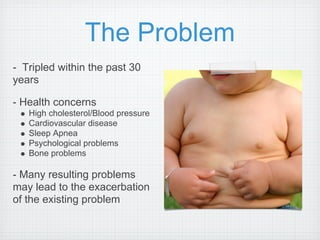
- Tripled within the past 30
years

- Health concerns
   High cholesterol/Blood pressure
   Cardiovascular disease
   Sleep Apnea
   Psychological problems
   Bone problems

- Many resulting problems
may lead to the exacerbation
of the existing problem
In Chicago


Englewood: 97% African American. Children 2-18
Pilsen: 92% Mexican/Other Hispanic. Children 2-18
Chicago: 36% Black, 26% Hispanic, 21% White. Children 3-13
U.S.: 65.6% White, 15.6% Hispanic, 12.8% Black. Children 2-19
Causes
Focus
User Research at the Howard
  Area Community Center
              Attended a "supper club" and a
              nutrition class for children.

              Goals:

                 To assess the impact of, and
                 challenges facing, nutrition
                 awareness programs

                 To learn more about children's
                 attitude towards food
User Research:
Key Insights
Students learned facts about
nutrition, but didn't seem
motivated to incorporate these
lessons into their daily choices

Variation in the age of students
makes it difficult to engage
everyone

Children don't despise healthy
food as a rule, but may be
picky about eating choices
Upcoming Research at the
       YMCA Evanston
Plan to talk to parents during swim
 classes and basketball practices


                Goals:

 To get the parents' perspectives on what
 makes their children healthy or unhealthy
 To find out what impacts a parent's
 decision making at the grocery store
 To see what activities are available at the
 center, and who is likely to participate
Main Takeaways
Main Takeaways
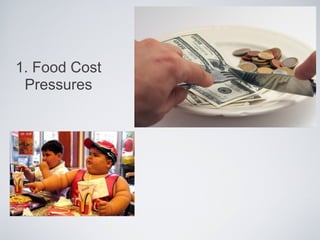
1. Food Cost
 Pressures
2. Inaccessible High-Quality Food


walkable access
to healthy food
green: <=1 mile from
       supermarket

red: > 1 mile
3. Inaccessible Activity Programs
 Gyms               Community Centers
3. Activity Programs Work
Main Takeaways
Narrow Focus - Better Results
Moving forward…
Education or Accessibility?
Parents and Food


   Educating Parents            Providing Access to
                                  Healthy Options


Focus: How do we enable parents to provide healthy
               food for their kids?
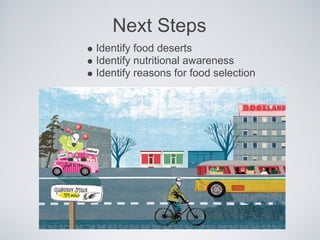
Next Steps
Identify food deserts
Identify nutritional awareness
Identify reasons for food selection

Child Obesity

  • 1.
    Childhood Obesity in Chicago DFA: Winter 2011 Thea Klein-Mayer, Cody Hiller, Mark Silberg, Sarah Reibstein, Shamyle Ghazali, Jacquelyn Thich, Liz Schrier, Harika Rayala, Brandon Rivera-Melo
  • 2.
    The Problem - Tripledwithin the past 30 years - Health concerns High cholesterol/Blood pressure Cardiovascular disease Sleep Apnea Psychological problems Bone problems - Many resulting problems may lead to the exacerbation of the existing problem
  • 3.
    In Chicago Englewood: 97%African American. Children 2-18 Pilsen: 92% Mexican/Other Hispanic. Children 2-18 Chicago: 36% Black, 26% Hispanic, 21% White. Children 3-13 U.S.: 65.6% White, 15.6% Hispanic, 12.8% Black. Children 2-19
  • 4.
  • 5.
  • 6.
    User Research atthe Howard Area Community Center Attended a "supper club" and a nutrition class for children. Goals: To assess the impact of, and challenges facing, nutrition awareness programs To learn more about children's attitude towards food
  • 7.
    User Research: Key Insights Studentslearned facts about nutrition, but didn't seem motivated to incorporate these lessons into their daily choices Variation in the age of students makes it difficult to engage everyone Children don't despise healthy food as a rule, but may be picky about eating choices
  • 8.
    Upcoming Research atthe YMCA Evanston Plan to talk to parents during swim classes and basketball practices Goals: To get the parents' perspectives on what makes their children healthy or unhealthy To find out what impacts a parent's decision making at the grocery store To see what activities are available at the center, and who is likely to participate
  • 9.
  • 10.
  • 11.
    1. Food Cost Pressures
  • 12.
    2. Inaccessible High-QualityFood walkable access to healthy food green: <=1 mile from supermarket red: > 1 mile
  • 13.
    3. Inaccessible ActivityPrograms Gyms Community Centers
  • 14.
  • 15.
  • 16.
  • 17.
    Parents and Food Educating Parents Providing Access to Healthy Options Focus: How do we enable parents to provide healthy food for their kids?
  • 18.
    Next Steps Identify fooddeserts Identify nutritional awareness Identify reasons for food selection