The Basics of Autism
Spectrum Disorders
  Training Series


  RAAC Training Committee
           2012
Child Care Training Series
         Modules
 Module One: Autism Defined, Autism Prevalence
  and Primary Characteristics

 Module Two: Early Signs of Autism
 Module Three: Physical Characteristics of Autism
 Module Four: Cognition and Learning in Autism
 Module Five: Autism and Sensory Differences
 Module Six: Communication and Autism
Child Care Training Series
         Modules
 Module Seven: Behavior Challenges and Autism
 Module Eight: Understanding Behavior in Children
  with Autism

 Module Nine: Functional Behavior Assessment
 Module Ten: Autism and Play Skills to Teach
 Module Eleven: Safety and Autism
Big Idea

   We must be like a
  detective in order to
find out the reason for a
 behavior and follow the
          clues.
Remember…..
 Behaviors are a way of coping with what is happening
  around us.

 Behaviors are learned through trial and error.
 Behaviors that are reinforced are likely to continue.
 If a behavior continues to occur or it is increasing, it is
  being reinforced in some way.

 To change the child’s behavior, we must change what we
  are doing.
Functional Behavior
       Assessment

A Functional Behavior Assessment
(FBA) will help you to discover the
reasons behind a behavior. You can
then decide on a plan for how to
change it.
Functional Behavior
        Assessment
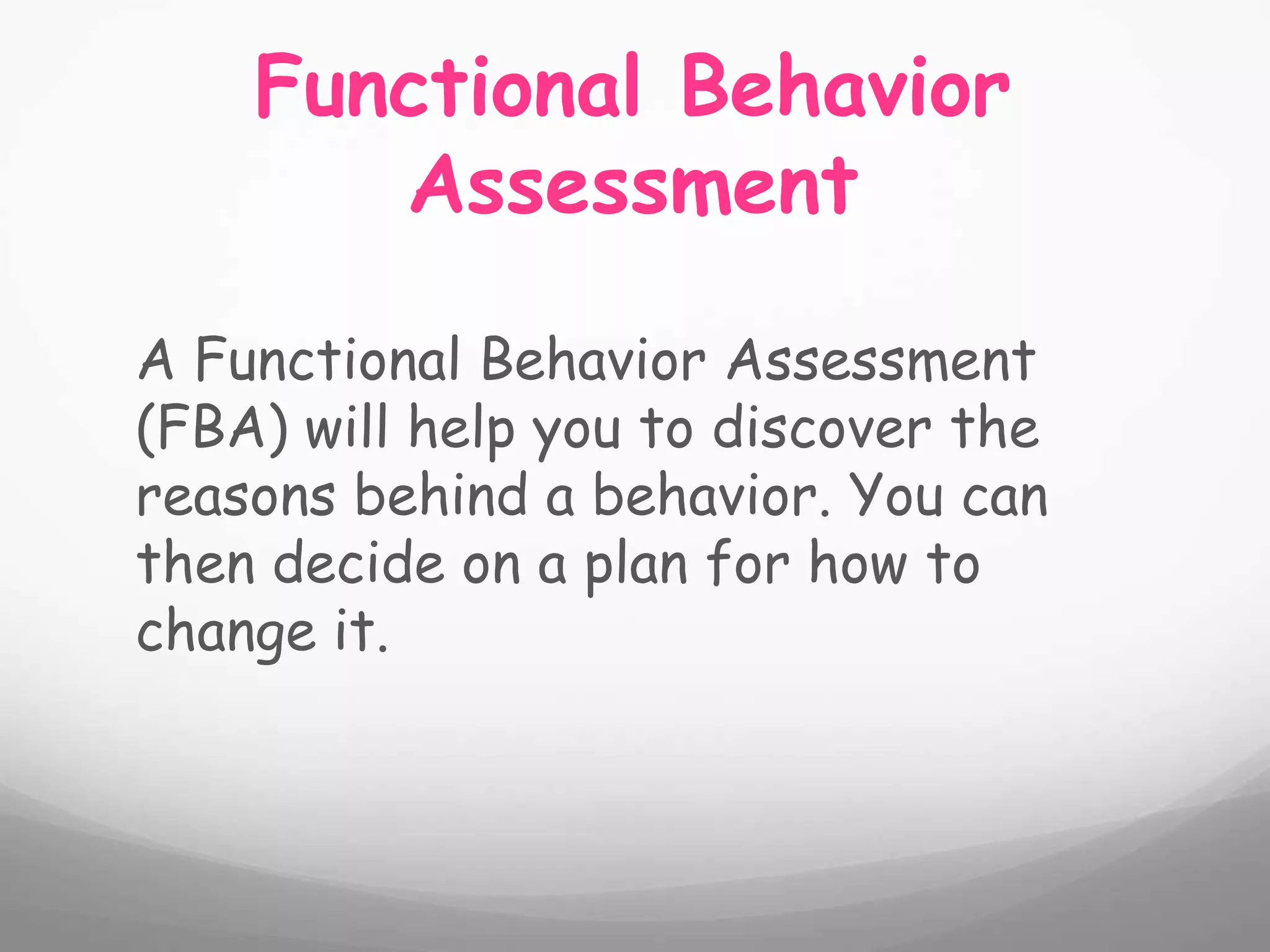
             The ABCs of Behavior
A                        B                          C


    Antecedent: What happens before the behavior?
      Behavior: What is the behavior?
    Consequence: What happens after the behavior occurs?
Functional Behavior Assessment:
    Finding the Reason for the Behavior

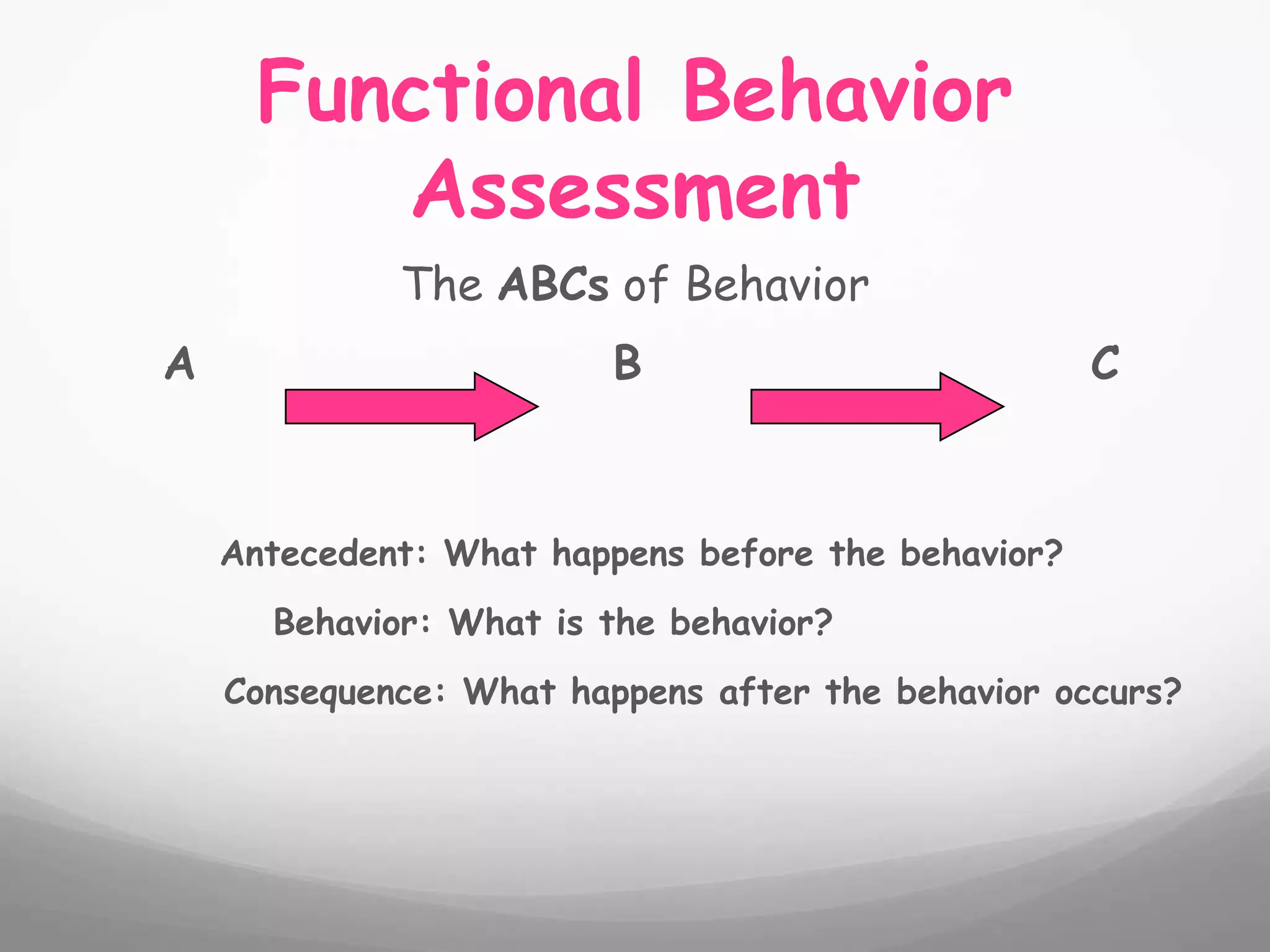
 Medical (physical pain or discomfort)
 Attention (verbal or physical)
 Escape   (getting away from something that I do
  not want to do or from a place that I do not want to
  be in)

 Tangible (getting something that I want)
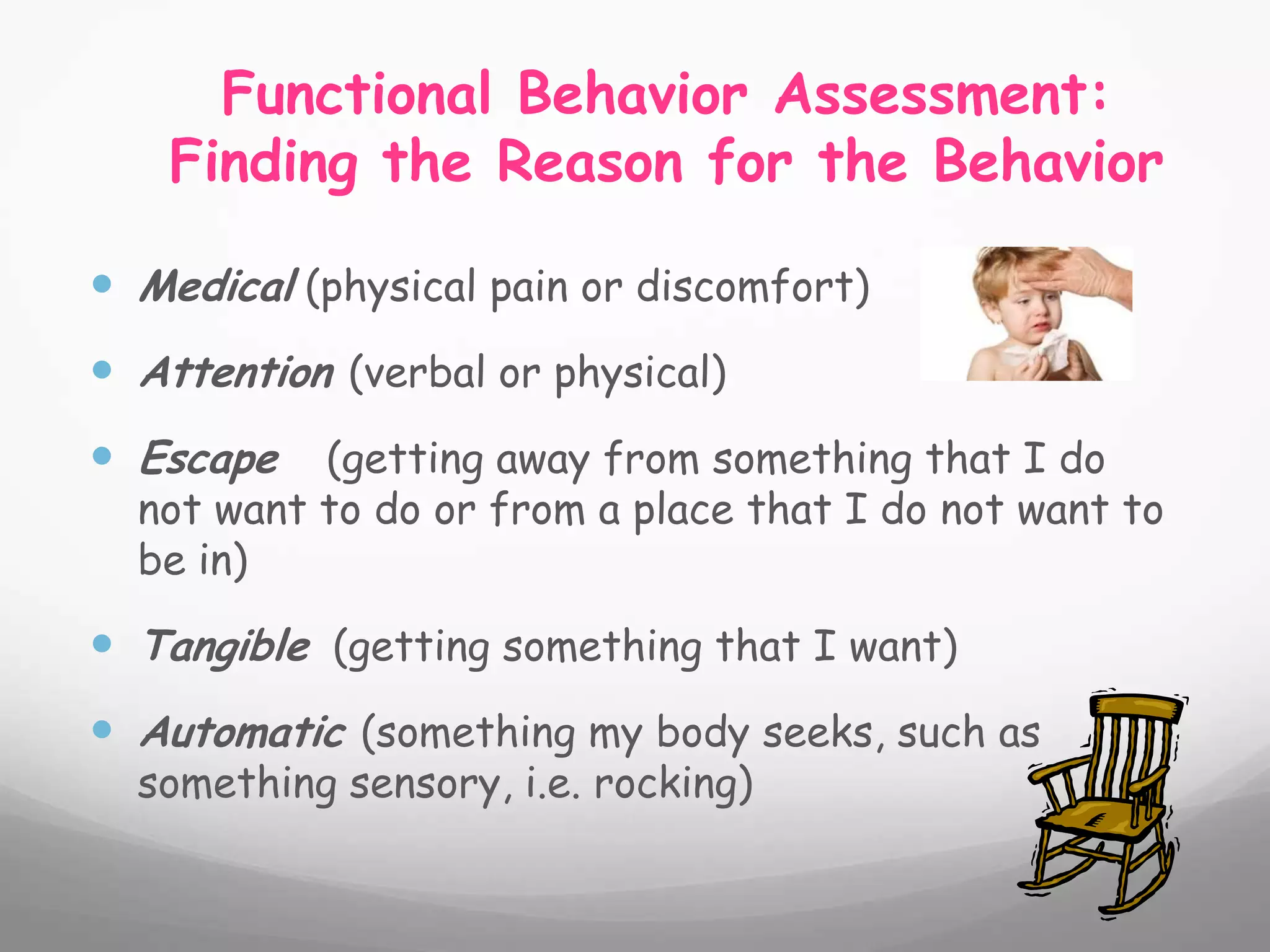
 Automatic (something my body seeks, such as
  something sensory, i.e. rocking)
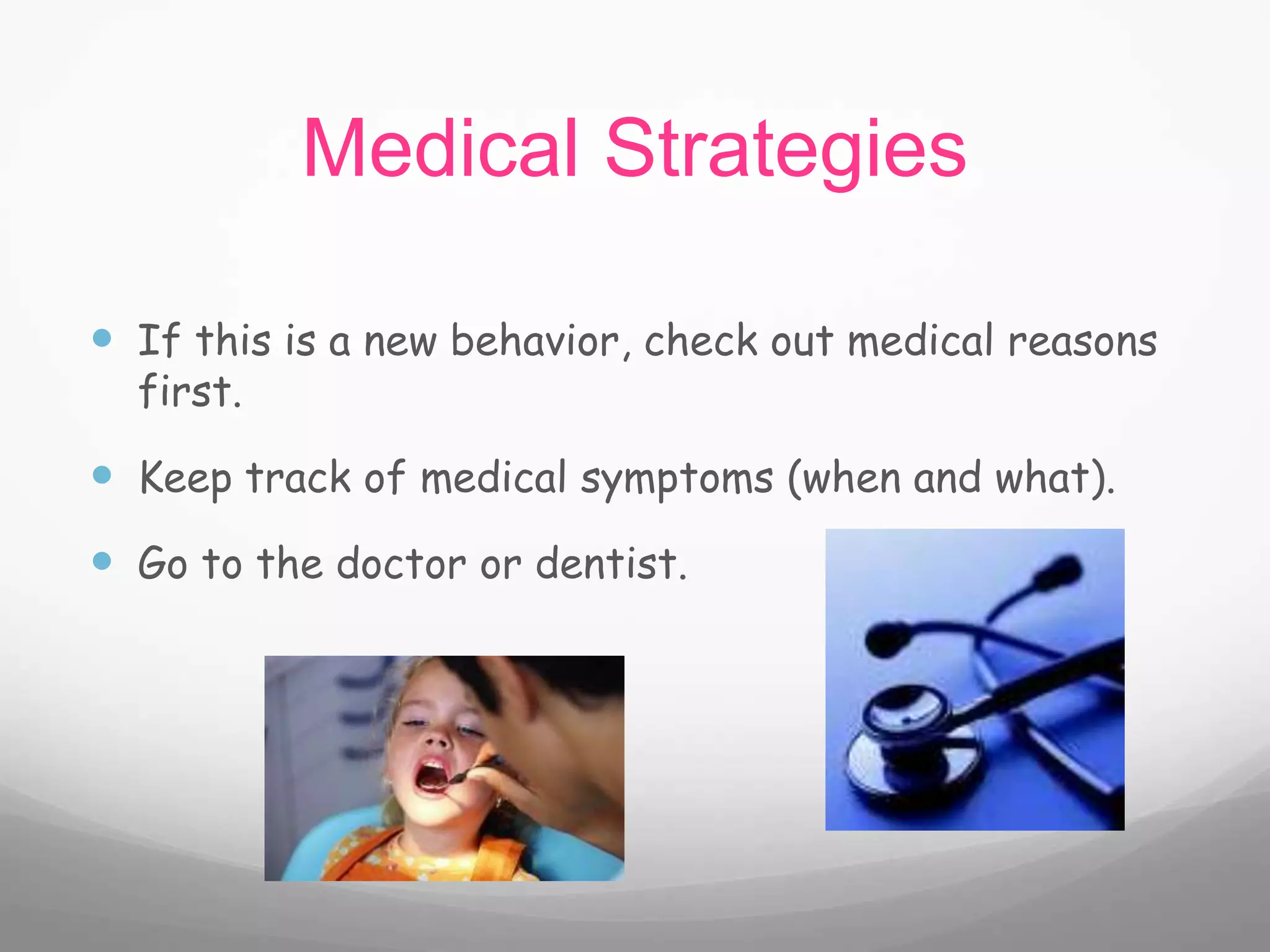
Medical Strategies

 If this is a new behavior, check out medical reasons
  first.

 Keep track of medical symptoms (when and what).
 Go to the doctor or dentist.
Strategies for Attention
           Behaviors
 Teach the child better ways to get attention.
 Focus on the behavior that you want to see more
  of – and ignore the behavior that you want to
  change.

 Avoid using negative words (“don’t”, “no”).
 Use positive words about the behavior that you
  want them to do instead (“do”……).

 Use a neutral tone. Show no over-reaction, either
  words or facial expressions, to the behavior that
  you want them to change.
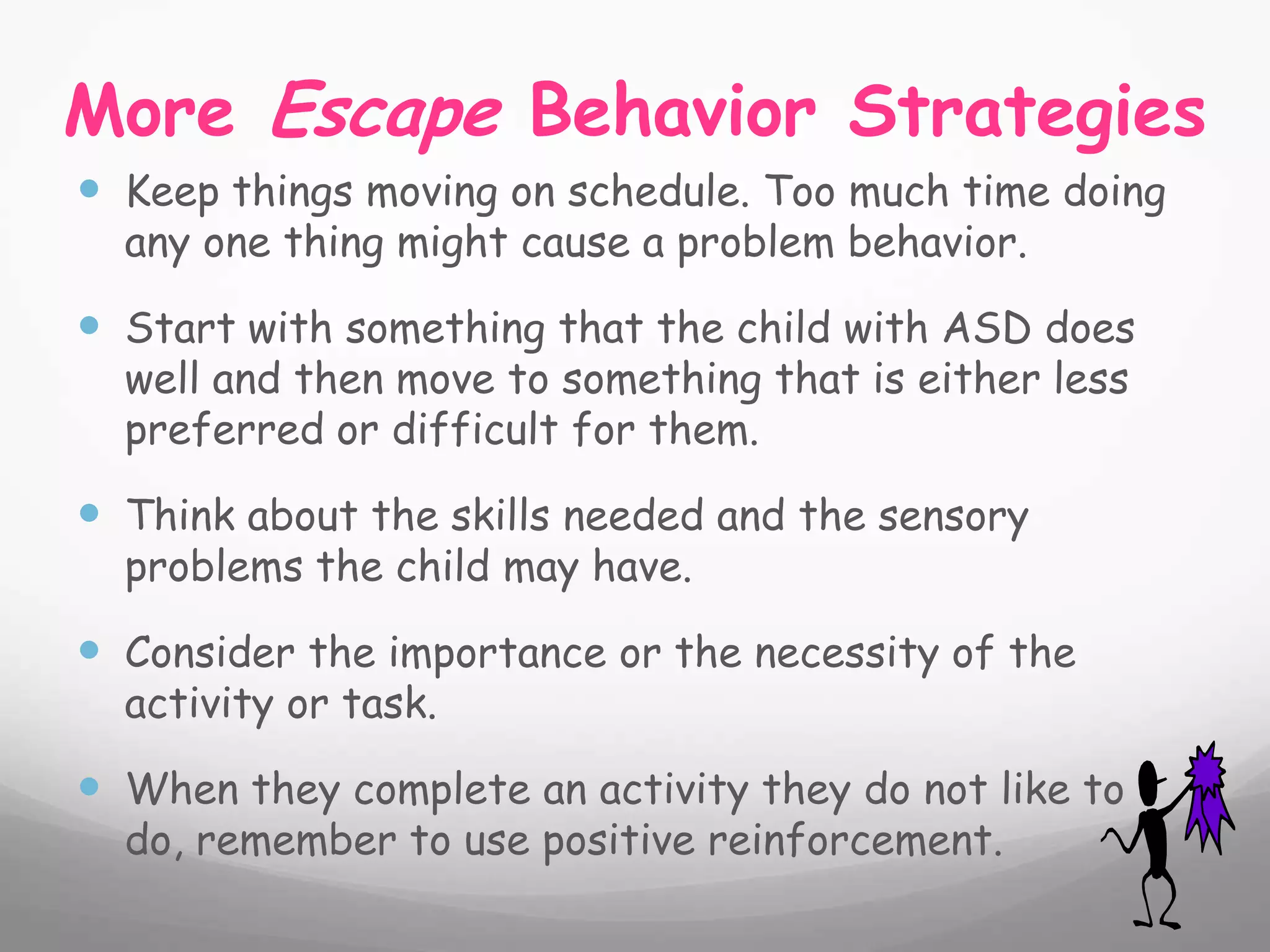
Strategies for Escape Behaviors
 Mix up activities that they like to do with activities that are
  harder for them or that they are not interested in doing.

 Have a beginning and end to the activity (i.e. your job is done
  when you pick up all the toys from the floor).

 Sometimes it helps to break a task down into smaller steps,
  doing one at a time.

 Make sure that you “reinforce” when the task is completed.
  This might have to happen after each small step (i.e. toys put
  away, reinforce with praise, crayons put away, reinforce with
  praise, paper put away, reinforce with praise, etc.).
More Escape Behavior Strategies
 Keep things moving on schedule. Too much time doing
  any one thing might cause a problem behavior.

 Start with something that the child with ASD does
  well and then move to something that is either less
  preferred or difficult for them.

 Think about the skills needed and the sensory
  problems the child may have.

 Consider the importance or the necessity of the
  activity or task.

 When they complete an activity they do not like to
  do, remember to use positive reinforcement.
Strategies for Tangible
          Behaviors
 If waiting is difficult then you may have to teach the
  child how to wait. At first, you may have to use a lot
  of reinforcement after just a second or two of their
  waiting and then slowly work to extend the amount of
  time they can wait.

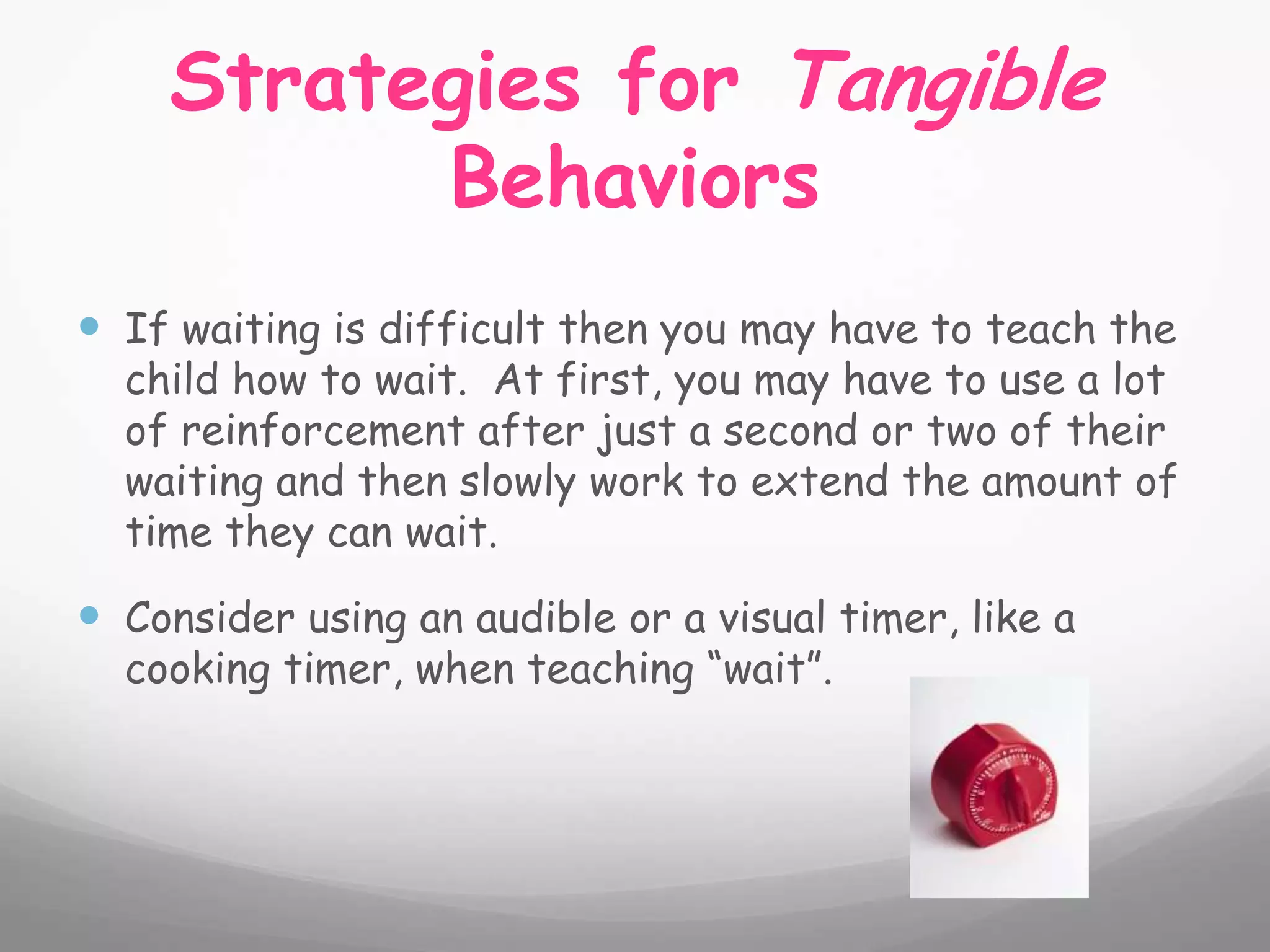
 Consider using an audible or a visual timer, like a
  cooking timer, when teaching “wait”.
Strategies for Tangible
          Behaviors
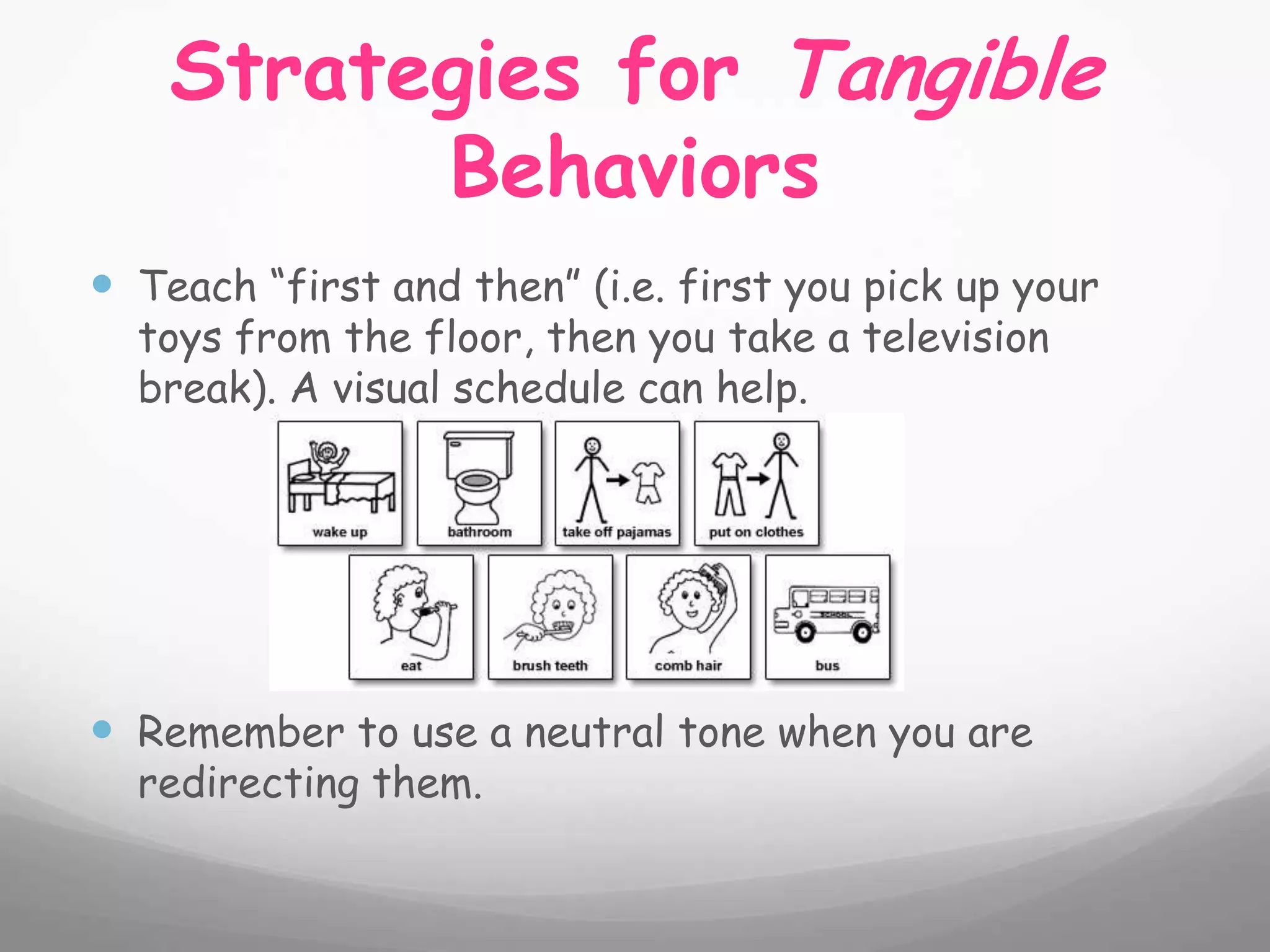
 Teach “first and then” (i.e. first you pick up your
  toys from the floor, then you take a television
  break). A visual schedule can help.


 Remember to use a neutral tone when you are
  redirecting them.
Strategies for Automatic
         Behavior
Automatic Behavior is usually something that the body seeks,
           such as something sensory (i.e. rocking)

 Replace the unwanted behavior with an activity that provides
   a similar experience (i.e. using a hand fan instead of finger
   flicking).

 Find a time and place that the behavior is okay to do (i.e.
   sitting in a rocking chair when watching TV).

 Limit “down time” by keeping the schedule moving.
Big Idea


Changing something that we are
 doing is often easier or better
     than trying to change
 something the other person is
              doing.

Child care training module nine updated fba

  • 1.
    The Basics ofAutism Spectrum Disorders Training Series RAAC Training Committee 2012
  • 2.
    Child Care TrainingSeries Modules  Module One: Autism Defined, Autism Prevalence and Primary Characteristics  Module Two: Early Signs of Autism  Module Three: Physical Characteristics of Autism  Module Four: Cognition and Learning in Autism  Module Five: Autism and Sensory Differences  Module Six: Communication and Autism
  • 3.
    Child Care TrainingSeries Modules  Module Seven: Behavior Challenges and Autism  Module Eight: Understanding Behavior in Children with Autism  Module Nine: Functional Behavior Assessment  Module Ten: Autism and Play Skills to Teach  Module Eleven: Safety and Autism
  • 4.
    Big Idea We must be like a detective in order to find out the reason for a behavior and follow the clues.
  • 5.
    Remember…..  Behaviors area way of coping with what is happening around us.  Behaviors are learned through trial and error.  Behaviors that are reinforced are likely to continue.  If a behavior continues to occur or it is increasing, it is being reinforced in some way.  To change the child’s behavior, we must change what we are doing.
  • 6.
    Functional Behavior Assessment A Functional Behavior Assessment (FBA) will help you to discover the reasons behind a behavior. You can then decide on a plan for how to change it.
  • 7.
    Functional Behavior Assessment The ABCs of Behavior A B C Antecedent: What happens before the behavior? Behavior: What is the behavior? Consequence: What happens after the behavior occurs?
  • 8.
    Functional Behavior Assessment: Finding the Reason for the Behavior  Medical (physical pain or discomfort)  Attention (verbal or physical)  Escape (getting away from something that I do not want to do or from a place that I do not want to be in)  Tangible (getting something that I want)  Automatic (something my body seeks, such as something sensory, i.e. rocking)
  • 9.
    Medical Strategies  Ifthis is a new behavior, check out medical reasons first.  Keep track of medical symptoms (when and what).  Go to the doctor or dentist.
  • 10.
    Strategies for Attention Behaviors  Teach the child better ways to get attention.  Focus on the behavior that you want to see more of – and ignore the behavior that you want to change.  Avoid using negative words (“don’t”, “no”).  Use positive words about the behavior that you want them to do instead (“do”……).  Use a neutral tone. Show no over-reaction, either words or facial expressions, to the behavior that you want them to change.
  • 11.
    Strategies for EscapeBehaviors  Mix up activities that they like to do with activities that are harder for them or that they are not interested in doing.  Have a beginning and end to the activity (i.e. your job is done when you pick up all the toys from the floor).  Sometimes it helps to break a task down into smaller steps, doing one at a time.  Make sure that you “reinforce” when the task is completed. This might have to happen after each small step (i.e. toys put away, reinforce with praise, crayons put away, reinforce with praise, paper put away, reinforce with praise, etc.).
  • 12.
    More Escape BehaviorStrategies  Keep things moving on schedule. Too much time doing any one thing might cause a problem behavior.  Start with something that the child with ASD does well and then move to something that is either less preferred or difficult for them.  Think about the skills needed and the sensory problems the child may have.  Consider the importance or the necessity of the activity or task.  When they complete an activity they do not like to do, remember to use positive reinforcement.
  • 13.
    Strategies for Tangible Behaviors  If waiting is difficult then you may have to teach the child how to wait. At first, you may have to use a lot of reinforcement after just a second or two of their waiting and then slowly work to extend the amount of time they can wait.  Consider using an audible or a visual timer, like a cooking timer, when teaching “wait”.
  • 14.
    Strategies for Tangible Behaviors  Teach “first and then” (i.e. first you pick up your toys from the floor, then you take a television break). A visual schedule can help.  Remember to use a neutral tone when you are redirecting them.
  • 15.
    Strategies for Automatic Behavior Automatic Behavior is usually something that the body seeks, such as something sensory (i.e. rocking)  Replace the unwanted behavior with an activity that provides a similar experience (i.e. using a hand fan instead of finger flicking).  Find a time and place that the behavior is okay to do (i.e. sitting in a rocking chair when watching TV).  Limit “down time” by keeping the schedule moving.
  • 16.
    Big Idea Changing somethingthat we are doing is often easier or better than trying to change something the other person is doing.

Editor's Notes