Child and Embryonic face
Development
By : Adnan Hailat
Jareer Zawaideh
Introduction
The pediatric age group ranges form 0-18 years i.e. from the
day of conception to the 18 years of age. They are:
Prenatal period: From conception to birth
Neonatal period: Birth to 4 weeks
Infancy period: 4 weeks to 1 year
Toddler period: From 1 to 3/4 years
Preschool period: 3-6 years (early childhood )
School period: 6-12 years( late childhood )
Adolescence: From puberty to beginning of adulthood (13-18
years)
.
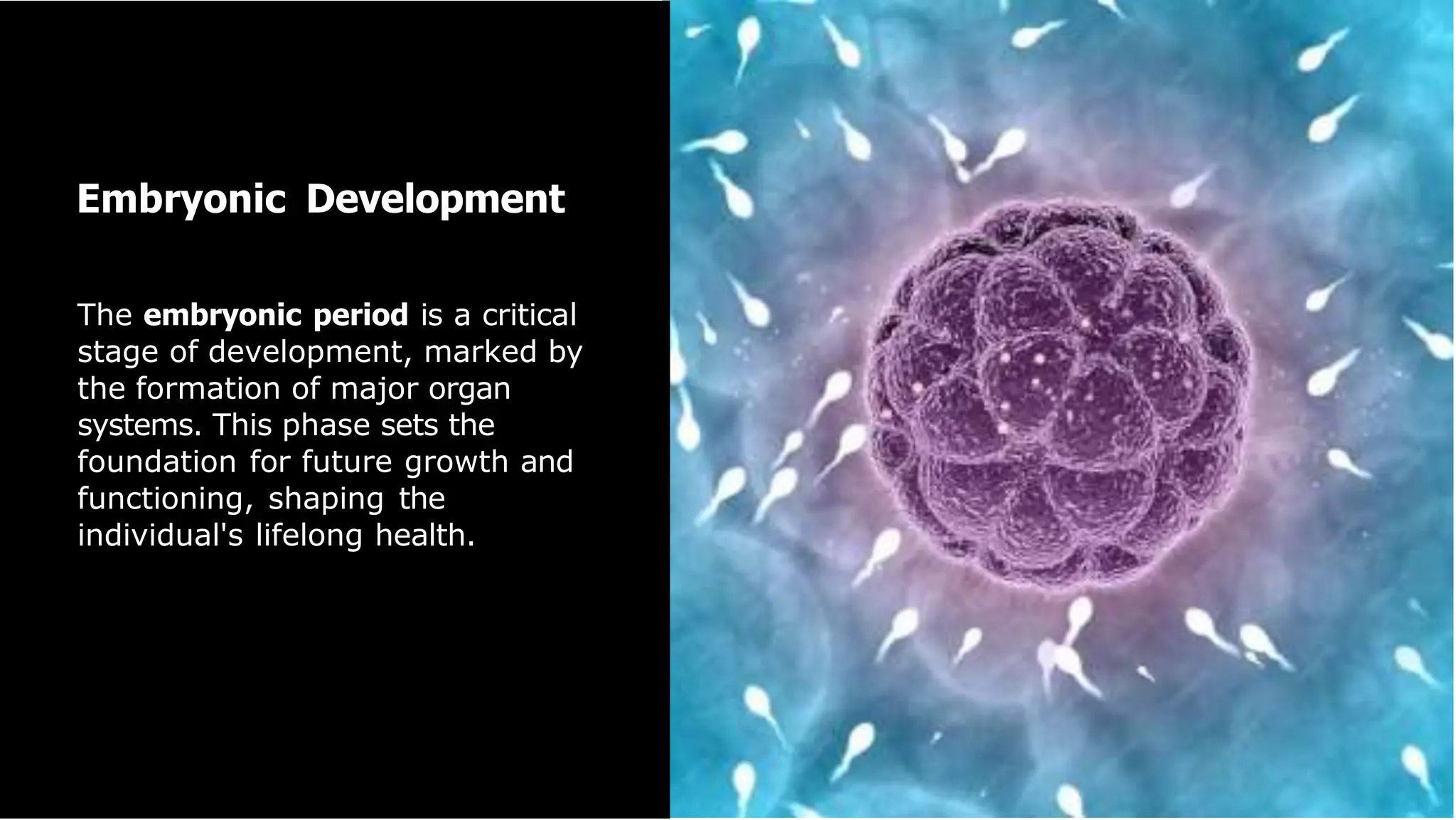
The embryonic period is a critical
stage of development, marked by
the formation of major organ
systems. This phase sets the
foundation for future growth and
functioning, shaping the
individual's lifelong health.
Embryonic Development
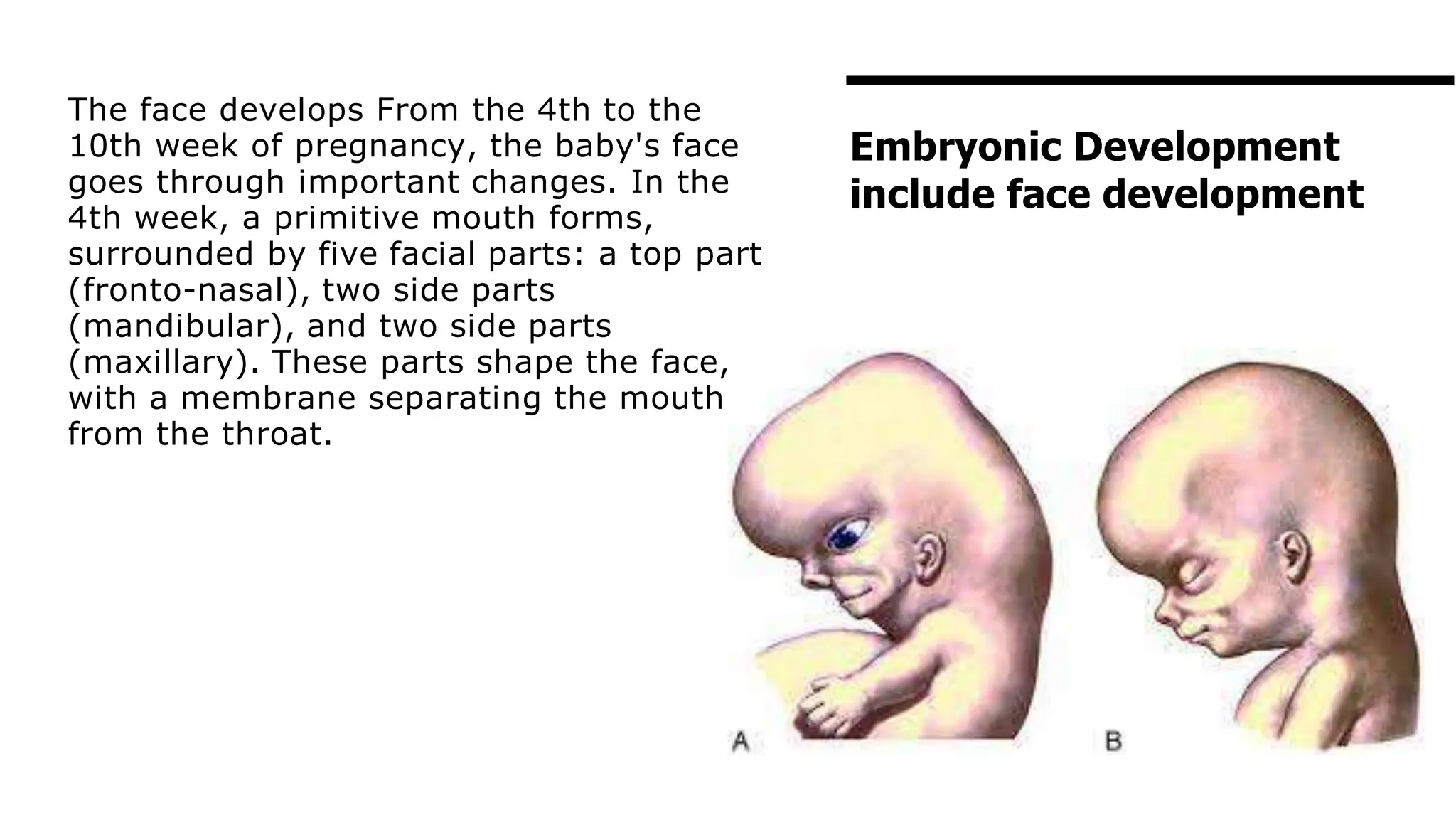
The face develops From the 4th to the
10th week of pregnancy, the baby's face
goes through important changes. In the
4th week, a primitive mouth forms,
surrounded by five facial parts: a top part
(fronto-nasal), two side parts
(mandibular), and two side parts
(maxillary). These parts shape the face,
with a membrane separating the mouth
from the throat.
Embryonic Development
include face development
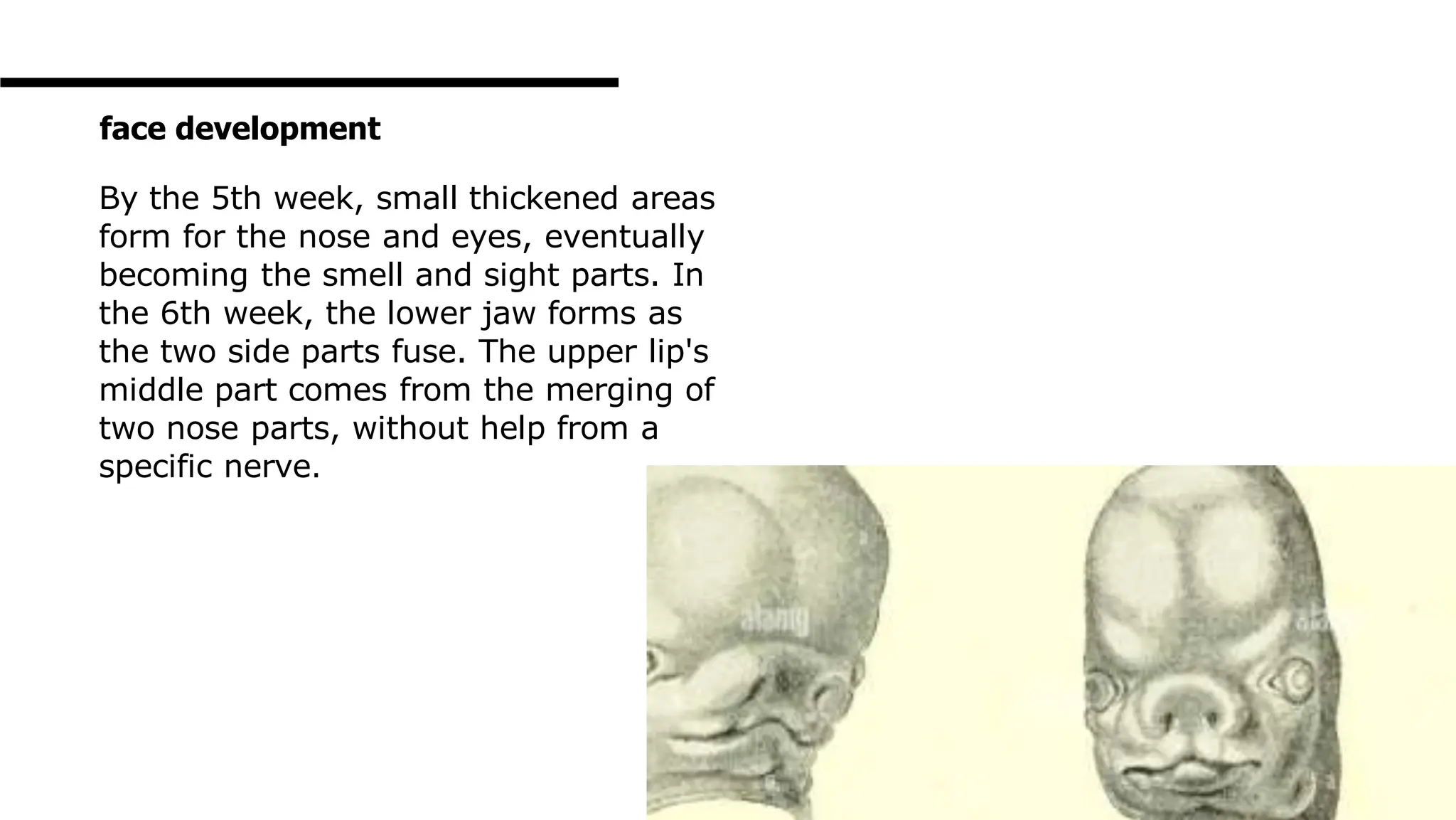
By the 5th week, small thickened areas
form for the nose and eyes, eventually
becoming the smell and sight parts. In
the 6th week, the lower jaw forms as
the two side parts fuse. The upper lip's
middle part comes from the merging of
two nose parts, without help from a
specific nerve.
face development
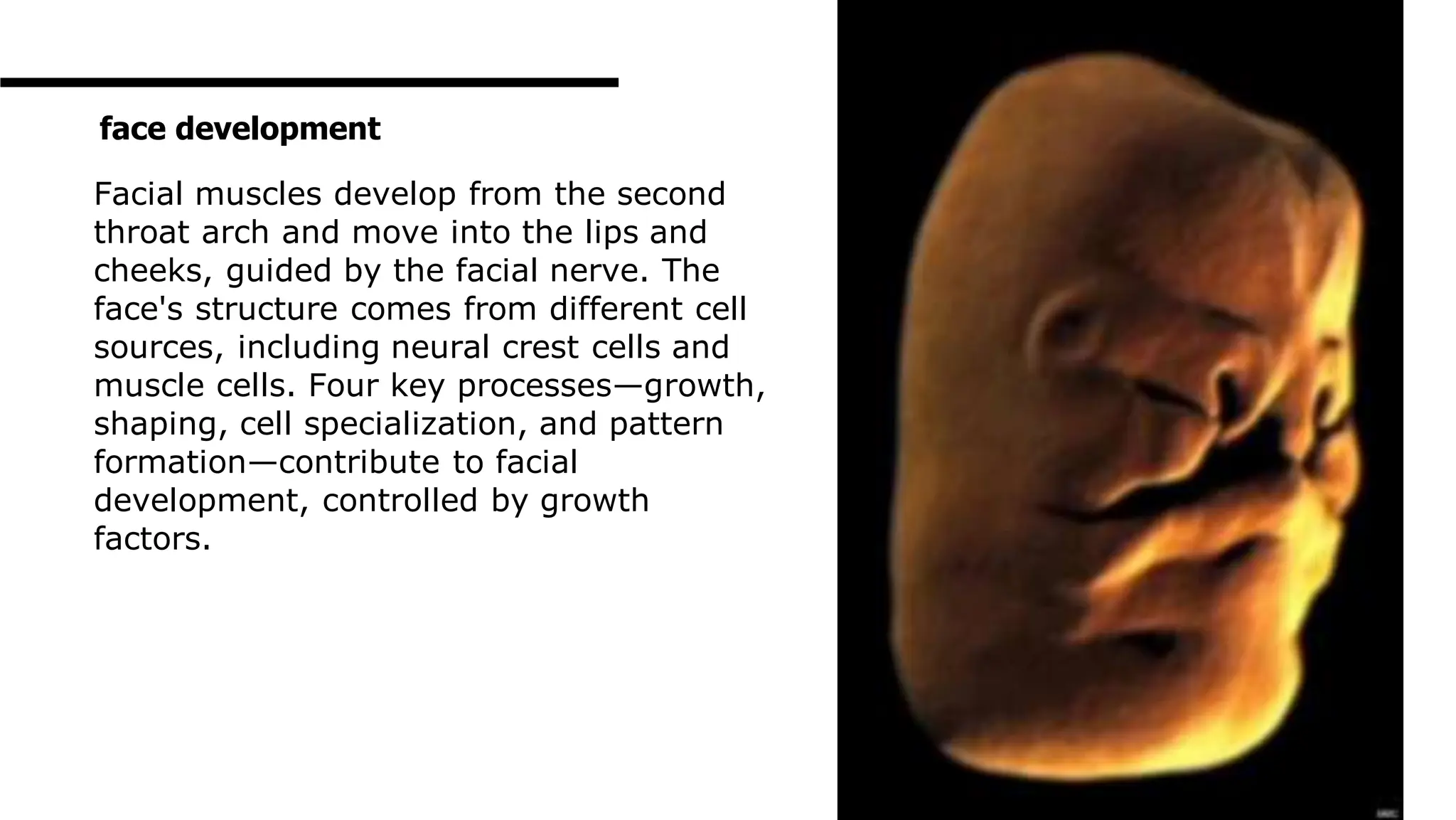
Facial muscles develop from the second
throat arch and move into the lips and
cheeks, guided by the facial nerve. The
face's structure comes from different cell
sources, including neural crest cells and
muscle cells. Four key processes—growth,
shaping, cell specialization, and pattern
formation—contribute to facial
development, controlled by growth
factors.
face development
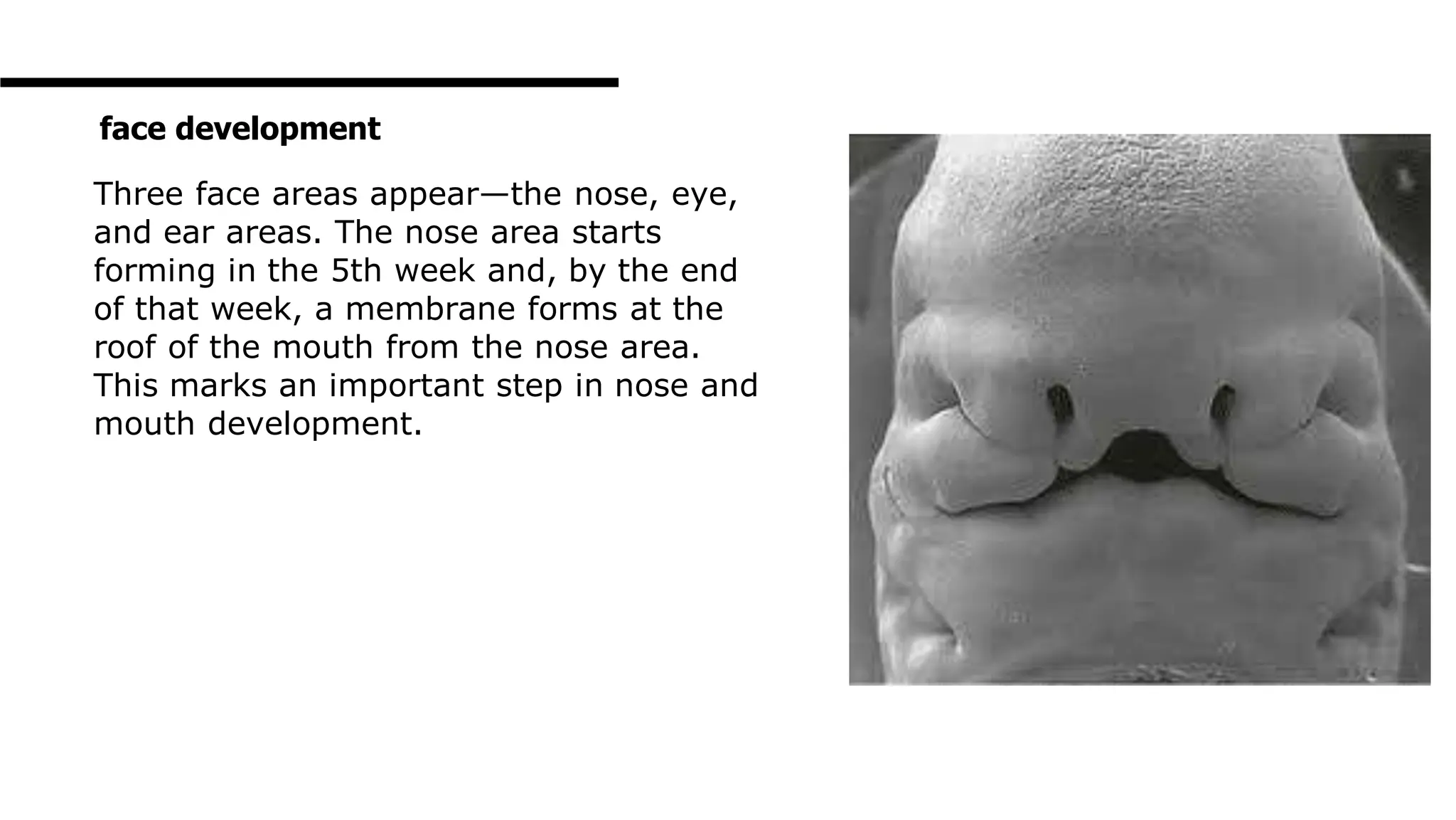
Three face areas appear—the nose, eye,
and ear areas. The nose area starts
forming in the 5th week and, by the end
of that week, a membrane forms at the
roof of the mouth from the nose area.
This marks an important step in nose and
mouth development.
face development
Embryonic Development
include face development
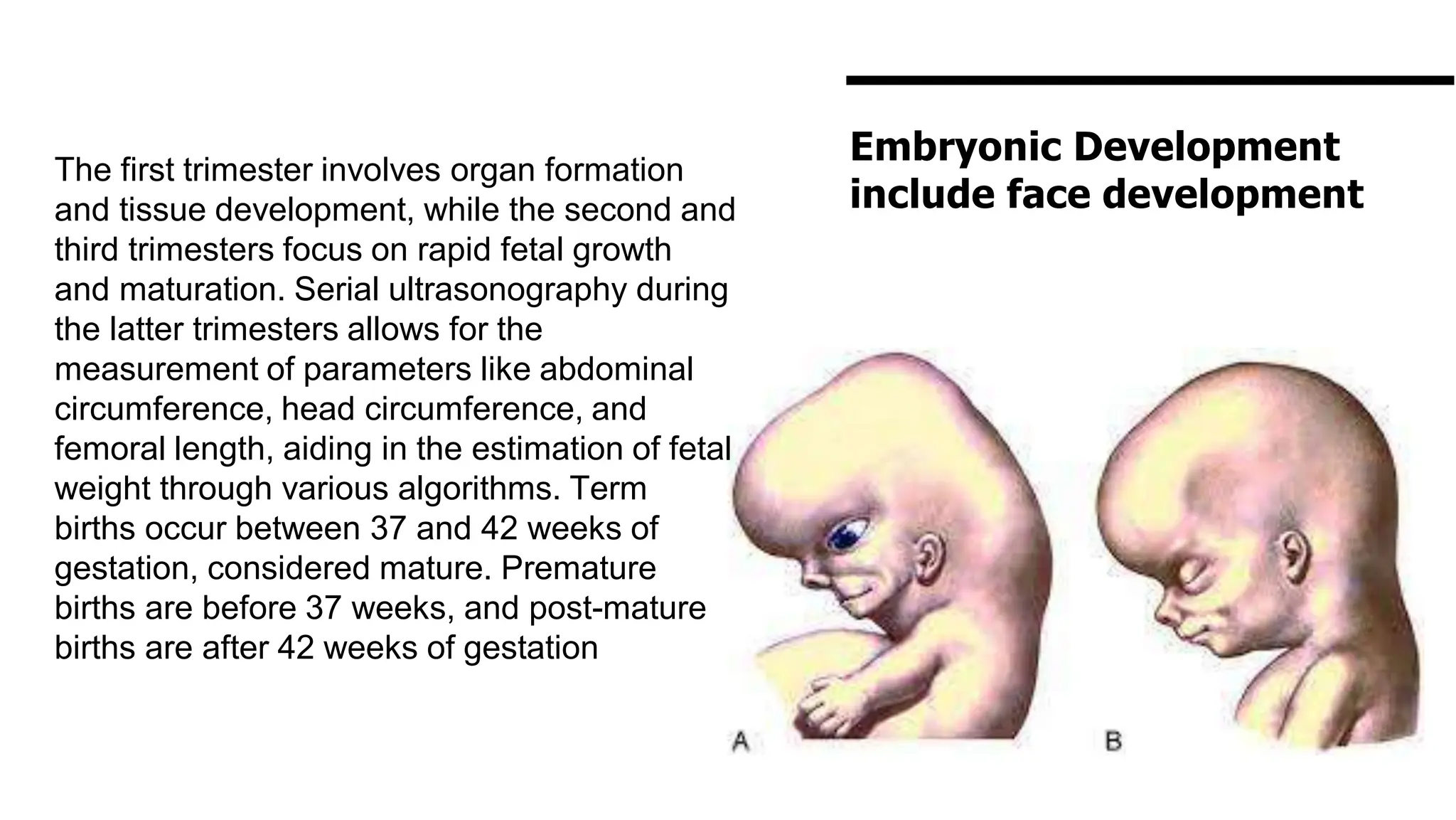
The first trimester involves organ formation
and tissue development, while the second and
third trimesters focus on rapid fetal growth
and maturation. Serial ultrasonography during
the latter trimesters allows for the
measurement of parameters like abdominal
circumference, head circumference, and
femoral length, aiding in the estimation of fetal
weight through various algorithms. Term
births occur between 37 and 42 weeks of
gestation, considered mature. Premature
births are before 37 weeks, and post-mature
births are after 42 weeks of gestation
In the early months, babies regain their birth weight, and during infancy, they
grow quickly with consistent weight gain and height increase. However, there's
a later decline in growth rate, influenced by factors like nutrition and living
conditions. The World Health Organization (WHO) introduced a growth chart in
2006 for breastfed infants, providing a steady growth pattern. Between 2 to 4
years, children grow about 7 cm and 2 kg per year. After 5–6 years, growth
slows down to around 5 cm/year, influenced by growth and thyroid hormones
Cognitive & Emotional Development
Cognitive development includes reasoning and
problem-solving. Even infants explore and interact with
their environment. Skills develop through learning from
experiences, engaging in physical activities, and
interacting with others.
Cognitive and emotional development are linked,
starting with early relationships with caregivers.
Temperament influences how a child reacts to new
situations. Each child follows their unique developmental
path.
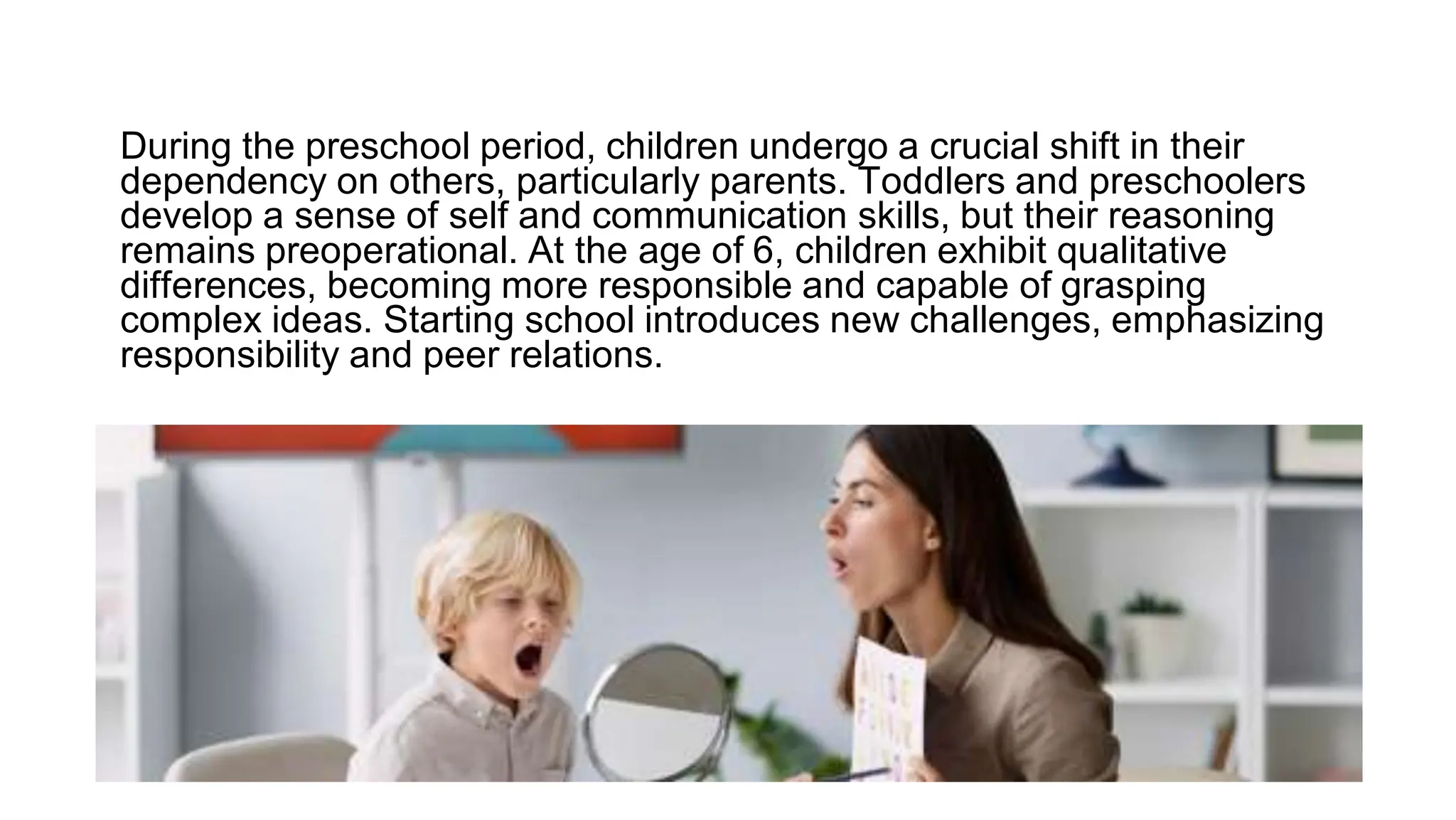
During the preschool period, children undergo a crucial shift in their
dependency on others, particularly parents. Toddlers and preschoolers
develop a sense of self and communication skills, but their reasoning
remains preoperational. At the age of 6, children exhibit qualitative
differences, becoming more responsible and capable of grasping
complex ideas. Starting school introduces new challenges, emphasizing
responsibility and peer relations.
Adolescent brain development
involves significant changes in
cognitive abilities, emotional
processing, and decision-making.
Understanding these changes is
crucial for supporting
adolescents in navigating the
complexities of their evolving
brains.
Adolescent Brain Development
Thanks!

Child and Embryonic face Development.pptx

  • 1.
    Child and Embryonicface Development By : Adnan Hailat Jareer Zawaideh
  • 2.
    Introduction The pediatric agegroup ranges form 0-18 years i.e. from the day of conception to the 18 years of age. They are: Prenatal period: From conception to birth Neonatal period: Birth to 4 weeks Infancy period: 4 weeks to 1 year Toddler period: From 1 to 3/4 years Preschool period: 3-6 years (early childhood ) School period: 6-12 years( late childhood ) Adolescence: From puberty to beginning of adulthood (13-18 years) .
  • 3.
    The embryonic periodis a critical stage of development, marked by the formation of major organ systems. This phase sets the foundation for future growth and functioning, shaping the individual's lifelong health. Embryonic Development
  • 4.
    The face developsFrom the 4th to the 10th week of pregnancy, the baby's face goes through important changes. In the 4th week, a primitive mouth forms, surrounded by five facial parts: a top part (fronto-nasal), two side parts (mandibular), and two side parts (maxillary). These parts shape the face, with a membrane separating the mouth from the throat. Embryonic Development include face development
  • 5.
    By the 5thweek, small thickened areas form for the nose and eyes, eventually becoming the smell and sight parts. In the 6th week, the lower jaw forms as the two side parts fuse. The upper lip's middle part comes from the merging of two nose parts, without help from a specific nerve. face development
  • 6.
    Facial muscles developfrom the second throat arch and move into the lips and cheeks, guided by the facial nerve. The face's structure comes from different cell sources, including neural crest cells and muscle cells. Four key processes—growth, shaping, cell specialization, and pattern formation—contribute to facial development, controlled by growth factors. face development
  • 7.
    Three face areasappear—the nose, eye, and ear areas. The nose area starts forming in the 5th week and, by the end of that week, a membrane forms at the roof of the mouth from the nose area. This marks an important step in nose and mouth development. face development
  • 8.
    Embryonic Development include facedevelopment The first trimester involves organ formation and tissue development, while the second and third trimesters focus on rapid fetal growth and maturation. Serial ultrasonography during the latter trimesters allows for the measurement of parameters like abdominal circumference, head circumference, and femoral length, aiding in the estimation of fetal weight through various algorithms. Term births occur between 37 and 42 weeks of gestation, considered mature. Premature births are before 37 weeks, and post-mature births are after 42 weeks of gestation
  • 9.
    In the earlymonths, babies regain their birth weight, and during infancy, they grow quickly with consistent weight gain and height increase. However, there's a later decline in growth rate, influenced by factors like nutrition and living conditions. The World Health Organization (WHO) introduced a growth chart in 2006 for breastfed infants, providing a steady growth pattern. Between 2 to 4 years, children grow about 7 cm and 2 kg per year. After 5–6 years, growth slows down to around 5 cm/year, influenced by growth and thyroid hormones
  • 10.
    Cognitive & EmotionalDevelopment Cognitive development includes reasoning and problem-solving. Even infants explore and interact with their environment. Skills develop through learning from experiences, engaging in physical activities, and interacting with others. Cognitive and emotional development are linked, starting with early relationships with caregivers. Temperament influences how a child reacts to new situations. Each child follows their unique developmental path.
  • 11.
    During the preschoolperiod, children undergo a crucial shift in their dependency on others, particularly parents. Toddlers and preschoolers develop a sense of self and communication skills, but their reasoning remains preoperational. At the age of 6, children exhibit qualitative differences, becoming more responsible and capable of grasping complex ideas. Starting school introduces new challenges, emphasizing responsibility and peer relations.
  • 12.
    Adolescent brain development involvessignificant changes in cognitive abilities, emotional processing, and decision-making. Understanding these changes is crucial for supporting adolescents in navigating the complexities of their evolving brains. Adolescent Brain Development
  • 13.