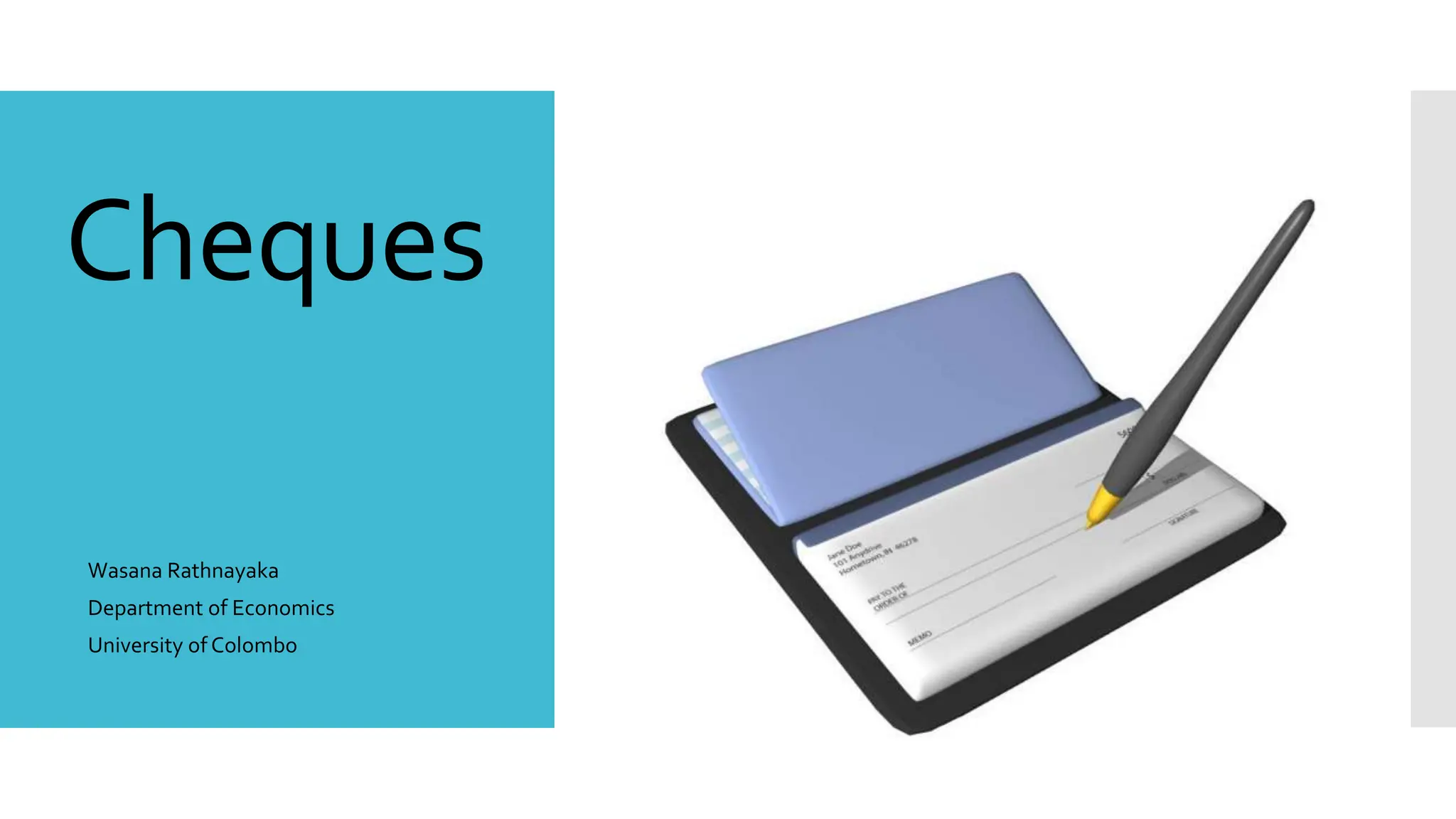
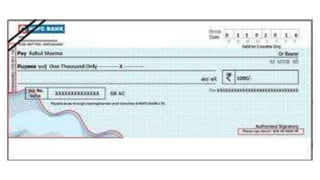
Cheques
Wasana Rathnayaka
Department of Economics
University of Colombo
What is
Cheques
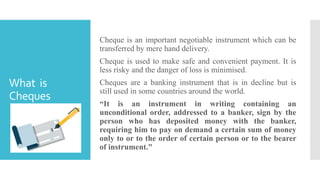
Cheque is an important negotiable instrument which can be
transferred by mere hand delivery.
Cheque is used to make safe and convenient payment. It is
less risky and the danger of loss is minimised.
Cheques are a banking instrument that is in decline but is
still used in some countries around the world.
“It is an instrument in writing containing an
unconditional order, addressed to a banker, sign by the
person who has deposited money with the banker,
requiring him to pay on demand a certain sum of money
only to or to the order of certain person or to the bearer
of instrument."
There are
three parties in
Cheque
Transaction –
Drawer
Drawee
Payee
Drawer (Maker of Cheque) – The person who issue the cheque or hold the account
with bank.
Drawee – The Person who is directed to make the payment against cheque. In case
of cheque, it is bank.
Payee – A person whose name is mentioned in the cheque or to whom the drawee
makes payment. If drawer has drawn the cheque in favour of self then drawer is
payee.
Elements of a
cheque
YourandYourBank’sInformation
CheckNumber
Date
Pay-toandAmountFields
MemoandSignature
RoutingandAccountNumber
Endorsement Lines
 Name of your bank which is also called the "drawee bank" or
paying bank

"Account Payee Only" crossing is a directive to the collecting bank
to pay into the account of the payee

Payee is the person to whom the cheque is to be made. Ensure that
the name of the person is correctly spelt and written close to the
words "pay to". Draw a line on the space after the payee's name to
avoid alteration

Date of the cheque. To be able to receive payment, the date must
be the current date

The person who holds and presents the cheque at the bank. It is
advisable to cross out "or bearer" to avoid any stolen cheque from
being paid out
Elements of a
cheque
Date

The payment amount written in words. The same value will be written
in the box beside it. Ensure that the amount in words and figures are
written close to the words "Ringgit Malaysia" and "RM" printed on the
cheque. Do not leave any gap by drawing a line after them. Make sure
that the amount in words and in figures tally, otherwise, the bank will
return the cheque

Your signature as the "drawer" of the cheque

Serial number of the cheque. Each cheque has a different number for
identification purposes

The drawee bank's state and branch code

Your current account number

The drawee bank's internal code for current account product
Types of
Cheques
Bearer Cheque
Order Cheque
Uncrossed / Open Cheque
Crossed Cheque
Anti-Dated Cheque
Post-Dated Cheque
Stale Cheque
Bearer cheque
When the words "or bearer" printed on the cheque is not cancelled, the
cheque is called a bearer cheque.
A bearer cheque is made payable to the bearer i.e. it is payable to the person
who presents it to the bank for encashment.
These cheques are risky - if such cheques are lost, the finder of the cheque
can collect payment from the bank.
In simple words, a cheque which is payable to any person who presents it for
payment at the bank counter is called ‘Bearer cheque’.
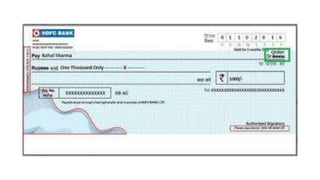
Order Cheque
When the word "or bearer" printed on the cheque is cancelled and and the
word ‘order’ may be written on the cheque, the cheque is called an order
cheque.
An order cheque is one which is payable to a particular person.
The payee can transfer an order cheque to someone else by signing his or
her name on the back of it.
Uncrossed /
Open Cheque
When a cheque is not crossed, it is known as an "Open Cheque" or
an "Uncrossed Cheque".
These cheques may be cashed at any bank and the payment of these
cheques can be obtained at the counter of the bank or transferred to
the bank account of the bearer.
An open cheque may be a bearer cheque or an order one.
Crossed
Cheque
Crossing of cheque means drawing two parallel lines on the left
corner of the cheque with or without additional words like "Account
Payee Only" or "Not Negotiable".
A crossed cheque cannot be encashed at the cash counter of a bank
but it can only be credited to the payee’s account.
This is a safer way of transferring money than an Uncrossed or
open cheque.
Anti-Dated
Cheque
Cheque in which the drawer mentions the date earlier than the date on which
it is presented to the bank, it is called as "anti-dated cheque".
Anti-dated cheque is valid up to six months from the date of the cheque.
For Example, a cheque issued on 10th Jan 2010 may bear a date 20th Dec
2009.
Post-Dated
Cheque
Cheque on which drawer mentions a date which is yet to come(future date)
to the date on which it is presented, is called post-dated cheque.
For example, if a cheque presented on 10th Jan 2010 bears a date of 25th
Jan 2010, it is a post-dated cheque.
The bank will make payment only on or after 25th Jan 2010.
Stale Cheque
If a cheque is presented for payment after six months from the date of the
cheque it is called stale cheque.
After expiry of that period, no payment will be made by banks against that
cheque
Mutilated
Cheque
When a cheque is torn into two or more pieces and presented for
payment, such a cheque is called a mutilated cheque.
The bank will not make payment against such a cheque without
getting confirmation of the drawer.
Different
Types of
Crossing
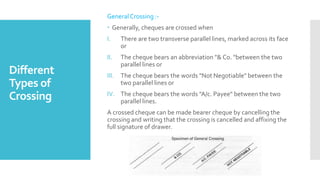
GeneralCrossing :-
 Generally, cheques are crossed when
I. There are two transverse parallel lines, marked across its face
or
II. The cheque bears an abbreviation "& Co. "between the two
parallel lines or
III. The cheque bears the words "Not Negotiable" between the
two parallel lines or
IV. The cheque bears the words "A/c. Payee" between the two
parallel lines.
A crossed cheque can be made bearer cheque by cancelling the
crossing and writing that the crossing is cancelled and affixing the
full signature of drawer.
Different
Types of
Crossing
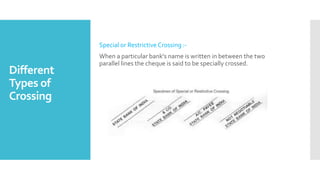
Special or Restrictive Crossing :-
When a particular bank's name is written in between the two
parallel lines the cheque is said to be specially crossed.

Cheques in the banking system and its important

  • 1.
    Cheques Wasana Rathnayaka Department ofEconomics University of Colombo
  • 2.
    What is Cheques Cheque isan important negotiable instrument which can be transferred by mere hand delivery. Cheque is used to make safe and convenient payment. It is less risky and the danger of loss is minimised. Cheques are a banking instrument that is in decline but is still used in some countries around the world. “It is an instrument in writing containing an unconditional order, addressed to a banker, sign by the person who has deposited money with the banker, requiring him to pay on demand a certain sum of money only to or to the order of certain person or to the bearer of instrument."
  • 3.
    There are three partiesin Cheque Transaction – Drawer Drawee Payee Drawer (Maker of Cheque) – The person who issue the cheque or hold the account with bank. Drawee – The Person who is directed to make the payment against cheque. In case of cheque, it is bank. Payee – A person whose name is mentioned in the cheque or to whom the drawee makes payment. If drawer has drawn the cheque in favour of self then drawer is payee.
  • 4.
    Elements of a cheque YourandYourBank’sInformation CheckNumber Date Pay-toandAmountFields MemoandSignature RoutingandAccountNumber EndorsementLines  Name of your bank which is also called the "drawee bank" or paying bank  "Account Payee Only" crossing is a directive to the collecting bank to pay into the account of the payee  Payee is the person to whom the cheque is to be made. Ensure that the name of the person is correctly spelt and written close to the words "pay to". Draw a line on the space after the payee's name to avoid alteration  Date of the cheque. To be able to receive payment, the date must be the current date  The person who holds and presents the cheque at the bank. It is advisable to cross out "or bearer" to avoid any stolen cheque from being paid out
  • 5.
    Elements of a cheque Date  Thepayment amount written in words. The same value will be written in the box beside it. Ensure that the amount in words and figures are written close to the words "Ringgit Malaysia" and "RM" printed on the cheque. Do not leave any gap by drawing a line after them. Make sure that the amount in words and in figures tally, otherwise, the bank will return the cheque  Your signature as the "drawer" of the cheque  Serial number of the cheque. Each cheque has a different number for identification purposes  The drawee bank's state and branch code  Your current account number  The drawee bank's internal code for current account product
  • 6.
    Types of Cheques Bearer Cheque OrderCheque Uncrossed / Open Cheque Crossed Cheque Anti-Dated Cheque Post-Dated Cheque Stale Cheque
  • 7.
    Bearer cheque When thewords "or bearer" printed on the cheque is not cancelled, the cheque is called a bearer cheque. A bearer cheque is made payable to the bearer i.e. it is payable to the person who presents it to the bank for encashment. These cheques are risky - if such cheques are lost, the finder of the cheque can collect payment from the bank. In simple words, a cheque which is payable to any person who presents it for payment at the bank counter is called ‘Bearer cheque’.
  • 8.
    Order Cheque When theword "or bearer" printed on the cheque is cancelled and and the word ‘order’ may be written on the cheque, the cheque is called an order cheque. An order cheque is one which is payable to a particular person. The payee can transfer an order cheque to someone else by signing his or her name on the back of it.
  • 10.
    Uncrossed / Open Cheque Whena cheque is not crossed, it is known as an "Open Cheque" or an "Uncrossed Cheque". These cheques may be cashed at any bank and the payment of these cheques can be obtained at the counter of the bank or transferred to the bank account of the bearer. An open cheque may be a bearer cheque or an order one.
  • 11.
    Crossed Cheque Crossing of chequemeans drawing two parallel lines on the left corner of the cheque with or without additional words like "Account Payee Only" or "Not Negotiable". A crossed cheque cannot be encashed at the cash counter of a bank but it can only be credited to the payee’s account. This is a safer way of transferring money than an Uncrossed or open cheque.
  • 13.
    Anti-Dated Cheque Cheque in whichthe drawer mentions the date earlier than the date on which it is presented to the bank, it is called as "anti-dated cheque". Anti-dated cheque is valid up to six months from the date of the cheque. For Example, a cheque issued on 10th Jan 2010 may bear a date 20th Dec 2009.
  • 14.
    Post-Dated Cheque Cheque on whichdrawer mentions a date which is yet to come(future date) to the date on which it is presented, is called post-dated cheque. For example, if a cheque presented on 10th Jan 2010 bears a date of 25th Jan 2010, it is a post-dated cheque. The bank will make payment only on or after 25th Jan 2010.
  • 15.
    Stale Cheque If acheque is presented for payment after six months from the date of the cheque it is called stale cheque. After expiry of that period, no payment will be made by banks against that cheque
  • 16.
    Mutilated Cheque When a chequeis torn into two or more pieces and presented for payment, such a cheque is called a mutilated cheque. The bank will not make payment against such a cheque without getting confirmation of the drawer.
  • 17.
    Different Types of Crossing GeneralCrossing :- Generally, cheques are crossed when I. There are two transverse parallel lines, marked across its face or II. The cheque bears an abbreviation "& Co. "between the two parallel lines or III. The cheque bears the words "Not Negotiable" between the two parallel lines or IV. The cheque bears the words "A/c. Payee" between the two parallel lines. A crossed cheque can be made bearer cheque by cancelling the crossing and writing that the crossing is cancelled and affixing the full signature of drawer.
  • 18.
    Different Types of Crossing Special orRestrictive Crossing :- When a particular bank's name is written in between the two parallel lines the cheque is said to be specially crossed.