Presentation by – Sangita Nikalje
KV No. 1 Dehuroad, Pune
 The change that is irreversible and we get
new substance is called as chemical change
 1. Change in state
 2. Change in colour
 3. Evolution of gas
 4. Change in temperature
 It is a equation showing a chemical reaction
 Symbols of elements are used
 It has two sides separated by an arrow
 Left side of the arrow has reactants and right
side of the arrow has products
 If something is written on the arrow, these
are the conditions required for the reactions
to happen
 E.g. 2Mg + O2 2MgO
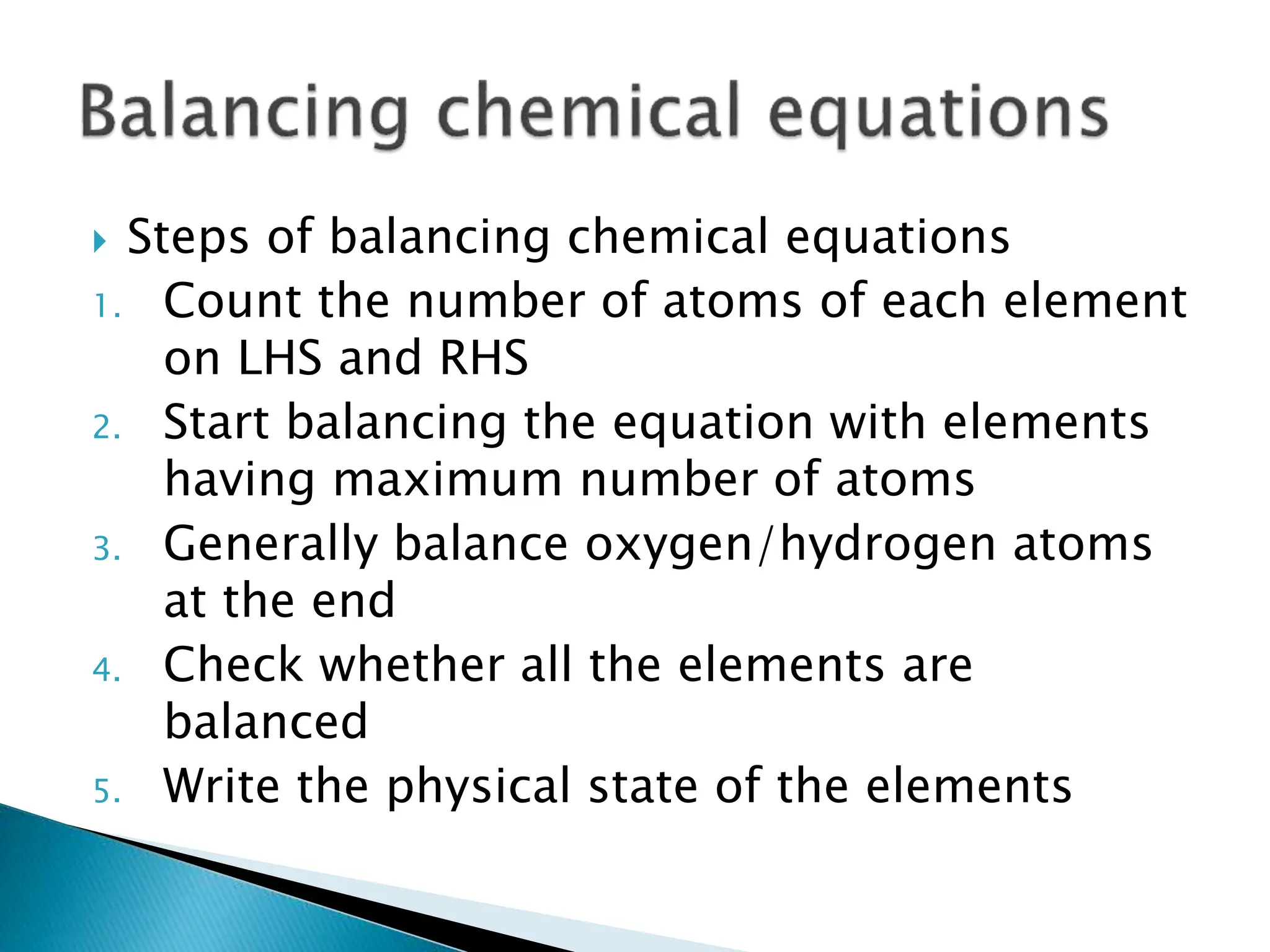
 Steps of balancing chemical equations
1. Count the number of atoms of each element
on LHS and RHS
2. Start balancing the equation with elements
having maximum number of atoms
3. Generally balance oxygen/hydrogen atoms
at the end
4. Check whether all the elements are
balanced
5. Write the physical state of the elements
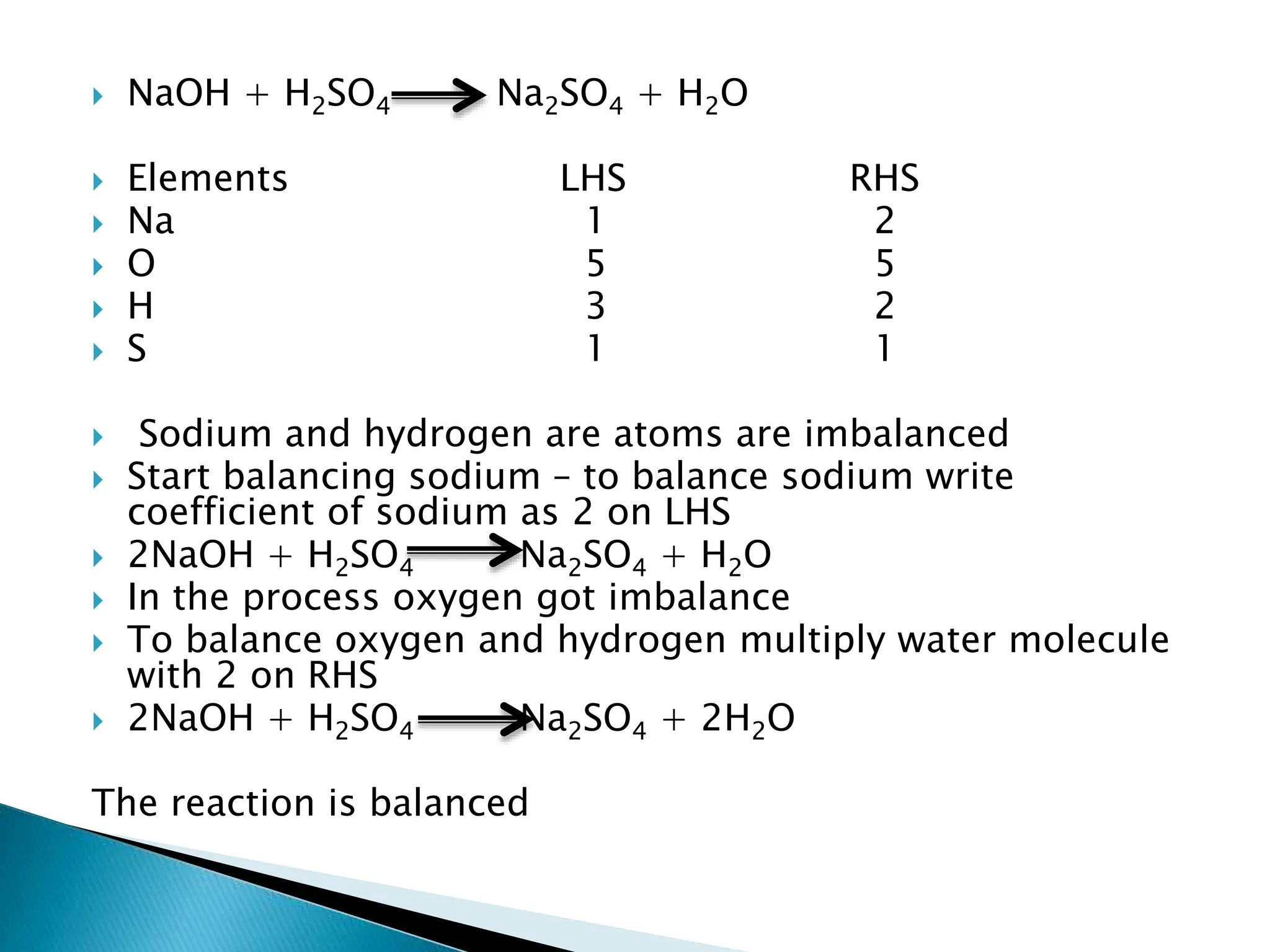
 NaOH + H2SO4 Na2SO4 + H2O
 Elements LHS RHS
 Na 1 2
 O 5 5
 H 3 2
 S 1 1
 Sodium and hydrogen are atoms are imbalanced
 Start balancing sodium – to balance sodium write
coefficient of sodium as 2 on LHS
 2NaOH + H2SO4 Na2SO4 + H2O
 In the process oxygen got imbalance
 To balance oxygen and hydrogen multiply water molecule
with 2 on RHS
 2NaOH + H2SO4 Na2SO4 + 2H2O
The reaction is balanced
 1. Combination reaction
 2. Decomposition reaction
 3. Displacement reaction
 4. Double displacement reaction
 5. Oxidation reaction
 6 Reduction reaction
 7. Redox reaction
 A reaction in which two or more reactants
react to give single product is called as
combination reaction
 E.g. C + O2 CO2
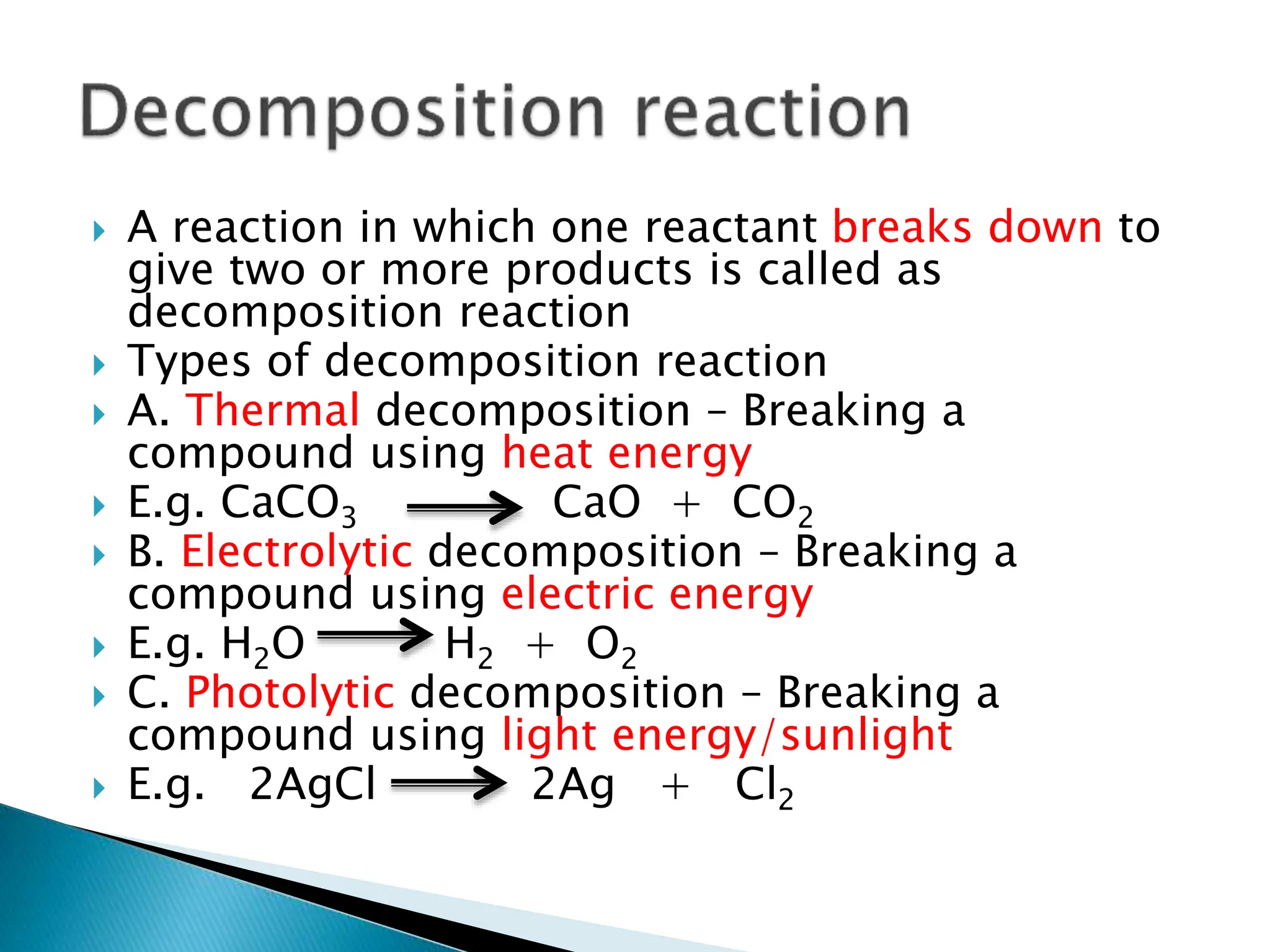
 A reaction in which one reactant breaks down to
give two or more products is called as
decomposition reaction
 Types of decomposition reaction
 A. Thermal decomposition – Breaking a
compound using heat energy
 E.g. CaCO3 CaO + CO2
 B. Electrolytic decomposition – Breaking a
compound using electric energy
 E.g. H2O H2 + O2
 C. Photolytic decomposition – Breaking a
compound using light energy/sunlight
 E.g. 2AgCl 2Ag + Cl2
 Reaction in which more reactive metal
displaces less reactive metal from its salt
solution is called as displacement reaction
 E.g. CuSO4 + Fe FeSO4 + Cu
 The reaction in which there is exchange of
ions is called as displacement reaction
 E.g. Na2SO4 + BaCl2 BaSO4 + 2NaCl
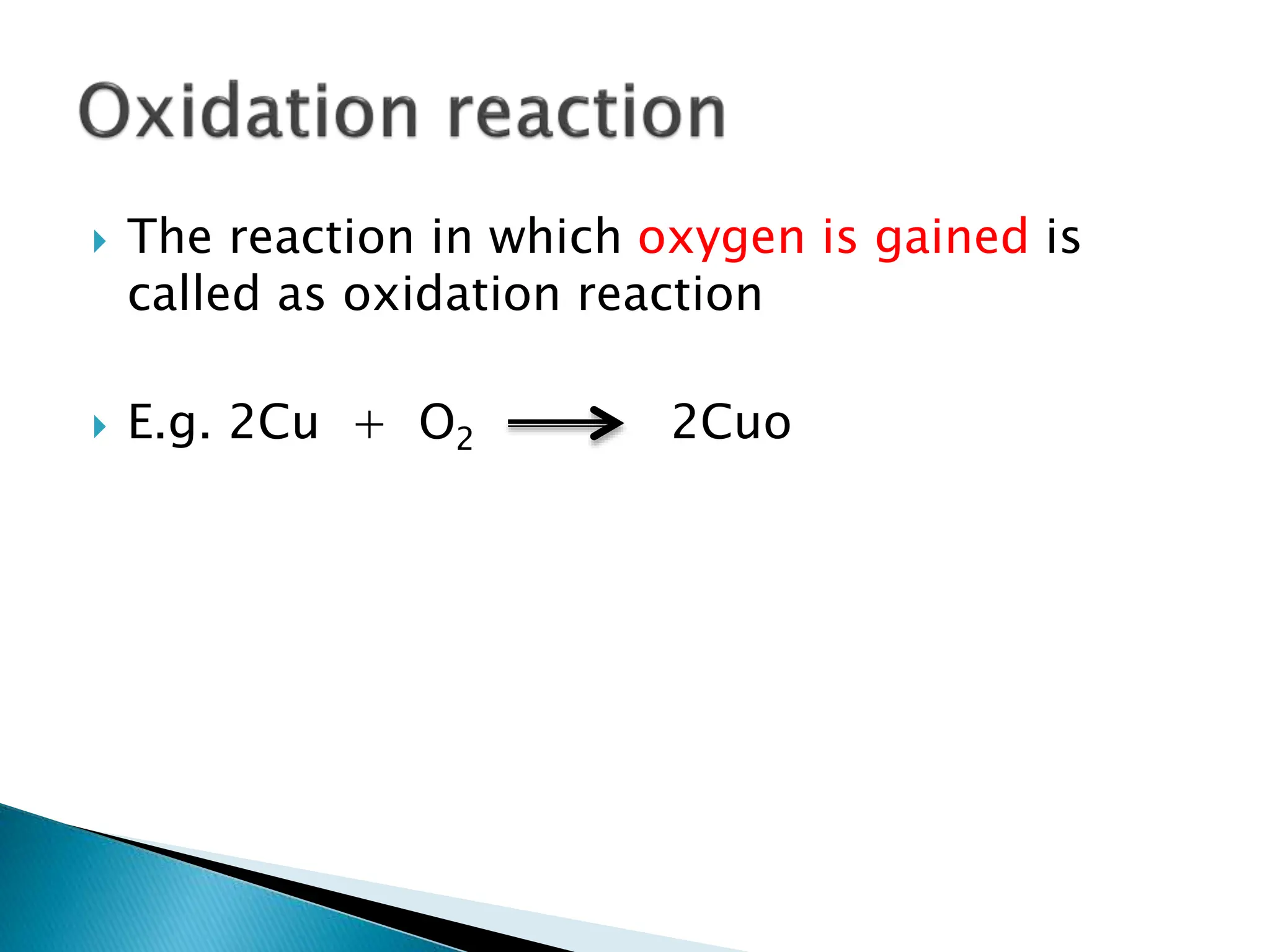
 The reaction in which oxygen is gained is
called as oxidation reaction
 E.g. 2Cu + O2 2Cuo
 The reaction in which oxygen is lost is called
as reduction reaction
 E.g. CuO + H2 Cu + H2O
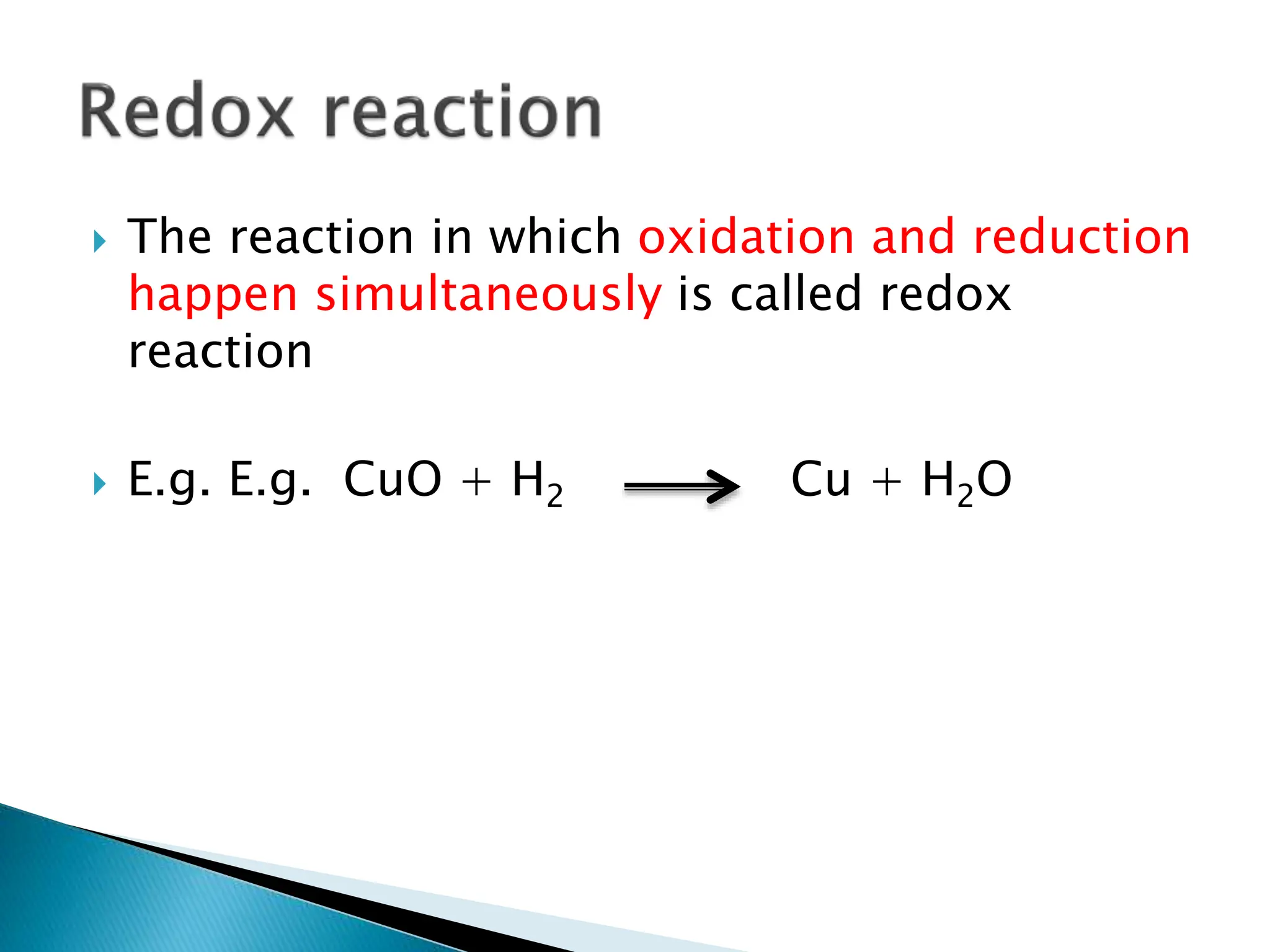
 The reaction in which oxidation and reduction
happen simultaneously is called redox
reaction
 E.g. E.g. CuO + H2 Cu + H2O
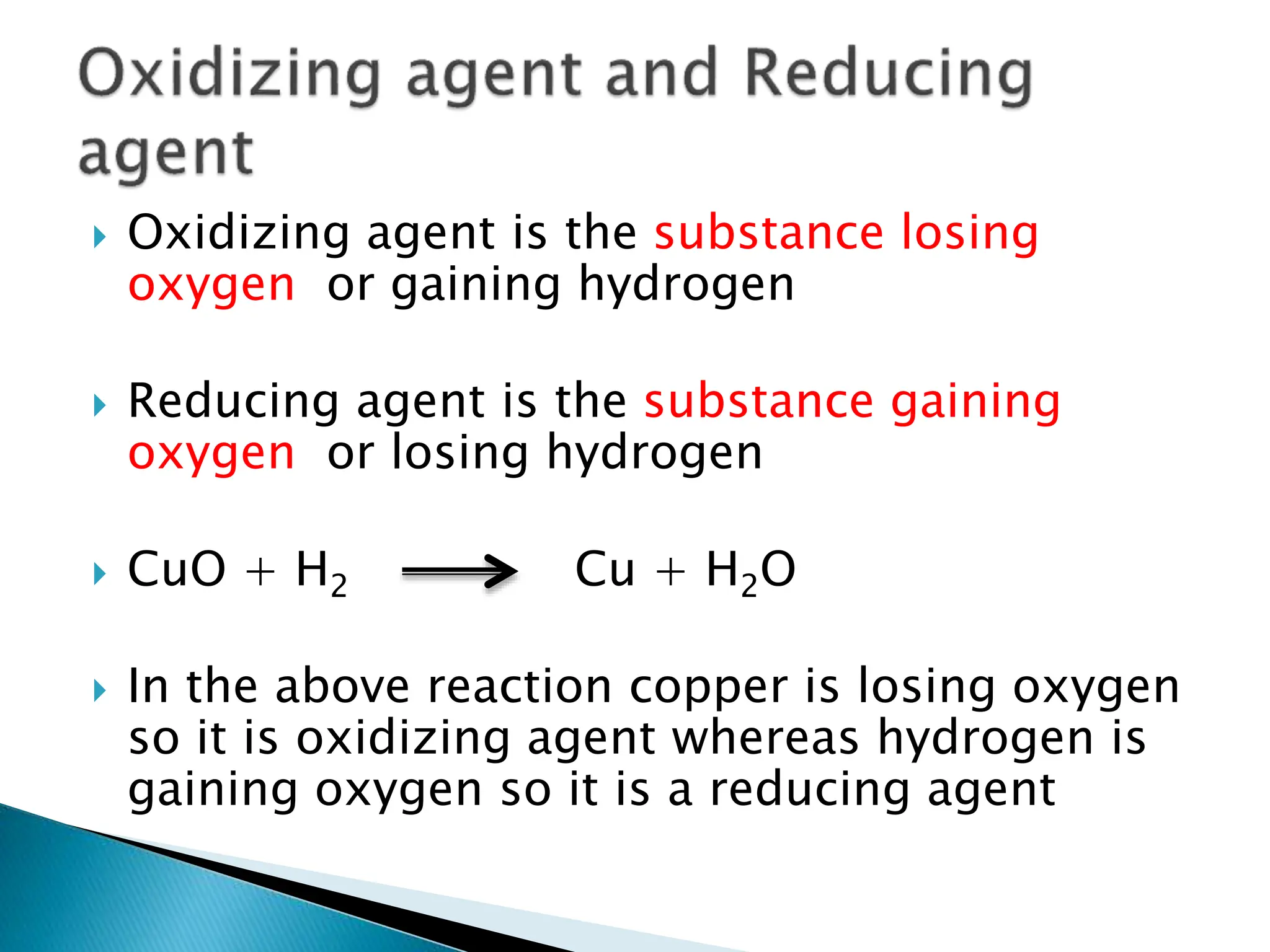
 Oxidizing agent is the substance losing
oxygen or gaining hydrogen
 Reducing agent is the substance gaining
oxygen or losing hydrogen
 CuO + H2 Cu + H2O
 In the above reaction copper is losing oxygen
so it is oxidizing agent whereas hydrogen is
gaining oxygen so it is a reducing agent
 Exothermic reaction – A reaction in which heat is
evolved is called an exothermic reaction
 E.g. CH4 + O2 CO2 + H2O
 Endothermic reaction – A reaction in which heat
is absorbed is called as an endothermic reaction
 E.g. CaCO3 CaO + CO2
 Precipitation reaction – A reaction in which
precipitate ( solid form) is formed called as
precipitation reaction
 E.g. Na2SO4 + BaCl2 BaSO4 + 2NaCl
 Attack on metal surface by air, moisture, acid etc
damaging the metal is called as the corrosion
 Corrosion of iron is called as rusting. Iron reacts
with moisture and air and form iron oxide. It is
brown in colour and makes iron articles weak
 Corrosion of silver is called as tarnishing. Silver
reacts with hydrogen sulphide gas present in the
air forming silver sulphide which is black in
colour
 Copper reacts with the carbon dioxide of the air
forming copper carbonate which is green in
colour
 1. Keeping metals away from air and moisture
 2. Painting
 3. Galvanisation
 4. Greasing
 5. Oiling
 6. Alloying etc
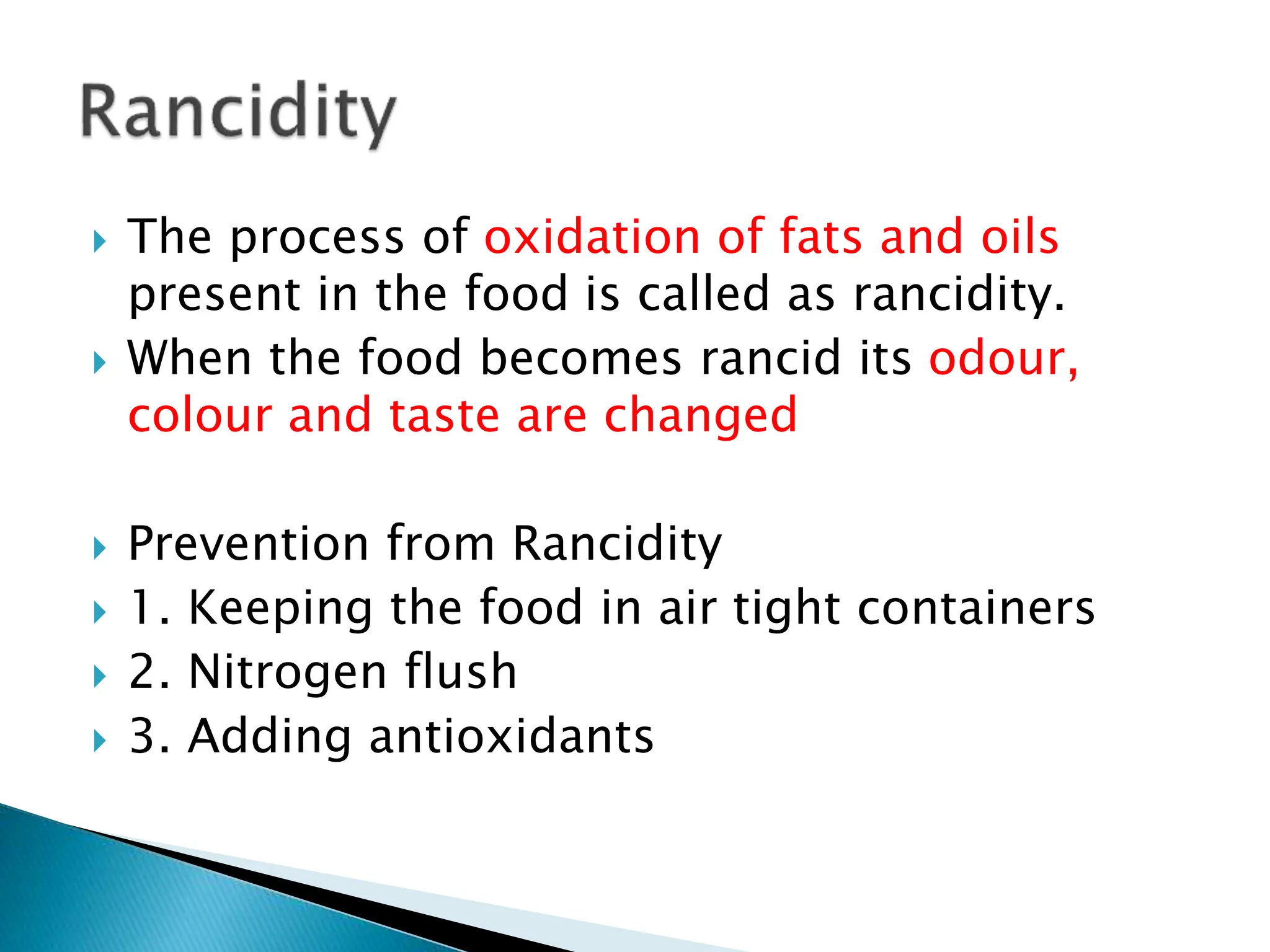
 The process of oxidation of fats and oils
present in the food is called as rancidity.
 When the food becomes rancid its odour,
colour and taste are changed
 Prevention from Rancidity
 1. Keeping the food in air tight containers
 2. Nitrogen flush
 3. Adding antioxidants

Chemical reactions and equations (2).pptx

  • 1.
    Presentation by –Sangita Nikalje KV No. 1 Dehuroad, Pune
  • 2.
     The changethat is irreversible and we get new substance is called as chemical change
  • 3.
     1. Changein state  2. Change in colour  3. Evolution of gas  4. Change in temperature
  • 4.
     It isa equation showing a chemical reaction  Symbols of elements are used  It has two sides separated by an arrow  Left side of the arrow has reactants and right side of the arrow has products  If something is written on the arrow, these are the conditions required for the reactions to happen  E.g. 2Mg + O2 2MgO
  • 5.
     Steps ofbalancing chemical equations 1. Count the number of atoms of each element on LHS and RHS 2. Start balancing the equation with elements having maximum number of atoms 3. Generally balance oxygen/hydrogen atoms at the end 4. Check whether all the elements are balanced 5. Write the physical state of the elements
  • 6.
     NaOH +H2SO4 Na2SO4 + H2O  Elements LHS RHS  Na 1 2  O 5 5  H 3 2  S 1 1  Sodium and hydrogen are atoms are imbalanced  Start balancing sodium – to balance sodium write coefficient of sodium as 2 on LHS  2NaOH + H2SO4 Na2SO4 + H2O  In the process oxygen got imbalance  To balance oxygen and hydrogen multiply water molecule with 2 on RHS  2NaOH + H2SO4 Na2SO4 + 2H2O The reaction is balanced
  • 7.
     1. Combinationreaction  2. Decomposition reaction  3. Displacement reaction  4. Double displacement reaction  5. Oxidation reaction  6 Reduction reaction  7. Redox reaction
  • 8.
     A reactionin which two or more reactants react to give single product is called as combination reaction  E.g. C + O2 CO2
  • 9.
     A reactionin which one reactant breaks down to give two or more products is called as decomposition reaction  Types of decomposition reaction  A. Thermal decomposition – Breaking a compound using heat energy  E.g. CaCO3 CaO + CO2  B. Electrolytic decomposition – Breaking a compound using electric energy  E.g. H2O H2 + O2  C. Photolytic decomposition – Breaking a compound using light energy/sunlight  E.g. 2AgCl 2Ag + Cl2
  • 10.
     Reaction inwhich more reactive metal displaces less reactive metal from its salt solution is called as displacement reaction  E.g. CuSO4 + Fe FeSO4 + Cu
  • 11.
     The reactionin which there is exchange of ions is called as displacement reaction  E.g. Na2SO4 + BaCl2 BaSO4 + 2NaCl
  • 12.
     The reactionin which oxygen is gained is called as oxidation reaction  E.g. 2Cu + O2 2Cuo
  • 13.
     The reactionin which oxygen is lost is called as reduction reaction  E.g. CuO + H2 Cu + H2O
  • 14.
     The reactionin which oxidation and reduction happen simultaneously is called redox reaction  E.g. E.g. CuO + H2 Cu + H2O
  • 15.
     Oxidizing agentis the substance losing oxygen or gaining hydrogen  Reducing agent is the substance gaining oxygen or losing hydrogen  CuO + H2 Cu + H2O  In the above reaction copper is losing oxygen so it is oxidizing agent whereas hydrogen is gaining oxygen so it is a reducing agent
  • 16.
     Exothermic reaction– A reaction in which heat is evolved is called an exothermic reaction  E.g. CH4 + O2 CO2 + H2O  Endothermic reaction – A reaction in which heat is absorbed is called as an endothermic reaction  E.g. CaCO3 CaO + CO2  Precipitation reaction – A reaction in which precipitate ( solid form) is formed called as precipitation reaction  E.g. Na2SO4 + BaCl2 BaSO4 + 2NaCl
  • 17.
     Attack onmetal surface by air, moisture, acid etc damaging the metal is called as the corrosion  Corrosion of iron is called as rusting. Iron reacts with moisture and air and form iron oxide. It is brown in colour and makes iron articles weak  Corrosion of silver is called as tarnishing. Silver reacts with hydrogen sulphide gas present in the air forming silver sulphide which is black in colour  Copper reacts with the carbon dioxide of the air forming copper carbonate which is green in colour
  • 18.
     1. Keepingmetals away from air and moisture  2. Painting  3. Galvanisation  4. Greasing  5. Oiling  6. Alloying etc
  • 19.
     The processof oxidation of fats and oils present in the food is called as rancidity.  When the food becomes rancid its odour, colour and taste are changed  Prevention from Rancidity  1. Keeping the food in air tight containers  2. Nitrogen flush  3. Adding antioxidants