chef@recordedfuture
Ulf Månsson, infra coder
@ulfmansson
DevOps - CAMS

●

Break the silos

●

Culture

●

Automation

●

Measurement

●

Sharing
Why automation and configuration management
●

Quality

●

Continuous delivery, deploy many times per day

●

Deployment by developers

●

Everything is documented as it has been created by code

●

No single point of knowledge, human redundancy

●

Working in a global team
Process driven
●

Don't document

●

Don't train people in processes

Automate and build the
processes into our tools
Lower uptime
●

We are aiming for lowering uptime to 1-2
weeks per server

●

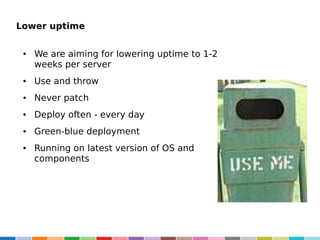
Use and throw

●

Never patch

●

Deploy often - every day

●

Green-blue deployment

●

Running on latest version of OS and
components
How?
●

Automated infrastructure

●

Shared version control - one system!

●

One step build and deploy

●

Green - Blue deployment

●

Feature flags

●

Metrics and metrics
What to automate - everything!
●

Provisioning

●

Deployment and configuration

●

Metrics

●

Monitoring

●

Scaling & up and down

●

Build process - continuous delivery

●

Log handling

●

Obscure host names

●

Never login to a server
Standardize on Ruby as lingua franca
One language for everything ops are doing!
●

Scripting in Ruby

●

Configuration management in Ruby

●

Operation applications in Ruby

●

System tools in Ruby

●

Add-on applications in Ruby

●

Application integration in Ruby
Why Ruby?

●

We like Ruby

●

Used by Chef

●

Easy to script

●

Object oriented and functional

●

Lot of good libs - gems

●

Great community - “Matz is nice so we are nice”

●

Reuse of the same gem both in Chef, system tools and
applications
What do we do with Chef?
●

Provision EC2 instances

●

Deploy packages

●

Deploy our own code

●

Deploy configurations

●

Deploy metrics

●

Update metrics

●

Collect data

●

Deploy monitoring configurations

●

Deploy users

●

Create databases

●

Provision vagrant instances

●

Local installations for customers
Chef recipe
app_name = 'xignite'
dir_inst = File.join(node['rf']['inst_dir'], app_name)
dir_conf = File.join(dir_inst, 'conf')
dir_log = File.join(node['rf']['log_dir'], app_name)

[dir_inst, dir_conf, dir_log].each do |dir|
directory dir do
recursive true
action :create
end
end

deploy_repodist app_name do
dir_inst_root dir_inst
action :deploy
end
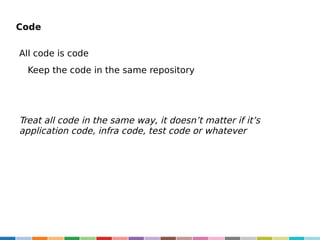
Code
All code is code
Keep the code in the same repository

Treat all code in the same way, it doesn’t matter if it’s
application code, infra code, test code or whatever
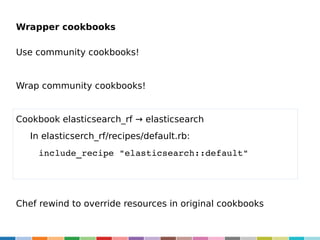
Wrapper cookbooks
Use community cookbooks!

Wrap community cookbooks!

Cookbook elasticsearch_rf → elasticsearch
In elasticserch_rf/recipes/default.rb:
include_recipe "elasticsearch::default"

Chef rewind to override resources in original cookbooks
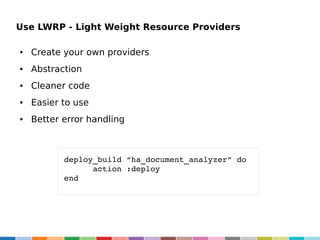
Use LWRP - Light Weight Resource Providers
●

Create your own providers

●

Abstraction

●

Cleaner code

●

Easier to use

●

Better error handling

deploy_build “ha_document_analyzer” do
      action :deploy
end
Search & Node data
●

●

●

Use search to populate with data during Chef run, find
servers with specific roles
Use node data collected by ohai in recipes, for example
about memory, aws instance, ip addresses etc
Gives a good overview of your infrastructure
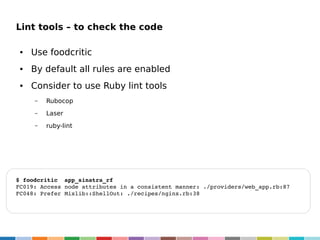
Lint tools – to check the code
●

Use foodcritic

●

By default all rules are enabled

●

Consider to use Ruby lint tools
–

Rubocop

–

Laser

–

ruby-lint

$ foodcritic  app_sinatra_rf
FC019: Access node attributes in a consistent manner: ./providers/web_app.rb:87
FC048: Prefer Mixlib::ShellOut: ./recipes/nginx.rb:38
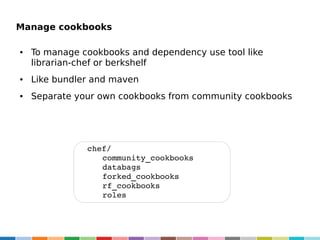
Manage cookbooks
●

To manage cookbooks and dependency use tool like
librarian-chef or berkshelf

●

Like bundler and maven

●

Separate your own cookbooks from community cookbooks

chef/
community_cookbooks
databags
forked_cookbooks
rf_cookbooks
roles
Orchestration
●

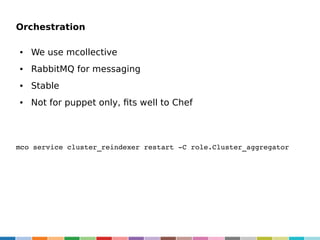
We use mcollective

●

RabbitMQ for messaging

●

Stable

●

Not for puppet only, fits well to Chef

mco service cluster_reindexer restart ­C role.Cluster_aggregator
Testing of Chef
●

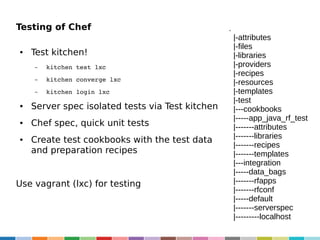
Test kitchen!
–

kitchen test lxc

–

kitchen converge lxc

–

kitchen login lxc

●

Server spec isolated tests via Test kitchen

●

Chef spec, quick unit tests

●

Create test cookbooks with the test data
and preparation recipes

Use vagrant (lxc) for testing

.
|-attributes
|-files
|-libraries
|-providers
|-recipes
|-resources
|-templates
|-test
|---cookbooks
|-----app_java_rf_test
|-------attributes
|-------libraries
|-------recipes
|-------templates
|---integration
|-----data_bags
|-------rfapps
|-------rfconf
|-----default
|-------serverspec
|---------localhost
Roles
●

Keep roles simple, just include a recipe

●

Don't put a lot of attributes in roles

●

When using search, search for roles

●

Just roles to show what running on the server
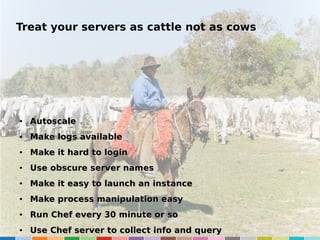
Treat your servers as cattle not as cows

●

Autoscale

●

Make logs available

●

Make it hard to login

●

Use obscure server names

●

Make it easy to launch an instance

●

Make process manipulation easy

●

Run Chef every 30 minute or so

●

Use Chef server to collect info and query
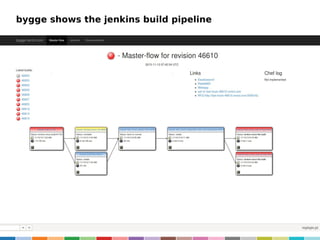
bygge shows the jenkins build pipeline
Read more
●

Continuous delivery by Jez Humble

●

Test-Driven Infrastructure with Chef

●

Chef Infrastructure Automation Cookbook

●

#opschef

Chef@recordedfuture

  • 1.
  • 3.
    DevOps - CAMS ● Breakthe silos ● Culture ● Automation ● Measurement ● Sharing
  • 4.
    Why automation andconfiguration management ● Quality ● Continuous delivery, deploy many times per day ● Deployment by developers ● Everything is documented as it has been created by code ● No single point of knowledge, human redundancy ● Working in a global team
  • 5.
    Process driven ● Don't document ● Don'ttrain people in processes Automate and build the processes into our tools
  • 6.
    Lower uptime ● We areaiming for lowering uptime to 1-2 weeks per server ● Use and throw ● Never patch ● Deploy often - every day ● Green-blue deployment ● Running on latest version of OS and components
  • 7.
    How? ● Automated infrastructure ● Shared versioncontrol - one system! ● One step build and deploy ● Green - Blue deployment ● Feature flags ● Metrics and metrics
  • 8.
    What to automate- everything! ● Provisioning ● Deployment and configuration ● Metrics ● Monitoring ● Scaling & up and down ● Build process - continuous delivery ● Log handling ● Obscure host names ● Never login to a server
  • 9.
    Standardize on Rubyas lingua franca One language for everything ops are doing! ● Scripting in Ruby ● Configuration management in Ruby ● Operation applications in Ruby ● System tools in Ruby ● Add-on applications in Ruby ● Application integration in Ruby
  • 10.
    Why Ruby? ● We likeRuby ● Used by Chef ● Easy to script ● Object oriented and functional ● Lot of good libs - gems ● Great community - “Matz is nice so we are nice” ● Reuse of the same gem both in Chef, system tools and applications
  • 11.
    What do wedo with Chef? ● Provision EC2 instances ● Deploy packages ● Deploy our own code ● Deploy configurations ● Deploy metrics ● Update metrics ● Collect data ● Deploy monitoring configurations ● Deploy users ● Create databases ● Provision vagrant instances ● Local installations for customers
  • 12.
    Chef recipe app_name ='xignite' dir_inst = File.join(node['rf']['inst_dir'], app_name) dir_conf = File.join(dir_inst, 'conf') dir_log = File.join(node['rf']['log_dir'], app_name) [dir_inst, dir_conf, dir_log].each do |dir| directory dir do recursive true action :create end end deploy_repodist app_name do dir_inst_root dir_inst action :deploy end
  • 13.
    Code All code iscode Keep the code in the same repository Treat all code in the same way, it doesn’t matter if it’s application code, infra code, test code or whatever
  • 14.
    Wrapper cookbooks Use communitycookbooks! Wrap community cookbooks! Cookbook elasticsearch_rf → elasticsearch In elasticserch_rf/recipes/default.rb: include_recipe "elasticsearch::default" Chef rewind to override resources in original cookbooks
  • 15.
    Use LWRP -Light Weight Resource Providers ● Create your own providers ● Abstraction ● Cleaner code ● Easier to use ● Better error handling deploy_build “ha_document_analyzer” do       action :deploy end
  • 16.
    Search & Nodedata ● ● ● Use search to populate with data during Chef run, find servers with specific roles Use node data collected by ohai in recipes, for example about memory, aws instance, ip addresses etc Gives a good overview of your infrastructure
  • 17.
    Lint tools –to check the code ● Use foodcritic ● By default all rules are enabled ● Consider to use Ruby lint tools – Rubocop – Laser – ruby-lint $ foodcritic  app_sinatra_rf FC019: Access node attributes in a consistent manner: ./providers/web_app.rb:87 FC048: Prefer Mixlib::ShellOut: ./recipes/nginx.rb:38
  • 18.
    Manage cookbooks ● To managecookbooks and dependency use tool like librarian-chef or berkshelf ● Like bundler and maven ● Separate your own cookbooks from community cookbooks chef/ community_cookbooks databags forked_cookbooks rf_cookbooks roles
  • 19.
    Orchestration ● We use mcollective ● RabbitMQfor messaging ● Stable ● Not for puppet only, fits well to Chef mco service cluster_reindexer restart ­C role.Cluster_aggregator
  • 20.
    Testing of Chef ● Testkitchen! – kitchen test lxc – kitchen converge lxc – kitchen login lxc ● Server spec isolated tests via Test kitchen ● Chef spec, quick unit tests ● Create test cookbooks with the test data and preparation recipes Use vagrant (lxc) for testing . |-attributes |-files |-libraries |-providers |-recipes |-resources |-templates |-test |---cookbooks |-----app_java_rf_test |-------attributes |-------libraries |-------recipes |-------templates |---integration |-----data_bags |-------rfapps |-------rfconf |-----default |-------serverspec |---------localhost
  • 21.
    Roles ● Keep roles simple,just include a recipe ● Don't put a lot of attributes in roles ● When using search, search for roles ● Just roles to show what running on the server
  • 22.
    Treat your serversas cattle not as cows ● Autoscale ● Make logs available ● Make it hard to login ● Use obscure server names ● Make it easy to launch an instance ● Make process manipulation easy ● Run Chef every 30 minute or so ● Use Chef server to collect info and query
  • 23.
    bygge shows thejenkins build pipeline
  • 24.
    Read more ● Continuous deliveryby Jez Humble ● Test-Driven Infrastructure with Chef ● Chef Infrastructure Automation Cookbook ● #opschef