Avoiding
    mistakes
in writing tasks
    Checklist

 Final exam and PAU preparation.
 2nd BACH
                           Page 1
Have yo ever thought
why you sometimes
make certain mistakes?


                     Page 2
The following checklist
will help you remember
very important
THINGS TO BEAR IN MIND


                     Page 3
1. READ CAREFULLY

Whether it is a text, a
comprehension question
(reading or listening), an
exercise in a test, a
composition topic…


                        FIRST
                             Page 4
2. BE CAREFUL WITH
   GRAMMAR
    Pay special attention to:

    Sentence structure
AFFIRM.: SUBJECT + VERB + COMPLEMENTS
INTERROGATIVE: MODAL/AUXILIARY + SUBJECT + VERB…
NEG.: SUBJECT + AUX/MODAL+ NOT/N’T+ VERB


   NO VERB WITHOUT SUBJECT
   Be careful with subordinate clauses. DON’T
   MAKE THEM TOO LONG AND COMPLEX
                                            Page 5
Verbal tenses
   Make sure you have a good command
   of both their form and use.
              TRY TO…

              o Make a list from time to time to
                see if you remember them.
              o Write sentences using all different
                tenses.
              o Compare them with their Spanish
                equivalent:

              Present Simple      Presente
                                  indicativo
              Past Perfecto     Pretérito
                                  pluscuam.
When answering questions, DON’T FORGET TO USE
THE SAME VERBAL TENSE IN YOUR ANSWER!

                                               Page 6
Agreement

SUBJECT – VERB   People ARE

NOUN – POSSESSIVE Henry drove
                  HIS car

NOUN – PRONOUN      Susan arrived
                    yesterday. SHE
                    brought some
                    presents


                              Page 7
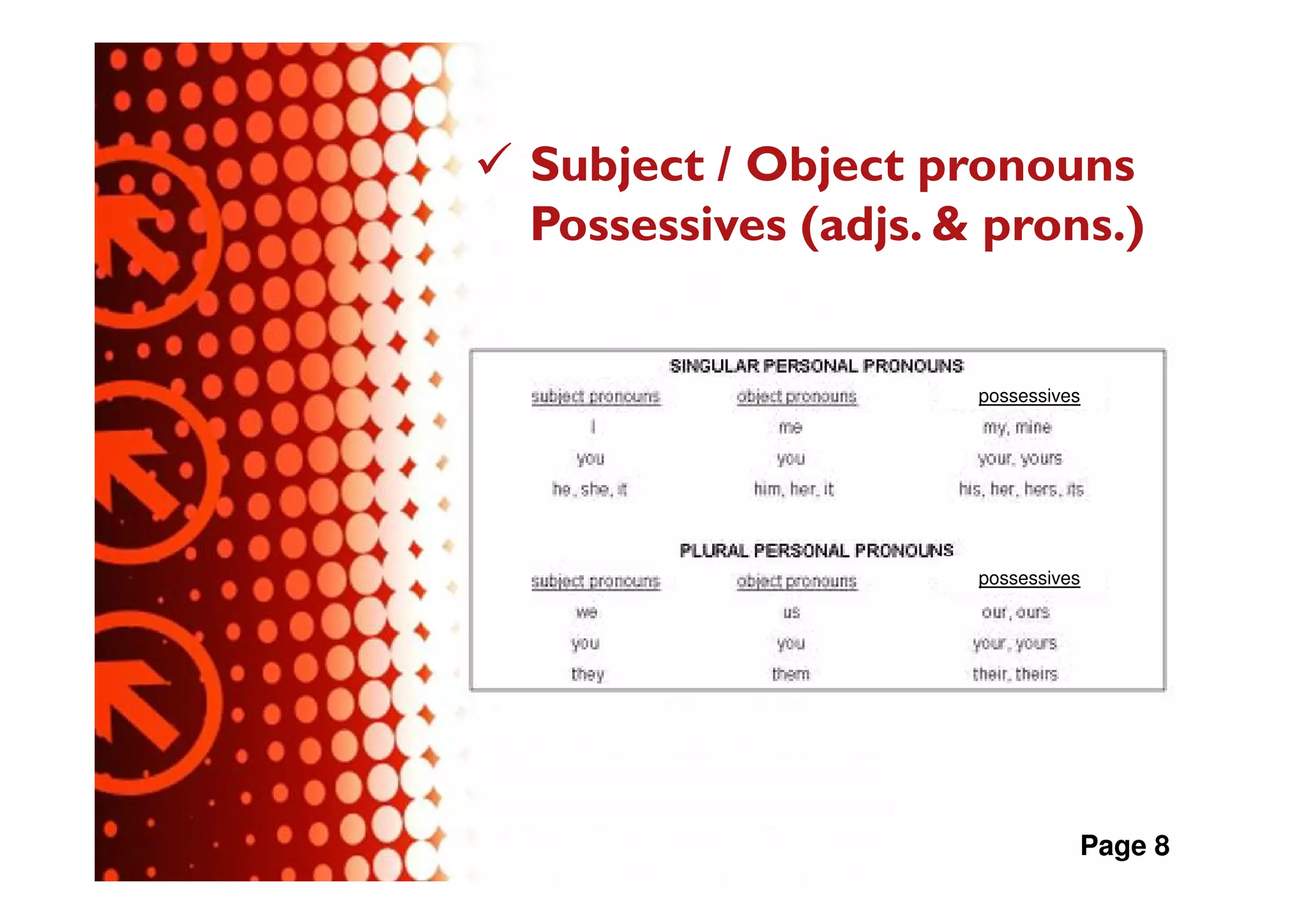
Subject / Object pronouns
Possessives (adjs. & prons.)


                   ppossessives


                   ppossessives


                              Page 8
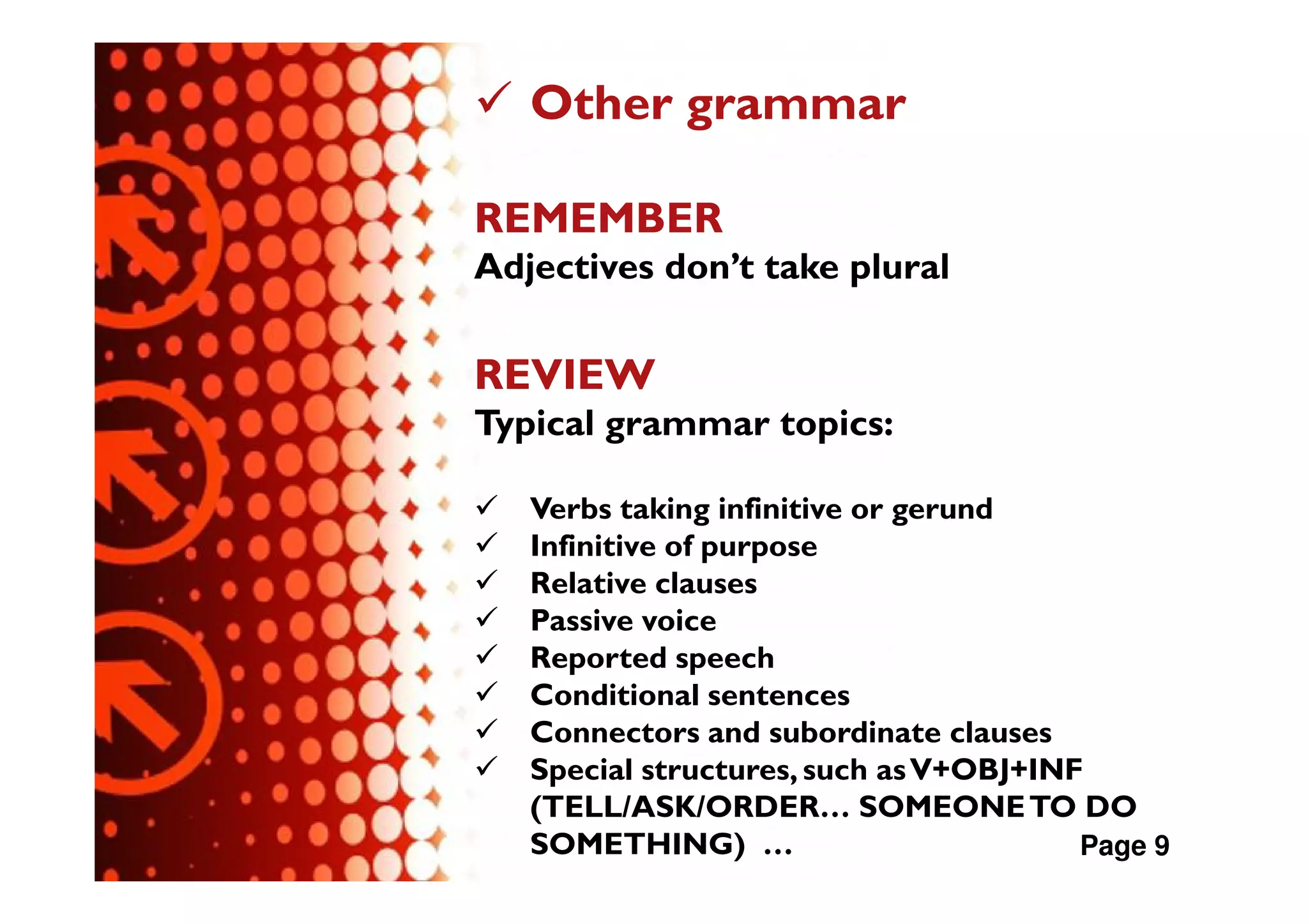
Other grammar

REMEMBER
Adjectives don’t take plural

REVIEW
Typical grammar topics:

   Verbs taking infinitive or gerund
   Infinitive of purpose
   Relative clauses
   Passive voice
   Reported speech
   Conditional sentences
   Connectors and subordinate clauses
   Special structures, such as V+OBJ+INF
   (TELL/ASK/ORDER… SOMEONE TO DO
   SOMETHING) …                         Page 9
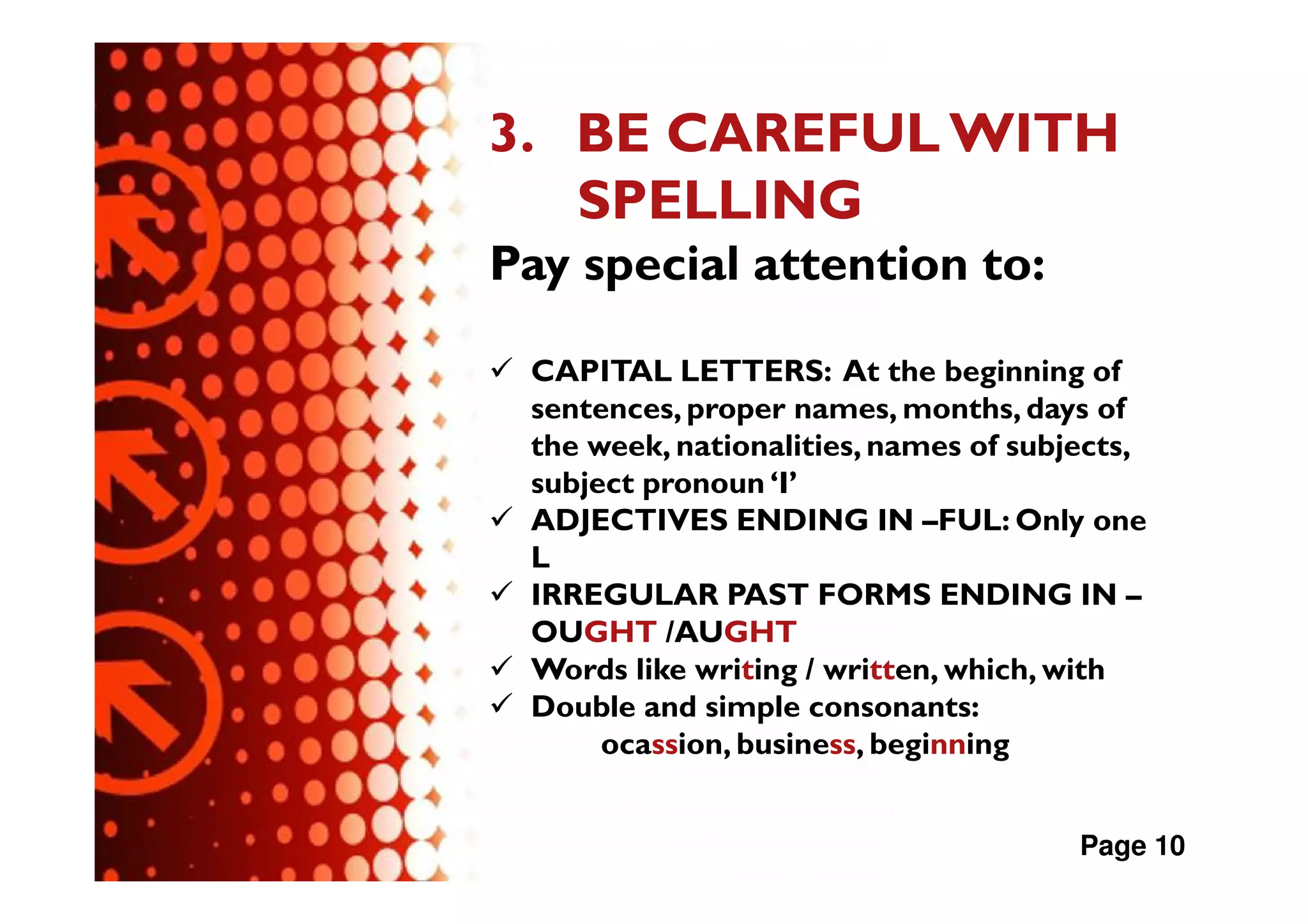
3. BE CAREFUL WITH
   SPELLING
Pay special attention to:

 CAPITAL LETTERS: At the beginning of
 sentences, proper names, months, days of
 the week, nationalities, names of subjects,
 subject pronoun ‘I’
 ADJECTIVES ENDING IN –FUL: Only one
 L
 IRREGULAR PAST FORMS ENDING IN –
 OUGHT /AUGHT
 Words like writing / written, which, with
 Double and simple consonants:
      ocassion, business, beginning


                                       Page 10
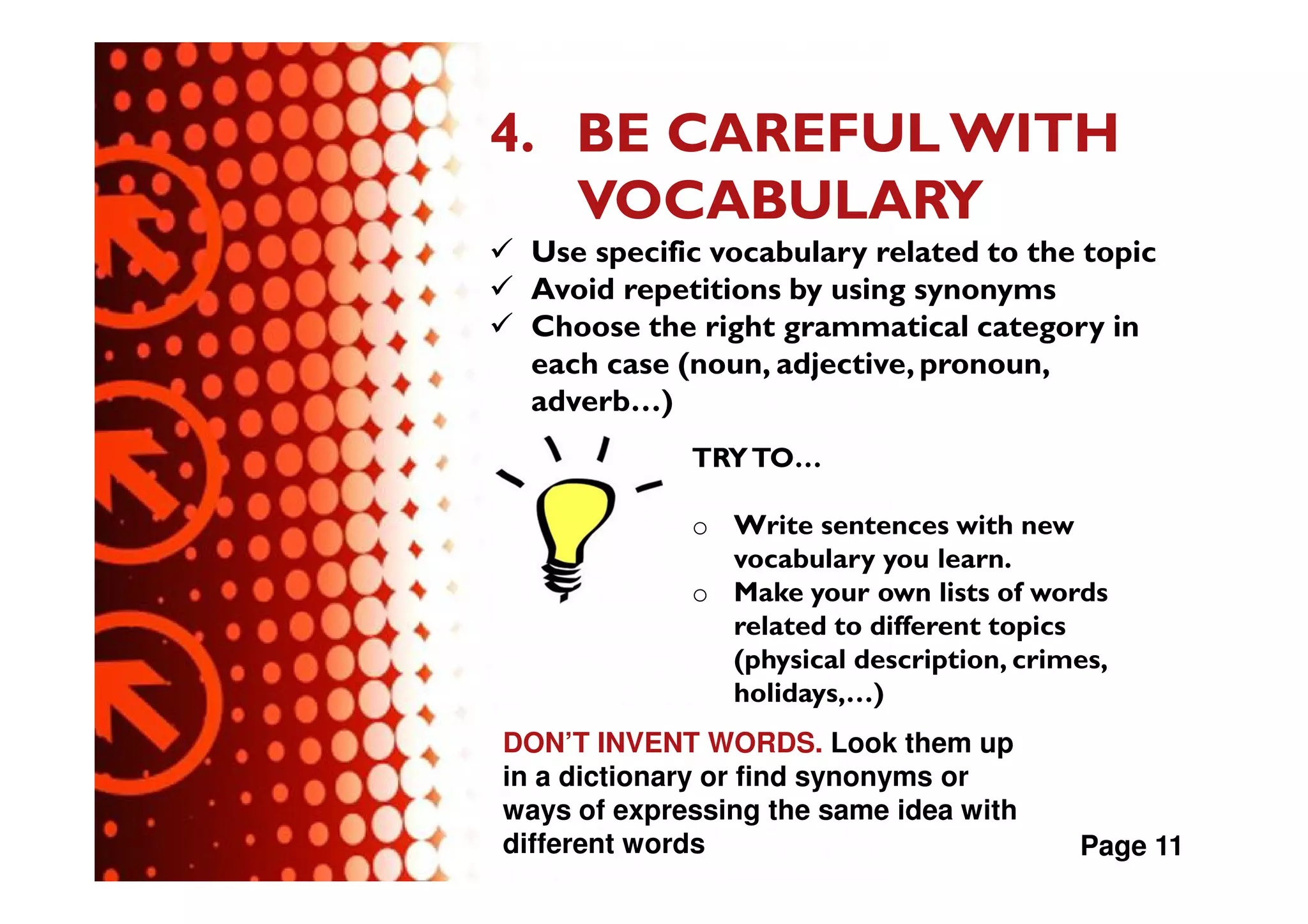
4. BE CAREFUL WITH
   VOCABULARY
  Use specific vocabulary related to the topic
  Avoid repetitions by using synonyms
  Choose the right grammatical category in
  each case (noun, adjective, pronoun,
  adverb…)
             TRY TO…

             o Write sentences with new
               vocabulary you learn.
             o Make your own lists of words
               related to different topics
               (physical description, crimes,
               holidays,…)
DON’T INVENT WORDS. Look them up
in a dictionary or find synonyms or
ways of expressing the same idea with
different words                           Page 11
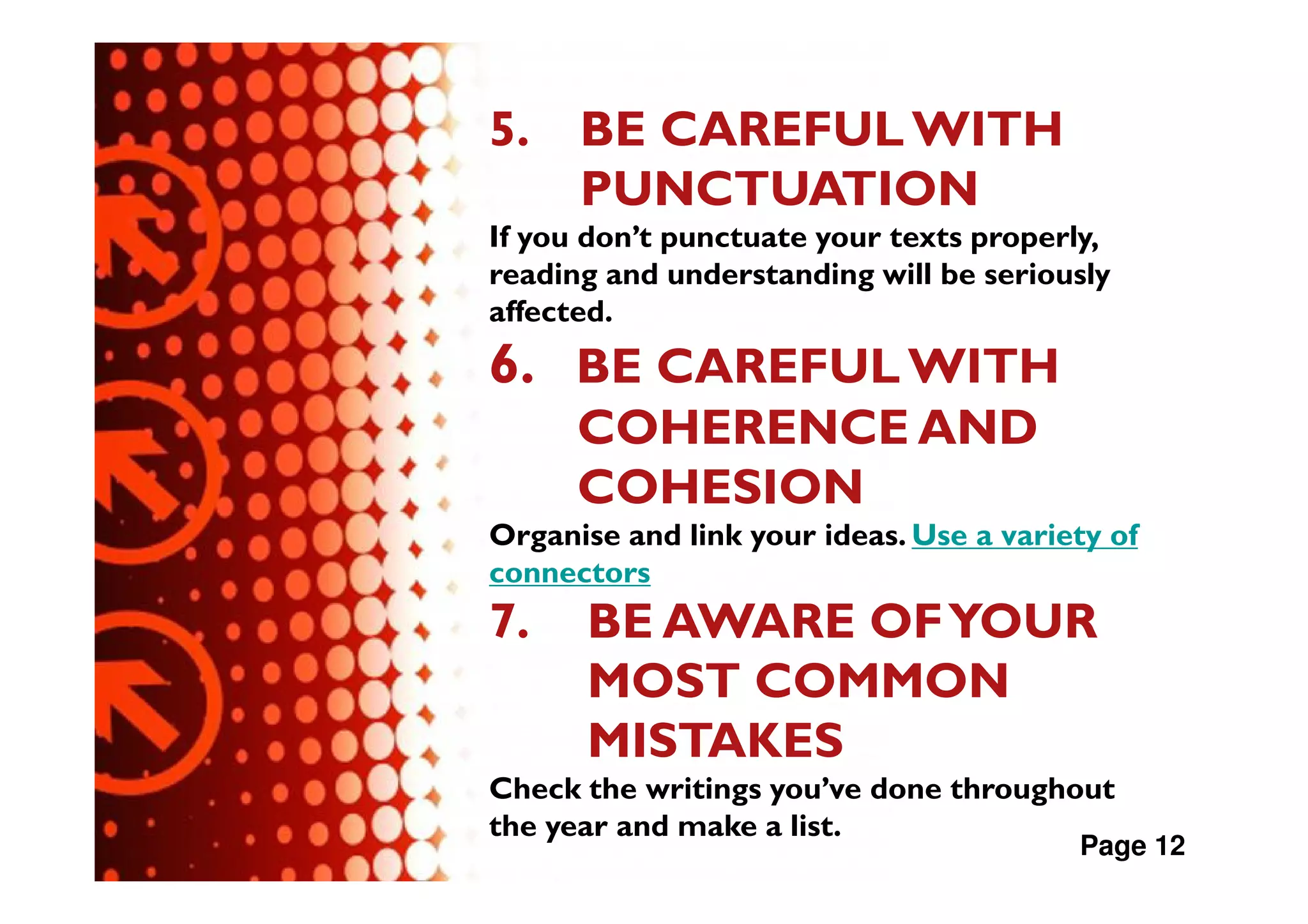
5.    BE CAREFUL WITH
      PUNCTUATION
If you don’t punctuate your texts properly,
reading and understanding will be seriously
affected.
6. BE CAREFUL WITH
      COHERENCE AND
      COHESION
Organise and link your ideas. Use a variety of
connectors
7.    BE AWARE OF YOUR
      MOST COMMON
      MISTAKES
Check the writings you’ve done throughout
the year and make a list.
                                         Page 12

Checklist to avoid mistakes

  • 1.
    Avoiding mistakes in writing tasks Checklist Final exam and PAU preparation. 2nd BACH Page 1
  • 2.
    Have yo everthought why you sometimes make certain mistakes? Page 2
  • 3.
    The following checklist willhelp you remember very important THINGS TO BEAR IN MIND Page 3
  • 4.
    1. READ CAREFULLY Whetherit is a text, a comprehension question (reading or listening), an exercise in a test, a composition topic… FIRST Page 4
  • 5.
    2. BE CAREFULWITH GRAMMAR Pay special attention to: Sentence structure AFFIRM.: SUBJECT + VERB + COMPLEMENTS INTERROGATIVE: MODAL/AUXILIARY + SUBJECT + VERB… NEG.: SUBJECT + AUX/MODAL+ NOT/N’T+ VERB NO VERB WITHOUT SUBJECT Be careful with subordinate clauses. DON’T MAKE THEM TOO LONG AND COMPLEX Page 5
  • 6.
    Verbal tenses Make sure you have a good command of both their form and use. TRY TO… o Make a list from time to time to see if you remember them. o Write sentences using all different tenses. o Compare them with their Spanish equivalent: Present Simple Presente indicativo Past Perfecto Pretérito pluscuam. When answering questions, DON’T FORGET TO USE THE SAME VERBAL TENSE IN YOUR ANSWER! Page 6
  • 7.
    Agreement SUBJECT – VERB People ARE NOUN – POSSESSIVE Henry drove HIS car NOUN – PRONOUN Susan arrived yesterday. SHE brought some presents Page 7
  • 8.
    Subject / Objectpronouns Possessives (adjs. & prons.) ppossessives ppossessives Page 8
  • 9.
    Other grammar REMEMBER Adjectives don’ttake plural REVIEW Typical grammar topics: Verbs taking infinitive or gerund Infinitive of purpose Relative clauses Passive voice Reported speech Conditional sentences Connectors and subordinate clauses Special structures, such as V+OBJ+INF (TELL/ASK/ORDER… SOMEONE TO DO SOMETHING) … Page 9
  • 10.
    3. BE CAREFULWITH SPELLING Pay special attention to: CAPITAL LETTERS: At the beginning of sentences, proper names, months, days of the week, nationalities, names of subjects, subject pronoun ‘I’ ADJECTIVES ENDING IN –FUL: Only one L IRREGULAR PAST FORMS ENDING IN – OUGHT /AUGHT Words like writing / written, which, with Double and simple consonants: ocassion, business, beginning Page 10
  • 11.
    4. BE CAREFULWITH VOCABULARY Use specific vocabulary related to the topic Avoid repetitions by using synonyms Choose the right grammatical category in each case (noun, adjective, pronoun, adverb…) TRY TO… o Write sentences with new vocabulary you learn. o Make your own lists of words related to different topics (physical description, crimes, holidays,…) DON’T INVENT WORDS. Look them up in a dictionary or find synonyms or ways of expressing the same idea with different words Page 11
  • 12.
    5. BE CAREFUL WITH PUNCTUATION If you don’t punctuate your texts properly, reading and understanding will be seriously affected. 6. BE CAREFUL WITH COHERENCE AND COHESION Organise and link your ideas. Use a variety of connectors 7. BE AWARE OF YOUR MOST COMMON MISTAKES Check the writings you’ve done throughout the year and make a list. Page 12