HEALING ON THE LAND
Charles J. Andrew
Youth Treatment
Centre
CJAY:
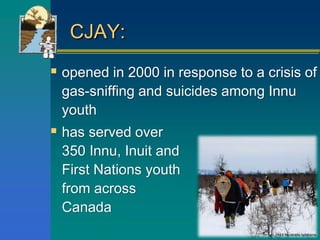
 opened in 2000 in response to a crisis of
gas-sniffing and suicides among Innu
youth
 has served over
350 Innu, Inuit and
First Nations youth
from across
Canada
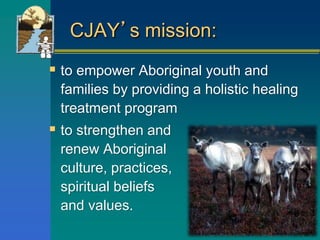
CJAY’s mission:
 to empower Aboriginal youth and
families by providing a holistic healing
treatment program
 to strengthen and
renew Aboriginal
culture, practices,
spiritual beliefs
and values.
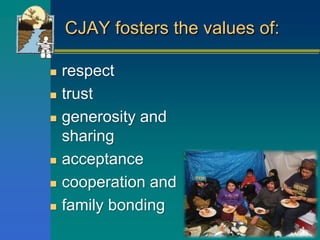
CJAY fosters the values of:
 respect
 trust
 generosity and
sharing
 acceptance
 cooperation and
 family bonding
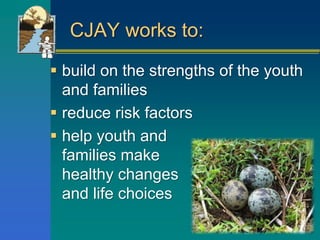
CJAY works to:
 build on the strengths of the youth
and families
 reduce risk factors
 help youth and
families make
healthy changes
and life choices
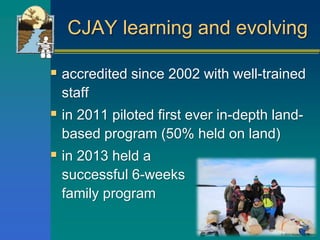
CJAY learning and evolving
 accredited since 2002 with well-trained
staff
 in 2011 piloted first ever in-depth land-
based program (50% held on land)
 in 2013 held a
successful 6-weeks
family program
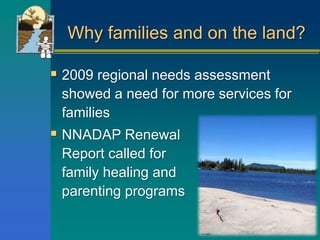
Why families and on the land?
 2009 regional needs assessment
showed a need for more services for
families
 NNADAP Renewal
Report called for
family healing and
parenting programs
NNADAP Renewal Report:
Healthy families provide children with a home
where they feel loved, nurtured, safe, and
connected to their spirit, community, and
culture. Within First Nations families, children
can have many caregivers apart from parents.
First Nations identity comes from a healthy
family, community as well as the land and clan
systems. These supports and connections
promote a strong identity and pride in culture,
which can prevent or delay substance use and
mental health problems.
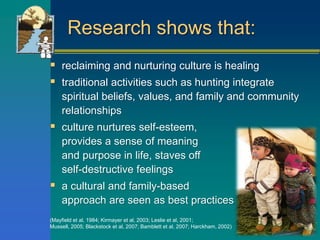
Research shows that:
 reclaiming and nurturing culture is healing
 traditional activities such as hunting integrate
spiritual beliefs, values, and family and community
relationships
 culture nurtures self-esteem,
provides a sense of meaning
and purpose in life, staves off
self-destructive feelings
 a cultural and family-based
approach are seen as best practices
(Mayfield et al, 1984; Kirmayer et al, 2003; Leslie et al, 2001;
Mussell, 2005; Blackstock et al, 2007; Bamblett et al, 2007; Harckham, 2002)
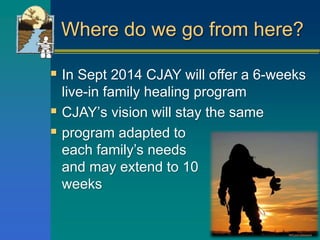
Where do we go from here?
 In Sept 2014 CJAY will offer a 6-weeks
live-in family healing program
 CJAY’s vision will stay the same
 program adapted to
each family’s needs
and may extend to 10
weeks
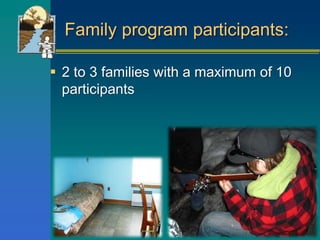
Family program participants:
 2 to 3 families with a maximum of 10
participants
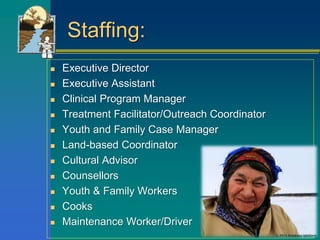
Staffing:
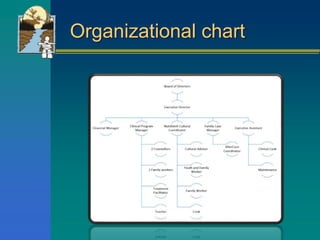
 Executive Director
 Executive Assistant
 Clinical Program Manager
 Treatment Facilitator/Outreach Coordinator
 Youth and Family Case Manager
 Land-based Coordinator
 Cultural Advisor
 Counsellors
 Youth & Family Workers
 Cooks
 Maintenance Worker/Driver
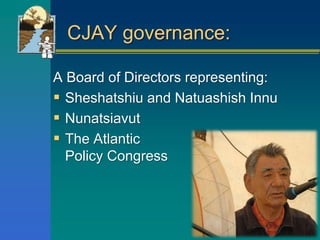
CJAY governance:
A Board of Directors representing:
 Sheshatshiu and Natuashish Innu
 Nunatsiavut
 The Atlantic
Policy Congress
Organizational chart
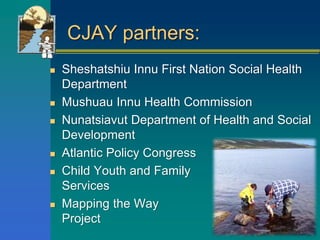
CJAY partners:
 Sheshatshiu Innu First Nation Social Health
Department
 Mushuau Innu Health Commission
 Nunatsiavut Department of Health and Social
Development
 Atlantic Policy Congress
 Child Youth and Family
Services
 Mapping the Way
Project
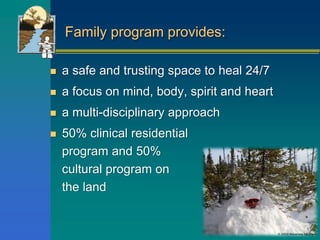
Family program provides:
 a safe and trusting space to heal 24/7
 a focus on mind, body, spirit and heart
 a multi-disciplinary approach
 50% clinical residential
program and 50%
cultural program on
the land
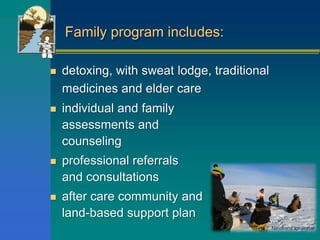
Family program includes:
 detoxing, with sweat lodge, traditional
medicines and elder care
 individual and family
assessments and
counseling
 professional referrals
and consultations
 after care community and
land-based support plan
Navarana Igloliorte
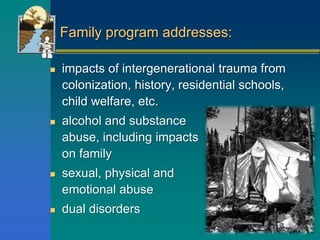
Family program addresses:
 impacts of intergenerational trauma from
colonization, history, residential schools,
child welfare, etc.
 alcohol and substance
abuse, including impacts
on family
 sexual, physical and
emotional abuse
 dual disorders
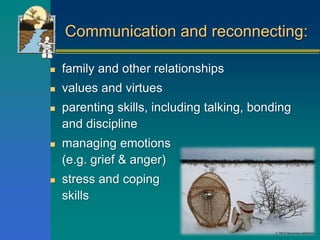
Communication and reconnecting:
 family and other relationships
 values and virtues
 parenting skills, including talking, bonding
and discipline
 managing emotions
(e.g. grief & anger)
 stress and coping
skills
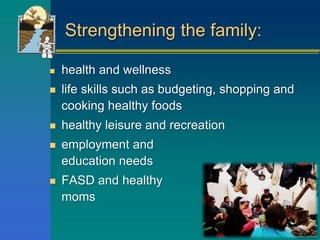
Strengthening the family:
 health and wellness
 life skills such as budgeting, shopping and
cooking healthy foods
 healthy leisure and recreation
 employment and
education needs
 FASD and healthy pregnant
moms
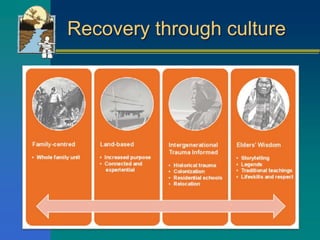
Recovery through culture
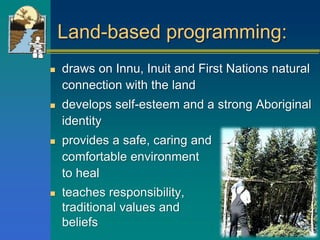
Land-based programming:
 draws on Innu, Inuit and First Nations natural
connection with the land
 develops self-esteem and a strong Aboriginal
identity
 provides a safe, caring and
comfortable environment
to heal
 teaches responsibility,
traditional values and
beliefs
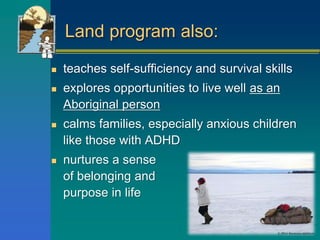
Land program also:
 teaches self-sufficiency and survival skills
 explores opportunities to live well as an
Aboriginal person
 calms families, especially anxious children
like those with ADHD
 nurtures a sense
of belonging and
purpose in life
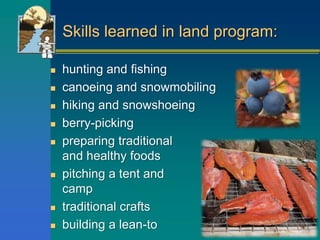
Skills learned in land program:
 hunting and fishing
 canoeing and snowmobiling
 hiking and snowshoeing
 berry-picking
 preparing traditional
and healthy foods
 pitching a tent and breaking
camp
 traditional crafts
 building a lean-to
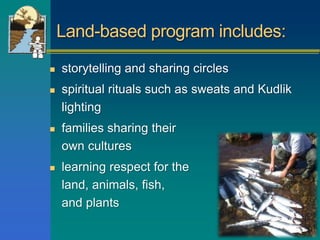
Land-based program includes:
 storytelling and sharing circles
 spiritual rituals such as sweats and Kudlik
lighting
 families sharing their
own cultures
 learning respect for the
land, animals, fish, birds
and plants
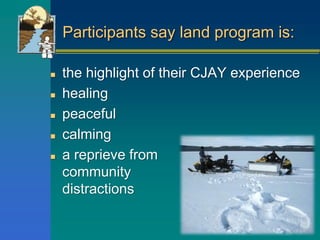
Participants say land program is:
 the highlight of their CJAY experience
 healing
 peaceful
 calming
 a reprieve from
community
distractions
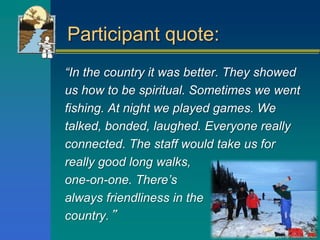
Participant quote:
“In the country it was better. They showed
us how to be spiritual. Sometimes we went
fishing. At night we played games. We
talked, bonded, laughed. Everyone really
connected. The staff would take us for
really good long walks,
one-on-one. There’s
always friendliness in the
country.”
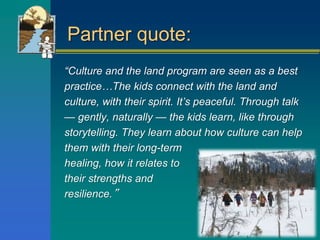
Partner quote:
“Culture and the land program are seen as a best
practice…The kids connect with the land and
culture, with their spirit. It’s peaceful. Through talk
— gently, naturally — the kids learn, like through
storytelling. They learn about how culture can help
them with their long-term
healing, how it relates to
their strengths and
resilience.”
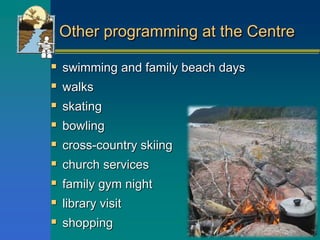
Other programming at the Centre
 swimming and family beach days
 walks
 skating
 bowling
 cross-country skiing
 church services
 family gym night
 library visit
 shopping
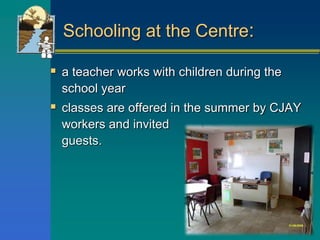
Schooling at the Centre:
 a teacher works with children during the
school year
 classes are offered in the summer by CJAY
workers and invited
guests.
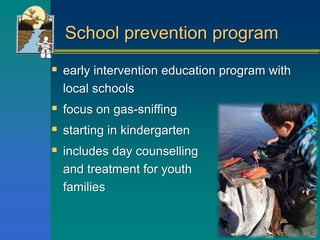
School prevention program
 early intervention education program with
local schools
 focus on gas-sniffing
 starting in kindergarten
 includes day counselling
and treatment for youth and
families
Referrals to CJAY can be made by:
 social worker, doctor or nurse
 parents, grandparents or other family members
 priest, minister, chaplin or spiritual leader
 teacher or principal
 First Nations constable or police
 local Nunatsiavut
representative
Or you can refer yourself
and decide to come on
your own.
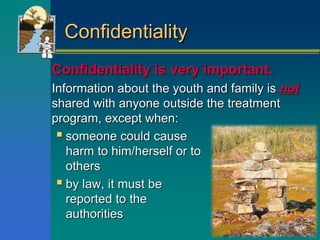
Confidentiality
Confidentiality is very important.
Information about the youth and family is not
shared with anyone outside the treatment
program, except when:
 someone could cause
harm to him/herself or to
others
 by law, it must be
reported to the
authorities
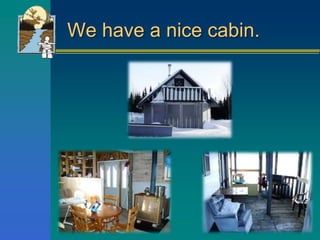
We have a nice cabin.
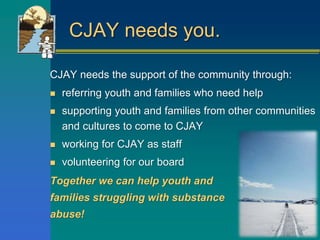
CJAY needs you.
CJAY needs the support of the community through:
 referring youth and families who need help
 supporting youth and families from other communities
and cultures to come to CJAY
 working for CJAY as staff
 volunteering for our board
Together we can help youth and
families struggling with substance
abuse!
Thank you
CJAY would like to thank
Navarana Igloriorte,
Paula McLean-Sheppard,
Alex Andrew and Iris Allen
for the use of
their beautiful photos
in this presentation.

Charles j andrew june 2014

  • 1.
    HEALING ON THELAND Charles J. Andrew Youth Treatment Centre
  • 2.
    CJAY:  opened in2000 in response to a crisis of gas-sniffing and suicides among Innu youth  has served over 350 Innu, Inuit and First Nations youth from across Canada
  • 3.
    CJAY’s mission:  toempower Aboriginal youth and families by providing a holistic healing treatment program  to strengthen and renew Aboriginal culture, practices, spiritual beliefs and values.
  • 4.
    CJAY fosters thevalues of:  respect  trust  generosity and sharing  acceptance  cooperation and  family bonding
  • 5.
    CJAY works to: build on the strengths of the youth and families  reduce risk factors  help youth and families make healthy changes and life choices
  • 6.
    CJAY learning andevolving  accredited since 2002 with well-trained staff  in 2011 piloted first ever in-depth land- based program (50% held on land)  in 2013 held a successful 6-weeks family program
  • 7.
    Why families andon the land?  2009 regional needs assessment showed a need for more services for families  NNADAP Renewal Report called for family healing and parenting programs
  • 8.
    NNADAP Renewal Report: Healthyfamilies provide children with a home where they feel loved, nurtured, safe, and connected to their spirit, community, and culture. Within First Nations families, children can have many caregivers apart from parents. First Nations identity comes from a healthy family, community as well as the land and clan systems. These supports and connections promote a strong identity and pride in culture, which can prevent or delay substance use and mental health problems.
  • 9.
    Research shows that: reclaiming and nurturing culture is healing  traditional activities such as hunting integrate spiritual beliefs, values, and family and community relationships  culture nurtures self-esteem, provides a sense of meaning and purpose in life, staves off self-destructive feelings  a cultural and family-based approach are seen as best practices (Mayfield et al, 1984; Kirmayer et al, 2003; Leslie et al, 2001; Mussell, 2005; Blackstock et al, 2007; Bamblett et al, 2007; Harckham, 2002)
  • 10.
    Where do wego from here?  In Sept 2014 CJAY will offer a 6-weeks live-in family healing program  CJAY’s vision will stay the same  program adapted to each family’s needs and may extend to 10 weeks
  • 11.
    Family program participants: 2 to 3 families with a maximum of 10 participants
  • 12.
    Staffing:  Executive Director Executive Assistant  Clinical Program Manager  Treatment Facilitator/Outreach Coordinator  Youth and Family Case Manager  Land-based Coordinator  Cultural Advisor  Counsellors  Youth & Family Workers  Cooks  Maintenance Worker/Driver
  • 13.
    CJAY governance: A Boardof Directors representing:  Sheshatshiu and Natuashish Innu  Nunatsiavut  The Atlantic Policy Congress
  • 14.
  • 15.
    CJAY partners:  SheshatshiuInnu First Nation Social Health Department  Mushuau Innu Health Commission  Nunatsiavut Department of Health and Social Development  Atlantic Policy Congress  Child Youth and Family Services  Mapping the Way Project
  • 16.
    Family program provides: a safe and trusting space to heal 24/7  a focus on mind, body, spirit and heart  a multi-disciplinary approach  50% clinical residential program and 50% cultural program on the land
  • 17.
    Family program includes: detoxing, with sweat lodge, traditional medicines and elder care  individual and family assessments and counseling  professional referrals and consultations  after care community and land-based support plan Navarana Igloliorte
  • 18.
    Family program addresses: impacts of intergenerational trauma from colonization, history, residential schools, child welfare, etc.  alcohol and substance abuse, including impacts on family  sexual, physical and emotional abuse  dual disorders
  • 19.
    Communication and reconnecting: family and other relationships  values and virtues  parenting skills, including talking, bonding and discipline  managing emotions (e.g. grief & anger)  stress and coping skills
  • 20.
    Strengthening the family: health and wellness  life skills such as budgeting, shopping and cooking healthy foods  healthy leisure and recreation  employment and education needs  FASD and healthy pregnant moms
  • 21.
  • 22.
    Land-based programming:  drawson Innu, Inuit and First Nations natural connection with the land  develops self-esteem and a strong Aboriginal identity  provides a safe, caring and comfortable environment to heal  teaches responsibility, traditional values and beliefs
  • 23.
    Land program also: teaches self-sufficiency and survival skills  explores opportunities to live well as an Aboriginal person  calms families, especially anxious children like those with ADHD  nurtures a sense of belonging and purpose in life
  • 24.
    Skills learned inland program:  hunting and fishing  canoeing and snowmobiling  hiking and snowshoeing  berry-picking  preparing traditional and healthy foods  pitching a tent and breaking camp  traditional crafts  building a lean-to
  • 25.
    Land-based program includes: storytelling and sharing circles  spiritual rituals such as sweats and Kudlik lighting  families sharing their own cultures  learning respect for the land, animals, fish, birds and plants
  • 26.
    Participants say landprogram is:  the highlight of their CJAY experience  healing  peaceful  calming  a reprieve from community distractions
  • 27.
    Participant quote: “In thecountry it was better. They showed us how to be spiritual. Sometimes we went fishing. At night we played games. We talked, bonded, laughed. Everyone really connected. The staff would take us for really good long walks, one-on-one. There’s always friendliness in the country.”
  • 28.
    Partner quote: “Culture andthe land program are seen as a best practice…The kids connect with the land and culture, with their spirit. It’s peaceful. Through talk — gently, naturally — the kids learn, like through storytelling. They learn about how culture can help them with their long-term healing, how it relates to their strengths and resilience.”
  • 29.
    Other programming atthe Centre  swimming and family beach days  walks  skating  bowling  cross-country skiing  church services  family gym night  library visit  shopping
  • 30.
    Schooling at theCentre:  a teacher works with children during the school year  classes are offered in the summer by CJAY workers and invited guests.
  • 31.
    School prevention program early intervention education program with local schools  focus on gas-sniffing  starting in kindergarten  includes day counselling and treatment for youth and families
  • 32.
    Referrals to CJAYcan be made by:  social worker, doctor or nurse  parents, grandparents or other family members  priest, minister, chaplin or spiritual leader  teacher or principal  First Nations constable or police  local Nunatsiavut representative Or you can refer yourself and decide to come on your own.
  • 33.
    Confidentiality Confidentiality is veryimportant. Information about the youth and family is not shared with anyone outside the treatment program, except when:  someone could cause harm to him/herself or to others  by law, it must be reported to the authorities
  • 34.
    We have anice cabin.
  • 35.
    CJAY needs you. CJAYneeds the support of the community through:  referring youth and families who need help  supporting youth and families from other communities and cultures to come to CJAY  working for CJAY as staff  volunteering for our board Together we can help youth and families struggling with substance abuse!
  • 36.
    Thank you CJAY wouldlike to thank Navarana Igloriorte, Paula McLean-Sheppard, Alex Andrew and Iris Allen for the use of their beautiful photos in this presentation.