 He is an aged man who suffers symptoms of dementia.
He is living alone. When his daughter visits him, in his
vision he pictures his dead wife who had died recently.
Due to his illness, he has periods of blissful
forgetfulness about his wife, but when reality hits him,
he gets confused and hurt by this realisation.
 He is stuck in a time period which he struggles to let go
of. In his home, he has surrounded himself with
everything just as it was before his wife died. His
behaviour, attitudes and dress sense are all relates back
to when his wife was alive. He wears a casual t-shirt
with a jumper, jeans and loafers. However, his style is
continued with his old age with his white hair, tired and
sad face.
 When his daughter visits him, two different perceptions
of her are shown. One from the camera (the audience’s
P.O.V) the other from the old man P.O.V. This will be
done to emphasize the difference of how he lives his
life and how others deal with someone with dementia in
their lives.
 She plays a role of a stereotypical carer. She is innocent
and cares deeply about her father. She understand the
full implications of her fathers illness and learnt to
accept the upsetting facts. Therefore she plays along
with how her father behaves. She reassures her father
when he gets confused and doesn’t want to alarm him by
telling him the truth or the real life situation.
 She is a modern day woman who visits her father
regularly but has to live her own life whilst supporting
him. Unbeknownst, to her she never really clicks on that
her father doesn’t see her as her daughter but as his
dead wife instead. She instead thinks that he is just
forgetful.
 The audience are impressed with the way she deals with
her father’s dementia in a compassionate and patient
way. However they also realise that life goes on for the
family and understand why she must leave.
 The daughter is shown through flashes of herself and her
mother.
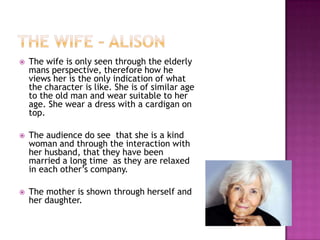
 The wife is only seen through the elderly
mans perspective, therefore how he
views her is the only indication of what
the character is like. She is of similar age
to the old man and wear suitable to her
age. She wear a dress with a cardigan on
top.
 The audience do see that she is a kind
woman and through the interaction with
her husband, that they have been
married a long time as they are relaxed
in each other’s company.
 The mother is shown through herself and
her daughter.

Character analysis

  • 2.
     He isan aged man who suffers symptoms of dementia. He is living alone. When his daughter visits him, in his vision he pictures his dead wife who had died recently. Due to his illness, he has periods of blissful forgetfulness about his wife, but when reality hits him, he gets confused and hurt by this realisation.  He is stuck in a time period which he struggles to let go of. In his home, he has surrounded himself with everything just as it was before his wife died. His behaviour, attitudes and dress sense are all relates back to when his wife was alive. He wears a casual t-shirt with a jumper, jeans and loafers. However, his style is continued with his old age with his white hair, tired and sad face.  When his daughter visits him, two different perceptions of her are shown. One from the camera (the audience’s P.O.V) the other from the old man P.O.V. This will be done to emphasize the difference of how he lives his life and how others deal with someone with dementia in their lives.
  • 3.
     She playsa role of a stereotypical carer. She is innocent and cares deeply about her father. She understand the full implications of her fathers illness and learnt to accept the upsetting facts. Therefore she plays along with how her father behaves. She reassures her father when he gets confused and doesn’t want to alarm him by telling him the truth or the real life situation.  She is a modern day woman who visits her father regularly but has to live her own life whilst supporting him. Unbeknownst, to her she never really clicks on that her father doesn’t see her as her daughter but as his dead wife instead. She instead thinks that he is just forgetful.  The audience are impressed with the way she deals with her father’s dementia in a compassionate and patient way. However they also realise that life goes on for the family and understand why she must leave.  The daughter is shown through flashes of herself and her mother.
  • 4.
     The wifeis only seen through the elderly mans perspective, therefore how he views her is the only indication of what the character is like. She is of similar age to the old man and wear suitable to her age. She wear a dress with a cardigan on top.  The audience do see that she is a kind woman and through the interaction with her husband, that they have been married a long time as they are relaxed in each other’s company.  The mother is shown through herself and her daughter.