Good hygienic practice
The various stages in the milk processing chain, from milking
the cow to consumption, must be properly controlled to assure
the quality and safety of milk and dairy products. Adherence to
basic good agricultural practices and good manufacturing
practices is one of the first steps to achieve this.
Further- more, HACCP can be applied as a tool to assess
hazards and establish control systems that focus on preventive
measures rather than relying mainly on end- product testing.
Critical key aspects with respect to milk and dairy products are
ensuring that raw materials are of good quality,
and the elimination of spoilage and pathogenic bacteria
from raw milk and other raw materials by heat treatment,
prevention of subsequent contamination, and growth
limitation of undesirable micro-organisms during storage
prior to consumption.
Farm
Micro-organisms and spores are widespread in the natural
environment, with soil, water, plants and animals serving as
reservoirs.
Some degree of contamination of raw milk during production is
inevitable, with milking and milk storage equipment being the
major sources of contamination.
Transmission of microorganisms to raw milk occurs via three main
routes, namely:-
(1) the farm environment by contamination of the exterior of teats
(2) the interior of teats, for example in the case of (subclinical)
mastitis, and
(3) the milking installation.
feed can be a source of pathogens causing infection in cattle, and
a source of bacterial spores. Pathogenic microbes associated with
feed include Listeria monocytogenes, E. coli and Salmonella.
These microbes are inactivated during pasteurization, but are of
particular concern for raw milk products. Spore- forming bacteria
that have been isolated from feeds belong to the genera
Clostridium and Bacillus.
Processing
At all stages in processing, good hygiene of the manufacturing
plant is essential to ensure that the product stream is not
(re)contaminated after heat treatment of raw milk (pasteurization
or UHT-sterilization).
Sources of post-pasteurization include equipment, packaging
materials, air, aerosols, (condensed) water, lubricants, etc.
Pasteurization equipment should be properly designed, installed,
maintained and operated to ensure that the milk is heated to at least
the specified temperature for at least the specified time.
Requirements for good hygiene design of food processing equipment,
including dairy equipment, are described in various directives and
Various organizations such as the European Hygienic Equipment Design
Group (EHEDG), the International Dairy Federation (IDF), the 3-A
organization and the International Standardization Organization (ISO,
Technical Committee 199) have formulated and published (voluntary)
principles of hygienic and aseptic design, requirements for hygienic and
aseptic equipment and methods to test whether equipment fulfils these
requirements.
To maintain the factory environment in a hygienic condition,
cleaning programs should be established. Most of the equipment
used for handling milk and milk products is cleaned and disinfected
by CIP systems at least daily. Start-up of closed processing lines in
the dairy industry is usually done by circulating hot water in order
to have additional decontamination of the equipment.
Monitoring CIP systems, i.e. concentrations of the cleaning agents,
temperatures, flow, pressure and circulation time, is necessary to
ensure the efficiency of cleaning.
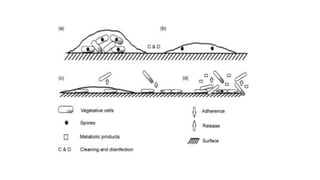
Biofilms present on the surface of milk processing equipment
threaten the quality and safety of dairy products. The hygienic
design of processing equipment is of great importance in avoiding
biofilm formation.
Future trends
In order to assure high quality standards for dairy products, it is
necessary to manage the whole production chain from farm to
consumer.
One of the major developments in the last decades is the introduction
of automatic milking systems. the use of automatic milking systems
has increased rapidly, to the point that it is now an established
management system in Europe. Benefits of the systems include
reduced labour demand, improved animal health and welfare
With respect to control of the bacteriological quality of the
milk, important aspects of automatic milking systems are
cleaning of teats and milking equipment and the (direct or
indirect) cooling systems. Another development is the use of
alternative feed supplies.
Monitoring, control and optimization of production processes
The food industry has concentrated on examination of end-
products for controlling production processes. The accent shifted
from analysis at the end of the process to control of the process,
by the introduction of Good Manufacturing Practice (GMP) and
the Hazard Analysis of Critical Control Points (HACCP) system.
In HACCP systems, microbiological methods are needed for,
among other things, assessing the quality of the raw materials,
detecting micro- organisms in process lines and the
environment, and validation and verification. A measuring
system (control measure) is necessary to make sure that the
critical control points (CCPs) are controlled indeed.
Most ideal is a continuous registration system by means of
physical and chemical analyses. Developments in the area of
sensors will continue and lead to applications within the food
industry within the next 10 years.

CHAPTER7Presentation2 (1).pptx milk hygeine

  • 1.
    Good hygienic practice Thevarious stages in the milk processing chain, from milking the cow to consumption, must be properly controlled to assure the quality and safety of milk and dairy products. Adherence to basic good agricultural practices and good manufacturing practices is one of the first steps to achieve this.
  • 2.
    Further- more, HACCPcan be applied as a tool to assess hazards and establish control systems that focus on preventive measures rather than relying mainly on end- product testing. Critical key aspects with respect to milk and dairy products are ensuring that raw materials are of good quality,
  • 3.
    and the eliminationof spoilage and pathogenic bacteria from raw milk and other raw materials by heat treatment, prevention of subsequent contamination, and growth limitation of undesirable micro-organisms during storage prior to consumption.
  • 4.
    Farm Micro-organisms and sporesare widespread in the natural environment, with soil, water, plants and animals serving as reservoirs. Some degree of contamination of raw milk during production is inevitable, with milking and milk storage equipment being the major sources of contamination.
  • 5.
    Transmission of microorganismsto raw milk occurs via three main routes, namely:- (1) the farm environment by contamination of the exterior of teats (2) the interior of teats, for example in the case of (subclinical) mastitis, and (3) the milking installation.
  • 6.
    feed can bea source of pathogens causing infection in cattle, and a source of bacterial spores. Pathogenic microbes associated with feed include Listeria monocytogenes, E. coli and Salmonella. These microbes are inactivated during pasteurization, but are of particular concern for raw milk products. Spore- forming bacteria that have been isolated from feeds belong to the genera Clostridium and Bacillus.
  • 7.
    Processing At all stagesin processing, good hygiene of the manufacturing plant is essential to ensure that the product stream is not (re)contaminated after heat treatment of raw milk (pasteurization or UHT-sterilization). Sources of post-pasteurization include equipment, packaging materials, air, aerosols, (condensed) water, lubricants, etc.
  • 8.
    Pasteurization equipment shouldbe properly designed, installed, maintained and operated to ensure that the milk is heated to at least the specified temperature for at least the specified time. Requirements for good hygiene design of food processing equipment, including dairy equipment, are described in various directives and
  • 9.
    Various organizations suchas the European Hygienic Equipment Design Group (EHEDG), the International Dairy Federation (IDF), the 3-A organization and the International Standardization Organization (ISO, Technical Committee 199) have formulated and published (voluntary) principles of hygienic and aseptic design, requirements for hygienic and aseptic equipment and methods to test whether equipment fulfils these requirements.
  • 10.
    To maintain thefactory environment in a hygienic condition, cleaning programs should be established. Most of the equipment used for handling milk and milk products is cleaned and disinfected by CIP systems at least daily. Start-up of closed processing lines in the dairy industry is usually done by circulating hot water in order to have additional decontamination of the equipment.
  • 11.
    Monitoring CIP systems,i.e. concentrations of the cleaning agents, temperatures, flow, pressure and circulation time, is necessary to ensure the efficiency of cleaning. Biofilms present on the surface of milk processing equipment threaten the quality and safety of dairy products. The hygienic design of processing equipment is of great importance in avoiding biofilm formation.
  • 13.
    Future trends In orderto assure high quality standards for dairy products, it is necessary to manage the whole production chain from farm to consumer. One of the major developments in the last decades is the introduction of automatic milking systems. the use of automatic milking systems has increased rapidly, to the point that it is now an established management system in Europe. Benefits of the systems include reduced labour demand, improved animal health and welfare
  • 14.
    With respect tocontrol of the bacteriological quality of the milk, important aspects of automatic milking systems are cleaning of teats and milking equipment and the (direct or indirect) cooling systems. Another development is the use of alternative feed supplies.
  • 15.
    Monitoring, control andoptimization of production processes The food industry has concentrated on examination of end- products for controlling production processes. The accent shifted from analysis at the end of the process to control of the process, by the introduction of Good Manufacturing Practice (GMP) and the Hazard Analysis of Critical Control Points (HACCP) system.
  • 16.
    In HACCP systems,microbiological methods are needed for, among other things, assessing the quality of the raw materials, detecting micro- organisms in process lines and the environment, and validation and verification. A measuring system (control measure) is necessary to make sure that the critical control points (CCPs) are controlled indeed.
  • 17.
    Most ideal isa continuous registration system by means of physical and chemical analyses. Developments in the area of sensors will continue and lead to applications within the food industry within the next 10 years.