Peter Belford
Terms and Abbreviations
   Pressure Equalizing Tube – PE Tube
   Eye, Ear, Nose and Throat – EENT
   Bone Conduction – BC
   Both Ears – AU
   Otitis Media – OM
   Emmetropia – EM
   Exotropia – XT
   Left Eye - OS
   Extraocular Movement – EOM
   Visual Acuity - VA
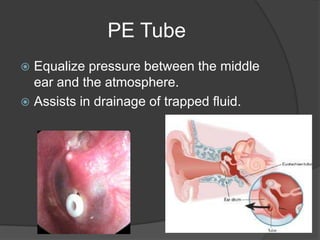
PE Tube
 Equalize pressure between the middle
  ear and the atmosphere.
 Assists in drainage of trapped fluid.
EENT
   Eyes, Ears, Nose, and Throat.
BC
   Using the bones of the skull to conduct
    sound waves. Some hearing aids
    employ this method and are almost as
    effective as normal hearing.
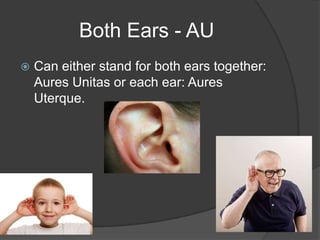
Both Ears - AU
   Can either stand for both ears together:
    Aures Unitas or each ear: Aures
    Uterque.
OM
   Commonly found in children after an
    upper respiratory infection. Referred to
    as a middle ear infection. Pathogens
    cause fluid to accumulate, could be
    either watery (serous otitis media) or
    pus (purulent otitis media).
EM
XT
   Outward turning of the eye. Also known
    as wall-eyed. Cause by muscle
    weakness.
OS
   Oculus Sinister or Left Eye. Not to be
    confused with the late TLC member.
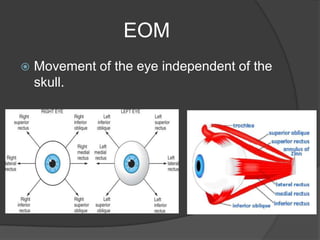
EOM
   Movement of the eye independent of the
    skull.
VA
   Test of how well or poor someone sees.
    May indicate a need for glasses. Often
    performed using a Snellen Chart.
Peter Belford

Chapter13 presentation

  • 1.
  • 2.
    Terms and Abbreviations  Pressure Equalizing Tube – PE Tube  Eye, Ear, Nose and Throat – EENT  Bone Conduction – BC  Both Ears – AU  Otitis Media – OM  Emmetropia – EM  Exotropia – XT  Left Eye - OS  Extraocular Movement – EOM  Visual Acuity - VA
  • 3.
    PE Tube  Equalizepressure between the middle ear and the atmosphere.  Assists in drainage of trapped fluid.
  • 4.
    EENT  Eyes, Ears, Nose, and Throat.
  • 5.
    BC  Using the bones of the skull to conduct sound waves. Some hearing aids employ this method and are almost as effective as normal hearing.
  • 6.
    Both Ears -AU  Can either stand for both ears together: Aures Unitas or each ear: Aures Uterque.
  • 7.
    OM  Commonly found in children after an upper respiratory infection. Referred to as a middle ear infection. Pathogens cause fluid to accumulate, could be either watery (serous otitis media) or pus (purulent otitis media).
  • 8.
  • 9.
    XT  Outward turning of the eye. Also known as wall-eyed. Cause by muscle weakness.
  • 10.
    OS  Oculus Sinister or Left Eye. Not to be confused with the late TLC member.
  • 11.
    EOM  Movement of the eye independent of the skull.
  • 12.
    VA  Test of how well or poor someone sees. May indicate a need for glasses. Often performed using a Snellen Chart.
  • 13.