Chapter 12:
Life Insurance Planning
Objectives
 Identify the purpose of life insurance and
the reasons for buying it.
 Recognize that the need for life insurance
varies over the course of one’s life and
identify the procedures used to calculate
life insurance needs.
Objectives
 Distinguish among the various types of
term and cash-value life insurance
policies.
 Describe and explain the purpose of the
major provisions of life insurance policies.
 Discuss important points to consider when
choosing and buying life insurance.
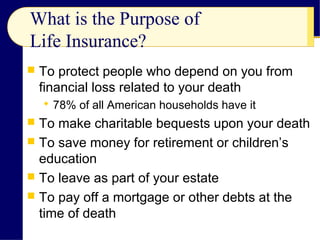
What is the Purpose of
Life Insurance?
 To protect people who depend on you from
financial loss related to your death
 78% of all American households have it
 To make charitable bequests upon your death
 To save money for retirement or children’s
education
 To leave as part of your estate
 To pay off a mortgage or other debts at the
time of death
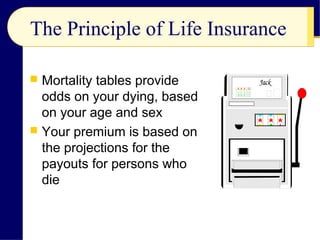
The Principle of Life Insurance
 Mortality tables provide
odds on your dying, based
on your age and sex
 Your premium is based on
the projections for the
payouts for persons who
die
Determining Your Life Insurance
Needs - Ask Yourself...
 Do you need life insurance?
 do you have people you need
to protect financially?
 does your partner work?
 What are your objectives for life insurance?
 to accumulate money for retirement?
 to provide funds when you die?
 how much can you afford?
Estimating the Amount of
Life Insurance You Need
 The Easy Method
 typically, you will need to have enough
insurance to cover 70% of your income
for seven years
 The DINK (dual income, no kids) Method
 The “Nonworking” Spouse Method
 The “Family Need” Method looks at
 employer provided insurance
 Social Security benefits
 income and assets
 Multiple-of-Earnings Approach
Determining Life Insurance Needs
CALCULATING DOLLAR LOSS:
Types of Life Insurance Policies
 Term life insurance
 protection for a specified period of time
 if you don’t pay premiums, coverage
stops
 renewability option
at the end of the term you can renew
the policy without having a physical
Types of Life Insurance Policies
 Term life insurance (continued)
 conversion option
can change your policy from term to a whole
life policy without a physical
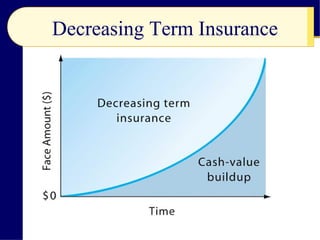
 decreasing term insurance
your premium stays the same, but the
amount of coverage decreases as you age
12-8
Types of Life Insurance Policies
 Whole life insurance
 you pay a premium as long as you live
 amount of premium depends on your age when
you start the policy
 provides death benefits and accumulates a cash
value
 you can borrow against the cash value or draw it
out at retirement
 look carefully at the rate of return your money
earns
(continued)
Whole Life Policy Options
 Nonforfeiture clause
 if you stop paying premiums you can use
the cash value in a variety of ways.
 Limited payment policy
 pay higher premiums during your earning
years only, keeping lifetime coverage
 Variable life policy
 minimum death benefit guaranteed, but
can be more depending on how your
premium dollars are invested
Whole Life Policy Options
 Adjustable
 you can change your premium amount
and thus your coverage
 Universal life
 lets you pay premiums in almost any
amount
 combines term insurance and
investment elements
(continued)
Decreasing Term Insurance
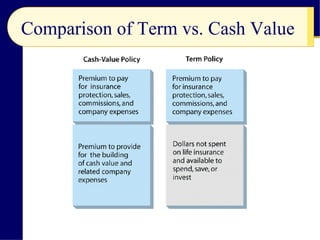
Comparison of Term vs. Cash Value
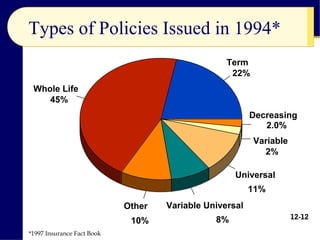
Types of Policies Issued in 1994*
10%
*1997 Insurance Fact Book
8%
Term
22%
Whole Life
45%
Other Variable Universal
Universal
11%
Variable
2%
Decreasing
2.0%
12-12
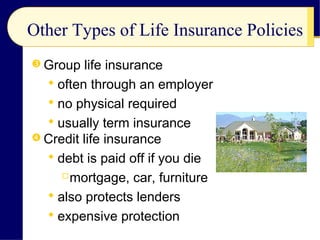
Other Types of Life Insurance Policies
 Group life insurance
 often through an employer
 no physical required
 usually term insurance
 Credit life insurance
 debt is paid off if you die
mortgage, car, furniture
 also protects lenders
 expensive protection
Life Insurance Contract Provisions
 Naming your beneficiary (one or more)
 Length of grace period for late payments
 Reinstatement of a lapsed policy if it has not
been turned in for cash
 Suicide clause during first two years
 Automatic premium loans
 uses the accumulated cash value
to pay the premium if you do not
Life Insurance Contract Provisions
 Misstatement of age provision
 Policy loan provision
 can borrow against your cash value
 Rider to add or alter benefits
 cost of living protection
 Waiver of premium disability benefit
 Accidental death benefit
 pays twice the policy face amount
 Guaranteed insurability option
 Accelerated benefits
(continued)
Buying Your Life Insurance
 Look at your income, savings, group life
insurance, and Social Security benefits
 Compare policy costs which are affected by
 cost of doing business
 return on its investments
 mortality rate among policyholders
 features of the policy
 competition from other companies
Buying Your Life Insurance
 Use the interest-adjusted index to compare
policies
 takes into account the time value of money
 helps you make cost comparisons among
insurance companies
 Determine from whom to buy your policy
 examine both private and public sources
 look up the company’s rating
(continued)
Choosing Your Insurance Agent
 Ask friends, parents and neighbors for
recommendations
 Find out if the agent belongs to professional
groups or is a CLU
 Is the person willing to take the time to
answer your questions and find a policy that
is right for you?
 Do they ask about your financial plan?
 Do you feel pressured?
 Are they available when needed?
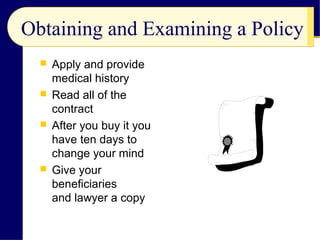
Obtaining and Examining a Policy
 Apply and provide
medical history
 Read all of the
contract
 After you buy it you
have ten days to
change your mind
 Give your
beneficiaries
and lawyer a copy
Choosing Settlement Options
 Options are the choices for how
you want the money paid out
 One lump-sum is most common
 Limited installment plan
 in equal installments for a specific number of
years after your death
 Income for life
 payments to the beneficiary for life
 Proceeds left with the company
 pays interest to the beneficiary
Should You Switch Policies?
 If benefits exceed costs of
getting another physical and
paying policy set up costs.
 Are you still insurable?
 Can you get all the provisions
you want?
Financial Planning with Annuities
 What is an annuity?
 a contract where you pay money in, and at
a certain date get regular payments back
during your lifetime
 Why do people buy annuities?
 to supplement retirement income and to
shelter income from taxes
 How are annuities taxed?
 income deducted and interest earned is not
taxed until you draw the money out

Chapter12 overheads

  • 1.
  • 2.
    Objectives  Identify thepurpose of life insurance and the reasons for buying it.  Recognize that the need for life insurance varies over the course of one’s life and identify the procedures used to calculate life insurance needs.
  • 3.
    Objectives  Distinguish amongthe various types of term and cash-value life insurance policies.  Describe and explain the purpose of the major provisions of life insurance policies.  Discuss important points to consider when choosing and buying life insurance.
  • 4.
    What is thePurpose of Life Insurance?  To protect people who depend on you from financial loss related to your death  78% of all American households have it  To make charitable bequests upon your death  To save money for retirement or children’s education  To leave as part of your estate  To pay off a mortgage or other debts at the time of death
  • 5.
    The Principle ofLife Insurance  Mortality tables provide odds on your dying, based on your age and sex  Your premium is based on the projections for the payouts for persons who die
  • 6.
    Determining Your LifeInsurance Needs - Ask Yourself...  Do you need life insurance?  do you have people you need to protect financially?  does your partner work?  What are your objectives for life insurance?  to accumulate money for retirement?  to provide funds when you die?  how much can you afford?
  • 7.
    Estimating the Amountof Life Insurance You Need  The Easy Method  typically, you will need to have enough insurance to cover 70% of your income for seven years  The DINK (dual income, no kids) Method  The “Nonworking” Spouse Method  The “Family Need” Method looks at  employer provided insurance  Social Security benefits  income and assets
  • 8.
     Multiple-of-Earnings Approach DeterminingLife Insurance Needs CALCULATING DOLLAR LOSS:
  • 9.
    Types of LifeInsurance Policies  Term life insurance  protection for a specified period of time  if you don’t pay premiums, coverage stops  renewability option at the end of the term you can renew the policy without having a physical
  • 10.
    Types of LifeInsurance Policies  Term life insurance (continued)  conversion option can change your policy from term to a whole life policy without a physical  decreasing term insurance your premium stays the same, but the amount of coverage decreases as you age 12-8
  • 11.
    Types of LifeInsurance Policies  Whole life insurance  you pay a premium as long as you live  amount of premium depends on your age when you start the policy  provides death benefits and accumulates a cash value  you can borrow against the cash value or draw it out at retirement  look carefully at the rate of return your money earns (continued)
  • 12.
    Whole Life PolicyOptions  Nonforfeiture clause  if you stop paying premiums you can use the cash value in a variety of ways.  Limited payment policy  pay higher premiums during your earning years only, keeping lifetime coverage  Variable life policy  minimum death benefit guaranteed, but can be more depending on how your premium dollars are invested
  • 13.
    Whole Life PolicyOptions  Adjustable  you can change your premium amount and thus your coverage  Universal life  lets you pay premiums in almost any amount  combines term insurance and investment elements (continued)
  • 14.
  • 15.
    Comparison of Termvs. Cash Value
  • 16.
    Types of PoliciesIssued in 1994* 10% *1997 Insurance Fact Book 8% Term 22% Whole Life 45% Other Variable Universal Universal 11% Variable 2% Decreasing 2.0% 12-12
  • 17.
    Other Types ofLife Insurance Policies  Group life insurance  often through an employer  no physical required  usually term insurance  Credit life insurance  debt is paid off if you die mortgage, car, furniture  also protects lenders  expensive protection
  • 18.
    Life Insurance ContractProvisions  Naming your beneficiary (one or more)  Length of grace period for late payments  Reinstatement of a lapsed policy if it has not been turned in for cash  Suicide clause during first two years  Automatic premium loans  uses the accumulated cash value to pay the premium if you do not
  • 19.
    Life Insurance ContractProvisions  Misstatement of age provision  Policy loan provision  can borrow against your cash value  Rider to add or alter benefits  cost of living protection  Waiver of premium disability benefit  Accidental death benefit  pays twice the policy face amount  Guaranteed insurability option  Accelerated benefits (continued)
  • 20.
    Buying Your LifeInsurance  Look at your income, savings, group life insurance, and Social Security benefits  Compare policy costs which are affected by  cost of doing business  return on its investments  mortality rate among policyholders  features of the policy  competition from other companies
  • 21.
    Buying Your LifeInsurance  Use the interest-adjusted index to compare policies  takes into account the time value of money  helps you make cost comparisons among insurance companies  Determine from whom to buy your policy  examine both private and public sources  look up the company’s rating (continued)
  • 22.
    Choosing Your InsuranceAgent  Ask friends, parents and neighbors for recommendations  Find out if the agent belongs to professional groups or is a CLU  Is the person willing to take the time to answer your questions and find a policy that is right for you?  Do they ask about your financial plan?  Do you feel pressured?  Are they available when needed?
  • 23.
    Obtaining and Examininga Policy  Apply and provide medical history  Read all of the contract  After you buy it you have ten days to change your mind  Give your beneficiaries and lawyer a copy
  • 24.
    Choosing Settlement Options Options are the choices for how you want the money paid out  One lump-sum is most common  Limited installment plan  in equal installments for a specific number of years after your death  Income for life  payments to the beneficiary for life  Proceeds left with the company  pays interest to the beneficiary
  • 25.
    Should You SwitchPolicies?  If benefits exceed costs of getting another physical and paying policy set up costs.  Are you still insurable?  Can you get all the provisions you want?
  • 26.
    Financial Planning withAnnuities  What is an annuity?  a contract where you pay money in, and at a certain date get regular payments back during your lifetime  Why do people buy annuities?  to supplement retirement income and to shelter income from taxes  How are annuities taxed?  income deducted and interest earned is not taxed until you draw the money out