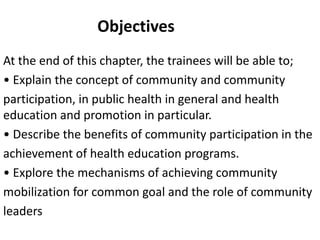
This document discusses working with communities for public health programs. It defines a community and explains that true community participation involves communities being actively involved in assessing needs, identifying problems, setting priorities, making decisions, and sharing responsibility for planning, implementing, monitoring and evaluating health programs. The benefits of community participation include making programs more successful, relevant and sustainable by incorporating local knowledge and gaining community support, motivation and self-reliance. Health workers should get to know the community, discuss their concerns and needs, and support community organization by forming committees and selecting volunteers and leaders. Community leaders are important for influencing others and helping health workers gain the community's trust and confidence.




![PERI-PROSTHETIC FRACTURE NAIL-PLATE CONSTRUCT [NPC].pptx](https://cdn.slidesharecdn.com/ss_thumbnails/drarunkumardrmohamedashrafperiprostheticfrasturenail-plateconstructnpc-260209164459-7e9d15a1-thumbnail.jpg?width=640&height=640&fit=bounds)


