CHAPTER ONE
Steps and Components
of the
Communication Process
What is the communication process?
The communication process refers to the steps and
elements involved in the successful transmission and
understanding of a message between a sender and a
receiver. It includes the exchange of information, ideas,
opinions, or emotions through various channels or
mediums. The communication process is cyclical,
meaning it involves continuous feedback and
adjustment.
Effective communication requires clarity, relevance,
active listening, and consideration of the needs and
perspectives of both the sender and the receiver. By
understanding and utilizing the communication process,
individuals and organizations can enhance their ability
to convey messages, build relationships, and achieve
their communication goals.
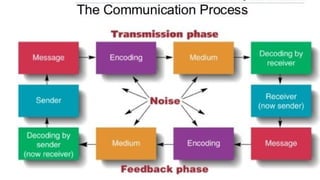
Process of communication with diagram
4
5
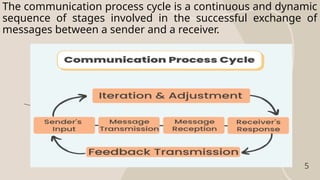
The communication process cycle is a continuous and dynamic
sequence of stages involved in the successful exchange of
messages between a sender and a receiver.
In order to successfully communicate, it's
important to understand how the process works.
Here are the seven steps in the communication
process:
1. The sender develops an idea to be sent
2. The sender encodes the message
3. The sender selects the channel of communication that will be used
4. The message travels over the channel of communication
5. The message is received by the receiver
6. The receiver decodes the message
7. The receiver provides feedback, if applicable
1. The sender develops an idea to be sent
The beginning of the communication process involves the sender creating an idea that they plan to send to
another person or group of people. Essentially, they're planning the overall subject matter or information they
want to transmit.
7
2. The sender encodes the message
Once the sender develops an idea, they translate it into a form that can be transmitted to someone else. This
means they transform the thoughts of the information they want to send into a certain format. For example, if
you are writing a letter, you'll translate your idea into words. The message can also be nonverbal, oral or
symbolic.
3. The sender selects the channel of communication that will be used
Next, the sender decides how the message will be sent. This involves selecting the most suitable medium for
the message they're relaying. Some communication mediums include speaking, writing, electronic
transmission or non-verbal communication. If you're communicating at work, make sure to select the proper
and most professional channel of communication.
4. The message travels over the channel of communication
After the medium is chosen, the message then begins the process of transmission. The exact process of
this will depend on the selected medium. In order for the message to be properly sent, the sender should
have selected the appropriate medium.
5. The message is received by the receiver
Next, the message is received by the recipient. This step in the communication process is done by hearing the
message, seeing it, feeling it or another form of reception.
8
6. The receiver decodes the message
The receiver then decodes the sender's message. In other words, they interpret it and convert it into a thought.
After they've done this, they analyze the message and attempt to understand it. The communication process is
performed effectively when the sender and receiver have the same meaning for the transmitted message.
7. The receiver provides feedback, if applicable
Lastly, unless it's a one-way communication, the receiver will provide feedback in the form of a reply to the
original sender of the message. Feedback provides the recipient with the ability to ensure the sender that their
message was properly received and interpreted. Between two people, this is two-way communication.
ELEMENTS /
COMPONENTS
OF THE
COMMUNICATION
PROCESS
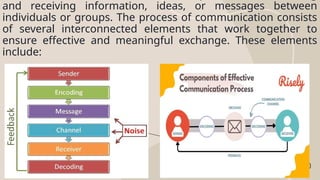
and receiving information, ideas, or messages between
individuals or groups. The process of communication consists
of several interconnected elements that work together to
ensure effective and meaningful exchange. These elements
include:
10
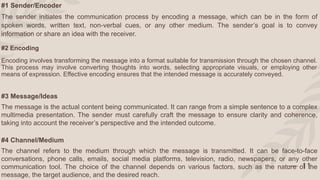
#2 Encoding
Encoding involves transforming the message into a format suitable for transmission through the chosen channel.
This process may involve converting thoughts into words, selecting appropriate visuals, or employing other
means of expression. Effective encoding ensures that the intended message is accurately conveyed.
11
#1 Sender/Encoder
The sender initiates the communication process by encoding a message, which can be in the form of
spoken words, written text, non-verbal cues, or any other medium. The sender’s goal is to convey
information or share an idea with the receiver.
#3 Message/Ideas
The message is the actual content being communicated. It can range from a simple sentence to a complex
multimedia presentation. The sender must carefully craft the message to ensure clarity and coherence,
taking into account the receiver’s perspective and the intended outcome.
#4 Channel/Medium
The channel refers to the medium through which the message is transmitted. It can be face-to-face
conversations, phone calls, emails, social media platforms, television, radio, newspapers, or any other
communication tool. The choice of the channel depends on various factors, such as the nature of the
message, the target audience, and the desired reach.
#5 Receiver/Audience/Decoder
The receiver is the individual or group for whom the message is intended. They play a crucial role in the
communication process as they interpret and respond to the message. The receiver’s comprehension and
response can provide valuable feedback to the sender, enabling them to refine future communication
12
#6 Decoding
Decoding is the reverse process of encoding, wherein the receiver interprets and understands the
message. The receiver decodes the message by extracting meaning from the words, images, or non-
verbal cues used by the sender. Successful decoding relies on shared language, cultural context, and the
receiver’s ability to comprehend the message.
#7 Feedback
Feedback is the response or reaction received from the receiver. It helps to validate whether the receiver
understood the message as intended and provides an opportunity for clarification or further
communication. Feedback can be immediate or delayed, and it contributes to the iterative nature of the
communication process.
Tips for improving the communication process
Here are some tips to consider to improve your communication skills and the communication process overall:
13
 Simplify your message: In order to ensure your message is properly understood, you should keep your language simple
and to the point.
 Know your audience: It's also important to consider the audience that will receive your message as well as their needs
and interests.
 Be a good listener: As a communicator, it's important to actively listen to what those around you are saying. This will
ensure that you're sending the right message.
 Ask questions: It's also important to ask good questions to keep the communication flowing. Make sure your questions
are insightful and engaging.
 Take the time to respond: When communicating, it's important to consider how you might reply to a person to ensure
you know what you want to say.
 Consider your body language: If you're communicating through a different medium, it's important to be mindful of your
body language. In addition, be aware of the body language of the person you're communicating with, as well.
 Maintain eye contact: It's also important to make contact with the person or group you're communicating with. This will
show that you're actively listening to who you're communicating with.
 Clarify your message if needed: If the recipient of your message is unclear about what you're trying to say, it's important
to clarify your message. This will help them to better understand you.
thank you
DOC 110 -
DYNAMICS OF
ORGANIZATIONAL
COMMUNICATION
ANNALYN ALMIROL YURONG
OCTOBER 13, 2024
ABC GRADUATE SCHOOL
INSTRUCTOR/PROFESSOR :
DOC. SHIRLEY G. BELLINO

CHAPTER-ONE-DOC, Steps & Components of the Communication Process

  • 1.
    CHAPTER ONE Steps andComponents of the Communication Process
  • 2.
    What is thecommunication process? The communication process refers to the steps and elements involved in the successful transmission and understanding of a message between a sender and a receiver. It includes the exchange of information, ideas, opinions, or emotions through various channels or mediums. The communication process is cyclical, meaning it involves continuous feedback and adjustment. Effective communication requires clarity, relevance, active listening, and consideration of the needs and perspectives of both the sender and the receiver. By understanding and utilizing the communication process, individuals and organizations can enhance their ability to convey messages, build relationships, and achieve their communication goals.
  • 4.
  • 5.
    5 The communication processcycle is a continuous and dynamic sequence of stages involved in the successful exchange of messages between a sender and a receiver.
  • 6.
    In order tosuccessfully communicate, it's important to understand how the process works. Here are the seven steps in the communication process: 1. The sender develops an idea to be sent 2. The sender encodes the message 3. The sender selects the channel of communication that will be used 4. The message travels over the channel of communication 5. The message is received by the receiver 6. The receiver decodes the message 7. The receiver provides feedback, if applicable
  • 7.
    1. The senderdevelops an idea to be sent The beginning of the communication process involves the sender creating an idea that they plan to send to another person or group of people. Essentially, they're planning the overall subject matter or information they want to transmit. 7 2. The sender encodes the message Once the sender develops an idea, they translate it into a form that can be transmitted to someone else. This means they transform the thoughts of the information they want to send into a certain format. For example, if you are writing a letter, you'll translate your idea into words. The message can also be nonverbal, oral or symbolic. 3. The sender selects the channel of communication that will be used Next, the sender decides how the message will be sent. This involves selecting the most suitable medium for the message they're relaying. Some communication mediums include speaking, writing, electronic transmission or non-verbal communication. If you're communicating at work, make sure to select the proper and most professional channel of communication. 4. The message travels over the channel of communication After the medium is chosen, the message then begins the process of transmission. The exact process of this will depend on the selected medium. In order for the message to be properly sent, the sender should have selected the appropriate medium.
  • 8.
    5. The messageis received by the receiver Next, the message is received by the recipient. This step in the communication process is done by hearing the message, seeing it, feeling it or another form of reception. 8 6. The receiver decodes the message The receiver then decodes the sender's message. In other words, they interpret it and convert it into a thought. After they've done this, they analyze the message and attempt to understand it. The communication process is performed effectively when the sender and receiver have the same meaning for the transmitted message. 7. The receiver provides feedback, if applicable Lastly, unless it's a one-way communication, the receiver will provide feedback in the form of a reply to the original sender of the message. Feedback provides the recipient with the ability to ensure the sender that their message was properly received and interpreted. Between two people, this is two-way communication.
  • 9.
  • 10.
    and receiving information,ideas, or messages between individuals or groups. The process of communication consists of several interconnected elements that work together to ensure effective and meaningful exchange. These elements include: 10
  • 11.
    #2 Encoding Encoding involvestransforming the message into a format suitable for transmission through the chosen channel. This process may involve converting thoughts into words, selecting appropriate visuals, or employing other means of expression. Effective encoding ensures that the intended message is accurately conveyed. 11 #1 Sender/Encoder The sender initiates the communication process by encoding a message, which can be in the form of spoken words, written text, non-verbal cues, or any other medium. The sender’s goal is to convey information or share an idea with the receiver. #3 Message/Ideas The message is the actual content being communicated. It can range from a simple sentence to a complex multimedia presentation. The sender must carefully craft the message to ensure clarity and coherence, taking into account the receiver’s perspective and the intended outcome. #4 Channel/Medium The channel refers to the medium through which the message is transmitted. It can be face-to-face conversations, phone calls, emails, social media platforms, television, radio, newspapers, or any other communication tool. The choice of the channel depends on various factors, such as the nature of the message, the target audience, and the desired reach.
  • 12.
    #5 Receiver/Audience/Decoder The receiveris the individual or group for whom the message is intended. They play a crucial role in the communication process as they interpret and respond to the message. The receiver’s comprehension and response can provide valuable feedback to the sender, enabling them to refine future communication 12 #6 Decoding Decoding is the reverse process of encoding, wherein the receiver interprets and understands the message. The receiver decodes the message by extracting meaning from the words, images, or non- verbal cues used by the sender. Successful decoding relies on shared language, cultural context, and the receiver’s ability to comprehend the message. #7 Feedback Feedback is the response or reaction received from the receiver. It helps to validate whether the receiver understood the message as intended and provides an opportunity for clarification or further communication. Feedback can be immediate or delayed, and it contributes to the iterative nature of the communication process.
  • 13.
    Tips for improvingthe communication process Here are some tips to consider to improve your communication skills and the communication process overall: 13  Simplify your message: In order to ensure your message is properly understood, you should keep your language simple and to the point.  Know your audience: It's also important to consider the audience that will receive your message as well as their needs and interests.  Be a good listener: As a communicator, it's important to actively listen to what those around you are saying. This will ensure that you're sending the right message.  Ask questions: It's also important to ask good questions to keep the communication flowing. Make sure your questions are insightful and engaging.  Take the time to respond: When communicating, it's important to consider how you might reply to a person to ensure you know what you want to say.  Consider your body language: If you're communicating through a different medium, it's important to be mindful of your body language. In addition, be aware of the body language of the person you're communicating with, as well.  Maintain eye contact: It's also important to make contact with the person or group you're communicating with. This will show that you're actively listening to who you're communicating with.  Clarify your message if needed: If the recipient of your message is unclear about what you're trying to say, it's important to clarify your message. This will help them to better understand you.
  • 14.
    thank you DOC 110- DYNAMICS OF ORGANIZATIONAL COMMUNICATION ANNALYN ALMIROL YURONG OCTOBER 13, 2024 ABC GRADUATE SCHOOL INSTRUCTOR/PROFESSOR : DOC. SHIRLEY G. BELLINO