Overview of These Notes
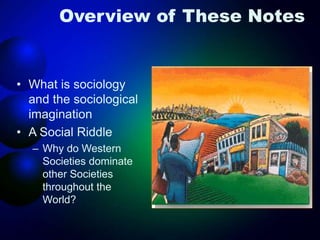
• What is sociology
and the sociological
imagination
• A Social Riddle
– Why do Western
Societies dominate
other Societies
throughout the
World?
Chapter One: The
Sociological Perspective
and Research Process
• Sociology is the systematic study of human
society and social interaction
• Why Study Sociology?
– Sociology helps us see connections between our
lives and the larger recurring patterns of the
society and world
– Sociology often reveals limitations of myths
associated with commonsense knowledge that
guides ordinary conduct in everyday life
Chapter One: The
Sociological Perspective
and Research Process
• Society is a large grouping that shares
the same territory and is subject to the
same political authority dominant
cultural expectations
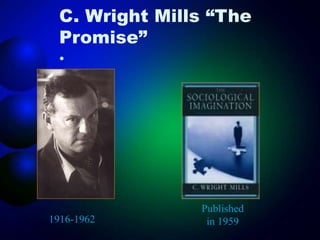
C. Wright Mills “The
Promise”
•
1916-1962
Published
in 1959
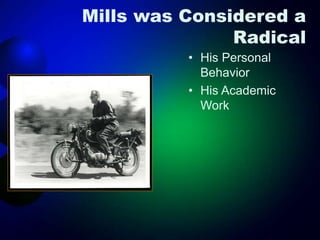
Mills was Considered a
Radical
• His Personal
Behavior
• His Academic
Work
What is the Sociological
Imagination?
The intersection of Biography and
History
• Biography
– Experiences and Attributes
• History
– Society in its Historical Context
What is the Sociological
Imagination?
Three Questions Relevant to the
Sociological Imagination
• How are activities patterned in a
society?
• Where does this society stand in
human history?
• What varieties of people are
produced in this society?
What is the Sociological
Imagination?
Personal Troubles and Public Issues
• Troubles are private matters limited
to the aspects of daily life of which
people are directly aware
• Public Issues are forces outside of
the control of most people
– Business cycles
– National policy
– Values and religious traditions
Mills was fascinated by the process in
which “personal troubles” became
recognized as “public issues.”
• He wondered how do people
define their personal conditions
– Realization of impersonal forces
– Losing the feeling of inadequacy?
– False Consciousness
• Mills thought that this process
was important for societies in
generating social change
The Sociological
Imagination
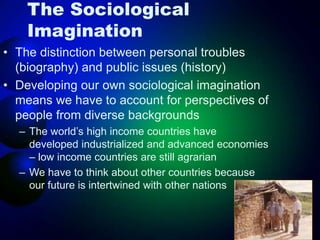
• The distinction between personal troubles
(biography) and public issues (history)
• Developing our own sociological imagination
means we have to account for perspectives of
people from diverse backgrounds
– The world’s high income countries have
developed industrialized and advanced economies
– low income countries are still agrarian
– We have to think about other countries because
our future is intertwined with other nations
Jared Diamond “The Fate of Human Societies”
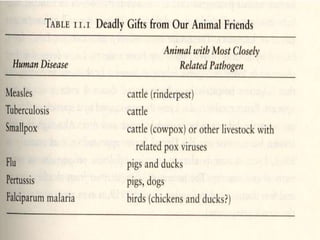
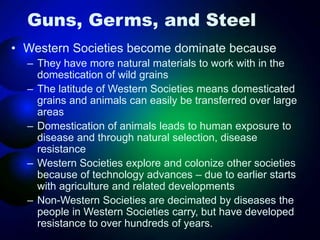
Guns, Germs, and Steel
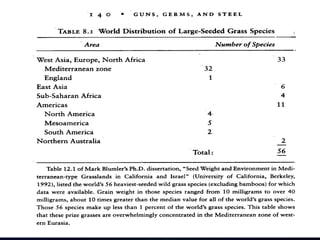
• Western Societies become dominate because
– They have more natural materials to work with in the
domestication of wild grains
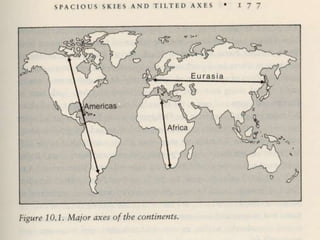
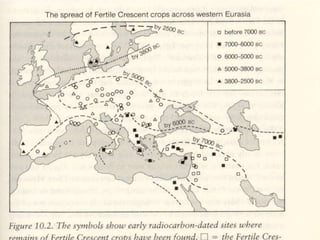
– The latitude of Western Societies means domesticated
grains and animals can easily be transferred over large
areas
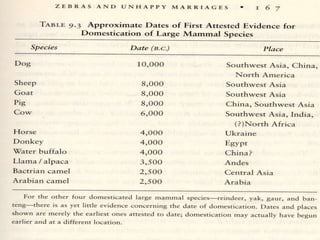
– Domestication of animals leads to human exposure to
disease and through natural selection, disease
resistance
– Western Societies explore and colonize other societies
because of technology advances – due to earlier starts
with agriculture and related developments
– Non-Western Societies are decimated by diseases the
people in Western Societies carry, but have developed
resistance to over hundreds of years.

Chapter One -1.ppt

  • 1.
    Overview of TheseNotes • What is sociology and the sociological imagination • A Social Riddle – Why do Western Societies dominate other Societies throughout the World?
  • 2.
    Chapter One: The SociologicalPerspective and Research Process • Sociology is the systematic study of human society and social interaction • Why Study Sociology? – Sociology helps us see connections between our lives and the larger recurring patterns of the society and world – Sociology often reveals limitations of myths associated with commonsense knowledge that guides ordinary conduct in everyday life
  • 3.
    Chapter One: The SociologicalPerspective and Research Process • Society is a large grouping that shares the same territory and is subject to the same political authority dominant cultural expectations
  • 4.
    C. Wright Mills“The Promise” • 1916-1962 Published in 1959
  • 5.
    Mills was Considereda Radical • His Personal Behavior • His Academic Work
  • 6.
    What is theSociological Imagination? The intersection of Biography and History • Biography – Experiences and Attributes • History – Society in its Historical Context
  • 7.
    What is theSociological Imagination? Three Questions Relevant to the Sociological Imagination • How are activities patterned in a society? • Where does this society stand in human history? • What varieties of people are produced in this society?
  • 8.
    What is theSociological Imagination? Personal Troubles and Public Issues • Troubles are private matters limited to the aspects of daily life of which people are directly aware • Public Issues are forces outside of the control of most people – Business cycles – National policy – Values and religious traditions
  • 9.
    Mills was fascinatedby the process in which “personal troubles” became recognized as “public issues.” • He wondered how do people define their personal conditions – Realization of impersonal forces – Losing the feeling of inadequacy? – False Consciousness • Mills thought that this process was important for societies in generating social change
  • 10.
    The Sociological Imagination • Thedistinction between personal troubles (biography) and public issues (history) • Developing our own sociological imagination means we have to account for perspectives of people from diverse backgrounds – The world’s high income countries have developed industrialized and advanced economies – low income countries are still agrarian – We have to think about other countries because our future is intertwined with other nations
  • 16.
    Jared Diamond “TheFate of Human Societies”
  • 22.
    Guns, Germs, andSteel • Western Societies become dominate because – They have more natural materials to work with in the domestication of wild grains – The latitude of Western Societies means domesticated grains and animals can easily be transferred over large areas – Domestication of animals leads to human exposure to disease and through natural selection, disease resistance – Western Societies explore and colonize other societies because of technology advances – due to earlier starts with agriculture and related developments – Non-Western Societies are decimated by diseases the people in Western Societies carry, but have developed resistance to over hundreds of years.