SOLID WASTE
Brainstorming:
• Write list of different ways to dispose of garbage
Learning Objectives
After this lesson, students should be able to:
• Understand and explain different methods of waste
disposal.
• Explain some of the major problems caused by waste
disposal and use of landfills.
• Understand and explain the role of engineers in solid
waste management.
• Suggest ways to reduce the amount of solid waste
going to a landfill.
Vocabulary
Read some of the terms in Vocabulary list
• Solid waste
• Land fills
• Composition
• Mathene
• MSW
Solid waste
• Paper is the largest category of trash that we throw away.
Can you think of some paper items you have thrown away
just today (e.g., paper bags, candy or other wrappers,
newspapers, writing paper, etc.).
• We call this trash that we throw away in great
amounts solid waste. It can be very harmful to the
environment. As plastics and other garbage break down
and begin to rot, there can be many negative effects to the
environment: a dangerous gas — methane — can be
released into the air, chemicals that are in or on the
garbage might leak out into the ground during rainstorms,
and germs, flies, vultures and other nuisances are often
attracted to the continual build up of solid waste.
Solid waste
Land fill
Compositions
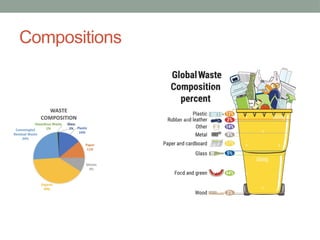
Composition
The solid waste composition varies from region to region and time to time.
There are following different types of solid waste:
• Biodegradable waste i.e. could be decomposed naturally such as food and
kitchen waste, green waste, paper, etc.
• Recyclable material i.e. could be recycled again and again; such as paper,
glass, bottles, cans, metals, certain plastics, fabrics, clothes, batteries etc.
• Inert waste i.e. not liable to decompose; such as construction and
demolition waste, dirt, rocks, debris, etc.
• Electrical and electronic equipment waste (WEEE); such as electrical
appliances, TVs, computers, screens, etc.
• Composite wastes; such as waste clothing, tetra packs, waste plastic, etc.
• Domestic hazardous waste and toxic waste medication; such as paints,
chemicals, light bulbs, fluorescent tubes, spray cans, fertilizer and pesticide
containers, shoe polish, etc.
Composition pits
Methane gas
Methane is used to produce heat and light, and to manufacture organic
chemicals.
Sources
• Methane can be produced naturally through the decay of natural materials, or
by human activities:
• Natural sources: Wetlands are the largest natural source of methane.
• Human activities: The largest sources of methane are agriculture, fossil
fuels, and the decomposition of landfill waste.
Greenhouse gas
• Methane is a powerful greenhouse gas that contributes to climate change:
• Global warming: Methane is the second-largest contributor to climate
warming after carbon dioxide.
• Global Warming Potential: Methane has a Global Warming Potential that is
about 80 times greater than carbon dioxide over a 20-year period
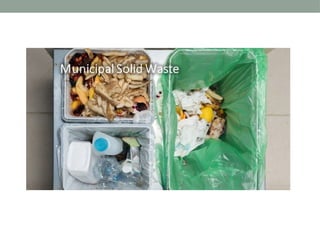
Municipal Solid Waste (MSW)
• n Pakistan, MSW is made up of a variety of materials,
including:
• Ash, bricks, and dirt, Glass, Textile, Cardboard, Food
wastes, Leather, Paper, Plastic, Rubber, and Metal.
Types
The most common types of solid waste are:
• Municipal Solid Waste (MSW )
• Industrial Waste
• Agricultural Waste
• Hazardous Waste
Problems
• Solid waste generation in Pakistan ranges between 0.8 to
0.612 kg/capita/day and the waste generation growth rate
is 2.4% per year.
Main problems regarding solid waste management in
Pakistan are:
• There is no proper waste collection system
• Waste is dumped on the streets
• Different types of waste are not collected separately
• There are no controlled sanitary landfill sites
• Citizens are not aware of the relationship between ways
of disposing of wastes and the resulting environmental
and public health problems
Effects
The unavailability of proper disposal methods and resources for solid waste
management results in various environmental and human health hazard effects.
Health Hazards
• Some common health hazards caused by solid waste are mentioned in the
following:
• Skin and eye infections are common
• Dust in the air at dumpsites can cause breathing problems in children and
adults
• Flies breed on uncovered piles of rotting garbage and spread diseases like
diarrhoea, dysentery, typhoid, hepatitis, and cholera
• Mosquitoes transmit many types of diseases like malaria and yellow fever
• Dogs, cats and rats living around carry a variety of diseases including plague
and flea born fever
• Intestinal, parasitic and skin diseases are found in workers engaged in
collecting refuse
groundwater Pollution
• The most serious problem is groundwater contamination. As water filters
through any material, chemicals in the material may dissolve in the water, a
process called leaching. The resulting mixture is called leachate. As water
percolates through Municipal Solid Waste, it makes a leachate that consists of
decomposing organic matter combined with iron, mercury, lead, zinc, and other
metals from rusting cans, discarded batteries and appliances. It may also
contain paints, pesticides, cleaning fluids, newspaper inks, and other
chemicals. Contaminated water can have a serious impact on all living
creatures including humans in an ecosystem.
• There is a serious kind of dangerous gas that is formed when things rot in
landfills is called methane.
Air Pollution
• When waste is burnt heavy metals like lead, toxic gases, and smoke spread
over residential areas. The wind also carries waste, dust and gases caused by
decomposition. Putrefaction of waste in sunlight during daytime results in bad
smells and reduced visibility.
groundwater Pollution
Solution - Solid Waste Management
• The public and local
municipal authorities
need to work together.
• It is important to make
people become
conscious of the need to
deal with this problem.
Legislation
• Pakistan has responded to its environmental problems by
developing laws, establishing government agencies and
accepting technical assistance from donors, including the
World Bank.
• Despite this, the response remains broke and
environmental institutions, laws, and other initiatives do
not solve the whole problem
Install Waste Disposal Facilities
• There is lack of waste disposal facilities in the country.
Currently, individuals dispose of wastes by throwing away
plastic bags, wrappers, fruit peels, cigarette butts, etc. in
public places.
Following must be a course of action to deal this
issue:
• Littering spreads pollution and ends up clogging drains
and causing sanitation problems, this can be controlled by
making roadside dustbins or proper disposal of waste at
home
• If proper waste management is practiced, this waste could
be converted into useful products
3 Rs
Reduce
• The best way to reduce waste is not to produce it in the first place. Everyone
should try to reduce his / her consumption of goods as much as possible. For
example, choose products with minimum packaging and instead of accepting
plastic bags when shopping, use cloth / canvas bags.
Reuse
• Items should not just be thrown away after use if they can be used again. Items
like glass jars, bottles, and plastic bags can be reused.
Recycle
• Recycling results in creating new things from already used items. Almost 20-30
percent of MSW contains materials which could be recycled. For instance:
• Paper can be re-pulped and reprocessed into recycled paper, cardboard and
other paper products
• Broken glass can be crushed, re-melted and made into containers, some forms of
plastic can be re-melted and fabricated into carpet fiber or cloth
• Food wastes and yard wastes can be composted to produce fertilizers and soil
conditioners
Pakistan projects
Group Activity 1
Poem : We are plooters
we are plooters we don't care
we make messes everywhere
we strip forests bare of trees
we dump garbage in the seas
we are plooters we injoy finding beauty to destroy
we intrude where creatures thrive soon there's little left
alive underwater, underground nothings safe when were
around
we spew poisons in the air
we are plooters we dont care
Activity 2
Reducing Waste: What You
Can Do
Tips for Students and Schools
• Students, parents, and teachers can all make a difference in reducing waste at school. By
practicing the "3 R's" of waste reduction—reduce, reuse, and recycle—we can all do our part.
• Green School Supplies
• Think green before you shop. Before starting the new school year, look through last year’s
materials. Many items can be reused or recycled.
• Purchase and use school supplies made from recycled products, such as pencils made from old
blue jeans and binders made from old shipping boxes.
• Keep waste out of landfills by using school supplies wrapped in minimal packaging, and buying in
bulk when possible.
• Save packaging, colored paper, egg cartons and other items for arts and crafts projects. Look for
other ways that you can reduce the amount of packing that you throw away.
• Maintain new school supplies. Keep track of pens and pencils. Make an effort to put your things in a
safe place every day. This will not only reduce waste, but save you money in the long run.
• In the Cafeteria
• If you bring your lunch to school, package it in reusable containers instead of disposable ones.
Carry food in reusable plastic or cloth bags, and bring drinks in a thermos instead of disposable
bottles or cartons
• When buying lunch, grab only what you need. Too often extra ketchup packets and napkins go to
waste.
• Remember to recycle your cans and bottles after you finish eating.
• Work with your teachers to set up a composting program at school.
• Make posters that remind students what can be composted or recycled.
• Facts
• • One person produces, on average, one ton of garbage
per year.
• • One ton is equal to 2,000 pounds.
• • One garbage truck holds one ton of garbage.
Quiz
• Questions 1.
How much garbage do ten people
make? Ten people make
____________________ tons of
garbage.
Question 2
What type of item
makes up the majority of
the garbage that we
throw into our landfills?
(write the correct
answer)
a. Food b.
Plastic c. Paper
d. Metal
Question 3
2. The kind of dangerous
gas that is formed when
things rot in landfills is
called _________________.
(write the correct answer)
a. Oxygen b. Carbon dioxide c.
Nitrogen d. Methane
Question 4
3. List 2 ways that solid waste
is harmful to our environment.
a.
b.

clean your environment, don't throw trash

  • 1.
  • 2.
    Brainstorming: • Write listof different ways to dispose of garbage
  • 3.
    Learning Objectives After thislesson, students should be able to: • Understand and explain different methods of waste disposal. • Explain some of the major problems caused by waste disposal and use of landfills. • Understand and explain the role of engineers in solid waste management. • Suggest ways to reduce the amount of solid waste going to a landfill.
  • 4.
    Vocabulary Read some ofthe terms in Vocabulary list • Solid waste • Land fills • Composition • Mathene • MSW
  • 5.
    Solid waste • Paperis the largest category of trash that we throw away. Can you think of some paper items you have thrown away just today (e.g., paper bags, candy or other wrappers, newspapers, writing paper, etc.). • We call this trash that we throw away in great amounts solid waste. It can be very harmful to the environment. As plastics and other garbage break down and begin to rot, there can be many negative effects to the environment: a dangerous gas — methane — can be released into the air, chemicals that are in or on the garbage might leak out into the ground during rainstorms, and germs, flies, vultures and other nuisances are often attracted to the continual build up of solid waste.
  • 6.
  • 7.
  • 8.
  • 9.
    Composition The solid wastecomposition varies from region to region and time to time. There are following different types of solid waste: • Biodegradable waste i.e. could be decomposed naturally such as food and kitchen waste, green waste, paper, etc. • Recyclable material i.e. could be recycled again and again; such as paper, glass, bottles, cans, metals, certain plastics, fabrics, clothes, batteries etc. • Inert waste i.e. not liable to decompose; such as construction and demolition waste, dirt, rocks, debris, etc. • Electrical and electronic equipment waste (WEEE); such as electrical appliances, TVs, computers, screens, etc. • Composite wastes; such as waste clothing, tetra packs, waste plastic, etc. • Domestic hazardous waste and toxic waste medication; such as paints, chemicals, light bulbs, fluorescent tubes, spray cans, fertilizer and pesticide containers, shoe polish, etc.
  • 10.
  • 11.
  • 12.
    Methane is usedto produce heat and light, and to manufacture organic chemicals. Sources • Methane can be produced naturally through the decay of natural materials, or by human activities: • Natural sources: Wetlands are the largest natural source of methane. • Human activities: The largest sources of methane are agriculture, fossil fuels, and the decomposition of landfill waste. Greenhouse gas • Methane is a powerful greenhouse gas that contributes to climate change: • Global warming: Methane is the second-largest contributor to climate warming after carbon dioxide. • Global Warming Potential: Methane has a Global Warming Potential that is about 80 times greater than carbon dioxide over a 20-year period
  • 14.
    Municipal Solid Waste(MSW) • n Pakistan, MSW is made up of a variety of materials, including: • Ash, bricks, and dirt, Glass, Textile, Cardboard, Food wastes, Leather, Paper, Plastic, Rubber, and Metal.
  • 16.
    Types The most commontypes of solid waste are: • Municipal Solid Waste (MSW ) • Industrial Waste • Agricultural Waste • Hazardous Waste
  • 17.
    Problems • Solid wastegeneration in Pakistan ranges between 0.8 to 0.612 kg/capita/day and the waste generation growth rate is 2.4% per year. Main problems regarding solid waste management in Pakistan are: • There is no proper waste collection system • Waste is dumped on the streets • Different types of waste are not collected separately • There are no controlled sanitary landfill sites • Citizens are not aware of the relationship between ways of disposing of wastes and the resulting environmental and public health problems
  • 18.
    Effects The unavailability ofproper disposal methods and resources for solid waste management results in various environmental and human health hazard effects. Health Hazards • Some common health hazards caused by solid waste are mentioned in the following: • Skin and eye infections are common • Dust in the air at dumpsites can cause breathing problems in children and adults • Flies breed on uncovered piles of rotting garbage and spread diseases like diarrhoea, dysentery, typhoid, hepatitis, and cholera • Mosquitoes transmit many types of diseases like malaria and yellow fever • Dogs, cats and rats living around carry a variety of diseases including plague and flea born fever • Intestinal, parasitic and skin diseases are found in workers engaged in collecting refuse
  • 19.
    groundwater Pollution • Themost serious problem is groundwater contamination. As water filters through any material, chemicals in the material may dissolve in the water, a process called leaching. The resulting mixture is called leachate. As water percolates through Municipal Solid Waste, it makes a leachate that consists of decomposing organic matter combined with iron, mercury, lead, zinc, and other metals from rusting cans, discarded batteries and appliances. It may also contain paints, pesticides, cleaning fluids, newspaper inks, and other chemicals. Contaminated water can have a serious impact on all living creatures including humans in an ecosystem. • There is a serious kind of dangerous gas that is formed when things rot in landfills is called methane. Air Pollution • When waste is burnt heavy metals like lead, toxic gases, and smoke spread over residential areas. The wind also carries waste, dust and gases caused by decomposition. Putrefaction of waste in sunlight during daytime results in bad smells and reduced visibility.
  • 20.
  • 21.
    Solution - SolidWaste Management • The public and local municipal authorities need to work together. • It is important to make people become conscious of the need to deal with this problem.
  • 22.
    Legislation • Pakistan hasresponded to its environmental problems by developing laws, establishing government agencies and accepting technical assistance from donors, including the World Bank. • Despite this, the response remains broke and environmental institutions, laws, and other initiatives do not solve the whole problem
  • 23.
    Install Waste DisposalFacilities • There is lack of waste disposal facilities in the country. Currently, individuals dispose of wastes by throwing away plastic bags, wrappers, fruit peels, cigarette butts, etc. in public places.
  • 24.
    Following must bea course of action to deal this issue: • Littering spreads pollution and ends up clogging drains and causing sanitation problems, this can be controlled by making roadside dustbins or proper disposal of waste at home • If proper waste management is practiced, this waste could be converted into useful products
  • 25.
  • 26.
    Reduce • The bestway to reduce waste is not to produce it in the first place. Everyone should try to reduce his / her consumption of goods as much as possible. For example, choose products with minimum packaging and instead of accepting plastic bags when shopping, use cloth / canvas bags. Reuse • Items should not just be thrown away after use if they can be used again. Items like glass jars, bottles, and plastic bags can be reused. Recycle • Recycling results in creating new things from already used items. Almost 20-30 percent of MSW contains materials which could be recycled. For instance: • Paper can be re-pulped and reprocessed into recycled paper, cardboard and other paper products • Broken glass can be crushed, re-melted and made into containers, some forms of plastic can be re-melted and fabricated into carpet fiber or cloth • Food wastes and yard wastes can be composted to produce fertilizers and soil conditioners
  • 27.
  • 28.
  • 29.
    Poem : Weare plooters we are plooters we don't care we make messes everywhere we strip forests bare of trees we dump garbage in the seas we are plooters we injoy finding beauty to destroy we intrude where creatures thrive soon there's little left alive underwater, underground nothings safe when were around we spew poisons in the air we are plooters we dont care
  • 30.
  • 31.
    Tips for Studentsand Schools • Students, parents, and teachers can all make a difference in reducing waste at school. By practicing the "3 R's" of waste reduction—reduce, reuse, and recycle—we can all do our part. • Green School Supplies • Think green before you shop. Before starting the new school year, look through last year’s materials. Many items can be reused or recycled. • Purchase and use school supplies made from recycled products, such as pencils made from old blue jeans and binders made from old shipping boxes. • Keep waste out of landfills by using school supplies wrapped in minimal packaging, and buying in bulk when possible. • Save packaging, colored paper, egg cartons and other items for arts and crafts projects. Look for other ways that you can reduce the amount of packing that you throw away. • Maintain new school supplies. Keep track of pens and pencils. Make an effort to put your things in a safe place every day. This will not only reduce waste, but save you money in the long run. • In the Cafeteria • If you bring your lunch to school, package it in reusable containers instead of disposable ones. Carry food in reusable plastic or cloth bags, and bring drinks in a thermos instead of disposable bottles or cartons • When buying lunch, grab only what you need. Too often extra ketchup packets and napkins go to waste. • Remember to recycle your cans and bottles after you finish eating. • Work with your teachers to set up a composting program at school. • Make posters that remind students what can be composted or recycled.
  • 32.
    • Facts • •One person produces, on average, one ton of garbage per year. • • One ton is equal to 2,000 pounds. • • One garbage truck holds one ton of garbage.
  • 33.
    Quiz • Questions 1. Howmuch garbage do ten people make? Ten people make ____________________ tons of garbage.
  • 34.
    Question 2 What typeof item makes up the majority of the garbage that we throw into our landfills? (write the correct answer) a. Food b. Plastic c. Paper d. Metal
  • 35.
    Question 3 2. Thekind of dangerous gas that is formed when things rot in landfills is called _________________. (write the correct answer) a. Oxygen b. Carbon dioxide c. Nitrogen d. Methane
  • 36.
    Question 4 3. List2 ways that solid waste is harmful to our environment. a. b.

Editor's Notes

  • #2 (e.g., burning, burying, shooting out into space, etc.)
  • #3 https://www.teachengineering.org/lessons/view/cub_environ_lesson04
  • #33 10 tons