PRESENTED BY SUSHREE SWAYAMAMITA
VI B ROLL NO 49
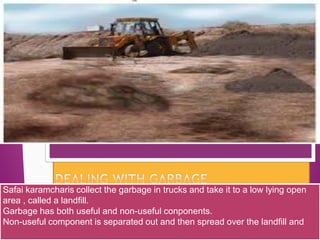
Safai karamcharis collect the garbage in trucks and take it to a low lying open
area , called a landfill.
Garbage has both useful and non-useful conponents.
Non-useful component is separated out and then spread over the landfill and
[Continuing]
then covered with a layer of soil. Once the landfill is
completely full. Top deal with some of the useful
componenents of garbage, compost making areas
are developed near the landfill.
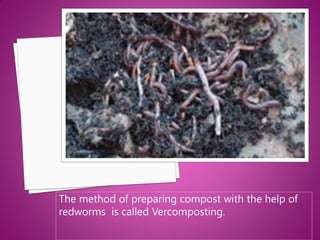
The method of preparing compost with the help of
redworms is called Vercomposting.
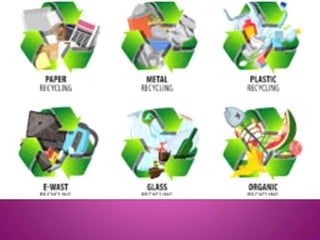
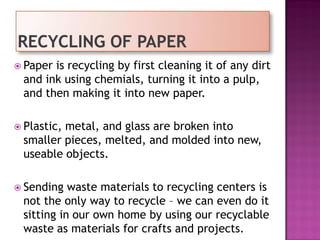
 Paper is recycling by first cleaning it of any dirt
and ink using chemials, turning it into a pulp,
and then making it into new paper.
 Plastic, metal, and glass are broken into
smaller pieces, melted, and molded into new,
useable objects.
 Sending waste materials to recycling centers is
not the only way to recycle – we can even do it
sitting in our own home by using our recyclable
waste as materials for crafts and projects.
 Recycling is a critical practice to make our
planet cleaner and more free of waste.
 The 3 R’s of sustainabilility and waste
management are reuse, reduce, and recycle
 Recycling refers to when we take the raw
materials or scraps or waste materials and turn
them into a new, useable object.
 Humans produces millions of tonnes of waste
every day , but a lot of it is recycliable waste.
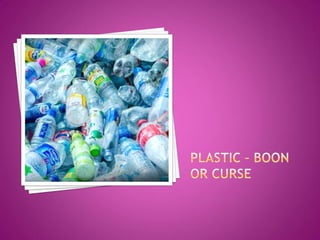
 WHAT IS PLASTIC?
 Plastic is the general common term for a wide range
of synthetic or semi-synthetic materials used in a
huge and growing , range of applications.
 It is almost found everywhere including our houses.
 The term “ plastic” is derived from Greek word “
plastikos” meaning fit for moulding.
 There are two broad categories of plastic materials
thermoplastics and thermosetting plastics.
 Make useful any thing from waste materials
 Make any 3 useful thing from waste paper, or
make a torch of your own.
 Any 2 questions and answers
 What is vercomposting?
 What is landfill?
 What is recycling?
 What can we do to minimize over use of
plastics and deal with garbage ?
OUR CLASS TEACHER – SUDIPTA SAHOO

Ch 16 garbage in garbage out

  • 1.
    PRESENTED BY SUSHREESWAYAMAMITA VI B ROLL NO 49
  • 2.
    Safai karamcharis collectthe garbage in trucks and take it to a low lying open area , called a landfill. Garbage has both useful and non-useful conponents. Non-useful component is separated out and then spread over the landfill and
  • 3.
    [Continuing] then covered witha layer of soil. Once the landfill is completely full. Top deal with some of the useful componenents of garbage, compost making areas are developed near the landfill.
  • 4.
    The method ofpreparing compost with the help of redworms is called Vercomposting.
  • 7.
     Paper isrecycling by first cleaning it of any dirt and ink using chemials, turning it into a pulp, and then making it into new paper.  Plastic, metal, and glass are broken into smaller pieces, melted, and molded into new, useable objects.  Sending waste materials to recycling centers is not the only way to recycle – we can even do it sitting in our own home by using our recyclable waste as materials for crafts and projects.
  • 8.
     Recycling isa critical practice to make our planet cleaner and more free of waste.  The 3 R’s of sustainabilility and waste management are reuse, reduce, and recycle  Recycling refers to when we take the raw materials or scraps or waste materials and turn them into a new, useable object.  Humans produces millions of tonnes of waste every day , but a lot of it is recycliable waste.
  • 10.
     WHAT ISPLASTIC?  Plastic is the general common term for a wide range of synthetic or semi-synthetic materials used in a huge and growing , range of applications.  It is almost found everywhere including our houses.  The term “ plastic” is derived from Greek word “ plastikos” meaning fit for moulding.  There are two broad categories of plastic materials thermoplastics and thermosetting plastics.
  • 11.
     Make usefulany thing from waste materials  Make any 3 useful thing from waste paper, or make a torch of your own.
  • 12.
     Any 2questions and answers  What is vercomposting?  What is landfill?  What is recycling?  What can we do to minimize over use of plastics and deal with garbage ?
  • 13.
    OUR CLASS TEACHER– SUDIPTA SAHOO