Chapter 4: Social Media
In Public Relations
Group 3: Kristen Silver, Brenda Cruz, Zach Penn-Bahar, Latoya Julien
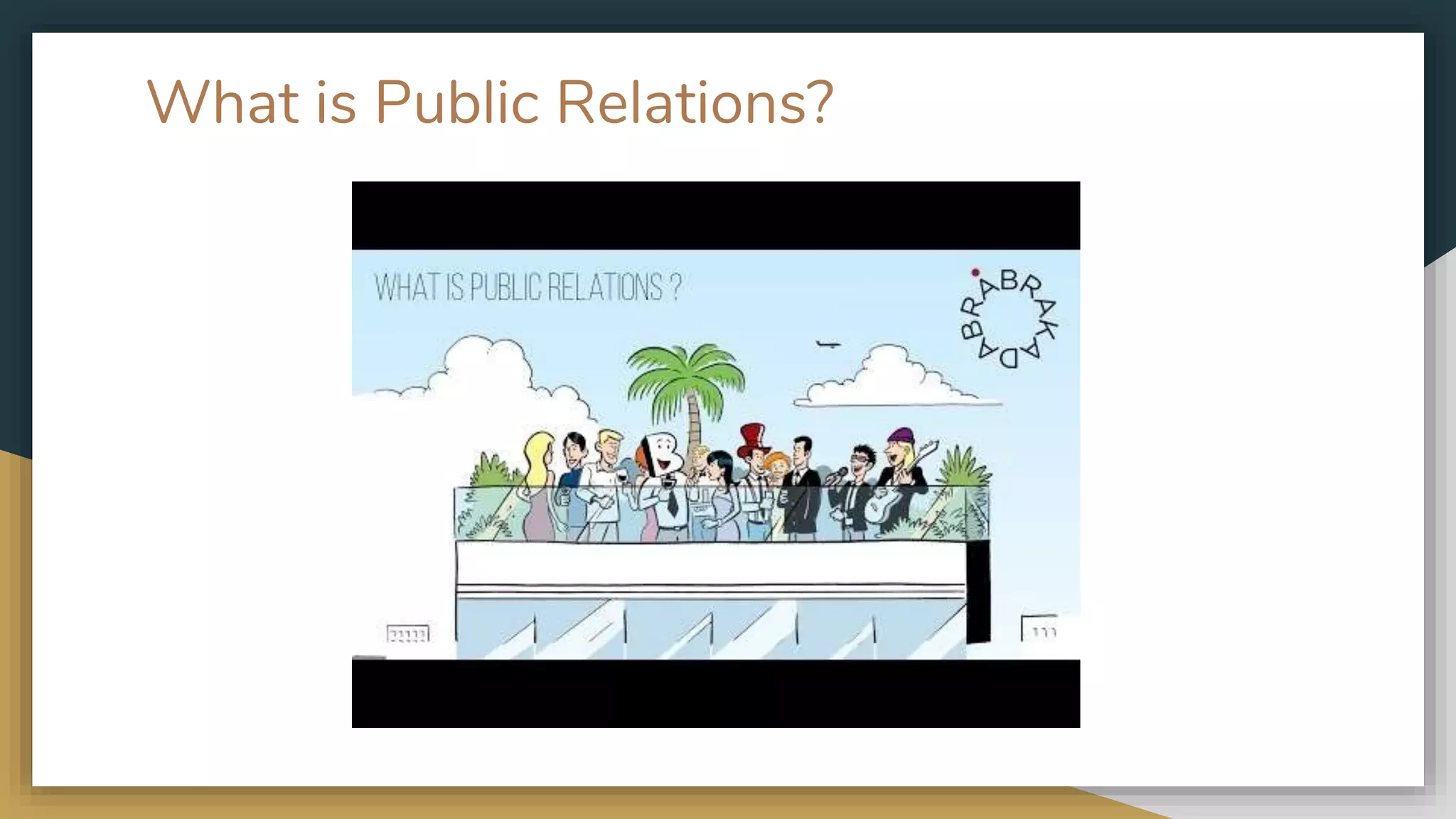
What is Public Relations?
Pgs. 97-103
A.R.T- actions, reactions, and transactions that can impact outcomes, behaviors, and actions. This
philosophy is conducted by Brian Solis’ social media PR.
Management Process
❖ Step 1: Defining public relations problems.
❖ Step 2: Planning and programming.
❖ Step 3: Taking action and communicating.
❖ Step 4: Evaluating the program.
This process is conducted by The Public Relations Society of America (PRSA) as its APR accreditation PR process.
Pg. 97-103 Continued
Collaborative Journalism: designed to help journalists be successful in a new environment.
❖ Data is used to convince media, such as USA Today and CNN, that publishing a story will drive a tremendous amount of
social sharing.
C-Suite: refers to top senior-level executives at a corporation.
❖ This terminology is used to identify chief executive officers (CEOs), chief operating directors (COOs), chief information
officers (CIOs), and most recently, chief digital officers (CDOs).
❖ From a business perspective, PR seeks to influence the influencers who make key decisions and have the power to spend
money hiring outside the company for social media services.
Pg. 97-103 Continued
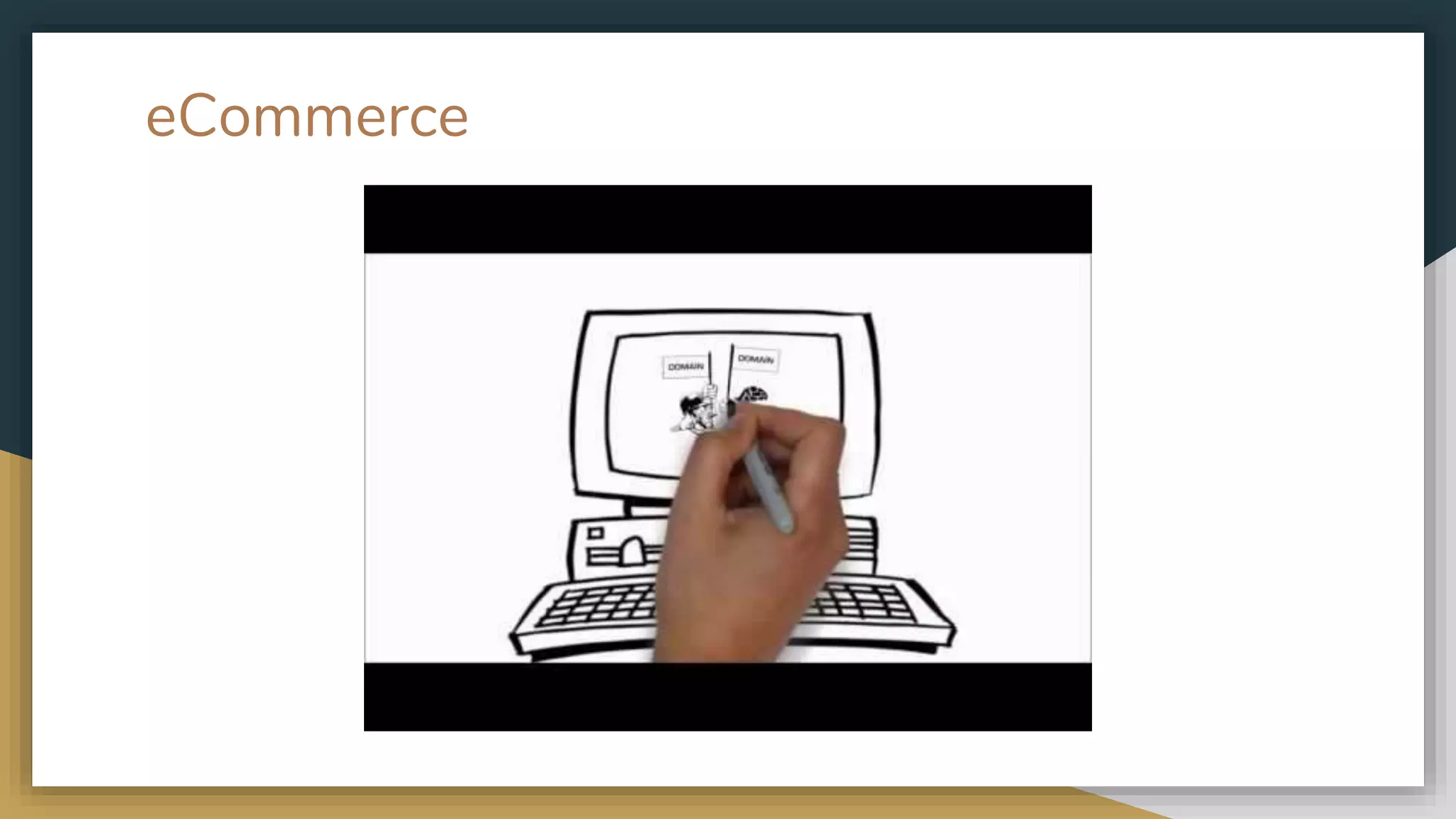
eCommerce: use of Google Analytics and other social media data dashboards allow businesses to link social media efforts to
results that go beyond Facebook likes and shares.
Key Performance Indicators (KPIs): focus on continuous monitoring of social media and sales activity data.
Social Business: places social media within the more traditional context of word of mouth activity related to brands.
Media: traditional news
Owned Media: turned all of those with online identities essentially into media companies.
Hybrid media: emerged from blogging.
Brands & Influencers: websites like YouTube and LinkedIn, etc.
eCommerce
PR History and Tactics
Richard Edelman defines PR work as being a reference point for how
smart marketers are playing the game.
PR is an actually an attitude- one that enters the business conversation
amid dramatic social media shift.
PR History and Tactics
Published academic PR studies fall into three general categories:
.Introspective - articles about PR as a profession
.Practice/Application
.Development of theory
PR Theories
Press agentry/publicity- Propagandistic PR seeking media attention in almost
any way possible.
Public information- journalist-in-residence disseminating generally accurate
information, but do not volunteer negative information
Two-way asymmetrical - the Bernays approach uses research and
sophisticated manipulation methods to identify the messages most likely to
produce support
Credibility
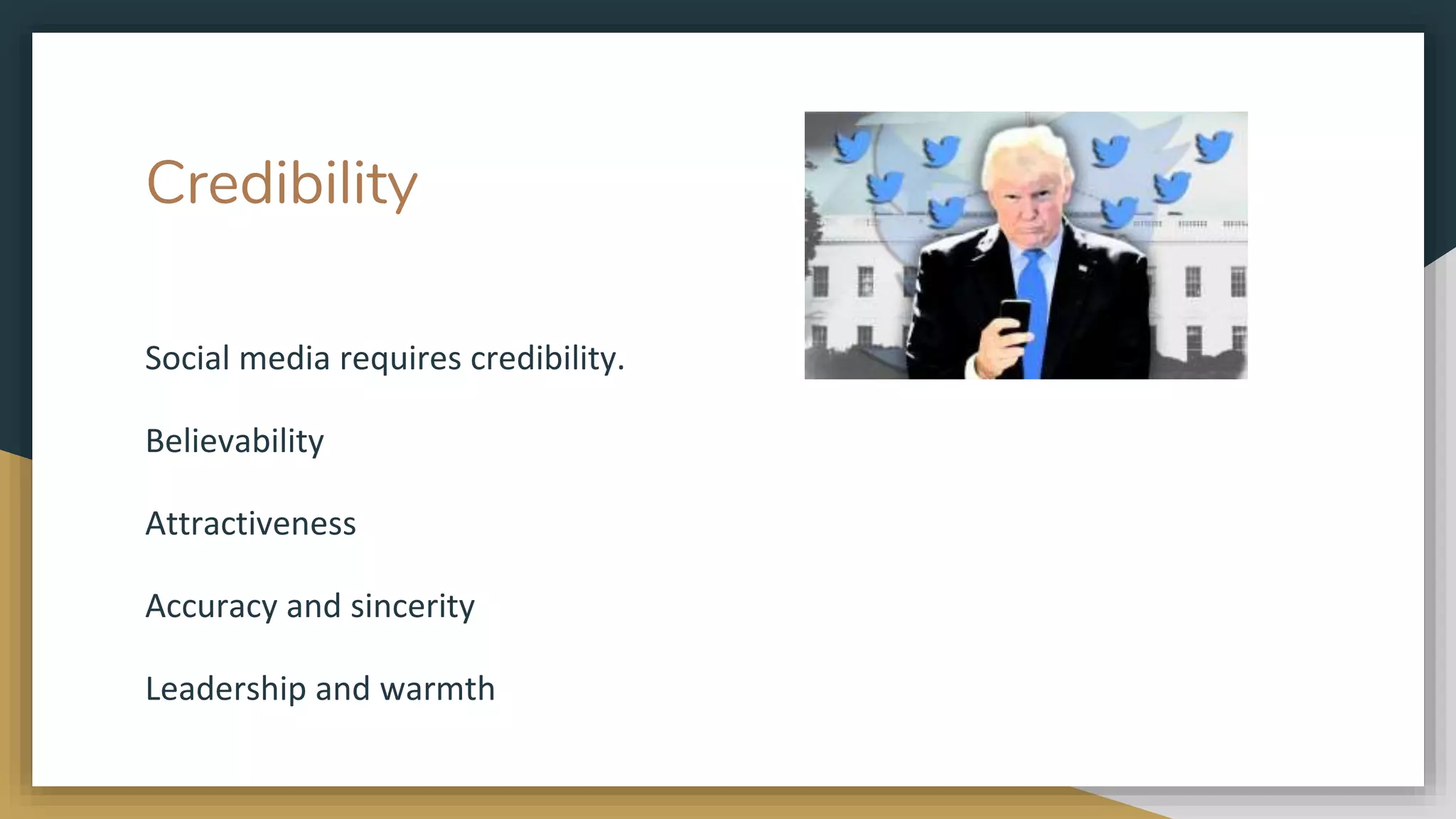
Social media requires credibility.
Believability
Attractiveness
Accuracy and sincerity
Leadership and warmth
Social capital, conflict and collaboration
Gaining social capital really means becoming a strong, consistent member of
the online community.
Trust - information, knowledge and skills, sharing, as well as support.
Shared norms and values - understanding of others perspective and shared
language and common goals, with particular context.
Social capital, conflict and collaboration
Shared resources and knowledge - wider access to resources and knowledge
for taking forward good practice.
Reciprocity - it is likely that others in the network will reciprocate and give to
that relationship.
Resilience within relationships - Strong networks are resilient in face of
challenges and are accepting of constructive conversations.
Pages 111-118
How Social Media can be used in PR
PR Newsrooms and Message Targeting
● Edelman PR developed Creative Newsroom
● Used to address the need for real-time social media
networking
● Built to provide clients with an integrated platform for
storytelling
● Used to engage the audience
PR Blogging
● Give personal and company brands a voice within
social media
● Bloggers are social media influencers
Corporate Social Responsibility
CSR - Corporate Social Responsibility : CSR asks companies
to consider the effects of their businesses on social and
environmental conditions. A CSR model would consider
long-term social interests and not just short-term profits.
Non-profits: The most to gain from social media
communication/presences. Because of low or non-existent
media budgets, social media is the way to get the word out
about their cause.
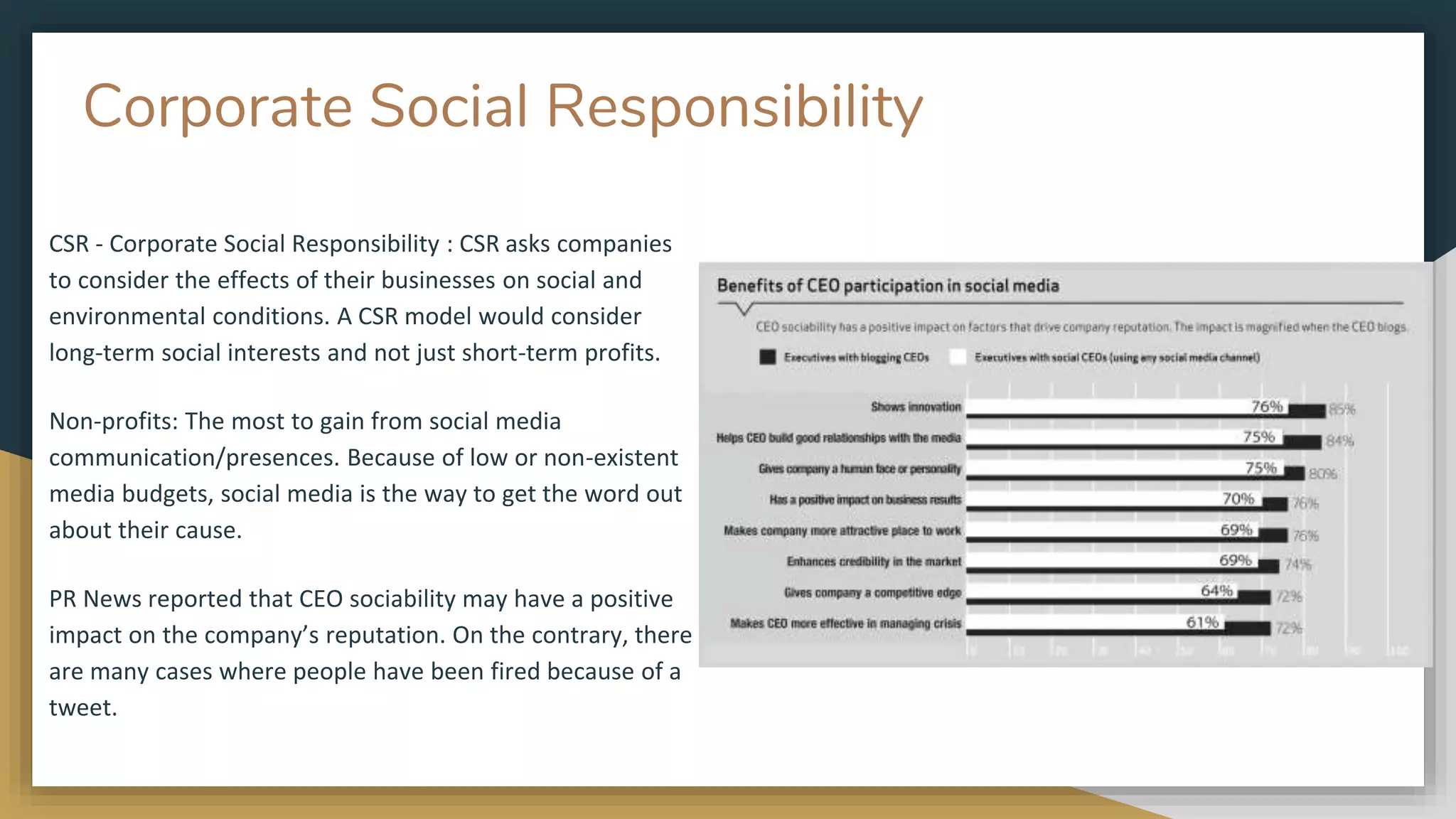
PR News reported that CEO sociability may have a positive
impact on the company’s reputation. On the contrary, there
are many cases where people have been fired because of a
tweet.
The Importance of Emojis
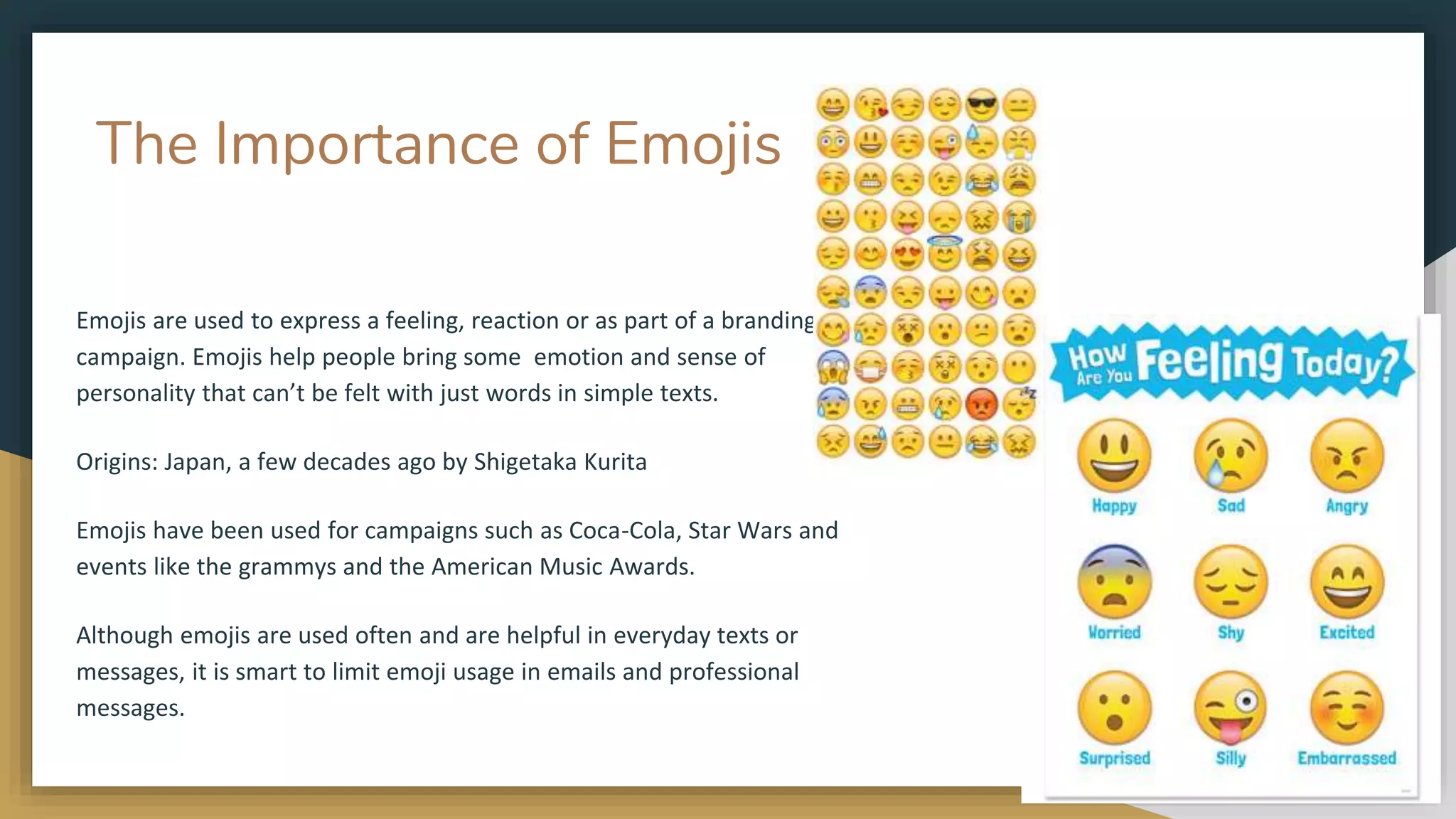
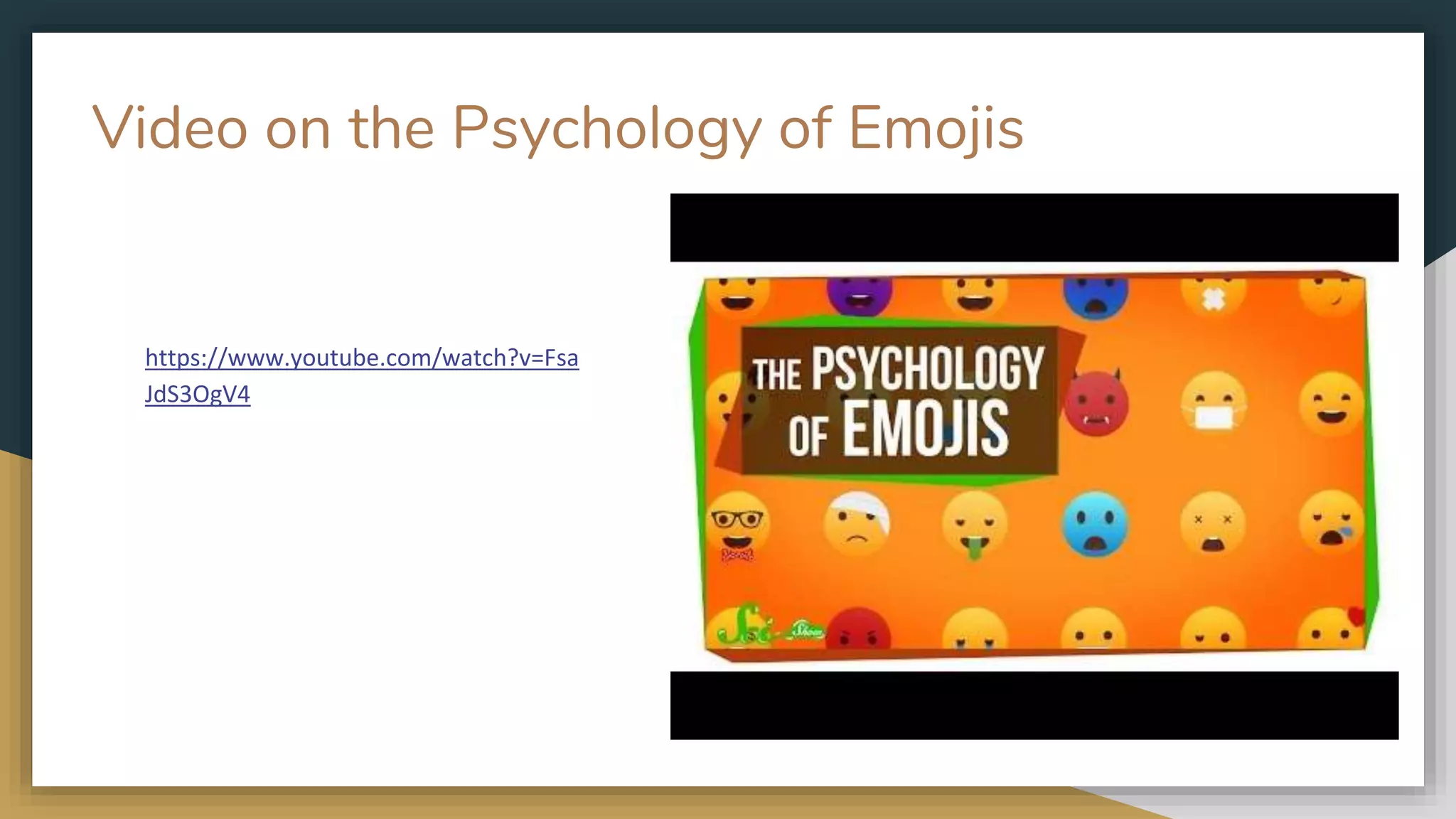
Emojis are used to express a feeling, reaction or as part of a branding
campaign. Emojis help people bring some emotion and sense of
personality that can’t be felt with just words in simple texts.
Origins: Japan, a few decades ago by Shigetaka Kurita
Emojis have been used for campaigns such as Coca-Cola, Star Wars and
events like the grammys and the American Music Awards.
Although emojis are used often and are helpful in everyday texts or
messages, it is smart to limit emoji usage in emails and professional
messages.
Video on the Psychology of Emojis
https://www.youtube.com/watch?v=Fsa
JdS3OgV4
Class Discussion
Happy Valley Yogurt distributes products nationally and has about 25 percent of the market.
It makes a variety of flavors, and about 80 percent of its sales come from individual packages
of eight ounces. The company has done the standard marketing, advertising, and public
relations activities, but your public relations staff believe sales could increase with the use of
social networking. How can you use social media for fun and profit.
Kahoot Time!
https://play.kahoot.it/#/k/4122efd4-10b3-4ca1-aa8d-d0265b756626

Chapter 4 presntation group 3

  • 1.
    Chapter 4: SocialMedia In Public Relations Group 3: Kristen Silver, Brenda Cruz, Zach Penn-Bahar, Latoya Julien
  • 2.
    What is PublicRelations?
  • 3.
    Pgs. 97-103 A.R.T- actions,reactions, and transactions that can impact outcomes, behaviors, and actions. This philosophy is conducted by Brian Solis’ social media PR. Management Process ❖ Step 1: Defining public relations problems. ❖ Step 2: Planning and programming. ❖ Step 3: Taking action and communicating. ❖ Step 4: Evaluating the program. This process is conducted by The Public Relations Society of America (PRSA) as its APR accreditation PR process.
  • 4.
    Pg. 97-103 Continued CollaborativeJournalism: designed to help journalists be successful in a new environment. ❖ Data is used to convince media, such as USA Today and CNN, that publishing a story will drive a tremendous amount of social sharing. C-Suite: refers to top senior-level executives at a corporation. ❖ This terminology is used to identify chief executive officers (CEOs), chief operating directors (COOs), chief information officers (CIOs), and most recently, chief digital officers (CDOs). ❖ From a business perspective, PR seeks to influence the influencers who make key decisions and have the power to spend money hiring outside the company for social media services.
  • 5.
    Pg. 97-103 Continued eCommerce:use of Google Analytics and other social media data dashboards allow businesses to link social media efforts to results that go beyond Facebook likes and shares. Key Performance Indicators (KPIs): focus on continuous monitoring of social media and sales activity data. Social Business: places social media within the more traditional context of word of mouth activity related to brands. Media: traditional news Owned Media: turned all of those with online identities essentially into media companies. Hybrid media: emerged from blogging. Brands & Influencers: websites like YouTube and LinkedIn, etc.
  • 6.
  • 7.
    PR History andTactics Richard Edelman defines PR work as being a reference point for how smart marketers are playing the game. PR is an actually an attitude- one that enters the business conversation amid dramatic social media shift.
  • 8.
    PR History andTactics Published academic PR studies fall into three general categories: .Introspective - articles about PR as a profession .Practice/Application .Development of theory
  • 9.
    PR Theories Press agentry/publicity-Propagandistic PR seeking media attention in almost any way possible. Public information- journalist-in-residence disseminating generally accurate information, but do not volunteer negative information Two-way asymmetrical - the Bernays approach uses research and sophisticated manipulation methods to identify the messages most likely to produce support
  • 10.
    Credibility Social media requirescredibility. Believability Attractiveness Accuracy and sincerity Leadership and warmth
  • 11.
    Social capital, conflictand collaboration Gaining social capital really means becoming a strong, consistent member of the online community. Trust - information, knowledge and skills, sharing, as well as support. Shared norms and values - understanding of others perspective and shared language and common goals, with particular context.
  • 12.
    Social capital, conflictand collaboration Shared resources and knowledge - wider access to resources and knowledge for taking forward good practice. Reciprocity - it is likely that others in the network will reciprocate and give to that relationship. Resilience within relationships - Strong networks are resilient in face of challenges and are accepting of constructive conversations.
  • 13.
    Pages 111-118 How SocialMedia can be used in PR
  • 14.
    PR Newsrooms andMessage Targeting ● Edelman PR developed Creative Newsroom ● Used to address the need for real-time social media networking ● Built to provide clients with an integrated platform for storytelling ● Used to engage the audience
  • 15.
    PR Blogging ● Givepersonal and company brands a voice within social media ● Bloggers are social media influencers
  • 16.
    Corporate Social Responsibility CSR- Corporate Social Responsibility : CSR asks companies to consider the effects of their businesses on social and environmental conditions. A CSR model would consider long-term social interests and not just short-term profits. Non-profits: The most to gain from social media communication/presences. Because of low or non-existent media budgets, social media is the way to get the word out about their cause. PR News reported that CEO sociability may have a positive impact on the company’s reputation. On the contrary, there are many cases where people have been fired because of a tweet.
  • 17.
    The Importance ofEmojis Emojis are used to express a feeling, reaction or as part of a branding campaign. Emojis help people bring some emotion and sense of personality that can’t be felt with just words in simple texts. Origins: Japan, a few decades ago by Shigetaka Kurita Emojis have been used for campaigns such as Coca-Cola, Star Wars and events like the grammys and the American Music Awards. Although emojis are used often and are helpful in everyday texts or messages, it is smart to limit emoji usage in emails and professional messages.
  • 18.
    Video on thePsychology of Emojis https://www.youtube.com/watch?v=Fsa JdS3OgV4
  • 19.
    Class Discussion Happy ValleyYogurt distributes products nationally and has about 25 percent of the market. It makes a variety of flavors, and about 80 percent of its sales come from individual packages of eight ounces. The company has done the standard marketing, advertising, and public relations activities, but your public relations staff believe sales could increase with the use of social networking. How can you use social media for fun and profit.
  • 20.