Managing in a Global Environment Chapter 4
L E A R N I N G  O U T L I N E  Follow this Learning Outline as you read and study this chapter. What’s Your Global Perspective? Define parochialism. Contrast ethnocentric, polycentric, and geocentric attitudes towards global business. Explain why it’s important for managers to be sensitive to global differences Understanding the Global Environment Describe the current status of the European Union. Discuss the North American Free Trade Agreement and other regional trade alliances in Latin America. Tell about the Association of Southeast Asian Nations.
L E A R N I N G  O U T L I N E (cont’d)  Follow this Learning Outline as you read and study this chapter. Understanding the Global Environment Explain the interdependence that globalization involves. Discuss the role of the WTO. Doing Business Globally Contrast multinational, multidomestic, global, transnational, and born global organizations. Describe the different ways organizations can go international. Define global sourcing, exporting, importing, licensing, and franchising. Describe global strategic alliances, joint ventures, and foreign subsidiaries.
L E A R N I N G  O U T L I N E (cont’d)  Follow this Learning Outline as you read and study this chapter. Managing in a Global Environment (cont’d) Explain how the global legal-political and economic environments affect managers. Discuss Hofstede’s five dimensions for assessing cultures. Explain the nine GLOBE dimensions for assessing cultures. Discuss the challenges of doing business globally in today’s world.
The Global Marketplace Opportunities and Challenges Coping with the sudden appearance of new competitors Acknowledging cultural, political, and economic differences Dealing with increased uncertainty, fear, and anxiety Adapting to changes in the global environment Avoiding parochialism
What’s Your Global Perspective? Parochialism Is viewing the world solely through its own eyes and perspectives. Is not recognizing that others have different ways of living and working. Is a significant obstacle for managers working in a global business world. Is falling into the trap of ignoring others’ values and customs and rigidly applying an attitude of “ours is better than theirs” to foreign cultures.
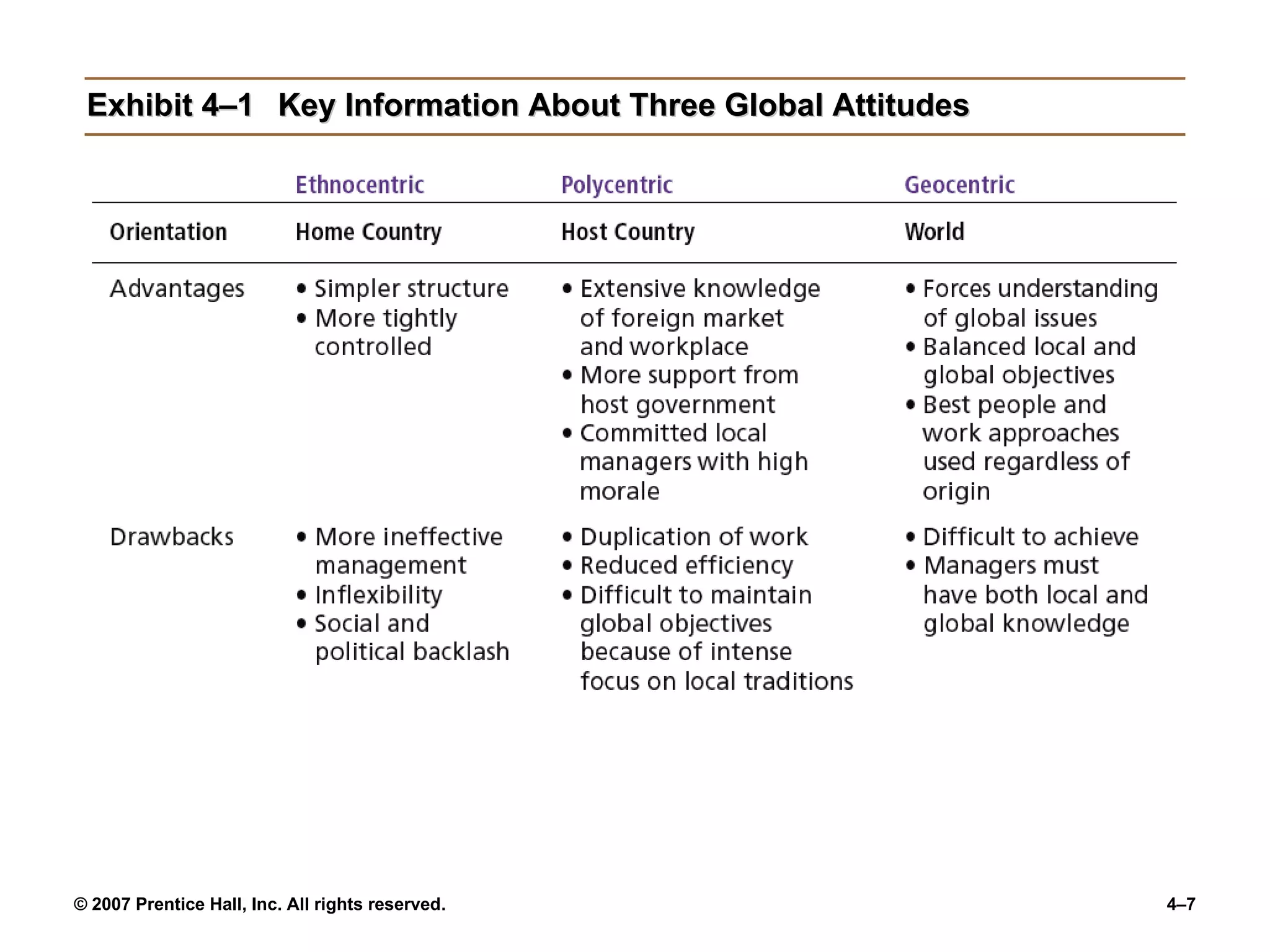
Exhibit 4–1 Key Information About Three Global Attitudes
Adopting a Global Perspective Ethnocentric Attitude The parochialistic belief that the best work approaches and practices are those of the  home  country. Polycentric Attitude The view that the managers in the  host  country know the best work approaches and practices for running their business. Geocentric Attitude A  world-oriented  view that focuses on using the best approaches and people from around the globe.
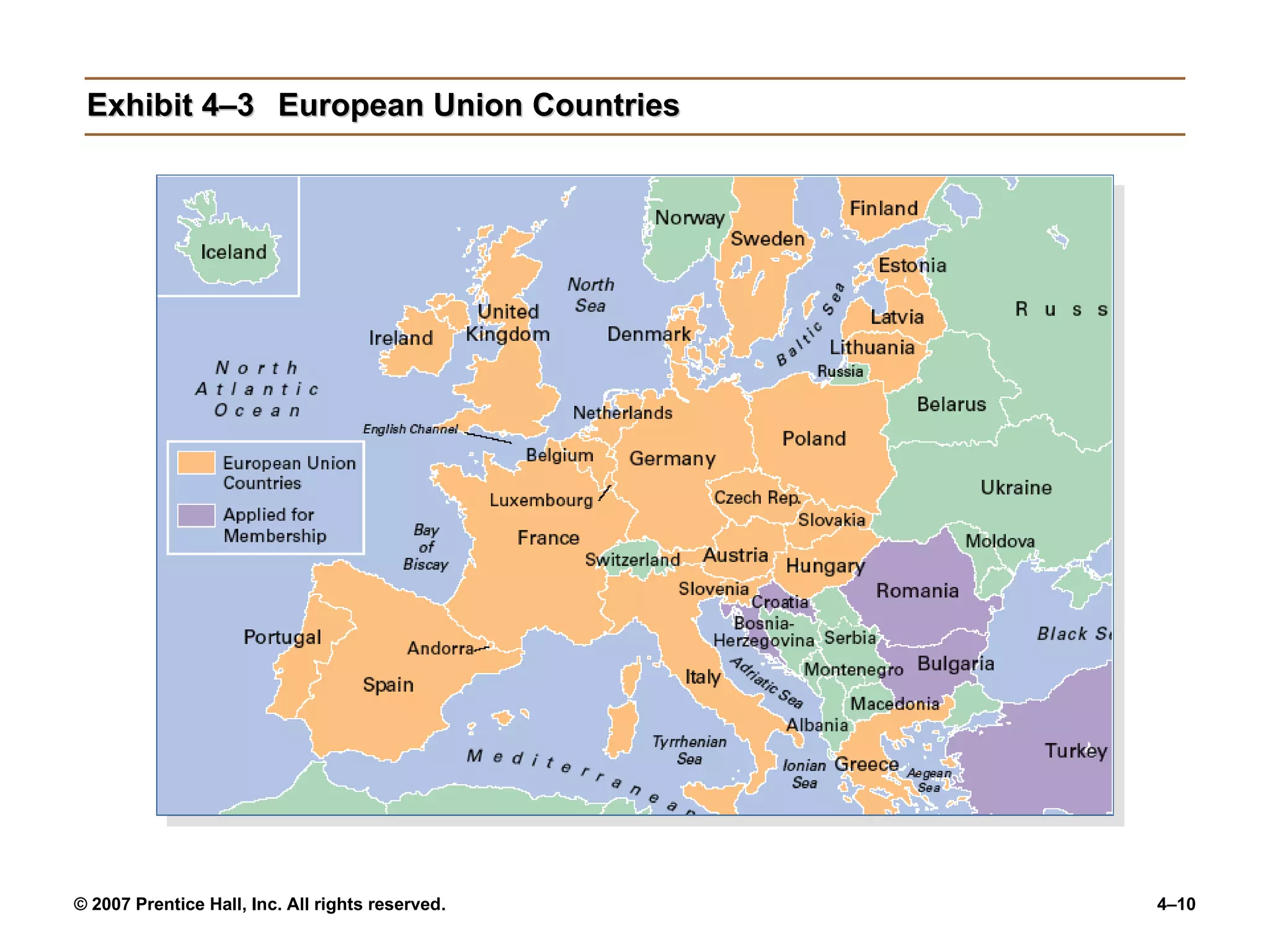
Regional Trading Agreements The European Union (EU) A unified economic and trade entity  Belgium, Denmark, France, Greece, Ireland, Italy, Luxembourg, the Netherlands, Portugal, Spain, the United Kingdom, Germany, Austria, Finland, and Sweden Economic and monetary union (Euro) North American Free Trade Agreement (NAFTA) Eliminated barriers to free trade (tariffs, import licensing requirements, and customs user fees) United States, Canada, and Mexico
Exhibit 4–3 European Union Countries
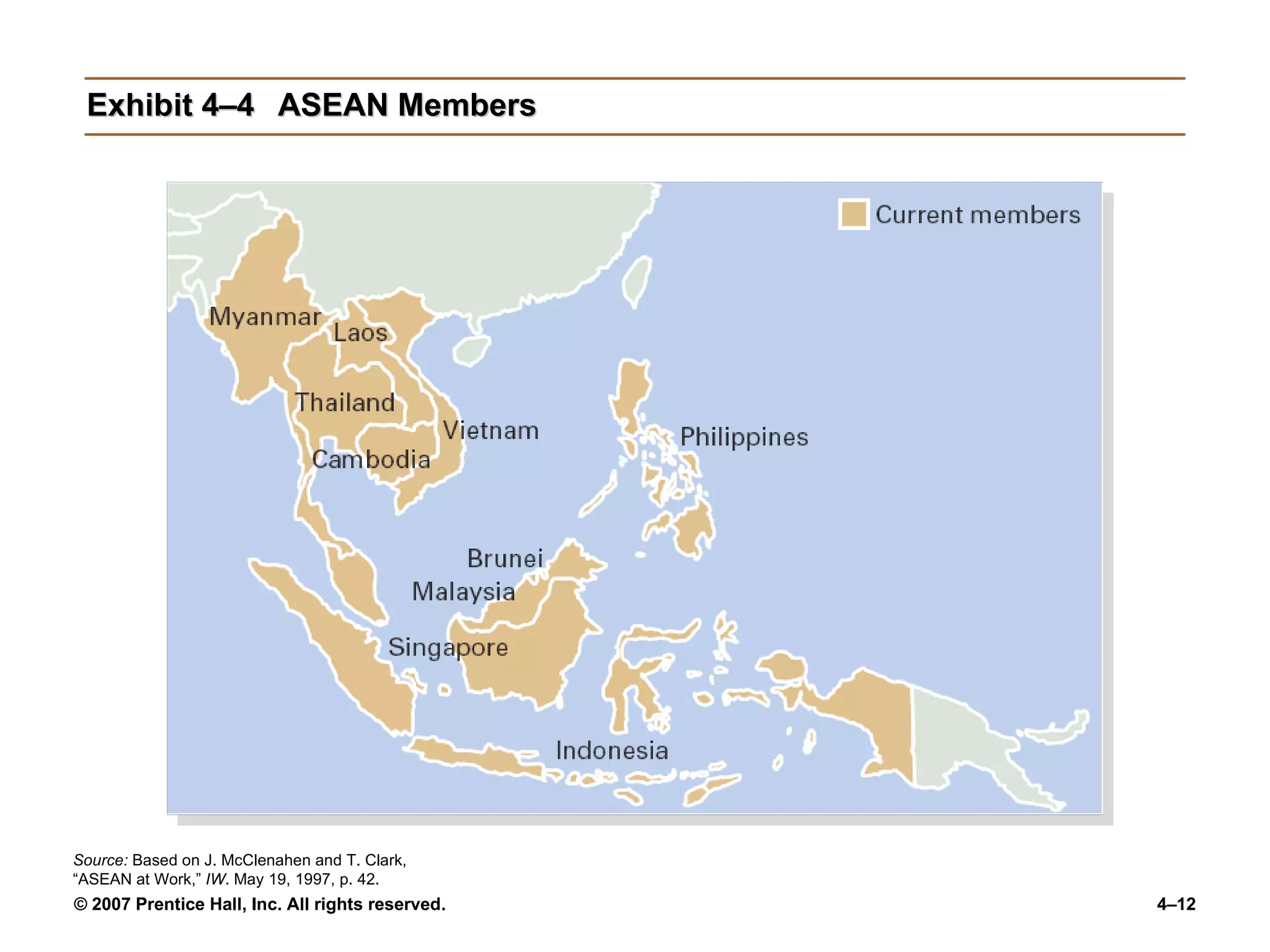
Regional Trading Agreements (cont’d) U.S.-Central America Free Trade Agreement (CAFTA) Free Trade Area of the Americas Southern Cone Common Market (Mercosur) Association of Southeast Asian Nations (ASEAN) Trading alliance of 10 Southeast Asian nations African Union South Asian Association for Regional Cooperation (SARRC)
Exhibit 4–4 ASEAN Members Source:  Based on J. McClenahen and T. Clark, “ASEAN at Work,”  IW . May 19, 1997, p. 42.
The World Trade Organization (WTO) Evolved from the General Agreement on Tariffs and Trade (GATT) in 1995. Functions as the only global organization dealing with the rules of trade among nations. Has 149 member nations and 32 observer governments. Monitors and promotes world trade.
Different Types of International  Organizations Multinational Corporation (MNC) Maintains operations in multiple countries. Multidomestic Corporation Is an MNC that decentralizes management and other decisions to the local country. Global Company Is an MNC that centralizes its management and other decisions in the home country.
Different Types of International  Organizations (cont’d) Transnational Corporation (Borderless Organization) Is an MNC that has eliminated structural divisions that impose artificial geographic barriers and is organized along business lines that reflect a geocentric attitude. Born Globals/International New Ventures (INVs) Commit resources upfront (material, people, financing) to doing business in more than one country.
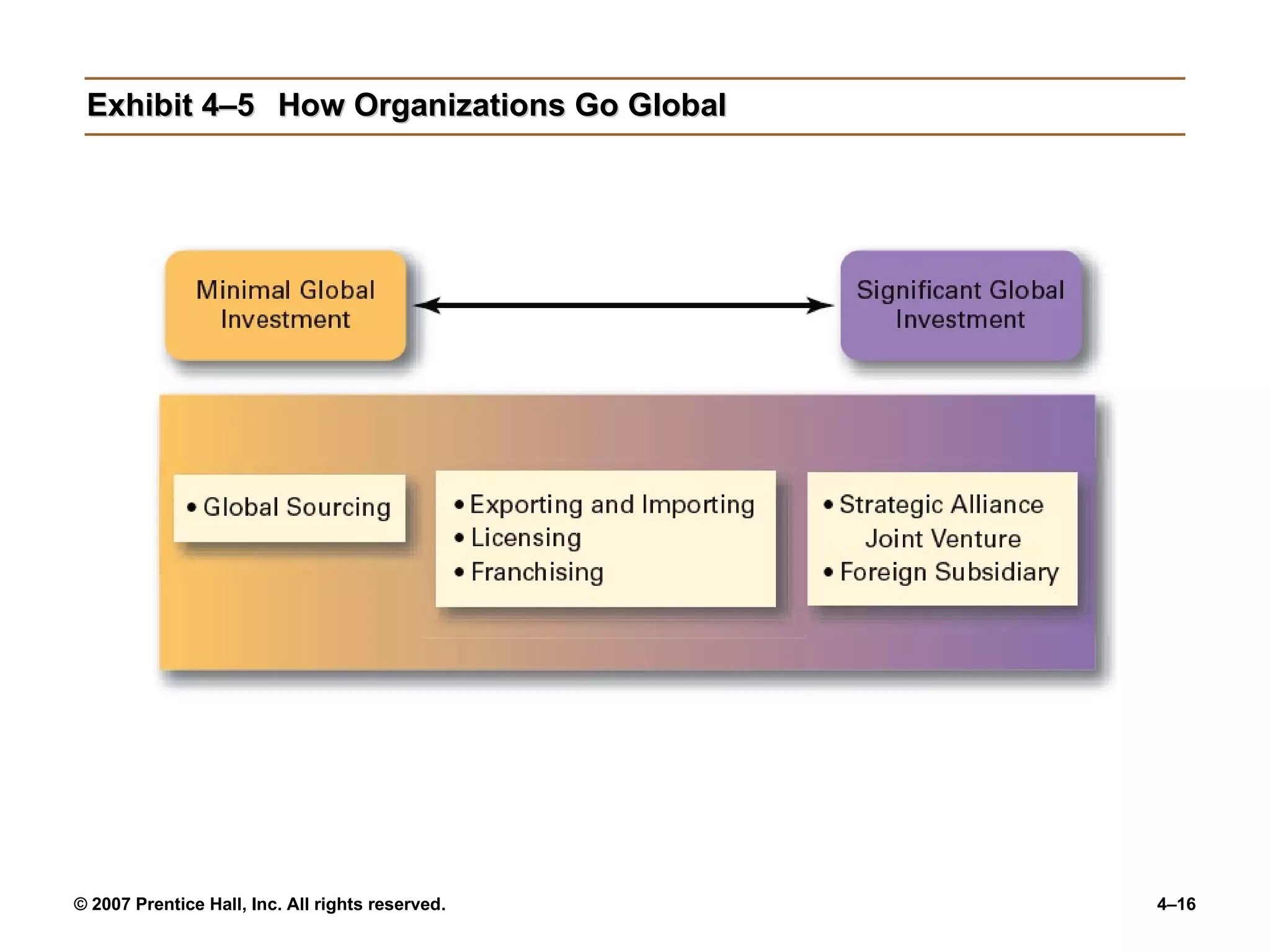
Exhibit 4–5 How Organizations Go Global
Other Forms of Globalization Strategic Alliances Partnerships between and organization and a foreign company in which both share resources and knowledge in developing new products or building new production facilities. Joint Venture A specific type of strategic alliance in which the partners agree to form a separate, independent organization for some business purpose. Foreign Subsidiary Directly investing in a foreign country by setting up a separate and independent production facility or office.
Managing in A Global Environment The Legal Environment Stability or instability of legal and political systems Legal procedures are established and followed Fair and honest elections held on a regular basis Differences in the laws of various nations Effects on business activities Effects on delivery of products and services
The Economic Environment Economic Systems Market economy An economy in which resources are primarily owned and controlled by the private sector. Command economy An economy in which all economic decisions are planned by a central government. Monetary and Financial Factors Currency exchange rates Inflation rates Diverse tax policies
The Cultural Environment National Culture Is the values and attitudes shared by individuals from a specific country that shape their behavior and their beliefs about what is important. May have more influence on an organization than the organization culture.
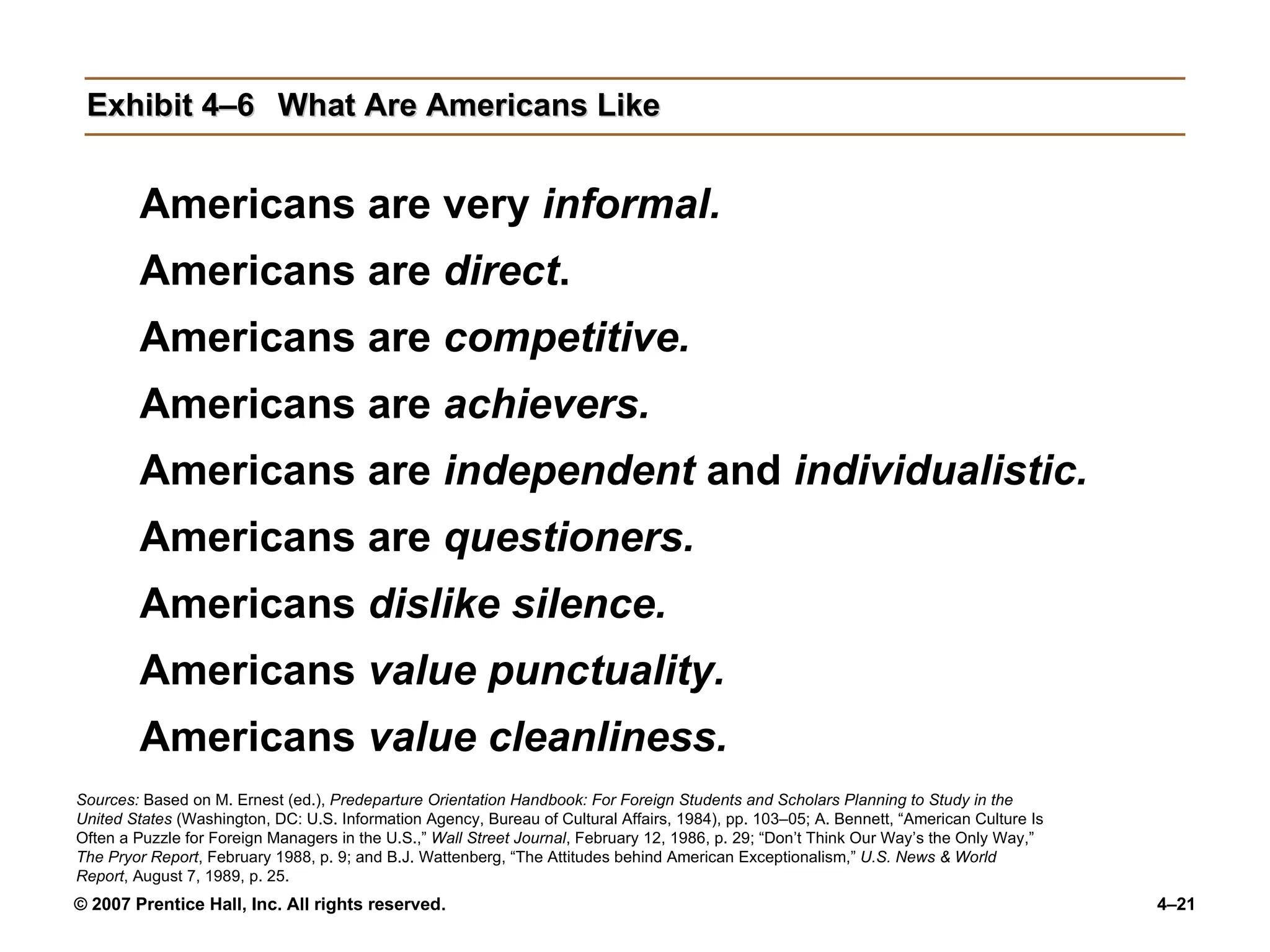
Exhibit 4–6 What Are Americans Like Americans are very  informal. Americans are  direct . Americans are  competitive. Americans are  achievers. Americans are  independent  and  individualistic. Americans are  questioners. Americans  dislike silence. Americans  value punctuality. Americans  value cleanliness. Sources:  Based on M. Ernest (ed.),  Predeparture Orientation Handbook: For Foreign Students and Scholars Planning to Study in the United States  (Washington, DC: U.S. Information Agency, Bureau of Cultural Affairs, 1984), pp. 103–05; A. Bennett, “American Culture Is Often a Puzzle for Foreign Managers in the U.S.,”  Wall Street Journal , February 12, 1986, p. 29; “Don’t Think Our Way’s the Only Way,”  The Pryor Report , February 1988, p. 9; and B.J. Wattenberg, “The Attitudes behind American Exceptionalism,”  U.S. News & World Report , August 7, 1989, p. 25.
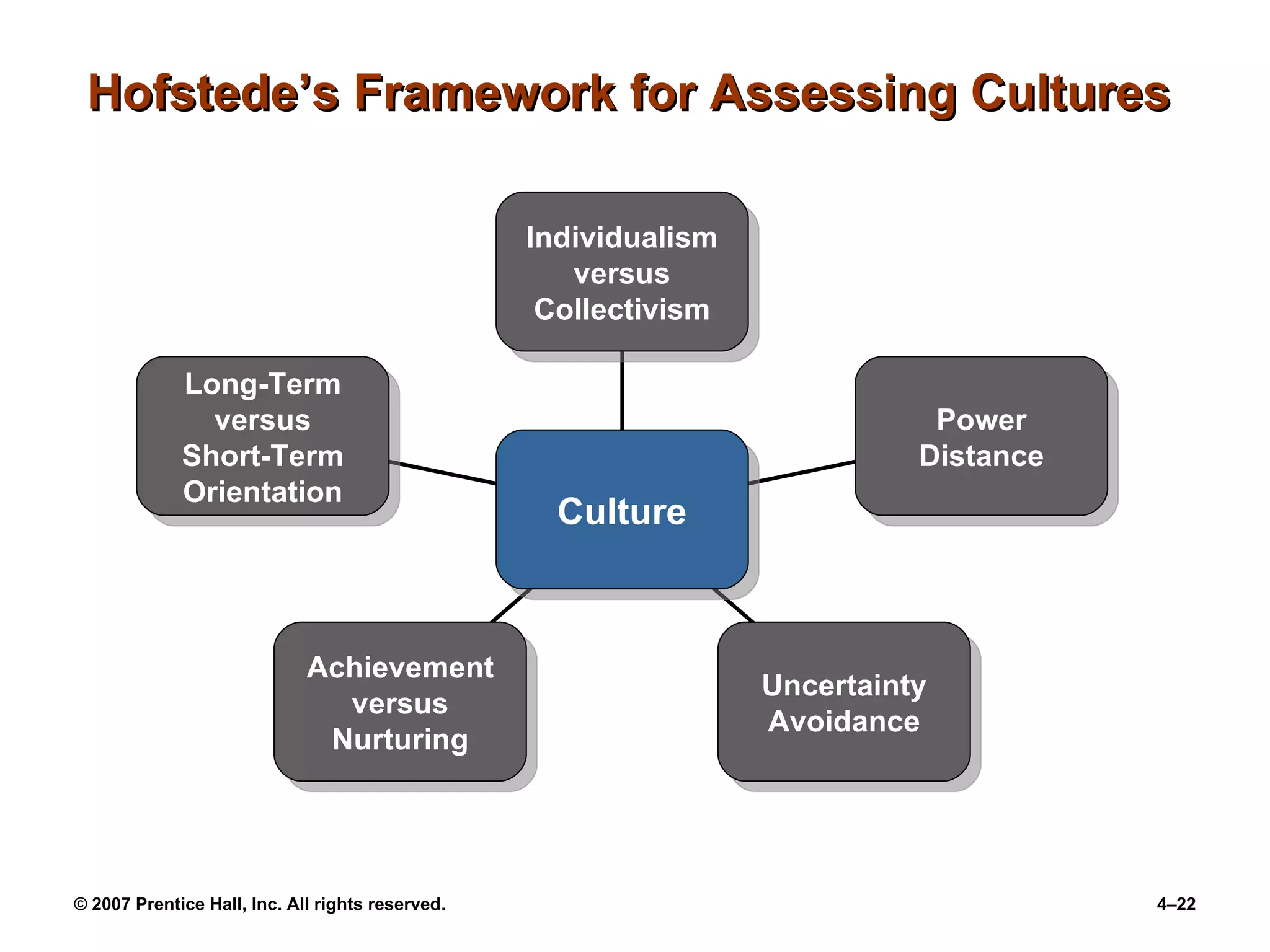
Hofstede’s Framework for Assessing Cultures Individualism versus Collectivism Power Distance Uncertainty Avoidance Achievement versus Nurturing Long-Term versus Short-Term Orientation Culture
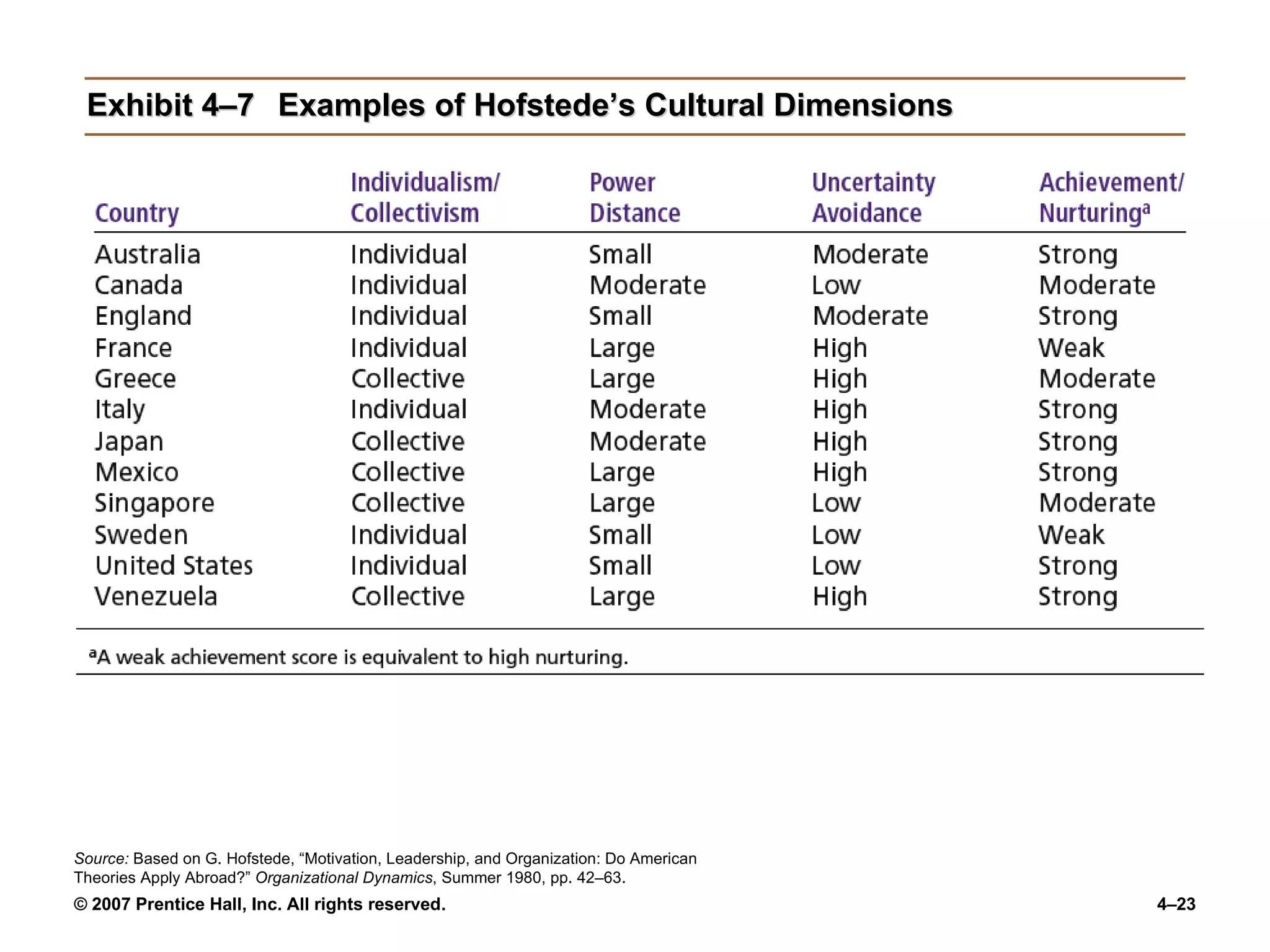
Exhibit 4–7 Examples of Hofstede’s Cultural Dimensions Source:  Based on G. Hofstede, “Motivation, Leadership, and Organization: Do American Theories Apply Abroad?”  Organizational Dynamics , Summer 1980, pp. 42–63.
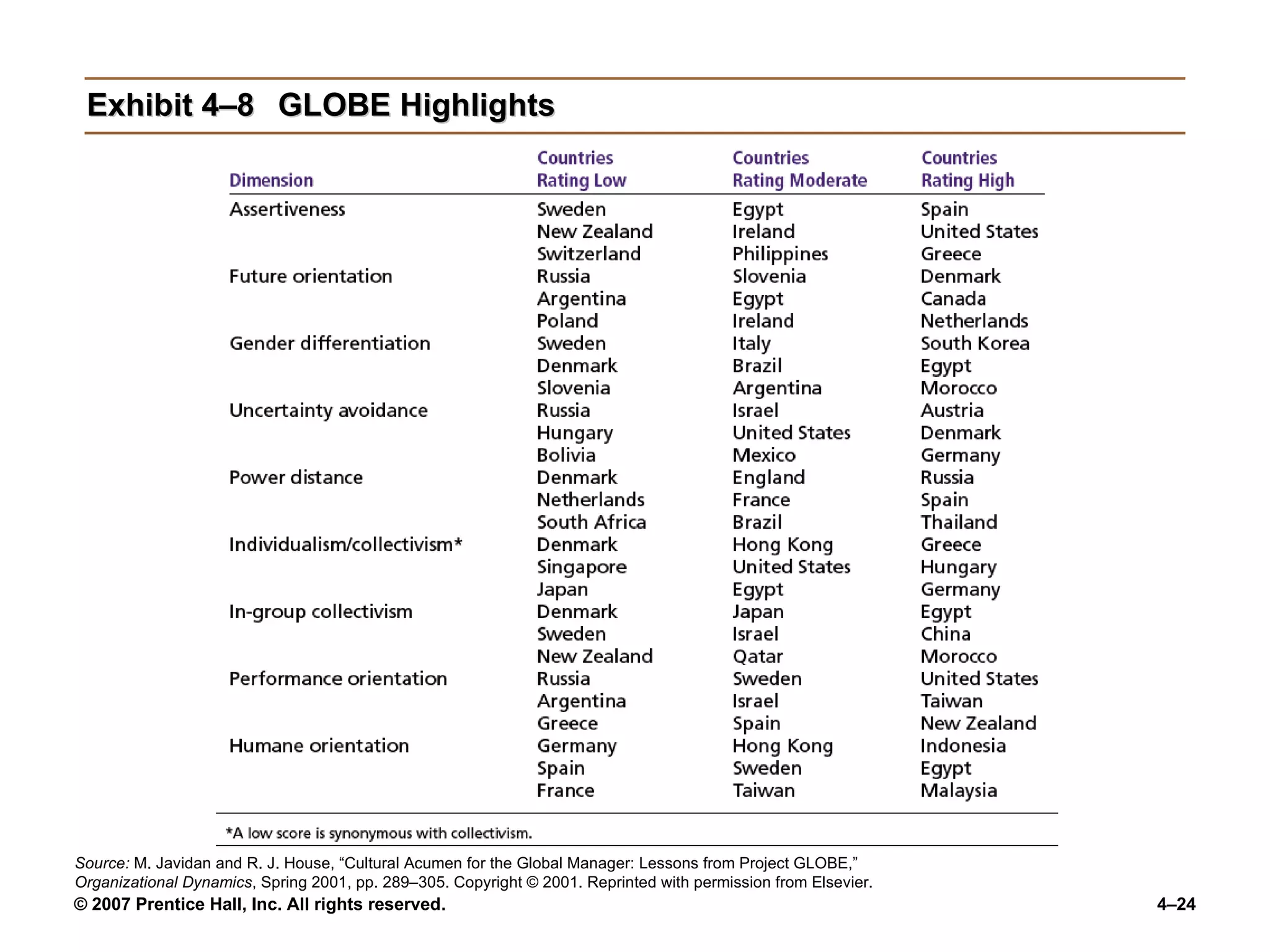
Exhibit 4–8 GLOBE Highlights Source:  M. Javidan and R. J. House, “Cultural Acumen for the Global Manager: Lessons from Project GLOBE,”  Organizational Dynamics , Spring 2001, pp. 289–305. Copyright © 2001. Reprinted with permission from Elsevier.
Global Management in Today’s World Challenges Openness associated with globalization Significant cultural differences (e.g., Americanization) Adjusting leadership styles and management approaches Risks Loss of investments in unstable countries Increased terrorism Economic interdependence
Terms to Know parochialism ethnocentric attitude polycentric attitude geocentric attitude European Union (EU) Euro North American Free Trade Agreement (NAFTA) Association of Southeast Asian Nations (ASEAN) World Trade Organization (WTO) multinational corporations (MNCs) multidomestic corporation global company transnational or  borderless organization born globals  global sourcing exporting importing licensing franchising strategic alliances joint venture foreign subsidiary market economy command economy national culture GLOBE wikis blogs

Chapter 4 Managing In A Global Environmen Ppt04

  • 1.
    Managing in aGlobal Environment Chapter 4
  • 2.
    L E AR N I N G O U T L I N E Follow this Learning Outline as you read and study this chapter. What’s Your Global Perspective? Define parochialism. Contrast ethnocentric, polycentric, and geocentric attitudes towards global business. Explain why it’s important for managers to be sensitive to global differences Understanding the Global Environment Describe the current status of the European Union. Discuss the North American Free Trade Agreement and other regional trade alliances in Latin America. Tell about the Association of Southeast Asian Nations.
  • 3.
    L E AR N I N G O U T L I N E (cont’d) Follow this Learning Outline as you read and study this chapter. Understanding the Global Environment Explain the interdependence that globalization involves. Discuss the role of the WTO. Doing Business Globally Contrast multinational, multidomestic, global, transnational, and born global organizations. Describe the different ways organizations can go international. Define global sourcing, exporting, importing, licensing, and franchising. Describe global strategic alliances, joint ventures, and foreign subsidiaries.
  • 4.
    L E AR N I N G O U T L I N E (cont’d) Follow this Learning Outline as you read and study this chapter. Managing in a Global Environment (cont’d) Explain how the global legal-political and economic environments affect managers. Discuss Hofstede’s five dimensions for assessing cultures. Explain the nine GLOBE dimensions for assessing cultures. Discuss the challenges of doing business globally in today’s world.
  • 5.
    The Global MarketplaceOpportunities and Challenges Coping with the sudden appearance of new competitors Acknowledging cultural, political, and economic differences Dealing with increased uncertainty, fear, and anxiety Adapting to changes in the global environment Avoiding parochialism
  • 6.
    What’s Your GlobalPerspective? Parochialism Is viewing the world solely through its own eyes and perspectives. Is not recognizing that others have different ways of living and working. Is a significant obstacle for managers working in a global business world. Is falling into the trap of ignoring others’ values and customs and rigidly applying an attitude of “ours is better than theirs” to foreign cultures.
  • 7.
    Exhibit 4–1 KeyInformation About Three Global Attitudes
  • 8.
    Adopting a GlobalPerspective Ethnocentric Attitude The parochialistic belief that the best work approaches and practices are those of the home country. Polycentric Attitude The view that the managers in the host country know the best work approaches and practices for running their business. Geocentric Attitude A world-oriented view that focuses on using the best approaches and people from around the globe.
  • 9.
    Regional Trading AgreementsThe European Union (EU) A unified economic and trade entity Belgium, Denmark, France, Greece, Ireland, Italy, Luxembourg, the Netherlands, Portugal, Spain, the United Kingdom, Germany, Austria, Finland, and Sweden Economic and monetary union (Euro) North American Free Trade Agreement (NAFTA) Eliminated barriers to free trade (tariffs, import licensing requirements, and customs user fees) United States, Canada, and Mexico
  • 10.
    Exhibit 4–3 EuropeanUnion Countries
  • 11.
    Regional Trading Agreements(cont’d) U.S.-Central America Free Trade Agreement (CAFTA) Free Trade Area of the Americas Southern Cone Common Market (Mercosur) Association of Southeast Asian Nations (ASEAN) Trading alliance of 10 Southeast Asian nations African Union South Asian Association for Regional Cooperation (SARRC)
  • 12.
    Exhibit 4–4 ASEANMembers Source: Based on J. McClenahen and T. Clark, “ASEAN at Work,” IW . May 19, 1997, p. 42.
  • 13.
    The World TradeOrganization (WTO) Evolved from the General Agreement on Tariffs and Trade (GATT) in 1995. Functions as the only global organization dealing with the rules of trade among nations. Has 149 member nations and 32 observer governments. Monitors and promotes world trade.
  • 14.
    Different Types ofInternational Organizations Multinational Corporation (MNC) Maintains operations in multiple countries. Multidomestic Corporation Is an MNC that decentralizes management and other decisions to the local country. Global Company Is an MNC that centralizes its management and other decisions in the home country.
  • 15.
    Different Types ofInternational Organizations (cont’d) Transnational Corporation (Borderless Organization) Is an MNC that has eliminated structural divisions that impose artificial geographic barriers and is organized along business lines that reflect a geocentric attitude. Born Globals/International New Ventures (INVs) Commit resources upfront (material, people, financing) to doing business in more than one country.
  • 16.
    Exhibit 4–5 HowOrganizations Go Global
  • 17.
    Other Forms ofGlobalization Strategic Alliances Partnerships between and organization and a foreign company in which both share resources and knowledge in developing new products or building new production facilities. Joint Venture A specific type of strategic alliance in which the partners agree to form a separate, independent organization for some business purpose. Foreign Subsidiary Directly investing in a foreign country by setting up a separate and independent production facility or office.
  • 18.
    Managing in AGlobal Environment The Legal Environment Stability or instability of legal and political systems Legal procedures are established and followed Fair and honest elections held on a regular basis Differences in the laws of various nations Effects on business activities Effects on delivery of products and services
  • 19.
    The Economic EnvironmentEconomic Systems Market economy An economy in which resources are primarily owned and controlled by the private sector. Command economy An economy in which all economic decisions are planned by a central government. Monetary and Financial Factors Currency exchange rates Inflation rates Diverse tax policies
  • 20.
    The Cultural EnvironmentNational Culture Is the values and attitudes shared by individuals from a specific country that shape their behavior and their beliefs about what is important. May have more influence on an organization than the organization culture.
  • 21.
    Exhibit 4–6 WhatAre Americans Like Americans are very informal. Americans are direct . Americans are competitive. Americans are achievers. Americans are independent and individualistic. Americans are questioners. Americans dislike silence. Americans value punctuality. Americans value cleanliness. Sources: Based on M. Ernest (ed.), Predeparture Orientation Handbook: For Foreign Students and Scholars Planning to Study in the United States (Washington, DC: U.S. Information Agency, Bureau of Cultural Affairs, 1984), pp. 103–05; A. Bennett, “American Culture Is Often a Puzzle for Foreign Managers in the U.S.,” Wall Street Journal , February 12, 1986, p. 29; “Don’t Think Our Way’s the Only Way,” The Pryor Report , February 1988, p. 9; and B.J. Wattenberg, “The Attitudes behind American Exceptionalism,” U.S. News & World Report , August 7, 1989, p. 25.
  • 22.
    Hofstede’s Framework forAssessing Cultures Individualism versus Collectivism Power Distance Uncertainty Avoidance Achievement versus Nurturing Long-Term versus Short-Term Orientation Culture
  • 23.
    Exhibit 4–7 Examplesof Hofstede’s Cultural Dimensions Source: Based on G. Hofstede, “Motivation, Leadership, and Organization: Do American Theories Apply Abroad?” Organizational Dynamics , Summer 1980, pp. 42–63.
  • 24.
    Exhibit 4–8 GLOBEHighlights Source: M. Javidan and R. J. House, “Cultural Acumen for the Global Manager: Lessons from Project GLOBE,” Organizational Dynamics , Spring 2001, pp. 289–305. Copyright © 2001. Reprinted with permission from Elsevier.
  • 25.
    Global Management inToday’s World Challenges Openness associated with globalization Significant cultural differences (e.g., Americanization) Adjusting leadership styles and management approaches Risks Loss of investments in unstable countries Increased terrorism Economic interdependence
  • 26.
    Terms to Knowparochialism ethnocentric attitude polycentric attitude geocentric attitude European Union (EU) Euro North American Free Trade Agreement (NAFTA) Association of Southeast Asian Nations (ASEAN) World Trade Organization (WTO) multinational corporations (MNCs) multidomestic corporation global company transnational or borderless organization born globals global sourcing exporting importing licensing franchising strategic alliances joint venture foreign subsidiary market economy command economy national culture GLOBE wikis blogs