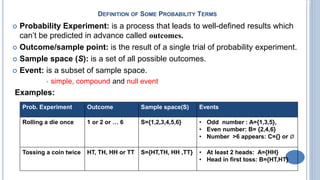
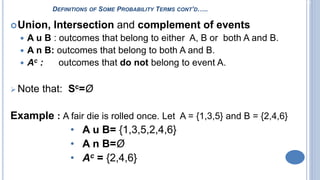
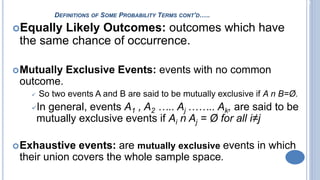
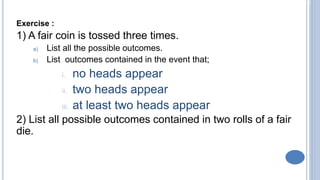
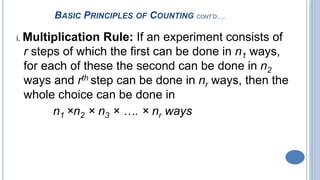
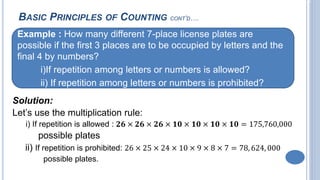
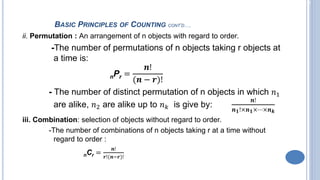
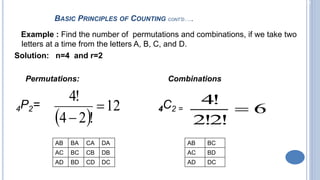
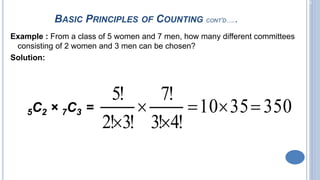
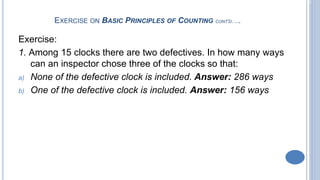
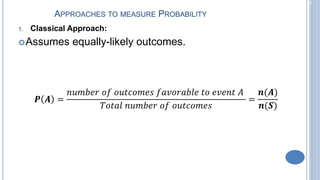
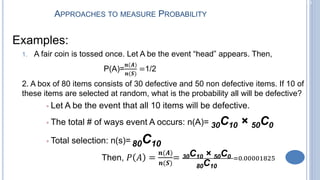
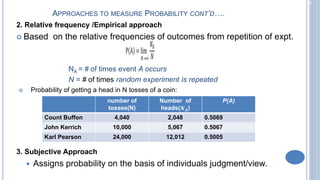
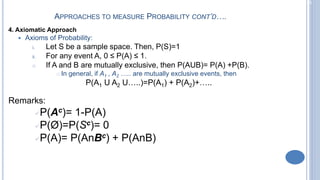
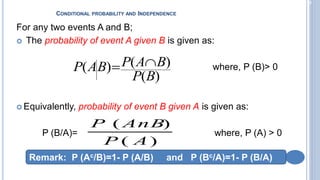
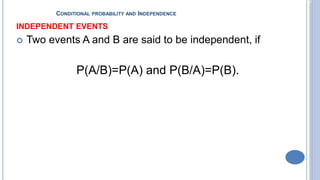
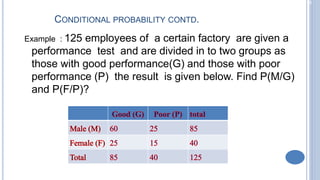
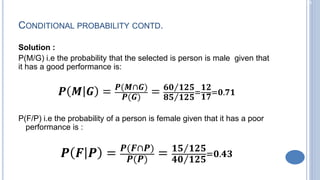
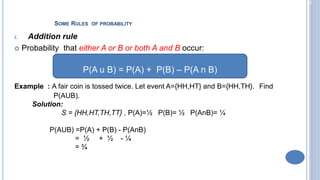
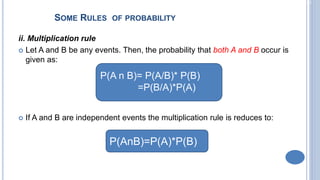
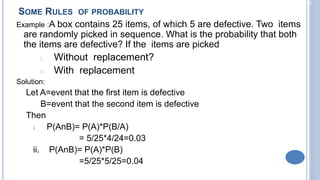
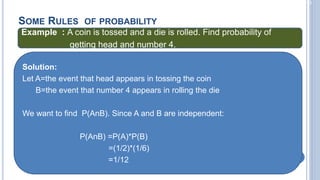
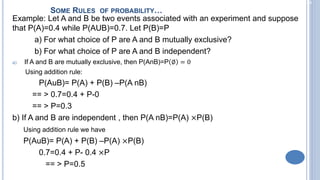
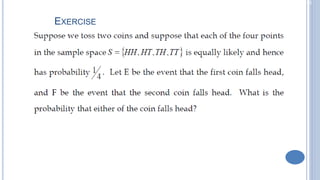
This document defines key probability terms and concepts. It begins by defining a probability experiment, outcomes, sample space, events such as simple, compound and null events. It then discusses union, intersection and complements of events. It also defines equally likely outcomes, mutually exclusive events, exhaustive events, and conditional probability and independence. The document provides examples to illustrate these concepts and definitions. It concludes by discussing approaches to measure probability such as the classical, relative frequency, subjective and axiomatic approaches. It also covers rules of probability including addition, multiplication and conditional probability rules.