Putting a Business
Idea into Practice
-Objectives when starting up
- The qualities shown by entrepreneurs
-Estimating revenues, costs and profits
- Forecasting cash flows
- Obtaining finance
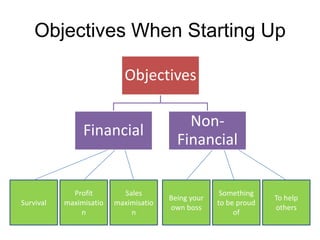
Objectives When Starting Up

                           Objectives

                                           Non-
                Financial
                                         Financial


             Profit        Sales                     Something
                                       Being your                 To help
Survival   maximisatio   maximisatio                to be proud
                                       own boss                   others
               n             n                           of
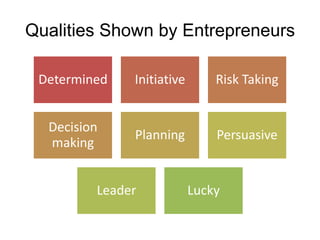
Qualities Shown by Entrepreneurs

 Determined   Initiative       Risk Taking


  Decision
              Planning         Persuasive
  making


         Leader            Lucky
Revenue
• Any money received by a business [from
  selling goods or services]
• The total amount of revenue is calculated by:
  Total Revenue = Price x Quantity
• A business can forecast its revenue by:
  > Estimating the quantity it will sell by looking at its
  market research
  > Deciding what price they will charge for each unit
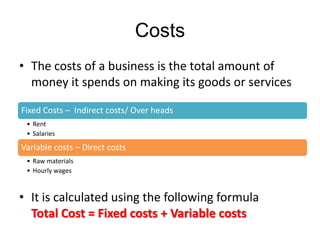
Costs
• The costs of a business is the total amount of
  money it spends on making its goods or services

Fixed Costs – Indirect costs/ Over heads
 • Rent
 • Salaries

Variable costs – Direct costs
 • Raw materials
 • Hourly wages


• It is calculated using the following formula
  Total Cost = Fixed costs + Variable costs
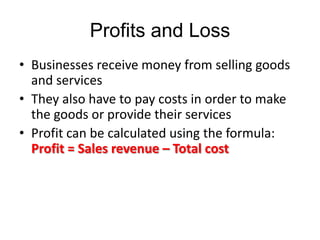
Profits and Loss
• Businesses receive money from selling goods
  and services
• They also have to pay costs in order to make
  the goods or provide their services
• Profit can be calculated using the formula:
  Profit = Sales revenue – Total cost
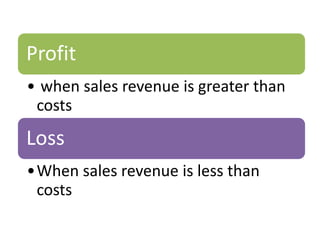
Profit
• when sales revenue is greater than
 costs
Loss
•When sales revenue is less than
 costs
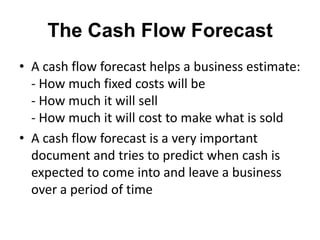
The Cash Flow Forecast
• A cash flow forecast helps a business estimate:
  - How much fixed costs will be
  - How much it will sell
  - How much it will cost to make what is sold
• A cash flow forecast is a very important
  document and tries to predict when cash is
  expected to come into and leave a business
  over a period of time
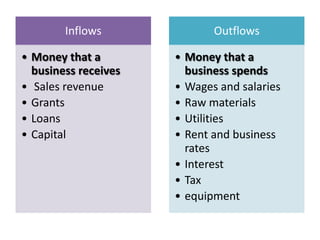
Inflows              Outflows

• Money that a        • Money that a
  business receives     business spends
• Sales revenue       • Wages and salaries
• Grants              • Raw materials
• Loans               • Utilities
• Capital             • Rent and business
                        rates
                      • Interest
                      • Tax
                      • equipment
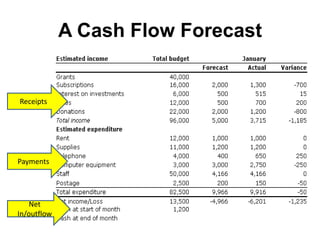
A Cash Flow Forecast


Receipts


Payments


    Net
In/outflow
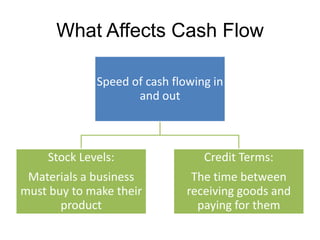
What Affects Cash Flow

             Speed of cash flowing in
                    and out


    Stock Levels:                Credit Terms:
 Materials a business          The time between
must buy to make their        receiving goods and
       product                  paying for them
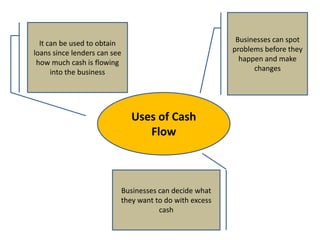
It can be used to obtain                               Businesses can spot
loans since lenders can see                             problems before they
 how much cash is flowing                                 happen and make
      into the business                                       changes


                              Uses of Cash
                                 Flow


                          Businesses can decide what
                          they want to do with excess
                                     cash
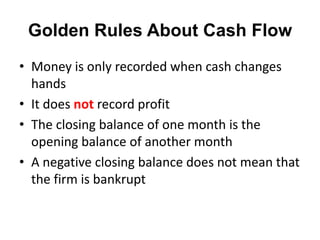
Golden Rules About Cash Flow
• Money is only recorded when cash changes
  hands
• It does not record profit
• The closing balance of one month is the
  opening balance of another month
• A negative closing balance does not mean that
  the firm is bankrupt
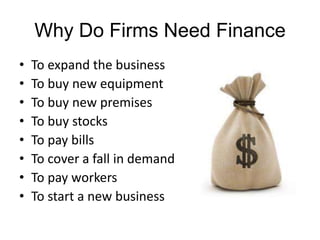
Why Do Firms Need Finance
•   To expand the business
•   To buy new equipment
•   To buy new premises
•   To buy stocks
•   To pay bills
•   To cover a fall in demand
•   To pay workers
•   To start a new business
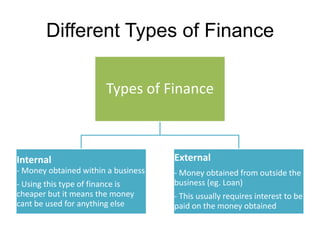
Different Types of Finance

                       Types of Finance


Internal                             External
- Money obtained within a business   - Money obtained from outside the
- Using this type of finance is      business (eg. Loan)
cheaper but it means the money       - This usually requires interest to be
cant be used for anything else       paid on the money obtained
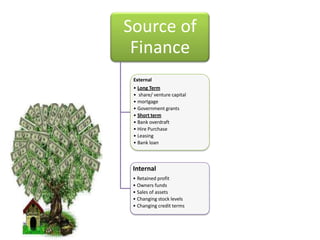
Source of
 Finance
 External
 • Long Term
 • share/ venture capital
 • mortgage
 • Government grants
 • Short term
 • Bank overdraft
 • Hire Purchase
 • Leasing
 • Bank loan


 Internal
 • Retained profit
 • Owners funds
 • Sales of assets
 • Changing stock levels
 • Changing credit terms

Chapter 3 putting a business idea into practice

  • 1.
    Putting a Business Ideainto Practice -Objectives when starting up - The qualities shown by entrepreneurs -Estimating revenues, costs and profits - Forecasting cash flows - Obtaining finance
  • 2.
    Objectives When StartingUp Objectives Non- Financial Financial Profit Sales Something Being your To help Survival maximisatio maximisatio to be proud own boss others n n of
  • 3.
    Qualities Shown byEntrepreneurs Determined Initiative Risk Taking Decision Planning Persuasive making Leader Lucky
  • 4.
    Revenue • Any moneyreceived by a business [from selling goods or services] • The total amount of revenue is calculated by: Total Revenue = Price x Quantity • A business can forecast its revenue by: > Estimating the quantity it will sell by looking at its market research > Deciding what price they will charge for each unit
  • 5.
    Costs • The costsof a business is the total amount of money it spends on making its goods or services Fixed Costs – Indirect costs/ Over heads • Rent • Salaries Variable costs – Direct costs • Raw materials • Hourly wages • It is calculated using the following formula Total Cost = Fixed costs + Variable costs
  • 6.
    Profits and Loss •Businesses receive money from selling goods and services • They also have to pay costs in order to make the goods or provide their services • Profit can be calculated using the formula: Profit = Sales revenue – Total cost
  • 7.
    Profit • when salesrevenue is greater than costs Loss •When sales revenue is less than costs
  • 8.
    The Cash FlowForecast • A cash flow forecast helps a business estimate: - How much fixed costs will be - How much it will sell - How much it will cost to make what is sold • A cash flow forecast is a very important document and tries to predict when cash is expected to come into and leave a business over a period of time
  • 9.
    Inflows Outflows • Money that a • Money that a business receives business spends • Sales revenue • Wages and salaries • Grants • Raw materials • Loans • Utilities • Capital • Rent and business rates • Interest • Tax • equipment
  • 10.
    A Cash FlowForecast Receipts Payments Net In/outflow
  • 11.
    What Affects CashFlow Speed of cash flowing in and out Stock Levels: Credit Terms: Materials a business The time between must buy to make their receiving goods and product paying for them
  • 12.
    It can beused to obtain Businesses can spot loans since lenders can see problems before they how much cash is flowing happen and make into the business changes Uses of Cash Flow Businesses can decide what they want to do with excess cash
  • 13.
    Golden Rules AboutCash Flow • Money is only recorded when cash changes hands • It does not record profit • The closing balance of one month is the opening balance of another month • A negative closing balance does not mean that the firm is bankrupt
  • 14.
    Why Do FirmsNeed Finance • To expand the business • To buy new equipment • To buy new premises • To buy stocks • To pay bills • To cover a fall in demand • To pay workers • To start a new business
  • 15.
    Different Types ofFinance Types of Finance Internal External - Money obtained within a business - Money obtained from outside the - Using this type of finance is business (eg. Loan) cheaper but it means the money - This usually requires interest to be cant be used for anything else paid on the money obtained
  • 16.
    Source of Finance External • Long Term • share/ venture capital • mortgage • Government grants • Short term • Bank overdraft • Hire Purchase • Leasing • Bank loan Internal • Retained profit • Owners funds • Sales of assets • Changing stock levels • Changing credit terms