Chapter 21:Limited
Company Accounts
1
LEARNING OBJECTIVES
Understand nature of a limited company
Advantages and disdavantages of a limited company
Income statement of a limited company
Statement of Financial Position of a limited company
Statement of Changes in Equity
Types of shares
Dividends
General reserves
Debentures
Comparison of ordinary shares, preference shares and debentures
Capital requirements of a limited company
2
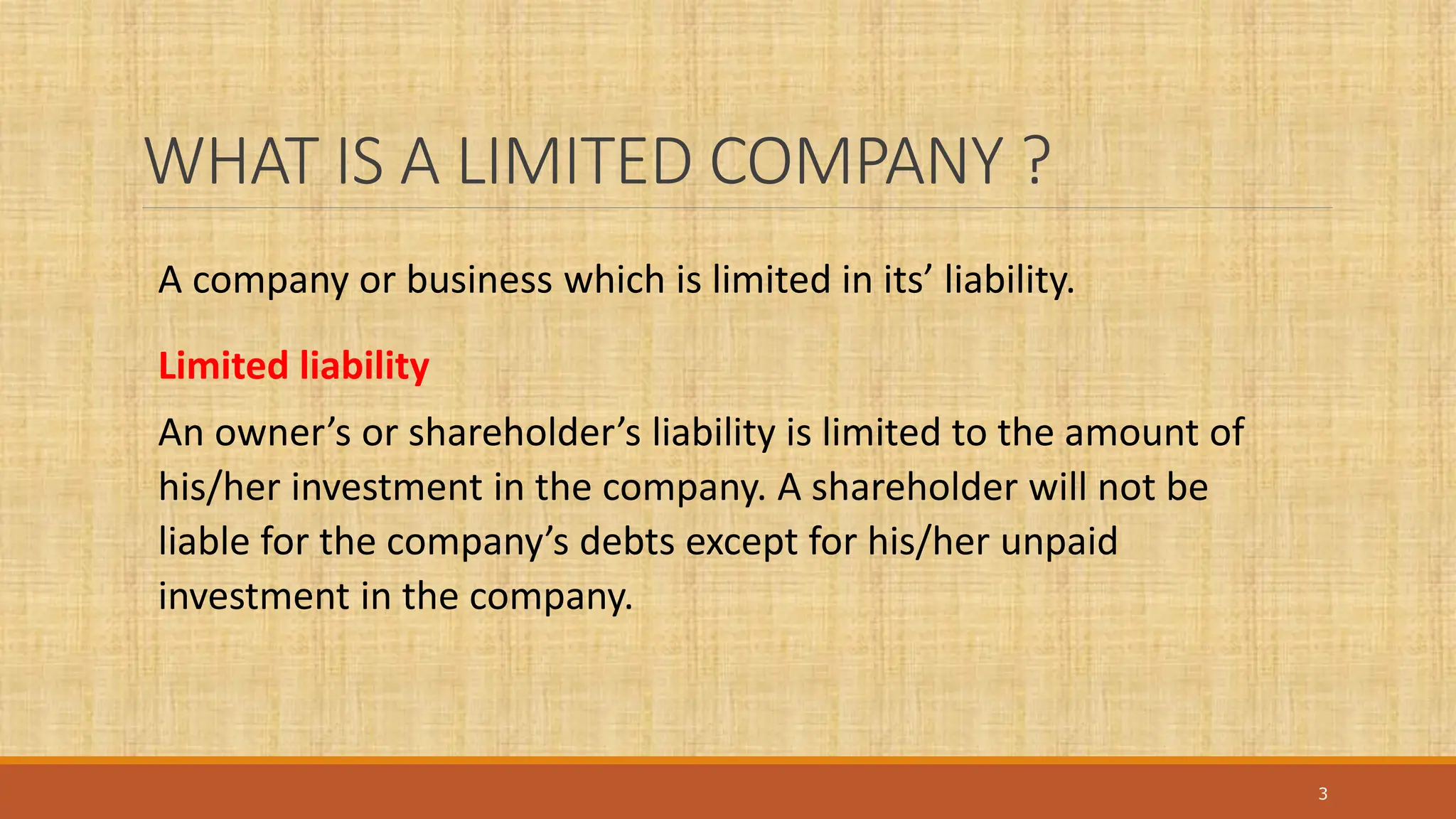
WHAT IS A LIMITED COMPANY ?
3
A company or business which is limited in its’ liability.
Limited liability
An owner’s or shareholder’s liability is limited to the amount of
his/her investment in the company. A shareholder will not be
liable for the company’s debts except for his/her unpaid
investment in the company.
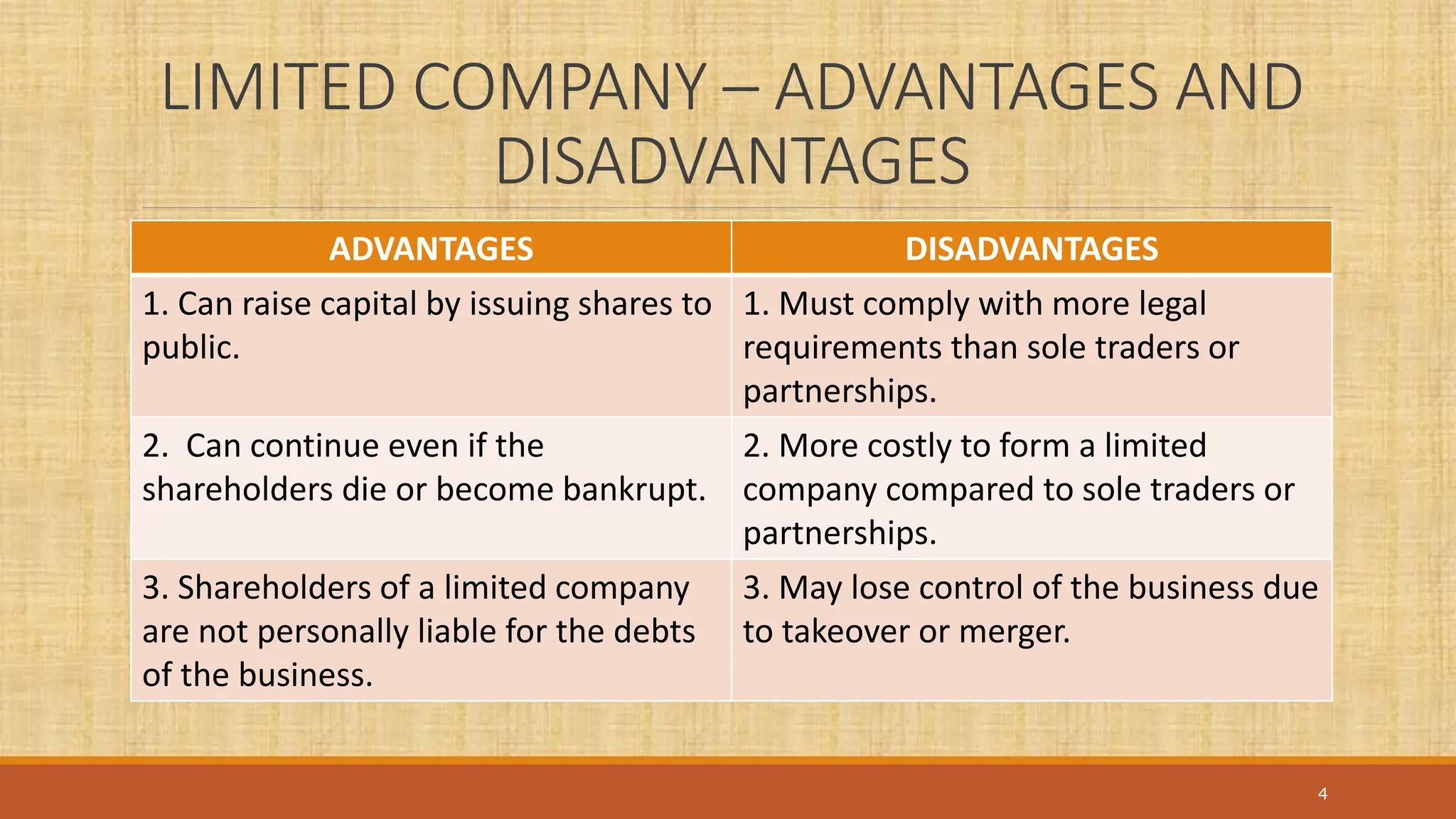
LIMITED COMPANY – ADVANTAGES AND
DISADVANTAGES
ADVANTAGES DISADVANTAGES
1. Can raise capital by issuing shares to
public.
1. Must comply with more legal
requirements than sole traders or
partnerships.
2. Can continue even if the
shareholders die or become bankrupt.
2. More costly to form a limited
company compared to sole traders or
partnerships.
3. Shareholders of a limited company
are not personally liable for the debts
of the business.
3. May lose control of the business due
to takeover or merger.
4
AN EXAMPLE:
INCOME STATEMENT OF A LIMITED
COMPANY
5
6
7
AN EXAMPLE:
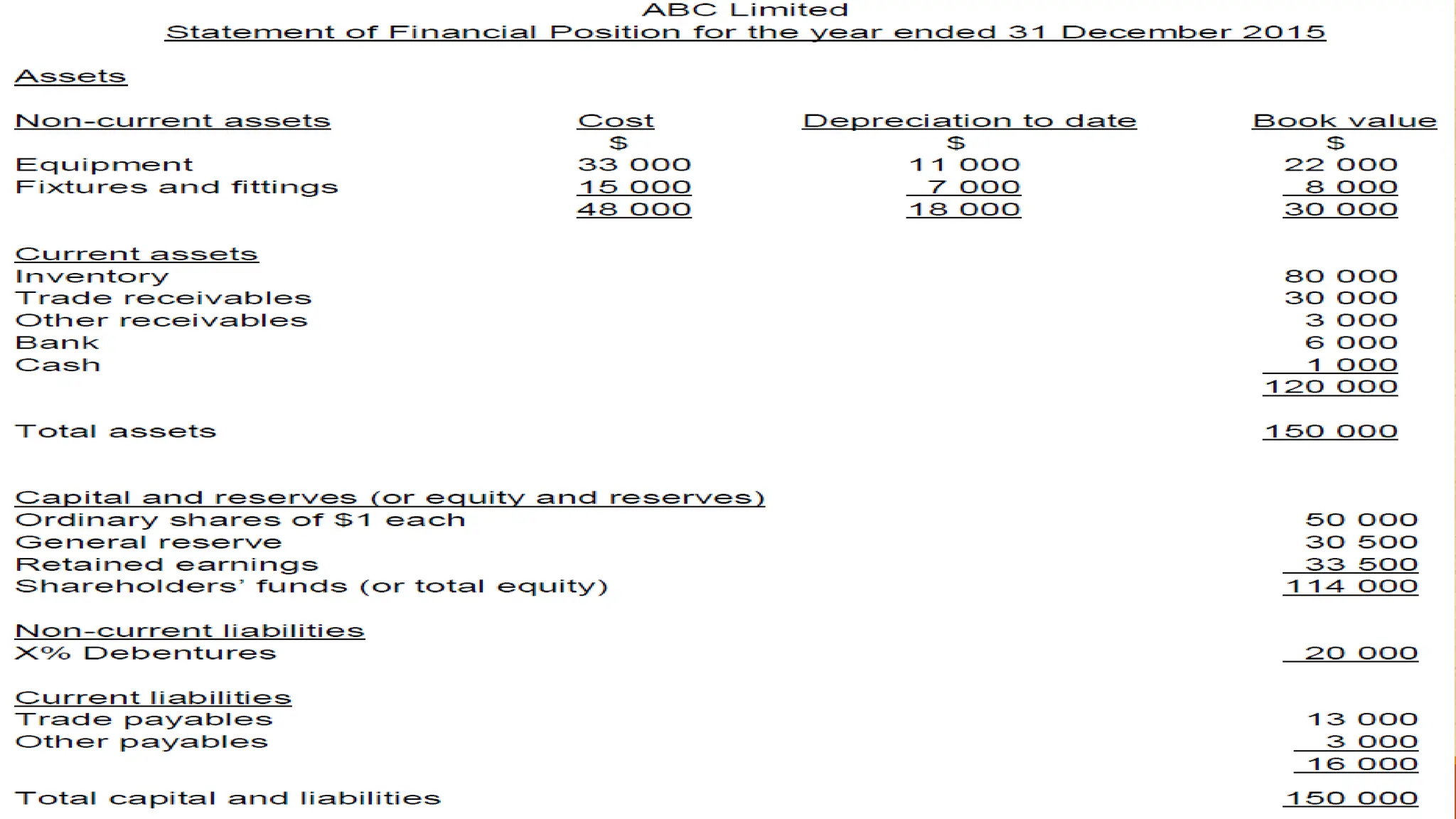
STATEMENT OF FINANCIAL POSITION OF
A LIMITED COMPANY
8
9
10
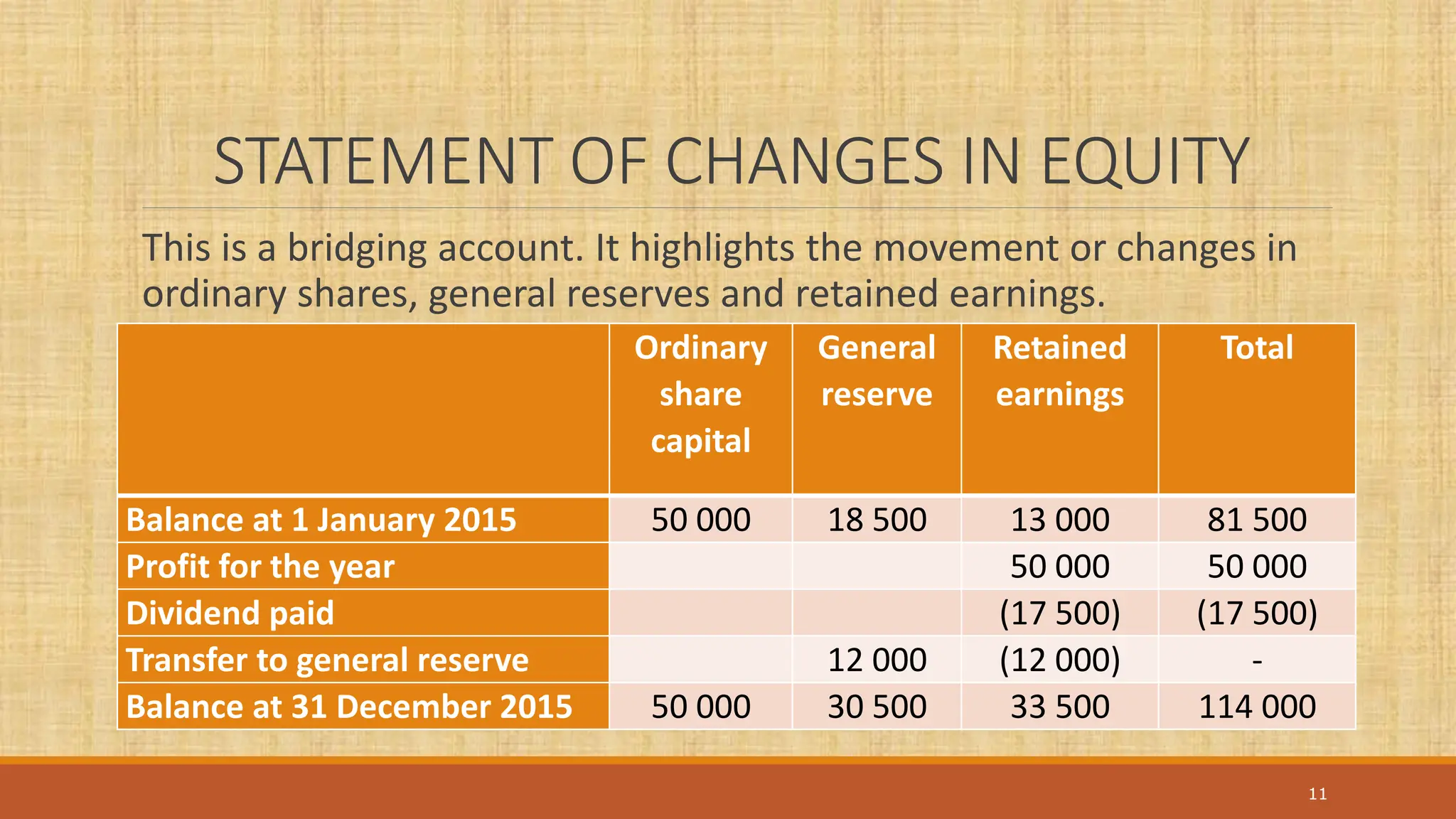
STATEMENT OF CHANGES IN EQUITY
This is a bridging account. It highlights the movement or changes in
ordinary shares, general reserves and retained earnings.
11
Ordinary
share
capital
General
reserve
Retained
earnings
Total
Balance at 1 January 2015 50 000 18 500 13 000 81 500
Profit for the year 50 000 50 000
Dividend paid (17 500) (17 500)
Transfer to general reserve 12 000 (12 000) -
Balance at 31 December 2015 50 000 30 500 33 500 114 000
SHARES
12
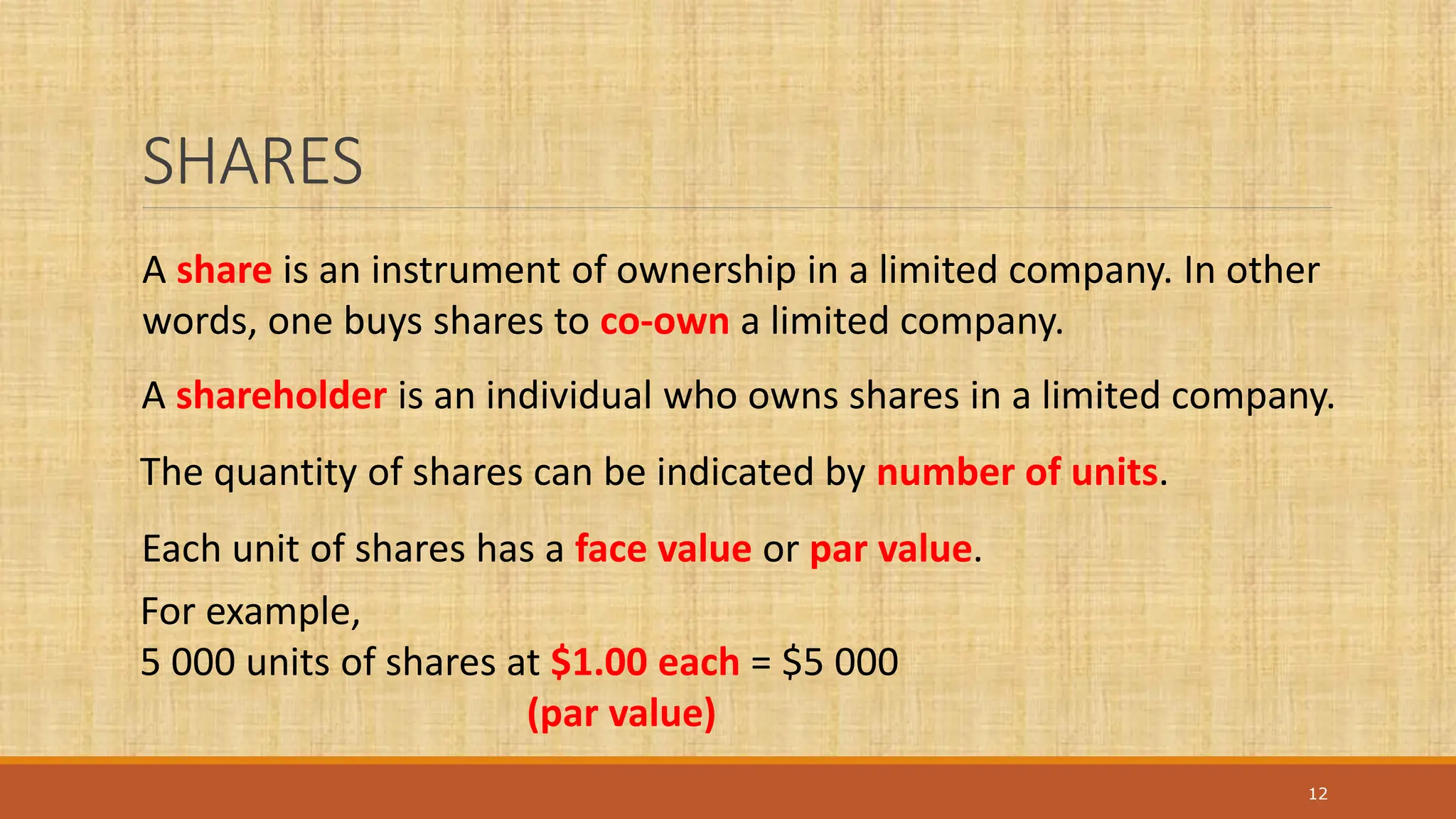
A share is an instrument of ownership in a limited company. In other
words, one buys shares to co-own a limited company.
A shareholder is an individual who owns shares in a limited company.
The quantity of shares can be indicated by number of units.
Each unit of shares has a face value or par value.
For example,
5 000 units of shares at $1.00 each = $5 000
(par value)
TYPES OF SHARES
13
1. Ordinary Shares
Ownership of a limited company which entitles the
shareholder to vote in the Annual General Meeting (AGM)
according to percentage of his/her shareholdings.
Example,
Marianne bought 50 000 ordinary shares of $0.50 each
= $25 000.
Total value of ordinary shares = $250 000
Therefore, Marianne’s voting right = 10%.
14
2. X% Preference Shares
Ownership of a limited company which entitles the
shareholder to receive a fixed dividend, (rate of dividend
indicated as a “%” before the term “preference shares”, for
example, 10% preference shares). This dividend is payable
first to the preference shareholders before any dividends
to the ordinary shareholders.
Example:
Albright bought 10 000 6% preference shares of $1.00 each.
Albright will receive a yearly dividend of = 10 000 x $1.00 x 6%
= $600.
DIVIDENDS
15
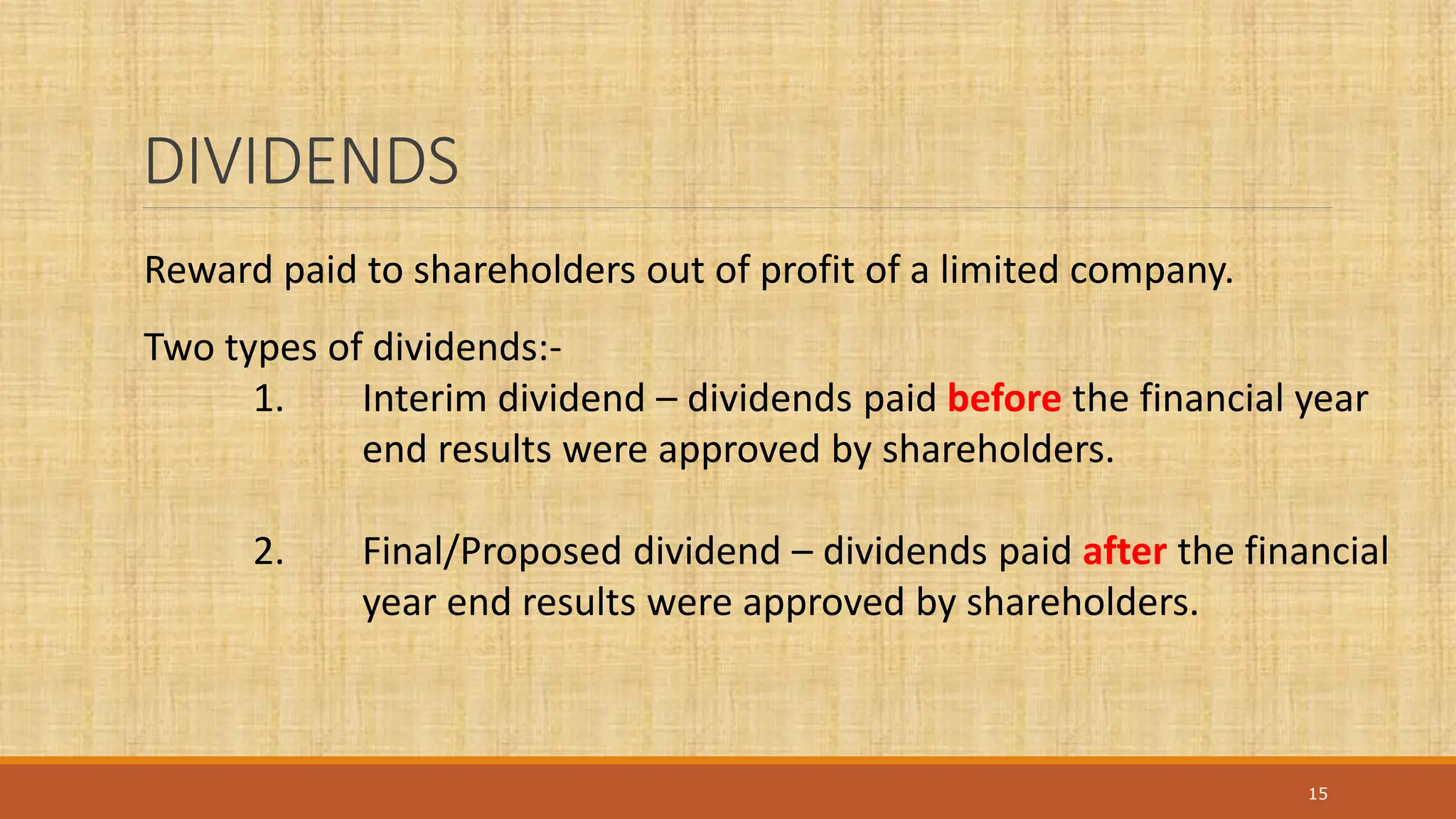
Reward paid to shareholders out of profit of a limited company.
Two types of dividends:-
1. Interim dividend – dividends paid before the financial year
end results were approved by shareholders.
2. Final/Proposed dividend – dividends paid after the financial
year end results were approved by shareholders.
CALCULATION OF DIVIDENDS
16
Dividends can be calculated in the following ways:
1. As a percentage of share capital.
Example: A company has 800 000 ordinary shares of $1.00 each.
The directors have announced an ordinary share dividend of
10%.
Ordinary share dividend is 10% x 800 000 x $1.00 = $80 000.
17
2. As an amount per share
Example: A company’s ordinary share capital consists of 900 000
shares at $0.50 each. The directors have announced a dividend
of $0.05 per share.
Ordinary share dividend is 900 000 x $0.05 = $45 000.
GENERAL RESERVES
Part of profit which have not been distributed as dividends and set
aside for future uses. For example, it may be used to pay future
dividends if retained earnings are low or finance the capital
expansion of the business.
18
DEBENTURES
It is a long-term loan to a limited company. Debenture holders
receive a fixed rate of interest and the amount borrowed is charged
on the assets of the company.
19
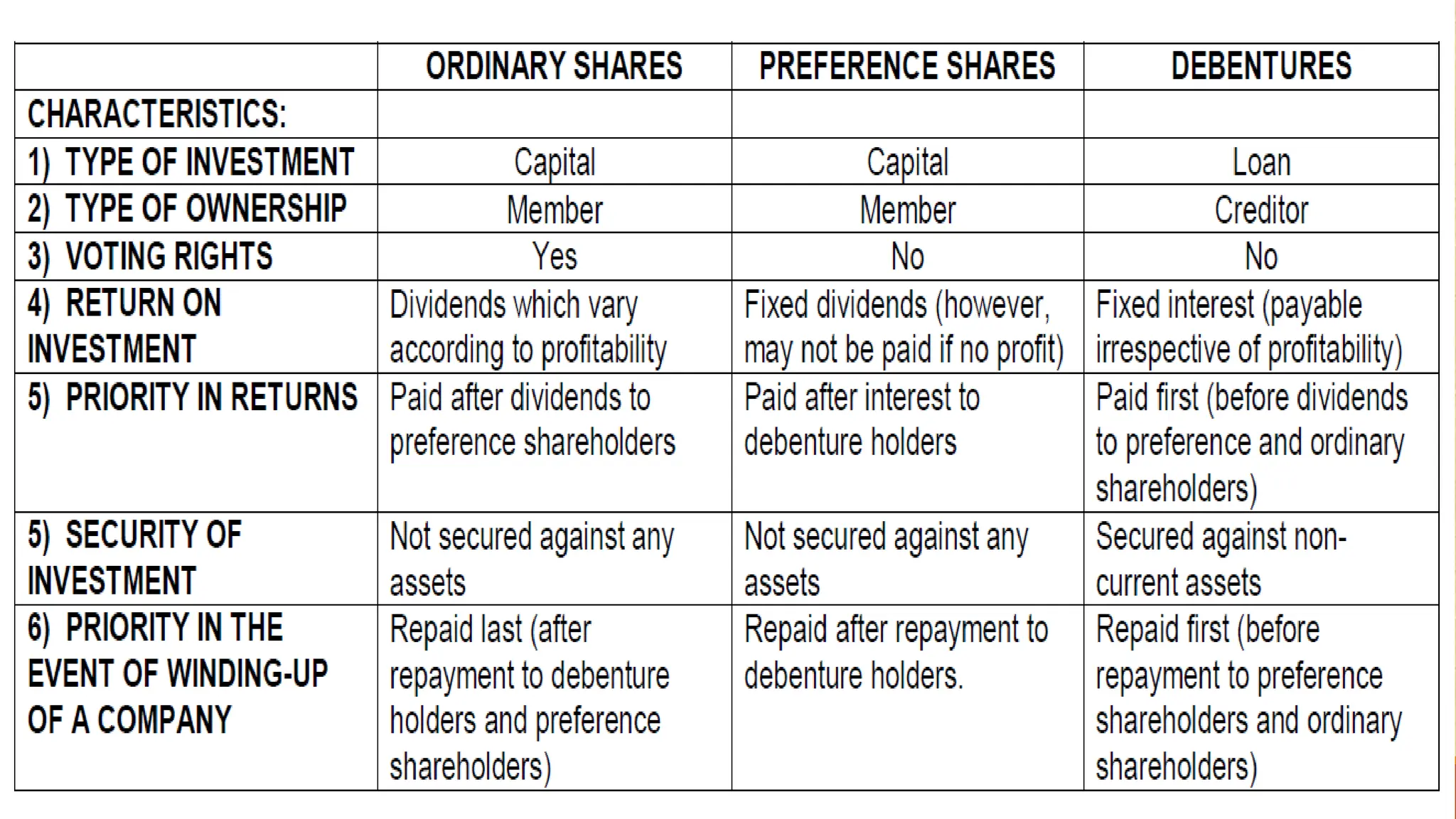
A COMPARISON:
ORDINARY SHARES, PREFERENCE SHARES
AND DEBENTURES
20
21
CAPITAL REQUIREMENT
22
The capital requirement of a limited company can be broken down into
different stages:-
Authorised Capital
Issued Capital
Called-up Capital
Paid-up Capital
23
• Maximum number of shares that could be issued by a
limited company.
Authorised Capital
• Number of shares issued by a limited company.
Issued Capital
• Requirement for shareholders to pay part of the
issued shared capital.
• Investors may pay in instalments, hence 1st call, 2nd
call, and final call.
Called-up Capital
• Part of called-up capital for which payment has been
received.
Paid-up Capital
REFLECTION
What is the difference between preference and ordinary shares ?
What is a debenture ?
Understand how to prepare the statement of changes in equity.
Understand the statement of financial postion of a limited company.
24
Chapter 21 Introduction to Limited Company Accounts.pdf

  • 1.
  • 2.
    LEARNING OBJECTIVES Understand natureof a limited company Advantages and disdavantages of a limited company Income statement of a limited company Statement of Financial Position of a limited company Statement of Changes in Equity Types of shares Dividends General reserves Debentures Comparison of ordinary shares, preference shares and debentures Capital requirements of a limited company 2
  • 3.
    WHAT IS ALIMITED COMPANY ? 3 A company or business which is limited in its’ liability. Limited liability An owner’s or shareholder’s liability is limited to the amount of his/her investment in the company. A shareholder will not be liable for the company’s debts except for his/her unpaid investment in the company.
  • 4.
    LIMITED COMPANY –ADVANTAGES AND DISADVANTAGES ADVANTAGES DISADVANTAGES 1. Can raise capital by issuing shares to public. 1. Must comply with more legal requirements than sole traders or partnerships. 2. Can continue even if the shareholders die or become bankrupt. 2. More costly to form a limited company compared to sole traders or partnerships. 3. Shareholders of a limited company are not personally liable for the debts of the business. 3. May lose control of the business due to takeover or merger. 4
  • 5.
    AN EXAMPLE: INCOME STATEMENTOF A LIMITED COMPANY 5
  • 6.
  • 7.
  • 8.
    AN EXAMPLE: STATEMENT OFFINANCIAL POSITION OF A LIMITED COMPANY 8
  • 9.
  • 10.
  • 11.
    STATEMENT OF CHANGESIN EQUITY This is a bridging account. It highlights the movement or changes in ordinary shares, general reserves and retained earnings. 11 Ordinary share capital General reserve Retained earnings Total Balance at 1 January 2015 50 000 18 500 13 000 81 500 Profit for the year 50 000 50 000 Dividend paid (17 500) (17 500) Transfer to general reserve 12 000 (12 000) - Balance at 31 December 2015 50 000 30 500 33 500 114 000
  • 12.
    SHARES 12 A share isan instrument of ownership in a limited company. In other words, one buys shares to co-own a limited company. A shareholder is an individual who owns shares in a limited company. The quantity of shares can be indicated by number of units. Each unit of shares has a face value or par value. For example, 5 000 units of shares at $1.00 each = $5 000 (par value)
  • 13.
    TYPES OF SHARES 13 1.Ordinary Shares Ownership of a limited company which entitles the shareholder to vote in the Annual General Meeting (AGM) according to percentage of his/her shareholdings. Example, Marianne bought 50 000 ordinary shares of $0.50 each = $25 000. Total value of ordinary shares = $250 000 Therefore, Marianne’s voting right = 10%.
  • 14.
    14 2. X% PreferenceShares Ownership of a limited company which entitles the shareholder to receive a fixed dividend, (rate of dividend indicated as a “%” before the term “preference shares”, for example, 10% preference shares). This dividend is payable first to the preference shareholders before any dividends to the ordinary shareholders. Example: Albright bought 10 000 6% preference shares of $1.00 each. Albright will receive a yearly dividend of = 10 000 x $1.00 x 6% = $600.
  • 15.
    DIVIDENDS 15 Reward paid toshareholders out of profit of a limited company. Two types of dividends:- 1. Interim dividend – dividends paid before the financial year end results were approved by shareholders. 2. Final/Proposed dividend – dividends paid after the financial year end results were approved by shareholders.
  • 16.
    CALCULATION OF DIVIDENDS 16 Dividendscan be calculated in the following ways: 1. As a percentage of share capital. Example: A company has 800 000 ordinary shares of $1.00 each. The directors have announced an ordinary share dividend of 10%. Ordinary share dividend is 10% x 800 000 x $1.00 = $80 000.
  • 17.
    17 2. As anamount per share Example: A company’s ordinary share capital consists of 900 000 shares at $0.50 each. The directors have announced a dividend of $0.05 per share. Ordinary share dividend is 900 000 x $0.05 = $45 000.
  • 18.
    GENERAL RESERVES Part ofprofit which have not been distributed as dividends and set aside for future uses. For example, it may be used to pay future dividends if retained earnings are low or finance the capital expansion of the business. 18
  • 19.
    DEBENTURES It is along-term loan to a limited company. Debenture holders receive a fixed rate of interest and the amount borrowed is charged on the assets of the company. 19
  • 20.
    A COMPARISON: ORDINARY SHARES,PREFERENCE SHARES AND DEBENTURES 20
  • 21.
  • 22.
    CAPITAL REQUIREMENT 22 The capitalrequirement of a limited company can be broken down into different stages:- Authorised Capital Issued Capital Called-up Capital Paid-up Capital
  • 23.
    23 • Maximum numberof shares that could be issued by a limited company. Authorised Capital • Number of shares issued by a limited company. Issued Capital • Requirement for shareholders to pay part of the issued shared capital. • Investors may pay in instalments, hence 1st call, 2nd call, and final call. Called-up Capital • Part of called-up capital for which payment has been received. Paid-up Capital
  • 24.
    REFLECTION What is thedifference between preference and ordinary shares ? What is a debenture ? Understand how to prepare the statement of changes in equity. Understand the statement of financial postion of a limited company. 24