EDUC210 ASSESSMENT IN LEARNING 2
CHAPTER 2
Meaning, Characteristics and Practices
Elva B. De Asis BEED 3A
PRESENTED BY
AUTHENTIC
ASSESSMENT:
Lesson Objectives
Introduction
Assessment
Evaluation
Testing
Marks
Why Authentic Assessment?
Characteristics of Authentic Assessment (AA)
CONTENT
02
Back 03
• Identify the relationship of assessment, evaluation and
marks to determine the attainment of students’ learning
outcomes
• Explain authentic assessment, its meaning and
characteristics
LESSON
OBJECTIVES
04
In 1935, the distinguished educator Ralph Tyler proposed an “enlarged concept
of student evaluation,” encompassing other approaches besides tests and quizzes.
He urged teachers to sample learning by collecting products of their efforts
throughout the year. That practice has evolved into what is today termed
“authentic assessment” which encompasses a range of approaches including
portfolio assessment, journals and logs, products, videotapes of performances, and
projects.
INTRODUCTION
Back
05
Both assessment and evaluation are based on the
judgment of an experienced, thoughtful human being - an
expert. Machines don’t assess, papers don’t assess, tests
don’t assess. Human assess. And what better person is
there to assess the progress and development of his or her
students than the classrooms teacher.
LARRY MALONE
Lawrence Hall of Science
Back
06
The term assessment, evaluation, testing and marks are
terms often used in determining the degree of attainment
of student learning outcomes. At times they are used
interchangeably, it will be useful to clarify their meanings
to distinguish them from one another.
Back
07
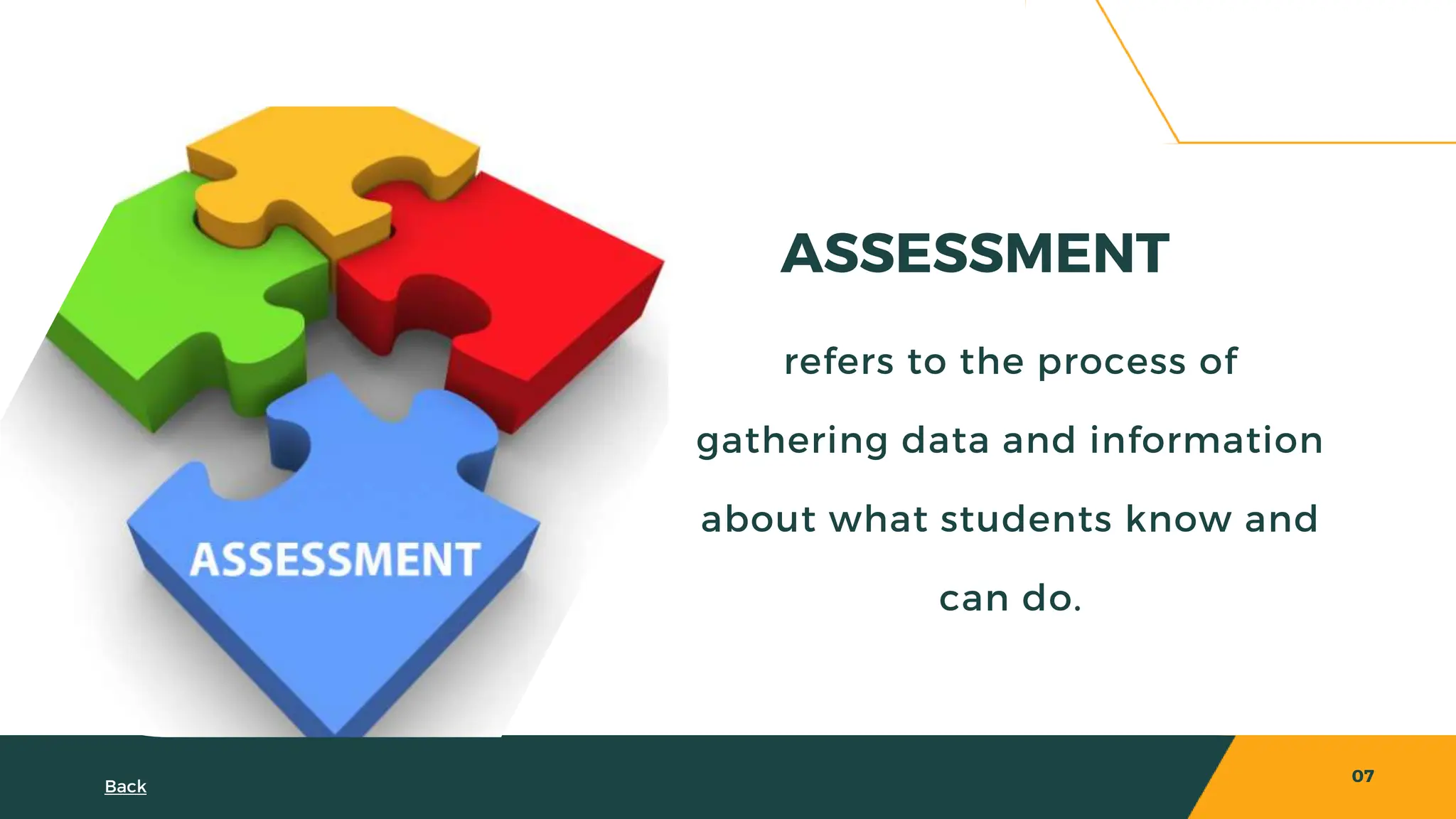
ASSESSMENT
refers to the process of
gathering data and information
about what students know and
can do.
Back
08
EVALUATION
involves the task of interpreting,
forming conclusions and making
jugdments about the information
which was gathered in the process of
assessment.
Back
09
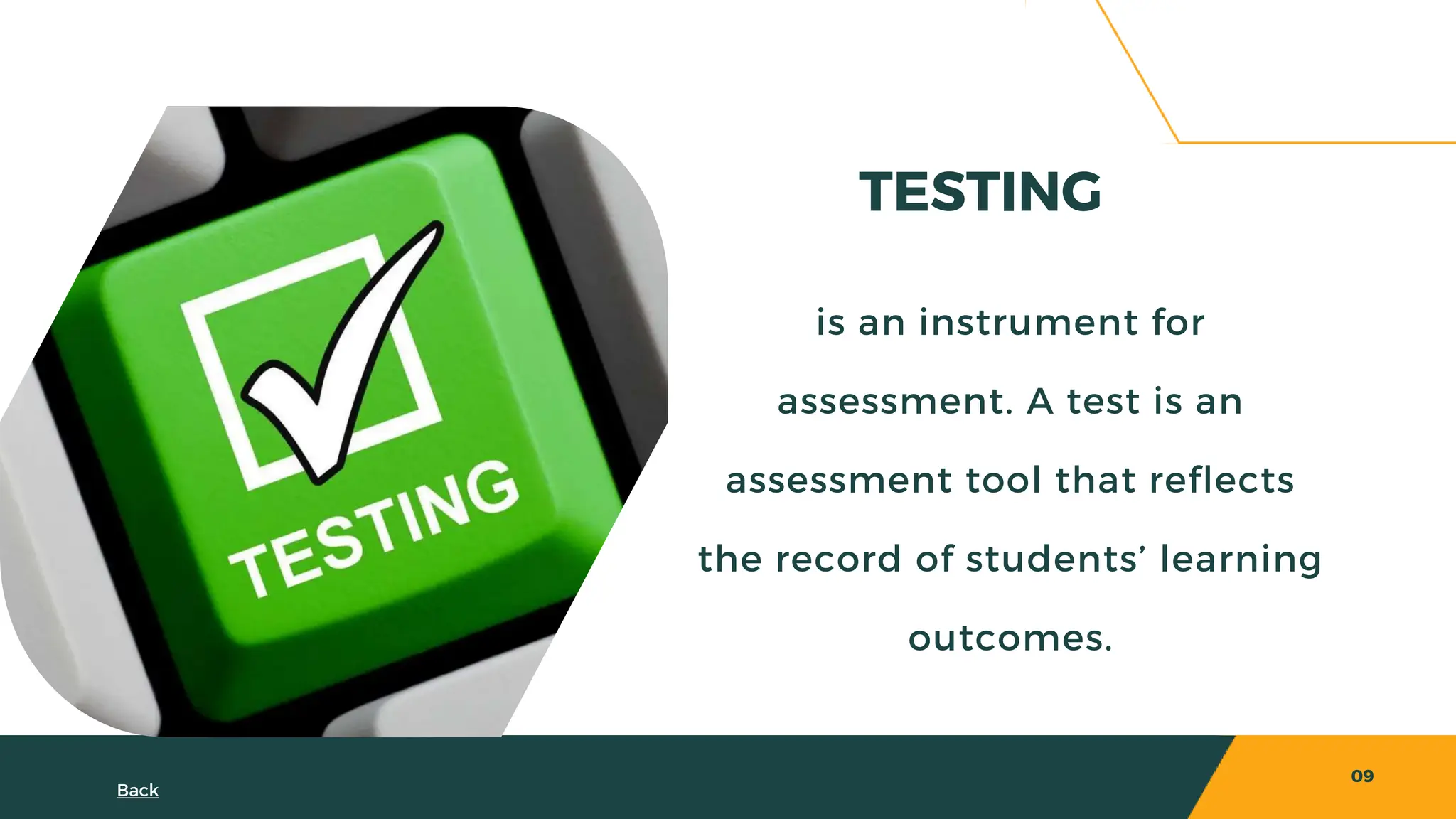
TESTING
is an instrument for
assessment. A test is an
assessment tool that reflects
the record of students’ learning
outcomes.
Back
10
MARKS
are reports of the result of
evaluating information obtained
in assessment process.
Back
Assessment involves review of evidence of learning such as
journal entries, written work, portfolios, skill demonstrations,
performance in learning activities, test results and rubrics
ratings which cover a period of time and should reveal the
progress of students in competencies. Evaluation on the
hand occurs when a mark or grade is assigned after a quiz, a
presentation or a completed task.
Back
11
WHY AUTHENTIC ASESSMENT?
06
Back
“The common practices of using recall and recognition objective the skills
and knowledge they have mastered.“ -Richard Stiggins (1987)
“Authentic assessments are products and/or performances correlated with
real life experiences.“ - Newton Public Schools
Other names of authentic assessment are performance assessment,
alternative assessment, and direct assessment.
12
Back 13
CHARACTERISTICS
OF AUTHENTIC
ASSESSMENT (AA)
14
1. AA starts with clear and definite criteria
of performance made known to the
students.
2. AA is criterion-referenced rather than
norm-referenced and so it identifies
strengths and weaknesses, but does not
compare students nor tank their level of
performance
Back
15
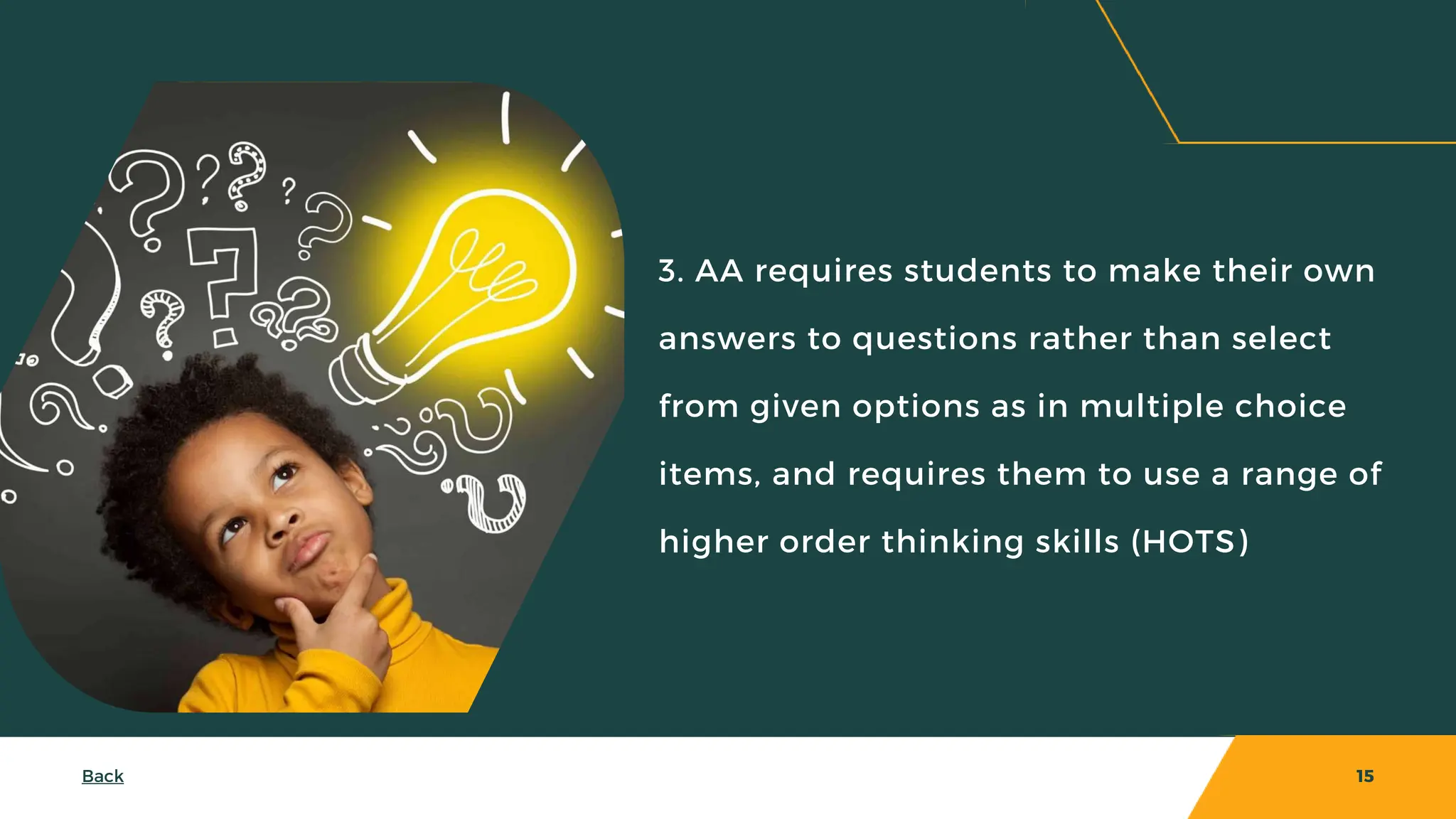
3. AA requires students to make their own
answers to questions rather than select
from given options as in multiple choice
items, and requires them to use a range of
higher order thinking skills (HOTS)
Back
16
4. AA often emphasizes performance and
therefore students are required to
demonstrate their knowledge, skills or
competencies in appropriate situations. AA
does not rely on ability to recall facts or
memorize details, instead students are
asked to demonstrate skills and concepts
they have learned.
Back
5. AA encourages both teacher and students to determine
their rate of progress in cooperatively attaining the desired
students learning outcomes.
6. AA does not encourage rote learning and passive taking of
tests; instead, students are required to demonstrate
analytical skills, ability to integrate what they learn,
creativity, and ability to work in a group, skills in oral and
written communications. In brief, AA values not only the
finished products which are the learning outcomes, but also
the process of learning.
16
Back
18
7. AA changes the role of students as passive test
takers into becoming active and involved
participants in assessment activities that
emphasize what they are capable of doing instead
tests to measure students’ skills or retained facts
has come under scrutiny because of the limitation
encountered in determining the students’
capability to utilize their knowledge and skills in
work and professional practice.
Back
19
While multiple choice, true- false or matching type tests
can be indicators of academic achievement, teachers and
students are often misled by the results of these tests on
the kind of academic work and activities that need to be
mastered. It is to be remembered that test items are not
real problems; right answers are not necessarily indicators
of critical thinking.
Back
20
Back
THANK YOU FOR
LISTENING!

Chapter 2 Authentic Assessment Meaning, Characteristics and Practices Assessment in Learning 2.pptx

  • 1.
    EDUC210 ASSESSMENT INLEARNING 2 CHAPTER 2 Meaning, Characteristics and Practices Elva B. De Asis BEED 3A PRESENTED BY AUTHENTIC ASSESSMENT:
  • 2.
    Lesson Objectives Introduction Assessment Evaluation Testing Marks Why AuthenticAssessment? Characteristics of Authentic Assessment (AA) CONTENT 02
  • 3.
    Back 03 • Identifythe relationship of assessment, evaluation and marks to determine the attainment of students’ learning outcomes • Explain authentic assessment, its meaning and characteristics LESSON OBJECTIVES
  • 4.
    04 In 1935, thedistinguished educator Ralph Tyler proposed an “enlarged concept of student evaluation,” encompassing other approaches besides tests and quizzes. He urged teachers to sample learning by collecting products of their efforts throughout the year. That practice has evolved into what is today termed “authentic assessment” which encompasses a range of approaches including portfolio assessment, journals and logs, products, videotapes of performances, and projects. INTRODUCTION Back
  • 5.
    05 Both assessment andevaluation are based on the judgment of an experienced, thoughtful human being - an expert. Machines don’t assess, papers don’t assess, tests don’t assess. Human assess. And what better person is there to assess the progress and development of his or her students than the classrooms teacher. LARRY MALONE Lawrence Hall of Science Back
  • 6.
    06 The term assessment,evaluation, testing and marks are terms often used in determining the degree of attainment of student learning outcomes. At times they are used interchangeably, it will be useful to clarify their meanings to distinguish them from one another. Back
  • 7.
    07 ASSESSMENT refers to theprocess of gathering data and information about what students know and can do. Back
  • 8.
    08 EVALUATION involves the taskof interpreting, forming conclusions and making jugdments about the information which was gathered in the process of assessment. Back
  • 9.
    09 TESTING is an instrumentfor assessment. A test is an assessment tool that reflects the record of students’ learning outcomes. Back
  • 10.
    10 MARKS are reports ofthe result of evaluating information obtained in assessment process. Back
  • 11.
    Assessment involves reviewof evidence of learning such as journal entries, written work, portfolios, skill demonstrations, performance in learning activities, test results and rubrics ratings which cover a period of time and should reveal the progress of students in competencies. Evaluation on the hand occurs when a mark or grade is assigned after a quiz, a presentation or a completed task. Back 11
  • 12.
    WHY AUTHENTIC ASESSMENT? 06 Back “Thecommon practices of using recall and recognition objective the skills and knowledge they have mastered.“ -Richard Stiggins (1987) “Authentic assessments are products and/or performances correlated with real life experiences.“ - Newton Public Schools Other names of authentic assessment are performance assessment, alternative assessment, and direct assessment. 12
  • 13.
  • 14.
    14 1. AA startswith clear and definite criteria of performance made known to the students. 2. AA is criterion-referenced rather than norm-referenced and so it identifies strengths and weaknesses, but does not compare students nor tank their level of performance Back
  • 15.
    15 3. AA requiresstudents to make their own answers to questions rather than select from given options as in multiple choice items, and requires them to use a range of higher order thinking skills (HOTS) Back
  • 16.
    16 4. AA oftenemphasizes performance and therefore students are required to demonstrate their knowledge, skills or competencies in appropriate situations. AA does not rely on ability to recall facts or memorize details, instead students are asked to demonstrate skills and concepts they have learned. Back
  • 17.
    5. AA encouragesboth teacher and students to determine their rate of progress in cooperatively attaining the desired students learning outcomes. 6. AA does not encourage rote learning and passive taking of tests; instead, students are required to demonstrate analytical skills, ability to integrate what they learn, creativity, and ability to work in a group, skills in oral and written communications. In brief, AA values not only the finished products which are the learning outcomes, but also the process of learning. 16 Back
  • 18.
    18 7. AA changesthe role of students as passive test takers into becoming active and involved participants in assessment activities that emphasize what they are capable of doing instead tests to measure students’ skills or retained facts has come under scrutiny because of the limitation encountered in determining the students’ capability to utilize their knowledge and skills in work and professional practice. Back
  • 19.
    19 While multiple choice,true- false or matching type tests can be indicators of academic achievement, teachers and students are often misled by the results of these tests on the kind of academic work and activities that need to be mastered. It is to be remembered that test items are not real problems; right answers are not necessarily indicators of critical thinking. Back
  • 20.