Case Studies in Biblical Leaders
Spiritual Leadership:
Moving people onto
God’s agenda.
J. Oswald Sanders wrote
a popular book entitled
Spiritual Leadership in
which he states, “A
God-appointed spiritual
leader is perfectly safe
when, and only when,
he walks humbly with
his God . . .”
 Spiritual leaders have been largely
neglected in American business in
recent decades.
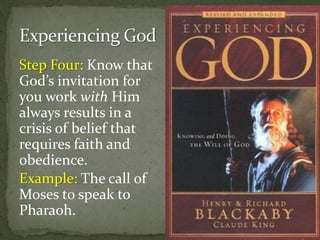
 Spiritual leaders face unique problems
as they attempt to exert their influence
which often results in these leaders
ignoring the importance of the
spiritual dynamic of leadership.
 The pressures and responsibilities of
ministry make it easy for leaders to be
sidetracked and fail to nurture their
own walk with God.
 This is even more pronounced with
success.
 Prosperity tends to discourage interest
in spiritual things.
 Spiritual leaders are constantly
engaged in spiritual warfare.
 Spiritual leaders tend to have the
‘melancholy’ temperament (S in the
DISC model).
 Often such leaders deal with deeper
times of communion with God,
followed by periods of depression.
 People often fall at their strongest
point. Therefore people with a great
passion for God may be tempted to
wander after other passions that
hinder their relationship with God.
 Spiritual leaders seeking to be like
Christ will often face the same kind of
resistance Christ faced.
Spiritual leaders
need to walk with
God before they can
lead others into a
deeper experience
with God.
 He prepared himself for ministry before
ministry opportunities became apparent.
 He learned how to work with those in
authority to get what he needed for effective
spiritual ministry.
Ezra 7:9
This Ezra came up from Babylon; and he was a
skilled scribe in the Law of Moses, which the
Lord God of Israel had given. The king
granted him all his request, according to the
hand of the Lord his God upon Him.
 Ezra made walking with God and teaching
biblical principles to others the priority of
his life:
For Ezra had prepared his heart to seek the
Law of the Lord, and to do it, and to teach
statutes and ordinances in Israel (Ezra 7:10)
Do “spiritual” people need to study?
Ezra was able to recognize the hand of God at
work. In response to the resources made
available, by the king, Ezra responded:
Blessed be the Lord God of our fathers, who
has put such a thing as this in the king’s heart,
to beautify the house of the Lord which is in
Jerusalem, and has extended mercy to me
before the king and his counselors, and before
all the king’s mighty princes (Ezra 7:27-28)
 Ezra practiced the spiritual discipline of
fasting and prayer as a means of humbling
himself before the Lord when faced with
challenges.
 In addition, Ezra practiced “identificational
repentance” in his personal prayer life:
Ezra 9:5-6
5 At the evening sacrifice I arose from my
fasting; and having torn my garment and my
robe, I fell on my knees and spread out my
hands to the LORD my God. 6 And I said: “O
my God, I am too ashamed and humiliated to
lift up my face to You, my God; for our
iniquities have risen higher than our heads,
and our guilt has grown up to the heavens.
 Ezra’s leadership is further recorded in the
book of Nehemiah, depicting Ezra as
reading and explaining the Law of God to
bring the people to repentance.
 Ezra’s purpose was to lead the people to
make personal commitments to God so they
could continually live by the principles of
Scripture.
A book that really
resonated with
people a few years
ago was written by
Henry Blackaby,
entitled,
Experiencing God:
Knowing and Doing
the Will of God.
Blackaby outlines
several steps
involved in
experiencing God
through knowing
and doing His will.
Step One: Recognize
that God is always at
work around you.
Example: Israelites
crying out under
Egyptian oppression
did not know that
God was already on
the case.
Step Two:
Understand that
God pursues a
loving relationship
that is real and
personal.
Example: The Lord
meeting with Moses
on the mountain.
Step Three: Know that
God speaks by the
Holy Spirit, through
the Bible, prayer
circumstances, and
the church to reveal
Himself, His
purposes, and His
ways
Step Four: Know that
God’s invitation for
you work with Him
always results in a
crisis of belief that
requires faith and
obedience.
Example: The call of
Moses to speak to
Pharaoh.
Step Five: Be
prepared, because
joining what God is
doing involves making
major adjustments in
your life.
Example: God told
Moses to return to
Egypt.
Step Six:
Understand that you
come to know God
by experience as you
obey Him and He
accomplishes His
work through you.
As believers, we recognize the value of imitating
Jesus and His leadership style. But if we really
think about it, it’s strange that we try to emulate
a leader who never developed an organization,
regularly encouraged people to stop following
Him, and ultimately saw His death as the
pinnacle of His accomplishments.
Jesus was not a manager. His primary role was to
function as a spiritual leader.
http://michaelhyatt.com/characteristics-of-spiritual-leaders.html
Here are six characteristics that identify most
spiritual leaders:
1) They lead others into their own
encounters with God. One of the most
effective things about Jesus’ lifestyle was that
He didn’t switch into another mode to
introduce His disciples to the reality of God.
http://michaelhyatt.com/characteristics-of-spiritual-leaders.html
2) They lead others to discover their own
purpose and identity. Spiritual leadership is
characterized by great generosity. A spiritual
leader genuinely wants others to fully discover
who they were made to be.
http://michaelhyatt.com/characteristics-of-spiritual-leaders.html
3) They lead others into transformation—
not just production. When the goal is
spiritual growth and health, production will
always be a natural outcome. People function
at their peak when they function out of
identity.
http://michaelhyatt.com/characteristics-of-spiritual-leaders.html
4) They impact their atmosphere. While
we may not stop a tempest with our words,
spiritual leaders recognize that they can
change the “temperature” of a room,
interaction, or relationship. When there is
tension, fear, or apathy, a spiritual leader can
transform the immediate power of these
storms and restore vision, vitality and hope.
http://michaelhyatt.com/characteristics-of-spiritual-leaders.html
5) They help people see old things in new
ways. Many people are stuck not in their
circumstances, but in their perspectives and
paradigms. The word “repent” means “to
think differently, or to think in a different
way.” Jesus called people to look again at old
realities through new eyes. Changing ways of
thinking always precedes meaningful change.
http://michaelhyatt.com/characteristics-of-spiritual-leaders.html
6) They gain a following because of who
they are—not because of a position they
hold. Spiritual leaders can be found in
secular organizations, in the same way
managers and organizational leaders can be
found in religious ones.
http://michaelhyatt.com/characteristics-of-spiritual-leaders.html

Chapter 16 Ezra

  • 1.
    Case Studies inBiblical Leaders
  • 2.
  • 3.
    J. Oswald Sanderswrote a popular book entitled Spiritual Leadership in which he states, “A God-appointed spiritual leader is perfectly safe when, and only when, he walks humbly with his God . . .”
  • 4.
     Spiritual leadershave been largely neglected in American business in recent decades.  Spiritual leaders face unique problems as they attempt to exert their influence which often results in these leaders ignoring the importance of the spiritual dynamic of leadership.
  • 5.
     The pressuresand responsibilities of ministry make it easy for leaders to be sidetracked and fail to nurture their own walk with God.  This is even more pronounced with success.  Prosperity tends to discourage interest in spiritual things.
  • 6.
     Spiritual leadersare constantly engaged in spiritual warfare.  Spiritual leaders tend to have the ‘melancholy’ temperament (S in the DISC model).  Often such leaders deal with deeper times of communion with God, followed by periods of depression.
  • 7.
     People oftenfall at their strongest point. Therefore people with a great passion for God may be tempted to wander after other passions that hinder their relationship with God.  Spiritual leaders seeking to be like Christ will often face the same kind of resistance Christ faced.
  • 8.
    Spiritual leaders need towalk with God before they can lead others into a deeper experience with God.
  • 9.
     He preparedhimself for ministry before ministry opportunities became apparent.  He learned how to work with those in authority to get what he needed for effective spiritual ministry.
  • 10.
    Ezra 7:9 This Ezracame up from Babylon; and he was a skilled scribe in the Law of Moses, which the Lord God of Israel had given. The king granted him all his request, according to the hand of the Lord his God upon Him.
  • 11.
     Ezra madewalking with God and teaching biblical principles to others the priority of his life: For Ezra had prepared his heart to seek the Law of the Lord, and to do it, and to teach statutes and ordinances in Israel (Ezra 7:10) Do “spiritual” people need to study?
  • 12.
    Ezra was ableto recognize the hand of God at work. In response to the resources made available, by the king, Ezra responded: Blessed be the Lord God of our fathers, who has put such a thing as this in the king’s heart, to beautify the house of the Lord which is in Jerusalem, and has extended mercy to me before the king and his counselors, and before all the king’s mighty princes (Ezra 7:27-28)
  • 13.
     Ezra practicedthe spiritual discipline of fasting and prayer as a means of humbling himself before the Lord when faced with challenges.  In addition, Ezra practiced “identificational repentance” in his personal prayer life:
  • 14.
    Ezra 9:5-6 5 Atthe evening sacrifice I arose from my fasting; and having torn my garment and my robe, I fell on my knees and spread out my hands to the LORD my God. 6 And I said: “O my God, I am too ashamed and humiliated to lift up my face to You, my God; for our iniquities have risen higher than our heads, and our guilt has grown up to the heavens.
  • 15.
     Ezra’s leadershipis further recorded in the book of Nehemiah, depicting Ezra as reading and explaining the Law of God to bring the people to repentance.  Ezra’s purpose was to lead the people to make personal commitments to God so they could continually live by the principles of Scripture.
  • 16.
    A book thatreally resonated with people a few years ago was written by Henry Blackaby, entitled, Experiencing God: Knowing and Doing the Will of God.
  • 17.
    Blackaby outlines several steps involvedin experiencing God through knowing and doing His will.
  • 18.
    Step One: Recognize thatGod is always at work around you. Example: Israelites crying out under Egyptian oppression did not know that God was already on the case.
  • 19.
    Step Two: Understand that Godpursues a loving relationship that is real and personal. Example: The Lord meeting with Moses on the mountain.
  • 20.
    Step Three: Knowthat God speaks by the Holy Spirit, through the Bible, prayer circumstances, and the church to reveal Himself, His purposes, and His ways
  • 21.
    Step Four: Knowthat God’s invitation for you work with Him always results in a crisis of belief that requires faith and obedience. Example: The call of Moses to speak to Pharaoh.
  • 22.
    Step Five: Be prepared,because joining what God is doing involves making major adjustments in your life. Example: God told Moses to return to Egypt.
  • 23.
    Step Six: Understand thatyou come to know God by experience as you obey Him and He accomplishes His work through you.
  • 26.
    As believers, werecognize the value of imitating Jesus and His leadership style. But if we really think about it, it’s strange that we try to emulate a leader who never developed an organization, regularly encouraged people to stop following Him, and ultimately saw His death as the pinnacle of His accomplishments. Jesus was not a manager. His primary role was to function as a spiritual leader. http://michaelhyatt.com/characteristics-of-spiritual-leaders.html
  • 27.
    Here are sixcharacteristics that identify most spiritual leaders: 1) They lead others into their own encounters with God. One of the most effective things about Jesus’ lifestyle was that He didn’t switch into another mode to introduce His disciples to the reality of God. http://michaelhyatt.com/characteristics-of-spiritual-leaders.html
  • 28.
    2) They leadothers to discover their own purpose and identity. Spiritual leadership is characterized by great generosity. A spiritual leader genuinely wants others to fully discover who they were made to be. http://michaelhyatt.com/characteristics-of-spiritual-leaders.html
  • 29.
    3) They leadothers into transformation— not just production. When the goal is spiritual growth and health, production will always be a natural outcome. People function at their peak when they function out of identity. http://michaelhyatt.com/characteristics-of-spiritual-leaders.html
  • 30.
    4) They impacttheir atmosphere. While we may not stop a tempest with our words, spiritual leaders recognize that they can change the “temperature” of a room, interaction, or relationship. When there is tension, fear, or apathy, a spiritual leader can transform the immediate power of these storms and restore vision, vitality and hope. http://michaelhyatt.com/characteristics-of-spiritual-leaders.html
  • 31.
    5) They helppeople see old things in new ways. Many people are stuck not in their circumstances, but in their perspectives and paradigms. The word “repent” means “to think differently, or to think in a different way.” Jesus called people to look again at old realities through new eyes. Changing ways of thinking always precedes meaningful change. http://michaelhyatt.com/characteristics-of-spiritual-leaders.html
  • 32.
    6) They gaina following because of who they are—not because of a position they hold. Spiritual leaders can be found in secular organizations, in the same way managers and organizational leaders can be found in religious ones. http://michaelhyatt.com/characteristics-of-spiritual-leaders.html