Chapter 11 – AdvertisingWhile these slides were created using material from the above textbook, they are not official presentations from the publisher, Bedford/St. Martin’s.  In addition, many slides  may contain professor’s supplemental notes on various media topics.
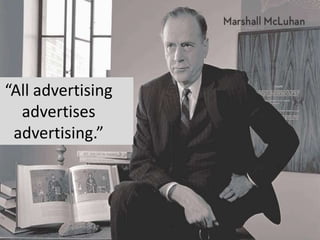
“All advertising advertises advertising.”
In This Chapter…The Biz of Advertising: Parts of an AgencyMarket ResearchPersuasive TechniquesControversies in Advertising
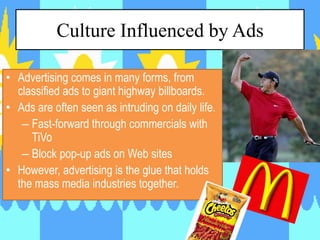
Culture Influenced by AdsAdvertising comes in many forms, from classified ads to giant highway billboards.Ads are often seen as intruding on daily life.Fast-forward through commercials with TiVoBlock pop-up ads on Web sitesHowever, advertising is the glue that holds the mass media industries together.
The Biz of AdvertisingFour Parts of Most Non-Boutique Agencies:Market ResearchCreative DevelopmentMedia Selection (buying)Account ManagementThe Mega-Agency: large ad firms formed by merging several agencies that have worldwide regional offices.Four Largest: WPP Group, Interpublic Group, Omnicom Group, and Publicis—together they control nearly $6.5 billion of the industry.
Market ResearchDemographicsAge, gender, occupation, ethnicity, education and incomePsychographicsAttitudes, beliefs, interests, and motivationsFocus GroupsA small-group interview technique in which a moderator leads a discussion about a product or an issue, usually with 6-12 peopleValues and Lifestyles (VALS)Psychological consumer segmentation system that clusters the public into psychological groups based on how consumers think and feel about products p. 400VALS Online survey
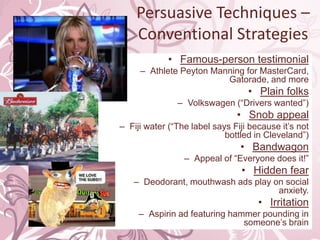
Persuasive Techniques – Conventional StrategiesFamous-person testimonialAthlete Peyton Manning for MasterCard, Gatorade, and morePlain folksVolkswagen (“Drivers wanted”)Snob appealFiji water (“The label says Fiji because it’s not bottled in Cleveland”)BandwagonAppeal of “Everyone does it!”Hidden fearDeodorant, mouthwash ads play on social anxiety.IrritationAspirin ad featuring hammer pounding in someone’s brain
Persuasive TechniquesAdvertising as Myth:
Story format, featuring characters, settings and plots
Involve conflict
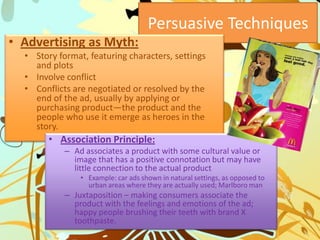
Conflicts are negotiated or resolved by the end of the ad, usually by applying or purchasing product—the product and the people who use it emerge as heroes in the story.Association Principle:Ad associates a product with some cultural value or image that has a positive connotation but may have little connection to the actual productExample: car ads shown in natural settings, as opposed to urban areas where they are actually used; Marlboro manJuxtaposition – making consumers associate the product with the feelings and emotions of the ad; happy people brushing their teeth with brand X toothpaste.
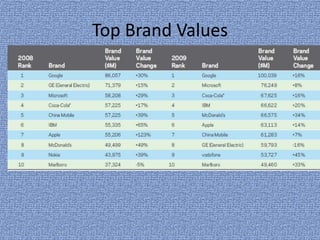
Top Brand Values

Chapter 11 Advertising

  • 1.
    Chapter 11 –AdvertisingWhile these slides were created using material from the above textbook, they are not official presentations from the publisher, Bedford/St. Martin’s. In addition, many slides may contain professor’s supplemental notes on various media topics.
  • 2.
  • 3.
    In This Chapter…TheBiz of Advertising: Parts of an AgencyMarket ResearchPersuasive TechniquesControversies in Advertising
  • 4.
    Culture Influenced byAdsAdvertising comes in many forms, from classified ads to giant highway billboards.Ads are often seen as intruding on daily life.Fast-forward through commercials with TiVoBlock pop-up ads on Web sitesHowever, advertising is the glue that holds the mass media industries together.
  • 5.
    The Biz ofAdvertisingFour Parts of Most Non-Boutique Agencies:Market ResearchCreative DevelopmentMedia Selection (buying)Account ManagementThe Mega-Agency: large ad firms formed by merging several agencies that have worldwide regional offices.Four Largest: WPP Group, Interpublic Group, Omnicom Group, and Publicis—together they control nearly $6.5 billion of the industry.
  • 6.
    Market ResearchDemographicsAge, gender,occupation, ethnicity, education and incomePsychographicsAttitudes, beliefs, interests, and motivationsFocus GroupsA small-group interview technique in which a moderator leads a discussion about a product or an issue, usually with 6-12 peopleValues and Lifestyles (VALS)Psychological consumer segmentation system that clusters the public into psychological groups based on how consumers think and feel about products p. 400VALS Online survey
  • 7.
    Persuasive Techniques –Conventional StrategiesFamous-person testimonialAthlete Peyton Manning for MasterCard, Gatorade, and morePlain folksVolkswagen (“Drivers wanted”)Snob appealFiji water (“The label says Fiji because it’s not bottled in Cleveland”)BandwagonAppeal of “Everyone does it!”Hidden fearDeodorant, mouthwash ads play on social anxiety.IrritationAspirin ad featuring hammer pounding in someone’s brain
  • 8.
  • 9.
    Story format, featuringcharacters, settings and plots
  • 10.
  • 11.
    Conflicts are negotiatedor resolved by the end of the ad, usually by applying or purchasing product—the product and the people who use it emerge as heroes in the story.Association Principle:Ad associates a product with some cultural value or image that has a positive connotation but may have little connection to the actual productExample: car ads shown in natural settings, as opposed to urban areas where they are actually used; Marlboro manJuxtaposition – making consumers associate the product with the feelings and emotions of the ad; happy people brushing their teeth with brand X toothpaste.
  • 12.