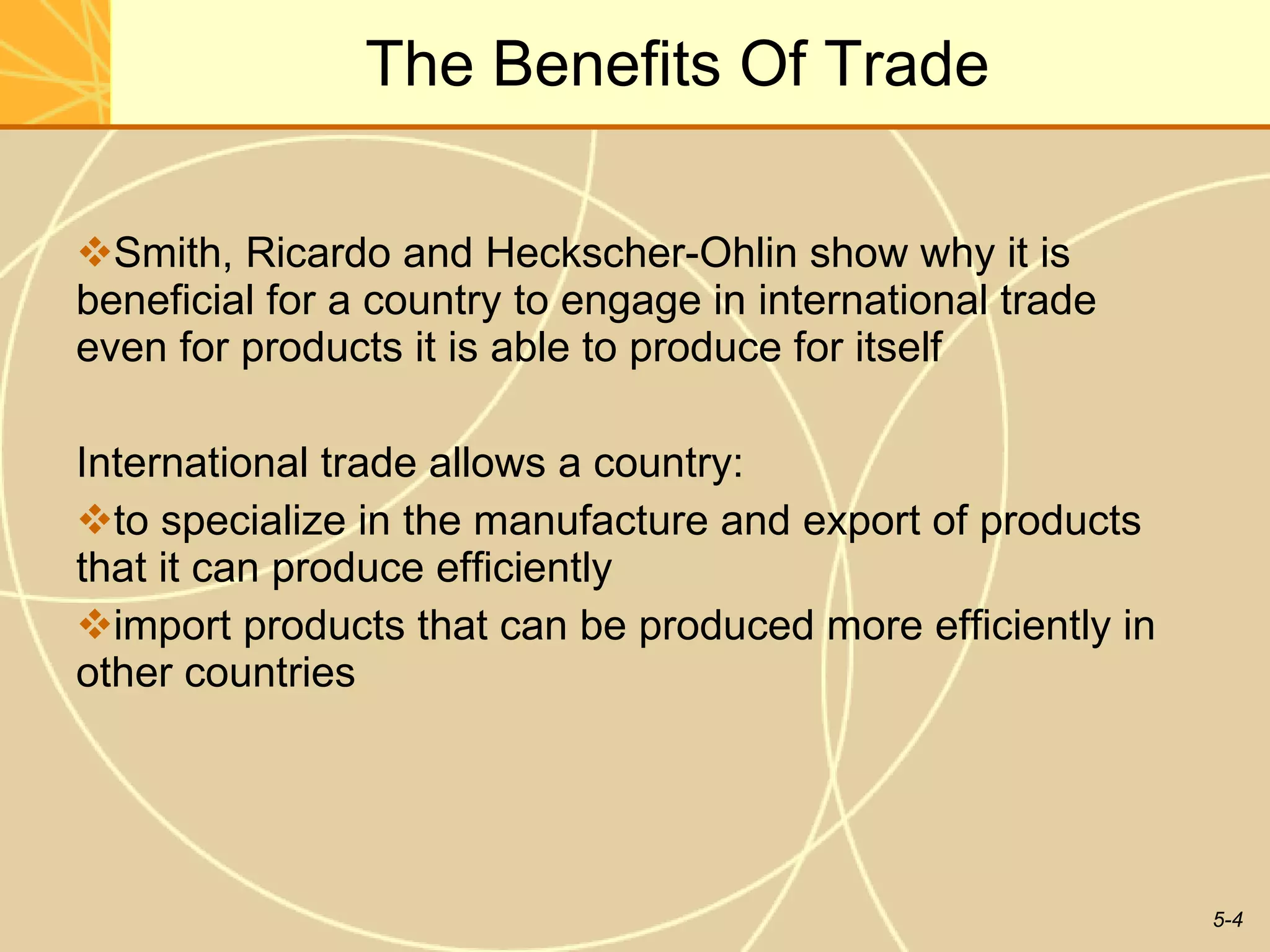
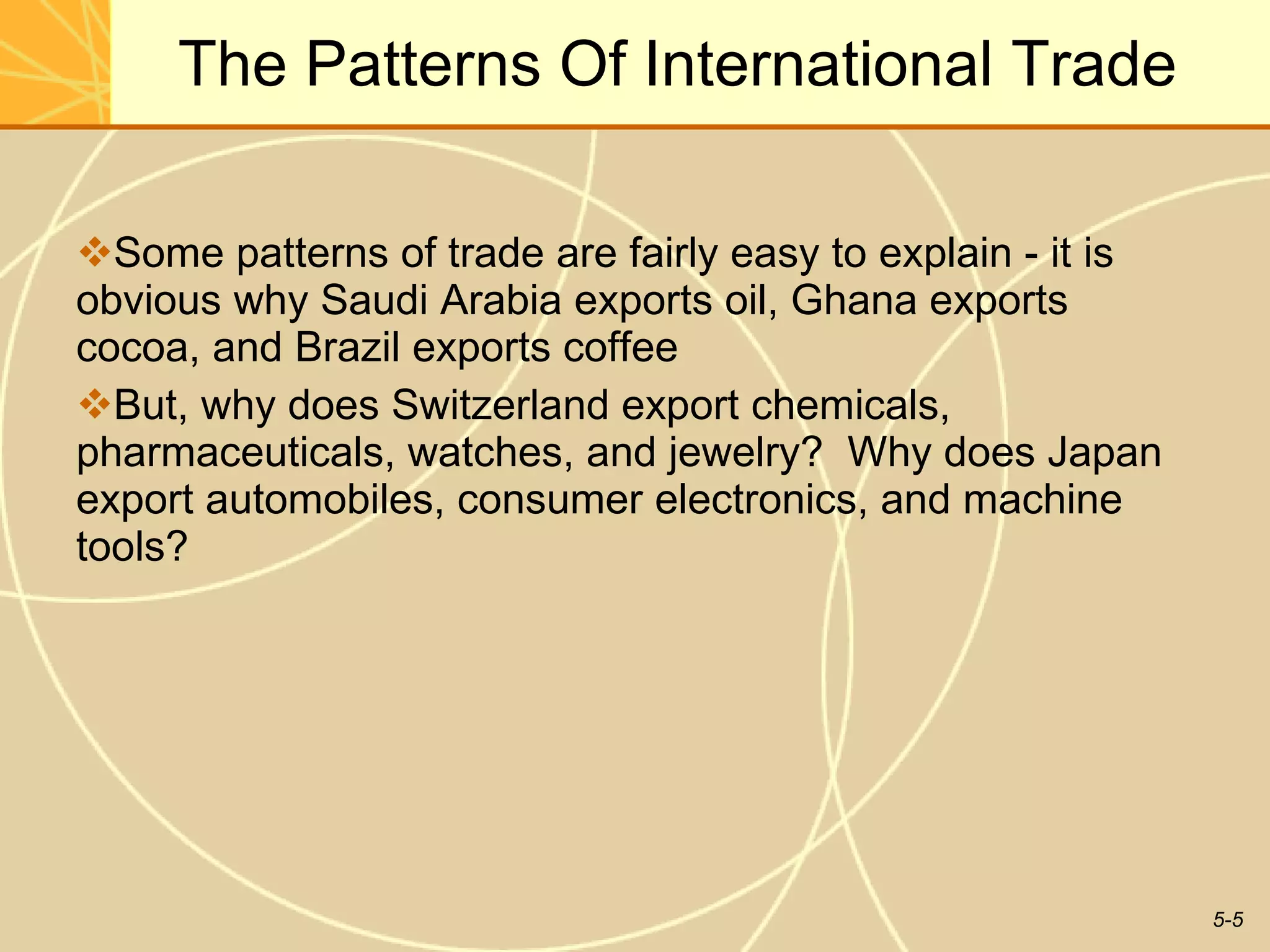
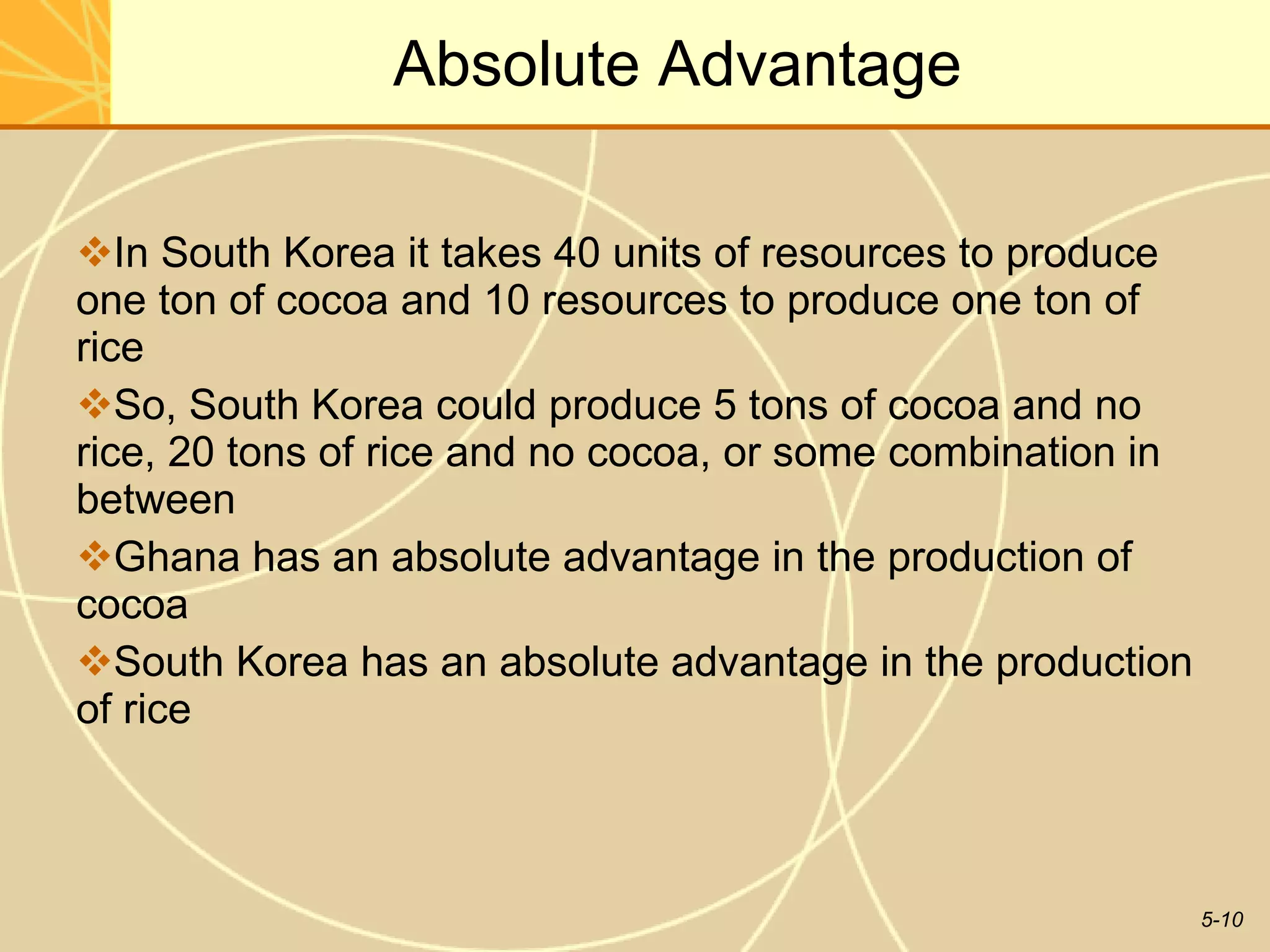
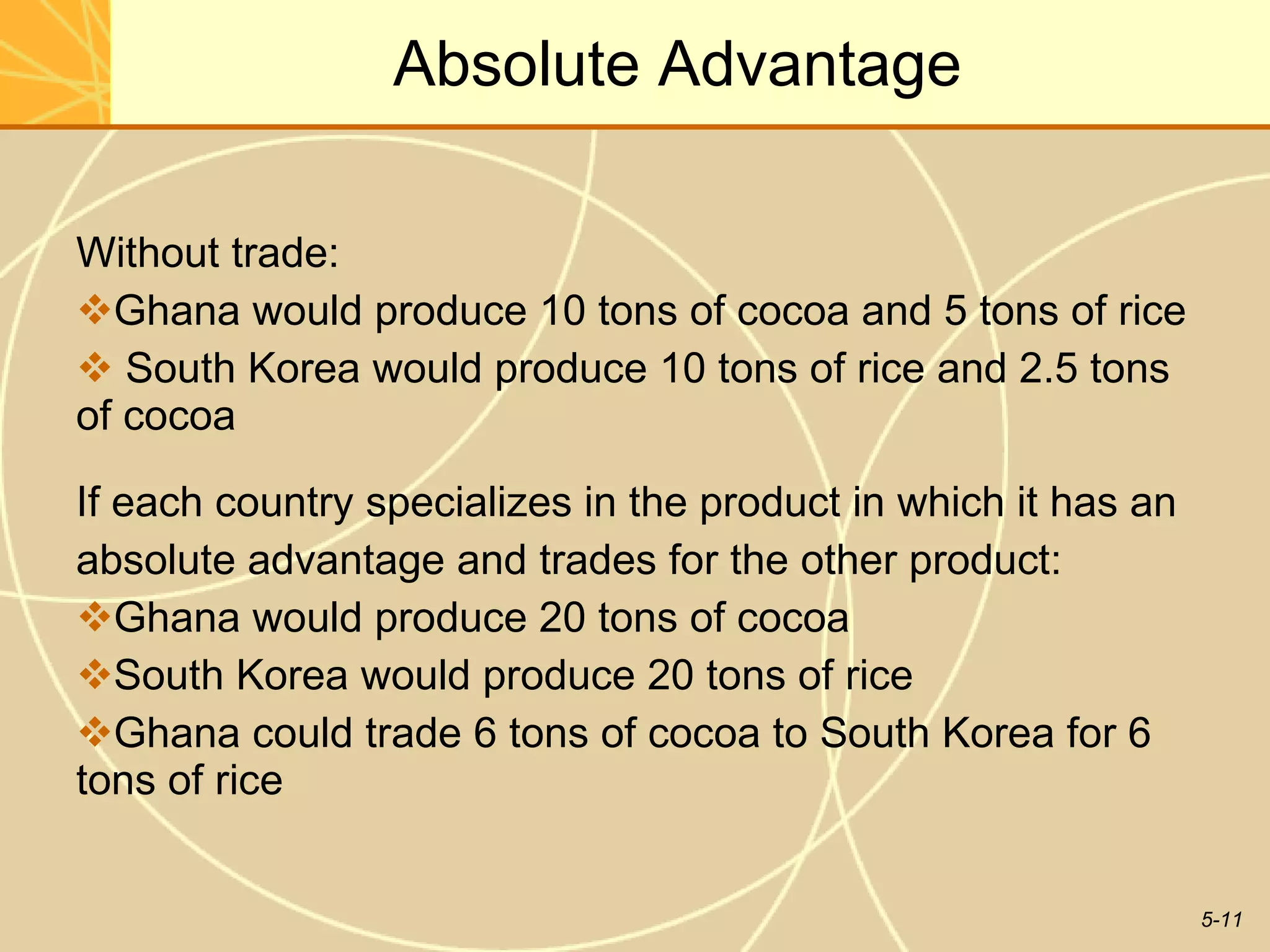
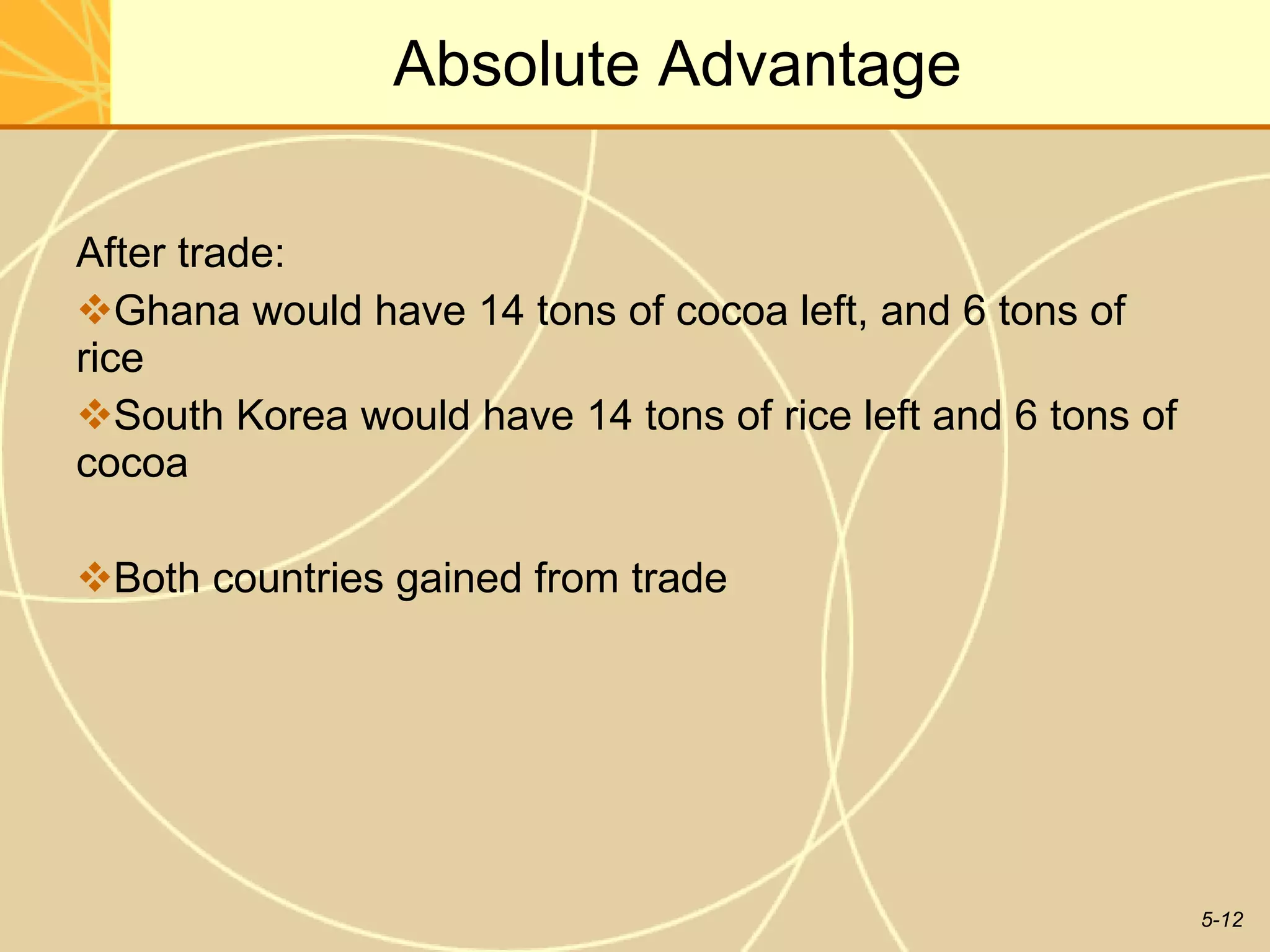
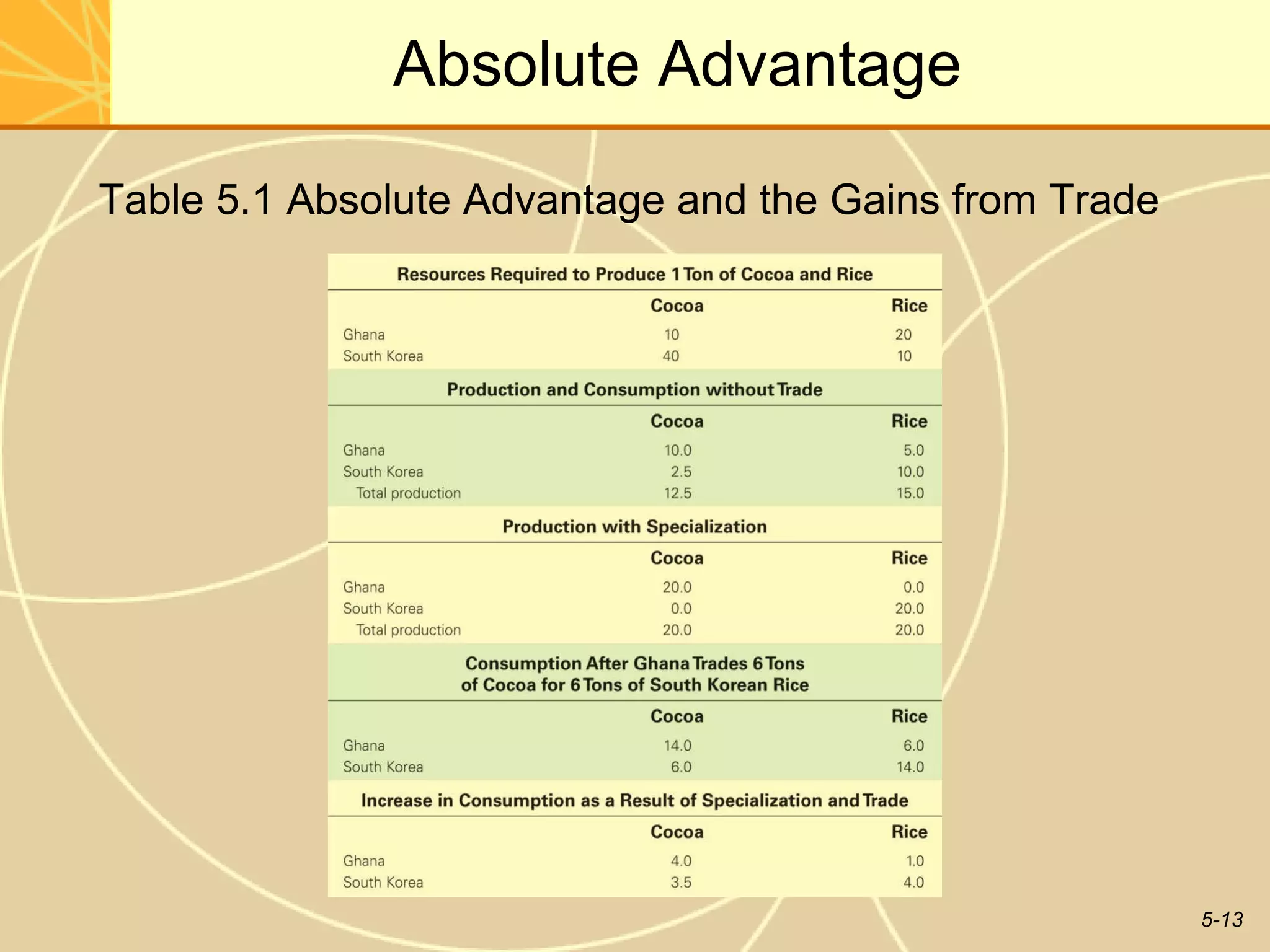
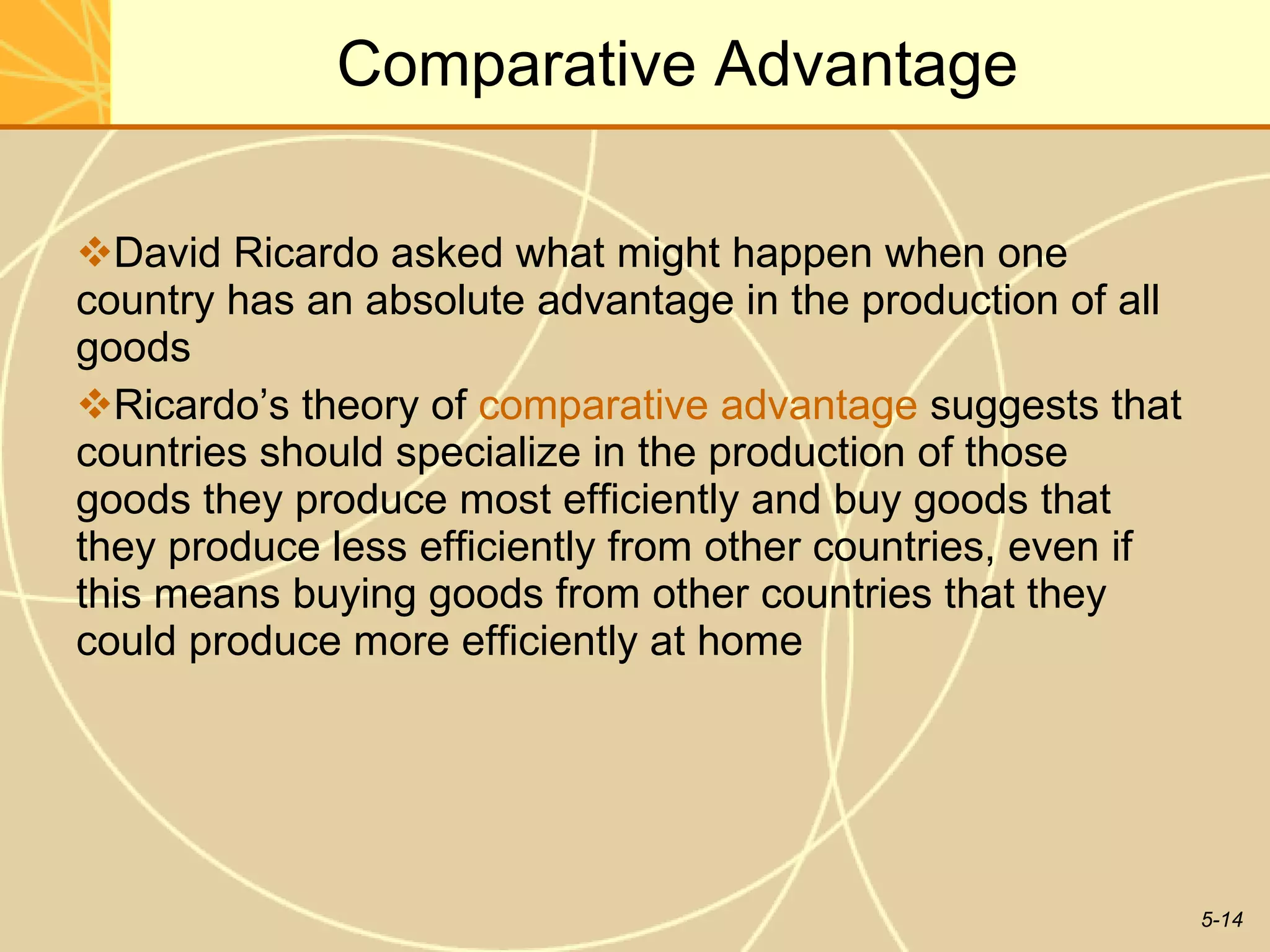
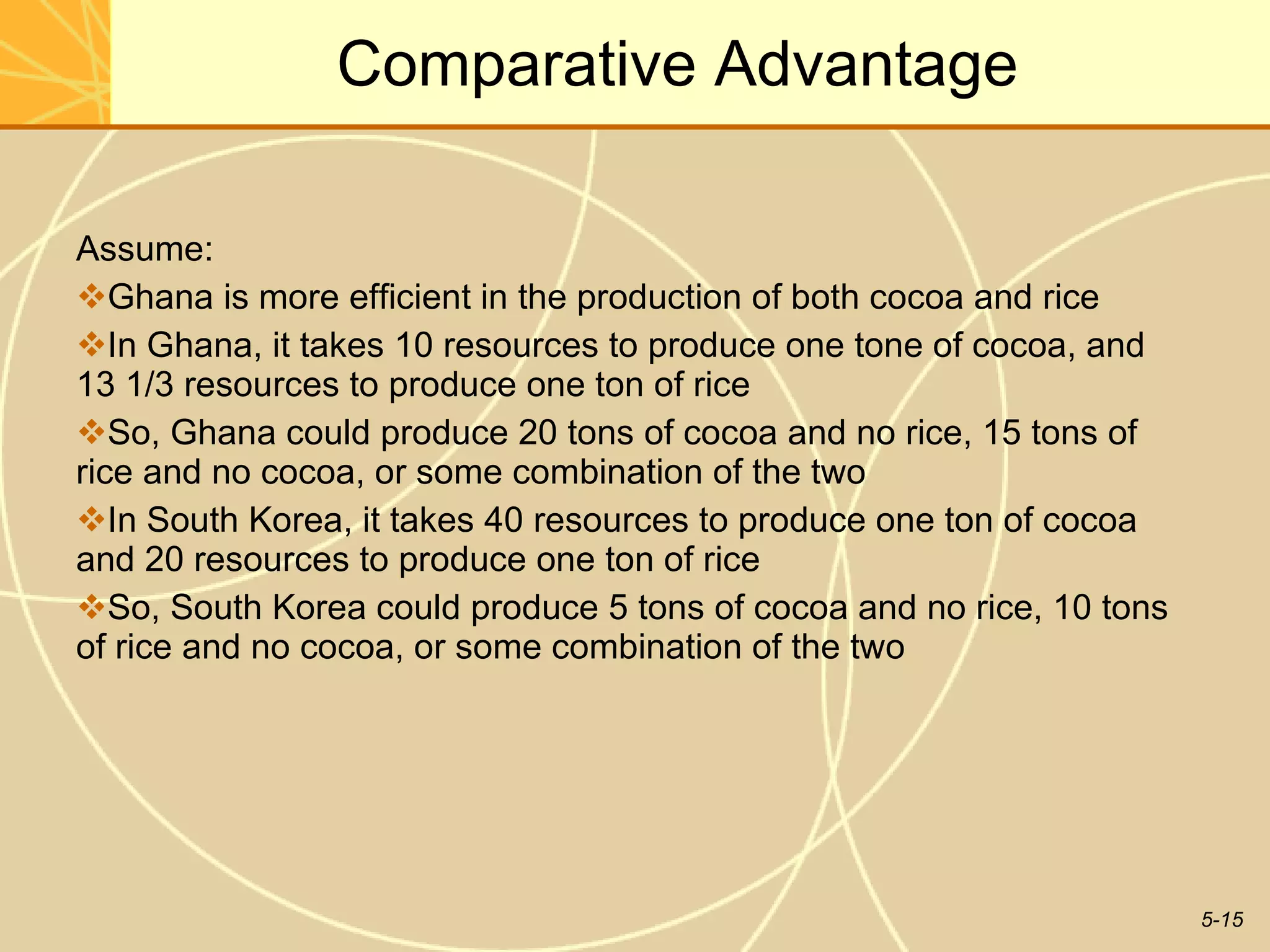
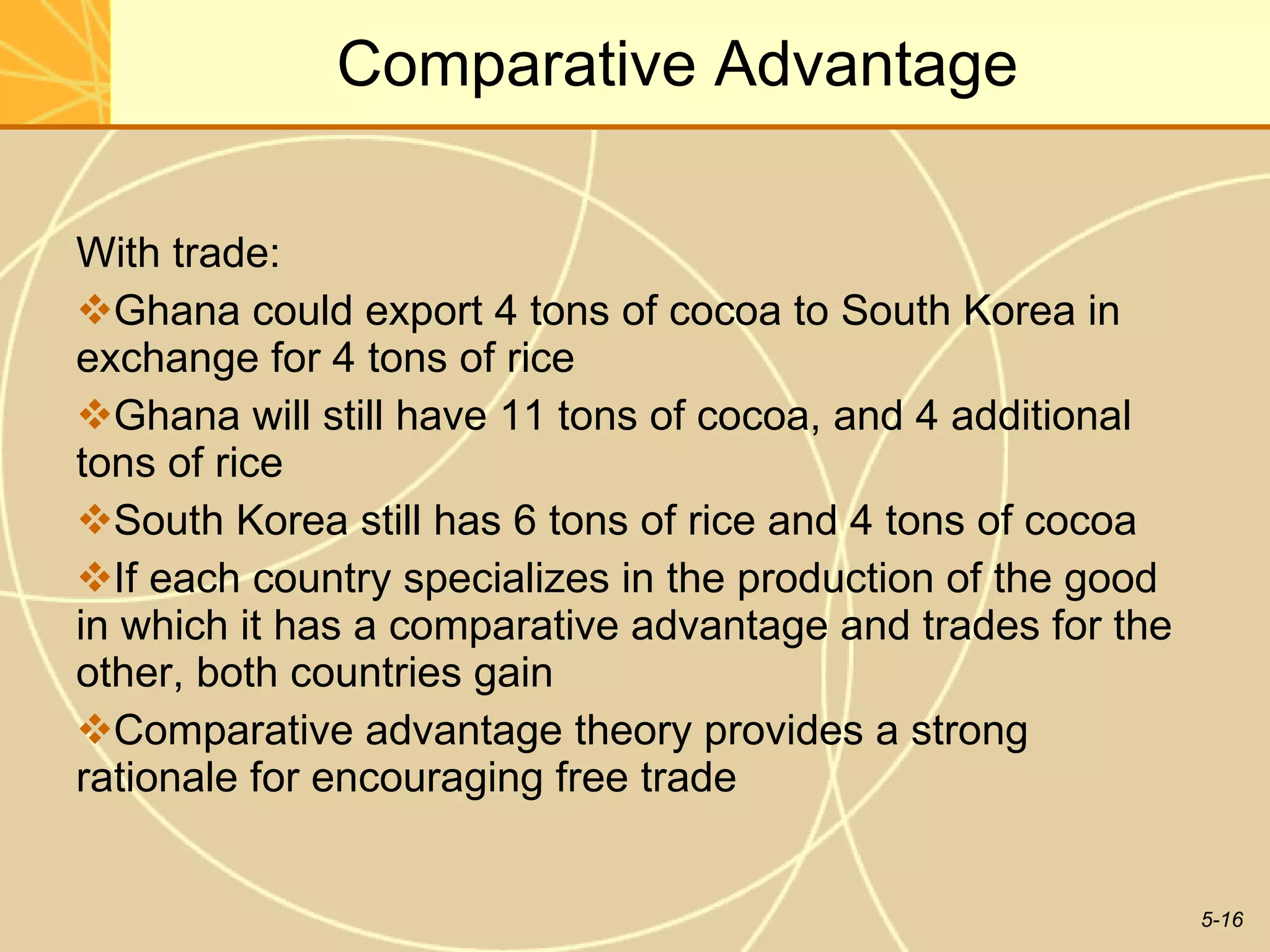
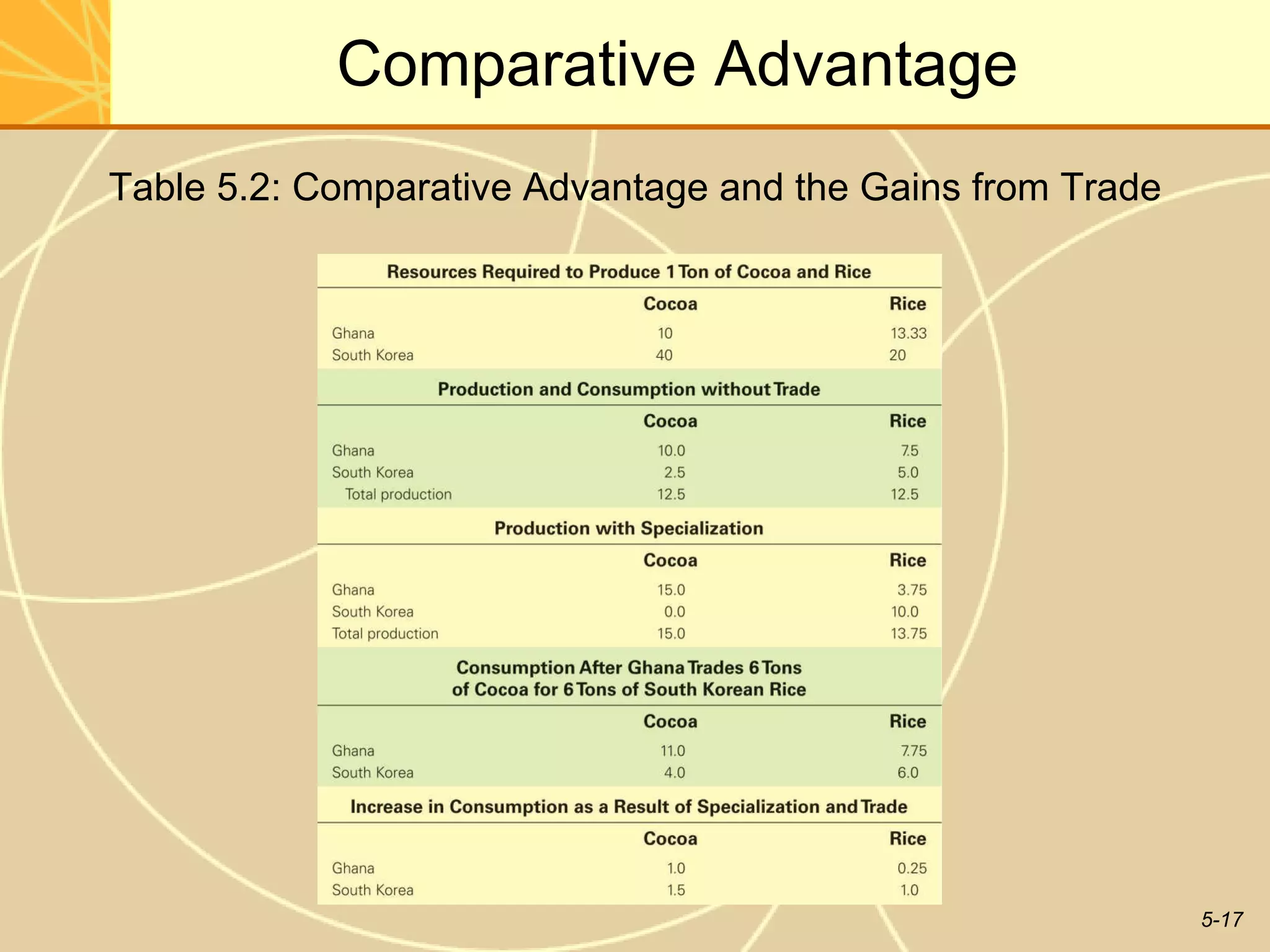
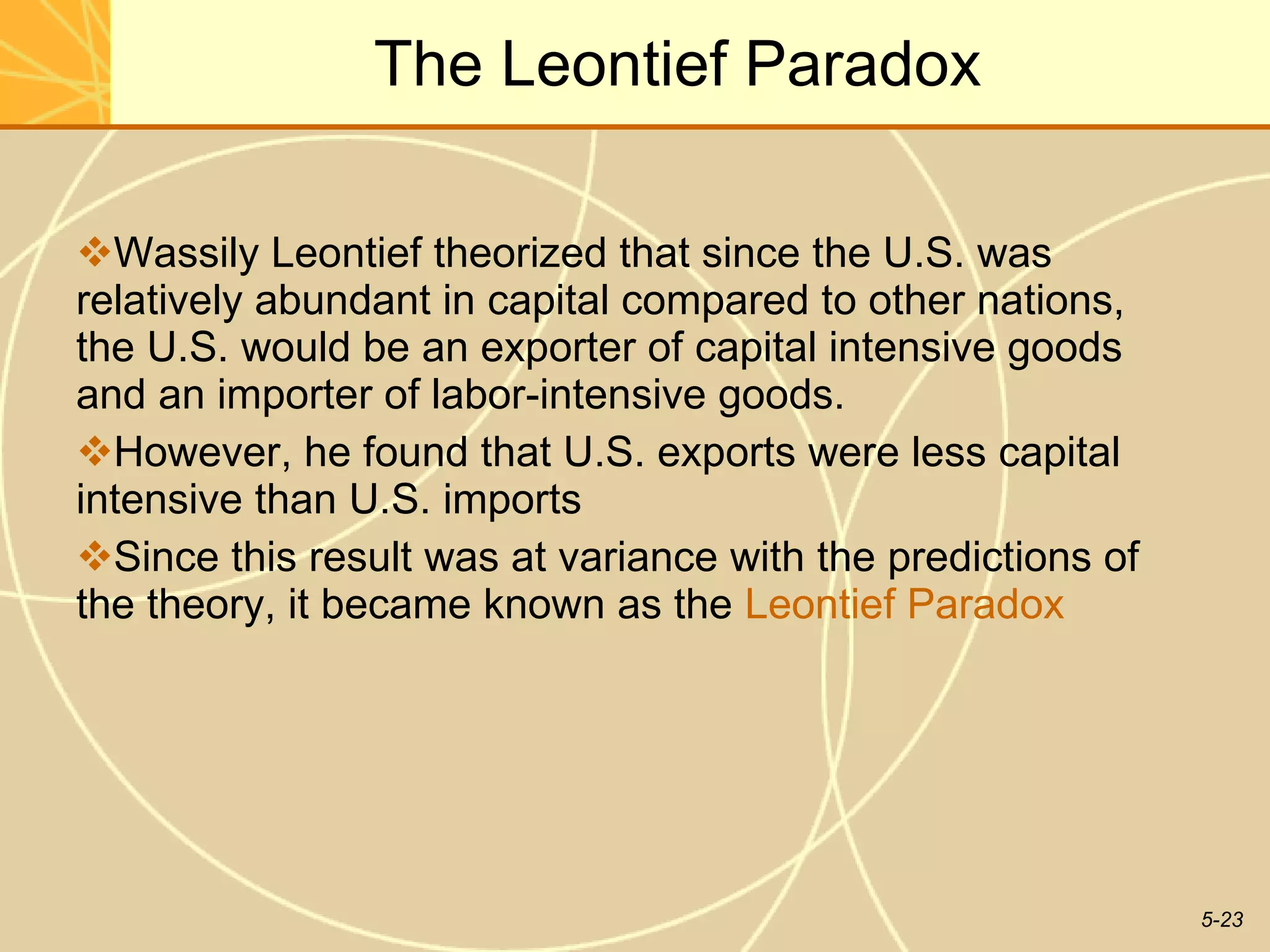
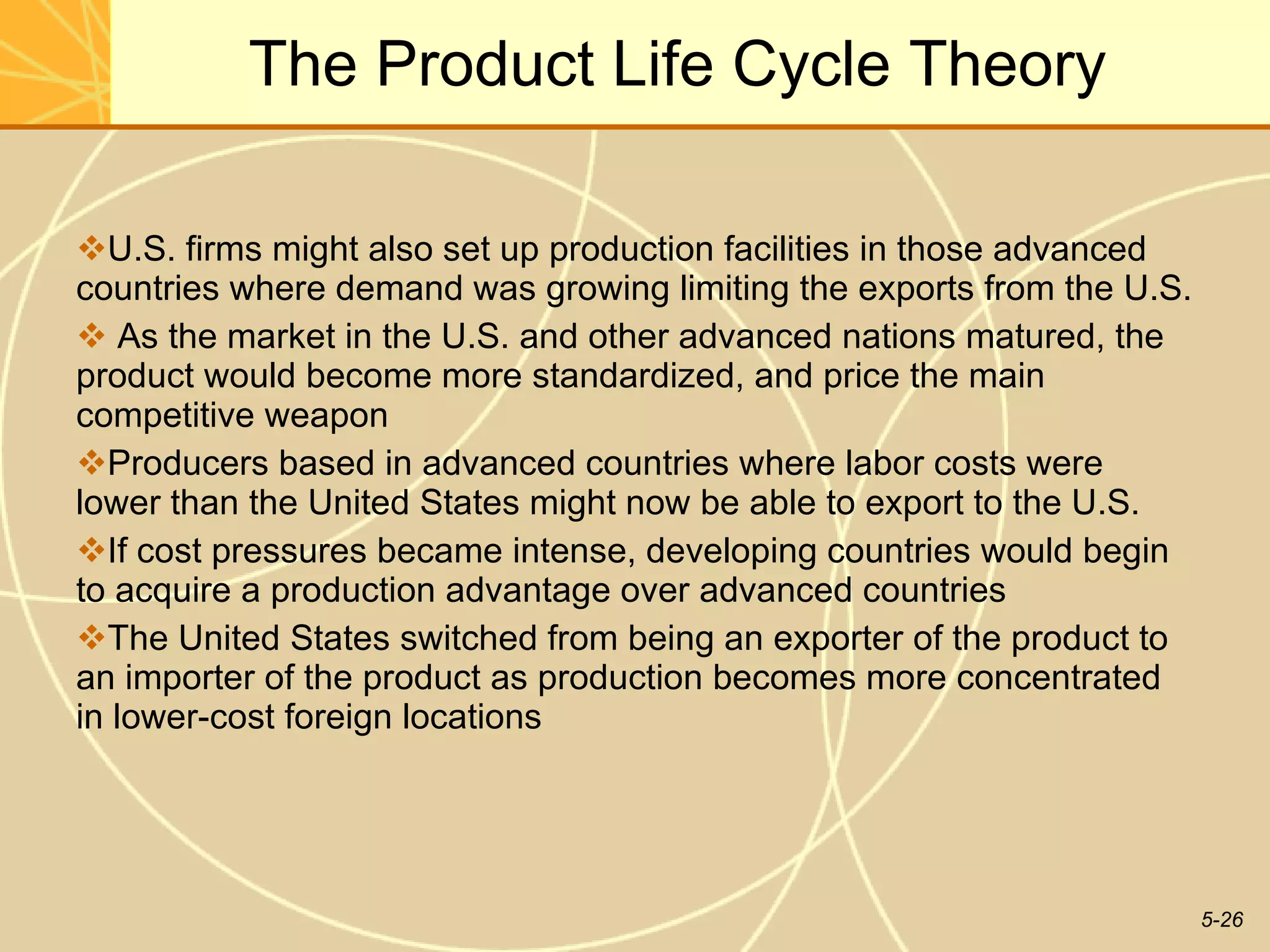
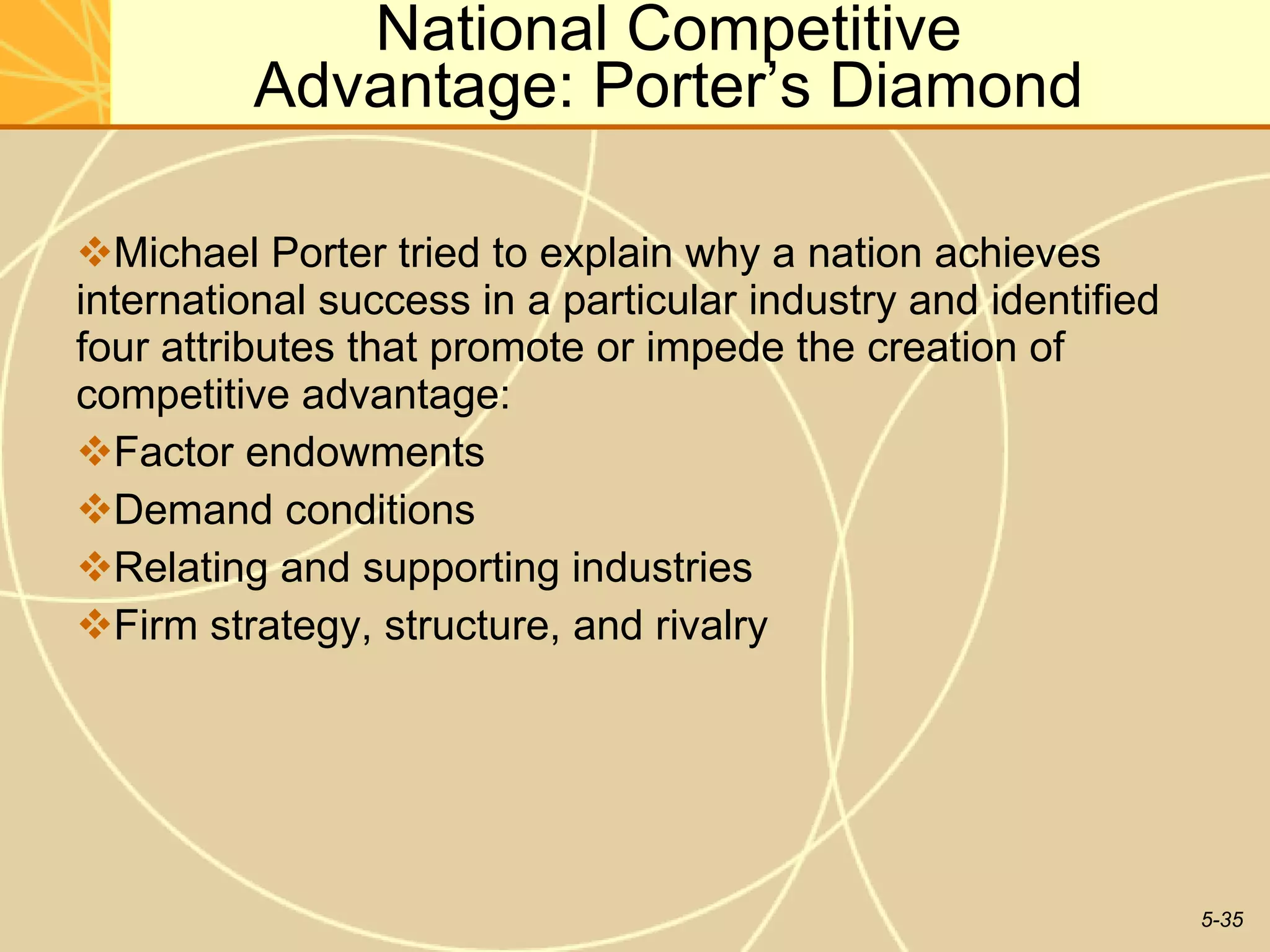
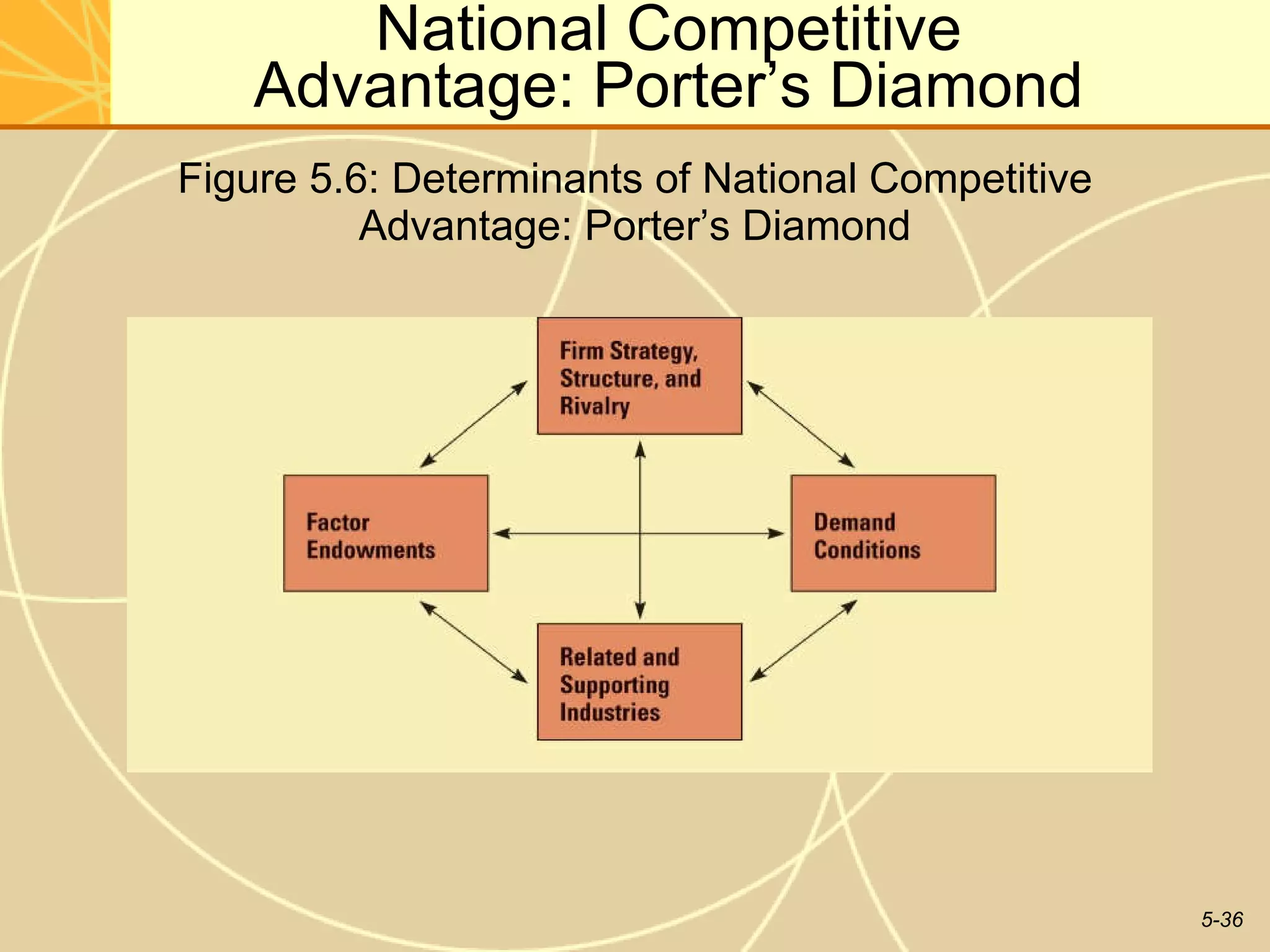
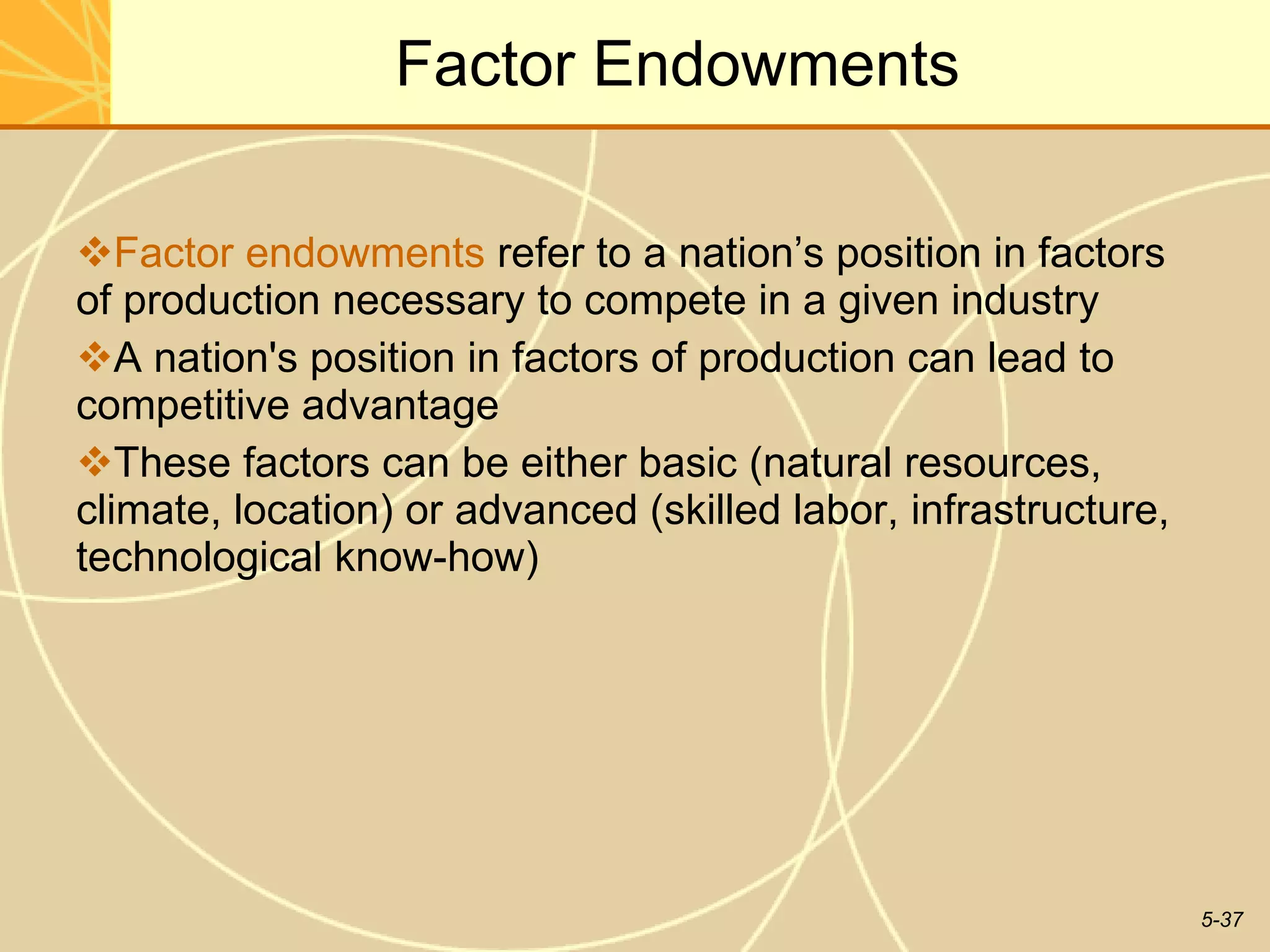
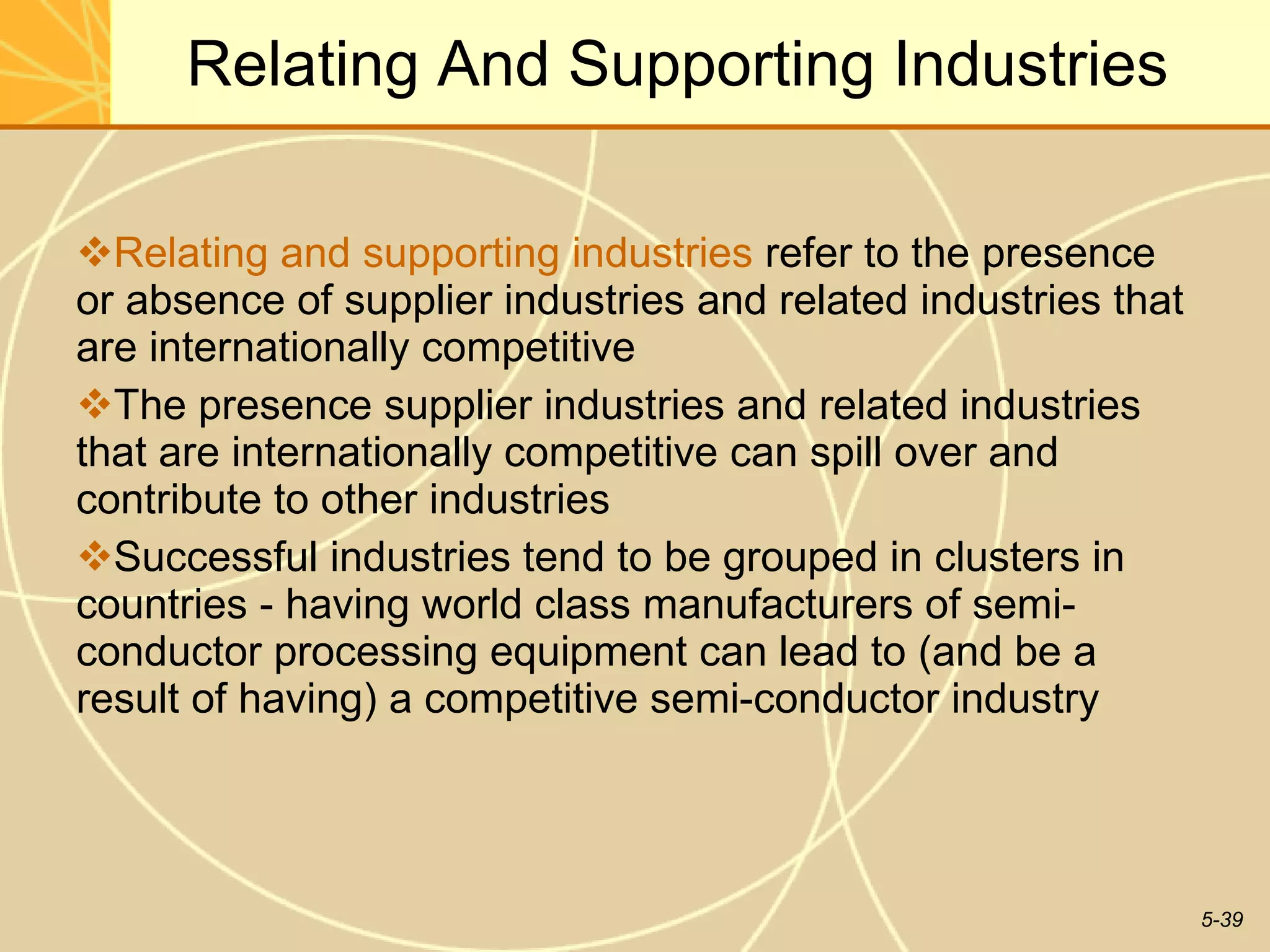
International trade theory provides several explanations for why countries engage in trade. Absolute advantage suggests countries should specialize in what they produce most efficiently. Comparative advantage argues that trade benefits both parties even if one country is more efficient in all goods. Heckscher-Ohlin asserts countries export goods intensive in their abundant factors and import goods intensive in scarce factors. New trade theory cites economies of scale and first-mover advantages as additional sources of comparative advantage. Porter's diamond identifies factor conditions, demand, related/supporting industries, and firm strategy/rivalry as determinants of national competitive advantage.