Chapter (7)
Memory Management
Dr. Hnin Lai Nyo
Lecturer
Faculty of Computer Science
Lecture Contents
 Lecture 1: Memory management requirements
 Lecture 2: Memory Partitioning Techniques Part I
 Lecture 3: Memory Partitioning Techniques Part II
 Lecture 4: Paging and Segmentation
FACULTY OF COMPUTER SCIENCE, UNIVERSITY OF COMPUTER STUDIES
Lecture 4: Paging and Segmentation
FACULTY OF COMPUTER SCIENCE, UNIVERSITY OF COMPUTER STUDIES
 Paging
 Segmentation
Learning Objectives
FACULTY OF COMPUTER SCIENCE, UNIVERSITY OF COMPUTER STUDIES
 To explain the concept of paging
 To discuss the concept of segmentation.
FACULTY OF COMPUTER SCIENCE, UNIVERSITY OF COMPUTER STUDIES
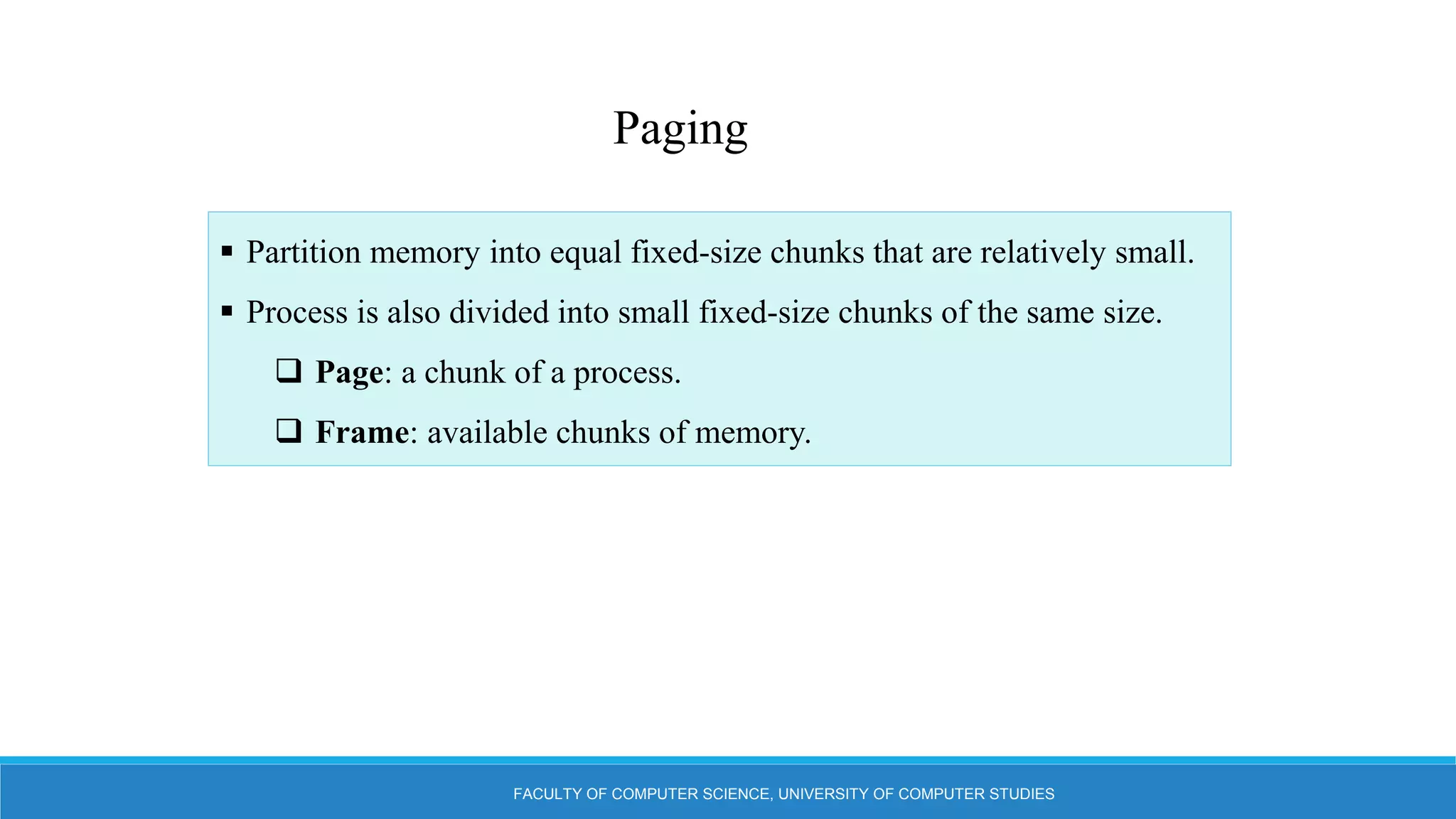
 Partition memory into equal fixed-size chunks that are relatively small.
 Process is also divided into small fixed-size chunks of the same size.
 Page: a chunk of a process.
 Frame: available chunks of memory.
Paging
FACULTY OF COMPUTER SCIENCE, UNIVERSITY OF COMPUTER STUDIES
Paging
0
1
2
3
4
5
6
7
8
9
10
11
12
13
14
Main memory
Frame
number A.0
A.1
A.2
A.3
0
1
2
3
4
5
6
7
8
9
10
11
12
13
14
Main memory
A.0
A.1
A.2
A.3
B.0
B.1
B.2
0
1
2
3
4
5
6
7
8
9
10
11
12
13
14
Main memory
A.0
A.1
A.2
A.3
B.0
B.1
B.2
C.0
C.1
C.2
C.3
0
1
2
3
4
5
6
7
8
9
10
11
12
13
14
Main memory
A.0
A.1
A.2
A.3
C.0
C.1
C.2
C.3
0
1
2
3
4
5
6
7
8
9
10
11
12
13
14
Main memory
A.0
A.1
A.2
A.3
D.0
D.1
D.2
C.0
C.1
C.2
C.3
D.3
D.4
0
1
2
3
4
5
6
7
8
9
10
11
12
13
14
Main memory
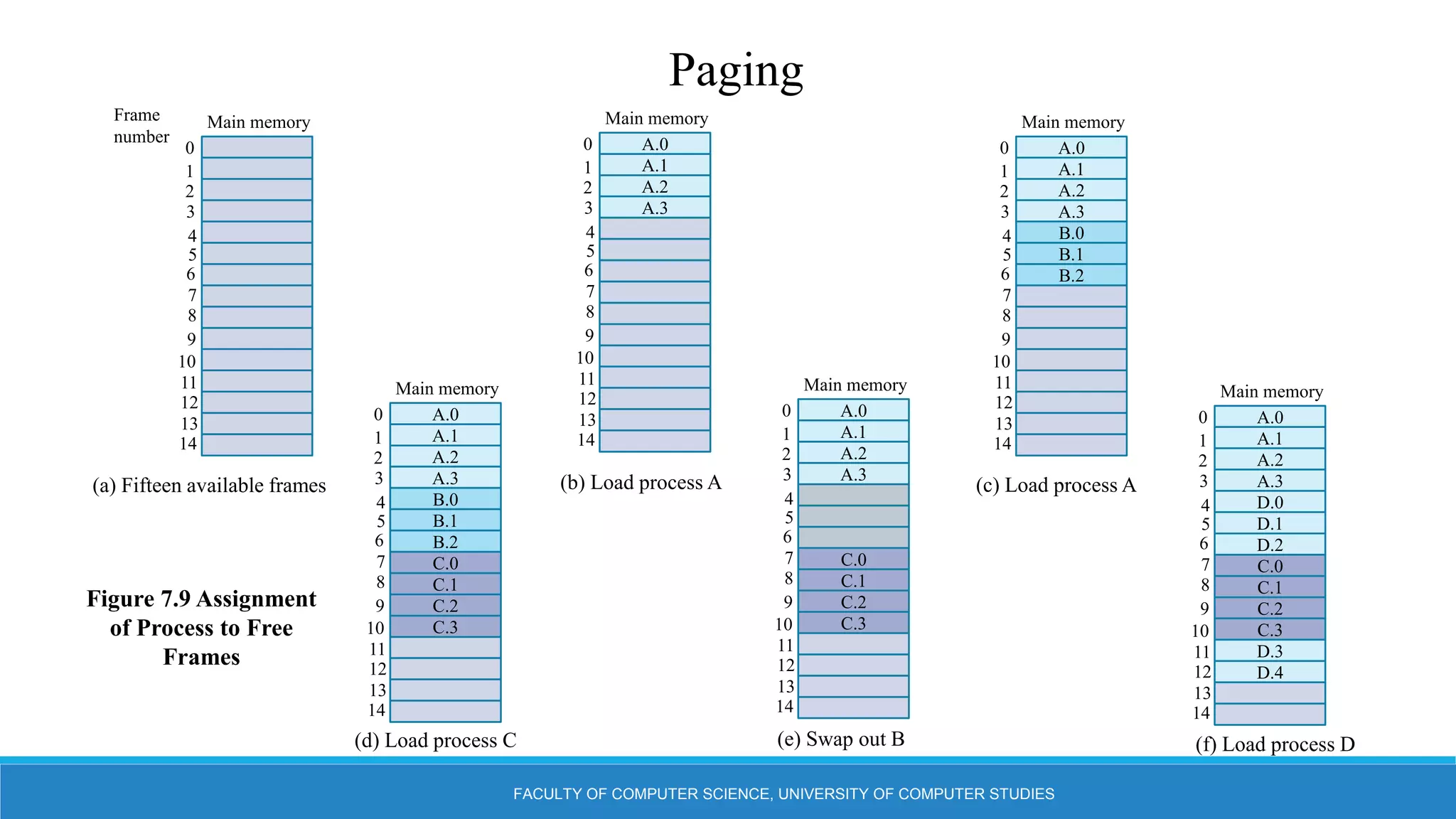
(a) Fifteen available frames (b) Load process A (c) Load process A
(d) Load process C (e) Swap out B (f) Load process D
Figure 7.9 Assignment
of Process to Free
Frames
FACULTY OF COMPUTER SCIENCE, UNIVERSITY OF COMPUTER STUDIES
Paging
Page Table
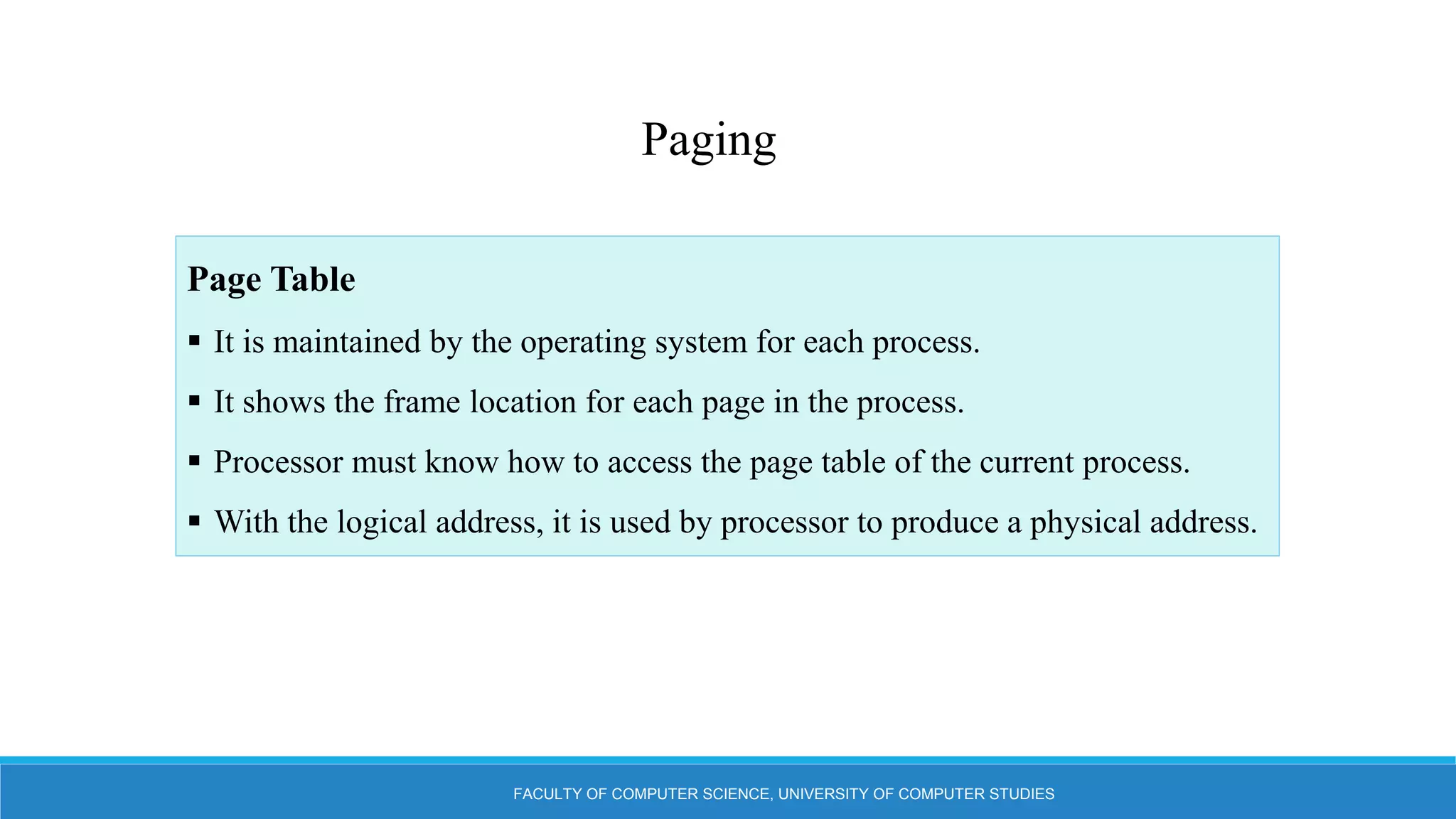
 It is maintained by the operating system for each process.
 It shows the frame location for each page in the process.
 Processor must know how to access the page table of the current process.
 With the logical address, it is used by processor to produce a physical address.
FACULTY OF COMPUTER SCIENCE, UNIVERSITY OF COMPUTER STUDIES
Paging
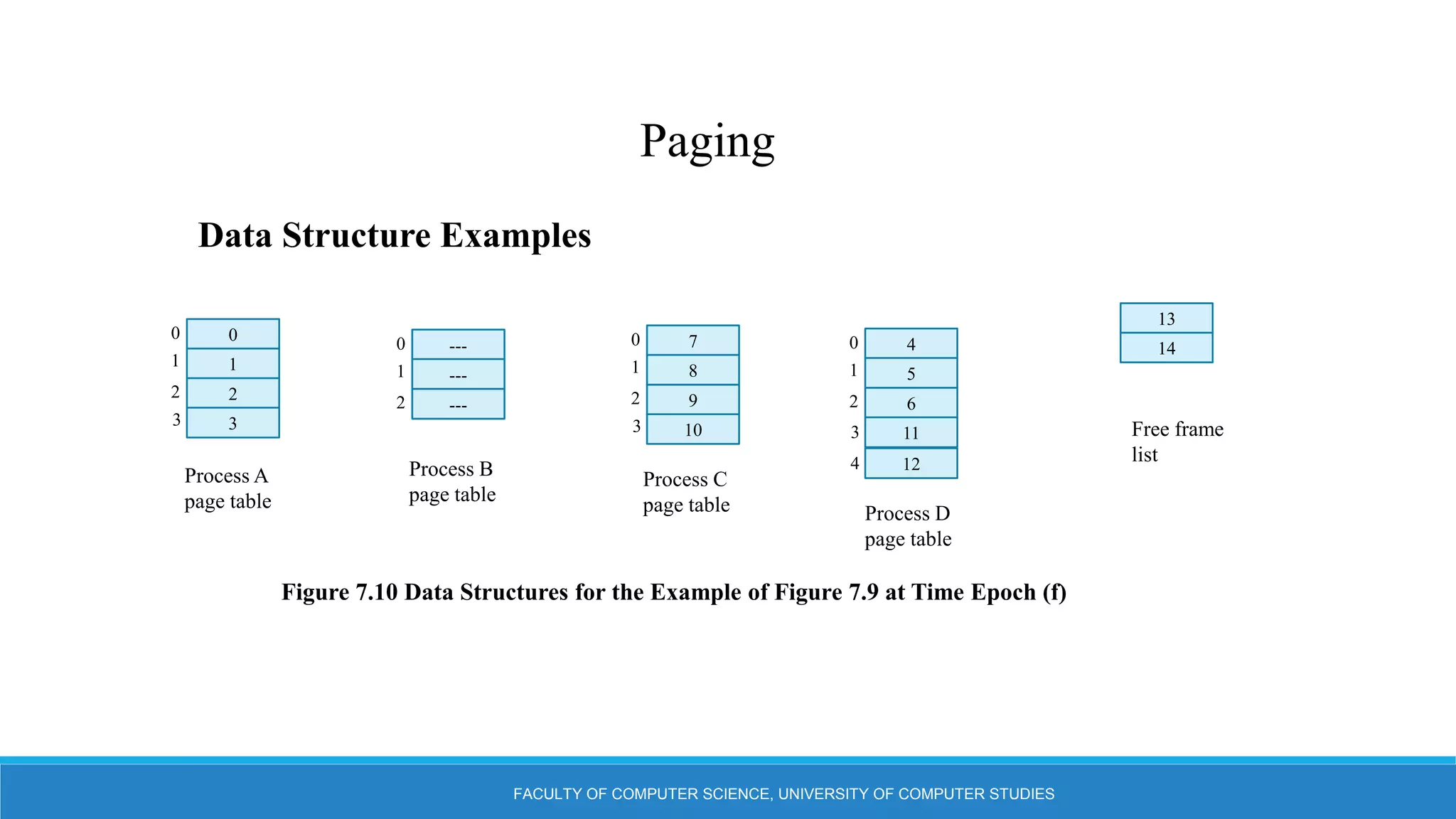
Figure 7.10 Data Structures for the Example of Figure 7.9 at Time Epoch (f)
0
1
2
3
0
1
2
3
Process A
page table
---
---
---
0
1
2
Process B
page table
7
8
9
10
0
1
2
3
Process C
page table
4
5
6
11
0
1
2
3
12
4
Process D
page table
13
14
Free frame
list
Data Structure Examples
FACULTY OF COMPUTER SCIENCE, UNIVERSITY OF COMPUTER STUDIES
Paging
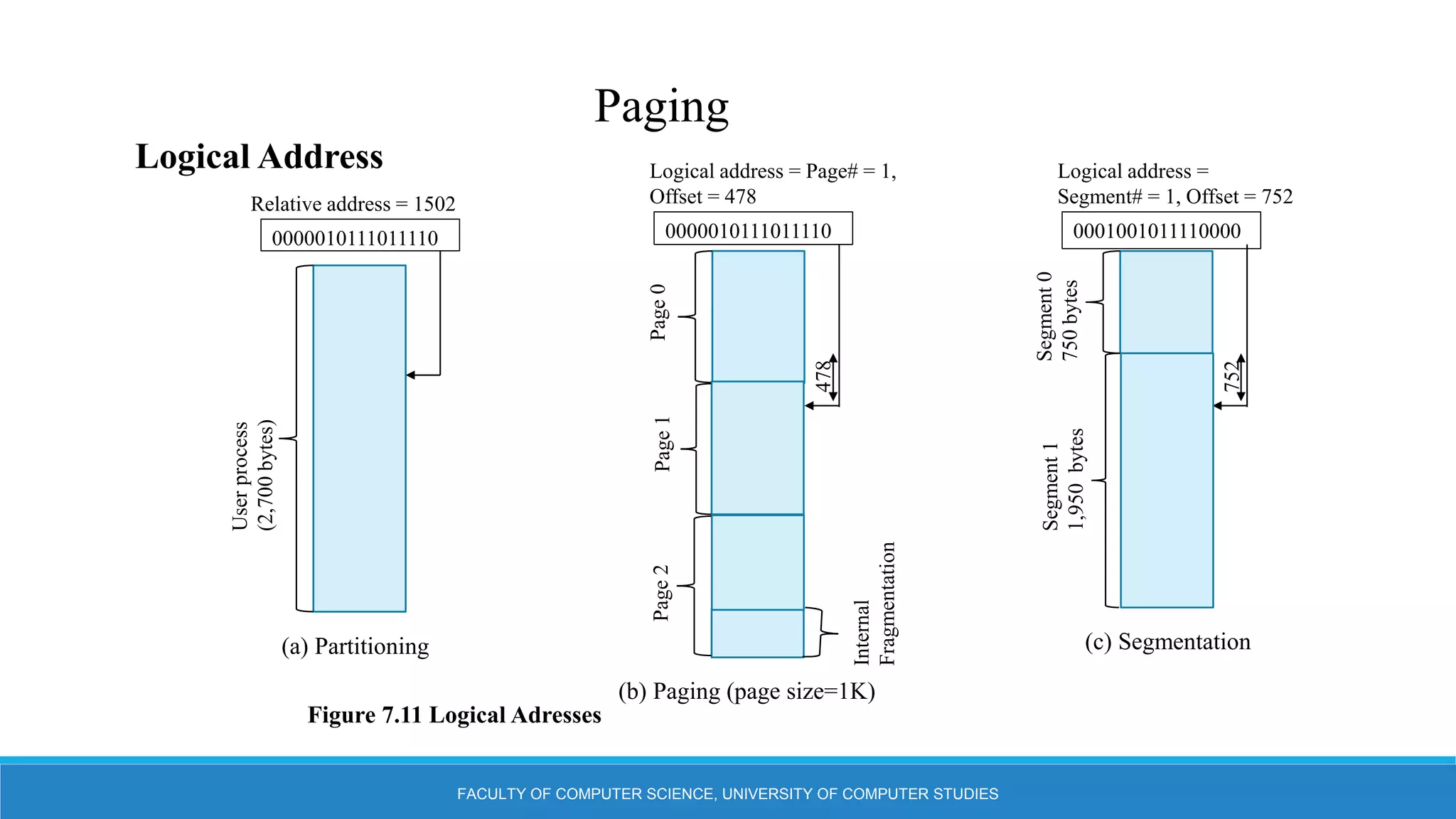
Logical Address
User
process
(2,700
bytes)
Relative address = 1502
0000010111011110
Internal
Fragmentation
478
Page
1
Page
2
Page
0
Logical address = Page# = 1,
Offset = 478
0000010111011110
752
Segment
1
1,950
bytes
Segment
0
750
bytes
Logical address =
Segment# = 1, Offset = 752
0001001011110000
(a) Partitioning
(b) Paging (page size=1K)
(c) Segmentation
Figure 7.11 Logical Adresses
FACULTY OF COMPUTER SCIENCE, UNIVERSITY OF COMPUTER STUDIES
Paging
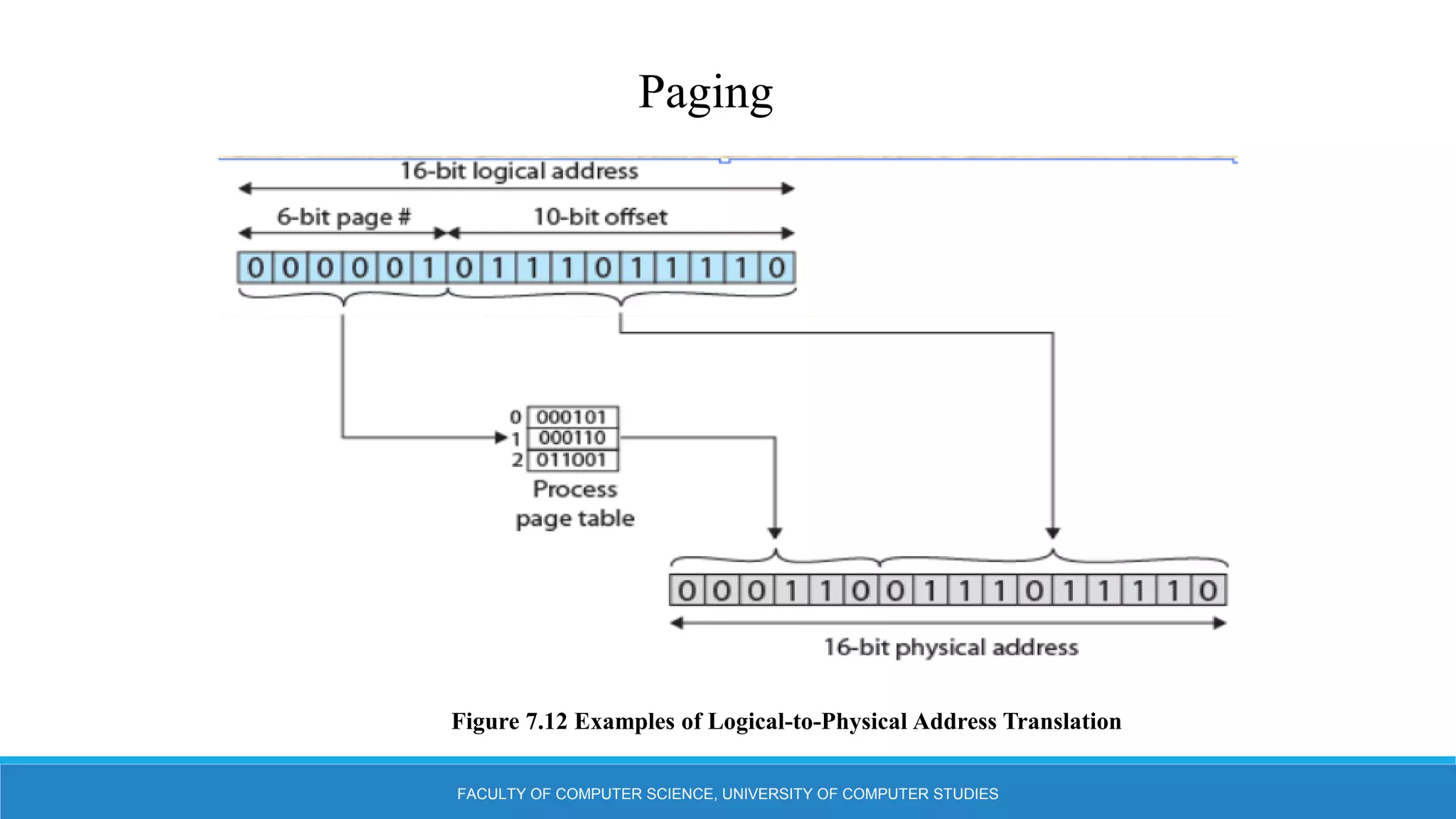
Figure 7.12 Examples of Logical-to-Physical Address Translation
FACULTY OF COMPUTER SCIENCE, UNIVERSITY OF COMPUTER STUDIES
Segmentation
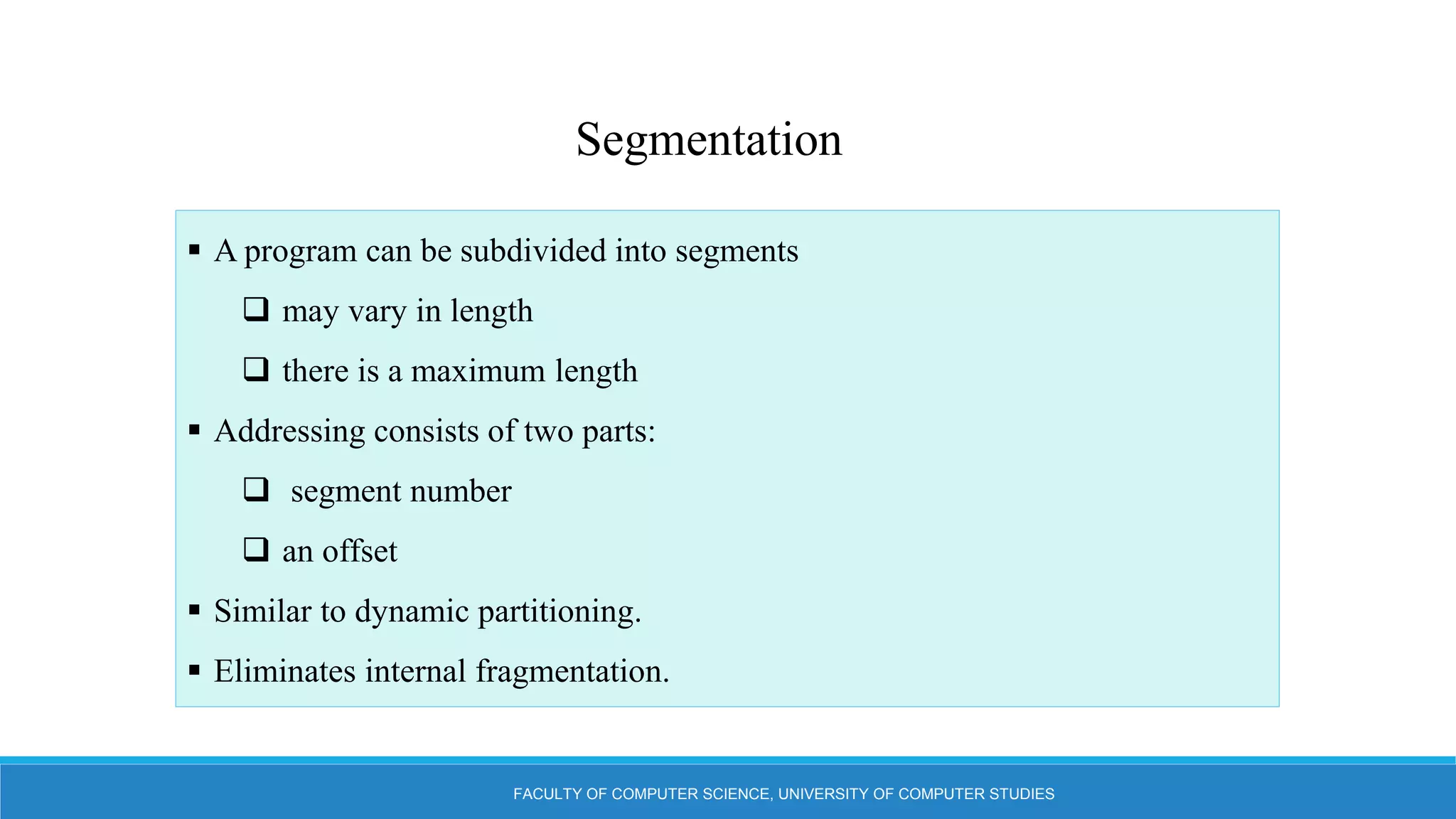
 A program can be subdivided into segments
 may vary in length
 there is a maximum length
 Addressing consists of two parts:
 segment number
 an offset
 Similar to dynamic partitioning.
 Eliminates internal fragmentation.
FACULTY OF COMPUTER SCIENCE, UNIVERSITY OF COMPUTER STUDIES
Segmentation
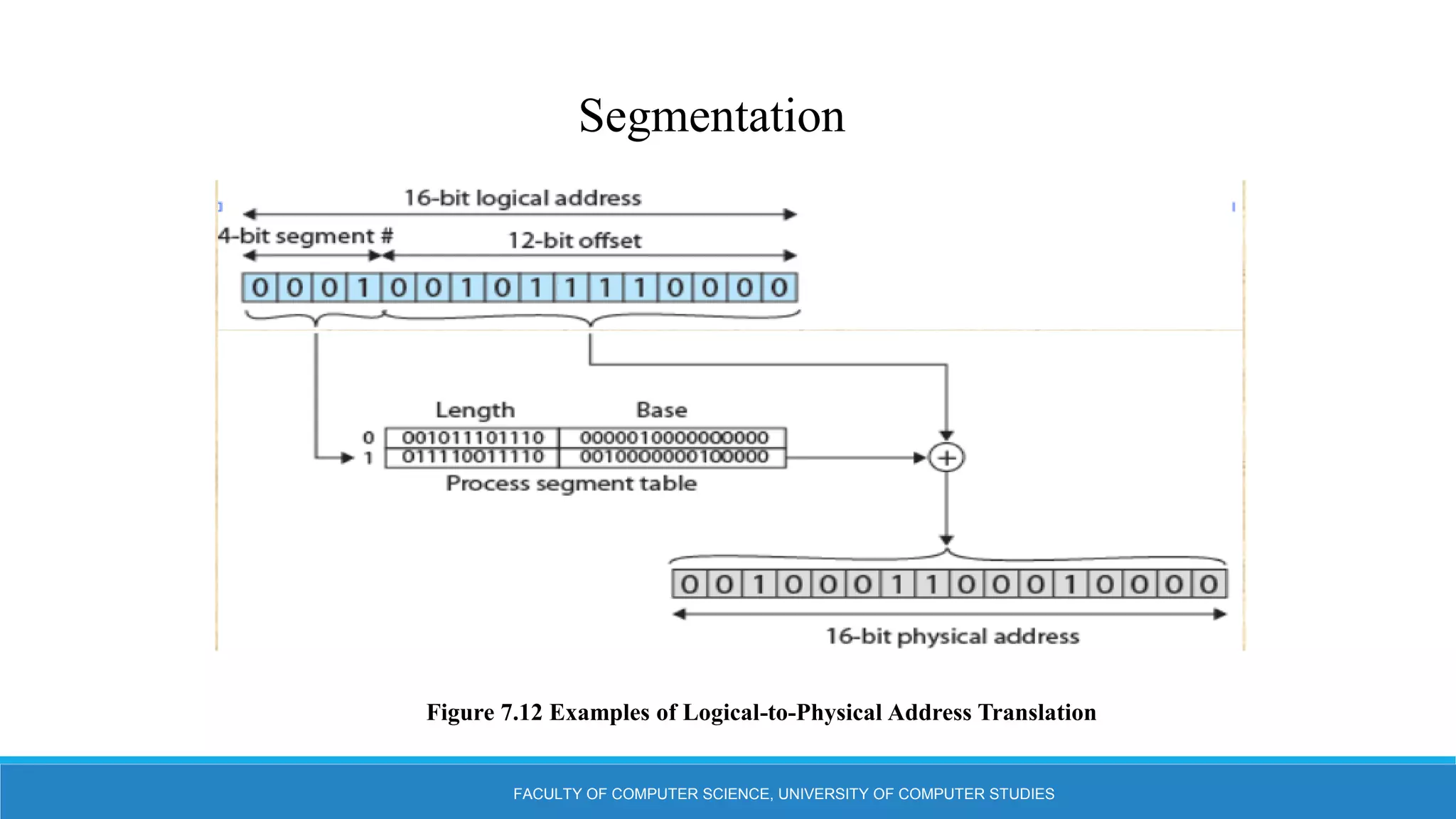
Figure 7.12 Examples of Logical-to-Physical Address Translation
FACULTY OF COMPUTER SCIENCE, UNIVERSITY OF COMPUTER STUDIES
Segmentation
Simple segmentation and Paging comparison
 Segmentation requires more complicated hardware for address translation.
 Segmentation suffers from external fragmentation.
 Paging only yields a small internal fragmentation.
 Segmentation is visible to the programmer whereas paging is transparent.
FACULTY OF COMPUTER SCIENCE, UNIVERSITY OF COMPUTER STUDIES
Summary
In this lecture, you learned about
 The basic tools of memory management that are paging and segmentation.
 Possible combination of segmentation and paging in a single memory management
scheme.
Learning Outcomes
FACULTY OF COMPUTER SCIENCE, UNIVERSITY OF COMPUTER STUDIES
After the end of the lecture, the students will be able to:
 Understand the concepts of paging with address translation.
 Know the difference between paging and segmentation techniques and how to
translate the logical address into the physical address.
References
FACULTY OF COMPUTER SCIENCE, UNIVERSITY OF COMPUTER STUDIES
1. “Operating Systems, internal and Design Principles” by William Stallings, 7th
Edition, ISBN 13: 978-13-230998-1.

Ch7_OS_Lecture 4.pdf

  • 1.
    Chapter (7) Memory Management Dr.Hnin Lai Nyo Lecturer Faculty of Computer Science
  • 2.
    Lecture Contents  Lecture1: Memory management requirements  Lecture 2: Memory Partitioning Techniques Part I  Lecture 3: Memory Partitioning Techniques Part II  Lecture 4: Paging and Segmentation FACULTY OF COMPUTER SCIENCE, UNIVERSITY OF COMPUTER STUDIES
  • 3.
    Lecture 4: Pagingand Segmentation FACULTY OF COMPUTER SCIENCE, UNIVERSITY OF COMPUTER STUDIES  Paging  Segmentation
  • 4.
    Learning Objectives FACULTY OFCOMPUTER SCIENCE, UNIVERSITY OF COMPUTER STUDIES  To explain the concept of paging  To discuss the concept of segmentation.
  • 5.
    FACULTY OF COMPUTERSCIENCE, UNIVERSITY OF COMPUTER STUDIES  Partition memory into equal fixed-size chunks that are relatively small.  Process is also divided into small fixed-size chunks of the same size.  Page: a chunk of a process.  Frame: available chunks of memory. Paging
  • 6.
    FACULTY OF COMPUTERSCIENCE, UNIVERSITY OF COMPUTER STUDIES Paging 0 1 2 3 4 5 6 7 8 9 10 11 12 13 14 Main memory Frame number A.0 A.1 A.2 A.3 0 1 2 3 4 5 6 7 8 9 10 11 12 13 14 Main memory A.0 A.1 A.2 A.3 B.0 B.1 B.2 0 1 2 3 4 5 6 7 8 9 10 11 12 13 14 Main memory A.0 A.1 A.2 A.3 B.0 B.1 B.2 C.0 C.1 C.2 C.3 0 1 2 3 4 5 6 7 8 9 10 11 12 13 14 Main memory A.0 A.1 A.2 A.3 C.0 C.1 C.2 C.3 0 1 2 3 4 5 6 7 8 9 10 11 12 13 14 Main memory A.0 A.1 A.2 A.3 D.0 D.1 D.2 C.0 C.1 C.2 C.3 D.3 D.4 0 1 2 3 4 5 6 7 8 9 10 11 12 13 14 Main memory (a) Fifteen available frames (b) Load process A (c) Load process A (d) Load process C (e) Swap out B (f) Load process D Figure 7.9 Assignment of Process to Free Frames
  • 7.
    FACULTY OF COMPUTERSCIENCE, UNIVERSITY OF COMPUTER STUDIES Paging Page Table  It is maintained by the operating system for each process.  It shows the frame location for each page in the process.  Processor must know how to access the page table of the current process.  With the logical address, it is used by processor to produce a physical address.
  • 8.
    FACULTY OF COMPUTERSCIENCE, UNIVERSITY OF COMPUTER STUDIES Paging Figure 7.10 Data Structures for the Example of Figure 7.9 at Time Epoch (f) 0 1 2 3 0 1 2 3 Process A page table --- --- --- 0 1 2 Process B page table 7 8 9 10 0 1 2 3 Process C page table 4 5 6 11 0 1 2 3 12 4 Process D page table 13 14 Free frame list Data Structure Examples
  • 9.
    FACULTY OF COMPUTERSCIENCE, UNIVERSITY OF COMPUTER STUDIES Paging Logical Address User process (2,700 bytes) Relative address = 1502 0000010111011110 Internal Fragmentation 478 Page 1 Page 2 Page 0 Logical address = Page# = 1, Offset = 478 0000010111011110 752 Segment 1 1,950 bytes Segment 0 750 bytes Logical address = Segment# = 1, Offset = 752 0001001011110000 (a) Partitioning (b) Paging (page size=1K) (c) Segmentation Figure 7.11 Logical Adresses
  • 10.
    FACULTY OF COMPUTERSCIENCE, UNIVERSITY OF COMPUTER STUDIES Paging Figure 7.12 Examples of Logical-to-Physical Address Translation
  • 11.
    FACULTY OF COMPUTERSCIENCE, UNIVERSITY OF COMPUTER STUDIES Segmentation  A program can be subdivided into segments  may vary in length  there is a maximum length  Addressing consists of two parts:  segment number  an offset  Similar to dynamic partitioning.  Eliminates internal fragmentation.
  • 12.
    FACULTY OF COMPUTERSCIENCE, UNIVERSITY OF COMPUTER STUDIES Segmentation Figure 7.12 Examples of Logical-to-Physical Address Translation
  • 13.
    FACULTY OF COMPUTERSCIENCE, UNIVERSITY OF COMPUTER STUDIES Segmentation Simple segmentation and Paging comparison  Segmentation requires more complicated hardware for address translation.  Segmentation suffers from external fragmentation.  Paging only yields a small internal fragmentation.  Segmentation is visible to the programmer whereas paging is transparent.
  • 14.
    FACULTY OF COMPUTERSCIENCE, UNIVERSITY OF COMPUTER STUDIES Summary In this lecture, you learned about  The basic tools of memory management that are paging and segmentation.  Possible combination of segmentation and paging in a single memory management scheme.
  • 15.
    Learning Outcomes FACULTY OFCOMPUTER SCIENCE, UNIVERSITY OF COMPUTER STUDIES After the end of the lecture, the students will be able to:  Understand the concepts of paging with address translation.  Know the difference between paging and segmentation techniques and how to translate the logical address into the physical address.
  • 16.
    References FACULTY OF COMPUTERSCIENCE, UNIVERSITY OF COMPUTER STUDIES 1. “Operating Systems, internal and Design Principles” by William Stallings, 7th Edition, ISBN 13: 978-13-230998-1.