Software Testing and QA Theory and Practice (Chapter 5: Data Flow Testing) © Naik & Tripathy 1
Software Testing and Quality Assurance
Theory and Practice
Chapter 5
Data Flow Testing
Software Testing and QA Theory and Practice (Chapter 5: Data Flow Testing) © Naik & Tripathy 2
Outline of the Chapter
• The General Idea
• Data Flow Anomaly
• Overview of Dynamic Data Flow Testing
• Data Flow Graph
• Data Flow Terms
• Data Flow Testing Criteria
• Comparison of Data Flow Testing Criteria
• Feasible Paths and Test Selection Criteria
• Comparison of Testing Techniques
• Summary
Software Testing and QA Theory and Practice (Chapter 5: Data Flow Testing) © Naik & Tripathy 3
The General Idea
• A program unit accepts inputs, performs computations, assigns new
values to variables, and returns results.
• One can visualize of “flow” of data values from one statement to
another.
• A data value produced in one statement is expected to be used later.
– Example
• Obtain a file pointer ……. use it later.
– If the later use is never verified, we do not know if the earlier assignment is
acceptable.
• Two motivations of data flow testing
• The memory location for a variable is accessed in a “desirable” way.
• Verify the correctness of data values “defined” (i.e. generated) – observe
that all the “uses” of the value produce the desired results.
• Idea: A programmer can perform a number of tests on data values.
– These tests are collectively known as data flow testing.
Software Testing and QA Theory and Practice (Chapter 5: Data Flow Testing) © Naik & Tripathy 4
The General Idea
• Data flow testing can be performed at two conceptual levels.
– Static data flow testing
– Dynamic data flow testing
• Static data flow testing
– Identify potential defects, commonly known as data flow anomaly.
– Analyze source code.
– Do not execute code.
• Dynamic data flow testing
– Involves actual program execution.
– Bears similarity with control flow testing.
• Identify paths to execute them.
• Paths are identified based on data flow testing criteria.
Software Testing and QA Theory and Practice (Chapter 5: Data Flow Testing) © Naik & Tripathy 5
Data Flow Anomaly
• Anomaly: It is an abnormal way of doing something.
– Example 1: The second definition of x overrides the first.
x = f1(y);
x = f2(z);
• Three types of abnormal situations with using variable.
– Type 1: Defined and then defined again
– Type 2: Undefined but referenced
– Type 3: Defined but not referenced
Software Testing and QA Theory and Practice (Chapter 5: Data Flow Testing) © Naik & Tripathy 6
Data Flow Anomaly
• Type 1: Defined and then defined again (Example 1 above)
– Four interpretations of Example 1
• The first statement is redundant.
• The first statement has a fault -- the intended one might be: w = f1(y).
• The second statement has a fault – the intended one might be: v = f2(z).
• There is a missing statement in between the two: v = f3(x).
– Note: It is for the programmer to make the desired interpretation.
• Type 2: Undefined but referenced
– Example: x = x – y – w; /* w has not been defined by the programmer. */
– Two interpretations
• The programmer made a mistake in using w.
• The programmer wants to use the compiler assigned value of w.
• Type 3: Defined but not referenced
– Example: Consider x = f(x, y). If x is not used subsequently, we have a Type 3
anomaly.
Software Testing and QA Theory and Practice (Chapter 5: Data Flow Testing) © Naik & Tripathy 7
Data Flow Anomaly
• The concept of a state-transition diagram is used to model a
program variable to identify data flow anomaly.
• Components of the state-transition diagrams
– The states
• U: Undefined
• D: Defined but not referenced
• R: Defined and referenced
• A: Abnormal
– The actions
• d: define the variable
• r: reference (or, read) the variable
• u: undefine the variable
Software Testing and QA Theory and Practice (Chapter 5: Data Flow Testing) © Naik & Tripathy 8
Data Flow Anomaly
Figure 5.2: State transition diagram of a program variable [10] (©[1979] IEEE).
Software Testing and QA Theory and Practice (Chapter 5: Data Flow Testing) © Naik & Tripathy 9
Data Flow Anomaly
• Obvious question: What is the relationship between the Type 1,
Type 2, and Type 3 anomalies and Figure 5.2?
• The three types of anomalies (Type 1, Type 2, and Type 3) are found
in the diagram in the form of action sequences:
– Type 1: dd
– Type 2: ur
– Type 3: du
• Detection of data flow anomaly via program instrumentation
– Program instrumentation: Insert new code to monitor the states of variables.
– If the state sequence contains dd, ur, or du sequence, a data flow anomaly is
said to occur.
• Bottom line: What to do after detecting a data flow anomaly?
– Investigate the cause of the anomaly.
– To fix an anomaly, write new code or modify the existing code.
Software Testing and QA Theory and Practice (Chapter 5: Data Flow Testing) © Naik & Tripathy 10
Overview of Dynamic Data Flow Testing
• A programmer manipulates/uses variables in several ways.
– Initialization, assignment, using in a computation, using in a condition
• Motivation for data flow testing?
– One should not feel confident that a variable has been assigned the correct
value, if no test causes the execution of a path from the point of assignment to
a point where the value is used.
– Note
• Assignment of correct value means whether or not a value has been
correctly generated.
• Use of a variable means
– If new values of the same variable or other variables are generated.
– If the variable is used in a conditional statement to alter the flow of control.
• The above motivation indicates that certain kinds of paths are
executed in data flow testing.
Software Testing and QA Theory and Practice (Chapter 5: Data Flow Testing) © Naik & Tripathy 11
Overview of Dynamic Data Flow Testing
• Data flow testing is outlined as follows:
– Draw a data flow graph from a program.
– Select one or more data flow testing criteria.
– Identify paths in the data flow graph satisfying the selection criteria.
– Derive path predicate expressions from the selected paths (See Chapter 4.)
– Solve the path predicate expressions to derive test inputs (See Chapter 4.)
Software Testing and QA Theory and Practice (Chapter 5: Data Flow Testing) © Naik & Tripathy 12
Data Flow Graph
• Occurrences of variables
– Definition: A variable gets a new value.
• i = x; /* The variable i gets a new value. */
– Undefinition or kill: This occurs if the value and the location become unbound.
– Use: This occurs when the value is fetched from the memory location of the
variable. There are two forms of uses of a variable.
• Computation use (c-use)
– Example: x = 2*y; /* y has been used to compute a value of x. */
• Predicate use (p-use)
– Example: if (y > 100) { …} /* y has been used in a condition. */
Software Testing and QA Theory and Practice (Chapter 5: Data Flow Testing) © Naik & Tripathy 13
Data Flow Graph
• A data flow graph is a directed graph constructed as follows.
– A sequence of definitions and c-uses is associated with each node of the
graph.
– A set of p-uses is associated with each edge of the graph.
– The entry node has a definition of each edge parameter and each nonlocal
variable used in the program.
– The exit node has an undefinition of each local variable.
Software Testing and QA Theory and Practice (Chapter 5: Data Flow Testing) © Naik & Tripathy 14
Data Flow Graph
• Example code: ReturnAverage() from Chapter 4
public static double ReturnAverage(int value[], int AS, int MIN, int MAX){
/* Function: ReturnAverage Computes the average of all those numbers in the input array in
the positive range [MIN, MAX]. The maximum size of the array is AS. But, the array size
could be smaller than AS in which case the end of input is represented by -999. */
int i, ti, tv, sum;
double av;
i = 0; ti = 0; tv = 0; sum = 0;
while (ti < AS && value[i] != -999) {
ti++;
if (value[i] >= MIN && value[i] <= MAX) {
tv++;
sum = sum + value[i];
}
i++;
}
if (tv > 0)
av = (double)sum/tv;
else
av = (double) -999;
return (av);
}
Figure 4.6: A function to compute the average of selected integers in an array.
Software Testing and QA Theory and Practice (Chapter 5: Data Flow Testing) © Naik & Tripathy 15
Data Flow Graph
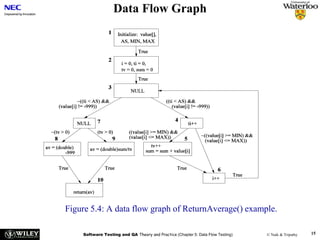
Figure 5.4: A data flow graph of ReturnAverage() example.
Software Testing and QA Theory and Practice (Chapter 5: Data Flow Testing) © Naik & Tripathy 16
Data Flow Graph
• A data flow graph is a directed graph constructed as follows.
– A sequence of definitions and c-uses is associated with each node of the
graph.
– A set of p-uses is associated with each edge of the graph.
– The entry node has a definition of each edge parameter and each nonlocal
variable used in the program.
– The exit node has an undefinition of each local variable.
Software Testing and QA Theory and Practice (Chapter 5: Data Flow Testing) © Naik & Tripathy 17
Data Flow Terms
• Global c-use: A c-use of a variable x in node i is said to be a global
c-use if x has been defined before in a node other than node i.
– Example: The c-use of variable tv in node 9 (Figure 5.4) is a global c-use.
• Definition clear path: A path (i – n1 – … nm – j), m ≥ 0, is called a
definition clear path (def-clear path) with respect to variable x
from node i to node j, and
from node i to edge (nm, j),
if x has been neither defined nor undefined in nodes n1 – … nm.
– Example: (2 – 3 – 4 – 6 – 3 – 4 – 6 – 3 – 4 – 5) is a def-clear path w.r.t. tv in
Fig. 5.4.
– Example: (2 – 3 – 4 – 5) and (2 – 3 – 4 – 6) are def-clear paths w.r.t. variable tv
from node 2 to 5 and from node 2 to 6, respectively, in Fig. 5.4.
Software Testing and QA Theory and Practice (Chapter 5: Data Flow Testing) © Naik & Tripathy 18
Data Flow Terms
• Global definition: A node i has a global definition of variable x if
node i has a definition of x and there is a def-clear path w.r.t. x from
node i to some
node containing a global c-use, or
edge containing a p-use of
variable x.
• Simple path: A simple path is a path in which all nodes, except
possibly the first and the last, are distinct.
– Example: Paths (2 – 3 – 4 – 5) and (3 – 4 – 6 – 3) are simple paths.
• Loop-free paths: A loop-free path is a path in which all nodes are
distinct.
• Complete path: A complete path is a path from the entry node to the
exit node.
Software Testing and QA Theory and Practice (Chapter 5: Data Flow Testing) © Naik & Tripathy 19
Data Flow Terms
• Du-path: A path (n1 – n2 – … – nj – nk) is a du-path path w.r.t.
variable x if node n1 has a global definition of x and either
• node nk has a global c-use of x and (n1 – n2 – … – nj – nk) is a def-clear
simple path w.r.t. x, or
• Edge (nj, nk) has a p-use of x and (n1 – n2 – … – nj – nk) is a def-clear,
loop-free path w.r.t. x.
– Example: Considering the global definition and global c-use of variable tv in
nodes 2 and 5, respectively, (2 – 3 – 4 – 5) is a du-path.
– Example: Considering the global definition and p-use of variable tv in nodes 2
and on edge (7, 9), respectively, (2 – 3 – 7 – 9) is a du-path.
Software Testing and QA Theory and Practice (Chapter 5: Data Flow Testing) © Naik & Tripathy 20
Data Flow Testing Criteria
• Seven data flow testing criteria
– All-defs
– All-c-uses
– All-p-uses
– All-p-uses/some-c-uses
– All-c-uses/some-p-uses
– All-uses
– All-du-paths
Software Testing and QA Theory and Practice (Chapter 5: Data Flow Testing) © Naik & Tripathy 21
Data Flow Testing Criteria
• All-defs
– For each variable x and each node i, such that x has a global definition in node
i, select a complete path which includes a def-clear path from node i to
• node j having a global c-use of x, or
• edge (j, k) having a p-use of x.
– Example (partial): Consider tv with its global definition in node 2. Variable tv
has a global c-use in node 5, and there is a def-clear path (2 – 3 – 4 – 5) from
node 2 to node 5. Choose a complete path (1 – 2 – 3 – 4 – 5 – 6 – 3 – 7 – 9 –
10) that includes the def-clear path (2 – 3 – 4 – 5) to satisfy the all-defs
criterion.
Software Testing and QA Theory and Practice (Chapter 5: Data Flow Testing) © Naik & Tripathy 22
Data Flow Testing Criteria
• All-c-uses
– For each variable x and each node i, such that x has a global definition in node
i, select complete paths which include def-clear paths from node i to all nodes j
such that there is a global c-use of x in j.
– Example (partial): Consider variable ti, which has a global definition in 2 and
a global c-use in node 4. From node 2, the def-clear path to 4 is (2 – 3 – 4). One
may choose the complete path (1 – 2 – 3 – 4 – 6 – 3 – 7 – 8 – 10). (There three
other complete paths.)
• All-p-uses
– For each variable x and each node i, such that x has a global definition in node
i, select complete paths which include def-clear paths from node i to all edges
(j, k) such that there is a p-use of x on (j, k).
– Example (partial): Consider variable tv, which has a global definition in 2 and
p-uses on edges (7, 8) and (7, 9). From node 2, there are def-clear paths to (7,
8) and (7, 9), namely (2 – 3 – 7 – 8) and (2 – 3 – 7 – 9). The two complete
paths are: (1 – 2 – 3 – 7 – 8 – 10) and (1 – 2 – 3 – 7 – 9 – 10).
Software Testing and QA Theory and Practice (Chapter 5: Data Flow Testing) © Naik & Tripathy 23
Data Flow Testing Criteria
• All-p-uses/some-c-uses
– This criterion is identical to the all-p-uses criterion except when a variable x
has no p-use. If x has no p-use, then this criterion reduces to the some-c-uses
criterion.
– Some-c-uses: For each variable x and each node i, such that x has a global
definition in node i, select complete paths which include def-clear paths from
node i to some nodes j such that there is a global c-use of x in j.
– Example (partial): Consider variable i, which has a global definition in 2.
There is no p-use of i. Corresponding to the global definition of I in 2, there is a
global c-use of I in 6. The def-clear path from node 2 to 6 is (2 – 3 – 4 – 5 – 6).
A complete path that includes the above def-clear path is (1 – 2 – 3 – 4 – 5 – 6
– 7 – 9 – 10).
Software Testing and QA Theory and Practice (Chapter 5: Data Flow Testing) © Naik & Tripathy 24
Data Flow Testing Criteria
• All-c-uses/some-p-uses
– This criterion is identical to the all-c-uses criterion except when a variable x
has no c-use. If x has no global c-use, then this criterion reduces to the some-p-
uses criterion.
– Some-p-uses: For each variable x and each node i, such that x has a global
definition in node i, select complete paths which include def-clear paths from
node i to some edges (j, k) such that there is a p-use of x on (j, k).
• All-uses: This criterion produces a set of paths due to the all-p-uses
criterion and the all-c-uses criterion.
• All-du-paths: For each variable x and for each node i, such that x has
a global definition in node i, select complete paths which include all
du-paths from node i
– To all nodes j such that there is a global c-use of x in j, and
– To all edges (j, k) such that there is a p-use of x on (j, k).
Software Testing and QA Theory and Practice (Chapter 5: Data Flow Testing) © Naik & Tripathy 25
Comparison of Data Flow Testing Criteria
• Comparison of two testing criteria c1 and c2
– We need a way to compare the two.
• Includes relationship: Given two test selection criteria c1 and c2,
c1 includes c2 if for every def/use graph, any set of complete
paths of the graph that satisfies c1 also satisfies c2.
• Strictly includes relationship: Given two test selection criteria c1
and c2, c1 strictly includes c2 provided c1 includes c2 and for some
def/use graph, there is a set of complete paths of the graph that
satisfies c2 but not c1.
Software Testing and QA Theory and Practice (Chapter 5: Data Flow Testing) © Naik & Tripathy 26
Comparison of Data Flow Testing Criteria
Figure 5.5: The relationship among DF (data flow) testing criteria [6]
(©[1988] IEEE).
Software Testing and QA Theory and Practice (Chapter 5: Data Flow Testing) © Naik & Tripathy 27
Feasible Paths and Test Selection Criteria
• Executable (feasible) path
– A complete path is executable if there exists an assignment of values to
input variables and global variables such that all the path predicates
evaluate to true.
• Consideing the feasibility of paths, the “includes” relatipnships of
Fig. 5.5 change to Fig. 5.6.
Software Testing and QA Theory and Practice (Chapter 5: Data Flow Testing) © Naik & Tripathy 28
Comparison of Testing Techniques
Figure 5.6: The relationship among the FDF (feasible data flow)
testing criteria [6] (©[1988] IEEE).
Software Testing and QA Theory and Practice (Chapter 5: Data Flow Testing) © Naik & Tripathy 29
Comparison of Testing Techniques
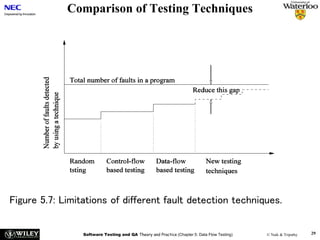
Figure 5.7: Limitations of different fault detection techniques.
Software Testing and QA Theory and Practice (Chapter 5: Data Flow Testing) © Naik & Tripathy 30
Summary
• Data flow is a readily identifiable concept in a program unit.
• Data flow testing
– Static
– Dynamic
• Static data flow analysis
– Data flow anomaly can occur due to programming errors.
– Three types of data flow anomalies
• (Type 1: dd), (Type 2: ur), (Type 3, du)
• Analyze the code to identify and remove data flow anomalies.
• Dynamic data flow analysis
– Obtain a data flow graph from a program unit.
– Select paths based on DF criteria: all-defs, all-c-uses, all-p-uses, all-uses,
all-c-uses/some-p-uses, all-p-uses/some-c-uses, all-du-paths.
– The includes relationship is useful in comparing selection criteria.

Ch5-DataFlowTesting.ppt

  • 1.
    Software Testing andQA Theory and Practice (Chapter 5: Data Flow Testing) © Naik & Tripathy 1 Software Testing and Quality Assurance Theory and Practice Chapter 5 Data Flow Testing
  • 2.
    Software Testing andQA Theory and Practice (Chapter 5: Data Flow Testing) © Naik & Tripathy 2 Outline of the Chapter • The General Idea • Data Flow Anomaly • Overview of Dynamic Data Flow Testing • Data Flow Graph • Data Flow Terms • Data Flow Testing Criteria • Comparison of Data Flow Testing Criteria • Feasible Paths and Test Selection Criteria • Comparison of Testing Techniques • Summary
  • 3.
    Software Testing andQA Theory and Practice (Chapter 5: Data Flow Testing) © Naik & Tripathy 3 The General Idea • A program unit accepts inputs, performs computations, assigns new values to variables, and returns results. • One can visualize of “flow” of data values from one statement to another. • A data value produced in one statement is expected to be used later. – Example • Obtain a file pointer ……. use it later. – If the later use is never verified, we do not know if the earlier assignment is acceptable. • Two motivations of data flow testing • The memory location for a variable is accessed in a “desirable” way. • Verify the correctness of data values “defined” (i.e. generated) – observe that all the “uses” of the value produce the desired results. • Idea: A programmer can perform a number of tests on data values. – These tests are collectively known as data flow testing.
  • 4.
    Software Testing andQA Theory and Practice (Chapter 5: Data Flow Testing) © Naik & Tripathy 4 The General Idea • Data flow testing can be performed at two conceptual levels. – Static data flow testing – Dynamic data flow testing • Static data flow testing – Identify potential defects, commonly known as data flow anomaly. – Analyze source code. – Do not execute code. • Dynamic data flow testing – Involves actual program execution. – Bears similarity with control flow testing. • Identify paths to execute them. • Paths are identified based on data flow testing criteria.
  • 5.
    Software Testing andQA Theory and Practice (Chapter 5: Data Flow Testing) © Naik & Tripathy 5 Data Flow Anomaly • Anomaly: It is an abnormal way of doing something. – Example 1: The second definition of x overrides the first. x = f1(y); x = f2(z); • Three types of abnormal situations with using variable. – Type 1: Defined and then defined again – Type 2: Undefined but referenced – Type 3: Defined but not referenced
  • 6.
    Software Testing andQA Theory and Practice (Chapter 5: Data Flow Testing) © Naik & Tripathy 6 Data Flow Anomaly • Type 1: Defined and then defined again (Example 1 above) – Four interpretations of Example 1 • The first statement is redundant. • The first statement has a fault -- the intended one might be: w = f1(y). • The second statement has a fault – the intended one might be: v = f2(z). • There is a missing statement in between the two: v = f3(x). – Note: It is for the programmer to make the desired interpretation. • Type 2: Undefined but referenced – Example: x = x – y – w; /* w has not been defined by the programmer. */ – Two interpretations • The programmer made a mistake in using w. • The programmer wants to use the compiler assigned value of w. • Type 3: Defined but not referenced – Example: Consider x = f(x, y). If x is not used subsequently, we have a Type 3 anomaly.
  • 7.
    Software Testing andQA Theory and Practice (Chapter 5: Data Flow Testing) © Naik & Tripathy 7 Data Flow Anomaly • The concept of a state-transition diagram is used to model a program variable to identify data flow anomaly. • Components of the state-transition diagrams – The states • U: Undefined • D: Defined but not referenced • R: Defined and referenced • A: Abnormal – The actions • d: define the variable • r: reference (or, read) the variable • u: undefine the variable
  • 8.
    Software Testing andQA Theory and Practice (Chapter 5: Data Flow Testing) © Naik & Tripathy 8 Data Flow Anomaly Figure 5.2: State transition diagram of a program variable [10] (©[1979] IEEE).
  • 9.
    Software Testing andQA Theory and Practice (Chapter 5: Data Flow Testing) © Naik & Tripathy 9 Data Flow Anomaly • Obvious question: What is the relationship between the Type 1, Type 2, and Type 3 anomalies and Figure 5.2? • The three types of anomalies (Type 1, Type 2, and Type 3) are found in the diagram in the form of action sequences: – Type 1: dd – Type 2: ur – Type 3: du • Detection of data flow anomaly via program instrumentation – Program instrumentation: Insert new code to monitor the states of variables. – If the state sequence contains dd, ur, or du sequence, a data flow anomaly is said to occur. • Bottom line: What to do after detecting a data flow anomaly? – Investigate the cause of the anomaly. – To fix an anomaly, write new code or modify the existing code.
  • 10.
    Software Testing andQA Theory and Practice (Chapter 5: Data Flow Testing) © Naik & Tripathy 10 Overview of Dynamic Data Flow Testing • A programmer manipulates/uses variables in several ways. – Initialization, assignment, using in a computation, using in a condition • Motivation for data flow testing? – One should not feel confident that a variable has been assigned the correct value, if no test causes the execution of a path from the point of assignment to a point where the value is used. – Note • Assignment of correct value means whether or not a value has been correctly generated. • Use of a variable means – If new values of the same variable or other variables are generated. – If the variable is used in a conditional statement to alter the flow of control. • The above motivation indicates that certain kinds of paths are executed in data flow testing.
  • 11.
    Software Testing andQA Theory and Practice (Chapter 5: Data Flow Testing) © Naik & Tripathy 11 Overview of Dynamic Data Flow Testing • Data flow testing is outlined as follows: – Draw a data flow graph from a program. – Select one or more data flow testing criteria. – Identify paths in the data flow graph satisfying the selection criteria. – Derive path predicate expressions from the selected paths (See Chapter 4.) – Solve the path predicate expressions to derive test inputs (See Chapter 4.)
  • 12.
    Software Testing andQA Theory and Practice (Chapter 5: Data Flow Testing) © Naik & Tripathy 12 Data Flow Graph • Occurrences of variables – Definition: A variable gets a new value. • i = x; /* The variable i gets a new value. */ – Undefinition or kill: This occurs if the value and the location become unbound. – Use: This occurs when the value is fetched from the memory location of the variable. There are two forms of uses of a variable. • Computation use (c-use) – Example: x = 2*y; /* y has been used to compute a value of x. */ • Predicate use (p-use) – Example: if (y > 100) { …} /* y has been used in a condition. */
  • 13.
    Software Testing andQA Theory and Practice (Chapter 5: Data Flow Testing) © Naik & Tripathy 13 Data Flow Graph • A data flow graph is a directed graph constructed as follows. – A sequence of definitions and c-uses is associated with each node of the graph. – A set of p-uses is associated with each edge of the graph. – The entry node has a definition of each edge parameter and each nonlocal variable used in the program. – The exit node has an undefinition of each local variable.
  • 14.
    Software Testing andQA Theory and Practice (Chapter 5: Data Flow Testing) © Naik & Tripathy 14 Data Flow Graph • Example code: ReturnAverage() from Chapter 4 public static double ReturnAverage(int value[], int AS, int MIN, int MAX){ /* Function: ReturnAverage Computes the average of all those numbers in the input array in the positive range [MIN, MAX]. The maximum size of the array is AS. But, the array size could be smaller than AS in which case the end of input is represented by -999. */ int i, ti, tv, sum; double av; i = 0; ti = 0; tv = 0; sum = 0; while (ti < AS && value[i] != -999) { ti++; if (value[i] >= MIN && value[i] <= MAX) { tv++; sum = sum + value[i]; } i++; } if (tv > 0) av = (double)sum/tv; else av = (double) -999; return (av); } Figure 4.6: A function to compute the average of selected integers in an array.
  • 15.
    Software Testing andQA Theory and Practice (Chapter 5: Data Flow Testing) © Naik & Tripathy 15 Data Flow Graph Figure 5.4: A data flow graph of ReturnAverage() example.
  • 16.
    Software Testing andQA Theory and Practice (Chapter 5: Data Flow Testing) © Naik & Tripathy 16 Data Flow Graph • A data flow graph is a directed graph constructed as follows. – A sequence of definitions and c-uses is associated with each node of the graph. – A set of p-uses is associated with each edge of the graph. – The entry node has a definition of each edge parameter and each nonlocal variable used in the program. – The exit node has an undefinition of each local variable.
  • 17.
    Software Testing andQA Theory and Practice (Chapter 5: Data Flow Testing) © Naik & Tripathy 17 Data Flow Terms • Global c-use: A c-use of a variable x in node i is said to be a global c-use if x has been defined before in a node other than node i. – Example: The c-use of variable tv in node 9 (Figure 5.4) is a global c-use. • Definition clear path: A path (i – n1 – … nm – j), m ≥ 0, is called a definition clear path (def-clear path) with respect to variable x from node i to node j, and from node i to edge (nm, j), if x has been neither defined nor undefined in nodes n1 – … nm. – Example: (2 – 3 – 4 – 6 – 3 – 4 – 6 – 3 – 4 – 5) is a def-clear path w.r.t. tv in Fig. 5.4. – Example: (2 – 3 – 4 – 5) and (2 – 3 – 4 – 6) are def-clear paths w.r.t. variable tv from node 2 to 5 and from node 2 to 6, respectively, in Fig. 5.4.
  • 18.
    Software Testing andQA Theory and Practice (Chapter 5: Data Flow Testing) © Naik & Tripathy 18 Data Flow Terms • Global definition: A node i has a global definition of variable x if node i has a definition of x and there is a def-clear path w.r.t. x from node i to some node containing a global c-use, or edge containing a p-use of variable x. • Simple path: A simple path is a path in which all nodes, except possibly the first and the last, are distinct. – Example: Paths (2 – 3 – 4 – 5) and (3 – 4 – 6 – 3) are simple paths. • Loop-free paths: A loop-free path is a path in which all nodes are distinct. • Complete path: A complete path is a path from the entry node to the exit node.
  • 19.
    Software Testing andQA Theory and Practice (Chapter 5: Data Flow Testing) © Naik & Tripathy 19 Data Flow Terms • Du-path: A path (n1 – n2 – … – nj – nk) is a du-path path w.r.t. variable x if node n1 has a global definition of x and either • node nk has a global c-use of x and (n1 – n2 – … – nj – nk) is a def-clear simple path w.r.t. x, or • Edge (nj, nk) has a p-use of x and (n1 – n2 – … – nj – nk) is a def-clear, loop-free path w.r.t. x. – Example: Considering the global definition and global c-use of variable tv in nodes 2 and 5, respectively, (2 – 3 – 4 – 5) is a du-path. – Example: Considering the global definition and p-use of variable tv in nodes 2 and on edge (7, 9), respectively, (2 – 3 – 7 – 9) is a du-path.
  • 20.
    Software Testing andQA Theory and Practice (Chapter 5: Data Flow Testing) © Naik & Tripathy 20 Data Flow Testing Criteria • Seven data flow testing criteria – All-defs – All-c-uses – All-p-uses – All-p-uses/some-c-uses – All-c-uses/some-p-uses – All-uses – All-du-paths
  • 21.
    Software Testing andQA Theory and Practice (Chapter 5: Data Flow Testing) © Naik & Tripathy 21 Data Flow Testing Criteria • All-defs – For each variable x and each node i, such that x has a global definition in node i, select a complete path which includes a def-clear path from node i to • node j having a global c-use of x, or • edge (j, k) having a p-use of x. – Example (partial): Consider tv with its global definition in node 2. Variable tv has a global c-use in node 5, and there is a def-clear path (2 – 3 – 4 – 5) from node 2 to node 5. Choose a complete path (1 – 2 – 3 – 4 – 5 – 6 – 3 – 7 – 9 – 10) that includes the def-clear path (2 – 3 – 4 – 5) to satisfy the all-defs criterion.
  • 22.
    Software Testing andQA Theory and Practice (Chapter 5: Data Flow Testing) © Naik & Tripathy 22 Data Flow Testing Criteria • All-c-uses – For each variable x and each node i, such that x has a global definition in node i, select complete paths which include def-clear paths from node i to all nodes j such that there is a global c-use of x in j. – Example (partial): Consider variable ti, which has a global definition in 2 and a global c-use in node 4. From node 2, the def-clear path to 4 is (2 – 3 – 4). One may choose the complete path (1 – 2 – 3 – 4 – 6 – 3 – 7 – 8 – 10). (There three other complete paths.) • All-p-uses – For each variable x and each node i, such that x has a global definition in node i, select complete paths which include def-clear paths from node i to all edges (j, k) such that there is a p-use of x on (j, k). – Example (partial): Consider variable tv, which has a global definition in 2 and p-uses on edges (7, 8) and (7, 9). From node 2, there are def-clear paths to (7, 8) and (7, 9), namely (2 – 3 – 7 – 8) and (2 – 3 – 7 – 9). The two complete paths are: (1 – 2 – 3 – 7 – 8 – 10) and (1 – 2 – 3 – 7 – 9 – 10).
  • 23.
    Software Testing andQA Theory and Practice (Chapter 5: Data Flow Testing) © Naik & Tripathy 23 Data Flow Testing Criteria • All-p-uses/some-c-uses – This criterion is identical to the all-p-uses criterion except when a variable x has no p-use. If x has no p-use, then this criterion reduces to the some-c-uses criterion. – Some-c-uses: For each variable x and each node i, such that x has a global definition in node i, select complete paths which include def-clear paths from node i to some nodes j such that there is a global c-use of x in j. – Example (partial): Consider variable i, which has a global definition in 2. There is no p-use of i. Corresponding to the global definition of I in 2, there is a global c-use of I in 6. The def-clear path from node 2 to 6 is (2 – 3 – 4 – 5 – 6). A complete path that includes the above def-clear path is (1 – 2 – 3 – 4 – 5 – 6 – 7 – 9 – 10).
  • 24.
    Software Testing andQA Theory and Practice (Chapter 5: Data Flow Testing) © Naik & Tripathy 24 Data Flow Testing Criteria • All-c-uses/some-p-uses – This criterion is identical to the all-c-uses criterion except when a variable x has no c-use. If x has no global c-use, then this criterion reduces to the some-p- uses criterion. – Some-p-uses: For each variable x and each node i, such that x has a global definition in node i, select complete paths which include def-clear paths from node i to some edges (j, k) such that there is a p-use of x on (j, k). • All-uses: This criterion produces a set of paths due to the all-p-uses criterion and the all-c-uses criterion. • All-du-paths: For each variable x and for each node i, such that x has a global definition in node i, select complete paths which include all du-paths from node i – To all nodes j such that there is a global c-use of x in j, and – To all edges (j, k) such that there is a p-use of x on (j, k).
  • 25.
    Software Testing andQA Theory and Practice (Chapter 5: Data Flow Testing) © Naik & Tripathy 25 Comparison of Data Flow Testing Criteria • Comparison of two testing criteria c1 and c2 – We need a way to compare the two. • Includes relationship: Given two test selection criteria c1 and c2, c1 includes c2 if for every def/use graph, any set of complete paths of the graph that satisfies c1 also satisfies c2. • Strictly includes relationship: Given two test selection criteria c1 and c2, c1 strictly includes c2 provided c1 includes c2 and for some def/use graph, there is a set of complete paths of the graph that satisfies c2 but not c1.
  • 26.
    Software Testing andQA Theory and Practice (Chapter 5: Data Flow Testing) © Naik & Tripathy 26 Comparison of Data Flow Testing Criteria Figure 5.5: The relationship among DF (data flow) testing criteria [6] (©[1988] IEEE).
  • 27.
    Software Testing andQA Theory and Practice (Chapter 5: Data Flow Testing) © Naik & Tripathy 27 Feasible Paths and Test Selection Criteria • Executable (feasible) path – A complete path is executable if there exists an assignment of values to input variables and global variables such that all the path predicates evaluate to true. • Consideing the feasibility of paths, the “includes” relatipnships of Fig. 5.5 change to Fig. 5.6.
  • 28.
    Software Testing andQA Theory and Practice (Chapter 5: Data Flow Testing) © Naik & Tripathy 28 Comparison of Testing Techniques Figure 5.6: The relationship among the FDF (feasible data flow) testing criteria [6] (©[1988] IEEE).
  • 29.
    Software Testing andQA Theory and Practice (Chapter 5: Data Flow Testing) © Naik & Tripathy 29 Comparison of Testing Techniques Figure 5.7: Limitations of different fault detection techniques.
  • 30.
    Software Testing andQA Theory and Practice (Chapter 5: Data Flow Testing) © Naik & Tripathy 30 Summary • Data flow is a readily identifiable concept in a program unit. • Data flow testing – Static – Dynamic • Static data flow analysis – Data flow anomaly can occur due to programming errors. – Three types of data flow anomalies • (Type 1: dd), (Type 2: ur), (Type 3, du) • Analyze the code to identify and remove data flow anomalies. • Dynamic data flow analysis – Obtain a data flow graph from a program unit. – Select paths based on DF criteria: all-defs, all-c-uses, all-p-uses, all-uses, all-c-uses/some-p-uses, all-p-uses/some-c-uses, all-du-paths. – The includes relationship is useful in comparing selection criteria.