Ch. 28  - The Rococo  French  ro caille – pebble or shell Baro cco  – baroque
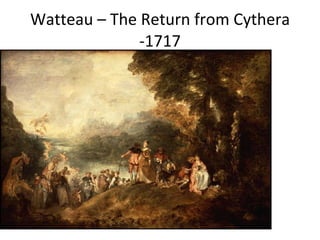
Aristocrats parallel in the shift the Baroque to the Rococo  Fete galante – which portrays the aristocracy in their leisurely  pursuits. Paintings can be seductive Lavish, no straight lines in the Rococo – sophisticated and elegantly refined.  Curves are a prominent feature in the Rococo architecture
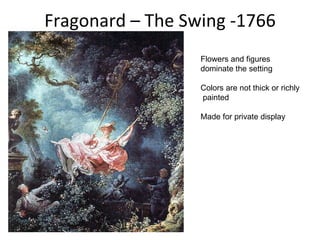
Fragonard – The Swing -1766 Flowers and figures  dominate the setting Colors are not thick or richly painted  Made for private display
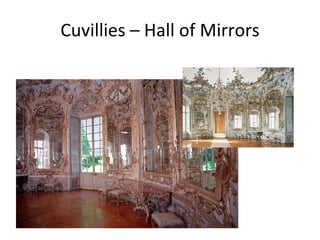
Cuvillies – Hall of Mirrors
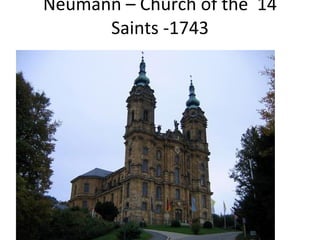
Neumann – Church of the  14 Saints -1743
Watteau – The Return from Cythera -1717
The Enlightment  18 th  Century – revolutions erupted in France and America – ( French, American  and Industrial Revolution in England all happened at the same time)  Social and economic life dissolved.  The Enlightment was a new way to think critically about the world. To think independent of religion, myth and  tradition. Questioning theories, god, and now experimenting with science. Voltaire and his writings were very important
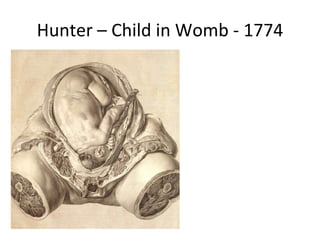
Hunter – Child in Womb - 1774
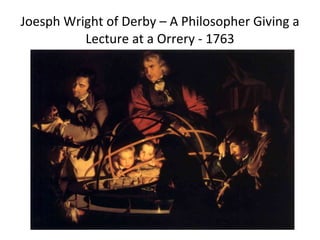
Joesph Wright of Derby – A Philosopher Giving a Lecture at a Orrery - 1763
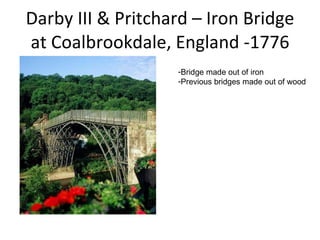
Darby III & Pritchard – Iron Bridge at Coalbrookdale, England -1776 Bridge made out of iron Previous bridges made out of wood
Voltaire and Rousseau  Voltaire believed that the salvation of humanity was in advancement of science and the improvement of society Rousseau said that the “arts” had corrupted humanity from its original condition. “ Nature alone must be our guide”
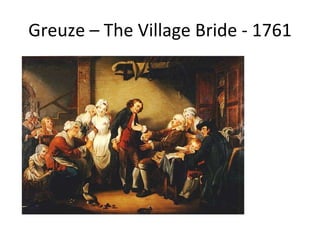
Greuze – The Village Bride - 1761
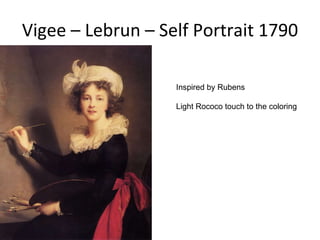
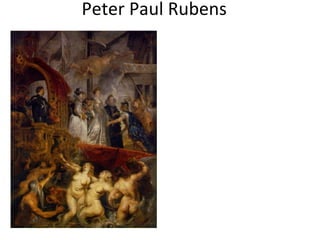
Vigee – Lebrun – Self Portrait 1790 Inspired by Rubens Light Rococo touch to the coloring
Peter Paul Rubens
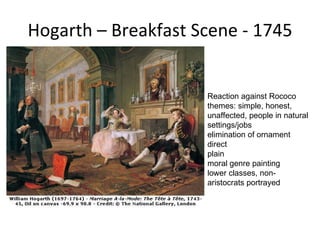
Hogarth – Breakfast Scene - 1745 Reaction against Rococo  themes: simple, honest, unaffected, people in natural settings/jobs  elimination of ornament  direct  plain  moral genre painting  lower classes, non-aristocrats portrayed

Ch.28 rococo

  • 1.
    Ch. 28 - The Rococo French ro caille – pebble or shell Baro cco – baroque
  • 2.
    Aristocrats parallel inthe shift the Baroque to the Rococo Fete galante – which portrays the aristocracy in their leisurely pursuits. Paintings can be seductive Lavish, no straight lines in the Rococo – sophisticated and elegantly refined. Curves are a prominent feature in the Rococo architecture
  • 3.
    Fragonard – TheSwing -1766 Flowers and figures dominate the setting Colors are not thick or richly painted Made for private display
  • 4.
  • 5.
    Neumann – Churchof the 14 Saints -1743
  • 6.
    Watteau – TheReturn from Cythera -1717
  • 7.
    The Enlightment 18 th Century – revolutions erupted in France and America – ( French, American and Industrial Revolution in England all happened at the same time) Social and economic life dissolved. The Enlightment was a new way to think critically about the world. To think independent of religion, myth and tradition. Questioning theories, god, and now experimenting with science. Voltaire and his writings were very important
  • 8.
    Hunter – Childin Womb - 1774
  • 9.
    Joesph Wright ofDerby – A Philosopher Giving a Lecture at a Orrery - 1763
  • 10.
    Darby III &Pritchard – Iron Bridge at Coalbrookdale, England -1776 Bridge made out of iron Previous bridges made out of wood
  • 11.
    Voltaire and Rousseau Voltaire believed that the salvation of humanity was in advancement of science and the improvement of society Rousseau said that the “arts” had corrupted humanity from its original condition. “ Nature alone must be our guide”
  • 12.
    Greuze – TheVillage Bride - 1761
  • 13.
    Vigee – Lebrun– Self Portrait 1790 Inspired by Rubens Light Rococo touch to the coloring
  • 14.
  • 15.
    Hogarth – BreakfastScene - 1745 Reaction against Rococo themes: simple, honest, unaffected, people in natural settings/jobs elimination of ornament direct plain moral genre painting lower classes, non-aristocrats portrayed