Political Geography Ch. 4, Sec. 3
State – independent unit in a specific area that governs their own affairs  Nation – group of people with a common culture living in a territory and having a strong sense of unity When the 2 are together = nation-state
Types of Government Democracy – citizens hold power (direct/ representative) Monarchy – ruling family holds the power Dictatorship – an individual or group holds all the power Communism – nearly all political power and means of production (economy) are held  by the gov’t in the name of the people
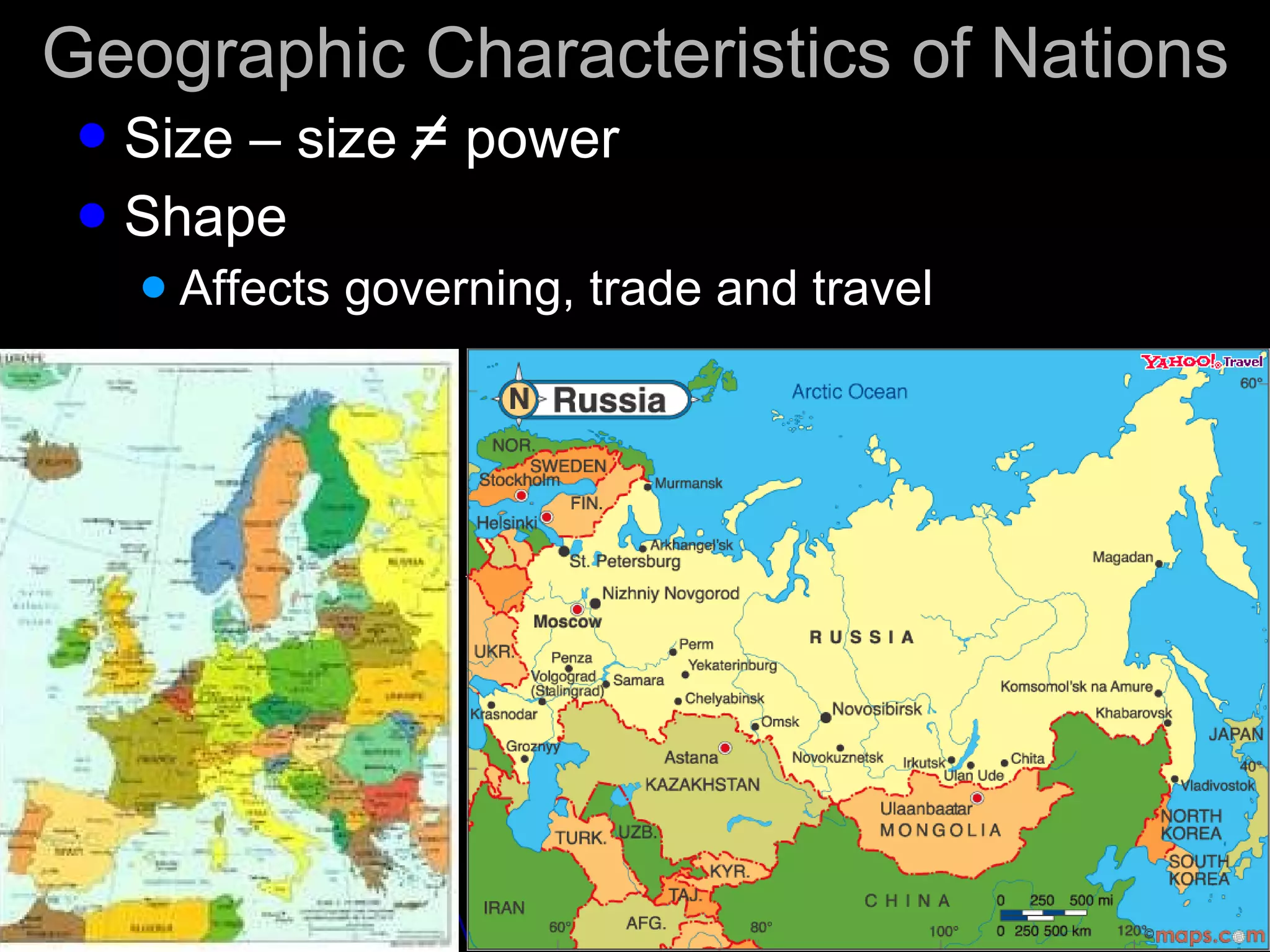
Geographic Characteristics of Nations Size – size  =  power Shape Affects governing, trade and travel
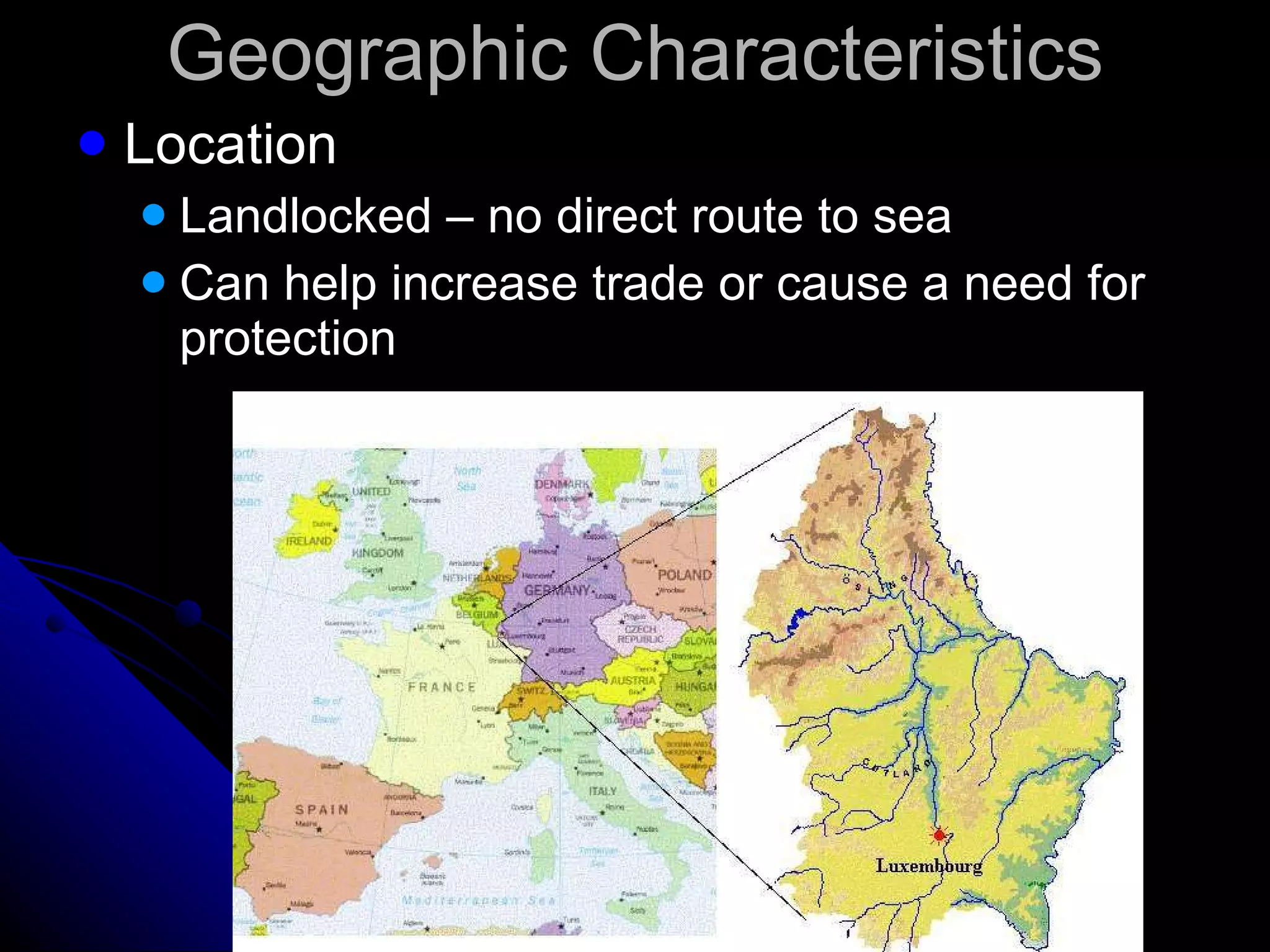
Geographic Characteristics Location Landlocked – no direct route to sea Can help increase trade or cause a need for protection
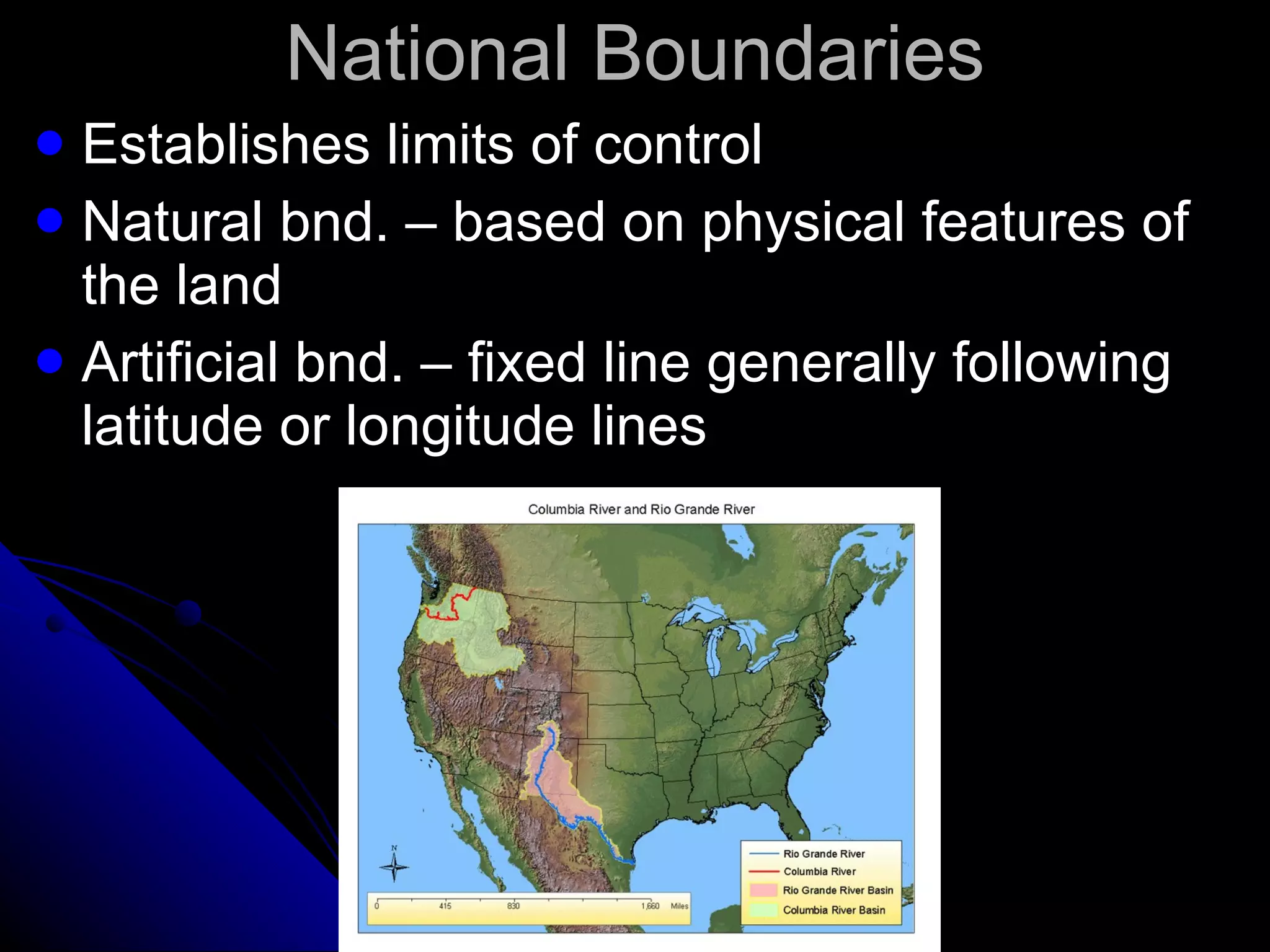
National Boundaries Establishes limits of control Natural bnd. – based on physical features of the land Artificial bnd. – fixed line generally following latitude or longitude lines
Urban Geography Ch. 4, Sec. 4
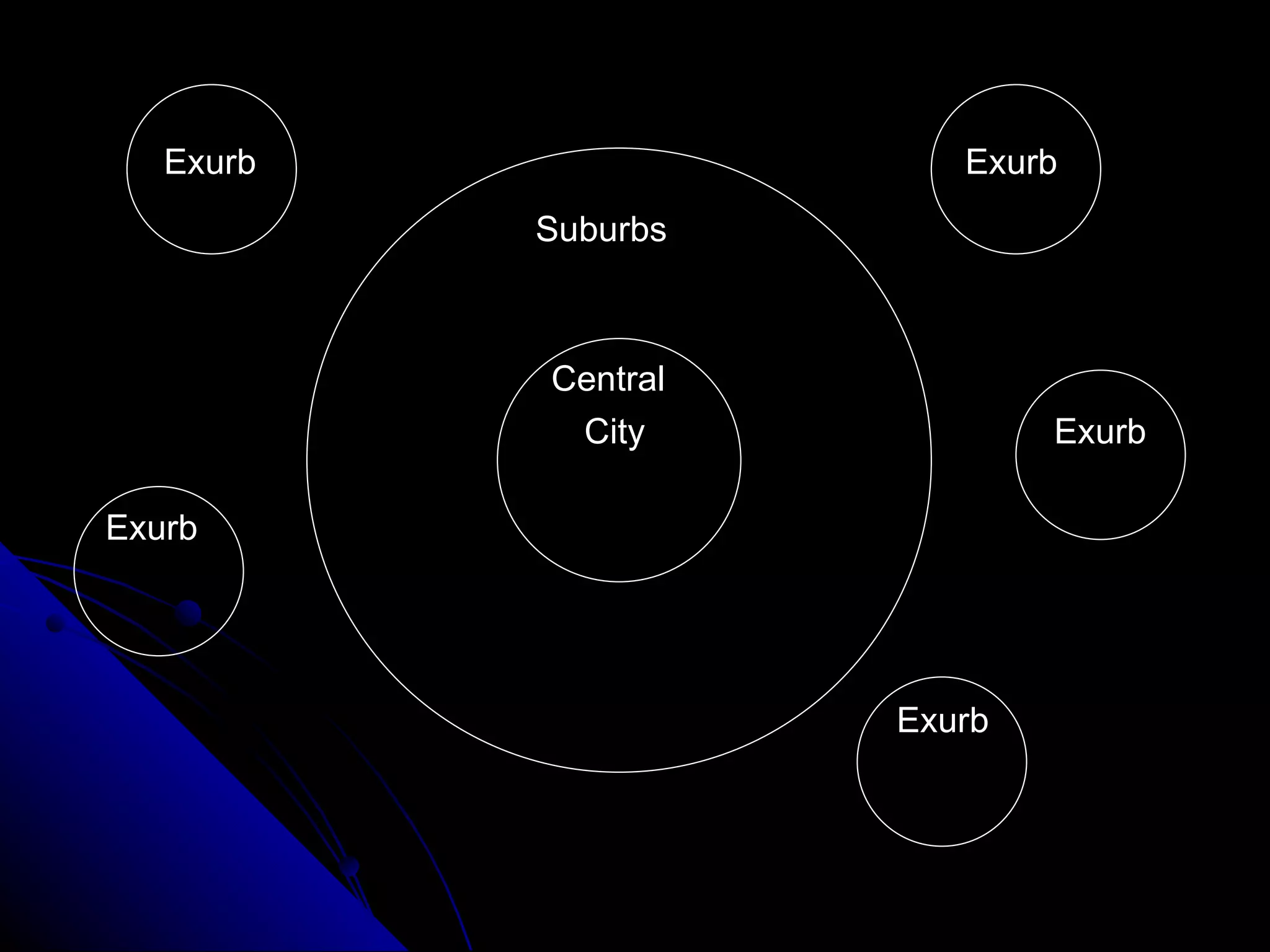
Urban areas develop around a central city Suburbs = built up area around central city Exurbs = cities or towns with space btw. them and the central city All 3 = Metropolitan area Megalopolis = more than one metropolitan area that has grown together
Exurb Exurb   Suburbs   Central City  Exurb Exurb   Exurb
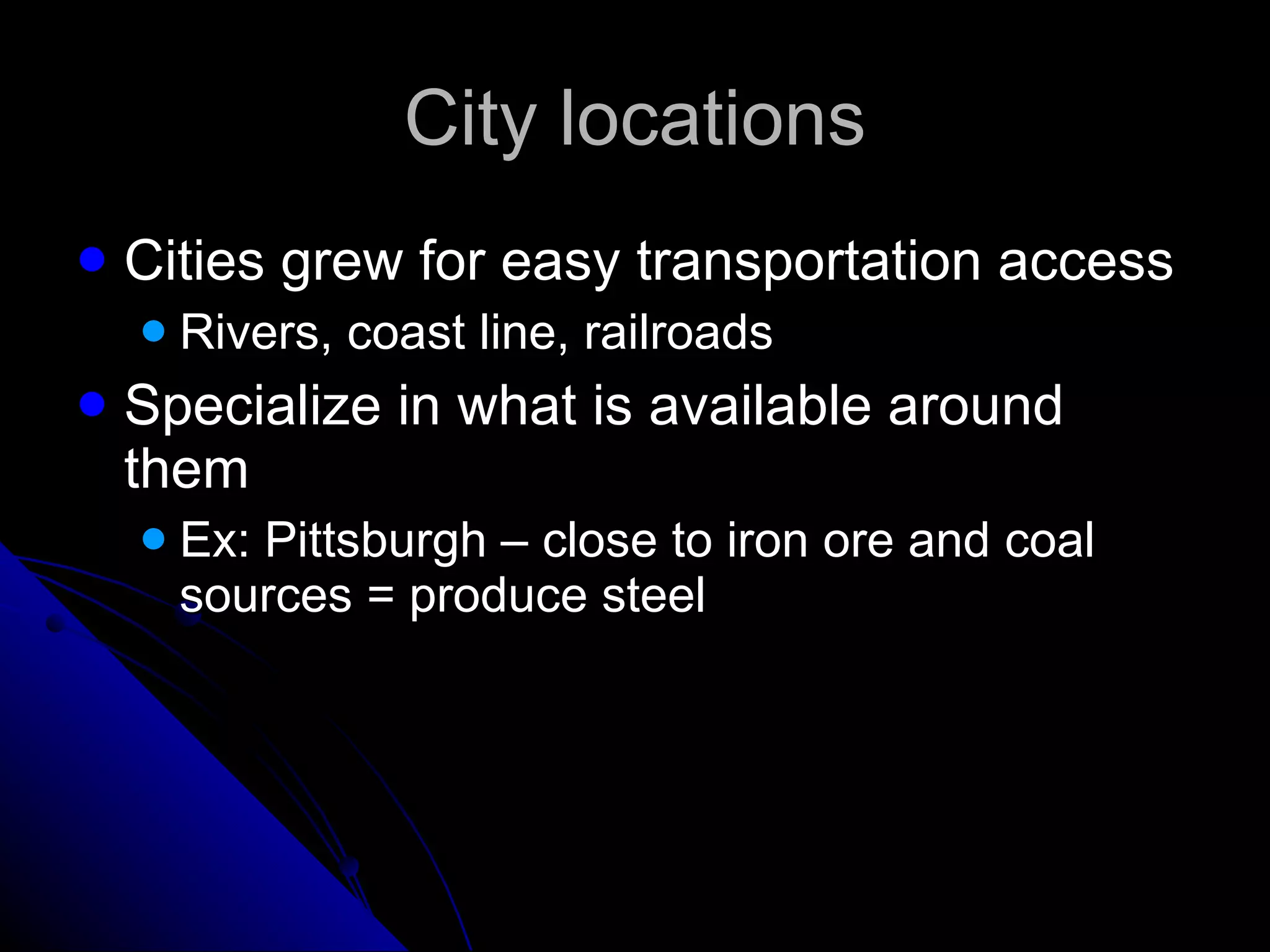
City locations Cities grew for easy transportation access Rivers, coast line, railroads Specialize in what is available around them Ex: Pittsburgh – close to iron ore and coal sources = produce steel
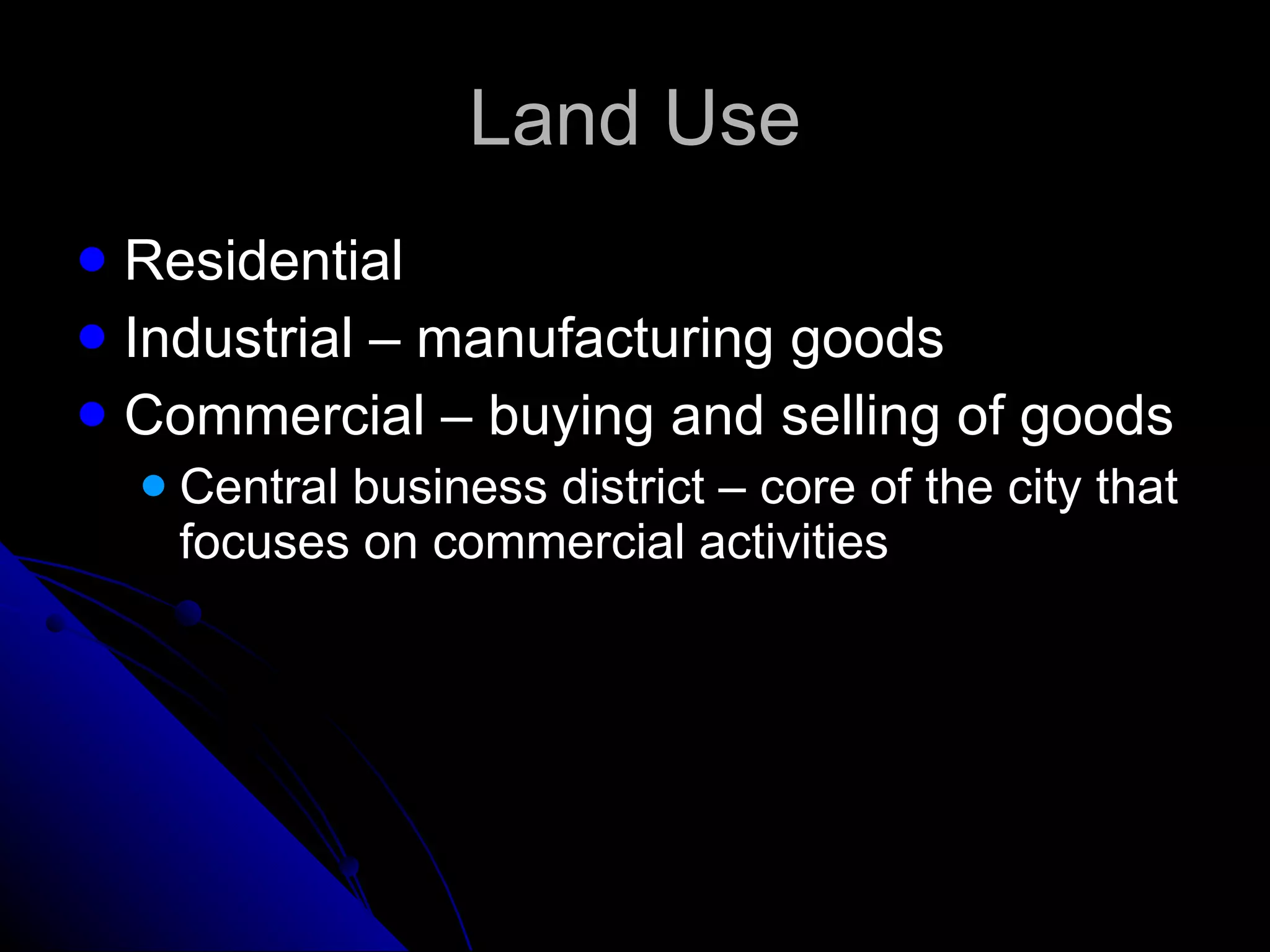
Land Use Residential Industrial – manufacturing goods Commercial – buying and selling of goods Central business district – core of the city that focuses on commercial activities
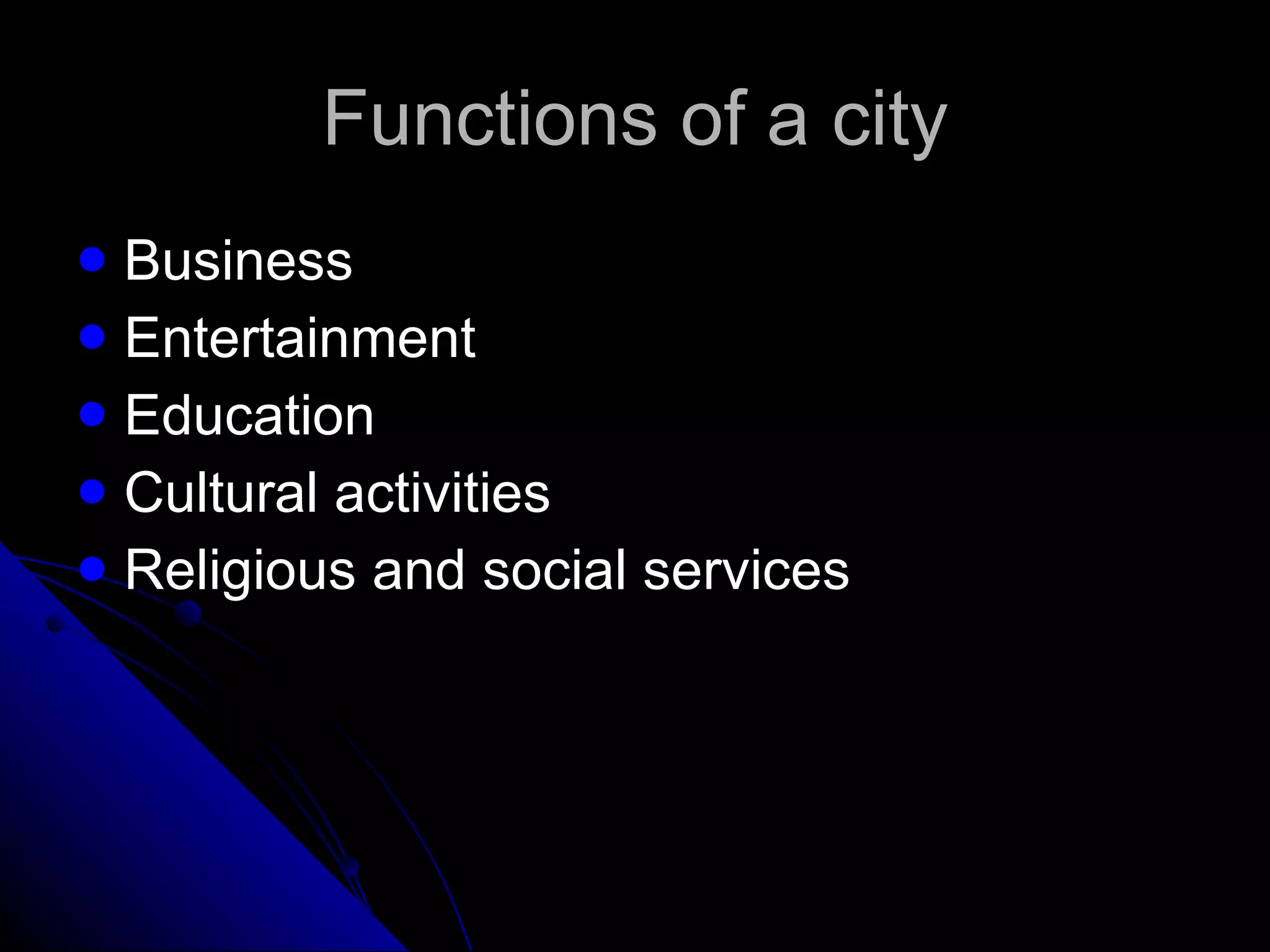
Functions of a city Business Entertainment Education Cultural activities Religious and social services

Ch. 4, secs 3 & 4

  • 1.
  • 2.
    State – independentunit in a specific area that governs their own affairs Nation – group of people with a common culture living in a territory and having a strong sense of unity When the 2 are together = nation-state
  • 3.
    Types of GovernmentDemocracy – citizens hold power (direct/ representative) Monarchy – ruling family holds the power Dictatorship – an individual or group holds all the power Communism – nearly all political power and means of production (economy) are held by the gov’t in the name of the people
  • 4.
    Geographic Characteristics ofNations Size – size = power Shape Affects governing, trade and travel
  • 5.
    Geographic Characteristics LocationLandlocked – no direct route to sea Can help increase trade or cause a need for protection
  • 6.
    National Boundaries Establisheslimits of control Natural bnd. – based on physical features of the land Artificial bnd. – fixed line generally following latitude or longitude lines
  • 7.
  • 8.
    Urban areas developaround a central city Suburbs = built up area around central city Exurbs = cities or towns with space btw. them and the central city All 3 = Metropolitan area Megalopolis = more than one metropolitan area that has grown together
  • 9.
    Exurb Exurb Suburbs Central City Exurb Exurb Exurb
  • 10.
    City locations Citiesgrew for easy transportation access Rivers, coast line, railroads Specialize in what is available around them Ex: Pittsburgh – close to iron ore and coal sources = produce steel
  • 11.
    Land Use ResidentialIndustrial – manufacturing goods Commercial – buying and selling of goods Central business district – core of the city that focuses on commercial activities
  • 12.
    Functions of acity Business Entertainment Education Cultural activities Religious and social services