THE EARTH AND BEYOND
MOVEMENTS OF THE EARTH
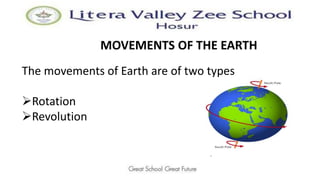
The movements of Earth are of two types
Rotation
Revolution
.
ROTATION OF THE EARTH
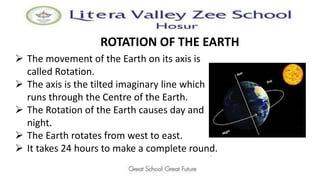
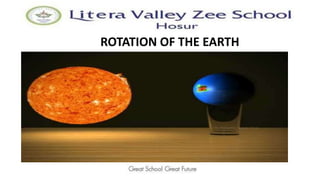
 The movement of the Earth on its axis is
called Rotation.
 The axis is the tilted imaginary line which
runs through the Centre of the Earth.
 The Rotation of the Earth causes day and
night.
 The Earth rotates from west to east.
 It takes 24 hours to make a complete round.
.
ROTATION OF THE EARTH
.
REVOLUTION OF THE EARTH
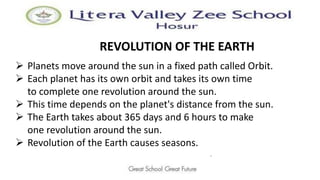
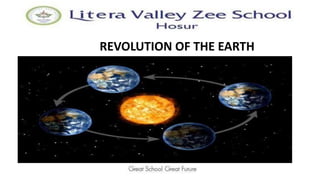
 Planets move around the sun in a fixed path called Orbit.
 Each planet has its own orbit and takes its own time
to complete one revolution around the sun.
 This time depends on the planet's distance from the sun.
 The Earth takes about 365 days and 6 hours to make
one revolution around the sun.
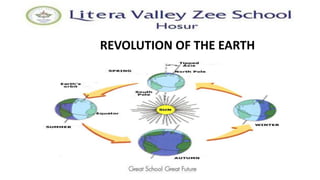
 Revolution of the Earth causes seasons.
.
REVOLUTION OF THE EARTH
.
REVOLUTION OF THE EARTH
.
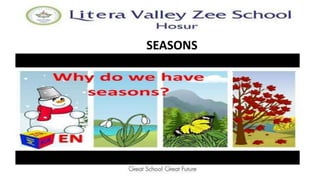
SEASONS
.
 We observer changes in the seasons throughout the year.
 It is warm and sunny, during summer.
 It is wet, during rainy season.
 It is cold and dark, during winter season.
 The revolution of the Earth around the sun causes these changes.
 The Portion of the Earth tilted towards the sun gets more heat and light and
has summer.
 The other part of the Earth receives less sunlight and heat and has winter.
SEASONS
.
ATMOSPHERE
.
 The Atmosphere is the layer of air that surrounds the Earth.
 The air we breathe is present in the atmosphere.
 The atmosphere has the right temperature which makes the
Earth neither too hot nor too cold, making it fit for us to live.
SUN
 The Sun is powerful source of energy.
 The energy generated from sunlight is called Solar energy.
 Plants make food with the help of sunlight.
 It is used for heating water, cooking, drying products and
generating electricity.
MOON
.
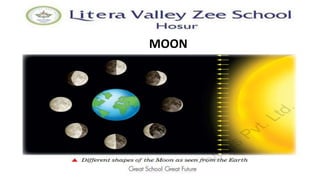
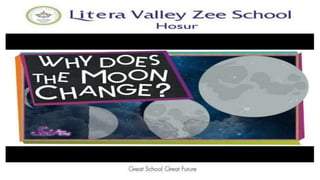
 The Moon is the Earth's only natural satellite.
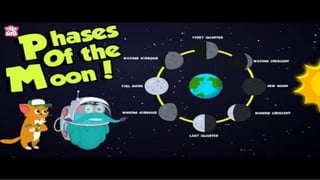
The moon changes its shape every day? Why?
 This is because the moon does not have light of its own. It
reflects the light from the sun.
 As the moon revolves around the Earth, only that part of the
moon which faces the sun receives light and reflects it.
 We can see only this part from the Earth.
 The part that is away from the sun stays in darkness and we
cannot see it.
MOON
.
.
STARS
.
 Stars are the huge balls of fire and gases.
 The sun is a star.
 Many years ago, sailors used to find the direction with the help
of a bright star called the Pole star or North star.
 This star helped the sailors in finding the north direction which
is almost straight above the Earth's North pole.
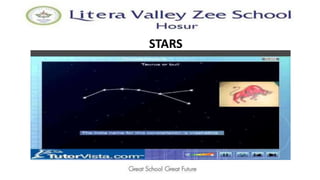
 Some group of stars form different patterns in the sky called
constellations.
 Eg.: Ursa major, Ursa minor, Orion, Draco.
STARS
.

CH 11 The Earth.pptx

  • 1.
  • 2.
    MOVEMENTS OF THEEARTH The movements of Earth are of two types Rotation Revolution .
  • 3.
    ROTATION OF THEEARTH  The movement of the Earth on its axis is called Rotation.  The axis is the tilted imaginary line which runs through the Centre of the Earth.  The Rotation of the Earth causes day and night.  The Earth rotates from west to east.  It takes 24 hours to make a complete round. .
  • 4.
  • 5.
    REVOLUTION OF THEEARTH  Planets move around the sun in a fixed path called Orbit.  Each planet has its own orbit and takes its own time to complete one revolution around the sun.  This time depends on the planet's distance from the sun.  The Earth takes about 365 days and 6 hours to make one revolution around the sun.  Revolution of the Earth causes seasons. .
  • 6.
  • 7.
  • 8.
    SEASONS .  We observerchanges in the seasons throughout the year.  It is warm and sunny, during summer.  It is wet, during rainy season.  It is cold and dark, during winter season.  The revolution of the Earth around the sun causes these changes.  The Portion of the Earth tilted towards the sun gets more heat and light and has summer.  The other part of the Earth receives less sunlight and heat and has winter.
  • 9.
  • 10.
    ATMOSPHERE .  The Atmosphereis the layer of air that surrounds the Earth.  The air we breathe is present in the atmosphere.  The atmosphere has the right temperature which makes the Earth neither too hot nor too cold, making it fit for us to live. SUN  The Sun is powerful source of energy.  The energy generated from sunlight is called Solar energy.  Plants make food with the help of sunlight.  It is used for heating water, cooking, drying products and generating electricity.
  • 11.
    MOON .  The Moonis the Earth's only natural satellite. The moon changes its shape every day? Why?  This is because the moon does not have light of its own. It reflects the light from the sun.  As the moon revolves around the Earth, only that part of the moon which faces the sun receives light and reflects it.  We can see only this part from the Earth.  The part that is away from the sun stays in darkness and we cannot see it.
  • 12.
  • 13.
  • 15.
    STARS .  Stars arethe huge balls of fire and gases.  The sun is a star.  Many years ago, sailors used to find the direction with the help of a bright star called the Pole star or North star.  This star helped the sailors in finding the north direction which is almost straight above the Earth's North pole.  Some group of stars form different patterns in the sky called constellations.  Eg.: Ursa major, Ursa minor, Orion, Draco.
  • 16.