‘Frankenstein’ by Mary Shelley
“I saw—with shut eyes, but acute mental vision—I saw the pale student of unhallowed
arts kneeling beside the thing he had put together. I saw the hideous phantasm of a
man stretched out, and then, on the working of some powerful engine, show signs of
life and stir with an uneasy, half-vital motion. Frightful must it be, for supremely
frightful would be the effect of any human endeavor to mock the stupendous
mechanism of the Creator of the world.”
“His limbs were in proportion, and I had selected his features as beautiful. Beautiful!
-Great God! His yellow skin scarcely covered the work of muscles and arteries beneath:
his hair was of a lustrous black, and flowing; his teeth of a pearly whiteness; but these
luxuriences only formed a more horrid contrast with his watery eyes, that seemed
almost of the same colour as the dun white sockets in which they were set, his
shrivelled complexion and straight black lips"
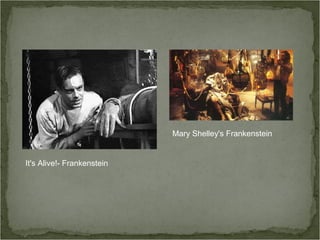
It's Alive!- Frankenstein
Mary Shelley's Frankenstein
Who is Andreas Vesalius?
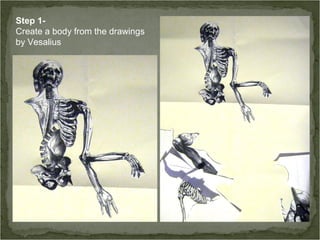
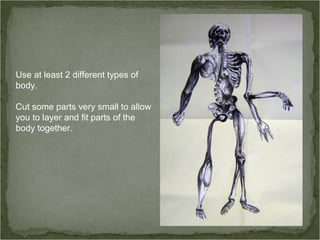
Step 1-
Create a body from the drawings
by Vesalius
Use at least 2 different types of
body.
Cut some parts very small to allow
you to layer and fit parts of the
body together.
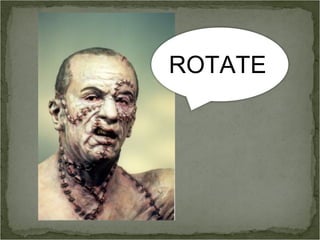
ROTATE
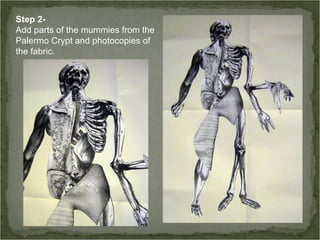
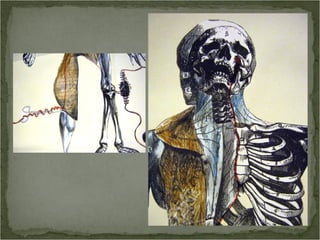
Step 2-
Add parts of the mummies from the
Palermo Crypt and photocopies of
the fabric.
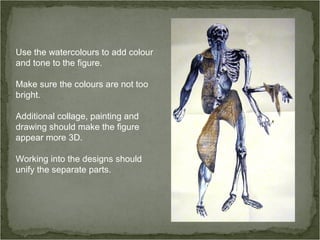
Use the watercolours to add colour
and tone to the figure.
Make sure the colours are not too
bright.
Additional collage, painting and
drawing should make the figure
appear more 3D.
Working into the designs should
unify the separate parts.
ROTATE
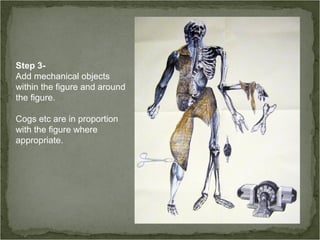
Step 3-
Add mechanical objects
within the figure and around
the figure.
Cogs etc are in proportion
with the figure where
appropriate.
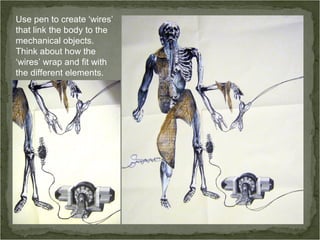
Use pen to create ‘wires’
that link the body to the
mechanical objects.
Think about how the
‘wires’ wrap and fit with
the different elements.
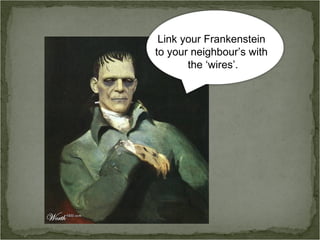
Link your Frankenstein
to your neighbour’s with
the ‘wires’.
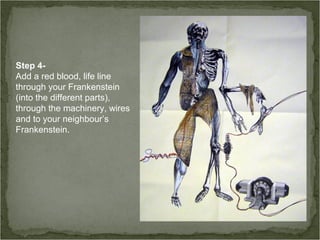
Step 4-
Add a red blood, life line
through your Frankenstein
(into the different parts),
through the machinery, wires
and to your neighbour’s
Frankenstein.
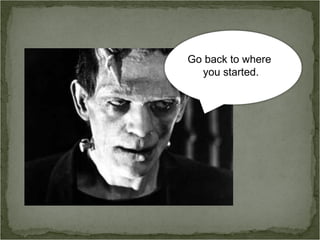
Go back to where
you started.
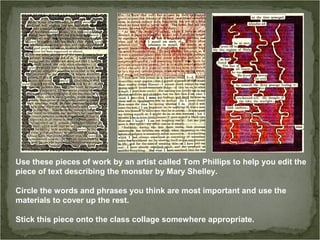
Use these pieces of work by an artist called Tom Phillips to help you edit the
piece of text describing the monster by Mary Shelley.
Circle the words and phrases you think are most important and use the
materials to cover up the rest.
Stick this piece onto the class collage somewhere appropriate.
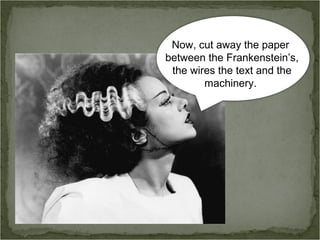
Now, cut away the paper
between the Frankenstein’s,
the wires the text and the
machinery.

Cfd frankenstein workshop

  • 1.
    ‘Frankenstein’ by MaryShelley “I saw—with shut eyes, but acute mental vision—I saw the pale student of unhallowed arts kneeling beside the thing he had put together. I saw the hideous phantasm of a man stretched out, and then, on the working of some powerful engine, show signs of life and stir with an uneasy, half-vital motion. Frightful must it be, for supremely frightful would be the effect of any human endeavor to mock the stupendous mechanism of the Creator of the world.” “His limbs were in proportion, and I had selected his features as beautiful. Beautiful! -Great God! His yellow skin scarcely covered the work of muscles and arteries beneath: his hair was of a lustrous black, and flowing; his teeth of a pearly whiteness; but these luxuriences only formed a more horrid contrast with his watery eyes, that seemed almost of the same colour as the dun white sockets in which they were set, his shrivelled complexion and straight black lips"
  • 2.
    It's Alive!- Frankenstein MaryShelley's Frankenstein
  • 3.
    Who is AndreasVesalius?
  • 4.
    Step 1- Create abody from the drawings by Vesalius
  • 5.
    Use at least2 different types of body. Cut some parts very small to allow you to layer and fit parts of the body together.
  • 6.
  • 7.
    Step 2- Add partsof the mummies from the Palermo Crypt and photocopies of the fabric.
  • 8.
    Use the watercoloursto add colour and tone to the figure. Make sure the colours are not too bright. Additional collage, painting and drawing should make the figure appear more 3D. Working into the designs should unify the separate parts.
  • 9.
  • 10.
    Step 3- Add mechanicalobjects within the figure and around the figure. Cogs etc are in proportion with the figure where appropriate.
  • 11.
    Use pen tocreate ‘wires’ that link the body to the mechanical objects. Think about how the ‘wires’ wrap and fit with the different elements.
  • 12.
    Link your Frankenstein toyour neighbour’s with the ‘wires’.
  • 13.
    Step 4- Add ared blood, life line through your Frankenstein (into the different parts), through the machinery, wires and to your neighbour’s Frankenstein.
  • 15.
    Go back towhere you started.
  • 16.
    Use these piecesof work by an artist called Tom Phillips to help you edit the piece of text describing the monster by Mary Shelley. Circle the words and phrases you think are most important and use the materials to cover up the rest. Stick this piece onto the class collage somewhere appropriate.
  • 17.
    Now, cut awaythe paper between the Frankenstein’s, the wires the text and the machinery.